
WHAT LIQUIDS DO ALKA-SELTZER TABLETS CREATE THE MOST GAS WITH?
|
|
|
- Marshall Conley
- 9 years ago
- Views:
Transcription
1 WHAT LIQUIDS DO ALKA-SELTZER TABLETS CREATE THE MOST GAS WITH? Justin Stone Cary Academy. ABSTRACT The purpose of this study was to determine which way that an Alka-Seltzer tablet creates the most gas. There are many experiments similar to this one such as measuring how much time it took for the Alka-Seltzer tablet to dissolve in different amounts and different types of liquids. An Alka-Seltzer tablet was put into different amounts of water to see how much gas was produced by measuring the diameter of the balloon. The Alka-Seltzer tablet created the most gas in less water and the hypothesis was incorrect. This is because the less water there is this means that there is less water for the gas to travel through because the Alka-Seltzer tablet sinks to the bottom. INTRODUCTION Alka-Seltzer tablets fizz and create gas and air when put in the water. This is because Alka-Seltzer tablets have aspirin, citric acid and sodium bicarbonate (baking soda). When put into the water the sodium bicarbonate (baking soda) reacts with the citric acid and this causes foam and bubbles which are made out of carbon dioxide. This same reaction happens when baking soda and vinegar are mixed. This is because vinegar is an acid and baking soda is the sodium bicarbonate. The white foam is the same as the baking soda just not as significant of a reaction. An experiment that is similar to this one is the temperature affecting the rate of the reaction. This experiment is similar because in the experiment it is simply measuring the rate. The temperature was being changed and the rate was changing with the temperature (example- 2 (cm) per second). This experiment would have been harder but definitely interesting to see the results. Another experiment is an experiment where the height of Alka-Seltzer rocket ship was measured depending on how much water is filled in the canister. This experiment was conducted similar because it was conducted with an object that was trying to be moved. This is also different because in the experiment measuring how far the car went, it wasn t just adding water it was changing what liquid/sodium carbonate was in the water. Another experiment that was conducted from a student at Cary Academy middle school was testing to see if the different type of soda (Sprite, Seven up and Ginger-ale) including water for the independent variable would change the time that the Alka-Seltzer tablet was dissolved. This experiment showed that the water dissolved the tablet the fastest at 66 sec. The data also showed that the Ginger-ale also dissolved the tablet fastest out of the sodas and this is because it has the highest acidic level out of the sodas. Coleman s scientific theory of his results was that the more acidic drink dissolved the fastest. Coleman Mitchel conducted another experiment trying to see if the number of Alka-Seltzer tablets depends on the dissolve time. This experiment shows that one tablet takes the longest to dissolve
2 and then two tablets goes actually takes the shortest amount of time and three tablets is just a little shorter than one tablet. Coleman claims that this happened because when there are two tablets it is the perfect amount not taking up too much room but when there are three tablets it takes up room and is causing them to take longer to dissolve. Another experiment done by Coleman Mitchel was testing to see if the different amounts of water affected how long it took the Alka-Seltzer tablet to dissolve. This experiment is similar to the one conducted for this project because instead of measuring how much gas was produced it was testing how long it took for the Alka-Seltzer tablet to dissolve. The data on his graph shows that the less amount of water the longer it took for the Alka-Seltzer tablet to dissolve. This is interesting because it is very similar to the experiment conducted in this experiment and it shows that the Alka-Seltzer tablet took longer to dissolve meaning it had more time to produce gas. Coleman notices that the different amount of water doesn t affect how much the Alka-Seltzer tablet gets dissolve but a very small decrease in the data. What exactly is an acid? An acid can be very powerful, so powerful that it can burn through metal, but the acids used in these experiments are not harmful. An acid is usually a little sour or bitter tasting. An acid is usually measured on a PH scale, anything under a 7 on the PH scale is considered acidic, anything over a 7 is a base but no bases were used in these experiments. A PH scale is how acids and bases are measured. PH stands for Potential of Hydrogen, and seven on the PH scale is a neutral object anything under a seven is an acid anything over a seven is a base. Some acids are very powerful and strong and it would not be safe to work with them, some of the acids can burn and penetrate skin, melt metal, and is overall very dangerous, But the acids used for this experiment are not harmful and are very safe to work with. Here is a simple PH scale of different solids and liquids. The PH scale shows that the battery acid is a very powerful acid at one on the scale but wine is only at 4 or 5. A piece of specialized paper can be dipped in to a liquid and will change to one of these colors and if the PH chart is used the liquid can be clarified as an acid, base or a neutral object. MATERIALS AND METHODS Baking soda, vinegar, tape measurer, Gatorade bottle, small water bottle, large water bottle, toy car, balloons, Alka-Seltzer tablets, hot pad, beaker, lemon juice and tape were used in these experiments.
3 In the first experiment a Gatorade bottle was used to put different amounts of water in 25 (ml), 50 ml, 100 (ml )and 400 (ml)). An Alka-Seltzer tablet was put into the balloon and was slipped over the top of the Gatorade bottle. Then the diameter of the balloon in (cm) was measured and this process was repeated three times and an average was taken. For the second experiment different amounts of lemon juice 50(ml), 100 (ml), 150 (ml), 200 (ml) and 300 (ml) were put into the balloon and slipped over the Gatorade bottle (as done in the first experiment). Then the diameter of the balloon was measured in (cm) and the process was repeated three times and an average was taken. As the third experiment different amounts of vinegar was in the water 15 (ml) 25 (ml), 50 (ml), 100 (ml), 200 (ml) and 300 (ml) while 10 teaspoons of baking soda was put into the balloon along with the Alka-Seltzer. Then the diameter of the balloon was measured in (cm) and this was done three times and an average was taken. In the fourth experiment the water was put at different temperatures 20 c, 30 c, 40 c, 60 c, 80 c and 100 c and put into the Gatorade bottle along with the Alka-Seltzer tablets as done in the first experiments. This experiment was done with 200 (ml) of water in the Gatorade bottle. This was done three times and an average was taken. As the fifth experiment different sized bottles,big water bottle (500 (ml)), normal Gatorade bottle (375 (ml) and a small water bottle (200 (ml) were filled to the top and had one Alka-Seltzer tablet inserted into the bottle with a balloon and the diameter was measured in (cm). This was done three times and an average was taken. For the sixth experiment the normal sized Gatorade bottle was taped to the back of a car and different types of liquid (vinegar and baking soda, lemon juice and water) was put into the bottle and an Alka- Seltzer tablet was put into balloon and pulled over the bottle. Gas was produced and pushed the car forward and how far the car went was measured in (cm). This was done three times and an average was taken.
4 Figure 1- A picture of the car used in the 6 th experiment. RESULTS AND DISCUSSION Figure 1- This experiment measured the diameter of the balloon when different amounts of water was put into the bottle. First experiment- These results show that the least amount of water in the bottle creates the most gas. This is because the Alka-Seltzer tablet does not float and sinks to the bottom. Water is much heavier and thicker than air so when the Alka-Seltzer tablet is at the bottom the air has more water to go through. The longer that the air is underwater some of it starts to fade away creating less air that is able to get out and into the balloon. The hypothesis was not correct for this experiment because it was thought to be that the Alka-Seltzer tablets floated and the more water would bring the tablet closer to the balloon and but this was incorrect.
5 Figure 2- This shows the diameter of the balloon when different amounts of lemon juice were added to the bottle with an Alka-Seltzer tablet. Second experiment (graph on other page) This experiment was done with different amounts of lemon juice. This graph shows that the more lemon juice that was in the bottle creates more air. At the beginning the graph is decreasing just as the first experiment but at around 175 (ml) of water the air in the balloon raises by 5 (cm). This is because the lemon juice created a lot of fizz, because lemon juice is very acidic. The fizz didn t reach the balloon until the water was high enough. Soon at 175 (ml) of lemon juice the fizz was able to reach the balloon and cause more air to be made and some fizz actually got into the balloon. When the balloon was taken out a lot of fizz spilled out onto the table and this is a sign that it was able to get into the balloon. The hypothesis for this experiment was not correct, it was suspected that the same thing would happen that happened in the first experiment but was incorrect.
6 Figure 3- This shows the diameter of the balloon when different amounts of vinegar were added to the bottle and every time ten scoops of baking soda were added. Third experiment- This experiment was conducted with ten teaspoons of baking soda with different amounts of vinegar in the bottle. This experiment shows the exact opposite of what happened in the first experiment. The baking soda and vinegar did not create much gas because the balloon didn t get very big until the fizz got to the top of the bottle. The fizz was the only reason the balloon blew up so much. So much fizz got in the balloon that the bottle almost fell off the table because of the weight of it. The fizz would rise at a rate of almost 3 (cm) per second. At first the balloon was small, small small then the fizz hit the balloon and boom! The balloon was huge. The size of the balloon when there was 300 (ml) of vinegar, the balloon blew up to almost 60 (cm) and that is about as much air that and adult can blow in three or four big puffs. The hypothesis for this experiment was correct because it was already known that the more vinegar the more fizz is creating making more gas.
7 Figure 4- This graph shows the diameter of a balloon with different temperatures of water. Fourth experiment- This experiment was done with a hot pad heating the water at different temperatures. This experiment did not go as expected. Nothing really happened until the water got over 100 c. This was because that was boiling and boiling was causing bubbles to come out of the water which were popping and sending small amounts of gas up to the balloon. Even though it looks as if there is a big spike in the data there is not because the diameter of the balloon was only affected by 2 (cm) which isn t much. The hypothesis for this experiment was correct that the hot water would create the most gas to fill up the balloon.
8 Figure 5- This chart shows the diameter of a balloon in different sized bottles. Fifth experiment- (graph shown above) For this experiment three different sized bottles with the same diameter were tested to see if the height and shape affected the diameter of the balloon. The data shows that the 500 (ml) volumes (the big water bottle) had the biggest diameter of 16 (cm). This happened because the bottles where all the same diameter but the taller one had more space for the air to expand but the smaller one the air got trapped and was very compacted so not as much air could enter into the balloon. The hypothesis was not correct, the hypothesis said that the small bottle would create the least and the middle bottle would create the most. This is because it was thought that the bottle was so tall that the Alka-Seltzer tablet would have to travel really far to get to the top where the balloon is (the bottle was filled all the way to the top).
9 Figure 6- This chart shows how far a car moved with different liquids. 6 th experiment (graph shown above) This experiment was conducted with a small water bottle taped to the back of a car. The data above shows that the baking soda and vinegar moved the car the most at 30 (cm). This was a surprising result because the hypothesis said that the lemon juice would move the car the most. This was suspected because the baking soda and vinegar created a lot of fizz which is heavy and would weigh the balloon down but in a surprising matter the baking soda and vinegar had created enough air to push the car. As in the introduction the baking soda and vinegar is the same thing as the Alka-Seltzer tablets but much more significant therefor causing the car to move farther because of the amount of gas created.
10 CONCLUSION The data shows that the baking soda and vinegar produced the most air, The Alka-Seltzer tablet is the same as baking soda and vinegar mix but the baking soda and vinegar is much more significant creating more fizz, more mess and more gas and this is why it is popular for lots of experiments. This can be helpful because people can become sick and the tablet can be very successful if the right liquid is used. The Hypothesis was not correct for the first and last experiment, the first experiment it was thought that the more water that is put into the bottle creates more gas, but was found to be the opposite, same as the last experiment, it was thought that the lemon juice would move the car the most, then Alka-Seltzer tablet and the baking soda and vinegar would move the car the least because of its weight. Some experiments that could be done in the future are measuring the time that it takes for the Alka-Seltzer tablet or measuring what liquid has the biggest effect on how the tablet works on a sore throat. CITATIONS "Acid." Encyclopædia Britannica. Encyclopædia Britannica Online School Edition. Encyclopædia Britannica, Inc., Web. 18 Feb < "base." Encyclopædia Britannica. Encyclopædia Britannica Online School Edition. Encyclopædia Britannica, Inc., Web. 18 Feb < Blachford, Stacey. The Gale encyclopedia of science. Detroit : Gale Group, Print. Briony. Organic chemistry and biochemistry. Tucson : Brown Bear Books, Print.. "how stuff works." why does an Alka-Seltzer tablet fizz?. discovery. Web. 15 Feb Mitchell, Coleman. PH of liquids and dissolve time of Alka-Seltzer tablets. Cary Academy 2012.Print Froham, Nathan. "Natural alliance." Living Water Ionizer. Natural alliance. Web. 21 Feb <
11 . "The chemistry continues." The Alka-Seltzer fizz. N.p.. Web. 15 Feb < >.
THE STUDY OF THE EFFECT OF DRY ICE ON THE TEMPERATURE OF WATER
 THE STUDY OF THE EFFECT OF DRY ICE ON THE TEMPERATURE OF WATER Justin Tunley Cary Academy ABSTRACT: The purpose of this study was to find out how much the temperature of water would change over time after
TESTING DRY ICE IN DIFFERENT LIQUIDS. Aditya S. Cary Academy ABSTRACT
 TESTING DRY ICE IN DIFFERENT LIQUIDS Aditya S Cary Academy ABSTRACT The purpose of this experiment was to see how dropping dry ice into different liquids affect the mass and temperature of the dry ice.
Acids & Bases Around the House Use a ph indicator to find acids and bases
 Use a ph indicator to find acids and bases Description: Visitors predict whether various household solutions are acids or bases, and test their hypotheses using a universal ph indicator. Then, visitors
Properties of Acids and Bases
 Lab 22 Properties of Acids and Bases TN Standard 4.2: The student will investigate the characteristics of acids and bases. Have you ever brushed your teeth and then drank a glass of orange juice? What
sciencemuseumoutreach Kitchen Science 1 Demonstrations to do at home
 sciencemuseumoutreach Kitchen Science 1 Demonstrations to do at home The Creative Canal Project (CCP) is part of the Science Museum s Outreach Department, which works with teachers, students, families
Neutralizing an Acid and a Base
 Balancing Act Teacher Information Objectives In this activity, students neutralize a base with an acid. Students determine the point of neutralization of an acid mixed with a base while they: Recognize
Chemical versus Physical Changes
 Chemical versus Physical Changes Permission to Copy - This document may be reproduced for non-commercial educational purposes Copyright 2009 General Electric Company What are physical and chemical changes?
Chemical Changes. Measuring a Chemical Reaction. Name(s)
 Chemical Changes Name(s) In the particle model of matter, individual atoms can be bound tightly to other atoms to form molecules. For example, water molecules are made up of two hydrogen atoms bound to
Letter to the Student... 5 Test-Taking Checklist... 6 Next Generation Sunshine State Standards Correlation Chart... 7
 Table of Contents Letter to the Student..................................... 5 Test-Taking Checklist.................................... 6 Next Generation Sunshine State Standards Correlation Chart...
THE STUDY OF GUMMY BEARS SOAKED IN DIFFERENT LIQUIDS FOR DIFFERENT AMOUNTS OF TIME
 THE STUDY OF GUMMY BEARS SOAKED IN DIFFERENT LIQUIDS FOR DIFFERENT AMOUNTS OF TIME Emily Grimm Cary Academy ABSTRACT The purpose of this study was to determine how much gummy bears grew in different liquids,
GUZZLER LEARNS ABOUT CHEMICAL ENERGY: DESIGN AND MAKE A LAVA LAMP
 Equipment Vegetable oil, water, 2 measuring jugs one for water and one for oil, clear plastic bottle*, funnel, food colouring and dropper, a tablet that does not fizz when added to water (eg a non-effervescent
WHAT S NEW, CO? Thanks for the opportunity to work with your students. Our goal is to teach developmentally TEACHER S GUIDE
 TEACHER S GUIDE WHAT S NEW, CO? GET TO KNOW A CHEMICAL REACTION 2 Thanks for the opportunity to work with your students. Our goal is to teach developmentally appropriate chemistry concepts that support
Acids and Bases. AND a widemouth container of the following solids:
 Acids and Bases GOAL To introduce students to acids and bases. MATERIALS: 3 10oz clear plastic cups 1 4 oz. bottle white vinegar - labeled Acid 1 4 oz. bottle of water - labeled Water 1 4 oz. bottle of
Let s see what is the first sweetie inside my book (open book and point at page).
 The Sweet Science Show INTRODUCTION SLIDE 1: THE SWEET SCIENCE SHOW Hello and welcome to The Sweet Science Show, the show that takes a closer look at your favourite sweetie treats. My name is Professor
Solids, Liquids, and Gases
 Solids, Liquids, and Gases nd Intended for Grade: 2 Grade Subject: Science Description: Activities to help students understand solids, liquids, gases, and the changes between these states. Objective: The
Experiment 16-Acids, Bases and ph
 Definitions acid-an ionic compound that releases or reacts with water to form hydrogen ion (H + ) in aqueous solution. They taste sour and turn litmus red. Acids react with certain metals such as zinc,
Experiment 9: Acids and Bases Adapted from: Chemistry, Experimental Foundations, 4th Ed. Laboratory Manual, by Merrill, Parry & Bassow.
 Chem 121 Lab Clark College Experiment 9: Acids and Bases Adapted from: Chemistry, Experimental Foundations, 4th Ed. Laboratory Manual, by Merrill, Parry & Bassow. Content Goals: Increase understanding
Review and apply Investigation 5. Let s review Pages 311-312
 Review and apply Investigation 5 Let s review Pages 311-312 1. After you tested all the known powders with all the test liquids, describe what you did to identify the unknown powder. Students should have
HOW MUCH LIGHT IS PRODUCED WITH DIFFERENT COLORS OF GLOW STICKS IN DIFFERENT TEMPERATURES OF WATER HOW WRAPPED IN TISSUE PAPER
 HOW MUCH LIGHT IS PRODUCED WITH DIFFERENT COLORS OF GLOW STICKS IN DIFFERENT TEMPERATURES OF WATER HOW WRAPPED IN TISSUE PAPER Colin Zhu Cary Academy ABSTRACT The purpose of this experiment was to see
KITCHEN CHEMISTRY Chemical reaction with vinegar and baking soda
 KITCHEN CHEMISTRY Chemical reaction with vinegar and baking soda By Darby Sloss and Marianne Smith Edited by Anne Starace Abstract Chemistry is an important part of our lives. Kitchen Chemistry uses some
Teachers Notes BATH BOMB FACTORY
 Teachers Notes BATH BOMB FACTORY BATH BOMB FACTORY 2 BATH BOMB FACTORY INTRODUCTION BATH BOMB FACTORY is a fun activity that promotes scientific thinking. It allows children to explore materials and find
Acids, Bases, and ph
 CHAPTER 9 1 SECTION Acids, Bases, and Salts Acids, Bases, and ph KEY IDEAS As you read this section, keep these questions in mind: What properties do acids have? What properties do bases have? How can
Physical and Chemical Changes
 Physical and Chemical Changes Jana Barrow West Point Jr. High 2775 W 550 N 801-402-8100 West Point, UT 84015 [email protected] Eighth Grade Integrated Science Standard I: Students will understand the
Oxygen Give and Take. Correlation to National Science Education Standards
 Chemistry and Environmental Sciences Oxygen Give and Take Summary This is a series of three activities followed by a worksheet. The concepts taught include gas production (O 2 and CO 2 ), chemical reactions,
ACIDS AND BASES SAFETY PRECAUTIONS
 ACIDS AND BASES Mild acids and bases are used in cooking (their reaction makes biscuits and bread rise). Acids such as those in our stomachs eat away at food or digest it. Strong acids and bases are used
Chapter 3 Student Reading
 Chapter 3 Student Reading If you hold a solid piece of lead or iron in your hand, it feels heavy for its size. If you hold the same size piece of balsa wood or plastic, it feels light for its size. The
A PRIMER ON ph. A Presentation for ASTA Conference September 30-October 1, 2008
 A PRIMER ON ph A Presentation for ASTA Conference September 30-October 1, 2008 Rebecca Richardson Martha Gothard Director Science Specialist Regional In-Service Education Center AMSTI University of Montevallo
THE STUDY OF HELIUM AND BALLOONS. Will Barbrey. Cary Academy ABSTRACT
 THE STUDY OF HELIUM AND BALLOONS Will Barbrey Cary Academy ABSTRACT The purpose of this study was to determine how strong helium was against air and weights. Helium weighs one gram less than air therefore
Physical and Chemical Changes Pre Test Questions
 Pre Test Questions Name: Period: Date: 1. Which of the following is an example of physical change? a. Mixing baking soda and vinegar together, and this causes bubbles and foam. b. A glass cup falls from
Household Acids and Bases
 Household Acids and Bases GRADE LEVEL INDICATORS Experiment Demonstrate that the ph scale (0-14) is used to measure acidity and classify substances or solutions as acidic, basic, or neutral. 21 Develop
Leavener Lineup. Getting started. How do we use chemical reactions in the kitchen? Hands-on experiment. Year levels 4 5. Curriculum Links.
 rise and Shine: what Makes Bread Rise? Lesson 2 Leavener Lineup Year levels 4 5 Curriculum Links Science Science knowledge helps people to understand the effect of their actions (Yr 4, ACSHE062). Solids,
SNEAK PEAK inside ACTIVITY. ADVANCE PREPARATION see next page for more details Dilute alcohol with water Set out plastic cups, etc.
 Reaction: Yes or No? Learning Objectives: Students will list and identify three characteristics of chemical reactions. GRADE LEVEL 3 8 SCIENCE TOPICS Solutions and Mixtures Chemical Reactions PROCESS SKILLS
Chapter 6. Solution, Acids and Bases
 Chapter 6 Solution, Acids and Bases Mixtures Two or more substances Heterogeneous- different from place to place Types of heterogeneous mixtures Suspensions- Large particles that eventually settle out
Film Canister ROCKETS. An activity of reaction rates and the scientific method
 Film Canister ROCKETS An activity of reaction rates and the scientific method Developed by: Elisabeth Mills, UCLA NSF GK-12 Fellow Title of Lesson: Film Canister Rockets Grade level: 8 th Grade Subject(s):
Partnerships Implementing Engineering Education Worcester Polytechnic Institute Worcester Public Schools
 Make An Antacid Rocket: 5.A.2 Grade Level 5 Sessions Seasonality Instructional Mode(s) Team Size WPS Benchmarks MA Frameworks Key Words 1 approximately 60 minutes N/A Whole class Groups of 3-5 students
BLOWING UP BALLOONS, chemically
 BLOWING UP BALLOONS, chemically PRE LAB DISCUSSION: Today we will be using a closed system. A closed system does not permit matter to enter or exit the apparatus. Lavoisier's classic 12-day experiment,
Chemquest: Physical Changes or Chemical Reactions
 Chemquest: Physical Changes or Chemical Reactions Erik Misner May 9, 2005 Background: This lesson is designed to be an interactive and fun way to learn the difference between physical changes and chemical
Recovery of Elemental Copper from Copper (II) Nitrate
 Recovery of Elemental Copper from Copper (II) Nitrate Objectives: Challenge: Students should be able to - recognize evidence(s) of a chemical change - convert word equations into formula equations - perform
Acid-Base Indicator Useful Indicators
 Chemistry 101 - H Acids and Bases This presentation was created by Professor Carl H. Snyder Chemistry Department University of Miami Coral Gables, FL 33124 [email protected] Chapter 10 - Acids and Bases
THE GROWTH OF GUMMY WORMS IN LIQUID FOR DIFFERENT AMOUNTS OF TIME
 THE GROWTH OF GUMMY WORMS IN LIQUID FOR DIFFERENT AMOUNTS OF TIME Cole Hoffman Cary Academy ABSTRACT The purpose of this study was to determine how gummy worms grow when in water. Traditional gummy worms
Chapter 5 Student Reading
 Chapter 5 Student Reading THE POLARITY OF THE WATER MOLECULE Wonderful water Water is an amazing substance. We drink it, cook and wash with it, swim and play in it, and use it for lots of other purposes.
ANSWER KEY. Acids, Bases, and Solutions. Chapter Project Worksheet 1 1. Answers will vary. Sample: cherries, blueberries,
 Chapter Project Worksheet 1 1. Answers will vary. Sample: cherries, blueberries, and grass 2. Answers will vary. Sample: Cut 5 g of cherries into small pieces and place in blender. Blend for two minutes,
10-ml Graduated cylinder 40 ml 3% Hydrogen peroxide solution (found in stores) Straight-edged razor blade Scissors and Forceps (tweezers)
 Name: Class: Date: Objectives * Measure the effects of changes in temperature, ph, and enzyme concentration on reaction rates of an enzyme catalyzed reaction in a controlled experiment. * Explain how environmental
Bottle Rockets. Vanderbilt Student Volunteers for Science. Fall 2008
 Bottle Rockets Vanderbilt Student Volunteers for Science Fall 2008 I. Introduction: History of Rockets Explain to the students that rockets are more than two thousand years old. Give the students a BRIEF
Syllabus OC18 Use litmus or a universal indicator to test a variety of solutions, and classify these as acidic, basic or neutral
 Chemistry: 9. Acids and Bases Please remember to photocopy 4 pages onto one sheet by going A3 A4 and using back to back on the photocopier Syllabus OC18 Use litmus or a universal indicator to test a variety
6.8 Measuring the Acidity of Solutions Page 160
 6.8 Measuring the Acidity of Solutions Page 160 PRESCRIBED LEARNING OUTCOMES measure substances and solutions according to ph, solubility, and concentration KNOWLEDGE ph is the measure of the tendency
Name. Lab 3: ENZYMES. In this lab, you ll investigate some of the properties of enzymes.
 Name Lab 3: ENZYMES In this lab, you ll investigate some of the properties of enzymes. So what are enzymes? Enzymes are large protein molecules (macromolecules) They catalyze or speed up chemical reactions
Test Bank - Chapter 3 Multiple Choice
 Test Bank - Chapter 3 The questions in the test bank cover the concepts from the lessons in Chapter 3. Select questions from any of the categories that match the content you covered with students. The
Shampoo Properties Evaluation General Science
 / 10 Shampoo Properties Evaluation General Science Name It is difficult to obtain exact information on the formulation of commercial shampoos. These facts are held by the manufacturer to protect their
Reaction in a Bag. Scientific Method Demonstrations
 elearning 2009 Introduction Reaction in a Bag Scientific Method Demonstrations Publication No. 91419 Careful observation is the foundation of science, leading to questions about what we have observed how,
Enzyme Pre-Lab. Using the Enzyme worksheet and Enzyme lab handout answer the Pre-Lab questions the pre-lab must be complete before beginning the lab.
 Enzyme Pre-Lab Using the Enzyme worksheet and Enzyme lab handout answer the Pre-Lab questions the pre-lab must be complete before beginning the lab. Background: In this investigation, you will study several
VANDERBILT STUDENT VOLUNTEERS FOR SCIENCE. Acids and Bases. Fall 2012
 VANDERBILT STUDENT VOLUNTEERS FOR SCIENCE Acids and Bases Fall 2012 GOAL: To introduce students to acids and bases. MATERIALS 3 10oz clear plastic cups 1 4 oz. bottle white vinegar - labeled Acid 1 4 oz.
Bay Area Scientists in Schools Presentation Plan
 Bay Area Scientists in Schools Presentation Plan Lesson Name Presenter(s) Grade Level 5th The Chemical Workout/Blow it Up Chemistry Graduate Students from the Maimone Group at UC Berkeley Standards Connection(s):
First Grade Unit A: PHYSICAL SCIENCE Chapter 1: Observing Solids, Liquids and Gases Lessons 1 to 5
 First Grade Unit A: PHYSICAL SCIENCE Chapter 1: Observing Solids, Liquids and Gases Lessons 1 to 5 Physical Science Overview Materials (matter) come in different forms. Water can be rain falling (liquid)
Introduction. ph = log [H + ]
![Introduction. ph = log [H + ]](/thumbs/40/21282159.jpg "Introduction. ph = log [H + ]") Visualizing ph 2010, 1992 by David A. Katz. All rights reserved. Permission granted for classroom use. All reproductions must include original copyright. David A. Katz Chemist, Educator, Science Communicator,
Visualizing ph 2010, 1992 by David A. Katz. All rights reserved. Permission granted for classroom use. All reproductions must include original copyright. David A. Katz Chemist, Educator, Science Communicator,
How to write a formal lab report correctly. This is based off a lab done in AP biology and all examples are taken from student lab write-ups.
 How to write a formal lab report correctly. This is based off a lab done in AP biology and all examples are taken from student lab write-ups. Title: Potato Catalase Enzyme Lab (1 point). * Objective, variables,
Designing An Experiment Using Baking Soda and Vinegar
 Designing An Experiment Using Baking Soda and Vinegar Introduction: Kinetics is the study of chemical reaction rates. It is the study of how fast different chemicals react with one another to form new
Teacher Demo: Turning Water into Wine into Milk into Beer
 SNC2D/2P Chemical Reactions/Chemical Reactions and their Practical Applications Teacher Demo: Turning Water into Wine into Milk into Beer Topics evidence of chemical change types of chemical reactions
Return to Lab Menu. Acids and Bases in Your House
 Return to Lab Menu Acids and Bases in Your House OBJECTIVES Isolate a natural acid-base indicator. Determine the acid-base properties of common household solutions. INTRODUCTION Acids and bases are among
Human Impact on the Environment and Pollution 2 nd or 3 rd Grade Bret Underwood
 Human Impact on the Environment and Pollution 2 nd or 3 rd Grade Bret Underwood Benchmarks: SLC 14: Students identify and describe the relationship between human activities and the environment in terms
PHYSICAL AND CHEMICAL PROPERTIES AND CHANGES
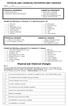 PHYSICAL AND CHEMICAL PROPERTIES AND CHANGES Name Key PHYSICAL PROPERTY CHEMICAL PROPERTY 1. observed with senses 1. indicates how a substance 2. determined without destroying matter reacts with something
5 ACIDS, BASES AND SALTS
 5 ACIDS, BASES AND SALTS TEXTBOOK QUESTIONS AND ANSWERS Q.1. Taste the following substances and enter the result in the following table : Substance Taste (Sour / bitter / any other) Lemon juice Orange
Chem 100 Lab Experiment #9 - ACID/BASE INDICATORS
 Lab #9 Chem 100 Lab Experiment #9 - ACID/BASE INDICATORS Name: Purpose: In this laboratory we will investigate how indicators can be used to test for the presence of acids or bases in a number of common
Dry Ice Color Show Dry Ice Demonstrations
 elearning 2009 Introduction Dry Ice Color Show Dry Ice Demonstrations Publication No. 95016 Add a small piece of solid carbon dioxide to a colored indicator solution and watch as the solution immediately
Experiment 8: Chemical Moles: Converting Baking Soda to Table Salt
 Experiment 8: Chemical Moles: Converting Baking Soda to Table Salt What is the purpose of this lab? We want to develop a model that shows in a simple way the relationship between the amounts of reactants
Chemistry 101. Chemistry Experiments for the Home Acidity Determination Using Indicators
 Chemistry 101 Chemistry Experiments for the Home Acidity Determination Using Indicators I. Objective: To determine the acidity of a variety of common substances by the use of indicators. To prepare your
Sample Liver Enzyme Lab
 Sample Liver Enzyme Lab Design Aspect 1: Research Question This lab will be driven by the research question, Do changes in temperature have an effect on the activity of the enzyme catalase? Pearson Baccalaureate:
Lesson Plan 16 Cool Chemistry - DIY ph Indicator
 Lesson Plan 16 Cool Chemistry - DIY ph Indicator Brief description Red cabbage juice is a natural ph indicator making this classic activity one of the most popular chemistry experiments for children. The
PreSchool Science Activities
 PreSchool Science Activities (http://www.dpeasley.com/peasleburg_academy/pa_preschool_science.htm) Generally speaking, our preschool science is what we see happening. I use the Mudpies to Magnets & More
Mechanical Energy. Mechanical Energy is energy due to position or motion.
 Mechanical Energy Mechanical Energy is energy due to position or motion. Position: This means that matter can have energy even though it is not moving. If you knock something off of your kitchen counter,
Chapter 1 Student Reading
 Chapter 1 Student Reading Chemistry is the study of matter You could say that chemistry is the science that studies all the stuff in the entire world. A more scientific term for stuff is matter. So chemistry
III. BACKGROUND KNOWLEDGE
 Chemical Bonds and Reactions (Water) Grade Level: 7 (Applied Technology) Presented by: James Rubright, Three Oaks Middle School, Fort Myers, Florida Length of Unit: Ten Daily Lessons and Activities I.
Properties of Acids and Bases
 Properties of Acids and Bases (Adapted from Flinn Scientific Acid Base Test Kit I #AP4567) Introduction Battery acid, stomach acid, acid rain just a few acids in our everyday life! What does it mean when
PART I: PREPARATION OF SOLUTIONS AND STANDARDIZATION OF A BASE
 TITRATION: STANDARDIZATION OF A BASE AND ANALYSIS OF STOMACH ANTACID TABLETS 2009, 1996, 1973 by David A. Katz. All rights reserved. Reproduction permitted for education use provided original copyright
Chemists use the ph value to measure how acidic or basic a solution is. The ph scale runs from 0 to 14:
 The ph Value Chemists use the ph value to measure how acidic or basic a solution is. The ph scale runs from 0 to 14: If the ph value is lower than 7 (0 to 6.99) the solution contains more H + ions than
Experiment 7: Titration of an Antacid
 1 Experiment 7: Titration of an Antacid Objective: In this experiment, you will standardize a solution of base using the analytical technique known as titration. Using this standardized solution, you will
ph Measurements of Common Substances
 Chem 100 Section Experiment 10 Name Partner s Name Introduction ph Measurements of Common Substances The concentration of an acid or base is frequently expressed as ph. Historically, ph stands for the
Describing Acids and Bases
 Section 3 Describing Acids and Bases 3 Describing Acids and Bases Objectives After this lesson, students will be able to L.3.3.1 Name the properties of acids and bases. L.3.3.2 Identify where acids and
Dissolving of sodium hydroxide generates heat. Take care in handling the dilution container.
 TITRATION: STANDARDIZATION OF A BASE AND ANALYSIS OF STOMACH ANTACID TABLETS 2009, 1996, 1973 by David A. Katz. All rights reserved. Reproduction permitted for education use provided original copyright
Chapter 6, Lesson 4: Temperature and the Rate of a Chemical Reaction
 Chapter 6, Lesson 4: Temperature and the Rate of a Chemical Reaction Key Concepts Reactants must be moving fast enough and hit each other hard enough for a chemical reaction to take place. Increasing the
Pop! Froth! Fizz! Overview. Curriculum context SCIENCE. CONNECTED, LEVEL 2 2014, How Do You Know? by Rex Bartholomew
 CONNECTED, LEVEL 2 2014, How Do You Know? Pop! Froth! Fizz! by Rex Bartholomew Overview The class in this graphic story investigate acid-carbonate reactions. The students make predictions and observe what
Lesson 2 The Buoyant Force
 Lesson 2 Student Labs and Activities Page Launch Lab 26 Content Vocabulary 27 Lesson Outline 28 MiniLab 30 Content Practice A 31 Content Practice B 32 School to Home 33 Key Concept Builders 34 Enrichment
Chemical Formulas, Equations, and Reactions Test Pre-AP Write all answers on your answer document.
 Name: Period: Chemical Formulas, Equations, and Reactions Test Pre-AP Write all answers on your answer document. 1. Which of the following is a NOT a physical property of hydrogen? A. It is gas C. It is
Lesson 4. Temperature change
 54 Lesson 4 Temperature change T E A C H E R G U I D E Lesson summary Students meet scientist Jason Williams, an industrial chemist who designs the materials and processes for making solar cells. He explains
Investigation 1-Part 1: Investigating Mock Rocks. Geology: the scientific study of Earth s history and structure
 Investigation 1-Part 1: Investigating Mock Rocks Geology: the scientific study of Earth s history and structure Geologist: a person who studies the Earth and the materials of which it is made Property:
The Acid Test Grade Nine
 Ohio Standards Connection: Physical Sciences Benchmark B Explain how atoms react with each other to form other substances and how molecules react with each other or other atoms to form even different substances.
TESTING WHETHER THE TEMPERATURE OF A MAGNET WILL AFFECT HOW FAR ITS MAGNETIC FIELD IS
 TESTING WHETHER THE TEMPERATURE OF A MAGNET WILL AFFECT HOW FAR ITS MAGNETIC FIELD IS Kenan Balkas Cary Academy ABSTRACT The purpose of this experiment is about testing to see what the strengths will be
Science Physical Science 8 th Grade Chemical Reactions
 Science Physical Science 8 th Grade Chemical Reactions Overview This module will be used to teach the concept of chemical reactions to students. Embedded in this module are many Science as Inquiry skills
Chapter 17. How are acids different from bases? Acid Physical properties. Base. Explaining the difference in properties of acids and bases
 Chapter 17 Acids and Bases How are acids different from bases? Acid Physical properties Base Physical properties Tastes sour Tastes bitter Feels slippery or slimy Chemical properties Chemical properties
CHEMICAL DETERMINATION OF EVERYDAY HOUSEHOLD CHEMICALS
 CHEMICAL DETERMINATION OF EVERYDAY HOUSEHOLD CHEMICALS Purpose: It is important for chemists to be able to determine the composition of unknown chemicals. This can often be done by way of chemical tests.
Pressure. Curriculum for Excellence. Weather and Climate Cross-curricular project Section 2. Background Information:
 Curriculum for Excellence Weather and Climate Cross-curricular project Section 2 Pressure Background Information: Air pressure is the force exerted by air particles. The air around us pushes on us and
Chemical change. Introduction. Key concepts of chemical change. Students alternative conceptions of chemical change
 Chemical change Introduction You can get a number of surprising effects from chemical reactions. In the early and middle school years, only simple reactions are appropriate, such as that between sodium
Unit 1 - Pure Substances and Mixtures Chapter 2: Solutions
 2.1 Solutes & Solvents Vocabulary: Unit 1 - Pure Substances and Mixtures Chapter 2: Solutions solvent the larger part of a solution - the part of a solution into which the solutes dissolve solute the smaller
EXAMPLE EXERCISE 4.1 Change of Physical State
 EXAMPLE EXERCISE 4.1 Change of Physical State State the term that applies to each of the following changes of physical state: (a) Snow changes from a solid to a liquid. (b) Gasoline changes from a liquid
Acids and Bases: Cabbage Juice ph Indicator
 Acids and Bases: Cabbage Juice ph Indicator Student Advanced Version Acids and bases are found in a variety of everyday items, including food and drink, medicine, and cleaning products. In this lab, we
Classifying Matter. reflect. look out!
 reflect Do you know what air, water, and an apple all have in common? They are all examples of matter. Matter is a word we use a lot in science. It means stuff. All of the stuff in the world that has mass
Chemistry 112 Laboratory Experiment 6: The Reaction of Aluminum and Zinc with Hydrochloric Acid
 Chemistry 112 Laboratory Experiment 6: The Reaction of Aluminum and Zinc with Hydrochloric Acid Introduction Many metals react with acids to form hydrogen gas. In this experiment, you will use the reactions
Specimen Paper. Time allowed! 60 minutes
 Centre Number Surname Candidate Number Specimen Paper For Examiner s Use Other Names Candidate Signature Examiner s Initials General Certificate of Secondary Education Foundation Tier Question 1 Mark Chemistry
Balloon Inside a Bottle
 Balloon Inside a Bottle What is Needed * One small party balloon * One small bottle. A 16 ounce pop bottle works well. What to Do Put approximately 1 tablespoon of water into the empty pop bottle. Then