
Module5: Site investigation using in situ testing
|
|
|
- Harold Evans
- 10 years ago
- Views:
Transcription
1 Module5: Site investigation using in situ testing Topics: Introduction Penetration testing 1. Standard penetration test 2. Cone penetration test Strength and compressibility testing 1. Field vane shear test 2. Pressure meter test 3. Plate loading test 4. Marchetti dilatometer Permeability testing 1. Rising and falling head tests 2. Constant head tests Keywords: In-situ testing, Penetration tests, shear test, permeability tests 5.1 Introduction: The physical survey is that part of site investigation which aims to determine the physical properties of the ground. These are required: 1. To classify the soil into groups of materials which will exhibit broadly similar engineering behaviour; and 2. To determine parameters which are required for engineering design calculations. Some soils, for example clays may readily be sampled. If good-quality samples can be obtained, then laboratory testing offers the best method of determining soil and rock parameters under carefully controlled conditions. But other types of ground are either difficult or impossible to sample and test successfully. In such cases, in situ tests should be used. Information may be obtained in situ in at least three ways: By using geophysical techniques; By using in situ soil testing techniques, such as those described in this chapter; and By making measurements using field instrumentation, as described in the further chapters. The following types of ground conditions are examples of those where in situ testing is either essential or desirable. Very soft or sensitive clays Dr. P.Anbazhagan Page 1

2 Stoney soils Sands and gravels Weak, fissile or fractured rock In situ tests may be classified in a number of ways - cost, ease of use, method of interpretation, soil types in which they may be used, parameters which can be determined, etc. In this module only relatively common in-situ tests are presented and divided according to their purpose, i.e. to obtain: Penetration resistance; Strength and/or compressibility, or In situ permeability. A classification can be established on the basis of the degree to which tests can be analysed in a fundamental way to obtain real soil parameters, which is a function not only of how the test is applied to the soil, but also of the type of data collected. On this basis, the tests can be classified as explained below: Wholly empirical interpretation: No fundamental analysis is possible. Stress paths, strain levels, drainage conditions and rate of loading are either uncontrolled or inappropriate. (Examples: SPT, CPT.) Semi-analytical interpretation: Some relationships between parameters and measurements may be developed, but in reality, interpretation is semi-empirical either, because both stress paths and strain levels vary widely within the mass of ground under test, or drainage is uncontrolled, or inappropriate shearing rates are used. (Examples: plate test, vane test.) Analytical interpretation: Stress paths are controlled and similar (although strain levels and drainage are not). (Example: self-boring pressuremeter.) 5.2 Penetration testing: Many forms of in situ penetration test are in use worldwide. Penetrometers can be divided into two broad groups. The simplest are dynamic penetrometers. They consist of tubes or solid points driven by repeated blows of a drop weight. Static penetrometers are more complex, being pushed hydraulically into the soil. The two most common penetration tests, which are used virtually worldwide, are The dynamic Standard Penetration Test (SPT), and The Static Cone Penetration Test (CPT). Dr. P.Anbazhagan Page 2


3 5.2.1 The standard penetration test (SPT): The standard penetration test (SPT) was developed circa 1927 and is perhaps the most popular field test. The standard penetration test is done using a split- spoon sampler in a borehole / auger hole. This sampler consists of a driving shoe, a split- barrel of circular cross-section (longitudinally split into two parts) and a coupling. Figure 5.1 shows split-spoon sampler used in SPT test. The procedure for carrying out the standard penetration test is discussed as follows: Standard penetrometer Figure 5.1: Spit-spoon sampler SPT uses a thick-walled sample tube, with an outside diameter of 51 mm and an inside diameter of 35 mm, and a length of around 650 mm. This is driven into the ground at the bottom of a borehole by blows from a slide hammer with a weight of 63.5 kg (140 lb) falling through a distance of 760 mm. Figure 5.2 shows schematic representation of SPT setup and testing The sample tube is driven 150 mm into the ground and then the number of blows needed for the tube to penetrate each 150 mm up to a depth of 450 mm is recorded. The sum of the number of blows required for the second and third 150 mm. of penetration is termed the "standard penetration resistance" or the "N-value". In cases where 50 blows are insufficient to advance it through a 150 mm (6 in) interval, the penetration after 50 blows is recorded. The blow count provides an indication of the density of the ground. A borehole is dug to the required depth and the bottom of the hole is cleaned. The splitspoon sampler, attached to the drill-rods of required length is lowered into the borehole and is relaxed at the bottom. The sampler is then, driven to a distance of 450 mm in three intervals of 150 mm each. This is done by dropping a hammer of 63.5 kg from a height of 762 mm (BIS: 2131, 1981). The number of blows required to penetrate the soil is noted down for the last 300 mm, and this is recorded as the N value. The number of blows required to penetrate the sampler through the first 150 mm is called the seating drive and is disregarded. This is because the soil for the first 150 mm is disturbed and is ineffective for the SPT- N value. The sampler is then pulled out and is detached from the drill rods. The soil sample, within the split barrel, is collected taking all precautions not to disturb the moisture content and Dr. P.Anbazhagan Page 3


4 is then transported to the laboratory, for tests. Sometimes, a thin liner is placed inside the split barrel. This makes it feasible for collecting the soil sample within the liner, by sealing off both the ends of the liner with molten wax and then taking it away for laboratory test of the contained soil. Figure 4.2 shows schematic representation of SPT setup and The standard penetration test is, performed at every 0.75 m intervals in a borehole. If the depth of the borehole is large, however, the interval can be, made 1.50 m. In case the soil under consideration consists of rocks or boulders, the SPT- N value can be recorded for the first 300 mm. The test is stopped if: blows are required for any 150 mm penetration blows are required for any 300 mm penetration consecutive blows produce no advance However, it should be noted that the SPT- N value obtained from the above set of procedures has to be corrected before it can be used for any of the empirical relations. These corrections and their values for certain conditions are as follows: Corrections Applied for SPT N Values: Dr. P.Anbazhagan Page 4

5 The SPT data collected is field N values without applying any corrections. Usually for engineering use of site response studies and liquefaction analysis, the SPT N values have to be corrected with various corrections and a seismic bore log has to be obtained. The seismic bore log contains information about depth, observed SPT N values, density of soil, total stress, effective stress, fines content, correction factors for observed N values, and corrected N value. The N values measured in the field using Standard penetration test procedure have been, corrected for various corrections, such as: 1. Overburden Pressure (C N ), 2. Hammer energy (C E ), 3. Borehole diameter (C B ), 4. Presence or absence of liner (C S ), 5. Rod length (C R ) and 6. Fines content (C fines ) Corrected N value i.e., (N 1 ) 60 is obtained using the following equation: (N 1 ) 60 = N (C N C E C B C S C R ) Correction for Overburden Pressure: The effective use of SPT blow count for seismic study requires the effects of soil density and effective confining stress on penetration resistance to be, separated. Consequently, Seed et al (1975) included the normalization of penetration resistance in sand to an equivalent of one atmosphere as part of the semi empirical procedure. SPT N-values recorded in the field increases with increase in the effective overburden stress, hence, overburden stress correction factor is applied (Seed and Idriss, 1982). This factor is, commonly calculated from equation developed by Liao and Whitman (1986). However Kayen et al. (1992) suggested the following equation, which limits the maximum CN value to 1.7 and provides a better fit to the original curve specified by Seed and Idriss (1982): C N = 2.2 / (1.2 + σʹυo / p α ) Where, σʹυo = effective overburden pressure, P α = 100 kpa, and C N should not exceed a value of 1.7. This empirical overburden correction factor is also, recommended by Youd et al (2001). For high pressures (300kPa), which are generally below the depth for which the simplified procedure has been, verified, CN should be estimated by other means (Youd et al, 2001). Correction for hammer energy ratio: Dr. P.Anbazhagan Page 5

6 Another important factor, which affects the SPT N value is, the energy transferred from the falling hammer to the SPT sampler. The energy ratio (ER) delivered to the sampler depends on the type of hammer, anvil, lifting mechanism and the method of hammer release. Approximate correction factors to modify the SPT results to a 60% energy ratio for various types of hammers and anvils are, listed in Table 5.1 (Robertson and Wride, 1998). Table 5.1 :Hammer correction factors for three type of hammar Type of hammers Notation Range of correction Donut hammer C E Safety hammer C E Automatic trip donut hammer C E Because of variations in drilling and testing equipments and differences in the testing procedures, a rather wide range in the energy correction factor C ER has been, observed as noted in the Table 5.1. Even when procedures are carefully monitored to confirm the established standard, some variation in C E may occur because of minor variations in testing procedures. Measured energies at a single site indicate that variations in energy ratio between blows or between tests in a single borehole typically vary by as much as 10%. The workshop participants of NCEER 1996 & 1998 (Youd et al, 2001) recommend measurement of the hammer energy frequently at each site where the SPT is used. Where measurements cannot be, made careful observation and notation of the equipment and procedures are required to estimate a C E value. Use of good quality testing equipment and carefully controlled testing procedures will generally yield more consistent energy ratios. For, Liquefaction calculation, Yilmaz and Bagci (2006) had taken the C E value as 0.7 for SPT hammer energy, donut type for soil liquefaction susceptibility and hazard mapping in Kutahya, Turkey. Similar kind of hammer is used for soil investigations and hence, the value of 0.7 is taken for C E. Other correction factors: The other correction factors adopted such as correction for borehole diameter, rod length and sampling methods modified from Skempton (1986) and listed by Robertson and Wride (1998) are, presented in Table 5.2. Correction for borehole diameter (C B ) is, used as 1.05 for 150 mm borehole diameter, Rod length (C R ) is taken from the Table 5.2, based on the rod length the presence or absence of liner (C S ) is taken as 1.0 for standard sampler. The corrected N Value (N 1 ) 60 is further corrected for fines content based on the revised boundary curves derived by Idriss and Boulanger (2004) for cohesion-less soils as described below (N1) 60cs = (N 1 ) 60 + Δ (N 1 ) 60 Dr. P.Anbazhagan Page 6

7 Δ (N 1 ) 60 = exp FC = percent fines content (percent dry finer than 0.074mm). Table 5.2 : Other correction factors for SPT N values Factor Equipment variable Notation Correction Bore hole dia mm C B 1.0 Bore hole dia 150mm C B 1.05 Bore hole dia 200mm C B 1.15 Rod length <3m C R 0.75 Rod length 3-4m C R 0.80 Rod length 4-6m C R 0.85 Rod length 6-10m C R 0.95 Rod length 10-30m C R 1.00 Sampling method Standard samplers C S 1.00 Sampling method Samplers without liners C S Interpretation of SPT N 30 : The following factors can affect the SPT results: 1. Nature of the drilling fluid in the borehole, 2. Diameter of the borehole, 3. The configuration of the sampling spoon and the frequency of delivery of the hammer blow. Therefore, it should be, noted that drilling and stabilisation of the borehole must be carried out with care. The measured N-value (blows/0.3 m) is the so-called standard penetration resistance of the soil. The penetration resistance is, influenced by the stress conditions at the depth of the test. The resistance (N 30 ) has been, correlated with the relative density of granular soils. Sand and gravel can be, classified as shown in Table5.3. Table 5.3 : Classification of sand and gravel based SPT N values SPT N value Relative density Classification Very loose Loose Medium dense Dense > Very dense The sources of some of the common errors while carrying out SPT tests are listed in Table 13.5 (Kulhawy and Mayne, 1990). Table 13.5: Source of errors in SPT test Dr. P.Anbazhagan Page 7

8 Cause Inadequate cleaning of hole Failure to maintain adequate head of water in borehole Careless measure of hammer drop Effects SPT is not made in original in-situ soil. Therefore, spoils may become trapped in sampler and be compressed as sampler is driven, reducing recovery Bottom of borehole may become quick and soil may rinse into the hole Hammer energy varies Influence on SPT-N value Increases Decreases Increases Hammer weight inaccurate Hammer energy varies Increases or Decreases Hammer strikes drill rod collar eccentrically Lack of hammer free fall because of ungreased sheaves, new stiff rope on weight, more than two turns on cathead, incomplete release of rope each drop Sampler driven above bottom of casing Hammer energy reduced Hammer energy reduced Sampler driven in disturbed, artificially densified soil Increases Increases Increases greatly Careless blow count Inaccurate results Increases or Decreases Use of non-standard sampler Coarse gravel or cobbles in soil Corrections with standard sampler not valid Sampler becomes clogged or impeded Increases or Decreases Increases Use of bent drill rods Inhibited transfer of energy of sampler Increases Advantages of SPT Dr. P.Anbazhagan Page 8

9 Many existing correlations Most contractors are capable of SPT testing Obtain sample by using the split spoon sampler of material and that can be tested to get soil properties Relatively cheap Robust Suitable for most soils Only investigation provides soil strength with soil sample; one can feel the soil Disadvantages of SPT Ground at the base of borehole is disturbed by drilling process Prone to errors by drillers (e.g. water head, depth measurement errors) Device imposes very complex strain paths to the soil and no theory at present is capable of predicting what are the most influential factors affecting the N value The cone penetration test (CPT): Cone Penetration Test (CPT) is an in-situ test done to determine the soil properties and to get the soil stratigraphy. This test was initially developed by the Dutch Laboratory for Soil Mechanics (in 1955) and hence it is sometimes known as the Dutch cone test. On a broad scale, the CPT test can be, divided into two Static Cone Penetration Test (BIS-4968, Part - 3, 1976) and Dynamic Cone Penetration Test. Static Cone Penetration Test: The cone with an apex angle of 60 and an end area of 10 cm 2 will be pushed through the ground at a controlled rate (2 cm/sec) In static test, the cone is pushed into the ground and not driven. During the penetration of cone penetrometer through the ground surface, the forces on the cone tip (q c ) and sleeve friction (f s ) are measured. The measurements are, carried out using electronic transfer and data logging with a measurement frequency that can secure the detailed data about soil contents and its characteristics. The Friction Ratio (FR = f s /q c ) will vary with soil type and it is, also an important parameter. Dynamic cone Penetration Test: Dynamic test will be, conducted by driving the cone using hammer blows. The dynamic cone resistance will be, estimated by measuring the number of blows required for driving the cone through a specified distance. Usually, this test will be, performed with a 50 mm cone without bentonite slurry or using a 65 mm cone with bentonite slurry. The hammer weighs 65 kg and the height of fall is 75 cm. The test will be, done in a cased borehole to eliminate the skin friction. Dr. P.Anbazhagan Page 9


10 There are lots of correlations available to evaluate soil properties based on the CPT value (either static or dynamic). There are several variants of the basic cone penetrometer. Figure 5.3 shows different types of cone penetrometer. Most popular three of them are Piezocone Seismic cone and Vision cone. f = sleeve friction q= measured tip stress 10-cm 2 Fricition- Type cone penetrometer q =corrected tip stress 10 cm2 StandardPiezocone u= u 2 shoulder porewater pressure (behind the tip) U 1 = u 1 = midfacepor ewater pressure 10- cm 2 Type 1 piezocone 15 cm 2 Type 2 piezoconepenetrometer Porous filter element made of plastic, ceramic or sintered metal Figure 5.3: Schematic representation of CPT cones ( Piezocone penetrometer: The Piezocone has porous elements inserted into the cone or sleeve to allow for pore water, pressure measurement. The measured pore water pressure depends on the location of the porous elements. The piezocone is a very useful tool for soil profiling and estimation of in situ shear strength, bearing capacity and consolidation characteristics of soils. Seismic Cone Penetration Test (SCPT): The seismic cone penetration test uses a standard cone penetrometer with two geophones. One set of geophones is located behind the Dr. P.Anbazhagan Page 10

11 friction jacket and the other set is located one meter above the first set. Typical seismic cone penetration test is, shown in Figure 5.4. The test method consists of measuring the travel time of seismic waves propagating between a wave source and ground surface. These waves will comprise of shear waves (S waves) and compressional or primary waves (P-waves). The velocity of seismic waves in the ground will give the properties like shear modulus and Poisson s ratio and soil profile. Figure 5.4: Schematic represetation of Seismic Cone Penetration Test Site Characterization by Cone Penetration Testing: Cone penetration testing (CPT) is a fast and reliable means of conducting site investigations for exploring soils and soft ground for support of embankments, retaining walls, pavement subgrade, bridge foundations etc. The CPT soundings can be used either as a, replacement or a complement to conventional rotary drilling and sampling methods. In CPT, an electronic steel probe is hydraulically pushed to collect continuous readings of point load, friction, and pore water pressures with typical depths up to 30 m (100 ft) or more reached in about 1 to 1 1/2 h. Data are, logged directly to a field computer and can be, used to evaluate the geostratigraphy, soil types, water table, and engineering parameters of the ground by the geotechnical engineer on-site, thereby offering quick and preliminary conclusions for design. With proper calibration, using full-scale load testing coupled with soil borings and laboratory testing, the CPT results can be, used for final design parameters and analysis. Dr. P.Anbazhagan Page 11

12 In its simplest application, the cone penetrometer offers a quick, expedient, and economical way to profile the subsurface soil layering at a particular site. No drilling, soil samples, or spoils are generated; therefore, CPT is less disruptive from an environmental standpoint. The continuous nature of CPT readings permit clear delineations of various soil strata, their depths, thicknesses, and extent, perhaps better than conventional rotary drilling operations that use a standard drive sampler at 5-ft vertical intervals. Therefore, if it is, expected that the subsurface conditions contain critical layers or soft zones that need detection and identification; CPT can locate and highlight these particular features. Corrections to CPT: For electric cones that record pore pressure, corrections can be made to account for unequal end area effects. Baligh et al. (1981) and Campanella et al (1982) proposed that the cone resistance, q c, could be corrected to a total cone resistance, q t, using the following expression: qt qc (1 a) u Where, u is pore pressure measured between the cone tip and the friction sleeve and a, is net area ratio. It is often assumed that the net area ratio is given by α = where, d is diameter of load cell support and D is diameter of cone. However, this provides only an approximation of the net area ratio, since additional friction forces are developed due to distortion of the water seal O-ring. Therefore, it is recommended that the net area ratio should always be determined in a small caliion vessel (Battaglio and Mankcalco, 1983; Campanella and Robertson, 1988). A similar correction can also be applied to the sleeve friction (Iunneezet al., 1986; Konrad, 1987). Konrad (1981) suggested the following expression for the total stress sleeve friction, f t : ft fs (1 b) cu where: b A A st c A A sb sb, s us, u A st is end area of friction sleeve at top, A sb is end area of friction sleeve at bottom, A s, is outside surface area of friction sleeve, and u s, is pore pressure at top of friction sleeve. However, to apply this correction, pore pressure data are required at both ends of the friction sleeve. Konrad (1987) showed that this correction could be more than 30% of the measured f s, for some cones. However, the correction can be significantly reduced for cones with an equal end area friction sleeve (i.e., b=1.0). The corrections in cone resistance and sleeve friction are only important in soft clays and silts where high pore pressure and low cone resistance occur. The corrections are negligible in cohesion-less soils where penetration is generally drained and cone resistance is generally Dr. P.Anbazhagan Page 12

13 large. The author believes that the correction to the sleeve friction is generally unnecessary provided the cone has an equal, end area friction sleeve. CPT Profile, Down-hole Memphis: By recording three continuous measurements vertically with depth, the CPT is an excellent tool for profiling strata changes, delineating the interfaces between soil layers, and detecting small lenses, inclusions, and stringers within the ground. The data presentation from a CPT sounding should include the tip, sleeve, and porewater readings plotted with depth in side-by-side graphs. The total cone tip resistance (q t ) is always preferred over the raw measured value (q c ). For SI units, the depth (z) is presented in meters (m), cone tip stress (q t ) in either Pascal (MPa orkpa), and sleeve resistance (f s ) and porewater pressure (u m ) in kpa. Figure 4.5 shows typical CPT profile If the depth of the water table is, known (Z w ), it is convenient to show the hydrostatic pore water pressure (u 0 ), if the groundwater regime is understood to be an unconfined aquifer (no drawdown and no artesian conditions).in that case, the hydrostatic pressure can be calculated from: u 0 = (Z Z w ) γ w Where γ w = 9.8kN/m 3, in some CPT presentations, it is common to report the u m reading in terms of equivalent height of water, calculated as the ratio of the measured pore water pressure divided by the unit weight of water. Figure 5.5: Example of Conductivity Piezocone Test at Mud Island, Memphis, Tennessee Dr. P.Anbazhagan Page 13

14 CPT Soil Behavioural Classification: A new soil behaviour type classification system, has been presented using normalized cone penetration test parameters. The new charts represent a three-dimensional classification system incorporating all three pieces of data from CPT. The charts are global in nature and can be, used to define soil behaviour type. Factors such as changes in stress history, in situ stresses, sensitivity, stiffness, macro fabric, and void ratio will also influence the classification. A guide to the influence some of these variables have on the classification has been included on the charts. Occasionally, soil will fall within different zones on each chart. In these cases, the rate and manner in which the excess pore pressures dissipate during a pause in the penetration can significantly aid in the classification. Some of the most comprehensive recent work on soil classification using electric cone penetrometer data was presented by Douglas and Olsen (1981). One important distinction made by them was that CPT classification charts cannot be, expected to provide accurate predictions of soil type based on grain size distribution but can provide a guide to soil behaviour type. Table 4.4 shows Soil Classification Type from CPT Classification Index, I c The CPT data provides a repeatable index of the aggregate behaviour of the in-situ soil in the immediate area of the probe.an example of a soil classification chart for electric CPT data is shown in Fig. 5.6 and details are given in Table 5.4 Fig 5.6: Simplified soil behavior type classification for standard electric friction cone (Robertson et al. 1986) Dr. P.Anbazhagan Page 14

15 Table 4.4: Soil Classification Type from CPT Classification Index, I c (after Jefferies and Davies, 1993) *Notes: Zone number as per Robertson SBT (1990) Soil Classification Zone Number* Range of CPT Index I c Values Organic Clay soils 2 I c >3.22 Clays <I c >3.22 Silt Mixtures <I c >2.82 Sand Mixtures <I c >2.54 Sands <I c >1.90 Gravelly Sands 7 I c <1.25 CPT Tests to Evaluate Seismic Ground Hazards: A series of cone penetration tests (CPTs) are conducted for quantifying seismic hazards, obtaining geotechnical soil properties and conducting studies at liquefaction sites. The seismic piezocone provides four independent measurements for delineating the stratigraphy, liquefaction potential and site amplification parameters. At the same location, two independent assessments of soil liquefaction susceptibility can be made using both the normalized tip resistance (q c1 N) and shear wave velocity (V s1 ). In lieu of traditional deterministic approaches, the CPT data can be processed using probability curves to assess the level and likelihood of future liquefaction occurrence. The cone penetrometer system used in these tests included an anchored truck-mounted hydraulic rig with field computer data acquisition and three geophysics-type penetrometers (5-, 10-, and 15-ton capacity). Each penetrometer consists of a 60 angled apex at the tip instrumented to measure five independent readings: tip resistance (q c ), sleeve friction (f s ), vertical inclination (i), penetration porewater pressure (either midface u 1 or shoulder u 2 ), and down hole shear wave velocity (V s ). Shear waves are recorded at 1-m depth intervals, whereas, the other readings are obtained at a constant logging rate, generally set between 1 and 5 cm/s. The tip resistance (q c ) is a point stress related to the soil strength and the reading must be corrected for pore water pressure effects on unequal areas, especially in clays and silts. The corrected value is termed q T. The sleeve resistance relates to the interface friction between the penetrometer and soil. Magnitudes of pore water pressure depend on the permeability of the medium and the shoulder filter element (or u 2 position) is required for the tip correction. The tip resistance (q T ), sleeve friction (f s ) and pore pressure (u 2 ) are used together to characterize the subsurface layering, soil behavioural type, and strength properties. Dr. P.Anbazhagan Page 15

16 Particularly important in seismic investigations, a cyclic stress-based analysis of liquefactionprone sediments is available using the q T data. The seismic piezocone test (SCPT U ) includes both penetration readings and down hole geophysical measurements in the same sounding, thus optimizing data collection at a given location. In the test procedure, the shear waves are generated by striking a horizontal steel plank that is coupled to the ground under an outrigger. The downhole geophone is oriented parallel to the plank to detect vertically propagating, horizontally polarized shear waves. From the measured wave train at each depth, a pseudo-interval shear wave velocity (V s ) is determined as the difference in travel distance between any two successive events divided by the difference in travel times. The travel times are determined in two ways: (1) by visually inspecting the recorded wave traces and subjectively identifying the first arrival, and (2) by a rigorous post-processing technique known as cross-correlation to determine the time shift between the entire wave trains from successive paired records. Interpretation and use of CPT results: The basic measurements made by a cone are: 1. The axial force necessary to drive the 10 cm 2 cone into the ground at constant velocity; and 2. The axial force generated by adhesion or friction acting over the 150 cm 2 area of the friction jacket. For piezocones, the basic measurement is the pore pressure developed as penetration proceeds. Routine calculations convert these measurements into cone resistance, local side friction and friction ratio. Cone resistance, q c (normally in MPa) can be calculated from: q c = where F c = force required to push the cone into the ground, and A c, plan area of the cone, i.e. 10cm 2. Local side friction, f s (normally in MPa), can be calculated from: f s = where F s = shear force on the friction sleeve, and A s = area of the friction sleeve, i.e. 150 cm 2. Friction ratio, R f (in %), can be calculated from: Dr. P.Anbazhagan Page 16

17 R f = Because of the geometry of the electric cone, where pore water pressure acts downwards on the back of the cone end, the cone resistance will be under- recorded. When used in deep water, for example for offshore investigations, the force exerted by groundwater will be significant and if pore pressures are measured (with the piezocone), cone resistance can be corrected for this effect. The corrected total cone resistance, q t is: q t = q c + (1-α)u where α = ratio of the area of the shaft above the cone end to the area of the cone (10 cm 2 ), typically 0.15 to 0.3, and u=pore pressure at the top of the cone. Because the pore pressure is not always measured at the top of the cone, but is sometimes measured either on the face, or on the shoulder, a factor must be applied to the measured pore pressure. This factor (β) is based upon pore pressure distributions calculated using the strain path method. Thus: q t = q c + (1-α)(u 0 +βδu) where β = ratio between the calculated excess pore pressure at the top of the cone and at the point of measurement, u 0 = hydrostatic pore pressure, and Δu = excess pore pressure caused by cone penetration. Pore pressure distributions measured and calculated around piezocones. In soft cohesive soils, at depth, much of the cone resistance may be derived from the effect of overburden, rather than the strength of the soil. In these circumstances the net cone resistance may be calculated: q n = q c - σ υ whereq n = net cone resistance, and σ υ = vertical total stress at the level at which q n is measured. Net cone resistance can only be calculated once the distribution of bulk unit weight with depth is known, or can be estimated. In cohesive soils, the CPT is routinely used to determine both undrained shear strength and compressibility. In a similar way to the bearing capacity of a foundation, cone resistance is a function of both overburden pressure (σ v ) and undrained shear strength (c u ): q c = N k C u + σ υ so that the undrained shear strength may be calculated from: C u = Provided that N k is known or can be estimated. The theoretical bearing capacity factor for deep foundation failure cannot be applied in this equation because the cone shears the soil more rapidly than other tests and the soil is failed very much more quickly than in a field situation such as an embankment failure. Dr. P.Anbazhagan Page 17

18 Advantages of CPT: Many existing correlations Measurements allow soil classification but calibration boreholes preferred q c values etc., are computer logged and not drilling or driller dependent Capable of picking up the presence of thin sand/clay lenses. Measurements may be related theoretically (at least qualitatively) with soil parameters such as OCR and Dr Allows in-situ determinations of the (reloading) horizontal coefficient of consolidation Relatively cheap and very quick Disadvantages of CPT: Need to provide reaction for insertion of cone (typically 5t) Not ideally suited to Stoney ground De-saturation of the pore pressure sensor in dilatant clays Upkeep of instruments (+ their calibration): time consuming/expensive. 5.3 Strength and compressibility testing: Because strength and compressibility parameters are generally required for engineering calculations, many forms of test have been developed with the specific purpose of determining them in particular soil or rock types. These tests are not as widely used as the penetration tests described in the previous section, but nonetheless many are in common usage. Below we describe the most popular tests in use at the time of writing. 1. The field vane shear test: This is used exclusively to measure the undrained shear strength of soft or firm clays. 2. The Pressuremeter test:this is used routinely in France to determine strength and compressibility parameters for routine design, for all types of soil and weak rock, but (in its self-boring form) used for special projects in over-consolidated clays, to determine undrained strength, shear modulus, and coefficient of earth pressure at rest, K The plate loading test:this is used primarily to obtain the stiffness of granular soils and fractured weak rocks. 4. The Marchetti dilatometer: This is not yet used commercially but is becoming more widely used in other parts of the world. Dr. P.Anbazhagan Page 18

19 In situ strength and compressibility tests are sometimes very much more expensive than laboratory tests. They suffer from the disadvantage that the soil under load has no drainage control (i.e. the true state of drainage during the test is not normally known because, unlike a triaxial test, there is no far drainage boundary), but they are often used because of the many types of soil which do not lend themselves to good- quality sampling Vane shear test: Early geotechnical engineers found difficulty in determining the shear strength of very soft and sensitive clays by means of laboratory tests as a result of the disturbance induced by poor-quality samplers. These difficulties led to the development of the vane shear test. This device made it possible for the first time to determine the in situ shear strength and sensitivity of soft clay. The vane shear test, is an in-situ geotechnical testing method used to estimate the undrained shear strength of fully saturated clays without disturbance. The test is relatively simple, quick and provides a cost-effective way of estimating the soil shear strength; therefore it is widely used in geotechnical investigations. Under special conditions, the vane shear test can be also carried out in the laboratory on undisturbed soil specimens; however, the use of the vane shear test in in-situ testing is much more common. The results of the test are not reliable if clay contains silt or sand. The vane shear test apparatus consists of a four-blade stainless steel vane attached to a steel rod that will be pushed into the ground. The height of vane is usually twice its overall width and is often equal to 10 cm or 15 cm. Four types of vane are in use. In the first, the vane is pushed unprotected from the bottom of a borehole or from ground surface. In the second, a vane housing is used to protect the vane during penetration, and the vane is then pushed ahead of the bottom of the vane housing before the test is started. In the third, the vane rods are sleeved to minimize friction between the ground and the rods during the test. Finally, some vanes incorporate a swivel just above the blades, which allows about 900 of rod rotation before the vane is engaged. This simple device allows the measurement of rod friction as an integral part of the test. Figure 5.7 shows typical vane shear apparatus Dr. P.Anbazhagan Page 19


20 Figure 5.7: Farnell Field vane apparatus The test can be conducted either from the ground surface or from the bottom of a borehole or a test pit. If conducted from the bottom of a bore hole, the test area should be at the depth of atleast three times the borehole diameter lower than that of the borehole bottom in order to avoid the borehole disturbance effects Test procedure: The test procedure is as follows: 1. Push the vane slowly with a single thrust from the bottom of the borehole or protected sleeve for the distance required to ensure that it penetrates the undisturbed soil. Ensure that the vane is not rotated during this stage. 2. Attach a torque wrench, or preferably a purpose-built geared drive unit, to the top of the vane rods, and turn the rods at a slow but continuous rate. BS 1377:1990 specifies a rate of 6-12 /min whilst ASTM D2573 specifies that the rate shall not exceed 6 /min. 3. Record the relationship between rod rotation (at ground surface) and measured torque by taking readings of both at intervals of 15 30s. Once the maximum torque is achieved, rotate the vane rapidly through a minimum of ten revolutions, and immediately (within 1 mm Dr. P.Anbazhagan Page 20

21 ASTM D2573) restart shearing at the previous slow rate, to determine the remoulded strength of the soil. Figure 5.8 shows working concept of vane shear test Figure 5.8: Schematic working concept of Vane shear test Interpretation of vane shear test results: The vane test is routinely used only to obtain, undisturbed peak undrained shear strength, and remoulded undrained shear strength. Figure 5.9 shows, schematic representation of geometry assumed for conventional interpretation of the vane test results. The undrained strength is derived on the basis of the following assumptions: 1. Penetration of the vane causes negligible disturbance, both in terms of changes in effective stress, and shear distortion; 2. No drainage occurs before or during shear; 3. The soil is isotropic and homogeneous; 4. The soil fails on a cylindrical shear surface; 5. The diameter of the shear surface is equal to the width of the vane blades; 6. At peak and remoulded strength there is a uniform shear stress distribution across the shear surface; and Dr. P.Anbazhagan Page 21
22 7. There is no progressive failure, so that at maximum torque the shear stress at all points on the shear surface is equal to the undrained shear strength, c. On this basis, the maximum torque is: T = = = Figure 5.9: Assumed geometry of shear surface for conventional interpretation of the vane test. Dr. P.Anbazhagan Page 22
23 For a vane blade where H = 2D: T = 3.667D 3 c u If it is assumed that the shear stress mobilized by the soil is linearly proportional to displacement up to failure, then another simple assumption (Skempton, 1948) that the shear stress on the top and bottom of the cylindrical shear surface has a triangular distribution is sometimes adopted. For the rectangular vane this leads to the equation: For a vane blade where H = 2D: T = T = 3.53 D 3 C u giving only 4% difference in shear strength from that obtained using the uniform assumption Advantages of vane share test: Provides direct measurement of peak and ultimate undrained strength Cheap to use in shallow lightly over consolidated clays Disadvantages of vane share test: Only suitable for clays with undrained strengths up to about 100 kpa Can give erroneous measurements in very silty clays Not many existing correlations (apart from those proposed by Norwegians) Pressure testing: Pressuremeter tests can be carried out both in soils and in rocks. The Pressuremeter probe, which is a cylindrical device designed to apply uniform pressure to the ground via a flexible membrane, is normally installed vertically, thus loading the ground horizontally. It is connected by tubing or cabling to a control and measuring unit at the ground surface. The aim of a Pressuremeter test is to obtain information on the stiffness, and in weaker materials on the strength of the ground, by measuring the relationship between radial applied pressure and the resulting deformation. Conventional self-boring Pressuremeter cannot penetrate very hard, cemented or stoney soils, or rocks. In these materials a borehole pressuremeter is normally used. The Pressuremeter consists of two parts- the read-out unit which rests on the ground surface and the probe that is inserted into the borehole (ground). Dr. P.Anbazhagan Page 23
24 The major difference between categories of Pressuremeter lies in the method of installation of the instrument into the ground. Three main types of Pressuremeter are: The Borehole Pressuremeter:The instrument is inserted into a performed hole. Originally developed by Menard, a borehole is formed using any conventional type of drilling rig capable of producing a smooth-sided test cavity. The pressuremeter has a slightly smaller outside diameter than the diameter of the hole, and can therefore be lowered to the test position before being inflated. In the original Menard system the probe contains a measuring cell which is fluid-filled. The radial expansion of the probe when pressurized is inferred from measurements of volume made at the ground surface using the control/measuring unit. A guard cell is incorporated into each end of the probe in order to ensure as far as possible that the measuring cell expands only radially The self-boring Pressuremeter:The instrument is self-bored into the ground with the purpose of minimizing the soil disturbance caused by insertion. Figure 5.10 shows, the Cambridge self-boring pressuremeter (after Windle and Wroth, 1977). A self-boring pressuremeter incorporates an internal cutting mechanism at its base; the probe is pushed hydraulically from the surface whilst the cutter is rotated and supplied with flush fluid. The soil cuttings are flushed to the ground surface via the hollow centre of the probe, as the pressuremeter advances. Factors affecting the amount of disturbance caused by insertion are: (i) Soil type; (ii) Distance of the cutter back from the lower edge of the cutting shoe; (iii) Diameter of cutting shoe relative to the un-inflated outside diameter of the pressuremeter membrane; (iv)the downward force applied during drilling; and (v) The amount of vibration during drilling. The degree of disturbance can be minimized by attention to each of these factors at the start of a testing programme. Regrettably this is not often done for commercial investigations. Dr. P.Anbazhagan Page 24
25 Figure 5.10: The Cambridge self-boring pressuremeter (after Windle and Wroth, 1977) Displacement Pressuremeter: The instrument is pushed into the ground from the base of a borehole. The soil displaced by the probe during insertion enters the body of instrument, reducing the disturbance to the surrounding soil. Figure 5.11 shows, a typical push pressuremeter. There are different approaches for the interpretation of results and the determination of material properties from Pressuremeter tests. In general, these approaches rely either on empirical correlations to allow measured co-ordinates of pressure and displacement to be inserted directly into design equations, or on solving the boundary problem posed by the Pressuremeter test. Dr. P.Anbazhagan Page 25

26 Figure 5.11: The push-in pressuremeter Test methods for Bore-hole pressuremeters: Wherever, the soil is strong enough such that a borehole will stand open, uncased, the borehole pressuremeter test may be carried out as boring or drilling proceeds or more economically, at the completion of the hole. In ground which will not stand unsupported (for example, sands and gravels), a special slotted casing is sometimes used. The borehole pressuremeter consists of two main elements; a radially- expanding cylindrical probe which is suspended inside the borehole at the required test level, and a monitoring unit (known as a pressure-volumeter ) which is deployed at ground level. As noted above, the probe consists of three cells. The outer two cells are known as guard cells and are normally filled with pressurized gas. The central measuring cell is filled with water and is connected to a sight tube which records volume change in the pressurevolumeter. Pressure is provided by means of a CO 2 bottle. Dr. P.Anbazhagan Page 26
27 The pressure of both gas and water is increased in equal increments of time, and approximately equal increments of pressure. Resulting changes in measuring-cell volume are recorded at 15 s, 30s, 60s and 120 s after each pressure increment is applied. Corrections must be made for the following: 1. The resistance of the probe itself to expansion: The probe normally consists of both a rubber membrane and a thin slotted protective metal cover (sometimes known as a Chinese lantern ). A calibration test is carried out with the probe at ground surface to determine the specific relationship (for the pressuremeter in use) between applied pressure and the volumetric expansion of the unconfined probe. At each volume change during subsequent tests in the ground, the calibration pressures are deducted from the measured pressure. 2. The expansion of the tubes connecting the probe with the pressure-volumeter:the required corrections can be determined by conducting a surface test in which the probe is confined in a rigid steel cylinder, where all measured volume change results from expansion of the leads and the pressure-volumeter. At each pressure during subsequent tests in the ground, the calibration volume changes are deducted from those recorded at the given pressure. 3. Hydrostatic effects: These are due to the fact, that the measuring cell and its leads are filled with water, and therefore the pressure in the measuring cell is higher than that recorded by the pressure volumeter. In probe/pressure-volumeter systems where the guard cells contain air, Gibson and Anderson (1961) note that it may become necessary to use two pressure sources in order to give equal pressures in both guard and measuring cells, when working at depths in excess of 30m. The Pressuremeter calibration plots and data correction are shown in Figure After the application of calibration corrections, the results are plotted. Figure 5.12: Pressuremeter calibration plots and data correction Dr. P.Anbazhagan Page 27

28 Test methods for Self-boring pressuremeter test: Both stress and strain control can usually be applied to this type of pressuremeter via a computer-controlled pressure system. The self-boring process works as follows: Drilling: A cutter at the foot of the instrument rotates inside an internally tapered shoe. As the instrument is pressed steadily against the bottom of the hole, a plug of soil is extruded into the taper much as if it were a conical extrusion die. Figure 5.13 shows, a typical low disturbance drilling system. The top of this plug of soil is sliced off by the cutter positioned inside the shoe such that the pressure needed to drive the soil up the taper is made equal to the in-situ vertical stress. The soil cuttings resulting are carried away up the inside of the instrument by a flow of flushing fluid, normally water, supplied from the surface. This water flows, in all but the most permeable soils, in a closed circuit and does not affect the properties of the soil outside the instrument. Procedure: Figure 5.13 shows a typical low disturbance drilling system. The Cambridge Camkometer is a self-boring Pressuremeter that minimizes soil disturbances. It is surrounded over half its length by a suitably tough and protected elastic sleeve or membrane, initially the same outside diameter as the cutting shoe. Dr. P.Anbazhagan Page 28
29 The test is carried out by applying gas pressure to the inside of this sleeve and measuring the resulting changes in radius of the elastic sleeve as a cavity is formed in the soil. The pressure at which the sleeve lifts from the rigid body of the instrument gives the in-situ total stress. Two pressure cells mounted through and moving with the sleeve as it expands, give continuous readings of the pore water pressure. Incremental pressures are applied to radially expand a rubber membrane that is built into the side wall of the Camkometer and a feeler gauge measures the radial displacement. Thus, the stress-strain response of the soil can be obtained. Readings: All the measurements made by the instruments are transmitted to the surface by a protected cable passing up inside the gas supply line. As with the borehole pressuremeter, the results must be corrected for membrane stiffness and system compliance before being plotted. But in this case, careful additional calibrations are also necessary for the various electronic instruments (pressure transducers and displacement strain followers) that are used. After application of corrections, self-boring pressuremeter test results are plotted as a curve of corrected pressure (p) as a function of cavity strain (ε c ). Cavity strain is the radial strain of the cavity, ε c = Where d 0 = original diameter of the pressuremeter just before the start of inflation, under (ideally) the in situ horizontal total stress, and d = current diameter of the cavity, after expansion under pressure p. Self-boring pressuremeter results are plotted as applied pressure as a function of cavity strain Advantages of Pressure testing: For the Self-boring pressure meter these can be summarised as follows: 1. The tests are performed on virtually undisturbed soil. 2. A large number of fundamental soil properties are obtained from a single test. 3. To derive these properties, no empirical correcting factors whatever are needed. 4. The test is controlled by a semi-automatic system and is largely independent of operator influence. 5. Results can be obtained quickly. 6. Commercial operation has shown that the instruments, though more complex than conventional site investigation equipment, are reliable and have enough redundancy to permit useful readings even if a single fault appears. Dr. P.Anbazhagan Page 29
30 Disadvantages of Pressure testing: 1. The instrument will not penetrate gravels, claystones or the like. 2. Operating in sands usually demands a cased borehole to a level one or two metres above the desired test locations. 3. Failure planes and deformation modes are not usually appropriate to those occurring in the final design. 4. In practice, only two stress paths can be followed- undrained and fully drained. 5. Undrained tests must usually be performed at high rates of strain so as to prevent introducing errors. 6. The instruments and their associated equipment are complex by conventional site investigation standards. 7. Results obtained are, sometimes surprising and in several cases have challenged conventional assumptions of soil mechanics Plate loading tests: Plate loading tests provide a direct measure of compressibility and occasionally of the bearing capacity of soils which are not easily sampled. In the test, a plate is bedded on to the soil to be tested, either using sand/cement mortar or Plaster of Paris. Load is applied to the plate in successive increments of about one fifth of the design loading, and held until the rate of settlement reduces to less than 0.004mm/mm, measured for a period of at least 60mm. Load increments are applied either until: 1. Shear failure of the soil occurs; or 2. The plate pressure reaches two or three times the design bearing pressure proposed for the full-scale foundation. Load is usually applied to the plate via a factory calibrated hydraulic load cell and a hydraulic jack. The hydraulic jack may either bear against beams supporting kenledge, or reaction may be provided by tension piles or ground anchors installed on each side of the load position. When kentledge is used, the maximum plate size practicable may be considered to be about 1 m dia., since such a plate loaded to two and a half times a design pressure of 200 kn/m 2 will require about 40 tonnes of kentledge. Settlement is measured using dial gauges reading to 0.05 or 0.01 mm. In order to measure any tilt that may occur it is advisable to use four gauges on the perimeter of the largest plate. Dr. P.Anbazhagan Page 30

31 Figure 5.14: Plate load testing setup These gauges are normally supported on rigid uprights driven firmly into the ground at a distance of at least twice the plate width from the plate centre: a necessary precaution to avoid plate settlement interfering with the datum level. Typical plate load test setup is shown in Figure At each pressure increment, a note is made of the load on the plate and dial gauge readings are made on a square of the integer basis (i.e. 1, 4, 9, 16, 25 mm, etc.) after load application. The results of these measurements are normally plotted in two forms: 1. A time settlement curve and 2. A load settlement curves. Typical plots generated from plate load test is given in Figure 5.15 Owing to the natural variability of soil a single test will rarely be sufficient, but due to the relatively high cost of the test many tests will not be possible. The number of tests that should be carried out depends on both the soil variability and the consequences of poor data on geotechnical design. Tests should not normally be carried out in groups of less than three, and in order to allow assessments of variability any plate testing should be carried out at the end of a site investigation, or as part of a supplementary investigation. Dr. P.Anbazhagan Page 31
32 Figure 5.15: Typical settlement plots from plat load test Dilatometer test: Dilatometer test is carried out by pushing or hammering a special dilatometer blade into the soil, whilst measuring penetration resistance and then using gas pressure to expand a 60mm dia. thin steel membrane (mounted on one side of the blade) approximately 1mm into the soil. The operator measures various pressures during the inflation deflation cycle, before advancing the blade to the next test depth. The test is generally well adapted to normally consolidated clays and uncemented sands, where, the force required for penetration is relatively low, but it is also finding increasing use in over-consolidated cohesive deposits. The test equipment consists of rods and a control unit. Figure 5.16 shows, a complete setup of Dilatometer. In most situations, the blade is pushed from ground surface without the need to make a borehole, and drilling disturbance is therefore avoided. The blade is 95mm wide, 14mm thick, with a base apex angle of about Mounted on one side of the blade is a stainless-steel membrane, which is expanded by gas (preferably dry nitrogen) pressure supplied through the control unit, by a small gas cylinder at ground surface. Behind the membrane a spring-mounted electrical sensor is used to detect two positions, when: 1. The centre of the membrane has lifted off its support and moved horizontally 0.05 mm; and 2. The centre of the membrane has moved horizontally 1.10 mm from its support. Dr. P.Anbazhagan Page 32
33 Figure 5.16: Dilatometer equipment The electrical sensor is a switch and this is generally used to sound an audible tone in the control box. As the membrane expands away from its support the tone should cease cleanly at 0.05 mm, returning once a deflection of 1.05 mm is achieved. The blade is connected to the rods to the ground surface, and by a pneumatic- electrical cable to the control box. The small control box contains a dual-range, manually read Bourdon pressure gauge, and valves to control gas flow and vent the system. An electrical ground cable is used to ensure continuity between the control box and the blade. A simple calibration unit is required, in order that the pressures necessary to achieve the 0.05mm and 1.10mm membrane movements in free air may be measured. At the same time, the displacements at which the switch is tripped can be checked Dilatometer Test procedure: Calibration of the unrestrained membrane should take place at ground surface before and after each DMT sounding. About 5 mm is required. Apart from checking the correct functioning of the switch, two values of pressure are measured. ΔA is the gauge pressure necessary to suck the membrane back against its support. ΔB is the gauge pressure necessary to move it outward to the 1.10mm position. The blade is pushed into the soil at between 10 mm/s and 30 mm/s. Penetration resistance is measured (usually at the ground surface, but preferably by using an electrical load cell mounted in the rod directly above the blade) during the last 10 mm of penetration before stopping to carry out an inflation of the membrane. Dr. P.Anbazhagan Page 33
34 During the advance the membrane should be forced back against its support, and therefore at this stage the control box should be producing its audible signal. Within 15s of reaching the test depth the rods are unloaded, the control-box vent is closed, and the gas-control valve is used to pressurize the membrane. The cessation of the audible signal indicates the point at which membrane lift-off has occurred, and the A- pressure is then recorded. This should occur within 15 30s from the start of pressurization. The gas pressure is smoothly increased so that in the next 15 30s the membrane inflates to 1.10 mm, and the audible signal returns. The B-pressure is then recorded. The vent on the control box is immediately opened, in order to prevent damage to the membrane as a result of over-expansion, and the gas control valve is closed. Alternatively, a controlled depressurization may be carried out to determine the point at which the membrane returns to its original position, which is recorded as the C-pressure. Figure 5.18 shows schematic representation of Dilatometer Test. Figure 5.18: Schematic representation of dilatometer test The blade is pushed to its next test depth, and the procedure is repeated. The interval between test depths is typically between 0.15 and 0.30m. Each test sequence takes about 2 mm, so that a 30 m deep DMT sounding can be carried out (provided no obstructions are encountered) in a few hours. Dr. P.Anbazhagan Page 34
35 Reduction of test data: The A- and B-pressure readings are corrected, using the calibration pressures to give: P 0 = 1.05 (A z m + ΔA) 0.05 (B z m ΔB) P 1 = B z m ΔB P 2 = 1.05 (C z m + ΔA) 0.05 (B z m ΔB) where p 0 = corrected pressure on the membrane before lift-off (i.e. at 0.00mm expansion), p 1 = corrected membrane pressure at 1.10 mm expansion, p 2 = corrected pressure at which the membrane just returns to its support after expansion, A = recorded A-pressure reading in soil (at 0.05mm), zm = gauge pressure reading (error) when vented, ΔA calibration pressure recorded at 0.05 mm membrane expansion in air (a positive value), B = recorded B-pressure reading in soil (at 1.10 mm membrane expansion), ΔB = calibration pressure recorded at 1.10 mm membrane expansion in air (a positive value), and C = recorded C-pressure, at the point at which the audible signal returns during controlled deflation. The corrected C-pressure can give a measure of the in situ pore pressure, u, in free-draining granular soils, or in sand layers within clays (I D >2, approximately). In other soils the initial in situ pore pressure (i.e. before insertion of the dilatometer) will require estimation. The quasi-static dilatometer penetration resistance (q D ) is obtained from: q D = where P D = measured penetration force, and A D = plan area of the dilatometer (95mm x 14mm = 13.3 cm 2, as compared with the CPT plan area of 10cm 2 ). Approximately, qd can be expected to equal the CPT cone resistance, q c. From an estimate of the bulk density profile and the in situ pore pressure before DMT penetration, the in situ vertical effective stress (σ' υ = σ υ - u) is calculated. Then four DMT indices are calculated. 1. Material index (a normalized modulus which varies with soil type): I D = 2. Horizontal stress index (a normalized lateral stress): K D = 3. Dilatometer modulus (an estimate of elastic Young s modulus): E D = 34.7(p 1 p 0 ) 4. Pore pressure index (a measure of the pore pressure set up by membrane expansion): Dr. P.Anbazhagan Page 35
36 U D = Advantages of Dilatometer Test: Provides a physical measurement of (disturbed) horizontal stiffness. Established correlations with strength and stiffness. May be installed using Cone truck Disadvantages of Dilatometer Test: Relationships are currently empirical. Relatively slow due to need to log data manually Results, interpretation and use Results are normally processed on a portable computer (for example, using a spreadsheet program) and therefore can be rapidly made available for use in engineering decisions and designs. In their relatively short life, dilatometer results have become used in a large number of applications: Soil Profiling and Identification Marchetti and Crapps (1981) provided the soil identification chart shown in Fig A particularly promising method of identifying shear surfaces below landslides in overconsolidated soils has recently been proposed by Totani (1992) Determination of Soil Parameters The DMT can be used to estimate unit weight (Marchetti and Crapps, 1981; see also there the soil identification chart), undrained shear strength (Marchetti, 1980; Lacasse and Lunne, 1983; Rogue et. al., 1988), effective angle of friction (Schmertmann, 1982; Marchetti, 1985), see Fig. 9.35, drained constrained modulus (Marchetti 1980), elastic modulus, and the very small-strain shear modulus, G max. In clays, the undrained shear strength can be estimated from a form of the bearing capacity equation: s u = Dr. P.Anbazhagan Page 36
37 Figure 5.19:Chart for determination of soil description and unit weight (Marchetti and Crapps,1981). Dr. P.Anbazhagan Page 37
38 5.4 Permeability testing: The permeability of a soil can only rarely be obtained with sufficient accuracy from laboratory tests on specimens from normal diameter boreholes, and therefore the in situ permeability test is common. In situ permeability tests can be carried out in soils or rocks, in open boreholes, in piezometers, or in sections of drill hole sealed by inflatable packers. The two most common types of tests, are: 1. Rising and falling head tests; 2. Constant head tests; Rising or falling head tests: The rising or falling head test is generally used in relatively permeable soils. It is usually carried out in a cased borehole or a simple piezometer such as the Casagrande low-air entry open-tube type. Where the groundwater level exists above the base of the borehole, the water level in the borehole or piezometer tube may either be reduced or increased. Water level measurements are then taken at suitable time intervals until the water level returns to equilibrium. Figure 5.20 shows, schematic representation of rising or falling head permeability test. Figure 5.20: Schematic representation of rising head permeability test Dr. P.Anbazhagan Page 38
39 Figure 5.21:Rising and Falling head permeability test results and Method of plotting to find basic time lag (T) Hvorslev s method (Hvorslev 1951) is used to interpret this type of test, based on the time lag required for water pressures to equalize Assumptions: Soil does not swell or consolidate. Other test errors, such as those due to air in the soil or pipes, do not occur. There is no smear. At time t, the driving head = H. Therefore, from Darcy s law the rate of flow into the piezometer is given by: q = FkH = Fk (H 0 - y) where F= piezometer shape factor and k = coefficient of permeability of the soil. In small time, Δt, the volume of flow into the piezometer tip equals the volume entering the standpipe: qdt = Ady therefore combining we get: = Hvorslev introduced the concept of basic time lag. This is the time that would be taken for equilibrium to be established if the initial flow rate were maintained throughout the test. (In fact, since the head is reduced by the flow, the rate of flow is progressively retarded during the test.) For constant groundwater or piezometric level, the basic time lag is defined as: T = = = Dr. P.Anbazhagan Page 39
40 Therefore: = = = where (t/t) is the time lag ratio and (H/H 0 )[=e -t/t ] is the head ratio. In order to determine the coefficient of permeability, the time factor, T, must be found. In order to determine the coefficient of permeability, the time factor, T, must be found. One simple method which can be widely applied is shown in Fig5.21. When the time equals the basic lag, then: = = If loge (H/H0) is plotted as a function of time, the basic time lag can be found from the straight line at loge (H/H0) = This method, requires knowledge of the stabilized water level in order to find H 0. In soils of low permeability, the test may take so long that H 0 cannot be found. Obviously, the equalization time is a function of the volume required to reduce the driving head to zero. Where in situ tests are carried out, but the groundwater or piezometric level cannot be determined it may be found by inserting trial values of H 0 in the above equations, and repeatedly plotting the graph of loge (H/H 0 ) vs. time. When the correct value of H 0 is inserted, a straight line will result: incorrect values yield curves. Once H 0 is known, the shape factor must be calculated to allow the coefficient of permeability to be determined from the basic time lag Constant head testing: Field tests equivalent to the laboratory constant head test can be performed in which controlled heads or flows are applied to piezometers tip. The constant head test is more applicable to relatively permeable soils since long test durations can result in evaporation losses. In contrast, falling head test may be unsuitable for permeable soils because of the inaccuracy in time measurement as water column drops rapidly. It is suggested by Terzaghi and Peck that the constant head test is applicable for soils with a coefficient of permeability not less than 10-3 cm/s. Constant head testing is required in all soils where stress changes will result in significant consolidation or swelling. When clay is subjected to an in situ permeability test the effective stresses in the soil are modified by the increase in pore water pressure normally applied. As Dr. P.Anbazhagan Page 40
41 the soil swells it takes in water, and thus test records normally indicate a higher permeability than, in fact, exists. Gibson (1966, 1970) and Wilkinson (1968) have considered the use of the constant head test in clay strata and their objective is to find the rate of flow under steady seepage conditions, after swelling has occurred. For an intake formed by a cylindrical filter zone of diameter D and length L in an infinite isotropic stratum, the coefficient of permeability may be found from Hvorslev s equations: Alternatively, Maasland and Kirkham (1959) have proposed: Under constant head conditions, the rate of water flow (q) at various times (t) after the test start is plotted as a function of (1/ t), (see Fig 5.20.). As time passes, swelling reduces and q decreases. After some time it should be possible to extrapolate to find the rate of flow at infinite time (q t= ), the steady flow. The test results may plot as concave up or down, depending on the A value of the soil (Gibson 1966), and generally they will not give a straight line on the (1/ t) plot. Fig 5.20: Effect of Skempton s A value on in-situ permeability test results (Gibson 1970). Dr. P.Anbazhagan Page 41
Module 1 : Site Exploration and Geotechnical Investigation. Lecture 4 : In-situ tests [ Section 4.1: Penetrometer Tests ] Objectives
![Module 1 : Site Exploration and Geotechnical Investigation. Lecture 4 : In-situ tests [ Section 4.1: Penetrometer Tests ] Objectives](/thumbs/26/8734290.jpg "Module 1 : Site Exploration and Geotechnical Investigation. Lecture 4 : In-situ tests [ Section 4.1: Penetrometer Tests ] Objectives") Lecture 4 : In-situ tests [ Section 4.1: Penetrometer Tests ] Objectives In this section you will learn the following Penetrometer Tests Standard penetration test Static cone penetration test Dynamic cone
Lecture 4 : In-situ tests [ Section 4.1: Penetrometer Tests ] Objectives In this section you will learn the following Penetrometer Tests Standard penetration test Static cone penetration test Dynamic cone
Site Investigation. Some unsung heroes of Civil Engineering. buried right under your feet. 4. Need good knowledge of the soil conditions
 This is an attempt to create a stand alone self learning module on site investigation. Fasten your seat belts. Sit back, relax and enjoy. 1 2 Site Investigation Some unsung heroes of Civil Engineering
INSITU TESTS! Shear Vanes! Shear Vanes! Shear Vane Test! Sensitive Soils! Insitu testing is used for two reasons:!
 In-situ Testing! Insitu Testing! Insitu testing is used for two reasons:! To allow the determination of shear strength or penetration resistance or permeability of soils that would be difficult or impossible
c. Borehole Shear Test (BST): BST is performed according to the instructions published by Handy Geotechnical Instruments, Inc.
 Design Manual Chapter 6 - Geotechnical 6B - Subsurface Exploration Program 6B-2 Testing A. General Information Several testing methods can be used to measure soil engineering properties. The advantages,
INDIRECT METHODS SOUNDING OR PENETRATION TESTS. Dr. K. M. Kouzer, Associate Professor in Civil Engineering, GEC Kozhikode
 INDIRECT METHODS SOUNDING OR PENETRATION TESTS STANDARD PENETRATION TEST (SPT) Reference can be made to IS 2131 1981 for details on SPT. It is a field edtest to estimate e the penetration e resistance
Geotechnical Measurements and Explorations Prof. Nihar Ranjan Patra Department of Civil Engineering Indian Institute of Technology, Kanpur
 Geotechnical Measurements and Explorations Prof. Nihar Ranjan Patra Department of Civil Engineering Indian Institute of Technology, Kanpur Lecture No. # 13 (Refer Slide Time: 00:18) So last class, it was
KWANG SING ENGINEERING PTE LTD
 KWANG SING ENGINEERING PTE LTD 1. INTRODUCTION This report represents the soil investigation works at Aljunied Road / Geylang East Central. The objective of the soil investigation is to obtain soil parameters
NOTES on the CONE PENETROMETER TEST
 GE 441 Advanced Engineering Geology & Geotechnics Spring 2004 Introduction NOTES on the CONE PENETROMETER TEST The standardized cone-penetrometer test (CPT) involves pushing a 1.41-inch diameter 55 o to
Geotechnical Testing Methods II
 Geotechnical Testing Methods II Ajanta Sachan Assistant Professor Civil Engineering IIT Gandhinagar FIELD TESTING 2 1 Field Test (In-situ Test) When it is difficult to obtain undisturbed samples. In case
Caltrans Geotechnical Manual
 Cone Penetration Test The cone penetration test (CPT) is an in-situ sounding that pushes an electronic penetrometer into soil and records multiple measurements continuously with depth. Compared with rotary
Soil behaviour type from the CPT: an update
 Soil behaviour type from the CPT: an update P.K. Robertson Gregg Drilling & Testing Inc., Signal Hill, California, USA ABSTRACT: An initial application of CPT results is to evaluate soil type and soil
CIVL451. Soil Exploration and Characterization
 CIVL451 Soil Exploration and Characterization 1 Definition The process of determining the layers of natural soil deposits that will underlie a proposed structure and their physical properties is generally
CHAPTER 1 INTRODUCTION
 CHAPTER 1 INTRODUCTION 1.1 Introduction The design and construction of foundations require a good knowledge of the mechanical behaviour of soils and of their spatial variability. Such information can be
Cone Penetration Testing (CPT) Michael Bailey, P.G. U.S. Army Corps of Engineers, Savannah District
 Cone Penetration Testing (CPT) Michael Bailey, P.G. U.S. Army Corps of Engineers, Savannah District Recommended publications ASTM D 5778-07 Standard Test Method for Electronic Friction Cone and Piezocone
SPECIFICATION FOR DYNAMIC CONSOLIDATION / DYNAMIC REPLACEMENT
 SPECIFICATION FOR DYNAMIC CONSOLIDATION / DYNAMIC REPLACEMENT 1.0 SOIL IMPROVEMENT 1.1 General Soil Investigation Information are provided in Part B1 annex as a guide to the Contractor for his consideration
Standard penetration test (SPT)
 Standard penetration test (SPT) Evolution of SPT Test methods and standards Influence of ground conditions on penetration resistance SPT energy measurement and corrections for SPT Use of SPT results Profiling
GUIDELINE FOR HAND HELD SHEAR VANE TEST
 GUIDELINE FOR HAND HELD SHEAR VANE TEST NZ GEOTECHNICAL SOCIETY INC August 2001 CONTENTS Page 1.0 Introduction 2 2.0 Background 2 3.0 Recommended Practice 3 4.0 Undrained Shear Strength 3 5.0 Particular
Fundamentals of CONE PENETROMETER TEST (CPT) SOUNDINGS. J. David Rogers, Ph.D., P.E., R.G.
 Fundamentals of CONE PENETROMETER TEST (CPT) SOUNDINGS J. David Rogers, Ph.D., P.E., R.G. Cone Penetration Test CPT soundings can be very effective in site characterization, especially sites with discrete
ASSESSMENT OF SHEAR WAVE VELOCITY FROM INDIRECT INSITU TESTS
 Proceedings of Indian Geotechnical Conference IGC-2014 December 18-20, 2014, Kakinada, India ASSESSMENT OF SHEAR WAVE VELOCITY FROM INDIRECT INSITU TESTS Kant, L., M. Tech Student, Department of Earthquake
How To Design A Foundation
 The Islamic university - Gaza Faculty of Engineering Civil Engineering Department CHAPTER (2) SITE INVESTIGATION Instructor : Dr. Jehad Hamad Definition The process of determining the layers of natural
Cone Penetration Testing in Geotechnical Practice. Tom Lunne Peter K. Robertson John J.M. Powell
 Cone Penetration Testing in Geotechnical Practice Tom Lunne Peter K. Robertson John J.M. Powell BLACKIE ACADEMIC & PROFESSIONAL An Imprint of Chapman & Hall London Weinheim New York Tokyo Melbourne Madras
Cone Penetration Test (CPT)
 Cone Penetration Test (CPT) The cone penetration test, or CPT in short, is a soil testing method which will provide a great deal of high quality information. In the Cone Penetration Test (CPT), a cone
Geotechnical Investigation using Standard Penetration Test (SPT) in Rangamati, Bandarban and Khagrachari Towns
 1. Introduction 1.1 Scope of Work The Asian Disaster Preparedness Centre (ADPC) is implementing the project Seismic Hazard and Vulnerability Mapping for Rangamati, Bandarban and Khagrachari Municipality.
Eurocode 7 - Geotechnical design - Part 2 Ground investigation and testing
 Brussels, 18-20 February 2008 Dissemination of information workshop 1 Eurocode 7 - Geotechnical design - Part 2 Ground investigation and testing Dr.-Ing. Bernd Schuppener, Federal Waterways Engineering
Numerical Simulation of CPT Tip Resistance in Layered Soil
 Numerical Simulation of CPT Tip Resistance in Layered Soil M.M. Ahmadi, Assistant Professor, [email protected] Dept. of Civil Engineering, Sharif University of Technology, Tehran, Iran Abstract The paper
International Journal of Scientific & Engineering Research, Volume 4, Issue 9, September-2013 409 ISSN 2229-5518
 International Journal of Scientific & Engineering Research, Volume 4, Issue 9, September-2013 409 Estimation of Undrained Shear Strength of Soil using Cone Penetration Test By Nwobasi, Paul Awo Department
Drained and Undrained Conditions. Undrained and Drained Shear Strength
 Drained and Undrained Conditions Undrained and Drained Shear Strength Lecture No. October, 00 Drained condition occurs when there is no change in pore water pressure due to external loading. In a drained
ON THE INTERPRETATION OF SEISMIC CONE PENETRATION TEST (SCPT) RESULTS
 Studia Geotechnica et Mechanica, Vol. XXXV, No. 4, 213 DOI: 1.2478/sgem-213-33 ON THE INTERPRETATION OF SEISMIC CONE PENETRATION TEST (SCPT) RESULTS IRENA BAGIŃSKA Wrocław University of Technology, Faculty
product manual HS-4210 HS-4210_MAN_09.08 Digital Static Cone Penetrometer
 HS-4210_MAN_09.08 product manual HS-4210 Digital Static Cone Penetrometer Introduction This Manual covers the measurement of bearing capacity using the Humboldt Digital Static Cone Penetrometer (DSCP).
Pavements should be well drained both during and upon completion of construction. Water should not be allowed to pond on or near pavement surfaces.
 Project No. 208-8719 January, 2009 Ref: 2-8719BR Anthony Hudson - Broadscale Geotechnical Investigation - Proposed Commercial Development - 52 Old Pacific Highway, Pimpama Page 32 iii) Pavements should
Figure 2.31. CPT Equipment
 Soil tests (1) In-situ test In order to sound the strength of the soils in Las Colinas Mountain, portable cone penetration tests (Japan Geotechnical Society, 1995) were performed at three points C1-C3
A study on the Effect of Distorted Sampler Shoe on Standard Penetration Test Result in Cohesionless soil
 ISSN: 319-53 (An ISO 39: 00 Certified Organization) A study on the Effect of Distorted Sampler Shoe on Standard Penetration Test Result in Cohesionless soil Utpal Kumar Das Associate Professor, Department
INTERNATIONAL JOURNAL OF CIVIL AND STRUCTURAL ENGINEERING Volume 3, No 3, 2013
 INTERNATIONAL JOURNAL OF CIVIL AND STRUCTURAL ENGINEERING Volume 3, No 3, 2013 Copyright by the authors - Licensee IPA- Under Creative Commons license 3.0 Research article ISSN 0976 4399 Reliability of
The physical survey is that part of site investigation which aims to determine the physical properties of the ground. These are required:
 Chapter 9 In situ testing INTRODUCTION The physical survey is that part of site investigation which aims to determine the physical properties of the ground. These are required: 1. to classify the soil
NUMERICAL MODELLING OF PIEZOCONE PENETRATION IN CLAY
 NUMERICAL MODELLING OF PIEZOCONE PENETRATION IN CLAY Ilaria Giusti University of Pisa [email protected] Andrew J. Whittle Massachusetts Institute of Technology [email protected] Abstract This paper
CHAPTER 9 SOIL EXPLORATION 9.1 INTRODUCTION
 CHAPTER 9 SOIL EXPLORATION 9.1 INTRODUCTION The stability of the foundation of a building, a bridge, an embankment or any other structure built on soil depends on the strength and compressibility characteristics
1 Mobilisation and demobilisation 1 Deep boring sum 2 Cone penetration tests sum 3 Miscellenous tests sum
 Malaysian Civil Engineering Standard Method of Measurement (MyCESMM) CLASS D: SITE INVESTIGATION WORK Measurement covered under other classes: Excavation not carried out for the purpose of soil investigation
Table of Contents 10.1 GENERAL... 10.1-1
 Table of Contents Section Page 10.1 GENERAL... 10.1-1 10.1.1 Overview... 10.1-1 10.1.2 Role of Uncertainty in Property Interpretation... 10.1-1 10.1.3 Role of Drainage in Property Interpretation... 10.1-2
Chapter 7 Analysis of Soil Borings for Liquefaction Resistance
 Chapter 7 Analysis of Soil Borings for Liquefaction Resistance 7.1. Introduction. This chapter addresses the analysis of subsurface soil data to determine the factor of safety against liquefaction and
GUIDE TO CONE PENETRATION TESTING
 GUIDE TO CONE PENETRATION TESTING www.greggdrilling.com Engineering Units Multiples Micro (μ) = 10-6 Milli (m) = 10-3 Kilo (k) = 10 +3 Mega (M) = 10 +6 Imperial Units SI Units Length feet (ft) meter (m)
HAULBOWLINE, CORK STATIC CONE PENETRATION TESTS FACTUAL REPORT
 HAULBOWLINE, CORK STATIC CONE PENETRATION TESTS FACTUAL REPORT CONE PENETRATION TESTS Cone resistance Local friction Porewater pressure Dissipations REPORT NO: RRM CONTRACT NO: GLOVER SITE INVESTIGATIONS
Using Combination of SPT, DMT and CPT to Estimate Geotechnical Model for a Special Project in Turkey
 Using Combination of SPT, DMT and CPT to Estimate Geotechnical Model for a Special Project in Turkey Figen Orhun Onal GE, M.Sc., Site Works Manager, Zemin Etud ve Tasarım A.Ş., Istanbul, [email protected]
PREDICTING THE HYDRAULIC CONDUCTIVITY OF MAKASSAR MARINE CLAY USING FIELD PENETRATION TEST (CPTU) RESULTS
 Proceedings of the Sixth International Conference on Asian and Pacific Coasts (APAC 2011) December 14 16, 2011, Hong Kong, China PREDICTING THE HYDRAULIC CONDUCTIVITY OF MAKASSAR MARINE CLAY USING FIELD
CONE PENETRATION TESTING AND SITE EXPLORATION IN EVALUATING THE LIQUEFACTION RESISTANCE OF SANDS AND SILTY SANDS ABSTRACT
 CONE PENETRATION TESTING AND SITE EXPLORATION IN EVALUATING THE LIQUEFACTION RESISTANCE OF SANDS AND SILTY SANDS E. J. Newman 1, T. D. Stark 2, and S. M. Olson 3 ABSTRACT Refined relationships between
Soil Classification Through Penetration Tests
 Pak. J. Engg. & Appl. Sci. Vol. 9, Jul., 2011 (p. 76-86) Soil Classification Through Penetration Tests A. H. Khan, A. Akbar, K. Farooq, N. M. Khan, M. Aziz and H. Mujtaba Department of Civil Engineering,
Standard Test Method for Mechanical Cone Penetration Tests of Soil 1
 Designation: D 3441 98 AMERICAN SOCIETY FOR TESTING AND MATERIALS 100 Barr Harbor Dr., West Conshohocken, PA 19428 Reprinted from the Annual Book of ASTM Standards. Copyright ASTM Standard Test Method
TECHNICAL NOTE: SI 01 SPECIFIC REQUIREMENTS FOR THE ACCREDITATION OF INSPECTION BODIES FOR SITE INVESTIGATION
 ACCREDITATION SCHEME FOR INSPECTION BODIES TECHNICAL NOTE: SI 01 SPECIFIC REQUIREMENTS FOR THE ACCREDITATION OF INSPECTION BODIES FOR SITE INVESTIGATION Technical Note SI 01: 3 February 2016 The SAC Accreditation
By D. P. StewarP and M. F. Randolph z
 T-BAR PENETRATION TESTING IN SOFT CLAY By D. P. StewarP and M. F. Randolph z ABSTRACT: A t-bar penetration test for soft clay that can be performed with existing cone penetration test (CPT) equipment is
CEEN 162 - Geotechnical Engineering Laboratory Session 7 - Direct Shear and Unconfined Compression Tests
 PURPOSE: The parameters of the shear strength relationship provide a means of evaluating the load carrying capacity of soils, stability of slopes, and pile capacity. The direct shear test is one of the
APPENDIX A PRESSUREMETER TEST INTERPRETATION
 APPENDIX A PRESSUREMETER TEST INTERPRETATION PRESSUREMETER TEST INTERPRETATION Description of test The pressuremeter test, discussed in great detail by Martin (1977), Baguelin et al. (1978), Barksdale
Penetration rate effects on cone resistance measured in a calibration chamber
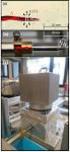 Penetration rate effects on cone resistance measured in a calibration chamber K. Kim Professional Service Industries, Inc, Houston, TX, USA M. Prezzi & R. Salgado Purdue University, West Lafayette, IN,
INTRODUCTION TO SOIL MODULI. Jean-Louis BRIAUD 1
 INTRODUCTION TO SOIL MODULI By Jean-Louis BRIAUD 1 The modulus of a soil is one of the most difficult soil parameters to estimate because it depends on so many factors. Therefore when one says for example:
GEOTECHNICAL ENGINEERING II. Subject Code : 06CV64 Internal Assessment Marks : 25 PART A UNIT 1
 GEOTECHNICAL ENGINEERING II Subject Code : 06CV64 Internal Assessment Marks : 25 PART A UNIT 1 1. SUBSURFACE EXPLORATION 1.1 Importance, Exploration Program 1.2 Methods of exploration, Boring, Sounding
NEW DEVELOPMENTS AND IMPORTANT CONSIDERATIONS FOR STANDARD PENETRATION TESTING FOR LIQUEFACTION EVALUATIONS. Jeffrey A Farrar M.S.
 NEW DEVELOPMENTS AND IMPORTANT CONSIDERATIONS FOR STANDARD PENETRATION TESTING FOR LIQUEFACTION EVALUATIONS Jeffrey A Farrar M.S., P E 1 ABSTRACT Standard Penetration Tests (SPT) are often used for evaluating
GUIDE TO CONE PENETRATION TESTING
 GUIDE TO CONE PENETRATION TESTING www.greggdrilling.com Engineering Units Multiples Micro (μ) = 10-6 Milli (m) = 10-3 Kilo (k) = 10 +3 Mega (M) = 10 +6 Imperial Units SI Units Length feet (ft) meter (m)
CPTic_CSM8. A spreadsheet tool for identifying soil types and layering from CPTU data using the I c method. USER S MANUAL. J. A.
 CPTic_CSM8 A spreadsheet tool for identifying soil types and layering from CPTU data using the I c method. USER S MANUAL J. A. Knappett (2012) This user s manual and its associated spreadsheet ( CPTic_CSM8.xls
TECHNICAL REPORT ON SCALA DYNAMIC CONE PENETROMETER IRREGULARITY
 TECHNICAL REPORT ON SCALA DYNAMIC CONE PENETROMETER IRREGULARITY CETANZ Technical Report TR 1 Author(s) SJ Anderson, Geotechnics Ltd Report Date First Issue May 2010 Report Revision Date September 2011
Chittagong Hill Tract Development Facilities (CHTDF) United Nations Development Programme
 Chittagong Hill Tract Development Facilities (CHTDF) United Nations Development Programme Main Report Deliverable 02 Sub-Surface Properties of Soil Development in Rangamati, Bandarban and Khagrachari Municipality
ENCE 4610 Foundation Analysis and Design
 This image cannot currently be displayed. ENCE 4610 Foundation Analysis and Design Shallow Foundations Total and Differential Settlement Schmertmann s Method This image cannot currently be displayed. Strength
Ingeniería y Georiesgos Ingeniería Geotécnica Car 19 a Nº 84-14 of 204 ; TEL : 6916043 E-mail: [email protected]
 The plot below presents the cross correlation coeficient between the raw qc and fs values (as measured on the field). X axes presents the lag distance (one lag is the distance between two sucessive CPT
Numerical Analysis of Texas Cone Penetration Test
 International Journal of Applied Science and Technology Vol. 2 No. 3; March 2012 Numerical Analysis of Texas Cone Penetration Test Nutan Palla Project Engineer, Tolunay-Wong Engineers, Inc. 10710 S Sam
CIV4249 1. SITE INVESTIGATION AND EXPLORATION TABLE OF CONTENTS
 Unit CIV4249: Foundation Engineering 1.1 CIV4249 1. SITE INVESTIGATION AND EXPLORATION TABLE OF CONTENTS 1. GENERAL... 2 1.1. Objectives... 2 1.2. Reasons for investigating Subsurface... 2 1.3. Sources
STP883-EB/Nov. 1985. Subject Index
 STP883-EB/Nov. 1985 Subject Index A Aas in-situ tests, 209-210 Analytical model technique, 432, 438 Andersen's procedure, 342, 345,349-351 Arabian Gulf soils, 413 ASCE conference, 41 ASTM Standards D 422:385
CPTWD (Cone Penetration Test While Drilling) a new method for deep geotechnical surveys
 CPTWD (Cone Penetration Test While Drilling) a new method for deep geotechnical surveys Authors : Massimo Sacchetto-Engineer-: S P G drilling company -Adria (Ro) Italy Kjell Elmgren Engineer ENVI Environmental
LABORATORY DETERMINATION OF CALIFORNIA BEARING RATIO
 LABORATORY DETERMINATION OF CALIFORNIA BEARING RATIO STANDARD IS: 2720 (Part 16) 1979. DEFINITION California bearing ratio is the ratio of force per unit area required to penetrate in to a soil mass with
FINAL REPORT ON SOIL INVESTIGATION
 FINAL REPORT ON SOIL INVESTIGATION FOR PROPOSED CONSTRUCTION AT SS-6B AREA AT HPCL VISAKH REFINERY VISAKHAPATNAM ANDHRA PRADESH J.J. ASSOCIATES(VISAKHAPATNAM) AETP(P) LIMITED #11-6-3, RockDale Layout,
COMPENDIUM OF INDIAN STANDARDS ON SOIL ENGINEERING PART 2
 (PREVIEW) SP 36 (Part 2) : 1988 COMPENDIUM OF INDIAN STANDARDS ON SOIL ENGINEERING PART 2 IS 1893 : 1979 (Reaffirmed 1987) CODE OF PRACTICE FOR SUBSURFACE INVESTIGATION FOR FOUNDATIONS 1.1 This code deals
Evaluation of Post-liquefaction Reconsolidation Settlement based on Standard Penetration Tests (SPT)
 RESEARCH ARTICLE OPEN ACCESS Evaluation of Post-liquefaction Reconsolidation Settlement based on Standard Penetration Tests (SPT) AlketaNdoj*,VeronikaHajdari* *Polytechnic University of Tirana, Department
Measurement of Soil Parameters by Using Penetrometer Needle Apparatus
 Vol.3, Issue.1, Jan-Feb. 2013 pp-284-290 ISSN: 2249-6645 Measurement of Soil Parameters by Using Penetrometer Needle Apparatus Mahmoud M. Abu zeid, 1 Amr M. Radwan, 2 Emad A. Osman, 3 Ahmed M.Abu-bakr,
STABILITY ANALYSIS OF AN EARTH DAM FOUNDATION IN TUNISIA
 Int. J. of GEOMATE, June, 1, Vol., No. (Sl. No. 1), pp. 919-9 Geotech., Const. Mat. & Env., ISSN:1-9(P), 1-99(O), Japan STABILITY ANALYSIS OF AN EARTH DAM FOUNDATION IN TUNISIA El Ouni Mohamed Ridha 1,
Anirudhan I.V. Geotechnical Solutions, Chennai
 Anirudhan I.V. Geotechnical Solutions, Chennai Often inadequate In some cases, excess In some cases, disoriented Bad investigation Once in a while good ones Depends on one type of investigation, often
QUESTION TO AUDIENCE
 Site investigation some aspects of EN1997 Part 2 David Norbury David Norbury Limited BGA Symposium Eurocode 7 Today and Tomorrow, Cambridge, England, March 2011 QUESTION TO AUDIENCE How many of you have
Use and Application of Piezocone Penetration Testing in Presumpscot Formation
 Use and Application of Piezocone Penetration Testing in Presumpscot Formation Craig W. Coolidge, P.E. Summit Geoengineering Services, Rockland, Maine ABSTRACT: This paper examines the advantages and limitations
Method Statement FOR. Soil Investigation
 Method Statement FOR Soil Investigation PREPARED BY JUNE 2010 Infratech ASTM CO., LTD. TABLE OF CONTENTS Chapter Title Page Table of Contents..1 List of Appendix... 2 List of Table... 2 List of Figures...
Soil Behavior Type using the DMT
 Soil Behavior Type using the DMT Peter K. Robertson Gregg Drilling & Testing Inc., Signal Hill, CA, USA. E-mail: [email protected] Keywords: Soil Behavior Type, CPT, DMT ABSTRACT: The most promising
Chapter 5 FIELD AND LABORATORY TESTING PROCEDURES
 Chapter 5 FIELD AND LABORATORY TESTING PROCEDURES Final SCDOT GEOTECHNICAL DESIGN MANUAL August 2008 Table of Contents Section Page 5.1 Introduction...5-1 5.2 Sampling Procedure...5-1 5.2.1 Soil Sampling...5-1
4.3 Results... 27 4.3.1 Drained Conditions... 27 4.3.2 Undrained Conditions... 28 4.4 References... 30 4.5 Data Files... 30 5 Undrained Analysis of
 Table of Contents 1 One Dimensional Compression of a Finite Layer... 3 1.1 Problem Description... 3 1.1.1 Uniform Mesh... 3 1.1.2 Graded Mesh... 5 1.2 Analytical Solution... 6 1.3 Results... 6 1.3.1 Uniform
GEOTECHNICAL DESIGN MANUAL
 GEOTECHNICAL DESIGN MANUAL CHAPTER 4 GEOTECHNICAL FIELD INVESTIGATION NYSDOT Geotechnical Page 4-1 December 10, 2013 (Intentionally left blank) NYSDOT Geotechnical Page 4-2 December 10, 2013 Table of Contents
How To Model A Shallow Foundation
 Finite Element Analysis of Elastic Settlement of Spreadfootings Founded in Soil Jae H. Chung, Ph.D. Bid Bridge Software Institute t University of Florida, Gainesville, FL, USA Content 1. Background 2.
King Saud University College of Engineering Civil Engineering Department DEFORMATION OF PARTIALLY SATURATED SAND. Sultan Musaed Al-Ghamdi
 King Saud University College of Engineering Civil Engineering Department DEFORMATION OF PARTIALLY SATURATED SAND By Sultan Musaed Al-Ghamdi Submitted in Partial Fulfillment of The Required For the Degree
ODOT/OSU collaboration on the development of CPT Capabilities for use in Ohio Transportation Projects
 CPT Cone Penetration Testing ODOT/OSU collaboration on the development of CPT Capabilities for use in Ohio Transportation Projects Presented by: Jason Ross, Staff Engineer, BBC&M Engineering, Inc. Kirk
ANNEX D1 BASIC CONSIDERATIONS FOR REVIEWING STUDIES IN THE DETAILED RISK ASSESSMENT FOR SAFETY
 ANNEX D1 BASIC CONSIDERATIONS FOR REVIEWING STUDIES IN THE DETAILED RISK ASSESSMENT FOR SAFETY ANNEX D1: BASIC CONSIDERATIONS FOR REVIEWING STUDIES IN DRA FOR SAFETY D1-1 ANNEX D1 BASIC CONSIDERATIONS
In Situ Subsurface Characterization
 27 In Situ Subsurface Characterization J. David Frost Georgia Institute of Technology Susan E. Burns Georgia Institute of Technology 27.1 Introduction 27.2 Subsurface Characterization Methodology 27.3
Local Authority Building Control Technical Information Note 3 Driven and In-situ Piled Foundations
 Local Authority Building Control Technical Information Note 3 Driven and In-situ Piled Foundations Cambridge City Council - East Cambridgeshire District Council - Fenland District Council, Huntingdonshire
Geotechnical Investigation Test Report
 Geotechnical Investigation Test Report Report No. htsc/rcd/ 3457 Dated: - 20/03/2010 Asphalt Standard Penetration Test as per IS 2131 ------------- IS 6403 Soil Job Card No - 1649 Cement Client/Department
Soil Mechanics. Soil Mechanics
 Soil is the most misunderstood term in the field. The problem arises in the reasons for which different groups or professions study soils. Soil scientists are interested in soils as a medium for plant
Module 1 : Site Exploration and Geotechnical Investigation. Lecture 5 : Geophysical Exploration [ Section 5.1 : Methods of Geophysical Exploration ]
![Module 1 : Site Exploration and Geotechnical Investigation. Lecture 5 : Geophysical Exploration [ Section 5.1 : Methods of Geophysical Exploration ]](/thumbs/40/20679662.jpg "Module 1 : Site Exploration and Geotechnical Investigation. Lecture 5 : Geophysical Exploration [ Section 5.1 : Methods of Geophysical Exploration ]") Objectives In this section you will learn the following General Overview Different methods of geophysical explorations Electrical resistivity method Seismic refraction method 5 Geophysical exploration
Objectives In this section you will learn the following General Overview Different methods of geophysical explorations Electrical resistivity method Seismic refraction method 5 Geophysical exploration
Strength Determination of "Tooth-Paste" Like Sand and Gravel Washing Fines Using DMT
 Strength Determination of "Tooth-Paste" Like Sand and Gravel Washing Fines Using DMT David L. Knott, P.E. and James M. Sheahan, P.E. HDR Engineering, Inc. 3 Gateway Center Pittsburgh, PA 15222-1074 Phone:
PERMEABILITY TEST. To determine the coefficient of permeability of a soil using constant head method.
 PERMEABILITY TEST A. CONSTANT HEAD OBJECTIVE To determine the coefficient of permeability of a soil using constant head method. need and Scope The knowledge of this property is much useful in solving problems
Washington 98102-3699, [email protected]
 LESSONS LEARNED FROM A STONE COLUMN TEST PROGRAM IN GLACIAL DEPOSITS Barry S. Chen 1, P.E., Member, Geo-Institute and Michael J. Bailey 2, P.E., Member, Geo-Institute ABSTRACT A stone column test program
SUGGESTION ABOUT DETERMINATION OF THE BEARING CAPACITY OF PILES ON THE BASIS OF CPT SOUNDING TESTS
 SUGGESTION ABOUT DETERMINATION OF THE BEARING CAPACITY OF PILES ON THE BASIS OF CPT SOUNDING TESTS JóZSEF PUSZTAI About the authors Pusztai József Budapest University of Technology and Economics, Department
Geotechnic Parameters Analysis Obtained by Pencel Presuremeter Test on Clayey Soils in Resistencia City
 American Journal of Science and Technology 2015; 2(5): 237-242 Published online August 10, 2015 (http://www.aascit.org/journal/ajst) ISSN: 2375-3846 Geotechnic Parameters Analysis Obtained by Pencel Presuremeter
Effect of grain size, gradation and relative density on shear strength and dynamic cone penetration index of Mahi, Sabarmati and Vatrak Sand
 Discovery ANALYSIS The International Daily journal ISSN 2278 5469 EISSN 2278 5450 2015 Discovery Publication. All Rights Reserved Effect of grain size, gradation and relative density on shear strength
ALLOWABLE LOADS ON A SINGLE PILE
 C H A P T E R 5 ALLOWABLE LOADS ON A SINGLE PILE Section I. BASICS 5-1. Considerations. For safe, economical pile foundations in military construction, it is necessary to determine the allowable load capacity
USE OF CONE PENETRATION TEST IN PILE DESIGN
 PERIODICA POLYTECHNICA SER. CIV. ENG. VOL. 47, NO. 2, PP. 189 197 (23) USE OF CONE PENETRATION TEST IN PILE DESIGN András MAHLER Department of Geotechnics Budapest University of Technology and Economics
Cone penetration testing, CPTu
 1 Cone penetration testing, CPTu Preface Our company is Environmental Mechanics AB or short Envi. A Swedish company developing, producing and marketing systems for cone penetration testing (also known
An Automatic Kunzelstab Penetration Test
 An Automatic Kunzelstab Penetration Test Yongyuth Sirisriphet 1, Kitidech Santichaianant 2 1 Graduated student: Faculty of Industrial Education in and Technology. King Mongkut's University of Technology
CONSTANT HEAD AND FALLING HEAD PERMEABILITY TEST
 CONSTANT HEAD AND FALLING HEAD PERMEABILITY TEST 1 Permeability is a measure of the ease in which water can flow through a soil volume. It is one of the most important geotechnical parameters. However,
Multiple parameters with one Cone Penetration Test. by Mark Woollard
 Multiple parameters with one Cone Penetration Test by Mark Woollard Subjects introduction MW introduction APB introduction CPT portfolio APB onshore CPT equipment near shore CPT equipment offshore CPT
Geotechnical Standards Eurocodes. An update
 Geotechnical Standards Eurocodes. An update Professor Ltd Sussex University EUROCOE 7 (EN 1997) Part 1 published. 2004 National Annex published 2007 Part 2 published Mar 2007 National Annex published 2010