
Article. Abstract. Introduction ALBERTO BALLERIO 1, BRUCE D. GILL 2 & VASILY V. GREBENNIKOV 2
|
|
|
- Eleanor Gilmore
- 10 years ago
- Views:
Transcription
1 Zootaxa 2892: 1 24 (2011) Copyright 2011 Magnolia Press Article ISSN (print edition) ZOOTAXA ISSN (online edition) Illustrated overview and identification key to Cameroonian Ceratocanthinae beetles (Coleoptera: Scarabaeoidea: Hybosoridae) with description of four new species ALBERTO BALLERIO 1, BRUCE D. GILL 2 & VASILY V. GREBENNIKOV 2 1 Viale Venezia 45, I Brescia, Italy. [email protected] 2 Canadian Food Inspection Agency, K.W. Neatby Bldg., 960 Carling Avenue, Ottawa Ontario K1A 0C6 Canada. [email protected] and [email protected] Abstract We summarize present day knowledge on Cameroonian Ceratocanthinae and report new findings made during a monthlong collecting trip in Four forested localities were surveyed: Mt. Oku at m, Korup National Park at 300 m, Mt. Kupé at 1550 m and Mt. Cameroon at Bakingili village at 250 m. In total we collected 242 specimens representing 14 species, among them nine species new to Cameroon and eight species likely new to science. Four flightless new species are described: Congomostes hintelmanni n. sp., Baloghianestes oribatidiformis n. sp., B. korupensis n. sp. and B. anceps n. sp. Other Ceratocanthinae species presently known from Cameroon are: Baloghianestes lissoubai Paulian, 1968, Callophilharmostes fleutiauxi (Paulian, 1942), Carinophilharmostes vadoni (Paulian, 1937), Melanophilharmostes burgeoni (Paulian, 1946), M. demirei Paulian, 1977, M. zicsii (Paulian, 1968), Philharmostes (Holophilharmostes) badius (Petrovitz, 1967), Petrovitzostes guineensis (Petrovitz, 1968), P. elytratus (Paulian, 1946), P. endroedyi (Paulian, 1974), along with three unnamed species of Melanophilharmostes Paulian, 1968 and one unnamed species of Pseudopterorthochaetes Paulian, Twelve Cameroonian Ceratocanthinae species are keyed and all 14 recently collected species are illustrated with habitus images. Key words: Coleoptera, Hybosoridae, Ceratocanthinae, West Africa, Cameroon, Mt. Oku, Korup National Park, Mt. Kupé, Mt. Cameroon, taxonomy, key, new species, leaf litter sifting Introduction Most adult beetles of the scarab subfamily Ceratocanthinae are easily recognized among the endlessly diverse Coleoptera by their ability to roll themselves into a nearly perfect ball (Figs. 3B D). This is a morphological and behavioural phenomenon paralleled by only a handful of other beetles, such as some Leiodidae (Agathidiinae) and Clambidae. Many Ceratocanthinae adults are further remarkable in having bright, shiny, metallic bodies or being decorated with pronounced dorsal ridges. The last worldwide checklist of Ceratocanthinae by Ocampo and Ballerio (2006) recorded 40 genera and 341 species. Since then, 14 new species and three new genera have been described (Ballerio 2006a, 2008, 2009; Ballerio & Gill 2008; Ochi et al. 2005; Gao 2009; Ballerio & Maruyama 2010). Recently Ceratocanthinae has been hypothesised to be a phylogenetic offshoot nested within the more conservative-looking Hybosoridae beetles (Grebennikov et al. 2004; Ocampo & Hawks 2006), which, in turn, necessitated demoting the taxon to its current subfamily rank. Ceratocanthinae beetles are predominantly found in tropical forests with only a few species reaching temperate forested regions of North America, South Africa and the southeastern Palaearctic zone. In Africa, Ceratocanthinae beetles are known from Madagascar, the Guineo-Congolian rainforest block, the Eastern Arc rainforests of Kenya and Tanzania and some isolated forests of southern Africa. Among them, the Guineo-Congolian rainforest block hosts a rich and distinctive fauna of Ceratocanthinae beetles consisting of nine genera and some 30 species, nine of the latter have been previously recorded from the Republic of Cameroon. Ceratocanthinae beetles are rarely seen in nature or in collections. Believed to be biologically linked with some social insects, these beetles are infrequently collected, but are most common in nests of social insects, such as ter- Accepted by A. Smith: 21 Apr. 2011; published: 26 May

2 mites. Canopy fogging (Ballerio & Wagner 2005; Erwin et al. 2005) and flight intercept trapping have been used successfully to collect predominantly flying Ceratocanthinae species. Sifting forest floor debris (Fig. 2A) and leaf litter with subsequent specimen extractions in Berlese/Winkler funnels (Fig. 2B) was efficient in obtaining adult specimens of both winged and wingless species. Overall, however, Ceratocanthinae beetles are rarely seen, even when they are particularly sought for. The aim of the present paper is to report on findings made during a month-long expedition to Cameroon undertaken by two of us (BG & VG) in May We visited four different forested sites (Mt. Oku, Mt. Kupé, Korup National Park and the southern slope of Mt. Cameroon at Bakingili village; Fig. 1), and in three of them encountered relatively high diversity of Ceratocanthinae beetles. In total 242 adult specimens representing fourteen species were collected, among them were one known species previously unreported from Cameroon and eight others probably new to science. Adding to the nine species previously known from Cameroon, the total number of Cameroonian Ceratocanthinae is presently 18 species. In this paper we provide an identification key to all 12 named Cameroonian Ceratocanthinae species, illustrate 14 freshly collected species and formally describe four of eight presumably new species. The remaining four species, being members of the genera Melanophilharmostes Paulian, 1968 (three species, Figs ) and Pseudopterorthochaetes Paulian, 1977 (one species, Fig. 19) will be dealt with later, owing to the fact that we did not study all of name-bearing types from the two aforementioned genera. FIGURE 1. Map of southern Cameroon showing the four forested sites sampled for Ceratocanthinae beetles in May Note that no Ceratocanthinae were found at Mt. Oku (site #1), while sites #2, #3, and #4 gave three, six and seven species, respectively. Material and methods We refer to Ballerio (2000a; 2000b; 2001; 2004) and Howden and Gill (2000) for methods and terminology conventions. Dimethyl hydantoin formaldehyde (DMHF) water-soluble resin was used for genitalia preparation. Habitus colour images were taken with a Canon PowerShot S 40 digital camera connected to a Leica MZ 12.5 stereoscope and assembled using the Syncroscopy Automontage software. Scanning electron microscopy (SEM) images were obtained with a Zeiss EVO 40 XVP microscope at the Museo Tridentino di Scienze Naturali (Trento, Italy) using gold coating. The surface sculpturing of Ceratocanthinae integuments is an important source of characters for species identification. The use of traditional nomenclature for surface sculpture, especially of punctation types and patterns, could cause some ambiguities and misunderstandings. We find it useful to provide definitions of the main punctation patterns. Simple punctation. More or less irregularly circular pits/pores, sometimes bearing a seta. 2 Zootaxa Magnolia Press BALLERIO ET AL.

3 FIGURE 2. Collecting techniques and habitats for Ceratocanthinae beetles in Cameroon, Mt. Kupé (A D) and Korup National Park (E). A gathering forest leaf litter containing adult Ceratocanthinae into a sifter; B two Winkler funnels under a rain roof loaded with sifted leaf litter from the forest floor; C D wet primary tropical forest with large trees and numerous epiphytes, where most of the reported Ceratocanthinae were collected; E dung-baited pitfall trap for scarab beetles set up close to a termite nest and protected with rain roof. Horseshoe-shaped punctation. The most characteristic type of punctation in the subfamily. The puncture is shaped like a horseshoe. Usually the punctation pattern has the opening of the horseshoe oriented in the same way, centrifugally or centripetally, backwards or outwards. Often the areola inside the horseshoe contains a single pore, in most cases a setigerous pore. Comma-shaped punctation. These punctures resemble short horseshoe-shaped punctures but their curvature is not long enough to complete the shape of a horseshoe. Comma-shaped punctures can connect to each other creating irregular lines (as often happens to the distal sculpturing of the clypeus) or an anastomosing punctation pattern. Sometimes there is a simple puncture/pore, often a setigerous pore, connected with each comma-shaped puncture. As in the case of horseshoe-shaped punctures, comma-shaped punctures tend to form a pattern with the same orientation, transverse or longitudinal. Ocellate punctation. The horseshoe is closed and there is a pore (most often a setigerous pore), called an ocellum, in the middle of the areola contained by the closed horseshoe-shaped puncture (simply ocellate puncture). Sometimes the pore is contained in a second inner areola (doubly ocellate puncture) as seen in Baloghianestes oribatidiformis n. sp. Areolate punctation. The horseshoe is closed but there is no ocellum inside. This punctation type is rarely seen; most cases of supposed areolate punctation are cases of ocellate punctation with the ocellum invisible or the seta worn off. CAMEROONIAN CERATOCANTHINAE Zootaxa Magnolia Press 3

4 Abbreviations used in the descriptions: EL maximum elytral length EW maximum combined elytral width HL maximum head length HW maximum head width L length PL maximum pronotal length at middle PW maximum pronotal width at middle W width Abbreviations used for collections (names of curator in parenthesis) ABCB A. Ballerio private collection, Brescia, Italy BDGC B. D. Gill private collection, Ottawa, Canada CNCI Canadian National Collection of Insects, Ottawa, Canada (P. Bouchard) MZUF Museo Zoologico La Specola, Firenze, Italy (L. Bartolozzi) MRAC Musée Royal de l Afrique Centrale, Tervuren, Belgium (M. De Meyer) Description of collecting localities Four distantly separated forest localities were sampled in Cameroon in May Mt. Oku (site #1, Fig. 1) is volcanic in origin and its summit, at 3,010 m, is the second highest in Cameroon. Between May 3 and May 6, 2006, we sampled at three different sites (N06º E010º at 2800 m; N06º E010º at 2800 m; lake Oku at N06º E010º at 2200 m). We processed approximately 20 kg of forest leaf litter from each site through Winkler funnels. Our samples were collected from the forest, which had been disturbed in various degrees by fuel wood gathering and the raising of goats. No Ceratocanthinae specimens were found on Mt. Oku and none were previously reported. Among the noteworthy beetles found in this locality were larvae and adults of the afromontane scarab beetle Coelocorynus desfontainei Antoine, 1999 (Scarabaeidae: Cetoniinae: Trichiini: Cryptodontina; see Šípek et al. 2009) and a new species of wingless and eyeless carabid beetle Antireicheia hintelmanni Grebennikov, Bulirsch & Magrini, 2009(Carabidae: Scaritinae: Clivinini: Reicheiina; see Grebennikov et al. 2009). Korup National Park (site #2, Fig. 1) is a prime example of nearly undisturbed West African lowland, with primary forest on the border with Nigeria. We were based at Rengo Camp (N05º E008º at 300 m) and sampled between May 12 16, All camps in Korup have since been destroyed during a land dispute between the park authorities and local communities. Three Ceratocanthinae species were collected in Korup: Baloghianestes korupensis n. sp., Melanophilharmostes sp. B. and Petrovitzostes guineensis (Petrovitz, 1968). Mt. Kupé (site #3, Fig. 1) is a well-known bird-watching spot in Cameroon, most easily accessible from the village of Nyasoso, where porters and a guide can be hired to walk up the mountain to a forested flat spot suitable for camping (N04º E009º at 1550 m). We sampled around our camp for three days on May 19 21, 2006 (Figs. 1A D) in undisturbed primary, montane forest, and obtained specimens of six Ceratocanthinae species: Baloghianestes anceps n. sp., Baloghianestes oribatidiformis n. sp., Congomostes hintelmanni n. sp., Melanophilharmostes demirei (Paulian, 1977), Melanophilharmostes sp. A and Pseudopterorthochaetes endroedyi Paulian, Mt. Cameroon (=Mt. Fako) (site #4, Fig. 1) with a summit at 4040 m is the highest Cameroonian mountain and an active volcano. Our sampling locality (N E at 250 m) was less than a hundred meters east of the 1999 lava flow where it crosses the Limbe Road. Bakingili village, a couple of kilometres west of the lava flow, is the nearest inhabited place. We collected Ceratocanthinae beetles for three days on May 24 26, 2006 in lowland forest on the edge of an oil palm plantation, and discovered seven species: Baloghianestes lissoubai Paulian, 1968, B. oribatidiformis n. sp., Congomostes hintelmanni n. sp., Carinophilharmostes vadoni (Paulian, 1937), Melanophilharmostes zicsii (Paulian, 1968), M. sp. C and Pseudopterorthochaetes sp. A. This was the rich- 4 Zootaxa Magnolia Press BALLERIO ET AL.

5 est Cameroonian site in terms of Ceratocanthinae diversity. Among other noteworthy beetles found there were Limulopteryx hintelmanni Grebennikov, 2008 (Ptiliidae) discovered in nests of the termite Nasutitermes incurvus (Sjöstedt, 1924) and likely representing the first termitophilous Ptiliidae discovered outside of the Neotropics. Ceratocanthinae beetles recorded from Cameroon Baloghianestes anceps Ballerio, Gill & Grebennikov, n. sp. (Figs. 3, 7D, F) Material. Holotype, male: Cameroon S.-West Prov., Mt. Kupé at Nyasoso, N04º E009º42.453, V.2006, 1550m., V. Grebennikov leg. (CNCI) [distended specimen glued on card, dissected, genitalia mounted in DMHF resin on a separate card, same pin]. Paratypes: 1 male [dissected] and 1 female, same data as holotype (ABCB, BDGC). Description. HL: 1.13 mm; HW: 1.64 mm; PL: 1.13 mm; PW: 1.98 mm; EL: 2.83 mm; EW: 2.17 mm. Small, flightless Ceratocanthinae. Body convex; shiny, uniformly dark brown with faint brown-bronze sheen; underside and tarsi reddish brown, antennae pale yellow; head, pronotum and elytra covered by a pale yellow pubescence, visible at low magnification (45x). Head: W/L ratio = 1.45; subpentagonal, fore margin triangular, with apex blunt and obtuse (about 150 ) and sides almost rectilinear; genae slightly produced outwards, acutely pointed; genal canthus indistinct; dorsal ocular area absent, ventral ocular area transverse, narrow. Surface of head slightly convex, densely punctured; vertex with a small raised smooth area in the middle and coarse, deep, simple punctures; puncture distance from each other being less than their diameter; disc covered by short, impressed, horseshoe-shaped punctures centrifugally oriented, each one having a simple puncture inside the horseshoe; fore margin with two or three transverse lines. FIGURE 3. Baloghianestes anceps n. sp., habitus. A distended specimen, dorsal, B D rolled up specimen, ventral (B), dorsal (C), lateral (D). Pronotum: short and transverse (W/L ratio = 1.75); fore angles distinctly truncate, no bead visible apart from around the truncature of the fore angles; sides of fore margin, sides of pronotum and base without visible bead. Pro- CAMEROONIAN CERATOCANTHINAE Zootaxa Magnolia Press 5

6 notum almost regularly convex, with slightly swollen posterior and anterior margin; entire surface of pronotum covered by strongly impressed, large, doubly ocellate punctures, with a few very small ones on disc; all punctures almost adjacent to each other; ocellum large and bearing a simple seta. Scutellum: slightly longer than wide; apex sharp, acute, with distal third narrow; sides of base notched by articular process of elytron; a small apical portion of mesepisternum visible from above; surface covered by small impressed simple punctures basally becoming larger and ocellate distally. Elytra: longer than wide (W/L ratio = 0.77), dorsal outline oval; convex; whole surface shiny; covered by impressed, horseshoe-shaped, large, elongate punctures; disc with horseshoe almost closed and opening backwards; punctures becoming simply ocellate distally and laterally. Humeral callus absent. Pseudoepipleura with same microsculpturing as elytral surface; not delimited by any lateral carina apart from a short, sharp carina near humeral area. Elytral suture not raised, smooth; sutural stria fine, limited to distal fourth; inferior sutural stria present; marginal area small, almost completely replaced by an articular area, which bears about 5 7 visible ridges. Wings completely absent. Antennae short, with nine antennomeres; scape securiform; pedicellum irregularly shaped, about as wide as the distal portion of scape; funicle short with antennomeres noticeably wider than long; club as long and almost as wide as funicle, with three antennomeres; club antennomeres small and setose. Clypeopleuron developed. Labrum distally gently depressed, with wide U-shaped emargination; proximally fringed with few (about six) long, fine setae. Mentum with ventral surface completely flat, subrectangular, emarginate in the middle of anterior edge; labial palpi (including palpiger) with four palpomeres. Mandible with pointed apical tooth, without small secondary tooth. Procoxae subcontiguous; profemora with surface smooth, bearing fine, flying, long setae with a very slight emargination at distal third. Protibiae broadly curved outwards, with outer lateral edge finely serrate; apical spur slender with tip acute. Protarsus attached near apical third on lateroventral surface of tibia with basal tarsomere shorter than other four combined; protarsomeres 2 4 short and subequal; protarsomere 5 slightly longer bearing two small, regularly curved claws; protarsomeres, excluding protarsomere 5, with tufts of setae on ventral surface. Mesocoxae and metacoxae close to each other; mesofemora with smooth surface bearing fine, flying, long setae with a distinct emargination at distal third of hind edge. Mesotibiae slender, proximally with a large smooth depressed area; with two short, fine, straight apical spurs near inner apical angle. Metafemora abruptly narrowed at proximal third, their surface microreticulated and wrinkled; metatibiae triangularly shaped with sinuate inner edge; apex of metatibiae with two short, fine, straight apical spurs. Ventral side of mesotarsi and metatarsi (with the exception of last tarsomere) with tufts of short setae. Secondary sexual dimorphism: males with inner apical spur of mesotibiae shorter than outer one and bent slightly inwards (this character is slightly pronounced and difficult to discern), while in females both apical spurs are straight. Male genitalia: aedeagus with parameres short weakly sclerotized, subrectangular, slightly asymmetrical, with ventral portion membranous, without dorsobasal apophysis lying along anchoring point with basal piece; basal piece slightly twisted and long, about three times as long as parameres; internal sac (Fig. 7D) longer than tegmen, armed with a strongly sclerotized, asymmetrical structure lying as a median lobe. Genital segment (Fig. 7F) with branches joining together forming a distinct manubrium slightly longer than basal triangle. Female genitalia: vaginal palpi elongate and setose, bursa copulatrix with echinulate subcircular large plates. Diagnosis. This species can be recognised from other Baloghianestes Paulian, 1968 species by the following combination of characters: a) head surface lacking any raised sculpturing, b) margins of pronotum, including base, not raised or swollen and c) the distinctive punctate elytra with horseshoe-shaped punctures (at least on disc), while in all other species elytral punctation is composed of ocellate punctures. Etymology. Anceps, Latin noun in apposition meaning ambiguous, or undecided, due to the uncertainties related to its placement in the genus Baloghianestes. Remarks. Baloghianestes anceps differs noticeably from the other three species here assigned to Baloghianestes by the general shape of the elytra and elytral microsculpture (resembling, in this respect, species of Philharmostes Kolbe, 1895), as well as by the lack of swellings or raised structures on elytra, pronotum and head. The apical portion of the internal sac of the aedeagus, forming a kind of median lobe, is unique within the genus as well as in the Philharmostes genus group, as defined by Ballerio (2001, 2004). The placement of this new species in the genus Baloghianestes is tentative pending a better understanding of the generic limits. 6 Zootaxa Magnolia Press BALLERIO ET AL.

7 Baloghianestes oribatidiformis Ballerio, Gill & Grebennikov, n. sp. (Figs. 4, 7A, C, E) Material. Holotype, male: Cameroon S.-West Prov., Mt. Kupé at Nyasoso, N E , V.2006, 1550m., V. Grebennikov leg. (CNCI) [distended specimen glued on card, dissected, genitalia mounted in DMHF resin on a separate card, same pin]. Paratypes: 63 specimens [five males and two females dissected], same data as holotype (ABCB, BDGC, CNCI, MRAC). Further material examined (not included in type series), 43 specimens [4 males and one female dissected]: Cameroon S.-West Prov., Bakingili, N E , V.2006, 250m, V. Grebennikov leg. (ABCB, BDGC, CNCI). Description. HL: 0.68 mm; HW: 1.30 mm; PL: 1.25 mm; PW: 2.19 mm; EL: 2.24 mm; EW: 2.22 mm. Small, flightless Ceratocanthinae. Body strongly convex; uniformly dark brown with faint brown-bronze sheen; underside and tarsi reddish brown, antennae pale yellow; head, pronotum and elytra covered by a pale yellow pubescence, visible at low magnification (45x). FIGURE 4. Baloghianestes oribatidiformis n. sp., habitus. A distended specimen, dorsal, B D rolled up specimen, ventral (B), dorsal (C), lateral (D). Head: W/L ratio = 1.91, subpentagonal. Fore margin triangular, with angle blunt and obtuse (about 150 ) and sides almost rectilinear; genae slightly produced outwards, acutely pointed; genal canthus indistinct; dorsal ocular area absent; ventral ocular area transverse, narrow. Head surface slightly convex, irregularly densely punctured; vertex with coarse, simple, deep punctures; puncture distance from each other being shorter than their diameter; disc with a longitudinal cariniform process, irregularly raised; discal surface covered by large, doubly ocellate, impressed punctures, almost adjacent to each other; ocellum bearing a simple, erect seta, interval between punctures raised. Pronotum: short and transverse (W/L ratio = 1.75); fore angles distinctly truncate, no bead visible apart from around the truncature of fore angles; sides of fore margin, sides of pronotum and base without any visible bead. Pronotum with disc strongly raised basally, raised process inverted V-shaped, fore margin of pronotum also raised; the entire surface covered by strongly impressed large, doubly ocellate punctures; all punctures almost adjacent to each other; ocellum large and bearing a simple, erect seta. CAMEROONIAN CERATOCANTHINAE Zootaxa Magnolia Press 7
![Paratypes: 63 specimens [five males and two females dissected], same data as holotype (ABCB, BDGC, CNCI, MRAC).](/docs-images/54/9568046/images/page_7.jpg "Further material examined (not included in type series), 43 specimens [4 males and one female dissected]: Cameroon S.-West Prov., Bakingili, N04 03.35 E009 03.823, 24 26.V.2006, 250m, V.")
8 Scutellum: slightly longer than wide (W/L ratio = 0.99); apex sharp and acute, with distal third narrow; sides of base notched by articular process of elytron; a small apical portion of mesepisternum visible from above; surface covered by small, impressed, simple punctures, basally becoming larger and distally ocellate. Elytra: longer than wide (W/L ratio = 0.95), dorsal outline rounded; strongly convex; surface covered by impressed, doubly ocellate, large punctures; ocellum large and bearing a simple, erect seta. Humeral callus absent, replaced by a distinct irregular tubercle. Pseudoepipleura with the same microsculpturing as elytra; delimited by a lateral sharp, complete carina. Elytral suture distinctly raised; sutural stria absent; inferior sutural stria present; marginal area extremely small, almost completely replaced by the articular area, which bears about 5-7 visible ridges. Wings completely absent. Antennae short, with nine antennomeres; scape securiform; pedicellum irregularly shaped, about as wide as the distal portion of scape; funicle short with antennomeres noticeably wider than long; club as long and almost as wide as funicle, with three small, setose antennomeres. Clypeopleuron developed. Labrum distally gently depressed; with a wide, U-shaped emargination; proximally fringed with few (about six) very long, fine setae. Mentum with ventral surface completely flat, subrectangular, emarginate in the middle of anterior edge; labial palpi (including palpiger) with four palpomeres. Mandible with pointed apical tooth, without small secondary tooth. Procoxae subcontiguous; profemora with surface smooth, bearing fine, flying, long setae; with a slight emargination at distal third. Protibiae broadly curved outwards, with outer lateral edge finely serrate; apical spur slender with tip acute. Protarsus attached near apical third on lateroventral surface of tibia, with basal tarsomere shorter than the other four tarsomeres combined, protarsomeres 2 4 short and subequal; protarsomere 5 slightly longer, bearing two small, regularly curved claws; protarsomeres, excluding protarsomere 5, with tufts of setae on ventral surface. Mesocoxae and metacoxae close to each other; mesofemora with smooth surface bearing fine, flying, long setae; with a distinct emargination at distal third of hind edge. Mesotibiae slender; proximally with a large, smooth, depressed area; with two short, fine, straight apical spurs near inner apical angle. Metafemora abruptly narrowed at proximal third, surface microreticulated; metatibiae triangularly shaped with sinuate inner edge; apex of metatibiae with two short, fine, straight apical spurs. Ventral side of mesotarsi and metatarsi (with the exception of the last tarsomere) with tufts of short setae. Secondary sexual dimorphism: males have the inner apical spur of mesotibiae shorter than the outer one and bent slightly inwards (this character is slightly pronounced and difficult to discern), while in females both apical spurs are straight. Male genitalia: aedeagus with parameres short and weakly sclerotized, subrectangular, slightly asymmetrical, without dorsobasal apophysis lying along anchoring point with basal piece (Fig. 7E); basal piece slightly twisted and long, about three times as long as parameres; temones present; internal sac longer than the tegmen, armed with a sclerite (Fig. 7A, C). Genital segment with branches joining together forming a distinct manubrium, slightly longer than basal triangle. Female genitalia: vaginal palpi elongate and setose; bursa copulatrix with echinulate, subcircular, large plates. Diagnosis. This species can be easily recognised from all other representatives of the genus Baloghianestes by the presence of a humeral tubercle on the elytra, combined with the large, doubly ocellate punctation similar to that of pronotum and elytra, and by the raised discal area of the pronotum. Etymology. Oribatidiformis, Latin adjective meaning having the shape of an oribatid mite, due to the appearance of these convex beetles resembling some oribatid mites. Remarks. The Bakingili population of this species shows some differences from the Mt. Kupé population, such as the setae having expanded apices and slight differences in the shape of the sclerite of the internal sac of the aedeagus. We do not deem these differences enough to warrant a separation at the species level, nonetheless we preferred not to include the Bakingili specimens in the type series. Baloghianestes lissoubai Paulian, 1968 (Fig. 5) Material. 20 specimens, Cameroon S.-West Prov., Bakingili, N E , V.2006, 250m, V. Grebennikov leg. (ABCB, BDGC, CNCI). Remarks. Flightless species with a wide range extending through the Republic of the Congo, Cameroon (Paulian 1977) and Gabon (first record, Forêt de la Lopé, leg. L. Bartolozzi, ABCB, MZUF). 8 Zootaxa Magnolia Press BALLERIO ET AL.

9 FIGURE 5. Baloghianestes lissoubai Paulian, habitus. A distended specimen, dorsal, B D rolled up specimen, dorsal (B), ventral (C), lateral (D). Baloghianestes korupensis Ballerio, Gill & Grebennikov, n. sp. (Figs. 6, 7B) Material. Holotype, male: Cameroon S.-West Prov., Korup N. P., Rengo Camp, N E , V.2006, 300m, V. Grebennikov leg. (CNCI) [distended specimen glued on card, dissected, genitalia mounted in DMHF resin on separate card, same pin]. Paratypes: 19 specimens [4 males and 2 females dissected], same data as holotype (ABCB, BDGC). Description. HL: 0.68 mm; HW: 1.32 mm; PL: 1.25 mm; PW: 2.17 mm; EL: 2.17 mm; EW: 2.23 mm. Small, flightless Ceratocanthinae. Body strongly convex; uniformly dark brown with faint brown-bronze sheen; underside and tarsi reddish brown, antennae pale yellow; head, pronotum and elytra covered by a pale yellow pubescence, visible at low magnification (45x). Head: W/L ratio = 1.94, subpentagonal. Fore margin triangular, with angle blunt and obtuse (about 150 ) and sides almost rectilinear; genae slightly produced outwards, acutely pointed; genal canthus indistinct; dorsal ocular area absent; ventral ocular area transverse, narrow. Head surface irregular, slightly convex, densely covered by impressed ocellate punctation; intervals between punctures narrow and distinctly raised with respect to the surface of the ocellate punctures; each puncture bearing in the middle a simple, erect seta. Pronotum: short and transverse (W/L ratio = 1.72); fore angles distinctly truncate, no bead visible except for around the truncature of the fore angles; sides of fore margin, sides of pronotum and base without any visible bead, but swollen and slightly raised; pronotum almost regularly convex; entire surface covered by strongly impressed, large, doubly ocellate punctures; all punctures almost adjacent to each other; punctures large and bearing a simple, erect seta in the middle; seta longer than the setae on the head; intervals between punctures narrow and distinctly raised, especially along the swollen fore and hind margins. Scutellum: slightly longer than wide; apex sharp and acute, with distal third narrow; sides of base notched by articular process of elytron; a small apical portion of mesepisternum visible from above; surface covered by small, impressed, ocellate punctures. CAMEROONIAN CERATOCANTHINAE Zootaxa Magnolia Press 9
![Grebennikov leg. (CNCI) [distended specimen glued on card, dissected, genitalia mounted in DMHF resin on separate card, same pin].](/docs-images/54/9568046/images/page_9.jpg "Paratypes: 19 specimens [4 males and 2 females dissected], same data as holotype (ABCB, BDGC). Description. HL: 0.68 mm; HW: 1.32 mm; PL: 1.25 mm; PW: 2.17 mm; EL: 2.17 mm; EW: 2.23 mm.")
10 FIGURE 6. Baloghianestes korupensis n. sp., habitus. A distended specimen, dorsal, B D rolled up specimen, ventral (B), dorsal (C), lateral (D). Elytra: longer than wide (W/L ratio = 1.03), dorsal outline rounded; strongly convex; entire surface covered by impressed, large, simply ocellate punctures; each puncture bearing an erect, simple seta in the middle. Humeral callus absent. Pseudoepipleura with the same microsculpturing of elytra, delimited by a sharp lateral carina. Lateral carina starting from humeral area, then interrupted around middle of its length, and then resuming again around apical third of elytra, but not aligned to the humeral portion. Elytral suture raised; inferior sutural stria present; marginal area extremely small, almost completely replaced by the articular area, which bears about 5-7 visible ridges. Wings completely absent. Antennae short, with nine antennomeres; scape securiform; pedicellum irregularly shaped, about as wide as the distal portion of scape; funicle short with antennomeres noticeably wider than long; club as long and almost as wide as funicle with three small, setose antennomeres. Clypeopleuron developed. Labrum distally gently depressed; with a wide, U-shaped emargination; proximally fringed with few (about six) long, fine setae. Mentum with ventral surface completely flat, subrectangular, emarginate in the middle of anterior edge; labial palpi (including palpiger) with four palpomeres. Mandible with pointed apical tooth, without small secondary tooth. Procoxae subcontiguous. Profemora with surface smooth; bearing fine, flying, long setae; with a slight emargination at distal third. Protibiae broadly curved outwards, with outer lateral edge finely serrate; apical spur slender with tip acute. Protarsus attached near apical third on lateroventral surface of tibia with basal tarsomere shorter than the other four tarsomeres combined; protarsomeres 2 4 short and subequal; protarsomere 5 slightly longer bearing two small, evenly curved claws; protarsomeres, excluding protarsomere 5, with tufts of setae on ventral surface. Mesocoxae and metacoxae close to each other; mesofemora with smooth surface bearing fine, flying, long setae, with a distinct emargination at distal third of hind edge. Mesotibiae slender, proximally with a large, smooth depressed area; with two short, fine, straight apical spurs near inner apical angle. Metafemora abruptly narrowed at proximal third, with surface microreticulated; metatibiae triangularly shaped with sinuate inner edge; apex of metatibiae with two short, fine, straight apical spurs. Ventral side of mesotarsi and metatarsi (with the exception of the last tarsomere) with tufts of short setae. Secondary sexual dimorphism: males have the inner apical spur of mesotibiae shorter than the outer spur and bent slightly inwards (this character is slightly pronounced and difficult to discern), while in females both apical spurs are straight. 10 Zootaxa Magnolia Press BALLERIO ET AL.

11 FIGURE 7. Male genitalia of Ceratocanthinae beetles. A Baloghianestes oribatidiformis n. sp., Bakingili population, sclerite of internal sac, B Baloghianestes korupensis n. sp., sclerite of internal sac; C Baloghianestes oribatidiformis n. sp., Mt. Kupé population, sclerite of internal sac, D Baloghianestes anceps n. sp., distal part of internal sac/median lobe, E Baloghianestes oribatidiformis n. sp., shape of parameres, lateral, F Baloghianestes anceps n. sp., genital segment. Scale bar: 0.2 mm. Male genitalia: aedeagus with parameres short and weakly sclerotized, subrectangular, slightly asymmetrical, without dorsobasal apophysis lying along anchoring point with basal piece; basal piece slightly twisted and long, about three times as long as parameres; temones present; internal sac longer than the tegmen, armed with a sclerite (Fig. 7B). Genital segment with branches joining together forming a distinct manubrium slightly longer than basal triangle. Female genitalia: vaginal palpi elongate and setose, bursa copulatrix with echinulate, subcircular, large plates. Diagnosis. This species can be easily recognised from all other representatives of the genus Baloghianestes by the following combination of characters: a) lack of humeral tubercle, b) punctation pattern of pronotum (identical to that of B. oribatidiformis), c) elytral punctation composed of simply ocellate punctures, similar to the elytral punctures of B. lissoubai, d) shape of the sclerite of the internal sac of aedeagus. Etymology. From the type locality: Korup National Park, Cameroon. Remarks. Baloghianestes korupensis and B. oribatidiformis are externally similar, sharing the same pronotal punctation and the presence of a sharp carina delimiting the pseudoepipleura, although in B. korupensis the carina is interrupted medially. Both species differ from B. lissoubai in having a carina delimiting the pseudoepipleura (in B. lissoubai the pseudoepipleura is not apparent and elytral sides are therefore regularly convex in transversal section). In B. lissoubai the pronotal punctation is identical to elytral punctation and is made of areolate/simply ocellate punctures, relatively spaced out and not adjacent to each other. The genus Baloghianestes, with the addition of the three newly described species, has a majority of its defining morphological characters correlating to the loss of flight capability. It might be plausible to assume that, as presently defined, the genus is a non-monophyletic assemblage of various wingless Philharmostes independently adapted to life in forest leaf litter. Callophilharmostes fleutiauxi (Paulian, 1942) Remarks. Widespread species known from Ivory Coast, Guinea, Cameroon, Gabon (Paulian 1977) and Uganda (Ballerio & Wagner 2005). CAMEROONIAN CERATOCANTHINAE Zootaxa Magnolia Press 11

12 Carinophilharmostes vadoni (Paulian, 1937) (Fig. 8) Material. 2 specimens, Cameroon S.-West Prov., Bakingili, N E , V.2006, 250m, V. Grebennikov leg. (ABCB, BDGC). Remarks. Widespread species occurring in Guinea, Equatorial Guinea, Cameroon, Central African Republic, Republic of the Congo, Democratic Republic of the Congo, Uganda (Paulian 1977) and Ivory Coast (Paulian, 1979) FIGURE 8. Carinophilharmostes vadoni (Paulian), habitus. A distended specimen, dorsal, B D rolled up specimen, ventral (B), dorsal (C), lateral (D). Congomostes hintelmanni Ballerio, Gill & Grebennikov, n. sp. (Figs. 9 11) Material. Holotype, male: Cameroon S.-West Prov., Mt. Kupé at Nyasoso, N E , V.2006, 1550m, V. Grebennikov leg. (CNCI) [distended specimen glued on card, dissected, genitalia mounted in DMHF resin on separate card, same pin]. Paratypes: 3 specimens: 1 male, same data as holotype but V.2006, B.D. Gill leg. (BDGC), 1 male, Cameroon S.-West Prov., Bakingili, N E , V.2006, 250m, B.D. Gill leg. (BDGC), and 1 male [dissected] Cameroon S.-West Prov., Bakingili, N E , V.2006, 250m, V. Grebennikov leg. (ABCB). Description. HL: 2.60 mm; HW: 2.50 mm; PL: 2.28 mm; PW: 4.23 mm; EL: 4.02 mm; EW: 4.07 mm. Large, flightless Ceratocanthinae; body convex, uniformly black; sternum, antennae, and tarsi reddish brown; short, fine pale yellow pubescence on pronotum visible at medium magnification (45x). 12 Zootaxa Magnolia Press BALLERIO ET AL.

13 FIGURE 9. Congomostes hintelmanni n. sp., habitus. A distended specimen, dorsal, B D rolled up specimen, ventral (B), dorsal (C), lateral (D). Head subpentagonal, wider than long (W/L ratio = 1.7), distinctly narrower than pronotum; apex of head obtusely triangular, outer margin not serrate; genae triangular, distinctly protruding outwards, genal suture visible; genal canthus short, not reaching the occipital area of head; dorsal ocular area medium sized; interocular distance about ten times the maximum width of dorsal ocular area. Head convex; convexity consisting of a slightly raised tubercle on frontal portion and a semicircular, slightly raised process connecting the dorsal ocular areas; dorsal head surface punctation made of dense, deeply impressed, ocellate punctures; puncture distance less than their diameter; clypeopleuron short, subrectangular, unevenly sculptured, with surface distinctly punctured. Pronotum (W/L ratio = 1.8), approximately as wide as elytra, fore edge slightly bisinuate, margined; fore angles subtruncate; sides of pronotum broadly and irregularly rounded, margin not visible in dorsal view, well developed and thick in lateral view; base with margin strongly beaded, visible in dorsal view, posterior median swelling slightly protruding backwards; pronotal sculpturing in the hind median swelling being slightly raised basally; entire pronotal surface strongly punctate with mixed, medium sized, horseshoe shaped punctures with a pore in the middle and simply ocellate punctures; puncture distance less than their diameter, less impressed than the punctures on head. Scutellum about as wide as long, apex sharp and acute, with distal third narrow and depressed; each side being slightly curved inward, sides of base notched by articular process of elytron; apical portion of mesepisternum not visible from above, surface smooth, with few deep, small punctures, separated by a distance greater than their diameter. Elytra about as wide as long (W/L ratio = 1.01), convex, maximum width and convexity near middle; apical third re-entering at apex, i.e. apical declivity reflexed in under body and not visible from above; elytra fused together; each elytron covered by four strongly elevated, sharp carinae; carinae symmetrical; first carina parallel and next to elytral suture, starting near base and reaching elytral apex; second carina almost parallel to the first, starting just after the first and ending before the apical portion of elytra; third carina starting near base and is immediately interrupted for about of its length, then continues/resumes until reaching the apical portion of elytra; fourth carina starting near humeral area, is interrupted for about 1/5 of its length and then starts again, reaching the apical portion of elytra. Vertical surface of carinae smooth; humeral callus indistinct; pseudoepipleura indistinct (elytra almost regularly rounded in transverse section); marginal elytral area narrow, enlarged outward near proximal CAMEROONIAN CERATOCANTHINAE Zootaxa Magnolia Press 13

14 third; inferior sutural stria replaced by a deep furrow, partly concealed by the epipleuron; striated articular area narrow, consisting of only three striae and visible only laterally; entire elytral surface punctured, punctation consisting of medium sized, mixed, horseshoe shaped punctures with a pore in the middle and simply ocellate punctures; punctures larger than those on pronotum, dense, separated by a distance less than their diameter, deeply impressed, although less impressed than the punctures on pronotum. Wings completely absent. FIGURE 10. Congomostes hintelmanni n. sp., A, C parameres, dorsal view (A) and lateral (C), B genital segment. Scale bar: 0.4 mm (A, C), 0.7 mm (B). Antennae with ten antennomeres; scape long and strongly securiform, ending with a cuspidate structure directed forward; funicle short; club with three relatively short antennomeres, setose. Labial palpi (including palpiger) (Fig. 11E) made of four palpomeres; second palpomere short and narrow; third palpomere expanded and about as long as the fourth; fourth elongate, egg-shaped; labium covered by long setae. Maxillae (Fig. 11F) with galea and lacinia membranous, fringed with dense and long, fine setae (Fig. 11G); labrum subrectangular, not sinuate at middle, entire surface covered by coarse, deep, simple punctures; epipharynx as in Fig. 11H; mandibles strongly developed and well visible beyond labrum, with acutely pointed, short apex (Figs. 11A D). Procoxae subcontiguous; protrochanter small and narrow, with a small patch of long setae at tip; profemora smooth; protibiae with outer edge serrate with two strong teeth at apex, apical spur slender, strongly curved downwards. Protarsus attached near apical third on lateroventral surface of tibia, with basal tarsomere about as long as the following three combined; following three tarsomeres short and subequal; fifth slightly longer, bearing two small, regularly curved claws; tarsomeres, excluding ultimate, with tufts of short setae on ventral surface. Mesosternum short, deeply furrowed by striae; mesocoxae and metacoxae almost adjacent to each other; mesotrochanters and metatrochanters narrow; mesofemora with slight emargination at distal third of hind edge; mesotibiae slender (W/L ratio = 0.18), bearing two apical spurs near inner apical angle, the inner one bent inwards at a right angle; mesotarsi longer than apical edge, first tarsomere shorter than following three together; each mesotarsomere, except for the last, bearing a tuft of short setae on ventral surface; metafemora slightly enlarged at proximal third, then distinctly emarginate; metatibiae triangularly shaped, slightly enlarged apically; apex of tibiae with two short, straight apical spurs; metatarsi with first tarsomere about as long as the following three, tufts of short setae as in mesotarsi; mesotarsi and metatarsi inserted at inner apical angle of tibiae. Male genitalia: aedeagus (Fig. 10A, C) with parameres relatively long, proximally curved downwards; temones present, basal piece slightly twisted, about two times as long as parameres; internal sac lacking any sclerite or pseudosclerite. Genital segment strongly sclerotized, triangular, with a short manubrium (Fig. 10B). Secondary sexual dimorphism: although the female is unknown, it is very likely that the inner apical spur of male mesotibiae bent inwards at a right angle is a sexually dimorphic character, similar to what occurs with many other Ceratocanthine genera (Ballerio 2006b). 14 Zootaxa Magnolia Press BALLERIO ET AL.

15 FIGURE 11. Congomostes hintelmanni n. sp., mouthparts. A D mandibles, dorsal (A, B) and ventral (C, D), E labium, F maxilla, G details of galea brush, H epipharynx. CAMEROONIAN CERATOCANTHINAE Zootaxa Magnolia Press 15

16 Diagnosis. Congomostes hintelmanni can be easily distinguished from the other representatives of the genus by the distinctive appearance of the elytra (with strong, sharp carinae) and lack of wings, by the shape of aedeagus, by the shape of protibiae (which lack the extended apical outer teeth being replaced by short transverse teeth) and by the shape of metatibia (which lacks an expanded apical truncation). Etymology. Patronymic, to commemorate the late Robert J. H. Hintelmann of Munich, Germany (see also the Acknowledgements section). Remarks. The genus Congomostes Paulian, 1968, besides the new species here described, includes two other species: Congomostes janssensi (Basilewsky, 1955) and Congomostes baloghi Paulian, 1968, both known from the Democratic Republic of the Congo (formerly Zaire). Paulian (1977) suggested that they could be considered the same species. Actually they are very similar, but the scarcity of available material does not allow us to take a final decision on the status to attribute to Congomostes baloghi. The genus is characterized by the large size and black colour of its species and by the shape of the cephalic capsule and its appendages, with short genal canthus and antennal scape strongly securiform. However both the previously described species are volant and their overall appearance strongly diverges from that of C. hintelmanni. We assign the new species to Congomostes mainly because of the morphology of the head, namely the overall shape of the cephalic capsule, the shape of genal canthus, the morphology of mouthparts and the strongly securiform scape of the antennae. The generic assignment should be regarded as tentative, since the new species differs strongly from the other two by the morphology of the legs, which is normally unmodified in most Ceratocanthine genera. The strong differences in elytral architecture could be connected to the flightlessness of the new species. Melanophilharmostes sp. A (Fig. 12) Material. 27 specimens, Cameroon S.-West Prov., Mt. Kupé at Nyasoso, N E , V.2006, 1550 m, V. Grebennikov leg. (ABCB, BDGC, CNCI). Remarks. This species is similar to Melanophilharmostes carinatus (Paulian, 1974) but differs from it by the shape of the apical portion of parameres in dorsal view and the slightly different pattern of elytral punctation. FIGURE 12. Melanophilharmostes sp. A., habitus. A distended specimen, dorsal, B D rolled up specimen, ventral (B), dorsal (C), lateral (D). 16 Zootaxa Magnolia Press BALLERIO ET AL.

17 FIGURE 13. Melanophilharmostes sp. B., habitus. A distended specimen, dorsal, B rolled up specimen, lateral. Melanophilharmostes sp. B (Fig. 13) Material. 1 male, Cameroon S.-West Prov., Korup N. P., Rengo N E Camp, N E , V.2006, 300m, V. Grebennikov leg. (CNCI). Remarks. A new species defined by the following combination of characters: presence of ten longitudinal striae on elytra, striae composed of comma-shaped punctures connected to each other forming continuous lines; elytra with a background of dense, fine, simple punctures and almost complete lateral carina on the elytra. Melanophilharmostes sp. C (Fig. 14) Material. 1 male, Cameroon S.-West Prov., Bakingili, N E , V.2006, 250m, V. Grebennikov leg. (CNCI). Remarks. This is likely a new species having elytra densely covered by simple, fine punctures and rows of wide, horseshoe-shaped punctures. The parameres are very unusual in having the apical portion bent outwards. CAMEROONIAN CERATOCANTHINAE Zootaxa Magnolia Press 17

18 FIGURE 14. Melanophilharmostes sp. C., habitus. A distended specimen, dorsal, B rolled up specimen, lateral. Melanophilharmostes burgeoni (Paulian, 1946) Remarks. Known from Cameroon, Democratic Republic of the Congo (Paulian 1977) and, possibly, Angola (Martínez 1970). Melanophilharmostes demirei Paulian, 1977 (Fig. 15) Material. 33 specimens, Cameroon S.-West Prov., Mt. Kupé at Nyasoso, N E , V.2006, 1550m, V. Grebennikov leg. (ABCB, BDGC, CNCI). 18 Zootaxa Magnolia Press BALLERIO ET AL.

19 FIGURE 15. Melanophilharmostes demirei Paulian, habitus. A distended specimen, dorsal, B D rolled up specimen, ventral (B), dorsal (C), lateral (D). Remarks. This flightless species is apparently endemic to Cameroon. Representatives of the Mt. Kupé population differ slightly from the holotype, which originated from Mt. Febé (some 300 km eastwards). The differences are mainly in the punctures of the pronotum and elytra, which are larger and sparser in the Mt. Kupé population. While the aedeagus does not show appreciable differences, the lack of additional material from the type locality makes it impossible to draw any conclusion about any possible specific separation of these two populations. The current placement of this taxon within the genus Melanophilharmostes is uncertain. Melanophilharmostes and Pseudopterorthochaetes are similar to each other and there is some confusion in their generic definitions. Paulian (1977), in the key to the African genera of Ceratocanthinae, distinguished the two genera on the basis of the presence/absence of a lateral carina delimiting the pseudoepipleuron and the development of apical teeth of the protibiae. However these characters were somewhat misinterpreted and/or overemphasized and were not followed consistently as, for example, in M. demirei. This species clearly shares several key characters with Pseudopterorthochaetes and strongly differs from the majority of the species currently assigned to Melanophilharmostes, namely from the group of species comprising the type species of Melanophilharmostes: M. zicsii (Paulian, 1968), which includes at least M. carinatus (Paulian, 1974), M. ghanae (Paulian, 1974), M. palustris (Petrovitz, 1968), M. posthi (Paulian, 1937), M. pseudoposthi (Paulian, 1977), M. puncticeps (Paulian, 1946), M. vincenti (Paulian, 1968), M. zicsii, and probably also M. bicarinatus (Paulian, 1974) and M. ocellatus (Paulian, 1968). A detailed morphological analysis suggests that other characters could be more reliable in defining the genera than the ones used by Paulian, especially the sexual dimorphism of the mesotibiae and protibiae. The mesotibiae of Melanophilharmostes are subrectangular and the male mesotibiae have the inner apical spur bent inwards at a right angle, while in Pseudopterorthochaetes species the male mesotibiae are narrowed slightly apically and lack the inwardly bent inner apical spur. As a result of the adoption of these new characters there are some species (including M. demirei) assigned to Melanophilharmostes, which actually should be transferred to Pseudopterorthochaetes. A complete redefinition of these two genera and the resulting new combinations will be the topic of a future paper. CAMEROONIAN CERATOCANTHINAE Zootaxa Magnolia Press 19

20 FIGURE 16. Pseudopterorthochaetes endroedyi (Paulian), habitus. A distended specimen, dorsal, B D rolled up specimen, ventral (B), dorsal (C), lateral (D). FIGURE 17. Melanophilharmostes zicsii (Paulian), habitus. A distended specimen, dorsal, B D rolled up specimen, ventral (B), dorsal (C), lateral (D). 20 Zootaxa Magnolia Press BALLERIO ET AL.

21 Melanophilharmostes zicsii (Paulian, 1968) (Fig. 17) Material. 3 specimens, Cameroon S.-West Prov., Bakingili, N E , V.2006, 250m, V. Grebennikov leg. (ABCB, BDGC). Remarks. Widely distributed, fully winged species known from Cameroon, Republic of the Congo and Gabon (Paulian 1977). Petrovitzostes guineensis (Petrovitz, 1968) (Fig. 18) Material. 1 specimen, Cameroon S.-West Prov., Korup N. P., Rengo Camp, N E , V.2006, 300m., B.D. Gill leg. (BDGC). Remarks. Widely distributed, fully winged species known from Cameroon, Equatorial Guinea, Uganda and Democratic Republic of the Congo (Paulian 1977; Ballerio & Wagner 2005). FIGURE 18. Petrovitzostes guineensis (Petrovitz), distended specimen, dorsal. FIGURE 19. Pseudopterorthochaetes sp. A, distended specimen, dorsal. Philharmostes (Holophilharmostes) badius (Petrovitz, 1967) Remarks. Widely distributed, fully winged species known from Cameroon, Republic of the Congo, Democratic Republic of the Congo, Guinea and Uganda (Ballerio & Wagner 2005; Ocampo & Ballerio 2006). CAMEROONIAN CERATOCANTHINAE Zootaxa Magnolia Press 21
22 Pseudopterorthochaetes elytratus (Paulian, 1946) Remarks. Widely distributed, fully winged species known from Cameroon and Democratic Republic of the Congo (Paulian 1977). Pseudopterorthochaetes endroedyi (Paulian, 1974) (Fig. 16) Material. 18 specimens, Cameroon S.-West Prov., Mt. Kupé at Nyasoso, N E , V.2006, 1550m, V. Grebennikov leg. (ABCB, BDGC, CNCI). Remarks. Flightless species known from Ghana, Ivory Coast (Paulian 1977) and also from Gabon (first record: forêt de la Lopé, leg. Bartolozzi, MZUF). This is the first record for Cameroon and Gabon. Pseudopterorthochaetes sp. A (Fig. 19) Material. 2 females, Cameroon S.-West Prov., Bakingili, N E , V.2006, 250m, B.D. Gill leg. (BDGC, CNCI). Remarks. This is probably a new species related to P. elytratus (Paulian, 1946) and distinguished by the sparser punctation of elytra forming irregular, longitudinal rows. We have only two females and therefore postpone the formal description of this species. Key to the described species of Cameroonian Ceratocanthinae 1 Protibiae broadly arcuate, outer margins at most finely serrate with weak tooth apically, no distinct teeth visible Protibiae straight, with one or more distinct teeth on outer margin Head with strong, large, dorsal trichome Callophilharmostes fleutiauxi (Paulian) - Head without strong, large, dorsal trichome, rarely with short setae Genal canthus indistinct, no dorsal ocular area; small, flightless species (genus Baloghianestes) Genal canthus distinct with dorsal ocular area; winged species Pseudoepipleura delimited by sharp carina, which is sometimes interrupted at middle; with pseudoepipleura abruptly folded inwards Pseudoepipleura not delimited by sharp carina or, at most, by a hint of a sharp carina present near humeral area; with pseudoepipleura almost indistinct Elytral humeral area with a distinct, tubercle-like process (Fig. 4) Baloghianestes oribatidiformis n. sp. - Elytral humeral area without tubercle or tubercle-like process (Fig. 6) Baloghianestes korupensis n. sp. 6 Head with vertex having irregular raised longitudinal process. Setae clavate (Fig. 5) Baloghianestes lissoubai Paulian - Head without raised, longitudinal process. Setae simple (Fig. 3) Baloghianestes anceps n. sp. 7 Dorsal surface of elytra and pronotum with several distinct tubercles (Fig. 8) Carinophilharmostes vadoni (Paulian) - Dorsal surface of elytra and pronotum lacking carinae or tubercles Dorsal surface covered by short, thick setae (Fig. 18) Petrovitzostes guineensis (Petrovitz) - Dorsal surface lacking setation (low magnification: 20X) Philharmostes badius (Petrovitz) 9 Length greater than 8 mm ; genal canthus not reaching occipital area (Figs. 9 11) Congomostes hintelmanni n. sp. - Length less than 8 mm; genal canthus reaching occipital area Pseudoepipleura delimited at least partly by cariniform process Pseudoepipleura not delimited by cariniform process Elytra with irregular rows of small, shallow, comma-shaped punctures arranged transversely, basally and longitudinally along median and distal third (Fig. 16) Pseudopterorthochaetes endroedyi (Paulian) - Elytra with large, horseshoe-shaped, shallow, transverse punctures (Fig. 15) Melanophilharmostes demirei Paulian 12 Surface of elytra and pronotum with fine, dense, simple punctures between fine, horseshoe-shaped punctures (Fig. 17) Melanophilharmostes zicsii (Paulian) - Surface of elytra and pronotum smooth between large, shallow, ocellate punctures.. Melanophilharmostes burgeoni (Paulian) 22 Zootaxa Magnolia Press BALLERIO ET AL.
23 Discussion Single site Ceratocanthinae diversity Single-site diversity of Ceratocanthinae beetles has been addressed in four earlier publications. Howden & Gill (2003) listed eight species of Astaenomoechus Martínez & Pereira, 1959 from a single site in Nicaragua. Ballerio and Wagner (2005) listed five species collected with the canopy fogging technique in Budongo forest, Uganda. Erwin et al. (2005) referred to 11 unidentified morphospecies fogged from canopy in Yasuni National Park, Ecuador. Most recently Ballerio and Maruyama (2010) reported the remarkably high number of 18 Ceratocanthinae species discovered in a single site of Ulu Gombak in Selangor, West Malaysia, with the majority of them hand picked from termite nests and all 18 species capable of flight. Our sampling at Bakingili and on Mt. Kupé in Cameroon furnished us with seven and six Ceratocanthinae species, respectively, thus being the fourth and fifth most diverse single sites presently known. We should mention that we were sampling in both sites for only about two days and, therefore, the real Ceratocanthinae diversity of these sites is far from being adequately known. Ceratocanthinae of the Guineo-Congolian forest block The Guineo-Congolian forest block has the following seven Ceratocanthinae genera strictly endemic to it: Baloghianestes Paulian, 1968, Callophilharmostes Paulian, 1968, Carinophilharmostes Paulian, 1968 Chaetophilharmostes Paulian, 1977, Congomostes Paulian, 1968, Petrovitzostes Paulian, 1977, and Pseudopterorthochaetes Paulian, 1977 (Ocampo & Ballerio 2006; Ballerio 2008). Additionally, the genus Melanophilharmostes Paulian, 1968 is known from the Guineo-Congolian forest block and from the Kakamega forest, Kenya (Ballerio, unpublished data), which is considered as the easternmost fragment of the Guineo-Congolian block. The genus Philharmostes Kolbe, 1895 is represented in the area by the endemic subgenus Holophilharmostes Paulian, 1968 and by some distinctive species currently placed in the nominotypical subgenus (whose type species is from Madagascar), and are strongly differentiated from these representatives occurring elsewhere in Africa. The distribution pattern displayed by species in the area is interesting because of the occurrence of many species, including the flightless ones, across very extensive areas and encompassing both the forests of the Gulf of Guinea and of the Congo basin. This suggests that the distribution patterns may be influenced by recent biogeographical events, with few localized endemics, making it difficult to find speciation centres and areas of endemism within the block. From a systematics point of view, the study of this fauna is complicated by numerous species known only by the type series or by very few additional specimens, as well as by the existence of a few species whose types should be in the Museo do Dundo (Angola). The identity of these species, all described by Martínez (1970), will remain problematic until the type material (if still existing) becomes available for study. Paulian (1977) attempted to synonomize some of Martínez s species, but his actions were tentative, being based on original descriptions only (see Ocampo & Ballerio 2006). Acknowledgements The hospitality of Cameroonian friends Emmanuel C. Suh, Neba Godlove and Georges Chuyong (University of Buea), Pius N. Tamanji (University of Yaounde I) and William Tamanji (Bamenda) was enjoyable and much valued by BG and VG. The Alexander von Humboldt Foundation ( is acknowledged for creating a world network of former Fellows, which brought the Canadian field team in touch with their colleagues in Cameroon resulting in the successful completion of this trip. Cameroonian fieldwork for VG was supported by a research grant provided by Elisabeth Hintelmann (Munich, Germany) through a scientific foundation she established at the Zoologische Staatssammlung München ( in memory of her late husband Robert J. H. Hintelmann. Curators of the museums cited in the abbreviations section made type specimens under their care available to AB for examination. Tristao Branco, Henry F. Howden and an anonymous referee provided helpful comments. Nicola Angeli and Valeria Lencioni (Museo Tridentino di Scienze Naturali) are thanked for SEM photographs. CAMEROONIAN CERATOCANTHINAE Zootaxa Magnolia Press 23
24 References cited Ballerio, A. (2000a) A new genus and species of Ceratocanthidae from Tanzania (Coleoptera Scarabaeoidea). African Zoology, 35, Ballerio, A. (2000b) Revision of the genus Ebbrittoniella Martínez (Coleoptera: Scarabaeoidea: Ceratocanthidae). Revue Suisse de Zoologie, 107, Ballerio, A. (2001) Description of Philharmostes werneri n. sp. from Tanzania with notes on the Philharmostes generic group (Coleoptera, Ceratocanthidae). Fragmenta Entomologica, 33, Ballerio, A. (2004) Further additions to the fauna of Ceratocanthidae of the eastern arc rainforests of Tanzania (Coleoptera: Scarabaeoidea). Koleopterologische Rundschau, 74, Ballerio, A. (2006a) The enigmatic Afrotropical genus Afrocloetus Petrovitz, 1968 and description of a second species from Kenya (Coleoptera: Scarabaeoidea: Ceratocanthidae). Giornale italiano di Entomologia, 11, Ballerio, A. (2006b) An overview of the secondary sexually dimorphic characters in the Ceratocanthinae (Coleoptera: Scarabaeoidea: Ceratocanthidae). Giornale italiano di Entomologia, 11, Ballerio, A. (2008) Description of two new endemic genera and four new species of Madagascan Ceratocanthinae (Coleoptera, Scarabaeoidea, Hybosoridae). Zoosystema, 30(3), Ballerio, A. (2009) Unusual morphology in a new genus and species of Ceratocanthinae from New Guinea (Coleoptera: Scarabaeoidea: Hybosoridae). The Coleopterists Bulletin, 63(1), Ballerio, A. & Gill, B.D. (2008) Notes on some Germarostes s.str. Paulian, 1982 from the cloud forests of Ecuadorian Andes with remarks on allied Ceratocanthinae genera (Coleoptera Scarabaeoidea Hybosoridae). Biodiversity of South America. I. Memoirs on Biodiversity, 1, Ballerio, A. & Maruyama, M. (2010) The Ceratocanthinae of Ulu Gombak: high species richness at a single site, with descriptions of three new species and an annotated checklist of the Ceratocanthinae of Western Malaysia and Singapore (Coleoptera, Scarabaeoidea, Hybosoridae). Zookeys, 34, Ballerio, A. & Wagner, T. (2005) Ecology and diversity of canopy associated Ceratocanthidae (Insecta: Coleoptera: Scarabaeoidea) in an Afrotropical Rainforest. In: Huber, B.A., Sinclair B.J., Lampe, K.-H. (eds.), African Biodiversity. Molecules, Organisms, Ecosystems. Springer, The Netherlands, pp Erwin, T.L., Pimenta, M.C., Murillo, O.E. & Aschero, V. (2005) Mapping patterns of beta- diversity for beetles across the western Amazon Basin: a preliminary case for improving inventory methods and conservation strategies. Proceedings of the California Academy of Sciences, series 4, 56 (Supplement 1), Gao, L. (2009) A new species of Ceratocanthidae (Coleoptera) from China. Oriental Insects, 43, Grebennikov, V.V. (2008) A new species for Limulopteryx from Cameroon with the first record of termitophilous Ptiliidae (Coleoptera) outside the Neotropics. Zootaxa, 1727, Grebennikov, V.V., Ballerio, A., Ocampo, F.C. & Scholtz, C.H. (2004) Larvae of Ceratocanthidae and Hybosoridae (Coleoptera: Scarabaeoidea): study of morphology, phylogenetic analysis and evidence of paraphyly of Hybosoridae. Systematic Entomology, 29, Grebennikov, V.V., Bulirsch, P. & Magrini P. (2009) Discovery of Antireicheia in Cameroon with description of four new species and discussion on phylogeny and distribution of endogean Reicheiina (Coleoptera: Carabidae: Scaritinae: Clivinini). Zootaxa, 2292, Howden, H.F. & Gill, B.D. (2000) Tribes of New World Ceratocanthinae, with keys to genera and descriptions of new species (Coleoptera: Scarabaeoidea). Sociobiology, 35, Howden, H.F. & Gill, B.D. (2003) The Mexican and Central American species of Astaenomoechus (Coleoptera, Scarabaeidae, Ceratocanthidae). Sociobiology, 42, Martínez, A. (1970) Contribución al conocimiento de los Ceratocanthini africanos (Coleoptera: Scarabaeidae: Troginae). Publicações Culturais de Companhia de Diamantes de Angola, Lisboa, 82, Ocampo, F.C. & Ballerio, A. (2006) Phylogenetic analysis of the scarab family Hybosoridae and monographic revision of the New World subfamily Anaidinae (Coleoptera: Scarabaeoidea). 4. Catalog of the subfamilies Anaidinae, Ceratocanthinae, Hybosorinae, Liparochrinae, and Pachyplectrinae (Hybosoridae). Bulletin of the University of Nebraska State Museum, 19, Ocampo, F.C. & Hawks, D.C. (2006) Phylogenetic analysis of the scarab family Hybosoridae and monographic revision of the New World subfamily Anaidinae (Coleoptera: Scarabaeoidea). 2. Molecular phylogenetics and systematic placement of the family Hybosoridae (Coleoptera: Scarabaeoidea). Bulletin of the University of Nebraska State Museum, 19, Ochi T., Tsai J.-F. & Masumoto, K. (2005) Two new species of the family Ceratocanthidae from Taiwan. Elytra, 33(2), Paulian, R. (1977) Révision des Ceratocanthidae (Coleoptera, Scarabaeidae). I. Les formes africaines. Revue de Zoologie Africaine, 91, Paulian, R. (1979) A propos de quelques Ceratocanthidae africains (Col. Scarabaeoidea). Revue de Zoologie Africaine, 93, Šípek, P., Gill, B.D. & Grebennikov, V.V. (2009) Afromontane Coelocorynus (Coleoptera: Scarabaeidae: Cetoniinae): larval descriptions, biological notes and phylogenetic placement. European Journal of Entomology, 106, Zootaxa Magnolia Press BALLERIO ET AL.
New Species of Leaf Beetles (Coleoptera, Chrysomelidae) from China: VI
 ISSN 0013-8738, Entomological Review, 2006, Vol. 86, No. 6, pp. 662 669. Pleiades Publishing, Inc., 2006. Original Russian Text I.K. Lopatin, 2006, published in Entomologicheskoe Obozrenie, 2006, Vol.
Stanislav Jákl. Geologická 1218, CZ- Praha 5-Hlubočepy, Czech Republic e-mail: [email protected]
 Studies and Reports Taxonomical Series 10 (2): 453-464, 2014 Contribution to knowledge of Cosmiomorpha (Microcosmiomorpha) Mikšič, 1977 (Coleoptera: Scarabaeidae: Cetoniinae: Goliathini) with descriptions
Description of a new Omophron Latreille, 1802 species from Madagascar (Coleoptera: Carabidae: Omophronini)
 Baltic J. Coleopterol. 10(1) 2010 ISSN 1407-8619 Description of a new Omophron Latreille, 1802 species from Madagascar (Coleoptera: Carabidae: Omophronini) Uldis Valainis Valainis U. 2010. Description
THREE NEW SPECIES OF MYRABOLIA REITTER (COLEOPTERA: CUCUJOIDEA: MYRABOLIIDAE)
 A N N A L E S Z O O L O G I C I (Warszawa), 2011, 61(2): 367-374 THREE NEW SPECIES OF MYRABOLIA REITTER (COLEOPTERA: CUCUJOIDEA: MYRABOLIIDAE) KAROL SZAWARYN 1 and WIOLETTA TOMASZEWSKA 2 Museum and Institute
New species of the genera Lebia Latreille and Aristolebia Bates from Indonesia (Coleoptera: Carabidae: Lebiini) 1
 Stuttgarter Beiträge zur Naturkunde A, Neue Serie 3: 111 121; Stuttgart, 30.IV.2010. 111 New species of the genera Lebia Latreille and Aristolebia Bates from Indonesia (Coleoptera: Carabidae: Lebiini)
Description of a new Pygopleurus species (Col.: Glaphyridae), with a list of recorded species of the genera Pygopleurus and Eulasia from Iran
 Journal of Entomological Society of Iran 2007, 26(2), 1-6 1 Description of a new Pygopleurus species (Col.: Glaphyridae), with a list of recorded species of the genera Pygopleurus and Eulasia from Iran
A new species of Halystus from Socotra Island (Coleoptera: Curculionidae: Scolytinae: Polygraphini)
 ACTA ENTOMOLOGICA MUSEI NATIONALIS PRAGAE Published 17.xii.2012 Volume 52 (supplementum 2), pp. 511 516 ISSN 0374-1036 A new species of Halystus from Socotra Island (Coleoptera: Curculionidae: Scolytinae:
ISOPERLA UMPQUA A NEW SPECIES OF WESTERN NEARCTIC STONEFLY (PLECOPTERA: ISOPERLINAE)
 Szczytko, S.W. and K.W. Stewart. 2013. Isoperla umpqua, a new species of western Nearctic stonefly (Plecoptera: Isoperlinae). http://zoobank.org/ urn:lsid:zoobank.org:pub:2dca0e5d-15be-4f6b-af64-3ac7aa19b1f4
Descriptions of two new species of Gyrocarisa (Trichoptera: Petrothrincidae)
 Zootaxa : 15 20 (2005) www.mapress.com/zootaxa/ Copyright 2005 Magnolia Press ISSN 1175-5326 (print edition) ZOOTAXA ISSN 1175-5334 (online edition) Descriptions of two new species of Gyrocarisa (Trichoptera:
A new araneid genus from the Galapagos Islands (Araneae: Araneidae)
 A new araneid genus from the Galapagos Islands (Araneae: Araneidae) Herbert W. Levi ABSTRACT Contrib. Nat. Hist. 12: 893 898. A new araneid, Galaporella thaleri sp. nov., similar to species of the genus
A new species of Myrmarachne from Kenya (Araneae: Salticidae)
 Genus Vol. 13 (3): 409-415 Wroc³aw, 30 IX 2002 A new species of Myrmarachne from Kenya (Araneae: Salticidae) WANDA WESO OWSKA 1 and KATHRYN SALM 2 1 Zoological Institute, Wroc³aw University, Sienkiewicza
CONTRIBUTION TO THE KNOWLEDGE OF DERMESTIDAE (COLEOPTERA) FROM CHILE CONTRIBUCIÓN AL CONOCIMIENTO DE LOS DERMESTIDAE (COLEOPTERA) DE CHILE
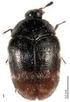 Rev. Chilena Ent. 2012, 37: 17-21 CONTRIBUTION TO THE KNOWLEDGE OF DERMESTIDAE (COLEOPTERA) FROM CHILE CONTRIBUCIÓN AL CONOCIMIENTO DE LOS DERMESTIDAE (COLEOPTERA) DE CHILE Jiří Háva 1 and Jaime Solervicens
A NEW GENUS OF THE SPIDER SUBFAMILY GNAPHOSINA E FROM THE VIRGIN ISLANDS (ARANEAE, GNAPHOSIDAE ) Norman I. Platnick and Mohammad U.
 Platnick, N. I., and M. U. Shadab. 1977. A new genus of the spider subfamily Gnaphosinae from th e Virgin Islands (Araneae, Gnaphosidae). J. Arachnol. 3 :191-194. A NEW GENUS OF THE SPIDER SUBFAMILY GNAPHOSINA
New species and subspecies of Octavius from South Africa, with a key and additional distribution records (Coleoptera: Staphylinidae: Euaesthetinae)
 ACTA ENTOMOLOGICA MUSEI NATIONALIS PRAGAE Published 30.iv.2014 Volume 54(1), pp. 195 231 ISSN 0374-1036 http://zoobank.org/urn:lsid:zoobank.org:pub:d94600bd-1221-47b6-9c70-ba8c82b74cec New species and
MAURIZIO BIONDI and PAOLA D ALESSANDRO
 Eur. J. Entomol. 105: 719 736, 2008 http://www.eje.cz/scripts/viewabstract.php?abstract=1390 ISSN 1210-5759 (print), 1802-8829 (online) Taxonomical revision of the Longitarsus capensis species-group: An
Description of three new species of Helconichia Sharkey & Wharton (Hymenoptera: Braconidae: Ichneutinae) with a revised key to all species
 Zootaxa 1502: 45 53 (2007) www.mapress.com/zootaxa/ Copyright 2007 Magnolia Press ISSN 1175-5326 (print edition) ZOOTAXA ISSN 1175-5334 (online edition) Description of three new species of Helconichia
A TAXONOMIC TREATMENT OF THE SPECIES OF ORTHOGONIUS MACLEAY (COLEOPTERA: CARABIDAE: ORTHOGONIINI) OF SINGAPORE
 THE RAFFLES BULLETIN OF ZOOLOGY 2007 THE RAFFLES BULLETIN OF ZOOLOGY 2007 55(2): 261 266 Date of Publication: 31 Aug.2007 National University of Singapore A TAXONOMIC TREATMENT OF THE SPECIES OF ORTHOGONIUS
New Mites in the Family Caeculidae
 BULLETIN OF THE U N IV E R SIT Y OF UTAH Vol. 35 March 15, 1945 No. 17 New Mites in the Family Caeculidae B Y STANLEY M ULAIK BIOLOGICAL SERIES, Vol. VIII, No. 6 PUBLISHED BY THE UNIVERSITY OF UTAH SALT
Revision of African Parandrinae (Coleoptera, Cerambycidae)
 University of Nebraska - Lincoln DigitalCommons@University of Nebraska - Lincoln Insecta Mundi Center for Systematic Entomology, Gainesville, Florida 8-24-2012 Revision of African Parandrinae (Coleoptera,
Article. http://dx.doi.org/10.11646/zootaxa.3841.1.7 http://zoobank.org/urn:lsid:zoobank.org:pub:6fb24193-a0db-4494-8c2c-f7591e614e9c
 Zootaxa 3841 (1): 127 134 www.mapress.com/zootaxa/ Copyright 2014 Magnolia Press Article http://dx.doi.org/10.11646/zootaxa.3841.1.7 http://zoobank.org/urn:lsid:zoobank.org:pub:6fb24193-a0db-4494-8c2c-f7591e614e9c
FIELD RECOGNITION OF THE LARVAE OF NATIVE COCCINELLIDAE, COMMON TO THE POTATO FIELDS OF AROOSTOOK COUNTY
 FIELD RECOGNITION OF THE LARVAE OF NATIVE COCCINELLIDAE, COMMON TO THE POTATO FIELDS OF AROOSTOOK COUNTY R. H. Storch Department of Entomolgy, University of Maine TECHNICAL BULLETIN 43 MAINE AGRICULTURAL
A new click beetle genus from the Chilean Central Andes: Bohartina (Coleoptera, Elateridae, Elaterinae)
 A new click beetle genus from the Chilean Central Andes: Bohartina (Coleoptera, Elateridae, Elaterinae) Elizabeth T. Arias Essig Museum of Entomology, University of California, Berkeley, 210 Wellman Hall.
A revision of the Aphthona gracilis species group (Coleoptera: Chrysomelidae) A.S. Konstantinov
 Труды Русского энтомологического общества. С.-Петербург, 2006. Т. 77: 178 188. Proceedings of the Russian Entomological Society. St. Petersburg, 2006. Vol. 77: 178 188. A revision of the Aphthona gracilis
HYDROPHILIDAE: I. Check list and key to Palearctic and Oriental genera of aquatic Hydrophilidae (Coleoptera)
 JÄCII & Jl (eels.): Water Beetles of China Vol. Ill 3S3-395 Wien, April 2003 HYDROPHILIDAE: I. Check list and key to Palearctic and Oriental genera of aquatic Hydrophilidae (Coleoptera) A. KOMAREK Abstract
A review of Hippeutister Reichensperger with new species from California and Costa Rica (Coleoptera: Histeridae: Hetaeriinae)
 Zootaxa 1895: 39 52 (2008) www.mapress.com/zootaxa/ Copyright 2008 Magnolia Press ISSN 1175-5326 (print edition) ZOOTAXA ISSN 1175-5334 (online edition) A review of Hippeutister Reichensperger with new
Review of the Haliplidae of Myanmar with description of Haliplus volpei (Coleoptera)
 Review of the Haliplidae of Myanmar with description of Haliplus volpei (Coleoptera) Bernhard J. van Vondel The present knowledge about the Haliplidae from Myanmar (Burma) is reviewed. Six species are
Sergey V. Kazantsev Ñ.Â. Êàçàíöåâ
 Russian Entomol. J. 8(4): 77 8 RUSSIAN ENTOMOLOGICAL JOURNAL, 009 On the status and systematic position of the genera Falsolucidota Pic, 9 and Macrolycinella Pic, 9, with notes on Lopheros LeConte, 88
The Genus Austroleptis from South Chile and Patagonia (Diptera, Rhagionidae)
 Title The Genus Austroleptis from (Diptera, Rhagionidae) South C Author(s) NAGATOMI, Akira; NAGATOMI, Hisako Citation 南 海 研 紀 要, 8(2): 139-156 Issue Date 1988-02-29 URL http://hdl.handle.net/10232/15696
TWO NEW FRESHWATER SPECIES OF THE GENUS JESOGAMMARUS (CRUSTACEA: AMPHIPODA: ANISOGAMMARIDAE) FROM CHINA
 THE RAFFLES BULLETIN OF ZOOLOGY 2004 THE RAFFLES BULLETIN OF ZOOLOGY 2004 52(2): 455-466 National University of Singapore TWO NEW FRESHWATER SPECIES OF THE GENUS JESOGAMMARUS (CRUSTACEA: AMPHIPODA: ANISOGAMMARIDAE)
IDENTIFICATION OF ADULT CORIXIDS 25
 IDENTIFICATION OF ADULT CORIXIDS 25 THE IDENTIFICATION OF BRITISH ADULT SPECIMENS OF SIGARA LATERALIS (LEACH), SIGARA CONCINNA (FIEBER), CALLICORIXA PRAEUSTA (FIEBER) AND CALLICORIXA WOLLASTONI (DOUGLAS
New species of Cerambycinae (Coleoptera, Cerambycidae) from South America
 INSECTA MUNDI A Journal of World Insect Systematics 0115 New species of Cerambycinae (Coleoptera, Cerambycidae) from South America Maria Helena M. Galileo Museu de Ciências Naturais, Fundação Zoobotânica
How To Identify A Byrrhidae Beetle
 Quoderno di Srudi e Nolizie di Storio Nolurole dello Romogno Quad. Studi Nat. Romagna, 17 suppl.: 55-61, giugno 2003 lssn 1123-6787 Roberto Fabbri & Hong-zhangZhou- THR.EE NEW SPECIES OF THE GENUS BYRRIIUS
ZOOLOGISCHE MEDEDELINGEN
 ZOOLOGISCHE MEDEDELINGEN UITGEGEVEN DOOR HET RIJKSMUSEUM VAN NATUURLIJKE HISTORIE TE LEIDEN (MINISTERIE VAN CULTUUR, RECREATIE EN MAATSCHAPPELIJK WERK) Deel 56 no. 1 15 augustus 1980 T H E GENUS ODONTOFROGGATIA
AUSTRALIAN MUSEUM SCIENTIFIC PUBLICATIONS
 AUSTRALIAN MUSEUM SCIENTIFIC PUBLICATIONS Bayly, I. A. E., 1971. A new species of Kelleria (Copepoda: Cyclopoida) from brackish water in Victoria. Records of the Australian Museum 28(6): 111 116. [27 September
A new genus and species of Tricorythidae (Ephemeroptera : Pannota) from Madagascar
 Annls Limnol. 31 (3) 1995 : 179-183 A new genus and species of Tricorythidae (Ephemeroptera : Pannota) from Madagascar W.P. McCafferty 1 T.-Q. Wang 1 Keywords : Tricorythidae, Madagascar, Provonshaka,
A new species of Ohilimia Strand, 1911 from New Guinea (Araneae: Salticidae)
 Genus Vol. 21(4): 625-629 Wrocław, 27 XII 2010 A new species of Ohilimia Strand, 1911 from New Guinea (Araneae: Salticidae) Joanna Gardzińska 1 & Barbara Patoleta 2 Katedra Zoologii, Uniwersytet Przyrodniczo-Humanistyczny
SPIXIANA 32 2 231 253 München, November 2009 ISSN 0341 8391
 SPIXIANA 32 2 231 253 München, November 2009 ISSN 0341 8391 New and rare species of the pseudomorphine genera Sphallomorpha Westwood, Adelotopus Hope, and Pseudomorpha Kirby mainly from far Northern Territory,
On the Scaphidiidae (Coleoptera) of Chile
 Ent. Arb. Mus. Frey 31/32, 1983 161 On the Scaphidiidae (Coleoptera) of Chile By Ivan Löbl Geneva Abstract The Chilian Scaphidiidae are reviewed. Eight species, all belonging to the genus Baeocera Erichson,
A Morphological Study On Endemic Malabaila lasiocarpa Boiss. (Apiaceae) From Bingol (Turkey)
 Araştırma Makalesi/Research Article A Morphological Study On Endemic Malabaila lasiocarpa Boiss. (Apiaceae) From Bingol (Turkey) Ömer KILIÇ 1 Abstract- In this study morphological characters of Malabaila
A new species of Fissiphalliidae from Brazilian Amazon Rain Forest (Arachnida: Opiliones)
 Zootaxa : 1 6 (2004) www.mapress.com/zootaxa/ Copyright 2004 Magnolia Press ISSN 1175-5326 (print edition) ISSN 1175-5334 (online edition) A new species of Fissiphalliidae from Brazilian Amazon Rain Forest
CHAPTER 10 RESTS AND PREPARATIONS. 4. Serve as a reference point for evaluating the fit of the framework to the teeth.
 CHAPTER 10 RESTS AND DEFINITIONS A REST is any rigid part of an RPD framework which contacts a properly prepared surface of a tooth. A REST PREPARATION or REST SEAT is any portion of a tooth or restoration
Flanged Bombardier Beetles from Laos (Carabidae, Paussinae)
 Entomologica Basiliensia et Collectionis Frey 31 101 113 2009 ISSN 1661 8041 Flanged Bombardier Beetles from Laos (Carabidae, Paussinae) by Peter Nagel Abstract. The Paussinae of Laos were recently studied
floridanum Banks, the only species of the genus previously
 1944] Three Species o[ Coleosoma ]rom Florida 51 THREE SPECIES OF COLEOSOMA FROM FLORIDA (ARANE/E; THERIDIID.E) x BY ELIZABETH B. BRYANT Among material recently sent the Museum of Comparative Zoology by
A new genus of Philorheithridae (Trichoptera) from Madagascar
 Zootaxa 1825: 18 28 (2008) www.mapress.com/zootaxa/ Copyright 2008 Magnolia Press ISSN 1175-5326 (print edition) ZOOTAXA ISSN 1175-5334 (online edition) A new genus of Philorheithridae (Trichoptera) from
DEVELOPMENT AND GROWTH OF THE MANDIBLE
 2012-2013 ORAL BIOLOGY DEVELOPMENT AND GROWTH OF THE MANDIBLE Ass. Prof. Dr. Heba M. Elsabaa Development and Growth of the Mandible DEVELOPMENT OF THE MANDIBLE The Mandible Is the largest and strongest
Invasive Tree Species
 Invasive Tree Species A Contents Invasive Tree Species................. 1 Removal Permit Process.............. 2 Mitigation......................... 3 Identification Guide: Norway maple - Acer platanoides............
e-mail: [email protected] 2 Linkoping University, Sweden
 Studies and Reports Taxonomical Series 7 (1-2): 337-348, 2011 New Allecula species (Coleoptera: Tenebrionidae: Alleculinae) from Turkey Vladimír NOVÁK 1, Nicklas JANSSON 2, Mustafa AVCI 3, Oguzhan SARIKAYA
Cedar Cottage Doghouse Plans
 Overlapping cedar shingles add an element of charm to this medium size doghouse. The walls, floor, and trim are constructed of solid cedar, making it naturally weather resistant and provides excellent
Insect identification sheet
 information leaflet Insect identification sheet To enable you to identify the insect you have in your home, we have provided some identification sheets. These depict the most common pest species that you
Care and Use of the Compound Microscope
 Revised Fall 2011 Care and Use of the Compound Microscope Objectives After completing this lab students should be able to 1. properly clean and carry a compound and dissecting microscope. 2. focus a specimen
ANNALES HISTORICO-NATURALES MUSEI NATIONALIS HUNGARICI Volume89. Budapest, 1997 pp. 151-156.
 ANNALES HISTORICO-NATURALES MUSEI NATIONALIS HUNGARICI Volume89. Budapest, 1997 pp. 151-156. Three new species and a new subspecies of Meoneura from the Alps (Diptera, Carnidae) L. PAPP Department of Zoology,
Notes on the Bembidiina of Taiwan with description of three new species (Coleoptera: Carabidae)
 ACTA ENTOMOLOGICA MUSEI NATIONALIS PRAGAE Published 15.xii.2009 Volume 49(2), pp. 577 598 ISSN 0374-1036 Notes on the Bembidiina of Taiwan with description of three new species (Coleoptera: Carabidae)
3.1 Measuring Biodiversity
 3.1 Measuring Biodiversity Every year, a news headline reads, New species discovered in. For example, in 2006, scientists discovered 36 new species of fish, corals, and shrimp in the warm ocean waters
ON A NEW SPECIES OF DENISONIA (REPTILIA, SERPENTES) FROM NEW GUINEA
 ON A NEW SPECIES OF DENISONIA (REPTILIA, SERPENTES) FROM NEW GUINEA by L. D. BRONGERSMA and M. S. KNAAP-VAN MEEUWEN Until now the Elapid genus Denisonia had not been recorded from New Guinea, and this
A Key to the Empoasca Solana Complex with Descriptions of New Species
 The Ohio State University Knowledge Bank kb.osu.edu Ohio Journal of Science (Ohio Academy of Science) Ohio Journal of Science: Volume 60, Issue 5 (September, 1960) 1960-09 A Key to the Empoasca Solana
Description of a new species of Phaenonotum from eastern Cuba (Coleoptera: Hydrophilidae: Sphaeridiinae)
 ACTA ENTOMOLOGICA MUSEI NATIONALIS PRAGAE Published 15.xi.2013 Volume 53(2), pp. 615 622 ISSN 0374-1036 http://zoobank.org/urn:lsid:zoobank.org:pub:b94af43d-e483-4eb7-b1b6-c48e6492f66a Description of a
Geometry and Measurement
 The student will be able to: Geometry and Measurement 1. Demonstrate an understanding of the principles of geometry and measurement and operations using measurements Use the US system of measurement for
DigitalCommons@University of Nebraska - Lincoln
 University of Nebraska - Lincoln DigitalCommons@University of Nebraska - Lincoln Papers in Entomology Museum, University of Nebraska State 6-30-2005 Revision of the southern South American endemic genus
TWO NEW SPECIES OF RHYACOPHILA PICTET (TRICHOPTERA, RHYACOPHILIDAE) FROM INDIA INTRODUCTION MATERIAL AND METHODS
 Acta Zoologica Academiae Scientiarum Hungaricae 58 (3), pp. 211 215, 2012 TWO NEW SPECIES OF RHYACOPHILA PICTET (TRICHOPTERA, RHYACOPHILIDAE) FROM INDIA KAUR, L. and SAINI, M. S. Department of Zoology
FOLIA ENTOMOLOGICA HUNGARICA ROVARTANI KÖZLEMÉNYEK Volume 70 2009 pp. 219 224
 FOLIA ENTOMOLOGICA HUNGARICA ROVARTANI KÖZLEMÉNYEK Volume 70 2009 pp. 219 224 Contributions to the knowledge of the scuttle fly fauna of Hungary (Diptera: Phoridae) G. D. LENGYEL Department of Zoology,
NOTES ON RHOPALOPSOLE KLAPÁLEK (PLECOPTERA: LEUCTRIDAE), WITH DESCRIPTIONS OF THREE NEW SPECIES FROM VIETNAM
 Stark, B.P., I. Sivec, and T. Shimizu. 2012. Notes on Rhopalopsole Klapálek (Plecoptera: Leuctridae), with descriptions of three new species NOTES ON RHOPALOPSOLE KLAPÁLEK (PLECOPTERA: LEUCTRIDAE), WITH
Algebra Geometry Glossary. 90 angle
 lgebra Geometry Glossary 1) acute angle an angle less than 90 acute angle 90 angle 2) acute triangle a triangle where all angles are less than 90 3) adjacent angles angles that share a common leg Example:
Section 2.4 Law of Sines and Cosines
 Section.4 Law of Sines and osines Oblique Triangle A triangle that is not a right triangle, either acute or obtuse. The measures of the three sides and the three angles of a triangle can be found if at
CHEM 107. Hair handout. Basic Structure of Hair. 3-22-05 and 3-24-05
 CHEM 107 Hair handout. 3-22-05 and 3-24-05 Basic Structure of Hair A hair can be defined as a slender, thread-like outgrowth from a follicle in the skin of mammals. Composed mainly of keratin, it has three
Distinguishing characters of Niphargus gebhardti Schellenberg, 1934 and Niphargus molnari Mehely, 1927 (Crustacea: Amphipoda): a clarification
 Opusc. Zool. Budapest, 2013, 44(1): 3 8 Distinguishing characters of Niphargus gebhardti Schellenberg, 1934 and Niphargus molnari Mehely, 1927 (Crustacea: Amphipoda): a clarification D. ANGYAL 1 and G.
Technical Drawing Specifications Resource A guide to support VCE Visual Communication Design study design 2013-17
 A guide to support VCE Visual Communication Design study design 2013-17 1 Contents INTRODUCTION The Australian Standards (AS) Key knowledge and skills THREE-DIMENSIONAL DRAWING PARALINE DRAWING Isometric
B.M. Kataev, Zoological Institute, Russian Academy of Sciences, 1 Universitetskaya Emb., St Petersburg 199034, Russia. E-mail: harpal@zin.
 ZOOSYSTEMATICA ROSSICA, 24(2): 260 265 25 DECEMBER 2015 A new species of the subgenus Trichocellus (genus Dicheirotrichus) from Xinjiang, China (Coleoptera: Carabidae: Harpalini) Новый вид подрода Trichocellus
LABORATORY DETERMINATION OF CALIFORNIA BEARING RATIO
 LABORATORY DETERMINATION OF CALIFORNIA BEARING RATIO STANDARD IS: 2720 (Part 16) 1979. DEFINITION California bearing ratio is the ratio of force per unit area required to penetrate in to a soil mass with
Exhibit Inquiry. Rainforest. Aug 11
 Exhibit Inquiry Exhibit Inquiry Have students look for the following exhibits related to living things during their visit to the Ontario Science Centre: Where to go: (Level 6) What it's about: Tropical
Assembly instructions: Seven A4-sized sheets. Paper craft: Four A4-sized sheets with 18 parts in all
 Thank you for downloading this paper craft model of the Blakiston's Fish Owl. By matching the names and numbered parts in the instructions, you and your family can complete a paper craft model of this
First record of the family Pseudochiridiidae
 Barba ISSN 0065-1737 Díaz & Alegre Barroso: Pseudochiridiidae (Pseudoscorpiones) Acta Zoológica en Cuba Mexicana (n.s.), 29(3): 696-700 (2013) Nota Científica (Short Communication) First record of the
Human Anatomy & Physiology
 PowerPoint Lecture Slides prepared by Barbara Heard, Atlantic Cape Community College Ninth Edition Human Anatomy & Physiology C H A P T E R 7 The Skeleton: Part B Annie Leibovitz/Contact Press Images Vertebral
Yves Alarie, J. Randy Gibson & Kelly B. Miller
 Tijdschrift voor Entomologie 156 (2013) 1 10 brill.com/tve Descriptions of larvae of the North American endemic stygobiontic Ereboporus naturaconservatus Miller, Gibson & Alarie and Haideoporus texanus
Full Crown Module: Learner Level 1
 Full Crown Module Restoration / Tooth # Full Gold Crown (FGC) / 30 Extensions: Porcelain Fused to Metal (PFM) / 12 All Ceramic / 8 Learner Level 1 Mastery of Tooth Preparation Estimated Set Up Time: 30
ON TWO NEW SPECIES OF THE GENUS ACANTHOCHONDRIA OAKLEY (CRUSTACEA COPEPODA) FOUND IN JAPAN
 ON TWO NEW SPECIES OF THE GENUS ACANTHOCHONDRIA OAKLEY (CRUSTACEA COPEPODA) FOUND IN JAPAN by SUEO M. SHIINO Faculty of Fisheries, Prefectural University of Mie, Tsu, Japan Acanthochondria Oakley is a
P O L I S H J O U R N A L O F E N T O M O L O G Y
 P O L I S H J O U R N A L O F E N T O M O L O G Y P O L S K I E P I S M O E N T O M O L O G I C Z N E VOL. 76: 177-182 Bydgoszcz 30 September 2007 Harmonia axyridis (PALLAS, 1773) (Coleoptera: Coccinellidae)
Entomofauna Ansfelden/Austria; download unter www.biologiezentrum.at
 Entomofauna Ansfelden/Austria; download unter www.biologiezentrum.at Entomofauna ZEITSCHRIFT FÜR ENTOMOLOGIE Band 32, Heft 32: 429-436 ISSN 0250-4413 Ansfelden, 25. November 2011 Two new species of Alocanthedon
Shape Dictionary YR to Y6
 Shape Dictionary YR to Y6 Guidance Notes The terms in this dictionary are taken from the booklet Mathematical Vocabulary produced by the National Numeracy Strategy. Children need to understand and use
Chapter 17: Light and Image Formation
 Chapter 17: Light and Image Formation 1. When light enters a medium with a higher index of refraction it is A. absorbed. B. bent away from the normal. C. bent towards from the normal. D. continues in the
Chec List Journal of species lists and distribution
 Check List 8(5): 889 893, 2012 2012 Check List and Authors ISSN 1809-127X (available at www.checklist.org.br) Chec List Journal of species lists and distribution N o t e s on Geogra p h i c Distribution
A new species of tiger beetle from Hong Kong Protocollyris ngaungakshani Wiesner, 2012 P. 2-3
 Insect News Hong Kong Entomological Society Newsletter Protocollyris ngaungakshani Wiesner, 2012 Photo by Vor YIU A new species of tiger beetle from Hong Kong Protocollyris ngaungakshani Wiesner, 2012
When looking for a diamond, keep in mind that if a diamond is cut poorly, it affects the brilliance; the number of facets a stone has
 Diamond Buying Guide We have created a tutorial to provide you with the guidance you need when purchasing diamond jewelry. By developing your knowledge of diamonds, you will find shopping for and making
12-1 Representations of Three-Dimensional Figures
 Connect the dots on the isometric dot paper to represent the edges of the solid. Shade the tops of 12-1 Representations of Three-Dimensional Figures Use isometric dot paper to sketch each prism. 1. triangular
Lab 5 Overview of the Skeleton: Classification and Structure of Bones and Cartilages Exercise 9 The Axial Skeleton Exercise 10
 Lab 5 Overview of the Skeleton: Classification and Structure of Bones and Cartilages Exercise 9 The Axial Skeleton Exercise 10 Overview of the Skeleton Locate the important cartilages in the human skeleton
Anatomy PHL 212. By Dr Tajdar Husain Khan
 Anatomy PHL 212 By Dr Tajdar Husain Khan Overview of Anatomy Anatomy(from the Greek word anatome,"dissection") is a branch of natural science dealing with the structural organization of living things The
How to Age Golden Eagles
 ADVANCES IN BIRD IDENTIFICATION How to Age Golden Eagles Techniques for Birds Observed in Flight Hawk identification has advanced considerably in recent years. With the arrival of new field guides, new
A new species of stag beetle (Coleoptera: Lucanidae) from California
 University of Nebraska - Lincoln DigitalCommons@University of Nebraska - Lincoln Insecta Mundi Center for Systematic Entomology, Gainesville, Florida 2014 A new species of stag beetle (Coleoptera: Lucanidae)
Optical Illusions Essay Angela Wall EMAT 6690
 Optical Illusions Essay Angela Wall EMAT 6690! Optical illusions are images that are visually perceived differently than how they actually appear in reality. These images can be very entertaining, but
Lectures of Human Anatomy
 Lectures of Human Anatomy Vertebral Column-I By DR. ABDEL-MONEM AWAD HEGAZY M.B. with honor 1983, Dipl."Gynecology and Obstetrics "1989, Master "Anatomy and Embryology" 1994, M.D. "Anatomy and Embryology"
A new species of Heteropoda (Araneae, Sparassidae, Heteropodinae) from Laos, the largest huntsman spider?
 A new species of Heteropoda (Araneae, Sparassidae, Heteropodinae) from Laos, the largest huntsman spider? Peter JAEGER Johannes Gutenberg-University Institute for Zoology, 55099 Mainz (Germany) [email protected]
SPECIES DESCRIPTION Picture
 SPECIES DESCRIPTION Picture German Cockroach Cockroach egg case & nymphs 12-15mm (Adult Stage)Mid to dark brown body. Lighter area with 2 dark bars behind head. Wings. Very long antennae. Young are smaller