
Sergey V. Kazantsev Ñ.Â. Êàçàíöåâ
|
|
|
- Rodger Ward
- 10 years ago
- Views:
Transcription
1 Russian Entomol. J. 8(4): 77 8 RUSSIAN ENTOMOLOGICAL JOURNAL, 009 On the status and systematic position of the genera Falsolucidota Pic, 9 and Macrolycinella Pic, 9, with notes on Lopheros LeConte, 88 (Coleoptera: Lycidae) Î ñòàòóñå è ñèñòåìàòè åñêîì ïîëîæåíèè ðîäîâ Falsolucidota Pic, 9 è Macrolycinella Pic, 9, ñ çàìå àíèÿìè ïî Lopheros LeConte, 88 (Coleoptera: Lycidae) Sergey V. Kazantsev Ñ.Â. Êàçàíöåâ Donetskaya 6, Moscow 0965, Russia. [email protected] Ðîññèÿ, 0965 Ìîñêâà, óë. Äîíåöêàÿ 6. KEY WORDS: Coleoptera, Lycidae, new species, synonymy, taxonomy, Palaearctic, Neotropical, Papuan regions. ÊËÞ ÅÂÛÅ ÑËÎÂÀ: Coleoptera, Lycidae, íîâûå âèäû, ñèíîíèìèÿ, òàêñîíîìèÿ, Ïàëåàðêòèêà, Íåîòðîïè åñêàÿ, Ïàïóàññêàÿ îáëàñòè. ABSTRACT. Three new species, Macrolycinella dichroma, M. bicoloricollis and M. bicoloripennis spp.n., are described from Mexico. The genus Hemiconderis Kleine, 96 syn.n. is synonymized with Falsolucidota Pic, 9. Macrolycinella Pic, 9 is redescribed, excluded from Calopterini and tentatively placed in Dictyopterini. Falsolucidota testaceicollis Pic, 9 and Macrolycinella bicolor Pic, 9, the type species of, respectively, Falsolucidota and Macrolycinella, are illustrated. Aplatopterus Reitter, 9 nom.rev. is revalidated and Aplatopterus rubens (Gyllenhal, 87), comb.n. is transferred from Lopheros LeConte, 88 to Aplatopterus. The status of Eulopheros Kazantsev, 995, stat.n., is raised to the genus level. The placement of the genera Lopheros, Aplatopterus and Eulopheros in Erotini is questioned. A key to species of Macrolycinella is provided. ÐÅÇÞÌÅ. Èç Ìåêñèêè îïèñûâàþòñÿ òðè íîâûõ âèäà, Macrolycinella dichroma, M. bicoloricollis è M. bicoloripennis spp.n. Ðîä Hemiconderis Kleine, 96 syn.n. ñâîäèòñÿ â ñèíîíèìû ê Falsolucidota Pic, 9. Ïðèâîäèòñÿ ïåðåîïèñàíèå ðîäà Macrolycinella Pic, 9, êîòîðûé èñêëþ àåòñÿ èç Calopterini è â ïðåäâàðèòåëüíîì ïîðÿäêå âêëþ àåòñÿ â Dictyopterini. Ïðèâîäÿòñÿ èëëþñòðàöèè Falsolucidota testaceicollis Pic, 9 è Macrolycinella bicolor Pic, 9, òèïîâûõ âèäîâ Falsolucidota è Macrolycinella, ñîîòâåòñòâåííî. Aplatopterus Reitter, 9 nom.rev. âîññòàíàâëèâàåòñÿ èç ñèíîíèìèè, à Aplatopterus rubens (Gyllenhal, 87), comb.n. ïåðåíîñèòñÿ èç Lopheros LeConte, 88 â Aplatopterus. Ïîâûøàåòñÿ ñòàòóñ Eulopheros Printed in 00. Kazantsev, 995, stat.n. äî ðîäîâîãî óðîâíÿ. Ïîäâåðãàåòñÿ ñîìíåíèþ ïðèíàäëåæíîñòü ðîäîâ Lopheros, Aplatopterus è Eulopheros òðèáå Erotini. Ïðèâîäèòñÿ îïðåäåëèòåëüíàÿ òàáëèöà âèäîâ Macrolycinella. Introduction The monotypic genus Falsolucidota Pic, 9 with its only species, F. testaceicollis Pic, 9, described from Roon (an islet just off Wandammen Peninsula in Irian Jaya, New Guinea) [Pic, 9 9], was included in the Lycidae part of the Coleopterorum Catalogus in Cladophorini (now Metriorrhynchini) [Kleine, 9] and left in Metriorrhynchinae incertae sedis following a revision of this lineage of net-winged beetles [Bocák, 00]. The also monotypic Macrolycinella Pic, 9 erected to accommodate M. bicolor Pic, 9 from Mexico [Pic, 9 9], was placed among the Calopterini by Kleine [9] and treated as a calopterine taxon by consequent authors [e.g., Blackwelder, 945; Bocáková, 00]. Syntypes of the type species of these two genera were found in the Pic collection at the Musée National d Histoire naturelle à Paris. As these species were introduced without nominating holotypes or mentioning the uniquity of specimens, lectotypes are designated for them, in accordance with Article 74 and Recommendation 7F of the International Code of Zoological Nomenclature. The study of the lectotypes demonstrated that Falsolucidota is indeed a Metriorrhynchinae taxon, synonymous with Hemiconderis Kleine, 96 syn.n., whereas Macrolycinella in fact does not belong in Calopterini.

2 78 Sergey V. Kazantsev The following abbreviations are used in this paper: MNHN Musée National d Histoire naturelle, Paris; ICM Insect Center, Moscow. Material and Methods For examination specimens, or their copulatory organs, after extraction, were cleared for several hours in room temperature KOH. The cleared material was then placed in microvials with glycerin. The redescription of Macrolycinella is partly based on a KOH treated paratype of M. dichroma sp.n., as only one specimen, the Lectotype, of M. bicolor Pic, 9, the type species of the genus, was available, on the one hand, and the external morphological differences between these two taxa appeared to be minimal, on the other. Characters of female genital and abdominal structures were taken from M. bicoloripennis sp.n., the only Macrolycinella taxon where females have been discovered. Taxonomy Falsolucidota Pic, 9 Falsolucidota Pic, 9: 9. Type species: Falsolucidota testaceicollis Pic, 9. Hemiconderis Kleine, 96 syn.n. Type species: Hemiconderis explicatus Kleine, 96. DIAGNOSIS. Falsolucidota is readily differentiated from other Metriorrhynchinae genera by the characters given for Hemiconderis [Bocák, 00]. DISTRIBUTION. Confined to New Guinea. REMARKS. Falsolucidota testaceicollis, the lectotype of which has been studied, is very close and undoubtedly congeneric with Hemiconderis explicatus. As the two species are the type species of Falsolucidota and Hemiconderis, respectively, Hemiconderis Kleine, 96 becomes a junior synonym of Falsolucidota Pic, 9, described five years earlier. Falsolucidota testaceicollis Pic, 9 Figs Falsolucidota testaceicollis Pic, 9: 9. MATERIAL: Lectotype, hereby designated, #, Roon (printed label), Falsolucidota n.g. testaceicollis n.sp. (Pic s manuscript label) (MNHN). DIAGNOSIS. F. testaceicollis is most similar to F. explicatus, differing by the black scutellum and somewhat more robust proximal portion of the median lobe of the aedeagus (Figs ). Macrolycinella Pic, 9 Macrolycinella Pic, 9:. Type species: Macrolycinella bicolor Pic, 9. REDESCRIPTION. Alate, elongate. Head transverse, slightly narrowed behind eyes, with clear cuticle. Fastigium ca 85. Tentorium represented by posterior pits and vertical narrow, almost straight ventral arms attaining to ca. three fifths of head height. Eyes relatively small, spherical. Labrum small, transverse, sclerotized, almost completely exposed. Mandibles small, evenly curved. Maxillary palps relatively small, 4-segmented, with ultimate palpomere almost parallelsided, glabrous and flattened distally. Labium consisting of small paired mentum, non-paired prementum and a pair of small -segmented palps; ultimate labial palpomere widened and flattened. Gula Antennal prominence inconspicuous, antennal sockets separated by lamina constituting ca. one third of socket width; subantennal and coronal sutures Antenna -segmented, moderately long, filiform, with antennomere small, much shorter than antennomere ; antennomeres 4 with short sub-erect pubescence. Pronotum transverse, ca. 7 times shorter than elytra, with median carina in anterior half, roundish areola in posterior half and obscure lateral carinae; posterior angles small, but acute, anterior angles rounded (Figs, 6, 0). Prosternum narrow, V-shaped. Mesothoracic spiracles very short. Mesoventrite transverse, without median suture, separated from mesepisternum by triangular sclerite; mesepimeron conspicuously shorter and narrower than mesepisternum. Mesonotum with scutellum not attaining to anterior margin, mesoscutal halves not divided; scutellum with relatively short postnotal plate, rounded at apex. Elytra long, glabrous, nearly parallel-sided, with four primary costae; interstices with doubles rows of irregular, mostly elongate cells; pubescence uniform, relatively dense, short and semi-erect. Metanotum transverse, widening anteriorly, with almost straight and subequal in length to allocrista scuto-scutellar ridge; prescutum with short median suture; intrascutal suture small, emerging at distal fourth of scutum; scutellum almost straight posteriorly, with median suture; postnotal plate transverse, oval, without median suture. Metaventrite elongate, with blunt posterior angles; discrimen (metasternal suture) attaining to three fourths. Metendosternite elongate, with minute lateral arms; median and transverse sutures present. Metathoracic wing with elongate anal and wedge cells; wedge cell closed with perpendicular vein; Cu veins merged to M; cu-a brace connecting Cu and A slightly below Cu veins branching point. Pro- and mesotrochantins subequal in size. Procoxae strongly transverse; mesocoxae subquadrate; metacoxae widely separated. Pro-, meso- and metatrochanters subequal in size and length. Legs moderately long and narrow; trochanters slightly triangular, about twice as short as metacoxae, connected to femora distally; tibiae straight, tibial spurs only slightly longer than adjacent pubescence; tarsi narrow, tarsomeres and 4 with small distal plantar pads; all claws simple. Abdominal spiracles dorsal, located on sternite near its edge. Male. Spiculum gastrale short and relatively broad (Fig. 7). Aedeagus symmetric, with elongate straight median lobe and short separate parameres; phallobase elongate, with conspicuous median suture (Figs 4 5, 8 9, ). Female. Terminal sternite with narrow, moderately long spiculum ventrale (Fig. ). External genitalia with free narrow valvifers, free sclerotized coxites, median sclerite and long styli; internal genitalia with a pair of accessory glands and moderately long spiral seminal duct (Fig. ). DIAGNOSIS. Macrolycinella is readily differentiated from all calopterine genera by the cephalic, labial, thoracic and abdominal structures, which effectively excludes it from Calopterini. However, the genus cannot be attributed with certainty to any of the other tribes, occupying somewhat intermediate position between Platerotini *, Erotini, * The basis in the genitive (and in all other oblique cases) of the Greek word Eros, the second part of the genus name Plateros, is Erot-, which is also illustrated by the name of such famous Ancient Greek festival, as Erotia, or Erotidia, celebrated in the city of Thespians in honour of god Eros. It is this basis that, in accordance with the ICZN (4 th edition), is to be used for suprageneric names. Therefore, the correct spelling of the tribe derived from Plateros would be Platerotini (and not Platerodini ), same as Erotini derived from the genus name Eros.

3 On the status and systematic position of the genera Falsolucidota and Macrolycinella 79 Conderini and, perhaps, Dictyopterini. Thus, being rather similar in the male genital armature to platerotine genera Falsocalleros Pic, 9 (= Pseudoplateros Green, 95) and Neoplateros Kazantsev, 006 (Figs 4 5, 8 9, ), it is readily differentiated from both of them by the presence of pronotal areole and lateral carinae (Figs, 6, 0). The aedeagus of Macrolycinella is also similar to that of Eropterus trilineatus (Melsheimer, 846), the type species of the erotine genus Eropterus Green, 95, but the pronotal areole and female abdominal sternites distinguish it either. On the other hand, Macrolycinella resembles Conderis Waterhouse, 879, of the tribe Conderini, due to the similar pronotal structure, differing by the very different type of male and female genitalia. A cladistic analysis (carried out below) showed that Macrolycinella has more affinities with Dictyopterini where, pending a more comprehensive and representative study, it is tentatively placed Figs. Details of Falsolucidota and Macrolycinella spp.: F. testaceicollis; 5 M. bicolor; 6 9 M. dichroma sp.n.; 0 M. bicoloricollis sp.n.; M. bicoloripennis sp.n.; 5 lectotypes, males; 6 holotypes, males; holotype, female;, 6, 0 pronotum; 7 terminal male ventrite / sternite 9;, 4 5, 8 9, aedeagus ; terminal female ventrite / sternite 8; female genitalia;,, 6, 0 dorsal view; 4, 7, 8, ventral view;, 5, 9 lateral view; AG accessory gland; CX coxite; MS median sclerite; SD seminal duct; ST stylum; VF valvifer. Ðèñ.. Äåòàëè ñòðîåíèÿ Falsolucidota è Macrolycinella spp.: F. testaceicollis; 5 M. bicolor; 6 9 M. dichroma sp.n.; 0 M. bicoloricollis sp.n.; M. bicoloripennis sp.n.; 5 ëåêòîòèïû, ñàìöû; 6 ãîëîòèïû, ñàìöû; ãîëîòèï, ñàìêà;, 6, 0 ïåðåäíåñïèíêà; 7 âåðøèííûé âåíòðèò (ñòåðíèò 9) ñàìöà;, 4 5, 8 9, ýäåàãóñ ; âåðøèííûé âåíòðèò (ñòåðíèò 8) ñàìêè; æåíñêèå ãåíèòàëèè;,, 6, 0 ñâåðõó; 4, 7, 8, ñíèçó;, 5, 9 ñáîêó; AG ïðèäàòî íàÿ æåëåçà; CX êîêñèò; MS ìåäèàëüíûé ñêëåðèò; SD ñåìåííîé ïðîòîê; ST ãðèôåë ê; VF âàëüâèôåð.

4 80 Sergey V. Kazantsev Macrolycinella bicolor Pic, 9 Figs 5 Macrolycinella bicolor Pic, 9:. MATERIAL: Lectotype, hereby designated, #, Jalapa, Mexico, F. Schneider (printed label), Macrolycinella n.g. bicolor n.sp. (Pic s manuscript labels) (MNHN). DIAGNOSIS. M. bicolor is easily differentiated from congenerics by the combination of coloration, with testaceous orange pronotum and black elytra, and narrow median lobe of the aedeagus (Figs 4 5). Macrolycinella dichroma Kazantsev, sp.n. Figs 6 9 MATERIAL: Holotype, #, Mexico, 5 km SW Col Victoria, Madrono, oak-palm forest, 000 m, 4.XII.00, Gasparyan leg. (ICM), paratypes, ##, same label (ICM). DESCRIPTION. Male. Black; pronotum orange testaceus. Eyes small, interocular distance ca. 5 times greater than eye radius. Antennae attaining to elytral two thirds, with antennomere 4.4 times longer than antennomere and subequal in length to antennomere 4. Pronotum transverse, ca..4 times as wide as long, slightly bisinuate basally, almost straight anteriorly, with almost parallel sides and rounded anterior and small acute posterior angles (Fig. 6). Scutellum slightly narrowing distally, truncate at apex. Elytra long,.4 times as long as wide at humeri, parallelsided; interstices with very irregular rows of cells. Aedeagus with relatively broad oval median lobe (Figs 8 9). Female. Unknown. Length: mm. Width (humerally):..5 mm. ETYMOLOGY. The name is derived from the Greek for two colours, alluding to the orange-and-black coloration of the new species. DIAGNOSIS. M. dichroma sp.n. differs from M. bicolor of similar coloration pattern by the smaller size, smaller eyes and broader median lobe of the aedeagus (Figs 8 9). Macrolycinella bicoloricollis Kazantsev, sp.n. Figs 0 MATERIAL: Holotype, #, Mexico, El Cielo, San Jose, 5 km E Gomes Farrias, 400 m, 4.XI.998, Gasparyan leg. (ICM). DESCRIPTION. Male. Black; sides of pronotum and elytral humeri ochre. Eyes small, interocular distance ca..5 times greater than eye radius. Antennae attaining to elytral five sixths, with antennomere.0 times longer than antennomere and ca..4 times shorter than antennomere 4. Pronotum transverse, ca..6 times as wide as long, bisinuate basally, convex anteriorly, with rounded anterior and small acute posterior angles (Fig. 0). Scutellum elongate, parallel-sided. Elytra long,.5 times as long as wide at humeri, widest in distal fifth. Aedeagus with broad almost parallel-sided median lobe (Fig. ). Female. Unknown. Length: 6. mm. Width (humerally):.5 mm. ETYMOLOGY. The name of the new species is derived from the Latin for with bicoloured thorax, alluding to the ochre-and-black coloration of its pronotum. DIAGNOSIS. M. bicoloricollis sp.n. differs from all congenerics by the bicoloured pronotum (Fig. 0) and broad median lobe of the aedeagus (Fig. ). Macrolycinella bicoloripennis Kazantsev, sp.n. Figs MATERIAL: Holotype, $, Mexico, Veracruz prov., N of Jalapa, XI.998 (ICM). DESCRIPTION. Female. Dark brown; pronotum except at proximal fifth medially and elytral humeri ochre. Eyes small, interocular distance ca..7 times greater than eye radius. Antennae attaining to elytral two thirds, with antennomere.0 times longer than antennomere and ca.. times shorter than antennomere 4. Pronotum transverse, ca..6 times as wide as long, bisinuate basally, convex anteriorly, with rounded anterior and acute posterior angles. Scutellum elongate, parallelsided, medially emarginate. Elytra long,. times as long as wide at humeri, widest behind middle. Terminal ventrite (sternite 8) subquadrate, emarginate distally; spiculum ventrale about two thirds sternite length (Fig. ). External genitalia with almost straight narrow valvifers, valvifers ca. twice as long as coxites; median sclerite elongate, heart-shaped, distally trident (Fig. ). Male. Unknown. Length: 6.9 mm. Width (humerally):.8 mm. ETYMOLOGY. The name of the new species is derived from the Latin for with bicoloured wings, alluding to the ochre-and-black coloration of its elytra. DIAGNOSIS. M. bicoloripennis sp.n. differs from the congenerics by the combination of ochre pronotum and bicoloured elytra, black with ochre shoulders. The four known Macrolycinella species may be distinguished by the key that follows. KEY TO MACROLYCINELLA SPECIES. Elytra uniformly black... Elytra bicoloured, black with ochre shoulders.... Larger, over 6 mm. Aedeagus with narrow median lobe (Figs 4 5)... M. bicolor Pic Smaller, less than 5 mm. Aedeagus with relatively wide median lobe (Figs 8 9)... M. dichroma sp.n.. Pronotum uniformly ochre. External female genitalia with distally trident median sclerite (Fig. ) M. bicoloripennis sp.n. Pronotum bicoloured, black with ochre sides (Fig. 0) Aedeagus with broad median lobe (Fig. ) M. bicoloricollis sp.n. Cladistic analysis Being aware of the drawbacks of a numerical cladistic analysis [e.g., Kluge, 000], I applied a cladistic method to help define position of Macrolycinella, as the genus seemed to share synapomorphies with several tribes of different lineages, at the same time displaying no apomorphic characters of its own. For examination of characters both male and female specimens of each taxon were KOH cleared and preserved in glycerin or alcohol. Some characters were double-checked on non-koh-cleared material. The following taxa were selected for the analysis: Caenia kirschi Bourgeois, 880, Calopterini Calopteron reticulatum (Fabricius, 775), Calopterini Conderis signicollis (Kirsch, 875), Conderini Dictyoptera aurora (Herbst, 784), Dictyopterini

5 On the status and systematic position of the genera Falsolucidota and Macrolycinella 8 Eropterus trilineatus (Melsheimer, 846), Erotini Eros humeralis (Fabricius, 80), Erotini Lopheros (Lopheros) fraternus (Randall, 88), Erotini? Lopheros (Lopheros) rubens (Gyllenhal, 87), Erotini? Lopheros (Eulopheros) harmandi (Bourgeois, 90), Erotini? Macrolycinella dichroma sp.n. (characters of female genital and abdominal structures taken from M. bicoloripennis sp.n.). Plateros flavoscutellatus Blatchley, 94, Platerotini Platycis minuta (Fabricius, 787), Erotini Taphes brevicollis Waterhouse, 878, Taphini Xylobanellus erythropterus (Baudi di Selve, 87), Conderini The following set of characters was used:. Ventral arms of tentorium: 0, vestigial;, not longer than third of head height;, longer than third of head height.. Dorsal tentorial spots: 0, present,,. Coronal suture: 0, present, at least partial;, 4. Gula: 0, absent;, present. 5. Fastigium: 0, acute;, more or less right-angled. 6. Pedicel: 0, longer or equal in length to antennomere ;, shorter than antennomere, but elongate;, shorter than antennomere and transverse. 7. Ultimate maxillary palpomere: 0, pointed,, distally flattened and more or less dilated. 8. Ultimate labial palpomere: 0, pointed,, distally flattened and more or less dilated. 9. Prementum: 0, divided into two separate sclerites;, single sclerite with median suture;, single sclerite without median suture. 0. Pronotum, median suture: 0, complete;, incomplete or. Pronotum, lateral carinae: 0, present;,. Pronotum, closed median cell in posterior half: 0, present;,. Pronotum, fronto-lateral carinae: 0, merging anteriorly forming median cell;, parallel;, 4. Mesoscutum, posterior process of scutellum: 0, vestigial, with considerable elytro-scutellar dehiscence;, functional, locking elytra when folded. 5. Metaventrite, mesosternal triangle: 0, apparent;, 6. Metaventrite, discrimen (metasternal suture): 0, reaching anterior margin;, not reaching anterior margin. 7. Metendosternite, lateral arms: 0, directed upward;, directed downward. 8. Mesothoracic spiracles, orifice: 0, simple;, hooded dorsally. 9. Wing venation: wedge cell: 0, present;, 0. Wing venation: cu-a brace: 0, located at Cu fork;, located distad of Cu fork.. Metacoxae, meral suture: 0, conspicuous;, vestigial or. Tarsomere, plantar pad: 0, absent;, present.. Male paraproct (tergite 9), median suture: 0, present;, 4. Male ultimate ventrite (sternite 9): 0, with short (not surpassing distal part of sternite in length) and broad proximal end;, with relatively long (surpassing distal part of sternite in length), but rather broad proximal process;, with long and narrow proximal process (spiculum gastrale). 5. Aedeagus, symmetry axes of phallobase and (the symmetrical portion of) median lobe: 0, coinciding;, not coinciding. 6. Aedeagus, phallobase: 0, without deep ventral incision;, without deep ventral incision. 7. Aedeagus, phallobase, median suture: 0, present;, 8. Aedeagus, median lobe: 0, symmetric;, asymmetric. 9. Aedeagus, parameres: 0, free, not surpassing half length of median lobe;, free, considerably surpassing half length of median lobe;, vestigial or fused with median lobe. 0. Female ultimate sternite, proximally: 0, slightly convex;, with short median dent;, with conspicuous spiculum ventrale, but without lateral arms;, with long spiculum ventrale and lateral arms.. External female genitalia, valvifers: 0, separated from coxites;, fused with coxites.. External female genitalia, valvifers: 0, distally separated, median sclerite (sternite 0) present;, distally fused, but median suture present;, distally fused without median suture;, distally separated, median sclerite (sternite 0). External female genitalia, sternite 0: 0, paired sclerite;, single sclerite;, The character states were found to be distributed among the taxa in the following way: C. reticulatum C. kirschi C. signicollis D. aurora E. humeralis E. trilineatus E. harmandi L. fraternus L. rubens M. dichroma P. flavoscutellatus P. minuta T. brevicollis X. erythropterus

6 8 Sergey V. Kazantsev Fig. 4. Most parsimonious cladogram with Taphes brevicollis as outgroup. Ðèñ. 4. Íàèáîëåå ýêîíîìíàÿ êëàäîãðàììà ñ Taphes brevicollis â êà åñòâå âíåøíåé ãðóïïû. Two characters that describe the only unique autapomorphies of the apparent higher level lineages of the regarded taxa, i.e., the deeply incised phallobase of Conderini (character 6) and the lateral arms of spiculum ventrale of Erotini (character 0), were weighted 5 (out of possible 9), all the rest weighted. The analysis of the data matrix by Phylip Pars, version.6, with Taphes brevicollis as the outgroup resulted in one most parsimonious cladogram demonstrating clades Dictyopterini + Conderini + (Erotini + ((L. fraternus + E. harmandi) + (A. rubens + (Platerotini + Calopterini))) + Taphini (Fig. 4). The Conderini are represented by C. signicollis and X. erythropterus, Erotini by E. humeralis, E. trilineatus and P. minuta, Platerotini by P. flavoscutellatus and Calopterini by C. reticulatum and C. kirschi. M. dichroma is placed in a clade with D. aurora, close to Conderini. The cladogram required a total of 97 steps. Length between and 8 is 6.00; 8 and M. dichroma.8; 8 and D. aurora 4.7; and 9.00; and X. erythropterus.7; and C. signicollis.8; and.8; and ; 4 and E. trilineatus.7; 4 and 0.00; 0 and P. minuta.7; 0 and Eros humeralis 8.7; and 5.; 5 and 6.00; 6 and L. fraternus.00; 6 and E. harmandi 5.00; 5 and 7.50; 7 and A. rubens.50; 7 and ; 9 and P. flavoscutellatus 5.50; 9 and 6.7; and C. kirschi 0.67; and C. reticulatum.67; and T. brevicollis.8. The analysis repeated with Caenia kirschi as the outgroup also yielded one most parsimonious cladogram, with somewhat differently arranged same clades, i.e., C. reticulatum + (Platerotini + (A. rubens + ((L. fraternus + E. harmandi) + (Erotini + (Dictyopterini + Conderini + Taphini))))) + C. kirschi. M. dichroma is again placed in a clade with D. aurora, close to Conderini and Taphini (Fig. 5). The cladogram required a total of 97 steps as well, lengths being: between and C. reticulatum.67; and 9 6.7; 9 and P. flavoscutellatus 5.50; 9 and ; 7 and A. rubens.50; 7 and 5.50; 5 and 6.00; 6 and L. fraternus.00; 6 and E. harmandi 5.00; 5 and.; and ; 4 and E. trilineatus.7; 4 and 0.00; 0 and P. minuta.7; 0 and E. humeralis 8.7; and.8; and ; 8 and M. dichroma.8; 8 and D. aurora 4.7; and 9.00; and X. erythropterus.7; and C. signicollis.8; and T. brevicollis.8; and C. kirschi Discussion Results of the cladistic analysis confirmed the conjecture that Macrolycinella cannot be placed in Calopterini. At the same time, the analysis suggested that the genus cannot be attributed to Platerotini, Conderini or Erotini either, the most parsimonious cladograms persistently putting it in one clade with D. aurora, thus defining its position in the tribe Dictyopterini. Although Dictyopterini and Taphini may actually represent one lineage with so far unclear autapomorphies [Kazantsev, 004], Macrolycinella, pending a more representative phylogenetic analysis, is tentatively placed in Dictyopterini. Another conclusion from the analysis carried out above is that Lopheros (s.str.) fraternus, L. (s.str.) rubens and L. (Eulopheros) harmandi cannot be attributed to one genus. Although distinguished by one pronotal

7 On the status and systematic position of the genera Falsolucidota and Macrolycinella 8 Fig. 5. Most parsimonious cladogram with Caenia kirschi as outgroup. Ðèñ. 5. Íàèáîëåå ýêîíîìíàÿ êëàäîãðàììà ñ Caenia kirschi â êà åñòâå âíåøíåé ãðóïïû. pattern, these taxa are very different in the abdominal and genital structures of both sexes. The analysis confirmed the supposition that the three species are not congeneric. So these species, which are the type species of the respective genus-group taxa, are placed in different genera, Lopheros Leconte, 88, Aplatopterus Reitter, 9 nom.rev. and Eulopheros Kazantsev, 995, stat.n. as Lopheros fraternus (Randall, 88), Aplatopterus rubens (Gyllenhal, 87), comb.n. and Eulopheros harmandi (Bourgeois, 90). Although Lopheros is typically considered to be part of Erotini [e.g., Kazantsev, 004], in neither of the cladograms do the Lopheros species make a monophyletic lineage with the indisputable erotine taxa (i.e., Eros humeralis, Eropterus trilineatus and Platycis minuta). In the first cladogram they are placed in clade Platerotini + Calopterini at its root (Fig. 4), in the second at the root of clade Erotini + (Dictyopterini + Conderini + Taphini) (Fig. 5). This indicates that L. fraternus, A. rubens and E. harmandi quite probably do not belong in Erotini. They may even represent two different lineages, as A. rubens always renders the Lopheros compilation paraphyletic. However, all three of them are left in Erotini incertae sedis, pending further studies specifically targeted at this problem. ACKNOWLEDGEMENTS. It is my pleasant duty to express gratitude to Dr. J. Menier (Musée National d Histoire Naturelle, Paris), through whose courtesy I was able to study the syntypes of Falsolucidota testaceicollis and Macrolycinella bicolor from the Pic collection. References Blackwelder R.E Checklist of the Coleopterous insects of Mexico, Central America, the West Indies, and South America. Part // Bulletin of US National Museum. Vol.85. P Bocák L. 00. Generic revision and phylogenetic analysis of the Metriorrhynchinae (Coleoptera: Lycidae) // European Journal of Entomology. Vol.99. P.5 5. Bocáková M. 00. Revision of the tribe Calopterini (Coleoptera: Lycidae) // Studies on Neotropical Fauna and Environment. Vol.8. No.. P Kazantsev S.V Phylogeny of the tribe Erotini (Coleoptera, Lycidae), with descriptions of new taxa // Zootaxa. Vol.496. P. 48. Kleine R. 9. Lycidae // Coleopterorum Catalogus auspiciis et auxilio W. Junk editus a Schenkling. Pars. Berlin: W. Junk. P. 45. Kluge N.Yu [Modern systematics of insects. Part I]. St- Petersburg: Lan. 6 pp. [in Russian]. Pic M Contribution à l étude des Lycides // L Echange, hors texte. Vol.7 8. Nos P. 8.

THREE NEW SPECIES OF MYRABOLIA REITTER (COLEOPTERA: CUCUJOIDEA: MYRABOLIIDAE)
 A N N A L E S Z O O L O G I C I (Warszawa), 2011, 61(2): 367-374 THREE NEW SPECIES OF MYRABOLIA REITTER (COLEOPTERA: CUCUJOIDEA: MYRABOLIIDAE) KAROL SZAWARYN 1 and WIOLETTA TOMASZEWSKA 2 Museum and Institute
A NEW GENUS OF THE SPIDER SUBFAMILY GNAPHOSINA E FROM THE VIRGIN ISLANDS (ARANEAE, GNAPHOSIDAE ) Norman I. Platnick and Mohammad U.
 Platnick, N. I., and M. U. Shadab. 1977. A new genus of the spider subfamily Gnaphosinae from th e Virgin Islands (Araneae, Gnaphosidae). J. Arachnol. 3 :191-194. A NEW GENUS OF THE SPIDER SUBFAMILY GNAPHOSINA
New Species of Leaf Beetles (Coleoptera, Chrysomelidae) from China: VI
 ISSN 0013-8738, Entomological Review, 2006, Vol. 86, No. 6, pp. 662 669. Pleiades Publishing, Inc., 2006. Original Russian Text I.K. Lopatin, 2006, published in Entomologicheskoe Obozrenie, 2006, Vol.
Stanislav Jákl. Geologická 1218, CZ- Praha 5-Hlubočepy, Czech Republic e-mail: [email protected]
 Studies and Reports Taxonomical Series 10 (2): 453-464, 2014 Contribution to knowledge of Cosmiomorpha (Microcosmiomorpha) Mikšič, 1977 (Coleoptera: Scarabaeidae: Cetoniinae: Goliathini) with descriptions
Description of a new Omophron Latreille, 1802 species from Madagascar (Coleoptera: Carabidae: Omophronini)
 Baltic J. Coleopterol. 10(1) 2010 ISSN 1407-8619 Description of a new Omophron Latreille, 1802 species from Madagascar (Coleoptera: Carabidae: Omophronini) Uldis Valainis Valainis U. 2010. Description
Description of three new species of Helconichia Sharkey & Wharton (Hymenoptera: Braconidae: Ichneutinae) with a revised key to all species
 Zootaxa 1502: 45 53 (2007) www.mapress.com/zootaxa/ Copyright 2007 Magnolia Press ISSN 1175-5326 (print edition) ZOOTAXA ISSN 1175-5334 (online edition) Description of three new species of Helconichia
A new genus and species of Tricorythidae (Ephemeroptera : Pannota) from Madagascar
 Annls Limnol. 31 (3) 1995 : 179-183 A new genus and species of Tricorythidae (Ephemeroptera : Pannota) from Madagascar W.P. McCafferty 1 T.-Q. Wang 1 Keywords : Tricorythidae, Madagascar, Provonshaka,
Descriptions of two new species of Gyrocarisa (Trichoptera: Petrothrincidae)
 Zootaxa : 15 20 (2005) www.mapress.com/zootaxa/ Copyright 2005 Magnolia Press ISSN 1175-5326 (print edition) ZOOTAXA ISSN 1175-5334 (online edition) Descriptions of two new species of Gyrocarisa (Trichoptera:
A new click beetle genus from the Chilean Central Andes: Bohartina (Coleoptera, Elateridae, Elaterinae)
 A new click beetle genus from the Chilean Central Andes: Bohartina (Coleoptera, Elateridae, Elaterinae) Elizabeth T. Arias Essig Museum of Entomology, University of California, Berkeley, 210 Wellman Hall.
CONTRIBUTION TO THE KNOWLEDGE OF DERMESTIDAE (COLEOPTERA) FROM CHILE CONTRIBUCIÓN AL CONOCIMIENTO DE LOS DERMESTIDAE (COLEOPTERA) DE CHILE
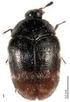 Rev. Chilena Ent. 2012, 37: 17-21 CONTRIBUTION TO THE KNOWLEDGE OF DERMESTIDAE (COLEOPTERA) FROM CHILE CONTRIBUCIÓN AL CONOCIMIENTO DE LOS DERMESTIDAE (COLEOPTERA) DE CHILE Jiří Háva 1 and Jaime Solervicens
A revision of the Aphthona gracilis species group (Coleoptera: Chrysomelidae) A.S. Konstantinov
 Труды Русского энтомологического общества. С.-Петербург, 2006. Т. 77: 178 188. Proceedings of the Russian Entomological Society. St. Petersburg, 2006. Vol. 77: 178 188. A revision of the Aphthona gracilis
A new species of Halystus from Socotra Island (Coleoptera: Curculionidae: Scolytinae: Polygraphini)
 ACTA ENTOMOLOGICA MUSEI NATIONALIS PRAGAE Published 17.xii.2012 Volume 52 (supplementum 2), pp. 511 516 ISSN 0374-1036 A new species of Halystus from Socotra Island (Coleoptera: Curculionidae: Scolytinae:
ISOPERLA UMPQUA A NEW SPECIES OF WESTERN NEARCTIC STONEFLY (PLECOPTERA: ISOPERLINAE)
 Szczytko, S.W. and K.W. Stewart. 2013. Isoperla umpqua, a new species of western Nearctic stonefly (Plecoptera: Isoperlinae). http://zoobank.org/ urn:lsid:zoobank.org:pub:2dca0e5d-15be-4f6b-af64-3ac7aa19b1f4
A new araneid genus from the Galapagos Islands (Araneae: Araneidae)
 A new araneid genus from the Galapagos Islands (Araneae: Araneidae) Herbert W. Levi ABSTRACT Contrib. Nat. Hist. 12: 893 898. A new araneid, Galaporella thaleri sp. nov., similar to species of the genus
Description of a new Pygopleurus species (Col.: Glaphyridae), with a list of recorded species of the genera Pygopleurus and Eulasia from Iran
 Journal of Entomological Society of Iran 2007, 26(2), 1-6 1 Description of a new Pygopleurus species (Col.: Glaphyridae), with a list of recorded species of the genera Pygopleurus and Eulasia from Iran
FIELD RECOGNITION OF THE LARVAE OF NATIVE COCCINELLIDAE, COMMON TO THE POTATO FIELDS OF AROOSTOOK COUNTY
 FIELD RECOGNITION OF THE LARVAE OF NATIVE COCCINELLIDAE, COMMON TO THE POTATO FIELDS OF AROOSTOOK COUNTY R. H. Storch Department of Entomolgy, University of Maine TECHNICAL BULLETIN 43 MAINE AGRICULTURAL
Article. Abstract. Introduction ALBERTO BALLERIO 1, BRUCE D. GILL 2 & VASILY V. GREBENNIKOV 2
 Zootaxa 2892: 1 24 (2011) www.mapress.com/zootaxa/ Copyright 2011 Magnolia Press Article ISSN 1175-5326 (print edition) ZOOTAXA ISSN 1175-5334 (online edition) Illustrated overview and identification key
HYDROPHILIDAE: I. Check list and key to Palearctic and Oriental genera of aquatic Hydrophilidae (Coleoptera)
 JÄCII & Jl (eels.): Water Beetles of China Vol. Ill 3S3-395 Wien, April 2003 HYDROPHILIDAE: I. Check list and key to Palearctic and Oriental genera of aquatic Hydrophilidae (Coleoptera) A. KOMAREK Abstract
New species and subspecies of Octavius from South Africa, with a key and additional distribution records (Coleoptera: Staphylinidae: Euaesthetinae)
 ACTA ENTOMOLOGICA MUSEI NATIONALIS PRAGAE Published 30.iv.2014 Volume 54(1), pp. 195 231 ISSN 0374-1036 http://zoobank.org/urn:lsid:zoobank.org:pub:d94600bd-1221-47b6-9c70-ba8c82b74cec New species and
A new species of Heteropoda (Araneae, Sparassidae, Heteropodinae) from Laos, the largest huntsman spider?
 A new species of Heteropoda (Araneae, Sparassidae, Heteropodinae) from Laos, the largest huntsman spider? Peter JAEGER Johannes Gutenberg-University Institute for Zoology, 55099 Mainz (Germany) [email protected]
Review of the Haliplidae of Myanmar with description of Haliplus volpei (Coleoptera)
 Review of the Haliplidae of Myanmar with description of Haliplus volpei (Coleoptera) Bernhard J. van Vondel The present knowledge about the Haliplidae from Myanmar (Burma) is reviewed. Six species are
Polybia, Paraphyly, and Polistine Phylogeny
 PUBLISHED BY THE AMERICAN MUSEUM OF NATURAL HISTORY CENTRAL PARK WEST AT 79TH STREET, NEW YORK, NY 10024 Number 3298, 24 pp., 53 figures, 3 tables June 28, 2000 Polybia, Paraphyly, and Polistine Phylogeny
A new species of Myrmarachne from Kenya (Araneae: Salticidae)
 Genus Vol. 13 (3): 409-415 Wroc³aw, 30 IX 2002 A new species of Myrmarachne from Kenya (Araneae: Salticidae) WANDA WESO OWSKA 1 and KATHRYN SALM 2 1 Zoological Institute, Wroc³aw University, Sienkiewicza
A TAXONOMIC TREATMENT OF THE SPECIES OF ORTHOGONIUS MACLEAY (COLEOPTERA: CARABIDAE: ORTHOGONIINI) OF SINGAPORE
 THE RAFFLES BULLETIN OF ZOOLOGY 2007 THE RAFFLES BULLETIN OF ZOOLOGY 2007 55(2): 261 266 Date of Publication: 31 Aug.2007 National University of Singapore A TAXONOMIC TREATMENT OF THE SPECIES OF ORTHOGONIUS
The Genus Austroleptis from South Chile and Patagonia (Diptera, Rhagionidae)
 Title The Genus Austroleptis from (Diptera, Rhagionidae) South C Author(s) NAGATOMI, Akira; NAGATOMI, Hisako Citation 南 海 研 紀 要, 8(2): 139-156 Issue Date 1988-02-29 URL http://hdl.handle.net/10232/15696
A review of Hippeutister Reichensperger with new species from California and Costa Rica (Coleoptera: Histeridae: Hetaeriinae)
 Zootaxa 1895: 39 52 (2008) www.mapress.com/zootaxa/ Copyright 2008 Magnolia Press ISSN 1175-5326 (print edition) ZOOTAXA ISSN 1175-5334 (online edition) A review of Hippeutister Reichensperger with new
New Mites in the Family Caeculidae
 BULLETIN OF THE U N IV E R SIT Y OF UTAH Vol. 35 March 15, 1945 No. 17 New Mites in the Family Caeculidae B Y STANLEY M ULAIK BIOLOGICAL SERIES, Vol. VIII, No. 6 PUBLISHED BY THE UNIVERSITY OF UTAH SALT
MAURIZIO BIONDI and PAOLA D ALESSANDRO
 Eur. J. Entomol. 105: 719 736, 2008 http://www.eje.cz/scripts/viewabstract.php?abstract=1390 ISSN 1210-5759 (print), 1802-8829 (online) Taxonomical revision of the Longitarsus capensis species-group: An
ZOOLOGISCHE MEDEDELINGEN
 ZOOLOGISCHE MEDEDELINGEN UITGEGEVEN DOOR HET RIJKSMUSEUM VAN NATUURLIJKE HISTORIE TE LEIDEN (MINISTERIE VAN CULTUUR, RECREATIE EN MAATSCHAPPELIJK WERK) Deel 56 no. 1 15 augustus 1980 T H E GENUS ODONTOFROGGATIA
New species of the genera Lebia Latreille and Aristolebia Bates from Indonesia (Coleoptera: Carabidae: Lebiini) 1
 Stuttgarter Beiträge zur Naturkunde A, Neue Serie 3: 111 121; Stuttgart, 30.IV.2010. 111 New species of the genera Lebia Latreille and Aristolebia Bates from Indonesia (Coleoptera: Carabidae: Lebiini)
AUSTRALIAN MUSEUM SCIENTIFIC PUBLICATIONS
 AUSTRALIAN MUSEUM SCIENTIFIC PUBLICATIONS Bayly, I. A. E., 1971. A new species of Kelleria (Copepoda: Cyclopoida) from brackish water in Victoria. Records of the Australian Museum 28(6): 111 116. [27 September
Kaurimyia gen. nov.: discovery of Apsilocephalidae (Diptera: Therevoid clade) in New Zealand
 Zootaxa 1779: 38 44 (2008) www.mapress.com/zootaxa/ Copyright 2008 Magnolia Press ISSN 1175-5326 (print edition) ZOOTAXA ISSN 1175-5334 (online edition) Kaurimyia gen. nov.: discovery of Apsilocephalidae
A new genus of Philorheithridae (Trichoptera) from Madagascar
 Zootaxa 1825: 18 28 (2008) www.mapress.com/zootaxa/ Copyright 2008 Magnolia Press ISSN 1175-5326 (print edition) ZOOTAXA ISSN 1175-5334 (online edition) A new genus of Philorheithridae (Trichoptera) from
floridanum Banks, the only species of the genus previously
 1944] Three Species o[ Coleosoma ]rom Florida 51 THREE SPECIES OF COLEOSOMA FROM FLORIDA (ARANE/E; THERIDIID.E) x BY ELIZABETH B. BRYANT Among material recently sent the Museum of Comparative Zoology by
Revision of African Parandrinae (Coleoptera, Cerambycidae)
 University of Nebraska - Lincoln DigitalCommons@University of Nebraska - Lincoln Insecta Mundi Center for Systematic Entomology, Gainesville, Florida 8-24-2012 Revision of African Parandrinae (Coleoptera,
A new species of Ohilimia Strand, 1911 from New Guinea (Araneae: Salticidae)
 Genus Vol. 21(4): 625-629 Wrocław, 27 XII 2010 A new species of Ohilimia Strand, 1911 from New Guinea (Araneae: Salticidae) Joanna Gardzińska 1 & Barbara Patoleta 2 Katedra Zoologii, Uniwersytet Przyrodniczo-Humanistyczny
ON A NEW SPECIES OF DENISONIA (REPTILIA, SERPENTES) FROM NEW GUINEA
 ON A NEW SPECIES OF DENISONIA (REPTILIA, SERPENTES) FROM NEW GUINEA by L. D. BRONGERSMA and M. S. KNAAP-VAN MEEUWEN Until now the Elapid genus Denisonia had not been recorded from New Guinea, and this
Yves Alarie, J. Randy Gibson & Kelly B. Miller
 Tijdschrift voor Entomologie 156 (2013) 1 10 brill.com/tve Descriptions of larvae of the North American endemic stygobiontic Ereboporus naturaconservatus Miller, Gibson & Alarie and Haideoporus texanus
FOLIA ENTOMOLOGICA HUNGARICA ROVARTANI KÖZLEMÉNYEK Volume 70 2009 pp. 219 224
 FOLIA ENTOMOLOGICA HUNGARICA ROVARTANI KÖZLEMÉNYEK Volume 70 2009 pp. 219 224 Contributions to the knowledge of the scuttle fly fauna of Hungary (Diptera: Phoridae) G. D. LENGYEL Department of Zoology,
A review of Diphuia (Diptera: Ephydridae) with description of two new species from southern Brazil
 doi: 10.1590/S1984-46702010000500017 A review of Diphuia (Diptera: Ephydridae) with description of two new species from southern Brazil Wayne N. Mathis 1 & Luciane Marinoni 2 1 Department of Entomology,
New species of Cerambycinae (Coleoptera, Cerambycidae) from South America
 INSECTA MUNDI A Journal of World Insect Systematics 0115 New species of Cerambycinae (Coleoptera, Cerambycidae) from South America Maria Helena M. Galileo Museu de Ciências Naturais, Fundação Zoobotânica
Article. http://dx.doi.org/10.11646/zootaxa.3841.1.7 http://zoobank.org/urn:lsid:zoobank.org:pub:6fb24193-a0db-4494-8c2c-f7591e614e9c
 Zootaxa 3841 (1): 127 134 www.mapress.com/zootaxa/ Copyright 2014 Magnolia Press Article http://dx.doi.org/10.11646/zootaxa.3841.1.7 http://zoobank.org/urn:lsid:zoobank.org:pub:6fb24193-a0db-4494-8c2c-f7591e614e9c
First Record of the Genus Adolenda Distant (Hemiptera: Fulgoroidea: Kinnaridae) from China, with Description of One New Species
 Zoological Studies 40(4): 365-370 (2001) First Record of the Genus Adolenda Distant (Hemiptera: Fulgoroidea: Kinnaridae) from China, with Description of One New Species Ai-Ping Liang Department of Entomology,
NEW TAXA OF DIADOCIDIIDAE (DIPTERA) FROM THE ORIENTAL REGION
 Acta Zoologica Academiae Scientiarum Hungaricae 51 (4), pp. 329 341, 2005 NEW TAXA OF DIADOCIDIIDAE (DIPTERA) FROM THE ORIENTAL REGION PAPP, L. 1 and ŠEVČÍK, J. 2 1 Department of Zoology, Hungarian Natural
On the Scaphidiidae (Coleoptera) of Chile
 Ent. Arb. Mus. Frey 31/32, 1983 161 On the Scaphidiidae (Coleoptera) of Chile By Ivan Löbl Geneva Abstract The Chilian Scaphidiidae are reviewed. Eight species, all belonging to the genus Baeocera Erichson,
TWO NEW SPECIES OF RHYACOPHILA PICTET (TRICHOPTERA, RHYACOPHILIDAE) FROM INDIA INTRODUCTION MATERIAL AND METHODS
 Acta Zoologica Academiae Scientiarum Hungaricae 58 (3), pp. 211 215, 2012 TWO NEW SPECIES OF RHYACOPHILA PICTET (TRICHOPTERA, RHYACOPHILIDAE) FROM INDIA KAUR, L. and SAINI, M. S. Department of Zoology
e-mail: [email protected] 2 Linkoping University, Sweden
 Studies and Reports Taxonomical Series 7 (1-2): 337-348, 2011 New Allecula species (Coleoptera: Tenebrionidae: Alleculinae) from Turkey Vladimír NOVÁK 1, Nicklas JANSSON 2, Mustafa AVCI 3, Oguzhan SARIKAYA
TWO NEW FRESHWATER SPECIES OF THE GENUS JESOGAMMARUS (CRUSTACEA: AMPHIPODA: ANISOGAMMARIDAE) FROM CHINA
 THE RAFFLES BULLETIN OF ZOOLOGY 2004 THE RAFFLES BULLETIN OF ZOOLOGY 2004 52(2): 455-466 National University of Singapore TWO NEW FRESHWATER SPECIES OF THE GENUS JESOGAMMARUS (CRUSTACEA: AMPHIPODA: ANISOGAMMARIDAE)
LABORATORIO DI ENTOMOLOGIA AGRARIA
 BOLLETTINO del LABORATORIO DI ENTOMOLOGIA AGRARIA Boll. Lab. Ent. agr. Filippo Silvestri 61: 25-46 GENNARO VIGGIANI Dipartimento di Entomologia e Zoologia Agraria «Filippo Silvestri», Università degli
Flanged Bombardier Beetles from Laos (Carabidae, Paussinae)
 Entomologica Basiliensia et Collectionis Frey 31 101 113 2009 ISSN 1661 8041 Flanged Bombardier Beetles from Laos (Carabidae, Paussinae) by Peter Nagel Abstract. The Paussinae of Laos were recently studied
How To Identify A Byrrhidae Beetle
 Quoderno di Srudi e Nolizie di Storio Nolurole dello Romogno Quad. Studi Nat. Romagna, 17 suppl.: 55-61, giugno 2003 lssn 1123-6787 Roberto Fabbri & Hong-zhangZhou- THR.EE NEW SPECIES OF THE GENUS BYRRIIUS
A new species of Fissiphalliidae from Brazilian Amazon Rain Forest (Arachnida: Opiliones)
 Zootaxa : 1 6 (2004) www.mapress.com/zootaxa/ Copyright 2004 Magnolia Press ISSN 1175-5326 (print edition) ISSN 1175-5334 (online edition) A new species of Fissiphalliidae from Brazilian Amazon Rain Forest
P O L I S H J O U R N A L O F E N T O M O L O G Y
 P O L I S H J O U R N A L O F E N T O M O L O G Y P O L S K I E P I S M O E N T O M O L O G I C Z N E VOL. 76: 177-182 Bydgoszcz 30 September 2007 Harmonia axyridis (PALLAS, 1773) (Coleoptera: Coccinellidae)
Aglaenita (Hemiptera: Cicadellidae: Neocoelidiinae): a new species from Brazil
 doi: 10.1590/S1984-46702011000100017 Aglaenita (Hemiptera: Cicadellidae: Neocoelidiinae): a new species from Brazil Ana Paula Marques-Costa Laboratório de Entomologia, Departamento de Biologia, Universidade
Description of a new species of Phaenonotum from eastern Cuba (Coleoptera: Hydrophilidae: Sphaeridiinae)
 ACTA ENTOMOLOGICA MUSEI NATIONALIS PRAGAE Published 15.xi.2013 Volume 53(2), pp. 615 622 ISSN 0374-1036 http://zoobank.org/urn:lsid:zoobank.org:pub:b94af43d-e483-4eb7-b1b6-c48e6492f66a Description of a
SPIXIANA 32 2 231 253 München, November 2009 ISSN 0341 8391
 SPIXIANA 32 2 231 253 München, November 2009 ISSN 0341 8391 New and rare species of the pseudomorphine genera Sphallomorpha Westwood, Adelotopus Hope, and Pseudomorpha Kirby mainly from far Northern Territory,
Article. New Cardiodactylus species from unsuspected places in Southeast Asia (Orthoptera, Grylloidea, Eneopterinae)
 Zootaxa 2909: 14 26 (2011) www.mapress.com/zootaxa/ Copyright 2011 Magnolia Press Article ISSN 11755326 (print edition) ZOOTAXA ISSN 11755334 (online edition) New Cardiodactylus species from unsuspected
ANNALES HISTORICO-NATURALES MUSEI NATIONALIS HUNGARICI Volume89. Budapest, 1997 pp. 151-156.
 ANNALES HISTORICO-NATURALES MUSEI NATIONALIS HUNGARICI Volume89. Budapest, 1997 pp. 151-156. Three new species and a new subspecies of Meoneura from the Alps (Diptera, Carnidae) L. PAPP Department of Zoology,
specimen, a practically complete cranium, was found by the author's
 Article 56.9,33N XLI.- PRELIMINARY DIAGNOSIS OF AN APPARENTLY NEW FAMILY OF INSECTIVORES. BY H. E. ANTHONY. PLATE XXIII. In July, 1916, while searching for remains of fossil mammals in Porto Rico, in accordance
A new species of Urophora Robineau-Desvoidy, 1830 (Diptera:Tephritidae) from Turkey with a key to the dzieduszyckii group 1
 Türk. entomol. derg., 2014, 38(2): 149-155 ISSN 1010-6960 Orijinal araştırma (Original article) A new species of Urophora Robineau-Desvoidy, 1830 (Diptera:Tephritidae) from Turkey with a key to the dzieduszyckii
A Morphological Study On Endemic Malabaila lasiocarpa Boiss. (Apiaceae) From Bingol (Turkey)
 Araştırma Makalesi/Research Article A Morphological Study On Endemic Malabaila lasiocarpa Boiss. (Apiaceae) From Bingol (Turkey) Ömer KILIÇ 1 Abstract- In this study morphological characters of Malabaila
CHAPTER 10 RESTS AND PREPARATIONS. 4. Serve as a reference point for evaluating the fit of the framework to the teeth.
 CHAPTER 10 RESTS AND DEFINITIONS A REST is any rigid part of an RPD framework which contacts a properly prepared surface of a tooth. A REST PREPARATION or REST SEAT is any portion of a tooth or restoration
IDENTIFICATION OF ADULT CORIXIDS 25
 IDENTIFICATION OF ADULT CORIXIDS 25 THE IDENTIFICATION OF BRITISH ADULT SPECIMENS OF SIGARA LATERALIS (LEACH), SIGARA CONCINNA (FIEBER), CALLICORIXA PRAEUSTA (FIEBER) AND CALLICORIXA WOLLASTONI (DOUGLAS
FURTHER MORPHOLOGICAL CONSIDERATIONS ON THE
 ARTÍCULO: FURTHER MORPHOLOGICAL CONSIDERATIONS ON THE GENUS BIRULATUS VACHON (SCORPIONES, BUTHIDAE), WITH THE DESCRIPTION OF A NEW SPECIES FROM ISRAEL Wilson R. Lourenço ARTÍCULO: Further morphological
Notes on the Bembidiina of Taiwan with description of three new species (Coleoptera: Carabidae)
 ACTA ENTOMOLOGICA MUSEI NATIONALIS PRAGAE Published 15.xii.2009 Volume 49(2), pp. 577 598 ISSN 0374-1036 Notes on the Bembidiina of Taiwan with description of three new species (Coleoptera: Carabidae)
Rediscovery of Cicindela scabrosa floridana Cartwright (Coleoptera: Cicindelidae) and its elevation to species level
 INSECTA MUNDI A Journal of World Insect Systematics 0162 Rediscovery of Cicindela scabrosa floridana Cartwright (Coleoptera: Cicindelidae) and its elevation to species level David Brzoska 2740 Island Pond
INSECTA MUNDIA Journal of World Insect Systematics
 INSECTA MUNDIA Journal of World Insect Systematics 0360 Two new species and one new genus of South American Cerambycidae (Coleoptera), with redescriptions and distributional records for other taxa Maria
Body Planes & Directions Anatomic Reference Systems (Unit 6, pp. 110-112)
 Name: Period: Date: Body Planes & Directions Anatomic Reference Systems (Unit 6, pp. 110-112) The Anatomic Position In the anatomic position, the individual is: 1. Standing up/sitting down (circle one)
SILVANUS MUTICUS SHARP, 1899: AN AMERICAN SILVANID FOUND OUT-OF-DOORS IN TWO GREEK ISLANDS (Coleoptera Cucujoidea Silvanidae)
 Boll. Mus. Civ. St. nat. Venezia, 53 (2002) 2002: 207-211. Enrico Ratti SILVANUS MUTICUS SHARP, 1899: AN AMERICAN SILVANID FOUND OUT-OF-DOORS IN TWO GREEK ISLANDS (Coleoptera Cucujoidea Silvanidae) Riassunto.
NOVITATES AMER]ICAN MUSEUM MEXICO (COLEOPTERA) THE BUPRESTIDAE OF NORTH CENTRAL BY MONT A. CAZIER'
![NOVITATES AMER]ICAN MUSEUM MEXICO (COLEOPTERA) THE BUPRESTIDAE OF NORTH CENTRAL BY MONT A. CAZIER'](/thumbs/24/3912359.jpg "NOVITATES AMER]ICAN MUSEUM MEXICO (COLEOPTERA) THE BUPRESTIDAE OF NORTH CENTRAL BY MONT A. CAZIER'") AMER]ICAN MUSEUM NOVITATES PUBLISHED BY THE AMERICAN MUSEUM OF NATURAL HISTORY CITY OF NEW YORK JULY 16, 1951 NUMBER 1526 THE BUPRESTIDAE OF NORTH CENTRAL MEXICO (COLEOPTERA) BY MONT A. CAZIER' This paper
AMER]ICAN MUSEUM NOVITATES PUBLISHED BY THE AMERICAN MUSEUM OF NATURAL HISTORY CITY OF NEW YORK JULY 16, 1951 NUMBER 1526 THE BUPRESTIDAE OF NORTH CENTRAL MEXICO (COLEOPTERA) BY MONT A. CAZIER' This paper
DEVELOPMENT AND GROWTH OF THE MANDIBLE
 2012-2013 ORAL BIOLOGY DEVELOPMENT AND GROWTH OF THE MANDIBLE Ass. Prof. Dr. Heba M. Elsabaa Development and Growth of the Mandible DEVELOPMENT OF THE MANDIBLE The Mandible Is the largest and strongest
First record of the family Pseudochiridiidae
 Barba ISSN 0065-1737 Díaz & Alegre Barroso: Pseudochiridiidae (Pseudoscorpiones) Acta Zoológica en Cuba Mexicana (n.s.), 29(3): 696-700 (2013) Nota Científica (Short Communication) First record of the
A Review of the Genus Cucujus Fabricius (Insecta: Cucujoidea: Cucujidae) from
 A Review of the Genus Cucujus Fabricius (Insecta: Cucujoidea: Cucujidae) from Taiwan, Japan, and China, with Descriptions of Two New Species and the Larvae of Cucujus mniszechi Grouvelle Chi-Feng Lee 1,*
A Key to the Empoasca Solana Complex with Descriptions of New Species
 The Ohio State University Knowledge Bank kb.osu.edu Ohio Journal of Science (Ohio Academy of Science) Ohio Journal of Science: Volume 60, Issue 5 (September, 1960) 1960-09 A Key to the Empoasca Solana
S. G. ERMILOV. Dr. Sergey G. Ermilov, Tyumen State University, Tyumen 625003, Russia. E-mail: [email protected]
 Opusc. Zool. Budapest, 2013, 44(1): 9 14 Additional description of Scheloribates (Bischeloribates) mahunkai Subías, 2010 (Acari: Oribatida: Scheloribatidae) on the basis of Vietnamese specimens S. G. ERMILOV
JOSÉ MOACIR FERREIRA RIBEIRO 1 & JOSÉ ALBERTINO RAFAEL 1,2. Abstract. Introduction
 Zootaxa 1511: 17 28 (2007) www.mapress.com/zootaxa/ Copyright 2007 Magnolia Press ISSN 1175-5326 (print edition) ZOOTAXA ISSN 1175-5334 (online edition) Description of one new species and a key to adults
NOTES ON RHOPALOPSOLE KLAPÁLEK (PLECOPTERA: LEUCTRIDAE), WITH DESCRIPTIONS OF THREE NEW SPECIES FROM VIETNAM
 Stark, B.P., I. Sivec, and T. Shimizu. 2012. Notes on Rhopalopsole Klapálek (Plecoptera: Leuctridae), with descriptions of three new species NOTES ON RHOPALOPSOLE KLAPÁLEK (PLECOPTERA: LEUCTRIDAE), WITH
Generally no more than 6 lines of data should be on a single label.
 Arrangement and Procedures for the Entomological Museum of the Tom Ridge Environmental Center at Presque Isle Arrangement of Orders and Families: The Entomological Museum in the Tom Ridge Environmental
Introduction. I. Objectives. II. Introduction. A. To become familiar with the terms of direction and location.
 E X E R C I S E Introduction I. Objectives A. To become familiar with the terms of direction and location. B. To become familiar with different types of planes and sections. C. To learn the names and locations
OLIGOSITA AMERIGANA ASHMEAD SPECIES NOVA, A NEW CHAL- CIDOID OF THE FAMILY TRICHOGRAMMIDAE FROM ILLINOIS.
 106 PSYCHE [October OLIGOSITA AMERIGANA ASHMEAD SPECIES NOVA, A NEW CHAL- CIDOID OF THE FAMILY TRICHOGRAMMIDAE FROM ILLINOIS. BY A. A. GIRAULT UNIVERSITY OF ILLINOIS. I xve been requested to draw up the
New group, new species and new records from Brazil of the atropos, brasilianus and giganteus groups (Blattaria, Blaberidae, Blaberinae)
 New group, new species and new records from Brazil of the atropos, brasilianus and giganteus groups (Blattaria, Blaberidae, Blaberinae) Sonia Maria Lopes & Edivar Heeren de Oliveira Biota Neotrop. 2013,
Transverse Sections of the Spinal Cord
 Transverse Sections of the Spinal Cord The spinal cord is perhaps the most simply arranged part of the CNS. Its basic structure, indicated in a schematic drawing of the eighth cervical segment (Figure
A new species of tiger beetle from Hong Kong Protocollyris ngaungakshani Wiesner, 2012 P. 2-3
 Insect News Hong Kong Entomological Society Newsletter Protocollyris ngaungakshani Wiesner, 2012 Photo by Vor YIU A new species of tiger beetle from Hong Kong Protocollyris ngaungakshani Wiesner, 2012
Arthropod Systematics & Phylogeny 65 (1) 25 71 Museum für Tierkunde Dresden, eissn 1864-8312
 Arthropod Systematics & Phylogeny 25 65 (1) 25 71 Museum für Tierkunde Dresden, eissn 1864-8312 Taxonomic Revision of the Anomala cuprascens-species Group of Sulawesi and the Papuan Region: The Species
PERIPROSTHETIC IMPLANTS
 PERIPROSTHETIC IMPLANTS PRODUCT OVERVIEW CLINICAL SOLUTIONS Periprosthetic fractures present unique challenges, such as how to gain fixation when the medullary canal is occupied. Special techniques and