
CHAPTER 10 RESTS AND PREPARATIONS. 4. Serve as a reference point for evaluating the fit of the framework to the teeth.
|
|
|
- Avice Clarke
- 10 years ago
- Views:
Transcription
1 CHAPTER 10 RESTS AND DEFINITIONS A REST is any rigid part of an RPD framework which contacts a properly prepared surface of a tooth. A REST PREPARATION or REST SEAT is any portion of a tooth or restoration properly prepared to receive a rest. FUNCTIONS The functions of rests and their rest preparations are to: 1. Transmit forces from the prosthetic teeth to the abutment teeth. In this way at least some occlusal force may be dissipated through the supporting structures of the natural teeth. 2. Provide positive vertical support for the RPD in the area of the abutment tooth and thus prevent the impingement of the RPD on the gingival tissues adjacent to the abutment tooth. 3. Maintain the clasp in the correct position on the abutment tooth thus helping to maintain the effectiveness of the retentive and reciprocal components of the clasp. 4. Serve as a reference point for evaluating the fit of the framework to the teeth. 5. Help prevent extrusion, tipping, or migration of the abutment teeth. 6. Act, along with its minor connector, as an indirect retainer for a tooth-tissue supported RPD. 7. Help maintain the plane of occlusion in the region of the abutment teeth. 8. In addition to these functions, an internal rest may provide some bracing and retention for the RPD. NOMENCLATURE The typical rest preparation for a clasp assembly retained RPD consists of a shallow concavity in an abutment tooth into which the rest fits (Fig. 10-1). The rest fills in the missing Fig An extracoronal rest and rest preparation, a) the rest, b) the rest preparation a b 10-1

2 contours of the tooth. No bracing is provided by this type of rest because the walls of the rest preparation are inclined and very short. This type of rest is sometimes referred to as an EXTRACRONAL REST, although it is primarily within the contours of the abutment tooth. The name comes from its use with an extracronal clasp assembly-type direct retainer and contrasts it with the intracronal type rest used with many precision and semiprecision attachments. abutment tooth, or by waxing the crown pattern around a special mandrel in the dental surveyor thus forming the contour of the rest preparation. After the crown is cast, the matrix is machined (milled) with a bur held in a surveyor (Fig. 10-3). The pattern for the patrix of the semiprecision rest is formed by a performed plastic pattern or by waxing directly to the matrix (rest preparation) in a crown or a cast of the crown. The patrix is cast as part of the RPD framework. INTRACRONAL RESTS fit into rest preparations within the contours of an abutment tooth crown (Fig. 10-2). They may be precision or semiprecision. PRECISION RESTS consists of two metal components manufactured to fit together precisely. One component is a boxtype rest seat, keyway or matrix which is incorporated into the crown of an abutment tooth. The other component is a rigid metal extension (patrix) which fits the matrix precisely and is incorporated into the RPD (Fig. 10-2). Fig An intracoronal rest and rest preparation, a) rest (patrix), b) rest preparation (matrix) A SEMIPRECISION REST is a box-type rest seat, keyway or matrix which is fabricated in the dental laboratory by incorporating a preformed plastic pattern into the wax pattern for the crown of the a b Fig Milling a semi precision rest preparation Intracronal rests should be discussed in greater detail at an advanced level. Extracronal rests and rest preparations are also identified by their location on the tooth surface and by their shape. The most common extracronal rests and rest preparations are occlusal, incisal, lingual cingulum-shaped, lingual ledgeshaped, and transocclusal or (occlusal) embrasure. DESIRABLE CHARACTERISTICS FOR EXTRACRONAL REST 10-2

3 Extracronal rest preparations should have the following desirable characteristics: 1. Provide sufficient space that the rest may fill in the missing contour of the tooth and have sufficient bulk to be rigid. 2. Have a positive seat faciolingually and mesiodistally which prevents the rest from being dislodged from the tooth when occlusal forces are applied to the RPD. 3. Direct vertically applied forces along the long axis of the tooth. 4. Have a smooth, rounded shape with sloping walls and no pits, sharp edges or angles. 5. Be in caries resistant enamel or a suitable restorative material. 6. Be easily cleansed by normal oral hygiene procedures. 7. Have a shape which may allow for rotation of the rest in the rest preparation for tooth-tissue supported RPDs. DESIRABLE CHARACTERISTICS FOR EXTRACRONAL RESTS Extracronal rests should have the following desirable characteristics: 1. Be rigid. 2. Contact the deepest portion of the rest preparation (positive seat area). 3. Form an angle of less than 90 0 with its minor connector. 4. Fill the rest preparation, completing the contours of the tooth, thus resulting in a smooth metal-to-tooth margin. 5. Be capable of rotation within the rest preparation for toothtissue supported RPDs. OCCLUSAL RESTS AND REST Occlusal rests are located in occlusal fossae of molars and premolars. There are three types of occlusal rests based on their location and extent: (1) proximal, (2) embrasure, and (3) transocclusal. The PROXIMAL OCCLUSAL REST is located in a fossa adjacent to an edentulous space (Fig. 10-4). The proximal occlusal rest preparation follows the outline of the occlusal fossa and is spoon-shaped in all views. The facial and lingual margins flare toward the proximal line angle of the tooth. The width of the preparation is ½ to 2/3 the distance between the facial and lingual cusp tips. The preparation is at least 1.0 mm deep with a slightly deeper portion (0.5 mm) called the POSITIVE SEAT located toward the center of the preparation. The positive seat points apically so that vertical forces are directed as nearly as possible along the long axis of the tooth. The marginal ridge is reduced sufficiently that the rest will be approximately 0.1 mm thick in that area. 10-3

4 Fig The mesiodistal extension of occlusal rest preparations: a) eliminating the primary occlusal fossa, b) extension to the mesiodistal center of the tooth (extended occlusal rest preparation), c) extension across the entire occlusal surface, sometimes called a continuous occlusal rest preparation, or channel rest preparation. The angle between the rest and proximal minor connector should be slightly less than 90 degrees to form a positive mesiodistal seat (Fig. 10-6). The rest fills in the missing occlusal contours of the tooth. Fig Proximal occlusal rest praparation, a) occlusal view, b) proximal view, c) lingual view (ps=positive seat) The cavosurface margin of the rest preparation extends onto convex tooth surfaces, eliminates the occlusal fossa and may extend to the center of the tooth or entirely across the occlusal surface (Fig. 10-5). The purpose of extending the rest to the center of the tooth or across the entire occlusal surfaces is to: 1) direct forces more parallel to the long axis of the root than if the rest is just on the mesial or distal of the tooth, 2) provide increased stabilization (bracing) of the tooth and sometimes 3) provide occlusal contacts with the opposing teeth. The occlusal rest preparation whichextends mesiodistally through the occlusal surface of a tooth is sometimes called a CONTINUOUS REST PREPARATION. Fig The angle between the rest and the proximal minor connector is less than 90 degrees The EMBRASURE OCCLUSAL REST is located in a fossa adjacent to another tooth (Fig. 10-7). Its size, shape and dimensions are similar to the proximal occlusal rest preparation EXCEPT that the flare of the facial margin is limited by the proximal contact with the adjacent tooth. The embrasure occlusal rest preparation rarely extends beyond the primary fossa. 10-4

5 a b c Fig Embrasure occlusal rest preparations, a) occlusal view, b) proximal view, c) lingual view As a general rule, if an embrasure occlusal rest is to be used, the occlusal fossa of the adjacent tooth is also prepared with an embrasure occlusal rest preparation UNLESS THERE IS A REASON NOT TO such as occlusion, existing restorative material, etc. In this way the adjacent embrasure occlusal rests eliminate the occlusal embrasure making the area more "self cleansing" and splint the two teeth together preventing them from being wedged apart by occlusal forces on the rest (Fig. 10-8). Class II survey line). Transocclusal rests and rest preparations are sometimes referred to as (occlusal) EMBRASURE rests and rest preparations. A transocclusal rest preparation is similar in size and shape to an embrasure occlusal rest preparation EXCEPT that the preparation is extended facially to create space for the rest and clasp arm to extend onto the facial surface of the tooth (Fig. 10-9). As a general rule, if a transocclusal rest is to be used, the occlusal fossa of the adjacent tooth is also prepared with a transocclusal rest preparation UNLESS THERE IS A REASON NOT TO such as occlusion, existing restorative material, etc. In this way the adjacent transocclusal rests eliminate the occlusal embrasure making the area more "self-cleansing" and splints the two teeth together preventing them from being wedged apart by occlusal forces on the rest (Fig. 10-9). Fig Adjacent embrasure occlusal rest preparations are prepared when possible to eliminate the occlusal embrasure and splint the teeth together with the RPD TRANSOCCLUSAL RESTS AND REST Transocclusal rests are located in the occlusal fossa of molars and premolars where there is no edentulous space (the tooth-supported side of a Class II or Class III partially edentulous arch and the posterior rests of a Class IV partially edentulous arch) or where the retentive clasp arm must approach an undercut on the surface of the tooth adjacent to the edentulous space (a Fig Trasnocclusal (occlusal embrasure) rest preparations a) occlusal view, b) facial view, c) lingual view 10-5

6 INCISAL RESTS AND REST Incisal rests are placed on the incisal edges of mandibular canines and incisors. They are not placed on maxillary canines or incisors because the minor connector of the rest would interfere with occlusion and the facial portion of the rest would be very visible and unaesthetic. Incisal rests are usually located in the mesial or distal half of the tooth but occasionally are located in the center of the incisal edge. Incisal rests should be located in the portion of the incisal surface of the tooth which is most parallel to the occlusal plane so that a rest preparation with a positive mesiodistal seat can be easily formed. The rest should also be located so that it will direct forces parallel to the long axis of the tooth when occlusal forces are applied to the prosthetic teeth. In addition, the rest should be located where it will not be involved in occlusion, or will be involved the least amount in occlusion. And the rest should be located where the facial exposure of metal will interfere the least with esthetics. Incisal rest preparations are U- shaped when viewed form the facial or lingual and inverted U-shaped when viewed from the proximal (Fig ). Fig Incisal rest preparations, a) incisal view, b) proximal view, c) lingual view, d) facial view of the tooth to limit the display of metal. If the incisal rest preparation is located adjacent to an edentulous space, the proximal incisal angle is shortened to facilitate the junction of the proximal minor connector with the rest (Fig ). Fig The proximal incisal edge of incisal rest preparations adjacent to edentulous spaces is shortened to facilitate the junction of the rest and proximal minor connector The mesiodistal dimension of the rest preparation should be 1½-2 mm and the depth at least 1 mm to provide adequate space for a bulk of metal for the rest. The incisal rest should complete the normal contours of the tooth and not be over contoured so that it appears as a "bump" on the incisal edge. Incisal rests should not interfere with functional occlusal contacts (Fig ). Incisal rest preparations should extend only slightly onto the facial surface 10-6

7 Fig Incisal rest preparations should complete the normal contours of the tooth a), and not be over contoured and not appear as a "bump" on the incisal edge, b) LINGUAL RESTS AND REST Lingual rests are placed on the lingual surface of canines and incisors. They are routinely placed on maxillary canines and incisors and in maxillary and mandibular surveyed crowns. Lingual rests are rarely use on natural mandibular incisors and canines because there is usually insufficient enamel thickness for an adequate lingual rest preparation. There are two types of lingual rest preparations based on their shape: (1) cingulum-shaped, (2) ledge-shaped and (3) dimple-shaped. The CINGULUM-SHAPED REST PREPARATION may be made in canines and incisors which have a prominent cingulum. The cingulumshaped rest preparation follows the contours of the cingulum. The cingulum shaped rest preparation on maxillary canines and incisors are U- shaped when viewed from the lingual and proximal (Fig ). On mandibular canines and incisors the cingulum-shaped rest preparation is inverted U-shaped when viewed from the lingual and U-shaped when viewed from the proximal. The floor of the cingulum-shaped rest preparation is placed in the bulk of the cingulum. The floor of the rest preparation is deepest toward the center of the tooth thus forming a positive faciolingual seat. The preparation extends more cervically on the mesial and distal thus forming a positive mesiodistal seat. The preparation extends through the marginal ridges. The cingulumshaped rest preparation is approximately 1.0 mm deep pulpally and cervically. Fig A lingual cingulum-shaped rest preparation, a) lingual view, b) proximal view, c) incisal view The rest fitting a cingulum-shaped rest preparation may be a surface-type minor connector, or one with an incisal opening (window) through which the tip of the cingulum extends (Fig ). It is easier to evaluate the fit of a cingulum rest with the later design, and it is easier to clean the tissue surface of the rest. However, the open design is weaker than the surface design. Fig Rests for cingulum-shaped rest preparations, a) surface type, b) surface type with a perforation for the tip of the cingulum 10-7

8 The LEDGE-SHAPED REST PREPARATION can be made in any tooth when the enamel thickness is greater than 1 mm. They are generally used where the tooth does not have a prominent cingulum or where a finger-type rest is to be used (Fig ). It is more difficult to provide a positive faciolingual and mesiodistal positive seat with a ledge-shaped rest preparation than with cingulum-shaped rest preparation. Fig A lingual ledge-shaped rest preparation a) lingual view, b) proximal view, c) incisal view The lingual ledge rest must extend slightly onto the proximal tooth surfaces to provide a positive mesiodistal seat on the tooth (Fig ). Fig A lingual ledge-shaped rest preparation used with a finger type rest The floor of the ledge-shaped rest preparation is placed in the bulk of the cingulum (Fig ). From the lingual view the floor of the rest preparation appears straight. From the proximal view the ledge-shaped rest preparation appears as a flat surface angled slightly cervically toward the center of the tooth to provide a positive faciolingual seat. From the incisal view the ledge-shaped rest preparation appears as a ledge following the contour of the lingual surface of the tooth. The preparation extends through the mesial and distal marginal ridges. The faciolingual width of the lingual ledge-shaped rest preparation is approximately 1.0 mm. Fig The rest for a lingual ledge - shaped rest preparation must extend into the proximal embrasures to provide a positive mesiodistal seat on the tooth, a) lingual view, b) incisal view. Lingual dimple-shaped rest preparation is employed when there is limited surface on anterior teeth due to occlusal contacts. 10-8

9 DESIRABLE MATERIALS FOR REST a b c Fig A lingual dimple-shaped rest preparation, a) lingual view, b) proximal view, c) incisal view INCISAL V.S. LINGUAL RESTS Lingual rests are preferred to incisal rests because: (1) they do not show metal when viewed from the facial and are, therefore, more esthetic, (2) they are more cervical on the tooth and, therefore, closer to the fulcrum point and have a shorter lever arm and lower mechanical advantage in torquing the tooth and (3) for mandibular teeth they are not involved in the occlusion (Fig ). Rest Visible a Enamel and cast metal are ideal materials for rest preparations. Porcelain is less desirable because of its propensity to fracture. Rest preparations may be prepared as an economic necessity in amalgam but the flow and low yield strength of amalgam and the possibility of recurrent caries and fracture of the tooth and/or restoration make amalgam an undesirable material for a rest preparation. Dentin is an undesirable material for a rest preparation because of its low abrasion resistance and propensity for caries. Unfortunately, dentin is frequently exposed when placing rest preparations in natural teeth. In these situations the tooth does not need to be restored unless it is sensitive or caries is anticipated. Incisal Rest Lingual Rest Conventional and resin composite are unacceptable materials for rest preparations because of their low yield strength and low abrasion resistance. b In Occlusion c Bone THE PREPARATION OF REST The preparation of rest preparations in natural teeth, existing restoration, and crowns for abutment teeth will be discussed in a later chapter. Incisal Rest Lingual Rest Fig Lingual rest preparations are preferred to incisal rests because they are: a) more esthetic, b) closer to the fulcrum point and, therefore, less able to torque the tooth, c) not involved in the occlusion for mandibular teeth 10-9

In Class IV arch: Fulcrum line passes through two abutments adjacent to single edentulous space.
 It is that part of removable partial denture which assists the direct retainers in preventing displacement of distal extension denture bases by resisting lever action from the opposite side of the fulcrum
porcelain fused to metal crown
 Lectur.5 Dr.Adel F.Ibraheem porcelain fused to metal crown the most widely used fixed restoration,it is full metal crown having facial surface (or all surfaces) covered by ceramic material. It consist
Tooth preparation J. C. Davenport, 1 R. M. Basker, 2 J. R. Heath, 3 J. P. Ralph, 4 P-O. Glantz, 5 and P. Hammond, 6
 12 5 Tooth preparation J. C. Davenport, 1 R. M. Basker, 2 J. R. Heath, 3 J. P. Ralph, 4 P-O. Glantz, 5 and P. Hammond, 6 This final article in the series describes the modification of teeth to improve
CLASSIFICATION OF REMOVABLE PARTIAL DENTURES
 Unless otherwise noted, the content of this course material is licensed under a Creative Commons Attribution - Non-Commercial - Share Alike 3.0 License. Copyright 2008, Dr. Jeff Shotwell. The following
Implants in your Laboratory: Abutment Design
 1/2 point CDT documented scientific credit. See Page 41. Implants in your Laboratory: Abutment Design By Leon Hermanides, CDT A patient s anatomical limitations have the greatest predictive value for successful
Full Crown Module: Learner Level 1
 Full Crown Module Restoration / Tooth # Full Gold Crown (FGC) / 30 Extensions: Porcelain Fused to Metal (PFM) / 12 All Ceramic / 8 Learner Level 1 Mastery of Tooth Preparation Estimated Set Up Time: 30
Treatment planning for the class 0, 1A, 1B dental arches
 Treatment planning for the class 0, 1A, 1B dental arches Dr.. Peter Hermann Dr Reminder: Torquing movement on tooth supported denture : no movement Class 1 movement in one direction (depression) Class
Principles of Partial Denture Design
 Principles of Partial Denture Design 1. Keep the RPD design as simple as possible Simple those design elements which promote function, esthetics, comfort, ease of fabrication, and ease of maintenance,
CHAPTER 12 SURVEY LINES. portion of the tooth is undercut to the path of placement of the denture. DEFINITIONS
 CHAPTER 12 portion of the tooth is undercut to the path of placement of the denture. SURVEY LINES DEFINITIONS A SURVEY LINE is a line produced on a cast by a surveyor or scribe marking the greatest prominence
Introduction of Removable Partial Denture - Design and Retention
 Introduction of Removable Partial Denture - Design and Retention By : Dr Zaihan Ariffin BDS(Malaya), GDCDent (Adelaide), Doctor of Clinical Dentistry (Adelaide), FRACDS (Australia) Type of denture Full
Molar Uprighting Dr. Margherita Santoro Division of Orthodontics School of Dental and Oral surgery. Consequences of tooth loss.
 Molar Uprighting Dr. Margherita Santoro Division of Orthodontics School of Dental and Oral surgery Molars The wide occlusal surface is designed for food grinding. The surface needs to be aligned with the
Removable Partial Dentures 101 Back to the Basics. Luther A. Ison, CDT University of Minnesota School of Dentistry
 Removable Partial Dentures 101 Back to the Basics Luther A. Ison, CDT University of Minnesota School of Dentistry Anterior-Posterior Palatal Strap Major connector Lingual Bar Major Connector, Kennedy Class
CLASSIFICATION OF CARIOUS LESIONS AND TOOTH PREPARATION.
 CLASSIFICATION OF CARIOUS LESIONS AND TOOTH PREPARATION. ١ G.V. BLACK who is known as the father of operative dentistry,he classified carious lesions into groups according to their locations in permanent
There When You Need Them: 10 Principles of Successful RPD Treatment
 There When You Need Them: 10 Principles of Successful RPD Treatment Jeff Scott, DMD [email protected] 239 2 nd Ave South Suite 100 St. Petersburg, FL 33701 The West Coast District Dental
Attachments And Their Use In Removable Partial Denture Fabrication
 Unless otherwise noted, the content of this course material is licensed under a Creative Commons Attribution - Non-Commercial - Share Alike 3.0 License. Copyright 2008, Dr. Jeff Shotwell. The following
CLASS II AMALGAM. Design Principles
 CLASS II AMALGAM Design Principles CLASS II Class II cavitated caries lesions Class II cavitated caries lesions opaque white haloes identify areas of enamel undermining and decalcification from within
Universal Crown and Bridge Preparation
 Universal Crown and Bridge Preparation The All-Ceramic Crown Preparation Technique for Predictable Success According to Dr. Ronald E. Goldstein Expect the Best. Buy Direct. The Universal * Crown and Bridge
Ando A., Nakamura Y., Kanbara R., Kumano H., Miyata T., Masuda T., Ohno Y. and Tanaka Y.
 11. The Effect of Abutment Tooth Connection with Extracoronal Attachment using the Three Dimensional Finite Element Method - Part 2. The Construction of Finite Element Model from CT Data - Ando A., Nakamura
2016 Buy Up Dental Care Plan Procedure List
 * This is in addition to the embedded Preventive Plan (see procedure list at deltadentalco.com/kp_preventive. BASIC SERVICES Minor Restorative Services D2140 Amalgam 1 surface, primary or permanent D2150
ATLANTIS abutments design guide CAD/CAM patient-specific abutments
 ATLANTIS abutments design guide CAD/CAM patient-specific abutments Contents Introduction 4 This manual helps you to explore all the benefits of ATLANTIS CAD/CAM patient-specific abutments. It gives you
The success or failure of a removable partial denture
 Preparing teeth to receive a removable partial denture Robert W. Rudd, DDS, MS, a lbert. ange, S, DDS, MSD, b Kenneth D. Rudd, DDS, c and Ralph Montalvo d Colorado Springs, Colo. The success or failure
Another Implant Option for Missing Teeth with Challenging Symmetry Patrick Gannon, DDS and Luke Kahng, CDT
 Another Implant Option for Missing Teeth with Challenging Symmetry Patrick Gannon, DDS and Luke Kahng, CDT Introduction A 58 year old male had been missing teeth #7=12 for approximately 28 years. During
How to Achieve Shade Harmony With Different Restorations
 Procera Alumina vs. Feldspathic Porcelain How to Achieve Shade Harmony With Different Restorations Luke S. Kahng, CDT Key Words: Stump shade, Feldspathic Porcelain, Zirconia, Alumina, LSK Treatment Plan
Removing fixed prostheses using the ATD automatic crown and bridge remover
 Removing fixed prostheses using the ATD automatic crown and bridge remover By Dr. Ian E. Shuman, Baltimore, MD. Information provided by J. Morita USA When removing cemented provisionals and final fixed
Removable Partial Denture Manual. Robert W. Loney, DMD, MS 2011
 Removable Partial Denture Manual Robert W. Loney, DMD, MS 2011 Removable Partial Denture Manual Robert W. Loney, DMD, MS 2011 Table of Contents - i Table of Contents Introduction to Removable Partial Dentures...
Page 1 of 10 BDS FINAL PROFESSIONAL EXAMINATION 2007 Prosthodontics (MCQs) Model Paper SECTION I
 Page 1 of 10 COMPLETE DENTURES ANATOMICAL LANDMARKS SECTION I 1. There are many landmarks in the oral cavity which helps in designing complete dentures. One of the important landmarks is fovea palatini.
Dental Updates. Excerpted Article e-mail: [email protected]. Why Implant Screws Loosen Part 1. Richard Erickson, MS, DDS
 ¼ ½ ¾ µ mw/cm 2 Volume 17; 2007 Dental Updates "CUTTING EDGE INFORMATION FOR THE DENTAL PROFESSIONAL " 200 SEMINARS AND 30 JOURNALS REVIEWED YEARLY FOR THE LATEST, CUTTING EDGE INFORMATION Excerpted Article
HEALTH SERVICES POLICY & PROCEDURE MANUAL. SUBJECT: Types of Dental Treatments Provided EFFECTIVE DATE: July 2014 SUPERCEDES DATE: January 2014
 PAGE 1 of 5 References Related ACA Standards 4 th Edition Standards for Adult Correctional Institutions 4-4369, 4-4375 PURPOSE To provide guidelines for determining appropriate levels of care and types
The Lower Free End Saddle (distal extension saddle)
 Giles Perryer 1997 I The Lower Free End Saddle (distal extension saddle) Free end saddle dentures move Excessive movement of the denture can cause pain, tissue damage, and complaints of instability and
portion of the tooth such as 3/4 Crown, 7/8Crown.
 Lecture.1 Dr.Adel F.Ibraheem Crown and Bridge: It s a branch of dental science that deals with restoration of damaged teeth with artificial crown replacing the missing natural teeth by a cast prosthesis
ADA Insurance Codes for Laboratory Procedures:
 ADA Insurance Codes for Laboratory Procedures: Inlay/Onlay Restorations D2510 Inlay - metallic - one surface D2520 Inlay - metallic - two surfaces D2530 Inlay - metallic - three or more surfaces D2542
Jacket crown. Advantage : Crown and Bridge
 Crown and Bridge Lecture 1 Dr.Nibras AL-Kuraine Jacket crown It is a type of crown that is formed by a tooth colored material. It is mainly used as a single unit in the anterior quadrant of the mouth.
IMPLANT DENTISTRY EXAM BANK
 IMPLANT DENTISTRY EXAM BANK 1. Define osseointegration. (4 points, 1/4 2. What are the critical components of an acceptable clinical trial? (10 points) 3. Compare the masticatory performance of individuals
Introduction to Charting. Tooth Surfaces: M = mesial D = distal O = Occlusal B = buccal F = facial I = incisal L = lingual
 Tooth Surfaces: M = mesial D = distal O = Occlusal B = buccal F = facial I = incisal L = lingual When combining tooth surfaces, as in defining cavity preparations or restorations, there are some spelling
Classification of Malocclusion
 Classification of Malocclusion What s going on here? How would you describe this? Dr. Robert Gallois REFERENCE: Where Do We Begin? ESSENTIALS FOR ORTHODONTIC PRACTICE By Riolo and Avery Chapter 6 pages
STEPS IN CARVING AMALGAM class 2 cavity 2004-2005
 1 STEPS IN CARVING AMALGAM class 2 cavity 2004-2005 Word to the wise: Study of the occlusion, together with the remaining tooth contour and position of the adjacent tooth, before starting a cavity preparation,
Restoring the Endodontically Treated Tooth:Post and Core Design and Material 根 管 治 療 後 牙 齒 的 修 復 :Post and Core 的 設 計 與 材 料
 劉 俊 麟 高 雄 醫 學 大 學 牙 醫 學 系 31 屆 美 國 賓 州 大 學 牙 周 病 學 研 究 所 畢 業 美 國 賓 州 大 學 牙 周 - 補 綴 學 研 究 所 畢 業 美 國 賓 州 大 學 臨 床 副 教 授 美 國 賓 州 大 學 人 工 植 牙 課 程 主 任 Restoring the Endodontically Treated Tooth:Post and Core
Zirconium Abutments for Improved Esthetics in Anterior Restorations
 Zirconium Abutments for Improved Esthetics in Anterior Restorations by Luke S., C.D.T. Mr. is the founder and owner of Capital Dental Technology Laboratory, Inc., in Naperville, Illinois. The laboratory
Class I and II Indirect Tooth-Colored Restorations
 Class I and II Indirect Tooth-Colored Restorations Most indirect restorations are made on a replica of the prepared tooth in a dental laboratory by a trained technician. Tooth-colored indirect systems
Waxing up. Waxing up. Crown and bridgework. Friedrich Jetter Christian Pilz. Ideas for dental technology
 Waxing up Waxing up Crown and bridgework Friedrich Jetter Christian Pilz Ideas for dental technology Waxing-up units Waxing-up units Waxlectric II The Waxlectric II is an electrically regulated sculpting
4-1-2005. Dental Clinical Criteria and Documentation Requirements
 4-1-2005 Dental Clinical Criteria and Documentation Requirements Table of Contents Dental Clinical Criteria Cast Restorations and Veneer Procedures... Pages 1-3 Crown Repair... Page 3 Endodontic Procedures...
Dental Implants and Esthetics
 Dental Implants and Esthetics Charles J. Goodacre, DDS, MSD; Chad J. Anderson, MS, DMD Continuing Education Units: 1 hour Online Course: www.dentalcare.com/en-us/dental-education/continuing-education/ce203/ce203.aspx
Introduction to Dental Anatomy
 Introduction to Dental Anatomy Vickie P. Overman, RDH, MEd Continuing Education Units: N/A This continuing education course is intended for dental students and dental hygiene students. Maintaining the
Page 1 of 11 BDS FINAL PROFESSIONAL EXAMINATION 2007 OPERATIVE DENTISTRY (MCQs) Model Paper
 Page 1 of 11 Marks 45 Time 45 minutes Total No. of MCQs 45 One mark for each 01. Hand cutting instruments are composed of: A. Handle and neck. B. Handle and blade only. C. Handle, shank and blade. D. Handle,
The Mandibular Two-Implant Overdenture First-Choice. Standard of Care for the Edentulous Denture Patient
 The Mandibular Two-Implant Overdenture First-Choice Standard of Care for the Edentulous Denture Patient Joseph R. Carpentieri, DDS Dennis P. Tarnow, DDS ii Preface Preface The prosthetic management of
deltadentalins.com/usc
 Plan Benefit Highlights for: UNIVERSITY OF SOUTHERN CALIFORNIA STUDENT PLAN Group No: 05008 The Delta Dental PPO table plan provides you great dental benefits at a reasonable cost. With a table of allowance
Bitewing Radiography B.E. DIXON. B.D.S., M.Sc., D.P.D.S.
 Bitewing Radiography B.E. DIXON B.D.S., M.Sc., D.P.D.S. Main Indications Detection of Dental Caries Monitoring progression of caries Assessment of existing restorations Assessment of Periodontal status
Table of Contents Section 6 Table of Contents
 Table of Contents Section Table of Contents Victory Series First Molar Bands...2 Victory Series Second Molar Bands... Unitek General Purpose Molar Bands...10 Unitek Pedodontic Molar Bands...11 Unitek Proportioned
Postendodontic Tooth Restoration - Part I: The Aim and the Plan of. the procedure.
 Postendodontic Tooth Restoration - Part I: The Aim and the Plan of the Procedure Sanja egoviê 1 Nada GaliÊ 1 Ana Davanzo 2 Boæidar PaveliÊ 1 1 Department of Dental Pathology School of Dental Medicine University
T E M P O R A R Y C R O W N R E S T O R A T I O N S. Second Edition. Produced by. QUERCUS CORPORATION 2768 Pineridge Road Castro Valley, CA 94546
 T E M P O R A R Y C R O W N R E S T O R A T I O N S Second Edition Produced by QUERCUS CORPORATION 2768 Pineridge Road Castro Valley, CA 94546 Copyright 1979 Department of Health, Education and Welfare
Telescopic Denture A Treatment Modality for Minimizing the Conventional Removable Complete Denture Problems: A Case Report
 Dentistry Section Case Report ID: JCDR/2012/3886:2351 Telescopic Denture A Treatment Modality for Minimizing the Conventional Removable Complete Denture Problems: A Case Report Kunwarjeet Singh, Nidhi
Periapical radiography
 8 Periapical radiography Periapical radiography describes intraoral techniques designed to show individual teeth and the tissues around the apices. Each film usually shows two to four teeth and provides
NEW YORK CITY COLLEGE OF TECHNOLOGY
 NEW YORK CITY COLLEGE OF TECHNOLOGY THE CITY UNIVERSITY OF NEW YORK DEPARTMENT OF RESTORATIVE DENTISTRY DEPARTMENT: COURSE CODE: COURSE TITLE: COURSE DESCRIPTION: CLASS HOURS & CREDITS: NUMBER OF WEEKS:
Prosthodontist s Perspective
 Unless otherwise noted, the content of this course material is licensed under a Creative Commons Attribution - Non-Commercial - Share Alike 3.0 License. Copyright 2008, Dr. Jeff Shotwell. The following
Humana Health Plans of Florida. Important:
 Humana Health Plans of Florida Important: Dental discount membership in Florida is determined by viewing the member s ID card and verifying that the Humana Logo and Medicare name is listed with an effective
A. DEVELOPMENT OF THE DENTAL ORGAN (ENAMEL ORGAN):
 A. DEVELOPMENT OF THE DENTAL ORGAN (ENAMEL ORGAN): AS EARLY AS THE SECOND MONTH OF FETAL LIFE, THE DEVELOPMENT OF THE DECIDUOUS TEETH MAY FIRST BECOME EVIDENT. 1. Dental lamina and Bud stage At about six
Managing a Case of Sensitive Abutment Situations through Use of a Fixed Movable Prosthesis A Clinical Report
 www.jmscr.igmpublication.org Managing a Case of Sensitive Abutment Situations through Use of a Fixed Movable Prosthesis A Clinical Report Authors Khurshid A. Mattoo 1, Shailesh Jain 2 1 Assistant Professor,
Influence of Biomechanical Factors on Restoration of Devitalized Teeth
 Influence of Biomechanical Factors on Restoration of Devitalized Teeth Adnan atoviê 1 Davor Seifert 1 Renata Poljak-Guberina 1 Boris KvasniËka 2 1 Department of Fixed Prosthodontics School of Dental Medicine
Full Crown Module: Learner Level 3
 Full Crown Module Restoration / Tooth # Full Gold Crown (FGC) / mesially tilted 30 Extensions: Porcelain Fused to Metal (PFM) / lingually 21 All Ceramic / rotated 12 Learner Level 3 Preparation of Malpositioned
The effects of loading locations and direct retainers on the movements of the abutment tooth and denture base of removable partial dentures
 J Med Dent Sci 2002; 49: 11 18 Original Article The effects of loading locations and direct retainers on the movements of the abutment tooth and denture base of removable partial dentures Wakana Mizuuchi,
Replacement of the upper left central incisor with a Straumann Bone Level Implant and a Straumann Customized Ceramic Abutment
 Replacement of the upper left central incisor with a Straumann Bone Level Implant and a Straumann Customized Ceramic Abutment by Dr. Ronald Jung and Master Dental Technician Xavier Zahno Initial situation
Healing Abutment Selection. Perio Implant Part I. Implant Surface Characteristics. Single Tooth Restorations. Credit and Thanks for Lecture Material
 Healing Abutment Selection Perio Implant Part I Credit and Thanks for Lecture Material Implant Surface Characteristics!CAPT Robert Taft!CAPT Greg Waskewicz!Periodontal Residents NPDS and UMN!Machined Titanium!Tiunite!Osseotite
Many patients find the display of clasp assemblies aesthetically unacceptable. 9,10
 Aesthetic Clasp Design for Removable Partial Dentures: A Literature Review Aesthetic clasp design for Removable partial dentures: A literature review SADJ June 2005 Vol. 60 no 5 pp 190-194 Dr SB Khan BChD,
The Obvious and the Obscure:Diagnostic Steps for Crack Confirmation
 Cracking the Cracked Tooth Code In response to your requests... At the end of each issue of ENDODONTICS: Colleagues for Excellence, the American Association of Endodontists (AAE) asks readers to send in
Porcelain Veneers for Children and Teens. By Fred S. Margolis, D.D.S., F.I.C.D., F.A.C.D., F.A.D.I. Abstract
 Porcelain Veneers for Children and Teens By Fred S. Margolis, D.D.S., F.I.C.D., F.A.C.D., F.A.D.I. Abstract This article will discuss the advantages of providing our young patients and their parents an
A collection of pus. Usually forms because of infection. A tooth or tooth structure which is responsible for the anchorage of a bridge or a denture.
 Abscess A collection of pus. Usually forms because of infection. Abutment A tooth or tooth structure which is responsible for the anchorage of a bridge or a denture. Amalgam A silver filling material.
IMPLANTS IN FOCUS. Endosseous dental implant restorations PLANNING FOR IMPLANT RESTORATIONS
 IMPLANTS IN FOCUS PLANNING FOR IMPLANT RESTORATIONS Replacing a missing maxillary central incisor with a dental implant can be the most demanding restoration in dentistry, so it s important to consider
In the past decade, there has been a remarkable
 TECHNO BYTES Principles of cosmetic dentistry in orthodontics: Part 1. Shape and proportionality of anterior teeth David M. Sarver, DMD, MS Vestavia Hills, Ala In the past decade, there has been a remarkable
Finite element analysis for dental prosthetic design
 Finite element analysis for dental prosthetic design 61 X 3 Finite element analysis for dental prosthetic design Akikazu Shinya, DDS, PhD Department of Crown and Bridge, School of Life Dentistry at Tokyo,
Calibrated Periodontal Probes and Basic Probing Technique
 Module 11 Calibrated Periodontal Probes and Basic Probing Technique MODULE OVERVIEW This module presents the (1) design characteristics of calibrated periodontal probes and (2) step-by-step instructions
Schedule B Indemnity plan People First Plan Code #4084
 : Calendar year deductible Waived for Type I preventive dental services Calendar year maximum Type I, II, III Waiting period Type I, II, III $50 individual $150 family (3 per family) $1,000 per covered
Longitudinal tooth fractures: findings that contribute to complex endodontic diagnoses
 Endodontic Topics 2009, 16, 82 111 All rights reserved 2009 r John Wiley & Sons A/S ENDODONTIC TOPICS 2009 1601-1538 Longitudinal tooth fractures: findings that contribute to complex endodontic diagnoses
Restorative Guidelines
 Restorative Guidelines Contents Restorative Guidelines 4.1 Neoss Implant System 4.2 4.2 Esthetiline Solution 4.3 4.3 Provisional Abutments 4.8 4.4 Impression Techniques Implant Level 4.12 4.5 NeoLink
Denture Trouble Shooting Guide
 Denture Trouble Shooting Guide Comfort Sore spot in vestibuleupper or lower denture 1. Overextended borders 2. Rough spot in base 1. Shorten borders and polish. 2. Refinish borders. Sore spot in upper
Orthodontic mini-implants, or temporary anchorage devices
 Anchors, away by John Marshall Grady, DMD, Dan E. Kastner, DMD, and Matthew C. Gornick, DMD Drs. John Marshall Grady (center), Dan E. Kastner (left), and Matthew C. Gornick (right). Drs. John Marshall
2007 Insurance Benefits Guide. Dental and Dental Plus. Dental and. Dental Plus. www.eip.sc.gov Employee Insurance Program 91
 Dental and www.eip.sc.gov Employee Insurance Program 91 Table of Contents Introduction...93 Your Dental Benefits at a Glance...94 Claim Examples (using Class III procedure claims)...95 How to File a Dental
Relative position of gingival zenith in maxillary anterior teeth- a clinical appraisal
 Original article: Relative position of gingival zenith in maxillary anterior teeth- a clinical appraisal 1Dr Dipti Shah, 2 Dr Kalpesh Vaishnav, 3 Dr Sareen Duseja, 4 Dr Pankti Agrawal 1HOD, Dept of Prosthodontics,
PROSTHETIC PROCEDURE. for HG IMPLANT SYSTEM
 PROSTHETIC PROCEDURE for HG IMPLANT SYSTEM PROSTHETIC PROCEDURE for HG IMPLANT SYSTEM HG Implant System Contents Cement retained restoration Rigid abutment When abutment reduction is unnecessary When abutment
Managing worn teeth with composites
 6 Managing worn teeth with composites Clinical details A 50-year-old man presents to you complaining about his worn teeth and would like the appearance improved (Fig. 6.1). He complains of regurgitation
Contents. Cement retained restoration. Screw retained restoration. Overdenture retained restoration. TS Implant System. 70 ComOcta Gold Abutment
 Contents TS Implant System Cement retained restoration Screw retained restoration 06 Cement-retained bridges with the Solid abutment system (non- 72 Screw retained crown with the ComOcta Gold abutment
DWOS Lava Edition 5.0 new features
 DWOS Lava Edition 5.0 new features Version 1.0 April 21, 2015 This document presents the new features and significant improvements brought with the DWOS Lava 5.0.0 release. Descriptions, instructions and
Anatomic Anomalies. Anomalies. Anomalies. Anomalies. Supernumerary Teeth. Supernumerary Teeth. Steven R. Singer, DDS 212.305.5674 srs2@columbia.
 Anatomic Anomalies Steven R. Singer, DDS 212.305.5674 [email protected] Anomalies! Anomalies are variations in the:! Size! Morphology! Number! Eruption of the teeth Anomalies Anomalies There are two categories:!
DISCOUNT DENTAL PLAN COMPLETE LISTING OF MEMBER COPAYMENTS
 DISCOUNT DENTAL PLAN COMPLETE LISTING OF MEMBER COPAYMENTS 0120 PERIODIC ORAL EXAMINATION - ESTABLISHED PATIENT 20 0140 LIMITED ORAL EVALUATION - PROBLEM FOCUSED 33 0150 COMPREHENSIVE ORAL EVALUATION -
Choosing the right type of abutment
 50 Producing custom implant abutments using CAD/CAM Choosing the right type of abutment S. KHALILOVA 1, F. KISTLER 2, S. ADLER 3, S. WEISS 3, S. KISTLER 2 AND J. NEUGEBAUER 2,4 Rapid developments in the
CLEAR COLLECTION FOR CLEAR ALIGNERS CLEAR SOLUTIONS FOR CUSTOMIZED EFFICIENCY
 CLEAR COLLECTION FOR CLEAR ALIGNERS CLEAR SOLUTIONS FOR CUSTOMIZED EFFICIENCY Hu-Friedy s CLEAR COLLECTION Hu-Friedy s Clear Collection consists of innovative instruments designed to accent, individualize
Clinical Considerations for Adhesive Bridgework RICHARD IBBETSON
 RESTORATIVE R EDENTISTRY S T O R A T I V E D E N T I S T R Y Clinical Considerations for Adhesive Bridgework RICHARD IBBETSON Abstract: Many dental practitioners do not use adhesive bridges because of
Ideal treatment of the impaired
 RESEARCH IMPLANTS AS ANCHORAGE IN ORTHODONTICS: ACLINICAL CASE REPORT Dale B. Herrero, DDS KEY WORDS External anchorage Pneumatized Often, in dental reconstruction, orthodontics is required for either
Taking the Mystique out of Implant Dentistry. Dr. Michael Weinberg B.Sc., DDS, FICOI
 Taking the Mystique out of Implant Dentistry Dr. Michael Weinberg B.Sc., DDS, FICOI What is Restorative Implant Dentistry? Restorative implant dentistry involves taking a few simple mechanical principles
OVERDENTURES. Presented by Department of Prosthodontics & Implantology, SRM Kattankulathur Dental College &Hospital
 OVERDENTURES Presented by Department of Prosthodontics & Implantology, SRM Kattankulathur Dental College &Hospital INTRODUCTION With increasing stress on preventive prosthodontics, the use of over dentures
Congenital absence of mandibular second premolars
 CLINICIAN S CORNER Congenitally missing mandibular second premolars: Clinical options Vincent G. Kokich a and Vincent O. Kokich b Seattle, Wash Introduction: Congenital absence of mandibular second premolars
General Dentist Fees
 General Dentist Fees January 1, 2015 Not all codes are covered benefits. Please check the member s plan for verification and limitations. There are no fee increases for 2015, but new CDT codes have been
CDT 2015 Code Change Summary New codes effective 1/1/2015
 CDT 2015 Code Change Summary New codes effective 1/1/2015 Code Nomenclature Delta Dental Policy D0171 Re-Evaluation Post Operative Office Visit Not a Covered Benefit D0351 3D Photographic Image Not a Covered
Precision and Semi- Precision Attachments Where? When? Why? George E. Bambara, MS, DMD FACD, FICD
 Precision and Semi- Precision Attachments Where? When? Why? George E. Bambara, MS, DMD FACD, FICD Objectives of the Program Understanding how attachments preserve hard and soft tissue Selection of the
Use of variable torque brackets to enhance treatment outcomes
 Use of variable torque brackets to enhance treatment outcomes Ralph Nicassio DDS Many clinicians performing Orthodontics for their patients are missing an opportunity to get better results because they
Implant Assisted Removable Prosthodontics
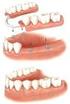 Implant Assisted Removable Prosthodontics M. Nader Sharifi, D.D.S., M.S. Cincinnati Dental Society Cincinnati, OH Friday May 7, 2014 I. Course Synopsis A. Different Types of Overdentures B. Implants with
In the Spring of 2010, the American Academy of Cosmetic
 Greetings to the members of the American Academy of Cosmetic Dentistry (AACD). As you know, a sisterhood agreement was concluded between the AACD and the Japan Academy of Esthetic Dentistry (JAED) at a
Implant Replacement of the Maxillary Central Incisor Utilizing a Modified Ceramic Abutment (Thommen SPI ART) and Ceramic Restoration
 Implant Replacement of the Maxillary Central Incisor Utilizing a Modified Ceramic Abutment (Thommen SPI ART) and Ceramic Restoration ROBERT SCHNEIDER, DDS, MS* ABSTRACT The prosthetic restoration of a
Clinical and Laboratory Procedures for Fixed Margin Implant Abutments
 Clinical and Laboratory Procedures for Fixed Margin Implant Abutments Dr. Carl Drago DDS, MS, American Board of Prosthodontics Director, Dental Research BIOMET 3i, Adjunct Faculty Department of Prosthodontics,