
HIGH LEVEL REVIEW HELIDECK AND ACCOMMODATION Helideck and accommodation facilities on offshore platforms for wind farms. TenneT.
|
|
|
- Bethanie May
- 10 years ago
- Views:
Transcription
1 HIGH LEVEL REVIEW HELIDECK AND ACCOMMODATION Helideck and accommodation facilities on offshore platforms for wind farms TenneT Public version Report No.: NLLD-R1, Rev. A-Public Date: 9 June 2015

2 Project name: High level review helideck and accommodation DNV GL Energy Report title: Helideck and accommodation facilities on offshore platforms for wind farms Customer: TenneT, Utrechtseweg 310, 6812 Arnhem Contact person: Harry van der Heijden Date of issue: 9 June 2015 Project No.: Report No.: NLLD-R1, Rev. A-Public R&S/RES Utrechtseweg 310, 6812 AR Arnhem The Netherlands Tel: Applicable contract(s) governing the provision of this Report: Objective: High level review to assess the advantages and disadvantages of a helideck and accommodation facilities on an offshore substation platform Prepared by: Verified by: Approved by: Eeke Mast Senior Consultant Robin Redfern Project Engineer Hans Cleijne Head of Section Frenando Sevilla Offshore wind engineer [Name] [title] Erika Echavarria Engineer [Name] [title] Copyright DNV GL All rights reserved. This publication or parts thereof may not be copied, reproduced or transmitted in any form, or by any means, whether digitally or otherwise without the prior written consent of DNV GL. DNV GL and the Horizon Graphic are trademarks of DNV GL AS. The content of this publication shall be kept confidential by the customer, unless otherwise agreed in writing. Reference to part of this publication which may lead to misinterpretation is prohibited. DNV GL Distribution: Unrestricted distribution (internal and external) Unrestricted distribution within DNV GL Limited distribution within DNV GL after 3 years No distribution (confidential) Secret Keywords: Offshore platform, helideck, helipad, accommodation, offshore wind Rev. No. Date Reason for Issue Prepared by Verified by Approved by A report after mid-term memo - FINAL Erika Echavarria, Fernando Sevilla, Robin Redfern, Eeke Mast, Robin Redfern, Eeke Mast Hans Cleijne DNV GL Report No NLLD-R1, Rev. A-Public Page i

3 Table of contents 1 EXECUTIVE SUMMARY Background Substation Maintenance Requirements Helideck considerations Accommodation considerations Conclusions and recommendations 6 2 INTRODUCTION Background Aim and approach 8 3 CURRENT APPLICATION ON OFFSHORE PLATFORMS Inventory of offshore platforms in North-West Europe Trends from the platform inventory 11 4 QUALITATIVE DESCRIPTION OF THE MAINTENANCE NEEDS Preventive and corrective maintenance of offshore substations Major Component Replacement Availability at Offshore Substations 14 5 REVIEW OF ACCESS SYSTEMS Introduction Transferring Systems for personnel and small components Onshore-based Marine Access Offshore-based Marine Access Other vessels 22 6 HELIDECK ON AN OFFSHORE PLATFORM Helicopters at offshore wind projects Regulations and requirements Helidecks and winching platforms Summary of Helicopter Logistics Estimations workability helicopter versus vessel 30 7 OFFSHORE ACCOMMODATION FACILITIES Offshore accommodation for offshore wind Regulations and requirements Summary of Offshore Accommodation 38 8 CONCLUSIONS AND RECOMMENDATIONS Background and Overview of Existing Projects Substation Maintenance Requirements Helidecks and Heli-hoist Platforms Offshore Accommodation 42 9 REFERENCES DNV GL Report No NLLD-R1, Rev. A-Public Page ii

4 1 EXECUTIVE SUMMARY 1.1 Background The Dutch government has stated its intention to start five tender rounds in five wind farm zones in They have also appointed TenneT as the offshore TSO. TenneT will be responsible for installing the offshore high voltage stations to export the generated electricity to shore. TenneT intends to construct 5 identical offshore substation platforms, each with up to 700MW of capacity up to 38km from the nearest coast. These substations are substantially larger in power capacity than any existing offshore (AC) substations. This study is a high level, qualitative review to assess the advantages and disadvantages of a helideck and accommodation facilities on an offshore substation platform by identifying possible barriers and/or opportunities of such facilities. This study is a qualitative review, not a quantitative review: it will not include an economic comparison of the perceived impacts of different access methodologies. The aim is to help TenneT conclude whether quantitative investigation is likely to be worthwhile. 1.2 Substation Maintenance Requirements DNV GL estimates an average of 10 to 30 days of scheduled maintenance per year to be required for a substation of this scale. Considering these relatively low scheduled maintenance requirements and that the shortest maintenance interval required is expected to be monthly or more, it is clear that the addition of a helideck or accommodation facilities to the offshore substations would not provide significant benefits to the operation of the substation platforms themselves. Assuming good levels of redundancy are implemented within the configuration of the substation power and SCADA systems, most failures will not incur production losses and therefore the repair or replacement of such components can often be carried out as scheduled maintenance or scheduled access to the substation, reducing or even eliminating the benefit provided by quick transfer of technicians by helicopter. A major failure on the offshore substation, as occurred at the Nysted Offshore substation in 2007, will require specialist technicians, vessels and replacement components and therefore is constrained much more by mobilisation of the necessary resources than rapid deployment of technicians from offshore based accommodation or by helicopter transfer. 1.3 Helideck considerations Trends from the platform and helideck inventory There are no clear trends for the number of projects featuring helidecks or heli-hoist platforms with distance from shore. However, there is a strong trend with respect to project capacity, with all projects greater than 400MW and the majority of projects above 300MW featuring either a helideck or a heli-hoist platform on the associated offshore substation(s). Currently, helicopters are in regular use for turbine O&M purposes at the Horns Rev Project in Denmark, Alpha Ventus, Global Tech 1 and Borkum Phase 1 (when commissioned) in Germany as well as Greater Gabbard in the UK. Additionally, contracts are in place at a number of other projects for provision of a helicopter for emergency search and rescue services. It is not clear whether projects which feature helidecks utilise these for maintenance of the offshore substation, although such use is anticipated.

5 1.3.2 Helicopter logistics for offshore wind farms The distances from shore of the 5 proposed TenneT substations are well within the operational range of commonly used twin-engine helicopters, such as the Airbus EC135, provided the helicopter landing site is not located far inland. The substantial size of offshore substations makes them well suited to helidecks or heli-hoist platforms. In most cases it is believed that a helideck on the offshore substation is largely intended to facilitate helicopter access to the turbines and to support emergency response procedures as opposed to solely providing access to the substation platform itself. Helicopter access to the turbines is performed by hoisting and for many aircraft, payload is limited for undertaking such heli-hoist operations due to a requirement to be able to maintain hover in the event of one engine failing. On this basis, some operators are known to land on the platform helideck to temporarily drop off technicians on the substation helideck prior to performing heli-hoist operations. Therefore, the greatest benefit of a helideck is likely to be in support of helicopter logistics at the wider wind farm project. The benefits of a heli-hoist platform will be largely limited to O&M of the substation platform itself.. Projects utilising helicopters for the O&M of wind turbines are understood to have found them to be cost effective. They provide fast response to small repairs or diagnosis works where large parts or tools are not required Helicopter requirements Recent incidents in the North Sea oil and gas industry have led to recent changes in regulation stated by the British CAA with respect to the sea states in which helicopters may be deployed. This has now limited the use of helicopters by the lesser of sea-state 6 or the certified ditching performance of the helicopter, understood to be the sea state in which the aircraft may remain floating upright in the water. Due to European cooperation concerning regulations and guidelines on aviation, the restrictions on offshore helicopter flights as stated by the CAA could be taken into account for the Dutch airspace as well. This would mean that, apart from the requirements of flying under the meteorological limitations imposed due to adherence to visual flight rules, restrictions could also be placed on the helicopterspecific sea state permitted for safe offshore flight as they are in place now in the UK. For example, the Airbus EC135 is understood to be limited to sea-state 4, comparable to the access limitations from specialist marine access systems such as the Ampelmann in conjunction with large vessels. This would greatly reduce the greatest benefit of helicopters to offshore wind projects: their insensitivity to sea states. From a regulatory perspective, the addition of a helideck is not restricted. The structure should be carefully located on the superstructure in the design phase. The implications of adding a helideck to a normally unmanned platform and the associated maintenance burden should be noted. According to helicopter landing areas regulation also adhered in the Netherlands (CAP 437, wherever practicable, helicopter hoisting should not be employed as the standard method for transfer of personnel, suggesting that a helideck is the only option if regular access by helicopter is to be adopted. Helidecks, and to some extent heli-hoist platforms, are aircraft specific and must be designed for the dimensions and loading requirements of the aircraft with which they shall be used. Helidecks (and helihoist platforms) require maintaining and certification with particular emphasis on fire fighting, visual aids and surface friction. This may require frequent maintenance visits to remove guano and check equipment. DNV GL Report No NLLD-R1, Rev. A-Public Page 4

6 For large substations, such as those proposed by TenneT, the additional cost of a helideck (anticipated to be in the region of 1M to 2M) is likely to be dwarfed by the overall cost of the platform and therefore may be justifiable on a percentage cost basis to retain future flexibility and improve the safety case. A heli-hoist platform is expected to be in the region of 200k - 500k. In all cases the use of a helicopter for O&M purposes at an offshore wind farm is heavily subject to the design risk assessment conducted by the developer of the project and associated advisors. 1.4 Accommodation considerations Accommodation inventory Only 3 offshore wind projects to date feature offshore accommodation and with the exception of Horns Rev II, these are located more than 70km from the coast. To date only Global Tech 1 is known to include permanent accommodation on the offshore substation. Thjs reinforces the assumption that distance from O&M port is a primary driver for offshore accommodation facilities Offshore Accommodation facilities requirements The reduced cost through combining the offshore substation and accommodation module on one platform is anticipated to be counteracted by the increased design challenges of ensuring safety of all personnel against fire and electrical faults, minimising long-term exposure to electromagnetic fields and ensuring access for maintenance to the heavy major electrical components Platform maintenance Accommodation for the maintenance of solely the substation is not justified due to the relatively minimal anticipated maintenance requirements. Therefore any offshore accommodation module would need to be primarily intended for use by the wind farm. The proposed TenneT platforms are located comparatively close to shore (<40km) and therefore, unless a suitable O&M port is much further away, there is no strong requirement for offshore accommodation in order to maintain the substation platform or adjacent wind farms. Offshore accommodation becomes more economically attractive with distance from O&M port and wind farm project size, with most projects further than about 30NM to 40NM (55km 75km) from port expected to be reliant upon offshore accommodation to avoid excessive travel times, low productivity due to sea sickness and fatigue and an on-site parts and consumables store Fixed versus floating accommodation Offshore accommodation can take two basic forms, either a fixed platform or floating accommodation with a variety of different vessels available. Crucially, fixed platform accommodation reduces transfer time and therefore also the likelihood of sea sickness, but it does not itself increase the sea states in which transfers to turbines can be achieved. For this reason, current industry trends suggest that the market is moving more towards floating accommodation configured to provide the dual purpose of accommodating technicians and providing direct, safe access to offshore structures in higher sea-states than could normally be achieved by traditional work boats. A further benefit of floating accommodation is likely to be the potential to operate at night, due to the intrinsically safer walk to work approach enabled by the use of a specialist access system such as the Ampelmann or similar systems. DNV GL Report No NLLD-R1, Rev. A-Public Page 5

7 1.5 Conclusions and recommendations Helideck For the maintenance of the platform itself, the helideck will have limited advantages, especially in the case of stricter sea state regulation for helicopters. The primary reason for considering a helideck on an offshore substation is therefore the support of O&M logistics at the wind farm. For instance technicians could be dropped off at the platform to reduce the payload and make hovering for a heli-hoist to the turbines possible. Therefore the case for installing a helideck is not clear-cut and is likely to be heavily driven by possibilities to use the helideck for the maintenance of the surrounding wind farms and detailed safety reviews. For large substations, such as those proposed by TenneT, the additional cost of a helipad is anticipated to be in the region of 1M to 2M and therefore may be justifiable on a percentage cost basis to retain future flexibility Accommodation facilities From the results of this review, DNV GL believes that the costs and other constraints associated with the installation of an accommodation platform, either on the same structure as the offshore substation or as an independent structure, are unlikely to justify the benefits at the proposed TenneT project sites. Instead, the adoption of a strategy where the majority of scheduled maintenance at all 5 proposed platforms is performed as part of an annual maintenance campaign, for which the chartering of an OSV or similar vessel providing access and accommodation will likely prove more cost effective. Alternatively a similar solution may be adopted at each platform independently by collaborating with the associated wind farm owner for the purposes of the annual scheduled maintenance campaign, nominally to be performed during summer months for improved access and minimal loss of production. DNV GL Report No NLLD-R1, Rev. A-Public Page 6

8 2 INTRODUCTION 2.1 Background The Dutch government has stated its intention to start five tender rounds in five wind farm zones in They have also stated their intention to appoint TenneT as the offshore TSO. TenneT will then be responsible for installing the offshore high voltage stations to export the generated electricity to shore. The schedule for the five tender rounds and the areas are summarised in Table 2-1 and graphically shown in Figure 2-1. For the transformer station for these wind farm zones, TenneT plans a standardised design for all five platforms. Each platform will have a capacity of 700 MW and the connecting inter-array cables will be 66 kv. Tender Year Wind farm zone Capacity [MW] Distance to Coast [km] Distance to port [km] 2015 Borssele Wind Farm Zone Borssele Wind Farm Zone South Holland coast Wind Farm Zone South Holland coast Wind Farm Zone North Holland coast Wind Farm Zone Table 2-1: Short description of the planned 5 tender rounds. Figure 2-1: Existing wind farms and assigned wind farm zones for the upcoming tenders. DNV GL Report No NLLD-R1, Rev. A-Public Page 7

9 2.2 Aim and approach This study is a high level review to assess the advantages and disadvantages of a helideck and accommodation facilities on an offshore substation platform. This high level review will assess the advantages and disadvantages by identifying possible barriers or opportunities for the application of a helideck or accommodation facilities on the platforms. This shall be performed under the following methodology: Reviewing existing and under-construction offshore substation platforms (Section 3); Describing the maintenance needs of an offshore platform (Section 4); Inventory of existing access systems (Section 5 Review of helicopter logistics, regulations and the associated use of helidecks and heli-hoist platforms at offshore wind projects (Section 6 ); Review of the logistics, regulations and requirements for offshore accommodation (Section 7); and Conclusions of the above findings for the proposed TenneT Platforms (Section 8). This qualitative assessment aims to help TenneT to make a more informed decision on whether inclusion of a helideck and/or accommodation on the platform could form an opportunity for TenneT. This study is a qualitative review, not a quantitative review: it will not include an economic comparison of the perceived impacts of different access methodologies. The aim is to help TenneT conclude whether quantitative investigation is likely to be worthwhile. DNV GL Report No NLLD-R1, Rev. A-Public Page 8

10 Number of projects Number of projects Number of projects Number of projects 3 CURRENT APPLICATION ON OFFSHORE PLATFORMS 3.1 Inventory of offshore platforms in North-West Europe DNV GL has examined the current application of a helideck and accommodation facilities for wind farms in North-West Europe. This includes offshore wind farms in Belgium, Denmark, Germany, United Kingdom and The Netherlands. Only wind farms that are currently commissioned or under construction have been included. Note: All information in this table is based on public domain information and therefore may be subject to inaccuracies. Table 3-1 presents the results. Figure 3-1 to Figure 3-3 present the results graphically N/A Accommodation on platform Separate accomodation platform No accommodation >70 Distance to coast [km] Year Figure 3-1: Number of projects with accommodation, categorised in terms of distance to coast and five-year commissioning interval >70 Distance to coast [km] Year N/A Heli-hoist Heli deck No helideck or heli-hoist Figure 3-2: Number of projects with a heli-hoist or helideck, categorised in terms of distance to coast and five-year commissioning interval. DNV GL Report No NLLD-R1, Rev. A-Public Page 9

11 Name Country No of offshore Distance to Capacity Helideck or Accommodation Year substations coast [km] [MW] Heli-hoist facilities Blyth United Kingdom N/A N/A Horns Rev 1 Denmark Helideck No Nysted Denmark No No Scroby Sands United Kingdom N/A N/A North Hoyle United Kingdom N/A N/A Kentish Flats United Kingdom N/A N/A Barrow United Kingdom No No Burbo Bank United Kingdom N/A N/A OWEZ Netherlands N/A N/A Beatrice United Kingdom N/A N/A Prinses Amaliapark Netherlands No No ThorntonBank 1 Belgium N/A N/A Lynn and Inner Dowsing United Kingdom N/A N/A Rhyl Flats United Kingdom N/A N/A Belwind 1 Belgium No No Gunfleet Sands United Kingdom No No Rodsand II Denmark No No Robin Rigg United Kingdom No No Thanet United Kingdom No No Horns Rev 2 Denmark Helideck Separate (24) Alpha Ventus Germany Helideck No Baltic 1 Germany No No Walney 1 United Kingdom No No Ormonde United Kingdom No No Sherringham Shoal United Kingdom No No Walney 2 United Kingdom No No Teeside United Kingdom N/A N/A Lincs United Kingdom No No Anholt Denmark Helideck No London Array United Kingdom Heli-hoist No Thornton Bank 3 Belgium N/A N/A Thornton Bank 2 Belgium Helideck No Greater Gabbard United Kingdom Helideck No Bard Offshore 1 Germany Helideck No West of Duddon Sands United Kingdom Heli-hoist No Riffgat Germany Helideck No Northwind Belgium No No Belwind demo Belgium N/A N/A Meerwind Ost/Sud Germany Helideck No Nordsee Ost Germany Heli-hoist No Global Tech 1 Germany Helideck Yes (34) Westermost Rough United Kingdom Heli-hoist No Humber Gateway United Kingdom No No Gwynt Y Mor United Kingdom Heli-hoist No Luchterduinen Netherlands No No Butendiek Germany Helideck No Baltic 2 Germany No No Amrumbank West Germany Helideck No Borkum Riffgrund I Germany Helideck No Borkum Phase 1 Germany Helideck No Dan Tysk Germany Helideck Separate (50) Horns Rev III Denmark Helideck No Gemini Netherlands Helideck No Note: All the information in this table is ased on public domain information and therefore may be subject to inaccuracies. Table 3-1: List of offshore wind farm and helideck and accommodation facilities. DNV GL Report No NLLD-R1, Rev. A-Public Page 10

12 Number of projects N/A Heli-hoist Heli deck No helideck or heli-hoist Project capacity [MW] Figure 3-3: Number of projects with a heli-hoist or helideck, categorised in terms of project capacity intervals. 3.2 Trends from the platform inventory Accommodation The only substation platform identified with accommodation facilities on the same structure is at the Global Tech 1 project in the German North Sea. This wind farm is located more than 100 km off the coast, substantially further than the proposed TenneT platforms which are located less than 40 km from the nearest land. Two further wind farms, Horns Rev II and Dan Tysk, were identified with separate accommodation platforms located adjacent to the substation platform. Dan Tysk is another far-shore project, located approximately 70km from the nearest land and is due to be fully commissioned this year. The accommodation platform for Horns Rev II was the first accommodation platform for offshore wind. This project is considered something of an outlier from the perspective of accommodation facilities, since the wind farm is located only 32 km off the coast. It is connected to the transformer station with a walkway (see Figure 7-1). It is understood by DNV GL that access between the accommodation platform and the shore is conducted by helicopter or vessel, but vessels alone are used for the subsequent shuttling of technicians to the turbines, implying that transfers are still subject to metocean access constraints. Although the number of 3 offshore accommodation platforms is insufficient to draw firm conclusions, the trends in Figure 3-1 agree with DNV GL expectations, that accommodation platforms are mostly only justifiable at far-shore projects. Clearly Horns Rev II provides an interesting exception to this rule and it is not clear to DNV GL why the Dong Energy chose to adopt this strategy for the project. For this project, Ramboll [ 5] remarks that: On Horns Rev 2 the operation is carried out by two operators one for the substation and one for the wind turbines & accommodation. The accommodation platform was intended to save transport cost and time due to higher maintenance activity on the wind turbines than expected. On Horns Rev 2 the personal is shuttled between onshore and substation/wind turbines by boat which is the primary means of transportation. The maintenance activity has subsequently DNV GL Report No NLLD-R1, Rev. A-Public Page 11

13 dropped due to higher experience and improved parts, therefor the need for the accommodation has diminished. It should be noted that emergency accommodation, or a refuge room, is required on all offshore substations and therefore such facilities have been specifically excluded from this analysis Helideck According to the Mijnbouwwet, offshore platforms in the Dutch EEZ in the Oil & Gas sector have to have a helideck, unless exemption has been granted by the Minister. However, these Oil & Gas platforms are quite different from the usually unmanned offshore wind transformer stations. When looking at the results of the inventory in Figure 3-2, the presence of an offshore helideck or helihoist platform appears to have a weak correlation with distance from coast. This is in line with expectations, since whilst proximity to shore is certainly a contributor, the preferences of the wind farm developer and the severity of the metocean climate, as well as national trends, appear to be stronger drivers. For example all German wind farms in the North Sea have a helideck or heli-hoist platform, whereas in the UK, only Greater Gabbard has a helideck. Four others have a heli-hoist platform. Figure 3-3, shows a stronger correlation with project capacity, with all offshore substations above 400MW featuring either helidecks or heli-hoist platforms, and the vast majority above 300MW as well. This is likely to be attributable to providing as much flexibility for future maintenance strategies and campaigns in these larger projects, particularly as the high overall cost of larger substation platforms will tend to dwarf the additional costs due to helidecks. DNV GL Report No NLLD-R1, Rev. A-Public Page 12

14 4 QUALITATIVE DESCRIPTION OF THE MAINTENANCE NEEDS 4.1 Preventive and corrective maintenance of offshore substations The preventive and corrective maintenance activities of an offshore substation can be divided into three main categories: Non-Intrusive scheduled maintenance: This maintenance category comprises any task which is pre-planned and which could be performed without affecting production of the wind farm. These scheduled works are often conducted on a seasonal basis, with the bulk of work being carried out in the summer to maximise the probability of access to the offshore platform. However, some minor tasks may be required on a more frequent basis throughout the year. Intrusive scheduled maintenance: This maintenance category comprises any task which is pre-planned and which requires the equipment to be temporarily stopped for maintenance work to be undertaken. If no redundancy is allowed, this activity will limit the production of the plant. For this reason, these scheduled works are often conducted on a seasonal basis, with the bulk of work being carried out in the summer to maximise the probability of access to the offshore platform and minimise lost production. Unscheduled maintenance (failure repairs): Any unplanned maintenance activities resulting from a failure of a system, sub-system, or component fall within this group. The level of corrective action, and the impact of the unscheduled maintenance upon the substation availability, depends on the severity of the failure and the extent of any redundancy. Minor equipment failures could be repaired without incurring production losses, while major failure events can have a greater impact on the availability of the project for long periods depending upon the location and equipment involved. TenneT has provided DNV GL with its estimations of scheduled maintenance needs for standard AC platforms on a Monthly, 3-Months and 6-Months frequencies bases. These estimations have been estimated from the maintenance needs of the Helwind Beta HVDC substation as provided by Siemens in its Material Handling-Component Inspection and Maintenance Overview report [ 1]. DNV GL has performed a brief review of these data by comparing the requirements estimated by TenneT against the Helwind Beta reported requirements (with HVDC-specific equipment removed) and against DNV GL s balance of plant maintenance database, as sourced from a variety of public domain sources (see Appendix). To perform this brief review, DNV GL has undertaken the following steps: 1. Quick scan and selection of the equipment requirements for AC substations from the Material Handling-Component Inspection and Maintenance Overview report prepared by Siemens [ 1]. 2. Classification of the maintenance requirements into the following categories: Mechanical, Piping, Electrical, Instrumentation, HVAC, Fire Protection Systems & Rescue, Structural, Architectural and Outfitting (as classified by TenneT in its assumptions). 3. Estimation of total hours per maintenance category of the envisaged maintenance requirements for the AC substation for the full lifetime of the project. 4. Comparison against TenneT s estimations and DNV GL s typical assumptions. DNV GL Report No NLLD-R1, Rev. A-Public Page 13

15 Based on the high level review described above, DNV GL considers TenneT s estimated maintenance requirements to be in line with good practice and with DNV GL s generic and typical assumptions. It must be noted that TenneT only supplied estimations for Monthly, 3-Monthly and 6-Monthly maintenance intervals, whereas the data provided by Siemens in [ 1] also gave maintenance requirements for additional frequencies, including yearly, 2-yearly etc. Therefore DNV GL considers that TenneT s estimates from the Siemens data are appropriate when combined with the effort included under these additional maintenance frequencies. DNV GL s database of maintenance requirements for offshore substations has been divided into the three main categories described above and is reproduced in Appendix A. From these assumptions, DNV GL estimates that a typical, large AC offshore substation with 2 or more offshore transformers will require on average 10 to 30 days per year of scheduled maintenance (including maintenance of the SCADA systems, communications systems and MV switchgear, typically operated and maintained by wind farm operators). All data in Appendix A are based on a variety of public domain sources as well as DNV GL experience and whilst these values are representative of a variety of projects, actual scheduled and unscheduled tasks should always be carried out in line with Original Equipment Manufacturer (OEM) guidelines. 4.2 Major Component Replacement Major components within offshore substations, such as transformers, reactors and gas insulated switchgear, are unlikely to fail once installed correctly. Nevertheless change-out procedures for these items are considered a high priority as failure of these components can result in significant lost power production capacity. Therefore, it is critical to mitigate this risk with suitable preparations and efficient procedures, including the careful location of any additional structures, such as helidecks or accommodation modules. Given that transformers and reactors are likely to be the most difficult major component to both procure and change-out and their relevance to transmit the energy of the wind farm, this sub-section discusses some important issues relating to transformer change-out strategy as well as serving as an indicative illustration of a major offshore substation component. Furthermore, other major offshore substation components will typically have relatively similar change-out procedures to the transformer (e.g. disconnecting, lifting, re-commissioning, etc.) albeit with lower weights to be lifted. Offshore substation transformers are substantially heavier than most of the major components, with indicative weights in the order of tonnes to lift for a high voltage AC transformer. Change-out of offshore substation transformers require a large crane vessel which lifts the failed component out of the roof of the substation and exchanges it for the replacement component. Substation design will have a significant impact on these operations. The time required for these large crane vessels to remain onsite may be relatively short, in the order of 1 8 days; however the total time for the repair can extend substantially beyond this due to all the preparation and re-commissioning works as well as a large dependence on vessel, parts and equipment lead times and weather delays. A well-documented transformer replacement at the Nysted Offshore Wind Project led to a 4.5 month outage and even this duration was the result of a fortuitous prompt availability of both a heavy-lift vessel and a spare transformer winding [ 2]. 4.3 Availability at Offshore Substations DNV GL has performed a variety of modelling studies in the past to estimate the average annual availability of balance of plant for wind farm projects. The studies suggest that the average annual DNV GL Report No NLLD-R1, Rev. A-Public Page 14

16 energy availability of a single HVAC offshore substation (assuming a 2 offshore transformers configuration to allow for some redundancy) range between 99.2% and 99.7%. As detailed in Appendix A, losses in production incurred by the offshore substation are mainly related with the required scheduled maintenance of the offshore transformers and with potential minor and major failures in the transformers and their cooling systems. Different sensitivity analyses performed by DNV GL have demonstrated that the availability of offshore substation platforms is heavily dependent on the following parameters: Redundancy levels: The main equipment which could incur production losses is the offshore transformer. Despite their generally good reliability, major incidents have occurred in the past, such as the Nysted Offshore Wind Farm transformer major failure in 2007 which caused a total project outage of approximately 4.5 months. Due to the significant cost impact that such outages could represent, redundancy of equipment and system configuration is of vital importance. Redundancy could be implemented by: utilisation of multiple transformers operating at 100% or less or their rated power, interconnection between offshore substations (when applicable) and installation of more than one export cable. It is important to note that failures of export cables are estimated to be the single greatest contributor to project unavailability after the wind turbines. However, this review is focused on the offshore substation components and therefore excludes all array and export cabling. Stocking strategy: Due to the highly customized nature of offshore transformers, the lead time required to source a spare could range from a few months to a year. For this reason, operators have started to assess the benefits of stocking a spare major transformer. Stocking of a transformers will reduce production losses substantially in the event of a failure and some assessments previously performed by DNV GL suggest that the potential production losses could justify the capital expenditure required for stocking one transformer. Scheduled intrusive maintenance of the offshore transformers: As this activity requires the shutdown of the transformer and hence generates losses in production, an efficient and well planned scheduled maintenance regime will help to minimise production losses. DNV GL Report No NLLD-R1, Rev. A-Public Page 15

17 5 REVIEW OF ACCESS SYSTEMS 5.1 Introduction The following sub-sections describe the access systems used to transport personnel and components to or from an offshore platform including a review of access systems used to transfer personnel or small parts and components between the vessel and the offshore platform, and vice versa. The last section focuses on access systems for change out of major components such as heavy lift vessels and cranes. The access methods, vessels, and concepts detailed in this section are in various stages of development. Despite a wide range of emerging approaches, most currently operational projects have adopted the standard access method of stepping from a marine vessel directly to the access ladder. However, despite the good safety record that has been maintained to date, it is evident that there is scope for improvement, both in terms of the accessibility of offshore structures and in the safety of the access methods adopted to achieve such access. The market is responding to the potential risks of current access methods and the reduction of revenue that results from poor accessibility, while the slow evolutionary improvement in work boat access is becoming interspersed with the adoption of more revolutionary solutions, as some projects start to embrace helicopters, offshore-based working, SWATH vessels, and sophisticated access systems. As projects are situated farther from port and in more onerous conditions, these trends are likely to continue, with developers seeking to identify approaches which best suit their projects in terms of both direct costs and project revenue. This section comprises publically available information from manufacturers websites and promotional material, as well as appropriate conference papers and DNV GL experience. Note that the capability of the vessels given in the following sections, stated in terms of significant wave height (Hs), is purely indicative based upon supplier information and, where available, industry experience. The limiting factor for access capability is primarily wave height, but factors such as current, wind speed, wave period, water depth, localized wave effects, wave direction, ice, and visibility are also important parameters. 5.2 Transferring Systems for personnel and small components Transferring Personnel There are a few options for transferring personnel to the offshore platform. These are: The step-over approach, with technicians stepping across from the bow of the vessel directly to the platform access ladder (boat landing). Heave-compensated gangway between the vessel and the platform or the boat landing. Some large vessels with dynamic positioning capabilities, such as floatels or motherships (see also Section 7.1.2) may use specialist gangways to dock directly with the platform at the base of the tower via a gate in the railings. Lifted from the vessel to the offshore platform in a basket-type arrangement. This typically requires a large vessel and crane arrangement rated for man-riding. Helicopter landing or hoisting personnel and small parts. For this a helideck or a hoisting platform is required. More information about transfer systems is given below in Section DNV GL Report No NLLD-R1, Rev. A-Public Page 16

18 5.2.2 Transferring components Davit cranes are the principal method for lifting smaller objects between a vessel and the platform and the weight limit of such lifts will depend upon both the safe working load of the davit and the current sea conditions. Typically, davit cranes are limited to somewhere between 100 2,500 kg depending upon the specifications of the particular crane adopted, but the true safe working load will also depend on the dynamic amplification factor applied to account for wave-induced motions and such as transverse and snatch loads. The maximum size of parts, tools and consumables that may be transported by workboats is usually governed more by the lifting capacity of the davit (or other crane) on the offshore structures than by the deck capacity of the work boat, although work boats are not suitable for very large components due to the limitations in deck strength and anchor points for sea lashings Transfer systems Table 5-1 shortly describes different systems commercially used or under development for transferring personnel and small components from a vessel to an offshore structure. Table 5-1: Summary of main transferring systems Type OAS (Offshore Access System) Deployable gangway Development Stage: Trailing on offshore wind farm / Deployed in offshore oil and gas. Description OAS was developed by Offshore Solutions, which operates as a subsidiary of Ampelmann Operations B.V. since November 22, The OAS system comprises a pedestal crane with a telescopic gangway of up to 21m long, fitted to the deck of a vessel. The gangway is hydraulically operated and heave compensated. It operates dynamically until the clamped or elephant s foot connection is made, at which point the control system is stopped and the structure is free to move passively in all six degrees of freedom as required to accommodate differences in motion between the vessel and offshore structure. Only then are transfers made. The company claims that OAS can connect in sea states significantly higher than 3m Hs when mounted mid-ships. Ampelmann Motion compensated gangway Development Stage: Commercially available (support of both installation and O&M activities in the offshore wind industry). The Ampelmann is an inverted Stewart Platform, an assembly of hydraulically- or electrically-actuated rams operating in six degrees of freedom. The Ampelmann is designed to be fixed to the deck of a large vessel (ideally more than 70m LOA). A control system monitors the real-time motion of various accelerometers positioned on the Ampelmann platform and vessel, and uses these measurements to compensate for the motion of the vessel and create a steady base for personnel and equipment transfer. The transfer is made across a telescopic gangway attached to the platform (up to 25m long). No connection is made between the gangway and offshore structure, relying solely on the heavecompensation and vessel DP systems to maintain minimal differential motion between the two. This has the added benefit of requiring little or no modification to foundation designs for the Ampelmann system to be used. Ampelmann claims that when installed on a 25m vessel, the system can fully compensate for the vessel motion in Hs of up to 1.5m; when installed on a larger 50m vessel the system can compensate in up to 2m Hs; and in larger vessels up to 2.5m. DNV GL Report No NLLD-R1, Rev. A-Public Page 17

19 Personal Transfer System (PTS) Type: Crew lifting system Development Stage: Final testing This system is being developed by Personnel Transfer System GmbH. The PTS comprises a remote controlled crane installed on each turbine (or substation) which lifts the technicians, one at a time, from the vessel to the working deck of the structure. It also compensates for the motion of the vessel, and the crane control system allows for an automatic transfer of personnel. According to the designers, the limit for safe operation is 500 kg in seastates up to 3 m Hs, and 800 kg in sea-states up to 1.5 m, allowing it to be used for transfer of large components to the turbine working deck. The PTS has passed the prototype phase and is understood to be ready for final testing offshore. During November/December 2007 and January 2008 PTS was tested at a harbour site in Hamburg, Germany. The system developer states that the system can be used in sea-states characterized by significant wave heights of up to 3 m if used in conjunction with a large vessel. FROG and OWAS systems Type: Personnel transfer pod Development Stage: In use in the oil and gas industry and under development for the offshore wind industry. FROG OWAS Maxccess Transfer System Type: Platform with motion compensation Development Stage: Commercially available This comprises a buoyant personnel transfer capsule which is transported using a standard deck crane on a larger vessel. It can transfer up to nine personnel, with light equipment and tools, per lift, and is designed to protect crews against any vertical and lateral impacts which might occur during transfer. These systems are used for vessel-to-vessel and vessel-to-installation transfers and have accrued significant use in the oil and gas industry. Reflex Marine is now proposing a smaller, lighter personnel transfer capsule that can be easily stowed on a workboat, combined with a specially-built turbine crane. This system, known as the Offshore Wind Access System (OWAS), is a simpler utilization of the FROG specifically for offshore wind purposes. An advantage of this system is that it can be used in conjunction with small work boats. Developed by UK-based OSBIT Power Limited, Maxccess has been chosen for use at the Sheringham Shoal Wind Farm on the UK East Coast, following a series of sea trials, including at Statoil s Hywind demonstration floating wind turbine in Norway. Maxccess is a device which may be mounted to the foredeck of most work boats. It clamps onto either of the vertical tubular spars of the boat landing and allows the vessel to roll, pitch and yaw freely, while preventing vertical and horizontal bow motion. The connection is created without the need for active compensation or complex control software. A small, stepped gangway then provides direct access to the ladder. The Windlift Type: Suspended Platform Development Stage: Prototype The Windlift system, developed by Fassmer, is a heightadjustable platform for access to offshore wind turbines from small, floating vessels. Personnel and equipment are transferred to the platform at vessel-deck level. The platform, which is fitted around the turbine foundation, is then hoisted to the working deck level, avoiding the need for technicians to climb external ladders. DNV GL Report No NLLD-R1, Rev. A-Public Page 18

20 Autobrow Type: Work Boat and bridge system Development Stage: Design Designed by Ad Hoc Marine Designs, developed by Otso Ltd, and supported by work boat supplier South Boats, the Autobrow is an actively compensated gangway system designed to be lightweight, reliable and flexible, which can be retrofitted to existing vessels with no requirement for vessel or boat landing modifications. Vertical active compensation from a hydraulic system is intended to remove the effects of heave and pitch while passive mechanisms are understood to allow the gangway to compensate for roll to a limited extent. BMT & Houlder Turbine Access System (TAS) Mark II Type: Bridge system Development Stage: Prototype This transfer system is a development of the award-winning TAS system, developed by Houlder with BMT Nigel Gee. The device can be fitted to small vessels without the need for dynamic positioning capabilities. TAS is understood to utilize a system of damped rollers and active compensation to reduce the differential motion between the vessel and offshore structure. In this manner, reliance on the standard friction grip between the vessel and boat landing is minimised. 5.3 Onshore-based Marine Access Vessel Access A wide range of conventional and specialist vessels are available to provide frequent personnel transportation and access to offshore wind farm developments from an onshore location (e.g. O&M port). These vessels vary in capacity, speed, and significant wave height (Hs) transferring capabilities and include: Quick response vessels (e.g. Rigid Inflatable Boats (RIB)); Work boats (traditional catamarans); and Small Water-plane Area Twin Hull vessels (SWATH vessels). A brief review of these vessels is provided in Table 5-2. Examples of onshore-based access vessels are given in Table 5-3 and Table 5-4. DNV GL Report No NLLD-R1, Rev. A-Public Page 19

21 Table 5-2: Summary of onshore-based marine vessels for offshore structure access Vessel Advantages Disadvantages Hs Limit (1) Quick Response Vessel (i.e. Rigid Inflatable Boats (RIB) Provide fast access to the site Widely available in the market More fuel efficient than most work boats Potential for use as daughter craft Unsuitable for transit over large distances Unsuitable for transit in onerous conditions Unsuitable for transferring spare components and consumables larger than ~50 kg ~0.75m- 1.25m Workboat (Aluminum or Composite Catamarans) Operational experience at most offshore wind projects to date Can lease vessel on long-term basis Widely available in the market Large work boats can accommodate lifting equipment Potential to accommodate some access systems May also operate from fixed offshore bases, floatels or motherships if these are fitted with boat landings. Personnel facilities and comfort make it unsuitable for journeys longer than ~2 hours m (1) Small Waterplane Area Twin Hull (SWATH) Vessel Vessels already in use for commercial and military applications, including at the Bard 1 offshore wind project. More stable vessel may facilitate personnel transfer in more onerous conditions Passenger comfort during transit improved compared to monohulls / catamarans Can accommodate medium-size spare parts Potential to accommodate some access systems Expensive Large vessel draft m (1) 1. Assuming standard turbine access, involving crew stepping from vessel bow to turbine ladder while vessel is driven against turbine, unless otherwise stated. These correspond to a DNV GL estimate based on manufacturer or supplier claims and/or operational experience. These limitations may vary with wave period, current, wind, or other access criteria. DNV GL Report No NLLD-R1, Rev. A-Public Page 20
22 Table 5-3: Examples of onshore-based access vessels to offshore structures (Windcat) Windcat Variant MK I MK II MK III MK IV Length Overall [m] Beam [m] Draft [m] Classification MCA 2 MCA 2 MCA 2 DNV + 1A1 HSLC Max Speed [knots] Cruising Speed [knots] Propulsion Propellers / Jets Propellers Propellers Propellers Accommodation Seating for 12, shower, toilet, cooking Seating for 12, shower, toilet, cooking Seating for 12, shower, toilet, cooking, TV, computer facilities Seating for 45, toilet, TV, computer facilities Deck Crane 2 ton SWL 2 ton SWL 2 ton SWL 2 ton SWL Helicopter Access Figure 5-1: The Windcat MKIII. Technicians, small components, and equipment can be hoisted onto the offshore platform or transferred directly from the helicopter, if a helideck is available. Table 5-5 summarises pros and cons of the helicopter use for O&M in offshore wind farms. Please refer to Section 6.1 for more information about regulations and safety. Some of the helicopters used to transport technicians to offshore structures include: the Bell 206 L series, the Sikorsky S76 series, and the Airbus EC135 series. These helicopters typically hold 4 to 13 passengers and are suited to daytime flights over short distances. Their main characteristics are presented in Table 5-6. DNV GL Report No NLLD-R1, Rev. A-Public Page 21
23 Table 5-5: Advantages and disadvantages of helicopter use Advantages Disadvantages Constraints Operational experience Can lease helicopter on long or short term basis Can operate in any sea conditions (not withstanding regulatory limitations Short transit times Suitable for far offshore projects Fits well with dispersed nature of offshore wind projects Expensive Requires winching area or helideck Only suitable for diagnosis, small component repairs and minor faults Possible regulatory / consenting restrictions Wind speed limit ~40 knots; visibility > ~4 km Table 5-6: Helicopter specifications Specification Bell 206L4 EC135 Sikorsky S76D Passenger capacity PAX PAX /13 Length [m] Height [m] Rotor diameter [m] Cruising speed [km/h] Up to 287 Range [km] 2 Up to 600 Up to 600 Up to Passenger capacities are approximate and are dependent on aircraft configuration 2 Helicopter range is impacted heavily by payload, wind speed and other factors such as location of alternative emergency landing sites. Therefore these values are indicative at best and such flight envelope discussions should be held with helicopter operators or specialists. 5.4 Offshore-based Marine Access Descriptions and examples of the main approaches to offshore-based working are described in Section 7 and summarised in Table Other vessels There are emerging concepts to support O&M of offshore structures. These include vessels, transfer systems, launch and recovery systems. Some examples of new O&M specialised vessels are: The Wind Server Vessel from Fjellstrand, the design is intended to increase the stability of the bow of the vessel when stationary, making it ideal for transferring engineers to turbines. Nauti-Craft from Nauti-Craft Pty Ltd., it allows the hulls to conform to the ocean s surface while maintaining the stability of the deck for crew transfers. Substation cranage may have the capability to lift certain components (e.g. lightweight switch gear bays) between the platform and a vessel. Most medium sized vessels used in the wind industry for transporting spares could accommodate these components; examples include Anchor Handling Tugs and Offshore Support Vessels (OSV). DNV GL Report No NLLD-R1, Rev. A-Public Page 22
24 Table 5-7: Summary of offshore-based marine vessels for offshore structure access Vessel Advantages Disadvantages Hs Limit (1) Floatel (Converted ferry or small cruise ship) Large Plenty of luxury accommodation Comfortable and stable Can remain offshore for extended periods Often used during wind farm commissioning works where large numbers of technicians are required. Expensive capital and running costs Large vessel draft No direct access to offshore structures Dependent on smaller vessels for transfers N/A Offshore Support Vessel (OSV), with a basic gangway (2) (Large work boats) Large number available within oil and gas sector Large vessel may facilitate personnel transfer in more onerous conditions Can remain offshore for extended periods Potential to accommodate access system (e.g. heave compensated gangway) Dynamic positioning Expensive capital and running costs Large vessel draft m (3) Mothership, with a basic gangway (2) Custom-made / adapted vessels with most of the equipment required for offshore wind O&M services More stable vessel may facilitate personnel transfer in more onerous conditions Equipped with daughter craft (e.g. Quick Response Vessels or small Work Boats) to be deployed in benign conditions for rapid access to multiple structures. Can stay offshore for extended periods Can accommodate medium size spare parts Can accommodate access system (e.g. heave compensated gangway) Adaptable from vessels in commercial use / concept Expensive capital and running costs Large vessel draft Limited experience with launch and recovery systems for regular deployment of daughter craft. Some experience with davit launched systems particularly for emergency or search and rescue applications m (3) 1. Assuming standard turbine access, involving crew stepping from vessel bow to turbine ladder while vessel is driven against turbine, unless otherwise stated. 2. See Section for more information on gangways and other transfer systems. 3. DNV GL estimate based on manufacturer or supplier claims and/or operational experience. Does not account for wave period, current, wind, or other access criteria. Values assume no specialist access system is installed DNV GL Report No NLLD-R1, Rev. A-Public Page 23
25 6 HELIDECK ON AN OFFSHORE PLATFORM 6.1 Helicopters at offshore wind projects Industry experience to date Helicopters have been used for many decades for accessing offshore structures in both civil and military capacities. However, their regular use in the offshore wind sector is limited to relatively few projects, partly reflecting the relatively early stage of the industry, but also wider concern regarding the associated safety risks. Currently, helicopters are in regular use at the Horns Rev Project in Denmark, Alpha Ventus, Global Tech 1 and Borkum Phase 1 (when commissioned) in Germany and Greater Gabbard in the UK. Additionally, contracts are in place at a number of other projects for provision of a helicopter for emergency search and rescue services. The real benefit of accessing offshore structures via helicopter is the inherent insensitivity to wave conditions coupled with the high transit speeds at which they operate, though lack of motion-induced sickness is another factor not to be underestimated. Other meteorological conditions, primarily poor visibility and low cloud base, may restrict operating windows under visual flight rules, but often these occur during relatively benign periods when access can be made by boat Helicopters for Accessing Wind Turbines For wind farms, the good accessibility and quick response time offered by helicopters fits well with the relatively high-frequency, low effort failures which form a large proportion of wind turbine downtime, leaving vessels to attend to the less frequent, larger failures as well as the scheduled maintenance burden. This benefit is further complemented by the ability of a small helicopter to attend multiple, dispersed structures quickly. For access to turbines, wind farm operators are initially met with increased operating costs due to the inclusion of full-time helicopter charter. However, modelling results and industry experience to date indicate that this increase in cost is often lower than the increase in revenue due to reduced downtime as a result of the lower exposure to weather risk and speedier transit Helicopters for Accessing Offshore Substations Repairs and diagnosis works on offshore substations may be aided by helicopter access, particularly since the operations and maintenance of the platforms is typically provided by parties not associated with the wind farm and therefore may lack full time technicians or a dedicated O&M facility, port or vessels due to the comparatively low maintenance demand. Furthermore, some of the work regularly undertaken on substation platforms requires specialist or third party personnel and therefore access delays due to onerous conditions can incur additional costs by keeping these contractors on standby. The greater equipment redundancy and lower unscheduled maintenance requirements typically seen at offshore substation platforms are unlikely to justify the costs of a dedicated helicopter for substation O&M. However, it may be possible to negotiate call-off agreements with helicopter operators to provide guaranteed access to a helicopter at relatively short notice, thereby avoiding the cost of a dedicated aircraft whilst retaining the flexibility to charter one at short notice. Clearly the success of such an approach will depend heavily on ensuring availability of a helicopter at short notice during onerous weather conditions, when other offshore operators may also be requiring the aircraft. DNV GL Report No NLLD-R1, Rev. A-Public Page 24
26 6.1.2 Future, far shore projects To date, frequent, far-shore helicopter operations have largely been confined to the offshore oil and gas industry. However, far-shore wind projects are very different in their requirements to those of oil and gas. Instead of transporting large groups of technicians to single platforms, offshore wind demands crews of between 2 and 5 technicians to be transported to many separate structures and occasionally more to the offshore substation. For relatively near-shore projects the dispersed nature of wind farms is well catered for by frequent trips with relatively small aircraft such as the Airbus EC135. As projects move further from land, however, this simple shuttling approach becomes less attractive, since increased transit times require larger helicopters with greater endurance (flying time) and the benefits from rapid response are reduced, whilst incident risk increases. Boat access to turbines is still a necessity even when helicopters are available at a project. Indeed, the rapid, wave-resistant benefits of a helicopter are complimented well by the bulk carrying capacity and insensitivity to visibility provided by work boats. Therefore, as projects move further offshore the slow transit times offered by floating vessels will result in a radically different approach to turbine access, whether helicopters are included in a strategy or not. The manner in which helicopters might assist with access to far-shore sites is therefore unavoidably interlinked with the chosen approach to floating access. On this basis, severity of wave climate is the most significant driver for selecting helicopter access, with distance from shore, and therefore transit time, a secondary factor (except in terms of limits of endurance for some aircraft). A likely outcome of far-shore developments will be the requirement for technicians to live offshore in either fixed or floating accommodation, much like the conventional approach to offshore oil and gas production. This would open up two potential roles for helicopters: 1. Transporting crews between the onshore and offshore bases during shift changeovers and, 2. Shuttling crews between the offshore base and the turbines. Clearly the former of these is suited to larger helicopters with substantial technician carrying capacity and endurance between refuelling, such as the Sikorski S-92 or equivalent, as used for similar operations at existing oil and gas installations. The second role is much the same as that already used at near-shore projects, with one important exception; the aircraft must be stationed and refuelled offshore, placing a number of significant additional logistical and safety requirements on the offshore base. The use of helicopters to fill these roles mitigates against the impact of sea-state on access to turbines, which is likely to provide a greater benefit to the project in such exposed, far-shore locations. Whilst some helicopters are capable of landing on a floating structure, most require the vessel to be underway and are heavily constrained by vessel motion and therefore sea state. For these reasons, helicopters in conjunction with floating offshore accommodation (e.g. Offshore Supply Vessels, Floatels or Motherships) are considered relatively unlikely for day-to-day activities. However, according to Siemens [ 3], helidecks are likely to feature on their new fleet of Service Operation Vessels (SOVs), with the intention of using these for regular access to turbines. The type of aircraft and associated operational parameters and restrictions for operating helicopters in conjunction with these vessels are not known. As discussed in Section 7.3, floating offshore accommodation appears to be emerging as the more favoured approach to offshore based O&M due to the dual-purpose capability of both accommodation and the provision of transfers direct to structures. On this basis, whilst feasible for fixed-platform offshore-based O&M strategies, the role of helicopters for day-to-day O&M tasks at far shore projects is not expected to be common. DNV GL Report No NLLD-R1, Rev. A-Public Page 25
27 6.2 Regulations and requirements Regulation helideck and helicopter operations Part of the Dutch EEZ is located underneath British airspace, but none of the five offshore wind farms zones analysed as part of this study are located in this area. Only Dutch regulations need therefore to be taken into account. This said, a European approach is considered in aviation and regulatory bodies may take foreign guidelines into account such as those of the UK Civil Aviation Authority (CAA). Possible TenneT helidecks will fall under the Dutch Aviation Act 1, as is generally applicable to helidecks in the Dutch North Sea. The competent authority here is the State. In the connected Regulations on the safe use of airports and other sites 2, all helidecks in the North Sea have to comply to the ICAO Appendix 14 Vol. II (heliports), regarding their construction, design, equipment and use, apart from some exceptions (mostly for helidecks built before a certain time). The Commissie MER also refers to JAR OPS 3 subpart E and CAA guideline CAP 764 as relevant guidelines for helidecks. The Beleidsnota Noordzee refers the 5 NM obstacle-free zone for helicopter traffic zones (as described in JAR-OPS 3). At a height of 1500 ft, 5 NM from the platform, the approach will be set in. In case of a failed approach while flying on instruments, the helicopter requires time to climb again and restart the approach, and therefore an area of 5 NM should be obstacle-free around the helideck. It is however stated in the Beleidsnota that in some cases operations can deviate from this, as flying on visual flight rules (VFR) is also a safe manner of flight, although it introduces some restrictions on the weather conditions. Some existing wind farms utilising helicopters for regular access are understood to operate around VFR and therefore, whilst restricted by particular visibility-related weather conditions, the substation helideck may be located within the wind farm field. This approach therefore requires the following conditions to be met: Visibility of 4000 m or more Cloud base above 600 ft (though somewhat project dependent) Daylight operating hours. Recently, the CAA changes their guidelines due to the low survivability of helicopter accidents. In its CAA CAP 1145 report, it is stated that from 1 September 2014, no offshore flights should be made if the significant wave height of the sea over which the flight will be conducted to or from an offshore location exceeds the certificated ditching performance of the helicopter. For offshore wind farms fairly small helicopters are used, increasing the limiting effect of the restriction 3. For example, on a website 4 it is stated that this would restrict flight movements of an Airbus EC155 to sea state 4 5, which is exceeded in the North Sea around 27.7% of the time. The CAP1145 also states that all passengers should be seated next to a push-out emergency window unless special personal protection equipment is used or the helicopter is equipped with side-floating emergency floating systems. 1 Wet Luchtvaart, Article Regels Veilig Gebruik Burgerluchthavens en andere terreinen 3 The CAP1145 also states that all passengers should be seated next to an exit, which is less restricting for these smaller helicopters as most passengers are seated next to a window For sea state 4, significant wave height is m. DNV GL Report No NLLD-R1, Rev. A-Public Page 26
28 Notitie vliegveiligheid 6 states that for visual detachment of the surrounding obstacles, it is best to place the platform with a helideck on the edge of a wind farm, not in the middle. For Helicopter Main Routes a minimal obstacle clearance at 1000 ft is required. The 6-10MW wind turbines to be expected in the regarded timeframe of will have a tip height of below 1000 ft and will therefore not be an issue for Helicopter Main Routes under this guidance Unmanned platforms with a helideck Some specific issues have to be taken into account in the case of a helideck on an unmanned platform. CAP437 Standards for offshore helicopter landing areas of the Civil Aviation Authority in the UK mentions that guano and associated bird debris have shown to be a considerable issue for normally unmanned installations. It can cause degradation of visual aids and can destroy the required friction surface of the deck if allowed to remain. In the case of an unmanned installation, permanent removal is more difficult and continuous monitoring of the state of the visual aids and friction surface has to be performed, and effective preventive measures have to be taken. Ramboll notes that such preventive measures are considered by their topsides design department for the 5 TenneT substations. A system designed to scare seagulls has proven to be very effective directly reflecting operator maintenance scheduling. Such considerations also have to be taken concerning firefighting equipment. As manual control of for instance foam is not possible, CAP437 recommends automatically activated systems such as nozzles in the helideck that can effectively cover the entire landing area in foam. CAP437 also discourages long term storage of aviation fuel on a normally unmanned installation, as the quality of unused fuel stored offshore deteriorates and fuel quality should be checked every 6 months to ensure flight safety. Fuel storage also introduces a fire hazard Safety Safety is naturally a preeminent issue contemplated by developers when determining their approach to turbine access and is exacerbated with distance from shore due to the increased response times of landbased search and rescue teams as well as the more onerous conditions and greater flying time resulting in higher risk exposure. In the UK, offshore helicopter accidents in the oil and gas sector in recent years has raised concern amongst developers and operators and hence, whilst technically favourable in many cases, the results from risk assessments during project development often lead to avoidance of helicopters for routine activities. Meanwhile in Germany helicopter use is being widely considered by developers, particularly in light of the generally greater distance from shore and the often onerous sea conditions. Whilst a helicopter is often viewed as a safety risk to an offshore project, they can also be seen as a dedicated emergency response solution, if suitably specified and equipped for these purposes. Some operators have agreements with helicopter operators, not for day to day access, but instead for the provision of search and rescue services. The large area of the North Sea over which oil and gas platforms are installed has led BP to come up with their Jigsaw concept, comprised of onshore and offshore based helicopters as well as multiple vessels all aimed at minimising rescue times. Whilst such largescale solutions are unlikely in the offshore wind sector in the immediate future, it may be possible for 6 Notitie vliegveiligheid in relatie tot offshore windparken, 1 December DNV GL Report No NLLD-R1, Rev. A-Public Page 27
29 operators to include a helicopter nominally allocated to O&M activity in their emergency response plans, although such dual-purpose arrangements are likely to be hard to put in practice due to the requirement for rapid response of appropriately equipped aircraft to an emergency situation Placement of the helideck According to the International Civil Aviation Authority (ICAO) Annex 14 Vol II, no obstacles should extend past the heliport level height in the immediate vicinity of the helideck and there should be a 180 degrees obstacle free arc with the origin at the centre of the final approach and take-off area. Within this 180 degree section, the vertical descending gradient should have a ratio of 5 vertical units to 1 horizontal unit. The helideck should also be placed as far from the disturbed platform as possible. In the CAA helideck design considerations paper 7 it is noted that the easiest way to ensure this is to locate the helideck in a corner of the platform with maximum overhang. The helideck should be located at a height above surrounding structures to avoid turbulence downwind. An air gap between the helideck and the superstructure underneath is required for beneficial flow over helideck. Without the air gap, the wind conditions above the helideck are likely to be severe (see Figure 6-1). Figure 6-1: Air gap, Source CAA helideck design considerations environmental effects (CAA paper 2008/03) 6.3 Helidecks and winching platforms The size of current offshore turbines precludes an economically viable helicopter landing platform (helideck or helipad) on the nacelle and therefore access to turbines is restricted to heli-hoist operations (HHO) onto winching platforms (where installed). Meanwhile broader structures such as oil and gas platforms or offshore substations are more easily adapted to have helidecks, which are generally favoured from a safety perspective. Helidecks (and with respect to nearby obstacles, heli-hoist platforms) are aircraft specific, with each helideck designed for the dimensions and loading associated with a particular model of helicopter. At some existing offshore wind projects the helideck on the offshore substation is a critical aspect of the wind turbine access strategy. This is due to a legal requirement to perform HHO under a single-engine redundancy condition, in other words the aircraft must be able to remain in hover in the event of a complete failure of one engine. Due to the dependency on aircraft payload to fulfil this requirement, it is 7 CAA helideck design considerations environmental effects, CAA paper 2008/03. DNV GL Report No NLLD-R1, Rev. A-Public Page 28
30 sometimes necessary to temporarily land on the offshore substation (or other structure with a helideck) and drop off a crew of technicians prior to performing the first HHO. These technicians are then collected and the second HHO may be performed. The same process is adopted in reverse for the return journey. For this reason, helidecks on offshore substations or other nearby structures can perform a useful role for the transfer of technicians to turbine structures. However the extent of this is clearly heavily dependent upon: The wind farm operator s choice of access strategy (including associated risk assessment) The aircraft deployed at the project The number of technicians per crew The distance from the heliport The distance from an alternative emergency landing location Some offshore substations feature heli-hoist platforms. It should be noted that according to CAP 437, wherever practicable, helicopter hoisting should not be employed as the standard method for transfer of personnel. Instead a helideck should be used to reduce the time spent hovering. It will therefore not provide improved accessibility to the substation itself. CAP 437 also states that when the heli-hoist platform is located above accommodation spaces, these spaces need to be cleared during the hoisting operation. As discussed in Section 4, the substation maintenance requirements are considered to be sufficiently low, and largely centred around less time-critical, periodic maintenance, that the benefits of helicopter access for O&M activities on the substation are expected to be relatively minimal for most sites, particularly if located in benign or moderate metocean climates. However, inclusion of a heli-hoist platform may provide a more cost-efficient solution than a helideck to emergency response. From an emergency response perspective, the benefits of a helideck or heli-hoist platform would need to be assessed as part of a detailed design risk assessment process, including input from relevant helicopter operators. 6.4 Summary of Helicopter Logistics From a regulatory perspective, the addition of a helideck is not restricted. The structure should be carefully located on the superstructure in the design phase. The implications of adding a helideck to a normally unmanned platform and the associated maintenance burden should be noted. Due to European cooperation concerning regulations and guidelines on aviation, the restrictions on offshore helicopter flights as stated by the CAA could be taken into account for the Dutch EEZ as well. This would mean that, apart from the requirements of flying under the meteorological limitations imposed due to adherence to visual flight rules, restrictions are also placed on the helicopter-specific sea state permitted for safe offshore flight. The distances from shore of the 5 proposed TenneT substations are well within the operational range of commonly used twin-engine helicopters, such as the Airbus EC135, provided the helicopter landing site is not located far inland. The substantial size of offshore substations makes them well suited to helidecks or heli-hoist platforms. The greatest benefit of a helideck is likely to be in support of helicopter logistics at the wider wind farm project, whilst benefits of a heli-hoist platform will be largely limited to O&M of the substation platform itself. Both the wind farm and the offshore substation may benefit from a helideck due to the improved DNV GL Report No NLLD-R1, Rev. A-Public Page 29
31 Vessel accessibility [%] safety case, although any benefit to the emergency response plan will be heavily dependent upon matching the helideck design to the type of aircraft to be used for emergency response purposes. The greater size, weight-bearing characteristics and location over the edge of the substation will inevitably result in a much higher cost for a helideck, than a heli-hoist platform. Costs associated with the fabrication and installation of a helideck are anticipated to be around 1M - 2M, with a heli-hoist platform expected to be in the region of 200k - 500k. Nevertheless, with respect to the wider substation and associated structure, neither option is expected to be a significant contributor to the overall CapEx. 6.5 Estimations workability helicopter versus vessel In section 5, the operational limits of the different options for access were discussed. If these operational limits are combined with climate data for the Dutch part of the North Sea, a rough estimation can be made for the workability and specifically the difference in workability for the different types of vessels and helicopters. A moderate North Sea climate data set has been chosen to make this comparison. In this data set wind speeds, visibility and Hs are given hourly over a 7-year period. In Figure 6-2, the workability of a vessel versus its significant wave height H s operational limit is shown for this moderate North Sea climate as an example. Workability is defined here as the percentage of the time the operational limits are not exceeded. From the example in Figure 6-2, the workability of a vessel with an H s limit of 2 m is 70.9%. 100% 80% 60% 40% 20% 0% Significant wave height limit vessel [m] Figure 6-2: Accessibility as the percentage of the time the significant wave height limit on the x-axis is not exceeded. In Table 6-1 the operational limits are listed from the main access possibilities. The helicopter access is separated into two cases: Helicopter: Operational limits based on visibility, wind speeds and daylight operation, following current regulation. Helicopter restricted: Operational limits based on current UK regulations, with the added limit of the sea state limit following the ditching performance as stated by the CAA (see section 6.2.1). DNV GL Report No NLLD-R1, Rev. A-Public Page 30
32 Estimated improvement in access with respect to work boat [%] Access Operational limits Technicians Parts limits Work boat Hs < mm Max t Offshore Support Vessel with motion compensated access system Hs < 2 3 m Use of knuckleboom crane on vessel, crane on substation. Limit around 5 t. Helicopter Visibility > 4000 m, wind speeds < 21 m/s, daylight Around 4 Around kg Helicopter restricted As above, with ditching performance accounted: Hs <2.5 m Around 4 Around kg Table 6-1: Main access options and operational limits. Combining the Moderate North Sea climate with the operational limits from Table 6-1 gives a rough estimation of the difference in accessibility by a helicopter or a vessel. It should be noted that it has been assumed that the daylight hours is a fixed number of 13 hours per day; there is no seasonal change. 50% 45% 40% 35% 30% 25% 20% 15% 10% 5% 0% Significant wave height limit vessel [m] Helicopter Restricted helicopter Figure 6-3: Rough estimation of the extra accessibility of a helicopter Figure 6-3 shows the results of this rough estimation. One can see that there is a significant accessibility difference between the helicopter and a workboat limited to an Hs of m, with an improvement of approximately 15% and 22% for the restricted and unrestricted cases respectively at a work boat Hs limit of 1.5m. For the larger Offshore Support Vessels with an access system, this difference diminishes to 4-8%. If the stricter rules stated by the British CAA for British airspace will apply in the future in Dutch airspace, it is not expected that a helicopter will still give a higher accessibility verses the specialpurpose Offshore Support Vessels. DNV GL Report No NLLD-R1, Rev. A-Public Page 31
33 Clearly this difference in accessibility is only particularly relevant for the unscheduled maintenance, since scheduled maintenance, by definition, is less critical and should not incur downtime due to waiting on weather. Rapid response to a failure is important since downtime is likely to lead to a compensation claim which could be around 1 million per day. A key issue for the offshore wind industry is that generally access is least likely during high-wind periods when production potential is high, effectively amplifying the resultant lost production. It should be noted that this high-level estimation only states an estimation of the percentage of time certain operational limits are exceeded; it does not evaluate an estimation of the period this exceedance will last (persistence). Therefore it should be viewed purely as indicative of the benefits of the alternative solutions. DNV GL Report No NLLD-R1, Rev. A-Public Page 32
34 7 OFFSHORE ACCOMMODATION FACILITIES 7.1 Offshore accommodation for offshore wind Offshore-based operations are likely to be essential for far-shore projects due to the considerable transit times associated with regular access to these sites and associated wellbeing of technicians (sea sickness, fatigue, etc.). The offshore oil and gas industry has laid the foundations for this approach with the regular use of both fixed and floating offshore accommodation at many well sites. However, the demands from offshore wind projects are very different from those of offshore oil and gas platforms, especially in regard to the dispersed nature of wind turbines, where teams of 2-5 technicians and replacement parts and consumables may be required on multiple structures, as opposed to 20+ technicians on one large installation. It is extremely unlikely that the maintenance demands of the offshore substation will be sufficient to justify offshore-based working for the substation alone and therefore offshore accommodation would need to provide benefit to the surrounding wind farm(s) as well to make economic sense. Therefore, even when technicians are living in the vicinity of the project, the issue of accessing turbines remains. Furthermore, particularly with fixed offshore accommodation, vessels (and conceivably helicopters) are required to shuttle technicians and parts between the offshore base and the turbines. This can either be achieved by vessels (and helicopter) arriving at the platform from a shore-based location at the start of the shift or by installing some form of launch and recovery system for deploying and retrieving vessels on and off the base, a technology for which there is minimal precedence for the purposes of day-to-day use. Descriptions of the main approaches to offshore-based working are presented in the sub-sections below Fixed platforms One solution to the issue of sizeable transit times when accessing far-shore projects is the use of a fixed offshore accommodation platform on which technicians live for typically 2 4 weeks at a time before being replaced at a shift change. Such platforms are relatively well understood structures within the oil and gas industry and typically use either monopile or jacket foundation concepts. There may also be the opportunity to add accommodation to offshore substation(s) associated with an offshore wind project, thereby minimizing the total number of separate structures and associated cost. However, this can lead to issues relating to the safety of living in close proximity to high-voltage equipment due to exposure to EMF limits and increased risk of fire which could drive the need for separate accommodation, as well as the ease of crane access to large equipment (e.g. transformers) for maintenance purposes. As identified in Table 3-1, Horns Rev 2 in Denmark and Global Tech 1 and Dan Tysk (once fully commissioned) in Germany are currently the only offshore wind projects to be using bespoke fixed offshore accommodation for the purposes of regular O&M activities. At Horns Rev 2 the accommodation platform has been located immediately adjacent to the offshore substation, such that boat landings, a helideck and some emergency equipment may be common to both structures. Similarly the accommodation module at Global Tech 1 is located on the offshore substation, reducing the number of independent structures. Work boats are understood to transit to the offshore platforms from an onshore base, arriving offshore at the start of the shift and thereby maximizing the time available to technicians for working on the turbines. DNV GL Report No NLLD-R1, Rev. A-Public Page 33
35 Figure 7-1: Accommodation Platform (right) and Substation (left) at Horns Rev 2. (Source: energinet.dk) It is understood that the helideck on the offshore substation at Horns Rev 2 is used for conveying technicians and small parts between shore and the offshore platforms, but access to turbines at Horns Rev 2 is achieved by vessel. As discussed in Section 6.1.2, such an in-field helicopter shuttle service would provide the additional merit of limited impact of sea-state conditions, but is likely to require considerable additional equipment on the offshore platform for the purposes of re-fuelling, maintenance, sheltering, fire-fighting and weather monitoring. An alternative approach to fixed offshore accommodation is to use a jack-up vessel as an accommodation platform. This has the benefit of keeping a jack-up vessel on site in case of the need for major component exchange operations, but requires ownership of a jack-up solely for the use of that particular project or a sharing agreement with neighbouring projects, both of which can be costly solutions Floating offshore accommodation Offshore accommodation vessels are widely used in offshore oil and gas as well as offshore construction projects and have developed a wide variety of alternative names and characteristics. Three alternative approaches to offshore-based accommodation and access are described in more detail as below Floatels Floatels are one name given to vessels intended solely for the accommodation of a significant number of personnel. Often converted ferries of cruise ships, these feature luxury, hotel-like accommodation and are kept at anchor within the vicinity of a project as required while retaining the ability to sail to port under their own power for crew changes, restocking or sheltering from storms. They typically feature a boat landing in one or more locations on the hull to facilitate transfer of technicians to and from the work boats. DNV GL Report No NLLD-R1, Rev. A-Public Page 34
36 Source: DNV GL Figure 6-5: Floatel Wind Ambition used at London Array Phase 1 DNV GL is unaware of any floatels on long-term contracts for O&M purposes at a particular offshore wind project. However, it is not uncommon for such vessels to be relied on during construction and commissioning works as well as for concerted maintenance campaigns Offshore Support Vessels These vessels are considerably larger than traditional work boats though they do not typically accommodate as many technicians as the larger floatels. OSVs are designed to operate in harsh climates and to stay at sea for periods of a week or more. As such, they are fitted with personnel living quarters, kitchen, bathrooms, and entertainment facilities. Such vessels are typically upwards of ~50 m in length, and will require Dynamic Positioning capability with redundancy (DP2 or DP3) to operate in proximity to wind turbines or other offshore structures. The major differentiator from floatels is that OSVs are normally equipped with access systems that facilitate personnel and part transfer to the turbines. Chevalier Floatels is a Dutch-based company with 10 years of experience in the floatel industry. Currently, Chevalier Floatels has developed two state-of-the-art vessels for the offshore wind and oil and gas industries, the DP Galyna (shown in Figure 7-3) and the Gezina. The DP Galyna is 68 m in length and includes an Ampelmann heave compensated gangway with a reliable DP2 system which transfers the technicians to the wind turbines or platforms. Accommodation is provided for up to 55 passengers (including 16 crew members). Boat landings for work boats or other support vessels are mounted to the hull of such ships can be used to increase their versatility. The Wagenborg Walk to Work vessel is equipped with an Ampelmann system for crew transfer up to a wave height of 2.5m and has the possibility to be additionally fitted with a helideck. It can accommodate 40 technicians and parts. Recently the NAM/Shell UK has chosen the Wagenborg Walk to Work vessel for servicing their 52 platforms in the Southern North Sea, mainly due to the newly imposed restrictions on sea state deployment for offshore helicopter flights of the CAA (see Section 6.2) and the advantage of moving personnel together with the required parts for maintenance [ 3]. DNV GL Report No NLLD-R1, Rev. A-Public Page 35
37 Figure 7-3: Chevalier DP Galyna Concept with Ampelmann Access System (Source : Figure 7-4: The Wagenborg walk to work vessel. (Source: Other, recently commissioned OSVs include two Esvagt vessels recently constructed for Siemens in support of two of their German Offshore Wind projects, with another in the pipeline Motherships As opposed to floatels, which are solely designed for accommodation of a large number of passengers and to OSVs which are equipped with specific tools required for the offshore industry, motherships are designed specifically for the deployment of smaller vessels or daughter crafts. To achieve this, a launch and recovery system is required to allow the daughter crafts to be deployed and retrieved as required. In the simplest case this takes the form of a deck crane lowering these daughter crafts over the leeward side of the mothership with a quick-release mechanism to allow each daughter craft to move off safely on the water. Such mothership vessels are typically upwards of ~70 m in length, and are therefore able to accommodate a large number of passengers. This approach fits well with the dispersed nature of offshore wind projects, since multiple crews can be deployed at any given moment. However, historically this approach has had limited value to other offshore industries and hence is currently an emerging technology, with minimal experience to date. The principles of deploying daughter crafts are, however, well tested within the military and emergency rescue sectors, as indicated by the image in Figure 7-5, wherein a daughter craft is launched from an offshore support vessel. DNV GL Report No NLLD-R1, Rev. A-Public Page 36
38 Source: DNV GL Figure 7-5: Launch of a daughter craft from an offshore support vessel In more onerous conditions where safe deployment or transfers using daughter crafts is not feasible, transfers might also be undertaken using specialist access systems such as an Ampelmann system installed on the motherships. However, as with an OSV, a fully redundant dynamic positioning (DP2) system would be an essential prerequisite to this. The Damen Walk to Work vessel is an example of a crossover to the mothership approach and the offshore support vessel. It carries a daughter craft for access to the turbines, and it employs a motioncompensated platform as well for the direct transfer of personnel. In its product sheet, it claims a 3.1m significant wave height limit for transfer. The 90m long vessel can accommodate 40 passengers as well as its 20-person crew. Figure 7-6: The Damen walk to work vessel. (Source: Regulations and requirements In the previous permit procedure for offshore wind farms in the Dutch EEZ (all permits under this system have now been revoked), the transformer station was part of the wind farm in the application under the DNV GL Report No NLLD-R1, Rev. A-Public Page 37
39 Water Act 8. For the guidelines to platform accommodation facilities, DNV GL has looked at DNV-OS-J201, which has been used for certification for several offshore wind transformer platforms. In these guidelines, it is stated that the platform should be divided into areas according to their hazards and the type of activities. The accommodation facilities should be separated from the other areas and be located as far as possible from hazards, making the risk as low as reasonably possible. On the Global Tech 1 platform, the only transformer station found in offshore wind projects with on board accommodation, the accommodation facilities are located on the upper deck, separated from the other areas. All platforms have to have minimum provisions, including protection from weather, vibration, noise and strong electromagnetic fields, an emergency toilet, emergency rations of water and food, sleeping bags and desk space for working with computers. All platforms have to have a temporary refuge area in the case of an emergency, with adequate communication facilities. In the case of accommodation facilities, the spaces should have adequate ventilation, heating and lighting and protection from vibration, noise, electromagnetic fields, fumes and inclement weather. The fire requirements are stricter, reflected in the requirements on walls and flammability, as persons needs to have enough time to escape in case of emergency. For such manned installations, a sprinkler system will be required. Hazardous activities, such as refuelling of a helicopter, should be planned away from the accommodation. 7.3 Summary of Offshore Accommodation Offshore accommodation becomes more economically attractive with distance from O&M port and wind farm project size, with most projects further than about 30NM to 40NM (55km 75km) from port expected to be reliant upon offshore accommodation to avoid excessive travel times and low productivity due to sea sickness and fatigue. Such offshore accommodation further reduces inefficiencies by providing an on-site parts and consumables store. Whilst it is extremely unlikely that the maintenance burden of an offshore AC platform would justify dedicated offshore accommodation, when coupled with the requirements of the surrounding wind farm(s), the benefits of reduced transit time may start to justify the large CapEx implications. Offshore accommodation can take two basic forms, either a fixed platform or floating accommodation with a variety of different vessels available. Crucially, fixed platform accommodation reduces transfer time and therefore also the likelihood of sea sickness, but it does not itself increase the sea states in which transfers to turbines can be achieved. For this reason, current industry trends suggest that the market is moving more towards floating accommodation configured to provide the dual purpose of accommodating technicians and providing direct, safe access to offshore structures in higher sea-states than could normally be achieved by traditional work boats. A further benefit of floating accommodation is likely to be the potential to operate at night, due to the intrinsically safer walk to work approach enabled by the use of a specialist access system such as the Ampelmann or similar. To date only Global Tech 1 is known to include permanent accommodation on the offshore substation. Whilst this solution can present a substantial cost saving due to the reduced number of individual structures, the safety risks from fire and electro-magnetic field exposure as well as the difficulty of overhead access for replacing major electrical components can make this a tough engineering challenge and requires careful consideration as part of a detailed risk assessment process. 8 Waterwet DNV GL Report No NLLD-R1, Rev. A-Public Page 38
40 Accommodation modules are required to be separate from the other areas, with risks as low as reasonable possible. This requirement can be seen translated in the Global Tech 1 station, where the accommodation constitutes the entire upper deck of the structure. In case of major component replacement (e.g. transformer), this entire upper deck may have to be lifted off. DNV GL Report No NLLD-R1, Rev. A-Public Page 39
41 8 CONCLUSIONS AND RECOMMENDATIONS 8.1 Background and Overview of Existing Projects TenneT are seeking to construct 5 offshore substation platforms, each with up to 700MW of capacity up to 38km from the nearest coast. These substations are substantially larger in power capacity per platform than any existing offshore AC substations. The benefits for the inclusion of a helideck, heli-hoist platform or accommodation module have been reviewed within this study, both in terms of benefit to the substations themselves and the wider benefit to the offshore wind farms they support. A review of existing and under-construction projects has been undertaken to determine any trends in helideck or accommodation provision. 8.2 Substation Maintenance Requirements DNV GL estimates an average of 10 to 30 days of scheduled maintenance per year to be required for a substation of this scale. Considering these relatively low scheduled maintenance requirements and that the shortest frequency required is expected to be monthly or less, it is clear that the addition of a helideck or accommodation facilities to the offshore substations would not provide significant benefits to the operation of the substation platforms themselves. Assuming good levels of redundancy are implemented within the configuration of the substation power and SCADA systems, most failures will not incur production losses and therefore the repair or replacement of such components can often be carried out as scheduled maintenance or scheduled access to the substation, reducing or even eliminating the benefit provided by quick transfer of technicians by helicopter. A major failure on the offshore substation, as occurred at the Nysted Offshore substation in 2007, will require specialist technicians, vessels and replacement components and therefore is constrained much more by mobilisation of the necessary resources than rapid deployment of technicians from offshore based accommodation or by helicopter transfer. 8.3 Helidecks and Heli-hoist Platforms Considerations Currently, helicopters are in regular use for turbine O&M purposes at the Horns Rev Project in Denmark, Alpha Ventus, Global Tech 1 and Borkum Phase 1 (when commissioned) in Germany as well as Greater Gabbard in the UK. Additionally, contracts are in place at a number of other projects for provision of a helicopter for emergency search and rescue services. It is not clear whether projects which feature helidecks utilise these for maintenance of the offshore substation, although such use is anticipated. Projects utilising helicopters for the O&M of wind turbines are understood to have found them to be cost effective. Helicopters provide fast response to small repairs or diagnosis works where large parts or tools are not required. Their greatest benefit to offshore wind projects has historically been their insensitivity to sea states. Recent incidents in the North Sea oil and gas industry have led to recent changes in regulation with respect to the sea states in which helicopters may be deployed. This has now become a DNV GL Report No NLLD-R1, Rev. A-Public Page 40
42 much more aircraft-specific factor, limited by the lesser of sea-state 6 or the certified ditching performance of the helicopter, understood to be the sea state in which the aircraft may remain floating upright in the water. For example, the Airbus EC135 is understood to be limited to seastate 4, comparable to the access limitations from specialist marine access systems such as the Ampelmann in conjunction with large vessels. In most cases it is believed that a helideck on the offshore substation is largely intended to facilitate helicopter access to the turbines and to support emergency response procedures as opposed to solely providing access to the substation platform itself. For many aircraft, payload is limited for undertaking heli-hoist operations due to a requirement to be able to maintain hover in the event of one engine failing. On this basis, some operators are known to temporarily drop off technicians on the substation helideck prior to performing heli-hoist operations. In this case, the platform acts as central helideck, not limited by this payload restriction. According to CAP 437, wherever practicable, helicopter hoisting should not be employed as the standard method for transfer of personnel, suggesting that a helideck is the only option if regular access by helicopter is to be adopted. For turbines a helideck is clearly not a viable option and therefore heli-hoist platforms provide the only solution for helicopter access. Helidecks, and to some extent heli-hoist platforms, are aircraft specific and must be designed for the dimensions and loading requirements of the aircraft with which they shall be used. Helidecks (and heli-hoist platforms) require maintaining and certification with particular emphasis on fire fighting, visual aids and surface friction. This may require frequent maintenance visits to remove guano and check equipment. In all cases the use of a helicopter for O&M purposes at an offshore wind farm is heavily subject to the design risk assessment conducted by the developer of the project and associated advisors. To date, helicopters have been much more widely considered by developers in Germany than in the UK. There are no clear trends for the number of projects featuring helidecks or heli-hoist platforms with distance from shore. However, there is a strong trend with respect to project capacity, with all projects greater than 400MW and the majority of projects above 300MW featuring either a helideck or a heli-hoist platform on the associated offshore substation(s). For the maintenance of the platform itself, the helideck will give an additional accessibility of roughly 4-8%. However, if stricter sea state regulations apply in the Netherlands as they are now enforced for British airspace, this additional accessibility advantage will be minimal. Due to the dependency upon wind farm developer operating preferences, an alternative option to committing to the installation of a helideck at this stage may be to design the structure to facilitate a helideck, but omit the helideck itself. In this fashion the platform would be designed to take a helideck, with necessary hard points and load bearing capacity but the fabrication and installation of the helideck itself can be excluded from cost estimates. This way flexibility is retained to fit a helideck at a future date either as part of onshore fabrication, or conceivably once installed offshore. Clearly some contractual arrangement for the provision of a helideck would need to be agreed with the wind farm developer in this event. However, the additional costs to ensure the primary steelwork can accommodate the added loads due to a helideck will depend heavily upon the overall structural design of the platform and may limit the benefits of this approach. DNV GL Report No NLLD-R1, Rev. A-Public Page 41
43 8.3.2 Conclusions and recommendations For the maintenance of the platform itself, the helideck will have limited advantages, especially in the case of stricter sea state regulation for helicopters. The primary reason for considering a helideck on an offshore substation is therefore the support of O&M logistics at the wind farm. For instance technicians could be dropped off at the platform to reduce the payload and make hovering for a heli-hoist to the turbines possible. Therefore the case for installing a helipad is not clear-cut and is likely to be heavily driven by wind farm operators and detailed safety reviews. For large substations, such as those proposed by TenneT, the additional cost of a helipad is anticipated to be in the region of 1M to 2M and therefore may be justifiable on a percentage cost basis to retain future flexibility. 8.4 Offshore Accommodation Considerations Only 3 offshore wind projects to date feature offshore accommodation and with the exception of Horns Rev II, these are located more than 70km from the coast, reinforcing the assumption that distance from O&M port is a primary driver. The proposed TenneT platforms are located comparatively close to shore and therefore, unless a suitable O&M port is much further away, there is no strong requirement for offshore accommodation in order to maintain the substation platform or adjacent wind farms. Accommodation for the maintenance of solely the substation is not justified due to the relatively minimal anticipated maintenance requirements. Therefore any offshore accommodation module would need to be primarily intended for use by the wind farm. Emerging trends suggest that the industry is pursuing floating offshore accommodation in preference to fixed accommodation. Inclusion of an accommodation module on the same structure as the offshore substation has only been adopted at Global Tech 1 to date. The reduced cost through combining the offshore substation and accommodation module on one platform is anticipated to be counteracted by the increased design challenges of ensuring safety of all personnel against fire and electrical faults, minimising long-term exposure to electromagnetic fields and ensuring access for maintenance to the heavy major electrical components Conclusions and recommendations From the results of this review, DNV GL believes that the costs and other constraints associated with the installation of an accommodation platform, either on the same structure as the offshore substation or as an independent structure, are unlikely to justify the benefits at the proposed TenneT project sites. DNV GL Report No NLLD-R1, Rev. A-Public Page 42
44 Instead, the adoption of a strategy where the majority of scheduled maintenance at all 5 proposed platforms is performed as part of an annual maintenance campaign, for which the chartering of an OSV or similar vessel providing access and accommodation will likely prove more cost effective. Alternatively a similar solution may be adopted at each platform independently by collaborating with the associated wind farm owner for the purposes of the annual scheduled maintenance campaign, nominally to be performed during summer months for improved access and minimal loss of production. DNV GL Report No NLLD-R1, Rev. A-Public Page 43
45 9 REFERENCES 1. Material Handling, Component Inspection and Maintenance Overview. Study Reports, Offshore Platform HelWin Beta, prepared for TenneT by Siemens, Ref: LS-M0002, N. Andersen, J. Marcussen, E.Jacobsen, S. B. Nielsen, Experience gained by a major transformer failure at the offshore platform of the Nysted Offshore Wind Farm, Presented at 2008 Wind Integration Conference in Madrid, Spain. 3. Siemens new service operation vessels are making waves in the industry, ref: 4. Interview Johan Adriaanse, Director Operations at Wagenborg Offshore, 23 April Nicolai Gullitz, Marine Engineer at Ramboll, 1 June DNV GL Report No NLLD-R1, Rev. A-Public Page 44
46 APPENDIX A DNV GL DATABASE OF OFFSHORE SUBSTATION MAINTENANCE REQUIREMENTS CONFIDENTIAL DNV GL Report No NLLD-R1, Rev. A-Public Page 45
47 About DNV GL Driven by our purpose of safeguarding life, property and the environment, DNV GL enables organizations to advance the safety and sustainability of their business. We provide classification and technical assurance along with software and independent expert advisory services to the maritime, oil and gas, and energy industries. We also provide certification services to customers across a wide range of industries. Operating in more than 100 countries, our 16,000 professionals are dedicated to helping our customers make the world safer, smarter and greener.
The installation and servicing
 European Forum for Renewable Energy Sources The installation and servicing of offshore wind farms Kaj Lindvig, CSO, A2SEA A/S 16 th September 2010 A2SEA Started 1 st July 2000 100% dedicated offshore wind
Cost Benefit Methodology for Optimal Design of Offshore Transmission Systems
 DTI Centre for Distributed Generation and Sustainable Electrical Energy Cost Benefit Methodology for Optimal Design of Offshore Transmission Systems Predrag Djapic and Goran Strbac Annex 25: Grid Integration
VISION MISSION ABOUT A2SEA. Stay ahead in taking wind power offshore and the future of energy in a sustainable direction.
 COMPANY BROCHURE ABOUT A2SEA VISION Stay ahead in taking wind power offshore and the future of energy in a sustainable direction. MISSION To provide the offshore wind industry with safer, sustainable,
Installation, future demands for recruitment and competencies. Speaker: Hans Schneider Date: 4 April 2013
 Installation, future demands for recruitment and competencies 1 Speaker: Hans Schneider Date: 4 April 2013 Chief Operating Officer, A2SEA A/S Hans Schneider, COO PROFESSIONAL EXPERIENCE Chief Operating
Marine Insurance Associates Amsterdam
 Marine Insurance Associates Amsterdam 22 maart 2010 WindCat Workboats History 2000 Neil M. Clarkson Robbert M. van Rijk Renewable energy Intermediar Consultant Fisheries Need of Vessels Offshore access
Profile. Offshore Wind Projects. Sustainable EPC and Marine Contractors
 Profile Offshore Wind Projects Sustainable EPC and Marine Contractors Offshore Pipeline Installation Svanen, heavy lift installation vessel Company profile Van Oord is a pre-eminent contractor for dredging,
UK content analysis of Robin Rigg Offshore Wind Farm operations and maintenance
 UK content analysis of Robin Rigg Offshore Wind Farm operations and maintenance Subtitle A report commissioned by E.ON Climate & Renewables July 2012 Document history Revision Purpose and description Originated
Danish Society for Naval Architecture and Marine Engineering, Danish Maritime Society, The Transport Innovation Network & Danish Wind Energy Group
 O&M of Offshore Wind Turbines Experiences and Future Challenges 1-day Conference, 30 April 2012 in Copenhagen Niels Agner Jensen Sr. Project Manager, Team Lead, DONG Energy Wind Power, Maritime & Vessel
Assessment wind measurement strategy
 ENERGY Assessment wind measurement strategy Options for Hollandse Kust Zuid - Draft 1 DNV GL 2015 2016 10014447 SAFER, SMARTER, GREENER Introduction and assignment In December 2014 DNV GL made the following
Supply Chain Opportunities and Management of Risk. Ian McCarlie
 Supply Chain Opportunities and Management of Risk Ian McCarlie Supply Chain Opportunities and Management of Risk INTRODUCTION Supply Chain Opportunities and Management of Risk I see offshore wind as a
European Subsea Cable Report & Forecast 2015-2025
 European Subsea Cable Report & Forecast 2015-2025 J/15/1226 May 2015 4C Offshore - OrbisEnergy Centre, Lowestoft, NR32 1XH T: +44 (0)1502 307 037 E: [email protected] Table of Contents 1. Executive Summary
EXPERIENCE WITH DP-SYSTEMS ON BOARD
 EXPERIENCE WITH DP-SYSTEMS ON BOARD SPEAKERS Head of Fleet, Ulla Bjørndal Møller & Development Manager Jesper Tang Kristensen Master Mariner, MSc in Maritime Technology Naval Architect Who is A2SEA? What
Concepts for Transfer of Personnel in Offshore Wind
 Concepts for Transfer of Personnel in Offshore Wind Skibsteknisk Selskab / Maritimt Selskab / Transportens Innovationsselskab 21 October 2013 in Copenhagen Niels Agner Jensen, Lead Maritime Project Manager,
Offshore Wind OPERATIONS & MAINTENANCE. A National Renewables Infrastructure Plan Stage 2 Information Paper
 A National Renewables Infrastructure Plan Stage 2 Information Paper With investment of 100 billion planned over the next 10 years, the offshore wind sector offers a huge opportunity for Scottish businesses.
Wind Service Offshore. We can t conquer the elements But we can outthink them
 Wind Service Offshore We can t conquer the elements But we can outthink them We make maintenance a routine, not an adventure Turning unpredictability into output Massive waves. Racing tides. Early nightfall.
Essex... A great location for offshore wind
 Essex... A great location for offshore wind The UK Government has very ambitious plans for the development of offshore wind farms in its coastal waters involving up to 40GW of installed capacity by 2020
COOLING SOLUTIONS WIND
 NISSENS COOLING SOLUTIONS COOLING SOLUTIONS WIND www.nissens.com DELIVERING THE DIFFERENCE Our passion for cooling and climate solutions is fundamental to promote our customers growth and success. Nissens
Safeguarding Investments and Risk Exposure
 Service & Installation Vessel / Wind Farm Project Certification Claus Winter Graugaard & Andreas G. Jensen Presentation overview Introduction Wind Turbine Installation (WTI) vessels Wind farm maintenance
RISKS OF MARINE TRANSFER OF PERSONNEL OFFSHORE. By John Spouge, DNV GL, Philip Strong and Robin Proctor, Reflex Marine. June 2014
 RISKS OF MARINE TRANSFER OF PERSONNEL OFFSHORE By John Spouge, DNV GL, Philip Strong and Robin Proctor, Reflex Marine June 2014 SAFER, SMARTER, GREENER 02 DNV GL This paper presents the results from recent
OFFSHORE WIND Peter Robert
 OFFSHORE WIND Peter Robert Business Development Manager Offshore Wind Damen Shipyards Group Phone: +31 (0)183 655177 Mobile: +31 (0)6 22856004 E-mail: [email protected] ABOUT DAMEN FOUNDER: KOMMER
Offshore Wind Operations. Fife, at the heart of renewable energy development in Scotland
 Offshore Wind Operations AND Maintenance Fife, at the heart of renewable energy development in Scotland Location of choice Fife s strategic location, company expertise, skilled workforce and excellent
Offshore wind farm electrical engineering (when considering the operation of array cabling at voltages of 66kV)
 Offshore wind farm electrical engineering (when considering the operation of array cabling at voltages of 66kV) 29 th January 2015 Lyndon Greedy / Hans Cleijne 1 SAFER, SMARTER, GREENER DNV GL Renewables
London Array. Operations and Maintenance
 London Array londonarray.com London Array Operations & Maintenance Base Port of Ramsgate Military Road Ramsgate CT11 9LG Registered in England and Wales No 04344423 Operations and Maintenance 1 2 Operations
Design of Offshore Wind Farms Prepared by Flemming Jakobsen & Andrass Ziska Davidsen LICENGINEERING A/S
 Design of Offshore Wind Farms Prepared by Flemming Jakobsen & Andrass Ziska Davidsen Types of Foundations Overview of selected support structure and foundation types. From top left: 1. Monopile; 2. Tripod;
www.uptime.no INCREASE UPTIME THROUGH SAFE ACCESS
 www.uptime.no INCREASE UPTIME THROUGH SAFE ACCESS UPTIME UPTIME AS was founded by ICD Industries AS and Marine Aluminium AS. Bjørnar Huse We develop, market and install motion compensated equipment in
G9 Offshore wind health and safety association
 G9 Offshore wind health and safety association 2013 annual incident data report www.g9offshorewind.com About the G9 Offshore wind health and safety association The primary aim of the G9 is to deliver world
Fassmer Offshore Solutions
 Fassmer Offshore Solutions Company with premium synergies Helihoist Fassmer is a dynamic family-owned enterprise in its fifth generation. The company s operating goals are top quality and customer satisfaction.
DONG Energy offshore wind experience
 DONG Energy offshore wind experience Future Tendering Process for Offshore Wind Energy February 10th 2011 Per Hjelmsted Pedersen Head of Project Development DONG Energy Renewables DONG Energy Renewables
Cost Reduction Monitoring Framework
 Cost Reduction Monitoring Framework Summary Report to the Offshore Wind Programme Board February 2015 Foreword The Offshore Wind Industry Council (OWIC) approved the Cost Reduction Monitoring Framework
OWPST & Titan 200 & UK Offshore
 OWPST & Titan 200 & UK Offshore A look at the Company, our Product and the Technology being applied in the UK Offshore Market Introduction Douglas Hines CEO/President Offshore Wind Power Systems of Texas
Employment in OWE in NL, 2010
 Employment in OWE in NL, 2010 Exploitation and O&M R&D Project Development Construction Agentschap NL, 2011 Hollands Glorie in Offshore Wind NOG NIET VOLLEDIG Dutch companies and knowledge institutions
Fourth Generation Modular Construction
 Allianz Global Corporate & Specialty Fourth Generation Modular Construction Marine Insurance Challenges: A technical report. 1 2 3 4 Foreword by Ron Johnson Modular Construction Trends Challenges and common
2015 CT Offshore A/S Diving Assistance Sub Station Debris Clearance WODS Wind Farm
 REFERANCE LIST 2015 CT Offshore A/S Diving Assistance Sub Station Debris Clearance WODS Wind Farm 2015 DBB A/S Horns Rev 2 Wind Farm Diving Assistance Met Mast Decommissioning 2015 VBMS DE Butendiek Wind
A Guide to UK Offshore Wind Operations and Maintenance
 A Guide to UK Offshore Wind Operations and Maintenance 2 A Guide to UK Offshore Wind Operations and Maintenance PLATFORM This poster gives an overview of the key offshore wind opera ons and maintenance
The European offshore wind industry key trends and statistics 2015. February 2016. A report by the European Wind Energy Association
 The European offshore wind industry key trends and statistics 2015 February 2016 A report by the European Wind Energy Association Contents Contents Executive summary 3 Annual market in 2015 4 Cumulative
Tidal Energy. Wind Energy. Transmission & Distribution Network. Offshore Substation. Onshore Substation. Tidal Stream Energy.
 Offshore Renewables Tidal Energy Transmission & Distribution Network Offshore Substation Wind Energy Onshore Substation Tidal Stream Energy Consumer Atkins in Offshore Renewables The offshore wind journey
INSTALLATION and LOGISTICS of OFFSHORE WIND FARMS
 POWER Offshore Summer School 2006 INSTALLATION and LOGISTICS of OFFSHORE WIND FARMS Gerard van Bussel The Netherlands Offshore transport and installation vessels Semi Submersible Sheer leg crane Ship type
RENEWABLE ENERGY IN FIFE Skills and Supply Chain
 RENEWABLE ENERGY IN FIFE Skills and Supply Chain Fife aspires to be the centre of excellence for the renewables industry in Scotland, and in particular the offshore wind sector. This document highlights
Product brochure Multi Functional Switchgear PASS M00 72.5 kv Flexible and compact switchgear solutions for windfarms
 Product brochure Multi Functional Switchgear PASS M00 72.5 kv Flexible and compact switchgear solutions for windfarms The future of Wind Farms As offshore wind farms move towards deploying higher capacity
Offshore Wind: some of the Engineering Challenges Ahead
 Offshore Wind: some of the Engineering Challenges Ahead David Infield CDT in Wind Energy Systems Institute of Energy and Environment University of Strathclyde International context (from IPCC report) Greenhouse
MAXIMISING YOUR. Offshore wind assets ASSET OPERATION & MAINTENANCE SERVICES
 MAXIMISING YOUR Offshore wind assets ASSET OPERATION & MAINTENANCE SERVICES RES is one of the world s leading renewable energy companies active in the wind, wave, tidal, solar and biomass sectors Asset
Wind Farm Zone. Offshore wind energy. in the Netherlands. Project & Site Description. # Borssele
 # Borssele Offshore wind energy Wind Farm Zone in the Netherlands Project & Site Description The roadmap from 1,000 to 4,500 MW offshore wind capacity >> Sustainable. Agricultural. Innovative. International.
Nautischer Verein zu Bremerhaven Bremerhaven, 15.09.2011. 15.09.2011 Nautischer Verein
 Nautischer Verein zu Bremerhaven Bremerhaven, 15.09.2011 1 Contents Company Introduction Market development Logistics Vessel Presentation Vessel Operation 2 Contents Company Introduction Market development
Preliminary Information Memorandum. Thanet Offshore Transmission Assets. July 2009
 Preliminary Information Memorandum Thanet Offshore Transmission Assets July 2009 SUMMARY In April 2009 Ofgem distributed a teaser document, UK Offshore Transmission Investment Opportunity, to investors
Getting smart(er) in Offshore Wind O&M
 Getting smart(er) in Offshore Wind O&M 26-9-2014 Prof.dr. Gerard J.W. van Bussel Leerstoel Windenergie Faculteit Luchtvaart- en Ruimtevaarttechniek Delft University of Technology Challenge the future Inhoud
installation, operations & maintenance
 installation, operations & maintenance Contents Introduction... 2 The offshore wind opportunity... 2 Innovation in offshore wind... 2 The cost of offshore wind projects... 2 Offshore wind foundation, turbine
OFFSHORE WIND PROCUREMENT
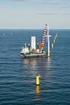 OFFSHORE WIND PROCUREMENT Raymond Cravitz Procurement Manager 17 09 2015 Irish Sea DONG Energy is a leading energy group in Northern Europe Overview #1 in Danish energy markets Global leader in offshore
Cost Reduction Potential in the Offshore Grid
 Cost Reduction Potential in the Offshore Grid Dr. Markus Glatfeld, Managing Director, TenneT Offshore GmbH TenneT two TSOs, one company Europe s first transnational TSO Connections to 10 TSOs in the center
Offshore Wind China 2010 Bergen, 15th March 2010. Olivier Angoulevant Nexans Norway AS
 Offshore Wind China 2010 Bergen, 15th March 2010 Olivier Angoulevant Nexans Norway AS At the core of performance At the core of performance : a worldwide leader Worldwide leader in cables, cabling systems
QUALITY CONTROL Prepared: V. van Gastel / team TenneT Reviewed: M. Müller 23.06.2015 Approved: F. Wester 23.06.2015 1. BACKGROUND MATERIAL...
 POSITION PAPER STAKE HOLDER CONSULTATION PROCESS OFFSHORE GRID NL Type: Position paper Work stream Technical Topic: T.2 Number of J-Tubes Filename ONL 15-060-T2_ J tubes_ bays_pp_v2 Version 3 - Public
Value breakdown for the offshore wind sector
 [RAB (2010) 0365] Value breakdown for the offshore wind sector A report commissioned by the Renewables Advisory Board February 2010 1 Value breakdown for the offshore wind sector Contents 1. Introduction...
Submarine Power Cables. State-of-the-art production facility, more than 100 years of experience and reference installations around the world.
 Submarine Power Cables State-of-the-art production facility, more than 100 years of experience and reference installations around the world. Reliable submarine power cables ABB is one of the world s most
The UK Offshore Wind Experience
 The UK Offshore Wind Experience Tom Simchak Policy Advisor, Energy British Embassy, Washington EESI Briefing, 28 September 2015 UNCLASSIFIED The United Kingdom is The global market leader in offshore wind:
Our recent customers Siemens / Statoil and Bard Offshore have experienced this. References on request.
 SweOffshore Fabriksgatan 10 SE-412 50 Gothenburg, Sweden +46(0)31 788 78 00 [email protected] www.sweoffshore.com SweOffshore Accommodation concept, Supporting our Customers in achieving the most
OFFSHORE WIND TOWARD 2020 ON THE PATHWAY TO COST COMPETITIVENESS
 1 OFFSHORE WIND TOWARD 2020 ON THE PATHWAY TO COST COMPETITIVENESS April 2013 Contents A B C Offshore market volume of EUR 130 bn by 2020 Agenda 2020 Markets Trends Competition Page 3 Value chain evaluation
Scottish Enterprise. Offshore Wind Power: Priorities for Research and Development (R&D) and Innovation. Supporting a globally competitive Scotland
 Scottish Enterprise OPPORTUNITIES IN ENERGY Offshore Wind Power: Priorities for Research and Development (R&D) and Innovation Supporting a globally competitive Scotland Introduction Successful offshore
NavDP4000 Series Dynamic Positioning Systems
 NavDP4000 Series Dynamic Positioning Systems Introduction NavDP 4000 Series The Professional s Choice Navis Engineering OY, founded in 1992, is one of the few world experts in dynamic positioning. Having
A Guide to UK Offshore Wind Operations and Maintenance
 A Guide to UK Offshore Wind Operations and Maintenance Acknowledgements This guide was prepared by GL Garrad Hassan, the principal contributors being: Joe Phillips Oscar Fitch-Roy Paul Reynolds Paul Gardner
Technical Risks in Wind Project Development
 Technical Risks in Wind Project Development Kevin J. Smith Global Segment Director Renewable Energy Services May 21, 2012 Discussion Objectives Introduction to project risks How to quantify risks Project
FSI LOGO Revision 1.0
 FSI LOGO Revision 1.0 HELICOPTER OPERATIONS MODERN HELICOPTERS MODERN HELICOPTERS MODERN HELICOPTERS MODERN HELICOPTERS HUMS Ground Station Overview Health and Usage Monitoring System Ground Station Help
OFFSHORE WIND POLICY AND MARKET ASSESSMENT A GLOBAL OUTLOOK
 EUROPEAN UNION OFFSHORE WIND POLICY AND MARKET ASSESSMENT A GLOBAL OUTLOOK The European Union is a unique economic and political partnership between 28 European countries. In 1957, the signature of the
SHE Transmission. 2015_10_30 Transmission Losses Strategy Rev 2.0 October 2015
 SHE Transmission 2015_10_30 Transmission Losses Strategy Rev 2.0 October 2015 Summary This paper presents SHE Transmission s views and approach on the impact of transmission losses on the transmission
NETWORK OUTPUT MEASURES METHODOLOGY Authors: National Grid, SP Transmission PLC, Scottish Hydro Electric Transmission Limited
 NETWORK OUTPUT MEASURES METHODOLOGY Authors: National Grid, SP Transmission PLC, Scottish Hydro Electric Transmission Limited TABLE OF CONTENTS 1.0 Purpose and Scope...2 1.1 Methodology Purpose...2 2.0
OVERLAND PIPELINE OPTIONS
 Working Document of the NPC Study: Arctic Potential: Realizing the Promise of U.S. Arctic Oil and Gas Resources Made Available March 27, 2015 Paper #7-9 OVERLAND PIPELINE OPTIONS Prepared for the Technology
NETWORK OUTPUT MEASURES METHODOLOGY Authors: National Grid, SP Transmission Limited, Scottish Hydro Electric Transmission Limited
 NETWORK OUTPUT MEASURES METHODOLOGY Authors: National Grid, SP Transmission Limited, Scottish Hydro Electric Transmission Limited TABLE OF CONTENTS 1.0 Purpose and Scope...2 1.1 Methodology Purpose...2
Trends in offshore wind economics the past and the future
 Downloaded from orbit.dtu.dk on: Jun 24, 216 Trends in offshore wind economics the past and the future Kitzing, Lena; Morthorst, Poul Erik Published in: Proceedings - 14th Wind Integration Workshop Publication
JEDI Capital Expenditure Update
 JEDI Capital Expenditure Update U.S. Offshore Wind Market and Supply Chain Workshop Presented by Aaron Smith National Renewable Energy Laboratory Brent Cooper Ocean & Coastal Consultants, Inc. 2014 Navigant
GL Garrad Hassan MARKET STATUS REPORT HIGH ALTITUDE WIND ENERGY. Renewable energy consultants
 Renewable energy consultants GL Garrad Hassan MARKET STATUS REPORT HIGH ALTITUDE WIND ENERGY Issue: August 2011 Status: Final Classification: Commercial in Confidence www.gl-garradhassan.com CAPABILITY
October 2015. TKI Wind op Zee Cost reduction options for Offshore wind in the Netherlands FID 2010-2020
 Cost reduction options for Offshore wind in the Netherlands FID 20102020 Introduction This study has been commissioned by. The research for this report is being conducted by PricewaterhouseCoopers Advisory
HV Submarine Cable Systems Design, Testing and Installation
 HV Submarine Cable Systems Design, Testing and Installation CIGRE Ireland Technical Seminar 6 th October 2010 Robert Donaghy Senior Consultant Engineer, ESB International Presentation Overview Applications
Windfarm Installation Barge. a novel approach to installing foundations in offshore wind
 Windfarm Installation Barge a novel approach to installing foundations in offshore wind North Sea Offshore Cranes and Lifting Conference in Aberdeen by Paal Strømstad ([email protected]) April
Presented by Capt Iefan Blake Senior Helicopter Pilot Air Mercy Service
 Minimum Requirements for a Helicopter Rescue Program Including Hoist vs. Short Haul Rescue Operations based on the South African Red Cross Air Mercy Service Model Presented by Capt Iefan Blake Senior Helicopter
Offshore Wind Project Management
 DEPARTMENT S, POST-GRADUATE AND MASTERPROGRAMMES ENGINEERING EN LIFE SCIENCES Experts by Experience! Offshore Wind Project Management BUILT ENVIRONMENT Offshore Wind Project Management (OWPM) Experts by
Cable Care. ABB Power Cables Service Products
 Cable Care ABB Power Cables Service Products 2 ABB Power Cables Service Products ABB Power Cables Minimize revenue losses in case of a fault High preparedness with ABB Cable Care ensures efficient repair
Dutch wind energy strength
 Dutch wind energy strength Chris Westra (senior consultant ECN) (general manager We@Sea) www.we-at-sea.org www.ecn.nl www.haveneilandopzee.nl 2010 The start in 1972 here we are now: 2010 Drivers for offshore
Neart na Gaoithe Meet the buyer event. Chris Whitehead Facilitator
 Neart na Gaoithe Meet the buyer event Chris Whitehead Facilitator Prysmian Martin Dale THE NEART NA GAOITHE OFFSHORE WIND FARM Meet the Buyer Event October, 2015 AGENDA 1. Introduction 2. The Prysmian
Cost Benefit Methodology for Optimal Design of Offshore Transmission Systems
 Centre for Sustainable Electricity and Distributed Generation Cost Benefit Methodology for Optimal Design of Offshore Transmission Systems Predrag Djapic and Goran Strbac July 2008 FUNDED BY BERR URN 08/1144
MERIAURA LTD >YOUR EXPERT IN MARINE TRANSPORTATION
 Project References MERIAURA LTD >YOUR EXPERT IN MARINE TRANSPORTATION Meriaura Ltd is a Finnish shipping company specialising in demanding project cargo and transporting industrial bulk and raw materials.
Planning requirements for heliports and helicopter landing sites
 Practice Note 75 December 2012 Planning requirements for heliports and helicopter landing sites The purpose of this practice note is to: 1. Explain how helicopter activity is regulated by the planning
13. FPSO Operational Problems Don Smith, OGP
 OGP Marine Risks Workshop Proceedings 13. FPSO Operational Problems Don Smith, OGP FPSO Operational Problems Don Smith OGP Analysis of Accident Statistics for Floating Monohull and Fixed Installations
PPT Dutch offshore wind sector
 PPT Dutch offshore wind sector Een presentatie over een presentatie > Agnes Agterberg RVO 2 december 2015 Inhoud Aanleiding PPT Dutch offshore wind sector Betrokken partijen In vogelvlucht door de PPT
The Application of Rope Access Methods in the Construction, Inspection, Repair and Maintenance of Wind Turbines
 The Application of Rope Access Methods in the Construction, Inspection, Repair and Maintenance of Wind Turbines Introduction IRATA International s rope access system is a safe method of working at height,
Winddag 2015: Innovation need and necessity. Bob Meijer 20 juni 2015
 Winddag 2015: Innovation need and necessity Bob Meijer 20 juni 2015 Objectives of the TKI Wind op Zee Economic benefits Cost reduction 174 Expedite the Energy Transition 40% 100 12 juni 2015 Winddag 2015:
COWI offshore wind marine engineering services
 COWI offshore wind marine engineering services 2 COWI expertise COWI is a highly versatile and multidisciplinary company. We provide services within engineering, environment and economics and operate worldwide
Optimization of the coupled grid connection of offshore wind farms
 Optimization of the coupled grid connection of offshore wind farms Dirk Schoenmakers Graduation project at Evelop Netherlands BV Technical University of Eindhoven September 2008 Supervisors: TU Eindhoven
SSE Greater Gabbard Offshore Wind Farm Supply Chain Engagement
 SSE Greater Gabbard Offshore Wind Farm Supply Chain Engagement www.sse.com Programme Introduction to SSE Overview of Tenders Overview of supplier requirements to work for SSE Overview of Procurement Process
Case Study 5 Use of Wind Turbine Technology
 Case Study 5 Use of Wind Turbine Technology 1. Context Hong Kong relies on an adequate and reliable electricity supply for its economic development. Our electricity needs are met by the two electricity
Offshore Renewable Energy Services and solutions
 Offshore Renewable Energy Services and solutions Where will our knowledge take you? Contents : Metocean Information Services : Marine Operations and Risk 3 3: Specialist Vessel Design 4: Engineering 4
Title: IEC WT 01 vs. IEC 61400-22 Development of a new standard and innovations in certification of Wind Turbines. mike.woebbeking@gl-group.
 Title: IEC WT 01 vs. IEC 61400-22 Development of a new standard and innovations in certification of Wind Turbines Author: Address: Mike Woebbeking Germanischer Lloyd Industrial Services GmbH, Business
4. PROGRAMME OF WORK: PROJECT ACTIVITIES, TIMESCALE AND COSTS
 The Application of Suction Caisson Foundations to Offshore Wind Turbines Extracts from a proposal to the DTI Participants: SLP Engineering Ltd, Shell Renewables Ltd, Enron Wind Overseas Development Ltd,
Offshore Base Cuxhaven. Dr. Hans-Joachim Stietzel Head of Dept. for Economic Development City of Cuxhaven Germany
 Dr. Hans-Joachim Stietzel Head of Dept. for Economic Development City of Cuxhaven Germany Nordseeheilbad Cuxhaven Slide 2 Slide 3 Slide 4 Slide 5 Message : Is the ideal production site for the offshore
RCP2 Portfolio Overview Document
 RCP2 Portfolio Overview Document Portfolio: Expenditure Class: Base Capex Expenditure Category: Grid Replacement & Refurbishment As at date: 15 November 2013 Expenditure Forecast Real 2012/13 NZ$ (m) 2015-2016
AMS Asset Management Redkite Asset Management System When only the best will do.
 Defects AMS Asset Management Redkite Asset Management System When only the best will do. Redkite Systems Ltd 2014 AMS Overview You ll wonder how you managed without it! What can I record on Redkite AMS?