
- WATER DAMAGE RESTORATION -
|
|
|
- Arthur Page
- 10 years ago
- Views:
Transcription
1 - WATER DAMAGE RESTORATION - PROTOCOL FOR BIO-REVEAL SAMPLING OF CONDITION 1, 2 AND 3 MOLD & FUNGI CONTAMINATION Statement of Use The Bio-reveal Ultrasnap ATP swabs and the Bio-reveal Systemsure Plus luminometer will be used to determine the level of surface contamination for viable fungi, molds, biofilms and related microbial organisms and environmental biological matter. The purpose of the sampling is to determine the level of biological surface contamination of building material and content surfaces that may be impacted by mold growth bioamplification. The Bio-reveal system will allow water loss responders, restoration professionals, remediation contractors and the Indoor Environmental Professional (IEP) the real-time ability to quantify the mold and fungi contamination condition (Condition 1, 2 or 3 ) as defined by the IICRC S520 for the indoor environment relative to the presence of mold and related biological contamination. The Bio-reveal system also allows the user the ability to provide quality assurance for the remediation process and post remediation verification testing for cleaned and sanitized building materials and contents that are remaining or being restored. The Bioreveal bio-contamination detection system is designed to evaluate the level of surface cleanliness and sanitized hygiene in the indoor environment. The building materials suitable to be tested with the Bio-reveal system include, but are not limited to, wall studs (metal and wood), concrete, vinyl and ceramic tile, laminate surfaces, stainless steel, masonry materials, plastic, gypsum board or sheetrock, wood sheathing, glass, etc.

2 Methodology Surface Sampling Investigation Phase Steps 1) Identify the target surface (ie; wall studs (metal and wood), concrete, vinyl and ceramic tile, laminate, stainless steel, masonry materials, plastic, laminate, gypsum board or sheetrock, wood sheathing, glass, etc) to sample for determining the Condition present as well as the impacted surfaces that require cleaning and sanitizing: a. Interior items not related to the building materials (ie: personal effects, etc.) b. Remediation equipment and remediation devices c. Other not mentioned above that may be site specific or specifically affected by water loss 2) Use aseptic techniques for all sample collection. Remove the plastic cover or tube from the Bio-reveal Ultrasnap ATP swab. This will expose the collection end or swab bud, which is pre-moistened to assist in sample collection. Ensure to NOT directly touch the swab bud or swab shaft with your fingers or hand or it will become contaminated. 3) Thoroughly swab the desired sample surface over a 2 X 2 sampling area (4 inches square) using approximately 10 strokes vertical and 10 strokes horizontal over the sample area while rotating the swab over the surface. Allow the swab bud to clean the sampled surface in order to accurately reflect the sampled surface contamination potential. 4) After swabbing place the plastic tube back over the swab bud and insert the open end back into the collar of the entire device. 5) Grasp the bulb end of the sampling device and the small plastic stem inside the bulb. Then break the snap valve by bending this plastic stem forward and backward until the stem breaks off. Hold the device upright during this step. 6) Squeeze the bulb twice to expel the reagent in the bulk down into the collection tube covering the swab bud tip. 7) Gently shake the device to thoroughly mix the liquid contents in the base of the device for approximately 5 seconds. This ensures the swab bud is properly washed or bathed in the reagent solution. 8) Insert the entire sampling device into top of the Bio-reveal Systemsure Plus luminometer. Be sure to insert the device completely into the open port hole before closing the lid of the luminometer. The sample device should be inserted into the luminometer and read within 60 seconds after breaking the valve stem and activating the reagent as outlined in Step 5), for the most accurate results. 9) Close the lid of the Bio-reveal luminometer. 10) Press the OK button to read the sample results. This process will take 15 seconds from the time you press the OK button. Be sure to hold the instrument up and down (vertical position) to obtain the best results.

3 Environmental Surface Testing Interpretation of Bio-reveal Sampling Results BIO-REVEAL FOR MOLD AND FUNGI TESTING INTERPRETATION GENERAL ENVIRONMENTAL SURFACE SAMPLING Guideline for Surface Sampling of Building Materials or Contents Condition 1, 2 and 3 Mold Presence in Indoor Environments (Surface samples are collected using the Bio-reveal Ultrasnap swab from indoor environmental surfaces, building materials, furnishings, personal effects, etc.) DRY SUBSTRATE CONDITIONS Sampled Surface Condition (as referenced by the IICRC S520) Normal Fungal Ecology (An indoor environment that may have settled spores, fungal fragments or traces of actual growth whose identity, location and quantity are reflective of a normal fungal ecology for a similar environment.) Settled Spores (An indoor environment which is primarily contaminated with settled spores that were dispersed directly or indirectly from a Condition 3 area, and which may have traces of actual growth.) Actual Growth (An indoor environment contaminated with the presence of actual mold growth and associated spores. Actual growth includes growth that is active or dormant, visible or hidden.) Moisture Content of Sampled Surface (%) Bio-reveal Testing Results (RLU) <15% 1 50 (1 150)* Fungi and Mold Contamination Condition 1 (TYPICAL FOR <15% (POTENTIALLY CROSS- CONTAMINATED <15% >150 3 (TYPICALLY NOT ACCEPTABLE) * Numerical definition of IICRC S520 Condition is dependent on indoor environmental hygiene or activities present at the site during the sampling event. Typical Condition 1 surfaces yielded ATP results that ranged from 1 RLU to 75 RLUs; however, there were samples that were as high as 150 RLUs ** RLU / 4 sq in = Relative light unit per recommended sampling area (4 square inches) References utilized: 1) IICRC Standard for Professional Mold Remediation S520

4 WET SUBSTRATE CONDITIONS Sampled Surface Condition (as referenced by the IICRC S520) Normal Fungal Ecology (An indoor environment that may have settled spores, fungal fragments or traces of actual growth whose identity, location and quantity are reflective of a normal fungal ecology for a similar environment.) Settled Spores (An indoor environment which is primarily contaminated with settled spores that were dispersed directly or indirectly from a Condition 3 area, and which may have traces of actual growth.) Actual Growth (An indoor environment contaminated with the presence of actual mold growth and associated spores. Actual growth includes growth that is active or dormant, visible or hidden.) Moisture Content of Sampled Surface (%) Bio-reveal Testing Results (RLU) < 15% 1 50 (1 150)* Fungi and Mold Contamination Condition 1 (TYPICAL FOR < 15% (POTENTIALLY CROSS- CONTAMINATED 15% >500 3 (TYPICALLY NOT ACCEPTABLE) * Numerical definition of IICRC S520 Condition is dependent on indoor environmental hygiene or activities present at the site during the sampling event. Typical Condition 1 surfaces yielded ATP results that ranged from 1 RLU to 75 RLUs; however, there were samples that were as high as 150 RLUs ** RLU / 4 sq in = Relative light unit per recommended sampling area (4 square inches) References utilized: 1) IICRC Standard for Professional Mold Remediation S520

5 Methodology Surface Sampling Post Remediation Verification Phase Steps 1) Identify the target surface (ie; wall studs (metal and wood), concrete, vinyl and ceramic tile, laminate, stainless steel, masonry materials, plastic, laminate, gypsum board or sheetrock, wood sheathing, glass, etc) to sample for determining the Condition present as well as the impacted surfaces that require cleaning and sanitizing: a. Interior items not related to the building materials (ie: personal effects, etc.) b. Remediation equipment and remediation devices c. Other not mentioned above that may be site specific or specifically affected by water loss 2) Use aseptic techniques for all sample collection. Remove the plastic cover or tube from the Bio-reveal Ultrasnap ATP swab. This will expose the collection end or swab bud, which is pre-moistened to assist in sample collection. Ensure to NOT directly touch the swab bud or swab shaft with your fingers or hand or it will become contaminated. 3) Thoroughly swab the desired sample surface over a 2 X 2 sampling area (4 inches square) using approximately 10 strokes vertical and 10 strokes horizontal over the sample area while rotating the swab over the surface. Allow the swab bud to clean the sampled surface in order to accurately reflect the sampled surface contamination potential. 4) After swabbing place the plastic tube back over the swab bud and insert the open end back into the collar of the entire device. 5) Grasp the bulb end of the sampling device and the small plastic stem inside the bulb. Then break the snap valve by bending this plastic stem forward and backward until the stem breaks off. Hold the device upright during this step. 6) Squeeze the bulb twice to expel the reagent in the bulk down into the collection tube covering the swab bud tip. 7) Gently shake the device to thoroughly mix the liquid contents in the base of the device for approximately 5 seconds. This ensures the swab bud is properly washed or bathed in the reagent solution. 8) Insert the entire sampling device into top of the Bio-reveal Systemsure Plus luminometer. Be sure to insert the device completely into the open port hole before closing the lid of the luminometer. The sample device should be inserted into the luminometer and read within 60 seconds after breaking the valve stem and activating the reagent as outlined in Step 5), for the most accurate results. 9) Close the lid of the Bio-reveal luminometer. 10) Press the OK button to read the sample results. This process will take 15 seconds from the time you press the OK button. Be sure to hold the instrument up and down (vertical position) to obtain the best results.

6 Post Remediation Verification Interpretation of Bio-reveal Sampling Results BIO-REVEAL FOR MOLD TESTING INTERPRETATION PRV SURFACE SAMPLING Guideline for Surface Sampling of Building Materials or Contents Post Remediation Verification Testing of Building Materials and Contents Surfaces (Surface samples are collected using the Bio-reveal Ultrasnap swab from indoor environmental surfaces, building materials, furnishings, personal effects, etc.) Sampled Surface Condition (Post Remediation Verification) Ideal Goal Normal Fungal Ecology (An indoor environment that may have settled spores, fungal fragments or traces of actual growth whose identity, location and quantity are reflective of a normal fungal ecology for a similar environment.) Bio-reveal Surface Sampling Result (RLU)* < 50** (Ideal surface hygiene condition) (Acceptable for most indoor environmental surfaces not used in healthcare patient care settings or food preparation situations) > 150 Interpretation Result PASS CAUTION FAIL * RLU Relative light unit or unit of measure for bioluminescent measurements ** Surface hygiene goal after restoration or remediation cleaning and sanitizing activities. Considerations when using the Bio-reveal sampling system a. Avoid collecting large amounts of sample debris on the swab bud. Too much sampled material may reduce signal strength of test and provide inaccurate readings or false negatives. b. Damaged or accidental activations of the sampling swab device should not be used and should be disposed of. c. Disposal of the sampling swab device can be in general waste. No special precautions are required for disposal. d. Hold the Bio-reveal Systemsure II upright during Step 10). e. Hold the Bio-reveal Ultrasnap ATP swab device upright when activating in Step 5). f. The Bio-reveal Ultrasnap ATP swabs will tolerate room temperature storage for up to two months but all unused sampling devices should be stored in the refrigerator, where they will remain viable for up to 12 months. For Technical Questions or Customer Service, please contact Slade Smith at: Phone number: , ext 2. Cell number: Or via at [email protected]

7 ALTERNATIVE INTERPRETATION GUIDELINE SETTINGS Recommended Threshold Setting Procedure Step 1) Identify the sample points or critical control points. Step 2) Clean the sample point surfaces thoroughly. This procedure may be repeated 2 or more times to achieve the best possible cleanliness. Step 3) Conduct ATP sampling at each location identified and cleaned, using 10 test replicates. Step 4) Calculate the average RLU. This will be considered the PASS level. Step 5) FAIL limits are determined by multiplying the PASS level by a factor of 2. Step 6) Caution is the region between the PASS and FAIL calculated limits. Step 7) Monitor results and assess the trends. Recalculation of the PASS and FAIL limits may be warranted to optimize the results and improve the quality standards. Alternative Threshold Setting Procedure Step 1) Step 2) Step 3) Step 4) Step 5) Identify the sample points or critical control points. Clean the sample point surfaces thoroughly. This procedure may be repeated 2 or more times to achieve the best possible cleanliness. Conduct ATP sampling at each location identified and cleaned several times and over several days, using a minimum of 50 test replicates. Calculate the average and standard deviation for the documented RLUs. Set limits as follows: Pass Caution Fail <= Mean RLU >= Mean RLU < Mean + 3 standard deviations >= Mean RLU + 3 standard deviations

- WATER DAMAGE RESTORATION -
 - WATER DAMAGE RESTORATION - PROTOCOL FOR BIO-REVEAL SAMPLING OF CATEGORY 1, 2 AND 3 WATER LOSS LIQUID/WATER & SURFACE TESTING Statement of Use The Bio-reveal Aquasnap ATP liquid sampling devices, Ultrasnap
A Guide to ATP Hygiene Monitoring
 A Guide to ATP Hygiene Monitoring - i - TABLE OF CONTENTS QUICK START GUIDE...v Flow chart: Cleaning, Testing and Corrective Action Procedures...v INTRODUCTION...1 The EnSURE & SystemSURE Plus ATP Detection
Contents. Introduction 2 Components 3. 1.1 What is ATP? 4 1.2 Measuring ATP with Bioluminescence Technology 4 1.3 Additional Uses of SystemSURE Plus 6
 Contents Introduction 2 Components 3 Section 1: An Overview of ATP Cleaning Verification 1.1 What is ATP? 4 1.2 Measuring ATP with Bioluminescence Technology 4 1.3 Additional Uses of SystemSURE Plus 6
STANDARD OPERATING PROCEDURES FOR MOLD REMEDIATION
 West Virginia University Environmental Health and Safety STANDARD OPERATING PROCEDURES FOR MOLD REMEDIATION Origination Date August 2013. Contents Purpose:... 2 Job Scope... 2 Definitions... 2 Roles/Responsibilities:...
Guidelines for Mold Remediation (Removal)
 Guidelines for Mold Remediation (Removal) Indoor mold growth, water damage, or musty odors should be addressed quickly. Removing mold growth and correcting the underlying cause of water accumulation can
Mold Management Plan Operations & Maintenance
 Document #: SAFETY_015 Revision Date: October 4, 2010 Mold Management Plan Operations & Maintenance Developed by: Environmental Health & Safety Approved by: Associate VP of Facilities & Campus Services
Oakland Unified San Jose Unified Stanford University Santa Ana Unified Newhall Unified Clovis Unified Merced Union High School Grossmont Union High
 Oakland Unified San Jose Unified Stanford University Santa Ana Unified Newhall Unified Clovis Unified Merced Union High School Grossmont Union High School District Industry Standards Damage Assessments
MOLD REMEDIATION PROCEDURES
 Page: 1 of 5 1.0 PROGRAM OBJECTIVE The purpose of this procedure is to define the responsibilities, methods, procedures and training required to safely and effectively remove or clean mold-contaminated
Supplemental Investigation Summary Report
 130 Liberty Street New York, New York Supplemental Investigation Summary Report Visual Mold Inspection Summary Prepared for: Lower Manhattan Development Corporation One Liberty Plaza, 20 th Floor, New
CLEANING CONTENTS FROM MOLD-CONTAMINATED ENVIRONMENTS
 Information Series #200, September, 2004 CLEANING CONTENTS FROM MOLD-CONTAMINATED ENVIRONMENTS Mold growth and associated contamination in buildings continues to garner public attention. While the insurance
Mold Response and Remediation Plan
 1.0 Policy Statement The University of New Haven has developed a mold response and remediation plan in accordance with best practices set forth by the Environmental Protection Agency (EPA), Occupational
Mold and Mildew Mold and mildew can be detected by sight, smell and touch.
 Mold and Mildew Mold and mildew can be detected by sight, smell and touch. Molds are usually black (not unlike the molds that grow in showers and between grout), green or tan in color, but can be in various
MOLD RESPONSE AND REMEDIATION PLAN
 MOLD RESPONSE AND REMEDIATION PLAN Prepared By: Triumvirate Environmental Developed: April 2011 Last Revised: March 2015 Program Approval Associate Vice President of Public Safety & Administrative Services
MOLD INSPECTION REPORT. UCD Anschutz Medical Campus Building 402 12474 E. 19 th Ave. Aurora, CO 80045
 MOLD INSPECTION REPORT For the Subject Property: UCD Anschutz Medical Campus Building 402 12474 E. 19 th Ave. Aurora, CO 80045 Report Date: August 7, 2015 Inspection/Testing Date: August 1, 2015 SET Project:
University of Nevada, Reno Facilities Services Department STANDARD OPERATING PROCEDURE. Facilities Maintenance Services
 University of Nevada, Reno Facilities Services Department STANDARD OPERATING PROCEDURE Facilities Maintenance Services Indoor Flood Cleanup and Mold Prevention DATE: 6/24/15 REVISED: PURPOSE This University
NORMI Professional Guidance for DIY Projects
 NORMI Professional Guidance for DIY Projects In general, a well-trained and experienced indoor mold remediation professional (CMR) should be consulted when performing remediation. You may find a NORMI
Queen's University Environmental Health & Safety. 1.0 Introduction
 1 Introduction The were developed by the Department of Environmental Health & Safety in accordance with the University s Policy Statement on Health and Safety and to ensure compliance with the Ontario
IUB Water Damage Restoration Guideline
 IUB Water Damage Restoration Guideline Purpose The IUB Water Damage Restoration guideline was developed to ensure that all water intrusions are handled in a professional manner which includes the latest
March 2007. Get The Mold Out: Mold Clean-Up Guidance for Residences. Introduction
 March 2007 Connecticut Department of Public Health Environmental Health Section Environmental & Occupational Health Assessment Program 410 Capitol Avenue MS # 11EOH, PO Box 340308 Hartford, CT 06134-0308
Guidelines for Cleaning Staff on Managing Mould Growth in State Buildings
 Guidelines for Cleaning Staff on Managing Mould Growth in State Buildings Prepared by the State Claims Agency 2 Index 1. Background 2. What are moulds? 3. What are the possible health effects? 4. How do
University of Vermont
 University of Vermont Department of Physical Plant Burlington, Vermont WATER INTRUSION GUIDELINES In accordance with: IIRC S500 IIRC S520 EPA Document 402-K-01-001 REVISED AND DISTRIBUTED BY: THE UNIVERSITY
DESERT RESEARCH INSTITUTE MOLD ASSESSMENT AND REMEDIATEION PROCEDURE
 1.0 Introduction DESERT RESEARCH INSTITUTE This Desert Research Institute (DRI) Mold Assessment and Remediation Procedure was established to assure that consistent and uniform information is provided to
NYU Safety Policy Manual
 NYU Safety Policy Manual Page 1 of 6 Subject: Mold Prevention, Assessment, and Remediation Program Policy No. 167 ISSUE DATE REPLACES ORIGINATOR APPLICATION NYU Washington Square Campus PURPOSE The purpose
CENTER FOR ENVIRONMENTAL HEALTH Emergency Response/Indoor Air Quality Program
 CENTER FOR ENVIRONMENTAL HEALTH Emergency Response/Indoor Air Quality Program Guidance Concerning Remediation and Prevention of Mold Growth and Water Damage in Public Schools/Buildings to Maintain Air
BUREAU OF ENVIRONMENTAL HEALTH Emergency Response/Indoor Air Quality Program
 BUREAU OF ENVIRONMENTAL HEALTH Emergency Response/Indoor Air Quality Program Use of Moisture Measuring Devices in Evaluating Water Damage in Buildings July 2007 The evaluation of mold colonization of building
City of Philadelphia Mold Remediation, Water Damage and Use of Biocides
 City of Philadelphia Mold Remediation, Water Damage and Use of s This document provides direction for remediation of building materials in City facilities with potential, visible or laboratory verified
UNIVERSITY OF TOLEDO
 UNIVERSITY OF TOLEDO SUBJECT: MOLD PREVENTION AND REMEDIATION Procedure No: HM-08-035 PROCEDURE STATEMENT All indoor areas on campus are expected to present no immediate threat to the health and well-being
Get The Mold Out: Mold Clean-Up Guidance for Residences. Introduction
 Connec cut Department of Public Health Environmental & Occupa onal Health Assessment Program Environmental Health Sec on 410 Capitol Avenue, MS # 11EOH, PO Box 340308 Har ord, CT 06134-0308 Telephone:
Mold Prevention and Remediation Program
 Mold Prevention and Remediation Program TABLE OF CONTENTS INTRODUCTION... 3 Objective... 3 Applicability... 3 Responsibilities... 3 Program Enforcement... 5 HAZARD ASSESSMENT... 6 Visual Inspection...
APPENDIX B. EPA s Investigating, Evaluating, and Remediating Moisture and Mold Problems (see EPA website for complete details)
 APPENDIX B. EPA s Investigating, Evaluating, and Remediating Moisture and Mold Problems (see EPA website for complete details) Table 1: Water Damage - Cleanup and Mold Prevention Table 1 presents strategies
MOLD REMEDIATION Kathleen Parrott, Ph.D. Professor of Housing, Virginia Tech
 MOLD REMEDIATION Kathleen Parrott, Ph.D. Professor of Housing, Virginia Tech Virginia Cooperative Extension has three publications to help you deal with mold in your home: Mold Basics: What is mold? How
Prestige Home Inspection LLC
 Cover Page Prestige Home Inspection LLC IAC2/ESA - Mold Assessment and Water Damage Report 555 W. Brook ave., Client's town MI, 48059 Inspection prepared for: Client's name Inspection Date: 10/15/2012
NADCA GENERAL SPECIFICATIONS FOR THE CLEANING OF COMMERCIAL HEATING, VENTILATING AND AIR CONDITIONING SYSTEMS
 NADCA GENERAL SPECIFICATIONS FOR THE CLEANING OF COMMERCIAL HEATING, VENTILATING AND AIR CONDITIONING SYSTEMS National Air Duct Cleaners Association 1518 K Street, N.W. Suite 503 Washington, DC 20005 (202)
Close Coupled & Back To Wall WC Saintaryware. Fitting Instructions
 Close Coupled & Back To Wall WC Saintaryware Fitting Instructions Before starting any installation project please consider the following: Prior to drilling into walls, check there are no hidden electrical
IMPORTANT INSTRUCTIONS & OPERATING MANUAL. Houston 50 Inch Electric Wall Mounted Fireplace Black / White
 IMPORTANT INSTRUCTIONS & OPERATING MANUAL Houston 50 Inch Electric Wall Mounted Fireplace Black / White Model Number:MFE5050BK Model Number:MFE5050WH Read these instructions carefully before attempting
Water should be removed as soon as possible once the safety of the structure has been verified.
 FACT SHEET Posted October 18 2005 Check List for Infection Control Concerns when Reopening Healthcare Facilities Closed due to Extensive Water and Wind Damage Prior to opening a healthcare facility that
UI Procedures for Asbestos Management
 UI Procedures for Asbestos Management The University of Iowa Rev.12/12/2012 These procedures apply to employees and contractors involving the identification, work on, removal, or repair of asbestos-containing
Preventing Long-Term Damage from Water Infiltration/Flooding in School Buildings
 Preventing Long-Term Damage from Water Infiltration/Flooding in School Buildings A systematized approach for remediating water problems in buildings because of floods, roof leaks, potable water leaks,
Moisture Control. System Solutions to Prevent Mold
 System Solutions to Prevent Mold How a systems approach to managing moisture is the most effective strategy for minimizing the growth of mold. Moisture Control Architects, designers, contractors and maintenance
MEASURING THE EFFICACY OF MOLD REMEDIATION ON CONTAMINATED DUCTWORK
 MEASURING THE EFFICACY OF MOLD REMEDIATION ON CONTAMINATED DUCTWORK JD Krause 1,2* and YY Hammad 1 1 College of Public Health, University of South Florida, Tampa, FL, USA 2 Indoor Air Solutions, Tampa,
Re: Addendum to Preliminary Water Damage Report, Mendocino Public Health Branch, 1120 South Dora Street, Ukiah, CA
 IAS 960 Ms. Kristin McMenomey Risk Manager County of Mendocino 841 Low Gap Road Ukiah, CA 95482 Re: Addendum to Preliminary Water Damage Report, Mendocino Public Health Branch, 1120 South Dora Street,
Indoor Flood Cleanup and Mold Remediation Standard Operating Procedure (SOP)
 Indoor Flood Cleanup and Mold Remediation Standard Operating Procedure (SOP) 1.0 Purpose The purpose of this SOP is to outline proper methods for cleanup and disposal following an indoor water release
Stachybotrys chartarum a mold that may be found in water-damaged homes
 Stachybotrys chartarum a mold that may be found in water-damaged homes November 2000 Environmental Health Investigations Branch California Department of Health Services Stachybotrys chartarum ecology Stachybotrys
Safety Policy Manual Policy No. 112
 Policy: Mold Prevention, Assessment and Remediation Program Page 1 of 9 APPLICATION NYU Langone Medical Center (NYULMC) POLICY SUMMARY NYULMC is committed to protecting employees, patients, and visitors
Genett Group, Inc. Genett Group, Inc. Anti Microbial Technology. Hospitality Schools Hospitals Construction Remediator Assessor
 Genett Group, Inc. 1515 FEDERAL HIGHWAY BOCA RATON, FL 33432 561 392 6176 Genettgroup.com Hospitality Schools Hospitals Construction Remediator Assessor Anti Microbial Technology Clean Room Antiseptic
Calibration of Volumetric Glassware
 Chemistry 119: Experiment 2 Calibration of Volumetric Glassware For making accurate measurements in analytical procedures, next in importance to the balance is volumetric equipment. In this section volumetric
Mitigation, Restoration, Remediation and the Rules of Containment Part 2
 Mitigation, Restoration, Remediation and the Rules of Containment Part 2 Topic: Water Damage Author : Harman, P. Date/Pages Mar 2001 pp. 18-21 When the fifth annual Water Loss Institute (WLI) Conference
Commercial Maintenance Services www.cmsclean.com
 Commercial Maintenance Services www.cmsclean.com Commercial Maintenance Services was founded in 1986 with the highest expectations and quality cleaning standards for customers like you. CMS is now known
MOLD REMEDIATION KEY STEPS
 MOLD REMEDIATION KEY STEPS The EPA has developed the following guidelines for mold remediation managers. These guidelines are generally helpful, but we believe an expert in the industry should be consulted
IEQ-15 Air Distribution System
 AIM OF CREDIT To encourage and recognise the design and maintenance of air distribution systems that minimise the risk of particulate and microbial contamination to the internal air supply. CREDIT CRITERIA
Standard Method for Sampling and Analysis of. of Chlorine Containing Bleaches. Soap Products
 GUIDE SPECIFICATION FOR GENERAL CLEANING AND REMOVAL OF MOLD AND MILDEW ON EXTERIOR INSULATED AND FINISH SYSTEMS AND STUCCO DIVISION 07240 and DIVISION 09240 8/05 PART I: GENERAL 1.01 DESCRIPTION AND SCOPE
Managing Water Infiltration into Buildings. Water Damage Check List
 Managing Water Infiltration into Buildings A Systematized Approach for Remediating Water Problems in Buildings due to Floods, Roof Leaks, Potable Water Leaks, Sewage Backup, Steam Leaks and Groundwater
Mold Remediation Practices
 Lorman Educational Services Mold Remediation Practices Presented by: A. James Partridge, PE James Partridge Consulting, LLC 925 South Adams Road Birmingham MI 48009-7039 248.645.1465 voice 248.645.1590
SECTION 08332 COILING COUNTER DOORS. Display hidden notes to specifier. (Don't know how? Click Here)
 SECTION 08332 COILING COUNTER DOORS Display hidden notes to specifier. (Don't know how? Click Here) PART 1 GENERAL 1.1 SECTION INCLUDES A. Coiling Metal Counter Doors. B. Coiling Counter Fire Doors. 1.2
Lab Exercise 3: Media, incubation, and aseptic technique
 Lab Exercise 3: Media, incubation, and aseptic technique Objectives 1. Compare the different types of media. 2. Describe the different formats of media, plate, tube etc. 3. Explain how to sterilize it,
DISASTER PLANNING AND RECOVERY An Ounce of Prevention
 DISASTER PLANNING AND RECOVERY An Ounce of Prevention Structural damage from water should be treated immediately, before mould can grow. By Jonathon T. Flatt, Water Loss Specialist, and Nancy Dai, MBA
Calibration of Volumetric Glassware
 CHEM 311L Quantitative Analysis Laboratory Revision 2.3 Calibration of Volumetric Glassware In this laboratory exercise, we will calibrate the three types of glassware typically used by an analytical chemist;
WHEN IT RAINS, IT POURS WATER DAMAGE RESTORATION
 WHEN IT RAINS, IT POURS WATER DAMAGE RESTORATION SUMMARY Damage to a facility from water can come in many forms. From a sprinkler malfunction to a hurricane, water damage can damage and destroy a building
Response to Water Intrusion and Mold/Microbial Growth
 I. Rationale Sufficient scientific evidence exists to conclude that there is an association between the presence of mold or other agents found in damp indoor environments and various health symptoms. Health
#9. EFFECTIVE CLEANING, MAINTENANCE, AND PEST CONTROL PROGRAMS FOR YOUR HACCP PLAN
 #9. EFFECTIVE CLEANING, MAINTENANCE, AND PEST CONTROL PROGRAMS FOR YOUR HACCP PLAN by O. Peter Snyder, Jr., Ph.D. Hospitality Institute of Technology and Management In past articles, I have discussed supplier
Case Studies of the Cause and Origin of Fungal Growth in Residential and Commercial Structures
 Case Studies of the Cause and Origin of Fungal Growth in Residential and Commercial Structures Stewart M. Verhulst, M.S., P.E. 1 Erik L. Nelson, Ph.D., P.E., M.ASCE 2 Deepak Ahuja, M.S., P.E.,M.ASCE 3
Basic S.W.A.T. Protocols
 Basic S. Protocols Don t Let Water Or Mold Spin Out Of Control Follow the Sewage, Water, Air Quality, s Provided By The S. Team at: Local: 757.473.0560 Toll Free: 800.743.1714 www.dryingsolutionsinc.com
Terms of Reference Air Handling Unit (HVAC System) Cleaning
 Terms of Reference Air Handling Unit (HVAC System) Cleaning Introduction General cleaning of the air handling units is currently undertaken by the Mechanical Division staff composing of 3 personnel. Cleaning
How to Run the PacBio RS II Instrument. 1. Run Instrument. 1.1 How to Run the RS II Instrument
 How to Run the PacBio RS II Instrument 100 338 600 01 1. Run Instrument 1.1 How to Run the RS II Instrument Welcome to Pacific Biosciences' How to Run the PacBio RS II Instrument training module. This
Industrial Hygiene/ Preventive Medicine Mold Assessment Guide
 Industrial Hygiene/ Preventive Medicine Mold Assessment Guide TG 278 February 2002 NOTICE This publication is essential and current. An administrative review has been performed by the proponent office
1.0 Introduction. 2.0 Importance of Integrity Testing. 3.0 How Does EFVM Work? 6.0 Conclusion
 5.4.4 Intrusion Discovery Once it was determined through water testing where the approximate location of the roof leak was, roof tiles were removed to examine the underlayment and roof sheathing. By following
Regulations & Guidelines
 Regulations & Guidelines Short History of Mold Standards Leviticus 13: 47-50, 14: 39-47 Initial assessment by priest; follow-up visit in 7 days If mold spreads to walls, tear out contaminated stones and
Restoring Peace of Mind.
 Contact Information Emergency Water Service Introduction Property Checklist Understanding Water Damage Understanding the Drying Process Frequently Asked Questions Restoring Peace of Mind. Safety Tips IMPORTANT
Environmental Monitoring of Clean Rooms
 Environmental Monitoring of Raul Duarte President DDK Scientific, Corp. Copyright DDK Scientific, Corp. 2008, 2009, DDK Scientific, Corp. Proprietary A manufacturing facility for pharmaceutical products
Foundation. Foundation
 Moisture Aside from structural concerns, the most important consideration for foundation design is moisture. No client wants a wet basement. No client wants a damp basement. No client wants mold in their
Instructions For Use
 Instructions For Use Concrobium Mold Control dries on surfaces to create an invisible antimicrobial shield that kills and prevents mold, and gets rid of musty odours. The breakthrough, Health Canada approved
Molds and mildew are fungi that grow
 Appendix C: Moisture, Mold and Mildew Molds and mildew are fungi that grow on the surfaces of objects, within pores, and in deteriorated materials. They can cause discoloration and odor problems, deteriorate
Commonwealth of Kentucky Cabinet for Health and Family Services Department for Public Health Division of Public Health Protection and Safety
 June 2, 2004 Commonwealth of Kentucky Cabinet for Health and Family Services Department for Public Health Division of Public Health Protection and Safety 275 East Main Street HS1EB Frankfort, KY 40621
An Informational Pamphlet. 416 South East Street Lebanon, OH 45036
 An Informational Pamphlet 416 South East Street Lebanon, OH 45036 What is Mold? Mold is a type of fungus that is present in our natural environment. Mold spores, which are tiny microscopic seeds, can
Support Cleaning Apparatus. Operation, Cleaning, & Safety Manual
 Support Cleaning Apparatus Operation, Cleaning, & Safety Manual Revision 1.1 31 May 2014 WARNING: The instructions and precautionary statements contained herein are intended for the Support Cleaning Apparatus
Infrared Moisture Detection
 What it can do for you... what it can t and why 1. Infrared camera basics 2. Examples Lew Harriman MoistureDM.com 3. Summary - The 4 most important facts about infrared moisture detection 1 of 19 Infrared
Fungal Assessment. Smith Recreation Community Centre 1019 Hwy 2A, Smith, Alberta
 Top Q A DIVISION OF TOP QUALITY INSPECTIONS INC. Fungal Assessment Smith Recreation Community Centre 1019 Hwy 2A, Smith, Alberta 2012 P. O. B o x 8 3 0 2 4, E d m o n t o n, A B T 5 T 6 S 1 P h o n e :
ASBESTOS SCIENCE TECHNOLOGIES, INC.
 ASBESTOS SCIENCE TECHNOLOGIES, INC. P.O. Box 505 Bangor, CA 95914 Phone (530) 518-0934 Email - [email protected] Report for Lincoln Elementary School 1582 Lincoln Road Yuba City, Ca. 95993 Mold Report
Old Dominion University Mold Management Plan
 OFFICE OF ENVIRONMENTAL HEALTH AND SAFETY 5255 Hampton Blvd. Spong Hall, suite 2501 Norfolk, Virginia 23529 Phone: (757) 683-4495 Fax: (757) 683-6025 Occupational Safety & Health Environmental Health Laboratory
Instructions for Use. Components of the GENOTROPIN PEN 12
 Instructions for Use Important Note Please read these instructions completely before using the GENOTROPIN PEN 12. If there is anything you do not understand or cannot do, call the toll-free number listed
Sun Windows General Information Sun New Construction Window Installation Instructions
 Sun Windows General Information Section 1 G F H H H A. Apply Weather Resistive Barrier B. Apply Sill Flashing Tape C. Place Waterproof Sill Shims D. Caulk Back of Nail Fin Sides & Top, Set Window, Fasten
INDOOR WATER INTRUSION (INDOOR WATER LINE BREAKS) Region 8 Sustainability & Environmental Management System
 1.0 Purpose & Scope The purpose of this procedure is to provide a standardized approach to handle the unwanted entry of water, known as water incursions or intrusions into an indoor environment. This procedure
NIH Clinical Center Patient Education Materials Giving a subcutaneous injection
 NIH Clinical Center Patient Education Materials What is a subcutaenous injection? A subcutaneous injection is given in the fatty layer of tissue just under the skin. A subcutaneous injection into the fatty
ENVIRONMENTAL HEALTH CONSULTANTS
 Ti Forensic Analytical ENVIRONMENTAL HEALTH CONSULTANTS Mold Investigation Report Findings of Initial Assessment Emerson Elementary School 2800 Forest Avenue Berkeley, CA July 18, 2013 Prepared for: Kevin
Promoting safer use of injectable medicines
 Promoting safer use of injectable medicines A template standard operating procedure for: prescribing, preparing and administering injectable medicines in clinical areas Introduction The use of injectable
Schlüter -KERDI-BOARD Substrate, structural panel, bonded waterproofing
 Substrate, structural panel, bonded waterproofing The universal substrate for tiles Perfect covering No matter whether you work with mosaics or large format tiles, an absolutely level substrate with straight
Shower Walls and Tub Surrounds
 Reverso en español TEC Skill Set How-To Project Guide Shower Walls and Tub Surrounds 3 Steps to a Beautiful Tile Surface! 1. Prepare the surface 2. Set the tile 3. Grout and caulk H.B. Fuller Construction
Mold Inspection Report (Initial Assessment)
 Morlin Home Services, LLC 4435 Nanticoke Court Sw Lilburn, GA. 30047 Phone: (770) 564-1505 Fax: (770) 564-1575 Cell: (770) 344-7416 [email protected] www.morlinpropertyinspections.com Mold Inspection
Managing Water Infiltration Into Buildings
 Managing Water Infiltration Into Buildings A systemized approach for remediating water problems in buildings due to floods, roof leaks, potable water leaks, sewage backup, steam leaks and groundwater infiltration.
Mould Mould A Basic Guide
 Mould A Basic Guide Summary Mould is a fact of life. Moulds will grow practically everywhere people live and work. Mould is recognized as an occupational hazard for indoor workers as well as outdoor workers
Operator s Manual. Pressure Injection Cell Model PC8500. Congratulations! Contents
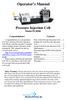 Operator s Manual Pressure Injection Cell Model PC8500 Congratulations! Congratulations on your purchase of a Next Advance Pressure Injection Cell. Please read this operator s manual which explains proper
Achieving Independence. A Guide to Self-Catheterization with the Bard Touchless Plus Intermittent Catheter System
 Bard: Intermittent Self-Catheterization A Guide to Self-Catheterization with the Bard Touchless Plus Intermittent Catheter System Achieving Independence Introducing the Bard Touchless Plus Catheter One
How to Estimate the Cost of Interior Building Finishes from Schematic Drawings. CPE Candidate No. 0714108. December 2014
 How to Estimate the Cost of Interior Building Finishes from Schematic Drawings CPE Candidate No. 0714108 December 2014 1 How to Estimate the Cost of Interior Building Finishes from Schematic Drawings Table
Sip/Puff Switch User Guide
 Sip/Puff Switch User Guide www.orin.com Table of Contents Table of Contents... 2 Legal Notices... 3 Declaration of Conformity with European Directives... 3 Application Disclaimer... 4 Introduction... 5
Mold Remediation in Occupied Homes
 building science.com 2008 Building Science Press All rights of reproduction in any form reserved. Mold Remediation in Occupied Homes Research Report - 0210 January-2002 Joseph Lstiburek, Terry Brennan