
Is there life on other worlds?
|
|
|
- Adam Cook
- 10 years ago
- Views:
Transcription
1 activity 5 Is there life on other worlds? purpose Is there life on other worlds? People have pondered this question since ancient times. But now, for the first time in human history, advances in the biological sciences, space exploration, and space technology may finally make it possible to answer it. At first, Is there life on other worlds? seems a simple question to answer. However, it quickly becomes a complex web of issues. What is life, anyway? How does it begin and evolve? What conditions can life tolerate? What makes a planet or moon habitable? How do we look for and identify extraterrestrial life? To attempt to resolve these kinds of questions, astrobiologists draw on many branches of science and employ many research strategies such as fieldwork, laboratory research, telescopic observation, and exploration with spacecraft. Though we have not found any examples of extraterrestrial life, comparisons with certain kinds of life on Earth suggest that potential habitats for extraterrestrial life, and maybe life itself, do indeed exist. However, contrary to popular notions, if extraterrestrial life is found in our solar system, it will most likely be bacteria-like. To estimate the number of worlds in the Milky Way galaxy that have life context By asking students to consider the possibility of life simple to technological in our galaxy, Activity 5 builds on the previous investigations of life and habitability and gets students to think about the size and composition of the galaxy. time 1 to 2 class periods In 1961, the astronomer Dr. Frank Drake suggested an organized framework for thinking about life in the galaxy. Known as the Drake Equation, it provides a way to estimate the number of worlds within our Milky Way galaxy that have intelligent life and whose radio transmissions should be detectable. Drake identified a sequence of eight terms to help people think about what must occur before a world can be inhabited by a civilization with radio technology. This activity uses Dr. Drake s framework to have students consider the implications of each term and make their own estimates of life in the Milky Way galaxy. ACTIVITY 5 49

2 concepts The chances for life elsewhere in the galaxy could be either high or low, depending on whether one s assumptions and estimates are conservative or optimistic. Finding even simple life forms will be a breakthrough discovery. The large number of stars significantly increases the possibility of extraterrestrial life. Recommended Procedure 1 To get a sense of what your students think when they hear the term extraterrestrial, ask them: What is the chance that we are the only life in the universe? What do you mean by extraterrestrials? Are there such things as extraterrestrials? Students typically think of extraterrestrials in terms of science fiction. Prompting them to consider other forms of life often changes their answers, or at least the reasons they provide. skills Understand that our galaxy contains a large number of stars Understand and estimate the terms of the Drake Equation Would you be interested in a planet inhabited by microbes, plants, and insects? Why or why not? Do you think that there are any forms of life elsewhere in the universe? Why? Calculate how many civilizations with radio technology we can communicate with materials one Activity Guide (pages 53 and 54) for each student blank overhead transparencies transparency markers calculators Have the class define the term, extraterrestrial. Try to get them to broaden the meaning to include anything from microbes to plants to intelligent creatures to any living thing. Mention that astrobiology involves thinking about whether or not there is extraterrestrial life, where it might be, and how we can learn more about it. To have students identify the factors related to the existence of extraterrestrial life, ask them what information they would need to determine the probability of extraterrestrial life. You might begin by saying, Let s see if we can estimate how many worlds out there have life (or intelligent life with which we can communicate). What would we need to know? Try to keep your prompting to a In 1961, Dr. Frank Drake developed an equation to estimate the number of other civilizations that exist in our Milky Way galaxy that we can detect using radio technology. It does this by making estimates of eight component factors. Since we are unsure whether there is life out there, let alone intelligent life with which we can communicate, there is no correct solution to the equation the value of each factor is open to interpretation. The Drake Equation 50 ACTIVITY 5 The number of worlds within our Galaxy that have intelligent life whose radio emissions should be detectable = X X X Number of stars in the Milky Way galaxy these stars that are appropriate appropriate stars that have planetary systems

3 minimum. It is more important to have students think about the terms than it is to get a complete set. Record their terms on the board or overhead projector. With minimal prompting, students can determine many of the factors needed to estimate the number of worlds with intelligent, technologyusing civilizations. Note that one can begin this list from any term and work out from there to the rest of the terms. Some prompts you might find helpful include: What does depend on? What might the next be? Are you saying we ll find life on any? Introduce the Drake Equation as one scientist s effort to identify the factors in the same way students did in Step 4. Have students complete the worksheet and estimate values for each term. Make sure they understand that there are no right answers. The Drake Equation simply helps us think about the factors involved in determining the probability of communicating with civilizations that have radio technology. After making estimates for each term, have students multiply the eight terms and determine their estimate of the number of other civilizations that exist in our Milky Way galaxy that we can detect using radio technology (Question 1 on the Activity Guide). The percentages should be treated as decimals. (For example, 30% = 0.30; 5% = 0.05; 0.01% = ). Have students report their estimates and discuss the range and their implications. The Drake Equation can provide radically different answers from 1 (we will never hear from intelligent extraterrestrials) to billions (we will almost undoubtedly hear from them). Use the Think About It questions to guide a class discussion on the implications of the numbers that the students estimated. There is a Teacher Answer Guide to the Think About It questions on pages 57 and 58. Students can succeed in the next part of the activity after naming five or six factors in this brainstorm. Don t worry about creating a usable equation. The goal is to have students think about each factor. Students should be able to identify factors such as the number of stars, planets, habitable planets, planets with life, planets with intelligent life, and planets with radio technology. Explore an online version of the Drake Equation at edu/drake/ Average number of habitable planets within a system X X X X habitable planets that develop life planets with life that develop intelligence intelligent life that develop radio technology radio technologies that are current ACTIVITY 5 51

4 Math Extension Calculating a number using the Drake Equation is an exercise in estimation. When estimating, we provide numbers to terms for which we have no actual values. However, we use whatever pertinent information is available to make an estimate as accurate as possible. An estimate is different from a sheer guess because, with an estimate, one constrains the possibilities by extrapolating from what one does know. Probabilities are different than estimates. Probabilities focus on how often an event will occur out of a certain number of trials (e.g., one chance in a hundred or in a million). As a result, they are expressed as percentages. Estimates are expressed as numbers. Since the Drake Equation results in a number rather than in a percentage, it is an estimate. Enrico Fermi, a Nobel Prize-winning physicist, often challenged his students with similar kinds of problems, such as estimating the number of corn flakes in the United States. Known as Fermi Problems, they rely on the same process extrapolating from what you know. Astrobiologists use the Earth in this fashion. By studying our planet and its inhabitants, scientists have learned a great deal about life and habitability. Using what we know enables us to make predictions about life in distant places. Recommended Procedure Ask students how they would estimate the number of pens and pencils in the school. To give their estimate some basis, they might count the actual number of pens and pencils in the classroom. This number together with the number of classrooms in the school can provide a rough estimate of the total number of pens and pencils. As students think more deeply about the question, they will realize that there are offices, teacher s desks, and supply rooms that have pens and pencils, too. Including these in their estimate makes it increasingly accurate. One could expand this exercise by estimating the number of pens and pencils nationwide. 52 ACTIVITY 5


5 Activity Guide Introduction Do you think there is intelligent life in our galaxy with which we can communicate? In 1961, Dr. Frank Drake identified eight terms to help people think about what would have to take place for such communication to be possible. See what you think the chances are by making your own estimate for each of the terms below. The conservative and optimistic values indicate the range of opinion among scientists with regard to each term. You can use the conservative or optimistic estimates or use another value, depending on your own intuition. What to Do To estimate the number of worlds in the Milky Way galaxy that have intelligent life that we can detect using radio technology, follow these s: 1 Make estimates for each of the eight terms listed on the Using the Drake Equation worksheet. 2 Convert percentages to decimals before multiplying. 3 Multiply the estimates you made for the eight terms. life on earth and elsewhere? Nasa astrobiology institute ACTIVITY 5 53

6 Using the Drake Equation Name _ Date _ Term Background Conservative Estimate Optimistic Estimate Your Estimate 1 The total number of stars in the Milky Way galaxy 2 The percentage of stars that are appropriate These numbers are based on observations of the stars in our galaxy, the Milky Way galaxy, and of other galaxies we believe to be like our own. Most scientists believe the number of stars to be 400 billion. Many scientists believe that a appropriate star has to be like our sun, which is a Main Sequence, G-type star. Only about 5% of the stars in our galaxy are G-type stars, though about 10% are the closely related F- and K-type stars. About 50% of stars exist in binary or multiple systems, which many scientists feel make them inappropriate. 100 billion 600 billion 5% 15 45% 3 The percentage of these appropriate stars that have planetary systems 4 The average number of habitable planets or moons within a solar system 5 The percentage of habitable planets or moons that develop life Appropriate stars may not have planets circling them. We have only just begun detecting extra-solar planets, so we don t really know how common they are. Our only example of this term is our own solar system. Could Earth be the only habitable place in our solar system? Is our system typical? Remember that if one system has no habitable planets or moons and another has four, the average would be two per system. Having a planet or moon that is appropriate for life doesn t necessarily mean that life will arise. No real data are available to help us estimate this term. Earth is the only planet on which we know there is life. However, bacterial life existed on Earth shortly (geologically speaking) after its formation, possibly indicating that the development of life is easy. Many scientists believe that whether or not life arises depends on many factors. 5% % 0.1 On average, there is one habitable planet in every ten systems % Life is a rare accident that is unlikely to happen elsewhere 4 On average, there are four habitable planets in every system 100% Life will arise if conditions are appropriate 6 The percentage of planets with life that develop intelligence On Earth, humans developed intelligence, apparently as an evolutionary advantage. However, this term depends on how you define intelligence. Are dolphins, gorillas, octopuses, and ants intelligent? Furthermore, singlecelled life existed on Earth very early, and multicellular life took 2.5 billion years to form (a very long time, geologically speaking). Maybe the development of complex life, let alone intelligent life, is unusual % or less Only one in a million planets with life will develop intelligence 100% Any planet with life will develop intelligence 7 The percentage of intelligent life that develop radio technology Communication with intelligent extraterrestrials requires that we hear from them. Given the vast distances of space, they would probably send signals which travel at the speed of light, such as radio waves. On Earth, humans have only just developed radio technology, so possibly this term should have a low value. But, we did eventually develop radio technology, so maybe this is true of all intelligent beings % or less Only one in a million planets with intelligent civilizations will develop radio technology 100% All intelligent life will develop radio technology 8 The percentage of current civilizations having radio technologies Will an extraterrestrial s signals overlap with the lifespan of the receiving civilization? Extraterrestrials that sent signals a million years ago from a world a million light years away would still overlap with us, even if they died out long ago. So, how long do civilizations with radio technology last? A high level of technological development could bring with it conditions that ultimately threaten the species. Or maybe, once a society has radio technology, it may survive for a long time. Finally, radio signals may give way to more advanced, less noisy technologies such as optical fiber. No one would hear us then! % or less One in a million civilizations with radio technology will develop it in time to detect signals from another civilization 10% One in a ten civilizations with radio technology will develop it in time to detect signals from another civilization 54 ACTIVITY 5 life on earth and elsewhere? Nasa astrobiology institute

7 Think About It Name _ Date _ 1 To find out your estimate of the number of worlds in the Milky Way galaxy that have intelligent life that we can detect using radio technology, fill out the Drake Equation worksheet and multiply the eight terms together. Write your answer here: 2 Based on your estimates, how good are our chances of hearing from intelligent extraterrestrials? 3 How does your answer to Question 2 compare to what you thought before you began the activity? 4 Can your answer to Question 1 be less than one? Why or why not? 5 When making estimates, in which terms did you have the most confidence? The least? Why? 6 Are you more optimistic or conservative when it comes to thinking about extraterrestrial life with radio technology in the Milky Way galaxy? Why? 7 How could you adjust the estimates in the equation to have it come out so that Earth is the only planet in the Milky Way galaxy with radio technology? (continues) life on earth and elsewhere? Nasa astrobiology institute ACTIVITY 5 55

8 Think About It (continued) 8 If tomorrow s newspaper headline read, Message Received from Outer Space, what would it mean to you? 9 What would your reaction be if we discovered microbes on another planet? Plants? Insects? Mammals? Intelligent life? 10 If microbial life were discovered on another planet, what implications might such a discovery have? 11 How would you define extraterrestrial now? How does your current definition differ from the one that the class developed earlier in the activity? 12 What do you think is the most abundant life form on Earth? 13 If life exists elsewhere, what do you think it will look like? 56 ACTIVITY 5 life on earth and elsewhere? Nasa astrobiology institute

9 Teacher Answer Guide to the Think About It Questions These background notes provide answers to some of the questions on the Student Activity Guide and can be used to help guide a class discussion based on those questions. Questions 2, 3, 7, 8, 9, and 11 ask students to reflect on their own feelings, perceptions, or idea, and therefore have no background notes. 1 Based on the eight terms, what is your estimate? While Terms 5 to 8 are percentages, the final number that students obtain is a discrete number rather than a percentage or a probability. This number represents a student s estimate of the number of civilizations with radio technology that we can detect. 4 Can your answer to Question 1 be less than one? While there is no right answer, there are wrong answers. Because Earth exists, the final answer cannot be zero and probably should not be less than one. If students choose low probabilities for Terms 5 to 8, they may need more than the 400 billion stars in the Milky Way galaxy to obtain a final answer of one. This would require considering additional galaxies to account for the existence of Earth. 5 In which terms did you have the most or least confidence? Estimating numbers for the eight terms becomes increasingly a matter of conjecture as one goes from Term 1 to Term 8. There is widespread agreement only for the first two terms. 6 Are you more optimistic or conservative? An answer of one states that Earth is the only place with intelligent life that has radio technology. There may still be life or even intelligent extraterrestrials out there, but we cannot communicate with them because they do not have radio technology. Any number larger than one implies that we may receive signals from intelligent extraterrestrials someday. However, make the distinction between detection and communication, which is a two-way exchange. With a small final number, actual communication is less likely. With a large final number, actual communication becomes increasingly likely. (continues) ACTIVITY 5 57

10 Teacher Answer Guide to the Think About It Questions (continued) 10 What are the implications of discovering microbial life? Many students express disinterest in discovering anything less than a bona fide, Hollywood-style extraterrestrial. However, no life beyond Earth has ever been found, which implies that life may be a rare accident that happened on Earth due to an extraordinary convergence of circumstances and that it is unlikely to happen elsewhere. In this context, discovering microbial life would help us understand more about how life arises and what conditions it can tolerate. Furthermore, it would help answer the question of whether life is a common process in the universe. In short, discovering microbial life beyond Earth would be a profound discovery. By multiplying Terms 1 to 5, students can make their own estimate of how many worlds in our galaxy have life of any sort. 12 What is the most abundant life form on Earth? We live in the age of bacteria. For the past three and a half billion years, bacteria have been the dominant life form in terms of numbers and biomass. They are key to many biological, geological, and chemical processes, and many scientists think that multicellular organisms became possible only after single-celled bacteria began living symbiotically within a cell membrane. 13 If life exists elsewhere, what do you think it will look like? Astrobiologists feel that most extraterrestrial life will be bacterialike, living beneath a planet s or moon s surface and using chemical energy for their needs. Animal life, and especially intelligent animal life, is probably much rarer. 58 ACTIVITY 5

Space Exploration Classroom Activity
 Space Exploration Classroom Activity The Classroom Activity introduces students to the context of a performance task, so they are not disadvantaged in demonstrating the skills the task intends to assess.
galaxy solar system supernova (noun) (noun) (noun)
 WORDS IN CONTEXT DAY 1 (Page 1 of 4) galaxy A galaxy is a collection of stars, gas, and dust. We live in the Milky Way galaxy. One galaxy may contain billions of stars. solar system A solar system revolves
Size and Scale of the Universe
 Size and Scale of the Universe (Teacher Guide) Overview: The Universe is very, very big. But just how big it is and how we fit into the grand scheme can be quite difficult for a person to grasp. The distances
Inductive Reasoning Page 1 of 7. Inductive Reasoning
 Inductive Reasoning Page 1 of 7 Inductive Reasoning We learned that valid deductive thinking begins with at least one universal premise and leads to a conclusion that is believed to be contained in the
Swarthmore College Newsletter
 93 Fog, clouds, and light pollution limit the effectiveness of even the biggest optical telescopes on Earth. Astronomers who study ultraviolet or X-ray emission of stars have been more limited because
THE SOLAR SYSTEM. Worksheets UNIT 1. Raül Martínez Verdún
 Worksheets UNIT 1 October-December 2009 NAME: DATE: Worksheet 1A Cut out these 9 circles and then order them from the smallest to the biggest. NAME: DATE: Worksheet 1B NAME: DATE: Worksheet 2 Read the
In the Great Silence there is Great Hope. (2007) Nick Bostrom [Commissioned for BBC Radio 3, The Essay ] www.nickbostrom.com
![In the Great Silence there is Great Hope. (2007) Nick Bostrom [Commissioned for BBC Radio 3, The Essay ] www.nickbostrom.com](/thumbs/17/151504.jpg "In the Great Silence there is Great Hope. (2007) Nick Bostrom [Commissioned for BBC Radio 3, The Essay ] www.nickbostrom.com") In the Great Silence there is Great Hope (2007) Nick Bostrom [Commissioned for BBC Radio 3, The Essay ] www.nickbostrom.com The idea of life on Mars has been with us for nearly 300 years, ever since early
In the Great Silence there is Great Hope (2007) Nick Bostrom [Commissioned for BBC Radio 3, The Essay ] www.nickbostrom.com The idea of life on Mars has been with us for nearly 300 years, ever since early
Science Standard 4 Earth in Space Grade Level Expectations
 Science Standard 4 Earth in Space Grade Level Expectations Science Standard 4 Earth in Space Our Solar System is a collection of gravitationally interacting bodies that include Earth and the Moon. Universal
Georgia Performance Standards Framework for Science Grade 6. Unit Organizer: UNIVERSE AND SOLAR SYSTEM (Approximate Time 3 Weeks)
 The following instructional plan is part of a GaDOE collection of Unit Frameworks, Performance Tasks, examples of Student Work, and Teacher Commentary. Many more GaDOE approved instructional plans are
How High Up Is Space?
 I11 How High Up Is Space? Activity I11 Grade Level: 5 12 Source: This activity was written by Andrew Fraknoi and is copyright 2010 by Andrew Fraknoi. Its first publication is in The Universe at Your Fingertips.
Scale of the Solar System. Sizes and Distances: How Big is Big? Sizes and Distances: How Big is Big? (Cont.)
 Scale of the Solar System Scale of the Universe How big is Earth compared to our solar system? How far away are the stars? How big is the Milky Way Galaxy? How big is the Universe? How do our lifetimes
Name: Earth 110 Exploration of the Solar System Assignment 1: Celestial Motions and Forces Due in class Tuesday, Jan. 20, 2015
 Name: Earth 110 Exploration of the Solar System Assignment 1: Celestial Motions and Forces Due in class Tuesday, Jan. 20, 2015 Why are celestial motions and forces important? They explain the world around
HONEY, I SHRUNK THE SOLAR SYSTEM
 OVERVIEW HONEY, I SHRUNK THE SOLAR SYSTEM MODIFIED VERSION OF A SOLAR SYSTEM SCALE MODEL ACTIVITY FROM UNDERSTANDING SCIENCE LESSONS Students will construct a scale model of the solar system using a fitness
Phases of the Moon. --demonstrate the ability to apply an in-depth understanding of moon phases to real life situations
 6 th Grade Standard I Rubric Phases of the Moon --demonstrate the ability to apply an in-depth understanding of moon phases to real life situations --demonstrate an understanding of different reasons why
The Solar System: Cosmic encounter with Pluto
 Earth and Space Sciences The Solar System: Cosmic encounter with Pluto The size and nature of our Solar System is truly awe inspiring, and things are going to get even more exciting once the New Horizons
Exercise: Estimating the Mass of Jupiter Difficulty: Medium
 Exercise: Estimating the Mass of Jupiter Difficulty: Medium OBJECTIVE The July / August observing notes for 010 state that Jupiter rises at dusk. The great planet is now starting its grand showing for
Bangkok Christian College EIP Matayom Course Description Semester One 2011-2012
 Bangkok Christian College EIP Matayom Course Description Semester One 2011-2012 Subject: General Science Grade: Matayom 6 Course Description This semester the General Science course will continue covering
View Through a Telescope Classroom Activity
 View Through a Telescope Classroom Activity The Classroom Activity introduces students to the context of a performance task, so they are not disadvantaged in demonstrating the skills the task intends to
Undergraduate Studies Department of Astronomy
 WIYN 3.5-meter Telescope at Kitt Peak near Tucson, AZ Undergraduate Studies Department of Astronomy January 2014 Astronomy at Indiana University General Information The Astronomy Department at Indiana
Name Class Date. true
 Exercises 131 The Falling Apple (page 233) 1 Describe the legend of Newton s discovery that gravity extends throughout the universe According to legend, Newton saw an apple fall from a tree and realized
CELESTIAL MOTIONS. In Charlottesville we see Polaris 38 0 above the Northern horizon. Earth. Starry Vault
 CELESTIAL MOTIONS Stars appear to move counterclockwise on the surface of a huge sphere the Starry Vault, in their daily motions about Earth Polaris remains stationary. In Charlottesville we see Polaris
Out of This World Classroom Activity
 Out of This World Classroom Activity The Classroom Activity introduces students to the context of a performance task, so they are not disadvantaged in demonstrating the skills the task intends to assess.
STUDY GUIDE: Earth Sun Moon
 The Universe is thought to consist of trillions of galaxies. Our galaxy, the Milky Way, has billions of stars. One of those stars is our Sun. Our solar system consists of the Sun at the center, and all
Grade Level Expectations for the Sunshine State Standards
 for the Sunshine State Standards FLORIDA DEPARTMENT OF EDUCATION http://www.myfloridaeducation.com/ The seventh grade student: The Nature of Matter uses a variety of measurements to describe the physical
The Birth of the Universe Newcomer Academy High School Visualization One
 The Birth of the Universe Newcomer Academy High School Visualization One Chapter Topic Key Points of Discussion Notes & Vocabulary 1 Birth of The Big Bang Theory Activity 4A the How and when did the universe
THE SOLAR SYSTEM - EXERCISES 1
 THE SOLAR SYSTEM - EXERCISES 1 THE SUN AND THE SOLAR SYSTEM Name the planets in their order from the sun. 1 2 3 4 5 6 7 8 The asteroid belt is between and Which planet has the most moons? About how many?
RETURN TO THE MOON. Lesson Plan
 RETURN TO THE MOON Lesson Plan INSTRUCTIONS FOR TEACHERS Grade Level: 9-12 Curriculum Links: Earth and Space (SNC 1D: D2.1, D2.2, D2.3, D2.4) Group Size: Groups of 2-4 students Preparation time: 1 hour
TELESCOPE AS TIME MACHINE
 TELESCOPE AS TIME MACHINE Read this article about NASA s latest high-tech space telescope. Then, have fun doing one or both of the word puzzles that use the important words in the article. A TELESCOPE
Why Is the Moon Upside Down?
 CONNECTED, LEVEL 3 2013, Food for Thought Why Is the Moon Upside Down? by Trish Puharich Overview This article explore how three friends made observations of the phases of the Moon from different locations.
First Discoveries. Asteroids
 First Discoveries The Sloan Digital Sky Survey began operating on June 8, 1998. Since that time, SDSS scientists have been hard at work analyzing data and drawing conclusions. This page describes seven
Due Tuesday, January 27th IN CLASS. Grading Summary: Question 11: 12 points. Question 12: 26 points. Question 13: 12 Points.
 HOMEWORK #1 Solar System Exploration Due Tuesday, January 27th IN CLASS Answers to the questions must be given in complete sentences (except where indicated), using correct grammar and spelling. Please
The Expanding Universe
 Stars, Galaxies, Guided Reading and Study This section explains how astronomers think the universe and the solar system formed. Use Target Reading Skills As you read about the evidence that supports the
California Standards Grades 9 12 Boardworks 2009 Science Contents Standards Mapping
 California Standards Grades 912 Boardworks 2009 Science Contents Standards Mapping Earth Sciences Earth s Place in the Universe 1. Astronomy and planetary exploration reveal the solar system s structure,
Solar Solutions Copyright, The Environmental Center 2013
 Solar Solutions Copyright, The Environmental Center 2013 Subject: Science Grades: 4-8 Length: 30-60 minutes Focus: Renewable Energy, Solar Energy Rationale: We depend on energy for every aspect of our
Study Guide: Solar System
 Study Guide: Solar System 1. How many planets are there in the solar system? 2. What is the correct order of all the planets in the solar system? 3. Where can a comet be located in the solar system? 4.
NOTES: GEORGIA HIGH SCHOOL SCIENCE TEST THE SOLAR SYSTEM
 NOTES: GEORGIA HIGH SCHOOL SCIENCE TEST THE SOLAR SYSTEM 1.What is a Solar system? A solar system consists of: * one central star, the Sun and * nine planets: Mercury, Venus, Earth, Mars, Jupiter, Saturn,
DESCRIPTION ACADEMIC STANDARDS INSTRUCTIONAL GOALS VOCABULARY BEFORE SHOWING. Subject Area: Science
 DESCRIPTION Host Tom Selleck conducts a stellar tour of Jupiter, Saturn, Uranus, Neptune, and Pluto--the outer planets of Earth's solar system. Information from the Voyager space probes plus computer models
PROPOSED SCIENCE OFFERINGS FOR
 PROPOSED SCIENCE OFFERINGS FOR 2014-2015 LEESVILLE ROAD HIGH SCHOOL The following courses are the courses that we are recommending being offered for the following school year. The science teachers recommend
What is the Sloan Digital Sky Survey?
 What is the Sloan Digital Sky Survey? Simply put, the Sloan Digital Sky Survey is the most ambitious astronomical survey ever undertaken. The survey will map one-quarter of the entire sky in detail, determining
astronomy 2008 1. A planet was viewed from Earth for several hours. The diagrams below represent the appearance of the planet at four different times.
 1. A planet was viewed from Earth for several hours. The diagrams below represent the appearance of the planet at four different times. 5. If the distance between the Earth and the Sun were increased,
The Right Stuff: How to Find Good Information
 The Right Stuff: How to Find Good Information David D. Thornburg, PhD Executive Director, Thornburg Center for Space Exploration [email protected] One of the most frustrating tasks you can have as a student
READING COMPREHENSION I SIR ISAAC NEWTON
 READING COMPREHENSION I SIR ISAAC NEWTON Sir Isaac Newton (1642-1727) was an English scientist who made great contributions to physics, optics, maths and astronomy. He is known for his Three Laws of Motion
A long time ago, people looked
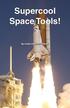 Supercool Space Tools! By Linda Hermans-Killam A long time ago, people looked into the dark night sky and wondered about the stars, meteors, comets and planets they saw. The only tools they had to study
englishforeveryone.org Name Date
 englishforeveryone.org Name Date Advanced Critical Reading - Hubble 5 10 15 20 25 30 35 40 The 32,000 word novella The Time Machine by H.G. Wells, published in 1895, is generally credited with popularizing
Pianeti extrasolari, un opportunità di Education and Public Outreach
 Pianeti extrasolari, un opportunità di Education and Public Outreach Antonio Maggio Istituto Nazionale di Astrofisica Osservatorio Astronomico di Palermo Why so an interesting topic Fundamental question
Science Fiction Creature Feature Performance Task Lesson Plan
 Performance Lesson Plan Science Fiction Creature Feature was created for and used as a two-class period learning and assessment task for a seventh grade Life Science unit called Structured for Survival.
Chapter 25.1: Models of our Solar System
 Chapter 25.1: Models of our Solar System Objectives: Compare & Contrast geocentric and heliocentric models of the solar sytem. Describe the orbits of planets explain how gravity and inertia keep the planets
Big bang, red shift and doppler effect
 Big bang, red shift and doppler effect 73 minutes 73 marks Page of 26 Q. (a) Scientists have observed that the wavelengths of the light from galaxies moving away from the Earth are longer than expected.
Discovering Nature s Cycles
 Teaching First Step Nonfiction Discovering Nature s Cycles K 2nd Grade Interest Level 1st Grade ing Level Titles in this : Day and Night Earth s Water Cycle Hibernation Migration The Night Sky Seasons
Solar Energy Production
 Solar Energy Production We re now ready to address the very important question: What makes the Sun shine? Why is this such an important topic in astronomy? As humans, we see in the visible part of the
NCTM Content Standard/National Science Education Standard
 Title: BASE-ic Space Travel Brief Overview: This unit introduces the concepts of bases and exponents (or powers) in order to gain a deeper understanding of place value. Students will assume the role of
Scientists often deal with
 Solar System in the Hallway by Malonne Davies, Linda Landis, and Arthur Landis Scientists often deal with extreme numbers, both large and small. The Earth, 12,756,000 m in diameter, has a mass of 5,973,
SECOND GRADE 1 WEEK LESSON PLANS AND ACTIVITIES
 SECOND GRADE 1 WEEK LESSON PLANS AND ACTIVITIES UNIVERSE CYCLE OVERVIEW OF SECOND GRADE UNIVERSE WEEK 1. PRE: Discovering stars. LAB: Analyzing the geometric pattern of constellations. POST: Exploring
Unit 1.7: Earth and Space Science The Structure of the Cosmos
 Lesson Summary: This week students will search for evidence provided in passages that lend support about the structure and organization of the Cosmos. Then students will summarize a passage. Materials
The Solar System. Unit 4 covers the following framework standards: ES 10 and PS 11. Content was adapted the following:
 Unit 4 The Solar System Chapter 7 ~ The History of the Solar System o Section 1 ~ The Formation of the Solar System o Section 2 ~ Observing the Solar System Chapter 8 ~ The Parts the Solar System o Section
STAAR Science Tutorial 30 TEK 8.8C: Electromagnetic Waves
 Name: Teacher: Pd. Date: STAAR Science Tutorial 30 TEK 8.8C: Electromagnetic Waves TEK 8.8C: Explore how different wavelengths of the electromagnetic spectrum such as light and radio waves are used to
Introducing Inquiry In A Biology Lab For Non-Majors
 Introducing Inquiry In A Biology Lab For Non-Majors Phyllis S. Laine and Linda J. Heath Department of Biology Xavier University 3800 Victory Parkway Cincinnati, OH 45207-4331 513-745-3623 Fax: 513-745-1079
Specific Intensity. I ν =
 Specific Intensity Initial question: A number of active galactic nuclei display jets, that is, long, nearly linear, structures that can extend for hundreds of kiloparsecs. Many have two oppositely-directed
Goal To develop a classification scheme based on the structural features of organisms and then use the scheme to classify newly-discovered organisms.
 Creepy Critters facilitator What if you discovered a completely new life form? Would you be able to determine what existing organisms it might be related to? What would you look for? How would you organize
Climate Discovery Teacher s Guide
 Climate Discovery eacher s Guide Sunspots and Climate Unit:Little Ice Age Lesson: 7 Materials & Preparation ime: Preparation: 10 min eaching: 60 min Materials for the eacher: Overhead projector ransparencies
So What All Is Out There, Anyway?
 So What All Is Out There, Anyway? Imagine that, like Alice in Wonderland, you have taken a magic potion that makes you grow bigger and bigger. You get so big that soon you are a giant. You can barely make
The Sun and the Stars
 www.k5learning.com Objective Concepts (gravity, climate, solar system, hydrogen, helium, elements, core, ultraviolet rays, cluster, galaxy, Milky Way Galaxy); Sight words (surface, middle, dangerous, causes,
Planets and Dwarf Planets by Shauna Hutton
 Name: Wow! Technology has improved so well in the last several years that we keep finding more and more objects in our solar system! Because of this, scientists have had to come up with new categories
Grade 6 Standard 3 Unit Test A Astronomy. 1. The four inner planets are rocky and small. Which description best fits the next four outer planets?
 Grade 6 Standard 3 Unit Test A Astronomy Multiple Choice 1. The four inner planets are rocky and small. Which description best fits the next four outer planets? A. They are also rocky and small. B. They
Earth & Space Voyage Content Unit Report. Grades: 8 States: Nevada Content Standards
 Earth & Space Voyage Content Unit Report Grades: 8 States: Unit 1: Exploring the Earth- Teacher's Guide pages 5B-18B: CONTENT STANDARD NV.N.8.A. Scientific Inquiry (Nature of Unifying graphs. opinion.
Introduction to the Solar System
 Introduction to the Solar System Lesson Objectives Describe some early ideas about our solar system. Name the planets, and describe their motion around the Sun. Explain how the solar system formed. Introduction
Unit 8 Lesson 2 Gravity and the Solar System
 Unit 8 Lesson 2 Gravity and the Solar System Gravity What is gravity? Gravity is a force of attraction between objects that is due to their masses and the distances between them. Every object in the universe
CPO Science and the NGSS
 CPO Science and the NGSS It is no coincidence that the performance expectations in the Next Generation Science Standards (NGSS) are all action-based. The NGSS champion the idea that science content cannot
The Main Point. Lecture #34: Solar System Origin II. Chemical Condensation ( Lewis ) Model. How did the solar system form? Reading: Chapter 8.
 Lecture #34: Solar System Origin II How did the solar system form? Chemical Condensation ("Lewis") Model. Formation of the Terrestrial Planets. Formation of the Giant Planets. Planetary Evolution. Reading:
Planets beyond the solar system
 Planets beyond the solar system Review of our solar system Why search How to search Eclipses Motion of parent star Doppler Effect Extrasolar planet discoveries A star is 5 parsecs away, what is its parallax?
UNIT PLAN: EXPONENTIAL AND LOGARITHMIC FUNCTIONS
 UNIT PLAN: EXPONENTIAL AND LOGARITHMIC FUNCTIONS Summary: This unit plan covers the basics of exponential and logarithmic functions in about 6 days of class. It is intended for an Algebra II class. The
Which month has larger and smaller day time?
 ACTIVITY-1 Which month has larger and smaller day time? Problem: Which month has larger and smaller day time? Aim: Finding out which month has larger and smaller duration of day in the Year 2006. Format
GENERAL CERTIFICATE OF SECONDARY EDUCATION A211/02 TWENTY FIRST CENTURY SCIENCE SCIENCE A Unit 1 Modules B1 C1 P1 HIGHER TIER THURSDAY 14 JUNE 2007
 *CUP/T41180* H GENERAL CERTIFICATE OF SECONDARY EDUCATION A211/02 TWENTY FIRST CENTURY SCIENCE SCIENCE A Unit 1 Modules B1 C1 P1 HIGHER TIER THURSDAY 14 JUNE 2007 Afternoon Calculators may be used. Additional
BBC Learning English 6 Minute English Secrets of the rainforest
 BBC Learning English 6 Minute English Secrets of the rainforest Hello and welcome to 6 Minute English, I'm Callum Robertson and with me today is Kaz, hello Kaz. Hello Callum. Today we're going to be talking
TeachingEnglish Lesson plans. Science and Cloning. Topic: Science vocabulary
 Science and Cloning Topic: Science vocabulary Aims: - To improve oral communication - To link the student's knowledge and interest in science with their English class - To act as an introduction to the
Star of the Solar System-The Sun
 Star of the Solar System-The Sun Lesson Concept Link The solar system is comprised of the Sun, our closest star, and eight planets. The sun is at the center and is the primary energy source for Earth.
1 Branches of Earth Science
 CHAPTER 1 1 Branches of Earth Science SECTION The World of Earth Science BEFORE YOU READ After you read this section, you should be able to answer these questions: What are the four major branches of Earth
1.1 A Modern View of the Universe" Our goals for learning: What is our place in the universe?"
 Chapter 1 Our Place in the Universe 1.1 A Modern View of the Universe What is our place in the universe? What is our place in the universe? How did we come to be? How can we know what the universe was
Welcome to Class 4: Our Solar System (and a bit of cosmology at the start) Remember: sit only in the first 10 rows of the room
 Welcome to Class 4: Our Solar System (and a bit of cosmology at the start) Remember: sit only in the first 10 rows of the room What is the difference between dark ENERGY and dark MATTER? Is Earth unique,
Voyage: A Journey through our Solar System. Grades 9-12. Lesson 2: The Voyage Scale Model Solar System
 Voyage: A Journey through our Solar System Grades 9-12 Lesson 2: The Voyage Scale Model Solar System On October 17, 2001, a one to ten billion scale model of the Solar System was permanently installed
Douglas Adams The Hitchhikers Guide to the Galaxy
 There is a theory which states that if ever anybody discovers exactly what the Universe is for and why it is here, it will instantly disappear and be replaced by something even more bizarre and inexplicable.
UC Irvine FOCUS! 5 E Lesson Plan
 UC Irvine FOCUS! 5 E Lesson Plan Title: Astronomical Units and The Solar System Grade Level and Course: 8th grade Physical Science Materials: Visual introduction for solar system (slides, video, posters,
Earth Sciences -- Grades 9, 10, 11, and 12. California State Science Content Standards. Mobile Climate Science Labs
 Earth Sciences -- Grades 9, 10, 11, and 12 California State Science Content Standards Covered in: Hands-on science labs, demonstrations, & activities. Investigation and Experimentation. Lesson Plans. Presented
Scope and Sequence Interactive Science grades 6-8
 Science and Technology Chapter 1. What Is Science? 1. Science and the Natural World 2.Thinking Like a Scientist 3. Scientific Inquiry Scope and Sequence Interactive Science grades 6-8 Chapter 2. Science,
Excerpt from. Introduction to Auto Repair
 Excerpt from Introduction to Auto Repair iii Preview The following is a sample excerpt from a study unit converted into the Adobe Acrobat format. A sample online exam is available for this excerpt. The
GETTING STARTED IN STAR GAZING. The fact you are here in this introductory session says you have an interest in the hobby of
 GETTING STARTED IN STAR GAZING by Nelson Tilden Sun City Oro Valley Astronomy Club The fact you are here in this introductory session says you have an interest in the hobby of astronomy, but please note
The Science of Biology
 Chapter 1 The Science of Biology Section 1 1 What Is Science? (pages 3 7) This section explains what the goal of science is and describes a scientific view of the world. What Science Is and Is Not (page
SCIENCE. The Wayzata School District requires students to take 8 credits in science.
 Course offerings are designed to appeal to a wide range of interests and skills. All courses involve laboratory work. Some courses require advanced reading and math skills; these usually have a challenge
Endemic and Introduced Species Lesson Plan
 Grade Level: 6-8 Curriculum Focus: Ecosystems and Biomes Lesson Duration: Two class periods Student Objectives Materials Understand and apply the term endemic to animal and plant life, meaning native,
History of the Earth/Geologic Time 5E Unit
 History of the Earth/Geologic Time 5E Unit Description: Students will create a timeline of Earth history in the classroom and learn about major changes to the Earth and life through time. Standards Targeted:
The Milky Way Galaxy is Heading for a Major Cosmic Collision
 The Milky Way Galaxy is Heading for a Major Cosmic Collision Roeland van der Marel (STScI) [based on work with a team of collaborators reported in the Astrophysical Journal July 2012] Hubble Science Briefing
Chapter 9 Asteroids, Comets, and Dwarf Planets. Their Nature, Orbits, and Impacts
 Chapter 9 Asteroids, Comets, and Dwarf Planets Their Nature, Orbits, and Impacts Asteroid Facts Asteroids are rocky leftovers of planet formation. The largest is Ceres, diameter ~1,000 km. There are 150,000
Chapter 1: Our Place in the Universe. 2005 Pearson Education Inc., publishing as Addison-Wesley
 Chapter 1: Our Place in the Universe Topics Our modern view of the universe The scale of the universe Cinema graphic tour of the local universe Spaceship earth 1.1 A Modern View of the Universe Our goals
Look at Our Galaxy. by Eve Beck. Space and Technology. Scott Foresman Reading Street 2.1.2
 Suggested levels for Guided Reading, DRA, Lexile, and Reading Recovery are provided in the Pearson Scott Foresman Leveling Guide. Space and Technology Look at Our Galaxy Genre Expository nonfiction Comprehension
SPACE EXPLORATION BYU Merit Badge PowWow Official Merit Badge Worksheet
 SPACE EXPLORATION BYU Merit Badge PowWow Official Merit Badge Worksheet Scout's Name Instructor's Name Scout's Address City State Zip Instructions 1) The Scout is to review the merit badge book before
Practice Questions 1: Evolution
 Practice Questions 1: Evolution 1. Which concept is best illustrated in the flowchart below? A. natural selection B. genetic manipulation C. dynamic equilibrium D. material cycles 2. The diagram below
GRAVITY CONCEPTS. Gravity is the universal force of attraction between all matter
 IT S UNIVERSAL GRAVITY CONCEPTS Gravity is the universal force of attraction between all matter Weight is a measure of the gravitational force pulling objects toward Earth Objects seem weightless when
Lecture 14. Introduction to the Sun
 Lecture 14 Introduction to the Sun ALMA discovers planets forming in a protoplanetary disc. Open Q: what physics do we learn about the Sun? 1. Energy - nuclear energy - magnetic energy 2. Radiation - continuum
Our Solar System Unit of Work
 Lesson 1: Introducing our Solar System Introduction In this lesson, students will be introduced to our Solar System. They will explore what it contains and use common items to create a scaled version of