
MASTER THESIS: THE EFFECT OF EDUCATION ON ECONOMIC GROWTH
|
|
|
- Abel Tyler
- 10 years ago
- Views:
Transcription
1 MASTER THESIS: THE EFFECT OF EDUCATION ON ECONOMIC GROWTH ALFREDO ALARCON YANEZ 1. Introduction Much has been written in the economic literature about the theoretical and empirical effects of schooling on economic growth. Using different approaches, such as structural modelizations, and OLS and IV regressions, this subject has been giving contradictory results, using different databases and regression specifications. In this master thesis I will firstly revise the theory on returns to schooling, either private or social. By doing this, I will present the Mincerian regression, one of the most calculated equations in the modern economic literature because of its facility to get the variables and its suitability to the data. Then I will explain how this micro regression can be used to calculate the social return to education in macro terms, where log wage is replaced by log GDP per capita, and discuss some identification problems. Given the huge amount of contradictory results in the scientific literature, I will present some important studies that propose alternative strategies to overcome this problem. Specially important for my study is the trend of papers by Belzil and Hansen (2007, 2011a, 2011b), in which it is taken into account the heterogeneity across individuals in a given country. One of the main conclusions of these articles is that heterogeneity accounts for much of the dispersion in wages, and that in countries where the educational level has been attained through mandatory schooling policies, the impact of education will be lower than in other cases, since some individuals which are more productive at work will be forced to spend their time in schooling. In order to prove this conclusion at the macro level, I used three educational attainment databases to see whether countries have effectively followed a mandatory schooling policy. I defined five classes of countries, and for each one I made a separate regression in order see the effect of education in those five cases. As a conclusion, the effect of education on economic growth in countries with a highly effective mandatory schooling policy are much lower (even negative in some cases) than in countries where enrollment has increased solely because of amelioration of conditions to school. Date: July 16,

2 2 ALFREDO ALARCON YANEZ 2. Literature Review 2.1. The Return to Education: Theoretical Approach Estimating the Private Return to Schooling: The Mincer model. The study of the social and private return to schooling has been a topic that has interested economists for a longtime. Questions such as if education is only a signal or it really develops new skills are very difficult to answer and make difficult the interpretation of the results of econometric analysis. The fact that people able to attain a higher level of schools have other competences that makes them earn more during their working period may lead to some endogeneity problems to deal with. In fact, if these competences and characteristics are not accounted for, there might be an ability bias in the estimates that would lead to a loss of significance. Some attempts to control for it have been the analysis on siblings to difference unobserved family characteristics, and regression analysis that consider also observed characteristics such as IQ and parental education (Kruegel, Lindahl, 2001). Through this article I will focus on a specific literature trend in which the ability bias is avoided considering heterogeneity in ability across individuals (see below). The Mincer model was proposed by Jacob Mincer in 1974 by showing that if the only cost of attending school an additional year is the opportunity cost of students time, and if the proportional increase in earnings caused by this additional year is constant over time, then the log of earnings would be linearly related to individual s years of schooling (Kruegel, Lindahl, 2001). He considers also the fact that on-the-job experience can also enhance productivity and thus wages, and he gets the following Mincerian equation: ln W i = β 0 + β 1 S i + β 2 X i + β 3 X 2 i + ɛ i. where W i corresponds to individual i s wage, S i her level of schooling and X i her years in the labor market (experience) and ɛ i a disturbance term. Since the variables considered in this regression are quite easy to get from panel data surveys in different countries, this equation has become one of the most calculated regression in the economic literature. Psacharapoulous (1994, 2004) has calculated these estimates for a wide range of countries, with an effort to make the estimates comparable among them. One of the main conclusions of his work is that the mincerian regression adjusts quite well the data and that the correlation between return to schooling and GDP per capita in a

3 MASTER THESIS: THE EFFECT OF EDUCATION ON ECONOMIC GROWTH 3 given country is negative and statistically significant. In this equation β 1 is the key variable to take into account and corresponds to the gain in log wage for an individual deciding to study an additional year instead of going directly to the labor market. Widely speaking, these estimates range from 0.05 to 0.15, with slightly larger estimates for women than for men (Kruegel and Lindahl, 2001). An important point here is the interpretation of the values of β 1. As it is well stated by Kruegel and Lindahl (2001), does this estimate reflect unobserved ability and other characteristics that are correlated with education, or the true reward that the labor market places on education? Is education rewarded because it is a signal of ability or because it increases productive capabilities? Most importantly, is the social return to schooling higher or lower than the private return? Does every individual increase their income in the same proportion when increasing education or does it depend on her characteristics? All these questions have been subject to debate but no final conclusion has been reached up to date. The endogeneity bias discussed above has also been discussed in the literature, as for example Col Harmon and Ian Walker (1995) by using an IV approach examining the effect of compulsory schooling in the UK. Some other studies have taken other IV strategies using natural experiments and most of them conclude that IV estimates exceed their corresponding OLS estimates, although their difference is not statistically significant (Krueger, Lindahl 2001). The Mincerian regression is therefore very useful to calculate return to schooling, and has been widely used in different countries and with different approaches, specifically with OLS and IV techniques. Angrist and Krueger (1991) conclude that the upward bias in the return to schooling due to endogeneity problems is of about the same order of magnitude as the downward bias due to measurement error in schooling. This result is very important in the literature since OLS estimation has largely overcome IV techniques in the literature, and this is the approach I will use in this article. One critic to the Mincerian regression is that it focuses exclusively on the pecuniary aspects of schooling, instead of its social return. Actually, if education is supposed to be only a signal to abilities instead of increasing individual s productivity, the social return to schooling will be much lower than the pecuniary return. On this sense, the absence of externalities analysis in the micro/mincerian analysis motivates the macro analysis that will be developed in the next section.

4 4 ALFREDO ALARCON YANEZ Macroeconomic Approach to the Return to Education. In this section I will describe how we can use the mincerian equation in order to estimate the impact of schooling on economic growth. Let s begin with the Mincerian wage equation, ln W itj = β 0jt + β 1jt S ijt + ɛ ijt where W itj corresponds to the wage of individual i in country j at date t, and S int her years of schooling. The experience term considered above has been deleted for the sake of simplicity. Krueger and Lindahl (2001) state that a main conclusion in macroeconomic work on this subject up to 2001 is that only initial stock of human capital matters, not its change (we will see later that this assumption has been dismissed by Sunde and Vischer, 2011). Now I can integrate this equation across individuals each year by taking mean values in the population in order to get the Macro-Mincer equation : ln Y g jt = β 0jt + β 1jt S jt + ɛ jt where Y g itj denotes the geometric mean wage (a proxy for mean GDP per capita) and S jt the average years of schooling in country j at date t. This equation can be differenced between year t and year t-1 to get: ln Y g t = β 0 + β 1jt S jt β 1jt S jt 1 + ɛ jt This formulation can remove the effects of any additive, permanent differences in technology. Considering return to schooling constant over time, we get a simpler version of this last expression: ln Y g j + β 0 + β 1j S j + ɛ jt where we can see that the coefficient representing the return to schooling, β 1, is allowed to vary across country, a feature that will be fully used by Bils and Klenow (2000), see next section.

5 MASTER THESIS: THE EFFECT OF EDUCATION ON ECONOMIC GROWTH 5 If we consider that return to schooling varies over time, by adding and subtracting β 1jt S jt 1 from the right-hand-side of the last expression we get: ln Y g j = β 0 + β 1jt S j + δs jt 1 + ɛ jt where δ denotes the change in return to schooling Applied Studies. A huge amount of articles has been published on this subject, with rather contradictory results. Some have found a positive significant relationships, others a negative and others no effect at all. In this section I will describe some specific studies in which some answers have been given in order to explain these contradictory findings Heterogeneity among countries and reverse causality: Bils and Klenow (2000). Bils and Klenow (2000) develop a structural model to analyze the sense of casualty among education and economic growth. Using Barro and Lee s educational attainment database, they calculate a correlation of (statistically significant) between economic growth and initial schooling attainment (i.e. in 1960). How can this correlation be explained? Two possible answers are evoked : Schooling attainment helps economic growth through different channels. Economic growth gives incentives to people to study more because of higher expected future outcomes. In order to solve this question, a mathematical modelization is used The channels from schooling to growth. Let s consider an economy with production function Y t = K α t [A t H t ] 1 α

6 6 ALFREDO ALARCON YANEZ From here, we can see that there may exist two channels from schooling to growth: A direct channel by increasing the level of human capital H t and and indirect channel by increasing the level of technology use or adoption A t. The direct channel can be modelized in the following way. Let s define h(a, t) as the level of human capital for cohort a at time t and L(a,t) its size. Let s also suppose that individuals go to the school from age 0 to s, and work from s to T. Therefore, H t = T s h(a, t)l(a, t) da Now suppose teachers are n years older so they influence there pupil s human capital: h(a, t) = h(a + n, t) φ exp f(s)+g(a s) with a s as a proxy for individual s experience. φ is a key parameter of the model. It measures the influence of teachers in human capital. If φ = 1 h grows from cohort to cohort even if s remains constant. Otherwise, it is necessary that either s or T increase. Applying logs, we get: ln h(a, t) = φ ln h(a + n, t) + f(s) + g(a s) Taking h(a + n, t) = K, f(s) = θs and g(a s) = λ 1 (a s) + λ 2 (a s) 2 we get the typical Mincerian specification. The indirect channel: Education can also influence technology acquisition or creation. In fact, several studies find that, conditioning on current human capital, there is no correlation between A t and past human capital. Therefore, a simple formulation for this channel is: ln A it = β ln h it + ln Āt + ξ it with Āt the world frontier technology level. This implies: g Ai,t = βg hi,t + g Ā,t + ɛ i,t

7 MASTER THESIS: THE EFFECT OF EDUCATION ON ECONOMIC GROWTH The channel from growth to schooling. In this case, expectations about future economic growth is a key element to education. Let s suppose an economy where each individual is finite-lived and chooses a consumption profile and years of schooling to maximize: U = T 0 ρt c1 σ t e 1 σ dt + with ζ the utility flow from going to school. Subject to the following Budget Constraint: s 0 e ρt ζdt T s e rt w t h t dt T 0 e rt c t dt + s 0 e rt µw t h t dt with µ the ratio of school tuition to the opportunity cost of student time. The solution to this maximization is quite complicated, but taking a simple case where f(s) = θs, g(a s) = γ(a s), ζ = 0, h(t) = h(s)e γ(t s) and w(t) = w(s)e g A(t s), we get the following expression for the optimal years of education: s = T [ ] 1 r g A γ ln θ γ θ γ µ(r g A γ) We can see that r and g A enter in this expression through their difference. This means that economic growth can diminish the education real interest rate faced by the individuals when choosing their optimal educational level Results and main conclusions. Using data educational data from Barro and Lee s database and different values for mincerian regressions found by Psacharapoulos (1994), the authors calibrated the model above and tried to reconcile its results with the empirical regression developed at the beginning of the paper.

8 8 ALFREDO ALARCON YANEZ Even considering highly improbable parameter values, both channels from schooling to growth seem to explain much less than a third of the correlation between economic growth and schooling attainment. On the other side, the inverse channel shows much better results, and the value of is easily attainable using plausible parameter values. The fact of considering heterogeneity between countries is an important extension, but as we can see it gave contradictory results pointing to the lack of direct causality from education to economic growth Importance of regression specification: Sunde and Vischer (2011). In their article Human Capital and Growth: Specification Matters (2011) Sunde and Vischer state that the contradictory results found in the literature are due to misspecification problems regarding specially the definition of human capital. In order to measure the impact of this misspecification, the authors analyze two specifications for the regression of economic growth on human capital : One based on a Solow framework: g i,t = ln y i,t ln y i,t 1 =α + β ln h i,t 1 + γ ln h i,t + ΓX i,t 1+Λ Z i,t + ɛ i,t And another based on a macro Mincer equation g i,t = ln y i,t ln y i,t 1 =α + βh i,t 1 + γ h i,t + ΓX i,t 1+Λ Z i,t + ɛ i,t The difference among these two specifications is by the fact of considering the level of human capital with or without logs, as I described previously. In both regressions are considered the initial level of human capital h i,t 1 and its change h i,t. The former is intended to measure the direct effect of education on growth (as defined in the previous section) and the latter the facility to adopt new technology (the indirect effect). As we can see in the figure below, both channels seem to have a statistically significant negative correlation when considering the Solow framework, which seems to disappear when considering only levels instead of logs of human capital (measured in this case as enrolling rates). Sunde and Vischer state that an important problem in previous literature is the fact of considering only one of the channels in the regression (either the change, which given the

9 MASTER THESIS: THE EFFECT OF EDUCATION ON ECONOMIC GROWTH 9 negative correlation, would lead to an important attenuation bias. Using three different educational attainment databases, they get positive statistically significant coefficients in all cases, once controlling for capital accumulation and GDP convergence effects. This result is robust when considering proxies for educational quality instead of schooling enrollment and when considering different laps of time. The results of this article are quite significant for the literature since it gives an explanation of why such contradictory results have been found in the literature. This result is also key for my study since I will use their specification to study the implications of specific schooling policies in different countries.


10 10 ALFREDO ALARCON YANEZ Figure 1. Correlation between initial and change in human capital across countries using both logarithms and levels.

11 MASTER THESIS: THE EFFECT OF EDUCATION ON ECONOMIC GROWTH Belzil, Hansen 2011: Unobserved Ability and the Return to Schooling. In this article, the authors focus their attention on the specification of the Mincerian regression used in the previous literature, all this with a microeconomic point of view. What they try to tackle in this article is the Discount Rate Bias. They state that when using OLS or IV techniques in order to evaluate the average return to schooling, it is implicitly imposed equality between local and average returns at all levels of schooling. But in case of differences across returns to different levels of schooling, the average return will be biased towards the most common schooling attainment in the data. In this case, this problem is avoided using a structural dynamic programming model of schooling decisions with unobserved heterogeneity in school ability and market ability. By doing this, it is expected to overcome the ability bias problem (i.e. when wages and schooling attainment not correlated, see above) by estimating a model that needs neither orthogonality between the main variables, nor linear separability between separate separability between realized schooling and unobserved taste for schooling. Briefly, the model takes into account heterogeneity in schooling and market ability across individuals, which had not been considered yet in the literature. The instantaneous utility of attending school is represented by: U school = X iδ + ψ(s it ) + v school i + ɛ school i in which vi school represents individual heterogeneity (ability) on utility to go to school and X contains exogenous variables suspected to influence individual s utility of schooling. The function ψ is modeled using spline functions. On the other side, the utility to go to labour market is simply: U work = ln(w it e it ) where w it and e it correspond to individual s wage and employment rate. These variables are supposed to be given by the following equations: ln(w it ) = φ 1 (S it ) + φ 2 exp it + φ 3 exp 2 it + vi w + ɛ w it ln 1 = κ 0 + κ 1 S it + κ 2 exp it + κ 3 exp 2 it + ɛ e it e it un- where φ 1 ( ) represents the effect of schooling on log wages, exp experience and vi w observed labor market ability.

12 12 ALFREDO ALARCON YANEZ The data used comes from the 1979 youth cohort of the National Longitudinal Survey of Youth (NLSY), which corresponds to a US nationally representative sample of 12,000 Americans who were years when this survey was first conducted. The results of this study concern therefore mainly the characteristics of the US labor market and educational system, even if some inferences can be made to other countries. The main conclusions of this study are: The returns to schooling are much below those reported by the previous literature. The log wage regression is found to be convex in schooling. Local returns are very low until grade 11 and only attain 11% between grades 14 and 16. For an average individual, the return to schooling is only 1% The correlation between market ability and realized schooling is 0.28, which is evidence in favor of the existence of a positive Ability Bias in OLS micro regressions Belzil, Hansen, Liu 2011: educational policies. This paper develops a model similar to the one above, but focusing on the effect of policy interventions on educational attainments and average earnings.to achieve this, the authors construct a dynamic skill accumulation (DSA) data generating process with heterogenous agents. With this, three distance types of governmental educational policies are analyzed: Education subsidies, which affect the net utility of attending school. Compulsory schooling by setting a minimum school leaving age. Subsidies to low-skill employment, thereby giving incentives not to invest in schooling. As a conclusion, those policies targeting the bottom tail of the ability distribution in the population are bound to lie below zero since they force people who would otherwise be more productive at the labor market to go to school where their rate of skill accumulation is below the average. This does not occur with the other two policy interventions since they do not force anybody to do the wrong choice but only give incentives to people who could be rather hesitant about their educational choice. Extrapolating these results to the macro literature, countries that have increased their average educational attainment through incentive-based policies are more likely to have a positive social return to education than those that achieved this by compulsory schooling strategies.

13 MASTER THESIS: THE EFFECT OF EDUCATION ON ECONOMIC GROWTH Data and Empirical Results In this section I will try to verify the theoretical predictions by Belzil, Hansen and Liu (2011) relating educational policies and subsequent economic growth. In order to achieve this, I used the typical regressions calculated in the literature but taking into consideration different patterns of educational attainment evolution from 1970 to 2000 in countries I have got data from Data Description. In this section I used three educational attainment databases, which give different information about enrollment in education by cohorts and years. Barro and Lee (2010) s database is the most used in the previous literature. In my case, I used its 2011 update, which provides information for 146 countries in a 5-year intervals from 1950 to It is also provided the distribution of educational attainment in adults over 15 and 25 years old by gender and seven levels of schooling (no formal education, incomplete primary, complete primary, lower secondary, upper secondary, incomplete tertiary, and complete tertiary). Average years of schooling are also considered for each country and for each region in the world. Cohen and Soto (2006) offer another educational attainment database. It includes information for 95 countries for the period. They state that this database is an amelioration of older databases because of the use of surveys based on uniform classification systems of education over time and an intensified use of information by age groups. It is based on three main sources: the OECD database on education, national censuses or surveys published by UNESCO s Statistical Yearbook and the Statistics of educational attainment and illiteracy, and on censuses obtained directly from national statistical agencies webpages. Finally, the IIASA-VID database is based on the work of Lutz et al. (2007) and consists on information for 120 countries by age, sex and level of educational attainment from 2000 to Its main contribution is that it gives the educational attainment distributions for four categories (no education, primary, secondary and tertiary education) by five-year age groups, with results comparable across laps of time. Their main sources are the alms the same as Barro and Lee, and Cohen and Soto, their major difference being the mathematical strategy to obtain projections of educational attainment in the past and in the future.

14 14 ALFREDO ALARCON YANEZ In the regressions I took information about GDP per capita from the Penn World Tables 7.0 and on physical capital from Klenow and Rodriguez-Clare, First Step: Classification of Countries. The IIASA-VID educational attainment database specifies levels attained by different age cohorts and different years from 1970 to Analyzing these data for 120 countries included in the database, I could find some regularities in the way educational attainment has evolved across cohorts and across years. Given the different patterns in educational attainment, I classified the countries in three major classes: Class 1 : Compulsory secondary schooling. a. Primary and secondary schooling universally attained from 1970 to 1995 : As we can see in Figure 2 in Appendix, the example for Germany and Japan show a pattern in which universal secondary education has been attained for almost every individual, a consequence of a clear compulsory schooling policy. b. Primary universally attained from 1970, very sharp evolution of secondary schooling across years and cohorts: in Figure 3 we can see in the examples for France and Uruguay that universal secondary education has been attained (or almost) only in recent years, also following a compulsory schooling policy. Class 2 : Compulsory primary schooling a. Much progress in both primary and secondary schooling : In Figure 4 we can see in the examples for Indonesia and Portugal an education attainment pattern in which primary schooling has increased considerably, attaining universal (or almost) primary schooling in the last years. b. Only progress on primary schooling. Secondary schooling less than 50% in later cohorts last years : The same as before but in this case secondary schooling attainment has remained very low across the years. See Figure 5 for examples Guatemala and Turkey. Class 3 : No policy observed in the evolution of schooling attainment : In these countries the evolution of educational attainment across sectors do not follow a clear governmental policy. Their educational attainment increases considerably over time, but they are still far from attaining universal primary or secondary education. In Figure 6 we can see examples for Benin and India.

15 MASTER THESIS: THE EFFECT OF EDUCATION ON ECONOMIC GROWTH 15 Class obs. Mean GDP per capita Std. Deviation all a b a b Table 1. GDP statistics for different classification of countries. Source: Penn World Table 7.0 In Table 1 that the mean GDP per capita across classes decreases significantly when going from class 1a (where the mean GDP per capita is about 37k USD) to class 3 (where this magnitude is only of the order of 1500 USD, i.e. alms 25 times less). This is clearly explained by the fact that rich countries have the tools to imply themselves in a policy of compulsory schooling, something which is very difficult in poor countries. Another fact to consider is that countries that spend more money and time in education may have other characteristics that also influence their economic growth. Another interesting observation is that the standard deviation in GDP per capita across countries belonging to the same class are the highest in classes 1b and 2a, showing that those are very heterogenous groups that may have very different realities and difficulties to overcome. We will see next that results for these classes are less significant than in the others. In table 2 may be seen the countries in each classification Results. With this classification I wanted to prove empirically what is suggested in Belzil and Hansen (2011) about the effect different educational policies would have on growth. In order to confront this conclusion with the data, I estimated the standard regression in the literature, which consists in an OLS regression of the following equation: g i,t = ln y i.t ln y i,t 1 = αh i,t 1 + β h i,t + γ ln y i,t0 + λ ln k i,t

16 16 ALFREDO ALARCON YANEZ where y, h and k correspond respectively to GDP per capita, human capital and physical per capita. Letter i indexes country and t time. t 0 is the first year there is data available for country i. The initial GDP per capita and the change in physical capital are included in the regression because of convergence reasons. These are the typical variables considered in the literature. I used both channels in which education could affect economic growth, as specified by Sunde and Vischer (2011), see previous section. An important question is the way human capital is calculated. In this case I took the simplest and most used form that consists on taking the average years of schooling in a given country. Another simple variant would be to take only male year schooling average considering the heavy gender inequalities existent in some countries. In the literature some other measurements of human capital have been used, such as convex functions in average schooling years in order to account for the result that higher levels are more productive than lower ones (see for example Prichett, 2001). Others have focused on proxies for education quality such as number of teachers per student (Sunde and Vischer, 2011) or results of international quality education tests such as PISA made by the OECD (see for example Barro, 2001). The results of the regression evoked in Table 3 show that, first of all, the results are overall more significant with Barro-Lee s database rather than with Cohen-Soto s one, but both are significant when taking all the countries, showing a positive significant effect of education on economic growth, a result already obtained by Sunde and Vischer (2011). The major conclusion of these results go in the direction of Belzil et. al (2011) : even if significancy is lost in some subsets, the effect of a change in schooling is much higher in countries in classification 3 than those in 1a, and this coefficient is increasing in the classifications, with an anomaly between groups 2a and 2b. This coefficient is statistically significant for countries in 1a, showing that in those countries more schooling means forcing people, who would otherwise be more efficient in the labor market, to go to school. On the other side, on countries where no compulsory enrollment policy has been put into effect (i.e. class 3) the effect of education on growth is positive and significant, meaning that people who actually go to school do it because they foresee some profit from it (private and hence social). In order to check these results, I run the same regression but this time considering only male enrollment, to consider the heavy gender inequalities existent in some countries. I considered only Barro-Lee database since it was the one that gave the best results above. The estimations are shown in Table 4.

17 MASTER THESIS: THE EFFECT OF EDUCATION ON ECONOMIC GROWTH 17 We can see that the results for the male individuals go in the same direction than with the whole population, confirming thereby my previous results. 4. Conclusion The literature on the effect of education on economic growth is far from achieving a definitive conclusion. Through this article I exposed the theoretical reasons of the way a higher level of average education could make a country grow faster, but the empirical results do not always go in the same direction. In the empirical part I tried to evaluate a conclusion by Belzil, Hansen and Liu (2011) in which it was suggested a new path to explain the contradictory results in the field. In their article they conclude that individuals with lower schooling ability could have low (or even negative) returns to schooling when living under a compulsory schooling policy. This fact can be extrapolated to the macro level and say that the way a country has increased its average return to schooling is important to the effect of education on growth. Using three different educational attainment databases, I inferred the educational policies taken in different countries and made separate analysis for each class of them. As a result, the returns to education in countries where a compulsory schooling policy was taken are clearly lower than in those where this policy is clearly rejected (by observing the data). These results can motivate a new way on which this problem can be focused. A mathematical modelization taking into account this fact is necessary in order to corroborate these results. It would also be useful the construction of a new database including a more detailed study on each country regarding its educational attainment policies, and their effectiveness.

18 18 ALFREDO ALARCON YANEZ 5. References Angrist, Joshua D. and Alan B. Krueger (1991). Does Compulsory Schooling Attendance Affect Schooling and Earnings?. Quarterly Journal of Economics. 106:4, pp Barro, Robert J. (2001), Human Capital and Growth, The American Economic Review Vol. 91, No. 2. Barro, Robert J. and Jong-Wha Lee (2010), A New Data Set of Educational Attainment in the World, , NBER Working Paper No Belzil, Christian and Hansen, Jrgen (2011), Unobserved Ability and the Return to Schooling, IZA Discussion Paper No Belzil, Christian and Hansen, Jorgen (2007), A structural analysis of the correlated random coefficient wage regression model, Journal of Econometrics, Elsevier, vol. 140(2), pages , October. Belzil, Christian, Hansen, Jorgen and Liu, Xingfei (2011), Dynamic Skill Accumulation, Comparative Advantages, Compulsory Schooling, and Earnings, IZA Discussion Paper No Bils, Mark and Peter J. Klenow (2000), Does Schooling Cause Growth?, American Economic Association, vol. 90(5), pages , December. Cohen, Daniel and Marcelo Soto (2007), Growth and Human Capital: Good Data, Good Results, OECD Development Centre Working Papers, 179, OECD Publishing. Harmon, Colm and Ian Walker (1995), Estimates of the Economic Return to Schooling for the United Kingdom, American Economic Review. rev. 85:5 pp Klenow, Peter J. and Andres Rodriguez-Clare, Externalities and Growth, Handbook of Economic Growth, in: Philippe Aghion & Steven Durlauf (ed.), Handbook of Economic Growth, edition 1, volume 1, chapter 11, pages Elsevier. Lutz, Wolfang, Anne Goujon, Samir K.C. and Warren Sanderson (2007), Reconstruction of populations by age, sex and level of educational attainment for 120 countries for , Vienna Yearbook of Population Research 2007, pp Mincer, Jacob (1974), Schooling, Earnings and Experience. NY Columbia U. Press. Pritchett, Lant (1996), Where Has All the Education Gone?. World Bank Policy Research Working Paper No

19 MASTER THESIS: THE EFFECT OF EDUCATION ON ECONOMIC GROWTH 19 Pacharapoulos, George (1994), Returns to Investment in Education : a Global Update, World Development, 22:9 pp Psacharopoulos, George and Patrinos and Harry Anthony (2002), Returns to investment in education : a further update, Policy Research Working Paper Series 2881, The World Bank. PWT 7.0. Alan Heston, Robert Summers and Bettina Aten, Penn World Table Version 7.0, Center for International Comparisons of Production, Income and Prices at the University of Pennsylvania, May Sunde, Uwe and Thomas Vischer (2011), Human Capital and Growth: Specification Matters. IZA Discussion Paper No

20 20 ALFREDO ALARCON YANEZ 6. Appendix Figure 2. Class 1a, examples for Germany and Japan.

21 MASTER THESIS: THE EFFECT OF EDUCATION ON ECONOMIC GROWTH 21 1a 1b 2a 2b 3 Austria Argentina Bahrain Cameroon Benin Switzerland Australia Bolivia Comoros Burkina Faso Denmark Belgium Brazil Ecuador Bangladesh Finland Canada China Gabon Central African Republic Germany Chile Colombia Ghana Cote d Ivoire Japan Cyprus Costa Rica Guatemala Egypt Norway Dom. Republic Spain Honduras Ethiopia France Hong Kong Haiti Guinea United Kingdom Greece Kenya India Guyana Indonesia Madagascar Morocco Hungary Iran Mexico Mali Ireland Italy Nigeria Mozambique Luxembourg Jordan Rwanda Mauritania Malta South Korea Saudi Arabia Malawi Nicaragua Sri Lanka Syria Niger Netherlands Mauritius Turkey Nepal New Zealand Malaysia Tanzania Pakistan Sweden Panama Uganda Chad Uruguay Peru South Africa Togo United States Philippines Zimbabwe Poland Portugal Paraguay Singapour El Salvador Zambia Thailand Table 2. Classification of countries following their educational attainment policy
22 22 ALFREDO ALARCON YANEZ Dependent Variable: Annualized Difference in log GDP per capita. Data Sample Barro-Lee (2010) Countries all 1a 1b 2a 2b 3 h *** ** *** Lag h *** ** ln k *** *** *** ln y t *** Constant Adjusted R Number of countries Cont. Data Sample Cohen-Soto (2007) Countries all 1a 1b 2a 2b 3 h ** Lag h * ln k ln y t Constant Adjusted R Number of countries Table 3. Regression on each different class of countries using Barro and Lee (2010) and Cohen-Soto (2007) s databases.
23 MASTER THESIS: THE EFFECT OF EDUCATION ON ECONOMIC GROWTH 23 Dependent Variable: Annualized Difference in log GDP per capita. Data Sample Barro-Lee (2000) Countries all 1a 1b 2a 2b 3 h ** *** Lag h *** ** ** ln k *** ** *** *** ln y t * *** Constant Adjusted R Number of countries Table 4. Robustness Check using only male population
24 24 ALFREDO ALARCON YANEZ Figure 3. Class 1b, examples for France and Uruguay.
25 MASTER THESIS: THE EFFECT OF EDUCATION ON ECONOMIC GROWTH 25 Figure 4. Class 2a, examples for Indonesia and Portugal.
26 26 ALFREDO ALARCON YANEZ Figure 5. Class 2b, examples for Guatemala and Turkey.
27 MASTER THESIS: THE EFFECT OF EDUCATION ON ECONOMIC GROWTH 27 Figure 6. Class 3, examples for Benin and India.
FDI performance and potential rankings. Astrit Sulstarova Division on Investment and Enterprise UNCTAD
 FDI performance and potential rankings Astrit Sulstarova Division on Investment and Enterprise UNCTAD FDI perfomance index The Inward FDI Performance Index ranks countries by the FDI they receive relative
Appendix 1: Full Country Rankings
 Appendix 1: Full Country Rankings Below please find the complete rankings of all 75 markets considered in the analysis. Rankings are broken into overall rankings and subsector rankings. Overall Renewable
The World Market for Medical, Surgical, or Laboratory Sterilizers: A 2013 Global Trade Perspective
 Brochure More information from http://www.researchandmarkets.com/reports/2389480/ The World Market for Medical, Surgical, or Laboratory Sterilizers: A 2013 Global Trade Perspective Description: This report
Proforma Cost for international UN Volunteers for UN Partner Agencies for 2016. International UN Volunteers (12 months)
 Proforma Cost for international UN Volunteers for UN Partner Agencies for 2016 Country Of Assignment International UN Volunteers (12 months) International UN Youth Volunteers (12 months) University Volunteers
Bangladesh Visa fees for foreign nationals
 Bangladesh Visa fees for foreign nationals No. All fees in US $ 1. Afghanistan 5.00 5.00 10.00 2. Albania 2.00 2.00 3.00 3. Algeria 1.00 1.00 2.00 4. Angola 11.00 11.00 22.00 5. Argentina 21.00 21.00 42.00
Senate Committee: Education and Employment. QUESTION ON NOTICE Budget Estimates 2015-2016
 Senate Committee: Education and Employment QUESTION ON NOTICE Budget Estimates 2015-2016 Outcome: Higher Education Research and International Department of Education and Training Question No. SQ15-000549
GLOBAL. 2014 Country Well-Being Rankings. D Social (% thriving) E Financial (% thriving) F Community (% thriving) G Physical (% thriving)
 0 0 GLOBAL 0 Country Rankings 0 0 0 0 0 0 0 0 0 0 0 0 0 0 0 0 0 : >0.0% 0.% 0.0% 0.% 0.0% 0.% 0.0% 0.0% A Country s global rank B in three or more elements of well-being C (% thriving) D (% thriving) E
How To Calculate The Lorenz Curve
 FACT SHEET 1. Overview 1.1 Developed by an Italian statistician Corrado in the 1910s, is commonly used to indicate income inequality in a society. is a number which has a value between zero and one. As
Fall 2015 International Student Enrollment
 Fall 2015 International Student Enrollment Prepared by The Office of International Affairs Nova Southeastern University Nova Southeastern University International Student Statistics Fall 2015 International
Mineral Industry Surveys
 4 Mineral Industry Surveys For information contact: Robert L. Virta, Asbestos Commodity Specialist U.S. Geological Survey 989 National Center Reston, VA 20192 Telephone: 703-648-7726, Fax: (703) 648-7757
Composition of Premium in Life and Non-life Insurance Segments
 2012 2nd International Conference on Computer and Software Modeling (ICCSM 2012) IPCSIT vol. 54 (2012) (2012) IACSIT Press, Singapore DOI: 10.7763/IPCSIT.2012.V54.16 Composition of Premium in Life and
Brandeis University. International Student & Scholar Statistics
 1 Brandeis University International Student & Scholar Statistics 2014 2 TABLE OF CONTENTS OVERVIEW OF INTERNATIONAL STUDENT & SCHOLAR POPULATION 3 DETAILED INFORMATION ON INTERNATIONAL STUDENT POPULATION
HEALTHIEST COUNTRIES 1 to 40
 BLOOMBERG RANKINGS THE WORLD'S HEALTHIEST COUNTRIES HEALTHIEST COUNTRIES 1 to 40 1 Singapore 89.45% 92.52% 3.07% 2 Italy 89.07 94.61 5.54 3 Australia 88.33 93.19 4.86 4 Switzerland 88.29 93.47 5.17 5 Japan
Consolidated International Banking Statistics in Japan
 Total (Transfer Consolidated cross-border claims in all currencies and local claims in non-local currencies Up to and including one year Maturities Over one year up to two years Over two years Public Sector
INTERNATIONAL AIR SERVICES TRANSIT AGREEMENT SIGNED AT CHICAGO ON 7 DECEMBER 1944
 State INTERNATIONAL AIR SERVICES TRANSIT AGREEMENT SIGNED AT CHICAGO ON 7 DECEMBER 1944 Entry into force: The Agreement entered into force on 30 January 1945. Status: 130 Parties. This list is based on
Global Education Office University of New Mexico MSC06 3850, Mesa Vista Hall, Rm. 2120 Tel. 505 277 4032, Fax 505 277 1867, geo@unm.
 Global Education Office University of New Mexico MSC06 3850, Mesa Vista Hall, Rm. 220 Tel. 505 277 4032, Fax 505 277 867, [email protected] Report on International Students, Scholars and Study Abroad Programs
Digital TV Research. http://www.marketresearch.com/digital-tv- Research-v3873/ Publisher Sample
 Digital TV Research http://www.marketresearch.com/digital-tv- Research-v3873/ Publisher Sample Phone: 800.298.5699 (US) or +1.240.747.3093 or +1.240.747.3093 (Int'l) Hours: Monday - Thursday: 5:30am -
Cisco Global Cloud Index Supplement: Cloud Readiness Regional Details
 White Paper Cisco Global Cloud Index Supplement: Cloud Readiness Regional Details What You Will Learn The Cisco Global Cloud Index is an ongoing effort to forecast the growth of global data center and
UNHCR, United Nations High Commissioner for Refugees
 Belgium 22 Jul 1953 r 08 Apr 1969 a Belize 27 Jun 1990 a 27 Jun 1990 a Benin 04 Apr 1962 s 06 Jul 1970 a Bolivia 09 Feb 1982 a 09 Feb 1982 a Bosnia and Herzegovina 01 Sep 1993 s 01 Sep 1993 s Botswana
Faster voice/data integration for global mergers and acquisitions
 Global agility in technology solutions. sm Faster voice/data integration for global mergers and acquisitions >The InTech Group, Inc. Worldwide in-country technical resources for newly merged companies
Know the Facts. Aon Hewitt Country Profiles can help: Support a decision to establish or not establish operations in a specific country.
 Aon Hewitt Country Profiles Your eguide to employment requirements and practices Profiles for nearly 90 countries worldwide Risk. Reinsurance. Human Resources. Know the Facts Whether you are a newcomer
Foreign Taxes Paid and Foreign Source Income INTECH Global Income Managed Volatility Fund
 Income INTECH Global Income Managed Volatility Fund Australia 0.0066 0.0375 Austria 0.0045 0.0014 Belgium 0.0461 0.0138 Bermuda 0.0000 0.0059 Canada 0.0919 0.0275 Cayman Islands 0.0000 0.0044 China 0.0000
89% 96% 94% 100% 54% Williams 93% financial aid at Williams. completion statistics $44,753 76% class of 2013 average four-year debt: $12,749
 financial aid at Average - $, financial aid is comprehensive, covering books, health insurance, study abroad costs, travel, and personal expenses % % % % cost met by average % of with demonstrated need
ADVOC. the international network of independent law firms
 ADVOC the international network of independent law firms About ADVOC ADVOC is an international network of independent law firms, sharing international expertise in jurisdictions across the globe Our member
Shell Global Helpline - Telephone Numbers
 Shell Global Helpline - Telephone Numbers The Shell Global Helpline allows reports to be submitted by either a web-based form at https://shell.alertline.eu or by utilising one of a number of telephone
Dial 00-800-0010, when prompted to enter calling number, enter 800-544-6666 American Samoa 1-800-544-6666 Number can be dialed directly Angola 0199
 National Financial Services International Calling Instructions Albania 00-800-0010 Dial 00-800-0010, when prompted to enter American Samoa 1-800-544-6666 Number can be dialed directly Angola 0199 Dial
Global Education Office MSC06 3850, 1 University of New Mexico Albuquerque, NM 87131-0001 Phone: (505) 277-4032, FAX: (505) 277-1867
 Global Education Office MSC06 3850, 1 University of New Mexico Albuquerque, NM 87131-0001 Phone: (505) 277-4032, FAX: (505) 277-1867 NEW INTERNATIONAL STUDENT ENROLLMENT FALL 2014 The following charts
Raveh Ravid & Co. CPA. November 2015
 Raveh Ravid & Co. CPA November 2015 About Us Established in 1986 by Abir Raveh, CPA & Itzhak Ravid, CPA 6 Partners, 80 employees Located in Tel Aviv, Israel wide range of professional services highly experienced
ISO is the world s largest developer of voluntary international
 The ISO Survey 2005 ISO and The ISO Survey ISO is the world s largest developer of voluntary international standards for business, government and society. Its portfolio at the beginning of June 2006 comprised
Excerpt Sudan Fixed Telecommunications: Low Penetration Rates Get a Boost from Broadband Internet and VoIP Services
 Excerpt Sudan Fixed Telecommunications: Low Penetration Rates Get a Boost from Broadband Internet and VoIP Services This report is part of Pyramid Research s series of Africa & Middle East Country Intelligence
EMEA BENEFITS BENCHMARKING OFFERING
 EMEA BENEFITS BENCHMARKING OFFERING COVERED COUNTRIES SWEDEN FINLAND NORWAY ESTONIA R U S S I A DENMARK LITHUANIA LATVIA IRELAND PORTUGAL U. K. NETHERLANDS POLAND BELARUS GERMANY BELGIUM CZECH REP. UKRAINE
Cities THE GLOBAL CREATIVITY INDEX 2015
 Cities THE GLOBAL CREATIVITY INDEX 2015 The Cities Project at the Martin Prosperity Institute focuses on the role of cities as the key economic and social organizing unit of global capitalism. It explores
Fiscal Rules and Fiscal Responsibility Frameworks for Growth in Emerging and Low-Income Countries
 Fiscal Affairs Department Effects of Good Government, by Ambrogio Lorenzetti, Siena, Italy, 1338-39 Fiscal Rules and Fiscal Responsibility Frameworks for Growth in Emerging and Low-Income Countries Martine
Global Dialing Comment. Telephone Type. AT&T Direct Number. Access Type. Dial-In Number. Country. Albania Toll-Free 00-800-0010 888-426-6840
 Below is a list of Global Access Numbers, in order by country. If a Country has an AT&T Direct Number, the audio conference requires two-stage dialing. First, dial the AT&T Direct Number. Second, dial
Global AML Resource Map Over 2000 AML professionals
 www.pwc.co.uk Global AML Resource Map Over 2000 AML professionals January 2016 Global AML Resources: Europe France Italy Jersey / Guernsey 8 Ireland 1 Portugal 7 Luxembourg 5 United Kingdom 1 50 11 Spain
Contact Centers Worldwide
 A Contact Centers Worldwide Country Tel.no. Supported lang. Contact Center Albania Algeria 852 665 00 +46 10 71 66160 Angola 89900 +34 91 339 2121 (Port) and Portuguese +34 913394044 +34 913394023 (Por)
CMMI for SCAMPI SM Class A Appraisal Results 2011 End-Year Update
 CMMI for SCAMPI SM Class A 2011 End-Year Update Software Engineering Institute Carnegie Mellon University Pittsburgh, PA 15213 1 Outline Introduction Current Status Community Trends Organizational Trends
World Consumer Income and Expenditure Patterns
 World Consumer Income and Expenditure Patterns 2014 14th edi tion Euromonitor International Ltd. 60-61 Britton Street, EC1M 5UX TableTypeID: 30010; ITtableID: 22914 Income Algeria Income Algeria Income
Overview menu: ArminLabs - DHL Medical Express Online-Pickup: Access to the Online System
 Access to the Online System Overview menu: Create shipment: Preselected - Here you can order your shipment including the Pickup 0049 821 78093150 ArminLabs DHL Medical Express Online-Pickup-Manual DHL
UIS METHODOLOGY FOR ESTIMATION OF MEAN YEARS OF SCHOOLING
 DECEMBER 2013 UIS METHODOLOGY FOR ESTIMATION OF MEAN YEARS OF SCHOOLING http://www.uis.unesco.org Email: [email protected] 1. Introduction Mean years of schooling (MYS) have been used by the Human
Triple-play subscriptions to rocket to 400 mil.
 Triple-play criptions to rocket to 400 mil. Global triple-play criptions will reach 400 million by 2017; up by nearly 300 million on the end-2011 total and up by 380 million on the 2007 total, according
Region Country AT&T Direct Access Code(s) HelpLine Number. Telstra: 1 800 881 011 Optus: 1 800 551 155
 Mondelēz International HelpLine Numbers March 22, 2013 There are many ways to report a concern or suspected misconduct, including discussing it with your supervisor, your supervisor s supervisor, another
Guidelines for DBA Coverage for Direct and Host Country Contracts
 Guidelines for DBA Coverage for Direct and Host Country Contracts An Additional Help document for ADS Chapter 302 New Reference: 06/14/2007 Responsible Office: OAA/P File Name: 302sap_061407_cd48 BACKGROUND:
NORTHERN TRUST GLOBAL TRADE CUT OFF DEADLINES
 Argentina T+3 Only Govt Tsy Bills (Letes) have a settlement cycle of T+1, other fixed income securities have a T+3 settlement cycle. T+0 OTC Market (MAE) SD 1200 9amSD-2 9am SD T+3 T+0 SD 1500 9am SD 9am
The big pay turnaround: Eurozone recovering, emerging markets falter in 2015
 The big pay turnaround: Eurozone recovering, emerging markets falter in 2015 Global salary rises up compared to last year But workers in key emerging markets will experience real wage cuts Increase in
Introducing GlobalStar Travel Management
 Introducing GlobalStar Travel Management GlobalStar is a worldwide travel management company owned and managed by local entrepreneurs. In total over 80 market leading enterprises, representing over US$13
MAUVE GROUP GLOBAL EMPLOYMENT SOLUTIONS PORTFOLIO
 MAUVE GROUP GLOBAL SOLUTIONS PORTFOLIO At Mauve Group, we offer a variety of complete employee management services such as Global Employment Solutions (GES), Professional Employment Outsourcing (PEO),
International Fuel Prices 2012/2013
 International Fuel Prices 212/213 8 th Edition Published by International Fuel Prices 212/213 8 th Edition Disclaimer Findings, interpretation and conclusions expressed in this document are based on the
The Doing Business report presents
 Doing Business 2016 Distance to frontier and ease of doing business ranking The Doing Business report presents results for two aggregate measures: the distance to frontier score and the ease of doing business
Culture in the Cockpit Collision or Cooperation?
 Culture in the Cockpit Collision or Cooperation? Dr. Nicklas Dahlstrom Human Factors Manager Understanding Safety - The Changing Nature of Safety 1 Lives lost per year How safe is flying? 100 000 10 000
States Parties to the 1951 Convention relating to the Status of Refugees and the 1967 Protocol
 States Parties to the 1951 Convention relating to the Status of Refugees and the 1967 Protocol Date of entry into force: 22 April 1954 (Convention) 4 October 1967 (Protocol) As of 1 October 2008 Total
From Wikipedia, the free encyclopedia http://en.wikipedia.org/wiki/gini_coefficient
 Gini coefficient From Wikipedia, the free encyclopedia http://en.wikipedia.org/wiki/gini_coefficient Graphical representation of the Gini coefficient The Gini coefficient is a measure of inequality of
41 T Korea, Rep. 52.3. 42 T Netherlands 51.4. 43 T Japan 51.1. 44 E Bulgaria 51.1. 45 T Argentina 50.8. 46 T Czech Republic 50.4. 47 T Greece 50.
 Overall Results Climate Change Performance Index 2012 Table 1 Rank Country Score** Partial Score Tendency Trend Level Policy 1* Rank Country Score** Partial Score Tendency Trend Level Policy 21 - Egypt***
Sigue Money Transfer - Daily Exchange Rate
 SPAIN AFGHANISTAN (USD) 1.022688 USD Money Transfer SPAIN ALBANIA (EUR) 1.000000 EUR Money Transfer SPAIN ARGENTINA (USD) 1.052050 USD Money Transfer SPAIN ARGENTINA MORE MONEY (ARG) 15.675545 ARS Money
Business Phone. Product solutions. Key features
 Product solutions Enjoy free calls and significant savings on your business landline bills with from International. Set-up is simple and you don t need to change your existing telephone numbers, plus there
Carnegie Mellon University Office of International Education Admissions Statistics for Summer and Fall 2013
 Carnegie Mellon University Admissions Statistics for and Fall 2013 New International Students and Fall 2012 Undergraduate 270 14.3% Master's 1301 68.7% Doctorate 192 10.1% Exchange 99 5.2% 31 1.6% Total
International Student Population A Statistical Report by The International Office
 International Student Population A Statistical Report by The International Office CURRENT STUDENTS: 2,362 F-1 OPT & STEM OPT STUDENTS: 313 F-2/J-2 DEPENDENTS: 303 TOTAL: 2,978 Basic Information: There
YTD 2015-27 CS AWARDS IN AMERICAS
 YTD 2015-27 CS AWARDS IN AMERICAS Argentina Bolivia Brazil Frontline Customer Service Team of the Year, All Industries (Bronze) Customer Service Department of the Year, Airlines, Distribution & Transportation
How many students study abroad and where do they go?
 From: Education at a Glance 2012 Highlights Access the complete publication at: http://dx.doi.org/10.1787/eag_highlights-2012-en How many students study abroad and where do they go? Please cite this chapter
Chapter 4A: World Opinion on Terrorism
 1 Pew Global Attitudes Project, Spring 2007 Now I m going to read you a list of things that may be problems in our country. As I read each one, please tell me if you think it is a very big problem, a moderately
steam & condensate management solutions STAPS Wireless steam trap monitoring
 steam & condensate management solutions STAPS Wireless steam trap monitoring S T A P S W i r e l e s s STAPS Total acoustic performance solutions The STAPS wireless steam trap monitor from Spirax Sarco
Global Effective Tax Rates
 www.pwc.com/us/nes Global s Global s April 14, 2011 This document has been prepared pursuant to an engagement between PwC and its Client. As to all other parties, it is for general information purposes
Introducing Clinical Trials Insurance Services Ltd
 Introducing Clinical Trials Insurance Services Ltd Important Staff Richard Kelly Managing Director Richard joined CTIS in 2006 having previously managed the Pharmaceutical wholesale division at Heath Lambert
The Global Gender Gap Index 2012
 The Global Gender Gap Index 2012 RICARDO HAUSMANN, Harvard University LAURA D. TYSON, University of California, Berkeley YASMINA BEKHOUCHE, World Economic Forum SAADIA ZAHIDI, World Economic Forum The
An introduction to the World Federation of Occupational Therapists (WFOT)
 An introduction to the World Federation of Occupational Therapists (WFOT) WHAT IS THE WORLD FEDERATION OF OCCUPATIONAL THERAPISTS? The key international representative for occupational therapists and occupational
Reporting practices for domestic and total debt securities
 Last updated: 4 September 2015 Reporting practices for domestic and total debt securities While the BIS debt securities statistics are in principle harmonised with the recommendations in the Handbook on
Carnegie Mellon University Office of International Education Admissions Statistics for Summer and Fall 2010
 Carnegie Mellon University Admissions Statistics for and Fall 2010 New International Students and Fall 2010 Undergraduate 208 16.1% Master's 799 61.7% Doctorate 177 13.7% Exchange 80 6.2% 31 2.4% Total
SunGard Best Practice Guide
 SunGard Best Practice Guide What Number Should I Use? www.intercalleurope.com Information Hotline 0871 7000 170 +44 (0)1452 546742 [email protected] Reservations 0870 043 4167 +44 (0)1452
DuchenneConnect. www.duchenneconnect.org
 DuchenneConnect www.duchenneconnect.org 1 What is DuchenneConnect? Web based patient self report registry to link the resources and needs of the Duchenne/Becker muscular dystrophy community, including:
Outsource International Ltd
 Providing global technology solutions for: Carriers Systems Integrators Resellers Outsource Manufacturers International Ltd Government agencies Financial sector Global Technology Solutions Providing global
Enterprise Mobility Suite (EMS) Overview
 Enterprise Mobility Suite (EMS) Overview Industry trends driving IT pressures Devices Apps Big data Cloud 52% of information workers across 17 countries report using 3+ devices for work Enable my employees
Population below the poverty line Rural % Population below $1 a day % Urban % Urban % Survey year. National %
 2.7 International the the Afghanistan.................... Albania 2002 29.6 19.8 25.4...... 2002 a
LIST OF RESOLUTIONS ADOPTED BY THE GENERAL ASSEMBLY AT ITS SIXTY-EIGHTH SESSION ON THE RECOMMENDATION OF THE THIRD COMMITTEE
 LIST OF AT THE LEVEL OF THE THIRD COMMITTEE ITEM 27: SOCIAL DEVELOPMENT ITEM 27 (a) Implementation of the outcome of the World Summit for Social Development and of the twenty-fourth special session of
DSV Air & Sea, Inc. Aerospace Sector. DSV Air & Sea, Inc. Aerospace
 DSV Air & Sea, Inc. Aerospace Sector DSV Air & Sea, Inc. Aerospace Introduction to DSV DSV is a global supplier of transport and logistics services. We have offices in more than 70 countries and an international
Eligibility List 2015
 The Global Fund adopted an allocation-based approach for funding programs against HIV/AIDS, TB and malaria in 2013. The Global Fund policy states that countries can receive allocation only if their components
Energy Briefing: Global Crude Oil Demand & Supply
 Energy Briefing: Global Crude Oil Demand & Supply November 6, 215 Dr. Edward Yardeni 516-972-7683 eyardeni@ Debbie Johnson 48-664-1333 djohnson@ Please visit our sites at www. blog. thinking outside the
Logix5000 Clock Update Tool V2.00.36. 12/13/2005 Copyright 2005 Rockwell Automation Inc., All Rights Reserved. 1
 Logix5000 Clock Update Tool V2.00.36. 1 Overview Logix5000 Clock Update Tool 1. 1. What is is it? it? 2. 2. How will it it help me? 3. 3. How do do I I use it? it? 4. 4. When can I I get get it? it? 2
Strong in service. Worldwide. CHOOSE THE NUMBER ONE.
 Strong in service. Worldwide. CHOOSE THE NUMBER ONE. We are always there for you! Our most important asset is our commitment and our technical expertise. Peter Pauli, Head of After Sales (middle) Roland
Action required The Committee is requested to take note of the position of 2010 11 income and expenditure as of 30 September 2010.
 INTERNATIONAL LABOUR OFFICE Governing Body 309th Session, Geneva, November 2010 Programme, Financial and Administrative Committee GB.309/PFA/1 PFA FOR INFORMATION FIRST ITEM ON THE AGENDA Programme and
Migration and Remittances: Top Countries
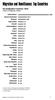 Migration and Remittances: Top Countries Top Immigration Countries a, 010 number of immigrants, millions United States b Russian Federation b Germany b Saudi Arabia b Canada b United Kingdom b Spain b
THE ICSID CASELOAD STATISTICS (ISSUE 2015-1)
 THE ICSID CASELOAD STATISTICS (ISSUE 05-) The ICSID Caseload Statistics (Issue 05-) This issue of the ICSID Caseload Statistics updates the profile of the ICSID caseload, historically and for the calendar
Countries Ranked by Per Capita Income A. IBRD Only 1 Category iv (over $7,185)
 Page 1 of 5 Note: This OP 3.10, Annex C replaces the version dated September 2013. The revised terms are effective for all loans that are approved on or after July 1, 2014. Countries Ranked by Per Capita
Technical & Trade School Lines World Report
 Brochure More information from http://www.researchandmarkets.com/reports/1836899/ Technical & Trade School Lines World Report Description: TECHNICAL & TRADE SCHOOL LINES WORLD REPORT The Technical & Trade
ORBITAX ESSENTIAL INTERNATIONAL TAX SOLUTIONS
 REUTERS/Jo Yong-Hak ORBITAX ESSENTIAL INTERNATIONAL TAX SOLUTIONS ALIGN AND STREAMLINE YOUR TAX PLANNING WORKFLOW FOR CROSS-BORDER TRANSACTIONS ACROSS MULTINATIONAL ENTITIES ALIGN YOUR GLOBAL TAX UNIVERSE
INSTRUCTIONS FOR COMPLETING THE USAID/TDA DEFENSE BASE ACT (DBA) APPLICATION
 INSTRUCTIONS FOR COMPLETING THE USAID/TDA DEFENSE BASE ACT (DBA) APPLICATION Full Name of Insured or Company and Complete Mailing Address: This is whoever has the contract with USAID. Generally, it is
Global Network Access International Access Rates
 Global Network Access International Access Rates We know that you need to communicate with your partners, colleagues and customers around the world. We make every effort to understand the difficulties
Expression of Interest in Research Grant Applications
 INTERNATIONAL CENTRE FOR GENETIC ENGINEERING AND BIOTECHNOLOGY THE ACADEMY OF SCIENCES FOR THE DEVELOPING WORLD UNITED NATIONS EDUCATIONAL, SCIENTIFIC AND CULTURAL ORGANIZATION ICGEB-TWAS-UNESCO/IBSP Joint
Directory & Mailing List Publisher Lines World Report
 Brochure More information from http://www.researchandmarkets.com/reports/1836438/ Directory & Mailing List Publisher Lines World Report Description: DIRECTORY & MAILING LIST PUBLISHER LINES WORLD REPORT
Clinical Trials. Local Trial Requirements
 Clinical Trials Clinical trials insurance covers the legal liabilities of the insured in respect of clinical trials for bodily injury arising from the trial. The coverage provided by Newline is on the
Social Dialogue Indicators
 November 2011 Social Dialogue Indicators International Statistical Inquiry 2008-09 Technical Brief Susan Hayter Valentina Stoevska Industrial and Employment Relations Department Department of Statistics
Carnegie Mellon University Office of International Education Admissions Statistics for Summer and Fall 2015
 Carnegie Mellon University Admissions Statistics for and Fall 2015 New International Students and Fall 2015 Undergraduate 344 15.2% Master's 1599 70.6% Doctorate 167 7.4% Exchange 73 3.2% 81 3.6% Total
THE LOW INTEREST RATE ENVIRONMENT AND ITS IMPACT ON INSURANCE MARKETS. Mamiko Yokoi-Arai
 THE LOW INTEREST RATE ENVIRONMENT AND ITS IMPACT ON INSURANCE MARKETS Mamiko Yokoi-Arai Current macro economic environment is of Low interest rate Low inflation and nominal wage growth Slow growth Demographic
HAS BRAZIL REALLY TAKEN OFF? BRAZIL LONG-RUN ECONOMIC GROWTH AND CONVERGENCE
 HAS BRAZIL REALLY TAKEN OFF? BRAZIL LONG-RUN ECONOMIC GROWTH AND CONVERGENCE COUNTRY PROFILE: A COUNTRY IN TRANSFORMATION POLICY RECOMENDATIONS COUNTRY PROFILE Brazilian Equivalent Population in The World
U.S. Trade Overview, 2013
 U.S. Trade Overview, 213 Stephanie Han & Natalie Soroka Trade and Economic Analysis Industry and Analysis Department of Commerce International Trade Administration October 214 Trade: A Vital Part of the
VALIDATION OF RESPONSES TO TABLES 1-4 THE UNITED NATIONS 8 th SURVEY OF CRIME TRENDS AND OPERATIONS OF CRIMINAL JUSTICE SYSTEMS 2001-2002
 VALIDATION OF RESPONSES TO TABLES 1-4 THE UNITED NATIONS 8 th SURVEY OF CRIME TRENDS AND OPERATIONS OF CRIMINAL JUSTICE SYSTEMS 2001-2002 Prepared for The United Nations Office of Drugs and Crime Prepared
International Financial Reporting Standards
 International Financial Reporting Standards Of Growing Importance for U.S. Companies Assurance Services there is no longer a choice Three factors may influence your need to consider IFRS. First, many organizations