
ALNOR HVAC ASSESSMENT HANDBOOK A PRACTICAL GUIDE TO PERFORMANCE MEASUREMENTS IN MECHANICAL HEATING, VENTILATING, AND AIR CONDITIONING SYSTEMS
|
|
|
- Ira Ferguson
- 10 years ago
- Views:
Transcription
1 ALNOR HVAC ASSESSMENT HANDBOOK A PRACTICAL GUIDE TO PERFORMANCE MEASUREMENTS IN MECHANICAL HEATING, VENTILATING, AND AIR CONDITIONING SYSTEMS

2

3 ALNOR HVAC HANDBOOK A PRACTICAL GUIDE TO PERFORMANCE MEASUREMENTS IN MECHANICAL HEATING, VENTILATING AND AIR CONDITIONING SYSTEMS TSI, TSI logo, and Alnor are registered trademarks of TSI Incorporated. LogDat is a trademark of TSI Incorporated. P/N Rev C Copyright 2014 by TSI Incorporated

4

5 CONTENTS INTRODUCTION 1 General... 1 HVAC Systems, Comfort, and Energy Management... 1 TAB: Testing, Adjusting, and Balancing... 2 Certification and Clean-air Measurements... 3 IAQ... 3 MEASUREMENT INSTRUMENTATION 4 Capture Hoods... 4 Mechanical (Analog) Capture Hoods... 4 Digital Capture Hoods... 5 Digital Capture Hoods with Differential Pressure Sensor... 6 Thermo-Anemometers (Hot-Wires)... 6 Basic Thermo-Anemometers... 7 Thermo-Anemometers with Mathematical Calculations... 7 Comprehensive Thermo-Anemometers... 7 Rotating Vane Anemometers... 8 Mechanical Rotating Vanes... 8 Digital Rotating Vanes... 8 Deflecting Vane (Swinging Vane) Anemometers... 9 Velometer Jr... 9 Manometers Digital Micromanometer Digital Auto-Zeroing Micromanometer Pitot Tube Hydronics Mechanical Gauges Digital Hydronic Manometers IAQ: Ventilation and Carbon Dioxide Continuous Emission Monitors MEASUREMENT BASICS 15 HVAC System Performance Measuring Air Velocity and Air Volume at Supply Grilles/Diffusers Nonuniform Flow Corrections Static Pressure Measurement Exhaust Grille Measurements Duct Traversing: Low to High Velocities and at High Air Temperatures Measuring Air Velocity in Open Areas Testing and Certification Differential Pressure Measurement Between Two Rooms or Areas Spray Booths Laboratory Hoods Unit Ventilators Measuring Slot Velocities Clean Room Testing and Certification Thermal Comfort and IAQ Air Temperature Measurement Relative Humidity Measurement CO 2 Measurements Alnor HVAC Handbook i

6 APPENDIXES 24 Appendix A Performing a Duct Traverse Where to Take the Measurement Traversing a Round Duct Traversing a Square Duct Appendix B Capture Hood Flow Resistance Appendix C Characterizing a Capture Hood to an Outlet Using a Correction Factor Appendix D Determining the Percentage of Outside Air Using Either Temperature or CO 2 Measurements Appendix E Air Changes per Hour (ACH) Appendix F Thermal Comfort: Temperature and Humidity Appendix G Density Correction Density Correction for Thermo-Anemometers Density Correction for Pressure Based Manometers or Deflecting Vane Anemometers Appendix H Useful Calculations Total Pressure Formula Converting Velocity Pressure to fpm Air Flow Formulas Area Formulas Subtracting Obstructions From Area Hydronic Equations Appendix I Common HVAC Blueprint Symbols Appendix J Typical HVAC System Showing Some Measurement Locations GLOSSARY 42 REFERENCES 44 NOTES 45 ii Alnor Products

7 INTRODUCTION General This handbook has been developed as a tool to assist you in the field and also as a training aid for newer technicians. The contents cover a wide variety of heating and air conditioning ventilation measurement applications and technologies. Air measurements are a critical concern for a wide range of applications. Facility Managers have long recognized the value of air readings in ensuring the balance, efficiency, and cost effectiveness of a facility s heating, cooling, and ventilation systems. Air flow, temperature, and humidity affect occupant comfort, productivity, and physical health in hospitals, schools, commercial, and industrial facilities. Indoor Air Quality (IAQ) and thermal comfort have become increasingly important in promoting healthy and comfortable work environments in today s workplace. HVAC Systems, Comfort, and Energy Management Energy management is central to all building functions. HVAC systems typically account for over one-third of a facility s energy consumption, so it is imperative to properly manage the operation of HVAC systems to ensure economical operation while providing a comfortable, safe environment for occupants. One group of tools widely recommended for HVAC system performance testing, verification, and energy audits are test and balance instrumentation. These tools are designed to measure air velocity, air volume, temperature, humidity, CO 2, and noise level from heating and air conditioning ventilation ducts to identify problems with airflows, outside air mixing, system balancing, indoor air quality, and occupant comfort. Test instruments provide a means to properly measure and document key HVAC parameters by identifying potential energy conservation measures that can significantly reduce facility energy expenditures. Measurement tools will help assess the operating efficiencies and discover system problems such as clogged filters, dirty coils, inoperative dampers, improperly programmed building control system loops, excessive outside air, defective thermostats and sensors, and simultaneous heating and cooling all of which contribute to inefficient HVAC system operation, wasting considerable money. Information from testing is used in building and HVAC system commissioning reports, used to benchmark system performance, and to identify areas of energy waste. Today s HVAC systems must be energy efficient, satisfy stringent indoor air quality and comfort expectations, and still be designed/constructed within tight budgets. System designs meeting these demands have many components, sub-systems, and controls. Building construction involves many specialized trades that often work independently of one another which can produce HVAC systems that may not perform properly. Without measurement and verification of the optimum operation of systems, performance will fall far short of design specifications, increasing building operating costs needlessly while wasting energy. Alnor products are ideal for commissioning projects since they are portable and have datalogging capabilities, making it easy to document system performance on a regular basis. Alnor test instruments are available for many different measurement applications and are designed to save money and minimize testing time. These tools can quickly pay for themselves when properly used to measure, diagnose, and correct building HVAC system performance. In addition, these tools can be used to periodically spot-check systems to confirm efficient and economical operation as part of a building-wide, systematic, preventative maintenance program. Alnor HVAC Handbook 1

8 TAB: Testing, Adjusting, and Balancing Testing, adjusting, and balancing (TAB) are specific steps and processes that typically consist of setting volumes (flow), temperatures, pressures, velocities (speed); recording data; making tests; and preparing reports. These activities are performed on building environmental systems including, but not limited to, air distribution systems, hydronic distribution systems, and the equipment and apparatus interconnected to these systems. All test instruments used for measurement must be accurate and calibration histories for each instrument must be available for examination. Calibration and maintenance of all instruments must be in accordance with the requirements of the applicable TAB certification agency affiliated with the TAB firm performing the work. Testing the use of dedicated instruments to measure rotational speed, temperature, pressure, noise level, velocity, and volumetric flow rates to evaluate mechanical equipment and system performance. Adjusting the final set point of control or balancing devices such as dampers, valves, thermostats, pressure controllers, pumps, and computer controls. Balancing the regulation of air or water system flows through the use of acceptable industry procedures to achieve the designed flow in cubic feet per minute (cfm), gallons per minute (gpm), and air changes per hour (ACH). HVAC systems initially installed in a building will usually not function at design specifications automatically upon startup. Adjusting a system to function at design conditions requires testing, adjusting and balancing of control devices. Testing, adjusting, and balancing (TAB) is the method used to calibrate the environmental settings within the building. Some of the main goals of TAB include the following: Satisfying the occupants comfort. Achieving the conditions of the HVAC system design specifications. Extending maintenance intervals and equipment life. Meeting energy conservation requirements. Operating in an efficient and economical manner. Many existing buildings have experienced some type of change from their original design. Examples include renovation work, new construction, and activities which may be drastically different from the original intended usage. In these cases, new testing and balancing is critical to ensure maximum operating efficiency while providing comfort to the occupants. Some buildings also may require balancing throughout the year as the system switches from heating to cooling mode and vice versa. (continued on next page) 2 Alnor Products

9 Certification and Clean-air Measurements Monitoring air conditions is a major concern in clean environments since they need to meet more stringent requirements. Air measurement verification has become mandatory for many laboratories and facilities, and can be subject to government regulation and inspection. For critical electronic component manufacturing, food and beverage processing, pharmaceutical production, and other critical environments, quality of ambient air can directly impact product quality and economic bottom line. Laboratory fume hoods, biological safety cabinets, industrial hoods, and spray-paint booths are typical applications where measuring and maintaining proper air velocities are critical to safe, healthy working conditions. Beyond the need for human comfort and safety, exposure to dangerous, infectious or contagious material must be controlled. Ventilation and correct air flow distribution are vital to maintaining product quality and yield. IAQ Indoor Air Quality is another significant factor that may impact occupant comfort-productivityhealth, product quality, and in some cases affect building structural integrity. Indoor Air Quality encompasses a number of air parameters including, but not limited to, relative humidity, temperature, air circulation, outside air concentration, volatile organic compound concentration, and fume/vapor dispersal. Humidity should be periodically monitored to ensure it stays between 20 and 60 percent, the generally accepted ASHRAE guidelines. CO 2 levels are an important indicator of indoor air quality. Elevated CO 2 levels can be indicative of inadequate ventilation which can also increase the levels of volatile organic compounds which may affect the health and safety of building occupants. There are a number of instruments on the market today that accurately measure humidity and CO 2 levels. Many incorporate multiple air measurement parameters, maximizing their value and minimizing the impact on your equipment budget. Alnor HVAC Handbook 3

10 MEASUREMENT INSTRUMENTATION Capture Hoods The volume of air emerging from grilles and diffusers is a critical measurement in HVAC systems. Such measurements were traditionally taken using a deflecting vane anemometer with a diffuser probe and applying the diffuser manufacturer s A k factors. Capture hoods have replaced the deflecting vane anemometer with diffuser probes due to their ease of use, quick measurements, and near elimination of the need to apply grille manufacturers A k factors. It still may be necessary, however, to develop a correction factor to apply to the measured reading to compensate for the varying duct and diffuser outlets encountered in the field (see Appendix C). Primary benefits for air balancing using capture hoods include one-step direct volume measurement, time savings, ease of use, and convenience. Capture hoods can be configured with various sizes of fabric skirts and frame supports to fit different diffuser and grille configurations. The hood captures all air exiting from a diffuser or grille and guides it through a sampling manifold which has evenly spaced inlets to average the flow through the manifold. These instruments are used on both supply and exhaust outlets with separate calibrations for each mode performed at the factory. Mechanical (Analog) Capture Hoods With a mechanical capture hood, air flows from the sensing manifold through a mechanical, user adjustable, range selector and finally to a deflecting vane anemometer that reads directly in cubic feet per minute. Analog models require no batteries or power supply and can be used on ceiling, sidewall, and floor outlets. When using an analog capture hood, verify the unit is reading zero in the position it is to be used. The zero adjustment screw can be used to adjust the pointer on the meter to read zero in any position. Simple-to-read analog meter allows for quick measurements. Easy-to-carry with one hand using sturdy middle handle. Ergonomic design and ultra-light weight for easy one person operation. Multiple hood sizes available. Measurement hold function. Wheeled, luggage-style carrying case Multiple hood sizes available. Model ABT701 and ABT711 Model ABT703 and ABT713 4 Alnor Products

11 Smaller, more compact analog models are available with varying hood sizes. The lower profile hoods are useful in tight quarters such as over filing cabinets, heavy equipment, and office partitions as well as for residential applications. Interchangeable hoods mount directly to the base which contains the averaging manifold, range selector and meter. Hoods may incorporate a selection knob to select both flow direction and range, allowing the mechanical hood to measure either supply or return diffusers. A low flow adapter screen attached to the base of the mechanical hood allows measurements with better resolution on systems which incorporate low volume diffusers. Hoods have a zero adjustment screw on meter assembly. They use a swinging vane, pressure based sensing method. Digital Capture Hoods Digital capture hoods operate under the same basic principle using skirts, frames, and averaging grids. However, the sensing technology is different. Instead of having the mechanical range selector, most digital hoods are auto ranging. The sensors used to measure the flow through the manifold can be a thermoanemometer (hot wire) sensor or a pressure sensor. The hot wire format provides a quick response and continuous readout on the LCD display. Digital hoods display standard air volume rate when placed at supply or return diffusers, registers, or grilles located on the ceiling, wall, or floor. Small digital capture hoods are available that are mainly used in residential or light commercial applications for taking LoFlo Balometer hood measurements from 10 to 500 cfm (17 to 850 m 3 /h). The compact size allows them to be used where full size hoods would not fit. For example, the LoFlo Balometer hood is battery powered and may be used with or without the optional in. ( cm) and 2 2 ft (61 61 cm) hoods. These hoods may have combination analog/digital displays. A vent mechanism reduces the flow restriction caused by the instrument. This venting system allows the instrument to remain compact and still measure a wide range of volume rates. These hoods are lightweight. They utilize thermo-anemometry sensing technology. Alnor HVAC Handbook 5

12 Digital Capture Hoods with Differential Pressure Sensor The same principles, general configuration, and optional hood sizes used on the previous capture hood examples also apply to digital hoods that use a differential pressure manometer and averaging manifold as the display and base sensor. Pressure based digital hoods are popular with test and balance professionals due to the versatility of the instrument. Pressure sensor-based capture hoods commonly contain zeroing valves which automatically zero the pressure sensor during normal operation. The meter is a manometer that can be detached from the hood assembly and used with common HVAC pressurebased testing probes such as a pitot tube, velocity matrix, air probe, and static pressure probe. Additional measurements for relative humidity and temperature can be obtained by attaching optional probes to the meter which further enhances the versatility of the instrument. These hoods typically offer the following: Ergonomic, lightweight design enables easy oneperson operation. Automatic sensing and display of supply or return flows saves time on the job. Model EBT731 Balometer hood (Shown with standard and optional accessories) Back pressure compensation ensures accurate readings at high flow rates. Detachable digital micromanometer provides additional measurement capability. Multiple hood size options enable measurement of different outlet dimensions. Compatible LogDat Mobile Remote Reader and Data Logger Software option simplifies documenting of results and ing of reports. Capture hood stand eliminates the need for ladders (reaching diffusers up to 15 ft. (4.5 m). Thermo-Anemometers (Hot-Wires) Thermo-anemometers, also known as hot wires, operate on the principle of heat transfer. A sensor is heated above room temperature by passing current through an electrical resistance and the energy is converted to heat. Through convective heat transfer, the heat is transferred to air passing over the heated element. The electronics provide more power to the heated wire to maintain the initial temperature at zero flow, and this increased power curve signal is converted to a velocity reading on the display. Thermal anemometers accurately measure a wide range of velocities, anywhere from 10 to 10,000 fpm (.05 to 51 m/s). They have small probe diameters which allow them to be placed in tight areas, such as measuring air velocity in between circuit boards in a PC or in small ducts. Thermo-anemometers have air temperature limitations. Most units have a maximum temperature of approximately 180 to 200 F (82 to 93 C), which generally limits their use to ambient conditions. Thermo-anemometers are commonly used to measure velocity in paint spray booths, laminar flow hoods, air flow system balancing and duct traverses, pharmaceutical manufacturing areas, clean-room biological safety cabinets and fume hood testing, room air currents, and draft measurements. 6 Alnor Products

13 Basic Thermo-Anemometers These small, compact models are useful for general air velocity measurements. Velocity ranges are typically less than 4000 fpm (20 m/s) and temperature measurement capability along with a telescopic probe may be available on some models. Most models offer the following: Low cost instruments with good accuracy. Available with a digital LCD or analog meter readout. Available as intrinsically safe models. Available in English or metric models. AVM410 Thermo-Anemometers with Mathematical Calculations These models are commonly used to perform duct traverses and face velocity measurements of fume hoods and HEPA filters due to their ability to take multiple measurements and to average the readings. Optional portable printers can be used with these instruments to print test data in real time. They usually provide the following: Wide velocity and temperature range. Velocity to volume flow conversion based on duct dimensions. Telescopic or telescopic articulated probes. User-adjustable dampening or time response settings. English or metric readout capability. AVM430 Comprehensive Thermo-Anemometers These models provide the same accurate velocity and temperature measurements as the other models. Additional functions include humidity measurement in %RH and conversions to wet bulb and dewpoint temperatures. A data logging function allows the user to program the number of samples to be taken and the time interval between samples. This can be a very useful feature when tracking trends over a period of time. These meters offer the following: Segregate data groups in separate test IDs. Recall stored data on instrument display. Download stored information to a PC or portable printer. Offer telescopic or telescopic articulated probes. Perform density correction. Have backlit LCD display. AVM440 Alnor HVAC Handbook 7

14 Rotating Vane Anemometers A rotating vane anemometer is similar to a small windmill where airflow impinges on the vane creating rotation. It is useful for measuring air velocity at supply openings, but not for multiple throw diffusers. A characteristic of the rotating vane anemometer is its ability to average air velocities over an area. It is most commonly manufactured in four-inch-diameter versions which generally prevents its use for measuring duct velocity. However, it has been found useful in walkin ducts and on large filter banks. Like most air measuring instruments, the rotating vane anemometer is subject to errors due to angle of attack, but these errors are small. A one percent error is typical for ±12 degrees. These instruments read in actual feet of air at its existing density which results in actual fpm (m/s). If standard fpm (m/s) is desired, simply multiply the anemometer reading by the actual density divided by standard density. The rotating vane anemometer must be handled with care, since it cannot survive rough treatment. Likewise, it should not be used in dusty or corrosive environments. Mechanical Rotating Vanes The mechanical rotating vane anemometer incorporates a revolution counter that is engineered and calibrated to read air velocity directly in feet of air. To use this instrument, hold it directly in the air stream, permitting the rotating blades to get up to speed, then start the counter and let it run for a specific amount of time (at least 30 seconds) as timed by a watch which accurately indicates time in seconds. The feet of air ( meters of air ) reading on the dial, divided by the time in minutes, gives the average velocity in fpm (m/s). Mechanical Rotating Vane Digital Rotating Vanes Electronic versions of the rotating vane anemometer are prevalent today. The fan blade rotation is sensed by a magnetic or optical pickup and the signal is converted to a direct fpm velocity readout. Digital models have less bearing friction than mechanical vanes, allowing for accurate measurement from 50 to 6000 fpm (0.25 to 30.5 m/s). A directional arrow located on the vane head identifies the flow direction used during factory calibration and should always be pointed in the direction the airflow is traveling when used in field applications. Handheld models may incorporate a user-adjustable, swivel head, which can be used for taking readings in supply or exhaust openings while allowing the operator to view the display regardless of flow direction. Models with telescopic, articulated probe assemblies allow for a longer reach for measuring air flow in a hard to reach area such as a return grille mounted on a wall or above filing cabinets. They also offer the following: Minimum, maximum, and averaging capabilities. Air temperature measurement. Direct conversions to cfm or m 3 /h by inputting the free area in square feet into the instrument. Data logging and memory storage functions for higher end models to enable later data recall or downloading to a PC or portable printer. RVA801 RVA501 8 Alnor Products

15 Deflecting Vane (Swinging Vane) Anemometers The deflecting vane anemometer is a mechanical instrument based on technology developed in the 1930s and is still widely used in the field today due to its ease of use, portability, direct readings in velocity units, and ability to operate with no batteries or power supply. The moving element consists of a pointer and a vane mounted on a taut-band suspension. This allows the vane to swing inside an air chamber and its movement is virtually friction-free. The flow through the instrument is created by the velocity pressure at the point being measured, which is converted to readout in actual fpm (m/s). Like other mechanical instruments, it should be handled with care. Cut away view of the deflecting vane and tunnel assembly Velometer Jr The deflecting vane anemometer is also available in a smaller hand-held size intended to be placed directly in the air stream. Its compact size makes it convenient for measuring airflows at registers, fume hoods, doorways, and at spray booths and refrigerated display cases commonly found in grocery stores. Velometer Jr Alnor HVAC Handbook 9

16 Manometers Taking pressure measurements in HVAC systems has been a standard method of checking system performance in mechanically ventilated buildings for many years. Manometers are instruments used to measure low pressures, such as duct static pressures and differential pressures, across filters or between rooms. When connected to a pitot tube, velocity pressures can be measured in ducts and then converted to velocity or volume units of measure. Digital Micromanometer The most popular type of manometer today is a digital micromanometer. Like a liquid manometer, this instrument is a differential pressure measuring device. It can be used with any standard pitot tube to measure static pressure, velocity, or volume. A digital micromanometer can be used in any position and does not require leveling. However, it should be zeroed periodically throughout a workday. Most digital micromanometers measure pressure and velocity in English or metric modes and include averaging capability. High end units can directly measure flow in cfm (cubic feet per minute) or m 3 /h (cubic meters per hour) by inputting duct dimensions for round or rectangular configurations. They also offer: Data logging or memory storage for later data recall. The ability to download stored data to a PC or printer. Adjustable dampening or time response settings. Density correction for temperature and barometric pressure to compensate for elevated temperatures and altitude. AXD620 Micromanometer with Pitot Tube (continued on next page) 10 Alnor Products

17 Digital Auto-Zeroing Micromanometer Auto-zeroing micromanometers are similar to standard digital micromanometers in that they do not require any kind of leveling and are not position sensitive. However, micromanometers with an auto-zeroing function along with a high resolution pressure sensor measure lower pressures and velocities with higher accuracy than standard digital micromanometers. This allows them to be used with a variety of different pressure based probes in addition to the standard pitot probe. Auto-zero micromanometers provide the following: Accurate measurement of pressure, velocity and flow complies with industry standards. Auto-zeroing pressure sensor reduces user-steps and saves time. Automatic density correction increases reading accuracy. Large, backlit graphic display offers easy-to-use interface. Up to five simultaneous measurements On-screen messages and instructions Multi-language capability Intuitive menu structure simplifies operation. Bluetooth bi-directional communication eases data transfer and permits use of LogDat Mobile Remote Reader and Data Logger Software for Android devices. Optional pitot, air flow (straight pitot), temperature/relative humidity, velocity matrix, or plug and play thermoanemometer probes enables use in multiple applications. EBT730 Micromanometer (Micromanometer shown with standard and optional accessories) Alnor HVAC Handbook 11

18 Pitot Tube Pitot tubes are used with manometers to sense total and static pressures in ducts and plenums. The pitot tube is a simple, rugged probe and, if properly constructed, requires no calibration. However, it must be properly maintained. A small buildup of dirt around the static holes can cause instrument errors in both directions. Small leaks in the tubing connection or the tube itself can also cause substantial errors. Pitot tubes are double-walled tubes typically fabricated from stainless steel. The inner tube senses the total pressure, and the outer tube senses the static pressure. The difference between the total pressure and the static pressure is referred to as the velocity pressure, which can be converted to velocity in fpm (m/s). Measuring velocity pressure using a pitot tube is accomplished by connecting rubber hoses from the total and static pressure legs of the pitot tube, to the positive and negative ports of the manometer, respectively. Total Pressure (P t ): the sum of the impact caused by velocity pressure plus static pressure in the duct Static Pressure (P s ): exerted equally in all directions Velocity Pressure (P v ): the pressure required to accelerate the air stream to its velocity, determined by subtracting static pressure from total pressure P v = P t P s. Static Pressure Holes Total Pressure Hole Static Pressure Port (to input on Manometer) Total Pressure Port (to + input on Manometer) Standard equations can be used to convert velocity pressure to velocity (fpm or m/s) by taking into consideration both air density and humidity. Once the velocity pressure is known, the following formula can be used to convert to velocity: fpm = 4005 P P = P v or differential pressure in inches H 2 O or m/s = 1.29 P P = P v or differential pressure in Pa The pitot tube is subject to error due to the angle of attack and yaw, so its use is generally limited to reading velocities inside ducts, where the direction of air flow is relatively well controlled. It is usually not a good choice for taking readings at supply openings because of the drastic changes in air flow direction at, or immediately ahead of, the opening. In general, it is not appropriate for measurements at an exhaust opening or in an open space. The stainless steel construction allows it to be used to measure air velocities with high temperature applications. Stacks, flues, chimneys or other combustion processes are a few examples of measuring air flows at elevated temperatures. 12 Alnor Products

19 Hydronics Hydronic systems found in HVAC configurations primarily use hot and chilled water as the means for heat transfer. The hydronic system must be able to efficiently distribute water to all terminal devices under design load and part load conditions to be considered operating properly. If the system is not balanced for design conditions, then the cost to operate the system will be higher than anticipated. Correctly balancing a hydronic system requires the proper tools and procedures. Manual balancing valves installed in the system are typically used to regulate flow to all points to achieve design conditions. Flow control through the balancing valve is accomplished by adjusting a valve to vary the differential pressure across it. Hydronic manometers or pressure gauges can be connected to pressure taps on the balancing valves to measure the differential pressure across the valve, which then can be used to determine flow. The flow-rate is determined by taking the differential pressure reading across the manual balancing valve and applying it to a pressure versus valve setting chart (developed by the valve manufacturer). Example of a conversion chart for a balancing valve Mechanical Gauges Mechanical gauges are simple devices, available in various scales and measurement units. If certain applications require readings in PSI, ft H 2 O, in. H 2 O with varying ranges (0 to 25, 0 to 50, 0 to 100, etc.), then several different models would be utilized to maximize resolution and accuracy. Common refrigeration hoses with Schraeder-type fittings are typically used with these gauges. Mechanical gauge with hoses Alnor HVAC Handbook 13

20 Digital Hydronic Manometers Digital hydronic manometers have features such as multiple units of measurement in English or metric, wider ranges with good accuracy and resolution, and large LCD displays. A single unit replaces multiple mechanical gauges. Digital models require a power source such as a plug-in AC power supply, disposable alkaline batteries, or rechargeable batteries with separate charging station. Standard refrigeration grade hoses and fittings with shut off valves are also used with digital models. These units have a backlit display for poorly lit areas. They offer memory, recall, datalogging, and downloading functions. They have user-adjustable dampening or time response settings. Some hydronic meters also perform flow and other calculations. Hydronic Manometer measuring the pressure rise across a pump HM685 with hoses IAQ: Ventilation and Carbon Dioxide A good indicator of proper ventilation is the level of CO 2 present in a space. Carbon dioxide is a normal byproduct of respiration, combustion and other processes. Elevated levels of CO 2 may indicate that additional ventilation is required. Higher CO 2 levels may also indicate more investigation is required regarding ventilation, thermal comfort, or source control. Inadequate ventilation can increase volatile organic compound levels in the ambient air which can affect occupant comfort and health. The measurement of carbon dioxide concentration relies on one of the natural properties of CO 2 molecules: they absorb light at a specific wavelength of 4.26 µm, a wavelength in the infrared (IR) range. High concentrations of CO 2 molecules absorb more light than low concentrations. The technique used to measure CO 2 in handheld instrumentation is called non-dispersive infrared (NDIR) detection. Continuous Emission Monitors Continuous emission monitors, or CEMS, are a class of electronic instruments designed to measure exhaust stack gases and temperature continuously. CEMs are sometimes used for combustion control, but typically are used for monitoring pollutant gas emissions as required by government regulations. CEMs can use both extractive and in-situ (sensors in the stack) sampling methods, and employ a variety of electronic sensor technologies for gas detection. CEMs are used most often on larger installations or when required by regulatory agencies. 14 Alnor Products

21 MEASUREMENT BASICS HVAC System Performance Measuring Air Velocity and Air Volume at Supply Grilles/Diffusers Supply flow into an occupied space is generally a mixture of return air and fresh outdoor air that has been filtered and then conditioned through heating or cooling coils. This volume of supply air will become entrained with the room air at a known rate in order to achieve occupant comfort by providing sufficient volume flow to satisfy the number of occupants in a given space. The flow rate requirements for a room or building, and the percentage of outdoor air versus return air being delivered will vary depending on the principle purpose of the facility (see Appendix D, Determining the Percentage of Outside Air using either Temperature or CO 2 Measurements for more information). It is very important to verify proper manual and automatic control of an HVAC air system. A balanced supply and exhaust will help ensure sufficient ventilation by meeting minimum air exchange rates, removing airborne contaminants which can affect air quality, and reducing operating costs. The supply flow for an area may also affect the room pressurization in relation to an adjacent room or hallway, which can cause drafts or difficulty opening and closing doors. Capture hoods, rotating vanes, and thermal anemometers are the most common choices used to verify proper minimum flow rates; confirm proper operation of dampers, controls, and fans; and ensure the efficient use of energy. Capture hoods are popular instruments to use for measuring flow rates from supply grilles. Since they obtain measurements quickly, provide a direct air volume reading, are easy to use, and come with a variety of hood sizes to match various grilles, capture hoods are often the tool of choice (when measuring supply). ASHRAE recommends performing a duct traverse to determine if a correction factor is needed for air capture hood measurements. Different diffuser styles, elbows attached directly to the diffuser, and dampers located just upstream of the diffuser can impair the uniformity of the flow patterns coming out of the diffuser and affect the hood reading. Be sure to choose the hood size that most closely matches the outlet size being measured. Many capture hoods on the market today include an A k - factor function. Utilizing these instruments effectively can help you ensure the proper balance of mechanical HVAC system supply air flows. Additional information can be found in Appendix B, Flow Resistance, and Appendix C, Characterizing a Capture Hood to an Outlet. EBT731 Balometer hood measuring a supply diffuser Alnor HVAC Handbook 15
22 Nonuniform Flow Corrections Using a capture hood on a supply opening with no diffuser or deflecting vanes may not provide accurate results due to a nonuniform air pattern and jet effects. Capture hoods are generally calibrated on a wind tunnel with a 2 2 ft (61 61 cm) hood attached to a diffuser or grille. The diffuser or grille spreads out the air flow and the capture hood will see more uniform flow. Other instruments are often used instead of capture hoods for nonuniform air flow applications. Other suitable instrument types for this application include rotating vane, thermal anemometer, velocity matrix and swinging-vane anemometers. Measuring air velocities at a supply opening is easily accomplished when no grille or louvers cover the opening. Divide the opening into sections of equal area (refer to Appendix A) and take a measurement in each section. Instruments used for this application can be a rotating vane anemometer, velocity matrix, deflecting vane anemometer, or thermo-anemometer. Add the readings and divide the sum by the total number of readings to determine the average. If the supply opening is covered with a simple grille which provides at least 70 percent free opening and there are no turning vanes, a rotating vane anemometer is a common choice. The best procedure is to divide the grille into equal areas and to take a reading at each grille section for at least 30 seconds for a mechanical instrument and 10 to 15 seconds for a digital instrument. The rotating vane anemometer will average the velocity during this timing interval, giving a more stable result. However, the lower the velocity, the longer it may take for the vane to stabilize. A velocity matrix provides a larger measurement area, reducing the total number of samples resulting in quicker measurements. The velocity matrix can be used on a supply opening with no grill or louvers, but may not be the best choice if there are turbulent air flows. They can cause some turbulent air patterns which could affect the averaging function of the grid pressures. Many diffuser manufacturers have established A K -factors and procedures applicable to their outlets for correcting measurements taken with a deflecting vane anemometer equipped with diffuser probe. Probe positioning performed in the same manner as was done in the laboratory is critical in achieving reliable measurements in the field using this technique. The flow rate is determined by multiplying the diffuser manufacturer s A K -factor by the average velocity in fpm (m/s) to obtain cfm (m 3 /h). Q = A K V Where: Q = flow rate in cfm (m 3 /h) A K = outlet manufacturer s correction factor V = average velocity in fpm (m/s) Rotating vane measuring an outlet Diffuser measurement using a diffuser probe and deflecting vane anemometer Velocity matrix measuring face velocity of an HVAC filter 16 Alnor Products
23 Since the introduction of the capture hood, the deflecting vane measurement has become less prevalent. It is a good option for low flow applications. Static Pressure Measurement Static pressure measurements are an important method of determining system operating efficiency and identifying problems such as leaky ducts, clogged filters and coils, and blocked inlets. Any of these can negatively affect occupant comfort and system operating efficiency which can waste significant utility dollars. Unnecessary increased loads on fans and other system components can cause premature wear and untimely failure, resulting in increased maintenance costs. Static pressures in air distribution ducts can be measured using a digital micromanometer, incline manometer, or deflecting vane anemometer with static pressure probe. A digital micromanometer or incline manometer can use the standard Lshaped pitot probe with a hose connected from the positive port of the manometer to the static pressure leg of the pitot probe. The total pressure leg of the pitot probe and the negative port of the manometer would be open to the atmosphere. Duct static pressure measurement Exhaust Grille Measurements To adequately balance a mechanical HVAC system, it is necessary to also verify exhaust flows. Instruments such as a capture hood, rotating vane, or velocity matrix are common choices to measure exhaust flows. Capture hoods calibrated for exhaust mode can be used on return grilles without an A k -factor. For the best accuracy, choose the hood that most closely matches the outlet size being measured and set the hood to exhaust or return mode. Also, as with supply diffusers, an alternate means of measuring flow (such as a duct traverse) is advised when determining if a correction factor needs to be applied to the hood readout. Balometer hood measuring a restroom exhaust For more information, see Appendix B on Flow Resistance and how to compensate for this affect. Appendix C contains information on Characterizing a Capture Hood to an Outlet. Alnor HVAC Handbook 17
24 Rotating vanes can be used on return grilles provided the vanes of the grille are straight with no deflection. Place the rotating vane approximately 1 to 2 inches (2.5 to 50 cm) away from the grille and divide the face of the grille into equal areas (refer to Appendix A) with the vane head taking a measurement in each location. The readings should be added and the sum divided by the total number of readings to obtain an average velocity. The average velocity can be multiplied by the free area of the grille in square feet (square meters) to obtain a cfm (m 3 /h) volumetric value. Rotating vanes are a good alternative if the grill is too small or too large to accommodate a capture hood. A velocity matrix is a good choice for large return grilles with high flow rates that a capture hood cannot accommodate. The face of the return grill should be divided into sections (refer to Appendix A) and the velocity matrix placed in each section to obtain a reading. These readings should be added and then divided by the total number of readings to produce an average velocity. Stand-offs located on the corners of the velocity matrix aid in positioning the matrix for repeatable results by keeping the distance between the matrix and the grill consistent for each measurement. If the exhaust outlet does not have a grille or louvers, divide the face into a grid pattern with equal areas (refer to Appendix A). A larger number of measurement locations may be required to increase the accuracy of the average flow. Measurements can be taken in the center of each area using a velocity matrix or rotating vane anemometer. However, the blockage effect caused by the size of the instrument when placed in the air stream at the exhaust opening will vary from model to model, and the accuracy may be impaired. Duct Traversing: Low to High Velocities and at High Air Temperatures Air velocity measurements are often taken within ducts to determine flow rate. Since velocity distribution is not uniform even in the best of circumstances, a duct traverse is necessary. This involves taking a number of readings within the duct and determining average velocity. For selecting the most appropriate technique, here are some general guidelines. If air velocity in ducts normally exceeds 1,000 fpm (5 m/s), a manometer with pitot tube, thermo-anemometer, or deflecting vane anemometer with pitot probe can be used for making these measurements. However, each instrument has its limitations and may not be applicable for all jobs. If velocities are below 700 fpm (3.5 m/s), the choice of instruments would be between either the deflecting vane anemometer with pitot probe or a thermal anemometer. Duct traverse with Micromanometer and pitot tube If velocities are below 300 fpm (1.5 m/s), the thermal anemometer may be the only choice. An example is a vertical stack or flue that functions as a result of temperature differences and may contain combustion or industrial process by-products. Measuring air flow in extreme air temperatures found in chimneys or drying oven ducts will require a manometer with stainless steel pitot tube that is rated up to 1500 F (815 C). 18 Alnor Products
25 NOTE: The manometer is not considered to be a flow through device. This means the elevated air temperature seen by the pitot tube will not pass down through the hoses to the manometer and damage components or electronics. However, if the probe is left in the high temperature airstream for extended periods, high temperatures may eventually affect the tubing connecting the manometer to the pitot tube. See Appendix A for the procedure on how to perform a duct traverse using either a thermoanemometer, micromanometer with pitot probe, or deflecting vane anemometer with pitot probe. Measuring Air Velocity in Open Areas Air velocities (and movement) in a room or space are often felt as a draft and, depending on the intensity, can be uncomfortable to most people. Cross-drafts in areas having spray booths or lab hoods can interfere with air measurement by the permanently installed air velocity monitors on the booth or hood. These and similar situations call for an air velocity measurement in the range of 50 to 200 fpm (0.25 to 1.00 m/s). Thermal anemometers are generally the first choice for accuracy, but are inappropriate for determining air flow direction. A smoke source can be used in conjunction with the thermoanemometer to provide an indication of flow direction. A deflecting vane anemometer can also be used in most open areas for measuring velocity. To obtain an accurate reading, hold the instrument in the air stream with the proper port facing upstream. If the flow direction is not known, orient the instrument in various positions until you obtain maximum deflection. An air velocity transducer capable of outputting an analog signal (voltage or current) along with an omni-directional thermo-anemometer sensor can be used to measure room currents or draft over a period of time. The analog output signal can be connected to a remote datalogger to track trends in air patterns throughout the day, week, or month in order to get a better understanding of where and when room air currents are unacceptable. Testing and Certification Differential Pressure Measurement Between Two Rooms or Areas Room pressures can be measured using a micromanometer to determine if one room is at a different pressure than an adjacent room or hallway. Isolation rooms in hospitals, for example, maintain a negative pressure differential in relation to an anteroom or corridor in order to contain the spread of infectious or contagious diseases. Negative room pressures are present when air flows from the hallway to the room Positive room pressures are present when air flows from the room to the hallway Alnor HVAC Handbook 19
26 To measure the pressure differential from the corridor or anteroom, zero the micromanometer and connect one hose to the positive port and run it under a closed door a few feet to the inside of the isolation room or through a port drilled in the wall connecting the two areas. Since the isolation room has a negative pressure, the reading displayed on the micromanometer will be a negative value, giving you the pressure differential between the two areas. The corridor pressure should be at least 0.01 inches of H 2 O (2.5 Pa) greater than the pressure of the isolation room. Spray Booths There are a number of applications in industrial plants which require air flow measurements at exhaust openings to satisfy minimum requirements for comfort or safety. The most common is a spray booth where the generally acceptable average velocity is 100 fpm (0.51 m/s) and air must be moving into the booth at that velocity. An exhaust fan connected to the spray booth duct creates a negative pressure in the booth, resulting in ambient air outside the booth being drawn into the booth to mix with the vapors. The combined air mix then flows up the exhaust duct. A thermo-anemometer with a telescopic articulated probe, deflecting vane anemometer with a low-flow probe, rotating vane anemometer, or velocity matrix can be used to test spray booths. A thermo-anemometer with an averaging feature and datalogging is best suited for this type of measurement. The velocity matrix will produce the quickest results. Laboratory Hoods Laminar flow benches and laboratory chemical fume hoods typically have average face velocities in the range of 100 to 120 fpm (0.51 to 0.61 m/s) in which no individual face velocity measurement can vary more than 20 percent from the average. This is necessary to ensure the safety of the hood user and to prevent unwanted contaminants from escaping the confines of the hood. Divide the hood face into a grid with 1 ft 2 (0.09 m 2 ) sections and take a reading in the center of each. Add the readings and divide by the total number of readings to obtain the average face velocity. The hood opening is divided into a grid pattern with one square foot sections. The instrument probe is positioned in the center of each section to obtain a reading. When all the measurements have been taken, they are added and divided by the total number of readings to obtain an average velocity. ASHRAE Standard 110 has more detailed information pertaining to the lab hood certification process and should be used as a reference. A thermo-anemometer with a telescopic articulated probe, deflecting vane anemometer with a low-flow probe, or a rotating vane anemometer can be used for this type of measurement. A thermo-anemometer with an averaging feature and datalogging is best suited for this type of measurement during the certification process. The velocity matrix will produce the quickest results. 20 Alnor Products
27 Unit Ventilators These are self-contained HVAC systems commonly found in hotels, motels, and schools and used in retrofit situations on older buildings. Measuring the flow rate of a unit ventilator will confirm proper operation for comfort and operating efficiency. Caution is recommended when making the measurements from the outside since wind and cross drafts can affect the accuracy of the instrument readings. A capture hood using a 1 4 ft ( cm) or 1 5 ft ( cm) hood will provide a direct volume readout in cfm (m 3 /h). Rotating vane anemometers can also be used to perform this type of measurement. The average velocity measured by the rotating vane can be multiplied by the free area in ft 2 (m 2 ) to obtain a volumetric cfm (m 3 /h) result. Measuring Slot Velocities Unit ventilator Measurements of slot velocities are often required in industrial applications where local exhaust ventilation is required. Examples of this are the ventilating slots at an open plating tank, or the slotted hood over a welding bench. Slot velocities tend to be in the range of 1,500 to 2,500 fpm (7.6 to 12.7 m/s). A thermal anemometer or deflecting vane anemometer equipped with a pitot probe is the best choice for this type of work. If multiple measurements are required, a thermal anemometer with datalogging functionality would be the choice. Measuring velocities at plating tanks using a deflecting vane anemometer with pitot probe Thermal anemometers have a small probe diameter, which is useful on small suction openings. However, this does not mitigate the variable direction of flow in front of the opening, nor does it eliminate the problem of translating fpm (m/s) to cfm (m 3 /h) in the rapidly changing cross-sectional area of the air stream. The deflecting vane anemometer will provide a quick trend analysis of high and low velocity points across the plane of air flow. If greater accuracy is required, locating a suitable measuring station in the ductwork downstream from the slot will be necessary. Alnor HVAC Handbook 21
28 Clean Room Testing and Certification A clean room is defined as a work area in which the air quality, temperature and humidity are highly regulated in order to protect sensitive equipment from contamination. Clean rooms are important in the production of silicon chips, hard disk drives, and many other products. The air in a clean room is repeatedly filtered to remove dust particles and other impurities that can damage highly sensitive devices during production. Regular testing of a clean room facility should be scheduled on a quarterly, semi-annual or annual basis to identify significant changes in efficiency. This will ensure changes are addressed before they become a major source of contamination, affecting productivity. Some of the recommended HVAC testing includes the following: Filter velocity and uniformity. Differential pressures. Temperature and humidity. Rebalancing of the supply/return air system. Air pressure balancing/rebalancing of critical areas. Room air change calculations. Instrumentation commonly used to perform the above mentioned testing includes air capture hoods, micromanometers with a velocity matrix or pitot probe, thermal anemometers, and hygrometers. Certification is a sequence of comprehensive tests performed on contamination control equipment to assure top-level efficiency of all units. Refer to applicable regulations, such as NSF49, for more information on clean room certification. Be sure to review any applicable industry and safety requirements to ensure the instruments that you use meet the criteria for certification. Thermal Comfort and IAQ Air Temperature Measurement Measurements should be taken periodically in many areas of a building to ensure air is distributed evenly and temperatures are at desired levels. Air temperature is one of the main air quality components affecting occupant comfort and directly relates to productivity and overall operating costs. Allow sufficient time for the instrument to capture a stable reading when taking temperature measurements within an occupied space. If you move from a hot area to a cold area and quickly take a temperature measurement, the accuracy of the reading may be questionable. Temperature measurements performed in a duct require less time to stabilize due to the air velocity in the duct which accelerates the stabilization process. Thermo-hygrometers, thermo-anemometers or glass and alcohol thermometers are commonly used to obtain temperature readings. For monitoring temperature over a period of time when investigating complaints that occur on an intermittent basis, a thermo-hygrometer is the best choice. The information logged to memory can then be downloaded for analysis. Information on determining the percentage of outside air using temperature measurements can be found in Appendix D. 22 Alnor Products
29 Relative Humidity Measurement Relative humidity also affects occupant comfort, productivity and operating costs. Relative humidity measurements taken in various areas within a building are influenced by outdoor air conditions, human activity, HVAC controls, and other factors. A single indoor measurement might not reflect what is happening in all areas and does not provide a good indication of long-term relative humidity trends. Measurements should be taken within ductwork as well as in open spaces at varying heights to achieve greater accuracy. When the instrument is moved from one area to another with different ambient conditions, it needs to stabilize for a period of time before taking measurements. Humidity measurements performed in a duct require less time to stabilize due to the air velocity in the duct accelerating the stabilization process. High end thermo-anemometers with humidity sensor or thermo-hygrometers with data logging features can be used to monitor temperature or humidity conditions as they change over time. This data can then be downloaded for analysis. CO 2 Measurements CO 2 measurements are widely used to gauge the adequacy of the ventilation provided to an occupied space by an HVAC system. High CO 2 levels can be indicative of abnormal levels of VOCs which may affect occupant comfort and health, directly affecting productivity and operating costs. Diagnosing and identifying building ventilation problems can be done by comparing peak CO 2 readings between air handling zones or between rooms. If the number of occupants in the space is consistent during the day, CO 2 levels will rise in the morning hours, fall during the lunch hour when people leave the area, and then rise again in the afternoon to a peak level. CO 2 measurements should be performed throughout the day to track trends or changes in ventilation. Measurements should be taken in different areas, in different air distribution zones, at varying heights and in both indoor and outdoor areas to ensure that the building is properly ventilated. High end IAQ monitors capable of datalogging CO 2 along with temperature and humidity throughout the day or week are important tools for IAQ investigations. High end IAQ monitors also are capable of computing the percentage of outside air based on supply, return, and outdoor air CO 2 levels. Information on determining the percentage of outside air using CO 2 measurements can be found in Appendix D. Alnor HVAC Handbook 23
30 APPENDIXES Appendix A Performing a Duct Traverse The following techniques can be used to measure air flow inside ducts using a velocity probe or pitot-static tube. When using a pitot-static tube, the individual velocities must be calculated for each pressure reading and averaged. Averaging pressure with a Pitot tube and then converting into velocity will give an incorrect result, especially if readings are more than ±25 percent from the average pressure. For a pitot tube, velocity is proportional to the square root of pressure. Where to Take the Measurement In order to make air velocity measurements in a duct, it is best to measure at least 7.5 duct diameters downstream and at least 3 duct diameters upstream from any turns or flow obstructions. It is possible to do a traverse as little as 2 duct diameters downstream and 1 duct diameter upstream from obstructions, but measurement accuracy will be affected. When measuring rectangular ducts, use this formula to find the equivalent diameter of the duct when calculating the distance 7.5 diameters downstream and 3 diameters upstream: 4HV Equivalent Diameter = π Where: H = horizontal duct dimension V = vertical duct dimension π = 3.14 It is also possible to take a single reading to measure air velocity or air volume flow in a duct, measuring in the center of the duct and multiplying the reading by 0.9 to correct for the higher velocity at the center. If conditions are very good, an accuracy of ±5 or 10 percent may be obtained this way. This method is not reliable, however, and should only be used where small duct size or other conditions do not permit a full traverse. Traversing a Round Duct Using the log-tchebycheff method, the duct is divided into concentric circles, each containing equal area. An equal number of readings are taken from each circular area, thus obtaining the best average. Commonly, three concentric circles (6 measuring points per diameter) are used for ducts of 10 in. (25.4 cm) diameter and smaller. Four or five concentric circles (8 or 10 measuring points per diameter) are used for ducts larger than 10 in. (25.4 cm) diameter. The preferred method is to drill 3 holes in the duct at 60 angles from each other as shown in the following figure. Three traverses are taken across the duct, averaging the velocities obtained at each measuring point. Then the average velocity is multiplied by the duct area to get the flow rate. (An alternative method uses 2 holes at 90 from each other, decreasing the number of traverses with the probe by one.) 24 Alnor Products
31 Location of measuring points when traversing a round duct using log- Tchebycheff method Round Duct size <10 in. (76 cm) 10 to 12 in. (76 to 91 cm) >12 in. (91 cm) #of Measuring Points Per Diameter Position Relative to Inner Wall , 0.135, 0.321, 0.679, 0.865, , 0.117, 0.184, 0.345, 0.655, 0.816, 0.883, , 0.077, 0.153, 0.217, 0.361, 0.639, 0.783, 0.847, 0.923, Before taking the measurement, multiply the numbers in the table times the duct diameter to get insertion depth for the probe. (Do not forget to use the inside dimension of the duct if it is lined with insulation.) Example: Using the three-hole, 60-degree method and six measuring points per diameter on an 8 in. (20.32 cm) diameter duct, the following results were obtained: Alnor HVAC Handbook 25
32 Insertion Depth Hole # 1 Hole # 2 Hole # in. =.256 in. ( cm =.650 cm) 843 fpm (4.28 m/s) 857 fpm (4.35 m/s) 822 fpm (4.18 m/s) in. = 1.08 in. ( cm = 2.74 cm) 912 fpm (4.63 m/s) 929 fpm (4.72 m/s) 891 fpm 4.53 m/s) in. = in. ( cm = 6.52 cm) 977 fpm (4.96 m/s) 993 fpm (5.04 m/s) 971 fpm (4.93 m/s) in. = in. ( cm = 13.8 cm) 1003 fpm (5.1 m/s) 1031 fpm (5.24 m/s) 1018 fpm (5.17 m/s) in. = 6.92 in. ( cm = 17.6 cm) 922 fpm (4.68 m/s) 935 fpm (4.75 m/s) 912 fpm (4.63 m/s) in. = in. ( cm = 19.7 cm) 869 fpm 4.41 (m/s) 876 fpm (4.45 m/s) 861 fpm (4.37 m/s) Total number of readings: 18 Sum of all readings: 16,622 fpm (84.42 m/s) Average: 923 fpm 16,622/18 (4.69 m/s 84.42/18) Traversing a Square Duct Using the log-tchebycheff method, the duct is divided into rectangular areas, which are further adjusted in size to account for effects of the duct wall on the airflow. A minimum of 25 points must be measured in order to get a good average. The number of data points to be taken along each side of the duct depends on how wide that side of the duct is. For duct sides less than 30 inches (76 cm), 5 traversal points must be taken along that side. For duct sides of 30 to 36 inches (76 to 91 cm), 6 points must be taken. For duct sides greater than 36 inches (91 cm), 7 points must be taken. Location of measuring points for traversing a rectangular duct using log-tchebycheff method 26 Alnor Products
33 Multiply the numbers in the table times the duct dimension to get insertion depth for the probe. For this duct, a 30 to 36 in. (76 to 91 cm) horizontal dimension requires 6 points (or 6 traverse lines). A vertical dimension less than 30 in. (76 cm) requires 5 points (or 5 traverse lines). Rectangular Duct size <30 in. (76 cm) 30 to 36 in. (76 to 91 cm) >36 in. (91 cm) # of Points or Traverse Lines per side Position Relative to Inner Wall , 0.288, 0.500, 0.712, , 0.235, 0.437, 0.563, 0.765, , 0.203, 0.366, 0.500, 0.634, 0.797, Example: The following results were obtained on a 24 by 18 in. (61 by 46 cm) rectangular duct using the five point per side traverse method: Insertion Depth Hole # 1 Hole # 2 Hole # 3 Hole # 4 Hole # in. = in. ( cm =4.5 cm) 929 fpm (4.72 m/s) 903 fpm (4.59 m/s) 941 fpm (4.78 m/s) 911 fpm (4.63 m/s) 918 fpm (4.66 m/s) in. = in. ( cm =17.6 cm) 1048 fpm (5.32 m/s) 1064 fpm (5.41 m/s) 1103 fpm (5.60 m/s) 1027 fpm (5.22 m/s) 1033 fpm (5.25 m/s) in. = 12 in. ( cm =30.5 cm) 1067 fpm (5.42 m/s) 1134 fpm (5.76 m/s) 1152 fpm (5.85 m/s) 1121 fpm (5.69 m/s) 1087 fpm (5.52 m/s) in. = in ( cm =43.4 cm) fpm (5.61 m/s) 1179 fpm (5.99 m/s) 1209 fpm (6.14 m/s) 1182 fpm (6.00 m/s) 1127 fpm (5.73 m/s) in. = in ( cm = 56.5 cm). 891 (4.53 m/s) 969 (4.92 m/s) 981 (4.98 m/s) 977 (4.96 m/s) 944 (4.80 m/s) Total number of readings: 25 Sum of all readings: 26,001 fpm m/s Average: 1040 fpm 26,001/ m/s (132.08/25) Alnor HVAC Handbook 27
34 Appendix B Capture Hood Flow Resistance All capture hoods cause flow resistance on the air handling system. Just as different diffuser styles have their own characteristic flow resistance, so do capture hoods. This added resistance reduces the actual volume of air exiting the diffuser. In the majority of cases, this error is less than or equal to the accuracy of the instrument. Proportional balancing techniques will also assist in making these effects negligible. To determine if flow resistance effects are important, perform duct traverses* to determine the volume rate exiting a diffuser both with and without the capture hood in place. The difference between the volume rate with and without the capture hood in place is the flow resistance effect for that diffuser. To determine a correction factor for flow resistance that can be used on similar diffusers and duct configurations, use the volume rates as determined from the duct traverses when performed with and without the hood applied to the diffuser or grill as follows. CF = V no hood / V hood Where: V hood V no hood CF = Flow rate with the hood in place on the diffuser = Flow rate without the hood in place on the diffuser = Correction factor V corrected = CF V measured Where: V measured = Volume rate as displayed by the capture hood V corrected = Volume rate corrected for the flow resistance of the capture hood *Be sure to traverse the duct connected to the diffuser being tested. Also verify that there are no leaks in the duct between the traverse location and the diffuser or in the duct to diffuser connection. 28 Alnor Products
35 Appendix C Characterizing a Capture Hood to an Outlet Using a Correction Factor Alnor Balometer capture hoods are calibrated on a wind tunnel with a 2 2 ft (61 61 cm) diffuser for supply and exhaust. To minimize recirculation regions (non-laminar flows on one side of the hood), hood sizes should match the diffuser being measured as closely as possible. Large recirculation regions will affect volume flow readings. Different diffuser sizes cannot be directly compared. On a 2 2 ft (61 61 cm) diffuser using a 2 2 ft (61 61 cm) hood, there are no recirculation regions. If the Balometer hood is used on a small diffuser, the recirculation regions will create turbulence and the accuracy will be impaired. The following numbers are examples of what may happen. Do NOT use these numbers as correction factors. Proper airflow with no recirculation regions Poor airflow with recirculation regions 2 2 ft (61 61 cm) diffuser True air flow = 100 ft 3 /min (170 m 3 /h) Hood air flow = 100 ft 3 /min (170 m 3 /h) in. (25 25 cm) diffuser True air flow = 100 ft 3 /min (170 m 3 /h) Hood air flow = 90 ft 3 /min (153 m 3 /h) In addition to getting an inaccurate measurement on a in. (25 25 cm) outlet, positioning it differently may give different results. Balometer hood centered Balometer hood NOT centered in. (25 25 cm) diffuser True air flow = 100 ft 3 /min (170 m 3 /h) Hood air flow = 90 ft 3 /min (153 m 3 /h) in. (25 25 cm)diffuser True air flow = 100 ft 3 /min (170 m 3 /h) Hood air flow = 80 ft 3 /min (136 m 3 /h) Characterizing the hood to the outlet being measured is accomplished by performing a duct traverse of the branch leading to the outlet and comparing it to the hood reading. Divide the duct traverse reading by the hood reading to come up with a correction factor to be applied to the hood readout. This correction factor can then be used on similar outlet and duct configurations. Alnor HVAC Handbook 29
36 To determine a correction factor for the hood to match a duct traverse, use the following formula: CF = Dtr / Hr Where: CF = Correction Factor Dtr = Duct Traverse Reading Hr = Hood Reading To apply the correction factor to the hood readout, use the following formula: Hc = Hr CF Where: Hc = Corrected Hood Reading Hr = Hood Reading CF = Correction Factor 30 Alnor Products
37 Appendix D Determining the Percentage of Outside Air Using Either Temperature or CO 2 Measurements The introduction of fresh air helps dilute unwanted pollutants and get them out of the building faster. ASHRAE Standard 62 presents recommendations pertaining to ventilation, or the amount of fresh air introduced into a given area. The Standard recommends that indoor CO 2 concentrations not exceed 700 ppm (parts per million) above the outside value. It also recommends a minimum volume of outside air to be supplied to each person over time, depending on the type of space and activity being performed, expressed in cubic feet per minute per person. The amount of outside air entering the building or an occupied space can be calculated as a percentage of the total air volume. Three measurements need to be taken: supply air, return air and outside air. The supply air must be measured before it enters the room and is diluted. This can be accomplished by placing the probe inside the supply register/diffuser. The return air can be measured at the face of the return grille or inside the return duct. If more than one return, measure at each and sum the results. This calculation can be done using either temperature or CO 2 measurements. Using temperature to determine the percentage of outside air is not an ideal method to use in mild climates when the inside and outside temperatures are too close to each other. CO 2 measurements should not be used if there are not enough occupants to generate sufficient CO 2. The equation to determine the percentage of outdoor air is as follows: return air measurement* supply air measurement* % outside air = x 100 return air measurement* outsideair measurement* *measurement refers to either CO2 or temperature The percentage of outdoor air calculated in a ventilation assessment can be multiplied by the volume of air entering a space to determine the amount of fresh air, in cubic feet per minute. % OA Air flow (cfm or m 3 /h) = OA% cfm or m3 /h 100 Divide this result by the number of occupants to determine the volume of outdoor air per person. OA% cfm # of people = volume of OA per person (in cfm or m 3 /h) This calculation can be compared to the table in ASHRAE Standard 62 to determine if an adequate amount of outside air per person is being supplied for a particular type of space. The following table lists a few examples taken from Table 2 in the Standard. Alnor HVAC Handbook 31
38 cfm/person Application (outdoor air) Auditoriums/theaters 10 Computer lab 10 Conference rooms 5 Courtrooms 5 Dining areas 7.5 Hotel rooms 5 Lecture hall 7.5 Libraries 5 Main entry lobbies 5 Museums 7.5 Office space 5 Residential living areas 5 Retail stores (typical) 7.5 School classroom 10 School laboratories 10 Dampers controlling the air intake can be adjusted to allow more or less outside air into the system in order to achieve these target levels. 32 Alnor Products
39 Appendix E Air Changes per Hour (ACH) Air flow can also be used to determine the number of air changes that occur in a space over a period of one hour. This is accomplished by determining the supply cfh (cubic feet per hour) or cmh (cubic meters per hour) and dividing it by the total volume of a space (length width height) to come up with the number of air exchanges per hour. Likewise, the calculated fresh air percentage can be applied to this air changes calculation to determine changes of fresh air over time in a given space. The exchange of air between inside and outside is important in diluting and removing unwanted contaminants. These calculations are essential to properly maintain a comfortable, safe environment for building occupants, to help optimize the efficiency of the HVAC system, and to control operating costs. Example: Total supply air is 225 cfm (382 m 3 /h) Total supply air in one hour = 13,500 cfh (225 cfm 60 min/hr), (382 m 3 /h) Room dimensions are ft = 1536 ft 3 ( m = m 3 ) 13,500 cfh / 1536 ft 3 = 8.78 ACH (382 m 3 /h/43.58 m 3 = 8.77 ACH) Assume the outside air is 25% of the total volume ACH.25 = 2.2 ACH of outside air Alnor HVAC Handbook 33
40 Appendix F Thermal Comfort: Temperature and Humidity Thermal comfort is a combination of temperature, humidity, air velocity, activity, clothing, and physiology. The main indicators of thermal comfort are temperature and humidity measurements. The recommended temperature range perceived as comfortable is 73 to 79 F (22.7 to 26.1 C) during the summer and 68 to 76 F (20 to 24.4 C) in the winter. Indoor humidity levels should be maintained between 30 to 60 percent for optimum comfort (ASHRAE Standard 55). ASHRAE Standard 55 links temperature and humidity together to provide a measure of thermal comfort. The objective should be to set the appropriate temperature and humidity levels to maximize occupant comfort and to satisfy at least 80 percent of the occupants while controlling energy consumption. The "comfort zone" shown on the graph is based on the subjective response of people tested under a variety of conditions and their perception of what was or was not comfortable. 34 Alnor Products
41 Appendix G Density Correction Velocity is generally expressed in one of two ways: actual (true) velocity or standard velocity. Actual velocity is the average speed at which the molecules are traveling. Standard velocity is referenced to standard conditions (using a reference of 70 F [21.1 C] and in. Hg [101.4 kpa]) and is equal to the actual velocity of the air only when the air is at standard density. The Alnor calibration facilities adjust the actual velocity so that the same number of molecules per unit time are passing over the probe, as if the density were standard density. This makes the instruments display standard velocity. As a practical matter, many users do not concern themselves with standard versus actual air velocity corrections unless the density of air in their application is more than 10 percent different from standard air density. Density Correction for Thermo-Anemometers Thermo-anemometer sensors measure mass air flow velocity which is a measurement of the air mass moving past the sensor and is displayed as standard velocity. Air mass is what gives air its heat holding capacity. Since thermal anemometers measure air mass and display it as standard velocity, many people doing measurements on indoor air are more concerned with standard air velocity. Standard readings can be converted to actual air velocity to compensate for temperature and barometric pressures. Actual or standard measurements will give the same readings at standard conditions (using a reference of 70 F [21.1 C] and in. Hg [101.4 kpa]), but not if pressure or temperature stray from standard conditions. To calculate actual air velocity, multiply the standard velocity reading indicated by the thermoanemometer by the following density correction factor: Actual Velocity = (Standard Velocity) [(460 + T) / ( )] / P m or Actual Velocity = (Standard Velocity) [(273 + T m ) / ( )] / P Where: T = Ambient temperature in degrees Fahrenheit P m = Ambient pressure in inches of Hg. T m = Ambient temperature in degrees Centigrade P = Ambient pressure in kpa Density Correction for Pressure Based Manometers or Deflecting Vane Anemometers Manometers and deflecting vane anemometers read a nominal velocity that is neither standard nor actual, but a combination of both. This is the velocity read by any Pitot tube and pressure device that does not perform a density correction. When Bernoulli s equation is applied to the Pitot-static probe, the resultant equation has the form fpm = 4005 P(in. H2O) ( m/s = 1.29 P(Pa) ) when the density of the air is lb/ft 2 (0.366 kgs/m 3 ). The velocity values displayed by the pressure instrument are the actual velocities only if the density where the Pitot probe measurements are being taken is lb/ft 2 (0.366 kgs/m 3 ). Otherwise, a correction step must be performed to obtain a correct value. Nominal velocity is a velocity reading that is between actual and standard velocity. It is a good estimation of the actual or standard velocity. Nominal measurements are made using a pitot tube. Alnor HVAC Handbook 35
42 Actual velocity is the velocity at which a molecule would be traveling in the air stream. Standard velocity is the velocity as if the measurement was taken with a thermal anemometer at standard temperature and barometric pressure. Standard (or mass) velocity in imperial units may be calculated by applying the following formula. V (standard) = V (displayed) [P(actual) / P(standard)] ½ Where: V (displayed) = Velocity displayed by manometer P (standard) = in. Hg P (actual) = Density of air where the pitot tube is located Actual (or True) velocity may be calculated by applying the following formula. V (actual) = V (displayed) [P(standard) / P(actual)] ½ Where: V (displayed) = Velocity displayed by manometer P (standard) = in. Hg P (actual) = Density of air where the pitot tube is located Note: This chart is intended to give the general indication of pressure at various altitudes when referenced to sea level. This chart does not take into consideration the day-to-day variations of barometric pressure. In the United States, the barometric pressure reported by the National Weather Service is corrected to sea level and, therefore, cannot be used unless your measurements are taken at sea level. The preferred method is to use the atmospheric pressure at the location of the measurement. 36 Alnor Products
43 Standard (or mass) velocity in metric units may be calculated by applying the following formula. V (standard) = V (displayed) [P(actual) / P(standard)] ½ Where: V (displayed) = Velocity displayed by manometer P (standard) = kpa P (actual) = Density of air where the pitot tube is located Actual (or True) velocity may be calculated by applying the following formula. V (actual) = V (displayed) [P(standard) / P(actual)] ½ Where: V (displayed) = Velocity displayed by manometer P (standard) = kpa P (actual) = Density of air where the pitot tube is located Altitude versus Barometric Chart Altitude in Meters Barometric Pressure, kpa In the United States, the barometric pressure reported by the National Weather Service is corrected to sea level and, therefore, cannot be used unless your measurements are taken at sea level. The preferred method is to use the atmospheric pressure at the location of the measurement. Alnor HVAC Handbook 37
44 Appendix H Useful Calculations Total Pressure Formula Where: Basic formula: TP (Total Pressure) = VP + SP Velocity unknown: SP (Static Pressure) = TP - VP Area unknown: VP (Velocity Pressure) = TP - SP Converting Velocity Pressure to fpm For standard air density (.075 lb/ft 3 or 1.20 kgs/m 3 ), use formula: fpm = 4005 VP m/s = 1.29 VP For non-standard air density, use formula: fpm = 1096 Where: VP = in. H 2 O or Pa VP/Density (in. Hg) m/s = VP/Density (kpa) Air Flow Formulas To find the volume of air flowing through ductwork, inlets, outlets, hoods, etc., use the following formula: Basic formula: Q = AV Velocity unknown: V = Q/A Area unknown: A = Q/V Where: Q = volume flow rate in cfm (m 3 /h) A = area in sq. ft. (m 2 ) V = velocity in fpm (m/s) Area Formulas To determine the area for a rectangular duct: A = L W/144 A = L W Where: A = ft 2 A = ft 2 L = length in inches L = length in feet W = width in inches W = width in feet A = L W/10000 A = L W Where: A = m 2 A = m 2 L = length in centimeters L = length in meters W = width in centimeters W = width in meters To determine the area for round duct: A = πr 2 /144 A = πr 2 /10000 A = ft 2 A = m 2 π = 3.14 π = 3.14 r = radius in inches r = radius in centimeters 38 Alnor Products
45 Example: The dimension of a rectangular duct is in. ( cm) The average air velocity is 1000 fpm (5.08 m/s). Using the formula for determining the area of a rectangular duct, you will obtain an area of 6 ft 2 (0.557 m 2 ) Inputting the area into the volume flow formula along with the average velocity, you will obtain 6000 cfm (10196 m 3 /h). A = L W/144 A = in./144 A = 6 ft 2 or Q = AV Q = 6 ft fpm Q = 6000 cfm A = L W/10000 Q = AV A = cm/10000 Q = m m/s A = m 2 Q = m 3 /s 60 Q = m 3 /min 60 Q = m 3 /h Subtracting Obstructions From Area If vanes or bars obstruct the area of air flow, the area of obstruction must be subtracted from the total area. If bars obstruct 0.5 ft 2 (.0465 m 2 ) of area in the in. ( cm) duct: Q = AV Q = AV Q = (6 0.5) ft fpm Q = ( ) m m/s Q = 5500 cfm Q = 9336 m 3 /h Hydronic Equations Q = 500 gpm t Where: Q = heat flow (Btu/hr) gpm = gallons per minute t = temperature difference ( F) Q = /s x t Q = heat flow in watts l/s = liters per second t = temperature different ( C) P 2 / P 1 = (gpm 2 / gpm 1 ) 2 P 2 / P 1 = (l/s 2 / l/s 1 ) 2 or P 2 / P 1 = (m 3 /h 2 / m 3 /h 1 ) 2 Where: P = pressure difference (psi) gpm = gallons per minute P = pressure difference (kpu) m 3 /h = cubic meters per hour P = pressure difference (kpa) l/s = liters per second Alnor HVAC Handbook 39
46 Appendix I Common HVAC Blueprint Symbols UNIT HEATER (PROPELLER) UNIT HEATER (CENTRIFICAL+) UNIT VENTILATOR THERMOMETER DIRECTION OF FLOW FLEXIBLE CONNECTION DUCTWORK WITH ACCOUSTICAL LINING FIRE DAMPER WITH ACCESS DOOR MANUAL VOLUME DAMPER AUTOMATIC VOLUME DAMPER EXHAUST, RETURN OR OUTSIDE AIR DUCT SECTION SUPPLY DUCT SECTION CEILING DIFFUSER SUPPLY OUTLET CEILING DIFFUSER SUPPLY OUTLET FAN AND MOTOR WITH BELT GUARD FLOOR REGISTER TURNING VANES LOUVER OPENING LINEAR DIFFUSER 40 Alnor Products
47 Appendix J Typical HVAC System Showing Some Measurement Locations Alnor HVAC Handbook 41
48 GLOSSARY Absolute Pressure Actual Velocity Airflow Air Handling Unit (AHU) Back Pressure Balancing cfh cfm cmh Constant Volume System Diffuser Duct Traverse Face Velocity fpm Gauge Pressure gpm Heat Pumps l/s m/s m 3 /h Manometer Multi-zone System Nominal Velocity Pressure above a perfect vacuum; the sum of atmospheric and gauge pressure. The velocity at which a molecule would be traveling in the air stream. The movement of air. Includes an air intake, fan (blower), filters, heating and cooling coils, and humidification/dehumidification equipment; conditions the air flow for distribution via ductwork. A static pressure increase due to constriction of air flow. Adjustment of the HVAC system to ensure operation in accordance with design. cubic feet per hour cubic feet per minute cubic meters per hour The volume of air delivered to an occupied zone by this system does not change, or changes very little. The discharge temperature is controlled in the zone by a temperature controller which activates heating and/or cooling coils. A square, rectangular, or circular air distribution outlet designed to direct and distribute air in a desired pattern. A method of determining average air velocity in a duct; average velocity can be multiplied by the duct area to calculate air volume or flow rate. Air velocity perpendicular to a fume hood or spray booth face. feet per minute Pressure above atmospheric pressure. gallons per minute A type of refrigeration system that draws out heated indoor air in the summer to keep an occupied space cool and removes heat from the cool outdoor air and transfers it to the inside during the winter months. liters per second meters per second cubic meters per hour An instrument used to measure air pressure. Delivers conditioned air to several zones from a single, central air handling unit. The zones served should have similar thermal load requirements such as offices or classrooms. Conditions in each space are maintained by temperature controllers in each zone which vary the amount of heated or cooled air delivered. A velocity reading that is between actual and standard velocity. It is a good estimation of the actual or standard velocity. Nominal measurements are made using a pitot tube. 42 Alnor Products
49 Pitot Tube Return Rotating Vane Anemometer RTD Single-zone System Standard Velocity Static Pressure Supply Thermal Anemometry Thermocouple Effect Thermometer Unit Ventilator VAV (Variable Air Volume) System Velocity Pressure A small bent tube which measures velocity pressure by means of the differential pressure between total and static pressure. The half of an HVAC system which exhausts air from various areas of a building back to some type of air handler or out of a building. An instrument for measuring air velocity related to revolutions over time. resistive temperature detector Serves a single, temperature controlled zone. Typically found in small shops or computer rooms where the environment and usage generally remains the same. The velocity measured with a thermal anemometer at standard temperature and barometric pressure. Pressure exerted by a fluid; total pressure minus velocity pressure. The half of an HVAC system which delivers air from some type of air handler to various areas of a building. A means of detecting air velocity related to the heat loss of a heated wire or film. Voltage developed by joining two dissimilar metals to measure temperature differential. A device used to measure temperature. Single, self-contained system typically found in hotel/motel rooms, schools, garages, and other applications requiring individual room environments to be separately maintained. Air volume to a zone is adjusted via a damper that responds to a zone thermostat controlling heating and cooling coils. VAV boxes can be found on multi-zone system duct runs that are new to the building or are considerably far away from the central air handler unit. Positive pressure caused by moving air; related to air speed squared; total pressure minus static pressure. Alnor HVAC Handbook 43
50 REFERENCES The following is a partial list of organizations offering information on ventilation: Air Conditioning Contractors of America (ACCA) Air Conditioning and Refrigeration Institute (ARI) Air Diffusion Council (ADC) American Board of Industrial Hygienists (ABIH) American Indoor Air Quality Council (AmIAQ) American National Standards Institute (ANSI) American Society of Heating, Refrigeration and Air Conditioning Engineers (ASHRAE) ASHRAE Fundamentals Handbook ASHRAE Standard 55, Thermal Environmental Conditions for Human Occupancy ASHRAE Standard 62, Ventilation for Acceptable Air Quality ASHRAE Standard 111, Practices for Measuring, Testing, Adjusting, and Balancing of Building Heating, Ventilation, Air-Conditioning, and Refrigeration Systems American Society of Safety Engineers (ASSE) Building Owners and Managers Association (BOMA) Healthy Buildings International (HBI) Indoor Air Quality Association (IAQA) National Air Filtration Association (NAFA) National Institute for Occupational Safety and Health (NIOSH) National Institute of Health (NIH) National Safety Council (NSC) The Association of Energy Engineers Guide to Energy Management, 2 nd edition Energy Management Handbook, 3 rd edition U.S. Department of Health and Human Services (HHS) U.S. Department of Labor Occupational Health and Safety Administration (OSHA) National Environmental Balancing Bureau (NEBB) Associated Air Balance Council (AABC) Sheet Metal and Air Conditioning Contractors National Association (SMACNA) U.S. Environmental Protection Agency (EPA) U.S. Public Health Service (PHS) A host of trade publications, books and web sites dedicated to ventilation issues also are excellent sources of information but are far too numerous to mention here. 44 Alnor Products
51 NOTES Alnor HVAC Handbook 45
52 Alnor Products, TSI Incorporated Visit our website at for more information. USA Tel: India Tel: China Tel: Singapore Tel: P/N Rev C 2014 TSI Incorporated Printed in U.S.A.
AIR MEASUREMENT INSTRUMENTS TSI-ALNOR 2014 CATALOG
 AIR MEASUREMENT INSTRUMENTS TSI-ALNOR 2014 CATALOG RUGGED AND RELIABLE INSTRUMENTATION SINCE 1919 About TSI-Alnor Instruments HVAC contractors, facility personnel, building engineers, safety officers,
THE LEADER IN PERFORMANCE INDOOR AIR QUALITY MEASUREMENTS
 THE LEADER IN PERFORMANCE INDOOR AIR QUALITY MEASUREMENTS INDOOR AIR QUALITY INSTRUMENTS UNDERSTANDING, ACCELERATED BREATHE A LITTLE EASIER WITH TSI Indoor air quality is a growing concern. With the increasing
AIR MEASUREMENT INSTRUMENTS TSI-AIRFLOW 2014 CATALOG
 AIR MEASUREMENT INSTRUMENTS TSI-AIRFLOW 2014 CATALOG ACCURATE. RELIABLE. EVERY TIME. About Airflow Instruments In 1955, from one man s expertise in the field of air flow measurement and fan design, Airflow
PERCENT OUTDOOR AIR (%OA) CALCULATION AND ITS USE
 PERCENT OUTDOOR AIR (%OA) CALCULATION AND ITS USE APPLICATION NOTE TI-138 TSI s IAQ-CALC TM Indoor Air Quality Meter and TH-CALC TM Thermohygrometer calculate Percent Outdoor Air (%OA). In order to take
NEBB STANDARDS SECTION-8 AIR SYSTEM TAB PROCEDURES
 NEBB STANDARDS SECTION-8 AIR SYSTEM TAB PROCEDURES 8.1 INTRODUCTION Testing, adjusting, and balancing of HVAC systems can best be accomplished by following a series of systematic procedures. The NEBB TAB
AABC Specifications for Testing and Balancing HVAC Systems
 AABC Specifications for Testing and Balancing HVAC Systems The Associated Air Balance Council (AABC) Total System Balancing Specifications for HVAC Testing, Balancing and Performance Verification TOTAL
INSTRUCTIONS FOR HOW TO PROPERLY SELECT A FAN OR BLOWER
 INSTRUCTIONS FOR HOW TO PROPERLY SELECT A FAN OR BLOWER The instructions that follow are to assist you in completing the information required when making a fan or blower selection. If you need additional
Exhaust Calculation Booklet
 Exhaust Calculation Booklet American Dryer Corporation 88 Currant Road Fall River MA 02720-4781 Telephone: (508) 678-9000 / Fax: (508) 678-9447 e-mail: [email protected] ADC Part No. 450450 Exhaust
CETA Application Guide for the Exhaust System Requirements of Class II, Type B Biosafety Cabinets CAG-007-2010 March 24, 2010
 CETA Application Guide for the Exhaust System Requirements of Class II, Type B Biosafety Cabinets CAG-007-2010 March 24, 2010 1. Background Class II Type B Biosafety Cabinets (BSCs) are unique laboratory
How to Measure HVAC System Airflow
 How to Measure HVAC System Airflow About National Comfort Institute National Comfort Institute is an international training Since our and beginning development in 1994 company we have trained with and
Chapter 12 Industrial Ventilation
 Chapter 1 Industrial Ventilation Introduction Industrial Ventilation is an important method for reducing employee exposures to airborne contaminants. Ventilation is used to reduce or remove contaminates
Multifunction HVAC and IAQ Meter
 testo 435 Multifunction HVAC and IAQ Meter NEW! The newest technology for temperature, humidity, air flow and more! cfm P CO 2 %RH F Lux All the right parameters for HVAC and IAQ The testo 435 is perfect
SUMMARY of PRODUCTS. HVAC Systems Control Airflow, Space, & Building Pressurization. Accurate airflow measurement for demanding applications
 SUMMARY of PRODUCTS HVAC Systems Control Airflow, Space, & Building Pressurization Accurate airflow measurement for demanding applications Airflow Measuring Stations FAN-E AIRFLOW MEASURING STATION. The
Basic Selection & Proper Application of Overhead Air Distribution Devices
 Basic Selection & Proper Application of Overhead Air Distribution Devices GRD Selection & Application Terms Selection Throw Sound Installation Variations affect Performance Inlet Effects Basics Return
SAM HOUSTON STATE UNIVERSITY
 PART 1: GENERAL 1.01 General Requirements A. This standard is intended to provide useful information to the Professional Service Provider (PSP) to establish a basis of design. The responsibility of the
RS Stock No. 724-4207 Instruction Manual RS-1340 Hot Wire Anemometer
 RS Stock No. 724-4207 Instruction Manual RS-1340 Hot Wire Anemometer EN FR IT DE ES CONTENTS / EN Title CONTENTS Page 1. SAFETY INFORMATION...1 2. INTRODUCTION...2 3. SPECIFICATIONS...3 4. PARTS & CONTROLS...4
Healthcare Solutions Room Pressure Monitors and Controls
 Healthcare Solutions s and Controls TOUCHSCREEN ROOM PRESSURE MONITOR The Touchscreen Room Pressure Monitor (PMT) provides precise room pressure monitoring for critical spaces such as isolation rooms,
Element D Services Heating, Ventilating, and Air Conditioning
 PART 1 - GENERAL 1.01 OVERVIEW A. This section supplements Design Guideline Element D3041 on air handling distribution with specific criteria for projects involving design of a Data Center spaces B. Refer
RI-215A Operator s Manual. Part Number: 71-0045RK Revision 0 Released: 10/3/05
 RI-215A Operator s Manual Part Number: 71-0045RK Revision 0 Released: 10/3/05 Warranty RKI Instruments, Inc., warrants gas alarm equipment sold by us to be free from defects in materials and workmanship,
SECTION 23 05 93 TESTING, ADJUSTING, AND BALANCING FOR HVAC INTRODUCTORY INFORMATION
 SECTION 23 05 93 TESTING, ADJUSTING, AND BALANCING FOR HVAC INTRODUCTORY INFORMATION The purpose of this guide specification is to assist the specifier in correctly specifying Mechanical System Testing
SPECIAL APPLICATIONS
 Page 1 SPECIAL APPLICATIONS The protection of microelectronics clean rooms using aspirating smoke detection systems requires special consideration. The physical configuration of the room(s) and the direction
Fan Applications & System Guide
 Fan Applications & System Guide Airflow for general ventilation can be calculated by; Area Method Air Change Method Occupancy Method Ventilation Calculation Methods Area Method Derives the ventilation
Flow Measurement Options for Pipeline and Open Channel Flow
 Flow Measurement Options for Pipeline and Open Channel Flow October 2013 Presented by Molly Skorpik - 2013 Montana Association of Dam and Canal Systems Conference Irrigation Training and Research Center
AIR CONDITIONING EFFICIENCY F8 Energy eco-efficiency opportunities in Queensland Foundries
 AIR CONDITIONING EFFICIENCY F8 Energy eco-efficiency opportunities in Queensland Foundries Hot tips and cool ideas to save energy and money! Air conditioning units or systems are often used by foundries
Test Code: 8297 / Version 1
 Blueprint HVAC Maintenance Technology PA Test Code: 8297 / Version 1 Copyright 2014. All Rights Reserved. General Assessment Information HVAC Maintenance Technology PA Blueprint Contents General Assessment
A. Air-Conditioning and Refrigeration Institute: 1. ARI 850 - Commercial and Industrial Air Filter Equipment.
 SECTION 23 40 00 - HVAC AIR CLEANING DEVICES PART 1 - GENERAL 1.1 SUMMARY A. Section Includes: 1. Activated carbon filters. 2. Extended surface rigid air filter with synthetic media. 3. Disposable panel
HEAVY DUTY STORAGE GAS
 Multi-Fin flue technology Flue damper saves energy Electronic controls HEAVY DUTY STORAGE GAS Dependability The Rheem heavy duty gas range is the work horse of the industry having proved itself over many
FOXAIR 60/50 ALL MODELS
 FOXAIR 60/50 ALL MODELS OPERATION AND SERVICE MANUAL UNIT WEIGHT - ALL MODELS APPROX. 300 POUNDS FOXTRONICS, INC. 38 L x 28 W x 24 H Love Field-Dallas TX MADE IN THE USA 3448 West Mockingbird Lane Dallas,
Subpart 1. Installation. All plumbing systems must be. installed and tested according to this chapter and chapter 4715,
 4658.4500 PLUMBING SYSTEMS; NEW CONSTRUCTION. Subpart 1. Installation. All plumbing systems must be installed and tested according to this chapter and chapter 4715, the Minnesota Plumbing Code. Subp. 2.
CHAPTER 4 VENTILATION
 CHAPTER 4 VENTILATION SECTION 401 GENERAL 401.1 Scope. This chapter, in conjunction with the building code, shall govern the ventilation of spaces within a building intended to be occupied. Mechanical
A P P L I C A T I O N S G U I D E. Duct Application Smoke Detectors
 A P P L I C A T I O N S G U I D E Duct Application Smoke Detectors A P P L I C A T I O N S G U I D E Duct Application Smoke Detectors Contents Section 1 Introduction.......................................................................................2
Glossary of HVAC Terms
 Glossary of HVAC Terms Heating, Ventilation and Air Conditioning (HVAC) is a major sub- discipline of mechanical engineering. The goal of HVAC design is to balance indoor environmental comfort with other
CEILING CASSETTE FAN COIL UNIT
 CEILING CASSETTE FAN COIL UNIT Operation and Installation Manual MHCFC4W-04, 08, 12, 16 Four way ceiling cassette fan coil unit Please read this manual before using the fan coil unit. Installation and
1932 Lexington Houston, Texas 77098-4220 (713) 524-4877. Recommendations for installation of cooling systems
 1932 Lexington Houston, Texas 77098-4220 (713) 524-4877 The purpose for this information is to provide a better understanding of the HVAC equipment, components, designs, and installations, of HVAC system
Aeration Air & Digester Gas Flow Metering Using Thermal Mass Technology. HWEA 2011 Conference Craig S. Johnson
 Aeration Air & Digester Gas Flow Metering Using Thermal Mass Technology HWEA 2011 Conference Craig S. Johnson Presentation Overview Introduction Aeration Air & Digester gas challenges Gas flow metering
Accurate Air Flow Measurement in Electronics Cooling
 Accurate Air Flow Measurement in Electronics Cooling Joachim Preiss, Raouf Ismail Cambridge AccuSense, Inc. E-mail: [email protected] Air is the most commonly used medium to remove heat from electronics
PIEZOMETER AIRFLOW MEASURING RING
 PIEZOMETER AIRFLOW MEASURING RING M.K. Plastics is pleased to introduce The Piezometer Airflow Measuring Ring, now available as an accessory for our steel Axijet fans. The system consists of a Piezometer
CONTAMINATION CONTROL FOR ELECTRONIC AND SEMICONDUCTOR APPLICATIONS
 CONTAMINATION CONTROL FOR ELECTRONIC AND SEMICONDUCTOR APPLICATIONS UNDERSTANDING, ACCELERATED TSI SETS THE STANDARD FOR PARTICLE COUNTING Performance Semiconductor, hard disk drive, and flat panel manufacturers
Gas Unit Heaters Duct Furnaces Horizontal - 60 HZ Form No. LF24-100-400 (10/2011) LF24 Standard
 LF Standard Features Horizontal unit heaters are compact in design and easy to install. Steady State Efficiencies of up to 80.%. Ideal for economical commercial heating systems. Shipped completely assembled
Centrifugal Fans and Pumps are sized to meet the maximum
 Fans and Pumps are sized to meet the maximum flow rate required by the system. System conditions frequently require reducing the flow rate. Throttling and bypass devices dampers and valves are installed
Chapter 3.5: Fans and Blowers
 Part I: Objective type questions and answers Chapter 3.5: Fans and Blowers 1. The parameter used by ASME to define fans, blowers and compressors is a) Fan ration b) Specific ratio c) Blade ratio d) Twist
FIRE DAMPER APPLICATION GUIDE
 FIRE AND CEILING RADIATION DAMPERS FIRE DAMPER APPLICATION GUIDE Use this application guide to help determine what type of fire damper best suits the application. Below are listed the ten Metal-Fab fire
Glossary of Heating, Ventilation and Air Conditioning Terms
 Glossary of Heating, Ventilation and Air Conditioning Terms Air Change: Unlike re-circulated air, this is the total air required to completely replace the air in a room or building. Air Conditioner: Equipment
NADCA White Paper: Restoring Energy Efficiency Through HVAC Air Distribution System Cleaning
 NADCA White Paper: Restoring Energy Efficiency Through HVAC Air Distribution System Cleaning Contributors: Mike White, Chairman, Education Committee, Dan Stradford, Chairman, White Paper Subcommittee,
CAMS. Combustion Airflow Management System. Proven solutions for a tough industry
 CAMS Combustion Airflow Management System Proven solutions for a tough industry CAMS TM Combustion Airflow Management System Product Description The Air Monitor Power CAMS TM Combustion Airflow Management
COMBIMASS. Technical Data COMBIMASS eco-bio +
 COMBIMASS Technical Data THE SYSTEM COMBIMASS The field transmitters of the COMBIMASS eco series are suitable for gas flow measurement and cover a wide range of different applications. The instruments
Element D Services Plumbing
 Medical Vacuum and Gas PART 1 - GENERAL 1.01 OVERVIEW A. This section addresses medical vacuum, waste anesthetic gas disposal, compressed air, oxygen, nitrous oxide, nitrogen and carbon dioxide systems.
Chemical Fume Hoods. Environmental Health and Safety 974-5084
 Chemical Fume Hoods Environmental Health and Safety 974-5084 Regulatory References Prudent Practices in the Laboratory 2011 (National Research Council of The National Academies): Laboratory chemical hoods
Ventostat Wall Mount. Telaire Wall Mount CO 2. , Humidity and Temperature Transmitters. GE Measurement & Control. Features:
 GE Measurement & Control Ventostat Wall Mount Telaire Wall Mount, Humidity and Temperature Transmitters Features: Patented, Absorption Infrared Gas sensing engine provides high accuracy in a compact low
UNIVERSITY OF MISSOURI 23 0000 - Heating Ventilating and Air-Conditioning (HVAC) March 2015.01
 GENERAL: This section provides general standards for overall sizing and design of Heating, Ventilating, and Air Conditioning (HVAC) systems. Other sections contain specific standards for each system per
CENTRAL HEAT PUMP AND AIR CONDITIONER INSTALLATION
 Technology Fact Sheet CENTRAL HEAT PUMP AND AIR CONDITIONER INSTALLATION Buildings for the 21st Century Buildings that are more energy-efficient, comfortable, and affordable that s the goal of DOE s Office
Elements Elements describe the essential outcomes. 1. Prepare to diagnose and repair air conditioning and HVAC system
 AURETU004 Application Competency Field Unit Sector Elements Elements describe the essential outcomes. 1. Prepare to diagnose and repair air conditioning and HVAC system 2. Diagnose air conditioning and
APC APPLICATION NOTE #112
 #112 Best Practices for Deploying the InfraStruXure InRow SC By David Roden Abstract The InfraStruXure InRow SC (ACSC100 and ACSC101) is a self-contained air conditioner for server rooms and wiring closets.
Diagnostics for Mobile Homes: HVAC
 Diagnostics for Mobile Homes: HVAC Adam Harris NYSWDA Wade Thompson - IWTC Objectives Identify different types of HVAC used in mobile homes Provide an overview of duct systems Demonstrate various tests
Characteristics of Evaporators
 Characteristics of Evaporators Roger D. Holder, CM, MSME 10-28-2003 Heat or Energy In this paper, we will discuss the characteristics of an evaporator coil. The variance of the operational condenses of
Evaluate, Clean, and Tune Guidance
 Evaluate, Clean, and Tune Guidance The Evaluate, Clean and Tune (ECT) process serves three essential purposes in the Weatherization Assistance Program (WAP). The first is to evaluate the existing system
HVAC Checklist - Long Form
 HVAC Checklist - Long Form Page 1 of 14 Appendix B discusses HVAC system components in relation to indoor air quality. utside Air Intake Location pen during occupied hours? Unobstructed? Standing water,
Class II Type B2 Laminar Flow Biological Safety Cabinets at Ordering Criteria for the National Institutes of Health
 Background Class II Type B2 Laminar Flow Biological Safety Cabinets at Ordering Criteria for the National Institutes of Health This document provides guidelines for the design and installation of Class
Balancing of a water and air system
 Balancing of a water and air system Roger D. Holder MSME A well performed testing, adjusting and balancing (TAB) of a HVAC system is essential for the proper performance of that system and can enhance
HVAC Systems and Indoor Air Quality. Douglas K. Spratt, M.Sc., P.Eng.
 HVAC Systems and Indoor Air Quality Douglas K. Spratt, M.Sc., P.Eng. The 5 Senses Architecture Electrical Structural Mechanical Hearing Seeing Smelling Feeling Tasting HVAC Systems are Dynamic Heat Gains
Bring the fresh in. Dedicated Outside Air Systems
 Bring the fresh in. Dedicated Outside Air Systems The inside story on outside air. On average, we breathe in 3,400 gallons of air each day. Ambient indoor air pollution is a major problem, affecting health
THE PSYCHROMETRIC CHART AND ITS USE
 Service Application Manual SAM Chapter 630-16 Section 3A THE PSYCHROMETRIC CHART AND ITS USE Psychrometry is an impressive word which is defined as the measurement of the moisture content of air. In broader
1.2 Refrigerant Equipment. General
 Part 1 General 1.1 Summary.1 Unless otherwise indicated, follow the standards below when specifying heating, ventilation and air conditioning (HVAC) work. These standards are not intended to restrict or
BUILDING OWNERS - SERVICE RELATED ISSUES FOR FIRE ALARM SYSTEMS
 BUILDING OWNERS - SERVICE RELATED ISSUES FOR FIRE ALARM SYSTEMS Owners have numerous responsibilities as it pertains to the maintenance and operation of a building s fire safety equipment. The liabilities
Example Retrocommissioning Measure: Opening Throttled Discharge Valves
 Opening Throttled Discharge Valves This 21-story building, constructed in 1997, is located in Oregon and contains 589,000 gross square feet of mostly office occupancy. The HVAC system includes six large
DRYER VENTING SPECIFICATIONS DRYER SAFETY
 DRYER VENTING SPECIFICATIONS Table of Contents DRYER SAFETY...1 INSTALLATION REQUIREMENTS...4 Venting Requirements...5 DRYER INSPECTION AND CLEANING...7 Frequency of Exhaust System Cleaning...7 Inspecting
ASTACEA4 Inspect complex/central air conditioning systems
 Overview This Unit covers the competences required to inspect complex/central air conditioning systems as defined by the CIBSE TM 44 Figure 1.1: Summary of system types and their component parts. The air
HVAC Systems: Overview
 HVAC Systems: Overview Michael J. Brandemuehl, Ph.D, P.E. University of Colorado Boulder, CO, USA Overview System Description Secondary HVAC Systems Air distribution Room diffusers and air terminals Duct
Commissioning - Construction Documents (Page 1 of 6)
 Commissioning - Construction Documents (Page 1 of 6) A. General Information Climate Zone: Building Type: Conditioned Area (sf): Reviewer's Name: Reviewer's Agency: Note: Design Review for each system/subsystem
SECTION 23 81 03 - PACKAGED ROOFTOP AIR CONDITIONING UNITS NON-CUSTOM
 SECTION 23 81 03 - PACKAGED ROOFTOP AIR CONDITIONING UNITS NON-CUSTOM PART 1 - GENERAL 1.1 SUMMARY A. Section Includes: 1. Packaged rooftop air conditioning unit (5 tons and smaller). 2. Roof curb. 1.2
Answers to Your Questions from the Webinar
 2008 Desert Aire and USA Swimming. Used by permission. Desert Aire & USA Swimming - Aquatics Webinar - Answers to Your Questions Answers to Your Questions from the Webinar Thank you for your interest in
How To Run A Data Center Efficiently
 A White Paper from the Experts in Business-Critical Continuity TM Data Center Cooling Assessments What They Can Do for You Executive Summary Managing data centers and IT facilities is becoming increasingly
Powers Controls TH 192 HC Heating/Cooling Room Thermostat
 Powers Controls TH 192 HC Heating/Cooling Room Thermostat Technical Instructions Document No. 155-066P25 TH 192-2 50 60 70 80 70 TH0356R1 60 80 POWERS Description The TH 192 HC thermostats are proportional
SECTION 11 78 13 MORTUARY REFRIGERATORS
 PART 1 - GENERAL 1.1 DESCRIPTION SECTION 11 78 13 MORTUARY REFRIGERATORS SPEC WRITER NOTE: Delete between //---// if not applicable to project. Also delete any other item or paragraph not applicable in
Duct Smoke Detectors
 A P P L I C A T I O N S G U I D E Duct Smoke Detectors A P P L I C A T I O N S G U I D E : D U C T S M O K E D E T E C T O R S Duct Smoke Detectors Contents Section 1: Introduction...2 Section 2: Characteristics
The formula for finding CFM is: CFM = BTUH OUTPUT_ Temp Rise (ACF)* *Altitude correction factor below 1000ft = 1.08
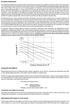 Air Volume Requirement Air conditioning systems are engineered with a specific amount of indoor air passing across the surface of the evaporator coil. The amount of air is measured in cubic feet per minute.
NewAir AC-10100E / AC-10100H Portable Air Conditioner Owner s Manual PLEASE READ AND SAVE THESE INSTRUCTIONS
 NewAir AC-10100E / AC-10100H Portable Air Conditioner Owner s Manual PLEASE READ AND SAVE THESE INSTRUCTIONS ELECTRICAL SAFETY This appliance is for indoor use only. Always turn off the unit and unplug
Facility Requirements for the elan2 Office Liquid Nitrogen Generator
 Facility Requirements for the elan2 Office Liquid Nitrogen Generator Overview In order to ensure the proper operation of the elan2 Liquid Nitrogen Generator system so that the maximum production of liquid
RGC-IR Remote Gas Calibrator for IR400
 Remote Gas Calibrator for IR400 The information and technical data disclosed in this document may be used and disseminated only for the purposes and to the extent specifically authorized in writing by
PRODUCT PROFILE FEATURES
 PRODUCT PROFILE Pressure Transmitters & Pneumatic Transducer Airflow Transmitter, Differential Air Pressure Transmitter and Differential & Gauge Liquid/Gas Pressure Transmitter FEATURES AIRFLOW TRANSMITTER
HVAC Calculations and Duct Sizing
 PDH Course M199 HVAC Calculations and Duct Sizing Gary D. Beckfeld, M.S.E., P.E. 2007 PDH Center 2410 Dakota Lakes Drive Herndon, VA 20171-2995 Phone: 703-478-6833 Fax: 703-481-9535 www.pdhcenter.com An
Makeup Air For Exhaust Systems In Tight Houses. Tony Jellen Engineering Projects
 Makeup Air For Exhaust Systems In Tight Houses Tony Jellen Engineering Projects PA Housing & Land Development Conference February 23, 2012 Effects of Kitchen Ventilation on Residential Dwellings Anthony
SECTION EG. Engineering Guide Air Distribution. Please refer to the Price Engineer s HVAC Handbook for more information on Air Distribution.
 SECTION EG Air Distribution Please refer to the Price Engineer s HVAC Handbook for more information on Air Distribution. Space Air Diffusion AIR DISTRIBUTION ENGINEERING GUIDE Proper selection of air diffusion
WINDOW ROOM AIR CONDITIONER
 WINDOW ROOM AIR CONDITIONER Installation and Operation Manual Electromechanical Remote Control CAPACITIES 220V - 60 HZ. 12,000; 18,000; 24000 BTU/HR 220V-240V - 50 HZ. 12,000; 18,000; 24000 BTU/HR Please
Why Measure Carbon Dioxide Inside Buildings? By Rich Prill, Washington State University Extension Energy Program
 Why Measure Carbon Dioxide Inside Buildings? By Rich Prill, Indoor air quality Workers and students spend about half their waking hours at work or school. Therefore, maintaining adequate indoor air quality
Environmental Data Center Management and Monitoring
 2013 Raritan Inc. Table of Contents Introduction Page 3 Sensor Design Considerations Page 3 Temperature and Humidity Sensors Page 4 Airflow Sensor Page 6 Differential Air Pressure Sensor Page 6 Water Sensor
Highly efficient flue gas analyzer
 Highly efficient flue gas analyzer testo 320 Just a few clicks away from a heating system diagnosis O 2 High-resolution colour graphic display Quick and easy menu structure Storage space for 500 measurement
Fire is the rapid oxidation of a combustible material, releasing heat, light, smoke, and various toxic gases
 VENTILATION Fire is the rapid oxidation of a combustible material, releasing heat, light, smoke, and various toxic gases If a fire is contained in a building, the heat, smoke, and toxic gases will spread.
Fan Performance By: Mark Stevens AMCA International Deputy Executive Director Technical Affairs
 Fan Performance By: Mark Stevens AMCA International Deputy Executive Director Technical Affairs Fan Performance (Paper I.D. 021) Mark Stevens Air Movement and Control Association International Abstract
GTS. New! Plus: PR0DUCT CATALOG. Vapor-logic 4 controller with: and LonTalk. New models GTS-500 and GTS-700. Gas-to-Steam Humidification System
 GTS Gas-to-Steam Humidification System PR0DUCT CATALOG New! Vapor-logic 4 controller with: and LonTalk Plus: New models GTS-500 and GTS-700 Gas has lowest energy operating costs The industry s first and
Stack Sampling Stack sampling or source sampling
 Stack Monitoring Stack Sampling Stack sampling or source sampling may be defined as a method of collecting representative samples of pollutant laden air/gases at the place of origin of pollutants to determine
Gas Custody Transfer Calibration
 Gas Custody Transfer Calibration Using multi variable temperature / pressure calibrators for flowmeter calibration 2013 Introduction Gas custody transfer flow computers require special calibration to perform
VOLU-probe/SS. Stainless Steel Pitot Airflow Traverse Probes. Accurate airflow measurement for demanding applications
 VOLU-probe/SS Stainless Steel Pitot Airflow Traverse Probes Accurate airflow measurement for demanding applications VOLU-probe/SS The VOLU-probe/SS Stainless Steel Pitot Airflow Traverse Probe is ideally
Fan and Pad Greenhouse Evaporative Cooling Systems 1
 CIR1135 Fan and Pad Greenhouse Evaporative Cooling Systems 1 R. A. Bucklin, J. D. Leary, D. B. McConnell, and E. G. Wilkerson 2 Temperatures can easily exceed 100 F in Florida greenhouses during the summer
Data Center Design Guide featuring Water-Side Economizer Solutions. with Dynamic Economizer Cooling
 Data Center Design Guide featuring Water-Side Economizer Solutions with Dynamic Economizer Cooling Presenter: Jason Koo, P.Eng Sr. Field Applications Engineer STULZ Air Technology Systems jkoo@stulz ats.com
AMD-23-TD. Thermal Dispersion Air Measuring Station with VCD-23 Control Damper. Application and Design. Ratings. Features and Control Options.
 Application and esign Thermal ispersion Air Measuring Station with VC-23 Control amper The combines the functionality of a highly accurate thermal dispersion airflow measuring station and a low leakage
Essam E. Khalil [email protected]
 AIR-CONDITIONING SYSTEMS DEVELOPMENTS IN HOSPITALS: COMFORT, AIR QUALITY, AND ENERGY UTILIZATION Essam E. Khalil [email protected] PROFESSOR OF MECHANICAL ENGINEERING, CAIRO UNIVERSITY, EGYPT Abstract
Fossil fuel heating equipment
 Fossil fuel heating equipment principles and troubleshooting techniques Application Note This application note was written to provide you with an understanding of the basic principles of fossil fuel heating
Addendum to Florida Academy Catalog for: HVAC Fundamentals HVAC Advanced Fundamentals
 Addendum to Florida Academy Catalog for: HVAC Fundamentals HVAC Advanced Fundamentals HVAC PROGRAMS The school s Heating, Ventilation, and Air Conditioning Programs provide training for entry level employment