
VISTA-20SE INSTALLATION INSTRUCTIONS 2-PARTITIONED SECURITY SYSTEM
|
|
|
- Raymond Powell
- 10 years ago
- Views:
Transcription
1 VISTA-20SE 2-PARTITIONED SECURITY SYSTEM INSTALLATION INSTRUCTIONS Principal changes between the VISTA-20SE and the former VISTA-20 are indicated by margin lines. N7526V4 8/97

2 RECOMMENDATIONS FOR PROPER PROTECTION The Following Recommendations For The Location Of Fire And Burglary Detection Devices Help Provide Proper Coverage For The Protected Premises. Recommendations For Smoke And Heat Detectors With regard to the number and placement of smoke/heat detectors, we subscribe to the recommendations contained in the National Fire Protection Association's (NFPA) Standard #72 noted below. Early warning fire detection is best achieved by the installation of fire detection equipment in all rooms and areas of the household as follows: For minimum protection a smoke detector should be installed outside of each separate sleeping area, and on each additional floor of a multi-floor family living unit, including basements. The installation of smoke detectors in kitchens, attics (finished or unfinished), or in garages is not normally recommended. For additional protection the NFPA recommends that you install heat or smoke detectors in the living room, dining room, bedroom(s), kitchen, hallway(s), attic, furnace room, utility and storage rooms, basements and attached garages. In addition, we recommend the following: Install a smoke detector inside every bedroom where a smoker sleeps. Install a smoke detector inside every bedroom where someone sleeps with the door partly or completely closed. Smoke could be blocked by the closed door. Also, an alarm in the hallway outside may not wake up the sleeper if the door is closed. Install a smoke detector inside bedrooms where electrical appliances (such as portable heaters, air conditioners or humidifiers) are used. Install a smoke detector at both ends of a hallway if the hallway is more than 40 feet (12 meters) long. Install smoke detectors in any room where an alarm control is located, or in any room where alarm control connections to an AC source or phone lines are made. If detectors are not so located, a fire within the room could prevent the control from reporting a fire or an intrusion. THIS CONTROL COMPLIES WITH NFPA REQUIREMENTS FOR TEMPORAL PULSE SOUNDING OF FIRE NOTIFICATION APPLIANCES. DINING LIVING ROOM KITCHEN BEDROOM BEDROOM BEDROOM TV ROOM BEDROOM KITCHEN LIVING ROOM DINING BDRM BDRM BEDROOM LVNG RM BEDROOM BASEMENT TO BR BEDROOM KTCHN. CLOSED DOOR Smoke Detectors for Minimum Protection Smoke Detectors for Additional Protection Heat-Activated Detectors GARAGE Recommendations For Proper Intrusion Protection For proper intrusion coverage, sensors should be located at every possible point of entry to a home or commercial premises. This would include any skylights that may be present, and the upper windows in a multi-level building. In addition, we recommend that radio backup be used in a security system so that alarm signals can still be sent to the alarm monitoring station in the event that the telephone lines are out of order (alarm signals are normally sent over the phone lines, if connected to an alarm monitoring station). 2

3 TABLE OF CONTENTS Section 1. GENERAL DESCRIPTION... 7 Section 2. INSTALLING THE CONTROL Mounting the Cabinet Installing the Lock (if used) Mounting the Control's Circuit Board Alone in the Cabinet Mounting Control and RF Receiver Circuit Boards Together in the Cabinet Standard Phone Line Connections Wiring the AC Transformer Installing the Back-Up Battery Earth Ground Connections Section 3. INSTALLING REMOTE KEYPADS Keypads That May Be Used Wiring The Keypads Mounting The Keypads Using A Supplementary Power Supply To Power Additional Keypads Preliminary Check-Out Procedure Section 4. BASIC HARD-WIRED ZONES Installing the Hard-Wired Zones Common Characteristics For Zones Wiring Burglary and Panic Devices to Zones Wiring 2-Wire Smoke Detectors to Zone Verify Operation of 2-Wire Smoke Detectors in Zone Turning Off Fire Alarm Sounding Wiring 4-Wire Smoke/Combustion Detectors on Zones Wiring 2-Wire Latching Type Glass Break Detectors on Zone Check-Out Procedure for Hard-Wired Zones Section 5. WIRED ZONE EXPANSION (4219, 4229) Installing Zone Expansion Units Connections and Set-Up Check-Out Procedure for Wired Expansion Zones Section 6. WIRELESS ZONE EXPANSION (5800 SYSTEM) General Information Receiver Supervision House Identification Installing the 5881/5882 RF Receiver RF System Installation Advisories Installation and Set-Up of the 5881/5882 Receiver Installing the 5800TM Module Mounting the 5800TM Module TM Wiring Connections Series Transmitters General Transmitter Supervision Transmitter Input Types Transmitter Battery Life Using the Transmitter Sniffer Mode Series Transmitters Table Section 7 RELAY OUTPUTS & POWERLINE CARRIER DEVICES Relay/Powerline Carrier Device Basics Nos And 4229 Output Relay Modules /4229 Setup Powerline Carrier Devices Wiring Connections

4 Section PHONE MODULE Installing the Phone Module General Information Mounting The Phone Module Phone Module Wiring Caller ID Units Checking the Operation of the 4285 Phone Module Section 9. EXTERNAL SOUNDERS...36 Compatible Sounders Sounder Connections Testing the Sounder Section 10. LONG RANGE RADIO General Information Connection Section 11. AUDIO ALARM VERIFICATION (AAV) UNIT General Information Wiring Connections Section 12. FINAL POWER UP Earth Ground Connections Connecting the Back-Up Battery Calculating the Battery Size Needed Making the Battery Connections Auxiliary Device Current Draw Worksheet Section 13. MECHANICS OF PROGRAMMING General Programming Information Entering Program Mode Programming a Data Field Reviewing a Data Field/Erasing an Entry in a Data Field Interactive Mode Programming ( *56, *80, *82, and *83) Loading Factory Defaults Programming System Setup Fields Exiting the Programming Mode Section 14. ZONE RESPONSE TYPE DEFINITIONS...45 Section 15. DATA FIELD DESCRIPTIONS Section 16. ZONE PROGRAMMING (*56 Menu Mode) Section 17. OUTPUT DEVICE PROGRAMMING (*80 Menu Mode) Section 18. ZONE LISTS (*81 Menu Mode) Section 19. ALPHA DESCRIPTION PROGRAMMING (*82 Menu Mode) Assigning Zone Descriptors Entering Zone Descriptors (in program Menu Mode *82) Adding Custom Words Alpha Vocabulary List (For Entering Zone Descriptors) Character (ASCII) Chart Section 20. USING SEQUENTIAL MODE (*83 Menu Mode) Section 21. REMOTE PROGRAMMING AND CONTROL (DOWNLOADING) General Information Equipment Required Inititial Download Remote Programming Information Remote Programming Advisory Notes Section 22. SYSTEM COMMUNICATION Report Code Formats Table of Contact ID Codes

5 Section 23. SYSTEM OPERATION Security Codes Keypad Functions Trouble Conditions Section 24. TESTING THE SYSTEM Test Procedure To the Installer Section 25. TROUBLESHOOTING GUIDE Contacting Technical Support In The Event Of Problems REGULATORY AGENCY STATEMENTS Section 26. SPECIFICATIONS & ACCESSORIES Specifications Accessories (Compatible Devices) APPENDIX A RF System Wireless Transmitters, Input Loop Identification Diagrams Index Limitations Of This Alarm System Summary Of Connections Limited Warranty Programming Form... Insert LIST OF FIGURES Figure 1. Installing the Cabinet Lock Figure 2. Mounting The PC Board Figure 3. Mounting the PC Board & RF Receiver Together in the Cabinet Figure 4. Telephone Line Connections Figure 5. Connection of 4300 Transformer to the Control Board Figure 6. Keypad Connections to the Control Board Figure 7. Using a Supplementary Power Supply Figure 8. 2-Wire Smoke Detector Connected to Zone Figure 9. 4-Wire Smoke Detector Connections (Zones 2 7) Figure 10. Glass Break Detector Connections to Zone Figure 11. Wiring Connection, 4219 & 4229 (4229 shown) Figure /5882 RF Receiver (cover removed) Figure Connections To Control Figure Connections To Control Figure Transformer Wiring Connections Figure Phone Module Wiring Connections Figure 17. Typical Sounder Wiring Figure 18. Long Range Radio Connections Figure 19. NOT USED Figure 20. Connection of AAV Unit When Not Using a 4285 Phone Module Figure 21. Connection of AAV Unit When Also Using a 4285 Phone Module Figure 22. VISTA-20SE Summary of Connections... Inside Back Cover 5

6 CONVENTIONS USED IN THIS MANUAL MAIN SECTION TITLES ARE SHOWN IN REVERSE TYPE Before you begin using this manual, it is important that you understand the meaning of the following symbols (icons). UL These notes include specific information which must be followed if you are installing this system for a UL Listed application. These notes include information that you should be aware of before continuing with the installation, and which, if not observed, could result in operational difficulties. This symbol indicates a critical note that could seriously affect the operation of the system, or could cause damage to the system. Please read each warning carefully. This symbol also denotes warnings about physical harm to the installer. Enter Zn Num. (00 = Quit) 01 Many system options are programmed in an interactive mode by responding to Alpha keypad display prompts. These prompts are shown in a double-line box. *00 When programming the system, data fields are indicated by a star (*) followed by the data field number. PRODUCT MODEL NUMBERS: Unless noted otherwise, references to specific model numbers represent Ademco products. 6

7 Section 1. GENERAL DESCRIPTION The VISTA-20SE is a 2-partition control that supports up to 32 zones, using basic hard-wired, wired expansion, and/or wireless zones, plus 3 keypad activated zones. Basic Hardwired Zones Provides 8 basic hardwired zones having the following characteristics: EOLR supervision supporting N.O. or N.C. sensors Programmable response time (10, 350, or 700 milliseconds) Individually assignable to either partition Up to sixteen 2-wire smoke detectors on zone 1 4-wire smoke or heat detectors on zones 2 through 7 (as many as can be powered from AUX power on the control) Up to fifty 2-wire latching type glassbreak detectors on zone 8 with auto reset Optional Expansion Zones (up to 24 total, wired and wireless) Wired Expansion: Supports up to 8 additional wired zones using a 4219 expansion module or 4229 expansion/relay module. These zones have the following characteristics: EOLR supervision supporting N.O. or N.C. sensors msec normal response with an option for fast (10 15 msec) response on loop A (first expansion zone) Wireless Expansion: Supports up to 24 wireless zones (less if using wired expansion zones). Requires the use of a 5881(5882 in Canada) type RF Receiver, as indicated below Receiver Model No. of Zones 5881L/5882L Up to M/5882M Up to H/5882H Up to 24 Requires the use of 5800 series wireless transmitters Two Partitions UL Remote Keypads Provides the ability to control two separate areas independently, each area functioning as if it had its own separate control Zones (including wireless) assignable to either partition 1 or 2 Relay and Powerline Carrier device outputs assignable to either partition 1 or 2, or to both partitions Certain system options, such as Entry/Exit delay and Subscriber Account number, programmed independently for each partition Common Zone option allows either partition to arm, while leaving a common area (ex. lobby or foyer) disarmed for access into the other partition. Refer to the ZONE LISTS section for details on programming a common zone. In UL installations, the system may be configured as a single partition only. Up to 4 of any of the following keypads may be used in each partition: Fixed-Word Keypads: 4127*, 4137AD, 6127*, 6137, and * These keypads cannot be used if the 4285 Phone Module is being used. Alpha Keypads: 5137AD, 6139 (2-line alphanumeric displays) 6138 (1-line alphanumeric display). For programming from a keypad, a 5137AD or line Alpha keypad must be connected to partition 1 (but need not stay in the system). 7

8 Security Codes One installer code for entire system (user 1) One Master code for each partition (user 2) 12 secondary user codes for each partition (users 3 14) One baby-sitter code for each partition (user 15) One duress code for each partition (user 16) Baby-sitter Code: A special code that can only be used to disarm the system if that particular code was used to arm it. Duress Code: An emergency code which, when entered by any user to disarm or arm the system, will send a silent duress message to the central station. Keypad Panic Keys Up to 3 programmable panic key functions are provided. Designated as Zones 95, 96, 99 Activated by wired & wireless keypads Reported separately by partition, distinguished by subscriber ID number Zone Monitor Feature The control will sense a high resistance in the loops on hard-wired zones 2 8 if it is present, and will display a trouble message (rather than an alarm) for the affected zone when the system is in the disarmed mode. This feature also prevents the system from being armed while this high resistance condition exists. Exit Error False Alarm Prevention Feature Enables the system to determine the difference between an actual alarm and an alarm caused by leaving an Entry/Exit or Interior zone open after the exit delay expires. If not disarmed in time, an alarm will sound and an Exit Error report sent to the central station. An Exit Alarm condition will also occur if an Entry/Exit or Interior zone reopens within 2 minutes after the end of an exit delay. Optional Output Relays and Powerline Carrier Devices (X-10 type) Up to 4 relays using one 4204 Relay Module Up to 2 relays using one 4229 Zone/Relay Module Up to 8 Powerline Carrier devices (you must subtract the number of relay outputs actually used by the 4204 or 4229 modules, if used) Actions programmable to respond to zone activity or manual keypad entries Powerline Carrier devices require the use of optional 4300 transformer module instead of the supplied 1321 AC transformer. Optional Phone Module Supports the Ademco 4285 Phone Module on Partition 1 only. Provides access to the system via on premises or off-premises phones for arming, disarming, etc., plus control of relay outputs and Powerline Carrier devices. Paging Feature If programmed, the paging feature allows certain system conditions to be reported to a pager, where a 10-digit code indicates the type of condition that has occurred. Audio Alarm Verification Option Provides a programmable Audio Alarm Verification (AAV) option which can be used in conjunction with an output relay to permit voice dialog between an operator at the central station and a person at the premises. Requires the use of optional AAV unit, such as Eagle model UL The AAV option may not be used in UL installations. 8

9 Optional Long Range Radio Allows all messages that have been programmed to go to the primary telephone number to be reported additionally to a 7720PLUS or 7820 radio. Check availability of these models. Built-in Telephone Line Monitoring Option The telephone line voltage can be monitored to supervise the phone line connection. The panel must be connected to a proper earth ground or you will get a false line cut indication if this feature is enabled. The loss of the line can optionally cause a local display, or a display and trouble sound. Event Logging Alarm Output Event Logging feature keeps a record of selected events in a history log (up to 48 events). All control and readout from the log is done via Ademco V-Link software only. Provides a 12VDC, 2 AMP output that can drive the compatible sounders listed in the EXTERNAL SOUNDERS section ( assumes a fully charged battery is connected). Steady output for Burglary/Panic, or temporal pulse output (3 pulses pause 3 pulses pause 3 pulses...) for Fire Uses current limiting circuitry for protection Auxiliary Power Output Provides 12VDC, 600 ma maximum. Uses current limiting circuitry for protection. This output interrupts for smoke detector reset if 4-wire smoke detectors are used. Programming Programmed options are stored in electrically erasable, non-volatile EEROM memory (information can be reprogrammed at any time and will not be lost in the event of a power loss). The system can be uploaded, downloaded, or controlled via an IBM compatible computer, V-Link software and a HAYES modem specified by Ademco. Keypad programming consists of: Data field programming Interactive (menu) mode programming For programming from a keypad, a 5137AD or line Alpha keypad must be connected to partition 1 (but need not necessarily stay in the system). Communication Formats Supported Ademco Low Speed (Standard or Expanded) Sescoa/Radionics (Standard or Expanded) Ademco Express Ademco Contact ID Zone Descriptors AC Power Supply Back-Up Battery You can assign Alpha descriptors to all zones (useful only when using Alpha keypads and/or the 4285 Phone Module). Uses 1321, 110VAC plug-in transformer with 16.5VAC 25VA output, unless Powerline Carrier devices (ex. X-10 type) are used, in which case a 4300 transformer module must be used. Rechargeable (Gel type) 12VDC, 4AH minimum. 9

10 Section 2. INSTALLING THE CONTROL This section provides instructions for mounting the control cabinet, and installing the cabinet lock (if used). Also included in this section are instructions for the following: Installing the main PC board Mounting the 5881 (5882 in Canada) RF Receiver board in the cabinet (if used) Standard phone line connections Installing the back-up battery in the cabinet Connecting the AC transformer Making earth ground connections Mounting the Cabinet Mount the control cabinet to a sturdy wall using fasteners or anchors (not supplied), in a clean, dry area which is not readily accessible to the general public. Four mounting holes are provided at the back of the cabinet. If an RF Receiver is being used and you intend to mount its PC board within the cabinet, note the following: Do not mount the cabinet on or near metal objects. This will decrease RF range and/or block RF transmissions from wireless transmitters. Do not locate the cabinet in an area of high RF interference (revealed by frequent or prolonged lighting of the LED in the receiver after it is operational (random flicker is OK). Installing the Lock (if used) Use an Ademco No. N6277 Cam Lock and No. N Push-On Clip (Retainer Clip). Note: LOCKED The cabinet can be closed and secured without a lock by using 2 screws in the cover's edge. RETAINER CLIP UNLOCKED CABINET DOOR BOTTOM RETAINER CLIP (NOTE POSITION) RETAINER SLOTS Figure 1. Installing The Cabinet Lock 1. Remove the cabinet door. It is easily removable for servicing and is easily re-installed. 2. Remove the lock knockout from the control cabinet door. Insert the key into the lock. Position the lock in the hole making certain that the latch will make contact with the latch bracket when the door is closed. 3. Hold the lock steady, and insert the retainer clip into the retainer slots. Position the clip as illustrated in order to permit easy removal. Before installing the cabinet's contents, remove the metal cabinet knockouts required for wiring entry. Do not attempt to remove the knockouts after the circuit board has been installed. 10

11 Mounting The Control's Circuit Board Alone in The Cabinet (Fig. 2) 1. Hang two short Black mounting clips (provided) on the raised cabinet tabs (see Detail B in Fig. 2). 2. Insert the top of the circuit board into the slots at the top of the cabinet. Make sure that the board rests on the correct row (see Detail A ). 3. Swing the base of the board into the mounting clips and secure the board to the cabinet with the accompanying screws (see Detail B in Fig. 2). Figure 2. Mounting The PC Board Mounting Control and RF Receiver Circuit Boards Together, in the Cabinet 1. Hang two short (black) mounting clips (provided with receiver) on the raised cabinet tabs, as shown in Detail B in Figure Insert the top of the receiver board (removed from its own case as described in its instructions) into the slots at the top of the cabinet, as shown in Detail A in Figure 3. Make sure that the board rests on the correct row of tabs, as shown. 3. Swing the base of the board into the mounting clips and secure it to the cabinet with the accompanying screws (see Detail B in Fig. 3). 4. Insert the top of the control's board into the slot in the clips and position two long (red) clips at the lower edge of the board (see Detail C). 5. Swing this board into place and secure it with two additional screws. 6. Insert grounding lugs (supplied with the receiver) through the top of the cabinet into the left-hand terminals of the antenna blocks (at the upper edge of the receiver board) and secure them to the cabinet top with the screws provided, as shown in Detail D. 7. Insert the receiver's antennas through the top of the cabinet, into the blocks' right-hand terminals, and tighten the screws. 8. Refer to the WIRELESS ZONE EXPANSION section for setup and wiring of the receiver. Figure 3. Mounting The PC Board And RF Receiver Together In The Cabinet 11

12 Standard Phone Line Connections The wiring connections shown here are not applicable if the 4285 Phone Module is used. Refer to the 4285 Phone Module section for information regarding phone line connections, which are different than those shown here. Incoming phone line and handset wiring is connected to the main terminal block (via a RJ31X jack) as follows (also see Figure 4): Term. 21: Local Handset (TIP Brown*) Term. 22: Local Handset (RING Gray*) Term. 23: Incoming Phone Line (TIP Green*) Term. 24: Incoming Phone Line (RING Red*) * Colors of wires in Direct Connect Cord. TERMINALS ON CONTROL Handset { Incoming Telco Line { GROUND BROWN (TIP) GRAY (RING) GREEN (TIP) RED (RING) DIRECT CONNECT CORD IMPORTANT! IF THE PANEL IS NOT CONNECTED TO A PROPER EARTH GROUND, YOU MAY GET FALSE TELEPHONE LINE CUT INDICATIONS (IF THE TELEPHONE LINE MONITOR HAS BEEN PROGRAMMED IN FIELD 92). EARTH GROUND INCOMING TELCO LINE TIP RING RJ31X JACK TIP RING PREMISES PHONES PLUG Figure 4. Telephone Line Connections Wiring The AC Transformer 1321 Wire the 1321 transformer to terminals 1 and 2 on the control board. See wiring table below for wire gauge to use. Caution must be taken when wiring the transformer to the control panel to guard against blowing the fuse inside the transformer (the fuse is non-replaceable) If you are going to use a 4300 transformer interface (required if Powerline Carrier devices are going to be used), connect the 4300 transformer s terminals as follows: a. Terminals 1, 3 (AC), and 2 (Ground) to control board terminals 1, 2, and 25, respectively (see Figure 5). See table below for wire gauge to use. WIRING TABLE Distance of Transformer Wire Gauge From the Control Panel To Use Up to 50 feet # feet # feet # 16 Wiring to the AC Transformer must not exceed 250 feet using 16 gauge wire. The voltage reading between terminals 1 and 2 of the control must not fall below 16.5VAC or an "AC LOSS" message will be displayed. Do not plug the transformer into the AC outlet until you are instructed to do so later in the manual. 12

13 b. Wire the other three terminals (Sync, Data, Com) on the 4300 transformer. Wires from these terminals must be connected to a 9-pin connector on the control board (using a 4142TR cable supplied with the 4300 transformer), as shown in Figure 5. These particular wires can be 24 gauge or larger, and can be run along with the AC and ground wires to the control panel TRANSFORMER/INTERFACE PIN CONNECTOR ON CONTROL BOARD Earth AC Ground AC Sync Data Com VIOLET GRAY YELLOW WHITE RED GREEN BROWN BLUE BLACK TERMINALS ON CONTROL BOARD 4142TR CABLE THESE WIRES (7, 8, 9) NOT USED, UNLESS 4146 KEYSWITCH IS ALSO USED Figure 5. Connections of 4300 Transformer To The Control Board Installing The Back-Up Battery If necessary, refer to FINAL POWER UP section for information regarding battery size to use, etc. Do not attach the connector cable to the battery terminals until you are instructed to do so later in the manual. UL 1. Place the 12-volt back-up battery in the control cabinet. 2. Attach Red and Black wires on the battery connector cable as follows: a. Red to the positive (+) battery terminal on the control board (see Summary of Connections Diagram for location, if necessary). b. Black to the negative ( ) battery terminal on the control board. Use a 4AH battery or larger for UL installations. Earth Ground Connections The designated earth ground terminal (25), must be terminated in a good earth ground for the lightning transient protective devices in this product to be effective. The following are examples of good earth grounds available at most installations: Metal Cold Water Pipe: Use a non-corrosive metal strap (copper is recommended) firmly secured to the pipe to which the ground lead is electrically connected and secured. AC Power Outlet Ground: Available from 3-prong, 120VAC, power outlets only. To test the integrity of the ground terminal, use a three-wire circuit tester with neon lamp indicators, such as the UL-Listed Ideal Model , or equivalent, available at most electrical supply stores. 13

14 Section 3. INSTALLING REMOTE KEYPADS This section lists the wired keypads that may be used and provides instructions for wiring and mounting the keypads. A preliminary check-out procedure is also provided to ensure that the connected keypads are functioning properly in the system. Keypads That May Be Used Fixed-Word Display: 4137AD, 4127, 6127, 6128, 6137 Alpha Display: 5137AD, 6138, 6139 Up to 4 keypads in each partition (total of 8 in the system), independent of auxiliary power considerations (you may need to use an auxiliary power supply if the 600mA aux. output is exceeded) If you are going to use a 4285 Phone Module, you MUST use addressable keypads (4137AD, 5137AD, 6128, 6137, 6138, 6139) in the system, but set to the non-addressable mode (address 31). Wiring To The Keypads 1. Determine wire gauge by referring to the wiring length/gauge chart below. Wire lengths/gauge for Partition 2 keypads should be determined separately from those keypads connected to Partition 1. For devices (Keypads, RF Receivers, Zone Expander, etc.) connected to a single 4-wire run, determine the current drawn by all units connected to the single wire run, then refer to the Wiring Run chart to determine the maximum wire length that can be safely used for each wire size. Current draw for all devices can be found in the SPECIFICATIONS AND ACCESSORIES section. Note: Refer to Auxiliary Device Current Draw Worksheet in the FINAL POWER UP section for current draw for all keypads. Maximum wire lengths for any device that is homerun to the control can also be determined from the chart, based on the current draw of that device alone. Wiring Run Chart For Devices* Drawing Aux Power From The Control (12V+ & 12V ) TOTAL CURRENT DRAWN BY ALL DEVICES CONNECTED TO A SINGLE WIRE RUN Wire Size 50 ma or less 100 ma 300 ma 500 ma 600 ma # ft (152m) 250 ft (76m) 80 ft (24m) 50 ft (15m) 42 ft (13m) # ft (228.6m) 380 ft (116m) 130 ft (39.6m) 80 ft (24m) 67 ft (20.4m) # ft (396m) 650 ft (198m) 220 ft (67m) 130 ft (39.6m) 115 ft (35m) # ft (457m) 1000 ft (305m) 330 ft (100.5m) 200 ft (70m) 170 ft (52m) * Includes Keypads, RF Receivers, Zone Expander/Relay Units, or 4285 Phone Module. The length of all wire runs for both partitions combined must not exceed 1500 feet (457m) when unshielded quad conductor cable is used (750 feet if shielded cable is used). This restriction is due to the capacitive effect on the data lines when quad cable is used. 2. Run field wiring from the control to the keypads (using standard 4-conductor twisted wire cable using the wire gauge determined in step 1). 14

15 3. Connect remote Keypads for Partition 1 to terminals 4, 5, 6, and 7 on the control board, as shown in Figure Connect remote Keypads for Partition 2 to the 4-pin connector on the control board (see the Summary of Connections diagram for location of the 4-pin connector for partition 2). BLACK 4 RED 5 GREEN 6 YELLOW 7 CONTROL TERMINALS PARTITION 1 KEYPADS KEYPAD CONNECTOR CABLE (SUPPLIED WITH VISTA-20) N PARTITION 2 KEYPADS CONNECTOR PINS FOR PARTITION 2 ON CONTROL BOARD Figure 6. Keypad Connections To The Control Board Mounting the Keypads 1. Make sure addressable type keypads (4137AD, 5137AD, 6128, 6137, 6138, and 6139) are set to non-addressable mode (address 31), which is the factory default setting. Refer to the instructions provided with the keypad for address setting procedure. 2. Mount the keypads at a height that is convenient for the user. Refer to the instructions provided with the keypad for mounting procedure. You can either surface mount or flush mount keypads (using an appropriate Trim Ring Kit: 5137TRK or 6139TRK). Refer to the mounting instructions and template included with the keypad and/or trim ring kit for specific information. Using a Supplementary Power Supply to Power Additional Keypads The control provides 600mA for powering keypads (up to a maximum of 4 per partition) and other devices from the auxiliary power output. The backup battery will supply power to these keypads in the event that AC power is lost. When the control s auxiliary power load for all devices exceeds 600 ma, you can power additional keypads from a regulated, 12VDC power supply (e.g., supplies 12V, 250mA; supplies 12V, 500mA). Use a UL Listed, batterybacked supply for UL installations. The / power supplies have a backup battery which can power these keypads in the event of AC power loss. Keypads powered from supplies which do not have a backup battery will not function when AC power is lost. Therefore, be sure to power at least one keypad in each partition from the Control's auxiliary power output. Connect the additional keypads as shown in Figure 7, using the keypad wire colors shown. Be sure to observe the current ratings for the power supply used. Make connections directly to the screw terminals as shown in Figure 7. Make no connection to the keypad blue wire (if present). Be sure to connect the negative ( ) terminal on the Power Supply unit to terminal 4 (AUX ) on the control. 15

16 SUPPLEMENTARY POWER SUPPLY + CONTROL TERMINAL STRIP AUX AUX. DATA DATA + IN OUT TO KEYPAD RED WIRE TO KEYPAD BLK WIRE TO KEYPAD GRN WIRE TO KEYPAD YEL WIRE IMPORTANT: MAKE THESE CONNECTIONS DIRECTLY TO SCREW TERMINALS AS SHOWN. TO KEYPAD BLK WIRE TO KEYPAD RED WIRE TO KEYPAD GRN WIRE TO KEYPAD YEL WIRE Figure 7. Using A Supplementary Power Supply For Keypads Preliminary Check-out Procedure If you want to check that the system is working before connecting field wiring from zones and devices, do the following: 1. Temporarily connect a 2000 ohm end-of-line resistor across each of the basic hard-wire zones 1 8, as shown in the Summary of Connections diagram. Without actual zone wiring or EOL resistors connected, the keypads in each partition of the system will not display the Ready message. 2. Power up the system temporarily by plugging the AC transformer (previously wired to the control) into a 120VAC outlet. 3. Busy Standby (Alpha keypads) or di (Fixed-word keypads) will be displayed. After approximately 1 minute*, the green READY LED (or POWER LED on some types of keypads) should light, and the word READY (Fixed-word keypads), or DISARMED...READY TO ARM (Alpha keypads) should be displayed. * To bypass the 1-minute delay, press [#] plus 0. If the Ready display does not appear on any of the keypads in the system (in either of the partitions), or a Not Ready message is displayed, check the keypad wiring connections, and make sure each of the 8 basic hard-wired zones has a 2000 ohm resistor connected across its terminals. 4. When you get the proper Ready displays on the keypad(s), the system is functioning properly at this point. Do not remove the EOL resistors until you are ready to make connections to the hard-wired zones, to allow for testing later in the manual. If an OC or OPEN CIRCUIT is present on the keypad, data from the control is not reaching the keypad. Please check the wiring. 16

17 Section 4. BASIC HARD-WIRED ZONES 1 8 This section provides general information for the hard-wired zones in the system, plus specific instructions for installing 2-wire smoke detectors, 4-wire smoke/combustion detectors, and 2-wire latching type glass break detectors. Installing the Hard-Wired Zones Common Characteristics for Zones 1 8 Can be assigned to any partition EOLR supervised zones supporting both open circuit and closed circuit devices As many 4-wire smoke detectors as can be powered from Aux Power on the control (zones 2 7) Programmable for 10, 350, or 700 msec response 350 msec (default) should be used for most standard contacts. For vibration type contacts, 10 msec is more suitable Wiring Burglary and Panic Devices To Zones Connect sensors/contacts to the hard-wired zone terminals (8 through 20). See the Summary of Connections diagram. 2. Connect closed circuit devices in series in the high (+) side the loop. The EOL resistor must be connected in series with the devices, following the last device. See the Summary of Connections diagram. 3. Connect open circuit devices in parallel across the loop. The 2,000 ohm EOLR must be connected across the loop wires at the last device. If the EOLR is not at the end of the loop, the zone will not be properly supervised, and the system may not respond to an open circuit on the zone. High Resistance Supervision on Hard-Wired Zones 2 8 Special supervision in the control senses high resistance on hard-wired zone loops 2 8, causing a warning CHECK display with the affected zone number to occur when the system is in the disarmed state. The system cannot be armed when this display is present. If the system is in the armed state when the high resistance condition occurs, no display will take place until the system is disarmed. Wiring 2-Wire Smoke Detectors To Zone 1 1. Connect 2-wire smoke detectors across zone 1 terminals 8 (+) and 9 ( ). Observe proper polarity when connecting the detectors. 2. If an EOL resistor is presently connected across zone 1 terminals, remove it. The EOL resistor must be connected across the loop wires at the last detector. UL In UL installations, only zone 1 may be used as a Fire zone. In addition, an Ademco Model must be used as an End-of -Line resistor at the last detector. The alarm current provided by zone 1 will support only one smoke detector in the alarmed state. Verify Operation of 2-Wire Smoke Detectors in Zone 1 The control panel will verify any alarm by resetting the smoke detectors after the first alarm trigger, and then waiting 90 seconds for a second alarm trigger. If the smoke detector or thermostat does not trigger again, the control will disregard the first trigger, and no alarm signal will occur. This feature eliminates false alarms due to electrical or physical transients. This feature is available only on units that report to the downloader as Rev 4 or higher. 17

18 e?e??ee??ee??ee??ee??e e?e??ee??ee??ee??ee??e??ee??ee??ee??ee??e??ee??ee??ee??ee??e Turning Off Fire Alarm Sounding You can turn off Fire alarm sounding by pressing the OFF key on any keypad or other arming/disarming device in that partition. To clear the "memory of alarm" and to reset the detector s alarm, enter the security code plus OFF again. COMPATIBLE 2-WIRE SMOKE DETECTORS System Sensor Detector Type Model No. Detector Type Photoelectric w/heat sensor, Ionization direct wire 2300TB Photoelectric duct detector Photoelectric, direct wire 2400 Ionization duct detect Photoelectric w/heat sensor, direct wire 2400TH Low-profile, Photoelectric, Photoelectric 2451 w/b401b base w/135 F thermal Photoelectric w/heat sensor 2451TH w/b401b base Ionization, direct wire T Low-profile, Ionization type, direct wire 1100 System Sensor Model No w/b401b base 2451 w/dh400 base 1451DH w/dh400 base 2000 OHMS EOLR h? h? h? h? h? h? g g g g g g SMOKE +???????? 2-WIRE SMOKE DETECTOR UL NOTE: IN UL INSTALLATIONS, ONLY ZONE 1 MAY BE USED FOR FIRE. ZONE Figure 8. 2-Wire Smoke Detector Connected to Zone 1 Wiring 4-Wire Smoke/Combustion Detectors on Zones 2 7 The system will support as many 4-wire detectors as can be powered from Auxiliary Power on the control on zones 2 7. Refer to the detector s instructions for complete details regarding its proper installation and operation. 1. Connect 12 volt power for the detectors from Auxiliary Power terminals 4 and 5, (which will interrupt power for fire alarm reset). Observe proper polarity when connecting detectors. 2. Connect detectors (including heat detectors, if used) across terminals of the zone selected (zones 2 7 may be used). All detectors must be wired in parallel. Remove 2000 ohm EOL resistor if connected across the selected zone terminals. You must connect the EOL resistor across the loop wires at the last detector. 3. To supervise power, we recommend the use of a System Sensor No. A77-716B supervisory module. AUX PWR OUTPUT TERMINALS + - TO HI SIDE OF SELECTED ZONE ZONES 2 7* TO LO SIDE OF SELECTED ZONE HEAT DETECTOR + - * IF PROGRAMMED FOR FIRE 4-WIRE SMOKE OR COMBUSTION DETECTORS HEAT DETECTOR + BLK + RED EOL POWER SUPERVISION RELAY VIOLET - MODULE A77-716B 2000 OHMS EOLR Figure 9. 4-wire Smoke Detector Connections (Zones 2 7) 18

19 COMPATIBLE 4-WIRE SMOKE/COMBUSTION DETECTORS 1412 System Sensor, 4-wire ionization products of combustion detector 2412 System Sensor, 4-wire photoelectric smoke detector 2412TH System Sensor, 4-wire photoelectric smoke detector w/135º F (57º C) heat detector A77 716B System Sensor, EOL relay module (supervisory module for wired 4-wire fire zone). 2112/24T System Sensor low-profile 4-wire photoelectric smoke detector w/135º F (57º C) heat detector Wiring 2-Wire Latching Glass Break Detectors On Zone 8 Use zone 8 for connection of compatible 2-wire latching-type glass break detectors. After an alarm, the first code + OFF turns off the siren and disarms the system; the second code + OFF clears the memory of alarm and resets the glassbreak detector. 1. Connect all detectors in parallel across zone 8 (terminals 19 and 20). Remove 2000 ohm EOL resistor if connected across the selected zone terminals. You must connect the EOL resistor across the loop wires at the last detector. Compatible Glass Break Detectors Use detectors that meet the following ratings: Standby Voltage: 5VDC 13.8VDC Standby Resistance: Greater than 20k ohms (equivalent resistance of all detectors in parallel) Alarm Resistance: Less than 1.1k ohms (see note below) Alarm Current: 2 ma 10 ma Reset Time: Less than 6 seconds The IEI 735L series detectors have been tested and found to be compatible with these ratings. You can use up to fifty IEI 735L detectors, connected in parallel. You should note that only one detector in the alarmed state can be supported by the alarm current provided by zone 8. You can use detectors which exceed 1.1k ohms in alarm, provided they maintain a voltage drop in alarm of less than 3.8 volts. Do not use other N.O. or N.C. contacts when using glass break detectors on zone 8. Other contacts may prevent proper glass break detector operation. GLASSBREAK DETECTOR ZONE 8 19 (+) 2000 OHMS EOLR LATCHING TYPE GLASS BREAK DETECTOR LOOP 20 ( ) Figure 10. Glass Break Detector Connections To Zone 8 19

20 Programming Hard-Wired Zones Check-Out Procedure For Hard-Wired Zones Each zone must be programmed into the system using the *56 Zone Programming mode, which assigns characteristics that define the way the system responds to faults on that zone. Refer to the Zone Response Type section and the Zone Programming section for specific instructions on programming hardwired zones. After installation and programming of all hard-wired devices is completed, each partition of the security system should be checked, as follows. 1. Make certain that all devices and sensors connected to the hard-wired zones are not in a faulted state. Doors and windows with contacts should be closed, PIRs should be covered (use a cloth to mask them temporarily if necessary). 2. Plug in the AC Transformer if you have not already done so. 3. With all hard-wired zones intact, the Alpha keypad connected to the system should display: DISARMED READY TO ARM. If the following is displayed, DISARMED Press * to show faults press the [*] key to display the faulted zone(s). Restore any faulted zone(s) as necessary (also make sure that you have connected a 2000 ohm EOL resistor across the terminals of unused zones). When the DISARMED...READY TO ARM message is displayed, you can proceed to the next step. 4. Fault and then restore every contact or sensor on each zone individually to ensure that it is being monitored by the system. Each time a zone is faulted, the keypad should display the number of the faulted zone. When each zone is restored, the READY TO ARM message should appear again. If some hard-wired zones have been assigned to partition 1 and others to partition 2, you will need to observe the keypad in the appropriate partition as each zone in that partition is faulted and restored. 5. When you get the proper displays on the keypad(s), the hard-wired zones in the system are functioning properly. 6. Unplug the AC transformer. 20

21 e?e??ee??ee??ee??e e?e??ee??ee??ee??e h? h? h? h? h? h???ee??ee??ee??e??ee??ee??ee??e OFF g g g g g g ON ON???????? Section 5. WIRED ZONE EXPANSION This section provides information regarding the use of expansion modules for expanding the number of wired zones in the system, the modules that can be used and their wiring connections. Installing Zone Expansion Units You can add an additional 8 wired EOLR zones to the basic control's 8 zones, for a total of 16 wired zones, by using a No Wired Expansion Unit, or 4229 Wired Expansion/Relay Unit. Location You can mount an expansion unit within the control cabinet if space permits. Otherwise, mount the unit outside the cabinet. Supervision Units are supervised against removal. Keypads will display CHECK and zone 09 if a zone expander is disconnected. Units have tamper protection for security when mounted outside of the cabinet. Zone Information Assign zone numbers for the eight wired expansion loops (designated A to H). You can program these zones individually (in *56 interactive mode) for Partition 1 or 2. Expansion zones must also be programmed as input type 2 (AW) when prompted. Connections and Set-Up 1. Connect the 4219 or 4229 module to the control's keypad terminals (see diagram below). = 2. Set the 4219 or 4229's DIP switch for device address "1" (switch 2 "OFF" and switches 3, 4, 5 "ON"). Switch 1 determines expansion zone A's response time ("ON" = normal response, "OFF" = fast response). For location of the DIP switch in the unit, see the diagram below (location of DIP switch for both units is in the same location). For additional information, see instructions supplied with the 4219 and RELAY CONNECTOR WHT GRY VIO BLK YEL ORG BRN NO NC C GND NO NC C RLY RLY 2 1 RELAYS "OFF" { { { } } RELAY 2 EITHER OR BOTH CAN BE USED RELAY NO C NC 1 4-PIN CONSOLE PLUG TB2 TAMPER JUMPER POSITION IN CABINET (NOT TAMPERED) REMOTE (TAMPER PROTECTED) 2 TB REED (TAMPER) SWITCH 1K DIP SWITCH FOR SETTING ADDRESS AND ZONE A RESPONSE ZONES: A B C D E F G H 4229 GRN DATA OUT TO CONTROL BLK ( ) GROUND RED (+) 12V YEL DATA IN FROM CONTROL TERMINATE EACH PROGRAMMED ZONE WITH 1000 OHM (1K) END-OF-LINE RESISTOR (EACH ZONE'S MAX. LOOP RESISTANCE: 300 OHMS + E.O.L.) TERMINALS ON CONTROL PANEL (TERM 6) (TERM 4) (TERM 5) (TERM 7) Figure 11. Wiring Connections, 4219 & 4229 (4229 shown) 21
22 Programming Wired Expansion Zones Each zone must be programmed into the system using the *56 Zone Programming mode, which assigns characteristics that define the way the system responds to faults on that zone. Refer to the Zone Response Type section and the Zone Programming section for specific instructions on programming wired expansion zones. Check-Out Procedure For Wired Expansion Zones After you have completed installation and programming of all devices, all expansion zones in each partition of the security system should be checked as follows: 1. Make certain that all devices and sensors connected to the wired expansion zones are not in a faulted state. Doors and windows with contacts should be closed, PIRs should be covered (use a cloth to mask them temporarily if necessary). 2. Plug in the AC transformer. With all zones intact (including hard-wired zones), the Alpha keypad connected to the system should display : DISARMED READY TO ARM. If the following is displayed, DISARMED Press * to show faults press the [*] key to display the faulted zone(s). Restore any faulted zone(s) as necessary (also make sure that you have connected a 1000 ohm EOL resistor across the terminals of unused expansion zones on the 4219 or 4229 module). When the READY TO ARM message is displayed, you can proceed to the next step. 3. Fault and restore every contact or sensor in each expansion zone individually to ensure that it is being monitored by the system. Each time a zone is faulted, the keypad should display the number of the faulted zone. When each zone is restored, the READY TO ARM message should appear again. If some wired expansion zones have been assigned to partition 1 and others to partition 2, you will need to observe the keypad in the appropriate partition as each zone in that partition is faulted and restored. 4. When you get the proper displays on the keypad(s), the wired expansion zones in the system are functioning properly. 5. Unplug the AC transformer. If a "CHECK 09" message appears on the display, data from the control is not reaching the zone expander module. Check the wiring and DIP switch settings. 22
23 Section 6. WIRELESS EXPANSION (5800 SYSTEM) General Information This section provides instructions for installing 5800 series wireless receivers and transmitters. In addition to its basic wired zones, the control supports up to 24 wireless zones using an appropriate 5881 (5882 in Canada) type RF receiver. The actual number of zones supported depends on whether you are using a wired zone expander module. For example: If you are using only four of the wired expansion loops, a 5881H (5882H in Canada) RF Receiver could add 20 RF zones to the system, using any unused zone numbers 10 31, for a combined total of 24 wired and wireless expansion zones. The receiver can detect signals from wireless transmitters within a nominal range of 200 feet. RF Receiver No. of Zones 5881L/5882L up to M/5882M up to H/5882H up to 24 Receiver Supervision The receiver is supervised, and a trouble report will be generated. CHECK and zone 09 will also be displayed. a) If communication between the panel and the receiver is interrupted. or b) If no valid RF signals from at least one supervised wireless transmitter are received within 12 hours. House Identification If you are using a 5804BD, 5827 or 5827BD Wireless Keypad with the system, you must program a House ID Code (01 31) in field *24 to establish proper communication, and the keypad must be set to the same ID. House ID 00 disables all wireless keypads. Installing the 5881/5882 Receiver RF System Installation Advisories Disregard the following advisories if the receiver is mounted in the control cabinet. 1. Place the RF Receiver in a high, centrally located area for best reception. 2. Do not locate the receiver or transmitters on or near metal objects. This will decrease range and/or block transmissions. 3. Do not locate the receiver in an area of high RF interference (revealed by frequent or prolonged lighting of the LED in the receiver...random flicker is OK). 4. The RF receiver must be at least 10 feet from any remote keypads to avoid interference from the microprocessors in those units. 23
24 e?e??ee? e?e??ee? h? h? h? h? h? h? g g g g g g????????ee????ee?? ON ON OFF Installation and Setup of the 5881/5882 Receiver 1. Set the receiver's DIP switch for device address 0, as described in its instructions (all switches to the right... off ). = 2. Mount the receiver. The RF receiver can detect signals from transmitters within a nominal range of 200 feet. Take this into consideration when determining mounting location. 3. Connect the receiver's wire harness to the control's keypad terminals (4, 5, 6, and 7). Plug the connector at the other end of the harness into the receiver. 4. Refer to the installation instructions provided with the receiver for further installation procedures regarding antenna mounting, etc. NOTE: CIRCUIT BOARD IS MOUNTED IN CONTROL S CABINET, GROUNDING LUGS (2) PROVIDED MUST BE INSERTED IN LEFT- HAND TERMINALS OF ANTENNA BLOCKS AND SECURED TO CABINET (SEE RECEIVER S AND CONTROL S INSTRUCTIONS) ANTENNAS INSERT IN RIGHT-HAND TERMINALS MODEL No. IS INDICATED ON CIRCUIT BOARD MOUNTING HOLES CIRCUIT BOARD INTERFERENCE INDICATOR LED 5882 LOCATION DIP SWITCH PLUG & SOCKET YELLOW RED BLACK GREEN } WIRING OPENING TO KNOCKOUT AREA FOR SURFACE WIRING CONTROL S REMOTE KEYPAD CONNECTION POINTS. TO RELEASE CIRCUIT BOARD, REMOVE SCREWS (2) AND BEND BACK TABS (2). } Figure /5882 RF Receiver (cover removed) 24
25 Installing the 5800TM Module Installation of this module is necessary only if you are using one or more 5827BD Wireless Bi-directional keypads or 5804BD transmitters. Note: The 5827BD and 5804BD will only receive signals for partition 1. Mounting the 5800TM Module The 5800TM must be located next to the RF receiver (between one and two feet from the receiver s antennas). The 5800TM must not be installed within the control cabinet. Mount the unit using its accompanying mounting bracket. 5800TM Wiring Connections Connect the 5800TM to the control panel s keypad connection terminals, using the supplied connector with flying leads, as follows: Wire Terminal On Control BLACK (Ground): Terminal 4 RED (+12VDC) Terminal 5 GREEN (Data to Control) Terminal 6 YELLOW (Data from Control) Terminal 7 BLUE: Not Used Do not cut any of the jumpers on the 5800TM when using it with the Vista-20SE. For additional information, refer to the 5800TM s instructions Series Transmitters General UL 5800 series transmitters have built-in serial numbers that must be "enrolled" by the system using the *56 or *83 interactive mode, or input to the control via the downloader series transmitters (except 5827 described separately) do not have DIP switches. Each transmitter's zone number is programmed into the system in *56 mode. Some transmitters, such as the 5816 and 5817, can support more than one "zone" (referred to as loops or inputs). On the 5816 for example, the wire connection terminal block is loop 1, the reed contact is loop 2. Each loop must be assigned a different zone number. The 5816 and 5817 transmitters do not have EOL supervision of their loop wiring. Therefore, for UL Household Burglary installations, the loop wiring may not exceed 3 feet. For button transmitters (RF "keys"), such as the 5804, 5803 and 5801, you must assign a unique zone number to each individual button used on the transmitter. Each button on the transmitter also has a pre-designated loop or input number, which is automatically displayed. Programming an RF House ID (01 31) in field *24 is necessary only if using 5827 or 5827BD wireless keypads or 5804BD transmitters. An RF House ID is not necessary for other 5800 series transmitters and the entry should be left at 00 (default) in those cases. The 5827 reports low battery status as zone "00." Transmitter Supervision Except for some transmitters that may be carried off-premises (5802, 5802CP, 5804, 5804BD, 5803, and 5827, and 5827BD), each transmitter is supervised by a check-in signal that is sent to the receiver at minute intervals. If at least one check-in is not received from each supervised transmitter within a 12-hour period, the "missing" transmitter number(s) and "CHECK" will be displayed. The supervision for a particular transmitter in the system that may also be carried off the premises (5801, 5802MN) may be turned off by enrolling it as a "UR" (unsupervised RF) type, as described later series transmitters have built-in tamper protection and will annunciate as a CHECK condition if covers are removed. 25
26 Transmitter Input Types All of the transmitters described have one or more unique factory assigned input (loop) ID codes. Each of the inputs requires its own programming zone (e.g., a 5803's three inputs require three programming zones). See APPENDIX A toward the end of this manual. Transmitters can be enrolled as one of the following types: Transmitter Battery Life Type Description "RF" Sends periodic check-in signals, as well as fault, (Supervised RF) restore, and low battery signals. The transmitter must remain within the receiver's range. "UR" (Unsupervised RF) "BR" (Unsupervised Button RF) Sends all the signals that the "RF" Type does, but the control does not supervise the check-in signals. The transmitter may therefore be carried off-premises. These only send fault signals. They do not send low battery signals until they are activated. The transmitter may be carried off-premises. Do not install batteries in wireless transmitters until ready to enroll, as will be indicated in the procedure that follows under Programming the Receiver and Transmitters." After enrolling, batteries need not be removed. Batteries in the wireless transmitters may last from 4 7 years, depending on the environment, usage, and the specific wireless device being used. Factors such as humidity, high or low temperatures, as well as large swings in temperature may all reduce the actual battery life in a given installation. The wireless system can identify a true low battery situation, thus allowing the dealer or user of the system time to arrange a change of battery and maintain protection for that given point within the system. Some transmitters (e.g., 5802, 5802CP, and 5803) contain long-life but nonreplaceable batteries, and no battery installation is required. At the end of their life, the complete unit must be replaced (and a new serial number enrolled by the control). Button type transmitters (ex. 5801, 5802, 5802CP & 5803) should be periodically tested for battery life. The 5802MN and 5804 button transmitters have replaceable batteries. Using The Transmitter Sniffer Mode 1. Enter Installer code (4112) + # + 3 from partition 1's keypad. This initiates a procedure that will provide a check that all transmitters have been properly programmed. 2. The keypad will display all zone numbers of wireless units programmed into the system. Fault each transmitter in turn, causing each one to send a signal, rather than let each transmitter send an automatic supervisory signal. As the system receives a signal from each of the transmitters, the zone number of that transmitter will disappear from the display. The transmitters may be checked upon installation, or in an installed system. 3. When all transmitters have been checked, exit the sniffer mode by keying Installer code (4112) + OFF. NOTE: Sniffer mode does not automatically expire. You must manually exit (installer code + OFF) sniffer mode to return to normal operation. Sniffer Mode also terminates if a user arms the system. 26
27 5800 Series Transmitters Table Also refer to APPENDIX A near end of this manual for transmitter input loops/button locations. Model Description Input Type And Special Notes 5801 Wireless Panic Unit has 4 pushbuttons, each with a unique Input (loop) code. Transmitter Each pushbutton must be assigned to a zone. Enroll as 3 for RF (supervised), or 4 for UR (unsupervised). Note: Input loop (button) No. 4 must always be used Pendant Belt Clip Enroll as 5 for BR (button type transmitter). 5802CP (Personal Emergency) Transmitters 5802MN Miniature Personal Enroll as 3 for RF (supervised), or 4 for UR (unsupervised). Emergency Trans Wireless Key Has 3 pushbuttons, each with a unique input (loop) code. Transmitter Each pushbutton must be assigned to a zone. Enroll as 5 for BR (button type transmitter). Note: All buttons must be assigned the same Input Type Wireless Enroll as 3 for RF (supervised) Photoelectric At the INPUT S/N prompt, fault the detector as follows: 5808 a) On many detectors, press the special test switch (not test button) provided for faulting the detector (see detector s instructions) then release. Note: With some detectors, two contacts must be shorted to fault the detector. Disengage detector s cover and swing cover open these contacts are on the PC board near a blue jumper (see detector s instructions). Momentarily short these contacts with a small screwdriver. Two keypad beeps will occur when the detector is faulted the first time. b) Wait 6 8 seconds, then press and release the test switch (or momentarily short the contacts) again. 3 beeps will occur if the control has accepted the input code, and a summary display showing the enrolled input (loop) No. will appear Door/Window Has two unique input (loop) zones: one for a wired closed circuit contact loop, Transmitter and the other for a built-in reed switch (used in conjunction with a magnet). Either or both may be used. Enroll as 3 for RF (supervised) Multi-Point Universal Has three unique input (loop) codes: one for a DIP switch set "Primary" Transmitter contact loop, and the others for two "Auxiliary" closed circuit contact loops. The "Primary" loop may be set for: a) Repeating or Single Transmission, b) Normally Open or Normally Closed Circuit c) Slow or Fast Response d) 3-Minute or No Transmission Inhibit. DIP Switches: Set all DIP switches to the OFF position when enrolling the serial number. Enroll as 3 for RF (supervised). Note: All loops must be assigned the same Input Type Recessed Magnetic Enroll as 3 for RF (supervised). Contact Transmitter 5819 Shock Processor Has three unique input (loop) zones: one for a wired closed circuit contact loop, Transmitter one for use with inertia type shock detectors (mounted externally), and one for a built-in reed switch (used in conjunction with a magnet). Enroll as 3 for RF (supervised) Glassbreak Enroll as 3 for RF (supervised). Detector/Transmitter 5890 PIR Detector/ Enroll as 3 for RF (supervised). Transmitter The cover must be on the unit when enrolling the serial number. When enrolling a transmitter s ID code(s), any PIR that may be in the vicinity (and is not being enrolled) should be covered with a cloth, tissue, etc., to prevent activation of that PIR. 27
28 Installing 5800 Series Transmitters To be sure reception of the transmitter's signal at the proposed mounting location is adequate, perform a Go/No Go test. Go/No Go Test Mode The Go/No Go tests will verify adequate RF signal strength from the proposed transmitter location, and allow you to reorient or relocate transmitters if necessary, before mounting the transmitters permanently. This mode is similar to the transmitter test mode, except that the wireless receiver gain is reduced. This will enable you to make sure that the RF signal from each transmitter is received with sufficient signal amplitude when the system is in the normal operating mode. 1. With at least one 2-line Alpha keypad (5137AD or 6139) connected to the system, power up the system temporarily. If you had previously connected the AC transformer to the control panel, you need only plug in the transformer (to 120VAC outlet) to power up the system. 2. Enter installer code (4112) + [#] + 4 from partition 1's keypad. For multipartition systems, make sure all partitions are disarmed before entering this mode. 3. Once you have placed transmitters in their desired locations and the approximate length of wire to be run to sensors is connected to the transmitter's screw terminals (if used), fault each transmitter. Do not conduct this test with your hand wrapped around the transmitter as this will cause inaccurate results. Note: On button type transmitters whose buttons have been set to Arm Away, Arm Stay, or Disarm, pressing a button will take the system out of the Go/No Go Test mode and cause that action. a. The keypad will beep three times to indicate signal reception and display the appropriate zone number. b. If the keypad does not beep, reorient or move the transmitter to another location. Usually a few inches in either direction is all that is required. 4. If each transmitter produces the proper keypad response when it is faulted, you can then permanently mount each of the transmitters according to the instructions provided with them. 5. Exit the Go/No Go test mode by entering: Installer code (4112) + OFF. 6 Unplug the AC transformer. Setting DIP switches on the 5827 Transmitter(s) A 5827 transmitter must be set to the programmed House ID, using its DIP switches Wireless Keypad DIP Switch Table SWITCH UP FOR ON ON HOUSE ID SWITCH DOWN FOR OFF SHOWN SET FOR HOUSE ID# 30 DIP SWITCH POSITION HOUSE ID UP 2 UP 3 UP UP 4 UP 5 UP UP 6 UP UP 7 UP UP UP 8 UP 9 UP UP 10 UP UP 11 UP UP UP 12 UP UP 13 UP UP UP 14 UP UP UP 15 UP UP UP UP 16 UP DIP SWITCH POSITION HOUSE ID UP UP 18 UP UP 19 UP UP UP 20 UP UP 21 UP UP UP 22 UP UP UP 23 UP UP UP UP 24 UP UP 25 UP UP UP 26 UP UP UP 27 UP UP UP UP 28 UP UP UP 29 UP UP UP UP 30 UP UP UP UP 31 UP UP UP UP UP 28
29 Section 7. RELAY OUTPUTS & POWERLINE CARRIER DEVICES Relay/Powerline Carrier Device Basics Relays and Powerline Carrier devices (ex. X-10 brand devices) are programmable switches that can be used to perform many different functions. They can be used to turn lights on and off, control sounders, or for status indications. In this system, each device must be programmed as to how to act (ACTION), when to activate (START), and when to deactivate (STOP). Each of these is described, and in the programming procedure for *80 and *81 interactive modes that are provided in the programming sections of this manual. The control supports a total of 8 output devices in the following configurations: One 4204 relay module (4 relays) and 4 Powerline Carrier devices. One 4229 zone/relay module (2 relays) and 6 Powerline Carrier devices. Up to 8 Powerline Carrier devices (8 minus the number of output relays used). A 4204 cannot be used if a 4219 or 4229 is already being used and vice-versa. The 4204 and 4229 modules provide Form C (normally open and normally closed) contacts. Powerline Carrier devices are controlled by signals sent through the electrical wiring at the premises via a 4300 transformer. Therefore, if using Powerline Carrier Devices, a 4300 transformer must be used in place of the regular system transformer. Once a device is programmed into the system, the user sees no difference between a Powerline Carrier device or a relay output device. In *80 and *81 interactive modes, a series of keypad prompts will request entries for programming of the Relay outputs and/or Powerline Carrier devices used in the system. Refer also to OUTPUT RELAYS/POWERLINE CARRIER DEVICES WORKSHEET FOR *80 AND *81 INTERACTIVE MODES in the blank programming form and 4229 Relay Modules 4204/4229 Setup The 4204 or 4229 unit can be mounted either remotely or in the control panel. The following steps should be taken to properly set up the 4204 or 4229: 1. Connect the 4204/4229 to the control's Partition 1 remote keypad terminals (4 7), using the connector supplied with the 4204 and Use standard 4- conductor twisted cable for long wiring runs. 2. Set the 4204/4229's DIP switch for a device address of "1" (switch 2 "OFF" and switches 3, 4, 5 "ON"). Switch 1 determines the unit's cover tamper response ("ON" = disabled, "OFF" = enabled). 3. Connect the desired field wiring to the unit's relay contact terminals. Supervision 4204 and 4229 modules are supervised against removal. CHECK and zone 09 will be displayed if a module is disconnected from the control s terminals (4, 5, 6, & 7). 29
30 RELAY CONNECTOR WHT GRY VIO BLK YEL ORG BRN NO NC C GND NO NC C RLY 2 RELAYS "OFF" RLY 1 { { { } } RELAY 2 NO C NC REED (TAMPER) SWITCH K RELAY 1 DIP SWITCH FOR SETTING ADDRESS AND ZONE A RESPONSE TAMPER JUMPER POSITION 4229 IN CABINET (NOT TAMPERED) 4229 REMOTE (TAMPER PROTECTED) TB1 ZONES: A B C D E F G H 4229 EITHER OR BOTH CAN BE USED 4-PIN CONSOLE PLUG TB GRN DATA OUT TO CONTROL BLK ( ) GROUND RED (+) 12V YEL 1 DATA IN 1 FROM CONTROL TERMINATE EACH PROGRAMMED ZONE WITH 1000 OHM (1K) END-OF-LINE RESISTOR (EACH ZONE'S MAX. LOOP RESISTANCE: 300 OHMS + E.O.L.) TERMINALS ON CONTROL PANEL (TERM 6) (TERM 4) (TERM 5) (TERM 7) Figure Connections to Control 4204 DIP SWITCH FOR SETTING DEVICE ADDRESS AND ENABLING/DISABLING TAMPER COVER TAMPER (REED) SWITCH 4-PIN CONSOLE PLUG EITHER OR BOTH CAN BE USED TB RELAY 4 TYPICAL (SHOWN "OFF") RELAY 3 RELAY 2 RELAY C NC NO C NC NO C NC NO C NC NO YEL BLK GRN RED DATA IN FROM CONTROL ( ) GROUND DATA OUT TO CONTROL (+) 12V TB2 Figure Connections to Control Powerline Carrier devices UL Powerline Carrier devices and the 4300 transformer are not UL Listed for fire or burglary functions and are intended for home automation. When using Powerline Carrier devices, you must use a 4300 transformer instead of the 1321 transformer. The 4300 transformer provides AC power to the control panel, and also supplies signals from the control panel through the premises AC wiring to the Powerline Carrier devices (which are plugged into AC outlets). Devices plugged into Powerline Carrier devices can then be made to perform various functions in response to commands entered at the keypads in the security system. 30
31 Wiring Connections 1. Splice one end of a 3-conductor cable to the wire ends of the 4142TR cable supplied with the 4300 transformer. 2. Connect the 4142TR cable plug to the 9-pin connector on the control (see SUMMARY OF CONNECTIONS diagram for location of the 9-pin connector). 3. Connect the other end of the 3-conductor cable to the 4300 transformer, as indicated in the table below and in the diagram that follows TRANSFORMER WIRE CONNECTIONS 4300 Terminal To Terminal On Control 1 (AC) 1 (16.5V AC in) 2 (Ground) 25 Earth Ground terminal 3 (AC) 2 (16.5V AC in) 4300 Terminal 4142TR Cable Wire 4 (Sync) RED (Pin 5 of 9-pin connector) 5 (Data) VIOLET (Pin 1 of 9-pin connector) 6 (Com) WHITE (Pin 4 of 9-pin connector) 4300 TRANSFORMER/INTERFACE PIN CONNECTOR ON CONTROL BOARD Earth AC Ground AC Sync Data Com VIOLET GRAY YELLOW WHITE RED GREEN BROWN BLUE BLACK TERMINALS ON CONTROL BOARD 4142TR CABLE THESE WIRES (7, 8, 9) NOT USED, UNLESS 4146 KEYSWITCH IS ALSO USED Figure Transformer Wiring Connections Programming Relay Outputs In this system, each device must be programmed as to how to act (ACTION), when to activate (START), and when to deactivate (STOP). Refer to the programming procedures for *80 and *81 interactive modes that are provided in the programming sections of this manual for specific programming details. 31
32 Section PHONE MODULE This section provides instructions for mounting and wiring the 4285 Phone Module Installing the Phone Module General Information The 4285 Phone Module is an add-on accessory for the VISTA-20SE that permits access to the security system via a Touch-tone phone (either on premises or by a call-in when away). The Phone Module can announce many of the same words that would normally be displayed on an Alpha keypad under the same system conditions. Only one Phone Module can be used in this security system, and only in Partition 1. When using the 4285 Phone Module, addressable keypads must be used in the system, but set to the non-addressable mode (address 31), When properly connected, the 4285 Phone Module will enable the user to do the following via a Touch-tone telephone: a. Receive synthesized voice messages over the phone regarding the status of the security system. b. Arm and disarm the security system and perform most other commands using the telephone keypad, with voice annunciation being provided over the phone as confirmation after any command is entered. The phone used for phone access must have Touch-tone capability, though Touch-tone service is not necessary (if premises uses PULSE dialing, switchable phones must be set for Touch-tone temporarily before attempting phone access). A Phone Access User's Guide for phone access to the security system is provided with the Phone Module for the user of the system. Mounting The 4285 Phone Module The Phone Module may be mounted in the control cabinet if space is available or, if this is not possible, on the side of the cabinet or adjacent to it. When mounting the Module outside the cabinet, use the screw holes at its rear which will permit it to be mounted horizontally or vertically (2-faced adhesive tape may be used, if preferred). Wires can be brought out from the side or back (a round breakout is also available on the back). Affix the Phone Module s connections label (supplied separately) to the inside of the Phone Module's cover if the cover is used. If you have installed the module within the cabinet, affix the label to the inside of the control cabinet's door. If you are also using an Audio Alarm Verification (AAV) unit, refer to the AUDIO ALARM VERIFICATION (AAV) UNIT section for the wiring connections required when using both a Phone Module and an AAV unit. If you are not using an AAV unit, follow the wiring connections indicated in this section for the Phone Module. 32
33 Phone Module Wiring The 4285 is wired between the control panel and the premises handset(s). It listens for touch tones on the phone line and reports them to the control panel. During on-premises phone access, it powers the premises phones; during offpremises phone access, it seizes the line from the premises phones and any answering machines. Note: The phone lines must be in service for the phone module to function, even when accessing the system from an on-premises phone. 1. Make 12V (+) and ( ) and data in and data out connections from the Phone Module to the control, using the connector cable supplied with the Phone Module (see Figure 16). Color Lead Terminal On Control * GREEN DATA IN (terminal 6) BLACK AUX (terminal 4) RED AUX + (terminal 5) YELLOW DATA OUT (terminal 7) * These are the same connections as those used for remote keypads connected to Partition Insert the keyed connector at the other end of the connector cable into the mating header on the Phone Module (see diagram on next page for location of the header). 3. Connect terminals 1 through 5 on the Phone Module as shown in the Wiring Table below and in the 4285 wiring diagram that follows. Use an RJ31X jack with a direct-connect cord and make all connections exactly as shown. If the leads on the direct-connect cord are too short to reach their assigned terminals, splice additional wires to them, as required WIRING TABLE 4285 Terminal Connects to: 1. Phone In (Tip) Terminal (21) on control. 2. Phone In (Ring) Terminal (22) on control. 3. Phone Out (Tip) BROWN lead from direct-connect cord. 4. Phone Out (Ring) GRAY lead from direct-connect cord. 5. Ground Earth ground terminal (25) on control. 6. Not Used 7. Not Used If no touch tones are produced following access to the security system from onpremises (this problem may arise in rare cases), it may be necessary to reverse the wires connected to terminals 3 and 4 on the Phone Module and the wires connected to terminals (21) & (22) on the control. The wiring diagram shows the wiring connections that will provide proper operation in most cases. Caller ID Units If the telephone system on the premises includes a Caller ID unit, connect the unit directly to the Handset terminals (21 & 22) on the control, as shown in 4285 Phone Module Wiring Connections diagram that follows. 33
34 e?e??ee??ee??ee??ee??ee??ee??ee??ee??ee??ee??ee??ee??ee??ee??ee??ee??ee??ee??ee??ee??ee??ee??ee??ee??ee??ee??ee? e?e??ee??ee??ee??ee??ee??ee??ee??ee??ee??ee??ee??ee??ee??ee??ee??ee??ee??ee??ee??ee??ee??ee??ee??ee??ee??ee??ee? h? h? h? h? h? h? g g g g g g??ee??ee??ee??ee??ee??ee??ee??ee??ee??ee??ee??ee??ee??ee??ee??ee??ee??ee??ee??ee??ee??ee??ee??ee??ee??ee??ee???ee??ee??ee??ee??ee??ee??ee??ee??ee??ee??ee??ee??ee??ee??ee??ee??ee??ee??ee??ee??ee??ee??ee??ee??ee??ee??ee? e?e??ee??ee??ee??ee??ee??ee??ee??ee??ee??ee??ee??ee??ee??ee? e?e??ee??ee??ee??ee??ee??ee??ee??ee??ee??ee??ee??ee??ee??ee? h? h? h? h? h? h? g g g g g g????????ee??ee??ee??ee??ee??ee??ee??ee??ee??ee??ee??ee??ee??ee????ee??ee??ee??ee??ee??ee??ee??ee??ee??ee??ee??ee??ee??ee?????????? 4285 WIRING NOTES: 1. Wire the 4285 Phone Module exactly as shown, using a direct-connect cord and RJ31X jack. 2. If Touch-tones are not heard when pressing keys following phone access to the security system via an on-premises phone, try reversing the pair of wires connected to terminals 3 & 4 on the 4285, and the pair of wires connected to terminals 21 & 22 on the control. 3. If an error signal (fast busy signal) is heard when trying to access the system via the phone, check for correct line seizure wiring, as described in note Connection to the incoming Telco line via a RJ31X jack and direct-connect cord, as shown in this diagram, is essential, even if the system is not connected to a central station. The 4285 will not function if this is not done. The house phone lines (gray and brown wires) must be wired to the Phone Module terminals, not to the control terminals. Otherwise, an error signal (fast busy signal) will occur when trying to access the system from an on-premises phone. 5. If the telephone system on the premises includes a Caller ID unit, connect the unit directly to the Handset terminals (21 & 22) on the control, as shown. TERMINALS ON CONTROL CALLER ID UNIT IMPORTANT NOTE FOR EXISTING INSTALLATIONS: EXISTING WIRES CONNECTED TO THE "HANDSET" TERMINALS ON CONTROL MUST BE MOVED FROM THERE TO TERMINALS 3 AND 4 ON THE VOICE MODULE Handset MUST CONNECT TO 1 ON 4285 (TIP) MUST CONNECT TO 2 ON 4285 (RING) Incoming Telco Line { { GREEN (TIP) GRAY (R) RED (RING) GROUND DIRECT CONNECT CORD BROWN (T) PLUG TO GND TERMINAL (25) ON CONTROL TO EARTH GROUND (COLD WATER PIPE, ETC.) INCOMING TELCO LINE IMPORTANT! IF THE PANEL IS NOT CONNECTED TO A PROPER EARTH GROUND,YOU MAY GET FALSE LINE CUT INDICATIONS (IF TELEPHONE LINE MONITOR HAS BEEN PROGRAMMED). TIP RING RJ31X JACK CA38A IN CANADA TIP RING PREMISES ANSWERING MACHINE AND PHONES ANSWERING MACHINE * NOT INSTALLER ADJUSTABLE * UNUSED CONNECTOR WITH FLYING LEADS KEYED HEADER YELLOW: TO DATA OUT (term. 7) NO CONNECTION RED: TO AUX (+) (term. 5) BLACK: TO AUX. GROUND ( ) (term.4) GREEN: TO DATA IN (term. 6) *NOTE: IF THE TELEPHONE HAS BUILT-IN CALLER ID, THE CALLER ID FUNCTION MAY NOT WORK. TO CONTROL PANEL TERMINALS USED FOR KEYPAD CONNECTIONS 4285 TERMINAL ASSIGNMENTS } 1 - TIP PHONE INPUT 2 - RING 3 - TIP PHONE OUTPUT 4 - RING } 5 - GROUND 6 - AUDIO OUT } (FOR FUTURE USE) Figure Phone Module Wiring Connections 34
35 Programming the 4285 Phone Module Checking the Operation of the 4285 Phone Module The system must be programmed for use with the 4285 Phone Module, including assigning a phone code and selecting words from the alpha vocabulary. Refer to the Programming sections for specific programming details. To Check Phone Module Operation From an On-Premises Phone: 1. Pick up phone and enter the programmed 2-digit phone code. Annunciation of a system status report should automatically start. See the User s Guide accompanying the Phone Module for detailed information regarding the nature of the status report, if necessary. 2. During any pause in the status report, or immediately following it, key the following via the keypad on the phone: Installer Code (4112), then press key 1 (OFF). 3. A beep should be heard on the phone and from a wired keypad, and the words DISARMED...READY TO ARM or DISARMED...NOT READY TO ARM* should be heard, indicating that the command was entered successfully. * DISARMED...NOT READY TO ARM would indicate an open zone. 4. Hang up the phone. To Check Phone Module Operation From an Off-Premises Phone: 1. Have someone dial the premises phone number, using a TouchTone phone. If the phone system does not include an answering machine, 2 long tones will be heard in the caller s phone, followed by a voice prompt "HELLO, ENTER PHONE CODE NOW". The caller should enter the programmed 2-digit phone code. If the premises phone system includes an answering machine, the 2-digit phone code should be entered during a pause at the beginning of, or during, the outgoing answering machine message. 2. When the 2-digit phone code is entered, the caller will hear a voice prompt asking for entry of the 4-digit system code ("ENTER SYSTEM CODE NOW"). 3. The caller should then enter the installer code (4112). As a safety feature, there is a 3-try limit in which to enter each code (phone code and system code), after which time the call-in will be aborted. Also, if no keys are pressed for a period of 20 seconds, the call-in will be aborted. 4. Annunciation of a system status report will start if both codes were entered correctly. 5 During any pause in the status report, or immediately following it, the caller should key the following via the keypad on the phone: Installer Code (4112), then 1 (OFF). 6. A beep should be heard (and from a wired keypad on the premises), and the words DISARMED...READY TO ARM or DISARMED...NOT READY TO ARM* should be heard on the caller s phone, indicating that the command was entered successfully. * DISARMED...NOT READY TO ARM would indicate an open zone. 7. At this point, the caller can hang up the phone. 8. Verify with the caller that there was successful access to the system and that the appropriate annunciations were heard over the phone. 9. If the Phone Module functioned satisfactorily, unplug the AC transformer from the AC outlet. 35
36 Compatible Sounders Section 9. EXTERNAL SOUNDERS This section provides a list of compatible sounders and connection information for an external sounder. Ademco AB-12M 10 Motorized Bell & Box Ademco 1011BE12M 10 Motorized Bell & Box Ademco 702 Outdoor Siren Ademco Channel Siren Ademco 747 Indoor Siren Ademco 747UL Indoor Siren Ademco 744 Siren Driver Ademco 745X3 Voice Siren Driver Ademco , 5-inch Round Speaker Ademco 713 Speaker System Sensor PA400B (beige)/pa400r (red) Indoor Piezo Sounder Motor bell & box. UL Grade A. 100 ma current draw. Motor bell & box. UL Listed. 100 ma current draw. Self-contained 6 12 volt siren (driver built-in) and weatherproof for outdoor use. Can be wired for either a steady or warble sound. Two-channel, self-contained 6 12-volt siren (driver built in). 10 feet. 550mA current draw. Self-contained 12 volt siren (driver built-in) for indoor wall mount. 747F available for flush mounting. Self-contained siren (driver built-in) for indoor wall mount. UL Listed. 6 jumper-selected sound outputs. Rated at 119dB with use of an 8-ohm 30 watt speaker. Voice siren driver with English, Spanish and French voice messages. Separate messages for Fire and Burglary. Use with 8-ohm speaker. UL Listed. 15-watt, 8-ohm speaker. 40-watt, 8-ohm, indoor/outdoor speaker. Indoor piezo sounder (red or beige), rated at feet. UL Use only UL Listed sounding devices for UL installations. The total current drawn from the alarm output and the auxiliary power output, combined, cannot exceed 700 ma. In addition, the sounding device must be a UL Listed audible signal appliance rated to operate in a VDC voltage range, and must be mounted indoors. Example: Wheelock Signals Inc. siren model 34T-12 (provides 85dB[A] for NFPA 74 & Standard 985). This control complies with NFPA requirements for temporal pulse sounding of fire notification appliances. Temporal pulse sounding for a fire alarm consists of the following: 3 pulses pause 3 pulses pause 3 pulses... 36
37 Sounder Connections The VISTA-20SE provides a 12 VDC output which can power external alarm sounders (bells or sirens, see compatible sounders listed previously). This output will activate a sounder when an alarm occurs in partition 1 or 2. Make connections to alarm output terminals 3 (+) and 4 ( ). See Figure 17. Non-UL Installations The total current drawn from this output cannot exceed 2 amps. A battery must be installed since this current is supplied by the battery. Going beyond the limits indicated (2 amps) will overload the power supply, or may cause the electronic circuit protecting the sounder output to trip. ALARM OUTPUT CONTROL BOARD NO. 702 SIREN + Figure 17. Typical Sounder Wiring Testing the Sounder After installation of the sounder is completed, each partition of the Security System should be carefully tested, as follows. 1. Connect the battery wires from the control board to the battery, observing correct polarity. 2. Enter the installer code (4112) and press the TEST [5] key on the keypad. The external sounder should sound for 1 second if the sounder is good and proper connections have been made. Note that if the backup battery is discharged, the sounder will not turn on. 3. To turn off the test mode, enter the installer code (4112) and press the OFF key. 4. Disconnect the battery wires from the battery terminals. 5. Unplug the AC transformer from the AC outlet. 37
38 Section 10. LONG RANGE RADIO General Information Check availability of Models 7720 PLUS or 7820 long range radios. If output to long range radio is selected, all messages that are programmed to go to the primary telephone line receiver will also be sent to the 7720 PLUS or 7820 long range radio. These messages will be in Contact ID format (not affected by entry in field *48). UL For UL installations, Long Range Radio must be disabled (*29 = 0 ). The data line is supervised, as well as certain functions in the radio. If communication is lost or a trouble develops, a message will be attempted to be sent via both radio and telephone to the central station. For complete information, see the manual that accompanies the radio. Connection Connect the data in/data out terminals and voltage input terminals of the No PLUS or 7820 Long Range Radio to the control's keypad connection points, terminals 4, 5, 6, and 7 as shown below. BLACK ( ) 4 RED ( + ) 5 GREEN CONTROL DATA IN 6 YELLOW CONTROL DATA OUT 7 CONTROL TERMINALS 7720 PLUS/7820 LONG RANGE RADIO RADIO DATA OUT RADIO DATA IN Figure 18. Long Range Radio Connections 38
39 Section 11. AUDIO ALARM VERIFICATION UNIT (AAV) General Information An Audio Alarm Verification (AAV) module, such as the Eagle 1241, is an add-on accessory that permits voice dialog between an operator at a central station and a person at the alarm installation, for the purpose of alarm verification. In addition to entering option "4" in field *91 OPTION SELECTION, Contact ID report format must be selected for the primary phone number, and alarm reports must be programmed for the primary phone number to enable the AAV feature. UL The AAV option cannot be used in UL installations. After all messages have been sent during a reporting session to the primary phone number, the control will trigger the AAV if at least one of the messages was an alarm report. The control will send a "listen-in to follow" message (Contact ID event code 606), which signals the 685 to hold the phone connection for 1 minute. Once the digital message is kissed off, the control will give up the phone line to the AAV module, without breaking connection with the central station. At this time, all sirens and all continuous keypad sounds in all partitions will be shut off. You must connect a 4204 or 4229 relay module when using an AAV unit. Do not use relay output number 1 for any other usage. Wiring Connections The method used to trigger AAV is via the use of a 4204 or 4229 relay module, as shown in the AAV connection diagrams that follow (one diagram for connections when a 4285 Phone Module is used, the other when the 4285 is not used). 39
40 TERMINALS ON CONTROL BROWN (TIP) GREY (RING) GREEN (TIP) RED (RING) DIRECT CONNECT CORD PLUG TIP RING RJ31X JACK EARTH GROUND INCOMING TELCO LINE TIP RING PREMISES ANSWERING MACHINE AND PHONES ANSWERING MACHINE ON REFER TO AAV MODULE INSTRUCTIONS FOR CONNECTIONS TO AUDIO SPEAKERS AND MICROPHONE EAGLE SECURITY MODEL (TIP) (RING) INPUT TRIGGER RING (TO TERM. 22 ) TIP (TO TERM. 21 ) GND + VDC V+ GND 4204 or 4229 RELAY MODULE RELAY 1, SHOWN OFF NOTE: DO NOT USE RELAY 1 FOR ANY OTHER PURPOSE. NO NC C Figure 20. Connection Of AAV Unit When Not Using A 4285 Phone Module INCOMING TELCO LINE TERMINALS ON CONTROL GREY (RING) BROWN (TIP) GREEN (TIP) RED (RING) DIRECT CONNECT CORD PLUG TIP RING RJ31X JACK EARTH GROUND TIP RING PREMISES ANSWERING MACHINE AND PHONES ANSWERING MACHINE ON REFER TO AAV MODULE INSTRUCTIONS FOR CONNECTIONS TO AUDIO SPEAKERS AND MICROPHONE EAGLE SECURITY MODEL (TIP) RING (TO TERM. 22 ) TIP (TO TERM. 21 ) GND +VDC (RING) V+ GND 4204 or 4229 RELAY MODULE RELAY 1, SHOWN OFF NOTE: DO NOT USE RELAY 1 FOR ANY OTHER PURPOSE. NO NC C Figure 21. Connection Of AAV Unit When Also Using A 4285 Phone Module 40
41 Section 12. FINAL POWER UP This section provides information about final power-up procedures and battery size calculations. Earth Ground Connections The designated earth ground terminal (25) must be terminated in a good earth ground for the lightning transient protective devices in this product to be effective. It also must be grounded to enable the telephone line fault indicator to work properly. The following are examples of good earth grounds available at most installations: Metal Cold Water Pipe: Use a non-corrosive metal strap (copper is recommended) firmly secured to the pipe to which the ground lead is electrically connected and secured. AC Power Outlet Ground: Available from 3-prong, 120VAC, power outlets only. To test the integrity of the ground terminal, use a three-wire circuit tester with neon lamp indicators, such as the UL-Listed Ideal Model , or equivalent, available at most electrical supply stores. AC Power-Up 1. Plug the 1321 or 4300 transformer into a 24-hour, uninterrupted 120VAC outlet. 2. Following power-up, AC, di (disabled), or Busy Standby (Alpha keypads) or NOT READY (fixed-word keypads) will be displayed. Also the green "POWER" LED* on the keypad(s) should light. * Some keypads are equipped with a "READY" LED in place of a "POWER" LED. After approximately 1 minute, the initial displays will revert to DISARMED...READY TO ARM for Alpha keypads, or READY for Fixed-word keypads (if there are no faulted zones). This 1-minute delay allows PIRs, etc. to stabilize. To bypass this delay, press: [#] + [0]. Connecting The Back-Up Battery In the event of an AC power loss, the Control panel is supported by a back-up, rechargeable gel cell battery. The minimum battery size recommended is the No. 467 (12V, 4AH) battery. See Calculating Battery Size Needed below. The battery is installed in the control cabinet. The standby battery is automatically tested every 4 hours, beginning 4 hours after exiting programming mode. In addition, entry into the test mode will cause a battery test to be initiated. Calculating the Battery Size Needed Determine the total device current draw after filling in the AUXILIARY DEVICE CURRENT DRAW WORKSHEET on the next page. To this figure add the 100 ma that is drawn by the control panel itself. Then, to determine the battery size needed, use the following formula: Total Current Drawn* x Number of hours standby wanted = Battery Ampere/Hours. * Convert ma figure to decimal Amps (see example). Example: If total auxiliary device current drawn is 450 ma, add 100 ma for the control panel, for a total of 550 ma (0.55 amps); if 24-hour standby is wanted, the calculation will be: 0.55 ma x 24 hours = 13.2 Ampere/Hour battery needed. In this example, two 7 Amp/Hr batteries (connected in parallel) must be used. 41
42 Making the Battery Connections 1. Use the battery standby formula (above) to select the appropriate battery for the installation. Do not connect the battery until all devices have been wired to the control. 2. Attach the Red and Black wires on the battery connector cable as follows: a) Red to the positive (+) battery tab on the control board. b) Black to the negative ( ) battery tab on the control board. See the SUMMARY OF CONNECTIONS diagram for location of the (+) and ( ) battery tabs on the control board. 3. Attach the Red and Black wires at the other end of the battery connector cable as follows: a) Red to the positive (+) terminal on the battery. b) Black to the negative ( ) terminal on the battery. Battery Tests: The battery is periodically tested automatically (approximately every four hours), and if it cannot sustain a load, a low battery message is displayed and, if so programmed, will be reported to the central station. In addition, the connection to the battery is checked every 3 minutes (CSFM requirement). If there is no battery detected, or a low battery condition detected, a low battery message is displayed and a report is sent to the central station. AUXILIARY DEVICE CURRENT DRAW WORKSHEET DEVICE CURRENT # UNITS TOTAL CURRENT 4127 Keypad 20 ma 4137AD Keypad 60 ma 5137AD/ADR Keypad 90 ma 6127 Keypad 20 ma 6128 Keypad 30 ma 6137 Keypad 85 ma 6138 Keypad 100 ma 6139/6139R Keypad 100 ma 5881/5882 RF Receiver 35mA 4219 Zone Expander 35mA 4204 Relay Unit 15/180mA 4229 Zone Expander/Relay Unit 35/100mA 4285 Phone Module 160mA * * * * TOTAL = (Current available from Aux. terminals = 600 ma max.)** * If using hard-wire devices such as PIRs, refer to the specifications for that particular unit's current draw. ** In UL installations, maximum current draw from the Auxiliary Output and the Alarm Output combined must not exceed 700 ma (600 ma max from Auxiliary Output). Figures are for relays OFF/relays ON. 42
43 Section 13. MECHANICS OF PROGRAMMING This section provides information on how to use the system's programming modes. It will enable you to understand how to enter and exit programming mode, and how to program the data fields and how to use the user-friendly interactive modes (*56, *80, *81, *82, *83). If RF zones or wired expansion will be used, the following program fields must be programmed (as required) before doing any zone programming. *22 RF SYSTEM *25 WIRED ZONE EXPANSION In addition, the following fields must be programmed before completing the installation. *20 INSTALLER CODE *21 QUICK ARM ENABLE *23 FORCED BYPASS (must be disabled for UL installations, enter 0 ). General Programming Information Characteristics for each installation are stored in non-removable, electrically erasable, non-volatile EEROM memory. These must be programmed for the particular installation to establish its specific alarm and reporting features. It is possible to program the system at any time, even at the installer's premises prior to the actual installation. Simply apply power temporarily to the control and then program the unit as desired. IMPORTANT: You cannot enter the programming mode unless both partitions are disarmed. There are two programming modes: data field programming and interactive (menu) mode programming. Data field programming is used for setting various system options and interactive programming is used for programming zone information, programming relay outputs, and for enrolling transmitter serial numbers. To program the system, you must use a 5137AD or line Alpha keypad connected to the Partition 1 keypad terminals on the control (4, 5, 6, & 7). Also, both partitions must be disarmed. The Alpha keypad need not necessarily remain in the system after programming. Programming can also be performed remotely from the installer s office/home, using an IBM personal computer, a modem, and V-Link downloading software. See the REMOTE PROGRAMMING AND CONTROL (DOWNLOADING) section. Entering Program Mode You may use one of the following methods: a) Press both the [*] and [#] keys at the same time within 50 seconds after power is applied to the Control, or b) After power up, enter the Installer code ( ) This method is disabled if you exit the program mode using *98 instead of *99. See Exiting Program Mode paragraph later in this section. If a different Installer code is subsequently programmed, use it instead of 4112 to gain access to the Programming mode. Following entry into program mode, data field *20 will be displayed (this is the first data field in the system). The system will now accept entries for field *20. Programming a Data Field 1. Press [*] plus Field No. (for example, *21), then make the required entry. 2. When you have completely programmed a data field, the keypad will beep three times and then automatically display the next data field in sequence. To go to a different field, press [*] plus the desired field No. 43
44 Typical prompt displayed during interactive mode programming Enter Zn Num. (00 = Quit) If the number of digits that you need to enter in a data field is less than the maximum digits available (for example, the phone number field), enter the desired data, then press [*] and the next data field number to be programmed. 4. If you try to enter a non-existent field, the keypad will display EE or Entry Error. Simply re-enter [ *] plus a valid field number. Reviewing a Data Field/Erasing an Entry in a Data Field Press [#] plus Field No. Data will be displayed for that field number. No changes will be accepted in this mode. To delete an entry in a field, press [*] plus Field No. + [*]. (Applies only to fields *40 *46, and *94). Interactive Mode Programming ( *56, *80, *81, *82 and *83) Zone Number Press [ *] plus interactive mode no. (for example, *56). The Alpha keypad will display the first of a series of prompts requesting entries. A detailed procedure (with displays of prompts) is provided in later sections of this manual. Interactive Mode Used To Program * 56 Zone Programming Zone characteristics, report codes, alpha descriptors and serial numbers *80 Relay Programming 4229 or 4204 Relay modules, or Powerline Carrier devices *81 Zone List Programming Zone Lists for relay/powerline carrier activation *82 Alpha Programming Zone alpha descriptors *83 Sequential Mode 5800 series transmitter serial numbers Loading Factory Defaults To load the factory defaults, enter the programming mode, press *97, then exit the programming mode. Do not press *97 to load defaults if any programming has been done previously data already programmed into the system will be changed! *96 resets all the Subscriber Account numbers and CSID in preparation for an initial download. Programming System Setup Fields The following program fields must be programmed before doing any zone programming. *22 RF SYSTEM 0 Enter 1 if 5881/5882 RF receiver is being used; enter 0 if no receiver is being used. Default is 0 (none). *25 WIRED ZONE EXPANSION 0 Use this field to select the type of expansion unit being used, as follows: 0 = none; 1 = 4219; 2 = 4229; 3 = Default is 0. Exiting the Programming Mode *99 allows re-entry into the program mode using Installer Code *98 inhibits re-entry into the programming mode using the Installer code. 44
45 Section 14. ZONE RESPONSE TYPE DEFINITIONS General Information You must assign a zone type to each zone, which defines the way in which the system responds to faults in that zone. Zone types are defined below. Type 00 Zone Not Used Type 01 Entry/Exit Burglary #1 Type 02 Entry/Exit Burglary #2 Type 03 Perimeter Burglary Type 04 Interior, Follower Type 05 Trouble by Day/ Alarm by Night Program a zone with this zone type if the zone is not used. This zone type provides exit and entry delays whenever the zone is faulted if the control is armed in the Away or Stay modes. When the panel is armed in the Instant or Maximum modes, no entry delay is provided. Entry delay #1 is programmable from 0-99 seconds for each partition. Exit delay begins whenever the control is armed, regardless of the arming mode selected, and is independently programmable form 0-99 seconds (field *34). This zone type is usually assigned to sensors or contacts on doors through which primary entry and exit will take place. This zone type provides a secondary entry delay whenever the zone is faulted if the panel is armed in the Away and Stay modes. When the panel is armed in the Instant or Maximum modes, no entry delay is provided. Entry delay #2 is programmable from 0-99 seconds for each partition. The programmed exit delay (field *34) begins whenever the control is armed, regardless of the arming mode selected. This zone type is usually assigned to sensors or contacts on doors through which secondary entry and exit will take place, and where more time might be needed to get to and from the keypad (typically used for a garage, loading dock, or basement door). This zone type gives an instant alarm if the zone is faulted when the panel is armed in the Away, Stay, Instant or Maximum modes. This zone type is usually assigned to all sensors or contacts on exterior doors and windows. This zone type gives a delayed alarm (using the programmed Entry/Exit time) if the Entry/Exit zone is faulted first. Otherwise this zone type gives an instant alarm. This zone type is active when the panel is armed in the Away and Maximum modes. This zone type is bypassed automatically when the panel is armed in the Stay or Instant modes. This zone type is usually assigned to a zone covering an area such as a foyer, lobby, or hallway through which one must pass upon entry (After faulting the entry/exit zone to reach the keypad to disarm the system.) Since this zone type is designed to provide an instant alarm if the entry/exit zone is not violated first, it will protect an area in the event an intruder hides on the premises prior to the system being armed, or gains access to the premises through an unprotected area. This zone type will give an instant alarm if faulted when armed in the Away, Stay, Instant or Maximum (night) modes. During the disarmed state (day), the system will provide a latched trouble sounding from the keypad (and a central station report, if desired). This zone type is usually assigned to a zone which contains a foil-protected door or window (such as in a store), or to a zone covering a "sensitive" area such as a stock room, drug supply room, etc. This zone type can also be used on a sensor or contact in an area where immediate notification of an entry is desired. 45
46 Type hour Silent Alarm Type hour Audible Alarm Type hour Auxiliary Alarm Type 09 Supervised Fire (With Verification on Zone 1) Type 10 Interior w/delay Type 20 Arm Stay Type 21 Arm Away Type 22 Disarm Type 23 No Alarm Response Type 24 Silent Burglary This zone type sends a report to the Central Station but provides no keypad display or sounding. This zone type is usually assigned to a zone containing an Emergency button. This zone type sends a report to the Central Station, and provides an alarm sound at the keypad, and an audible external alarm. This zone type is usually assigned to a zone that has an Emergency button. This zone type sends a report to Central Station and provides an alarm sound at the keypad. (No bell output is provided). This zone type is usually assigned to a zone containing a button for use in personal emergencies, or to a zone containing monitoring devices such as water or temperature sensors, etc. This zone type provides a fire alarm on short circuit and a trouble condition on open circuit. The bell output will pulse when this zone type is alarmed. This zone type is always active and cannot be bypassed. This zone type can be assigned to a control panel basic wired zone, any zone in a wired zone expansion module, or wireless zones. When used with zone 1 on the panel, 2-wire smoke detectors can be used. For an explanation of the verification function, refer to the Operation paragraph in a previous section titled 2-Wire Smoke Detector Installation. Note: Only hardwired zone 1 can be programmed as a fire zone in UL installations. However, any wireless zone can be used as a fire zone. This zone type gives entry delay #1 (using the programmed entry time), if tripped when the panel is armed in the Away mode. Entry delay begins whenever sensors in this zone are violated, regardless of whether or not an entry/exit delay zone was tripped first. No entry delay is provided if tripped when the panel is armed in the Maximum mode. Exit delay is present for any arming mode. This zone type is bypassed when the panel is armed in the Stay or Instant modes. This is a special-purpose zone type used with 5800 series wireless pushbutton units which will result in arming the system in the STAY mode when the zone is activated. Pushbutton units send zone number as a user number to central station when arming or disarming. This is a special-purpose zone type used with 5800 series wireless pushbutton units which will result in arming the system in the AWAY mode when the zone is activated. Pushbutton units send zone number as a user number to central station when arming or disarming. This is a special-purpose zone type used with 5800 series wireless pushbutton which will result in disarming the system when the zone is activated. This zone type can be used on a zone when an output relay action is desired, but with no accompanying alarm (e.g., lobby door access). This zone type provides an instant alarm, with NO audible indication at any keypad or external sounder, if the zone is faulted when the system is armed in the AWAY, STAY, INSTANT, or MAXIMUM modes. This zone type is usually assigned to all sensors or contacts on exterior doors and windows where bells and/or sirens are NOT desired. A report is sent to the Central Station. NOTE: All of the zone types described are available for the wireless portion of the system, if used. 46
47 Section 15. DATA FIELD DESCRIPTIONS Descriptions of System Data Fields THE BLANK PROGRAMMING FORM SHOULD BE USED TO RECORD THE DATA FOR THIS INSTALLATION Defaults (where applicable) Are Indicated In Text The following pages list all data fields in this control (in numerical order). If you have performed the programming instructions that were included with the installation of each of the various peripheral devices covered in previous sections, this table will simply serve as a reference for all data fields in the system. If you have decided to program all the data fields in the system at one time (and therefore did not perform the programming indicated previously in each section), you can use this listing to program all the data fields now. *20 INSTALLER CODE The Installer code is used to enter the 4-digit Master security code for each partition in the normal operation mode, via the keypad connected to Partition 1. See "Master Code" in the SYSTEM OPERATION section for procedure. Enter 4 digits, 0 9. *21 QUICK ARM ENABLE Partition 1 0 Partition = do not allow quick arm 1 = allow quick arm (the [#] key can be used instead of the security code when arming the system). *22 RF SYSTEM 0 0 = no RF receiver being used 1 = 5881/5882 RF receiver being used *23 FORCED BYPASS FUNCTION Partition 1 0 Partition = no forced bypass 1 = provide automatic bypass of all open (faulted) zones All zones bypassed by this function will be displayed after the bypass is initiated. UL installations: must be 0 (no forced bypass) *24 RF HOUSE ID CODE = disable all wireless keypad usage = House ID for partition 1 The House ID identifies receivers and wireless keypads. If a 5827 or 5827BD Wireless keypad or 5804BD transmitter is to be used, a House ID code MUST be entered, and the keypad should be set to the same ID. Partition 2 House ID = partition 1 ID + 1 (use for partition 1 if wireless keypads are used in both partitions). *25 WIRED ZONE EXPANSION 0 0 = no expander module connected 1 = 4219 connected 2 = 4229 connected 3 = 4204 connected *26 CHIME BY ZONE 0 0 = no (chimes on fault of any entry/exit or perimeter zone when chime mode activated) 1 = yes (chimes on fault of specific zones programmed in relay zone list 3 when chime mode activated) This option allows the installer to define the specific zones intended to chime when faulted while the system is in chime mode. 47
48 *27 POWERLINE CARRIER DEVICE (X-10) HOUSE ID 0 Powerline Carrier devices require a House ID. This field identifies this House ID to the control. If Powerline Carrier devices are used, they are selected in field * 80. House ID is entered in following manner: 0 = A, 1 = B, 2 =C, 3 = D, 4 = E, 5 = F, 6 = G, 7 = H, 8 = I, 9 = J, # + 10 = K, # + 11 = L, # + 12 = M, # + 13 = N, # + 14 = O, # + 15 = P. *28 PHONE MODULE ACCESS CODE = first digit of access code * or # = second digit of access code (enter # +11 for "*", or # +12 for "#") The use of a 4285 Phone Module (can be used in Partition 1 only) requires a 2-digit code. Example: If desired access code is 7*, 7 is the first entry, and # + 11 (for *) is the second entry. NOTE: A 0 in either digit disables the Phone Module. *29 OUTPUT TO LONG RANGE RADIO (No. 7720PLUS/7820) 0 If output to LRR is selected here, all messages that are programmed to go to the primary telephone line receiver will also be sent to the 7720 PLUS or 7820 radio. These messages will always be in Contact ID format (not affected by entry in field *48). The data line is supervised as well as certain functions in the radio. If communication is lost or a trouble develops, a message will be attempted to be sent via both radio and telephone to the central station. Note: Normal trouble restore report (*71) is sent on restore of the condition. Entry is first digit of Trouble Dialer Report; enter Trouble code 1 9, B (# +11), C (# +12), D (# +13), E (# +14), or F (# +15). The 2nd digit of Trouble Dialer Report is automatically the 2nd digit from field *60. UL installations: must be 0 (Long Range Radio disabled) Note: The Radio should be programmed for device address 3 on the keypad lines. *31 SINGLE ALARM SOUNDING PER ZONE (per armed period) 0 0 = no limit on alarm sounding per zone 1 = limit alarm sounding to once per arming period for a given zone. UL installations: must be 0 (no limit) *32 FIRE SOUNDER TIMEOUT 0 0 = yes, fire sounder timeout after time programmed in field *33 1 = no fire sounder timeout; continue sounding until manually turned off This control complies with NFPA requirements for temporal pulse sounding of fire notification appliances. Temporal pulse sounding for a fire alarm consists of the following: 3 pulses pause 3 pulses pause 3 pulses... 48
49 *33 ALARM BELL TIMEOUT 1 0 = No timeout 1 = 4 min 2 = 8 min 3 = 12 min 4 = 16 min This field determines whether the external sounder will shut off after UL installations: must be set for a minimum of 4 min (option 1) time a *34 EXIT DELAY = exit delay time for each partition in seconds The system will wait the time entered before sounding an alarm if the exit door is left opened after the system has been armed. *35 ENTRY DELAY = entry delay time for each partition in secs. Part. 1 Part. 2 The system will wait the time entered before sounding alarm upon entering. UL installations: must be set for a maximum of 20 seconds *36 ENTRY DELAY = entry delay time for each partition in secs. Part. 1 Part. 2 The system will wait the time entered before sounding alarm upon entering. UL installations: must be set for a maximum of 20 seconds *37 AUDIBLE EXIT WARNING = no exit warning sound Part. 1 Part. 2 1 = provide exit warning sound when armed AWAY Warning sound consists of slow continuous beeps until last 5 seconds, when it changes to fast beeps. The warning sound will end at the termination of Exit time. *38 CONFIRMATION OF ARMING DING = no ding Part. 1 Part. 2 1 = confirmation ding after arming system 2 = confirmation ding after arming from RF button or RF keypad only (ding occurs when the system receives the RF transmission.) Confirmation of arming is 1/2 second external sounder ding when closing report is sent, or at the end of exit delay. *39 POWER UP IN PREVIOUS STATE 1 0 = always power up in a disarmed state 1 = assume the system status prior to power down When the system powers up armed, an alarm will occur 1 minute after arming if a zone is faulted. Note that if the previous state was armed AWAY or STAY, the system will not respond to sensor changes for 1 minute, which allows time for sensors such as PIRs to stabilize. UL installations: must be 1 (power up in previous state) 49
50 DIALER PROGRAMMING (*40 *50) Fields *40, *41, *42: Enter up to the number of digits shown. Do not fill unused spaces. Enter 0 9, # + 11 for * # + 12 for # # + 13 for a pause (2 seconds) For Fields *43, *44, *45, and *46: Enter digits 0 9; # +11=B; # +12=C; # +13=D; # +14=E; or # +15=F. Enter [*] as the fourth digit if a 3-digit account number (for 3+1 dialer reporting format) is used. Enter 0 as the first digit of a 4- digit account number for Nos Exit field by pressing [* ] (and press next field number) if only 3 digits are used. To clear entries from field, press *43*, *44*, *45* or *46*. See blank Programming Form for examples of Account No. entries. If using the paging feature, do not enter a leading 0 in the subscriber account number, and do not use digits A-F anywhere in the number. Some paging systems provide voice mail capability, which is activated by a leading 0 in the message. *40 PABX ACCESS CODE (See Box at Left) Enter up to 6 digits if PABX is needed to access an outside line. If fewer than 6 digits are needed to be entered, exit by pressing [*] and next field number (e.g., 41). To clear entries from field, press *40*. *41 PRIMARY PHONE No. (See Box at Left) Enter up to 16 digits. If fewer than 16 digits entered, exit by pressing [ *] and next field number (e.g., 42). To clear entries from field, press *41*. Note: Back-up reporting (8 calls are made to the secondary phone number if no kiss-off is received after 8 attempts to the primary number) is automatic only if there is a secondary phone number (field *42). *42 SECONDARY PHONE No. (See Box at Left) Enter up to 16 digits. If fewer than 16 digits entered, exit by pressing [ *] and next field number (e.g., 43). To clear entries from field, press *42*. See back-up reporting note for field *41. If using the pager feature, enter the pager phone number here. *43 PRIMARY SUBS ACCOUNT. No. (partition 1) See box at left. *44 SECONDARY SUBS ACCOUNT. No. (partition 1) See box at left. *45 PRIMARY SUBS ACCOUNT. No. (partition 2) See box at left. *46 SECONDARY SUBS ACCOUNT. No. (part. 2) See box at left. *47 PHONE SYSTEM SELECT 1 If Central Station Receiver is not on WATS line: 0 = Pulse Dial 1 = Tone Dial If Central Station Receiver is on WATS line: 2 = Pulse Dial 3 = Tone Dial *48 REPORT FORMAT = 3+1; 4+1 ADEMCO Low Speed Standard Prim. Sec. 1 = 3+1; 4+1 Radionics Standard 2 = 4+2 ADEMCO Low Speed Standard 3 = 4+2 Radionics Standard 6 = 4+2 ADEMCO Express 7 = ADEMCO Contact ID Reporting 8 = 3+1; 4+1 ADEMCO Low Speed Expanded 9 = 3+1; 4+1 Radionics Expanded Enter * as the 4th digit of *43 through *46, if 3+1 dialer reporting is to be used. For an explanation of these formats, see the SYSTEM COMMUNICATION section. Note: The maximum number of alarm and alarm restore reports during one armed period is determined by field *93. 50
51 *49 SPLIT/DUAL REPORTING 0 Use options 0-5 when reporting to standard telephone receivers TO PRIMARY TO SECONDARY 0 = All reports none, unless primary fails, then all 1 = Alarms, Restore, Cancel Others 2 = All except Open/Close, Test Open/Close, Test 3 = Alarms, Restore, Cancel All 4 = All except Open/Close, Test All 5 = All reports All Use options 6-9 when reporting to a pager is desired TO PRIMARY TO PAGING No. 6 = All reports except Open/Close Alarms, Open/Close, Troubles 7 = All reports Alarms, Troubles 8 = All reports Alarms, Open/Close, Troubles 9 = All reports except Open/Close Alarms, Open/Close for users 5-25, Troubles Can only be used is primary reporting format is Ademco Contact ID. See explanation of pager report format below. Will report users 5-16, and, if using wireless button-type devices, will report the zone number of the arm or disarm button (10-25). Open/Close for users 1-4 are not reported. Pager Report Format Options 6-9 send reports to the primary phone number and send reports to a pager, which has its phone number entered as the secondary phone number in field *42. The pager report is a 10-digit code in the following format: SSSS EEE NNN where: SSSS = 4-digit subscriber number (field *43; first digit cannot be 0) EEE = 3-digit event code as follows: 911 = alarm (NNN = zone number) 001 = Open, system disarmed (NNN = user no.) 002 = Close, system armed (NNN = user no.) 811 = Trouble (NNN = zone no.) NNN = 3-digit user number or zone number as described in EEE Refer to the User Manual for examples of pager displays. *50 15-SECOND DIALER DELAY (BURGLARY) 0 0 = no dialer delay 1 = provide 15-second delay of burglary alarm report (except zone type 24) to the central station, which allows time for the subscriber to avoid a false alarm transmission. This delay does not apply to zone type 24 alarms, which are always sent as soon as they occur. UL installations: must be 0 (no delay) *51 PERIODIC TEST REPORT 0 0 = no test report 1 = once every 24 hours 2 = weekly 3 = once every 30 days Test Report Code entered in field *64 is sent. Reports with Partition 1 Subscriber No. 51
52 *52 TEST REPORT OFFSET 2 0 = 24 hours after exiting program mode or download 1 = 6 hours after exiting program mode or download 2 = 12 hours after exiting program mode or download 3 = 18 hours after exiting program mode or download This is the time to first report from programming or downloading. *53 SESCOA/RADIONICS SELECT 0 0 = Radionics (0 9, B F reporting) 1 = SESCOA (0 9 only reporting) Select 0 for all other formats. TO PROGRAM SYSTEM STATUS AND RESTORE REPORT CODES (* 59 * 76, & * 89) Report codes can be programmed using the interactive *56 Zone Programming Mode, or codes can be entered in data fields *59-*76, *89. The following is a set of guidelines to be used for programming report codes. The actual report code digits that you enter depend upon the particular installation, and should be in agreement with you and the central station office receiving the signals. Use these guidelines to program this entire section. With a 3+1 or 4+1 Standard Format: Enter a code in the first box: 1 9, A, B, C, D, E, or F. Enter "#+10" for A (this reports a 0 on some receivers), "#+11" for B, "#+12" for C, "#+13" for D, "#+14" for E, "#+15" for F. An entry of "0" in the first box will disable a report. An entry of "0" in the second box will result in automatic advance to the next field when programming. With an Expanded or 4+2 Format: Enter codes in both boxes (1st and 2nd digits) for 1 9, or A F, as described above. An entry of "0" in the first box will disable a report. An entry of "0" in the second box will eliminate the expanded message for that report. With Ademco Contact ID Reporting: Enter a digit in the first box to enable the zone to report. Use a different digit for each zone until you have used up available digits. If the number of zones exceeds the number of available digits, begin with digit 1 again. This is an "enabling" code only and is not the actual code sent to the central station office. Entries in the second boxes will be ignored. For system status (non-alarm) codes, enter a 1 in the first box for all the system conditions you want to send to the central station. An entry of "0" in the first box will disable the report. 52
53 SYSTEM STATUS REPORT CODES (*59 *68) *59 EXIT ERROR REPORT CODE (See box on previous page) 0 If the system is armed and an Entry/Exit or Interior zone is still open after the exit delay time has expired, an alarm will sound at the keypad and external sounder (keypad also displays Exit Alarm ). If the system is disarmed before the end of the entry delay that immediately follows, the alarm sounding will stop and no message will be sent to the central station. The keypad will display CA (fixed-word keypads) or CANCELED ALARM (Alpha keypads). If the system is not disarmed before the end of the entry delay mentioned above, and an Entry/Exit or Interior zone is still open, an exit alarm message will be sent to the central station if an Exit Error Report code is selected in this field. The keypad will display EA (fixed-word keypads) or EXIT ALARM (Alpha keypads), and the alarm sounding will continue until the system is disarmed (or timeout occurs). An Exit Alarm condition will also result if a fault occurs in an exit or interior zone within 2 minutes following the end of the exit delay, and an exit alarm message will be sent to the central station. If Contact ID format has been programmed, the message will contain the zone number and error code 374 (Trouble Exit Error) to define the alarm as an Exit Error (rather than E/E or Interior). If 4+2 format is used, the digit entered in this field will be sent followed by the second digit of the programmed alarm code for that zone. If 3+1 or 4+1 format is used, only the digit entered in this field will be sent. This message will go to the Primary Phone No. Under any of these conditions, no Restore message will be sent. If 0 is entered in this field, no special message will be sent, only the regular alarm and alarm restore code for the zone. *60 TROUBLE REPORT CODE (See box above) 0 0 This will be sent if a zone goes into trouble. *61 BYPASS REPORT CODE (See box above) 0 0 This will be sent when a zone is manually bypassed. *62 AC LOSS REPORT CODE 0 0 See box on previous page. Reports with Partition 1 Subscriber No. Timing of this report is random with up to a 4-hour delay. If AC restores before the report goes out, there is no AC restore report. *63 LOW BAT REPORT CODE 0 0 This will be sent when a low battery condition exists in the system s standby battery. See box. Reports with Partition 1 Subscriber No. *64 TEST REPORT CODE 0 0 This is sent periodically to test that the communicator and phone lines are operational (frequency of report is selected in field *51). See box. Reports with Partition 1 Subscriber No. *65 OPEN REPORT CODE 0 This is sent upon disarming of the system. See box. 2nd digit = user number, if expanded or 4+2 reporting is selected. *66 ARM AWAY/STAY REPORT CODE 0 0 This option allows for independent programming of AWAY and STAY reports for each partition. 2nd digit of report is user number if expanded or 4+2 reporting is selected. NOTE: OPEN reports are not sent in if the associated closing report is not enabled. 53
54 RESTORE REPORT CODES (*70 *76) *67 RF XMTR LOW BATTERY REPORT CODE 0 0 This is sent in the event that a wireless transmitter low battery condition exists. (See box) *68 CANCEL REPORT CODE (See box on previous page.) 0 0 This is sent upon disarming of the system after an alarm condition was reported. *70 ALARM RESTORE REPORT CODE, 1st DIGIT 0 This is sent when the zone that caused an alarm is restored to its nonfaulted condition. 2nd digit is automatically sent as the 2nd digit of the zone alarm report code programmed in field *56, if expanded or 4+2 reporting is selected. *71 TROUBLE RESTORE REPORT CODE 0 0 See box. This is sent when a trouble in a zone is restored. *72 BYPASS RESTORE REPORT CODE 0 0 See box. This is sent when a zone that has been bypassed is unbypassed. *73 AC RESTORE REPORT CODE 0 0 This is sent when AC power has been restored after an AC power outage. See box. Reports with Partition 1 Subscriber No. *74 LOW BAT RESTORE REPORT CODE 0 0 This is sent when a system low battery condition is restored to normal. See box on previous page. Reports with Partition 1 Subscriber No. *75 RF XMTR LOW BATTERY RESTORE CODE 0 0 See box. This is sent when a transmitter that previously sent in a low battery message has sent a message indicating it no longer has a low battery condition. *76 TEST RESTORE REPORT CODE 0 0 This is sent when the test mode is exited. See box. Reports with Partition 1 Subscriber No. A restore code entered here will cause a restore message to be sent when Test mode is exited. *89 EVENT LOG 80% FULL REPORT CODE 0 0 If an Event Logging selection is made in field *90, a message can be sent to the central station receiver when the log is 80% full. If the log becomes full, a new message will overwrite the oldest message in the log. Note: Aside from the selection made by the installer in field *90, all control and readout from the log is accomplished via the Downloader. 54
55 *90 EVENT LOGGING 3 0 = No event logging 1 = log Alarm/Alarm Restore 2 = log Trouble/Trouble Restore 4 = log Bypass/Bypass Restore 8 = log Open/Close x = log combination of events (add value of entries) Example: To select Alarm/Alarm Restore, and Open/Close, enter 9 (1 + 8); to select all events, enter #15. The default of 3 = alarm/alarm restore (1) plus trouble/trouble restore (2). The VISTA-20SE system has the ability to record various events in a history log (48-event capacity). The types of events to be logged can be selected as indicated. At any time, the downloader operator can then upload the log and view or print out all or selected categories of the log. The log can also be cleared by the downloader operator. The display/printout at the central station will show the date, time, event, and description of the occurrences. The time is calculated by an internal clock at the central station computer. Note that the time for any events that occur prior to a system power-down or an entry into the programming mode cannot be calculated by the central station computer. The time will then appear on the log as unknown. NOTE: System messages are logged when any non-zero selection is made. *91 OPTION SELECTION (Audio Alarm Verification) 0 0 = not using AAV 4 = an Audio Alarm Verification (AAV) unit is connected to the system UL installations: must be 0 (AAV disabled) *92 PHONE LINE MONITOR ENABLE 0 0 = Not used 1 = Local keypad display only when phone line is faulted 2 = Local keypad display plus keypad trouble sound when line is faulted Each partition turns off its own trouble sound. No automatic timeout. 3 = Same as 2 above plus Device No. 2 STARTS. If either partition is armed, external sounder activates. External sounder will be turned off by normal bell timeout, or by security code plus OFF from either partition (it does not have to be the one that was armed). NOTE: Option 3 may be used even if a relay unit or Powerline carrier device is not connected to the control. Device number 2 must either be programmed to be STOPPED in field *80 or STOPPED by entry of security code + [#] Partition in *80 should be set to 0 for STOP. NOTE: This feature will not function properly unless the designated earth ground terminal (25) is connected to an earth ground. If it is not, you may get false line cut indications. DOWNLOAD INFORMATION (*94, *95) *93 NUMBER OF REPORTS IN ARMED PERIOD 0 0 = reports limited to a total of 10 1 = unlimited number of reports This option can be used to limit the number of messages (alarm & alarm restore reports) sent to the central station in an armed period. UL installations: must be 1 (unlimited reports) *94 DOWNLOAD PHONE NUMBER Enter up to 16 digits as follows: 0 9, # +11 for *, # + 12 for #, # + 13 for a pause. Do not fill unused spaces. End field by entering *. To clear entries from field, press *94*. 55
56 NOTE: If "15" is entered in field *95 to bypass an answering machine, and a 4285 Phone Module is included in the system, you should note the following: When calling in from an off-premises phone, the user should make the initial call, allow 1 to 3 rings only, then hang up. The user should then call again. The Phone Module will now seize the line, and 2 long tones sound, followed by the usual voice prompt for the 2-digit access code. If this procedure is not followed, Phone Module operation will not be possible. OTHER PROGRAMMING COMMANDS *95 RING DETECTION COUNT FOR DOWNLOADING = number of rings before control picks up phone line Refer to the chart below and program this field accordingly. Phone Answering Module Machine Downloading Field *95 Yes No No Set for value other than 0 (1 14). This will enable the control panel to answer the phone call. Otherwise, it will not be possible to access the Phone Module Yes Yes No Set for a value higher than the number of rings for which the answering machine is set. Example: if machine is set for 4 rings, use a value of 5 or higher. This is recommended so that the Phone Module can still be accessed if the answering machine is turned off and does not answer the phone call. Yes No Yes Set for value other than 0 (1 14). Yes Yes Yes Enter 15 to bypass answering machine. No No No Enter 0. No Yes No Enter 0. No No Yes Enter No Yes Yes Enter 15. See note at left. *56 ZONE PROGRAMMING MODE Interactive menu mode used for programming zone attributes and report codes. Refer to the ZONE PROGRAMMING section for procedure. *80 OUTPUT DEVICES Interactive menu mode applicable only if field *25 is programmed for a 4229, 4204, or if Powerline Carrier devices are being used. Refer to the OUTPUT DEVICES section for detailed procedure. *81 ZONE LISTS FOR OUTPUT DEVICES Interactive menu mode applicable only if *25 is programmed for a 4229, 4204, or if Powerline Carrier devices are being used. Refer to the ZONE LIST section for detailed procedure. *82 CUSTOM ALPHA EDITING Interactive menu mode used to program zone descriptors. Refer to the ALPHA DESCRIPTION PROGRAMMING section for procedure. *83 SEQUENTIAL MODE Interactive menu mode used to "enroll" RF transmitter serial numbers. Refer to the SEQUENTIAL MODE section for detailed procedure. *96 INITIALIZE DOWNLOAD ID AND SUBSCRIBER ACCT. No. FOR DOWNLOADING Pressing *96 initializes the system for downloading. *97 SET ALL PROGRAM FIELDS TO DEFAULT VALUES Pressing *97 automatically loads all defaults and erases any information previously programmed. *98 EXITS PROGRAMMING MODE Prevents re-entry by : Installer Code Allows re-entry only by Power-up then [*] and [#]. *99 EXITS PROGRAMMING MODE Allows re-entry to program mode by: Installer Code or by Power-up then [*] and [#]. 56
57 Section 16. ZONE PROGRAMMING (*56 Menu Mode) While in program mode, press *56 to enter Zone Programming Menu Mode. Refer to the zone assignment table for *56 on the separate programming form. This is an interactive menu mode that is used to program zone numbers, zone types, partition numbers, alarm and report codes, and to identify the type of loop input device. This mode can also be used for "enrolling" 5800 series transmitter ID codes and for entering Alpha descriptors for zones (we recommend entering descriptors in menu mode *82). NOTE: If using wireless transmitters, there are two methods for enrolling the transmitter serial numbers. The first method is by using *56 Zone Programming mode (described below). The second method is by using *83 Sequential mode. Note that the *83 Sequential mode requires that all zone information first be entered using *56 Zone Programming mode. Program Tool: The Zone Programming and Sequential Modes allow you to use a 5803 or 5804 button-type transmitter as a "program tool." The upper left-hand and right-hand buttons of the tool duplicate the [*] and [#] keypad programming functions. The advantage of using a program tool is that it enables remote enrollment. You can move to the physical location of the transmitter to be enrolled, press the upper left-hand button of the program tool, and then trip the intended transmitter. The transmitter that you use as the program tool can also be used as a transmitter in the system. If you plan to use an existing transmitter, it must first be enrolled into the system as its associated zones. You may then program it as the tool. PROGRAM TOOL? 0 = NO, 1 = YES 0 00 INPUT S/N: L A X X X X X X X 00 INPUT S/N: L A After entering *56, the following prompts are displayed: If the system has been set up to use wireless transmitters, and a program tool has been entered, skip to the zone number prompt. If no program tool has been entered, the following prompt will appear: If a program tool (5803/5804) is being used, enter "1." If not using a tool, enter "0" and skip to the zone number prompt. If "1" is entered, the system will prompt for the serial number of the transmitter being used as the program tool. You can enter the serial number using one of the following methods: a) Enter the 7-digit serial number for the transmitter or b) Press any button on the transmitter. The keypad should beep twice and display the serial number of the tool. In this example, the serial number is A Once entered, you can use the 5803/5804 program tool to ready the system for enrolling a transmitter's serial number by first pressing the upper left-hand button of the program tool, then activating the desired transmitter (see procedure at the "LEARN S/N?" prompt). To back up to the PROGRAM TOOL? prompt, press the [#] key on the keypad. The serial number for the program tool will only remain in the system until the programming mode is exited. (Entering *97 will not delete the tool.) Press [*] to continue. 57
58 Enter Zn Num. (00 = Quit) 10 Zone 20 entered Zn ZT P RC RF: 1 Zone Number 10 Zone Type In: L Perimeter Partition Zone Type 10 Report Code 1st 00 2nd Zone Number (Zn): Enter the zone number that you wish to program (or 00 to exit zone programming). Press [*] to continue. A summary display appears, showing the status of that zone's programming. If it is programmed satisfactorily, press [#] to back up one step and enter another zone number, if desired. If the zone is not programmed, or you want to make changes, press [*] to continue. Zone Type (ZT): Each zone must be assigned to a zone type, which defines the way in which the system responds to faults in that zone. Enter the zone type code (or change it, if necessary). Zone types are listed below. 00 = Not Used 01 = Entry/Exit #1 02 = Entry/Exit #2 03 = Perimeter 04 = Interior Follower 05 = Trouble Day/Alarm Night 06 = 24 Hr Silent 07 = 24 Hr Audible 08 = 24 Hr Aux 09 = Fire W/verif. 10 = Interior w/delay 20 = Arm Stay 21 = Arm Away 22 = Disarm 23 = No Alarm Response 24 = Silent Burglary Default values for zones 01 to 08 are: Zone No.(Zn): Zone Type Default: Partition Default Response Time Default * * 1 for response time = 350 msec. Press [*] to continue. Partition No. (P) (Default = [1]. Enter "1" or "2". Press [ *] to continue. Report Code (RC): The report code consists of 2 hexadecimal digits, each in turn consisting of 2 numerical digits. For example, for a report code of "3C", enter [0][3] for "3" and [1][2] for "C". Enter the numbers and press [*] to continue. 10 INPUT DEV: LP# RF TRANS. RF : 1 Input Device (In): For the 8 built-in hardwired zones, the Input Device types are automatically displayed as HW (Panic, Duress, and Tamper inputs are not applicable). For the auxiliary wired zones or RF transmitters, enter the input device type as follows: 2 = AW (auxiliary wired zone) 3 = RF (supervised RF transmitter) 4 = UR (unsupervised RF transmitter) 5 = BR (button type RF transmitter - unsupervised) Refer to the 5800 Series Transmitters Table in the WIRELESS EXPANSION section for the specific procedure required to enroll a particular transmitter. Press [*] to continue. 58
59 10 INPUT DEV: LP# RF TRANS. RF: 1 10 LEARN S/N? 0 = NO, 1 = YES 0 10 INPUT S/N: L A X X X X X X X 10 INPUT S/N: L A CONFIRMED A Loop number (LP#): Enter the loop number (1-4) for the zone of the transmitter being enrolled. The default is loop "1." To accept this, press [*]. If a different loop number is being used on this transmitter, enter the desired loop number and press [*] to continue (see the transmitter's Installation Instructions for specific loop designations). The loop number must be entered here, whether using Zone Programming or Sequential Mode to "enroll" transmitters. If the transmitter s serial number has not been previously enrolled, you may enter the enroll mode now by either entering "1" (YES) or by pressing the upper left-hand button of the program tool. If using the program tool, move to the physical location of the transmitter to be enrolled before pressing the button. A single short beep will verify that the button has been pressed. The system will respond to the first serial number transmitted after the [*] key on the keypad or the button of the program tool is pressed. Enter "0" (NO) if you wish to enroll the transmitter later, using the *83 sequential mode described in the SEQUENTIAL MODE section later in this manual. If "0" is entered, skip to the summary screen prompt. This prompt is displayed if "1" (YES) is entered in response to the "Learn S/N?" prompt. The serial number may be enrolled by one of two methods: a) Enter the 7-digit serial number printed on the transmitter using an alpha keypad or b) Activate the transmitter by faulting or restoring the input you wish to use for that zone (e.g., press a button, open or close a door, etc.). The system will enroll the serial number of the first transmitter heard, add the loop number entered to this serial number, display the serial and loop numbers, and cause the keypad to beep twice. If the serial and loop number combination is already present in the system, a single long beep will be heard from the keypad. If this happens, the system will not display the serial number, but will wait for a transmission from another transmitter or transmitter loop input. The system will then enter an optional confirmation mode so that the operation of the actual programmed input can be confirmed. Activate the loop input or button that corresponds to this zone. We recommend that you confirm the programming of every transmitter before proceeding to the next zone. When the system sees activity on the appropriate input, it will beep three times and display the confirmation message. At any time during this step, you may press the [*] key on the keypad or the upper left-hand button of the program tool if you are satisfied with the serial and loop number combination that has been enrolled, regardless of whether or not the enrolled input has been "confirmed." If the incorrect transmitter has been enrolled, press the [#] key on the keypad or the upper right-hand button of the program tool to delete the serial number and return to the "LEARN S/N" prompt. A single long beep will be heard from the keypad to verify pressing of the upper right-hand button. Then, press "1" (YES) or press the upper left-hand button of the program tool (a single short beep will verify the system is ready for enrolling) and re-activate the proper transmitter or transmitter loop input. 59
60 ZN ZT P RC IN: L RF: 1 s PROGRAM ALPHA? 0 = NO 1 = YES 0 ENTER ZN NUM. (00 = QUIT) 11 The summary screen for the zone will appear. Note that an "s" indicates that a serial number has, in fact, been enrolled. The cursor will be flashing above the loop number. Press [*] to accept the zone information. NOTE: If you entered 0 in the "LEARN S/N?" prompt previously, you will not get an indication that the serial number has been enrolled. If you want to delete the serial number, enter "0" and press [*]. The system will then prompt, "DELETE S/N?" Press the "1" (YES) key to complete the delete sequence. This process deletes the serial number only, not the loop number. The assumption is that the proper loop number was programmed, but the wrong serial or loop number was enrolled. To change the loop number, you must go back through zone programming for that zone and manually enter the loop number over the existing one. If you want to program alpha descriptors now, enter "1" (YES). See the ALPHA DESCRIPTOR PROGRAMMING section for more information. If not, enter "0" (NO). This will return you to the ENTER ZN NUM. prompt for the next zone. When all zones have been programmed, enter 00 to quit. If you plan to enroll serial numbers in the sequential mode, enter 00 to quit, then go to the SEQUENTIAL MODE section later in this manual to enroll the serial numbers. When you have finished programming all zones (including all serial numbers), test each zone using the system's TEST mode. Do not use the Transmitter ID Sniffer mode for this, as it will only check for transmission of one zone on a particular transmitter, and NOT the zones assigned to each additional loop. 60
61 Section 17. OUTPUT DEVICE PROGRAMMING *80 Menu Mode) IMPORTANT: Relays and output devices are not recommended for life safety applications. Programming Options Defined The following will help you understand the programming of Output Devices when using *80 and *81 modes. The options used to start and stop these devices are described below, followed by the actual screen prompts and available entries. The letter(s) in parentheses after each function described below, such as (A) after ACTION, are those that appear in the various summary displays of programmed data during programming. ACTION (A) The "ACTION" of the device is how the device will respond when it is activated by the "START" programming. There are four different choices of actions: ACTIVATE for 2 SECONDS and then reset. ACTIVATE and REMAIN ACTIVATED until stopped by some other event. PULSE ON and OFF until stopped by some other event. NOT USED when the device is not used. START (STT) The "START" programming determines when and under what conditions the device will be activated. The following START options are available : Start By Event 1. Event (EV) is the condition (Alarm, Fault, Trouble) that must occur to a zone or group of zones (zone list) in order to activate the device. These conditions apply only when a zone list is used. The different choices for "EVENT" are listed below and in the Programming Output Relays & Powerline Carrier devices section that follows. ALARM Relay activates upon any alarm in an assigned zone in the zone list. FAULT Relay activates upon any opening or short in an assigned zone in the zone list. TROUBLE Relay activates upon any trouble condition in an assigned zone in the zone list. NOT USED Relay action is not dependent upon one of the above events. 2. Zone List (ZL) is a group of zones to which the EVENT applies in order to activate a particular device. Note that there are a total of 3 output device related zone lists that can be programmed in *81 menu mode; when the selected EVENT (Alarm, Fault or Trouble) occurs in any zone in the selected Start ZONE LIST (1, 2, or 3), activation of the selected device will START. Start by Zone Type or System Operation 1. If a System Operation, such as DISARMING or ANY FIRE ALARM, is to activate the device, the appropriate choice would also be entered under the ZONE TYPE option. ZONE TYPE is used independently of the EVENT/ZONE LIST combination. If a "ZONE TYPE" is chosen, any zone of that response type going into alarm, trouble, or fault will cause the device to activate as selected in "ACTION. If the same ZONE TYPE is also chosen for the STOP programming, any zone of that type that restores will de-activate the device. 61
62 If a "SYSTEM OPERATION" is chosen (e.g., End of Exit Time), that operation will cause the device to activate as selected in "ACTION. The different choices for "ZONE TYPE" and "SYSTEM OPERATION" are listed in Programming Output Relays & Powerline Carrier devices later in this section, and in the Programming Form. 2 Partition No. (P): The device's "Start" ZONE TYPE/SYSTEM OPERATION may be limited to an occurrence on Partition 1, Partition 2, or any partition (A). STOP (STP): The "STOP" programming determines when and under what conditions the device will be de-activated. The following options are available: Upon Restore of a Zone List 1. Restore Zone List (ZL): If a "ZONE LIST" is used as the Stop event, the device will de-activate when all the zones in that list restore from a previous fault, trouble, or alarm condition. This will occur regardless of what is programmed to "START" the device; therefore, a "RESTORE ZONE LIST" would normally only be used when a "ZONE LIST" is used to start the device. Upon a Zone Type or System Operation 1. Zone Type/System Operation (ZT): Instead of using a "RESTORE ZONE LIST", a specific zone (response) type or system operation action can be selected to de-activate the device. If a specific "ZONE TYPE" is chosen, any zone of that response type that restores from a previous alarm, trouble, or fault condition will cause the device to de-activate. If a "SYSTEM OPERATION" is chosen, that operation will cause the device to de-activate. The different choices for "ZONE TYPE" and "SYSTEM OPERATION" are listed in Programming Relays & Powerline Carrier devices later in this section, and in the Programming Form. 2. Partition No. (P): The device's "Stop" Zone Type/System Operation may be limited to an occurrence on Partition 1, Partition 2, or any partition. During normal system operation, any devices may be manually started by keypad entry of: Code + # n or manually stopped by keypad entry of: Code + # n, where n = the device number to be controlled. As a minimum, the ACTION (A) and PARTITION No. (P) fields must be programmed for this manual action to be operative. If a relay is energized before a 4-wire smoke detector is reset, the relay will be stopped by the interruption of Aux. Power that resets the smoke detector. If this is not desired, the power to the relay unit should be supplied from another 12V power source (e.g., the same source that is powering external equipment through the relay contacts). 62
63 Programming Output Relays and Powerline Carrier Devices While in program mode, press *80 to enter Output Device Menu Mode. This mode is used to program all output devices used in the system (4229 or 4204 Relay modules, or Powerline Carrier devices). Refer to the output device table for *80 on the separate programming form when programming output devices. NOTE: If using Powerline Carrier Devices, the House ID of the devices must be entered in data field *27. After entering *80, the following prompts are displayed. Output Device Displays [ Enter Device No. (00 = Quit) A EV ZL ZT P STT A EV ZL ZT P STP Device Action No Response 0 02 Start Event Not Used 0 02 Start: Zn List No List 0 02 Start: Zn Typ Not Used 00 ** Use 0 (Any) for Partition No. (P) entry. *** Or at Disarming, whichever occurs earlier. Enter the Device Number 01 or 02 for a 4229, or 01, 02, 03, or 04 for a 4204, or for Powerline Carrier devices (or 00 to end these entries). Press the [*] key to continue. The [*] key is used to accept an entry and advance to the next prompt. The [#] key is used to revert back to the last question to check or change an entry. Press [*] to go forward again. This screen displays a summary of the current Device START programming (for this example, device 02 has been selected). Press the [ *] key to continue. This screen displays a summary of the current Device STOP programming. Press the [ *] key to continue. Enter the desired device action as listed below. Press the [ *] key to continue. 0 = No response 2 = Close and Stay Closed 1 = Close for 2 seconds 3 = Continuous Pulse on & off (1 sec ON, 1 sec OFF) Enter the event to START the relay: 0 = Not used; 2 = Fault; 1 = Alarm; 3 = Trouble A zone list must be used in conjunction with an event. If a zone type/system operation is to be used instead of an event, enter 0. Press the [ *] key to continue. If a zone list will be used to START the relay action, enter the zone list number (to be programmed in field *81): 1, 2, or 3. If not used, enter 0. Press the [*] key to continue. If a zone type or system operation will be used to START the device action, enter the appropriate two-digit code (see table that follows). If not, enter 00. Press the [ *] key to continue. CHOICES FOR ZONE TYPES 00 = Not Used 04 = Interior Follower 08 = 24 Hr Aux 01 = Entry/Exit #1 05 = Trouble Day/Alarm Night 09 = Fire 02 = Entry/Exit #2 06 = 24 Hr Silent 10 = Interior w/delay 03 = Perimeter 07 = 24 Hr Audible 24 = Silent Burglary CHOICES FOR SYSTEM OPERATION 20 = Arming Stay 36 = **At Bell Timeout*** 42 = **System Battery Low 21 = Arming Away 38 = Chime 43 = Communication Failure 22 = Disarming (Code + OFF) 39 = Any Fire Alarm 52 = Kissoff 31 = End of Exit Time 40 = Bypassing 58 = Duress 32 = Start of Entry Time 41 = **AC Power Failure 33 = Any Burglary Alarm 63
64 02 Start: Part Any Partition A 02 Stop: Zn List No List 0 02 Stop: Zn Typ Not Used Stop: Part Any Partition A 02 A EV ZL ZT P STT A EV ZL ZT P STP 0 00 A 02 X10 Device? 0 = No, 1 = Yes 00 Enter (if applicable) the partition number 1 or 2 (or 0 for any). Press the [ *] key to continue. If a zone list will be used to STOP, or restore, the device action, enter the zone list number 1, 2, or 3 (to be programmed in *81 mode). If not used, enter 0. Press the [*] key to continue. If a zone type or system operation will be used to STOP the device action, enter the appropriate two digit code (see the "ZT" choices listed above). If not, enter 00. Press the [ *] key to continue. Enter (if applicable) the partition number 1 or 2 (or 0 for any). Press the [*] key to continue. This screen again displays a summary of the current device START programming. Press the [*] key to continue. This screen again displays a summary of the current device STOP programming. Press the [ *] key to continue. Enter 1 if using a Powerline Carrier Device (X-10); if not, enter 0. The display then returns again to the first screen so that the next device number to be programmed can be entered, or enter [0][0] to end device programming. Example of Output Device Programming A lamp is to be turned on via a Powerline Carrier device (X-10) when any one of 3 specific zones are faulted, or when any 24-hour auxiliary zone is faulted. We want to be able to turn off the lamp manually without affecting the arming status of the system. To program this, we would do the following: In *80 interactive mode we choose Output Device 01 and program the Action (A) to be "2" (Close and stay closed). The Event we are looking for to start the Device action is a fault, so we will program "2" in (EV). We will use Zone List 1 for the 3 specific zones, so we will program "1" in (ZL), (and we will program these 3 zones in *81's Zone List 1). The second condition for turning on the indicator is triggering a 24-hour aux. zone (Zone Type 08), so we will program (ZT) as "08". Next, enter the Partition number (P) in which you want the triggering of a 24- hour zone to occur; enter 1 or 2, or enter 0 for any partition. To stop the Device action and turn off the lamp, we do not want to use a restore of any zone, so a "0" will be programmed for the Restore of Zone List (ZL). We will use a manual entry of User Code + [#] + [8] + Device # to turn off. Therefore, we do not need to program a STOP event. Press [*] to continue. The system will display a summary screen for the START programming for device 01. Press [*] to continue. The system will display a summary screen for the STOP programming for device 01. Press [*] to continue. The system will display the "X10?" prompt. Enter 1 for yes. The Enter Device No. prompt for the next zone will be displayed. Press 00 and then [ *] to exit the *80 mode. Now use *81 Zone List mode to program the 3 specific zones in Zone List 1. 64
65 Section 18. ZONE LISTS (*81 Menu Mode) Zone List Displays [ Zone List No. (00 = Quit) Enter Zn Num. (00 = Quit) Del Zn List? 0 = No 1 = Yes 0 01 Delete Zone? 0 = No 1 = Yes 0 01 Zn to Delete? (00 = Quit) 00 While in program mode, press *81 to enter Zone List Menu Mode. This mode is used to program zone lists for output devices (programmed in *80 menu mode) and/or for defining a common zone. Refer to the Programming Form worksheet for *81 Mode. Defining A Common Zone: A common zone allows either partition to arm the system, while leaving the designated common zone disarmed. This allows access to a disarmed partition without compromising the security of the armed partition. To define a zone as a common zone, simply enter the zone number in zone list 04 using *81 menu mode as described below. Common Zone Notes: When using common zones, we suggest the use of the same primary subscriber account number for both partitions 1 and 2. This will help monitoring stations to better track events involving common zones. The common zone will sound and report alarms only if both partitions are armed (i.e., if one of the partitions is disarmed and the other partition is armed, a fault on this zone will not cause an alarm). When only one partition is armed, the common zone is automatically treated as if it were a zone type 23 (no alarm response) zone. If either partition is armed and the other is in chime mode, the common zone keypad will not chime upon faults. The common zone will chime if both partitions are disarmed and either partition is in chime mode. A fault on the common zone is displayed in both partitions. Either partition may arm its system if the common zone is faulted, but once armed, the other partition cannot arm. That partition must first bypass the common zone or correct the fault before arming. Either partition can clear and restore the common zone after an alarm. After both partitions arm, exit error logic (if enabled in field *59) will activate if the common zone remains faulted when exit delay expires. After entering *81, the following prompts are displayed. Enter the Zone List Number 01, 02, 03, or 04 to program (or 00 to end these entries). Press the [*] key to advance. In the following displays, zone list 01 has been selected for programming. Enter each zone number to add to the zone list by first entering the zone number, then the [*] key (example, 01*, 02*, 03*). After all zones desired are entered, press 00 to advance. IMPORTANT: Do not include fire zones in zone lists that are used to STOP relay actions. To delete the zone list, enter 1 (Yes). All zones in the zone list will be deleted automatically. and programming will return to the first screen. To save the zone list, enter 0 (No) to advance. To save the entire zone list, enter 0 (No) and programming will return to the first screen. To delete a zone or zones in a zone list enter 1 (Yes) to advance. Enter each zone to be deleted from the list, followed by the [ *] key. After all zones to be deleted are entered, enter 00 to return to the first screen so that another list can be programmed, if desired. NOTES: Any list may include any or all of the system's zone numbers. A zone list can be assigned to more than one output relay. 65
66 Section 19. ALPHA DESCRIPTOR PROGRAMMING This section provides instructions for programming alpha zone descriptors. This is recommended for systems using Alpha keypads, and necessary if a 4285 Phone Module is used. If using a 4285 Phone Module, select from those words in the Alpha Vocabulary list shown in boldface type. The Phone Module will not provide annunciation of the other words. If a 4285 Phone Module is added to an existing VISTA-20SE system, the Alpha descriptors presently in the system should be re-programmed, selecting from those words shown in boldface type in the Alpha Vocabulary list. The Phone Module will not provide annunciation of any other words. The ALPHA VOCABULARY LIST and CHARACTER CHART can be found on a following page. Zone Descriptors The Alpha Keypad used with the VISTA-20SE can have a user-friendly English language description/location of all protection zones, keypad panics, and RF receiver supervision faults programmed into the system. Each description can be composed of a combination of words (up to a maximum of 3) selected from a vocabulary of 196 words stored in memory (see a following page). In addition, up to 10 installer-defined words can be added to those already in memory. Thus, when an alarm or trouble occurs in a zone, an appropriate description for that zone's location will be displayed at the keypad. Note: Alpha Descriptor entry can be done locally at the Alpha Keypad or remotely using Downloading software. The Alpha keypad procedure is described below. Programming Zone Descriptors (program menu mode *82) The descriptor can be entered when the zone is being defined in field *56 but we recommend that it be done using *82 menu mode. To program zone descriptors, you simply enter the 3-digit reference number for the desired word(s). The 3-digit number for each word is provided in the Alpha Vocabulary list (on a following page). 1. With the system powered up, enter the programming mode by keying: Installer code ( ) The following display will appear: Installer Code 20 Program Alpha? 0 = No, 1 = Yes 00 Custom Words? 0 = No, 1 = Yes Press *82. The Program Alpha? prompt will appear. 3. Press 1 (Yes). The Custom Words prompt will appear. 4. Press 0 (No).* The system will then automatically display the descriptor for zone 1. * The procedure for adding custom words to the built-in vocabulary will be found later under Adding Custom Words. 66
67 Summary Mode Display Default Descriptor [ S ZN 01 ZONE 01 Flashing Cursor (system is ready for entry of word). [ S ZN 01 Flashing Cursor [ S ZN 01 S ZN 01 B ACK BACK + Flashing Cursor if 6 is pressed (system is ready for next word). S ZN 01 D OOR +Flashing Cursor BACK If a descriptor was not entered previously for zone 1, the default descriptor for zone 1 will be displayed. Note that this a summary mode, and that no entries can be made. Entries can be made only when the display contains a flashing cursor, which signifies the entry mode. 5. To delete or change the default descriptor for zone 1, press * plus the same zone number (01). This will clear that descriptor and allow changes to be made at the flashing cursor. NOTE: If you do not wish to change the existing descriptor for zone 1, enter [ *] plus the next zone number for which you wish to enter (or check) a descriptor. A summary display for that zone will appear. You must then press [*] plus the same zone number again to gain access to the entry mode (flashing cursor) for that zone. 6. Press [#] plus 3-digit number for the first word from the Alpha Vocabulary List. Example: The descriptor that we wish to enter for zone 1 is BACK DOOR. From the list, BACK = 013. Therefore, you would enter # Note: If you accidentally enter the wrong word, simply press [#] plus the correct 3-digit number for the word you want. 7. Press 6 to accept the selected word and continue. NOTE: If this is the only word you are using for the descriptor, press 8 instead of 6 to save that word in memory, and then go to step Enter the 3-digit number for the next word. In our example, the word is DOOR, whose number is 057. Enter # This display will appear: 67
68 S ZN 01 DOOR BACK + Flashing Cursor if 6 is pressed (system ready for next word). Summary Display S ZN 01 DOOR BACK 9. Press 6 to accept the selected word. NOTE: If these are the only words you are using for the descriptor, press 8 instead of 6 to save them in memory. 10. The two words in our example have now been entered. Note, however, that up to three words may be entered (provided the number of characters will fit on the screen). Press 8 to save all words in memory. The flashing cursor will disappear, indicating that the word(s) are stored in memory for that zone, as shown in the summary display at the left. Program Alpha? 0 = No, 1 = Yes To enter a descriptor for the next zone, press * plus the desired zone number (e.g., *02. The summary display following step 4 previously will appear. Now repeat steps 6 through 10 for the descriptor for the next zone. 12. To exit the Alpha descriptor mode, press *+0+0 at the summary display. This prompt will be displayed. Alpha Pgm Press 0. This will be displayed. 14. Press *99 to exit the programming mode. 68
69 Adding Custom Words (will not be annunciated by 4285 Phone Module) You can add up to 10 installer-defined words to the built-in vocabulary. Each of the 10 "words" can actually consist of a "word string" of one or more words, but no more than ten characters can be used for each word or word string. When adding Custom Words, the keypad keys perform the following functions: [4] Moves cursor one space to the left. [6] Moves cursor one space to the right. [8] Saves the new word in the system's memory. 1. Perform steps 1, 2, and 3 of Programming the Descriptors on a previous page. Select CUSTOM WORD mode (enter 1 ) when the prompt CUSTOM WORD? is displayed. 2. Enter the number ([01] [10]) of the custom word or word string to be created (for example, if you are creating the first custom word or word-string, enter [01], for the second, enter [02], etc.). A cursor will now appear at the beginning of the second line. 3. Refer to the CHARACTER LIST of letters, numbers, and symbols on a following page. Press the [#] key, followed by the two-digit entry for the first letter you would like to display (e.g., [6][5] for "A"). The cursor will then move to the right, in position for the next character. 4. Repeat step 3 to create the desired word(s). Note that the [4] key can be used to move the cursor to the left, if necessary. Remember, no word or word-string can exceed 10 characters. 5. Press the [8] key to save the custom word(s) and return to the "CUSTOM WORD?" display. Repeat steps 2 5 for other custom words to be entered. To change a custom word, just overwrite it. If no more are to be entered now, press [0] to return to the Descriptor entry. The custom word(s) will be automatically added to the built-in vocabulary. When zone descriptors are being entered as described in step 6 of Programming the Descriptors, the custom word numbers are 245 to 254 for words 1 to 10 respectively. 69
70 ALPHA VOCABULARY LIST (For Entering Zone Descriptors) NOTE: The list below is a revised vocabulary list which differs from earlier versions of the VISTA-20. Use only this list when programming VISTA-20SE zone descriptors. 000 (Word Space) A 001 AIR 002 ALARM 004 ALLEY 005 AMBUSH 006 AREA 007 APARTMENT 009 ATTIC 010 AUDIO B 012 BABY 013 BACK 014 BAR 016 BASEMENT 017 BATHROOM 018 BED 019 BEDROOM 020 BELL 021 BLOWER 022 BOILER 023 BOTTOM 025 BREAK 026 BUILDING C 028 CABINET 029 CALL 030 CAMERA 031 CAR 033 CASH 034 CCTV 035 CEILING 036 CELLAR 037 CENTRAL 038 CIRCUIT 040 CLOSED 046 COMPUTER 047 CONTACT D 048 DAUGHTERS 049 DELAYED 050 DEN 051 DESK 052 DETECTOR 053 DINING 054 DISCRIMINATOR 055 DISPLAY 057 DOOR 059 DOWN 060 DOWNSTAIRS 061 DRAWER 062 DRIVEWAY Note: 064 DUCT E 065 EAST 066 ELECTRIC 067 EMERGENCY 068 ENTRY 069 EQUIPMENT 071 EXIT 072 EXTERIOR F 073 FACTORY 075 FAMILY 076 FATHERS 077 FENCE 079 FIRE 080 FLOOR 081 FLOW 082 FOIL 083 FOYER 084 FREEZER 085 FRONT G 089 GARAGE 090 GAS 091 GATE 092 GLASS 093 GUEST 094 GUN H 095 HALL 096 HEAT 098 HOLDUP 099 HOUSE I 100 INFRARED 101 INSIDE 102 INTERIOR 103 INTRUSION J 104 JEWELRY K 105 KITCHEN L 106 LAUNDRY 107 LEFT 108 LEVEL 109 LIBRARY 110 LIGHT 111 LINE 113 LIVING 114 LOADING 115 LOCK 116 LOOP 117 LOW 118 LOWER M 119 MACHINE 121 MAIDS 122 MAIN 123 MASTER 124 MAT 125 MEDICAL 126 MEDICINE 128 MONEY 129 MONITOR 130 MOTHERS 131 MOTION 132 MOTOR N 134 NORTH 135 NURSERY O 136 OFFICE 138 OPEN 139 OPENING 140 OUTSIDE 142 OVERHEAD P 143 PAINTING 144 PANIC 145 PASSIVE 146 PATIO 147 PERIMETER 148 PHONE 150 POINT 151 POLICE 152 POOL 153 POWER R 155 RADIO 156 REAR 157 RECREATION 159 REFRIGERATION 160 RF 161 RIGHT 162 ROOM 163 ROOF S 164 SAFE 165 SCREEN 166 SENSOR 167 SERVICE 168 SHED 169 SHOCK 170 SHOP 171 SHORT 173 SIDE 174 SKYLIGHT 175 SLIDING 176 SMOKE 178 SONS 179 SOUTH 180 SPRINKLER 182 STATION 184 STORE 185 STORAGE 186 STORY 190 SUPERVISED 191 SUPERVISION 192 SWIMMING 193 SWITCH T 194 TAMPER 196 TELCO 197 TELEPHONE 199 TEMPERATURE 200 THERMOSTAT 201 TOOL 202 TRANSMITTER U 205 UP 206 UPPER 207 UPSTAIRS 208 UTILITY V 209 VALVE 210 VAULT 212 VOLTAGE W 213 WALL 214 WAREHOUSE 216 WEST 217 WINDOW 219 WING 220 WIRELESS X 222 XMITTER Y 223 YARD Z 224 ZONE (No.) 225 ZONE ST ND RD TH TH TH TH TH TH 245 Custom Word #1 246 Custom Word #2 247 Custom Word #3 248 Custom Word #4 249 Custom Word #5 250 Custom Word #6 251 Custom Word #7 252 Custom Word #8 253 Custom Word #9 254 Custom Word #10 Bulleted ( ) words in boldface type are those that are also available for use by the 4285 Phone Module. If using a phone module, and words other than these are selected for Alpha descriptors, the phone module will not provide annunciation of those words. 32 (space) 33! 34 " 35 # 36 $ 37 % 38 & 39 ' 40 ( 41 ) 42 * , / : 59 ; 60 < 61 = CHARACTER (ASCII) CHART (For Adding Custom Words) 62 > 63? 65 A 66 B 67 C 68 D 69 E 70 F 71 G 72 H 73 I 74 J 75 K 76 L M 78 N 79 O 80 P 81 Q 82 R 83 S 84 T 85 U 86 V 87 W 88 X 89 Y 90 Z
71 Section 20. USING * 83 SEQUENTIAL MODE Use *83 Sequential mode when a wireless transmitter is to be physically added, removed, or simply changed (as when replacing a unit that has a non-removable battery). By using this mode, you can add, delete, or change the serial number of a transmitter in a zone, but retain all other existing data that has been programmed for that zone. Certain button type transmitters have more than one button (e.g., 5801). Note that each button must be assigned to a different zone. Similarly, the 5816 transmitter has contact terminals and a reed switch for use with a magnet. If using both, each must also be assigned to a different zone. This means that the procedures that follow must be repeated for each button or contact on the transmitter. NOTE: Use this mode only after all other zone information has been programmed, including transmitter loop numbers. To enroll transmitters sequentially, after all other zone information has been programmed, do the following: 1. Enter Programming mode [Installer Code] on an alpha keypad. Enter Serial Number Sequential mode by pressing *83. The following prompt will be displayed. NOTE: See the ZONE PROGRAMMING section for an explanation of the programming tool. PROGRAM TOOL? 0 = NO, 1 = YES 0 00 INPUT S/N: L Axxx-xxxx 00 INPUT S/N: L A ENTER ZN NUM. (00 = QUIT) 10 Zone Number Entered 2. If using a program tool, enter "1." If not using a tool, enter "0." If a tool has already been programmed, this prompt will not appear. If either not using a tool or one has already been programmed, skip to step If "1" is entered, the system will prompt for the unit s serial number. Enter the program tool s serial number using one of the following methods: a) Enter the 7-digit serial number printed on the transmitter or b) Press any button on the transmitter. The keypad should beep twice and display the serial number of the tool. In this example, the serial number is A Once enrolled, you can use the program tool to ready the system for enrolling a transmitter's serial number by first pressing the upper left-hand button of the program tool, then activating the desired transmitter (see procedure at the "LEARN S/N?" prompt. The serial number for the program tool will only remain in the system until the programming mode is exited. (Entering *97 will not delete the tool.) Press [*] to continue. Press the [#] key on the keypad to back up to the "PROGRAM TOOL?" prompt. 4. Enter the first zone number to be enrolled (e.g., zone 10). Press [*] to continue. The system will, starting with this zone number, search for the first transmitter which has all of the following attributes pre-programmed in Zone Programming: a) An input type of RF, UR, or BR programmed b) A loop number programmed c) No serial number programmed If the first zone number entered does not have one or more of the above attributes, the system will search its database for the first zone that does and will display it on the next screen. 71
72 10 INPUT S/N: L Axxx xxxx 5. This prompt is displayed when the system has found the next zone which needs to be enrolled. The system will respond to the first serial number transmitted after the [*] key on the keypad is pressed. A serial number may be enrolled by one of two methods: a) Enter the 7 digit serial number printed on the transmitter or b) Activate the transmitter by faulting or restoring the input you wish to use for that zone (e.g., press a button, open or close a door, etc.). If you do not wish to enroll the zone displayed, press the [#] key on the keypad or the upper right-hand button on the program tool (a long beep will be heard to verify). The following prompt will appear: 10 LEARN S/N? 0 = NO, 1 = YES 0 To enroll now, enter "1" (YES). If "0" (NO) is entered, the following prompt will appear if a program tool has already been programmed: ENTER ZN NUM. (00 = QUIT) 12 Zone Number Entered Enter the next zone number to be enrolled (e.g., zone 12). The system will search for that zone and will display the prompt shown in the beginning of step 5. If you wish to exit the enroll mode completely, enter 00 and press [*]. 10 INPUT S/N:L A Serial # Loop # The system will enroll the serial number of the first transmitter heard, add the loop number entered to this serial number, display the serial and loop numbers, and cause the keypad to beep twice. If the serial and loop number combination is already present in the system, a single long beep will be heard from the keypad. If this happens, the system will not display the serial number, but will wait for a transmission from another transmitter or transmitter loop input. 6. The system will then enter an optional confirmation mode so that the operation of the actual programmed input can be confirmed. Activate the loop input or button that corresponds to this zone. We recommend that you confirm the programming of every transmitter before proceeding to the next zone. 72
73 10 CONFIRMED A When the system sees activity on the appropriate input, it will beep three times and display the confirmation message. Press [*] or the upper lefthand button of the program tool to when you are ready to enroll the next transmitter. At any time during this step, you may press the [*] key on the keypad or the upper left-hand button of the program tool if you are satisfied with the serial and loop number combination that has been enrolled, regardless of whether or not the enrolled input has been "confirmed." This will ready the system to enroll the next transmitter. If the incorrect transmitter has been enrolled, press the [#] key on the keypad or the upper right-hand button of the program tool to delete the serial number and return to the "LEARN S/N" prompt. A single long beep will be heard from the keypad to verify pressing of the upper right-hand button. Then, press "1" (Yes) or press the upper left-hand button of the program tool (a single short beep will verify the system is ready for enrolling) and reactivate the proper transmitter or transmitter loop input. 7. The system will search for the next zone that does not have a serial number associated with it. If one is found, the prompt in step 5, along with the appropriate zone number, will be displayed. Follow steps 5 and 6 for the remaining wireless zones. When the last zone has been enrolled, the display will remain on that zone. To exit this mode and return to data field program mode, press [*]. When you have finished programming all zones, test each using the system's TEST mode. Do not use the Transmitter ID Sniffer mode for this, as it will only check for transmission of one zone on a particular transmitter, and NOT the zones assigned to each additional loop. 73
74 Section 21. REMOTE PROGRAMMING AND CONTROL (DOWNLOADING) General Information The VISTA-20SE can be remotely programmed from an IBM compatible Personal Computer (PC), a HAYES Modem, and Ademco's V-LINK Software (as specified below). UL Downloading may only be performed if a technician is at the site. Programming the control from a remote location is protected against compromise by someone attempting to defeat the system, using multi-levels of security protection: 1. Security Code Handshake: An 8-digit download ID code must be matched between the control and the downloader. 2. Site Initiated Remote Programming: The installer or subscriber initiates the callback from the subscriber premises (by entering Installer code + # + 1) while disarmed. All parameters can then be downloaded via the phone lines using a personal computer. 3. Station Initiated Remote Programming: The operator calls the site from your office to initiate the download call. The control hangs up and then calls back the PC via the preprogrammed telephone number. The unit can then be uploaded, downloaded, or controlled from your office. 4. Telco Hand-off: Allows the installer or subscriber to perform a download session on the call initiated from the site. 5. Data Encryption: Data passed between the PC and the control is encrypted for security so that it is very difficult for a foreign device tapped into the phone line to take over communication and substitute system compromising information. Equipment Required At the premises: VISTA-20SE and keypad. At the installer's office/home: An IBM PC compatible computer. Either a HAYES brand SMARTMODEM 1200 [Level 1.2 or higher external or Level 1.1 or higher (with 4 position DIP switch) internal style],or a HAYES brand Optima 24 Plus FAX96 Modem. V-LINK Downloading Software Diskette (at revision level supporting the VISTA-20SE). Appropriate interconnecting cables. Initial Download Enter Installer code + # + 5. This sets field *95 to 4 rings, and system to no callback option. The download computer can then call the subscriber, make connection, and download all programming items. 74
75 Remote Programming Information The downloading system can perform many functions when in communication with the control unit. Besides uploading and downloading, the status of the system can be observed and various commands can be initiated, as follows: Arm the System in the Away Mode; Disarm the System. Bypass a Zone. Force the System to Accept a New Program Download. Shut Down Communication (dialer) Functions (non-payment of monitoring fees in an owned system). Shut Down all Security System Functions (non-payment for a leased system). Inhibit Local Keypad Programming (prevents account takeover). Command the System to Upload a Copy of its Resident Program to the office. Read: Arming Status, AC Power Status, Lists of Faulted Zones, Bypassed Zones, Zones Currently in Alarm, Zones Currently in Trouble, and RF Sensors with Low Battery Conditions. Notes: After the control and the PC have established valid communication, each keypad on the system will become inactive and will display "CC" or "MODEM COMM.". The control, however, will still be scanning its zones and looking for alarms. If an alarm does occur, after communication is broken off alarms are sounded and the proper dialer reports are sent to the central station. The keypads will become active after the download communication is terminated. The detailed operation of the download functions is covered in the installation instructions for the V-LINK Downloading Software Diskette. Remote Programming Advisory Notes Alarm and trouble reporting may be delayed during the time that the system and the Downloader are linked to each other following a valid exchange of codes, but the proper message will get through to the Central Station after the link is broken. Keypad entries are ignored during the time interval stated above. A copy of the program downloaded may be produced from the IBM PC compatible computer, using the product's internal report generator, when an optional printer is connected (consult your PC manual for proper printer and connections). Program Upload or Download Time Approximately one minute fifteen seconds for a complete program. 75
76 Section 22. SYSTEM COMMUNICATION This section provides an explanation of formats this system accommodates for reporting alarms and other system conditions to the central station. The process of a successful transmission consists of both the method of communication between the control panel and the central station receiver and the actual way the information is sent and displayed at the central station. Report Code Formats When the panel calls the central station receiver, it waits to hear a handshake frequency from the receiver to confirm that the receiver is on-line and ready to receive its message. Once the panel hears the handshake it is programmed to listen for, it sends its message. The panel then waits for a kissoff frequency from the receiver acknowledging that the message was received and understood. If the handshake frequency is not given or is not understood by the panel, the panel will not send its message. Once the handshake frequency is received and understood by the panel, the panel will send its message. If there is an error in the transmission (the receiver does not receive a valid message), the kissoff frequency will not be given by the central station receiver. The panel will make a total of eight attempts to the primary telephone number and eight attempts to the secondary telephone number (if programmed) to get a valid message through. If the panel is not successful after its numerous attempts, the keypad will display Communication Failure (Alpha keypad) or FC (Fixed-word keypad). The following chart defines the three sets of (handshake/kissoff) frequencies that the panel supports and the different formats that can be sent for each. FORMAT HANDSHAKE TRANSMITS DATA KISSOFF TRANSMIT TIME Low Speed 1400Hz 1900Hz (10PPS) 1400Hz Under 15 secs. 3+1 (Standard report) Sescoa/Rad 2300Hz 1900Hz (20PPS) 2300Hz Under 10 secs. 3+1 (Standard report) Express Hz DTMF (10 cps) 1400Hz Under 3 secs. 4+2 Contact ID Hz DTMF (10 cps) 1400Hz Under 3 secs. 76
77 The following describes each format in greater detail. 3+1 and 4+1 Standard Formats Comprise a 3- (or 4-) digit subscriber number and a single digit report code (e.g. Alarm, Trouble, Restore, Open, Close, etc). 3+1 and 4+1 Expanded Formats Comprise a 3- (or 4-) digit subscriber number, and a two-digit report code. The first digit is displayed on the first line, followed by a second line where the first digit is repeated 3 (or 4) times and followed by the second digit. This is the expanded digit. 4+2 Format Comprises a 4-digit subscriber number and 2-digit report code. Ademco Contact ID Comprises a 4-digit subscriber number, 1-digit event qualifier Reporting Format ("new" or "restore"), 3-digit event code, 2-digit Partition No., and 3- digit zone number, user number, or system status number (see the following page). 3+1/ /4+1 Report Standard Expanded 4+2 Alarm SSS(S) A SSS(S) A SSSS AZ AAA(A) Z Trouble SSS(S) T SSS(S) T SSSS Tt TTT(T) t Bypass SSS(S) B SSS(S) B SSSS Bb BBB(B) b AC Loss SSS(S) E SSS(S) E SSSS EA C EEE(E) A C Low Batt SSS(S) L SSS(S) L SSSS LL B LLL(L) L B Open SSS(S) O SSS(S) O SSSS OU OOO(O) U Close SSS(S) C SSS(S) C SSSS CU CCC(C) U Test SSS(S) G SSS(S) G SSSS Gg GGG(G)g Restore SSS(S) R SSS(S) R SSSS RZ Alarm RRR(R) Z AC Restore SSS(S) R A SSS(S) R A SSSSR A A c R A R A R A (R A )A c LoBat Res. SSS(S) R L SSS(S) R L SSSS R L L B R L R L R L (R L )L B Trouble Res. SSS(S) R T SSS(S) R T SSSS R T t R T R T R T (R T )t Bypass Res. SSS(S) R B SSS(S) R B SSSS R B b R B R B R B (R B )b Where: SSS or SSSS = Subscriber ID C = Close Code 1st Digit A = Alarm Code 1st digit U = User Number (in hex) Z = Typically Zone Number* 2nd digit Gg = Test Code (1st & 2nd digits) T t = Trouble Code (1st & 2nd digits) R = Restore Code (Alarm) Bb = Bypass Code (1st & 2nd digits) R T t = Restore Code (Trbl)1st & 2nd digits EA C = AC Loss Code (1st & 2nd digits) R B b = Restore Code (Byps)1st & 2nd digits LL B = Low Battery Code(1st & 2nd digits) R A A C = Restore Code (AC)1st & 2nd digits O = Open Code 1st Digit R L L B = Restore Code (Bat)1st & 2nd digits *Zone numbers for: [*] & [#], or [B] = 99 [1] + [*], or [A] = 95 Duress = 92 [3] + [#], or [C] = 96 Tamper = 9 77
78 Ademco Contact ID Reporting takes the following format: CCCC Q EEE GG ZZZ where: CCCC = Customer (subscriber) ID Q = Event qualifier, where: E = new event, and R = restore EEE = Event code (3 hexadecimal digits) Note: For a complete list of event codes, refer to the central office receiver manual. GG = Partition Number (system messages show 00 ) ZZZ = Zone/contact ID number reporting the alarm, or user number for open/close reports. System status messages (AC Loss, Walk Test, etc.) contain zeroes in the ZZZ location. TABLE OF CONTACT ID EVENT CODES Code Definition 110 Fire Alarm 121 Duress 122 Alarm, 24-hour Silent 123 Alarm, 24-hour Audible 131 Alarm, Perimeter 132 Alarm, Interior 134 Alarm, Entry/Exit 135 Alarm, Day/Night 143 Alarm, Expansion Module 146 Silent Burglary 150 Alarm, 24-Hour Auxiliary 301 AC Power 302 Low System Battery/Battery Test Fail 305 System Reset 333 Trouble or Tamper Expansion Module 351 Telco Line Fault 353 Long Range Radio Trouble 373 Fire Loop Trouble Code Definition 374 Exit Error Alarm 380 Global Trouble, Trouble Day/Night 381 RF Supervision Trouble 383 RF Sensor Tamper 384 RF Sensor Low Battery 401 Disarmed, Armed AWAY (MAX), Armed AWAY 406 Cancel by User 407 Remote Arm/Disarm (Downloading) 408 Quick Arm AWAY/MAX 441 Disarmed/Armed STAY/INSTANT, Quick Arm STAY/INSTANT 570 Bypass 602 Periodic Test 606 AAV to follow 607 System Test 623 Event Log 80% Full /3 Day No Event 78
79 Section 23. SYSTEM OPERATION Security Codes Installer Code The installer programs the 4-digit Installer Code initially as part of the programming procedure. The factory default Installer code is " ", but may be changed in field *20. The Installer code is the only code that can enter programming mode and also, in normal operation mode, is used to enter the Master code for each partition, which allows access to the normal functions of the system. Master Code In normal operation mode, the Installer code is used to enter the 4-digit Master security code for each partition, using the keypad connected to Partition 1: To enter the Master code for Partition 1, enter: Installer Code + [8] + [01] + desired 4-digit Master code for Partition 1 To enter the Master code for Partition 2, enter: Installer Code + [8] + [02] + desired 4-digit Master code for Partition 2 To change the Master code, enter: Current Master code + [8] + [02] + new Master code + new Master code again Secondary User Codes In normal operation mode, each partition's Master security code can be used to assign up to 12 secondary 4-digit security codes plus a babysitter code and a duress code for that partition. The master code can also be used to remove secondary codes from the system (individually). To assign (or change) a Secondary security code, enter (via partition's keypad): Partition's Master Code + [CODE key] + User # (03 16) + desired Secondary Code The system will emit a single beep when each secondary code has been successfully entered. To delete a Secondary security code, enter (via partition's keypad): Partition's Master Code + [CODE key] + User # (03 16) Notes: All Master and Secondary security codes permit access to the system for arming, disarming, etc. The installer code can disarm the system only if it was used to arm it. Babysitter code is User code No. 15;, i.e., it can disarm the system only if it was used to arm it. Duress code is User code No. 16. When this is used to perform any system operation, a special code is sent to the monitoring station. Instruct users to be careful not to use this code for normal usage. If a secondary code is inadvertently repeated for different users, the lower user number will take priority. Opening and closing reports are sent for the Installer code as No. 01, with the appropriate subscriber number. Each Master code and set of secondary user codes are sent as Nos. 02, and respectively in Contact ID format (with the appropriate subscriber number); in 4+2, it is 1 F, F for anything greater than
80 Keypad Functions General Information Arming Functions Note that if you enabled QUICK ARM for the partition (field *21), the [#] key can be pressed instead of entering the partition's security code, for any of the arming procedures (Away, Stay, Instant, Maximum, etc.). The security code is always required, however, when disarming the system. The keypad allows the user to arm and disarm the system, and perform other system functions, such as bypassing zones, and display zone descriptors. Zone and system conditions (alarm, trouble, bypass) are displayed in the Display Window. When an alarm occurs, keypad sounding and external sounding will occur, and the zone(s) in alarm will be displayed on the keypad. Pressing any key will silence the keypad sounder for 10 seconds. Disarming the system will silence both keypad and external sounders. When the system is disarmed, any zones that were in an alarm condition during the armed period will be displayed (memory of alarm). To clear this display, simply repeat the disarm sequence (enter the security code and press the OFF key) again. The keypads also feature chime annunciation, and 3 panic key pairs, or individual panic keys (depending on keypad type see Panic Keys below), for silent, audible, fire or personal emergency alarms. These keys can notify the central station of an alarm condition, if that service is connected. The following is a brief list of system commands. For detailed information concerning system functions, refer to the User's Manual. Disarmed, Not Ready... Before arming, the system must be in the READY condition (all zones must be intact). If the "NOT READY" message appears, press the READY [ *] key to display faulted zones. Arming Away... Enter code + AWAY [2]. Arming Stay... Enter code + STAY [3]. Arming Instant... Enter code + INSTANT [7]. Arming Maximum... Enter code + MAXIMUM [4]. Disarming... Enter code + OFF [1]. Bypassing Zones... Enter code + BYPASS [6] + zone number(s). Forced (Quick) Bypass...(If enabled) To automatically bypass all faulted zones, use the "Quick Bypass" method: Enter code + BYPASS, then wait for all open zones to be displayed. Arm when display indicates bypass and ready to arm. Chime Mode... Enter code + CHIME [9]. To turn chime off, enter code + CHIME again. Arming Mode SUMMARY OF ARMING MODES Features for Each Arming Mode Exit Delay Entry Delay Perimeter Armed Interior Armed AWAY Yes Yes Yes Yes STAY Yes Yes Yes No INSTANT Yes No Yes No MAXIMUM Yes No Yes Yes 80
81 Panic Keys There are three panic key pairs or (on some keypads) lettered keys that, if programmed, can be used to manually initiate alarms and send a report to the central station. Each can be individually programmed for 24-hour Silent, Audible, Personal or Fire Emergency responses. The panic function is activated when both keys of the appropriate key pair are pressed at the same time, or the appropriate lettered key is pressed for at least 2 seconds. The panic functions are identified by the system as follows: Keys Displayed as Zone [1] & [*], or [A] 95 [*] & [#], or [B] 99 [3] & [#], or [C] 96 Notes: Keys [A], [B], [C] are not on all keypads. Key [D], if present, is not active here. Important: For the Silent Panic functions to be of practical value, the system must be connected to a central station. Relay/Powerline Carrier Devices (if used) 4285 Phone Module (if used) If relay outputs (via a 4204, or 4229), or Powerline Carrier devices are used, two keypad entries available to the user are included. They can manually activate or deactivate the device(s) for starting or stopping some action, such as turning lights on or off, etc. These keypad entries are: Security Code + [#] + [7] + Device # activates (starts) that device. Security Code + [#] + [8] + Device # de-activates (stops) that device. Refer to the separate instructions supplied with the Phone Module for information concerning its operating procedures. Note: The Phone Module cannot be used to add user codes in this system. User codes must be added by using a wired keypad. Exit Error Alarm Displays (if programmed) A display of "CANCELED ALARM" or "CA" and a zone indication will appear if an exit or interior zone contained a fault during closing at the time the exit delay ended (e.g., exit door left open), but the system was disarmed during the entry delay time. The alarm sounder and keypad sound continuously, but stop when the system is disarmed. No message will be transmitted to the central station. A display of "EXIT ALARM" or "EA" and a zone indication will appear if an exit or interior zone contained a fault during closing at the time the exit delay ended, but the system was NOT disarmed during the entry delay time. The alarm sounder and keypad sound continuously until the system is disarmed (or timeout occurs). An "exit alarm" message is sent to the central station. The "EXIT ALARM" display, etc. will also result if an alarm from an exit or interior zone occurs within two minutes after the end of an exit delay. In any of the above cases, use a second OFF sequence (code plus OFF key) to clear the display. 81
82 Trouble Conditions (See Troubleshooting Guide also) General Information "Check" and "Battery" Displays Telephone Line Failure The word "CHECK" on the Keypad's display, accompanied by a rapid "beeping" at the Keypad, indicates that there is a trouble condition in the system. The audible warning sound can be silenced by pressing any key. Instruct users to call for service immediately upon seeing any of the following messages. A display of "CHECK" and one or more zone numbers indicates that a problem exists with the displayed zone(s) and requires attention. Note: The control will sense a high resistance in the loops on hard-wired zones 2 8 and display CHECK and the affected zone number when the system is in the disarmed mode. It will not be possible to arm the system as long as this condition exists (unless this zone is bypassed). If the system is in the armed mode when the high resistance condition occurs, this display will not appear, but will do so as soon as the system is disarmed. Check the sensor or the loop wiring for the displayed zone. When the problem has been corrected, the display can be cleared by entering the OFF sequence (code plus OFF key) twice. A display of CHECK and 09 indicates that communication between control and a zone expander or wireless receiver is interrupted. Check the wiring and DIP switch settings on the units. If there are wireless sensors in the system, the CHECK condition may also be caused by some change in the environment that prevents the receiver from receiving signals from a particular sensor. A display of "BAT" (Fixed-word keypads) or SYSTEM LO BAT (Alpha keypads) with no zone number indicates that the system's main standby battery is weak. A display of "BAT" (Fixed-word keypads) or LO BAT (Alpha keypads) with a zone number and a once per minute "beeping" at the keypad indicates that a low battery condition exists in the wireless sensor displayed (zone "00" indicates a wireless keypad). If the battery is not replaced within 30 days, a CHECK display may occur. Note: Some wireless sensors contain a non-replaceable long-life battery which requires replacement of the entire unit at the end of battery life (e.g., Nos. 5802, 5802CP, 5803). A display of 94 (Fixed-word keypads), or Telco Fault (Alpha keypads), indicates that a monitored telephone line (if programmed in field *92) has been cut (or disconnected). Depending on how the system was programmed, the keypad may also produce a trouble sound, and the external sounder may be activated (silence by entering installer code plus OFF). Power Failure If there is no keypad display at all, and the POWER indicator (if present) is not lit, operating power for the system has stopped and the system is inoperative. If the message "AC LOSS" (Alpha keypads) or "NO AC" (Fixed-word keypads) is displayed, and the POWER indicator (if present) is off, the keypad is operating on battery power only. If the battery standby capacity is used up during a prolonged AC power outage, the control's auxiliary power will shut down to minimize deep discharge of the battery. Other Displays (Fixed Word displays are in parentheses) Busy-Standby (di). If this remains displayed for more than 1 minute, the system is disabled. Modem Comm (CC) The system is in communication with the central station for change of function or status verification. Comm. Failure ( FC) A communication failure has occurred. Open Circuit (OC) The keypad is not receiving signals from the control and sees an open circuit. Long Rng Trbl (bf) Back-up LRR communication failure. 82
83 Section 24. TESTING THE SYSTEM Test Procedure After installation is completed, each partition of the Security System should be carefully tested, as follows. 1. With the System in the disarmed state, check that all zones are intact. If a NOT READY message is displayed, press the [*] key to display the faulted zone(s). Restore faulted zone(s) if necessary, so that READY message is displayed. Fault and restore every sensor individually to assure that it is being monitored by the system. 2. Enter the security code and press the TEST key. The outside sounder will sound for 1 second. The keypad should sound 3 beeps each time a contact is faulted. A test report should be transmitted (if programmed) to the Central Station immediately. If the backup battery is discharged or missing, the sounder may not turn on and a LOW BATTERY report will be transmitted with a TEST report. The keypad will beep once per minute as a reminder that the system is in the Test Mode. To turn off the test mode enter security code and press the OFF key. Note: Triggering a zone set to Arm Away, Arm Stay, or Disarm will take the system out of TEST and cause that action. Alarm messages will be sent to the central station during the following tests 3 and 4. Notify them in advance that tests will be in progress. 3. Arm the system and fault one or more zones. After 15 seconds (if optional dialer delay is selected), silence alarm sounder(s) by entering the code and pressing OFF. Check Entry/Exit delay zones. 4. Check the keypad-initiated alarms that are in the system by pressing the Panic key (key pairs on some keypads). If the system has been programmed for audible emergency, the keypad will emit a steady alarm sound, and ALARM and zone number will be displayed. Silence the alarm by entering the security code and pressing OFF. If the system has been programmed for silent emergency, there will be no audible alarms or displays, but a report will be sent to the central station. 5. If output Relay Units/Powerline Carrier Devices have been installed, test their programmed action. 6 Notify the central station when all tests are finished, and verify results with them. 7. To test the wireless part of the system and the RF Receiver, perform the two additional tests that follow: a. TRANSMITTER SNIFFER MODE Make sure both partitions are disarmed before trying to enter this mode. Press Installer code + # + 3 on partition 1's keypad. This initiates a procedure that will check that all transmitters have been properly programmed. Note: If the communicator is in the process of sending a report to the central station, the system will not go into the Sniffer mode. If so, wait a few minutes, and try again. The keypads in both partitions will display all zone numbers of wireless units (in both partitions) programmed into the system. As the system receives a signal from each of the transmitters, the zone number of that transmitter will disappear from the display. The transmitter codes may be checked upon installation, or in an installed system. All the wireless zone numbers should disappear after about 1-1/2 hours. Notes: All BR type units must physically be activated to clear the display. 83
84 When one button of a transmitter (RF, UR, or BR) is activated, all zones assigned to other buttons on that transmitter are cleared. This also applies to 5816 and 5817 transmitters which have multiple loops (zones). Any transmitter that is not enrolled will not turn off its zone number. Exit this mode by keying Installer code + OFF. b. GO/NO GO TEST MODE: By pressing Installer code + # + 4 on partition 1's keypad, a mode similar to the user test mode (code + TEST) is entered, but the wireless receiver gain is reduced. Checking in this mode assists in determining good mounting locations for the transmitters when the system is being installed and verifies that the RF transmission has sufficient signal amplitude margin for the installed system. Exit the mode by entering Installer code + OFF. NOTE: System Test Mode (code + test) will be automatically terminated after 4 hours if the installer or user does not manually terminate it. This insures that Fire and Panic zones will not remain disabled. However, Sniffer Mode (installer code + # + 3) does not automatically expire. You must manually exit (installer code + OFF) sniffer mode to return to normal operation. Sniffer Mode also terminates if a user arms the system. TO THE INSTALLER Regular maintenance and inspection (at least annually) by the installer and frequent testing by the user are vital to continuous satisfactory operation of any alarm system. The installer should assume the responsibility of developing and offering a regular maintenance program to the user as well as acquainting the user with the proper operation and limitations of the alarm system and its component parts. Recommendations must be included for a specific program of frequent testing (at least weekly) to insure the system's proper operation at all times. 84
85 1. Transmitter signal not received at 5881/5882. Section 25. TROUBLESHOOTING GUIDE SYSTEM (including Wireless) SYMPTOM POSSIBLE CAUSE REMEDY 1a. Transmitter or 5881/5882 not properly 1a powered. 1b. If Transmitter is 5827/5827BD, house code not set in field * 24, or transmitter not set to same house code set in that field. 1c. Transmitter located too for from RF receiver. 1d. Metal shielding between transmitter and RF receiver. 1e. Transmitter malfunctioning. 2. Transmitter zone number appears during Transmitter Sniffer mode, but does not clear. 3. Low Battery message on keypad. 1f. 5881/5882 malfunctioning. 1g. Transmitter No. (zone) not programmed. 1h. 5881/5882 address incorrect. 1i. Field *22 not set properly. 2a. Transmitter zone type (ZT) is set to 00 (Not Used). 2b. Transmitter battery not installed. 2c System transmitter not "enrolled" in system. 3a. "Bat" or System Lo Bat (no zone Nos.) 3b. "Bat" or Lo Bat + "00". 3c. "Bat" or Lo Bat + "nn". 4. Periodic beep(s) from keypad. 4a. System is in TEST mode. 4b. A transmitter low battery has occurred and is displayed. 4c. A supervision CHECK has occurred. 5. With 5800 System, no response to a transmitter in normal operation, although zone number clears during Transmitter Sniffer mode. Put control in TEST mode. If zone does not respond, try operating the tamper switch or another input to the transmitter. 5a. If another input causes the zone to be displayed, the wrong input was "enrolled" when programming. 5b. If no response at all from this transmitter, this physical transmitter has not been enrolled by the system. Transmitter Sniffer display is being cleared by another unit programmed for this zone. 6. Nuisance or phantom alarm. 6a. Sensors not properly installed, wired, or monitored. 6b. Universal transmitter (5817) programmed wrong. 7. Intrusion alarm for no apparent reason. 8. CHECK and zone number 2 8 is displayed. 7a. Protected door or window opened while system armed. 7b. Improper user operation of exit/entry delays. 7c. Magnets located too far from switches, and/or doors and windows not properly aligned. 8. Control has sensed a high resistance condition on a loop in one of the hard-wired zones (2 8). Check or change transmitter's battery. Check VISTA-20SE's AC power. 1b. Check code switches inside transmitter. Must match with RF House Code programmed in VISTA-20SE. 1c. Move transmitter or RF receiver. 1d. Check for large metal obstructions, then relocate transmitter if necessary. 1e. Verify by activating 5881/5882 with another, similar transmitter. If O.K. now, return defective transmitter. 1f. Verify by making sure other transmitters cannot activate 5881/5882. If defective, replace and return original 5881./ g. Verify programming. 1h. Set DIP switch on 5881/5882 for address 0. 1i. Set field *22 for 1. 2a. Set ZT to a valid active zone type in field * 56. 2b. Install proper battery. 2c. "Enroll" unit in field * 56 or * 83. 3a. System battery is low or missing. 3b. Remote RF keypad battery is low. 3c. Transmitter for zone nn has a low battery. 4a. Enter "Code" + OFF to exit TEST mode. 4b. Enter "Code" + OFF and replace the battery. 4c. Check the transmitter indicated. Restore communication to the receiver to cancel the condition. 5a. Delete input's serial number (not the zone), and enroll the proper input (see field * 56). 5b. Determine which transmitter is programmed for this zone and reprogram as necessary. 6a. Check installation to see if in accordance with established procedure. 6b. Check programming switches on transmitter. 7a. Check with all occupants of protected home. 7b. Check setting of entry and exit delays. 7c. Check all openings for proper switch and magnet orientation. 8. Check the sensor or the loop wiring in the affected zone. The system will not arm until this condition is corrected (or the affected zone is bypassed). 85
86 TROUBLESHOOTING GUIDE (continued) CONTROL SYMPTOM POSSIBLE CAUSE REMEDY 1. "AC POWER" light off. 1a. Interrupted AC power supply. 1a. Check transformer connection and Powerline circuit breaker. 2. Digital communicator message not being received. 2a. VISTA-20SE in TEST mode. 2b. Telephone connection not secure. 2c. Digital communicator malfunctioning. 2d. Telephone number in program needs prefix or access code. 2e. Telephone call to central monitoring station requires operator assistance. 2a. Remove from TEST mode. 2b. Check all connections. 2c. Check with a different VISTA-20SE. 2d. Program prefix or access code into the VISTA-20SE. 2e. VISTA-20SE system cannot work in this situation. 3. Does not arm properly. 3a. Ready light not on. 3a. Check for faulted zones and make intact, or use Bypass arming, if desired. 4. VISTA-20SE doesn't respond to keystrokes on keypad. 4a. "CC" or "MODEM COMM" displayed. 4b. "d1" or "System Busy" displayed. 4c. "E4" or "E8" displayed. 4d. Keypad address setting incorrect. 4a. System is in communication with downloader at central station. Wait until download session is finished. 4b. System has just been powered and is in its one minute initialization. To bypass this time, press '#' + '0'. 4c. More zones have been programmed than the zone expansion modules can handle. Delete some zones or use a higher capability RF receiver. 4d. Keypads must be set for address 31 (nonaddressable mode). SMOKE DETECTOR SYMPTOM POSSIBLE CAUSE REMEDY 1a. Dust, dirt in sensing chamber. 1. Detector alarms, no apparent reason. 1b. Improper location. 1c. Unit malfunctioning. 2. Detector's siren sounds. 2a. Unit not receiving required power. 2b. Unit malfunctioning. 1a. Clean unit's sensing chamber with vacuum cleaner per unit's instructions. 1b. See unit's instructions for locations to avoid. Relocate as necessary. 1c. Replace detector. 2a. Check for proper installation of battery. Try new battery. 2b. Replace detector. 86
87 PLEASE, Before you call Technical Support, be sure you: CONTACTING TECHNICAL SUPPORT READ THE INSTRUCTIONS! Check all wiring connections. Determine that the power supply and/or backup battery are supplying proper voltages. Verify your programming information where applicable. Note the proper model number of this product, and the version level (if known) along with any documentation that came with the product. Note your ADEMCO customer number and/or company name. Having this information handy will make it easier for us to serve you quickly and effectively. You may contact Technical Support via Toll Free Fax. Please include your return fax number. You will receive a reply within 24 hours. You may also contact Technical Support via modem to ATLIS-BBS, Tech Support's Electronic Bulletin Board System. Replies are posted within 24 hours. East Coast Technical Support: (8 a.m.-6 p.m. E.S.T.) West Coast Technical Support: (8 a.m.-5 p.m. P.S.T.) Technical Support Fax Number: ATLIS-BBS Electronic Bulletin Board System: ( Baud, 8 Data Bits, 1 Start/Stop Bit, No Parity) ATLIS-FAX FAXBACK Automated Fax Retrieval System: or / ext World Wide Web Address:
88 REGULATORY AGENCY STATEMENTS UL NOTICE: This is a "Grade A" residential system. FEDERAL COMMUNICATIONS COMMISSION (FCC) Part 15 STATEMENT This equipment has been tested to FCC requirements and has been found acceptable for use. The FCC requires the following statement for your information: This equipment generates and uses radio frequency energy and if not installed and used properly, that is, in strict accordance with the manufacturer's instructions, may cause interference to radio and television reception. It has been type tested and found to comply with the limits for a Class B computing device in accordance with the specifications in Part 15 of FCC Rules, which are designed to provide reasonable protection against such interference in a residential installation. However, there is no guarantee that interference will not occur in a particular installation. If this equipment does cause interference to radio or television reception, which can be determined by turning the equipment off and on, the user is encouraged to try to correct the interference by one or more of the following measures: If using an indoor antenna, have a quality outdoor antenna installed. Reorient the receiving antenna until interference is reduced or eliminated. Move the radio or television receiver away from the receiver/control. Move the antenna leads away from any wire runs to the receiver/control. Plug the receiver/control into a different outlet so that it and the radio or television receiver are on different branch circuits. If necessary, the user should consult the dealer or an experienced radio/television technician for additional suggestions. The user or installer may find the following booklet prepared by the Federal Communications Commission helpful: "Interference Handbook" This booklet is available from the U.S. Government Printing Office, Washington, DC The user shall not make any changes or modifications to the equipment unless authorized by the Installation Instructions or User's Manual. Unauthorized changes or modifications could void the user's authority to operate the equipment. FEDERAL COMMUNICATIONS COMMISSION (FCC) Part 68 STATEMENT This equipment complies with Part 68 of the FCC rules. On the front cover of this equipment is a label that contains, among other information, the FCC registration number and ringer equivalence number (REN) for this equipment. If requested, this information must be provided to the telephone company. This equipment uses the following jacks:an RJ31X is used to connect this equipment to the telephone network. The REN is used to determine the quantity of devices which may be connected to the telephone line. Excessive RENs on the telephone line may result in the devices not ringing in response to an incoming call. In most, but not all areas, the sum of the RENs should not exceed five (5.0). To be certain of the number of devices that may be connected to the line, as determined by the total RENs, contact the telephone company to determine the maximum REN for the calling area. If this equipment causes harm to the telephone network, the telephone company will notify you in advance that temporary discontinuance of service may be required. If advance notice is not practical, the telephone company will notify the customer as soon as possible. Also, you will be advised of your right to file a complaint with the FCC if you believe necessary. The telephone company may make changes in its facilities, equipment, operations, or procedures that could affect the operation of the equipment. If this happens, the telephone company will provide advance notice in order for you to make the necessary modifications in order to maintain uninterrupted service. If trouble is experienced with this equipment, please contact the manufacturer for repair and warranty information. If the trouble is causing harm to the telephone network, the telephone company may request you remove the equipment from the network until the problem is resolved. There are no user serviceable components in this product, and all necessary repairs must be made by the manufacturer. Other repair methods may invalidate the FCC registration on this product. This equipment cannot be used on telephone company-provided coin service. Connection to Party Line Service is subject to state tariffs. This equipment is hearing-aid compatible. When programming or making test calls to an emergency number, briefly explain to the dispatcher the reason for the call. Perform such activities in the off-peak hours; such as early morning or late evening. 88
89 Section 26. SPECIFICATIONS & Specifications VISTA-20SE SECURITY CONTROL 4127 REMOTE KEYPAD 4137AD & 5137AD REMOTE KEYPADS ACCESSORIES 1. Physical: 12-1/2" W x 14-1/2" H x 3" D (318mm x 368mm x 76mm) 2. Electrical: VOLTAGE INPUT: 16.5VAC from plug-in 25VA transformer, Ademco No (in U.S.A.) RECHARGEABLE BACK-UP BATTERY: 12VDC, 4AH (Gel type). Charging Voltage: 13.8VDC. ALARM SOUNDER: 12V, 2.0 Amp output can drive 12V BELLS or can drive one or two 702 (series connected) self-contained 20-watt sirens. Do not connect two 702s in parallel. AUXILIARY POWER OUTPUT: 12VDC, 600mA max. Interrupts for 4-wire smoke detector reset. Note: For UL installations, Alarm Sounder plus Auxiliary Power currents should not exceed 700mA total. STANDBY TIME: (see Table in POWERING THE SYSTEM section) FUSE: Battery (3A) No Communication: FORMATS SUPPORTED: Ademco Express, 10 characters/sec, DTMF (TouchTone) Data Tones, 1400/2300Hz ACK, 1400Hz KISSOFF. Ademco Contact ID Reporting, 10 characters/sec., DTMF (TouchTone) Data Tones, 1400/2300Hz ACK, 1400Hz KISSOFF. Ademco Low Speed, 10 pulses/sec, 1900Hz Data Tone, 1400Hz ACK/KISSOFF. Radionics/SESCOA, 20 pulses/sec, 1800Hz Data Tone, 2300Hz ACK/KISSOFF. Can report 0 9, B F Line Seize: Double Pole Ringer Equivalence: 0.7B FCC Registration No.: AC 398U AL E 4. Maximum Zone Resistance: Zones 1 8 = 300 ohms excluding EOLR 1. Physical: 5-5/8" W x 4-11/16" H x 7/8" D (143mm x 119mm x 22mm) 2. Electrical: Voltage Input: 12VDC, Current Drain: 20mA 3. Interface Wiring: To control panel's keypad connection points. RED: 12VDC input (+) aux pwr GREEN: Data Out to Control YELLOW: Data In from Control BLACK: Ground 1. Physical: 8-2/5" W x 4-3/4" H x 1-1/10" D (213mm x 121mm x 28mm) 2. Electrical: Voltage Input: 12VDC, Current Drain: 60mA (4137AD) 90mA(5137AD) 3. Interface Wiring: RED: 12VDC input (+) aux pwr BLUE: 18VDC input from optional No 1350 or 1360 Power Pack (not usable for UL installations) GREEN: Data Out to Control YELLOW: Data In from Control BLACK: Ground ( ) connection from optional No. 1350/1360 Power Pack. 89
90 6127 REMOTE KEYPAD 6128 REMOTE KEYPAD 6137 REMOTE KEYPAD 6138 & 6139 REMOTE KEYPADS 5881/5882 SERIES RF RECEIVERS (5800 System) 5800TM TRANSMITTER MODULE used with 5827BD Wireless 2-Way Keypad 4219 WIRED EXPANSION MODULE 4204 RELAY MODULE 4229 WIRED EXPANSION/ RELAY MODULE 4285 PHONE MODULE 1. Physical: 5-3/4" W x 4-3/4" H x 1" D (146mm x 121mm x 26mm) 2. Electrical: Voltage Input: 12VDC; Current Drain: 20mA 3. Interface Wiring: Same as Physical: 5-3/4" W x 4-3/4" H x 1" D (146mm x 121mm x 26mm) 2. Electrical: Voltage Input: 12VDC; Current Drain: 30mA 3. Interface Wiring: Same as Physical: 6-1/4" W x 4-3/4" H x 1" D (159mm x 121mm x 26mm) 2. Electrical: Voltage Input: 12VDC; Current Drain: 85mA 3. Interface Wiring: Same as Physical: 6-1/4" W x 4-3/4" H x 1" D (159mm x 121mm x 26mm) 2. Electrical: Voltage Input: 12VDC; Current Drain: 100mA 3. Interface Wiring: Same as Physical: 7-3/8" (188mm) W x 4-3/8" (112mm) H x 1-7/16" (37mm) D Note: 10-7/8" (277mm) H with antenna 2. Electrical: Voltage Input: 12VDC; Current Drain: 35mA 3. Interface Wiring: Same as Range: 200ft (60m) nominal indoors from wireless transmitters (the actual range to be determined with system in TEST mode). 5. Zones: (With the Ademco VISTA-20SE) 5881L/5882L: accepts up to 8 transmitters 5881M/5882M: accepts up to 16 transmitters 5881H/5882H: accepts up to 24 transmitters 1. Physical: 2-1/4" W x 4-1/8" H x 7/8" D (57mm x 105mm x 22mm) 2. Electrical: Voltage Input: 12VDC Current Drain: 20mA 3. Interface Wiring: Same as Physical: 6-1/2" W x 4-1/4" H x 1-1/4" D (169mm x 108mm x 32mm) 2. Electrical: Voltage Input: 12VDC; Current Drain: 35mA 3. Interface Wiring: Same as EOLR Loops (A H): Loop A can be set for fast (10 15msec) response to an open. 1. Physical: 6-1/2" W x 4-1/4" H x 1-1/4" D (169mm x 108mm x 32mm) 2. Electrical: Voltage Input: 12VDC; Current Drain: 15mA(Relays off) 180mA (Relays on) 3. Interface Wiring: Same as Four Output Relays: SPDT Contacts, Rating: 2A max at 28VDC/AC 1. Physical: 6-1/2" W x 4-1/4" H x 1-1/4" D (169mm x 108mm x 32mm) 2. Electrical: Voltage Input: 12VDC; Current Drain: 35mA (Relays off) 100mA (Relays on) 3. Interface Wiring: Same as EOLR Loops (A H): Loop A can be set for fast (10 15msec) response to an open. 5. Two Output Relays: SPDT Contacts, Rating: 2A max at 28VDC/AC 1. Physical: 6-1/2" W x 4-1/4" H x 1-1/4" D (169mm x 108mm x 32mm) 2. Electrical: Voltage Input: 12VDC Current Drain: 160mA 3. Device Address: Permanently set to address Interface Wiring: See 4285 PHONE MODULE section. 5. Telephone Line Connections: See 4285 PHONE MODULE section. 90
91 Accessories (Compatible Devices) No No VAC, 25VA Plug-In Transformer Powerline Carrier device Interface AC Transformer Sounders Ademco AB-12M 10 Motorized Bell & Box Ademco 1011BE12M 10 Motorized Bell & Box Ademco 702 Outdoor Siren Ademco Channel Siren Ademco 747 Indoor Siren Ademco 747UL Indoor Siren Ademco 744 Siren Driver Ademco 745X3 Voice Siren Driver Ademco , 5-inch Round Speaker Ademco 713 Speaker System Sensor PA400B (beige)/pa400r (red) Indoor Piezo Sounder Motor bell & box. UL Grade A. 100 ma current draw. Motor bell & box. UL Listed. 100 ma current draw. Self-contained 6 12 volt siren (driver built-in) and weatherproof for outdoor use. Can be wired for either a steady or warble sound. Two-channel, self-contained 6 12-volt siren (driver built in). 10 feet. 550mA current draw. Self-contained 12 volt siren (driver built-in) for indoor wall mount. 747F available for flush mounting. Self-contained siren (driver built-in) for indoor wall mount. UL Listed. 6 jumper-selected sound outputs. Rated at 119dB with use of an 8-ohm 30 watt speaker. Voice siren driver with English, Spanish and French voice messages. Separate messages for Fire and Burglary. Use with 8-ohm speaker. UL Listed. 15-watt, 8-ohm speaker. 40-watt, 8-ohm, indoor/outdoor speaker. Indoor piezo sounder (red or beige), rated at feet. Compatible 2-Wire Smoke Detectors Compatible 4-Wire Smoke/Combustion Detectors System Sensor 2300T Photoelectric w/heat sensor, direct wire 2400 Photoelectric, direct wire 2400TH Photoelectric w/heat sensor, direct wire 2451 Photoelectric w/b401b base 2451TH Photoelectric w/heat sensor & B401Bbase 1400 Ionization, direct wire 1451 Ionization w/b401b base 2451 Photoelectric duct detector w/dh400 base 1451DH Ionization duct detect. w/dh400 base System Sensor wire ionization products of combustion detector wire photoelectric smoke detector 2412TH 4-wire photoelectric smoke detector w/135º F (57º C) heat A77 716B detector EOL relay module (supervisory module for wired 4-wire fire zone). 2112/24T Low-profile 4-wire photoelectric smoke detector w/135º F (57º C) heat detector 91
92 APPENDIX A RF System Wireless Transmitters Transmitter Input Loop Identification 5800 Series Transmitter Input Loop Identification All of the transmitters illustrated below have one or more unique factory assigned input (loop) ID codes. Each of the input loops requires its own programming zone (e.g., a 5803's three inputs require three programming zones). Transmitter inputs entered as: "RF" (Supervised RF) Type send periodic check-in signals, as well as fault, restore and low battery signals. The transmitter must remain within the receiver's range. UR" (Unsupervised RF) Type send all the signals that the "RF" Type does, but the control does not supervise the check-in signals. The transmitter may, therefore, be carried off-premises. "BR" (Unsupervised Button RF) Type only send fault signals. They do not send low battery, restore or check-in signals. The transmitter may be carried off-premises. INPUT (LOOP) (ALWAYS USE) 5801 LEARN AS "UR" OR "RF" INPUT (LOOP) /5802CP LEARN AS "BR" INPUT (LOOP) 1 INPUT (LOOP) LEARN AS "RF" INPUT (LOOP) 2 (REED) 5817 LEARN AS "RF" LOOP 1 (TERMINALS) INPUT (LOOP) 1 (PRIMARY) 2 (AUX. CENTER) INPUT (LOOP) 2 (REED) ALTERNATE POSITION FOR LOOP2 3 (AUX. RIGHT) 5818 LEARN AS "RF" LOOP 1 (TERMINALS) 5816MN LEARN AS "RF" INPUT (LOOP) MN LEARN AS "UR" OR "RF" 5803 LEARN AS "BR" INPUT (LOOP) 2 (REED) 5827 SET HOUSE CODE YOU MUST LEARN THIS BUTTON LOOP 4 ON OFF LOOP 3 LOOP 2 LOOP 1 INPUT (LOOP) 1 LOOP 3 (TERMINALS) LOOP 1 (TERMINALS) 5819 LEARN AS "RF" 5827BD SET HOUSE CODE 5804 LEARN AS "BR" 5806/5807/5808 (5806 SHOWN) LEARN AS "RF" INPUT (LOOP) 1 (MOTION) INPUT (LOOP) 1 (MOTION) 5849 LEARN AS "RF" 5890 LEARN AS "RF" 92
93 1-minute delay BE12M , 9, 12, 30, DH SECOND DIALER DELAY (BURGLARY) digit phone code /24T T hour hour Audible Alarm hour Silent Alarm TH , TH... 19, TH and 4+1 Expanded Formats and 4+1 Standard Formats or 4+1 Standard Format digit number... 66, Format wire smoke detectors , 14, AD... 7, 14, 15, TR cable... 13, , 29, 39, 44, 63, 81, , 21, 22, 29, , 8, 21, 22, 29, 39, 44, 63, 81, , 32, 33, 34, 35, 39, 69, Phone Module... 8, transformer... 8, 12, 29, AD... 7, 9, 14, 15, 43, TRK series transmitters... 25, TM... 25, , 26, , 26, CP... 25, 26, MN , 26, 27, , , 27, , 25, /5827BD BD... 23, 25, (5882 in Canada) / /5882 SERIES / H... 7, H (5882H in Canada) L L M... 7, , 14, , 15, , 14, 15, 90 INDEX , 14, 15, , 9, 14, 15, 43, TRK X UL PLUS or , 38 A77 716B... 19, 91 AC Loss Report Code AC Power Supply... 9 AC Restore Report Code AC Transformer addressable keypads... 14, 15, 32 Ademco Ademco 745X Ademco Ademco AB-12M 10 Motorized Bell & Box Ademco Contact ID... 9, 77 Ademco Express... 9, 89 Ademco Low Speed... 9, 89 ALARM BELL TIMEOUT Alarm Output... 9, 37, 42 Alarm Restore Report Code, 1st Digit alarm sounders Alpha descriptor Alpha keypad... 7, 44 Alpha Vocabulary Alpha Vocabulary List answering machine Arm Away/Stay Report Code Arming Away Arming Instant Arming Maximum Arming Modes Arming Stay Arm Away Arm Stay ATLIS-BBS Audible Exit Warning Audio Alarm Verification... 8, 39 Audio Alarm Verification (AAV) Auxiliary Output Auxiliary Power Output... 9 Baby-sitter Code... 8 Back-Up Battery... 9, 13, 37, 41 Basic Hardwired Zones... 7 Battery Connector Cable Battery Life Battery Size Battery Standby Formula Bells Button Transmitters Button Type Transmitters Bypass Report Code Bypass Restore Report Code Bypassing Zones... 80
94 Cabinet Lock Caller ID unit... 33, 34 Cancel Report Code Central Station Character (Ascii) Chart Character Chart Character List Charging Voltage Check-In Signal Chime Mode Common Zone... 7, 65 Communication Communication Failure Communication Formats Supported... 9 Compatible 2-Wire Smoke Detectors... 18, 91 Compatible Glass Break Detectors Compatible Sounders Confirmation Of Arming Ding Contact ID... 38, 52, 78 Contact ID Event CodeS Contact ID Reporting Control Cabinet Control's Circuit Board Custom Words... 69, 70 Default Descriptor Device Address Dialer Programming DIP Switches... 21, 24, 25, 28, 29 Disarm Disarmed, Not Ready Disarming Download Information Download Phone Number Downloader Duress Code... 8 Eagle Earth Ground... 13, 41 Entering Program Mode Entry Delay... 1, 85 Entry/Exit Burglary... 1, 2 EOL Resistor... 16, 17, 18, 20, 21, 22 EOL Supervision Event Log 80% Full Report Code Event Logging... 9, 55 Exit Delay Exit Error Alarm Exit Error Report Code Expanded or 4+2 Format Factory Defaults FCC Fire alarm sounding Fire Sounder Timeout Fixed-Word Keypads... 7 Forced (Quick) Bypass... 43, 80 Forced Bypass Function Formats Fuse Go/No Go Test Mode... 28, 84 Handshake Hard-Wired Zones HAYES modem specified by Ademco... 9 HAYES Modem, House ID... 23, 28 House Identification IBM Compatible Personal Computer (PC) IBM Personal Computer Ideal Model , 41 IEI 735L series detectors Input Device types Installer Code... 43, 47 Interactive Mode Interior w/delay Interior, Follower Keypad Connections Keypad Panic Keys... 8 Keypads... 14, 15 Kissoff Enroll Enrolled Enrolling Line Seizure Wiring Lock Long Range Radio... 9, 38 Low Bat Report Code Low Bat Restore Report Code Low Battery Message... 42, 85 LRR Communication Failure Magnets... 71, 85 Main Pc Board Master Code Modem Monitored Telephone Line No Alarm Response No No. 467 (12V, 4AH) battery No. A77-716B Non-Removable Battery Number Of Reports In Armed Period Off-Premises Phone On-Premises Phone Open Report Code Optima 24 Plus FAX96 Modem Option Selection Output Devices Output Relays... 8, 63 Output To Long Range Radio PA400B PA400R PABX Access Code Panic Keys Partition Default Partitions... 7 Perimeter Burglary Periodic Test Report Phone Line Phone Line Monitor Enable Phone Module... 12, 32, 33, 34, 56, 81 Phone Module Access Code Phone System Select Power Failure Power LED Power Up In Previous State Powerline Carrier device Powerline Carrier Device (.I.X-10) House Id Powerline Carrier devices... 8, 9, 29, 30, 63, 81 Primary Phone No
95 Primary Subs Account. No Program Upload or Download Time Programming Information Pulse Dialing, Quick Arm... 43, 47, 80 Radionics/Sescoa "Ready" LED Receiver Supervision reed switch Relay outputs Relay Programming Relays Remote Keypads... 7 Remote Programming Report code... 53, 58 Report Code Formats report codes Report Format Response Time Restore RF House ID RF House ID Code RF interference RF "keys" RF Receiver RF System... 43, 44, 47 RF Xmtr Low Battery Report Code RF Xmtr Low Battery Restore Code Ring Detection Count For Downloading RJ31X jack... 12, 33, 34 Trouble Condition Trouble Report Code Trouble Restore Report Code UL... 13, 15, 25, 36, 38, 42, 88, 89 Unsupervised RF V-LINK Downloading Software Diskette V-LINK Software Vocabulary List Wired Zone Expansion... 7, 43, 44, 47 Wireless Expansion... 7 Wireless Transmitter Wireless Transmitters Wireless Zones Wiring 2-Wire Smoke Detector Wiring 4-Wire Smoke/Combustion Detectors Wiring Length/Gauge Chart Word String Worksheet X Zone Descriptors... 9 Zone Descriptors) Zone Expansion Zone List Zone Not Used Zone Programming Zone Type Default Zone types... 45, 63 Secondary Phone No Secondary Subs Account. No Secondary User Codes Security Codes Sequential mode... 44, 71 Serial Number... 71, 85 Sescoa/Radionics... 9 Sescoa/Radionics Select Silent Burglary Silent Panic Single Alarm Sounding Per Zone sirens Smartmodem Sounders Split/Dual Reporting Supervised Fire Supplementary Power Supply System Communication System Operation System Sensor PA400B System Status And Restore Report Codes System Status Report Codes Tamper Protection... 21, 25 Technical Support Telco line Telephone Line Monitoring... 9 Test Mode... 83, 84 Test Report Code Test Report Offset Test Restore Report Code Touch-Tone TouchTone Phone Transmitter Input Types Transmitter Sniffer Mode... 26, 83, 85 Transmitter Supervision Trouble by Day
96 NOTES 96
97 NOTES 97
98 WARNING THE LIMITATIONS OF THIS ALARM SYSTEM While this System is an advanced design security system, it does not offer guaranteed protection against burglary, fire or other emergency. Any alarm system, whether commercial or residential, is subject to compromise or failure to warn for a variety of reasons. For example: Intrusion detectors (e.g., passive infrared detectors), smoke detectors, and many other sensing devices will not work without power. Battery-operated devices will not work without batteries, with dead batteries, or if the batteries are not put in properly. Devices powered solely by AC will not work if their AC power supply is cut off for any reason, however briefly. Signals sent by wireless transmitters may be blocked or reflected by metal before they reach the alarm receiver. Even if the signal path has been recently checked during a weekly test, blockage can occur if a metal object is moved into the path. A user may not be able to reach a panic or emergency button quickly enough. While smoke detectors have played a key role in reducing residential fire deaths in the United States, they may not activate or provide early warning for a variety of reasons in as many as 35% of all fires, according to data published by the Federal Emergency Management Agency. Some of the reasons smoke detectors used in conjunction with this System may not work are as follows. Smoke detectors may have been improperly installed and positioned. Smoke detectors may not sense fires that start where smoke cannot reach the detectors, such as in chimneys, in walls, or roofs, or on the other side of closed doors. Smoke detectors also may not sense a fire on another level of a residence or building. A second floor detector, for example, may not sense a first floor or basement fire. Finally, smoke detectors have sensing limitations. No smoke detector can sense every kind of fire every time. In general, detectors may not always warn about fires caused by carelessness and safety hazards like smoking in bed, violent explosions, escaping gas, improper storage of flammable materials, overloaded electrical circuits, children playing with matches, or arson. Depending on the nature of the fire and/or location of the smoke detectors, the detector, even if it operates as anticipated, may not provide sufficient warning to allow all occupants to escape in time to prevent injury or death. Passive Infrared Motion Detectors can only detect intrusion within the designed ranges as diagrammed in their installation manual. Passive Infrared Detectors do not provide volumetric area protection. They do create multiple beams of protection, and intrusion can only be detected in unobstructed areas covered by those beams. They cannot detect motion or intrusion that takes place behind walls, ceilings, floors, closed doors, glass partitions, glass doors, or windows. Mechanical tampering, masking, painting or spraying of any material on the mirrors, windows or any part of the optical system can reduce their detection ability. Passive Infrared Detectors sense changes in temperature; however, as the ambient temperature of the protected area approaches the temperature range of 90 to 105 F (32 to 40 C), the detection performance can decrease. Alarm warning devices such as sirens, bells or horns may not alert people or wake up sleepers if they are located on the other side of closed or partly open doors. If warning devices are located on a different level of the residence from the bedrooms, then they are less likely to waken or alert people inside the bedrooms. Even persons who are awake may not hear the warning if the alarm is muffled by noise from a stereo, radio, air conditioner or other appliance, or by passing traffic. Finally, alarm warning devices, however loud, may not warn hearing-impaired people. Telephone lines needed to transmit alarm signals from a premises to a central monitoring station may be out of service or temporarily out of service. Telephone lines are also subject to compromise by sophisticated intruders. Even if the system responds to the emergency as intended, however, occupants may have insufficient time to protect themselves from the emergency situation. In the case of a monitored alarm system, authorities may not respond appropriately. This equipment, like other electrical devices, is subject to component failure. Even though this equipment is designed to last as long as 20 years, the electronic components could fail at any time. The most common cause of an alarm system not functioning when an intrusion or fire occurs is inadequate maintenance. This alarm system should be tested weekly to make sure all sensors and transmitters are working properly. The security keypad (and remote keypad) should be tested as well. Wireless transmitters (used in some systems) are designed to provide long battery life under normal operating conditions. Longevity of batteries may be as much as 4 to 7 years, depending on the environment, usage, and the specific wireless device being used. External factors such as humidity, high or low temperatures, as well as large swings in temperature, may all reduce the actual battery life in a given installation. This wireless system, however, can identify a true low battery situation, thus allowing time to arrange a change of battery to maintain protection for that given point within the system. Installing an alarm system may make the owner eligible for a lower insurance rate, but an alarm system is not a substitute for insurance. Homeowners, property owners and renters should continue to act prudently in protecting themselves and continue to insure their lives and property. We continue to develop new and improved protection devices. Users of alarm systems owe it to themselves and their loved ones to learn about these developments. 98
99 99 Figure 22. VISTA-20SE SUMMARY OF CONNECTIONS GEL LEAD ACID TYPE. BATTERY NORMALLY NEED NOT BE REPLACED FOR AT LEAST 3 YRS. BATTERY CAPACITY FOR EMERGENCY STANDBY USE AT LEAST 4 HOURS. CHARGING VOLTAGE 13.8VDC BATTERY 12V, 4AH PLUG-IN TRANSFORMER 16.5VAC, 25VA (e.g. ADEMCO No. 1321, USE No. 1321CN IN CANADA) BLACK + RED TO DETERMINE TOTAL STANDBY LOAD ON BATTERY, ADD 100mA TO TOTAL OF AUX. POWER OUTPUT AND REMOTE KEYPAD CURRENTS. USE UL LISTED LIMITED ENERGY CABLE FOR ALL CONNECTIONS + CONNECTOR TABS CONNECTOR FOR PARTITION 2 KEYPAD(S) AUX. POWER OUTPUT VDC 600mA MAX. INTERRUPTS FOR FIRE ALARM RESET NOTE: KEYPAD(S) CURRENT (IN BOTH PARTITIONS) AND ALL OTHER DEVICES DRAWING POWER FROM TERMS 4 & 5 MUST BE INCLUDED IN AUX CURRENT DRAIN CALCULATIONS OPTIONAL FOR UP TO 24 ADDITIONAL ZONES (ONE FROM EITHER OR BOTH GROUPS) BLK RED GRN YEL ADEMCO No WIRED EXPANSION MODULE (8 ADD'L EOLR WIRED ZONES) -OR- ADEMCO No WIRED EXPANSION/RELAY MODULE (8 ADD'L EOLR WIRED ZONES PLUS 2 OUTPUT RELAYS) -OR- ADEMCO No RELAY MODULE (4 OUTPUT RELAYS) AND/OR ADEMCO 5881* Type RF RECEIVER WIRELESS ZONES 5881L: UP TO M: UP TO H: UP TO 24 * 5882 IN CANADA TO 110VAC UNSWITCHED OUTLET (24HR) USE 4300 TRANSFORMER INTERFACE IN PLACE OF 1321 WHEN POWER LINE CARRIER DEVICES ARE BEING USED (SEE INSTRUCTIONS FOR CONNECTIONS) ALARM DEVICE MANUFACTURING CO. A DIVISION OF PITTWAY CORPORATION 165 Eileen Way, Syosset, New York Copyright 1997 PITTWAY CORPORATION N7525V4 Rev. C 7/97 3A + ALARM OUTPUT VDC, 2A MAX. (700mA MAX. FOR UL USAGE, INCLUDING AUX POWER) STEADY FOR BURGLARY/PANIC, TEMPORAL PULSE SOUNDING FOR FIRE (e.g. USE ADEMCO No. 702 SIREN, OR 12V BELL). SEE INSTRUCTIONS. BATTERY FUSE FOR REPLACEMENT, USE SAME VALUE (e.g. ADEMCO No ) + } REMOTE KEYPAD PARTITION 2 YEL RED BLK GRN BLACK: KEYPAD GROUND ( ) RETURN RED: KEYPAD PWR (+) GREEN: DATA IN FROM KEYPAD YELLOW: KEYPAD DATA OUT REMOTE KEYPAD PARTITION 1 REMOTE KEYPADS EACH PARTITION CAN USE 4127, 4137AD, 5137AD, 6127, 6128, 6137, 6138, OR 6139 KEYPADS. LOCAL PROGRAMMING MUST BE DONE WITH A 5137AD OR 6139 CON- NECTED TO PARTITION 1, BUT NEED NOT REMAIN IN THE SYSTEM. OPTIONAL 4285 VOICE MODULE CONNECTS TO PARTITION 1 KEYPAD TERMINALS (SEE INSTRUCTIONS). 9-PIN CONNECTOR USED FOR 4300 TRANSFORMER CONNECTIONS (FOR OPTIONAL POWER LINE CARRIER DEVICES) SEE INSTRUCTIONS TO TERM 4 TO TERM 5 TO TERM 6 TO TERM 7 CAN BE USED FOR 2-WIRE SMOKE DETECTORS USE 4142TR CABLE HI ZONE 1 LO 2000 OHMS EOLR BLK RED GRN YEL LO ZONE OHMS EOLR HI BLK RED GRN YEL HI ZONE 3 LO 2000 OHMS EOLR OPTIONAL: No. 5800TM TRANSMITTER MODULE (20mA) (for No. 5827BD Wireless Bidirectional Console) AND/OR No VOICE MODULE (160mA) AND/OR No PLUS/7820 LONG RANGE RADIO MAY ALSO BE CONNECTED. SEE INSTRUCTIONS ACCOMPANYING THOSE DEVICES. LO ZONE OHMS EOLR HI VISTA-20SE SUMMARY OF CONNECTIONS HI ZONE 5 LO 2000 OHMS EOLR LO SET RECEIVER S DIP SWITCH FOR DEVICE ADDRESS OF 0. SEE INSTRUCTIONS. ZONE OHMS EOLR HI HI ZONE 7 LO 2000 OHMS EOLR CAN BE USED FOR GLASS BREAK DETECTORS LO MAXIMUM LOOP RESISTANCE: (EACH ZONE) 300 OHMS (PLUS EOLR) RESPONSE, ZONES 1-8: 10, 350, OR 700 MSEC (PROGRAMMABLE) ZONE OHMS EOLR THIS DEVICE COMPLIES WITH PART 15 OF FCC RULES. OPERATION IS SUBJECT TO THE FOLLOWING TWO CONDITIONS: (1) THIS DEVICE MAY NOT CAUSE HARMFUL INTERFERENCE, AND (2) THIS DEVICE MUST ACCEPT ANY INTERFERENCE RECEIVED, INCLUDING INTERFERENCE THAT MAY CAUSE UNDESIRED OPERATION. COMPLIES WITH FCC RULES, PART 68. FCC REGISTRATION NO. AC398U AL-E RINGER EQUIVALENCE: 0.7B. FOR COMPLETE INFORMATION SEE INSTRUCTIONS N7526V4 SET UNIT S DIP SWITCH FOR DEVICE ADDRESS OF 1. SEE INSTRUCTIONS. AUX PWR + OUTPUT TERMS - VIOLET 4-WIRE SMOKE OR COMBUSTION DETECTOR 2000 OHMS EOLR TO HI SIDE OF SELECTED ZONE HI + ZONES 2 7* TO LO SIDE OF SELECTED ZONE *IF PROGRAMMED FOR FIRE TIP (BROWN) RING (GRAY) HANDSET TIP (GREEN) RING (RED) } } INCOMING PHONE LINE TELEPHONE WIRING (VIA RJ31X* JACK AND DIRECT CONNECT CORD) *CA38A IN CANADA DOC LOAD NO.: 3 EARTH GROUND SEE INSTRUCTIONS FOR PROPER GROUNDING FOR CONNECTION OF OPTIONAL 4285 VOICE MODULE TO PHONE TERMINALS, SEE INSTRUCTIONS. WARNING: TO PREVENT RISK OF SHOCK, DISCONNECT TELEPHONE LINE AT TELCO JACK BEFORE SERVICING THIS UNIT. THIS EQUIPMENT SHOULD BE INSTALLED IN ACCORDANCE WITH THE NATIONAL FIRE PRO- TECTION ASSOCIATION S STANDARD 74 (NATIONAL FIRE PROTECTION ASSOC., BATTERYMARCH PARK, QUINCY, MA 02269). PRINTED INFORMATION DESCRIBING PROPER INSTALLATION, OPERATION, TESTING, MAINTENANCE, EVACUATION PLANNING AND REPAIR SERVICE IS TO BE PROVIDED WITH THIS EQUIPMENT. WEEKLY TESTING IS REQUIRED TO ENSURE PROPER OPERATION OF THIS SYSTEM. + HEAT DETECTOR BLK - + RED EOL POWER SUPER- VISION RELAY MODULE A77-716B
100 ADEMCO LIMITED WARRANTY Alarm Device Manufacturing Company, a Division of Pittway Corporation, and its divisions, subsidiaries and affiliates ("Seller"), 165 Eileen Way, Syosset, New York 11791, warrants its products to be in conformance with its own plans and specifications and to be free from defects in materials and workmanship under normal use and service for 24 months from the date stamp control on the product or, for products not having an Ademco date stamp, for 12 months from date of original purchase unless the installation instructions or catalog sets forth a shorter period, in which case the shorter period shall apply. Seller's obligation shall be limited to repairing or replacing, at its option, free of charge for materials or labor, any product which is proved not in compliance with Seller's specifications or proves defective in materials or workmanship under normal use and service. Seller shall have no obligation under this Limited Warranty or otherwise if the product is altered or improperly repaired or serviced by anyone other than Ademco factory service. For warranty service, return product transportation prepaid, to Ademco Factory Service, 165 Eileen Way, Syosset, New York THERE ARE NO WARRANTIES, EXPRESS OR IMPLIED, OF MERCHANTABILITY, OR FITNESS FOR A PARTICULAR PURPOSE OR OTHERWISE, WHICH EXTEND BEYOND THE DESCRIPTION ON THE FACE HEREOF. IN NO CASE SHALL SELLER BE LIABLE TO ANYONE FOR ANY CONSEQUENTIAL OR INCIDENTAL DAMAGES FOR BREACH OF THIS OR ANY OTHER WARRANTY, EXPRESS OR IMPLIED, OR UPON ANY OTHER BASIS OF LIABILITY WHATSOEVER, EVEN IF THE LOSS OR DAMAGE IS CAUSED BY THE SELLER'S OWN NEGLIGENCE OR FAULT. Seller does not represent that the products it sells may not be compromised or circumvented; that the products will prevent any personal injury or property loss by burglary, robbery, fire or otherwise; or that the products will in all cases provide adequate warning or protection. Customer understands that a properly installed and maintained alarm may only reduce the risk of a burglary, robbery, fire or other events occurring without providing an alarm, but it is not insurance or a guarantee that such will not occur or that there will be no personal injury or property loss as a result. CONSEQUENTLY, SELLER SHALL HAVE NO LIABILITY FOR ANY PERSONAL INJURY, PROPERTY DAMAGE OR OTHER LOSS BASED ON A CLAIM THE PRODUCT FAILED TO GIVE WARNING. HOWEVER, IF SELLER IS HELD LIABLE, WHETHER DIRECTLY OR INDIRECTLY, FOR ANY LOSS OR DAMAGE ARISING UNDER THIS LIMITED WARRANTY OR OTHERWISE, REGARDLESS OF CAUSE OR ORIGIN, SELLER'S MAXIMUM LIABILITY SHALL NOT IN ANY CASE EXCEED THE PURCHASE PRICE OF THE PRODUCT, WHICH SHALL BE THE COMPLETE AND EXCLUSIVE REMEDY AGAINST SELLER. This warranty replaces any previous warranties and is the only warranty made by Seller on this product. No increase or alteration, written or verbal, of the obligations of this Limited Warranty is authorized. ALARM DEVICE MANUFACTURING CO. A DIVISION OF PITTWAY CORPORATION 165 Eileen Way, Syosset, New York Copyright 1997 PITTWAY CORPORATION N7526V4 8/97
AM100 SECURITY SYSTEM INSTALLATION INSTRUCTIONS
 AM100 SECURITY SYSTEM INSTALLATION INSTRUCTIONS N7526-3V1 Rev B 4/99 Ref: 20AMTE RECOMMENDATIONS FOR PROPER PROTECTION The Following Recommendations For The Location Of Fire And Burglary Detection Devices
VISTA-10SE. Security System. Installation Instructions Installation Instructions Installation Instructions
 Security System VISTA-10SE THIS ISSUE INCLUDES THE NEW QED (QUICK ENROLLMENT OF DEVICES) PROCEDURE FOR 5800 SERIES TRANSMITTERS Installation Instructions Installation Instructions Installation Instructions
9,67$36HULHV 6HFXULW\6\VWHPV ,QVWDOODWLRQDQG6HW8S*XLGH K5305-1V1 4/02 3 STAY 2 AWAY 5 TEST 1 OFF 4 MAX 6BYPASS 9 CHIME 8 CODE 7 INSTANT OFF ARMED
 ARMED 7 INSTANT 8 CODE 9,67$3366HULHV 9,67$36HULHV 6HFXULW\6\VWHPV,QVWDOODWLRQDQG6HW8S*XLGH ARMED READY 1 OFF 4 MAX 7 INSTANT READY 0 2 AWAY 5 TEST 8 CODE # 3 STAY 6 BYPASS 9 CHIME READY 1 OFF ON OFF 4
SECTION 13850 DETECTION AND ALARM
 SECTION 13850 DETECTION AND ALARM PART 1 GENERAL 1.01 SUMMARY A. Section Includes 1. Control Panel 2 Associated Equipment B. Products Installed But Not Supplied Under This Section 1. Section 16140 - Wiring
ADEMCO VISTA SERIES VISTA-20P / VISTA-20PSIA VISTA-15P / VISTA-15PSIA Security Systems
 ADEMCO VISTA SERIES VISTA-20P / VISTA-20PSIA VISTA-15P / VISTA-15PSIA Security Systems Installation and Setup Guide K5305-1V5 10/04 Rev. A RECOMMENDATIONS FOR PROPER PROTECTION The Following Recommendations
INSTALLATION INSTRUCTIONS
 INSTALLATION INSTRUCTIONS FA147C Security System ÊÊ ÊÊ ÊÊ ÊÊ ÊÊ ÊÊ ÊÊ ÊÊ ÊÊ ÊÊ ÊÊ ÊÊ ÊÊ ÊÊ ÊÊ ÊÊ ÊÊ ÊÊ ÊÊ ÊÊ ÊÊ ÊÊ ÊÊ ÊÊ ÊÊ ÊÊ ÊÊ ÊÊ ÊÊ ÊÊ ÊÊ ÊÊ ÊÊ ÊÊ ÊÊ ÊÊ ÊÊ ÊÊ ÊÊ ÊÊ K3211 3/98 RECOMMENDATIONS FOR PROPER
HONEYWELL COMMERCIAL FIRE/BURG PANEL UL LISTING REQUIREMENTS (Compiled from VistaFBPT Installation Instructions 800-09617V1 Rev A 11/12)
 HONEYWELL COMMERCIAL FIRE/BURG PANEL UL LISTING REQUIREMENTS (Compiled from VistaFBPT Installation Instructions 800-09617V1 Rev A 11/12) UL864 (Commercial Fire) Compliance General Requirements The VISTA-128FBPT/VISTA250FBPT
ADEMCO VISTA-12A ADEMCO VISTA-12E Security Systems
 ADEMCO VISTA-12A ADEMCO VISTA-12E Security Systems Installation and Setup Guide K10022-1 9/04 Rev. A ii Table Of Contents Features and Installation Highlights...1-1 Capabilities...1-1 Functions...1-1 Compatible
VISTA-50P VISTA-50PUL
 VISTA-50P VISTA-50PUL PARTITIONED SECURITY SYSTEM with SCHEDULING INSTALLATION INSTRUCTIONS and PROGRAMMING GUIDE N5944-6V1 Rev B 4/99 TABLE OF CONTENTS HOW TO USE THIS MANUAL...vii CONVENTIONS USED IN
ADEMCO LYNXR-I Security Systems
 K14117 3/06 Rev. A ADEMCO LYNXR-I Security Systems Quick Start Guide UL LYNXR-I is not intended for UL985 Household Fire applications unless a 24-hour backup battery (P/N LYNXRCHKIT-HC or LYNXRCHKIT-SHA)
INSTALLATION MANUAL PC2525. Version 1.1
 INSTALLATION MANUAL PC2525 Version 1.1 TABLE OF CONTENTS FEATURES 1 SPECIFICATIONS 1 INSTALLATION 2 Mounting the Panel... 2 Mounting the Keypad... 2 Auxiliary Power Connection... 2 Bell/Siren Connection...
Using your LED Plus keypad
 Using your LED Plus keypad System 238 System 2316 System 238i System 2316i Part Number 5-051-372-00 Rev B Thank you for purchasing this C&K alarm system Your system is one of the most powerful and advanced
TABLE OF CONTENTS FEATURES
 TABLE OF CONTENTS FEATURES 2 Keypad Programmable... 2 EEPROM Memory... 2 Static/Lightning Protection... 2 Supervision... 2 Operation... 2 SPECIFICATIONS 2 PC1550 Control Panel... 2 PC1500RK Keypad... 2
Control/Communicator Installation Manual
 DAS NETWORX NX-8 Control/Communicator Installation Manual Page General Description... 2 Ordering Information... 2 Option Definitions... 2 Programming the LED Code Pads... 4 Programming the NX-8... 8 Types
Emergency Dialer DIAL-ALERT MODEL: AD-105. www.skylinkhome.com
 www.skylinkhome.com Emergency Dialer TM DIAL-ALERT MODEL: AD-105 If you would like to order Skylink s products or have difficulty getting them to work or download information and user manual, please :
Reference & Installation Manual
 & Versions 4.4 (728ULT) & 4.1 (738ULT) 728ULT 738ULT Reference & Installation Manual Table of Contents Introduction... 1 About This Manual... 1 New Features... 1 Main Features... 1 Specifications... 1
READY ARMED 2 AWAY 1 OFF 3 STAY B 5 TEST 6 C D MAX BYPASS 9 CHIME # 8 CODE INSTANT READY I I I I I I FA560 K4855V1 3/00
 ARMED MAX INSTANT READY READY R BYPASS R R )$& )$&&1 6HFXULW\6\VWHP A 1 OFF 2 AWAY 3 STAY B 4 5 TEST 6 C D 7 * FA560 8 CODE 0 9 CHIME # I I I I I I HEAT COOL BYPASS ACTIVE 8VHU*XLGH K4855V1 3/00 TABLE
XP-600 Programming Instructions
 Hexadecimal Data Entry To Enter a hexadecimal digit enter the following A= A1 D= A4 B= A2 E= A5 C= A3 F= A6 XP-600 Programming Instructions Note These Programming Instructions are intended to be used in
Expansion Modules & Accessories
 HONEYWELL SECURITY & CUSTOM ELECTRONICS Expansion Modules & Accessories Honeywell s wide range of expansion modules and accessories enable you to configure a system to meet any installation challenge and
ADEMCO LYNXR Series Security Systems
 ADEMCO LYNXR Series Security Systems LYNXR/LYNXR24 and LYNXR-EN Installation and Setup Guide ARMED READY OFF ESCAPE AWAY ADD STAY RECORD LIGHTS ON 1 2 3 VOLUME 4 5 6 TEST 7 8 9 PLAY BYPASS DELETE AUX LIGHTS
SFC-200 SERIES FIRE ALARM CONTROL PANELS. SFC-200 Series Fire Alarm Control Panels. Features. Description
 SFC-200 SERIES FIRE ALARM CONTROL PANELS SFC-200 Series Fire Alarm Control Panels Description Summit s SFC-200 Series fire alarm control panels consist of six and twelve zone models which are equipped
APX32EN Security Systems
 APX32EN Security Systems Installation and Setup Guide K14114-8 11/07 Rev. A RECOMMENDATIONS FOR PROPER PROTECTION The Following Recommendations for the Location of Fire and Burglary Detection Devices Help
NetworX Series. NX-216E Zone Expander Module Installation and Startup
 NetworX Series NX-E Zone Expander Module Installation and Startup 00 GE Security All rights reserved. These instructions do not purport to cover all details or variations in equipment nor to provide every
First Alert FA140C/142C Installer Notes M. Leuck
 First Alert FA140C/142C Installer Notes M. Leuck 1. Programming can only be done by 6139 Alpha keypads, standard 6128 keypad cannot be used to program zones 2. Program new Master Code in section *20 (old
How To Use An F145C-1 With A Sim Sims 2 (Aq) And A Sims 1 (Aux) (Aipa) (For Aq) (F145C) (Ios) (Power
 First Alert FA145 Installer Notes M. Leuck 1. Programming can only be done by 6139 Alpha keypads, standard 6128 keypad cannot be used to program zones 2. Program new Master Code in section *20 (old version)
ICP-CC488. Installation Guide ICP-CC488 Control Panel
 ICP-CC488 EN Installation Guide ICP-CC488 Control Panel ICP-CC488 Installation Guide Notices EN 2 Copyright Notice Unless otherwise indicated, this publication is the copyright of Bosch Security Systems,
AC-115 Compact Networked Single Door Controller. Installation and User Manual
 AC-115 Compact Networked Single Controller Installation and User Manual December 2007 Table of Contents Table of Contents 1. Introduction...5 1.1 Key Features... 6 1.2 Technical Specifications... 7 2.
Ademco Vista-20P/First Alert FA-168C Basic Commands
 Zones 64 total Ademco Vista-20P/First Alert FA-168C Basic Commands Wireless Yes, Zones 09 to 48 + 16 Keyfob Zones (Zones 49 to 64) Batteries Downloadable Partitions 2 12 volt Rechargable inside main Panel,
System Introduction S E C T I O N 1
 System Introduction S E C T I O N 1 1.1 Specifications Flexible Zone Configuration Six fully programmable zones; system expandable to eight zones using keypad zone inputs and wireless zones 38 access codes:
Security System. User's Manual VISTA-20BAY. N7527-4 03/98 File No: S1632 SINCE 1946
 Security System User's Manual VISTA-20BAY SINCE 1946 N7527-4 03/98 File No: S1632 TABLE OF CONTENTS System Overview...4 General Information...4 Zones...4 Burglary Protection...4 Security Codes...5 Fire
INSTALLATION GUIDE. Card Reader & Controller with KIM Swipe Reader for Solitaire 850 / 950 / 850L Learnlok PK2930
 INSTALLATION GUIDE Card Reader & Controller with KIM Swipe Reader for Solitaire 850 / 950 / 850L Learnlok PK2930 Card Reader and Controller Model 3.5 with KIM Swipe Reader Table of Contents 1. Features..................................
NESS D16. 16 Zone Control Panel and Dialler OWNER S MANUAL
 NESS D16 16 Zone Control Panel and Dialler OWNER S MANUAL REVISION 2, JULY 2001 Ness Security Products Pty Ltd Quality Endorsed Company ISO9001 LIC.No. QEC2074 NSW Head Office only WWW.NESS.COM.AU Australia
www.ealarm.com.my P/N 5-051-371-00 Rev D
 System 236 System 236i P/N 5-051-371-00 Rev D Thank you for purchasing this C&K alarm system Your system is one of the most powerful and advanced alarm systems on the market today, designed to provide
CM705B - Universal Expander Module CM707B - Plug On Zone Expander Security Systems
 CM705B - Universal Expander Module CM707B - Plug On Zone Expander Security Systems EN Security System CM705B CM705B - Universal Expander Module The CM705B universal expander provides a cost effective way
Fire Fighter Phone System Installation Instructions
 Fire Fighter Phone System Installation Instructions Introduction This publication describes the installation procedure for the Fire Fighter s Phone on a 4100U or a 4100ES Fire Alarm Control Panel (FACP).
Lynx Plus Series Security Systems
 Lynx Plus Series Security Systems Installation and Setup Guide ARMED READY ESCAPE ADD OFF AWAY RECORD LIGHTS ON 1 2 3 VOLUME TEST PLAY 4 5 6 BYPASS 7 8 9 STAY DELETE AUX SELECT LIGHTS OFF 0 CODE CHIME
SILENT KNIGHT MODEL 5207
 SILENT KNIGHT MODEL 5207 Fire Control / Communicator Installation, Programming, and Operation Manual Part Number 150865 Rev. C, 04/03 Contents Section 1 Introduction.......................................................................1-1
Control Panels D9412GV3/D7412GV3/D7212GV3. UL Installation Instructions
 Control Panels D9412GV3/D7412GV3/D7212GV3 en UL Installation Instructions Control Panels Table of Contents en 3 Table of Contents 1 Installation 4 1.1 Installation Preparation 4 1.2 Enclosure Options
LYNXR-2 Series Security Systems
 LYNXR-2 Series Security Systems Installation and Setup Guide ARMED READY OFF 1 2 3 ESCAPE RECORD VOLUME AWAY 4 5 6 PLAY ADD STAY LIGHTS ON TEST BYPASS 7 8 9 DELETE LIGHTS OFF CODE CHIME AUX 0 SELECT STATUS
HM-W536 Install Guide
 HM-W536 Install Guide 9/13/2013 IMPORTANT SAFETY INSTRUCTIONS Warning - When using electrical devices, basic safety precautions should be followed to reduce the risk of fire, electrical shock or injury.
User's Manual VIA-30PSE, VISTA-10SE. N7229V2 Rev B. 1/97
 Security System User's Manual VIA-30PSE, VISTA-10SE N7229V2 Rev B. 1/97 SYSTEM OVERVIEW...3 General...3 Zones...3 Burglary Protection...3 Chime Feature...3 Alarms...4 Fire Protection...4 Memory of Alarm...4
D24 ALARM CONTROL PANEL USER S MANUAL REVISION 1.1 A$12.00 INC GST
 D24 ALARM CONTROL PANEL USER S MANUAL REVISION 1.1 A$12.00 INC GST Ness Security Products Pty Ltd Quality Endorsed Company ISO9001 LIC.No. QEC2074 NSW Head Office only WWW.NESS.COM.AU Australia s largest
PK5500 v1.1 Installation Instructions
 PK5500 v1.1 Installation Instructions 1 2 3 4 5 6 7 8 9 * 0 # WARNING: Please refer to the System Installation Manual for information on limitations regarding product use and function and information on
User s Information Guide R1A
 HSC505-R Home Security Controller - User Manual Release R1a Pi HSC505 and Pi HSC505R Home Security Controller User s Information Guide R1A Page 1 QD Dynamics (Pty) Ltd reserves the right to make changes
466-1936 Rev E October 2004 ZZZ*(6HFXULW\FRP. Part No: 60-883-95R. CareGard. User Guide
 ) *(6HFXULW\ 466-1936 Rev E October 2004 ZZZ*(6HFXULW\FRP Part No: 60-883-95R CareGard User Guide FCC Notices FCC Part 15 Information to the User Changes or modifications not expressly approved by GE Security
DORMA MODEL PS-406BB POWER SUPPLY INSTALLATION INSTRUCTIONS
 Features: INSTALLATION Install in accordance with NFPA 70. DORMA MODEL PS-406BB POWER SUPPLY INSTALLATION INSTRUCTIONS Up to 1.95 Amps Load Capacity Class 2 Rated Outputs Overload, Over Voltage, and Short
SPECIFICATIONS. Remote Keypad Specifications (PC2550RK) Output Voltage Specification. Digital Communicator Specifications
 SPECIFICATIONS Control Panel Specifications 13 zones including: 8 fully programmable supervised zones (EOL resistors) Supervised fire zone 1 auxiliary normally open zone 3 keypad activated zones Audible
VISTA 20HW INSTALLATION INSTRUCTIONS 2-PARTITIONED SECURITY SYSTEM. Principal changes in this issue are indicated by margin lines, N7526-2V14/96
 VISTA 20HW 2-PARTITIONED SECURITY SYSTEM INSTALLATION INSTRUCTIONS Principal changes in this issue are indicated by margin lines, N7526-2V14/96 HOW TO USE THIS MANUAL...6 CONVENTIONS USED IN THIS MANUAL...7
Microprocessor Home Security System
 numbers of sensor s activations in the zone and after which activations the zone will be discarded (ignored). On every system s arming the counter is cleared in self. 6.3.11. 2 - Triger Timer - enter a
How To Control A Car Alarm On A Car With A Remote Control System
 MODEL CA100 REMOTE CONTROL AUTO ALARM SYSTEM INSTALLATION & OPERATION INSTRUCTIONS WIRING DIAGRAM Black Antenna Wire 6 Pin 6 Pin Mini Connector Valet Switch Blue LED Indicator Blue Wire: (-) 200mA Unlock
MODEL 5010 DUAL CHANNEL SMOKE/FIRE DETECTION MODULE
 DESCRIPTION MODEL 5010 DUAL CHANNEL SMOKE/FIRE DETECTION MODULE DESCRIPTION The SST Model 5010 Two Channel Smoke/Fire Detection Module provides two independent detection input channels for the NOVA-5000
CAD-05 Kit GSM Auto Dialer. Owner s Manual
 CAD-05 Kit GSM Auto Dialer Owner s Manual CAD-05 Kit Manual.indd 1 Warnings: This device complies with Part 15 of the FCC rules, Operation of this device is subject to the following conditions: 1. This
IDS. Users Guide to Keypad Functions S E C U R I T Y MANUAL NO. 700-171-01B ISSUED AUG 2002 VERSION 1.18
 INHEP DIGITAL IDS S E C U R I T Y Users Guide to Keypad Functions MANUAL NO. 700-171-01B ISSUED AUG 2002 VERSION 1.18 Summary of Operation A rm/ disarm [#] + [USER CODE] Quick Quick Quick Away Arm Stay
INTELLIGENT FIRE ALARM CONTROL PANELS. MR-2100/MR-2200 Intelligent Fire Alarm Control Panels MEA. Features. Description
 INTELLIGENT FIRE ALARM CONTROL PANELS MR-2100/MR-2200 Intelligent Fire Alarm Control Panels Description MR-2100/MR-2200 Intelligent Fire Alarm Control Panel (shown with optional LED modules) Secutron's
WIRING HARNESS FOR AS635P4. BLUE PLUG RED, BLUE, BLACK, WHITE - Plug in dual stage sensor harness
 WIRING HARNESS FOR AS635P4 ANTENNA NOT USED 5 PIN WHITE PLUG 2 PIN WHITE PLUG GREEN - PARKING BRAKE INPUT (-) BLUE - NOT USED 3 PIN BLUE PLUG RED, BLUE, BLACK, WHITE - Plug in dual stage sensor harness
How To Use A Powerline On A Iphone Or Ipa (Aero) With A Powerpoint (A2) On A Blackberry) With An Iphones 2 (A3) Or Ipad (A4) With
 NOTE After 15 minutes of keypad inactivity the keypad will emit a steady tone indicating the panel has been left in Dealer Program Mode. Enter Dealer Code to exit or press the C key to return to Dealer
D287/D288/D292/D293A/D293E
 D87/D88/D9/D9A/D9E EN Installation Guide Smoke Detector Bases D87/D88/D9/D9A/D9E Installation Guide.0 Overview.0 Overview The D87/D88/D9/D9A/D9E Smoke Detector Bases are designed for use with the D8 Ionization
CS848E Receiver for 868GEN2 Devices Installation Sheet
 CS848E Receiver for 868GEN2 Devices Installation Sheet EN 1 2 1 3 4 2 3 EN: Installation Sheet Description The CS848E Receiver adds wireless capabilities to the CS line of control panels. The CS848E allows
User Guide for the DS7060 Control/Communicator
 DS7060 User Guide Copyright 1996-97 Detection Systems, Inc. User Guide for the DS7060 Control/Communicator Copyright 1996-97 Detection Systems, Inc. Detection Systems, Inc., 130 Perinton Parkway, Fairport,
728 SERIES REFERENCE & INSTALLATION MANUAL 728+ VERSION 3.2. 728 series
 728 SERIES 728+ VERSION 3.2 728 series REFERENCE & INSTALLATION MANUAL TABLE OF CONTENTS INTRODUCTION... 2 About This Manual... 2 Features... 2 Specifications... 3 Accessories and Keypads... 3 About Paradox...
Personal Assistance System Owner's Guide
 Owner's Guide PSC07 READ THIS FIRST This equipment generates and uses radio frequency energy, and if not installed and used properly, that is, in strict accordance with the manufacturers instructions,
FBII Security System. OMNI 624 Version 2.X. Installation and Setup Guide. N9967V3 4/04 Rev. A
 FBII Security System OMNI 624 Version 2.X Installation and Setup Guide N9967V3 4/04 Rev. A THANK YOU for your purchase of the OMNI624 Security System. The purpose of this manual is to give you a brief
Go!Control Panel Installation & Programming Guide
 Go!Control Panel Installation & Programming Guide Firmware Version 1.12 ENGLISH WARNING: OWNER S INSTRUCTION NOTICE Not to be removed by anyone except occupant THIS PAGE INTENTIONALLY LEFT BLANK CONTENTS
Users Guide to Keypad Functions
 Users Guide to Keypad Functions MANUAL NO. 700-175-01J ISSUED JAN 2002 VERSION 1.41 Summary of Operation A rm/ disarm [#] + [USER CODE] Quick Quick Quick Panic Fire Medical Away Arm Stay Arm Stay Arm &
NetworX NX-6V2. LED Keypad User Manual
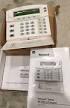 NetworX NX-6V2 LED Keypad User Manual POWER Light is on when AC power is present; flashes to indicate a low battery condition. ARMED Light is on when armed; off when disarmed; flashes to indicate a previous
SPECIAL CODES AUXILIARY CODES SYSTEM NOTES
 Installing/Service Company Monitoring Center SPECIAL CODES Master Code Duress Code AUXILIARY CODES "Quick Arm" " Chime" 08 02 09 03 10 04 11 05 12 06 13 07 14 SYSTEM NOTES Exit Delay Time Entry Delay Time
AUTODIALLER / QUICKDIALLER - SA132
 AUTODIALLER / QUICKDIALLER - SA132 INSTRUCTION LEAFLET ENGLISH www.thermomax-group.com CONTENTS 1 SETUP AT A GLANCE... 2 2 FOREWORD....... 3 3 INSTALLATION...... 4 4 KEYPAD AND INDICATORS...... 5 SETTING
MANUAL. FA142C Security System. N7229 1V2 Rev B 4/99
 USER'S MANUAL FA142C Security System N7229 1V2 Rev B 4/99 SYSTEM OVERVIEW...3 General...3 Keypads...3 Zones...3 Burglary Protection...4 Fire Protection...4 Alarms...4 Memory of Alarm...4 Phone Access &
Dialog Telephone Interface Module Installation Sheet
 Dialog Telephone Interface Module Installation Sheet Description The Dialog Telephone Module (DTIM), model number 60-879- 95R, is a battery operated communication link between the security system control
Section 1: About Your ORBIT-Pro
 Section 1: About Your ORBIT-Pro Introduction to this Manual This ORBIT-Pro Installation and Programming Manual is designed to take you through the required steps so you can successfully install the ORBIT-Pro
HWS100 Wireless Home Security System
 4902000 HWS100 Wireless Home Security System Owner s Manual WARNING: Security system devices cannot compensate for loss of life or property. Company is not responsible for any loss or intrusion. CONTENTS
6HFXULW\6\VWHPV 8VHU V*XLGH K5309-1V1 8/01
 9,67$39,67$3&1 9,67$39,67$3&1 6HFXULW\6\VWHPV 8VHU V*XLGH K5309-1V1 8/01 1 IMPORTANT! PROPER INTRUSION PROTECTION For proper intrusion coverage, sensors should be located at every possible point of entry
GC2 Panel User Guide
 GC2 Panel User Guide ENGLISH (International) WIRELESS SECURITY SYSTEM WARNING: OWNER S I NSTRUCTION NOTICE Not to be removed by anyone except occupant THIS PAGE INTENTIONALLY LEFT BLANK CONTENTS System
SECURITY SYSTEM NOTES. EMERGENCY ACTIVATION KEYS (check if enabled) PROGRAMMED FUNCTIONS
 SECURITY SYSTEM NOTES Installing/Service Company For Service Call Installation Date / / Central Station Duress Code EMERGENCY ACTIVATION KEYS (check if enabled) Fire Auxiliary Emergency Police PROGRAMMED
VR8. User Guide Intruder Alarm System
 VR8 EN User Guide Intruder Alarm System VR8 User Guide Notices EN 2 Copyright Notice Unless otherwise indicated, this publication is the copyright of Bosch Security Systems Pty Ltd ( Bosch ). All rights
EQUIPMENT SPECIFICATIONS
 EQUIPMENT SPECIFICATIONS IC-1600 Intelligent Controller The IC-1600 Intelligent Controller is a fully intelligent panel that has a complete database on board. It operates in conjunction with the Access
Wireless Alarm system s manual
 MOUNTVIEW TECH AUSTRALIA PTY LTD Wireless Alarm system s manual ADS A180 Series ADS Security 1/11/2011 1. Before You Begin For your safety and the safety of others, and to ensure that you get the most
First Alert N8600 2/97
 USER'S MANUAL FA145C Security System First Alert N8600 2/97 SYSTEM OVERVIEW... 3 General... 3 Zones... 3 Burglary Protection... 3 Chime Feature... 3 Alarms... 4 Fire Protection... 4 Memory of Alarm...
TX GSM SMS Auto-dial Alarm System. Installation and User Manual
 TX GSM SMS Auto-dial Alarm System Installation and User Manual Product Features: 1. 16 wireless zones, 3 wired zones alarm system, suitable for small to medium size offices and homes. 2. The system uses
TABLE OF CONTENTS FEATURES 2 SPECIFICATIONS 2
 TABLE OF CONTENTS FEATURES 2 SPECIFICATIONS 2 INSTALLATION 3 Mounting the Panel... 3 Mounting the Keypad... 3 Auxiliary Power Connection... 3 PGM Terminal Connections... 3 Bell/Siren Connection... 3 Keypad
SECURITY SYSTEM NOTES
 SECURITY SYSTEM NOTES Installing/Service Company For Service Call Central Station Duress Code FUNCTION CODES Function Code Controls Function This system is is not partitioned. EMERGENCY ACTIVATION KEYS
Firmware version: 1.10 Issue: 7 AUTODIALER GD30.2. Instruction Manual
 Firmware version: 1.10 Issue: 7 AUTODIALER GD30.2 Instruction Manual Firmware version: 2.0.1 Issue: 0.6 Version of the GPRS transmitters configurator: 1.3.6.3 Date of issue: 07.03.2012 TABLE OF CONTENTS
Go!Control INSTALL GUIDE WIRELESS SECURITY SYSTEM. Installation and Programming
 INSTALL GUIDE Go!Control Installation and Programming WIRELESS SECURITY SYSTEM WARNING: OWNER S INSTRUCTION NOTICE Not to be removed by anyone except occupant TABLE OF CONTENTS Introduction..............................
USER'S MANUAL. N7527-1V2 Rev B 4/99
 USER'S MANUAL FA162C Security System N7527-1V2 Rev B 4/99 2 SYSTEM OVERVIEW... 4 General... 4 A Partitioned System... 4 Zones... 4 Burglary Protection... 5 Security Codes... 5 Fire Protection... 6 Alarms...
TS510 & TS500. Installation & User Guide. Compatible Equipment
 Installation & User Guide Compatible Equipment TS510 REM - Remote Keypad 9040 - Loudspeaker DC54/58 - Digital Communicator SD1+ - Speech Dialler 496525 Issue A 1 of 10 TS510 and TS500 Overview Introduction
USER'S MANUAL. N7527-1V2 Rev B 4/99
 USER'S MANUAL FA162C Security System N7527-1V2 Rev B 4/99 2 SYSTEM OVERVIEW... 4 General... 4 A Partitioned System... 4 Zones... 4 Burglary Protection... 5 Security Codes... 5 Fire Protection... 6 Alarms...
INSTRUCTION MANUAL PC255O
 INSTRUCTION MANUAL PC255O Canadian Department of Communications Notice NOTICE: The Canadian Department of Communications label identifies certified equipment. This certification means that the equipment
NX-591NE-GSM NetworX GSM 3G HSPA+ Module Installation Sheet
 NX-591NE-GSM NetworX GSM 3G HSPA+ Module Installation Sheet The NX-591NE-GSM is a microprocessor-controlled GSM interface module used to connect the NetworX series of control panels to GSM cellular networks
5HDG\*XDUG5 6HFXULW\6\VWHP 8VHU*XLGH K5481-1 8/00 OFF AWAY STAY AUX
 5HDG\*XDUG5 6HFXULW\6\VWHP OFF AWAY STAY AUX 8VHU*XLGH K5481-1 8/00 7$%/(2)&217(176 SYSTEM OVERVIEW...3 Features...3 General Operation...4 Quick View of System Functions...6 About the Master Keypad...7
We are confident you will find the PC5132-RS Wireless Receiver a unique and useful control panel enhancement.
 P C 5 1 3 2 - R S Important Note Double end of line (EOL) resistors must be enabled in the PC5010 control panel for the wireless zones to be supervised. If normally Closed or Single EOL resistors are selected
Simon Security System
 Simon Security System Installation Instructions Document No. 466-1303 Revision B, June 3, 1997 Table of Contents Special Installation Requirements 3 Requirements for UL-Listed Installations 3 Canada Listings
8VHU V*XLGH 6HFXULW\6\VWHPV (QWUHSUHQHXU(1 6HFXULW\0DQDJHU(1. Meets ADT Security Services Triple Standards Requirements:
 6DIHZDWFK3UR Š (1 (QWUHSUHQHXU(1 6HFXULW\0DQDJHU(1 6HFXULW\6\VWHPV 8VHU V*XLGH Meets ADT Security Services Triple Standards Requirements: C US LISTED Standards for Security and Fire Standard for False
ABUS WIRELESS ALARM SYSTEM
 ABUS WIRELESS ALARM SYSTEM These installation instructions are published by Security-Center GmbH & Co. KG, Linker Kreuthweg 5, D-86444 Affing/Mühlhausen. All rights including translation reserved. Reproductions
GE Concord 4 Quick User Guide
 GE Concord 4 Quick User Guide GE Concord 4 Quick User Guide Page 1 Before Calling Is the keypad beeping? Press *. This will silence the beeping and let you know where the trouble is. Is there a flashing
User Guide. Model: MAS-WA-SYS
 User Guide Model: MAS-WA-SYS CONTENTS Section : Getting started... 4. General system overview. Introduction to the system.3 Items included with the system.4 Introduction to the Wireless Alarm Panel.5 Introduction
500r+ Installation and User Guide
 500r+ Installation and User Guide Compatible Equipment 502rUK-50 Watch/Pendant PA. 509rUK-50 Smoke Detector 515rUK-00 10 metre passive infra red movement detector. 525rUK-00 Remote Set/Unset (Full and
ADEMCO VISTA SERIES VISTA-20P / VISTA-20PSIA VISTA-15P / VISTA-15PSIA Security Systems
 ADEMCO VISTA SERIES VISTA-20P / VISTA-20PSIA VISTA-15P / VISTA-15PSIA Security Systems User Guide K5309-1V4 10/04 Rev. A IMPORTANT! PROPER INTRUSION PROTECTION For proper intrusion coverage, sensors should
SECURITY SYSTEM NOTES SPECIAL CODES ENTRY / EXIT DELAY TIMES ARM / DISARM CODES
 SECURITY SYSTEM NOTES Installing/Service Company For Service Call SPECIAL CODES "Chime" Digit 1 "Partial Arm" Digit 2 "Quick Arm" Digit 3 ENTRY / EXIT DELAY TIMES Exit Delay Time Entry Delay Time Secondary
User's Manual AM100. N7527-3V1 Rev B 4/99
 Security System User's Manual AM100 N7527-3V1 Rev B 4/99 2 SYSTEM OVERVIEW... 4 General... 4 Zones... 4 Burglary Protection... 5 Security Codes... 5 Fire Protection... 5 Alarms.... 6 Memory of Alarm...