
Simon Security System
|
|
|
- Nicholas Maxwell
- 10 years ago
- Views:
Transcription
1 Simon Security System Installation Instructions Document No Revision B, June 3, 1997 Table of Contents Special Installation Requirements 3 Requirements for UL-Listed Installations 3 Canada Listings 3 California State Fire Marshall Listing 3 Introduction 4 System Components 4 Planning Sensor Types & Locations 6 Planning Control Locations 9 Planning Lamp, Appliance, Wallswitch & Universal/Garage Module Control 9 Planning System Access Codes 10 Planning System Options 11 Wiring the Control Panel 15 Connecting Hardwire Interior Sirens 15 Connecting a Hardwire Exterior Siren 16 Connecting Hardwire Sensors 16 Connecting the Universal/Garage Door Module 16 Connecting the Power Transformer 16 Connecting the Backup Battery 17 Connecting the Phone Line to the Control Panel 17 Programming Overview 18 Programming Sensors 19 Programming House Code & Unit Numbers 19 Programming Light and Appliance Controls 20 Programming Options 21 Programming System Access Codes 22 Installing the System 22 Control Panel 22 Door/Window Sensor 24 Indoor Motion Sensor 25 Outdoor Motion Sensor 29 Smoke Sensor 29 KeyChain Touchpad 29 Remote Handheld Touchpad 30 Door/Window, Indoor/Outdoor Motion Sensor, KeyChain Touchpad, and Remote Handheld Touchpad FCC NOTICE 31 Testing the System 31 Testing Sensors 31 If a Sensor Fails the Sensor Test 32 Testing Phone Communication 33 Testing Central Station Communication 33 Testing X-10 Lamp Modules 33 Troubleshooting Guide 34 Notices 36 Duplicate Planning Sheets 38 List of Tables Sensor/Device Location Planning 7 & 38 Recommended Sensor Types 7 & 38 Sensor Type Characteristics 8 & 39 Home Control Planning 10 & 40 System Access Codes 10 Programmable Options 14 & 40 Option 12: Phone Mod 1 12 Option 13: Phone Mod 2 12 Option 27: Ring/Hang/Ring 13 Option 31: Day of Week 14 Device Program Buttons 19 List of Figures Typical Security System Components 4 Exterior Siren Panel Connections 16 Wire Hardwire Sensors Normally Closed 16 Power Transformer Panel Connections 16 1

2 Control Panel Backup Battery 17 RJ-31X Wiring Diagram 17 Control Panel Programming Decal 18 Light, Clock, Access Code, Sensor or Phone Test Decal 18 Sensor & Magnet Positions 24 Aligning the Door/Window Sensor & Magnet 24 Mounting Hole Locations (Bottom View) 24 Overhead (Bird s Eye View) Detection Path 26 Top & Side Views Using PIR Lens 26 Side Views Mounting at Various Heights 27 Wall Mount Options 27 PIR Mounting Plate Knockouts 27 Sensitivity Pins Locations 28 PIR Components, Battery Locations, & Tamper Switch 29 2

3 Special Installation Requirements This security system can be used as a fire warning system, an intrusion alarm system, an emergency notification system, or any combination of the three. Some installations may require certain configurations dictated by city codes, state codes, or insurance requirements. The following information indicates the components of various listings. Requirements for UL-Listed Installations This section describes the minimum system configurations for UL-listed, Grade A (supervised) systems. Basic System All UL-listed systems require the following basic components. The basic system does not require sensors and can use the Remote Handheld Touchpad as a controlling device. Control Panel ( R) Class II Line Carrier Power Transformer (22-091) 9-Volt, 1.2 Ah Lithium Backup Battery (34-037) Hardwire Siren (13-046) or Slimline Siren ( ) or Mouse Siren (13-373) Residential Burglary Alarm System Unit (UL 1023) Basic system above, plus: Door/Window Sensor ( R) suitable for installation on non-ferrous surfaces only Residential Fire Alarm System Unit (UL 985) Basic system above, plus: System Sensor Smoke Sensor ( ) Canada Listings (pending) Residential Burglary Alarm System Unit (ULC-S309) Basic system as described for UL-listed installations, plus: Door/Window Sensor ( R) Note: The KeyChain Touchpad # is UL Listed as a miscellaneous signalling device and is for supplementary use only. CSA Certified Accessories Residential Fire Warning System Control Unit (ULC-S545-M89) Basic system as described for UL-listed installations, plus: Wireless Smoke Sensor ( ) SUPSYNC (Supervisory Synchronization) set to 2 (hours) California State Fire Marshall Listing The California State Fire Marshall listing is pending. 3

4 . CONTINUOUS MOMENTARY ON OFF 1 A 15 3 O C 13 5 M E 11 7 K G 9 I UNIT CODE HOUSE CODE X-10 POWERHOUSE SOUNDER ONLY SOUNDER & RELAY RELAY ONLY M 1 15 O K 9 A I C E G M 1 15 O K 9 A I C E G On SYSTEM STATUS ARM Motion Sensors DISARM EMERGENCY- Press & Hold Both Keys Off Introduction This ITI Security System is easy to install if you plan ahead and do everything in the following order. DOOR/WINDOW SENSOR MOTION SENSOR SMOKE SENSOR 1. Plan where to locate the hardwire sirens, sensors and Control Panel. Use the tear out planning sheets at back of this manual. 2. Wire the Class II transformer, hardwire sirens, and phone. 3. Decide how the sensors, lights, and system options will operate. 4. Program the sensors, lights and appliances, and system options. 5. Install sensors and Lighting Modules. 6. Test system. KEYCHAIN TOUCHPAD GARAGE DOOR MODULE LAMP MODULE ARM Doors & Windows REMOTE HANDHELD TOUCHPAD 3 6 Note: Program the sensors before installing them because the Control Panel and sensors must be in the same place for programming. After you ve programmed each sensor, you can install them where you planned. System Components The system can monitor up to 17 sensors using any combination of the following sensors: Door/Window Sensor ( R) KeyChain Touchpad ( R) Remote Handheld Touchpad ( R) Indoor Motion Sensor ( R) Outdoor Motion Sensor ( R-OD) ITI Sensors (including Smoke Sensors) Note: CO Detectors are not currently compatible with this security system. Note: You may use any of these modules: X-10 Lamp Modules (13-403) X-10 Appliance Modules (13-402) X-10 Powerhorn/Remote Siren Modules (13-398) X-10 Universal/Garage Door Modules (13-399) X-10 Wall Switch Modules (13-397) Note: Use of the above X-10 modules has not been investigated by UL. Figure 1. shows the Control Panel, control touchpads, and some compatible sensors and modules. Figure 1. Typical Security System Components Security System The security system has three types of components: the Control Panel, devices that report to the Control Panel, and devices that respond to the Control Panel. Control Panel The Control Panel is the main processing unit for all security functions. It receives signals from and responds to wireless sensors and wireless touchpads throughout the premises. The buttons operate the security system. When using the Control Panel with the cover open, the buttons program the security system. Door/Window Sensor For intrusion protection, install Door/Window sensors on all ground-floor doors and windows. At a minimum, install them in the following locations: All easily accessible exterior doors and windows. Interior doors leading into the garage. Doors to areas containing valuables such as cabinets and closets. KeyChain Touchpad APPLIANCE MODULE 8988G21A.DS4 The KeyChain Touchpad enables you to turn the system on and off before entering the home or to turn on 4

5 the siren and to call the central monitoring station if there is an emergency. If you have Lamp Modules, you can use the KeyChain Touchpad to turn all lights on and off. Remote Handheld Touchpad The Remote Handheld Touchpad enables you to turn the system on and off while in the home, turn lights controlled by the system on and off (all or individual lights), or turn on a system siren and call the central monitoring station if there is a non-medical emergency. The Remote Handheld Touchpad will report an alarm type specific to its sensor type (see Table 3 for sensor and siren types). Indoor Motion Sensor Indoor Motion Sensors are ideal whenever it is not practical to install Door/Window sensors on every opening. Identify areas where an intruder is likely to walk. Large areas in an open floor plan, downstairs family rooms, and hallways are candidates for Indoor Motion Sensors. Indoor Motion Sensors are not suitable for rooms where pets can enter. Indoor motion sensors can also be used to sound chimes, but cannot be used for intrusion protection and as a chime sensor simultaneously. Outdoor Motion Sensor Use Outdoor Motion Sensors to identify motion in a protected outdoor area. Detected motion in this protected area can sound chimes or turn on outside lights. Do not use Outdoor Motion Sensors for intrusion protection. ITI ToolBox The ITI ToolBox is a Windows -based program that saves you time by simplifying Control Panel programming. Using only a PC, a modem, and a standard telephone line, ToolBox makes creating new customer accounts and updating the panel settings of existing customers simple and quick. See the ITI ToolBox manual and ToolBox s on-line help for instructions to use ToolBox for programming this Control Panel. ITI CS-4000 Receiver The CS-4000 Receiver is used to monitor this security system. Central Station Code - Central Station Locking The central station code defaults to The security code can be changed from the central station using the CSLOCK command. It can also be changed using the ITI ToolBox. The security code prevents any central station which does not have the proper security code from establishing communications with the Control Panel. ITI HomeLink Transceiver (IHT) The ITI HomeLink Transceiver is a radio transmitter/ receiver designed to receive signals from the Prince Universal Transmitter (HomeLink ), then retransmit the signals to a security system panel, allowing the HomeLink to control the arming, disarming, and light functions of the security system. The IHT also enables the user to control the garage door opener from the HomeLink Smoke Sensor Smoke Sensors can provide fire alert protection by causing the alarm to sound throughout the house. You can add sensors near sleeping areas and other floors of the house. Avoid attics, kitchens, above fireplaces, dusty locations, and areas with temperature extremes. See the instructions packaged with the Smoke Sensor for complete placement information. Refer to the diagram on the next page for specific placement of Smoke Sensors. 5

6 . Emergency Planning Floor Plan Use the following guidelines when drawing an emergency planning floor plan for the homeowner: Show all building levels. Show exits from each room (2 exits per room are recommended). Show the locations of all security system components. Show the locations of any fire extinguishers. Planning Sensor Types & Locations The first step to an easy and successful installation is to decide what areas or items to protect which lights or appliances to operate, and the best location for the Control Panel, sensors or sirens. Use the previous information and Table 1, Device Location Planning, to note your requirements. Use Table 2 and Table 3 to determine the appropriate Sensor Type for the sensors you will be adding. You ll need to understand the application for each sensor. For example, KeyChain Touchpads are typically programmed as sensor type 01 (Portable panic), used to send an intrusion alarm to a central monitoring station. This sensor type is instant intrusion, it does not require restoral or supervisory communication with the Control Panel and it is active in all 4 arming levels (disarm, arm doors & windows, arm motion sensors, and arm doors/windows and motions sensors). 6

7 Table 1 Sensor/Device Location Planning Table Locations in order as communicated by Control Panel when changing sensors, except that Remote Locations are not used by the Control Panel, but only used here for planning purposes. (This table is duplicated at the end of this manual) Sensor No. Sensor/Device Name (use Table 2 & Table 3 to determine sensor type numbers) The following are examples only. Sensor Type Remote Locations Front Door Back Door Garage Door Bedroom Guest Room Child s Room Utility Room Living Room Dining Room Bathroom Laundry Room Kitchen Office Den Garage Special Chime Basement Upstairs Downstairs Hallway Medicine Cabinet Closet Attic KeyChain Touchpad 01 X Door/Window 13 X Table 2 Recommended Sensor Types Device Recommended Sensor Type KeyChain Touchpad 01, 03, 06, 07 Remote Handheld Touchpad 01, 03, 06, 07 Indoor Motion Sensor 17 (intrusion), 25 (chime) Outdoor Motion Sensor 25 Smoke Sensor 26 Exterior Door 10 Interior Door 14 Window Sensor 13 7

8 . Table 3 Sensor Type Characteristics (This table is duplicated at the end of this manual) Type Name/Application Siren Type Delay Restor al Superv isory Active in Levels 00 Fixed Panic: 24 hour audible fixed emergency button Intrusion I No Yes Portable Panic: 24 hour audible portable emergency buttons Intrusion I No No Fixed Panic: 24 hour silent fixed emergency buttons Silent I No Yes Portable Panic: 24 hour silent portable emergency buttons Silent I No No Fixed auxiliary: 24 hour auxiliary sensor, such as Pendant Panic Emergency I No Yes Fixed Auxiliary: 24 hour emergency button. Siren shut off confirms CS Emergency report I No Yes Portable Auxiliary: 24 hour portable auxiliary alert button Portable Auxiliary: 24 hour portable auxiliary button. Siren shut off confirms CS report Emergency Emergency I No No 1234 I No No Special Intrusion: such as gun cabinets and wall safes. Intrusion I Yes Yes Special Intrusion: such as gun cabinets and wall safes. Intrusion S Yes Yes Entry/Exit Delay: Entry/Exit Delay that require a standard delay time. Chime Intrusion S Yes Yes Instant perimeter: Exterior doors and windows. Chime Intrusion I Yes Yes Instant Interior: Interior doors Intrusion F Yes Yes Instant Interior: Interior PIR motion sensors* Intrusion F No Yes Instant Interior: Interior doors Intrusion F Yes Yes Instant Interior: PIR motion sensors* Intrusion F No Yes Delayed Interior: interior doors that initiate a delay before going into alarm* Intrusion S Yes Yes Delayed Interior: PIR motion sensors that initiate a delay before going into alarm* Intrusion S No Yes Local Instant Interior: 24 hour local alarm zone protecting anything that opens and closes. No Report Intrusion I Yes Yes Local delayed interior: same as group 21, plus activation initiates a delay before going into alarm. No report.* Intrusion S Yes Yes Local instant Auxiliary: 24 hour local alarm zone protecting anything that opens and closes. No report Emergency I Yes Yes Local Instant Auxiliary: 24 hour local alarm zone protecting anything Emergency that opens and closes. Sirens shut off at restoral. No report.* I Yes Yes Local Special Chime: Notify the user when a door is opened. Sounds emit from a local annunciator.* No report Two beeps I No Yes Fire: 24 hour fire, rate-of-rise heat, and smoke sensors. Fire I Yes Yes Lamp control or other customer feature. No report Silent I Yes Yes PIR motion sensor, sound sensor, or pressure mat. No report Silent I No Yes Auxiliary: freeze sensor Emergency I Yes Yes PIR motion sensor or sound sensor No report Silent I No No 1234 *This type is not certified as a primary protection circuit for ULlisted systems and is for supplementary use only. This type is required for UL-listed residential fire alarm applications. This type has not been investigated by UL. The arming levels are: 1 = Disarm 2 = Arm Doors & Windows 3 = Arm Motion Sensors 4 = Arm Doors/Windows & Motion Sensors Delays: I = Instant Delay (no delay, immediate alarm) S = Standard Delay (alarm sounds after programmed entry delay time) F = Follower Delay (alarm sounds immediately if entry/exit delay is not active, otherwise alarm sounds after programmed entry delay time) 8

9 Planning Control Locations Control Panel Locate the Control Panel so that the alarm sounds can be heard and it will be convenient to operate. It must be near an electrical outlet and telephone receptacle. Remote Handheld Touchpad Locate Remote Handheld Touchpads where they will be convenient and offer quick response in emergencies. KeyChain Touchpad KeyChain Touchpads attach to the owner s key ring or can be conveniently carried. Planning for Lamp, Appliance, Wallswitch, and Universal/Garage Door Module Control As you program the modules, the Control Panel asks you to choose the house code, unit number and activation method. Fill out Table 4, Home Control Planning Table, before you begin programming. The system can control 8 individual unit numbers on Lamp, Wallswitch, Appliance, and Universal/Garage Door Modules. Setting the House Code and Unit Number Each device controlled by the Control Panel must have an identification setting. The modules use two dials to set identification codes: one with letters A through P and one with numbers 1 through 16. The lettered dial sets the house code. The house code enables the system to differentiate this home from other homes in the area. Set all modules (except the remote siren) and the Control Panel to the same house code. The numbered dial sets the unit number. The unit number tells the system which device you want to control. Each unit number should be different (unless you want specific lights or appliances to be activated together). The Control Panel recognizes up to 8 unit numbers for sensor-activated, time-activated and entry/exit delay lights. When unit numbers 9-16 are used for lamp modules, they can only be controlled by an all on or all off command. A lamp will flash to the arming level if its unit number is set to 10. A lamp set to unit number 10 will flash once if the Control Panel is disarmed, twice if doors & windows are armed, etc. The remote siren can be set to any unit number to hear alarm sounds. Set it to unit number 9 to hear arming level beeps, status beeps, and trouble beeps. To Fill Out the Lamp Control Planning Table: Note: Do not use a light module to control appliances, use an appliance module, since the wattage rating on Lamp Modules is less than on Appliance Modules. 1. Set the house code on all the Modules, except the remote siren to the same letter. Set the Remote Siren house code to the next alphabetical letter. For example, if the house code is B, set the remote siren s house code to C. Note: The house code instructions which come with the Powerhorn Siren won t work with this Control Panel. Follow the instructions given here. 2. Set the Module unit numbers. Note: If you are using a Universal Module to operate a garage door, make sure to assign a unique unit number to this Module choosing from List the location of the lamp or appliance in the Location column of Table Write the location of each Lamp Module on an adhesive note and label the module. 5. Decide if the device should be activated by sensors, entry/exit delay, time, or a combination. An example of sensor activation is using a motion sensor to turn on a light. Record the information in the appropriate columns. 9

10 . Table 4 Home Control Planning Table (This table is duplicated at the end of this manual) Module Activated by Time Activated Unit # Type Location Sensor Entry/Exit Start Time Stop Time Example Lamp Hall lamp Motion Yes 8 p.m. 10:30 p.m Planning System Access Codes Use the following to plan system Access Codes. Fill out Table 5 to use when programming these codes. Utility Access Code 1 This access code is used during installation. The default utility access code is This code can be used for all programming. Utility Access Code 2 The default Master Access Code is This user code is needed to: disarm the Control Panel, program options 1 through 3, program light control, set the system clock, program access codes 1-5, and perform a sensor or phone test. The use of the Master Access Code should be limited since it can delete and add the secondary access codes. Access Codes (1-5) The Control Panel can have up to 5 secondary user access codes. These could be used by children, a baby sitter, or a service person. These codes have the same programming privileges as the master access code except they cannot program access codes 1-5. Table 5 System Access Codes The default access code is This access code is used during for all programming except for changing utility access code 1 and changing options 4, 5, 6, 8, 9, 12, and 13. Master Access Code Type Default Utility Access Code Utility Access Code Master Access Code 1234 Access Code 1 None Access Code 2 None Installer Settings Access Code 3 Access Code 4 Access Code 5 None None None 10

11 Planning System Options Use the following to plan system Options. See Table 10 for a complete listing of all system options and their characteristics. Fill out the last column of this table to use when programming. Option 01: Panel Beeps Add turns on panel beeps that sound when an access code is entered or when the arming level is changed. Delete turns off panel beeps. Option 02: Panel Voice Add enables the panel s voice. Delete disables the panel s voice. Note that the panel voice is always on for status messages, open sensor responses, and when in program mode. Option 03: Latchkey (Reports as 99) Add programs the Latchkey time. If Latchkey is enabled, when the Control Panel is armed and the Control Panel is not disarmed by the preprogrammed time, the Control Panel will call in a Latchkey alarm at the programmed time. Delete removes the Latchkey time. Latchkey cannot be enabled when the Control Panel is armed. Option 04: Primary Phone Number Add programs the primary phone number to be called when there is an alarm. The phone number will call the central station. Delete removes the primary phone number. Option 05: Secondary Phone Number Add and Delete function the same as they do for the primary phone number. This number can be to a numeric pager or a central station. When using it to call a numeric pager, program this phone number with 2 pauses (press the test button to program a pause) at the end of the number. Set Phone Mod 2 (option 13) to 8 or 9. The Control Panel will call a numeric pager twice for each report. Pagers that require the Control Panel to dial more than 18 digits will not work. Silent alarms report to a pager as an intrusion alarm. See the Owner s Manual for more reporting information. Option 06: Downloader Phone Number Programs the ITI ToolBox Downloader telephone number. Add and Delete function the same as they do for the primary phone number. Option 07: Account Number Add programs the account number. Delete resets it to Option 08: Phone Lock Add enables phone lock so that a different central station cannot change the central station code. Delete disables phone lock. Option 09: DL Code (Downloader Code) Add programs the downloader access code. The Downloader Code is used during Control Panel programming with the ITI ToolBox. The Control Panel s downloader code must match the downloader access code in the ITI ToolBox account in order to program the Control Panel using the ITI ToolBox. Delete resets it to Option 10: Entry Delay Add programs the entry delay. Enter time in seconds. The range is seconds (3 digits must be entered). Delete sets the delay to 5 seconds. For UL listed systems, the entry delay should not exceed 45 seconds. Option 11: Exit Delay Add programs the exit delay. Enter time in seconds. The range is seconds (3 digits must be entered). Delete sets the delay to 5 seconds. For UL listed systems, the exit delay should not exceed 45 seconds. 11

12 . Option 12: Phone Mod 1 Add sets the report content and format which the primary phone number uses. The range is 0-3. Delete sets the phone mod to 0. Alarms include: Fire, Intrusion, Emergency, and Silent. Non-Alarms include: Latchkey, No Activity, Alarm Cancel, Opening, Closing, Force Armed, AC Power Failure, CPU Low Battery, and Trouble Restorals. All includes: Alarms and Non-Alarms. UL has only verified compatibility with the ITI CS4000 Digital Alarm Communicator Receiver. Option 13: Phone Mod 2 Table 6 Phone Mod 1 Enter # Reports Format 0 All ITI 1 All 4/2 2 Alarms ITI 3 Alarms 4/2 Add sets the report content and format that the secondary phone number uses. Range is 0-9. Delete sets the phone mod to 0. Enter # Table 7 Phone Mod 2 Option 14: DTMF Dialing Add enables DTMF dialing. Reports Form at 0 All ITI 1 All 4/2 2 Alarms ITI 3 Alarms 4/2 4 Non-Alarms ITI 5 Non-Alarms 4/2 6 Phone 1 failure ITI 7 Phone 1 failure 4/2 8 Latchkey/No Activity/ Phone Test Pager 9 Alarms/Latchkey/No Activity/Phone Test Pager Delete enables pulse dialing. Option 15: No Activity (Upper Sensor 79) Add enables the no activity time-out. Program the no activity time-out in hours. The range is hours (2 digits must be entered). Delete disables the no activity time-out. Option 16: Auto Phone Test (Upper Sensor 93) Add enables the auto phone test. Program the auto phone test frequency in days. The range is days (3 digits must be entered). Delete disables auto phone test. Option 17: Dialer Delay Add enables the dialer delay. Program the delay in seconds. The range is seconds (3 digits must be entered). Delete disables the dialer delay. For UL installations, dialer delay time cannot be greater than 45 seconds. Note: The Control Panel will not wait the programmed dialer delay to call in an alarm if the Control Panel is disarmed before the dialer delay expires and opening reports are on. Both the alarm and opening report will be called in immediately. Option 18: Alarm Cancel Add enables alarm cancel. Program the time in minutes. If the Control Panel is disarmed from an alarm state within the programmed time, the Control Panel will send an alarm cancel message. The range is minutes (2 digits must be entered). Delete disables the alarm cancel. Option 19: Supervisory Time (SUPSYNC) Add sets the supervisory time. Program the time in hours. The range is hours (2 digits must be entered). Delete resets SUPSYNC to 2 hours. For UL listed systems, the SUPSYNC shall not exceed 4 hours. 12

13 Option 20: Manual Phone Test (Upper Sensor 83) Add allows the user to perform a manual phone test. Delete disables manual phone test. Option 21: Opening Reports (Upper Sensor 84) Add enables opening reports. Opening reports will be sent to the central station if the Control Panel is disarmed from a higher arming level. Also, if the Control Panel is armed to level 4 from level 2 or 3, an opening report will be sent to the CS. Delete disables opening reports. Option 22: Closing Reports (Upper Sensor 85) Add enables closing reports. Closing reports will be sent to the central station if the Control Panel is armed to level 2, 3, or 4. Delete disables closing reports. Option 23: Force Armed (Upper Sensor 87) Add enables force armed report. A force armed report will be sent to the central station. Delete disables force armed reports. Option 24: AC Power Failure (Upper Sensor 90) Add enables AC power failure reports. An AC power failure report will be sent to the central station if the Control Panel has lost power for 15 minutes. The Control Panel will report AC power restoral when power returns to the Control Panel. Delete disables AC power failure and restoral reports. Option 25: CPU Low Battery (Upper Sensor 91) Add enables CPU low battery reports. A low battery report will be sent to the central station when the Control Panel s battery voltage drops below 7.65 volts. Delete disables CPU low battery reports. Option 26: Fail to Communicate (Upper Sensor 96) Add enables fail to communicate. If the Control Panel is not able to connect to the CS when it s trying to report an alarm, the Control Panel will indicate this with trouble beeps and in the status message. Delete disables fail to communicate. Option 27: Ring/Hang/Ring (Feature 01) Add enables ring/hang/ring to use with ToolBox. This feature is useful when programming a Control Panel in a home with an answering machine. Program ring/ hang/ring by number. Table 8 Ring/Hang/Ring Program Numbers Program # Control Panel will answer after: 1 ring/hang/ring or 10 rings 2 ring/hang/ring/hang/ring or 10 rings 3 ring/hang/ring/hang/ring/hang/ring or 10 rings 4 10 rings If ring/hang/ring is programmed as: Program # 1-1. Call the Control Panel and let the phone ring twice then hang up. 2. Wait seconds and call the Control Panel again. 3. The Control Panel should answer on the first ring. Program # 2 - Repeat steps 1 & 2 before the Control Panel will answer. Program # 3 - Repeat steps 1 & 2 twice before the Control Panel will answer. Delete disables ring/hang/ring. The Control Panel will not answer. Option 28: No Delay from KeyChain Touchpad (Feature 32) Add arms with no entry delay when using the Key- Chain Touchpad. Delete arms with an entry delay when using the Key- Chain Touchpad. Option 29: Control Panel Alarms Add enables the Control Panel s piezo. Alarms will sound from the Control Panel. Delete disables the Control Panel s piezo. Alarms will not sound from the Control Panel. 13

14 . For UL listed systems, at least one listed external audible signal device shall be used if the external piezo is disabled. Option 30: Panic Alarms Add enables panic alarms initiated from the Control Panel or Handheld Touchpad. Delete disables panic alarms. Option 31: Day of Week Add will program the day of week based on a programmed number. The day of week will be used during an event buffer dump to ToolBox. Delete sets day of week to 0. Table 9 Day of Week by Number 0 Sunday 1 Monday 2 Tuesday 3 Wednesday 4 Thursday 5 Friday 6 Saturday Option 32: 300 Baud Add enables 300 baud communication. Enable this option for faster communication Delete enables 110 baud communications. Table 10 Programmable Options (This table is duplicated at the end of this manual) Option # Upper Sensor/ Feature Number Function Default Range Who Can Change: U1 - Utility Access Code 1; U2 - Utility Access Code 2; M - Master; A - Access Codes Installer Settings 01 Panel Beeps On On/Off U1 U2 M A 02 Panel Voice On On/Off U1 U2 M A 03 Reports as 99 Latchkey Option Off 12:00 a.m. - 11:59 p.m. U1 U2 M A 04 Primary Phone Number None 18 digits U1 05 Secondary Phone Number None 18 digits U1 06 Downloader Phone Number None 18 digits U1 07 Account Number U1 U2 08 Phone Lock Off On/Off U1 09 Downloader Code Entry Delay 30 sec sec 11 Exit Delay 30 sec sec U1 U1 U2 U1 U2 12 Phone Mod U1 13 Phone Mod U1 14 DTMF On On/Off U1 U No Activity Off hrs U1 U2 14

15 Table 10 Programmable Options (This table is duplicated at the end of this manual) Option # Upper Sensor/ Feature Number Function Default Range Who Can Change: U1 - Utility Access Code 1; U2 - Utility Access Code 2; M - Master; A - Access Codes Installer Settings Auto Phone Test Option (Must be enabled for UL Listed systems) Off days U1 U2 17 Dialer Delay Off sec U1 U2 18 Alarm Cancel Off min U1 U2 19 Supervisory Time (SUPSYNC) 12 hrs hrs U1 U Manual Phone Test On On/Off U1 U Opening Reports Off On/Off U1 U Closing Reports Off On/Off U1 U Forced Arm Off On/Off U1 U AC Power Failure (Must be enabled for UL Listed systems) CPU Low Battery (Must be enabled for UL Listed systems) Fail to Communicate (Must be enabled for UL Listed systems) Off On/Off U1 U2 On On/Off U1 U2 On On/Off U1 U2 27 Feature 01 Ring/Hang/Ring Off 1-4 U1 U2 28 Feature 32 No Delay from KeyChain Touchpad Off On/Off U1 U2 29 High Level Siren On On/Off U1 U2 30 Panic Alarms On On/Off U1 U2 31 Day of Week U1 U Baud Central Station Communications Off On/Off U1 U2 Wiring the Control Panel Connecting Hardwire Interior Sirens This section describes how to: connect hardwire interior and exterior sirens (if being installed) connect hardwire sensors connect the power transformer connect the backup battery The following ITI sirens may be used with this Control Panel: Slimline Siren ( ) LD105 Siren (13-374) Follow the siren installation instructions included with the siren to connect a hardwire interior siren to the Control Panel. 15

16 . Connecting a Hardwire Exterior Siren Use only the model Hardwire Exterior Siren as shown in Figure 2. All inputs are powerlimited circuits. AC POWER 9 VAC HARDWIRE INPUTS/SIREN Hardwire Input 1 or Exterior Siren Figure 2. Exterior Siren Control Panel Connections BLACK Hardwire and Power Common + RED Hardwire Input 2 or Interior Siren HARDWIRE EXTERIOR SIREN PART NO G20A.DS4 Connecting the Universal/Garage Door Opener Module Use the following to connect a universal module to be used to open a garage door: 1. Set the unit code of the universal module to a unique unit number between 1 and Set the house code to the house code for the installation. 3. Set the module s switches to momentary and relay only. 4. Connect the terminals on the universal module to the button terminals on the garage door opener. 5. Plug the universal module into a wall outlet. Note: See the Programming Light and Appliance Controls section to program a KeyChain Touchpad to open a garage door. Connecting the Power Transformer Connecting Hardwire Sensors Connect the power transformer as shown in Figure 4. Plug the transformer into an unswitched outlet. This section shows how to wire hardwire sensors to the Control Panel. For more detailed information on installing hardwire devices, see the installation instructions that accompany each device. Wire sensors to be supervised by using a 47k Ohm resistor (included with the Control Panel). All inputs are powerlimited circuits. AC POWER 9 VAC HARDWIRE INPUTS/SIREN Hardwire Input 1 or Exterior Siren Hardwire and Power Common + Hardwire Input 2 or Interior Siren All inputs are powerlimited circuits. HARDWIRE INPUTS/SIREN Hardwire Input 1 or Exterior Siren Hardwire and Power Common + Hardwire Input 2 or Interior Siren CLASS II POWER TRANSFORMER PART NO G03A.DS4 Figure 4. Power Transformer Control Panel Connections Normally Closed 47k Normally Closed 8988G22A.DS4 Figure 3. Wire Hardwire Sensors Normally Closed 16

17 BLACK GREEN RED WHITE OR YELLOW Connecting the Backup Battery Installing an RJ-31X Jack Connect a 9-Volt lithium battery (ITI #34-037) to the battery clips (see Figure 5.). Install and wire the RJ-31X jack as shown in Figure 6. TO PANEL PHONE JACK PHONE CORD BRN GRY GRN RED Figure 5. Control Panel Battery Installation Note: The Control Panel wil initially indicate a low battery by lighting the SYSTEM STATUS button. If this button is pressed the Control Panel will announce, System low battery. The Control Panel does a battery test every 4 hours and will clear the status message if the battery is good. Perform a sensor test, see the Testing Sensors section, to perform an immediate battery test. PREMISES PHONE JACK GREEN RED GREEN TELCO PROTECTOR BLOCK EXISTING PHONE LINE RED SPLICE DEALER CABLE BLACK WHITE OR YELLOW SPLICE 8898G05.A.DS4 Connecting the Phone Line to the Control Panel Figure 6. RJ-31X Wiring Diagram Connecting the Phone Line to the Control Panel If the system will be monitored by a central monitoring station, you must install an RJ-31X jack between the telephone company (TELCO) block and the Control Panel. The jack must be located within 5 feet of the Control Panel. 1. Plug one end of the phone cord (included with the Control Panel) into the RJ-31X jack. 2. Plug the other end of the phone cord into the Control Panel phone jack. 3. When looking at the back of the Control Panel, the top block is used to connect the phone to the Control Panel and the bottom block is used to connect the Control Panel to the wall phone jack. 17

18 . Programming Overview These instructions tell you how to set up for programming and to put the Control Panel in program mode. 1. Arrange the sensors, modules, Control Panel, and user controls on a table. 2. Open the Control Panel cover. 3. Enter Utility Access Code 1 (default is 4321) using red numbered keys. The default for utility access codes 1 and 2 is The default master access code is You are now in program mode. Programming is easy if you understand the flow from left to right when using the programming buttons. Follow the programming arrows or use the flow diagrams to the right of the programming buttons. The Control Panel will voice prompt you through programming. To get you started: 1. Press Add or Delete from the Start Menu. 2. Press Option #, Sensor/Remote, Access Code or Light Control from the Main Menu. The system response at this point depends upon what button you just pressed. Follow the voice prompts and programming arrows to continue. Program the Control Panel in this order: 1. Sensors 2. House Code 3. Light & Appliance Control Entry/Exit activated lights Sensor activated lights Time activated lights 4. Options 5. Access Codes Figure 7. Control Panel Programming Decal Figure 8. Light, Clock, Access Code, Sensor or Phone Test Decal 18

19 Programming Sensors These instructions show you how to program sensors, touchpads and other system devices into the Control Panel. Program sensors and devices before you install them. The Control Panel recognizes a sensor when you press the sensor s program button or tamper switch. Table 11 describes the programming button location for each device. Table 11 Device Program Buttons Device Door/Window Sensor Motion Sensor KeyChain Touchpad Remote Handheld Touchpad Hardwire Sensors Program Button Location On top of sensor (cover removed) On back of sensor (mounting plate removed) Lock & Unlock buttons EMERGENCY buttons (to be used for non-medical emergencies) See individual sensor installation instructions Note: Sensor installation instructions included in this manual are for SAW devices only. This security system has a SAW receiver. When installing crystal sensors (non-saw devices), use the installation instructions included in their packing boxes. The Control Panel uses an ascending numbering sequence (beginning with 1) when adding (learning) sensors. You may override the system suggested sensor number by using the red numbered keys. Use Table 1, which was filled out during the system planning, to help program sensors. To add a hardwire or RF sensor or remote control: 2. Press the Sensor/Remote button from the Main menu until you hear the room name or item you want to add. The order of names the Control Panel uses are: keychain remote, touchpad remote, front door, back door, garage door, bedroom, guest room, child s room, utility room, living room, dining room, bathroom, laundry room, kitchen, office, den, garage, special chime, basement, upstairs, downstairs, hallway, medicine cabinet, closet, attic. Each name may be used more than once. 3. Press DONE when you hear the name you wish to add. Note: When adding sensors, if you wish to use a more descriptive location you may press the option button to use the compass directions (north, north east, east, south east, south, south west, west, north west). 4. Enter the 2 digit sensor type using Table 1, with the red numbered keys. Note: If you wish to use a sensor number other than the next available, enter a 2 digit sensor number with the red numbered keys immediately after entering the sensor type. 5. Press the sensor s program button or tamper button. Open the switch of hardwired sensors. The Control Panel verbally confirms your programming. To delete sensors: 1. Press Delete from the Start menu. 2. Press Sensor/Remote from the Main menu until you hear the name you want to delete. 3. Press DONE. The system confirms the item you removed. Programming the House Code and Unit Numbers Lamp Modules, Appliance Modules, and Remote Sirens use the existing electrical wiring in the home to receive signals from the Control Panel. Since there are no direct wire connections required, any number of modules can be plugged into available outlets and installed in the system. All Lamp Modules and Appliance Modules have a common house code that allows modules to be identified by eight different control addresses. The house code allows adjacent homes that have a common power source to co-exist. The available house code choices are from A to O. 19

20 . To program the house code: 2. Press Light Control from the Main menu until you hear the house code letter you want. 3. Press DONE. 4. Set the house code on each lamp and appliance module using a screwdriver. 5. Set house code on the remote siren to the next alphabetical letter greater than the house code. All Lamp Modules with the same house code will turn on or flash as a group on alarm or when operating the Light button on a KeyChain Touchpad. The units must be identified with a unique unit number, from 1-8, to individually operate lights and appliances from a Remote Handheld Touchpad or to selectively program lights to go on during the entry/exit delay, to be operated by a sensor or at scheduled times. To assign a unit number: 1. See Table 4 for your planning information. 2. Set the Unit number switch on each module. Programming Light and Appliance Controls Use Table 4, which was filled out during the system planning, to help program control modules. To add an entry/exit activated light: 2. Press Light Control from the Main menu. 3. Press Unit # until you hear the number you chose on the module. 4. Press Entry/Exit Delay from the Control menu. The Control Panel confirms your programming. To add a sensor-activated light: 1. Press Add from the Start menu 2. Press Light Control from the Main menu. 3. Press Unit # until you hear the number you chose on the module. 4. Press Sensors from the Control menu until you hear the sensor you want to control the light. 5. Press DONE. The Control Panel confirms your programming. Note: A KeyChain Touchpad can be programmed to a unit number. Press the star button to activate a light or open/ close a garage door using the Universal Module. To add a time-activated light: 2. Press Light Control from the Main menu. 3. Press Unit # until you hear the unit number you chose on the module. 4. Press Time from the Control menu. 5. Press Hours and Minutes to set the beginning of the schedule. 6. Press DONE. 7. Press Hours and Minutes to set the end of the schedule. 8. Press DONE. The system confirms your programming. To delete an Entry/Exit-activated light: 1. Press Delete from the Start menu. 2. Press Light Control from the Main menu. 3. Press Unit # until you hear the unit number you want to delete. 4. Press Entry/Exit Delay. The system confirms your programming. To delete a sensor-activated light: 1. Press Delete from the Start menu. 2. Press Light Control from the Main menu. 3. Press Unit # until you hear the unit number you want to delete. 4. Press Sensors from the control menu until you hear the one you want to delete. 5. Press DONE. The system confirms your programming. To delete a time-activated light: 1. Press Delete from the Start menu. 2. Press Light Control from the Main menu. 3. Press Unit # until you hear the unit number you want to delete. 4. Press Time from the control menu. 20

21 Programming Options Use Table 10, which was filled out during the system planning, to help program options. There are two ways to enter options. They are as follows: Press Add and press the Option # button until you hear the option to be changed. or-- Press Add and enter the option number you want to program with the red numbered keys. The following instructions use the second method. To set system options 01 and 02: 2. Press Option # and 01 or 02 with the red numbered keys. 3. Press DONE. To set system option 03: 2. Press Option # Press Hours and Minutes to set the time. 4. Press DONE. To set system options 04, 05, and 06: 2. Press Option # and 04, 05, or Enter a phone number with the red numbered keys. Press Test to enter a pause in the phone number. Note: The phone number is automatically stored after you ve pressed 18 digits. You will not have to press DONE to store the number. If the number is less than 18 digits, then DONE must be pressed. To set system option 07: 2. Press Option # Enter the account number. 4. Press DONE. To set system option 08: 2. Press Option # Press DONE. To set system options 09: 2. Press Option # Enter the downloader code. 4. Press DONE. To set system options 10 & 11: 2. Press Option # 10 or Enter the delay times in seconds (3 digits must be entered). To set system options 12 & 13: 2. Press Option # and 12 or Enter phone mod number. To set system option 14: 2. Press Option # Press DONE. To set system option 15 (Upper Sensor 79): 2. Press Option # Enter the no activity time out (2 digits must be entered). To set system option 16 (Upper Sensor 93): 2. Press Option # Enter the number of days between each auto phone test (3 digits must be entered). To set system option 17: 2. Press Option # Enter the dialer delay in seconds (3 digits must be entered). To set system option 18: 2. Press Option # Enter the alarm cancel time in minutes (2 digits must be entered). To set system option 19: 2. Press Option # Enter the supervisory time in hours (2 digits must be entered). 21
22 . To set system options 20-26, 28-30, and 32: 2. Press Option # XX. 3. Press DONE. To set system option 27: 2. Press Option # Enter the ring/hang/ring number. To set system option 31: 2. Press Option # Enter the day of week number. To delete options: 1. Press Delete from the Start menu. 2. Press Option from the Main menu until you hear the name you want to delete. 3. Press DONE. The system confirms the item you removed. Programming System Access Codes Use Table 5, which was filled out during the system planning, to program system Access Codes. To add a code: 2. Enter the access code as prompted by the panel voice by using the red numbered keys. 3. Press the Add button. 4. Press the Access Code button. Continue pressing the Access Code button until you hear the access code to be changed. 5. Press DONE. 6. Enter the new access code by using the red numbered keys. The Control Panel says, code name is XXXX (the new 4 digit access code). To delete a code: 1. Press Delete from the Start menu.. 2. Press the Access Code button. Continue pressing the Access Code button until you hear the access code to be deleted. 3. Press DONE. The Control Panel says, code name is deleted. Installing the System Control Panel General Information Do not install the Control Panel near a window or door where it can be reached easily by an intruder. Control Panels should be installed in locations where they are most likely to be heard. Metal objects, mirrors, and metallic wallpaper can block signals sent by the wireless sensors. Make sure there are no metal objects in the way when installing the system. The system will prompt you through programming steps with beeps and voice messages. If you need more time before proceeding, simply close the Control Panel cover until you are ready to continue. When the cover is closed, the Control Panel is in the operating mode. Each time you close the Control Panel cover, a series of beeps will indicate the system status: One beep indicates the system is disarmed. Two beeps verify that Door/Window sensors are armed. Three beeps verify that Motion Sensors are armed. Four beeps verify that both Door/Window and Motion sensors are armed. The system cannot work without power. If the electrical power fails and the Control Panel battery is weak or dead, the system will not work. 22
23 Control Panel Specifications Power Requirements: 9 VAC, 700 ma Backup Battery: 9 VDC 1.2 AH UltraLife Lithium Radio Frequency: MHz + or khz Nominal Range: 500 feet, open-air receiving range Operating Temperature Range: F (0-50 C) Maximum Humidity: 85% relative humidity, noncondensing Auxiliary Power Output: Regulated & unregulated, fused 12 VDC at 250 ma (maximum) Installation Guidelines Use the following procedure to mount the Control Panel to the wall or wall studs, using the supplied mounting hardware and the panel mounting holes. Materials Needed Pencil Hammer Screwdriver To mount the panel: 1. Choose a spot within a few feet of an electrical outlet (the outlet should not be controlled by a wall switch) and also within reach of a telephone jack. The Control Panel can be placed on a desk, tabletop, or it can be wall mounted. 2. Open the Control Panel cover and position on the wall. 3. Mark the screw hole locations with a pencil. 4. Start holes with the tip of the screwdriver or a nail. 5. Tap the wall anchors provided into the holes. 6. Insert the screws and partially tighten with the screwdriver. 7. Hang the Control Panel on the screws and tighten securely. 8. Remove the center screw from the outlet cover plate. 9. Position the transformer so that its screw hole is aligned with the screw hole on the outlet cover plate. Then plug the transformer into the outlet. 10. Replace the screw, and use it to secure the transformer to the outlet cover plate. Tighten the screw firmly with your screwdriver. Testing the Control Panel Test the Control Panel by pressing the buttons as described below: ARM Doors & Windows-The Control Panel arms Doors & Windows. Press twice to eliminate the preprogrammed entry delay. The button will blink when No Entry Delay is on. ARM Motion Sensors-The Control Panel will arm Motion Sensors. Press twice to turn Latchkey on. The button blinks when Latchkey is on. DISARM -The Control Panel will disarm Doors, Windows, and Motion Sensors when also entering the appropriate access code. SYSTEM STATUS-Press to determine system status and system time. CHIME Doors-Press to enable Control Panel beeps which will sound when a protected door or window, that is programmed as sensor type 10 or 13, is opened. CHIME Special Motion- Press to enable Control Panel beeps which will sound when a Motion Sensor, that is programmed as sensor type 25, is activated. LIGHTS Time Activated-Press to enable system controlled lights to turn on/off at a scheduled time. LIGHTS Sensor Activated-Press to enable system controlled lights to turn on for 4 minutes when a specific sensor is tripped. EMERGENCY-Press and hold or press twice quickly to activate a non-medical emergency alarm. 23
24 . Door/Window Sensor. General Information Door/Window Sensors can be installed on doors, windows, or many other objects that open and close. The sensors transmit signals to the Control Panel when a magnet mounted near the sensor is moved away from or closer to the sensor. Specifications. Figure 9. Sensor and Magnet Positions Power supplied by: 2 AAA Alkaline batteries Dimensions: L = 4.5 X W = 1.2 H =.94 Typical battery life: 4-6 years Operating temperature range: 10 to 120 F Installation Guidelines Use the following guidelines for installing Door/Window sensors. Mount the sensor on the door frame and the magnet on the door. If the sensor is to be used on double doors, mount the sensor on the least-used door and the magnet on the other door. Make sure the alignment arrow on the magnet points to the alignment mark on the sensor. Place sensors at least 5 inches above the floor to avoid damaging them. Avoid mounting sensors in areas where they will be exposed to moisture or where the operating temperature ( )F will be exceeded. Use spacers (not included) to keep sensors and magnets away from metal or metallic surfaces such as foil wallpaper. Materials Needed #6 flathead screws Screwdriver or brad driver The following illustrations and procedure describe how to install the Door/Window sensor Figure 10. Aligning the Door/Window Sensor and Magnet To install Door/Window sensors: 1. Remove the sensor cover by pressing the button on the narrow end. 2. Remove the circuit board to access the mounting holes. 3. Mount the sensor base with two #6 flathead screws at the locations shown in Figure 11. MOUNTING HOLES Figure 11. Mounting Hole Locations (Bottom View) 4. Remove the magnet from its base. Line up the arrow on the magnet with the mark on the sensor. 5. Mount the magnet base no more than 3/8-inch away from the sensor base. Replace the magnet cover. 24
25 6. Re-install the batteries and attach the sensor cover to the sensor base. Note: When window or door construction does not allow the transmitter to be installed next to the magnet, use an external switch to install the Door/Window Sensor. Connecting External Switches 6. Note the number of siren beeps indicating how many RF packets the Control Panel received from the sensor. You should hear 7-8 beeps. The Control Panel will also say, Status is X (X = number of RF packets). Indoor Motion Sensor External switches used with Door/Window Sensors allow you to protect doors and windows when there is inadequate room for directly mounting the sensor or when you want to locate the Door/Window Sensor in an adjacent but less visible place. Materials Needed Hermetically sealed external switches (sealed reed switch) that supply a minimum 250-millisecond open or closure on alarm Stranded 22-gauge wire Installation Guidelines 1. Install the magnet on the opening edge of the door or movable part of a window. 2. Position the switch on the door or window frame within one inch of the magnet. 3. Remove the cover from the Door/Window Sensor. 4. Pass the wires on the adapter through the rear opening at the bottom of the Door/Window Sensor. 5. Attach each wire to one side of the screw terminal. Press the screw terminal over the wire posts. 6. Mount the transmitter. Testing Door/Window Sensors The following steps describe the guidelines for testing sensors. 1. Open the Control Panel cover. 2. Enter Utility Access Code 1 or Press Test. 4. Press DONE. 5. Trip the sensor (move the magnet away from the sensor) and do not replace the magnet until the Control Panel indicates the number of RF packets received. General Information Both the indoor motion sensor and the outdoor motion sensor are Passive InfraRed (PIR) Motion Sensors. They are designed to detect movement within a specific area by sensing the infrared energy emitted from a body as it moves across the sensor s field of view causing the temperature to change in the sensor s zones. When motion is detected the unit sends an alarm signal to the Control Panel. Use motion sensors to protect locations where door/ window sensors are impractical or not needed. For example, use a motion sensor to protect large areas or open floor plans. Motion sensors also provide backup protection for door/window sensors. The Indoor & Outdoor Motion Sensors: Area of coverage is 35 feet by 40 feet for Standard and Animal Alley lenses Masking kit provided to block portions of coverage area Three minute transmitter lockout time after an alarm extends battery life Cover-activated Tamper (optional wall-activated Tamper is included) The sensor transmits low battery report (trouble) to the Control Panel The sensor transmits supervisory signal to the Control Panel every 64 minutes Field-selectable sensitivity options of standard or high Specifications Power supplied by: 2 AA Alkaline batteries Dimensions: L = X W =2.375 X H =
26 . Typical battery life: 3-4 years (has not been verified by U.L.) Operating temperature range: 32 to 120 F Installation Guidelines Use the following guidelines for installing indoor motion sensors. 1. For best coverage, mount the sensor from 5 to 8 feet high in the corner of the area you want to protect. See the Animal Alley lens guidelines for mounting the Animal Alley lens. Higher mounting provides better range (up to 35 feet), and lower mounting provides better protection close to the motion sensor. See Figure 13. and Figure Position the sensor to protect an area where an intruder would be most likely to walk across the detection pattern. See Figure 12.. changes in temperature may trigger a false alarm from these devices. 7. Do not mount the sensor near duct work or other large metallic surfaces which may affect the RF signals (see RF Testing). Actual acceptable transmitter range should be verified for each installation. 8. Mount the sensor permanently on a flat wall or in a corner. Do not set it on a shelf. 9. Windows should be closed in any area which has an armed motion sensor. 10. A pet will trigger a motion sensor. See Animal Alley lens guidelines to use a motion sensor when pets are present. TOP VIEW (STANDARD AND ANIMAL ALLEY LENS) 0 m 11 m 20 ft 6 m 10 ft 3 m 0 ft 0 m 20 ft 3 m 20 ft 0 ft 8 ft 0 m SIDE VIEW (ANIMAL ALLEY LENS) 6 m 35 ft 11 ft 2.4 m Figure 12. Overhead (Bird s Eye View) Detection Path 3. Mount the motion sensor on an insulated outside wall facing in. 4. Mount the motion sensor on a rigid surface which is free from vibrations. 5. Position the sensor so it faces a solid reference point, like a wall. 6. Do not aim the sensor at windows, fireplaces, air conditioners, area heaters, forced air heating vents, or place it in direct sunlight. Sudden 4 ft 1.2 m 0 ft 0 m 0 ft 35 ft 8362G07B.DS4 Figure 13. Top View Shows Both Standard & Animal Alley Lens Coverage Area. Side View Shows the Coverage Area Using the Animal Alley Lens 26
27 FLUSH MOUNT INCLINED MOUNT 8 ft 0 m SIDE VIEWS (STANDARD LENS) 7 1/2 FOOT MOUNTING HEIGHT 11 ft 2.4 m 4 ft 1.2 m 0 ft 0 ft 0 m 35 ft 8 ft 0 m 5 FOOT MOUNTING HEIGHT 11 ft 2.4 m CORNER MOUNT 4 ft 1.2 m 0 ft 0 m 0 ft 35 ft 8362G09A.DS4 Figure 14. Side Views Show the Differences in the Coverage Area when using the standard lens mounted at Different Heights. Mounting Procedure for Indoor Motion Sensors: 8362G03A.DS4 Figure 15. Wall Mount Options: use the inclined position for surface or corner mounting with the standard lens. Use the flush position for surface or corner mounting with the animal alley lens. Surface, Corner, or Inclined Mounting, see Figure 14. showing these 3 mounting positions: 1. Remove the mounting plate by depressing the button on the top of the sensor body. With the opposite hand pull the mounting plate away from the body of the sensor. 2. Punch out the mounting holes that best fit your application. See Figure 15. for wall mount options. See also Figure 16. to determine which knockouts to use when mounting the motion sensor. Use the lower-side holes for corner mounting, or the lower-back holes for surface mounting with the standard lens. 3. Mark the location of the required holes on the mounting surface. 4. Use wall anchors and screws to secure into place. WALL TAMPER KNOCKOUT USE WITH STANDARD LENS 8362G01B.DS4 Figure 16. PIR Mounting Plate Knockouts. Use the Wall Tamper Knockout only if tampering at the wall Note: For applications without pets, use the lower mounting holes. For applications with pets, use the upper mounting holes and the animal alley lens (ITI # ). 5. If you desire wall tamper functionality, remove the wall tamper knock-out (see Figure 16.). The wall tamper switch cannot be used when the sen- 27
28 . sor is swivel or corner mounted. 6. Attach the sensor to the mounting plate. Lens Replacement: 1. To change the lens, first remove the sensor from its mounting plate by depressing the button on the top of the sensor. 2. Remove the cover by depressing the two tabs on the top and the one tab on the bottom of the sensor body and sliding the cover off (see Figure 18.). 3. Remove the installed lens by gently placing pressure on the lens from the outside of the lens. 4. Replace with the appropriate lens by aligning its notches with the appropriate tabs in the cover. 5. Install the new lens with the smooth side facing out and the grooved side facing in. 6. Replace the cover and then replace the sensor in its mounting plate. Sensitivity Selection: The PIR is set to standard sensitivity at the factory. This sensitivity is preferred for most applications and provides the best immunity to false alarms. High sensitivity should only be used in quiet environments where thermal transients are not expected. 1. Locate the sensitivity pins by first removing the mounting plate and the sensor cover as described in steps 1 and 2 of Lens Replacement process. standard sensitivity. 3. Walk test the PIR to verify the sensitivity. Walk Testing: Removing the sensor body from the mounted mounting plate and then remounting the body will activate the 60 second walk test mode. During the test mode, any activity in the sensor s coverage pattern will cause alarm transmissions and LED activation. Each activation will also extend the walk test mode for an additional 60 seconds. Walk testing should be done across the coverage pattern. The edge of the coverage pattern is determined by the first flash of the LED. This may change slightly depending upon the sensitivity setting. Walk test the unit from both directions to determine the pattern boundaries. After the walk test mode has expired, the LED will not activate when motion is detected. Note: Excessive use of the walk test mode may reduce battery life. Use only for initial setup and maintenance testing. Final Testing: Turn on all heating or air conditioning sources which would normally be active during the protection period. Stand away from the sensor and outside the coverage pattern and watch for alarms. Note: When the walk test mode has ended, an alarm can be transmitted only after 3 minutes have passed since the previous alarm. This 3 minute lockout time reduces unnecessary RF transmissions in high traffic areas thereby extending battery life. Maintenance: STANDARD HIGH Figure 17. Sensitivity Pins Locations 8362G06A.DS4 2. The two sensitivity pins are located under the battery on the right side of the PIR when looking at the front of the PIR. The sensor is set to standard sensitivity at the factory. To change this to high sensitivity move the shorting jumper to the pair of pins that are closer to the top of the PIR (see Figure 17.). If the shorting jumper is not used or placed incorrectly, the sensor defaults to At least once a year, the range and coverage should be verified for proper operation. The end user should be instructed to put the PIR in walk test mode and walk through the far end of the coverage pattern to verify proper detection. Battery Installation: The sensor is normally shipped with its batteries installed. If battery replacement is necessary observe proper polarity (as shown in the battery compartment) when installing the new battery, or the sensor may be damaged. Be sure to note that as you look at the bat- 28
29 tery compartment, on the left side the positive side is down and on the right side the positive end is up. When the battery is replaced, wait at least 3 minutes after installing the battery before activating the walk test mode. See Figure 18. for battery locations. PWB COVER MOUNTING PLATE Figure 18. PIR Components, Battery Locations, & Tamper Switch Animal Alley Lens Guidelines: The animal alley lens provides protection in installations where pets move about freely. Allowed mounting height is between 3 and 5 feet. Position the sensor to have a clear line of sight across the protected room. For best results, install the sensor higher than the highest point that the pet might reach in the detection area. If the detection area contains furniture or other objects upon which the pet could climb or jump, either remove these objects, mount the PIR a safe distance above these objects, or mask these areas. Coverage Masking: TABS PIR COVER SENSOR BODY TAMPER SWITCH LENS 8362G02A.DS4 The masking labels provided are cut to match the corresponding lens segments. 1. Determine which detection zone/lens segment needs a masking label. 2. Peel the desired mask label from its backing and apply to the inside of the lens segment to be blocked. Testing Motion Sensors The actual RF transmitter range can be determined by performing a sensor test as follows: 1. After the sensor has been mounted, remove it from its mounting plate to activate the walk test mode. 2. Replace the sensor in its mounting plate. 3. Open the Control Panel cover. 4. Enter the Utility Access Code 1 or Press Test. 6. Press DONE. 7. Move across the detection pattern until the sensor s LED turns on. STOP your motion. 8. Note the number of siren beeps indicating how many RF packets the Control Panel received from the sensor. You should hear 7-8 beeps. The Control Panel will also say, Status is X (X = number of RF packets). If you hear 6 or fewer beeps, relocate the sensor and retest. Outdoor Motion Sensor In addition to protecting your home, you can use motion detectors to sound chimes or control lights. For example, you could have an Outdoor Motion Sensor turn on lights and sound a chime whenever someone approaches your house. In an outdoor installation, be sure to select the Outdoor Motion Sensor with the weather-resistant case, and designate the sensor Special Chime. Follow the indoor motion sensor Installation Guidelines section, except for numbers 3, 5, 9, and 10. Heat and cold extremes may affect outdoor motion sensor operation. The recommended operating temperature range is 10 to 120 F. The housing is water-resistant but not waterproof. Mount the sensor underneath eaves or porch coverings to prevent over exposure to rain, ice, and direct sunlight. Caution Do not use outdoor motion sensors for intrusion protection. Anything that walks past the motion sensor will set off an alarm. Designate outdoor sensors as sensor type
30 . Smoke Sensor See the instructions packaged with your Smoke Sensor for complete information on Smoke Sensor installation. KeyChain Touchpad General Information The KeyChain Touchpad is an alkaline battery-powered, wireless touchpad designed to fit on a keychain, in a pocket or purse. It provides users a convenient option for the following system operations: Arm the system (doors, windows, and motion sensors) Arm the system with no entry delay (Option 28 on) Disarm the system Trigger Panic alarms Turn system controlled lights on or off Open the garage door or turn outside lights on Specifications Power supplied by: 12 V 33 mah alkaline battery Dimensions: L = 2.30 x W = 1.45 x H =.48 Typical battery life: 5-8 years Operating temperature range: 10 to 120 F Installation Guidelines the available sensor numbers (17 total sensors/ zones can be used with this security panel). KeyChain Touchpads can be programmed with no entry delay (Option 28). Testing KeyChain Touchpads Test the KeyChain Touchpad by pressing the buttons as described below: 1. Disarm or Unlock Button -The Control Panel is disarmed. Doors, Windows, and Motion Sensors are disarmed. 2. Lock Button - With option 28 (no delay from KeyChain) on or off. if pressed once, the Control Panel arms doors and windows. if pressed twice, the Control Panel arms motion sensors. if pressed three times, the Control Panel activates the latchkey feature when option 03 has been programmed. 3. Light Button toggles system controlled lights on/ off. 4. Star Button - If used with the Universal Module, the Control Panel will cause the garage door to open or close. 5. Lock and Unlock Buttons - If learned in as sensor type: 01-Intrusion, 03-Silent, 06 or 07-Emergency, when pressed simultaneously, will activate alarm reports to the central station. These 2 buttons are also used to test the sensor. Remote Handheld Touchpad General Information Use the following guidelines when adding Keychain Touchpads to the system: KeyChain Touchpads are learned into the Control Panel as sensors. KeyChain Touchpads are programmed as sensors in a non-supervised group 1, 3, 6 or 7. Each learned KeyChain Touchpad uses one of The Remote Handheld Touchpad is an alkaline battery-powered, wireless touchpad designed to provide users a convenient option for the following system operations: Arm the system (doors, windows, and motion sensors) Arm the system with no entry delay 30
31 Disarm the system Panic alarm Access System Status Turn system controlled lights on or off Open the garage door or turn outside lights on Specifications Power supplied by: 2 AAA Alkaline batteries Dimensions: L = 4.88 x W = 2.25 x H =.88 Typical battery life: 1 year Operating temperature range: 10 to 120 F Installation Guidelines Use the following guidelines when adding Remote Handheld Touchpads to the system: Remote Handheld Touchpads are learned into the Control Panel as sensors. They are generally programmed as non-supervised sensors using sensor type 1, 3, 6 or 7, but may be programmed into a supervised type. Each learned Touchpad uses one of the available sensor numbers (17 total sensors/zones can be used with this security panel). Testing Remote Handheld Touchpads Test Touchpad operation by pressing the buttons as described below: 1. Numeric Buttons (0-9) - Used to enter an access code or turn individual lights on or off. 2. Disarm Button -The Control Panel is disarmed to level 1. Doors, Windows, and Motion Sensors are disarmed. Disarm also requires the access code to be entered. 3. ARM Doors & Windows Button - The Control Panel is armed to level ARM Motion Sensors Button - The Control Panel is armed to level 3. If the ARM Doors & Windows button was previously pressed, the Control Panel is armed to level 4 (Doors/Windows and Motion Sensors armed). 5. On Lights Button - Pressing this button twice quickly activates all lights controlled by the system. Or when pressed once and used with the Numeric Buttons can turn specific lights on. 6. Off Lights Button - Pressing this button twice quickly turns off all lights controlled by the system. Or when pressed once and used with the Numeric Buttons can turn specific lights off. 7. Emergency Buttons - If learned in as sensor type 01-Intrusion, 03-Silent, 06 or 07-Emergency, when pressed simultaneously, will activate alarm reports to the central station. Door/Window, Indoor/Outdoor Motion Sensor, KeyChain Touchpad, and Remote Handheld Touchpad FCC NO- TICE These devices comply with part 15 of the FCC rules. Operation is subject to the following two conditions: 1. These devices may not cause harmful interference. 2. These devices must accept any interference received, including interference that may cause undesired operation. Changes or modifications not expressly approved by Interactive Technologies, Inc. can void the users authority to operate the equipment. Testing the System This section describes how to perform the following test procedures: Testing sensors Testing phone communication Testing central station communications Testing the X-10 Lamp Modules You should test the system after installing, after servicing, and after adding or removing devices from the system. 31
32 . Testing Sensors We recommend that you test the sensors after all programming is completed and whenever a sensor-related problem occurs. Note: While the sensor test is a valuable installation and service tool, it only tests sensor operation for the current conditions. You should perform a sensor test after any change in environment, equipment, or programming. 1. Place all sensors in their secured (non-alarm) state. 2. Open the Control Panel cover. 3. Enter the appropriate access code. 4. Press Test. The Control Panel responds with Sensor test, press again to change or DONE to select. 5. Press DONE. Note: If the primary or secondary phone number (option 4 or 5) has been programmed, after pressing Test a second time, the Control Panel announces Phone Test. The phone testing procedure will be discussed later in this manual. If the DL phone number (option 6) has been programmed, after pressing Test a third time, the Control Panel announces DL phone test. The Control Panel will prompt you to trip each sensor one at a time. You may follow the Control Panel s voice prompting or test the sensors in any order. Interior sirens and speakers sound transmission beeps as each sensor is tripped. Each beep represents one RF packet. 6. Count the number of transmission beeps and refer to Table 12 for minimum requirements. After the beeps, the Control Panel announces, Sensor Name is activated, sensor status is XX (XX = number of RF packets). The system will continue to prompt for sensors which have not yet been tested. When all sensors have been tested the Control Panel will announce, Sensor test complete, press DONE. 7. Press DONE. The system will respond, Sensor Test OK. 8. If Cancel or DONE is pressed and the Control Panel has not heard from all sensors, the Control Panel will respond, Sensor test canceled or failure. Note: If a sensor does not meet the minimum transmission beep requirements, refer to the If a Sensor Fails the Sensor Test section. Table 12 Minimum Transmission Beeps Type of Sensor Number of Beeps Wireless Intrusion Sensors 7 8 beeps Wireless Smoke & Heat Sensors 7 8 beeps Wireless Environmental/Panic Buttons 7 8 beeps Hardwire Loops 1 Emergency Buttons* 7-8 beeps * The Control Panel Emergency Button cannot be tested. If a Sensor Fails the Sensor Test If sirens do not beep when a sensor is tripped, use an ITI RF Sniffer (60-401) test tool to verify that the sensor is transmitting. Constant beeps from the RF Sniffer indicate a runaway (faulty) sensor. Replace the sensor. If possible, locate sensors within 100 feet of the panel. While a transmitter may have a range of 500 feet or more out in the open, the environment at the installation site can have a significant effect on transmitter range. Sometimes a change in sensor location can help overcome adverse wireless conditions. To improve sensor communication, you can reposition the sensor relocate the sensor if necessary, replace the sensor To reposition a sensor: 1. Rotate the sensor and test for improved sensor communication at 90 and 180 degrees from the original position. 2. If poor communication persists, relocate the sensor as described as follows. To relocate a sensor: 1. Test the sensor a few inches from the original position. 32
33 2. Increase the distance from the original position and retest until an acceptable location is found. 3. Mount the sensor in the new location. 4. If no location is acceptable, replace the sensor. To replace a sensor: 1. Test a known good sensor at the same location. 2. If the transmission beeps remain below the minimum level, avoid mounting a sensor at that location. 3. If the replacement sensor functions, contact ITI for repair or replacement of the problem sensor. Testing Phone Communication Perform a phone test to check the phone communication between the panel and the central station. To perform a phone test/dl phone test: 1. Open the Control Panel cover. 2. Enter the appropriate access code. 3. Press Test twice. 4. Press DONE. The Control Panel responds with, Phone test is on. When the phone test is complete, the Control Panel will announce Phone Test is OK. If the panel announces Phone communication failure, proceed to the following instructions. To test communication with the central station: 1. Call the central station and tell the operator that you will be testing the system. 2. Arm the system. 3. Test each of the wireless panic buttons and trip at least one sensor of each type fire, intrusion, etc. to verify that the appropriate alarms are working correctly. 4. When you finish testing the system, call the central station to verify that the alarms were received. Testing the X-10 Lamp Modules Use Table 4 to determine the full extent of module testing to be accomplished. To test the system controlled lamp modules: 1. Press the LIGHT button on the KeyChain Touchpad repeatedly to turn all lights on and off. The Control Panel responds with Lights on/off. 2. Press the Lights On button and the unit # of the lamp module using the numeric buttons on the Remote Handheld Touchpad to test individual lamp modules, the Control Panel will respond with Lights # on/off. If the phone test fails: 1. Check that the panel is connected to the phone jack. 2. Check the phone number programmed into the panel. 3. Perform the phone test again. 4. If the phone test fails again, check the phone connection wiring. Testing Central Station Communication After performing sensor and phone tests, check that the system is reporting alarms successfully to the central station. 33
34 . Table 13 Troubleshooting Guide Problem Control Panel The system says Function not available when Chime Doors is pressed. The system says Function not available when Chime Special Motion is pressed. The system says Function not available when LIGHTS Time Activated is pressed. The system says Function not available when LIGHTS Sensor Activated is pressed. The system says Invalid. Sensor already programmed as Sensor Name. The system says System time is not set. Options (Programmable by the homeowner) The Control Panel does not beep. Solution No sensors are programmed using sensor type 10 or 13. No sensors are programmed using sensor type 25 No time activated lights have been programmed. No sensor activated lights have been programmed. This sensor is already programmed. Delete sensor if not correctly programmed. Set the system time. Program option 1 to be on. Latchkey does not function. Latchkey time (option 3) is not set. Set Latchkey time. Latchkey is not enabled. Enable Latchkey by pressing ARM Motion Sensors twice. The phone number is not programmed properly. Reprogram the phone number. Sensors A sensor does not work. Door or window is closed, but the Control Panel voice says it is open. Motion sensors go off continuously. Make sure the battery is fresh and installed correctly. Check for interference from metal objects. Move or rotate the sensor. Move the sensor to a new location. Be certain the arrow on the magnet and the guide line on the transmitter are aligned and are within 1/ 4 of each other. The sensor may be tampered. Be sure the sensor is mounted on a solid surface and the viewing field is free from sources of changing temperature. Motion sensor does not respond to motion. Make sure the battery is fresh and installed correctly. Wait 2 minutes after installing a new battery to test the sensor. Adjust the sensor mounting. Leave the area for 3 minutes, then retest. The environment is too hot or too cold. Outdoor sensors will operate between 32 and 120 F. Dirt or dust may be causing the problem. Wipe the sensor with a clean, damp cloth. X-10 Modules All Lamp Modules or Siren not working. Be sure the Control Panel transformer is plugged directly into an outlet and that the outlet is not controlled by a wall switch. Possibly a bad transformer. 34
35 Table 13 Troubleshooting Guide Problem Solution One Lamp Module or Siren is not working. Unplug nearby equipment which may be causing interference (light dimmer switches, televisions, appliances with older motors). Check that the switch on the lamp or appliance is turned on and remains on. Make sure the lamp has a working bulb. Make sure the lamp or appliance is plugged into the Lamp/Appliance Module, the Module is plugged into the outlet and the outlet is not controlled by a wall switch. Make sure the House and Unit Codes are correct. Move the Module to a different outlet that is on the same phase (branch) of the household electrical circuit as the Control Panel. Time activated or sensor activated light not working. Make sure you have programmed the light to be activated by a timer or sensor. Make sure the system clock is set. Make sure these functions have been enabled by pressing the LIGHTS Time Activated/Sensor Activated on the Control Panel. They are enabled if the button is lit. 35
36 . Notices This manual may refer to products that are announced but are not yet available. FCC Notices This equipment has been tested and found to comply with the limits for a class B digital device, pursuant to part 15 of the FCC rules. These limits are designed to provide reasonable protection against harmful interference in a residential installation. This equipment generates, uses, and can radiate radio frequency energy and, if not installed and used in accordance with the instructions, may cause harmful interference to radio communications. However, there is no guarantee that interference will not occur in a particular installation. If this equipment does cause harmful interference to radio or television reception, which can be determined by turning the equipment off and on, the user is encouraged to try to correct the interference by one or more of the following measures: Install a quality radio or television outdoor antenna if the indoor antenna is not adequate. Reorient or relocate the Control Panel. Move the Control Panel away from the affected equipment. Move the Control Panel away from any wire runs to the affected equipment. Connect the affected equipment and the Control Panel to separate outlets, on different branch circuits. Consult the dealer or an experienced radio/tv technician for help. Send for the FCC booklet How to Identify and Resolve Radio-TV Interference Problems, available from the U.S. Government Printing Office, Washington, D.C Stock Number: This device complies with part 15 of the FCC rules. Operation is subject to the following two conditions: (1) this device may not cause harmful interference, and (2) this device must accept any interference received, including interference that may cause undesired operation. This equipment complies with part 68 of the FCC rules. On the FCC label affixed to this equipment is the FCC Registration Number and Ringer Equivalence Number (REN) for this equipment. If requested, provide this information to your telephone company. The REN is used to calculate the maximum number of devices your telephone line will support with ringing service. In most areas the sum of all device RENs should not exceed 5.0. Contact your local telephone company to determine the maximum REN for your calling area. If your telephone equipment causes harm to the telephone network, your telephone company may temporarily disconnect your service. If possible, you will be notified in advance. When advance notice is not practical, you will be notified as soon as possible. You will also be advised of your right to file a complaint with the FCC. Your telephone company may make changes in its facilities, equipment, operations, or procedures that could affect the proper operation of your equipment. You will be given advanced notice in order to maintain uninterrupted service. If you experience trouble with this equipment, please contact Interactive Technologies, Inc Second Street North North Saint Paul, MN for service and repair information. The telephone company may ask you to disconnect this equipment from the network until the problem has been corrected or until you are sure that the equipment is not malfunctioning. This equipment may not be used on coin service provided by the telephone company. Connection to party lines is subject to state tariffs. Canada Notice The Canadian Department of Communications label identifies certified equipment. This certification means that the equipment meets certain telecommunications network protective, operational, and safety requirements. The department does not guarantee the equipment will operate to the user s satisfaction. Before installing this equipment, users should ensure that it is permissible to be connected to the facilities of the local telecommunications company. The equipment must also be installed using an acceptable method of connection. In some cases, the company s inside wiring associated with a single-line individual service may be extended by means of a certified connector assembly (telephone extension cord). The customer should be aware that compliance with the above conditions may not prevent degradation of service in some situations. Repairs to certified equipment should be made by an authorized Canadian maintenance facility designated by the supplier. Any repairs or alterations made by the user to this equipment, or equipment malfunctions, may give the telecommunications company cause to request the user to disconnect the equipment. For your protection, make sure that the electrical ground connections of the power utility, telephone lines, and internal metallic water pipe system, if present, are connected together. Caution Do not attempt to make connections yourself. Contact the appropriate electrician or electric inspections authority. The Load Number (LN) assigned to each terminal device denotes the percentage of the total load to be connected to a telephone loop which is used by the device, to prevent overloading. The termination on a loop may consist of any combination of devices subject only to the requirement that the total of the LNs of all the devices does not exceed 100. Load Number: Acceptability Number: AVIS: - L étiquette du ministère des Communications du Canada identifie le matériel homologué. Cette étiquette certifie que le matériel est conforme a certaines normes de protection, d exploitation et de sécurité des réseaux de télécommunications. Le ministère n assure toutefois pas que le matériel fonctionnera a la satisfaction de l utilisateur. Avant d installer ce matériel, l utilisateur doit s assurer qu il est permis de le raccorder aux installations de l enterprise locale de télécommunication. Le matériel doit également etre installé en suivant une méthod acceptée de raccordement. Dans certains cas, les fils intérieurs de l enterprise utilisés pour un service individuel a ligne unique peuvent etre prolongés au moyen d un dispositif homologué de raccordement (cordon prolongateur téléphonique interne). L abonné ne doit pas oublier qu il est possible que la conformité aux conditions énoncées ci-dessus n empechent pas le dégradation du service dans certaines situations. Actuellement, les enterprises de télécommunication ne permettent pas que l on raccorde leur matériel a des jacks d abonné, sauf dans les cas précis prévus pas les tarrifs particuliers de ces enterprises. Les réparations de matériel homologué doivent etre effectuées pas un centre d entretien canadien autorisé désigné par le fournisseur. La compagne de télécommunications peut demander a l utilisateur de débrancher un appareil a la suite de réparations ou de modifications effectuées par l utilisateur ou a cause de mauvais fonctionnement. Pour sa propre protection, l utilisateur doit s assurer que tous les fils de mise a la terre de la source d énergie électrique, des lignes téléphoniques et des canalisations d eau métalliques, s il y en a, sont raccordés ensemble. Cette précaution est particulièrement importante dans les régions rurales. Avertissment. - L utilisateur ne doit pas tenter de faire ces raccordements luimeme; il doit avoir recours a un service d inspection des installations électriques, ou a electricien, selon le cas. Une note explicative sur les indices de charge (voir 1.6) et leur emploi, a l intention des utilisateurs du matériel terminal, doit etre incluse dans l information qui ac- 36
37 compagne le materiel homologué. La note pourrait etre rédigée selon le modèle suivant: L indice de charge (IC) assigné a chaque dispositif terminal indique, pour éviter toute surcharge, le pourcentage de la charge totale qui peut etre raccordée a un circuit téléphonique bouclé utilisé par ce dispositif. La terminaison du circuit bouclé peut etre constituée de n import somme des indices de charge de l ensemble des dispositifs ne dépasse pas 100. L Indice de charge de cet produit est. Trademarks ITI is a registered trademark of Interactive Technologies, Inc. Simon is a trademark of Interactive Technologies, Inc. X-10 is a registered trademark of X-10 (USA), Inc. 37
38 . Table 14 Sensor/Device Location Planning Table Locations in order as communicated by Control Panel when changing sensors, except that Remote Locations are not used by the Control Panel, but only used here for planning purposes. Sensor No. Sensor/Device Name (use Table 2 & Table 3 to determine sensor type numbers) The following are examples only. Sensor Type Remote Locations Front Door Back Door Garage Door Bedroom Guest Room Child s Room Utility Room Living Room Dining Room Bathroom Laundry Room Kitchen Office Den Garage Special Chime Basement Upstairs Downstairs Hallway Medicine Cabinet Closet Attic KeyChain Touchpad 01 X Door/Window 13 X Table 15 Recommended Sensor Types Device Recommended Sensor Type KeyChain Touchpad 01, 03, 06, 07 Remote Handheld Touchpad 01, 03, 06, 07 Indoor Motion Sensor 17 (intrusion), 25 (chime) Outdoor Motion Sensor 25 Smoke Sensor 26 Exterior Door 10 Interior Door 14 Window Sensor 13 38
39 Table 16 Sensor Type Characteristics Type Name/Application Siren Type Delay Restor al Superv isory Active in Levels 00 Fixed Panic: 24 hour audible fixed emergency button Intrusion I No Yes Portable Panic: 24 hour audible portable emergency buttons Intrusion I No No Fixed Panic: 24 hour silent fixed emergency buttons Silent I No Yes Portable Panic: 24 hour silent portable emergency buttons Silent I No No Fixed auxiliary: 24 hour auxiliary sensor, such as Pendant Panic Emergency I No Yes Fixed Auxiliary: 24 hour emergency button. Siren shut off confirms CS Emergency report I No Yes Portable Auxiliary: 24 hour portable auxiliary alert button Portable Auxiliary: 24 hour portable auxiliary button. Siren shut off confirms CS report Emergency Emergency I No No 1234 I No No Special Intrusion: such as gun cabinets and wall safes. Intrusion I Yes Yes Special Intrusion: such as gun cabinets and wall safes. Intrusion S Yes Yes Entry/Exit Delay: Entry/Exit Delay that require a standard delay time. Chime Intrusion S Yes Yes Instant perimeter: Exterior doors and windows. Chime Intrusion I Yes Yes Instant Interior: Interior doors Intrusion F Yes Yes Instant Interior: Interior PIR motion sensors* Intrusion F No Yes Instant Interior: Interior doors Intrusion F Yes Yes Instant Interior: PIR motion sensors* Intrusion F No Yes Delayed Interior: interior doors that initiate a delay before going into alarm* Intrusion S Yes Yes Delayed Interior: PIR motion sensors that initiate a delay before going into alarm* Intrusion S No Yes Local Instant Interior: 24 hour local alarm zone protecting anything that opens and closes. No Report Intrusion I Yes Yes Local delayed interior: same as group 21, plus activation initiates a delay before going into alarm. No report.* Intrusion S Yes Yes Local instant Auxiliary: 24 hour local alarm zone protecting anything that opens and closes. No report Emergency I Yes Yes Local Instant Auxiliary: 24 hour local alarm zone protecting anything Emergency that opens and closes. Sirens shut off at restoral. No report.* I Yes Yes Local Special Chime: Notify the user when a door is opened. Sounds emit from a local annunciator.* No report Two beeps I No Yes Fire: 24 hour fire, rate-of-rise heat, and smoke sensors. Fire I Yes Yes Lamp control or other customer feature. No report Silent I Yes Yes PIR motion sensor, sound sensor, or pressure mat. No report Silent I No Yes Auxiliary: freeze sensor Emergency I Yes Yes PIR motion sensor or sound sensor No report Silent I No No 1234 *This type is not certified as a primary protection circuit for ULlisted systems and is for supplementary use only. This type is required for UL-listed residential fire alarm applications. This type has not been investigated by UL. The arming levels are: 1 = Disarm 2 = Arm Doors & Windows 3 = Arm Motion Sensors 4 = Arm Doors/Windows & Motion Sensors Delays: I = Instant Delay (no delay, immediate alarm) S = Standard Delay (alarm sounds after programmed entry delay time) F = Follower Delay (alarm sounds immediately if entry/exit delay is not active, otherwise alarm sounds after programmed entry delay time) 39
40 . Table 17 Home Control Planning Table Module Activated by Time Activated Unit # Type Location Sensor Entry/Exit Start Time Stop Time Example Lamp Hall lamp Motion Yes 8 p.m. 10:30 p.m Table 18 Programmable Options Option # Upper Sensor/ Feature Number Function Default Range Who Can Change: U1 - Utility Access Code 1; U2 - Utility Access Code 2; M - Master; A - Access Codes Installer Settings 01 Panel Beeps On On/Off U1 U2 M A 02 Panel Voice On On/Off U1 U2 M A 03 Reports as 99 Latchkey Option Off 12:00 a.m. - 11:59 p.m. U1 U2 M A 04 Primary Phone Number None 18 digits U1 05 Secondary Phone Number None 18 digits U1 06 Downloader Phone Number None 18 digits U1 07 Account Number U1 U2 08 Phone Lock Off On/Off U1 09 Downloader Code Entry Delay 30 sec sec 11 Exit Delay 30 sec sec U1 U1 U2 U1 U2 12 Phone Mod U1 40
41 Table 18 Programmable Options Option # Upper Sensor/ Feature Number Function Default Range Who Can Change: U1 - Utility Access Code 1; U2 - Utility Access Code 2; M - Master; A - Access Codes Installer Settings 13 Phone Mod U1 14 DTMF On On/Off U1 U No Activity Off hrs U1 U Auto Phone Test Option (Must be enabled for UL Listed systems) Off days U1 U2 17 Dialer Delay Off sec U1 U2 18 Alarm Cancel Off min U1 U2 19 Supervisory Time (SUPSYNC) 12 hrs hrs U1 U Manual Phone Test On On/Off U1 U Opening Reports Off On/Off U1 U Closing Reports Off On/Off U1 U Forced Arm Off On/Off U1 U AC Power Failure (Must be enabled for UL Listed systems) CPU Low Battery (Must be enabled for UL Listed systems) Fail to Communicate (Must be enabled for UL Listed systems) Off On/Off U1 U2 On On/Off U1 U2 On On/Off U1 U2 27 Feature 01 Ring/Hang/Ring Off 1-4 U1 U2 28 Feature 32 No Delay from KeyChain Touchpad Off On/Off U1 U2 29 High Level Siren On On/Off U1 U2 30 Panic Alarms On On/Off U1 U2 31 Day of Week U1 U Baud Central Station Communications Off On/Off U1 U2 41
Simon Security System Installation Instructions
 Simon Security System Installation Instructions Document No. 466-1574 Rev F Dated February 2003 Table of Contents Simon Basic : 2 Programming Overview 26 Special Installation Requirements 3 Programming
Changes or modifications not expressly approved by Interactive Technologies, Inc. can void the user s authority to operate the equipment.
 0 FCC Notices FCC Part 15 Information to the User Changes or modifications not expressly approved by Interactive Technologies, Inc. can void the user s authority to operate the equipment. FCC Part 15 Class
Euro Simon Security System
 ) *(,QWHUORJL[ 466-1873-EUR Rev B August 2002 ZZZ*(,QWHUORJL[6HFXULW\FRP Part No: 60-911 Doors & Motion Windows Sensors System Status HOME SECURITY Arm Disarm 1/2 3/4 5/6 7/8 9/0 CODE Chime Doors Motion
Changes or modifications not expressly approved by Interlogix, Inc. can void the user s authority to operate the equipment.
 9-4 5 ) 7 ) 8 A HI E = @ = JA H 6 D A 2 A =? A A A F A H 1 FCC Notices FCC Part 15 Information to the User Changes or modifications not expressly approved by Interlogix, Inc. can void the user s authority
Simon Security System. User Guide. 466-1871-01-EUR Rev A August 2004. Part No: 60-911 ZZZJHVHFXULW\FRP. Motion. Doors & Windows
 ) *(6HFXULW\ 466-1871-01-EUR Rev A August 2004 ZZZJHVHFXULW\FRP Part No: 60-911 Doors & Windows Motion Sensors System Status HOME SECURITY Arm Disarm 1/2 3/4 5/6 7/8 9/0 CODE Chime Doors Motion Time Sensor
SECURITY SYSTEM NOTES. EMERGENCY ACTIVATION KEYS (check if enabled) PROGRAMMED FUNCTIONS
 SECURITY SYSTEM NOTES Installing/Service Company For Service Call Installation Date / / Central Station Duress Code EMERGENCY ACTIVATION KEYS (check if enabled) Fire Auxiliary Emergency Police PROGRAMMED
SECURITY SYSTEM NOTES
 SECURITY SYSTEM NOTES Installing/Service Company For Service Call Central Station Duress Code FUNCTION CODES Function Code Controls Function This system is is not partitioned. EMERGENCY ACTIVATION KEYS
SECURITY SYSTEM NOTES
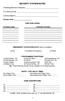 SECURITY SYSTEM NOTES Installing/Service Company For Service Call Central Station Duress Code FUNCTION CODES Function Code Controls Function EMERGENCY ACTIVATION KEYS (check if enabled) Fire Auxiliary
466-1936 Rev E October 2004 ZZZ*(6HFXULW\FRP. Part No: 60-883-95R. CareGard. User Guide
 ) *(6HFXULW\ 466-1936 Rev E October 2004 ZZZ*(6HFXULW\FRP Part No: 60-883-95R CareGard User Guide FCC Notices FCC Part 15 Information to the User Changes or modifications not expressly approved by GE Security
Commander 2000 Control Panel
 Commander 2000 Control Panel Interactive Technologies, Inc. File: Panels Overview Applications Features The Commander 2000 is an affordable wireless security system that is easy to install and easy to
Simon XTi Installation Guide
 Simon XTi Installation Guide Content Contact information... 1 Description... 1 Installation... 1 Connecting hardwired devices... 2 Wiring phone lines... 3 Wiring the power transformer... 4 Resetting memory
NetworX NX-6V2. LED Keypad User Manual
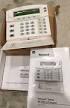 NetworX NX-6V2 LED Keypad User Manual POWER Light is on when AC power is present; flashes to indicate a low battery condition. ARMED Light is on when armed; off when disarmed; flashes to indicate a previous
Destiny 4100. Destiny 4100. Owners Manual
 Destiny 4100 Destiny 4100 Owners Manual TABLE OF CONTENTS INTRODUCTION Control Panel...3 Detection Devices...3 Telephone Keypads...3 GLOSSARY... 4-5 LOCAL PHONE ACCESS Using Your Telephones As Keypads...6
HILLS Series LED Code Pad User Manual
 HILLS Series LED Code Pad User Manual Not all features may be available on your system Check with your installer to find out which features are programmed Page 2 TABLE OF CONTENTS Code Pad Diagrams...2
Understanding the Code Pad lights...4. Code Pad tones...5. Fully arming the system On MODE...6. Fully arming the system - Quick Arm MODE...
 TABLE OF CONTENTS...Glossary of terms...2...code Pad Diagram...3 Understanding the Code Pad lights...4 Code Pad tones...5 Fully arming the system On MODE...6 Fully arming the system - Quick Arm MODE...6
GC2 Panel User Guide
 GC2 Panel User Guide ENGLISH (International) WIRELESS SECURITY SYSTEM WARNING: OWNER S I NSTRUCTION NOTICE Not to be removed by anyone except occupant THIS PAGE INTENTIONALLY LEFT BLANK CONTENTS System
Ademco Vista-20P/First Alert FA-168C Basic Commands
 Zones 64 total Ademco Vista-20P/First Alert FA-168C Basic Commands Wireless Yes, Zones 09 to 48 + 16 Keyfob Zones (Zones 49 to 64) Batteries Downloadable Partitions 2 12 volt Rechargable inside main Panel,
NetworX Series. NX- 4/8 Code Pad. User Manual (Australian Version)
 NetworX Series NX- 4/8 Code Pad User Manual (Australian Version) Table Of Contents Code Pad Diagram... Inside Front Glossary of Terms...2 Understanding the Code Pad lights...3 Code Pad Tones...4 Fully
Control/Communicator Installation Manual
 DAS NETWORX NX-8 Control/Communicator Installation Manual Page General Description... 2 Ordering Information... 2 Option Definitions... 2 Programming the LED Code Pads... 4 Programming the NX-8... 8 Types
Simon XT V2 Installation Manual
 GE Security Simon XT V2 Installation Manual P/N 466-2265-01 REV A ISS 24FEB10 Copyright Disclaimer Trademarks and patents 2010 GE Security, Inc. This document may not be copied in whole or in part or otherwise
Security System Owner s Manual
 Security System Owner s Manual Interactive Technologies Inc. 2266 North 2nd Street North St. Paul, MN 55109 FCC Notices FCC Part 15 Information to the User Changes or modifications not expressly approved
HILLS Series LED Code Pad User Manual
 HILLS Series LED Code Pad User Manual Not all features may be available on your system Check with your installer to find out which features are programmed Page 2 TABLE OF CONTENTS Code Pad Diagrams...2
Simon XT User Manual. 600-1054-95R-11 and 600-1054-95R-11-CN P/N 466-2266-02 REV B ISS 13JAN11
 Simon XT User Manual 600-1054-95R-11 and 600-1054-95R-11-CN P/N 466-2266-02 REV B ISS 13JAN11 Copyright Trademarks and patents Manufacturer FCC compliance Contact information 2011 UTC Fire & Security.
Total Protection Alarm System
 www.skylinkhome.com Total Protection Alarm System MODEL: SC-10 101A073-001 AUG, 2005. CUSTOMER SERVICE 17 Sheard Avenue, Brampton, Ontario, Canada L6Y 1J3 Tel : (800) 304-1187 Fax : (800) 286-1320 Email
GE Concord 4 Quick User Guide
 GE Concord 4 Quick User Guide GE Concord 4 Quick User Guide Page 1 Before Calling Is the keypad beeping? Press *. This will silence the beeping and let you know where the trouble is. Is there a flashing
Using your LED Plus keypad
 Using your LED Plus keypad System 238 System 2316 System 238i System 2316i Part Number 5-051-372-00 Rev B Thank you for purchasing this C&K alarm system Your system is one of the most powerful and advanced
Simon XT Installation Guide
 Simon XT Installation Guide This is the Installation Guide for the Simon XT control panel (models 600-1054-95R-11 and 600-1054-95R-11-CN). The system can monitor up to 40 sensors including: Door/Window
Dialog Telephone Interface Module Installation Sheet
 Dialog Telephone Interface Module Installation Sheet Description The Dialog Telephone Module (DTIM), model number 60-879- 95R, is a battery operated communication link between the security system control
Concord 4 User Manual
 Concord 4 User Manual P/N 466-2183 REV NOV12 Copyright Disclaimer 2012 UTC Fire & Security Americas Corporation, Inc. Interlogix is part of UTC Climate Controls & Security, a unit of United Technologies
Emergency Dialer DIAL-ALERT MODEL: AD-105. www.skylinkhome.com
 www.skylinkhome.com Emergency Dialer TM DIAL-ALERT MODEL: AD-105 If you would like to order Skylink s products or have difficulty getting them to work or download information and user manual, please :
SECTION 13850 DETECTION AND ALARM
 SECTION 13850 DETECTION AND ALARM PART 1 GENERAL 1.01 SUMMARY A. Section Includes 1. Control Panel 2 Associated Equipment B. Products Installed But Not Supplied Under This Section 1. Section 16140 - Wiring
tattletale User Guide Consumer unit version 2.48 1 P a g e
 tattletale User Guide Consumer unit version 2.48 1 P a g e Contents Basic 1... 4 Base Unit Features... 4 Initial Setup... 4 Arming... 5 Disarming... 5 Quiet Button... 5 Settings... 5 Settings 2... 6 Quick
Document No. 466-1763 Rev. D
 i 1 6-4 ) 6 1 ) + + 4, 7 IA HI/ K E@ A 6 Document No. 466-1763 Rev. D ii Commands at a Glance Disarm the system. Cancel an accidental alarm. Arm to Level 2 HOME. Arm to Level 3 AWAY. Send a police alarm.
GSM ALARM SYSTEM USER MANUAL
 GSM ALARM SYSTEM USER MANUAL 1. Instruction The alarm system is based on GSM network. With a GSM SIM card, it can be used wherever you want and no need to connect any wire, which is convenient and easy
www.ealarm.com.my P/N 5-051-371-00 Rev D
 System 236 System 236i P/N 5-051-371-00 Rev D Thank you for purchasing this C&K alarm system Your system is one of the most powerful and advanced alarm systems on the market today, designed to provide
5HDG\*XDUG5 6HFXULW\6\VWHP 8VHU*XLGH K5481-1 8/00 OFF AWAY STAY AUX
 5HDG\*XDUG5 6HFXULW\6\VWHP OFF AWAY STAY AUX 8VHU*XLGH K5481-1 8/00 7$%/(2)&217(176 SYSTEM OVERVIEW...3 Features...3 General Operation...4 Quick View of System Functions...6 About the Master Keypad...7
Simon XT V2 User Manual
 GE Security Simon XT V2 User Manual P/N 466-2266-01 REV A ISS 24FEB10 Copyright Disclaimer Trademarks and patents 2010 GE Security, Inc. This document may not be copied in whole or in part or otherwise
DESTINY OWNER S MANUAL
 DESTINY OWNER S MANUAL DESTINY You have made a wise decision to protect your family and property with the DESTINY Security System. The DESTINY has been designed to provide you with a maximum level of security
WIRELESS ALARM SYSTEM WITH TELEPHONE AUTO DIALER
 BAT.LOW AC WIRELESS ALARM SYSTEM WITH TELEPHONE AUTO DIALER THE SYSTEM THAT CALLS YOU! Our WIRELESS ALARM SYSTEM WITH TELEPHONE AUTO DIALER is designed to allow you to create your own security system.
SECURITY SYSTEM NOTES SPECIAL CODES ENTRY / EXIT DELAY TIMES ARM / DISARM CODES
 SECURITY SYSTEM NOTES Installing/Service Company For Service Call SPECIAL CODES "Chime" Digit 1 "Partial Arm" Digit 2 "Quick Arm" Digit 3 ENTRY / EXIT DELAY TIMES Exit Delay Time Entry Delay Time Secondary
Simon XTi Quick Operation Guide
 Simon XTi Quick Operation Guide This is the Quick Operation Guide for the Simon XTi system (models 600-1054-95R-12 & 600-1054-95R-12-CN). The Simon XTi provides a graphical user interface for programming
TABLE OF CONTENTS HOW TO AVOID FALSE ALARMS... 1
 TABLE OF CONTENTS HOW TO AVOID FALSE ALARMS... 1 THE BRINK S HOME SECURITY SYSTEM Equipment in the Standard Systems... 2 Optional Equipment... 3 Description of the Keypad... 5 OPERATING THE BRINK S SYSTEM
Elite 8D/Lite Version 8 Zone Controller. Arrowhead Alarm Products Ltd. Operating Guide. Proudly Designed and Manufactured in New Zealand
 Elite 8D/Lite Version 8 Zone Controller 8 Arrowhead Alarm Products Ltd Operating Guide 1 Proudly Designed and Manufactured in New Zealand 2 CONTENTS Page No. INTRODUCTION 4 About your Alarm 4 OPERATING
466-1821 Rev D March 2004 ZZZ*(6HFXULW\FRP. Part No: 60-874-95R. Allegro. Installation Instructions
 ) (6HFXULW\ 466-1821 Rev D March 2004 ZZZ(6HFXULW\FRP Part No: 60-874-95R Allegro Installation Instructions Notices FCC Part 15 Information to the User Changes or modifications not expressly approved by
IDS. Users Guide to Keypad Functions S E C U R I T Y MANUAL NO. 700-171-01B ISSUED AUG 2002 VERSION 1.18
 INHEP DIGITAL IDS S E C U R I T Y Users Guide to Keypad Functions MANUAL NO. 700-171-01B ISSUED AUG 2002 VERSION 1.18 Summary of Operation A rm/ disarm [#] + [USER CODE] Quick Quick Quick Away Arm Stay
MODEL 4734 SECURITY SYSTEM OWNER'S MANUAL TABLE OF CONTENTS
 MODEL 4734 SECURITY SYSTEM OWNER'S MANUAL TABLE OF CONTENTS 1 SYSTEM OVERVIEW Page 1 1.1 Introduction 1 1.2 System components 1 1.3 Features 3 1.4 Types of alarms 5 1.5 Other audible signals 6 1.6 Access
Using Your. Security System With Icon Keypad S5020, S5021, S5022
 Using Your Security System With Icon Keypad S5020, S5021, S5022 Contents 1 Overview Your Security System... 1 How Your Security System Works... 2 Your System's Programming... 3 Getting Used to Your System...
Simon XT Installation Manual
 Simon XT Installation Manual P/N 466-2265 REV G OCT12 Copyright Disclaimer 2012 UTC Fire & Security Americas Corporation, Inc. Interlogix is part of UTC Climate Controls & Security, a unit of United Technologies
ICP-CC488. Installation Guide ICP-CC488 Control Panel
 ICP-CC488 EN Installation Guide ICP-CC488 Control Panel ICP-CC488 Installation Guide Notices EN 2 Copyright Notice Unless otherwise indicated, this publication is the copyright of Bosch Security Systems,
HONEYWELL COMMERCIAL FIRE/BURG PANEL UL LISTING REQUIREMENTS (Compiled from VistaFBPT Installation Instructions 800-09617V1 Rev A 11/12)
 HONEYWELL COMMERCIAL FIRE/BURG PANEL UL LISTING REQUIREMENTS (Compiled from VistaFBPT Installation Instructions 800-09617V1 Rev A 11/12) UL864 (Commercial Fire) Compliance General Requirements The VISTA-128FBPT/VISTA250FBPT
Simon XTi Installation Manual
 Simon XTi Installation Manual P/N 466-2451 REV A 15MAR12 Copyright Trademarks and patents Manufacturer FCC compliance Contact information Customer support 2012 UTC Fire & Security. All rights reserved.
FIRST ALERT INSTRUCTION MANUAL FOR FA 270 KEYPADS SECURITY SYSTEM
 FIRST ALERT INSTRUCTION MANUAL FOR FA 270 KEYPADS SECURITY SYSTEM Page 0 Table of Contents Introduction 1 System Basics.. 1 Burglary Protection.. 1 Fire Protection.. 1 Security Codes. 1 Zones and Partitions
WIRELESS ALARM SYSTEM WITH TELEPHONE AUTO DIALER
 BAT.LOW AC WIRELESS ALARM SYSTEM WITH TELEPHONE AUTO DIALER THE SYSTEM THAT CALLS YOU! Our WIRELESS ALARM SYSTEM WITH TELEPHONE AUTO DIALER is designed to allow you to create your own security system.
TABLE OF CONTENTS HOW TO AVOID FALSE ALARMS... 2
 TABLE OF CONTENTS HOW TO AVOID FALSE ALARMS... 2 THE BRINK S HOME SECURITY SYSTEM Equipment in the Standard Systems... 3 Optional Equipment... 4 Optional Features... 5 Description of the Keypad... 6 OPERATING
INSTALLATION MANUAL PC2525. Version 1.1
 INSTALLATION MANUAL PC2525 Version 1.1 TABLE OF CONTENTS FEATURES 1 SPECIFICATIONS 1 INSTALLATION 2 Mounting the Panel... 2 Mounting the Keypad... 2 Auxiliary Power Connection... 2 Bell/Siren Connection...
ADEMCO LYNXR-I Security Systems
 K14117 3/06 Rev. A ADEMCO LYNXR-I Security Systems Quick Start Guide UL LYNXR-I is not intended for UL985 Household Fire applications unless a 24-hour backup battery (P/N LYNXRCHKIT-HC or LYNXRCHKIT-SHA)
TX GSM SMS Auto-dial Alarm System. Installation and User Manual
 TX GSM SMS Auto-dial Alarm System Installation and User Manual Product Features: 1. 16 wireless zones, 3 wired zones alarm system, suitable for small to medium size offices and homes. 2. The system uses
Users Guide to Keypad Functions
 Users Guide to Keypad Functions MANUAL NO. 700-175-01J ISSUED JAN 2002 VERSION 1.41 Summary of Operation A rm/ disarm [#] + [USER CODE] Quick Quick Quick Panic Fire Medical Away Arm Stay Arm Stay Arm &
User Guide for the DS7060 Control/Communicator
 DS7060 User Guide Copyright 1996-97 Detection Systems, Inc. User Guide for the DS7060 Control/Communicator Copyright 1996-97 Detection Systems, Inc. Detection Systems, Inc., 130 Perinton Parkway, Fairport,
SPECIAL CODES AUXILIARY CODES SYSTEM NOTES
 Installing/Service Company Monitoring Center SPECIAL CODES Master Code Duress Code AUXILIARY CODES "Quick Arm" " Chime" 08 02 09 03 10 04 11 05 12 06 13 07 14 SYSTEM NOTES Exit Delay Time Entry Delay Time
PowerWave-8. Users Operating and Programming Guide Version 8.64. 8 zone Control panel Communicator
 ELECTRONIC ENGINEERING LTD. PowerWave-8 8 zone Control panel Communicator Users Operating and Programming Guide Version 8.64 P/N 7101261 Rev. C N.A July 2002 2 Contents Introduction...5 Meet the Crow Alarm
CAD-05 Kit GSM Auto Dialer. Owner s Manual
 CAD-05 Kit GSM Auto Dialer Owner s Manual CAD-05 Kit Manual.indd 1 Warnings: This device complies with Part 15 of the FCC rules, Operation of this device is subject to the following conditions: 1. This
MELALEUCA SECURITY QUICK START GUIDE. 877.760.3444 www.melaleucasecurity.com PROTECTION YOU CAN COUNT ON FROM PEOPLE YOU CAN TRUST
 MELALEUCA SECURITY QUICK START GUIDE 877.760.3444 www.melaleucasecurity.com LICENSES: AL 09-1312, DE 09-172, FL MSI s license number is EG13000363. Alarm companies are regulated by the Department of Business
Wireless Security System
 Wireless Security System 2GIG-CNTRL2 (2GIG-CP2) User s Guide WARNING: Owner s Instruction Notice Not to be removed by anyone except occupant The Go!Control Security System Congratulations on your ownership
AC-115 Compact Networked Single Door Controller. Installation and User Manual
 AC-115 Compact Networked Single Controller Installation and User Manual December 2007 Table of Contents Table of Contents 1. Introduction...5 1.1 Key Features... 6 1.2 Technical Specifications... 7 2.
Wireless Alarm system s manual
 MOUNTVIEW TECH AUSTRALIA PTY LTD Wireless Alarm system s manual ADS A180 Series ADS Security 1/11/2011 1. Before You Begin For your safety and the safety of others, and to ensure that you get the most
Wireless AUTODIAL GSM SMS Home Alarm Security System 900/ 1800/ 1900Mhz(CK-GSM-9003)
 CN2HK LIMITED Wireless AUTODIAL GSM SMS Home Alarm Security System 900/ 1800/ 1900Mhz(CK-GSM-9003) User Manual Please read this manual before operating this product. After you finish reading this manual,
SECURITY SYSTEM NOTES. Security System Configuration
 Installing / Service Company: For Service Call: SECURITY SYSTEM NOTES Security System Configuration Master Code: Auxiliary Code(s) 2 3 4 5 6 "Quick Arm" Digit: Exit Delay Time Auxiliary Exit Delay Time
Customer Care (800) 948-7133. Index. Arming Your System...page 1. Chime Feature...page 4. Access Codes...page 4. Setting the Time and Date...
 Index Arming Your System...page 1 Chime Feature...page 4 Access Codes...page 4 Setting the Time and Date...page 5 Adjusting the Keypad Display/Volume...page 6 Panic Alarms...page 7 Testing Your System...page
NESS D16. 16 Zone Control Panel and Dialler OWNER S MANUAL
 NESS D16 16 Zone Control Panel and Dialler OWNER S MANUAL REVISION 2, JULY 2001 Ness Security Products Pty Ltd Quality Endorsed Company ISO9001 LIC.No. QEC2074 NSW Head Office only WWW.NESS.COM.AU Australia
TABLE OF CONTENTS FEATURES
 TABLE OF CONTENTS FEATURES 2 Keypad Programmable... 2 EEPROM Memory... 2 Static/Lightning Protection... 2 Supervision... 2 Operation... 2 SPECIFICATIONS 2 PC1550 Control Panel... 2 PC1500RK Keypad... 2
Go!Control Panel Installation & Programming Guide
 Go!Control Panel Installation & Programming Guide Firmware Version 1.12 ENGLISH WARNING: OWNER S INSTRUCTION NOTICE Not to be removed by anyone except occupant THIS PAGE INTENTIONALLY LEFT BLANK CONTENTS
Solution-16 Operators Manual ISSUE 1.60
 Solution-16 Operators Manual ISSUE 1.60 !"#$%&"'()*+ Operators Manual Copyright 2002 by, SYDNEY, AUSTRALIA Document Part Number MA880O DOCUMENT ISSUE 1.60 Printed 22 March 2002 This documentation is provided
Simon XTi User Manual
 Simon XTi User Manual Simon XTi P/N 466-2452 REV A 15MAR12 Copyright Trademarks and patents Manufacturer FCC compliance Contact information Customer support 2012 UTC Fire & Security. All rights reserved.
SCORPION Z16040C Alarm Controller User Instructions
 SCORPION Z16040C Alarm Controller User Instructions Thank you for choosing to purchase this micron security alarm controller. Micron product is manufactured to exacting quality standards. We understand
HAM841K ALARM CONTROL PANEL FOR COMMERCIAL AND RESIDENTIAL SECURITY SYSTEMS
 ALARM CONTROL PANEL FOR COMMERCIAL AND RESIDENTIAL SECURITY SYSTEMS USER MANUAL USER MANUAL ALARM CONTROL PANEL FOR COMMERCIAL AND RESIDENTIAL SECURITY SYSTEMS INTRODUCTION The (HA-841K) is a complete
With mini cellular module Quick Installation Guide
 Wireless Alarm System WS-360. With mini cellular module Quick Installation Guide Alarm System Overview Front side: Back side: Basic Steps to Setup Your Alarm System Please follow the following 4 Steps
Simon XTi Installation Guide
 Simon XTi Installation Guide Content Contact information... 1 Description... 1 Installation... 1 Connecting hardwired devices... 2 Wiring phone lines... 3 Wiring the power transformer... 4 Resetting memory
Simon XT. Installation Manual
 Simon XT Installation Manual Pb g Copyright Disclaimer Trademarks and patents Software license agreement Copyright 2007 GE Security. All rights reserved. This document may not be copied in whole or in
SECURITY SYSTEM NOTES SPECIAL CODES AUXILIARY ARM / DISARM CODES ENTRY / EXIT DELAY TIMES ZONE DESCRIPTIONS
 SECURITY SYSTEM NOTES Installing/Service Company For Service Call SPECIAL CODES Master Code Duress Code "Quick Arm" Digit "Chime" Digit "Entry-Guard" Digit AUXILIARY ARM / DISARM CODES 02 12 22 03 13 23
Home Security and Control
 Bright House Networks Home Security and Control Product Description Table of Contents Introduction... 3 Understanding Basic Security Terms and Functionality... 4 Security Zones... 4 Arming Modes... 4 Arm
SECURITY AND HOME AUTOMATION OWNER S MANUAL. 466-1040-01-ITI Rev. F (Text)
 SECURITY AND HOME AUTOMATION OWNER S MANUAL 466-1040-01-ITI Rev. F (Text) Contents Welcome.......................... viii Section 1: Working with Your New Security System..................... 1 What You
ICP-CC488 ICP-CC488 EN. Control Panel. User s Guide
 ICP-CC488 EN User s Guide ICP-CC488 Control Panel ICP-CC488 User's Guide Notices EN 2 Copyright Notice Unless otherwise indicated, this publication is the copyright of Bosch Security Systems, Inc. ( Bosch
Welcome to a whole new level of interactive home security
 Welcome to a whole new level of interactive home security User Manual TouchScreen Key Fob Keychain Remote Web Access Mobile Access ReadyHome User Manual Introducing a whole new level of security for the
AD-01 Slave Auto Dialer. Owner s Manual
 AD-01 Slave Auto Dialer Owner s Manual AD-01 Slave Manual.indd 1 10/15/2009 10:20:44 AM 2 AD-01 Slave Manual.indd 2 10/15/2009 10:20:44 AM Features: Programmable entry/exit delay time; select up to 9 (32
SECURITY SYSTEM NOTES SPECIAL CODES. Security System Configuration
 Installing / Service Company: SECURITY SYSTEM NOTES For Service Call: Master Code SPECIAL CODES Duress Code Security System Configuration Auxiliary Code(s) Quick Arm" Digit: 2 9 3 10 4 11 5 12 6 13 7 14
CONTENTS QUICK SETUP & INSTALLATION USER MANUAL. SUPA8 Quick Setup & User Manual
 SUPA8 Quick Setup & User Manual QUICK SETUP & INSTALLATION CONTENTS FACTORY DEFAULTS... 1 INSTALLATION OF THE SECURITY SYSTEM... 2 COMMISSIONING THE DIALLER PANEL... 5 ZONE INPUT CONNECTIONS... 7 PANEL
Go!Control INSTALL GUIDE WIRELESS SECURITY SYSTEM. Installation and Programming
 INSTALL GUIDE Go!Control Installation and Programming WIRELESS SECURITY SYSTEM WARNING: OWNER S INSTRUCTION NOTICE Not to be removed by anyone except occupant TABLE OF CONTENTS Introduction..............................
S I E R R A PRODUCT INFORMATION GUIDE FOR HOME SECURITY. SIERRA Page 1
 S I E R R A PRODUCT INFORMATION GUIDE FOR HOME SECURITY SIERRA Page 1 C O N T E N T S USING YOUR SIERRA SYSTEM: Turning On/Off Home Arming Instant Home Arming Quick Exit Mode Chime Mode SPECIAL FUNCTIONS:
Wireless Home Security System Product Manual (Model #80355)
 Wireless Home Security System Product Manual (Model #80355) Installation Instructions During set-up, if no key is pressed for 15 seconds it will come out of the setup mode and you will have to start over.
GSM Home Alarm System User Manual. http://www.usmartbuy.com
 GSM Home Alarm System User Manual http://www.usmartbuy.com 1 1. Factory default Normally, all sensors in the big box have been coded (learnt) to the control host Operation Password: 0000 Long-Distance
INTRODUCTION. Underwriter's Laboratories (UL) Listing. Home Automation, Inc. 1
 Home Automation, Inc. 1 INTRODUCTION Thank you for purchasing your new Omni automation system. You are about to enjoy a new feeling of security, peace of mind, and convenience. We at Home Automation, Inc.
How To Use An F145C-1 With A Sim Sims 2 (Aq) And A Sims 1 (Aux) (Aipa) (For Aq) (F145C) (Ios) (Power
 First Alert FA145 Installer Notes M. Leuck 1. Programming can only be done by 6139 Alpha keypads, standard 6128 keypad cannot be used to program zones 2. Program new Master Code in section *20 (old version)
Security System. User's Guide. Keypad
 Security System EN User's Guide Keypad Security System User's Guide This system includes a telephone line seizure feature. The system can be programmed to communicate with a central monitoring station
SECURITY SYSTEM NOTES AREA LISTINGS SPECIAL CODES ENTRY / EXIT DELAY TIMES ARM / DISARM CODES ZONE DESCRIPTIONS
 SECURITY SYSTEM NOTES Installing/Service Company For Service Call Area 1 Area 2 Area 3 AREA LISTINGS SPECIAL CODES "Quick Arm" Digit "Partial Arm" Digit "Chime" Digit ENTRY / EXIT DELAY TIMES Exit Delay
CS848E Receiver for 868GEN2 Devices Installation Sheet
 CS848E Receiver for 868GEN2 Devices Installation Sheet EN 1 2 1 3 4 2 3 EN: Installation Sheet Description The CS848E Receiver adds wireless capabilities to the CS line of control panels. The CS848E allows
User's Manual 5120XM N8031 6/96
 Fire and Burglary System User's Manual 5120XM N8031 6/96 SYSTEM OVERVIEW...3 General...3 Zones...3 Fire & Emergency Protection...3 Burglary Protection...4 Alarms...4 Memory of Alarm...4 ABOUT THE KEYPADS...5