
NRP 2012 Putting New Resuscitation Guidelines into Practice
|
|
|
- Nigel Barton
- 10 years ago
- Views:
Transcription


1 Outreach Education Online Video Library for Healthcare Professionals NRP 2012 Putting New Resuscitation Guidelines into Practice. Jeanette Zaichkin, RN, MN, NNP-BC December 2, 2010 Program Handouts This information is provided as a courtesy by Children's Health Care System and its related organizations (CHCS). Persons accessing this information assume full responsibility for the use of the information and understand and agree that CHCS is not responsible or liable for any claim, loss or damage arising from the use of the information. The views and opinions of the document authors do not necessarily state or reflect those of CHCS. Neither the authors nor CHCS nor any other party who has been involved in the preparation or publication of this work warrants that the information contained herein is in every respect accurate or complete, and they are not responsible for any errors or omissions or for the results obtained from the use of such information.

2 NRP 2011 Raising the Bar for Providers and Instructors What is the same? 1. Minimum course requirement is Lessons 1 through 4 and Lesson 9. The NRP Provider Card requires renewal every 2 years. Your facility may require more frequent renewal. 2. Any person who works with newborns is eligible to take an NRP Provider course; however, the course has little relevance for a person who has never seen a healthy term newborn at birth. 3. All learners may study, practice and demonstrate all NRP skills if desired, including intubation and emergency umbilical venous catheter placement. NRP does not certify or ensure competence to perform these skills in an actual resuscitation. 4. The recommended NRP instructor to learner ratio at a Provider course is 1 instructor: 3-4 learners. Programmatic Changes 1. Two new Performance Checklists: a. Lesson 1: Equipment Check b. Lesson 5: Laryngeal Mask Airway Placement 2. There is no more Renewal Course. Everyone takes a Provider Course tailored to learners needs. 3. Each institution determines its own policy about what happens if NRP provider status expires. 4. The Online Examination is required for the 6 th edition. The 5 th edition examination may be offered as a hard copy exam or online exam until December 31, No more hard copy examination is available after December Provider Course includes little or no lecture, uses course time for hands-on learning, immersive simulations, and constructive debriefings. a. The Performance Skills Stations are optional and used for learning, review, and practice. b. The NRP online examination and Integrated Skills Station (similar to Megacode) are required and used for evaluation. c. The Simulation and Debriefing component is required and used to improve teamwork and communication. 6. Teamwork and communication skills are just as important as cognitive and technical skills. The 10 NRP Key Behavioral Skills are Know your environment. Anticipate and plan. Assume the leadership role. Communicate effectively. Delegate workload optimally. Allocate attention wisely Use all available information. Use all available resources Call for help when needed. Maintain professional behavior. NRP 2011: Raising the Bar for Providers and Instructors: Revised 5/27/11 Page 1 of 6

3 Science Changes 1. The following items are no longer optional in the birth setting, and should be available for every birth: a. Compressed air source b. Oxygen blender to mix oxygen and compressed air with flowmeter c. Pulse oximeter for neonatal use and oximeter probe d. Laryngeal mask airway (size 1) 2. There are 2 levels of post-resuscitation care (instead of 3 levels): a. Routine Care: For vigorous term babies with no risk factors and babies who have responded to the initial steps. Babies who required initial steps may not need to be separated from their mothers after birth to receive close monitoring and further stabilization. b. Post-resuscitation care: For babies who have depressed breathing or activity, and/or require supplemental oxygen. Require frequent evaluation. Some may transition to routine care; others will require ongoing support. Transfer to an intensive care nursery may be necessary. 3. Prior to beginning the steps in the NRP Flow Diagram, ask the OB provider for relevant perinatal history, including these questions: a. What is the gestational age? b. Is the fluid clear? c. How many babies are expected? d. Are there any additional risk factors? 4. At birth, answer 3 questions to determine the need for initial steps at the radiant warmer: a. Is the newborn term? b. Is the newborn breathing or crying? c. Does the newborn have good muscle tone? If any answer is No, the newborn should receive initial steps at the radiant warmer. 5. The vigorous meconium-stained newborn need not receive initial steps at the radiant warmer, but may receive routine care (with appropriate monitoring) with his mother. 6. Routine care of newborn staying with mother: a. Warm (skin-to-skin contact is recommended), clear airway by wiping the baby s mouth and nose if necessary, dry the newborn, provide ongoing evaluation of breathing, activity, and color. 7. Suctioning following birth (including bulb suctioning with a bulb syringe) should be reserved for babies who have obvious obstruction to spontaneous breathing or who require positivepressure ventilation. 8. After clearing the airway as necessary, drying and removing wet linen, repositioning, and stimulating, evaluate respirations and heart rate (not color). a. If HR is less than 100 bpm, or if newborn is apneic or gasping, begin positive-pressure ventilation. b. If HR is more than 100 bpm and respirations are labored, consider CPAP, especially for preterm newborns. 9. Subsequently, evaluation and decision-making are based on respirations, HR, and oxygenation (per pulse oximetry). NRP 2011: Raising the Bar for Providers and Instructors: Revised 5/27/11 Page 2 of 6

4 10. Resuscitation of term newborns may begin with 21% oxygen; resuscitation of preterm newborns may begin with a somewhat higher oxygen concentration. 11. Use pulse oximetry when: a. Resuscitation is anticipated b. PPV is required for more than a few breaths c. Central cyanosis is persistent, or you need to confirm your perception of central cyanosis d. Supplemental oxygen is administered 12. Place the oximeter probe on the newborn s right hand or wrist (measure pre-ductal saturation) and then connect it to the instrument. 13. Using pulse oximetry, supplemental oxygen concentration should be adjusted to achieve the target values for pre-ductal saturations summarized in the table on the NRP Flow Diagram. The table is used for both term and preterm babies. 14. Indications for positive-pressure ventilation: a. Apnea/gasping b. Heart rate below 100 bpm, even if breathing c. Persistent central cyanosis and low oxygen saturation, despite free-flow oxygen increased to 100%. 15. All positive-pressure devices, including the self-inflating bag, should have an integral pressure gauge, or if there is a site for attaching a pressure gauge (manometer), it should be attached. 16. When PPV begins, assess for rising heart rate and improving oxygen saturation (per pulse oximetry). If not evident (within 5-10 breaths), ask your assistant to assess bilateral breath sounds and chest movement. If these are not immediately evident, perform as many of the ventilation corrective steps as needed to achieve bilateral breath sounds and chest movement. 17. Note that the timeline down the side of the NRP Flow Diagram stops here, but it may take longer than 30 seconds to establish effective positive-pressure ventilation (defined by bilateral breath sounds and chest movement). 18. Use MR SOPA to help you remember the ventilation corrective steps in order: M: Adjust the mask on the face. R: Reposition the head to ensure an open airway. Re-attempt ventilation. If not effective, S: Suction the mouth and nose O: Ventilate with the baby s mouth slightly open and lift the jaw forward. Re-attempt ventilation If not effective, P: Gradually increase pressure every few breaths, (cautiously, and to a maximum of 40 cm H 2 0), until there are bilateral breath sounds and visible chest movement. If still not effective, A: Consider airway alternative (endotracheal tube or laryngeal mask airway) 19. Establishing effective ventilations is the highest priority in neonatal resuscitation. Do not start chest compressions without first establishing effective ventilation (defined by audible bilateral breath sounds and chest movement). If heart rate is still below 60 bpm despite 30 seconds of effective positivepressure ventilation, increase the oxygen concentration to 100% and begin chest compressions. 20. When the heart rate is below 60 bpm, the oximeter may not function. When chest compressions begin, increase the oxygen concentration to 100% until the oximeter is giving a reliable signal and can guide the appropriate adjustment of supplemental oxygen. NRP 2011: Raising the Bar for Providers and Instructors: Revised 5/27/11 Page 3 of 6

5 21. Intubation is strongly recommended when chest compressions begin to help ensure effective ventilation. 22. The intubation procedure ideally should be completed within 30 seconds (not 20 seconds). Do not administer free-flow oxygen during the intubation procedure to an apneic newborn. 23. Interruption of chest compressions to check the heart rate may result in a decrease of perfusion pressure in the coronary arteries. Therefore, continue chest compressions and coordinated ventilations for at least seconds before stopping briefly to assess the heart rate. 24. If you anticipate the need to place an emergency umbilical venous catheter, continue chest compressions by moving to the head of the bed (near the infant s head) and continuing the 2- thumb technique. This is most easily accomplished if the newborn is intubated. 25. The laryngeal mask airway has been shown to be an effective alternative for assisting ventilation. Use may be indicated when a. Facial or upper airway malformations render ventilation by mask ineffective. b. Positive-pressure ventilation with a face mask fails to achieve effective ventilation and intubation is not possible. 26. Epinephrine is indicated when the heart rate remains below 60 bpm after 30 seconds of effective assisted ventilation (preferably via endotracheal tube) and at least another seconds of coordinated chest compressions and effective ventilation. 27. The intratracheal route is associated with unreliable absorption and is likely to be ineffective. Nevertheless, since the endotracheal route is the most readily accessible, administration of a dose of epinephrine via an endotracheal tube may be considered while the intravenous route is being established. 28. Epinephrine administration (IV parameters unchanged; note new dose for intratracheal epinephrine) a. Recommended concentration: 1:10,000 (0.1 mg/ml) b. Recommended route: Intravenous (umbilical vein). Consider endotracheal route ONLY while IV access being obtained c. Give rapidly as quickly as possible. d. Recommended IV dose: ml/kg of 1:10,000 solution per umbilical vein in a 1-mL syringe. Follow IV administration of epinephrine with ml flush of normal saline. e. Recommended intratracheal dose: ml/kg of 1:10,000 solution per endotracheal tube in a 3-6 ml syringe. f. Check the newborn heart rate about 1 minute after administering epinephrine (longer if given endotracheally). Epinephrine dose may be repeated every 3-5 minutes. 29. Therapeutic hypothermia following perinatal asphyxia should be a. Used only for babies > 36 weeks gestation and who meet previously defined criteria for this therapy b. Initiated before 6 hours after birth c. Used only by centers with specialized programs equipped to provide the therapy 30. To help keep the preterm baby warm, a. Increase the temperature of the delivery room and the area where the baby will be resuscitated to approximately 25⁰C to 26⁰C (77⁰F-79⁰F) b. Use polyethylene plastic wrap for babies delivered at less than 29 weeks gestation (or 28 weeks and less). Use a sheet of plastic food wrap, a food-grade 1-gallon plastic bag, or a commercially available sheet of polyethylene plastic. c. Place a portable warming pad under layers of towels on the resuscitation table. NRP 2011: Raising the Bar for Providers and Instructors: Revised 5/27/11 Page 4 of 6

6 Information for NRP Instructors 1. HealthStream is the vendor for the 6 th edition NRP online examination. The fee for the exam varies depending on how many exams are purchased and how the examination is accessed. If your institution uses HealthStream as its Learning Management System, your learners may receive the examination in the same way other hospital learning programs are obtained. If your institution is not a HealthStream client, you may purchase online examinations in small or large volume purchases. HealthStream will set up a website for your use. Individuals may also purchase an online examination with a personal credit card. For more information, visit and click on Online Examination. 2. Simulation training is dependent on good methodology, not technology; therefore, sophisticated electronic simulators are not necessary. 3. NRP Instructor Maintenance Requirements (includes Regional Trainers) a. Each current NRP instructor must own a personal copy of the NRP Instructor DVD: An Interactive Tool for Facilitation of Simulation-based Learning and complete the post-dvd education activity by January 1, Your DVD is licensed to one computer and cannot be used on multiple devices after launching the program. Launch it on the computer where it will be viewed! b. Each instructor must teach or co-teach at least 2 courses in the 2 years for which their instructor card is valid. c. Beginning in January 2013, every NRP instructor must take the online examination (Lessons 1 through 9) prior to their instructor status renewal date. Beginning in spring 2011, every instructor may take the online examination once/calendar year if desired at no charge; however, continuing education credit may be awarded only once every two years. 4. NRP Instructor eligibility a. Only registered nurses (including NNPs, CNMs, etc), physicians (MD or DO), respiratory therapists, and physician assistants are eligible to become NRP instructors. There are no exceptions and no waivers. Professionals who became NRP instructors by waiver in the past will maintain their instructor status as long as maintenance requirements are met. b. NRP instructor candidates are required to meet prerequisites prior to their NRP Instructor Course. Instructor candidates must have current NRP provider status (Lessons 1 through 9), produce a letter of recommendation and support from their manager/hospital administrator, pass the 6 th edition online examination in the 30 days before their Instructor Course (Lessons 1 through 9), watch the NRP Instructor DVD and complete the post-dvd education activity, and take the Instructor Self-Assessment, which is included in the NRP Instructor Manual. NRP 2011: Raising the Bar for Providers and Instructors: Revised 5/27/11 Page 5 of 6

7 NRP 6 th Edition Flow Diagram NRP 2011: Raising the Bar for Providers and Instructors: Revised 5/27/11 Page 6 of 6

Addendum to the NRP Provider Textbook 6 th Edition Recommendations for specific modifications in the Canadian context
 Addendum to the NRP Provider Textbook 6 th Edition Recommendations for specific modifications in the Canadian context A subcommittee of the Canadian Neonatal Resuscitation Program (NRP) Steering Committee
NRP Study Guide. This packet is intended for review only. Requirements to successfully complete NRP:
 This packet is intended for review only Requirements to successfully complete NRP: Completed NRP Pretest is required for admission to the course. Score 84% on the multiplechoice posttest. You may be allowed
NEONATAL RESUSCITATION PROVIDER (NRP) RECERTIFICATION TABLE OF CONTENTS
 NEONATAL RESUSCITATION PROVIDER (NRP) RECERTIFICATION TABLE OF CONTENTS NEONATAL FLOW ALGORITHM.2 INTRODUCTION 3 ANTICIPATION OF RESUSCITATION 4 TEMPERATURE CONTROL.4 CLEARING THE AIRWAY OF MECONIUM 5
AHA/AAP Neonatal Resuscitation Guidelines 2010: Summary of Major Changes and Comment on its Utility in Resource-Limited Settings
 AHA/AAP Neonatal Resuscitation Guidelines 2010: Summary of Major Changes and Comment on its Utility in Resource-Limited Settings Resuscitation step Recommendations (2005) Recommendations (2010) Comments/LOE
Neonatal Resuscitation Program 2011: Changes and Controversies
 Neonatal Resuscitation Program 2011: Changes and Controversies Myra H. Wyckoff, MD Associate Professor of Pediatrics UT Southwestern Medical Center at Dallas Disclosures I am not on any speakers bureaus
AHE: NRP AAP/AHA COURSE COMPONENTS
 ADVANCED HEALTHCARE EDUCATION 2011 6 TH EDITION - KEY POINT STUDY GUIDE IMPORTANT INFORMATION FOR STUDENTS REGISTERING FOR CLASSES AFTER 01/011/2012. AAP HAS RESTRUCTURED NRP TO NOW REQUIRE COMPLETION
11 Newborn Life Support
 11 Newborn Life Support Introduction Passage through the birth canal is a hypoxic experience for the fetus, since significant respiratory exchange at the placenta is prevented for the 50-75 s duration
Obstetrical Emergencies
 Date: July 18, 2014 Page 1 of 5 Obstetrical Emergencies Purpose: To provide the process for the assessment and management of the patient with an obstetrical related emergency. Pre-Medical Control 1. Follow
Update on Neonatal Resuscitation
 Update on Neonatal Resuscitation Ola Didrik Saugstad MD, PhD, FRCPE Professor of Pediatrics Director Department of Pediatric Research Rikshospitalet, Faculty of Medicine University of Oslo NORWAY 1st.
Neonatal Emergencies. Care of the Neonate. Care of the Neonate. Care of the Neonate. Student Objectives. Student Objectives continued.
 Student Objectives Neonatal Emergencies After completing this section the student will be able to: 1. Identify three physiologic and/or anatomic features unique to the newborn 2. List three perinatal factors
NRP. Neonatal Resuscitation: Right Care, Right Time, Every Time, Regardless of Place. Instructor Update
 NRP Instructor Update VOL 21 NO 2 fall/winter 2012 Neonatal Resuscitation: Right Care, Right Time, Every Time, Regardless of Place Right care, right time, right place is a familiar phrase for health care
Resuscitation of the baby at birth
 Chapter 8 Resuscitation of the baby at birth Objectives On successfully completing this topic, you will be able to: understand the important physiological differences in the newly born baby understand
(C) AMBULANCE VICTORIA
 The Newborn Baby: Definitions and Contacts Newborn definition 'Newborn' refers to the first min to hours post birth. For the purpose of resuscitation, AV accepts up to the first 24 hours from birth in
5/30/2014 OBJECTIVES THE ROLE OF A RESPIRATORY THERAPIST IN THE DELIVERY ROOM. Disclosure
 THE ROLE OF A RESPIRATORY THERAPIST IN THE DELIVERY ROOM Ona Fofah, MD FAAP Assistant Professor of Pediatrics Director, Division of Neonatology Department of Pediatrics Rutgers- NJMS, Newark OBJECTIVES
AUSTRALIAN AND NEW ZEALAND COLLEGE OF ANAESTHETISTS ABN 82 055 042 852 RECOMMENDATIONS FOR THE POST-ANAESTHESIA RECOVERY ROOM
 Review PS4 (2006) AUSTRALIAN AND NEW ZEALAND COLLEGE OF ANAESTHETISTS ABN 82 055 042 852 RECOMMENDATIONS FOR THE POST-ANAESTHESIA RECOVERY ROOM 1. INTRODUCTION A well-planned, well-equipped, well-staffed
NCPR; Neonatal Cardiopulmonary Resuscitation
 Chapter 4 NCPR; Neonatal Cardiopulmonary Resuscitation NCPR Task Force Chairmen Masanori Tamura, Masaki Wada NCPR Task Force Members Gen Ishikawa, Isao Kusakawa, Keishi Goishi, Takahiro Sugiura, Hisanori
Emergency Medical Services Advanced Level Competency Checklist
 Emergency Services Advanced Level Competency Checklist EMS Service: Current License in State of Nebraska: # (Copy of license kept in file at station) Date of joining EMS Service: EMS Service Member Name:
Neonatal Resuscitation Program (NRP)
 Neonatal Resuscitation Program (NRP) Institute for Simulation & Interprofessional Studies (ISIS) University of Washington Medical Center, Surgery Pavilion 2009 NRP Provider and Renewal Courses May 14 June
Target groups: Paramedics, nurses, respiratory therapists, physicians, and others who manage respiratory emergencies.
 Overview Estimated scenario time: 10 15 minutes Estimated debriefing time: 10 minutes Target groups: Paramedics, nurses, respiratory therapists, physicians, and others who manage respiratory emergencies.
 GUIDELINES FOR HOSPITALS WITH NEONATAL INTENSIVE CARE SERVICE : REGULATION 4 OF THE PRIVATE HOSPITALS AND MEDICAL CLINICS REGULATIONS [CAP 248, Rg 1] I Introduction 1. These Guidelines serve as a guide
RESPIRATORY CRITICAL CARE UNIT STUDENT INTERNSHIP SKILLS LIST Provo School District
 RESPIRATORY CRITICAL CARE UNIT STUDENT INTERNSHIP SKILLS LIST Provo School District The following procedures and items of equipment should be noted, observed and studied during this clinical rotation period.
LIFE SUPPORT TRAINING CENTER
 LIFE SUPPORT TRAINING CENTER (LSTC) Contents Preface Page 1 Basic Life Support Page 3 Advanced Cardiovascular Life Support Page 5 Pediatric Advanced Life Support Page 7 Neonatal Resuscitation Program
Neonatal resuscitation
 Neonatal resuscitation Document title: Neonatal resuscitation Publication date: October 2011 Document number: Document supplement Replaces document: Author: Audience: MN11.5-V2-R16 The document supplement
2011 Pediatric Advanced Life Support (PALS) Classroom Course & Materials Frequently Asked Questions (FAQs) As of November 3, 2011
 2011 Pediatric Advanced Life Support (PALS) Classroom Course & Materials Frequently Asked Questions (FAQs) As of November 3, 2011 Course Information Q: What is the PALS Course? A: The American Heart Association
AMERICAN HEART ASSOCIATION 2010 ACLS GUIDELINES: WHAT EVERY CLINICIAN NEEDS TO KNOW
 AMERICAN HEART ASSOCIATION 2010 ACLS GUIDELINES: WHAT EVERY CLINICIAN NEEDS TO KNOW Joseph Heidenreich, MD Texas A&M Health Science Center Scott & White Memorial Hospital Scott & White Memorial Hospital
Neonatal Reference Guide
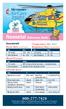 Operated by REACH Air Medical Services Assessment Heart Rate (beats/min.) Age Rate
ACLS Provider Manual Comparison Sheet Based on 2010 AHA Guidelines for CPR and ECC. BLS Changes
 ACLS Provider Manual Comparison Sheet Based on 2010 AHA Guidelines for CPR and ECC CPR Chest compressions, Airway, Breathing (C-A-B) BLS Changes New Old Rationale New science indicates the following order:
EMBARGOED FOR RELEASE
 Systems of Care and Continuous Quality Improvement Universal elements of a system of care have been identified to provide stakeholders with a common framework with which to assemble an integrated resuscitation
THE AIRWAY IN AEROMEDICAL EVACUATION. PBLD (Problem Based Learning Discussion)
 THE AIRWAY IN AEROMEDICAL EVACUATION PBLD (Problem Based Learning Discussion) D. John Doyle MD PhD 2012 Edition Image Credit: http://www.arabianaerospace.aero/media/images/stories/medevac%20services.jpg
Neonatal Reference Guide
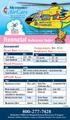 Operated by REACH Air Medical Services Assessment Heart Rate (beats/min.) Rate
2015 Interim Resources for HeartCode ACLS
 2015 Interim Resources for HeartCode ACLS Original Release: November 25, 2015 Starting in 2016, new versions of American Heart Association online courses will be released to reflect the changes published
TRANSPORT OF CRITICALLY ILL PATIENTS
 TRANSPORT OF CRITICALLY ILL PATIENTS Introduction Inter-hospital and intra-hospital transport of critically ill patients places the patient at risk of adverse events and increased morbidity and mortality.
The American Heart Association released new resuscitation science and treatment guidelines on October 19, 2010.
 ACLS Study Guide The American Heart Association released new resuscitation science and treatment guidelines on October 19, 2010. Please read the below information carefully This letter is to confirm your
Regions Hospital Delineation of Privileges Nurse Practitioner
 Regions Hospital Delineation of Privileges Nurse Practitioner Applicant s Last First M. Instructions: Place a check-mark where indicated for each core group you are requesting. Review education and basic
Cardiac Arrest Pediatric Ventricular Fibrillation / Pulseless Ventricular Tachycardia Protocol revised October 2008
 Cardiac Arrest Pediatric Ventricular Fibrillation / Pulseless Ventricular Tachycardia Protocol revised October 2008 Preamble In contrast to cardiac arrest in adults, cardiopulmonary arrest in pediatric
Southern Stone County Fire Protection District Emergency Medical Protocols
 TITLE Pediatric Medical Assessment PM 2.4 Confirm scene safety Appropriate body substance isolation procedures Number of patients Nature of illness Evaluate the need for assistance B.L.S ABC s & LOC Focused
How you can help save lives
 How you can help save lives Through Life Support Training Courses with THE INTERNATIONAL LIFE SUPPORT TRAINING CENTER (ILSTC) TABLE OF CONTENTS Introduction Page 3 Basic Life Support for Healthcare Provider
MINI - COURSE On TEMPERATURE CONTROL IN THE NEWBORN
 MINI - COURSE On TEMPERATURE CONTROL IN THE NEWBORN Instructions: Read each sheet and answer any questions as honestly as possible The first sheets have four questions to allow you to give your thoughts
CPR/AED for Professional Rescuers and Health Care Providers HANDBOOK
 CPR/AED for Professional Rescuers and Health Care Providers HANDBOOK TABLE OF CONTENTS SECTION 1: THE PROFESSIONAL RESCUER The Duty to Respond 2 Preventing the Spread of Bloodborne Pathogens 3 Taking Action
Success Manual and Cheat Sheet Notes to Pass Your Basic Life Support (BLS) Course
 Success Manual and Cheat Sheet Notes to Pass Your Basic Life Support (BLS) Course Written by: Jay Snaric, MS And Kimberly Hickman, RN CPR St. Louis 44 Meramec Valley Plaza St. Louis MO 63088 www.stlcpr.com
NEWBORN LIFE SUPPORT - CLINICAL GUIDELINE 1. Aim/Purpose of this Guideline
 NEWBORN LIFE SUPPORT - CLINICAL GUIDELINE 1. Aim/Purpose of this Guideline This guideline applies to obstetric, midwifery, paediatric, and neonatal staff who may be involved in the resuscitation or stabilisation
PEDIATRIC TREATMENT GUIDELINES
 P1 Pediatric Patient Care P2 Cardiac Arrest Initial Care and CPR P3 Neonatal Resuscitation P4 Ventricular Fibrillation / Ventricular Tachycardia P5 PEA / Asystole P6 Symptomatic Bradycardia P7 Tachycardia
Cardiac Arrest VF/Pulseless VT Learning Station Checklist
 Cardiac Arrest VF/Pulseless VT Learning Station Checklist VF/VT 00 American Heart Association Adult Cardiac Arrest Shout for Help/Activate Emergency Response Epinephrine every - min Amiodarone Start CPR
EDUCATION AND CERTIFICATION MATRIX Sources, Tools and Examples of Evidence
 EDUCATION AND CERTIFICATION MATRIX Sources, Tools and Examples of Evidence ADDENDUM B Recommendations It is important that the education and training of all transport members reflect the mission and scope
A8b. Resuscitation of a Term Infant with Meconium Staining. Session Summary. Session Objectives. References
 A8b Resuscitation of a Term Infant with Meconium Staining Karen Wright, PhD, NNP-BC Assistant Professor and Coordinator, Neonatal Nurse Practitioner Program Dept. of Women, Children, and Family Nursing,
Resuscitation of the baby at birth
 APPENDIX I Resuscitation of the baby at birth I.1 OBJECTIVES This will teach you: I.2 INTRODUCTION the important physiological differences in the newly born baby the equipment used for resuscitation at
AHA Instructor Renewal
 AHA Instructor Renewal Thank you for your continuing on as American Heart Association AHA Instructor! In this packet you will we have provided information on: A detailed outline of the process to renew
CPT Pediatric Coding Updates 2009. The 2009 Current Procedural Terminology (CPT) codes are effective as of January 1, 2009.
 CPT Pediatric Coding Updates 2009 The 2009 Current Procedural Terminology (CPT) codes are effective as of January 1, 2009. NEW CODES Evaluation and Management Services Normal Newborn Care Codes 99431-99440
1.4.4 Oxyhemoglobin desaturation
 Critical Care Therapy and Respiratory Care Section Category: Clinical Section: Clinical Monitoring Title: Monitoring of Patients Undergoing Conscious Sedation Policy #: 09 Revised: 05/00 1.0 DESCRIPTION
Improving Perinatal Safety: Managing Risk. Simulation User Network San Diego Dec 1-2, 2010. Teri Kiehn MS, RNC
 Improving Perinatal Safety: Managing Risk Simulation User Network San Diego Dec 1-2, 2010 Teri Kiehn MS, RNC Objectives Discuss the medical/legal environment in the Perinatal area Identify issues specific
Children's Medical Services (CMS) Regional Perinatal Intensive Care Center (RPICC) Neonatal Extracorporeal Life Support (ECLS) Centers Questionnaire
 Children's Medical Services (CMS) Regional Perinatal Intensive Care Center (RPICC) Neonatal Extracorporeal Life Support (ECLS) Centers Questionnaire Date: RPICC Facility: CMS use only Include the following
*Reflex withdrawal from a painful stimulus is NOT considered a purposeful response.
 Analgesia and Moderate Sedation This Nebraska Board of Nursing advisory opinion is issued in accordance with Nebraska Revised Statute (NRS) 71-1,132.11(2). As such, this advisory opinion is for informational
CODE BLUE IN HOUSE (UGH!!!) We only have ONE shot at this!!!
 CODE BLUE IN HOUSE (UGH!!!) We only have ONE shot at this!!! Realities We are all nervous! What happens What should happen Room is Chaotic Everyone is yelling, screaming Strict order must be kept Only
Screening for Critical Congenital Heart Disease in the Apparently Healthy Newborn
 Screening for Critical Congenital Heart Disease in the Apparently Healthy Newborn A presentation of Texas Pulse Oximetry Project: A Joint Educational Initiative of The University of Texas Health Science
PRIMARY CARE PRACTICE GUIDELINES
 1 of 6 1. OUTCOME To identify anaphylaxis in the primary care setting and provide an evidence informed emergency response utilizing the most current provincial and federal practice guidelines. 2. DEFINITIONS
ROC CONTINUOUS CHEST COMPRESSIONS STUDY (CCC): MEDICAL CARDIAC ARREST MEDICAL DIRECTIVE
 ROC CONTINUOUS CHEST COMPRESSIONS STUDY (CCC): MEDICAL CARDIAC ARREST MEDICAL DIRECTIVE An Advanced Care Paramedic will provide the treatment based on the randomization scheme and as prescribed in this
Approved and Funded Neonatal Resuscitation Program (NRP) Research Grants and Young Investigator Awards
 Approved and Funded Neonatal Resuscitation Program (NRP) Research Grants and Young Investigator Awards 2015 Meconium aspiration syndrome and non vigorous neonates pilot study, St Louis, MO TM Identification
ADMINISTERING EMERGENCY OXYGEN
 FACT SHEET ADMINISTERING EMERGENCY OXYGEN Emergency oxygen can be given for many breathing and cardiac emergencies. It can help improve hypoxia (insufficient oxygen reaching the cells) and reduce pain
Cardiac Arrest - Ventricular Fibrillation / Pulseless Ventricular Tachycardia Protocol revised October 2008
 Cardiac Arrest - Ventricular Fibrillation / Pulseless Ventricular Tachycardia Protocol revised October 2008 Preamble Survival from cardiorespiratory arrest for patients who present with ventricular fibrillation
Nurses Competencies in Caring for Mechanically Ventilated Patients, What does the Evidence Say? Dr. Samah Anwar Dr. Noha El-Baz
 Nurses Competencies in Caring for Mechanically Ventilated Patients, What does the Evidence Say? Dr. Samah Anwar Dr. Noha El-Baz The mechanically ventilated patient presents many challenges for the intensive
ST. ROSE HOSPITAL Job Description
 ST. ROSE HOSPITAL Job Description JOB TITLE/CLASSIFICATION... REGISTERED RESPIRATORY THERAPIST (RRT) (163) DEPARTMENT... PULMONARY SERVICES STATUS... NON-EXEMPT RELATIONSHIPS Reports to... PULMONARY SUPERVISOR
SARASOTA MEMORIAL HOSPITAL NURSING PROCEDURE
 SARASOTA MEMORIAL HOSPITAL NURSING PROCEDURE TITLE: MAGNESIUM SULFATE ADMINISTRATION FOR ANTEPARTUM AND INTRAPARTUM PATIENTS WITH PRE-TERM LABOR DATE: REVIEWED: PAGES: 6/92 08/11 1 of 6 ISSUED FOR: Nursing
81 First Responder Respiratory
 81 First Responder Medical Scenarios Asthma Scenario: You are called to a local house for a woman with trouble breathing. You arrive to find a 67-year-old woman sitting upright in a chair. She states she
Neonatal Outreach Education Program Course Catalog
 2012 Neonatal Outreach Education Program Course Catalog Photo by Brian Redden (559) 353-5615 (559) 353-6255 Table of Contents Program Overview... 2 General Course Information... 3 Save The Date Children
X-Plain Subclavian Inserted Central Catheter (SICC Line) Reference Summary
 X-Plain Subclavian Inserted Central Catheter (SICC Line) Reference Summary Introduction A Subclavian Inserted Central Catheter, or subclavian line, is a long thin hollow tube inserted in a vein under the
Guidelines for Standards of Care for Patients with Acute Respiratory Failure on Mechanical Ventilatory Support
 Guidelines for Standards of Care for Patients with Acute Respiratory Failure on Mechanical Ventilatory Support Copyright by the SOCIETY OF CRITICAL CARE MEDICINE These guidelines can also be found in the
Breathing and Holding Your Breath copyright, 2005, Dr. Ingrid Waldron and Jennifer Doherty, Department of Biology, University of Pennsylvania 1
 Breathing and Holding Your Breath copyright, 2005, Dr. Ingrid Waldron and Jennifer Doherty, Department of Biology, University of Pennsylvania 1 Introduction Everybody breathes all day, every day. Why?
Virginia Office of Emergency Medical Services Scope of Practice - Procedures for EMS Personnel
 Specific tasks in this document shall refer to the Virginia Education Standards. AIRWAY TECHNIQUES Airway Adjuncts Airway Maneuvers Alternate Airway Devices Cricothyrotomy Obstructed Airway Clearance Intubation
Infant CPR. What You Need to Know. How to Do Infant CPR
 Infant CPR Infant CPR also called Cardiopulmonary resuscitation is emergency care given to a baby who has stopped breathing. This sheet has the steps for CPR for newborns or babies less than 1 year old.
SARASOTA MEMORIAL HOSPITAL DEPARTMENT POLICY
 PS1006 SARASOTA MEMORIAL HOSPITAL DEPARTMENT POLICY TITLE: NON-INVASIVE POSITIVE PRESSURE (NPPV) VENTILATION (CPAP/BIPAP) Job Title of Reviewer: EFFECTIVE DATE: REVISED DATE: POLICY TYPE: Director, Respiratory
First Responder (FR) and Emergency Medical Responder (EMR) Progress Log
 First Responder (FR) and Emergency Medical Responder (EMR) Progress Log Note: Those competencies that are for EMR only are denoted by boldface type. For further details on the National Occupational Competencies
Oxygenation. Chapter 21. Anatomy and Physiology of Breathing. Anatomy and Physiology of Breathing*
 Oxygenation Chapter 21 Anatomy and Physiology of Breathing Inspiration ~ breathing in Expiration ~ breathing out Ventilation ~ Movement of air in & out of the lungs Respiration ~ exchange of O2 & carbon
EMMC Class Catalog ACLS CHALLENGE FAST TRACK. To Register, go to: https://www.emmc.org/etc_registration.aspx
 ACLS CHALLENGE FAST TRACK CNE: 0.0 CME: 2.0 This Challenge Fast Track, taught according to the 2010 guidelines, is designed for healthcare providers who either direct or participate in the resuscitation
American Heart Association
 American Heart Association Basic Life Support for Healthcare Providers Pretest April 2006 This examination to be used only as a PRECOURSE TEST For BLS for Healthcare Providers Courses 2006 American Heart
Procedure for Inotrope Administration in the home
 Procedure for Inotrope Administration in the home Purpose This purpose of this procedure is to define the care used when administering inotropic agents intravenously in the home This includes: A. Practice
2011 Advanced Cardiovascular Life Support (ACLS) Classroom Course & Materials Frequently Asked Questions (FAQs) As of July 21, 2011
 2011 Advanced Cardiovascular Life Support (ACLS) Classroom Course & Materials Frequently Asked Questions (FAQs) As of July 21, 2011 Course Information Q: What is the Advanced Cardiovascular Life Support
DEBRIEFING GUIDE. The key components of an optimal code response: 1. Early recognition that the patient is deteriorating or has become unresponsive.
 DEBRIEFING GUIDE I N T R O D U C T I O N Debriefing has been shown to improve clinical behavior during cardiac resuscitation and, as such, has become a recommended procedure in the 2010 American Heart
Levels of Critical Care for Adult Patients
 LEVELS OF CARE 1 Levels of Critical Care for Adult Patients STANDARDS AND GUIDELINES LEVELS OF CARE 2 Intensive Care Society 2009 All rights reserved. No reproduction, copy or transmission of this publication
UMBILICAL CORD CLAMPING FOR TERM INFANTS 37 WEEKS
 UMBILICAL CORD CLAMPING FOR TERM INFANTS 37 WEEKS This guideline refers to umbilical cord clamping in term infants (those 37 weeks gestational age) DEFINITION Immediate (early) cord clamping (ICC): the
Update on Small Animal Cardiopulmonary Resuscitation (CPR)- is anything new?
 Update on Small Animal Cardiopulmonary Resuscitation (CPR)- is anything new? DVM, DACVA Objective: Update on the new Small animal guidelines for CPR and a discussion of the 2012 Reassessment Campaign on
BLS PRETEST BASIC LIFE SUPPORT FOR HEALTHCARE PROVIDERS (CREATED BY LAST MINUTE CPR & FIRST AID)
 BLS PRETEST BASIC LIFE SUPPORT FOR HEALTHCARE PROVIDERS (CREATED BY LAST MINUTE CPR & FIRST AID) 1. THIS BLS FOR HEALTHCARE PROVIDERS COURSE IS GIVEN TO: a. Nurses, Doctors, Paramedics, & Healthcare Workers.
RESPONDING TO ANESTHETIC COMPLICATIONS
 RESPONDING TO ANESTHETIC COMPLICATIONS General anesthesia poses minimal risk to most patients when performed by a capable anesthetist using appropriate protocols and proper monitoring. However, it is vitally
Airway and Breathing Skills Levels Interpretive Guidelines
 Office of Emergency Medical Services and Trauma INDEX EFFECTIVE LAST REVIEW PAGES VERSION R-P11A 7/1/2011 7/1/2011 5 2011 Scope of Practice for EMS Personnel Emergency Medical Personnel are permitted to
INTERFACILITY TRANSFERS
 POLICY NO: 7013 PAGE 1 OF 8 EFFECTIVE DATE: 07-01-06 REVISED DATE: 03-15-12 APPROVED: Bryan Cleaver EMS Administrator Dr. Mark Luoto EMS Medical Director AUTHORITY: Health and Safety Code, Section 1798.172,
EMERGENCY MEDICAL TECHNICIAN
 EMERGENCY MEDICAL TECHNICIAN Lisa Cookston ROP Career Specialist Orange County Emergency Medical Services EMT Externship Goal to understand and participate in supplementing current EMT curriculum with
NOC: 3214. Occupation: Respiratory Therapist
 NOC: 3214 Occupation: Respiratory Therapist Occupation Description: Responsibilities include assisting in the diagnosis, treatment and care of residents with respiratory and cardiopulmonary disorders.
EMERGENCY MEDICAL RESPONDER (EMR) PRACTICAL SKILLS EXAMINATION REPORT State Form 54407 (R / 5-13)
 EMERGENCY MEDICAL RESPONDER (EMR) PRACTICAL SKILLS EXAMINATION REPT State Form 54407 (R / 5-3) INDIANA DEPARTMENT OF HOMELAND SECURITY EMERGENCY MEDICAL SERVICES CERTIFICATION 302 West Washington Street,
The EMT Instructional Guidelines in this section include all the topics and material at the EMR level PLUS the following material:
 Airway Management, Respiration and Artificial Ventilation EMR Applies knowledge (fundamental depth, foundational breadth) of general anatomy and physiology to assure a patent airway, adequate mechanical
My Birth Experience at Mercy
 My Birth Experience at Mercy This booklet provides information about labor and birth practices at Mercy and includes an optional birth plan that you can complete prior to your baby s birth. Discuss your
Northwestern Health Sciences University. Basic Life Support for Healthcare Providers
 Northwestern Health Sciences University Basic Life Support for Healthcare Providers Pretest May 2005 This examination to be used only as a PRECOURSE TEST for BLS for Healthcare Providers Courses Based
Official Online ACLS Exam
 \ Official Online ACLS Exam Please fill out this form before you take the exam. Name : Email : Phone : 1. Hypovolemia initially produces which arrhythmia? A. PEA B. Sinus tachycardia C. Symptomatic bradyarrhythmia