
Cardiac Arrest VF/Pulseless VT Learning Station Checklist
|
|
|
- Melina Osborne
- 10 years ago
- Views:
Transcription
1 Cardiac Arrest VF/Pulseless VT Learning Station Checklist VF/VT 00 American Heart Association Adult Cardiac Arrest Shout for Help/Activate Emergency Response Epinephrine every - min Amiodarone Start CPR Give oxygen Attach monitor/defibrillator 0 9 If no signs of return of spontaneous circulation (ROSC), go to 0 or If ROSC, go to Post Cardiac Arrest Care Asystole/PEA Epinephrine every - min Go to or CPR Quality Push hard ( inches [ cm]) and fast ( 00/min) and allow complete chest recoil Minimize interruptions in Avoid excessive ventilation Rotate compressor every minutes If no advanced airway, 0: compressionventilation ratio Quantitative waveform If Petco <0 mm Hg, attempt to improve CPR quality Intra-arterial pressure If relaxation phase (diastolic) pressure <0 mm Hg, attempt to improve CPR quality Return of Spontaneous Circulation (ROSC) Pulse and blood pressure Abrupt sustained increase in Petco (typically 0 mm Hg) Spontaneous arterial pressure waves with intra-arterial monitoring Energy Biphasic: Manufacturer recommendation (eg, initial dose of 0-00 J); if unknown, use maximum available. Second and subsequent doses should be equivalent, and higher doses may be considered. Monophasic: 0 J Drug Therapy Epinephrine IV/IO Dose: mg every - minutes Vasopressin IV/IO Dose: 0 units can replace first or second dose of epinephrine Amiodarone IV/IO Dose: First dose: 00 mg bolus. Second dose: 0 mg. Advanced Airway Supraglottic advanced airway or endotracheal intubation Waveform to confirm and monitor ET tube placement -0 breaths per minute with continuous chest
![or CPR Quality Push hard ( inches [ cm]) and fast ( 00/min) and allow complete chest recoil Minimize interruptions in Avoid excessive ventilation Rotate compressor every minutes If no advanced](/docs-images/40/2813428/images/page_1.jpg "airway, 0: compressionventilation ratio Quantitative waveform If Petco <0 mm Hg, attempt to improve CPR quality Intra-arterial pressure If relaxation phase (diastolic) pressure <0 mm Hg, attempt to")
2 Cardiac Arrest PEA/Asystole Learning Station Checklist VF/VT Epinephrine every - min Amiodarone 00 American Heart Association Adult Cardiac Arrest Shout for Help/Activate Emergency Response Start CPR Give oxygen Attach monitor/defibrillator 0 9 If no signs of return of spontaneous circulation (ROSC), go to 0 or If ROSC, go to Post Cardiac Arrest Care Asystole/PEA Epinephrine every - min Go to or CPR Quality Push hard ( inches [ cm]) and fast ( 00/min) and allow complete chest recoil Minimize interruptions in Avoid excessive ventilation Rotate compressor every minutes If no advanced airway, 0: compressionventilation ratio Quantitative waveform If Petco <0 mm Hg, attempt to improve CPR quality Intra-arterial pressure If relaxation phase (diastolic) pressure <0 mm Hg, attempt to improve CPR quality Return of Spontaneous Circulation (ROSC) Pulse and blood pressure Abrupt sustained increase in Petco (typically 0 mm Hg) Spontaneous arterial pressure waves with intra-arterial monitoring Energy Biphasic: Manufacturer recommendation (eg, initial dose of 0-00 J); if unknown, use maximum available. Second and subsequent doses should be equivalent, and higher doses may be considered. Monophasic: 0 J Drug Therapy Epinephrine IV/IO Dose: mg every - minutes Vasopressin IV/IO Dose: 0 units can replace first or second dose of epinephrine Amiodarone IV/IO Dose: First dose: 00 mg bolus. Second dose: 0 mg. Advanced Airway Supraglottic advanced airway or endotracheal intubation Waveform to confirm and monitor ET tube placement -0 breaths per minute with continuous chest
![CPR Quality Push hard ( inches [ cm]) and fast ( 00/min) and allow complete chest recoil Minimize interruptions in Avoid excessive ventilation Rotate compressor every minutes If no advanced airway,](/docs-images/40/2813428/images/page_2.jpg "0: compressionventilation ratio Quantitative waveform If Petco <0 mm Hg, attempt to improve CPR quality Intra-arterial pressure If relaxation phase (diastolic) pressure <0 mm Hg, attempt to improve")
3 Immediate Post Cardiac Arrest Care Learning Station Checklist Adult Immediate Post Cardiac Arrest Care Consider induced hypothermia Coronary reperfusion Return of Spontaneous Circulation (ROSC) Optimize ventilation and oxygenation Maintain oxygen saturation 9% Consider advanced airway and waveform Do not hyperventilate Treat hypotension (SBP <90 mm Hg) IV/IO bolus Vasopressor infusion Consider treatable causes -Lead ECG Follow commands? STEMI high suspicion of AMI Advanced critical care Ventilation/Oxygenation Avoid excessive ventilation. Start at 0- breaths/min and titrate to target Petco of -0 mm Hg. When feasible, titrate Fio to minimum necessary to achieve Spo 9%. IV Bolus - L normal saline or lactated Ringer s. If inducing hypothermia, may use C fluid. Epinephrine IV Infusion: mcg/kg per minute (in 0-kg adult: - mcg per minute) Dopamine IV Infusion: -0 mcg/kg per minute repinephrine IV Infusion: mcg/kg per minute (in 0-kg adult: - mcg per minute) 00 American Heart Association

4 Bradycardia Learning Station Checklist Adult Bradycardia (With Pulse) Assess appropriateness for clinical condition. Heart rate typically <0/min if bradyarrhythmia. Identify and treat underlying cause Maintain patent airway; assist breathing as necessary Oxygen (if hypoxemic) Cardiac monitor to identify rhythm; monitor blood pressure and oximetry IV access -Lead ECG if available; don t delay therapy Monitor and observe Persistent bradyarrhythmia causing: Hypotension? Acutely altered mental status? Signs of shock? Ischemic chest discomfort? Acute heart failure? Atropine If atropine ineffective: Transcutaneous pacing Dopamine infusion Epinephrine infusion Atropine IV Dose: First dose: 0. mg bolus Repeat every - minutes Maximum: mg Dopamine IV Infusion: -0 mcg/kg per minute Epinephrine IV Infusion: -0 mcg per minute Consider: Expert consultation Transvenous pacing 00 American Heart Association

5 Tachycardia Learning Station Checklist Adult Tachycardia (With Pulse) Assess appropriateness for clinical condition. Heart rate typically 0/min if tachyarrhythmia. Identify and treat underlying cause Maintain patent airway; assist breathing as necessary Oxygen (if hypoxemic) Cardiac monitor to identify rhythm; monitor blood pressure and oximetry Persistent tachyarrhythmia causing: Hypotension? Acutely altered mental status? Signs of shock? Ischemic chest discomfort? Acute heart failure? Wide QRS? 0. second IV access and -lead ECG if available Vagal maneuvers Adenosine (if regular) ß-Blocker or calcium channel blocker Consider expert consultation Synchronized cardioversion Consider sedation If regular narrow complex, consider adenosine IV access and -lead ECG if available Consider adenosine only if regular and monomorphic Consider antiarrhythmic infusion Consider expert consultation 00 American Heart Association Synchronized Cardioversion Initial recommended doses: Narrow regular: 0-00 J Narrow irregular: 0-00 J biphasic or 00 J monophasic Wide regular: 00 J Wide irregular: defibrillation dose (NOT synchronized) Adenosine IV Dose: First dose: mg rapid IV push; follow with NS flush. Second dose: mg if required. Antiarrhythmic Infusions for Stable Wide-QRS Tachycardia Procainamide IV Dose: 0-0 mg/min until arrhythmia suppressed, hypotension ensues, QRS duration increases >0%, or maximum dose mg/kg given. Maintenance infusion: - mg/min. Avoid if prolonged QT or CHF. Amiodarone IV Dose: First dose: 0 mg over 0 minutes. Repeat as needed if VT recurs. Follow by maintenance infusion of mg/min for first hours. Sotalol IV Dose: 00 mg (. mg/kg) over minutes. Avoid if prolonged QT.

ACLS PRE-TEST ANNOTATED ANSWER KEY
 ACLS PRE-TEST ANNOTATED ANSWER KEY June, 2011 Question 1: Question 2: There is no pulse with this rhythm. Question 3: Question 4: Question 5: Question 6: Question 7: Question 8: Question 9: Question 10:
Present : PGY 王 淳 峻 Supervisor: F1 王 德 皓 991109
 Present : PGY 王 淳 峻 Supervisor: F1 王 德 皓 991109 Interventions to prevent cardiac arrest + Airway management + Ventilation support + Treatment of bradyarrhythmias & Tachyarrhythmias Treat cardiac arrest
ACLS Study Guide BLS Overview CAB
 ACLS Study Guide The ACLS Provider exam is 50-mutiple choice questions. Passing score is 84%. Student may miss 8 questions. For students taking ACLS for the first time or renewing students with a current
ACLS Provider Manual Comparison Sheet Based on 2010 AHA Guidelines for CPR and ECC. BLS Changes
 ACLS Provider Manual Comparison Sheet Based on 2010 AHA Guidelines for CPR and ECC CPR Chest compressions, Airway, Breathing (C-A-B) BLS Changes New Old Rationale New science indicates the following order:
If you do not wish to print the entire pre-test you may print Page 2 only to write your answers, score your test, and turn in to your instructor.
 This is a SAMPLE of the pretest you can access with your AHA PALS Course Manual at Heart.org/Eccstudent using your personal code that comes with your PALS Course Manual The American Heart Association strongly
Official Online ACLS Exam
 \ Official Online ACLS Exam Please fill out this form before you take the exam. Name : Email : Phone : 1. Hypovolemia initially produces which arrhythmia? A. PEA B. Sinus tachycardia C. Symptomatic bradyarrhythmia
E C C. American Heart Association. Advanced Cardiovascular Life Support. Written Exams. May 2011
 E C C American Heart Association Advanced Cardiovascular Life Support Written Exams Contents: Exam Memo Student Answer Sheet Version A Exam Version A Answer Key Version A Reference Sheet Version B Exam
Michigan Adult Cardiac Protocols CARDIAC ARREST GENERAL. Date: May 31, 2012 Page 1 of 5
 Date: May 31, 2012 Page 1 of 5 Cardiac Arrest General This protocol should be followed for all adult cardiac arrests. Medical cardiac arrest patients undergoing attempted resuscitation should not be transported
American Heart Association ACLS Pre-Course Self Assessment Dec., 2006. ECG Analysis. Name the following rhythms from the list below:
 American Heart Association ACLS Pre-Course Self Assessment Dec., 2006 ECG Analysis This pre-test is exactly the same as the pretest on the ACLS Provider manual CD. This paper version can be completed in
ACLS Cardiac Arrest Algorithm Neumar, R. W. et al. Circulation 2010;122:S729-S767
 ACLS Cardiac Arrest Algorithm Neumar, R. W. et al. Circulation 2010;122:S729-S767 Copyright 2010 American Heart Association ACLS Cardiac Arrest Circular Algorithm Neumar, R. W. et al. Circulation 2010;122:S729-S767
DEBRIEFING GUIDE. The key components of an optimal code response: 1. Early recognition that the patient is deteriorating or has become unresponsive.
 DEBRIEFING GUIDE I N T R O D U C T I O N Debriefing has been shown to improve clinical behavior during cardiac resuscitation and, as such, has become a recommended procedure in the 2010 American Heart
ACLS PHARMACOLOGY 2011 Guidelines
 ACLS PHARMACOLOGY 2011 Guidelines ADENOSINE Narrow complex tachycardias or wide complex tachycardias that may be supraventricular in nature. It is effective in treating 90% of the reentry arrhythmias.
E C C. American Heart Association. Advanced Cardiovascular Life Support. Written Precourse Self-Assessment. May 2011. 2011 American Heart Association
 E C C American Heart Association Advanced Cardiovascular Life Support Written Precourse Self-Assessment May 2011 2011 American Heart Association 2011 ACLS Written Precourse Self-Assessment 1. Ten minutes
IU Health ACLS Study Guide
 IU Health ACLS Study Guide Preparing for your upcoming ACLS Class REVISED SEPTEMBER 2011 ON APRIL 1, 2011 WE BEGAN TEACHING THE 2010 AHA GUIDELINES. WE HIGHLY RECOMMEND REVIEWING THE NEW ALGORYHMS FOUND
CRNA ACLS, PALS, & BLS REFRESHER
 Attn: Certified Nurse Anesthetists (CRNA) CPR Consultants, Inc. 7404 G Chapel Hill Road, Raleigh, NC, 27607 CRNA ACLS, PALS, & BLS REFRESHER CRNA American Heart Association Triple Certification (BLS, ACLS,
Cardiac Arrest Pediatric Ventricular Fibrillation / Pulseless Ventricular Tachycardia Protocol revised October 2008
 Cardiac Arrest Pediatric Ventricular Fibrillation / Pulseless Ventricular Tachycardia Protocol revised October 2008 Preamble In contrast to cardiac arrest in adults, cardiopulmonary arrest in pediatric
Crash Cart Drugs Drugs used in CPR. Dr. Layla Borham Professor of Clinical Pharmacology Umm Al Qura University
 Crash Cart Drugs Drugs used in CPR Dr. Layla Borham Professor of Clinical Pharmacology Umm Al Qura University Introduction A list of the drugs kept in the crash carts. This list has been approved by the
Megacode Testing Checklist 1/2 Bradycardia VF/Pulseless VT Asystole ROSC
 Megacode Testing Checklist 1/2 Bradycardia VF/Pulseless VT Asystole ROSC Student Name: Test Bradycardia Management Recognizes symptomatic bradycardia Administers correct dose of atropine Prepares for second-line
Team Leader. Ensures high-quality CPR at all times Assigns team member roles Ensures that team members perform well. Bradycardia Management
 ACLS Megacode Case 1: Sinus Bradycardia (Bradycardia VF/Pulseless VT Asystole Out-of-Hospital Scenario You are a paramedic and arrive on the scene to find a 57-year-old woman complaining of indigestion.
AMERICAN HEART ASSOCIATION 2010 ACLS GUIDELINES: WHAT EVERY CLINICIAN NEEDS TO KNOW
 AMERICAN HEART ASSOCIATION 2010 ACLS GUIDELINES: WHAT EVERY CLINICIAN NEEDS TO KNOW Joseph Heidenreich, MD Texas A&M Health Science Center Scott & White Memorial Hospital Scott & White Memorial Hospital
Cardiac Arrest - Ventricular Fibrillation / Pulseless Ventricular Tachycardia Protocol revised October 2008
 Cardiac Arrest - Ventricular Fibrillation / Pulseless Ventricular Tachycardia Protocol revised October 2008 Preamble Survival from cardiorespiratory arrest for patients who present with ventricular fibrillation
New resuscitation science and American Heart Association treatment guidelines were released October 28, 2010!
 ACLS Study Guide 2010 Bulletin: New resuscitation science and American Heart Association treatment guidelines were released October 28, 2010! The new AHA Handbook of Emergency Cardiac Care (ECC) contains
Community Ambulance Service of Minot ALS Standing Orders Legend
 Legend Indicates General Information and Guidelines Indicates Procedures Indicates Medication Administration Indicates Referral to Other Protocol Indicates Referral to Online Medical Direction Pediatric
Management of Adult Cardiac Arrest
 73991_CH27_page68-73.qxd 6/6/11 3:54 PM Page 68 27.68 Section 5 Medical Guidelines for Performing a 12-Lead ECG The only way to learn how to obtain a 12-lead ECG is to practice with the equipment itself.
ROC CONTINUOUS CHEST COMPRESSIONS STUDY (CCC): MEDICAL CARDIAC ARREST MEDICAL DIRECTIVE
 ROC CONTINUOUS CHEST COMPRESSIONS STUDY (CCC): MEDICAL CARDIAC ARREST MEDICAL DIRECTIVE An Advanced Care Paramedic will provide the treatment based on the randomization scheme and as prescribed in this
PRO-CPR. 2015 Guidelines: PALS Algorithm Overview. (Non-AHA supplementary precourse material)
 PRO-CPR 2015 Guidelines: PALS Algorithm Overview (Non-AHA supplementary precourse material) Please reference Circulation (from our website), the ECC Handbook, or the 2015 ACLS Course Manual for correct
PALS Interim Study Guide
 PALS Interim Study Guide 2006 Bulletin: New resuscitation science and American Heart Association treatment guidelines were released November 28, 2005! The new AHA Handbook of Emergency Cardiac Care (ECC)
8 Peri-arrest arrhythmias
 8 Peri-arrest arrhythmias Introduction Cardiac arrhythmias are relatively common in the peri-arrest period. They are common in the setting of acute myocardial infarction and may precipitate ventricular
PEDIATRIC TREATMENT GUIDELINES
 P1 Pediatric Patient Care P2 Cardiac Arrest Initial Care and CPR P3 Neonatal Resuscitation P4 Ventricular Fibrillation / Ventricular Tachycardia P5 PEA / Asystole P6 Symptomatic Bradycardia P7 Tachycardia
Update on Small Animal Cardiopulmonary Resuscitation (CPR)- is anything new?
 Update on Small Animal Cardiopulmonary Resuscitation (CPR)- is anything new? DVM, DACVA Objective: Update on the new Small animal guidelines for CPR and a discussion of the 2012 Reassessment Campaign on
2010 American Heart Association Guidelines for Cardiopulmonary Resuscitation and Emergency Cardiovascular Care
 2010 American Heart Association Guidelines for Cardiopulmonary Resuscitation and Emergency Cardiovascular Care Presenter Name Disclosures
Practical ACLS Megacode Testing and Training Scenario Set for SimPad. Consolidated Instructor Manual. Frances Wickham Lee, DBA
 Practical ACLS Megacode Testing and Training Scenario Set for SimPad Consolidated Instructor Manual Frances Wickham Lee, DBA Scenario Authors: Frances Wickham Lee, DBA John Walker, BHS John Schaefer, MD
American Heart Association. Pediatric Advanced Life Support. Written Precourse Self-Assessment. Questions and Answer Key for Students.
 E C C American Heart Association Pediatric Advanced Life Support Written Precourse Self-Assessment Questions and Answer Key for Students January 2012 PALS Written 2011 Precourse Self-Assessment ECG Rhythm
If you do not wish to print the entire pre-test you may print Page 2 only to write your answers, score your test, and turn in to your instructor.
 This is a SAMPLE of the pretest you can access with your AHA PALS Course Manual at Heart.org/Eccstudent using your personal code that comes with your PALS Course Manual The American Heart Association strongly
Advanced Cardiac Life Support
 Advanced Cardiac Life Support Dr Teo Wee Siong NATIONAL RESUSCITATION COUNCIL Singapore Guidelines 2006 Prof Anantharaman A/Prof Lim Swee Han Dr Chee Tek Siong A/Prof Peter Manning A/Prof Eillyne Seow
www.cprtrainingfast.com
 ADVANCED CARDIAC LIFE SUPPORT (ACLS) RECERTIFICATION EXAMINATION 1. Ten minutes after an 85 year old woman collapses, paramedics arrive and start CPR for the first time. The monitor shows fine (low amplitude)
Basic ECG rhythm interpretation skills (see our Six Second ECG Essentials or Mastery courses and our Six Second ECG Simulator online)
 SkillStat ACLS Precourse Package Thank you for choosing SkillStat Learning Inc. for your Advanced Life Support training needs. SkillStat Learning Inc. has delivered advanced practice programs to healthcare
Resuscitation Patient Management Tool May 2015 CPA Event
 OPTIONAL: Local Event ID: Did pt. receive chest compressions and/or defibrillation during this event? criteria) (does NOT meet inclusion Date/Time the need for chest compressions ( or defibrillation when
2015 Interim Resources for HeartCode ACLS
 2015 Interim Resources for HeartCode ACLS Original Release: November 25, 2015 Starting in 2016, new versions of American Heart Association online courses will be released to reflect the changes published
It is recommended that the reader review each medical directive presented in this presentation along with the actual PCP Core medical directive.
 It is recommended that the reader review each medical directive presented in this presentation along with the actual PCP Core medical directive. This presentation will highlight the changes and any new
The American Heart Association Guidelines Including Pediatric Resuscitation
 Lesson 3 The American Heart Association Guidelines Including Pediatric Resuscitation Sharon E. Mace, MD, FACEP, FAAP Objectives On completion of this lesson, you should be able to: 1. List the correct
The management of cardiac arrest
 CHAPTER 6 The management of cardiac arrest LEARNING OBJECTIVES In this chapter you will learn: How to assess the cardiac arrest rhythm and perform advanced life support 6.1. INTRODUCTION Cardiac arrest
10. An infant with a history of vomiting and diarrhea arrives by ambulance. During your primary assessment the infant responds only to painful stimula
 1. You are called to help resuscitate an infant with severe symptomatic bradycardia associated with respiratory distress. The bradycardia persists despite establishment of an effective airway, oxygenation,
Pediatric Advanced Life Support (PALS) Recertification Preparatory Materials
 Pediatric Advanced Life Support (PALS) Recertification Preparatory Materials 1 PEDIATRIC ADVANCED LIFE SUPPORT (PALS) RECERTIFICATION TABLE OF CONTENTS CYCLIC APPROACH 03 PEDIATRIC ASSESSMENT FLOWCHART
ACLS123.com 818.766.1111 2012. ACLS Study Guide. Critical Care Training Center
 ACLS123.com 818.766.1111 2012 ACLS Study Guide Critical Care Training Center 12/1/2012 Course Overview This study guide is an outline of content that will be taught in the American Heart Association Accredited
THE REGIONAL EMERGENCY MEDICAL ADVISORY COMMITTEE NEW YORK CITY PREHOSPITAL TREATMENT PROTOCOLS ADVANCED LIFE SUPPORT (PARAMEDIC) PROTOCOLS
 THE REGIONAL EMERGENCY MEDICAL ADVISORY COMMITTEE NEW YORK CITY PREHOSPITAL TREATMENT PROTOCOLS ADVANCED LIFE SUPPORT (PARAMEDIC) PROTOCOLS July 2012 Version 07012012 The Regional Emergency Medical Services
table of contents drug reference
 table of contents drug reference ADULT DRUG REFERENCE...155 161 PEDIATRIC DRUG REFERENCE...162 164 PEDIATRIC WEIGHT-BASED DOSING CHARTS...165 180 Adenosine...165 Amiodarone...166 Atropine...167 Defibrillation...168
Atrial & Junctional Dysrhythmias
 Atrial & Junctional Dysrhythmias Atrial & Junctional Dysrhythmias Atrial Premature Atrial Complex Wandering Atrial Pacemaker Atrial Tachycardia (ectopic) Multifocal Atrial Tachycardia Atrial Flutter Atrial
ANZCOR Guideline 12.4 Medications and Fluids in Paediatric Advanced Life Support
 ANZCOR Guideline 12. Medications and Fluids in Paediatric Advanced Life Support Who does this guideline apply to? This guideline applies to infants and children. Summary Who is the audience for this guideline?
GUIDELINE 11.9 MANAGING ACUTE DYSRHYTHMIAS. (To be read in conjunction with Guideline 11.7 Post-Resuscitation Therapy in Adult Advanced Life Support)
 AUSTRALIAN RESUSCITATION COUNCIL GUIDELINE 11.9 MANAGING ACUTE DYSRHYTHMIAS (To be read in conjunction with Guideline 11.7 Post-Resuscitation Therapy in Adult Advanced Life Support) The term cardiac arrhythmia
Wilson County Emergency Management Agency Protocol Manual Protocols
 Asystole No pulse or respirations Confirm cardiac rhythm with combo pads or electrodes Record in two leads to confirm Asystole and to rule out fine V-Fib. Basic assessment and management (up to your scope
Neonatal Reference Guide
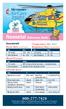 Operated by REACH Air Medical Services Assessment Heart Rate (beats/min.) Age Rate
ANNE ARUNDEL MEDICAL CENTER CRITICAL CARE MEDICATION MANUAL DEPARTMENT OF NURSING AND PHARMACY. Guidelines for Use of Intravenous Isoproterenol
 ANNE ARUNDEL MEDICAL CENTER CRITICAL CARE MEDICATION MANUAL DEPARTMENT OF NURSING AND PHARMACY Guidelines for Use of Intravenous Isoproterenol Major Indications Status Asthmaticus As a last resort for
New Approaches for Prehospital Cardiac Arrest Management 2010 NCEMSF Conference
 New Approaches for Prehospital Cardiac Arrest Management 2010 NCEMSF Conference Mark E. Pinchalk, MS, EMT-P Paramedic Crew Chief City of Pittsburgh EMS Out of Hospital Cardiac Arrest Poor outcomes: Arizona
Department of Emergency and Disaster Medicine Medical University of LODZ
 Electrotherapy in emergency states Department of Emergency and Disaster Medicine Medical University of LODZ defibrillation defibrillation The purpous of defibrillation is to deliver a randomly timed high-energy
MEDICATIONS USED IN ADULT CODE BLUE EMERGENCIES. Source: ACLS Provider Manual. American Heart Association. 2001, 2002. Updated 2003.
 MEDICATIONS USED IN ADULT CODE BLUE EMERGENCIES Source: ACLS Provider Manual. American Heart Association. 2001, 2002. Updated 2003. 1 ET Administration Atropine o First drug for symptomatic sinus bradycardia
July 1, 2015. Regional EMS Guidelines
 July 1, 2015 Regional EMS Guidelines This Guideline format is based on that of New Britain EMS. Many thanks to them for allowing us to use it. These Guidelines replace all previous versions, including
Alabama Medications. Christopher J. Colvin January 2010
 Alabama Medications Christopher J. Colvin p January 2010 Activated Charcoal Used to absorb toxins ingested before they can be absorbed in the GI system. Contraindicated in AMS patients who cannot control
Advanced Cardiovascular Life Support Case Scenarios
 Advanced Cardiovascular Life Support Case Scenarios ACLS Respiratory Arrest Case Out-of-Hospital Scenario You are a paramedic and respond to the scene of a possible cardiac arrest. A young man lies motionless
Adult Drug Reference. Dopamine Drip Chart. Pediatric Drug Reference. Pediatric Drug Dosage Charts DRUG REFERENCES
 Adult Drug Reference Dopamine Drip Chart Pediatric Drug Reference Pediatric Drug Dosage Charts DRUG REFERENCES ADULT DRUG REFERENCE Drug Indication Adult Dosage Precautions / Comments ADENOSINE Paroxysmal
The Pharmacist s Role in Advanced Cardiac Life Support (ACLS) Pharmacist Objectives. Pharmacists in the ER. Background
 The Pharmacist s Role in Advanced Cardiac Life Support (ACLS) I have no actual or potential conflict of interest in relation to this activity. it James Jensen B.S., Pharm.D., BCPS Pharmacist Objectives
LIFEPAK 15 MONITOR/DEFIBRILLATOR
 LIFEPAK 15 MONITOR/DEFIBRILLATOR Setup Options This document describes how to enter Setup mode and change operating settings in the LIFEPAK 15 monitor/defibrillator. Defining Setup Options Setup mode
BLS: basic cardiac life support. ACLS: advanced cardiac life support. PALS: paediatric advanced life support. VF: ventricular fibrillation
 RN-Initiated Emergency Cardiac Care: Decision Support Tool #2 Emergency Cardiac Care in Areas Using Cardiac Monitoring, Defibrillation and Emergency Cardiac Drugs Decision support tools are evidenced-based
WE HIGHLY RECOMMEND REVIEWING THE NEW ALGORYHMS FOUND IN THE 2010 ACLS Textbook available through AHA and other retail outlets.
 ACLS STUDY GUIDE 2015 WE HIGHLY RECOMMEND REVIEWING THE NEW ALGORYHMS FOUND IN THE 2010 ACLS Textbook available through AHA and other retail outlets. The AHA also requests the following in preparation
Neonatal Reference Guide
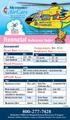 Operated by REACH Air Medical Services Assessment Heart Rate (beats/min.) Rate
Adult Cardiac Life Support (ACLS) Recertification Preparatory Materials
 Adult Cardiac Life Support (ACLS) Recertification Preparatory Materials 1 ADULT CARDIAC LIFE SUPPORT (ACLS) RECERTIFICATION TABLE OF CONTENTS PRIMARY AND SECONDARY ABCDs I. Primary ABCD s 03 II. Secondary
Adding IV Amiodarone to the EMS Algorithm for Cardiac Arrest Due to VF/Pulseless VT
 Adding IV Amiodarone to the EMS Algorithm for Cardiac Arrest Due to VF/Pulseless VT Introduction Before the year 2000, the traditional antiarrhythmic agents (lidocaine, bretylium, magnesium sulfate, procainamide,
Emergency Medical Services Advanced Level Competency Checklist
 Emergency Services Advanced Level Competency Checklist EMS Service: Current License in State of Nebraska: # (Copy of license kept in file at station) Date of joining EMS Service: EMS Service Member Name:
GUIDELINES FOR RESUSCITATION TRAINING
 GUIDELINES FOR RESUSCITATION TRAINING IN MINISTRY OF HEALTH MALAYSIA HOSPITALS & HEALTHCARE FACILITIES This guideline was developed by: National Committee on Resuscitation Training (NCORT) Ministry of
Paediatric Advanced Life Support
 Paediatric Advanced Life Support Introduction There is concern that resuscitation from cardiac arrest is not performed as well as it might because the variations in guidelines for different age groups
ADVANCED LIFE SUPPORT LEARNING PACKAGE
 SOUTH WEST HEALTHCARE WARRNAMBOOL ADVANCED LIFE SUPPORT LEARNING PACKAGE Prepared by: J. Brown, ICU Last revised February, 2010. C. Joseph, Nursing Education. CONTENTS: Page: Objectives 3-5 Basic Life
Medical Direction and Practices Board WHITE PAPER
 Medical Direction and Practices Board WHITE PAPER Use of Pressors in Pre-Hospital Medicine: Proper Indication and State of the Science Regarding Proper Choice of Pressor BACKGROUND Shock is caused by a
PALS Study Guide. PALS Study Guide Revised August 2010, Page 1 [TCL]
![PALS Study Guide. PALS Study Guide Revised August 2010, Page 1 [TCL]](/thumbs/26/7254148.jpg "PALS Study Guide. PALS Study Guide Revised August 2010, Page 1 [TCL]") PALS Study Guide Course Overview This Study Guide is an extensive outline of content that will be taught in the American Heart Association Accredited Pediatric Advanced Life Support (PALS) Course. It is
PALS Study Guide Course Overview This Study Guide is an extensive outline of content that will be taught in the American Heart Association Accredited Pediatric Advanced Life Support (PALS) Course. It is
Target groups: Paramedics, nurses, respiratory therapists, physicians, and others who manage respiratory emergencies.
 Overview Estimated scenario time: 10 15 minutes Estimated debriefing time: 10 minutes Target groups: Paramedics, nurses, respiratory therapists, physicians, and others who manage respiratory emergencies.
The American Heart Association released new resuscitation science and treatment guidelines on October 19, 2010.
 ACLS Study Guide The American Heart Association released new resuscitation science and treatment guidelines on October 19, 2010. Please read the below information carefully This letter is to confirm your
PEDIATRIC GUIDELINES
 PEDIATRIC GUIDELINES Southwest CT EMS,coord. Rev. 4/07 5-01 Guidelines For Pediatric Care Page 1 of 1 5-01 GUIDELINES FOR PEDIATRIC CARE I. Cardiac arrest in children is not a sudden event. It is almost
Cardiopulmonary Resuscitation
 Cardiopulmonary Resuscitation Jonathan E. Palmer, V.M.D. Author s address: Graham French Neonatal Section, Connelly Intensive Care Unit, New Bolton Center, University of Pennsylvania, 382 West Street Rd.,
TENNESSEE EMERGENCY MEDICAL SERVICES PROTOCOL GUIDELINES. Index
 Introduction Definitions Index Cardiac Emergency (Adult & Pediatric) 101 Automatic External Defibrillator 102 New Onset Atrial Fibrillation and Flutter 103 Bradycardia 104 Acute Coronary Syndrome/STEMI
Medication Math OBJECTIVES INTRODUCTION. Jones & Bartlett Learning, LLC NOT FOR SALE OR DISTRIBUTION
 Medication Math C H A P T E R4 OBJECTIVES 1. Identify the basic units of measure for weight, length, and volume. 2. Accurately convert milliliters to cubic centimeters, kilograms to pounds, and milligrams
Wide-Complex Tachycardias in the ED: Myths and Pitfalls
 Wide-Complex Tachycardias in the ED: Myths and Pitfalls, FACEP, FAAEM Professor and Vice Chair Director, Emergency Cardiology Fellowship Department of Emergency Medicine University of Maryland School of
Purpose To guide registered nurses who may manage clients experiencing sudden or unexpected life-threatening cardiac emergencies.
 Emergency Cardiac Care: Decision Support Tool #1 RN-Initiated Emergency Cardiac Care Without Cardiac Monitoring/Manual Defibrillator or Emergency Cardiac Drugs Decision support tools are evidence-based
Septic Shock: Pharmacologic Agents for Hemodynamic Support. Nathan E Cope, PharmD PGY2 Critical Care Pharmacy Resident
 Septic Shock: Pharmacologic Agents for Hemodynamic Support Nathan E Cope, PharmD PGY2 Critical Care Pharmacy Resident Objectives Define septic shock and briefly review pathophysiology Outline receptor
Current Management of Atrial Fibrillation DISCLOSURES. Heart Beat Anatomy. I have no financial conflicts to disclose
 Current Management of Atrial Fibrillation Mary Macklin, MSN, APRN Concord Hospital Cardiac Associates DISCLOSURES I have no financial conflicts to disclose Book Women: Fit at Fifty. A Guide to Living Long.
RESPONDING TO ANESTHETIC COMPLICATIONS
 RESPONDING TO ANESTHETIC COMPLICATIONS General anesthesia poses minimal risk to most patients when performed by a capable anesthetist using appropriate protocols and proper monitoring. However, it is vitally
OBJECTIVES. When the student has finished this module, he/she will be able to:
 Advanced Cardiac Life Support (ACLS) Review WWW.RN.ORG Reviewed September, 2015, Expires September, 2017 Provider Information and Specifics available on our Website Unauthorized Distribution Prohibited
DOI: 10.1161/CIRCULATIONAHA.110.971101
 Part 14: Pediatric Advanced Life Support: 2010 American Heart Association Guidelines for Cardiopulmonary Resuscitation and Emergency Cardiovascular Care Monica E. Kleinman, Leon Chameides, Stephen M. Schexnayder,
EMBARGOED FOR RELEASE
 Systems of Care and Continuous Quality Improvement Universal elements of a system of care have been identified to provide stakeholders with a common framework with which to assemble an integrated resuscitation
AHA Consensus Statement
 AHA Consensus Statement Cardiopulmonary Resuscitation Quality: Improving Cardiac Resuscitation Outcomes Both Inside and Outside the Hospital A Consensus Statement From the American Heart Association Endorsed
Stimulates HR, BP, CO, and vasoconstriction. Stimulates renal, venous, mesenteric arterial. basic chart below) (alpha receptors) vasoconstriction
 Bolus Alternate Range Drip ACLS Drugs and Drips Amiodarone / Cordarone Lidocaine Procainamide / Pronestyl Dopamine / Intropin CARDIAC ARREST PULSELESS VT/VF Arrest Kit: (300mg bolus) Amiodarone 6 Vial
What is the Future of Epinephrine in Cardiac Arrest? Pros and Cons
 What is the Future of Epinephrine in Cardiac Arrest? Pros and Cons Melissa L. Thompson Bastin, PharmD., BCPS Komal A. Pandya, PharmD., BCPS 0 Presenter Disclosure Information Melissa L. Thompson Bastin,
Atrial Fibrillation Management Across the Spectrum of Illness
 Disclosures Atrial Fibrillation Management Across the Spectrum of Illness NONE Barbara Birriel, MSN, ACNP-BC, FCCM The Pennsylvania State University Objectives AF Discuss the pathophysiology, diagnosis,
Quiz 4 Arrhythmias summary statistics and question answers
 1 Quiz 4 Arrhythmias summary statistics and question answers The correct answers to questions are indicated by *. All students were awarded 2 points for question #2 due to no appropriate responses for
GUIDELINE 11.5 MEDICATIONS IN ADULT CARDIAC ARREST
 AUSTRALIAN RESUSCITATION COUNCIL GUIDELINE 11.5 MEDICATIONS IN ADULT CARDIAC ARREST While the listed drugs have theoretical benefits in selected situations, no medication has been shown to improve long-term
THERAPEUTIC INDUCED HYPOTHERMIA GUIDELINES
 THERAPEUTIC INDUCED HYPOTHERMIA GUIDELINES Guidelines for Inclusion: (check all that apply) Cardiac arrest patients with any of the following: Ventricular fibrillation Pulseless Ventricular tachycardia
Use of the A-B-C basic life support sequence.
 Basic Life Support A change in the basic life support (BLS) sequence of steps for trained rescuers from A-B-C (Airway, Breathing, Chest compressions) to C-A-B (Chest compressions, Airway, Breathing) for
Orange County EMS System Medical Treatment Protocols
 Medical Treatment Protocols Copyright 2013 Orange County, Florida Government, all rights reserved. Overview The Orange County EMS System Protocols are intended to provide uniform treatment for all patients