
Neonatal Reference Guide
|
|
|
- Elinor Small
- 10 years ago
- Views:
Transcription
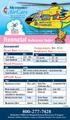
1 Operated by REACH Air Medical Services Assessment Heart Rate (beats/min.) Age Rate <40 weeks Term Newborn Blood Pressure Methodist Children s Hospital and Women s Services San Antonio, Texas Temperature C Respiratory Rate (breaths/min.) Age Rate <40 weeks Term Newborn Age mmhg <40 weeks MAP (mean arterial pressure) = Gestational Age Term Newborn Systolic 55-90, Diastolic APGAR Score Sign Appearance (color) Blue, pale Body Pink, Completely Pink Extremities Blue Pulse (heart rate) Absent Below 100 Over 100 Grimace (reflex Absent Grimaces Cries irritability to stimulation) Activity (muscle tone) Limp Some flexion Active motion of extremities Respiratory Effort Absent Slow, irregular Good, strong cry

2 Circulation/Fluids Volume Expanders: Normal Saline or Blood Give over 5-10 minutes. Reassess after each bolus. Newborn Glucose Management Hypoglycemia Risk Factors SGA LGA IDM Preterm Sick or stressed Target Glucose Level: mg/dl Hypoglycemia (glucose level <50 mg/dl) Initial bolus 2 ml/kg D10W Repeat initial bolus Maintenance rate 80 mg/kg/day D10W If still low, increase maintenance D10W rate to 100 ml/kg/day Continuous infusion of NS via UAC line is 1 ml/hr. May add unit/ml of Heparin. Do not use UAC for medication administration with exception of emergent use. Compiled by: Biederwolf, D., RN, BSN, CCRN, RRT-NPS, and Voyce, C., RRT-NPS, RN, MSN for Methodist AirCare, Santa Rosa, CA: REACH 2008.

3 Airway ETT Size & Depth of Insertion Based on Infant s Weight & Gestational Age Weight (g) Age (wk) ETT Depth <1000 < >3000 > ETT & UAC/UVC Placement on X-ray ETT: T1 T-3 UAC: High Line T-6 to T-9 Low Line L-3 to L-4 UVC: At the level of the diaphragm do not use if angling toward liver

4 Emergency Medications Resuscitation Drugs Chemical dose/kg Notes Epinephrine 1:10,000 (0.1 mg/ml) 0.01 mg/kg 0.1 For non-life sustaining rhythm: 0.01 mg/kg 1:10,000 (0.1 ) IV/UVC q 3-5 min. Higher dose for ETT route may be needed ( ). For hypotension: 0.1 mcg/kg/min. titrated up to 0.5 Volume Expanders: Normal Saline or Blood Naloxone 0.4 mg/ml Dextrose 10% (100 mg/ml) mg/kg 200 mg/kg Dopamine 5-20 mcg/kg Prostaglandin E1 (PGE1) (500 mcg/ml. Mix in 50 ml D5 or NS.) Sodium Bicarbonate 4.2% 0.5 meq/ml mcg/kg/ min. to start. (May increase to mcg/kg/ min if no response.*) 1-2 meq/kg mcg/kg 2-4 * Karlsen, K. (2006). STABLE Program. mcg/kg/min. Give over 5-10 minutes. Reassess after each bolus. IV or IM. ETT not recommended. May require dilution from 25% Dextrose. Titrate to maintain blood pressure. Caution: Apnea, bradycardia, fever, flushing, hypotension, and seizures can occur. Give slowly. Minimum 2 minutes.

5 Breathing O2 via NC 1 lpm for oxygenation 2 lpm for stimulation/stenting Nasal CPAP Flow 6-8 lpm 6 lpm for <34 wks & 8 lpm for term infants FIO2 100% Titrate for SpO % (85-92% in preterm) CPAP 4-8 cmh20 Initial Ventilator Settings (Newborn*) VLBW <1.5 Kg LBW Kg Term >2.5 Kg Rate Insp. Time Match GA (>.25 sec) Match GA PIP PEEP * Karlsen, K. (2006). STABLE Program. Match GA (<.45 sec) Strategies for Mechanical Ventilation To Increase Pa0 2 or Sp Increase the FIO2 2. Increase the mean airway pressure: a. Increase the PEEP b. Increase the inspiratory time or change I:E towards 1:2 c. In pressure mode with high rates decrease the rate and increase the inspiratory time (keep I:E ratio >1:2) To Decrease the PaC0 2 or EtC Increase the minute ventilation: a. Increase rate and/or V t (tidal volume) b. In pressure modes, increase the pressure (PIP) 2. Increase the expiratory time with obstructive airway diseases: a. Increase the expiratory time or change the I:E ratio towards 1:4

6 Other Medications Analgesics/Narcotics Morphine: mg/kg IV/UVC/IM (Caution: Use dilution of 1 mg/ml of Morphine. May cause hypotension) Fentanyl: 1 mcg/kg IV/UVC/IM (Caution: Do not push must be infused over minutes. May cause chest wall rigidity.) Anticonvulsants/Sedatives Lorazepam: mg/kg/dose IV/UVC Midazolam: mg/kg IV/UVC/IM Phenobarbital: Loading dose: 20 mg/kg (Give slowly over 2-3 minutes & monitor respirations closely) Bolus doses: 5 mg/kg q minutes, if seizures continue (May give a maximum of two bolus doses) Antibiotics Ampicillin: 100 mg/kg Infuse IV/UVC over minutes with minimum dilution of 100 mg/2ml Gentamicin: 4 mg/kg (Initial Dose) Infuse IV/UVC over minutes with minimum dilution of 4 mg/1 ml (Best when infusing with maintenance IV fluid) rev 12/09

Neonatal Reference Guide
 Operated by REACH Air Medical Services Assessment Heart Rate (beats/min.) Rate
Obstetrical Emergencies
 Date: July 18, 2014 Page 1 of 5 Obstetrical Emergencies Purpose: To provide the process for the assessment and management of the patient with an obstetrical related emergency. Pre-Medical Control 1. Follow
Adult Drug Reference. Dopamine Drip Chart. Pediatric Drug Reference. Pediatric Drug Dosage Charts DRUG REFERENCES
 Adult Drug Reference Dopamine Drip Chart Pediatric Drug Reference Pediatric Drug Dosage Charts DRUG REFERENCES ADULT DRUG REFERENCE Drug Indication Adult Dosage Precautions / Comments ADENOSINE Paroxysmal
table of contents drug reference
 table of contents drug reference ADULT DRUG REFERENCE...155 161 PEDIATRIC DRUG REFERENCE...162 164 PEDIATRIC WEIGHT-BASED DOSING CHARTS...165 180 Adenosine...165 Amiodarone...166 Atropine...167 Defibrillation...168
Community Ambulance Service of Minot ALS Standing Orders Legend
 Legend Indicates General Information and Guidelines Indicates Procedures Indicates Medication Administration Indicates Referral to Other Protocol Indicates Referral to Online Medical Direction Pediatric
(C) AMBULANCE VICTORIA
 The Newborn Baby: Definitions and Contacts Newborn definition 'Newborn' refers to the first min to hours post birth. For the purpose of resuscitation, AV accepts up to the first 24 hours from birth in
Cardiac Arrest VF/Pulseless VT Learning Station Checklist
 Cardiac Arrest VF/Pulseless VT Learning Station Checklist VF/VT 00 American Heart Association Adult Cardiac Arrest Shout for Help/Activate Emergency Response Epinephrine every - min Amiodarone Start CPR
Crash Cart Drugs Drugs used in CPR. Dr. Layla Borham Professor of Clinical Pharmacology Umm Al Qura University
 Crash Cart Drugs Drugs used in CPR Dr. Layla Borham Professor of Clinical Pharmacology Umm Al Qura University Introduction A list of the drugs kept in the crash carts. This list has been approved by the
!!! BOLUS DOSE IV. Use 5-10 mcg IV boluses STD ADRENALINE INFUSION. Use IM adrenaline in advance of IV dosing!
 ADRENALINE IVI BOLUS IV Open a vial of 1:1000 ADRENALINE 1 mg /ml Add 1 ml to 9 ml N/Saline = 1mg adrenaline in 10 ml (or 100 mcg/ml) Add 1 ml 1:10,000 to 9 ml N/Saline = 100 mcg adrenaline in 10 ml (or
NEWBORN (birth to 24 hours)
 NEWBORN (birth to 24 hours) 3kg ETT size: 3mm ETT length: 14cm AIRTRAQ: GREY LMA size: 1 or 1.5 IGT size: 5 FG SHOCK: 15 joules CPR: one third of chest depth rate 100/min 3:1 The emphases in resuscitation
ACLS PHARMACOLOGY 2011 Guidelines
 ACLS PHARMACOLOGY 2011 Guidelines ADENOSINE Narrow complex tachycardias or wide complex tachycardias that may be supraventricular in nature. It is effective in treating 90% of the reentry arrhythmias.
ACLS PRE-TEST ANNOTATED ANSWER KEY
 ACLS PRE-TEST ANNOTATED ANSWER KEY June, 2011 Question 1: Question 2: There is no pulse with this rhythm. Question 3: Question 4: Question 5: Question 6: Question 7: Question 8: Question 9: Question 10:
PREPARATIONS: Adrenaline 1mg in 1ml (1:1000) Adrenaline 100micrograms in 1ml (1:10,000)
 ADRENALINE Acute hypotension Via a CENTRAL venous line Initially 100-300 nanograms/kg/minute 0.1-0.3 microgram/kg/minute adjusted according to response up to a maximum of 1.5 micrograms/kg/minute. Increase
Cardiac Arrest Pediatric Ventricular Fibrillation / Pulseless Ventricular Tachycardia Protocol revised October 2008
 Cardiac Arrest Pediatric Ventricular Fibrillation / Pulseless Ventricular Tachycardia Protocol revised October 2008 Preamble In contrast to cardiac arrest in adults, cardiopulmonary arrest in pediatric
ROC CONTINUOUS CHEST COMPRESSIONS STUDY (CCC): MEDICAL CARDIAC ARREST MEDICAL DIRECTIVE
 ROC CONTINUOUS CHEST COMPRESSIONS STUDY (CCC): MEDICAL CARDIAC ARREST MEDICAL DIRECTIVE An Advanced Care Paramedic will provide the treatment based on the randomization scheme and as prescribed in this
Paramedic Pediatric Medical Math Test
 Paramedic Pediatric Medical Math Test Name: Date: Problem 1 Your 4 year old pediatric patient weighs 40 pounds. She is febrile. You need to administer acetaminophen (Tylenol) 15mg/kg. How many mg will
ADENOSINE (Adenocard) Intermediate- CALL IN Paramedic. ALBUTEROL SULFATE Basic-CALL IN Intermediate-CALL IN Paramedic
 ADENOSINE (Adenocard) - CALL IN ALBUTEROL SULFATE Basic-CALL IN AMIODARONE (Cordarone) - CALL IN except in cardiac arrest- call while ASPIRIN Basic ATROPINE SULFATE - CALL IN except in cardiac arrest-
Allergy Emergency Treatment Protocol
 Allergy Emergency Treatment Protocol I. Initial evaluation of possible allergic reaction a. Cease administration of allergenic extracts b. Notify physician c. Record vital signs: blood pressure, pulse,
Safe Zone: CV PIP < 26; HFOV: MAP < 16; HFJV: MAP < 16 Dopamine infusion up to 20 mcg/kg/min Epinephrine infusion up to 0.1 mcg /kg/min.
 Congenital Diaphragmatic Hernia: Management Guidelines 5-2006 Issued By: Division of Neonatology Reviewed: Effective Date: Categories: Chronicity Document Congenital Diaphragmatic Hernia: Management Guidelines
COUNTY OF SAN DIEGO EMERGENCY MEDICAL SERVICES No. P-117a POLICY/PROCEDURE/PROTOCOL Page 1 of 6
 POLICY/PROCEDURE/PROTOCOL Page 1 of 6 GREY/PINK Kg range: < 8 kg Approx Kg: 5 kg 1 st 2 nd 3 rd Approximate LBS: 10 lbs Defib: 10 J 20 J 20 J ET uncuffed tube size: 3.5 Cardiovert: 5 J 10 J 10 J ET cuffed
ACLS Cardiac Arrest Algorithm Neumar, R. W. et al. Circulation 2010;122:S729-S767
 ACLS Cardiac Arrest Algorithm Neumar, R. W. et al. Circulation 2010;122:S729-S767 Copyright 2010 American Heart Association ACLS Cardiac Arrest Circular Algorithm Neumar, R. W. et al. Circulation 2010;122:S729-S767
DRUG CALCULATIONS FOR REGISTERED NURSES ADULT SERVICES
 Serving the people of north east Essex DRUG CALCULATIONS FOR REGISTERED NURSES ADULT SERVICES A Programmed Approach - It is essential you read this pack & practice the questions prior to your drug calculation
9/2/2015. Brian Rogge RN, BSN, CEN, EMT-P. Child in Distress: Pediatric Medical Assessment September 08, 2015. The veterinarian story..
 Child in Distress: Pediatric Medical Assessment September 08, 2015 Brian Rogge RN, BSN, CEN, EMT-P Northwest MedStar Pediatric Flight Nurse Spokane County EMS The veterinarian story.. Quick review of Assessment
EMS Branch / Office of the Medical Director. Active Seziures (d) Yes Yes Yes Yes. Yes Yes No No. Agitation (f) No Yes Yes No.
 M07 Medications 2015-07-15 All ages EMS Branch / Office of the Medical Director Benzodiazepines Primary Intermediate Advanced Critical INDICATIONS Diazepam (c) Lorazepam (c) Midazolam (c) Intranasal Midazolam
ANNE ARUNDEL MEDICAL CENTER CRITICAL CARE MEDICATION MANUAL DEPARTMENT OF NURSING AND PHARMACY. Guidelines for Use of Intravenous Isoproterenol
 ANNE ARUNDEL MEDICAL CENTER CRITICAL CARE MEDICATION MANUAL DEPARTMENT OF NURSING AND PHARMACY Guidelines for Use of Intravenous Isoproterenol Major Indications Status Asthmaticus As a last resort for
If you do not wish to print the entire pre-test you may print Page 2 only to write your answers, score your test, and turn in to your instructor.
 This is a SAMPLE of the pretest you can access with your AHA PALS Course Manual at Heart.org/Eccstudent using your personal code that comes with your PALS Course Manual The American Heart Association strongly
PEDIATRIC TREATMENT GUIDELINES
 P1 Pediatric Patient Care P2 Cardiac Arrest Initial Care and CPR P3 Neonatal Resuscitation P4 Ventricular Fibrillation / Ventricular Tachycardia P5 PEA / Asystole P6 Symptomatic Bradycardia P7 Tachycardia
Cardiac Arrest - Ventricular Fibrillation / Pulseless Ventricular Tachycardia Protocol revised October 2008
 Cardiac Arrest - Ventricular Fibrillation / Pulseless Ventricular Tachycardia Protocol revised October 2008 Preamble Survival from cardiorespiratory arrest for patients who present with ventricular fibrillation
Summary of State Emergency Medical Control Committee (SEMCC) Approved Protocol Revisions September 1, 2015 NALOXONE
 October 22, 2015 Summary of State Emergency Medical Control Committee (SEMCC) Approved Protocol Revisions September 1, 2015 NALOXONE Summary: Expand Naloxone down to the Emergency Medical Technician (EMT)
Neonatal Emergencies. Care of the Neonate. Care of the Neonate. Care of the Neonate. Student Objectives. Student Objectives continued.
 Student Objectives Neonatal Emergencies After completing this section the student will be able to: 1. Identify three physiologic and/or anatomic features unique to the newborn 2. List three perinatal factors
5/30/2014 OBJECTIVES THE ROLE OF A RESPIRATORY THERAPIST IN THE DELIVERY ROOM. Disclosure
 THE ROLE OF A RESPIRATORY THERAPIST IN THE DELIVERY ROOM Ona Fofah, MD FAAP Assistant Professor of Pediatrics Director, Division of Neonatology Department of Pediatrics Rutgers- NJMS, Newark OBJECTIVES
THE REGIONAL EMERGENCY MEDICAL ADVISORY COMMITTEE NEW YORK CITY PREHOSPITAL TREATMENT PROTOCOLS ADVANCED LIFE SUPPORT (PARAMEDIC) PROTOCOLS
 THE REGIONAL EMERGENCY MEDICAL ADVISORY COMMITTEE NEW YORK CITY PREHOSPITAL TREATMENT PROTOCOLS ADVANCED LIFE SUPPORT (PARAMEDIC) PROTOCOLS July 2012 Version 07012012 The Regional Emergency Medical Services
If you do not wish to print the entire pre-test you may print Page 2 only to write your answers, score your test, and turn in to your instructor.
 This is a SAMPLE of the pretest you can access with your AHA PALS Course Manual at Heart.org/Eccstudent using your personal code that comes with your PALS Course Manual The American Heart Association strongly
NRP 2012 Putting New Resuscitation Guidelines into Practice
 Outreach Education Online Video Library for Healthcare Professionals NRP 2012 Putting New Resuscitation Guidelines into Practice. Jeanette Zaichkin, RN, MN, NNP-BC December 2, 2010 Program Handouts This
American Heart Association ACLS Pre-Course Self Assessment Dec., 2006. ECG Analysis. Name the following rhythms from the list below:
 American Heart Association ACLS Pre-Course Self Assessment Dec., 2006 ECG Analysis This pre-test is exactly the same as the pretest on the ACLS Provider manual CD. This paper version can be completed in
Read the following information carefully before attempting the examples and exercises. TABLETS Formula method. = No. of tablets to be given
 drug calculations Read the following information carefully before attempting the examples and exercises. TABLETS Required dose No. of tablets to be given Required dose : Required tablet : Stock tablet
Inotropes/Vasoactive Agents Hina N. Patel, Pharm.D., BCPS Cathy Lawson, Pharm.D., BCPS
 Inotropes/Vasoactive Agents Hina N. Patel, Pharm.D., BCPS Cathy Lawson, Pharm.D., BCPS 1. Definition -an agent that affects the contractility of the heart -may be positive (increases contractility) or
Color Code Drug Doses L.A. County Kids
 3 Kg 1. 3.0 Joules 3.0 Joules 12 Joules 12 Joules 0. 60 mg 0.0 3 meq Add 18 mg (.23mL) to a 100 ml bag of NS. adequate perfusion 6 ml 1. 0.0 0. 0. 60 ml 4 Kg 2 Joules 1 1 0. 80 mg 0.0 4 meq Add 2 (.3mL)
3100B Clinical Training Program. 3100B HFOV VIASYS Healthcare
 3100B Clinical Training Program 3100B HFOV VIASYS Healthcare HFOV at Alveolar Level Nieman,, G, SUNY 1999 Who DO We Treat? Only Pathology studied to date has been ARDS Questions about management of adults
American Heart Association. Pediatric Advanced Life Support. Written Precourse Self-Assessment. Questions and Answer Key for Students.
 E C C American Heart Association Pediatric Advanced Life Support Written Precourse Self-Assessment Questions and Answer Key for Students January 2012 PALS Written 2011 Precourse Self-Assessment ECG Rhythm
Update on Neonatal Resuscitation
 Update on Neonatal Resuscitation Ola Didrik Saugstad MD, PhD, FRCPE Professor of Pediatrics Director Department of Pediatric Research Rikshospitalet, Faculty of Medicine University of Oslo NORWAY 1st.
Pediatric Pharmacotherapy A Monthly Newsletter for Health Care Professionals Children s Medical Center at the University of Virginia
 Pediatric Pharmacotherapy A Monthly Newsletter for Health Care Professionals Children s Medical Center at the University of Virginia Volume 2 Number 12 December 1996 Medications for Neonatal and Pediatric
Treatment Guidelines for Neonatal Narcotic Abstinence Syndrome with Diluted Oral Morphine and Clonidine
 Treatment Guidelines for Neonatal Narcotic Abstinence Syndrome with Diluted Oral Morphine and Clonidine Background Morphine sulfate has been recommended by the AAP as the first-line agent for the pharmacologic
GUIDELINE FOR ADMINISTRATION OF FENTANYL FOR PAIN RELIEF IN LABOUR
 GUIDELINE FOR ADMINISTRATION OF FENTANYL FOR PAIN RELIEF IN LABOUR INTRODUCTION Intravenous (IV) Fentanyl is a good option for pain management during labour and should be administered in a safe and competent
SUFFOLK COUNTY COMMUNITY COLLEGE NURSING DEPARTMENT MEDICATION ADMINISTRATION TEST NR 40 Practice test questions READ INSTRUCTIONS CAREFULLY
 NR40 MEDICATION MATH TEST Practice questions page 1 SUFFOLK COUNTY COMMUNITY COLLEGE NURSING DEPARTMENT MEDICATION ADMINISTRATION TEST NR 40 Practice test questions READ INSTRUCTIONS CAREFULLY Students
It is recommended that the reader review each medical directive presented in this presentation along with the actual PCP Core medical directive.
 It is recommended that the reader review each medical directive presented in this presentation along with the actual PCP Core medical directive. This presentation will highlight the changes and any new
Drug List. Medication Adult Dosing Pediatric Dosing. V-fib / pulseless V-tach 300 mg IV push Repeat dose of 150 mg IV push for recurrent episodes
 Acetaminophen (Tylenol) 7-Pain Control-Adult 46-Pain Control-Pediatric 72-Fever 1000 mg po 15 mg/kg po Indicated for pain and fever control Avoid in patients with severe liver disease Adenosine (Adenocard)
AHA/AAP Neonatal Resuscitation Guidelines 2010: Summary of Major Changes and Comment on its Utility in Resource-Limited Settings
 AHA/AAP Neonatal Resuscitation Guidelines 2010: Summary of Major Changes and Comment on its Utility in Resource-Limited Settings Resuscitation step Recommendations (2005) Recommendations (2010) Comments/LOE
General PROVIDER INITIALS: PHYSICIAN ORDERS
 Height Weight Allergies If appropriate for patient condition, please consider the following order sets: Initiate Electrolyte Replcement: Med/Surg, Med/Surg Tele Physician Order #842 General Vital Signs
Mechanical Ventilation for Dummies Keep It Simple Stupid
 Mechanical Ventilation for Dummies Keep It Simple Stupid Indications Airway Ventilation failure (CO2) Hypoxia Combination Airway obstruction Inability to protect airway Hypoxia (PaO 2 < 50) Hypercapnia
Medication Math OBJECTIVES INTRODUCTION. Jones & Bartlett Learning, LLC NOT FOR SALE OR DISTRIBUTION
 Medication Math C H A P T E R4 OBJECTIVES 1. Identify the basic units of measure for weight, length, and volume. 2. Accurately convert milliliters to cubic centimeters, kilograms to pounds, and milligrams
Post - resuscitation management of an asphyxiated neonate
 Post - resuscitation management of an asphyxiated neonate Slide PA 1, 2 Introduction Perinatal asphyxia is a common neonatal problem and contributes significantly to neonatal morbidity and mortality. It
NEONATAL RESUSCITATION PROVIDER (NRP) RECERTIFICATION TABLE OF CONTENTS
 NEONATAL RESUSCITATION PROVIDER (NRP) RECERTIFICATION TABLE OF CONTENTS NEONATAL FLOW ALGORITHM.2 INTRODUCTION 3 ANTICIPATION OF RESUSCITATION 4 TEMPERATURE CONTROL.4 CLEARING THE AIRWAY OF MECONIUM 5
Example 3: Dilantin-125 is available as 125 mg/5 ml. Dilantin-125, 0.3 g PO, is ordered. How much should the nurse administer to the patient?
 Drug Dosage & IV Rates Calculations Drug Dosage Calculations Drug dosage calculations are required when the amount of medication ordered (or desired) is different from what is available on hand for the
PEDIATRIC SURGE POCKET GUIDE. Clinical checklists, guides, and just-in-time references to manage a surge of pediatric patients.
 PEDIATRIC SURGE POCKET GUIDE Clinical checklists, guides, and just-in-time references to manage a surge of pediatric patients. Sections Normal Values Triage and Assessment Treatment and Medications Equipment
2. Order: Nipride 500 mg IV in 250 ml D5w at 2 mcg/kg/min for a patient weighing 125 lb. Administer at ml/hr
 1 Pharmacology Review Quiz: 1. Order: Xylocaine 1 g IV in 500 ml D5W at 3 mg/min. Set the infusion pump at ml/hr 2. Order: Nipride 500 mg IV in 250 ml D5w at 2 mcg/kg/min for a patient weighing 125 lb.
Patient Care Services Policy & Procedure Title: No. 8720-0059
 Page: 1 of 8 I. SCOPE: This policy applies to Saint Francis Hospital, its employees, medical staff, contractors, patients and visitors regardless of service location or category of patient. This policy
- NALOXONE/NARCAN. This training is designed to teach you about one action you can take in case of an overdose of opiates.
 OVERDOSE MANAGEMENT PROTOCOL - NALOXONE/NARCAN TRAINING This training is designed to teach you about one action you can take in case of an overdose of opiates. This training program will not make you a
NRP Study Guide. This packet is intended for review only. Requirements to successfully complete NRP:
 This packet is intended for review only Requirements to successfully complete NRP: Completed NRP Pretest is required for admission to the course. Score 84% on the multiplechoice posttest. You may be allowed
Wilson County Emergency Management Agency Protocol Manual Protocols
 Asystole No pulse or respirations Confirm cardiac rhythm with combo pads or electrodes Record in two leads to confirm Asystole and to rule out fine V-Fib. Basic assessment and management (up to your scope
Update on Small Animal Cardiopulmonary Resuscitation (CPR)- is anything new?
 Update on Small Animal Cardiopulmonary Resuscitation (CPR)- is anything new? DVM, DACVA Objective: Update on the new Small animal guidelines for CPR and a discussion of the 2012 Reassessment Campaign on
Pediatric Dosages CHAPTER 18 ALERT LEARNING OBJECTIVES
 CHAPTER 18 Pediatric Dosages LEARNING OBJECTIVES On completion of the materials provided in this chapter, you will be able to perform computations accurately by mastering the following mathematical concepts:
How To Improve Care For Bronchiolitis
 Implementation of an Evidence- Based Care Guideline for Inpatient Bronchiolitis Management J E A N E T T E J O N E S, R N + T H O M A S M A Y E S, M D, M B A * + M A R I S S A M A R T I N E Z, M D + S
Suffolk County Community College School of Nursing NUR 133 ADULT NURSING I
 Suffolk County Community College School of Nursing NUR 133 ADULT NURSING I Page # 1 Instructions for students: Case study # 1 For this lab, you are planning to provide care to the following client: CB
10. An infant with a history of vomiting and diarrhea arrives by ambulance. During your primary assessment the infant responds only to painful stimula
 1. You are called to help resuscitate an infant with severe symptomatic bradycardia associated with respiratory distress. The bradycardia persists despite establishment of an effective airway, oxygenation,
WITHDRAWAL OF ANALGESIA AND SEDATION
 WITHDRAWAL OF ANALGESIA AND SEDATION Patients receiving analgesia and/or sedation for longer than 5-7 days may suffer withdrawal if these drugs are suddenly stopped. To prevent this happening drug doses
Appendix 4: Guidelines for Prescribing and Administering Drugs:
 Appendix 4: Guidelines for Prescribing and Administering Drugs: A midwife may prescribe and administer the following substances in accordance with the guidelines approved by the Board. This list indicates
[ ] POCT glucose Routine, As needed, If long acting insulin is given and patient NPO, do POCT glucose every 2 hours until patient eats.
![[ ] POCT glucose Routine, As needed, If long acting insulin is given and patient NPO, do POCT glucose every 2 hours until patient eats.](/thumbs/35/17205932.jpg "[ ] POCT glucose Routine, As needed, If long acting insulin is given and patient NPO, do POCT glucose every 2 hours until patient eats.") Glycemic Control - Insulin Infusion NOTE: For treatment of Diabetic Ketoacidosis or Hyperglycemic Hyperosmolar Syndrome please go to order set named Diabetic Ketoacidosis (DKA) and Hyperglycemic Hyperosmolar
Glycemic Control - Insulin Infusion NOTE: For treatment of Diabetic Ketoacidosis or Hyperglycemic Hyperosmolar Syndrome please go to order set named Diabetic Ketoacidosis (DKA) and Hyperglycemic Hyperosmolar
Alabama Medications. Christopher J. Colvin January 2010
 Alabama Medications Christopher J. Colvin p January 2010 Activated Charcoal Used to absorb toxins ingested before they can be absorbed in the GI system. Contraindicated in AMS patients who cannot control
MODERATE SEDATION RECORD (formerly termed Conscious Sedation)
 (POLICY #DOC-051) Page 1 of 6 WELLSPAN HEALTH - YORK HOSPITAL NURSING POLICY AND PROCEDURE Dates: Original Issue: September 1998 Annual Review: March 2012 Revised: March 2010 Submitted by: Brenda Artz
Pediatric Advanced Life Support (PALS) Recertification Preparatory Materials
 Pediatric Advanced Life Support (PALS) Recertification Preparatory Materials 1 PEDIATRIC ADVANCED LIFE SUPPORT (PALS) RECERTIFICATION TABLE OF CONTENTS CYCLIC APPROACH 03 PEDIATRIC ASSESSMENT FLOWCHART
AHE: NRP AAP/AHA COURSE COMPONENTS
 ADVANCED HEALTHCARE EDUCATION 2011 6 TH EDITION - KEY POINT STUDY GUIDE IMPORTANT INFORMATION FOR STUDENTS REGISTERING FOR CLASSES AFTER 01/011/2012. AAP HAS RESTRUCTURED NRP TO NOW REQUIRE COMPLETION
4/15/2013. Maribeth Inturrisi RN MS CNS CDE Perinatal Diabetes Educator [email protected]
 Maribeth Inturrisi RN MS CNS CDE Perinatal Diabetes Educator [email protected] List the potential complications associated with diabetes during labor. Identify the 2 most important interventions essential
Advance IV Therapy Module. Example 1. 3mg. 3mg min = 45
 Advance IV Therapy Module Eample A patient is to receive Lidocaine at 3mg/. Supplied is a one liter bag of D 5 W containing Lidocaine 4g. Calculate the infusion rate in ml/. First, identify the doctor
Common Ventilator Management Issues
 Common Ventilator Management Issues William Janssen, M.D. Assistant Professor of Medicine National Jewish Health University of Colorado Denver Health Sciences Center You have just admitted a 28 year-old
HEALTH PROFESSIONS COUNCIL OF SOUTH AFRICA PROFESSIONAL BOARD FOR EMERGENCY CARE
 FORM 314 HEALTH PROFESSIONS COUNCIL OF SOUTH AFRICA PROFESSIONAL BOARD FOR EMERGENCY CARE EMERGENCY CARE TECHNICIAN SCOPE OF PRACTICE 2009 TABLE OF CONTENTS 1. Introduction Pg 3 2. Capabilities Pg 5 3.
ACLS Study Guide BLS Overview CAB
 ACLS Study Guide The ACLS Provider exam is 50-mutiple choice questions. Passing score is 84%. Student may miss 8 questions. For students taking ACLS for the first time or renewing students with a current
When calculating how much of a drug is required, working with the formula helps the accuracy of the calculation.
 DRUG CALCULATIONS When calculating how much of a drug is required, working with the formula helps the accuracy of the calculation. Always remember this formula: What you want X Quantity it comes in What
SMO: Anaphylaxis and Allergic Reactions
 REGION I EMERGENCY MEDICAL SERVICES STANDING MEDICAL ORDERS EMT Basic SMO: Anaphylaxis and Allergic Reactions Overview: Allergic reactions can vary in severity from a mild reaction consisting of hives
Jeopardy Topics: THE CLOT STOPS HERE (anticoagulants) SUGAR, SUGAR, HOW D YOU GET SO HIGH (insulins)
 Jeopardy Topics: THE CLOT STOPS HERE (anticoagulants) SUGAR, SUGAR, HOW D YOU GET SO HIGH (insulins) I HEAR YA KNOCKING BUT YOU CAN T COME IN (electrolytes) TAKE MY BREATH AWAY (Opiates-morphine) OUT WITH
Acute Myocardial Infarction (the formulary thrombolytic for AMI at AAMC is TNK, please see the TNK monograph in this manual for information)
 ANNE ARUNDEL MEDICAL CENTER CRITICAL CARE MEDICATION MANUAL DEPARTMENT OF NURSING AND PHARMACY Guidelines for Use of Intravenous Alteplase (Tissue Plasminogen Activator (t-pa)), Activase in the Treatment
E C C. American Heart Association. Advanced Cardiovascular Life Support. Written Precourse Self-Assessment. May 2011. 2011 American Heart Association
 E C C American Heart Association Advanced Cardiovascular Life Support Written Precourse Self-Assessment May 2011 2011 American Heart Association 2011 ACLS Written Precourse Self-Assessment 1. Ten minutes
New Approaches for Prehospital Cardiac Arrest Management 2010 NCEMSF Conference
 New Approaches for Prehospital Cardiac Arrest Management 2010 NCEMSF Conference Mark E. Pinchalk, MS, EMT-P Paramedic Crew Chief City of Pittsburgh EMS Out of Hospital Cardiac Arrest Poor outcomes: Arizona
INR: RUPTURED ANEURYSM: POST EMBOLIZATION Patient Identification Page 1 of 5. Allergies: Weight: kg Diagnosis:
 Page 1 of 5 Allergies: Weight: kg Diagnosis: Service: Admission Admit to Inpatient Admit to Daypatient Place on Outpatient Observation Status Hospital Attending: Attending Physician Attending Provider:
EMBARGOED FOR RELEASE
 Systems of Care and Continuous Quality Improvement Universal elements of a system of care have been identified to provide stakeholders with a common framework with which to assemble an integrated resuscitation
Section 2 Solving dosage problems
 Section 2 Solving dosage problems Whether your organization uses a bulk medication administration system or a unit-dose administration system to prepare to administer pediatric medications, you may find
Management of Neonatal Abstinence Syndrome and Iatrogenic Drug Withdrawal
 Management of Neonatal Abstinence Syndrome and Iatrogenic Drug Withdrawal Kirsten H. Ohler, Pharm.D., BCPS Clinical Assistant Professor Neonatal / Pediatric Clinical Pharmacist University of Illinois at
PHSW Procedural Sedation Post-Test Answer Key. For the following questions, circle the letter of the correct answer(s) or the word true or false.
 PHSW Procedural Sedation Post-Test Answer Key 1 1. Define Procedural (Conscious) Sedation: A medically controlled state of depressed consciousness where the patient retains the ability to continuously
TENNESSEE EMERGENCY MEDICAL SERVICES PROTOCOL GUIDELINES. Index
 Introduction Definitions Index Cardiac Emergency (Adult & Pediatric) 101 Automatic External Defibrillator 102 New Onset Atrial Fibrillation and Flutter 103 Bradycardia 104 Acute Coronary Syndrome/STEMI
Septic Shock: Pharmacologic Agents for Hemodynamic Support. Nathan E Cope, PharmD PGY2 Critical Care Pharmacy Resident
 Septic Shock: Pharmacologic Agents for Hemodynamic Support Nathan E Cope, PharmD PGY2 Critical Care Pharmacy Resident Objectives Define septic shock and briefly review pathophysiology Outline receptor
RESPONDING TO ANESTHETIC COMPLICATIONS
 RESPONDING TO ANESTHETIC COMPLICATIONS General anesthesia poses minimal risk to most patients when performed by a capable anesthetist using appropriate protocols and proper monitoring. However, it is vitally
MECHANICAL VENTILATION IN THE NEONATE
 Supplemental Resources for the PICU/NICU MECHANICAL VENTILATION IN THE NEONATE I. GENERAL PRINCIPLES A. NEONATAL VENTILATORS We use three types of neonatal ventilators in the NICU: 1. SIMV (Synchronized
Target groups: Paramedics, nurses, respiratory therapists, physicians, and others who manage respiratory emergencies.
 Overview Estimated scenario time: 10 15 minutes Estimated debriefing time: 10 minutes Target groups: Paramedics, nurses, respiratory therapists, physicians, and others who manage respiratory emergencies.
Paediatric fluids 13/06/05
 Dr Catharine Wilson Consultant Paediatric Anaesthetist Sheffield Children s Hospital. UK Paediatric fluids 13/06/05 Self assessment: Complete these questions before reading the tutorial. Discuss the answers
Vtial sign #1: PULSE. Vital Signs: Assessment and Interpretation. Factors that influence pulse rate: Importance of Vital Signs
 Vital Signs: Assessment and Interpretation Elma I. LeDoux, MD, FACP, FACC Associate Professor of Medicine Vtial sign #1: PULSE Reflects heart rate (resting 60-90/min) Should be strong and regular Use 2
Naloxone treatment of opioid overdose
 Naloxone treatment of opioid overdose Opioids Chemicals that act in the brain to relieve pain, often use to suppress cough, treat addiction, and provide comfort After prolonged use of opioids, increasing
Frontline First Aid: EMR Cheat Sheet
 Assessment Model Frontline First Aid: EMR Cheat Sheet Scene Survey H Hazards is there anything in the area that could cause problems or injuries E Environment is the area hot cold toxic unstable etc M
Procedure for Inotrope Administration in the home
 Procedure for Inotrope Administration in the home Purpose This purpose of this procedure is to define the care used when administering inotropic agents intravenously in the home This includes: A. Practice
PEDIATRIC GUIDELINES
 PEDIATRIC GUIDELINES Southwest CT EMS,coord. Rev. 4/07 5-01 Guidelines For Pediatric Care Page 1 of 1 5-01 GUIDELINES FOR PEDIATRIC CARE I. Cardiac arrest in children is not a sudden event. It is almost