
Failure Diagnosis. LuK s guide to troubleshooting clutch-system failures and malfunctions. passenger cars
|
|
|
- Frank Campbell
- 9 years ago
- Views:
Transcription
1 Failure Diagnosis LuK s guide to troubleshooting clutch-system failures and malfunctions passenger cars
2
3 Contents LuK tips on avoiding clutch system failures and malfunctions Clutch fails to disengage A B Clutch judder C Clutch makes a noise D 30 E Clutch slip Clutch pedal is heavy in operation General tips on installing passenger vehicle and light transporter clutches Diagnostic charts This manual is for the use of all of our employees, business associates, and friends who sell, install, or report on LuK-clutches. It is primarily intended to be a source of information that will simplify diagnosing the causes of failures and malfunctions of commercial vehicle clutch systems. Its content is confined to typical clutch-system defects and is not aimed at being complete LuK-Aftermarket Service ohg, D Langen, Germany Technical Service Dept. Reproduction, copying, or translation hereof in whole or in part requires our prior written permission and crediting the source August 2008, 3rd edition 3
4 LuK tips on avoiding clutch system failures and malfunctions Major causes of problems: Flywheel The running surface of the flywheel, which mates to the driven plate, may show signs of wear after extensive mileage. Scoring, glazing, and/ or gouges indicate that the flywheel has been overheated, and these must be removed, however they should never be refaced beyond the tolerances laid down by the manufacturer. It is important however, that the same amount is taken from the bolting surface. Also take this opportunity to check the starter ring gear. Dual-Mass Flywheels (DMF/DFC) - New retaining bolts should always be used when installing DMF/DFC, since they are stretch bolts. - Worn parts should not be reused, since the bearing race may be damaged by wear on the mating parts. - Clean the mating surface of clutch pressure plates with a degreasing agent prior to installation. - Make certain that the clearance between the speed sensors and the DMF s sensing pins are correctly set. - Machining of the facing surface of a DMF is not recommended. - Using the incorrect bolts for securing the clutch pressure plate will cause noisy operation or failure of the pressure plate (scoring on the primary mass). Also ensure that the locating dowels have not been forced inward, since this could also cause the aforementioned problems. - Check the engine timing sensor for damage. - When the DMF is fitted to BMW models it is essential that the sensor sleeve is fitted to the crank connection, otherwise the engine will not run correctly. - On Mercedes-Benz vehicles fitted with a DMF a dowel is used which also must be fitted. Notes: The following is allowed on some vehicle makes and models and have no effect on the operation of clutch components: A small amount of axial movement is allowed between the primary and secondary assemblies, The secondary assembly may be free to rotate about its axis when not under load and may not automatically return to its original position. There may be traces of grease on the rear (engine side) of the DMF, extending outward from the sealing caps. DFC Volkswagen: It is important to note the correct alignment of the clutch cover to the DMF, the 2 marks on the clutch cover align with the tab on the DMF. Spigot (Pilot) bearing They may be no larger than a thimble, but they can cause serious problems. If they bind, the clutch may fail to disengage. They can also cause noise and angular misalignment, and thus damage to the driven plate. A missing spigot (pilot) bearing may cause the transmission input shaft to wobble and destroy the torsional-vibration damper and the input shaft bearing. A range of spigot (pilot) bearings are available under part number ! Oil seals Leaking oil seals can severely damage the clutch. Even slight traces of grease or oil can adversely affect clutch operation. Traces of oil in the bell housing or on the clutch driven plate indicate that seals will need to be replaced. Seals on older vehicles with high mileage should always be replaced as a precaution. The major cause of clutch failures and malfunctions is still leaking oil seals. On VW models, one small oil seal that is often overlooked is the input shaft seal. The input shaft is hollow to accomodate the push rod for the clutch release system. Driven plate Although each and every driven plate is checked for correct operation before it leaves the LuK factory, it cannot be ruled out that they might suffer a damage on their way to the garage. Every driven plate should be checked for lateral runout (the maximum tolerance is 0.5 mm) prior to installation. Excessive lateral runout is not covered under warranty. Release bearing Release bearings cannot be checked for correct operation at garage level. They should always be replaced whenever the clutch is replaced. The bearing should slide freely on their guide tube without tilting. A worn running surface will invariably cause noisy operation. Centrally actuated release mechanism Like the clutch, the centrally actuated release mechanism is subject to wear, which may not always be visible during normal operation. If only the clutch is replaced, it might be that the centrally actuated release mechanism could fail soon after clutch replacement, necessitating a second, unnecessary visit to the garage, since the worn centrally actuated release mechanism was not identified the first time around. Professional clutch replacement should always involve replacing the clutch pressure plate, driven plate, and centrally actuated release mechanism. Release-bearing guide tubes Check the guide tube for correct fitment. Guide tubes should be centered and parallel to the transmission input shafts. Damaged or worn areas on guide tubes may prevent the release bearing from sliding freely This can lead to judder, clutch slip, heavy or difficult clutch operation. Damaged or worn guide tubes should always be replaced as part of a professional clutch replacement. LuK-AS has a range liste within our passenger car catalogue, identified against specific vehicle applications. Note: Audi and VW models still found to be fitted with a plastic sleeve should have them replaced with the metal version LuK-AS No Note: The contact surface on the diaphragm spring fingers will indicate whether alignment is correct. Release fork Check the release fork for ease of operation. Excessive play in releaseshaft bushes reduces release bearing travel. Uneven wear on the contact points will cause the release bearing to tilt and prevent the release bearing from sliding smoothly on its guide tube. Worn, bent, or broken release forks may prevent the clutch from disengaging. Release shaft The release shaft will have to be removed before it can be inspected for wear or damage, since the bearing surfaces and bearings cannot be inspected while in place. Damaged or worn shaft bearings will cause the shaft to tilt, which will create binding and/or a juddering clutch. Re-lubricate the bearings before replacing the shaft. The LuK-AS part number for the correct high-melting-point grease is Clutch cable Clutch cables cannot be accurately checked for proper operation at garage level. Since clutch cables are subject to wear, they should be replaced whenever clutches are replaced. Make certain that clutch cables are correctly routed when installing them. They should never be routed around sharp corners or kinked. LuK-AS s line of clutch cables is covered in the associated sales literature. Alignment Correct alignment of the clutch is frequently ignored. If clutches have not been correctly aligned, they will start juddering or fail to disengage immediately afterwards. The clutch should thus always be checked for correct alignment on the flywheel. Lubricants Grease that contains no suspended particulates should be used for lubricating splines and release bearings/guide tubes. LuK-AS has the correct high-melting-point grease for clutch replacements available under Part No Once grease has been applied to the spines on the gearbox input shaft, slide the driven plate s hub onto the shaft and remove any excess grease. Chemically nickel-plated hubs should not be lubricated. Hotline number for problem cases: +49 (0) or in the U.K. +44 (0)
5 LuK tips on avoiding clutch system failures and malfunctions Failure diagnosis/causes of failures Here are a few examples: Certain criteria should be kept in mind and certain procedures observed when assessing the malfunction of clutch systems. Diagnosing failures or problems in order that they may be efficiently and permanently eliminated. The following should be observed. Incorrectly adjusted carburettors or fuel-injection systems may cause rough idling that will be reflected in a juddering clutch while driving. An incorrectly adjusted ignition system may also cause phenomena, such as a judder when the clutch is engaged. In addition, running on after the engine is switched off transmits sudden jolts to the tangential leaf springs. Bent tangential leaf springs will cause disengagement problems. 1. Determine the reason(s) for the complaint 2. Troubleshooting 3. Diagnose the failure or problem 4. Eliminate the cause of the failure or problem Damaged or weak engine mountings will cause the engine to move from it s position and then bounce back when the clutch is engaged, which causes a transition between static and dynamic coefficients of friction at the contact surface of clutch facings and results in judder. The reason(s) for the complaint provide basic information in the subsequent troubleshooting, which may identify one or more causes for complaint. The clutch should be visually inspected and subjected to dimensional checks if necessary, either while it is still installed or after Heavy accelerator pedal actuation also causes juddering. A combiit has been removed. This will provide an indication that will help in nation of a binding accelerator linkage and very weak engine mounts the correct diagnosis and will lead to the repair or replacement of the causes the drive train to rock. affected parts. A worn-out clutch cable causes disengagement problems or juddering. Determining the reason(s) for the complaint Failure to correctly adjust clutch cables will cause anything from slipping and disengagement problems to the total destruction of clutch Accurate information regarding the complaint is indispensable if the components. causes are to be eliminated. Since the reasons may be counted on the fingers of one hand and it A malfunctioning hydraulic clutch-actuation system will cause can be readily and clearly described. disengagement problems or judder. The five possible reasons for complaints about clutches: Distorted transmission mountings or missing spigot (pilot) bearings cause angular misalignment between the crankshaft and transmission input shaft which results in judder or disengagement problems. The subsequent Wobbling motion of the driven plate during engagement and disengagement because this angular misalignment causes fractures around the rivets that hold the segments in place. Clutch fails to disengaged Clutch slip Clutch judder Right Wrong! Clutch makes a noise Clutch pedal is heavy in operation Troubleshooting Troubleshooting confined to a specific area can start once a clear-cut statement of the reason(s) for the complaint has been identified. However, the error of immediately starting to remove the clutch, which, in most cases, represents the bulk of the work to be carried out, is frequently undertaken. Where as searching for the cause of the failure / or fault in areas where it might be eliminated using relatively simple means, namely, in areas of the clutch system other than the clutch itself is frequently neglected. The cause of clutch failures or faults is not always attributable to a clutch malfunctioning. A closer look would show that there are a variety of external influences that can affect clutch operation. Worn splines on the transmission input shaft will cause erratic movement during load changes, which can bend tangential leaf springs and cause disengagement problems or juddering. More technical information: or 5
6 A Clutch fails to disengage 1. Worn diaphragm spring fingers Release bearing seized Faulty release bearing Incorrectly adjusted release system 2. Broken clutch levers Release bearing running off centre Incorrectly adjusted release bearing Release lever bushes worn 3. Damaged inner bore on release bearing Incorrect grade of grease or no grease used Damaged gearbox snout 6
7 Clutch fails to disengage A 4. Damaged bearing lugs Damaged release system 5. Broken pressure plate Overheated pressure plate as a result of prolonged clutch slip Clutch slips due to worn facings Damage or seized release system Faulty slave cylinder Facings oil contaminated (replace faulty seals) 6. Clutch cover damaged Incorrect fitting Not aligned to flywheel correctly 7
8 A Clutch fails to disengage 7. Gearbox snout worn Incorrect grade of grease or no grease used Damaged release bearing 8. Clutch cover damaged (VW) Incorrect fitting Not aligned to flywheel correctly 9. Damaged bolt holes Incorrect fitting Reinforcing plate not fitted 8
9 Clutch fails to disengage A 10. Fouling marks on driven plate segment rivets (VW, Rover) Incorrect fitting Release clip incorrectly fitted Incorrect circlip 11. Tangential strap broken Play in the drive train Worn drive line coupling (BMW) Incorrect driven practice Tow starting in 1st or 2nd gear Wrong clutch fitted Engine rotation incorrect (Renault) 12. Tangential strap bent Play in the drive train Worn drive line coupling (BMW) Incorrect driven practice Tow starting in 1st or 2nd gear Incorrect gear selection Improper storage Dropping the clutch prior to fitting Clutch not bolted up evenly and sequentially 9
10 A Clutch fails to disengage 13. Damaged spline profile Incorrect fitting Gearbox input shaft and hub splines not correctly aligned prior to fitting Driven plate not centered Incorrect driven plate 14. Rust and corrosion on the hub splines Gearbox input shaft not greased 15. Splines are damaged on one side and worn to a taper, torsion damper damaged Spigot (pilot) bearing defective Misalignment between engine and gearbox 10
11 Clutch fails to disengage A 16. Damaged idle damper Incorrect fitting Incorrect driven plate 17. Backing plate distorted Incorrect fitting Gearbox input shaft and hub splines were not correctly aligned 18. Driven plate segments sheared Worn or missing spigot (pilot) bearing Misalignment condition between engine and gearbox Gearbox hung while fitting the clutch 11
12 A Clutch fails to disengage 19. Burst facing Driven plate speed exceeded the burst speed of facing material. The clutch has been disengaged while travelling at a speed above the maximum speed for the gear selected. The damage is caused independently of engine speed, the critical factor is the speed of the gearbox input shaft. 20. Facing burnt Oil contaminated facings Faulty oil seals Release system seized or faulty If the flywheel has been refaced the pot depth was not considered or the bolting surface not machined by the same amount 21. Excessive driven plate runout (distorted driven plate) Driven plate not checked befor fitting Driven plate bent during fitting (maximum permissible runout 0.5 mm) 12
13 Clutch fails to disengage A 22. Bearing and casing damaged Overheating of the release bearing due to incorrect clearance causing loss of grease and resulting in the bearing breaking up 23. Bearing carrier damaged Release bearing seized on gearbox snout Damaged gearbox snout Worn or damaged release arm bushes 24. Release bearing worn and damaged Incorrect adjustment of release arm Insufficient preload on bearing (specification N) 13
14 B Clutch slip 1. Overheating of pressure plate Oil on the facings (reduced coefficient of friction) Faulty oil seals Insufficient release bearing clearance Damaged release system (cable or hydraulic) Incorrect driven practice Allowing the clutch to slip for too long 2. Deep grooves and traces of overheating on the pressure plate Facings badly worn Incorrect release bearing clearance Faulty release system Clutch operating in a partially disengaged condition 3. Damaged diaphragm spring fingers Excessive bearing preload Damaged or seized release system Damaged release bearing 14
15 Clutch slip B 4. Wear marks on release bearing inner bore Incorrect grade of grease or no grease used Damaged gearbox snout 5. Facing contaminated on the inner portion Defective oil seal Excessive grease used on the splines 6. Facing carbonised Facing oil contaminated Defective oil seal Clutch allowed to slip for too long (Overheating) 15
16 B Clutch slip 7. Facing oil contaminated Engine or gearbox oil seals defective 8. Facing contaminated by grease Splines over greased Surplus grease was not removed Grease has been thrown out on to the facing material 9. Facing material worn down to rivets Facing worn Vehicle being driven despite slipping clutch Incorrect driven practice Allowing the clutch to slip for too long Incorrect clutch assembly Faulty release mechanism 16
17 Clutch slip B 10. Facing scored on the flywheel side Flywheel not replaced Contact surface on the flywheel not re-machined 11. Damaged idle damper Incorrect fitting Incorrect driven plate 12. Gearbox snout worn Incorrect grade of grease or no grease used Damaged release bearing 17
18 C Clutch judder 1. Incorrect grease on splines Grease containing solids has been used 2. Tangential strap bent Play in the drive train Worn drive line coupling (BMW) Incorrect driven practice Tow starting in 1st or 2nd gear Incorrect storage Dropping the clutch prior to fitting Clutch not bolted up evenly and sequentially 3. Diaphragm spring fingers bent Incorrect fitting Diaphragm fingers bent during fitting 18
19 Clutch judder C 4. Facing contaminated with grease Surplus grease not removed Grease has been thrown out on to the facing material 5. Wear marks on release bearing inner bore Incorrect grade of grease or no grease used Damaged or worn gearbox snout 6. Facing worn on flywheel side Flywheel not replaced Contact surface on the flywheel not re-machined 19
20 C Clutch judder 7. Damaged hub splines Incorrect fitting Gearbox input shaft and hub splines not correctly aligned prior to fitting Driven plate not centered Incorrect driven plate 8. Release bearing worn Release fork worn Release system damaged 9. Release bearing incorrectly lubricated Use of a solids based lubricant 20
21 Clutch judder C 10. Worn gearbox snout Incorrect grade of grease or no grease used Release bearing worn 11. Push rod wear mark off centre Damaged release system Bearing worn Guide bush worn 12. Flywheel scored Flywheel not re-machined/renewed 21
22 C Clutch judder 13. Tangential strap damaged Excessive free play in the drive joints 14. Damaged bearing lugs Damaged release system 15. Facing contaminated on the inner portion Damaged oil seal Excessive grease used on the splines 22
23 Clutch makes a noise D 1. Worn diaphragm spring fingers Release bearing seized Faulty release system Incorrectly adjusted release system 2. Damaged idle damper Incorrect fitting Incorrect driven plate 3. Retainer spring damaged Incorrect fitting Incorrect diaphragm spring in clutch assembly 23
24 D Clutch makes a noise 4. Spring window damaged Incorrect driven practice Driving the vehicle in too high a gear at low revs Incorrect clutch driven plate 5. Torsion damper spring broken out Facings contaminated with oil Out of tune engine Faulty release mechanism Chatter vibration damages the torsion damper 6. Torsion damper stop rivet worn Incorrect driven practice Driving the vehicle in too high a gear at low revs Incorrect clutch driven plate 24
25 Clutch makes a noise D 7. Spline damaged on one side forming a taper, torsion damper damaged Faulty spigot (pilot) Misalignment condition between engine and gearbox 8. Worn splines Worn or missing spigot (pilot) bearing Misalignment condition between engine and gearbox Damaged gearbox input shaft Induced torsional vibration 9. Casing and ball bearing damage Overheating of release bearing due to incorrect clearance causing loss of grease and break up of bearing 25
26 D Clutch makes a noise 10. Release bearing worn Incorrect adjustment of release arm Insufficient bearing preload (specification N) 11. Gearbox snout worn Incorrect grade of grease or no grease used Damaged release bearing 12. Running surface on release bearing worn Release system worn Incorrect bearing preload (specification N) 26
27 Clutch makes a noise D 13. Worn release lever None or incorrect grease used 14. Release bearing tappet points worn Tappet points not lubricated Release system worn 15. Push rod wear mark off centre Damaged release system Bearing worn Guide bush worn 27
28 D Clutch makes a noise 16. Damaged bearing lugs Damaged release system 17. Bearing fouling clutch cover Clutch cover and release bearing mismatch 18. Torsion damper broken Incorrect driven practice Driving the vehicle in too high a gear at low revs Grease/oil contaminated facing 28
29 Clutch makes a noise D 19. Hub assembly broken Incorrect fitting Driven plate fitted the wrong way round 29
30 E Clutch pedal is heavy in operation 1. Damaged gearbox snout Incorrect grade of grease or no grease used Damaged release bearing 30
31 The LuK Clutch Course Dual-mass Flywheels: their design and operation ß q w e r t z u i o 0 ß Primary rotating mass and damper housing Secondary rotating mass and friction surface Cover for primary rotating mass Hub Arced compression spring Tubular spring guide Flange and diaphragm spring Grease reservoir Membrane seal Friction and supporting ring Caged ball bearings O-ring Sealing and insulating cap Diaphragm springs providing basic friction control Load-transmitting friction washer Diaphragm spring Sheet-metal cover plate Rivet Washer Centering pin Starter ring gear Ventilation slots Mounting hole Positioning hole Laser weld Diaphragm-spring clutch Rigid driven plate Dual-Mass Flywheels redistribute the mass moment of inertia and thus shift resonance frequencies to a range well below the normal operating range. The periodically occurring combustion cycles inevitably cause fluctuations in rotation rates. The spring/damping system of a Dual-Mass Flywheel virtually isolates the rest of the drive train from these fluctuations and provides the smooth running of all components of the secondary mass, (clutch, driven plate, transmission, and drive shafts) that follow in the drive train. Engine Flywheel Clutch Engine Primary rotating mass Schematic The previous style Driven-Plate Torsional-Vibration Damper Dual-mass flywheel DMF Torsional- Vibration Damper Resonance at around 1,300 rpm Transmission Resonance at around 300 rpm Transmission Secondary rotating mass Flywheel Clutch Transmission Transmission How it works (Transmission of torsional vibrations) Conventional flywheel and driven plate with torsion-vibration damping Engine speed (rpm) Engine speed (rpm) Time (s) Dual-mass flywheel Time (s) Engine Transmission Engine Transmission 31
32 The LuK Clutch Course Damped Flywheel Clutch their design and operation ß q w e r t z u i o p ü» «æ ˇ Primary rotating mass and damper housing Secondary rotating mass and friction surface Cover for primary rotating mass Arced compression spring Membrane seal Tubular spring guide Cover retaining ring and flange Ventilation slots Starter ring gear Membrane seal Sheet-metal support Balance weight Ventilation slots Caged ball bearings with sealing and insulating cap Allen-head screw Diaphragm spring Load-transmitting friction washer Sheet-metal retainer Diaphragm spring Dowel pin Tensioning pin Grease reservoir Laser weld Aperture for accessing retaining bolts Pressure plate with friction surfaces Ventilation slots Diaphragm spring Tilt rings Riveted stud Leaf spring Rivet Aperture for accessing retaining bolts Hub Allen-head screw Diaphragm spring Segment rivet Spring segment Lining rivet Clutch linings Rivet Hub Annular mass (primary rotational mass) Rivet Engine torque [Nm] Partial loop in the normal operating range with low damping High damping during load changes Rotation angle [ ] Computed Measured 32
33 The LuK Clutch Course Self Adjusting Clutches their design and operation ß Cover Adjusting ring (chamfered ring) Compression spring Diaphragm spring Sensor diaphragm spring Stud Stud Leaf spring Pressure plate Stop Driven plate Sensor-diaphragm spring Pivot for the main diaphragm spring Adjusting wedge Main diaphragm spring Sensor pressure new worn Release pressure new worn 33
34 The LuK Clutch Course Driven Plates design and operation ß q w e r t z u i o Predamper friction washer Predamper diaphragm spring (1 st stage) Predamper hub flange Predamper compression springs Predamper compression springs Predamper cage Main-damper diaphragm spring (1 st stage) Centering cone Predamper diaphragm spring (2 nd stage) Predamper load-transmitting washer Predamper cage Main-damper diaphragm spring (2 nd stage) Main-damper friction washer Lining rivet Friction linings Spring segment Segment rivet Counter plate Main-damper compression springs Main-damper compression springs Driven plate Hub Main-damper friction washer Main-damper auxiliary flange Sheet-metal spacer Angular acceleration [rpm/s 2 ] ,1 0,2 Time [s] No torsional-vibration damper Vibrations at idle speed Engine Transmission 0 0,1 0,2 Time [s] With torsional-vibration damper 34
35 The LuK way to......cost-effective, efficient clutch replacements D Right Wrong! / Clutch pressure plate : Clutch driven plate Release bearing M Flywheel? Transmission input shaft! Crankshaft First things first: Are the correct parts available? It is crucial to check before installation, compare with dismantled parts. In particular, the following should be noted: 1 Check wear of the pilot bearing; renew if necessary. 2 Check shaft sealing rings on engine and transmission side for leakages and replace if necessary. 3 Flywheel: Check friction surface for scoring and cracks. Note the prescribed tolerances for reworking! Caution! Rework the screw fixing surface for the clutch to the same extent as the treated friction surface. DMF: The friction surface may not be reworked! 4 Check the clutch disc for lateral runout prior to assembly (max. 0.5 mm). 5 Check the clutch shaft for damage, lubricate spline profile or shaft. Remove excess grease. Manufacturer's recommendation: LuK high-performance grease (LuK-AS item no ). Grease containing suspended solids is not suitable. Note! Chemical nickel-plated splines are not to be lubricated! 6 Note the correct installation position of the clutch disc! Use centering pins for assembly. 7 Check the guiding sleeve of the release bearing for wear and replace if necessary; use suitable lubrication Tighten the clutch assembly crosswise with the prescribed torque. Always remove and install the SAC clutch with the special tool approved by LuK-AS (LuK-AS item no ). Take into account the centering of the clutch assembly on the flywheel! With external centering, take into account the condition of the pilot diameter of the clutch assembly and the flywheel. Inconsistencies in diaphragm spring tabs or release levers, caused by thick ness tolerances in the friction lining, regulate themselves after a short run-in time. If the fixed setting carried out by LuK in the factory is readjusted, the warranty is void! Check clutch operation for function and wear! Replace the clutch cable - check the bearings. Check clutch operation for function and wear! Replace the clutch cable - check the bearings. Check the hydraulic system for leaks and vent if necessary. Check the release stroke of the slave cylinder s piston rod. Check whether the initial position is reached. When changing the clutch, also replace the hydraulic concentric slave cylinder (CSC). Check the alignment of the engine to the gearbox. Replace dislodged gearbox dowels! Set release bearing clearance at 2-3 mm. Constant running bearings are o perated with a pre-load of N. Only combine bearings which have plastic sleeves with metal guiding sleeves. 35
36 LuK Clutch-Service-Tips The following easy to use charts are provided to enable clutch problems to be easily identified and make diagnosis simpler Clutch fails to disengage A Problem Remedy Tangential straps damaged The clutch was dropped Damaged on replacement Renew the clutch pressure plate Check straps before fitting Damaged levers/spring fingers Incorrect assembly Renew clutch pressure plate Cover assembly distorted Cover assembly not bolted down evenly and sequentially Renew clutch pressure plate Driven plate distorted Check driven plate lateral runout (max 0.5 mm) Straighten driven plate Corrosion on friction material Vehicle not run for a long period Clean the facing, remove all signs of corrosion Driven plate seized or sticking on gearbox input shaft Damaged spline profile Rust on input shaft Incorrect grease used Incorrect spline profile Remove burrs or renew plate Remove all corrosion Use correct grade of grease Check parts are correct to application Facing too thick Incorrect driven plate Check parts is correct to application Facing material sticking Grease or oil contaminated Renew driven plate Torsion damper broken Driven plate incorrectly installed Check driven plate for correct installation Gearbox snout damaged Damaged release bearing Incorrectly matched parts No grease used Renew bearing Check suitability Lubricate snout Damaged spigot (pilot) bearing Worn Renew bearing Insufficient release travel Incorrect clutch cable or adjustment incorrect. Air in the hydraulic system Release system damaged Replace clutch cable Bleed the system Renew the release system Excessive release travel Check release system operation Driven plate seized to flywheel or to pressure plate Clean rust and corrosion from facing material Clutch slip B Problem Remedy Pressure plate overheating Thermal overload Incorrect parts Broken diaphragm spring Oil contaminated Renew clutch assembly Clutch housing, levers or diaphragm spring broken Incorrect installation Follow correct installation procedures Diaphragm fingers worn Excessive release bearing pre-load Adjust pre-load Renew clutch assembly Adjust free play No free play Renew oil seal Clutch facing worn out Normal wear and tear Incorrect pressure plate Renew clutch assembly Clutch facing contaminated Oil seals leaking Gearbox splines overgreased Release bearing overlubricated Renew oil seals Renew clutch assembly Uneven wear pattern on flywheel side of facing material Badly worn flywheel Re-machine flywheel Flywheel thickness incorrect Incorrect machining of flywheel bolting surface not machined to same dimension as running surface Machine bolting surface Renew flywheel Gearbox snout damaged Non/incorrect lubricant Damaged release bearing Incorrect combination of bearing and snout Renew gearbox snout Use correct lubricant Check parts for suitability Clutch cable heavy in operation Clutch cable damaged Incorrect cable Renew clutch cable Check for correct cable assy Release system heavy in operation Damaged bushes on release arm or shaft Bushes or bearing not lubricated Renew bushes Lubricate bearings or bushes 36
37 LuK Clutch-Service-Tips Clutch judder C Problem Remedy Pressure plate uneven Broken or bent tangential straps Distorted cover Replace clutch cover Install correctly Facing contaminated with oil Oil seals defective Renew oil seals Replace driven plate Facings contaminated with grease Excessive grease on splines and release bearing Renew driven plate Renew release bearing Incorrect facing material Incorrect plate fitted Check plate is suitable for application Facing damp Moisture penetrated facing Operate clutch to remove moisture Difficult or hard operation Clutch cable Release lever bearings Gearbox snout Master or slave cylinder Fully inspect the release system Check bearing/snout combination Renew all suspect parts Air in the hydraulic system Leaking or damaged master/slave cylinders or pipes Renew any suspect or damaged parts Damaged gearbox snout Incorrect lubricant used Renew the snout and use correct grade of lubricant Engine/gearbox mountings Incorrect or damaged mountings Replace mountings Engine not tuned/misfiring Carburettor, fuel injection ignition timing Check engine for correct running Clutch makes a noise D Problem Remedy Bearing running eccentrically to diaphragm fingers Bearing not centreing Renew bearing Renew pressure plate or driven plate No drive Incorrect driven plate Torsion damper incorrect for vehicles application Fit correct driven plate Torsion damper broken Incorrect damper Fit correct driven plate Release bearing defective Not rotating smoothly Renew bearing Spigot (pilot) bearing defective Bearing seized Renew bearing Damaged damper spring breakout Incorrect driving habits Wrong gear selection Renew driven plate Clutch pedal is heavy in operation E Problem Remedy Incorrect pressure plate Release load too great Fit correct pressure plate Damaged gearbox snout Release bearing damaged Incorrect combination No grease used Incorrect grease used Renew release bearing Check combination Grease bearing and snout Use correct grade of grease Release system bearings or bushes worn Bushes worn or not lubricated Renew bearings and bushes Lubricate where required Clutch cable damaged Normal wear and tear Incorrect cable fitted Renew cable Check for suitability 37
38 LuK Troubleshooting and Service-Tips for Passenger Cars Start off by asking the customer these questions: Regarding malfunctions: Regarding wear: Clutch mileage? Is it the original clutch? Has the clutch been abused? Regarding usage: Is the vehicle new? Who drives it? Regarding past repairs: Have the clutch and/or transmission been repaired? What is malfunctioning? How was the problem noticed? How long has it existed? Clutch fails to disengage Clutch slip 1. What are the particular symptoms? 1. What are the particular symptoms? The vehicle moves despite a depressed clutch, crashing noises when changing gear. The engine revs at startup/acceleration but the speed increases only slowly or not at all. 2. Which components might be defective? 2. Which components might be defective? Contact force is no longer relieved, clutch disc is not released due to too little or no lift-off of the clutch assembly. Friction values of the mating friction surfaces too low, dimensions of the mating friction surfaces not OK, contact force of the clutch assembly too low. 3. What should be checked before clutch removal? 3. What should be checked before clutch removal? QUICK TEST Start engine, select reverse gear, shift through all gears gear noises when changing gear clutch defective. ACTUATION Pedal mechanism, clutch play, clutch cable, release lever, release shaft, travel from master/slave cylinder, master/ slave cylinder and hose lines, fluid levels, air in clutch system. QUICK TEST Put on the handbrake, start the engine, engage 3 rd gear, press down on the accelerator and slowly engage the clutch engine does not cut out clutch defective. TEST RUN Upon Acceleration at maximum engine torque the engine suddenly revs faster but the speed does not increase further clutch defective. ACTUATION Pedal mechanism, clutch play, clutch cable, master/slave cylinder and hose lines. SPECIAL CASE (BMW / MERCEDES-BENZ) Lining thickness may also be checked with a special tool prior to removal! 4. What can be determined after removal? 4. What can be determined after removal? CLUTCH DISC Spline profile rusted in, lining on companion friction surfaces seized up, lining broken/loose, lining retainer plate shaped, lining retainer broken, clutch disc incorrectly mounted, lateral runout of the clutch disc, torsion damper spring broken. CLUTCH ASSEMBLY Contact plate, leaf spring compressed, leaf spring broken, diaphragm spring tabs heavily worn, cover bent. RELEASE SYSTEM Release bearing sluggish, release shaft bearing fixed, guiding sleeve corroded. SPECIAL CASE Clutch shaft is seized in the pilot bearing Torque is transferred. CLUTCH DISC Lining oily, lining greasy, lining carbonised, reduced lining thickness. CLUTCH ASSEMBLY Overheating of the driven plate, heavy scoring on the contact plate, diaphragm springs broken. FLYWHEEL Scoring/cracks in the friction surface, flywheel depth. RELEASE SYSTEM Release bearing/guiding sleeve sluggish 5. What might be causing the problem(s)? 5. What might be causing the problem(s)? Clutch disc is dented, angular displacement. Normal wear, frequent driving with slipping clutch, shaft sealing ring of the crankshaft or the gearbox leaking, engine tuning. 38
39 LuK Troubleshooting and Service-Tips for Passenger Cars Clutch judder Clutch makes a noise Clutch pedal is heavy in operation 1. What are the particular symptoms? 1. What are the particular symptoms? 1. What are the particular symptoms? The engine shakes on take up of drive. Noises when clutch actuated, noises when changing gear, noises during the journey. Clutch pedal can only be depressed by exerting increased force. 2. Which components might be defective? 2. Which components might be defective? 2. Which components might be defective? Uneven rotary motion of the crankshaft or the clutch shaft, friction values of the mating friction surfaces uneven, driven plate misaligned, contact force increases unevenly. Insufficient or no lubrication of moving parts, friction of rotating parts, loose parts. Friction in area of actuation, friction in area of the release system. 3. What should be checked before clutch removal? TEST RUN Judders in certain driving situations, e.g. also reverse start-up on a hill. ACTUATION Pedal mechanism, clutch cable, release shaft, master/slave cylinder and hose lines. DRIVE TRAIN ENGINE Engine management, engine suspension/engine mount. GEARBOX Gearbox suspension/gearbox mount. DRIVE Drive shafts, Hardy disc. 3. What should be checked before clutch removal? QUICK TEST Engage/disengage clutch, noise from the clutch area? TEST RUN Slipping noise? Clutch defective. ACTUATION Pedal mechanism, clutch cable, release shaft, master/slave cylinder and hose lines. 3. What should be checked before clutch removal? ACTUATION Pedal mechanism, clutch cable, release shaft, master/slave cylinder and hose lines. 4. What can be determined after removal? 4. What can be determined after removal? 4. What can be determined after removal? CLUTCH DISC Lining oily, lining vitrified, wear pattern not OK. CLUTCH ASSEMBLY Leaf spring compressed, diaphragm spring tabs bent, cover shifted. FLYWHEEL friction surface not OK. RELEASE SYSTEM release bearing/release shaft bearing damaged, guiding sleeve corroded. CLUTCH DISC Scoring on the spline, scoring on the torsion damper, grease hole cap of the torsion damper, torsion spring broken, spline profile knocked out. CLUTCH ASSEMBLY Diaphragm spring tabs worn. RELEASE SYSTEM Ball bearing of the release bearing defective, release shaft bearing defective. RELEASE SYSTEM Release bearing, release shaft, release shaft bearing knocked out. 5. What might be causing the problem(s)? 5. What might be causing the problem(s)? 5. What might be causing the problem(s)? Clutch shaft over lubricated Incorrect lubricant used Guiding sleeve corroded Assembly error TECHNICAL CAUSES Defective parts: Clutch cable, release leaver, release bearing sluggish. EXTERNAL CAUSES Normal wear, torsion damper defective, assembly errors. TECHNICAL CAUSES Defective parts: Clutch cable, release leaver, release bearing sluggish. EXTERNAL CAUSES Normal wear, assembly errors 39
40 Telefon: +49 (0) Telefax: +49 (0) /1.0/ /OD-GB
Volkswagen B3 Passat Manual Transmission 02A 34 Manual Transmission - Controls, Assembly (Page GR-34) 02A 5-speed. Gearshift cable/lever installing
 34 Manual Transmission - Controls, Assembly (Page GR-34) 02A 5-speed Gearshift cable/lever installing Gearshift housing repairing Gearshift lever repairing lever/relay lever, installing Gearshift mechanism
The hydraulically damped overrun control device is made up of six main elements that control and operate the braking system.
 THE OVERRUN PRINCIPLE The hydraulically damped overrun control device is made up of six main elements that control and operate the braking system. 1. The Housing 2. The Drawtube 3. The Overrun Lever of
Chapter 7 Hydraulic System Troubleshooting
 Chapter 7 Hydraulic System Troubleshooting General The following troubleshooting information is provided as a general guide to identify, locate and correct problems that may be experienced with the hydraulic
Rebuild Instructions for 70001 and 70010 Transmission
 Rebuild Instructions for 70001 and 70010 Transmission Brinn, Incorporated 1615 Tech Drive Bay City, MI 48706 Telephone 989.686.8920 Fax 989.686.6520 www.brinninc.com Notice Read all instructions before
BRAKE DRUM AND ROTOR SERVICE INFORMATION
 SERVICE INFORMATION To achieve maximum drum life and optimum performance, proper brake maintenance and brake balance are essential. Consult your truck or trailer manufacturer s maintenance manual for proper
Table of Contents. How to Use this Diagnostics Guide... 2. Pressure Plate Diagnostics... 3-5. Clutch Disc Diagnostics... 6-10
 Table of Contents How to Use this Diagnostics Guide... 2 Pressure Plate Diagnostics... 3-5 Clutch Disc Diagnostics... 6-10 Throw Out Bearing Diagnostics...11 Things to Notice about Centerforce Products...
STEERING HANDLEBAR/FRONT WHEEL/ FRONT SHOCK ABSORBER
 14 14 STEERING HANDLEBAR/FRONT WHEEL/ SCHEMATIC DRAWING ------------------------------------------------- 14-1 SERVICE INFORMATION------------------------------------------------ 14-2 TROUBLESHOOTING-----------------------------------------------------
Drive shaft, servicing
 Volkswagen Passat B6 - Drive shaft, servicing Стр. 1 из 41 40-7 Drive shaft, servicing Drive shafts, overview I - Assembly overview: Drive axle with CV joint VL100 40-7, Drive axle with CV joint VL100,
12. REAR WHEEL/BRAKE/SUSPENSION
 12 12 12-0 SERVICE INFORMATION... 12-1 REAR BRAKE... 12-5 TROUBLESHOOTING... 12-2 REAR SHOCK ABSORBER... 12-8 REAR WHEEL... 12-3 REAR FORK... 12-9 SERVICE INFORMATION GENERAL INSTRUCTIONS When installing
2007 Hummer H3. 2007 BRAKES Disc Brakes - H3. Fastener Tightening Specifications Specification Application
 2007 BRAKES Disc Brakes - H3 SPECIFICATIONS FASTENER TIGHTENING SPECIFICATIONS Fastener Tightening Specifications Specification Application Metric English Backing Plate Bolts 135 N.m 100 lb ft Brake Hose
Rear wheel brakes, servicing. Стр. 1 из 45. Note:
 Volkswagen Touareg - Rear wheel brakes, servicing Стр. 1 из 45 46-2 Rear wheel brakes, servicing Rear brakes, FN 44 brake caliper, servicing Note: After replacing brake pads, depress brake pedal firmly
13. REAR WHEEL/BRAKE/SUSPENSION
 13. REAR WHEEL/BRAKE/SUSPENSION 13 3.5~4.5kg-m 8.0~10.0kg-m 0.8~1.2kg-m 3.0~4.0kg-m 2.4~3.0kg-m 3.5~4.5kg-m 6.0~8.0kg-m 13-0 13. REAR WHEEL/BRAKE/SUSPENSION 13 REAR WHEEL/BRAKE/SUSPENSION SERVICE INFORMATION...
Volkswagen Jetta, Golf, GTI 1999, 2000 Brake System 46 Brakes - Mechanical Components (Page GR-46)
 46 Brakes - Mechanical Components (Page GR-46) Front brakes Brake pads, removing and installing Brake pads, removing and installing FN 3 brake caliper, servicing FS III brake caliper, servicing Rear wheel
Class 5 to 7 Truck and Bus Hydraulic Brake System
 Class 5 to 7 Truck and Bus Hydraulic Brake System Diagnostic Guide 1st Edition * 5+0 Important Service tes The information in this publication was current at the time of printing. The information presented
DiscPlus DX195 and DX225 Air Disc Brakes
 Revised 11-04 Technical Bulletin Revised 1 Technical 11-04 Bulletin DiscPlus DX195 and DX225 Air Disc Brakes Inspection, Installation and Diagnostics Air Disc Brake Inspection Intervals and Procedures
Unit: mm(in) Item Standard value Service limit Axle shaft run out - 0.2(0.008)
 Rear Wheel/Brake/Suspension 13. Rear Wheel/Brake/Suspension Service Information 13-1 Troubleshooting 13-2 Rear Wheel 13-3 Rear Cushion 13-4 Rear Swing Arm 13-7 Service Information General Safety If the
Oregon Fuel Injection
 Corporate Office: P.O. Box 21121, VE Pump Removal and Installation Cummins Lock Timed Applications Removal Clean the exterior of the injection pump and mounting surfaces. 1. Disconnect the fuel return
Clutch Problems, Troubleshooting, and Service
 This sample chapter is for review purposes only. Copyright The Goodheart-Willcox Co., Inc. All rights reserved. Chapter 7 Problems, Troubleshooting, and Service After studying this chapter, you will be
SUSPENSION DIAGNOSIS
 SECTION 2A SUSPENSION DIAGNOSIS TABLE OF CONTENTS Diagnosis... 2A-2 General Diagnosis... 2A-2 Hub and Bearing... 2A-7 2A-2 SUSPENSION DIAGNOSIS DIAGNOSIS GENERAL DIAGNOSIS Problems in the steering, the
STORAGE, INSTALLATION AND MAINTENANCE PROCEDURES
 GATE VALVE O.S. & Y 1.0 Periodic Inspections 1.1 The valve stem packing should be inspected at least monthly. If the stem packing shows signs of leakage, simply tighten the adjusting nuts to compress the
DO NOT attempt to repair hub and wheel bearing assembly.
 Page 1 of 6 HUB & WHEEL BEARINGS (WITH PULSE VACUUM HUBLOCK) DO NOT attempt to repair hub and wheel bearing assembly. Removal DO NOT remove hub lock assembly by prying on hub lock legs. This can crack
Front brakes (FN- 3), servicing
 j a t Front brakes (FN- 3), servicing 46-1 Front brakes, servicing Note: Install complete repair kit. After replacing brake pads and before moving vehicle, depress brake pedal several times firmly to properly
Fuel Injection Pump, Rotary (005-014)
 Fuel Injection Pump, Rotary View Related Topic Page 1 of 30 Fuel Injection Pump, Rotary (005-014) Table of Contents Summary General Information Preparatory Steps Remove Front Gear Train Rear Gear Train
Webinar Series. Committee. Disc Brake Wheels Off Inspection and Reline. Presents
 1 APTA Bus Webinar Technical Series Maintenance Committee Webinar Series Presents Disc Brake Wheels Off Inspection and Reline January 21, 2015 2 Introduction Welcome to today s webinar in which we will
System Saver 318 Air Compressor for Mack E-Tech and ASET Engines
 Maintenance Manual 31 System Saver 318 Air Compressor for Mack E-Tech and ASET Engines Revised 08-05 NON-THROUGH DRIVE THROUGH DRIVE Service Notes About This Manual This manual provides service and repair
Slide the new steering column shaft through the steering column from the driver compartment.
 Slide the new steering column shaft through the steering column from the driver compartment. Push the column shaft through the steering column until the machined end is out past the column lower bushing.
S-Cam Air Brakes. Braking Systems - Air. Operation
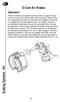 Operation S-Cam Air Brakes Trailer air brakes are operated by the tractor air supply through a series of relay and check valves. When braking is desired, the air is supplied to the axle air chamber which
Clutch Systems. Innovative Solutions for All Roads
 Aftermarket Aftermarket Aftermarket P r o d u c t i o n Gearing up for Tomorrow LuK supplies components and systems for vehicle drivetrains around the world. When Georg and Wilhelm Schaeffler founded LuK
Hydraulic Trouble Shooting
 Hydraulic Trouble Shooting Hydraulic systems can be very simple, such as a hand pump pumping up a small hydraulic jack, or very complex, with several pumps, complex valving, accumulators, and many cylinders
Fig 1 Power Transmission system of Tractor
 POWER TRANSMISSION SYSTEM Transmission is a speed reducing mechanism, equipped with several gears (Fig. 1). It may be called a sequence of gears and shafts, through which the engine power is transmitted
Trouble Shooting. Pump
 Trouble Shooting Pump Trouble Possible Cause Remedy Oil leaking in the area of water pump crankshaft Worn crankshaft seal, bad bearing, grooved shaft, or failure of retainer o-ring. Excessive play on crankshaft
Module 5 Couplings. Version 2 ME, IIT Kharagpur
 Module 5 Couplings Lesson 1 Introduction, types and uses Instructional Objectives At the end of this lesson, the students should have the knowledge of The function of couplings in machinery. Different
Operation of the overrun braking system.
 Operation of the overrun braking system. Fig 1 The overrun device can be described as the control device of the overrun brake system. A draw-bar force is produced at the coupling point by reducing the
Section 6 Brake Drum Failure Analysis. Brake Drum Wear Conditions. What is Normal Wear? What is Deep or Excessive Wear? WARNING. Deep, Uniform Wear
 Section Brake Drum 6 Failure Analysis WARNING To prevent serious eye injury, always wear safe eye protection when you perform vehicle maintenance or service. Figure 6.1 ASBESTOS AND NON-ASBESTOS FIBERS
1/29/2008 DR70. Baja Motorsports Inc. P.O. Box 61150 Phoenix, AZ 85082 Toll Free: 888-863-2252 PART NUMBERS PRICES ARE SUBJECT TO CHANGE 1 of 43
 DR70 Toll Free: 888-863-2252 PART NUMBERS PRICES ARE SUBJECT TO CHANGE 1 of 43 CYLINDER & CYLINDER HEAD 1 DR70-001 883099044472 CYLINDER 1 1 2 DR70-002 883099044489 GASKET, CYLINDER 1 1 3 DR70-003 883099044496
Automatic Transmission Basics
 Automatic Transmission Basics Lesson Objectives 1. Describe the function of the torque converter. 2. Identify the three major components of the torque converter that contribute to the multiplication of
Volkswagen Jetta, Golf, GTI 1999, 2000 Brake System 47 Brakes - Hydraulic Components (Page GR-47)
 47 Brakes - Hydraulic Components (Page GR-47) FS III front brake calipers, servicing Front brake caliper piston, removing and installing FN 3 front brake calipers, servicing Front caliper piston, removing
The Starting System. Section 4. Starting System Overview. Starter. The starting system:
 The Starting System Starter The starter motor drives the engine through a pinion gear that engages the ring gear on the flywheel. Fig. 4-01 TL623f401c Starting System Overview The starting system: Uses
1 TON FOLDING CRANE CFC1000
 1 TON FOLDING CRANE CFC1000 OPERATION &MAINTENANCE INSTRUCTIONS 0401 SPECIFICATIONS MAXIMUM SAFE WORKING LOADS (kg) 1 2 3 4 1000 750 500 250 MAXIMUM LIFT HEIGHT - 1920mm HYDRAULIC RAM OIL CAPACITY - 450CC
HYDRAULIC TABLE CART 500-LB.
 HYDRAULIC TABLE CART 500-LB. OWNER S MANUAL WARNING: Read carefully and understand all MACHINE ADJUSTMENT AND OPERATION INSTRUCTIONS before operating. Failure to follow the safety rules and other basic
Trouble Shooting Tech Tips Operation
 Steering Components TroubleShooting Tech Tips Table of Contents Basic Steering System Operation 2 Sector Shaft Adjustments 4 Drag Link Adjustment 5 Relief Valve/Unloading Valve Adjustment 6 Ross TAS Automatic
Engine, Drive Train, and Hydraulic Repair Indicator Quick Reference Guide
 Engine, Drive Train, and Hydraulic Repair Indicator Quick Reference Guide Planned Indicators Planned Indicators SM provide the best insight Service Meter Hours CAT Engine Repair Indicators Description
TOYOTA STARTING SYSTEMS. General
 General Starting the engine is possibly the most important function of the vehicle's electrical system. The starting system performs this function by changing electrical energy from the battery to mechanical
1/29/2008 DR125 / DR150. Baja Motorsports Inc. P.O. Box 61150 Phoenix, AZ 85082 Toll Free: 888-863-2252 PARTS AND PRICES ARE SUBJECT TO CHANGE 1 of 55
 DR125 / DR150 Toll Free: 888-863-2252 PARTS AND PRICES ARE SUBJECT TO CHANGE 1 of 55 CYLINDER HEAD ASSY. 1 125-001 883099006937 CYLINDER HEAD COVER 1 1 2 125-002 883099006944 BOLT M6X28 2 3 3 125-003 883099006951
DR90. Baja Motorsports Inc. P.O. Box 61150 Phoenix, AZ 85082 Toll Free: 888-863-2252 PART NUMBERS AND PRICES ARE SUBJECT TO CHANGE 1 of 51
 DR90 Toll Free: 888-863-2252 PART NUMBERS AND PRICES ARE SUBJECT TO CHANGE 1 of 51 CYLINDER & CYLINDER HEAD 1 DR90-001 842645048166 CYLINDER 1 1 2 DR90-002 842645048173 GASKET, CYLINDER 1 1 3 DR90-003
Aprilia.no. RS 50 96-98 Eng.6M
 01 Carburettor - oil pump 02 Drive shaft 03 Head - piston 04 Primary gear shaft 05 Gearbox driven shaft 06 Selector 07 Clutch 08 Clutch cover 09 Right crankcase 10 Left crankcase 11 Ignition unit RS 50
Table of Contents. Overview 1. Pump Disassembly 2. Control Disassembly / Reassembly 7. Pump Reassembly 13. Adjustment Procedures DR Control 19
 Table of Contents Overview 1 Pump Disassembly 2 Control Disassembly / Reassembly 7 Pump Reassembly 13 Adjustment Procedures DR Control 19 Adjustment Procedures DRG Control 20 Adjustment Procedures DFR
Service Manual Rol-Lift
 R 2000 Service Manual Rol-Lift Series: T and E Developed by Generic Parts Service This manual is intended for basic service and maintenance of the Rol-Lift pallet jack. The pallet jacks you are servicing
1/29/2008 DR50. Baja Motorsports Inc. P.O. Box 61150 Phoenix, AZ 85082 Toll Free: 888-863-2252 PART NUMBERS PRICES ARE SUBJECT TO CHANGE 1 of 45
 DR50 Toll Free: 888-863-2252 PART NUMBERS PRICES ARE SUBJECT TO CHANGE 1 of 45 CYLINDER & CYLINDER HEAD Part UPC Number Description Baja Description 1 DR50-001 842645074424 CYLINDER 1 1 2 DR50-002 842645074431
DR50 Hensim Dirt Runner 49cc Dirt Bike (VIN PREFIX LLCH or LUAH)
 Page 1 of 21 Product Information Baja Web > Product Information > Parts Lists > DIRTBIKE > DR50 Hensim Dirt Runner 49cc Dirt Bike (VIN PREFIX LLCH or LUAH) DR50 Hensim Dirt Runner 49cc Dirt Bike (VIN PREFIX
KIT PRESSURE PLATE FLYWHEEL DISC ALIGNMENT TOOL 600530 (F01/F03/F05) 600565 (F02/F04)* 600530 (F01/F03/F05) 600565 (F02/F04)*
 FORD TWIN-DISC KITS Thank you for purchasing this ACT product. ACT has a long racing heritage supporting countless racers and series champions in many forms of racing. Now you can let ACT s experience
Hydraulic Transmission Jacks Operating Instructions & Parts Manual
 Blackhawk Automotive is a Licensed Trade Mark Made by SFA Companies, Kansas City, MO Hydraulic Transmission Jacks Operating Instructions & Parts Manual Model BH7011 BH7210 Capacity 1/2 Ton 1 Ton SFA Companies
REPAIR INSTRUCTIONS UNDER BODY CYLINDER (UM, UL)
 Table of contents 1. Introduction... 3 1.1. Scope of use... 3 1.2. General remarks... 3 1.3. Contact Hyva... 3 1.4. Precautions... 4 1.5. Spare parts... 4 1.5.1. Prior to use... 4 1.6. Recycling and Reuse
Bearing Failure: Causes and Cures
 Bearing Failure: Causes and Cures bearing.ppt Page 1 Excessive loads usually cause premature fatigue. Tight fits, brinelling and improper preloading can also bring about early fatigue failure. The solution
DR90. Baja Motorsports Inc. P.O. Box 61150 Phoenix, AZ 85082 Toll Free: 888-863-2252 PART NUMBERS AND PRICES ARE SUBJECT TO CHANGE 1 of 51
 DR90 Toll Free: 888-863-2252 PART NUMBERS AND PRICES ARE SUBJECT TO CHANGE 1 of 51 CYLINDER & CYLINDER HEAD Part UPC Number Description Baja Description 1 DR90-001 842645048166 CYLINDER 1 1 2 DR90-002
Fire Pump Applications
 Fire Pump Applications Installation & Maintenance Manual Universal Joint Driveshafts www.cumminsfirepower.com Table of Contents Section 1 General 1.1 Introduction 1.2 Safety Precautions 1.3 Warranty Statement
Dismantling and Reassembly Guide
 Super X3 Mill Dismantling and Reassembly Guide A picture story book to help you dismantle and reassemble your Sieg Super X3 Mill Arc Euro Trade Ltd. 10 Archdale Street, Syston, Leicester, LE7 1NA. Web:
SELF-STEERING AXLE TABLE OF CONTENTS
 SELF-STEERING AXLE TABLE OF CONTENTS Section 1 - Introduction Section 2 - Pre-Installation Check List Section 3 - Ride Height Adjustments Section 4 - Suspension Mount Section 5 - Axle Mount Section 6 -
Pallet Jack. OWNER S MANUAL Model MH1230. Important Safety Instructions Assembly Instructions Parts and Hardware Identification
 OWNER S MANUAL Model MH1230 Important Safety Instructions Assembly Instructions Parts and Hardware Identification Pallet Jack CAUTION: Read, understand and follow ALL instructions before using this product
Cylinder head, removing and replacing
 15-1 Cylinder head, removing and replacing WARNING! Do not re-use any fasteners that are worn or deformed in normal use. Some fasteners are designed to be used only once, and are unreliable and may fail
HYDRAULIC LIFT TABLE CART 2200-LB.
 HYDRAULIC LIFT TABLE CART 2200-LB. OWNER S MANUAL WARNING: Read carefully and understand all MACHINE ADJUSTMENT AND OPERATION INSTRUCTIONS before operating. Failure to follow the safety rules and other
Model No: VS4815 1. SAFETY INSTRUCTIONS VS4800 2. INTRODUCTION & APPLICATIONS VS4815 3. CONTENTS. 2.1 Introduction. 2.
 Instructions for: Petrol Engine Twin Camshaft Setting / Locking Tool Kit - (incorporating Vanos Alignment) - BMW N42 & N46 Engines Model No: VS4800 Associated kit: Camshaft/Carrier Bracket Remover & Installer
Turbocharger system components, servicing
 21-1 Turbocharger system components, servicing Engine codes: AAZ, 1Z, AHU Observe rules of cleanliness Page 21-10 Turbocharger hoses and lines, connecting Page 21-11 WARNING! Do not re-use any fasteners
Piston Diagnosis A rough Guide
 Piston Diagnosis A rough Guide The process of examining used pistons can tell us a lot of helpful information on the condition of an engine. When engine failure does occur the piston is likely to take
ARTICLE BEGINNING APPLICATION IDENTIFICATION DESCRIPTION LUBRICATION & ADJUSTMENT TROUBLE SHOOTING. MANUAL TRANSMISSIONS Saab 5-Speed Transaxle
 Article Text ARTICLE BEGINNING MANUAL TRANSMISSIONS Saab 5-Speed Transaxle APPLICATION TRANSMISSION APPLICATION ÄÄÄÄÄÄÄÄÄÄÄÄÄÄÄÄÄÄÄÄÄÄÄÄÄÄÄÄÄÄÄÄÄÄÄÄÄÄÄÄÄÄÄÄÄÄÄÄÄÄÄÄÄÄÄÄÄÄÄÄ Vehicle Application Transmission
VEHICLE SPEED CONTROL SYSTEM
 PL VEHICLE SPEED CONTROL SYSTEM 8H - 1 VEHICLE SPEED CONTROL SYSTEM TABLE OF CONTENTS page DESCRIPTION AND SPEED CONTROL SYSTEM...1 SPEED CONTROL SERVO-PCM OUTPUT....2 SPEED CONTROL SWITCHES PCM INPUT...2
BOWIE PUMPS OPERATION - MAINTENANCE
 BOWIE PUMPS OPERATION - MAINTENANCE PUMPING PRINCIPLE: The meshing owieeof the gears cause a slight depression, with the resulting enmeshing of the gears causing a vacuum drawing the fluid being pumped
TRANS-05, Torque Tube Removal, Rebuilding, and Installation
 TRANS-05, Torque Tube Removal, Rebuilding, and Installation Tools Metric Wrench Set Metric Socket Set Jack Stands (6 minimum) Floor Jack 8mm Cheesehead socket (also referred to as 12 point internal socket
How Do I Replacing My Rear Brake Pads and Rotors?
 How Do I Replacing My Rear Brake Pads and Rotors? WARNING! Always have the vehicle under inspection on level ground, in park with the emergency brake on. Always wear protective eyewear, gloves and necessary
1993 SUSPENSION Volkswagen Front. EuroVan
 Article Text ARTICLE BEGINNING 1993 SUSPENSION Volkswagen Front EuroVan DESCRIPTION FWD independent suspension is an double-wishbone type with torsion bars mounted on upper control arm. Wheel is supported
DIFFERENTIAL AND DRIVELINE
 PL DIFFERENTIAL AND DRIVELINE 3-1 DIFFERENTIAL AND DRIVELINE TABLE OF CONTENTS page DESCRIPTION AND OPERATION FRONT DRIVESHAFTS...1 DIAGNOSIS AND TESTING DRIVESHAFT DIAGNOSIS....2 REMOVAL AND INSTALLATION
2001 Mercedes-Benz ML320
 MODEL IDENTIFICATION 2001-04 STARTING & CHARGING SYSTEMS Starters - 163 Chassis WARNING: Vehicles are equipped with air bag supplemental restraint system. Before attempting any repairs involving steering
Service Kits For Compressors
 Product Catalogue Service Kits For Compressors Note: This Catalogue covers the Rationalised Service Kits designed to be used on the range of Knorr-Bremse compressors manufactured in its Lisieux, France
Mechanical & Hydraulic Clutch Linkage Set-Up Tips
 Mechanical & Hydraulic Clutch Linkage Set-Up Tips Setting the Stage Before getting to the actual clutch linkage system itself, it is assumed that you are using all of the correct clutch components that
INSTALLATION INSTRUCTIONS
 Installation Instructions Ford Twin Disc Kits Serial #: Thank you for purchasing this quality ACT product. ACT has a long racing heritage supporting countless racers and series champions in many forms
SECTION 2B WHEEL ALIGNMENT TABLE OF CONTENTS
 SECTION 2B WHEEL ALIGNMENT TABLE OF CONTENTS Description and Operation... 2B2 Four Wheel Alignment... 2B2 Toein... 2B2 Caster... 2B2 Camber... 2B2 Diagnostic Information and Procedures... 2B3 Tire Diagnosis...
PART 2 FORKLIFT HYDRAULIC SYSTEM
 PART 2 FORKLIFT HYDRAULIC SYSTEM Chapter 1 Description and Operation Component Locations & Circuit Layouts 1 Hydraulic Pump 11 Control Valve 14 Valve Section Oil Flows 15 Anti-Cavitation Valve 22 Velocity
- Service Bulletin - Pistons.
 Normal combustion: is smooth and even from the spark plug through the top of the chamber. 1 2 3 Spark occurs Combustion moves smoothly across chamber Combustion and power completed Pre-Ignition: occurs
HISTORY IN THE BRAKING
 Practical Tips HISTORY IN THE BRAKING Documentation of a disc brake repair 1 Start of brake repair Visually check the brake disc and/or pads for sign of reaching their wear limit. Before starting the brake
MANUAL TRANS OVERHAUL - TYPE 02J Article Text 1999 Volkswagen Golf This file passed thru Volkswagen Technical Site -
 MANUAL TRANS OVERHAUL - TYPE 02J Article Text 1999 Volkswagen Golf This file passed thru Volkswagen Technical Site - http://volkswagen.msk.ru ARTICLE BEGINNING 1998-99 MANUAL TRANSMISSIONS Volkswagen/Audi
INSPECTION BEFORE RIDING
 INSPECTION BEFORE RIDING Check the following items before riding. ITEM Engine cum transmission oil Fuel Tyres Battery Speedometer Lighting Steering Throttle Clutch Brakes Wheels WHAT TO CHECK FOR Availability
SECTION G2: CABLE PROCESSOR MODULE MAINTENANCE
 SECTION G2: CABLE PROCESSOR MODULE MAINTENANCE Cable Processor Module overview WARNING! When tipping the Cable Processor Module back, (after removing the toggle arm pin), use extreme caution not to drop
Front axle components, overview
 just a test. Front axle components, overview 40-1 General Information Load bearing components and parts of the suspension must not be welded or straightened. Vehicles without drive axle must not be moved,
Char-Lynn Spool Valve Hydraulic Motors. Repair Information. W Series Geroler Motors
 Char-Lynn Spool Valve Hydraulic Motors Repair Information W Series Geroler Motors with Parking Brake 004 Nut Key Ring, Retaining Bearing Ring, Retaining Ring, Retaining Washer (Thick), Pressure Washer,
Shaft- Mounted Speed Reducers
 Torque Arm Design Considerations for Todd R. Bobak has worked in the gear industry for 15 years. He has held positions in technical service, design and development, and quality assurance. He is a product
Engine, disassembling and assembling
 13-1 Engine, disassembling and assembling Note: Replace the oil cooler and thoroughly clean the oil passages if you find metal shavings or larger quantities of small metal particles in the engine oil,
Tiguan Haldex All-Wheel Drive
 Service Training Self Study Program 861803 Tiguan Haldex All-Wheel Drive Volkswagen of America, Inc. Volkswagen Academy Printed in U.S.A. Printed 3/2008 Course Number 861803 2008 Volkswagen of America,
Char-Lynn Hydraulic Motor. Repair Information. 10 000 Series. October, 1997
 Char-Lynn Hydraulic Motor October, 1997 Repair Information Geroler Motor Two Speed 001 27 Retainer inside bore of valve plate bearingless motors only 4 15 16 3 6 35 Parts Drawing 25 2 2 1 19 17 36 40 47
1.8 CRANKSHAFT OIL SEALS
 SERIES 60 SERVICE MANUAL 1.8 CRANKSHAFT OIL SEALS An oil seal is fitted between each end of the crankshaft and the bores of the flywheel housing and gear case cover to retain the lubricating oil in the
Fremont County School District No. One, Lander, Wyoming Common Core of Knowledge and Skills For Standards and Measures/Assessment
 Level: CV.ATBR.1 Resources CV.ATBR.1.1 Students prepare and analyze CV.ATBR.1.1.1 Students will apply for a personal car personal financial information. loan via a mock-up project. Students effectively
Failure to comply with the following cautions and warnings could cause equipment damage and personal injury.
 1.0 IMPORTANT RECEIVING INSTRUCTIONS Visually inspect all components for shipping damage. Shipping Damage is not covered by warranty. If shipping damage is found, notify carrier at once. The carrier is
Installation instruction
 1/5 ATTENTION! Mounting and dismounting of a shrink disc must be restricted to qualified personnel. Incorrect handling may cause injury to persons and damage to machines! At work, with heavy parts and
SE-100-1, SE-200-1, SE-500-1, and SE-1000-1 AIR CHAMP PRODUCTS. User Manual SE BRAKE MODELS: (i) MTY (81) 83 54 10 18 ventas@industrialmagza.
 AIR CHAMP PRODUCTS User Manual SE BRAKE MODELS: SE-00-, SE-200-, SE-500-, and SE-000- (i) FORM NO. L-20084-E-040 In accordance with Nexen s established policy of constant product improvement, the specifications
PALLET JACK - 2.5 TON
 PALLET JACK - 2.5 TON 39939 SET UP AND OPERATING INSTRUCTIONS Visit our website at: http://www.harborfreight.com Read this material before using this product. Failure to do so can result in serious injury.
MKV Golf GTI Rear Brake Service - Replace Pads and Rotors
 Page 1 Installation Procedures MKV Golf GTI Rear Brake Service - This tutorial is provided as a courtesy by ECS Tuning. Proper service and repair procedures are vital to the safe, reliable operation of
CHAPTER 65 TAIL ROTOR DRIVE SYSTEM. Section Title Page
 CHAPTER 65 TAIL ROTOR DRIVE SYSTEM Section Title Page 65-00 Description........................................ 65.1 65-10 Tail Rotor Drive Fan Shaft.............................. 65.1 65-20 Tail Rotor
Working Drawing and Assemblies. Chapter 10
 Working Drawing and Assemblies Chapter 10 Objectives 1.Define working drawings. 2. Describe how working drawings are used in industry. 3. List the major components of a complete set of working drawings.
Roller Chain Coupling
 Roller Chain Coupling Features 1. Simple structure A roller chain coupling consists of one duplex roller chain and two sprockets for a simplex chain. Handling is very simple as both the shafts (driving
Trouble shooting guide
 guide DPR/PSR Leak Insuffi ciently tightened, shallow bite Tighten the nut according to correct number of turns, direct assembly only for maintanance/repair, use of recommended pre-assembly machines Mark
Fisher 249 Caged Displacer Sensors
 Instruction Manual 249 Caged Sensors Fisher 249 Caged Displacer Sensors Contents Introduction... 1 Scope of Manual... 1... 2 Type Number... 3 Educational Services... 4 Maintenance... 4 Cleaning the Cage...