
RADIOTELEPHONE HANDBOOK COMDTINST M2300.7A
|
|
|
- Justina Watkins
- 10 years ago
- Views:
Transcription
1 RADIOTELEPHONE HANDBOOK COMDTINST M2300.7A COMDTINST M2300.7A August 2008
2 Commandant 2100 Second Street, S.W. United States Coast Guard Washington, DC Staff Symbol: CG-62 Phone: (202) COMDTINST M2300.7A 19 AUGUST 2008 COMMANDANT INSTRUCTION M2300.7A Subj: RADIOTELEPHONE HANDBOOK 1. PURPOSE. The purpose of this Manual is to consolidate correct voice radiotelephone procedures into a convenient and readily accessible handbook. 2. ACTION. Area district and sector commanders, commanders of maintenance and logistics commands, Commander Deployable Operations Group, commanding officers of headquarters units, assistant commandants for directorates, Judge Advocate General and special staff elements at Headquarters shall ensure compliance with the provisions of this Manual. Internet release is authorized. 3. DIRECTIVES AFFECTED. The Radiotelephone Handbook, COMDTINST M2300.7, is cancelled. 4. MAJOR CHANGES. The entire Manual has undergone a complete revision to bring it in compliance with current policy and regulations. As such, it is more beneficial for individual review than attempting to list all of the major changes. 5. REQUESTS FOR CHANGES. Units and individuals may recommend changes by writing via the chain of command to: Commandant (CG-62); U. S. Coast Guard; nd Street, SW, Room JR , Washington, DC ENVIRONMENTAL ASPECT AND IMPACT CONSIDERATIONS. Environmental considerations were examined in the development of this Manual and have been determined not to be applicable. DISTRIBUTION SDL No. 149 a b c d e f g h i j k l m n o p q r s t u v w x y z A B C D E F G 2 H NON-STANDARD DISTRIBUTION:
3 7. FORMS/REPORTS. None. DAVID T. GLENN /s/ Assistant Commandant for Command, Control, Communications, Computers, and Information Technology 2
4 RECORD OF CHANGES CHANGE NUMBER DATE OF CHANGE DATE ENTERED BY WHOM ENTERED
5 Table of Contents Table of Contents...i Basic Operating Rules Forbidden Practices Operating the Radiotelephone Set Phonetic Alphabet Pronunciation of Numerals Decimal Points Spelling Coded Group Mixed Letters and Numbers Abbreviations Dates Initials Roman Numerals Punctuation How to Call and Reply Coast Guard Voice Call Signs Authorized PROWORDS Elements of Message Traffic Message Elements Announcing Message Traffic Sending Message Traffic Asking for Repetitions Portions of a Message Not Received Portions Between Two Words Not Received Sections of a Message Not Received Receipt of Messages Time of Receipt (TOR)/Delivery (TOD) Canceling a Transmission Keeping the Originator Informed Radio Checks Radio Silence Voice Abbreviated Log Communication Log Entries Distress, Urgent and Safety Communications Distress Communications Distress Message Repetition Attracting Attention to a Distress Call Receipt of Distress Messages Receipt of Distress Message by Ship or Aircraft Station Responsibilities Imposing Emergency Radio Silence Distress Termination Urgent Procedures Urgent Message Canceling Urgent Traffic Safety Procedures Distress Frequencies List of Distress and Common Working Frequencies i
6 Basic Operating Rules Control of Communications When you use your radiotelephone, you are speaking for, and with the Authority of the Command in which you are serving. The manner in which you use the radiotelephone reflects directly upon your Commanding Officer or Officer in Charge. Note: The purpose of this Manual is unclassified general radiotelephone procedures both military and civilian. For tactical military procedures, refer to Allied Communication Publication (ACP) 125 (series). Sectors and Communication Stations monitor your conversations and maintain discipline on radiotelephone circuits in their area of responsibility. Their authority stems from their Sector and Area Commanders, respectively. It is their duty to ensure that the Coast Guard maintains high standards of service to the public. Forbidden Practices 1. Violation of radio silence. 2. Unofficial conversation between operators. 3. Transmitting on a directed net without permission (except flash and immediate traffic). 4. Excessive tuning or testing more than 10 seconds. 5. Failure to listen first before transmitting. 6. Transmitting the operator s personal sign or name. 7. Unauthorized use of plain language. 8. Use of other than authorized PROWORDS. 9. Unauthorized use of plain language in place of applicable PROWORDS or operating signals. 10. Linkage or compromise of classified call signs and address groups by plain language disclosures or association with unclassified call signs. 11. Profane, indecent or obscene language. All transmissions should be as clear and concise as possible Operating the Radiotelephone Set 1. Refer to your Standard Operating Procedure (SOP) or the guidelines set forth by the manufacturer. 2. Know your equipment. 3. Identify the function and correct position of each control knob. 4. Be alert. 5. Release your Push-to-talk button after each phrase or two to allow another station to break-in if necessary. 6. Practice this Rule!! Ensure the receiver volume control (AF Gain) knob is turned up sufficiently such that a weak transmission might be heard but not so loud as to negatively impact operator hearing. 1-17
7 Phonetic Alphabet The phonetic alphabet may be used to identify any letter of the Alphabet, or to spell a word or group of letters. Letter Phonetic Spoken as: A ALFA AL FAH B BRAVO BRAH VO C CHARLIE CHAR LEE D DELTA DELL TAH E ECHO ECK OH F FOXTROT FOKS TROT G GOLF GOLF H HOTEL HOH TELL I INDIA IN DEE AH J JULIETT JEW LEE ETT K KILO KEY LOH L LIMA LEE MAH M MIKE MIKE N NOVEMBER NO VEM BER O OSCAR OSS CAH P PAPA PAH PAH Q QUEBEC KEH BECK R ROMEO ROW ME OH S SIERRA SEE AIR RAH T TANGO TANG GO U UNIFORM YOU NEE FORM V VICTOR VIC TAH W WHISKEY WISS KEY X XRAY ECKS RAY Y YANKEE YANG KEY Z ZULU ZOO LOO Note: The syllables in italics carry the emphasis. Pronunciation of Numerals To distinguish numerals from words having the same meaning, the PROWORD "Figures" is used preceding such numbers. Number Spoken Number Spoken 0 ZE-RO 5 FIFE 1 WUN 6 SIX 2 TOO 7 SEV-UN 3 TREE 8 AIT 4 FOW-ER 9 NIN-ER Note: A hyphen represents a pause. Number Spoken 44 FOW-ER FOW-ER 500 FIFE ZERO ZERO 7000 SEV-UN ZERO ZERO ZERO WUN SIX ZERO ZERO ZERO WUN FOW-ER AIT NIN-ER NIN-ER Continued on next page 2-17
8 Pronunciation of Numerals (cont) *081400Z JUN 08 TIME - ZERO EIGHT ONE FOUR ZERO ZERO ZULU JUNE ZERO EIGHT *Date-time-groups are always sent digit by digit Decimal Points spoken as: "FIGURES - WUN TOO TREE- DAY-SEE-MAL SIX" Note: The PROWORD FIGURES is not used in transmitting message headings. Spelling Difficult words or groups within the text of plain text messages should be spelled using the phonetic alphabet preceded by the PROWORD I SPELL. If you can pronounce the word to be spelled, do so before and after the spelling to identify the word.!!say It - Spell It - Say It Again!! CANTENARY - I SPELL-CHARLIE ALFA NOVEMBER TANGO ECHO NOVEMBER ALFA ROMEO YANKEE - CANTENARY. Say It - Spell It - Say It Again; If the word sounds the same but has a different meaning. Ex. To, Too, Two. Coded Groups If a message text contains coded groups or other words that cannot be pronounced, the phonetic equivalents of the individual letters should be transmitted, without the PROWORD I SPELL. LOZWT in text "LIMA OSCAR ZULU WHISKEY TANGO" Mixed Letters and Numbers If the message text contains mixed letters and numbers they will be spoken as: 12A9B Spoken "FIGURES - ONE TWO ALFA NINER BRAVO" TS67R Spoken "I SPELL - TANGO SIERRA SIX SEVEN ROMEO" 3-17
9 Abbreviations Abbreviations in the text, initials used alone or in conjunction with short titles shall be spoken phonetically. Spoken as ALFA PERIOD or ACP spoken as "I SPELL - ALFA CHARLIE PAPA. Abbreviations frequently used in normal speech may be used in the same manner when transmitted by voice. NATO spoken as NATO. USCGC DALLAS spoken as UNITED STATES COAST GUARD CUTTER DALLAS - I SPELL - UNIFORM SIERRA CHARLIE GOLF CHARLIE - USCGC DALLAS. Dates Dates are spoken digit by digit using the full month's name 20 AUG spoken as TOO ZERO AUGUST. Initials Personal initials shall be spoken phonetically, prefixed by the word INITIALS. W.E. LEWIS spoken as "INITIALS WHISKEY ECHO LEWIS" Roman Numerals Transmitted as the corresponding Arabic numerals preceded by the word, ROMAN NUMERALS. Note: Spelling of words lengthens the time of transmission, thus increasing onair time. Avoid spelling words unnecessarily. Punctuation Spoken as: Comma "COMMA" Period "PERIOD OR FULL STOP" Parenthesis BRACKETS ON/ BRACKETS OFF " Oblique Stroke "SLANT" Hyphen "HYPHEN" Semicolon "SEMI-COLON" Colon "COLON" Question Mark "QUESTION MARK" Decimal point DAY-SEE-MAL" Note: Do not use "Symbol For" How to Call and Reply Transmitting and receiving on a voice circuit will be accomplished in the following manner. Keep in mind proper circuit discipline. Step Action 1 Check your transmitter/receiver settings and verify the proper transmit/receive frequency is dialed in. Continued on next page 4-17
10 How to Call and Reply (cont) 2 Listen to the frequency to ensure you will not interfere with another transmission in progress. 3 Speak clearly in a normal tone of voice, holding the microphone no more than an inch from your mouth. 4 Avoid excessive calling and unofficial transmissions. Call signs should be transmitted only once when conditions are favorable and twice when unfavorable. 5 If three attempts to contact a station are unsuccessful, send the PROWORD "Nothing Heard". Attempt to establish communications with another station and request their assistance in contacting the original unit. Continue your call-up at reasonable intervals. 6 Message transmissions should be sent at such a speed as to allow accurate copying of the message. Send phrase by phrase, un-keying the microphone at regular intervals. 7 Every transmission shall end with an ending PROWORD. The authorized PROWORD'S are: "OVER" Response required "OUT" No response required "WAIT" The pause is for a few seconds "WAIT OUT" The pause is more than a few seconds Coast Guard Voice Call Signs Coast Guard units need to be addressed in a certain manner by all personnel while speaking on the radiotelephone. Step Action/Info 1 Identify the type of unit you are calling or that is calling you. 2 Land Unit - Insert "COAST GUARD" followed by a brief descriptive of the type of unit and geographical area. COAST GUARD SECTOR SAN FRANCISCO COAST GUARD AIRSTA KODIAK COAST GUARD CAMSLANT CHESAPEAKE COAST GUARD ATLANTIC AREA 3 Vessel - Insert "COAST GUARD CUTTER" followed by the name of the vessel. "COAST GUARD CUTTER JARVIS" Aircraft and small boats - Units that use their numbers as part of their call signs. "COAST GUARD 1500" OR "COAST GUARD 41203" 5-17
11 Coast Guard Voice Call Signs (cont) Aircraft and small boats engaged in SAR - Insert "RESCUE" as part of their call signs. "COAST GUARD RESCUE 1500" The phrase COAST GUARD may be dropped once communications has been established. "CUTTER JARVIS" "SECTOR SAN FRANCISCO" COMMSTA KODIAK CAMSPAC POINT REYES OR CAMSPAC ATLANTIC AREA OR LANTAREA "203" OR 1500 RESCUE 5494 OR RESCUE
12 Authorized PROWORDS PROWORDS are words or phrases having assigned meaning. Do not substitute PROWORDS in the text of a message. Refer to Allied Communication Publication (ACP) 125 (series) for a complete list of PROWORDS. ALL AFTER: Refers to everything following a specific word or number. ALL BEFORE: Refers to everything before a specific word or number. BREAK: Indicates the separation of the text from other portions of the message. CORRECT: You are correct CORRECTION: An error has been made. Transmission will continue with the last word sent correctly. DISREGARD THIS TRANSMISSION: This transmission is in error, disregard it. FIGURES: Numerals follow FROM: The originator of this message. IMMEDIATE: Precedence immediate INFO: Addressees designated for information. I READ BACK: The following is my response to your instructions to read back. I SAY AGAIN: I am repeating transmission or portion indicated at your request. I SPELL: I shall spell the next word phonetically MESSAGE A message that requires recording is about to follow. MORE TO FOLLOW: Transmitting station has additional traffic for the receiving station NEGATIVE: No. OUT: End of transmission no reply necessary. OVER: End of transmission respond back PRIORITY: Precedence priority. READ BACK: Repeat this entire message back to me exactly as received. RELAY TO: Transmit this message to all addressees indicated. ROGER: I have received your transmission satisfactorily. ROUTINE: Precedence routine. SAY AGAIN: Repeat all your last transmission. SILENCE: Cease transmissions immediately. SILENCE LIFTED: Resume normal transmissions. SPEAK SLOWER: Reduce speed of transmission. THIS IS: This transmission is from the station whose designation immediately follows. TIME: That which follows is the time or date-time-group of message. TO: The addressees whose designations immediately follow are to take action on this message. WAIT: I must pause for a few seconds. WAIT OUT: I must pause longer than a few seconds. WILCO: I have received your message. I understand and I will comply. To only be used by the addressee; ROGER and WILCO should never be used together.. WORD AFTER: Refers to one word directly after a specific word or number. WORD BEFORE: Refers to one word directly before a specific word or number. WORDS TWICE: Communications are difficult. Transmit each phrase (or code group) twice. WRONG: Your last transmission was incorrect. The correct version is. 7-17
13 Elements of Message Traffic Message Elements Messages shall be transmitted in the following order: "(CALL SIGN) - THIS IS - (CALL SIGN) - (ANNOUNCE TRAFFIC) - OVER" "(CALL SIGN) - THIS IS - (CALL SIGN) - OVER" "(CALL SIGN) - THIS IS - (CALL SIGN)" "(Precedence) (Time) Date-Time-Group FROM TO INFO BREAK CLASSIFICATION LINE TEXT BREAK OVER" Note: All PLA's may be read as abbreviated call signs COMCOGARD SECTOR SAN FRANCISCO CA - Spoken as: "SECTOR SAN FRANCISCO" Announcing Message Traffic "COAST GUARD CUTTER MUNRO - THIS IS COAST GUARD SECTOR SAN FRANCISCO ROUTINE- OVER" "COAST GUARD SECTOR SAN FRANCISCO - THIS IS COAST GUARD CUTTER MUNRO - OVER" Sending Message Traffic "CUTTER MUNRO - THIS IS SECTOR SAN FRANCISCO - ROUTINE - TIME WUN-TOO-ZERO-AIT-WUN-ZERO ZULU ZERO-EIGHT FROM SECTOR SAN FRANCISCO TO CUTTER MUNRO INFO DISTRICT ELEVEN BREAK UNCLAS (TEXT) BREAK (ENDING PROWORD)" Note: When an error is made by the sending station, the PROWORD CORRECTION is transmitted followed by the last word, group, PROWORD or phrase correctly sent. Asking for Repetitions (TEXT) UNCLAS CONDUCT SEA TRIALS IMMEDIATELY Request: "SECTOR SAN FRANCISCO - THIS IS - CUTTER MUNRO - SAY AGAIN WORD AFTER SEA - OVER" Reply: "CUTTER MUNRO - THIS IS SECTOR SAN FRANCISCO - I SAY AGAIN WORD AFTER SEA TRIALS OVER" 8-17
14 Portions of a Message Not Received Portions Between Two Words Not Received Sections of a Message Not Received Request: "COMMSTA KODIAK - THIS IS - CUTTER SHERMAN - SAY AGAIN UNCLAS TO TRIALS OVER" Request: "COMMSTA KODIAK - THIS IS - CUTTER JARVIS SAY AGAIN ALL BEFORE BREAK OVER" OR "COMMSTA KODIAK - THIS IS - CUTTER JARVIS SAY AGAIN ALL AFTER BREAK OVER" Request: "CAMSLANT - THIS IS CUTTER DURABLE - SAY AGAIN - FROM INFO TO BREAK OVER" Receipt of Messages Messages are receipted to document their delivery. Do not "Roger" for a message until you are sure it is received correctly and completely. Time of Receipt (TOR)/ Delivery (TOD) A unit in receipt of a message must record the time of receipt (TOR) in their radio log. A unit that sent a message must record the time of delivery (TOD) in their radio log. Time of Receipt Entry: Date-Time-Group/Sending Unit/Frequency received on/opsign Time of Delivery Entry Date-Time-Group/Receiving Unit/Frequency sent on/opsign Canceling a Transmission A transmission in progress may be canceled by using the PROWORD "DISREGARD THIS TRANSMISSION". If the message was sent in error and receipted for, a cancellation message must be transmitted. Keeping the Originator Informed It is important to keep originators informed of "non-delivery" message traffic. Operational Commanders establish procedures within their commands to notify originators of "non-delivery" messages. Refer to your Standard Operating Procedure (SOP) at your unit. 9-17
15 Radio Checks Radio checks should be conducted when communications with a unit are doubtful. They shall be made on Coast Guard working frequencies after a preliminary call on the International call and distress frequency. "UNITED STATES COAST GUARD CUTTER CHASE - THIS IS - UNITED STATES COAST GUARD SECTOR SAN FRANCISCO CA - RADIO CHECK - OVER "SECTOR SAN FRANCISCO - THIS IS CUTTER CHASE - ROGER (OR) NOTHING HEARD" Other replies are: Signal Strength Readability Loud: Strong signal Clear: Excellent quality Good: Good signal Readable: Good quality Weak: Can hear with difficulty Distorted: Trouble copying Very Weak: Can hear with great difficulty With Interference: Trouble copying you due to interference Fading: Signal coming in strong then weak Intermittent: Signal at times good and other times unreadable Radio silence may be imposed or lifted by a station only when authorized by a competent authority, ie. Sector Commander Radio Silence Silence Imposed: "ALL STATIONS - THIS IS UNITED STATES COAST GUARD SECTOR SAN FRANCISCO CA - SILENCE SILENCE SILENCE khz OUT" Silence Lifted: "ALL STATIONS - THIS IS UNITED STATES COAST GUARD SECTOR SAN FRANCISCO CA - SILENCE LIFTED - OUT" Voice Abbreviated Log A log that is a record of all transmitted and received signals that pertain to the unit. If the unit is equipped with a Digital Voice log, then log entries need not be verbatim and may be abbreviated and in narrative form. Communication Log Entries BEGIN NEW COMM DAY. OS1 L.M. HINES ON WATCH. EQP NML. TFC CLR ZUB 0000Z OPNOTE: CONDUCTED SATIFACTORY RDO CK WITH CGC HAMILTON Z OPNOTE: POWER FAILURE (SPVR NTFD) ZUB 0025Z OPNOTE: POWER RESTORED (SPVR NTFD) ZUB 0028Z WATCH RELIEVED BY OS1J.P. HALOGIN. EQP NML. TFC CLR ZUB 0045Z OS1 L.M. HINES NOTE: Refer to Telecommunications Manual, COMDTINST M (series) for log policy and the OS A School for additional log keeping procedures
16 Distress, Urgent and Safety Communications Distress Communications People in distress have a variety of methods, ranging from sophisticated electronic devices to waving a piece of cloth, for alerting others they are in danger. Because it would be impossible to describe every situation you may encounter, what follows is a "text book" example of handling distress communications. THE DISTRESS CALLS HAS ABSOLUTE PRIORITY OVER ALL OTHER TRANSMISSIONS Step Action/Info 1 Listen for the distress signal MAYDAY. This indicates that a ship, aircraft, or other vehicle is threatened by grave and imminent danger and requests immediate assistance. 2 The distress call has absolute priority over all other transmissions and shall not be addressed to a particular station. 3 All stations hearing a distress call shall immediately cease transmissions capable of interfering with the distress traffic and shall continue to listen on the frequency on which the call was heard. 4 Distress transmissions are normally made on the frequencies MHz (channel 16) or 2182 khz, but maybe heard over any channel or frequency. 5 Most small vessels will not follow prescribed procedures during a distress of their vessel. It is quite probable that they may call MAYDAY, or an individual unit of the Coast Guard. In any event it may become necessary for a Coast Guard unit to assume control of the distress. 6 The radiotelephone alarm signal is for the purpose of attracting the attention of on-watch personnel or to actuate automatic devices which would alert personnel. The signal consists of two audible tones of different producing a warbling sound. An automatic device prior to the distress call transmits it when possible. 7 The distress call consists of: A. The distress signal MAYDAY, spoken three times. B. The PROWORDS THIS IS C. The call sign of the distressed unit, spoken three times. "MAYDAY MAYDAY MAYDAY - THIS IS - SWAMPER SWAMPER SWAMPER" Be prepared to copy the distress message that will normally immediately follow. Continued on next page 11-17
17 Distress Communications (cont) Distress Message Repetition Attracting Attention to a Distress Call Receipt of Distress Messages 8 The distress message consists of: A. The distress signal MAYDAY. B. The distressed unit's name or call sign. C. The distressed unit s position, nature of distress, type of assistance needed, description, persons on board, and any information that might facilitate the rescue. "MAYDAY - SWAMPER - MY POSITION IS 2 MILES 126 DEGREES TRUE FROM WINDY POINT - I LOST MY POWER AND THE SEAS ARE GETTING ROUGH - REQUEST COAST GUARD ASSISTANCE - I'M A 42 FOOT CABIN CRUISER - WHITE HULL WITH BLUE TRIM - THREE PERSONS ONBOARD - OVER" A mariner or boater in an emergency situation may make as many calls as necessary to get an acknowledgement that their transmission was heard. If they do not receive a reply, they may use any frequency available or any means available to attract attention. Any Coast Guard unit hearing a distress call and is unable to establish communications, is required to take all possible action in locating a station that can provide assistance. This may be by way of the distress frequency itself, cellular, or Inmarsat. When a distressed unit is in your vicinity, receipt for the message immediately. However, if the unit is determined to be some distance from you, pause a few moments to allow ships or stations nearer the scene to answer. In areas where communications with one or more shore stations are practicable, ships should wait a short period of time to allow them to acknowledge receipt. Step Action/Info 1 Transmit the following: A. Distress signal "MAYDAY" B. The call sign of the unit in distress C. The PROWORD "THIS IS" D. The call sign of the unit acknowledging receipt E. The words "RECEIVED MAYDAY" Request essential information (position, nature of emergency, vessel description) to affect a successful rescue. You may obtain less important information in later transmissions. 2 When directed, inform the distressed unit of any Coast Guard assistance being dispatched and to stand by. 3 Vessels and shore stations receiving distress traffic should be forwarded by the most rapid means. Continued on next page 12-17
18 Receipt of Distress Messages (cont) 4 Forward the information to the appropriate CG Command Center (CC). 5 Set a communication schedule (COMMSKED) with the distressed unit. Time between COMMS checks shall be per the CC and shall continue until the CC gives permission to cease. 6 Complete a SAR check off sheet as time allows. 7 Maintain a distress communication log. 8 Keep the CC informed of new developments in the case. 9 Place additional people on watch if necessary. Obtain radio direction finder bearing of distressed unit if equipment and conditions permit. Receipt of Distress Messages by Ship or Aircraft Every Coast Guard ship or aircraft that acknowledges receipt of distress messages, ensuring it will not interfere with stations in a better position to render immediate assistance, shall on the order of the Commanding Officer or Officer-In-Charge, transmit as soon as possible the following information to the unit in distress. Step Action/Info 1 Acknowledgement of unit's name and position. 2 Speed of advance of assisting unit to scene. 3 Estimated time of arrival at scene. 4 Keep the distressed unit informed of any circumstances that may affect your assistance to them such as speed, sea conditions, etc. Speak in a tone of voice that expresses confidence. 5 After receiving a distress call or information pertaining to one, Coast Guard units shall, within equipment capabilities, set a continuous radio guard on the frequency of the distressed unit, or set up a radio schedule if the distressed unit is unable to stand a continuous watch. Caution: Shifting frequencies while working a SAR case may result in a loss of communications; avoid doing so unless ABSOLUTELY necessary!!! 13-17
19 Station Responsibilities It is the responsibility of a unit in distress or the station that sent the original distress message to control all distress traffic, unless the control is delegated to another station. The Coast Guard has no statutory authority to assume control of distress traffic. Any station aware of, but not taking part in a distress case shall follow the progress of the distress traffic. Stations finding it necessary to pass traffic concerning other than the distress at hand must transmit on frequencies other than those being used for the current distress traffic. Any station determined to be causing interference to distress traffic shall cease transmitting immediately and shall maintain a listening watch on the distress stations frequency. Imposing Emergency Radio Silence The distressed unit or controlling station can impose radio silence on stations causing interference on the frequency being utilized for distress traffic. Transmit the following over the circuit. Step Action/Info 1 The distress signal "SEELONCE MAYDAY" 2 Call sign of interfering stations spoken 3 times or the words "ALL STATIONS" 3 The PROWORD "THIS IS" call sign of the unit in distress or controlling station 4 The PROWORDS "OUT" 5 If necessary any station may impose SILENCE by making the following transmission: "ALL STATIONS SEELONCE MAYDAY - THIS IS COAST GUARD CUTTER CHASE -OUT" NOTE: The distress signal, spoken once, shall precede the call in all traffic between the distressed and assisting units pertaining to the distress case
20 Distress Termination When distress traffic has ended or there is no further requirement of observing radio silence, the controlling station shall transmit on the distress frequency, and if necessary, the frequency utilized for passing distress traffic, a message addressed to ALL STATIONS indicating all distress traffic has ceased. The following procedure shall be used: Step Action/Info 1 The distress signal "MAYDAY". 2 The words "ALL STATIONS" 3 The PROWORD "THIS IS" 4 The (Call Sign) of the distressed unit or control stations 5 The time of termination Greenwich Mean Time (GMT) 6 The (Name) and (Call Sign) of the distressed station. 7 The words "SEELONCE FEENEE" meaning Silence Finished. 8 The PROWORD "OUT" "MAYDAY - ALL STATIONS THIS IS - UNITED STATES COAST GUARD SECTOR JACKSONVILLE FL UTC SWAMPER WL333 SEELONCE FEENEE - OUT" Urgent Procedures The urgency signal PAN-PAN (pronounced "PAWN" twice) indicates that the calling station has a very urgent message to transmit concerning the safety of a ship, aircraft, or other vehicle, or the safety of a person Step Action/Info 1 The urgency signal has priority over all other communications except distress traffic. 2 The urgency signal and the following message shall be sent on one or more of the international distress frequencies: 2182 khz, MHz, for a maximum duration of one minute, or any other frequency that may be used in case of distress. 3 Amplifying information shall be used passed on the working frequencies. Continued on next page 15-17
21 Urgent Procedures (cont) 4 If you hear the signal, listen on that frequency for a period of at least 3 minutes. If nothing is heard following the urgency signal you may resume normal communications. Note: Care must be exercised not to interfere with urgent traffic. Normal work may continue on frequencies other than that on which the urgency signal was heard provided the message were not addressed to All Stations. Urgent Message The message preceded by the urgency signal is usually addressed to a specific station, but may be addressed to All Stations. The urgent message should contain all details concerning the particular case and be in plain language form. Any station receiving the urgent message will by the most rapid means deliver it to the nearest CC unless a Coast Guard Communications Station is broadcasting the message. For CG urgent broadcasts, transmit the preliminary announcement and on the working frequencies in the following formats : Channel 16/2182kHz - "PAN-PAN (3 Times) ALL STATIONS (3 Times) - THIS IS (Voice Call Sign 3 times) (Brief Identifying Data) LISTEN (2670kHz/Channel 22A) - OUT 2670kHz/Channel 22A - PAN-PAN (3 Times) ALL STATIONS (3 Times) - THIS IS (Voice Call Sign 3 times) (Text of Urgent Broadcast) THIS IS (Voice Call Sign) - OUT" Canceling Urgent Traffic Cancellation of urgent traffic. Once the urgent broadcast has been cancelled, the responsible station(s) shall notify all concerned by transmitting the following signal: Channel 16/2182kHz - "PAN-PAN (3 Times) - ALL STATIONS (3 Times) - THIS IS (Voice Call Sign 3 Times) BREAK PLEASE CANCEL URGENCY MESSAGE OF GMT (Brief Description) BREAK THIS IS (Voice Call Sign once) - OUT" Safety Procedures Safety broadcasts work just like an Urgent broadcast with the Preliminary on the distress frequency then shifting to a working frequency. SECURITE is pronounced as (Say-Cure-I-Tay). Step Action/Info 1 Channel 16/2182kHz - "SECURITE (3 TIMES) ALL STATIONS (3 Times) - THIS IS - (Voice Call Sign 3 Times) COAST GUARD MARINE INFORMATION or HURRICANE ADVISORY /STORM WARNING/THUNDERSTORM WARNING LISTEN 2670 khz OR CHANNEL 22A OUT" 2 Channel 16/2182kHz - "SECURITE (3 TIMES) ALL STATIONS (3 Times) - THIS IS - (Voice Call Sign 3 times) BREAK (Text of Safety Broadcast) BREAK THIS IS (Voice Call Sign once) OUT" 3 All stations hearing the safety signal shall listen to the safety message until they are satisfied the message is of no concern to them. They shall not make any transmission likely to interfere with the message
22 Distress Frequencies 2182 khz and MHz (channel 16) are frequencies used to establish communications involving emergency, urgent, or safety situations. For normal operational traffic you should establish communications on the calling frequency then shift over to a working frequency. Emergency traffic should be passed in the same manner to allow other units to use the distress frequency. Distress and Common Working Frequencies List of Distress and Common Working Frequencies khz International Distress and Calling frequency khz Working Frequency for 2182 khz MHz (channel 16) International Distress and Calling frequency MHz (channel 22A) Coast Guard and non Coast Guard working frequency MHz (channel 9) Used to relieve congestion on channel MHz (channel 13) Bridge to bridge navigation MHz Civilian aircraft emergency frequency MHz Military Aircraft common emergency frequency 9. GMDSS MF/HF International Voice Distress frequencies: 2182kHz/4125kHz/6215kHz/8291kHz/12290kHz/16420kHz 17-17
ROYAL CANADIAN AIR CADETS PROFICIENCY LEVEL FOUR INSTRUCTIONAL GUIDE SECTION 4 EO C429.04 EXPLAIN EMERGENCY, URGENCY AND SAFETY COMMUNICATIONS
 ROYAL CANADIAN AIR CADETS PROFICIENCY LEVEL FOUR INSTRUCTIONAL GUIDE SECTION 4 EO C429.04 EXPLAIN EMERGENCY, URGENCY AND SAFETY COMMUNICATIONS Total Time: 30 min PREPARATION PRE-LESSON INSTRUCTIONS Resources
This booklet is intended for use by recruits prior to them beginning their Phase 1 Initial Training with the British Army.
 This booklet is intended for use by recruits prior to them beginning their Phase 1 Initial Training with the British Army. Crown Copyright 2011 The 24 Hour Clock Introduction 1. To avoid the possibility
Příloha č. 1: Přehled Článků, ze kterých může být ověřována schopnost správně přečíst, a přeložit odborný text z angličtiny do češtiny a naopak.
 Příloha č. 1: Přehled Článků, ze kterých může být ověřována schopnost správně přečíst, a přeložit odborný text z angličtiny do češtiny a naopak. Terms and definitions: - Maritime mobile service: A mobile
FLORIDA FIELD OPERATIONS GUIDE OCTOBER 2012. Appendix. Communications Annex
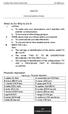 FLORIDA FIELD OPERATIONS GUIDE OCTOBER 2012 Appendix Communications Annex What to Do Why to Do It I. LISTEN. a. To make sure your transmission won t interfere with another communication. II. III. b. To
Radiotelephone Handbook
 CGTTP 6-01.1A January 2013 This page intentionally left blank. Commander United States Coast Guard Force Readiness Command 300 E. Main Street, Suite 1100 Norfolk, VA 23510 Staff Symbol: FC-P Phone: (757)
CHAPTER 4 DISTRESS AND LIFESAVING SIGNALS AND RADIOTELEPHONE PROCEDURES
 CHAPTER 4 CHAPTER 4 DISTRESS AND LIFESAVING SIGNALS AND RADIOTELEPHONE PROCEDURES SECTION 1: DISTRESS SIGNALS........................................................... 139 SECTION 2: TABLE OF LIFESAVING
RADIO COMMUNICATIONS
 RADIO COMMUNICATIONS ELECTIVE Australian Air Training Corps Cadet / Instructor Notes 2 nd Edition, May 1997 RCE - 1 RADIO COMMUNICATION (RCE) RCE 1 INTRODUCTION ATTAIN LEVEL a. Explain the reasons for
CHAPTER VII. Distress and safety communications 1
 CHAPTER VII Distress and safety communications 1 1 C.VII For the purposes of this Chapter, distress and safety communications include distress, urgency and safety calls and messages. RR30-1 ARTICLE 30
EFFECTIVE CALL TAKING
 EFFECTIVE CALL TAKING Contents PRINCIPLES OF EFFECTIVE CALL TAKING... 2 LISTEN... 2 TAKE CONTROL... 2 REMAIN CALM... 2 TAKE ACTION... 3 GENERAL GUIDELINES FOR CALL TAKING... 3 USE PROPER TELEPHONE ETIQUETTE...
VDFP General Aviation Firefighting for Structural Firefighters
 VIRGINIA DEPARTMENT OF FIRE PROGRAMS Aviation Firefighting for Chapter 3 Communications 3-1 Learning Objectives Understand the correct radio procedures for talking to pilots or airport personnel List examples
Notes on the use of RT in gliding at North Hill
 Notes on the use of RT in gliding at North Hill Introduction These notes (based on those written by Don Puttock) on RT usage are provided to improve the quality of radio transmissions within the gliding
ANNEX 3 - COMMUNICATIONS. Contents
 ANNEX 3 - COMMUNICATIONS Contents Overview... 2 The Maritime NZ Communications Plan... 3 Callsigns... 3 Operating Procedures for use of Radio Equipment... 4 The Phonetic Alphabet... 4 Oil Spill Response
CHAPTER 1 SIGNALING INSTRUCTIONS
 CHAPTER 1 CHAPTER 1 SIGNALING INSTRUCTIONS SECTION 1: EXPLANATION AND GENERAL REMARKS.........................................3 SECTION 2: DEFINITIONS...................................................................4
VOICE COMMUNICATIONS
 CHAPTER 2 VOICE COMMUNICATIONS Upon completing this chapter you should be able to do the following: Identify circuit procedures, discipline, and techniques in voice communications. Describe radiotelephone
ANNEX. Annex (Rules of the Air) to Commission Regulation (EU) No 923/2012 is amended as follows:
 ANNEX Annex (Rules of the Air) to Commission Regulation (EU) No 923/2012 is amended as follows: (1) In SERA.2001, the last sentence of the provision is amended to read: This Regulation shall also apply
COMMUNICATIONS GROUND COMMUNICATIONS OUTLET (GCO)
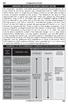 388 COMMUNICATIONS GROUND COMMUNICATIONS OUTLET (GCO) An automatic, remotely controlled, ground to ground communications device. Pilots at non-tower airports may contact the local Air Traffic Control (ATC)
DOE STANDARD GUIDE TO GOOD PRACTICES FOR COMMUNICATIONS
 TS NOT MEASUREMENT SENSITIVE DOE-STD-1031-92 December 1992 CHANGE NOTICE NO. 1 December 1998 DOE STANDARD GUIDE TO GOOD PRACTICES FOR COMMUNICATIONS U.S. Department of Energy Washington, D.C. 20585 FSG
DISTRESS SIGNALS AND EMERGENCY FREQUENCIES
 DISTRESS SIGNALS AND EMERGENCY FREQUENCIES 121.5 MHz 121.5 MHz Emergency Position Indicating Radio Beacon, or EPIRB (marine type) beacons can no longer be manufactured or sold in the U.S. By 2005 certain
COMDTINST M16120.7A. Communications Watchstander Qualification Guide
 COMDTINST M16120.7A Communications Watchstander Qualification Guide Commandant United States Coast Guard 2100 Second Street, S.W. Washington, DC 20593-0001 Office Symbol: G-OCS-2 Phone: (202) 267-1584
air cadet publication
 air cadet publication ACP 31 general service training section 6 - communications No Amendment List Date Amended by Date Incorporated 1 2 3 4 5 6 7 8 9 10 11 12 13 14 15 16 Crown Copyright 2007 i ACP 31
11 Distress and Urgency
 11 Distress and Urgency COMMUNICATIONS 11.1 Definitions Distress Distress is defined as a condition of being threatened by serious and/or imminent danger and of requiring immediate assistance. Urgency
INTERNATIONAL CODE OF SIGNALS. 1969 Edition (Revised 2003)
 PUB. 102 INTERNATIONAL CODE OF SIGNALS FOR VISUAL, SOUND, AND RADIO COMMUNICATIONS UNITED STATES EDITION 1969 Edition (Revised 2003) NATIONAL IMAGERY AND MAPPING AGENCY PUB. 102 International Code of
Exam questions for obtaining aircraft licenses and ratings
 Exam questions for obtaining aircraft licenses and ratings Subject: PPL (A) Communications Period of validity: 01 January 2010 th - 31 December 2010 th Belgrade 01 January 2010 th NOTE: The correct answer
United States Coast Guard Auxiliary Telecommunications Workshop. USCG Auxillary Communications 1
 United States Coast Guard Auxiliary Telecommunications Workshop USCG Auxillary Communications 1 United States Coast Guard The lead military agency of the Department of Homeland Security (not DOD) A multi-mission
Northern California FM Simplex Operations Guide!
 Northern California FM Simplex Operations Guide Robert B. Carleton KJ6VVJ 3 May 2014 Introduction 3 Microphone Techniques 4 ITU Phonetics 5 Procedure words 7 Wilderness Protocol 9 APRS Calling 11 Simplex
Accident Prevention Program
 Accident Prevention Program RADIO COMMUNICATIONS PHRASEOLOGY AND TECHNIQUES GENERAL a. Radio communications are a critical link in the ATC system. The link can be a strong bond between pilot and controller
RECOMMENDATION ITU-R M.1082-1*, **
 Rec. ITU-R M.1082-1 1 RECOMMENDATION ITU-R M.1082-1*, ** INTERNATIONAL MARITIME MF/HF RADIOTELEPHONE SYSTEM WITH AUTOMATIC FACILITIES BASED ON DIGITAL SELECTIVE CALLING SIGNALLING FORMAT Rec. ITU-R M.1082-1
W3YVQ.v2.04-5/02 PSCM APP.-B NTS MPG-SENDING ON VOICE P 2-1 CHAPTER 2 - SENDING MESSAGES ON VOICE
 W3YVQ.v2.04-5/02 PSCM APP.-B NTS MPG-SENDING ON VOICE P 2-1 CHAPTER 2 - SENDING MESSAGES ON VOICE Table of contents (Double click RTF, click PDF page number to section; Ctrl-Home TOC.): 2.0 CHAPTER 2,
RECRUIT SUSTAINMENT PROGRAM SOLDIER TRAINING READINESS MODULES Basic Military Communication 1 September 2012
 RECRUIT SUSTAINMENT PROGRAM SOLDIER TRAINING READINESS MODULES Basic Military Communication 1 September 2012 SECTION I. Lesson Plan Series Task(s) Taught Academic Hours References Student Study Assignments
Airband Radio Operator Certificate Manual
 Airband Radio Operator Certificate Manual 1- Version: January 2012 About the airband radio operator license Very high frequency (VHF) airband radios are becoming more common as a tool for aircraft pilots
NCYC EMERGENCY MANAGEMENT PLAN
 NCYC EMERGENCY MANAGEMENT PLAN Note: This document must be carried on board all participating yachts. It is the responsibility of each yacht's master and all crew to be conversant with this Emergency Management
COMMUNICATIONS INSTRUCTIONS DISTRESS AND RESCUE PROCEDURES
 COMMUNICATIONS INSTRUCTIONS DISTRESS AND RESCUE PROCEDURES July 2003 I NOTICE THE PROCEDURES IN THIS PUBLICATION ARE NOT TO PRECLUDE ANY MOBILE UNIT, (AIRCRAFT SURFACE OR OTHERWISE) IN DISTRESS FROM USING
Emergency Telecommunicator Training and Certification
 Emergency Telecommunicator Training and Certification Sec. 28-30-1. Public safety telecommunicator instructors certification definitions Those definitions set forth in C.G.S. Sec. 28--25 and C.G.S Sec.
Subj: INSPECTION AND CERTIFICATION OF VESSELS UNDER THE MARITIME SECURITY PROGRAM (MSP)
 Commandant United States Coast Guard 2100 Second Street, S.W. Washington, DC 20593-0001 Staff Symbol: CG-5431 Phone: (202) 372-1224 Fax: (202) 372-1918 Email: [email protected] COMDTPUB P167004A NVIC XX-12
USER REFERENCE MANUAL
 USER REFERENCE MANUAL for Software OCTEL MESSAGING DIVISION THE POWER OF MESSAGING Voice messaging gives you the ability to communicate effectively from any touchtone phone 24 hours a day, with one person
Aircraft Radio Operator Certificate of Proficiency
 Aircraft Radio Operator Certificate of Proficiency 327 Flight AAFC Designed by PLTOFF(AAFC) Stewart Hignett Amended for 327FLT by SQNLDR(AAFC) Bill Gleeson-Barker, OCT10 Objectives Understand legislation
PART C SECTION 7 SUBSECTION 7B
 National Standard for Commercial Vessels PART C DESIGN AND CONSTRUCTION SECTION 7 EQUIPMENT SUBSECTION 7B COMMUNICATIONS EQUIPMENT Part C Section 7 Subsection 7B Communications Equipment National Standard
Handbook 1. Handbook 1. General duties and track safety for track workers. GE/RT8000/HB1 Rule Book
 GE/RT8000/HB1 Rule Book Uncontrolled When Printed Handbook 1 General duties and track safety for track workers Handbook 1 If you go on electrified lines, you will also need the relevant electrified lines
Introduction to UN Security
 Introduction to UN Security Koopmans Peter WHO Field Security Officer UN Security: Agenda The (New) UN Security Management System Travel safety in the Field (Radio Communications) (Field Gear) The UN Security
PPL Radiotelephony Manual Antonios Papadakis
 PPL Radiotelephony Manual Antonios Papadakis Intentionally blank Chapter 1: Radio Theory PUSH TO TALK 1.1 Producing a radio wave 1 1.2 Frequency and Wavelength.. 1 1.3 The frequency spectrum 2-3 1.4 Adding
Framework for Land Mobile Radio Operations in St. Lucia
 Framework for Land Mobile Radio Operations in St. Lucia National Telecommunications Regulatory Commission Saint Lucia 1 2 List of Contents 1.0 Introduction... 5 2.0 Scope... 5 3.0 Resources... 5 4.0 Glossary
GEN 3.6 SEARCH AND RESCUE
 GEN 3.6-1 3 APR 14 GEN 3.6 SEARCH AND RESCUE 1. RESPONSIBLE SERVICE (S) 1.1 The search and rescue service in Singapore is provided by the Civil Aviation Authority of Singapore, in collaboration with the
Voicemail User Guide UCLA INFORMATION TECHNOLOGY SERVICES
 Voicemail User Guide UCLA INFORMATION TECHNOLOGY SERVICES 1 Introduction UCLA Voicemail is a dynamic communications tool that provides you with a personal voice mailbox accessible from any touch-tone telephone
406 and 121.5 for Search and Rescue
 406 and 121.5 for Search and Rescue Understanding new and old Search and Rescue frequencies. European Office: Ahventie 4a7 02170 ESPOO Finland Americas Office: 150 S. Adkins Way, Suite 100 Meridian, ID
Call Waiting. Cancel Call Waiting
 PhoneFeatures 1 Call Waiting Cancel Call Waiting 2 Three-Way Calling Personal Ringing 3 Speed Calling Call Transfer 4 Call Hold Call Forwarding 5 Call Forwarding Don t Answer Call Forwarding Busy Line
5 FAH-2 H-320 ACP-127 FORMAT LINES
 5 FAH-2 H-320 ACP-127 FORMAT LINES (CT:TEL-32; 06-25-2012) (Office of Origin: IRM/BMP/GRP/GP) (Updated only to revise Office of Origin and some formatting) 5 FAH-2 H-321 ACP-127 HEADER (CT:TEL-26; 11-23-2007)
RING CYCLES ADMINISTRATIVE LINE FEATURES. AUTO DIAL Electronic Sets: 1. To program, press AUTO DIAL key 2. Dial number to be stored
 Telephone Instructions All Washington University residence halls, fraternities and administrative offices for the Danforth Campus share the same telephone system. All lines begin with the prefix 935 or
It s the Last Straw!
 It s the Last Straw! Topic Loop airplanes/measurement Key Question How far will your loop airplane fly? Learning Goals Students will: 1. make measurements of how far a paper loop plane flies and record
CENTREX service. user reference guide. Clearly different.
 CENTREX service user reference guide Clearly different. TABLE OF CONTENTS This user s guide provides instructions for using Centrex features. A check in the circle next to a feature means that your Centrex
INTERNAL COMMUNICATIONS
 CHAPTER 3 INTERNAL COMMUNICATIONS LEARNING OBJECTIVES After you finish this chapter, you should be able to do the folloiwng: 1. Identify the types of shipboard internal communication systems and state
SAILING DIRECTIONS CORRECTIONS
 SAILING DIRECTIONS CORRECTIONS PUB 160 1 Ed 1998 LAST NM 15/02 Page 11 Line 53/R; insert after: All Australian port radio stations use VHF channel 67 to supplement VHF channel 16 as a distress, safety,
MANDATORY USE OF THE TRAINING MANAGEMENT TOOL
 Commandant United States Coast Guard 2100 Second Street, S.W. Washington, DC 20593-0001 Staff Symbol: CG-81, G-W-2, G- OCC Phone: (202) 267-2297 Fax: (202) 267-4401 COMDTINST 5270.2 10 JUN 2004 COMMANDANT
ICAO Standard Phraseology A Quick Reference Guide for Commercial Air Transport Pilots
 ICAO Standard Phraseology A Quick Reference Guide for Commercial Air Transport Pilots Communication error is the biggest causal factor in both level busts and runway incursions in Europe. This document
How To Communicate With The Sea From A Boat
 REPUBLIC OF THE UNION OF MYANMAR MINISTRY OF COMMUNICATIONS AND INFORMATION TECHNOLOGY UNION MINISTER'S OFFICE Annex C-2: Distress and Safety Communications Frequencies 4.1. Introduction In this chapter
Backcountry Avalanche Rescue Reference
 1 Backcountry Avalanche Rescue Reference This document is part of Decision Making in Avalanche Terrain: a fieldbook for winter backcountry users by Pascal Haegeli, Roger Atkins and Karl Klassen and provides
www.faa.gov/runwaysafety
 www.faa.gov/runwaysafety A A Pilot s Pilot s Guide to to Safe Safe Surface Operations Introduction Traffic levels rise. Airports expand. And you, the pilot, are expected to understand how to safely taxi
Marine Order 21 (Safety of navigation and emergency procedures) 2012
 Marine Order 21 (Safety of navigation and emergency procedures) 2012 (AISR modification compilation) in effect under the Navigation Act 2012 This is a compilation of Marine Order 21 (Safety of navigation
Owner's Manual for Voice Control. The Convenient Alternative to Manual Control.
 Owner's Manual for Voice Control. The Convenient Alternative to Manual Control. 2000 BMW AG Munich/Germany Reprinting, including excerpts, only with the written consent of BMW AG, Munich. Part number 01
COMMAND, CONTROL, COMMUNICATIONS, COMPUTERS AND INFORMATION TECHNOLOGY (C4&IT) INFRASTRUCTURE MANAGEMENT POLICY
 Commandant United States Coast Guard 2100 Second Street, S.W. Washington, DC 20593-0001 Staff Symbol: CG-6 Phone: (202) 267-2767 Fax: (202) 267-2598 COMDTINST 5230.70 FEB 11 2005 COMMANDANT INSTRUCTION
If you need help using Verizon Voice Mail or have questions about the service, please call: 1-800-483-2000
 If you need help using Verizon Voice Mail or have questions about the service, please call: -800-8-000 Representatives are available hours a day, 7 days a week. While you re listening to messages... Move
Talking Atomic Alarm Clock Instructions
 1 Talking Atomic Alarm Clock Instructions S1 (Talking+Snooze+Back Light) S2 (Alarm Time + Alarm Hour) S4 (Alarm Volume + OFF) S3 (Alarm ON/OFF + Alarm Minute) S5 (Wave, Manual Signal Reception) S8 (DST
Request for Proposals. For a. Fire Station Alerting System
 Request for Proposals For a Fire Station Alerting System SouthCom Combined Dispatch Center 21113 Dettmering Dr., Matteson, IL. 60443 Ph: (708) 283-6631 Fax: (708) 283-6641 REQUEST FOR PROPOSALS 911 EMERGENCY
March 1997 &FM. Handbook. Post at all station operator positions. Federal Communications Commission. Emergency Alert System
 March 1997 &FM AM Handbook Post at all station operator positions Federal Communications Commission Emergency Alert System Attention Station Managers Pocket for EAS Authenticator Envelope Ensure the Authenticator
ELECTRONIC SIGNATURES AND MANAGEMENT OF ELECTRONICALLY SIGNED RECORDS
 Commandant United States Coast Guard 2100 Second Street, S.W. STOP 7101 Washington, DC 20593-7101 Staff Symbol: CG-6 Phone: (202) 475-3518 Fax: (202) 475-3929 COMDTINST 5200.5 FEB 3 2011 COMMANDANT INSTRUCTION
1. Marine VHF radio equipment
 Chapter 1 7 1. Marine VHF radio equipment The marine VHF radio is an invaluable piece of communications equipment that is used round the world on board of all kinds of ships, from small sailing boats to
Command United States Coast Guard
 Command United States Coast Guard 2100 Second Street, S.W. Washington, DC 20593-0001 Staff Symbol: G-OCS Phone: (202) 267-1313 Fax: (202) 267-4593 COMDTINST 1650.3 13 MAY 2002 COMMANDANT INSTRUCTION 1650.3
Classification: Probationary Communications Operator Title Code: V07440 Pay Range: E01
 Pay Range: E01 POSITION SUMMARY: The employee performs full functioning communications work by handling radio traffic both to and from patrol units and other law enforcement agencies; answering incoming
Australian Maritime Safety Authority. Aviation rescue
 Australian Maritime Safety Authority Aviation search and rescue Rescue Coordination Centre Australia Rescue Coordination Centre Australia (RCC Australia) is the national aviation and maritime search and
2015 NAV CANADA. Version 1, May 2015. Questions, comments and feedback can be directed to: [email protected]
 2015 NAV CANADA Version 1, May 2015 Questions, comments and feedback can be directed to: [email protected] NAV CANADA would like to thank the following organizations for their contributions to this
Part 2. Copyright 1998 Philips Consumer Communications L.P. All rights reserved. Printed in Mexico. Issue 1AT&T 848229506
 2 User's Manual for Two-Line Digital Answering System Telephone with Speakerphone 1872 Fold open this paper for information about this telephone's installation and operation. Please read Part 1 Important
ATS-505. GB Version 1
 ATS-505 GB Version 1 Control Locations Power/Sleep Power On/off/Alarm off/sleep function Display Switch between radio frequency and time while radio is power on Mode Mode set up (please see below mode
This handbook provides EAS participants summary instructions for conducting EAS notifications and tests of national, state and local alerts.
 2 The Emergency Alert System (EAS) is a national public warning system that requires broadcasters, cable television systems, wireless cable systems, wireline video providers, satellite digital audio radio
Businessuserguide eastlink.ca/business
 Maritimes/NL Businessuserguide eastlink.ca/business Thank you, for choosing EastLink - One of Canada s 50 Best Managed Companies. EastLink prides itself on delivering innovative and reliable business
SVMi-4 & SVM-400. Voice Mail System. System Administration Manual
 SVMi-4 & SVM-400 Voice Mail System System Administration Manual Contents About this Book 3 How to use this online manual 4 How to print this online manual 5 Feature Descriptions 6 SYSTEM FEATURES 6 AUTO
set in Options). Returns the cursor to its position prior to the Correct command.
 Dragon NaturallySpeaking Commands Summary Dragon Productivity Commands Relative to Dragon NaturallySpeaking v11-12 or higher Dragon Medical Practice Edition and Practice Edition 2 or higher Dictation success
CALL MANAGEMENT SERVICES. User Guide. 1 888 télébec telebec.com
 CALL MANAGEMENT SERVICES User Guide 888 télébec telebec.com QUICK REFERENCE Télébec Call Management Services - Important Codes Service Activation Cancellation Call Blocking 6 7 Call Forwarding 7 2 7 3
Our Thanks to You and Customer Assistance
 Introduction Our Thanks to You and Customer Assistance Owner s Manual Our Thanks to You Thank you for purchasing a CobraMarine VHF radio. Properly used, this Cobra product will give you many years of reliable
Emergency Support Function 15 External Affairs. Warning
 Emergency Support Function 15 External Affairs Warning Primary Agency Illinois Emergency Management Agency (IEMA) Support Agencies Illinois State Police (ISP) Illinois Department of Natural Resources (IDNR)
Chapter 15. Airports Authority of India Manual of Air Traffic Services Part 1 15.1 EMERGENCY PROCEDURES
 Chapter 15 15.1 EMERGENCY PROCEDURES 15.1.1 General 15.1.1.1 The various circumstances surrounding each emergency situation preclude the establishment of exact detailed procedures to be followed. The procedures
2010 Hawaiian Telcom. Business Voicemail USER GUIDE. customer service: 643-4411 hawaiiantel.com. local - long distance - internet - wireless
 Hawaiian Telcom Business Voicemail USER GUIDE customer service: 643-44 hawaiiantel.com HTLR-043 BizVM 0/200 200 Hawaiian Telcom local - long distance - internet - wireless Thank you for subscribing to
15- EMERGENCY BUTTON ACTIVATION
 15- EMERGENCY BUTTON ACTIVATION 15.1 GENERAL Responder safety is a top priority of York County DES. Each portable radio is equipped with an emergency button to alert all users on the network of an emergency.
VOCALISER USER INSTRUCTIONS. Pyronix Ltd OCTOBER 2000. RINS113 Issue 2
 VOCALISER USER INSTRUCTIONS Pyronix Ltd OCTOBER 2000 RINS113 Issue 2 9 RECEIVING A CALL FROM THE VOCALISER A telephone call from the Vocaliser is easily recognised by the distinctive three tones heard
Business User Guide. Western. /business
 Business User Guide Western /business Thank You for choosing Eastlink - One of Canada s 50 Best Managed Companies. Eastlink prides itself on delivering innovative and reliable business solutions to our
Learning Objectives 04 COMMUNICATIONS (VFR)
 090 00 00 00 COMMUNICATIONS 091 00 00 00 VFR COMMUNICATIONS 091 01 00 00 DEFINITIONS 091 01 01 00 Meanings and significance of associated terms LO Stations LO Communication methods 091 01 02 00 Air Traffic
Quickstart Guide. Connect your microphone. Step 1: Install Dragon
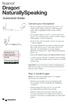 Quickstart Guide Connect your microphone When you plug your microphone into your PC, an audio event window may open. If this happens, verify what is highlighted in that window before closing it. If you
SARPS about Emergency frequency. 12 May 2015
 SARPS about Emergency frequency 12 May 2015 Annex 6 3.1.5 If an emergency situation which endangers the safety of the aeroplane or persons becomes known first to the flight operations officer/flight dispatcher,
EMERGENCY ALERT SYSTEM
 EMERGENCY ALERT SYSTEM San Diego County Operational Area Issued JANUARY 1998 Major Revision JANUARY 2006 Minor Revision June 21, 2012 Prepared by the San Diego Local Emergency Communications Committee
Voice mail Play messages Activate Deactivate. Voice mail. Activate? Voice mail. Play messages Activate Deactivate. Set ring time.
 Regarding Use of This Guide This guide is intended for users of DOCOMO mobile phones with a DOCOMO UIM Card (or otherwise a FOMA Card or DOCOMO mini UIM Card. Hereinafter the same applies). If the SIM
PROPRIETARY INFORMATION
 Centrex User Guide Centrex is a central office-based telecommunications system that lets you customize your telephone service to suit your unique business needs. With Centrex, you can grow from two lines
UCLA Communications Technology Services. UCLA Telephone Features. User Guide. CTS Product Training
 UCLA Communications Technology Services UCLA Telephone Features User Guide Introduction Communications Technology Services (CTS) offers a variety of telephone features which are assigned to your UCLA telephone
Cisco Unity Express 8.5 Voice-Mail System User s Guide for Advanced Features
 Cisco Unity Express 8.5 Voice-Mail System User s Guide for Advanced Features First Published: January 18, 2011 This guide provides information about using some of the advanced voice-mail features of your
Crew Resource Management 1
 Crew Resource Management 1 Contents Overview... 2 1. Principles of CRM... 2 2. Contributing to a Team... 3 3. Communicating Effectively... 3 3.1 Closed-Loop Communication... 4 3.2 Communication Strategies...
AIS (Automatic Identification System)
 AIS (Automatic Identification System) AIS are the one of the most important aids to navigation that you can have add to your navigations system. It is an excellent tool for collision avoidance. In the
User s Guide EKT-824
 User s Guide EKT-824 The Communiqué Telephone Station Table of Contents Introduction 3 About This Guide 3 The Basics Answering and Making Calls 4 Answering an External Call 4 Answering an Internal Call
Neighborhood Emergency Communication Training Net Net control procedures and preamble Revised Friday, June 30, 2016
 Neighborhood Emergency Communication Training Net Net control procedures and preamble Revised Friday, June 30, 2016 Early preamble (7:55PM): The Neighborhood Emergency Communication Training net will begin
EFFECTIVE COMMUNICATION 7-1 EFFECTIVE COMMUNICATION
 EFFECTIVE COMMUNICATION 7-1 EFFECTIVE COMMUNICATION OBJECTIVES To successfully complete this assignment, you must study the text and master the following objectives: Identify the parts of Shannon s communications
IP Phone System: Cisco 7960G and 7940G
 IP Phone System: Cisco 7960G and 7940G Table of Contents: IP Phone System 7940G and 7960G CISCO IP PHONE ROAD MAP...1 NAVIGATE THE PHONE SYSTEM AND USE THE LCD SCREEN...2 SOFT KEYS... 2 USE THE NAVIGATION