
Accident Prevention Program
|
|
|
- Tamsin Ashlynn Martin
- 10 years ago
- Views:
Transcription
1 Accident Prevention Program RADIO COMMUNICATIONS PHRASEOLOGY AND TECHNIQUES GENERAL a. Radio communications are a critical link in the ATC system. The link can be a strong bond between pilot and controller or it can be broken with surprising speed and disastrous results. Discussion herein provides basic procedures for new pilots and also highlights safe operating concepts for all pilots. b. The single, most important thought in pilot-controller communications is understanding. It is essential, therefore, that pilots acknowledge each radio communication with ATC by using the appropriate aircraft call sign. Brevity is important, and contacts should be kept as brief as possible, but the controller must know what you want to do before he can properly carry out his control duties. And you, the pilot, must know exactly what he wants you to do. Since concise phraseology may not always be adequate, use whatever words are necessary to get your message across. c. All pilots will find the Pilot/Controller Glossary very helpful in learning what certain words or phrases mean. Good phraseology enhances safety and is the mark. of a professional pilot. Jargon, chatter and "CB" slang have no place in ATC communications. The Pilot/Controller Glossary is the same glossary used in the ATC controller's handbook. We recommend that it be studied and reviewed from time to time to sharpen your communication skills. d. Calls to air traffic control (ATC) facilities (ARTCCs, Towers, FSSs, Central Flow, and Communications Control Centers) over radio and ATC operational telephone lines (lines used for operational purposes such as controller instructions, briefings, opening and closing flight plans, issuance of IFR clearances and amendments, counter hijacking activities, etc.) may be monitored and recorded for operational uses such accident investigations, accident prevention, search and rescue purposes, specialist training and evaluation, and technical evaluation and repair of control and communications systems. RADIO TECHNIQUE a. Listen before you transmit. Many times can get the information you want through ATIS or by monitoring the frequency. Except for a few situations where some frequency overlap occurs, if you hear someone else talking, the keying of your transmitter will be futile and you will probably jam their receiver causing them to repeat their call. If you have just changed frequencies, pause, listen and make sure the frequency is clear. b. Think before keying your transmitter. Know what you want to say and if it lengthy. e.g., a flight plan or IFR position report, jot it down.

2 c. The microphone should very close to your lips and after pressing the mike button, a slight pause may be necessary to be sure the first word is transmitted. Speak in a normal conversational tone. d. When you release the button, wait a few seconds before calling again. The controller or FSS specialist may be jotting down your number, or looking for your flight plan, transmitting on a different frequency, or selecting his transmitter to your frequency. e. Be alert to the sounds or lack of sounds in your receiver. Check your volume, recheck your frequency and make sure your microphone is not stuck in the transmit position. Frequency blockage can, and has, occurred for extended periods of time due to unintentional transmitter operation. This type of interference is commonly referred to as "stuck mike," and controllers may refer it in this manner when attempting to assign an alternate frequency. If the assigned frequency is completely blocked by this type of interference, use the procedures described for en route IFR radio frequency outage, to establish or reestablish communications with ATC. f. Be sure that you are within the performance range of your radio equipment and the ground station equipment. Remote radio sites do not always transmit and receive on all of a facilities available frequencies, particularly with regard to VOR sites where you can hear but not reach a ground station's receiver. Remember that higher altitude increases the range of VHF "line of sight" communications. CONTACT PROCEDURES a. Initial Contact. 1. The term initial contact or initial callup means the first radio call you make to a given facility, or the first call to a different controller or FSS specialist within a facility. Use the following format: a. name of facility being called, b. your full aircraft identification as filed in the flight plan or as discussed under Aircraft Call Signs below, c. type of message to follow or your request if it is short, and d. the word "Over" EXAMPLE "NEW YORK RADIO, MOONEY THREE ONE ONE ECHO, OVER" "COLUMBIA GROUND, CESSNA THREE ONE SIX ZERO FOXTROT, IFR MEMPHIS OVER." "MIAMI CENTER BARON FIVE SIX THREE HOTEL, REQUEST VFR TRAFFIC ADVISORIES, OVER" 2. If radio reception is reasonably assured, inclusion of your request, your position or altitude, the phrase "Have numbers" or "'Information Charlie received" (for ATIS) in the initial contact helps decrease radio frequency

3 congestion. Use discretion and do not overload the controller with information he does not need. If you do not get a response from the ground station, recheck your radios or use another transmitter but keep the next contact short. "ATLANTA CENTER, DUKE FOUR ONE ROMEO, REQUEST VFR TRAFFIC ADVISORIES, TWENTY NORTHWEST ROME, SEVEN THOUSAND FIVE HUNDRED, OVER" b. Initial Contact When your Transmitting and Receiving Frequencies are Different 1. If you are attempting to establish contact with a ground station and you are receiving on a different frequency than that transmitted, indicate the VOR name or the frequency on which you expect a reply. Most FSSs and control facilities can transmit on several VOR stations in the area. Use the appropriate FSS call sign as indicated on charts. New York FSS transmits on the Kennedy, Hampton and Calverton VORTACs. If you are in the Calverton area, your callup should be "NEW YORK RADIO, CESSNA THREE ONE SIX ZERO FOXTROT, RECEIVING CALVERTON VOR, OVER." 2. If the chart indicates FSS frequencies above the VORTAC or in FSS communications boxes transmit or receive on those frequencies nearest your location. 3. When unable to establish contact and you wish to call any ground station, use the phrase "ANY RADIO (tower) (station), GIVE CESSNA THREE ONE SIX ZERO FOXTROT A CALL ON (frequency) OR (VOR)." If an emergency exists or you need assistance, so state. c. Subsequent Contacts and Responses to Callup from a Ground Facility. Use the same format as used for initial contact except you should state your message or request with the callup in one transmission. The ground station name and the word "Over" may be omitted if the message require an obvious reply and there is no possibility for misunderstanding. You should acknowledge all callups or clearances unless the controller or FSS specialist advises otherwise. There arc some occasions when the controller must issue time-critical instructions to other aircraft and he may be in a position to observe your response, either visually or on radar. If the situation demands your response, take appropriate action or immediately advise the facility of any problem. Acknowledgment is made with one of the words "Wilco, Roger, Affirmative, Negative" or other appropriate remark (e.g., "PIPER TWO ONE FOUR LIMA, ROGER"). If you have been receiving services (e.g., VFR traffic advisories and you are leaving the area or changing frequencies), advise the ATC facility and terminate contact. d. Acknowledgment of Frequency Changes. When advised by ATC to change frequencies, acknowledge the instruction. If you select the new frequency without an acknowledgment, the controller's work load is increased because he has no way of knowing whether you received the instruction or have had radio communications failure.

4 e. Compliance with Frequency Changes. When instructed by ATC to change frequencies, select the new frequency as soon as possible unless instructed to make the change at a specific time, fix, or altitude. A delay in making the change could result in an untimely receipt of important information. It you are instructed to make the frequency change at a specific time, fix, or altitude, monitor the frequency you are on until reaching the specified time, fix, or altitude unless instructed otherwise by ATC. DIRECT COMMUNICATIONS - CONTROLLERS AND PILOTS 1. ARTCCs are capable of direct communications with IFR air traffic on certain frequencies. Maximum communications coverage is possible through the use of Remote Center Air/Ground (RCAG) sites comprised of both VHF and UHF transmitters and receivers. These sites are located throughout the U.S.. Although they may be several hundred miles away from the ARTCC, they are remoted to the various ARTCCs by land lines or microwave links. Since IFR operations are expedited through the use of direct communications, pilots are requested to use these frequencies strictly for communications pertinent to the control of IFR aircraft. Flight plan filing, en route weather, weather forecasts and similar data should be requested through FSSs, company radio, or appropriate military facilities capable of performing these services. 2. An ARTCC is divided into sectors. Each sector is handled by one or a team of controllers and has its own sector discrete frequency. As a flight progresses from one sector to another, the pilot is requested to change to the appropriate sector discrete frequency. 3. ATC Frequency Change Procedures: a. The following phraseology will be used by controllers to effect a frequency change: (Aircraft Identification) CONTACT (facility name or location name and terminal function) (frequency) AT (time, fix or altitude) OVER. NOTE: Pilots are expected to maintain a listening watch on the transferring controller's frequency until the time. fix or altitude specified. ATC will omit frequency change restrictions whenever pilot compliance is expected upon receipt. b. The following phraseology should be utilized by pilot for establishing contact with the designated facility: 1. When a position report will be made: (Name) CENTER, (aircraft identification), (position), OVER. 2. When no position report will be made: (Name) CENTER, (aircraft identification), ESTIMATING (reporting point and time) AT (altitude or flight level) CLIMBING (or descending) TO MAINTAIN (altitude or flight level) OVER.

5 3. When operating in a radar environment and no position report is required: (Name) CENTER, (aircraft identification) AT (exact altitude or flight level); or, if appropriate, LEAVING (exact altitude or flight level) CLIMBING (or descending) TO MAINTAIN (altitude or flight level) OVER. NOTE: Exact altitude or flight level means to the nearest 100 foot increment. Exact altitude or flight level reports on initial contact provide ATC with information required prior to using MODE C altitude information for separation purposes. c. At times controllers will ask pilots to verify that they are at a particular altitude. The phraseology used will be: "VERIFY AT (altitude)." In climbing or descending situations, controllers may ask pilots to "VERIFY ASSIGNED ALTITUDE AS (altitude)." Pilots should confirm that they are at the altitude stated by the controller or that the assigned altitude is correct as stated. If this is not the case, they should inform the controller of the actual altitude being maintained or the different assigned altitude. CAUTION: Pilots should not take action to change their actual altitude or different assigned altitude to the altitude stated in the controllers verification request unless the controller specifically authorizes a change. 4. ARTCC Radio Frequency Outage: a. ARTCCs normally have at least one back up radio receiver and transmitter system for each frequency which can usually be placed into service quickly with little or no disruption of ATC service. Occasionally, technical problems may cause a delay but switchover seldom takes more than 60 seconds. When it appears that the outage will not be quickly remedied, the ARTCC will usually request a nearby aircraft, if there is one, to switch to the affected frequency to broadcast communications instructions. It is important, therefore. that the pilot wait at least 1 minute before deciding that the ARTCC has actually experienced a radio frequency failure. When such an outage does occur. the pilot should, if workload and equipment capability permit, maintain a listening watch on the affected frequency while attempting to comply with the following recommended communications procedures: 1. If two-wave communications cannot be established with the ARTCC after changing frequencies, a pilot should attempt to recontact the transferring controller for the assignment of an alternative frequency or other instructions. 2. When an ARTCC radio frequency failure occurs after two-way communications have been established, the pilot should attempt to reestablish contact with the center on any other known ARTCC frequency, preferably that of the next responsible sector when practicable, and ask for instructions. However, when the next normal frequency change along the route is known to involve

6 another ATC facility, the pilot should contact that facility, if feasible, for instructions. If communications cannot be reestablished by either method, the pilot is expected to request communications instructions from the FSS appropriate to the route of flight. NOTE: The exchange of information between an aircraft and an ARTCC through an FSS is quicker than relay via company radio because the FSS has direct interphone lines to the responsible ARTCC sector. Accordingly, when circumstances dictate a choice between the two, during an ARTCC frequency outage, relay via FSS radio is recommended. AIRCRAFT CALL SIGNS a. Precautions in the Use of Call Signs. 1. Improper use of call signs can result in pilots executing a clearance intended for another aircraft. Call signs should never be abbreviated on an initial contact or at any time when other aircraft call signs have similar numbers/sounds or identical letters/numbers (e.g., Cessna 6132F, Cessna 1622F, Baron 123F, Cherokee 7732F, etc.). Assume that a controller issues an approach clearance to an aircraft at the bottom of a holding stack and an aircraft with a similar call sign (at the top of the stack) acknowledges the clearance with the last two or three numbers of his call sign. If the aircraft at the bottom of the stack did not hear the clearance and intervene, flight safety would be affected, and there would be no reason for either the controller or pilot to suspect that anything is wrong. This kind of "human factors" error can strike swiftly and is extremely difficult to rectify. 2. Pilots; therefore, must be certain that aircraft identification is complete and clearly identified before taking action on an ATC clearance. ATC specialists will not abbreviate call signs of an air carrier or other civil aircraft having authorized call signs. ATC specialist may initiate abbreviated call signs of other aircraft by using the prefix and the last three digits/letters of the aircraft identification after communications are established. The pilot may use the abbreviated call sign in subsequent contact with the ATC specialist. When aware of similar/identical call signs, ATC specialists will take action to minimize errors by emphasizing certain numbers/letters, by repeating the entire call sign, repeating the prefix, or by asking pilots to use a different call sign temporarily. Pilots should use the phrase "VERIFY CLEARANCE FOR (your complete call sign)" if doubt exists concerning proper identity. 3. Civil aircraft pilots should state the aircraft type, model or manufacturers name followed by the digits/letters of the registration number. When the aircraft manufacturer's name or model is stated, the prefix "N" is dropped (e.g. Aztec Two Four Six Four Alpha).

7 BONANZA SIX FIVE FIVE GOLF. BREEZY SIX ONE THREE ROMEO EXPERIMENTAL (omit "Experimental" after initial contact). 4. Air Taxi or other commercial operators not having FAA authorized call signs should prefix their normal identification with the phonetic word 'Tango". TANGO AZTEC TWO FOUR SIX FOUR ALPHA. 5. air carriers and commuter air carriers having FAA authorized call signs should identify themselves by stating the complete call sign, using group form for the numbers and word "heavy" if appropriate. UNITED TWENTY-FIVE HEAVY. MIDWEST COMMUTER SEVEN ELEVEN. 6. Military aircraft use a variety of systems including serial numbers, word call signs and combinations of letters/numbers. Examples include Army Copter 48931, Air Force 61182, MAC 31792, Pat 157, Air Evac 17652, Navy Golf Alfa Kilo 21, Marine 4 Charlie 36, etc. b. Air Ambulance Flights. 1. Civilian air ambulance flights responding to medical emergencies (carrying patients, organ donors, organs, or other urgently needed lifesaving medical material) will be expedited by ATC when necessary. When expeditious handling is required, add the word "LIFEGUARD" in the remarks of the flight plan. In radio communication, use the call sign "LIFEGUARD" followed by the aircraft type and registration letters/numbers. When requested by the pilot, necessary notification to expedite ground handling of patients, etc., is provided by ATC; however, when possible, this information should be passed in advance through non- ATC communications systems. Extreme discretion is necessary in using the term "LIFEGUARD." It is intended only for those missions of an urgent medical nature and for use only for that portion of the flight requiring expedited handling. 2. Similar provisions have been made for the use of "AIR EVAC" and "MED EVAC" by military air ambulance flights, except that these military flights will receive priority handling only when specifically requested. LIFEGUARD CESSNA TWO SIX FOUR SIX. c. Student Pilots Radio Identification. 1. The FAA desires to help the student pilot in acquiring sufficient practical experience in the environment in which he will be required to operate. To receive additional assistance while operating in areas of concentrated air traffic, a student pilot need only identify himself as a student pilot during his initial call to an FAA radio facility.

8 DAYTON TOWER, THIS IS FLEETWING 1234, STUDENT PILOT, OVER. 2. This special identification will alert FAA ATC personnel and enable them to provide the student pilot with such extra assistance and consideration as he may nee. This procedure is not mandatory. Description of Interchange or Leased Aircraft a. Controllers issue traffic information based on familiarity with airline equipment and color/markings. When an air carrier dispatches a flight using another company's equipment and the pilot does not advise the terminal ATC facility, the possible confusion in aircraft identification can compromise safety. b. Pilots flying an "interchange" or "leased" aircraft not bearing the colors/markings of the company operating the aircraft should inform the terminal ATC facility on the first contact the name of the operating company and trip number, followed by the company name as displayed on the aircraft, and aircraft type. EXAMPLE AIR CAL 311, UNITED (INTERCHANGE/LEASE), BOEING 727, GROUND STATION CALL SIGNS Pilots, when calling a ground station, should begin with the name of the facility being called followed by the type of the facility being called, as indicated in the following examples. Airport Unicom - "Shannon Unicom" FAA Flight Service Station - "Chicago Radio" FAA Flight Service Station (En Route Flight Advisory Service (Weather) - "Seattle Flight Watch" Airport Traffic Control Tower - "Augusta Tower" Clearance Delivery Position (IFR) - "Dallas Clearance Delivery" Ground Control Position in Tower - "Miami Ground" Radar or Nonradar Approach Control Position - "Oklahoma City Approach" Radar Departure Control Position - "St. Louis Departure" Faa Air Route Traffic Control Center - "Washington Center" PHONETIC ALPHABET The international Civil Aviation Organization (ICAO) phonetic alphabet is used by FAA personnel when communications conditions are such the the information cannot be readily received withour their use. ATC facilities may also request pilots to use phonetic letter equivalents when aircraft wiht similar sounding identifications are receiving communications on the same frequency. Pilots should use the phonetic alphabet when idetifying their aircraft during initial contact with air traffic control facilities. Additionall use the phonetic equivalents for single letters and to spell out groups of letters or difficult sords during adverse communications conditions.

9 CHARTER MORSE CODE TELEPHONY PHONIC (PRONUNCIATION) A o - Alfa (AL-FAH) B o o o Bravo (BRAH-VOH) C - o - o Charlie (CHAR-LEE) or (SHAR- LEE) D - o o Delta (DELL-TAH) E o Echo (ECK-OH) F o o - o Foxtrot (FOKS-TROT) G - - o Golf (GOLF) H o o o o Hotel (HOH-TEL) I o o India (IN-DEE-AH) J o Juliett (JEW-LEE-ETT) K - o - Kilo (KEY-LOH) L o - o o Lima (LEE-MAH) M - - Mike (MIKE) N - o November (NO-VEM-BER) O Oscar (OSS-CAH) P o - - o Papa (PAH-PAH) Q - - o - Quebec (KEH-BECK) R o - o Romeo (ROW-ME-OH) S o o o Sierra (SEE-AIR-RAH) T - Tango (TANG-GO) U o o - Uniform (YOU-NEE-FORM) or (OO-NEE-FORM) V o o o - Victor (VIK-TAH) W o - - Whiskey (WISS-KEY) X - o o - Xray (ECKS-RAY) Y - o - - Yankee (YANG-KEY) Z - - o o Zulu (ZOO-LOO) 1 o One (WUN) 2 o o Two (TOO) 3 o o o - - Three (TREE) 4 o o o o - Four (FOW-ER) 5 o o o o o Five (FIFE) 6 - o o o o Six (SIX) o o o Seven (SEV-EN) o o Eight (AIT) o Nine (NIN-ER) Zero (ZEE-RO) FIGURES a. Figures indication hundred and thousands in round number, as for ceiling heights, and upper wind levels up to 9900 shall be spoken in accordance with the following: FIVE HUNDRED FOUR THOUSAND FIVE HUNDRED b. Numbers above 9900 shall be spoken by separating the digits preceding the word "thousand."

10 10,000 - ONE ZERO THOUSAND 13,500 - ONE THREE THOUSAND FIVE HUNDRED c. Transmit airway or jet route numbers as follows: V12 - VICTOR TWELVE J533 - J FIVE THIRTY-THREE d. All other numbers shall be transmitted by pronouncing each digit ONE ZERO e. When a radio frequency contains a decimal point, the decimal point is spoken as "POINT." ONE TWO TWO POINT ONE NOTE: ICAO Procedures require the decimal point be spoken as "DECIMAL" and FAA will honor such usage by military aircraft and all other aircraft required to use ICAO Procedures. ALTITUDES AND FLIGHT LEVELS a. Up to but not including 18,000 feet MSL - state the separate digits of the thousands, plus the hundreds, if appropriate. 12,000 - ONE TWO THOUSAND 12,500 - ONE TWO THOUSAND FIVE HUNDRED b. At and above 18,000 feet MSL (FL 180) state the words "flight level" followed by the separate digits of the flight level FLIGHT LEVEL ONE NINER ZERO DIRECTIONS The three digits of bearing, course, heading or wind direction should always be magnetic. The word "true" must be added when it applies. (magnetic course) ZERO ZERO FIVE (true course) ZERO FIVE ZERO TRUE (magnetic bearing) THREE SIX ZERO (magnetic heading) ONE ZERO ZERO (wind direction) TWO TWO ZERO

11 SPEEDS The separate digits of the speed followed by the word "KNOTS." Except, controllers may omit the word "KNOTS" when using speed adjustment procedures, e.g., "REDUCE/INCREASE SPEED TO TWO FIVE ZERO." EXAMPLES: (speed) TWO FIVE ZERO KNOTS (speed) ONE NINER ZERO KNOTS The separate digits of the mach number preceded by "MACH." EXAMPLES: (mach number) MACH ONE POINT FIVE (mach number).64 - MACH POINT SIX FOUR (mach number).7 - MACH POINT SEVEN TIME a. FAA used Greenwich Mean Time (GMT or Z) for all operations. b. To convert from Standard Time to Greenwich Mean Time: Eastern Standard Time - Add 5 hours Central Standard Time - Add 6 hours Mountain Standard Time - Add 7 hours Pacific Standard Time - Add 8 hours Note: For Daylight Time subtract 1 hour. c. The 24-hour clock system is used in radiotelephone transmissions. The hour is indicated by the first two figures and the minutes by the last two figures ZERO ZERO ZERO ZERO ZERO NINER TWO ZERO d. Time may be stated in minutes only (two figures) in radio telephone communications when no misunderstanding is likely to occur. e. Current time in use at a station is stated in the nearest quarter minute in order that pilots may use this information for time checks. Fractions of a quarter minute less than eight seconds are stated as the preceding quarter minute; fractions of a quarter minute of eight seconds or more are stated as the succeeding quarter minute. 0929:05 - TIME, ZERO NINER TWO NINER 0929:10 - TIME, ZERO NINER TWO NINER AND ONE-QUARTER COMMUNICATIONS WITH TOWER WHEN AIRCRAFT TRANSMITTER OR RECEIVER OR BOTH ARE INOPERATIVE a. Arriving Aircraft

12 1. Receiver inoperative - If you have reason to believe your receiver is inoperative, remain outside or above the airport traffic area until the direction and flow of traffic has been determined, then advise the tower of your type aircraft, position, altitude, intention to land and request that you be controlled with light signals. When you are approximately 3 to 5 miles from the airport, advise the tower of your position and join the airport traffic pattern. From this point on, watch the tower for light signals. Thereafter, if a complete pattern is made, transmit your position downwind and/or turning base leg. 2. Transmitter inoperative - Remain outside or above the airport traffic area until the direction and flow of traffic has been determined, then join the airport traffic pattern. Monitor the primary local control frequency as depicted on Sectional Charts for landing or traffic information, and look for a light signal which may be addressed to your aircraft. During hours of daylight, acknowledge tower transmissions or light signals be rocking your wings. At night, acknowledge by linking the landing or navigation lights. 3. Transmitter and receiver inoperative - Remain outside or above the airport traffic area until the direction and flow of traffic has been determined, then join the airport traffic pattern and maintain visual contact with the tower to receive light signals. Acknowledge light signals as noted above. b. Departing Aircraft 1. If you experience radio failure prior to leaving the parking area, make every effort to have the equipment repaired. If you are unable to have the malfunction repaired, call the tower by telephone and request authorization to depart without two-way radio communications. If tower authorization is granted, you will be given departure information and requested to monitor the tower frequency or watch for light signals, as appropriate. During daylight hours, acknowledge tower transmissions or light signals by moving the ailerons or rudder. At night, acknowledge by blinking the landing or navigation lights. If radio malfunction occurs after departing the parking area, watch the tower for light signals or monitor tower frequency. NOTE: Refer to FAR and FAR TRAFFIC CONTROL LIGHT SIGNALS a. The following procedures are used by ATCTs in the control of aircraft not equipped with radio. These same procedures will be used to control aircraft equipped with radio if radio contact cannot be established. ATC personnel use a directive traffic control signal which emits an intense narrow light beam of a selected color (either red, white, or green) when controlling traffic by light signals. b. Although the traffic signal light offers the advantage that some control may be exercised over nonradio equipped aircraft, pilots should be cognizant of the disadvantages which are:

13 1. The pilot may not be looking at the control tower at the time a signal is directed toward him. 2. The directions transmitted by a light signal are very limited since only approval or disapproval of a pilot's anticipated actions may be transmitted. No supplement or explanatory information may be transmitted except by the use of the "General Warning Signal" which advises the pilot to be on the alert. c. Between sunset and sunrise, a pilot wishing to attract the attention to the control tower should turn on a landing light and taxi the aircraft into a position, clear of the active runway. so that light is visible to the tower. The landing light should remain on until appropriate signals are received from the tower. d. Portable traffic control light signals: Color and Type On the Ground In Flight of Signal STEADY GREEN Cleared for take-off Cleared to land FLASHING GREEN Cleared to taxi Return for landing (to be followed by steady green at proper time) STEADY RED Stop Give way to other aircraft and continue circling FLASHING RED Taxi clear of landing area Airport unsafe- (runway) is use do not land FLASHING WHITE Return to starting point on airport ALTERNATING General Warning Signal- General Warning RED $ GREEN Exercise Extreme Caution Signal- Exercise Extreme Caution e. During daylight hours, acknowledge tower transmissions or light signals by moving the ailerons or rudder. At night, acknowledge by blinking the landing or navigation lights. If radio malfunction occurs after departing the parking area. Watch the tower for light signals or

14 monitor tower frequency. COMMUNICATIONS FOR VFR FLIGHTS a. FSSs are allocated frequencies for different functions, for airport Advisory Service the pilot should contact the FSS on MHz, for example. Other FSS frequencies are listed with the FSS in the airport/facility Directory. If you are in doubt as to what frequency to use to contact an FSS, transmit on 122.l MHz and advise them of the frequency you are receiving on. b. On VFR flights, guard the voice channel of VORs for broadcasts and calls from FAA FSSs. Where the VOR voice channel is being utilized for ATIS broadcasts, pilots of VFR flights are urged to guard the voice channel of an adjacent VOR. When in contact with a control facility, notify the controller if you plan to leave the frequency. That could save the controller time by not trying to call you on that frequency. EMERGENCY COMMUNICATION EMERGENCY LOCATOR TRANSMITTERS a. GENERAL Emergency locator Transmitters (ELT's) are required for most general aviation airplanes (FAR 91.52). ELT's of various types have been developed as a means of locating downed aircraft. These electronic, battery operated transmitters emit a distinctive downward swept audio tone on Mhz and MHz. If "armed" and when subject to crash generated forces, they are designed to automatically activate and continuously emit these signals. The transmitters will operate (continuously for at least 48 hours over a wide temperature range. A properly installed and maintained ELT can expedite search and rescue operations and save lives. b. TESTING ELT's should be tested in accordance with the manufacturer's instructions, preferably in a shielded or screened room to prevent the broadcast of signals which could trigger a false alert. ''When this cannot be done, aircraft operational testing is authorized on MHz and Mhz as follows : 1. Tests should be conducted only during the first 5 minutes after any hour. If operational tests must be made outside of this time frame, they should be coordinated with the nearest FAA Control Tower or FSS. 2. Tests should be no longer than three audible sweeps. 3. If the antenna is removable, a dummy load should be substituted during test procedures. 4. Airborne tests are not authorized. c. FALSE ALARMS Caution should be exercised to prevent the inadvertent activation of ELT's in the air or while they are being handled on the ground. Accidental or unauthorized activation will generate an emergency signal that cannot be distinguished from the real thing, leading to expensive and frustrating searches. A false ELT signal could also interfere with genuine emergency transmissions and hinder or prevent the

15 timely location of crash sites. Frequent false alarms could also result in complacency and decrease the vigorous reaction that must be attached to all ELT signals. Numerous cases of inadvertent activation have occurred as a result of aerobatics, hard landings, movement by ground crews, and aircraft maintenance. These false alarms can be minimized by monitoring MHz and/or MHz as follows: 1. Prior to engine shut down at the end of each flight. 2. When the ELT is handled during installation or maintenance. 3. When maintenance is being performed in the vicinity of the ELT. 4. When the aircraft is moved by a ground crew. 5. If an ELT signal is heard, turn off the ELT to determine if it is transmitting. If it has heen activated, maintenance might be required before the unit is returned to the "ARMED" position. d. IN-FLIGHT MONITORING AND REPORTING Pilots are encouraged to monitor MHz and/or MHz while in flight to assist in identifying possible emergency ELT transmissions. On receiving a signal, report the following information to the nearest air traffic facility: 1. Your position at the time the signal was first heard. 2. Your position at the time the signal was last heard. 3. Your position at maximum signal strength. 4. Your flight altitudes and frequency on which the emergency signal was heard MHz or MHz. If possible positions should be given relative to a navigation aid. If the aircraft has homing equipment, provide the bearing to the emergency signal with each reported position. SEARCH AND RESCUE SATELLITE (SARSAT) Search and rescue is a lifesaving service provided through the combined efforts of the federal agencies signatory to the national search and rescue plan, and the agencies responsible for search and rescue in each state. Operational resources are provided by the U.S. Coast Guard, Department of Defense components, the Civil Air Patrol, the Coast Guard Auxiliary, state, county, and local law enforcement and other public safety agencies. The introduction of the SARSAT system enhances the effectiveness of search and rescue. SARSAT also amplifies the importance of assuring that your ELT remains silent, except for testing or in an actual emergency. Search and rescue missions launched because of a FALSE ELT signal are costly and unnecessary. Search and rescue services include search for missing aircraft, survival aid, rescue, and emergency medical help for the occupants after an accident site is located. Check your radio on MHz or MHz before you leave your aircraft. Your ELT may be transmitting. (END OF DOCUMENT FAA-P AFO )

VDFP General Aviation Firefighting for Structural Firefighters
 VIRGINIA DEPARTMENT OF FIRE PROGRAMS Aviation Firefighting for Chapter 3 Communications 3-1 Learning Objectives Understand the correct radio procedures for talking to pilots or airport personnel List examples
COMMUNICATIONS GROUND COMMUNICATIONS OUTLET (GCO)
 388 COMMUNICATIONS GROUND COMMUNICATIONS OUTLET (GCO) An automatic, remotely controlled, ground to ground communications device. Pilots at non-tower airports may contact the local Air Traffic Control (ATC)
8-1 Chapter 8 Radio Operations: Aviation Spoken Here
 8-1 Chapter 8 Radio Operations: Aviation Spoken Here Radio Technique 1. [8-2/1/1] Using the radio is no great mystery. When transmitting, hold the radio close to your. A. mouth B. ear C. tongue VHF Transmitions
ROYAL CANADIAN AIR CADETS PROFICIENCY LEVEL FOUR INSTRUCTIONAL GUIDE SECTION 4 EO C429.04 EXPLAIN EMERGENCY, URGENCY AND SAFETY COMMUNICATIONS
 ROYAL CANADIAN AIR CADETS PROFICIENCY LEVEL FOUR INSTRUCTIONAL GUIDE SECTION 4 EO C429.04 EXPLAIN EMERGENCY, URGENCY AND SAFETY COMMUNICATIONS Total Time: 30 min PREPARATION PRE-LESSON INSTRUCTIONS Resources
Notes on the use of RT in gliding at North Hill
 Notes on the use of RT in gliding at North Hill Introduction These notes (based on those written by Don Puttock) on RT usage are provided to improve the quality of radio transmissions within the gliding
VFR COMMUNICATIONS FOR IDIOTS
 VFR COMMUNICATIONS FOR IDIOTS A CRANIUM RECTUM EXTRACTUS PUBLICATION INTRODUCTION The crowded nature of today s aviation environment and the affordability of VHF transceivers for general aviation aircraft
Aircraft Radio Operator Certificate of Proficiency
 Aircraft Radio Operator Certificate of Proficiency 327 Flight AAFC Designed by PLTOFF(AAFC) Stewart Hignett Amended for 327FLT by SQNLDR(AAFC) Bill Gleeson-Barker, OCT10 Objectives Understand legislation
Chapter 15. Airports Authority of India Manual of Air Traffic Services Part 1 15.1 EMERGENCY PROCEDURES
 Chapter 15 15.1 EMERGENCY PROCEDURES 15.1.1 General 15.1.1.1 The various circumstances surrounding each emergency situation preclude the establishment of exact detailed procedures to be followed. The procedures
ICAO Standard Phraseology A Quick Reference Guide for Commercial Air Transport Pilots
 ICAO Standard Phraseology A Quick Reference Guide for Commercial Air Transport Pilots Communication error is the biggest causal factor in both level busts and runway incursions in Europe. This document
CTAF PROCEDURES GUIDE
 CTAF PROCEDURES GUIDE First Edition Updated on 02 December 2010 to correct minor errors. Information contained within this document is intended for simulation use only and should not be applied to real
WHICH AIR TRAFFIC CONTROLLER TO CONTACT
 WHICH AIR TRAFFIC CONTROLLER TO CONTACT 1. Introduction This article is written in order to explain to all beginners in the IVAO network the basics for any pilot to contact the correct air traffic controller.
Exam questions for obtaining aircraft licenses and ratings
 Exam questions for obtaining aircraft licenses and ratings Subject: PPL (A) Communications Period of validity: 01 January 2010 th - 31 December 2010 th Belgrade 01 January 2010 th NOTE: The correct answer
CHICO MUNICIPAL AIRPORT MOVEMENT AREA DRIVER TRAINING PROGRAM
 CHICO MUNICIPAL AIRPORT MOVEMENT AREA DRIVER TRAINING PROGRAM Introduction In compliance with Federal Aviation Regulations (FAR) Part 139.329, and to provide for a safe operating environment for tenants,
www.faa.gov/runwaysafety
 www.faa.gov/runwaysafety A A Pilot s Pilot s Guide to to Safe Safe Surface Operations Introduction Traffic levels rise. Airports expand. And you, the pilot, are expected to understand how to safely taxi
11 Distress and Urgency
 11 Distress and Urgency COMMUNICATIONS 11.1 Definitions Distress Distress is defined as a condition of being threatened by serious and/or imminent danger and of requiring immediate assistance. Urgency
A Guide to phraseology
 A Guide to phraseology FOR GENERAL AVIATION PILOTS IN EUROPE EGAST Component of ESSI European Aviation Safety Team 2 Good Radiotelephony 4 3 8 4 Departure 15 5 Aerodrome for Helicopters 22 6 Cross Country
Tulsa Riverside Tower (RVS) Pilot Information Handbook
 RVS ATCT (Tower) FREQUENCIES TOWER: 120.3 (West) - 119.2 (East) GROUND: 121.7 CLEARANCE: 124.5 ATIS: 126.5 Tulsa Riverside Tower (RVS) Pilot Information Handbook RVS ASOS Telephone Number: (918) 299-0740
Learning Objectives 04 COMMUNICATIONS (VFR)
 090 00 00 00 COMMUNICATIONS 091 00 00 00 VFR COMMUNICATIONS 091 01 00 00 DEFINITIONS 091 01 01 00 Meanings and significance of associated terms LO Stations LO Communication methods 091 01 02 00 Air Traffic
For Flight Simulation purposes only on the VATSIM Network.
 Compiled by Daniel A. Hawton, ZDC Training Administrator For Flight Simulation purposes only on the VATSIM Network. Introduction The goal of the document is to introduce you, the controller, to the appropriate
DOE STANDARD GUIDE TO GOOD PRACTICES FOR COMMUNICATIONS
 TS NOT MEASUREMENT SENSITIVE DOE-STD-1031-92 December 1992 CHANGE NOTICE NO. 1 December 1998 DOE STANDARD GUIDE TO GOOD PRACTICES FOR COMMUNICATIONS U.S. Department of Energy Washington, D.C. 20585 FSG
PPL Radiotelephony Manual Antonios Papadakis
 PPL Radiotelephony Manual Antonios Papadakis Intentionally blank Chapter 1: Radio Theory PUSH TO TALK 1.1 Producing a radio wave 1 1.2 Frequency and Wavelength.. 1 1.3 The frequency spectrum 2-3 1.4 Adding
Contents VoxATC Reference... 31
 User Manual Contents Introduction... 5 Getting Started... 6 Example VFR Flight... 9 Example IFR Flight... 17 Example IFR with a SID and STAR... 22 Creating Flights For VoxATC... 27 Starting Enroute...
SARPS about Emergency frequency. 12 May 2015
 SARPS about Emergency frequency 12 May 2015 Annex 6 3.1.5 If an emergency situation which endangers the safety of the aeroplane or persons becomes known first to the flight operations officer/flight dispatcher,
AVIATION INVESTIGATION REPORT A02P0004 OPERATING IRREGULARITY
 AVIATION INVESTIGATION REPORT A02P0004 OPERATING IRREGULARITY NAV CANADA COMMUNICATIONS EQUIPMENT FAILURE VANCOUVER AREA CONTROL CENTRE 04 JANUARY 2002 The Transportation Safety Board of Canada (TSB) investigated
Training program for S2 (TWR) rating
 Training program for S2 (TWR) rating Introduction This is the official Vatsim Scandinavia training program for students training for the TWR (S2) Rating. Each mentor is expected to take his student through
Australian Maritime Safety Authority. Aviation rescue
 Australian Maritime Safety Authority Aviation search and rescue Rescue Coordination Centre Australia Rescue Coordination Centre Australia (RCC Australia) is the national aviation and maritime search and
ANNEX. Annex (Rules of the Air) to Commission Regulation (EU) No 923/2012 is amended as follows:
 ANNEX Annex (Rules of the Air) to Commission Regulation (EU) No 923/2012 is amended as follows: (1) In SERA.2001, the last sentence of the provision is amended to read: This Regulation shall also apply
CIVIL AVIATION REQUIREMENTS SECTION 9 AIR SPACE AND AIR TRAFFIC MANAGEMENT SERIES 'D' PART VI
 GOVERNMENT OF INDIA OFFICE OF DIRECTOR GENERAL OF CIVIL AVIATION TECHNICAL CENTRE, OPP SAFDARJANG AIRPORT, NEW DELHI CIVIL AVIATION REQUIREMENTS SECTION 9 AIR SPACE AND AIR TRAFFIC MANAGEMENT SERIES 'D'
NAMIBIAN RADIO LICENSE VALIDATION
 NAMIBIAN RADIO LICENSE VALIDATION Introduction This procedure is provided as a guide for applicants wishing to complete a Namibian Radio license validation, a requirement of a Namibian Pilot License Validation.
This booklet is intended for use by recruits prior to them beginning their Phase 1 Initial Training with the British Army.
 This booklet is intended for use by recruits prior to them beginning their Phase 1 Initial Training with the British Army. Crown Copyright 2011 The 24 Hour Clock Introduction 1. To avoid the possibility
Radio Communications in Class D Airspace by Russell Still, Master CFI
 Radio Communications in Class D Airspace by Russell Still, Master CFI Class D airspace is one of the most common parts of the airspace system that requires specific radio communications. Although you can
VATSIM CODE OF CONDUCT
 VATSIM CODE OF CONDUCT VATSIM is an online community created for enthusiasts of flight simulation and air traffic control. One of the main goals of VATSIM is to create an environment which is fun and,
Backcountry Avalanche Rescue Reference
 1 Backcountry Avalanche Rescue Reference This document is part of Decision Making in Avalanche Terrain: a fieldbook for winter backcountry users by Pascal Haegeli, Roger Atkins and Karl Klassen and provides
1.1 The circumstances of each aircraft emergency can vary to such an extent that detailed instructions cannot be given for every situation.
 Section 9 Chapter 1 Emergency Procedures Aircraft Emergencies 1 Introduction 1.1 The circumstances of each aircraft emergency can vary to such an extent that detailed instructions cannot be given for every
Airband Radio Operator Certificate Manual
 Airband Radio Operator Certificate Manual 1- Version: January 2012 About the airband radio operator license Very high frequency (VHF) airband radios are becoming more common as a tool for aircraft pilots
Airspace. Chapter 14. Introduction
 Chapter 14 Airspace Introduction The two categories of airspace are: regulatory and nonregulatory. Within these two categories there are four types: controlled, uncontrolled, special use, and other airspace.
Příloha č. 1: Přehled Článků, ze kterých může být ověřována schopnost správně přečíst, a přeložit odborný text z angličtiny do češtiny a naopak.
 Příloha č. 1: Přehled Článků, ze kterých může být ověřována schopnost správně přečíst, a přeložit odborný text z angličtiny do češtiny a naopak. Terms and definitions: - Maritime mobile service: A mobile
Wildlife Hazard Mitigation Strategies for Pilots
 Executive Summary From the very beginning of powered flight, pilots have competed with birds for airspace, sometimes with disastrous results. Over the years, there have been many efforts to create a better
per day, air traffic controllers help a pilot by performing a
 S A F E T Y A D V I S O R Operations and Proficiency No. 7 Say Intentions... When you need ATC s help There are several reasons that pilots do not call air traffic control (ATC) for help: They feel in
on a dark night departure
 The pilots of the Learjet air ambulance likely were affected by fatigue during the VFR departure; a controller failed to relay radar altitude warnings. BY MARK LACAGNINA on a dark night departure Photo
VATSIM CODE OF CONDUCT
 VATSIM CODE OF CONDUCT VATSIM is an online community created for enthusiasts of flight simulation and air traffic control. One of the main goals of VATSIM is to create an environment which is fun and,
Southwest Texas Regional Advisory Council Air Medical Provider Advisory Group (AMPAG)
 Southwest Texas Regional Advisory Council Air Medical Provider Advisory Group (AMPAG) MEMORANDUM OF UNDERSTANDING FOR HELICOPTER AIR AMBULANCE (HAA) AIR-TO-AIR COMMUNICATION AND COORDINATION PLAN JULY
U.S. DEPARTMENT OF TRANSPORTATION FEDERAL AVIATION ADMINISTRATION. National Policy. SUBJ: OpSpec A021, Helicopter Air Ambulance (HAA) Operations
 NOTICE U.S. DEPARTMENT OF TRANSPORTATION FEDERAL AVIATION ADMINISTRATION National Policy N 8900.A021 Effective Date: XX/XX/XX Cancellation Date: XX/XX/XX SUBJ: OpSpec A021, Helicopter Air Ambulance (HAA)
SULAYMANIYAH INTERNATIONAL AIRPORT MATS CHAPTER 19. April 2012 Prepared By Fakhir.F. Mohammed Civil Aviation Consultant
 KURDISTAN REGIONAL GOVERNMENT SULAYMANIYAH INTERNATIONAL AIRPORT MATS CHAPTER 19 PROCEDURES RELATED TO EMERGENCIES, COMMUNICATION FAILURE AND CONTINGENCIES ( First Edition ) April 2012 Prepared By Fakhir.F.
Background on Airspace
 Background on Airspace There are six classifications of airspace in the United States; A, B, C, D, E, and G. Class A is the most restrictive and Class G the least restrictive. They can be categorized as:
LONDON SOUTHEND AIRPORT CLASS D CONTROLLED AIRSPACE GUIDE
 CLASS D CONTROLLED AIRSPACE GUIDE Introduction From the 2 nd of April 2015 London Southend Airport (LSA) will be implementing Class D (CAS). This airspace is made up of a Control Zone (CTR) and Control
Security-related procedures and requirements are a fact of life for today's pilots, especially those who operate in the Washington, DC metropolitan
 Security-related procedures and requirements are a fact of life for today's pilots, especially those who operate in the Washington, DC metropolitan area Special Flight Rules Area (SFRA) and the DC Flight
S1 Knowledge Guide. by Harold Rutila, ZDV_HR. v2.03 - April 2011
 S1 Knowledge Guide by Harold Rutila, ZDV_HR v2.03 - April 2011 VATSIM is a learning environment, where people from all walks of life come to enjoy the spirit and simulation of aviation. The pilots who
CHAPTER VII. Distress and safety communications 1
 CHAPTER VII Distress and safety communications 1 1 C.VII For the purposes of this Chapter, distress and safety communications include distress, urgency and safety calls and messages. RR30-1 ARTICLE 30
National Transportation Safety Board Washington, DC 20594
 National Transportation Safety Board Washington, DC 20594 Safety Recommendation The Honorable Michael P. Huerta Administrator Federal Aviation Administration Washington, DC 20590 Date: May 4, 2015 In reply
2015 NAV CANADA. Version 1, May 2015. Questions, comments and feedback can be directed to: [email protected]
 2015 NAV CANADA Version 1, May 2015 Questions, comments and feedback can be directed to: [email protected] NAV CANADA would like to thank the following organizations for their contributions to this
ARTICLE III. FIRE ALARMS. Sec. 6-56. Purpose. Sec. 6-57. Definitions.
 ARTICLE III. FIRE ALARMS Sec. 6-56. Purpose. It is the intent of this article to reduce the number of false alarms occurring within the city and the resultant waste of fire department resources. Through
Pilot Professionalism It Isn t Just For The Big Guys
 Pilot Professionalism It Isn t Just For The Big Guys Earl F Weener Board Member American Bonanza Society Convention & Trade Show Buffalo, NY September 25, 2010 Pilot Professionalism - NTSB Interest Lack
AIRSPACE EXPLAINED. Separation of Traffic
 AIRSPACE EXPLAINED Airspace is an area of aeronautical knowledge that is commonly poorly demonstrated on airman practical tests. Even when airman applicants demonstrate knowledge of the airspace system
Northern California FM Simplex Operations Guide!
 Northern California FM Simplex Operations Guide Robert B. Carleton KJ6VVJ 3 May 2014 Introduction 3 Microphone Techniques 4 ITU Phonetics 5 Procedure words 7 Wilderness Protocol 9 APRS Calling 11 Simplex
2014 NIFA CRM Contestant Briefing Guide San Diego, California
 2014 NIFA CRM Contestant Briefing Guide San Diego, California Region 2 SAFECON 2014 November 12 15 This document supports the 2014 NIFA Collegiate Cockpit Resource Management Simulation and is not for
DEVELOPING THE EMERGENCY PLAN By: Robert Sheffield INTRODUCTION. Overview
 DEVELOPING THE EMERGENCY PLAN By: Robert Sheffield INTRODUCTION Overview The Emergency Plan can never be tested until there an emergency occurs. The incident range can extend from a minor or simple impairment
IFR Communication Procedure
 1 I. IFR Flight Plan and Tower En-route Clearance A) Types of Flight Plan IFR Communication Procedure 1) IFR Flight Plans - File through FSS, requires center assistance and/or approach control facilities
International Civil Aviation Organization. The Third Meeting of the Regional ATM Contingency Plan Task Force (RACP/TF/3)
 International Civil Aviation Organization RACP/TF/3 WP06 12-15/11/2013 The Third Meeting of the Regional ATM Contingency Plan Task Force (RACP/TF/3) Bangkok, Thailand, 12 15 November 2013 Agenda Item 4:
SANTOS DUMONT ENGLISH ASSESSMENT IDENTIFICATION
 SANTOS DUMONT ENGLISH ASSESSMENT IDENTIFICATION [MOCK TEST] Welcome to the Santos Dumont English Assessment. I am (name) and this is (name). (He/she) will not interact with us. This is Test ID number:
RADIOTELEPHONE HANDBOOK COMDTINST M2300.7A
 RADIOTELEPHONE HANDBOOK COMDTINST M2300.7A COMDTINST M2300.7A August 2008 Commandant 2100 Second Street, S.W. United States Coast Guard Washington, DC 20593-0001 Staff Symbol: CG-62 Phone: (202) 475-3535
AVIATION TRAINING ACADEMY
 ATNS ATA Private Bag X 1 Bonaero Park South Africa 1622 Tel nr: +27(11) 961-0100; Fax nr: +27(11) 392-3868; Website: www.atns.co.za. AVIATION TRAINING ACADEMY AERODROME FLIGHT INFORMATION SERVICE COURSE
Appendix D GENERAL AVIATION AIRPORTS GROUND VEHICLE OPERATIONS TRAINING PROGRAM
 Appendix D GENERAL AVIATION AIRPORTS GROUND VEHICLE OPERATIONS TRAINING PROGRAM Section 1. Airport Driving Rules and Regulations I. Applicability. This training program applies to all users of, and persons
Purpose This Advisory Circular provides methods acceptable to the Director for showing compliance with Part 43 and Part 91.
 Advisory Circular AC 43-11 Revision 2 Emergency Locator Transmitters 12 June 2008 General Civil Aviation Authority Advisory Circulars contain information about standards, practices, and procedures that
CHAPTER 6 AIRSPACE OPERATIONS. 6.1.1. Federal Aviation Administration (FAA) Coordination.
 CHAPTER 6 6.1. Pre-mission Coordination. AIRSPACE OPERATIONS 6.1.1. Federal Aviation Administration (FAA) Coordination. 6.1.1.1. Responsibilities. The Air Traffic Control System Command Center (ATCSCC)
AIP GEN 3.4-1 GREECE 19 SEP 2013 GEN 3.4 COMMUNICATION SERVICES (COM)
 AIP GEN 3.4-1 GREECE 19 SEP 2013 GEN 3.4 COMMUNICATION SERVICES (COM) 3.4.1 Responsible service 3.4.1.1 The Hellenic Civil Aviation Authority is responsible for the provision of aeronautical telecommunication
AVIATION INVESTIGATION REPORT A00O0057 MIDAIR COLLISION
 AVIATION INVESTIGATION REPORT A00O0057 MIDAIR COLLISION BETWEEN ISLAND AIR FLIGHT SCHOOL & CHARTERS INC. CESSNA 172 C-GSAR AND CESSNA 337 SKYMASTER C-GZYO TORONTO/CITY CENTRE AIRPORT 18 NM NE 13 MARCH
Case Study. Wiltshire Air Support and the use of their radio network. Peter Paul Cert Nat Sci (open) MIEE. June 2004. Solutions in Radiocommunications
 Case Study Wiltshire Air Support and the use of their radio network Peter Paul Cert Nat Sci (open) MIEE June 2004 Solutions in Radiocommunications An Wiltshire Appraisal Air Support of Propagation and
PF3 ATC at its best Version History
 The latest version of this document and the PF3 User Guide can always be found in the...\pf3\help folder after any update. 30 th May 2016 Version 3.1.18 FIXED a problem that could occur if an emergency
FLORIDA FIELD OPERATIONS GUIDE OCTOBER 2012. Appendix. Communications Annex
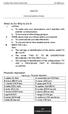 FLORIDA FIELD OPERATIONS GUIDE OCTOBER 2012 Appendix Communications Annex What to Do Why to Do It I. LISTEN. a. To make sure your transmission won t interfere with another communication. II. III. b. To
FLIGHT FOLLOWING, RESOURCE TRACKING, AND COMMUNICATIONS.
 CHAPTER 4: FLIGHT FOLLOWING, RESOURCE TRACKING, AND COMMUNICATIONS. I. Introduction. Flight following, resource tracking, and communications are key components in promoting employee and aircraft mission
Operating Manual. ITURAN Vehicle Communication, Protection and Tracking
 Operating Manual ITURAN Vehicle Communication, Protection and Tracking Ituran - 3 Hashikma Street, Azor Industrial Zone 58001, POB 11473, www.ituran.com 24 hour customer service call center: 1-222-22-55,
P/N 135A-970-022 FAA Approved: 12/6/2007 Section 9 Initial Release Page 1 of 8
 FAA APPROVED AIRPLANE FLIGHT MANUAL SUPPLEMENT FOR GARMIN SL40 NAV/COMM Serial No: Registration No: When the GARMIN SL40 COM radio is installed in the Liberty Aerospace XL-2, this supplement is applicable
Page 2 of 7 SPKT FIGURE CHANGES
 Page 1 of 7 Gleim Sport Pilot FAA Knowledge Test 2014 Edition, 1st Printing Updates February 8, 2014 The FAA has released a new Computer Testing Supplement. The FAA made every effort to keep the figures
Takeoff Tools TM Crosswind Calculator Instructions Copyright 2005 by Eric C. King. All rights reserved. Rev. 11Sep05. How to Use
 Takeoff Tools TM Crosswind Calculator Instructions Copyright 2005 by Eric C. King. All rights reserved. Rev. 11Sep05 Takeoff Tools TM Suppose you re arriving at, or about to depart from, an airport. You
U.S. DEPARTMENT OF TRANSPORTATION FEDERAL AVIATION ADMINISTRATION Air Traffic Organization Policy
 U.S. DEPARTMENT OF TRANSPORTATION FEDERAL AVIATION ADMINISTRATION Air Traffic Organization Policy ORDER JO 7210.55F Effective Date: October 1, 2009 SUBJ: Operational Data Reporting Requirements 1. Purpose
AIRCRAFT NOISE ABATEMENT OPERATING PROCEDURES AND RESTRICTIONS
 AIRCRAFT NOISE ABATEMENT OPERATING PROCEDURES AND RESTRICTIONS This section sets forth the Los Angeles World Airports (LAWA s) informal noise abatement traffic; flight and runway use procedures and includes
www.ibac.org IBAC Bulletin B00-2 Pacific Implementation of RVSM and RNP 10/50NM Lateral
 www.ibac.org IBAC Bulletin B00-2 Subject: Pacific Implementation of RVSM and RNP 10/50NM Lateral Previous notification had been made regarding implementation of RVSM and RNP in the Pacific Region. This
Carson City Airport. Driving Rules and Regulations
 Carson City Airport Driving Rules and Regulations Adopted February 18, 2009 The following Driving Rules and Regulations were adopted on February 18, 2009 by the Carson City Airport Authority in accordance
Tauranga, Bay of Plenty
 19/12 720 NZZC Tauranga Aerodrome Airshow and Restricted Area NZR286 Effective: 28 to 29 JAN 12 PORTAVEX 2012 and CLAIC OF THE KY will be held at Tauranga AD during the period 27 to 29 JAN 12. This event
406 and 121.5 for Search and Rescue
 406 and 121.5 for Search and Rescue Understanding new and old Search and Rescue frequencies. European Office: Ahventie 4a7 02170 ESPOO Finland Americas Office: 150 S. Adkins Way, Suite 100 Meridian, ID
MANUAL OF S1 CLEARANCE DELIVERY AND GROUNG SERVICE
 MANUAL OF S1 CLEARANCE DELIVERY AND GROUNG SERVICE Second Edition Nov 2010 Vatsim India http://www.vatind.net FOREWORD Vatsim India is a division of VATSIM which is a non-profit organization operating
H is for HELP! He was employed as an EMS pilot in Buffalo New York for about 2 years, than transferred to work as a relief pilot through out WI.
 H is for HELP! Wind Turbines and EMS helicopters in Wisconsin This interview with retired EMS pilot Ray Slavik, was submitted to the Calumet County Ad Hoc Committee researching proposed ordinances governing
Pilot Briefing Stockholm/Arlanda
 Pilot Briefing Stockholm/Arlanda INTRODUCTION Thank you for taking time to read the briefing for Stockholm/Arlanda Airport. The purpose of this document is not to teach pilots basic procedures and how
EFFECTIVE CALL TAKING
 EFFECTIVE CALL TAKING Contents PRINCIPLES OF EFFECTIVE CALL TAKING... 2 LISTEN... 2 TAKE CONTROL... 2 REMAIN CALM... 2 TAKE ACTION... 3 GENERAL GUIDELINES FOR CALL TAKING... 3 USE PROPER TELEPHONE ETIQUETTE...
CHAPTER 7. AIRSPACE 7.1 AFFECTED ENVIRONMENT
 CHAPTER 7. AIRSPACE 7.1 AFFECTED ENVIRONMENT 7.1.1 Definition of Resource Airspace management is defined as directing, controlling, and handling flight operations in the volume of air that overlies the
March 1997 &FM. Handbook. Post at all station operator positions. Federal Communications Commission. Emergency Alert System
 March 1997 &FM AM Handbook Post at all station operator positions Federal Communications Commission Emergency Alert System Attention Station Managers Pocket for EAS Authenticator Envelope Ensure the Authenticator
GEN 3.6 SEARCH AND RESCUE
 GEN 3.6-1 3 APR 14 GEN 3.6 SEARCH AND RESCUE 1. RESPONSIBLE SERVICE (S) 1.1 The search and rescue service in Singapore is provided by the Civil Aviation Authority of Singapore, in collaboration with the
NOTAM. Pilots from Aboard. Flight Information Service
 Pilots from Aboard - You must file a flightplan, check if your flightplan is closed in at operations corner in the big white tent. - Customs is available during operations hours - Pilots coming from NON-Schengen
Springdale Fire Department Policy & Procedures Manual Volume 2 Operations Section 203 Fire Operations 203.20 City Airport Emergency Plan
 Springdale Fire Department Policy & Procedures Manual Volume 2 Operations Section 203 Fire Operations 203.20 City Airport Emergency Plan In order to better protect the lives and property on and around
Maryland State Firemen s Association Executive Committee Meeting December 5, 2009
 Maryland State Firemen s Association Executive Committee Meeting December 5, 2009 Maryland State Police Aviation Command Update Presented by: Major Andrew J. (A. J.) McAndrew Hello, my name is Major A.
Oral Preparation Questions
 Oral Preparation Questions The oral section of the practical test is the time when you need to demonstrate your understanding of the various tasks listed in the practical test standards and the factors
White Paper VoIP Crash Phone Systems
 White Paper VoIP Crash Phone Systems John Purnell March 1 st, 2015 Page 2 of 10 Contents 1.0 Executive Summary... 3 2.0 Abbreviations and Definitions... 3 3.0 What is a Crash Phone System?... 4 4.0 Technology
ARTICLE 735. Emergency Alarm System
 ARTICLE 735 Emergency Alarm System 735.01 Definitions 735.02 Approved Alarm Companies 735.03 Registration Required; Transferability; False Statements; And Registration for Apartment Complexes 735.04 Alarm
SA-516 AIR TRAFFIC CONTROL GROUP CHAIRMAN S FACTUAL REPORT. Docket No: Exhibit No: 3-A NATIONAL TRANSPORTATION SAFETY BOARD WASHINGTON, D.C.
 Docket No: SA-516 Exhibit No: 3-A NATIONAL TRANSPORTATION SAFETY BOARD WASHINGTON, D.C. AIR TRAFFIC CONTROL GROUP CHAIRMAN S FACTUAL REPORT NATIONAL TRANSPORTATION SAFETY BOARD Office of Aviation Safety
Appendix A Emergency Procedures
 Appendix A Emergency Procedures Introduction Changing weather conditions, air traffic control (ATC), aircraft, and pilots are variables that make instrument flying an unpredictable and challenging operation.
Automation at Odds. A 737 stalled when a radio altimeter malfunction caused the autothrottle and autopilot to diverge during an approach to Schiphol.
 Automation at Odds The pilots of a Boeing 737-800 did not heed indications of a significant decrease in airspeed until the stick shaker activated on final approach to Runway 18R at Amsterdam (Netherlands)