
School of Nursing BULLETIN
|
|
|
- Evan Logan
- 10 years ago
- Views:
Transcription
1 School of Nursing BULLETIN AN 1 P age
2 COLUMBIA UNIVERSITY SCHOOL OF NURSING BULLETIN This edition of the Columbia University School of Nursing Bulletin is being published as a two-year issue, covering the and academic year. RESERVATION OF UNIVERSITY RIGHTS This bulletin is intended for the guidance of persons applying for or considering application for admission to Columbia University and for the guidance of Columbia students and faculty. The bulletin sets forth in general the manner in which the University intends to proceed with respect to the matters set forth herein, but the University reserves the right to depart without notice from the terms in this bulletin. This bulletin is not intended to be and should not be regarded as a contract between the University and any student or other person. Contact Information: School of Nursing 630 West 168th Street Box 6 New York, NY Phone: (212) or (800) Fax: (212) [email protected] 2 P age
3 Contents 7 MESSAGE FROM THE DEAN 9 COLUMBIA UNIVERSITY 10 THE SCHOOL OF NURSING History History of the Pin Mission Goals and Objectives Diversity Philosophy Accreditation 15 RESOURCES FOR STUDY Libraries Medical Center Library Computer Facilities Classrooms, Conference Rooms, Laboratories Clinical and Research Facilities Institutes and Centers School of Nursing Academic Research Centers Practice 23 PROGRAMS OF STUDY: OVERVIEW The Combined BS/MS Program for Non-nurse College graduates The Master's Programs (MS) Adult-Gerontology Acute Care Nurse Practitioner Adult-Gerontology Primary Care Nurse Practitioner Family Nurse Practitioner Nurse Anesthesia Nurse Midwifery Pediatric Nurse Practitioner Psychiatric Mental Health Nurse Practitioner Women's Health Nurse Practitioner Sub-Specialty Programs: Genetics in Advanced Practice HIV/AIDS Oncology Palliative and End of Life Care The University Statutory Certificate Programs The Master's Completion Programs Joint-Degree Programs Nursing and Business (MS/MBA) Nursing and Public Health (MS/MPH) 3 P age
4 Contents PROGRAMS OF STUDY, Continued Doctor of Nursing Practice (DNP) Degree Program Post Master s Doctor of Philosophy in Nursing (PhD) 37 ADMISSIONS General Admissions Information A Complete Admissions Application Application Deadlines Program Admission Requirements 44 FINANCIAL AID Financial Aid Administered by the School of Nursing Types of Funding Financial Aid Terms Satisfactory Academic Progress Financial Aid Warning Exit Counseling 49 STUDENT RESOURCES Bard Athletic Center Housing International Students Orientation Advisement Sigma Theta Tau Transportation Parking University Bookstore Student Administrative Services: Registrar, Cashiering, Account Services 51 STUDENT ACTIVITIES Office of Student Activities Peer Mentorship Student Groups and Committees Activities and Events Banking Information Campus Information and Map Child Care Dining Options Parks and Recreation Jobs Mail/Postal Services Places of Worship Public Safety Schools for Children 4 P age

5 Contents 52 STUDENT SERVICES CUSON Student Handbook Essential Policies for the Columbia Community Enrollment Requirements and Student Enrollment Status Student Records The Clery Act 54 OFFICE OF CURRICULAR AND ACADEMIC SUPPORT 55 CURRICULAR REQUIREMENTS: SAMPLE PROGRAM PLANS The Combined BS/MS Program for Non-nurse College graduates Adult-Gerontology Acute Care Nurse Practitioner Adult-Gerontology Primary Care Nurse Practitioner Family Nurse Practitioner Nurse Anesthesia Nurse Midwifery Pediatric Primary Care Nurse Practitioner Psychiatric Mental Health Nurse Practitioner Sub-Specialty Programs: Genetics in Advanced Practice HIV/AIDS Oncology Palliative and End of Life Care Women s Health Master s Completion Program Doctor of Nursing Practice (DNP) Degree Program Post Baccalaureate and Post Master s Doctor of Philosophy in Nursing (PhD) 70 COURSE DESCRIPTIONS 104 FACULTY AND ADMINISTRATION University Administration Program Directors Faculty Department/Administration Office of the Dean Division of Student Affairs Office of Curricular and Academic Support Office of Scholarship and Research Development Alumni Relations Combined BS/MS ETP Program 5 P age

6 Contents 113 ACADEMIC CALENDAR University Holidays Spring 2013 Summer 2013 Fall 2013 Spring 2014 Major Religious Holidays Projected Graduation Schedule 118 FINDING YOUR WAY Directory (CUMC) Directions Maps Health Sciences Campus Morningside Campus 6 P age

7 Message from the Dean Columbia has been educating nursing leaders, clinicians, and scholars for over a century. Our faculty and staff represent the very best in quality and innovation and have developed an academic environment, curriculum, clinical practice, and program of research that is excellent. Our focus on translating knowledge to practice, building the evidence for most effective practice, and translating this to policy for further dissemination, binds and enhances the school s work. As with other health professions schools at Columbia, enrollment is limited to those who have already earned a baccalaureate degree, either in nursing for entrance to the graduate program, or in another field for matriculation in the first professional degree. The advanced practice program offers the MS degree in many clinical specialties, all providing eligibility for certification as a nurse practitioner, as well as dual certification for some as clinical nurse specialists. The Doctor of Nursing Practice degree is a clinical doctorate that educates the BS or MS prepared nurses with the knowledge and experience to provide sophisticated care, across sites and over time, with full authority and accountability for their patients. Our PhD program is a research-intensive curriculum that prepares nurse scholars to conduct research independently and as part of interdisciplinary teams. WHY NURSING? Nursing at Columbia is the exemplar for clinical competency practiced at the full scope of primary care and in the care of acutely ill patients in the full range of care environments. Advanced practice nurses have gained broad legislative practice authority in every state. Always a valued career, nursing is now in a position to reaffirm its clinical value while researching ways to sustain quality while containing costs and increasing access. Especially for those underserved and uninsured, nursing has a central role to play in a reformed health system. Providing primary care, community-based services, care management and coordination, disease prevention, and health promotion, practicing in underserved inner city and rural areas, and assuring patient understanding of therapy are all prominent and valuable activities at which nurses excel. As society recognizes the importance of high-level professional nursing practice, talented and forward-thinking individuals are increasingly attracted to the profession. Coinciding with society s expanded view of nursing is the development of scholarly nursing endeavors, as demonstrated by the increase in funding for nursing research over the past few years. Education in nursing provides an individual with opportunities for a challenging career with high-level authority and accountability, and deeply gratifying personal rewards. Master s and clinical and research doctoral degrees prepare nurses for leadership positions as fully accountable clinicians, policy experts, and researchers, all of which are in high demand in today s health care environment. 7 P age

8 Message from the Dean WHY COLUMBIA? Columbia University School of Nursing is part of one of the world s most renowned medical centers. We are a close-knit and collaborative team made up of the Schools of Medicine, Dental and Oral Surgery, Public Health, and Nursing; and Programs in Occupational Therapy, Physical Therapy, and Human Nutrition. We partner on research and clinical experiences, and share a vision for the future of health care in this country. The School of Nursing is internationally known and clinically unrivaled with recognition for excellence in research and curricular advancements. Recent contributions to the profession include the first universal faculty practice plan in a school of nursing, the first Endowed Nursing Chair in Health Policy, the first to be named a World Health Organization Collaborating Center for International Nursing Development in Advanced Practice and the first clinical practice doctorate. WHY NOW? Never has a career in nursing been so inviting. With preparation at the doctoral and masters level, advanced practice nurse, nurse researchers, and leaders in health systems and policy are increasingly valued. The practice of professional nursing is one of life s noblest careers, and our mission to advance academic nursing, pursue clinical excellence, and lead research teams in scientific discovery will contribute to a healthier society. We invite you to be a participant in that mission. Bobbie A. Berkowitz Dean of the School if Nursing 8 P age

9 Columbia University Columbia University was founded in 1754 as King s College by royal charter of King George II of England. It is the oldest institution of higher learning in the state of New York and the fifth oldest in the United States. Columbia University (CU) is committed to education for excellence -- a phrase that embraces superior teaching and the advancement of knowledge through research, preeminence in the professions, and leadership in community and national affairs. The University s position as a private institution, its location in the Morningside Heights and Washington Heights areas of Manhattan; its 3,145 faculty, 7,054 undergraduate and 16,278 graduate and professional students, and its reputation provide the basis for this diversified, yet singular, educational purpose. Faculty awards and honors are numerous; the University is proud to have on its faculty: 69 Nobel Prize winners, 19 MacArthur Foundation Award recipients, 7 winners of the National Medal of Science, 35 members of the National Academy of Sciences, and 129 members of the American Academy of Arts and Sciences. The main campus of CU occupies 32.6 acres on Morningside Heights on the upper west side of Manhattan (W. 111th to W. 123rd streets). The University administration and the Schools of Law, Business, Engineering, General Studies, Journalism, Music, Architecture, International Affairs, Graduate School of Arts and Sciences and Columbia College are located on the main campus, as are Barnard College and Teachers College. Two miles to the north is CU s Health Science Center (HSC) Campus, which opened in 1928 and shares with the Presbyterian Hospital a 20-acre campus overlooking the Hudson River. Columbia University has more than a hundred departments of research and more than a hundred research institutes and centers. It includes three undergraduate schools, thirteen graduate and professional schools, and a school of continuing education. 9 P age

10 The School of Nursing Located on the Health Science Campus, the Columbia University School of Nursing was founded in 1892 with Anna C. Maxwell as its first director. Since its inception, the mission of the School has been the preparation of clinically excellent nurse practitioners, clinical nurse specialists, and scholars. The School of Nursing was the first in the country to award a master s degree in clinical nursing specialty (1965). More than 9,000 nurses have graduated since the School was opened. The emphasis on clinical scholarship at Columbia University is particularly appropriate because of the interdisciplinary collaboration of the School of Nursing with the other professional schools in its environs. The School of Nursing shares the Health Sciences Campus with the School of Public Health, the School of Dental and Oral Surgery, and the College of Physicians and Surgeons, which includes programs in Occupational Therapy, Physical Therapy, and Human Nutrition. Each of these schools adds to the richness and diversity of the educational experience of students and of the School of Nursing. School of Nursing faculty have substantial experience in curricula, instructional design, and research, and maintain expertise in their areas of teaching responsibility through participation in local, regional, and national conferences, involvement in scholarly presentations and publications, and faculty practice. The graduates of the School of Nursing are one of its major strengths. Graduates are recruited for leadership positions in practice, education, and management. To ensure that graduates meet the needs of a dynamic society and advance the profession while maintaining high academic standards, the School of Nursing continually evaluates the curricula and implements changes in the program of studies and courses. Columbia s Nurse Anesthesia program is unique as the first master s degree nurse anesthesia program in New York State and one of the first master s degree programs in the United States. The Nurse Midwifery program is the oldest master s program in the United States. 10 P age

11 The School of Nursing HISTORY OF THE COLUMBIA UNIVERSITY/PRESBYTERIAN HOSPITAL PIN The school pin was first presented to graduates of the classes of 1894, 1895 and 1896 on November 25, 1896 by Frederick Sturges, Sr., president of the Training School for Nurses Committee. Members of the Sturges family were longstanding School benefactors. In 1896, the School was part of the Presbyterian Hospital, and at that time, hospitals and those who worked in them were viewed as social philanthropists, with religious leanings. PH was viewed as a place that provided quality care for everyone. The front face of the pin consists of a white cross background - a symbol of mercy, help and caring; a laurel wreath, symbolic of the victory of having completed a rigorous program in nursing education. The motto Salus Generis Humani, meaning safety of the human race and the health of humanity is engraved on a ribbon under the laurel wreath. In the center of the pin is a red stone, perhaps symbolic of life blood - that of the graduate and those for whom s/he cares. Until 1975, the initials PH for Presbyterian Hospital were attached to the stone. Beginning with the Class of 1976, the Columbia Crown became the emblem on the stone, formally recognizing the long connection of the School with Columbia University and symbolizing the successful transition from a hospital based apprenticeship model for nursing education to a professional one based within an institution of higher learning. The tradition of the pin was begun by the School s founder, Anna Caroline Maxwell (who seldom wore a cap but always wore her pin). In recognition that the School now offers only graduate programs in nursing, the current tradition is to present the pin to graduates who have successfully completed the master s degree. Recipients of special awards of distinction receive a blue enameled star to recognize their award, which is affixed to the pin by a gold chain. 11 P age

12 The School of Nursing MISSION The mission of Columbia University School of Nursing is to educate and mentor future generations of expert nurse clinicians and researchers. We believe that our responsibility is to design programs that use the rare resources and unique partnerships of our academic health sciences center, and to provide evidence that our programs and graduates bring about improved health and well-being. GOALS AND OBJECTIVES In particular, we view our goals as the following: Advance nursing practice and research, collaborating with colleagues in other professions when possible. Lead and disseminate innovative programs of interdisciplinary research of relevance to clinical practice, the public s health, and health policy. Assume accountability for quality and excellence in nursing practice, research, education, advocacy, and policy. Improve opportunities for nurses in research and practice to use fully their knowledge and skills in the advancement of science and care. Partner with defined populations or geographic regions in practice and research to meet health care needs. Advocate for nursing with individuals, families, and communities. DIVERSITY The Columbia University School of Nursing s Office of Diversity & Cultural Affairs fosters and supports an environment of inclusivity and seeks to promote and sustain diversity in the School s student body, faculty, and staff. The office supports social justice practices, collaborations, and engagements within the School, within Columbia University as a whole, and within the local and wider community. 12 P age

13 The School of Nursing PHILOSOPHY The faculty, representing all clinical nursing disciplines, believes that in a dynamic society, education for membership in a profession includes development not only of expertise in a field but also of social awareness. The professional nurse thinks critically, exercises technical competence, and makes socially significant contributions to society through theory-based practice. Nursing's role and responsibility to society are to establish and maintain relationships with clients that support and restore health and well-being. The professional nurse has the ability to diagnose and treat human responses to actual or potential health problems and to provide preventive health services to individuals and groups in a variety of settings. Belief in the integrity and worth of all human beings is basic. The professional nurse is viewed both as a responsible health care provider accountable for the quality of practice and as an agent of change in the health care delivery system. Nursing seeks to advance its contribution through research and collaboration with other health professions. The nurse acts independently and interdependently. The faculty endeavor to provide knowledge; to stimulate learning; to define issues; to serve as resource persons, administrators, leaders, and innovators in nursing through education, research, and practice; and to contribute to the development of human values. The faculty recognizes that interests and abilities vary, and they seek to provide flexibility in the curriculum to facilitate the optimal development of each learner's potential. Learning is viewed as a lifelong process, and learners are expected to be self-directed and accountable for their performance. 13 P age

14 The School of Nursing ACCREDITATION Columbia University School of Nursing is accredited as a provider of continuing nursing education by the American Nurses Credentialing Center s Commission of Accreditation. Columbia University School of Nursing is a member American Association of Colleges of Nursing. All programs are accredited by the Collegiate Commission on Nursing Education (CCNE) and the New York State Education Department. The Nurse Midwifery program is accredited by the Accreditation Commission for Midwifery Education Accreditation Commission for Midwifery Education Suite Colesville Road Silver Spring, MD The Nurse Anesthesia program is accredited by the Council on Accreditation of Nurse Anesthesia Educational Programs. The Pediatric Nurse Practitioner program is approved by the Pediatric Nursing Certification Board. The Women s Health and Neonatal Nurse Practitioner programs are approved by the National Certification Corporation. Columbia University is accredited by the Middle States Commission on Higher Education 14 P age
15 Resources for Study Columbia University is comprised of 3 undergraduate and 15 graduate/professional schools. The Morningside campus, centered at 116th Street and Broadway, occupies several acres of urban property. Located on the Morningside campus are Columbia College; Engineering; General Studies; Architecture, Planning & Preservation; Arts; Business; Engineering; Graduate School of Arts & Sciences; International Public Affairs; Journalism; Law; Social Work. The Columbia University Medical Center, centered at 168th Street and Broadway, also occupies several acres of urban property. Located on the Health Sciences campus are the School of Nursing, College of Physicians and Surgeons with the Programs in Physical Therapy, Occupational Therapies, and Nutrition, Mailman School of Public Health, and the College of Dental Medicine LIBRARIES The Columbia University Libraries is a system of twenty-two libraries with extensive print and electronic resources, innovative services, and expert staff teamed with a group of academic technology centers supporting instruction and scholarship. The Libraries first priority is helping students, researchers, and faculty to find and use our rich collections and tools. Millions of books, films, scholarly journals, archives, oral histories and much more are available at the Libraries and online. The Libraries website connects to CLIO, databases, digital collections, and research assistance. MEDICAL CENTER LIBRARY The Health Sciences Library (Augustus C. Long Health Sciences Library) serves faculty, students, researchers and clinicians in the Schools of Nursing, College of Dental Medicine, and Public Health, College of P&S, the Graduate School of Arts and Sciences, Columbia Presbyterian Hospital, and the other health care, instructional and research programs at the CUMC. The Library s collection includes over 500,000 volumes; approximately 4,400 currently received periodical subscriptions, and a large collection of audio-visual material. In addition, the Library also supports a growing collection of electronic services, including full-text and Internet resources. The Library s Archives and Special Collections section contains the Library s collection of rare books and its named collections. Also included in the collection are the archives of the College of P&S and many other materials that document the history of medicine and the history of institutions at the CUMC. Services provided by the Health Sciences Library include reference services, reserve readings, instruction in using library and electronic resources, classes on searching the Internet, individual consultation on research topics, mediated literature searches, database searches, interlibrary borrowing, and a fax service. This library is a part of the Columbia University library system, which encompasses approximately forty libraries related to major areas of academic inquiry. These libraries contain more than four million volumes. The Long Library houses health related publications and books. Other libraries used extensively by the faculty and students at the Columbia University School of Nursing include the Butler Library on the Morningside campus, the Wollman Library at Barnard, and the Teachers College Library. In addition, the Library of the Psychiatric Institute, which contains material on mental health and psychiatry, is open to faculty and students. 15 P age
16 The services provided by the Augustus C. Long Library are extensive, by virtue of its association with the Schools of Nursing, Medicine, Public Health, and Dental Medicine, and with the Programs in Physical Therapy, Occupational Therapy, and Nutrition. Columbia Libraries Information Online (CLIO), the online library catalog for Columbia, Barnard and Union Theological Seminary libraries. CLIO provides students and faculty with the location, call number, and library location of all current serials and most books cataloged since 1981 at Columbia University. This information may be obtained by author, subject or title. Multiple online databases for literature search for nursing is rapid, upto-date, and state-of-the-art. Additionally, an extensive Florence Nightingale Collection is maintained in the Augustus C. Long Library. This collection makes up a part of the rare book holdings of the Library and is featured at exhibitions along with rare holdings of Freud and Webster. These collections are available to students, faculty, and visiting nursing historians for research purposes. Columbia students are also permitted access to the collections of Harvard and Yale Universities under the auspices of the Research Libraries Group. Information about the Research Libraries Group can be obtained from the Long Library. Student memberships, which include borrowing privileges, are available for an annual fee in the New York Academy of Medicine Library at 103rd Street and Fifth Avenue. Applications for membership should be directed to the Academy Library. COMPUTER FACILITIES Columbia University Information Technology (CUIT) The Center for Academic Information Technology (CUIT) provides Columbia University students, faculty and staff with central computing and communications services including , telephone service, Web publishing, computer labs and electronic classrooms, the course management applications, office and administrative applications, and management of the high-speed campus Ethernet and wireless networks. CUIT also manages an array of computer labs, terminal clusters, ColumbiaNet stations, multimedia classrooms, and provides a variety of technical support services. Columbia University Medical Center Information Technology (CUMC IT) CUMC-IT provides technical support and resources used at the Columbia University Medical Center. Working together with other IT groups and departments, CUMC IT provides prompt resolutions of technical issues. CUMC IT is the initial technical support group for Faculty, Staff and Students, providing free first level troubleshooting for account, programs and systems at CUMC via phone, and through the remote CUMC IT esupport tool. Columbia Center for New Media Teaching and Learning (CCNMTL) CCNMTL is a free service for faculty members, supporting efforts from basic course website management to advanced project development P age
17 CLASSROOMS, CONFERENCE ROOMS, LABORATORIES, AND SKILLS LEARNING All classrooms at the Medical Center are available to all health science students. Four floors in the Hammer Health Sciences Center house the teaching facilities. These floors include classrooms, conference and seminar rooms, and two auditoriums that contain state-of-the-art audiovisual equipment. Conference rooms and amphitheaters as well as the 700-seat Alumni Auditorium in the College of Physicians and Surgeons Building are used extensively. The School of Nursing building houses two Technology Learning Centers (TLC). The TLC s include a mock hospital unit containing several patient units and an ambulatory care area for practicing primary care skills; it is used by graduate and undergraduate students for skills development, including physical assessment and state-of-the-art monitoring technology. There are also two informatics laboratories available to School of Nursing students. CLINICAL AND RESEARCH FACILITIES NewYork-Presbyterian Hospital New York-Presbyterian Hospital is one of the most comprehensive university hospitals in the world, with leading specialists in every field of medicine. It is composed of two renowned medical centers, NewYork-Presbyterian Hospital/Columbia University Medical Center and NewYork-Presbyterian Hospital/Weill Cornell Medical Center, and affiliated with two Ivy League medical institutions, Columbia University College of Physicians and Surgeons and Weill Cornell Medical College of Cornell University. With dedicated staff, modern facilities, state-of-the-art technology, a commitment to excellence in patient care, research, and community service, New York-Presbyterian Hospital has earned a reputation as a healthcare leader. Whether providing specialty care to the tiniest newborns, performing complex cardiothoracic surgery, or offering comprehensive primary care, New York-Presbyterian Hospital provides exceptional services with care and compassion. Residents living in the tri-state region have convenient access to quality healthcare services through the NewYork-Presbyterian Healthcare System. This federation of top-level hospitals, specialty institutes, and continuing care centers in New York, New Jersey, and Connecticut delivers a wide range of services to the communities it serves. The Milstein Hospital Building This is a 745-bed hospital with 30+ operating rooms; providing state-of-the-art adult in-patient care. A network of enclosed bridges and tunnels links the hospital with University classrooms and laboratories. Computer terminals are part of every patient care unit, giving nurses the opportunity to concentrate on patient care - their specialty. 17 P age
18 The Allen Pavilion A 300-bed community hospital and primary care center designed to meet the specific health care needs to the communities of northern Manhattan and the Bronx. The Allen Pavilion is committed to primary care specialties, offering residents with exposure to the laparoscopic and open access surgical procedures of a community hospital. The Ambulatory Care Network Corporation The Ambulatory Care Network (ACNC) is a subsidiary not-for-profit corporation of the NewYork-Presbyterian Hospital. The purpose of ACNC is to shift primary care from the hospital clinics into the community, making it more accessible. The goal is to restore an earlier and more personal interaction between patients and their physicians. The ACNC runs 11 diagnostic and treatment centers, making it the largest practice network in the New York metropolitan area. Over 65 physicians and dentists, all of whom have academic appointments at Columbia, see about over 65,000 patients per year. NewYork-Presbyterian Morgan Stanley Children s Hospital The nation s first hospital for children, Babies and Children s Hospital opened its doors in Serving pediatric patients from around the world, NewYork-Presbyterian Morgan Stanley Children s Hospital provides comprehensive care, from diagnosis to recovery, in general pediatrics and in the full range of medical and surgical subspecialties. It is internationally recognized for its research and clinical resources and was cited in an NIH-sponsored study published in the journal Pediatrics as a center for excellence both in research and in patient care. Most notable among the many achievements are the development of the Apgar test for assessing infant health at birth, the first amniocentesis, and the identification and diagnosis of cystic fibrosis. Taub Institute for Research on Alzheimer s Disease and the Aging Brain This is a federally funded research center through the National Institute on Aging (NIA). The Institute operates as an independent department at Columbia University, promoting and administering projects related to Alzheimer s disease in departments and centers across campus. The Taub Institute works in collaboration with many departments and centers in the study of Alzheimer s disease and other neurodegenerative disorders. The Center for Geriatrics and Gerontology In collaboration with NewYork-Presbyterian Hospital and its affiliated medical schools bring a wide range of services together to form the Centers on Aging. Currently ranked 11 th in the nation, the Centers on Aging ensure the best clinical care for older patients. Clinical services tailored to the geriatric population are offered through the Departments of Medicine, Psychiatry, Neurology, and Social Work. The Herbert Irving Cancer Center The Harkness Eye Institute and Research Laboratories Russ Berrie Medical Science Pavilion The Neurological Institute of New York The New York State Psychiatric Institute 18 P age

19 The NYP-Cornell Campus and some 150 clinical placement sites are available in the metro-ny area. Affiliates include Lawrence Hospital in Bronxville, Mt. Sinai Medical Center, Lenox Hill Hospital, New York City Medical Center at Harlem, St. Luke s/ Roosevelt Hospital. In addition to the NewYork-Presbyterian facilities, many other institutions and various community-based agencies provide opportunities for students to learn to care for their populations. These include Visiting Nurse Service of New York, Morris Heights Health Center, Planned Parenthood, Mt. Sinai Medical Center, New York City Health and Hospitals Corporation sites. INSTITUTES AND CENTERS Columbia University is privileged to sponsor a number of institutes and centers that engage in funded, interdisciplinary research and program development, sponsor workshops and courses, and act as a clearinghouse for information related to their specific focus. Of particular interest are the following institutes and centers: Gertrude H. Sergievsky Center HIV Center for Clinical and Behavioral Studies National Center for Children in Poverty Columbia Population Research Center Center for Neurobiology and Behavior Center for the Study of Society and Medicine Institute for the Study of Human Rights Herbert Irving Comprehensive Cancer Center Institute of Human Nutrition Institute for Research on Women & Gender 19 P age
20 SCHOOL OF NURSING ACADEMIC CENTERS Center for Children and Families Director: Mary w. Byrne, PhD, MPH, CPNP, FAAN The mission of the Center for Children and Families is to improve the health of children and families at risk through the generation and sharing of clinical and research knowledge, consultation, education, advocacy, and promotion of innovative clinical practice. Center for Health Policy Director: Patricia Stone, PhD, FAAN The Center for Health Policy at Columbia University School of Nursing is a research center working with institutional partners at the local, state, and national level to develop and evaluate health policy initiatives as well as translate research findings into effective polices. Research is an integral component of the CHP mission. Center faculty engage in health services research that broadens students' educational experiences and expands the state of knowledge about the functionality of health services systems. Faculty research on issues related to the organization, delivery and cost-effectiveness of health services is fundamental to the quality of the program. The dissemination and translation of new knowledge through multiple sources contributes to efforts to improve the availability, affordability, and effectiveness of health services and develop policies that reinforce these objectives. Center for Evidence Based Practice in the Underserved Director: Suzanne Bakken, DNSc, RN, FAAN Building upon six years of experience and productivity as a p20 Exploratory Center, broad interdisciplinary collaboration, outstanding institutional resources including a Clinical and Translational Science Award (CTSA), strong evidence of commitment to research for underserved populations, the overarching framework (The Chronic Care Model) and unique strengths in informatics and economic analysis, the aims of the Center for Evidence-based Practice in the Underserved (CEBP) strives to: Facilitate the development of bio-behavioral research capacity in self-management for underserved populations. Toward this goal, CEBP funds four interdisciplinary research resource cores that provide expertise, services, and informatics tools and resources: Administrative; Design, Methods, Biostatistics, and Economic Analysis; Self- Management, Bio-behavioral, and Informatics; Dissemination and Translation. CEBP works to capitalize on outstanding interdisciplinary collaborations and resources, and the use of innovative information technologies including collaborative and knowledge management software to facilitate the development of biobehavioral research capacity for scientists conducting self-management research in underserved populations. Currently, four proposed pilot projects are applying the resources of CEBP s cores to identify and test strategies to enhance self-management for four vulnerable populations (adolescents with diabetes, persons living with HIV/AIDS and their nutritional needs, diabetics with hypertension, and communitydwelling elders at risk for injury by falls). CEBP s systematic approach to developing infrastructure and to 20 P age
21 evaluating and disseminating findings will assure a strong, sustainable program of interdisciplinary, biobehavioral research in self-management. Center for Interdisciplinary Research to Prevent Infections (CIRI) Director: Elaine Larson, RN, PhD, FAAN, CIC CIRI embraces a broader mission to further research on preventing all types of infections a variety of community and clinical settings, although many CIRI researchers and fellows will continue to focus on antimicrobial resistance. A new NIH funded training program, Training in Interdisciplinary Research to Prevent Infections (TIRI), began supporting pre- and post-doctoral fellows in July. World Health Organization Collaborating Center for Advanced Practice Nursing Center Director: Elaine Larson, RN, PhD, FAAN, CIC The key results of this center is to strengthen the human resources research with a primary focus on nursing, and assist in developing research capacity among leading nursing institutions in several countries. Additionally, strengthen the systems to train, precept, and supervise nursing personnel who are HIV primary care providers in several heavily affected countries. Finally, assist in strengthening the training of nurses in the leading schools in the countries affected by conflict or disasters by integrating emergency preparedness into curricula and national plans P age
22 Office of Global Initiatives The Vision of the Office of Global Initiatives of Columbia University School of Nursing is to contribute to the improvement of the world s health through service, practice, education, and research at home and abroad. Its Mission is to facilitate education, research and clinical care by fostering strategic partnerships that advance the practice of nursing within our boarders and throughout the world. The Goals of the Office of Global Initiatives are to: Serve as a resource on global health and related issues for nurses, other healthcare professionals, policymakers and the public Collaborate with nursing schools and organization abroad to advance education and scholarly interchange among nurses involved in global health Promote inter-professional collaboration in global health Support faculty and students to partner in global health programs Generate and disseminate scholarly evidence to inform global nursing practice and policy Contribute to the development of cultural awareness and sensitivity among faculty, students and staff Practice Columbia Advanced Practice Nurse Associates (CAPNA) The Columbia University School of Nursing has a long and rich history of leadership in clinical excellence and scholarship and helped to develop the field of advanced practice nursing (APN). In addition to a continuing dedication to education future generations of clinically excellent nurses, the school maintains a unique APN practice site. CAPNA provides comprehensive primary care and women's healthcare by advanced practice nurses who diagnose and treat illnesses, perform physical examinations, order diagnostic tests and refer to specialists as needed. Advanced practice nurses at CAPNA are credentialed, experienced, and work in partnership with the more than 2,000 physicians at NewYork-Presbyterian Hospital. CAPNA NPs are committed to their patients' health. CAPNA's individualized lifestyle and wellness plans enable each patient to achieve and maintain optimum health. CAPNA NP's specialize in primary care and targeted, individualized disease prevention and health promotion. Each nurse practitioner is a faculty member at Columbia University School of Nursing. CAPNA is fully covered as a primary care provider by major insurance companies and is a recognized Medicare provider. 51 West 51st Street Suite 100 New York, NY P age
23 Programs of Study: Overview THE COMBINED BS/MS PROGRAM FOR NON-NURSE COLLEGE GRADUATES The Combined BS/MS program is an accelerated combined-degree (BS/MS) program for non-nurse college graduates. The program is designed to prepare the student for a career as an Advanced Practice Nurse. Academic studies are closely integrated with clinical experience. There are two components: pre-licensure study which provides students with knowledge of nursing science and nursing practice and specialty study which focuses on an advanced practice role in professional nursing. Pre-Licensure: The program of study in the first phase continues instruction in the biological and behavioral sciences, and incorporates the clinical and didactic learning necessary for the first professional degree. At the end of the prelicensure studies, students are eligible to take the professional nurse licensure examination (NCLEX). Clinical education receives major emphasis, with patient experiences beginning early in the first term. Theory and precepted clinical practice are related to the promotion of health and prevention of illness, as well as to the care of the sick and their restoration to optimal health. Students work with patients in a variety of settings, such as clinics, hospitals, community centers, and the home. The curriculum is built on the integrated health model, beginning with wellness and progressing through illness to maintenance and rehabilitation. The initial focus is on health, with emphasis on promotion of health and prevention of illness. Students begin the program in late May (Summer) term. The course sequencing has been designed to allow for seamless transition into full-time specialty studies. Objectives: At the end of pre-licensure studies, the student is able to: Integrate knowledge from the biological, physical, and behavioral sciences in caring for individuals, families, and groups on the health-illness continuum in a variety of settings. Demonstrate competence in the application of nursing interventions directed toward the promotion, maintenance, and restoration of health, while maximizing client participation in the decision-making process. Use information technology to support evidence-based practice. Analyze the health care beliefs and practices of the major socio-cultural groups in American society today for the purpose of individualizing nursing approaches. Apply principles of leadership and management to the delivery of nursing care. Analyze the influence of current and projected demographic, social, environmental, and political/legislative trends upon the health care needs of individuals and communities. Demonstrate responsibility and accountability for individual nursing practice. Collaborate with other health care professionals to promote the delivery of comprehensive health care. 23 P age
24 Analyze research in terms of its clinical applicability to nursing practice. Apply ethical-moral reasoning in clinical decision making. Synthesize a personal philosophy of nursing care and practice framework. Serve as an advocate for the consumer and the profession of nursing within the health care delivery system and the socio-political-legal arena. THE MASTER S PROGRAM The purpose of the Master of Science degree program is to prepare nurses for site-specific Advanced Clinical Practice. The clinical specialties are in relation to client group and are defined by age, gender and/or health-illness status. All programs are accredited by the NYS Education Department as nurse practitioner programs, allowing successful graduates to be certified in New York State for advanced clinical nursing practice. Lending a helping hand in Haiti Objectives: The program prepares students to: Management of Patient Health/Illness Provide health promotion and disease management for patients, families and communities Apply principles of epidemiology and demography in clinical practice and for outcomes evaluation Demonstrate critical thinking and diagnostic reasoning skills for patient assessment, clinical decision making and provision of care over time. Communicate and collaborate using community and family support resources to provide care across healthcare continuum Prescribe appropriate medications including complementary and alternative therapies [delivers prescribed medications accurately and safely] Nurse/Patient Relationship Respond to changes in health status and facilitates behavioral change, in partnership with patient. Promote nurse-patient relationships built on trust, respect, privacy, comfort, patient dignity and shared decision-making. Use self-reflection to provide therapeutic relationships within professional boundaries. Helping the elderly in Haiti 24 P age
25 Teaching Coaching Asses, plan, implement and evaluate personalized patient education and coaching interventions Professional Role Deliver safe, ethical, evidence-based care using current technologies Promote the professional and advanced practice nursing role Lead and collaborate with other healthcare providers to provide effective interdisciplinary care Accept personal responsibility for professional development and learning Advocate for patients and families Evaluate implications of health policy and participates in policy development Managing and Negotiating Health Care Delivery Systems Effectively navigate the healthcare system to promote accessible, cost-effective and quality healthcare across the continuum of care. Practice within authorized scope of practice. Participate in professional advocacy activities to promote policies and legislation that positively affect health care. Monitoring and Ensuring Quality of Health Care Practice Assume responsibility for practice via self-monitoring quality of care provided. Culturally Sensitive Care Prevent personal biases from interfering with the delivery of quality care Incorporate patient s cultural preferences, values, spiritual beliefs, health beliefs and behaviors into care. The curriculum for the Master of Science degree has three components: Core, Supporting Sciences, and Clinical Specialty courses Master s Curriculum Overview Supporting Science and Core Courses provide the basis for the analysis and application of a variety of theories and science to an Advanced Practice role, and the opportunity to discuss broad professional issues across specialties. Clinical Specialty Courses focus on the clinical application and integration of theory to Advanced Practice situations. Didactic and clinical courses are specific to the clinical specialty chosen for study. In clinical experience courses, students function in the role of nurse practitioner. Courses in the clinical major focus on clinical application and integration of theory through guided practice. Because majors may partially overlap in relation to client health status or client age group, courses in one major may be elected by students from another major in order to respond to students special interests. 25 P age
26 Flexibility is also enhanced through individualized study courses offered in the final term of most majors. Curricula for specific programs are available in the Office of Student Affairs or on the School of Nursing website at All Master s students complete either a comprehensive examination or a specially focused project as part of their degree requirements. 26 P age
27 SPECIALTY PROGRAMS: Adult-Gerontology Acute Care Nurse Practitioner Program The Adult-Gerontology Acute Care Nurse Practitioner Program (AG-ACNP) is designed to prepare nurses to care for patients who are acutely and critically ill across the continuum of acute care services. Students gain a strong background in advanced assessment, therapeutics, and technology. Emphasis is placed on integrating didactic knowledge with patient management and advanced technical skills. Graduates are eligible to take the national professional certifying exam offered by the American Nurses Credentialing Center (ANCC). The program is certified for advanced practice/nurse practitioner status by the New York State Education Department. Adult-Gerontology Primary Care Nurse Practitioner Program The Adult-Gerontology Primary Care Nurse Practitioner Program (AGNP-PC) is designed to prepare Advanced Practice Nurses to deliver primary healthcare to all persons across the adult lifespan from adolescence through end of life. Adult-Gerontology Nurse Practitioner (NP) students are provided with the most innovative, state-of-the-art immersion into advanced practice nursing in order to confidently contribute to the immediate and future healthcare needs of our most rapidly growing and at-risk populations, including adolescent health and geriatric care. The newly-developed Adult-Gerontology Nurse Practitioner Program combines Columbia's nationallyrecognized curricula from both the Adult and Gerontologic specialty training programs into one enhanced, comprehensive single program of study. Additionally, the value-added focus on adolescent and geriatric healthcare, palliative and end-of-life care, and the integration of primary and mental health care ensures that the Columbia Adult-Gerontology NP graduate will have the knowledge, insight, skills, and experience to provide high quality, well-informed, evidenced-base care to the broadest range of patients in any primary care or specialized clinical setting. Using a well-balanced combination of didactic classroom instruction, experiential clinical seminars, and advanced clinical practica in diverse settings, Columbia's Adult-Gerontology NP students learn how to master and integrate their clinical practice with training in nursing leadership, clinical research, quality improvement, nursing informatics, and health and social policy. These practical and academic foci expertly inform the highest quality of evidenced-based clinical practice; creating not only in-demand expert providers, but also national and international nurse leaders who are forging the future direction of the profession of nursing's increasingly essential role in healthcare delivery. Graduates of the Adult-Gerontology Nurse Practitioner program are eligible for licensure and certification as an Adult-Gerontology Nurse Practitioner in all states in which board certification is required. Columbia's Adult- Gerontology Nurse Practitioner program graduates meet the requirements for national board certification examinations offered by either the American Academy of Nurse Practitioners (AANP) or the American Nurses Credentialing Center (ANCC). The Program 27 P age
28 Family Nurse Practitioner Program The Family Nurse Practitioner (FNP) Program is designed to prepare nurses to deliver primary health care to families in a variety of settings. Students follow patients through the life cycle utilizing obstetric, pediatric, gynecologic, as well as adult and geriatric primary care diagnostic and management skills. The scope of practice of the family nurse practitioner is based on a team approach. An interdependent member Of the health team, the FNP provides primary care through the following means: Documentation of individual and family health history Physical assessment Diagnostic, therapeutic, and educational care plans Collaboration with physicians and other health care professionals Referral to appropriate health care providers Coordination of health care Graduates are eligible to take the certifying examination offered by the American Nurses Association and the American Academy of Nurse Practitioners. Graduates find positions in a variety of settings such as outpatient clinics, community health centers, private practice offices, health departments, homeless shelters, chronic care facilities, schools, day care programs, hospices, homes, and acute care settings. Nurse Anesthesia Program The Nurse Anesthesia program is a 27-month, full-time, front-loaded program that includes a clinical anesthesia residency. The first year curriculum is devoted to advanced science courses, graduate core courses and specialty courses which form the basis for advanced specialty concepts later in the program. The clinical component starts in May of the second year. During clinical experiences, increasing responsibility for anesthesia patient care under tutorial guidance is afforded. The application of theoretical knowledge to the realities of clinical practice is a dynamic process that enhances and enriches learning as well as prepares the graduate to function effectively and competently as a professional. The sequential design of the program permits the student to acquire the skills necessary to move along this continuum. Graduates are eligible to take the certifying examination administered by the Council on Certification of Nurse Anesthetists, a requirement for practice. The program is fully accredited by the Council on Accreditation (COA) through Nurse Midwifery Program The Nurse Midwifery Program is designed to prepare nurses as nurse midwives. The focus of the academic and clinical aspects of this program is the management of the health care of women and their newborns. While emphasis is placed on care during the childbearing cycle, the curriculum also includes study of women s health needs throughout the life cycle. Graduates are prepared for full scope midwifery practice, including wellwoman gynecology, family planning, antepartum, intrapartum, postpartum, primary care and normal newborn care. Intensive clinical experience is provided in each of these areas in a variety of settings, exposing students to diversity in patient populations and practice options. Students learn to provide independent care for healthy women and consultative or collaborative care for women with medical and/or obstetrical complications. 28 P age
29 Graduates are eligible to take the national certifying examination administered by the American Midwifery Certification Board (AMCB) to become a Certified Nurse Midwife (CNM). Graduates are also eligible to register with New York State as a licensed midwife. Pediatric Nurse Practitioner Program The Pediatric Nurse Practitioner (PNP) Program is designed to prepare nurses who seek advanced knowledge and skill to practice as pediatric nurse practitioners in the delivery of primary health care to infants, children, and adolescents. The core curriculum provides students with an in-depth understanding of advanced nursing practice and enables them to apply this understanding to a variety of settings, such as community health centers, day care programs, chronic care facilities, outpatient facilities, private practice offices, schools, health departments, and homes. PNPs who are prepared at this master s degree level exercise sophisticated clinical judgment based on advanced theoretical and scientific knowledge, serve as models in collaborative practice with other health care professionals, and lead in the advancement of contemporary professional nursing by contributing to practice, research, and theory building. Graduates are eligible for certification as a Certified Pediatric Nurse Practitioner in New York State. Graduates are also eligible to take the certifying examination offered by NCBPNP/N and/or ANCC. Psychiatric Mental Health Nurse Practitioner The Psychiatric Mental Health (PMH) Nurse Practitioner Program provides qualified students the opportunity to acquire an in-depth theoretical understanding of advanced psychiatric nursing practice. The PMH program first established in 1965 transitioned to an NP program in Today, graduates of the program are practicing in extremely varied and diverse settings such as community mental health centers, day treatment programs, substance abuse programs, shelters for women and children, liaison settings, and private practice. Students are encouraged to select clinical specialization with children, adolescents, adults, or elderly patients and families. Theory and supervised clinical experience form the foundation for practice as a primary therapist for individuals, groups, and families suffering from psychiatric illness. The program draws on psychodynamic, developmental, biological, and family systems models. Attention is given to issues of ethnicity, gender, and culture. Graduates are eligible to take the certifying exam offered by the American Nurses Association and are eligible for licensure in New York State as Psychiatric Mental Health Nurse Practitioners. Women s Health Nurse Practitioner The Women s Health Nurse Practitioner (WHNP) Program focuses on the development of an advanced practice nurse who provides primary care to women across the life span, from adolescence to the elderly. The WHNP Program encourages students to consider the uniqueness of the individual woman and the woman in the context of her community, her relationship with family and others, and her environment. Such womancentered care is appropriate across populations, social classes, socioeconomic and age groups, and in urban, suburban, and rural settings. In addition to their traditional role in primary care, obstetric, gynecology, and family planning settings, WHNPs work in specialized areas of women s health care, bringing with them a specific 29 P age
30 focus on health promotion and prevention in the context of that setting. They apply the practices of womencentered primary care to complex patients in collaboration with an interdisciplinary team. By ensuring communication with the team and promoting shared decision making with the patient, WHNPs reinforce the humanistic approach necessary to ensure positive health outcomes. Graduates are eligible for certification as a nurse practitioner in all states in which certification is required as well as for professional certification exams. SUB-SPECIALTY PROGRAMS: Genetics in Advanced Practice The Genetics in Advanced Practice Sub-Specialty is designed for nurses in a master s program in nursing who wish to develop expertise in working with families at risk for or with genetic disorders. Students completing this sub-specialty will: Identify individuals and families at risk for a genetic disorder and make appropriate referrals Discuss preventative measures in genetics Discuss and interpret findings and recommendations by the medical geneticist Develop skills in taking a genetic history Participate and collaborate with genetic interdisciplinary teams Be sensitive to the relevant ethical, legal, and cultural issues involved in genetic services and in the application of genetic technology on health care policy Identify services needed by families in the community and make appropriate referrals Discuss research findings and their significance to prevention and intervention in genetic disorders Explore the effects of Human Genome Project on individuals, families and health care providers HIV/AIDS The HIV/AIDS Sub-Specialty is designed to prepare nurses to provide advanced and specialized care to persons with HIV infection as clinicians, clinical nurse specialists, and patient care educators. Students will have an opportunity to do their clinical experience at many of the New York State designed AIDS centers. Students completing this sub-specialty will: Critically analyze the issues surrounding the AIDS epidemic Collaborate with colleagues and develop prevention and wellness promotion teaching programs Examine ethical legal challenges related to the epidemic Obtain clinical expertise in the management of HIV/AIDS and the provision of primary care to this population Generate research problems related to HIV infection 30 P age
31 Oncology Nurse Practitioner The Oncology Nurse Practitioner sub-specialty prepares advanced practice nurses to assume a leadership role in the delivery of care to the oncology patient and family. Students in this program will be prepared to manage the physical and psychosocial care needs of the individuals with cancer and their families across the illness trajectory. Through participation in the program, students will: Perform cancer risk assessments for diverse populations including the general population, high risk individuals and cancer survivors Develop skills in diagnosis and management of common cancers; the diagnostic process includes critical thinking, differential diagnosis and interpretation of data Perform assessments of patients with cancer that includes an evaluation of manifestations and toxicities related to cancer and its treatment Use evidence based practice guidelines to guide prevention strategies, screening activities and health promotion Assist patients and families in coping with the illness and its potential or expected outcomes Coordinate palliative and end of life care in collaboration with patients, families, caregivers and members of the multi-disciplinary health care team Assess actual or potential late effects of cancer and its treatment including secondary cancers, cardiomyopathy, pulmonary dysfunction, etc. in cancer survivors Palliative and End of Life Care This subspecialty is designed to prepare advanced practice nurses to provide informed and compassionate palliative and end of life care to patient and families across the lifespan and in a variety of settings. Students completing this sub-specialty will: Recognize dynamic changes in population demographics, health care economics and services delivery that necessitate improvements in palliative and end of life care Explore attitudes, feelings, values, and expectations about death and grief and the individual, cultural, and spiritual diversity existing in beliefs and traditions Promote the provision of palliative and end of life care to the dying as active, desirable and an integral component of care Collaborate with interdisciplinary team members while implementing the nursing role in palliative and end of life care Explore the experience of suffering, grief, loss, and bereavement for the patient and family Communicate effectively and sensitively with the patient, family, and health care team about palliative and end of life issues Understanding legal and ethical principles in the analysis of complex issues and end of life care, recognizing the influence of personal values and professional codes Assess multiple dimensions including physical, psychological, social and spiritual needs to improve quality at end of life 31 P age
32 Demonstrate skill in the development of a plan for improved palliative and end of life care within a health care delivery system or in a community Apply knowledge gained from palliative and end of life care research to education and care UNIVERSITY STATUTORY CERTIFICATES: University Statutory Certificates, which carry master s level credit equivalence, are available to nurses with master s degrees in nursing who wish an additional specialization without completing an additional master s degree. Please contact the Office of Admissions for specific requirements. Acute Care Nurse Practitioner Certificate Program Adult-Gerontology Nurse Practitioner Certificate Program Family Nurse Practitioner Certificate Program Nurse Anesthesia Certificate Program Nurse Midwifery Certificate Program Pediatric Nurse Practitioner Certificate Program Psychiatric/Mental Health Nurse Practitioner Certificate Program Women s Health Nurse Practitioner Certificate Program MASTER S COMPLETION PROGRAMS: This program is designed for advanced practice nurses who possess a baccalaureate and national professional certification in their area of specialty. The School of Nursing recognizes that many baccalaureate prepared nurses pursued various pathways to professional certification on the advanced practice level and recognizes this with the reward of up to fifteen (15) credits for this certification, based on evaluation of previous course work, transcripts, testing and references. This program requires 30 credits in residency at the University. This program was specially designed for CNM's, certified ANP's, FNP's, PNP's, or WHNP's. JOINT DEGREE PROGRAMS: Nursing and Business (MS/MBA) The School of Nursing, in collaboration with Columbia University School of Business, offers a combined 75 credit MS/MBA degree. This program allows full or part-time study. This graduate program is designed for students with an interest in management and nursing who intend to be both advanced clinical practitioners and professionally educated managers in a health care setting. Students must apply separately to, and be admitted by, both schools for the autumn term. In addition to satisfying the MBA requirements, students must complete fifteen business courses and be registered for 45 credits at the Business School. At the School of Nursing, students must register for and complete a minimum of 32 P age
33 30 credits, depending on the area of clinical specialty. Overall, a minimum of 75 credits is required for completion of the joint degree. Students select a clinical specialty at the School of Nursing but need not choose a specific concentration at the Business School. Students are guided in the selection of courses to meet career goals and individual interests. Nursing and Public Health (MS/MPH) The objective of this joint-degree program, which offers a Master of Science in nursing from the School of Nursing and Master of Public Health from the Columbia University Mailman School of Public Health, is to prepare nurses to be both advanced clinical practitioners and public health practitioners or administrators in a variety of community settings, including hospitals. The program is particularly valuable to nurses whose career goals are focused on the field of nursing but who also desire a broader interdisciplinary outlook. Joint application is simplified. Certain documents, such as transcripts, GRE scores, and references, may be shared, so duplication may not be necessary. However, students must complete application forms for both schools. The School of Nursing and the School of Public Health both require the Graduate Record Examination (GRE). Students may apply and be accepted into both programs at the same time but start in either school, with an advisor in each school assigned immediately to coordinate the student s program and to approve each term s class choices. Total credit requirements are a minimum of 75 credits (depending on the nursing and public health specializations) plus the School of Public Health s one-term practicum. At least 30 credits must be earned in residence in each school in order for a degree to be granted. Each student s curriculum is planned individually to meet his or her goals, but the basic requirements for admission and graduation for each school must be met. In the School of Nursing, the minimum number of required credits for core and major (or track) courses ranges from approximately 30 to 52 credits, depending on the clinical track selected. The completion of the master s degree in nursing allows students to register with New York State as nurse practitioners. In the School of Public Health, the minimum is approximately 30 to 45 credits, depending on the concentration. In both schools, students must also be accepted in a specific track/division. Financial aid is available in both schools for eligible students. Students may not, however, receive financial aid from both schools during the same academic year. Students in the School of Public Health must complete the core courses in biostatistics, epidemiology, sociomedical sciences, environmental health sciences, and health policy and management. Joint-degree students may combine most Public Health majors with any School of Nursing clinical specialty. Please contact the School of Public Health to learn about those exceptions. 33 P age
34 DOCTOR OF NURSING PRACTICE (DNP) DEGREE PROGRAM: The Doctor of Nursing Practice (DNP) program prepares advanced practice nurses with the knowledge, skills and attributes necessary for fully accountable comprehensive practice with patients across sites and over time. With the increasing scope of clinical scholarship in nursing and the growth of scientific knowledge in the discipline, doctoral level education is required for independent practice. The curriculum includes content which enables the graduate to conduct complex diagnostic and treatment modalities, utilize sophisticated informatics and decision-making technology, and assimilate in-depth knowledge of biophysical, psychosocial, behavioral and clinical sciences. The Residency and portfolio provide mastery and evidence of competency achievement. Given the complexity of care, growth of information and biomedical technology, an aging and increasingly diverse population, and worsening disparities in care, the need for a DNP program to prepare clinicians to fill the growing societal need for expert clinicians is timely and necessary. The post baccalaureate program is 3 years in duration. The first 5 semesters focus on the advanced practice coursework and clinical which vary across the different specialties. In the remaining 3 didactic semesters, the curriculum is offered as a Friday Cohort followed by a mentored and supervised, 1-2 semester-long residency experience. The post master s program is 2 years in duration and is offered as a Friday Cohort for 4 semesters followed by a mentored and supervised, 1-2 semester-long residency experience. In the residency, students master the Columbia University DNP Competencies in Comprehensive Care. The residency must be in an approved setting which may or may not be in the New York metropolitan area. DNP Competencies for Comprehensive Care 2013: DNP students specializing in comprehensive care will demonstrate expertise in the provision, coordination, and direction of comprehensive care to patients, including those who present in healthy states and those who present with complex, chronic, and/or co-morbid conditions, across clinical sites and over time. The DNP student will: Domain I: Comprehensive Clinical Care Competency 1: Evaluate patient needs based on genetic profile, family history, age, developmental stage and individual risk to formulate plans for health promotion and disease prevention. Competency 2: Evaluate health risk utilizing principles of epidemiology and clinical prevention Competency 3: Formulate differential diagnoses, and diagnostic strategies and therapeutic interventions with attention to scientific evidence, safety and cost, for patients who present with new conditions and those with ambiguous or incomplete date, complex illnesses, and comorbid conditions. Competency 4: Appraise acuity of patient condition, determine need to transfer patient to higher acuity setting, coordinate, and manage transfer to optimize patient outcomes. 34 P age
35 Competency 5: Evaluate and direct care during hospitalization, and design a comprehensive discharge plan for patients from an acute care setting. Competency 6: Direct comprehensive care for patient in a sub-acute setting to maximize quality of life and functional status. Domain 2: Interdisciplinary and Patient Centered Communication Competency 1: Assemble a collaborative interdisciplinary network, refer and consult appropriately while maintaining primary responsibility for comprehensive patient care. Competency 2: Coordinate, and manage the care of patients with chronic illness utilizing specialists, other disciplines, community resources, and family, while maintaining primary responsibility for direction of patient care as the focus of care transitions across ambulatory to acute, sub-acute settings, and community settings. Competency 3: Translate health information, incorporating shared decision-making and address the specific needs of a patient in context of family and community Competency 4: Facilitate and guide the process of palliative care and/or planning end of life care and promote informed choices and shared decision making by patient, family, and members of the health care team. Domain 3: Systems and Context of Care Competency 1: Construct and evaluate outcomes of a culturally sensitive, individualized intervention Competency 2: Evaluate gaps in health care access that compromise optimal patient outcomes, and apply current knowledge of the organization and financing of health care systems to advocate for the patient and to ameliorate negative impact. Competency 3: Synthesize the principles of legal and ethical decision-making and analyze dilemmas that arise in patient care, inter professional relationships, research, or practice management to improve outcomes. Competency 4: Integrate principles of business, finance, economics, and/or health policy to design an initiative that benefits a group of patients, practice, community and/or a population. Domain 4: Building and using Evidence for Best Clinical Practices and Scholarship Competency 1: Synthesize and analyze evidence from practice, clinical information systems and patient databases using reflection, interpretation and cumulative clinical knowledge. Competency 2: Evaluate quality of care against standards using reliable and valid methods and measures and propose innovative, interdisciplinary models that enhance outcomes. Competency 3: Critically appraise and synthesize research findings and other evidence to inform practice and policy for optimal patient outcomes. 35 P age
36 Competency 4: Assess and critically appraise clinical scholarship through participation in the peer review process. Competency 5: Utilize informatics tools to build data to identify best practices and to identify deficits and improve delivery of care. DOCTOR OF PHILOSOPHY IN NURSING (PhD): The PhD program is a research-intensive curriculum that prepares nurse scholars to conduct research independently and as part of interdisciplinary teams. To accomplish this, the program provides students with an understanding of the philosophical and theoretical underpinnings of nursing science, and a strong foundation in research methods (design, statistics, measurement) for clinical, translational and health services research. In addition, all students are mentored by research advisors as they move toward independent research and assuming the roles of doctorally prepared scholars. Graduates of the PhD program will have the research skills necessary to make a major impact on health care nationwide and to further nursing knowledge at the local, national and international level. Specifically, graduates will be prepared to: Design, conduct, direct, and report research studies that increase knowledge about the outcomes of nursing and other healthcare practice Provide leadership in improving the health care delivery system Translate evidence accumulated through research into practice and policy at multiple levels Lead and participate in interdisciplinary research teams 36 P age
37 Admissions The School of Nursing bulletin is updated annually. Students and applicants should always refer to the admissions page on for the most current and specific information on programs, deadlines and admissions requirements. The School of Nursing is a graduate school with an accelerated combined BS/MS program for non-nurse college graduates, Master s programs in several different specialties, post-master s certificate programs, and two doctoral degree programs. GENERAL ADMISSIONS INFORMATION Entry Terms: The School of Nursing accepts applications for the summer and fall terms. There is no spring term entry for new students. Please note that each program has specific entry terms and deadlines. Online Application System: The School of Nursing uses an online application system. We do not accept paper applications. Prospective applicants are able to access an application from the School of Nursing website, Applicants are able to continuously work on their application and save their work prior to submission. Applicants are required to upload their personal statement and CV/resume before they can submit their application. The application system also allows recommenders to electronically submit their recommendations for an applicant; as well as, transcripts from all schools attended and GRE scores. Applicants are able to check the status of the application and view their decision via this online portal. Application Deadlines: Applicants must submit their application by the date of the deadline. All application materials must be submitted by the respective deadline. Applications submitted after the deadline will only be considered based on the program s space availability after reviewing the applications that arrived by the deadline. The Admissions Office recommends that applicants login and check the status of their application periodically. Only completed applications are reviewed by the Admissions Committee. Admissions Entry Exam: All programs require the General GRE exam by ETS for admissions. Applicants can register for the GRE exam at Applicants must provide our school code: 2142 and department code: 0610 at the time of the exam. Applications are not complete until the admissions office receives the official scores from ETS. ETS only keeps records of exam scores for five years. Applicants that have GRE scores older than five years must submit their original scores to the Admissions Office. If the applicant does not have the original scores sheet, a letter from their previous institution on official school letterhead with the applicant s recorded score is acceptable. Applicants that cannot provide either option must re-take the GRE exam to be considered for admissions. 37 P age
38 International Applicants: The School of Nursing accepts applications from students that studied outside of the United States. Nurses from outside of the U. S. interested in applying to the School of Nursing must have a New York State (NYS) Registered Nurse (RN) license prior to enrolling. International nurses that do not have an RN license from the U.S. are encouraged to contact the Commission of Graduate Foreign Nursing Schools (CGFNS) at to have their education and experience evaluated for eligibility to take the NCLEX Nursing exam and apply for a NYS RN License. Applicants that have received a bachelor degree from the U.S. or studied in a foreign university that taught in English are waived from taking the TOEFL exam. All other applicants must take a TOEFL to submit with their application by the deadline. The School of Nursing TOEFL school code is 9828 and department code is 43. The GRE exam is a separate exam and does not waive the TOEFL. Applicants must submit an official transcript from the previous university/college. If the transcript is not in English, applicants must submit an official translation. All foreign transcripts are evaluated by Columbia University s International Students and Scholars Office. International applicants requesting a student visa must apply as a full-time student and maintain the full-time status throughout their enrollment at the School of Nursing. After being offered admissions, applicants must complete an Application for Visa Certificate to apply for a student visa. A COMPLETE APPLICATION The Admissions Committee only reviews completed applications. A completed application has all the following admissions materials with the Admissions Office by the program application deadline. - Application and application processing fee - Transcripts of all post-secondary colleges/universities will be uploaded - Personal statement (2 pages, 12 font, and double spaced) will be uploaded - Case Study (Executive Post-Masters DNP Applicants Only) will be uploaded - CV/Resume will be uploaded - Three letters of recommendation/references submitted electronically - Official General GRE scores will be uploaded - RNs and APRNs must upload copies of licenses and certifications(ms/dnp/phd Applicants Only) - International applicants upload official TOEFL scores All applicants must have a Bachelor s degree from an accredited institution. RNs and APRNs must have a nursing education from an NLN or CCNE accredited program. 38 P age
39 APPLICATION DEADLINES Application Deadlines: Combined BS/MS Entry to Practice Program (ETP) November 15 Full-time Only MS and Certificate Nurse Anesthesia November 1 Full-time Only Master's Program Summer Applicants January 15 Full-time or Part-time PhD Program January 2 Full-time Only Doctor of Nursing Practice (DNP) Programs March 1 Full-time Only Master's Program Fall Applicants April 16 Midwifery and Certificate Apps Full-time; Other MS programs Part-Time, if available Application Fee: The $65 application fee is non-refundable. Applicants are responsible to complete the application by the deadline to be reviewed. Application fee waivers are reviewed on a case by case basis. Applicants must make a request at least a month prior to the deadline and submit documentation of financial constraints to the Admissions Office. PROGRAM SPECIFIC ADMISSIONS REQUIREEMNTS Entry to Practice Program (BS/MS) Entry to Practice (BS/MS) is an accelerated full-time BS/MS combined degree program for applicants that have a baccalaureate degree but are not nurses. Prior to enrolling applicants must have completed the following prerequisites: Human Anatomy and Physiology (two courses unless the school offers a concentrated course that covers all systems in one course) Microbiology (one course) Nutrition (one course) Psychology (one course in Intro, General, Developmental or Lifespan) English Composition or Intense Writing (one course) Intro to Statistics (one course) BS/MS applicants applying to the Anesthesia Specialty must also take these additional prerequisites: Intro to Chemistry (one course) Organic to Chemistry (one course) The BS/MS program begins in the summer term each year. Students are required to complete all prerequisite coursework and have conferred their bachelor s degree by the first day of orientation. As the BS/MS program is a dual degree program, applicants must choose a Master s specialty at the time of application. Applicants are encouraged to address their career goals for their chosen specialty in their personal statement. Admission Deadlines: Summer Term: Entry to Practice (Full-time) November P age
40 MS GRADUATE PROGRAM The MS programs are for RNs that hold a nursing or a non-nursing bachelor s degree. Applicants currently enrolled in a nursing education program must be eligible to sit for the NCLEX prior to applying. Applicants may choose from one of the following specialties: Adult-Gerontology Acute Care Nurse Practitioner Adult-Gerontology Primary Care Nurse Practitioner Pediatric Primary Care Nurse Practitioner Family Nurse Practitioner Nurse Anesthesia Nurse Midwifery Psychiatric Mental Health Nurse Practitioner Please note that all applicants must have a NYS RN license prior to beginning their clinical rotations. RNs with a non-nursing bachelor s degree are eligible to apply but, if offered admissions, must complete an additional five credits in community health coursework prior to completing the program. All applicants must have completed the following prerequisites prior to enrolling: Intro to Statistics (one course) Health/ Physical Assessment (one course) Midwifery Applicants Program cohort is only available full-time with fall entry. Anesthesia Applicants must have at least one year of ICU clinical experience prior to enrolling. Program cohort is only offered full-time. In addition to the general MS prerequisites, Anesthesia applicants must also take these additional prerequisites: o Intro to Chemistry (one course) o Organic to Chemistry (one course) Acute Care Applicants must have one year of experience in a critical care environment. Admission Deadlines: Summer Term: Nurse Anesthesia (Full-time) November 1 Summer Term: Other MS Programs (Full-time or Part-time Study, if available) January 15 Fall Term (Midwifery Full-time and Part-time Study if available) April P age
41 UNIVERSITY STATUTORY CERTIFICATE PROGRAMS University Statutory Certificates, which carry master's level credit equivalence, are available to nurse practitioners with master's degrees in nursing who wish an additional specialization without completing an additional master's degree. Additionally, the GRE is not required for students applying for a certificate program. All applicants must have completed the following prerequisites: Intro to Statistics (one course) Health /Physical Assessment (one course) Anesthesia Certificate Applicants have the same deadline as the Anesthesia MS program. Unlike the MS Anesthesia program, certificate applicants enroll in the fall term. Admission Deadlines: Nurse Anesthesia November 1 Fall Term MS Certificate Programs April 15 Fall Term DOCTOR OF NURSING PRACTICE (DNP) The Doctor of Nursing Practice (DNP) program prepares advanced practice nurses with the knowledge, skills and attributes necessary for fully accountable comprehensive practice with patients across sites and over time. With the increasing scope of clinical scholarship in nursing and the growth of scientific knowledge in the discipline, doctoral level education is required for independent practice. The curriculum includes content which enables the graduate to conduct complex diagnostic and treatment modalities, utilize sophisticated informatics and decision-making technology, and assimilate in-depth knowledge of biophysical, psychosocial, behavioral and clinical sciences. The Residency and portfolio provide mastery and evidence of competency achievement. Given the complexity of care, growth of information and biomedical technology, an aging and increasingly diverse population, and worsening disparities in care, the need for a DNP program to prepare clinicians to fill the growing societal need for expert clinicians is timely and necessary. The post baccalaureate program is 3 years in duration. The first 5 semesters focus on the advanced practice coursework and clinical which vary across the different specialties. In the remaining 3 didactic semesters, the curriculum is offered as a Friday Cohort followed by a mentored and supervised, 1-2 semester-long residency experience. The post master's program is 2 years in duration and is offered as a Friday Cohort for 4 semesters followed by a mentored and supervised, 1-2 semester-long residency experience. In the residency, students master the Columbia University DNP Competencies in Comprehensive Care. The residency must be in an approved setting which may or may not be in the New York metropolitan area. The Director of the Doctor of Nursing Practice program is Susan Doyle-Lindrud, DNP APN. Admission Nurses are able to apply to the DNP program as a post-bsn graduate or post-master's graduate. The admissions requirements vary by program and have different deadlines. 41 P age
42 Post-BSN Entry Begins every summer Class days vary based on specialty area, students have the option of a fast-track full time program or a slow track part-time program New York State Registered Nurse license or eligibility Applicants must select a Master s specialty on the application Applications are reviewed by both the Master s and the DNP Admissions Committees Executive Post-Master s Entry Begins every fall Courses are offered Fridays only, allowing nurses to practice while in the doctoral program. Current professional certification as an Advanced Practice Nurse Master's degree in advanced nursing practice from an NLN or CCNE accredited program Applicants should have successfully passed graduate-level pharmacology, advanced physiology, physical assessment, and health policy. Admissions Requirements for ALL applicants: Three references attesting to applicant's academic ability and potential; one of the references must be from a professional colleague Satisfactory score on the GRE Case study that represents applicant's level of clinical expertise in the provision of care Prerequisite (C or better): Statistics within 5 years Personal goal statement that is congruent with program goals (two pages, double-spaced, 12 pt. font) Resume or Curriculum Vitae Applicants will be selected for an interview with the Admissions Committee Admission criteria include: New York State license as Registered Nurse and Advanced Practice Nurse or eligibility Current professional certification as an Advanced Practice Nurse Master's degree in advanced nursing practice from an NLN or CCNE accredited program Relevant experience in advanced practice nursing Three references attesting to applicant's academic ability and potential, including one from professional colleague Satisfactory score on the GRE (score must be 5 years old or less) Case study that represents applicant's level of clinical expertise in the provision of care Prerequisite (C or better): Statistics within 5 years Personal goal statement that is congruent with program goals (two pages, double-spaced, 12 pt. font) Resume or Curriculum Vitae Admission Deadlines: Post-Bachelor s Entry DNP Program January 15 Summer Term Post-Masters Entry DNP Program March 1 Fall Term 42 P age
43 DOCTOR OF PHILOSPHY IN NURSING (PhD) The PhD program is a research-intensive curriculum preparing nurse scholars who are ready to begin to conduct research in nursing outcomes and health policy, independently and as part of interdisciplinary teams. To accomplish this, the program provides students with an understanding of the philosophical and theoretical underpinnings of nursing science, and a strong foundation in research methods (design, statistics, measurement) for clinical, translational and health services research. In addition, all students are mentored by research advisors as they move toward independent research and assume the role of a nurse scientist. Admission Criteria: Master's degrees in related disciplines, for example MBA or MPH, who are otherwise well-qualified. If admitted, additional nursing credits to ensure an adequate background may be required. or Post-baccalaureate pathway: Bachelor's degree in nursing from an accredited program. Applicants for post-bsn entry must have career goals that are consistent with the purposes of the PhD program and demonstrated aptitude for research. And for all applicants: o Satisfactory score on the Graduate Record Exam (GRE) o Three references attesting to applicant's academic ability and potential (at least two must be from PhD-prepared faculty or colleagues who can speak to the candidate's potential for a research career). o Personal goal statement that is congruent with program goals. In preparing the goal statement, applicants should include their anticipated program of research and explore the PhD program faculty research interests to identify a potential research advisor with similar interests. o Graduate course work in health and social policy. Admission Deadlines: PhD Program January 2 Fall Term 43 P age
44 Financial Aid The Office of Financial Aid at Columbia University School of Nursing is comprised of a team of dedicated professionals committed to serving students by providing them information to secure the necessary financial resources to meet their educational goals and financial obligations to Columbia University. We provide quality customer service in delivering information on federal, state, institutional, and private sources of financial aid. In pursuing our mission we strive to uphold the highest degree of professionalism, confidentiality, honesty, and integrity and work collaboratively with all areas of the School of Nursing, recognizing that only together can we achieve our common goal to enhance enrollment, retention, and academic success of our students. WHAT IS FINANCIAL AID? Money provided to the student and the family to help them pay for the student's education or which is conditioned on the student's attendance at an educational institution. Major forms of financial aid include gift aid (grants and scholarships) and self-help aid (loans and work) (FinAid, 2013). TYPES OF FUNDING Gift Aid and/or Scholarships Financial aid, such as grants and scholarships, which does not need to be repaid. Merit-based Financial aid that is merit-based depends on your academic merit or some other criteria, and does not depend on the existence of financial need. Merit-based awards use your grades, test scores, hobbies and special talents to determine your eligibility for scholarships. Nursing Student Loan (NSL) A low interest loan administered by the US Department of Health and Human Services (HHS) and available to students enrolled in nursing programs. Perkins Loan Formerly the National Direct Student Loan Program, the Perkins Loan allows students to borrow up to $3,000/year (5 year max) for undergraduate school and $5,000/year for graduate school (6 year max). The Perkins Loan has one of the lowest interest rates and is awarded by the financial aid administrator to students with exceptional financial need. The student must have applied for a Pell Grant to be eligible. The interest on the Perkins Loan is subsidized while the student is in school. Direct Stafford Loans Federal loans that come in two forms, subsidized and unsubsidized. Subsidized loans are based on need; unsubsidized loans aren't. The interest on the subsidized Stafford Loan is paid by the federal government while the student is in school and during the 6 month grace period. The Subsidized Stafford Loan was formerly known as the Guaranteed Student Loan (GSL). The Unsubsidized Stafford Loan may be used to pay the EFC. 44 P age
45 Undergraduates may borrow up to $31,000 ($5,500 during the freshman year, $6,500 during the sophomore year and $7,500 during the third, fourth and fifth years) no more than $23,000 of which may be subsidized ($3,500 during the freshman year, $4,500 during the sophomore year and $5,500 during the third, fourth and fifth years) and graduate students up to $65,500 including any undergraduate Stafford loans ($20,500 per year, no more than $8,500 of which may be subsidized). The difference between the subsidized loan amount and the unsubsidized limit may be borrowed by the student as an unsubsidized loan. Higher unsubsidized Stafford loan limits are available to independent students, dependent students whose parents were unable to obtain a PLUS Loan and graduate/professional students. Undergraduates may borrow up to $57,500 ($9,500 during the freshman year, $10,500 during the sophomore year and $12,500 during each subsequent year) and graduate students up to $138,500 including any undergraduate Stafford loans ($20,500 per year). These limits are for subsidized and unsubsidized loans combined. The amounts of any subsidized loans are still subject to the lower limits for dependent students. Certain medical school students may borrow an aggregate amount of $224,000. The terms for Direct Loans are the same as for the Stafford Loan program. For more information about Direct Loans, contact the Direct Loan Servicing Center at Private Loans Education loan programs established by private lenders to supplement the student and parent education loan programs available from federal and state governments Veteran Benefits For Federal financial aid purposes such as determining dependency status, a veteran is a former member of the US Armed Forces (Army, Navy, Air Force, Marines or Coast Guard) who served on active duty and was discharged other than dishonorably (i.e., received an honorable or medical discharge). You are a veteran even if you serve just one day on active duty - not active duty for training - before receiving your DD-214 and formal discharge papers. (Note that in order for a veteran to be eligible for VA educational benefits, they must have served for more than 180 consecutive days on active duty before receiving an honorable discharge. There are exceptions for participation in Desert Storm/Desert Shield and other military campaigns.) FREQUENTLY USED FINANCIAL AID TERMS Expected Family Contribution (EFC) The amount of money that the family is expected to be able to contribute to the student's education, as determined by the Federal Methodology need analysis formula approved by Congress. The EFC includes the parent contribution and the student contribution, and depends on the student's dependency status, family size, number of family members in school, taxable and nontaxable income and assets. The difference between the COA and the EFC is the student's financial need, and is used in determining the student's eligibility for needbased financial aid. 45 P age
46 Verification Verification is a review process in which the FAO determines the accuracy of the information provided on the student's financial aid application. During the verification process the student and parent will be required to submit documentation for the amounts listed (or not listed) on the financial aid application. Such documentation may include signed copies of the most recent Federal and State income tax returns for you, your spouse (if any) and your parents, proof of citizenship, proof of registration with Selective Service, and copies of Social Security benefit statements and W2 and 1099 forms, among other things. Financial aid applications are randomly selected by the Federal processor for verification, with most schools verifying at least 1/3 of all applications. If there is an asterisk next to the EFC figure on your Student Aid Report (SAR), your SAR has been selected for verification. Schools may select additional students for verification if they suspect fraud. Some schools undergo 100% verification. If any discrepancies are uncovered during verification, the financial aid office may require additional information to clear up the discrepancies. Such discrepancies may cause your final financial aid package to be different from the initial package described on the award letter you received from the school. If you refuse to submit the required documentation, your financial aid package will be cancelled and no aid awarded. Free Application for Federal Student Aid (FAFSA) All students must file a Free Application for Federal Student Aid (FAFSA). Students may apply for FAFSA on line at Our university code is Student information is transmitted directly to the U.S. Department of Education and eliminates the additional processing time associated with traditional paper FAFSA. This process is quicker and better for both the students and the School of Nursing. The FAFSA is the only application needed for ALL student aid programs, including School of Nursing Scholarships ( ). Awarding Financial aid may be adjusted if you receive additional resources such as outside scholarships or tuition assistance, if your enrollment status and/or credit load changes including withdrawing from the University, or if your expected student/family contribution is amended or reassessed upon review of your FAFSA information or if your FAFSA information is updated. You are responsible to inform the Office of Financial Aid of any changes on your FAFSA, enrollment, or financial information (this includes on-campus housing and student health insurance). The Office of Financial Aid will be reviewing all financial aid packages and may reconcile your budget and your awards after the drop/add period, the first few couple of weeks of each term. If there are any changes in your enrollment or cost of education (budget), your loans may be returned to the lender. Students must be enrolled no less than half time if applying for federal financial aid. More information about half time status and halt time certification is available in our student handbook p. 22. PH.D Funding Columbia University School of Nursing is committed to offering all of our PhD students a comprehensive financial aid package for the first two years of doctoral coursework (a total of 37 credits). This package includes tuition, fees and health insurance as well as a stipend of approximately $22,000 per year. 46 P age
47 As part of, or in addition to this financial package, your academic advisor may offer you additional learning opportunities and resources related to funded fellowships. After the first two years of coursework, our PhD students typically receive funding for the dissertation phase (4-6 tuition credits) through a number of different mechanisms such as: Fellowships on institutional training grants. Individual training grants or competitive awards from foundations Additional paid opportunities as a research assistant or a teaching assistant. International Students International students are not eligible to receive financial aid. International students can be eligible to apply for private loan if your cosigner is a US Citizen or Permanent Resident (International students may apply with a US Citizen or Permanent Resident Co-signer) Interest rate varies based on borrower s and co-signer s credit review Must review promissory note as terms and conditions vary by lender There is a list of suggested lenders* on the Columbia website: SATISFACTORY ACADEMIC PROGRESS According to federal regulations, Columbia University School of Nursing is required to monitor standards of satisfactory academic progress (SAP) for students receiving Federal Title IV funding. This includes: Federal Stafford Loan and Federal Parent Loan. Students who are receiving federal aid, as well as campus based aid, are required to maintain SAP in order to continue to be eligible to receive aid. Please refer to page 9 of your Student Handbook for further information about withdrawals, academic probation, and cumulative GPA and completion date requirements (Link: *FINANCIAL AID WARNING Any student who does not meet the GPA Requirement and/or the Completion Rate Requirement will be placed on Financial Aid Warning for the following term. 47 P age
48 EXIT COUNSELING INFORMATION All student borrowers who leave the Columbia University School of Nursing either by graduating, withdrawing, or failing to return for a subsequent semester are required by Federal Law to complete exit counseling on the web at Student borrowers must complete exit counseling to obtain an official transcript from the Columbia University. Exit counseling takes approximately minutes to complete. The Office of Financial Aid receives results of exit counseling once a week. Official transcripts may be released only after results are received. Contact Information: Office of Financial Aid Columbia University School of Nursing 617 West 168 Street #134 New York, NY Tel: Fax: [email protected] Office Hours: Walk-In Days: Walk-in days are now Monday - Wednesday, 9-4pm By appointment only: Thursdays and Fridays 9-4pm. * Appointment Request: We are asking that you send your appointment request in writing to [email protected]. Please title the Appointment Request. The Office of Financial Aid will contact the student with 1-2 business days with our availability. 48 P age
49 Student Resources Bard Athletic Center The renovated Bard Athletic Club encompasses a twenty-yard swimming pool, three squash courts, a gymnasium, an exercise room, Nautilus and Universal exercise equipment, stationary bicycles and rowing machines, lockers, and showers. The facility is wheelchair-accessible. Membership in the Bard Athletic Club is open to all Columbia University Health Sciences students, their spouses, employees, and alumni. Membership fees are included in the normal tuition bill. Information is available at Bard Athletic Club at 50 Haven Avenue, Level L3, or by calling : Housing Over 1300 students, faculty and post docs live in Medical Center accommodations, a practical and cost-effective way to live in Manhattan. All of the residential buildings are located at the Center and are within walking distance to academic buildings and labs, the library, the campus athletic center and the city s subway and bus system. Campus accommodations for students include a wide range of offerings from single dormitory rooms, to 2, 3 and 4 person suites to one bedroom apartments. Students that will be enrolled as Full-Time status students are eligible to apply for on campus housing. Individuals must maintain full-time matriculated student status to continue and remain in campus housing. On-campus housing is not guaranteed, and students should also consider off-campus housing options. General information and housing information/application request cards are distributed by the School of Nursing at the time of student s acceptance. General housing information is available at: or by phone at (212) Off-campus housing assistance is available at (212) International Students The International Affairs Office (IAO) serves the immigration-related needs of CUSON students. The staff of the IAO provides advice and counseling to foreign students on such matters as admission, housing, regulations of the United States Immigration and Naturalization Service (visas, extensions of stay, work permission, temporary departure from the United States, transfer from Columbia to another school, termination of study), information about the various international student clubs at Columbia, travel in the United States, and community, cultural, and other activities. The staff evaluates all foreign transcripts for equivalency to American education. International students must maintain lawful F-1 or J-1 student status while enrolled at CUSON. International Students must maintain full-time enrollment and normal, full-time progress toward your degree or certificate. IAO is located in the Black Building, Room 1-126B, phone number Orientation CUSON holds an Orientation program for all new students in the Summer and Fall semesters. All new students are required to attend. Information regarding the day, time and place of orientation can be obtained from the Office of Student Affairs at P age
50 Advisement Upon admission to a degree program, each student is assigned a faculty advisor. The advisor is available for academic counseling and assistance in planning a program of study. All students must create a Program Plan that details the time frame in which the student will complete degree requirements. This program plan will be the basis of registration throughout the students program. It is the responsibility of students to maintain this plan to ensure accurate registration. Sigma Theta Tau The Alpha Zeta Chapter of Sigma Theta Tau, the International Nursing Honor Society, was established at the School of Nursing in Membership is by invitation, and the selection of graduate and undergraduate students is based on excellence in academic performance and evidence of leadership potential. The Chapter sponsors a research conference as well as several program meetings annually. Transportation A free shuttle bus system operates between the CUMC and Morningside campuses, as well as to the Harlem Hospital Center. Students must have their CU ID card to ride the shuttle. Travel time between points is approximately 20 minutes. All scheduled times are approximate; please allow two to three minutes variance. There is no shuttle service on University Holidays. Shuttle schedules are available online: Parking Parking at the Columbia University Medical Center Campus is extremely limited. Information, eligibility, and parking permit applications can be found online: University Bookstore The CUMC Audubon Bookstore carries required and recommended textbooks for CUMC schools as requested by Columbia faculty. It also stocks academic supplies, imprinted items, clothing, academically priced software and medical instruments. Visit the CUMC Bookstore at 3954 Broadway at 165th Street. Students can also visit the Morningside campus bookstore: Student Administrative Services (Registrar, Cashiering, and Account Services) In addition to registration, record-keeping, and billing, Student Administrative Services posts degrees and grades to student records; processes requests for academic transcripts and certifications; and distributes diplomas. Students can visit the Student Administrative Services website for information: 50 P age
51 Student Activities Students entering the Columbia University, School of Nursing come from diverse backgrounds. While some master s degree candidates enter directly from college, others are making mid-life career changes, and/or returning to college after raising a family. The common factor shared by all students is the goal of a graduate degree and a vision about the importance of the contribution of nurses to health care. The Office of Student Activities at Columbia University, School of Nursing, ensures that students from all walks of life, are actively engaged with the College, community, and university partners; enhancing their overall student experience. The Office of Student Activities is responsible for building a comprehensive and viable student life experience for School of Nursing students. Through active participation in co-curricular and extra-curricular events, activities, and programs, School of Nursing students enjoy the benefits of balancing an active social life with their academic endeavors; enhancing their collegiate experience while embracing and engaging in the diversity of New York City. With the support of our students, The Office of Student Activities manages and develops events and programs that correlate with the academic and social needs of School of Nursing students including: Peer mentorship As a signature program within the Office of Student Activities, the CUSON peer mentorship program spans the length of the Entry To Practice program year. Participants engage in monthly meetings where the mentorship experience is discussed and new tools are provided to further the growth of the mentor/mentee relationship. In addition to fostering interpersonal communication within the mentor/mentee relationship, the Office of Student Activities hosts monthly workshops to enhance students understanding of a cadre of topics including personal leadership attributes, current events, leadership, diversity & inclusivity and career development. Student groups and committees The Office of Student Activities actively promotes and assists students whom seek to initiate new student groups by providing advising, and financial support to promote student life. The ability to ensure viability and success of each student group is a priority for the office. Students whom seek to become involved with the College can do so by joining committees including The Dean s Advisory Group, Diversity & Cultural Affairs subcommittees, and CUMC interdisciplinary groups Student Health Advisory Group and Queer Ally Partnership. A full listing of committees and groups for students to volunteer their time can be found here: For information regarding activities and events throughout New York City, and student discounts on NYC attractions, please visit: For information about Banking, Campus Information and Map, Child care, eating around campus, Parks and Recreation, Jobs, Mail/Postal Services, Places of Worship, Public Safety and Schools for Children, please visit: 51 P age
52 Student Services CUSON STUDENT HANDBOOK The Student Handbook is updated each year. It contains important information on SON s academic and professional standards, as well as policies and procedures. The current version of the Student Handbook can be found on the SON Student Services Website: Below are some topics that are covered in the Student Handbook: Essential Qualifications for Students Academic, Professional, and Grading Standards Academic Review and Probation Withdrawal Academic Honors Advisement Code of Ethics and Professional Behavior Dean s Discipline Procedure Student Academic Grievance Procedure Procedure for Student Complaint against Faculty Attendance Lateness Enrollment Requirements Student Enrollment Status International Student Enrollment Re-admission Student Records Academic Computing Graduation RN Licensure Professional Liability Insurance Professional Licensure & Certification Post-Graduation Student Attire in Clinical Settings Religious Holidays Residency Requirements Advanced Standing Auditing Cross-Registration Change of Program Period Change of Specialty or Program Non-degree Status Matriculation Clinical Placement HIPAA Training Background Checks Required Drug Testing Leave of Absence Veterans Leave of Absence and Re-admission ESSENTIAL POLICIES FOR THE COLUMBIA COMMUNITY The Essential Policies for the Columbia Community site contains valuable information to help students, faculty and staff understand some of the policies and regulations of the University: 52 P age
53 ENROLLMENT REQUIREMENTS AND STUDENT ENROLLMENT STATUS Students are required to enroll in at least 5 credits per term at CUSON. Student status is determined by the amount of credits a student registers for in each term. Bachelor of Science Students: Registration for 5 credits = Part-time status Registration for 6-11 credits = Half-time status Registration for 12 or more credits = Full-time status Master of Science Students: Registration for 5 credits = Part-time status (PT)* *Students taking 5 credits with one or more credits in a clinical course can request to certify as HT Registration for 6-11 credits = Half-time status** **Students taking 9 credits with one or more credits in a clinical course can request to certify as FT Registration for 12 or more credits = Full-time status PhD and DNP Students: Registration for 5-8 credits = Half-time status Registration for 9 or more credits = Full-time status STUDENT RECORDS A student's official academic record is maintained and the use thereof is carefully controlled according to The Federal Family Educational Rights and Privacy Act (FERPA) of Columbia University strictly follows the privacy regulations outlined in the Federal Family Educational Rights and Privacy Act (FERPA) of 1974 which regulates a wide range of privacy related activities including: Management of student records maintained by the University Regulations regarding who has access to student records For which purposes access to student records is granted The act also: Permits the University to release limited directory information without a student's consent Guarantees students access to their records, and allows them to restrict such access to others Students may restrict access to their academic records by submitting a signed Withhold Information Request Form to the Registrar's Office A student may obtain access to his education records by making application to the Student Service Center of the Office of the Registrar Please refer to Essential Policies for the Columbia Community for details on FERPA. THE CLERY ACT The Jeanne Clery Disclosure of Campus Security Policy and Campus Crime Statistics Act is available on the Department of Public Safety website: 53 P age
54 Office of Curricular and Academic Support The Office of Curricular and Academic Support (OCAS) provides support for the curricular activities for the Division of Academic Affairs. OCAS acts as a liaison between the school and all central academic services, including specialty program support, classroom management, course management, data reporting, etc. Within the school, the OCAS team continues to be responsible for course offerings each semester and course evaluations, clinical placement agreements, clinical database (Medatrax and Typhon), non-salaried appointments for preceptors, exam and syllabi maintenance and program specific needs. As Columbia University, Columbia University Medical Center and the School of Nursing move towards more efficiency in conjunction with high expectations and standards, the responsibilities that fall under the rubric of academic and curricular support continues to expand in quantity and complexity. OCAS is proactive in contributing to the academic mission of the school. 54 P age
55 Curriculum Requirements: Sample Program Plans This section will provide you with a sample of each program curriculum requirements Columbia University School of Nursing reserves the right to change the course requirements at any time without notice. Please check the School of Nursing website and/or contact the Office of Curricular and Academic Support for the most current requirements. School of Nursing Website: Office of Curricular and Academic Support: Phone Number: [email protected] PROGRAM PLANS COVERED IN THIS SECTION: Combined BS/MS (ETP) Program Master s Specialties and Subspecialties o Adult-Gerontology Acute Care Nurse Practitioner Program o Adult-Gerontology Primary Care Nurse Practitioner Program o Family Nurse Practitioner Program o Nurse Anesthesia Program o Nurse Midwifery Program o Pediatric Primary Care Nurse Practitioner Program o Genetics in Advanced Practice o HIV/AIDS o Oncology Nurse Practitioner o Palliative and End of Life Care o Women s Health Sub-Specialty Master s Completion Programs (ANPs, FNPs, WHNPs) Doctor of Nursing Practice (DNP) Post Baccalaureate and Post Master s Doctor of Philosophy in Nursing (PhD) 55 P age
56 COMBINED BS/MS (ETP) PROGRAM: Sample Program Plan Course Number Course Name Credits Type Summer I: 20 Credits N4050 Physical Assessment 3 Specialty N4051 Physical Assessment Laboratory 2 Specialty N4100 Pharmacology 3 Specialty N5102 The Science of Nursing Practice 3 Specialty N5104 Practicum: Science of Nursing Practice 2 Specialty N5110 Issues of Nursing Practice 3 Specialty N5800 Topics in Nursing 1 Specialty N6100 Advanced Physiology 3 Core Fall: 22 Credits N5270 The Science of Nursing Practice with Childbearing Families 3 Specialty N5275 Nursing Practice with Childbearing Families 2 Specialty N5280 The Science of Nursing Practice with Children 3 Specialty N5282 Nursing Practice with Children 2 Specialty N5284 The Science of Nursing Practice with Adults 3 Specialty N5286 Nursing Practice with Adults 2 Specialty N5800 Topics in Nursing 1 Specialty N6121 Pathophysiology Across the Lifespan 3 Core N6826 Evaluation and Application of Research 3 Core Winter/Spring I: 18 Credits N5200 The Science of Psychiatric/Mental Health Nurse Practice 3 Specialty N5202 Practice in Psychiatric/Mental Health Nursing 2 Specialty N5490 Integration of Nursing Practice 6 Specialty N5491 Integration Seminar 2 Specialty N5492 Community Service Learning Project 1 Specialty N5710 Decision Support for Advanced Practice Nursing 1 Specialty N5800 Topics in Nursing 3 Specialty N6703 The Science of Health Promotion and Disease Prevention in the Community 3 Specialty Total Credits P age
57 ADULT-GERONTOLOGY ACUTE CARE NURSE PRACTITIONER PROGRAM: Sample Program Plan Course Number Course Name Credits Type Summer I: 9 Credits N6100 Advanced Physiology 3 Core N6826 Evaluations and Application of Research 3 Core N8786 Advanced Clinical Assessment Across the Adult Lifespan 3 Core Fall I: 12 Credits N6121 Pathophysiology Across the Lifespan 3 Core N6838 Diagnosis and Management of the Critically/Acutely Ill Adult I 3 Specialty N8102 Advanced Pharmacology 3 Core N8788 Advanced Clinical Assessment: Lab 1 Specialty N8816 Practicum in Acute Care 2 Specialty Spring I: 8 Credits N6839 Diagnosis and Management of the Critically/Acutely Ill Adult II 3 Specialty N6930 Interpersonal Violence and Abuse 1 Core N6940 Management and Advanced Practice Nursing 1 Core N8820 Advanced Practicum in Critical Care for the Nurse Practitioner II 3 Specialty Summer II: 8 Credits N8823 Advanced Practicum in Critical Care for the Nurse Practitioner III 3 Specialty N8843 Acute Care Independent Study 2 Specialty N6920 Health and Social Policy: Context for Practice and Research 3 Core Fall II: 8 Credits N8290 Incorporating Genetics 3 Core N8825 Acute Care Integration and Pract. III 5 Specialty Total Credits P age
58 ADULT-GERONTOLOGY PRIMARY CARE NURSE PRACTITIONER PROGRAM: Sample Program Plan Course Number Course Name Credits Type Summer I: 9 Credits N6100 Advanced Physiology 3 Core N6826 Evaluations and Application of Research 3 Core N8786 Advanced Clinical Assessment Across the Lifespan 3 Core Fall I: 13 Credits N6121 Pathophysiology Across the Lifespan 3 Core N6920 Health and Social Policy 3 Core N8766 Practicum in Primary Care Across the Adult Lifespan I 1 Specialty N8770 Diagnosis and Management of Illness Adult Lifespan I 3 Specialty N8102 Advanced Pharmacology 3 Core Spring I: 9 Credits N8290 Incorporating Genetics 3 Core N8763 Clinical Seminar in Primary Care Across the Adult Lifespan I 1 Specialty N8767 Practicum in Primary Care Across the Adult Lifespan II 2 Specialty N8771 Diagnosis and Management of Illness Adult Lifespan II 3 Specialty Summer II: 9 Credits N6930 Interpersonal Violence 1 Core N6940 Management in Advanced Practice 1 Core N8764 Clinical Seminar in Primary Care Across the Adult Lifespan II 2 Specialty N8768 Practicum in Primary Care Across the Adult Lifespan III 2 Specialty N8774 Diagnosis and Management of Illness Adult Lifespan III 3 Specialty Fall II: 5 Credits N8765 Clinical Seminar in Primary Care Across the Adult Lifespan III 1 Specialty N8776 Advanced Practicum in Primary Care 4 Specialty Total Credits P age
59 FAMILY NURSE PRACTITIONER PROGRAM: Sample Program Plan Course Number Course Name Credits Type Summer I: 7 Credits N6920 Health and Social Policy: The Context for Practice and Research 3 Core N8102 Advanced Pharmacology 3 Core N8548 Normal Antepartum for Family Primary Care 1 Specialty Fall I: 13 Credits N6100 Advanced Physiology 3 Core N6826 Evaluation and Application of Research 3 Core N8557 Family Primary Care I 2 Specialty N8568 Practicum in Advanced Clinical Assessment for Family Nurse Practitioners 2 Specialty N8786 Advanced Clinical Assessment Across the Lifespan 3 Core Spring I: 14 Credits N6121 Pathophysiology Across the Lifespan 3 Core N8545 Diagnosis and Management of Illness in Families I 4 Specialty N8558 Family Primary Care II 2 Specialty N8560 (Family) Family Theory in Context 3 Specialty N8693 Family Primary Care: Practicum IIA 2 Specialty Summer II: 6-8 Credits N6930 Interpersonal Violence and Abuse: Prevention, Assessment and Intervention for Health Care Professionals 1 Core N6940 Management and Advanced Practice Nursing 1 Core N8566 Family Primary Care: Practicum IIIA 2-4 Specialty N8795 Family Primary Care: Practicum IIB 2 Specialty Fall II: Credits N8290 Incorporating Genetics into Advanced Nursing Practice 3 Core N8546 Diagnosis and Management of Illness in Families II 3 Specialty N8559 Family Primary Care III 5 Specialty N8567 Family Primary Care: Practicum IIIB 2-4 Specialty Total Credits P age
60 NURSE ANESTHESIA PROGRAM: Sample Program Plan Course Number Course Name Credits Type Summer I: 9 Credits N6100 Advanced Physiology 3 Core N6920 Health and Social Policy: The Context for Practice and Research 3 Core N8102 Advanced Pharmacology 3 Core Fall I: 12 Credits N6121 Pathophysiology Across the Lifespan 3 Core N6864 Principles and Practice of Nurse Anesthesia I 2 Specialty N8111 Pharmacology for Anesthesia and Critical Care 4 Specialty N8786 Advanced Clinical Assessment Across the Lifespan 3 Specialty Spring I: 13 Credits N6863 Regional Anesthesia, Theories, and Techniques 2 Specialty N6865 Principles and Practice of Nurse Anesthesia II 3 Specialty N6879 Anesthesia and Co-Existing Disease 2 Specialty N6930 Interpersonal Violence and Abuse: Prevention, Assessment and Intervention for Health Care Professionals 1 Core N8290 Incorporating Genetics into Advanced Nursing Practice 3 Core N8833 Professional Role of the Nurse Anesthetist I 1 Specialty N8866 Health Assessment for Nurse Anesthesia 1 Specialty Summer II: 6 Credits N6866 Principles and Practice of Nurse Anesthesia III 2 Specialty N8870 Nurse Anesthesia Residency I 2 Specialty N8874 Seminar in Nurse Anesthesia Practice I 2 Specialty Fall II: 9 Credits N6826 Evaluation and Application of Research 3 Core N6867 Principles and Practice of Nurse Anesthesia IV 2 Specialty N8871 Nurse Anesthesia Residency II 2 Specialty N8875 Seminar in Nurse Anesthesia Practice II 2 Specialty Spring II: 5 Credits N8834 Professional Role of the Nurse Anesthetist II 1 Specialty N8872 Anesthesia Residency III 2 Specialty N8876 Seminar in Nurse Anesthesia Practice III 2 Specialty Summer III: 4 Credits N8873 Anesthesia Residency IV 2 Specialty N8877 Seminar in Nurse Anesthesia Practice IV 2 Specialty Total Credits P age
61 NURSE MIDWIFERY PROGRAM: Sample Program Plan Course Number Course Name Credits Type Fall I: 12 Credits N6100 Advanced Physiology 3 Core N6760 Primary Care of Women Across the Lifespan I 3 Specialty N6920 Health and Social Policy: The Context for Practice and Research 3 Core N8102 Advanced Pharmacology 3 Sciences Spring I: 7 Credits N6930 Interpersonal Violence and Abuse: Prevention, Assessment and Intervention for Health Care Professionals 1 Core N8290 Incorporating Genetics into Advanced Nursing Practice 3 Core N8465 Primary Care of Women Across the Life Span II 3 Specialty 61 P age Summer I: 10 Credits N6150 Maternal-Fetal-Newborn Physiology 2 Sciences N6458 Pelvic Assessment of the Adult Woman 2 Specialty N6826 Evaluation and Application of Research 3 Core N8786 Advanced Clinical Assessment Across the Lifespan 3 Specialty Fall II: 10 Credits N8471 Normal Antepartum: Didactic 2 Specialty N8472 Normal Antepartum: Clinical 2 Specialty N8476 Well Woman Gynecology: Didactic 2 Specialty N8477 Well Woman Gynecology: Clinical 2 Specialty N8483 Midwifery Clinical Competency I 2 Specialty Spring II: 12 Credits N6480 Professional Issues in Nurse-Midwifery 2 Specialty N8469 Newborn Assessment & Care 2 Specialty N8478 Breastfeeding and Postpartum Care 2 Specialty N8479 Intrapartum: Didactic 2 Specialty N8481 Intrapartum: Clinical 2 Specialty N8484 Midwifery Clinical Competency II 2 Specialty Summer II: 5 Credits N8475 Clinical Practicum in Nurse-Midwifery 3 Specialty N8497 Complex Management of Women's Health Conditions throughout the Lifespan 2 Specialty Total Credits 56
62 PEDIATRIC PRIMARY CARE NURSE PRACTITIONER PROGRAM: Sample Program Plan Course Number Course Name Credits Type Summer I: 9 Credits N6100 Advanced Physiology 3 Core N6826 Evaluation and Application of Research 3 Core N6611 Physical and Psychological Assessment Across the Lifespan 3 Specialty Fall I: 12 Credits N6620 Pediatric Primary Care I 3 Core N6622 Pediatric Primary Care I Clinical 2 Specialty N6624 Pediatric Primary Care 1 Specialty N6920 Health and Social Policy: The Context for Practice and Research 3 Core N8661 Advanced Neonatal and Pediatric Pharmacology 3 Specialty Spring I: 10 Credits N6122 Pediatric Pathophysiology 3 Specialty N6625 Pediatric Primary Care II Seminar 1 Specialty N6630 Pediatric Primary Care II Lecture 2 Specialty N6632 Pediatric Primary Care II Clinical 4 Specialty Summer II: 5 Credits N6638 Pediatric Emergencies 1 Core N6930 Interpersonal Violence 1 Core N6940 Management in Advanced Practice 1 Specialty N8673 Pediatric Primary Care III Clinical 2 Specialty Fall II: 9 Credits N6626 Pediatric Primary Care III - Seminar 1 Specialty N8290 Incorporating Genetics 3 Core N8670 Pediatric Primary Care III 2 Specialty N8674 Pediatric Primary Care III Practicum 3 Specialty Total Credits P age
63 PSYCHIATRIC MENTAL HEALTH NURSE PRACTITIONER PROGRAM: Sample Program Plan Course Number Course Name Credits Type Summer I: 12 Credits N6100 Advanced Physiology 3 Core N6680 Introduction to Addictive Behaviors 3 Specialty N6826 Evaluation and Application of Research 3 Core N8786 Advanced Clinical Assessment Across the Lifespan 3 Core Fall I: 12 Credits N6511 Behavioral Development Across the Life Span: A Risk/Vulnerability Perspective 3 Specialty N6920 Health and Social Policy 3 Core N8102 Advanced Pharmacology 3 Core N8792 Advanced Evaluation and Assessment/PMH 2 Specialty N8793 Advanced Health Assessment in Psychiatric-Mental Health in Nursing II: Clinical Practicum Spring I: 9 Credits 1 Specialty N6121 Pathophysiology Across the Lifespan 3 Core N6594 Psychopathology 2 Specialty N8560 Family Theory in Context 2 Specialty N8590 Theory and Practice of Individual Psychotherapy I 2 Specialty Summer II: 5 Credits N6940 Management and Advanced Practice Nursing 1 Core N8571 Seminar on Family Therapy and Technique 2 Specialty N8591 Theory and Practice of Individual Psychotherapy II 2 Specialty Fall II: 6 Credits N8562 Clinical Practice and Supervision with Families 2 Specialty N8588 Group Theory 2 Specialty N8592 Group Practicum 2 Specialty Spring II: 5 Credits N8113 Psychopharmacology I 1 Specialty N8594 Advanced Practicum I 4 Specialty Summer III: 7 Credits N8114 Psychopharmacology II 1 Specialty N8290 Incorporating Genetics into Advanced Nursing Practice 3 Core N8595 Advanced Practice II 4 Specialty Total Credits P age
64 GENETICS IN ADVANCED PRACTICE SUB-SPECIALTY PROGRAM: Sample Program Plan Course Number Course Name Credits N8160 Genetic Concentration 2 N8165 Practicum: Genetic Concentration 2 N8290 Incorporating Genetics into Advanced Nursing Practice 3 Total Credits 7 HIV/AIDS SUB-SPECIALTY PROGRAM: Sample Program Plan Course Number Course Name Credits N6694 HIV/AIDS: Management 3 N6695 Practicum in HIV/AIDS Care 2 Total Credits 5 64 P age
65 ONCOLOGY SUB-SPECIALTY PROGRAM: Sample Program Plan Adult Oncology Nurse Practitioner Subspecialty Program Sample Program Plan Course Number Course Name Credits Fall I: 2 Credits N6740 Principles and Practice of Oncology I 2 Spring I: 2 Credits N6880 Principles and Practice of Oncology II 2 Summer I: 3-5 Credits N8750 Cancer Symptom Management 2 N8751 Practicum for Cancer Symptom Management 1-3 Total Credits 7-9 Pediatric Oncology Nurse Practitioner Subspecialty Program Sample Program Plan Course Number Course Name Fall I: 2 Credits Credits N6740 Principles and Practice of Oncology I 2 Spring I: 2 Credits N8845 Cancer in Childhood 2 Summer I: 3-5 Credits N8750 Cancer Symptom Management 2 N8751 Practicum for Cancer Symptom Management 1-3 Total Credits P age
66 PALLIATIVE AND END OF LIFE CARE SUB-SPECIALTY PROGRAM: Sample Program Plan Course Number Course Name Credits N8755 Introduction to Palliative and End of Life Care Throughout the Lifespan 3 N8756 Seminar in Palliative and End of Life Care 1 N8757 Clinical Practice in Palliative and End of Life Care 1 Total Credits 5 WOMEN S HELATH SUB-SPECIALTY PROGRAM: Sample Program Plan Course Number Course Name Credits N6150 Maternal-Fetal-Newborn Physiology 2 N8460 Comprehensive Women's Health 3 N8461 Practicum in Comprehensive Women s Health 2 N8482 Primary Care of Childbearing Women 3 Total Credits P age
67 MASTER S COMPLETION PROGRAM: Sample Program Plan The listing below represents the basic master s completion courses in this major. Individual students may need additional course work, depending on previous study and experience. Students may receive advances standing or exemption, based on standard School policy. Required Core Credits Assessing Clinical Evidence 4 Health and Social Policy: Context Practice & Research 4 Incorporating Genetics into Advanced Nursing Practice 3 Advanced Pharmacology 3 Intensives 3 Master s Nursing Electives 13 CRNA Certification 15 Total Credits 45 Page 67
68 DOCTOR OF NURSING PRACTICE (DNP) POST MASTER S: Sample Program Plan Support Core Courses Credits N9300 Comparative Quantitative Research Design and Methodology I 3 N9400 Practice Management 2 N9412 Informatics for Advanced Practice 3 N9538 Advanced Seminar in Clinical Genomics 2 N9600 Legal and Ethical Issues 3 N9672 Principles of Epidemiology and Environmental Health 3 N9910 Translation and Synthesis of Evidence for Optimal Outcomes 3 Total Support Core 19 Clinical Core Courses N9480 Chronic Illness Management 2 N9700 Residency for Doctor of Nursing Practice 10 N9710 Doctor of Nursing Practice I 2 N9711 Doctor of Nursing Practice II 2 N9714 Field Experience: Doctor of Nursing Practice I 1 N9715 Field Experience: Doctor of Nursing Practice II 1 N9717 Seminar: Doctor of Nursing Practice 1 N9718 Seminar: Doctor of Nursing Practice I 1 N9719 Seminar: Doctor of Nursing Practice II 1 Total Clinical Core 21 Total Credits 40 Page 68
69 DOCTOR OF PHILOSPHY IN NURSING (PhD): Sample Program Plan Required Coursework: Course Number Required Coursework: Course Name N9001 N9103 N9353 N9260 N9265 N9355 N9352 N9351 N9505 N9506 G4010 Elective Social/Intellectual Foundations of Nursing (or equivalent course: Philosophy of Science) Introduction to Biostatistics (cross-listed with SPH6103) Advanced Methods in Health Services Research and Policy Analysis Building Interdisciplinary Research Models Interdisciplinary Research Seminar Quantitative Methods Qualitative Research Design Concept Development and Measurement of Clinical Phenomena in Nursing Research Practicum Research Synthesis Responsible Conduct of Research Elective course in Advanced Statistical Analysis Additional Optional Courses N9100 Translation and Synthesis of evidence Upon completion of the required courses, students will take a qualifying exam to progress to the dissertation phase. After which the following courses will be taken: N9900 N9840 Dissertation Seminar Dissertation Research Page 69
70 Course Descriptions This bulletin is intended for the guidance of personals applying for or considering application for admission to Columbia University and for the guidance of Columbia students and faculty. The bulletin sets forth in general the manner in which the University intends to proceed with respect to the matters set forth herein, but the University reserves the right to depart without notice from the terms in this bulletin. This bulletin is not intended to be and should not be regarded as a contract between the University and any student or other person. Intraspecialty course registration: Students must get permission to register for a clinical/specialty course from their own Program Director (PD), the PD of the specialty in which the course is offered and all of the course directors who teach the course. COURSE DESCRIPTIONS NURSING N4099 Independent Study in Nursing 1-8 credit(s) Individualized, guided learning experiences at the graduate level in a selected area of concentration. The area of concentration selected should reflect both the role of the clinical specialist/nurse practitioner and the student's specific interests. Proposed work must be outlined prior to registration and agreed upon by both faculty and student. NURSING N4050 Physical Assessment 3 credit(s) This course is designed to introduce the BS/MS student to the knowledge and skills required to perform a systematic examination of a healthy adult, and to record findings appropriately. Since skills are easily lost without continued practice and validation of observations, class lecture and discussions, supervised laboratory, and individual use of readings and audiovisual materials will be required for successful learning. NURSING N4051 Physical Assessment Laboratory 2 credit(s) Corequisite: N4050 This course is designed to provide the BS/MS student the experience to apply the knowledge and skills required to perform a systematic examination of a healthy adult, and to record findings appropriately. Since skills are easily lost without continued practice and validation of skills, supervised laboratory and individual use of audiovisual materials will be required for successful learning. NURSING N4100 Pharmacology 3 credit(s) The course is a basic one, requiring no Prerequisites except a basic working knowledge of the elementary sciences (biology, chemistry, anatomy and physiology). Basic physiology and pathophysiology will be discussed and then the various drugs that are involved in the modification or therapeutics of those systems will be explained. Page 70
71 COURSE DESCRIPTIONS NURSING N5102 The Science of Nursing Practice 3 credit(s) Corequisite: N4100, N5104, N6100 This fundamental course introduces students to core concepts of nursing science including taxonomy, philosophies of caring, nursing process, and evidence-based care. Concepts from the biological, physical, epidemiological, and behavioral sciences will be utilized as students begin the study of adults experiencing major biophysical health problems. The course is an introduction to the role of the professional nurse in medical/surgical nursing care of the adult client in context of populations. NURSING N5104 Practicum: Science of Nursing Practice 2 credit(s) Corequisite: N4100, N5102, N6100 This fundamental course provides the student with clinical experience to implement patient-centered care that reflects an understanding of the concepts of human growth and development, health promotion, nursing management of illness, and patient safety. Philosophies and scientific theories of nursing will serve as a foundation for the development of critical thinking and skill acquisition. Key elements of culture, spirituality, heredity, and ethics will be integrated into the planning and provision of nursing care to individuals and populations. NURSING N5110 Issues of Nursing Practice 3 credit(s) Corequisite: First semester courses of BS/MS program or faculty permission. This course is designed to provide the baccalaureate student in a combined degree program with an overview of current issues confronting professional nursing. Emphasis will be placed on the history of nursing, interrelated theories, current trends, and policy issues that shape the profession and the health care delivery system. The role of the nurse as patient advocate, designer, manager, and coordinator of care will be discussed. NURSING N5200 The Science of Psychiatric/Mental Health Nurse Practice 3 credit(s) Prerequisite: successful completion of first semester BS/MS program Corequisite: N5202 This course focuses on the population of clients experiencing acute and chronic neuropsychological disorders across the lifespan. Emphasis will be placed on the nurse/client relationship, psychopharmacology, and treatment modalities. Environmental stressors and the effects of mental health disorders on clients and their families will be discussed. NURSING N5202 Practice in Psychiatric/Mental Health Nursing 2 credit(s) Prerequisite: successful completion of first semester BS/MS courses Corequisite: N5200 This clinical course is designed to provide the student with experience to care for the client experiencing a major psychiatric and/or mental health disorder. Emphasis will be placed on the role of the professional nurse in various treatment settings as well as current treatment modalities. The client population includes children, adolescents, and adults along the health-illness continuum. NURSING N5270 The Science of Nursing Practice with Childbearing Families 3 credit(s) Prerequisite: successful completion of first semester BS/MS courses. Corequisite: N5275 This didactic course focuses on the care of the family during the childbearing years. The processes of normal pregnancy and birth, high risk pregnancy, and the care of the healthy newborn are presented. Through integration of the sciences and evidence-based knowledge, concepts of family, environment, health, wellness, and culture will be emphasized. Issues related to women s reproductive health and contraception will be covered. Page 71
72 COURSE DESCRIPTIONS NURSING N5275 Nursing Practice with Childbearing Families 2 credit(s) Prerequisite and Corequisite: N5270 This clinical course is designed to provide the student with experience to utilize evidence-based knowledge and critical thinking skills in providing nursing care to childbearing families. Clinical assignments will include caring for families during the antepartum, intrapartum, postpartum, and newborn periods. Concepts of wellness, culture, infant growth and development, family integrity, and patient advocacy are used as a basis for the provision of care. NURSING N5280 The Science of Nursing Practice with Children 3 credit(s) Prerequisite: successful completion of first semester of the BS/MS program Corequisite: N5282 This course focuses on nursing care of the child along the health-illness continuum. Core concepts of growth and development, well child care, family structure, environment, heredity, and psychosocial factors will serve as a basis for designing care. The child with acute, chronic, and life threatening illness will be covered as well as risk factors for morbidity and mortality. Nursing strategies to minimize stressors experienced by children and their families during illness will be presented. Key elements of spirituality, culture, socioeconomic status, and health beliefs will be examined. NURSING N5282 Nursing Practice with Children 2 credit(s) Prerequisite: successful completion of first semester BS/MS courses Corequisite: N5280 This clinical course is designed to provide the student with the opportunity to utilize evidence-based knowledge and critical thinking skills in the planning and provision of comprehensive nursing care to children along the health-illness continuum. Clinical assignments will include caring for the well child as well as the child with acute and chronic illness. Concepts of growth and development, family integrity, wellness, risk reduction and disease prevention will be stressed. Key elements of culture, spirituality, heredity, and patient advocacy will be integrated into nursing care. NURSING N5284 The Science of Nursing Practice with Adults 3 credit(s) Prerequisite: successful completion of first semester BS/MS courses Corequisite: N5286 This course follows N5102 Science of Nursing Practice and builds upon the study of major biophysical health problems affecting the adult population. The course is designed to provide the student with a sound foundation in medical-surgical nursing care of the adult client. Through integration of knowledge from the biological, physical, epidemiological, and behavioral sciences, concepts of health, environment, risk reduction and disease prevention will be presented. Emphasis will be placed on older adults experiencing common geriatric syndromes. The role of the professional nurse in caring for the adult client continues to be a focus in the context of individual, family, and community. NURSING N5286 Nursing Practice with Adults 2 credit(s) Prerequisite: successful completion of first semester BS/MS courses. Corequisite: N5284. This course is designed to provide the student with clinical experience to implement patient-centered care that reflects an understanding of the concepts of human growth and development, pathophysiology, medical management, and nursing management along the health-illness continuum. Emphasis will be placed on nursing care of the adult with acute and chronic illness as well as common geriatric syndromes. Key elements of culture, spirituality, heredity, ethics, and health literacy will be integrated into the planning and provision of nursing care. Page 72
73 COURSE DESCRIPTIONS NURSING N5292 Nursing Practice in the Community 2 credit(s) Prerequisite: successful completion of the first semester BS/MS courses Corequisite: N6703 This course is designed to provide the student with the opportunity for clinical application of content learned in N6703 Science of Health Promotion & Disease Prevention in the Community. Evidence-based knowledge and critical thinking skills will be utilized as students participate in clinical prevention and population-focused interventions, with attention to risk assessment, health promotion, disease prevention, equity, and social justice. Emphasis will be placed on interprofessional collaboration as well as collaboration with extant community groups. NURSING N5490 Integration of Nursing Practice 6 credit(s) Prerequisite: successful completion of first, second and third semester courses of BS/MS program Corequisite: Evidence-Based Practice, Case Management, N8120 and N5115 Nursing integration is the capstone immersion experience designed to provide the student with an opportunity to synthesize the knowledge and skills acquired during previous coursework. The student will build clinical reasoning and develop beginning proficiency in patient management and evaluation through assignments in increasingly complex patient care settings. Working closely with staff and faculty, the student will gain the confidence and skill needed to function as a novice nurse who is a designer, manager and coordinator of care. NURSING N5491 Integration Seminar 2 credit(s) Prerequisite: Successful completion of all previous coursework. Corequisite: N5490 Integration of Nursing Practice Integration Seminar is designed to provide baccalaureate students an academic environment to share their integration immersion experience and present case studies for discussion with their peers. In this scholarly forum, students are required to present selected cases from integration in an organized, professional format. Students are expected to facilitate a class dialogue and offer appropriate references of evidence-based knowledge. The microsystem in which care is delivered will be included in the dialogue. NURSING N5492 Nursing Practice in the Community 2 credit(s) Prerequisite: successful completion of the first semester BS/MS courses Corequisite: N6703 Service learning is a means for students to be involved in service that is relevant to them personally and to their academic activities. It is designed to explore the societal issues addressed by a particular community agency and to allow students to contribute directly to the agency/community. With the help of the agency contact person, the student will propose a project in which she/he will be actively engaged for the minimum of 60 hours of service. The expectation is that this service learning commitment will be mutually beneficial to both the agency and the student. This is a requirement for graduation. The hours are to be completed during the fall and spring semesters, prior to integration. NURSING N5710 Decision Support for Advanced Practice Nursing 1 credit(s) This course provides an overview of clinical decision support systems and provides the student with a "hands-on" experience in three approaches: diagnostic decision support tools, alerts and reminders, and decision trees. In addition, methods for critiquing decision support tools for validity and utility for nursing practice are examined. NURSING N5800 Topics in Nursing 3 credit(s) This course is designed to introduce baccalaureate students to relevant and emergent topics which affect the practice of nursing in the national and international healthcare system. The focus will be on issues confronting professional nurses including global health, cultural awareness, gender identity, and evidence-based wellness. State mandated topics for licensure will be covered. Page 73
74 COURSE DESCRIPTIONS NURSING N6001 Medical Spanish 1 credit(s) This class is designed for students who have never taken Spanish, or who have had less than one year of formal study. The student will gain working level knowledge of basic social situations, vocabulary, verb conjugation, and medical terminology for use in a clinical setting. In addition to short lectures to facilitate grammar and usage patterns, class time will be used for intensive speaking practice to improve pronunciation, enhance comprehension, and build confidence in using Spanish through the use of hypothetical scenarios, student presentations, and small group discussions NURSING N6002 Intermediate Medical Spanish 1 credit(s) Prerequisites and Corequisites: 2 years of HS Spanish or 1 year of college Spanish. Prerequisites: N6001 This course is designed to provide students with the specific medical vocabulary and terminology necessary to communicate with and help treat Spanish speaking patients with limited English proficiency. In addition to short lectures to facilitate grammar and usage patterns, class time will be used for intensive speaking practice to improve pronunciation, enhance comprehension, and build confidence in using Spanish through the use of hypothetical scenarios, student presentations, and small group discussions. Students will be expected to have taken Spanish and retained basic conversational abilities. NURSING N6099 Independent Study 1-8 credit(s) Individualized, guided learning experiences at the graduate level in a selected area of concentration. The area of concentration selected should reflect both the role of the clinical specialist/nurse practitioner and the student's specific interests. Proposed work must be outlined prior to registration and agreed upon by both faculty and student. NURSING N6100 Advanced Physiology 3 credit(s) The primary purposes of this course are to cover core principles of human physiology, to facilitate an understanding of the normal function of the major organ systems of the body, and to prepare students for Pathophysiology. Particular focus will be placed on the concept of homeostasis and the fundamental mechanics and regulation of each system. Success in this course will require the use of several skills. The ability to assimilate and recall a significant amount of information accurately will be extremely important. Additionally, success in this course will require integration of knowledge, the ability to interpret physiological data, and an understanding of the dynamic relationship between components of any system and how it interacts with other systems. NURSING N6104 Principles and Practice of Nurse Anesthesia 2 credit(s) Prerequisites: N6100; Corequisite: N6864, N6121, N8111, and N8786 The first of three laboratory courses. Focus is placed upon essential technology and procedures utilized in the management of the patient during the pre-operative, intraoperative and the post operative period. The course activities promote a synthesis of lecture content obtained in Principles & Practice I course. Laboratory experiences provide psychomotor skills and critical thinking inherent to the practice of nurse anesthesia will be developed. Specific skills must be safely demonstrated NURSING N6121 Pathophysiology Across the Lifespan 3 credit(s) Prerequisite: N6100 Pathophysiology examines alterations in the biologic processes that maintain homeostasis. Each class will focus on a specific physiologic process or organ system. Diseases that commonly occur across the lifespan will be discussed to illustrate the pathophysiologic processes. Page 74
75 COURSE DESCRIPTIONS NURSING N6122 Pathophysiology of Child 3 credit(s) Prerequisite: N6100 This course is required for students in Pediatric Primary Care and the Pediatric Specialty Care programs. The pathogenesis of common conditions affecting children is presented and serves a basis for clinical management. Relevant pharmacology is presented for each of the disease entities. NURSING N6150 Maternal-Fetal-Newborn Physiology 2 credit(s) Prerequisite and Corequisite: N6100 This course focuses on the physiological mechanisms relevant to the maternal experience, embryonic development, fetal life, and the neonatal period. We will examine the normal adaptations in maternal physiology that accommodates pregnancy, the acute changes that occur during labor and delivery, and the physiology of the maternal postpartum state. Development of the concepts from the embryological through the fetal stages will be examined as will the key physiological transitions necessary to sustain the newly introduced extrauterine life of the neonate. NURSING N6299 Independent Study in Family Primary Care 1-8 credit(s) Individualized, guided learning experiences at the graduate level in a selected area of concentration. The area of concentration selected should reflect both the role of the clinical specialist / nurse practitioner and the student s specific interests. Proposed work must be outlined prior to registration and agreed upon by both faculty and student. NURSING N6458 Pelvic Assessment of the Adult Woman 2 credit(s) *Previously 1 credit 3/2011 Pelvic Assessment of the Adult Woman develops the required technical knowledge base and clinical skills for adequate gynecologic assessment of women from adolescence, through the perimenopause and into the postmenopausal years. This comprehensive knowledge base regarding the anatomy and physiology of the pelvic and reproductive organs, including normal variations, prepares the student for the acquisition of practical skills for assessment and intervention. Respect for women and cultural sensitivity for this vulnerable exam will be emphasized NURSING N6480 Professional Issues in Nurse-Midwifery 2 credit(s) The Professional Issues in Nurse-Midwifery course is designed to concentrate on the transition from student to beginning nurse-midwife practitioner. It examines the history of the profession and the role of its leadership organizations including the ACNM. Students will submit articles for publication to the Journal of Midwifery and Women s Health. The course curriculum also examines current critical issues that impact on the profession, both national and international, and addresses organizational and legislative means of effecting change. NURSING N6511 Behavioral Development Across the Life Span: A Risk/Vulnerability Perspective 3 credit(s) A Risk/Vulnerability Perspective Description : In this seminar course, students examine development of human behavior across the life span from the perspectives of risk/vulnerability/ Students explore the dynamics of human behavior within a developmental context, with a focus on intrapersonal systems, interpersonal connections, societal patterns, cultural influences and how these are altered by significant life events. NURSING N6594 Psychopathology 2 credit(s) Prerequisite: N6124 This course augments content in general pathophysiology course (N6100) to explore the most common pathologies in psychiatry and mental health. Through weekly reading assignments and discussions, the student is introduced to the concepts central to major psychopathology. Page 75
76 COURSE DESCRIPTIONS NURSING N6611 Physical Assessment Across the Lifespan for PNP students 3 credit(s) Basic Physical Assessment course Physical Assessment across the lifespan for PNP students is designed to prepare students with a background in basic physical assessment, to perform a complete health and developmental history and a systematic physical examination to patients across the lifespan. The student will be prepared to recognize physical, psychological, and developmental problems, and begin to develop differential diagnosis. Emphasis will be placed on recording key history points, physical examination findings, and developmental assessment as well as the use of screening tools. NURSING N6620 Pediatric Primary Care Nursing I 3 credit(s) Prerequisite: N6610 Corequisite: N6622, N6624 Pediatric Primary Care Nursing I is designed to prepare the student to provide primary care to infants, toddlers, and preschoolers so that children may meet their optimal physical, intellectual, and emotional growth and development. The content focuses on health promotion, illness prevention, and the treatment of episodic problems from infancy through preschool. NURSING N6622 Pediatric Primary Care Nursing I: Clinical 2 credit(s) Prerequisite: N6610 Corequisite: N6620, N6624 Pediatric Primary Care Nursing Clinical I is designed to develop skills in history taking, developmental evaluations and physical assessment for the pediatric client and to prepare the student to provide primary care to infants, toddlers and preschoolers. It focuses upon the promotion of health and the prevention of illness in order that each child may meet his optimal physical, intellectual and emotional growth and development. The clinical experience involves performing complete assessments on newborns and preschoolers and well childcare in a pediatric clinic. NURSING N6624 Clinical Seminar in Pediatric Primary Care I 1 credit(s) Prerequisite: N6610 Corequisite: N6620, N6622 Seminar in Pediatric Primary Care Nursing I is designed to provide PNP students an academic environment in which to share their practicum experience and present case studies in an organized format for discussion with their peers and faculty. Students are expected to facilitate a class dialogue and offer appropriate references. NURSING N6625 Clinical Seminar in Pediatric Primary Care II 1 credit(s) Corequisite: N6630 Seminar in Pediatric Primary Care Nursing I is designed to provide the PNP student an academic environment in which the students share their practicum experience present case studies for discussion with their peers and faculty. In this scholarly forum, the students are expected to present selected cases from their practicum in an organized format. The students are expected to facilitate a class dialogue and offer appropriate references. NURSING N6626 Clinical Seminar in Pediatric Primary Care III 1 credit(s) Corequisite: N8670 Syllabus M8670, M6630, M6620 and M6610 Seminar in Pediatric Primary Care Nursing III is designed to provide the PNP student an academic environment in which the students share their practicum experience and present case studies for discussion with their peers and faculty. In this scholarly forum, the students are expected to present selected cases from their practicum in an organized format. The students are expected to facilitate a class dialogue and offer appropriate references. Page 76
77 COURSE DESCRIPTIONS NURSING N6630 Pediatric Primary Care Nursing II 2 credit(s) Prerequisite: N6610, N6620, N6622, N6624 Corequisite: N6122, N6625, N6632 Pediatric Primary Care Nursing II focuses on the delivery of primary health care to school-age children and adolescents. This includes health promotion, the prevention of illness, and the management of common episodic problems. Using the schools for clinical experience, students will assess health status, teach individuals and groups of children, and will work with teachers and parents. Students will utilize knowledge of growth and development to develop age appropriate teaching plans, and assist children and families to assume active roles as health consumers. NURSING N6632 Clinical Practicum: Pediatric Primary Care Nursing II 4 credit(s) N6610, N6620, N6622, N6624 Corequisites: N6122, N6625, N6630 Students assess the health status of children in a variety of settings which must include continuity clinic and adolescent clinics and a school setting or inpatient setting. NURSING N6638 Emergency Pediatric Nursing 1 credit(s) Prerequisite: BLS & PALS. This course focuses on the assessment and management of urgent and emergent care for the pediatric client. Assessment, pathophysiology, differential diagnosis, and management of the pediatric client will be discussed. Strategies for management of these clients will require a synthesis of knowledge from the bio-pyscho-social, behavioral, and nursing sciences. Emphasis will be placed on integrating and educating the family regarding the acute care needs of the child. The student will understand the need to maintain continuity of care with the primary care provider. NURSING N6646 Seminar in the Care of the High Risk Neonate I 1 credit(s) Corequisite: N6140, N6141 The seminar in the care of the high-risk neonate is designed to provide the NNP student the opportunity to discuss clinical case presentations in an academic environment. The student will utilize knowledge and skills in discussion of case studies with their peers. In this scholarly forum, the students are expected to present selected cases and review the management. The students are expected to facilitate a class dialogue and to promote management of patients using evidence based practice. NURSING N6647 Seminar in the Care of the High Risk Neonate II 1 credit(s) Prerequisite: N6140, N6141, N6646 Corequisite: N6150 During the final seminar, the students will be encouraged to integrate knowledge of pathophysiology evidence based practice, and ethical decision making to develop a differential diagnoses, interventions coordinated patient management. The discussion will promote a rationale for clinical decision making. NURSING N6648 High Risk Neonate: Clinical Practicum I 5 credit(s) First and second semester clinical, seminar and didactic Supervised clinical experience in which students integrate theory within the clinical setting. Emphasis is placed on refinement and perfection of decision-making and technical skills in patient care management, including performance of selected invasive diagnostic/therapeutic procedures. The use of evidence in clinical practice is stressed. The student will analyze all available data utilizing evidence-based research, synthesize his/her thinking, implement a plan of care, and evaluate the results. The student will continue to develop her role of the neonatal nurse practitioner. Page 77
78 COURSE DESCRIPTIONS NURSING N6649 High Risk Neonate: Clinical Practicum II 5 credit(s) This course is an in-depth practicum which allows the NNP student to utilize all previous learning in his/her management of infants at risk. The practicum in neonatal care is designed to provide the student with practice experience to develop skills of assessment, diagnosis, and management of the high risk neonate. The student has the opportunity to integrate and synthesize theory, clinical research, advanced therapeutics and decision making in this closely supervised experience. It will be an intensive experience in which the student will analyze all available data utilizing evidence-based research, synthesize his/her thinking, implement a plan of care, and evaluate the results The role of the nurse practitioner is applied in clinical care areas. The student will begin to develop a database of her patients to evaluate her own clinical practice and refine her collaborative skills working with the interdisciplinary team throughout the course. NURSING N6680 Introduction to Addictive Behaviors: Theories of Causation 3 credit(s) This foundation course provides an understanding of addictive behaviors. Current theories regarding the development of addiction will be identified. Evaluation and assessment skills will be taught based on these theoretical models. Physiological, behavioral, emotional, and societal responses to addiction will be explored. Implications for nursing research are considered. NURSING N6681 Contemporary Issues and Trends in Addiction 1 credit(s) Prerequisite: N6680 This course provides a seminar in which students explore issues of prevention and treatment of addictive behaviors. The role of the advanced practice nurse in primary care or private practice will be addressed. Problems specific to selective populations will be discussed as well as issues for the impaired professional. Social costs, the medicalization and/or decriminalization of drug usage, stigma, and pain management will be explored. NURSING N6682 Clinical Management of the Patient with Addiction: Evaluation and Treatment 1 credit(s) Prerequisites: N6680 and N6681This clinical practice course is designed for students who have completed the first two subspecialty courses (N6680 and N6681). It consists of clinical practice and faculty supervision. Students will work with addicted patients in a variety of advanced practice clinical settings. NURSING N No longer offered HIV/AIDS: Overview of the Epidemic 3 credit(s) This course presents an overview of the HIV/AIDS epidemic. Content includes; the epidemiology of the epidemic at the state, national, and international level, the Center for Disease Control s definition of AIDS, HIV counseling and testing, primary and secondary prevention of HIV/AIDS, social and cultural issues, and the problems related to antiretroviral therapy adherence and resistance. NURSING N No longer offered HIV/AIDS: Management 3 credit(s) Prerequisite: N6690 This course will focus on: pathophysiology of HIV infection, diagnosis and management of opportunistic infections and HIV-related malignancies, management of HIV infection through the use of HAART, and symptom management. Page 78
79 COURSE DESCRIPTIONS N6694 HIV/AIDS: Management 3 credit(s) This course will focus on the epidemiology of HIV, transmission, HIV testing and prevention. This course will also focus on pathophysiology of HIV infection, management of HIV infection through the use of antiretroviral therapy, diagnosis and management of opportunistic infections, malignancies and comorbidities. There will be an emphasis throughout the course on adherence and prevention *This course replaces N6690 and N6693 NURSING N6695 Practicum in HIV/AIDS Care 2 credit(s) N6690, N6693 The practicum is a clinical field experience designed to strengthen and broaden the student's clinical experiences in assessment, decision-making, and management of care for individual's with HIV infection. Specific program objectives and clinical experiences are individually identified. The seminar is designed to provide the student an academic environment in which the students share their practicum experience and present case studies for discussion with their peers. In this scholarly forum, the students are expected to present selected cases from their practicum in an organized format. The students are expected to facilitate a class dialogue and offer appropriate references. NURSING N6703 The Science of Health Promotion and Disease Prevention in the Community 3 credit(s) Prerequisite: successful completion of first semester BS/MS program; Corequisite: N5292 This course is designed to provide the student with a systematic approach to understanding the delivery of primary health care to individuals, communities, and populations. The role of the nurse in the community working with aggregate populations will be the focus. Nursing science and epidemiology will provide the basis for examining the spectrum of community health issues. NURSING N6740 Principles and Practice of Oncology I 2 credit(s) Prerequisites: N6100 Corequisite: N6121 This course presents a systematic overview of basic level oncology nursing utilizing various theoretical approaches. It incorporates the pathophysiology of cancer, prevention and detection, cancer treatment modalities, nursing diagnoses, and socioeconomic, ethical and legal issues related to cancer care. The course provides the framework for the synthesis, integration, and application of oncology nursing theory in clinical practice. NURSING N6760 Primary Care of Women Across the Lifespan I 3 credit(s) Prerequisites: N6100, N6121; Corequisite: N8462, N8460 Utilizing a systems approach, the diagnosis and management of health problems encountered in primary care of adolescents and adults, male and female, are studied in depth. Systems selected for study include cardiovascular, gastrointestinal, endocrine, respiratory, gynecologic, and genitourinary. The course and management of clinical problems are emphasized, as well as the care provided by nurse practitioners. NURSING N6826 Evaluation and Application of Research 3 credit(s) This course is designed for advanced practice nurses to identify relevant evidence, evaluate the quality of the research on which the evidence is based, and critically appraise the application of the evidence in clinical practice. The course is designed to help advanced practice nurses articulate relevant practice-based questions, search the literature, and evaluate the quality of research. Page 79
80 COURSE DESCRIPTIONS NURSING N6838 Diagnosis and Management of the Critically/Acutely Ill Adult I 3 credit(s) Prerequisites and Corequisites : N6100, N8102, N8787, N8820 A systematic exploration of advanced diagnosis and management techniques in caring for acutely and critically ill adults. This course is offered with a companion clinical course. NURSING N6839 Diagnosis and Management of the Critically/Acutely Ill Adult II 3 credit(s) Prerequisites and Corequisites : N6100, N8102, N8787, N8820 A systematic exploration of advanced diagnosis and management techniques in caring for acutely and critically ill adults. This course is offered with a companion clinical course. NURSING N6863 Regional Anesthesia, Theories, and Techniques 2 credit(s) This course is an introductory course for regional anesthesia. It includes discussion and demonstration of neuraxial anesthesia, simple peripheral blocks and pain management techniques. Pharmacology regarding local anesthetics will be reviewed. NURSING N6864 Principles and Practice of Nurse Anesthesia I 2 credit(s) Prerequisites: N6100 This is the first of four courses that discuss techniques for anesthetic administration and related technologies in the context of various surgical and diagnostic interventions in diverse anesthetizing locations. Focus is monitoring modalities and pre-, intra-, and post-anesthesia (perioperative) management for less complex surgical and diagnostic interventions. NURSING N6865 Principles and Practice of Nurse Anesthesia II 3 credit(s) Prerequisites: N6100, N6864, N8786. This is the second course of four that discusses the various methods and basic techniques of anesthesia administration, with an emphasis on physiological basis for practice. This course will emphasize the function and maintenance of technologies employed during the pre-operative, intraoperative and postoperative period (peri-anesthetic period), perianesthetic management of specific surgical procedures as well as the psychomotor skills specific to practice. NURSING N6866 Principles and Practice of Nurse Anesthesia III 2 credit(s) Prerequisites: N6100, N6865, N8786. This is the third course of four that discusses the various methods and techniques of anesthesia administration, with an emphasis on physiological basis for practice. This course discusses the alterations in homeostatic mechanisms and advanced anesthetic management of parturients and pediatric patients as well as patients undergoing cardiac surgery. Seminar format facilitates integration of knowledge. NURSING N6867 Principles and Practice of Nurse Anesthesia IV 2 credit(s) Prerequisites: N6100, N6866, N8786. This is the last of four courses that discusses various methods and techniques of anesthesia administration, with an emphasis on physiological basis for practice. Advanced surgical procedures and the anesthetic implications in the perianesthetic period will be explored. Page 80
81 COURSE DESCRIPTIONS NURSING N6879 Anesthesia and Co-Existing Disease 2 credit(s) Prerequisite: N8111 and N8786. Discussion regarding preoperative, intraoperative and postoperative management of patients with specific co-existing disease conditions. History and physical examination techniques and specific management methods will be discussed. Students will evaluate information obtained during physical and psychological assessment and synthesize knowledge to formulate individualized perioperative anesthesia management plans. NURSING N6880 Principles and Practice of Oncology II 2 credit(s) Prerequisites: N6100, N6121, N8786, N6740 or Faculty permission. This course presents a systematic overview of advanced oncology nursing utilizing various theoretical approaches. It presents the medical and nursing management of symptoms and specific cancers, and provides a framework of advanced practice for the oncology clinical course specialist (OCNS) or nurse practitioner (NP). This framework assists the OCNS/NP in diagnosing, assessing, intervening in, and evaluating potential and actual client/family problems related to cancer treatment, rehabilitation and terminal care. NURSING N6920 Health and Social Policy: The Context for Practice and Research 3 credit(s) This core course examines contextual contributions to health status and relevant current US social and health policies. Issues are explored with particular emphasis on the impact they have on current and future delivery of health care and on advanced practice nursing. NURSING N6930 Interpersonal Violence and Abuse: Prevention, Assessment and Intervention for Health Care Professionals 1 credit(s) Aimed at increasing student awareness of the prevalence, context, dynamics and potential outcomes of interpersonal violence (IPV), the goal of this course is to provide advanced practice nurses with the information needed for prevention, identification, assessment, appropriate intervention and resource referral for clients and families who are at risk for, have a history with, or are currently experiencing IPV. Course content will explore the dynamics, causes and consequences of IPV, specifically: domestic violence, child abuse, elder abuse and sexual assault. NURSING N6940 Management and Advanced Practice Nursing 1 credit(s) Prerequisites: Core and supporting sciences and most specialty major classes. This course focuses on advanced practice issues not usually familiar to the average nurse. It explores the dimensions of independent advanced practice nursing (APN) in our challenging and constantly changing health care environment. Legal issues, regulation, reimbursement, practice management concerns, and development of a comprehensive view of the APN's role in the current health care environment are stressed. NURSING N8020 Practicum in Clinical Teaching 1-6 credit(s) This course provides a practical opportunity to students to explore in greater depth the process of clinical teaching. Course work may involve development of a special teaching project for nursing students, for a particular group of patients/clients; it may involve working with clinical faculty in supervising students or groups of patients/clients. Page 81
82 COURSE DESCRIPTIONS NURSING N8102 Advanced Pharmacology 3 credit(s) Prerequisite: N4100; Corequisite: N6100 and N6121 The goals of this course are to provide students with a basic knowledge and understanding of the actions of drugs in order to enable them to utilize therapeutic agents in a rational and responsible manner in patients. Initially, basic principles of pharmacology will be reviewed (from N4100 course), including absorption, distribution, metabolism, and excretion of drugs by the body. Drug-receptor interactions will also be presented and illustrated with appropriate examples. The focus of these lectures will be case-based whenever possible to demonstrate the therapeutic application of these pharmacologic principles and how this translates into efficacy and potential toxicity. NURSING N8111 Pharmacology for Anesthesia and Critical Care 4 credit(s) Prerequisite: N6100 This course provides an overview of anesthetics, adjuvants and critical care medications commonly used in anesthesia practice with emphasis on application of theoretical foundations. NURSING N8113 Psychopharmacology in Psychiatric and Mental Health 1 credit(s) Prerequisite: N4100 and N8102 This course provides an in depth understanding of psychopharmacology, building on the knowledge of general advanced pharmacology, neuroanatomy and neuropharmacological concepts. The effects and side effects of psychotropic medications used in the treatment of common psychiatric and mental illnesses across the life span will be discussed. Issues of prescribing and coordinating multiple medications and potential interactions will also be considered. NURSING N8114 Psychopharmacology II In Advances Psych/Mental Health 1 credit(s) Prerequisite: N8102, N8113; Corequisites: N8594/N8595 This course builds upon an in-depth presentation of psychopharmacology, reviewing the basics of pharmacology, neuroanatomy and a biopsychosocial approach to understanding mental illness. The effects and side effects of psychotropic medication used in the treatment of psychiatric disorders across the lifespan will be further explored and applied to the students clinical case examples from their Advanced Practice sites. The issues that accompany prescribing and coordinating multiple medications, along with potential interactions will be discussed, with the emphasis on treating complex comorbidities. NURSING N8160 Genetic Concentration 2 credit(s) Prerequisite: N8290 This course provides a mentored, independent study opportunity for the student to develop in-depth knowledge in an area of genetics of particular interest and relevance to his/her clinical practice. Students will focus on the essentials of advanced practice care and genetic counseling relative to clients in area of interest. When taken in conjunction with the practicum, case study discussion and analysis will augment didactic knowledge. NURSING N8165 Practicum: Genetic Concentration 2 credit(s) Prerequisites: N8290; Corequisites: N8160 This clinical practicum is designed for the student who is interested in increasing practice skills in providing care to clients with (or at risk) for (a) specific genetic disorder(s). The student will choose an appropriate faculty mentor to be a guide in this practicum. Details of the practicum will be negotiated by the student, faculty mentor, and appropriate agency mentor. Page 82
83 COURSE DESCRIPTIONS NURSING N8290 Incorporating Genetics into Advanced Nursing Practice 3 credit(s) Prerequisite: N6100; Corequisite: N6121 This course is intended to provide a strong foundation in the concepts of genetics. Both classical Mendelian and molecular genetics will be examined, in order to provide a knowledge base that will enable the advanced practice nurse to integrate genetic knowledge and new information from the Human Genome Project (HGP), as well as the evolution of genetic counseling and the ethical, legal, and social issues which arise daily in this rapidly developing field. NURSING N8460 Comprehensive Women's Health 3 credit(s) Prerequisite: N6458, N8786; Corequisite: N8462 This course addresses issues throughout a woman's life span in the arena of gynecological well-being. It focuses on the development of a knowledge base that enables us to understand what well-being is for a woman and how this impacts on her health, physically, mentally, emotionally, and culturally. From this perspective we can develop appropriate education to maximize her ability to achieve and maintain her well-being. Topics include health maintenance, gynecologic screening, family planning, and sexuality. The course includes an overview of deviations from well-being that are within the scope of nurse-practitioner and nurse-midwife practice. Information is presented within the construct of the nursemidwifery/nurse-practitioner management process, which allows for assessment and management of the normal, and intervention/collaboration for complex issues. Concurrent supervised clinical experiences enhance and ground this didactic experience. NURSING N8462 Practicum in Comprehensive Women's Health 2 credit(s) Prerequisites N6100, N6150, N6121, N8786, and N8789 Prerequisites and Corequisites: N6100, N8460, N8789. Supervised clinical experiences focus on application of history taking and physical examination skills, collaborative diagnosis, and management of women s health throughout the life span. Emphasis is placed on the nurse practitioner role in care of the adult non-pregnant female in ambulatory settings. NURSING N8465 Primary Care of Women Across the Life Span II 3 credit(s) Prerequisite: N8786 Builds on Primary Care of Women Across the Life Span I, this course focuses on advanced clinical diagnosis and treatment of select women s physical health problems. Provides knowledge for the women s health care provider to meet selected primary care needs. NURSING N8466 Capstone Seminar 1 credit(s) Prerequisites: All core and supporting Sciences, N8485, N8460, N8462, N6760, N8465; Corequisite: N6940 This course is designed to integrate and synthesize knowledge and skills learned throughout previous course work. This course should guide the student in transition from student to beginning professional advanced practitioner in women s health. NURSING N8467 Labour Support Training Program 0 credit(s) Prerequisite: 2nd semester BS/MS nurse midwifery students; others with faculty permission. This course provides the first phase of nurse midwifery students with theoretical and practical knowledge in preparation for provision of support to women in labor. The course includes a year-long practicum during which the student provides supervised labor support Page 83
84 COURSE DESCRIPTIONS NURSING N8468 Advanced Practicum in Women's Health 4-6 credit(s) Prerequisites: All women s health specialty, core and supporting courses; Corequisite: N6940 This course is designed to integrate and synthesize knowledge and skills learned throughout previous course work. This course should guide the student in transition from student to beginning professional advanced practitioner in women s health. NURSING N8469 Newborn Assessment & Care 2 credit(s) Prerequisites: N6150, N8471; Corequisite: N8479 This course provides the graduate nurse-midwifery student with a theoretical and practical knowledge of the immediate care of the neonate including newborn resuscitation, with an emphasis on the first six weeks of newborn life. Normal physiology and family centered management skills are emphasized. The students are encouraged to provide care that recognized and respects the cultural dynamics of the family. Pathphysiology is also covered to familiarize the nursemidwife with various interventions when deviations from the normal are encountered. This course will include a clinical component that will conclude with a clinical check out on newborn physical assessment. NURSING N8471 Normal Antepartum: Didactic 2 credit(s) Prerequisite: N6150, N6458; Corequisite: N8472 This course provides the graduate student with a theoretical and practical knowledge for the normal antepartum period. Normal physiology and management skills are emphasized. Pathophysiology is also reviewed when deviations from the normal are encountered. NURSING N8472 Normal Antepartum: Clinical 2 credit(s) Prerequisites: N8786, N6458, N8476, N8477; Corequisite: N8471. This module covers the broad scope of prenatal care and includes: the history and physical examination techniques aimed at understanding the normal parameters of pregnancy, and recognizing any deviations from normal in the pregnant woman/family or the fetus; the physiological, social, emotional and educational components of antepartum care. Clinical practice includes nurse-midwifery management of the care of the normal antepartum woman/family, screening for highrisk pregnancies, and co-management or referral of high-risk pregnancies. NURSING N8475 Clinical Practicum in Nurse-Midwifery 3 credit(s) Prerequisite: N8476 & N8477, N8471 & N8472, N8479 & N8481, N8478, N6466. Nurse-Midwifery services provide intensive clinical experience in all areas of nurse-midwifery practice. Direct student teaching is provided by nurse-midwifery preceptors affiliated with the program. NURSING N8476 Well Woman Gynecology: Didactic 3 credit(s) Prerequisites: N8786, N6458; Corequisite: N8477 This course addresses issues throughout a woman s life span in the arena of gynecological well-being. It focuses on the development of a knowledge base that enables us to understand what well-being is for a woman and how this impacts on her health, physically, mentally, emotionally, and culturally. From this perspective we can develop appropriate education to maximize her ability to achieve and maintain her well-being. Topics include health maintenance, gynecologic screening, family planning, and sexuality. The course includes an overview of deviations from well-being that are within the scope of nurse-practitioner and nurse-midwife practice. Information is presented within the construct of the nursemidwifery/nurse-practitioner management process, which allows for assessment and management of the normal, and intervention/collaboration for complex issues. Concurrent supervised clinical experiences enhance and ground this didactic experience. Page 84
85 COURSE DESCRIPTIONS NURSING N8477 Well Woman Gynecology: Clinical 2 credit(s) Prerequisite/Corequisite: N6458, N8476, N8471, N8477, N8786 The Well Woman Gynecology Module is designed to concentrate on the physical, emotional and educational needs of the essentially healthy woman. It covers a variety of topics including: health maintenance, gynecologic screening, family planning, sexuality and sexual dysfunction, and the late (4-6 week) postpartum period. NURSING N8478 Breastfeeding and Postpartum Care 2 credit(s) Prerequisite/Corequisite: N6150, N8479, N8481 This course provides theoretical and practical knowledge for care in the immediate postpartum period and to initiate successful breast feedings. Normal physiology and family centered management skills are emphasized. Pathophysiology is also covered with various interventions when deviations from the normal are encountered NURSING N8479 Intrapartum: Didactic 2 credit(s) Prerequisite: N8476, N8477, N6150, N6460; Corequisite: N8481 Didactic presents an understanding of the process of labor, birthing and immediate postpartum and how this impacts on the mother and baby from a midwifery perspective. Specific focus centers on the midwifery management process, particularly for the normal, with differential diagnosis to determine when intervention/ consultation is necessary. Birthing management will be viewed in a variety of settings and cultures. Practical skills for assessment and management will be taught. The course will provide mastery of the core competencies required by ACNM. NURSING N8481 Intrapartum: Clinical 2 credit(s) Prerequisite: N8469, N8476 & N8477, N8478, N6100, N6150, N8786, N6458; Corequisite: N8479 Clinical practice includes nurse-midwifery management of the care of the normal intrapartum woman/newborn /family and collaboration and/or referral for complex management. Experience on the postpartum ward and in newborn care is obtained in this clinical rotation when intrapartum patients are not available. NURSING N8482 Primary Care of Childbearing Women 3 credit(s) Prerequisites: N8786, N8789, N8460, N8462, N6150. Successful completion of all master s core and supporting sciences; Corequisite: N8485 The focus of this course is the principles and practice of primary care of the childbearing woman and family during the ante- and post-partum periods. Recognition of common complications of pregnancy and management thereof is also a focus, as well as assessment and support of the infertile couple. Physical, psychological, emotional and social basis for prenatal care is examined in the context of public health. Topics include management of the pregnant family through the antepartum period, assessment of fetal growth and development, evaluation of the family unit and teaching/coaching consideration. NURSING N8483 Midwifery Clinical Competency Skills I 2 credit(s) N8476 WWG and N8471 Antepartum Clinical skills preparation is essential before a student enters clinical practicum. A variety of skills relevant to antepartum, well woman gynecology and intrapartum care are taught and then practiced in simulation settings and peer practice. NURSING N8490 Independent Study in Nurse Midwifery Page 85
86 COURSE DESCRIPTIONS NURSING N8497 Complex Management of Women's Health Conditions throughout the Lifespan 2 credit(s) Prerequisites and Corequisites: N8476, N8477, N8479, N8481, N8471, N8472. This course explores complex issues when a woman s health is potentially challenged. It teaches appropriate screening and assessment for a range of health issues that will be encountered in health settings. The course will enable nursemidwives and nurse-practitioners to identify when consultation, collaborative management, or referral to specialists is needed. It reviews scope of practice issues and how to maintain continuity of care, in culturally appropriate forms, when specialized management is needed. NURSING N8499 Independent Study: Women s Health NURSING N8545 Diagnosis and Management of Illness in Families I 4 credit(s). Prerequisites: N6100, N6920, N8568, N8557, N8786; Second semester of Family Primary Care; Corequisites: N6121, N8102, N8558, N8693 Utilizing a systems approach, the diagnosis and management of problems encountered in Primary Care are studied. Topics selected for study include cardiovascular, gastrointestinal, endocrine, respiratory, and hematology. The identification and management of clinical problems are emphasized. The role of the nurse practitioner in a collaborative model is discussed. NURSING N8546 Diagnosis and Management of Illness in Families II 3 credit(s) Prerequisites: N8557, N8558, N6100, N6121, N8625, N8693 or N8625; N8545, N8102, N8560, N6920, N8290; Corequisites: N8559, N8567 or N8850 Utilizing a systems approach, the diagnosis and management of problems encountered in Primary Care are studied. Among the selected systems for study are neurological, dermatological, musculoskeletal, ophthalmological, psychological, and immunological. Upon completion of this course, the student will apply a systematic approach to the diagnosis and management of selected health problems. NURSING N8548 Normal Antepartum for Family Primary Care 1 credit(s) Corequisite: N8786, N6100 This course covers the broad scope of prenatal care and includes: History and physical examination techniques aimed at understanding the normal parameters of pregnancy, and recognizing any deviations from normal in the pregnant woman/family or the fetus. Physiological, social, emotional and educational components of antepartum care. NURSING N8550 Independent Study in Psychiatric Mental Health Nursing 1-3 credit(s) Prerequisite: Permission of faculty This independent study in PMH is designed to provide an opportunity for students to be mentored in their exploration of a topic of their choice in the area of psychiatry. Students are required to develop a focus for their study, followed by a thesis statement, outline, and literature review. NURSING N8557 Family Primary Care I 2 credit(s) Corequisite: N8568, N8786 This course is designed to introduce the student to the role of the nurse practitioner as a provider of community centered family primary care. The focus will be on health maintenance and illness prevention. Page 86
87 COURSE DESCRIPTIONS NURSING N8558 Family Primary Care II 2 credit(s) Prerequisites: N6100, N8557, N8568, N8786; Corequisites: N6735, N8545, N6121, N8102, N8290, N8625 or N8693 This required course is designed to prepare the advanced practice student to provide primary care to individuals through the life span. Utilizing lectures and case presentation the role of the FNP in the diagnosis and management of commonly encountered illnesses are studied. NURSING N8559 Family Primary Care III 2 credit(s) Prerequisites: N8557, N8558, N8545, N6121, N6100, N8102; Corequisites: N8546, 8850, or N8567 This required course is designed to further develop the role of advanced practice student, in the provision of primary care to individuals, families, and communities through the life span in a variety of clinical settings. Utilizing case presentations, the role of the FNP in the diagnosis and management of commonly encountered illnesses are studied. A formal clinical presentation will be required. NURSING N8560 Family Theory in Context 2 credit(s) This course is an introduction to family theory. It introduces the student to a new epistemology, one in which the central concepts stress a picture of causality that is circular, rather than the linear view of causality. Concepts of the family as a system and theoretical models upon which to base clinical practice will be discussed. The course will apply family systems concepts and methods to problems related to health and illness faced by families. Basic skills of genogram construction, assessment of family life cycle events and transition periods will be demonstrated. Readings, videotapes, case presentations and discussions will be used to explore theoretical and practical issues related to a family systems approach to working with physically and mentally ill patients and their families. NURSING N8562 Practice of Family Therapy 2 credit(s) Prerequisites: N8560, N8571, N8590, N8591; P/MH majors only or with permission of instructor This clinical practice course is designed for students to develop clinical skills in family therapy based on Structural, Bowenian and Multicontextual family therapy models. It consists of clinical practice and supervision. NURSING N8567 Family Primary Care: Practicum IIIB 2 credit(s) Prerequisites: N6100, N8557, N8545, N6121, N8102, N8558, N8693, N8786, N8568, N6920; Corequisites: N8558 Students assess the health status of individuals of all ages in selected settings and recognize and manage common health problems in the pediatric and adult population. NURSING N8566 Family Primary Care: Practicum IIIA 2 credit(s) Prerequisites: N6100, N6121, N6920, N8102, N8545, N8557, N8558, N8560, N8566, N8568, N8593, N8786; Corequisites: N8290, N8546, N8559 Students assess the health status of individuals of all ages in selected settings and recognize and manage common health problems in the pediatric and adult population. Page 87
88 COURSE DESCRIPTIONS NURSING N8568 Practicum in Advanced Clinical Assessment for Family Nurse Practitioners 2 credit(s) Prerequisite and Corequisites: Physical Assessment, N8557, N8786 Utilizing a background in basic physical assessment, advanced practice nursing students apply the didactic content introduced in M8786 to this clinical practicum. Advanced physical assessment skills and the identification of abnormalities in the physical exam and appropriate documentation are emphasized with a focus on the ability to integrate systems appropriately. The complete pelvic exam is included NURSING N8571 Seminar on Family Therapy and Technique 2 credit(s) Prerequisites: N8560, N8590 Corequisites: N8591 This course focuses on an integrated systems approach, including structural, Bowenian, and the multicontextual framework and is designed to assist the student in integrating the theoretical and practical aspects of the systems approach to treating families. The course will review the basic issues involved in psychiatric diagnosis and abnormal psychopathology from a systems perspective. Videotape review, didactic materials, class presentation, and discussion will provide a comprehensive theoretical basis for the understanding and development of more advanced clinical skills. NURSING N8588 Theory of Group Psychotherapy 2 credit(s) This seminar course is designed to increase the student's understanding of the key concepts, the dynamics, and development of psychotherapy groups. Students are encouraged to explore the theoretical issues inherent in group practice and their relationship to psychiatric nursing theory and practice. Finally, students will address the developmental needs of clients as they relate to the group experience NURSING N8590 Theory and Practice of Individual Psychotherapy I 2 credit(s) Prerequisites: N6510, N8792/8793; Corequisite: N6594 Each student is given an opportunity to work with 1-2 individuals assigned according to the student's needs for a learning experience. Students arrange for clinical contact with the assigned clients. Clinical contact must be at least weekly and more often if required. The student is responsible for assessing the biophysical, psychosocial, cultural, cognitive and spiritual dimensions of the clients. Based upon this assessment the student plans appropriate interventions. NURSING N8591 Theory and Practice of Individual Psychotherapy II 2 credit(s) Prerequisites: N6510, N8590, N6594, N8792/8792 Each student is given an opportunity to work with 1-2 individuals assigned according to the student's need for a learning experience. Students arrange for clinical contact with assigned clients. Clinical contact must be at least weekly and more often if required. The student is responsible for evaluating the interrelatedness of the biophysical, psychosocial, cognitive, cultural, and spiritual dimensions of the clients. Based upon evaluation, the student utilizes appropriate therapeutic intervention which s/he evaluates in terms of the client's responses. The student is responsible to work on termination issues with the client. NURSING N8592 Clinical Practice and Supervision with Groups 2 credit(s) Prerequisites: N6510, N8590/N8591, N6594, N8792/8792; Corequisites: N6588 The student participates as a leader or co-leader in a psychotherapeutic group of sessions. Clinical supervision is focused on group dynamics and development. Page 88
89 COURSE DESCRIPTIONS NURSING N8594 Advanced Practice in Psychiatric Mental Health Nursing I 4 credit(s) Prerequisites: N6594, N6597, N8590, N8591, N8592, N8102, N8792/N8793; Corequisite: N8562 This course is designed to integrate foundation skills and strengthen the student s clinical practice in a variety of psychiatric mental health settings. The practicum is the first of two consecutive courses. Expectations of the clinical experience are direct client contact and therapeutic interaction with staff, families, and systems. The student will develop a knowledge base and skills germane to the role of the advanced practice psychiatric nurse. Details of the practicum will be coordinated with the agency and faculty, with consideration of course objectives, agency objectives and student career goals. NURSING N8595 Advanced Practice in Psychiatric Mental Health Nursing II 4 credit(s) Prerequisite: Advanced Practice in Psychiatric Mental Nursing I This course is designed to advance the student's clinical practice with patients in a variety of psychiatric mental health settings. The practicum is the second of two consecutive courses. Expectations of this clinical experience are direct patient contact, therapeutic interaction with staff, families, and systems, as well as medication management. The student will function in the role of the advanced practice psychiatric nurse practitioner. Details of the practicum will be coordinated with the student, agency and faculty based upon course objectives, clinical objectives and student educational goals. NURSING N8661 Advanced Pediatric and Neonatal Pharmacology 3 credit(s) Prerequisites and Corequisites: N6100, N4100 This course provides an opportunity for the scientific inquiry into the use of pharmacologic agents in the advanced nursing care of infants, including fetal and neonatal life, early childhood and adolescence. Pharmacokinetics, pharmacodynamics, drug use in pregnancy and lactation, pharmacologic agents used in disease prevention and treatment, drug monitoring and drug safety in the home are explored. Proper prescribing and record keeping in accordance with New York and Federal laws are addressed. NURSING N8670 Pediatric Primary Care Nursing III 2 credit(s). Prerequisites: 8670, N6626; Corequisites: N6610, N6622, N6624, N6630, N6632, N8673 This required course in PNP major introduces the advanced student to the provision of health care to children with common episodic illnesses. Lectures and seminar provide the student with the knowledge base to recognize and manage common health problems in the pediatric population. NURSING N8673 Pediatric Primary Care Nursing III: Clinical 2 credit(s) Prerequisites: N6610, N6620, N6630, N6632; Corequisites: N8670 This practicum focuses on the delivery of episodic illness care to children and adolescents in the ambulatory settings; and on planning and managing the care of hospitalized children. The Pediatric Clinic is the main clinical setting. Here the student will learn how to assess children with common episodic illnesses, to develop and discuss differential diagnosis, to manage the care of children with minor illnesses and to work with other health professionals collaboratively. When the illness requires hospitalization, they will design and implement a plan of care, including discharge plans and teaching. Students utilize their knowledge of common child and adolescent illnesses and the information presented in N6630 and N8670 to assess and develop plans of care for all children and adolescents. Page 89
90 COURSE DESCRIPTIONS NURSING N8674 Pediatric Primary Care Nursing III 3 credit(s) Prerequisites: N6610, N6620, N6630, N6632; Corequisites: N8670 This practicum focuses on the delivery of episodic illness care to children and adolescents in the ambulatory settings; and on planning and managing the care of hospitalized children. The pediatric clinic is the main clinical setting. Here the student will learn how to assess children with common episodic illnesses, to develop and discuss differential diagnosis, to manage the care of children with minor illnesses and to work with other health professionals collaboratively. When the illness requires hospitalization, the will design and implement a plan of care, including discharge plans land teaching. Students utilize their knowledge of common child and adolescent illnesses and the information presented in M6630 and M8670 to assess and develop plans of care for all children and adolescents. NURSING N8693 Family Primary Care: Practicum IIA 2 credit(s) Prerequisites: N6100, N8557, N8786, N8568, N6735; Corequisites: N8545, N8558, N6121, N8560, N8290, N6920, N8102 The clinical practicum is designed to prepare the students to provide primary health care in a variety of settings. Initially, the student will obtain complete histories; perform physical examinations, and developmental assessments. Subsequently, the student will focus on the recognition and management of common problems. The clinical experience will familiarize the student with age appropriate physical, cognitive and emotional development as well as routine episodic care. The goal of the practicum is to prepare the students for the delivery of family focused primary care. NURSING N8695 Individual Study Pediatric Specialty 1-8 credit(s) Individualized, guided learning experiences at the graduate level in a selected area of concentration. The area of concentration selected should reflect both the role of the clinical specialist / nurse practitioner and the student s specific interests. Proposed work must be outlined prior to registration and agreed upon by both faculty and student. NURSING N8748 Independent Study Oncology 1-8 credit(s) Individualized, guided learning experiences at the graduate level in a selected area of concentration. The area of concentration selected should reflect both the role of the clinical specialist/nurse practitioner and the student s specific interests. Proposed work must be outlined prior to registration and agreed upon by both faculty and student. A project report is required. NURSING N8750 Cancer Symptom Management 2 credit(s) Prerequisites and Corequisites: N6100, N8102, N6740, N8750 This course is designed to present an integrative approach to identifying and managing the symptoms of cancer and cancer treatment through the disease continuum. The palliative care component would concentrate on those aspects related to physical, psychosocial and spiritual issues that impact the lives of the person/family with cancer. NURSING N8751 Practicum for Cancer Symptom Management 1-3 credit(s) Prerequisites and Corequisites: N6100, N6880, N8102, N6740, N8750 This course provides the opportunity to manage the symptoms of cancer and its treatments with expert supervision and collaboration in the clinical setting. Learning is facilitated by expert clinicians in the oncology/hospice/home/long term care areas. Evidence based practice will be promoted in issues related to quality of life, identification and prevention of complications of treatment and patient and caregiver stress. Page 90
91 COURSE DESCRIPTIONS NURSING N8755 Introduction to Palliative and End of Life Care Throughout the Lifespan 3 credit(s) This introductory course is designed to prepare graduate nursing students, fourth year medical students and residents to offer informed and compassionate palliative and end of life care to patients and families across the lifespan and in a variety of settings. NURSING N8756 Seminar in Palliative and End of Life Care 1 credit(s) Prerequisite: N8755 This advanced level seminar continues to build an evidence based discipline by incorporating content of N8755 into discussion of current research findings on palliative and end of life care. The seminar provides students with a context in which to learn techniques of communication, assessment and management of pain and symptoms at end of life and palliative care emergencies. NURSING N8757 Clinical Practice in Palliative and End of Life Care 1 credit(s) Prerequisites: N8755, N8756 and Permission of Course Director. This advanced level clinical experience provides students with the opportunity to integrate clinical knowledge, theory and research findings into the assessment and treatment of patients and families in need of palliative and end of life care. NURSING N8759 Introduction to Pediatric Palliative and End of Life Care 3 credit(s) This introductory course is designed to prepare nurse practitioner students to offer informed and compassionate palliative and end of life care to pediatric patients and families in a variety of settings. Pediatric palliative care will be explored both as a philosophy and as a system of service provision. NURSING N No longer offered Integrative Therapies III 3 credit(s) This is a combined seminar and clinical experience with a nurse practitioner and an integrative medicine practitioner. Analyze and formulate appropriate therapeutic plans by incorporating both Western and Integrative therapies diagnosis and management. NURSING N8763 Clinical Seminar in Primary Care Across the Adult Lifespan I 1 credit(s) Prerequisites: N8770, N8771, N8774; Corequisite: Clinical Placement This course is designed to provide the ANP student an academic environment in which the students share their practicum experience and present cases studies for discussion with their peers. In this scholarly forum, the students are expected to present selected cases from their practicum in an organized format. The students are expected to facilitate a class dialogue and offer appropriate references. Incorporated into the seminar is ongoing discussion, review, and assessment of the final project. Previously offered as N6721. NURSING N8764 Clinical Seminar in Primary Care Across the Adult Lifespan II 1 credit(s) Prerequisites: N8770, N8771, N8774; Corequisite: Clinical Placement This course is designed to provide the ANP student an academic environment in which the students share their practicum experience and present case studies for discussion with their peers. In this scholarly forum, the students are expected to present selected cases from their practicum in an organized format. The students are expected to facilitate a class dialogue and offer appropriate references. Incorporated into the seminar is ongoing discussion, review, and assessment of the final project. Previously offered as N6722 Page 91
92 COURSE DESCRIPTIONS NURSING N8765 Clinical Seminar in Primary Care Across the Adult Lifespan III 1 credit(s) Prerequisites: N8770, N8771, N8774; Corequisite: Clinical Placement Clinical Seminar in Primary Care Across the Adult Lifespan III is designed to provide the Adult Gerontology Nurse Practitioner (AGNP) student an academic environment in which the students share their practicum experience and present case studies and journal articles for discussion with their peers. In this scholarly forum, the students are expected to present selected cases from their practicum in an organized format. The students are expected to facilitate a class dialogue and offer appropriate references. NURSING N8766 Practicum in Primary Care Across the Adult Lifespan I 1 credit(s) Prerequisite: N6100, N6121, Prerequisite/Corequisite: N8786 Guided study with clinical application of advanced physical assessment techniques in adults. Nursing N8767 Practicum in Primary Care Across the Adult Lifespan II 2 credit(s) Prerequisites: N6100, N6121, N6703, N8786, N8770; Corequisites: N8771 The practicum is a clinical field experience designed to provide opportunity for students to acquire skills in assessment, decision-making and management of care for adults with a variety of episodic and long-term health problems. The roles of the adult/geriatric nurse practitioner are applied in clinical settings that include ambulatory care facilities, community health centers, diagnostic and screening centers. Previously N8772. With the permission of the faculty and PD, this course can be taken for up to 3 credits NURSING N8768 Practicum in Primary Care Across the Adult Lifespan III 2 credit(s) Prerequisite: N6100, N6121, N8766, N8767 The practicum is a clinical field experience designed to provide opportunity for students to strengthen skills in assessment, decision-making, and management of care for adults with a variety of episodic and long-term health problems. Students in the clinical settings function more independently under preceptor supervision. NURSING N No longer offered Comprehensive Geriatric Assessment 1 credit(s). Corequisite: N8766, N8766 This course provides a systematic overview of a comprehensive interdisciplinary geriatric assessment. Taken concurrently with Advanced Clinical Assessment Across the Adult Lifespan, this course highlights the unique physical and psychosocial issues that impact the older adult. Emphasis is placed on functional assessment and the holistic approach to providing care to older adults. Previously N8867. NURSING N8770 Diagnosis and Management of Illness in Adults I 3 credit(s) Prerequisites and Corequisites: N6700, N6100, N8786; N6121. N8770 is the first course in a series of three sequential courses to review the diagnosis and management of illness across the adult lifespan. Using a systems approach, this course will emphasize the importance of current health promotion, disease prevention, and screening guidelines, and will extensively study the differential diagnosis and comprehensive healthcare management of integrated physical and mental health problems as they affect individuals across the adult lifespan. For each physical system studied, the role of the Advanced Practice Nurse, evaluation techniques (including recommended tests of choice and screening tools), diagnostic findings (for prevention, as well as diagnosis and management), and multi-modal management tools specific to adolescents, young adults, adults, and geriatric populations will be highlighted. Emphasis will be placed on the age-specific biopsychosocial variables influencing those health problems and behaviors, and barriers to health promotion and disease prevention, which are most likely to present, and most amenable to management in a primary care setting. Same as N6760. As of Spring 2011, this course includes additional content pertaining to late adolescent and old age. Page 92
93 COURSE DESCRIPTIONS NURSING N8771 Diagnosis and Management of Illness in Adults II 3 credit(s) Prerequisite: N8786, N8787, N8770, N8772 N8771 is the second course in a series of three sequential courses to review the diagnosis and management of illness across the adult lifespan. Using a systems approach, this course will emphasize the importance of current health promotion, disease prevention, and screening guidelines, and will extensively study the differential diagnosis and comprehensive healthcare management of integrated physical and mental health problems as they affect individuals across the adult lifespan. For each physical system studied, the role of the Advanced Practice Nurse, evaluation techniques (including recommended tests of choice and screening tools), diagnostic findings (for prevention, as well as diagnosis and management), and multi-modal management tools specific to adolescents, young adults, adults, and geriatric populations will be highlighted. Emphasis will be placed on the age-specific biopsychosocial variables influencing those health problems and behaviors, and barriers to health promotion and disease prevention, which are most likely to present, and most amenable to management in a primary care setting. Same as N8465. As of Spring 2011, this course includes additional content pertaining to late adolescent and old age. NURSING N8772 Practicum in Adult Primary Care I 2 credit(s) Prerequisites and Corequisites: N6700, N6100, N8786, N8770, N6121. The practicum is a clinical field experience designed to provide opportunity for students to acquire skills in assessment, decision-making and management of care for adults with a variety of episodic and long-term health problems. The roles of the adult/geriatric nurse practitioner are applied in clinical settings that include ambulatory care facilities, community health centers, diagnostic and screening centers. This course is no longer offered. See N /2010 NURSING N8773 Practicum in Adult Primary Care II 2-4 credit(s) Prerequisite: N8772. The practicum is a clinical field experience designed to provide opportunity for students to strengthen skills in assessment, decision-making, and management of care for adults with a variety of episodic and long-term health problems. Students in the clinical settings function more independently under preceptor supervision. This course is no longer offered. See N /2010 NURSING N8774 Diagnosis and Management of Illness Across the Adult Lifespan III 3 credit(s) : N8770 and 8771, N6100, N6121, N8102, N8786; N8769 N8774 is the third course in a series of three sequential courses to review the diagnosis and management of illness across the adult lifespan. Using a systems approach, this course will emphasize the importance of current health promotion, disease prevention, and screening guidelines, and will extensively study the differential diagnosis and comprehensive healthcare management of integrated physical and mental health problems as they affect individuals across the adult lifespan. For each physical system studied, the role of the Advanced Practice Nurse, evaluation techniques (including recommended tests of choice and screening tools), diagnostic findings (for prevention, as well as diagnosis and management), and multi-modal management tools specific to adolescents, young adults, adults, and geriatric populations will be highlighted. Emphasis will be placed on the age-specific biopsychosocial variables influencing those health problems and behaviors, and barriers to health promotion and disease prevention, which are most likely to present, and most amenable to management in a primary care setting. NURSING N8776 Advanced Practicum in Primary Care 4 credit(s) Prerequisites and Corequisite: N8770, N8771, N8772, N8773. This practicum is a clinical field experience designed to provide the opportunity for students to strengthen skills in assessment, decision-making, and management of care of adults with a variety of episodic and long-term health problems. Students in the clinical settings are expected to function more independently under preceptor supervision. Page 93
94 COURSE DESCRIPTIONS NURSING N8786 Advanced Clinical Assessment Across the Lifespan 3 credit(s) Prerequisites: A course in basic physical assessment and performance of a systematic head-to-toe physical check-out; Corequisites: N6458, N8568, N8788, Corequisite/Prerequisite: N8766 Utilizing a systems approach and a background in basic physical assessment, advanced physical assessment skills are studied. The identification and interpretation of abnormalities in the physical exam are emphasized in depth. The approach to the development of the differential diagnosis is introduced. The goal of this course is to provide the critical thinking necessary for the beginning advanced practice nursing student to analyze history and physical exam data. NURSING N8788 Advanced Practicum in Primary Care 4 credit(s) Prerequisites and Corequisite: N8770, N8771, N8772, N8773. The practicum is a clinical field experience designed to provide opportunity for students to refine skills in assessment, decision-making, and management of care for adults with a variety of episodic and long-term health problems. Students in the clinical setting are to function more independently under preceptor supervision. NURSING N8789 Advanced Clinical Assessment: Women's Health 2 credit(s) Prerequisite: N6100; Corequisite: 6150 Pelvic Assessment of the Adult Woman develops the required technical knowledge base and clinical skills for adequate gynecologic assessment of women from adolescence, through the perimenopause and into the postmenopausal years. This comprehensive knowledge base regarding the anatomy and physiology of the pelvic and reproductive organs, including normal variations, prepares the student for the acquisition of practical skills for assessment and intervention. Respect for women and cultural sensitivity for this vulnerable exam will be emphasized. Changed in credit is effective beginning summer NURSING N8790 Independent Study: Adult Primary Care 1-8 credit(s) Individualized, guided learning experiences at the graduate level in a selected area of concentration. The area of concentration selected should reflect both the role of the clinical specialist / nurse practitioner and the student s specific interests. Proposed work must be outlined prior to registration and agreed upon by both faculty and student. A project report is required. NURSING N8792 Advanced Health Assessment in Psychiatric-Mental Health Nursing I 2 credit(s) Corequisite: N8793 The student is introduced to the signs, symptoms and DSM-IV-TR classification of psychiatric disorders. Special emphasis is placed upon the ability of the student to conduct and record a comprehensive psychiatric evaluation to American Psychiatric Association (APA) standards in conjunction with instruction provided in the clinical practicum. NURSING N8793 Advanced Health Assessment in Psychiatric-Mental Health in Nursing II: Clinical Practicum 1 credit(s) Corequisite: N8792 This practicum is designed to provide an opportunity for students to learn how to interview psychiatric patients in order to formulate and record a comprehensive psychiatric evaluation. Page 94
95 COURSE DESCRIPTIONS NURSING N8795 Family Primary Care: Practicum IIB 2 credit(s) Prerequisites: Completion of Master s Core and Supporting Sciences; Completion of Master s Level Courses: N8545, N8557, N8568, N8693, and N8786; Corequisites: N8558 The clinical practicum is designed to prepare the students to provide primary health care in a variety of settings. Initially, the student will obtain complete histories, perform physical examinations, and developmental assessments. Subsequently, the student will focus on the recognition and management of common problems. The clinical experience will familiarize the student with age appropriate physical, cognitive and emotional development as well as routine episodic care. The goal of the practicum is to prepare the students for the delivery of family focused primary care. NURSING N8816 Practicum in Critical/Acute Care for the Nurse Practitioner 2 credit(s) Prerequisites: Completion of Master s Core and Supporting Sciences; Corequisites: N6838 The practicum in critical/acute care for the nurse practitioner is designed to provide the student with practice experiences to develop skills of assessment, diagnosis and management of the emergency and critically ill adult. The student has the opportunity to integrate and synthesize theory, clinical research, advanced therapeutics and decision making in this closely supervised precepted experience. The role of the nurse practitioner is applied in the clinical setting. NURSING N8820 Advanced Practicum in Critical Care for the Nurse Practitioner 3 credit(s) Prerequisites and Corequisites: N6838, N6839, N8816, N6100, N6121, N8102. The practicum in critical care for the nurse practitioner is designed to provide the student with practice experiences to develop skills of assessment, diagnosis and management of the emergency patient. The student has the opportunity to integrate and synthesize theory, clinical research, advanced therapeutics and decision making in this closely supervised precepted experience. NURSING N8823 Advanced Practicum in Acute Care 3 credit(s) Prerequisites Master s Level Core Courses N8786, N8788, N6838, N8816, N6839, and N8820 This course will provide an opportunity to synthesize and integrate the advanced practice knowledge and skills acquired through all previous didactic and clinical coursework. Students will be expected to do clinical case presentations, manage a group of patients of varying diagnoses and variability of acuity, and practice with increasing independence in the acute care advanced practice role. NURSING N8825 Integration Practicum in Critical Care for the Nurse Practitioner 5 credit(s) Prerequisites: N6838, N8816, N8820, N6839,N6720, N8786, N8788, N8823 The practicum in critical acute care for the nurse practitioner is designed to provide the student with practice experiences to develop skills of assessment, diagnosis and management of the emergency and critically ill patient. The student has the opportunity to integrate and synthesize theory, clinical research, advanced therapeutics and decision making in this closely supervised precepted experience. NURSING N8833 Professional Role of the Nurse Anesthetist I 1 credit(s) This is the first of two courses examining the professional role of the nurse anesthetist. Legal and practice requirements, practice environments and patient-centered collaborative practice will be emphasized. Discussions, presentations and clinical observation will facilitate assimilation into the role. Page 95
96 COURSE DESCRIPTIONS NURSING N8834 Professional Role of the Nurse Anesthetist II 1 credit(s) Prerequisite: N8833 This course will examine the professional role of the nurse anesthetist through discussions and writings/presentations. Current topics in health care delivery, reimbursement, politics and policy as they relate to nurse anesthesia will be emphasized. NURSING N No longer offered Professional Role of the Nurse Anesthetist II 2 credit(s) N8833 This course will examine the professional role of the nurse anesthetist through discussions and writings / presentations. Current topics in health care delivery, interpersonal violence, reimbursement, politics and policy as they relate to nurse anesthesia will be emphasized. N8840 replaces N8834. Rev. Fall 2012 NURSING N8843 Acute Care Independent Study 2 credit(s) Prerequisites: Master s Core Courses, N8786, N8788, N6838, N8816, N6839, N8820 This course will provide an opportunity to synthesize and integrate the advanced practice knowledge and skills acquired through previous didactic and clinical coursework. The focus is on modeling the processes of knowledge acquisition and evaluation, clinical inference, and clinical decision-making that the ACNP will employ once in independent practice. The role of the ACNP will be explored with regard to ethical issues, legal implications of practice, professionalism, board certification, and licensure. This course should be taken concurrently with the integration practicum course (N8823). NURSING N8845 Cancer in Childhood 2 credit(s) Prerequisites: N6100, N6121, N6740 This course presents an in-depth examination of childhood cancers. Content includes etiology, epidemiology, diagnostic and treatment modalities, side effects of therapy, emergencies, clinical management, long-term survival and terminal illness. The course provides a framework of advanced practice for the pediatric oncology clinical nurse specialist and pediatric nurse practitioner in oncology. NURSING N8866 Health Assessment for Nurse Anesthesia 1 credit(s) N8786 This course focuses on the essential technology and procedures utilized during peri-operative patient management. During didactic lectures and laboratory experiences psychomotor skills and critical thinking inherent to the practice of nurse anesthesia will be developed along with written/oral presentation of specific patients. As a component of the course specific skills must be safely demonstrated. NURSING N8870 Nurse Anesthesia Residency I 2 credit(s) Prerequisite: All previous course work in Anesthesia Clinical experiences provide the opportunity for students to integrate theory within the clinical setting. Students move along continuum from healthy adults to patients with multi-system failures. The focus is on perioperative theory transfer, development of assessment skills, and the developmental implementation and evaluation of an individualized plan of care. Patient interviews and teaching are integral to the process. Basic principles of decision-making are emphasized throughout. Mastery to the specific level of competency is required within a specific time framework. Practice settings include operating rooms, emergency rooms, and diagnostic suites. CRNA/MD preceptors act as facilitators of learning. Clinical conferences and professional meetings help to reinforce and enhance learning. Page 96
97 COURSE DESCRIPTIONS NURSING N8871 Nurse Anesthesia Residency II 2 credit(s) Prerequisite: N8870 Clinical experiences provide the opportunity for students to integrate theoretical basis of practice within the clinical setting. Students move along a continuum from healthy adults and children to patients with multi-system failures. The focus is on perioperative theory transfer, development of assessment skills, and the implementation and evaluation of a plan of care. Patient interviews and teaching are integral to the process. Basic principles of decision making are emphasized throughout. Mastery to the specific level of competency is required within a specific time framework. Practice settings include operating rooms, emergency rooms, and diagnostic suites. CRNA faculty members act as facilitators of learning. Clinical conferences and professional meetings help to reinforce and evaluate learning. This is the second of four required residencies. NURSING N8872 Anesthesia Residency III 2 credit(s) Prerequisite or Corequisite: All previous course work in Anesthesia. Clinical focus is on the delivery of anesthesia care in a broad range of clinical settings to patients with multi-system problems. Emphasis is placed on refinement and perfection of decision-making skills in patient care management and rapid assessment of health status of patients. Collaborative practice within a team structure is emphasized. In addition to direct patient care, participation in journal club, clinical case reports, and in-service presentations to a multidisciplinary audience provide the environment for the student to enact his or her role as a clinical nurse specialist. Experience in surgery and anesthesia includes obstetrics, neurosurgery, and pediatrics. CRNA and MD faculty members and preceptors act as guides. NURSING N8873 Anesthesia Residency IV 2 credit(s) Prerequisite: N8870, N8871, N8872 and all previous class work. Clinical focus is on the delivery of anesthesia care in a broad range of clinical settings to patients with multi-system problems. Emphasis is placed on refinement and perfection of decision-making skills in patient care management and rapid assessment of health status patients. Collaborative practice within a team structure is emphasized. In addition to direct patient care, participation in journal club, clinical case reports, and in-service presentations to a multidisciplinary audience provide the environment for the student to enact his or her role as a clinical nurse specialist. Experience includes obstetrics, neurosurgery, cardio-thoracic surgery, pediatrics, post anesthesia care and critical care units. CRNA faculty members and preceptors act as guides. NURSING N8874 Seminar in Nurse Anesthesia Practice I 2 credit(s) Prerequisite: N8870 This course is the first in a series of four utilizing lectures, discussion, writings, and presentations to integrate didactic instruction and clinical experiences as students progress from novice to advanced beginner student nurse anesthetists. NURSING N8875 Seminar in Nurse Anesthesia Practice II 2 credit(s) Prerequisite: N8871 The second in a series of four courses that provides critical analysis of selected topics in nurse anesthesia practice. Lecture and discussion facilitate integration of didactic content with clinical experiences as students progress from advanced beginner to competent student nurse anesthetists. NURSING N8876 Seminar in Nurse Anesthesia Practice III 2 credit(s) Prerequisite: N8872 This is the third of four seminar courses. Review questions and discussion facilitate integration of didactic content with clinical experiences as students progress from competent to proficient student nurse anesthetists. This course will summarize all previous content and provide critical analysis of selected topics in nurse anesthesia practice. Students will be assigned specific content and present utilizing turning point format which will facilitate and engender discussion in preparation for board examination. Page 97
98 COURSE DESCRIPTIONS NURSING N8877 Seminar in Nurse Anesthesia Practice IV 2 credit(s) Prerequisite: N8872 This is the final of four seminar courses. This course represents the culmination of the nurse anesthesia master s program. It provides an opportunity for the student to integrate and synthesize didactic and clinical core content with the experiences of the residencies as they progress from proficient student nurse anesthetist to novice practitioner. Student and faculty will work collaboratively to identify content areas that are essential to the beginning practice of a master s prepared nurse anesthetist. Results of this inquiry will be formally presented to the class and interested public members as an abstract and a poster presentation NURSING N8890 Individualized Study in Nurse Anesthesia 1-8 credit(s) Individualized, guided learning experiences at the graduate level in a selected area of concentration. The area of concentration selected should reflect both the role of the clinical specialist/nurse practitioner and the student s specific interests. Proposed work must be outlined prior to registration and agreed upon by both faculty and student. NURSING N8950 Advanced Practice Nursing Post Masters Residency 3-6 credit(s) Prerequisite: Completion of NP program, Certification (eligible) This residency focuses on the delivery of full scope health care to clients. The post graduate student will learn to integrate assessment, therapeutic planning and evaluation of care for clients. This residency is designed to expand clinical knowledge and skills for the graduate Nurse Practitioner. NURSING N9001 Social and Intellectual Foundations of Nursing 3 credit(s) Prerequisites: Matriculated PhD student or by permission of the instructor. Examination of the structure and growth of contemporary nursing knowledge as it developed within a social context. Ideas, events, people, and writings are examined for their influence, inter-relationships and significance to nursing. NURSING N9260 Building Interdisciplinary Research Models 2 credit(s) Prerequisite: Good standing in a Columbia University graduate program and permission of the instructors. Interdisciplinary research is an approach to advancing scientific knowledge requiring mastery of specific competencies. This seminar will introduce the students to competencies in interdisciplinary research through a combination of readings and lectures in each necessary aspect, chosen from fields essential to successful interdisciplinary research. NURSING N9265 Research Seminar 0 credit(s) Corequisites: For students taking the course for credit, attendance at a 2nd seminar series in another discipline is required The purpose of this Seminar Series is to provide a venue for presentation, positive critique and scholarly interchange regarding ongoing cross-disciplinary research and related methodologies. The course is designed for and required by students in the PhD program in Nursing. It is open to pre- and post-doctoral fellows, other students, faculty, and visiting scholars on a non-credit basis. Scholarly, interdisciplinary interaction is an essential component to the PhD research training; this series will expose participants to scholars with whom they might not otherwise interact. Page 98
99 COURSE DESCRIPTIONS NURSING N9300 Comparative Quantitative Research Design and Methodology I 3 credit(s) Prerequisites: Master's level course in research and statistics This course examines the research designs common to nursing and health policy research. This course will address aspects of nursing research from the perspective of preparing researchers to design and carry out studies using quantitative methods: formulation of researchable questions and hypotheses; types of research variables; sampling designs and power analysis; and the uses, strengths and weaknesses of experimental and quasi-experimental designs and designs. NURSING N9351 Concept Development and Measurement of Clinical Phenomena in Nursing 3 credit(s) This doctoral-level theory course is designed to enhance the student s ability to conceptualize and measure phenomena of interest to the discipline of nursing. The course examines approaches to the analysis and development of concepts, the applicability of nursing concepts and theories to clinical practice and research, and issues related to instrumentation and measurement of concepts. Focus will be on development of critical thinking skills in analyzing literature portraying key concepts, extant practice for theory implications and critical analysis of measurement methods. NURSING N9352 Qualitative Research Design and Methods 3 credit(s) This course provides an in-depth examination of qualitative study designs and methods through a combination of theoretical discussion and hands-on practical experience. Topics include paradigm distinctions, theoretical perspectives, designs and methods, critique of research reports, and ethical issues in qualitative research. NURSING N9353 Advanced Methods in Health Services Research and Policy Analysis 3 credit(s) Building upon the foundations provided in the quantitative and qualitative research method courses, in this course students examine advanced methods and frameworks frequently used in studying health policy, health services research problems and comparative effectiveness research. In addition to a critical review of the methods, the course examines the relationship among science, policy and healthcare delivery, and identifies critical questions shaping the future policy research agenda. NURSING N9355 Quantitative Methods 3 credit(s) This course provides a foundation for quantitative research methods and design. Research process topics examined include: appraisal of the quality of existing evidence; identification of gaps in the literature; formulation of researchable questions and testable hypotheses; types of research variables; sampling designs and power analyses; and the uses, strengths and weaknesses of various experimental and quasi -experimental research designs. NURSING N9400 Practice Management 2 credit(s) This course is designed to provide the student with sophisticated knowledge, tools, and techniques to manage the clinical and administrative components of practice. Students will have a guided experience to develop the following aspects of practice: sound business plan (including contracting/negotiating with third party payers), risk management, billing compliance, quality improvement and financial analysis of practice. Page 99
100 COURSE DESCRIPTIONS NURSING N9412 Informatics for Advanced Practice 3 credit(s) This course is designed to provide the student with the knowledge and skills regarding the uses of information technology to support evidence-based practice. The course will provide an overview of informatics topics of most relevance to evidence-based practice including: computer systems and system development; standardized clinical terminology; informatics standards; electronic health records; retrieval and critical analysis of digital data, information, and knowledge; clinical decision making; decision support; decision analysis; shared decision making; and computer aided instruction. NURSING N9480 Chronic Illness Management 2 credit(s) Prerequisite(s): Doctoral level or permission of faculty An in-depth understanding of the complexity of chronic illness management will be emphasized. Content will include discussion of current and innovative models of care delivery, issues impacting patients, caregivers and advanced practice nurses, care systems that enhance outcomes, and use of an interdisciplinary approach to chronic illness management for persons across the lifespan. NURSING N9502 Guided Study in Research I 3 credit(s) The student will decide, with the research advisor or selected others, on an individually determined study of statistics and research methods based upon the selected focus of dissertation study. Selected courses throughout the University may be used to satisfy this requirement. NURSING N9505 Research Practicum 2 credit(s) The student works with a faculty member who is conducting a research project. The specific nature of the experience depends on the nature and stage of the research, but might include search and review of relevant literature, data collection, data analysis, and / or grant preparation. NURSING N9506 Research Synthesis 2 credit(s) This seminar is designed to strengthen the student's ability to synthesize information gained in doctoral coursework and to apply this integrated knowledge to common challenges in the evaluation of a body of work relevant to nursing scholarship. The content is designed to assist in codifying the student's area of dissertation interest, and serve as the basis for the early chapters of the dissertation that provide a critical review and rationale for aims, and hypotheses of the proposed work. NURSING N9510 Guided Study in Nursing Science 1-3 credit(s) The student works under the guidance of a faculty member to study in depth a topic related to the development of nursing science. Specific objectives and requirements are negotiated individually. The course may be repeated more than once provided different faculty members supervise the learning experience. NURSING N9538 Advanced Seminar in Clinical Genomics 2 credit(s) Prerequisite: Doctoral level; MS completing or permission of the instructor This course explores the current parameters of genomics as it influences new conceptualizations of health and illness. Using a case discussion approach, clinical issues of genetics testing, genetic exceptionalism, individualized risk assessments and predictions are explored throughout their life span. Page 100
101 COURSE DESCRIPTIONS NURSING N9600 Legal and Ethical Issues 3 credit(s) Prerequisites: Doctoral standing or permission of the instructor. This course will explore the broadly defined principles of ethics and the legal and ethical implications for practice and research. Case studies will be used to illustrate how the principles of ethics can guide the decision making process when clinical, research, and practice management dilemmas arise. Emphasis is placed on ethical and legal issues in practice, scholarly work and research. Content will include the following: professional interactions, research experience, gender issues, conflict of interest, genetic screening and diagnostic testing, reproductive technology, emerging infectious disease, pain management and end-of-life issues. Nursing N9672 Principles of Epidemiology and Environmental Health 3 credit(s) Prerequisites: Doctoral standing or permission of the instructor; Introduction to Evidence Based Practice; Biostatistics or Epidemiology. This course addresses the application of public health methods and research results to inform the clinical practice of health care. An understanding of sciences based on groups of people, including environmental health, occupational health, and some aspects of genetics, can orient the practitioner with any individual patient. These external influences are modified through social, cultural, and behavioral factors. Addressing these factors should help to anticipate and improve patient outcomes. NURSING N9700 Residency for Doctor of Nursing Practice 5-10 credit(s) Prerequisites: Completion of DNP coursework and Comprehensive Examinations The residency focuses on the delivery of fully accountable scope, health care across the continuum of sites and patient needs. This residency requires students to apply the knowledge of: 1) diagnosis and management of ambulatory patients with complex diagnoses and comorbid conditions in the context of family, community and culture, 2) diagnosis and management of patients requiring interventions available only in an acute care setting and 3) diagnosis and management of patients who are unable to function independently due to age alterations and/or deficits in mental or physical status, developmental, perceptual and physical disability and chronic, degenerative illness. Sites include hospital based clinics, ambulatory centers, private offices, emergency rooms, walk-in clinics and acute/critical care units, labor and delivery suites in the hospital facilities and settings which provide hospice care, supportive care, home care, nursing home care, rehabilitative care, technologically dependent care and assisted living services. The DNP student will demonstrate an integration of comprehensive assessment, advanced differential diagnosis, therapeutic intervention and evaluation of care for patients and synthesis of evidence-based practice with patients with a variety of conditions. In this context, the DNP student will organize and develop a professional portfolio. NURSING N9710 Doctor of Nursing Practice I 2 credit(s) Corequisite: Clinical Seminar and Field Experience This course will examine clinical reasoning and utilization of evidence for best clinical practice in the provision of integrated accessible health care services across clinical settings to patients who present with ambiguous symptoms, multiple diagnoses and or comorbid conditions in the context of family, community and culture. Discussion will focus on sophisticated evaluation techniques, appropriate clinical monitoring, and therapeutic interventions including alternative therapies. Transitioning patients to the appropriate level of care following resolution of acute illness will be discussed. Cultural diversity, epidemiology, differing health belief models, accountability, shared decision making, and ethical dilemmas that arise in the facilitation and coordination of comprehensive care for a population of ambulatory and acutely ill patients will be emphasized. Page 101
102 COURSE DESCRIPTIONS NURSING N9711 Doctor of Nursing Practice II 2 credit(s) Corequisite: Clinical Seminar and Field Experience This course will examine clinical reasoning and utilization of evidence for best clinical practice in the provision of integrated accessible health care services across clinical settings to patients who present with ambiguous symptoms, multiple diagnoses and or comorbid conditions in the context of family, community and culture. Discussion will focus on sophisticated evaluation techniques, appropriate clinical monitoring, and therapeutic interventions including alternative therapies. Transitioning patients to the appropriate level of care following resolution of acute illness will be discussed. Cultural diversity, epidemiology, differing health belief models, accountability, shared decision making, and ethical dilemmas that arise in the facilitation and coordination of comprehensive care for a population of ambulatory and acutely ill patients will be emphasized. NURSING N9714 Field Experience: Doctor of Nursing Practice I 1 credit(s) Corequisite: N9717 This practicum is a clinical field experience designed to provide the opportunity for students to apply knowledge of the diagnosis and management of patients with complex diagnoses and/or comorbid conditions who present with complex diagnoses and comorbid and chronic conditions in the context of family, community and culture and patients with acute changes in health status requiring interventions available only in an acute care setting. The clinical experience will emphasize principles of primary care including integration, accessibility, accountability, and ethical decision making. Clinical sites include hospital based clinics, ambulatory centers, private offices, the emergency room, acute/critical care units in the hospital setting and settings that provide hospice care, home care, nursing home care, rehabilitative care and assisted living services. NURSING N9715 Field Experience: Doctor of Nursing Practice II 1 credit(s) Corequisite: N9717 This practicum is a clinical field experience designed to provide the opportunity for students to apply knowledge of the diagnosis and management of patients with complex diagnoses and/or comorbid conditions who present in the ambulatory setting and patients with acute changes in health status requiring interventions available only in an acute care setting. The clinical experience will emphasize principles of comprehensive care including integration, accessibility, accountability, and ethical decision making. Clinical sites include hospital based clinics, ambulatory centers, private offices, the emergency room, acute/critical care units in the hospital and sites that provide hospice care, home care, nursing home care, rehabilitative care and assisted living services. NURSING N9717 Seminar: Doctor of Nursing Practice 1 credit(s) Corequisite: Field Experience This course will introduce the student to the epistemology and scholarship of practice and to lifelong learning. Using the DNP Competencies in Comprehensive Care as the framework, students will analyze clinical decision-making and utilization of evidence for best clinical practices. Individual plans for guided study will be mapped for each student. NURSING N9718 Seminar: Doctor of Nursing Practice I 1 credit(s) Corequisite: Field Experience and DNP I Building on Seminar I, this course will provide the venue for student to develop practice scholarship and to begin the iterative process of clinical case narrative writing. Using actual patient encounters, students will systematically document the encounter, examine their clinical decision-making. Students will apply in depth reflection and analysis, synthesis, critical appraisal and application of evidence used in the provision of comprehensive care. This process will be shared with their peers for review. Individual plans for guided study will be reviewed and revised as needed. Page 102
103 COURSE DESCRIPTIONS NURSING N9719 Seminar: Doctor of Nursing Practice II 1 credit(s) Corequisite: Field Experience and DNP II This course will examine clinical reasoning and utilization of evidence for best clinical practice in the provision of integrated accessible health care services across clinical settings to patients who present with ambiguous symptoms, multiple diagnoses and or comorbid conditions in the context of family, community and culture. Discussion will focus on sophisticated evaluation techniques, appropriate clinical monitoring, and therapeutic interventions including alternative therapies. Transitioning patients to the appropriate level of care following resolution of acute illness will be discussed. Cultural diversity, epidemiology, differing health belief models, accountability, shared decision making, and ethical dilemmas that arise in the facilitation and coordination of comprehensive care for a population of ambulatory and acutely ill patients will be emphasized. NURSING N9790 Independent Study Clinical Doctorate in Nursing 1-8 credit(s) Individualized, guided learning experiences at the doctoral level in a selected area of concentration. Proposed work must be outlined prior to registration and agreed upon by both faculty and student. NURSING N9820 Dissertation Credits 2 credit(s) All doctoral students must complete a minimum of 2 dissertation credits, and must register for at least 2 dissertation credits each Fall and Spring semester until the dissertation is complete. Enrollment in elective courses selected with the advisor can also satisfy the continuous enrollment requirement. NURSING N9840 Dissertation Research 4-8 credit(s) Prerequisite: PhD student All doctoral students must complete a minimum of 2 dissertation credits, and must register for at least 2 dissertation credits each Fall and Spring semester until the dissertation is complete. Enrollment in elective courses selected with the advisor can also satisfy the continuous enrollment requirement. NURSING N9900 Dissertation Seminar 2 credit(s) Prerequisite: Completion of doctoral course work and comprehensive exam This seminar focuses on all aspects of the dissertation proposal process. The course will assist the student in design, methods, and other matters of concern in the preparation of a dissertation proposal. NURSING N9901 Research Residency 1 credit(s) Prerequisite: Enrollment in PhD program and Good academic standing The residency is designed for doctoral students who are in coursework prior to completion of the comprehensive exam (year one and year two). The course is intended for PhD students who are engaged in relevant scholarly activities that are not associated with the required course sequence. Such activities must accrue more than 20 hours/week. NURSING N9910 Translation and Synthesis of Evidence for Optimal Outcomes 3 credit(s) Prerequisite: Statistics. This doctoral level course is designed to provide the tools for the doctoral level advanced practice nurse to evaluate, translate and integrate published research results into clinical practice. During the course, students will learn how to conceptualize clinical practice problems, how to transform these problems into answerable clinical research questions, how to search for the best clinical evidence, how to assess clinical evidence using basic epidemiological, biostatistical and scientific principals and how to integrate the research results with patient's values and preferences across clinical sites. The course will culminate in a systematic review of a body of research relevant to advanced practice nursing. Page 103
104 Faculty & Administration UNIVERSITY ADMINISTRATION Lee C. Bollinger, JD President of the University John H. Coatsworth, PhD Provost of the University Lee Goldman, MD Executive Vice President for Health Sciences and Biomedical Research Dean, Faculties of Health Sciences and Medicine School of Nursing Bobbie Berkowitz, PhD, RN, CNAA, FAAN Dean and The Mary O Neil Mundinger Professor Senior Vice President, Columbia University Medical Center Janice Smolowitz, DNP, EdD, ANP-BC Senior Associate Dean, Practice Elaine Larson, PhD, RN, FAAN, CIC Associate Dean, Research Judy Honig, DNP, EdD, CPNP-PC Associate Dean, Student Affairs Vivian Taylor, EdD Associate Dean, Diversity and Cultural Affairs Jason Wright, MPA Associate Dean, Finance and Administration Reva Feinstein, MPA Associate Dean, Development and Alumni Relations Karen S. Desjardins, DNP, MPH, ANP, GNP, DCC Assistant Dean, Academic Affairs Susan Doyle-Lindrud, DNP, ANP, DCC Assistant Dean, Academic Affairs Arlene M. Smaldone, DNSc, CPNP-PC, CDE Assistant Dean, Scholarship and Research Page 104
105 Wilhemina Manzano, MA, RN Assistant Dean, Clinical Affairs PROGRAM DIRECTORS Adena Bargad, PhD, CNM Assistant Professor of Clinical Nursing and Program Director Women s Health Nurse Practitioner PhD, Yale University Penelope Buschman, AB, BS, MS, PMHCNS-BC, FAAN Assistant Professor of Clinical Nursing and Program Director/Psychiatric Nurse Practitioner Program AB, Wheaton College BS, Columbia University MS, Boston University Karen Desjardins, BS, MS, MPH, DNP, ANP, GNP Assistant Professor of Clinical Nursing and Program Director, BS/MS Year One Assistant Dean, Academic Affairs BS, Medical College of Georgia MS, Columbia University MPH, Columbia University DNP, Columbia University Certified Adult Nurse Practitioner Certified Geriatric Nurse Practitioner Practice: Adult/Geriatric Primary Care Susan Doyle-Lindrud, DNP, ANP, AOCNP, DCC Assistant Professor of Clinical Nursing Assistant Dean, Academic Affairs Program Director, Oncology BS, Georgetown University MS, Columbia University DNP, Columbia University Eileen Evanina, DNP, CRNA Assistant Professor of Clinical Nursing and Program Director, Nurse Anesthesia BS, Wilkes University MS, Wilkes University DNP, Columbia University Certified Registered Nurse Anesthetist Elizabeth Hall, DNP, MSN, FNP-BC, GNP-BC Assistant Professor of Clinical Nursing and Program Director, Family Primary Care BSN, William Patterson College MSN, Pace University DNP, Columbia University Certified Family Nurse Practitioner and Geriatric Nurse Practitioner Practice: Family Practice Clinic, Nagel Avenue Page 105
106 Ritamarie John, DNP, EdD, CPNP, PMHS, DCC Associate Professor of Nursing at CUMC Program Director, Pediatric Primary Care BSN, Georgetown University MSN, Seton Hall University EdD, Teacher s College, Columbia University DNP, Columbia University Certified Pediatric Nurse Practitioner Practice: Pediatric Primary Care Mary Johnson, DNP, ACNP-BC Associate Professor of Nursing at CUMC Program Director, Acute Care Nurse Practitioner Program BS, William Paterson College MS, Columbia University DNP, Columbia University Certified Acute Care Nurse Practitioner Practice: Acute Care Jeffrey Kwong, DNP, MPH, ANP-BC, ACRN, AAHIVS Assistant Professor of Nursing at CUMC Program Director, Adult-Gerontology Nurse Practitioner Program DNP, University of Colorado, Denver MS, University of California San Francisco MPH, University of California Los Angeles Elizabeth K Hall, DNP, MSN, FNP-BC, GNP-BC Assistant Professor of Nursing at CUMC FNP Program Director DNP, Columbia University School of Nursing MSN, PACE University School of Nursing BSN, William Patterson University School of Nursing Arlene Smaldone, PhD, CPNP, CDE Associate Professor of Nursing at CUMC Assistant Dean, Scholarship and Research Director, PhD Program Education and Training BS Hunter College-Bellevue School of Nursing MA New York University PhD Columbia University School of Nursing Laura Zeidenstein, DNP, CNM Associate Professor of Nursing at CUMC Midwifery Program Director BS, Downstate Medical Center MSN, Yale University School of Nursing DNP, Columbia University School of Nursing Page 106
107 FACULTY Named Professors Suzanne Bakken, DNSc, RN, FAAN, FACMI Alumni Professor of Nursing and Professor of Biomedical Informatics Professor of Biomedical Informatics Director, Center for Evidence-based Practice in the Underserved BSN, Arizona State University MS, University of California at San Francisco DNSc, University of California at San Francisco FAAN Nurse Informaticist Research: Coding and Classification Systems for Ambulatory Care Bobbie Berkowitz, PhD, RN, CNAA, FAAN Dean The Mary O Neil Mundinger Professor Professor of Health Policy and Management, School of Public Health Senior Vice President, Columbia University Medical Center BSN, University of Washington MSN, University of Washington PhD, Case Western Reserve University Research/Clinical Interest: Public Health Nursing Practice, Health Disparities, Public Health Systems and Services Research, and Health Policy Mary Byrne, PhD, DNP, MPH, CPNP Stone Foundation and Elise D. Fish Professor in Clinical Health Care for the Underserved BS, Cornell University MS, Adelphi University MPH, Columbia University PhD, Adelphi University Certified Pediatric Nurse Practitioner Research: High Risk Families Sarah Sheets Cook, DNP, RN-CS Dorothy M. Rodgers Professor Emerita of Clinical Nursing Vice Dean; Administrative Director, WHO Collaborating Center for International Nursing Development of Advanced Practice BSN, Michigan MEd, Columbia University DNP, Columbia University DPNAP, Certified Perinatal Nurse Specialist Practice: Maternal/Child Primary Care Elaine Larson, PhD, RN, FAAN, CIC Anna C. Maxwell Professor of Nursing Research Associate Dean for Research Education and Training Page 107
108 PhD, University of Washington MA, University of Washington BSN, University of Washington Mary O'Neil Mundinger, DrPH Dean Emeritus Edward M. Kennedy Professor of Health Policy DrPH, Columbia University MA, Columbia University Nancy Reame, PhD, RN, FAAN, Certified Menopause Mary Dickey Lindsay Professor of Nursing Leader, Pilot Studies Resource, Irving Institute for Clinical and Translational Research MSN, Wayne State University College of Nursing PhD, Wayne State University School of Medicine (Physiology) Postdoctoral Fellowship University of Michigan School of Medicine (Clinical Endocrinology) Patricia Stone, PhD, RN, FAAN Centennial Professor in Health Policy Director of the Center for Health Policy PhD Rochester University MPH Harvard University RN New York State University Professors of Clinical Nursing Judy Honig, EdD, DNP, CPNP Associate Dean, Student Affairs BS, State University of New York at Buffalo MS, Seton Hall MA, Columbia University EdD, Teachers College, Columbia University DNP, Columbia University Janice Smolowitz, DNP, EdD, ANP-BC, DCC Senior Associate Dean DNP, Columbia University School of Nursing EdD, Columbia University MS, Columbia University Professor of Medical Psychology (in Psychiatry and Nursing) Walter Bockting, PhD Co-Director, Initiative for LGBT Health PhD, Vrije Universiteit, Amsterdam, The Netherlands Associate Professors of Clinical Nursing Linda Sue Greenfield, RN, PhD Ritamarie John, DNP, EdD, CPNP-PC, DCC Page 108
109 Associate Professor of Clinical Nursing (in Biomedical Informatics) Jacqueline Merrill, DNSc, RN, MPH Associate Clinical Professors of Nursing Lori Cogan, DNP, ACNP, ANP, DCC Kara Ventura, DNP, CPNP, DCC Associate Research Scientist Monika Pogorzelska, PhD, MPH Assistant Professors of Nursing Elizabeth Cohn, DNSc, RN Kathleen Hickey, EdD, FNP, ANP, FAHA, FAAN Robert J. Lucero, PhD, RN Lusine Poghosyan, PhD, RN Rebecca Schnall, PhD, RN Jingjing Shang, PhD, RN Associate Professor of Clinical Biostatistics (in Nursing) Haomiao Jia, PhD Assistant Professor of Clinical Physiology (in Nursing) Sally W. Aboelela, PhD, RN Assistant Professor of Social Welfare Science (in Nursing) Tawandra L. Rowell-Cunsolo, PhD PhD, University of Pennsylvania MA, Rutgers University BA, Purdue University Assistant Professors of Nursing at CUMC Christina Araujo, DNP, CPNP, FNP-BC Adena Bargad, PhD, MSN, CNM Penelope Buschman, MS P/MH, CNS, FAAN Damaris C. Carriero, MS, NP-C Elizabeth Cohn, PhD, RN Rozelle Corda, MS, FNP-BC Jeanne N. Churchill, DNP, CPNP-PC Maria Corsaro, DNP, MSN, MPH Karen Desjardins DNP, MPH, ANP, GNP, DCC Jennifer Dohrn, DNP, CNM Susan Doyle-Lindrud DNP, ANP, DCC Giovanni Dugay, MSN, C-ANP William M. Enlow, DNP, CRNA, DCC Eileen Evanina, DNP, CRNA Ellen Fahey, DNP, MSN Margie Fernandez Sloves, DNP, ANP-BC Margaret Flannery, MS, ANP-BC Jeffrey Kwong, DNP, MPH, ANP-BC, ACRN, AAHIVS Page 109
110 Elizabeth K. Hall, DNP, FNP, GNP Patricia Ann Harren, DNP, ANP, DCC Kathleen Hickey, EdD, FNP, ANP, FAHA, FAAN Mary Huang, DNP, C-PNP Mary Johnson, DNP, ACNP, ANP Joan Kearney, PhD, CS, APRN Robert J. Lucero, PhD, RN Mary-Jane McEneaney, DNP, WHNP Marlene E. McHugh, DNP, FNP, DCC Lusine Poghosyan, PhD, RN Cliff Roberson, DNP, CRNA Jean Marie Rubsam-Kane, DNP, MS, CPNP Rebekah L Ruppe, DNP, CNM Rebecca Schnall, PhD, RN Inna Selik, MS, ACNP-BC Jingjing Shang, PhD, RN Lynn R. Silverberg, MSN, ANP-BC Caroline Sullivan, DNP, MS, ANP Phyllis Tarallo, DNP, FNP-C, DCC Mary Ellen Tresgallo, DNP, MPH, FNP-BC Elsa Wuhrman, DNP, ANP, CCRN Instructors of Clinical Nursing Anna Aluf-Senra,MSN,PNP-BC Melanie Cambell, MS,ATC,APRN, FNP-C Tifanny DeSadier, MSN, ACNP-BC Oliver Diaz, MSN, ACNP Gina DiNapoli, MSN, PNP-BC Maria Carmela Evangelista, DNP, ANP-BC Patricia P. Garnica, RN, MSN, ANP-BC, CDE Silvia Guevara, MSN,ACPN-BC Lizbeth Keller, ACNP-BC Keisha Caroline Landell,MS, ANP-BC Rachel Maki, PMHNP Jessica Miglin, MSN, ACNP-BC Andre Robinson Evangeline Veloria, DNP, ACNP, APRN-BC, MS Christina Wheelwright, ACNP Clinical Directors First Year BS/MS Program: Ellen Levine, MS, PNP PNP Program: Lucille Corva, MS, CPNP Postdoctoral Research Fellow Ann-Margaret Navarra, PhD, CPNP Adriana Arcia, PhD, RN Postdoctoral Research Scientist Sunmoo Yoon, PhD, RN Page 110
111 DEPARTMENTS/ADMINISTRATION Office of the Dean Kristin Warbasse Executive Assistant to the Dean Diana Belizario Administrative Assistant Office of Diversity and Cultural Affairs Cheryl F. Murray-Francis Senior Administrative Manager Division of Student Affairs Admissions and Student Financial Services Judy Wolfe, MSEd Senior Director of Admissions and Student Financial Services Brittany Pavon Suriel Administrative Coordinator Keisha Sango Administrative Coordinator Office of Student Financial Services Desiree Cameron, BA Assistant Director, Financial Aid Laura Cabrera Coordinator of Financial Aid Admissions Jose Villa, BA Assistant Director of Admissions Naveed Ahmad, BA Coordinator of Admissions Student Services Tania Quispe, MSEd Senior Director of Students Services Erica Diehl, BA Student Coordinator Office of Student Activities K. Sasha Best Student Activities Coordinator Page 111
112 Division of Academic Affairs Office of Curricular and Academic Support Dian Holder, MA Director of Curricular and Academic Support Alana Zbaren, MS Academic Affairs Coordinator Lovette Esliker Academic Program Coordinator, Curricular Tasha White Academic Program Coordinator, Clinical Office of Scholarship and Research Development Kristine Kulage, MA Director, Office of Scholarship and Research Alumni Relations Reva Feinstein Associate Dean, Development and Alumni Relations Janice Rafferty Director of Development Janine Handfus Associate Director, Annual Fund & Foundation Relations Larin Smith Assistant Director for Alumni Relations Denise Yankou Development Associate Combined BS/MS Entry to Practice (ETP) Program Nina Luciano Senior Program Coordinator Chandra L. Cates Administrative Assistant Ellen Sunni Levine Clinical Placement Director Page 112
113 Academic Calendar The following Academic Calendar was correct and complete as of the time of publication; however, the University reserves the right to revise or amend it, in whole or in part, at any time. Information on the current status of the Academic Calendar for the School of Nursing may be obtained in the Office of Student Services. UNIVERSITY HOLIDAYS Holiday Date New Year's Day Tuesday, January 1, 2013 Martin Luther King Jr. Birthday Monday, January 21, 2013 President's Day Monday, February 18, 2013 Memorial Day Monday, May 27, 2013 Independence Day Thursday, July 4, 2013 Labor Day Monday, September 2, 2013 Election Day Tuesday, November 5, 2013 Thanksgiving Day Thursday, November 28, 2013 University Designated Holiday Friday, November 29, 2013 University Designated Holiday Tuesday, December 24, 2013 Christmas Day Wednesday, December 25, 2013 University Designated Holiday Tuesday, December 31, 2013 Page 113
114 ACADEMIC CALENDAR SPRING 2013 Monday, January 7 Tuesday, January Monday, January 21 Tuesday, January 22-1 Wednesday, January 23 Friday, February 1 Friday, February 1 Wednesday, February 13 Monday, February 18 Friday, March 15 Monday, March Monday, March 25 Thursday, March 28 Monday, April Friday, May 17 Wednesday, May 22 First day of Winter Classes for ETP Pre-licensure students Continuing Student Registration Martin Luther King Jr's birthday observed - University Holiday No classes scheduled Change of Program period Late registration with fee period First day of classes for MS and Doctoral students End of change of program period - Last day to add a course; Last day to drop a course with full tuition refund and without "W" grade on transcript Last day to submit Degree Application for May 2013 degree Award of Degrees President's Day observed - University Holiday No classes scheduled Last day of Winter Classes for ETP Pre-licensure students Spring Recess First day of Spring Classes for ETP Pre-licensure students Last day to drop individual courses or change grading option Continuing student registration for Summer 2013 (anticipated dates) Last day of Spring semester for all students University Commencement SUMMER 2013 Wednesday, May 29 Thursday, May Monday, June 3 Monday, June 3-7 Friday, June 7 New Student Orientation New and continuing student registration Program specific orientation New and continuing student registration First day of classes Change of Program period Late registration with fee period End of change of program period - Last day to add a course; Page 114
115 Last day to drop a course with full tuition refund and without "W" grade on transcript Monday, July 8 Monday, July Thursday, August 1 Friday, August 2 Last day to drop individual courses or change grading option Continuing Student Registration for Fall 2013 (anticipated dates) Last day to submit Degree Application for October 2013 degree Last day of summer semester FALL 2013 Wednesday, August 28 Thursday, August 29 Monday, September 2 Tuesday, September 3 Tuesday, September 3-13 Friday, September 13 Wednesday, October 16 Monday, November 4 Tuesday, November 5 Thursday, November 14 Monday, November Thursday, November 28 Friday, November 29 Monday, December 2-6 Monday, December 2 Friday, December 13 Thursday, December 19 New Student Orientation New and continuing student registration (anticipated) New and continuing student registration Labor Day - University Holiday First day of classes for ETP Pre-licensure, MS, and Doctoral students Change of Program period Late registration with fee period End of change of program period - Last day to add a course; Last day to drop a course with full tuition refund and without "W" grade on transcript October Degrees Conferred Academic Holiday No classes scheduled Election Day - University Holiday ETP Pre-Licensure students have class Last day to drop individual courses or change grading option No ETP Pre-Licensure classes held Thanksgiving Day - University Holiday No classes scheduled University Holiday No classes scheduled Continuing Student Registration for Spring 2014 (anticipated dates) Last day to submit Degree Application for February 2014 degree Last day of Fall semester for MS, and Doctoral students Last day of Fall semester for ETP Pre-licensure students Page 115
116 SPRING 2014 Monday, January 20 Tuesday, January 21 Tuesday, January Friday, January 31 Monday, February 3 Wednesday, February 12 Monday, February 17 Monday, March Thursday, March 27 Monday, April Friday, May 16 Wednesday, May 21 Martin Luther King Jr's birthday observed - University Holiday No classes scheduled First day of classes for ETP Pre-Licensure, MS and Doctoral students Change of Program period Late registration with fee period End of change of program period - Last day to add a course; Last day to drop a course with full tuition refund and without "W" grade on transcript Last day to submit Degree Application for May 2014 degree February Degrees Conferred President's Day observed - University Holiday No classes scheduled Spring Recess No classes scheduled Last day to drop individual courses or change grading option Continuing student registration for Summer 2014 (anticipated dates) Last day of Spring semester for ETP Pre-licensure, MS, and Doctoral students University Commencement (anticipated date) Page 116
117 MAJOR RELIGIOUS HOLIDAYS It is the policy of the University to respect its members' religious beliefs. In compliance with New York State law, each student who is absent from school because of his or her religious beliefs will be given an equivalent opportunity to register for classes or make up any examination, study, or work requirements that he or she may have missed because of such absence on any particular day or days. No student will be penalized for absence due to religious beliefs, and alternative means will be sought for satisfying the academic requirements involved. Officers of administration and of instruction responsible for scheduling of academic activities or essential services are expected to avoid conflict with religious holidays as much as possible. If a suitable arrangement cannot be worked out between the student and the instructor involved, they should consult the appropriate dean or director. If an additional appeal is needed, it may be taken to the Provost. GRADUATION Columbia University School of Nursing confers degrees three times a year in February, May and October. A University-wide commencement ceremony is held each May on the Morningside Campus. Additionally the School of Nursing holds a Graduation ceremony in May at which time Masters, Certificate, and Doctoral degree candidates are individually recognized. Graduates from the entire academic year, including the Fall, Spring and the following Summer semesters are eligible and encouraged to attend the School of Nursing graduation. Projected Graduation Schedule Graduation Date Application Deadline Degree Conferred 2013 February December 1, 2012 February 13,2013 May February 1, 2013 May 22,2013 October August 1, 2013 October 16, February December 1, 2013 February 12,2014 May February 1, 2014 May 21,2014 Page 117
118 Finding Your Way COLUMBIA UNIVERSITY HEALTH SCIENCES CAMPUS DIRECTORY 1. Bard Haven Towers, 100 Haven Avenue, New York, NY Lawrence C. Kolb Research Building, 722 W. 168 Street, New York, NY Allan Rosenfield Building / Mailman School of Public Health, 722 W. 168 Street, New York, NY Milstein Hospital Building, 177 Fort Washington Avenue, New York, NY School of Nursing / Georgian Residence Building, 617 W. 168 Street, New York, NY P&S Alumni Auditorium, 650 W. 168 Street, New York, NY College of Dental Medicine / Vanderbilt Clinic Building, 622 W. 168 Street, New York, NY Harkness Pavilion, 180 Fort Washington Avenue, New York, NY Pauline A. Hartford Memorial Chapel, 622 W. 168 Street, New York, NY Children s Hospital (South) / Sloane Hospital for Women, 3959 Broadway, New York, NY Edward S. Harkness Eye Institute, 635 W. 165 Street, New York, NY Mary Woodard Lasker Biomedical Research Building / University Bookstore, 3960 Broadway, New York, NY Bard Hall Medical Student Residences, 50 Haven Avenue, New York, NY Hammer Health Sciences Center (classrooms) / Augustus C. Long Library, 701 W. 168 Street, New York, NY Neurological Institute of New York, 710 W. 168 Street, New York, NY Herbert Irving Pavilion, 161 Fort Washington Avenue, New York, NY William Black Medical Research Building, 650 W. 168 Street, New York, NY College of Physicians and Surgeons, 630 W. 168 Street, New York, NY New York City Department of Health / Mailman School of Public Health Programs, 600 W. 168 Street, New York, NY Presbyterian Building, 622 W. 168 Street, New York, NY Children s Hospital (North), 3959 Broadway, New York, NY Eye Institute Research Laboratories, 635 W. 165 Street, New York, NY Service Building, 627 W. 165 Street, New York, NY Audubon NYC Building, 3960 Broadway, New York, NY Page 118
119 25. Residence Building, 106 Haven Avenue, New York, NY Residence Administrative Building, 154 Haven Avenue, New York, NY Irving Cancer Research Center 28. Russ Berrie Medical Science Pavilion, New York, NY 10032, 1150 Saint Nicholas Avenue, New York, NY New York State Psychiatric Institute, 1051 Riverside Drive, New York, NY Future Audubon IV 32. Future Audubon V 30. Morgan Stanley Children's Hospital Building Page 119
120 DIRECTIONS TO COLUMBIA UNIVERSITY SCHOOL OF NURSING If you are traveling to the Columbia University School of Nursing: Location: 617 West 168th Street New York, NY West 168th between Broadway and Fort Washington Avenue Directly across from the New York Presbyterian Hospital Emergency Entrance. By Subway: The #1 (local) and A (express) trains stop at 168th Street and Broadway From Grand Central in Manhattan, take the Shuttle "S" to Times Square, Take the #1 train (local) to 168th St., or, Take the "A" (express) train to 168th St, or Take the #2 (express) train to 96th St, then transfer to the uptown #1 (local) to 168th St. From Penn Station in Manhattan, take the #1 (local) or the A (express) train to 168th St, or take the #2 or #3 (express) to 96t St, then transfer to the uptown #1 (local) to 168th St. By Local Bus: M4 Bus to 168th Street and Fort Washington Avenue M5 Bus to 168th Street and Broadway BX7 Bus to 168th Street and Broadway M2 Bus to 168th Street and St. Nicholas Avenue M100 Bus to 168th Street By Car: The most direct way to Columbia University School of Nursing is to follow signs for the George Washington Bridge and Columbia Presbyterian Hospital. The Henry Hudson Parkway, Riverside Drive, Interstate 95, the Major Deegan Highway and Harlem River Drive will all lead you to the George Washington Bridge. We are on West 168th between Broadway and Fort Washington Avenue. The GWB is at about 178th Street. By Plane: From LaGuardia Airport: Take the M60 Bus, or Taxi directly to 168th and Broadway From Kennedy Airport: Take a Shuttle Bus to Penn Station, take the A or #1 train to 168th and Broadway Taxi directly to 168th and Broadway From Newark Airport: Bus to Penn Station (34th Street), then A or #1 train to 168th and Broadway or, Taxi across the George Washington Bridge Page 120
121 COLUMBIA UNIVERSITY HEALTH SCIENCES CAMPUS CAMPUS MAP Page 121
Columbia University. School of Nursing Bulletin 2015-2016
 Columbia University School of Nursing Bulletin 2015-2016 This edition of the Columbia University School of Nursing Bulletin is being published as a one-year issue, covering the 2015-16 academic year. Contact
Columbia University School of Nursing, or CUSON, is
 IN FOCUS Columbia University School of Nursing is part of the Columbia University Medical Center, which also includes the College of Physicians and Surgeons, the Mailman School of Public Health, and the
Dear Prospective Students,
 COLUMBIA UNIVERSITY SCHOOL OF NURSING 1892 Dear Prospective Students, The richness of our students, alumni, and faculty practices is stunning. Since the School s inception, our graduates have been pioneers
Master of Science in Nursing. Academic Programs of Study 2015 2016 MSN
 Master of Science in Academic Programs of Study 2015 2016 MSN TABLE OF CONTENTS 1) ACCREDITATION AND EDUCATIONAL OUTCOMES 3 2) REGISTRATION AND ADVISING 3) COURSE LOAD See Policies 4) CLINICAL EXPERIENCES
An Invitation to Apply: Quinnipiac University School of Nursing Director, Nurse Anesthesia Program
 An Invitation to Apply: Quinnipiac University School of Nursing Director, Nurse Anesthesia Program THE SEARCH The Quinnipiac University School of Nursing invites applications and nominations/recommendations
Graduate Curriculum Guide Course Descriptions: Core and DNP
 Graduate Curriculum Guide Course Descriptions: Core and DNP APN Core Courses (35 credits total) N502 Theoretical Foundations of Nursing Practice (3 credits) Theoretical Foundations of Nursing Practice
An Invitation to Apply: College of Nursing Associate Dean for Undergraduate Affairs Associate/Full Professor
 An Invitation to Apply: College of Nursing Associate Dean for Undergraduate Affairs Associate/Full Professor The mission of the UCF College of Nursing is to offer high-quality undergraduate and graduate
ESSENTIAL DUTIES AND RESPONSIBILITIES. Program Duties and Responsibilities:
 An Invitation to Apply: Simmons College School of Nursing and Health Sciences: Department of Nursing Director of the Doctor of Nursing Practice (DNP) Program THE SEARCH Simmons College School of Nursing
Nurse Practitioner Student Learning Outcomes
 ADULT-GERONTOLOGY PRIMARY CARE NURSE PRACTITIONER Nurse Practitioner Student Learning Outcomes Students in the Nurse Practitioner Program at Wilkes University will: 1. Synthesize theoretical, scientific,
School of Nursing Program
 School of Nursing Program 18 School of Nursing Program The Duke University School of Nursing Program Mission The mission of the Duke University School of Nursing is to create a center of excellence for
Purpose. Admission Requirements NURSING EDUCATION STUDENT LEARNING OUTCOMES RESIDENCY REQUIREMENTS. Clinical Requirements
 NURSING EDUCATION Purpose This program is designed for professional nurses who have earned a Master s or Doctoral Degree in Nursing and seek further education in advanced nursing practice. Concentrations
Advanced Practice Nursing
 Wegmans School of Nursing Master of Science in: Advanced Practice Nursing Program Overview The mission of the program at St. John Fisher College is to provide a stimulating milieu of academic and clinical
The Mount Sinai Health System Is Formed to Provide Expanded Access to Primary, Specialty, and Ambulatory Care
 The Mount Sinai Health System Is Formed to Provide Expanded Access to Primary, Specialty, and Ambulatory Care Seven Member Hospital Campuses and a Single Medical School Serve as Basis for Integrated Health
Post Graduate/APRN Certificate Programs
 POST-GRADUATE CERTIFICATE Post Graduate/APRN Certificate Programs Purpose This distance education program is designed for the experienced registered nurse who has earned a master s or doctoral degree in
RN-MS Program. Purpose. Admission Requirements. State Requirements for Online/Distance Education. Degree Requirements
 RN-MS PROGRAM RN-MS Program Purpose This accelerated program is designed for the experienced, practicing registered nurse who plans to continue nursing studies through the master's level and does not hold
PROGRAMS OF STUDY BETTY IRENE MOORE SCHOOL OF NURSING AT UC DAVIS. 130 Betty Irene Moore School of Nursing
 BETTY IRENE MOORE SCHOOL OF NURSING 130 Betty Irene Moore School of Nursing BETTY IRENE MOORE SCHOOL OF NURSING AT UC DAVIS Education Building, Sacramento campus UC Davis Health System 916-734-2145; http://nursing.ucdavis.edu
School of Nursing Program
 School of Nursing Program 18 Admisssion and Progression The Duke University School of Nursing Program MISSION The mission of the Duke University School of Nursing is to create a center of excellence for
Master s Entry into Nursing. Academic Manual 2015-2016
 Master s Entry into Nursing Academic Manual 2015-2016 TABLE OF CONTENTS Overview of the Master s Entry into Nursing (MEN) Program 2 Outcomes 2 Plan of Study 3-4 Course Descriptions 5-11 Overview of the
Global Health and Nursing:
 Global Health and Nursing: Transformations in nurses roles in the 21 st century Gwen Sherwood, PhD, RN, FAAN Professor and Associate Dean for Academic Affairs University of North Carolina at Chapel Hill
THE SEARCH POSITION DESCRIPTION
 An Invitation to Apply: San Francisco State University School of Nursing College Of Health And Human Services Assistant, Associate or Full Professor in Nursing / Tenure Track Area of Specialization: Leadership/Management,
An Invitation to Apply: Nurse-Midwifery/Women s Health Nurse Practitioner (NM/WHNP) Program Director
 An Invitation to Apply: Nurse-Midwifery/Women s Health Nurse Practitioner (NM/WHNP) Program Director THE SEARCH The Department of Nursing within the Georgetown University School of Nursing & Health Studies
School of Nursing. Master of Science in Nursing Family Nurse Practitioner Role. FNP Full Time Curriculum
 School of Nursing http://www.odu.edu/nursing 009 Health Sciences Building 757-68-98 Karen Karlowicz, Chair The program leading to the Master of Science in Nursing is designed to prepare graduates with
M.S.N. Graduate Program
 M.S.N. Graduate Program Graduate Program Mission The Saint Luke s College of Health Sciences is an educational leader serving exceptional students pursuing a graduate nursing degree. An institution of
Specialty Practice Master of Nursing Science (MSN) Programs 2014-2015
 Specialty Practice Master of Nursing Science (MSN) Programs 2014-2015 Updated June 6, 2014 1 P a g e Table of Contents General Information... 3 Program Objectives...3 MSN Curriculum Overview...3 Clinical
Winona State University - Rochester 859 30th Avenue SE, Rochester, MN 55904 507.285.7473 or 800.366.5418 x7473 GRADUATE PROGRAMS IN NURSING
 Winona State University - Rochester 859 30th Avenue SE, Rochester, MN 55904 507.285.7473 or 800.366.5418 x7473 GRADUATE PROGRAMS IN NURSING THANK YOU for your interest in Winona State University s Graduate
CAREER SYNOPSIS Jean K. Brown, PhD, RN, FAAN
 CAREER SYNOPSIS Jean K. Brown, PhD, RN, FAAN Jean K. Brown, Ph.D., RN, FAAN, is the Dean of the UB School of Nursing (UB SON). Dr. Brown was appointed Dean by University President John Simpson on February
COLLEGE OF HEALTH & HUMAN SERVICES
 COLLEGE OF HEALTH AND HUMAN SERVICES 159 COLLEGE OF HEALTH & HUMAN SERVICES Degree Program Dothan Campus Montgomery Campus The College of Health and Human Services provides quality education for professional
An Invitation to Apply: Adult Gerontology-Acute Care Nurse Practitioner / Clinical Nurse Specialist (AG-ACNP/CNS) Program Faculty Member
 An Invitation to Apply: Adult Gerontology-Acute Care Nurse Practitioner / Clinical Nurse Specialist (AG-ACNP/CNS) Program Faculty Member THE SEARCH The Department of Nursing within the Georgetown University
An Invitation to Apply: UNIVERSITY of CALIFORNIA IRVINE DIRECTOR, PROGRAM IN NURSING SCIENCE
 An Invitation to Apply: UNIVERSITY of CALIFORNIA IRVINE DIRECTOR, PROGRAM IN NURSING SCIENCE THE SEARCH The University of California, Irvine (UCI) invites applications and nominations for the position
An Invitation to Apply:
 An Invitation to Apply: The University of Tampa College of Natural and Health Sciences: Department of Nursing Tenure Track Nurse Practitioner Faculty Member With Concentration In Care of Older Adults THE
646 HEALTH CARE POLICY IN THE U.S.: DEVELOPMENT, IMPACTS AND IMPLICATIONS FOR NURSES
 Graduate Courses: Master s Courses (NURS) AY 2012-13 (Effective August 2012) Professional Core 646 HEALTH CARE POLICY IN THE U.S.: DEVELOPMENT, IMPACTS AND IMPLICATIONS FOR NURSES (3). This course examines
Guide to Advanced Degree Programs
 Madison, Wisconsin Guide to Advanced Degree Programs Roberta Pawlak, Associate Professor and Graduate Program Director at Edgewood College, authored a thorough guide to graduate nursing programs in Wisconsin.
COLLEGE OF HEALTH & HUMAN SERVICES
 COLLEGE OF HEALTH AND HUMAN SERVICES 195 COLLEGE OF HEALTH & HUMAN SERVICES The College of Health and Human Services provides quality education for professional practice in a variety of areas associated
UNIVERSITY OF NORTH DAKOTA COLLEGE OF NURSING AND PROFESSIONAL DISCIPLINES
 UNIVERSITY OF NORTH DAKOTA COLLEGE OF NURSING AND PROFESSIONAL DISCIPLINES ADULT-GERONTOLOGY PRIMARY CARE NURSE PRACTITIONER TRACK PRECEPTOR CLINICAL HANDBOOK 2014-2015 Welcome! Thank you so much for agreeing
An Invitation to Apply Pediatric Nurse Practitioner Graduate Program Director Wayne State University College of Nursing, Detroit, Michigan
 An Invitation to Apply Pediatric Nurse Practitioner Graduate Program Director Wayne State University College of Nursing, Detroit, Michigan The Wayne State University (WSU) College of Nursing invites applications
Kaplan University School of Nursing
 Kaplan University School of Nursing 2013 School Overview healthcare.kaplan.edu Contents Who We Are... 5 Our Goal... 5 Kaplan University History... 6 School of Nursing Mission... 6 School of Nursing Philosophy...
CAREER SYNOPSIS. Marsha L. Lewis, PhD, RN
 CAREER SYNOPSIS Marsha L. Lewis, PhD, RN Marsha Lewis, PhD, RN is the Dean of the UB School of Nursing (UB SON). Dr. Lewis was recruited to the position in February 2012 following a national search. Dr.
Doctor of Nursing Practice (DNP)
 DOCTOR OF NURSING PRACTICE (DNP) Doctor of Nursing Practice (DNP) Purpose The distance education program leading to the Doctor of Nursing Practice degree at Wilkes University is linked to the mission statements
COMPARISON OF CLINICIAN TEACHER AND SALARIED CLINICAL FACULTY PATHWAYS, PSYCHIATRY AND BEHAVIORAL SCIENCES 9/22/14
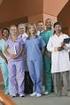 COMPARISON OF CLINICIAN TEACHER AND SALARIED CLINICAL FACULTY PATHWAYS, PSYCHIATRY AND BEHAVIORAL SCIENCES 9/22/14 Clinician Teacher Primary responsibilities Clinical care Teaching and/or supervision Scholarship
SOUTHERN UNIVERSITY AND A&M COLLEGE BATON ROUGE, LOUISIANA
 MASTER OF SCIENCE IN NURSING (MSN) COURSE DESCRIPTIONS 600. THEORETICAL FOUNDATIONS OF ADVANCED NURSING (Credit, 3 hours). A systematic examination of the concepts of nursing, human beings, health, and
Global Health Navigator. Facilitated Medical Access at New York s #1 Hospital and When Away from Home
 Global Health Navigator Facilitated Medical Access at New York s #1 Hospital and When Away from Home One of America s Best Hospitals More of America s Top Doctors America s Greatest City NewYork-Presbyterian
Scope of Practice for the Acute Care CNS. Introduction
 Scope of Practice for the Acute Care CNS Introduction The historical conceptualization of nursing delineates clinical practice dimensions according to the practitioner s role, the practice environment,
DEPARTMENT OF NURSING C.W.POST CAMPUS LONG ISLAND UNIVERSITY GRADUATE STUDENT HANDBOOK
 DEPARTMENT OF NURSING C.W.POST CAMPUS LONG ISLAND UNIVERSITY GRADUATE STUDENT HANDBOOK C.W. POST CAMPUS DEPARTMENT OF NURSING GRADUATE STUDENT HANDBOOK TABLE OF CONTENTS PAGE MISSION STATEMENT FOR C.W.
Nursing. take your career to the next level. Graduate School. Master s Degrees: Doctoral Degree: Advanced Certificates: BUFFALO NEW YORK
 Graduate School take your career to the next level Nursing Master s Degrees: Community Health Family Nurse Practitioner Doctoral Degree: Nursing Practice (D.N.P.) Advanced Certificates: Family Nurse Practitioner
NURSING. Kathleen Hirthler, DNP, CRNP, FNP-BC; Chair, Graduate Nursing Program; Assistant Professor 570-408-5027 kathleen.hirthler
 NURSING Deborah A. Zbegner, Ph.D., CRNP, WHNP-BC; Dean of Nursing; Associate Professor 570-408-4086 [email protected] Kathleen Hirthler, DNP, CRNP, FNP-BC; Chair, Graduate Nursing Program; Assistant
Doctor of Nursing Practice (DNP)
 REQUEST FOR NEW PROGRAM APPROVAL Catalog Copy for New Program Doctor of Nursing Practice (DNP) The doctor of nursing practice (DNP) degree prepares nurses with a blend of clinical, organizational, economic,
Established in 1909 as a diploma program 1926-5 year program leading to BSN 1933 charter member of Association for Collegiate Schools of Nursing
 Vanderbilt University School of Nursing Established in 1909 as a diploma program 1926-5 year program leading to BSN 1933 charter member of Association for Collegiate Schools of Nursing which later became
Dear Colleagues, Best Regards, Pamela L. Quinones, RDH, BS
 A Letter from the 2011-2012 ADHA President Dear Colleagues, Partnering with ADEA to develop the Core Competencies for Graduate Dental Hygiene Education was a very positive and rewarding experience for
Randy Fink Frontier Nursing University December 5 th, 2012
 Randy Fink Frontier Nursing University December 5 th, 2012 A Registered Nurse trained in one of four advanced practice roles at the graduate level (National Council of State Boards of Nursing, 2008) Certified
COLLEGE OF HEALTH & HUMAN SERVICES
 COLLEGE OF HEALTH AND HUMAN SERVICES 187 COLLEGE OF HEALTH & HUMAN SERVICES The College of Health and Human Services provides quality education for professional practice in a variety of areas associated
SCHOOL OF NURSING. The School is engaged in a systematic expansion of enrollment that will
 SCHOOL OF NURSING EXECUTIVE SUMMARY The School is engaged in a systematic expansion of enrollment that will span from 2003 until 2012, with projected growth from 500 students to 700 students. However,
THE BREEN SCHOOL OF NURSING
 THE BREEN SCHOOL OF NURSING Master of Science in Nursing Handbook Table of Contents Introduction... 2 Philosophy and Graduate Education... 3 Description of the MSN Program... 4 Requirements for Graduation...
MSN / PhD in Nursing Dual Degree Proposal - REVISED
 1 MSN / PhD in Nursing Dual Degree Proposal - REVISED This document contains a proposal for a dual degree between the School of Nursing (MSN degree) and the School of Graduate Studies (PhD in nursing degree).
UTHealth School of Nursing Doctor of Nursing Practice (DNP) Preceptor Guidelines
 1 UTHealth School of Nursing Doctor of Nursing Practice (DNP) Preceptor Guidelines Introduction A clinical preceptorship/fellowship is a supervised clinical experience that allows students to apply knowledge
THE UNIVERSITY OF NEW MEXICO COLLEGE OF NURSING. MASTER OF SCIENCE IN NURSING and Post Master s Certificate STUDENT HANDBOOK 2015 2016
 THE UNIVERSITY OF NEW MEXICO COLLEGE OF NURSING MASTER OF SCIENCE IN NURSING and Post Master s Certificate STUDENT HANDBOOK 2015 2016 Revised June 5, 2015 Let your career soar to new heights at University
BOARD OF HIGHER EDUCATION REQUEST FOR BOARD ACTION
 BOARD OF HIGHER EDUCATION REQUEST FOR BOARD ACTION NO.: BHE 06-15 BOARD DATE: May 31, 2006 MOVED: The Board of Higher Education hereby approves the expedited application of the University of Massachusetts
School of Nursing: Irene Riddle Endowed Chair in Pediatric Nursing Research
 School of Nursing: Irene Riddle Endowed Chair in Pediatric Nursing Research THE SEARCH The Irene Riddle Endowed Chair in Pediatric Nursing Research in the Saint Louis University School of Nursing is designed
University of Virginia. School of Nursing
 University of Virginia School of Nursing Graduate Program ASSESSMENT/EVALUATION MODEL Student Learning Objectives And Program Objectives Philosophy of the UVa School of Nursing The central purpose of the
Physician Assistant Nurse Practitioner. Pre-Health Advising Misty Huacuja-LaPointe Abby Voss Nicole Labrecque
 Physician Assistant Nurse Practitioner Pre-Health Advising Misty Huacuja-LaPointe Abby Voss Nicole Labrecque Explore many careers in healthcare ExploreHEALTHCareers Occupational Outlook Handbook Google
An Invitation to Apply: Dean of the Byrdine F. Lewis School of Nursing Georgia State University, Atlanta
 An Invitation to Apply: Dean of the Byrdine F. Lewis School of Nursing Georgia State University, Atlanta THE SEARCH Georgia State University, a leading public research university, located in downtown Atlanta
BS, MS, DNP and PhD in Nursing Competencies
 BS, MS, DNP and PhD in Nursing Competencies The competencies arise from the understanding of nursing as a theory-guided, evidenced -based discipline. Graduates from the curriculum are expected to possess
Specialty Practice Master of Nursing Science (MSN) Programs 2015-2016
 Specialty Practice Master of Nursing Science (MSN) Programs 2015-2016 Updated July 9, 2015 1 P a g e Table of Contents General Information... 3 Characteristics of Graduates...3 Specialty MSN Curriculum
Nursing Science (NUR SCI)
 University of California, Irvine 2015-2016 1 Nursing Science (NUR SCI) Courses NUR SCI 40. Introduction to Nursing and Health Care. 2 Units. Introduction to roles and responsibilities of nursing professionals,
An Invitation to Apply: Michigan State University College of Nursing Director of the Undergraduate Program
 An Invitation to Apply: Michigan State University College of Nursing Director of the Undergraduate Program THE SEARCH Michigan State University College of Nursing is seeking an experienced academic leader
Investing in the Robert C. Byrd Health Sciences Center Charleston Division
 Investing in the Robert C. Byrd Health Sciences Center Charleston Division Robert C. Byrd Health Sciences Center Charleston Division: A State of Minds Charleston West Virginia s capital and largest population
DATE NAME TITLE ORGANIZATION ADDRESS CITY, ST ZIPXX. Dear SALUTATION:
 DATE NAME TITLE ORGANIZATION ADDRESS CITY, ST ZIPXX Dear SALUTATION: Considering your leadership role in the Veterans Health Administration (VHA) helping to carry out Secretary McDonald s directive to
Changing lives Office of Student Services Frances Payne Bolton School of Nursing
 Changing lives Office of Student Services Frances Payne Bolton School of Nursing Case Western Reserve University 10900 Euclid Avenue Cleveland, OH 44106-4904 through leadership, research, and practice
MSC - Catalog 2006-2008 Academic Programs - School of Nursing 131
 MSC - Catalog 2006-2008 School of Nursing 131 MISSION AND GOALS The School of Nursing is responsible for teaching, research, and service in the discipline of nursing, as accomplished through its educational
College of Nursing Catalog 2015-2016
 College of Nursing Catalog 2015-2016 Graduate The College of Nursing at the University of Toledo offers several graduate-level degree and certificate programs. Doctor of Nursing Practice (DNP) and Master
Nursing - Graduate (NGRD)
 Loma Linda University 2015-2016 1 Nursing - Graduate (NGRD) Courses NGRD 500. Primary Care Adult-Gerontology Nurse Practioner: Fragile elders. 2 Continues development of the A-GNP role of health promotion,
Information for Nursing Students
 Information for Nursing Students This section of the student handbook has been prepared to familiarize students with the philosophy and conceptual framework of the nursing program, and to provide other
Master of Science in Nursing
 Master of Science in Nursing Graduate nursing courses are presented in Ursuline s value-based framework and emphasize the clinical components of advanced practice nursing. All students enrolled in the
Center for Medicine, Nursing and Health Sciences North Haven Campus
 School of Nursing School and Program Information..................................................168 Mission Statement.............................................................. 169 Values.........................................................................
Nurse Practitioners: A Role in Evolution Past, Present and Future
 Nurse Practitioners: A Role in Evolution Past, Present and Future Jasmiry Bennett, RN, MS, ACNP-BC Acute Care Nurse Practitioner Department of Vascular Surgery Objectives Describe and discuss the evolution
Kaplan University School of Nursing
 Kaplan University School of Nursing 2013 2014 School Overview healthcare.kaplan.edu 866.583.6765 (Toll Free) healthcare.kaplan.edu 2 Contents Our Goal... 5 Kaplan University History... 6 School of Nursing
An Invitation to Apply: Creighton University School of Nursing Nurse Practitioner Program Chair
 An Invitation to Apply: Creighton University School of Nursing Nurse Practitioner Program Chair Creighton University School of Nursing offers value-centered educational programs that provide opportunities
Program Outcomes At the completion of the baccalaureate program, the graduate will be able to:
 Bachelor of Science in Nursing Improving the nation s health in the twenty-first century requires increasing the variety of care delivery settings available to the general population. Professional nurses
The University of Queensland School of Medicine Ochsner Clinical School
 The University of Queensland School of Medicine Ochsner Clinical School UQ School of Medicine, Brisbane A New Global Medical Education Paradigm The University of Queensland School of Medicine Ochsner Clinical
How To Become A Doctor Of Nursing Practice
 Department of Health Sciences Moss School of Nursing Doctor of Nursing Practice: Family Nurse Practitioner (DNP) DNP Program Information Packet The Doctor of Nursing Practice (DNP) degree is designed for
Northeast Ohio Medical University (NEOMED) Chair of Pharmaceutical Sciences Search
 Northeast Ohio Medical University (NEOMED) Chair of Pharmaceutical Sciences Search Spring 2013 About NEOMED Northeast Ohio Medical University (NEOMED) www.neomed.edu is a dynamic free-standing community-based,
TREND WHITE PAPER LOCUM TENENS NURSE PRACTITIONERS AND PHYSICIAN ASSISTANTS: A GROWING ROLE IN A CHANGING WORKFORCE
 TREND WHITE PAPER LOCUM TENENS NURSE PRACTITIONERS AND PHYSICIAN ASSISTANTS: A GROWING ROLE IN A CHANGING WORKFORCE The Leader in Locum Tenens Staffing INTRODUCTION Today s Mobile Healthcare Work Force
NewYork-Presbyterian Hospital Weill Cornell Psychiatry
 NewYork-Presbyterian Hospital Weill Cornell Psychiatry Weill Cornell Psychiatry s Manhattan and Westchester programs, part of NewYork-Presbyterian Hospital, comprise one of the largest, most prestigious
People. Advocates. 5700 College Rd. Lisle, IL 60532 (630) 829-6300 www.ben.edu/edhealth [email protected]
 People. Advocates. We are Benedictine Benedictine University is more than just a place to educate the mind. At Benedictine, we believe in developing the whole person academically, socially and spiritually.
Doctor of Nursing Practice (DNP) Program PSYCHIATRIC MENTAL HEALTH NURSE PRACTITIONER (PMHNP) (ACROSS THE LIFESPAN)
 Doctor of Nursing Practice (DNP) Program PSYCHIATRIC MENTAL HEALTH NURSE PRACTITIONER (PMHNP) (ACROSS THE LIFESPAN) The Vision of the College of Nursing is to be a force for innovation, learning and discovery
SCHOOL OF NURSING AND HEALTH STUDIES GRADUATE NURSING
 SCHOOL OF NURSING AND HEALTH STUDIES GRADUATE NURSING DEPARTMENT CODE: NUR The School of Nursing and Health Studies offers two degrees: the Master of Science in Nursing and the Doctor of Philosophy with
An Invitation To Apply: Loyola University Chicago Marcella Niehoff School of Nursing Associate Dean for Undergraduate Programs
 An Invitation To Apply: Loyola University Chicago Marcella Niehoff School of Nursing Associate Dean for Undergraduate Programs We are Chicago s Jesuit, Catholic University a diverse community seeking God
National Organization of Nurse Practitioner Faculties
 1 National Organization of Nurse Practitioner Faculties SAMPLE CURRICULUM TEMPLATES FOR DOCTORATE of NURSING PRACTICE (DNP) NP EDUCATION Introduction NONPF presents these templates as exemplars of Doctor
CLINICAL COURSE PROGRESSION AND CLINICAL REQUIREMENTS FOR FAMILY NURSE PRACTITIONER (FNP) STUDENTS
 CLINICAL COURSE PROGRESSION AND CLINICAL REQUIREMENTS FOR FAMILY NURSE PRACTITIONER (FNP) STUDENTS Any licensed healthcare provider with the following qualifications may serve as a preceptor for a Nurse