
A TRACEABLE CALIBRATION PROCEDURE FOR HYDROCARBON DEW POINT METERS
|
|
|
- Dayna Golden
- 9 years ago
- Views:
Transcription
1 23rd World Gas Conference, Amsterdam 2006 A TRACEABLE CALIBRATION PROCEDURE FOR HYDROCARBON DEW POINT METERS Main author H.J. Panneman N.V. Nederlandse Gasunie Gasunie Engineering & Technology Groningen, The Netherlands

2 ABSTRACT Gasunie Engineering and Technology (formerly Gasunie Research) has carried out a number of tests for several gases with the new Condumax II Hydrocarbon Dew Point Analyser manufactured by Michell Instruments Ltd. The results were compared with liquid drop-out measurements carried out according to ISO The measurements have shown that the Condumax II is able to determine dew points with a reproducibility of ± 0.1 C. The measured dew points correspond with ap proximately mg/m 3 (n) liquid drop out at the same pressure and the measured dew point temperature. From measurements over a period of more than one year at six different locations it can be concluded that European sales gases show large and rapid variations in dew point, which justifies the continuous monitoring of this important gas quality parameter. In this paper, it will be shown that a direct relationship exists between hydrocarbon dew point and liquid drop-out content measured according to ISO This means that it is now for the first time possible to calibrate a hydrocarbon dew point analyser against the ISO 6570 standard. The measured dew points will therefore correspond to a fixed potential hydrocarbon liquid content at the same pressure, this way the measured hydrocarbon dew point is made traceable towards primary standards. The results of this work can be considered as the first step in the process towards a harmonized measuring method for the hydrocarbon dew point and thus to improved interoperability at cross border points.

3 Table of Contents 1. Introduction 2. Measuring hydrocarbon dew points 2.1. Gravimetric method according to ISO Hydrocarbon dew point measurement methods 2.3. Systematic errors in automatic dew point analysers 3. Hydrocarbon dew point measurements 4. Results obtained with L-gas. 5. Conclusions 6. Acknowledgement 7. References 8. List of Figures

4 1. INTRODUCTION There are three commonly used measuring methods for determining the hydrocarbon dew point of natural gases: chilled mirror methods either manually or automatically operated, calculation methods using a detailed gas analysis in combination with an equation of state and finally gravimetric methods based on ISO Until now the manual cold mirror is the de facto standard to which both automatically operated chilled mirror analysers and calculation methods are adjusted. Due to the absence of reference instruments or materials, the aforementioned procedure doesn t guarantee any traceability of the measured values. In contracts either a hydrocarbon dew point is specified (e.g. hydrocarbon dew point < -2 C from 1 to 70 bar abs.) or a potential hydrocarbon liquid content is (e.g. potential hydrocarbon liquid content < 5 mg/m 3 (n) from 1 to 70 bar abs. at a temperature -2 C). Given the shape of the phase envelope, the measurement of hydrocarbon dew point and potential hydrocarbon liquid is usually carried out at a pressure between 25 and 30 bar where liquid drop out occurs at the highest temperatures (see figure 1). Because there is no proper calibration method for hydrocarbon dew point analysers, significant variations in the measured hydrocarbon dew point exists between the commercially available analysers [2]. Recently, some papers have been published, in which relations between measured and calculated dew points are discussed [3, 4, 5]. Although it appears to be possible to get good agreement between measured and calculated dew point at one location, it is doubtful whether this will be the case when the tests are extended to several types of process GC s, each with their own measuring cycle, columns and calibration gases [6]. Gas Transport Services B.V., founded on 2 July 2004, is the independent operator of the national gas transmission system in the Netherlands. The network operator defines and controls the functional requirements for gas flow and gas quality measurements. Within this context Gas Transport Services regularly commissions Gasunie Engineering and Technology to carry out preliminary performance studies on new developments in measuring techniques. Last year a comparison was made between the Condumax II hydrocarbon dew point meter of Michell Instruments Ltd. and liquid drop-out measurements according to ISO This recently introduced new hydrocarbon dew point analyser of Michell Instruments Ltd. appears to give very reproducible results due to a new temperature control algorithm and its ability to detect small traces of liquid on a mirror. In this paper it will be shown that adjustment and even calibration of this new hydrocarbon dew point analyser against the ISO6570 standard is possible, so that a measured dew point will corresponds unambiguous with a given liquid drop-out at this measured dew point temperature. In this way a much more objective measurement of the hydrocarbon dew point is possible. By doing on-site ISO6570 measurements it is even possible to correct for the gas dependent performance of the hydrocarbon dew point analyser, which exists to some extent for different natural gases as will be shown later on. In 2005, EASEE-gas (European Association for the Streamlining of Energy Exchange) agreed upon harmonised values of the hydrocarbon dew point throughout Europe (Common Business Practice /01) [7]. The required harmonised measuring method, which still has to be identified, can clearly benefit from the proposed traceable calibration procedure of the measured hydrocarbon dew point against the ISO 6570 standard. In this paper a brief overview of the working principle and the limitations of today s hydrocarbon dew point analysers, calculation methods and gravimetrical methods will be given. A description and examples of the performance of the applied dew point analyser and the gravimetrical method will be presented and subsequently results of comparison tests for different natural gases will be given. The results will be evaluated and conclusions will be drawn with respect to obtaining harmonised hydrocarbon dew point values. 4

5 2. MEASURING HYDROCARBON DEW POINTS During storage, transportation and processing, natural gas may form small amounts of liquid at pressure decrease. This phenomenon is called retrograde condensation and sometimes may lead to problems in the operating facilities. The temperature and pressure at which the condensation occurs follows a curve that forms a so-called phase envelope, see in figure 1 the curve most to the right (the dew point curve with 0 mg/m 3 (n) liquid drop-out). Within the phase envelope -left from the dew point curve- condensate will be formed and the further left the more condensate will be formed. The maximum temperature and pressure at which condensate is formed is called the cricondentherm. Gas transport companies want to prevent formation of condensate in their gas grid. Particularly at points were the pressure gets below 40 bar (as a result of pressure drop during transportation or at control stations and city gate stations at which the pressure takes place) there is a potential risk for liquid formation. Also end-users receiving high-pressure gas for their gas turbines are anxious for liquid drop-out during pressure reduction, because severe damage to hot gas path components can occur if hydrocarbon liquids enter a gas turbine. Measuring techniques, which are able to detect the ability of the gas to form liquid at too high temperatures, are either based on the detection of an amount of liquid at specified temperature and pressure (gravimetric methods) or are based on the detection of the first droplets of liquid on a mirror at a certain temperature (hydrocarbon dew point meters) Gravimetric method according to ISO 6570 The Potential Hydrocarbon Liquid Content (PHLC) of natural gas is defined as the measurement of the condensable liquid (in milligrams) at the pressure and temperature of the measurement per unit volume of gas at normal conditions, that is at a temperature of 0 C and a pressure of bar(a). The procedure for measuring PHLC is standardized in the ISO standard number This international standard states that the quantity of condensate which can be formed at a certain pressure and temperature is determined by passing a representative sample of gas through the apparatus where it is first brought to the required pressure and then cooled to the required temperature. The liquids formed during cooling are separated from the gas flow and collected by means of a cyclone separator. In the manual method, as described in the ISO 6570 standard [1], this is actually done by comparing the mass of the condensate separator at the start and the end of the measuring period. Gasunie Engineering & Technology developed an automatic method, which is derived from the measuring system used in the manual method. The principle of this automatic method is also described in ISO The main difference between the automatic and the manual ISO 6570 method is in the weighing of the collected liquid. In the automatic PHLC method a differential pressure transmitter determines indirectly the mass of the liquid in the measuring tube underneath the cyclone separator. A schematic overview of the Gasunie Automatic Condensate Meter (GACOM ) is shown in figure 1. The measuring tube is automatically drained when it is totally filled-up with liquid. The liquid from the measuring tube is collected in a condensate drum. This method requires calibration of the differential pressure transmitter. By dosage of known amounts of a calibration liquid - usually n-decane - into the measuring tube at the temperature and pressure at which the PHLC measurement will be performed the differential pressure transmitter is calibrated. The pressure and temperature sensors are calibrated once a year and the gas flow is measured by a thermal mass flow meter, which is checked at regular intervals against a calibrated wet gas meter. In this way, reliable and accurate measurements can be performed. The uncertainty in PHLC-value depends on the pressure and temperature set points and the liquid drop-out behavior of the gas to be measured. Values above 5 mg/m 3 (n) are detected unambiguous. At low PHLC-values (<30 mg/m 3 (n)) the uncertainty is < 5 mg/m 3 (n). Because all sensors applied in the GACOM are calibrated at a regular interval against standards it is ensured that the measurement conditions are traceable and that two distinct GACOM s will give the same results. 5

6 Figure 1: Schematic overview of the GACOM (automatic method according to ISO 6570). The automatic condensate meter is operating with a gas flow of 1 m 3 /h (n) at a fixed pressure most often between 27 and 30 bar (at the cricondentherm) and a temperature (e.g. 3 C) at which the hydrocarbon liquid content (often 5 mg/m 3 (n) is specified in contracts. A new value for the liquid dropout content is reported every 30 minutes. Based on extensive experiments carried out in the past, the reproducibility is under virtual all circumstances within ± 5 mg/m 3 (n). Later on the results of an experiment with stable gas composition will be shown, from these results it can be concluded that the random error (2σ) is ± 2 mg/m 3 (n) Hydrocarbon dew point measurement methods Theoretically, the hydrocarbon dew point is the temperature at which the first small droplets of liquid are formed at a fixed pressure. In practice, all dew point measurement methods are based on the observation of the formation of a film of hydrocarbon condensate on the surface of an illuminated cooled mirror. The observation can be done visually (manual mirror) or by an electronic sensor (automatic chilled mirror). The cooling can be achieved in two ways: expansion of natural gas, compressed air or carbon dioxide or by applying a Peltier cooling device. Either manual or automatic chilled mirrors can be applied to measure the hydrocarbon dew point of natural gas. An alternative method for the determination of the hydrocarbon dew point is the calculation from a detailed gas composition. This method is based on several assumptions (highest hydrocarbon number required, grouping of hydrocarbon isomers, optimal equation of state) and often the outcome is adjusted against a manual or automatic chilled mirror. It is not possible to calibrate commercially available hydrocarbon dew point analysers in a traceable way, because neither hydrocarbon dew point reference materials nor reference instruments are available. Since the working principles differ from instrument to instrument, analysers from different manufacturers may give different values for the hydrocarbon dew point for a given gas. In practice, the dew point of an automatic dew point monitor is often tuned to match the value measured by a manual chilled mirror, or tuned to the value calculated from the known gas composition using a thermodynamic model. Moreover, from their working principle there are two major sources, which can be responsible for significant systematic errors in the measured hydrocarbon dew point, and which cannot be adjusted 6

7 for because no proper calibration method exists. These two sources are: (1) the often significant amount of liquid needed to be formed on the mirror, before the instrument is able to detect the dew point temperature; (2) the cooling rate, which is often too fast to ensure that the temperature measured by a temperature sensor in the vicinity the mirror surface equals the temperature of the mirror surface itself and the temperature of the gas in the measuring cell Systematic errors in automatic dew point analysers A dew point analyser does not determine the theoretical dew point temperature of a natural gas (the formation of the first infinite small droplet of liquid), but it measures the temperature at which a certain amount of liquid is condensed on the mirror so that a significant and reproducible change in light scattering is observed either by a skilled person or by a light detecting sensor. From calculations it can be shown that the amount of condensate, which is required to get a reproducible dew point observation often corresponds with mg/m 3 (n) liquid drop-out. In fact the dew point meter can be considered as a condensate meter, and the measured dew point temperature is actually the equilibrium temperature at certain PHLC value, for example at 30 mg/m 3 (n) liquid drop-out. Therefore, one has to realize beforehand that an automatic dew point monitor is certainly not determining the true thermodynamic dew point, but a temperature corresponding with a predetermined threshold value of the detector signal. This threshold value is determined by performing a calibration against a manual mirror or a dew point calculation, often in combination with the usage of a multicomponent gas mixture. As stated before, current dew point analysers measure the dew point temperature at a liquid drop-out ranging between mg/m 3 (n). A reduction of these amounts results in measured values closer to the true hydrocarbon dew point. Ideally the dew point analyser should determine a dew point temperature corresponding with approximately 5 mg/m 3 (n) liquid drop out, being the value that can be determined accurately by ISO 6570 equipment. Based on this threshold value, the pipeline operator or end-user can be certain that no significant amounts of liquid will be formed upon pressure reduction. A further reduction of the threshold value below 5 mg/m 3 (n) seems to be not viable given the detection principle used in current hydrocarbon dew point analysers. Depending on the gas composition the difference in temperature corresponding with respectively 30 mg/m 3 (n) and <5 mg/m 3 (n) can be less then 1 C, however the difference also can be more than 5 C. Therefore, it is better to adjust the threshold level against traceable liquid drop-out measurements then by the methods used nowadays. The cooling rate of the mirror of a dew point analyser appears to be another important parameter for a proper dew point measurement. Measurement of the dew point occurs in a small sized cell with the bottom surface made of polished metal. Only this bottom side is cooled, resulting in temperature gradients in both the measurement cell itself as well as in the gas inside the cell. Theoretically the applied cooling rate for the mirror surface should be that small that the gas temperature is always in equilibrium with the mirror temperature and that there is enough time for the condensate to drop out on the mirror surface. In practical applications, the cooling rate is often much higher. A high cooling rate results in a lag between the decrease in gas temperature and the condensate drop-out onto the mirror. Also, the temperature sensor, which is mounted in the vicinity of the mirror surface, will record a lower temperature then the actual surface temperature of the mirror. Both effects will result in readings at much lower temperatures than the real dew point temperature. 7

8 3. HYDROCARBON DEW POINT MEASUREMENTS In the recent past, Gasunie Engineering & Technology carried out tests with different hydrocarbon dew point analysers and compared the outcome with liquid drop-out measurements. However, until now the agreement between hydrocarbon dew point and liquid drop-out was not satisfactory. In 2004, Michell Instrument Ltd. offered a possibility to test their newly developed Condumax II hydrocarbon dew point analyser. Some features of the Condumax II instrument are: - Fully automatic on-line analyser with a cycle time of 10 minutes. - Cooling by a Peltier element and appliance of an intelligent cooling ramp rate. - Certified for installation in hazardous areas. The measurement cycle of the Condumax II consists of two phases: the measurement phase followed by a recovery phase. At the start of the measurement phase a solenoid stops the gas flow through the sensor cell. Subsequently, the mirror is cooled down in a controlled way. The condensation of heavy hydrocarbons on the mirror surface does result in an increase of detector signal. An example of such a response curve can be seen in figure 2. The mirror temperature decreases until the detector signal matches with a factory set trip point value. The optimum value of this trip point is determined by the manufacturer but can be changed by the end-user. The mirror temperature, for example T 1, at the trip point value TP 1 can be presented as the hydrocarbon dew point measurement result. However, by setting the trip point value TP 2, the mirror temperature T 2 will be presented as the hydrocarbon dew point. The construction of the measurement cell is also shown in figure 2. The cooling rate is optimised after every measurement cycle. At the start of each cycle the mirror is cooled down fast (1 C/s). Upo n approaching the dew point temperature the cooling rate gradually decreases down to 0.02 C/s. In this way the measurement cycle time can be kept relatively short without the disadvantages of a high cooling rate near the dew point temperature resulting in a significant too low measured hydrocarbon dew point value. Figure 2: The hydrocarbon dew point measurement cell of the CondumaxII and in the graph the relation between mirror temperature and detector signal. After the measurement phase the mirror is heated to 50 C for at least 5 minutes and the gas flow through the sensor starts again. During this recovery phase all heavy hydrocarbons condensed on the mirror will re-evaporate. In this way contamination of the mirror surface with heavy hydrocarbons is prevented. 8

9 During the field tests the Condumax II is installed in a GACOM unit (a mobile container for automatic measurements of PHLC-values). The GACOM is always connected to a high pressure gas sampling probe, which samples the natural gas from the middle of the pipe line, thus avoiding interference by liquids adsorbed or running along the pipe wall. Gas at line pressure (50 70 bar) flows through a traced stainless steel tubing (< 10 meter) to the GACOM unit. In the GACOM unit itself, the tubing is traced as well. Before the gas enters the Condumax II, it passes a membrane filter and a traced pressure regulator (set at a fixed pressure between 27 and 30 bar). With a needle valve the gas flow through the Condumax II is adjusted to approximately 30 l/h (n). 4. RESULTS OBTAINED WITH L-GAS. The first results obtained with L-gas are shown in figure 3. The GACOM was operated at 27.3 bar and a temperature of 3.3 C. The Potential Hyd rocarbon Liquid Content-value (that is the amount of condensate formed at these conditions) varied between 40 and 200 mg/m 3 (n). The variations in liquid drop-out is caused by changes in the gas composition, particularly small changes in the heavy hydrocarbon concentrations. The Condumax II was operated at exactly the same pressure and with the standard factory settings with respect to the trip point. The measured hydrocarbon dew point varied between 3 and 1 C. The gray bands in the graph cl early show the good relationship between PHLCvalue and hydrocarbon dew point. An increase in dew point corresponds with an increase in PHLCvalue and vice versa. Figure 3: Measurements with L-gas, GACOM at 27 bar and 3.3 C, Condumax II at 27 bar. The relationship between PHLC-value and hydrocarbon dew point is graphically shown in figure 4. From this figure it can be concluded that dew point and PHLC-value are directly related to each other and can both be used to monitor the condensation behaviour of the natural gas. 9

10 Figure 4: Relationship between PHLC-value measured at 3.3 C and 27 bar and hydrocarbon dew point measured at 27 bar for L-gas. It is evident that small changes in dew point correspond to relatively large changes in PHLCvalue. From figure 4 it can be concluded that for this particular gas a dew point variation of 1 C corresponds with a variation in PHLC of approximately 30 mg/m 3 (n). The amount of condensate, which is required to detect the hydrocarbon dew point, can be found quite easily. When the hydrocarbon dew point temperature equals the temperature of the cooling bath of the GACOM, the amount of liquid drop-out formed in the GACOM corresponds with the measured dew point. Looking at figure 3, this situation occurs already at the second day of the measurement. The first gray band shows hydrocarbon dew point values around 3.2 C and the corresponding PHLC-values are around mg/m 3 (n) at 3.3 C. So, for this L-gas approximately a liquid drop-out of 40 mg/m 3 (n) is required to detect the hydrocarbon dew point using the factory setting for the trip point value. This observation agrees with the conclusion drawn in paragraph 2.3, that dew point analysers do not detect the dew point, but an equilibrium temperature at which already a significant amount of condensate is formed on the mirror surface. To verify the amount of condensate formed on the mirror during stable gas conditions, the bath temperature of the GACOM was adjusted to the hydrocarbon dew point value measured by the Condumax II. The results are shown in figure 5. Again these results confirm that the measured hydrocarbon dew point value corresponds with approximately 40 mg/m 3 (n) at the same pressure and temperature 10

11 Figure 5: Dew point and PHLC-value for L-gas, GACOM at 27 bar and 0.7 C. Condumax II at 27 bar. From figure 5 it can be concluded that over a period of more than 12 hours the dew point remains at a value of 0.7 C, only varying within ± 0.1 C and the PHLC-value at a value of 40 mg/m 3 (n) with maximum variations of ± 2 mg/m 3 (n). These results confirm the stability and the small random errors in the measured values of both instruments. It can be concluded that, by applying the factory settings of the dew point analyser, the obtained hydrocarbon dew point value and the equilibrium temperature at a PHLC-value of 5 mg/m 3 (n) according the ISO 6570 are not in close agreement and that the measured hydrocarbon dew point is surprisingly lower compared to this PHLC equilibrium temperature. However, the direct relationship between PHLC-value and dew point allows the change of the trip point setting of the hydrocarbon dew point analyser, so that the measured dew point will correspond with a significant lower PHLC-value of approximately 10 mg/m 3 (n). The detector signal of the Condumax II does increase with decreasing mirror temperature due to the formation of more and more liquid on the mirror surface as can be seen in figure 2. So, a reduction of the trip point value will require less liquid formation on the mirror, before the dew point temperature is detected. This detected dew point value will therefore be closer to the true hydrocarbon dew point of the gas. Using the data of previously obtained cooling curves, it could be estimated that to match the measured dew point with the equilibrium temperature at a value of 10 mg/m 3 (n) liquid drop-out, the value of the dew point measured by the Condumax II should be increased by approximately 2 C for these L-gases. This temperature shift can be introduced in the Condumax II outcome by a decrease in trip point value from 275 down to 165 mv. To verify this adjustment in practice, the trip point value was decreased accordingly and again measurements were carried out with the same L-gas. The results for the measured dew points and PHLC-values measured at the same pressure and a cooling bath temperature of 2 C are shown in figure 6. 11

12 Figure 6: PHLC-value measured at 2 C and 27 bar and dew point measured at the same pressure for L-gas. During the measurements the gas quality frequently changed and resulting in large variations in both hydrocarbon dew point and PHLC. The PHLC-value varied between 0 and 60 mg/m 3 (n) and the hydrocarbon dew point between 5 and 2 C. The reduced trip point value of 165 mv still results in a good relationship between hydrocarbon dew point and PHLC-value. The amount of condensate, which is required to detect the hydrocarbon dew point, can be read from figure 6; the first and third gray band show that a hydrocarbon dew point of 2 C cor responds with approximately 10 mg/m 3 (n) liquid drop-out, formed at an equal bath temperature of 2 C. So, it can be concluded that a change in the trip point value of the detector signal, results indeed in an improved relationship between the measured hydrocarbon dew point and a low PHLC value (10 mg/m 3 (n)) for the potential hydrocarbon liquid content without deteriorating the outcome of the instrument. 12

13 5. CONCLUSIONS The Condumax II hydrocarbon dew point meter is a simple and robust instrument and during laboratory tests and long term measurements at some field locations (from December 2003 until March 2005) no failures occurred and the instrument did not show any drift. The Condumax II does not measure the thermodynamical dew point but the equilibrium temperature corresponding with a fixed liquid drop out. With standard factory settings, the measured dew point of the Condumax II instrument corresponds with a liquid drop-out of about 40 mg/m 3 (n) for L-gases and of mg/m 3 (n) for H-gases. The good relationship between PHLC-value and measured dew point can be used to develop a traceable on-site calibration procedure for hydrocarbon dew point meters, which is based on the ISO 6570 standard. The trip point value of the detector signal of the Condumax II can be optimized so that the measured dew point corresponds with 5 10 mg/m 3 (n) liquid drop out at the same pressure and temperature. 6. ACKNOWLEDGEMENT The author wishes to thank Peter Smith and Roelof Boerma for carrying out accurate liquid drop-out measurements. An acknowledgement is given to Michell Instruments for making a Condumax II available and particularly to Arthur Scheffer and Andrew Stokes for their support during start-up and for fruitful discussions during the project. 7. REFERENCES 1. International Organisation for Standardisation; International Standard ISO 6570: Natural Gas Determination of Potential Hydrocarbon Liquid Content Gravimetric Methods; ISO 6570: Dusart, O., Desenfant, P., Henault, J.M., Meunier, S., Ryszfeld, C., Le Bail, M., A Method to Evaluate Automatic Hydrocarbon Dewpoint Analysers, AGA Operations Conference, Phoenix, Pettigrew, D.J., Determination of Hydrocarbon Dewpoint from ON-Line Gas Chromatographic Analysis, North Sea Flow Measurement Workshop, St. Andrews, October Starling, K.E., Peng-Robinson Equation of State Natural Gas Dew Points, AGA Operations Conference, Orlando, Cowper, C., Dusart, O., Comparison of Measured and Calculated Hydrocarbon Dewpoint, 3 rd Gas Analysis Symposium & Exhibition, Amsterdam, Warner, H.R. et. al., Hydrocarbon Dewpoint Determination of Lean Natural Gases, Proceedings 80th Annual Convention, Gas Processors Association, European Association for the Streamlining of Energy Exchange gas, Common Business Practice, /01, February 2005, 13

14 8. LIST OF FIGURES Figure 1: Schematic overview of the GACOM (automatic method according to ISO 6570). Figure 2: The hydrocarbon dew point measurement cell of the CondumaxII and in the graph the relation between mirror temperature and detector signal. Figure 3: Measurements with L-gas, GACOM at 27 bar and 3.3 C, Condumax II at 27 bar. Figure 4: Relationship between PHLC-value measured at 3.3 C and 27 bar and hydrocarbon dew point measured at 27 bar for L-gas. Figure 5: Dew point and PHLC-value for L-gas, GACOM at 27 bar and 0.7 C. Condumax II at 27 bar. Figure 6: PHLC-value measured at 2 C and 27 bar and dew point measured at the same pressure for L-gas. 14

15 9. PHOTOGRAPH 15

LESSONS LEARNED FROM THE API 14.1 GAS SAMPLING RESEARCH PROJECT. Darin L. George and Eric Kelner
 LESSONS LEARNED FROM THE API 14.1 GAS SAMPLING RESEARCH PROJECT Darin L. George and Eric Kelner Southwest Research Institute 6220 Culebra Road San Antonio, Texas, USA Introduction Since 1999, the Gas Technology
Relative Humidity Sensors, Transmitters and Calibration Products Relative Humidity Measurement and Calibration
 Relative Humidity Measurement and Calibration The widest range of humidity products from a pioneer of RH sensor development The best in Relative Humidity technology to optimize your process Whether you
Gravimetric determination of pipette errors
 Gravimetric determination of pipette errors In chemical measurements (for instance in titrimetric analysis) it is very important to precisely measure amount of liquid, the measurement is performed with
Condumax II Hydrocarbon Dew-Point Analyzer
 Condumax II Hydrocarbon Dew-Point Analyzer Automatic, on-line measurement of hydrocarbon and water dew point in natural gas. Process Analyzers Highlights Fully automatic on-line analysis Objective, highly
PRACTICAL HYDROCARBON DEW POINT SPECIFICATION FOR NATURAL GAS TRANSMISSION LINES
 PRACTICAL HYDROCARBON DEW POINT SPECIFICATION FOR NATURAL GAS TRANSMISSION LINES Jerry A. Bullin and Carl Fitz Bryan Research & Engineering, Inc. Bryan, Texas, U.S.A. Todd Dustman Questar Pipeline Company
EASIDEW PORTABLE HYGROMETER INSTALLATION, OPERATION AND MAINTENANCE MANUAL
 EASIDEW PORTABLE HYGROMETER INSTALLATION, OPERATION AND MAINTENANCE MANUAL Issue February 2004 2 TABLE OF CONTENTS SECTION PAGE 1. INTRODUCTION 3 1.1 General 3 1.2 Ceramic Sensing Element 3 1.3 Calibration
Dew Point Tester. Instruction Manual. CVS Regular Chiller Model A-2. CVS Regular Chiller Model A-2
 Instruction Manual Dew Point Tester The CVS Dew Point Tester is a chilled mirror apparatus, which operates by attaining the conditions necessary by the definition of dew point. When a gas is cooled out
National Physical Laboratory Hampton Road Teddington Middlesex United Kingdom TW11 0LW
 NPL REPORT AS 3 Comparison of methods for the measurement of hydrocarbon dew point of natural gas Andrew Brown Martin Milton Gergely Vargha Richard Mounce Chris Cowper Andrew Stokes Andy Benton Mike Bannister
191: Calibration and Standards in Flow Measurement. Richard Paton National Engineering Laboratory, Scotland, UK 1 GENERAL PRINCIPLES
 191: Calibration and Standards in Measurement Richard Paton National Engineering Laboratory, Scotland, UK 1 General Principles 1 2 Gravimetric Calibration of Liquid meters 2 3 Volumetric Calibration of
Kompressoren. Adsorption Dryer AD
 Kompressoren Adsorption Dryer AD Adsorption Drying: why? Modern industries require compressed air that is increasingly filtered with low dew point and condensate. Today, the equipment is more sophisticated
Validation of process gas systems
 Validation of Process Gas Systems By Jeff Hargroves Alza Corporation Validation of process gas systems involve documenting the expected system behavior, and verifying that the system performs as expected.
COMBIMASS. Technical Data COMBIMASS eco-bio +
 COMBIMASS Technical Data THE SYSTEM COMBIMASS The field transmitters of the COMBIMASS eco series are suitable for gas flow measurement and cover a wide range of different applications. The instruments
Advances in Thermal Dispersion Mass Flow Meter Accuracy
 Advances in Thermal Dispersion Mass Flow Meter Accuracy By Dan McQueen President Fluid Components International (FCI) Advances in Thermal Dispersion Mass Flow Meter Accuracy By Dan McQueen President Fluid
Basic Hydraulics and Pneumatics
 Basic Hydraulics and Pneumatics Module 1: Introduction to Pneumatics PREPARED BY IAT Curriculum Unit March 2011 Institute of Applied Technology, 2011 ATM 1122 Basic Hydraulics and Pneumatics Module 1:
IDEAL AND NON-IDEAL GASES
 2/2016 ideal gas 1/8 IDEAL AND NON-IDEAL GASES PURPOSE: To measure how the pressure of a low-density gas varies with temperature, to determine the absolute zero of temperature by making a linear fit to
Michael Montgomery Marketing Product Manager Rosemount Inc. Russ Evans Manager of Engineering and Design Rosemount Inc.
 ASGMT / Averaging Pitot Tube Flow Measurement Michael Montgomery Marketing Product Manager Rosemount Inc. Russ Evans Manager of Engineering and Design Rosemount Inc. Averaging Pitot Tube Meters Introduction
Fiscal Measurement Natural Gas
 White Paper FSG-WP-0012 February 2014 Fiscal Measurement Natural Gas Fiscal Measurement How much? Fiscal Measurement must not be confused with Custody Transfer; in fact, fiscal measurement is a more general
SUPERSONIC GAS CONDITIONING - COMMERCIALISATION OF TWISTER TECHNOLOGY
 87th Annual Convention Grapevine, Texas, USA March 2-5, 2008 SUPERSONIC GAS CONDITIONING - COMMERCIALISATION OF TWISTER TECHNOLOGY Peter Schinkelshoek MSc Eng Twister BV Principal Process Engineer [email protected]
How is Dew Point Measured Reliably?
 How is Dew Point Measured Reliably? Air compression increases vapor pressure and thus dew point. = water vapor Vapor pressure Frost point Saturation - 0 C + Dew point Monitoring with alarming and real
Temperature Calibration; Depths of Immersion
 Temperature Calibration; epths of Immersion Author: John P. Tavener Company Isothermal Technology Limited, Pine Grove, Southport, England Abstract Of all the sources of errors and uncertainties in thermal
THE HUMIDITY/MOISTURE HANDBOOK
 THE HUMIDITY/MOISTURE HANDBOOK Table of Contents Introduction... 3 Relative Humidity... 3 Partial Pressure... 4 Saturation Pressure (Ps)... 5 Other Absolute Moisture Scales... 8 % Moisture by Volume (%M
Infrastructure & Cities Sector
 Technical Article Infrastructure & Cities Sector Building Technologies Division Zug (Switzerland), October 18, 2011 Saving Energy in a Data Center A Leap of Faith? New guidelines from ASHRAE (American
Determination of Thermal Conductivity of Coarse and Fine Sand Soils
 Proceedings World Geothermal Congress Bali, Indonesia, - April Determination of Thermal Conductivity of Coarse and Fine Sand Soils Indra Noer Hamdhan 1 and Barry G. Clarke 2 1 Bandung National of Institute
Custody Transfer Measurement. with the V-Cone Flowmeter
 Custody Transfer Measurement with the V-Cone Flowmeter Stephen A. Ifft McCrometer Inc. Hemet, California, USA Abstract This paper will discuss the approval of the McCrometer V-Cone flowmeter for custody
Accurate Air Flow Measurement in Electronics Cooling
 Accurate Air Flow Measurement in Electronics Cooling Joachim Preiss, Raouf Ismail Cambridge AccuSense, Inc. E-mail: [email protected] Air is the most commonly used medium to remove heat from electronics
Soil Suction. Total Suction
 Soil Suction Total Suction Total soil suction is defined in terms of the free energy or the relative vapor pressure (relative humidity) of the soil moisture. Ψ = v RT ln v w 0ω v u v 0 ( u ) u = partial
105 Adopted: 27.07.95
 105 Adopted: 27.07.95 OECD GUIDELINE FOR THE TESTING OF CHEMICALS Adopted by the Council on 27 th July 1995 Water Solubility INTRODUCTION 1. This guideline is a revised version of the original Guideline
Moisture Control. It s The Dew Point. Stupid! Its not the humidity.
 Moisture Control Its not the humidity. It s The Dew Point Stupid! Mike Schell EpiphanyTec Inc. Santa Barbara, CA [email protected] 805 687-3175 Matching great technology to market need! Topics SHR
Ultrasonic Gas Leak Detection
 Ultrasonic Gas Leak Detection What is it and How Does it Work? Because every life has a purpose... Ultrasonic Gas Leak Detection Introduction Ultrasonic gas leak detection (UGLD) is a comparatively recent
Why and How we Use Capacity Control
 Why and How we Use Capacity Control On refrigeration and air conditioning applications where the load may vary over a wide range, due to lighting, occupancy, product loading, ambient weather variations,
Research on the Air Conditioning Water Heater System
 Purdue University Purdue e-pubs International Refrigeration and Air Conditioning Conference School of Mechanical Engineering 28 Research on the Air Conditioning Water Heater System Fei Liu Gree Electric
OMCL Network of the Council of Europe QUALITY MANAGEMENT DOCUMENT
 OMCL Network of the Council of Europe QUALITY MANAGEMENT DOCUMENT PA/PH/OMCL (12) 77 7R QUALIFICATION OF EQUIPMENT ANNEX 8: QUALIFICATION OF BALANCES Full document title and reference Document type Qualification
Fundamentals of Mass Flow Control
 Fundamentals of Mass Flow Control Critical Terminology and Operation Principles for Gas and Liquid MFCs A mass flow controller (MFC) is a closed-loop device that sets, measures, and controls the flow of
The Unique Accelabar Flow Meter
 The Unique Accelabar Flow Meter The Accelabar is a new and unique flow meter that combines two differential pressure technologies to produce operating ranges never before attainable in a single flow meter.
Aeration Air & Digester Gas Flow Metering Using Thermal Mass Technology. HWEA 2011 Conference Craig S. Johnson
 Aeration Air & Digester Gas Flow Metering Using Thermal Mass Technology HWEA 2011 Conference Craig S. Johnson Presentation Overview Introduction Aeration Air & Digester gas challenges Gas flow metering
Rense Product Range. Customized Humidity Solutions. Rense Product Range
 Customized Humidity Solutions Rense Product Range Background to Michell Instruments Michell Instruments is the international leader in the field of moisture and humidity measurement solutions. With over
AN INSTRUMENT FOR GRAVIMETRIC CALIBRATION OF FLOW DEVICES WITH CORROSIVE GASES. J. O. Hylton C. J. Remenyik Oak Ridge National Laboratory *
 AN INSTRUMENT FOR GRAVIMETRIC CALIBRATION OF FLOW DEVICES WITH CORROSIVE GASES J. O. Hylton C. J. Remenyik Oak Ridge National Laboratory * Paper prepared for the 4 th International Symposium on Fluid Flow
Fractional Distillation and Gas Chromatography
 Fractional Distillation and Gas Chromatography Background Distillation The previous lab used distillation to separate a mixture of hexane and toluene based on a difference in boiling points. Hexane boils
Instruction Manual. T3111 T3111L T3111P T3111Ex
 www.cometsystem.cz Instruction Manual T3111 T3111L T3111P T3111Ex Programmable transmitter of temperature, relative humidity and other calculated humidity values with external probe and 4-20 ma outputs
Adsorption air dryers ADS 1 215
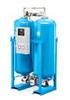 Adsorption air dryers ADS 25 INDUSTRY CUSTOMER SERVICE COMPRESSED AIR AIR INTAKE 20 C 70% UR 760 mm Hg 2 grh 2 O/m 3 AIR PRESSURE 0 bar COOLING SYSTEM 30 C 00% UR 0 bar 2,8 grh 2 O/m 3 A compressor that
The photoionization detector (PID) utilizes ultraviolet
 Chapter 6 Photoionization Detectors The photoionization detector (PID) utilizes ultraviolet light to ionize gas molecules, and is commonly employed in the detection of volatile organic compounds (VOCs).
ATMOSPHERIC EMISSIONS FROM GAS FIRED HOME HEATING APPLIANCES
 ATMOSPHERIC EMISSIONS FROM GAS FIRED HOME HEATING APPLIANCES Stefano Cernuschi, Stefano Consonni, Giovanni Lonati, Michele Giugliano, Senem Ozgen DIIAR Environmental Sect., Politecnico di Milano, P.za
The Second Law of Thermodynamics
 The Second aw of Thermodynamics The second law of thermodynamics asserts that processes occur in a certain direction and that the energy has quality as well as quantity. The first law places no restriction
ADVANCED CONTROL TECHNIQUE OF CENTRIFUGAL COMPRESSOR FOR COMPLEX GAS COMPRESSION PROCESSES
 ADVANCED CONTROL TECHNIQUE OF CENTRIFUGAL COMPRESSOR FOR COMPLEX GAS COMPRESSION PROCESSES by Kazuhiro Takeda Research Manager, Research and Development Center and Kengo Hirano Instrument and Control Engineer,
In-Line Electronic Flow Switches
 In-Line Electronic Flow Switches Industries Petrochemical Refining Oil Production Water Treatment Pharmaceutical Food and Beverage Pulp and Paper Power Production Gas Processing Mining Biotechnology Semiconductor
CoolTop. A unique water cooled air-conditioning unit for server room cooling from the top AC-TOPx-CW-240/60
 CoolTop A unique water cooled air-conditioning unit for server room cooling from the top AC-TOPx-CW-240/60 Application CoolTop is a new, unique air conditioning unit especially designed for datacenters.
MATHESON REFINERY PROGRAM for Specialty Gas Supply. Experience the MATHESON Commitment to Supply Chain Excellence
 MATHESON REFINERY PROGRAM for Specialty Gas Supply MATHESON REFINERY PROGRAM for Specialty Gas Supply MATHESON is a single source for industrial, medical, specialty, and electronics gases as well as gas
Steam Generator Boilers Compact Steam Boilers. Rapid Start-Up Safe in Operation
 Steam Generator Boilers Compact Steam Boilers Rapid Start-Up Safe in Operation AB&CO TT BOILERS The boiler maker AB&CO TT BOILERS LTD. have since the middle sixties produced industrial boilers and heaters
AUTOCLAVE CORROSION INHIBITOR EVALUATION
 AUTOCLAVE CORROSION INHIBITOR EVALUATION Cormetrics Job #: 12-123 Prepared for: ABC Company Lab: Bay 4-2280 39 th Avenue NE, Calgary, AB. T2E 6P7 Phone: 258-2853 Fax: 291-1423 ABC Company Page 1 of 9 1.
Unit 3: States of Matter Practice Exam
 Page 1 Unit 3: States of Matter Practice Exam Multiple Choice. Identify the choice that best completes the statement or answers the question. 1. Two gases with unequal masses are injected into opposite
A precision thermal mass flow sensor for (very) small liquid flows.
 A precision thermal mass flow sensor for (very) small liquid flows. Ir. H.J. Boer, Bronkhorst High-Tech B.V., Ruurlo, The Netherlands. Ing. W. Derks, Shell Research, Amsterdam, The Netherlands. Introduction.
Advanced Solutions for Gas Monitoring
 Continuous Emissions Monitoring Stack Testing Process Monitoring Quality Control Engine Exhaust Gas Monitoring Workplace Air Quality Monitoring Combustion Research Emergency Rescue Services Advanced Solutions
LNG Monitoring. Fiber-Optic Leakage Detection System. Pipeline leakage detection. Regasification and liquefaction monitoring
 LNG Monitoring Fiber-Optic Leakage Detection System Pipeline leakage detection Regasification and liquefaction monitoring Tank annulus and base slab monitoring Spill containment control Intelligent Solutions
Dew-Point Measurement Solutions
 Dew-Point Measurement Solutions www.michell.com Dew-Point Measurement Solutions Special Features No downtime Michell Instruments offers a unique sensor exchange programme, which means that you will never
Innovative to the Core
 Compressed Air Filter Ultra-Filter Innovative to the Core Significant Increase in Performance due to new Filtration Technology Besides electricity, water and gas, compressed air is one of the most coonly
Frequently Asked Questions
 Frequently Asked Questions System and Valve Basics: 1. Q: What is good cooling coil performance? A: The temperature range is controlled within +/- 0.5 F (0.28 C) off the cooling coil at set point or below.
Heating Water by Direct Steam Injection
 Heating Water by Direct Steam Injection Producing hot water by direct steam injection provides a solution where large volumes of hot water at precise temperatures are required, and where energy and space
Stack Sampling Stack sampling or source sampling
 Stack Monitoring Stack Sampling Stack sampling or source sampling may be defined as a method of collecting representative samples of pollutant laden air/gases at the place of origin of pollutants to determine
Boiler Calculations. Helsinki University of Technology Department of Mechanical Engineering. Sebastian Teir, Antto Kulla
 Helsinki University of Technology Department of Mechanical Engineering Energy Engineering and Environmental Protection Publications Steam Boiler Technology ebook Espoo 2002 Boiler Calculations Sebastian
DM70 Hand-Held Dewpoint Meter for Spot-Checking Applications
 DM70 Hand-Held Dewpoint Meter for Spot-Checking Applications P.O. Box 26, FIN-00421 Helsinki, FINLAND Tel: +358 9 894 91 Fax: +358 9 8949 2485 Email: [email protected] www.vaisala.com The Vaisala
User checks and maintenance of laboratory balances
 Technical Note 13 March 2014 Issued: July 1995 Amended and reissued: July 2005, July 2007, October 2007, May 2010, March 2013, March 2014 User checks and maintenance of laboratory balances Copyright National
Thermal Conductivity Detector
 Thermal Conductivity Detector Troubleshooting Tips The thermal conductivity detector (TCD) detects the difference in thermal conductivity between column effluent flow (carrier gas + sample components)
CONTENTS. ZVU Engineering a.s., Member of ZVU Group, WASTE HEAT BOILERS Page 2
 WASTE HEAT BOILERS CONTENTS 1 INTRODUCTION... 3 2 CONCEPTION OF WASTE HEAT BOILERS... 4 2.1 Complex Solution...4 2.2 Kind of Heat Exchange...5 2.3 Heat Recovery Units and Their Usage...5 2.4 Materials
In semiconductor applications, the required mass flows
 Model-Based Multi-GasMulti-Range Mass Flow Controllers With Single Gas Calibration and Tuning JOOST LÖTTERS A model has been developed that accurately predicts the behavior of the flow sensor combined
DRYPOINT RA REFRIGERATION DRYER RANGE
 RA REFRIGERATION DRYER RANGE BEKO OFFERS A FULL RANGE OF DRYERS THE RIGHT SOLUTION WHATEVER THE TASK BEKO is renowned worldwide for its innovative, solutionoriented compressed air technology. Geared to
CONE CALORIMETER A TOOL FOR MEASURING HEAT RELEASE RATE
 CONE CALORIMETER A TOOL FOR MEASURING HEAT RELEASE RATE Johan Lindholm, Anders Brink and Mikko Hupa Åbo Akademi Process Chemistry Centre, Biskopsgatan 8, FI-20500 Åbo, FINLAND Corresponding author: E-mail:
Carbon Dioxide and an Argon + Nitrogen Mixture. Measurement of C p /C v for Argon, Nitrogen, Stephen Lucas 05/11/10
 Carbon Dioxide and an Argon + Nitrogen Mixture Measurement of C p /C v for Argon, Nitrogen, Stephen Lucas 05/11/10 Measurement of C p /C v for Argon, Nitrogen, Carbon Dioxide and an Argon + Nitrogen Mixture
ICH Topic Q 2 (R1) Validation of Analytical Procedures: Text and Methodology. Step 5
 European Medicines Agency June 1995 CPMP/ICH/381/95 ICH Topic Q 2 (R1) Validation of Analytical Procedures: Text and Methodology Step 5 NOTE FOR GUIDANCE ON VALIDATION OF ANALYTICAL PROCEDURES: TEXT AND
TECHNIQUES FOR NATURAL GAS SAMPLING A DISCUSSION OF FIELD METHODS FOR OBTAINING SPOT SAMPLES. Randall Messman SW Regional Sales Manager
 TECHNIQUES FOR NATURAL GAS SAMPLING A DISCUSSION OF FIELD METHODS FOR OBTAINING SPOT SAMPLES Randall Messman SW Regional Sales Manager PGI International 16101 Vallen Drive Houston, TX 77041 Purpose Natural
Learning Module 4 - Thermal Fluid Analysis Note: LM4 is still in progress. This version contains only 3 tutorials.
 Learning Module 4 - Thermal Fluid Analysis Note: LM4 is still in progress. This version contains only 3 tutorials. Attachment C1. SolidWorks-Specific FEM Tutorial 1... 2 Attachment C2. SolidWorks-Specific
DETERMINATION OF THE HEAT STORAGE CAPACITY OF PCM AND PCM-OBJECTS AS A FUNCTION OF TEMPERATURE. E. Günther, S. Hiebler, H. Mehling
 DETERMINATION OF THE HEAT STORAGE CAPACITY OF PCM AND PCM-OBJECTS AS A FUNCTION OF TEMPERATURE E. Günther, S. Hiebler, H. Mehling Bavarian Center for Applied Energy Research (ZAE Bayern) Walther-Meißner-Str.
Temperature and Humidity
 Temperature and Humidity Overview Water vapor is a very important gas in the atmosphere and can influence many things like condensation and the formation of clouds and rain, as well as how hot or cold
PBX Series Quick Fit Connector Bimetallic Steam Traps
 6262100/6 IM-P626-01 ST Issue 6 PBX Series Quick Fit Connector Bimetallic Steam Traps Installation and Maintenance Instructions 1. Safety information 2. General product information 3. Installation 4. Commissioning
EuroFID Total Hydrocarbon Analyzer. Precise Determination of Total Hydrocarbons in Air for Corrosive as well as Condensing Gases
 Product information EuroFID Total Hydrocarbon Analyzer Precise Determination of Total Hydrocarbons in Air for Corrosive as well as Condensing Gases Proven Analyzer Technology Measuring total hydrocarbons
FLOW MEASUREMENT 2001 INTERNATIONAL CONFERENCE DERIVATION OF AN EXPANSIBILITY FACTOR FOR THE V-CONE METER
 FLOW MEASUREMENT 200 INTERNATIONAL CONFERENCE DERIVATION OF AN EXPANSIBILITY FACTOR FOR THE V-CONE METER Dr D G Stewart, NEL Dr M Reader-Harris, NEL Dr R J W Peters, McCrometer Inc INTRODUCTION The V-Cone
RULE 1102. DRY CLEANERS USING SOLVENT OTHER THAN PERCHLOROETHYLENE
 (Adopted January 6, 1978)(Amended August 3, 1979)(Amended July 11, 1980) (Amended August 3, 1990)(Amended December 7, 1990) (Amended November 17, 2000) RULE 1102. DRY CLEANERS USING SOLVENT OTHER THAN
Applying LDV to Air and Water Flow Measurements: Research Activities & Accreditation. Matthew A. Rasmussen, Danish Technological Institute
 Applying LDV to Air and Water Flow Measurements: Research Activities & Accreditation Matthew A. Rasmussen, Danish Technological Institute Euramet Flow Meeting Danish Technological Institute, Taastrup 10-12
DUST EMISSION MONITORING SYSTEM
 Applications Measurement of dust concentration in dry or moist, steamsaturated and corrosive stack gases Monitoring of municipal and hazardous waste and sewage sludge incinerators Monitoring of power plants
THE THERMAL FLOW METER, A GAS METER FOR ENERGY MEASUREMENT
 THE THERMAL FLOW METER, A GAS METER FOR ENERGY MEASUREMENT Kazuto Otakane, Tokyo Gas Co., Ltd Katsuhito Sakai, Tokyo Gas Co., Ltd Minoru Seto, Tokyo Gas Co., Ltd 1. INTRODUCTION Tokyo Gas s new gas meter,
Thermal Mass Availability for Cooling Data Centers during Power Shutdown
 2010 American Society of Heating, Refrigerating and Air-Conditioning Engineers, Inc. (www.ashrae.org). Published in ASHRAE Transactions (2010, vol 116, part 2). For personal use only. Additional reproduction,
HEAVY OIL FLOW MEASUREMENT CHALLENGES
 HEAVY OIL FLOW MEASUREMENT CHALLENGES 1 INTRODUCTION The vast majority of the world s remaining oil reserves are categorised as heavy / unconventional oils (high viscosity). Due to diminishing conventional
Excool Indirect Adiabatic and Evaporative Data Centre Cooling. World s Leading Indirect Adiabatic and Evaporative Data Centre Cooling
 Excool Indirect Adiabatic and Evaporative Data Centre Cooling World s Leading Indirect Adiabatic and Evaporative Data Centre Cooling Indirect Adiabatic and Evaporative Data Centre Cooling Solutions by
The Fundamentals of Thermoelectrics
 The Fundamentals of Thermoelectrics A bachelor s laboratory practical Contents 1 An introduction to thermoelectrics 1 2 The thermocouple 4 3 The Peltier device 5 3.1 n- and p-type Peltier elements..................
Thermistor Basics. Application Note AN-TC11 Rev. A. May, 2013 Page 1 WHAT IS A THERMISTOR?
 Thermistor Basics May, 2013 Page 1 WHAT IS A THERMISTOR? A thermistor is a resistance thermometer, or a resistor whose resistance is dependent on erature. The term is a combination of thermal and resistor.
Micro Motion 3098 Gas Specific Gravity Meter
 Product Data Sheet PS-001161, Rev. D April 2013 Micro Motion 3098 Gas Specific Gravity Meter Micro Motion density and concentration meters are built to tackle the most demanding process and fiscal applications.
PSAC/SAIT Well Testing Training Program Learning Outcomes/Objectives Level B
 s/objectives Level B CHEM 6014: Properties and Characteristics of Natural Gases Discuss the pertinent properties and uses of natural gases as they occur in gas processing. 1. Describe the physical properties
AVL FUEL MASS FLOW METER & FUEL TEMPERATURE CONTROL
 FUEL CONSUMPTION MEASUREMENT AVL FUEL MASS FLOW METER & FUEL TEMPERATURE CONTROL Description The combination of AVL Fuel Mass Flow Meter and AVL Fuel Temperature Control is a high precise and continuous
THERMAL DESORPTION. Introduction and Principles. Focusing on Volatiles
 THERMAL DESORPTION Introduction and Principles Thermal Desorption Thermal desorption is a simple extension of the technique of gas chromatography (GC) It involves the use of heat and a flow of inert gas
BB-18 Black Body High Vacuum System Technical Description
 BB-18 Black Body High Vacuum System Technical Description The BB-18 Black Body is versatile and is programmed for use as a fixed cold target at 80 K or variable target, at 80 K- 350 K no extra cost. The
GMP 11. Good Measurement Practice for Assignment and Adjustment of Calibration Intervals for Laboratory Standards
 March 2003 GMP 11 Good Measurement Practice for Assignment and Adjustment of Calibration Intervals for Laboratory Standards 1. Introduction 1.1. Purpose Measurement processes are dynamic systems and often
HOW ACCURATE ARE THOSE THERMOCOUPLES?
 HOW ACCURATE ARE THOSE THERMOCOUPLES? Deggary N. Priest Priest & Associates Consulting, LLC INTRODUCTION Inevitably, during any QC Audit of the Laboratory s calibration procedures, the question of thermocouple
Case study Realistic and best uncertainties with humidity instruments
 Case study Realistic and best uncertainties with humidity instruments Domen Hudoklin September 2014 Brdo, Slovenia Humidity calibrations Dewpoint primary - against dewpoint generator secondary - against
Name Date Class STATES OF MATTER. SECTION 13.1 THE NATURE OF GASES (pages 385 389)
 13 STATES OF MATTER SECTION 13.1 THE NATURE OF GASES (pages 385 389) This section introduces the kinetic theory and describes how it applies to gases. It defines gas pressure and explains how temperature
DENSITY MEASURING SYSTEMS
 SHIBAYAMA SCIENTIFIC CO., LTD. DENSITY MEASURING SYSTEMS Density Gradient Tube Method Direct Reading Type A / Type B Comply with the standards below: JIS K-0061-1992, K-7112 1980 ASTM D1505 Type A /Left
DRYPOINT AC HP PREMIUM HIGH-PRESSURE DRYING
 PREMIUM HIGH-PRESSURE DRYING HIGH QUALITY COMPRESSED AIR FROM BEKO The quality of your compressed air. RELIABLE The highest level of operational reliability is guaranteed with every product that BEKO manufactures.
Pneumatic control loops save water and energy with fixed-bed filters
 Pneumatic control loops save water and energy with fixed-bed filters Dr. Wolfgang Rieger, Festo AG & Co. KG, 73734 Esslingen Published in Industrial Valves 2010/2011 Vulkan-Verlag GmbH, Essen/Germany Contact:
CRYOCOOLER CONTAMINATION STUDY. S.W.K. Yuan, D.T.Kuo, and A.S. Loc. BEI Technologies, Cryocooler Group Sylmar, CA 91342 ABSTRACT
 CRYOCOOLER CONTAMINATION STUDY S.W.K. Yuan, D.T.Kuo, and A.S. Loc EI Technologies, Cryocooler Group Sylmar, CA 91342 ASTRACT Eliminating or reduction of contamination is essential for the success of cryocoolers
HVAC Processes. Lecture 7
 HVAC Processes Lecture 7 Targets of Lecture General understanding about HVAC systems: Typical HVAC processes Air handling units, fan coil units, exhaust fans Typical plumbing systems Transfer pumps, sump
Optimization Design for Sulfur Dioxide Flow Monitoring Apparatus in Thermal Power Plants Hao-wei Hu 1, a, Xue Yang 1, b and Xiao-wei Song 1, c
 International Conference on Information Sciences, Machinery, Materials and Energy (ICISMME 2015) Optimization Design for Sulfur Dioxide Flow Monitoring Apparatus in Thermal Power Plants Hao-wei Hu 1, a,