
Retooling School Drop-off/Pick-up Zones to Meet Demand Keith B. Higgins, PE, TE
|
|
|
- Ashley Cole
- 9 years ago
- Views:
Transcription
1 Abstract Retooling School Drop-off/Pick-up Zones to Meet Demand Keith B. Higgins, PE, TE Student drop-off and pick-up activity at school sites throughout the country have increased in recent years as a result of greater percentages of students being driven to school. This is largely due to concerns regarding security and safety and decreases in school busing programs. Many existing schools were designed in the 1950 s, 1960 s and 1970 s when most children were expected to walk and bike to school or be transported by a school funded busing program. The drop-off and pick-up zones at these older schools are not adequately designed to serve current drop-off and pick-up demand. Further, available land to expand the drop-off/pick-up zone is frequently constrained at these schools. Site constraints can also occur at new schools, creating the same design challenges. This paper summarizes design modifications that were recommended at several existing schools to improve drop-off and pick-up operations. The design modifications utilized dual and in the case of a new school design, triple drop-off/pick-up lanes to maximize the drop-off/pick-up area. Several example site plans for recent projects are provided. Some before and after data regarding vehicle queuing is also included. Some overall guidelines regarding site planning and the appropriate amount and location of curb space to provide for drop-off and pick-up operations is also provided. Possible topics for future study are also suggested. Introduction This paper summarizes parking lot modifications at several schools to improve drop-off and pick-up operations. The design modifications utilized dual, and in the case of a new school, triple drop-off/pick-up lanes to maximize the drop-off/pick-up stacking length. Several example projects are provided. Some before and after data regarding vehicle queuing is also included. Guidelines regarding site planning and the appropriate amount and location of curb space to provide for drop-off and pick-up operations are also discussed. Traffic Congestion at Schools A Recurring Problem Trip Generation, 8 th Edition, Institute of Transportation Engineers (ITE), 2008, estimates that elementary schools generate about 1.29 trip ends per weekday, with 0.45 during the AM peak hour and 0.28 during the afternoon peak hour. This is a significant increase from the rate of 1.02 trip ends per weekday, with 0.30 during the AM peak hour and 0.26 during the afternoon peak hour in Trip Generation, 6 th Edition, In fact, traffic counts conducted at several schools in the past several years have consistently been higher than the averages quoted in the most recent trip generation publication. Some of this is because the trip generation publication includes data collected in earlier versions of the manual, including in the 1960 s. Suffice it to say, it is generally recognized that trip generation rates from elementary, middle and high schools have all increased noticeably over the past several decades. The traffic increases are a result of several factors. These include reduced walking and biking, as well as reduced school bus programs. Some school districts have also 1

2 implemented magnet school programs to achieve racial integration, resulting in many students attending schools several attendance areas away from where they live. Further exacerbating the situation, many schools have increased enrollment that is accommodated by construction of portable classrooms and increased class sizes. The increased enrollment, in combination with higher trip generation rates per student, can result in an even larger discrepancy between the currently experienced traffic volumes and those estimated at the time the school was planned and constructed. Typical Congestion Relief Toolbox A variety of strategies are regularly used to address this problem, some to reduce demand, some to increase capacity. Traffic demand reduction can be accomplished by enhancing school bussing, promoting carpooling; promoting walking and bicycling; and staggering arrival and dismissal times for various grades at an individual school. A change in policies regarding the spatial layout of large new development is also a very important strategy in order to create more walkable communities. For example, it is beneficial to locate schools with the major arterials serving as the attendance area boundaries, in order to minimize students being required to cross these major pedestrian barriers. Consideration is also being given to developing schools with smaller enrollments, so that more school sites are located within a given population area to reduce the attendance areas for each school, thereby increasing the percentage of students that live within reasonable walking distances. With regard to vehicular traffic operations and increasing capacity, bottlenecks can be eliminated or mitigated at the school entrance, the school exit, as well as by not providing adequate on-site parking. Capacity can also be increased for non-motorized vehicles, including pedestrian and bicycle enhancements. Schools should be designed to have pedestrian and bicycle access from as many routes as feasible in order to minimize walking distances and improve pedestrian safety and convenience. Site planning and design should accommodate vehicular circulation by providing adequate parking lot capacity and providing exit and entrance designs that accommodate traffic demand. All of the above strategies should be vigorously pursued. The focus of this article is the other component of school vehicular capacity, which is the on-site drop-off/pick-up provisions, in conjunction with on-site vehicular storage for pick-up and drop-off operations. School Pick-up and Drop-off Design Considerations Several studies have developed curb drop-off/pick-up capacity as a function of enrollment. The first was developed by the North Carolina Department of Transportation. It can be found at It estimates a drop-off/pick-up queue length of about 1.65 feet per student. The South Carolina Department of Transportation has developed a guideline of about two linear feet of dropoff/pick-up stacking per student, with a minimum of about 900 feet. It is included as Table 1. The Texas Transportation Institute, as indicated in Table 2, estimates that 1.5 feet of on-site stacking length should be provided per student. Previous surveys performed by Hatch Mott MacDonald at five elementary and middle schools indicate that about 1.6 to 2.0 feet should be provided per enrolled student. This is within the range estimated by all three of the above references. The actual requirement will, of course, vary depending upon the percentage of 2

3 students who use other modes of transportation besides single-passenger automobile. Additional study should be performed to better establish this relationship. Table 1 South Carolina DOT Recommendations for On-Site Stacking Length. School Type Elementary Middle High Student Population Loop Drive Stacking Length (linear feet) (m) ( ) ( ) ( ) ( ) ( ) ( ) Note: For high school populations greater than 2500 students, consider two separate student pickup/drop-off loops. Source: South Carolina DOT Table 2 Texas Institute Recommended On-Site Stacking Length School Type Elementary Middle High Student Population Less than or more Less than or more Loop Drive Stacking Length (linear feet) (m) ( ) ( ) ( ) ( ) ( ) ( ) Note: For high school populations greater than 2500 students, consider two separate student pickup/drop-off loops. Source: Texas Transportation Institute The schools studied by our firm not only included on-site pick-up and drop-off areas, but also curb frontage along the public streets. These are often used in addition to the on-site facilities. In fact, one school had no on-site pick-up and drop-off facilities, but had a total of over 3,000 feet of curb frontage to accommodate its 780-student enrollment. The school occupies almost an entire block in a suburban location. Traffic congestion at this location is actually minimized by allowing vehicles to arrive from virtually any direction. Multiple Drop-off/Pick-up Lanes Concept The question now arises, What do we do if we cannot achieve the substantial amount of dropoff/pick-up capacity recommended by the various public agency guidelines? The answer is to consider multiple, parallel drop-off on-site facilities. This involves creating a curbed drop-off area that allows students to exit their vehicle onto a sidewalk inside the parking lot. A fence is 3

4 provided on the school building side of the sidewalk area in order to direct students to an internal crosswalk. The crosswalk preferably is controlled by a stop sign with school safety patrols. Four example schools where the system has been constructed are described in the following discussion. Nordstrom School The first school is Nordstrom Elementary School in Morgan Hill, California. The site plan that existed before the double drop-off system was implemented is included as Figure 1. It has an enrollment of about 700 students. A total of 500 feet of drop-off/pick-up area was provided (a ratio of about 0.8 feet of on-site stacking per student), with a total of 54 short- and long-term parking spaces. The school is located on Dunne Avenue, which is a four-lane arterial with 17,000 vehicles per day and a 45 MPH speed limit. Parking is allowed along the school frontage on Dunne Avenue in spite of the significant conflicts that would result from parking maneuvers on this high-speed, moderate-volume arterial. Off-site student pick-up and drop-off occurred on Peppertree Drive, a street that intersects Dunne Avenue approximately several hundred feet to the east of the school. In fact, the school website recommends that parents consider Peppertree as a drop-off/pick-up alternative. Off-site student pick-up and drop-off also occurred in a parking lot that serves a public park immediately to the west of the school. Nevertheless, queues regularly spilled out of the school entrance and onto Dunne Avenue. This would create significant conflicts with the relatively high-speed through traffic. The City of Morgan Hill Police Department assigned traffic enforcement on a daily basis to attempt to reduce travel speeds in front of the school because of the severe perceived safety problem. Figure 1 Nordstrom Elementary School Site Plan Before Improvements Figure 2 illustrates the modified parking lot with a second drop-off lane parallel to the existing drop-off lane. This added approximately 275 feet of additional on-site curb length, which serves 11 parked vehicles, for a total on-site stacking length of about 775 feet, or about 1.1 feet of onsite stacking per student, a 50% increase above the pre-improvement condition. This is somewhat below the recommended ratio, but much better than before the improvement. The double drop-off facility not only increases on-site stacking length, but also increases the throughput capacity by allowing these 11 vehicles to perform drop-off and pick-up operations simultaneously with the original location. The second drop-off/pick-up area is also used for visitor parking when not used for drop-off/pick-up operations. In order to replace the teacher parking that was removed for the second drop-off lane, a paved portion of the on-site playground was converted into 24 parking spaces immediately to the northeast of the parking lot. 4

5 Figure 2 Nordstrom Elementary School Site Plan After Improvements Discussions with the school district as well as the principal of Nordstrom School indicate that they are extremely happy with the dramatic improvement in traffic operations that have resulted from this fairly straightforward improvement. There is still some queue spillover onto Dunne Avenue, but far less than the pre-existing condition. Because the second drop-off lane is used for visitor parking from 8am to 1pm, some perpendicular parking takes place prior to the end of the drop-off activity. This reduces the capacity of the second drop-off lane. However, it usually does not begin until after arrival traffic flows have begun to subside. Boronda Meadows Elementary School A second example is the Boronda Meadows Elementary School in Salinas, California. The school is located on the opposite side of the expressway from the neighborhood. It is noted that this is not a desirable location for an elementary school. However, this was the only site available and it is also a magnet school, including students from the entire school district. Figure 3 illustrates the parking lot layout developed by the school architect. The school is located on Davis Road, which is a 45 MPH expressway on the west side of Salinas. It carries about 35,000 vehicles per day. Larkin Street extends into the site as the school s main entrance and exit. Larkin Street is a two-lane collector street. Parking is prohibited on Davis Road and Larkin Street. All pick-up and drop-off activities, as well as parking, must be completely accommodated on-site. Larkin Street extends approximately 125 feet from the nearby apartment complex driveway to the end of the on-site left turn lane. A total of about 350 feet is provided from Davis Road to the end of the on-site left turn lane. Off-site queuing is therefore provided. The school has an enrollment of about 700 students with 15% percent travelling by bus to and from the school. Students are prohibited from crossing Davis Road at Larkin Street even though this intersection is signalized. The preliminary site plan proposed by the architect included approximately 800 feet of drop-off and pick-up curb space, and included one section of double drop-off. The curb length immediately adjacent to the school adjacent to the double drop-off area was proposed to be reserved for busses. This resulted in a total of about 500 feet of automobile drop-off/pick-up area. An additional 400 feet of on-site queuing was provided, for a total of about 900 feet of on-site stacking and drop-off/pick-up length. This is a ratio of about 1.3 feet per student. It is evident that the preliminary site plan would not be adequate to ensure that no vehicle queuing would extend onto Larkin Street. There was great concern about the ability to handle all of the drop-off/pick-up and vehicle queuing on-site. Because this is a highly sensitive location given the adjacent expressway, a higher on-site stacking ratio is desirable. 5

6 Figure 3 Boronda Meadows Elementary School Site Plan Before Improvements The site plan was revised as illustrated on Figure 4, which is the plan that was constructed. This includes a triple drop-off/pick-up area as well as a double drop-off/pick-up area. Both dropoff/pick-up areas immediately adjacent to the school buildings are reserved for busses. The final site plan provides a total of 700 feet of drop-off and pick-up area in addition to the 400 feet of on-site queuing, for a total of approximately 1,100 feet of on-site drop-off/pick-up and queuing. The ratio of on-site stacking to students is 1.6, which is adequate when considering there is queuing provided on Larkin Street where it enters the site. There has been no queue spillover onto Davis Road. Students are funneled to the crosswalks at each end of the island. Stop-control is provided on the exits from each drop-off/pick-up area. Each of the drop-off/pickup islands has a fence along the site closest to the school buildings. Figure 4 Boronda Meadows Elementary School Site Plan After Improvements Soquel Elementary School The Soquel Elementary School is located in Soquel, California, immediately northeast of the City of Capitola in Santa Cruz County. It is a part of the Soquel Union Elementary School District. This current school building was constructed in 1921 and has a current enrollment of about 430 students. It is located on Porter Street, which is a two- to four-lane arterial that carries about 12,000 vehicles per day. The speed limit on Porter Street is 25 MPH. Parking is prohibited along the school frontage on Porter Street. Pedestrians may also access the school via a pedestrian bridge across Soquel Creek. 6

7 As indicated on the aerial photo that represents conditions before parking lot modifications were constructed (Figure 5), there was no defined drop-off/pick-up area within the school parking lot. The drop-off/pick-up activities were conducted in the circulation aisle on the easterly side of the parking lot near the school buildings. A total of about 280 feet of on-site stacking was provided, which is a ratio of 0.65 feet per student. This is an extremely low ratio, but mitigated by the small enrollment and attendance area, which allows a higher than typical percentage of students walking. The pedestrian access across Soquel Creek also allows an alternative access for pedestrians and pick-up and drop-off activities at the rear of the school grounds. Nevertheless, traffic entering the site for student pick-up and drop-off regularly spilled over onto Porter Street, resulting in traffic congestion on Porter Street and creating an undesirable safety situation. Figure 5 Soquel Elementary School Aerial Photo Representing Existing Conditions Pedestrians entering the school grounds from Porter Street to the south walked along the fences on the southerly and easterly portions of the parking area. The parking area was also used for school bus storage, which further reduced the on-site parking supply and severely constrained the pick-up and drop-off operations. A double drop-off/pick-up area was recommended to improve the drop-off and pick-up operations. The school district decided to first implement the system on a temporary basis before committing to a permanent installation. Figure 6 provides a photograph of the temporary installation. The school district authorized the design and installation of the temporary system about three weeks prior to the end of the school year in order to test the system and, if it functioned acceptably, to construct a permanent installation during the summer. The temporary system was designed and implemented in approximately one week. It was in place for testing for about two weeks prior to the end of school. The school district was extremely satisfied with the improvement in traffic operations resulting from the temporary installation and decided to implement a permanent design. Figure 7 illustrates the permanent design which is currently in place. The project included an improved parking lot layout, the removal of school bus storage and the construction of a raised drop-off island, as well as a sidewalk along the southerly perimeter of the site. The new configuration includes about 400 feet of on-site stacking, which is a ratio of about 0.9 feet per student, or nearly 50% more than previously provided. Again, this is less than desirable, but the maximum that could be added to the site. 7

8 Figure 6 Soquel Elementary Temporary Improvements Figure 7 Soquel Elementary Permanent Drop-off/Pick-up Design Discussions with the school district indicate that they are extremely happy with the resulting traffic operations. There has been little or no queue spill-over onto Porter Street since the improvements were constructed. Main Street Elementary School The fourth example is Main Street Elementary School, which is also a part of the Soquel Union Elementary School District. Subsequent to witnessing the dramatic improvements that resulted at the Soquel Elementary School, the school district decided to implement a similar program at Main Street Elementary School. The Main Street School primarily serves a rural area of Santa Cruz County. It is located on Main Street, which is a two rural collector with a 25 mph speed limit and carries 8,000 vehicles per day. It has sidewalks along the school side of the street, but no sidewalks across the street or outside the immediate neighborhood. Roadways in the vicinity are very narrow and do not have pedestrian facilities. It is nearly impossible to construct pedestrian facilities on some of these roadways because of the hilly terrain. The school has about 450 students and about 460 feet of on-site stacking before improvements. This is a ratio of about 1.0 feet per student, which is about the ratio of Soquel Elementary School after improvements. However, before improvements were implemented, vehicle queues extended for approximately one-quarter mile in each direction along Main Street, resulting from the inability of vehicles to enter the school grounds. Through traffic on Main Street was forced to experience significant delays as they attempted to negotiate Main Street in the immediate vicinity of the school. The far more severe deficiency in operations may be due to a higher amount of students being driven to and from school than Soquel Elementary School. Its much larger rural attendance area is at least one factor. The dynamics of socio-economics and other factors were not explored as a part of the design effort. It was simply obvious that serious traffic deficiencies existed and needed to be corrected. Figure 8 illustrates the parking lot layout before the construction of a double drop-off area. Figure 9 illustrates the construction of Phase I of the ultimate revision of the entire parking lot. The project is being implemented in phases because the school district does not have the funds to construct the entire project. Phase I creates a double drop-off area only in the circular area of the 8

9 parking lot immediately adjacent to the school buildings. This was enough to create some additional drop-off/pick-up and vehicle storage on-site to make a noticeable improvement in traffic operations. The on-site stacking after Phase I improvements was increased by 120 feet to a total of 580 feet, representing a ratio of about 1.3 feet per student, an increase of about 25% above the original condition. Figure 8 Main Street School Parking Lot Before Improvements Figure 9 Main Street School Parking Lot After Phase I Improvements Figure 10 illustrates the ultimate improvement to be implemented at the school. This will be constructed when funding is available. The ability to create the expansion of the double drop-off area without impacting the on-site parking supply is due to the extremely wide landscape islands in the perpendicular parking lot area. Narrowing the landscape areas allows for the additional drop-off, pick-up and bypass lanes to be constructed. The on-site stacking after ultimate improvements will increase by an additional 160 feet to a total of 740 feet, representing a ratio of about 1.6 feet per student, an increase of about 60% above the original condition. Figure 10 Main Street School Ultimate Improvements to be Implemented 9

10 Summary and Conclusions All four of these schools experienced dramatic improvements in traffic operations, including reduced queue spill-over onto the public street system, reduced time for drop-off and pick-up waiting by parents, reduced confusion (with resulting potential safety improvements), and virtually universal acceptance by school representatives and parents. It must be mentioned that the improved pick-up and drop-off designs have not solved all of the problems at these schools. The main remaining issue concerns vehicles exiting the schools onto the public streets. This has become the remaining bottleneck, although it does not appear to result in substantial impedance to pick-up and drop-off activities at any of these schools. Additional study is needed to determine the effect of double drop-off /pick-up lanes on the service rates for loading and unloading students, safety, appropriate traffic control, use of raised crosswalks, geometrics, budget estimates, effect on traffic generation rates, change in on-site versus off-site drop-off rates from expanding on-site capacity, to name a few. Also, additional work could be done to expand the data base for the North Carolina School Calculator. It is evident that schools generate varying amounts of traffic and on-site vehicle stacking requirements. One size does not fit all. The independent variables need to be established in order to better design school parking and student loading and unloading areas. In conclusion, a double drop-off/pick-up lane configuration should be considered where congestion occurs at existing pick-up and drop-off operations, or where the amount of on-site or school-frontage pick-up and drop-off curb lengths are significantly less than the guidelines described earlier in this report. Author Keith B. Higgins, PE, TE Vice President Hatch Mott MacDonald 1300-B 1 st Street Gilroy, CA Phone: (408) Fax: (408) [email protected] 10

11 References Cooner, P.E., Scott et. al. Operational and Safety Guidelines for Roadway Facilities Around Schools: Review of Existing Guidelines. Texas Department of Transportation, in cooperation with the U.S. Department of Transportation Federal Highway Administration. Texas Transportation Institute: October Cooner, P.E., Scott et. al. Operational and Safety Guidelines for Roadway Facilities Around Schools: Recommended Guidelines. Texas Department of Transportation, in cooperation with the U.S. Department of Transportation Federal Highway Administration. Texas Transportation Institute: October Cooner, P.E., Scott et. al. Operational and Safety Guidelines for Roadway Facilities Around Schools: Overview of Project Activities and Findings. Texas Department of Transportation, in cooperation with the U.S. Department of Transportation Federal Highway Administration. Texas Transportation Institute: November Cooner, P.E., Scott A et. al. Summary of Guidelines for Roadway Facilities Around Schools. Texas Transportation Institute; Texas A&M University System. Project Summary Report S: January Cynecki, Michael, Hefferan, Jennifer and VanPelt, Daniel. Multi-Modal School Site Planning, Design and Transportation for Primary Grades (K-8). Gorove/Slade Associates, City of Phoenix Streets Department, District of Columbia DOT. ITE Webinar sponsored by The National Center for Safe Routes to School: February Gattis, James L, Nicewander, W. Allen and Toothaker, Larry E. Estimating Parking Accumulation Demands at Elementary Schools. ITE Journal. Institute of Transportation Engineers: October Gilroy Elementary and Middle School Traffic Study. Hatch Mott MacDonald: March Guidelines for School Transportation Design. South Carolina Department of Transportation. MSTA School Traffic Calculator. North Carolina Department of Transportation. or.xls. Toolbox to Address Safety and Operations on School Grounds and Public Streets Adjacent to Elementary and Middle Schools in Iowa.. Iowa Department of Transportation, office of Traffic and Safety. Final Report: August Trip Generation, Editions 3 8. Institute of Transportation Engineers,

TABLE OF CONTENTS TABLES FIGURES
 TABLE OF CONTENTS Introduction...1 1. On-Site Stacking...2 2. Number of School Driveways...2 3. School Driveway Standards...3 3A. Driveway Spacing...3 3B. Driveway Location...4 3C. Driveway Lane Widths
Overview... Bus Options... Carpooling, Biking or Walking to School... Driving to Campus: The Loop... The Queue: Managing Lincoln Ave Traffic...
 Overview... Bus Options... Carpooling, Biking or Walking to School... Driving to Campus: The Loop... The Queue: Managing Lincoln Ave Traffic... 2 3 4 5 6 What is the Queue?... 7 How the Queue and Loop
TRAFFIC MANAGEMENT PLAN (TMP) FRENCH-AMERICAN SCHOOL OF NEW YORK
 Environmental and Planning Consultants 34 South Broadway Suite 401 White Plains, NY 10601 tel: 914 949-7336 fax: 914 949-7559 www.akrf.com TRAFFIC MANAGEMENT PLAN (TMP) *************************************************************
Roadway Cost Per Centerline Mile Revised June 2014
 Rural Arterial From LRE MOT * Mobilization * Subtotal Total PE Design (15%) CEI (15%) Total Project ** New (2-Lane Roadway) with 5' Paved Shoulders $3,351,896 $335,190 $368,709 $4,055,794 $1,013,949 $5,069,743
Goals & Objectives. Chapter 9. Transportation
 Goals & Objectives Chapter 9 Transportation Transportation MISSION STATEMENT: TO PROVIDE A TRANSPORTATION NETWORK CAPABLE OF MOVING PEOPLE AND GOODS EFFICIENTLY AND SAFELY. T he transportation system
Traffic Operations and Safety at Schools: Review of Existing Guidelines
 Cooner, Fitzpatrick, and Wooldridge 1 Traffic Operations and Safety at Schools: Review of Existing Guidelines Scott A. Cooner, P.E. Assistant Research Engineer Texas Transportation Institute Texas A&M
Downtown Tampa Transportation Vision
 Downtown Tampa Transportation Vision Executive Summary August 1, 2006 Hillsborough County Metropolitan Planning Organization County Center, 18 th Floor Tampa, Florida 33602 813-272-5940 www.hillsboroughmpo.org
New Jersey SRTS Travel Plan Guide
 New Jersey SRTS Travel Plan Guide Prepared For: Funded By: Prepared By: New Jersey Department of Transportation Federal Highway Administration Alan M. Voorhees Transportation Center Edward J. Bloustein
9988 REDWOOD AVENUE PROJECT TRAFFIC IMPACT ANALYSIS. April 24, 2015
 9988 REDWOOD AVENUE PROJECT TRAFFIC IMPACT ANALYSIS April 24, 2015 Kunzman Associates, Inc. 9988 REDWOOD AVENUE PROJECT TRAFFIC IMPACT ANALYSIS April 24, 2015 Prepared by: Bryan Crawford Carl Ballard,
Safe Routes to School Guide
 Safe Routes to School Guide Student Drop-off and Pick-up Created February 2007 SafeRoutes National Center for Safe Routes to School This guide was developed by the Pedestrian and Bicycle Information Center
Best Practice For Selecting Bus Stop Locations
 Best Practice For Selecting Bus Stop Locations There is no perfect school bus stop, because it is impossible to eliminate all potential hazards, but guidelines and training are still necessary to ensure
TRANSPORTATION IMPACT ANALYSIS PROCEDURES MANUAL
 TRANSPORTATION IMPACT ANALYSIS PROCEDURES MANUAL INTRODUCTION The Town of Harrisburg is committed to establishing an interconnected, multimodal transportation system that increases mobility, safety, connectivity,
1. REPORT CONTEXT Description of the development (include all of the following that are known at the time of the application):
 Transportation Assessment and Management Study Guidelines for Consultants INTRODUCTION This document is intended to provide guidelines for transportation consultants who produce Transportation reports
Topic 2 11/28/2012 Blocks & Street Network
 TOPIC 2 Blocks & Street Network Implementation Note: 1. Some recommendations are summarized in the tables herein. For complete recommendation language, please see the. 2. Recommendations referenced in
 Walkable Communities Florida Department of Transportation State Safety Office Pedestrian and Bicycle Program April 1995 www.dot.state.fl.us/safety Twelve Steps for an Effective Program Page 1 Twelve Steps
HIGHWAY DEPARTMENT ACCESS AND RIGHT OF WAY WIDTH GUIDELINES
 Approved 6/26/01 HIGHWAY DEPARTMENT ACCESS AND RIGHT OF WAY WIDTH GUIDELINES All new, modified and/or changed use access(es) onto county roads shall be subject to the access and corridor protection guidelines
City of Auburn Americans with Disabilities Act (ADA) Transition Plan for Curb Ramps, Sidewalks, and Pedestrian Signals ADA TRANSITION PLAN
 Americans with Disabilities Act (ADA) Transition Plan for Curb Ramps, Sidewalks, and Pedestrian Signals ADA TRANSITION PLAN December 21, 2009 Public Works Department 171 N. Ross Street, Suite 200 Auburn,
PUBLIC RIGHT-OF-WAY ACCESSIBILITY TRANSITION PLAN
 PUBLIC RIGHT-OF-WAY ACCESSIBILITY TRANSITION PLAN FOR THE VILLAGE OF HUNTLEY, ILLINOIS 2015 Contents Introduction 1 Purpose 1 Officials Responsible for Implementation 2 Public Notice 2 Grievance Procedure
Executive Summary. Transportation Needs CHAPTER. Existing Conditions
 CHAPTER 1 Executive Summary The City of Forest Grove Transportation System Plan (TSP) was updated to keep it consistent with recent growth trends in the city and other transportation planning efforts in
BEFORE-AND-AFTER STUDY OF THE EFFECTIVENESS OF RECTANGULAR RAPID-FLASHING BEACONS USED WITH SCHOOL SIGN IN GARLAND, TEXAS
 BEFORE-AND-AFTER STUDY OF THE EFFECTIVENESS OF RECTANGULAR RAPID-FLASHING BEACONS USED WITH SCHOOL SIGN IN GARLAND, TEXAS Marcus A. Brewer (corresponding author) Associate Research Engineer Texas Transportation
Walking Route the assigned or authorized route a pupil walks to arrive at school or at the designated bus stop.
 BUSINESS NON-INSTRUCTION OPERATION 3541 TRANSPORTATION I. GENERAL It is the goal of the Board of Education to establish for the public schools an appropriate transportation system one which will enable
School-related traffic congestion is a problem in
 SCHOOL TRANSPORTATION Automated Vehicle Location for School Buses Can the Benefits Influence Choice of Mode for School Trips? TORI D. RHOULAC The author is Assistant Professor, Department of Civil Engineering,
TRANSPORTATION SERVICE STANDARDS ELEMENT GOALS, OBJECTIVES & POLICIES
 TRANSPORTATION SERVICE STANDARDS ELEMENT GOALS, OBJECTIVES & POLICIES Background One of the most critical public services provided by a community is the community s transportation system. An effective
BEST PRACTICE FOR TRAFFIC ENGINEERING DEVICES & OPERATIONS IN SCHOOL AREAS
 C I T Y O F C O L O R A D O S P R I N G S E N G I N E E R I N G D I V I S I O N T R A F F I C E N G I N E E R I N G T E A M SCHOOL SAFETY PROGRAM POLICY MANUAL BEST PRACTICE FOR TRAFFIC ENGINEERING DEVICES
Median Bus Lane Design in Vancouver, BC: The #98 B-Line
 Li 1 Median Bus Lane Design in Vancouver, BC: The #98 B-Line Simon Li, P.Eng. PTOE Acting Program Manager, Road and Bridge Projects TransLink (Greater Vancouver Transportation Authority) 1600 4720 Kingsway
WESTFIELD-WASHINGTON ADVISORY PLAN COMMISSION December 7, 2015 1512-SPP-24 & 1512-ODP-24
 Petition Number: Subject Site Address: Petitioner: Request: East side of Oak Road, north of 151 st Street Langston Development Co. Primary Plat and Overall Development Plan amendment review for Mapleridge
Examples of Transportation Plan Goals, Objectives and Performance Measures
 Examples of Transportation Plan Goals, Objectives and Performance Measures The next step in the Long Range Transportation Plan (LRTP) process is to develop goals, objectives, and performance measures.
Transportation Management Plan Template
 DATE: TO: FROM: SUBJECT: Date Name Position Transportation Service Center Name Position Transportation Service Center Transportation Management Plan Job Number(s) Control Section(s) Route Details County
Executive Director s Recommendation Commission Meeting: March 5, 2015
 Executive Director s Recommendation Commission Meeting: March 5, 2015 PROJECT Curseen-Morris Processing and Distribution Center Parking Lot 900 Brentwood Avenue NE Washington, DC SUBMITTED BY United States
Guidelines for the Preparation of Transportation Impact Studies 8 th Revision
 Guidelines for the Preparation of Transportation Impact Studies 8 th Revision Halifax Regional Municipality Traffic and Right of Way Transportation and Public Works P.O. Box 1749 Halifax, Nova Scotia B3J
CITY OF ROANOKE AND TOWN OF VINTON, VIRGINIA. RSTP Funds Joint Application FOR
 CITY OF ROANOKE AND TOWN OF VINTON, VIRGINIA RSTP Funds Joint Application FOR Tinker Creek Pedestrian Bridge: Tinker Creek and Glade Creek Greenways Connection Date: September 15, 2014 RSTP Project Profile
STANDARD ELEMENTS OF A CONSTRUCTION MANAGEMENT PLAN
 STANDARD ELEMENTS OF A CONSTRUCTION MANAGEMENT PLAN JULY 2015 Standard Elements of a Construction Management Plan (CMP) This guidance tool was developed through partnership between the Department of Planning
TRAVERSE CITY AREA PUBLIC SCHOOLS 8600/page 2 of 8
 TRAVERS CITY AREA PUBLIC SCHOOLS 8600/page 1 of 8 POLICY TRANSPORTATION By State law, a school district is not required to transport or pay for the transportation of students. If a school district does
Evaluation of the Shared-Use Arrow
 Evaluation of the Shared-Use Arrow Table of Contents Page Evaluation of the Shared-Use ARROW Background... 1 ARROW Design... 1 ARROW Placement... 2 Wayne E. Pein William W. Hunter J. Richard Stewart Report
APPENDIX F RIGHTS-OF-WAY PRESERVATION GUIDELINES
 Los Angeles County Metropolitan Transportation Authority (Metro) 2009 Transportation Improvement Program Call for Projects APPENDIX F RIGHTS-OF-WAY PRESERVATION GUIDELINES Los Angeles County Metropolitan
Performance Measures for a Sustainable Transportation Network Pasadena s Approach Frederick C. Dock, Ellen Greenberg, Mark Yamarone
 Performance Measures for a Sustainable Transportation Network Pasadena s Approach Frederick C. Dock, Ellen Greenberg, Mark Yamarone Abstract. As California cities move into the second decade of the 21st
Measuring the Street:
 Measuring the Street: New Metrics for 21st Century Streets 1 Measuring the Street: New Metrics for 21st Century Streets New York City s streets are constantly called on to the meet new and varied needs
CAPACITY AND LEVEL-OF-SERVICE CONCEPTS
 CHAPTER 2 CAPACITY AND LEVEL-OF-SERVICE CONCEPTS CONTENTS I. INTRODUCTION...2-1 II. CAPACITY...2-2 III. DEMAND...2-2 IV. QUALITY AND LEVELS OF SERVICE...2-2 Service Flow Rates...2-3 Performance Measures...2-3
IN THE CITY COUNCIL OF THE CITY OF LIVERMORE, CALIFORNIA A RESOLUTION TO APPROVE A COMPLETE STREETS POLICY
 IN THE CITY COUNCIL OF THE CITY OF LIVERMORE, CALIFORNIA A RESOLUTION TO APPROVE A COMPLETE STREETS POLICY The term " Complete Streets" describes a comprehensive, integrated transportation network with
In 2005, the City of Pasadena, CA, USA, with the support of consultants,
 Creating a Citywide Safe Routes to School Program: Pasadena, CA, USA s Step-by-Step Approach In 2005, the City of Pasadena, CA, USA, initiated development of a comprehensive Safe Routes to School Program.
GOALS, OBJECTIVES, AND EVALUATION MEASURES
 GOALS, OBJECTIVES, AND EVALUATION MEASURES The Tallahassee-Leon County MPO is developing its first Bicycle and Pedestrian Master Plan, a 20- year plan that provides guidance for the development of facilities
HIGHLANDS NEIGHBORHOOD STUDY AREA PARKING ANALYSIS
 HIGHLANDS NEIGHBORHOOD STUDY AREA PARKING ANALYSIS Prepared for: City and County of Denver Department of Public Works, Engineering Division Traffic Engineering Services Parking Operations 201 W. Colfax
The partnership has selected three intersections where enforcement, education, and engineering initiatives are being implemented to improve safety:
 Hamilton-Finn Suite 310 Tel. (403) 207-6000 Road Safety 3016 5th Avenue N.E. Fax. (403) 273-3440 Consultants Ltd. Calgary, Alberta dawatt.dawatt.com www.hamiltonfinn.ca January 19, 2005 Mr. Don Szarko,
ORANGE COUNTY TRANSPORTATION AUTHORITY. Final Long-Range Transportation Plan - Destination 2035. Attachment A
 ORANGE COUNTY TRANSPORTATION AUTHORITY Final Long-Range Transportation Plan - Destination 2035 Attachment A DESTINATION 2035 DESTINATION 2035 EXECUTIVE SUMMARY ATTACHMENT A Moving Toward a Greener Tomorrow
Near Westside Neighborhood and University Avenue Corridor Transportation Study. Public Workshop #2. September 12 and 23, 2013
 Near Westside Neighborhood and University Avenue Corridor Transportation Study Public Workshop #2 September 12 and 23, 2013 Presentation Outline: Brief Review of Study Scope, Background, and Current Conditions
APPENDIX J TRAFFIC STUDY
 APPENDIX J TRAFFIC STUDY May 7, 2014 Ms. Leianne Humble Denise Duffy and Associates, Inc. 947 Cass Street, Suite 5 Monterey, CA 93940 Re: Traffic Study for the Heritage Oaks Memorial Park in San Jose,
University of Guelph Transportation Demand Management (TDM) Plan Changing Our Travel Habits 2009/10 2019/20
 University of Guelph Transportation Demand Management (TDM) Plan Changing Our Travel Habits 2009/10 2019/20 Introduction: Over the years our society s dependence on the private automobile as the primary
D3 April 8, 2015 Public Hearing
 D3 April 8, 2015 Public Hearing APPLICANT AND PROPERTY OWNER: ASSEMBLY OF YAH, INC. STAFF PLANNER: Kevin Kemp REQUEST: Conditional Use Permit (Religious Facility - church) ADDRESS / DESCRIPTION: 5151 Locke
INTRODUCTION TO ZONING DISTRICT REGULATIONS
 INTRODUCTION TO ZONING DISTRICT REGULATIONS Classification of Zoning Districts Zoning districts in Dorchester County are categorized as Suburban Urban, Suburban Transition, or Rural. These districts are
TRAFFIC DEMAND MANAGEMENT IN ACTION! Sue Peden, Travelwise Development Manager Southampton University Hospitals NHS Trust
 TRAFFIC DEMAND MANAGEMENT IN ACTION! Sue Peden, Travelwise Development Manager Southampton University Hospitals NHS Trust 1. THE SETTING Southampton University Hospitals NHS Trust is a large 1,000 bed
City of Los Angeles. Presentation on Sidewalk Vending. June 18, 2015
 City of Los Angeles Presentation on Sidewalk Vending 1 June 18, 2015 Background Motion (Price-Huizar-Buscaino) Economic Development Committee Meeting (May 13, 2014) First Status Report: Initial Community
6: LANE POSITIONS, TURNING, & PASSING
 6: LANE POSITIONS, TURNING, & PASSING BASIC LANE POSITIONS Traffic law says that slower vehicles should stay to the right. But where exactly should bicycles ride? Here are some basics. Never Ride Against
Appendix E Transportation System and Demand Management Programs, and Emerging Technologies
 Appendix E Transportation System and Demand Management Programs, and Emerging Technologies Appendix Contents Transportation System Management Program Transportation Demand Management Program Regional Parking
Design Guidelines for School Site and Adjacent Lands Planning
 Design Guidelines for School Site and Adjacent Lands ning Halton Technical Stakeholders Sub-Committee May 2011 ------------------------------------------------------- Acknowledgments Halton District School
Tier 1 Strategies. WV Route 14 Corridor Management Plan
 1.1 1.2 1.3 1.4 Signal timing optimization system improvements. Improve geometry traffic control at high crash intersections. Construct intersection capacity improvement projects. Widen longer sections
Seagull Intersection Layout. Island Point Road - A Case Study. Authors: John Harper, Wal Smart, Michael de Roos
 Seagull Intersection Layout. Island Point Road - A Case Study Authors: John Harper, Wal Smart, Michael de Roos Presented by Mr John Harper, Road Safety and Traffic Services Manager Phone: 4221 2456 Mobile:
MEMORANDUM www.jjr-us.com
 Truax Campus Parking Analysis February 19, 2010 1 7 SUBJECT DATE PAGE OF PAGES Madison College Facilities Master Plan 50070.000 PROJECT NO. Fred Brechlin, Department of Facilities Management (608) 246-6837
MEMORANDUM. Robert Nichols, Acting Corridor Design Manager Northgate Link Extension
 MEMORANDUM DATE: September 23, 2014 TO: Robert Nichols, Acting Corridor Design Manager Northgate Link Extension FROM: SUBJECT: COPIES: Katherine Casseday, PE, PTOE, Casseday Consulting Tony Lo, PE, Parsons
DOUGLAS COUNTY RESOLUTION NO. 87-38 CITY OF LAWRENCE RESOLUTION NO. 5094
 DOUGLAS COUNTY RESOLUTION NO. 87-38 CITY OF LAWRENCE RESOLUTION NO. 5094 A JOINT RESOLUTION OF THE GOVERNING BODIES OF DOUGLAS COUNTY AND THE CITY OF LAWRENCE CONCERNING THE SOUTH LAWRENCE TRAFFICWAY;
Technical Report Documentation Page. 2. Government Accession No. 3. Recipient's Catalog No. 1. Report No. FHWA/TX-13/0-6737-1
 1. Report No. FHWA/TX-13/0-6737-1 4. Title and Subtitle EXECUTIVE REPORT: TOLL ROADS, TOLL RATES, AND DRIVER BEHAVIOR 2. Government Accession No. 3. Recipient's Catalog No. Technical Report Documentation
Contra Costa Community College District Business Procedure 20.01 PARKING AND TRAFFIC REGULATIONS
 Contra Costa Community College District Business Procedure 20.01 PARKING AND TRAFFIC REGULATIONS The District provides facilities for vehicles for the sole purpose of conducting college business. The District
FHWA Colorado Division Control of Access to the Interstate and its Right-of-Way February 2005
 FHWA Colorado Division Control of Access to the Interstate and its Right-of-Way February 2005 Background: It is in the national interest to maintain the Interstate System to provide the highest level of
Minor Accommodation Planning Review Application
 City of Beverly Hills Planning Division 455 N. Rexford Drive Beverly Hills, CA 90210 Tel. (310) 285 1141 Fax. (310) 858 5966 Planning Review Overview: Minor Accommodation Planning Review Application Before
Traffic Management/Safe Walk Routes January 21, 2014
 Traffic Management/Safe Walk Routes January 21, 2014 1 Agenda Welcome Introductions Background Concerns and challenges Traffic management around schools Other District initiatives Review of Florida Statutes
Stone Way N Rechannelization: Before and After Study. N 34th Street to N 50th Street
 City of Seattle Department of Transportation Stone Way N Rechannelization: Before and After Study N 34th Street to N 50th Street May, 2010 INTRODUCTION Population density in Seattle is increasing within
Advantages and Disadvantages of One Way Streets October 30, 2007
 Advantages and Disadvantages of One Way Streets October 30, 2007 0 P age Background As the revitalization of the Central Waterfront area moves forward, one issue that might need closer analysis is the
City of Rockville Regional Development Impacts: Transportation Capacity Analysis. June, 2013
 City of Rockville Regional Development Impacts: Transportation Capacity Analysis June, 2013 Purpose and Need Response to Council and Public Evaluate use of more advanced traffic analysis methodology and
Maximum speed. Stop and Give way to Manually operated temporary No entry for give way traffic on STOP and GO signs vehicular traffic major road
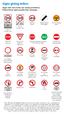 Signs giving orders Signs with red circles are mostly prohibitive. Plates below signs qualify their message. Entry to 20 mph zone End of 20 mph zone Maximum speed National speed limit applies School crossing
How To Design A Crash Investigation Site
 CHAPTER 7 CRASH INVESTIGATION SITES December, 2000 7. Crash Investigation Sites (CIS) 7.1. Introduction and Usage The idea of "crash investigation sites" or areas outside of the freeway mainline where
Design and Implementation of Slot Left-Turn Lanes on the Manitoba Highway Network
 Design and Implementation of Slot Left-Turn Lanes on the Manitoba Highway Network Brent Hartmann, P. Eng., Project Design Engineer, Manitoba Infrastructure and Transportation Derek Durant, P. Eng., Senior
Needs Analysis. Long Beach Bicycle Master Plan. Bicycle Commuter Needs. LONG BEACH BICYCLE MASTER PLAN Needs Analysis
 Long Beach Bicycle Master Plan Needs Analysis The purpose of reviewing the needs of commuter and recreational bicyclists is twofold: (1) it is instrumental when planning a system which must serve both
Back to School Car Safety. Direct Buy Warranty Staff September 19, 2014
 Back to School Car Safety Direct Buy Warranty Staff September 19, 2014 It s back to school season, and that means kids are picking out new clothes, putting on their backpacks, and hitting the road to get
KENTUCKY TRANSPORTATION CABINET. Department of Rural and Municipal Aid. Office of Local Programs
 KENTUCKY TRANSPORTATION CABINET Department of Rural and Municipal Aid Office of Local Programs Office of Local Programs Transportation Enhancements Safe Routes to School Congestion Mitigation and Air Quality
Planning for Safe Transport Infrastructure at Schools
 Planning for Safe Transport Infrastructure at Schools Technical guidance for the provision of effective and safe transport infrastructure at schools April 2011 DRAFT NOT GOVERNMENT POLICY Planning for
Safety Evidence for Bicycling
 Photo: Boegh (Flickr) Cycling in Cities Research Program School of Population & Public Health The University of British Columbia Faculty of Health Sciences Simon Fraser University Driving near bicyclists
TH 23 Access Management Study Richmond to Paynesville
 TH 23 Access Management Study Richmond to Paynesville Prepared For: Minnesota Department of Transportation District 8 Prepared By: Short Elliott Hendrickson Inc. July 2015 Table of Contents I. Introduction...
Lincoln Downtown Master Plan Update
 Lincoln Downtown Master Plan Update Table of Contents Executive Summary........................................... 1 Complete Streets Framework.................................... 3 Promenade Creating
CHAPTER 2 TRAFFIC SIGNS AND HIGHWAY MARKINGS
 CHAPTER 2 TRAFFIC SIGNS AND HIGHWAY MARKINGS This chapter summarizes traffic signs, signals and road markings that control the flow of traffic, making streets and highways safer for motorists, bicyclists
TOWN OF NEW HAVEN ROAD PLAN
 1 TOWN OF NEW HAVEN ROAD PLAN BACKGROUND The Town of New Haven, Vermont consists of 42 square miles of land and a population of approximately 1400 people. At the start of the 21 st century, it is served
Pedestrian & Bicycle Plan
 RAMSEY COMMUNITIES COUNTYWIDE Pedestrian & Bicycle Plan PRIMER: LEGAL FRAMEWORK PRIMER: LEGAL FRAMEWORK Walking and Biking for All e 2 CHAPTER 2: Walking and Biking for All This page intentionally left
1161.01 CONFORMITY WITH PLANS; DRAINAGE.
 CHAPTER 1161 Subdivision Requirements 1161.01 Conformity with plans; drainage 1161.07 Easements 1161.02 Trees 1161.08 Streets 1161.03 Subdivision name 1161.09 Blocks 1161.04 Street names 1161.10 Lots 1161.05
DESIGN ASSISTANCE APPLICATION
 DESIGN ASSISTANCE APPLICATION for FY 2016 NEW RIVER MULTI USE PATH: PINNACLE PEAK ROAD TO HAPPY VALLEY ROAD CITY OF PEORIA APPLICATIONS ARE DUE VIA ONLINE SUBMITTAL BY 10:00 AM ON MONDAY, JUNE 29, 2015
EPA Technical Assistance for Sustainable Communities Building Blocks
 EPA Technical Assistance for Sustainable Communities Technical Assistance Tool: Complete Streets Deerfield Beach, Florida February 16, 2012 To: CC: Amanda Martinez, City of Deerfield Beach Roger Millar,
Revere Beach Transit-Oriented Development Parcels Revere, Massachusetts. Design and Development Guidelines. Part Two.
 Revere Beach Transit-Oriented Development Parcels Revere, Massachusetts Design and Development Guidelines Request for Qualifications and Expressions of Interest with Preliminary Development Plans Part
Disputed Red Light Accidents: A Primer on Signal Control. Jon B. Landerville, MSME, PE Edward C. Fatzinger, MSME, PE Philip S.
 Disputed Red Light Accidents: A Primer on Signal Control Jon B. Landerville, MSME, PE Edward C. Fatzinger, MSME, PE Philip S. Wang, MSME Intersection Accident Statistics Intersection accidents occur on
TRANSPORTATION MODELLING IN CALGARY
 TRANSPORTATION MODELLING IN CALGARY Why Do We Use Transportation Models? There are three approaches that can be used for proceeding to develop a transportation system for Calgary s future. One approach
RESIDENTIAL DRIVEWAYS
 RESIDENTIAL DRIVEWAYS If you have specific questions or want to confirm your plans, our staff is available to assist in person, by telephone, or by e-mail. City of St. Petersburg Division of Development
CITY OF ESCONDIDO Planning Division 201 North Broadway Escondido, CA 92025-2798 (760) 839-4671 Fax: (760) 839-4313 ARTS AND CRAFTS SHOW PERMIT
 CITY OF ESCONDIDO Planning Division 201 North Broadway Escondido, CA 92025-2798 (760) 839-4671 Fax: (760) 839-4313 ARTS AND CRAFTS SHOW PERMIT APPLICANT/CONTACT PERSON Name (Print): Address: City, State,
Vehicular Access Standards
 Development Control Advice Note 15 (2nd Edition) Vehicular Access Standards August 1999 Development Control Advice Note 15 Vehicular Access Standards This is a joint Planning and Roads Service Development
NASHVILLE BICYCLE LAW 3/18/09
 NASHVILLE BICYCLE LAW 3/18/09 12.60.010 Compliance with Title 12 provisions. It is unlawful for any person to do any act prohibited or fail to perform any act required by Title 12 of this code. (Prior
TOWN OF FORT MYERS BEACH CAPITAL IMPROVEMENT PLAN DRAFT BUDGET
 TOWN OF FORT MYERS BEACH CAPITAL IMPROVEMENT PLAN DRAFT BUDGET FISCAL YEAR 2005/2006 TRANSPORTATION SOURCE OF FUNDS: Beginning fund balance and anticipated revenue. Over the course of the past fiscal years