
TRANSPORTATION MODELLING IN CALGARY
|
|
|
- Ethel Horton
- 9 years ago
- Views:
Transcription

1

2 TRANSPORTATION MODELLING IN CALGARY Why Do We Use Transportation Models? There are three approaches that can be used for proceeding to develop a transportation system for Calgary s future. One approach is to just try something out to see if it works. This is like running an enormous trial and error experiment with the entire city. The public would have to bear the consequences of the errors in the trial and error process and the cost of the errors could be astronomical. The second approach is to use mental models. The user of a mental model develops their own conceptions of the system and forecasts the results of possible actions in their own head. Mental models can sometimes be very good, but they have limitations. They are subject to all the human limitations: they can be slow, easily distracted, distorted, and inaccurate. Such limitations can be severe handicaps when considering a system as complex as the entire city. Also, mental models are difficult to communicate or discuss objectively. There can be as many different mental models as there are people involved. The limitations of the trial and error process and the mental model process have lead to the use of mathematical computer models for mimicking transportation systems and the behaviour of people within them. These mathematical models have many benefits that make their use attractive. They are formal, and objective, and bring out into the open for discussion, all of the assumptions and compromises being made. Mathematical computer models are, nevertheless, only a reproduction of the actual transportation system. They are merely meant to behave in the same way as the real system. They do not tell us what to do they do not give us any instruction. The computer models we use in transportation engineering and planning do not think. They are designed to allow us to ask What will happen if we do this? to allow us to do our trial and error experimentation on a computer rather than in real life. 1 Transportation computer models are an indispensable tool for transportation planning. Overview of Current Models The City of Calgary has operated a computer-based transportation forecasting model since This travel demand model has been rebuilt and updated several times over the intervening years. It is a model that is used for strategic planning, infrastructure planning, and as input for more detailed analysis. In 1990, The City introduced a second kind of model sub area traffic assignment models. The purpose of these models was to provide more detailed analysis than was 1 Paraphrased from J. D. Hunt, The Role of Modelling in Transportation Planning, for the City of Calgary as background documentation for GoPlan.

3 available from the city-wide model. These models were applied to community studies, site impact studies and geometric design studies. A couple of years ago, The City experimented with a third kind of model micro simulation (dynamic traffic assignment) models. These models can be applied in much the same way as a traditional traffic assignment model. Since they operate at a very fine level of detail, they can be used for some very complex traffic operation studies. They typically also provide a feature to allow the output to be displayed graphically (animation). In 2001, a couple of large projects began using micro simulation models. Further details regarding the three types of models being applied in The City of Calgary are given below. Regional Transportation Model (RTM) The City of Calgary s travel demand forecasting model is currently named The Calgary Regional Transportation Model and is referred to as the RTM. The software used for this model has changed a few times over the years and is currently the emme/2 software. The current RTM covers the geographic area of the city and some additional lands around the city limits. It is an a.m. peak hour model that represents the major trip purposes and modes of travel occurring in that time period. It deals primarily with personal travel and does not include a representation of trucks. The RTM is a travel demand model. The base information in the model includes land uses (population and employment), travel behaviour and demographic data, and a representation of the transportation network (road and transit). The mathematical structure of the model is such that it can be used to forecast through a 4-stage process where the model: Generates the demand for travel; Distributes the trips from zone to zone; Splits the trips according to mode of travel; and Assigns the trips to the road and transit networks. The RTM is the basic and essential tool for transportation forecasting. The information produced by the model is sometimes used fairly directly and sometimes undergoes further analysis. Example projects where the results of the RTM were a key piece of analysis include: The Calgary Transportation Plan (GoPlan); Transportation Infrastructure Investment Plan (TIIP); GRAMPS; Inner City Transportation Study; 14 th Street S.W., Deerfoot Trail, Stoney Trail, and Macleod Trail South Functional Studies; small area development impact studies; Centre Street Bridge closure;

4 CFB and Bow Valley Centre; traffic noise studies; and as input to more detailed levels of modelling and analysis. The RTM is currently being expanded and updated. An update is done on a regular cycle (1971, 1981, 1991, and 2001) to ensure that the model remains relevant and reflects current travel behaviour. The model is also being expanded to ensure that it can respond to the increasingly complex and diverse issues facing transportation planning. More information on the RTM Update is included in the section titled Changes in Progress. Please also see the article entitled New Directions for the Calgary Regional Transportation Model for more information on the Update. Subarea Models The purpose of subarea models is to provide analysis at a more detailed level than is practical in the RTM (a model that covers a geographic area as large as the city of Calgary). Subarea models are often, although not always, assignment models. Generation, distribution and mode split are fixed inputs for these models. They do only the last step of the four stages listed above for the RTM. In order to produce forecasts that result from regional changes in land use or transportation systems, the subarea models need information from the RTM. Sub Area (Using a Continuous Traffic Assignment Model) In about 1990, The City of Calgary implemented a second type of modelling in order to produce more detailed analysis than was possible using the RTM. The software chosen was CONTRAM (CONTinous Traffic Assignment Model). In this type of model, the timing and operation of signals can be explicitly represented and so these models are capable of a good representation of the operating conditions in the peak hours at a fairly good level of detail. Typically, these subarea models were set up for the a.m. and p.m. peak hours and covered from 6 to 18 square miles of area. In order to respond to changes in the rest of the city, these models use input from the RTM at the boundaries of the sub area. Subarea models using CONTRAM have been used for a variety of community, land development, capital programming, geometric design and operational studies over the years. A few example projects include: Calgary North ASP; Sunridge development proposals; CFB West; Bow Valley Centre; Centre Street Bridge Closure; Inner City Transportation Study; Transportation Improvement Priority Study (TIPS forerunner of TIIP); North Hill Shopping Centre redevelopment proposal;

5 Cominco lands development proposal; and Anderson Road / Macleod Trail interchange functional design study. There are currently 14 subarea models using CONTRAM and covering most of the city. However, due to limited resources and higher priority work over the past several years, the models have not been kept updated and many of them are now five or more years old. Sub Area (Using Part of a Demand Model) In 2001, the emme/2 software was used to establish two subarea models. One was for the area generally south of Fish Creek and 130 Avenue S and one was for the NE area of the city. The purpose of these models is to provide more detail than is available from the RTM. However, since the models will be used primarily for long range planning, the operational level of detail available in a continuous traffic assignment model or a micro simulation model is not required. These models were established for the a.m. and p.m. peak periods and will serve as input to manual analysis and/or more detailed modelling analysis and policy decisions. In order to produce these models, the network is coded in finer detail than in the RTM (although these models are not capable of explicitly representing the operation of signals). Information from the RTM is input to advise the subarea models of changes in the city at large. A similar type of model to the ones described above will be set up for Northwest Calgary generally north of Stoney Trail in Another type of 4-stage subarea model was set up for the built-up area of the Northwest in The Northwest/University model used the TModel software and was used to address land use and transportation planning issues associated with the development of the University lands and other institutional and commercial sites in the area. Sub Area (Using a Micro Simulation Model) Prior to 2001, the City of Calgary had limited experience with micro simulation models. Using the VISSIM software, the Forecasting Division had done only two small projects: The operation of Edmonton Trail and Memorial Drive during the Centre Street Bridge closure; and The operation of 16 Avenue N.W. adjacent to the North Hill Shopping Centre to investigate the operation of a proposed traffic signal. Neither of the above projects used the dynamic traffic assignment capabilities of the software as this feature has only been available in the most recent releases of the software.

6 In 2001, the Forecasting Division began work on three projects using micro simulation (Vissim) software: Memorial Drive NW. This is a small network covering the area along Memorial Drive and a few blocks north from Crowchild Trail to 10 Street NW. The model will be used to investigate alternative interchange designs for the intersection of Memorial Drive / 14 Street and to look at transit operations along 10 Street NW in the Louise Crossing area. Shawnessy. This is a large micro simulation network extending from Fish Creek south to Highway 22X and including the commercial areas east and west of Macleod Trail. The model will be used to determine whether any operational improvements are possible to alleviate the congestion around the commercial centres. 11/12 Avenue S. This is a large network covering 10 to 13 Avenues S from Crowchild Trail to the Elbow River. The network will be used to investigate the benefits and costs of converting the 11/12 Avenue one-way couplet to two-way operation on both avenues. Micro simulation models operate at a level of detail even greater than continuous traffic assignment models (CONTRAM and others). They model the car following and lane change behaviour of drivers on a second-by-second basis. Typically, micro simulation models provide visual output that show the individual vehicles moving through the network in animation. Micro simulation models are appropriately applied to detailed operational studies. Like other subarea models, micro simulation models use input from the RTM in order to function in a forecasting mode. They may also be used in conjunction with other larger subarea models. More detailed information on micro simulation models is included in Appendix 2. Current Barriers in the Modelling Area The City of Calgary has had some form of subarea traffic assignment modelling for over ten years. It has, however, been difficult to allocate the level of resources necessary to maintain both the RTM and the sub area models. Since subarea models depend on information from RTM in order to forecast, a choice cannot be made to use subarea models and abandon the RTM. Setting up (calibrating and validating) a subarea model is time consuming and requires a lot of data. Because the models function at a detailed operational level, small deficiencies can cause large errors in the output. Additionally, to be useful for operational studies, subarea models must be kept up-to-date. The amount of time required to establish and maintain subarea models has posed a barrier to their effective application and has lead to criticism of the tool. One of the primary reasons for the difficulty and time required to set up subarea models is the time and detail gap between the current RTM, the subarea models.

7 Considerable manual effort is required to bridge that gap. The time gap exists because the current RTM is a.m. peak hour only while subarea models are often applied to projects that are focusing on problems that occur in the p.m., or both, peak hours. The RTM can only indirectly inform the development of a p.m. peak hour subarea model. The detail gap occurs because the RTM aggregates data at a relatively course scale to cover the entire city, while a subarea model deals with details in a small area. Under current conditions, the problems encountered with time and resources to establish and maintain CONTRAM subarea models will likely also occur for micro simulation models. Some changes that are underway, as outlined in the section on Changes in Progress, will help alleviate this problem. Changes in Progress Changes to the RTM Work is currently underway to update and expand the RTM. The base travel behaviour data for the current RTM was collected in At that time there was a pressing need to be ready to respond to GoPlan. There were time and money constraints on model development. The issue of the day was river crossings and the state of the art in modelling, at the time, was peak hour models. The constraints and issues lead to a decision to develop an a.m. peak hour model. In 1993 the basic model was upgraded to incorporate a transit mode choice model. In 1996 a further upgrade was done to include a vehicle occupancy choice model. The 1991 RTM was revalidated (new land use information input and checked against ground counts) in 1994, 1996, and The RTM that is currently in development will include several new features as follows: a.m., p.m. and off-peak with the capability to simulate peak spreading; more trip purposes; more modes of travel; commercial travel (goods and services trucks); economics of travel; vehicle emissions; the region around Calgary; a more detailed representation of the land use pattern and the road network; and land use / transport interaction (in a second phase of model development). Changes in Micro Simulation Several micro simulation models have been on the market for a few years now. Many more are still in the research and development stage. The majority of micro simulation models do not have the capability to do traffic assignment. In other words, the traffic flows being simulated have to stay on the routes that the operator puts them on. The models were not intelligent enough to allow traffic to change route in response to congestion or network changes. Only a handful of the software packages have this

8 route choice capability. The addition of route choice capabilities to micro simulation models significantly increases their usefulness. What do the Changes Mean? Firstly, the availability of route choice capability in micro simulation models means that these models are much smarter than they used to be and can now do a similar job to that of the previous Continuous Traffic Assignment Models (CONTRAM). There now exists some overlap between micro simulation and assignment models. However, micro simulation models have the additional, attractive feature of the animated output. It is likely that micro simulation models will replace CONTRAM software for detailed analysis at The City of Calgary over the next couple of years. Secondly, the improvements to the RTM will greatly reduce the gap between the RTM and the subarea models (of al kinds). By adding the p.m. peak hour and increasing the detail in the RTM, it should be possible to reduce the time to calibrate subarea models. The gap should be narrowed considerably with the first stage of the RTM development in 2002 and reduced even further with the second stage of development in

GTA Cordon Count Program
 Transportation Trends 2001-2011 Executive Summary Project No. TR12 0722 September 2013 1.0 Introduction The Cordon Count program was established to collect traffic data as a tool for measuring travel trends
Mount Royal College Transit Service Plan
 Mount Royal College Transit Service Plan Background In 2007 November response to Council Report C2007-78 West LRT Alignment, Budget and Project Delivery, Council directed the Administration to report back
Evaluation Criteria and Mode Progression for RouteAhead Rapid Transit Projects
 Evaluation Criteria and Mode Progression for RouteAhead Rapid Transit Projects C2012-0684 ATTACHMENT 2 The RouteAhead draft 30-year rapid transit plan was developed in coordination with the Investing in
Section 6 Traffic Analysis
 Section 6 Traffic Analysis Traffic Operations of the Preferred Network Alternative After the Preferred Network was identified and confirmed by local policy makers and area residents, detailed traffic analysis
Planning for the future. building a great city, great neighbourhoods
 Planning for the future building a great city, great neighbourhoods Table of contents 1 Looking ahead 2.4 million Calgarians 2 Goals 3 Building a sustainable, connected city of great neighbourhoods 4 Finding
Why build the Silvertown Tunnel?
 Why build the Silvertown Tunnel? Over the last 30 years east London has changed with the redevelopment of former industrial areas into major commercial and residential districts. The development of Canary
Calgary LRT Network Plan
 Calgary LRT Network Plan Calgary LRT Network Plan... at a glance Overview These drawings provide an overview of Calgary s CTrain (or LRT) Network plan. The drawings provide information on existing lines
11. Monitoring. 11.1 Performance monitoring in LTP2
 178 11. Monitoring 11.1 Performance monitoring in LTP2 Performance against the suite of indicators adopted for LTP2 is shown in the following table. This shows progress between 2005/06 and 2009/10 (the
TOWN OF NEW HAVEN ROAD PLAN
 1 TOWN OF NEW HAVEN ROAD PLAN BACKGROUND The Town of New Haven, Vermont consists of 42 square miles of land and a population of approximately 1400 people. At the start of the 21 st century, it is served
HIGHLANDS NEIGHBORHOOD STUDY AREA PARKING ANALYSIS
 HIGHLANDS NEIGHBORHOOD STUDY AREA PARKING ANALYSIS Prepared for: City and County of Denver Department of Public Works, Engineering Division Traffic Engineering Services Parking Operations 201 W. Colfax
Transportation Education Series: Travel Demand Modeling. David Reinke November 2012
 Transportation Education Series: Travel Demand Modeling David Reinke November 2012 Presentation overview What are travel demand models? Why use them? How do they work? What goes into building them? What
Simulating Traffic for Incident Management and ITS Investment Decisions
 1998 TRANSPORTATION CONFERENCE PROCEEDINGS 7 Simulating Traffic for Incident Management and ITS Investment Decisions MICHAEL D. ANDERSON AND REGINALD R. SOULEYRETTE UTPS-type models were designed to adequately
TRANSPORTATION SERVICE STANDARDS ELEMENT GOALS, OBJECTIVES & POLICIES
 TRANSPORTATION SERVICE STANDARDS ELEMENT GOALS, OBJECTIVES & POLICIES Background One of the most critical public services provided by a community is the community s transportation system. An effective
OM-13: Transportation Management and Operations
 : Transportation and Operations 1-15 points Goal: Maximize the utility of the existing roadway network through use of technology and management of operations strategies. Sustainability Linkage Transportation
CHAPTER 2 TRAFFIC SIGNS AND HIGHWAY MARKINGS
 CHAPTER 2 TRAFFIC SIGNS AND HIGHWAY MARKINGS This chapter summarizes traffic signs, signals and road markings that control the flow of traffic, making streets and highways safer for motorists, bicyclists
Overview of the Travel Demand Forecasting Methodology
 Overview of the Travel Demand Forecasting Methodology Prepared by the Central Transportation Planning Staff (CTPS) Authors: Scott A. Peterson, Manager Ian Harrington, Chief Planner March 29, 2008 1 OVERVIEW
Executive Summary. Transportation Needs CHAPTER. Existing Conditions
 CHAPTER 1 Executive Summary The City of Forest Grove Transportation System Plan (TSP) was updated to keep it consistent with recent growth trends in the city and other transportation planning efforts in
1. REPORT CONTEXT Description of the development (include all of the following that are known at the time of the application):
 Transportation Assessment and Management Study Guidelines for Consultants INTRODUCTION This document is intended to provide guidelines for transportation consultants who produce Transportation reports
Anchorage Travel Model Calibration and Validation
 Final Draft Anchorage Travel Model Calibration and Validation Prepared for Anchorage Metropolitan Transportation Solutions (AMATS) February 2005 301 West Northern Lights Boulevard Suite 601 Anchorage,
Technical Report Documentation Page. 2. Government Accession No. 3. Recipient's Catalog No. 1. Report No. FHWA/TX-13/0-6737-1
 1. Report No. FHWA/TX-13/0-6737-1 4. Title and Subtitle EXECUTIVE REPORT: TOLL ROADS, TOLL RATES, AND DRIVER BEHAVIOR 2. Government Accession No. 3. Recipient's Catalog No. Technical Report Documentation
APPENDIX J TRAFFIC STUDY
 APPENDIX J TRAFFIC STUDY May 7, 2014 Ms. Leianne Humble Denise Duffy and Associates, Inc. 947 Cass Street, Suite 5 Monterey, CA 93940 Re: Traffic Study for the Heritage Oaks Memorial Park in San Jose,
Bromley Town Centre. Transport Strategy Supporting the Area Action Plan. Evidence Base
 Bromley Town Centre Transport Strategy Supporting the Area Action Plan Evidence Base Produced on behalf of London Borough of Bromley by Peter Brett Associates LLP April 29 Bromley Town Centre AAP Evidence
TERMINAL 91 2011 TRAFFIC MONITORING STUDY
 DRAFT TERMINAL 91 2011 TRAFFIC MONITORING STUDY Prepared for: Port of Seattle Prepared by: 6544 NE 61st Street, Seattle, WA 98115 ph: (206) 523-3939 fx: (206) 523-4949 NOVEMBER 4, 2011 TABLE OF CONTENTS
Guelph Driving School. 246 WOOLWICH ST. Unit C Guelph, Ontario N1H 3V9. Office: 519-829-8801 Cell: 519-362-5664. Email: info@guelphdrivingschool.
 246 WOOLWICH ST. Unit C Guelph, Ontario N1H 3V9 Office: 519-829-8801 Cell: 519-362-5664 Email: [email protected] Dear Student, We would like to take this opportunity to thank you for choosing
Forecasting Demand for Demand Forecasting. Abstract
 MORISON,James Beattie Transportation Engineer City of Calgary Transportation Planning FUNG,Yu Han Transportation Planner City of Calgary Transportation Planning District 7 (CANADA) ITE conference, Victoria
Transportation Management Plan Overview. Module 3
 Transportation Management Plan Overview Module 3 Module Outline TMPs and the WZ Rule What is a TMP? Why TMPs? When to Develop TMPs State-of-the-Practice Tools Tips TMP Overview 2 TMP Beginnings Idea for
9988 REDWOOD AVENUE PROJECT TRAFFIC IMPACT ANALYSIS. April 24, 2015
 9988 REDWOOD AVENUE PROJECT TRAFFIC IMPACT ANALYSIS April 24, 2015 Kunzman Associates, Inc. 9988 REDWOOD AVENUE PROJECT TRAFFIC IMPACT ANALYSIS April 24, 2015 Prepared by: Bryan Crawford Carl Ballard,
Lawson Outline Plan External Traffic Analysis Working Paper
 Total Lawson Development ACTPLA 16 January 2009 Document No.: Prepared for ACTPLA Prepared by Maunsell Australia Pty Ltd Level 2, 60 Marcus Clarke Street, Canberra ACT 2600, Australia T +61 2 6201 3000
HIGHWAYS ENGLAND STRATEGIC BUSINESS PLAN OVERVIEW 2015-2020
 HIGHWAYS ENGLAND STRATEGIC BUSINESS PLAN OVERVIEW 05-00 STRATEGIC ROAD NETWORK 4,00 miles of motorways and major A roads A billion tonnes of freight transported each year 4 million people drive on the
Downtown Tampa Transportation Vision
 Downtown Tampa Transportation Vision Executive Summary August 1, 2006 Hillsborough County Metropolitan Planning Organization County Center, 18 th Floor Tampa, Florida 33602 813-272-5940 www.hillsboroughmpo.org
INDOT 2000-2025 Long Range Plan
 Chapter 9 INDOT 2000-2025 Long Range Plan Highway Needs Analysis Overview The statewide transportation planning process provides for the identification of highway needs through a comprehensive process
Q: What types of businesses/industries can benefit from the SBA loan programs? A: Most small owner-operated business can benefit from SBA loans
 Interview with Alan Thomes, President, SBA Loan Division State Bank and Trust Company For many new start-ups and small businesses, an SBA loan may be an appropriate form of financing. In this interview
Goals & Objectives. Chapter 9. Transportation
 Goals & Objectives Chapter 9 Transportation Transportation MISSION STATEMENT: TO PROVIDE A TRANSPORTATION NETWORK CAPABLE OF MOVING PEOPLE AND GOODS EFFICIENTLY AND SAFELY. T he transportation system
How To Plan A City Of Korea
 TRANSCAD MODELING AT NCTCOG: WHAT WE NOW HAVE For UT-Austin/NCTCOG Meeting January 28, 2004 AGENDA Background Modeling Environment Trip Generation And Distribution Transit Skims Mode Choice Transit And
Cathkin Relief Road Planning Statement
 Cathkin Relief Road Planning Statement The Proposal This statement sets out the background to the Cathkin Relief Road project currently being progressed by South Lanarkshire Council. The project will provide
Florida Class E Knowledge Exam Road Rules Practice Questions www.gdlinstitute.org
 If you purchase the Value Package from GDL Institute, over 100 additional practice questions are included at no additional cost. Use discount code PQ10 and receive 10% off of the package price! 1. If you
TRAFFIC DEMAND MANAGEMENT IN ACTION! Sue Peden, Travelwise Development Manager Southampton University Hospitals NHS Trust
 TRAFFIC DEMAND MANAGEMENT IN ACTION! Sue Peden, Travelwise Development Manager Southampton University Hospitals NHS Trust 1. THE SETTING Southampton University Hospitals NHS Trust is a large 1,000 bed
Road Signs Recognition Quiz
 Road Signs Recognition Quiz Place your answer for each of the signs/pavement markings on the answer sheet. Ready to Roll? Here Comes Sign # 1... #1 A No right turn B Right turn only C Warning, no turn
Motion & The Global Positioning System (GPS)
 Grade Level: K - 8 Subject: Motion Prep Time: < 10 minutes Duration: 30 minutes Objective: To learn how to analyze GPS data in order to track an object and derive its velocity from positions and times.
Appendix A. About RailSys 3.0. A.1 Introduction
 Appendix A About RailSys 3.0 This appendix describes the software system for analysis RailSys used to carry out the different computational experiments and scenario designing required for the research
Foothills Area Transmission Development South Calgary - Project Overview
 CHAPARRAL BV SE DEERFOOT TR SE Foothills Area Transmission Development South Calgary - Project Overview The demand for power is increasing as Calgary continues to grow. The Alberta Electric System Operator
Multimodal Transportation Planning at the State Level State of the Practice and Future Issues
 A1D01: Committee on Statewide Multimodal Transportation Planning Chairman: Neil J. Pedersen Multimodal Transportation Planning at the State Level State of the Practice and Future Issues NEIL J. PEDERSEN,
Advantages and Disadvantages of One Way Streets October 30, 2007
 Advantages and Disadvantages of One Way Streets October 30, 2007 0 P age Background As the revitalization of the Central Waterfront area moves forward, one issue that might need closer analysis is the
Johari Window. Lesson Plan
 xxx Lesson 12 Johari Window Overview: This optional lesson provides a look into how we view ourselves and how others view us. It is also a model for opening up the lines of communication with others. It
Application of GIS in Transportation Planning: The Case of Riyadh, the Kingdom of Saudi Arabia
 Application of GIS in Transportation Planning: The Case of Riyadh, the Kingdom of Saudi Arabia Mezyad Alterkawi King Saud University, Kingdom of Saudi Arabia * Abstract This paper is intended to illustrate
STANDARD ELEMENTS OF A CONSTRUCTION MANAGEMENT PLAN
 STANDARD ELEMENTS OF A CONSTRUCTION MANAGEMENT PLAN JULY 2015 Standard Elements of a Construction Management Plan (CMP) This guidance tool was developed through partnership between the Department of Planning
PTE/16/29. Place Scrutiny Committee 14 June 2016. Air Quality and Car Emissions. Report of the Head of Planning, Transportation and Environment
 PTE/16/29 Place Scrutiny Committee 14 June 2016 Air Quality and Car Emissions Report of the Head of Planning, Transportation and Environment 1. Background/Introduction At County Council in December 2015
Mercer County Multi-Modal Transportation Plan Year 2025 Travel Demand Model
 Mercer County Multi-Modal Transportation Plan Year 2025 Travel Demand Model Prepared For West Virginia Department of Transportation Transportation Planning Division Building 5, Room 824 1900 Kanawha Blvd.
Leicestershire County Council Transport Trends in Leicestershire 2014. Transport Data and Intelligence (TDI)
 Leicestershire County Council Transport Trends in Leicestershire 2014 Transport Data and Intelligence (TDI) Table of Contents Contents List of Tables... 3 List of Figures... 3 Overview... 5 Traffic Growth...
Protected Bicycle Lanes in NYC
 Protected Bicycle Lanes in NYC New York City Department of Transportation Polly Trottenberg, Commissioner September 2014 NEW YORK CITY DEPARTMENT OF TRANSPORTATION 1 Overview Since 2007, the New York City
A Users Guide to Tolling
 A Users Guide to Tolling Content: 1. WHAT IS TOLLING AND WHY IS IT IMPORTANT? 2. WHAT ARE THE BENEFITS OF TOLLING? 3. WHAT IS OPEN ROAD TOLLING (ORT)? 4. HOW DOES ORT AND PAYMENT WORK? 5. WHAT ARE THE
Crash data may not contain complete information, some elements may be unknown
 Crash Data Introduction: Crash data are information that comes from a reportable crash. A reportable crash according to Title 75, Pennsylvania Consolidated Statutes, Section 3746(a) is: an incident that
Communication Process
 Welcome and Introductions Lesson 7 Communication Process Overview: This lesson teaches learners to define the elements of effective communication and its process. It will focus on communication as the
3. DESCRIPTION OF THE COMPUTER MODEL USED
 EVALUATION OF IMPROVEMENTS IN ROAD INFRASTRUCTURE, TRAFFIC OPERATION AND ACCESSIBILITY FOR PEDESTRIANS TO THE FORTALEZA CITY STADIUM, DURING THE FIFA WORLD CUP 2014, USING MICROSIMULATION. Daniel Lustosa
THE IMPLICATIONS OF ALTERNATIVE GROWTH PATTERNS ON INFRASTRUCTURE COSTS
 City of Calgary THE IMPLICATIONS OF ALTERNATIVE GROWTH PATTERNS ON INFRASTRUCTURE COSTS REPORT APRIL 2, 2009 IBI GROUP REPORT City of Calgary EXECUTIVE SUMMARY Purpose of Report Calgary has seen record
Traffic Signal Priority (TSP) and Automatic Vehicle Tracking System (AVTS) For Calgary Transit Buses
 Traffic Signal Priority (TSP) and Automatic Vehicle Tracking System (AVTS) For Calgary Transit Buses (Project #2001-06) Calgary Transit Transit Planning 2004 July Introduction The purpose of this report
Appendix E Transportation System and Demand Management Programs, and Emerging Technologies
 Appendix E Transportation System and Demand Management Programs, and Emerging Technologies Appendix Contents Transportation System Management Program Transportation Demand Management Program Regional Parking
INSTITUTIONAL MASTER PLAN NOTIFICATION FORM / PROJECT NOTIFICATION FORM BOSTON UNIVERSITY MEDICAL CENTER
 INSTITUTIONAL MASTER PLAN NOTIFICATION FORM / PROJECT NOTIFICATION FORM BOSTON UNIVERSITY MEDICAL CENTER JUNE 7, 2013 SUBMITTED TO: BOSTON REDEVELOPMENT AUTHORITY ONE CITY HALL SQUARE BOSTON, MA 02201
Bus Priority Measures in Calgary: Past, Present and Future. Chris Jordan, M.Sc., P.Eng., Coordinator, Strategic Transit Planning, Calgary Transit
 Bus Priority Measures in Calgary: Past, Present and Future Chris Jordan, M.Sc., P.Eng., Coordinator, Strategic Transit Planning, Calgary Transit Nora Kajdy, P.Eng., Transit Priority Engineer, Calgary Transit
Comment #1: Provide an interchange at Route 7 and Farm Market Road/White Gate Road. This was studied in the late 1990 s.
 Proposed Truck Climbing Lane Route 7 Westbound Between West Market Street and Route 9 UPC# 58599, Project # 6007-053-133, P101 Date of Meeting: August 24, 2010 Time: 6:00PM to 8:00PM Location: Rust Library
The Fresno COG Travel Demand Forecasting Model How the Pieces Fit Together
 The Fresno COG Travel Demand Forecasting Model How the Pieces Fit Together Mike Bitner PE, Senior Transportation Planner Council of Fresno County Governments 1 COG Modeling Staff Mike Bitner Kathy Chung
DRAFT Freight Performance Measures
 DRAFT Freight Performance Measures The purpose of the Industrial Areas Freight Access Project is to conduct a focused and pragmatic technical evaluation to identify and assess current and future freight
WYDOT Quick Facts TRAFFIC SIGNALS
 TRAFFIC SIGNALS WYDOT Quick Facts 2 Advantages of traffic signals WYDOT Quick Facts Traffic signals control vehicle and pedestrian traffic by assigning priorities to various traffic movements to influence
Maximum speed. Stop and Give way to Manually operated temporary No entry for give way traffic on STOP and GO signs vehicular traffic major road
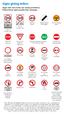 Signs giving orders Signs with red circles are mostly prohibitive. Plates below signs qualify their message. Entry to 20 mph zone End of 20 mph zone Maximum speed National speed limit applies School crossing
Traffic Simulation Modeling: VISSIM. Koh S.Y Doina 1 and Chin H.C 2
 Traffic Simulation Modeling: VISSIM Koh S.Y Doina 1 and Chin H.C 2 Faculty of Engineering, Civil Engineering Department, National University of Singapore ABSTRACT This Undergraduate Research Opportunity
Roads Task Force - Technical Note 10 What is the capacity of the road network for private motorised traffic and how has this changed over time?
 Roads Task Force - Technical Note 10 What is the capacity of the road network for private motorised traffic and how has this changed over time? Introduction This paper forms one of a series of thematic
Stone Way N Rechannelization: Before and After Study. N 34th Street to N 50th Street
 City of Seattle Department of Transportation Stone Way N Rechannelization: Before and After Study N 34th Street to N 50th Street May, 2010 INTRODUCTION Population density in Seattle is increasing within
The Economics of Cisco s nlight Multilayer Control Plane Architecture
 The Economics of Cisco s nlight Multilayer Control Plane Architecture Executive Summary Networks are becoming more difficult to plan and optimize because of high traffic growth, volatile traffic patterns,
General Obligation Bond Projects FYE 2013-2018
 General Obligation Bond Projects FYE 2013-2018 2009 City of Norman Community Survey Final Report 2011 CTP Survey Results Storm Drainage and Street Widening Projects Combined Storm Water/Transportation
PRIORITY SCHEDULING OF URBAN REHABILITATION STREETS TO MINIMIZE CONGESTION, DELAYS, AND ACCIDENTS
 PRIORITY SCHEDULING OF URBAN REHABILITATION STREETS TO MINIMIZE CONGESTION, DELAYS, AND ACCIDENTS ABSTRACT Wesley C. Zech 1, and Satish Mohan 2 This paper describes the framework of a priority scheduling
CHAPTER 3 AVI TRAVEL TIME DATA COLLECTION
 CHAPTER 3 AVI TRAVEL TIME DATA COLLECTION 3.1 - Introduction Travel time information is becoming more important for applications ranging from congestion measurement to real-time travel information. Several
Rapid Transit Backgrounder
 Rapid Transit Backgrounder Moving Forward On Rapid Transit The concept of a Rapid Transit System for Winnipeg has been debated for over 30 years. City Council and the Province of Manitoba have demonstrated
6: LANE POSITIONS, TURNING, & PASSING
 6: LANE POSITIONS, TURNING, & PASSING BASIC LANE POSITIONS Traffic law says that slower vehicles should stay to the right. But where exactly should bicycles ride? Here are some basics. Never Ride Against
Force and Motion: Ramp It Up
 Force and Motion: Grade Level: 4-5 Time: 3 class periods By: Carrie D. Perry (Bedford County Public Schools) Overview After watching an engaging video on Olympic alpine skiers, students then participate
PEDESTRIAN PLANNING AND DESIGN MARK BRUSSEL
 PEDESTRIAN PLANNING AND DESIGN MARK BRUSSEL CONTENT OF LECTURE a) Walking as a transport mode b) Walking in Sub Sahara Africa c) Policies for pedestrians d) Pedestrian characteristics e) Network planning
CAPACITY AND LEVEL-OF-SERVICE CONCEPTS
 CHAPTER 2 CAPACITY AND LEVEL-OF-SERVICE CONCEPTS CONTENTS I. INTRODUCTION...2-1 II. CAPACITY...2-2 III. DEMAND...2-2 IV. QUALITY AND LEVELS OF SERVICE...2-2 Service Flow Rates...2-3 Performance Measures...2-3
Guidelines for the Preparation of Transportation Impact Studies 8 th Revision
 Guidelines for the Preparation of Transportation Impact Studies 8 th Revision Halifax Regional Municipality Traffic and Right of Way Transportation and Public Works P.O. Box 1749 Halifax, Nova Scotia B3J
MapQuest Navigator User Manual
 MapQuest Navigator User Manual Legal Notice This guide and the information it contains belongs solely to MapQuest, Inc. and Telmap Ltd. The guide and the software products described therein are furnished
Focus On You Photography TRT from Brockway Summit to Watson Lake
 Tahoe Rim Trail (TRT) From Hwy 267 (Brockway Summit) west to Watson Lake (Strong Intermediate Advanced) This trail is very demanding. It is almost 2100 ft. of climbing. The trail is up and down, up and
DRAFT Policy to Guide Discretion on Proposed Relaxations to Minimum Parking Requirements in Commercial Districts City-Wide 2014 June 05
 PARKING INITIATIVES Attachment I Corridor Program Descriptions Corridor Program Pilot Though the Corridor Program will officially launch in the fall, this summer, The City will pilot the first phase of
CONNECTING LESSONS NGSS STANDARD
 CONNECTING LESSONS TO NGSS STANDARDS 1 This chart provides an overview of the NGSS Standards that can be met by, or extended to meet, specific STEAM Student Set challenges. Information on how to fulfill
CONSULTATION REPORT REGARDING THE REPLACEMENT OF INVERURIE MARKET PLACE SCHOOL
 Appendix 1 EDUCATION & CHILDREN S SERVICES CONSULTATION REPORT REGARDING THE REPLACEMENT OF INVERURIE MARKET PLACE SCHOOL NOVEMBER 2015 This Consultation Report has been issued by Education & Children
Strategy. Strategy for Lorry Parking Provision in England
 Strategy Strategy for Lorry Parking Provision in England Contents 1 Introduction 1 2 Strategic Objectives 3 3 Action Plan 5 4 Action Plan Matrix 17 Disclaimer: While the Department for Transport (DfT)
Massachusetts Department of Transportation, Highway Division Ten Park Plaza, Boston, MA 02116-3973. A Guide on Traffic Analysis Tools
 Massachusetts Department of Transportation, Highway Division Ten Park Plaza, Boston, MA 02116-3973 A Guide on Traffic Tools Revised October 5, 2012 1. PURPOSE The Massachusetts Department of Transportation,
Freeway Driving Demands Special Skills
 Demands Special Skills Demands Special Skills Traveling today s highways can be a frustrating, confusing journey through a maze of roadblocks, detours and traffic jams. With more than 161,000 miles of