
Heart information. CPR cardiopulmonary resuscitation
|
|
|
- Ethan Young
- 9 years ago
- Views:
Transcription
1 Heart information CPR cardiopulmonary resuscitation

2 Contents 3 What is CPR? 3 What is cardiac arrest? 4 Heart attack and cardiac arrest 4 Cardiopulmonary resuscitation (CPR) 5 Danger 6 Response 7 Send for help 8 Airway 10 Breathing 12 CPR 14 Defibrillation 15 Common questions about CPR 15 What if the person has dentures? 15 What should I do if the person vomits? 15 What if I hear the person s ribs crack when I m doing CPR? 15 What if the person s chest doesn t rise and fall during rescue breathing? 15 How do I know if CPR is working? 15 How can someone help me do CPR? 16 When should I stop CPR? 16 What should I do if the person starts responding or breathing normally while I m doing CPR? 16 Can I get AIDS, hepatitis or other diseases from doing CPR? 16 What is an AED?

3 CPR Cardiopulmonary resuscitation D R S A B C D D anger Check for danger. R esponse Check for response. If no response S end for help Call Triple Zero (000)* and ask for an ambulance. *If calling Triple Zero (000) does not work on your mobile phone, try 112. A irway Check the airway is open and clear. B reathing Check for breathing. If not breathing or not breathing normally... C PR Start CPR. Give 30 chest compressions: 2 breaths. Continue CPR until responsiveness or normal breathing return. D efibrillation Attach a defibrillator (AED*) if available and follow its voice prompts. *Automated External Defibrillator This information is to help you remember the important steps of CPR and is not a substitute for training in CPR.

4 2 CPR cardiopulmonary resuscitation Heart Foundation

5 What is CPR? Cardiopulmonary resuscitation (CPR) is a combination of mouth-to-mouth rescue breathing and chest compressions. It helps to keep blood and oxygen circulating to the heart and brain of a person whose heart has stopped beating. The term CPR is used in this booklet to describe all aspects of basic life support the initial establishment and/or maintenance of airway, breathing, circulation, defibrillation and related emergency care. Knowing how to do CPR and doing it as soon as someone s heart stops beating can save that person s life. CPR buys lifesaving time until ambulance paramedics arrive and give treatment that may restore the normal pumping action of the person s heart. Learning cardiopulmonary resuscitation (CPR) from a trained instructor will prepare you to act quickly and confidently to save the life of a person whose heart has stopped beating often a family member or friend. We recommend that all adults and teenagers learn CPR. Important The information in this booklet complies with Australian Resuscitation Council guidelines. This booklet is intended to complement a CPR training course and to help you to remember the important steps of CPR. What is cardiac arrest? A cardiac arrest is when your heart suddenly stops beating. A person who has a cardiac arrest collapses (falls down) and doesn t react to your voice or touch, and doesn t breathe normally. They will die if they are not treated immediately. A person in cardiac arrest has the best chance of survival if CPR is started immediately and a defibrillator is used on them as soon as possible. A defibrillator is a machine that gives the person s heart a controlled electric shock that may make it start beating again. In adults, cardiac arrest is often caused by a heart attack, but it can also be caused by other things, such as drowning and electric shock. Cardiac arrest in a child or baby can be caused by many different things, including drowning, choking, sudden infant death syndrome, asthma, infections or congenital abnormalities. Heart Foundation CPR cardiopulmonary resuscitation 3

6 Heart attack and cardiac arrest In 2009, coronary heart disease (mainly heart attack) was the underlying cause of nearly 23,000 deaths in Australia. Many of the deaths from heart attack happen before the person reaches hospital often in their own home. A heart attack can cause serious disturbances to your heart s rhythm and may cause a cardiac arrest. For some people, cardiac arrest is the first ever symptom of coronary heart disease or a heart condition. Cardiopulmonary resuscitation (CPR) The steps of CPR are summarised by the initials DRSABCD: D R S A B C D Important Take special care when you do CPR on a child or baby. They can be hurt easily because their bodies are small and fragile. Danger Response Send for help Airway Breathing CPR Defibrillation. For a small child (one to eight years old inclusive) or baby (a child under one year old), follow the steps for doing CPR on an adult but with minor changes (indicated in each section). 4 CPR cardiopulmonary resuscitation Heart Foundation

7 D anger Adult Check for danger. Make sure that there are no hazards or risks to safety for you, the collapsed person or any other people nearby. Only touch the collapsed person if it is safe to do so. You may need to remove the person from danger, or remove the source of danger from the person, before doing anything else. Avoid bending or twisting the person s neck and back. Child (1 to 8 years old inclusive) Take special care if you need to move or lift a child. Make sure that you support the child s neck and spine. Baby (under 1 year old) Take special care if you need to move or lift a baby. Make sure that you support the baby s neck and spine. Heart Foundation CPR cardiopulmonary resuscitation 5

8 R esponse Adult Check for response. Squeeze the person s shoulders firmly and say loudly, Are you all right? If the person reacts to your voice or touch: make sure that they are comfortable get medical help if necessary. If the person does not react to your voice or touch, or only gives a minor response, such as groaning, send for help. Child (1 to 8 years old inclusive) As for an adult. Baby (under 1 year old) As for an adult. 6 CPR cardiopulmonary resuscitation Heart Foundation

9 S end for help Adult Call Triple Zero (000)* for an ambulance. If someone else is there, ask them to call Triple Zero (000)* while you do CPR. * If calling Triple Zero (000) does not work on your mobile phone, try 112. Child (1 to 8 years old inclusive) As for an adult. Baby (under 1 year old) As for an adult. Heart Foundation CPR cardiopulmonary resuscitation 7

10 A irway Adult Check the airway. Open the person s mouth and look inside. Clear the mouth of loose matter, such as food or broken teeth. If required, turn the person on to their side to let fluid drain from their mouth. Tilt the person s head back gently by placing one hand on their forehead and lifting their chin with your other hand. 8 CPR cardiopulmonary resuscitation Heart Foundation

11 Child (1 to 8 years old inclusive) Baby (under 1 year old) As for an adult. Gently move the baby s head so that their face is looking up. Support their chin with the mouth open. If this does not open the baby s airway, gently tilt the head backwards very slightly. Heart Foundation CPR cardiopulmonary resuscitation 9

12 B reathing Adult Check for breathing. Look for movement of the chest, listen for the sounds of breathing, and feel for air escaping from the person s mouth and nose. If the person is breathing normally: roll them onto their side make sure that their head is tilted back continue to check for response and breathing stay with them until ambulance paramedics arrive. If the person is not responding, not breathing or making only occasional gasps make sure they are lying flat on their back on a firm surface and start CPR. 10 CPR cardiopulmonary resuscitation Heart Foundation

13 Child (1 to 8 years old inclusive) As for an adult. Baby (under 1 year old) As for an adult. Important If you can t perform rescue breathing on an adult, child or baby, just do chest compressions. Compress the chest continuously at a rate of about 2 compressions each second. Heart Foundation CPR cardiopulmonary resuscitation 11

14 C PR Adult Start compressions. Make sure the person is lying flat on their back. Place the heel of your stronger hand on the lower half of their breastbone. Place your other hand securely on top of your stronger hand. Press down firmly and smoothly, compressing to one-third of the depth of the chest. Give 30 compressions at a rate of about 2 compressions each second. Try not to interrupt giving chest compressions. Start rescue breathing. Make sure that their head is tilted back and their chin is lifted. Give 2 rescue breaths, taking about one second to complete each breath. To give someone a rescue breath: cover their open mouth with your mouth seal their nose with your cheek or pinch their nostrils with your finger and thumb blow until their chest rises. Continue CPR. Repeat the cycle of 30 chest compressions and 2 rescue breaths. Keep going until the person starts responding or breathing normally, you are not able to continue, or ambulance paramedics arrive. If a second person is present, they should: call Triple Zero (000)* for an ambulance if no one has done this attach a defibrillator if there is one available help you to give the person CPR. * If calling Triple Zero (000) does not work on your mobile phone, try CPR cardiopulmonary resuscitation Heart Foundation

15 Child (1 to 8 years old inclusive) Use the heel of one of your hands, or use two hands as for adults. Baby (under 1 year old) Use the pads of two of your fingers to compress the baby s chest. Important If the person starts responding or breathing normally when you are giving them CPR, roll them on to their side and stay with them until ambulance paramedics arrive. Heart Foundation CPR cardiopulmonary resuscitation 13

16 D efibrillation Adult Attach an AED (automated external defibrillator) if one is available and follow its voice prompts. Keep doing CPR while the AED is being attached. Stand clear and don t touch the patient when the AED shock is being given. Touching the collapsed person while the AED shock is being given stops it from working properly and puts your safety at risk. Child (1 to 8 years old inclusive) If specialised AED equipment for children is not available, a standard adult AED may be used. When attaching the pads, ensure the pads do not touch each other on the child s chest. 14 CPR cardiopulmonary resuscitation Heart Foundation

17 Common questions about CPR What if the person has dentures? Remove loose or broken dentures. Leave firmly-fitting dentures in place because they will make it easier to seal the mouth if you need to give the person rescue breathing. What should I do if the person vomits? Roll the person on to their side to let the fluid drain from their mouth. Wipe the vomit from in and around the mouth using your fingers or a piece of clothing. Then return the person on to their back and continue CPR. What if I hear the person s ribs crack when I m doing CPR? Check your hand position on the person s chest. If necessary, correct your hand position, along with the depth that you are compressing. Continue CPR. What if the person s chest doesn t rise and fall during rescue breathing? Check that you are sealing the person s nose and mouth. You may need to adjust their head tilt slightly. How do I know if CPR is working? If you see the person s chest rise and fall during rescue breathing, you know the breathing is working. If you are not sure that your chest compressions are working, check your hand position on the person s chest. If necessary, correct your hand position, along with depth and rate that you are compressing. Continue CPR. How can someone help me do CPR? If someone is helping you give CPR, change roles about every two minutes so you don t get too tired. The changeover should happen as quickly as possible so that the chest compressions aren t interrupted. Heart Foundation CPR cardiopulmonary resuscitation 15

18 When should I stop CPR? Continue CPR until the person starts responding or breathing normally, or until you are not able to continue, or ambulance paramedics arrive. What should I do if the person starts responding or breathing normally while I m doing CPR? Roll the person on to their side, continue to check for their response and breathing, and stay with them until ambulance paramedics arrive. Recovery position Can I get AIDS, hepatitis or other diseases from doing CPR? Many cardiac arrests occur in the home, so the person on whom you are most likely to do CPR, and whose life you may save, will probably be a family member or friend. If you are concerned about or if you know the person has a serious infectious disease, face masks and shields can be placed over the person s mouth and nose to act as a barrier device. Surfaces of the body exposed to blood, saliva, urine or faeces during CPR should be washed with soap and water as soon as possible. Alternatively, just perform the chest compressions only. What is an AED? AED is an abbreviation for automatic external defibrillator or automated external defibrillator. It is a piece of lifesaving equipment that gives the heart a controlled electric shock that may make it start beating normally again. AEDs are sometimes available in places where large numbers of people congregate, including some commercial aircraft, airports and football grounds. AEDs are designed to be used by the general public on a person in cardiac arrest. 16 CPR cardiopulmonary resuscitation Heart Foundation

19 CPR Cardiopulmonary resuscitation D R S A B C D D anger Check for danger. R esponse Check for response. If no response S end for help Call Triple Zero (000)* and ask for an ambulance. *If calling Triple Zero (000) does not work on your mobile phone, try 112. A irway Check the airway is open and clear. B reathing Check for breathing. If not breathing or not breathing normally... C PR Start CPR. Give 30 chest compressions: 2 breaths. Continue CPR until responsiveness or normal breathing return. D efibrillation Attach a defibrillator (AED*) if available and follow its voice prompts. *Automated External Defibrillator This information is to help you remember the important steps of CPR and is not a substitute for training in CPR.

20 For heart health information Key points to remember about CPR A person in cardiac arrest has the best chance of survival if CPR is started immediately and a defibrillator is used on them as soon as possible. Many cardiac arrests happen at home, so the person on whom you are most likely to do CPR, and whose life you may save, will probably be a family member or friend. The Heart Foundation recommends that all adults and teenagers learn CPR. If you can t perform rescue breathing on an adult, child or baby, just do chest compressions. Compress the chest continuously at a rate of about two compressions each second National Heart Foundation of Australia ABN CON-113 ISBN Terms of use: This material has been developed for general information and educational purposes only. It does not constitute medical advice. Please consult your health care provider if you have, or suspect you have, a health problem. The information contained in this material has been independently researched and developed by the National Heart Foundation of Australia and is based on the available scientific evidence at the time of writing. It is not an endorsement of any organisation, product or service. While care has been taken in preparing the content of this material, the National Heart Foundation of Australia and its employees cannot accept any liability, including for any loss or damage, resulting from the reliance on the content, or for its accuracy, currency and completeness. This material may be found in third parties programs or materials (including but not limited to show bags or advertising kits). This does not imply an endorsement or recommendation by the National Heart Foundation of Australia for such third parties organisations, products or services, including these parties materials or information. Any use of National Heart Foundation of Australia material by another person or organisation is done so at the user s own risk. The entire contents of this material are subject to copyright protection.

CPR/AED for Professional Rescuers and Health Care Providers HANDBOOK
 CPR/AED for Professional Rescuers and Health Care Providers HANDBOOK TABLE OF CONTENTS SECTION 1: THE PROFESSIONAL RESCUER The Duty to Respond 2 Preventing the Spread of Bloodborne Pathogens 3 Taking Action
Success Manual and Cheat Sheet Notes to Pass Your Basic Life Support (BLS) Course
 Success Manual and Cheat Sheet Notes to Pass Your Basic Life Support (BLS) Course Written by: Jay Snaric, MS And Kimberly Hickman, RN CPR St. Louis 44 Meramec Valley Plaza St. Louis MO 63088 www.stlcpr.com
Adult Choking and CPR Manual
 Adult Choking and CPR Manual 2009 Breath of Life Home Medical Equipment and Respiratory Services CHOKING Description: Choking is the coughing spasm and sputtering that happen when liquids or solids get
Adult, Child, and Infant Written Exam CPR Pro for the Professional Rescuer
 Adult, Child, and Infant Written Exam CPR Pro for the Professional Rescuer Instructions: Read each of the following questions carefully and then place an X over the correct answer on the separate answer
Adult First Aid/CPR/AEd. Ready Reference
 Adult First Aid/CPR/AEd Ready Reference Contents Checking an Injured or Ill Adult 3 CPR 4 AED Adult or Child 5 Conscious Choking 7 Controlling External Bleeding 8 Burns 9 Poisoning 10 Head, Neck or Spinal
Infant CPR. What You Need to Know. How to Do Infant CPR
 Infant CPR Infant CPR also called Cardiopulmonary resuscitation is emergency care given to a baby who has stopped breathing. This sheet has the steps for CPR for newborns or babies less than 1 year old.
American Heart Association
 American Heart Association Basic Life Support for Healthcare Providers Pretest April 2006 This examination to be used only as a PRECOURSE TEST For BLS for Healthcare Providers Courses 2006 American Heart
Infant CPR Skills Testing Checklist
 Infant CPR Skills Testing Checklist Student Name Date of Test Scenario: While you are pushing a baby in a stroller at the park, you notice something is wrong with the baby. You do not have a phone nearby.
American Heart Association. Basic Life Support for Healthcare Providers
 American Heart Association Basic Life Support for Healthcare Providers Pretest February 2001 This examination to be used only as a PRECOURSE TEST for BLS for Healthcare Providers Courses 2001 American
Northwestern Health Sciences University. Basic Life Support for Healthcare Providers
 Northwestern Health Sciences University Basic Life Support for Healthcare Providers Pretest May 2005 This examination to be used only as a PRECOURSE TEST for BLS for Healthcare Providers Courses Based
Cardiac rehabilitation
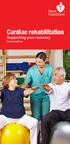 Cardiac rehabilitation Supporting your recovery Second edition A note about cardiac rehabilitation The National Heart Foundation of Australia and the World Health Organization recommend all patients who
American Heart Association. BLS Instructor Course. Written Examination. July 2003
 American Heart Association BLS Instructor Course Written Examination July 2003 Basic Life Support Instructor Exam Part I Please do not mark on this examination. Record the best answer on the separate answer
IN CASE OF EMERGENCY. Emergency Telephone Number 112
 IN CASE OF EMERGENCY Emergency Telephone Number 112 Police, Fire, Ambulance Dial 112 in case of fire, medical emergency, serious or life threatening traffic or other accident. Tell the operator: What has
BLS for Healthcare Providers Study Guide and Pretest
 BLS for Healthcare Providers Study Guide and Pretest Adult CPR 1-Rescuer CPR Sequence check for responsiveness if no response, activate 911 and get the AED open the airway look, listen, & feel for breathing
Presenters Alison Ellison Children s Healthcare of Atlanta Georgina Howard Therese McGuire Michael Tenoschok Georgia Department of Education
 CPR (Cardio Pulmonary Resuscitation) and AED (Automated External Defibrillator) Information August 29, 2013 Today s Session will begin at 3:30 PM While you are waiting, please do the following: Configure
Cardio-Pulmonary Resuscitation (CPR): A Decision Aid For. KGH Patients And Their Families
 Cardio-Pulmonary Resuscitation (CPR): A Decision Aid For KGH Patients And Their Families The goal of this pamphlet is to provide information about cardiopulmonary resuscitation (CPR) so you can be adequately
CASAID THE AIMS OF FIRST AID, INCIDENT ACTION PLAN, INITIAL ASSESSMENT AND THE RECOVERY POSITION. Airway must be open so oxygen can enter the body.
 CASAID THE AIMS OF FIRST AID, INCIDENT ACTION PLAN, INITIAL ASSESSMENT AND THE RECOVERY POSITION The Aims of First Aid The aims of first aid (the three Ps) are to: Preserve the casualty s life. Prevent
Anatomy and Physiology: Understanding the Importance of CPR
 Anatomy and Physiology: Understanding the Importance of CPR Overview This document gives you more information about the body s structure (anatomy) and function (physiology). This information will help
Heartsaver Pediatric First Aid CPR AED Online Part 1 (90-1434) Frequently Asked Questions (FAQs) As of March 25, 2014
 Heartsaver Pediatric First Aid CPR AED Online Part 1 (90-1434) Frequently Asked Questions (FAQs) As of March 25, 2014 General Information: Q: What is Heartsaver Pediatric First Aid CPR AED Online Part
BASIC LIFE SUPPORT REVISED STUDY GUIDE
 BASIC LIFE SUPPORT (Cardiopulmonary Resuscitation) REVISED STUDY GUIDE (2010 AHA Guidelines) NAME INSTRUCTOR COURSE DATE IT IS NOT THE INTENT OF THIS SUPPLEMENTAL INFORMATION PACKET TO REPLACE THE AMERICAN
Basic life support (BLS) Techniques
 module Basic life support (BLS) Techniques 1 01 04. Basic Cardio Pulmonary Resuscitation (CPR) 08. Adult basic life support sequence, according to European Resuscitation Guidelines 12. Recognition of cardiorespiratory
CPR /AED for Professional Rescuers
 CPR /AED for Professional Rescuers In-Depth Instructor Resource Contents C-A-B (Compression-Airway-Breathing) 1,3... 3 CPR Barriers... 10 Adult CPR 1,3,4... 15 Child CPR 2... 17 Infant CPR 2... 19 Special
19.109 AUTOMATED EXTERNAL DEFIBRILLATOR
 19.109 AUTOMATED EXTERNAL DEFIBRILLATOR References: American Heart Association Healthcare Provider (CPR/AED) Ohio Revised Code Chapter 2305.235 Immunity of Person Involved with Providing Automated External
Keeping your lungs healthy
 Keeping your lungs healthy A guide for you after spinal cord injury and other neurological conditions Regional Rehabilitation Program This booklet has been written by the health care providers who provide
U.S. ARMY MEDICAL DEPARTMENT CENTER AND SCHOOL FORT SAM HOUSTON, TEXAS 78234-6100 CARDIAC IMPAIRMENT SUBCOURSE MD0571 EDITION 100
 U.S. ARMY MEDICAL DEPARTMENT CENTER AND SCHOOL FORT SAM HOUSTON, TEXAS 78234-6100 CARDIAC IMPAIRMENT SUBCOURSE MD0571 EDITION 100 DEVELOPMENT This subcourse is approved for resident and correspondence
First Aid as a Life Skill. Training Requirements for Quality Provision of Unit Standard-based First Aid Training
 First Aid as a Life Skill Training Requirements for Quality Provision of Unit Standard-based First Aid Training New Zealand Qualifications Authority 2010 2 Index Introduction 3 Section One: Framework outline
Heart Attack Your quick guide
 Heart Attack Your quick guide Coronary heart disease is the UK s single biggest killer. For over 50 years we ve pioneered research that s transformed the lives of people living with heart and circulatory
Module 5 ADULT RECOvERY POSITION STEP 1 POSITION ThE victim
 Module 5 ADULT RECOVERY POSITION The recovery position is used in the management of victims who are unresponsive but have breathing and pulse. When an unresponsive victim is lying supine, the airway may
CPR & AED Awareness Survey
 CPR & AED Awareness Survey Created for: Philips Medical Systems & the American Heart Association SUBJECTS FOR QUESTIONNAIRE 400 SCREENER 500 AWARENESS AND KNOWLEDGE OF SCA, CPR, AED 600 EXPERIENCE WITH
Heart information. Cardiac rehabilitation
 Heart information Cardiac rehabilitation Contents 2 What is cardiac rehabilitation? 3 What are the benefits of cardiac rehabilitation? 4 Who should take part in cardiac rehabilitation? 4 When does cardiac
Adult Basic Life Support
 2 Adult Basic Life Support Introduction This chapter contains the guidelines for out-of-hospital, single rescuer, adult basic life support (BLS). Like the other guidelines in this publication, it is based
American Heart Association. Basic Life Support for Healthcare Providers
 American Heart Association Basic Life Support for Healthcare Providers Pretest ANNOTATED ANSWER KEY February 2001 This examination to be used only as a PRECOURSE TEST for BLS for Healthcare Providers Courses
In-hospital resuscitation. Superseded by
 6 In-hospital resuscitation Introduction These guidelines are aimed primarily at healthcare professionals who are first to respond to an in-hospital cardiac arrest and may also be applicable to healthcare
CPR for the Professional Rescuer
 American Red Cross Video CPR for the Professional Rescuer As a professional rescuer, you are a key part of the emergency medical service (EMS) system. Whether you are paid or volunteer, in your position
Emergency procedures instructions to farm staff
 Emergency procedures instructions to farm staff The first priority in the event of an emergency is for the safety of all people present. Emergency phone numbers Dial 111 for Fire/Police/Ambulance 1. Tell
What Are Arrhythmias?
 What Are Arrhythmias? Many people have questions about what the word arrhythmia means, and arrhythmias can be a difficult subject to understand. The text below should give you a better understanding of
Question-and-Answer Document 2010 AHA Guidelines for CPR & ECC As of October 18, 2010
 Question-and-Answer Document 2010 AHA Guidelines for CPR & ECC As of October 18, 2010 Q: What are the most significant changes in the 2010 AHA Guidelines for CPR & ECC? A: Major changes for all rescuers,
American Red Cross CPR Adult EXAMPLE ANSWER SHEET
 American Red Cross CPR Adult IMPORTANT: Read all instructions before beginning the exam. INSTRUCTIONS: Do not write on this exam. Mark all answers in pencil on the separate answer sheet as directed by
CHAPTER 1 DISASTER FIRST AID INTRODUCTION
 CHAPTER 1 DISASTER FIRST AID INTRODUCTION This chapter will cover the following topics: Introduction: The basic concepts of providing disaster first aid and the equipment required to safely respond to
CHAPTER 2 APPROACH TO THE INCIDENT
 CHAPTER 2 APPROACH TO THE INCIDENT Reassuring the casualty is very important in first aid and the best reassurance for both casualty and bystanders is a confident first aider taking decisive action. In
BLS PRETEST BASIC LIFE SUPPORT FOR HEALTHCARE PROVIDERS (CREATED BY LAST MINUTE CPR & FIRST AID)
 BLS PRETEST BASIC LIFE SUPPORT FOR HEALTHCARE PROVIDERS (CREATED BY LAST MINUTE CPR & FIRST AID) 1. THIS BLS FOR HEALTHCARE PROVIDERS COURSE IS GIVEN TO: a. Nurses, Doctors, Paramedics, & Healthcare Workers.
First Responder (FR) and Emergency Medical Responder (EMR) Progress Log
 First Responder (FR) and Emergency Medical Responder (EMR) Progress Log Note: Those competencies that are for EMR only are denoted by boldface type. For further details on the National Occupational Competencies
My Voice. Advance Care Plan
 My Voice Advance Care Plan A message from the Prince Edward Family Health Team... Since its beginning in 2006 the Prince Edward Family Health Team (PEFHT) has been striving to provide comprehensive, accessible
Automated External Defibrillator
 Automated External Defibrillator 1. INTRODUCTION An automated external defibrillator (AED) is used to treat victims who experience sudden cardiac arrest. It must only be applied to victims who are unconscious,
(Organization s Name)
 2 1 6 W A K E M A N P L A C E B R O O K L Y N, N E W Y O R K 1 1 2 2 0 W W W. A F O R U M F O R L I F E. O R G P H O N E 7 1 8 7 5 9 9 0 1 3 F A X 4 3 7 4 9 7 4 0 2 9 In association with the PROPOSAL FIRST
The purpose of this course is to outline the American Heart Association s guidelines for CPR, the use of AEDs, and the Heimlich maneuver.
 CPR Cardiopulmonary Resuscitation WWW.RN.ORG Reviewed May, 2016, Expires May, 2018 Provider Information and Specifics available on our Website Unauthorized Distribution Prohibited 2016 RN.ORG, S.A., RN.ORG,
2 CHECKING AN INJURED OR ILL ATHLETE
 American Red Cross 2 CHECKING AN INJURED OR ILL ATHLETE ~~~'1'H ~.. 2 CHECKING AN INJURED OR III ATHLETE Checking the scene for safety and checking an injured or ill athlete is the first action to take,
Why and how to have end-of-life discussions with your patients:
 Why and how to have end-of-life discussions with your patients: A guide with a suggested script and some basic questions to use The medical literature consistently shows that physicians can enhance end-of-life
First Aid Multiple Choice Test
 First Aid Multiple Choice Test Answer all 25 questions by circling the correct answer. This is an open-book test. Answers are contained in The Boy Scout Handbook. Patrol Troop 1. When making a 911 call,
Instructions For Use AED Trainer
 Instructions For Use AED Trainer PART NUMBER Copyright 2007 Cardiac Science Corporation. All rights reserved. The Automated External Defibrillator (AED) Trainer is a device for teaching basic AED rescue
Advance Health Care Planning: Making Your Wishes Known
 Page 1 of 26 Advance Health Care Planning: Making Your Wishes Known Page 2 of 26 What s Inside Why Health Care Planning Is Important... 2 What You Can Do... 4 Work through the advance health care planning
Allina Emergency Medicine Education Healthcare Provider. CPR Study Guide. American Heart Association 2010 Guidelines
 Allina Emergency Medicine Education Healthcare Provider CPR Study Guide American Heart Association 2010 Guidelines The American Heart Association strongly promotes knowledge and proficiency in BLS< ACLS
Student Workbook. CPR & First Aid. for Childcare Providers. Emergency Response for the School and Childcare Environment.
 Student Workbook CPR & First Aid for Childcare Providers Emergency Response for the School and Childcare Environment 2010 Guidelines Emergency Index 42 65 51 35 28 49 39 7 60 33 35 20 49 43 46 42 24 26
AUTOMATED EXTERNAL DEFIBRILLATORS (AEDs)
 UNIVERSITY of NORTH DAKOTA FINANCE & OPERATIONS POLICY LIBRARY AUTOMATED EXTERNAL DEFIBRILLATORS (AEDs) Policy 6.15, Automated External Defibrillators (AED) Responsible Executive: VP Finance & Operations
Orientation Guide www.lucas-cpr.com a product by JOLIFE 900080-00 RevB JOLIFE 2012
 Orientation Guide www.lucas-cpr.com a product by JOLIFE 900080-00 RevB JOLIFE 2012 Refer to the Instructions for Use for complete directions for use, indications, contraindications, warnings, precautions
JAC-CEN-DEL COMMUNITY SCHOOLS BLOODBORNE PATHOGENS UNIVERSAL PRECAUTIONS A BACK TO SCHOOL TRADITION
 JAC-CEN-DEL COMMUNITY SCHOOLS BLOODBORNE PATHOGENS UNIVERSAL PRECAUTIONS A BACK TO SCHOOL TRADITION UNIVERSAL PRECAUTIONS AGAINST BLOODBORNE PATHOGENS Employees working in a school system are potentially
Ancillary Staff Training
 Ancillary Staff Training Goals of Infection Prevention Protect the patients Protect the staff Prevent spread of diseases How Does The Virus Spread Between People? Direct contact through broken skin, mouth,
CPR 3A: Anyone Anytime Anywhere. A Project of the Singapore Heart Foundation s HeartSave Committee Chairman: Prof Anantharaman
 CPR 3A: Anyone Anytime Anywhere A Project of the Singapore Heart Foundation s HeartSave Committee Chairman: Prof Anantharaman Challenges to Promoting CPR Developing interest Need for CPR Manikin Duration
Part 1: Physiology. Below is a cut-through view of a human head:
 The Frenzel Technique, Step-by-Step by Eric Fattah, Copyright 2001 [email protected] This document should be in electronic form at: http://www.ericfattah.com/equalizing.html Feel free to distribute
Procedure 17: Cardiopulmonary Resuscitation
 Cardiopulmonary Resuscitation 349 Procedure 17: Cardiopulmonary Resuscitation Introduction Cardiopulmonary arrest (CPA) occurs when a patient s heart and lungs stop functioning. In children, CPA usually
2015 Interim Resources for BLS
 2015 Interim Resources for BLS Original Release: November 25, 2015 Starting in 2016, new versions of American Heart Association online courses will be released to reflect the changes published in the 2015
Asthma Triggers. What are they and what can be done about them?
 Asthma Triggers What are they and what can be done about them? This brochure has been developed for the community by Asthma Australia It provides information about: Asthma triggers What you can do about
Obstetric Emergencies
 Obstetric Emergencies Dr. Si Lay Khaing Senior Lecturer/ O&G Specialist Faculty of Medicine University of Malaya 15 th March 2014 Abstract Life Saving, The obstetric patient is unique in medicine as two
Health & Safety Executive & QCF Regulated First Aid Training Courses To Meet All Your First Aid Requirements.
 Crystal Clear 1 st Aid Training Ltd Unit 4D, Parkway Business Centre Parkway Rise Sheffield S9 4WQ Tel:- 07899033444 Email:- [email protected] Web:- Health & Safety Executive & QCF
First aid guidance note
 Document control information First aid guidance note Published document name: First-aid-gn.pdf Date issued: July 2012 Version: 2.0 Previous review dates: Next review date: Related documents: Governing
What to do during... Medical Emergencies
 What to do during... Calling 911 Reacting in an Emergency Performing CPR Providing Rescue Breathing Delivering Abdominal Thrusts Formulating an Emergency Action Plan Assembling Your First Aid Kit Preparing
Occupational Health & Safety. First Aid in Saskatchewan Workplaces
 Occupational Health & Safety First Aid in Saskatchewan Workplaces Occupational Health and Safety Division Table of Contents General Requirements...3 Exemptions...3 First Aid Training...3 First Aid Supplies...5
First aid for seizures
 First aid for seizures What is epilepsy? Epilepsy is a tendency to have repeated seizures that begin in the brain. For most people with epilepsy their seizures will be controlled by medication. Around
BASIC LIFE SUPPORT - ADULT
 BASIC LIFE SUPPORT - ADULT First Issued by/date BKW PCT May 2003 Issue Version Purpose of Issue/Description of Change 3 Policy reviewed. No changes in procedure or legislation since policy revised 12 months
Qigong. Ba Duan Jin. The Eight Pieces of Brocade
 Qigong Ba Duan Jin The Eight Pieces of Brocade by Col and g Hamilton Yiheyuan Martial Arts Contents Page Introduction 2 Preparation 2 1. Hold up the Sky 3 2. The Archer 4 3. Join Heaven and Earth 5 4a.
Training Manikin Requirements for American Red Cross Certification Courses
 Training Manikin Requirements for American Red Cross Certification Courses Introduction We are pleased to announce the release of the requirements for training manikins. These requirements apply to all
BLOOD BORNE PATHOGENS
 BLOOD BORNE PATHOGENS AIDS and other blood-borne pathogens such as Hepatitis B and C are deadly diseases that are present in today s society. All blood-borne pathogens are transmitted in blood and other
Responding to Emergencies
 Responding to Emergencies Comprehensive First Aid/CPR/AED Responding to Emergencies to Comprehensive First First Aid/CPR/AED Table of Contents About This Course xiv Health Precautions and Guidelines During
Purpose To guide registered nurses who may manage clients experiencing sudden or unexpected life-threatening cardiac emergencies.
 Emergency Cardiac Care: Decision Support Tool #1 RN-Initiated Emergency Cardiac Care Without Cardiac Monitoring/Manual Defibrillator or Emergency Cardiac Drugs Decision support tools are evidence-based
The American Heart Association released new resuscitation science and treatment guidelines on October 19, 2010.
 ACLS Study Guide The American Heart Association released new resuscitation science and treatment guidelines on October 19, 2010. Please read the below information carefully This letter is to confirm your
Get the Facts About Tuberculosis Disease
 TB Get the Facts About Tuberculosis Disease What s Inside: Read this brochure today to learn how to protect your family and friends from TB. Then share it with people in your life. 2 Contents Get the facts,
Off to the best start. Important information about feeding your baby
 Off to the best start Important information about feeding your baby mum s milk the best start for your baby What happens in your baby s first years has a big effect on how healthy he or she will be in
CHAPTER 6 HEAD INJURY AND UNCONSCIOUSNESS
 CHAPTER 6 HEAD INJURY AND UNCONSCIOUSNESS BRAIN INJURY Injury to the brain is one of the more serious outcomes that occur due to injury or illness. The first aider plays a major role in limiting damage
GENERAL HEART DISEASE KNOW THE FACTS
 GENERAL HEART DISEASE KNOW THE FACTS WHAT IS Heart disease is a broad term meaning any disease affecting the heart. It is commonly used to refer to coronary heart disease (CHD), a more specific term to
What is Obstructive Sleep Apnoea?
 Patient Information Leaflet: Obstructive Sleep Apnoea Greenlane Respiratory Services, Auckland City Hospital & Greenlane Clinical Centre Auckland District Health Board What is Obstructive Sleep Apnoea?
Ho Sin Sul. Defense against wrist grabs:
 Ho Sin Sul Ho Sin Sul are ways to escape from attackers who grab, choke or attempt some other form of assault, especially one where they get hold of your body or clothes. While these moves are a memorized
Automated External Defibrillators (AED) Program Oversight
 Automated External Defibrillators (AED) Program Oversight DISTRICT AED/HEALTH COORDINATOR 1. Coordinate school/district CPR/AED training 2. Work with schools to select and maintain CPR/AED trained personnel
How To Improve Drainage
 Rehabilitation Home Program Edema Exercises To Improve Drainage You will improve your lymph flow by doing a few exercises each day. These exercises are an important part of your home program. They may
Emergency Scenario. Chest Pain
 Emergency Scenario Chest Pain This emergency scenario reviews chest pain in a primary care patient, and is set up for roleplay and case review with your staff. 1) The person facilitating scenarios can
ADMINISTERING EMERGENCY OXYGEN
 FACT SHEET ADMINISTERING EMERGENCY OXYGEN Emergency oxygen can be given for many breathing and cardiac emergencies. It can help improve hypoxia (insufficient oxygen reaching the cells) and reduce pain
Basic First Aid for the Community and Workplace
 A M E R I C A N S A F E T Y & H E A LT H I N S T I T U T E Basic First Aid for the Community and Workplace Student Handbook This handbook serves as a reference guide for basic first aid. For the purpose
DO YOU LIVE IN A CARDIAC READY COMMUNITY?
 DO YOU LIVE IN A CARDIAC READY COMMUNITY? If someone in your community suffers a sudden cardiac arrest tomorrow, how likely is he or she to survive due to rapid access to life-saving treatment? Cities
Mandatory Training Service Training Plan. Course Content Outline from the Health and Safety Group
 Mandatory Training Service Training Plan Course Content Outline from the Health and Safety Group Course content overview covers the following subjects: 1. Health and Safety at Work 2. Control of Substances
Understanding Sleep Apnea
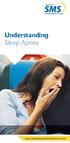 Understanding Sleep Apnea www.sleepmangementsolutions.com What is Obstructive Sleep Apnea (OSA)? OSA afflicts 20 million adult men and women in the U.S. People who have OSA stop breathing repeatedly during
C-A-B. Compressions: Push hard and fast on the center of. Airway: Tilt the victim s head back and lift the chin to
 Center fr Prfessinal Practice f Nursing CPR Guidelines fr Health-Care Prviders C-A-B Cmpressins: Push hard and fast n the center f the victim s chest Airway: Tilt the victim s head back and lift the chin
Information for Patients. Advance Health Care Directive Kit A guide to help you express your health care wishes
 Information for Patients Advance Health Care Directive Kit A guide to help you express your health care wishes Table of contents PART I - REQUIRED Selection of a decision maker Who will make health care
Kriya for Negative Mind
 Kriya for Negative Mind Bron: The Ten Light Bodies of Conciousness van Nirvair Singh Khalsa So So So So Hung Hung Hung Hung 3 MINUTES. Let s start with this pranayam. It s going to be a 4:4 breathing pattern.
WHEN COPD* SYMPTOMS GET WORSE
 WHEN COPD* SYMPTOMS GET WORSE *Includes chronic bronchitis, emphysema, or both. Boehringer Ingelheim Pharmaceuticals, Inc. has no ownership interest in any other organization that advertises or markets
A proper warm-up is important before any athletic performance with the goal of preparing the athlete both mentally and physically for exercise and
 A proper warm-up is important before any athletic performance with the goal of preparing the athlete both mentally and physically for exercise and competition. A warm-up is designed to prepare an athlete
American Red Cross First Aid EXAMPLE ANSWER SHEET
 American Red Cross First Aid Exam A IMPORTANT: Read all instructions before beginning the exam. INSTRUCTIONS: Do not write on this exam. Mark all answers in pencil on the separate answer sheet as directed
Emergency Medical Responder Safety and Wellness
 Chapter 2 Emergency Medical Responder Safety and Wellness OBJECTIVES DIRECTORY 1. Define key terms introduced in this chapter. 55-56 2. List indications of the potential for danger to yourself or others
Caring for Your PleurX Pleural Catheter
 Caring for Your PleurX Pleural Catheter A PleurX Pleural Catheter has been placed in your chest through a small incision in your skin into the pleural space (see picture below). This allows you to drain
The science of medicine. The compassion to heal.
 A PATIENT S GUIDE TO ELECTROPHYSIOLOGY STUDIES OF THE HEART The science of medicine. The compassion to heal. This teaching booklet is designed to introduce you to electrophysiology studies of the heart.