
Ancillary Staff Training
|
|
|
- Kathryn York
- 10 years ago
- Views:
Transcription
1 Ancillary Staff Training

2 Goals of Infection Prevention Protect the patients Protect the staff Prevent spread of diseases

3 How Does The Virus Spread Between People? Direct contact through broken skin, mouth, eyes with body fluids from someone who is sick or died of Ebola Caring for someone who is sick or died of Ebola Touching/washing body of someone who died of Ebola Poking yourself with a needle used on an Ebola patient Having sex (without condoms) with someone with Ebola

4 How Does The Virus Spread Between People? Contact with something contaminated with the body fluids of someone who is sick or died of Ebola Touching the dirty clothes or bed sheets of an Ebola patient Touching dirty cups/plates used by an Ebola patient Giving someone a shot with a needle that was used on an Ebola patient

5 Can the Virus Survive Outside The Body? Yes, the virus can survive in body fluids (vomit, urine, stool) outside the body for a long time Important to safely clean up spills of body fluids (blood, vomit, urine, stool) as soon as possible Important to burn soiled clothing/sheets/mattresses

6 How to Prevent Infections Do not go to work if you are sick Tell your co-workers not to go to work if they are sick Wash your hands Wear personal protective equipment Wear and remove personal protective equipment properly Needle safety

7 Why Should You Wash Your Hands Hand washing is THE MOST important measure to prevent infection The use of gloves DOES NOT replace the need for hand washing The virus can get on your hands as you remove your gloves Gloves can have holes and tears, even if none are visible

8 When Do You Wash Your Hands Before touching a patient Before putting on gloves After taking off gloves After touching the patient s surroundings After being exposed to a patient s body fluids (sweat, blood, vomiting, urine, stool) Before touching your face, mouth, or eyes

9 What Do You Use to Wash Your Hands Soap and water Always use soap and water if your hands are visibly dirty 0.05% Chlorine Hand sanitizer

10 Hand Washing Soap and Water

11 When you should Wear PPE BEFORE contact with EVERY patient

12 Things to Remember When You are Wearing PPE Always have a buddy check your PPE Put on the PPE slowly and carefully Once you enter the patient area, your gloves are contaminated! DO NOT touch your face DO NOT adjust or touch PPE DO NOT pick up objects (mobile phone, pens, books) Avoid touching surfaces or items whenever possible

13 Sequence for Putting on PPE 1) Take Off Jewelry 2) Wash hands 3) Face shield 4) Gown 5) Examination gloves

14 Put On PPE Put on PPE slowly and carefully DO NOT RUSH!

15 1. Remove Jewelry Remove ALL jewelry before putting on PPE Watches -Necklaces Bracelets Rings Earrings

16 2. Wash Your Hands Wash your hands immediately before putting on PPE Use Soap and water.or 0.05% chlorine.or hand sanitizer

17 3. Put on Face Shield Position shield over the face and secure with elastic band/ties Shield should rest just above your eyebrows Adjust to fit comfortably

18 4. Put on Gown Opening is in the back Secure at the neck and waist with ties

19 5. Put on Gloves Put on gloves last Select correct size Insert hands into gloves Extend the gloves over the gown cuffs

20 Take Off PPE

21 Taking Off PPE Take off PPE carefully and slowly! Always have a buddy watch you take off PPE DO NOT RUSH! Remove PPE just before you leave the patient area
22 Contaminated and Clean Areas of PPE Contaminated Outside/front Areas of PPE that have or are likely to have been in contact with infectious organism Clean Inside, back, ties on head and back Areas of PPE that are NOT likely to have been in contact with the infectious organism
23 Sequence for Taking Off PPE Gown Gloves Face shield

24 Wash your gloved hands with 0.5% chlorine and throw some chlorine solution on top of the tap
25 1. Take Off Gown Unfasten ties Peel gown away from neck and shoulder Turn contaminated outside toward the inside Throw it away
26 How To Take Off Gloves Outside of gloves is contaminated! Remove your gloves slowly Grasp glove at the palm with opposite gloved hand; peel off Hold removed glove in gloved hand Slide fingers of ungloved hand under remaining glove at wrist Peel glove off over first glove Throw away the gloves
27 How to Take Off the Face Shield Lift the elastic strap over your head Throw it away
28 Wash Your Hands Wash your hands immediately after removing PPE Use Soap and water OR Hand sanitizer OR 0.05% Chlorine
29 When Should You Change PPE AFTER each patient contact If PPE becomes very contaminated with blood or body fluids If PPE becomes damaged (gown, glove rips)
30 Scenario #1 You see a doctor putting on their protective gear wrong. What do you do?
31 Tell the person and their buddy! Alert the infection control director/supervisor of your facility Review together how to correctly put on PPE You are a team
32 Scenario #2 A patient walking in the hallway from triage vomits and some gets on your gown What should you do?
33 DON T PANIC! Do not touch anything. Wash gloved hands with 0.05% chlorine solution. With gloved hands, carefully remove gown, ensuring that outside of gown does not touch your body. Remove gloves. Wash hands with soap and water, or alcohol-based hand sanitizer, or 0.05% chlorine solution. Remove the face shield by grabbing the side of the head band and moving the shield downwards and away from the face. Wash hands with soap and water, or alcohol-based hand sanitizer, or 0.05% chlorine solution. Alert Infection Control supervisor
34 Scenario #3 A family wants to visit their 8 year old child who is a suspect Ebola What do you do?
35 Educate the family about the risk Pick one person from the family to visit (e.g. mother) Teach them how to put on PPE correctly Not to go near other patients Stay at least 3 feet away from patient, don t touch them Don t touch anything in the room Limit the time visitor is in the room
36 Scenario #4 A patient presents to triage with a fever and is not looking well, there is no nurse at triage What do you do?
37 Stay at least 3 feet from patient Have patient and family wait at triage Get a nurse or doctor to come evaluate patient
38 Needle Safety
39 Needle Safety Needle sticks and injuries from other sharp objects can cause infections (Ebola, HIV, Hepatitis) Limit testing or treatment that involve needles Use oral medications and fluids whenever possible No unnecessary testing (treat empirically for malaria) You CAN prevent injuries from needles and other sharp objects
40 Needle Safety If you must use a needle Always wear gloves When possible use retracting needles When using needles, work slowly and carefully
41 DO DO throw away needles immediately after use DO throw the uncapped needles away in a sharps container DO close, seal, and send sharps containers for incineration when they become ¾ full

42 DO NOT DO NOT recap a used needle DO NOT bend or break used needles or other sharp instruments DO NOT walk around with sharp objects DO NOT overfill sharps container
43 Injection Safety Once you use a needle and syringe on a patient, the needle AND the syringe are contaminated Needles and syringes are used for ONLY ONE patient Never give medications from the same syringe to more than one patient, even if the needle is changed
44 Injection Safety Never puncture a vial or any other container of liquid medications with a used syringe or needle Never use the same vial of medication for more than one patient
45 Mistakes Using Personal Protective Equipment
46 Personal Protective Equipment Personal protective equipment MUST be used correctly If you use PPE incorrectly while caring for a patient with Ebola, you risk getting infected You MUST take off PPE in the correct order If you take off PPE in the wrong order you risk getting infected
47 Find the PPE Mistake PROBLEM CORRECT ACTION
48 How Do You Fix the Problem PROBLEM CORRECT ACTION Healthcare worker is not wearing gloves while drawing blood. Healthcare worker is not wearing gloves or face shield while treating a patient.
49 PPE Mistakes PROBLEM Healthcare worker is not wearing gloves while drawing blood. Healthcare worker is not wearing gloves or face shield while treating a patient. CORRECT ACTION ALWAYS wear gloves when touching patients. CHANGE gloves between each patient. ALWAYS wear gloves and face shield when treating patients.
50 Find the PPE Mistake PROBLEM CORRECT ACTION
51 How Do You Fix the Problem PROBLEM Touching his face with gloved hands CORRECT ACTION Should take off gloves BEFORE taking off face mask Touching their gowns with bare hands
52 PPE Mistake PROBLEM Touching his face with gloved hands Should take off gloves BEFORE taking off face mask Touching their gowns with bare hands CORRECT ACTION Contaminated gloves should come off BEFORE taking off face mask Remove mask by pulling the elastic FROM THE BACK The gown is contaminated! DO NOT touch your gown with bare hands
53 Find the PPE Mistake PROBLEM CORRECT ACTION
54 Find the PPE Mistake PROBLEM Touching the outside of the glove with a bare hand while being removed CORRECT ACTION Gloves removed incorrectly
55 Find the PPE Mistake PROBLEM Touching the outside of the glove with a bare hand while being removed CORRECT ACTION Remove gloves correctly Gloves removed incorrectly Remove gloves correctly
56 The End
DO YOU WORK AROUND BLOOD OR BODY FLUIDS? Cal/OSHA s New Rules
 DO YOU WORK AROUND BLOOD OR BODY FLUIDS? Cal/OSHA s New Rules Labor Occupational Health Program University of California, Berkeley 1994 ACKNOWLEDGMENTS This booklet is a publication of the Labor Occupational
Guidance for the Selection and Use of Personal Protective Equipment (PPE) in Healthcare Settings
 Guidance for the Selection and Use of Personal Protective Equipment (PPE) in Healthcare Settings 1 : Program Goal Improve personnel safety in the healthcare environment through appropriate use of PPE.
Advice for Colleges, Universities, and Students about Ebola in West Africa For Colleges and Universities
 Advice for Colleges, Universities, and Students about Ebola in West Africa For Colleges and Universities Advice for Study Abroad, Foreign Exchange, or Other Education-related Travel Is it safe to travel
How to safely collect blood samples from persons suspected to be infected with highly infectious blood-borne pathogens (e.g.
 How to safely collect blood samples from persons suspected to be infected with highly infectious blood-borne pathogens (e.g. Ebola) Step 1: Before entering patient room, assemble all equipment (1 st part)
INFECTION CONTROL POLICY MANUAL
 Page 1 of 7 POLICY MANUAL Key Words: personal protective equipment, PPE, safety equipment, infection control, standard precautions Policy Applies to: All staff employed by Mercy Hospital. Credentialed
PROTECT YOURSELF PROTECT YOUR FAMILY PROTECT YOUR COMMUNITY from Ebola
 PROTECT YOURSELF PROTECT YOUR FAMILY PROTECT YOUR COMMUNITY from Ebola Things Everyone Should Know and Do gchv flipbook for Interpersonal Communication And Partners What are the signs and symptoms of Ebola?
Bloodborne Pathogens (BBPs) Louisiana Delta Community College
 Bloodborne Pathogens (BBPs) Louisiana Delta Community College 1 Bloodborne Pathogens Rules & Regulations Office of Risk Management (ORM) requires development of a bloodborne pathogens plan low risk employees
Safety FIRST: Infection Prevention Tips
 Reading Hospital Safety FIRST: Infection Prevention Tips Reading Hospital is committed to providing high quality care to our patients. Your healthcare team does many things to help prevent infections.
What Is. Norovirus? Learning how to control the spread of norovirus. Web Sites
 Web Sites Centers for Disease Control and Prevention (CDC) http://www.cdc.gov/norovirus/index.html Your Local Health Department http://www.azdhs.gov/diro/lhliaison/countymap.htm What Is Ocument dn Norovirus?
JAC-CEN-DEL COMMUNITY SCHOOLS BLOODBORNE PATHOGENS UNIVERSAL PRECAUTIONS A BACK TO SCHOOL TRADITION
 JAC-CEN-DEL COMMUNITY SCHOOLS BLOODBORNE PATHOGENS UNIVERSAL PRECAUTIONS A BACK TO SCHOOL TRADITION UNIVERSAL PRECAUTIONS AGAINST BLOODBORNE PATHOGENS Employees working in a school system are potentially
Leader s Guide E4017. Bloodborne Pathogens: Always Protect Yourself
 E4017 Bloodborne Pathogens: Always Protect Yourself 1 Table of Contents Introduction 3 Video Overview.3 Video Outline.4 Preparing for and Conducting a Presentation. 7 Discussion Ideas..8 Quiz..9 Quiz Answers...11
Ebola Treatment Centres - Preventing Infection
 Ebola Treatment Centres (ETC or CMC) Patient and staff flow Francis Chatelain And Michalis Papageorgiou Ebola introduction 2014 Control of infection and epidemic through isolation of Ebola Patients Patients:
Moving to a hospital or skilled nursing facility
 H Moving to a hospital or skilled nursing facility What to expect when you have MRSA (Methicillin-resistant Staphylococcus aureus) A booklet for patients, residents, family members, and caregivers About
Bloodborne Pathogens. Updated 1.21.13
 Bloodborne Pathogens Updated 1.21.13 Purpose OSHA s Blood-borne Pathogens Standard protects anyone with a job-related risk of contracting a blood-borne borne disease The standard outlines preventative
How can you protect yourself from infections?
 How can you protect yourself from infections? Your Infection Prevention Guide www.esrdncc.org Table of Contents Preventing an infection is an important part of your kidney care...3 Things you can do...4
VRE. Living with. Learning how to control the spread of Vancomycin-resistant enterococci (VRE)
 VRE Living with Learning how to control the spread of Vancomycin-resistant enterococci (VRE) CONTENTS IMPORTANT VRE is a serious infection that may become life-threatening if left untreated. If you or
CYTOTOXIC PRECAUTIONS A GUIDE FOR PATIENTS & FAMILIES
 Perth and Smiths Falls District Hospital Attention: Manager, Quality 60 Cornelia Street, West Smiths Falls, Ontario K7A 2H9 CYTOTOXIC PRECAUTIONS A GUIDE FOR PATIENTS & FAMILIES This guide has been prepared
Bloodborne Pathogens Program Revised July, 5 2012
 Bloodborne Pathogens Program Revised July, 5 2012 Page 1 of 16 Table of Contents 1.0 INTRODUCTION...3 1.1 Purpose...3 1.2 Policy.3 2.0 EXPOSURE CONTROL METHODS 4 2.1 Universal Precautions.4 2.2 Engineering
Use and Disposal of Sharps
 From Infection Prevention: A Reference Booklet for Health Care Providers 2001 EngenderHealth Use and Disposal of Sharps In health care settings, injuries from needles and other sharp items are the number-one
Standard Operating Procedure for Blood Borne Infectious Disease Control Measures at Calvin College
 Standard Operating Procedure for Blood Borne Infectious Disease Control Measures at Calvin College Clean up should be done by non-student employees and trained personnel only Cleaning Up BODY FLUIDS from
Tuberculosis and You A Guide to Tuberculosis Treatment and Services
 Tuberculosis and You A Guide to Tuberculosis Treatment and Services Tuberculosis (TB) is a serious disease that can damage the lungs or other parts of the body like the brain, kidneys or spine. There are
You. guide to tuberculosis treatment and services
 Adapted from TB and You: A Guide to Tuberculosis Treatment and Services with permission from Division of Public Health TB Control Program State of North Carolina Department of Health and Human Services
Bloodborne Pathogens. Scott Anderson CCEMTP. Materials used with permission from the Oklahoma State University
 Bloodborne Pathogens Scott Anderson CCEMTP Materials used with permission from the Oklahoma State University What is a Bloodborne Pathogen? Microorganisms that are carried in the blood that can cause disease
Sierra Leone Emergency Management Program Standard Operating Procedure for Safe, Dignified Medical Burials
 Sierra Leone Emergency Management Program Standard Operating Procedure for Safe, Dignified Medical Burials Approved By: Burial Pillar Date Approved: 24 February 2015 Version 2 Page 1 of 8 Table of Contents
Giving safe injections
 Giving safe injections A guide for nurses and others who give injections World Health Organization International Council of Nurses The World Health Organization (WHO) defines a safe injection to be one
Blood borne Pathogens
 Blood borne Pathogens What Are Blood borne Pathogens? Blood borne pathogens are microorganisms such as viruses or bacteria that are carried in blood and can cause disease in people. Types of Blood borne
GENERAL INFORMATION. Hepatitis B Foundation - Korean Chapter Pg. 3 www.hepb.org
 GENERAL INFORMATION What is hepatitis B? Hepatitis B is the world's most common liver infection that can lead to cirrhosis and liver cancer. It is caused by the hepatitis B virus (HBV), which attacks and
MRSA. Living with. Acknowledgements. (Methicillin-Resistant Staphylococcus aureus)
 How can I keep myself healthy? Hand washing and use of an alcohol-based hand sanitizer are the primary way to prevent acquiring or transmitting bacteria. If you get a cut or scrape, wash it well with soap
Cytotoxic Precautions at Home A Guide for Cancer Patients and Families
 Cytotoxic Precautions at Home A Guide for Cancer Patients and Families Your cancer treatment... 1 What are cytotoxic precautions?... 1 What body fluids are cytotoxic?... 1 How do I handle my body wastes?...
Methodist Le Bonheur Healthcare. Extern Orientation. Posttest Packet
 Methodist Le Bonheur Healthcare Extern Orientation Posttest Packet Having read the information on the Mission, Vision, Values and Expected Actions/Behaviors, write a brief description of how you will incorporate
Hygiene and Infection. Control advice in the home
 Introduction The Infection Control Department Mid-Western Regional Hospital, Ennis, wrote this booklet with Clare Primary Community and Continuing Care and C-Diff Patients and Families Group. This booklet
Waste Management Policy
 Waste Management Policy Revised April 2013 1 Contents Page Content Page No. Clinical Waste 3 - The handling and disposal of Clinical and Soiled 3 - Policy 3 - Warning - The collection of Clinical Waste
INFECTION CONTROL PRECAUTIONS
 INFECTION CONTROL PRECAUTIONS Outline Standard Precautions Droplet Precautions Contact Precautions Airborne Precautions References STANDARD PRECAUTIONS Use Standard Precautions, or the equivalent, for
POLICY & PROCEDURE: SAFE HANDLING OF SHARPS & NEEDLE STICKS
 POLICY & PROCEDURE: SAFE HANDLING OF SHARPS & NEEDLE STICKS File Name: SAFESHARPSPP2013 Revision: 2 Date of Issue: Person Responsible: Edel Niland 1.0 POLICY Dublin Institute of Technology (DIT) endeavours
Management Plan For Control of Blood-borne Pathogens, Infectious Wastes and Other Potentially Hazardous Biological Agents
 Management Plan For Control of Blood-borne Pathogens, Infectious Wastes and Other Potentially Hazardous Biological Agents 1.0 Executive Summary 1.1 The Bloodborne Pathogen standard, initiated by OSHA,
BODY SUBSTANCE ISOLATION (BSI): THE STANDARD OF CARE
 CRAIG HOSPITAL POLICY/PROCEDURE Approved: NPC, IC, MEC, P&P 05/06 Effective Date: 02/88 P&P 06/09 Attachments: Revised Date: 05/03, 04/06 Decision Tree for Isolation Precautions Comments on Specific Diseases
Sterile Dressing Change with Tegaderm CHG for Central Venous Catheter (CVC)
 Sterile Dressing Change with Tegaderm CHG for Central Venous Catheter (CVC) The dressing protects your catheter site. It also helps prevent infection at the site. Keep your dressing clean and dry at all
Hazardous Precautions. Prepared By: Hazardous Precautions Working Group Updated: March 2014
 Hazardous Precautions Prepared By: Hazardous Precautions Working Group Updated: March 2014 1 What are Hazardous Medications? They are therapeutic agents that are often used in the treatment of: cancer,
Risk assessment and needlestick injuries
 40 Risk assessment Introduction The health of workers, particularly those in the health and welfare sectors, is at risk from exposure to blood-borne pathogens at work, often through an injury sustained
Patient Information Sheet
 Healthcare Worker exposure to a patient s blood What is a healthcare worker exposure? Patient Information Sheet Occasionally, health care workers come into contact with the blood or body fluids of their
To provide direction for the safe handling, administration and disposal of hazardous drugs.
 Subsection: MEDICATION Related terms: Cytotoxic Drugs, Antineoplastic Drugs Authorized by: Clinical Directors CS-04-02-01 Page 1 of 9 Date Established: October 2006 Date For Review: September 2014 Dates
Attachment D Infection Control Policy METHODS OF IMPLEMENTATION AND CONTROL
 Attachment D Infection Control Policy METHODS OF IMPLEMENTATION AND CONTROL OSHA requires that the ECP include a schedule and method of implementation for the various requirements of the standard. The
Healthcare Waste Management Training
 WHO Regional Office for Europe Healthcare Waste Management Training Module 5 Sharps: Handling & Mitigation Measures Content Introduction Needle Stick accidents: Tanzania Mitigation measures Safer design
Black Hills Healthcare System
 Black Hills Healthcare System Methicillin Resistant Staphylococcal Aureus (MRSA) Patient and Family Information What is MRSA? Staphylococcus Aureus, often referred to simply as staph, is a bacteria commonly
Injecting Inside the Mouth
 Injecting Inside the Mouth 135 9 CHAPTER It is possible to treat a tooth without pain. You do this with an injection of local anesthetic. You must inject near the nerve, so to give good injections, you
Care of Your Hickman Catheter
 Care of Your Hickman Catheter Johns Hopkins Kimmel Cancer Center, Revised 7/11 Contents What is a Hickman Catheter? Page 3 Does the Catheter Limit My Activities? Page 4 How Do I Care for My Catheter? Page
Tell your doctor about all the medicines you take, including prescription and nonprescription medicines, vitamins, and herbal supplements.
 SOMAVERT pegvisomant for injection PATIENT INFORMATION SOMAVERT (SOM-ah-vert) (pegvisomant for injection) Read the patient information that comes with SOMAVERT before you start using it and each time you
INFECTION CONTROL POLICY
 INFECTION CONTROL POLICY Infection control is the name given to a wide range of policies, procedures and techniques intended to prevent the spread of infectious diseases amongst staff and service users.
The Hepatitis B virus (HBV)
 The Hepatitis B virus (HBV) There are 400 million people in the world who live with chronic hepatitis B, including France. Most people don t even know they are infected. But there are several important
Environmental Management of Staph and MRSA in Community Settings July 2008
 Page 1 of 7 Environmental Management of Staph and MRSA in Community Settings July 2008 Questions addressed on this page What are Staph and MRSA? How is Staph and MRSA spread? What is the role of the environment
This guide is prepared by the Occupational Safety and Health Branch, Labour Department. This edition March 2010
 This guide is prepared by the Occupational Safety and Health Branch, Labour Department This edition March 2010 This guide is issued free of charge and can be obtained from offices of the Occupational Safety
How to Care for your Child s Indwelling Subcutaneous Catheter
 The Emily Center How to Care for your Child s Indwelling Subcutaneous Catheter Procedure/Treatment/Home Care Si usted desea esta información en español, por favor pídasela a su enfermero o doctor. #1054
Training on Standard Operating Procedures for Health Care Waste Management Swaziland 12 May, 2011
 Training on Standard Operating Procedures for Health Care Waste Management Swaziland 12 May, 2011 Safe Infectious Waste Handling and Transport Objective Waste Overview Roles and Responsibilities of Waste
EXPOSURE CONTROL PLAN (sample) 1 Child Care Directors and Employers
 EXPOSURE CONTROL PLAN (sample) 1 Child Care Directors and Employers The Model Exposure Control Plan is intended to serve as an employer guide to the OSHA Bloodborne Pathogens standard. A central component
1-800-862-2731 Administration of Meropenem For Child
 1 Drug Name: _Meropenem 1-800-862-2731 Administration of Meropenem For Child Dosage: milligrams every hours over 5 minutes Key Points: FLUSHING: Meropenem Heparin flush 1. Always wash your hands with an
www.hepinfo.ie Are you Hep C aware? awareness information support prevention To find out more visit
 Are you Hep C aware? awareness information support prevention To find out more visit www.hepinfo.ie What is Hepatitis C? Hepatitis C is a viral infection that affects the liver, causing it to become inflamed
INSTITUTIONAL POLICY AND PROCEDURE (IPP) Department: Manual: Section:
 HOSPITAL NAME INSTITUTIONAL POLICY AND PROCEDURE (IPP) Department: Manual: Section: TITLE/DESCRIPTION POLICY NUMBER HANDLING OF H AZARDOUS DRUGS EFFECTIVE DATE REVIEW DUE REPLACES NUMBER NO. OF PAGES APPROVED
THE A, B, C S OF HEPATITIS. Matt Eidem, M.D. Digestive Health Associates of Texas 1600 Coit Road Suite #301 Plano, Texas 75075 (972) 867-0019
 THE A, B, C S OF HEPATITIS Matt Eidem, M.D. Digestive Health Associates of Texas 1600 Coit Road Suite #301 Plano, Texas 75075 (972) 867-0019 WHAT IS HEPATITIS? Hepatitis means inflammation of the liver
Care for your child s Central Venous Catheter (CVC)
 Care for your child s Central Venous Catheter (CVC) This booklet is intended for general informational purposes only. You should consult your doctor for medical advice. Please call the clinic or your home
GUIDELINES TO PREVENT TRANSMISSION INFECTIOUS DISEASES IN SCHOOLS
 GUIDELINES TO PREVENT TRANSMISSION OF INFECTIOUS DISEASES IN SCHOOLS May 1991 Precautions, Procedures and Instructions for Handling Body Fluids DUVAL COUNTY PUBLIC SCHOOLS CONTENTS PAGE Introduction...
PATIENT GUIDE. Care and Maintenance Drainage Frequency: Max. Drainage Volume: Dressing Option: Clinician s Signature: Every drainage Weekly
 PATIENT GUIDE Care and Maintenance Drainage Frequency: Max. Drainage Volume: Dressing Option: Every drainage Weekly Clinician s Signature: ACCESS SYSTEMS Pleural Space Insertion Site Cuff Exit Site Catheter
C. difficile Infections
 C. difficile Infections Introduction C. difficile is a type of bacteria that can cause diarrhea and infection of the colon. This bacterium is more likely to infect patients at hospitals and other healthcare
Brock University Facilities Management Operating Procedures
 Subject: Bodily Fluid Clean-Up Number: FMOP 2-3 Approval: Executive Director Issue Date: 22 Sep 08 Responsibility: Manager Custodial Services Review Period: 2 Years PROCEDURES FOR BODILY FLUID CLEAN-UP
WHY ARE WE HERE? OSHA BB Pathogen standard. The more you know, the better you will perform in real situations!
 WHY ARE WE HERE? OSHA BB Pathogen standard anyone whose job requires exposure to BB pathogens is required to complete training employees who are trained in CPR and first aid The more you know, the better
Bloodborne Pathogens
 Bloodborne Pathogens Learning Objectives By the end of this section, the participant should be able to: Name 3 bloodborne pathogens Identify potentially contaminated bodily fluids Describe 3 safe work
FLORENCE TOWNSHIP BOARD OF EDUCATION FILE CODE: 4112.4/4212.4 Florence, New Jersey
 FLORENCE TOWNSHIP BOARD OF EDUCATION FILE CODE: 4112.4/4212.4 Florence, New Jersey Regulation Exposure Control Administration BLOODBORNE PATHOGENS A. The district safety and health program officer, district
Bloodborne Pathogens. San Diego Unified School District Nursing & Wellness Program August 2013
 Bloodborne Pathogens San Diego Unified School District Nursing & Wellness Program August 2013 Why Another In-service?? Cal/OSHA mandates that employees with occupational exposure are informed at the time
Standard Operating Procedure for Dacarbazine in Animals
 Standard Operating Procedure for Dacarbazine in Animals 1. Health hazards Dacarbazine, also known as DTIC, DIC, and Imidazole Carboxamide, is an antineoplastic chemotherapy drug used in the treatment of
Infection Control Course
 Infection Control Course Division of Health Service Regulation Division of Public Health Center for Aide Regulation and Education Adult Care Licensure Section (2) Preface (3) Infections In Long Term Care
4. Infection control measures
 4. Infection control measures Apart from general hygienic practices and vaccination, staff of institutions should also adopt specific infection control measures against communicable diseases. The measures
Corporate Safety Infection Prevention Employee Health
 Corporate Safety Infection Prevention Employee Health This self-directed learning module contains information you are expected to know to protect yourself, our patients, and our guests. Target Audience:
Precautions for Handling and Disposal of. Dead Bodies
 Precautions for Handling and Disposal of Dead Bodies Department of Health Hospital Authority Food and Environmental Hygiene Department The 10 th edition, 2014 If you have any comment or enquiry, please
Managing Bloodborne Pathogens Exposures
 Managing Bloodborne Pathogens Exposures House Staff Orientation 2015 Phillip F. Bressoud, MD, FACP Associate Professor of Medicine and Executive Director Campus Health Services University of Louisville
Bloodborne Pathogens, Infection Control
 Bloodborne Pathogens, Infection Control INTRODUCTION Protecting the patients and clients you care for and protecting yourself are two of your primary responsibilities when you are working as a Certified
PPE Donning and Doffing Ebola Patients
 PPE Donning and Doffing Ebola Patients These are standard Nebraska Biocontainment Unit Personal Protective Equipment procedures. These are developed to protect against Category A agents. Therefore, they
BLOOD BORNE PATHOGENS
 BLOOD BORNE PATHOGENS AIDS and other blood-borne pathogens such as Hepatitis B and C are deadly diseases that are present in today s society. All blood-borne pathogens are transmitted in blood and other
X-Plain Preparing For Surgery Reference Summary
 X-Plain Preparing For Surgery Reference Summary Introduction More than 25 million surgical procedures are performed each year in the US. This reference summary will help you prepare for surgery. By understanding
Sanitary Food Preparation & Safe Food Handling
 70 Feeding Infants 10 Sanitary Food Preparation & Safe Food Handling Babies are more susceptible to bacteria than older children, and unsanitary food conditions can cause serious infections. General cleanliness,
How To Care For A Sick Person
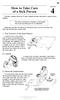 39 How to Take Care of a Sick Person Sickness weakens the body. To gain strength and get well quickly, special care is needed. Medicines are often not necessary. But good care is always important. The
INFLUENZA (FLU) Flu and You
 Influenza (Flu) What is the flu? The flu is an illness caused by flu viruses. The flu may make people cough and have a sore throat and fever. They may also have a runny or stuffy nose, feel tired, have
Clinical Waste Management & Sharps Injury Prevention. Clinical Skills
 Clinical Skills Clinical Waste Management and Sharps Injury Prevention Clinical Skills and Simulation Team Cardiff and Vale Waste Management Team Aims & Outcomes Aims & Outcomes The aim of this module
Exercise After Breast Surgery. Post Mastectomy Therapy
 Exercise After Breast Surgery Post Mastectomy Therapy Dear Patient, Breast cancer is a journey and you have made it this far successfully. This booklet will help you continue your journey to recovery.
SAFE HANDLING OF HAZARDOUS MEDICATIONS. Cytotoxic and Non-Cytotoxic. Winnipeg Regional Health Authority Policy # 110.160.010
 SAFE HANDLING OF HAZARDOUS MEDICATIONS Cytotoxic and Non-Cytotoxic Winnipeg Regional Health Authority Policy # 110.160.010 By the end of this presentation staff should be able to 1. Understand what information
Cholera Prevention and Control: Introduction and Community Engagement. Module 1
 Cholera Prevention and Control: Introduction and Community Engagement Module 1 Introduction This guide instructs how to prevent cholera illnesses and deaths in your communities. These slides and modules
Table of Contents. Before admission to hospital... 2. The hospital setting... 2. During your stay in hospital... 2. Before you leave the hospital...
 Table of Contents Page Before admission to hospital... 2 The hospital setting... 2 During your stay in hospital... 2 Before you leave the hospital... 4 The discharge summary... 4 Resources... 5 You, as
Hazardous Drugs Spill Kit
 Hazardous Drugs Spill Kit About the Joint Venture Baxter Pharmacy Services and CRG Healthcare have come together to produce the Hazardous Drugs Spill Kit Baxter Pharmacy Services Provides aseptically prepared
Agency RN Orientation: Hospital Safety Exam
 Agency RN Orientation: Hospital Safety Exam Please record your answers on the attached answer sheet. 1. The Patient s Rights and Responsibility brochure should be given to the patient: a. before a test
Eptoms of the EVD (Elu Virus) In West Africa
 Technical Alert No. 14-15 Issue Date 03 Sept 2014 TECHNICAL ALERT No. 14-15 Ebola Virus 1. Introduction 1.1. As has been widely reported, there is currently an outbreak of Ebola Virus Disease (EVD or Ebola)
NIH Clinical Center Patient Education Materials Giving a subcutaneous injection
 NIH Clinical Center Patient Education Materials What is a subcutaenous injection? A subcutaneous injection is given in the fatty layer of tissue just under the skin. A subcutaneous injection into the fatty
OCCUPATIONAL HEALTH, DISABILITY AND LEAVE SECTOR MEASURES TO MINIMIZE EXPOSURE TO BLOODBORNE PATHOGENS AND POST-EXPOSURE PROPHYLAXIS POLICY
 UNIVERSITY OF OTTAWA OCCUPATIONAL HEALTH, DISABILITY AND LEAVE SECTOR MEASURES TO MINIMIZE EXPOSURE TO BLOODBORNE PATHOGENS AND POST-EXPOSURE PROPHYLAXIS POLICY Prepared by the Occupational Health, Disability
Get the Facts About. Disease
 Get the Facts About TB TUBERCULOSIS Disease What s Inside: 3 PAGE Get the facts, then get the cure 4 PAGE 9 PAGE 12 PAGE Learn how TB is spread Treatment for TB disease Talking to family and friends about
High Dose Radioactive Iodine (I-131) Therapy for Treatment of Thyroid Cancer
 12 High Dose Radioactive Iodine (I-131) Therapy for Treatment of Thyroid Cancer Please arrive 15 minutes early to allow for parking and registration. If you have questions or need to cancel your appointment
Staying on Track with TUBERCULOSIS. Medicine
 Staying on Track with TB TUBERCULOSIS Medicine What s Inside: Read this brochure to learn about TB and what you can do to get healthy. Put it in a familiar place to pull out and read when you have questions.
HEPATITIS A, B, AND C
 HEPATITIS A, B, AND C INTRODUCTION Hepatitis is a medical term that means infection and inflammation of the liver, and hepatitis is caused by infection with a virus. There are seven types of hepatitis,