
500 TRANSCORTICAL ANESTHESIAS PERFORMED AS A FIRST-LINE TREATMENT: RESULTS
|
|
|
- Laurence Green
- 9 years ago
- Views:
Transcription
1 ORAL SURGERY PERIODONTICS RESTORATIVE ENDODONTICS PROSTHESIS BIOLOGICAL SCIENCES PATHOLOGY IMPLANTOLOGY PHARMACOLOGY MISCELLANEOUS PAEDIATRIC ODONTOLOGY DENTOFACIAL ORTHOPAEDICS ALAIN VILLETTE (*) 500 TRANSCORTICAL ANESTHESIAS PERFORMED AS A FIRST-LINE TREATMENT: RESULTS Concerning a local anesthetic technique. SUMMARY As with all anesthetic techniques, transcortical anesthesia relies on anatomical, physiological and histological bases. Its fundamental principle and the clinical data supporting it lead us to think that it might be beneficial in replacing the majority of other techniques. In fact, a study by 3 dental surgeons on 500 first-line transcortical anesthetic procedures confirms this potentiality and allows us to highlight its main benefits: - immediate anesthesia of several (2 to 6) maxillary or mandibular teeth with a single vestibular injection (no lingual or palatal injection) ; - elimination of numbness of the cheek or the lip; - use of concentrated vasoconstrictor without risk of necrosis, allowing the solution to immediately anesthetise teeth with pulpitis. Key words: anesthesia, transcortical, intraosseous, vasoconstrictor (*) Doctor of odontological sciences WHY PERFORM FIRST-LINE TRANSCORTICAL ANESTHESIA ON THE MANDIBLE? To eliminate the frequent need for Spix anesthesia and achieve an immediate anesthetic effect (1, 4, 5, 6, 7). With the exception of surgery on impacted inner wisdom teeth, To easily anesthetise a mandibular molar with pulpitis (12, 13,15). To avoid injecting the lingual mucosa attached to the cortical bone. To anesthetise the incisor-canine block with one single injection point. To reduce the amount injected (1). WHY PERFORM FIRST-LINE TRANSCORTICAL ANESTHESIA ON THE MAXILLARY? To eliminate the usual sensation of numbness felt after an infiltration anesthesia (1). LE CHIRURGIEN-DENTISTE DE FRANCE- N 1131/ JULY 2003

2 To eliminate (even for an extraction) palatal anesthesia, which is painful and sometimes causes necrosis. To be able to anesthetise four or six teeth with a single injection. To achieve an immediate anesthetic effect (14). To reduce the amount injected (5). All these potentialities are workable and entirely understandable when one analyses the principle on which transcortical anesthesia is based. anesthesia (intraosseous or intradiploic) consists of injecting, through the cortical bone, the anesthetic solution into the spongy bone surrounding the teeth. Area covered by transcortical anesthesia that the anesthetic effect is immediate as for intraligamentary and intraseptal anesthesia; that anesthesia of the soft tissues (cheek, lips) is eliminated; that the number of teeth anesthetised is directly proportional to the amount injected (allowing for individual variations). Average time taken to perform the gingival anesthesia: seconds Number of rotation cycles: 2,1 Total time taken to perform the intraosseous anesthesia: 2.29 mn Average amount injected: 0.59 cartridge. Palatal and lingual anesthesias can be eliminated thanks to histological and physiological characteristics of the bone tissue (cortical and spongy). Patients Table 1: 247 anesthesias in the upper jaw Category Variations Cases % Nb Man Woman, followed by intraligamentary The bone is formed of osteons centred on the Havers canals, which are themselves linked by intercommunicating channels, enabling transfer between the medulla and the superjacent periosteum. As a result of this, the anesthesia injected into the medulla will cross the cortical bone and anesthetise the periosteum and the attached mucosa, covering it. We know that the consequences of ischaemia are dependent on its duration and intensity. The composition of the spongy bone (trabeculations occupied by blood vessels and possibly by fatty tissue) means that anesthetic containing vasoconstrictors will not have the same harmful effects as it sometimes has when injected into the ligament or the papilla (fibrous tissue that is not well-irrigated). As a result, the transcortical technique enables the use of vasoconstrictor at a level of 1/100,000,000 th without risk of necrosis, allowing the solution to immediately anesthetise teeth with pulpitis. All these features taken together lead us to prefer transcortical anesthesia when we require an immediate effect, which is less uncomfortable for the patient, more effective and more profitable for the practitioner. The technique is only limited by the mechanical impossibility of crossing the cortical bone (e.g. if it is too thick or too hard). In these very rare cases (approximately 4%), the preferred choice would have to be intraligamentary anesthesia with its associated limits, which include, in particular, the elimination of anesthetic at a level of 1/100,000 th % % % % % - Infected tooth % % % % % Perforation of the cortical bone Without withdrawal % After withdrawal, and % purge % Anesthetic used Adrenaline at 1/200, % % Quantity injected 1/2 cartridge % % % Patient jumped upon the % injection % Post-operative sensitivity ne % % % Post-operative repercussions Necrosis %

3 Category Variations Cases number Patients Average time taken to perform the gingival anesthesia: seconds Number of rotation cycles: 3.26 Total time taken to perform the intraosseous anesthesia: 2.46 mn Average amount injected: 0.59 cartridge. MEANS USED Anesthesics: articaine solution at 4 % with 1/200,000 th or 1/100,000 th of adrenaline. Needles: 40-hundredths "Transcort" 12 mm. Equipment of perforation and injection: QuickSleeper. Results (Tables 1, 2 and 3) Man Woman + intraligamentary - Infected tooth Perforation of the cortical bone Without withdrawal After withdrawal and purge Anesthetic used Adrenaline at 1/ Quantity injected Patient jump Vincent sign Post-operative sensitivity 1/2 cartridge ne % % % % % % % % % % % % % % % % % % % % % % % % l 0.35 % Post-operative repercussions Necrosis % L SPONGY E BONE C H I R U Table 2: 282 anesthesias performed in the mandible ANALYSIS OF RESULTS FIRST STEP: GINGIVAL ANESTHESIA This anesthesia can be completely painless (without surface anesthesia) if the practitioner maintains complete control of the penetration of the needle (support point) and if the injection is very gradual (foot-controlled electronic injection). Average time taken to perform gingival anesthesia is 32 seconds without application of surface anesthetic. SECOND STEP: PERFORATION OF THE CORTICAL BONE This is completely painless, as the cortical bone is not innervated. The number of rotation cycles is greater in the mandible than in the jawbone: 2.11 & 3.26 (+ 1.15). This is the logical result since the mandibular cortical bone is thicker than the maxillary cortical bone. Average duration of the perforation time: given that between each rotation of one second there is a rest time of one second, we can say that the perforation of a hard cortical bone lasts on average for 2.69x2 seconds, or 5.38 seconds. When the cortical bone is thick, it is necessary to purge the needle in order to avoid pain during injection. This purge took place in 7.29% of cases in the jawbone and 18.09% of cases in the mandible, which is logical considering the different thicknesses of the cortical bone. THIRD STEP: INJECTION IN THE This is done slowly and gradually in order to remain below the pain threshold at all times. CHIRURGIEN-DENTISTE DE FRANCE- Nº 1131/ JULY 2003

4 Table 3: 529 anesthesias, global assessment Category Variations Cases Nb % Patients Man Woman % % + intraligamentary Infected tooth % 3.40 % % 10.21% % % % % Perforation of the Without withdrawal % cortical bone After withdrawal and purge % Blocked needle % Anesthetic used Adrenaline at 1/200, % Adrenaline at 1/100, % Quantity injected 1/2 cartridge % % % Patient jump % % Post-operative ne % sensitivity % % Post-operative Necrosis % repercussions Average time taken to perform the gingival anesthesia: seconds Number of rotation cycles: 2.69 Total time taken to perform the intraosseous anesthesia: 2.38 mn Average amount injected: 0.59 cartridge This varies from patient to patient and depends on the bone density. In fact, the spongy bone is sensitive to exaggerated pressure. In a bone that is of higher density, it is therefore necessary to inject more slowly than would be necessary for a bone with larger trabeculations. The high pressure engendered at the beginning of the injection in a higher-density bone makes the patient plus transcortical anesthesia) taken that is still on average below 3 minutes (2 minutes 37). The anesthetic used most often is Articaine with 1/200,000th adrenaline (80.91 %), the dosage of 1/100,000th being reserved for teeth with pulpitis and infected teeth (tissue that is congestive or in acidosis). te that in 85.26% of cases, the injection is done without withdrawal of the needle from the cortical bone. The other cases require the needle to be purged. The blocked needle rate was still 0.81% in the jawbone and 2.48% in the mandible for the same reason thickness of the cortical bone. The average rate of needles changed was 1.70%, which is very low. jump (the jump is more often due to reflex than pain). It Recorded post-op side effects occurred in 8.10% of maxillary procedures and 9.93% of mandibular procedures. POST-OPERATIVE SIDE-EFFECTS These can be divided into two categories: Most of the time, they are non-existent since The total time taken to perform anesthesia depends gingival anesthesia is performed fully within the particularly on the amount injected and the speed of the gum and perforation of the cortical bone is effected injection. In the majority of cases, a half-cartridge is fully within the bone. Those few side-effects that injected (the average quantity injected is 0.59% of a have been observed are due to thick cortical bones, cartridge). We obtain a total time (gingival anesthesia which generate a more significant volume of bone chips after perforation. LE CHIRURGIEN-DENTISTE DE FRANCE- N 1131/ JULY 2003 Immediate post-op side effects These consist in the patient s perception of a tachycardia. This means that intraosseous anesthesia can be compared to an intravenous injection, which is technically impossible. This transitory tachycardia does not have any general consequences (2, 3, 7, 9). It is a good idea to warn the patient, before administering the anesthesia, so that a secretion of endogenous catecholamines does not add to the action of the vasoconstrictor.

5 This brings about a small inflammation of the gum, causing sensitivity upon palpitation. These few side-effects are usually located in the mandible (3.55% as opposed to 2.83% in the jawbone), this difference being due again to the fact that the maxillary cortical bone is less thick. STUDY OF PERFORATION POINTS In the upper jaw: retrograde diffusion (in distal) of the anesthetic in relation to the injection point is at least two teeth. This information enables us to inject away from the teeth to be treated. The injection of a cartridge of anesthetic between teeth 5 and 6, for example, enables treatment of 7, 6, 5, 4, 3 and 2 most of the time. The injection of a cartridge at the level of the interincisor point enables anesthesia of the entire incisor-canine block of the jawbone. In the mandible: retrograde diffusion is only one tooth (as a result of innervation and Table 4: Anesthesia performed in the upper jaw Number of perforation sites Number of anesthesias performed Perforation site Table 5: Anesthesia performed in the mandible Number of perforation sites Number of anesthesias performed Perforation site unidirectional efferent irrigation), which means that the injection point must be brought back towards the teeth to be treated. Injection in distal, with relation to the tooth to be treated, is not absolutely necessary. An injection between teeth 6 and 7 will enable treatment of 6 and 7. te that after the injection of a sufficient quantity (approximately one entire cartridge), we can sometimes observe (24.11 %) labiomental anesthesia identical to that achieved with a Spix injection. However, the duration of this anesthesia will only be between one hour and an hour and a quarter. CONCLUSION In addition to the clinical benefits that do not appear in the tables, meaning the suppression of the anesthesia of the soft tissues, of the lingual and palatine anesthesia, and the immediacy of the anesthesia, the results of this study show that transcortical anesthesia: has a success rate of 96% (+4% intraligamentary). i.e., a total of 100%; has an average realisation time of 2 minutes 37 seconds; does not entail infiltration in distal as an imperative; has insignificant post-op side-effects; is indeed representative of a technique that enables immediate anesthesia of teeth with pulpitis (13.23%), with no risk to the periodontium. DISCUSSION (intraosseous) anesthesia enables, on the one hand, reduction of the quantities injected (0.59 cartridge). On the other hand, it enables immediate anesthesia of six teeth with one cartridge of anesthesia, i.e. 1.8m l/6 = 0.3 ml per tooth. Is this not an open invitation to reduce the toxicity of the procedure of anesthesia and to better adapt it to the operating procedure? LE CHIRURGIEN-DENTISTE DE FRANCE- N 1131/ JULY 2003

INTRAOSSEOUS ANESTHESIA
 ENDODONTICS: Colleagues for Excellence Winter 2009 Bonus Material F INTRAOSSEOUS ANESTHESIA Intraosseous Anesthesia With the Stabident and X Tip Systems The intraosseous injection allows placement of a
INTERNATIONAL MEDICAL COLLEGE
 INTERNATIONAL MEDICAL COLLEGE Joint Degree Master Program: Implantology and Dental Surgery (M.Sc.) Basic modules: List of individual modules Basic Module 1 Basic principles of general and dental medicine
Injecting Inside the Mouth
 Injecting Inside the Mouth 135 9 CHAPTER It is possible to treat a tooth without pain. You do this with an injection of local anesthetic. You must inject near the nerve, so to give good injections, you
Introduction to Dental Anatomy
 Introduction to Dental Anatomy Vickie P. Overman, RDH, MEd Continuing Education Units: N/A This continuing education course is intended for dental students and dental hygiene students. Maintaining the
4-1-2005. Dental Clinical Criteria and Documentation Requirements
 4-1-2005 Dental Clinical Criteria and Documentation Requirements Table of Contents Dental Clinical Criteria Cast Restorations and Veneer Procedures... Pages 1-3 Crown Repair... Page 3 Endodontic Procedures...
Local Anesthesia for the. Cerec Appointment
 Local Anesthesia for the Cerec Appointment Stanley F. Malamed, DDS Dentist Anesthesiologist Emeritus Professor of Dentistry Ostrow School of Dentistry of USC Los Angeles, California, USA Stanley F. MALAMED,
Local Anesthesia in Veterinary Dentistry
 Local Anesthesia in Veterinary Dentistry There are two excellent articles (way better than this one) that you may also want to access. In fact, I highly recommend that you order the appropriate back-issues
What Dental Implants Can Do For You!
 What Dental Implants Can Do For You! Putting Smiles into Motion About Implants 01. What if a Tooth is Lost and the Area is Left Untreated? 02. Do You Want to Restore Confidence in Your Appearance? 03.
IMPLANT CONSENT FORM WHAT ARE DENTAL IMPLANTS?
 IMPLANT CONSENT FORM WHAT ARE DENTAL IMPLANTS? Dental implants are a very successful and accepted treatment option to replace lost or missing teeth. A dental implant is essentially an artificial tooth
Periodontal surgery report for crown lengthening of tooth number 24,25
 411 PDS Periodontal surgery report for crown lengthening of tooth number -Course director : Dr. Nahid Ashri - instructor: Dr.Fatin Awaratani - - Student Name: Hanadi Alyami Computer Number: K S U - D E
dental nerve strong sensory stimuli anesthesia requirements
 Ban0108_022-033.qxd 2/1/08 2:45 PM Page 22 Dental nerve block techniques Proper training and practice can enhance the level of care you offer to Pets and clients. { Crown Gingival margin By Gary S. Goldstein,
DENTAL FOR EVERYONE SUMMARY OF BENEFITS, LIMITATIONS AND EXCLUSIONS
 DENTAL FOR EVERYONE SUMMARY OF BENEFITS, LIMITATIONS AND EXCLUSIONS DEDUCTIBLE The dental plan features a deductible. This is an amount the Enrollee must pay out-of-pocket before Benefits are paid. The
TREATMENT REFUSAL FORMS
 TREATMENT REFUSAL FORMS These forms are intended to be used when a patient refuses the treatment. These forms help confirm that the patient is informed and aware of the risks involved with not proceeding
INFUSE Bone Graft (rhbmp-2/acs)
 1 INFUSE Bone Graft (rhbmp-2/acs) For patients who need more bone to place dental implants Enjoy living with INFUSE Bone Graft. www.medtronic.com Medtronic Spinal and Biologics Business Worldwide Headquarters
Local Anesthesia in Oral Surgery. Animal Dental Care
 Local Anesthesia in Oral Surgery Presented by: Animal Dental Care Tony M. Woodward DVM, Dipl. AVDC 5520 N. Nevada Ave. Suite 150 Colorado Springs, CO 80918 (719) 536-9949 [email protected] www.wellpets.com
Molar Uprighting Dr. Margherita Santoro Division of Orthodontics School of Dental and Oral surgery. Consequences of tooth loss.
 Molar Uprighting Dr. Margherita Santoro Division of Orthodontics School of Dental and Oral surgery Molars The wide occlusal surface is designed for food grinding. The surface needs to be aligned with the
IMPLANT DENTISTRY EXAM BANK
 IMPLANT DENTISTRY EXAM BANK 1. Define osseointegration. (4 points, 1/4 2. What are the critical components of an acceptable clinical trial? (10 points) 3. Compare the masticatory performance of individuals
Histologic comparison of biologic width around teeth versus implants: The effect on bone preservation
 Clinical Histologic comparison of biologic width around teeth versus implants: The effect on bone preservation Kazuto Makigusa 1 Abstract Histological analysis of the biological width surrounding primate
Removal of impacted wisdom teeth
 Ambulatory Care & Local Networks Removal of impacted wisdom teeth Information for patients This leaflet aims to help you understand the treatment you are going to have and contains answers to many commonly
Microimplant Anchorage in Orthodontics
 Microimplant Anchorage in Orthodontics *Hee-Moon Kyung, **Bong-Gyu chang,*** Seong-Min Bae *Professor, ** Post-graduate student, *** Clinical Associate Professor Department of Orthodontics Dental School,
PREPARATION OF MOUTH FOR REMOVABLE PARTIAL DENTURES Dr. Mazen kanout
 PREPARATION OF MOUTH FOR REMOVABLE PARTIAL DENTURES Dr. Mazen kanout Mouth preparation includes procedures in four categories: 1. Oral Surgical Preparation. 2. Conditioning of Abused and Irritated Tissue.
Comparison of Heart Rate and Blood Pressure administration of anesthesia agent with and without
 ISSN: 2347-3215 Volume 2 Number 9 (September-2014) pp. 153-158 www.ijcrar.com Comparison of Heart Rate and Blood Pressure administration of anesthesia agent with and without Mohammad Ali Ghavimi 1*, Javad
Toothaches of Non-dental Origin
 Toothaches of Non-dental Origin This brochure is produced by the American Academy of Orofacial Pain The American Academy of Orofacial Pain is an organization of health care professionals dedicated to alleviating
Position Classification Standard for Dental Officer Series, GS-0680
 Position Classification Standard for Dental Officer Series, GS-0680 Table of Contents SERIES DEFINITION... 2 BACKGROUND... 2 TITLES... 3 GRADE-LEVEL EVALUATION CRITERIA... 3 NOTES ON THE USE OF THE STANDARDS...
Understanding Dental Implants
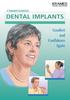 Understanding Dental Implants Comfort and Confidence Again A new smile It s no fun when you re missing teeth. You may not feel comfortable eating or speaking. You might even avoid smiling in public. Fortunately,
Life Table Analysis for Evaluating Curative-effect of One-stage Non-submerged Dental Implant in Taiwan
 Journal of Data Science 6(2008), 591-599 Life Table Analysis for Evaluating Curative-effect of One-stage Non-submerged Dental Implant in Taiwan Miin-Jye Wen 1, Chuen-Chyi Tseng 2 and Cheng K. Lee 3 1 National
LATERAL BONE EXPANSION FOR IMMEDIATE PLACEMENT OF ENDOSSEOUS DENTAL IMPLANTS
 LATERAL BONE EXPANSION FOR IMMEDIATE PLACEMENT OF ENDOSSEOUS DENTAL IMPLANTS Department of Oral Maxillofacial Surgery, Chisinau Abstract: The study included 10 using the split control expansion technique
DENT IMPLANT restoring qualit S: of LIfE
 DENTAL IMPLANTS: restoring quality of life Dental Implants: A Better Treatment Option. What are dental implants? Dental implants are a safe, esthetic alternative to traditional crowns, bridgework, and
Lidocaine 2% Gauge of Needle. Local Anesthesia for the Pediatric Patient
 Local Anesthesia for the Pediatric Patient Shan Lal DDS Course Director Lidocaine 2% 1.8 cc per Carpule x 2% = 36mg(lido) per Carpule Max Dosage: 2.2 mg/lb or 4.4mg/kg. Epi 1:100K or 0.018mg/carpule Role
Local Anesthesia Techniques in Oral and Maxillofacial Surgery
 Local Anesthesia Techniques in Oral and Maxillofacial Surgery Sean M. Healy, D.D.S. Oral and Maxillofacial Surgery Francis B. Quinn, M.D., FACS Otolaryngology Head and Neck Surgery The University of Texas
CDT 2015 Code Change Summary New codes effective 1/1/2015
 CDT 2015 Code Change Summary New codes effective 1/1/2015 Code Nomenclature Delta Dental Policy D0171 Re-Evaluation Post Operative Office Visit Not a Covered Benefit D0351 3D Photographic Image Not a Covered
LESSON ASSIGNMENT. Topography of the Mouth and Tooth Structure. After completing this lesson, you should be able to:
 LESSON ASSIGNMENT LESSON 3 Topography of the Mouth and Tooth Structure. LESSON ASSIGNMENT Paragraphs 3-1 through 3-9. LESSON OBJECTIVES After completing this lesson, you should be able to: 3-1. Identify
Straumann Bone Level Tapered Implant Peer-to-peer communication
 Straumann Bone Level Tapered Implant Peer-to-peer communication Clinical cases April, 2015 Clinical Cases Case No. Site 1 Single unit; Anterior Maxilla 2 Multi-unit; Anterior Maxilla Implant placement
A New Beginning with Dental Implants. A Guide to Understanding Your Treatment Options
 A New Beginning with Dental Implants A Guide to Understanding Your Treatment Options Why Should I Replace My Missing Teeth? Usually, when you lose a tooth, it is best for your oral health to have it replaced.
+ + = Local. Traditional local anaesthetics. Local anaesthesia for the 21 st Century an update. New Local Anaesthetics and Equipment
 BSDHT Liverpool ACC 10 th November 2012 Local anaesthesia for the 21 st Century an update Traditional local anaesthetics Lidocaine Prilocaine Mepivacaine Dr Nigel D Robb Reader in Restorative Dentistry
Preventive Pediatric Dental Care. Lawrence A. Kotlow DDS Practice Limited to Pediatric Dental Care 340 Fuller Road Albany, New York 12203
 Preventive Pediatric Dental Care Lawrence A. Kotlow DDS Practice Limited to Pediatric Dental Care 340 Fuller Road Albany, New York 12203 Patient comfort and safety 1. All children are treated using the
Restoring quality to life. Dental implants. A naturally better solution. Patient Education
 Restoring quality to life. Dental implants. A naturally better solution. Patient Education Dental implants: A better treatment option. What are dental implants? Dental implants are a safe, medically proven,
SURGICAL EXTRACTIONS: TECHNIQUE AND CAUTIONS By Tony M. Woodward, DVM, AVDC
 SURGICAL EXTRACTIONS: TECHNIQUE AND CAUTIONS By Tony M. Woodward, DVM, AVDC We continue describing the five basic dental services that all general practitioners should be able to provide for their patients.
PATIENT INFORM CONSENT for IMPLANT RESTORATION Rev 04.2012
 PATIENT INFORM CONSENT for IMPLANT RESTORATION Rev 04.2012 Implant placement and restoration involves two major stages: surgical placement of the implant(s) followed by the restoration of the implant after
X-Plain Sinus Surgery Reference Summary
 X-Plain Sinus Surgery Reference Summary Introduction Sinus surgery is a very common and safe operation. Your doctor may recommend that you have sinus surgery. The decision whether or not to have sinus
2016 Buy Up Dental Care Plan Procedure List
 * This is in addition to the embedded Preventive Plan (see procedure list at deltadentalco.com/kp_preventive. BASIC SERVICES Minor Restorative Services D2140 Amalgam 1 surface, primary or permanent D2150
ANGEL DENTAL CARE Implant Consent
 This information is to help you make an informed decision about having implant treatment. You should take as much time as you wish to make the decision in relation to signing the following consent form.
Resorptive Changes of Maxillary and Mandibular Bone Structures in Removable Denture Wearers
 Resorptive Changes of Maxillary and Mandibular Bone Structures in Removable Denture Wearers Dubravka KnezoviÊ-ZlatariÊ Asja»elebiÊ Biserka LaziÊ Department of Prosthodontics School of Dental Medicine University
Spedding Dental Clinic. 73 Warwick Road Carlisle CA1 1EB T: 01228 521889 www.speddingdental.co.uk
 DENTAL IMPLANTS Spedding Dental Clinic 73 Warwick Road Carlisle CA1 1EB T: 01228 521889 www.speddingdental.co.uk SPEDDING DENTAL CLINIC Jack Spedding is a partner in Spedding dental clinic. He is a highly
ORTHODONTIC TREATMENT
 ORTHODONTIC TREATMENT Informed Consent for the Orthodontic Patient As a general rule, positive orthodontic results can be achieved by informed and cooperative patients. Thus, the following information
Fast and Predictable Tooth Extraction Technique
 Fast and Predictable Tooth Extraction Technique When I first saw the ads for Physics Forceps, I did not believe the claims could be true. At first glance, I didn t see how this strange looking instrument
Injection technique. Posterior Superior Alveolar N. Block (PSA) PSA
 Injection technique Posterior superior alveolar nerve block (PSA) Posterior Superior Alveolar N. Block (PSA) 72% of mesiobuccal root of 1 st molar will be anesthetized Injection height: Mucobuccal fold
Lateral pterygoid muscle Medial pterygoid muscle
 PATIENT INFORMATION BOOKLET Trismus Normal Jaw Function The jaw is a pair of bones that form the framework of the mouth and teeth. The upper jaw is called the maxilla. The lower jaw is called the mandible.
Denture Trouble Shooting Guide
 Denture Trouble Shooting Guide Comfort Sore spot in vestibuleupper or lower denture 1. Overextended borders 2. Rough spot in base 1. Shorten borders and polish. 2. Refinish borders. Sore spot in upper
NAPCS Product List for NAICS 62121 (US, Mex): Offices of Dentists
 NAPCS List for NAICS 62121 (US, Mex): Offices of Dentists 62121 1 Services of dentists Providing dental medical attention by means of consultations, preventive services, and surgical and non-surgical interventions.
What is a dental implant?
 What is a dental implant? Today, the preferred method of tooth replacement is a dental implant. They replace missing tooth roots and form a stable foundation for replacement teeth that look, feel and function
Department of Oral and Maxillofacial Surgery and Orthodontics Removing wisdom teeth Information for patients
 Department of Oral and Maxillofacial Surgery and Orthodontics Removing wisdom teeth Information for patients The information in this leaflet will help you to understand your treatment. It contains answers
How to overcome failed local anaesthesia J. G. Meechan 1
 How to overcome failed local J. G. Meechan 1 PRACTICE Local anaesthetic failure is an unavoidable aspect of dental practice. A number of factors contribute to this, which may be related to either the patient
Dr. Cindi Sherwood, DDS, Independence House Committee on Health and Human Services (HB 2079)
 Dr. Cindi Sherwood, DDS, Independence House Committee on Health and Human Services (HB 2079) My name is Cindi Sherwood and I am speaking in opposition to House Bill 2079. My background is that I was trained
HEALTH SERVICES POLICY & PROCEDURE MANUAL. SUBJECT: Types of Dental Treatments Provided EFFECTIVE DATE: July 2014 SUPERCEDES DATE: January 2014
 PAGE 1 of 5 References Related ACA Standards 4 th Edition Standards for Adult Correctional Institutions 4-4369, 4-4375 PURPOSE To provide guidelines for determining appropriate levels of care and types
TABLE OF DENTAL PROCEDURES PLEASE READ THE FOLLOWING INFORMATION CAREFULLY FOR YOUR PROCEDURE FREQUENCIES AND PROVISIONS.
 TABLE OF DENTAL PROCEDURES PLEASE READ THE FOLLOWING INFORMATION CAREFULLY FOR YOUR PROCEDURE FREQUENCIES AND PROVISIONS. The attached is a list of dental procedures for which benefits are payable under
Coding and Payment Guide for Dental Services. A comprehensive coding, billing, and reimbursement resource for dental services
 Coding and Payment Guide for Dental Services A comprehensive coding, billing, and reimbursement resource for dental services 2011 Contents Introduction...1 Coding Systems... 1 Claim Forms... 2 Contents
Intraosseous Vascular Access and Lidocaine
 Intraosseous Vascular Access and Lidocaine Intraosseous (IO) needles provide access to the medullary cavity of a bone. It is a technique primarily used in emergency situations to administer fluid and medication
Residency Competency and Proficiency Statements
 Residency Competency and Proficiency Statements 1. REQUEST AND RESPOND TO REQUESTS FOR CONSULTATIONS Identify needs and make referrals to appropriate health care providers for the treatment of physiologic,
05 - DENTAL SURGERY. (02) MS (Oral Surgery) Part II Examination
 05 - DENTAL SURGERY (02) MS (Oral Surgery) Part II Examination 01. October 1990 02. October 1991 03. October 1992 04. October 1993 05. October 1994 06. November 1995 07. October 1996 08. November 1997
Dental Services. Dental Centre. HKSH Healthcare Medical Centre Dental Centre. For enquiries and appointments, please contact us
 Dental Services For enquiries and appointments, please contact us HKSH Healthcare Medical Centre Dental Centre Level 22, One Pacific Place 88 Queensway, Hong Kong (852) 2855 6666 (852) 2892 7589 [email protected]
Rochester Regional Health. Dental Plan
 Rochester Regional Health Dental Plan TABLE OF CONTENTS EXPLANATION OF TERMS... 2 INTRODUCTION... 4 DENTAL BENEFITS... 5 DEDUCTIBLES AND COINSURANCE... 7 PRE-TREATMENT ESTIMATES... 8 LIMITATIONS... 8
Complications Associated with Tooth Extraction
 1 Complications Associated with Tooth Extraction Mark M. Smith, VMD, DACVS, DAVDC Center for Veterinary Dentistry and Oral Surgery 9041 Gaither Road Gaithersburg, MD 20877 Introduction Tooth extraction
Case Report(s): Uncomplicated Crown Fractures
 Case Report(s): Uncomplicated Crown Fractures Tooth fractures can be classified as follows: Uncomplicated crown fracture = fracture limited to the crown of the tooth with dentin exposure but no pulp exposure.
Advances in Equine Medicine and Veterinary Dentistry: Who Should Provide my Horse s Dental Care?
 Advances in Equine Medicine and Veterinary Dentistry: Who Should Provide my Horse s Dental Care? James M. Casey, D.V.M. M.S. Equine Sports Medicine, Surgery, & Dentistry Both the American Veterinary Medical
Influence of ph Most local anesthetics are weak bases.
 Local anesthetics The agent must depress nerve conduction. The agent must have both lipophilic and hydrophilic properties to be effective by parenteral injection. Structure-activity relationships The typical
Local Anesthesia in Pediatric Dentistry
 Local Anesthesia in Pediatric Dentistry Steven Schwartz, DDS Continuing Education Units: 2 hours Online Course: www.dentalcare.com/en-us/dental-education/continuing-education/ce325/ce325.aspx Disclaimer:
[PAGE HEADLINE] Improve your Health and Change Your Smile with Complete Dental Services in One [CITYNAME] Location
![[PAGE HEADLINE] Improve your Health and Change Your Smile with Complete Dental Services in One [CITYNAME] Location](/thumbs/31/14971568.jpg "[PAGE HEADLINE] Improve your Health and Change Your Smile with Complete Dental Services in One [CITYNAME] Location") Eddie Stephens//Copywriter Sample: Website copy/internal Dental Services Pages [PAGE HEADLINE] Improve your Health and Change Your Smile with Complete Dental Services in One [CITYNAME] Location [LEAD SENTENCE/PARAGRAPH]
Eddie Stephens//Copywriter Sample: Website copy/internal Dental Services Pages [PAGE HEADLINE] Improve your Health and Change Your Smile with Complete Dental Services in One [CITYNAME] Location [LEAD SENTENCE/PARAGRAPH]
Endodontics. Colleagues for Excellence
 Endodontics Colleagues for Excellence Winter 29 Taking the Pain out of Restorative Dentistry and Endodontics: Current Thoughts and Treatment Options to Help Patients Achieve Profound Anesthesia Published
SCD Case Study. Treatment Considerations for Implant Rehabilitation
 SCD Case Study Treatment Considerations for Implant Rehabilitation Multiple surgical and restorative factors play a role in the treatment planning of implant restorations for the edentulous patient (Ali
DEVELOPMENT AND GROWTH OF THE MANDIBLE
 2012-2013 ORAL BIOLOGY DEVELOPMENT AND GROWTH OF THE MANDIBLE Ass. Prof. Dr. Heba M. Elsabaa Development and Growth of the Mandible DEVELOPMENT OF THE MANDIBLE The Mandible Is the largest and strongest
IS 2% LIDOCAINE WITH 1:50,000 EPINEPHRINE SAFE FOR ENDODONTIC SURGERY USE?
 IS 2% LIDOCAINE WITH 1:50,000 EPINEPHRINE SAFE FOR ENDODONTIC SURGERY USE? J. A. Wallace 1 - C. Bissada 2 - O. Balytsky 3 - L. G. Schneider 4 - J. A. Magera 5 - T. G. Zullo 6 ABSTRACT Objective: To present
MINI IMPLANTS FOR LOWER DENTURE STABLIZATION
 MINI IMPLANTS FOR LOWER DENTURE STABLIZATION From the Office of Dr. Michael J. Guy 511A Lakeshore Drive, North Bay ON, P1A 2E3 Mini dental implants (MDI) have become increasingly popular in the past decade
Strong bone for beautiful teeth Patient Information I Bone reconstruction with Geistlich Bio-Oss and Geistlich Bio-Gide
 Strong bone for beautiful teeth Patient Information I Bone reconstruction with Geistlich Bio-Oss and Geistlich Bio-Gide Contents Smiling is the most beautiful way to show your teeth 3 What are the causes
Schedule B Indemnity plan People First Plan Code #4084
 : Calendar year deductible Waived for Type I preventive dental services Calendar year maximum Type I, II, III Waiting period Type I, II, III $50 individual $150 family (3 per family) $1,000 per covered
Classification of dental cements
 Classification of dental cements Type I: Luting agents* that include temporary cements Class 1: powder-liquid -> harden Class 2: paste-paste -> remain soft Type II: Luting agents for permanent applications
Single anterior tooth replacement: clinical approaches
 Single anterior tooth replacement: clinical approaches Paul Swanson examines the role of implant design in approaching a range of treatment protocols for replacing a single tooth Case 1 Figure 1: Patient
LANAP. (Laser Assisted New Attachment Procedure)
 LANAP (Laser Assisted New Attachment Procedure) Marcus Hannah, DDS 970 N. Kalaheo Avenue, Suite A305 Kailua, HI 96734 Tel: 808.254.5454 Fax: 808.254.5427 Dental Laser ANAP Informed Consent and Authorization
Osseo-integrated Dental Implant Policy and Guidelines
 Osseo-integrated Dental Implant Policy and Guidelines 1. PURPOSE The purpose of this document is to outline the Department of Veterans Affairs (DVA) policy regarding the provision of dental implant treatment
Attachment S: Benefits Covered - ADULTS - AGE 21 AND OVER
 Diagnostic services include the oral examinations and selected radiographs needed to assess the oral health, diagnose oral pathology and develop an adequate treatment plan for the Participant s oral health.
LIST OF DENTAL PROCEDURES (LOW PLAN) PREVENTIVE PROCEDURES
 LIST OF DENTAL PROCEDURES (LOW PLAN) The following is a complete list of the dental procedures for which benefits are payable under this section. No benefits are payable for a procedure that is not listed.
Universal Screw Removal System (USR)
 Craniomaxillofacial Surgery 3 Universal Screw Removal System (USR) Craniomaxillofacial rigid fixation systems are available from a variety of manufacturers. The USR system is a complete screwdriver array
Dental and Oral Benefit
 Dental and Oral Benefit 2015 Overview This document explains the Dental and Oral Benefit for 2015. It gives you details about how Discovery Health Medical Scheme defines and pays dentistry both in the
Veraviewepocs 3D R100 & F40
 Veraviewepocs 3D R100 & F40 Innovative 3D Reuleaux Full Arch FOV Thinking ahead. Focused on life. Veraviewepocs 3D R100 A New Frontier in X-ray Diagnostics Veraviewepocs 3D R100 has changed the shape of
Strong bone for beautiful teeth Patient Information I Bone reconstruction with Geistlich Bio-Oss and Geistlich Bio-Gide
 Strong bone for beautiful teeth Patient Information I Bone reconstruction with Geistlich Bio-Oss and Geistlich Bio-Gide Contents Smiling is the most beautiful way to show your teeth 3 What are the causes
A collection of pus. Usually forms because of infection. A tooth or tooth structure which is responsible for the anchorage of a bridge or a denture.
 Abscess A collection of pus. Usually forms because of infection. Abutment A tooth or tooth structure which is responsible for the anchorage of a bridge or a denture. Amalgam A silver filling material.
OPTIONAL DENTAL COVERAGE
 OPTIONAL DENTAL COVERAGE Go ahead and smile. Laugh as often as you like. Don t be afraid to show your pearly whites. Flash that movie-star grin. If the eyes are the windows to the soul, the teeth are the
Dental Implants - the tooth replacement solution
 Dental Implants - the tooth replacement solution Are missing teeth causing you to miss out on life? Missing teeth and loose dentures make too many people sit on the sidelines and let life pass them by.
EmblemHealth Preferred Dental
 EmblemHealth Preferred Dental Unique coverage levels at affordable group rates. Here s how EmblemHealth Preferred Dental will deliver for you: Complete your benefits package with paid-infull* in-network
DENTAL PLAN ADMINISTERED BY MEDBEN
 DENTAL PLAN ADMINISTERED BY MEDBEN 2.9 SCHEDULE OF DENTAL BENEFITS This Schedule of Dental Benefits is intended to provide only a general description of a Covered Person s dental benefits under this Plan.
symposium Stanley F. Malamed, D.D.S. Chairman Sponsored by Milestone Scientific
 Th e 1 s t A n n ua l I n t e r nat i o na l C O M P U T E R - C O N T R O L L E D L O C A L A N E S T H E T I C D E L I V E R Y symposium 2008 Stanley F. Malamed, D.D.S. Chairman Sponsored by Milestone
DISCOUNT DENTAL PLAN COMPLETE LISTING OF MEMBER COPAYMENTS
 DISCOUNT DENTAL PLAN COMPLETE LISTING OF MEMBER COPAYMENTS 0120 PERIODIC ORAL EXAMINATION - ESTABLISHED PATIENT 20 0140 LIMITED ORAL EVALUATION - PROBLEM FOCUSED 33 0150 COMPREHENSIVE ORAL EVALUATION -
DENTAL IMPLANT THERAPY
 DENTAL IMPLANT THERAPY PATIENT WELCOME PACK Dr. Syed Abdullah BDS, MSc (Dental Implants) What are dental implants? In the early 1950s, a Swedish Scientist, Per-Ingvar Branemark observed that titanium metal
Healing Abutment Selection. Perio Implant Part I. Implant Surface Characteristics. Single Tooth Restorations. Credit and Thanks for Lecture Material
 Healing Abutment Selection Perio Implant Part I Credit and Thanks for Lecture Material Implant Surface Characteristics!CAPT Robert Taft!CAPT Greg Waskewicz!Periodontal Residents NPDS and UMN!Machined Titanium!Tiunite!Osseotite
Cigna Dental Care (*DHMO) Patient Charge Schedule
 A3O08 Cigna Dental Care (*DHMO) Schedule This Schedule lists the benefits of the Dental Plan including covered procedures and patient charges. Important Highlights This Schedule applies only when covered
!Financial agreement COST / RISK / BENEFIT
 COMPLETE DENTURES 1 2 Oral Examination, Diagnosis and Treatment Planning Initial Appointment! Get to know your patient! Personally, experiences, expectations! Past medical history! Past dental history!
The Obvious and the Obscure:Diagnostic Steps for Crack Confirmation
 Cracking the Cracked Tooth Code In response to your requests... At the end of each issue of ENDODONTICS: Colleagues for Excellence, the American Association of Endodontists (AAE) asks readers to send in