
BASIC CHEMICAL CONCEPTS
|
|
|
- David Tucker
- 9 years ago
- Views:
Transcription
1 CHEMISTRY EDUCATION: RESEARCH AND PRACTICE 2003, Vol. 4, No. 1, pp THE PRACTICE OF CHEMISTRY EDUCATION (PAPER) Concepts Peter G. NELSON University of Hull, Department of Chemistry BASIC CHEMICAL CONCEPTS Received 7 October 2002; first revision 15 December 2002; second revision 17 January 2003; accepted 23 January 2003 ABSTRACT: Precise definitions are given of basic chemical concepts (matter, material; solid, liquid, gas, vapour; mixture, substance, solution, solvent, solute; physical, physicochemical, chemical, radiochemical; element, compound, allotropy, stoicheiometric, nonstoicheiometric). These definitions are formulated entirely at a macroscopic level, and are suitable for presentation to beginners. [Chem. Educ. Res. Pract.: 2003, 4, 19-24] KEY WORDS: basic chemical concept; matter; material; solid; liquid; gas; vapour; mixture; substance; solution; solvent; solute; physical; physicochemical; chemical; radiochemical; element; compound; allotropy; stoicheiometric; nonstoicheiometric INTRODUCTION Most teachers find the basic concepts of chemistry ( matter, substance, element, compound, solution, etc.) difficult to teach (see, e.g., Barker, 2000). This is partly because the definitions of these concepts given in textbooks either lack precision, or invoke ideas that beginners are not familiar with, and have to accept on trust. For example, some introductory texts cite the IUPAC definition of an element (Leigh, 1990): matter, all of whose atoms are alike in having the same positive charge on the nucleus. This plunges beginners immediately into the world of atoms and atomic structure. As Alex Johnstone (1999, 2000) has explained, this goes against the psychology of learning. Chemistry is only fully intelligible to beginners if it is taught progressively, starting with observations at the macroscopic level, and deriving atomic and subatomic ideas from these (Nelson, 2002, and refs. therein). In this paper, I develop a set of definitions of basic chemical concepts that can be presented to beginners. These definitions are formulated entirely in macroscopic terms. They can be explained at an atomic or subatomic level later in a course, but they stand up without this. They are all based on experimental observations that can be made with suitable equipment. A summary in alphabetical order is given at the end. The definitions are as simple and precise as I could make them. Suggestions for improvement would be welcomed. EXPOSITION In the following exposition, I keep to language that can be understood by beginners. Where complications arise at a more advanced level, I comment on these in numbered notes. I do not intend that these comments should be given to beginners unless they raise the issues themselves.

2 20 NELSON Matter Chemists are interested in different kinds of matter (air, water, sand, salt, steel, petrol, sugar, aspirin, etc.). Matter occupies space, has mass, and so can be weighed. This distinguishes it from light and similar radiation. 1 A particular kind of matter (e.g. air) is called a material. Here I use the word in its broadest sense, to cover all kinds of matter, not just useful kinds. The popular meaning can be indicated by defining a material as a particular kind of matter, especially one that is intended for some use. There are three main states of matter: solid, liquid, and gas. A solid has its own volume and shape. A liquid has its own volume but takes the shape of the vessel it is in. A gas fills the vessel it is in it takes up the vessel s volume and shape. (A powder takes the shape of the vessel it is in, but the individual grains have their own shape.) Solid materials differ from one another in size or shape (e.g. steel plate, steel rod, steel wire, and steel wool), and in what they are made of (e.g. steel wire and copper wire). Materials differing only in size or shape are said to be made of the same basic material (e.g. steel ). 2 There are two main types of basic material: homogeneous and heterogeneous. The former appear uniform under an optical microscope, the latter not. 3 The latter are mixtures of the former. Basic materials can be made from other basic materials. Students can be shown examples of this in the laboratory, and be taken to see some industrial processes (e.g. smelting of iron and manufacture of steel). Chemistry may be defined as the study and practice of making basic materials and determining their character. This embraces pure chemistry ( the study ) and applied chemistry ( the practice ) (cf. Nelson, 1983). It also includes the preparation of mixtures, other than by simple mixing of components. The ability of basic materials to change into other, often quite different, basic materials is what makes chemistry both interesting and useful. Substances and solutions Homogeneous basic materials can be divided into substances and solutions. I am here using substance in a technical sense; in popular usage most homogeneous materials are called substances. 4 A solution is a combination of substances in varying proportions. The principal component [the one that gives the solution its state (solid, liquid, or gas), or, if more than one component does this, the one that is in the larger amount] is called the solvent; minor components are called solutes. Ranges of composition always start at 0% of solute; solutions can thus always be diluted by adding more solvent (cf. below). Chemists separate components of solutions by distillation, crystallization, solvent extraction, chromatography, and other methods. A homogeneous basic material is a substance if it cannot be separated into components that can be recombined in varying proportions as for a solution. 5 Substances may be pure or impure. Impure substances contain small quantities of other substances, either mixed with them or dissolved in them. Pure substances melt and boil at a constant temperature, 6 impure substances generally do not. 7 Substances can be distinguished from one another by their state at room temperature and atmospheric pressure (solid, liquid, or gas), colour, density, melting point, boiling point, solubility in different solvents, action on other substances, and other properties.

3 BASIC CHEMICAL CONCEPTS 21 Substances can exist in different forms depending on the temperature and pressure. These are typically: crystalline solid, liquid, and gas (or, for substances that are solid or liquid at room temperature and atmospheric pressure, vapour 8 ). Additionally, some substances can exist in more than one crystalline form (polymorphism), or in forms of other kinds (e.g. vitreous). 9 That the same substance can exist in different forms is suggested by the fact that many coloured substances keep their colour when they change from one form to another (e.g., chlorine keeps its yellow colour when it condenses to a liquid or freezes to a solid; metals retain their colour when they melt). Substances commonly keep their colour when they change form. There are, however, exceptions, especially among changes taking place at high temperatures or pressures (e.g., when mercury boils it gives a colourless gas). In these cases, the question arises, has the substance changed form, or into another substance? Chemists do not have an agreed answer to this question, but by the colour criterion for differentiating substances, 10 the second answer is surely correct (i.e. mercury vapour is a different substance from liquid mercury). 11 The above discussion relates to coloured substances. It can be extended to colourless ones by analogy. 12 If a colourless substance melts or boils at relatively low temperatures (<200 C), it is likely to be changing in form. If it does so at relatively high temperatures, it may be changing in substance. Another form of a substance is as a solute in a solution. Coloured substances often keep their colour in solution (e.g. chlorine in water, gold in silver). This implies that they somehow retain their identity in solution. There are, however, many exceptions (e.g. chlorine in alkali, metals in acids). In such cases, dissolution involves a change of substance. This shows itself (usually) when the resulting solution is re-separated into components: the solute turns out to be a new substance or mixture of substances, formed by action of the solvent on the original solute (e.g. chlorine in alkali gives hypochlorite and chloride). By analogy, colourless substances giving colourless solutions may or may not retain their identity in solution. Change of substance may be indicated by a property other than colour (e.g. hydrogen chloride in water gives conducting solutions), or if re-separation of the solution gives a new solute or solutes (e.g. carbon dioxide in alkali gives carbonate). 13 Substances can thus undergo three kinds of change: physical, physicochemical, and chemical. In a physical change (e.g. compression of air) there is no change in substance or form; in a physicochemical change (e.g. melting of lead, dissolution of chlorine in water) there is a change in form but not of substance; in a chemical change (e.g. rusting of iron, boiling of mercury, dissolution of chlorine in alkali) there is a change of substance. 14 Properties relating to the three kinds of change are likewise called physical, physicochemical, and chemical. The first two categories are usually conflated, but it helps to distinguish them. Substances can also undergo a fourth kind of change: radiochemical. In this there is a change of substance and absorption or emission of high-energy radiation. 15 Elements and compounds Substances can be divided into elements and compounds on the basis of the chemical changes they are involved in. Compounds decompose into other substances, elements do not. 16 Likewise, compounds can be made by combination of other substances, elements cannot. Compounds ultimately decompose into, and can be made from, elements. These considerations are helped by weighing the substances involved. When a compound decomposes, the masses of the products sum to the mass of the compound (an instance of the law of conservation of mass). Masses likewise balance when a compound is made by the combination of other substances. The conclusion from such studies is that the

4 22 NELSON mass of a compound is equal to the sum of the masses of the elements of which it is composed. Some elements exist as more than one substance (this is over and above any change in substance with change of state, as discussed above for mercury). For example, carbon exists as graphite, diamond, buckminsterfullerene, etc. This phenomenon is called allotropy, and the different substances are called allotropes. They can be interconverted without change in mass, and combine with other substances to give the same compounds (e.g., the allotropes of carbon all burn in oxygen to give carbon dioxide). Different crystalline forms of an elementary substance (e.g. α- and β-sulfur) are also called allotropes. Many compounds have a fixed composition, i.e., the proportions by mass of the elements comprising them are constant (the phenomenon of constant composition). Such compounds are called stoicheiometric compounds or Daltonides. Compounds of variable composition [e.g., ferrous oxide (wüstite), which, when made at 1000 C and atmospheric pressure, can contain from 23 1 to 24 6% by mass of oxygen (Hansen, 1958)] are called nonstoicheiometric compounds or Berthollides. They differ from solutions in that the range of composition does not start at 0% for any component. 17 SUMMARY OF DEFINITIONS Allotropy: existence of an element as more than one solid, liquid, or gaseous substance, or in more than one crystalline form. Basic material: what a material is made of as opposed to its size or shape. Chemical change: one in which there is a change of substance. Chemical property: one relating to chemical change. Chemistry: the study and practice of making basic materials and determining their character. Compound: a substance that can be made from or decomposed into elements. Element: a substance that does not undergo chemical decomposition into, and cannot be made by chemical combination of, other substances. Form of a substance: crystalline solid, liquid, gas, in solution, etc., depending on the substance. Gas: matter not having its own volume or shape. Liquid: matter having its own volume but not shape. Material: a particular kind of matter, especially one that is intended for some use. Matter: that which occupies space and has mass. Mixture: a heterogeneous basic material. Nonstoicheiometric compound: a compound of variable composition. Physical change: one in which there is no change in substance or form. Physical property: one relating to physical change. Physicochemical change: one in which there is a change in form but not substance. Physicochemical property: one relating to physicochemical change. Polymorphism: existence of more than one crystalline form of a substance. Radiochemical change: one in which there is a change of substance and absorption and emission of high-energy radiation. Solid: matter having its own volume and shape. Solute: minor component of a solution. Solution: a homogeneous basic material that can be separated into components that can be recombined in varying proportions starting with 0% of one. Solvent: principal component of a solution.

5 BASIC CHEMICAL CONCEPTS 23 Substance: a homogeneous basic material that cannot be separated (by the methods chemists usually employ) into components that can be recombined in varying proportions as for a solution. State of matter: solid, liquid, gas, etc. Stoicheiometric compound: a compound of constant composition. Vapour (ordinary meaning): gaseous form of a substance that is a solid or liquid at room temperature and atmospheric pressure. ACKNOWLEDGEMENTS: I am very grateful to Dr. John R. Chipperfield and Dr. David A. Johnson for spotting some errors in an early draft and suggesting improvements, and to the late Dr. B. Michael Chadwick for his interest in the project and the help he wanted to give to it. I am also grateful to the reviewers for their perceptive comments and helpful suggestions, and to the editor for his advice. CORRESPONDENCE: P.G. Nelson, Department of Chemistry, University of Hull, Hull HU6 7RX, UK; tel.: ; fax: ; [email protected] NOTES 1 At an advanced level, matter has to be distinguished from antimatter. 2 Here steel refers to ordinary, mild steel, containing % by mass of carbon. 3 There is also an intermediate type: colloidal. Colloids appear uniform under an optical microscope when illuminated from below, but not from the side (see, e.g., Partington, 1954). 4 Chemical usage in the past has varied (see, e.g., Partington, 1949; Simpson & Weiner, 1989). Some chemists have used substance in a broad sense and divided substances into pure substances and solutions. Others have defined substance to exclude solutions. The editor and a reviewer tell me that current practice is to exclude solutions. 5 A complication at this point is that many substances that cannot be separated into components of a solution by the methods chemists usually use can be so separated by special methods (e.g. fractional distillation of a large quantity, repeated many times). The components obtained by these methods have very similar properties except in their ability to absorb or emit high-energy radiation. For example, water can be separated into components having densities (at 25 C) of and g/cm 3. Their freezing points are respectively 0 0 and 3 8 C, and their boiling points and C. Both turn anhydrous cupric sulfate blue, but the first absorbs neutrons 720 times more effectively than the second (see, e.g., Greenwood & Earnshaw, 1984). This difficulty can be resolved by calling the materials obtained by the methods of separation chemists usually use ordinary substances. This need not be made explicit until later in a course, when isotopes are introduced (Nelson, 2002). 6 As far as can be ascertained by ordinary methods: by special methods isotopic variation can be detected (cf. previous note). 7 Constant melting point is shared by some mixtures ( eutectic ) and constant boiling point by some solutions ( azeotropic ). 8 A more advanced definition is a fluid below its critical temperature (see Simpson & Weiner, 1989). 9 Some substances can exist in more than one liquid form, one isotropic, the others anisotropic ( liquid crystals ). 10 A change of colour does not always indicate a change of substance. For example, zinc oxide turns yellow on heating; freshly precipitated cuprous oxide changes from yellow to red on digestion. However, these colour changes are continuous (in the first case, with increase in temperature, in the second, with size of the particles). (Continuous colour changes also occur when coloured components of a solution are in equilibrium with each other, and the position of equilibrium shifts. In this case, however, the colour of the solution is a changing combination of the colours of the components, as can be demonstrated by colorimetry.) 11 This is supported by considerations at an atomic level. Boiling of mercury involves breaking of metal metal bonds, whereas boiling of chlorine only van der Waals bonds.

6 24 NELSON 12 Once spectroscopy has been introduced, simple comparison of near-infrared and ultraviolet spectra can be used. 13 See previous note. 14 There is no virtue in trying to define these changes more precisely at this stage. Further consideration can wait until atoms and molecules have been introduced, and changes can be analysed at this level. 15 I include this type here to delimit the scope of chemical. I only intend that it should be mentioned briefly, in the macroscopic terms I have used. 16 Not in a chemical change. They do in radiochemical ones. 17 At an advanced level, some nonstoicheiometric compounds can be regarded as stoicheiometric compounds in which components (or other stoicheiometric compounds of the components) are partially soluble [e.g. CuAu as solid solutions of Cu or Au in CuAu (Hansen, 1958)]. However, this is only possible if there is an ideal stoicheiometry within the composition range [there is not for, e.g., ferrous oxide at 1000 C and atmospheric pressure, Fe O (Wells, 1984)]. The distinction between stoicheiometric and nonstoicheiometric compounds therefore still stands. REFERENCES Barker, V. (2000). Beyond appearances: Students misconceptions about basic chemical ideas. A report prepared for the Royal Society of Chemistry. London: Royal Society of Chemistry. [ Greenwood, N.N. & Earnshaw, A. (1984). Chemistry of the elements, p Oxford: Pergamon. Hansen, M. (1958). Constitution of binary alloys (2 nd edn). New York: McGraw-Hill. Johnstone, A.H. (1999). The nature of chemistry. Education in Chemistry, 36, Johnstone, A.H. (2000). Teaching of chemistry - Logical or psychological? Chemical Education: Research and Practice in Europe, 1, [ Leigh, G.J. (1990) (ed.). Nomenclature of inorganic chemistry: Recommendations IUPAC. Oxford: Blackwell. Nelson, P.G. (1983). What is chemistry? Education in Chemistry, 20, Nelson, P.G. (2002). Teaching chemistry progressively: From substances, to atoms and molecules, to electrons and nuclei. Chemistry Education: Research and Practice in Europe, 3, [ Partington, J.R. (1949). An advanced treatise on physical chemistry, Vol. 1, p London: Longmans, Green and Co. Partington, J.R. (1954). General and inorganic chemistry, 2 nd edn., p. 84. London: Macmillan. Simpson, J.A. & Weiner, E.S.C. (1989). The Oxford English dictionary, 2 nd edn. Oxford: Clarendon Press. Wells, A.F. (1984). Structural inorganic chemistry, 5 th edn., p Oxford: Clarendon Press.

CHAPTER 3: MATTER. Active Learning Questions: 1-6, 9, 13-14; End-of-Chapter Questions: 1-18, 20, 24-32, 38-42, 44, 49-52, 55-56, 61-64
 CHAPTER 3: MATTER Active Learning Questions: 1-6, 9, 13-14; End-of-Chapter Questions: 1-18, 20, 24-32, 38-42, 44, 49-52, 55-56, 61-64 3.1 MATTER Matter: Anything that has mass and occupies volume We study
About the course GENERAL CHEMISTRY. Recommended literature: Chemistry: science of the matter. Responsible for the course: Dr.
 About the course GENERAL CHEMISTRY University of Pécs Medical School Academic year 2009-2010. Responsible for the course: Dr. Attila AGÓCS Optional course for 2 credit points. To have grade at the and
2 MATTER. 2.1 Physical and Chemical Properties and Changes
 2 MATTER Matter is the material of which the universe is composed. It has two characteristics: It has mass; and It occupies space (i.e., it has a volume). Matter can be found in three generic states: Solid;
5. Which temperature is equal to +20 K? 1) 253ºC 2) 293ºC 3) 253 C 4) 293 C
 1. The average kinetic energy of water molecules increases when 1) H 2 O(s) changes to H 2 O( ) at 0ºC 3) H 2 O( ) at 10ºC changes to H 2 O( ) at 20ºC 2) H 2 O( ) changes to H 2 O(s) at 0ºC 4) H 2 O( )
Warm-Up 9/9. 1. Define the term matter. 2. Name something in this room that is not matter.
 Warm-Up 9/9 1. Define the term matter. 2. Name something in this room that is not matter. Warm-Up 9/16 1. List the three most important rules of lab safety. 2. Would you classify jello as a solid or a
Chapter Test B. Chapter: Measurements and Calculations
 Assessment Chapter Test B Chapter: Measurements and Calculations PART I In the space provided, write the letter of the term or phrase that best completes each statement or best answers each question. 1.
Heterogeneous Homogenous. Mixtures; Solutions. Phases of matter: Solid. Phases of Matter: Liquid. Phases of Matter: Gas. Solid, Liquid, Gas
 Phases of matter: Solid Heterogeneous Homogenous Mixtures Solutions Phases of Matter: Liquid Atoms and molecules are more spaced out and now can move. The material can be slightly compressed into a smaller
Chemistry Worksheet: Matter #1
 Chemistry Worksheet: Matter #1 1. A mixture (is/is not) a chemical combining of substances. 2. In a compound the (atoms/molecules) are (chemically/physically) combined so that the elements that make up
Review - After School Matter Name: Review - After School Matter Tuesday, April 29, 2008
 Name: Review - After School Matter Tuesday, April 29, 2008 1. Figure 1 The graph represents the relationship between temperature and time as heat was added uniformly to a substance starting at a solid
Chemistry. The student will be able to identify and apply basic safety procedures and identify basic equipment.
 Chemistry UNIT I: Introduction to Chemistry The student will be able to describe what chemistry is and its scope. a. Define chemistry. b. Explain that chemistry overlaps many other areas of science. The
3 CHEMICAL FOUNDATIONS: ELEMENTS, ATOMS AND IONS
 3 CHEMICAL FOUNDATIONS: ELEMENTS, ATOMS AND IONS All matter is built up from chemical combinations of elements. As of 2003, there are 114 known elements, of which 88 are naturally occurring; the remaining
EXAMPLE EXERCISE 4.1 Change of Physical State
 EXAMPLE EXERCISE 4.1 Change of Physical State State the term that applies to each of the following changes of physical state: (a) Snow changes from a solid to a liquid. (b) Gasoline changes from a liquid
Chemistry 13: States of Matter
 Chemistry 13: States of Matter Name: Period: Date: Chemistry Content Standard: Gases and Their Properties The kinetic molecular theory describes the motion of atoms and molecules and explains the properties
Chapter Test A. Elements, Compounds, and Mixtures MULTIPLE CHOICE. chemically combined? MIXs2 a. element b. compound c. mixture d.
 Assessment Chapter Test A Elements, Compounds, and Mixtures MULTIPLE CHOICE Write the letter of the correct answer in the space provided. 1. What is a pure substance made of two or more elements that are
IB Chemistry. DP Chemistry Review
 DP Chemistry Review Topic 1: Quantitative chemistry 1.1 The mole concept and Avogadro s constant Assessment statement Apply the mole concept to substances. Determine the number of particles and the amount
Name: Unit 2- Elements, Compounds and Mixtures and Physical/Chemical Properties and Changes. Elements, Compounds and Mixtures
 Name: Unit 2- Elements, Compounds and Mixtures and Physical/Chemical Properties and Changes Day Page # Description IC/HW All 2 Warm-up IC 1 3 5 Matter Notes IC 1 6 Nuts & Bolts IC 1 7 Elements, Compounds
Chapter Outline. 3 Elements and Compounds. Elements and Atoms. Elements. Elements. Elements 9/4/2013
 3 Elements and Compounds Chapter Outline 3.1 Elements A. Distribution of Elements Foundations of College Chemistry, 14 th Ed. Morris Hein and Susan Arena Copyright This reclining Buddha in Thailand is
Question Bank Electrolysis
 Question Bank Electrolysis 1. (a) What do you understand by the terms (i) electrolytes (ii) non-electrolytes? (b) Arrange electrolytes and non-electrolytes from the following substances (i) sugar solution
Elements, Atoms & Ions
 Introductory Chemistry: A Foundation FOURTH EDITION by Steven S. Zumdahl University of Illinois Elements, Atoms & Ions Chapter 4 1 2 Elements Aims: To learn about the relative abundances of the elements,
CHEMISTRY STANDARDS BASED RUBRIC ATOMIC STRUCTURE AND BONDING
 CHEMISTRY STANDARDS BASED RUBRIC ATOMIC STRUCTURE AND BONDING Essential Standard: STUDENTS WILL UNDERSTAND THAT THE PROPERTIES OF MATTER AND THEIR INTERACTIONS ARE A CONSEQUENCE OF THE STRUCTURE OF MATTER,
KS3 Science: Chemistry Contents
 summary KS3 Science MyWorks Guide Chemistry KS3 Science: Chemistry Mini zes: 40 Super zes: 5 Extension zes: 4 Skills zes: 6 TOTAL 54 What are MyWorks zes? MyWorks zes are short individual learning tasks
Cambridge International Examinations Cambridge International General Certificate of Secondary Education
 Cambridge International Examinations Cambridge International General Certificate of Secondary Education *0123456789* CHEMISTRY 0620/03 Paper 3 Theory (Core) For Examination from 2016 SPECIMEN PAPER 1 hour
Metals and Non-metals. Comparison of physical properties of metals and non metals
 Metals and Non-metals Comparison of physical properties of metals and non metals PHYSICAL PROPERTY METALS NON-METALS Physical State Metallic lustre (having a shining surface) Mostly solids (Liquid -mercury)
Chapter 2: The Chemical Context of Life
 Chapter 2: The Chemical Context of Life Name Period This chapter covers the basics that you may have learned in your chemistry class. Whether your teacher goes over this chapter, or assigns it for you
Physical Science 1 Progression
 Physical Science 1 Progression This progression is the about the structure and properties of matter. Matter is composed of material that is too small to be seen, but is understood in terms of the types
Properties and Classifications of Matter
 PS-3.1 Distinguish chemical properties of matter (including reactivity) from physical properties of matter (including boiling point, freezing/melting point, density [with density calculations], solubility,
Chemistry Assessment Unit AS 1
 Centre Number 71 Candidate Number ADVANCED SUBSIDIARY (AS) General Certificate of Education January 2011 Chemistry Assessment Unit AS 1 assessing Basic Concepts in Physical and Inorganic Chemistry [AC111]
Matter Properties and Changes
 Matter Properties and Changes Section 3.1 Properties of Matter pages 70 75 b. Iron is more dense than aluminum. Problem-Solving Lab 1. Explain why the flow of a compressed gas must be controlled for practical
Mole Notes.notebook. October 29, 2014
 1 2 How do chemists count atoms/formula units/molecules? How do we go from the atomic scale to the scale of everyday measurements (macroscopic scale)? The gateway is the mole! But before we get to the
Coimisiún na Scrúduithe Stáit State Examinations Commission
 2015. M33 Coimisiún na Scrúduithe Stáit State Examinations Commission LEAVING CERTIFICATE EXAMINATION, 2015 CHEMISTRY ORDINARY LEVEL TUESDAY, 16 JUNE AFTERNOON 2.00 TO 5.00 400 MARKS Answer eight questions
Work hard. Be nice. Name: Period: Date: UNIT 1: Introduction to Matter Lesson 4: A Fine Line Between Compounds and Mixtures
 Name: Period: Date: UNIT 1: Introduction to Matter Lesson 4: A Fine Line Between Compounds and Mixtures Do Now: PRE-READING OPEN-NOTES QUIZ! By the end of today, you will have an answer to: How do pure
Unit 3 Notepack Chapter 7 Chemical Quantities Qualifier for Test
 Unit 3 Notepack Chapter 7 Chemical Quantities Qualifier for Test NAME Section 7.1 The Mole: A Measurement of Matter A. What is a mole? 1. Chemistry is a quantitative science. What does this term mean?
Chapter 8 How to Do Chemical Calculations
 Chapter 8 How to Do Chemical Calculations Chemistry is both a qualitative and a quantitative science. In the laboratory, it is important to be able to measure quantities of chemical substances and, as
KINETIC THEORY AND THERMODYNAMICS
 KINETIC THEORY AND THERMODYNAMICS 1. Basic ideas Kinetic theory based on experiments, which proved that a) matter contains particles and quite a lot of space between them b) these particles always move
Honors Chemistry: Unit 6 Test Stoichiometry PRACTICE TEST ANSWER KEY Page 1. A chemical equation. (C-4.4)
 Honors Chemistry: Unit 6 Test Stoichiometry PRACTICE TEST ANSWER KEY Page 1 1. 2. 3. 4. 5. 6. Question What is a symbolic representation of a chemical reaction? What 3 things (values) is a mole of a chemical
Chemical Building Blocks: Chapter 3: Elements and Periodic Table
 Name: Class: Date: Chemical Building Blocks: Chapter 3: Elements and Periodic Table Study Guide Multiple Choice Identify the letter of the choice that best completes the statement or answers the question.
Chemical Equations & Stoichiometry
 Chemical Equations & Stoichiometry Chapter Goals Balance equations for simple chemical reactions. Perform stoichiometry calculations using balanced chemical equations. Understand the meaning of the term
Prentice Hall. Chemistry (Wilbraham) 2008, National Student Edition - South Carolina Teacher s Edition. High School. High School
 Prentice Hall Chemistry (Wilbraham) 2008, National Student Edition - South Carolina Teacher s Edition High School C O R R E L A T E D T O High School C-1.1 Apply established rules for significant digits,
Compounds vs mixtures. Physics and Chemistry IES Jaume Salvador i Pedrol February 2009
 Compounds vs mixtures Physics and Chemistry IES Jaume Salvador i Pedrol February 2009 Compounds Remember that a compound is a substance made up from two or more elements, chemically joined together. This
Experiment #10: Liquids, Liquid Mixtures and Solutions
 Experiment #10: Liquids, Liquid Mixtures and Solutions Objectives: This experiment is a broad survey of the physical properties of liquids. We will investigate solvent/solute mixtures. We will study and
Test 5 Review questions. 1. As ice cools from 273 K to 263 K, the average kinetic energy of its molecules will
 Name: Thursday, December 13, 2007 Test 5 Review questions 1. As ice cools from 273 K to 263 K, the average kinetic energy of its molecules will 1. decrease 2. increase 3. remain the same 2. The graph below
Element of same atomic number, but different atomic mass o Example: Hydrogen
 Atomic mass: p + = protons; e - = electrons; n 0 = neutrons p + + n 0 = atomic mass o For carbon-12, 6p + + 6n 0 = atomic mass of 12.0 o For chlorine-35, 17p + + 18n 0 = atomic mass of 35.0 atomic mass
Specimen Paper. Time allowed! 60 minutes
 Centre Number Surname Candidate Number Specimen Paper For Examiner s Use Other Names Candidate Signature Examiner s Initials General Certificate of Secondary Education Foundation Tier Question 1 Mark Chemistry
Chapter 7: Chemical Energy
 Chapter 7: Chemical Energy Goals of Period 7 Section 7.1: To describe atoms, chemical elements and compounds Section 7.2: To discuss the electromagnetic force and physical changes Section 7.3: To illustrate
CHAPTER 10: INTERMOLECULAR FORCES: THE UNIQUENESS OF WATER Problems: 10.2, 10.6,10.15-10.33, 10.35-10.40, 10.56-10.60, 10.101-10.
 CHAPTER 10: INTERMOLECULAR FORCES: THE UNIQUENESS OF WATER Problems: 10.2, 10.6,10.15-10.33, 10.35-10.40, 10.56-10.60, 10.101-10.102 10.1 INTERACTIONS BETWEEN IONS Ion-ion Interactions and Lattice Energy
Unit 6 The Mole Concept
 Chemistry Form 3 Page 62 Ms. R. Buttigieg Unit 6 The Mole Concept See Chemistry for You Chapter 28 pg. 352-363 See GCSE Chemistry Chapter 5 pg. 70-79 6.1 Relative atomic mass. The relative atomic mass
Chapter 16: Tests for ions and gases
 The position of hydrogen in the reactivity series Hydrogen, although not a metal, is included in the reactivity series because it, like metals, can be displaced from aqueous solution, only this time the
What s in a Mole? Molar Mass
 LESSON 10 What s in a Mole? Molar Mass OVERVIEW Key Ideas Lesson Type Lab: Groups of 4 Chemists compare moles of substances rather than masses because moles are a way of counting atoms. When considering
VCE CHEMISTRY UNIT 2 Environmental Chemistry SAMPLE COURSE OUTLINE
 VCE CHEMISTRY UNIT 2 Environmental Chemistry SAMPLE COURSE OUTLINE Week Area of Study Key knowledge Possible activities Key skills 1 1 Water Role of water in maintaining life in the environment unique
MOLES AND MOLE CALCULATIONS
 35 MOLES ND MOLE CLCULTIONS INTRODUCTION The purpose of this section is to present some methods for calculating both how much of each reactant is used in a chemical reaction, and how much of each product
The Empirical Formula of a Compound
 The Empirical Formula of a Compound Lab #5 Introduction A look at the mass relationships in chemistry reveals little order or sense. The ratio of the masses of the elements in a compound, while constant,
(1) e.g. H hydrogen that has lost 1 electron c. anion - negatively charged atoms that gain electrons 16-2. (1) e.g. HCO 3 bicarbonate anion
 GS106 Chemical Bonds and Chemistry of Water c:wou:gs106:sp2002:chem.wpd I. Introduction A. Hierarchy of chemical substances 1. atoms of elements - smallest particles of matter with unique physical and
Chapter 2 Chemical and Physical Properties of Sulphur Dioxide and Sulphur Trioxide
 Chapter 2 Chemical and Physical Properties of Sulphur Dioxide and Sulphur Trioxide 2.1 Introduction In order to appreciate the impact of the properties of liquid sulphur dioxide and liquid sulphur trioxide
Pure Substances, Mixtures, and Solutions
 Pure Substances, Mixtures, and Solutions Mixtures, elements, compounds Scientists like to classify things. One way that scientists classify matter is by its composition. Ultimately, all matter can be classified
Name Class Date. What is ionic bonding? What happens to atoms that gain or lose electrons? What kinds of solids are formed from ionic bonds?
 CHAPTER 1 2 Ionic Bonds SECTION Chemical Bonding BEFORE YOU READ After you read this section, you should be able to answer these questions: What is ionic bonding? What happens to atoms that gain or lose
Unit 2: Quantities in Chemistry
 Mass, Moles, & Molar Mass Relative quantities of isotopes in a natural occurring element (%) E.g. Carbon has 2 isotopes C-12 and C-13. Of Carbon s two isotopes, there is 98.9% C-12 and 11.1% C-13. Find
ATOMS. Multiple Choice Questions
 Chapter 3 ATOMS AND MOLECULES Multiple Choice Questions 1. Which of the following correctly represents 360 g of water? (i) 2 moles of H 2 0 (ii) 20 moles of water (iii) 6.022 10 23 molecules of water (iv)
Chemistry B11 Chapter 6 Solutions and Colloids
 Chemistry B11 Chapter 6 Solutions and Colloids Solutions: solutions have some properties: 1. The distribution of particles in a solution is uniform. Every part of the solution has exactly the same composition
APS Science Curriculum Unit Planner
 APS Science Curriculum Unit Planner Grade Level/Subject Chemistry Stage 1: Desired Results Enduring Understanding Topic 1: Elements and the Periodic Table: The placement of elements on the periodic table
3 PURE SUBSTANCES AND MIXTURES
 3 PURE SUBSTANCES AND MIXTURES I. Tick ( ) the most appropriate answer. 1. The constituents of a mixture are present in : (a) a fixed ratio (b) any ratio (c) the ratio of 4 : 1 (d) none of the above 2.
Name Class Date. In the space provided, write the letter of the term or phrase that best completes each statement or best answers each question.
 Assessment Chapter Test A Chapter: States of Matter In the space provided, write the letter of the term or phrase that best completes each statement or best answers each question. 1. The kinetic-molecular
Chemistry. Essential Question: How can one explain the structure, properties, and interactions of matter?
 Chemistry Special Note for the 2014-15 School Year: In 2013, the Maryland State Board of Education adopted the Next Generation Science Standards (NGSS) that set forth a vision for science education where
EXPERIMENT 7 Reaction Stoichiometry and Percent Yield
 EXPERIMENT 7 Reaction Stoichiometry and Percent Yield INTRODUCTION Stoichiometry calculations are about calculating the amounts of substances that react and form in a chemical reaction. The word stoichiometry
CHEM 150 Exam 1 KEY Name Multiple Choice
 CEM 150 Exam 1 KEY Name Multiple Choice Identify the letter of the choice that best completes the statement or answers the question. _B 1. Which of the following is synonymous with "fact"? a. a hypothesis
Composition of nucleus. Priority Vocabulary: Electron, Proton, Neutron, Nucleus, Isotopes, Atomic Number, Atomic Mass, Element, Electron Shell,
 Lake County, Lakeview, 9 th grade, Physical Science, Brent Starr Standard: H1P1 Explain how atomic structure is related to the properties of elements and their position in the Periodic Table. Explain how
Science Standard Articulated by Grade Level Strand 5: Physical Science
 Concept 1: Properties of Objects and Materials Classify objects and materials by their observable properties. Kindergarten Grade 1 Grade 2 Grade 3 Grade 4 PO 1. Identify the following observable properties
Chapter 1 Chemistry: The Study of Change
 Chapter 1 Chemistry: The Study of Change This introductory chapter tells the student why he/she should have interest in studying chemistry. Upon completion of this chapter, the student should be able to:
7-5.5. Translate chemical symbols and the chemical formulas of common substances to show the component parts of the substances including:
 7-5.5 Translate chemical symbols and the chemical formulas of common substances to show the component parts of the substances including: NaCl [salt], H 2 O [water], C 6 H 12 O 6 [simple sugar], O 2 [oxygen
Name Date Class CHAPTER 1 REVIEW. Answer the following questions in the space provided.
 CHAPTER 1 REVIEW Matter and Change SECTION 1 SHORT ANSWER Answer the following questions in the space provided. 1. a Technological development of a chemical product often (a) lags behind basic research
ATOMIC ABSORTION SPECTROSCOPY: rev. 4/2011 ANALYSIS OF COPPER IN FOOD AND VITAMINS
 1 ATOMIC ABSORTION SPECTROSCOPY: rev. 4/2011 ANALYSIS OF COPPER IN FOOD AND VITAMINS Buck Scientific Atomic Absorption Spectrophotometer, Model 200 Atomic absorption spectroscopy (AAS) has for many years
Lecture 35: Atmosphere in Furnaces
 Lecture 35: Atmosphere in Furnaces Contents: Selection of atmosphere: Gases and their behavior: Prepared atmospheres Protective atmospheres applications Atmosphere volume requirements Atmosphere sensors
Introduction to Chemistry. Course Description
 CHM 1025 & CHM 1025L Introduction to Chemistry Course Description CHM 1025 Introduction to Chemistry (3) P CHM 1025L Introduction to Chemistry Laboratory (1) P This introductory course is intended to introduce
2 The Structure of Atoms
 CHAPTER 4 2 The Structure of Atoms SECTION Atoms KEY IDEAS As you read this section, keep these questions in mind: What do atoms of the same element have in common? What are isotopes? How is an element
2014 Spring CHEM101 Ch1-2 Review Worksheet Modified by Dr. Cheng-Yu Lai,
 Ch1 1) Which of the following underlined items is not an intensive property? A) A chemical reaction requires 3.00 g of oxygen. B) The density of helium at 25 C is 1.64 10-4 g/cm3. C) The melting point
Physical Changes and Chemical Reactions
 Physical Changes and Chemical Reactions Gezahegn Chaka, Ph.D., and Sudha Madhugiri, Ph.D., Collin College Department of Chemistry Objectives Introduction To observe physical and chemical changes. To identify
CHEM 101/105 Numbers and mass / Counting and weighing Lect-03
 CHEM 101/105 Numbers and mass / Counting and weighing Lect-03 Interpretation of Elemental Chemical Symbols, Chemical Formulas, and Chemical Equations Interpretation of an element's chemical symbol depends
Chapter 1: Moles and equations. Learning outcomes. you should be able to:
 Chapter 1: Moles and equations 1 Learning outcomes you should be able to: define and use the terms: relative atomic mass, isotopic mass and formula mass based on the 12 C scale perform calculations, including
Indiana's Academic Standards 2010 ICP Indiana's Academic Standards 2016 ICP. map) that describe the relationship acceleration, velocity and distance.
 .1.1 Measure the motion of objects to understand.1.1 Develop graphical, the relationships among distance, velocity and mathematical, and pictorial acceleration. Develop deeper understanding through representations
6 Reactions in Aqueous Solutions
 6 Reactions in Aqueous Solutions Water is by far the most common medium in which chemical reactions occur naturally. It is not hard to see this: 70% of our body mass is water and about 70% of the surface
The Structure of Water Introductory Lesson
 Dana V. Middlemiss Fall 2002 The Structure of Water Introductory Lesson Abstract: This is an introduction to the chemical nature of water and its interactions. In particular, this lesson will explore evaporation,
Chemical Formulas, Equations, and Reactions Test Pre-AP Write all answers on your answer document.
 Name: Period: Chemical Formulas, Equations, and Reactions Test Pre-AP Write all answers on your answer document. 1. Which of the following is a NOT a physical property of hydrogen? A. It is gas C. It is
W1 WORKSHOP ON STOICHIOMETRY
 INTRODUCTION W1 WORKSHOP ON STOICHIOMETRY These notes and exercises are designed to introduce you to the basic concepts required to understand a chemical formula or equation. Relative atomic masses of
1 States of matter. Nature of matter Matter is made up of particles. The following section provides evidence to support this theory.
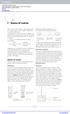 1 States of matter There are three states of matter solid, liquid and gas. For example, water can exist as solid ice, liquid water or as steam, which is a gas. Many substances can be converted to a different
General Chemistry I (FC, 09-10) Lab #3: The Empirical Formula of a Compound. Introduction
 General Chemistry I (FC, 09-10) Introduction A look at the mass relationships in chemistry reveals little order or sense. The ratio of the masses of the elements in a compound, while constant, does not
Cambridge International Examinations Cambridge International General Certificate of Secondary Education
 Cambridge International Examinations Cambridge International General Certificate of Secondary Education *0123456789* CHEMISTRY 0620/04 Paper 4 Theory (Extended) For Examination from 2016 SPECIMEN PAPER
Atomic Structure Chapter 5 Assignment & Problem Set
 Atomic Structure Name Warm-Ups (Show your work for credit) Date 1. Date 2. Date 3. Date 4. Date 5. Date 6. Date 7. Date 8. Atomic Structure 2 Study Guide: Things You Must Know Vocabulary (know the definition
CHEM 105 HOUR EXAM III 28-OCT-99. = -163 kj/mole determine H f 0 for Ni(CO) 4 (g) = -260 kj/mole determine H f 0 for Cr(CO) 6 (g)
 CHEM 15 HOUR EXAM III 28-OCT-99 NAME (please print) 1. a. given: Ni (s) + 4 CO (g) = Ni(CO) 4 (g) H Rxn = -163 k/mole determine H f for Ni(CO) 4 (g) b. given: Cr (s) + 6 CO (g) = Cr(CO) 6 (g) H Rxn = -26
Lecture 19: Eutectoid Transformation in Steels: a typical case of Cellular
 Lecture 19: Eutectoid Transformation in Steels: a typical case of Cellular Precipitation Today s topics Understanding of Cellular transformation (or precipitation): when applied to phase transformation
FIRST GRADE CHEMISTRY
 FIRST GRADE CHEMISTRY 1 WEEK LESSON PLANS AND ACTIVITIES ROCK CYCLE OVERVIEW OF FIRST GRADE CHEMISTRY WEEK 1. PRE: Comparing solids, gases, liquids, and plasma. LAB: Exploring how states of matter can
Classification of Chemical Substances
 Classification of Chemical Substances INTRODUCTION: Depending on the kind of bonding present in a chemical substance, the substance may be called ionic, molecular or metallic. In a solid ionic compound
Science 20. Unit A: Chemical Change. Assignment Booklet A1
 Science 20 Unit A: Chemical Change Assignment Booklet A FOR TEACHER S USE ONLY Summary Teacher s Comments Chapter Assignment Total Possible Marks 79 Your Mark Science 20 Unit A: Chemical Change Assignment
Phase Equilibria & Phase Diagrams
 Phase Equilibria & Phase Diagrams Week7 Material Sciences and Engineering MatE271 1 Motivation Phase diagram (Ch 9) Temperature Time Kinematics (Ch 10) New structure, concentration (mixing level) (at what
Chapter 2 Atoms and Molecules
 Chapter 2 Atoms and Molecules 2-1 Elements and their symbols Most of the chemicals you find in everyday life can be broken down into simper substances Key Concepts: A substance that cannot be broken down
Physical and Chemical Changes Pre Test Questions
 Pre Test Questions Name: Period: Date: 1. Which of the following is an example of physical change? a. Mixing baking soda and vinegar together, and this causes bubbles and foam. b. A glass cup falls from
States of Matter and the Kinetic Molecular Theory - Gr10 [CAPS]
![States of Matter and the Kinetic Molecular Theory - Gr10 [CAPS]](/thumbs/40/21739317.jpg "States of Matter and the Kinetic Molecular Theory - Gr10 [CAPS]") OpenStax-CNX module: m38210 1 States of Matter and the Kinetic Molecular Theory - Gr10 [CAPS] Free High School Science Texts Project This work is produced by OpenStax-CNX and licensed under the Creative
OpenStax-CNX module: m38210 1 States of Matter and the Kinetic Molecular Theory - Gr10 [CAPS] Free High School Science Texts Project This work is produced by OpenStax-CNX and licensed under the Creative
History of the Atom & Atomic Theory
 Chapter 5 History of the Atom & Atomic Theory You re invited to a Thinking Inside the Box Conference Each group should nominate a: o Leader o Writer o Presenter You have 5 minutes to come up with observations
Thermodynamics and Equilibrium
 Chapter 19 Thermodynamics and Equilibrium Concept Check 19.1 You have a sample of 1.0 mg of solid iodine at room temperature. Later, you notice that the iodine has sublimed (passed into the vapor state).
Instructions Answer all questions in the spaces provided. Do all rough work in this book. Cross through any work you do not want to be marked.
 GCSE CHEMISTRY Higher Tier Chemistry 1H H Specimen 2018 Time allowed: 1 hour 45 minutes Materials For this paper you must have: a ruler a calculator the periodic table (enclosed). Instructions Answer all
In the box below, draw the Lewis electron-dot structure for the compound formed from magnesium and oxygen. [Include any charges or partial charges.
 Name: 1) Which molecule is nonpolar and has a symmetrical shape? A) NH3 B) H2O C) HCl D) CH4 7222-1 - Page 1 2) When ammonium chloride crystals are dissolved in water, the temperature of the water decreases.
Introduction to Materials Science, Chapter 9, Phase Diagrams. Phase Diagrams. University of Tennessee, Dept. of Materials Science and Engineering 1
 Phase Diagrams University of Tennessee, Dept. of Materials Science and Engineering 1 Chapter Outline: Phase Diagrams Microstructure and Phase Transformations in Multicomponent Systems Definitions and basic