
IUPUI/IMA Community Project > Activities > Instructional Units > Ancient India ANCIENT INDIA
|
|
|
- Eleanor Fletcher
- 9 years ago
- Views:
Transcription
1 Page 1 of 11 ANCIENT INDIA Indiana Standards Teacher Resources Student Resources Introduction Lesson 1 Lesson 2 Lesson 3 Lesson 4 Lesson 5 Culminating Class Activity Grade: 7th Subject: Social Studies Connections: Language Arts Content: Culture of Ancient India, Religion, Myth Time: Three to four weeks INDIANA STANDARDS: Social Studies: 1. Social Studies; Eastern Cultures; Historical Perspectives; Evaluate the effect of historical events, figures, and decisions on Eastern cultures. Identify major historical figures from societies of the Eastern World and their influence on a specific culture and the world. Using geography to interpret history; past, present, and future. 2. Social Studies; Eastern Cultures; Geographic Relationships; Explain the relationship between physical and cultural features on the earth's surface. Identify cultural characteristics of regions (language, nationality, religion, etc.) and determine the effects of cultural contact among the societies of the Eastern World. Identify ways in which people of the Eastern World have used and adapted to their environments. 3. Social Studies; Eastern Cultures; World Cultures; Using the cultures of the Eastern World as a context, identify the common elements of different cultures. Identify the characteristics of different cultures that are alike and different. 4. Social Studies; Eastern Cultures; Individuals and Society; Develop an understanding of the relationship between individual and group behavior. Consider how individual behavior is influenced by social groups. Art: Standard 1: Students understand the significance of visual art in relation to historical, social, political, spiritual, environmental, technological, and economic issues. Standard 3: Students describe, analyze, and interpret works of art and artifacts. Standard 4: Students identify and apply criteria to make informed judgements about art. Standard 7: Students observe, select, and utilize a range of subject matter, symbols, and ideas in their work. Standard 9: Students develop and apply skills using a variety of two dimensional and three-dimensional media, tools, and processes to create works that communicate personal meaning. Standard 10: Students reflect on, revise, and refine work using problem solving and critical thinking skills. Standard 13: Students identify and make connections between knowledge and skill in art and all other subject areas such as humanities, sciences, and technology. Standard 14: Students understand the connections between many art forms including dance, theater, music, visual arts, and media arts. Language Arts: Standard 3 Reading: Literary Response and Analysis Students read and respond to grade-level-appropriate historically or culturally significant works of literature that reflect and enhance their study of history and social science. Standard 5 Writing: Writing Process

2 Page 2 of 11 Students discuss, list, and graphically organize writing ideas. They write clear, coherent, and focused essays. Students progress through the stages of the writing process and proofread, edit, and revise writing. Standard 7 Listening and Speaking Skills, Strategies, and Applications: Students deliver focused, coherent presentations that convey ideas clearly and relate to the background and interests of the audience. Students evaluate the content of oral communication. Students deliver well-organized formal presentations using traditional speech strategies, including narration, exposition, persuasion, and description. TEACHER RESOURCES: Background on each of the civilizations with Web sites, books, and videos Discover India History of India 9. Welcome to India 10. The Hindu Universe 11. World History, India 12. The Web Chronology Project 13. Invest in India 14. Washington State University, Ancient India 15. Video Library 16. Get video from Indianapolis Museum of Art on their exposition. 17. Indianapolis Zoo STUDENT RESOURCES: Internet Sites: 1. Harappa 2. Mr. Donn's Class 3. Penn Charter School 4. India Cool Atlanta 5. India Government 6. Pitara for Kids 7. Inspire Kids Image Databases: Corbis Images 10th Century Nataraja Bronze (Chola Lord of the Dance) Bracelets and Earrings from Indus Valley Civilization Buddhist Temple in Saging, Burma Image of Ganesha Dancing Indian Elephant Raising Trunk Lion and Horse Figures from Indus Statue of the Hindu God, Vishnu

3 Page 3 of 11 Grove Dictionary of Online Art Article Search "Indian Subcontinent" External Image Links: Uma - Mahesvara (Shiva & Parvati) [Birmingham, AL, Birmingham Museum of Art] Manohar: Portrait of Akbar, [St Petersburg, Hermitage Museum] Krishna [Boston, MA, Walters Art Gallery] Four-armed Ganesha [Ft. Worth, TX, Kimbel Art Museum] Seated Buddha with Two Attendants [Ft. Worth, TX, Kimbel Art Museum] Seated Shiva [Ithaca, NY, Johnson Museum of Art, Cornell University] Yakshi with a Love Letter in Her Hand [Ithaca, NY, Johnson Museum of Art, Cornell Univ.] Shiva Nataraja, The Dancing Lord [Kansas City, MO, Nelson-Atkins Museum of Art] Yakshi [Kyoto, Kyoto National Museum] Stola; Standing Figure of Surya (Sun God) [Miami, FL, Lowe Art Museum] Shiva Nataraja (Lord of the Dance) [Pasadena, CA Norton Simon Museum] Shiva Nataraja [Phoenix, AZ, Phoenix Art Museum] Captive Elephant [Williamstown, MA, Williams College Museum of Art] The Lion Hunt of Maharao Umed Singh of Kota [Williamstown, MA, Williams College Museum of Art] Parvati, Consort of Shiva [Worcester, MA, Worcester Art Museum] Shakyamuni Buddha [Worcester, MA, Worcester Art Museum] Introduction: Place students into five cooperative learning groups. Assign or have each choose an archeological dig for the name of their group: Harappa, Mohenjo-Daro, Lothal, Rojdi, Kotda. Lead a whole class discussion for each introductory lesson. Assign or ask each group to choose a Dig for each lesson. Groups should discuss the guided research questions. Encourage students to add questions of their own. Have each group choose one or more activities in their Dig to demonstrate and further their knowledge of the research. Students should use Web sites, visual databases, school and public library, museums, books, and other resource materials for research questions and activities. The Grove Dictionary of Art Online provides informative textual content as well as visual image links to museum holdings of Ancient Indian artifacts. Lesson 1: Ask students to think about India. What do they know about it? Where is it located? Do they know someone from India? Do they know of any great leaders of India? Religion? Form of government? Place students in five or six cooperative groups and ask them to share information they already know about India. Share the information with large group. Ask each group to do a fact find on one of the following topics about India and report back to larger group: religion, government, economics, education, culture/people, famous places/persons. Have students use books and periodicals from the library/media center or the Internet. Lesson 2: Have students report back on facts and information they found about India. Record information on a large chart. You may wish to show students a short video on modern India. Ask students if their information gathering gave them clues to Ancient India? Have students work in their groups to brainstorm a list of questions about ancient India. Tell the class they will go on an archeological find for three major periods in Ancient India; the Indus Valley Civilization, Aryans and Vedic Age, Gupta Age. Have each student keep a log or journal of important or interesting discoveries about Ancient India they encounter in each of their archeological digs.
![Worth, TX, Kimbel Art Museum] Seated Shiva [Ithaca, NY, Johnson Museum of Art, Cornell University] Yakshi with a Love Letter in Her Hand [Ithaca, NY, Johnson Museum of Art, Cornell Univ.](/docs-images/47/21093316/images/page_3.jpg "] Shiva Nataraja, The Dancing Lord [Kansas City, MO, Nelson-Atkins Museum of Art] Yakshi [Kyoto, Kyoto National Museum] Stola; Standing Figure of Surya (Sun God) [Miami, FL, Lowe Art Museum] Shiva")
4 Page 4 of 11 Lesson 3: The Indus Valley Civilization was a highly advanced civilization B.C.. Harappa and Mohenjo-Daro, their greatest cities, are well-known for the well-planned layout of streets and buildings. They also had highly skilled artisans and craftsmen. Discuss why it was given the name Indus Valley. Have students visit Internet sites and other resources to find answers to questions on the handout (like a scavenger hunt). Have students choose an Indian archeological dig site as a name for their cooperative group if not already done: Harappa, Mohenjo-Daro, Lothal, Rojdi, Kotda. Provide students a list of Internet sites (see Student Internet Sites listed above) as a resource for their archeological dig. Hand-Outs: Dig 1: As your group begins the excavation, you realize how remarkable the Indus Valley Civilization was. You discover the cities were well-planned with an advanced culture. Your excavation uncovers straight streets, great bathes, and well-designed sewers. What kind of people built such a highly developed urban city? Research to find how the city was laid-out, for what purpose the bathes were used, how the people were govern, and the daily life of the people. 1. How does the city plan of Harappa and Mohenjodaro compare to modern city planning in the U.S.? How does a master plan help a city conduct business and grow? 2. What type of city government did the city have? Who ran the city? How did religion play a role in government? 3. What materials were used to houses and city buildings? How skilled were the craftsmen? 4. How did people entertain themselves? What toys did children play with? What material were toys made from? Why was this material used? 1. Design a model and layout of the city Harappa. Show the bathes, house, granaries, and plumbing systems. Decide where the city will be built considering the river providing fertile land, but also causing possible flooding of the city. 2. Role-play a conversation that may have taken place between two citizens of Harappa and Mohenjodar. 3. Choose an animal of strength and create a terra-cotta toy an Indus Valley child might have played with. Why do you think your toy would appeal to a young Indus child? Discuss toy animals children in the United States play with. What is the appeal of these toys to young children? How does that compare with Indus Valley children? Dig 2: You hit a treasure cove of artifacts. Your excavation has uncovered several religious images of various goddesses. An expert on Indian religion tells you the artifacts are of early Hindu religion. You decide to conduct further research to find what period of ancient India each artifact comes from and the importance of women in the Hindu religion and tradition. 1. What essential roles did goddesses play in Indian art and culture? 2. What are the characteristics of the goddess Devi? What does she symbolize? 3. Compare Indian images of power with images of power in modern cultures.

5 Page 5 of What material is each of the images made from? Why do you think these materials were used? 5. Compare women depicted as powerful and important figures with women in other cultures and other periods of time. 6. How are the images of women depicted in other cultures? 7. What inferences from the figurines can you draw about the social life of the Indus Valley people? 8. How does the Indus Valley image of women compare with modern Indian women? 1. Create a chart or table listing the name of each goddess, her role in the Hindu religion and tradition, aspects of power each goddess represents, and other interesting or unusual information each has played in India's history. 2. Find what period on the class time line each artifact comes from. Place a thumbnail image of each goddess you discover on a card with important or interesting facts of the time period. Place the card on the class time line. 3. Find examples of female images depicted in sculpture from other cultures. How is each represented? What does each symbolize? 4. Sculpt a figurine of a goddess similar to that found at Harappa or Mohenjo-Daro. Consider using materials the Indus Valley people would have used.:terracotta, stone, metal. Dig 3: Your digging produces some pieces of jewelry, pottery and seals in various shapes and sizes with illustrations of cattle and other animals. What do the jewelry, pottery, and seals tell you about the life, industry, and economy of the Indus civilization? 1. Did the Indus people trade with other countries? Look at a map to find possible places trade may have occurred. 2. What goods would have been available for trade? 3. What part did agriculture play in the economy? 4. What jobs would the economy create? 5. Why would some of the seals illustrate cows? What was the importance of cattle? How are cattle treated in modern India? 6. What level of craftsmanship were the Indus Valley artisans? 7. To what extent did the women and men adorn themselves with jewelry? 1. Create a table or chart to list the products manufactured or produced by Ancient India. Make columns show what the product was used for and if it is still used today. 2. Use wax or ivory soap to design sacred seals that show various animals in the Indus Valley. 3. Use clay to create pottery in the Indus Civilization style. Consider a drinking cup, fish pot, or bottle. 4. Select a business and trading partners. What will you manufacture? What resources will you use? What technology is needed to turn raw material into a product? Whom will you sell to or trade with? How will you market the product? What transportation is needed?

6 Page 6 of 11 Dig 4: Other archeological discoveries show evidence of trade with Sumeria, Mesopotamia, southern India, Afghanistan, and Persia. Continue with your archeological excavation to discover the transportation system used by the Indus Valley Civilization. 1. What transportation systems were available to the Indus Valley Civilization? 2. What trade routes would be good for raw materials produced and goods manufactured? 3. What problems would each system encounter? 1. Design a transportation system the Indus Valley people would have used. Choose a trade route for goods and materials and build the modes of transportation that would have been used on each route. Lesson 4: Vedic/Epic Ages Background, BC. (Aryan Civilization). Discuss with students the arrival of the Aryans from Central Asia and possible reasons for the end of the Indus Valley Civilization. At this time, Hinduism became a formal religion with its meaning explained in Vedas (four religious books). It is one of the world's major religions and the oldest surviving religion. The language Sanskrit was used to write the Vedas and Indian history in the form of epic poems. Two great Indian epics, Ramayana and Mahabharata were written during this period. An offshoot of the Hindu religion is Buddhism, founded by Siddhartha Gautama an Indian prince. Buddhists follow the teachings of Siddhartha Gautama the "Enlightened One" more commonly known as Buddha. Hand-Outs: Dig 5: You discover some writing that you later find is a language called Sanskrit. The story tells of a nomadic people who invaded India and migrated to the Ganges river valleys and Northern plains. You search leads to other writings called the Ramayana which tells how this new group of people, Aryans, lived. 1. Did the Aryans have a sophisticated and advanced culture like the Indus Valley Civilization? 2. How did the Aryans treat each other? Trace the meaning of the Indo-European root word "ar." Does the meaning accurately describe the Aryan people? 3. How did they entertain themselves? 4. How were the people governed? Who were their rulers? What is a raja? 1. Draw a map of the Indian subcontinent. Indicate mountain ranges, seas, and rivers. Show the route of the Aryans into India. 2. Read Rama and Sita by Govinder Ram. Retell this story in dramatic play. 3. Write an epic poem or story of your own.

7 Page 7 of 11 Dig 6: Your excavation produces an unusual artifact that appears to be an image of a god dancing. Your guide tells you it is Shiva Nataraja, Lord of the Dance. Continue research on this god to discover Hindu thought and practice in Ancient India. 1. What three gods make up the Hindu Trinity? What does each represent? 2. Why is the Nataraj important to Indian culture and religion? 3. Describe the different parts in each of the Lord of the Dance images. What do you think is the meaning of each part? 4. Why is the Shiva dancing? What aspect do music and dance play in Indian culture? 5. What is the Shiva holding in his hands? What might each object symbolize and mean? 6. Is there any connection between the Aryan gods and the Indus Valley gods and goddesses? 1. Study closely the various images of Brahma, Vishnu, and Shiva. Choose an art medium to replicate one of the Hindu gods. Generate a list of questions about your god, then gather all information available about your god to present to other students. 2. Find stories about the Hindu gods. Share these stories with others or retell the stories in dramatic play. 3. Create your own folk tales, stories, or poems about the gods. 4. Study other Indian sculpture that depicts dancing. Compare the images. How are they alike? How are they different? Find music of India and create movements for one or more of the dancing gods. Dig 7: The excavation indicates the Indus River Valley had an unequal social balance between the people. This led to a caste system or "varnas" by the Aryans. Research this social system to find the different occupations and their place in Arayan society. 1. What groups made up the social classes? 2. Could one move from one social class to another? 3. Does the United States have social classes? How does it differ from the Aryan caste system? 4. What effect did the caste system have on future Indian generations? 1. Create a chart that shows the various social classes of India. Create a similar chart for social classes in the United States. Compare the two. 2. Role play a conversation between two Aryans with different social status. 3. Study the images of Rajah. Select one of the watercolors and write a story about the Rajah and the possible events occurring in the watercolor. 4. Read other stories about Rajah and create your own opaque watercolor of Rajah to go with the story. Lesson 5:

8 Page 8 of 11 The Gupta Empire (320 AD 500 AD) The Gupta period was also known as the "Golden Age" of India and existed at about the same time as the Roman Empire. Villages were protected by a "squad," a division of the royal army. Each squad consisted of one elephant, one chariot, three armored cavalrymen and five foot soldiers. This civilization produced great literature and works of art and made great progress in science. The paintings from the Ajanta and Ellora caves are considered some of the greatest Indian works of art and tell a great deal about the daily life of the people. Hinduism was the practiced religion of the Gupta rulers, but Buddhism peacefully coexisted with it. Hand-Outs: Dig 8: Your excavation uncovers an artifact of a man with an elephant head. You learn this is Ganesha, the elephantheaded son of Shiva and is worshiped as the god of wisdom, education, literature, and fine arts. He also is the deity who can remove obstacles. Your guide tells you he is a very popular god with festivals celebrated in his honor. His story is told in the great epic Mahabharata. You decide to find more information about these festivals and the honored Ganesha. 1. Where are the festivals held? What arrangements are made for the festival? 2. Why does he have an elephant head? What meaning does it have? 3. What is the meaning of the mouse with Ganesha? 4. Why does he have multiple arms? 5. What material was used to make the statue? What was the process the artisan used to make the statue? 1. Find stories about Ganesha and retell them to the class. 2. Create your own story about Ganesha telling how he got his head. 3. Study all the images of Ganesha carefully. Write a description of the god with explanation of his unique form. 4. Decide on an art medium to recreate your own Ganesha. 5. Compare the Dancing Ganesha with other Indian sculptures. How are they alike and different? What mood does each convey? What did each symbolize? What purpose did each serve? Find images in magazines and other resources that symbolize similar themes as the Indian sculptures. Create a collage or other mixed-media work with the images you have found. 6. Think of things you value in your life. What persons in life, history, or literature best represent these values? Find images that symbolize these values. Use wax or ivory soap to sculpt a work or art that symbolizes one or more of these values. Dig 9: You "dig" into a wealth of India literature. Read the following literature or find others on your own. Then complete one or more of the activities. 1. Read the tale of Rama and Sita retold from the Ramayana 2. The Bhagavad Gita from the Mahabharata 3. Indian Folk-Tales and Legends, Pratibha Nath 4. In Worship of Shiva, Shanta Rameshwar Rao 5. The Troublesome Slippers 6. Two Fish and a Frog from the Panchatantra 7. Panther's Moon and Other Stories, Ruskin Bond

9 Page 9 of 11 Questions to think about as you read: 1. What are the ideas of karma and yoga? 2. How are the folk tales alike or different from folk tales from other countries? 3. What lessons are being taught in the Ramayana, Panchatantra, and Mahabharata? Does the American culture have literature that teaches moral lessons or history? How do they compare? 4. How does the character Sita serve as a role model for Hindu women? How are ideals for women portrayed in other cultures? What women in U.S. history have served as role models? Are there women role models today in Indian and American cultures? 1. Retell the stories in dramatic play. 2. Perform a Reader's Theater of Ramayana. 3. Make shadow puppets and perform one of the tales from Ramayana. 4. The characters in Ramayana had to make moral decisions and choices. Think about moral decisions and choices you and your fellow students have to make. Compare your moral dilemmas with those in the stories. Write a story about a moral choice you or your friends might face. 5. Write and illustrate a new folktale based on the Hindu tradition. Dig 10: A large number of the artifacts discovered in your excavation depict animals in some form or image. Look at all the images to determine what role and significance animals play in Indian religion, mythology, and literature. 1. What attributes do the animals represent in the paintings and sculpture? 2. What animals are depicted in Indian art? 3. What importance does the elephant play in Indian history, tradition, and culture? 1. Look at one or more of the paintings that show an animal such as a tiger or elephant. What is the posture or pose in each one? Where is the head, the position of the elephant's trunk, the look in the eyes, and what is the expression on his face? What do you think the animal is thinking? What do you think the animal symbolizes? What is happening in the painting? Illustrate a storyboard that shows what happened before and after the scene depicted in the painting. Write a narrative to the story. 2. Look at the painting Captive Elephant from the Williams College Museum of Art (Grove Dictionary of Art Online database), opaque watercolor with gold. Discuss what you think is happening in the picture. How is the elephant depicted? Compare the captive elephant with captive elephants in zoos. Contact the Indianapolis Zoo for information on their recent research of elephants, Project Elephant. As a group, decide upon an image to illustrate with watercolor. Decide if the drawing will represent realism, structuralism, or expressionistic as a form of art. Explain the reasoning for your choice. 3. What animals have been held great importance or value in American culture? Compare them with the elephant and tiger in Indian culture. Create a chart to show the attributes, symbols, and values of the animals. You may want to include animals from other cultures in the comparison. 4. Choose an animal to represent in an artwork of your choice of medium. Why did you choose the animal? What are the attributes of the animal? What theme does the animal symbolize? Write a descriptive essay about your animal.

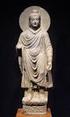
10 Page 10 of 11 Dig 11: Your dig uncovers several Buddha sculptures. You now turn your attention to this other religion that no longer enjoys the widespread worship of Indians as Hinduism but nonetheless played an important part in the history of India. You turn your attention to the founder of Buddhism, Siddhartha, and his enlightenment to become the Buddha Shakyamuni. 1. What are the important components of Buddhism? 2. How has the enlightenment been represented in Buddha art? How is Buddha traditionally portrayed? 3. How are male and female both personified in Buddha deity? How are they portrayed in India art? 4. The lotus flower is a symbol in both Hinduism and Buddhism. What is the meaning and importance of the lotus flower in both religions? How is it used in Indian art? 5. What material were the Buddha images made from? How has the material changed from that of the Indus Civilization as an art form in the artist's hands? 6. Art is used extensively as a means of worship in both Hinduism and Buddhism. Is this true for Christianity and Islam? How is art used in Christianity and Islam? 1. Compare one of the Hindu deities with one of the Buddha deities. How are they alike? How are they different? What role does each play? What is their importance in Indian culture and history? 2. Find examples of art in the Christian and Islamic religions. Compare them with the Hindu and Buddha images. 3. Pair off in your group as patrons and artists. The patrons will commission the artists to produce a symbol or logo for something that the patron holds in great esteem or value. The artist will need to know why the item or idea is important to the patron; its major strengths; a definition of what it is, what it does, or what it represents; what you want people to think or feel when they see the image; type of image, traditional or abstract; shape; keywords about the symbol; material to be used drawing, painting, sculpture. 4. Gestures of the hands are very important in both Hinduism and Buddhism. Study the position of the hands in the Hindu and Buddha images. What do you think the gestures mean in each of the images? Are gestures important in other cultures? Find examples from other cultures of sculpture that show gestures. Compare with the Hindu and Buddha images. How is each used? What do you think the gestures mean? 5. Bring in examples of three-dimensional forms or sculpture. Study the symmetry and balance of each piece. What material is the object made from? What detail is in each piece? Does the piece have aesthetic qualities? Does it create an emotion in you? Is it an abstract, structured artistic accomplishment or a more traditional, natural, and realistic representation? Use this information to write a critique of one or more of the pieces and judge the success of the work. Read your critique to each member in your group. Do you agree with each other's assessment of the sculpture? Discuss why your critiques and assessments may differ. 6. Tell the story of Siddhartha's enlightenment and renouncement of noble birth to become the Buddha Shakyamuni in a narrative, prose, or dialogue. Your group may choose to act this out for the rest of the class. Dig 12: The government of the Gupta period is more complex than previous periods with far less movement in the caste system. Look at several paintings that show nobility and royalty. How is their image portrayed in each piece of art? How are they portrayed in literature?

11 Page 11 of How important is an image to nobility? 2. Over the centuries, what images have nobility and persons in high offices tried to convey? 3. How important is an image to a person in leadership? 4. Are images important to other public figures such as sport figures, musicians, and movie stars? 1. Do the paintings show a realistic event? How would the picture look if it were a photograph? Find a folktale or story that fits one of the paintings to retell to the class or choose a painting and write your own story about the event. 2. Most of the paintings are done with watercolor. How do the Indian watercolors differ from 18th and 19th century European watercolors or contemporary watercolors? Experiment with watercolor to create your own scene in the Indian style. Ask your art teacher to help with this activity. 3. Look at images of George Washington and Abraham Lincoln. How did the artists portray them? Consider their posture, pose, expression, and surroundings. What words describe their characteristics? How do they compare with the nobles in the Indian paintings? 4. Find pictures of contemporary public figures in magazines. How are they portrayed in the photographs? Consider their posture, pose, expression, and surroundings. List words that describe their attributes as seen in the photograph. Write an imaginative story about the scene or paint a watercolor of the scene in the same style as Indian watercolors. 5. Choose a folktale all in your group enjoy. Create a mural to illustrate the folktale. Decide how the work of the composition will be divided among your group. Who will paint background? Who will pencil in the design? Who will paint the details? Who will design each scene? Culminating Class Activity: 1. Plan and host a festival of Ganesha. 2. Select one image that best represents each of the periods in Indian history the class has studied. Discuss why each image was chosen. Display in a hallway or library with a summary and other chosen activities of the period. Indiana Standards Teacher Resources Student Resources Introduction Lesson 1 Lesson 2 Lesson 3 Lesson 4 Lesson 5 Culminating Class Activity

Jainism Jainism also began in India; religion teaches ahimsa nonviolence - Jains believe all living things have souls and should not be hurt
 Lesson 3 Buddhism and India s Golden Age MAIN IDEAS Belief System A teacher called the Buddha developed a new religion that focused on helping people to escape suffering. Government The Maurya rulers united
3. The Buddha followed some Hindu ideas and changed others, but he did not consider himself to be a god.
 True / False Indicate whether the statement is true or false. 1. Like the ancient Greeks, Indian astronomers proposed the theory that the Earth was round and revolved around the sun. 2. During his time
Hinduism. kings and heroes like the Mahabharata and. that became the first scriptures of. Hinduism was born from the beliefs of the Indus Valley
 Hinduism The first known civilization in India developed in the Valley region. This civilization left behind two major collections of literature. Epic told exciting stories of wars, kings and heroes like
Assignment Discovery Online Curriculum
 Lesson title: Reflections of Ancient Greece Grade level: 5-6, with an adaptation for older students Subject area: Ancient History Duration: Two or three class periods Assignment Discovery Online Curriculum
Ancient Greece: Teacher s Guide
 Ancient Greece: Teacher s Guide Grade Level: 6-8 Curriculum Focus: Ancient History Lesson Duration: 2 or 3 class periods Program Description Warring city-states flourished into centers of culture 2,500
Ancient India Lesson 2
 Name: Date: Ancient India Lesson 2 Early Indian Civilization Over 1,000 miles separate the Indus River valley from Iraq, the region once known as Mesopotamia. This distance did not keep people from traveling
Unit KS2: What do Hindu Stories teach us? Resources. Vocabulary In this unit children will have an opportunity to use words and phrases related to: -
 Unit KS2: What do Hindu Stories teach us? About this unit: This unit could be the second section of work pupils will have covered on Hinduism but if taught as part of a rolling programme it could also
Teacher s Guide For. Ancient History: The Greek City-State and Democracy
 Teacher s Guide For Ancient History: The Greek City-State and Democracy For grade 7 - College Programs produced by Centre Communications, Inc. for Ambrose Video Publishing, Inc. Executive Producer William
Write the key elements of the plot in a story you have read.
 F OR USE WITH F OCUS L ESSON 1: PLOT, SETTING, AND T HEME 1a Plot is the series of events in a story. Exposition is the author s introduction to the characters and setting. The conflict, or problem, sets
Religions Hinduism Quiz The Basics of Hinduism
 Religions Hinduism Quiz The Basics of Hinduism Hinduism is so diverse that the basics are spread over thousands of texts and these depict a vast series of events that unfolded over a long course of time.
Grade 1. Ontario Provincial Curriculum-based Expectations Guideline Walking with Miskwaadesi and Walking with A`nó:wara By Subject/Strand
 Grade 1 Ontario Provincial Curriculum-based Expectations Guideline Walking with Miskwaadesi and Walking with A`nó:wara By Subject/Strand Turtle Island Conservation Ontario Teacher Resource Bundle 1 The
Non-Western Art History. The Art of India 3. End. End. End. End. The Mughal Empire 1526-1707. The Mughal Empire
 Non-Western Art History The Mughal Empire 1526-1707 The 1 2 The Mughal Empire Established by Babur, a Muslim from Central Asia, in 1526 with the help of the rulers of Persia (modern Iran) Expanded by his
Explain the image using visual clues to develop informative explanations of images
 Teacher Guide TT targeted adaptable Primary Intermediate Middle Senior 4 4 Explain the image using visual clues to develop informative explanations of images Learning outcomes understand the basic contents
COMMON CORE CONNECTION THE SYMBOLISM OF ALLEGORICAL ART
 COMMON CORE CONNECTION THE SYMBOLISM OF ALLEGORICAL ART COMMON CORE STANDARDS CCSS.ELA-LITERACY.CCRA.R.1 Read closely to determine what the text says explicitly and to make logical inferences from it;
LESSON 3: EXHIBITING A CIVIL WAR SOLDIER
 LESSON 3: EXHIBITING A CIVIL WAR SOLDIER Abraham Lincoln Presidential Library and Museum GRADE 5-8 Objectives Understand the purpose of a museum, museum exhibits and exhibit labels. Experience hands-on
SCHEHERAZADE LESSON PLAN. Discovering the world of the Arabian Nights fairy tales through the music of Rimsky-Korsakov s Scheherazade
 Content focus: Music Visual Arts Language Arts History/Social Sciences SCHEHERAZADE LESSON PLAN Discovering the world of the Arabian Nights fairy tales through the music of Rimsky-Korsakov s Scheherazade
Exemplar Unit of Work: KS1 NEW question What do some people believe about God?
 Exemplar Unit of Work: KS1 NEW question What do some people believe about God? This unit of work contributes towards the principal aim of RE in Gloucestershire: To engage pupils with questions arising
Prep Art Program. Term 2 2015
 Prep Indonesia This term students will develop a range of skills while manipulating two and three-dimensional materials to create series of artworks based on studies of art in Indonesia. The focus for
Standard 1: Learn and develop skills and meet technical demands unique to dance, music, theatre/drama and visual arts.
 ART CONTENT STANDARDS FOR VISUAL ARTS Grades K-5 Note: Each standard requires the application of the elements of art and principles of design. Strand: Visual Arts Standard 1: Learn and develop skills and
ORIGIN OF THE ARYANS. Argument Against Aryan Migration to the Indian Suncontinent BY K.J. SHARMA
 ORIGIN OF THE ARYANS Argument Against Aryan Migration to the Indian Suncontinent BY K.J. SHARMA Aryan in English is derived from the Sanskrit language, "Ārya" Ārya" " meaning noble, civilized or "honorable.
INTO WHICH CASTE HAVE YOU BEEN CAST?: INDIA'S CASTE SYSTEM Ann Crocker West Mid-High School Norman, Oklahoma
 INTO WHICH CASTE HAVE YOU BEEN CAST?: INDIA'S CASTE SYSTEM Ann Crocker West Mid-High School Norman, Oklahoma ABSTRACT: This lesson teaches about the Caste System of Ancient India by grouping students so
Year 2 History: Ancient Egypt Resource Pack
 Year 2 History: Ancient Egypt Resource Pack This pack includes the following lessons: Locating Egypt The River Nile Archeology Hieroglyphics Pharaohs Every effort has been made to seek permission for the
2012 VISUAL ART STANDARDS GRADES K-1-2
 COGNITIVE & K Critical and Creative Thinking: Students combine and apply artistic and reasoning skills to imagine, create, realize and refine artworks in conventional and innovative ways. The student will
Benchmark C Describe the characteristics of feudal societies and the transition to the Renaissance and Reformation in Europe.
 Feudalism in Japan and Europe Connection: History Benchmark C Describe the characteristics of feudal societies and the transition to the Renaissance and Reformation in Europe. Indicator 3 Describe the
History. Programme of study for key stage 3 and attainment target (This is an extract from The National Curriculum 2007)
 History Programme of study for key stage 3 and attainment target (This is an extract from The National Curriculum 2007) Crown copyright 2007 Qualifications and Curriculum Authority 2007 Curriculum aims
NCSS Theme #1 Lesson Plan: Culture
 NCSS Theme #1 Lesson Plan: Culture Lesson Title: World Religions Lesson Author: Kathryn Yarbrough Key Curriculum Words: Judaism, Christianity, Islam, Buddhism, Hinduism, religion, monotheism, polytheism
Academic Standards for Reading, Writing, Speaking, and Listening June 1, 2009 FINAL Elementary Standards Grades 3-8
 Academic Standards for Reading, Writing, Speaking, and Listening June 1, 2009 FINAL Elementary Standards Grades 3-8 Pennsylvania Department of Education These standards are offered as a voluntary resource
Mount Laurel Township Schools Visual & Performing Arts Curriculum Grades Pre-K-8. Adopted by the Mount Laurel Board of Education on August 25, 2009
 Mount Laurel Township Schools Visual & Performing Arts Curriculum Grades Pre-K-8 Adopted by the Mount Laurel Board of Education on August 25, 2009 Contents in this Curriculum (Art) Pre-K Curriculum Kindergarten
Language Arts Core, First Grade, Standard 8 Writing-Students write daily to communicate effectively for a variety of purposes and audiences.
 Genre Unit Reading and Writing Fables by Amy Kinney Language Arts Core, First Grade, Standard 7 Comprehension-Students understand, interpret, and analyze narrative and informational grade level text. Objective
Government of Ancient Egypt Question Packet
 Government of Ancient Egypt Question Packet Your group will research Ancient Egyptian culture focusing on the Government of Ancient Egypt. Assign jobs to group members. Everyone must have a job. Research
Thomas Hart Benton, Cultural Panel #4 (1933) Thomas Hart Benton (1889-1975) wished to create art that would speak to average citizens through clear,
 Thomas Hart Benton, Cultural Panel #4 (1933) Thomas Hart Benton (1889-1975) wished to create art that would speak to average citizens through clear, easily recognizable gestures, stances, and positions
The Greeks 500 300 BC. Greek City States Early Greek sates called polis Usually built around a market or fortified hill top called an acropolis
 The Greeks 500 300 BC Greek City States Early Greek sates called polis Usually built around a market or fortified hill top called an acropolis Greek City-State Political Monarch - ruled by a single person
INTERIOR DESIGN. Total Credits: 70 Studio Credits: 46 Academic Credits: 24. SEMESTER I Credits: 18 Studio Credits: 12 Academic Credits: 6
 DELAWARE COLLEGE OF ART AND DESIGN 600 N MARKET ST WILMINGTON DELAWARE 19801 302.622.8000 INTERIOR DESIGN Total Credits: 70 Studio Credits: 46 Academic Credits: 24 SEMESTER I Drawing I 3 2D Design I: Black
Contextual Relevancy
 North Carolina s Kindergarten Visual Arts Note on Numbering/Strands: V - Visual Literacy, CX Contextual Relevancy, CR Critical Response Visual Literacy K.V.1 Use the language of visual arts to communicate
Standard 1(Making): The student will explore and refine the application of media, techniques, and artistic processes.
 Lesson 9 Picasso and Cubism: Self-Portraits How are many sides of an object expressed at once? How is a subject reconstructed into planes, forms and colors? LESSON OVERVIEW/OBJECTIVES This lesson focuses
The Painter s Eye Grades: 2 4 45 minutes This tour replaces Learning to Look at Art. Please disregard all older tour plans.
 The Painter s Eye Tour 1 The Painter s Eye Grades: 2 4 45 minutes This tour replaces Learning to Look at Art. Please disregard all older tour plans. Procedures As with all tours, timing is critical. Therefore
Writing Emphasis by Grade Level Based on State Standards. K 5.1 Draw pictures and write words for specific reasons.
 Writing Emphasis by Grade Level Based on State Standards Grade K K 5.1 Draw pictures and write words for specific reasons. Grade 1 1.5.1 Write brief narratives describing an experience. Grade 2 2.5.2 Write
The plot is the sequence of events in a story. Each event causes or leads to the next. Events of the plot reveal a problem called the conflict.
 FOR USE WITH FOCUS LESSON 1: NARRATIVE STRATEGIES I 1a The plot is the sequence of events in a story. Each event causes or leads to the next. Events of the plot reveal a problem called the conflict. The
Ancient China. Vocabulary. 15. Terracotta Army collection of seven thousand life-sized sculptures made from pottery in the tomb of Shi Huangdi
 Ancient China 1. Analects the collected sayings and teachings of Confucius 2. Bronze Age (3300 1200 B.C.) time when people made weapons and tools from bronze 3. calligraphy artistic form of ancient Chinese
Grade 5. Ontario Provincial Curriculum-based Expectations Guideline Walking with Miskwaadesi and Walking with A`nó:wara By Subject/Strand
 Ontario Provincial Curriculum-based Expectations Guideline Walking with Miskwaadesi and Walking with A`nó:wara By Subject/Strand Turtle Island Conservation Ontario Teachers Resource Bundle 1 The Arts 1.1
Dragon Legend in Chinese Art Motifs (Jade, Bronze, Porcelain, and Folk Arts) Chinese Culture and Society Series
 1 Dragon Legend in Chinese Art Motifs (Jade, Bronze, Porcelain, and Folk Arts) Chinese Culture and Society Series Phylis Lan Lin, PhD Associate Vice President for International Partnerships University
Ancient Greek Arts and Architecture
 Ancient Greek Arts and Architecture Ancient Greek Architecture The earliest buildings built in Greece in the New Stone Age are small houses or huts with wooden walls around them for protection. Later bigger
A-H 106 RENAISSANCE THROUGH MODERN ART. (3) Historical development of Western art and architecture from the fourteenth century through the present.
 # 101 INTRODUCTION TO VISUAL STUDIES. (3) The course introduces students to the concepts and techniques of visual literacy. It explores a full spectrum of man-made visual forms encountered by contemporary
Systems of Transportation and Communication Grade Three
 1 Ohio Standards Connection: Geography Benchmark D Analyze ways that transportation and communication relate to patterns of settlement and economic activity. Indicator 8 Identify systems of transportation
Cartooning and Animation MS. Middle School
 Cartooning and Animation Middle School Course Title Cartooning and Animation MS Course Abbreviation CART/ANIM MS Course Code Number 200603 Special Notes General Art is a prerequisite, or department permission
Ancient Greece: The Parthenon
 Ancient Greece: The Parthenon Figure of a river-god from the Parthenon Greece, 438-432 BC Visit resource for teachers Key Stage 2 Contents Before your visit Background information Resources Gallery information
Second Grade Ancient Greece Assessment
 Second Grade Ancient Greece Assessment 1a. Which letter is labeling the Mediterranean Sea: A or B? A B 1b. Which body of water is labeled with an A? A 1c. Label the Mediterranean Sea. Then, answer the
HACKETTSTOWN, NEW JERSEY. Computer Animation Grades 10-12 CURRICULUM GUIDE FINAL DRAFT. July 2014
 HACKETTSTOWN, NEW JERSEY Computer Animation Grades 10-12 CURRICULUM GUIDE FINAL DRAFT July 2014 Mr. David C. Mango, Superintendent Ms. Nadia Inskeep, Director of Curriculum & Instruction Developed by:
Roselle Public Schools Visual & Performing Arts Curriculum Units of Study K-12. Unit Length: 2 weeks. New Jersey Core Curriculum Content Standards
 Unit/Chapter Title: Unit 1 Shape Unit Length: 2 weeks Course/Grade: Visual Art Grade 8 Interdisciplinary Connection: Language Arts Unit Overview: In this unit, students will learn how to use highlights
Langston Hughes: Dream Variations Page 1 of 6
 Langston Hughes: Dream Variations Page 1 of 6 Relevant Unit Objectives Module 1: African American Community and Culture This lesson addresses the following Essential Questions: How did African-American
Lesson Plan: Divine Faith Discussion
 Lesson Plan: Divine Faith Discussion Provided by the Art Institute of Chicago Department of Museum Education Suggested Grade Level: 9 12 Estimated Time: 3 hours Introduction Akbar (1556-1605) was one of
Ancient Greece: Pots. Black-figured lip cup Greek, around 540 BC. Visit resource for teachers Key stage 2
 Ancient Greece: Pots Black-figured lip cup Greek, around 540 BC Visit resource for teachers Key stage 2 Contents Before your visit Background information Resources Gallery information Preliminary activities
Fourth Grade Social Studies Content Standards and Objectives
 Fourth Grade Social Studies Content Standards and Objectives Standard 1: Citizenship characterize and good citizenship by building social networks of reciprocity and trustworthiness (Civic Dispositions).
The Rise of Civilizations
 Page 1 of 6 The Rise of Civilizations Thousands of years ago, several societies in different parts of the world changed from hunting and gathering to farming. Some began to produce surpluses of food. Those
Section 1- Geography and the Early Greeks
 Name: Class: Date: 6 th Grade World History Chapter 8 Study Guide: Ancient Greece Section 1- Geography and the Early Greeks 1) Complete the chart below to show how geography shaped the lives of early Greeks.
Egypt Lesson Plan 2: Tombs and the Afterlife
 Egypt Lesson Plan 2: Tombs and the Afterlife Introduction: This lesson focuses on the concept of the afterlife and the importance of pleasing the gods and goddesses, the significance of tombs and tomb
The Literature of Classical Greece
 The Literature of Classical Greece The golden age of classical Greece lasted from the early fifth to the late fourth century BC, and was concentrated in Asia Minor and the Greek Isles. Although this era
Campbellsport School District Art and Design Performance Standards and Benchmarks
 CSD Performance Standards for Art and Design describe what Campbellsport School District students will know and be able to do within this subject area. Each CSD performance standard is aligned to one or
ADVANCED COMMUNICATION SERIES STORYTELLING. Assignment #1: THE FOLK TALE
 Assignment #1: THE FOLK TALE To tell a folk tale that is entertaining and enjoyable for a specific age group. To use vivid imagery and voice to enhance the tale. TIME : 7 to 9 minutes : The purpose of
- 7. Oracle bones were used a. to practice written Chinese. b. to try to predict the future. p Ch 14 Ancient China section 1
 Name: Class: Date: ID: A p Ch 14 Ancient China section 1 Multiple Choice Identzh the choice that best completes the statement or answers the question. - I. Before the Shang kingdom arose, Chinese civilization
Envision Visual Arts (EVA) Classes. Drawing and Design is the foundation course for all other Digital and Fine Art courses,
 Envision Visual Arts (EVA) Classes Drawing and Design is the foundation course for all other Digital and Fine Art courses, and is a wonderful class for those just getting starting in arts classes or for
Unit: What do Buddhists believe about the nature of suffering? In this unit children will have an opportunity to use words and phrases related to:-
 Unit: What do Buddhists believe about the nature of suffering? About this unit; This unit is intended to introduce students to Buddhism, and to help students explore the nature of suffering. It could be
DRAWING, PAINTING, 2-D ART CURRICULUM GUIDE
 DRAWING, PAINTING, 2-D ART CURRICULUM GUIDE Seminole County Public Schools Curriculum Services Department 2003 SEMINOLE COUNTY PUBLIC SCHOOLS 400 East Lake Mary Boulevard Sanford, Florida 32773-7127 THE
TEACHER S GUIDE BIG IDEAS SIMPLY EXPLAINED THE VISUAL GUIDE TO UNDERSTANDING SHAKESPEARE. Aligned with the Common Core standards by Kathleen Odean
 BIG IDEAS SIMPLY EXPLAINED THE VISUAL TO UNDERSTANDING SHAKESPEARE Aligned with the Common Core standards by Kathleen Odean A WORLD OF IDEAS: SEE ALL THERE IS TO KNOW www.dk.com TIS HATCHED AND SHALL BE
Language Arts Literacy Areas of Focus: Grade 6
 Language Arts Literacy : Grade 6 Mission: Learning to read, write, speak, listen, and view critically, strategically and creatively enables students to discover personal and shared meaning throughout their
Ancient Greece: the Nereid Tomb
 Ancient Greece: the Nereid Tomb Relief from the Nereid Tomb showing warriors storming a city Lycia, Turkey 390-380 BC Visit resource for teachers Key Stage 2 Contents Before your visit Background information
Turtle Island Conservation: Grade 4 Miskwaadesi/A`nó:wara Ontario Curriculum Based Expectations Guide. Grade 4
 Ontario Provincial Curriculum-based Expectations Guideline Walking with Miskwaadesi and Walking with A`nó:wara By Subject/Strand Turtle Island Conservation Ontario Teachers Resource Bundle 1 The Arts 1.1
100 People: A World Portrait. Lesson Plan. www.100people.org
 100 People: A World Portrait Lesson Plan www.100people.org 100 People: A World Portrait Understanding the world population is hindered by the sheer size of the task. We can measure numbers and statistics,
Studio Art. Introduction and Course Outline
 Studio Art Introduction and Course Outline PACE High School An Independent Ohio Community School Welcome to the Studio Art course. During this semester you will learn to use the basic materials and techniques
North Carolina Essential Standards Third grade Social Studies
 North Carolina s Third grade Social Studies In third grade, students draw upon knowledge learned in previous grades to develop more sophisticated understandings of how communities may be linked to form
Reservations: Please call 314 361-9017 or 1-800-916-8212 or email [email protected]
 Group Tour Program The Missouri History Museum is an ideal destination for groups of all types. As a tour coordinator, you have the flexibility to customize the museum experience for your tour program
Teacher s Masters California Education and the Environment Initiative. History-Social Science Standards 6.2.6. and 6.2.8. Egypt and Kush: A Tale of
 6 Teacher s Masters California Education and the Environment Initiative History-Social Science Standards 6.2.6. and 6.2.8. Egypt and Kush: A Tale of Two Kingdoms California Education and the Environment
This activity will work best with children in kindergarten through fourth grade.
 ACTIVITY SUMMARY Reading Guide, page 1 of 3 During this activity, you and your child will actively read Martin s Big Words, using the suggested reading strategies. WHY Through this activity, your child
FINE ARTS: ART, DRAMA, MUSIC
 FINE ARTS: ART, DRAMA, MUSIC ART F56150 Introduction to 2-Dimensional Art (1 st Semester Only) 9, 10, 11, 12 F56160 Introduction to 2-Dimensional Art (Any Semester) 9, 10, 11, 12 F56000 Ceramics I 9, 10,
Ancient Greece: Gods and goddesses
 Ancient Greece: Gods and goddesses White-ground cup picturing Aphrodite riding on a goose. Greek, around 460 BC Visit resource for teachers Key Stage 2 Contents Before your visit Background information
Virginia English Standards of Learning Grade 8
 A Correlation of Prentice Hall Writing Coach 2012 To the Virginia English Standards of Learning A Correlation of, 2012, Introduction This document demonstrates how, 2012, meets the objectives of the. Correlation
WSESU English Language & Literature Curriculum Framework
 WSESU English Language & Literature Curriculum Framework WSESU ENGLISH LANGUAGE AND LITERATURE STANDARDS 5.8 TYPES OF LITERATURE Students read a variety of types of literature, fiction and nonfiction (e.g.,
AFRICAN KINGDOMS. Ghana. Around AD 800 the rulers of many farming villages united to create the kingdom of Ghana.
 AFRICAN KINGDOMS In Africa, towns soon became part of an important trade network. Gold and salt were the most important products traded. People needed salt in their diets to prevent dehydration. There
English. Suggested long term planning Years 1 to 6. Herts for Learning Ltd 01438 845111 www.hertsforlearning.co.uk
 English long term planning Years 1 to 6 Herts for Learning Ltd 01438 845111 www.hertsforlearning.co.uk The Long Term Plans allow for two planning approaches: Planning which follows the teaching sequence
Ancient Greece: Myths and legends
 Ancient Greece: Myths and legends Black-figured amphora Herakles and the Stymphalian birds Athens, Greece around 540 BC Visit resource for teachers Contents Before your visit Background information Resources
Clay Animation A Interdisciplinary Lesson
 Clay animation combines the high tech equipment kids love to use with their ageless, timeless love for the tactile qualities of clay. It encourages teamwork and gives students the opportunity to learn
Academic Standards for Reading, Writing, Speaking, and Listening
 Academic Standards for Reading, Writing, Speaking, and Listening Pre-K - 3 REVISED May 18, 2010 Pennsylvania Department of Education These standards are offered as a voluntary resource for Pennsylvania
ART/VCDMA PORTFOLIO TIPS
 ART/VCDMA PORTFOLIO TIPS What is a portfolio? A portfolio represents your skills as an artist, including craftsmanship, technique, creativity, and the ability to communicate visual ideas. High school seniors
The Neolithic Revolution
 The Neolithic Revolution The archaeologist took out his small brush and carefully removed the remaining dirt from the fragment of human skull. To help him reconstruct the life of the ancient human, he
TExES Art EC 12 (178) Test at a Glance
 TExES Art EC 12 (178) Test at a Glance See the test preparation manual for complete information about the test along with sample questions, study tips and preparation resources. Test Name Art EC 12 Test
WORLD HISTORY AND GEOGRAPHY: ANCIENT CIVILIZATIONS
 WORLD HISTORY AND GEOGRAPHY: ANCIENT CIVILIZATIONS Students in grade six expand their understanding of history by studying the people and events that ushered in the dawn of the major Western and non- Western
7. What do you think Zaroff means when he says to himself, the American hadn t played the game?
 Name: Period: Sullivan Eng I Advanced Short Story Unit THIS WILL COUNT AS A MAJOR GRADE WHEN COMPLETE. Reading questions: 50 points Map: 15 points Charts and diagrams: 35 points The Most Dangerous Game
Student Signature Parent Signature Due back signed on November 3 rd 3 points extra credit
 Ancient Civilization Research Project Your Research Project will include three parts: a historical artifact that you create, research notes on your civilization, and a Power point slide show presentation
The National Arts Education Standards: Curriculum Standards <http://artsedge.kennedy-center.org/teach/standards/standards.cfm>
 Discipline-Based Art Education: Theoretical Curriculum Model Discipline-Based Art Education (DBAE) is an approach to arts education developed and formalized in the early 1980s by the Getty Center for Arts
Grade 4 Writing Curriculum Map
 Curriculum Map BOE Approval November 2013 CURRICULUM MAP WRITING GRADE 4 SEPTEMBER OCTOBER NOVEMBER DECEMBER JANUARY Creating a Buzz About : It s All About Me! Tell Me A Story Realistic Fiction Tell Me
SSWH3 THE STUDENT WILL EXAMINE THE POLITICAL, PHILOSOPHICAL, AND CULTURAL INTERACTION OF CLASSICAL MEDITERRANEAN SOCIETIES FROM 700 BCE TO 400 CE.
 SSWH3 THE STUDENT WILL EXAMINE THE POLITICAL, PHILOSOPHICAL, AND CULTURAL INTERACTION OF CLASSICAL MEDITERRANEAN SOCIETIES FROM 700 BCE TO 400 CE. A. COMPARE THE ORIGINS AND STRUCTURE OF THE GREEK POLIS,
Animals that move slowly, animals that move quickly
 Unit Three Time 74 Animals that move slowly, animals that move quickly Unit 3: Time Image courtesy of: Microsoft clipart Focus: Animals that move slowly and quickly linked with time Whole class activity
Jamestown Settlement Family Gallery Guide From Africa to Virginia
 Jamestown Settlement Family Gallery Guide From Africa to Virginia Not long after the English settled Jamestown in 1607, the first Africans were brought to Virginia. They arrived in 1619 from the Kongo/Angola
The Apotheosis of George Washington
 The Apotheosis of George Washington Intended Grade Level: High School Lesson Purpose: For more than 200 years, George Washington has represented the embodiment of republican virtues for America. During
Scheme of work for Learning English through Short Stories
 Scheme of work for Focus Part 1 MASTERING THE BASICS Suggested Time Allocation Periods 1-2 (2 periods) Knowledge, skills & attitudes to be developed Suggested activities Teaching resources Suggested assessment
Ninth Grade History & Social Science World History I
 SEPTEMBER WHI.1 Historical Research and Geographical Analysis *(ongoing throughout year) identify, analyze, and interpret primary and secondary sources use maps, globes, artifacts, pictures identify major
READING THE NEWSPAPER
 READING THE NEWSPAPER Outcome (lesson objective) Students will comprehend and critically evaluate text as they read to find the main idea. They will construct meaning as they analyze news articles and
Egypt Lesson Plan 7: Touring Ancient Egypt
 Egypt Lesson Plan 7: Touring Ancient Egypt Introduction: This lesson focuses on the importance of geographic features and the abundance of natural resources that helped ancient Egypt become the world s
Indian Castes Connection to Current Times
 What Is a Caste? Have you ever heard of the American Dream? It refers to the idea that anyone can become anything in the land of opportunity that you can be born into a poor family but grow up to become