
Troubleshooting Common Transit Bus S-cam and Air Brake Complaints
|
|
|
- Hilary McDaniel
- 9 years ago
- Views:
Transcription
1 APTA STANDARDS DEVELOPMENT PROGRAM RECOMMENDED PRACTICE American Public Transportation Association 1666 K Street NW, Washington, DC APTA BTS-BC-RP Approved May 7, 2009 APTA Bus Brake Working Group Troubleshooting Common Transit Bus S-cam and Air Brake Complaints Note: Document previously numbered as APTA-BTS-SS-RP , working group abbreviation updated to reflect change from Suspension Systems to Brake & Chassis Abstract: This document establishes a Recommended Practice for troubleshooting common braking-related complaints on transit buses equipped with s-cam brakes. Individual operating agencies may modify these guidelines to accommodate their specific equipment and mode of operation. Test results must meet or exceed federal, state or other local regulatory agency requirements if different from the recommendations outlined in this document. Keywords: brake performance, brakes, bus brake, deceleration, transit bus, stopping, PBBT Summary: Most brake related complaints are caused by friction, air or mechanical problems. Typically, complaints take on similar forms and most commonly indicate something needing replacement or adjustment. When attempting to troubleshoot braking related complaints, it is important to follow a systematic approach to save time and money. This Recommended Practice consists of a series of typical complaints, followed by a description and a list of the most common causes. These complaints are followed by a flow chart and a series of testing procedures. Scope and purpose: This Recommended Practice provides troubleshooting guidelines for heavy duty transit buses equipped with air drum brakes equipped with s-cam type brakes. It covers only the most probable causes of the most common braking-related complaints. It does not cover all possible reasons or complaints. The purpose of this Recommended Practice is to provide a uniform method and criteria for troubleshooting the most probably cause of the most common braking related complaints. This Recommended Practice represents a common viewpoint of those parties concerned with its provisions, namely, transit operating/planning agencies, manufacturers, consultants, engineers and general interest groups. The application of any standards, practices or guidelines contained herein is voluntary. In some cases, federal and/or state regulations govern portions of a rail transit system s operations. In those cases, the government regulations take precedence over this standard. APTA recognizes that for certain applications, the standards or practices, as implemented by individual rail transit agencies, may be either more or less restrictive than those given in this document.

2 Contents 1. Safety... 1 Participants The American Public Transportation Association greatly appreciates the contributions of the Bus Transit Standards Brake System Working Group, who provided the primary effort in the drafting of this Recommended Practice. 2. Common brake-related complaints Slack (soft) brakes Brake noise Pulling (brake steer) Smelly (hot) brakes Poor brake mileage performance Test descriptions Review of maintenance records Preliminary inspection Drum off inspection Steering, suspension and wheel-end inspection Air system inspection References Definitions Abbreviations and acronyms American Public Transportation Association

3 1. Safety It is the technician s responsibility to ensure that the bus is safe to operate before performing the following tests Visual inspection An onsite test drive in a safe controlled area 2. Common brake-related complaints The following sections contain common brake problems and their likely causes. See Appendix A for a flow chart depicting the brake troubleshooting process. 2.1 Slack (soft) brakes Definition Slack or soft brakes refers to the vehicle not slowing or stopping effectively when the brakes are applied. SAFETY NOTE: It is important to treat every slack brake with extreme caution. Complaints can be verified by a road test (subjective) or a decel test (objective). It is also important to validate all repairs by performing a brake deceleration test, as outlined in Section Typical causes of slack (soft) brakes: Brakes out of adjustment: Excessive push rod travel Automatic brake adjuster malfunction or improper setup Worn foundation components (yoke, clevis, bushing, camshaft, etc.) Tight camshaft (poor lubrication) Broken park brake spring (glazed lining) Push rod and brake adjuster alignment Brake assembly differences: Incorrect chamber size and type Incorrect brake adjuster length Brake lining and drum condition: Glazed lining Polished drum surface Poor choice of friction material Contaminated lining (typically oil or grease) Worn brake lining, cracked or loose block Insufficient brake lining to drum contact Air system malfunctioning: Air leaks and/or restrictions in application delivery system Contaminated or worn air system components Improper or malfunctioning applications and relay valves 2.2 Brake noise Definition Brake noise refers to an unwanted sound created when the brakes are applied or while the vehicle is moving American Public Transportation Association 1

4 2.2.2 Factors to consider when diagnosing brake noises The type, pitch, volume and location of noise Whether the brakes are warm or cold when the noise happens At what brake application pressure the noise occurs Whether the noise occurs at higher vehicle speeds or toward the end of the brake application If the noise changes throughout the braking application Brake noise prior to or following brake burnish Typical causes of a squealing noise when the brakes are applied Glazed surfaces on the lining and/or the drum Lining loose on shoe Worn foundation: Anchor pin, bushings Camshaft, bushing, support bracket Brake return springs Foundation brake parts not meeting OEM specifications Brake drum design and weight Wrong lining for the application Poor lining-to-drum contact Improper spider alignment Bell mouthing drum Improper machining (arc) Worn foundation parts Imbalanced brake (one axle doing a disproportionate amount of the braking force) Dragging brakes Brakes not releasing Contaminated air system Sticking camshaft Misadjusted brake adjuster Shoe table or backing plate rubbing against drum Improper finish on the lining and/or drum Typical causes of a grinding noise when the brakes are applied Damaged or contaminated lining (foreign material embedded in friction material) Metal-to-metal contact between brake shoe and brake drum Foundation part failure (return spring failure, roller or cam-over condition) 2.3 Pulling (brake steer) Definition Pulling refers to an unintended directional change, left or right, that occurs during brake application Typical causes of pulling brakes: Braking-related: Contaminated lining (typically oil or grease) Uneven lining to drum clearance Uneven push rod travel Glazed (polished) or rough drums surface and/or lining Different lining formulation or burnish condition, right to left Inoperative brake 2010 American Public Transportation Association 2

5 Mismatched, defective or worn foundation parts (slack length, air chamber size/type) Damaged or restricted brake hoses Modifying air system from original configuration Steering-related: Alignment Loose and/or worn steering linkage (tie rods, drag link, etc.) Loose and/or wheel end components (wheel bearing, king pins, etc.) Tire-related: Improper inflation Mismatched tire size or type Suspension-related: Radius rod or torque rod damage (bent) and/or bushing wear Ride height control imbalance Axles out of alignment front to rear (thrust angle) NOTE: Altering the brake balance from rear to front can exaggerate pulling. 2.4 Smelly (hot) brakes Definition Smelly brakes are those that have an unusual odor, which is typically the result of higher-than-normal brake temperatures Typical causes of smelly brakes Newly relined brakes: The release of vapors caused by heat generated during the break-in process is normal. See APTA Recommended Practice APTA BT-RP , Transit Bus In-Service Brake System Performance Testing, for the proper burnishing procedure. Overheated brakes: Dragging brakes Worn foundation brake components (broken return spring, binding s-cam, etc.) Improper setup (brake adjusters, lining-to-drum clearance, machining, etc.) Malfunctioning air system valve (application, relay, quick release, air restriction, interlocks, etc.) Spring brake not fully released (broken/weak spring, air leak, insufficient hold-off pressure) Slow release (worn foundation brake components, binding shoe, minimal anchor pin/shoe clearance) An underperforming brake or axle foundation, causing other foundation brakes to be overworked Mismatched foundation brakes (chambers size/type, friction material) Poor lining-to-drum contact Contaminated lining/drum: Leaking wheel seal Over greased s-cam/anchor pin NOTE: Contaminated linings must be replaced, never cleaned or reconditioned American Public Transportation Association 3

6 2.5 Poor brake mileage performance Definition Poor brake mileage performance refers to the mileage between relines not achieving established baseline goals Establish baseline goals This document focuses on individual buses within a fleet and not a fleetwide problem. It is necessary to establish a fleet average, for each series of coach, after all axles are using the agency s preferred lining. Any coach that varies outside the normal reline interval (for example, 20 percent) should be inspected. Each depot and agency will need to establish its own baseline Typical causes of poor brake mileage performance The reuse of worn foundation parts Improper brake burnishing after reline (see Section 3.2.4) Dragging brakes (see Section 2.4.2) Excessive braking imbalance; side-to-side and/or axle to axle Improper setup Improper or mismatched foundation or air system components Contaminated or worn air system components Glazed lining at one axle, generally due to one axle performing the majority of the work. Malfunctioning supplemental braking system (retarder, engine brake, braking regen, etc.) 2010 American Public Transportation Association 4

7 Brake troubleshooting flow chart 2010 American Public Transportation Association 5

8 3. Test descriptions 3.1 Review of maintenance records Troubleshooting of a brake system-related problem can often be simplified or resolved by examining the maintenance history of a vehicle. Historical data must be accurate and updated to include most recent activities to be of value to troubleshooting. Agencies that have maintenance data collection systems and reports available will benefit by incorporating specific information as described herein. Those that do not have maintenance data systems in place should review any maintenance files and records to the extent available. A review of maintenance records for the problem bus should include the following: The most recent brake reline date and mileage traveled since that date Drum size on axles at last reline History of bus mileage between brake relines for the last two or three intervals Repairs and technician comments relating to the brake system, transmission retarder, suspension, steering system and air supply system since the last reline date Scheduled maintenance and inspection completion Road call or operator reports Past history of similar complaints on this bus Brake test data from APTA Recommended Practice APTA BTS-BC-RP , Transit Bus In- Service Brake System Performance Testing. In conducting this review, a technician is looking for a variety of factors that could point toward problem area. These include recent repairs that may have introduced a problem, or failed to solve a previous problem. It is important to check for deteriorating performance on an axle or wheel, or missed scheduled maintenance. 3.2 Preliminary inspection Visual inspection Look for loose, missing or damaged hardware. Thoroughly inspect the foundation brake system, which includes the brake block, drums, brake chambers, mounting fasteners, anchor pins, return springs, rollers, brake adjusters and other system parts. Lining/shoe (Figure 1) Check that the block is not worn into the wear line or less than 1/4 inch as measured at the center of the shoe. At no time should rivets or bolts touch the drum. Check that there is no movement between the brake block and the shoe. Check for missing segments of brake block. Check for the brake blocks for cracks, hardness and glazing. Inspect for signs of block contamination i.e. oil or grease. Check shoes for damage, broken welds, worn roller pockets, and/or broken shoes. Make sure all components are appropriate for the application (proper length pushrod, proper brake chamber size, etc.) American Public Transportation Association 6

9 FIGURE 1 Brake Lining Problems Cracked lining Contaminated lining Brake actuator (chamber): During pushrod travel measurements, listen for air leaks in the brake chambers or other foundation brake components. Inspect for dents, bends, alignment, leaks, pushrod return, corrosion, and missing caps. Air hoses: Inspect for cracks, kinks, routing, leaking, chafing and deterioration. Check for proper size and material. Different configurations side to side (different fittings, hose size and routing, etc.). Hardware: Check the condition of the clevis, pin and yoke. Check for broken or missing return springs. Check brake return spring for proper installation. Check drums for excessive wear or cracks (Figure 2). Check s-cams, rollers (wear, flat spots, lift). Steering suspension: Worn, damaged or misaligned steering/suspension components can cause a vehicle to pull or drift during braking. Carefully inspect the tires, torque rod bushings, drag links, air bags, tie-rod ends, king-pins, and shock absorbers Brake power stroke measurement The measurement procedure may be modified for each agency s requirements but should contain the following steps: FIGURE 2 Brake Drum Problems Measure and record the distance from the brake chamber face to the center of the clevis pin with the brakes fully released. Repeat at all wheel locations. Cracked brake drum Increase or decrease reservoir pressure to 100 psi and turn off engine. Make and hold a full service brake application. While holding the application, measure and record the distance from the brake chamber face to the center of the clevis pin. Repeat at all wheel locations. Subtract the measurements between the brakes applied and brakes released to determine power stroke American Public Transportation Association 7

10 If the power stroke exceeds the allowable stroke for the chamber size, the cause of the overstroke condition must be identified and corrected. If the vehicle is equipped with automatic brake adjusters and measurements exceed the power stroke limits in Table 1, then follow the manufacturer s recommendations to repair deficiencies. The power stroke should then be retested to confirm compliance. Chamber size TABLE 1 Power Stroke Limits Stroke limit (inches) Stroke limit (mm) 20 1¾ 45 20LS ¾ 45 24L LS 2½ LS 2½ DD3 2¼ ¼ 57 CAUTION: Find and repair the cause of an overstroke condition. Do not manually adjust automatic brake adjusters as a means to repair Road testing It is the technician s responsibility to ensure that the bus is safe to operate before performing a road test on public roads. The test may include a visual inspection and/or test drive in a safe area within the agency s property. Each property may have different safety requirement before a vehicle is road tested. Be sure to comply with agency road testing procedures. The purpose of the road test is to verify the complaint as well as isolate the origin. To accomplish this, it is important to replicate the circumstances that caused the original complaint as closely as possible, paying close attention to the temperature of the brakes, road conditions, and the rate of deceleration. The use of the testing devices may help replicate the conditions and isolate the problem Burnish brakes and measure temperatures at all wheel ends Temperatures should be within 50 F side to side on the same axle, 100 F from steer to drive and center axle. Burnish procedures may be modified for each agency s requirements but should be similar to the following steps: Using the service brake, slow the vehicle from 20 to 5 mph at approximately 0.3 g deceleration, or a moderate brake application. Repeat this process 10 times (snubs) at regular intervals of approximately 500 feet or 0.1 mile without stopping the vehicle. CAUTION: Do not permit wheel lock-up. After the 10th brake application (snub), make one complete stop from 20 to 0 mph American Public Transportation Association 8

11 Compare drum temperature differential immediately after burnishing. Any drum that is significantly cooler (approximately 50 F side to side, 100 F front to center/rear) than the others indicates a lack of braking effort. Inspect the vehicle for brake defects and perform necessary repair. After repairs have been made, repeat burnishing Brake deceleration testing procedure SAFETY NOTE: Testing area should be clear of all traffic and in a location with good visibility. The following is a general procedure for performing a brake deceleration test. Consult the operator s manual of the testing equipments being used for the specific procedure. Each operating agency may determine the number of tests used and the pass/fail criteria for the road deceleration test. Newly installed friction components can produce inconsistent results when performing deceleration tests. For that reason, it is recommended that the following tests be performed only on brakes with some service history: Position the vehicle on a level, dry surface free of debris. NOTE: If testing brake performance on a wet or low coefficient road surface, the value of the test may be limited. Build air system pressure to OEM cut-out specification. Calibrate the testing equipment. Accelerate to approximately 20 mph. Bring the vehicle to a complete stop with a full brake application. Record results from the test. Repeat as necessary per agency standards. If deceleration capability of the service brake system is tested with a mechanical deceleration measurement device (Figure 3), the peak efficiency of 60 percent (0.6 g) should be achieved from an initial speed of approximately 20 mph. If the deceleration capability of the service brake system is tested with an electronic deceleration measurement device (Figure 3), an average in-stop deceleration rate of at least g should be achieved from a speed of 20 mph to a complete stop. FIGURE 3 Brake System Testers Typical mechanical tester Typical electronic tester Performance-based brake tester 2010 American Public Transportation Association 9

12 Vehicles may pass the deceleration requirements, but other conditions may affect the total stopping distance, such as the following: Application delay timing: A brake pedal sensor triggering device can be used to determine the delay time of the brake application, which may vary due to changes in the pneumatic or foundation brake systems. Application delay time is defined as the amount of time from when the brake pedal sensor is triggered until the vehicle reaches the set point deceleration. Comparison of the delay time within similar model buses and the delay time obtained during the test may provide an indication of the status of the air system. ABS system faults: Crossed wheel sensors, modulator valves, or apply and hold wiring of the modulator valves can all increase stopping distances and not trigger fault codes. Care should be taken to check for these problems as well as addressing recognized faults Performance-based brake tester (PBBT) A PBBT may be used to measure the brake force (or performance) at each wheel end, allowing the user to objectively diagnose brake problems. Either a roller brake tester (Figure 3) or a flat plate tester may be used. When using a PBBT, a brake system test must be conducted in accordance with the testing procedure outlined in the PBBT OEM technical manual. For additional information on performance brake testing, refer to APTA BP-RP Tranist Bus Brake Shoe Rebuild and 49 CFR-393, Parts and Accessories Necessary for Safe Operation Infrared temperature measurement The use of an infrared tester or similar devices to measure brake temperatures is an effective tool for isolating faults. It is important for the accuracy of this test that the technician record the temperatures on the same location of each wheel end (lug nuts, drum, wheel flange, etc.). The temperature difference should not exceed approximately 50 F from side to side, or 100 F front to center/rear. FIGURE 4 Other Brake Problems Excessive drum crack 2010 American Public Transportation Association 10

13 3.3 Drum off inspection Remove the brake drums to perform the following inspections. Drum: Inspect drum for abnormal wear patterns, such as bell mouthing, scoring, glazing, etc. Inspect for cracks that go through the entire drum wall. Inspect mounting surface for cracks and oblong or deformed mounting holes. Heat damage Inspect for excessive heat checking (cracks beyond the re-bore limits). Minor heat checking is normal. Check for evidence of excessive heat such as bluing, hard spots, etc. Measure the inside diameter. Check that it doesn t exceed the maximum diameter cast into the drum, or is close enough that the drum will wear past its specification before the next inspection. Brake lining: Inspect contact area for at least 80 percent contact. Check for abnormal wear patterns caused by a bell-mouthed drum, bent spider, oversized drum or stretched shoe. Check for glazed lining. Check for excessive heat. Check for broken or missing segments. Check for contraindicated brake block. Check for loose brake block. Brake shoe: Damaged s-cam Check for shoe stretch and broken welds. Check for elongation of anchor pin or roller seats. Check table thickness of steel shoes. Brake adjuster: Check for broken splines. Check for a missing clevis pin. Check integrity of exterior bracketing or linkage. Check for loose or missing parts. Check for a broken housing. Hardware kit/mounting: Check for missing/broken/stretched return springs. Ensure proper lubrication throughout foundation brakes. Check for a bent spider. Check roller for binding and flat spots. Check anchor pins, bushings, set screws and safety wire. Camshaft/roller Check for broken or twisted splines American Public Transportation Association 11

14 Check for a worn camshaft shaft, (flat spots, burnelling). Check camshaft radial play. If play exceeds.03 inch, check for worn bushings and camshaft journal. Check for worn or undersized roller pins. 3.4 Steering, suspension and wheel-end inspection The following is a typical inspection of the steering/suspension components. Individual manufacturers may require special testing. Check wheel bearings for free, smooth, movement and excessive end play (greater than 0.005). If excessive play is found, have a co-worker apply the brakes to isolate the wheel bearing from the king pin end play. Check king pins for excessive movement laterally as well as vertically. Using hand pressure, check the tie-rod ends and pitman arms for excessive play (Figure 5). Check tires: Evidence of scuffing (feathered), cupping or one-sided wear can indicate worn or damaged steering/suspension or a vehicle out of alignment. Improper inflation can affect tire wear as well as vehicle drivability. Check steering shafts and miter box for excessive play or binding. Check axles for signs of damage that may affect chassis alignment. FIGURE 5 Checking Tie Rod Ends Check the condition of the air bags (air springs). Air bags that have different lifting force will affect ride height and drivability. Check ride height. Check shocks for excessive leaks, damage, binding and loose bushings. Shocks that have different compression/rebound characteristics can affect drivability. Use a short pry bar to check for movement in the torque rod/bushing. Excessive movement is an indication of wear or damage to the torque rod and/or bushing. Check that the power steering pitman arm is in the center position. Check with OEM for verification on proper arm location. Check chassis alignment (caster, camber, toe, thrust angle, offset, etc.). Check proper backlash in the power steering gear against manufacturing adjustment procedures. Inspect the undercarriage: Check the front and rear axle suspension for loose connections. Make sure suspension U-bolts and connections are secure and properly torqued. Check for damage (cracks, dents or bent components). Lubrication: Grease axle and all available suspension locations. Check for any binding articulation points American Public Transportation Association 12

15 3.5 Air system inspection Check governor cut-in and cut-out pressure Compressor cut-out pressure is typically between 120 and 125 psi on transit buses. Cut-in pressure is 15 to 20 psi below cut-out. Minimum allowable cut-in pressure for transit buses is 85 psi. Cut-in pressure is nonadjustable. If it is out of tolerance, the governor will need to be replaced Check for air leaks Static test: With the system at cut-out pressure, the engine off, spring brakes applied and service brakes released, the system should not lose more than 2 psi per minute, when observed at the dash gauges. Brake applied test: With the system at cut-out pressure, the engine off, spring brakes released and service brakes fully applied, the system should not lose more than 3 psi per minute when observed at the dash gauges. If the bus fails either of the tests, check the following areas for leaks: Application, relay valves Hoses, air lines and fittings Brake actuator Air drier Reservoirs Check reservoir for excess liquids Slowly open the drain valve and check for contamination. Contamination is detrimental to the entire are system and must be kept to a minimum. Excessive water is typically caused by one of the following: Improper draining intervals Malfunctioning air drier Excessive air compressor duty cycle (over 25 percent) Frozen air drier purge valve High inlet air temperature to the air drier Malfunctioning air compressor (head gasket, cracked head) Excessive oil is typically caused by one of the following: Improper drain intervals Malfunctioning air compressor Restriction on the air inlet side of the air compressor Excessive air compressor duty cycle (over 25 percent) High inlet air temperature to the air drier Check compressor build time Pressure in the primary and secondary reservoirs must increase from 85 psi to 100 psi within 25 seconds with the engine at governed RPM. Excessive compressor build up time is typically caused by one of the following: Worn or malfunctioning air compressor Restriction on the air inlet side of the air compressor 2010 American Public Transportation Association 13

16 Excessive air leaks Loose or slipping drive belt Malfunctioning unloader valves Check air system pressure balance front to rear Install a duplex gauge to the service side of a front and rear air brake chamber. Apply the service brake in 10- psi increments (10 psi, 20 psi, 30 psi, etc.). The pressure difference between the front and rear brakes should not exceed 2 psi. Unbalanced brake pressures are typically caused by one of the following: Malfunctioning relay valves Malfunctioning brake application valve Kinked or restricted lines 2010 American Public Transportation Association 14

17 References APTA-BTS-BC-RP Troubleshooting Common Transit Bus S-cam and Air Brake Complaints American Public Transportation Association Recommended Practices: APTA BTS-SS-RP , In-Service Brake System Performance Testing APTA BTS-SS-RP , Foundation Brake Lining Classification APTA BTS-SS-RP , Brake Shoe Rebuild APTA BTS-SS-RP , Front/Rear Axle S-Cam Brake Reline Code of Federal Regulations, 49 CFR , Title 49: Volume 5, Part 571, Federal Motor Vehicle Safety Standards, Section 121, Air Brake Systems, Commercial Vehicle Safety Alliance (CVSA), Out-of-Service (OOS) Criteria. Truck Maintenance Council (TMC). DOT Federal Motor Vehicle Carrier Safety Administration, Title 49, Part 393, published in the Code of Federal Regulations. Motor Vehicle Safety Standards Section 121 Air Brake Systems Definitions brake actuator: A brake chamber or brake cans. brake adjuster: automatic slack adjuster (ASA). lining: Brake block or friction material. Abbreviations and acronyms APTA American Public Transportation Association ASA automatic slack adjuster CFR Code of Federal Regulations CVSA Commercial Vehicle Safety Alliance DOT Department of Transportation OEM original equipment manufacturer OOS out of service PBBT performance-based brake testers psi pounds per square inch TMC Truck Maintenance Council 2010 American Public Transportation Association 15

Recommended Practice for Transit Bus In-Service Brake System Performance Testing
 Recommended Practice for Transit Bus In-Service Brake System Performance Testing Approved March 10, 2005 APTA Bus Brake Working Group Approved May 15, 2005 APTA Bus Standards Committee Abstract: This recommended
Section 6 Brake Drum Failure Analysis. Brake Drum Wear Conditions. What is Normal Wear? What is Deep or Excessive Wear? WARNING. Deep, Uniform Wear
 Section Brake Drum 6 Failure Analysis WARNING To prevent serious eye injury, always wear safe eye protection when you perform vehicle maintenance or service. Figure 6.1 ASBESTOS AND NON-ASBESTOS FIBERS
SUSPENSION DIAGNOSIS
 SECTION 2A SUSPENSION DIAGNOSIS TABLE OF CONTENTS Diagnosis... 2A-2 General Diagnosis... 2A-2 Hub and Bearing... 2A-7 2A-2 SUSPENSION DIAGNOSIS DIAGNOSIS GENERAL DIAGNOSIS Problems in the steering, the
BRAKE DRUM AND ROTOR SERVICE INFORMATION
 SERVICE INFORMATION To achieve maximum drum life and optimum performance, proper brake maintenance and brake balance are essential. Consult your truck or trailer manufacturer s maintenance manual for proper
SELF-STEERING AXLE TABLE OF CONTENTS
 SELF-STEERING AXLE TABLE OF CONTENTS Section 1 - Introduction Section 2 - Pre-Installation Check List Section 3 - Ride Height Adjustments Section 4 - Suspension Mount Section 5 - Axle Mount Section 6 -
S-Cam Air Brakes. Braking Systems - Air. Operation
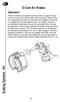 Operation S-Cam Air Brakes Trailer air brakes are operated by the tractor air supply through a series of relay and check valves. When braking is desired, the air is supplied to the axle air chamber which
12. REAR WHEEL/BRAKE/SUSPENSION
 12 12 12-0 SERVICE INFORMATION... 12-1 REAR BRAKE... 12-5 TROUBLESHOOTING... 12-2 REAR SHOCK ABSORBER... 12-8 REAR WHEEL... 12-3 REAR FORK... 12-9 SERVICE INFORMATION GENERAL INSTRUCTIONS When installing
DiscPlus DX195 and DX225 Air Disc Brakes
 Revised 11-04 Technical Bulletin Revised 1 Technical 11-04 Bulletin DiscPlus DX195 and DX225 Air Disc Brakes Inspection, Installation and Diagnostics Air Disc Brake Inspection Intervals and Procedures
Webinar Series. Committee. Disc Brake Wheels Off Inspection and Reline. Presents
 1 APTA Bus Webinar Technical Series Maintenance Committee Webinar Series Presents Disc Brake Wheels Off Inspection and Reline January 21, 2015 2 Introduction Welcome to today s webinar in which we will
Chapter 7 Hydraulic System Troubleshooting
 Chapter 7 Hydraulic System Troubleshooting General The following troubleshooting information is provided as a general guide to identify, locate and correct problems that may be experienced with the hydraulic
Class 5 to 7 Truck and Bus Hydraulic Brake System
 Class 5 to 7 Truck and Bus Hydraulic Brake System Diagnostic Guide 1st Edition * 5+0 Important Service tes The information in this publication was current at the time of printing. The information presented
SECTION 2B WHEEL ALIGNMENT TABLE OF CONTENTS
 SECTION 2B WHEEL ALIGNMENT TABLE OF CONTENTS Description and Operation... 2B2 Four Wheel Alignment... 2B2 Toein... 2B2 Caster... 2B2 Camber... 2B2 Diagnostic Information and Procedures... 2B3 Tire Diagnosis...
MEASURING WHEEL ALIGNMENT
 MEASURING WHEEL ALIGNMENT 2003-04 WHEEL ALIGNMENT Specifications & Procedures - Hummer - H2 Steering and vibration complaints are not always the result of improper alignment. One possible cause is wheel
13. REAR WHEEL/BRAKE/SUSPENSION
 13. REAR WHEEL/BRAKE/SUSPENSION 13 3.5~4.5kg-m 8.0~10.0kg-m 0.8~1.2kg-m 3.0~4.0kg-m 2.4~3.0kg-m 3.5~4.5kg-m 6.0~8.0kg-m 13-0 13. REAR WHEEL/BRAKE/SUSPENSION 13 REAR WHEEL/BRAKE/SUSPENSION SERVICE INFORMATION...
BUYERS GUIDE. IMPORTANT: Spoken promises are difficult to enforce. Ask the dealer to put all promises in writing. Keep this form.
 BUYERS GUIDE IMPORTANT: Spoken promises are difficult to enforce. Ask the dealer to put all promises in writing. Keep this form. VEHICLE MAKE MODEL YEAR VIN NUMBER DEALER STOCK NUMBER (Optional) WARRANTIES
TECHNICAL BULLETIN. Meritor WABCO Cab Leveling Valves and Chassis Leveling Valves. How the Cab Leveling and Chassis Leveling Valves Work
 Revised 02-00 TECHNICAL BULLETIN Meritor WABCO Cab Leveling Valves and Chassis Leveling Valves This technical bulletin covers both cab and chassis leveling valves manufactured by Meritor WABCO. While the
2011-14 F250 6 RADIUS ARM KIT
 92154000 Thank you for choosing Rough Country for your suspension needs. 2011-14 F250 6 RADIUS ARM KIT Rough Country recommends a certified technician installs this system. In addition to these instructions,
Heavy-Duty Break Drums. Maintenance & Installation Manual
 Heavy-Duty Break Drums Maintenance & Installation Manual Since 1923, Gunite Corporation has been designing and manufacturing brake drums for the heavy-duty trucking industry. Today, Gunite continues to
System Saver 318 Air Compressor for Mack E-Tech and ASET Engines
 Maintenance Manual 31 System Saver 318 Air Compressor for Mack E-Tech and ASET Engines Revised 08-05 NON-THROUGH DRIVE THROUGH DRIVE Service Notes About This Manual This manual provides service and repair
DO NOT attempt to repair hub and wheel bearing assembly.
 Page 1 of 6 HUB & WHEEL BEARINGS (WITH PULSE VACUUM HUBLOCK) DO NOT attempt to repair hub and wheel bearing assembly. Removal DO NOT remove hub lock assembly by prying on hub lock legs. This can crack
Recommended Practice for Transit Bus Front and Rear Axle S-Cam Brake Reline
 No part of this publication may be reproduced in any form, in an electronic retrieval system or otherwise, without the prior written permission of The American Public Transportation Association. APTA BTS-SS-RP-004-07
(A4) Suspension and Steering Sample Questions and Answers
 (A4) Suspension and Steering Sample Questions and Answers Answers to these questions are found beginning on page 4 of this document 1. Two technicians are discussing the replacement of an inner tie rod
INTRODUCTION KINGPIN REPLACEMENT
 KINGPIN REPLACEMENT Author: Randy Baumann All information, illustrations and specifications are based on the best information available at the time of publication. The author cannot guarantee the accuracy
Unit: mm(in) Item Standard value Service limit Axle shaft run out - 0.2(0.008)
 Rear Wheel/Brake/Suspension 13. Rear Wheel/Brake/Suspension Service Information 13-1 Troubleshooting 13-2 Rear Wheel 13-3 Rear Cushion 13-4 Rear Swing Arm 13-7 Service Information General Safety If the
READ AND UNDERSTAND ALL INSTRUCTIONS AND WARNINGS PRIOR TO INSTALLATION OF SYSTEM AND OPERATION OF VEHICLE.
 491 W. Garfield Ave., Coldwater, MI 49036 Phone: 517-279-2135 Web/live chat: www.bds-suspension.com E-mail: [email protected] Product: GM Leaf Spring READ AND UNDERSTAND ALL INSTRUCTIONS AND
Fremont County School District No. One, Lander, Wyoming Common Core of Knowledge and Skills For Standards and Measures/Assessment
 Level: CV.ATBR.1 Resources CV.ATBR.1.1 Students prepare and analyze CV.ATBR.1.1.1 Students will apply for a personal car personal financial information. loan via a mock-up project. Students effectively
Trouble Shooting Tech Tips Operation
 Steering Components TroubleShooting Tech Tips Table of Contents Basic Steering System Operation 2 Sector Shaft Adjustments 4 Drag Link Adjustment 5 Relief Valve/Unloading Valve Adjustment 6 Ross TAS Automatic
Drive shaft, servicing
 Volkswagen Passat B6 - Drive shaft, servicing Стр. 1 из 41 40-7 Drive shaft, servicing Drive shafts, overview I - Assembly overview: Drive axle with CV joint VL100 40-7, Drive axle with CV joint VL100,
The hydraulically damped overrun control device is made up of six main elements that control and operate the braking system.
 THE OVERRUN PRINCIPLE The hydraulically damped overrun control device is made up of six main elements that control and operate the braking system. 1. The Housing 2. The Drawtube 3. The Overrun Lever of
Uniform Inspection and Communication Standards for STEERING AND SUSPENSION, WHEEL ALIGNMENT, AND WHEELS AND TIRES
 Uniform Inspection and Communication Standards for STEERING ND SUSPENSION, WHEEL LIGNMENT, ND WHEELS ND TIRES These materials are confidential and are not to be disclosed to, or utilized by, any individual
FJ2. 2 Ton Trolley Floor Jack Assembly & Operating Instructions
 FJ2 2 Ton Trolley Floor Jack Assembly & Operating Instructions READ ALL INSTRUCTIONS AND WARNINGS BEFORE USING THIS PRODUCT. This manual provides important information on proper operation & maintenance.
PREVENTION MAINTENANCE CHECKLIST FOR TRACTORS, TRUCKS, AND AUTOMOBILES
 PREVENTION MAINTENANCE CHECKLIST FOR TRACTORS, TRUCKS, AND AUTOMOBILES Farm Machinery Fact Sheet FM-21 By Dr. Von H. Jarrett, Extension Agricultural Engineer Systematic sequence for inspection GASOLINE
WHEEL ALIGNMENT 4WD SA 6
 SA6 WHEEL ALIGNMENT 4WD 1. MAKE FOLLOWING CHECKS AND CORRECT ANY PROBLEMS (a) Check the tires for wear and proper inflation. Cold tire inflation pressure: See page A25 (b) Check the wheel runout. Lateral
AUTOMOBILE MECHANIC STUDENT INTERNSHIP SKILLS LIST Provo School District
 AUTOMOBILE MECHANIC STUDENT INTERNSHIP SKILLS LIST Provo School District Repairs and overhauls automobiles, buses, trucks, and other automotive vehicles: Examines vehicle and discusses with customer or
STEERING HANDLEBAR/FRONT WHEEL/ FRONT SHOCK ABSORBER
 14 14 STEERING HANDLEBAR/FRONT WHEEL/ SCHEMATIC DRAWING ------------------------------------------------- 14-1 SERVICE INFORMATION------------------------------------------------ 14-2 TROUBLESHOOTING-----------------------------------------------------
WARNING! Failure to follow these inspection procedures can cause personal injury and property damage.
 GARDNER-DENVER TECHNICAL MANUAL CPTEN-136 07/03 Hoist Inspection and Maintenance Guide Inspection Record For: Hoist Model.: Hoist Serial.: WARNING! Failure to follow these inspection procedures can cause
This is the civilian transfer case with the cooling loop only found in the driven gear half of the front case.
 INTRODUCTION The Transfer case used in the AMG Hummer is a New Venture Gear, model 242. This case has been in use for the H-1/Hummer since the early 1990 s. There have been modifications to the internal
Service Manual Rol-Lift
 R 2000 Service Manual Rol-Lift Series: T and E Developed by Generic Parts Service This manual is intended for basic service and maintenance of the Rol-Lift pallet jack. The pallet jacks you are servicing
SLACK PERFORMANCE KARTS
 SLACK PERFORMANCE KARTS SET UP GUIDE Thank you for purchasing a 2013 Slack Axiom Chassis. Performance Mfg. strives to provide you with the very best chassis and components on the market today. Your satisfaction
Rebuild Instructions for 70001 and 70010 Transmission
 Rebuild Instructions for 70001 and 70010 Transmission Brinn, Incorporated 1615 Tech Drive Bay City, MI 48706 Telephone 989.686.8920 Fax 989.686.6520 www.brinninc.com Notice Read all instructions before
Pallet Jack. OWNER S MANUAL Model MH1230. Important Safety Instructions Assembly Instructions Parts and Hardware Identification
 OWNER S MANUAL Model MH1230 Important Safety Instructions Assembly Instructions Parts and Hardware Identification Pallet Jack CAUTION: Read, understand and follow ALL instructions before using this product
Volkswagen Corrado 1990-1994 Suspension Wheels -Tires Wheel Alignment (Page GR-44)
 Wheels -Tires Wheel Alignment (Page GR-44) Front wheel camber adjusting Rear wheel toe determining Snow tires size Vibrations eliminating Wheel alignment data (4 cylinder) data (6 cylinder) Wheels - Tires,
CLASS B PRE-TRIP INSPECTION STUDY GUIDE
 Miami School 3790 NW 11 th St. Miami, Fl 33126 305-649-5344 La Belle School 250 E. Cowboy Way La Belle, Fl 33935 863-675-0755 STRAIGHT TRUCK FRONT OF VEHICLE CLASS B PRE-TRIP INSPECTION STUDY GUIDE Chock
2007 Hummer H3. 2007 BRAKES Disc Brakes - H3. Fastener Tightening Specifications Specification Application
 2007 BRAKES Disc Brakes - H3 SPECIFICATIONS FASTENER TIGHTENING SPECIFICATIONS Fastener Tightening Specifications Specification Application Metric English Backing Plate Bolts 135 N.m 100 lb ft Brake Hose
Vehicle Maintenance Policies and Procedures
 Vehicle Maintenance Policies and Procedures Adopted: 09/20/2011 1 Table of Contents Introduction:... 4 Goals and objectives:... 5 Goals:... 5 Objectives:... 5 Preventative Maintenance:... 6 Daily... 6
Gunite Disc Brake Rotors
 Gunite Disc Brake Rotors Maintenance Manual Gunite is the industry leader in the development of brake system components for heavy-duty truck applications including air disc brake rotors. Gunite was the
FRONT SUSPENSION Click on the applicable bookmark to selected the required model year
 FRONT SUSPENSION 33A-2 FRONT SUSPENSION General Information GENERAL INFORMATION 33200010105 The front suspension on 2WD vehicles is an independent suspension system having the double wishbone combined
HYDRAULIC LIFT TABLE CART 2200-LB.
 HYDRAULIC LIFT TABLE CART 2200-LB. OWNER S MANUAL WARNING: Read carefully and understand all MACHINE ADJUSTMENT AND OPERATION INSTRUCTIONS before operating. Failure to follow the safety rules and other
BOWIE PUMPS OPERATION - MAINTENANCE
 BOWIE PUMPS OPERATION - MAINTENANCE PUMPING PRINCIPLE: The meshing owieeof the gears cause a slight depression, with the resulting enmeshing of the gears causing a vacuum drawing the fluid being pumped
Oregon Fuel Injection
 Corporate Office: P.O. Box 21121, VE Pump Removal and Installation Cummins Lock Timed Applications Removal Clean the exterior of the injection pump and mounting surfaces. 1. Disconnect the fuel return
A Short Course on Wheel Alignment
 A Short Course on Wheel Alignment In its most basic form, a wheel alignment consists of adjusting the angles of the wheels so that they are perpendicular to the ground and parallel to each other. The purpose
LIFT-505. BMF Lift Kit. Yamaha Drive Gas or Electric. Installation Instructions
 LIFT-505 BMF Lift Kit Yamaha Drive Gas or Electric Installation Instructions Contents of LIFT-505 Yamaha Drive BMF Lift Kit: a (1 ea.) BMF A-Arm Assembly b (1 ea.) Driver Side Shock Tower c (1 ea.) Passenger
PUMP MAINTENANCE SCHEDULE AND CHECKLISTS
 PUMP MAINTENANCE SCHEDULE AND CHECKLISTS Providing a maintenance schedule defined specifically by run hours or yardage pumped serves only as a general guideline given the large amount of variables a unit
ReadyLift (Part# 66-5075) Strut Extension, Installation Instructions Toyota Tundra New Body Style 2WD & 4WD
 SAFETY WARNING: recommends this system be installed by a professional technician. In addition to these instructions, professional knowledge of disassembly/ reassembly procedures and post installation checks
Spicer Axles & Brakes ABIB-0302
 Information Bulletin Bulletin Type: Parts / Service Information Topic: Dana LMS Hub Assembly Procedure Steer and Drive Axles Spicer Axles & Brakes ABIB-0302 Note: Bulletin ABIB-0302 replaces the original
Drum Brake Owners Manual
 Drum Brake Owners Manual TIE DOWN ENGINEERING, Inc. 5901 Wheaton Drive, Atlanta, GA 30336 www.tiedown.com (404) 344-0000 Fax (404) 349-0401 2007 TIE DOWN ENGINEERING, INC. ALL RIGHTS RESERVED Instruction
Thank You For Choosing. INSTALLATION INSTRUCTIONS Portal Gear Hubs Polaris RZR XP 900 Crew. (Right) (Left)
 740B Clifty Drive Madison, Indiana 47250 812-574-7777 INSTALLATION INSTRUCTIONS Portal Gear Hubs Polaris RZR XP 900 Crew A Item Description Qty A Rotor 4 B Gear Box, L 2 C Gear Box, R 2 D Gasket 4 E Cap
Prepared by Graham from SuperPro August 2011
 Understanding di Steering and Wheel Alignment Angles Prepared by Graham from SuperPro August 2011 Remember:- Tyre Wear Patterns Tell The Technician A Story Provide Vital Information For Determining Final
Ford F-250 / 350 2-1/2 Coil Kit. Ford F-250, F350 2011-2015. Part#: 013255
 Part#: 013255 Ford F-250 / 350 2-1/2 Coil Kit Ford F-250, F350 2011-2015 Rev.040815 491 W. Garfield Ave., Coldwater, MI 49036. Phone: 517-279-2135 Web/live chat: www.bds-suspension.com. E-mail: [email protected]
REYCOGRANNING AIR SUSPENSIONS
 REYCOGRANNING AIR SUSPENSIONS INDEPENDENT FRONT SUSPENSION & TRAILING BEAM REAR SUSPENSION IFS1200LP & RD1900/2300SLP SERVICE MANUAL D9921 Rev. C 08/08/01 Service Notes This Service Manual describes the
Instructions and precautions. Fork Height. Visit our website at: http://www.harborfreight.com
 Pallet Jack Item 68760 / 68761 Instructions and precautions Specifications Capacity Control Lever Fork Height Fork Length Fork Width Maximum Minimum Width over Forks Steering Wheel Dia. 2-1/2 Ton (5,000
Service Manual Supplement
 Volvo Trucks North America, Inc. Greensboro, NC USA This Service Bulletin is a supplement to Service Manual, Group, Anti-lock Brake System (ABS), Bendix, VNL, VNM publication number PV /. Service Manual
WARNING TO END USER, INSTALLER AND SELLER OF THIS PART!
 WARNING TO END USER, INSTALLER AND SELLER OF THIS PART! By installing this part you are accepting full responsibility and liability for proper wheel and tire fitment after installation. It is the installer
Engine, Drive Train, and Hydraulic Repair Indicator Quick Reference Guide
 Engine, Drive Train, and Hydraulic Repair Indicator Quick Reference Guide Planned Indicators Planned Indicators SM provide the best insight Service Meter Hours CAT Engine Repair Indicators Description
(A5) Brakes Sample Questions and Answers
 (A5) Brakes Sample Questions and Answers Answers to these questions are found beginning on page 4 of this document 1. Two technicians are discussing a problem where the brake pedal travels too far before
AXLE SHAFTS - FRONT. 1993 Toyota Celica DESCRIPTION REMOVAL, DISASSEMBLY, REASSEMBLY & INSTALLATION. 1993 DRIVE AXLES Toyota FWD Axle Shafts
 AXLE SHAFTS - FRONT 1993 Toyota Celica 1993 DRIVE AXLES Toyota FWD Axle Shafts Toyota; Celica DESCRIPTION Axle shafts transfer power from transaxle to driving wheels. All axle shafts consist of a shaft
Thank You For Choosing. INSTALLATION INSTRUCTIONS Portal Gear Hubs Polaris RZR 800. (installation performed on 60 Model) (Right) (Left)
 740B Clifty Drive Madison, Indiana 47250 812-574-7777 INSTALLATION INSTRUCTIONS Portal Gear Hubs Polaris RZR 800 A (installation performed on 60 Model) Item Description Qty A Rotor 4 B Gear Box, L 2 C
ARVINMERITOR UNITIZED FRONT WHEEL HUB INSPECTION AND MAINTENANCE
 SERVICE BULLETIN (Also applies to Mack Trucks Australia) NUMBER: SB-423-002 DATE: 8/23/02 MODEL: All with FF981 Front Axle ARVINMERITOR UNITIZED FRONT WHEEL HUB INSPECTION AND MAINTENANCE The ArvinMeritor
Tool And Material Checklist
 HOW - TO CV JOINTS CV JOINTS Tool And Material Checklist Screwdriver Metal Shears Breaker Bar or Torque Wrench Assorted Wrenches Wire Evaporating Spray Solvent Pusher Tool Vise Snap Ring or Duckbill Pliers
INSTALLATION INSTRUCTIONS. 6108 Air Spring Kit 2011+ Ford F250 Single Wheel 4WD 2011+ Ford F350 Dually 4WD (2011 F350 Single Wheel 4WD use p/n 6113)
 INSTALLATION INSTRUCTIONS 6108 Air Spring Kit 2011+ Ford F250 Single Wheel 4WD 2011+ Ford F350 Dually 4WD (2011 F350 Single Wheel 4WD use p/n 6113) Thank you for purchasing a quality Hellwig Product. PLEASE
Owner s Manual Read and keep this manual. Patents World Wide
 Owner s Manual Read and keep this manual. Patents World Wide S & S Industries, Inc., Sarasota, FL, USA www.trail-gator.com Copyright 2008 All Rights Reserved The following manual is provided to assist
HISTORY IN THE BRAKING
 Practical Tips HISTORY IN THE BRAKING Documentation of a disc brake repair 1 Start of brake repair Visually check the brake disc and/or pads for sign of reaching their wear limit. Before starting the brake
Service Manual SSCI. The Care and Maintenance of Casters. Wheeling, IL (800) 323 7366. Form No. 702755 11/06
 Service Manual The Care and Maintenance of Casters SSCI Wheeling, IL (800) 323 7366 Form No. 702755 11/06 Service Manual Table of Contents General Information... 3 Introduction... 3 About this Manual...
Preventative Maintenance Policies and Plan
 Preventative Maintenance Policies and Plan The objectives of the NECTD Preventative Maintenance Policies and Plan are: Ensure that assets are protected and maintained so that they reach their maximum useful
16 April 2012 1032011-F 1994-2002 Dodge Adjustable Track bar with Relocation Bracket 1
 16 April 2012 1032011-F 1994-2002 Dodge Adjustable Track bar with Relocation Bracket 1 BD Adjustable Track Bar w/bracket Dodge 2500-3500 4WD Models 1994-2002 Dodge 1500 4WD Model 1994-2001 P/N# 1032011-F
Street-Lynx. Reilly MotorSports, Inc. Installation Manual
 Street-Lynx By Reilly MotorSports, Inc. Installation Manual 1 1- Begin by removing your original rear suspension disconnect your brake lines, E-brake cables, and remove the driveshaft. To prevent fire
Volkswagen Jetta, Golf, GTI 1999, 2000 Brake System 47 Brakes - Hydraulic Components (Page GR-47)
 47 Brakes - Hydraulic Components (Page GR-47) FS III front brake calipers, servicing Front brake caliper piston, removing and installing FN 3 front brake calipers, servicing Front caliper piston, removing
SECTION G2: CABLE PROCESSOR MODULE MAINTENANCE
 SECTION G2: CABLE PROCESSOR MODULE MAINTENANCE Cable Processor Module overview WARNING! When tipping the Cable Processor Module back, (after removing the toggle arm pin), use extreme caution not to drop
AC Electric Motors best practice
 If you want to learn more about best practice machinery maintenance, or world class mechanical equipment maintenance and installation practices, follow the link to our Online Store and see the Training
SUSPENSION 2-1 SUSPENSION TABLE OF CONTENTS
 PL SUSPENSION 2-1 SUSPENSION TABLE OF CONTENTS page WHEEL ALIGNMENT... 1 FRONT SUSPENSION... 9 page REAR SUSPENSION... 35 WHEEL ALIGNMENT TABLE OF CONTENTS page DESCRIPTION AND OPERATION WHEEL ALIGNMENT...1
Electronically Controlled Air Suspension (ECAS) for Trucks
 $2.50 Electronically Controlled Air Suspension (ECAS) for Trucks Maintenance Manual No. 36 Issued 7-99 ECAS System for 6 x 2 and 6 x 4 Vehicles with Rear Air Suspensions Service Notes Service Notes This
6 inch A-Arm Lift Kit WARNING: 16-018/16-019. installation instructions. will fit CLUB CAR DS. included:
 Revised May 205 6-08/6-09 6 inch A-Arm Lift Kit will fit CLUB CAR DS installation instructions included: Rear Lift Blocks Main Suspension Assembly Spindles A-Arms Rear Shock Mounting Plates U-Bolts WARNING:
Cooling system components, servicing
 19-1 Cooling system components, servicing WARNING! The cooling system is pressurized when the engine is warm. When opening the expansion tank, wear gloves and other appropriate protection, cover the cap
Model Year: 2010 Model: Prius Doc ID: RM000001Y3B015X. Title: ALIGNMENT / HANDLING DIAGNOSIS: FRONT WHEEL ALIGNMENT: ADJUSTMENT (2010 Prius)
 Last Modified: 5-3-2010 6.4 N From: 200904 Model Year: 2010 Model: Prius Doc ID: RM000001Y3B015X Title: ALIGNMENT / HANDLING DIAGNOSIS: FRONT WHEEL ALIGNMENT: ADJUSTMENT (2010 Prius) ADJUSTMENT If the
Fuel Injection Pump, Rotary (005-014)
 Fuel Injection Pump, Rotary View Related Topic Page 1 of 30 Fuel Injection Pump, Rotary (005-014) Table of Contents Summary General Information Preparatory Steps Remove Front Gear Train Rear Gear Train
Table of Contents WARNING SYMBOLS AND DEFINITIONS
 Table of Contents SAFETY INSTALLATION OPERATION MAINTENANCE Safety... 2 Specifications... 4 Installation... 5 Operation... 8 WARNING SYMBOLS AND DEFINITIONS Maintenance... 9 Parts List and Assembly Diagram...
SUSPENSION AND STEERING OVERVIEW
 SUSPENSION SUSPENSION AND STEERING OVERVIEW The S40/V50 has a wide track and a long wheelbase for its relative size and weight. This gives the car stable and predictable driving characteristics. It also
SERVICE GUIDE For WARN PULLZALL 120v AC &100v AC P/N 685000 & 685001
 SERVICE GUIDE For WARN PULLZALL 120v AC &100v AC P/N 685000 & 685001 REPAIR / REPLACEMENT INSTRUCTIONS TROUBLE SHOOTING GUIDE 986765A2.doc Page 1 of 50 WARNING This guide identifies potential hazards and
HYDRAULIC TABLE CART
 Owner s Manual & Safety Instructions Save This Manual Keep this manual for the safety warnings and precautions, assembly, operating, inspection, maintenance and cleaning procedures. Write the product s
CHAIN CARE & TROUBLE SHOOTING
 Fatigue Failure Bushing Fatigue Stress Corrosion Stress Corrosion and Hydrogen Embrittlement These closely related failures are similar in appearance and nature. They appear as cracks which initiate at
INSTRUCTIONS AND PARTS LIST FOR MODEL 70H & 75H HAND-OPERATED HYDRAULIC PRESS
 INSTRUCTIONS AND PARTS LIST FOR MODEL 70H & 75H HAND-OPERATED HYDRAULIC PRESS SETTING UP THE PRESS FOR OPERATION For shipping convenience, the gauge, pump handle, hoist crank, screw nose and base angles
Cooling system components, removing and installing
 Engine BHW Cooling system components, removing and installing Page 1 / 24 19-1 Cooling system components, removing and installing Warning! When doing any repair work, especially in the engine compartment,
Rear wheel brakes, servicing. Стр. 1 из 45. Note:
 Volkswagen Touareg - Rear wheel brakes, servicing Стр. 1 из 45 46-2 Rear wheel brakes, servicing Rear brakes, FN 44 brake caliper, servicing Note: After replacing brake pads, depress brake pedal firmly
17. APTA PR-IM-S-017-02 Standard for Third Rail Current Collection Equipment Periodic Inspection and Maintenance
 17. APTA PR-IM-S-017-02 Standard for Third Rail Current Collection Equipment Periodic Inspection and Maintenance Approved October 30, 2002 APTA Passenger Rail Equipment Safety Standards Task Force Authorized
FOR ANY QUESTIONS, PLEASE CALL US @ 727.347.9915 M-F 8:00a.m.-8:00p.m. EST. REAR BRAKES 1 AEROSPACE COMPONENTS 727.347.9915
 REAR BRAKES 1 AEROSPACE COMPONENTS 727.347.9915 REAR BRAKES Before getting started, remove all stock braking components. Pre-assembly of parts: Clean the bolts and the threads in the hat with acetone.
DIESEL Technician. Endorsement: Diesel Technician Prerequisite: None CORE STANDARDS, OBJECTIVES, AND INDICATORS
 DIESEL Technician Levels: Grades 10-12 Units of Credit: Minimum 0.5 CIP Code: 47.0605 11 Digit Code: 40-09-00-z00-060 11 Digit CE Code: 40-09-00-13-060 Test #: 907, 908, 909, 910 License: CTE/Secondary
STEERING SYSTEM - POWER
 STEERING SYSTEM - POWER 1990 Nissan 240SX 1990 STEERING Nissan - Power Rack & Pinion Axxess, Maxima, Pulsar NX, Sentra, Stanza, 240SX, 300ZX DESCRIPTION The power steering system consists of a rack and
DIESEL TRUCK MECHANIC 47.0605 GENERAL SKILLS. *A. 001 Define specific safety terms.
 DIRECTIONS Evaluate the student by checking the appropriate box to indicate the degree of Competency. The rating for each task should reflect employability readiness rather than the grades given in class.
INSTALLATION INSTRUCTIONS. 6111 Air Spring Kit 2011+ Ford F250/F-350 Single Wheel 2WD 2011+ Ford F350 Dually 2WD IMPORTANT NOTES
 INSTALLATION INSTRUCTIONS 6111 Air Spring Kit 2011+ Ford F250/F-350 Single Wheel 2WD 2011+ Ford F350 Dually 2WD Thank you for purchasing a quality Hellwig Product. PLEASE READ THIS INSTRUCTION SHEET COMPLETELY