
FATTY ACIDS IN DERMATOLOGY
|
|
|
- Vernon Ramsey
- 9 years ago
- Views:
Transcription
1 1 FATTY ACIDS IN DERMATOLOGY

2 2 FATTY ACIDS IN DERMATOLOGY Table of Contents I. PUFA AND EFA : WHO ARE THEY? WHERE DO THEY COME FROM?... 5 II. MAIN ROLES OF EFA... 7 A. Structural role Intercellular cohesion and superficial lipid film. 2. Cell membrane fluidity B. Functional role ω6 EFAs 2. ω3 EFAs 3. ω6/ω3 metabolic interactions III. THE RATIONALE OF EFA DIETARY SUPPLEMENTATION A. General consequences of EFA deficiencies B. Main therapeutic perspectives of EFA supplementation C. Fields of action in dermatology and required EFAs : ω6 or ω3? Therapeutic strategies in dermatology 2. The required EFA for a structural beneficial effect 3. The required EFA for a functional beneficial effect D. Conclusion... 12

3 3 FATTY ACIDS IN DERMATOLOGY Abbreviations FA EFA PUFA MUFA SFA LA GLA DGLA AA αla EPA DHA PG LT PA2 Co Lo TsupL fatty acid essential fatty acid poly-unsaturated fatty acid mono-unsaturated fatty acid saturated fatty acid linoleic acid (ω6) gammalinolenic acid (ω6) dihomogammalinolenic acid (ω6) arachidonic acid (ω6) alphalinolenic acid (ω3) eicosapentaenoic acid (ω3) docosahexaenoic acid (ω3) prostaglandins (PGE1/2/3) leukotrienes (LTB4/5) phospholipase A2 cyclooxygenase lipooxygenase T suppressor lymphocyte PUFA Nomenclature PUFA can have special common names as «arachidonic acid» (AA) or «linoleic acid» (LA), particularly the most important. However, the scientific nomenclature includes names that are composed of two parts: one, lettered, indicating the number of carbon atoms and the number of double bonds, and another shorthand identification with numbers corresponding to the latter but also indicating the position of the double bond the closest to the methyl (CH 3 ) end. This location determines the family to which it belongs (9, 6 or 3). Example with EPA (eicosapentaenoic acid): 20 carbon atoms 5 double bonds NAME CODE Number 3 family (omega 3) 20 carbon atoms 5 double bonds

4 4 FATTY ACIDS IN DERMATOLOGY Titles and Explanations of the Figures Figure 1. Origin and metabolic pathways of PUFAs. Figure 1 presents the origin of various fatty acids in the nature along with their metabolic pathways in the organism. This figure helps understanding the role of each fatty acid, the reason why some are essential, and the potential sources. It also helps understanding the following figure in which these metabolic pathways are presented in a simplified form. Figure 2A. Principal properties of ω6 and ω3 EFA, and of their cofactors. Figure 2A presents the different PUFA properties and interactions (including the EFA) within their simplified metabolic pathway. Figure 2B. Synergistic effects of controlled EFA supplementation and benefits in dermatology ; the MEGADERM response. Figure 2B presents the main influences of FAs in dermatology as it shows which metabolic pathways are favoured by the supplementation of EFAs included in MEGADERM. It explains the role of each MEGADERM s FA and its subsequent advantage in dermatology, demonstrating the indissociable and major benefits of the two families ω6 and ω3. Figure 3. Diagrammatic illustration of structural and functional benefits of an ω6 and ω3 combination depending on their ratio : the MEGADERM balance. Figure 3 is a theoretical diagrammatic illustration of the structural and functional benefits of an ω6 and ω3 combination depending on their ratio. It clarifies the purpose of respecting this ratio and shows the importance of large enough quantities of supplements to maintain this beneficial balance, whatever the diet of the animal is.

5 5 I. PUFA AND EFA : WHO ARE THEY? WHERE DO THEY COME FROM? (refer to Figure 1) PUFA (poly-unsaturated fatty acids) are FA (fatty acids) that have a long chain with several double bonds. They have multiple vital roles in the organism of animals as well as in plants. PUFAs are designed as EFA (essential fatty acid) when they cannot be synthesised de novo by the animal and therefore result in their necessary dietary requirement. There are 3 principal families of PUFAs (ω9, ω6 and ω3) among which 2 are fundamental (ω6 and ω3). In animals, each of these families have a different metabolic pathway. The PUFA or EFA that are the first substrates of a metabolic pathway are designed as «parent FA». Only plants possess the necessary enzymes (desaturases) to obtain the parent substrates of animals metabolic pathways. Only plants can indeed synthesise by desaturation, from a saturated FA of 18 carbon atoms (stearic acid), successively the parent of the ω9 family followed by the ω6 family and finally the ω3 family. The ω3 family has therefore a superior degree of unsaturation than the ω6 family, which itself has a superior degree of unsaturation than the ω9 family. The parent substrates are therefore EFAs in animals and hence should be supplied by vegetable oils in their diet. Plants can seldom transform parent PUFAs, hence vegetable oils cannot provide the metabolites of these FA. However, and exceptionally, some rare plants are capable of metabolising LA (linoleic acid ω6) and therefore contain GLA (gammalinolenic acid ω6). Some terrestrial plants are particularly rich in LA and poor in αla. The synthesis of αla (alphalinolenic acid ω3), parent of the ω3 family, is on the other hand a major component of the metabolism of certain marine plants. This is why some fish are rich in ω3 FA and in particular in EPA (eicosapentaenoic acid ω3) and DHA (docosahexaenoic acid ω3) subsequent to the metabolic conversion of αla in their organism. These ω3 FA can and therefore should be provided by fish oils. EPA is reversibly metabolised in DHA so the supply of one or the other of these FA is equivalent. On the other hand, the first metabolic conversions are irreversible all the way to AA for the ω6 family, and EPA for the ω3 family. To conclude, LA, GLA and EPA (+ DHA) are fatty acids that are vital for animals. Supplementation in these FA may be considered only by providing properly selected vegetable oils for the ω6 family and certain fish oils for the ω3 family (EPA and DHA).

6 It is important to note here that the different metabolic pathways (ω3, ω6 and ω9) are well distinct as far as their substrates and products, but they competitively use common enzymatic systems. The outcome of this competition does not only depend of the amount of FA present but also of which families are competing : the greater the number of double bonds, the greater the affinity for the desaturase enzyme. This brings up fundamental consequences in how to influence the metabolic activities by supplementing the diet. 6

7 7 II. MAIN ROLES OF EFA (refer to Figure 2A) EFAs are at the same time cellular and intercellular components, and substrates involved in the metabolism of the animal. Their physiological role in the organism, in particular by their involvement in the inflammatory processes, makes them essential to life. EFA therefore have two principal roles that should not be disassociated. The first role is structural: they take part of the tissue structure, in particular in the skin. The second role is functional : they are involved in metabolic pathways (the eicosanoids cascades) and participate in the inflammatory reactions and their regulation. Two types of EFA are specially involved in these two features : the EFAs of the ω3 family and the ones of the ω6 family. These two families are well distinct because animals cannot synthesise their parent FA and because the metabolites cannot switch to one or the other family (only plants have this ability). Nevertheless, these two metabolic pathways (ω6 and ω3) are very closely connected by the fact that they use the same enzymatic systems, and therefore their metabolites of same level compete between each other. This bilateral influence depends of the ratio ω6:ω3. As a result, it appears possible to favour certain steps of the EFA metabolic pathways by providing certain specific EFAs. A. Structural Role 1. Intercellular cohesion and superficial lipid film The ω6 parent FA (LA) is above all a major component of the epidermal intercellular cement. Indeed, LA is admitted to be a key component of the intercellular lipids, in particular of ceramides, which ensure the intercellular cohesion and limit water and nutrient losses (epidermal barrier function). Furthermore, LA is an essential component of the superficial lipid film, which protects the skin from external chemical, physical or microbial injuries. 2. Cell membrane fluidity PUFAs with 20 carbon atoms (C20), among which are found AA, DGLA and EPA, without any family consideration (ω6 or ω3), are major structural components of cell membrane phospholipids. Their fluidity, due to the presence of double bonds, is a prerequisite to cell integrity (in particular for keratinocytes) in the skin and its appendages. The degree of fluidity is directly related to the degree of unsaturation of structural FA (ω9 to ω3). Thereby, ω3 are of major benefit in skin and haircoat «nutrition».

8 8 B. Functional Role 1. ω6 EFAs The metabolic pathway of ω6 EFAs produces pro-inflammatory mediators and «antiinflammatory» mediators (eicosanoids). The conversion of AA leads to pro-inflammatory mediators. Even though LA and GLA are in fact precursors of AA, these FA have very beneficial effects on the skin condition as well as in modulating inflammatory processes. It is then important to emphasise here that the supplementation in LA (and GLA) has practically no effect on the production of AA, because GLA is quickly converted into DGLA (dihomogammalinolenic acid ω6) which itself is very slowly converted in AA. The amount of AA produced by these conversions when ω6 FAs are supplemented is therefore very small (or even insignificant) compared to the amount provided by the carnivore diet of dogs and cats. The principal strategy for encountering the results of an excessive conversion of AA does not consist in limiting its intake, but its metabolic followed by its structural utilisation in supplemented animals. DGLA is preferentially converted into anti-inflammatory PGE1 (prostaglandins E1) and therefore competes the cyclo-oxygenase enzyme with AA, inhibiting the conversion of the latter into pro-inflammatory PGE2 (prostaglandins E2). PGE1 also inhibits the phospholipase A2 that releases AA from the cell membranes and makes it available to be metabolised. Another significant property of PGE1 is that it stimulates T suppressor lymphocytes and inhibits mastocyte degranulation. Thereby, it regulates IgE response and furthermore limits the hypersensitivity type I reactions that occur in allergic dermatitis. 2. ω3 EFAs The metabolic pathway of ω3 produces «anti-inflammatory» mediators. The principal activity of ω3 EFAs is regulating the production of pro-inflammatory mediators issued from the ω6 metabolic pathway. The presence of ω3 turns the balance towards the production of less inflammatory (or even anti-inflammatory ) mediators, synergistically with DGLA (ω6) and depriving inflammatory mediators issued from AA. This activity is due to competitions for enzymatic systems supported on the long term by a structural competition in the cell membranes.

9 9 3. ω6/ω3 metabolic interactions As we have seen, PUFAs are substrates for the production of eicosanoid mediators that induce and regulate inflammation, mostly prostaglandins (PG) and leukotrienes (LT). Two major groups of enzymatic systems are involved in PUFAs metabolism : the desaturases (that act very slowly) and the elongases (that act very quickly). The former suppresses 2 hydrogen atoms (-2H) creating a double bond, and the latter adds 2 carbon atoms, elongating the molecule. Each metabolic level has a different enzymatic system yet each of these are used by FA of same level but of different metabolic pathways. Since enzymatic systems have a greater affinity for FA containing the most double bonds, for each step, ω3 FA are preferentially metabolised followed by ω6 and then ω9. That is why when ω3 and ω6 FA deficiency occurs, the conversion of ω9 FA increases, with negative consequences. Benefit can on the other hand be derived from this peculiarity when supplementing an excess of ω3 (EPA and DHA), which will favourably compete the enzymatic systems with AA (ω6), and therefore reduce the potential conversions of the latter. «Excess» is not meant as a flat amount but as decrease of the ω6:ω3 ratio hence favouring the metabolic conversions of ω3 to the detriment of those of ω6. An ω3 metabolic overload can therefore be obtained even with a smaller amount of ω3 than of ω6, like for example with a 5:1 ratio. These metabolic systems readily waver between the different families. This explains first why they can be balanced depending on certain amounts of supplemented EFA and in second, why different ω6:ω3 ratios have different effects. Intercellular cement Superficial lipidic film EPA LA AA LA GLA EPA p j Metabolic activity Cell membrane

10 10 III. THE RATIONALE OF EFA DIETARY SUPPLEMENTATION A. General Consequences of EFA Deficiencies The skin is very susceptible to EFA deficiency, which leads to poor cutaneous and haircoat quality or even to severe scaling, epidermal hyperproliferation and impaired epidermal barrier function. Healthy animal support relatively well these deficiencies, which sole consequence is an altered haircoat quality. In subjects with dermatoses, EFA deficiency unquestionably aggravates the clinical signs and the poor cutaneous status. Besides quantitative deficiencies, defects of the enzymatic systems lead on top to qualitative deficiencies in cats or in certain dogs with skin diseases. A general EFA (therefore PUFA) deficiency leads to the incorporation of less unsaturated (ω9) or long chain saturated FA in the cell membranes (in particular in keratinocytes). The subsequent reduced cell membrane fluidity increases the tissue permeability and therefore the transepidermal water and nutrient loss. Furthermore, an EFA deficiency or even a concentration imbalance of different FA, may alter the metabolic pathways and therefore enhance the inflammatory processes. Broadly speaking, qualitative deficiencies may be induced by defects of the enzymatic function. The cat, for example, has a higher risk of PUFA deficiency because the activity of its desaturases is reduced. Enzymatic deficiencies may also be due to certain pathologic conditions as hypothyroidism, diabetes, liver disease, stress, etc. In these two latter cases, one of the reasons could be a 6 desaturase inhibition by cortisol (which secretion increases in stress) and in particular in liver disorders (older animals...). A direct supplementation of GLA and EPA gains then all its importance in these pathologic conditions and in cats, and more particularly in those affected by allergic dermatitis, manifested by a miliary dermatitis, eosinophilic plaques or granulomas B. Main Therapeutic Perspectives of EFA Supplementation Any apparently healthy subject, may benefit of a supplement that will compensate eventual imbalances, deficiencies or defects that do not cause obvious clinical signs. Since EFA have many physiologic activities, their supplementation provides benefits in preserving an efficient immune defence and keeping the animal in good condition. It also has a major interest as preventing occurrence of dermatoses or as a cosmetic conditioner.

11 11 Furthermore, all dermatoses engender skin injuries whose structure and/or physiologic modifications can be improved by such supplementation. More particularly, a keratoseborrheic status is linked to a high cutaneous concentration of oleic acid (AGMI ω9), which can be compensated the most advantageously and efficiently by a LA supplementation. The clinical signs of allergic dermatitis are due as much to the structural modifications of the skin as to the inflammatory processes enhanced by type I hypersensitivity reactions. Hence, they represent a strong indication for an appropriate EFA supplementation. EFA are known as well for their influence in many other metabolic activities involved in the regulation of miscellaneous organic functions that preserve the health of living beings. In human medicine and aside from the dermatological field, the beneficial effects of EFAs, in particular the regulation of the production of inflammatory mediators, are exploited in many diseases as atherosclerosis, rheumatoid arthritis, asthma C. Fields of action in dermatology and required EFAs : ω6 or ω3? 1. Therapeutic strategies in dermatology The ultimate aim of any dermatological treatment is to put an end to any clinical signs (symptoms and lesions). Accordingly, a double key strategy is necessary : 1 ) restoring a perfect skin integrity is a prerequisite in all dermatological treatments. The structural role of EFA is of benefit for this objective. 2 ) limit the outcome of inflammatory processes by strictly controlling the EFA supplementation and ratio in order to influence the metabolic pathways of PUFAs that are involved in this processes. The plan is to deprive the inflammatory process of its initial substrate (the AA) by inhibiting its potential metabolic conversions, and thereby deviating the metabolic pathways towards FAs that will produce anti-inflammatory (or less inflammatory) mediators instead of pro-inflammatory mediators. These two strategies are necessary and indissociable to achieve this objective, and each of the two families, ω6 and ω3 participate in each of these two directions. For full comprehension, it is important to remind that the FAs that compose membrane structural phospholipids are the ones that will be released later in order to be metabolically converted into inflammatory mediators in the eicosanoid cascades. Their presence in these membranes generates a substantive metabolic stock. Each of the ω6 and ω3 metabolic pathways have a role in regulating the inflammatory processes, but their close interaction explains the complexity of their mechanism. Not only do these two families compete with the same enzymatic systems that are rate-limiting, but the latter also have a preference for FAs that contain the most double bonds, even if their concentration is lower. Therefore, for each enzymatic step, the choice of substrate (ω6 or ω3 ) is strongly influenced by variations of the ω6:ω3 ratio. The importance of supplementing each of these FA and maintaining a certain ratio between them is then capital. In order to utterly provide the two beneficial effects, a diet supplement should include substantial amounts of ω6 and ω3 FAs according to a certain ratio.

12 12 2. The required EFA for a structural beneficial effect The double supplementation of ω6 and ω3 allows to perfectly restore the skin integrity taking into account the incorporation of LA in the intercellular cement as in the superficial lipid film, and of C20 FAs (DGLA and EPA) in the cell membranes. In fact, the integration of EPA in membrane phospholipids instead of AA provides not only a stock of EFA that produces anti-inflammatory mediators, but it also increases the fluidity and stability of cell membranes. This reinforces the epidermal function barrier. A supplement is more beneficial if it is limited in oleic acid (parent of the ω9 family) for this FA is an adverse structural component responsible of a loss of cell membrane fluidity. 3. The required EFA for a functional beneficial effect Supplementation of ω6 (LA and GLA) and ω3 (EPA and DHA) is of benefit by influencing favourably the metabolic pathways of PUFAs hence producing anti-inflammatory mediators to the detriment of pro-inflammatory mediators. The first step is to favour the first steps of the ω6 metabolic pathways that produce DGLA, and more particularly the anti-inflammatory PGE1. This is achieved by supplying enough LA and direct GLA with limited αla (ω3 parent EFA, which is a strong enzyme competitor). The functional role of LA is enhanced by the direct supply of GLA thus compensating eventual enzymatic ( 6 desaturase) deficiencies. Even though these enzymes have less affinity for ω9 FAs, limited oleic acid is also beneficial by avoiding its competition with the ω6 metabolic pathway. A second step is to favour the metabolic conversion of EPA (and DHA). By competing with AA for the lipoxygenase and cycloxygenase, they favourably deviate the eicosanoid cascade towards the production of PGE3 and LTB5 (anti-inflammatory), thus limiting the conversion of AA into PGE2 and LTB4 (pro-inflammatory). D. Conclusion The synergistic effects of ω6 and ω3 EFAs are beneficial as well in restoring the skin integrity as for providing an anti-inflammatory effect, by the control of PUFAs metabolic pathways. Other FA must be considered for their adverse effects.

13 FIGURE 1 13

14 14 FIGURE 2A

15 FIGURE 2B 15

16 FIGURE 3 Diagrammatic illustration of structural and functional benefits of an ω6 andω3 combination depending on their ratio. 16 Improvement of skin integrity : structural benefit. Regulation of pruritus and inflammation : functional benefit. 25:1 10:1 5:1 2.5:1 Ratio ω6/ω3 LA + GLA EPA + DHA With MEGADERM, what ever the animal s diet is (among basic diets). With an under-dosed supplement : 1 ) absolute amounts are insufficient, 2 ) uncontrollable variations of the physiologic ratio according to the diet.

Restore and Maintain treatment protocol
 Restore and Maintain treatment protocol Combating inflammation through the modulation of eicosanoids Inflammation Inflammation is the normal response of a tissue to injury and can be triggered by a number
I The THREE types of LIPIDS
 LECTURE OUTLINE Chapter 5 The Lipids: Fats, Oils, Phospholipids and Sterols I The THREE types of LIPIDS A. Triglycerides (fats & oils)- the MAJOR type of lipid in food and humans. 1. 2 parts of triglyceridesa)
The Holman Omega 3 Test Report www.omega3test.com
 Date: 3/31/11 ID: 11387 Patient: Ben Bishop Sample Date: 3/22/11 The Holman Omega 3 Test Report www.omega3test.com Select Key Omega 3 and Omega 6 Fatty Acids Result () Typical USA (Control) () Percent
The Holman Omega 3 Test Report www.omega3test.com
 Date: 11/21/11 ID: 1285801 Patient: Andrea Crocker Sample Date: 10/17/11 The Holman Omega 3 Test Report www.omega3test.com Select Key Omega 3 and Omega 6 Fatty Acids Result () Typical USA (Control) ()
Diet and Arthritis. Dr Áine O Connor Nutrition Scientist. British Nutrition Foundation. 2011 The British Nutrition Foundation
 Diet and Arthritis Dr Áine O Connor Nutrition Scientist British Nutrition Foundation Outline Background What is arthritis? What are the common forms? Body weight and arthritis Diet and arthritis Nutrients
Lipids. There are 2 types of lipids; those that contain the structural component of a fatty acid; and
 Lipids Lipids are biomolecules that contain fatty acids or a steroid nucleus. soluble in organic solvents, but not in water. named for the Greek word lipos, which means fat. extracted from cells using
OMEGA 3 REPORT. Source: www.omega-3-forum.com and www.myfoodforhealth.com
 OMEGA 3 REPORT Source: www.omega-3-forum.com and www.myfoodforhealth.com BACKGROUND INFORMATION AURI has received several requests for technical assistance related to omega 3 and omega 6 fatty acids and
Acne vulgaris, mental health and omega-3 fatty acids. Lipids in Health and Disease. October 13, 2008
 Acne vulgaris, mental health and omega-3 fatty acids 1 Lipids in Health and Disease October 13, 2008 Mark G Rubin, Katherine Kim, Alan C Logan FROM ABSTRACT Acne vulgaris is a common skin condition, one
Comprehensive Fatty Acids Panel - Serum
 Date of Collection: 2/11/2011 Patient Age: 48 Time of Collection: 03:20 PM Sex: F Print Date: 2/25/2015 Common Name Lipid Name Patient Result Units Omega-3 Polyunsaturated Series 1 alpha-linolenic Acid
Why are Carlson FISH OILS (and Calamari Oils) important for me?
 The Eskimo Paradox Years ago, scientists were perplexed with the healthy arteries of the Greenland Inuit (Eskimo) population. Although their diet was rich in fatty foods such as salmon, whale, and seal
Council for Responsible Nutrition
 WHITE PAPER Long Chain Omega-3 Fatty Acids in Human Health HEART HEALTH: The Role of Eicosapentaenoic, Docosahexaenoic, & Alpha-Linolenic Acids (EPA, DHA, and ALA) Council for Responsible Nutrition. White
Methyl groups, like vitamins, are
 Methyl groups are essential for the body to function properly and must be obtained from the diet The need for methyl groups increases under stress Chapter 11 Betaine a new B vitamin Methyl groups reduce
Cyclooxygenase and NSAIDs
 Cyclooxygenase and NSAIDs Cyclooxygenase An enzyme responsible for the production of prostaglandins Two forms, COX1 and COX2 Contains two separate active sites for prostaglandin synthase One side contains
Fatty Acids carboxylic acids
 Triglycerides (TG) should actually be called triacylglycerols (TAG). TG or TAG are molecules with a glycerol (a carbohydrate) backbone to which are attached three acyl groups. They represent a concentrated
The role of palm oil in a sustainable dairy industry
 Richard Kirkland September 2011 The role of palm oil in a sustainable dairy industry This is the final article in the series looking at issues relating to the sustainability and use of palm oil in the
NEWS LETTER #1 Clair Thunes, PhD (916)248-8987 [email protected] www.summit-equine.com
 NEWS LETTER #1 Clair Thunes, PhD (916)248-8987 [email protected] www.summit-equine.com As we look outside our windows many of us are seeing the emergence of Spring a welcome relief to the drudgery
Carlson Cod Liver Oil contains the important omega-3s, DHA & EPA.
 CodBrochure135L_Layout 1 7/19/13 10:34 AM Page 3 has been awarded the prestigious Superior Taste Award by the International Taste & Quality Institute in Europe for their Carlson Cod Liver Oil products.
Why Take a High Concentrate Fish Oil?
 MedOmega Fish Oil 2800: Balanced, high-concentrate fish oil rich in omega-3 s DHA and EPA Our bodies require DHA and EPA for optimal health. DHA and EPA are recognized in today s scientific research as
F A T T Y A C I D S. Nomenclature, Characterization, Properties and Utilization
 F A T T Y A C I D S Nomenclature, Characterization, Properties and Utilization Jiří Jonák and Lenka Fialová Institute of Medical Biochemistry, 1st Medical Faculty of the Charles University, Prague FATTY
What a re r Lipids? What a re r Fatty y Ac A ids?
 2010 - Beef Cattle In-Service Training Inclusion of Lipids into Beef Cattle Diets Reinaldo F. Cooke, Ph. D. Oregon State University EOARC, Burns What are Lipids? Organic compounds Plant and animal compounds
The Structure and Function of Macromolecules: Carbohydrates, Lipids & Phospholipids
 The Structure and Function of Macromolecules: Carbohydrates, Lipids & Phospholipids The FOUR Classes of Large Biomolecules All living things are made up of four classes of large biological molecules: Carbohydrates
Chemical Basis of Life Module A Anchor 2
 Chemical Basis of Life Module A Anchor 2 Key Concepts: - Water is a polar molecule. Therefore, it is able to form multiple hydrogen bonds, which account for many of its special properties. - Water s polarity
Scientific Review: The Role of Nutrients in Immune Function of Infants and Young Children
 Scientific Review: The Role of Nutrients in Immune Function of Infants and Young Children Emerging Evidence for Long-chain Polyunsaturated Fatty Acids Edited by PHILIP CALDER, PhD SUSAN PRESCOTT, MD, PhD
Reactions of Fats and Fatty Acids
 Reactions of Fats and Fatty Acids Outline Fats and Oils Fatty Acid Biosynthesis Biodiesel Homework We hear quite a lot about the place of fats and oils in human nutrition. Foods high in fat are at the
Dietary Fat Supplements and Body Condition: Does Fatty Acid Profile Matter? James K. Drackley, Professor of Animal Sciences
 Dietary Fat Supplements and Body Condition: Does Fatty Acid Profile Matter? James K. Drackley, Professor of Animal Sciences Does Fatty Acid Profile Matter? How does the balance of the major energy-related
Fats, Oils, and Other Lipids
 Chapter 5 Fats, Oils, and Other Lipids Slide Show developed by: Richard C. Krejci, Ph.D. Professor of Public Health Columbia College 9.30.15 Objectives for Chapter 5 1. Describe the three classifications
VPM 152. INFLAMMATION: Chemical Mediators
 General Pathology VPM 152 INFLAMMATION: Chemical Mediators CHEMICAL MEDIATORS OF INFLAMMATION Definition: any messenger that acts on blood vessels, inflammatory cells or other cells to contribute to an
Fatty Acids: Structures and Properties
 Fatty Acids: Structures and Properties Arild C Rustan, University of Oslo, Oslo, Norway Christian A Drevon, University of Oslo, Oslo, Norway Fatty acids play a key role in metabolism: as a metabolic fuel,
An introduction to the biochemistry of diet.
 An introduction to the biochemistry of diet. SEPA BioScience Montana Module 3 Introduction: The following provides a basic introduction to the biochemistry of three major nutritional components of your
NUTRITION OF THE BODY
 5 Training Objectives:! Knowledge of the most important function of nutrients! Description of both, mechanism and function of gluconeogenesis! Knowledge of the difference between essential and conditionally
Supplementation Omega Eye
 OMEGA-3... Supplementation Omega Eye IN PARTNERSHIP WITH Contents... 3. Introduction 4. The omega-3 story 6. What are omega-3, EPA and DHA 7. How does omega-3 work 8. The manufacturing process 10. Omega
OMEGA-3 FISH OIL The perfect complement to chiropractic care
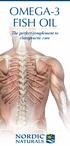 OMEGA-3 FISH OIL The perfect complement to chiropractic care WHAT ARE OMEGA-3S? Omega-3s are essential fatty acids nutrients that are required for optimal health but cannot be produced by our bodies, and
Waxes. From the head of sperm whales Structural material of beehives Coating on the leaves of Brazilian palm. Fats and Oils
 Lipids Lipids are organic compounds that contain hydrocarbons which are the foundation for the structure and function of living cells. Lipids are non polar so they are soluble in nonpolar environments
CHEM 121. Chapter 19, Name: Date:
 CHEM 121. Chapter 19, Name: Date: 1. A lipid is any substance of biochemical origin that is A) soluble in water but insoluble in nonpolar solvents B) insoluble in both water and nonpolar solvents C) insoluble
Chapter 3 Molecules of Cells
 Bio 100 Molecules of cells 1 Chapter 3 Molecules of Cells Compounds containing carbon are called organic compounds Molecules such as methane that are only composed of carbon and hydrogen are called hydrocarbons
10.1 The function of Digestion pg. 402
 10.1 The function of Digestion pg. 402 Macromolecules and Living Systems The body is made up of more than 60 % water. The water is found in the cells cytoplasm, the interstitial fluid and the blood (5
Elements in Biological Molecules
 Chapter 3: Biological Molecules 1. Carbohydrates 2. Lipids 3. Proteins 4. Nucleic Acids Elements in Biological Molecules Biological macromolecules are made almost entirely of just 6 elements: Carbon (C)
Chapter 16 The Citric Acid Cycle
 Chapter 16 The Citric Acid Cycle Multiple Choice Questions 1. Which of the following is not true of the reaction catalyzed by the pyruvate dehydrogenase complex? A) Biotin participates in the decarboxylation.
1. Enzymes. Biochemical Reactions. Chapter 5: Microbial Metabolism. 1. Enzymes. 2. ATP Production. 3. Autotrophic Processes
 Chapter 5: Microbial Metabolism 1. Enzymes 2. ATP Production 3. Autotrophic Processes 1. Enzymes Biochemical Reactions All living cells depend on biochemical reactions to maintain homeostasis. All of the
Lecture 11 Enzymes: Kinetics
 Lecture 11 Enzymes: Kinetics Reading: Berg, Tymoczko & Stryer, 6th ed., Chapter 8, pp. 216-225 Key Concepts Kinetics is the study of reaction rates (velocities). Study of enzyme kinetics is useful for
Are You Afraid of Fat?
 Omega Fatty Acids Are You Afraid of Fat? Many people are! Have you ever purchased the low or no fat version of a food? Did you know that fat is simply replaced by sugar in these products? Examples: Low
Introduction. Pathogenesis of type 2 diabetes
 Introduction Type 2 diabetes mellitus (t2dm) is the most prevalent form of diabetes worldwide. It is characterised by high fasting and high postprandial blood glucose concentrations (hyperglycemia). Chronic
CHM333 LECTURE 13 14: 2/13 15/13 SPRING 2013 Professor Christine Hrycyna
 INTRODUCTION TO ENZYMES Enzymes are usually proteins (some RNA) In general, names end with suffix ase Enzymes are catalysts increase the rate of a reaction not consumed by the reaction act repeatedly to
Cell Membranes Part 1: Review of Membrane Structure and Changes with Aging By Dan Carter, ND
 Introduction Does cell membrane physiology degrade over time? Can the physiologic function of cell membranes be improved? If cell membrane functionality can be improved, is there clinical benefit to patients?
Figure 3-1-1: Alkaline hydrolysis (saponification) of oil to make soaps.
 Chapter 3 CHEMICAL MODIFICATION OF OILS AND FATS From the fats and oils obtained from natural resources, the majority of them are used directly or just after refinement. While the others are used after
The DIGESTION and TRIGLYCERIDE FORM
 The DIGESTION and THE IMPORTANCE OF THE TRIGLYCERIDE FORM Our bodies have been efficiently digesting and metabolizing essential fatty acids (EFAs) for thousands of years. The human body transports and
Ask for a certificate of analysis on any Nordic Naturals product.
 Many producers of fish oil eliminate important steps during the manufacturing process, sacrificing product quality along the way. Nordic Naturals is committed to making the best-tasting and most effective
The diagram below summarizes the effects of the compounds that cells use to regulate their own metabolism.
 Regulation of carbohydrate metabolism Intracellular metabolic regulators Each of the control point steps in the carbohydrate metabolic pathways in effect regulates itself by responding to molecules that
Proposed FDA Rule To Ban Partially Hydrogenated (PHO) Oils. Johari Minal [email protected]
 Proposed FDA Rule To Ban Partially Hydrogenated (PHO) Oils Johari Minal [email protected] Outline Chronology of events The harmful effects of trans fats The alternatives Background 1957 Fred Kummerow
Detailed Course Descriptions for the Human Nutrition Program
 1 Detailed Course Descriptions for the Human Nutrition Program Major Required Courses NUTR221 Principles of Food Science and Nutrition Credit (Contact) Hours 2 CH(2 Theory) Prerequisites Course Description
Chapter 3: Biological Molecules. 1. Carbohydrates 2. Lipids 3. Proteins 4. Nucleic Acids
 Chapter 3: Biological Molecules 1. Carbohydrates 2. Lipids 3. Proteins 4. Nucleic Acids Elements in Biological Molecules Biological macromolecules are made almost entirely of just 6 elements: Carbon (C)
Chapter 5: The Structure and Function of Large Biological Molecules
 Name Period Concept 5.1 Macromolecules are polymers, built from monomers 1. The large molecules of all living things fall into just four main classes. Name them. 2. Circle the three classes that are called
Determination of Specific Nutrients in Various Foods. Abstract. Humans need to consume food compounds such as carbohydrates, proteins, fats,
 Determination of Specific Nutrients in Various Foods Abstract Humans need to consume food compounds such as carbohydrates, proteins, fats, and vitamins to meet their energy requirements. In this lab, reagents
UNIVERSIDAD DE GUAYAQUIL DEPARTMENT OF CHEMICAL SCIENCES
 CODE: 38/05 TITLE: Establishment of the potential anti-inflammatory effect of the product known as CUMANDA, originating from NutraMedix Laboratories, LLC, Florida OBJECTIVES: To study the possible anti-inflammatory
Nutritional Support of the Burn Patient
 Nutritional Support of the Burn Patient Objectives To understand the principles of normal nutrient utilization and the abnormalities caused by burn injury To be able to assess nutrient needs To be able
Krill Oil 500 mg Softgels
 Krill Oil 500 mg Softgels Product Summary: Krill oil is used as a source of the omega-3 fatty acids, eicosapentaenoic acid (EPA) and docosahexaenoic acid (DHA). These fatty acids cannot be manufactured
GLUCOSE HOMEOSTASIS-II: An Overview
 GLUCOSE HOMEOSTASIS-II: An Overview University of Papua New Guinea School of Medicine & Health Sciences, Division of Basic Medical Sciences Discipline of Biochemistry & Molecular Biology, M Med Part I
Ice Cream, Cheese, Butter, and Whole Milk: Health Foods? Hallie Lundquist 2B Mrs. Maas 1/4/16
 Ice Cream, Cheese, Butter, and Whole Milk: Health Foods? Hallie Lundquist 2B Mrs. Maas 1/4/16 Abstract Not all fats are bad; in fact, we are now finding out that fatty acids which are unique to milk fat
Biochemistry of Cells
 Biochemistry of Cells 1 Carbon-based Molecules Although a cell is mostly water, the rest of the cell consists mostly of carbon-based molecules Organic chemistry is the study of carbon compounds Carbon
UNIVERSIDAD DE GUAYAQUIL DEPARTMENT OF CHEMICAL SCIENCES
 CODE: 38/05 TITLE: Establishment of the potential anti-inflammatory effect of the product known as SAMENTO, originating from NutraMedix Laboratories, LLC, Florida OBJECTIVES: To study the possible anti-inflammatory
Keystone Review Practice Test Module A Cells and Cell Processes. 1. Which characteristic is shared by all prokaryotes and eukaryotes?
 Keystone Review Practice Test Module A Cells and Cell Processes 1. Which characteristic is shared by all prokaryotes and eukaryotes? a. Ability to store hereditary information b. Use of organelles to control
Pediatrics. Specialty Courses for Medical Assistants
 Pediatrics Specialty Courses for Medical Assistants 7007 College Boulevard, Suite 385 Overland Park, Kansas 66211 www.ncctinc.com t: 800.875.4404 f: 913.498.1243 Pediatrics Specialty Certificate Course
ANIMALS FORM & FUNCTION BODY DEFENSES NONSPECIFIC DEFENSES PHYSICAL BARRIERS PHAGOCYTES. Animals Form & Function Activity #4 page 1
 AP BIOLOGY ANIMALS FORM & FUNCTION ACTIVITY #4 NAME DATE HOUR BODY DEFENSES NONSPECIFIC DEFENSES PHYSICAL BARRIERS PHAGOCYTES Animals Form & Function Activity #4 page 1 INFLAMMATORY RESPONSE ANTIMICROBIAL
«Omega-6/Omega-3 fatty acid balance and skin elastisity»
 «Omega-6/Omega-3 fatty acid balance and skin elastisity» The study was performed by BioActive Foods in cooperation with Zinzino AB, to investigate the effect of BalanceOil on the elasticity of the skin.
Carbon-organic Compounds
 Elements in Cells The living substance of cells is made up of cytoplasm and the structures within it. About 96% of cytoplasm and its included structures are composed of the elements carbon, hydrogen, oxygen,
MARINOL ENHANCING EVERYDAY HEALTH WITH THE ESSENTIAL BENEFITS OF OMEGA-3 EPA/DHA
 MARINOL ENHANCING EVERYDAY HEALTH WITH THE ESSENTIAL BENEFITS OF OMEGA-3 EPA/DHA OMEGA-3 ABSOLUTELY ESSENTIAL People are increasingly looking for food products and ingredients that will help them live
A COMPARATIVE STUDY OF THE FATTY ACID COMPOSITION OF FORTY MARGARINES AVAILABLE IN SOUTH AFRICA
 1 A COMPARATIVE STUDY OF THE FATTY ACID COMPOSITION OF FORTY MARGARINES AVAILABLE IN SOUTH AFRICA Dr Carl Albrecht Head of Research Cancer Association of South Africa (CANSA) e-mail: [email protected]
Ch24_PT MULTIPLE CHOICE. Choose the one alternative that best completes the statement or answers the question.
 Ch24_PT MULTIPLE CHOICE. Choose the one alternative that best completes the statement or answers the question. 1) Substances originating in plant or animal material and soluble in non-polar organic solvents
SCIENTIFIC OPINION. EFSA Panel on Dietetic Products, Nutrition, and Allergies (NDA) 2, 3. European Food Safety Authority (EFSA), Parma, Italy
 SCIENTIFIC OPINION Scientific Opinion on Dietary Reference Values for fats, including saturated fatty acids, polyunsaturated fatty acids, monounsaturated fatty acids, trans fatty acids, and cholesterol
Chapter 8: An Introduction to Metabolism
 Chapter 8: An Introduction to Metabolism Name Period Concept 8.1 An organism s metabolism transforms matter and energy, subject to the laws of thermodynamics 1. Define metabolism. The totality of an organism
Copyright The McGraw-Hill Companies, Inc. Permission required for reproduction or display. Two Forms of Energy
 Module 2D - Energy and Metabolism Objective # 19 All living organisms require energy for survival. In this module we will examine some general principles about chemical reactions and energy usage within
Nutrient Reference Values for Australia and New Zealand
 Nutrient Reference Values for Australia and New Zealand Questions and Answers 1. What are Nutrient Reference Values? The Nutrient Reference Values outline the levels of intake of essential nutrients considered,
Omega-3 fatty acids improve the diagnosis-related clinical outcome. Critical Care Medicine April 2006;34(4):972-9
 Omega-3 fatty acids improve the diagnosis-related clinical outcome 1 Critical Care Medicine April 2006;34(4):972-9 Volume 34(4), April 2006, pp 972-979 Heller, Axel R. MD, PhD; Rössler, Susann; Litz, Rainer
Rheumatoid Arthritis. Treating Inflammation. Sequoia Education Systems, Inc http://www.functionalmedicineuniversity.com 1. How is RA Diagnosed?
 Rheumatoid Arthritis Causes, Assessment and Treatment How is RA Diagnosed? The following labs make up the basics of ruling in or out RA. Citrullinated Peptide (anti-ccp) Antibodies Rheumatoid factor Erythrocyte
Energy Production In A Cell (Chapter 25 Metabolism)
 Energy Production In A Cell (Chapter 25 Metabolism) Large food molecules contain a lot of potential energy in the form of chemical bonds but it requires a lot of work to liberate the energy. Cells need
Cholesterol and Triglycerides What You Should Know
 Cholesterol and Triglycerides What You Should Know Michael T. McDermott MD Professor of Medicine Endocrinology Practice Director Division of Endocrinology, Metabolism and Diabetes University of Colorado
Nutrients: Carbohydrates, Proteins, and Fats. Chapter 5 Lesson 2
 Nutrients: Carbohydrates, Proteins, and Fats Chapter 5 Lesson 2 Carbohydrates Definition- the starches and sugars found in foods. Carbohydrates are the body s preferred source of energy providing four
LIPID SCIENCE AFNS 414 (Undergraduate Student Course Outline)
 LIPID SCIENCE AFNS 414 (Undergraduate Student Course Outline) Winter Semester 2008 University of Alberta Department of Agricultural, Food and Nutritional Science Instructor: Lecture: Office: E-mail: Dr.
Endocrine System: Practice Questions #1
 Endocrine System: Practice Questions #1 1. Removing part of gland D would most likely result in A. a decrease in the secretions of other glands B. a decrease in the blood calcium level C. an increase in
1. The diagram below represents a biological process
 1. The diagram below represents a biological process 5. The chart below indicates the elements contained in four different molecules and the number of atoms of each element in those molecules. Which set
A disaccharide is formed when a dehydration reaction joins two monosaccharides. This covalent bond is called a glycosidic linkage.
 CH 5 Structure & Function of Large Molecules: Macromolecules Molecules of Life All living things are made up of four classes of large biological molecules: carbohydrates, lipids, proteins, and nucleic
Name: Hour: Elements & Macromolecules in Organisms
 Name: Hour: Elements & Macromolecules in Organisms Most common elements in living things are carbon, hydrogen, nitrogen, and oxygen. These four elements constitute about 95% of your body weight. All compounds
1. A covalent bond between two atoms represents what kind of energy? a. Kinetic energy b. Potential energy c. Mechanical energy d.
 1. A covalent bond between two atoms represents what kind of energy? a. Kinetic energy b. Potential energy c. Mechanical energy d. Solar energy A. Answer a is incorrect. Kinetic energy is the energy of
Role of fatty acids and polyphenols in inflammatory gene transcription and their impact on obesity, metabolic. syndrome and diabetes.
 European Review for Medical and Pharmacological Sciences Role of fatty acids and polyphenols in inflammatory gene transcription and their impact on obesity, metabolic syndrome and diabetes B. SEARS, C.
Copyright 2000-2003 Mark Brandt, Ph.D. 54
 Pyruvate Oxidation Overview of pyruvate metabolism Pyruvate can be produced in a variety of ways. It is an end product of glycolysis, and can be derived from lactate taken up from the environment (or,
Free radicals - Enemies of health, beauty and youth
 Free radicals - Enemies of health, beauty and youth Free radicals (FR) are natural molecules produced in the body following biochemical reactions related to the behaviour of singlet oxygen. The human body
Evidence Report/Technology Assessment Number 89
 Evidence Report/Technology Assessment Number 89 Effects of Omega-3 Fatty Acids on Lipids and Glycemic Control in Type II Diabetes and the Metabolic Syndrome and on Inflammatory Bowel Disease, Rheumatoid
Figure 5. Energy of activation with and without an enzyme.
 Biology 20 Laboratory ENZYMES & CELLULAR RESPIRATION OBJECTIVE To be able to list the general characteristics of enzymes. To study the effects of enzymes on the rate of chemical reactions. To demonstrate
Vitamins and Supplements for Cancer Survivors
 Vitamins and Supplements for Cancer Survivors Moving Beyond Cancer to Wellness Fred Hutchinson Cancer Research Center Dan Labriola ND Lisa Price ND Tara Stacker ND Carrie Dennett RD, MPH Northwest Natural
Results of the first clinical study on a new treatment for Psori asis: the T.M.S.T. method
 MINERAL MOR LTD Results of the first clinical study on a new treatment for Psori asis: the TMST method Marco Harari MD 12122012 Conclusions: 1 No side effects were recorded during the 5week study period
CHAPTER 4: Enzyme Structure ENZYMES
 CHAPTER 4: ENZYMES Enzymes are biological catalysts. There are about 40,000 different enzymes in human cells, each controlling a different chemical reaction. They increase the rate of reactions by a factor
Effect Of Amino Acids On Plants
 Effect Of Amino Acids On Plants Agriculture production is a very intensive business and is related to better quality and better yield leading to better profitability Every farmer s dreams to achieve this
483.25(i) Nutrition (F325) Surveyor Training: Interpretive Guidance Investigative Protocol
 483.25(i) Nutrition (F325) Surveyor Training: 1 With regard to the revised guidance F325 Nutrition, there have been significant changes. Specifically, F325 and F326 were merged. However, the regulatory
10. T and B cells are types of a. endocrine cells. c. lymphocytes. b. platelets. d. complement cells.
 Virus and Immune System Review Directions: Write your answers on a separate piece of paper. 1. Why does a cut in the skin threaten the body s nonspecific defenses against disease? a. If a cut bleeds, disease-fighting
MULTIPLE CHOICE QUESTIONS
 MULTIPLE CHOICE QUESTIONS 1. Most components of energy conversion systems evolved very early; thus, the most fundamental aspects of energy metabolism tend to be: A. quite different among a diverse group