
The Harmonica and Irish Traditional Music by Don Meade
|
|
|
- Julianna Harvey
- 9 years ago
- Views:
Transcription
1 The Harmonica and Irish Traditional Music by Don Meade! 2012 Donald J. Meade All rights reserved 550 Grand Street, Apt. H6F New York, NY USA

2 TABLE OF CONTENTS INTRODUCTION 3 WHAT KIND OF HARMONICA? 4 TECHNICAL TIPS 13 MAJOR, MINOR, MODAL 16 ORNAMENTATION 18 CUSTOMIZING AND MAINTAINING CHROMATIC HARMONICAS 21 Appendix A: IRISH HARMONICA DISCOGRAPHY 26 Apendix B: MODE AND POSITION CHART 32 Appendix C: HARMONICA HISTORY 33 2

3 INTRODUCTION The name harmonica has over the years been applied to a variety of musical instruments, the earliest of which was probably an array of musical glasses created by Ben Franklin in The 19 th - century German-speakers who invented the mouth-blown free-reed instrument now known as the harmonica originally called it a Mundharmonika ( mouth harmonica ) to distinguish it from the Handharmonika or accordion. English speakers have since called it many things, including the mouth organ, mouth harp, French harp, French fiddle, harpoon, gob iron, tin sandwich and Mississippi saxophone. Mouth organ is the most common name in Ireland, where harmonica is often used only to refer to chromatic models. There is a notable local mouth organ tradition in south County Wexford, home to the renowned Murphy family of Bannow, but the instrument is quite popular throughout Ireland. It is, however, not usually regarded as highly by traditional music lovers as are the closely related concertina and button accordion. Many people still think of the harmonica as little more than a musical toy. The tin whistle once suffered from a similar reputation. In recent decades, however, Mary Bergin and other virtuoso players have brought the once-humble whistle to the forefront of the Irish musical tradition. The harmonica is overdue for a similar reevaluation. Recordings by the Murphys, Eddie Clarke and other top Irish players provide convincing proof that the mouth organ is fully capable of conveying all the beauty and subtlety of Irish traditional airs and dance tunes. How to Learn Irish Music The harmonica was designed to play and accompany simple major-key European melodies. The instrument has proved to be surprisingly flexible, however, and ingenious musicians from China to the American south have found novel ways to play very different styles of music on it. Musicians in Ireland, influenced by the way in which song airs and dance tunes are played on instruments with a longer history in the country, have developed their own distinctive techniques and styles. Instrumental technique is not really the key to playing Irish traditional music. Anyone who has ever heard a classical violinist stiffly bow through a fiddle tune will understand that technical competence cannot substitute for an understanding of traditional style. That understanding can only be acquired by listening to and emulating good traditional players. If you want to play Irish music, you should listen to as much of it as possible. Listen especially to music on the uilleann pipes, fiddle and flute, the most important vehicles for Irish traditional music for centuries and the instruments on which the foundations of traditional style were built. If you can hum, lilt or whistle an Irish tune, you can learn to play it on the harmonica. The rest is just a matter of practice. Trying to play a tune you don t really know, even if you can read sheet music or follow a written pattern of blow and draw notes, is really a lot harder than just playing by ear. You don t need formal lessons to play Irish music on the harmonica. Trial and error will be your best teacher. Once you have a tune in your head, just try to play it. The more you play, the more you will understand about the structure and patterns of Irish tunes, and about the harmonica itself. And the more tunes you learn, the easier it becomes to pick up new ones. Before attempting to play jigs and reels, you should start by playing slower song airs, marches and waltzes. These tunes provide an opportunity to build up your lip muscles, work on breath control and tone, and generally figure out how the harmonica works. Not to mention that a complete traditional musician must be able to play slow airs as well as fast dance tunes. 3

4 When you acquire enough proficiency to move on to livelier tunes, keep in mind the importance of a steady tempo. If you have to slow down to play a difficult passage in a tune, you're playing the rest of it too fast. It's better to play slowly but at a consistent tempo. If you can play fast, it doesn't mean that you have to do so all the time. No one would try to sing every song they know as quickly as possible, but too many musicians take that approach to dance tunes. Stick to a tempo at that lets you put some expression into the music. Mouth Accordion? Fast-paced and highly ornamented Irish dance music is a challenging repertoire on any instrument. Harmonica players will find that some of the typical melodic patterns and embellishments used by fiddlers, flute players and pipers are difficult to reproduce on their instrument. While no Irish tune is totally impossible to play on the harmonica, some just don't fit it very naturally. Some tunes are awkward on other instruments too. Flute players and pipers often alter fiddle tunes to make them playable on their instruments, and it is a rare button accordionist who is comfortable playing in all the keys used by fiddlers. You shouldn't give up without a struggle, but if re-phrasing a passage or changing the key allows you to play music that is otherwise fiendishly difficult, you don t have to be ashamed to do so. Irish harmonica players can take some inspiration from players of other free-reed instruments used in the Irish tradition. The harmonica has a lot in common with the button accordion and Anglo-German style of concertina, both of which have a long history of use by Irish musicians. All three are single-action free-reed instruments. On a double-action instrument like the piano accordion or English concertina, the same note sounds on both the press and draw. On a single-action instrument, each button or hole can sound reeds for two different notes. If you press or blow you get one note, but if you draw out you get another. This in-and-out pattern imparts a naturally bouncy rhythm to the music and explains why single-action instruments are the free reeds of choice for Irish dance tunes. On both the button accordion and harmonica (but not on the concertina), the notes of the scale are lined up in one row. Moreover, the tuning of chromatic harmonicas, which will be discussed below, is much like that of Irish-style two-row button accordions. Because of these similarities, harmonica players can often adapt button accordion techniques to their instrument. That said, it must be pointed out that it took a long time for the button accordion to be accepted as a valid instrument for Irish traditional music. Only when accordionists succeeded in approximating the rhythm and ornamentation used on more traditional instruments did the box come into the mainstream of Irish music. Harmonica players can profit by their example. WHAT KIND OF HARMONICA? There are several distinct types of harmonicas. It is possible to play Irish traditional music on all of them, and each has its own advantages and disadvantages. Standard Diatonic Harmonicas The diatonic harmonica is by far the most common variety. The most popular version, often referred to as a Richter harmonica (see appendix on harmonica history) is a small instrument with 10 holes, each of which contains a blow reed and a draw reed. Most diatonics have a single reed for each note but some have two, which may be tuned slightly apart in order to produce a wavering tremolo effect or an octave apart for a full concert sound. All diatonic harmonicas have reeds only for the notes in a single major (do-re-mi...) scale they are like pianos with no black keys. 4

5 STANDARD 10-HOLE DIATONIC HARMONICA Key of C Blow reeds shown in upper case, draw notes in lower case; available bent notes in italics D# F# A#-B C d E g G b C d E f G a b C D E f G a C c# f- f# g# - a# c# g# The scale used on a diatonic harmonica can start on any one of the twelve notes used in Western music. Standard diatonic harmonicas are available for all twelve, some in both high- and low-pitched versions. The harmonica is classified by the note on which the scale starts. If do is C, the harmonica is in the key of C. A typical ten-hole diatonic like the Hohner Marine Band has a range of three octaves, but the only complete octave starts with the blow note in hole 4. To play this scale, you first blow into and then draw from hole 4, then repeat this in holes 5 and 6. To finish the scale, you must reverse breath direction in hole 7, first drawing and then blowing. The reversal of breath direction ensures that the next octave also starts on a blow note. The high octave that starts with blow 7 lacks the 7 th note (ti) in the scale. The pattern of blow and draw notes also changes in this octave, where the draw notes are the lower of the two notes in each hole. In the middle octave, do and re are blow 4 and draw 4. But in the high octave, blow 7 is do while draw 8 is re. The standard harmonica s low octave starts with the blow reed in hole number 1 but the scale is missing fa and la, while so is both a draw note in hole 2 and a blow note in hole 3. The reason for these gaps and duplications is that the low octave tuning scheme was designed to make it possible to play a simple two-chord accompaniment to major-key melodies. Some of the missing notes can be played by bending other notes. We ll return to the subject of bending below, but even with that aid, the standard 10-hole diatonic s tuning scheme sharply limits its usefulness for Irish traditional music. Extended Range Diatonics Longer standard diatonics give more scope for solo melody playing, as they extend the range of notes above the gapped scale in the first three holes. If you stick to the right side of the longer diatonics, all the notes in the scale are available. The same draw bends are available as on the 10-hole instrument, and there are a few more blow bends in the highest holes. As with the 10-hole diatonic, the draw notes are in different positions relative to the adjacent blow notes in each octave. This is very apparent in the extended high range, where in order to play a C major scale on a C instrument it is necessary to skip from 10- blow to 12-draw to 11-blow to play C, D and E in sequence. Hohner s Marine Band M364 and M365 are the most easily available extended-range diatonic models. The 12- hole M364 is available in C, D and G, and the 14-hole M365 only in C and G 5

6 12-HOLE HOHNER M364 Key of C D# F# A#-B C-D D# - F# C d E g G b C d E f G a b C d E f G A C b E d G c# f - f# g# - a# c# g# 14-HOLE HOHNER M365 Key of C D# F# A#-B C-D D#-F# F#-B A#-D# C d E g G b C d E f G a b C d E f G a C B E d G f C a E c# f -f# g# -a# c# g# Cross Harp and Country Tunings The standard 10-hole diatonic harmonica can be used to play Irish tunes, but it is most favored by blues players, who make up the largest segment of the harmonicaplaying public. Blues stylists, however, do not usually play in the key in which the harmonica is tuned, preferring the cross harp or second position scale, which starts on a note pitched a fifth higher, i.e. so instead of do. In the C scale, so is G, which means the cross-harp scale on a C harmonica starts on G. So to play the blues in G, you use a C harmonica. A complete cross-harp scale starts with the blow reed in hole 6. The seventh note in this scale is half a step lower (flatter) than in the major scale, e.g., F instead of F# (F sharp) when playing on a C harmonica. In addition to providing this blue note, cross harp shifts important notes in the scale to low draw reeds that can be easily bent to sound notes the harmonica wasn t designed to play at all. In the low octave, a cross-harp scale starts with 2 draw (or 3 blow, which is the same note) but you have to bend 3 draw down a whole step to play the second note of the scale. Bending, which will be discussed in more detail below, is one way to play missing notes on a diatonic harmonica, but countrytuned diatonics provide another solution. These are standard ten-hole diatonics on which one or more reeds have been retuned so that you can play a complete two-octave major scale in the cross-harp position. 6

7 SIMPLE COUNTRY TUNING SHARPENED 5 DRAW Altered C harmonica D# F# A# - B C d E g G b C d E f#* G a b C D E F G A C c# f- f# a c# f g# Irish tunes set in the mixolydian mode (more on modes below) use a blues-like scale with a flattened 7 th interval, and for these the cross-harp position on a regular diatonic works well. You can also play a true major scale in the cross-harp position if you start with the blow reed in hole 6, but you need to play a blow bend in hole 9. On a C harmonica, this is a G major scale with F# instead of F. But you can t play a G major scale in the octave that starts with draw 2. You can bend draw 3 down to sound A, but there is no bend that will give you an F# in the 5 draw hole. This is because bends are only possible if the pitches of the two reeds in a hole are offset by at least a whole tone, and the difference between E and F is only a half tone. One way to play major melodies in crossharp position (and still be able to throw in a lot of bluesy bends) is to retune the 5 draw reed, sharpening it up a half step to F# on a C instrument (see the asterisked note above). With a combination of bent notes and this one retuned reed, you can play a true major scale in crossharp position in two different octaves. If you start with the G draw reed in hole 2, you have to play a draw bend in hole 3 to sound A. If you start the scale with the G blow reed in hole 6, you have to play a blow bend in hole 9 to sound F#. Rick Epping, the first American to win the All-Ireland mouth organ championship, has made good use of this tuning, which is currently available on the Seydel blues favorite country model. Another variation on standard tuning was invented by New Zealand harmonica ace Brendan Power. In this tuning, which he calls Paddy Richter, the 3 blow reed is tuned up a whole step (e.g., from G to A on a C harmonica). Low octave draw bends are still available but it s easier to play Irish melodies in the cross-harp position without having to bend. The draw note in hole 5 is still unbendable, however, so you still can t really play major-key melodies in cross-harp position in the middle octave unless you use the advanced overblow technique pioneered in recent years among blues stylists by genius diatonic player Howard Levy. But that s a technique beyond the scope of this pamphlet. An even more sophisticated country tuning is used on the Lee Oskar Melody Maker and Hohner Country-tuned Special 20 models. This scheme raises the 5 blow reed a half step, as in simple country tuning, and the 3 blow a whole step, as in Paddy Richter. But it also raises the 9 draw reed a half step. With these three alterations (shown with asterisks on the chart below), you can play a complete major scale over two whole octaves, starting with draw 2, without having to bend any notes. Country-tuned harmonicas are usually 7

8 PADDY RICHTER TUNING C harmonica with sharpened 3 blow reed D# F# B/A# C d E g A* b C d E f G a b C D E F G a C c# f#/f a# c# g# FULL COUNTRY ( MELODY MAKER ) TUNING C harmonica with three altered notes D# B/A# C d E g A* b C d E f#* G a B C d E F#* G A C c# f#/f a# c# f g# labeled in the cross-harp key (G for a C harmonica). But as the chart above shows, a G Melody Maker is really just a standard C instrument with three altered notes. This tuning is popular with Nashville-style country musicians who want to apply bluesy bends to major key melodies. Irish singer and bouzouki ace Andy Irvine has also made great use of Melody Maker instruments in this way. The best example of applying this tuning scheme to Irish dance tunes without relying on bent notes is Galway native Paul Moran s playing on First Flight, a 2002 duet recording with fiddler Fergal Scahill. Country-tuned harmonicas might appeal to anyone who has played a lot of blues harp before attempting to tackle Irish traditional music. You can stick with the blow-anddraw note sequence familiar to cross-harp players and continue to bend notes, but you re not stuck with the flattened seventh of the blues scale. Tremolo Diatonics Tremolo harmonicas have two reeds for each note, one on the top plate and one on the bottom. In these instruments, unlike standard Richter harmonicas, blow and draw reeds are on the same reedplate, but not in the same holes. Each reed is isolated in its own chamber. The top and bottom plates have an identical tuning scheme, but the reeds on each are tuned with a slight offset in pitch to create the wavering tremolo effect. This design was invented by Wilhelm Anton Thie in Vienna and is known as the Wiener or Thie system. Some Wiener tremolos, including Hohner s 8

9 ORIENTAL TREMOLO DIATONIC HARMONICA Key of C G d C f E a G b C d E f G a b C D E F G a C b E Comet models, have the two reedplates tuned an octave, rather than just slightly, apart. This is a different sort of tuning than that used on so-called Knittlinger-system harmonicas like the Hohner Auto-Valve or Marine Band full concert, which have the two reedplates tuned an octave apart but still use the Richter system of having a blow and draw reed in each hole on each plate. Most European-made tremolo instruments, including Hohner s Echo models, use the same tuning scheme as standard Richter diatonic harmonicas, with the first three holes set up for chord playing. These models are also usually tuned using just intonation, in which the chords sound pure but the intervals between notes deviate slightly from the equal intonation used on most modern instruments The tuning scheme used for most tremolo instruments made in the Far East (shown above) is diffferent. It is similar to that of extended-range Richter diatonic and tremolo instruments. But in place of the chordal accompaniment setup in the first three holes, there is a full four-hole low octave with no missing notes in the scale. The middle and high octaves have the same tuning pattern as Richter diatonics but are shifted one hole to the right, starting with blow 5 instead of blow 4. There is a smaller pitch offset between the two reeds for each note on Oriental tremolos, which gives them a drier sound than European models. They are also tuned using equal temperament. As free-reed wizard Rick Epping has noted, these differences make Oriental tremolos more suitable than European models for melody playing. Oriental tremolos are also quite inexpensive, So it's not surprising that this kind of harmonica is the one most commonly played by traditional musicians in Ireland, including the celebrated Murphy family of County Wexford and many-time All-Ireland champions Michael Conroy, Noel Battle and Austin Berry. At a fleadh cheoil mouth organ competition, most musicians will be playing Oriental tremolos. Other diatonic instruments are allowed but chromatic players have been exiled to the miscellaneous instruments competition. It used to be hard to find Oriental tremolo models in the U.S. in keys other than C but Hohner now imports the Echo Celeste in all 12 keys. Some Suzuki and Tombo tremolos are also made in all keys, but they are not sold in the U.S. One interesting effect possible on tremolo harmonicas is to play on only one of the two reeds in each hole. The player can then switch to playing both, as when a button accordionist changes the coupler setting to get a fuller sound. You can do this by covering either the lower or upper reed holes with your lip and playing only from the top or bottom. Antrim tremolo ace Kieran McHugh did this on his 1980 s cassette recording. 9

10 Despite the traditional pedigree of Oriental tremolos, they don t suit all Irish-style players. Many harmonica players don t like the tremolo effect at all. And cross-harp stylists looking for bluesy effects will find they can t bend notes on a tremolo. Solo-tuned Diatonics Oriental tremolos are sometimes called solo-tuned because they don t have any missing notes in the diatonic scale. A true solo-tuned diatonic is a different sort of harmonica designed so that the pattern of blow and draw notes is the same in every octave. The first octave starts with the blow reed in hole 1 (do) and finishes with the blow reed in hole 4 (again do). But the next octave starts with the 5 blow reed, which is also do. The same pattern is repeated in the next octave, with both 8 and 9 blow sounding do. Doubling up the tonic (do) note makes each octave a standardized four-hole module in which the sequence of blow and draw notes is the same. There is no need SOLO-TUNED DIATONIC HARMONICA Key of C C d E f G a b C C d E f G a b C C d E f G a b C to learn a separate tuning pattern in each octave. The player does still have to acquire a feel for which do reed he or she is playing. 4 and 5 blow are both do, for example, but 4 draw sounds mi (half a tone lower) while 5 draw sounds re (a whole tone higher). Solo-tuned diatonics include the Chinese Huang Cadet Soloist, the Brazilian Hering 8024 Master Solo, the German Seydel Solist Pro and Hohner s Chinese-made Melody Star and Czech-made Marine Band Soloist (model M3640). The Huang is a lowquality instrument that goes out of tune as soon as you start playing it. The Melody Star is a cheap, 8-hole instrument for school children. The Marine Band model produces a mellow tone and has long-lasting reeds, but the lowest notes are weak because of air loss through the reed slots. The Seydel is better on air loss but the reeds are not as well tuned. On the air-tight, well-tuned, plastic-bodied Hering, the first five reed slots are covered by plastic wind-saving valves of the type used in chromatic harmonicas. These prevent air from passing around reeds that aren t being sounded and make for better tone and volume. The Hering is also cheaper than the Hohner or Seydel models. Solo-tuned tremolo models are made by Hohner, Seydel and Huang. Most are available only in C, but Seydel s high-end Fanfare models are made in D, G, A and B- flat. Except by custom order, non-tremolo, solo-tuned diatonics are available only in the key of C. That s fine if you re playing in C or related scales, but awkward if you want to play Irish tunes in the usual keys. The best reason to play these instruments is that the same tuning scheme is used in chromatic harmonicas, so playing the solotuned diatonic makes for an easy transition to the bigger instrument. Chromatic Harmonicas If a diatonic harmonica is like a piano with only white keys, the chromatic harmonica supplies the black ones. It is chromatic 10

11 because it includes all the colors of the musical rainbow. First marketed by Hohner in 1910, the chromatic is really two solotuned diatonic harmonicas in one instrument. The reed plate on top has blow and draw reeds for one key, while the plate on the bottom has blow and draw reeds for a different key pitched half a tone higher (e.g., C on top, C sharp below). This combination includes all the notes of every key. In this respect the chromatic harmonica is very similar to an Irish-style two-row button accordion. To switch between the sets of reeds, the player presses in a springmounted slide on the right side of the harmonica. The slide allows air to pass over only one set of reeds at a time. Pressing it in while playing a single note will raise the pitch by a half tone (that's the same as the interval between mi and fa or between ti and do in the diatonic scale). CHROMATIC HARMONICA Key of C C d E f G a b C C d E f G a b C C d E f G a b C C# d# F f# G# a# c C# C# d# F f# G# a# c C# C# d# F f# G# a# c C# Chromatic harmonicas come in different sizes and can have from 8 to 16 holes. To play a particular note, the player must know which hole to play, whether to blow or draw, and whether it's necessary to press the slide. There is a price to be paid for having reeds for every note. Some chords available in the usual diatonic tuning scheme cannot be played on a chromatic. The chromatic s reed slots are also covered with plastic wind-saving valves. These flaps prevent air loss through blow reed slots when playing draw reeds (and vice versa), but they also make it impossible to really bend notes or get that lonesome, bluesy wail that for many people defines the sound of the harmonica. In general, it is not possible to get as strong and gutsy a tone on any chromatic as it is on a small diatonic. Theoretically, a single chromatic instrument can be used to play in any key. Classical and jazz harmonicists do, in fact, play this way, so the most expensive professionalquality instruments are only made in the key of C. In practice, however, some keys require extensive use of the slide and are very awkward on the C harmonica, especially when one is playing fast-paced, highly ornamented Irish dance music. Even the most accomplished classical players concede that flat keys like F and B flat are easier on the C harmonica than the sharp keys like D and G common in Irish music. Another problem with the purely chromatic approach is that the chords available on the C chromatic really only work for melodies set in C major or in some of the modal scales that use the same array of notes (more on chords and modes below). So if you re playing in G on a C chromatic, for example, you won t be able to play a G chord and playing C blow chords will clash with the melody. One excellent chromatic harmonica for Irish music is the 10-hole, wooden-body Hohner Chromonica 260, available in the keys of G and C. The G instrument has the same 11

12 range as first position on the fiddle, from low G to a high C. It is a perfect instrument for playing tunes in G major and related modal scales, and can be played in crossharp position for tunes based on a D scale. The Chromonica 260 in C can be used in cross-harp position to play tunes in G or related modal scales, but playing in D on a C chromatic is awkward. Hohner also makes other chromatic models, including the 12-hole SuperChromonica 270 and the more expensive, plastic-bodied CX-12. Both of these are available in all keys, including D, which is particularly useful for Irish music. The Brazilian-made, 12-hole Hering 5148, 7148 (a slightly better version) and low-c Baritono 6148 models are excellent for Irish music. The Herings have many advantages over the Super Chromonica. They re cheaper, for one thing, and the tightly sealed plastic body allows very little air leakage. The reeds are more flexible, blowing and drawing more easily as well. Disassembling and repair is easier with the Hering instruments as all parts are held together with screws rather than the tacks used on Chromonicas. The holes on the mouthpiece are round rather than square, and the lack of corners seems to trap less gunk. The mouthpiece projects out farther from the body, which some players prefer to the flatter-faced Hohner design. The reeds have a brighter, more metallic timbre than the mellower Hohner sound. On the down side, Hering reeds go out of tune quickly, especially on the low-pitched D instrument. Seydel makes chromatics in three ranges of quality. Their DeLuxe 12-hole model is available in Irish tuning (B/C and F#/G) and they can also make a C#/D model on request. These tunings are extremely useful when you start trying to use the slide for ornamentation, for reasons that will be described below. Seydel instruments sold in the U.S. seem to be assembled here from imported parts. Unfortunately, my own experience with Seydel instruments bought in this country is that they are likely to be out of tune when delivered, even before you play them. Many other chromatic models are available from Huang, Suzuki, Miwha, Tombo and Lark. Be aware that the Hering blues chromatic and Vintage 40, as well as Hohner Koch and slide harp models are chromatics with the same pattern of missing notes in the first three holes as a standard diatonic instrument. Other Tuning Schemes There are many other harmonica tuning systems besides those shown in the charts above. The Lee Oskar line includes diatonic harmonicas in major 7 th (all the F s on a C diatonic tuned up to F#), harmonic minor (all the E s and A s on a C diatonic tuned down to D# and G#) and natural minor (all the E s and B s on a C diatonic tuned down to D# and A#). Seydel will fill orders for virtually any tuning scheme a customer can devise. Hohner s Steve Baker model is a 12-hole diatonic instrument that, instead of adding a higher range of notes to the normal 10-hole layout, applies the gapped-scale tuning normally used in holes 1 through 3 to another, lower set of three holes. This sacrifices the highest notes to provide more of the low-end draw bends preferred by blues and country stylists. Valved diatonics are made by fitting windsaving valves (little plastic strips) on draw reeds 1 through 6 and blow reeds 7 through 10. This prevents air leakage as well as the usual sort of blues bending. It does, however, allow for a choked sort of bend to be played in all holes. Examples include the Suzuki Promaster Valved. A new type of harmonica invented by Rick Epping, the Hohner Extreme Bending XB- 40, adds extra reed chambers to the standard ten-hole diatonic instrument so that all notes, not just the usual ones, can be bent a full tone lower. 12

13 Where to Get a Harmonica Hohner standard diatonic instruments are widely available in retail music stores. Other types of Hohner instruments, and virtually all non-hohner harmonicas, are most easily ordered these days from online vendors. Harp Depot, an online business based in Ohio, is a good source for for chromatics from Hering and other makers. Seydel s website ( is extensive, and allows easy ordering of custom-tuned instruments. TECHNICAL TIPS Playing Single Notes The first problem beginning harmonica players face is how to play one note at a time. Some players use their tongue to block out the notes they don't want to play. This technique is particularly favored by those who like to tap their tongue against the left side of a standard diatonic to sound chords while playing the melody from the right side of the instrument (more on this below). Tongue blocking can also be used to play the same note in two different octaves, one on the left side of your tongue and the other on the right. The other way to play single notes is to pucker your lips, opening them just enough to blow into or draw out of one hole at a time. You can still play chords by opening your lips a bit more, but it's harder to get the oom-pah chordal accompaniment prized by tongue-blockers. It is easier, however, to play fast and accurate single-note melodies this way. It is possible, of course, to combine the two techniques. Chords On all types of harmonicas, blowing any three adjacent notes produces a major chord. On a C instrument, it s a C chord the notes C, E and G in some order. On a standard C diatonic, D minor chords (notes D, F and A) are available by drawing from holes 4, 5 and 6 or from holes 8, 9 and 10. A partial B minor chord (B and D) can be sounded by drawing from holes 3 and 4 or from 7 and 8, and a partial F major (F and A) in holes 5 and 6 or 9 and 10. These same chords are also available, in slightly different positions, on Oriental tremolo, solotuned and chromatic instruments (see the charts above). On the standard C diatonic, but on no other type of C harmonica, a G major chord (G,B,D) is produced by drawing on holes 1, 2 and 3 or 2, 3 and 4, and a G7 chord (G,B,D,F) by drawing on holes 2, 3, 4 and 5.. The gaps in the low octave scale in the Richter tuning scheme were designed to make these dominant and dominant 7 th chords available, thus providing basic twochord backing for major-key melodies. A tongue-blocking player can achieve a great effect by vamping on the tonic and dominant 7 th chords while playing the melody. This can be done by tapping the tongue against the harmonica, alternately blocking and unblocking holes on the left side of the instrument while playing the melody from the right side of your mouth. This style of simple accompaniment recalls that used on the melodeon (single-row diatonic button accordion), which has a similarly limited selection of bass chords on the left side of the instrument. To hear a master of the tongue-blocking chord technique, listen to the late Phil Murphy's solos on the CD The Trip to Cullenstown. It's hard to believe you're hearing only one player! If you re not playing in the major key in which the harmonica is set, the available chords are less useful. Dorian modal tunes (more on this below) are an exception. A D Dorian tune, for example, is best accompanied by D minor and C chords, which are the only two three-note chords available on a chromatic. But for other modal scales, only wrong chords are available. Despite the limitations, playing chords is a 13

14 key element of style for many harmonica players. But if you use the harmonica s limited chords to accompany tunes that they don t really suit, you will produce something like the harmony an uilleann piper gets from sounding the instrument s D drones to accompany a melody set in G or A. Whether this sounds horrible to you or just characteristic of the instrument is matter of taste. Chromatic ace Eddie Clarke frequently added C chordal accents to G tunes. This didn t sound all that odd, but the availability of more appropriate chords is one of the main reasons to use chromatics in different keys rather than trying to play everything on a single instrument. Bending Notes One way to play the missing notes on a diatonic harmonica is to bend other notes to get the missing pitch.. Bending is also a key element of blues style. If you ve never done this, try the easy bend on the draw note in hole 3 on a standard 10-hole harmonica. Find the hole, purse your lips and draw air through it so that a single note sounds. Suck hard, draw your tongue back and drop your jaw slightly to lower the pitch. You can control the degree of the bend by subtle adjustments of tongue and jaw. Bending can only be done in a hole in which the musical interval separating the blow and draw reed is greater than a half step. If the higher reed in a hole is a draw reed, you can play a draw bend, and vice versa. This means you can play draw bends in holes 1, 2, 3, 4 and 6, and (with a bit more difficulty) blow bends in holes 8, 9 and 10 of a standard diatonic. The available bends are shown in italic in the tuning charts above. What you re really doing when bending is not lowering the sound of the reed you think you re playing but forcing the other, lowerpitched reed in the same hole to sound a tone above its normal pitch. By bending notes, the harmonica player can imitate the way fiddlers, pipers and flute players flatten or slide up into notes. The harmonica, in fact, is the only free-reed instrument on which this element of Irish traditional style can be used. It's possible to overdo the effect. Note bending is a hallmark of blues cross-harp style and not in synch with the usual sound of Irish music as played on other free-reed instruments. To bend or not to bend is really a question of taste and style, but the type of instrument also figures in. Players such as Mark Graham and Andy Irvine, who use singlereed diatonics and have been heavily influenced by American blues and country styles, make extensive use of bends in their playing, producing a interesting trans- Atlantic fusion style of Irish music. But you can t really bend notes on a tremolo harmonica of the type used by the Murphy brothers or Noel Battle because the blow and draw reeds are separated into different chambers and can t interact. Similarly, the wind-saving valves in a chromatic harmonica block the airflow from passing over the blow reed when you re sounding the draw reed in the same chamber (and vice versa). So while you can choke a chromatic reed a bit, you can t really bend the tone fully as you can on a diatonic. Not all bends are easy to play in all keys, and considerable practice is required to control them. Some highly accomplished diatonic players use overblow and overdraw techniques pioneered by harmonica virtuoso Howard Levy to sound tones that cannot played with traditional bends. Irish harmonica ace Mick Kinsella makes use of these advanced techniques, but they are outside the scope of this pamphlet and (in this writer's opinion) not well adapted to Irish music played in traditional style. The Lips and Tongue Whether you re a tongue blocker or a lip puckerer, your lips can be painfully chafed by rubbing on the harmonica. As you become more proficient and relaxed, this problem will ease. If necessary, however, you can use a little vaseline or other non- 14

15 toxic lubricant on your lips. Don't use too much or you'll blow the lubricant onto the reeds and deaden the sound. When you start playing the harmonica, you will discover lip muscles you didn t know you had. You have to build up your embouchure (to use the high-falutin musical term) in the same way that other wind instrument players do. Relaxation is key, however. If you grip the instrument too tightly with your lips, the muscles will get fatigued in a hurry and you will not be able to continue playing. Even if you don't use tongue blocking, you'll still need to use your tongue to play the harmonica. To separate two successive notes of the same pitch, for example, you may find it useful to tongue the second note. You do this by starting the note with a T sound, as if saying tah. This will release the air from your mouth in a short puff. Many tunes have melodic passages that require the player to alternate between a one lower note and a succession of higher notes. These patterns are easily played on the fiddle or flute, but present difficulties on the harmonica because the player must move back and forth between widely separated holes without sounding any of the notes in between. It is often possible to alter the melody to avoid this difficulty, but you can also tongue your way around the problem. If you use your tongue to emphasize each of the higher notes, it will be easier to play them cleanly without sounding any of the in-between notes. An alternative to tonguing is to use the back of your throat, as if saying kah. This is a technique favored by some flute players. You can also play a rapid-fire, trumpet-style triplet with tongue or throat, as if saying tah-tah-tah or tah-tah-kah.. Other Body Parts The nose is another useful body part for harmonica players. Half the notes on the harmonica are draw notes, which require the player to breathe in, so some of the air you need to stay conscious will be acquired just by playing draw notes. You can supplement this air supply, however, by breathing in through your nose as well as your mouth when you play a draw note. Many minor and modal tunes (see section on modes below) emphasize the draw notes. On these tunes, you may find your lungs getting uncomfortably full. You can cope with this by using your nose like the air valve on an accordion, expelling excess air through your nose whenever blow notes do come along. On any wind instrument, whether the flute, trumpet or harmonica, the player must learn to produce an economical and steady supply of air. The key to this is not your lungs but your belly. Sit up straight or stand to play and use the muscles in your abdomen to regulate the flow of air. This will prevent you from getting out of breath as easily and you will be able to play sustained notes more smoothly. For the most efficient playing and strongest tone, you want the least amount of air leakage. On occasion, you must breathe in through your nose while playing draw notes, but when playing blow notes, try to breathe out through your nose only as necessary to get rid of excess air in your lungs. If you find yourself out of breath after playing a few minutes, you re doing something wrong! No two harmonica players sound alike, even if they play the same instrument in the same style. A large aspect of the harmonica s sound is determined by the resonance provided by the player s mouth, throat and even lungs. Good players constantly (though usually unconsciously) change the shape of their mouth and the force of their breath in order to coax notes into (or out of) tune and to create the kind of tone they wish to hear. With practice, you will come up with your own distinctive harmonica sound. When moving from note to note on the 15

16 harmonica you can move your head back and forth or you can move the harmonica. It will ease the tension on your neck muscles and make for smoother playing if you learn to move the harmonica. You'll also look less like a deranged muppet if you play this way. Many harmonica players in Ireland play tremolo instruments, which have a built-in wavering sound because of the two, slightly differently tuned reeds for each note. On single-reeded instruments, a vibrato effect can be achieved by cupping the harmonica in both hands and opening and closing the top or bottom hand. A little of this goes a long way, but it is a good effect on slow airs. A more sophisticated vibrato can be produced by controlled pulsing of the throat muscles or diaphragm. This typical wind instrument technique has been exploited by jazz, blues and classical harmonica players. Brendan Power, Mick Kinsella and Rick Epping s Triple Harp Bypass recording features virtuoso use of this effect. MAJOR, MINOR, MODAL Harmonica players, like other traditional musicians, learn mostly by ear and don't pay much attention to theory. It is useful, however, to know a bit about the different scales used in Irish music. The Major Scale in First Position The standard diatonic tuning scheme was designed to make it easy to play melody and chords for a single major key, which can be thought of as the home key of the harmonica. Even on a chromatic harmonica, it is easier to play in the home key than in any other. Playing in this key is often called first position. The major scale is simply the familiar do-remi... diatonic scale. A major-key melody, whether it's Twinkle, Twinkle Little Star or The Irish Washerwoman, will usually finish ( resolve ) on do, the tonic note of the key. If you are playing a C harmonica, the home key is C and do is C. On a standard 10-hole diatonic harmonica, a complete major scale starts with do on the blow reed in hole 4 and ends with do on the blow reed in hole 7. The sequence of blow and draw notes necessary to produce this scale is easy to master. As discussed above, you can also start the major scale with do on the blow in hole 1, but there will be missing notes in scale in that range. The third octave, which starts with 7 blow, is nearly complete, lacking only the 7 th note of the scale. On an Oriental tremolo, complete major scales start with the blow notes in holes 2, 5 and 8; on a solo-tuned or chromatic instrument, with the blow notes in holes 1, 5 and 8. On Melody Maker instruments, complete scales start with draw 2 and blow 6. In these tuning systems, there are no missing notes in the diatonic scale. In the major scale most notes, including do and re, are separated by an interval called a whole tone. The difference between mi and fa, however, as well as that between ti and do, is only half as great and is known as a half tone. This is why there is not a black key between every two white keys on a piano. And this whole-whole-half-wholewhole-whole-half pattern of intervals defines the major scale. Modes Using the same array of notes as the major scale but starting on a note other than do produces a modal scale in which the halftone intervals fall in different places. Tunes that use the notes of a major scale but that start and resolve on some other note than the tonic note of that scale are referred to as modal tunes. Such tunes abound in Irish music as they are easily played on the harp, tin whistle, un-keyed flute or the chanter of the uilleann pipes chanter. The Ionian mode is another name for the major scale. If you use the same notes but start the scale with re instead, you will produce what is known as the re scale or Dorian mode (some blues players call this third position or slant harp ). A Dorian 16

17 melody will resolve on re instead of do and the third and seventh notes will be half a tone flatter (lower) than the corresponding notes in the major scale. Dorian melodies are extremely common in Irish music. Most Irish tunes referred to as being in a minor key actually use Dorian scales that resolve on A, E, D or B. A- Dorian tunes such as The Star of Munster use the same notes as major key tunes in the key of G and so can most easily be played on a G harmonica. E-Dorian tunes such as Cooley's Reel are easiest on a D harmonica. D-Dorian tunes (e.g., Master Crowley s ) are easiest on a C instrument and B-Dorian tunes (e.g., The Banks of Lough Gamhna ) on an A instrument. One great thing about playing Dorian melodies on the harmonica is that the two basic chords available on all harmonicas (C and D minor on a C instrument) are the ones those you need to accompany tunes in that mode. The natural minor scale, also called the Aeolian mode, la mode or fourth position, can be played using the same array of notes as the major scale but starting on la. In this scale (which is not nearly as common in Irish music as the Dorian mode), the third, sixth and seventh notes are half a tone flatter (lower) than in the major scale. A true E-minor tune (e.g., The Rights of Man ) uses the same notes as G major and so can most easily be played on a G harmonica. A-minor tunes (e.g., Paddy Ryan s Dream ) are easiest on a C harmonica and B-minor tunes on a D harmonica. Another mode commonly used in Irish music is the Mixolydian, which uses the same notes as the major scale but starts on so. This mode is the basis for the blues cross-harp ( second position ) scale. It is also the scale used on the highland bagpipes (aka warpipes ). On a standard 10-hole diatonic, the only full Mixolydian scale stars with the blow note in hole 6, but you can also start it with the blow note in hole 3 if you bend the draw note in hole 3 to sound the next note in the scale. On a chromatic harmonica, the Mixolydian scale starts with the blow note in hole 3 or 7. The seventh note of the Mixolydian scale is flat compared to the major scale, so a Mixolydian tune rooted on D (e.g., Rakish Paddy ) can be most played easily on a G harmonica, which has a C natural instead of a C#. Mixolydian tunes based on A (e.g., The Ivy Leaf ) are easiest on a D harmonica and those rooted on G (e.g. The Girl That Broke My Heart ) on a C harmonica. Draw notes are more prominent in Dorian, Aeolian and Mixolydian melodies than in Ionian (major) melodies. This can cause problems because of the need to expel the excess air that accumulates in your lungs between blow notes. Like anything else, the more you practice playing in these modes, the easier it will become. The key is to be economical with your breath and to use your nose to expel air whenever possible. There are other modes, including the Phrygian (mi), Lydian (fa) and Locrian (ti), but they are extremely uncommon in Irish music. A great many Irish melodies cannot, however, be strictly classified by scale or mode. Some use one mode in the first part and another in the second. Others use gapped scales in which the third and/or seventh notes are never played at all. Still others inconsistently flatten the third or seventh notes of the scale, slipping back and forth among Ionian, Mixolydian and Dorian modes. Such tunes are most easily played on a chromatic instrument. Positional Playing Major melodies in first position are the easiest on the harmonica. Strictly modal tunes that use the same notes as the first position major scale are also quite easily played. It s trickier to play major melodies outside of first position, or modal melodies that start on other than the usual notes, To do so requires notes not easily playable on a diatonic harmonica. 17

18 An examples of positional playing would be to play in D major on a G harmonica. This is similar to the Mixolydian/cross harp position described above. The difference is the seventh note of the scale, which in a Mixolydian tune is half a step lower than it is in the major scale. The D Mixolydian scale, for example, includes a C natural instead of the C# of D major. To play in D major on a standard G diatonic, you can bend the draw D in hole 2 down to C# and, with more difficulty, bend down the blow D in hole 9. Unfortunately, you can't bend the blow D in hole 6, and that just happens to be where the most useful C# would be located. That s why the Lee Oskar Melody Maker and other country-tuned models are tuned the way they are with the C reed (5 draw) sharpened up to sound C#. With these instruments, it's easy to play a true major scale in second position. Other positions are possible on diatonic harmonicas, but the need to bend more notes presents more difficulties. You can try to play a true D minor (Aeolian mode) tune on a C harmonica, for example, but there is no reed for the B flat in the D minor scale, and no way to produce one in the second octave by bending. With Howard Levy-style overblows and overdraws, it is possible (though very difficult) to play chromatically on a diatonic harmonica. That is not, however, a style compatible with the sound of other free-reed instruments used in the Irish tradition. Without resorting to note-bending or overblows, diatonic harmonica players can emulate melodeon players, who often craft settings that omit notes they can t play. Connemara melodeon great Johnny Connolly is a master of this technique, which he demonstrates by playing subtly different settings of Miss McLeod s Reel in D, G and A major all on a box that has only the notes for the D major scale. On a chromatic harmonicas, all positions are theoretically possible, as any note missing on one reed plate is available on the other. In practice, some positions are ridiculously difficult, but the slide does make it relatively easy to play a G scale on a C harmonica, an scale A on a D harmonica or a D scale on a G harmonica. This chromatic cross-harp approach can be heard at its best on recordings by Eddie Clarke. A chart illustrating the common modes and positions most easily played on harmonicas of different keys is included as an appendix. ORNAMENTATION Ornamentation is one of the keys to making your harmonica playing sound truly Irish. The amount of ornamentation you put it is a matter of taste and different players have different styles of embellishment. As a rule, you should avoid over-decorating tunes to the point where the original melody is obscured. You should definitely leave out ornamentation that you can't play without disrupting the rhythm of the tune. Because of the similarities between the button accordion and the harmonica, the kind of embellishments that can be played on the harmonica are the same ones that are available on the button box. If you listen to what good Irish button accordionists do to ornament their music, it will give you some hints on how to dress up Irish tunes on the harmonica. Grace Notes The simplest ornament on the harmonica is the grace note. This is a very quick note that leads into a note of normal duration, which is the note being graced.. The most useful grace note is the higher one sounded using the same breath direction in the hole just to the right of the note being graced, though you can also grace with a lower note. The note being graced is not delayed by the grace note. Instead, the grace note subtracts marginally from the length of the note previous to the one being graced. Grace notes can be tongued but are also very useful for separating two identical 18

19 notes without using your tongue. This is a technique often used by button accordionists and mimics the way pipers, fiddlers or flute players flick down a finger to separate notes of the same pitch. Triplet Ornaments The most important ornamental figure on the harmonica is a quick two-hole triplet played without changing breath direction. A triplet is three notes played in the same amount of time as two notes of normal duration. Triplet ornaments are much easier if you purse your lips rather than tongueblock to play single notes. Blow or draw any note and quickly (without changing breath direction) shift one hole to the right and back to the original note. The middle note of the triplet is usually (but not always) two steps higher than the note being ornamented, e.g., do-mi-do. The first note of the triplet can be tongued to give it extra emphasis or to separate the triplet from the preceding note when, as is often the case, that note is of the same pitch as the first note of the triplet. To hear how this two-hole triplet should sound and where it should be used in a tune, the best model would be recordings by the Murphy family or Noel Battle. Fiddlers, pipers and flute players often play a four-note ornament called a short roll that takes the place of two eighth notes in a reel or hornpipe. In the short roll, the note being ornamented is preceded by a higher grace note and followed by a note half a step lower before the player returns to the main note. If G is the note being ornamented, the short roll includes the sequence A-G-F#-G. The short roll cannot really be played quickly enough on the harmonica or the button accordion to make it work. Box players usually substitute a triplet for a short roll, and harmonica players can follow their example. Staccato and Tongued Triplets On blow notes you can play a one-hole triplet by changing breath direction for the middle note. Blow any note, then quickly play the draw note in the same hole and return to the original blow note. Each note in this kind of triplet has a clipped-off staccato sound that is particularly effective when playing hornpipes. It also approximates the sound of a bowed triplet on the fiddle. You can also play a staccato triplet ornament on a draw note, but it may take two holes. You usually want the middle note of the triplet to be higher than the note being ornamented, so when starting on a draw note, you usually need to move to the next hole to the right to play the middle note before returning to the original hole and drawing again. An entirely different sort of staccato triplet can be played with the tongue alone on a single note. Play any note (blow notes are easier for this) and use your tongue as if saying tah-tah-tah. Alternatively, you can do what trumpet players do and use the back of your throat to finish the triplet, as if saying tah-tah-kah. Tremolo master Kieran McHugh of Antrim used this technique on his cassette recording. Slide Ornaments Another kind of one-hole triplet can be played only on a chromatic harmonica. This triplet is composed of the note being ornamented followed by a note a half a step lower and the original note (e.g., do-ti-do). This kind of ornament is known as a mordent to classical musicians, but I refer to it as a slide triplet because you play it by using the slide mechanism on the chromatic harmonica. The slide triplet can be played quickly and smoothly only if all three notes are in the same hole and same breath direction. This is possible only if you start the triplet on the higher-pitched of the two reed plates. On standard chromatic harmonicas, the notes on the higher-pitched reed plate are on the bottom of the instrument and are only available if you push the slide in. 19

20 So to use slide triplets on a standard chromatic harmonica, you hold the slide in with your thumb or finger when playing. When you come to a note you want to ornament, you briefly release the slide and press it in again. An alternative is to disassemble the slide mechanism and reassemble it with the slide upside down, so that notes on the higher-pitched reed plate sound with the slide out. That way, you play the triplet by quickly pressing the and releasing the slide in, which is easier on the hand (more on this below in the section on reversing the slide). To hear what the slide triplet should sound like, listen to the recordings of Eddie Clarke, who pioneered this technique and relied almost exclusively on it for ornamentation. As with other ornaments, you can tongue the first note of the triplet to give it extra emphasis or to separate it from a preceding note of the same pitch. It is tempting to try to use the slide triplet on the lower-pitched reed plate, i.e., the one normally played when the slide is out. If you do so, however, the middle note of the triplet will be half a step higher instead of half a step lower than the note being ornamented. This just doesn't sound right, as it doesn't resemble ornaments used by Irish musicians on other instruments. If you want to embellish a note on the lowerpitched plate, you really should stick to the two-hole triplet described above. The big disadvantage of the slide triplet is that you cannot use it when playing standard instruments in concert pitch. That's because you're playing from the higher reed plate, e.g. G# on a G instrument. There are ways around this problem, however, which will be discussed in the section on custom tunings below. Anyone accustomed to playing the chromatic harmonica in the normal fashion may have problems adjusting to a system based on playing from the higher-pitched reed plate. If you've become accustomed to using the slide to get a note half a step higher, it is disorienting to get a note half a step lower. If you're already a chromatic player, you will have to lose old habits and relearn certain tunes to use this scheme. Upward and Downward Triplets The triplet ornaments described above start and end on the same note. It is also possible to play upward or downward triplets that start on one note and end on another. Such triplets are very common in Irish tunes and can often put in or left out for sake of variation. Some upward triplets are easily played on the harmonica because two of the notes are in adjacent holes and use the same breath direction. To play an E-F#-G (la-ti-do) triplet on a G chromatic, for example, you draw from holes 7 and 8 then blow into hole 8. Other triplets, however, require the player to change breath direction twice by blowing and drawing in one hole and then blowing into the next hole to the right. For example, to play a B-C-D (mi-fa-so) triplet on a G chromatic, you blow and draw in hole 6 and then blow into hole 7 (on a diatonic it's holes 5 and 6). This sort of triplet, like the staccato triplet sounds very clipped. Sometimes this sound is what is desired, as when a fiddler purposely bows each note of a triplet instead of slurring them together. If you want to play such a triplet more smoothly, you can use the slide to play the middle note of the triplet. Doing this allows you to play all three notes as blow notes. A similar technique is used by two-row button accordionists, who use the lower-pitched outer row of buttons like a chromatic harmonica player uses the lower-pitched reed plate. To play a smooth mi-fa-so triplet, hold the slide in, blow into hole 6. Move to hole 7 while simultaneously releasing the slide to sound the second note, then press the slide again while continuing to blow into hole 7 to complete the triplet. Practice is required to 20

21 perform this sequence quickly and accurately. On a standard harmonica, when playing from the higher-pitched reed plate with the slide in, every note is half a step higher than it would be on the lower reed plate. When playing an upward slide triplet in holes 6 and 7, however, the middle note (the one played with the slide) is actually a whole tone higher than it would have been on the lower-pitched reed plate. The melodic difference is hardly detectable when the triplet is played quickly, however. True Rolls As noted above, it is not possible to play a short roll quickly enough on the harmonica, and we must substitute a triplet. It is possible, however, for a harmonica player to produce a passable five-note long roll, an ornament that replaces a whole beat in a jig, reel or hornpipe. The long roll starts with the note being ornamented and then continues with a higher note, the main note, a lower note and the main note again, e.g., G-A-G-F#-G. To play a long roll fast enough to fit into a jig or reel, all the notes must use the same breath direction. To do this on a diatonic harmonica, play any note and then, without changing breath direction, move to the next hole to the right, back to the original hole, then to the next hole to the left and back to the original hole. If you start with the blow note in hole four, the roll would use the notes do-mi-do-so-do (C-E-C-G-C on a C diatonic). This sort of ornament is adapted from the rolls played by old-time melodeon players. A chromatic player can produce a snappier version of the long roll by using the slide. You must play from the higher-pitched bottom reed plate on the chromatic in order to use the effect. The chromatic long roll can be thought of as a Murphy-style twohole triplet followed by an Eddie Clarkestyle slide triplet. To play it, blow or draw any note on the bottom (higher) reed plate and then, without changing breath direction, play the note in the next hole to the right. Return to play the original note and then use the slide to sound the note half a step lower finishing on the original note. If you start with the blow note in hole 5 on a standard C chromatic, this is do-mi-do-ti-do (C-E-C-B-C) but with every note raised half a step since you're on the C# reed plate (it can be played in C if you play from the higher C plate on a standard B harmonica). The rhythm of either version of the long roll is tricky to master. The first note (the one being rolled ) should be sounded the longest, while the fourth, lower note should be played very quickly. The slide version of the true roll is easier to play in good rhythm than the diatonic version because that quick fourth note can be played with a flick of the slide instead of moving to another hole. The slide roll also sounds better because the fourth note is a half-tone lower than the note being rolled, which sounds more like the rolls played by fiddlers, pipers and fluters. Chromatic players can use an alternative that is easier to play. Just hold the note that you want to ornament to the last possible split second and then use the slide to squeeze in a quick triplet. This is not really a roll, but it's played in the same amount of time and can be used in place of a true roll until you master the real thing. CUSTOMIZING AND MAINTAINING CHROMATIC HARMONICAS Reversing the Slide Eddie Clarke played standard Hohner chromatics while holding the slide in with his thumb, releasing it to play triplet ornaments or notes on the upper reed plate. The same effects can be achieved with less stress on your hand by reversing the slide, i.e., by assembling the slide mechanism upside down so that the higher-pitched reeds are played when the slide is out. To do this on a Hohner Chromonica or SuperChromonica, remove the screws 21
22 holding the slide assembly to the harmonica. Be careful not to lose the small plastic cylinders in the screw holes. Lift off the outermost piece (the mouthpiece) tol expose a three-layer sandwich of thinner metal strips. Take off the outer layer of the sandwich to get at the innermost strip, the slide itself. The slide has a small hole on the right side through which the end of a spring protrudes. Detach the slide from the spring, turn it over and reattach it upside down. Then reassemble the whole mechanism and reattach the screws. With the slide upside down, you can produce an Eddie Clarkestyle slide ornament by quickly pressing and releasing the slide. You can also reverse the slide on Hering and Seydel chromatics but not on some other models. It is difficult, for example, to disassemble the slide mechanism on the Hohner Chrometta. Suzuki chromatics don t have the spring hole in the center of the slide, which prevents it from being reversed. Reversing the slide doesn t work at all on Hohner s CX-12 model because it s cross tuned, i.e., the reeds for the home key are split between the top and bottom plates. Custom Tunings The main disadvantage of playing from the bottom reed plate of standard chromatic instruments is that you can't play in concert pitch. That's why Eddie Clarke, who played C/C# harmonicas from the bottom (C#) reed plate, was always half a step sharp on his recordings. That is handy for sessions where everybody is playing half a step sharp a la De Dannan, but it's annoying when you want to play with other musicians in standard tuning. Clarke could have played in concert pitch if he had a standard chromatic harmonica in the key of B, which has a bottom reed plate in the key of C. Such an instrument, which is tuned much like a B/C button accordion, is favored by Irish harmonica virtuoso Mick Kinsella. Like Clarke, Kinsella uses second position to play tunes in G on a C instrument. To use Clarke s ornamentation system in first position (e.g. in G on a G harmonica), you need instruments tuned C#/D or F#/G. These aren't standard tunings, but you can buy or assemble such instruments from some makers and dealers. Seydel s website will take custom orders for any tuning, and Harp Depot in Ohio sells Hering chromatics and replacement combos (combs with two reeds already mounted) in C#/D, B/C and F#/G. Hohner chromatics in these tunings can only be assembled by matching reed plates from different sets. To change a standard G/G# chromatic into an F#/G model, you need to get an F# reed plate from a standard F set. Then you remove the G# plate and replace it with the F# plate. To assemble a C#/D Hohner Super- Chromonica 270, you replace the D# plate with a C# plate from a Hohner tenor C set of plates. A C# plate from a Hering 6148 Baritono C set can be used in the same way to replace the D# plate on Hering 5148 or 7148 D instrument. You can t use a C# plate from a regular C set because D instruments are the lowest-pitched chromatics and C the highest. The low octave on a D instrument is below the lowest note on a standard C instrument, so a standard C# plate doesn t match up. Unfortunately, you cannot assemble a tenhole C#/D or F#/G Hohner Chromonica 260 this way because Hohner doesn t make tenhole D, tenor C or F reed plates. Hering plates are easily changed because they're attached to the comb with screws instead of tacks. Occasionally, however, you might find that a plate from one comb cannot be attached attached to a different comb the fit is not exact. Plates on Hohner 270 Chromonica models are more consistent, but to change plates you must carefully pry up the tacks holding them down. The new reed plate must then be tacked down as tightly as possible to avoid air leaks. 22
23 IRISH-TUNED CHROMATIC HARMONICAS F#/G G a B c D e f# G G a B c D e f# G G a B c D e f# G F#g# A# b C# d# f F# F# g# A# b C# d# f F# F# g# A# b C# d# f F# C#/D D e F# g A b c# D D e F# g A b c# D D e F# g A b c# D C# d# F f# G# a# c C# C# d# F f# G# a# c C# C# d# F f# G# a# c C# B/C C d E f G a b C C d E f G a b C C d E f G a b C B c# D# e G# a# a# B B c# D# e G# a# a# B B c# D# e G# a# a# B Hohner does not sell customized harmonicas directly. You have to buy a standard instrument from a retailer and send it to Hohner to change the plates. As plates are normally sold as a set, you will be charged for plates you don t need, e.g. an F plate when you really only want an F#. The Hohner repair department used to be very customer-friendly and would adjust and re-tune instruments for reasonable rates. The policy changed in 2009, however, so that it now costs about as much to have a chromatic re-tuned as it would to buy an entirely new instrument. If you still choose to have Hohner do the modifications, you have to mail the instrument to them at the following address: Hohner, Inc. Harmonica Repair Department 1000 Technology Park Drive Glen Allen, VA Some players create their own custom tunings. Seattle harmonica ace Joel Bernstein once made a 10-hole C#/D harmonica by retuning all the reeds on a C Chromonica 260 up half a tone, though he found that the reeds on the radically retuned instrument would not hold their pitch. Jean DuVal, a Quebec flute and harmonica player, created a 10-hole Chromonica with a top reed in G and a bottom plate in D. The
24 D plate was originally a C# plate that he retuned up half a tone (he reports that his retuned plate held its pitch). While this tuning does not allow the use of Eddie Clarke-style slide triplets, it does make for interesting shortcuts, as you can go from G or A down to D merely by pressing in the slide. Brendan Power uses a variety of nonstandard tunings and often favors a slide diatonic, a chromatic instrument on which the bottom reed plate is tuned a whole tone instead of a half tone higher than the top plate. On such an instrument, you can play on the top reed plate and flick the slide in and out to get triplets that go up a whole tone and back. Power also feels that this setup makes some difficult passages more easily playable. Maintenance Diatonic harmonicas are fairly robust but chromatics, with their complicated slide assembly and wind-saving valves, need a lot of regular attention to play well. If you've got a harmonica with a wooden comb, you should never soak it or put it under the tap to clean it. Old-time blues players used to do this with wooden diatonic harmonicas because it makes for a bigger sound. But a wet wooden comb will expand, cause air leaks and abrade your lips. On a chromatic, it can make it impossible for the slide assembly to fit properly. You do need to take off and clean the pieces of a chromatic slide assembly occasionally, as they get gummed up with bits of your lip and dried saliva. Take the slide mechanism apart, carefully clean the pieces, and reassemble it. Be careful not to lose the little plastic cylindrical screw anchors. Before reassembling the slide mechanism, you can help keep it working smoothly by rubbing a little vegetable oil on the slide (don't use toxic machine oil!). A little oil on a wooden comb can also help keep the wood moist and create a bigger tone. Ironically, by cleaning the slide you may remove bits of gunk that actually help seal the gap between the body of the instrument and the slide assembly, and this might actually cause more air loss and a weaker sound. Removing and re-attaching the slide mechanism may also cause the hole to become so chewed up that the screws no longer hold properly. You can use bits of paper to help anchor the screw in the hole. Except for the very highest notes, each reed on a chromatic harmonica is covered by a two-part plastic flap called a wind-saving valve or simply wind-saver. The two overlapping plastic strips that make up each valve often become stuck together and rise above the reed slot, which causes an annoying flapping noise and a weaker sound. The valves will eventually get moist and loosen up after a few minutes of playing but you can separate the parts yourself with careful use of a small screwdriver, knife or toothpick to hasten this process. The opposite problem is also possible a valve can get really sticky and will adhere to the plate, causing a delay before the reed sounds. In such a case, you will need to carefully lift up and clean the valve itself. Reeds do go out of tune. The blow reeds you use the most tend to go flat after a while. You can re-tune a reed by scratching it gently on one end or the other. Scratch the reed near the tip to raise the pitch. Scratch it nearer the base to lower the pitch. If you want to tune blow reeds, which are on the underside of the reed plate, it s best to take the plate off the comb to get at them. A harmonica repair kit from Lee Oskar includes various files and chisels for tuning reeds as well as other useful implements. If a reed doesn't sound at all, it's probably because a hair or a piece of dried skin is stuck to it or touching it. Carefully brush the reed with a soft toothbrush. You can also lift the reed with a small screwdriver, pin or toothpick and remove any extraneous matter interfering with a clean sound. A reed that buzzes may be out of alignment, so that the vibrating reed touches the side 24
25 of the slot in which it is mounted. You can correct this by gently nudging the reed sideways, something made easier with a small wrench that is included in the Lee Oskar tool kit. A reed may also stop sounding altogether if metal fatigue causes it to droop so that there is not enough of a gap between the end of the reed and the surface of the reed plate. You can pry the reed up to restore it to life. Be gentle as it won't sound if lifted too high either! Eventually a reed may simply get too worn out to retune. At that point, you really need a new reed plate, but don't throw away the old one. Save it to scavenge spare wind-saving valves. If the slide is working properly but you hear two dissonant notes when playing from a single hole, you probably have a crack in the comb. The crack allows air blown in one hole to vibrate reeds on both reed plates. If the crack is not too severe, you can fill it in with wood glue, but if this doesn't work, you need a new comb. 25
26 APPENDIX A: IRISH / SCOTTISH / QUEBECOIS HARMONICA DISCOGRAPHY Full-length harmonica recordings TOMMY BASKER The Tin Sandwich, Silver Apple CD ( The late Cape Breton Islander played Scots and Irish tunes on simple diatonic harmonicas. He used virtually no ornamentation and rarely played single notes. He had rock solid rhythm though, and his chordal style emulated the Cape Breton fiddle technique of continually droning on open strings. Basker's 1960s duets with fiddler Johnny Wilmot appear on Silver Apple's Wilmot CD. NOEL BATTLE Music From the Reeds CD The many-time All-Ireland champion from Westmeath released this recording of classic tremolo-style playing, with accompaniment from pianist Brian McGrath, in Battle s style is similar to that of the Murphys, but he prefers slightly quicker tempos and plays exclusively in major keys (at least on this CD). His repertoire is also drawn more from tunes in the mainstream of contemporary Irish traditional music. JOEL BERNSTEIN The Rashers (with Randal Bays), cassette Pigtown Fling, Foxglove CD Joel, who lives in Seattle, performed with fiddler Randal Bays as The Rashers. His chromatic playing in the Eddie Clarke style is extraordinary and he also plays great diatonic harmonica. The Rashers tape can be ordered from Joel at 3635 Burke N., Seattle, WA The more recent Pigtown Fling (and his old-timey duet with fiddler Ruthie Dornfeld, Ways of the World) can be ordered from Foxglove via their website DONALD BLACK West Winds, Greentrax CD and (with Malcolm Jones) Close to Home (MacMeanmna) A Scotsman who plays mostly doublereeded tremolo diatonics. His chord playing and rhythmic emphasis closely mimics the sound of Scottish piano accordion players. LOUIS BLANCHETTE Blanchette ( ) recorded many sides of Quebec reels (one reel per track) in the 1930s on the musique à bouche with accompaniment from piano and his own stamping feet. His playing was reissued on a couple of LPs. There are some familiar Irish/Scots melodies, some with an odd beat added or subtracted. Strong dance rhythm, clean playing on tremolo instrument. TOM BYRNE Tom Byrne A Donegal resident who grew up in Crewe, England, Byrne released a 2009 CD produced (and played on) by fiddle star Frankie Gavin. It features fast-paced, brilliant playing on chromatics. Byrne has a powerful tone and superb technique and shines on challenging Sean McGuire-style hornpipe showpieces. His technique was evidently learned playing non-irish music, however, so he used little or no traditional ornamentation and did not venture to play in jig rhythm. EDDIE CLARKE Crossroads (with Joe Ryan), Green Linnet Sailing into Walpole's Marsh, Green Linnet Unheard, CCÉ The late Eddie Clarke's music is required listening for any would-be Irish chromatic harmonica player. A Dublin resident originally from Virginia, County Cavan, Clarke pioneered the system of playing a chromatic from the higher-pitched reed plate, using the slide for ornaments. He favored the cross-harp position and recorded most often in G# major and related modal scales on a standard Hohner C SuperChromonica. In his duets with Clare fiddler Joe Ryan, he matched Ryan so closely that it's hard to distinguish the sound of the two instruments. The compilation Sailing into Walpole's Marsh included two 26
27 solos and two duets with east Galway fiddler Maeve Donnelly. Clarke s Green Linnet LP tracks are available as digital downloads from various music websites. Unheard, a new multi-cd set of recordings of Clarke s harmonica playing and singing produced by Cavan fiddler Antóin Mac Gabhann (Tony Smith), was released in late JAMES CONWAY Mouth Box Conway is a Chicago musician who plays many instruments in several styles, but on this self-produced disc concentrates on Irish harmonica. He plays mostly diatonic instruments, with a few tracks on a D chromatic, all with good rhythm and solid Irish style. The disc also includes Conway's excellent tin whistle playing, guitar backing from Martin Hayes' partner Dennis Cahill and a cameo appearance from harmonica genius Howard Levy. The Chicago Jimmy Conway is not the Australian one, a wellknown blues player down under. TONY EYERS Black Mountain Harmonica Australian diatonic player who uses his own tuning system, a variation on country tuning that he calls Major Cross. DAVID HERZHAFT Harmonica Celtique (Henry Lemoine - 41 rue Bayen Paris) A book and CD from a French diatonic player with a background in blues and country. He plays Irish, Scottish, Quebec, French and Cape Breton tunes. The CD has thirty pieces played in normal and slow versions to aid the learner. IRON LUNG Triple Harp Bypass An all-star trio that includes Brendan Power, Mick Kinsella and Rick Epping, with help from guitarist Martin Dunlea. It s an eclectic recording that is not purely Irish traditional music, as there are a good deal of bluesy stylings and original compositions. But this is an amazing alliance of diatonic and chromatic virtuosi and the disc includes great demonstrations of most of the ways you can play Irish and American old-time music on mouth organs. Available from BRYCE JOHNSTONE Moothie (Smith/Mearns) Mostly waltzes, airs and marches from this Scotsman. The cover photo shows him holding one of the those rotating spindles that hold several tremolo mouth organs of various keys. DONAL KAVANAGH A Dubliner and His Harmonica Kavanagh plays tremolo instruments in oldtime Irish style. He also uses some chromatics, but more as solo-tuned diatonics as he doesn t much use the slide. His repertoire is heavy on airs, hornpipes and waltzes, all played with sparing use of ornamentation but always in good rhythm. You can order Donal's CD for $16 (US) from him at 61 Elizabeth Street, Aylmer, Quebec J9H 1E8 MICK KINSELLA Harmonica, independent CD Mick, a Dubliner with Wexford roots, is a superb all-around harmonica player who has mastered traditional blues style, Howard Levy overblows, jazz improvisation and the Eddie Clarke approach to Irish music on the chromatic harmonica. Mick often uses a B chromatic to play in any key, a truly chromatic approach that mirrors that of B/C button accordionists. His solo recording includes traditional Irish tunes as well as original melodies, jazz, blues and Balkan music. Mick also appears as a guest artist on recordings by Altan, Niamh Parsons and others. See also Iron Lung BRUNO KOWALCZYK A French player who plays mostly Tombo tremolo on tunes from Quebec and Ireland. 27
28 KIERAN McHUGH The Wind in the Reeds, independent cassette An Antrim native who plays a tremolo diatonic instrument, McHugh managed the neat trick of playing on one reed plate and covering the other with his lip, then switching to double-reed tremolo sound for a fuller effect, much like a button accordionist switching couplers. He used trumpet-style tongued triplets for ornamentation. ARTHUR MIDDLETON Mouth Organ Maestro Harmonica Favourites (cassettes) An Aberdeen native who plays diatonics for waltzes, airs, marches, schottisches and other tunes. Another harmonica player, Bert Burwood, joins on Harmonica Favourites along with piano, bass and drums. PAUL MORAN A Flying Start (with Fergal Scahill) independent CD, 2002 All-Ireland mouth organ and fiddle champs from Corofin, County Galway, Paul Moran and Fergal Scahill collaborated on this great duet album that is the best example of playing Irish music on a country tuned harmonica. Moran plays on Lee Oskar Melody Maker instruments, which allow him to play major key tunes in second position on a diatonic instrument. The instrument s restricted range sometimes forces Moran to change octaves to find the necessary melody notes in some passages, and he does not make use of the notebending capabilities of the instrument. THE MURPHYS The Trip to Cullenstown, Claddagh CD The late Phil Murphy and his sons John and Philip ( Pip ) from Bannow, Wexford formed a celebrated Irish mouth organ trio in the 1980 s. The Murphys play mostly Oriental tremolo diatonics and favor relaxed tempos. They make great use of chordal accompaniment and play well-thought-out arrangements with cleanly executed twohole ornaments and rock-solid rhythm. The Murphys can also be heard on some tracks of the fiddler Kevin Burke's recording Up Close (Green Linnet) and on a locally distributed 1980s cassette, Traditional Music from South Wexford. BRENDAN POWER New Irish Harmonica, Punch/Green Linnet Born in Kenya, raised in New Zealand and now living in England, Power plays both diatonic and chromatic harmonicas in blues, Irish, jazz, Balkan and other styles. He also re-tunes instruments to his own patterns, including chromatics on which the two reed plates are set a whole tone rather than a half tone apart. His New Irish Harmonica included some very traditional-style tracks but others were free interpretations of Irish music incorporating elements from American country and blues styles. Power is much in demand as a session player and can be heard on River of Sound, Arcady's Many Happy Returns, Altan's Blackwater and many other discs. He has other solo discs, and has recorded with Mick Kinsella and Rick Epping as Iron Lung (see listing above). He has a CD-ROM tutorial available from Madfortrad.com, and self-published tutors on playing Irish music on diatonic and chromatic harmonicas. His recordings and books are available through ANDY O SULLIVAN Amergin, Green Note CD A Kerry-based group that features Andy s Hohner CX-12 chromatic harmonicas in a group with accordion, fiddle, banjo and other instruments. His playing of Sliabh Luachra tunes and barn dances is clean and in good rhythm the best feature of this CD. JEAN SABOT (with Laurent Dacquay) Harmonica-Violon (Coop Breizh) A harmonica/fiddle CD from Brittany featuring much Irish music that is recommended highly by Steve Shaw. 28
29 STEVE SHAW Blowing Through the Reeds An independent recording of Irish, Scots and English dance tunes and airs on diatonic harmonicas (Lee Oskar G, Hohner Special 20 low D), played at moderate tempos with sparing use of ornamentation. Shaw tunes down his 2 draw reeds rather than the 3 blow reeds commonly altered in country tuning, but to the same effect. With Martin Cole on guitar, fiddle, mandolin and vocals. Available directly from Shaw at [email protected]. See his website at: TONY SULLY SULLIVAN Traditional Mouth Organ CD and tutor from the Manchester musician better known as a tenor banjo player. See: JAMES THURGOOD Handy Little Rig: Celtic and Old-Time Harmonica from the Maritimes (CD Baby) A Nova Scotia native whose father came from Cape Breton and mother from P.E.I., Thurgood was raised in Windsor, Ontario but now resides in Alberta. He plays Irish, Scots and old-time North American tunes in strict dance tempo using a simple, ten-hole Hohner Pro-Harp in G. The Celtic tracks are clean and in good rhythm, if a bit slower than is now popular, and without much use of ornaments. His old-time tracks include a lot huffing and puffing and odd-sounding ornamental flourishes. The CD includes extensive liner notes on harmonica styles and players in the Maritimes. MATT WALKATE Harmonica and Flute A home-made English recording featuring diatonic and chromatic harmonica as well as flute and songs, with guitar, mandola and bodhran accompaniment. Available from Matt at [email protected] GLENN WEISER Author of several harmonica tutors, including Irish and American Fiddle Tunes for Harmonica. See DON WESSELS On Orkney Maine native Don Wessels is an ace guitarist who became obsessed with chromatic harmonica playing, and has become one of the better Irish chromatic players in the U.S. This privately issued CD was recorded in the Orkney Islands with local musicians and includes Scottish as well as Irish material. Visit his website at Recordings with some harmonica tracks JAMES ANDREWS, DONALD DAVIDSON, WILLIAM KEMP and THE SILVER CITY HARMONICA BAND Sook and Blaw A CD reissue of 78 rpm discs from the Scottisj mouth organ players listed above as well as other free reed players. JAMES ANDREWS and JIMMY HIDDLESTONE Bob Smith's Ideal Band, Topic LP Andrews and Hiddlestone recorded some tracks with this Glasgow band in the early '30s, including Andrews' tour de force version of the High Level Hornpipe, on which he switches back and forth between two diatonic harmonicas. The liner notes included a Scottish newspaper review of a competition won by Andrews, with the headline Sookin' and Blawin'. JOE BURKE A Cape Bretoner who had some tracks on The Gaelic Tradition in Cape Breton, vol 1,. a now-deleted Topic recording.. PAUL DAVIS Armagh Pipers Club, The Song of the Chanter, Outlet LP A 1970s recording featuring members of the Armagh Pipers Club. The late Paul Davis, an Englishman who played flute and concertina on the album, had one great 29
30 track on harmonica, Father Kelly's Reel, which he played on a C chromatic, using Murphy-style rolls. GERRY DONOGHER (or Danaher) A Sligoman born in 1935 who learned his music from his father John, a fiddle player. Recorded with the Coleman Country Ceili Band for RTE and can be heard on The Living Tradition, released in 2000 by the Coleman Archive. RICK EPPING Rick is an all-around free-reed man who often plays harmonica and concertina simultaneously. The first American to win an All-Ireland mouth organ championship, Rick has toured with Frankie Gavin and with the harmonica trio Iron Lung (see listing above). He is also the inventor of the Hohner Extreme Bending harmonica, an instrument that gives crossharp stylists the ability to bend notes that can t be altered in that way on a traditional harmonica. The 1976 LP by the group Pumpkinhead includes a very impressive solo track by Rick on a country-tuned diatonic harmonica. He has also recently recorded with Dervish singer Cathy Jordan and Sligo guitarist and harmonica player Seamie O Dowd. LARRY FITZPATRICK Off to California, Advent LP Larry was a native of Enniscorthy, County Wexford who played three tracks (reels, flings and hornpipes) on this 1970s LP of San Francisco Irish musicians. He was a spectacularly good player on a 10-hole standard diatonic, using vamping chords and two-hole triplet ornaments. MARK GRAHAM Natural Selections, independent CD with Kevin Burke and Open House: Open House; Second Story, Hoof and Mouth (all Green Linnet) Graham, another Seattle resident, played harmonica and clarinet in Open House, a now defunct band that also included the fiddler Kevin Burke. Graham plays chromatics in the Eddie Clarke style and is also a great diatonic player for Irish and old-timey American tunes. LARRY GRIFFIN Ballinasloe Fair, Traditional Crossroads CD Larry, who played fine tongue-blocking chordal accompaniment to songs, can be heard on tracks with Dan Sullivan's Shamrock Band and with singer Dinny Jimmy Doyle on this reissue collection of Victor 78 rpm recordings. STEVE HICKMAN Celtic Thunder, Green Linnet CD Steve plays on one track on Celtic Thunder's first record, a great reel duet ( The Woman of the House/Paddy Lynn's Delight ) with flute player Linda Hickman. ANDY IRVINE Andy is most famous for his singing and bouzouki playing with Planxty and Patrick Street. But all of his solo and band discs include very tasty harmonica playing. His harmonica is especially prominent on his classic 1970s duet disc with Paul Brady. Andy favors country-tuned diatonic instruments and often uses a shoulder rack so that he can double on bouzouki. LARRY KINSELLA The Irish Phonograph, EMI LP This LP includes a 1938 track from Wexford native Larry Kinsella, the first solo harmonica player to record Irish music. It's a superb rendering of the hornpipes The Showman's Fancy and Pretty Maggie Morrissey. XAVIER LAUNE French player with group Distant Shores. DON MEADE The author of this pamphlet has been recorded on a few tracks on recordings by New York-based button accordionist and fiddler Tom Dunne, singer Susan McKeown and the Washington Square Harp and Shamrock Orchestra. A solo recording is in the works. 30
31 NOEL PEPPER The Lark in the Clear Air, Topic/Ossian cassette Pepper, a Corkman living in England, played diatonics with a huff-and-puff style on several cuts of this compilation of music on small instruments. He soloed on slow airs and played dance tunes with flutist Paddy Moran. FRED TOWNSEND An Ottawa Valley player (father of fiddler Graham Townsend) who, according to the notes to James Thurgood s CD, recorded. REG WATKINS A Newfoundland player who, according to the notes to James Thurgood s CD, recorded. 31
32 APPENDIX B: MODE CHART Starting Notes for Modal Scales Mixo- Harmonica Mixo- lydian Dorian Major Key Ionian Aeolian Dorian lydian 1 st pos. 4 th pos. 2 nd pos. C C A D G C A G D D B E A D B A G G E A D G E D A A F# B E A F# E Other names for modal scales: Ionian do mode major scale, straight harp 1 st position Dorian re mode slant harp 3 rd postion Aeolian la mode natural minor scale 4 th position Mixolydian so mode cross harp 2 nd position The chart above illustrates the most common modal scales used in Irish music, and the keys of the harmonicas on which they can most easily be played. The Ionian mode is the familiar major scale. Playing in the major scale in which the harmonica is pitched (e.g., C on a C harmonica) is often called straight harp by blues players. Other modes use the same array of notes but start the scale in a different place. The Mixolydian mode, which starts with so (G on a C harmonica), is the well-known cross-harp scale favored by blues and country sylists. The Dorian mode, used extensively in Irish traditional music, starts on re (D on a C harmonica) instead of do. The Aeolian (natural minor) mode starts on la (A on a C harmonica). Blues players over the years have referred to these modal positions by number. Straight harp is known as first position and cross harp as second position. By extension, some blues players have called the Dorian mode third position and the Aeolian mode fourth position, but this usage is not universal. The last three columns illustrate positional scales, each of which requires one note that is not available on a standard diatonic harmonica. G major on a C harmonica ( Major in 2 nd position ) can be played by raising the seventh note of the scale half a step, i.e., F# rather than F. A country-tuned diatonic is retuned to allow this. On a chromatic instrument, the F# can be played by using the slide. Mixolydian in 1 st position (e.g., a C scale with B flat) and Dorian in 4 th position (e.g., an A natural minor scale with C sharp) are not spectacularly difficult on a chromatic harmonica, as these scales include only one note that must be played by using the slide. On standard diatonic instruments, however, these positions are only playable with Howard Levy-style overblows and overdraws.. 32
33 APPENDIX C: HARMONICA HISTORY Like the concertina and accordion, the harmonica is a free-reed instrument, i.e., one that produces sound from the passage of air over vibrating reeds that in modern instruments are actually thin metal strips. The reed in a saxophone or similar instrument is said to beat against the cushion of air that separates it from the mouthpiece, while the double reeds in an oboe mouthpiece or inside the chanter of the uilleann pipes beat against the air cushioned between the two reeds. But free reeds don t beat at all they just vibrate in mid-air. That vibration produces a tone by it s effect on the air stream directed over it, a stream that may be supplied by a bellows, as in an accordion, or by lung power, as with the harmonica. Free-reed instruments, including the Chinese sheng and Laotian khaen (often called Asian mouth organs or harmonicas) have been played since antiquity in the Far East. The reeds in these instruments are set into bamboo tubes that rise out of a wooden or gourd wind chamber. The player blows into a mouthpiece, which directs air into the tubes. Each tube has a hole in the side, which the player covers with a finger to allow the reed within to sound. Examples of the sheng were brought to Europe in the 17 th century and must have had some influence on the creation of Western free-reed instruments. But harmonica historian Pat Missin (see has pointed out that modern European free reed instruments really date from 1780, when Christian Gottlieb Kratzenstein, a Danish professor of physiology, won a prize from the Imperial Academy of St. Petersburg in Russia for a speaking machine based on a free reed of a different type than that used in Asian mouth organs. In sheng-type instruments, the reed is cut out of the reedplate itself and lies in the same plane. Either blowing or drawing will vibrate the reed, but it requires a resonating chamber to make much of a sound, and the pitch is partially dependent on the size and shape of that chamber. Kratzenstein s reed was slightly offset from reedplate, which meant that it would sound only if blown or drawn upon in a single direction. But it would also sound without any additional resonator. This feature was crucial to the later construction of small mouth organs with reeds for many pitches. Russian organ builder Franz Kirschnik adopted the new reed design to build the first reed organ (harmonium), an instrument that quickly spread to the rest of Europe in the late 1700s and predates all other Western freereed instruments. The first mouth-blown instrument to make use of the new-style free reeds was the æolina (aka æoline or æolian). This name, derived from Æolus, the Greek god of wind, has also been applied to other instruments, including a type of reed organ, but the mouth-blown æolina, invented in the early 1820s, was a simple, uncovered plate on which reeds tuned to various pitches were mounted. The player sounded the reeds by blowing directly on them. The earliest æolinas had only blow reeds laid out in chords, but more sophisticated versions soon appeared. The German Æolian Tutor, published in England in 1830, included illustrations (see below) of many different versions, including a two-octave chromatic model with the reedplate mounted on wood and on which a C diatonic scale could be played on blow reeds and sharps and flats on draw reeds. The booklet also pictured an all-blow chromatic pandean aeolian on which the player pressed tabs on the sharp and flat reeds to make them sound. As the title of the English booklet makes clear, the æolina was regarded as a 33
34 German instrument. The concertina, invented by English scientist Charles Wheatstone circa 1829, is in fact the only major Western free-reed instrument developed outside of German-speaking central Europe, where many artisans were working on new mouth- and bellows-blown free-reed instruments in the 1820 s and 30s. Christian Friedrich Ludwig Buschmann is often cited as the inventor of the æolina, which he called the Aura, in Berlin in 1821, as well as a some sort of improved mouth organ in No examples survive, however, and the only source for these claims is a book written by one of Buschmann s descendants at the height of Nazi-era German nationalism in The modern harmonica s tin sandwich design has reedplates on the top and bottom of a chambered wooden or plastic comb, with metal cover plates protecting the exposed reeds. We don t really know who made this design breakthrough, or when and where such instruments were first produced. Martin Häffner and Lars Lindenmüller in their book Harmonica Makers of Germany and Austria (published by the German Harmonica Museum), gathered a great deal of information, but many questions about early harmonica history remain unanswered. The most common type of harmonica played today, with a single blow and draw reed in each hole, is usually attributed to an inventor named Richter from Austrian-ruled Bohemia. Richter is a bit of a mystery man, however, and we don t even know his first name or the date of his invention. Häffner and Lindenmüller cite an 1882 article in the Zeitschrift für Instrumentenbau (Instrument Maker s Gazette), which listed a harmonica maker named Joseph Richter, who founded his business in Haida, Bohemia in 1828 and relocated to Regensburg, Bavaria in This may have been Richter the harmonica inventor, but no trace of harmonica production survives in any of the several Bohemian towns named Haida or Haidau. Vienna rather than Berlin or Bohemia seems to have been the real center of freereed development. One contributor was musical clockmaker Georg Anton Reinlein, who made both reed organs and early accordions. In 1828 he advertised in the Wiener Zeitung a newly designed twooctave Mund-harmonika on which one can play not only chords but anything at all. Given the date, this may have been an improved version of the æolina rather than a more modern mouth organ. In 1834, Friedrich Thie, an immigrant from Prussia, started making mouth organs in Vienna, where his son Wilhelm Anton Thie ( ) would go on to became a major harmonica manufacturer. The younger Thie s Wiener tremolo design, which has important differences with Richter s, probably dates from the 1850s. The vast majority of diatonic harmonicas produced today are versions of either the Richter or Thie design. Vogtland, which straddles the mountains separating Bohemia from what was then the kingdom of Saxony, was another center of early mouth organ production. In the late 1820s, violin maker Johann Georg Meisel and his partner Johann Langhammer began producing mouth organs of some sort in Graslitz (now Kraslice), Bohemia. Around the same time, Johann Wilhelm Rudolph Glier and his brothers started their own mouth organ workshop in Klingenthal on the Saxon side of the border. Eventually, over 100 small manufacturers were making mouth organs in the region. Klingenthal is still a center of harmonica and accordion production, led by Seydel, a firm founded in 1847 and revived after German reunification. Harmonica manufacturing also spread to the southwestern German states. Furniture maker Ignaz Hotz and his son Friedrich took up Mundharmonika production in the mid- 1820s in Knittlingen, Baden, where they developed the Knittlinger harmonica, an octave-tuned version of the Richter design. 34
35 Around the same time, clockmaker Christian Messner started a harmonica business in Trossingen, Swabia, where his cousin Christian Weiss later set up his own firm. Matthias Hohner was a relative latecomer to the business when he founded his own Trossingen firm in 1857, after having had a chance to observe Weiss methods. But it was Hohner who led the switch from hand craftsmanship to mass production, absorbed most of the smaller German firms and became the world s dominant manufacturer. Hohner is still the undisputed world leader, but harmonicas are now produced in great numbers by other makers in China, Korea, Japan and Brazil. 35
36 history/aeolina.html 36
The Tuning CD Using Drones to Improve Intonation By Tom Ball
 The Tuning CD Using Drones to Improve Intonation By Tom Ball A drone is a sustained tone on a fixed pitch. Practicing while a drone is sounding can help musicians improve intonation through pitch matching,
How To Play The Harmonica
 How To Play The Harmonica CONTENTS 1. What kind of harmonica should I use? 2. How do I use the numbers over the words to the songs? 3. So what if I am not familiar with a song? 4. So how do I improve
Piano Accordion vs. Chromatic Button Accordion
 Piano Accordion vs. Chromatic Button Accordion Which is best, piano accordion (PA), or five row chromatic button accordion (CBA)? This is a question which is often debated in newsgroups. The question should
This short workshop is designed to help you understand this unique instrument and how you can explore your musical creativity by playing it!
 Dear harmonica player! Thank you for your interest in the SEYDEL SAMPLER. Whatever your musical genre, this harmonica combines the features and playability with which you are already familiar, so you can
Beginners Guide to the Walkingbass
 Beginners uide to the Walkingbass Learning to play a new instrument can open up a whole new world of creativity. It certainly has for me. The 3-string Walkingbass is an easy instrument to learn, yet it
Bass Clarinet 101, Bass Clarinet for Dummies. By Edward Palanker
 Bass Clarinet 101, Bass Clarinet for Dummies By Edward Palanker The bass clarinet is a unique member of the clarinet family. If you don t voice it correctly in the upper register you re in for a surprise,
Please Read This Page First
 Mandolin and Fiddle Improvisation Using the Chord Tone Scale Copyright 2008 by Pete Martin Please Read This Page First This book is distributed using the shareware system. Try it out, if you like it please
Standard 1: Skills and Techniques 1
 1 Standard 1: Skills and Techniques 1 CB.1.1 Instrument Knowledge Skills CB.1.1.1 Instrument in good playing condition- including proper assembly, reed care, and cleaning. CB.1.2 Playing Posture Skills
Music Theory Unplugged By Dr. David Salisbury Functional Harmony Introduction
 Functional Harmony Introduction One aspect of music theory is the ability to analyse what is taking place in the music in order to be able to more fully understand the music. This helps with performing
The DADGAD Chord Primer: How to Build Chords in DADGAD Tuning. Version 2.2. By: Mark Parnis www.markparnis.com [email protected]
 The DADGAD Chord Primer: How to Build Chords in DADGAD Tuning Version 2.2 By: Mark Parnis www.markparnis.com [email protected] DADGAD is essentially a variant on open D tuning, DADF # AD. The subtle
Jim Hall Chords and Comping Techniques
 Jim Hall Chords and Comping Techniques Jazz guitar comping is an art form in its own right. The comping rhythms, melodies, and voicings of the greatest Jazz guitarists are delightful to listen to, with
Setting Up Synthetic Drone Reeds The Kinnaird Way By Rob Kinnaird
 www.kinnairdbagpipes.com 923 Emmeline Terrace Saskatoon, SK. Canada S7J 5G7 Phone: 306-249-2939 Fax: 306-249-2933 [email protected] Setting Up Synthetic Drone Reeds The Kinnaird Way By Rob Kinnaird
PREPARING TO STUDY JAZZ AT THE NEW ZEALAND SCHOOL OF MUSIC. The Jazz Theory Entrance Test 2010 STUDY GUIDE
 PREPARING TO STUDY JAZZ AT THE NEW ZEALAND SCHOOL OF MUSIC The Jazz Theory Entrance Test 2010 STUDY GUIDE The Jazz Theory Entrance Test Study Guide Every concept that you will study in jazz theory, either
Intonation Tendencies of Band Instruments. Whitney Brainard MUS 461 Winter 2011
 + Intonation Tendencies of Band Instruments Whitney Brainard MUS 461 Winter 2011 + Daily tuning In band, make sure you warm up BEFORE tuning. If you are waiting to perform (ex. Festival), have students
Study Kit No 9. Aura Lee (Love Me Tender)
 Study Kit No 9 Aura Lee (Love Me Tender) Reharmonization Study Kit No. 9 Aura Lee Author: Rosablanca Suen Web: www.learnpianowithrosa.com Email: [email protected] Cover Design: Raymond Suen Copyright
Modulation to Any Key
 Modulation to Any Key by James M. Stevens In this exercise, I am demonstrating how to modulate from the key of C to any key. Most pianists are comfortable changing keys that move up a half step, whole
MAKING YOUR LINES SOUND MORE LIKE JAZZ!
 MAKING YOUR LINES SOUND MORE LIKE JAZZ! BY ALISDAIR MACRAE BIRCH One of the common questions asked by jazz guitar students is, How do I make my lines sound more like jazz? or Why do my improvised lines
Guitar Rubric. Technical Exercises Guitar. Debut. Group A: Scales. Group B: Chords. Group C: Riff
 Guitar Rubric Technical Exercises Guitar Debut In this section the examiner will ask you to play a selection of exercises drawn from each of the three groups shown below. Groups A and B contain examples
Foundation Course. Study Kit No 1. Away In A Manger
 Foundation Course Study Kit No 1 Away In A Manger Reharmonization Study Kit No. 1 Away In A Manger Author: Rosablanca Suen Web: www.learnpianowithrosa.com Email: [email protected] Cover Design:
Songwriting. Geniuses. for. 25 Tips for the Genius in Everyone. By Gene Burnett
 Songwriting for Geniuses 25 Tips for the Genius in Everyone By Gene Burnett Songwriting for Geniuses iii Introduction This little book is entitled Songwriting For Geniuses and is comprised of various tips
MUSIC OFFICE - SONGWRITING SESSIONS SESSION 1 HARMONY
 MUSIC OFFICE - SONGWRITING SESSIONS SESSION 1 HARMONY Introduction All songwriters will use harmony in some form or another. It is what makes up the harmonic footprint of a song. Chord sequences and melodies
Glossary Of Diatonic Harmonica Techniques Preparation by JP Allen & Evan Curtain - Presented by Harmonica.com
 Glossary Of Diatonic Harmonica Techniques Preparation by JP Allen & Evan Curtain - Presented by Harmonica.com Below you will find a list of the most common diatonic harmonica techniques. I have organized
Rehearsal Strategies A Night in Tunisia By Reginald Thomas, Professor of Jazz Piano Michigan State University, East Lansing, MI
 Rehearsal Strategies A Night in Tunisia By Reginald Thomas, Professor of Jazz Piano Michigan State University, East Lansing, MI Do you remember the first time you heard this jazz classic, A Night In Tunisia?
Crash Course in Music Theory for Guitarists by Andy Drudy
 Crash Course in Music Theory for Guitarists by Andy rudy An in-depth knowledge of music theory is essential for any musician. Learning the ropes so-to-speak, will rapidly expand your insight into you own
I II III IV V VI VII I I II III IV V VI VII I
 How to use Solfa in the choir with David Vinden Relative Solfa (Curwen s Tonic Solfa) enables the development of the Inner Hearing. It takes time to teach it according to Kodály s principles. Most choir
SHEPHERD HIGHLAND SMALL PIPES
 INSTRUCTION MANUAL SHEPHERD HIGHLAND SMALL PIPES THE SHEPHERD WAY R T SHEPHERD & SON (SCOTLAND) LTD TEL. TEL. 44 +(0)1592 720130 / FAX. 44 +(0)1592 721857 LIKE ALL NEW MUSICAL INSTRUMENTS GIVE YOUSELF
How to Improvise Jazz Melodies Bob Keller Harvey Mudd College January 2007 Revised 4 September 2012
 How to Improvise Jazz Melodies Bob Keller Harvey Mudd College January 2007 Revised 4 September 2012 There are different forms of jazz improvisation. For example, in free improvisation, the player is under
MU 3323 JAZZ HARMONY III. Chord Scales
 JAZZ HARMONY III Chord Scales US Army Element, School of Music NAB Little Creek, Norfolk, VA 23521-5170 13 Credit Hours Edition Code 8 Edition Date: March 1988 SUBCOURSE INTRODUCTION This subcourse will
The Chord Book - for 3 string guitar
 The Chord Book - for 3 string guitar Prepared for: 3 string fretted cbg Prepared by: Patrick Curley Forward This short ebook will help you play chords on your 3 string guitar. I m tuned to G, if you re
A BRIEF GUIDE TO PIANO FOURTH VOICINGS
 A BRIEF GUIDE TO PIANO FOURTH VOICINGS INTRODUCTION This article is intended to give you a basic command of the most useful piano chords voiced in fourths (also known as quartal voicings ). This sound
Playing By Ear Who Can Play By Ear?... 2 How To Play By Ear... 3 Happy Birthday To You (By Ear)... 4 Match Tones... 5 Add Chords...
 Playing By Ear Who Can Play By Ear?... 2 How To Play By Ear... 3 Happy Birthday To You (By Ear)... 4 Match Tones... 5 Add Chords... 6 Allcanplay TM Piano * MaxLearning.Net 2009 * Playing By Ear * 4/6/2009
The Basic Jazz Guitar Chord Book
 The Basic Jazz Guitar Chord Book By Dirk Laukens / January 25, 2005 Hello and welcome to the basic jazz guitar chord book, brought to you by www.jazzguitar.be. How are guitar chords built? What makes a
Advanced Techniques for the Walkingbass
 Advanced Techniques for the Walkingbass I have seen guys with 5 string basses who can t get half the sounds that you are getting out of just three. -Buddy Fo of the Invitations If you have read the Beginners
STRINGS OF THE ORCHESTRA WORKSHEET
 STRINGS OF THE ORCHESTRA WORKSHEET THE VIOLIN The development of the modern violin stems from of instruments available in Europe during the middle Ages. Some historians even suggest that the origins of
BRASS OF THE ORCHESTRA WORKSHEET
 BRASS OF THE ORCHESTRA WORKSHEET THE TRUMPET The history of the trumpet can be traced back to when people used wood, and animal horns to their voice. These primitive instruments were mostly, and were also
b 9 œ nœ j œ œ œ œ œ J œ j n œ Œ Œ & b b b b b c ÿ œ j œ œ œ Ó œ. & b b b b b œ bœ œ œ œ œ œbœ SANCTICITY
 SANCTICITY ohn Scofield guitar solo from the live CD im Hall & Friends, Live at Town Hall, Volumes 1 & 2 azz Heritage CD 522980L Sancticity, a tune by Coleman Hawkins, is based on the same harmonic progression
National Standards for Music Education
 National Standards for Music Education 1. Singing, alone and with others, a varied repertoire of music. 2. Performing on instruments, alone and with others, a varied repertoire of music. 3. Improvising
Music Theory: Explanation and Basic Principles
 Music Theory: Explanation and Basic Principles Musical Scales Musical scales have developed in all cultures throughout the world to provide a basis for music to be played on instruments or sung by the
MUSIC GLOSSARY. Accompaniment: A vocal or instrumental part that supports or is background for a principal part or parts.
 MUSIC GLOSSARY A cappella: Unaccompanied vocal music. Accompaniment: A vocal or instrumental part that supports or is background for a principal part or parts. Alla breve: A tempo marking indicating a
Tutorial 1J: Chords, Keys, and Progressions
 Tutorial 1J: Chords, Keys, and Progressions Welcome! In this tutorial you ll learn how to: Other Level 1 Tutorials 1. Relate chords with keys 1A: Virtual Practice 2. Use basic blues progressions & blues
KODÁLY METHOD AND ITS INFLUENCE ON TEACHING WIND INSTRUMENTS IN HUNGARY
 KODÁLY METHOD AND ITS INFLUENCE ON TEACHING WIND INSTRUMENTS IN HUNGARY Jozsef Csikota Midwest Clinic Chicago, Illinois U.S.A. 15th December 2004 KODÁLY METHOD IN HUNGARIAN SCHOOLS In Hungary, every student
SYMPHONY #9 ANTONIN DVORAK
 SYMPHONY #9 ANTONIN DVORAK Dvorak s Symphony #9 is one of the most beloved works in the symphonic repertoire. Having had the experience of conducting it many times, I have accumulated a list of ideas,
The Keyboard in Black and White
 Chapter 3 The yboard in Black and White In This Chapter Understanding the basics of the black and white key layout Learning about octaves and the range of a piano Discovering half steps and whole steps
BEGINNER GUITAR - LESSON 1
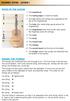 BEGINNER GUITAR - LESSON 1 PARTS OF THE GUITAR 1- The headstock. 2- The tuning pegs or machine heads. 3- The nut (where the strings are supported at the top of the fingerboard). 4- The frets (the metal
Viola Time Book 2. RGP (Release, Glide and Press) Shifting Method 2
 Viola Time Book RGP (Release, Glide and Press) Shifting Method st Finger shifting without accidentals Exercise : st-rd Position shifting in C major Scale and arpeggio of C major Kayaking Down the Tarwin
RECRUITMENT AND BALANCED INSTRUMENTATION by Vince Corozine
 RECRUITMENT AND BALANCED INSTRUMENTATION by Vince Corozine Most successful band programs do not appear by chance but are the result of careful planning, teaching experience, and professional expertise.
Chapter 2 How To Cheat A Barre Chord
 Chapter 2 How To Cheat A Barre Chord Now that you ve learned a variety of chords in different positions, there are times that we want to eliminate some of the notes. I know, in the previous chapter I explained
22. Mozart Piano Sonata in B flat, K. 333: movement I
 22. Mozart Piano Sonata in B flat, K. 333: movement I (for Unit 3: Developing Musical Understanding) Background Information and Performance Circumstances Biography Mozart was born in Austria on the 27
Learning to play the piano
 Learning to play the piano INTRODUCTION TO THE KEYBOARD... 2 STEPPING UP... 2 TREBLE SPACES... 7 BASS SPACES... 9 TIME SIGNATURE... 12 UP AND DOWN THE HILLS... 15 UP AND DOWN THE HILLS IN G MAJOR... 16
Sample of Version 2.0 of Swing & Jump Blues Guitar
 The Charlie Christian Approach Charlie Christian (1916 1942) was one of the first real swing guitar players that had a lasting influence on all other swing and jump guitar players after him. Even more
2012 Music Standards GRADES K-1-2
 Students will: Personal Choice and Vision: Students construct and solve problems of personal relevance and interest when expressing themselves through A. Demonstrate how musical elements communicate meaning
Playing Chromatic Music on Mountain Dulcimer in 1-3-5 Tuning
 Playing Chromatic Music on Mountain Dulcimer in 1-3-5 Tuning By Rob Brereton The sentence I dread hearing when I talk to mountain dulcimer players is, There ain t no notes on a dulcimer, you just play
FREE CHORD BOOK Introduction
 FREE CHORD BOOK Introduction Hi, I m Andy and welcome to my chord book for beginners! Most chord books are packed full hundreds of chord diagrams, so many in fact it could take literally years to play
DIGITAL MUSIC DAY 1 WHAT IS SOUND? ANALOG AND DIGITAL EARLY RECORDING WAX FOR YOUR EARS ROUND BUT FLAT WIRE AND TAPE PURE SOUND
 DIGITAL MUSIC DAY 1 WHAT IS SOUND? 1. Making a sound playing a musical instrument, moves the surrounding the instrument. 2. Making a sound sends out air which hit your ears. 3. Waves of changing air pressure
The Secret to Playing Your Favourite Music By Ear
 The Secret to Playing Your Favourite Music By Ear By Scott Edwards - Founder of I ve written this report to give musicians of any level an outline of the basics involved in learning to play any music by
GEORGE GOODMAN S HARMONICA CHEAT SHEET By George Goodman. Copyright 2014 George Goodman GeorgeGoodman.com 2 nd Edition, License Notes
 GEORGE GOODMAN S HARMONICA CHEAT SHEET By George Goodman Copyright 2014 George Goodman GeorgeGoodman.com 2 nd Edition, License Notes Thank you for downloading this free ebook. Although this is a free book,
Suitable for: Beginners with absolutely no previous experience. Beginners who appear particularly shy or nervous.
 Lesson plan 1: CHORD STRUMMING FOR THE BEGINNER Suitable for: Beginners with absolutely no previous experience. Beginners who appear particularly shy or nervous. Prerequisites: None General Objective:
How to create bass lines
 First rule: always memorize the melody of the song! Always. Always. Always. You should be able to sing and play it in the original key. If you really want to be totally extra, extra awesome, you will be
Intervals Harmony Chords and Scales. Workbook
 Intervals Harmony Chords and Scales Workbook Introduction In writing this book I was able to make many discoveries for myself both in methods of teaching and basic use of music theory. In every discipline
Definitive Piano Improvisation Course
 Definitive Piano Improvisation Course By Yoke Wong 2007 Harmony and Melody Studio Inc Contents Pages Introduction Pentatonic Scale Improvisation 1 Country Western Style Made Easy 4 Left Hand Harmonizing
PIANOWEB.com ( 800 ) 327-4266
 Mission Statement: Jazz Piano Lessons To Teach, in their home, on their own piano/keyboard, anywhere in the world, students how to play jazz piano, through a Non Traditional approach which emphasizes Musical
Beginner Flute Playing
 Beginner Flute Playing Created in partnership by Kent Bush & Merry Axtell Learning to Play the Native American Flute When compared with most other musical instruments, playing the Native American flute
How they invented chord patterns for the guitar. J. Chaurette. Dec., 2012
 How they invented chord patterns for the guitar J. Chaurette Dec., 2012 The guitar has a very long history; it has evolved over the ages to what it is now. It has achieved its final distinct form in 1770,
Guitar Method Beginner: Book 1
 Guitar Method Beginner: Book 1 This book has been a project in the works for over a year, and now my dream of releasing it has finally come true. I would like to thank everyone who has encouraged or helped
Music Theory for Cajun Accordionists
 1 Music Theory for Cajun Accordionists Right off the bat, I need to make clear that I m no expert; far from it. I ve had to piece together what little I know about music theory from here and there, mostly
Put Your Song to the Tests
 Put Your Song to the Tests By Pat & Pete Luboff We ve been listening to songs in a professional capacity for over 20 years, as songwriting consultants, workshop leaders, contest judges and Taxi screeners.
Demonstrate technical proficiency on instrument or voice at a level appropriate for the corequisite
 MUS 101 MUS 111 MUS 121 MUS 122 MUS 135 MUS 137 MUS 152-1 MUS 152-2 MUS 161 MUS 180-1 MUS 180-2 Music History and Literature Identify and write basic music notation for pitch and Identify and write key
PERPETUAL MOTION BEBOP EXERCISES
 PERPETUAL MOTION BEBOP EXERCISES Jason Lyon 2007 www.opus28.co.uk/jazzarticles.html Bebop is much more than just one particular style, it is pretty much the grammar of modern jazz, and bebop licks are
Keyboard Basics. By Starling Jones, Jr. http://www.starlingsounds.com& http://www.smoothchords.com
 Keyboard Basics By Starling Jones, Jr. In starting on the piano I recommend starting on weighted keys. I say this as your fingers will be adjusted to the stiffness of the keys. When you then progress to
A MUSICAL APPROACH TO LEARNING THE BANJO NECK
 A MUSICAL APPROACH TO LEARNING THE BANJO NECK Introduction One of the things that has become clear to me, after a number of years of playing banjo, is that if I have any hope of improvising creatively
Lever Harp Tunings & Major Keys
 Lever Harp Tunings & Major Keys As you probably are aware, the levers on your harp raise the pitch of a given string by one half-step. Unlike the pedal harp, where each string can be played as a flat,
Swing & Jump Blues Guitar Matthieu Brandt
 Swing & Jump Blues Guitar Matthieu Brandt Goto www.swingblues.com for more on Swing and Jump Blues Guitar. 1997-2016 No part of this material (book/cd/website) may be reproduced in any way without prior
Getting Started with 4-part Harmony
 Getting Started with 4-part Harmony Some of you have already written chord progressions in a previous theory class. However, it is my experience that few students come to college with the ability to consistently
SUZUKI Q CHORD. MODEL QC-1 Owners Manual
 SUZUKI Q CHORD MODEL QC- Owners Manual THANK YOU & CONGRATULATIONS Welcome to a new and exciting way to make music, that s creative, mind expanding and fun. Q Cards Every music lover has dreamed of playing
Page 1 of 36. Companion Workbook. 2005 leadworship.com
 Page 1 of 36 Companion Workbook Page 2 of 36 Glossary of Terms: Chord: A combination of 3 or more notes that blend harmoniously when sounded together. Chord Scale: All of the chord combinations that naturally
SUBSTITUTING CHORDS. B C D E F# G Row 4 D E F# G A B Row 5
 SUBSTITUTING CHORDS By Karen Daniels Simply put, chord substitution is the use of one chord in place of another chord and using them is one way to give your music interest and a change in sound. Many chord
GCSE Music Unit 4 (42704) Guidance
 GCSE Music Unit 4 (42704) Guidance (There are recordings to accompany this document.) The Task Students will be required to compose one piece of music which explores two or more of the five areas of study.
Your First Ukulele Lesson and Then Some
 2 Your First Ukulele Lesson and Then Some A Complete Beginner s Crash Course to Playing Ukulele by Brett McQueen of the Ukulele Tricks blog This ebook is dedicated to my grandfather who taught and inspired
Open Tunings. instance, the melody C# B G A can be harmonized in the Open G tuning with the two drones B and D.
 16 Open Tunings instance, the melody C# B G A can be harmonized in the Open G tuning with the two drones B and D. When the strings of a tuning form a simple chord, the tuning is called open; the strings
MUSICAL ANALYSIS WRITING GUIDE
 THE CRITERIA MUSICAL ANALYSIS WRITING GUIDE In writing your essay, the only thing you really need to do is fulfill the marking criteria. Let s look closely at what the criteria says. The student evaluates
Dear Trumpet Teacher,
 Dear Trumpet Teacher, I hope you enjoy this free sample of Sound Habits Brass Builder for Trumpet. Included you will find some of the introductory text, the table of contents, instructions for the first
FILL IN YOUR GAPS AS A PIANO PLAYER. What you need to know to take the next steps as a musician. Peter Thompson. OurWorshipSound
 FILL IN YOUR GAPS AS A PIANO PLAYER What you need to know to take the next steps as a musician Peter Thompson OurWorshipSound 1 FILL IN YOUR GAPS AS A PIANO PLAYER 2014 OURWORSHIPSOUND ALL RIGHTS RESERVED.
Functional Harmony for the Jazz Guitarist
 Functional Harmony for the Jazz Guitarist Functional harmony is an approach to understanding and improvising over complex chords and complex chord progressions. The most basic functions of chords revolve
Introduction to Chords For Jazz Band
 Introduction to Chords For Jazz Band First, let s start with a major scale and review the scale degrees. We refer to the distance between two notes as an interval, and an interval has two aspects: the
Expanding Your Harmonic Horizons
 2016 American String Teachers National Conference Expanding Your Harmonic Horizons Harmony Clinic for Harpists Presented By Felice Pomeranz Publications used as resources from Felice's Library of Teaching
B Flat Marching Flute
 AN INTRODUCTION TO THE B Flat Marching Flute LESSONS FOR BEGINNERS This instruction manual aims to provide a structured learning programme to assist the novice flute player to progress steadily on the
The Physics of Music: Brass Instruments. James Bernhard
 The Physics of Music: Brass Instruments James Bernhard As a first approximation, brass instruments can be modeled as closed cylindrical pipes, where closed means closed at one end, open at the other Here
Musical Literacy. Clarifying Objectives. Musical Response
 North Carolina s Kindergarten Music Note on Numbering/Strands: ML Musical Literacy, MR Musical Response, CR Contextual Relevancy Musical Literacy K.ML.1 Apply the elements of music and musical techniques
The Orchestra Woodwind and Brass
 The Orchestra 2009 29 minutes Program Synopsis Have you ever wondered what instruments make up an orchestra? In this program, Bobby, a young aspiring musician is introduced to different elements, roles
How To Improvise a Solo A Workshop for Beginners
 1 How To Improvise a Solo A Workshop for Beginners 10:00-10:30 am Arrival, Setup and Performance 10:30 to 12:00 pm Interactive Workshop 12:00 to 12:30 Lunch 12:30 to 2:00 pm Workshop 2:00 tp 3:30 pm Open
An Introduction to Chords
 1 An Introduction to Chords by David Gilson A chord is the musical sound produced by playing a number of notes at the same time. The sound of the chord is different depending on the key you are playing
KEYBOARD BENCHMARKS First Part
 KEYBOARD BENCHMARKS First Part Practice Materials and Study Guide 2 nd Edition Compiled by the Ave Maria University Department of Music 2010. All rights reserved. 2 Contents RATIONALE AND SCHEMAE FOR THE
Sax Tutor provides instant access to the required fingerings for any note within a
 Sax Tutor Operating Guide V4.1 Introduction Sax T u t o r i s a s i m p l e p r o g r a m t o a i axophone d s students with the various note fingerings and provides a visual way of learning scales whilst
THE FIDDLE IN IRISH TRADITIONAL MUSIC
 THE FIDDLE IN IRISH TRADITIONAL MUSIC IRISH TRADITIONAL MUSIC ARCHIVE TAISCE CHEOL nuchais EIREANN THE FIDDLE IN IRISH TRADITIONAL MUSIC The fiddle nowadays used for playing Irish traditional music is
evirtuoso-online Lessons
 evirtuoso-online Lessons Chords Lesson 3 Chord Progressions www.evirtuoso.com Chord Progressions are very popular and a strong foundation for many instruments and songs. Any chords combined together in
UKULELE CHORD SHAPES. More Strumming, Less Memorizing BRAD BORDESSA
 UKULELE CHORD SHAPES More Strumming, Less Memorizing BRAD BORDESSA TABLE OF CONTENTS GRATITUDES 2 9th 26 13th 26 INTRODUCTION 3 Altered 27 HOW TO USE THIS BOOK 4 Suspended 2 28 The Fingerboard 5 Suspended
Playing "Outside" CHAPTER EIGHT
 Playing "Outside" Sequences Playing a Half Step Away Playing a Trione Away Playing Scales to Get Outside Some Piano Stuff The Chromatic Scale Be Brave, Go Abead Abead And Play Outside 0ne reason that musicians
The CAGED Guitar System
 The CAGED Guitar System First of all, let s look at an example below on how to use the CAGED guitar system: 1 The example showed above demonstrates the general idea of how the CAGED system works in a certain
Sample Pages. This pdf contains sample pages from the ebook The Easy Guide to Jazz Guitar Arpeggios. To get the full ebook, Click Here
 1 Sample Pages This pdf contains sample pages from the ebook The Easy Guide to Jazz Guitar Arpeggios. To get the full ebook, Click Here 2 Contents Introduction....6 What Are Arpeggios?....7 Chapter 1:
Hit Makers of America
 George Gershwin 1898-1937 American 20th Century True music must repeat the thought and inspirations of the people and the time. My people are Americans and my time is today." Specialist Genres: Popular