
Glossary Of Diatonic Harmonica Techniques Preparation by JP Allen & Evan Curtain - Presented by Harmonica.com
|
|
|
- Brittney Phelps
- 9 years ago
- Views:
Transcription
1 Glossary Of Diatonic Harmonica Techniques Preparation by JP Allen & Evan Curtain - Presented by Harmonica.com Below you will find a list of the most common diatonic harmonica techniques. I have organized them from easiest to most complex so that you can get an idea of which technique you will need to learn next in order to continue progressing as a harmonica player. Though many people consider harmonica the easiest instrument to learn, mastering the instrument is a whole different story (as you may have already found out). One of the challenging aspects of harmonica is the fact that the large majority of the techniques are invisible to the eye. This document will take the mystery out of harmonica techniques and lay down the nuts and bolts of what it takes to master the instrument. When I was a beginning harmonica player I sometimes found myself confused and in the dark of how to get those cool harmonica sounds. One of the things that helped me the most was to learn a new harmonica technique. Once I knew a technique existed, and the essence of how it s done, I could start focusing on it and mastering it little by little. Some of the techniques you ll find in this document are fairly easy and some will take some time to master. If you need help you will find most of these techniques in my incredible bundle of video lessons called, Blues From the Vault. If you are reading this document I know that you re serious about harmonica. I commend you and I encourage you to stay with it and enjoy the ride. Your Harmonica Buddy, JP Allen Page 1

2 Diaphragmatic Breathing: Level 1 Techniques This is probably the most fundamental part of playing the harmonica; learning to breathe properly with the diaphragm. It is most often associated with yoga and meditation and must be used in order to effectively get nice full notes as well as in rhythmic playing. Diaphragmatic (belly) breathing is a great way to relax and, as mentioned, gets a deeper and clear breath. Many beginning students may find that they are breathing from the chest, which is more shallow and often done when under stress. An easy way to see if you are breathing form either your chest or diaphragm is to place one hand on the chest and one on the belly and while breathing see which hand rises and falls. If you are breathing from your chest you may find you are tense and your shoulders may rise toward your ears. If you are breathing from your diaphragm you will find that you are more relaxed and most of your body remains still while you can focus more on the rise and fall of your belly. You may often find JP talking about the harmonica player s drumsticks, which can only be effectively used with diaphragmatic breathing and is explained in his lessons found on harmonica.com. Straight Harp (1 st position play): We traditionally think of campfire songs as the easiest to play with 1 st position play. These songs such as Twinkle Twinkle Little Star, Mary Had a Little Lamb, Red River Valley, Home on the Range, Clementine etc. are most often played in straight harp (1 st position). They are normally played by ear in the same key as the harp and often stick to holes 4-7 where it is easiest to play the notes found in the scale of that key harmonica. Holes 4-7 are considered the middle octave and, as mentioned, contain the full diatonic scale of the key of the harmonica used without the need to use bends, which are commonly used in holes 1-3 in cross harp (2 nd position). Chords and Train Chugging Rhythms: You can play chords (more than 1 note played at the same time) on the harmonica, which are easier to get than single notes. The chords are often used as backing rhythms to a song in which there might be melodic play. The embouchure often used is the tongue block embouchure, which allows for blocking notes to produce single notes when chords aren t preferred. However, what you may find us talk about is the deep relaxed embouchure, which is the preferred in our technique because of its practicality and ability to make bending play easier. Chord chugging, often related to train sounds, is mostly applied with rhythmic breathing patterns, which is found emphasized in Blues From The Vault found on harmonica.com. You may hear players play a rhythm then a train whistle sound. Many of the Chord chugs you hear are most often done on the first 3 Page 2

3 holes of the harmonica. As you will see, if you check out JP s videos, his use of nonsense words like Tooka Diddly. The reason for this is to break up the rhythm with T sounds and K sounds. The tongue is used to create the rhythms and certain words work well to emphasize the rhythms themselves. You can also find a more detailed explanation and instruction on the deep relaxed embouchure on Blues From The Vault. Single notes: It can be challenging to get good clean single notes on the harmonica but can fairly easily be done with practice using the deep relaxed embouchure. This is accomplished by relaxing your jaw and placing the top lip deeper over the top of the harp and the bottom lip more shallow and has a way of naturally allowing you to more easily blow or draw a single note with enough airflow to get a nice full sound. Again refer to harmonica.com video on the subject. The Embouchure is the way in which the mouth is put on the harmonica and you may find that we use this term often. You might find other teachers talk about different embouchures which use the tongue. They are all very effective in their own way and you, personally, may find that they work for you. It just takes some experimentation on your part. We found that the deep relaxed embouchure is effective in that it allows for use of the tongue and is used fundamentally in harmonica.com lessons. The 2 nd hole draw: A nice clean 2 nd hole draw, and sometimes 1 st and 3 rd hole draws, is often a problem for beginners and they may find themselves in the pre-bend tongue position, which doesn t allow for a cleanly played note. They may find it sounds flat or won t play at all and mistakenly think there is a problem with the harmonica. In order to remedy the situation you should relax the tongue and concentrate on positioning the mouth for making an eeeee sound. You may find that an aaaaah sound works better because the eeee may lead to raising the back of the tongue. The most important thing to remember is to flatten your tongue and make sure the back of your tongue is not raised at all and is relaxed. Experiment with it and find what works best for you. You may want to let a little air in through the nose at first to help in playing the note. If you draw a chord using the 1, 2 and 3 holes and you can hear the 2 draw then you know the harp is working properly. If not you may find that by opening up your harmonica to expose the reeds there may be something such as a hair or a piece of food stuck in the reed. These conditions sometimes happen but can be reduced by washing your mouth out with water before you play and properly storing your harmonica in a case. If all else fails and you can t seem to remedy the problem you may need work on the reed or get a new harmonica. For me it s usually the 4 th draw reed that goes out and depending on the cost of the harmonica I will either work on it myself, have someone else work on it, or just get a new harmonica. Before you replace your harmonica 1 st check to make sure that it is either a clean reed or your technique just may need some work. Page 3

4 Hand Techniques: The most common hand technique often used is the cupped hand technique, in which the right or left hand, depending on your dominant hand is placed over the harmonica to form an airtight cup. While one hand is holding the harmonica with index finger on top and thumb on the bottom in a slotted position with the other fingers protruding out and down while together, the other hand is positioned in a way in which it can open and close over the harmonica holding hand to form traditional wah wah sounds. It is similar to vibrato but uses the hands to form differing volumes by alternating between muted and open playing of the harmonica. Multiple key harmonicas: Diatonic harmonicas come in all kinds of different keys: All 12 keys of the major scale as well as minor keys and special tunings, such as melodic minor and country tuned. They usually range from the low end at G to the higher pitched F#, but can be tuned on such harps as High G or low D, or even low C. A normally tuned C harp is often used in beginner harmonica teachings, and is often used when playing straight harp, such as in the song Piano Man by Billy Joel. The most common keys played, especially in blues, are A, C, and D harps. It is a good idea to have at least those 3 harmonicas when getting started as a beginner. Note Articulations: The tongue is often used in order to make notes more abrupt or concise. Articulations are often done with syllables that use a consonant followed by a vowel (i.e. ka, da, ta, ha, or ga, which are the most common ways to break up notes). Articulations can also be done using tongue blocking, which cuts off the air abruptly. Tongue blocking is also often used for octave playing and split intervals, which we will mention in later levels. Shakes and Warbles: You will see an introduction to this in level 1 and will be more emphasized in level 2. A shake is a quick back and forth movement between two adjacent notes, but can be also done with and octave shake in which octaves are played by separating two notes with the tongue and shaking back and forth. Octave shakes are not often done on the diatonic but are more often used in blues with a chromatic harmonica such as in songs like Blues with a Feeling by Little Walter. Shakes are often called warbles and are commonly done by shaking either the head or the harp rapidly from side to side. More advanced shakes can often use note bending. Page 4

5 Cross Harp (2 nd position) Level 2 Techniques 2nd position is most often used to play blues as well as rock and country music. To play cross harp, or 2 nd position, you play in a key that is a 5 th higher than the harmonica you are playing. For example if you want to play in 2 nd position using a C harp you would be playing a song in the key of G. A good way to understand it is that the 5 th note of the C scale is G so you would play in the key of G for the C harmonica C D E F G A B One key that always seems to confuse beginners is F. You would use the Bb harmonica in 2 nd position. The reason for that is that each key has it s own scale and a Bb scale has a F for the fifth note of the scale Bb C D Eb F G A Another way to remember which key harmonica to use for 2 nd position is that the key of the harmonica will be a 4 th of the key of the song (meaning the 4 th note of the scale of the song will be the correct key harmonica to use) Ex. Key of G song=c harmonica G A B C D E F# Ex. Key of F song=bb harmonica F G A Bb C D E Below is a quick reference chart for all 12 keys and the harmonicas for 2 nd position play Key of song G Ab Key of harmonica C Db Page 5

6 A D Bb Eb B E C F Db F# D G Eb Ab E A F Bb F# B 2 nd position uses mostly draw notes and starts on the 2 draw hole. Much of the playing is done on the lower end of the harp (holes 1-6) and draw bends are usually used to play in a more expressive and bluesy style, which is what cross harp is well known for. A good way to remember which note 2 nd position usually starts on is as in the chart is that the key of the song is the same as the the 2 hole draw. For example on a C harp the 2 nd hole draw is a G note. The same thing goes for all the other harps (Bb harp 2 nd draw=f, A harp 2 nd draw=e, etc.) Available notes of the Diatonic harmonica and Scales Below are diagrams of all 12 keys of the diatonic harmonica so you can see the similarities of the setup as well as the difference in scales. As you will see the major scale is seen and played more easily in holes 4-7. The blues scale, which is often used in cross harp(2 nd position), is found in holes 2-6 with 2 draw bends on holes 3 and 4. d=draw, b=blow, ^= semitone bend, ^^=whole step bend (a semitone is a half step between notes ie. difference between A and Bb or B and C. Here is the chromatic scale to better explain: C Db D Eb E F F# G Ab A Bb B C (there is a semitone/half step between each note). You may notice that we use C# and Db interchangeably. They are the same note just shown differently in certain scales. The G blues scale found on the C harp is: G Bb C C# D F G 2d 3d^ 4b 4d^ 4d 5d 6b Page 6

7 As you will soon see all of the harmonicas are set up in the same way for their relative scales. If you want to find out what the blues scale for each harmonica is then look at the harmonica layout diagrams that follow for each harmonica and see what the 2 nd position is in the previous chart to see which hole aligns with which note. (ie.-if you can play the G blues scale on the C harp then you can play the E blues scale on an A harp) The following will show you the major scale for the C harp but as mentioned the harmonicas are set up in the same way just different scales. Major scale on C harp: C D E F G A B C 1b 1d 2b 2d^^ 2d/3b 3d^^ 3d 4b 4b 4d 5b 5d 6b 6d 7d 7b 7b 8d 8b 9d 9b 10d 10b^ 10b Layout of all 12 keys of the diatonic harmonicas Draw Bends and Blow Bends Overblows and Overdraws Bb Eb Eb F# Bb Eb F# B blow C E G C E G C E G C C harp draw D G B D F A B D F A C# F# Bb C# Ab C# Ab C# F A Ab B E E G B E G C blow Db F Ab Db F Ab Db F Ab Db Db harp draw Eb Ab C Eb F# Bb C Eb F# Bb D G B D A D A D F# Bb A C F F Ab C F Ab C# blow D F# A D F# A D F# A D D harp draw E A C# E G B C# E G B Page 7

8 Eb Ab C Eb Bb Eb Bb Eb G B Bb C# F# F# A C# F# A D blow Eb G Bb Eb G Bb Eb G Bb Eb Eb harp draw F Bb D F Ab C D F Ab C E A C# E B E B E Ab C B D G G Bb D G Bb Eb blow E Ab B E Ab B E Ab B E E harp draw F# B D F# A C# Eb F# A C# F Bb D F C F C F A C# C Eb Ab Ab B Eb Ab B E blow F A C F A C F A C F F harp draw G C E G Bb D E G Bb D F# B Eb F# C# F# C# F# Bb D C# E A A C E A C F blow F# Bb C# F# Bb C# F# Bb C# F# F# harp draw Ab C# F Ab B Eb F Ab B Eb G C E G D G D G B Eb D F Bb Bb C# F Bb C# F# blow G B D G B D G B D G G harp draw A D F# A C E F# A C E Page 8

9 Ab C# F Ab Eb Ab Eb Ab C E Eb F# B B D F# B D G blow Ab C Eb Ab C Eb Ab C Eb Ab Ab harp draw Bb Eb G Bb C# F G Bb C# F A D F# A E A E A C# F E G C C Eb G C Eb Ab blow A C# E A C# E A C# E A A harp draw B E Ab B D F# Ab B D F# Bb Eb G Bb F Bb F Bb D F# F Ab C# C# E Ab C# E A blow Bb D F Bb D F Bb D F Bb Bb harp draw C F A C Eb G A C Eb G B E Ab B F# B F# B Eb G F# A D D F A D F Bb blow B Eb F# B Eb F# B Eb F# B B harp draw C# F# Bb C# E Ab Bb C# E Ab C F A C G C G C E Ab G Draw Bends Draw bends can be a monster that many people find are difficult to deal with, however you may find you are closer to draw bending than you realize. As I tell my students if you are having a hard time getting a good clean 1, 2, or 3 draw note then you are on the cusp of getting a draw bend. Your tongue needs to be in the correct position to get a good bend. That position involves raising the back of your tongue to the top of the back of Page 9

10 your mouth and creating a jet stream. You will be creating a tunnel of pressure that will actually change the pitch of the note, lowering it in pitch. What some people find helpful when first learning to bend is to actually turn the harmonica up slightly and visualize the note changing. Another approach is to take a coffee stirrer or a small straw and try to suck in with more pressure. If you bend the end of the straw with your fingers you will find that your tongue will make its way into the correct position to bend a note on the harmonica. Another approach is to go out and get a thick milkshake and try to suck it through the straw. If your tongue is in the correct position you should be able to make a koh sound. When you are saying koh your tongue is up in the back and down in the front which will allow you to create that pressure that you need. As you have seen you can change pitches 3 half steps/semitones on the 3 rd hole but you may find it easier to learn to bend on the 1 st or 4th hole draws. Draw bends are available on holes 1, 2, 3, 4, and 6. There is a small bend available on the 5 th hole draw but it is not a true half step. Another good thing to remember is that a bend does not require more air. The air is just accelerated. You are actually almost conserving air when bending: you are using a little less of it because of the pressure you are creating from your tongue. For more info on learning to bend see JP s Blues From The Vault. Mechanics of harmonica during a bend Many people don t realize what is actually going on with the reeds when they are bending. As JP mentions in his Blues From The Vault videos the blow reed is also vibrating along with the draw reed during a draw bend. The reason that the 5 th hole draw bend does not bend a full half step is because there is only one half step or semitone difference between the 5 th hole blow and draw played without a bend (refer to the harmonica layout.) Bb Eb Eb F# Bb Eb F# B blow C E G C E G C E G C C harp draw D G B D F A B D F A C# F# Bb C# Ab C# Ab C# F A Ab You can see in the C harmonica there is an E on the blow and an F on the draw. These are only a half step apart (there is no E# or Fb. If you know about music theory they sometimes do use those notes but an E#=F and an Fb=E, for those of you who may have seen those notes used.). If you notice on the C harp the difference between the 1st hole blow and draw is 2 half steps (1 whole tone) which leaves room for the blow reed to bend Page 10

11 a full semitone/half step (difference between C and C#). The 2 nd hole difference between E and G is 1 ½ steps and leaves room to bend 2 half steps (or a whole tone/step.) G F# F ½ ½ As you can see the 3 rd hole has a difference of 2 whole steps or 4 half steps G to B. I show the following from B to G the draw bends descend that way from B to Ab and the G is the 3 rd hole blow: B Bb A Ab G ½ ½ ½ ½ As you can see from the diagram the 4 th hole is set up just like the 1 st hole (C =1 blow, D=1 draw and 1 draw bent a half step is C# or Db). The Eb (above hole 4 blow) is actually an overblow, and is a more advanced technique, that will be mentioned in level 3. In the blow bends (mentioned in the following section) there is the same thing going on with both blow and draw reeds vibrating at the same time. Blow bends Blow bends are done with the same basic tongue position of the draw bends. You may find that a blow bend is more easily done by pushing your tongue slightly forward (the back of your tongue is still raised but moves a little forward in your mouth). You are saying koo but you are blowing instead of drawing. Blow bends are available in holes 8-10 and you will, like the draw bends, notice a lowering of pitch. Hole 7 has somewhat of a blow bend but, like hole 5 on the draw bend, hole 7 is not a true half step bend because like hole five the difference between the blow and the draw is a half step. The Eb (hole 8 blow bend), F# (hole 9 blow bend), B and Bb (hole 10 blow bends) are working in much the same way as the draw bends only you are blowing instead of drawing and you will notice the difference between the notes still holds true (ie. The 8 hole blow is an E and the blow bend is Eb lowering the pitch, which is found between D (8 draw) and E in the chromatic scale. There are some players who only use a C harmonica to play in all 12 keys, like Otavio Castro, which is true chromatic playing and is truly a great feet on the diatonic harmonica, considering that a diatonic scale, what the harmonica was named for, is a 7 tone scale (ie. C D E F G A B). As you can see by the layout of the harmonica the diatonic scale is found using only the notes on the harmonica with no bending or overblowing. The exceptions to that are of course found in holes 2 and 3 draw bends (F and A on the C harp) and 10 blow bend (B on the C harp). The diatonic scale is also known as a major scale as we mentioned before. The C# on hole 7 is an overdraw and like the overblows will be mentioned in level 3, for it is a more advanced technique. Intermediate Bends Page 11

12 An in intermediate bend is a bend found between the full range of the bend like on holes 2 and 3 draw. The 3 rd hole draw intermediate bends are Bb and A where the full bend is Ab. Intermediate bends are useful because of their use in the blues scale, like the G blues scale which uses a Bb(3 rd hole intermediate bend on a C harp). Intermediate bends are often hard to maintain pitch. You can use a tuner or a piano to check to make sure you are playing an intermediate bend in pitch. If you want to hear someone who uses intermediate bends in pitch, listen to some of Howard Levy s recordings. Even Howard often only uses them as passing notes instead of resolving notes (notes you end on). Dip Bends The dip bend is done by approaching the note either bent at first, releasing into another unbent note in a quick but smooth manner or playing the unbent note and gradually sliding into a bent note. It is frequently used to add a little flavor to a note. Glissando A glissando is a group of notes played in rapid succession that ends on the main note to be played. If you play a single note and slide the harmonica across your mouth then you are playing what is known as a glissando. You are not spending time articulating each note you are just passing through the notes in a rapid manner and sometime end up on back the starting note. If you finish on any final note, articulating it, it is sometimes referred to as a ripped glissando. Throat vibrato Throat vibrato on a harmonica is done in much the same way as a singer uses it. It is a slight wavering of the pitch of a note and is done by sort of pinching of the air stream. It is similar to the bend yet not to the extreme that a bend is played. If you can picture a wavering of a frequency on an old cb radio, that is the effect of the throat vibrato. The diaphragm is also used but most of the work is done by the throat. Diaphragm Tremolo The Diaphragm tremolo is much like the throat vibrato in sound but there is a slight difference. The difference is, instead of a pitch oscillation, like on the throat vibrato, there is a volume oscillation. The diaphragm is used primarily with the tremolo and is done by making a sort of laughing sound, like ha ha ha. Tremolo is sometimes referred to as a vibrato but they are different in their natures. Growl Page 12

13 A growl is used often with a deep draw bend. It is an effect made by allowing the soft palette in the back of mouth to relax and vibrating it with a snoring effect. The vibration along with the bent notes allows for the growling sound. 3 rd position (AKA. slant harp or double cross harp ) A Good way to remember 3 rd position is that it is 1 whole step (2 half steps) above the key of the harp to be played. For example if you wanted to play a C harp in 3rd position, you would be playing in the key of D. The mode of 3rd position is a minor key, in Dorian mode so you would actually be playing in D minor. A Dm scale is the same as an F scale because Dm is the relative natural minor to the Key of F but instead of starting on the 6th note of the F scale, as in Aeolian mode (natural minor) it starts on the 2 nd note (D) of the C scale and works its way back around the scale. This is what is known as the Dorian mode and is most often played in 3 rd position harmonica Ex. F scale= F G A Bb C D E F Aeolian Dm scale = D E F G A Bb C D Ex. C scale= C D E F G A B C Dorian Dm Scale = D E F G A B C D This is how the Dorian mode scale is set up and each note is separated. Whole Step - Half Step - Whole Step - Whole Step - Whole Step - Half Step - Whole Step w h w w w h w Ex. D E F G A B C D Below is a chart which shows all 12 positions for all 12 keys Many of them require overblows and will be mentioned again in level 3 terms because of their advanced nature. Page 13

14 Knowing where you are on the harmonica It is a good idea to learn the layout of the harmonica (refer to layouts section) because it is important to know that some notes play differently from a technique perspective. As you become better able to reach bends and overbends you will want to know where you are. Knowing how the notes play on each harmonica will allow you to pick certain harmonicas, and use them in different positions. For example, you may be playing a song which on one harp requires a bend or an overbend and you may want to hit that note cleanly. If you know the layouts of each harmonica and learn the notes of the song you may find that one harp may allow you to play all the notes you need without needing to bend too much. As you will come to realize some notes play more easily than others and learning your harmonicas can turn you into a more well rounded player. Playing all over the harmonica You can usually play most songs in 2 different octaves on the harmonica. The 2 nd octave (holes 4-7) is generally easier to play in because usually all of the notes are available without bends. Sometimes you may find that a song requires overbends(overblows and overdraws) and unless you are accomplished at getting those then you may want to either play in the first octave and use bends or choose a harmonica that allows you to play all the notes you need without needing to use bends or overbends. You may find that the 3 rd octave allows you to play certain songs, as long as the notes are there, but you may start to run out of notes. Again it helps to know the layout of all your harmonicas. Equipment Rack Page 14

15 A rack is a device that allows you to play without using your hands. Usually the rack goes around your neck and it pivots to, and away from, your mouth. There is often a wing nut that tightens and loosens to allow you to move closer or farther away from the harmonica, which is placed on the rack. You may have seen players like Bob Dylan or Crystal Bowersox (from American Idol) use a rack so they could play guitar and harmonica at the same time. Amplifiers Blues players often use a tube amp to get that distorted grungy sound that is so often sought after. Many players love to use old guitar amps like the Fender Bassman, Bassman ReIssue (RI), Fender Champ, or the Fender Princeton. Some players like modeling amps like the Line 6 because it allows for effects without an effects pedal, which is often used in amplified play. To hear someone who is a connoisseur of effects then listen to Jason Ricci, who also uses overbends in a lot of his playing. Effects pedals Many players prefer reverb and other effects like digital or analog delay. These can sometime be done without pedals but having a pedal allows for ease of changing between sounds without having to bend over and adjust your amps knobs. Most guitar effects pedals work well with harp playing but some are very sensitive to feeding back like a wah pedal, because of the changing in volume and the use of a microphone. Mics A good mic (microphone) can make all the difference in the world to your sound, whether you are singing or playing the harmonica through it. Some good harp mics are the Shure Green Bullet, Astatic JT30, Hohner Blues Blaster, which are all bullet shaped and made to fit in a cupped hand. Another interesting mic is the Hohner HooDoo handheld wireless mic. It fits on your finger and is very small which is great for allowing for hand effects like wahs. Some people prefer to use vocal mics like the Shure SM-57 or SM-58 which they hook up to their amp, or, directly through the mixing board and use as both a harp mic and a vocal mic. Some players even have a pedal that allows them to switch between the two (effects and no effects). 4 th -12 th Positions Level 3 Techniques (Advanced and Beyond) Page 15

16 These positions require a familiarity with the note layout of the harmonica and many of them require the ability to play not only draw bends and blow bends but overbends (overblows and overdraws). It is good to know the various modes to play in these positions. Below is the chart for all 12 positions in all 12 keys and the proper names for positions and slang names for the harps. 12 th Position is sometimes called 1 st flat. It is the Key with one more flat than the key of the harp. It is a 4 th above the key of the harp. For example, the C harp 12 th position is the key of F (C scale has no flats and F scale has a Bb). 12 th position is excellent for playing melodies in a major key. To play in 12 th position on the bottom of the harmonica you need to be good at playing 2 nd hole draw whole step bend (2 nd bend available) and 3 rd hole draw whole step bend (also 2 nd bend available in that hole. Remember there are 2 bends available in 2 nd hole draw and 3 bends available in 3 rd hole draw). Split Intervals Split intervals are notes that are split usually by the tongue. They are usually split into octaves. An example of an octave split interval is 1 and 4 blow or draw played at the same time with the 2 nd and 3 rd holes blocked out by the tongue. You can also get an octave by playing holes 4 and 8 draw and blocking out 5, 6 and 7 draws. Split Interval Bends Page 16

17 You can bend 2 notes of a split interval, such as in an octave, at the same time. It is also possible to bend one note of an interval to create an octave. An example would be if you bent the 2 draw a whole step and played the 5 draw without a bend you could form an octave. On the C harp that would be an F octave interval. Tongue Switch Shimmer The tongue switch shimmer is an interesting effect where the tongue moves rapidly from side to side allowing corner holes to play individually. It is much like the split interval but instead of 2 holes being played at the same time, only one hole is being played at a time. Draw Bend Vibrato When trying to get a good smooth vibrato on draw bends you must use a lot of control with use of both the throat and the diaphragm. It requires a delicate breath and can sound very unsmooth if you don t use a delicate touch. Throat vibrato is mainly a volume oscillation but can also be done using a slight pitch oscillation between bends. Remember that pitch oscillation is a slight wavering from note to note, as volume oscillation wavers between louder and softer. Blow Bend Vibrato Blow bend vibrato requires a little more control than draw bend vibrato because of the length of the reeds where blow bends are possible (holes 8-10). Some players find that the blow bend vibrato is easier because there is less play in the reed. Not as many bends as in the 2 nd and 3 rd hole draws. Speed Speed is one of those things that can be abused. Although it requires extreme note and rhythm accuracy many players play fast just to play fast and it becomes a little sloppy and they lose the beat. A couple of examples of players who use speed wisely and with much accuracy are Howard Levy and Jason Ricci. They are both overblow players. One player who used speed very well in a rhythmic way was the late Norton Buffalo. JP Allen of harmonica.com is also an excellent speed player with a great sense of rhythm. All four are good examples of how to play fast while not losing the song with overuse of speed. Slurs and Double Stops A slur is a technique that uses a primary note along with just a bit of another note. A double stop plays two notes at the same time with equal strength. With double stops bent Page 17

18 notes can be played along with unbent notes. This is especially possible on hole 1-4. Overblows can even be played where both draw and blow reeds sound and two notes come out. A slur differs from a double stop in that the volumes of the two notes used are at different levels. The slur has a louder primary note and a softer secondary note. Octave Shakes Octave shakes use split intervals but are rarely used on the diatonic harmonica due to its setup. Chromatic harmonicas lend well to octave shakes and there are even recordings of them used quite frequently using a chromatic harmonica. An octave shake is done much like a head shake but the tongue is used to block out the middle notes so an octave can be formed and 2 notes are played at the same time and rapidly switch back and forth between two more octave notes. For those who don t know what an octave is, it is the same note just played at two different pitches (ie. 1 st hole blow and 4 th hole blow). Rhythm and melody together This technique is also known as vamping. You can do this with either a tongue block or by using a lip block by opening and closing the embouchure. It can also be done by rolling the harp up at the back to go from chord to single note. Usually a chord that contains the melody note is played and the tongue blocks the notes of the chord being played. This technique is often used in the first 3 holes (1, 2, and 3). Tongue Rolls A tongue roll is a vibration of the tongue much like pronouncing a Spanish style rolled R. Rolling the tongue and the back of the throat, especially while blowing, can create a machine gun effect which is an interesting effect for Sonny Terry-like rhythmic soloing. Whoops A whoop is done by using your voice to whoop or holler while playing the harp. A few players like Sonny Terry and Peter Madcat Ruth used this technique often while playing. They also used other sounds like barks and clicks to add flavor to the songs. It is best done if you continue playing on the blow while you holler or whoop. Back Pressure Chords These require a very air tight cupping of the hands and can allow for playing the harmonica backwards. You aren t actually playing with your mouth through the back of the harp but are creating an air pressure that allows you to move air through both the front and the back of the harmonica. The air pressure actually builds up in your tightly Page 18

19 cupped hand and flows back into the harp causing other non played reeds to vibrate. You can block holes that you don t want played with your thumb or finger and use the back pressure notes along with the played notes to create new chords. Tongue Slap The tongue slap is a technique where first the chord is played briefly and then all but one or two notes are rapidly blocked with the tongue. The reason that it has a sort of slap sound is that the amount of air that was being sent through 3 or 4 holes is suddenly focused into 1 or 2 holes. The tongue slap is often used to punctuate notes. Flutter tongue This is also known as rapid vamping. Normally when doing this technique a split interval is played and the tongue is lifted and placed back onto the previously blocked notes repeatedly. There is a rapid switching back and forth between a chord and a split interval like an octave. Valved Bends Valved bends use only one reed to bend rather than both reeds as in a normal bend. Valved bends have a great potential in their range but take a different attack and bending approach. Overbends (Overblows and Overdraws) Overblows and overdraws require more narrow or tighter reed gaps and involve a lot more finesse than regular bends. Overblows and overdraws cause the opposite than normal reed to open rather than close, as happens in normal bending. In overblows there is an activation of the draw reeds and raise the note to ½ step above the normal draw note (unbent). Overdraws cause the blow reed to raise ½ step above the natural unbent blow note. As mentioned before a couple of overbend players are Howard Levy, Jason Ricci. Otavio Castro and Tinus Koorn(Overblow.com) both use only a C diatonic to play in all 12 keys, which requires a massive amount of overbends. Bending Overbends and overbend vibrato It is possible to bend the pitch of an overbend and even use vibrato but it requires tremendous focus and finesse. Chromatic Play Page 19

20 The diatonic harmonica has great potential as a fully chromatic instrument but it require great technique and a bit of expertise because of the difficulty of playing bends in perfect pitch, not to mention playing of overdraws and overblows. Below is a note layout of a C diatonic Harmonica along with all of the available notes. You will see that they are all there, for 3 octaves, if you practice and setup your reeds properly. Draw Bends and Blow Bends Overblows and Overdraws Bb Eb Eb F# Bb Eb F# B blow C E G C E G C E G C C harp draw D G B D F A B D F A C# F# Bb C# Ab C# Ab C# F A Ab The chromatic scale C C# D Eb E F F# G Ab A Bb B C As you can see when analyzing the harmonica layout there are 3 octaves of chromatic scales available on the diatonic harmonica (Holes 1-4, 4-7, and 7-10) but as you can also see unlike the chromatic harmonica there is no common set pattern of notes. They are kind of all over the place (meaning each octave has a different way of playing available notes. Counterpoint Counterpoint is where more than one melody is played at one time. This is done by using a variety of techniques all at the same time, such as single notes, double stops, playing out of both sides of the mouth, and split intervals. This is more possibly done on diatonic harmonicas, as opposed to chromatics, due to the relative closeness of the holes to one another. Specially tuned harmonicas are usually used for counterpoint play. For examples of Counterpoint playing listen to Richard Hunter. Page 20

How To Play The Harmonica
 How To Play The Harmonica CONTENTS 1. What kind of harmonica should I use? 2. How do I use the numbers over the words to the songs? 3. So what if I am not familiar with a song? 4. So how do I improve
The Tuning CD Using Drones to Improve Intonation By Tom Ball
 The Tuning CD Using Drones to Improve Intonation By Tom Ball A drone is a sustained tone on a fixed pitch. Practicing while a drone is sounding can help musicians improve intonation through pitch matching,
Beginners Guide to the Walkingbass
 Beginners uide to the Walkingbass Learning to play a new instrument can open up a whole new world of creativity. It certainly has for me. The 3-string Walkingbass is an easy instrument to learn, yet it
Intonation Tendencies of Band Instruments. Whitney Brainard MUS 461 Winter 2011
 + Intonation Tendencies of Band Instruments Whitney Brainard MUS 461 Winter 2011 + Daily tuning In band, make sure you warm up BEFORE tuning. If you are waiting to perform (ex. Festival), have students
Advanced Techniques for the Walkingbass
 Advanced Techniques for the Walkingbass I have seen guys with 5 string basses who can t get half the sounds that you are getting out of just three. -Buddy Fo of the Invitations If you have read the Beginners
How to create bass lines
 First rule: always memorize the melody of the song! Always. Always. Always. You should be able to sing and play it in the original key. If you really want to be totally extra, extra awesome, you will be
Bass Clarinet 101, Bass Clarinet for Dummies. By Edward Palanker
 Bass Clarinet 101, Bass Clarinet for Dummies By Edward Palanker The bass clarinet is a unique member of the clarinet family. If you don t voice it correctly in the upper register you re in for a surprise,
Foundation Course. Study Kit No 1. Away In A Manger
 Foundation Course Study Kit No 1 Away In A Manger Reharmonization Study Kit No. 1 Away In A Manger Author: Rosablanca Suen Web: www.learnpianowithrosa.com Email: [email protected] Cover Design:
GEORGE GOODMAN S HARMONICA CHEAT SHEET By George Goodman. Copyright 2014 George Goodman GeorgeGoodman.com 2 nd Edition, License Notes
 GEORGE GOODMAN S HARMONICA CHEAT SHEET By George Goodman Copyright 2014 George Goodman GeorgeGoodman.com 2 nd Edition, License Notes Thank you for downloading this free ebook. Although this is a free book,
B Flat Marching Flute
 AN INTRODUCTION TO THE B Flat Marching Flute LESSONS FOR BEGINNERS This instruction manual aims to provide a structured learning programme to assist the novice flute player to progress steadily on the
This short workshop is designed to help you understand this unique instrument and how you can explore your musical creativity by playing it!
 Dear harmonica player! Thank you for your interest in the SEYDEL SAMPLER. Whatever your musical genre, this harmonica combines the features and playability with which you are already familiar, so you can
MUSIC OFFICE - SONGWRITING SESSIONS SESSION 1 HARMONY
 MUSIC OFFICE - SONGWRITING SESSIONS SESSION 1 HARMONY Introduction All songwriters will use harmony in some form or another. It is what makes up the harmonic footprint of a song. Chord sequences and melodies
Setting Up Synthetic Drone Reeds The Kinnaird Way By Rob Kinnaird
 www.kinnairdbagpipes.com 923 Emmeline Terrace Saskatoon, SK. Canada S7J 5G7 Phone: 306-249-2939 Fax: 306-249-2933 [email protected] Setting Up Synthetic Drone Reeds The Kinnaird Way By Rob Kinnaird
Jim Hall Chords and Comping Techniques
 Jim Hall Chords and Comping Techniques Jazz guitar comping is an art form in its own right. The comping rhythms, melodies, and voicings of the greatest Jazz guitarists are delightful to listen to, with
GUITAR THEORY REVOLUTION
 GUITAR THEORY REVOLUTION The Major and Minor Pentatonic Scales Copyright Guitar Theory Revolution 2011 1 Contents Introduction 3 What are the Major and Minor Pentatonic Scales 3 Diagrams for all the Pentatonic
A MUSICAL APPROACH TO LEARNING THE BANJO NECK
 A MUSICAL APPROACH TO LEARNING THE BANJO NECK Introduction One of the things that has become clear to me, after a number of years of playing banjo, is that if I have any hope of improvising creatively
Companion Workbook to the bonus section with Glenn Pearce
 Companion Workbook to the bonus section with Glenn Pearce Page 1 of 21 Page 2 of 21 Chapter 1 leadworship.com title page Chapter 2 main menu and Paul s introduction Electric guitar players - what to play
The Chord Book - for 3 string guitar
 The Chord Book - for 3 string guitar Prepared for: 3 string fretted cbg Prepared by: Patrick Curley Forward This short ebook will help you play chords on your 3 string guitar. I m tuned to G, if you re
FREE CHORD BOOK Introduction
 FREE CHORD BOOK Introduction Hi, I m Andy and welcome to my chord book for beginners! Most chord books are packed full hundreds of chord diagrams, so many in fact it could take literally years to play
Keyboard Basics. By Starling Jones, Jr. http://www.starlingsounds.com& http://www.smoothchords.com
 Keyboard Basics By Starling Jones, Jr. In starting on the piano I recommend starting on weighted keys. I say this as your fingers will be adjusted to the stiffness of the keys. When you then progress to
Standard 1: Skills and Techniques 1
 1 Standard 1: Skills and Techniques 1 CB.1.1 Instrument Knowledge Skills CB.1.1.1 Instrument in good playing condition- including proper assembly, reed care, and cleaning. CB.1.2 Playing Posture Skills
GUITAR THEORY REVOLUTION. Part 1: How To Learn All The Notes On The Guitar Fretboard
 GUITAR THEORY REVOLUTION Part 1: How To Learn All The Notes On The Guitar Fretboard Contents Introduction Lesson 1: Numbering The Guitar Strings Lesson 2: The Notes Lesson 3: The Universal Pattern For
Music Theory: Explanation and Basic Principles
 Music Theory: Explanation and Basic Principles Musical Scales Musical scales have developed in all cultures throughout the world to provide a basis for music to be played on instruments or sung by the
Piano Accordion vs. Chromatic Button Accordion
 Piano Accordion vs. Chromatic Button Accordion Which is best, piano accordion (PA), or five row chromatic button accordion (CBA)? This is a question which is often debated in newsgroups. The question should
Playing By Ear Who Can Play By Ear?... 2 How To Play By Ear... 3 Happy Birthday To You (By Ear)... 4 Match Tones... 5 Add Chords...
 Playing By Ear Who Can Play By Ear?... 2 How To Play By Ear... 3 Happy Birthday To You (By Ear)... 4 Match Tones... 5 Add Chords... 6 Allcanplay TM Piano * MaxLearning.Net 2009 * Playing By Ear * 4/6/2009
BEGINNER GUITAR - LESSON 1
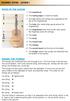 BEGINNER GUITAR - LESSON 1 PARTS OF THE GUITAR 1- The headstock. 2- The tuning pegs or machine heads. 3- The nut (where the strings are supported at the top of the fingerboard). 4- The frets (the metal
Top 10 (+) Things That Beginning Clarinet Players Do Wrong. and How to Correct Them
 Top 10 (+) Things That Beginning Clarinet Players Do Wrong and How to Correct Them Marilyn Mattei www.matteimusicservices.com [email protected] 972-838-2443 Preface 1. Why did I develop this clinic?
Viola Time Book 2. RGP (Release, Glide and Press) Shifting Method 2
 Viola Time Book RGP (Release, Glide and Press) Shifting Method st Finger shifting without accidentals Exercise : st-rd Position shifting in C major Scale and arpeggio of C major Kayaking Down the Tarwin
Study Kit No 9. Aura Lee (Love Me Tender)
 Study Kit No 9 Aura Lee (Love Me Tender) Reharmonization Study Kit No. 9 Aura Lee Author: Rosablanca Suen Web: www.learnpianowithrosa.com Email: [email protected] Cover Design: Raymond Suen Copyright
Guitar Reference. By: Frank Markovich
 Guitar Reference By: Frank Markovich Guitar Reference Introduction The purpose of this book is to give the student the reference materials for learning how to play the guitar. In this book you will find
Everyone cringes at the words "Music Theory", but this is mainly banjo related and very important to learning how to play.
 BLUEGRASS MUSIC THEORY 101 By Sherry Chapman Texasbanjo The Banjo Hangout Introduction Everyone cringes at the words "Music Theory", but this is mainly banjo related and very important to learning how
The Secret Weapon for Bar Chords
 Created by BCM The Secret Weapon for Bar Chords This handy device will make it much easier to form bar chords on your guitar. It is an effective tool that will give you immediate results. No more hours
Suitable for: Beginners with absolutely no previous experience. Beginners who appear particularly shy or nervous.
 Lesson plan 1: CHORD STRUMMING FOR THE BEGINNER Suitable for: Beginners with absolutely no previous experience. Beginners who appear particularly shy or nervous. Prerequisites: None General Objective:
Guitar Method Beginner: Book 1
 Guitar Method Beginner: Book 1 This book has been a project in the works for over a year, and now my dream of releasing it has finally come true. I would like to thank everyone who has encouraged or helped
Beginner Flute Playing
 Beginner Flute Playing Created in partnership by Kent Bush & Merry Axtell Learning to Play the Native American Flute When compared with most other musical instruments, playing the Native American flute
Lesson Plans: Stage 3 - Module One
 Lesson Plans: Stage 3 - Module One TM Music Completes the Child 1 Stage Three Module One Contents Week One Music Time Song 2 Concept Development Focus: Tempo 4 Song Clap Your Hands 5 George the Giant Pitch
J. JENNINGS PUBLISHING COMPANY 5012 Kahn Street, Carmichael, CA 95608
 I N T R O D U C T I O N This packet contains introductory lessons for Emerson Karaoke Guitar 1. We assume you are a total beginner. The exercises start out very easy and will progress gradually. Have some
MTRS Publishing 2004 Copying allowed only for use in subscribing institution www.mtrs.co.uk
 20th Century Dance Music The Tango The Tango is a dance from Argentina. It developed in the city of Buenos Aires around the red light areas of the city, around the docks. For a time, it was discouraged
From Beginner to Intermediate Clarinetist. Crossing the Break. Going from the Chalumeau to the Clarion Register. William R.
 From Beginner to Intermediate Clarinetist Crossing the Break Going from the Chalumeau to the Clarion Register Chalumeau Register Clarion Register Beginner Intermediate William R. Higgins 2012 William R.
Chords and More Chords for DGdg Tenor Banjo By Mirek Patek
 Chords and More Chords for DGdg Tenor Banjo By Mirek Patek This tenth article about the fingerstyle tenor banjo in DGdg tuning will be focused on banjo accompaniment, i.e. on playing chords. The goal is
2.13 Guitar notation and tab
 reference.book Page 103 Sunday, March 9, 2008 11:12 PM! 1.5 Guitar tab input, 2.7 Chord diagrams, 2.17 Lute tablature, 8.16 ASCII tab files. Guitar music features a wide array of special markings including
Internet Guitar Lessons Video and Lesson Content
 Internet Guitar Lessons Video and Lesson Content Backing Tracks Creating Backing Tracks Improvising over Chord Changes 6 - Backing Track Studio Session Gear Rundown Virtual Gig Part 1 Virtual Gig Part
Pentatonic Guitar Magic How To Use The Simple Pentatonic Scale To Solo Over Chords from Blues to Rock tojazz.
 Pentatonic Guitar Magic How To Use The Simple Pentatonic Scale To Solo Over Chords from Blues to Rock tojazz. This ebook may be freely distributed but not copied or altered in any way. WARNING: There is
Chapter 2 How To Cheat A Barre Chord
 Chapter 2 How To Cheat A Barre Chord Now that you ve learned a variety of chords in different positions, there are times that we want to eliminate some of the notes. I know, in the previous chapter I explained
Learning To Play The Guitar An Absolute Beginner s Guide By Anthony Pell
 Learning To Play The Guitar An Absolute Beginner s Guide By Anthony Pell http://www.learningtoplaytheguitar.net All Rights Reserved. No part of this publication may be reproduced in any form or by any
Developing a cohesive walking bass line 2005 Eric Elias
 Developing a cohesive walking bass line 00 Eric Elias Developing a walking bass lines is a subject that many of my students (guitarists and bassists alike) have been interested in. If you are a jazz player,
Tutorial 1J: Chords, Keys, and Progressions
 Tutorial 1J: Chords, Keys, and Progressions Welcome! In this tutorial you ll learn how to: Other Level 1 Tutorials 1. Relate chords with keys 1A: Virtual Practice 2. Use basic blues progressions & blues
Learning to play the piano
 Learning to play the piano INTRODUCTION TO THE KEYBOARD... 2 STEPPING UP... 2 TREBLE SPACES... 7 BASS SPACES... 9 TIME SIGNATURE... 12 UP AND DOWN THE HILLS... 15 UP AND DOWN THE HILLS IN G MAJOR... 16
Part 1: Physiology. Below is a cut-through view of a human head:
 The Frenzel Technique, Step-by-Step by Eric Fattah, Copyright 2001 [email protected] This document should be in electronic form at: http://www.ericfattah.com/equalizing.html Feel free to distribute
Building A Computer: A Beginners Guide
 Building A Computer: A Beginners Guide Mr. Marty Brandl The following was written to help an individual setup a Pentium 133 system using an ASUS P/I- P55T2P4 motherboard. The tutorial includes the installation
Ukulele Music Theory Part 2 Keys & Chord Families By Pete Farrugia BA (Hons), Dip Mus, Dip LCM
 This lesson assumes that you are using a ukulele tuned to the notes G, C, E and A. Ukulele Notes In lesson 1, we introduced the sequence of 12 notes, which repeats up and down the full range of musical
The Monolina is available in four different base tunings D - F - A - C
 by feeltone products Monolina Easy to transport monochord for soundmassage and performace Utility model grant ash & cherry 28.4 x 13 x 4.3 2,7 kg designed by Ingo Böhme www.feeltoneusa.com The Monolina
family games Taking the kids swimming is a great way of making sure they re moving around and having fun. And to help you get them into
 swim family games Taking the kids swimming is a great way of making sure they re moving around and having fun. And to help you get them into the pool, we ve come up with loads of great swimming games to
An Introduction to Chords
 1 An Introduction to Chords by David Gilson A chord is the musical sound produced by playing a number of notes at the same time. The sound of the chord is different depending on the key you are playing
Lever Harp Tunings & Major Keys
 Lever Harp Tunings & Major Keys As you probably are aware, the levers on your harp raise the pitch of a given string by one half-step. Unlike the pedal harp, where each string can be played as a flat,
MAKING YOUR LINES SOUND MORE LIKE JAZZ!
 MAKING YOUR LINES SOUND MORE LIKE JAZZ! BY ALISDAIR MACRAE BIRCH One of the common questions asked by jazz guitar students is, How do I make my lines sound more like jazz? or Why do my improvised lines
Rehearsal Strategies A Night in Tunisia By Reginald Thomas, Professor of Jazz Piano Michigan State University, East Lansing, MI
 Rehearsal Strategies A Night in Tunisia By Reginald Thomas, Professor of Jazz Piano Michigan State University, East Lansing, MI Do you remember the first time you heard this jazz classic, A Night In Tunisia?
Sax Tutor provides instant access to the required fingerings for any note within a
 Sax Tutor Operating Guide V4.1 Introduction Sax T u t o r i s a s i m p l e p r o g r a m t o a i axophone d s students with the various note fingerings and provides a visual way of learning scales whilst
Modulation to Any Key
 Modulation to Any Key by James M. Stevens In this exercise, I am demonstrating how to modulate from the key of C to any key. Most pianists are comfortable changing keys that move up a half step, whole
Getting Started on the Hawaiian Steel Guitar
 Getting Started on the Hawaiian Steel Guitar Acoustic Hawaiian Steel Guitar Played in the Old Taro Patch Open G Tuning by Konabob - [email protected] When Hawaiians began playing guitars flat on their laps,
LEVEL I SKATING TECHNICAL. September 2007 Page 1
 SKATING September 2007 Page 1 SKATING SKILLS The game of Ice Hockey is a fast-paced, complex, team sport, which demands quick thinking, fast reactions and special athletic skills. Skating is the most important
Contents. Introduction. Musical Patterns. 1) The Secrets of Scales. 2) Play With the Patterns. 3) The Secrets of Chords. 4) Play With the Shapes
 Contents Introduction Musical Patterns 1) The Secrets of Scales 2) Play With the Patterns 3) The Secrets of Chords 4) Play With the Shapes 5) Every Semitone Has a Name 6) Build Your 2-Note Chords 7) The
PERPETUAL MOTION BEBOP EXERCISES
 PERPETUAL MOTION BEBOP EXERCISES Jason Lyon 2007 www.opus28.co.uk/jazzarticles.html Bebop is much more than just one particular style, it is pretty much the grammar of modern jazz, and bebop licks are
Beginner Guitar Level I
 Welcome to Beginner Guitar Level I E A D G B E * Please fill out the student form * Who is this guy? E A D G B E Logistics, etc.. sign in / out everyday start promptly -> don t be late! breaks / bathrooms
Coaching Tips Tee Ball
 Coaching Tips Tee Ball Tee Ball Overview The great thing about tee ball is that there are very few rules to learn and that the game is all about involving lots of kids. It s about making sure all players
AwanaGames Circle. Official. Diagram 1. Key to diagram: Pin & Striped Bean Bag C Diagonal or Starting Line. B Scoring Pins, or Center.
 Official AwanaGames Circle Diagram 1 The AwanaGames Circle is 30 feet in diameter surrounded by a 37-40 foot square. Each team is designated by a color and occupies a quarter-circle or one side of that
How to Improvise Jazz Melodies Bob Keller Harvey Mudd College January 2007 Revised 4 September 2012
 How to Improvise Jazz Melodies Bob Keller Harvey Mudd College January 2007 Revised 4 September 2012 There are different forms of jazz improvisation. For example, in free improvisation, the player is under
Your First Ukulele Lesson and Then Some
 2 Your First Ukulele Lesson and Then Some A Complete Beginner s Crash Course to Playing Ukulele by Brett McQueen of the Ukulele Tricks blog This ebook is dedicated to my grandfather who taught and inspired
Introduction to Chords For Jazz Band
 Introduction to Chords For Jazz Band First, let s start with a major scale and review the scale degrees. We refer to the distance between two notes as an interval, and an interval has two aspects: the
Lesson 21: Substitution Chords Play Piano By Ear Audio Course. Materials For This Lesson
 Hello, and welcome to Lesson 21. In Lesson 19 you learned Drink To Me Only With Thine Eyes, using just four chords. In this lesson we ll be using substitution chords to create a more professional sounding
Focus On You Photography TRT from Brockway Summit to Watson Lake
 Tahoe Rim Trail (TRT) From Hwy 267 (Brockway Summit) west to Watson Lake (Strong Intermediate Advanced) This trail is very demanding. It is almost 2100 ft. of climbing. The trail is up and down, up and
STEADYfast Stabilizer Installation Notes Fifth Wheel and Travel Trailers 11/23/13
 STEADYfast Stabilizer Installation Notes Fifth Wheel and Travel Trailers 11/23/13 (See Supplemental Instructions for trailers with heavy duty round footplates and/or Power Leveling Systems) PHONE SUPPORT
Guitar Rubric. Technical Exercises Guitar. Debut. Group A: Scales. Group B: Chords. Group C: Riff
 Guitar Rubric Technical Exercises Guitar Debut In this section the examiner will ask you to play a selection of exercises drawn from each of the three groups shown below. Groups A and B contain examples
Beautiful Simple Guitar Chord Progressions
 Beautiful Simple Guitar Chord Progressions The purpose of beautiful simple guitar chord progressions is to present guitar mechanisms as simply as possible. Using mostly three finger chords beautiful guitar
Subject Area: General Music
 Note for students: This lesson plan template matches the model that is recommended in Preparing to Use Technology: A Practical Guide for Technology Integration. For support, consult your book to develop
California Treasures High-Frequency Words Scope and Sequence K-3
 California Treasures High-Frequency Words Scope and Sequence K-3 Words were selected using the following established frequency lists: (1) Dolch 220 (2) Fry 100 (3) American Heritage Top 150 Words in English
Put Your Song to the Tests
 Put Your Song to the Tests By Pat & Pete Luboff We ve been listening to songs in a professional capacity for over 20 years, as songwriting consultants, workshop leaders, contest judges and Taxi screeners.
The pianist has a few functions in a jazz combo. First, he comps for, and interacts with, other players as they solo.
 Piano Chord Voicings for jazz combo The pianist has a few functions in a jazz combo. First, he comps for, and interacts with, other players as they solo. Secondly, he acts as a soloist himself. Therefore,
Daily Vocal Exercises
 Daily Vocal Exercises Elizabeth: The point of the daily exercises is to develop a routine which you carry out daily and learn how to exercise your voice properly. To learn them takes regular lessons, preferably
Odyssey of the Mind Technology Fair. Simple Electronics
 Simple Electronics 1. Terms volts, amps, ohms, watts, positive, negative, AC, DC 2. Matching voltages a. Series vs. parallel 3. Battery capacity 4. Simple electronic circuit light bulb 5. Chose the right
KNITTING MACHINE Quick Tips for Knitting Success
 Visit our website: www.nsiinnovations.com KNITTING MACHINE Quick Tips for Knitting Success Intended for Adult Use No. 7590-08 Addendum BEFORE YOU START: Before you start knitting, wind your yarn into an
How they invented chord patterns for the guitar. J. Chaurette. Dec., 2012
 How they invented chord patterns for the guitar J. Chaurette Dec., 2012 The guitar has a very long history; it has evolved over the ages to what it is now. It has achieved its final distinct form in 1770,
Intervals Harmony Chords and Scales. Workbook
 Intervals Harmony Chords and Scales Workbook Introduction In writing this book I was able to make many discoveries for myself both in methods of teaching and basic use of music theory. In every discipline
HarpGear 2 Amplifier Instruction Manual
 HarpGear 2 Amplifier Instruction Manual Getting started: There are several things you should know in order to get started with your amplifier. There are no user serviceable parts inside the chassis of
hockeyplayerdeveloper.com
 Every position on the team is important, but not many teams win championships that don t have wingers who are strong physically along the boards, in front of their net and in their corners, and/or can
Please Read This Page First
 Mandolin and Fiddle Improvisation Using the Chord Tone Scale Copyright 2008 by Pete Martin Please Read This Page First This book is distributed using the shareware system. Try it out, if you like it please
UKULELE CHORD SHAPES. More Strumming, Less Memorizing BRAD BORDESSA
 UKULELE CHORD SHAPES More Strumming, Less Memorizing BRAD BORDESSA TABLE OF CONTENTS GRATITUDES 2 9th 26 13th 26 INTRODUCTION 3 Altered 27 HOW TO USE THIS BOOK 4 Suspended 2 28 The Fingerboard 5 Suspended
Banjo Basics For Standard G Tuning
 Banjo Basics For Standard G uning by D.A. Jacobs his text is distributed free of charge o all Banjo Students D.A.Jacobs 2004 All Rights Reserved Why his ext? When I first decided to learn banjo I had one
Sample Pages. This pdf contains sample pages from the ebook The Easy Guide to Jazz Guitar Arpeggios. To get the full ebook, Click Here
 1 Sample Pages This pdf contains sample pages from the ebook The Easy Guide to Jazz Guitar Arpeggios. To get the full ebook, Click Here 2 Contents Introduction....6 What Are Arpeggios?....7 Chapter 1:
This e-book/lesson will serve as a basic introduction to barre chords for latebeginner/early-intermediate
 INTRODUCTION Hello, fellow six-stringer! We guitarists spend the vast majority of our time playing chords also known as rhythm guitar so building a strong chord vocabulary is fundamental to our success.
The Basic Jazz Guitar Chord Book
 The Basic Jazz Guitar Chord Book By Dirk Laukens / January 25, 2005 Hello and welcome to the basic jazz guitar chord book, brought to you by www.jazzguitar.be. How are guitar chords built? What makes a
Congratulations on purchasing Molten MIDI B by Molten Voltage
 OWNER S MANUAL Congratulations on purchasing Molten MIDI B by Molten Voltage Molten MIDI B is designed to control the Digitech Bass Whammy. When configured for Whammy & Clock output, Molten MIDI B also
SYMPHONY #9 ANTONIN DVORAK
 SYMPHONY #9 ANTONIN DVORAK Dvorak s Symphony #9 is one of the most beloved works in the symphonic repertoire. Having had the experience of conducting it many times, I have accumulated a list of ideas,
The Instant Impresario Guitar Instruction Guide
 The Instant Impresario Guitar Instruction Guide (Everything you need to know to get playing right away!) First Things First: This guitar can either be powered by the AC Adapter (included) or via eight
www.ptg.org Visit the Piano Learning Center of the Piano Technicians Guild at www.ptg.org for more fun ways to learn about the piano.
 Piano Science Connect Music and Science Age: Elementary, Middle School The piano is one of the most interesting musical instruments you can learn to play. www.ptg.org It is also one of the most versatile
Cuban Tres Guitar Chord & Scale Book
 Cuban Tres Guitar Chord & Scale Book Written by: Rudy Furlan Copyright 2004 This E-book will explain how to tune your C Cuban Tres Guitar and show you how to finger chords and play scales. It is designed
Domain and goal Activities Dancing game Singing/Vocalizing game Date What did your child do?
 AUDITION Sways, dances or vocalizes to music and singing CD, MP3, radio Voice Bombardment of /p/ Speech Sounds p.5 6 An important aspect of learning to listen is learning that music and singing is different
Tee Ball Practice Plans and Drills
 Tee Ball Practice Plans and Drills Introduction: Whether you are a parent whose child is about to start Tee Ball for the first time or you are about to take on the responsibility of coaching a Tee Ball
Playing Chromatic Music on Mountain Dulcimer in 1-3-5 Tuning
 Playing Chromatic Music on Mountain Dulcimer in 1-3-5 Tuning By Rob Brereton The sentence I dread hearing when I talk to mountain dulcimer players is, There ain t no notes on a dulcimer, you just play
Whole Hand Activities
 Activities Walk & Flip 5 Baton Twirl Rotate the pencil in, around and between all your fingers like it was a baton. 10 Walk your fingers up the pencil (your index will look like an inchworm climbing the