
This short workshop is designed to help you understand this unique instrument and how you can explore your musical creativity by playing it!
|
|
|
- Ferdinand Rice
- 9 years ago
- Views:
Transcription
1 Dear harmonica player! Thank you for your interest in the SEYDEL SAMPLER. Whatever your musical genre, this harmonica combines the features and playability with which you are already familiar, so you can start playing right away. Instead of a single harp, you now hold two harmonicas in your hands, opening opportunities previously unavailable in a single instrument. This short workshop is designed to help you understand this unique instrument and how you can explore your musical creativity by playing it! We wish you all the best as you explore musically with the SEYDEL SAMPLER! The SEYDEL-Team Lock mechanism for the slider What makes the SAMPLER a unique instrument? The SAMPLER combines the ease of playability of the chromatic harmonica with the advantage of a double-sided harmonica, allowing you to play in C-Major or G-Major (D-Minor or A-Minor in third position). It is tuned in equal temperament, ideal for playing melodies using all notes of the major scale over a full three-octave range. Combining pure melody with full, rich chords is now easily accomplished with the SAMPLER. 1 Melody and chords When the slider is held in, you are playing in the key of G. When you release the slider, you are playing in the key of C on the very same instrument! This allows you to play pieces in G with the necessary chords (Tonic G / Subdominant C / Dominant D) just as with our double-sided models like the SEYDEL Mountain Harp. Melodies in the key of G (E-Minor), C (A-Minor) are easily played on the same instrument by use of the slider making the change between keys instant! The SAMPLER is the perfect way for blues harmonica players to explore new possibilities. Improvisation in minor pieces, (chromatic Blues) is possible by playing the SAMPLER in A- and D- Minor in third position with the addition of the classic fat blues tone. And what is best: The SAMPLER offers flexibility and still allows you to bend important notes. The harmonica is half-valved, enabling bending just as you would on a standard diatonic harmonica. This opens a door to creativity and expressiveness in your playing. Instantly switch between A- and D- Minor simply by pressing or releasing the slider. 2 Blues-Lick 1

2 Differences between the SAMPLER and a Chromatic Harmonica Chromatic harmonicas are often played in folk and pop music because of their ability to play simple melodies. When compared to most tremolo or octave instruments, tone response and control of air consumption are more effective on a chromatic harmonica. Many chromatic harmonica players do not fully utilize the slider that raises the notes for a semi-tone and the instrument is played in C- major, the standard key for a chromatic harmonica. Mastering the chromatic harmonica, playing fluently in all 12 keys on one instrument, requires musical knowledge and considerable practice. Because of this, few players utilize the full capabilities of a chromatic harmonica. Note that the SAMPLER cannot be played fully chromatically without using bent notes. The SAMPLER is neither a tremolo nor an octave harmonica. It is a more flexible variation of a diatonic harmonica, with the brilliant, bright sound of a chromatic harmonica, such as the SEYDEL SAXONY. Holding and Playing the SAMPLER Hold the instrument with your left hand (best) - the low notes should be on the left side. The slider can be pressed with the pointing finger or the thumb of the right hand. Getting individual notes out of the instrument - pucker (A) vs. tongue-block technique (B) Clean melodies depend on clean single notes. As a first step try to find a relaxed "mouth shape"(embouchure) that is similar to whisteling - a good start is whistling a low note and afterwards to play a note on the harmonica using the same kind of breathing. This playing technique is also called "puckering". If you play low notes you should provide them a bigger cavity for making them sound full and loud. The embouchure is then similar to vocalising a deep "U". Playing high notes on the harmonica requires the same attention to embouchure. Speak the letters a and e to feel the shape of the mouth cavity and tongue position. In both cases the same is true for both blow notes and draw notes. Most importantly, remember to breathe through the instrument using your diaphragm. Deep, controlled breathing allows you to deliver a deep, full tone. Your embouchure, the shape of the mouth cavity in combination with the position of your lips, tongue, and teeth, affects the tone of the instrument. You form a functional unity with the harmonica. Left: Mouth cavity for playing low notes (vowel sound U ); Middle: Mouth cavity for medium-pitched notes (vowel sound A ); Right: Mouth cavity shape for playing high-pitched notes (vowel sound E ) 2


3 Tongue blocking is another technique for playing single notes whereby you cover some of the holes with your tongue and allow airflow between the edge of the tongue and the side of our mouth. This allows you to play single notes with accompaniment (chords). The tongue can be lifted and slapped back onto the holes producing a rhythm and percussiveness. It is possible to play with the tongue blocking technique to block two, three, and even four holes. Puckering and tongue blocking complement each other and it is best to practice both techniques to fully utilize the harmonica and bring a professional sound to your playing. Playing Melodies on the SAMPLER The SAMPLER is solo-tuned (equal temperament) which is the most common tuning for chromatic harmonicas and some of the tremolo models. For details see the note layout at the end of this text. The solo-tuning offers three full octaves of all notes in the key of C-Major or G-Major (D-Minor or A- Minor in third position). The solo-tuning provides all of the eighth-notes of the major scale repeated in holes 1 4, 5 8, and This allows you to play many melodies in three different pitches with all of the necessary notes. 1st Position: Notes for pieces in C-Major ( ) C D E F G A B C 3 Major scale in C - pucker and tongueblock Notes for pieces in G-Major) ( ) G A B C D E F# G 4 Major scale in C - pucker and tongueblock Tabs (lower register) Tabs (middle register) Tabs (upper register) Explanation of the tabs: e.g. 2 = hole 2 blow, -1 = hole 1 draw When the slider is depressed, you are playing in the key of G-Major (A-Minor in third position). If the slider is released, you are playing in the key of C-Major (D-Minor in third position). This makes the SAMPLER like holding two complete instruments. 3

4 Here are the tabs of two very popular melodies and the appropriate playalong-tracks: Amazing Grace (1st position) 5 Playalong in C A-maz-i-ng Grace! How sweet the sound! That saved a wretch like me! I once wa-s lost, but now a-m found; Was blind, but now I see. Summertime (in A-Minor, 4th position) Sum-mer-time, 6 Playalong in A-Minor And the liv-in' is eas-y Fish are jump-in' And the cot-ton is high Oh your dad-dy's rich And your mam-ma's good look-in' So hush lit-tle ba-by Don't you cry 4

5 Playing Accompaniment with the SAMPLER Since the SAMPLER is virtually two instruments, it is possible to accompany a sung melody using full chords that are not available on a single instrument. Many melodies require three chords for accompaniment, namely the tonic chord (I, 1st step of the scale), the subdominant chord (IV, 4th step of the scale), and the dominant chord (V, 5th step of the scale). A solo-tuned harmonica usually offers the tonic (blow) chord. The draw chord is related to the dominant chord. This Minor 6th chord does not sound as sweet as a pure major dominant chord. Playing Along to Pieces in G-major: Pieces in G-major (A-major in third position) can be played with the slider depressed. If you play the blow notes on three adjoining holes simultaneously, you will hear the G-major chord (tonic). If you release the slider while blowing on the same holes you will hear the subdominant chord (C-major). This chord is not available on other solo-tuned instruments. It is a native majordominant chord. This dominant chord can be played with the slider pressed and then drawing on the same holes. This is not a true major dominant chord, but rather a minor 6th chord, that sounds slightly off from what you might expect. The true dominant chord is the D-major chord. You can produce a clear accompaniment by using the pure root notes with the slider released (the D in draw). 7 Accompaniment in G, C and D Playing Along to Pieces in C-major: To play the SAMPLER in C-major, start with the slider released and blow. You will be able to obtain the true major dominant chord in G by depressing the slider. If the song requires the subdominant chord (F-major) you can find the root note F in in 2 / 6 / 10 draw with the slider released. The adjoining note on the right is the A and this note is also part of the F-major chord - so you can accompany the subdominant by playing the double notes F and A. 8 Accompaniment in C, F and G (Minor-)Blues on the SAMPLER Blues pieces in minor keys or swing pieces in the major are often played on chromatic harmonicas. The slider that raises the tones for a semi-note on a chromatic harmonica is rarely used in traditional blues. The typical fat, chromatic sound is produced by playing octaves or other intervals with the splitting technique. Split notes are played by blocking one, two or three holes in the center, allowing airflow through the holes on either side of the tongue. This produces a full sound and is also well-suited to playing intervals in folk melodies. 9 Blues lick using the 'Splitting'-technique 5


6 The splitting technique allows you to play octaves by covering three holes with the mouth and blocking the three center holes with your tongue, then allowing the air to flow through the single holes to the left and to the right. Other intervals are available by the same technique but by blocking more or less holes in the center with your tongue. An example of a chromatic blues harmonica piece is "Blues in the Dark" played by the legendary Georg Harmonica Smith. He uses a standard C/C#-tuned chromatic harmonica, with the slider pressed all the time to play the song in Eb-minor. Chicago blues legend, Little Walter, discovered very early that blues can be played on a chromatic harmonica and many of his recordings demonstrate his amazing ability to play in 3 rd position on a Chromatic. The minor VI chord with the Dorian scale delivers a jazz-like sound. The solo-tuned chromatic harmonica is well-suited for playing swingy, jazz/blues numbers and minor blues pieces. Amplifying that sound through a blues harmonica microphone and an amplifier will deliver the classic punch and tone that elevates the humble harmonica to new levels. The SAMPLER allows you to improvise in two keys that are common in blues pieces. If the slider is depressed, you can play in the key of A-minor. When the slider is released, you are playing in the key of D-minor. If you were to do this on a standard 10-hole diatonic harmonica, you would be playing in the third position (also called double-crossed on a diatonic). All of the notes in the blues scale are playable. Play two or three notes at once for the classic, fat tone, especially when playing amplified using reverb! Bending Notes on the SAMPLER The SAMPLER is a half-valved instrument. The blow reeds are not valved. Some draw notes can be bent using the bending technique. Bending is a very important technique, allowing you to be expressive in your improvisation. When you master the bending technique, you will be able to play all of the notes of the blues scale, complementing the chromatic blues sound of the SAMPLER. Slider depressed (G-major) 10 Bending-notes in G blow G B D F# draw A C E G draw-bending Ab ~ Eb ~ 6

7 Slider released (C-major) 11 Bending-notes in C blow C E G C draw D F A B draw-bending Db ~ Ab ~ Please note: With practice you will learn to bend down the blow notes, allowing you to play all of the chromatic scale. When you blow bend on the SAMPLER, one of the two reeds in the single hole is actuated (due to half-valving). These notes may sound thin and are more difficult to control than the double-reed draw bends. Playing Blues in A-minor on the SAMPLER If you start a solo with the slider depressed, you are playing in A-minor (tonic chord, 1st step of the scale). The root note of the 3rd position is A in holes 1, 5, and 9. All notes of the A-minor blues scale are available. Playing in the subdominant chord, D-minor (4th step of the scale) requires that you have the slider depressed. You will be able to improvise with all suited notes of the D-minor blues scale. To play the dominant chord (mostly E-major, 9th measure of the 12-bar blues) you must depress the slider and play around the root notes of the dominant chord in the draw holes of 3, 7, and 11. Blues Scale in in 3rd position: Notes for pieces in A (major or minor) ( ) A C D Eb E G A 12 Blues-scale in A-minor Notes for pieces in D (major or minor) ( ) D F G Ab A C D 13 Blues-scale in D-minor Tabs (lower register) ' Tabs (middle register) ' Tabs (upper register) ' 12 Explanation of the tabs: 2 = hole 2 blow, -1 = blow 1 draw, -3' = hole 3 draw with bending Sometimes the dominant chord is raised one semi-note (F-major, 9th measure of the 12-bar blues scale). The F is available when the slider is depressed and you draw on holes 2, 6, and 10. The notes on the right can be played at the same time as an option. 14 Blues-playalong 1 in A-minor: slow 15 Blues-playalong 2 in A-major: fast 7

8 Playing Blues in D-minor on the SAMPLER If you start your solo with the slider depressed, you are playing in D-minor (I, 1st step of the scale). The root note of the 3rd position is D in holes 1, 5, and 9. All notes of the D-minor blues scale are available. If the song reaches the subdominant chord, G-minor (IV, 4th step of the scale), release the slider and improvise using the same scale you used to play along with the tonic chord. When you reach the dominant chord (V, A-major, 9th measure of the 12 bar blues scale) depress the slider to play along in the dominant chord, A-minor, using the notes of the A-minor blues scale. 16 Blues-playalong 3 in D-minor: slow 17 Blues-playalong 4 in D-Major: fast Some words about "Chromatic Blues" On a standard solo-tuned chromatic (C/C#) changing the key of the scale like described above is not easy - the slider of a chromatic harmonica raises the tones for a semi-note and the player has to learn a new pattern for playing in another key. If you listen to pieces played in D-minor or Eb-minor, you will hear this. For this reason, the slider of a chromatic harmonica is rarely used in traditional blues harmonica music. In cases where the chromatic harmonica is played, the slider is typically used only for effect or for leading over from one main scale note to another. The SAMPLER differs from a standard chromatic harmonica by offering a new approach. The second, built-in key allows you to change the pitch of the scale during your playing without thinking about a new hole pattern. It brings the simplicity of the 10-hole diatonic, where every key has the same hole pattern, but is a different key, with instant changeover ability. It also allows you to incorporate bending to bring expressive semi-notes into your playing, just as if you were playing a 10-hole diatonic harmonica. Playing Irish Folk on the SAMPLER Irish folk music is often played in the key of D because of the common use of fiddles. The SAMPLER is the instrument of choice for this type of music because it gives you the capability to play using its D/A variant. To play in D-major, you will play with the slider released. If you switch to the dominant chord (A-major), depress the slider to make full chord accompaniment easy and instant! Melodies in A-major are played while the slider is depressed as well. In this case, the subdominant chord (D-major) is available by playing blow notes with the slider released. Traditional folk pieces such as What Shall We Do with the Drunken Sailor? and Scarborough Faire retain their signature folk sound and feel when played on the SAMPLER in the Dorian mode. This method of playing is similar to playing blues in the 3rd position. You can play along with folk pieces in E-minor (slider released) or in B-minor (slider depressed) as the root notes are available in the 1, 5, and 9 draw holes. 8

9 3rd position (Dorian): Notes for pieces in D-Dorian ( ) D E F G A B C D 18 Dorian scale in D Notes for pieces in A-Dorian) ( ) A B C D E F# G A 19 Dorian scale in A Tabs (lower register) Tabs (middle register) Playing Minor-key Pieces You can play minor pieces in 3rd position as described, or you can make use of the SAMPLER s versatility since all of the notes of the major scale are used in the natural minor scale (the relative minor key). The C/G SAMPLER provides A-minor/C-minor with the slider released and E-minor/Gmajor with the slider depressed. The available notes are the same as those in the relative major scales. The root note is found in the 3, 7, and 11 draw holes. The (minor) Blues scale is also available but the blow note in hole 6 (9) must be bent down with a blowbending). 4th position (Natural minor scale): Available notes for pieces in A-minor ( ) A B C D E F G A 20 Natural minor scale in A Available notes for pieces in E-minor) ( ) E F# G A B C# D E 21 Natural minor scale in E Tabs Available notes for Blues in A-Moll ( ) A C D Eb E G A 22 Blues-scale in A Available notes for BluesBlues in E-Moll) ( ) E G A Bb B D E 23 Blues-scale in E Tabs '


10 Tone table / Note layout SEYDEL SAMPLER Keys of C / G Keys of D / A Version Production: Bertram Becher C.A. SEYDEL SÖHNE GmbH Robert-Koch-Strasse 1 D Klingenthal Germany +49 (0) (0) (FAX) [email protected] 10

BEGINNER GUITAR - LESSON 1
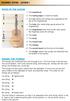 BEGINNER GUITAR - LESSON 1 PARTS OF THE GUITAR 1- The headstock. 2- The tuning pegs or machine heads. 3- The nut (where the strings are supported at the top of the fingerboard). 4- The frets (the metal
Glossary Of Diatonic Harmonica Techniques Preparation by JP Allen & Evan Curtain - Presented by Harmonica.com
 Glossary Of Diatonic Harmonica Techniques Preparation by JP Allen & Evan Curtain - Presented by Harmonica.com Below you will find a list of the most common diatonic harmonica techniques. I have organized
MUSIC OFFICE - SONGWRITING SESSIONS SESSION 1 HARMONY
 MUSIC OFFICE - SONGWRITING SESSIONS SESSION 1 HARMONY Introduction All songwriters will use harmony in some form or another. It is what makes up the harmonic footprint of a song. Chord sequences and melodies
A MUSICAL APPROACH TO LEARNING THE BANJO NECK
 A MUSICAL APPROACH TO LEARNING THE BANJO NECK Introduction One of the things that has become clear to me, after a number of years of playing banjo, is that if I have any hope of improvising creatively
How To Play The Harmonica
 How To Play The Harmonica CONTENTS 1. What kind of harmonica should I use? 2. How do I use the numbers over the words to the songs? 3. So what if I am not familiar with a song? 4. So how do I improve
GEORGE GOODMAN S HARMONICA CHEAT SHEET By George Goodman. Copyright 2014 George Goodman GeorgeGoodman.com 2 nd Edition, License Notes
 GEORGE GOODMAN S HARMONICA CHEAT SHEET By George Goodman Copyright 2014 George Goodman GeorgeGoodman.com 2 nd Edition, License Notes Thank you for downloading this free ebook. Although this is a free book,
The Tuning CD Using Drones to Improve Intonation By Tom Ball
 The Tuning CD Using Drones to Improve Intonation By Tom Ball A drone is a sustained tone on a fixed pitch. Practicing while a drone is sounding can help musicians improve intonation through pitch matching,
How To Improvise a Solo A Workshop for Beginners
 1 How To Improvise a Solo A Workshop for Beginners 10:00-10:30 am Arrival, Setup and Performance 10:30 to 12:00 pm Interactive Workshop 12:00 to 12:30 Lunch 12:30 to 2:00 pm Workshop 2:00 tp 3:30 pm Open
Foundation Course. Study Kit No 1. Away In A Manger
 Foundation Course Study Kit No 1 Away In A Manger Reharmonization Study Kit No. 1 Away In A Manger Author: Rosablanca Suen Web: www.learnpianowithrosa.com Email: [email protected] Cover Design:
Lesson DDD: Figured Bass. Introduction:
 Lesson DDD: Figured Bass Introduction: In this lesson you will learn about the various uses of figured bass. Figured bass comes from a Baroque compositional practice in which composers used a numerical
How to create bass lines
 First rule: always memorize the melody of the song! Always. Always. Always. You should be able to sing and play it in the original key. If you really want to be totally extra, extra awesome, you will be
Standard 1: Skills and Techniques 1
 1 Standard 1: Skills and Techniques 1 CB.1.1 Instrument Knowledge Skills CB.1.1.1 Instrument in good playing condition- including proper assembly, reed care, and cleaning. CB.1.2 Playing Posture Skills
Jim Hall Chords and Comping Techniques
 Jim Hall Chords and Comping Techniques Jazz guitar comping is an art form in its own right. The comping rhythms, melodies, and voicings of the greatest Jazz guitarists are delightful to listen to, with
The concept and purpose of this program has four goals:
 Essential Music Theory for Fiddle is a program designed to help a first-year Fiddle student to learn how to play from the heart and rely less on printed sheet music and tablature. It is a practical application
Contents. Introduction. Musical Patterns. 1) The Secrets of Scales. 2) Play With the Patterns. 3) The Secrets of Chords. 4) Play With the Shapes
 Contents Introduction Musical Patterns 1) The Secrets of Scales 2) Play With the Patterns 3) The Secrets of Chords 4) Play With the Shapes 5) Every Semitone Has a Name 6) Build Your 2-Note Chords 7) The
Tutorial 1J: Chords, Keys, and Progressions
 Tutorial 1J: Chords, Keys, and Progressions Welcome! In this tutorial you ll learn how to: Other Level 1 Tutorials 1. Relate chords with keys 1A: Virtual Practice 2. Use basic blues progressions & blues
An Introduction to Chords
 1 An Introduction to Chords by David Gilson A chord is the musical sound produced by playing a number of notes at the same time. The sound of the chord is different depending on the key you are playing
Ukulele Music Theory Part 2 Keys & Chord Families By Pete Farrugia BA (Hons), Dip Mus, Dip LCM
 This lesson assumes that you are using a ukulele tuned to the notes G, C, E and A. Ukulele Notes In lesson 1, we introduced the sequence of 12 notes, which repeats up and down the full range of musical
Bass Clarinet 101, Bass Clarinet for Dummies. By Edward Palanker
 Bass Clarinet 101, Bass Clarinet for Dummies By Edward Palanker The bass clarinet is a unique member of the clarinet family. If you don t voice it correctly in the upper register you re in for a surprise,
Introduction to Chords For Jazz Band
 Introduction to Chords For Jazz Band First, let s start with a major scale and review the scale degrees. We refer to the distance between two notes as an interval, and an interval has two aspects: the
Companion Workbook to the bonus section with Glenn Pearce
 Companion Workbook to the bonus section with Glenn Pearce Page 1 of 21 Page 2 of 21 Chapter 1 leadworship.com title page Chapter 2 main menu and Paul s introduction Electric guitar players - what to play
Sample Pages. This pdf contains sample pages from the ebook The Easy Guide to Jazz Guitar Arpeggios. To get the full ebook, Click Here
 1 Sample Pages This pdf contains sample pages from the ebook The Easy Guide to Jazz Guitar Arpeggios. To get the full ebook, Click Here 2 Contents Introduction....6 What Are Arpeggios?....7 Chapter 1:
2.13 Guitar notation and tab
 reference.book Page 103 Sunday, March 9, 2008 11:12 PM! 1.5 Guitar tab input, 2.7 Chord diagrams, 2.17 Lute tablature, 8.16 ASCII tab files. Guitar music features a wide array of special markings including
Guitar Rubric. Technical Exercises Guitar. Debut. Group A: Scales. Group B: Chords. Group C: Riff
 Guitar Rubric Technical Exercises Guitar Debut In this section the examiner will ask you to play a selection of exercises drawn from each of the three groups shown below. Groups A and B contain examples
Playing Chromatic Music on Mountain Dulcimer in 1-3-5 Tuning
 Playing Chromatic Music on Mountain Dulcimer in 1-3-5 Tuning By Rob Brereton The sentence I dread hearing when I talk to mountain dulcimer players is, There ain t no notes on a dulcimer, you just play
The Chord Book - for 3 string guitar
 The Chord Book - for 3 string guitar Prepared for: 3 string fretted cbg Prepared by: Patrick Curley Forward This short ebook will help you play chords on your 3 string guitar. I m tuned to G, if you re
C Major F Major G Major A Minor
 For this task you will create a 16 bar composition with a Ground Bass Accompaniment. REMINDER A chord is built on the notes 1 3 5 of a scale. e.g. chord of C would have the notes C E G. The first note
The DADGAD Chord Primer: How to Build Chords in DADGAD Tuning. Version 2.2. By: Mark Parnis www.markparnis.com [email protected]
 The DADGAD Chord Primer: How to Build Chords in DADGAD Tuning Version 2.2 By: Mark Parnis www.markparnis.com [email protected] DADGAD is essentially a variant on open D tuning, DADF # AD. The subtle
Music Theory: Explanation and Basic Principles
 Music Theory: Explanation and Basic Principles Musical Scales Musical scales have developed in all cultures throughout the world to provide a basis for music to be played on instruments or sung by the
Chromatic for Diatonic Players Blues Chromatic in the Sharp Keys, Part 3
 Chromatic for Diatonic Players Blues Chromatic in the Sharp Keys, Part 3 By Winslow Yerxa, Mel Bay s HarmonicaSessions ezine June 2008 Last time, I took your though blues in B, which included the chords
MAKING YOUR LINES SOUND MORE LIKE JAZZ!
 MAKING YOUR LINES SOUND MORE LIKE JAZZ! BY ALISDAIR MACRAE BIRCH One of the common questions asked by jazz guitar students is, How do I make my lines sound more like jazz? or Why do my improvised lines
Students' guide: Area of study 1 (The Western classical tradition 1650-1910)
 Students' guide: Area of study 1 (The Western classical tradition 1650-1910) This resource gives students a breakdown of Haydn's Symphony 101 in D major 'The Clock' movt. 2. It also offers guidance on
GUITAR THEORY REVOLUTION
 GUITAR THEORY REVOLUTION The Major and Minor Pentatonic Scales Copyright Guitar Theory Revolution 2011 1 Contents Introduction 3 What are the Major and Minor Pentatonic Scales 3 Diagrams for all the Pentatonic
Beginners Guide to the Walkingbass
 Beginners uide to the Walkingbass Learning to play a new instrument can open up a whole new world of creativity. It certainly has for me. The 3-string Walkingbass is an easy instrument to learn, yet it
Chords and More Chords for DGdg Tenor Banjo By Mirek Patek
 Chords and More Chords for DGdg Tenor Banjo By Mirek Patek This tenth article about the fingerstyle tenor banjo in DGdg tuning will be focused on banjo accompaniment, i.e. on playing chords. The goal is
DegerPipes. Electronic Bagpipe Chanter. Operating Manual. Overview. Precautions. PHONES Jack MIDI-Jack. Mouthpiece
 1 DegerPipes Electronic Bagpipe Chanter SOUND MET PITCH DRONES + - DegerPipes MIDI PHONES 2 3 4 5 6 7 Overview Operating Manual Mouthpiece PHONES Jack MIDI-Jack Front Panel Power On Sensor Thumb Contact
How to Improvise Jazz Melodies Bob Keller Harvey Mudd College January 2007 Revised 4 September 2012
 How to Improvise Jazz Melodies Bob Keller Harvey Mudd College January 2007 Revised 4 September 2012 There are different forms of jazz improvisation. For example, in free improvisation, the player is under
Level 3 Scale Reference Sheet MP: 4 scales 2 major and 2 harmonic minor
 Level 3 Scale Reference Sheet MP: 4 scales 2 major and 2 harmonic minor 1. Play Scale (As tetrachord or one octave, hands separate or together) 2. Play I and V chords (of the scale you just played) (Hands
Sample of Version 2.0 of Swing & Jump Blues Guitar
 The Charlie Christian Approach Charlie Christian (1916 1942) was one of the first real swing guitar players that had a lasting influence on all other swing and jump guitar players after him. Even more
As Example 2 demonstrates, minor keys have their own pattern of major, minor, and diminished triads:
 Lesson QQQ Advanced Roman Numeral Usage Introduction: Roman numerals are a useful, shorthand way of naming and analyzing chords, and of showing their relationships to a tonic. Conventional Roman numerals
SHEPHERD HIGHLAND SMALL PIPES
 INSTRUCTION MANUAL SHEPHERD HIGHLAND SMALL PIPES THE SHEPHERD WAY R T SHEPHERD & SON (SCOTLAND) LTD TEL. TEL. 44 +(0)1592 720130 / FAX. 44 +(0)1592 721857 LIKE ALL NEW MUSICAL INSTRUMENTS GIVE YOUSELF
Piano Requirements LEVEL 3 & BELOW
 Piano Requirements LEVEL 3 & BELOW Technical Skills: Time limit: 5 minutes Play the following in the keys of F, C, G, D, A, E, B: 1. Five-note Major scales, ascending and descending, hands separate or
www.migu-music.com Michael Gundlach DOWNLOAD PDF FILE WALKING BASS for Piano An easy method for creating Walking Bass Lines on Piano
 www.migu-music.com Michael Gundlach DOWNLOAD PDF FILE WALKING BASS for Piano An easy method for creating Walking Bass Lines on Piano Table of Contents 3 Explanation of the Contents 5 Introduction to the
PREPARING TO STUDY JAZZ AT THE NEW ZEALAND SCHOOL OF MUSIC. The Jazz Theory Entrance Test 2010 STUDY GUIDE
 PREPARING TO STUDY JAZZ AT THE NEW ZEALAND SCHOOL OF MUSIC The Jazz Theory Entrance Test 2010 STUDY GUIDE The Jazz Theory Entrance Test Study Guide Every concept that you will study in jazz theory, either
Music Theory Unplugged By Dr. David Salisbury Functional Harmony Introduction
 Functional Harmony Introduction One aspect of music theory is the ability to analyse what is taking place in the music in order to be able to more fully understand the music. This helps with performing
Beginner Flute Playing
 Beginner Flute Playing Created in partnership by Kent Bush & Merry Axtell Learning to Play the Native American Flute When compared with most other musical instruments, playing the Native American flute
Reharmonizations and Substitutions
 Reharmonizations and Substitutions 7 th chords and scale harmonization Reharmonizing: Substituting chromatic chords within the iii vi ii V I progression For the sake of variety, coloration and creativity,
B Flat Marching Flute
 AN INTRODUCTION TO THE B Flat Marching Flute LESSONS FOR BEGINNERS This instruction manual aims to provide a structured learning programme to assist the novice flute player to progress steadily on the
MUSIC GLOSSARY. Accompaniment: A vocal or instrumental part that supports or is background for a principal part or parts.
 MUSIC GLOSSARY A cappella: Unaccompanied vocal music. Accompaniment: A vocal or instrumental part that supports or is background for a principal part or parts. Alla breve: A tempo marking indicating a
HarpGear 2 Amplifier Instruction Manual
 HarpGear 2 Amplifier Instruction Manual Getting started: There are several things you should know in order to get started with your amplifier. There are no user serviceable parts inside the chassis of
Study Kit No 9. Aura Lee (Love Me Tender)
 Study Kit No 9 Aura Lee (Love Me Tender) Reharmonization Study Kit No. 9 Aura Lee Author: Rosablanca Suen Web: www.learnpianowithrosa.com Email: [email protected] Cover Design: Raymond Suen Copyright
Pentatonic Guitar Magic How To Use The Simple Pentatonic Scale To Solo Over Chords from Blues to Rock tojazz.
 Pentatonic Guitar Magic How To Use The Simple Pentatonic Scale To Solo Over Chords from Blues to Rock tojazz. This ebook may be freely distributed but not copied or altered in any way. WARNING: There is
2014 Newsletter. BLUES HARMONICA TRANSCRIPTION Lowdown by Kim Wilson
 2014 Newsletter Leader in Blues Harmonica Education since 1994 In this newsletter we dig into Kim Wilson s most requested blues harmonica instrumental Lowdown, count down the weeks to the 20th Anniversary
The Four Blues and More
 The Four Blues and More by Mark White-Whitmark Music Publishing A little knowledge is a dangerous thing. Particularly in the case of music theory where azz is concerned! Too many students become "experts"
5A Tonality, Modality and Polarity
 Music171Assignment#14 akafinalexampart1 50QuestionsonAFeelingforHarmony,Chapter5 Due:Friday,Dec.5,withaportionturnedinonWed,Dec3 CanbeturnedinonMonday,December8 th withemailconfirmation. NAME: PLEASEUSEAPENCIL,NOTAPEN,FORTHISASSIGNMENT!
Slash Chords: Triads with a Wrong Bass Note?
 patrick schenkius Slash Chords: Triads with a Wrong Bass Note? In this article the phenomenon slash chord is being examined by categorizing almost all of them and the way these chords function inside the
Expanding Your Harmonic Horizons
 2016 American String Teachers National Conference Expanding Your Harmonic Horizons Harmony Clinic for Harpists Presented By Felice Pomeranz Publications used as resources from Felice's Library of Teaching
Page 1 of 36. Companion Workbook. 2005 leadworship.com
 Page 1 of 36 Companion Workbook Page 2 of 36 Glossary of Terms: Chord: A combination of 3 or more notes that blend harmoniously when sounded together. Chord Scale: All of the chord combinations that naturally
How To Determine Chords for Mountain Dulcimer Playing (How The Person Who Wrote the Chord Book Figured It Out)
 How To Determine Chds f Mountain Dulcimer Playing (How The Person Who Wrote the Chd Book Figured It Out) by Roger Huffmaster Did you ever wonder how the person who wrote the mountain dulcimer chd chart
How to Practice Scales
 How to Practice Scales Step #1). Make a 5-Day Practice Plan In order to cycle through as many areas of scale practice as possible (and not get bored) it is important to have a plan. Your plan should cover
Modulation to Any Key
 Modulation to Any Key by James M. Stevens In this exercise, I am demonstrating how to modulate from the key of C to any key. Most pianists are comfortable changing keys that move up a half step, whole
Rehearsal Strategies A Night in Tunisia By Reginald Thomas, Professor of Jazz Piano Michigan State University, East Lansing, MI
 Rehearsal Strategies A Night in Tunisia By Reginald Thomas, Professor of Jazz Piano Michigan State University, East Lansing, MI Do you remember the first time you heard this jazz classic, A Night In Tunisia?
C Chord. Play these three notes at the same time with your right hand. These three notes make up a C chord.
 This book will get you playing keyboard instantly-whether you read music or not. We put together a band with some of our friends and recorded some really fun music. The Instant Keyboard CD has songs ready
The Basic Jazz Guitar Chord Book
 The Basic Jazz Guitar Chord Book By Dirk Laukens / January 25, 2005 Hello and welcome to the basic jazz guitar chord book, brought to you by www.jazzguitar.be. How are guitar chords built? What makes a
From Beginner to Intermediate Clarinetist. Crossing the Break. Going from the Chalumeau to the Clarion Register. William R.
 From Beginner to Intermediate Clarinetist Crossing the Break Going from the Chalumeau to the Clarion Register Chalumeau Register Clarion Register Beginner Intermediate William R. Higgins 2012 William R.
Whiskey Before Breakfast
 Flatpicking uitar Magazine Free Lesson une 1 Whiskey Before Breakfast by Mickey braham Hello and welcome once again to Flatpicking uitar Magazine s free lesson portion of our monthly newsletter Each month
Suitable for: Beginners with absolutely no previous experience. Beginners who appear particularly shy or nervous.
 Lesson plan 1: CHORD STRUMMING FOR THE BEGINNER Suitable for: Beginners with absolutely no previous experience. Beginners who appear particularly shy or nervous. Prerequisites: None General Objective:
Everyone cringes at the words "Music Theory", but this is mainly banjo related and very important to learning how to play.
 BLUEGRASS MUSIC THEORY 101 By Sherry Chapman Texasbanjo The Banjo Hangout Introduction Everyone cringes at the words "Music Theory", but this is mainly banjo related and very important to learning how
How to Read Music Notation
 How to Read Music Notation The New School of American Music IN JUST 30 MINUTES! C D E F G A B C D E F G A B C D E F G A B C D E F G A B C D E F G A B C D E 1. MELODIES The first thing to learn about reading
The Harmonica and Irish Traditional Music by Don Meade
 The Harmonica and Irish Traditional Music by Don Meade! 2012 Donald J. Meade All rights reserved 550 Grand Street, Apt. H6F New York, NY 10002 USA TABLE OF CONTENTS INTRODUCTION 3 WHAT KIND OF HARMONICA?
Dear Trumpet Teacher,
 Dear Trumpet Teacher, I hope you enjoy this free sample of Sound Habits Brass Builder for Trumpet. Included you will find some of the introductory text, the table of contents, instructions for the first
GOSPELKEYS TM 202 MASTERING WORSHIP CHORDS TRANSCRIPTS SIDENOTES. www.hearandplay.com www.gospelkeys202.com. Minister Jermaine A.
 GOSPELKEYS TM 202 MASTERING WORSHIP CHORDS TRANSCRIPTS & SIDENOTES www.hearandplay.com www.gospelkeys202.com Minister Jermaine A. Griggs, Author 1 INTRODUCTION Hello my friend, and welcome to Gospel Keys
MMTA Written Theory Exam Requirements Level 3 and Below. b. Notes on grand staff from Low F to High G, including inner ledger lines (D,C,B).
 MMTA Exam Requirements Level 3 and Below b. Notes on grand staff from Low F to High G, including inner ledger lines (D,C,B). c. Staff and grand staff stem placement. d. Accidentals: e. Intervals: 2 nd
2012 Music Standards GRADES K-1-2
 Students will: Personal Choice and Vision: Students construct and solve problems of personal relevance and interest when expressing themselves through A. Demonstrate how musical elements communicate meaning
PERPETUAL MOTION BEBOP EXERCISES
 PERPETUAL MOTION BEBOP EXERCISES Jason Lyon 2007 www.opus28.co.uk/jazzarticles.html Bebop is much more than just one particular style, it is pretty much the grammar of modern jazz, and bebop licks are
Intervals Harmony Chords and Scales. Workbook
 Intervals Harmony Chords and Scales Workbook Introduction In writing this book I was able to make many discoveries for myself both in methods of teaching and basic use of music theory. In every discipline
Guitar Reference. By: Frank Markovich
 Guitar Reference By: Frank Markovich Guitar Reference Introduction The purpose of this book is to give the student the reference materials for learning how to play the guitar. In this book you will find
Definitive Piano Improvisation Course
 Definitive Piano Improvisation Course By Yoke Wong 2007 Harmony and Melody Studio Inc Contents Pages Introduction Pentatonic Scale Improvisation 1 Country Western Style Made Easy 4 Left Hand Harmonizing
How they invented chord patterns for the guitar. J. Chaurette. Dec., 2012
 How they invented chord patterns for the guitar J. Chaurette Dec., 2012 The guitar has a very long history; it has evolved over the ages to what it is now. It has achieved its final distinct form in 1770,
At the piano; learning a natural hand position; the steady beat; pre-reading: two black keys Learning finger numbers, posture, and arm weight;
 PREPARATORY 0 1 At the piano; learning a natural hand position; the steady beat; pre-reading: two black keys Learning finger numbers, posture, and arm weight; pre-reading: three black keys; double bar
Crash Course in Music Theory for Guitarists by Andy Drudy
 Crash Course in Music Theory for Guitarists by Andy rudy An in-depth knowledge of music theory is essential for any musician. Learning the ropes so-to-speak, will rapidly expand your insight into you own
Music Fundamentals 5: Triads, Chords, Introduction to Roman Numerals. Collection Editor: Terry B. Ewell
 Music Fundamentals 5: Triads, Chords, Introduction to Roman Numerals Collection Editor: Terry B. Ewell Music Fundamentals 5: Triads, Chords, Introduction to Roman Numerals Collection Editor: Terry B.
Jazz Lesson 10. Brenden s Key Point
 Jazz Lesson 10 Technique 1. Playing7 th chords with different combinations. a. Playing seventh chords in different inversions is very important for developing your soloing ability and for creating unique
acousticguitarworkshop.com RICK PAYNE SP FINGERSTYLE BLUES More chapters in the story of how to play Fingerstyle Blues
 acousticguitarworkshop.com RICK PAYNE SP FINGERSTYLE BLUES More chapters in the story of how to play Fingerstyle Blues 2 Fingerstyle Blues 2 - Contents Welcome to Fingerstyle Blues 2! In the first course,
Chapter 2 How To Cheat A Barre Chord
 Chapter 2 How To Cheat A Barre Chord Now that you ve learned a variety of chords in different positions, there are times that we want to eliminate some of the notes. I know, in the previous chapter I explained
Swing & Jump Blues Guitar Matthieu Brandt
 Swing & Jump Blues Guitar Matthieu Brandt Goto www.swingblues.com for more on Swing and Jump Blues Guitar. 1997-2016 No part of this material (book/cd/website) may be reproduced in any way without prior
Basic Music Theory. Reading Different Clefs
 1 Basic Music Theory Reading Different Clefs The most commonly used clefs are the treble and bass. The ability to read both of these clefs proficiently is essential for Leaving Cert. Music. Clef reading
Intonation Tendencies of Band Instruments. Whitney Brainard MUS 461 Winter 2011
 + Intonation Tendencies of Band Instruments Whitney Brainard MUS 461 Winter 2011 + Daily tuning In band, make sure you warm up BEFORE tuning. If you are waiting to perform (ex. Festival), have students
GRADE THREE THEORY REVISION
 GRADE THREE THEORY REVISION Note Pitches Use flashcards to make sure you know all your notes including leger lines. Whenever you name a note remember to check the clef, keysignature, and for accidentals
The CAGED Guitar System
 The CAGED Guitar System First of all, let s look at an example below on how to use the CAGED guitar system: 1 The example showed above demonstrates the general idea of how the CAGED system works in a certain
Piano Accordion vs. Chromatic Button Accordion
 Piano Accordion vs. Chromatic Button Accordion Which is best, piano accordion (PA), or five row chromatic button accordion (CBA)? This is a question which is often debated in newsgroups. The question should
PENTATONICS BY CHORD TYPE
 PENTATONICS BY CHORD TYPE Extract from Pentatonic & Hexatonic Scales in Jazz, Jason Lyon 2007 www.opus28.co.uk/jazzarticles.html 1. WHAT TO PLAY ON A MINOR 7TH CHORD AS OF now, we ll be thinking primarily
Please Read This Page First
 Mandolin and Fiddle Improvisation Using the Chord Tone Scale Copyright 2008 by Pete Martin Please Read This Page First This book is distributed using the shareware system. Try it out, if you like it please
Users Manual. Version 1.0 June 2003 V-TONE GM108 ENGLISH
 Users Manual Version 1.0 June 2003 Top-notch electric guitar Padded gig bag BEHRINGER V-TONE GM108 modeling amplifier Adjustable black nylon strap 6.5 foot high-quality instrument cable 3 picks Chord chart
The Monolina is available in four different base tunings D - F - A - C
 by feeltone products Monolina Easy to transport monochord for soundmassage and performace Utility model grant ash & cherry 28.4 x 13 x 4.3 2,7 kg designed by Ingo Böhme www.feeltoneusa.com The Monolina
Chord Patterns on the Hammered Dulcimer
 Chord Patterns on the Hammered Dulcimer Beginner/Advanced Beginner Level By Susan Vinson Sherlock Download this Article. When I first began playing the hammered dulcimer in 1995 I had no idea what a chord
SUZUKI Q CHORD. MODEL QC-1 Owners Manual
 SUZUKI Q CHORD MODEL QC- Owners Manual THANK YOU & CONGRATULATIONS Welcome to a new and exciting way to make music, that s creative, mind expanding and fun. Q Cards Every music lover has dreamed of playing
PIANOWEB.com ( 800 ) 327-4266
 Mission Statement: Jazz Piano Lessons To Teach, in their home, on their own piano/keyboard, anywhere in the world, students how to play jazz piano, through a Non Traditional approach which emphasizes Musical
KODÁLY METHOD AND ITS INFLUENCE ON TEACHING WIND INSTRUMENTS IN HUNGARY
 KODÁLY METHOD AND ITS INFLUENCE ON TEACHING WIND INSTRUMENTS IN HUNGARY Jozsef Csikota Midwest Clinic Chicago, Illinois U.S.A. 15th December 2004 KODÁLY METHOD IN HUNGARIAN SCHOOLS In Hungary, every student
The Keyboard in Black and White
 Chapter 3 The yboard in Black and White In This Chapter Understanding the basics of the black and white key layout Learning about octaves and the range of a piano Discovering half steps and whole steps