
Learning to play the piano
|
|
|
- Loreen Perry
- 9 years ago
- Views:
Transcription
1 Learning to play the piano INTRODUCTION TO THE KEYBOARD... 2 STEPPING UP... 2 TREBLE SPACES... 7 BASS SPACES... 9 TIME SIGNATURE UP AND DOWN THE HILLS UP AND DOWN THE HILLS IN G MAJOR UP AND DOWN THE HILLS IN D MAJOR UP AND DOWN THE HILLS IN A MAJOR UP AND DOWN THE HILLS IN E FLAT MAJOR DUET FOR MULTIPLE KEYBOARDS BUILDING A MAJOR CHORD CHORD NUMBERS AND INVERSIONS THE V7 (FIVE-SEVEN) CHORD CHORD PROGRESSIONS ADDING HARMONY SKIPPING UP AND DOWN THE HILLS ROCKIN' ON THE OCTAVE CLIMBING TO THE TENTH ENRICHING THE MELODY INTERVALS... 36

2 INTRODUCTION to the KEYBOARD The keyboard is made up of white keys with repeating patterns of black keys in groups of two and three. We use seven letters of the alphabet to make music; A,B,C,D,E,F, and G. After G, we start over again with A. Look at the group of two black keys. C will always be to the left of the two black keys. E will always be to the right of the two black keys. And D is right in the middle of the two black keys. Now look at the group of three black keys. F will always be to the left of the three black keys. B will always be to the right of the three black keys. Each key on the keyboard has a particular tone or pitch, and a certain place on the music staff. You will learn how each tone relates to a line or space, and you will be able to find it on the keyboard and combine the notes to make beautiful music. STEPPING UP If you do not have a musical keyboard near your computer, make a copy of the mock keyboard as directed on the first page of these lessons. It will be helpful to you in learning the keyboard. When the notes on the staff go from a line to a space or from a space to a line, we step up or down to the next note letter. In the first measure we begin with the thumb of the right hand on the red-dotted middle C (line). Step up to D (space), then to E (line). In the second measure, the third finger is on E (line). Step down to D (space), then back down to C (line). This song is written in 4/4 time which means that we count 1,2,3,4 and the black note with a stem (quarter note) gets one count. The white note with a stem (half note) gets 2 counts. 2

3 This song begins with the thumb of the left hand on middle C. In the first measure we step down from middle C (line) to B (space) to A (line). In the second measure, the third finger is on A (line). Step up to B (space), then back up to C (line). Count 1,2,3,4 as you did in the previous song. 3

4 Try this sight reading exercise. First play the right hand alone. Say the names of the notes. Then play left hand alone and say the names of the notes. Begin with the thumb of the right hand on middle C with a red dot (line). Step up to D (space), then up to E (line), up to the next key F (space) and on up to the next one, G (line). Your 5th finger (little finger) will be on G. G is a white note with no stem. We call this a whole note and it gets all 4 counts in 4/4 time. In the 6th measure we have two G's that are white notes with stems (half notes). Each of these notes gets two counts. 4

5 *** Begin with the thumb of the left hand on middle C. In the first measure we step down from middle C (line) to B (space) to A (line), to G (space) to F (line). Your 5th finger (little finger) is on F in the bass clef. In the second measure, the 5th finger is on F (line). Step up to G (space), then up to A (line), up to B (space) and back up to middle C (line). Count 1,2,3,4 as you did in the previous songs. 5

6 *** 6

7 TREBLE SPACES The treble spaces spell the word "face" F,A,C,E. The first space F is the first F above middle C. The distance from a space to a space is a "skip". You skip a letter when naming the notes. Your teacher may use a signal to remind you of these notes. Here's one I use. Put your open palm in front of your face. Rotate it as if washing a window. This will remind you that the treble spaces spell "face", F,A,C,E. 7

8 To help us remember the treble lines we say, "Every Good Boy Does Fine". The names of the line notes in the treble are E,G,B,D,F. From one line to the next is a "skip". We start on the E above middle C (with a red circle) and we skip a letter name as the notes ascend, or go up. Our signal for this reminder is the American Sign Language sign for "boy". Pretend you are wearing a cap with a bill on it. Touch the "bill" and move the hand down and away from the face. This sign for "boy" reminds us that "Every Good Boy Does Fine", E,G,B,D,F, the treble lines. 8

9 *** BASS SPACES We remember the bass spaces by saying, "All Cars Eat Gas", A,C,E,G. These are the bass spaces. The A is the second A below middle C (circled in red). We "skip" from space to space, skipping a letter name in between. Let's learn a signal. Pretend you have a steering wheel in your hands. Turn the wheel as you "drive". This will remind you that "All Cars Eat Gas", A,C,E,G, the bass spaces. 9

10 *** The bass lines can be remembered with "Great Big Dogs Fight Animals" G,B,D,F,A. The first line in the bass is the second G below middle C (circled in red). We "skip" from line to line, skipping a letter in between to find these new notes. To remember the signal for the lines say "Grrr" like an angry dog. This will help you to recall that "Great Big Dogs Fight Animals", G,B,D,F,A; the bass lines 10

11 *** 11

12 TIME SIGNATURE The time signature, or meter, tells us how to count the music. The top number shows how many beats to count in each measure. The bottom number tells us the kind of note that gets one count. If the top number is 4: If the top number is 3: If the top number is 6: There are other meters, but these are the three most common and we will be studying those signatures. In the following examples observe that a: a white note with no stem a white note with a stem 12 a black note with a stem a black note with a stem and one flag

13 This example is in 4/4 time. A whole note gets all 4 beats, a half note gets 2 beats, a quarter note gets 1 beat and 2 eighth notes make one beat. The next example is in 3/4 time. A quarter note gets 1 beat, a half note 2 beats and the dot after the half adds half of the value to the count, so a dotted half gets 2+1 or 3 beats. It takes 2 eighth notes to make a beat. The third example is in 6/8 time. An eighth note gets 1 beat and a quarter note gets 2 beats. A dotted half gets all 6 beats (4+2=6). We can raise and lower pitches by putting a sign in front of the note, or by putting sharps or flats in the key signature which appears at the beginning of each music staff. A sharp raises a note by one-half step (the very next key to the right). The raised note may be a black key, or it may be a white key, but the sharp will be to the right of the original pitch. In this lesson all sharps will be on the black keys. A flat lowers a note by one-half step (the very next key to the left). It may be a black or a white key, but in this lesson all flats will be black keys. A natural restores the note to its original pitch without the sharp or flat. 13

14 14

15 UP AND DOWN THE HILLS We will learn this exercise first in the key of C Major with no sharps or flats. You will need to place your hands in the C Major position. The thumb of your right hand will be on middle C and the little finger of your left hand will be on the C below middle C. We will count 1,2,3,4. When you learn the exercise well, you can move your hands up eight notes (an octave) and your teacher or your friend can play the automatic chords which are noted above the staff. Next a rhythm can be added for more enjoyment. Start out with a metronome marking of 70 and gradually increase your speed. 15

16 UP AND DOWN THE HILLS IN G MAJOR This exercise is in the key of G Major. There is one sharp in the key signature, but there are no F's in the song, so all the notes will be on the white keys. You will need to place your hands in the G Major position. The thumb of your right hand will be on G above middle C, and the little finger of your left hand will be on the G below middle C. We will count 1,2,3,4. In measures 11, 12, and 15 you will see the D next to middle C written as a leger line, a line added between the treble and bass staff. You find it as you step up from middle C. When you learn the exercise well, you can move your hands up eight notes (an octave) and your teacher or your friend can play the automatic chords and rhythm to accompany you. 16

17 This exercise is in the key of F Major. There is one flat in the key signature, and that flat is Bb. Your first B flat will be in the second measure. You will play the black key to the left of B. You will need to place your hands in the F Major position. The thumb of your right hand will be on F above middle C, and the little finger of your left hand will be on the F below middle C. We will count 1,2,3,4. In this exercise you may circle all the B's with a pencil to remind you to flat those notes. When you learn the exercise well, you can move your hands up eight notes (an octave) and your teacher or your friend can play the automatic chords and rhythm to accompany you. 17

18 UP AND DOWN THE HILLS IN D MAJOR This exercise is in the key of D Major. There are two sharps in the key signature.in the key of D Major, all the F's and C's will be sharped. In this exercise the first F# is in the second measure. There will be no C's. You will need to place your hands in the D Major position. The thumb of your right hand will be on D above middle C, and the little finger of your left hand will be on the D below middle C. We will count 1,2,3,4. In this exercise you may circle all the F's with a pencil to remind you to sharp those notes. When you learn the exercise well, you can move your hands up eight notes (an octave) and your teacher or your friend can play the automatic chords and rhythm to accompany you. 18

19 This exercise is in the key of B Flat Major. There are two flats in the key signature, and those flats are B flat and E flat. You will need to place your hands with the thumb of your right hand on the B flat to the left of middle C. This is another way to write the B next to middle C by using a leger line between the staffs. The little finger of your left hand will be on the second B flat below middle C. (This fingering is somewhat awkward and we will learn a better one later.) We will count 1,2,3,4. In this exercise you may circle all the B's and E's with a pencil to remind you to flat those notes. When you learn the exercise well, you can move your hands up eight notes (an octave) and your teacher or your friend can play the automatic chords and rhythm to accompany you. 19

20 UP AND DOWN THE HILLS IN A MAJOR This exercise is in the key of A Major. There are three sharps in the key signature, and those sharps are F#, C#, and G#. C# will be used in this exercise, but the other two will not. You will need to place your hands with the thumb of your right hand on the A above middle C. The little finger of your left hand will be on the A below middle C. There will be notes on the leger lines between the treble and bass staffs. Those notes will be the D and E right above middle C. We will count 1,2,3,4. In this exercise you may circle all the C's with a pencil to remind you to sharp those notes. When you learn the exercise well, you can move your hands up eight notes (an octave) and your teacher or your friend can play the automatic chords and rhythm to accompany you. 20

21 UP AND DOWN THE HILLS IN E FLAT MAJOR Play this exercise is in the key of E Flat Major. There are three flats in the key signature, and they are B flat, E flat and A flat. You begin on the black key of E flat. You will use all three of the flats. You will need to place your hands in the E Flat Major position. The thumb of your right hand will be on E flat above middle C, and the little finger of your left hand will be on the E flat below middle C. We will count 1,2,3,4. In this exercise you may circle all the E's, A's, and B's with a pencil to remind you to flat those notes. When you learn the exercise well, you can move your hands up eight notes (an octave) and your teacher or your friend can play the automatic chords and rhythm to accompany you. 21
22 DUET FOR MULTIPLE KEYBOARDS This first duet can be played on two or more keyboards. There is a first part, Primo (PRE moe), and a second part, Secondo (se KON doe). Each student learns his/her part, then they play the parts together, beginning slowly and gradually increasing the tempo. 22
23 Can you play the same exercise in other keys? Remember how we changed our hand position and changed the key when we played "Up and Down the Hills"? When we change the key of a song, we say we transpose the song. Transpose this song to the major keys of G, F, D, B Flat, A, and E Flat. On the keyboard: A half-step is the distance from one key to the next. It may be a white key, or it may be a black key. A whole-step is made up of two half-steps. A Major Scale if built on a pattern of whole-step, whole-step, half-step, whole-step, whole-step, whole-step, half-step, 23
24 Study and play the C Major scale below. Say the pattern of steps as you play. Right hand fingering: 1,2,3,(thumb under) 1,2,3,4,5. Left hand fingering: 5,4,3,2,1,(third finger over) 3,2,1. BUILDING A MAJOR CHORD In this lesson you will learn to build a triad. A triad is made of three tones which are sounded at the same time. In the key of C Major, we will build our first triad (chord) on C. Put your left finger on C, and with your right hand count up 4 half-steps. ( A half-step is the distance from one key to the next. It doesn't matter whether that key is black or white.) So we start going up by half-steps; C#, D, D#, E, (1,2,3,4). We have gone up 4 half-steps and we are now on E. E is the next note of our triad. Now hold down the E with your left finger and count up 3 half-steps with your right hand; F, F#, G, (1,2,3). You are now on G and G is the top note of the triad. Now play the three notes together; C,E,G. This is the C Major chord or triad in root position. C is the low (bottom) note of the chord. All major chords in root position will have this pattern of 4 half-steps and 3 half-steps. If the bottom note is on a line, the chord will be line-line-line. If the bottom note is on a space, the chord will be space-space-space. In another lesson we will learn how to invert or turn the chords around. 24
25 Using the same pattern of 4 half-steps plus 3 half-steps, you can build major chords on any key. 25
26 CHORD NUMBERS AND INVERSIONS We can build a major chord on each note of the scale. We can use Roman numerals to mark them. If the chord is built on the first note of the scale, we call it a I (One) chord. If the chord is built on the 4th note of the scale, we call it a IV (Four) chord. If it is built on the 5th note of the scale, we call it a V (Five) chord. In C Major, C is the first note of the scale, so we build the I (One) chord on C. F is the 4th note of the scale, so we build the IV (Four) chord on F. G is the 5th note of the scale, so let's build the V (Five) chord on G. After we build the chords in root position, we can change the notes around. Instead of a C,E,G chord, we can put the E as the bottom note and we now have E,G,C as the tones of the chord. We call this the first inversion of the chord. Put the G on the bottom to make a G,C,E chord and this is the second inversion of the chord. 26
27 THE V7 (FIVE-SEVEN) CHORD When you build a V (Five) chord in C Major, the bottom note is G because G is the 5th note of the C Major scale. We know that the G chord is made up of the notes G,B, and D. Now if you add the 7th tone of the scale, F, you have a nice sound for harmony. We can invert the chord and sometimes we leave out one of the tones. To move from the I (One) chord to the V7 (Five-seven) chord: keep the top note the same move the middle note up one-half step move the bottom note down one-half step. 27
28 You can now play Mary Had a Little Song using the progression you learned in this lesson. Learn to play the melody of this song with your right hand alone, then you can add chords with your left hand. You will use the C chord to the G7 chord progression. The last note of the song is Low C which is 2 octaves below middle C. The automatic chords are written above the treble staff. Add a rhythm such as a ballad. Begin ver-r-ry slowly with a metronome speed of 60. When you can play it well at that speed, then try it faster. 28
29 CHORD PROGRESSIONS In this lesson we will learn the chord progression I (One), IV (Four), I, V7 (Five-Seven), I. This series of chords if very useful when harmonizing songs. In the key of C Major, the I (One) chord is C,E,G. This is the root position. Play that chord. Keep the bottom note where it is. Move the middle tone up one-half step, and move the top tone up two half-steps (one whole step). Now you are playing C,F,A. This is the IV (Four) chord (second inversion). Go back to the I chord in root position; C,E,G. Now move to the V7 (Five-Seven) chord by keeping the top note in place and move the middle tone up one-half step, and the bottom tone down one-half step, as we learned in the previous lesson. Now go back to the I chord in root position. First play it with the left hand, then with the right hand, and then with both hands. Play this progression in other keys. 29
30 You can now play America using the progression you learned in this lesson. Learn to play the melody of this song with your right hand alone, then you can add chords with your left hand. Use correct fingering (the numbers between the treble and bass staves) and you will have a smooth melody. If you like, you can play the melody an octave lower beginning on middle C. Add a rhythm such as a ballad. Begin ver-r-ry slowly with a metronome speed of 60. When you can play it well at that speed, then try it faster. 30
31 ADDING HARMONY There are many different ways to use chords to add harmony to a melody. We will study some examples and then play the chords in different keys. You will soon be able to tell whether you need a I (One ) chord, a IV (Four) chord, or a V7 (Five-Seven) chord to harmonize with the notes. You may even find new ways to add harmony to your songs. You will learn how to use chords in different ways to harmonize in 4/4 time, 3/4 time, and 6/8 time.. Oom Pah in 4/4 Time Use this simple "Oom Pah in 4/4 Time" for many melodies. Use the three notes of the C Major triad to create an "Oom Pah" with the left hand. 31
32 Skipping Up and Down the Hills We can use "Skipping Up and Down the Hills" in 4/4 time. Use the Major triads to play a note on each beat of the measure. 32
33 Rockin' on the Octave When "Rockin' on the Octave", play the root, the 5th, the root note an octave higher, and back to the 5th. Climbing to the Tenth "Climbing to the Tenth" makes a nice harmony. You could also use it in a 3/4 time. 33
34 Oom Pah Pah in 3/4 Time Use this pattern to add harmony to songs written in 3/4 or waltz time. Try it with Happy Birthday or My Country Tis of Thee. Broken Triads in 6/8 Time Use these broken triads to harmonize songs in 6/8 time. 34
35 Oom Pah Pah in 6/8 Time Use this pattern for 6/8 Time. The quarter note will get two beats and the eighth note one beat. Enriching the Melody Use this method to make the melody sound fuller. Add some chords in different inversions with the melody as the top note of the chord. 35
36 INTERVALS An interval is the distance from one tone to the next. We refer to intervals with ordinal words such as second, third etc. We will be learning about major intervals. You will learn to hear them, play them, and sing them. First you need to learn to play and sing the C Major scale. Sing 1,2,3,4,5,6,7,8. (Click on the speaker to hear the C Major scale.) 36
37 SECOND From C to D is the interval of a 2nd. These are the first two notes when you sing Doe, a deer, a female deer. from the Do, Re, Mi song. Play and sing the interval of a second. THIRD From C to E is the interval of a 3rd. E is the middle tone of a major chord. Play this chord: C,E,G,E,C, and sing 1,3,5,3,1. You hear the 3rd when you sing 1,3. Play and sing the interval of a third. FOURTH From C to F is the interval of a 4th. You hear this interval when you sing I've been working on the Railroad Play and sing the interval of a fourth. FIFTH From C to G is the interval of a 5th. Listen for this interval when you sing Twinkle, twinkle little star.. Play and sing the interval of a fifth. SIXTH From C to A is the interval of a 6th. This is one tone above the 5th. You can find the 6th by singing Old McDonald had a farm, E, I,E,I,O From "farm" to "E" is a 6th. Play and sing the interval of a sixth. SEVENTH From C to B is a 7th. This is a hard one to find and sing. Practice singing a 7th. EIGHTH (OCTAVE) From C to C is the interval of an octave. This is the same tone eight notes higher. When you are singing the Happy Birthday song and you get to the part Happy birth- day dear So-and-So, the octave is the "happy, birth-". Play and sing the interval of an octave. 37
How to Read Music Notation
 How to Read Music Notation The New School of American Music IN JUST 30 MINUTES! C D E F G A B C D E F G A B C D E F G A B C D E F G A B C D E F G A B C D E 1. MELODIES The first thing to learn about reading
Keyboard Basics. By Starling Jones, Jr. http://www.starlingsounds.com& http://www.smoothchords.com
 Keyboard Basics By Starling Jones, Jr. In starting on the piano I recommend starting on weighted keys. I say this as your fingers will be adjusted to the stiffness of the keys. When you then progress to
GRADE THREE THEORY REVISION
 GRADE THREE THEORY REVISION Note Pitches Use flashcards to make sure you know all your notes including leger lines. Whenever you name a note remember to check the clef, keysignature, and for accidentals
MMTA Written Theory Exam Requirements Level 3 and Below. b. Notes on grand staff from Low F to High G, including inner ledger lines (D,C,B).
 MMTA Exam Requirements Level 3 and Below b. Notes on grand staff from Low F to High G, including inner ledger lines (D,C,B). c. Staff and grand staff stem placement. d. Accidentals: e. Intervals: 2 nd
C Major F Major G Major A Minor
 For this task you will create a 16 bar composition with a Ground Bass Accompaniment. REMINDER A chord is built on the notes 1 3 5 of a scale. e.g. chord of C would have the notes C E G. The first note
An Introduction to Chords
 1 An Introduction to Chords by David Gilson A chord is the musical sound produced by playing a number of notes at the same time. The sound of the chord is different depending on the key you are playing
Lever Harp Tunings & Major Keys
 Lever Harp Tunings & Major Keys As you probably are aware, the levers on your harp raise the pitch of a given string by one half-step. Unlike the pedal harp, where each string can be played as a flat,
Easy to Follow Guide On: How to Play the Piano
 Easy to Follow Guide On: How to Play the Piano Composed by: Kim Gardner - 1 Table of Contents Unit 1 - Beginning in the Middle...Page 3 Unit 2 - Learning to Read the Beautiful Language of Music.Page 6
Basic Music Theory. Reading Different Clefs
 1 Basic Music Theory Reading Different Clefs The most commonly used clefs are the treble and bass. The ability to read both of these clefs proficiently is essential for Leaving Cert. Music. Clef reading
C Chord. Play these three notes at the same time with your right hand. These three notes make up a C chord.
 This book will get you playing keyboard instantly-whether you read music or not. We put together a band with some of our friends and recorded some really fun music. The Instant Keyboard CD has songs ready
AP MUSIC THEORY SUMMER ASSIGNMENT
 AP MUSIC THEORY SUMMER ASSIGNMENT AP Music Theory Students and Parents, You are receiving this letter because you or your son/daughter is enrolled in AP Music Theory for this next school year. Please take
How to create bass lines
 First rule: always memorize the melody of the song! Always. Always. Always. You should be able to sing and play it in the original key. If you really want to be totally extra, extra awesome, you will be
Definitive Piano Improvisation Course
 Definitive Piano Improvisation Course By Yoke Wong 2007 Harmony and Melody Studio Inc Contents Pages Introduction Pentatonic Scale Improvisation 1 Country Western Style Made Easy 4 Left Hand Harmonizing
UNDERGRADUATE MUSIC THEORY PLACEMENT TEST INFORMATION
 UNDERGRADUATE MUSIC THEORY PLACEMENT TEST INFORMATION The theory placement test is designed to determine whether you are ready to enroll in MUS 121 (Music Theory I) or whether you must first take MUS 120
BEGINNER GUITAR - LESSON 1
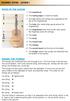 BEGINNER GUITAR - LESSON 1 PARTS OF THE GUITAR 1- The headstock. 2- The tuning pegs or machine heads. 3- The nut (where the strings are supported at the top of the fingerboard). 4- The frets (the metal
MUSIC OFFICE - SONGWRITING SESSIONS SESSION 1 HARMONY
 MUSIC OFFICE - SONGWRITING SESSIONS SESSION 1 HARMONY Introduction All songwriters will use harmony in some form or another. It is what makes up the harmonic footprint of a song. Chord sequences and melodies
TEACHER S GUIDE to Lesson Book 1B
 Alfred s Basic Piano Library TEACHER S GUIDE to Lesson Book 1B PURPOSE To suggest an order of lesson activities that will result in a systematic and logical presentation of the material in Lesson Book,
Music Theory. Level 1. Printable Music Theory Books. A Fun Way to Learn Music Theory. Student s Name: Class:
 A Fun Way to Learn Music Theory Printable Music Theory Books Music Theory Level 1 Student s Name: Class: American Language Version Printable Music Theory Books Level One Published by The Fun Music Company
KEYBOARD BENCHMARKS First Part
 KEYBOARD BENCHMARKS First Part Practice Materials and Study Guide 2 nd Edition Compiled by the Ave Maria University Department of Music 2010. All rights reserved. 2 Contents RATIONALE AND SCHEMAE FOR THE
At the piano; learning a natural hand position; the steady beat; pre-reading: two black keys Learning finger numbers, posture, and arm weight;
 PREPARATORY 0 1 At the piano; learning a natural hand position; the steady beat; pre-reading: two black keys Learning finger numbers, posture, and arm weight; pre-reading: three black keys; double bar
LEARN TO PLAY IX HYMNS IN SIX DAY
 S S IX HYMNS IN SIX DAY LEARN TO PLAY Week One And you don t need to know anything about music!! Learn over 130 Hymns and Children Songbook Songs plus Free Internet Video Instructions keyboard templates
The Tuning CD Using Drones to Improve Intonation By Tom Ball
 The Tuning CD Using Drones to Improve Intonation By Tom Ball A drone is a sustained tone on a fixed pitch. Practicing while a drone is sounding can help musicians improve intonation through pitch matching,
GUITAR THEORY REVOLUTION. Part 1: How To Learn All The Notes On The Guitar Fretboard
 GUITAR THEORY REVOLUTION Part 1: How To Learn All The Notes On The Guitar Fretboard Contents Introduction Lesson 1: Numbering The Guitar Strings Lesson 2: The Notes Lesson 3: The Universal Pattern For
Advanced Techniques for the Walkingbass
 Advanced Techniques for the Walkingbass I have seen guys with 5 string basses who can t get half the sounds that you are getting out of just three. -Buddy Fo of the Invitations If you have read the Beginners
Guitar Method Beginner: Book 1
 Guitar Method Beginner: Book 1 This book has been a project in the works for over a year, and now my dream of releasing it has finally come true. I would like to thank everyone who has encouraged or helped
Lesson 7 Contents. Overview of Lesson 7 1. F Chord Variation. G7 Chord Variation
 Lesson 7 Contents Use this table of contents to make sure your book pages are in correct order. You will need highlighters and/or colored pencils and a pencil or pen. If you have internet access, you can
Playing By Ear Who Can Play By Ear?... 2 How To Play By Ear... 3 Happy Birthday To You (By Ear)... 4 Match Tones... 5 Add Chords...
 Playing By Ear Who Can Play By Ear?... 2 How To Play By Ear... 3 Happy Birthday To You (By Ear)... 4 Match Tones... 5 Add Chords... 6 Allcanplay TM Piano * MaxLearning.Net 2009 * Playing By Ear * 4/6/2009
Music Theory Unplugged By Dr. David Salisbury Functional Harmony Introduction
 Functional Harmony Introduction One aspect of music theory is the ability to analyse what is taking place in the music in order to be able to more fully understand the music. This helps with performing
The pianist has a few functions in a jazz combo. First, he comps for, and interacts with, other players as they solo.
 Piano Chord Voicings for jazz combo The pianist has a few functions in a jazz combo. First, he comps for, and interacts with, other players as they solo. Secondly, he acts as a soloist himself. Therefore,
Beginners Guide to the Walkingbass
 Beginners uide to the Walkingbass Learning to play a new instrument can open up a whole new world of creativity. It certainly has for me. The 3-string Walkingbass is an easy instrument to learn, yet it
Study Kit No 9. Aura Lee (Love Me Tender)
 Study Kit No 9 Aura Lee (Love Me Tender) Reharmonization Study Kit No. 9 Aura Lee Author: Rosablanca Suen Web: www.learnpianowithrosa.com Email: [email protected] Cover Design: Raymond Suen Copyright
Foundation Course. Study Kit No 1. Away In A Manger
 Foundation Course Study Kit No 1 Away In A Manger Reharmonization Study Kit No. 1 Away In A Manger Author: Rosablanca Suen Web: www.learnpianowithrosa.com Email: [email protected] Cover Design:
Bell Music Reading Course #1 Introduction 101. D. Rod Lloyd Columbia River Handbells 2010
 Bell Music Reading Course #1 Introduction 101 D. Rod Lloyd Columbia River Handbells 2010 1 How Music Works Music is a graphical presentation of sounds played in a precise, predetermined order. Music is
Fundamentals Keyboard Exam
 Fundamentals Keyboard Exam General requirements: 1. Scales: be prepared to play: All major and minor scales (including melodic minor, natural minor, and harmonic minor) up to five sharps and flats, ith
GUITAR THEORY REVOLUTION
 GUITAR THEORY REVOLUTION The Major and Minor Pentatonic Scales Copyright Guitar Theory Revolution 2011 1 Contents Introduction 3 What are the Major and Minor Pentatonic Scales 3 Diagrams for all the Pentatonic
A MUSICAL APPROACH TO LEARNING THE BANJO NECK
 A MUSICAL APPROACH TO LEARNING THE BANJO NECK Introduction One of the things that has become clear to me, after a number of years of playing banjo, is that if I have any hope of improvising creatively
Guitar Rubric. Technical Exercises Guitar. Debut. Group A: Scales. Group B: Chords. Group C: Riff
 Guitar Rubric Technical Exercises Guitar Debut In this section the examiner will ask you to play a selection of exercises drawn from each of the three groups shown below. Groups A and B contain examples
Page 1 of 36. Companion Workbook. 2005 leadworship.com
 Page 1 of 36 Companion Workbook Page 2 of 36 Glossary of Terms: Chord: A combination of 3 or more notes that blend harmoniously when sounded together. Chord Scale: All of the chord combinations that naturally
Expanding Your Harmonic Horizons
 2016 American String Teachers National Conference Expanding Your Harmonic Horizons Harmony Clinic for Harpists Presented By Felice Pomeranz Publications used as resources from Felice's Library of Teaching
GOSPELKEYS TM 202 MASTERING WORSHIP CHORDS TRANSCRIPTS SIDENOTES. www.hearandplay.com www.gospelkeys202.com. Minister Jermaine A.
 GOSPELKEYS TM 202 MASTERING WORSHIP CHORDS TRANSCRIPTS & SIDENOTES www.hearandplay.com www.gospelkeys202.com Minister Jermaine A. Griggs, Author 1 INTRODUCTION Hello my friend, and welcome to Gospel Keys
Musical Literacy. Clarifying Objectives. Musical Response
 North Carolina s Kindergarten Music Note on Numbering/Strands: ML Musical Literacy, MR Musical Response, CR Contextual Relevancy Musical Literacy K.ML.1 Apply the elements of music and musical techniques
Introduction to Chords For Jazz Band
 Introduction to Chords For Jazz Band First, let s start with a major scale and review the scale degrees. We refer to the distance between two notes as an interval, and an interval has two aspects: the
MTRS Publishing 2004 Copying allowed only for use in subscribing institution www.mtrs.co.uk
 20th Century Dance Music The Tango The Tango is a dance from Argentina. It developed in the city of Buenos Aires around the red light areas of the city, around the docks. For a time, it was discouraged
Level 3 Scale Reference Sheet MP: 4 scales 2 major and 2 harmonic minor
 Level 3 Scale Reference Sheet MP: 4 scales 2 major and 2 harmonic minor 1. Play Scale (As tetrachord or one octave, hands separate or together) 2. Play I and V chords (of the scale you just played) (Hands
Basic Music Theory for Junior Cert.
 1 Reading Different Clefs Basic Music Theory for Junior Cert. The most commonly used clefs are the treble and bass. The ability to read both of these clefs proficiently is essential for Junior Cert. Music.
Getting Started with 4-part Harmony
 Getting Started with 4-part Harmony Some of you have already written chord progressions in a previous theory class. However, it is my experience that few students come to college with the ability to consistently
The Secret Weapon for Bar Chords
 Created by BCM The Secret Weapon for Bar Chords This handy device will make it much easier to form bar chords on your guitar. It is an effective tool that will give you immediate results. No more hours
Modulation to Any Key
 Modulation to Any Key by James M. Stevens In this exercise, I am demonstrating how to modulate from the key of C to any key. Most pianists are comfortable changing keys that move up a half step, whole
Music Theory: Explanation and Basic Principles
 Music Theory: Explanation and Basic Principles Musical Scales Musical scales have developed in all cultures throughout the world to provide a basis for music to be played on instruments or sung by the
Developing a cohesive walking bass line 2005 Eric Elias
 Developing a cohesive walking bass line 00 Eric Elias Developing a walking bass lines is a subject that many of my students (guitarists and bassists alike) have been interested in. If you are a jazz player,
1.04 - Treble Clef. Page 1 1.00 - How to Read Music - by Pebber Brown
 Page 1 1.00 - How to Read Music - y Peer Brown 1.01 Music is written and notated with a common device called the Staff. There are two parts to the Staff- The upper part is called the "Trele Clef" and the
Viola Time Book 2. RGP (Release, Glide and Press) Shifting Method 2
 Viola Time Book RGP (Release, Glide and Press) Shifting Method st Finger shifting without accidentals Exercise : st-rd Position shifting in C major Scale and arpeggio of C major Kayaking Down the Tarwin
Guitar Reference. By: Frank Markovich
 Guitar Reference By: Frank Markovich Guitar Reference Introduction The purpose of this book is to give the student the reference materials for learning how to play the guitar. In this book you will find
Ukulele Music Theory Part 2 Keys & Chord Families By Pete Farrugia BA (Hons), Dip Mus, Dip LCM
 This lesson assumes that you are using a ukulele tuned to the notes G, C, E and A. Ukulele Notes In lesson 1, we introduced the sequence of 12 notes, which repeats up and down the full range of musical
Sample Entrance Test for CR125-129 (BA in Popular Music)
 Sample Entrance Test for CR125-129 (BA in Popular Music) A very exciting future awaits everybody who is or will be part of the Cork School of Music BA in Popular Music CR125 CR126 CR127 CR128 CR129 Electric
Legacy Learning Systems 2510 Franklin Pike, Suite 200 Nashville, TN 37204
 Legacy Learning Systems 2510 Franklin Pike, Suite 200 Nashville, TN 37204 Gibson's Learn and Master Guitar. Copyright 2010 by Legacy Learning Systems, Inc. All rights reserved. No part of this product,
Lesson DDD: Figured Bass. Introduction:
 Lesson DDD: Figured Bass Introduction: In this lesson you will learn about the various uses of figured bass. Figured bass comes from a Baroque compositional practice in which composers used a numerical
Intervals Harmony Chords and Scales. Workbook
 Intervals Harmony Chords and Scales Workbook Introduction In writing this book I was able to make many discoveries for myself both in methods of teaching and basic use of music theory. In every discipline
SVL AP Music Theory Syllabus/Online Course Plan
 SVL AP Music Theory Syllabus/Online Course Plan Certificated Teacher: Norilee Kimball Date: April, 2010 Stage One Desired Results Course Title/Grade Level: AP Music Theory/Grades 9-12 Credit: one semester
Music Theory Worksheet. Music Theory 1
 Music Theory 1 Photocopiable Worksheets on Music Theory 1 INTRODUCTION TO THE STAVE & NOTATION The way we write music down has changed a great deal through the centuries but today we use a series of 5
Bass Clef Sight-Reading Exercise Worksheet
 Bass Clef Sight-Reading Exercise Worksheet Instructions: In this exercise you will work through five different levels of sight-reading ability. You may wish to print four copies of the music sheet for
8 th grade concert choir scope and sequence. 1 st quarter
 8 th grade concert choir scope and sequence 1 st quarter MU STH- SCALES #18 Students will understand the concept of scale degree. HARMONY # 25. Students will sing melodies in parallel harmony. HARMONY
Please Read This Page First
 Mandolin and Fiddle Improvisation Using the Chord Tone Scale Copyright 2008 by Pete Martin Please Read This Page First This book is distributed using the shareware system. Try it out, if you like it please
Ü F F F F F F : F F ÜF H H H H H ÜH H H H HÜH. : H r H H HH H H. H H H H r Ü H CHORDS FROM SCALES
 CHORDS ROM SCALES This tutorial is all about making chords out of scales. irst step is to catch a fish - not any old fish but a musical one. A bass, for instance. Not really. Read on. CHORDS ROM SCALES
6) Minor Seventh & Suspended Chords. 7) Barre Chords on the 6 th String. 8) Barre Chords on the 5 th String. 9) The Secret to Great Strumming
 Table of Contents SESSIONS 1) Starting Off Right Overview 3 Finger Exercise 1 5 Finger Exercise 2 6 Finger Exercise 3 7 Alternating Finger Exercise 8 C & G7 Chord Exercise 9 2) Reading Music & Notes on
Standard 1: Skills and Techniques 1
 1 Standard 1: Skills and Techniques 1 CB.1.1 Instrument Knowledge Skills CB.1.1.1 Instrument in good playing condition- including proper assembly, reed care, and cleaning. CB.1.2 Playing Posture Skills
PREPARING TO STUDY JAZZ AT THE NEW ZEALAND SCHOOL OF MUSIC. The Jazz Theory Entrance Test 2010 STUDY GUIDE
 PREPARING TO STUDY JAZZ AT THE NEW ZEALAND SCHOOL OF MUSIC The Jazz Theory Entrance Test 2010 STUDY GUIDE The Jazz Theory Entrance Test Study Guide Every concept that you will study in jazz theory, either
The Chord Book - for 3 string guitar
 The Chord Book - for 3 string guitar Prepared for: 3 string fretted cbg Prepared by: Patrick Curley Forward This short ebook will help you play chords on your 3 string guitar. I m tuned to G, if you re
How to Play Chords on your Mountain Dulcimer tuned DAd
 How to Play Chords on your Mountain Dulcimer tuned DAd (or Surviving in a Multi-Instrument Jam) by Missy Strothers If you are like me, sooner or later you ll get into a festival situation where you ll
Students' guide: Area of study 1 (The Western classical tradition 1650-1910)
 Students' guide: Area of study 1 (The Western classical tradition 1650-1910) This resource gives students a breakdown of Haydn's Symphony 101 in D major 'The Clock' movt. 2. It also offers guidance on
Tonic- The main pitch in tonal music, and also the first (and last) letter of a major or minor scale.
 Scale- A scale is a series of pitches in ascending order, such as D E F G A B C D. There are many kinds of scales, which differ in how many different pitch names they use, and in the pattern of steps they
Music Theory for Cajun Accordionists
 1 Music Theory for Cajun Accordionists Right off the bat, I need to make clear that I m no expert; far from it. I ve had to piece together what little I know about music theory from here and there, mostly
How to Improvise Jazz Melodies Bob Keller Harvey Mudd College January 2007 Revised 4 September 2012
 How to Improvise Jazz Melodies Bob Keller Harvey Mudd College January 2007 Revised 4 September 2012 There are different forms of jazz improvisation. For example, in free improvisation, the player is under
The open strings. There are notes all up and down the neck of the ukulele when you put your finger behind any of the frets and play just one string.
 The open strings It is important to tune your ukulele each time that you play it When your ukulele is in tune, it trains your ear to hear the right notes. Each string sounds a single note. You can remember
INTERVALS. An INTERVAL is the distance between two notes /pitches. Intervals are named by size and quality:
 Dr. Barbara Murphy University of Tennessee School of Music INTERVALS An INTERVAL is the distance between two notes /pitches. Intervals are named by size and quality: Interval Size: The size is an Arabic
[email protected]
 Presented by Tom Ansuini [email protected] Music Education for the 21 st Century Active Teaching through ICT A brief Introduction Please allow me to introduce myself. My name is Tom Ansuini and I am
Piano Requirements LEVEL 3 & BELOW
 Piano Requirements LEVEL 3 & BELOW Technical Skills: Time limit: 5 minutes Play the following in the keys of F, C, G, D, A, E, B: 1. Five-note Major scales, ascending and descending, hands separate or
Larry's Guitar Chord Key Chart
 C Larry's Guitar Chord Key Chart C# G# G D D# A A# E B C# # The middle triangle in any circle is the name of that key. Every circle is a key. This does not show the minors but they follow the same pattern.
Everyone cringes at the words "Music Theory", but this is mainly banjo related and very important to learning how to play.
 BLUEGRASS MUSIC THEORY 101 By Sherry Chapman Texasbanjo The Banjo Hangout Introduction Everyone cringes at the words "Music Theory", but this is mainly banjo related and very important to learning how
Teach Sopranino Recorder
 Lesson Plans for Sopranino Recorder file://c:\users\user\appdata\local\temp\21847-020404-202323-80.a2k\index.html Page 1 of 1 Pages 1, 2 3, 4 5, 6 7, 8 9, 10 11, 12 13, 14 15, 16 17, 18 19, 20 21, 22 23,
Music 42701 (JUN154270101) General Certificate of Secondary Education June 2015. Listening to and Appraising Music. Time allowed 1 hour
 Centre Number Surname Candidate Number For Examiner s Use Other Names Candidate Signature Examiner s Initials Question Mark A General Certificate of Secondary Education June 2015 Music 42701 Unit 1 Listening
2012 Saskatchewan Curriculum. Jazz Theory. To Accompany Instrumental Jazz 10, 20, 30
 2012 Saskatchewan Curriculum To Accompany Instrumental Jazz 10, 20, 0 ISBN 98-1-10-06-2 1. Arts education (Secondary school) - Saskatchewan - Curricula. 2. Competency-based education - Saskatchewan. Saskatchewan.
Crash Course in Music Theory for Guitarists by Andy Drudy
 Crash Course in Music Theory for Guitarists by Andy rudy An in-depth knowledge of music theory is essential for any musician. Learning the ropes so-to-speak, will rapidly expand your insight into you own
Learn How To Play Guitar
 Learn How To Play Guitar by Stefan Schyga 2000 Guitar Studio Publishing http://www.learnhowtoplayguitar.com http://www.mp3.com/learnhowtoplayguitar About The Author Stefan Schyga received his Masters Degree
Music Fundamentals 5: Triads, Chords, Introduction to Roman Numerals. Collection Editor: Terry B. Ewell
 Music Fundamentals 5: Triads, Chords, Introduction to Roman Numerals Collection Editor: Terry B. Ewell Music Fundamentals 5: Triads, Chords, Introduction to Roman Numerals Collection Editor: Terry B.
Two Children s Songs from the Philippines A Smithsonian Folkways Lesson Summary: Suggested Grade Levels: Country Genre Instruments
 Two Children s Songs from the Philippines A Smithsonian Folkways Lesson Designed by: David Ferguson Seattle Pacific University Summary: This lesson consists of two children s songs from the Philippines.
PUSD High Frequency Word List
 PUSD High Frequency Word List For Reading and Spelling Grades K-5 High Frequency or instant words are important because: 1. You can t read a sentence or a paragraph without knowing at least the most common.
SESSIONS PAGE SESSIONS PAGE
 Table of Contents SESSIONS PAGE SESSIONS PAGE Session 1 First Things First 6 Finding the Notes on the Keyboard Session 2 Major Progress 8 Major Chords, Notes on the Treble Clef Session 3 Scaling the Ivories
Chapter 2 How To Cheat A Barre Chord
 Chapter 2 How To Cheat A Barre Chord Now that you ve learned a variety of chords in different positions, there are times that we want to eliminate some of the notes. I know, in the previous chapter I explained
THIS IS NOT A FREE EBOOK.
 $11.95 USD Copyright 2007 by Pantomime Music Publications P.O. Box 31177, Halifax, Nova Scotia, Canada B3K 5Y1 All rights reserved. Printed in Canada. This book is protected by Copyright. Permission must
HOW SCALES, KEY SIGNATURES, & ARPEGGIOS WORK www.tubapeter.com
 1 HOW SCALES, KEY SIGNATURES, & ARPEGGIOS WORK www.tubapeter.com WHAT IS A SCALE? A scale is all the pitches that you can play in a key signature without playing any accidentals. The key of Bb is Bb and
National Standards for Music Education
 National Standards for Music Education 1. Singing, alone and with others, a varied repertoire of music. 2. Performing on instruments, alone and with others, a varied repertoire of music. 3. Improvising
22. Mozart Piano Sonata in B flat, K. 333: movement I
 22. Mozart Piano Sonata in B flat, K. 333: movement I (for Unit 3: Developing Musical Understanding) Background Information and Performance Circumstances Biography Mozart was born in Austria on the 27
As Example 2 demonstrates, minor keys have their own pattern of major, minor, and diminished triads:
 Lesson QQQ Advanced Roman Numeral Usage Introduction: Roman numerals are a useful, shorthand way of naming and analyzing chords, and of showing their relationships to a tonic. Conventional Roman numerals
Jim Hall Chords and Comping Techniques
 Jim Hall Chords and Comping Techniques Jazz guitar comping is an art form in its own right. The comping rhythms, melodies, and voicings of the greatest Jazz guitarists are delightful to listen to, with
Beginner Guitar Level I
 Welcome to Beginner Guitar Level I E A D G B E * Please fill out the student form * Who is this guy? E A D G B E Logistics, etc.. sign in / out everyday start promptly -> don t be late! breaks / bathrooms
Illuminating Text: A Macro Analysis of Franz SchubertÕs ÒAuf dem Wasser zu singenó
 Illuminating Text: A Macro Analysis of Franz SchubertÕs ÒAuf dem Wasser zu singenó Maureen Schafer In ÒAuf dem Wasser zu singen,ó Franz Schubert embellishes a sentimental poem by L. Graf zu Stollberg to
evirtuoso-online Lessons
 evirtuoso-online Lessons Chords Lesson 3 Chord Progressions www.evirtuoso.com Chord Progressions are very popular and a strong foundation for many instruments and songs. Any chords combined together in
Keyboard FUNdamentals James Lambert & Judy Moonert
 1 I. BASIC MUSIC THEORY A beginning mallet percussionist must memorize the 12 major scales. These scales relate to other harmonic information that the student will need. With each marimba bar one half
The Basic Jazz Guitar Chord Book
 The Basic Jazz Guitar Chord Book By Dirk Laukens / January 25, 2005 Hello and welcome to the basic jazz guitar chord book, brought to you by www.jazzguitar.be. How are guitar chords built? What makes a