
GUITAR REQUIREMENTS AND INFORMATION
|
|
|
- Shanon Jacobs
- 9 years ago
- Views:
Transcription
1 GUITAR REQUIREMENTS AND INFORMATION Subject Code: 07 This syllabus is valid until further notice. This section provides a summary of the most important points that teachers and candidates need to know when taking ABRSM Guitar exams. Further details, as well as administrative information relating to the exams, are given in ABRSM s Information & Regulations (available at which should be read before an exam booking is made. Entering for an exam Eligibility: There are eight grades for Guitar and candidates may be entered in any grade irrespective of age and without previously having taken any other grade in Guitar. Candidates for a Grade 6, 7 or 8 exam must already have passed ABRSM Grade 5 (or above) in Music Theory, Practical Musicianship or a solo Jazz subject; for full details, including a list of accepted alternatives, see Regulation 1d at Access: ABRSM endeavours to make its exams as accessible as possible to all candidates, regardless of sensory impairments, learning difficulties or particular physical needs. There is a range of alternative tests and formats as well as sets of guidelines for candidates with particular access needs (see Where a candidate s needs are not covered by the guidelines, each case is considered on an individual basis. Further information is available from the Access Co-ordinator ([email protected]). Exam booking: Details of exam dates, venues, fees and how to book an exam are available online at Instruments This syllabus is only appropriate for the standard classical instrument fitted with nylon strings (guitars with a cutaway body are permitted). Candidates may use a capo at the 2nd or 3rd fret for the pieces in Grades 7 and 8 that require F # tuning; no other use of the capo is permitted. Elements of the exam All ABRSM graded Guitar exams comprise the following elements: three Pieces; Scales and arpeggios; Sight-reading; and Aural tests. In all grades, marks are allocated as follows: Pieces: Scales and arpeggios 21 Sight-reading 21 Aural tests 18 Total 150 6

2 Marking scheme: 100 marks are required for a Pass, 120 for a Merit and 130 for a Distinction. A Pass in each individual section is not required to pass overall. See pp for the marking criteria used by examiners. Pieces Guitar requirements and information Programme planning: Candidates must choose one piece from each of the three lists (A, B and C) in each grade. In the exam, they should inform the examiner which pieces they are performing, and they are welcome to use the form on p. 117 for this purpose. Accompaniment: In Grades 1 and 2, candidates may perform up to two pieces accompanied by another guitar (or, if necessary, a piano), while in Grade 3, only one such piece may be performed. These pieces are marked in the syllabus. Candidates must provide their own accompanist, who may remain in the exam room only while accompanying. The candidate s teacher may act as accompanist (examiners will not). None of the pieces marked in Grades 1 3 may be performed solo. In Grades 4 8, all pieces must be performed solo. Exam music & editions: Wherever the syllabus includes an arrangement or transcription, the edition listed in the syllabus must be used in the exam; in all such cases the abbreviation arr. or trans. appears in the syllabus entry. For all other pieces, the editions quoted in the syllabus are given for guidance only and candidates may use any edition of their choice (in- or out-ofprint or downloadable). Information on obtaining exam music is given on p. 10. Interpreting the score: Printed editorial suggestions such as fingering, metronome marks, realization of ornaments etc. need not be strictly observed. Whether the piece contains musical indications or not, candidates are always encouraged to interpret the score in a stylistically appropriate manner. Ultimately, examiners marking will be determined by consideration of pitch, time, tone, shape and performance, and how control of these contributes to the overall musical outcome. Repeats: All da capo and dal segno indications should be observed but all other repeats (including first-time bars) should be omitted unless they are very brief (i.e. of a few bars) or unless the syllabus specifies otherwise. Performing from memory: Candidates are free to perform any of their pieces from memory; in such cases they must ensure that a copy of the music is available for the examiner to refer to if necessary. No additional marks are awarded for playing from memory. Page-turns: Examiners will be understanding if a page-turn causes a lack of continuity during a piece, and this will not affect the marking. A variety of solutions for awkward page-turns exists, including the use of an additional copy of the music or a photocopy of a section of the piece (but see Photocopies on p. 8). In cases where candidates believe there is no solution to a particularly awkward page-turn, they may apply to bring a page-turner to the exam. The request must be made to the Syllabus Department ([email protected]) no later than the closing date for entry, and details of the piece, edition and nature of the difficulty should be given. If permission is granted, a confirmation letter will be issued which must be taken to the exam as verification. Examiners are unable to help with page-turning. 7

3 Guitar requirements and information Photocopies: Performing from unauthorized photocopies (or other kinds of copies) of copyright editions is not allowed. ABRSM may withhold the exam result where it has evidence of an illegal copy (or copies) being used. In the UK, copies may be used in certain limited circumstances for full details, see the MPA s Code of Fair Practice at In all other cases, application should be made to the copyright holder before any copy is made, and evidence of permission received should be brought to the exam. Scales and arpeggios Examiners will usually ask for at least one of each type of scale/arpeggio etc. required at each grade, as well as aiming to hear, in the Grade 5 8 fingers-only scales, a balance of the specified strokes. When asking for requirements examiners will specify only: the key (including minor form harmonic or melodic in the Grade 6 8 scales) or the starting note the stroke for fingers-only scales (tirando or apoyando, Grades 5 8) the form for interval scales (together or broken) All scales and arpeggios should: be played from memory ascend and descend according to the specified range (and pattern) be played legato be played at a pace that achieves a clean, uniform tone and a rhythmic flow without undue accentuation In Grades 1 4, candidates may choose to play fingers-only scales either tirando (free stroke) or apoyando (rest stroke); from Grade 5, these scales must be prepared with both right-hand techniques. The tirando stroke is expected for all other requirements. Any combination of alternating right-hand fingers may be used for fingers-only scales. Any left-hand fingering may be used, but candidates are expected to observe the requirements regarding over-ringing and non-over-ringing for broken chords and arpeggios from Grade 3. Arpeggios and dominant sevenths are required in root position only. Books of the scale requirements (for Grades 1 5 and 6 8) are published for Guitar by ABRSM. The speeds on p. 9 are given as a general guide: 8

4 Guitar requirements and information pattern Grade / Speed Thumb-only scales * q q q = 96 q = 112 Scales 1 & 2 octaves q q q q q q q q = 48 q = 56 q = 66 q = 80 q = 96 Chromatic scales 2 octaves q q q q q = 112 q = 126 q = octaves q q q q. = 76 q. = 84 q. = 96 1 & 2 octaves q q q q q = 66 q = 80 q = 96 q = octaves q q q q. = 84 q. = 96 Interval scales q q / q q q q q = 60 q = 72 q = 84 q = 96 q = 104 q = 116 Arpeggios q q q q. = 40 q. = 42 q. = 44 q. = 48 q. = 56 q. = 63 q. = 69 q. = 76 Broken chords q q q q. = 54 q. = 60 q. = 66 q. = 72 q. = 80 q. = 88 Dom. & Dim. 7ths q q q q q = 72 q = 84 q = 96 q = 104 q = 116 * Including chromatic scale at Grade 2 Fingers-only & thumb and fingers combined Dim. 7ths from Grade 5 Sight-reading Candidates will be asked to play a short piece of music which they have not previously seen. They will be given up to half a minute in which to look through and, if they wish, try out all or any part of the test before they are required to play it for assessment. The main technical parameters for each grade are outlined on pp ; once introduced, these parameters apply for all subsequent grades (albeit with a logical progression of difficulty). For practice purposes, a book of specimen sight-reading tests is published for Guitar by ABRSM. Aural tests The requirements are the same for all subjects. Full details of the Aural tests are given on pp (continued overleaf ) 9

5 Guitar requirements and information In the exam Examiners: Generally, there will be one examiner in the exam room; however, for training and quality assurance purposes, a second examiner may sometimes be present. Examiners may ask to look at the music before or after the performance of a piece. They may also decide to stop the performance of a piece when they have heard enough to form a judgment. Examiners will not issue, or comment on, a candidate s result; instead, the mark form (and certificate for successful candidates) will be issued by ABRSM after the exam. Tuning: Any tuning adjustments must be made by the candidate (examiners are unable to help with this). Footstools: Candidates should provide their own footstool (or other form of guitar support) if required. Order of the exam: The individual sections of the exam may be undertaken in any order, at the candidate s choice, although it is always preferred for accompanied pieces (see Accompaniment on p. 7) to be performed consecutively. Assessment The tables on pp show the marking criteria used by examiners. These criteria (newly revised and amended) have been in use in exams from January In each element of the exam, ABRSM operates the principle of marking from the required pass mark positively or negatively, rather than awarding marks by deduction from the maximum or addition from zero. In awarding marks, examiners balance the extent to which the qualities and skills listed on pp (broadly categorized by pitch, time, tone, shape and performance) are demonstrated and contribute towards the overall musical outcome. Obtaining exam music Exam music is available from music retailers as well as online, including at the ABRSM music shop: Every effort has been made to ensure that all the publications listed will remain available for the duration of the syllabus. Candidates are advised to obtain their music well in advance of the exam in case of any delays with items not kept in stock by retailers. Apart from queries relating to exams, all enquiries about the music (e.g. editorial, availability) should be addressed to the relevant publisher: contact details are listed at www. abrsm.org/publishers. 10

6 Guitar GRADE 1 SCALES AND ARPEGGIOS*: from memory, even notes except where indicated: Scales (one octave) Fingers only (tirando or apoyando, at candidate s choice) G, F majors, as example below: V # 4 Š Š Š Š Š Š Š Š Š Š Š Š Š Š q Thumb only (tirando) A, E minors (natural or harmonic, at candidate s choice) Arpeggios (one octave) (tirando) G major; E minor THREE PIECES: one chosen by the candidate from each of the three Lists, A, B and C: LIST A 1 Anon. Ductia (observing repeat) 2 Arbeau Branle d Écosse (from Orchésographie) Ó Time Pieces for Guitar, Vol. 1, arr. Batchelar and Wright (ABRSM) 3 Handel Gavotte (from Atalanta) Ï 4 Machaut Douce dame jolie 5 arr. L. Mozart Entrée. ABC Guitar (Jacaranda Music JM02-003) 6 Purcell Riggadoon (from Musick s Handmaid). One + One, Vol. 1 (Chanterelle: pupil s part 2202, teacher s score 2201) 7 Trad. V là l bon vent. No. 27 from Répertoire progressif, Vol. 1 (Les Productions d Oz 101) 8 Trad. French Les Bouffons. P. 3 from The Young Guitarist s Progress, Repertoire Part 1, ed. Burden (Garden Music 39: 2008 edition) LIST B 1 Aguado Lección (observing repeats) 2 Sor Valse (from Op. 51 No. 1) (observing repeats) Ó Time Pieces for Guitar, Vol. 1, arr. Batchelar and Wright (ABRSM) 3 Trad. Poor Wayfaring Stranger Ï 4 Trad. Catalan El noy de la mare 5 Carulli Waltz in G. P. 11 from The Young Guitarist s Progress, Repertoire Part 1, ed. Burden (Garden Music 39: 2008 edition) 6 A. Müller Allegretto. ABC Guitar (Jacaranda Music JM02-003) 7 Schubert German Dance (Op. 33 No. 7) (observing repeats) or Theme from Rosamunde. One + One, Vol. 1 (Chanterelle: pupil s part 2202, teacher s score 2201) 8 Sor Leçon in C, Op. 60 No. 1. No. 1 from Sor Introductory Studies, Op. 60 (Schott GA 33) or No. 16 from Répertoire progressif, Vol. 1 (Les Productions d Oz 101) or Sor Complete Studies (Chanterelle 491) or Sor Complete Studies, Lessons and Exercises (Tecla Editions 101) LIST C 1 L. Bernstein One Hand, One Heart (from West Side Story) (observing repeat) Time Pieces for Guitar, Vol. 1, arr. Batchelar 2 Colin Tommis The Dangers of Poking Holes in Ice and Wright (ABRSM) 3 Colin Downs A Little Russian Tale or My Dog has Fleas. No. 3 or No. 7 from Solo Now!, Preparatory Book 4 Richard Wright Pas-de-deux (observing repeat). No. 2 from (Chanterelle 2100) 5 Eben Oh, love, love or The pipes were playing at Pobuda. No. 3 or No. 19 from Eben 33 Czech Folksongs, arr. Batchelar (Chanterelle: pupil s part 2212, teacher s score 2211) 6 Stephen Kenyon Free-wheeling ABC Guitar (Jacaranda Music JM02-003) 7 Satie A Tiresome Prank 8 Štěpán Rak Chanson ancienne or Chanson slovaque (observing repeat). P. 5 or P. 8 from Rak Jeux sur 6 cordes (Lemoine) SIGHT-READING*: a four- or six-bar single-line piece in 4 4, 3 4 or 2 4 in C, G or F majors, A or E minors, simple note values, in 1st position; may contain passages for thumb alone. Simple dynamics and occasional accidentals (within minor keys only) may be encountered. See also p. 9. AURAL TESTS FOR THE GRADE*: see pp. 94 and 95 * Published by ABRSM (Scale requirements, Specimen Sight-Reading Tests, Specimen Aural Tests) Pieces to be played accompanied by a second guitar or, if necessary, a piano (see p. 7) 11

7 Guitar GRADE 2 SCALES AND ARPEGGIOS*: from memory, even notes except where indicated: Scales (one octave) Fingers only (tirando or apoyando, at candidate s choice) D major; A minor (natural or melodic, at candidate s choice), D minor (natural or harmonic, at candidate s choice), as example in Grade 1 Thumb only (tirando) C major Chromatic scale (one octave) Thumb only (tirando) starting on A Arpeggios (one octave) (tirando) C, D majors; A, D minors THREE PIECES: one chosen by the candidate from each of the three Lists, A, B and C: LIST A 1 Anon. Chanson (observing repeat). No. 12 from Répertoire progressif, Vol. 1 (Les Productions d Oz 101) 2 Anon. À la mode de France (observing repeats). P. 8 from The Young Guitarist s Progress, Repertoire Part 1, ed. Burden (Garden Music 39: 2008 edition) 3 Arbeau Pavane (from Orchésographie) (observing repeats) 4 Dowland Can she excuse my wrongs? Ó Time Pieces for Guitar, Vol. 1, arr. Batchelar and Wright 5 Felton Farewell Manchester Ï (ABRSM) 6 Frescobaldi Aria detta la Frescobalda 7 Handel Minuet. No. 11 from One + One, Vol. 2 (Chanterelle: pupil s part 2204, teacher s score 2203) 8 Vivaldi Spring (from The Four Seasons). Making the Grade, Guitar Grade 2, arr. Burden (Chester CH61612) LIST B 1 Aguado Valse (Walzer) in G (observing repeats). No. 17 from Répertoire progressif, Vol. 1 (Les Productions d Oz 101) or P. 11 from The Guitarist s Progress, Book 1, ed. Burden (Garden Music 1) or No. 2 from The Guitarist s Hour, Book 1 (Schott GA 19) 2 Beethoven Ode to Joy (from Symphony No. 9) 3 Haydn Menuet (Hob. IX/8 No. 12) Time Pieces for Guitar, Vol. 1, arr. Batchelar and Wright (ABRSM) 4 Trad. Irish The Sixpence (observing repeat) 5 Giuliani Écossaise in A minor (Op. 33 No. 10). No. 22 from Répertoire progressif, Vol. 1 (Les Productions d Oz 101) or No. 11 from The Guitarist s Hour, Book 1 (Schott GA 19) 6 Reinecke A Fairy Tale (from Op. 127a). No. 7 from One + One, Vol. 2 (Chanterelle: pupil s part 2204, teacher s score 2203) 7 Schubert Serenade (An den Mond). ABC Guitar (Jacaranda Music JM02-003) 8 Sor Leçon in C, Op. 60 No. 2. No. 2 from Sor Introductory Studies, Op. 60 (Schott GA 33) or No. 18 from Répertoire progressif, Vol. 1 (Les Productions d Oz 101) or Sor Complete Studies (Chanterelle 491) or Sor Complete Studies, Lessons and Exercises (Tecla Editions 101) LIST C 1 David Cottam Have a Habanera! or Well of Sighs. Zebracadabra (ESG Music 077) 2 Eben Andulichko, hello (observing repeats) or When I took geese to the pasture. No. 10 or No. 18 from Eben 33 Czech Folksongs, arr. Batchelar (Chanterelle: pupil s part 2212, teacher s score 2211) 3 Gareth Glyn Sad Song or Gimme Five. No. 19 or No. 28 from Solo Now!, Preparatory Book (Chanterelle 2100) 4 Vojislav Ivanovic Slavonic Waltz. No. 10 from One + One, Vol. 2 (Chanterelle: pupil s part 2204, teacher s score 2203) 5 Lennon & McCartney Here, There and Everywhere Time Pieces for Guitar, Vol. 1, arr. Batchelar and Wright (ABRSM) 6 Richard Wright Ballroom Blues 7 Štěpán Rak Conversation (observing repeat) or Agitation. P. 10 or P. 13 from Rak Jeux sur 6 cordes (Lemoine) 8 Jaime Zenamon Soñando (No. 3 from 20 Epigrammes). P. 26 from Graded Repertoire for Guitar, Book 1, ed. Yates (Mel Bay) * Published by ABRSM (Scale requirements, Specimen Sight-Reading Tests, Specimen Aural Tests) Pieces to be played accompanied by a second guitar or, if necessary, a piano (see p. 7) P. 5 (Aguado) and P. 10 (Giuliani) in the reissued album (entitled An Hour with the Guitar, Book 1: also GA 19) 12

8 Guitar: GRADE 2 SIGHT-READING*: a four- or six-bar single-line piece, time and key signatures as Grade 1, with the addition of D minor. Further use of 1st position. Occasional use of staccato. Some dotted notes may be encountered. See also p. 9. AURAL TESTS FOR THE GRADE*: see pp. 94 and 95 13

9 Guitar GRADE 3 SCALES AND ARPEGGIOS*: from memory, even notes except where indicated: Scales (two octaves) Fingers only (tirando or apoyando, at candidate s choice) A major; B minor harmonic, as example in Grade 1 Thumb and fingers combined (thumb for lower octave, fingers for upper octave) (tirando) G major; E minor melodic, as example below: V # 4 Š Š Š Š Š Š Š Š Š Š Š Š Š Š Š Š Š Š Š Š Š Š Š Š Š Š Š i m m i p Š p q Chromatic scale (one octave) Fingers only (tirando or apoyando, at candidate s choice) starting on D Interval scale (one octave) (together and broken; tirando) F major in sixths, as examples below: Together Vb4 Š Š Š Š Š Š Š Š Š Š Š Š Š Š Š r Vb4 Š Š Š Š Š Š Š Š Š Š Broken Š Š Š Š Š Š Š Š Š Š Š Š Š Š Š Š Š Š Š Š r Broken chord (one octave) (tirando; with over-ringing) G major, as example below: V # 98 Š Š Š Š Š Š Š Š Š Š Š. Š. Š. Š. Š. Š. Š Š Arpeggios (two octaves) (tirando; without over-ringing) G, A majors; E, B minors. r. * Published by ABRSM (Scale requirements, Specimen Sight-Reading Tests, Specimen Aural Tests) Pieces to be played accompanied by a second guitar or, if necessary, a piano (see p. 7) P. 11 (Küffner) and P. 19 (Sor) in the reissued album (entitled An Hour with the Guitar, Book 1: also GA 19) 14

10 Guitar: GRADE 3 THREE PIECES: one chosen by the candidate from each of the three Lists, A, B and C: LIST A 1 Anon. The Coventry Carol. P. 71 from Graded Repertoire for Guitar, Book 1, ed. Yates (Mel Bay) 2 Anon. Grimstock. 10 English Pieces for Guitar (Capriol) 3 J. S. Bach Musette (from English Suite No. 3) 4 Morlaye Branle No. 2 (observing repeats) Time Pieces for Guitar, Vol. 2, arr. Batchelar and Wright (ABRSM) 5 Purcell Rondeau (from The Fairy Queen) 6 Dowland Orlando Sleepeth. P. 12 from Graded Repertoire for Guitar, Book 2, ed. Yates (Mel Bay) 7 Logy Sarabande or Gigue (observing repeats in Gigue). No. 3 or No. 7 from The Baroque Book (Chanterelle 2111) 8 Rameau Musette en Rondeau. No. 3 from One + One, Vol. 2 (Chanterelle: pupil s part 2204, teacher s score 2203) LIST B 1 J. Ferrer Allegretto moderato in A minor. P. 27 from The Guitarist s Progress, Book 1, ed. Burden (Garden Music 1) 2 J. Ferrer Vals in A (observing repeat). P. 7 from The Young Guitarist s Progress, Part 2, ed. Burden (Garden Music 7) 3 Giuliani Allegretto (Op. 50 No. 15) 4 Gounod Funeral March of a Marionette Time Pieces for Guitar, Vol. 2, arr. Batchelar and Wright (ABRSM) 5 Mertz Tempo di marcia (No. 1 of three pieces) 6 Küffner Arietta in A (observing repeats). P. 18 from The Guitarist s Progress, Book 1, ed. Burden (Garden Music 1) or No. 14 from The Guitarist s Hour, Book 1 (Schott GA 19) 7 Sor Exercice in C, Op. 35 No. 2. No. 33 (Andantino) from The Guitarist s Hour, Book 1 (Schott GA 19) or Sor Complete Studies (Chanterelle 491) or Sor Complete Studies, Lessons and Exercises (Tecla Editions 101) 8 Tchaikovsky Sweet Reveries (Op. 39 No. 21). No. 16 from One + One, Vol. 2 (Chanterelle: pupil s part 2204, teacher s score 2203) LIST C 1 Léo Brouwer No. 5: from Estudios sencillos (Simple Studies) (Vol. 1) (Eschig) (also available in Brouwer Oeuvres pour guitare: Eschig) 2 David Cottam Peppermint Rag. Zebramusic for Guitar (ESG Music 076) 3 Eben Whose are these geese? No. 31 from Eben 33 Czech Folksongs, arr. Batchelar (Chanterelle: pupil s part 2212, teacher s score 2211) 4 Stephen Goss Aeolian Harp. No. 10 from Solo Now!, Vol. 2 (Chanterelle 2102) 5 Vincent Lindsey-Clark Oloroso or Vals Navarra: No. 2 or No. 5 from Simply Spanish (Montague Music 116) 6 Štěpán Rak Danse folklorique tchèque. P. 12 from Rak Jeux sur 6 cordes (Lemoine) 7 Richard Rodgers My Favorite Things (from The Sound of Music) Time Pieces for Guitar, Vol. 2, arr. Batchelar 8 Peter Wrieden The Acrobat and Wright (ABRSM) SIGHT-READING*: a piece of up to eight bars in length, time and key signatures as Grade 2, with the addition of 3 8 and D major, and with occasional use of 2nd position. Some integration of thumb and fingers into simple broken-chord patterns. Wider incidence of articulation. See also p. 9. AURAL TESTS FOR THE GRADE*: see pp. 94 and 96 15

11 Guitar GRADE 4 SCALES AND ARPEGGIOS*: from memory, even notes except where indicated: Scales (two octaves) Fingers only (tirando or apoyando, at candidate s choice) Bb major; B minor melodic, as example in Grade 1 Thumb and fingers combined (thumb for lower octave, fingers for upper octave) (tirando) F major; F # minor harmonic, as example in Grade 3 Chromatic scale (two octaves) Thumb and fingers combined (thumb for lower octave, fingers for upper octave) (tirando) starting on G, as example below: V 32 Š #Š Š #Š Š Š #Š Š #Š Š Š#Š Š#Š Š#Š Š Š#Š Š #Š Š Š#Š p V ŠbŠ Š ŠbŠ ŠbŠ Š ŠbŠ ŠbŠ ŠbŠ Š ŠbŠ ŠbŠ Š ŠbŠ p ŠbŠ Interval scales (one octave) (together and broken; tirando) G major in tenths, as patterns below: V # 4 Š Š Together Š etc. A minor harmonic in sixths, as patterns in Grade 3 Broken chord (one octave) (tirando; with over-ringing) C major, as example in Grade 3 Arpeggios (two octaves) (tirando; without over-ringing) F, Bb majors; B, F # minors Dominant seventh (one octave) (tirando; without over-ringing) in the key of G, resolving on the tonic, as example below: V # 24 Š Š Š Š Š Š Š Š Š r i m Broken V # Broken Š Š etc. 4 Š Š Š etc. ŠŠ q q * Published by ABRSM (Scale requirements, Specimen Sight-Reading Tests, Specimen Aural Tests) P. 17 in the reissued album (entitled An Hour with the Guitar, Book 1: also GA 19) 16

12 Guitar: GRADE 4 THREE PIECES: one chosen by the candidate from each of the three Lists, A, B and C: LIST A 1 Anon. Allemande in A minor or Balletto in D. No. 1 or No. 4 from Renaissance Dances (Universal UE 13070) 2 Brescianello Menuet. No. 12 from The Baroque Book (Chanterelle 2111) 3 Jelínek Bourrée. No. 9 from 4 Dowland Tarleton s Resurrection Time Pieces for Guitar, Vol. 2, arr. Batchelar and Wright 5 Handel Gavotte (from three pieces) (observing repeats) (ABRSM) 6 le Roy Branle in D minor. No. 5 from Répertoire progressif, Vol. 3 (Les Productions d Oz 103) 7 P. Schäffer Fröhlich will ich singen. No. 7 from 8 T. Smyth Galliard. 10 English Pieces for Guitar (Capriol) LIST B 1 Carcassi Pastorale (Op. 21 No. 16) Time Pieces for Guitar, Vol. 2, arr. Batchelar and Wright 2 Haydn Menuet (Hob. IX/3 No. 2) (observing repeats) (ABRSM) 3 Ferandiere Allemande. Guitar Music for Beginners, Vol. 2 (Editio Musica Budapest Z.13867) 4 J. Ferrer Vals in E minor. P. 11 from The Guitarist s Progress, Book 2, ed. Burden (Garden Music 2) 5 Horetzky Andantino in A minor. No. 29 from The Guitarist s Hour, Book 1 (Schott GA 19) 6 Mertz Moderato in A minor. P. 57 from Graded Repertoire for Guitar, Book 2, ed. Yates (Mel Bay) 7 Shand Valse in G (from Op. 100). P. 60 from 8 Sor Petite pièce in G, Op. 44 No. 6 or in D, Op. 44 No. 14. No. 18 or No. 15 from The Classical Book (Chanterelle 2112) or Sor Complete Studies (Chanterelle 491) or Sor Complete Studies, Lessons and Exercises (Tecla Editions 101) LIST C 1 Peter Batchelar Cat and Mouse. No. 19 from Solo Now!, Vol. 2 (Chanterelle 2102) 2 Timothy Bowers Ostinato. No. 2 from Solo Now!, Vol. 3 (Chanterelle 2103) 3 Léo Brouwer No. 8: from Estudios sencillos (Simple Studies) (Vol. 2) (Eschig) (also available in Brouwer Oeuvres pour guitare: Eschig) 4 David Cottam Amontillado. Zebramusic for Guitar (ESG Music 076) 5 Colin Downs I Spy Time Pieces for Guitar, Vol. 2, arr. Batchelar and Wright 6 Stephen Goss Japanese Water Garden (observing repeats) (ABRSM) 7 Vincent Lindsey-Clark Steely Blue or Mississippi Ditty: from Simply Swing (Montague Music 122) 8 Štěpán Rak Petit blues. P. 14 from Rak Jeux sur 6 cordes (Lemoine) SIGHT-READING*: a piece of around eight bars in length, time and key signatures as Grade 3, with the addition of 6 8 and A major. Further use of 2nd position, and featuring simple two-part writing (mostly open strings in one or other voice). Occasional chromatic notes, pause signs and ties may be encountered. See also p. 9. AURAL TESTS FOR THE GRADE*: see pp. 94 and 96 17

13 Guitar GRADE 5 SCALES AND ARPEGGIOS*: from memory, even notes except where indicated: Scales (two octaves) Fingers only (both tirando and apoyando) D major; A minor harmonic, as example in Grade 1 Thumb and fingers combined (thumb for lower octave, fingers for upper octave) (tirando) E major; G minor melodic, as example in Grade 3 Chromatic scale (two octaves) Thumb and fingers combined (thumb for lower octave, fingers for upper octave) (tirando) starting on B, as example in Grade 4 Interval scales (one octave) (together and broken; tirando) A major in sixths, as patterns in Grade 3 F major in octaves, as patterns below: Together Vb4 Š Š etc. Vb4 Š Š Š Š Broken A minor melodic in tenths, as patterns in Grade 4 Broken chord (one octave) (tirando; with over-ringing) E minor, as example in Grade 3 Arpeggios (two octaves) (tirando; without over-ringing) D, E majors; A, G minors Dominant seventh (two octaves) (tirando; without over-ringing) in the key of D, resolving on the tonic, as example in Grade 4 Diminished seventh (two octaves) (tirando; without over-ringing) starting on A etc. * Published by ABRSM (Scale requirements, Specimen Sight-Reading Tests, Specimen Aural Tests) 18

14 Guitar: GRADE 5 THREE PIECES: one chosen by the candidate from each of the three Lists, A, B and C: LIST A 1 Anon. Villanelle. No. 5 from Renaissance Dances (Universal UE 13070) 2 J. S. Bach Bourrée No. 1: from Cello Suite No. 3, BWV J. S. Bach Cello Suites 1 4, arr. Wright (Cadenza Music) 3 Dowland Lady Laiton s Almain. No. 9 from Répertoire progressif, Vol. 3 (Les Productions d Oz 103) or No. 9 from Le petit livre de guitare, Vol. 2, ed. Gagnon (Les Productions d Oz 12) 4 Handel Bourrée (from three pieces) Time Pieces for Guitar, Vol. 2, arr. Batchelar and Wright (ABRSM) 5 Vivaldi Largo (from Winter : The Four Seasons) 6 H. Neusidler Tanz (incl. Nachtanz). Guitar Music for Beginners, Vol. 2 (Editio Musica Budapest Z.13867) 7 Telemann Gigue. No. 25 from The Baroque Book (Chanterelle 2111) 8 de Visée Sarabande: from Suite in D minor (Universal UE 11322) (NB: the edition UE not suitable for exam use) LIST B 1 Aguado Valse caractéristique. No. 19 from The Classical Book (Chanterelle 2112) 2 Coste Leçon in D minor. No. 27 from 3 Carcassi Étude No. 3 in A or No. 16 in F: from 25 Études mélodiques progressives, Op. 60 (Chanterelle 470 or Tecla Editions 345) (also available as No. 28 or No. 21 in The Classical Book: Chanterelle 2112) 4 Carulli Siciliana in A minor (from Op. 241). P. 45 from Graded Repertoire for Guitar, Book 2, ed. Yates (Mel Bay) 5 J. Ferrer Ejercicio: No. 1 from Charme de la nuit (Faber) 6 Mertz Allegretto (No. 3 of three pieces) Time Pieces for Guitar, Vol. 2, arr. Batchelar and Wright (ABRSM) 7 Tchaikovsky March of the Wooden Soldiers 8 Sor Leçon in B minor, Op. 31 No. 4 or Petite pièce in D, Op. 44 No. 15. No. 34 or No. 31 from The Classical Book (Chanterelle 2112) or Sor Complete Studies (Chanterelle 491) or Sor Complete Studies, Lessons and Exercises (Tecla Editions 101) LIST C 1 Léo Brouwer No. 6: from Estudios sencillos (Simple Studies) (Vol. 2) (Eschig) (also available in Brouwer Oeuvres pour guitare: Eschig) 2 David Cottam Campanella Prelude. Zebramusic for Guitar (ESG Music 076) 3 Stephen Dodgson Grasshopper. No. 19 from Solo Now!, Vol. 3 (Chanterelle 2103) 4 Gerald Garcia Étude No. 3 (Flocon de neige) or No. 14 (L Indigo seul): from 25 Études esquisses (Mel Bay) 5 Guinga Senhorinha Time Pieces for Guitar, Vol. 2, arr. Batchelar and Wright (ABRSM) 6 Khachaturian No walk today! 7 Vincent Lindsey-Clark Havre Gosselin: No. 2 from Five Pictures of Sark (Montague Music 117) 8 Ponce Prelude in Bb : No. 21 from 24 Preludes (Tecla Editions 23) (also available as No. 11 in Ponce 12 Preludes: Schott GA 540) SIGHT-READING*: a piece of around eight to twelve bars in length, time and key signatures as Grade 4, with the addition of B minor. Use of fingerboard up to 5th position and greater use of two-part writing. Anacrusis, simple syncopation and a slowing of tempo at the end may be encountered. See also p. 9. AURAL TESTS FOR THE GRADE*: see pp. 94 and 97 19

15 Guitar GRADE 6 PREREQUISITE FOR ENTRY: ABRSM Grade 5 (or above) in Music Theory, Practical Musicianship or any solo Jazz subject. For alternatives, see SCALES AND ARPEGGIOS*: from memory, even notes: Scales (minors in both harmonic and melodic forms) Fingers only (both tirando and apoyando) E b major; C, C # minors (two octaves), as example below: E major (three octaves), as example below: Vbbb4 Š Š Š Š Š Š Š Š 2 octaves Chromatic scale (two octaves) Fingers only (both tirando and apoyando) starting on C Interval scales (one octave) (together and broken; tirando) C major in thirds, as patterns below: Together V 4 Š Š etc. F major in tenths B minor harmonic in sixths as respective patterns in Grades 3 5 G minor melodic in octaves Broken chord (one octave) (tirando; with over-ringing) Bb major, as example in Grade 3 Arpeggios (tirando; without over-ringing) E b major; C, C # minors (two octaves) E major (three octaves) Dominant seventh (two octaves) (tirando; without over-ringing) in the key of F, resolving on the tonic, as example in Grade 4 Diminished seventh (two octaves) (tirando; without over-ringing) starting on D etc. V 4 Š Š Š Š Broken V # ### 128 Š Š Š Š Š Š Š Š Š Š Š Š 3 octaves etc. etc. * Published by ABRSM (Scale requirements, Specimen Sight-Reading Tests, Specimen Aural Tests) Reissued as An Hour with the Guitar, Book 3 (also GA 21) 20

16 Guitar: GRADE 6 THREE PIECES: one chosen by the candidate from each of the three Lists, A, B and C: LIST A 1 attrib. J. S. Bach March in D. No. 22 from Le petit livre de guitare, Vol. 2, ed. Gagnon (Les Productions d Oz 12) 2 Milán Pavane. No. 8 from 3 J. S. Bach Sarabande: from Cello Suite No. 3, BWV J. S. Bach Cello Suites 1 4, arr. Wright (Cadenza Music) 4 Dowland Air: from Air and Galliard (Universal UE 12402) 5 da Milano Fantasia. No. 7 from da Milano 14 Fantasie per chitarra (Editio Musica Budapest Z.13269) 6 D. Scarlatti Sonata in A, Kp. 80 or Sonata in G, Kp. 83. No. 1 or No. 7 from Scarlatti for Guitar, arr. Batchelar and Wright (ABRSM) 7 de Visée Allemande: from Suite in D minor (Universal UE 11322) (NB: the edition UE not suitable for exam use) 8 S. L. Weiss Menuet in C. No. 4 from Weiss for Guitar, arr. Batchelar and Wright (ABRSM) LIST B 1 Carcassi Étude No. 13 in A or No. 15 in C: from 25 Études mélodiques progressives, Op. 60 (Chanterelle 470 or Tecla Editions 345) 2 Diabelli Menuett and Trio: 3rd movt from Sonata No. 1 in C. Diabelli Three Sonatas (Schott GA 57) 3 Giuliani Andantino sostenuto: 1st movt from Sonatina in D, Op. 71 No. 3 (Tecla Editions ) 4 Giuliani Sonatine (from Op. 96 No. 1). No. 8 from The Guitarist s Hour, Book 3 (Schott GA 21) 5 Sor La Chasse ( Pièce de chasse ) (Op. 47 No. 2). No. 16 from 6 F. Molino Preludio in F. No. 36 from The Classical Book (Chanterelle 2112) 7 Sor Leçon in D, Op. 31 No. 10 or Exercice in A, Op. 35 No. 21. Sor Complete Studies (Chanterelle 491) or Sor Complete Studies, Lessons and Exercises (Tecla Editions 101) 8 Tárrega Sueño (Mazurka). Tárrega Works for Guitar, Vol. 3 (Original Compositions) (Bèrben) LIST C 1 Léo Brouwer No. 11: from Estudios sencillos (Simple Studies) (Vol. 3) (observing repeats) (Eschig) (also available in Brouwer Oeuvres pour guitare: Eschig) 2 David Cottam Gardens in the Rain. Zebramusic for Guitar (ESG Music 076) 3 Stephen Dodgson Ragged Robin or Sirius: No. 2 or No. 8 from Ode to the Guitar (complete edition: Ricordi) 4 Gerald Garcia Étude No. 12 (Cœur de la rose): from 25 Études esquisses (Mel Bay) 5 A. Lauro Armida: No. 1 from Tríptico (Universal UE 29172) 6 Vincent Lindsey-Clark Cycles in the Avenue: No. 3 from Five Pictures of Sark (Montague Music 117) 7 Pernambuco Brasileirinho. Pernambuco Famous Chôros, Vol. 1 (Chanterelle 761) 8 Ponce Prelude in D minor (Chant populaire espagnol): No. 24 from 24 Preludes (Tecla Editions 23) (also available as No. 6 in Ponce 12 Preludes: Schott GA 540) SIGHT-READING*: length, time and key signatures as Grade 5, with the addition of 9 8, 5 4 and 5 8, B b major and F # minor. Occasional use of fingerboard above 5th position and wider incidence of simple polyphonic writing. Easily prepared partial barrés may be encountered. See also p. 9. AURAL TESTS FOR THE GRADE*: see pp. 94 and 97 21

17 Guitar GRADE 7 PREREQUISITE FOR ENTRY: ABRSM Grade 5 (or above) in Music Theory, Practical Musicianship or any solo Jazz subject. For alternatives, see SCALES AND ARPEGGIOS*: from memory, even notes: Scales (minors in both harmonic and melodic forms) Fingers only (both tirando and apoyando) A b, B majors; D, G # minors (two octaves) as examples in Grade 6 F major; F minor (three octaves) Chromatic scale (three octaves) Fingers only (both tirando and apoyando) starting on E, as example below: V128 Š Š #Š Š #Š Š #Š Š Š #Š Š #Š etc. Interval scales (together and broken; tirando) D minor harmonic in octaves (one octave) C minor melodic in tenths Ó as respective patterns in Grades 3 6 C major in sixths (two octaves) Ï G major in thirds Broken chord (two octaves) (tirando; with over-ringing) G minor, as example in Grade 3 Arpeggios (tirando; without over-ringing) A b, B majors; D, G # minors (two octaves) F major; F minor (three octaves) Dominant seventh (three octaves) (tirando; without over-ringing) in the key of A, resolving on the tonic, as example in Grade 4 Diminished seventh (three octaves) (tirando; without over-ringing) starting on E * Published by ABRSM (Scale requirements, Specimen Sight-Reading Tests, Specimen Aural Tests) Reissued as An Hour with the Guitar, Book 3 (also GA 21) 22

18 Guitar: GRADE 7 THREE PIECES: one chosen by the candidate from each of the three Lists, A, B and C: LIST A 1 J. S. Bach Allemande: from Lute Suite in E minor, BWV 996. Bach Solo Lute Works, ed. Koonce (Neil Kjos Music KJ15022) or Bach Lute Suites for Guitar, ed. Willard (Ariel Publications AM27616) 2 J. S. Bach Menuets I and II: from Cello Suite No. 2, BWV J. S. Bach Cello Suites 1 4, arr. Wright (Cadenza Music) 3 Milán Fantasía del quarto tono Hispanae Citharae Ars Viva, arr. Pujol (Schott GA 176) 4 Narváez Diferencias sobre Guárdame las vacas 5 da Milano Fantasia. No. 5 from da Milano 14 Fantasie per chitarra (Editio Musica Budapest Z.13269) 6 D. Scarlatti Sonata in E minor, Kp. 81 or Sonata in A, Kp No. 5 or No. 6 from Scarlatti for Guitar, arr. Batchelar and Wright (ABRSM) 7 de Visée Gigue (observing repeats): from Suite in D minor (Universal UE 11322) (NB: the edition UE not suitable for exam use) 8 S. L. Weiss Rondeau in A minor or Bourrée in C. No. 5 or No. 7 from Weiss for Guitar, arr. Batchelar and Wright (ABRSM) LIST B 1 Carcassi Étude No. 17 in A minor or No. 18 in A: from 25 Études mélodiques progressives, Op. 60 (Chanterelle 470 or Tecla Editions 345) 2 Coste Étude in C (Allegretto). No. 7 from Coste 25 Etüden, Op. 38 (ed. Koch: Schott GA 34) or No. 12 from The Guitarist s Hour, Book 3 (Schott GA 21) 3 Diabelli Andante sostenuto: 2nd movt from Sonata No. 3 in F. Diabelli Three Sonatas (Schott GA 57 ) 4 J. Ferrer Vals: No. 5 from Charme de la nuit (Faber) 5 Giuliani Tempo di Marcia (and Trio): 2nd movt from Sonatina in D, Op. 71 No. 3 (Tecla Editions ) 6 Matiegka Menuett and Trio in G. No. 4 from The Guitarist s Hour, Book 3 (Schott GA 21) 7 Sor Leçon in A, Op. 31 No. 19 or in A minor, Op. 31 No. 20. Sor Complete Studies (Chanterelle 491) or Sor Complete Studies, Lessons and Exercises (Tecla Editions 101) 8 Tárrega Pavana. Tárrega Works for Guitar, Vol. 3 (Original Compositions) (Bèrben) LIST C 1 Léo Brouwer Pieza sin título No. 1 (available separately or in Brouwer Oeuvres pour guitare: Eschig) 2 Stephen Dodgson Ghost Story: No. 4 from Ode to the Guitar (complete edition: Ricordi) 3 Gerald Garcia Étude No. 4 (Les Ajoncs d or) or No. 18 (Argent): from 25 Études esquisses (Mel Bay) 4 A. Lauro La Negra: No. 3 from Tríptico (Universal UE 29172) 5 Pernambuco Sons de Carilhões (version 2). P. 6 from Pernambuco Famous Chôros, Vol. 1 (Chanterelle 761) 6 Ponce Prelude in F # minor or Prelude in B: No. 8 or No. 11 from 24 Preludes (Tecla Editions 23) (also available as No. 1 or No. 4 in Ponce 12 Preludes: Schott GA 540) 7 Tansman Sarabande or Barcarole: 2nd or 4th movt from Cavatina (Schott GA 165) 8 Villa-Lobos Prélude No. 3 in A minor (omitting DS) (available separately or in Villa-Lobos Collected Works for Solo Guitar: Eschig) SIGHT-READING*: a piece of around twelve to sixteen bars in length, time and key signatures as Grade 6, with the addition of 7 8 and 7 4, E major and G minor. Simple use of 12th-fret harmonics may be encountered. See also p. 9. AURAL TESTS FOR THE GRADE*: see pp. 94 and 98 23

19 Guitar GRADE 8 PREREQUISITE FOR ENTRY: ABRSM Grade 5 (or above) in Music Theory, Practical Musicianship or any solo Jazz subject. For alternatives, see SCALES AND ARPEGGIOS*: from memory, even notes: Scales (minors in both harmonic and melodic forms) Fingers only (both tirando and apoyando) D b major; B b, E b minors (two octaves) as examples in Grade 6 G, F # majors; E minor (three octaves) Chromatic scale (three octaves) Fingers only (both tirando and apoyando) starting on F, as example in Grade 7 Interval scales (together and broken; tirando) D major in tenths (one octave) A major in thirds Ó G minor melodic in sixths (two octaves) as respective patterns in Grades 3 6 F # Ï minor harmonic in octaves Chromatic in octaves, starting on E (two octaves), as patterns below: V 4 Š Š Š Š # # Š Š Š Š Together Broken chords (two octaves) (tirando; with over-ringing) A major; G # minor, as example in Grade 3 etc. Arpeggios (tirando; without over-ringing) D b major; B b, E b minors (two octaves) G, F # majors; E minor (three octaves) V 4 Š Š #Š #Š Š Š Š Š Broken Dominant sevenths (three octaves) (tirando; without over-ringing) in the keys of C and B b, resolving on the tonic, as example in Grade 4 Diminished sevenths (three octaves) (tirando; without over-ringing) starting on G and on F etc. * Published by ABRSM (Scale requirements, Specimen Sight-Reading Tests, Specimen Aural Tests) Reissued as An Hour with the Guitar, Book 3 (also GA 21) 24

20 Guitar: GRADE 8 THREE PIECES: one chosen by the candidate from each of the three Lists, A, B and C: LIST A 1 J. S. Bach Gigue: from Lute Suite in A minor, BWV 997 Ó Bach Solo Lute Works, ed. Koonce (Neil Kjos Music KJ15022) or 2 J. S. Bach Loure: from Lute Suite in E, Ï Bach Lute Suites for Guitar, ed. Willard (Ariel Publications AM27616) BWV 1006a 3 J. S. Bach Prelude: from Cello Suite No. 2, BWV 1008 J. S. Bach Cello Suites 1 4, arr. Wright (Cadenza Music) 4 J. S. Bach Courante: from Cello Suite No. 4, BWV Dowland The Frog Galliard. Dowland Solowerke 1 (Universal UE 16699) 6 da Milano Ricercare (p. 2) or Fantasia (p. 10). Da Milano Ricercari und Fantasien (Universal UE 16703) 7 Narváez Canción del Emperador. Hispanae Citharae Ars Viva, arr. Pujol (Schott GA 176) 8 D. Scarlatti Sonata in E minor, Kp. 292 or Sonata in A, Kp No. 8 or No. 9 from Scarlatti for Guitar, arr. Batchelar and Wright (ABRSM) 9 S. L. Weiss Courante in D minor or Giga in D. No. 9 or No. 10 from Weiss for Guitar, arr. Batchelar and Wright (ABRSM) LIST B 1 Coste Étude in E minor (Scherzando). No. 10 (pp ) from Coste 25 Etüden, Op. 38 (ed. Koch: Schott GA 34) 2 Diabelli Menuett and Trio: 3rd movt from Sonata No. 2 in A. Diabelli Three Sonatas (Schott GA 57) 3 Giuliani Scherzo con moto (and Trio) or Finale (Allegro): 3rd or 4th movt from Sonatina in D, Op. 71 No. 3 (Tecla Editions ) 4 Mertz Polacca in D (observing repeats). No. 6 from The Guitarist s Hour, Book 3 (Schott GA 21) 5 Sor Rondo in D (Op. 48 No. 6) (observing repeat). No. 18 from 6 Paganini Romanze: 2nd movt from Grand Sonata (Universal UE 16708) 7 Schubert, arr. Mertz Das Fischermädchen. Mertz Guitar Works, Vol. 7 (Six Schubert Songs) (Chanterelle 423) 8 Sor Study in E minor, Op. 6 No. 11 or in A, Op. 6 No. 12. Sor Complete Studies (Chanterelle 491) or Sor Complete Studies, Lessons and Exercises (Tecla Editions 101) 9 Tárrega Gran Vals in A. Tárrega Works for Guitar, Vol. 3 (Original Compositions) (Bèrben) LIST C 1 Stephen Dodgson Hornets Nest: No. 9 from Ode to the Guitar (complete edition: Ricordi) 2 J. Duarte Prelude: 1st movt from English Suite, Op. 31 (Novello NOV120101) 3 Moreno Torroba Madroños. Moreno Torroba Música para guitarra (UME UMG28028) or The Guitar Music of Spain, Vol. 3 (Wise Publications AM90242) 4 Ponce Valse (Schott GA 153) 5 Smith Brindle Sonata No. 4, La Breve : any one movement (observing repeats in 3rd movt) (Schott ED 11424) 6 Tansman Preludio (observing repeat) or Scherzino (observing repeat): 1st or 3rd movt from Cavatina (Schott GA 165) 7 Turina Garrotín or Soleares: No. 1 or No. 2 from Hommage à Tárrega (Schott GA 136) 8 Villa-Lobos Étude No. 8 (observing repeat): from 12 Études (Eschig) (also available in Villa-Lobos Collected Works for Solo Guitar: Eschig) 9 Villa-Lobos Mazurka Chôro (observing repeats): 1st movt from Suite populaire brésilienne (Eschig) (1st movt also published separately, and Suite available in Villa-Lobos Collected Works for Solo Guitar: Eschig) SIGHT-READING*: a piece of around sixteen to twenty bars, time and key signatures as Grade 7, with the addition of and C minor. Full barrés and simple ornaments may be encountered. See also p. 9. AURAL TESTS FOR THE GRADE*: see pp. 94 and 99 25

Piano Requirements LEVEL 3 & BELOW
 Piano Requirements LEVEL 3 & BELOW Technical Skills: Time limit: 5 minutes Play the following in the keys of F, C, G, D, A, E, B: 1. Five-note Major scales, ascending and descending, hands separate or
Classical Guitar repertoire list
 LONDON COLLEGE OF MUSIC EXAMINATIONS Classical Guitar repertoire list 1 August 2008 31 December 2018 i Contents Page Philosophy behind this Syllabus... 3 Technical Guidelines... 3 LCM Publications... 4
Musical Knowledge. Musical Knowledge sample questions for Trinity College London examinations
 Musical Knowledge Musical Knowledge sample questions or Trinity College London examinations Initial Violin. What is this sign called? Strongly q = c. 6 Big Small clocks clocks Big Clocks tick quite slow
STRING AREA HANDBOOK
 WESTERN ILLINOIS UNIVERSITY SCHOOL OF MUSIC STRING AREA HANDBOOK Academic Year 2013 2014 For Applied Strings Violin, Viola, Violoncello, Bass and Guitar Undergraduate Study MUS 204/404; 205/405/; 206/406/;
BRASS SYLLABUS REQUIREMENTS
 BRASS SYLLABUS REQUIREMENTS Programme planning Candidates should use their discretion in their choice of three pieces to present a contrasted and balanced programme. One piece must be chosen from each
Viola Time Book 2. RGP (Release, Glide and Press) Shifting Method 2
 Viola Time Book RGP (Release, Glide and Press) Shifting Method st Finger shifting without accidentals Exercise : st-rd Position shifting in C major Scale and arpeggio of C major Kayaking Down the Tarwin
Guitar Rubric. Technical Exercises Guitar. Debut. Group A: Scales. Group B: Chords. Group C: Riff
 Guitar Rubric Technical Exercises Guitar Debut In this section the examiner will ask you to play a selection of exercises drawn from each of the three groups shown below. Groups A and B contain examples
22. Mozart Piano Sonata in B flat, K. 333: movement I
 22. Mozart Piano Sonata in B flat, K. 333: movement I (for Unit 3: Developing Musical Understanding) Background Information and Performance Circumstances Biography Mozart was born in Austria on the 27
Demonstrate technical proficiency on instrument or voice at a level appropriate for the corequisite
 MUS 101 MUS 111 MUS 121 MUS 122 MUS 135 MUS 137 MUS 152-1 MUS 152-2 MUS 161 MUS 180-1 MUS 180-2 Music History and Literature Identify and write basic music notation for pitch and Identify and write key
At the piano; learning a natural hand position; the steady beat; pre-reading: two black keys Learning finger numbers, posture, and arm weight;
 PREPARATORY 0 1 At the piano; learning a natural hand position; the steady beat; pre-reading: two black keys Learning finger numbers, posture, and arm weight; pre-reading: three black keys; double bar
1. interpret notational symbols for rhythm (26.A.1d) 2. recognize and respond to steady beat with movements, games and by chanting (25.A.
 FIRST GRADE CURRICULUM OBJECTIVES MUSIC I. Rhythm 1. interpret notational symbols for rhythm (26.A.1d) 2. recognize and respond to steady beat with movements, games and by chanting (25.A.1c) 3. respond
Students' guide: Area of study 1 (The Western classical tradition 1650-1910)
 Students' guide: Area of study 1 (The Western classical tradition 1650-1910) This resource gives students a breakdown of Haydn's Symphony 101 in D major 'The Clock' movt. 2. It also offers guidance on
Music, Grade 11, University/College Preparation (AMU3M)
 Music, Grade 11, University/College Preparation (AMU3M) This course emphasizes the appreciation, analysis, and performance of various kinds of music, including baroque and classical music, popular music,
Teaching Notes 2015. Grade Three
 Teaching Notes 2015 Grade Three Little Reverie Key: A minor Composer: John McLachlan (1964 - ) The left hand melodic line must sing (Cantabile), and legato pedalling is necessary to help sustain the line
Musical Knowledge for ABRSM Aural, GCSE and A levels
 Musical Knowledge for ABRSM Aural, GCSE and A levels Each grade requires knowledge of all grades previous to it. Grade 1 Dynamics refers to contrasts in quantity of tone Italian term Abbreviation English
Classical Piano Selection of repertoire for YTMF 2014 2015
 Classical Piano Selection of repertoire for YTMF 2014 2015 Piano Solo repertoire Preliminary Round (November December 2013) Age category 6 to 8 years old A. One piece Baroque Era from Pianoforte Bk.4 6,
PIANO REQUIREMENTS AND INFORMATION
 PIANO REQUIREMENTS AND INFORMATION Subject Code: 01 This section provides a summary of the most important points that teachers and candidates need to know when taking ABRSM Piano exams. Further details,
School of Music INDIANA STATE UNIVERSITY. Admission Information. Admission to the University. Acceptance to the School of Music
 Admission Information Your journey to a career in music begins at Indiana State University, where you ll find opportunities to pursue the road that interests you whether it s teaching, performing, working
Guitar Syllabus. Classical & Plectrum
 Guitar Syllabus Classical & Plectrum 2013 2014 Trinity College London 89 Albert Embankment London SE1 7TP UK T +44 (0)20 7820 6100 F +44 (0)20 7820 6161 E [email protected] www.trinitycollege.co.uk
Lesson DDD: Figured Bass. Introduction:
 Lesson DDD: Figured Bass Introduction: In this lesson you will learn about the various uses of figured bass. Figured bass comes from a Baroque compositional practice in which composers used a numerical
MUSC1 Set work study notes Haydn Symphony No 104 in D major
 MUSC1 Set work study notes Haydn Symphony No 104 in D major These study notes are intended to help teachers and students prepare for the new set work. It is not an examination board definitive, nor exhaustive,
FAQs about Music Qualifications
 FAQs about Music Qualifications BACK TO CONTENTS Trinity College London 89 Albert Embankment London SE1 7TP UK T +44 (0)20 7820 6100 F +44 (0)20 7820 6161 E [email protected] www.trinitycollege.co.uk
Sample Pages. This pdf contains sample pages from the ebook The Easy Guide to Jazz Guitar Arpeggios. To get the full ebook, Click Here
 1 Sample Pages This pdf contains sample pages from the ebook The Easy Guide to Jazz Guitar Arpeggios. To get the full ebook, Click Here 2 Contents Introduction....6 What Are Arpeggios?....7 Chapter 1:
AUDITION REQUIREMENTS Graduate Degree Non- Jazz, (Master of Music, M.M)
 AUDITION REQUIREMENTS Graduate Degree Non- Jazz, (Master of Music, M.M) In- person auditions include, when possible, an interview with faculty members of the respective division, the Graduate Advisor,
MUSIC GLOSSARY. Accompaniment: A vocal or instrumental part that supports or is background for a principal part or parts.
 MUSIC GLOSSARY A cappella: Unaccompanied vocal music. Accompaniment: A vocal or instrumental part that supports or is background for a principal part or parts. Alla breve: A tempo marking indicating a
KEYBOARD BENCHMARKS First Part
 KEYBOARD BENCHMARKS First Part Practice Materials and Study Guide 2 nd Edition Compiled by the Ave Maria University Department of Music 2010. All rights reserved. 2 Contents RATIONALE AND SCHEMAE FOR THE
Grade Composer Composition Main Technical Difficulty or Benefit Other Notes & Comments
 1 Agay Mysterious Procession Left Hand Melody Sight Reading Hand Independence Expressive Playing This is for the total beginner, and can be taught on the very first lesson. RH play a steady even ostinato
Guitar Syllabus. Classical & Plectrum. Grade exams
 Guitar Syllabus Classical & Plectrum Grade exams 2016 2019 Trinity College London www.trinitycollege.com Charity number 1014792 Patron HRH The Duke of Kent KG Copyright 2015 Trinity College London Published
GCSE MUSIC 42701 Listening to and Appraising Music
 GCSE MUSIC 42701 Listening to and Appraising Music Mark scheme June 2015 Version 1.0: Final Mark schemes are prepared by the Lead Assessment Writer and considered, together with the relevant questions,
Bard Conservatory Seminar Theory Component. Extended Functional Harmonies
 Bard Conservatory Seminar Theory Component Extended Functional Harmonies What we have been referring to as diatonic chords are those which are constructed from triads or seventh chords built on one of
Sample Entrance Test for CR125-129 (BA in Popular Music)
 Sample Entrance Test for CR125-129 (BA in Popular Music) A very exciting future awaits everybody who is or will be part of the Cork School of Music BA in Popular Music CR125 CR126 CR127 CR128 CR129 Electric
8 th grade concert choir scope and sequence. 1 st quarter
 8 th grade concert choir scope and sequence 1 st quarter MU STH- SCALES #18 Students will understand the concept of scale degree. HARMONY # 25. Students will sing melodies in parallel harmony. HARMONY
application for music major and worship leadership minor
 application for music major and worship leadership minor 2 audition procedure for bachelor of arts in music and bachelor of music degrees Students accepted into the Music Major Program at ORU are required
Higher Music Concepts Performing: Grade 4 and above What you need to be able to recognise and describe when hearing a piece of music:
 Higher Music Concepts Performing: Grade 4 and above What you need to be able to recognise and describe when hearing a piece of music: Melody/Harmony Rhythm/Tempo Texture/Structure/Form Timbre/Dynamics
STRINGS OF THE ORCHESTRA WORKSHEET
 STRINGS OF THE ORCHESTRA WORKSHEET THE VIOLIN The development of the modern violin stems from of instruments available in Europe during the middle Ages. Some historians even suggest that the origins of
MUSIC. MU 100 Fundamentals of Music Theory (4) MU 101 Listen to the Music (4) MU 102 Music Appreciation (4) MU 109 Class Voice (2)
 MUSIC MU 100 Fundamentals of Music Theory (4) An introduction to notation, including a study of intervals, scales, modes, meters, basic triads and seventh chords. Intended for non-majors or students with
Music Student Handbook
 Goals Music Student Handbook 1. To provide an opportunity for all of the students of this liberal arts institution to develop a better understanding of the musical arts. 2. To provide training in music,
BOWED STRINGS SYLLABUS REQUIREMENTS
 BOWED STRINGS SYLLABUS REQUIREMENTS Instruments Candidates are required to perform on acoustic instruments (electric instruments are not permitted). Tuning-up In Grades 1 5 the teacher or accompanist may
BEGINNER GUITAR - LESSON 1
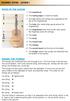 BEGINNER GUITAR - LESSON 1 PARTS OF THE GUITAR 1- The headstock. 2- The tuning pegs or machine heads. 3- The nut (where the strings are supported at the top of the fingerboard). 4- The frets (the metal
Standard 1: Skills and Techniques 1
 1 Standard 1: Skills and Techniques 1 CB.1.1 Instrument Knowledge Skills CB.1.1.1 Instrument in good playing condition- including proper assembly, reed care, and cleaning. CB.1.2 Playing Posture Skills
Piano Syllabus. Piano, Piano Accompanying. Grade exams 2015 2017
 Piano Syllabus Piano, Piano Accompanying Grade exams 2015 2017 Trinity College London www.trinitycollege.com Charity number 1014792 Patron HRH The Duke of Kent KG Chief Executive Sarah Kemp Copyright 2014
Harp diplomas repertoire list. 1 January 2011 31 December 2015
 Harp diplomas repertoire list 1 January 2011 31 December 2015 HARP DIPLOMAS 2011-2015 Contents Page Overview of LCM Diploma Structure... 3 LCM Publications... 4 DipLCM in Performance... 5 ALCM in Performance...
Jim Hall Chords and Comping Techniques
 Jim Hall Chords and Comping Techniques Jazz guitar comping is an art form in its own right. The comping rhythms, melodies, and voicings of the greatest Jazz guitarists are delightful to listen to, with
MMTA Written Theory Exam Requirements Level 3 and Below. b. Notes on grand staff from Low F to High G, including inner ledger lines (D,C,B).
 MMTA Exam Requirements Level 3 and Below b. Notes on grand staff from Low F to High G, including inner ledger lines (D,C,B). c. Staff and grand staff stem placement. d. Accidentals: e. Intervals: 2 nd
National Standards for Music Education
 National Standards for Music Education 1. Singing, alone and with others, a varied repertoire of music. 2. Performing on instruments, alone and with others, a varied repertoire of music. 3. Improvising
Music Study and Scholarship Information
 Music Study and Scholarship Information for 2015-16 BACHELOR OF ARTS IN MUSIC BACHELOR OF MUSIC MUSIC SCHOLARSHIPS st. olaf college This booklet contains information important to the music major and the
Arizona Music Standards
 Introduction Music is a subject with its own unique skills and knowledge, a respected repertoire of quality literature, an advanced system of notation and literacy, and a challenging form of cognition.
Adding a diatonic seventh to a diminished leading-tone triad in minor will result in the following sonority:
 Lesson PPP: Fully-Diminished Seventh Chords Introduction: In Lesson 6 we looked at the diminished leading-tone triad: vii o. There, we discussed why the tritone between the root and fifth of the chord
2015-16 MUSIC HANDBOOK. School of Music, Theatre, and Dance Anderson University
 2015-16 MUSIC HANDBOOK School of Music, Theatre, and Dance Anderson University Contents Music Division Mission Statement... 3 Values... 3 Purpose of the Handbook... 4 Advising and Special Admission Procedures...
Music Literacy for All
 Music Literacy for All Developing Musically Literate Individuals in Performance-Based Ensembles J. Steven Moore, DMA Research Data How Many Public Performances Does the Average H.S. Band Present Annually?
MUSIC A. PROGRAM RATIONALE AND PHILOSOPHY
 MUSIC A. PROGRAM RATIONALE AND PHILOSOPHY The systematic development of musical skills, knowledge and perception is fundamental to the total development of the individual. Music education should begin
FACULTY OF HUMANITIES UNIVERSITY OF ŽILINA IN ŽILINA INFORMATION ABOUT THE STUDY PROGRAMMES
 FACULTY OF HUMANITIES FACULTY OF HUMANITIES UNIVERSITY OF ŽILINA IN ŽILINA The Dean s Office address: Univerzitná 8215/1, 010 26 Žilina Telephone number: 041/513 6101 Fax: 041/513 6114 Office for Studies:
Southeastern University Music Department. Audition Information
 Southeastern University Music Department SEU Music Auditions Page 1 of 17 Audition Information An audition is required of all students applying to any music degree programs offered at Southeastern University.
Fundamentals Keyboard Exam
 Fundamentals Keyboard Exam General requirements: 1. Scales: be prepared to play: All major and minor scales (including melodic minor, natural minor, and harmonic minor) up to five sharps and flats, ith
Time allowed: 1 hour 30 minutes
 SPECIMEN MATERIAL GCSE MUSIC 8271 Specimen 2018 Time allowed: 1 hour 30 minutes General Certificate of Secondary Education Instructions Use black ink or black ball-point pen. You may use pencil for music
Level 3 Scale Reference Sheet MP: 4 scales 2 major and 2 harmonic minor
 Level 3 Scale Reference Sheet MP: 4 scales 2 major and 2 harmonic minor 1. Play Scale (As tetrachord or one octave, hands separate or together) 2. Play I and V chords (of the scale you just played) (Hands
Crash Course in Music Theory for Guitarists by Andy Drudy
 Crash Course in Music Theory for Guitarists by Andy rudy An in-depth knowledge of music theory is essential for any musician. Learning the ropes so-to-speak, will rapidly expand your insight into you own
2012 Music Standards GRADES K-1-2
 Students will: Personal Choice and Vision: Students construct and solve problems of personal relevance and interest when expressing themselves through A. Demonstrate how musical elements communicate meaning
LEAVING CERTIFICATE EXAMINATIONS MUSIC HIGHER LEVEL CHIEF EXAMINER'S REPORT ORDINARY LEVEL CHIEF EXAMINER S REPORT
 LEAVING CERTIFICATE EXAMINATIONS 1999 MUSIC HIGHER LEVEL CHIEF EXAMINER'S REPORT ORDINARY LEVEL CHIEF EXAMINER S REPORT CONTENTS 1 BACKGROUND 1 1.1 Assessment structure 2 PERFORMANCE OF CANDIDATES 3 2.1
MUSIC THERAPY PROGRAM ADMISSIONS REQUIREMENTS
 MUSIC THERAPY PROGRAM ADMISSIONS REQUIREMENTS The Bachelor of Music degree prepares students for clinical careers in music therapy, working with a broad range of clinical populations. Applicants must first
MUSIC - SCHEMES OF WORK. For Children Aged 8 to 12
 Music Lessons Structure MUSIC - SCHEMES OF WORK For Children Aged 8 to 12 Time Approx. 90 minutes 1. Remind class of last topic area explored and relate to current topic. 2. Discuss and explore with examples.
Southeastern University Music Department. Audition Information
 Southeastern University Music Department SEU Music Auditions Page 1 of 18 Audition Information An audition is required of all students applying to any music degree programs offered at Southeastern University.
FAQs about Music Qualifications
 FAQs about Music Qualifications BACK TO CONTENTS Trinity College London Blue Fin Building 110 Southwark Street London SE1 0TA UK T +44 (0)20 7820 6100 F +44 (0)20 7820 6161 E [email protected] www.trinitycollege.com
Your guide to ABRSM music exams. Instruments and Singing: Grades 1 to 8
 Your guide to ABRSM music exams Instruments and Singing: Grades 1 to 8 00 Contents Introduction 2 About our exams 3 The exam elements 4 Pieces or songs Scales and arpeggios Unaccompanied traditional song
Internet Guitar Lessons Video and Lesson Content
 Internet Guitar Lessons Video and Lesson Content Backing Tracks Creating Backing Tracks Improvising over Chord Changes 6 - Backing Track Studio Session Gear Rundown Virtual Gig Part 1 Virtual Gig Part
The CAGED Guitar System
 The CAGED Guitar System First of all, let s look at an example below on how to use the CAGED guitar system: 1 The example showed above demonstrates the general idea of how the CAGED system works in a certain
Tonic- The main pitch in tonal music, and also the first (and last) letter of a major or minor scale.
 Scale- A scale is a series of pitches in ascending order, such as D E F G A B C D. There are many kinds of scales, which differ in how many different pitch names they use, and in the pattern of steps they
Sample of Version 2.0 of Swing & Jump Blues Guitar
 The Charlie Christian Approach Charlie Christian (1916 1942) was one of the first real swing guitar players that had a lasting influence on all other swing and jump guitar players after him. Even more
Chords and More Chords for DGdg Tenor Banjo By Mirek Patek
 Chords and More Chords for DGdg Tenor Banjo By Mirek Patek This tenth article about the fingerstyle tenor banjo in DGdg tuning will be focused on banjo accompaniment, i.e. on playing chords. The goal is
Learn How To Play Guitar
 Learn How To Play Guitar by Stefan Schyga 2000 Guitar Studio Publishing http://www.learnhowtoplayguitar.com http://www.mp3.com/learnhowtoplayguitar About The Author Stefan Schyga received his Masters Degree
Music Theory IV. Final Exam. All Chapters H&VL. Prof. Andy Brick. I pledge my honor that I have abided by the Stevens Honor System.
 Music Theory IV Final Exam All Chapters H&VL Prof. Andy Brick I pledge my honor that I have abided by the Stevens Honor System. 04/08/08 Due Week of, May 04 2008 Due Week of April 13: Exposition & Development
The Transcriber s Art #52 Joseph Haydn by Richard Yates
 The Transcriber s Art #5 Joseph Haydn by Richard Yates Even though the guitar does not produce the same notes as the orchestra, nor in quantity nor in register, the accompaniment will be the same. Fernando
Parameters for Session Skills Improvising Initial Grade 8 for all instruments
 Parameters for Session Skills Improvising Initial for all instruments If you choose Improvising, you will be asked to improvise in a specified style over a backing track that you have not seen or heard
HOW SCALES, KEY SIGNATURES, & ARPEGGIOS WORK www.tubapeter.com
 1 HOW SCALES, KEY SIGNATURES, & ARPEGGIOS WORK www.tubapeter.com WHAT IS A SCALE? A scale is all the pitches that you can play in a key signature without playing any accidentals. The key of Bb is Bb and
Strings. Student Handbook 2012-2013. Manhattan School of Music
 Strings Student Handbook 2012-2013 Manhattan School of Music Table of Contents WELCOME I. INTRODUCTION TO THE STRING DEPARTMENT 3 1. Your Teacher 2. Change of Teacher 3. Contacting the String Department
Learning to play the piano
 Learning to play the piano INTRODUCTION TO THE KEYBOARD... 2 STEPPING UP... 2 TREBLE SPACES... 7 BASS SPACES... 9 TIME SIGNATURE... 12 UP AND DOWN THE HILLS... 15 UP AND DOWN THE HILLS IN G MAJOR... 16
4:40 100 V. 5 VI. 5 A.
 University of Northern Colorado 2015 Voice Area Undergraduate Handbook Music B.A. Liberal Arts Emphasis B.M.E. -- Teaching Vocal, Piano and General Emphasis B.M. -- Business Emphasis B.M. -- Vocal Performance
WOODWIND REQUIREMENTS AND INFORMATION
 WOODWIND REQUIREMENTS AND INFORMATION This section provides a summary of the most important points that teachers and candidates need to know when taking ABRSM woodwind exams. Further details, as well as
Music Theory: Explanation and Basic Principles
 Music Theory: Explanation and Basic Principles Musical Scales Musical scales have developed in all cultures throughout the world to provide a basis for music to be played on instruments or sung by the
Music Standards of Learning
 Music Standards of Learning for Virginia Public Schools Board of Education Commonwealth of Virginia April 2006 Music Standards of Learning for Virginia Public Schools Adopted in April 2006 by the Board
Arlington Public Schools Secondary Vocal/Choral Music Curriculum INTRODUCTION
 Arlington Public Schools Secondary Vocal/Choral Music Curriculum INTRODUCTION The Secondary Vocal/Choral Curriculum is designed for the vocal development of the choral musician and sets sequential standards
MU 3323 JAZZ HARMONY III. Chord Scales
 JAZZ HARMONY III Chord Scales US Army Element, School of Music NAB Little Creek, Norfolk, VA 23521-5170 13 Credit Hours Edition Code 8 Edition Date: March 1988 SUBCOURSE INTRODUCTION This subcourse will
Handale Primary School Music Curriculum Year EYFS ( 4-5 year olds)
 Handale Primary School Music Curriculum Year EYFS ( 4-5 year olds) Music at EYFS stage reflects the different ways in which children learn and engage with other people. Many examples of stories, songs
Study Kit No 9. Aura Lee (Love Me Tender)
 Study Kit No 9 Aura Lee (Love Me Tender) Reharmonization Study Kit No. 9 Aura Lee Author: Rosablanca Suen Web: www.learnpianowithrosa.com Email: [email protected] Cover Design: Raymond Suen Copyright
Swing & Jump Blues Guitar Matthieu Brandt
 Swing & Jump Blues Guitar Matthieu Brandt Goto www.swingblues.com for more on Swing and Jump Blues Guitar. 1997-2016 No part of this material (book/cd/website) may be reproduced in any way without prior
PROVIDENCE UNIVERSITY COLLEGE
 4.6.16 Music Academic Staff Bill Derksen, Ph.D., University of Minnesota, Emeritus Karen Sunabacka, Ph.D., University of California at Davis, Program Coordinator Darryl Friesen, D.M.A., University of Illinois
AM SYLLABUS (2016) MUSIC AM 24 SYLLABUS
 AM SYLLABUS (2016) MUSIC AM 24 SYLLABUS Music AM 24 Syllabus (Available in September) Paper I Aural (30 mins) & Written (2hrs)+ Paper II Oral (20 mins) & Written (2 hrs+30 mins) + Paper III (25mins) &
Guitar Method Beginner: Book 1
 Guitar Method Beginner: Book 1 This book has been a project in the works for over a year, and now my dream of releasing it has finally come true. I would like to thank everyone who has encouraged or helped
Beginner Guitar Level I
 Welcome to Beginner Guitar Level I E A D G B E * Please fill out the student form * Who is this guy? E A D G B E Logistics, etc.. sign in / out everyday start promptly -> don t be late! breaks / bathrooms
Musical Literacy. Clarifying Objectives. Musical Response
 North Carolina s Kindergarten Music Note on Numbering/Strands: ML Musical Literacy, MR Musical Response, CR Contextual Relevancy Musical Literacy K.ML.1 Apply the elements of music and musical techniques
STUDY GUIDE. Illinois Licensure Testing System. Music (143) This test is now delivered as a computer-based test.
 Illinois Licensure Testing System STUDY GUIDE Music (143) This test is now delivered as a computer-based test. See www.il.nesinc.com for current program information. Illinois State Board of Education IL-SG-FLD143-05
Your guide to ABRSM diplomas
 Your guide to ABRSM diplomas Introduction ABRSM diplomas offer varied routes to professional qualification for a wide range of musicians, including performers, teachers and directors. Whether you are intending
Please Read This Page First
 Mandolin and Fiddle Improvisation Using the Chord Tone Scale Copyright 2008 by Pete Martin Please Read This Page First This book is distributed using the shareware system. Try it out, if you like it please
2015 2016 VCE Music Performance
 2015 2016 VCE Music Performance Performance examination End of year Examination specifications Overall conditions The student will give a live performance in only one of the following contexts: as a member
Guitar SYLLABUS / 2011 EDITION
 Guitar Guitar SYLLABUS / 2011 EDITION SYLLABUS / 2011 EDITION Contents Message from the President.................... 5 Getting Started What s New?................................ 6 Quick Guide to Online
GRADE THREE THEORY REVISION
 GRADE THREE THEORY REVISION Note Pitches Use flashcards to make sure you know all your notes including leger lines. Whenever you name a note remember to check the clef, keysignature, and for accidentals
Everyone cringes at the words "Music Theory", but this is mainly banjo related and very important to learning how to play.
 BLUEGRASS MUSIC THEORY 101 By Sherry Chapman Texasbanjo The Banjo Hangout Introduction Everyone cringes at the words "Music Theory", but this is mainly banjo related and very important to learning how
BRASS GRADES: requirements and information. Entering for an exam. Elements of the exam
 BRASS GRADES: requirements and information This section provides a summary of the most important points that teachers and candidates need to know when taking ABRSM graded brass exams. Further details,