
BRASS GRADES: requirements and information. Entering for an exam. Elements of the exam
|
|
|
- Melanie Baldwin
- 9 years ago
- Views:
Transcription
1 BRASS GRADES: requirements and information This section provides a summary of the most important points that teachers and candidates need to know when taking ABRSM graded brass exams. Further details, as well as administrative information relating to the exams, are given in ABRSM s Information & Regulations (available at which should be read before an exam booking is made. Entering for an exam Eligibility: There are eight grades of exam for each instrument (Bass Trombone, Grades 6 8 only) and candidates may be entered for any grade irrespective of age and without previously having taken any other grade on the same instrument. Candidates for a Grade 6, 7 or 8 exam must already have passed ABRSM Grade 5 (or above) in Music Theory, Practical Musicianship or a solo Jazz instrument; for full details, including a list of accepted alternatives, see Regulation 1d at org/regulations. Access: ABRSM endeavours to make its exams as accessible as possible to all candidates, regardless of sensory impairments, learning difficulties or particular physical needs. There is a range of alternative tests and formats as well as sets of guidelines for candidates with particular access needs (see Where a candidate s needs are not covered by the guidelines, each case is considered on an individual basis. Further information is available from the Access Co-ordinator ([email protected]). Exam booking: Details of exam dates, locations, fees and how to book an exam are available online at Elements of the exam All ABRSM graded brass exams comprise the following elements: three Pieces; Scales and arpeggios; Sight-reading; and Aural tests. In all grades, marks are allocated as follows: Pieces: Scales and arpeggios 21 Sight-reading (& Transposition * ) 21 Aural tests 18 Total 150 Marking scheme: 100 marks are required for a Pass, 120 for a Merit and 130 for a Distinction. A Pass in each individual section is not required to pass overall. See pp for the marking criteria used by examiners. * Horn & Trumpet Grades 6 8. Maximum marks: 12 for sight-reading, 9 for transposition (one combined mark will be recorded) 8

2 Pieces Brass grades: requirements & information Programme planning: Candidates must choose one piece from each of the three lists (A, B and C) in each grade. In the exam, they should inform the examiner which pieces they are performing, and they are welcome to use the form on p. 105 for this purpose. Accompaniment: All pieces in Lists A and B must be performed with a live piano accompaniment, whereas all pieces in List C must be performed solo. Candidates must provide their own accompanist, who may remain in the exam room only while accompanying. The candidate s teacher may act as accompanist (examiners will not). If necessary, the accompanist may simplify any part of the piano accompaniment, provided the result is musically satisfactory. Exam music & editions: Wherever the syllabus includes an arrangement or transcription, the edition listed in the syllabus must be used in the exam; in all such cases the abbreviation arr. or trans. appears in the syllabus entry. For all other pieces, the editions quoted in the syllabus are given for guidance only and candidates may use any edition of their choice (in- or out-of-print or downloadable). Information on obtaining exam music is given on p. 12. Interpreting the score: Printed editorial suggestions such as fingering, phrasing, metronome marks, realization of ornaments etc. need not be strictly observed. Whether the piece contains musical indications or not, candidates are always encouraged to interpret the score in a stylistically appropriate manner. Ultimately, examiners marking will be determined by consideration of pitch, time, tone, shape and performance, and how control of these contributes to the overall musical outcome. Repeats: All da capo and dal segno indications should be observed but all other repeats (including first-time bars) should be omitted unless they are very brief (i.e. of a few bars) or unless the syllabus specifies otherwise. Cadenzas & tuttis: Cadenzas should not be played unless the syllabus specifies otherwise. Lengthy orchestral tutti sections should be cut. Performing from memory: Candidates are free to perform any of their pieces from memory; in such cases they must ensure that a copy of the music is available for the examiner to refer to if necessary. No additional marks are awarded for playing from memory. Page-turns: Examiners will be understanding if a page-turn causes a lack of continuity during a piece, and this will not affect the marking. A variety of solutions for awkward page-turns exists, including the use of an additional copy of the music or a photocopy of a section of the piece (but see Photocopies on p. 10). In cases where candidates believe there is no solution to a particularly awkward page-turn, they may apply to bring a page-turner to the exam. The request must be made to syllabus@ abrsm.ac.uk no later than the closing date for entry, and details of the piece, edition and nature of the difficulty should be given. If permission is granted, a confirmation letter will be issued which must be taken to the exam as verification. Examiners are 9

3 Brass grades: requirements & information unable to help with page-turning. In a Grade 8 exam, a candidate s accompanist is permitted to bring a page-turner to assist with page-turns in the piano part (prior permission is not required). Photocopies: Performing from unauthorized photocopies (or other kinds of copies) of copyright editions is not allowed. ABRSM may withhold the exam result where it has evidence of an illegal copy (or copies) being used. In the UK, copies may be used in certain limited circumstances for full details, see the MPA s Code of Fair Practice at In all other cases, application should be made to the copyright holder before any copy is made, and evidence of permission received should be brought to the exam. Scales and arpeggios Examiners will usually ask for at least one of each type of scale/arpeggio etc. required at each grade, as well as aiming to hear a balance of the specified articulations. They will also ask trombone, baritone, euphonium and tuba candidates if they are bass- or treble-clef readers. When asking for requirements, examiners will specify only: the key (including minor form harmonic or melodic in the Grade 6 8 scales) or the starting note the articulation All scales and arpeggios should: be played from memory be played from the lowest possible tonic/starting note, unless the syllabus indicates otherwise* ascend and descend according to the specified range be played without undue accentuation and at a pace that is consistent with accuracy and distinctness The choice of breathing place is left to the candidate s discretion, but taking a breath should not disturb the flow of the scale or arpeggio. Arpeggios and dominant sevenths are required in root position only. For transposing instruments, the naming of scales applies to the notation, not the concert pitch; for example, D major for trumpet in Bb will sound in C, not D. Books of the scale requirements are published for all brass instruments by ABRSM. Below is the pattern for the whole-tone scale, set for all instruments at Grade 8: * Disregarding additional lower notes available to trombones with a trigger or to baritones, euphoniums and tubas with a 4th valve 10

4 Brass grades: requirements & information The following scale and arpeggio speeds are given as a general guide: Scales, Dominant & Diminished 7ths ( pattern = q q q q ) Grade / Speed Horn q = 50 q = 56 q = 66 q = 72 q = 80 q = 96 q = 108 q = 120 Trombone q = 44 q = 48 q = 56 q = 63 q = 72 q = 96 q = 108 q = 120 All other brass q = 50 q = 56 q = 66 q = 72 q = 80 q = 104 q = 116 q = 132 Arpeggios ( pattern = q q q ) Grade / Speed Horn e = 72 e = 80 e = 92 e = 100 e = 112 q. = 56 q. = 66 q. = 76 Trombone e = 66 e = 72 e = 84 e = 92 e = 104 q. = 46 q. = 56 q. = 60 All other brass e = 72 e = 80 e = 92 e = 100 e = 112 q. = 56 q. = 66 q. = 76 including chromatic & whole-tone Sight-reading (and transposition) Sight-reading: At all grades, candidates will be asked to play a short unaccompanied piece of music which they have not previously seen. They will be given up to half a minute in which to look through and, if they wish, try out all or any part of the test before they are required to play it for assessment. Examiners will ask trombone, baritone, euphonium and tuba candidates if they are bass- or treble-clef readers. For practice purposes, books of specimen sight-reading tests are published for all brass instruments by ABRSM. Transposition (Horn and Trumpet only): At Grades 6 8, Horn and Trumpet candidates will be asked to transpose a short unaccompanied piece of music which they have not previously seen. They will be given up to half a minute in which to look through and, if they wish, try out all or any part of the test before they are required to play it for assessment. Aural tests The requirements are the same for all instruments. Full details of the Aural tests are given on pp (continued overleaf ) 11

5 Brass grades: requirements & information In the exam Examiners: Generally, there will be one examiner in the exam room; however, for training and quality assurance purposes, a second examiner may sometimes be present. Examiners may ask to look at the music before or after the performance of a piece (a separate copy is not required: the candidate s or accompanist s copy will suffice). Examiners may also decide to stop the performance of a piece when they have heard enough to form a judgment. They will not issue, or comment on, a candidate s result; instead, the mark form (and certificate for successful candidates) will be issued by ABRSM after the exam. Tuning: In Grades 1 5, the teacher or accompanist may help tune the candidate s instrument before the exam begins. In Grades 6 8, candidates must tune their instruments themselves. Examiners are unable to help with tuning. Music stands: All ABRSM Centres provide a music stand, but candidates are welcome to bring their own if they prefer. The examiner will be happy to help adjust the height or position of the stand. Order of the exam: The individual sections of the exam may be undertaken in any order, at the candidate s choice, although it is always preferable for accompanied pieces to be performed consecutively. Assessment The tables on pp show the marking criteria used by examiners. These criteria (newly revised and amended) have been in use in exams from January In each element of the exam, ABRSM operates the principle of marking from the required pass mark positively or negatively, rather than awarding marks by deduction from the maximum or addition from zero. In awarding marks, examiners balance the extent to which the qualities and skills listed on pp (broadly categorized by pitch, time, tone, shape and performance) are demonstrated and contribute towards the overall musical outcome. Obtaining exam music Exam music is available from music retailers as well as online, including at the ABRSM music shop: Every effort has been made to ensure that all the publications listed will remain available for the duration of the syllabus. Candidates are advised to obtain their music well in advance of the exam in case of any delays with items not kept in stock by retailers. Apart from queries relating to exams, all enquiries about the music (e.g. editorial, availability) should be addressed to the relevant publisher: contact details are listed at 12

6 HORN This syllabus for Horn is valid for Details of any planned changes to the Horn requirements from 2021 will be posted in advance at In Grades 1 3, this syllabus may be offered on a mini-horn in Bb or F. The accompanied pieces are published in F editions unless otherwise indicated. For those pieces not published in F, candidates may use manuscript transpositions of their parts if necessary. Some List C pieces are published with transposition suggestions but in the exam they should be played in the written keys only. Horn GRADE 1 THREE PIECES: one chosen by the candidate from each of the three Lists, A, B and C: LIST A 1 Beethoven Theme from Ninth Symphony. Winners Galore, arr. Lawrance (Brass Wind: & brass edition; F piano accomp. published separately) 2 Arthur Campbell Chorale. No. 3 from Horn Solos, Book 1, arr. Campbell (Faber) 3 Tom Davoren Romanza Shining Brass, Book 1 (ABRSM: &/? brass edition; F piano accomp. published 4 Philip Sparke A Knight s Tale separately) 5 Haydn German Dance. Time Pieces for Horn, Vol. 1, arr. Harris and Skirrow (ABRSM: F/E b edition) 6 Henry VIII Pastime with Good Company 10 Easy Tunes for Horn, arr. Humphries (Fentone F ) 7 Susato La Mourisque 8 Trad. English Song of the Western Men Boosey Brass Method, Horn in F, Repertoire Book B (Boosey & Hawkes) 9 Trad. Japanese Koinobori LIST B 1 Bartók No. 3 from For Children, Vol. 1. Time Pieces for Horn, Vol. 1, arr. Harris and Skirrow (ABRSM: F/E b edn) 2 Lizzie Davis Mordred s Castle: No. 2 from Hornets Nest (Brass Wind) 3 Tom Davoren Waltz for E. Shining Brass, Book 1 (ABRSM: &/? brass edition; F piano accomp. published separately) 4 David A. Stowell Strollin 5 Peter Graham Moscow or Paris: No. 1 or No. 2 from Cityscapes for Horn in F (Gramercy Music) 6 Christopher Gunning Echoes or Sad Café. No. 4 or No. 7 from The Really Easy Horn Book (Faber) 7 Ian Lowes Nightfall. Boosey Brass Method, Horn in F, Repertoire Book B (Boosey & Hawkes) 8 Rendall and Thomas Birdie Song. Winners Galore, arr. Lawrance (Brass Wind: & brass edition; F piano accomp. published separately) 9 Pam Wedgwood Hot Chilli or Cheeky Cherry: from Really Easy Jazzin About for French Horn (Faber) LIST C 1 Lizzie Davis Tiny Minuet: from Polished Brass (Brass Wind: & brass edition) 2 Jock McKenzie Pop or Sizhu: No. 1 or No. 2 from Dance to the Beat of the World (Con Moto: & brass edition) 3 Peter Meechan One, Two, Three! Shining Brass, Book 1 (ABRSM: &/? brass edition) 4 Philip Sparke Puppet s Dance 5 John Miller Hungarian Hoe-down or Supersonic Samurai: No. 3 or No. 14 from Simple Studies for Beginner Brass (Faber: & brass edition) 6 Mark Nightingale A Small Step or Fiesta Siesta: No. 1 or No. 2 from Easy Jazzy Tudes (Warwick Music: & brass edn) 7 Philip Sparke Modal Melody or Marching Home: No. 3 or No. 7 from Skilful Studies for Horn (Anglo Music AMP ) AURAL TESTS FOR THE GRADE: see pp. 90 and 91 from 2013 SCALES AND ARPEGGIOS: from memory, to be played both slurred and tongued in the following keys: C major; A minor (one octave, starting an octave above lowest tonic) Scales: in the above keys (minor in natural or harmonic or melodic form at candidate s choice) Arpeggios: the common chords of the above keys for the range indicated SIGHT-READING: a short piece in simple time within the keys, notes and overall range of the scale requirements set for this grade. Some accidentals, dotted and tied notes may be included. See also p by The Associated Board of the Royal Schools of Music

7 Horn GRADE 2 from 2013 THREE PIECES: one chosen by the candidate from each of the three Lists, A, B and C: LIST A 1 Arbeau Pavane (from Orchésographie). No. 11 from Horn Solos, Book 1, arr. Campbell (Faber) 2 Brahms St Anthony Chorale (from Variations on a Theme by Haydn, Op. 56a). Time Pieces for Horn, Vol. 1, arr. Harris and Skirrow (ABRSM: F/E b edition) 3 Mozart Aria (from The Marriage of Figaro) Winners Galore, arr. Lawrance (Brass Wind: & brass edition; F piano 4 Trad. Welsh Calon Lân accomp. published separately) 5 Philip Sparke My Lady s Pavan Shining Brass, Book 1 (ABRSM: &/? brass edition; F piano accomp. published 6 David A. Stowell A Walk in the Rain separately) 7 Trad. Welsh David of the White Rock. No. 3 from Going Solo Horn, arr. Bissill and Campbell (Faber) 8 Trad. Welsh Men of Harlech. Winner Scores All, arr. Lawrance (Brass Wind: & brass edition; F piano accomp. published separately) 9 Peter Warlock Basse-Dance. Boosey Brass Method, Horn in F, Repertoire Book B (Boosey & Hawkes) LIST B 1 Lizzie Davis Dark Rider: No. 4 from Hornets Nest (Brass Wind) 2 Tom Davoren Hangin with Monti Shining Brass, Book 1 (ABRSM: &/? brass edition; F piano accomp. published 3 Philip Sparke Tennessee Rag separately) 4 Peter Graham Seville or Kyoto: No. 3 or No. 4 from Cityscapes for Horn in F (Gramercy Music) 5 Chris Norton A Dab Hand. Boosey Brass Method, Horn in F, Repertoire Book B (Boosey & Hawkes) 6 Trad. Spiritual Nobody Knows. No. 1 from Going Solo Horn, arr. Bissill and Campbell (Faber) 7 Walton Song at Dusk (from Duets for Children). Time Pieces for Horn, Vol. 1, arr. Harris and Skirrow (ABRSM: F/E b edition) 8 Pam Wedgwood Easy Tiger or Keep Truckin : from Really Easy Jazzin About for French Horn (Faber) 9 John Williams Somewhere in My Memory (from Home Alone). Winner Scores All, arr. Lawrance (Brass Wind: & brass edition; F piano accomp. published separately) LIST C 1 Lizzie Davis Tarantella: from Polished Brass (Brass Wind: & brass edition) 2 Jock McKenzie Calypso or Czardas: No. 11 or No. 20 from Dance to the Beat of the World (Con Moto: & brass edition) 3 Peter Meechan Haunted House Shining Brass, Book 1 (ABRSM: &/? brass edition) 4 David A. Stowell High Street 5 John Miller Sabre Dance or Scottish Warrior: No. 16 or No. 21 from Simple Studies for Beginner Brass (Faber: & brass edition) 6 Mark Nightingale Ready, Aim, Fire! or The Nuthatch: No. 4 or No. 6 from Easy Jazzy Tudes (Warwick Music: & brass edition) 7 Philip Sparke The Big Apple or Tom s Tune: No. 11 or No. 13 from Skilful Studies for Horn (Anglo Music AMP ) AURAL TESTS FOR THE GRADE: see pp. 90 and 91 SCALES AND ARPEGGIOS: from memory, to be played both slurred and tongued in the following keys: Bb, C majors; B, D minors (one octave, starting an octave above lowest tonic) Scales: in the above keys (minors in natural or harmonic or melodic form at candidate s choice) Arpeggios: the common chords of the above keys for the range indicated SIGHT-READING: a short piece in simple time within the keys, notes and overall range of the scale requirements set up to and including this grade. Some accidentals, dotted and tied notes may be included. See also p by The Associated Board of the Royal Schools of Music

8 Horn GRADE 3 from 2013 THREE PIECES: one chosen by the candidate from each of the three Lists, A, B and C: LIST A 1 Tom Davoren Rondo Olympia Shining Brass, Book 1 (ABRSM: &/? brass edition; F piano accomp. published 2 Lucy Pankhurst Sicilienne separately) 3 Handel See, the Conqu ring Hero Comes (from Judas Maccabaeus) Time Pieces for Horn, Vol. 1, arr. Harris 4 Schumann Soldiers March (from Album for the Young, Op. 68) and Skirrow (ABRSM: F/E b edition) 5 Mendelssohn O for the Wings of a Dove. 10 Easy Tunes for Horn, arr. Humphries (Fentone F ) 6 Tchaikovsky Humoresque in C. No. 9 from Going Solo Horn, arr. Bissill and Campbell (Faber) 7 Tchaikovsky Reverie. Winner Scores All, arr. Lawrance (Brass Wind: & brass edition; F piano accomp. published separately) 8 Trad. English Greensleeves. No. 8 from Skilful Solos for F or E b Horn, arr. Sparke (Anglo Music AMP Vivaldi Spring. No. 4 from 400: F/E b edition) LIST B 1 Bernstein America (from West Side Story). Winner Scores All, arr. Lawrance (Brass Wind: & brass edition; F piano accomp. published separately) 2 Richard Bissill Waltz to Take Away. No. 5 from Going Solo Horn, arr. Bissill and Campbell (Faber) 3 Lizzie Davis En Cor: No. 7 from Hornets Nest (Brass Wind) 4 John Frith Broken Dreams Shining Brass, Book 1 (ABRSM: &/? brass edition; F piano accomp. published 5 Peter Meechan Purple Shade separately) 6 Peter Graham New York (grace note optional) or Vienna: No. 5 or No. 6 from Cityscapes for Horn in F (Gramercy Music) 7 Paul Harris Hunt the Horn. Time Pieces for Horn, Vol. 1, arr. Harris and Skirrow (ABRSM: F/E b edition) 8 Sidney Ramin Music to Watch Girls By 9 Rodgers and Hart Blue Moon Jazzed Up Too for F Horn, arr. Ramskill (Brass Wind) LIST C 1 Concone Study No. 1 or No. 3. Concone Studies for Horn in F, arr. Ashworth (Emerson E299a) 2 Lizzie Davis Horn of Wonder: from Polished Brass (Brass Wind: & brass edition) 3 Timothy Jackson How s Tricks? Shining Brass, Book 1 (ABRSM: &/? brass edition) 4 Peter Meechan Summer Sound 5 Jock McKenzie Halling: No. 28 from Dance to the Beat of the World (Con Moto: & brass edition) 6 Mark Nightingale Ermie s Blues: No. 10 from Easy Jazzy Tudes (Warwick Music: & brass edition) 7 Philip Sparke Rondino or Classical Theme: No. 22 or No. 24 from Skilful Studies for Horn (Anglo Music AMP ) AURAL TESTS FOR THE GRADE: see pp. 90 and 92 SCALES AND ARPEGGIOS: from memory, to be played both slurred and tongued in the following keys: C, E minors (one octave, starting an octave above lowest tonic) G, A majors; G minor (a twelfth, starting below stave) Scales: in the above keys (minors in harmonic or melodic form at candidate s choice) Chromatic Scale: starting on C (one octave) Arpeggios: the common chords of the above keys for the ranges indicated SIGHT-READING: a short piece in simple time within the keys, notes and overall range of the scale requirements set up to and including this grade. See also p by The Associated Board of the Royal Schools of Music 15

9 Horn GRADE 4 from 2013 THREE PIECES: one chosen by the candidate from each of the three Lists, A, B and C: LIST A 1 Bizet Theme from L Arlésienne. No. 11 from Going Solo Horn, arr. Bissill and Campbell (Faber) 2 Tom Davoren Beaufort Allegro Shining Brass, Book 2 (ABRSM: &/? brass edition; F piano accomp. published 3 John Frith Jiggedy Jig separately) 4 Grieg Solveig s Song (from Peer Gynt). Great Winners, arr. Lawrance (Brass Wind: & brass edition; F piano accomp. published separately) 5 Humperdinck Evening Prayer (from Hänsel und Gretel). Time Pieces for Horn, Vol. 2, arr. Harris and Skirrow (ABRSM: F/E b edition) 6 Mendelssohn Nocturne (from A Midsummer Night s Dream). No. 17 from Horn Solos, Book 1, arr. Campbell 7 Weber Huntsmen s Chorus (from Der Freischütz). No. 19 from (Faber) 8 Mozart Adagio. No. 15 from Skilful Solos for F or E b Horn, arr. Sparke 9 Schubert Marche militaire (grace notes optional). No. 16 from (Anglo Music AMP : F/E b edition) LIST B 1 Richard Bissill Hymn of the High Plains. No. 7 from Going Solo Horn, arr. Bissill and Campbell (Faber) 2 Jean-Michel Damase Berceuse, Op. 19 (Leduc AL 20897) 3 Lizzie Davis Taco Taco! or Zarabanda: No. 6 or No. 8 from Hornets Nest (Brass Wind) 4 Ron Goodwin 633 Squadron. Great Winners, arr. Lawrance (Brass Wind: & brass edition; F piano accomp. published separately) 5 Peter Graham Buenos Aires: No. 7 from Cityscapes for Horn in F (Gramercy Music) 6 Ronald Hanmer Arioso or Finale: 3rd or 4th movt from Suite for Horn (Emerson E31: F/E b edition) 7 Peter Meechan Way Down South Shining Brass, Book 2 (ABRSM: &/? brass edition; F piano accomp. published 8 David A. Stowell Open Plains separately) 9 Robert Ramskill In the Fast Lane. Jazzed Up Too for F Horn, arr. Ramskill (Brass Wind) LIST C 1 Concone Study No. 5. Concone Studies for Horn in F, arr. Ashworth (Emerson E299a) 2 Lizzie Davis Wipe Out: from Polished Brass (Brass Wind: & brass edition) 3 Tom Davoren Quiet Moment Shining Brass, Book 2 (ABRSM: &/? brass edition) 4 Timothy Jackson Circulation 5 Jock McKenzie Tarantella: from Music Makes the World Go Around (Con Moto: & brass edition) 6 John Miller The Upward Slur or Articulation: No. 2 or No. 4 from Progressive Brass Studies (Faber: & brass edition) 7 Philip Sparke Penny Parade or One-part Invention: No. 34 or No. 36 from Skilful Studies for Horn (Anglo Music AMP ) AURAL TESTS FOR THE GRADE: see pp. 90 and 92 SCALES AND ARPEGGIOS: from memory, to be played both slurred and tongued in the following keys: Bb major; A, B minors (a twelfth) E, F majors; F minor (two octaves) Scales: in the above keys (minors in harmonic or melodic form at candidate s choice) Chromatic Scale: starting on A (a twelfth) Arpeggios: the common chords of the above keys for the ranges indicated Dominant Seventh: in the key of C (one octave) SIGHT-READING: a short piece in simple or compound time within the keys, notes and overall range of the scale requirements set up to and including this grade. See also p by The Associated Board of the Royal Schools of Music

10 Horn GRADE 5 from 2013 THREE PIECES: one chosen by the candidate from each of the three Lists, A, B and C: LIST A 1 Beethoven Scherzo and Trio (from Septet, Op. 20) Time Pieces for Horn, Vol. 2, arr. Harris and Skirrow 2 Saint-Saëns Romance, Op. 36 (ABRSM: F/E b edition) 3 Cherubini Sonata No. 1. Cherubini 2 Sonatas (Concert Etudes) (G. Schirmer GS33559) 4 Debussy En bateau. No. 11 from Horn Solos, Book 2, arr. Campbell (Faber) 5 Handel Mirth admit me of thy crew. No. 12 from 6 John Frith Canzona Shining Brass, Book 2 (ABRSM: &/? brass edition; F piano accomp. published 7 David A. Stowell Jam Bouree separately) 8 Ippolitov-Ivanov Cortège (from Caucasian Sketches). Undercover Hits for Horn in F, arr. Gout (Brass Wind) 9 Paradies Sicilienne, arr. Denwood (Emerson E474: F/E b edition) LIST B 1 Bernstein Psalm 23 (from Chichester Psalms). Time Pieces for Horn, Vol. 2, arr. Harris and Skirrow (ABRSM: F/E b edition) 2 Richard Bissill Calling All Cars (handstopping optional). Hornscape for Horn in F, arr. Bissill (Brass Wind) 3 Tom Davoren Lindy Hop! Shining Brass, Book 2 (ABRSM: &/? brass edition; F piano accomp. 4 Lucy Pankhurst Gone, Not Forgotten published separately) 5 W. Lloyd Webber Summer Pastures (Stainer & Bell H377) 6 Jim Parker Mapp and Lucia. The Music of Jim Parker for Horn in F (Brass Wind) 7 Philip Sparke March of the Toy Soldiers or Song of Farewell: No. 3 or No. 7 from Super Solos for F or E b Horn (Anglo Music AMP : F/E b edition) 8 John Williams Raiders March (from Raiders of the Lost Ark). Great Winners, arr. Lawrance (Brass Wind: & brass edition; F piano accomp. published separately) 9 Guy Woolfenden War Dance or Moonlight Rumba: from Horn Dances (Brass Wind) LIST C 1 Concone Study No. 11 or No. 18. Concone Studies for Horn in F, arr. Ashworth (Emerson E299a) 2 Lizzie Davis Hornpipe: from Polished Brass (Brass Wind: & brass edition) 3 Kopprasch Study No. 8 or No. 10: from 60 Selected Studies for French Horn, Book 1 (Carl Fischer or Hofmeister FH6014) 4 Jock McKenzie Fling: from Music Makes the World Go Around (Con Moto: & brass edition) 5 Peter Meechan Air Shining Brass, Book 2 (ABRSM: &/? brass edition) 6 David A. Stowell Flennon Study (either version) 7 John Miller Prairie Song or March: No. 5 or No. 6 from Progressive Brass Studies (Faber: & brass edition) AURAL TESTS FOR THE GRADE: see pp. 90 and 93 SCALES AND ARPEGGIOS: from memory, to be played both slurred and tongued in the following keys: B b major (a twelfth) D, Eb, G majors; D, E, F # minors (two octaves) Scales: in the above keys (minors in harmonic or melodic form at candidate s choice) Chromatic Scale: starting on F (two octaves) Arpeggios: the common chords of the above keys for the ranges indicated Dominant Seventh: in the key of C (two octaves) SIGHT-READING: see p by The Associated Board of the Royal Schools of Music 17

11 Horn GRADE 6 from 2013 PREREQUISITE FOR ENTRY: ABRSM Grade 5 (or above) in Music Theory, Practical Musicianship or any solo Jazz subject. For alternatives, see THREE PIECES: one chosen by the candidate from each of the three Lists, A, B and C: LIST A 1 Richard Bissill My Lady Fair 2 John Frith Allegro Appassionato Principal Horn (ABRSM) 3 Timothy Jackson The Old Lancashire Hornpipe 4 Haydn Adagio: 2nd movt from Horn Concerto No. 2 in D (Boosey & Hawkes: F/D edition) 5 J. B. Loeillet Allegro (observing repeat): 2nd movt from Sonata for Horn, arr. Civil (Broadbent & Dunn 10220) 6 Mozart Allegro or Rondo Allegro: 1st or 2nd movt from Horn Concerto No. 1 in D, K. 412/514 (Bärenreiter BA : F/D edition) 7 Mozart Andante: 2nd movt from Horn Concerto No. 2 in Eb, K. 417 (Bärenreiter BA : F/E b edition) 8 R. Strauss Andante for Horn, Op. posth. (Boosey & Hawkes) 9 R. Strauss Andante: 2nd movt from Horn Concerto No. 1 in Eb, Op. 11 (Universal UE 34725) LIST B 1 Richard Bissill Ghost Rider. Hornscape for Horn in F, arr. Bissill (Brass Wind) 2 Bozza En Irlande (Leduc AL 20930) 3 Dunhill Presto non troppo: No. 6 from Cornucopia, Op. 95 (Boosey & Hawkes) 4 John Frith Time Passing Principal Horn (ABRSM) 5 Timothy Jackson Loch Lomond 6 Hindemith Ruhig bewegt: 2nd movt from Horn Sonata (1939) (Schott ED 3642) 7 Richard Kershaw Night Ride (Broadbent & Dunn 13101) 8 Jim Parker The House of Eliott. The Music of Jim Parker for Horn in F (Brass Wind) 9 Guy Woolfenden Spanish Dance: from Horn Dances (Brass Wind) LIST C 1 J. S. Bach Bourrée I and II: 5th and 6th movts from Suite No. 3. J. S. Bach 6 Suites for Horn Solo, arr. Orval (Editions Marc Reift EMR 256) 2 Richard Bissill On Your Uppers Principal Horn (ABRSM) 3 John Frith Tarantella 4 Concone Study No. 17 or No. 25. Concone Studies for Horn in F, arr. Ashworth (Emerson E299a) 5 Kopprasch Study No. 13 or No. 21: from 60 Selected Studies for French Horn, Book 1 (Carl Fischer or Hofmeister FH6014) 6 Gunther Schuller Allegro vivace: No. 4 from Studies for Unaccompanied Horn (OUP) 7 Lowell E. Shaw No. 1: from Just Desserts Frippery Style (The Hornists Nest) AURAL TESTS FOR THE GRADE: see pp. 90 and 93 SCALES AND ARPEGGIOS: from memory, to be played both slurred and tongued in the following keys: C, Db, F #, A b majors; C #, E b, G, A minors (two octaves) Scales: in the above keys (minors in both harmonic and melodic forms) Chromatic Scales: starting on E, F, F # and G (two octaves) Arpeggios: the common chords of the above keys for the range indicated Dominant Seventh: in the key of D (two octaves) Diminished Seventh: starting on G (two octaves) SIGHT-READING: see p. 11. TRANSPOSITION: candidates will be asked to transpose down a tone a short piece approximately equivalent to a Grade 4 sight-reading test by The Associated Board of the Royal Schools of Music

12 Horn GRADE 7 from 2013 PREREQUISITE FOR ENTRY: ABRSM Grade 5 (or above) in Music Theory, Practical Musicianship or any solo Jazz subject. For alternatives, see THREE PIECES: one chosen by the candidate from each of the three Lists, A, B and C: LIST A 1 Beethoven Allegro moderato: 1st movt from Horn Sonata in F, Op. 17 (Boosey & Hawkes or Henle HN 498) 2 Richard Bissill The Drawing Room. Hornscape for Horn in F, arr. Bissill (Brass Wind) 3 Glazunov Rêverie, Op. 24 (Belaieff BEL 343) 4 Gliere Intermezzo, Op. 35 No. 11. Gliere Four Pieces for Horn and Piano, Op. 35 (Hans Pizka) 5 Mozart Allegro or Allegro: 1st or 3rd movt from Horn Concerto No. 3 in Eb, K. 447 (Bärenreiter BA : F/E b edition) 6 Mozart Rondo Allegro vivace: 3rd movt from Horn Concerto No. 4 in Eb, K. 495 (Bärenreiter BA : F/E b edition) 7 Reinecke Notturno, Op. 112 (Schott COR 9) 8 F. Strauss 3rd movt (starting at Fig. K): from Horn Concerto in C minor, Op. 8 (G. Schirmer GS33556) 9 F. Strauss Nocturno, Op. 7 (Universal UE 1368) LIST B 1 M. Arnold Andantino grazioso: 2nd movt from Horn Concerto No. 2, Op. 58 (Paterson PAT62001: F/E b edition) 2 Arnold Cooke Rondo in Bb (Schott ED 10231) 3 Jean-Michel Damase Pavane variée (Lemoine) 4 John Frith Jousting. Principal Horn (ABRSM) 5 Armando Ghidoni Poésie et Gaîté (observing cadenza) (Leduc AL 29207) 6 Christopher Gibbs Meditation (Phylloscopus PP479) 7 Jan Koetsier Romanza, Op. 59 No. 2 (Editions Marc Reift EMR 240) 8 Prokofiev Morning Dance (from Romeo and Juliet). Hornscape for Horn in F, arr. Bissill (Brass Wind) 9 Guy Woolfenden Sword Dance: from Horn Dances (Brass Wind) LIST C 1 J. S. Bach Gigue: 7th movt from Suite No. 2. J. S. Bach 6 Suites for Horn Solo, arr. Orval (Editions Marc Reift EMR 256) 2 John Frith Olympic Spirit. Principal Horn (ABRSM) 3 B. Hummel Intermezzo: 2nd movt from Suite for Solo Horn in F, Op. 64 (Zimmermann ZM21270) 4 Kopprasch Study No. 16 or No. 33: from 60 Selected Studies for French Horn, Book 1 (Carl Fischer or Hofmeister FH6014) 5 de Pré No. 2: from 20 Études pour le cor grave (Billaudot GB2127) 6 Gunther Schuller Allegro moderato: No. 2 from Studies for Unaccompanied Horn (OUP) 7 Lowell E. Shaw No. 4 or No. 6: from Just Desserts Frippery Style (The Hornists Nest) AURAL TESTS FOR THE GRADE: see pp. 90 and 94 SCALES AND ARPEGGIOS: from memory, to be played slurred, legato-tongued and staccato in the following keys: All keys, major and minor (two octaves; A and Bb majors and minors both lower and upper two octaves) Scales: in the above keys (minors in both harmonic and melodic forms) Chromatic Scales: starting on any note (two octaves) Arpeggios: the common chords of the above keys for the range indicated Dominant Sevenths: in the keys of B, C, Db and D (two octaves) Diminished Sevenths: starting on C and A b (two octaves) SIGHT-READING: see p. 11. TRANSPOSITION: candidates will be asked to transpose down a tone a short piece approximately equivalent to a Grade 5 sight-reading test by The Associated Board of the Royal Schools of Music 19

13 Horn GRADE 8 from 2013 PREREQUISITE FOR ENTRY: ABRSM Grade 5 (or above) in Music Theory, Practical Musicianship or any solo Jazz subject. For alternatives, see THREE PIECES: one chosen by the candidate from each of the three Lists, A, B and C: LIST A 1 J. S. Bach Quoniam tu solus sanctus (from Mass in B minor) (solo line for Horn in D). Absolutely Horn, arr. Bissill (Brass Wind) 2 Beethoven Poco adagio, quasi andante and Rondo Allegretto moderato: 2nd and 3rd movts from Horn Sonata in F, Op. 17 (Boosey & Hawkes or Henle HN 498) 3 Donizetti Concerto for Horn (complete), arr. Leloir (Billaudot GB1907) 4 John Frith The Pearl. Principal Horn (ABRSM) 5 Gliere Andante: 2nd movt from Horn Concerto, Op. 91 (Hans Pizka or Sikorski Boosey & Hawkes) 6 Hutschenruijter Romanze, Op. 12 (Compusic COMP305: E b edition) 7 Mozart Allegro or Rondo Allegro: 1st or 3rd movt from Horn Concerto No. 2 in Eb, K. 417 (Bärenreiter BA : F/E b edition) 8 Saint-Saëns Morceau de Concert, Op. 94 (cutting Figs 3 4 and 10 11) (Durand) 9 Steup Allegro brillante: 1st movt from Sonata No. 11 in E b (Compusic COMP309: E b edition) 10 R. Strauss Allegro or Rondo Allegro: 1st or 3rd movt from Horn Concerto No. 1 in Eb, Op. 11 (Universal UE 34725) LIST B 1 Alan Abbott Alla Caccia (Weinberger) 2 Richard Bissill By Jupiter! Principal Horn (ABRSM) 3 York Bowen Moderato espressivo: 1st movt from Horn Sonata in Eb, Op. 101 (Emerson E165) 4 Bozza En forêt, Op. 40 (Leduc AL 19955) 5 Büsser Cantecor, Op. 77 (Leduc AL 23101) 6 John Frith Vivo: 3rd movt from Horn Sonata (Emerson E538) 7 Hindemith Lebhaft: 3rd movt from Horn Sonata (1939) (Schott ED 3642) 8 Jan Koetsier Scherzo Brillante, Op. 96 (Editions Marc Reift EMR 267) 9 Trygve Madsen Allegro: 1st movt from Horn Sonata, Op. 24 (Musikk-Huset) 10 Gilbert Vinter Hunter s Moon (Boosey & Hawkes) LIST C 1 Jeffrey Agrell Romp for solo horn (special effects optional) (Editions Marc Reift EMR 2040) 2 J. S. Bach Gigue: 7th movt from Suite No. 3. J. S. Bach 6 Suites for Horn Solo, arr. Orval (Editions Marc Reift EMR 256) 3 Derek Bourgeois Presto: No. 8 from Fantasy Pieces for Horn (Brass Wind) 4 B. Hummel Finale (flutter-tonguing optional): 4th movt from Suite for Solo Horn in F, Op. 64 (Zimmermann ZM21270) 5 Kopprasch Study No. 14: from 60 Selected Studies for French Horn, Book 1 (Carl Fischer or Hofmeister FH6014) 6 Bernhard Krol Laudatio for solo horn (Simrock EE 2962) 7 de Pré No. 13: from 20 Études pour le cor grave (Billaudot GB2127) 8 Lowell E. Shaw No. 12: from Just Desserts Frippery Style (The Hornists Nest) AURAL TESTS FOR THE GRADE: see pp. 90 and by The Associated Board of the Royal Schools of Music

14 Horn GRADE 8 from 2013 SCALES AND ARPEGGIOS: from memory, to be played slurred, legato-tongued and staccato in the following keys: A, B b, B majors; A, B b, B minors (three octaves) All other keys, major and minor (two octaves) Scales: in the above keys (minors in both harmonic and melodic forms) Chromatic Scales: starting on any note (two octaves) Whole-Tone Scales: starting on B and C (two octaves), as example given on p. 10 Arpeggios: the common chords of the above keys for the ranges indicated Dominant Sevenths: in all keys (two octaves) Diminished Sevenths: starting on G, A b and A (two octaves) SIGHT-READING: see p. 11. TRANSPOSITION: candidates will be asked to transpose down a tone a short piece approximately equivalent to a Grade 6 sight-reading test by The Associated Board of the Royal Schools of Music 21

15 AURAL TESTS: included in the Practical exams for all subjects Listening lies at the heart of all good music-making. Developing aural awareness is fundamental to musical training because having a musical ear impacts on all aspects of musicianship. Singing, both silently in the head and out loud, is one of the best ways to develop the musical ear. It connects the internal imagining of sound, the inner ear, with the external creation of it, without the necessity of mechanically having to find the note on an instrument (important though that connection is). By integrating aural activities in imaginative ways in the lesson, preparation for the aural tests within an exam will be a natural extension of what is already an essential part of the learning experience. In the exam Aural tests are an integral part of all Practical graded exams. The tests are administered by the examiner from the piano. For any test that requires a sung response, pitch rather than vocal quality is the object. The examiner will be happy to adapt to the vocal range of the candidate, whose responses may be sung to any vowel (or consonant followed by a vowel), hummed or whistled (and at a different octave, if appropriate). Assessment A number of tests allow for a second attempt or for an additional playing by the examiner, if necessary. Also, where there is hesitation on the part of the candidate, the examiner will be ready to prompt, if necessary. In any such cases, this will affect the assessment. Marks are not awarded for each individual test nor deducted for mistakes but reflect the candidate s overall response in this section. The marking criteria for the aural tests are given on p Specimen tests Examples of the tests are given in Specimen Aural Tests and Aural Training in Practice (from 2011), available for purchase from music retailers and from shop. Deaf or hearing-impaired candidates Deaf or hearing-impaired candidates may opt to respond to alternative tests in place of the standard tests, if requested at the time of entry. Further information, including the syllabus for the alternative tests, is available at specificneeds. 90

16 A B C Aural Tests GRADE 1 D A B C To clap the pulse of a piece played by the examiner, and to identify whether it is in two time or three time. The examiner will start playing the passage, and the candidate should join in as soon as possible, clapping in time and giving a louder clap on the strong beats. The examiner will then ask whether the music is in two time or three time. The candidate is not required to state the time signature. To sing as echoes three phrases played by the examiner. The phrases will be two bars long, in a major key, and within the range of tonic mediant. First the examiner will play the key-chord and the starting note (the tonic) and then count in two bars. After the examiner has played each phrase, the candidate should sing back the echo without a pause, keeping in time. To identify where a change in pitch occurs during a phrase played by the examiner. The phrase will be two bars long, in a major key, and the change will affect only one of the notes. First the examiner will play the key-chord and the tonic and then count in two bars. The examiner will play the phrase twice, making the change in the second playing, after which the candidate should state whether the change was near the beginning or near the end. If necessary, the examiner will play both versions of the phrase again (although this will affect the assessment). To answer questions about two features of a piece played by the examiner. Before playing, the examiner will tell the candidate which two features the questions will be about. The first will be: dynamics (loud/quiet, or sudden/gradual changes); the second will be articulation (smooth/ detached). Aural Tests GRADE 2 D To clap the pulse of a piece played by the examiner, and to identify whether it is in two time or three time. The examiner will start playing the passage, and the candidate should join in as soon as possible, clapping in time and giving a louder clap on the strong beats. The examiner will then ask whether the music is in two time or three time. The candidate is not required to state the time signature. To sing as echoes three phrases played by the examiner. The phrases will be two bars long, in a major key, and within the range of tonic dominant. First the examiner will play the key-chord and the starting note (the tonic) and then count in two bars. After the examiner has played each phrase, the candidate should sing back the echo without a pause, keeping in time. To identify a change in either pitch or rhythm during a phrase played by the examiner. The phrase will be two bars long, in a major key. First the examiner will play the key-chord and the tonic and then count in two bars. The examiner will play the phrase twice, making the change in the second playing, after which the candidate should identify the change by describing it, or singing/clapping. If necessary, the examiner will play both versions of the phrase again (although this will affect the assessment). To answer questions about two features of a piece played by the examiner. Before playing, the examiner will tell the candidate which two features the questions will be about. The first will be one of the following: dynamics (loud/quiet, or sudden/gradual changes), articulation (smooth/ detached); the second will be tempo (becoming slower/faster, or staying the same). 91

17 A B C Aural Tests GRADE 3 D A B To clap the pulse of a piece played by the examiner, and to identify whether it is in two time, three time or four time. The examiner will start playing the passage, and the candidate should join in as soon as possible, clapping in time and giving a louder clap on the strong beats. The examiner will then ask whether the music is in two time, three time or four time. The candidate is not required to state the time signature. To sing as echoes three phrases played by the examiner. The phrases will be two bars long, in a major or minor key, and within the range of an octave. First the examiner will play the keychord and the starting note and then count in two bars. After the examiner has played each phrase, the candidate should sing back the echo without a pause, keeping in time. To identify a change in either pitch or rhythm during a phrase played by the examiner. The phrase will be up to four bars long, in a major or minor key. First the examiner will play the key-chord and the tonic and then count in two bars. The examiner will play the phrase twice, making the change in the second playing, after which the candidate should identify the change by describing it, or singing/clapping. If necessary, the examiner will play both versions of the phrase again (although this will affect the assessment). To answer questions about two features of a piece played by the examiner. Before playing, the examiner will tell the candidate which two features the questions will be about. The first will be one of the following: dynamics (loud/quiet, or sudden/gradual changes), articulation (smooth/ detached), tempo (becoming slower/faster, or staying the same); the second will be tonality (major/minor key). Aural Tests GRADE 4 To sing or play from memory a melody played twice by the examiner. The melody will be within the range of an octave, in a major or minor key with up to three sharps or flats. First the examiner will play the key-chord and the starting note and then count in two bars. (If the candidate chooses to play, the examiner will also name the key-chord and the starting note, as appropriate for the instrument.) If necessary, the examiner will play the melody again and allow a second attempt (although this will affect the assessment). To sing five notes from score in free time. The candidate may choose to sing from treble or bass clef. The notes will be within the range of a third above and below the tonic in the key of C, F or G major. The test will begin and end on the tonic and will not contain intervals greater than a third. First the examiner will name and play the key-chord and the starting note. If necessary, the examiner will help the candidate by playing and identifying the correct note if any note is sung at the wrong pitch. C (i) To answer questions about two features of a piece played by the examiner. Before playing, the examiner will tell the candidate which two features the questions will be about. The first will be one of the following: dynamics, articulation, tempo, tonality; the second will be character. (ii) To clap the rhythm of the notes in an extract from the same piece, and to identify whether it is in two time, three time or four time. The examiner will play the extract twice (unharmonized), after which the candidate should clap back the rhythm. The examiner will then ask whether the music is in two time, three time or four time. The candidate is not required to state the time signature. 92

18 A B Aural Tests GRADE 5 To sing or play from memory a melody played twice by the examiner. The melody will be within the range of an octave, in a major or minor key with up to three sharps or flats. First the examiner will play the key-chord and the starting note and then count in two bars. (If the candidate chooses to play, the examiner will also name the key-chord and the starting note, as appropriate for the instrument.) If necessary, the examiner will play the melody again and allow a second attempt (although this will affect the assessment). To sing six notes from score in free time. The candidate may choose to sing from treble or bass clef. The notes will be within the range of a fifth above and a fourth below the tonic, in a major key with up to two sharps or flats. The test will begin and end on the tonic and will not contain intervals greater than a third, except for the rising fourth from dominant to tonic. First the examiner will name and play the key-chord and the starting note. If necessary, the examiner will help the candidate by playing and identifying the correct note if any note is sung at the wrong pitch. C (i) To answer questions about two features of a piece played by the examiner. Before playing, the examiner will tell the candidate which two features the questions will be about. The first will be one of the following: dynamics, articulation, tempo, tonality, character; the second will be style and period. (ii) To clap the rhythm of the notes in an extract from the same piece, and to identify whether it is in two time, three time or four time. The examiner will play the extract twice (unharmonized), after which the candidate should clap back the rhythm. The examiner will then ask whether the music is in two time, three time or four time. The candidate is not required to state the time signature. A B C Aural Tests GRADE 6 To sing or play from memory the upper part of a two-part phrase played twice by the examiner. The upper part will be within the range of an octave, in a major or minor key with up to three sharps or flats. First the examiner will play the key-chord and the starting note and then count in two bars. (If the candidate chooses to play, the examiner will also name the key-chord and the starting note, as appropriate for the instrument.) If necessary, the examiner will play the phrase again and allow a second attempt (although this will affect the assessment). To sing a melody from score, with an accompaniment played by the examiner. The candidate may choose to sing from treble or bass clef. The melody will be within the range of an octave, in a major or minor key with up to three sharps or flats. First the examiner will name and play the key-chord and the starting note and then give the pulse. A brief period of preparation will follow during which the candidate may sing out loud. The examiner will play the key-chord and the starting note again and then count in two bars. If necessary, the examiner will allow a second attempt (although this will affect the assessment). To identify the cadence at the end of a phrase as perfect or imperfect. The phrase will be in a major or minor key and will be played twice by the examiner. The chords forming the cadence will be in root position. Before the first playing, the examiner will play the key-chord. D (i) To answer questions about two features of a piece played by the examiner. Before playing, the examiner will tell the candidate which two features the questions will be about. The first will be: texture or structure; the second will be one of the following: dynamics, articulation, tempo, tonality, character, style and period, texture/structure. (ii) To clap the rhythm of the notes in an extract from the same piece, and to identify whether it is in two time, three time or four time. The examiner will play the extract twice (unharmonized), after which the candidate should clap back the rhythm. The examiner will then ask whether the music is in two time, three time or four time. The candidate is not required to state the time signature. 93

19 A B Aural Tests GRADE 7 To sing or play from memory the lower part of a two-part phrase played twice by the examiner. The lower part will be within the range of an octave, in a major or minor key with up to three sharps or flats. First the examiner will play the key-chord and the starting note and then count in two bars. (If the candidate chooses to play, the examiner will also name the key-chord and the starting note, as appropriate for the instrument.) If necessary, the examiner will play the phrase again and allow a second attempt (although this will affect the assessment). To sing the upper part of a two-part phrase from score, with the lower part played by the examiner. The candidate may choose to sing from treble or bass clef. The upper part will be within the range of an octave, in a major or minor key with up to four sharps or flats. First the examiner will name and play the key-chord and the starting note and then give the pulse. A brief period of preparation will follow during which the candidate may sing out loud. The examiner will play the key-chord and the starting note again and then count in two bars. If necessary, the examiner will allow a second attempt (although this will affect the assessment). C(i) To identify the cadence at the end of a phrase as perfect, imperfect or interrupted. The phrase will be in a major or minor key and will be played twice by the examiner. The chords forming the cadence will be in root position. Before the first playing, the examiner will play the key-chord. (ii) To identify the two chords forming the above cadence. The chords will be limited to the tonic, subdominant, dominant, dominant seventh or submediant (all in root position). First the examiner will name and play the key-chord, then play the two chords as a pair. The candidate may answer using technical names (tonic, dominant, etc.), chord numbers (I, V, etc.) or letter names (C major, G major, etc.). (iii) To identify whether the modulation at the end of a different passage is to the dominant, subdominant or relative minor. The passage, played once by the examiner, will begin in a major key. First the examiner will name and play the starting key-chord. The candidate may answer using technical names (dominant, subdominant, relative minor) or the letter name of the new key. D (i) To answer questions about two features of a piece played by the examiner. Before playing, the examiner will tell the candidate which two of the following features the questions will be about: dynamics, articulation, tempo, tonality, character, style and period, texture, structure. (ii) To clap the rhythm of the notes in an extract from the same piece, and to identify whether it is in two time, three time, four time or 6/8 time. The examiner will play the extract twice (unharmonized), after which the candidate should clap back the rhythm. The examiner will then ask whether the music is in two time, three time, four time or 6/8 time. 94

20 Aural Tests GRADE 8 A (i) To sing or play from memory the lowest part of a three-part phrase played twice by the examiner. The lowest part will be within the range of an octave, in a major or minor key with up to three sharps or flats. First the examiner will play the key-chord and the starting note and then count in two bars. (If the candidate chooses to play, the examiner will also name the key-chord and the starting note, as appropriate for the instrument.) If necessary, the examiner will play the phrase again and allow a second attempt (although this will affect the assessment). (ii) To identify the cadence at the end of a continuing phrase as perfect, imperfect, interrupted or plagal. The phrase will be in a major or minor key and will be played twice by the examiner. The chords forming the cadence will be limited to the tonic (root position, first or second inversions), supertonic (root position or first inversion), subdominant (root position), dominant (root position, first or second inversions), dominant seventh (root position) or submediant (root position). Before the first playing, the examiner will play the key-chord. (iii) To identify the three chords (including their positions) forming the above cadential progression. The chords will be limited to the tonic (root position, first or second inversions), supertonic (root position or first inversion), subdominant (root position), dominant (root position, first or second inversions), dominant seventh (root position) or submediant (root position). First the examiner will name and play the key-chord, then play the three chords in sequence, finally playing each chord individually, pausing for the candidate to identify it. The candidate may answer using technical names (tonic, first inversion, etc.), chord numbers (Ib, etc.) or letter names (C major in first inversion, etc.). B C D To sing the lower part of a two-part phrase from score, with the upper part played by the examiner. The candidate may choose to sing from treble or bass clef. The lower part will be within the range of an octave, in a major or minor key with up to four sharps or flats. First the examiner will name and play the key-chord and the starting note and then give the pulse. A brief period of preparation will follow during which the candidate may sing out loud. The examiner will play the key-chord and the starting note again and then count in two bars. If necessary, the examiner will allow a second attempt (although this will affect the assessment). To identify whether the modulations at the end of two different passages are to the dominant, subdominant or relative minor/major. The first passage will begin in a major key and the second will begin in a minor key; each passage will be played once by the examiner. Before playing each passage, the examiner will name and play the starting key-chord. The candidate may answer using technical names (dominant*, subdominant, relative minor/major) or the letter name of the new key. (* Minor-key passages may modulate to the dominant major or minor but the candidate is only required to specify dominant in such cases.) To describe the characteristic features of a piece played by the examiner. After hearing the piece, the candidate should describe any notable features (such as texture, structure, character, style and period, etc.). The examiner will prompt the candidate with questions only if this becomes necessary. 95

BRASS SYLLABUS REQUIREMENTS
 BRASS SYLLABUS REQUIREMENTS Programme planning Candidates should use their discretion in their choice of three pieces to present a contrasted and balanced programme. One piece must be chosen from each
Students' guide: Area of study 1 (The Western classical tradition 1650-1910)
 Students' guide: Area of study 1 (The Western classical tradition 1650-1910) This resource gives students a breakdown of Haydn's Symphony 101 in D major 'The Clock' movt. 2. It also offers guidance on
Brass Syllabus. Grade exams
 Brass Syllabus Grade exams 2015 2018 Trinity College London www.trinitycollege.com Charity number 1014792 Patron HRH The Duke of Kent KG Chief Executive Sarah Kemp Copyright 2014 Trinity College London
1. interpret notational symbols for rhythm (26.A.1d) 2. recognize and respond to steady beat with movements, games and by chanting (25.A.
 FIRST GRADE CURRICULUM OBJECTIVES MUSIC I. Rhythm 1. interpret notational symbols for rhythm (26.A.1d) 2. recognize and respond to steady beat with movements, games and by chanting (25.A.1c) 3. respond
Teaching Notes 2015. Grade Three
 Teaching Notes 2015 Grade Three Little Reverie Key: A minor Composer: John McLachlan (1964 - ) The left hand melodic line must sing (Cantabile), and legato pedalling is necessary to help sustain the line
Music, Grade 11, University/College Preparation (AMU3M)
 Music, Grade 11, University/College Preparation (AMU3M) This course emphasizes the appreciation, analysis, and performance of various kinds of music, including baroque and classical music, popular music,
22. Mozart Piano Sonata in B flat, K. 333: movement I
 22. Mozart Piano Sonata in B flat, K. 333: movement I (for Unit 3: Developing Musical Understanding) Background Information and Performance Circumstances Biography Mozart was born in Austria on the 27
BOWED STRINGS SYLLABUS REQUIREMENTS
 BOWED STRINGS SYLLABUS REQUIREMENTS Instruments Candidates are required to perform on acoustic instruments (electric instruments are not permitted). Tuning-up In Grades 1 5 the teacher or accompanist may
Standard 1: Skills and Techniques 1
 1 Standard 1: Skills and Techniques 1 CB.1.1 Instrument Knowledge Skills CB.1.1.1 Instrument in good playing condition- including proper assembly, reed care, and cleaning. CB.1.2 Playing Posture Skills
MUSIC GLOSSARY. Accompaniment: A vocal or instrumental part that supports or is background for a principal part or parts.
 MUSIC GLOSSARY A cappella: Unaccompanied vocal music. Accompaniment: A vocal or instrumental part that supports or is background for a principal part or parts. Alla breve: A tempo marking indicating a
8 th grade concert choir scope and sequence. 1 st quarter
 8 th grade concert choir scope and sequence 1 st quarter MU STH- SCALES #18 Students will understand the concept of scale degree. HARMONY # 25. Students will sing melodies in parallel harmony. HARMONY
Piano Requirements LEVEL 3 & BELOW
 Piano Requirements LEVEL 3 & BELOW Technical Skills: Time limit: 5 minutes Play the following in the keys of F, C, G, D, A, E, B: 1. Five-note Major scales, ascending and descending, hands separate or
Guitar Rubric. Technical Exercises Guitar. Debut. Group A: Scales. Group B: Chords. Group C: Riff
 Guitar Rubric Technical Exercises Guitar Debut In this section the examiner will ask you to play a selection of exercises drawn from each of the three groups shown below. Groups A and B contain examples
Musical Knowledge. Musical Knowledge sample questions for Trinity College London examinations
 Musical Knowledge Musical Knowledge sample questions or Trinity College London examinations Initial Violin. What is this sign called? Strongly q = c. 6 Big Small clocks clocks Big Clocks tick quite slow
Sample Entrance Test for CR125-129 (BA in Popular Music)
 Sample Entrance Test for CR125-129 (BA in Popular Music) A very exciting future awaits everybody who is or will be part of the Cork School of Music BA in Popular Music CR125 CR126 CR127 CR128 CR129 Electric
Demonstrate technical proficiency on instrument or voice at a level appropriate for the corequisite
 MUS 101 MUS 111 MUS 121 MUS 122 MUS 135 MUS 137 MUS 152-1 MUS 152-2 MUS 161 MUS 180-1 MUS 180-2 Music History and Literature Identify and write basic music notation for pitch and Identify and write key
GRADE THREE THEORY REVISION
 GRADE THREE THEORY REVISION Note Pitches Use flashcards to make sure you know all your notes including leger lines. Whenever you name a note remember to check the clef, keysignature, and for accidentals
At the piano; learning a natural hand position; the steady beat; pre-reading: two black keys Learning finger numbers, posture, and arm weight;
 PREPARATORY 0 1 At the piano; learning a natural hand position; the steady beat; pre-reading: two black keys Learning finger numbers, posture, and arm weight; pre-reading: three black keys; double bar
Your guide to ABRSM music exams. Instruments and Singing: Grades 1 to 8
 Your guide to ABRSM music exams Instruments and Singing: Grades 1 to 8 00 Contents Introduction 2 About our exams 3 The exam elements 4 Pieces or songs Scales and arpeggios Unaccompanied traditional song
How to create bass lines
 First rule: always memorize the melody of the song! Always. Always. Always. You should be able to sing and play it in the original key. If you really want to be totally extra, extra awesome, you will be
Musical Literacy. Clarifying Objectives. Musical Response
 North Carolina s Kindergarten Music Note on Numbering/Strands: ML Musical Literacy, MR Musical Response, CR Contextual Relevancy Musical Literacy K.ML.1 Apply the elements of music and musical techniques
Learning to play the piano
 Learning to play the piano INTRODUCTION TO THE KEYBOARD... 2 STEPPING UP... 2 TREBLE SPACES... 7 BASS SPACES... 9 TIME SIGNATURE... 12 UP AND DOWN THE HILLS... 15 UP AND DOWN THE HILLS IN G MAJOR... 16
SYMPHONY #9 ANTONIN DVORAK
 SYMPHONY #9 ANTONIN DVORAK Dvorak s Symphony #9 is one of the most beloved works in the symphonic repertoire. Having had the experience of conducting it many times, I have accumulated a list of ideas,
2012 Music Standards GRADES K-1-2
 Students will: Personal Choice and Vision: Students construct and solve problems of personal relevance and interest when expressing themselves through A. Demonstrate how musical elements communicate meaning
Basic Music Theory for Junior Cert.
 1 Reading Different Clefs Basic Music Theory for Junior Cert. The most commonly used clefs are the treble and bass. The ability to read both of these clefs proficiently is essential for Junior Cert. Music.
Time allowed: 1 hour 30 minutes
 SPECIMEN MATERIAL GCSE MUSIC 8271 Specimen 2018 Time allowed: 1 hour 30 minutes General Certificate of Secondary Education Instructions Use black ink or black ball-point pen. You may use pencil for music
Theory and Ear Training Student Handbook 2015-2016
 Theory and Ear Training Student Handbook 2015-2016 Contents Introduction... 4 Proficiency Tests... 5 Manhattan School of Music Mission Statement... 5 Recommended Textbooks... 5 Suggested Web Sites... 5
Musical Knowledge for ABRSM Aural, GCSE and A levels
 Musical Knowledge for ABRSM Aural, GCSE and A levels Each grade requires knowledge of all grades previous to it. Grade 1 Dynamics refers to contrasts in quantity of tone Italian term Abbreviation English
National Standards for Music Education
 National Standards for Music Education 1. Singing, alone and with others, a varied repertoire of music. 2. Performing on instruments, alone and with others, a varied repertoire of music. 3. Improvising
MTRS Publishing 2004 Copying allowed only for use in subscribing institution www.mtrs.co.uk
 20th Century Dance Music The Tango The Tango is a dance from Argentina. It developed in the city of Buenos Aires around the red light areas of the city, around the docks. For a time, it was discouraged
Handale Primary School Music Curriculum Year EYFS ( 4-5 year olds)
 Handale Primary School Music Curriculum Year EYFS ( 4-5 year olds) Music at EYFS stage reflects the different ways in which children learn and engage with other people. Many examples of stories, songs
Music Theory. Level 1. Printable Music Theory Books. A Fun Way to Learn Music Theory. Student s Name: Class:
 A Fun Way to Learn Music Theory Printable Music Theory Books Music Theory Level 1 Student s Name: Class: American Language Version Printable Music Theory Books Level One Published by The Fun Music Company
Viola Time Book 2. RGP (Release, Glide and Press) Shifting Method 2
 Viola Time Book RGP (Release, Glide and Press) Shifting Method st Finger shifting without accidentals Exercise : st-rd Position shifting in C major Scale and arpeggio of C major Kayaking Down the Tarwin
MUSC1 Set work study notes Haydn Symphony No 104 in D major
 MUSC1 Set work study notes Haydn Symphony No 104 in D major These study notes are intended to help teachers and students prepare for the new set work. It is not an examination board definitive, nor exhaustive,
Arizona Music Standards
 Introduction Music is a subject with its own unique skills and knowledge, a respected repertoire of quality literature, an advanced system of notation and literacy, and a challenging form of cognition.
MMTA Written Theory Exam Requirements Level 3 and Below. b. Notes on grand staff from Low F to High G, including inner ledger lines (D,C,B).
 MMTA Exam Requirements Level 3 and Below b. Notes on grand staff from Low F to High G, including inner ledger lines (D,C,B). c. Staff and grand staff stem placement. d. Accidentals: e. Intervals: 2 nd
Modulation to Any Key
 Modulation to Any Key by James M. Stevens In this exercise, I am demonstrating how to modulate from the key of C to any key. Most pianists are comfortable changing keys that move up a half step, whole
MUSIC A. PROGRAM RATIONALE AND PHILOSOPHY
 MUSIC A. PROGRAM RATIONALE AND PHILOSOPHY The systematic development of musical skills, knowledge and perception is fundamental to the total development of the individual. Music education should begin
STRING AREA HANDBOOK
 WESTERN ILLINOIS UNIVERSITY SCHOOL OF MUSIC STRING AREA HANDBOOK Academic Year 2013 2014 For Applied Strings Violin, Viola, Violoncello, Bass and Guitar Undergraduate Study MUS 204/404; 205/405/; 206/406/;
FAQs about Music Qualifications
 FAQs about Music Qualifications BACK TO CONTENTS Trinity College London 89 Albert Embankment London SE1 7TP UK T +44 (0)20 7820 6100 F +44 (0)20 7820 6161 E [email protected] www.trinitycollege.co.uk
Syllabus of Singing Examinations
 ROYAL IRISH ACADEMY OF MUSIC Ceol-Acadamh Ríoga na héireann 36 Westland Row, Dublin 2 Tel: 01-6764412 Fax: 01-6622798 Email: localcentre@ riam.ie Website: http://www.riam.ie Extranet: http://extranet.riam.ie
Fundamentals Keyboard Exam
 Fundamentals Keyboard Exam General requirements: 1. Scales: be prepared to play: All major and minor scales (including melodic minor, natural minor, and harmonic minor) up to five sharps and flats, ith
Music Study and Scholarship Information
 Music Study and Scholarship Information for 2015-16 BACHELOR OF ARTS IN MUSIC BACHELOR OF MUSIC MUSIC SCHOLARSHIPS st. olaf college This booklet contains information important to the music major and the
Foundation Course. Study Kit No 1. Away In A Manger
 Foundation Course Study Kit No 1 Away In A Manger Reharmonization Study Kit No. 1 Away In A Manger Author: Rosablanca Suen Web: www.learnpianowithrosa.com Email: [email protected] Cover Design:
Music Literacy for All
 Music Literacy for All Developing Musically Literate Individuals in Performance-Based Ensembles J. Steven Moore, DMA Research Data How Many Public Performances Does the Average H.S. Band Present Annually?
* - Mastery Skill Categories of skills SCPS MUSIC ESSENTIAL SKILLS CHECKLIST. Grade level: Kindergarten. Listen, Analyze, & Evaluate/ Mu.A.
 SCPS USIC ESSENTIAL SKILLS CHECKLIST evised June 16, 2008 Grade level: Kindergarten u.a.1 u.a.2 ead & Notate/ u.a.3 u.a.4 u.a.5 u.a.6 ovement/ *Steady beat Long/Short *Speak *High/Low *Same/Different *Loud/Quiet
Rehearsal Strategies A Night in Tunisia By Reginald Thomas, Professor of Jazz Piano Michigan State University, East Lansing, MI
 Rehearsal Strategies A Night in Tunisia By Reginald Thomas, Professor of Jazz Piano Michigan State University, East Lansing, MI Do you remember the first time you heard this jazz classic, A Night In Tunisia?
How to Improvise Jazz Melodies Bob Keller Harvey Mudd College January 2007 Revised 4 September 2012
 How to Improvise Jazz Melodies Bob Keller Harvey Mudd College January 2007 Revised 4 September 2012 There are different forms of jazz improvisation. For example, in free improvisation, the player is under
The Tuning CD Using Drones to Improve Intonation By Tom Ball
 The Tuning CD Using Drones to Improve Intonation By Tom Ball A drone is a sustained tone on a fixed pitch. Practicing while a drone is sounding can help musicians improve intonation through pitch matching,
Higher Music Concepts Performing: Grade 4 and above What you need to be able to recognise and describe when hearing a piece of music:
 Higher Music Concepts Performing: Grade 4 and above What you need to be able to recognise and describe when hearing a piece of music: Melody/Harmony Rhythm/Tempo Texture/Structure/Form Timbre/Dynamics
KEYBOARD BENCHMARKS First Part
 KEYBOARD BENCHMARKS First Part Practice Materials and Study Guide 2 nd Edition Compiled by the Ave Maria University Department of Music 2010. All rights reserved. 2 Contents RATIONALE AND SCHEMAE FOR THE
KODÁLY METHOD AND ITS INFLUENCE ON TEACHING WIND INSTRUMENTS IN HUNGARY
 KODÁLY METHOD AND ITS INFLUENCE ON TEACHING WIND INSTRUMENTS IN HUNGARY Jozsef Csikota Midwest Clinic Chicago, Illinois U.S.A. 15th December 2004 KODÁLY METHOD IN HUNGARIAN SCHOOLS In Hungary, every student
 MIDISAURUS MUSIC ~ Contents Guide ~ MIDISAURUS MUSIC MIDISAURUS MUSIC - Table of Contents Introduction High & Low in Music Fast & Slow in Music Sounds Around Us The Musical Keyboard Black & White Keys
GCSE MUSIC 42701 Listening to and Appraising Music
 GCSE MUSIC 42701 Listening to and Appraising Music Mark scheme June 2015 Version 1.0: Final Mark schemes are prepared by the Lead Assessment Writer and considered, together with the relevant questions,
MUSIC. MU 100 Fundamentals of Music Theory (4) MU 101 Listen to the Music (4) MU 102 Music Appreciation (4) MU 109 Class Voice (2)
 MUSIC MU 100 Fundamentals of Music Theory (4) An introduction to notation, including a study of intervals, scales, modes, meters, basic triads and seventh chords. Intended for non-majors or students with
2017 NAfME All-Northwest Jazz Audition Materials Saxophones and Brass
 2017 NAfME All-Northwest Jazz Audition Materials Saxophones and Brass Track 1 Track 2 Track 3 Basic Audition The following three tracks are required of all wind applicants ALTO SAXOPHONE (pages 5-6) TENOR
WOODWIND REQUIREMENTS AND INFORMATION
 WOODWIND REQUIREMENTS AND INFORMATION This section provides a summary of the most important points that teachers and candidates need to know when taking ABRSM woodwind exams. Further details, as well as
Tonic- The main pitch in tonal music, and also the first (and last) letter of a major or minor scale.
 Scale- A scale is a series of pitches in ascending order, such as D E F G A B C D. There are many kinds of scales, which differ in how many different pitch names they use, and in the pattern of steps they
School of Music INDIANA STATE UNIVERSITY. Admission Information. Admission to the University. Acceptance to the School of Music
 Admission Information Your journey to a career in music begins at Indiana State University, where you ll find opportunities to pursue the road that interests you whether it s teaching, performing, working
Jim Hall Chords and Comping Techniques
 Jim Hall Chords and Comping Techniques Jazz guitar comping is an art form in its own right. The comping rhythms, melodies, and voicings of the greatest Jazz guitarists are delightful to listen to, with
A short guide to passing the Grade 5 Theory Examination
 A short guide to passing the Grade 5 Theory Examination Brian Pickering November 2009 A short guide to passing the Grade 5 Theory Examination Introduction NB This guide does not give you everything you
An Introduction to Chords
 1 An Introduction to Chords by David Gilson A chord is the musical sound produced by playing a number of notes at the same time. The sound of the chord is different depending on the key you are playing
Arlington Public Schools Secondary Vocal/Choral Music Curriculum INTRODUCTION
 Arlington Public Schools Secondary Vocal/Choral Music Curriculum INTRODUCTION The Secondary Vocal/Choral Curriculum is designed for the vocal development of the choral musician and sets sequential standards
National Quali cations 2015
 N5 X750/75/0 FOR OFFICIAL USE National Quali cations 205 Mark Music FRIDAY, 8 MAY :00 PM :45 PM *X750750* Fill in these boxes and read what is printed below. Full name of centre Town Forename(s) Surname
121A, 122A One Credit Each VOICE Emphasis on correct vocal production and exploration of a variety of representative vocal literature.
 MUSIC (MUS) 100B One Credit Each Piano MINOR COURSE: Open to non-majors by permission of Department only. Preparatory course for students who do not qualify (on audition) for MUS 121. (Meets one hour weekly.)
AUDITION REQUIREMENTS Graduate Degree Non- Jazz, (Master of Music, M.M)
 AUDITION REQUIREMENTS Graduate Degree Non- Jazz, (Master of Music, M.M) In- person auditions include, when possible, an interview with faculty members of the respective division, the Graduate Advisor,
PIANO REQUIREMENTS AND INFORMATION
 PIANO REQUIREMENTS AND INFORMATION Subject Code: 01 This section provides a summary of the most important points that teachers and candidates need to know when taking ABRSM Piano exams. Further details,
Music 42701 (JUN154270101) General Certificate of Secondary Education June 2015. Listening to and Appraising Music. Time allowed 1 hour
 Centre Number Surname Candidate Number For Examiner s Use Other Names Candidate Signature Examiner s Initials Question Mark A General Certificate of Secondary Education June 2015 Music 42701 Unit 1 Listening
HOW SCALES, KEY SIGNATURES, & ARPEGGIOS WORK www.tubapeter.com
 1 HOW SCALES, KEY SIGNATURES, & ARPEGGIOS WORK www.tubapeter.com WHAT IS A SCALE? A scale is all the pitches that you can play in a key signature without playing any accidentals. The key of Bb is Bb and
Music Student Handbook
 Goals Music Student Handbook 1. To provide an opportunity for all of the students of this liberal arts institution to develop a better understanding of the musical arts. 2. To provide training in music,
Study Kit No 9. Aura Lee (Love Me Tender)
 Study Kit No 9 Aura Lee (Love Me Tender) Reharmonization Study Kit No. 9 Aura Lee Author: Rosablanca Suen Web: www.learnpianowithrosa.com Email: [email protected] Cover Design: Raymond Suen Copyright
Silver Burdett Making Music
 A Correlation of Silver Burdett Making Music Model Content Standards for Music INTRODUCTION This document shows how meets the Model Content Standards for Music. Page references are Teacher s Edition. Lessons
East Sussex Music Summer School 2016. Course Information
 East Sussex Music Summer School 2016 Course Information 1a Junior Violin (2 days) This course is aimed at pupils in year 3 and above pupils should be between A and D major in Suzuki Violin Book 1 and have
TEACHER S GUIDE to Lesson Book 1B
 Alfred s Basic Piano Library TEACHER S GUIDE to Lesson Book 1B PURPOSE To suggest an order of lesson activities that will result in a systematic and logical presentation of the material in Lesson Book,
BEGINNER GUITAR - LESSON 1
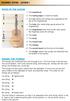 BEGINNER GUITAR - LESSON 1 PARTS OF THE GUITAR 1- The headstock. 2- The tuning pegs or machine heads. 3- The nut (where the strings are supported at the top of the fingerboard). 4- The frets (the metal
STUDY GUIDE. Illinois Licensure Testing System. Music (143) This test is now delivered as a computer-based test.
 Illinois Licensure Testing System STUDY GUIDE Music (143) This test is now delivered as a computer-based test. See www.il.nesinc.com for current program information. Illinois State Board of Education IL-SG-FLD143-05
Early Music HOCHSCHULE FÜR MUSIK UND THEATER »FELIX MENDELSSOHN BARTHOLDY« Programmes of study:
 HOCHSCHULE FÜR MUSIK UND THEATER Early Music Programmes of study: For instrumental subjects (recorder, transverse flute, historic oboe instruments, bassoon/dulcian, natural horn, natural trumpet, cornett,
Designing an Instrumental Music Program: Curriculum Guide
 Designing an Instrumental Music Program: Curriculum Guide A Guide for Developers of Learning Programs Department of Education, Queensland in association with Ministry of Education (Office of Schools Administration),
AM SYLLABUS (2016) MUSIC AM 24 SYLLABUS
 AM SYLLABUS (2016) MUSIC AM 24 SYLLABUS Music AM 24 Syllabus (Available in September) Paper I Aural (30 mins) & Written (2hrs)+ Paper II Oral (20 mins) & Written (2 hrs+30 mins) + Paper III (25mins) &
FAQs about Music Qualifications
 FAQs about Music Qualifications BACK TO CONTENTS Trinity College London Blue Fin Building 110 Southwark Street London SE1 0TA UK T +44 (0)20 7820 6100 F +44 (0)20 7820 6161 E [email protected] www.trinitycollege.com
Theory of Music Jonathan Dimond Béla Bartók (1881-1945) (version October 2009) Introduction
 Theory of Music Jonathan Dimond Béla Bartók (1881-1945) (version October 2009) Introduction Bela Bartok (1881-1945) was a Hungarian composer and pianist who was also a pioneer in the study of the traditional
Basic Music Theory. Reading Different Clefs
 1 Basic Music Theory Reading Different Clefs The most commonly used clefs are the treble and bass. The ability to read both of these clefs proficiently is essential for Leaving Cert. Music. Clef reading
How to Read Music Notation
 How to Read Music Notation The New School of American Music IN JUST 30 MINUTES! C D E F G A B C D E F G A B C D E F G A B C D E F G A B C D E F G A B C D E 1. MELODIES The first thing to learn about reading
National 5 Music Course Assessment Specification (C750 75)
 National 5 Music Course Assessment Specification (C750 75) Valid from August 2013 This edition: April 2015, version 2.0 This specification may be reproduced in whole or in part for educational purposes
Southeastern University Music Department. Audition Information
 Southeastern University Music Department SEU Music Auditions Page 1 of 17 Audition Information An audition is required of all students applying to any music degree programs offered at Southeastern University.
MUSIC OFFICE - SONGWRITING SESSIONS SESSION 1 HARMONY
 MUSIC OFFICE - SONGWRITING SESSIONS SESSION 1 HARMONY Introduction All songwriters will use harmony in some form or another. It is what makes up the harmonic footprint of a song. Chord sequences and melodies
AP MUSIC THEORY SUMMER ASSIGNMENT
 AP MUSIC THEORY SUMMER ASSIGNMENT AP Music Theory Students and Parents, You are receiving this letter because you or your son/daughter is enrolled in AP Music Theory for this next school year. Please take
PROVIDENCE UNIVERSITY COLLEGE
 4.6.16 Music Academic Staff Bill Derksen, Ph.D., University of Minnesota, Emeritus Karen Sunabacka, Ph.D., University of California at Davis, Program Coordinator Darryl Friesen, D.M.A., University of Illinois
Course Outline of Record Curriculum Council Approval Date: 11/04/2013. Discipline, Number, Title: Music 101, Music Appreciation.
 Page 1 of 5 Course Outline of Record Curriculum Council Approval Date: 11/04/2013 Discipline, Number, Title: Music 101, Music Appreciation Units and Hours: Catalog Entry: Requisites: 3.00 Units 48.00 Hours
Cathy Benedict, Ed.D Florida International University NAfME Nashville, 2013 Doing Away With Classroom Management: Teaching for Musical Transitions
 Cathy Benedict, Ed.D Florida International University NAfME Nashville, 2013 Doing Away With Classroom Management: Teaching for Musical Transitions The following can be made appropriate for 1st-5th grade
Southeastern University Music Department. Audition Information
 Southeastern University Music Department SEU Music Auditions Page 1 of 18 Audition Information An audition is required of all students applying to any music degree programs offered at Southeastern University.
A series of music lessons for implementation in the classroom F-10.
 A series of music lessons for implementation in the classroom F-10. Conditions of Use The materials housed on this page are freely available for download and educational use. These resources were developed
Music Fundamentals 5: Triads, Chords, Introduction to Roman Numerals. Collection Editor: Terry B. Ewell
 Music Fundamentals 5: Triads, Chords, Introduction to Roman Numerals Collection Editor: Terry B. Ewell Music Fundamentals 5: Triads, Chords, Introduction to Roman Numerals Collection Editor: Terry B.
MUSIC - SCHEMES OF WORK. For Children Aged 8 to 12
 Music Lessons Structure MUSIC - SCHEMES OF WORK For Children Aged 8 to 12 Time Approx. 90 minutes 1. Remind class of last topic area explored and relate to current topic. 2. Discuss and explore with examples.
Admission requirements for The Royal Academy of Music
 1 Admission requirements for The Royal Academy of Music Master's degree programmes 2014 2 Welcome to the Royal Academy of Music At the Royal Academy of Music, we place the individual musician and the development
application for music major and worship leadership minor
 application for music major and worship leadership minor 2 audition procedure for bachelor of arts in music and bachelor of music degrees Students accepted into the Music Major Program at ORU are required
Antonín Dvořák Life Dates: 1841-1904 Nationality: Czech Period: Late Romantic
 Antonín Dvořák Life Dates: 1841-1904 Nationality: Czech Period: Late Romantic I should be glad if something occurred to me as a main idea that occurs to Dvořák only by the way. Johannes Brahms (1833-97)
Music Theory Worksheet. Music Theory 1
 Music Theory 1 Photocopiable Worksheets on Music Theory 1 INTRODUCTION TO THE STAVE & NOTATION The way we write music down has changed a great deal through the centuries but today we use a series of 5
Bass Clef Sight-Reading Exercise Worksheet
 Bass Clef Sight-Reading Exercise Worksheet Instructions: In this exercise you will work through five different levels of sight-reading ability. You may wish to print four copies of the music sheet for