
SIMPLY CLEVER. ŠKODA Fabia OWNER'S MANUAL
|
|
|
- Marlene Lamb
- 9 years ago
- Views:
Transcription
1 SIMPLY CLEVER ŠKODA Fabia OWNER'S MANUAL

2

3 Introduction You have opted for a ŠKODA our sincere thanks for your confidence in us. Your new ŠKODA offers you a vehicle featuring the most modern engineering and a wide range of equipment which you will undoubtedly wish to use to the full during your daily motoring. That is why, we recommend that you read this Owner's Manual attentively to enable you to become familiar with your car and all that it offers as quickly as possible. Please do not hesitate to contact your specialist garage or importer should you have any further questions or any problems regarding your vehicle which may arise. He will be ready at any time to receive your questions, suggestions and criticisms. National legal provisions, which deviate from the information contained in these operating instructions, take precedence over the information contained in the operating instructions. We wish you much pleasure with your ŠKODA and pleasant motoring at all times. Your ŠKODA AUTO a.s. (hereinafter ŠKODA)

4 2 Introduction On-board literature The on-board literature for your vehicle consists of this Owner's Manual as well as a Service schedule and a Help on the road. There can also be other additional operating manuals and instructions on-board (e. g. an operating manual for the radio) depending on the vehicle model and equipment. If one of the publications listed above is missing, please contact a specialist garage immediately, where one will be glad to assist you in such matters. One should note that the details given in the vehicle's technical documentation always take precedence over those in the Owner's Manual. Owner's Manual This Owner's manual describes all possible equipment variants without identifying them as special equipment, model variants or market-dependent equipment. Consequently, this vehicle does not need to contain all of the equipment components described in this Owner's manual. The scope of equipment for your vehicle is described in the sales documentation you were given when purchasing the car. For more information, contact your local ŠKODA retailer. The illustrations can differ in minor details from your vehicle; they are only intended for general information. In addition to information regarding all the controls and equipment, the Owner's Manual also contains important information regarding care and operation for your safety and also to retain the value of your vehicle. To provide you with valuable tips and aids. You will learn how you can operate your vehicle safely, economically and in an environmentally conscious way. For safety reasons, please also pay attention to the information on accessories, modifications and replacement of parts page 169. The other chapters of the Owner's Manual are also important, however, for proper treatment of your car - in addition to regular care and maintenance - helps to retain its value and in many cases is also one of the conditions for possible warranty claims. The Service schedule contains: Vehicle data; Service intervals; Overview of the service work; Service proof; Confirmation of mobility warranty (only valid in certain countries); important information on the warranty. The confirmations of the carried out service work are one of the conditions for possible warranty claims. Please always present the Service schedule when you take your car to a specialist garage. If the Service schedule is missing or worn, please contact the specialist garage where your car is serviced regularly. You will receive a duplicate, in which the previously carried out service work are confirmed. Help on the road Contains the most important telephone numbers in individual countries as well as the addresses and telephone numbers of ŠKODA importers.

5 Table of Contents 3 Table of Contents Layout of this Owner's Manual (explanations) Using the system Cockpit Overview Instruments and warning lights General information Overview of the instrument cluster Engine revolutions counter Speedometer Coolant temperature gauge Fuel gauge Counter for distance driven Service reminder indicator Digital clock Shift recommendation for changing gears Multi-functional indicator (onboard computer) MAXI DOT display (information display) Auto Check Control Warning lights Unlocking and locking Vehicle key Locking/Unlocking Child safety lock Central locking system Remote control Anti-theft alarm system Interior monitor and towing protection monitoring.. 36 Electrical power windows Electric sliding/tilting roof Lights and Visibility Lights Interior lighting Visibility Windshield wiper and wash system Rear-view mirror Seats and Stowage Front seats Head restraints Heating the front seats Rear seats Pedals luggage compartment Variable loading floor in the luggage compartment (Combi) Luggage net partition (Combi) Bicycle holder in the luggage compartment Roof rack Front cup holder Rear cup holder Parking ticket holder Ashtray Cigarette lighters and power sockets Storage compartments Heating and air conditioning system Introduction Air outlet vents Heating Air conditioning system (manual air conditioning system) Climatronic (automatic air conditioning) Starting-off and Driving Setting steering wheel position Ignition lock Starting the engine Switching off the engine Shifting (manual gearbox) Pedals Handbrake Parking aid Cruise control system (CCS) START-STOP Automatic gearbox Automatic gearbox Communication Multifunction steering wheel Universal telephone preinstallation GSM II Voice control Music playback via Bluetooth Inputs AUX-IN and MDI Safety Passive Safety Basic information Correct seated position Seat belts Why seat belts? The physical principle of a frontal collision Important safety information regarding the use of seat belts How are seat belts correctly fastened? Belt tensioner Airbag system Description of the airbag system Front airbags Side airbags Head airbags Deactivating airbags Transporting children safely What you should know about transporting children!. 121 Child seat Attaching a child seat using the ISOFIX system Attaching child seat using the Top Tether system Using the system Safety Driving Tips General Maintenance Breakdown assistance Technical data

6 4 Table of Contents Driving Tips Intelligent Technology Electronic stability programme (ESP) Brakes Brake booster Antilock brake system (ABS) Brake Assist Uphill Start Assist Electrohydraulic power steering Tyre pressure monitoring system Diesel particle filter (diesel engine) Driving and the Environment The first kilometres and afterwards Catalytic converter Driving in an economical and environmentally conscious manner Environmental compatibility Motoring abroad Avoiding damage to your vehicle Driving through bodies of water on roads Towing a trailer Towing a trailer General Maintenance Taking care of your vehicle and cleaning the vehicle General Care of the exterior of vehicle Care of the interior of vehicle Fuel Petrol Diesel Refuelling Inspecting and Replenishing Engine compartment Engine oil Cooling system Brake fluid Battery Windshield washer system Wheels and Tyres Wheels Accessories, changes and replacement of parts. 169 General Breakdown assistance Breakdown assistance First-aid box and warning triangle Fire extinguisher Vehicle tool kit Spare wheel Changing a wheel Tyre repair kit Jump-starting The vehicle Fuses and light bulbs Electric fuses Bulbs Technical data Technical data General information Used abbreviations Performances Weight Identification details Fuel consumption according to the ECE standards and EU guidelines Dimensions Engine oil specifications Engine 1.2 l/44 kw - EU Engine 1.2 l/51 kw - EU5/EU2 DDK Engine 1.2 l/63 kw TSI - EU Engine 1.2 l/77 kw TSI - EU Engine 1.4 l/63 kw - EU Engine 1.6 l/77 kw - EU4, EU2 DDK Engine 1.4 l/132 kw TSI - EU Engine 1.2 l/55 kw TDI CR DPF - EU Engine 1.6 l/55 kw TDI CR - EU Engine 1.6 l/66 kw TDI CR - EU Engine 1.6 l/77 kw TDI CR - EU Index

7 Table of Contents 5 Using the system Safety Driving Tips General Maintenance Breakdown assistance Technical data

8 6 Layout of this Owner's Manual (explanations) Layout of this Owner's Manual (explanations) The Owner's Manual has been systematically designed, in order to make it easy for you to find and absorb the information you require. Chapters, table of contents and subject index The text of the Owner's manual is divided into relatively short sections which are combined into easy-to-read chapters. The chapter you are reading at any particular moment is highlighted at the bottom right of the page. The Table of contents is arranged according to the chapters and the detailed Subject index at the end of the Owner's Manual helps you to rapidly find the information you are looking for. Sections The majority of Sections apply to all models. Since there is a wide range of different equipment and options available it is clearly unavoidable, despite dividing the contents into sections, that mention may be made of equipment which is not fitted to your vehicle. Brief information and instructions Each section has a Heading. This is followed by Brief information (in large italic lettering), which tells you the subject which is dealt with in this section. Most of the illustrations are accompanied by an Instruction (in relatively large letters) which explains to you in a straightforward way the action you have to take. Work steps which have to be carried out are illustrated with a hyphen. Direction indications All direction indications such as left, right, front, rear relate to the direction of travel of the vehicle. Explanation of symbols End of a section. The section is continued on the next page. s All four kinds of notes, which are used in the text, are always stated at the end of the respective section. The most important notes are marked with the heading. These notes draw your attention to a serious risk of accident or injury. While reading the text you will frequently encounter a double arrow followed by a small warning symbol. This symbol is intended to draw your attention to a note at the end of the section to which you must pay careful attention. CAUTION A Caution note draws your attention to the possibility of damage to your vehicle (e.g. damage to gearbox), or points out general risks of an accident. For the sake of the environment An Environmental note draws your attention to environmental protection aspects. This is where you will, for example, find tips aimed at reducing your fuel consumption. A normal draws your attention in a general way to important information.

9 Layout of this Owner's Manual (explanations) 7 Using the system Safety Driving Tips General Maintenance Breakdown assistance Technical data

10 8 Cockpit Fig. 1 Cockpit

11 Cockpit 9 Using the system Cockpit Overview This overview will help you to quickly familiarise yourself with the displays and the control elements Power windows Electric exterior mirror adjustment Air outlet vents Lever for the multi-functional switch: Turn signal light, headlight and parking light, headlight flasher.. 45 Speed regulating system Steering wheel: with horn with driver airbag with controls for radio, radio navigation system and phone Instrument cluster: Instruments and indicator lights Lever for the multi-functional switch: Multi-functional indicator Windshield wiper and wash system Switch for rear window heater TCS switch Air outlet vents Switch for hazard warning lights Indicator light for a switched off front seat passenger airbag Depending on equipment fitted: Operating controls for the heating Operating controls for the air conditioning system Operating controls for Climatronic Storage compartments on the front passenger side Front passenger airbag Switch passenger airbag deactivation Switch depending on equipment fitted: Release for luggage compartment door Interior monitor Fuse box in the dash panel Light switch and headlamp beam adjustment , 44 Release lever engine compartment lid Lever for adjusting the steering wheel Ignition lock Depending on equipment fitted: Radio Radio navigation system Rocker switch for the heating on the driver's seat Central locking switch Depending on equipment fitted: Gearshift lever (manual gearbox) Selector lever (automatic gearbox) Rocker switch for the heating on the driver's seat Depending on equipment fitted: Ashtrays Storage compartment MDI Cars with factory-fitted radio or navigation system are supplied with separate instructions for operating such equipment. The arrangement of the controls and switches and the location of some items on right-hand drive models may differ from that shown in fig. 1. The symbols on the controls and switches are the same as for left-hand drive models. Using the system Safety Driving Tips General Maintenance Breakdown assistance Technical data

12 10 Instruments and warning lights Instruments and warning lights General information Pay attention primarily to the traffic situation! As the driver you are fully responsible for road safety. Operate the controls in the instrument cluster never while driving, only when the vehicle is stationary! Overview of the instrument cluster Fig. 2 Instrument cluster 1 2 Engine revolutions counter page 11 Display with counter for distance driven page 12 with Service Interval Display page 12 with digital clock page 13 with Multi-functional display page 14 with Information display page Speedometer page 11 Coolant temperature gauge page 11

13 Instruments and warning lights Button for display mode: Set hours/minutes Activating/deactivating the second speed in mph or km/h Service interval - Display of the remaining number of days, kilometres or miles to the next Inspection Service/Reset 1) Button for: Reset trip counter for distance driven Resetting Service Interval Display Set hours/minutes Activate/deactivate display mode Fuel gauge page 11 Engine revolutions counter The red zone of the rev counter scale 1 fig. 2 indicates the range in which the engine control unit begins to limit the engine speed. The engine control unit restricts the engine speed to a steady limit value. Shift into the next higher gear or select the selector lever position D of the automatic gearbox before reaching the red zone of the rev counter scale. Avoid high engine speeds during the driving time and before the engine has been warmed up to operating temperature page 135. For the sake of the environment Shifting to a higher gear in good time helps to reduce the fuel consumption, minimises operating noise levels, protects the environment and contributes to a longer life and reliability of the engine. Speedometer Warning against excessive speeds An acoustic warning signal will sound when the vehicle speed exceeds 120 kilometres per hour. The acoustic warning signal will switch off again when the vehicle speed goes below this speed limit. Coolant temperature gauge The coolant temperature gauge 4 fig. 2 operates only when the ignition is switched on. Please pay attention to the following guidelines regarding temperature ranges in order to avoid damage to the engine: Cold range If the pointer is in the left-hand area of the scale it means that the engine has not yet reached its operating temperature. Avoid running at high engine speeds, at full throttle and at severe engine loads. The operating range The engine has reached its operating temperature as soon as the pointer moves into the mid-range of the scale. The pointer may also move further to the right at high engine loads and high outside temperatures. This is not critical provided the warning symbol in the instrument cluster does not flash. If the symbol in the instrument cluster flashes it means that either the coolant temperature is too high or the coolant level is too low. Please refer to the following guidelines page 23, Coolant temperature/ Coolant quantity. Pay attention to the warning notes page 153, Working in the engine compartment before opening the bonnet and inspecting the coolant level. CAUTION Additional headlights and other attached components in front of the fresh air inlet impair the cooling efficiency of the coolant. There is then a risk of the engine overheating at high outside temperatures and high engine loads! Fuel gauge The fuel gauge 7 fig. 2 only operates when the ignition is switched on. 1) Valid for countries where the values are indicated in British measuring units. Using the system Safety Driving Tips General Maintenance Breakdown assistance Technical data

14 12 Instruments and warning lights The fuel tank has a capacity of about 45 litres. The warning symbol in the instrument cluster lights up when the pointer reaches the reserve marking. There are now about 7 litres of fuel remaining in the tank. This symbol is a reminder for you, that you must refuel. The following is displayed in the information display: Please refuel! (Please refuel!) An audible signal sounds as an additional warning signal. On some vehicles, the fuel gauge is shown in the display of the instrument cluster. CAUTION Never run the fuel tank completely empty! An irregular supply of fuel can lead to irregular engine running. Unburnt fuel may get into the exhaust system and damage the catalytic converter. Never seek to adjust the trip counter for distance driven while driving for safety reasons! If vehicles which are fitted with the information display the display of the second speed is activated in mph or km/h, this driving speed is indicated instead of the counter for the total distance driven. Service reminder indicator Counter for distance driven The counter for the distance driven is located in the bottom area of the display. The distance which you have driven with your vehicle is shown in kilometres (km). In some countries the measuring unit mile is used. Reset button If you hold the reset button 6 fig. 2 pressed for about 1 second, the trip counter is set back to zero. Trip counter for distance driven The trip counter indicates the distance which you have driven since this counter was last reset - in steps of 100 metres or 1/10 of a mile. Counter for distance driven The counter for distance driven indicates the total distance in kilometers or miles which the vehicle has been driven. Fault display If there is a fault in the instrument cluster Error will appear continuously in the display. Have the fault rectified as soon as possible by a specialist workshop. Fig. 3 Service Interval Display: Depending on the equipment installed in the vehicle, the text can differ on the display. Service Interval Display Before the next service interval a key symbol and the remaining kilometres are indicated after switching on the ignition fig. 3. At the same time, a display appears regarding the remaining days until the next service interval. The following is displayed in the information display: Service after... km or... days. (Service after... km or... days.) The kilometre indicator or the days indicator reduces in steps of 100 km. or days until the service due date is reached. A flashing key symbol and the text Service appears in the display for 20 seconds as soon as the due date for the service is reached. The following is displayed in the information display: Service now! (Service now!)

15 Instruments and warning lights 13 Display regarding the distance and days until the following service interval You can use the button 5 to display the remaining distance driven and the days until the next service interval page 10. A key symbol and a display regarding the remaining kilometers appear for 10 second in the display. At the same time, a display appears regarding the remaining days until the next service interval. On vehicles which are equipped with an information display, you can call up this display in the menu Settings page 19. The following will be displayed in the information display for 10 seconds: Service after... km or... days. (Service after... km or... days.) Resetting Service Interval Display It is only possible to reset the Service Interval Display, if a service message or at least a pre-warning is shown on the display of the instrument cluster. We recommend having this resetting performed by a specialist garage. The specialist garage: resets the memory of the display after the appropriate inspection; makes an entry in the Service Schedule; affix the sticker with the entry of the following service interval to the side of the dash panel on the driver's side. Reset the service interval displays by using the reset button 6 page 10 on the trip counter. On vehicles which are equipped with an information display, you can call up this display in the menu Settings page 19. If the instrument cluster is exchanged after a repair, the correct values must be entered in the counter for the Service Interval Display. This work is carried out by a specialist garage. The data displayed is the same after resetting the display with flexible service intervals (QG1) is displayed as that for a vehicle with fixed service intervals (QG2). We therefore recommend having the Service Interval Display reset only by an authorised ŠKODA Service Partner who is familiar with the procedure for resetting the display with a vehicle system tester. Please refer to the brochure Service schedule for extensive information about the service intervals. Digital clock The time is set with the buttons 5 and 6 fig. 2. Select the display which you wish to change with the button 5 and carry out the change with the button 6. On vehicles which are fitted with the information display, it is possible to set the time in the menu Time page 19. The clock should not be adjusted while driving for safety reasons but only when the vehicle is stationary! Shift recommendation for changing gears CAUTION We recommend that you do not reset the Service Interval Display yourself otherwise this can result in the service interval display being incorrectly set, which may also result in problems with operation of your vehicle. Never reset the display between service intervals otherwise this may result in incorrect readouts. information is retained in the Service Interval Display also after the battery of the vehicle is disconnected. Fig. 4 Shift recommendation for changing gears Using the system Safety Driving Tips General Maintenance Breakdown assistance Technical data

16 14 Instruments and warning lights An information for the engaged gear A fig. 4 is shown in the display of the instrument cluster. In order to minimise the fuel consumption, a recommendation for shifting into another gear is indicated in the display. If the control unit recognises that it is appropriate to change the gear, an arrow B is shown in the display. The arrow points up or down, depending on whether it is recommended to shift into a higher or lower gear. At the same time, the recommended gear is indicated instead of the currently engaged gear A. Memory Multi-functional indicator (onboard computer) Introduction The multi-functional indicator appears in the display fig. 5 or in the information display page 17 depending on the equipment fitted to your vehicle. The multi-functional indicator offers you a range of useful information. The outside temperature page 15 Driving time page 15 Current fuel consumption page 15 Average fuel consumption page 16 Range page 16 Distance driven page 16 Average speed page 16 Current speed page 16 Oil temperature page 16 Warning against excessive speeds page 16 On vehicles which are fitted out with information display, it is possible to switch off the display of some information. In certain national versions the displays appear in the Imperial system of measures. If the display of the second speed is activated in mph, the current speed is not indicated in km/h on the display. Fig. 5 Multi-functional indicator The multi-functional indicator is equipped with two automatic memories. The selected memory is displayed in the middle of the display field fig. 5. The data of the single-trip memory (memory 1) is shown if a 1 appears in the display. A 2 shown in the display means that data relates to the total distance memory (memory 2). Switching over the memory takes place with the button B fig. 6 on the windshield wiper lever. Single-trip memory (memory 1) The single-trip memory collates the driving information from the moment the ignition is switched on until it is switched off. New data will also flow into the calculation of the current driving information if the trip is continued within 2 hours after switching off the ignition. The memory will be is automatically erased, on the other hand, if the trip is interrupted for more than 2 hours. Total-trip memory (memory 2) The total distance driven memory gathers data from any number of individual journeys up to a total of 19 hours and 59 minutes driving or kilometres driven. 99 hours and 59 minutes driving time or km driven in vehicles with an Information display. The memory is deleted when either of these limits is reached and the calculation starts from anew. The total-trip memory will not, contrary to the single-trip memory, be deleted after a period of interruption of driving of 2 hours. All information in the memory 1 and 2 is erased if the battery of the vehicle is disconnected.

17 Instruments and warning lights 15 Using the system Outside temperature The outside temperature appears in the display when the ignition is switched on. If the outside temperature drops below +4 C, a snow flake symbol (warning signal for ice on the road) appears in front of the temperature indicator and flashes for 10 seconds, then remains displayed together with the outside temperature. At the same time an audible signal sounds. After pressing the rocker switch A on the windshield wiper lever fig. 6, the function which was shown last is indicated. Fig. 6 Multi-functional indicator: Control elements The rocker switch A and the button B are located on the windshield wiper lever fig. 6. Selecting the memory Short-term pressing of the button B on the windshield wiper lever allows to select the desired memory. Selecting the functions Press the top or bottom rocker switch A for longer than 0.5 seconds. In this way, call up in sequence the individual functions of the multi-functional indicator. Setting function to zero Select the memory you want. Press button B for more than 1 second. The following readouts of the selected memory will be set to zero by button B : average fuel consumption; distance driven; average speed; Driving time. You can only operate the multi-functional indicator when the ignition is switched on. After the ignition is switched on, the function displayed is the one which you last selected before switching off the ignition. Do not only rely upon the information given on the outside temperature display that there is no ice on the road. Please note that black ice may also be present on the road surface even at temperatures around +4 C - warning, drive with care! Driving time The driving time which has elapsed since the memory was last erased, appears in the display page 14. If you wish to calculate the driving time from a particular time of day you must first erase the memory at this moment in time by pressing the button B fig. 6. The maximum distance indicated in both memories is 19 hours and 59 minutes. 99 hours and 59 minutes in vehicles with an Information display. The indicator is set back to null if this period is exceeded. Current fuel consumption The current fuel consumption level is shown in the display in litres/100 km. This information can help you to adapt your style of driving to the fuel consumption you wish to achieve. The display appears in litres/hour if the vehicle is stationary or driving at a low speed. The indicated value will be updated every 0.5 seconds while you are driving. Using the system Safety Driving Tips General Maintenance Breakdown assistance Technical data

18 16 Instruments and warning lights Average fuel consumption The average fuel consumption since the memory was last erased is shown in the display in litres/100 km page 14. This information can help you to adapt your style of driving to the fuel consumption you wish to achieve. If you wish to determine the average fuel consumption over a certain period of time, you must erase the memory at the start of the new measurement using the button B on the windshield wiper lever fig. 6. A zero appears in the display for the first approx. 300 m you drive after erasing the memory. The indicated value will be updated every 5 seconds while you are driving. The amount of fuel consumed will not be indicated. Range The estimated range in kilometres is shown on the display. It indicates the distance you can still drive with your vehicle based on the present level of fuel in the tank for the same style of driving. The readout is shown in steps of 10 km. After lighting up of the indicator light for the fuel reserve the display is shown in steps of 5 km. The fuel consumption for the last 50 km is taken as a basis for calculating the range. If you drive in a more economical manner from this moment on, the range will be increased accordingly. If the memory is set to zero (after disconnecting the battery), the fuel consumption of 10 ltr./100 km is calculated for the range; afterwards the value is adapted accordingly to the style of driving. Distance driven The distance driven since the memory was last erased appears in the display page 14. If you wish to calculate the distance driven as of a particular time, you must erase the memory at this moment in time by pressing the button B on the windshield wiper lever fig. 6. The maximum distance indicated in both memories is km or on vehicles with information display, it is km. The indicator is set back to null if this period is exceeded. Average speed The average speed since the memory was last erased is shown in the display in km/hour page 14. If you wish to determine the average speed over a certain period of time, you must erase the memory at the start of the new measurement by pressing the button B on the windshield wiper lever fig. 6. A zero appears in the display for the first 100 m you drive after erasing the memory. The indicated value will be updated every 5 seconds while you are driving. Current speed The current speed which is identical to the display of the speedometer, is indicated on the display 3 fig. 2. Oil temperature If the oil temperature is lower than 50 C or if a fault in the system for checking the oil temperature is present, three lines are displayed instead of the oil temperature. Warning against excessive speeds This function enables you to set a speed limit and will notify you when this speed limit is exceeded. Adjust the speed limit while the vehicle is stationary With switch A fig. 6, choose the menu point Warning against excessive speeds. Press the button B to active the ability to set the speed limit (value flashes). Use the button A to adjust the required speed limit, e.g. to 50 km/h. Confirm the speed limit that was set with button B, or wait approx. 5 seconds until the setting is saved automatically (the value stops flashing). This allows you to set the speed in 5 km/h intervals. Adjust the speed limit while the vehicle is moving With switch A, choose the menu point Warning against excessive speeds.

19 Instruments and warning lights 17 You can drive at the desired speed, e.g. 50 km/h. Press button B to accept the current speed as the speed limit (the value flashes). If you wish to change the speed limit that was set, it is changed in 5 km/h intervals (e.g. the accepted speed of 47 km/h increases to 50 km/h or decreases to 45 km/h). Confirm the speed limit that was set by pressing button B again, or wait approx. 5 seconds until the setting is saved automatically (the value stops flashing). Change or delete speed limit With switch A, choose the menu point Warning against excessive speeds. Remove the speed limit with button B. Pressing the button B again activates the change mode for the speed limit. Functional faults, if required repair work and other information are indicated by red symbols page 18 and yellow symbols page 19. Lighting up of certain symbols is combined with an acoustic warning signal. Information and texts giving warnings are also shown in the display page 20. The following information can be shown in the display (depending on the equipment installed on the vehicle): Main menu page 17 Door, luggage compartment door and bonnet ajar warning page 18 Service Interval Display page 12 Selector lever position for an automatic gearbox page 93 Main menu If you exceed the set speed limit, an acoustic warning signal will sound as a warning. At the same time the message Warning against excessive speeds appears with the set limit value. The set speed limit remains stored even after switching off the ignition. Pay attention primarily to the traffic situation! As the driver you are fully responsible for road safety. MAXI DOT display (information display) Introduction The information display provides you with information in a convenient way concerning the current operating state of your vehicle. The information system also provides you with data (depending on the equipment installed in the vehicle) relating to the radio, mobile phone, multi-functional indicator, radio navigation system, the unit connected to the MDI input and the automatic gearbox. Certain functions and operating conditions are always being checked on the vehicle when the ignition is switched on and also while driving. Fig. 7 Information display: Control elements You can activate the Main Menu by pressing the rocker switch A fig. 7 for more than 1 second. You can select individual menu points by means of the rocker switch A. When the pushbutton B is briefly pressed, the information you have selected is displayed. You can select the following information (depending on the equipment installed on the vehicle): MFD page 14 Audio Navigation Using the system Safety Driving Tips General Maintenance Breakdown assistance Technical data

20 18 Instruments and warning lights Phone page 98 Vehicle status page 18 Settings page 19 The menu point Audio is only then displayed when the factory-fitted car radio is switched on. The menu point Navigation is only then displayed when the factory-fitted radio navigation system is switched on. If warning messages are shown in the information display page 18, these messages can be confirmed with the button B on the windshield wiper lever in order to call up the main menu. If you do not activate the information display at that moment, the menu shifts to one level higher every 10 seconds. The operation of the factory-fitted car stereo or radio navigation system is described in separate operating instructions to be found in the on-board literature. Door, luggage compartment door and bonnet ajar warning The door, luggage compartment and bonnet ajar warning lights up if at least one door, the luggage compartment or bonnet are not closed. The symbol indicates which door is still open or whether the luggage compartment door or bonnet is not closed. The symbol goes out as soon as the doors, luggage compartment door and bonnet are completely closed. A warning signal sounds if the car is driven at a speed of more than 6km/hour and if the engine or the luggage compartment door is open. Some operational faults, urgent repairs, service work or other information appear in the display of the instrument cluster. The displays are shown with a red or yellow light symbol depending on the priority of the message. The red symbols indicate danger (priority 1) while the yellow symbols indicate a warning (priortity 2). Information for the driver may also appear in addition to the symbols page 20. There is at least one error message when the term Vehicle status is displayed in the menu. After selecting this menu the first of the error messages is displayed. Several error messages are shown on the display under the message e.g. 1/3. This indicates that the first of a total of three error messages is displayed. The respective messages are displayed one after the other in an interval of 5 seconds. Check as soon as possible the displayed error messages. As long as the operational faults are not rectified, the symbols are always indicated again. After the first display, the symbols are indicated without information for the driver. If a fault occurs, a warning signal will also sound in addition to the symbol and text in the display: Priority 1 - three warning signals Priority 2 - one warning signal Red symbols A red symbol signals danger. Bring the vehicle to a stop. Switch the engine off. Investigate the function indicated. Obtain professional assistance. Auto Check Control Car state The Auto Check Control carries out a check of certain functions and vehicle components. The check is performed constantly when the ignition is switched on, both when the vehicle is stationary, as well as when driving. Meaning of the red symbols: Engine oil pressure too low page 23 Overheated clutches of the automatic gearbox DSG Three successive warning signals will sound if a red symbol appears. page 91

21 Instruments and warning lights 19 Yellow symbols A yellow symbol signals a warning. Check the relevant function as soon as possible. The meaning of the yellow symbols: Check engine oil level, engine oil sensor disturbed One warning signal will sound if a yellow symbol appears. page 23 If several operational faults of priority 2 exist, the symbols appear one after the other and are each illuminated for about 5 seconds. Set-up You can change certain settings by means of the information display. The current setting is shown on the information display in the respective menu at the top below the line. You can select the following information (depending on the equipment installed on the vehicle): Language MFD Data Time Winter tyres Units Alternative speed displayed (Second speed) Service Interval (Service) Factory Setting Back Language Here you can set in which language the warning and information texts should be displayed. Displays of the MFA Here you can switch off or on certain displays of the multi-functional indicator. Time Here you can set the time, the time format (12 or 24 hour indicator) and the time change summer/winter time. Winter tyres Here you can set at which speed a warning signal should sound. This function is used for e.g winter tyres with the permissible maximum speed less than the maximum speed of the vehicle. When exceeding the speed, an indication is displayed on the information display: Snow tyres max. speed... km/h (Winter tyres maximum... km/h) Measures Here you can set the units for temperature, consumption and distance driven. Second speed Here you can switch on the display of the second speed in mph or in km/h 1). Service Here you can have the kilometers still to be driven and the days until the following service interval shown and the Service Interval Display reset. Factory Setting After selecting the menu Factory setting the factory setting of the information display is restored. After selecting the menu point Back you will reach one level higher in the menu. 1) Valid for countries where the values are indicated in British measuring units. Using the system Safety Driving Tips General Maintenance Breakdown assistance Technical data
22 20 Instruments and warning lights Warning lights Overview The warning lights indicate certain functions or faults. Turn signal lights (to the left) page 21 Turn signal lights (to the right) page 21 Main beam page 21 Low beam page 21 Rear fog light page 21 Failure of the light bulbs page 22 Generator page 22 Fig. 8 Instrument cluster with warning lights Fog lights page 22 Electrohydraulic power steering page 22 EPC fault light (petrol engine) page 22 Glow plug system (diesel engine) page 22 Coolant temperature/coolant level page 23 Fuel reserve page 23
23 Instruments and warning lights 21 Engine oil page 23 Open door page 24 Fluid level in windshield washer system page 24 Control system for exhaust page 24 Switch off traction control system (TCS) page 24 Tyre pressure monitoring system page 24 Selector lever lock page 25 Traction control system (TCS) page 25 Electronic stability programme (ESP) page 25 Antilock brake system (ABS) page 25 Brake system page 26 Handbrake page 26 Speed regulating system page 26 Airbag system page 26 Diesel particle filter (diesel engine) page 27 Seat belt warning light page 27 If you do not pay attention to the warning lights coming on and the corresponding descriptions and warning notes, this may result in severe injuries or major vehicle damage. The engine compartment of your car is a hazardous area. There is a risk of injuries, scalding, accidents and fire when working in the engine compartment, e.g. inspecting and replenishing oil and other fluids. It is also essential to observe all warnings page 153, Working in the engine compartment. Arrangement of the indicator lights depends on the model and model version. Operational faults are shown in the instrument cluster as red symbols (priority 1 - danger) or yellow symbols (priority 2 - warning). Turn signal system Either the left or right indicator light flashes depending on the position of the turn signal lever. The indicator light flashes at twice its normal rate if a turn signal light fails. Switching off the hazard warning light system is switched on will cause all of the turn signal lights as well as both indicator lights to flash. Further information about the turn signal system page 45. Main beam The indicator light comes on when the main beam is selected or also when the headlight flasher is operated. Further information about the main beam page 45. Low beam The indicator light comes on when low beam is selected page 41. Rear fog light The warning light comes on when the rear fog lights are operating page 43. Using the system Safety Driving Tips General Maintenance Breakdown assistance Technical data
24 22 Instruments and warning lights Bulb failure The warning light comes on if a bulb is faulty: up to 2 seconds after the ignition is switched on; when switching on the defective light bulb. The following text e.g will be displayed in the information display: Check front right dipped beam! (Check front right dipped beam!) The rear side lights and the licence plate lighting require several light bulbs. The indicator light only lights up if all light bulbs of the licence plate lighting or the parking light (in one rear light unit) are defective. Check regularly the function of the light bulbs. Alternator The warning light comes on after the ignition has been switched on. It should go out after the engine has started. If the warning light does not go out after the engine has started, or comes on when driving, drive to the nearest specialist garage. The vehicle battery will be discharged in this case so switch off all non-essential electrical components. CAUTION If the warning light comes on when driving and in addition the warning light (cooling system fault) also comes on in display, you must then stop the car immediately and switch the engine off - risk of engine damage! Fog lights The warning light comes on when the fog lights are operating page 43. Electrohydraulic power steering The warning light comes on for a few seconds when the ignition is switched on. If the warning light after switching on the ignition or when driving lights up continuously, a fault exists in the electrohydraulic power steering. The power steering operates with reduced steering assist or is completely without function. Further information page 133. Contact your specialist garage if the power steering is defective. If the yellow warning light goes out after starting the engine again and a short drive, it is not necessary to visit a specialist garage. If the battery has been disconnected and reconnected, the yellow warning light comes on after switching on the ignition. The warning light must go out after driving a short distance. There is no power-assisted steering support when the vehicle is being towed without the engine running or when the power-assisted steering is defect. The vehicle is fully steerable however. There is however increased force required to turn the steering wheel. EPC fault light (petrol engine) The (Electronic Power Control) warning light comes on for a few seconds when the ignition is switched on. If the warning light flashes after starting the engine or flashes while driving, a fault exists in the engine control system. The engine management system selects an emergency programme which enables you to drive to the nearest specialist garage by adopting a gentle style of driving. Glow plug system (diesel engine) The indicator light lights up for a cold engine when switching on the ignition (pre-heat position) 2 page 82. Start the engine after the indicator light goes out. The glow plug indicator light will come on for about 1 second if the engine is at a normal operating temperature or if the outside temperature is above +5 C. This means that you can start the engine right away. There is a fault in the glow plug system if the warning light does not come on or lights up continuously; contact a specialist garage as soon as possible to obtain assistance.
25 Instruments and warning lights 23 If the warning light begins to flash while driving, a fault exists in the engine control. The engine management system selects an emergency programme which enables you to drive to the nearest specialist garage by adopting a gentle style of driving. Coolant temperature/ Coolant quantity The warning light lights up until the engine reaches operating temperature 1). Avoid running at high engine speeds, at full throttle and at severe engine loads. The warning light comes on for a few seconds when the ignition is switched on. The coolant temperature is too high or the coolant level too low if the warning light lights up or flashes while driving. An audible signal sounds as a warning signal. In this case stop and switch the engine off and check the coolant level; top up the coolant as necessary page 158, Replenishing the coolant. Do not continue your journey if for some reason it is not possible under the conditions prevailing to top up with coolant. Keep the engine switched off and obtain professional assistance from a specialist garage, otherwise it could lead to severe engine damage. If the coolant is within the specified range, the increased temperature may be caused by an operating problem at the coolant fan. Check the fuse of the coolant fan, replace it if necessary page 186, Fuse assignment at the battery (automatic gearbox). If the warning light does not go out although the coolant is at the correct level and also the fuse of the fan is in proper order, do not continue driving. Contact a specialist garage to obtain assistance. Please refer to the following guidelines page 156, Cooling system. The following text will be displayed in the information display: Check coolant! Owner's manual! Car documentation! If you must stop for technical reasons, then park the vehicle at a safe distance from the traffic and switch off the engine and switch on the hazard warning light system page 44, Switch for hazard warning lights. Fuel reserve The warning light comes on, if the fuel level is less than 7 litres. An audible signal sounds as an additional warning signal. The following text will be displayed in the information display: Please refuel! Range...km (Please refuel! (Range...km) Engine oil The warning light lights up red (low oil pressure) The warning light comes on for a few seconds 2) when the ignition is switched on. Stop the vehicle and switch the engine off if the warning light does not go off after the engine has started or flashes while driving. Check the oil level and top up with oil as necessary page peeps sound as an additional warning signal. Do not continue your journey if for some reason it is not possible under the conditions prevailing to top up with oil. Keep the engine switched off and obtain professional assistance from a specialist garage, otherwise it could lead to severe engine damage. Do not drive any further if the warning light flashes even if the oil is at the correct level. Do not run the engine not at idling speed either. Contact the nearest specialist garage to obtain professional assistance. The following text will be displayed in the information display: Oil Pressure Engine off! Owner's manual!. Switch off the engine! Car documentation! 1) Not valid for vehicles with information display. 2) The warning light on vehicles fitted with information display does not come on after switching the ignition on, but only if a fault exists or the engine oil level is too low. Using the system Safety Driving Tips General Maintenance Breakdown assistance Technical data
26 24 Instruments and warning lights The warning light lights up yellow (oil quantity too low) If the warning light lights up yellow, the quantity of oil in the engine is probably too low. Check as soon as possible the oil level or top up page 155 with engine oil. A peep sounds as an additional warning signal. The following text will be displayed in the information display: Check oil level! (Check oil level!) The warning light will go out if the bonnet is left open for more than 30 seconds. If no engine oil has been replenished, the warning light will come on again after driving about 100 km. The warning light flashes yellow (engine oil level sensor faulty) A fault on the engine oil level sensor is indicated additionally by an audible signal and the warning light coming on several times after the ignition has been switched on. In this case have the engine inspected without delay by a specialist garage. The following text will be displayed in the information display: Oil sensor workshop! (Oil sensor workshop!) If you must stop for technical reasons, then park the vehicle at a safe distance from the traffic and switch off the engine and switch on the hazard warning light system page 44. The red oil pressure light is not an oil level indicator! One should therefore check the oil level at regular intervals, preferably after every refueling stop. Pay attention to the following instructions page 153, Working in the engine compartment before checking the coolant fluid level and opening the bonnet. Open door The warning light comes on if one or several doors are opened or if the boot lid is opened. If one of the doors opens while driving, the warning light lights up and an audible signal sounds. The warning light comes on even when the ignition is switched off. The warning light lights up for a maximum of 5 minutes. In vehicles with an information display, this warning light is replaced by a vehicle symbol page 18 Windshield washer fluid level The warning light comes on when the ignition is switched on if there is insufficient fluid in the windshield washer system. Top up with liquid page 163. The following text will be displayed in the information display: Top up wash fluid! (Top up washer fluid) Control system for exhaust The warning light comes on after the ignition has been switched on. If the warning light does not go out after starting the engine or it lights up when driving, a fault exists in an exhaust relevant component. The engine management system selects an emergency programme which enables you to drive to the nearest specialist garage by adopting a gentle style of driving. Anti-spin regulation (ASR) The warning light lights up if the TCS system is switched off. Further information about the TCS page 129. Tyre pressure monitoring The warning light lights up, if there is a substantial drop in inflation pressure in one of the tyres. Reduce the speed and check or correct as soon as possible the inflation pressure in the tyres page 164. An audible signal sounds as an additional warning signal. If the warning light flashes, there is a system fault. Visit the nearest specialist garage and have the fault rectified. Further information about the tyre pressure monitoring system page 133.
27 Instruments and warning lights 25 When the warning light lights up, immediately reduce the speed and avoid sudden steering and brake manoeuvres. Please stop the vehicle without delay at the nearest possible stop and inspect the tyres and their inflation pressures. Under certain circumstances (e.g. sporty style of driving, wintry or unpaved roads) the warning light can be delayed or does not light up at all. If the battery has been disconnected, the warning light comes on after switching on the ignition. The warning light must go out after driving a short distance. Selector lever lock (automatic gearbox) If the green warning light lights up, operate the brake pedal. This is necessary, in order to be able to move the selector lever out of the position P or N. Further information about the selector lever lock page 94. Traction control system (TCS) The warning light comes on for a few seconds when the ignition is switched on. The warning light comes on when driving when a control cycle is activated. The warning light lights up permanently if there is a fault in the TCS system. The fact that the TCS system operates together with the ABS means that the TCS warning light will also come on if the ABS system is not operating properly. If the warning light comes on immediately after starting the engine, the TCS system can be switched off for technical reasons. In this case, the TCS system can be switched on again by switching the ignition on and off. If the warning light goes out, the TCS system is fully functional again. Further information about the TCS page 129, Traction control system (TCS). If the battery has been disconnected and reconnected, the warning light comes on after switching on the ignition. The warning light must go out after driving a short distance. Electronic stability programme (ESP) The warning light comes on for a few seconds when the ignition is switched on. If the ESP helps to stabilise the vehicle (for example when applying and releasing a braking force to an individual wheel), then the indicator light flashes. The warning light lights up permanently if there is a fault in the ESP system. The fact that the ESP system operates together with the ABS means that the ESP warning light will also come on if the ABS system is not operating properly. If the warning light comes on immediately after starting the engine, the ESP system can be switched off for technical reasons. In this case, the ESP system can be switched on again by switching the ignition on and off. If the warning light goes out, the ESP system is fully functional again. Further information on the ESP page 128, Electronic stability programme (ESP). If the battery has been disconnected and reconnected, the warning light comes on after switching on the ignition. The warning light must go out after driving a short distance. Antilock brake system (ABS) The warning light shows the functionality of the ABS. The warning light comes on for a few seconds after the ignition has been switched on or when starting the engine. The warning light goes out after an automatic check sequence has been completed. A fault in the ABS The system is not functioning properly if the ABS warning light does not go out within a few seconds after switching on the ignition, does not light up at all or lights up while driving. The vehicle will only be braked by the normal brake system. Visit a specialist garage immediately and adjust your style of driving appropriately as you will not know how great the damage is. Further information about ABS page 131, Antilock brake system (ABS). A fault in the entire brake system If the ABS warning light comes on together with the brake system warning light, there is a fault not only in the ABS but also in another part of the brake system. Using the system Safety Driving Tips General Maintenance Breakdown assistance Technical data
28 26 Instruments and warning lights If the brake system warning light comes on together with the ABS warning light stop the vehicle immediately and check the brake fluid level in the reservoir page 159, Brake fluid. If the fluid level has dropped below the MIN marking, do not drive any further - risk of accident! Contact a Škoda dealer to obtain professional assistance. Pay attention to the following instructions page 153, Working in the engine compartment before checking the brake fluid level and opening the bonnet. If the brake fluid is at the correct level, the ABS control function has failed. The rear wheels may then block very rapidly when braking. In certain circumstances, this can result in the rear end of the car breaking away - risk of skidding! Drive carefully to the nearest specialist garage and have the fault rectified. Brake system The warning light lights up when the brake fluid level is too low or there is a fault in the ABS. if the warning light flashes and an audible signal sounds three times, stop and check the brake fluid level. The following text will be displayed in the information display: Brake fluid Owner's manual. If there is a fault in the ABS which also influences the function of the brake system (e.g. distribution of brake pressure), the ABS warning light comes on and at the same time the brake system warning light starts flashing. Be aware that not only the ABS but also another part of th brake system is defective. An audible signal sounds three times as an additional warning signal. One should get used to high pedal forces, an extended free play of the brake pedal and long braking distances when carefully driving to the specialist garage. For further information on the brake system page 130, Brakes. Pay attention to the following instructions before checking the brake fluid level and opening the bonnet page 153, Working in the engine compartment. If the brake system warning light does not go out a few seconds after switching on the ignition or comes on when driving, stop immediately and check the brake fluid in the reservoir page 159, Brake fluid. If the fluid level has dropped below the MIN marking, do not drive any further - risk of accident! Contact a Škoda dealer to obtain professional assistance. Handbrake The warning light comes on if the handbrake is applied. An audible warning is also given if you drive the vehicle for at least 3 seconds at a speed of more than 6 km/h. The following text will be displayed in the information display: Release parking brake! (Release parking brake!) Cruise control The warning light lights up, when operating the speed regulating system. Airbag system Monitoring the airbag system The warning light comes on for a few seconds when the ignition is switched on. There is a fault in the system if the warning light does not go out or comes on or flashes while driving. This also applies if the warning light does not come on after the ignition is switched on. The following text will be displayed in the information display: Error: Airbag (Error: Airbag) The functionality of the airbag system is also monitored electronically when one airbag has been switched off.
29 Instruments and warning lights 27 The following situation applies if the front, side and head airbags or belt tensioner have been switched off using the vehicle system tester: The warning light lights up for 3 seconds after switching on the ignition and then flashes for 12 seconds afterwards in 2 second intervals. The following text will be displayed in the information display: Airbag/belt tensioner deactivated!. If the passenger front airbag has been switched off using the switch (for switching off airbags) in the end face of the dash panel on the front passenger side: the warning light comes on for 4 seconds after the ignition has been switched on; switching off the airbag is indicated in the middle of the dash panel by the lighting up of the yellow indicator light in display page 120. Have the airbag system checked immediately by a specialist garage if a fault exists. Otherwise, there is a risk of the airbag not being activated in the event of an accident. Further information about switching off airbags page 119, Deactivating airbags. Diesel particle filter (diesel engine) If the warning light comes on, this means that soot has accumulated in the diesel particle filter because of the frequent short distances. In order to clean the diesel particlulate filter, the vehicle should be driven at an even speed of at least 60 km/h at engine speeds of rpm for at least 15 minutes or until the warning light goes out with the 4th or 5th gear engaged (automatic gearbox: position S) when the traffic situation permits it. This increases the exhaust temperature and the soot deposited in the diesel particle filter is burnt. Always pay attention to the valid speed limits. The warning light goes out after the successful cleaning of the diesel particle filter. If the filter is not properly cleaned, the warning light does not go out and the warning light begins to flash. In the information displaydiesel-particle filter owner's manual appears. Afterwards the engine control unit shifts the engine into the emergency mode, which only has a reduced power output. After switching the ignition off and on again the warning light comes on. Have the vehicle inspected without delay by your specialist garage. If you do not pay attention to the warning light coming on and the corresponding descriptions and warning notes, this may result in injuries or major vehicle damage. Always adjust your speed to suit weather, road, region and traffic conditions. The route indicated by the warning light must not tempt you to disregard the national regulations for road traffic. CAUTION As long as the warning light lights up, one must take into account an increased fuel consumption and in certain circumstances a power reduction of the engine. Further information about diesel particle filter page 134, Diesel particle filter (diesel engine). Seat belt warning light The warning light comes on after the ignition is switched on as a reminder for the driver and front passenger to fasten the seat belt. The warning light only goes out if the driver or front passenger has fastened his seat belt. If the seat belt has not been fastened by the driver or front passenger, a permanent warning signal sounds at vehicle speeds greater than 20 km/h and simultaneously the warning light flashes. If the seat belt is not fastened by the driver or front passenger during the next 90 seconds, the warning signal is deactivated and the warning light lights up permanently. In case of a load on the front passenger seat e.g. a bag (this is not recommended for safety reasons) the warning light indicates that the seat belt is not fastened. For further information on the seat belts page 109, Why seat belts?. Using the system Safety Driving Tips General Maintenance Breakdown assistance Technical data
30 28 Unlocking and locking Unlocking and locking Vehicle key Description Please approach an authorised ŠKODA Service Partner if you lose a key since he can obtain a new one for you. Changing the battery in the remote control key Fig. 9 Set of keys without remote control/keys with remote control key Two keys are provided with the vehicle. Depending on the equipment, your vehicle can be equipped with keys without radio remote control fig. 9 - left, or with radio remote control fig. 9 - right. Always withdraw the key whenever you leave the vehicle - even if it is only for a short time. This is particularly important if children are left in the vehicle. The children might otherwise start the engine or operate electrical equipment (e.g. power windows) - risk of injury! Do not withdraw the ignition key from the ignition lock until the vehicle has come to a stop. The steering lock might otherwise engage unintentionally - risk of accident! CAUTION Each key contains electronic components; therefore protect them against moisture and severe shocks. Keep the groove of the keys absolutely clean as impurities (textile fibres, dust etc.) have a negative effect on the proper operation of the locking cylinder and the ignition lock. Fig. 10 Remote control key - remove cover/remove battery Each remote control key contains a battery which is housed under the cover B fig. 10. If the battery is discharged, the red warning light A does not flash after you press a button on the remote control key fig. 9. We recommend that you have the batteries of the key replaced by an authorised ŠKODA Service Partner. You should, however, proceed as follows if you wish to replace the discharged battery yourself: Fold open the key. Press off the battery cover with your thumb or using a flat screwdriver at the points of the arrows 1. Remove the discharged battery from the key by pressing the battery downwards at the point of the arrow 2 fig. 10. Insert the new battery. Ensure that the + symbol on the battery is facing upwards. The correct polarity is shown on the battery cover. Position the battery cover on the key and press on it until it is heard to lock in place.
31 Unlocking and locking 29 For the sake of the environment Dispose of a used battery in accordance with environmental regulations. Pay attention to the correct polarity when changing the battery. The replacement battery must have the same specification as the original battery. If it is still not be possible to unlock or lock the vehicle with the remote control key even after replacing the battery, this means that the system has to be synchronised page 35. Electronic immobiliser The electronic immobiliser prevents the vehicle being operated by an unauthorised person. An electronic chip is integrated in the head of the key. The immobiliser is deactivated with the aid of this chip when the key is inserted in the ignition lock. The electronic immobiliser is automatically activated when you withdraw the ignition key from the lock. Locking from inside All closed vehicle doors are locked by pressing the securing knobs from the inside. The doors cannot be opened from the outside when the securing knobs have been pressed. The vehicle doors can be opened from the inside as follows: the door is unlocked by actuating the door-opening lever; The door opens upon actuating the door-opening lever again. The opened door cannot be locked with the securing knob. This prevents the possibility of forgetting the key in the locked vehicle. The opened doors at the rear and the front passenger door are locked by pressing the securing knob and slamming the door closed. Please refer to the safety guidelines in Description on page 30. Child safety lock The child safety lock prevents the rear door from being opened from the inside. It is only possible to start the engine of your car with a Genuine ŠKODA key with the matching code. Locking/Unlocking Valid for vehicles without a central locking system: Locking from outside The securing knob will move upwards or downwards in the door when unlocking or locking. Fig. 11 Switching child safety lock on: for vehicles without or with central locking system The rear doors are equipped with a child safety lock. You can switch the child safety lock on and off using the vehicle key. Switching child safety lock on On vehicles without central locking system, turn the slot of the safety lock on the left door to the left fig. 11, on the right door turn it to the right. On vehicles with central locking system, turn the slot of the safety lock on the left door to the right, on the right door turn it to the left fig. 11. Using the system Safety Driving Tips General Maintenance Breakdown assistance Technical data
32 30 Unlocking and locking Switching child safety lock off On vehicles without central locking system, turn the slot of the safety lock on the left door to the right, on the right door turn it to the left. On vehicles with central locking system, turn the slot of the safety lock on the left door to the left, on the right door turn it to the right. So long as the child safety lock is switched on it is not possible to open the door from the inside with the door opening lever. In this case the door can be opened only from the outside. Central locking system Description Unlocking or locking the vehicle causes all doors to be unlocked or locked at the same time by the central locking system. The boot lid is unlocked when opening. It can be opened by pressing the hand grip above the licence plate page 33. Operation of the central locking system is possible: from the outside using the vehicle key page 31; using the buttons for the central locking system page 32; with a remote control key page 34, Indicator light in the driver's door After locking the vehicle, the warning light flashes for around 2 seconds in quick succession, afterwards it begins to flash evenly at longer intervals. If the vehicle is locked and the safe securing system page 30 is not operating, the indicator light in the driver door flashes for about 2 seconds fast, goes out and starts to flash evenly at longer intervals after about 30 seconds. If the indicator light first of all flashes fast for about 2 seconds, afterwards lights up for about 30 seconds and then flashes slowly, there is a fault in the system of the central locking or the interior monitor page 36. Visit a specialist garage to obtain assistance. Convenience operation of windows One can open and close the electrically powered windows when unlocking and locking the vehicle page 37. Opening a single door This function makes it possible to only unlock the driver's door. The other doors remain locked and are only unlocked when the command is repeated. This function can be activated/deactivated by a specialist garage. Automatic locking and unlocking All the doors and the boot lid are locked automatically once the car reaches a speed of about 15 km/h. If the ignition key is withdrawn, the car is then automatically unlocked again. The driver can also unlock the vehicle by pressing the button of the central locking system. This function can be activated/deactivated by a specialist garage. Locking the doors prevents that doors open on their own in an exceptional situation (accident). Locked doors also prevent unauthorised entry into the vehicle from outside, for example at road crossings. Locked doors do, however, make it more difficult for rescuers to get into the vehicle in an emergency - danger to life! In the event of an accident in which the airbags are deployed, the locked doors are automatically unlocked in order to enable rescuers to gain access to the vehicle. Only the front door which is fitted with a locking cylinder can be unlocked and locked using the key if the central locking system fails. You can lock or unlock manually the other doors and the boot lid. Emergency locking of the door page 32. Emergency unlocking of the boot lid page 33. Safe securing The central locking system can be equipped with a safe securing system. Locking the vehicle from the outside causes the door locks to be automatically blocked. The warning light flashes for around 2 seconds in quick succession, afterwards it begins to flash evenly at longer intervals. It is not possible to open the doors with the door handle either from the inside or from the outside. This acts as an effective deterrent for attempts to break into your vehicle.
33 Unlocking and locking 31 You can deactivate the safe securing system by locking twice within 2 seconds. If the safe securing system is not operating, the warning light in the driver door flashes for about 2 seconds fast, goes out and starts to flash evenly at longer intervals after about 30 seconds. The safe securing system is again activated the next time the vehicle is unlocked and locked again. If the vehicle is locked and the safe securing system is deactivated, you can open the vehicle from the inside by pulling on the door opening lever. The door is unlocked and opened at the same time. If the vehicle is locked from the outside and the safe securing system is activated, there must not be any person and animals in the vehicle as it is then not possible to open either a door or a window from the inside. The locked doors make it more difficult for rescuers to get into the vehicle in an emergency - hazard! The anti-theft alarm system is also activated with the deactivated safe securing system when locking the vehicle. The interior monitor is however not activated. When activating the Safelock function after you lock the vehicle, the message CHECK DEADLOCK will appear to inform you about this. In vehicles equipped with an information display, the message Check deadlock! appears Owner's manual! (CHECK DEADLOCK appears. Unlocking the vehicle using the key Turn the key in the locking cylinder of the driver's door in the direction of travel (unlock position) A fig. 12. Pull on the door handle and open the door. All the doors (only the driver's door on vehicles with anti-theft alarm system) are unlocked. The boot lid is then unlocked. The switched on interior lights come on over the door contact. The safe securing system is deactivated. The windows open while the key is held in the unlock position. The indicator light in the driver door stops flashing if the car is not fitted with an anti-theft alarm system page 35. If the vehicle is equipped with an anti-theft alarm system, you must insert the key into the ignition lock and switch the ignition on within 15 seconds after unlocking the door in order to deactivate the anti-theft alarm system. The alarm will be triggered if you do not switch on the ignition within 15 seconds. Locking the vehicle with the key Turn the key in the locking cylinder of the driver's door in the opposite direction of travel (lock position) B fig. 12. All the doors and the boot lid are locked. The switched on interior lights will switch off over the door contact. The windows and the electric sliding/tilting roof close while the key is held in the lock position. The safe securing system is activated immediately. The indicator light in the driver door begins flashing. If the driver's door has been opened, the vehicle cannot be locked. Fig. 12 Turning the key for unlocking and locking the vehicle Using the system Safety Driving Tips General Maintenance Breakdown assistance Technical data
34 32 Unlocking and locking Button for the central locking system The door opening lever and the buttons for the central locking system do not operate when the safe securing system is activated page 30. Emergency locking of the doors Fig. 13 Centre console: Central locking system If the vehicle was not locked from the outside, you can also unlock and lock it with the rocker switch without the ignition switched on. Locking all doors and the boot lid Press button 1 fig. 13. The symbol in the button comes on. Unlocking all doors and the boot lid Press button 2 fig. 13. The symbol goes out in the button. The following applies if you have locked your vehicle using the button 1 : It is not possible to open the doors or the boot lid from the outside (safety feature, e.g. when stopping at traffic lights etc.). You can unlock the doors individually from the inside and open them by pulling the door opening lever. As long as one door is opened, the vehicle cannot be locked in order to avoid inadvertently locking the key in the vehicle. In the event of an accident in which the airbags are deployed, the locked doors are automatically unlocked from the inside in order to enable rescuers to gain access to the vehicle. The central locking system also operates if the ignition is switched off. All the doors and the boot lid are locked. Children should never be left unattended in the vehicle since it is difficult to provide assistance from the outside when the doors are locked. Locked doors make it difficult for rescuers to get into the vehicle in an emergency - hazard! Fig. 14 Emergency locking of the door An emergency locking mechanism is located on the rear side of the doors which have no locking cylinder; it is only visible after opening the door. Locking Remove the panel A fig. 14. Insert the key into the slot B and turn it into the horizontal position in the direction of the arrow (mirror-inverted on the right doors). Re-insert the panel. After closing the door, you can no longer open it from outside. The door can be unlocked from the inside by pulling on the door handle again, and then opened from the outside.
35 Unlocking and locking 33 Luggage compartment door After closing the boot lid, it is automatically locked within 1 second and the anti-theft alarm system is activated. This applies only if the vehicle was locked before closing the boot lid. The function of the hand grip above the licence plate is deactivated when starting off or as of a speed of more than 5 km/hour for vehicles with central locking. The function of the hand grip is activated again when the vehicle has stopped and a door is opened. Emergency unlocking of the boot lid Fig. 15 Unlock the boot lid/handle of the boot lid Opening the boot lid In vehicles with central locking press the button in the driver's door fig left and open the boot lid in the direction of arrow fig right. In vehicles with central locking press the lever above the number plate and open the boot lid in the direction of arrow fig right. Closing the boot lid Pull the boot lid down and close it with a slight swing. A handle which makes the closing easier is located on the inner paneling of the boot lid. Ensure that the lock is properly engaged after closing the boot lid. Otherwise, the boot lid might open suddenly when driving even if the boot lid lock is closed - risk of accident! Never drive with the boot lid fully opened or slightly ajar otherwise exhaust gases may get into the interior of the vehicle - risk of poisoning! Do not press on the rear window when closing the boot lid, it could crack - risk of injury! Fig. 16 Emergency unlocking of the boot lid If there is a fault in the central locking, you can open the boot lid as follows: Fold the backrest of the rear seat forwards page 55. Insert a screwdriver or similar tool into the opening in the trim in the direction of arrow 1 fig. 16 to the stop. Unlock the lock 3 under the trim in the direction of arrow 2. Open the boot lid/luggage compartment door. Using the system Safety Driving Tips General Maintenance Breakdown assistance Technical data
36 34 Unlocking and locking Remote control Unlocking and locking car Description You can use the remote control key: to unlock and lock the vehicle; unlocking boot lid; electrically open and close the windows. The transmitter with the battery is housed in the handle of the remote control key. The receiver is located in the interior of the car. The operating range of the remote control key is approx. 10 m. But this range can be reduced if the batteries are weak. The key has a fold-open key bit which can be used for unlocking and locking the car manually and also for starting the engine. If a lost key is replaced or if the receiver unit has been repaired or a new unit installed, it is then necessary for an authorised ŠKODA Service Partner to initialise the system. Only after this is it possible to again use the remote control. The remote control is automatically deactivated when the ignition is switched on. The operation of the remote control may temporarily be affected by interference from transmitters close to the car and which operate in the same frequency range (e.g. mobile phone, TV transmitter). The battery must be replaced if the central locking or anti-theft alarm system does react to the remote control at less than 3 metres away page 28. If the driver door is opened, the vehicle cannot be locked using the remote control. Unlocking the vehicle Press the button 1 fig. 17 for about 1 second. Locking the vehicle Press button 3 for about 1 second. Deactivating safe securing system Fig. 17 Remote control key Press button 3 twice in 2 seconds. Further information page 30. Boot lid remote release Press button 2 for about 1 second. Further information page 33. Folding out of the key Press button 4. Folding up of the key Press button 4 and collapse the key bit in the housing. The turn signal lights flash twice as confirmation that the vehicle has been unlocked. The vehicle will lock again automatically if you unlock the vehicle using button 1 but do not open a door or the boot lid within the next 30 seconds. The safelock and/or anti-theft alarm system will reactivate. This function is intended to prevent the car being unlocked unintentionally. Display of the locking The turn signal lights flash once to confirm that the vehicle has been correctly locked.
37 Unlocking and locking 35 If the vehicle is locked by pressing the button 3 and some doors or the boot lid are not closed, the turn signal lights flash only after closing. If the vehicle is locked from the outside and the safe securing system is activated, there must not be any person in the vehicle as it is then not possible to open either a door or a window from the inside. The locked doors make it more difficult for rescuers to get into the vehicle in an emergency - hazard! Operate the radio remote control only when the doors and boot lid are closed and you have visual contact with the vehicle. Once in the car, you must not press the lock button of the radio remote control before inserting the key into the ignition lock in order to avoid the car being inadvertently locked and the alarm system being switched on. Should this happen, press the unlock button of the radio remote control. Synchonisation of the remote control If the vehicle cannot be unlocked by actuating the remote control system then it is possible that the code in the key and the control unit in the vehicle are no longer synchronised. This can occur when the buttons on the radio-operated key are actuated a number of times outside of the operative range of the equipment or the battery on the remote control was replaced. This means it is necessary to synchronise the code as follows: Press any button on the remote control. pressing of the button means that the door will unlock with the key within 1 minute. Anti-theft alarm system Description The anti-theft alarm system increases the level of protection against people seeking to break into the vehicle. The system triggers audible and visual warning signals if an attempt is made to break into the vehicle. How is the alarm system activated? The anti-theft alarm system is activated automatically when the vehicle is locked with the key on the driver's door or by using the radio remote control. It is activated 30 seconds after locking the door. How is the alarm system deactivated? The anti-theft alarm system is deactivated if the vehicle is unlocked by only using the radio remote control. The anti-theft alarm system is reactivated if the vehicle is not opened within 30 seconds after transmitting the radio signal. Once you unlock the vehicle by inserting the key into the driver door you then have to insert the key into the ignition lock and switch the ignition on within 15 seconds after opening the door in order to deactivate the anti-theft alarm system. The alarm will be triggered if you do not switch on the ignition within 15 seconds. When is the alarm triggered? The following security areas of the locked vehicle are monitored: Bonnet, Boot lid, Doors, Ignition lock, Vehicle inclination page 36, Vehicle interior page 36, A drop in voltage of the on-board power supply, Socket of the factory-fitted towing device. An alarm is immediately triggered if either of the two battery terminals is disconnected while the anti-theft alarm system is activated. How is the alarm switched off? You switch the alarm off if you unlock the vehicle with the radio remote control or if you switch the ignition on. The working life of the alarm siren is 5 years. More detailed information is available by a specialist garage. Before leaving the car, check that all the doors, windows and the electric sliding/tilting roof are properly closed in order to ensure that the anti-theft alarm system is fully operational. Coding of the radio remote control and the receiver unit precludes the use of the radio remote control from other vehicles. Using the system Safety Driving Tips General Maintenance Breakdown assistance Technical data
38 36 Unlocking and locking Interior monitor and towing protection monitoring The interior monitor and the towing protection monitoring detect movements inside the vehicle interior and then trigger the alarm. When the ignition key is removed or a door is opened, the symbol in the button lights up red. Lighting up of the symbol in the button does not confirm that the interior monitor and the towing protection monitoring are switched on. Electrical power windows Buttons for electrical power windows Fig. 18 Button for interior monitor and towing protection monitoring The interior monitor and the towing protection monitoring are operated with the button. You can switch the interior monitor and the towing protection monitoring off if there is a possibility that movements from (e.g. children or animals) inside the vehicle interior or if the vehicle must be transported (e.g. by train or ship) or towed, might trigger the alarm. Switch off the interior monitor and towing protection monitoring Switch off the ignition. Open the driver door. Press the button on the driver door fig. 18. Lock the vehicle within 30 seconds. The interior monitor and the towing protection monitoring are switched off. The interior monitor and the towing protection monitoring are switched on again automatically the next time the car is locked. You can switch the interior monitor and the towing protection monitoring off if there is a possibility that movements from (e.g. children or animals) inside the vehicle interior or if the vehicle must be transported (e.g. by train or ship) or towed, might trigger the alarm. You can also switch off the interior monitor and the towing protection monitoring, by deactivating the safe securing system page 30. Fig. 19 Buttons on the driver's door/buttons on the rear doors The power windows operate only when ignition is switched on. Opening a window A window is opened by pressing lightly on the respective button in the door. The process stops when one releases the button. Additionally you can open the window automatically (fully opened) by pressing the button up to the stop. Renewed pressing of the button causes the window to stop immediately. Closing a window A window is closed through pulling lightly on the respective button in the door. The closing process stops when one releases the button. Additionally you can close the window automatically (fully closed) by pulling the button up to the stop. Renewed pulling of the button causes the window to stop immediately. The buttons for the individual windows are located in the operating part of the armrest of the driver's door fig. 19, front passenger door and on the rear doors.
39 Unlocking and locking 37 Buttons for the power windows in the armrest for the driver A Button for the power window in the driver's door B Button for the power window in the front passenger's door C Button for the power window at the rear right door D Button for the power window at the rear left door S Safety switch Safety pushbutton You can deactivate the buttons for power windows at rear doors by pressing the safety pushbutton S fig. 19. The buttons for power windows at rear doors are activated again by pressing the safety pushbutton S again. If the buttons for the rear doors are deactivated, the indicator light in the safety switch S lights up. If you lock the vehicle from the outside, do not leave any person in the vehicle since it is no longer possible to open the windows from the inside in an emergency. The system is fitted with a force limiter page 37. If there is an obstacle, the closing process is stopped and the window goes down by several centimetres. You should then take particular care when closing the windows! You may otherwise suffer severe injuries as a result of getting an arm, for example, jammed in the window! It is recommended to deactivate the electrically operated power windows in the rear doors (safety pushbutton) S fig. 19 when children are being transported on the rear seats. CAUTION Keep the window glass clean to ensure correct function of the electric windows. In the event of a freezing up of the windscreen, first of all eliminate the ice page 146 and then operate the power windows otherwise the power window mechanism could be damaged. After switching the ignition off, it is still possible to open or close the windows for a further 10 minutes. The power windows are switched off completely once you open the driver or front passenger door. When driving always use the existing heating, air conditioning and ventilation system for ventilating the interior of the vehicle. If the windows are opened, dust as well as other dirt can get into the vehicle and in addition the wind noise is more at certain speeds. Force limiter of the power windows The electrically operated power windows are fitted with a force limiter. It reduces the risk of bruises or injuries when closing the windows. If there is an obstacle, the closing process is stopped and the window goes down by several centimetres. If an obstacle prevents the window from being closed during the next 10 seconds, the closing process is interrupted once again and the window goes down several centimetres. If you try to close the window once again within 10 seconds after the window has gone down twice, although the obstacle was not yet removed, the closing process is stopped only. During this time it is not possible to automatically close the window. The force limiter is still switched on. The force limiter is switched off only, if you attempt within the next 10 seconds to close the window again - now the window will close with full force. If you wait longer than 10 seconds, the force limiter is switched on again. You should take particular care when closing the windows! You may otherwise suffer severe injuries as a result of getting an arm, for example, jammed in the window! Window convenience operation You can open and close the electrically powered windows as follows when unlocking and locking the vehicle (only close the sliding/tilting roof): Using the system Safety Driving Tips General Maintenance Breakdown assistance Technical data
40 38 Unlocking and locking Opening a window Hold the key in the locking cylinder of the driver's door in the unlock position or press the unlock button of the radio remote control until all the windows are opened. Closing a window Hold the key in the locking cylinder of the driver's door in the lock position or press the lock button of the radio remote control until all the windows are closed. You can interrupt the opening or closing operation of the windows immediately by releasing the key or the lock button. The system is fitted with a force limiter page 37. If there is an obstacle, the closing process is stopped and the window goes down by several centimetres. You should then take particular care when closing the windows! You may otherwise suffer severe injuries as a result of getting an arm, for example, jammed in the window! The system is fitted with a force limiter page 37. If there is an obstacle, the closing process is stopped and the window goes down by several centimetres. You should then take particular care when closing the windows! You may otherwise suffer severe injuries as a result of getting an arm, for example, jammed in the window! CAUTION Keep the window glass clean to ensure correct function of the electric windows. In the event of a freezing up of the windscreen, first of all eliminate the ice page 146 and then operate the power windows otherwise the power window mechanism could be damaged. Electric sliding/tilting roof Description Operational faults Automatically operated power windows do not operate If the battery of the car has been disconnected and then reconnected, the automatically operated power windows do not operate. The system must be activated. Proceed as follows in order to re-establish the function: switch on the ignition, slightly pull on the upper edge of the relevant button and hold it until the window is closed, release the switch, you must pull the respective switch again in upward direction for approx. 3 seconds. Operation in winter Ice accumulating on the surface of the windows during the winter may result in a greater resistance when closing the windows and the window may stop and move back several centimetres It is necessary to put the force limiter out of operation in order to close the window page 37, Force limiter of the power windows. Fig. 20 Detail of the headliner: Control dial for the power sliding/tilting roof The sliding/tilting roof is operated by means of the control dial fig. 20 and only functions when the ignition is switched on. The control dial has several positions. After switching the ignition off, it is still possible to open, close and tilt the sliding/ tilting roof for approx. 10 minutes. It is no longer possible to operate the sliding/ tilting roof after opening one of the front doors, however.
41 Unlocking and locking 39 If the battery has been disconnected and reconnected, it is possible that the sliding/tilting roof does not close fully. Here you have to set the control dial to the switch position A and press it forward for about 10 seconds. Opening and tilting Comfort position Turn the switch to position C fig. 20. Opening fully Turn the switch to position B and hold it in this position (spring-tensioned position). Tilting roof Turn the switch to position D. When the sliding/tilting roof is in the comfort position, the intensity of the wind noise is much less. The sun screen is also opened automatically when the roof slides open. You can slide the sun screen into the opened or closed position by hand when the sliding/ tilting roof is closed. Close the sliding/tilting roof carefully - risk of injury! Convenience operation You can also close an open sliding/tilting roof from the outside. Hold the key in the locking cylinder of the driver's door in the lock position or press the lock button of the remote control until the sliding/tilting roof is closed. The closing operation stops when one releases the key or the lock button. Close the sliding/tilting roof carefully - risk of injury! The force limiter does not operate with the convenience closing. Emergency operation CAUTION It may be necessary during winter to remove any ice and snow in the area of the sliding/tilting roof before opening it in order to prevent damaging the opening mechanism and the seal. Closing Sliding closed/closing the sliding/tilting roof Turn the switch to position A fig. 20. Safety closing The sliding/tilting roof is fitted with a force limiter. If an obstacle (e.g. ice) prevents closing, the sliding/tilting roof stops and opens completely. You can close the sliding/tilting roof completely without force limiter by pressing the switch to the A position fig. 20 at the front for as long as it takes for the sliding/tilting roof to close completely. Fig. 21 Detail of the headliner: Points for positioning screwdriver/opening for positioning the key You can close and/or open the sliding/tilting roof by hand if the system is defect. Position the flat blade of a screwdriver carefully against the rear edge of the cover for the electrical drive at the points of the arrows 1 fig. 21 on the left. Pull the cover down. Insert an Allen key, Group 4, up to the stop into the opening at the point of the arrow 2 and close and/or open the sliding/tilting roof fig. 21 on the right. Using the system Safety Driving Tips General Maintenance Breakdown assistance Technical data
42 40 Unlocking and locking Press on the cover again by first of all inserting the plastic lugs and then pushing the cover up. Have the fault rectified by a specialist workshop. It is necessary after each emergency operation (using Allen key) to move the sliding/tilting roof into the basic position. Here you have to turn the control dial forward to the switch position A fig. 20 and press for about 10 seconds.
43 Lights and Visibility 41 Lights and Visibility Lights Switching lights on and off Fig. 22 Dash panel: Light switch/fuse box: Switch for daylight driving lights Switching on side lights Turn the light switch fig left into position. Switching on the low beam and main beam Turn the light switch into position. Press the main beam lever forward in order to switch on the main beam fig. 26. Switching off lights (except daylight driving lights) Turn the light switch into position O. During the engine start, the low beam lights are switched off automatically. On vehicles fitted with right-hand steering the position of the switches differs to some extent from the position shown on fig. 22. The symbols which mark the switch positions are identical, however. Never drive with side lights on - risk of accident! The side lights are not bright enough to light up the road sufficiently in front of you or to be seen by other oncoming traffic. In this case, always switch on the low beam when it is dark or if visibility is poor. In vehicles with separate lights for daylight driving lights (in the bumper below the main headlights) these lights also serve as side lights. An audible warning will sound if you withdraw the ignition key and open the driver's door when the vehicle lights are still on. The acoustic warning signal is switched off over the door contact when the driver's door is closed (ignition off). The vehicle can be parked with the side lights on. If the car is parked for a lengthy period, we recommend switching off all lights, or leaving only the parking lights switched on. The switching on of the described lights should only be undertaken in accordance with the legal requirements. In the event of cool or humid weather conditions, the headlights can be misted up from inside. The temperature difference between interior and external area of the headlight lenses is decisive. When the driving lights are switched on, the light outlet surfaces are free from mist after a short period. The headlight lenses can possibly mist up at the border areas. It also concerns reverse light and turn signal lights. This mist has no influence on the life of the lighting system. DAY LIGHT In some countries, the national legal provisions require that the vehicles are equipped with the function daylight driving lights. Using the system Safety Driving Tips General Maintenance Breakdown assistance Technical data
44 42 Lights and Visibility Activating daylight driving lights Remove the cover of the fuse box on the left side of the dash panel page 182. Turn the light switch into position O fig left. Switch on the switch for daylight driving lights fig right. Deactivating daylight driving lights Switch off the switch for daylight driving lights fig right. Turn the light switch to the position side lights or low beam fig left. Activating daylight driving lights on vehicles with START-STOP Switch off the ignition. Pull the turn signal light lever towards the steering wheel, at the same time slide it to the top and hold it in this position. Switch on the ignition - wait until the right-turn signal light flashes 4x. Switch off the ignition - an audible signal sounds, which confirms the activation of the daylight driving lights. Release the turn signal light lever. Deactivating daylight driving lights on vehicles with START-STOP Switch off the ignition. Pull the turn signal light lever towards the steering wheel, at the same time slide it to the bottom and hold it in this position. Switch on the ignition - wait until the left -turn signal light flashes 4x. Switch off the ignition - an audible signal sounds, which confirms the deactivation of the daylight driving lights. Release the turn signal light lever. On vehicles with separate lights for daylight driving lights in the fog lights or in the front bumper, the parking lights and the licence plate light do not come on when activating the function daylight driving lights (neither front nor rear). If the vehicle is not equipped with separate lights for daylight driving lights, the combination of the low beam, the parking lights (front and rear) including the licence plate light is used as daylight driving lights. In some countries, the national legal provisions require that the rear parking lights also come on together with the separate lights for daylight driving lights when activating the function daylight driving lights. Halogen projector headlights with cornering light function For a better cornering illumination, the halogen projector headlights with cornering light function are set in the optimal position in line with the vehicle speed and the steering angle. If the warning light comes on while driving or after the ignition is switched on, a fault is confirmed. If there is a fault in the halogen projector headlights with cornering light function, the warning light lights up in the instrument cluster. The halogen projector headlights with cornering light function are automatically lowered to the emergency position, which prevents a possible dazzling of oncoming traffic. Thus the illuminated length of the road is shortened. Drive carefully and have the car inspected immediately by a specialist garage. Tourist light Halogen projector headlights with cornering light function This mode makes it possible to drive in countries with opposing traffic system, driving on the left/right, without dazzling the oncoming vehicles. When the mode tourist light is active, the side to side swivel of the headlights is deactivated. Activating tourist light Before activating the tourist light, the following conditions must be met: Ignition switched off, light switched off (light switch in the position O), control dial for the headlamp beam adjustment in the position -, no gear engaged or selector lever in the position N (automatic gearbox), tourist light deactivated. Switch on the ignition. Up to 10 seconds after the ignition is switched on: Turn the light switch to the position page 41. Engage the reverse gear (manual gearbox) or move the selector lever into the position R (automatic gearbox).
45 Lights and Visibility 43 Turn the control dial for headlamp beam adjustment from the position - to the position 3 page 44. Deactivating tourist light Before deactivating the tourist light, the following conditions must be met: Ignition switched off, light switched off (light switch in the position O), control dial for the headlamp beam adjustment in the position 3, no gear engaged or selector lever in the position N (automatic gearbox), tourist light activated. Switch on the ignition. Up to 10 seconds after the ignition is switched on: Turn the light switch to the position page 41. Engage the reverse gear (manual gearbox) or move the selector lever into the position R (automatic gearbox). Turn the control dial for headlamp beam adjustment from the position 3 to the position - page 44. The adaptation of the halogen projector headlights must be performed as follows page 140. When the tourist light mode is active, the warning light flashes for about 10 seconds each time the ignition is switched on. Fog lights Switch on the front fog lamp First of all turn the light switch into position or fig. 23. Pull the light switch out to the first detent 1. The warning light lights up in the instrument cluster when the fog lights are switched on page 20. Fog lights with the function CORNER The fog lights with the function CORNER are designed for a better illumination of the surrounding area near the vehicle when corning, parking etc. The fog lights with the function CORNER are adjusted according to the steering angle or after switching on the turn signal light 1) in the following circumstances: the vehicle is stationary and the engine is running or it moves with a speed of maximum 40 km/h; the daylight driving lights are not switched on; Low beam switched on. A fault in the system of the fog lights with the function CORNER is confirmed by the warning light lighting up. If the fog lights are switched on, the function CORNER is not active. Rear fog light Switching on the rear fog light First of all turn the light switch into position or fig. 23. Pull the light switch into position 2. The fog lights light up at the same time. Fig. 23 Dash panel: Light switch If the vehicle is not fitted with fog lights, the rear fog light is switched on by turning the light switch to the position and is pulled out directly to the position 2. This switch does not have two positions, but only one position. 1) If both switch on versions are conflicting, for example if the steering wheel is turned to the left and the right turn signal light is switched on, the turn signal light has the higher priority. Using the system Safety Driving Tips General Maintenance Breakdown assistance Technical data
46 44 Lights and Visibility The warning light lights up in the instrument cluster when the rear fog light is switched on page 20. Only the rear fog light of the trailer lights up if the vehicle is fitted with a towing device from ŠKODA Original Accessories and when you are towing a trailer which is fitted with the rear fog light. CAUTION The rear fog light should only be switched on if visibility is particularly poor (conform with any varying legal provisions) to avoid dazzling vehicles behind your vehicle. CAUTION Headlamp range adjustment should always be adjusted in a way that: it does not dazzle other road users, especially oncoming traffic, and the range is sufficient for safe driving. Switch for hazard warning lights Headlamp range adjustment Once the low beam is switched on you can then adapt the range of the headlights to the load of the vehicle. Fig. 25 Dash panel: Switch for hazard warning lights Fig. 24 Dash panel: Lights and Visibility Turn the control dial fig. 24 until you have adjusted the low beam so that oncoming traffic is not dazzled. Settings The positions correspond approximately to the following vehicle loads: Front seats occupied, luggage compartment empty. All seats occupied, luggage compartment empty. All seats occupied, luggage compartment laden. Driver seat occupied, luggage compartment laden. Press switch fig. 25 to switch the hazard warning light system on or off. All the turn signal lights on the vehicle flash at the same time when the hazard warning light system is switched on. The indicator light for the turn signals and the indicator light in the switch also flash at the same time. You can also switch on the hazard warning light system if the ignition is switched off. The hazard warning light system is switched on automatically if an airbag is deployed in the event of an accident. Please comply with any legal requirements when using the hazard warning light system. Switch on the hazard warning light system if, for example: you encounter traffic congestion; your vehicle breaks down or an emergency situation occurs.
47 Lights and Visibility 45 The turn signal and main beam lever The parking lights and headlight flasher are also switched on and off using the turn signal and main beam lever. Fig. 26 Turn signal and main beam lever The turn signal and main beam lever perform the following functions: Right and left turn signal light Push the lever upwards A or downwards B fig. 26. If you only wish to flash three times (the so-called convenience turn signal), push the lever briefly up to the upper or lower pressure point and release it. Turn signal for changing lanes - in order to only flash briefly, move the lever up or down to the pressure point and hold it in this position. Main beam Switch on the low beam. Push the lever forwards in direction of arrow C. If you push the lever into the initial position in the direction of arrow D the main beam is switched off. Information concerning the function of the lights. The turn signal system only operates when the ignition is switched on. The corresponding warning light or in the instrument cluster also flashes. The turn signal is automatically cancelled after negotiating a curve. The side light and rear light on the appropriate side of the vehicle are switched on when the parking light is selected. The parking light function only operates if the ignition is switched off. An acoustic warning signal will sound when the driver's door is opened if the lever is not in the middle position after removing the ignition key from the ignition lock. The acoustic warning signal will stop just as soon as the driver's door is closed. CAUTION Use main beam or the headlight flasher only if this does not risk dazzling other road users. If you have switched on the right or left turn signal light and you switch off the ignition, the parking light is not automatically switched on. Use only in accordance with the legal requirements the described lighting and signal systems. Interior lighting Interior vehicle lighting - version 1 Headlight flasher Pull the lever towards the steering wheel (spring-tensioned position) - the main beam and warning light in the instrument cluster come on. Parking light Switch off the ignition. Push the lever up or down - the right-hand or left-hand parking light is switched on. Fig. 27 Interior lighting - version 1 Using the system Safety Driving Tips General Maintenance Breakdown assistance Technical data
48 46 Lights and Visibility Door contact switching mechanism (front and rear doors) Press the switch A in the direction of the centre of the light, the symbol fig. 27 appears. Switching the interior light on Press the switch A in the direction of the edge of the light, the symbol appears. Switching the interior light off Press the switch A into the middle position O. Reading lights Press on one of the switches B fig. 27 in order to switch the right or left reading light on or off. The rear interior lighting fig. 28 is actuated by moving the switch to the symbol, O or to the middle position. The same principles apply for interior lighting version 2 as for Interior lighting - version 1 page 45. Rear interior lighting On vehicles with central locking, the interior light is switched on for about 30 seconds when the vehicle is unlocked, when a door is opened or after withdrawing the ignition key (if the relevant switch is in the door contact position). The inner light goes out out immediately after the ignition is switched on. A time delay switch causes the inner lighting on vehicles without a central locking system stays on for a few seconds after the doors have been closed. The inner light goes out out immediately after the ignition is switched on. The interior lighting is switched off after about 10 minutes when a door has been left open in order to avoid discharging the battery of the vehicle. We recommend having the bulb replaced by a specialist garage. Interior vehicle lighting - version 2 Fig. 29 Rear interior lighting The rear interior lighting is operated by pressing the button fig. 29. The button has two positions for the interior lighting at the rear. In the first position, the interior lighting is switched on permanently, in the second position (after pressing) it is switched via the door contacts. We recommend having the bulb replaced by a specialist garage. Lighting of the storage compartment on front passenger side When opening the flap of the storage compartment on the front passenger side the lighting in the storage compartment comes on. The light switches on automatically when the parking light is switched on and goes out when the flap is closed. Luggage compartment light Fig. 28 Interior lighting - version 2 The lighting comes on automatically when the boot lid is opened. If the lid remains open for more than about 10 minutes, the luggage compartment lighting switches off automatically.
49 Lights and Visibility 47 Visibility Sun visors Rear window heater Fig. 31 Sun visor: swivelling out Fig. 30 Switch for rear window heater You can switch the rear window heater on or off by pressing the switch fig the indicator light in the switch comes on or goes out. The rear window heater only operates when the engine is running. The rear window heater switches off automatically after 7 minutes. If the on-board voltage drops, the rear window heater is switched off automatically, the warning light flashes in the button. For the sake of the environment As soon as the window is de-iced or free from mist, the heating should be switched off. The reduced current consumption will have a favourable effect on fuel economy page 139, Saving electricity. You can pull the sun visor for the driver or front passenger out of the fixture and swivel it toward the door in the direction of the arrow 1 fig. 31. The vanity mirrors in the sun visors are provided with covers. Push the cover in direction of arrow 2. The sun visors must not be swivelled to the side windows into the deployment area of the head airbags if any objects, such as ball-point pens etc. are attached to them. This might result in injuries to the occupants if the head airbag is deployed. Using the system Safety Driving Tips General Maintenance Breakdown assistance Technical data
50 48 Lights and Visibility Windshield wiper and wash system Windshield wiper You can operate the windscreen wipers and automatic wipe/wash using the windscreen wiper lever. Release the lever. The windscreen wash system stops and the wiper continues for another 1-3 wiper strokes (depending on the period of spraying of the windscreen). Wiping the rear window pane Push the lever away from the steering wheel into position 6 fig. 32, the widescreen wiper will operate every 6 seconds. Automatic wipe/wash for the rear window pane Push the lever away from the steering wheel into the spring-tensioned position 7, the windscreen wiper and wash system will operate. Letting go of the lever will cause the windscreen wash system to stop and the windscreen wiper to continue for another 1-3 wiper strokes (depending on the period of spraying of the windscreen). The lever will stay in position after releasing it 6. Fig. 32 Windscreen wiper lever The windscreen wiper lever fig. 32 has the following positions: Finger-operated wiping If you wish to wipe the windscreen only briefly, push the lever into the sprung position 4. Intermittent wiping Position the lever up into position 1. Set with the switch A the desired break between the individual wiper strokes. Slow wipe Position the lever up into position 2. Fast wipe Position the lever up into position 3. Automatic wipe/wash for windscreen Pull the lever towards the steering wheel into the spring-tensioned position 5, the wash system and the windscreen wipers will operate. Switching windscreen wipers off Move the lever back into its home position 0. The windscreen wipers and the windscreen washer system only operate if the ignition is switched on. The rear window will be wiped again if the window wipers are on when reverse gear is selected. The windscreen washer nozzles for the windscreen are heated when the ignition is switched on. Top up with wash liquid page 163. Properly maintained windscreen wiper blades are essential for clear visibility and safe driving page 49. Do not use the windscreen washer system at low temperatures, without heating the windscreen beforehand. Otherwise the window cleaner could freeze on the windscreen and restrict the view to the front. In the event of a freezing up of the windscreen, first of all remove the ice page 146 and then operate the windscreen wiper otherwise the windscreen wiper blades could be damaged.
51 Lights and Visibility 49 CAUTION In cold temperatures and in winter, check before the trip or before switching on the ignition that the wiper blades are not frozen. Switching on windscreen wipers when the blades are frozen to the windscreen may result in damage both to the blades and the motor of the windscreen wipers! If you switch off the ignition while the windscreen wipers are on, the wipers will sweep in the same mode the next time the ignition is switched on. At low temperatures, the wipers may freeze to the window between switching off the ignition and the next time you switch the ignition on again. Carefully detach frozen wiper blades from the front or rear window. Remove snow and ice from the window wipers before driving. The content of the windscreen wiper reservoir is 3.5 litres. On vehicles which are equipped with a headlight cleaning system, the content of the reservoir is 5.4 litres. Headlight cleaning system The headlights are being cleaned after the windscreen washer system has been operated for the fifth time, the low beam or main beam are switched on as well as the windscreen wiper lever is held in the position 5 fig. 32 for about 1 second. You should remove stubborn dirt (such as insect residues) from the headlight lenses at regular intervals, for example when refuelling. Please refer to the following guidelines page 147, The headlight lenses. You should remove any snow from the fixtures of the washer nozzles and clear ice in winter with a de-icing spray in order to ensure proper operation of the cleaning system. CAUTION Never remove the nozzles from the headlamp cleaning system by hand - risk of damage! Replacing wiper blades for the windscreen wipers Removing the wiper blade Fold windscreen wiper arm away from the windscreen. Fig. 33 Wiper blade for the windscreen wiper Press the locking button, in order to unlock the wiper blade and pull off in the direction of arrow. Attaching the wiper blade Push the wiper blade until it locks up to the stop. Check whether the wiper blade is correctly attached. Fold the windscreen wiper arm back onto the windscreen. Windscreen wiper blades in proper condition are essential to obtain good visibility. Wiper blades should not be allowed to become dirtied by dust, insect remains and preserving wax. Juddering or smearing of the wiper blades could then be due to wax residues left on the windscreen by vehicle washing in automatic vehicle wash systems. It is therefore important to degrease the lips of the winscreen wiper blades after every pass through an automatic vehicle wash system. Using the system Safety Driving Tips General Maintenance Breakdown assistance Technical data
52 50 Lights and Visibility If the windscreen wipers are handled carelessly, there is a risk of damage to the windscreen. You should clean the wiper blades regularly with a windscreen cleaner in order to avoid any smears. Clean a wiper blade with a sponge or cloth if it is very dirty, for example from insect residues. Replace the windscreen wiper blades once or twice a year for safety reasons. Windscreen wiper blades are available at specialist garages. Replacing the rear window wiper blade- version 2 Replacing the rear window wiper blade- version 1 Removing the wiper blade Fig. 35 Wiper blade for the rear window Fold windscreen wiper arm out from the windscreen and position the wiper blade at right angles to the wiper arm fig. 35. Hold the window wiper arm at the top end with one hand. With the other hand unlock the locking button 1 and remove the wiper blade in the direction of arrow 2. Removing the wiper blade Fig. 34 Wiper blade for the rear window Fold windscreen wiper arm out from the windscreen and position the wiper blade at right angles to the wiper arm fig. 34. Hold the window wiper arm at the top end with one hand. With the other hand unlock the locking button A in the direction of arrow and remove the wiper blade. Attaching the wiper blade Position the wiper blade onto the wiper arm and lock the locking button A. Check whether the wiper blade is correctly attached. The same remarks apply here as for page 49. Attaching the wiper blade Push the wiper blade until it locks up to the stop. Check whether the wiper blade is correctly attached. Fold the windscreen wiper arm back onto the windscreen. The same remarks apply here as for page 49. Rear-view mirror Manual dimming interior rear-view mirror Basic setting Pull the lever on the bottom edge of the mirror forward. Dimming mirror Pull the lever on the bottom edge of the mirror back.
53 Lights and Visibility 51 Rear mirror You can adjust the exterior mirrors electrically. The exterior mirror heater only operates when the engine is running. Do not touch the surfaces of the exterior mirrors if the exterior mirror heater is switched on. You can set the exterior mirrors by hand, if the power setting function fails at any time, by pressing on the edge of the mirror surface. Contact your specialist garage if a fault exists with the power setting of the exterior mirrors. Fig. 36 Inner part of door: Rotary knob Adjust the rear mirror before commencing to drive so that there is a clear view to the rear. Dimming the interior mirror Pull the lever on the bottom edge of the mirror toward rear (the lever on the interior mirror must point forwards in it home position). Heating of the external mirror Turn the rotary knob to position fig. 36. Adjusting the left-hand exterior mirror Turn the rotary knob to position. The movement of the mirror surface is identical to the movement of the rotary knob. Adjusting the right-hand exterior mirror Turn the rotary knob to position. The movement of the mirror surface is identical to the movement of the rotary knob. Convex (curved outward) exterior mirrors increase the field of vision. They do, however, make objects appear smaller in the mirror. These mirrors are only of limited use, therefore, for estimating distances to the following vehicles. Use whenever possible the interior rear mirror, for estimating the distances to the following vehicles. Using the system Safety Driving Tips General Maintenance Breakdown assistance Technical data
54 52 Seats and Stowage Seats and Stowage Front seats Basic information The front seats have a wide range of different settings and can thus be matched to the physical characteristics of the driver and front passenger. Correct adjustment of the seats is particularly important for: safely and quickly reaching the controls; a relaxed, fatigue-free body position; achieving the maximum protection offered by the seat belts and the airbag system. The chapters which follow describe the procedure which you should adopt for adjusting the seats. Never transport more occupants than the maximum seating in the vehicle. Each occupant must correctly fasten the seat belt belonging to the seat. Children must be fastened page 121, Transporting children safely with a suitable restraint system. The front seats and the head restraints must always be adjusted to match the body size of the seat occupant as well as the seat belts must always be correctly fastened in order to provide an optimal protection for you and your occupants. Always keep your feet in the footwell when the car is being driven - never place your feet on the instrument panel, out of the window or on the surfaces of the seats. This is particularly important for the front seat passenger. You will be exposed to increased risk of injury if it becomes necessary to apply the brake or in the event of an accident. If an airbag is deployed, you may suffer fatal injuries when adopting an incorrect seated position! (Continued) It is important for the driver and front passenger to maintain a distance of at least 25 cm from the steering wheel or dash panel. Not maintaining this minimum distance will mean that the airbag system will not be able to properly protect you - hazard! The front seats and the head restraints must always also be correctly adjusted to match the body size of the occupant. Ensure that there are no objects in the footwell as any objects may get behind the pedals during a driving or braking manoeuvre. You would then no longer be able to operate the clutch, to brake or accelerate. Do not transport any objects on the front passenger seat except objects (e.g. child safety seat) provided for this purpose - risk of accident! Adjusting the front seats - Variant 1 Adjusting a seat in a forward/back direction Fig. 37 Controls at seat Pull the lever 1 fig. 37 up and push the seat into the desired position. Release the lever 1 and push the seat further until the lock is heard to engage. Adjusting height of seat Lift the seat if required by pulling or pumping lever 2 upwards. Lower the seat if required by pushing or pumping lever 2 downwards.
55 Seats and Stowage 53 Adjust the angle of the seat backrest Relieve any pressure on the seat backrest (do not lean on it) and turn the handwheel 3 to adjust the angle of the backrest. Adjusting height of seat Lift the seat if required by pulling or pumping lever 2 upwards. Lower the seat if required by pushing or pumping lever 2 downwards. The driver's seat should be adjusted in such a way that the pedals can be fully pressed to the floor with slightly bent legs. The seat backrest on the driver's seat should be adjusted in such a way that the upper point of the steering wheel can be easily reached with slightly bent arms. Adjust the angle of the seat backrest Remove the pressure of the backrest (do not lean on it), pull the lever 3 towards the rear and set the desired angle of the seat backrest with the back After releasing the lever 3, the seat backrest will remain in the set position. Only adjust the driver seat when the vehicle is stationary - risk of injury! Take care when adjusting the seat! Adjusting the seat without care can lead to bruises or injuries. The seat backrests must not be angled too far back when driving otherwise this will affect proper operation of the seat belts and of the airbag system - risk of injury! Adjusting the front seats - Variant 2 The driver's seat should be adjusted in such a way that the pedals can be fully pressed to the floor with slightly bent legs. The seat backrest on the driver's seat should be adjusted in such a way that the upper point of the steering wheel can be easily reached with slightly bent arms. Only adjust the driver seat when the vehicle is stationary - risk of injury! Take care when adjusting the seat! Adjusting the seat without care can lead to bruises or injuries. The seat backrests must not be angled too far back when driving otherwise this will affect proper operation of the seat belts and of the airbag system - risk of injury! Head restraints Fig. 38 Controls at seat This front seat variant is only available in some countries. Adjusting a seat in a forward/back direction Pull the lever (in the middle section) 1 fig. 38 up and push the seat into the desired position. Release the lever 1 and push the seat further until the lock is heard to engage. Fig. 39 Head restraint: Adjusting/pulling out Best protection is achieved if the top edge of the head restraint is at the same level as the upper part of your head. Using the system Safety Driving Tips General Maintenance Breakdown assistance Technical data
56 54 Seats and Stowage Adjusting the height of a head restraint Grasp the side of the head restraint with both hands and push it in upward direction as desired fig left. Move the head restraint downwards if required by pressing and holding the safety button with one hand fig right and by pressing with the other hand the head restraint downwards. Removing and installing a head restraint Pull the head restraint out of the seat backrest as far as the stop. Press the locking button in the direction of arrow fig right and pull the head restraint out. To re-insert the head restraint, push it down into the seat backrest far enough until you hear the locking button engage. The position of the front, rear outer head restraints and the rear middle head restraint is adjustable for height. The head restraints must be adjusted to match the size of the seat occupant. Correctly adjusted head restraints together with the seat belts offer effective protection for the occupants page 106. The head restraints must be correctly adjusted in order to offer effective protection for the occupants in the event of an accident. Do not drive under any circumstance with removed head restraints - risk of injury! If the rear seats are occupied, the rear head restraint must not be in the lower position. Heating the front seats Fig. 40 Rocker switch: Front seat heating You can electrically heat the seat cushions and the seat backrests of the front seats. By pressing the rocker switch in the position 1 or 2 switch on the front seat heating to 25 % or 100 % of its power output fig. 40. To switch off the heating shift the rocker switch into the horizontal position. If, as an occupant, you have a subdued pain and/or temperature sensitivity, e.g. through medication, paralysis or because of chronic illness (e.g. diabetes), we recommend not to use the seat heating of the driver or front passenger seat. This can lead to burns on the back, the posterior and the legs which are difficult to heal. If the seat heating is used, we recommend to make regular breaks in your journey when driving long distances, so that the body can recuperate from the stress of the journey. Please consult your doctor, who can evaluate your specific condition. CAUTION You should not kneel on the seats or otherwise apply pressure at specific points in order to avoid damaging the heating elements of the seat heaters. Do not use the seat heating if the seats are not occupied by persons or if objects are fastened or stored on them, for example a child seat, a bag etc. A fault of the heating elements in the seat heating can occur. Do not clean the seats moist page 148.
57 Seats and Stowage 55 The seat heating should only be switched on when the engine is running. This has a significant effect of saving on the battery capacity. Rear seats Folding the rear seats forwards Fig. 41 Fold the seat cushion forwards/unlock the seat backrest To enlarge the luggage compartment, the rear seats can be folded forwards, if necessary remove the seat cushions page 56. The rear seats can be folded forward individually on vehicles with divided rear seats. Folding seats forwards Before folding the rear seats forwards, you must adapt the position of the front seats in such a way that they are not damaged when the rear seats are folded forwards. Pull up the seat cushion in direction of arrow 1 fig. 41 and fold forwards in direction of arrow 2. Unlock the seat backrest by pressing the securing knob A and fold it forwards fig. 41 on the right. Pull the head restraint out of the seat backrest. The head restraints can be inserted into the relevant holes of the folded forward seat cushions fig. 42. Fold the seat backrests fully fowards. Move seats into the initial position Install the head restraint in the slightly lifted seat backrest. Then push the seat backrest back into the upright position until the securing knob clicks into place - check by pulling on the seat backrest. Make sure that the red pin B is covered fig. 41 on the right. Move the seat cushion into its original position. Ensure that the seat belts are not damaged when operating the seat backrests. Under no circumstances must the rear seat belts be jammed by the folded back seat backrests. The belts and the belt locks must be in their original position after folding back the seat cushions and the seat backrests - they must be ready to use. Pay attention that the seat backrest is correctly interlocked. It is only then that the three-point seat belt can reliably fulfil its function. The seat backrests must be securely interlocked in position so that no objects in the luggage compartment can slide into the passenger compartment if there is sudden braking - risk of injury! If the housing of the net partition is installed, first of all fold the left seat backrest forward and then the right double seat backrest. Inserting head restraints in the seat cushions Fig. 42 Rear seats: Inserting head restraints in the seat cushions Using the system Safety Driving Tips General Maintenance Breakdown assistance Technical data
58 56 Seats and Stowage The rear head restraints can be inserted into the relevant holes of the folded forward seat cushions. Removing the seats Greater pedal distances may be needed when there is a fault in the brake system. Do not place any footmats or other additional floor coverings in the area of the pedals in order to ensure that all the pedals can be fully depressed and are able to return unobstructed to their initial position - risk of accident! There must be no objects on the floor which could roll under the pedals. You would then no longer be able to apply the brakes, operate the clutch or accelerator - risk of accident! luggage compartment Fig. 43 Removing the seats The luggage compartment can be increased in size by removing the rear seat. Removing Fold the seat cushion forwards completely. Press the wire clamps in the direction of the arrow fig. 43 and remove the seat cushion from its holder. Install Press the wire clamps in the direction of the arrow and place it in its holder. Fold the seat cushion back into its original position. Pedals Concerning a secure depressing of the pedal, you should use only footmats from the ŠKODA Original Accessories. Operation of the pedals must not be hindered! Loading the luggage compartment Please observe the following in the interest of maintaining good handling characteristics of your vehicle: Distribute the items of luggage as evenly as possible. Place heavy objects as far forward as possible. Attach the items of luggage to the lashing eyes or the fixing net page 57. In the event of an accident, there is such a high kinetic energy which is produced by small and light objects that they can cause severe injuries. The magnitude of the kinetic energy depends on the speed at which the vehicle is travelling and on the weight of the object. The speed at which the vehicle is travelling is in this case the more significant factor. Example: In the event of a frontal collision at a speed of 50 km/h, an unsecured object with a weight of 4.5 kg produces an energy, which corresponds to 20 times its own weight. This means that it results in a weight of approx. 90 kg. You can imagine the injuries that can occur, if this bullet is flying through the interior compartment and hits an occupant.
59 Seats and Stowage 57 Store the objects in the luggage compartment and attach them to the lashing eyes. Loose objects in the passenger compartment can be thrown forward during a sudden manoeuvre or in case of an accident and can injure the occupants or other oncoming traffic. This risk is still increased, if the objects which are flying around are hit by a deployed airbag. In this case, the objects which are thrown back can injure the occupants - hazard. Please note that the handling properties of your vehicle may be affected when transporting heavy objects as a result of the displacement of the centre of gravity. The speed and style of driving must be adjusted accordingly. The items carried in the luggage compartment should be stored in such a way that no objects are able to slip forward if there are any sudden driving or braking manoeuvres undertaken - risk of injury! When transporting fastened objects which are sharp and dangerous in the luggage compartment enlarged by folding the rear seats forward or removing the rear seats, ensure the safety of the passengers transported on the other rear seats page 107, Correct seated position for the occupants on the rear seats. If the rear seats next to the folded forward seat are occupied, ensure maximum safety, e.g. by placing the goods to be transported in such a way that a folding back of the seat is prevented in case of a rear collision. Never drive with the boot lid fully opened or slightly ajar otherwise exhaust gases may get into the interior of the vehicle - risk of poisoning! On no account exceed the permissible axle loads and the permissible gross weight of the vehicle - risk of accident! Never transport occupants in the luggage compartment. CAUTION Please ensure that the heating elements of the rear window heater are not damaged as a result of objects sliding in this area. Tyre pressure must be adjusted to the load fig Vehicles of category N1 On vehicles of the category N1, which are not fitted with a protective grille, a lashing set which complies with the standard EN (1-4) must be used for fastening the load. Fastening elements Fig. 44 Luggage compartment: Lashing eyes and fastening elements (Fabia)/(Combi) Fastening eyelets and fastening elements are located on the sides of the luggage compartment for securing the items of luggage fig. 44. You can also attach fixing nets to these fastening eyelets and fastening elements for holding small objects. The load to be transported must be fixed in place in such a way that it cannot move during the journey and when braking. If the items of luggage or objects are attached to the lashing eyes with unsuitable or damaged lashing straps, injuries can occur in the event of braking manoeuvres or accidents. In order to prevent the items of luggage being thrown forward, always use suitable lashing straps which are firmly attached to the lashing eyes. Using the system Safety Driving Tips General Maintenance Breakdown assistance Technical data
60 58 Seats and Stowage Fixing nets - Net programme Folding hooks Fig. 45 Fixing net: double horizontal pocket, floor fixing net/double vertical pockets Fixing examples of the fixing net as double horizontal pocket, floor fixing net fig left, and double vertical pockets fig right. The fixing nets and the installation instruction are located in the luggage compartment. Fig. 46 Luggage compartment: folding hook (Fabia) Folding hooks for attaching small items of luggage, such as bags etc., are provided on both sides of the luggage compartment fig. 46. Please refer to the following guidelines page 56. The strength of the net makes it possible to load the pocket with objects of up to 1.5 kg in weight. Heavy objects are not secured sufficiently - risk of injury and net damage! The load to be transported must be fixed in place in such a way that it cannot move during the journey and when braking. CAUTION Do not place any objects with sharp edges in the nets - risk of net damage. CAUTION An item of luggage weighing up to 7.5 kg can be attached to the hook. Luggage compartment cover You can use the luggage compartment cover behind the head restraints for storing light and soft items. Fig. 47 Remove/install the luggage compartment cover
61 Seats and Stowage 59 The luggage compartment cover can be removed as required if one must transport bulky goods. Unhook the support straps 1 fig. 47. Remove the luggage compartment cover from the holders 2 by knocking lightly on the bottom side of the cover in the area between the holders. To re-install, place the cover on the contact surfaces of the side trim panel and position the mounts on the cover 3 above the holders 2 at the side trim panel. Interlock the cover by lightly knocking on the top side of the cover in the area between the holders. Attach the support straps 1 on the boot lid. Further positions of the luggage compartment cover You can use the luggage compartment cover behind the head restraints for storing light and soft items. No objects should be placed on the luggage compartment cover, the vehicle occupants could be endangered if there is sudden braking or the vehicle collides with something. CAUTION When closing the boot lid, jamming and damage to the luggage compartment cover or the side trim panel can occur if handled in an unprofessional way. Therefore, check the following before closing: The mounts of the cover 3 must be interlocked on the holders of the side trim panel 2. The items which are transported must not exceed the level of the luggage compartment cover. The cover must not be jammed in the seal of the boot lid when it is in the opened position. There must be no object in the gap between the opened cover and the rear seat backrest. Please ensure that the heating wire of the rear window heater is not damaged as a result of objects placed in this area. Fig. 48 Luggage compartment cover in the lower position/stowed behind the rear seats The luggage compartment cover can also be put into the lower position on the supporting elements fig left. The luggage compartment cover can also be stowed behind the rear seats fig right. CAUTION In this position, the luggage compartment cover is designed for storing small objects of up to 2.5 kg. in weight. Foldable luggage compartment cover (Combi) When opening the boot lid, lift the luggage compartment cover - risk that objects placed in this area can slip forward! Fig. 49 Luggage compartment: foldable luggage compartment cover/removing foldable luggage compartment cover Using the system Safety Driving Tips General Maintenance Breakdown assistance Technical data
62 60 Seats and Stowage Pulling out Pull the foldable luggage compartment cover in direction of arrow 1 as far as the stop into the secured position fig. 49. Folding Press the cover in the handle area in direction of arrow 2, the cover rolls up automatically. Variable loading floor in the luggage compartment (Combi) Remove variable loading floor Removing Have the foldable luggage compartment cover removed to transport bulky goods by pressing on the side of the cross rod in direction of arrow 3 and taking it out by moving it in direction of arrow 4 fig. 49. No objects should be placed on the luggage compartment cover, the vehicle occupants could be endangered if there is sudden braking or the vehicle collides with something. CAUTION Please ensure that the heating elements of the rear window heater and the foldable luggage compartment cover are not damaged as a result of objects transported in this area. Fig. 50 Luggage compartment: Fold up variable loading floor/remove The variable loading floor makes it easier to handle bulky luggage and creates an even luggage compartment floor when the rear seats are folded forward. The maximum permissable surface load of the variable loading floor is 75 kg. Removing the variable loading floor Unlock the variable loading floor by turning the locking bolts A by approx. 180 to the left fig. 50. You can fold together the variable loading floor by moving it in the direction of the arrow. Lift up the variable loading floor in direction of arrow 1 fig. 50 and remove it by pulling in direction of arrow 2 fig. 50. Installing the variable loading floor Place the variable loading floor once folded together onto the carrier rails. Fold open the variable loading floor. Lock the variabble loading floor by turning the locking bolts A by approx. 180 to the right. Pay attention when installing that the carrier rails and the variable loading floor are correctly fixed, otherwise the occupants are at risk.
63 Seats and Stowage 61 If the variable loading floor is installed in the luggage compartment, no flexible storage compartment or fixing net can be installed page 58. Pay attention when installing that the carrier rails and the variable loading floor are correctly fixed, otherwise the occupants are at risk. Remove carrier rails Dividing the luggage compartment with variable loading floor Fig. 51 Luggage compartment: Slacken check points/remove carrier rails Remove carrier rails Slacken the check points B on the carrier rails using the vehicle key or a flat screwdriver fig. 51. Grasp the carrier rail A at the position 1 fig. 51 and slacken it by pulling in the direction of the arrow. You can take out the removable storage compartments in order to facilitate the removal page 71, Removeable storage compartments in the luggage compartment. Grasp the carrier rail A at the position 2, slacken it by pulling in the direction of the arrow and take it out. The carrier rail on the other side of the luggage compartment can be removed in the same way. Install carrier rails Position the carrier rails on the sides of the luggage compartment. Press both check points on each carrier rail up to the stop. Check the attachment of the carrier rails by pulling it. Fig. 52 Divide the luggage compartment The luggage compartment can be divided with the variable loading floor. Lift up the part with the holder and secure it by sliding it into the grooves fig. 52. Luggage net partition (Combi) Use the luggage net partition behind the rear seats Fig. 53 Pull out the rear bulkhead/roll up Using the system Safety Driving Tips General Maintenance Breakdown assistance Technical data
64 62 Seats and Stowage Pulling out Open the right rear door. Fold down the rear seat backrests slightly forwards, which makes it possible to clear the access for unrolling the rear bulkhead. Pull the rear bulkhead at the bracket A out of the housing B in direction of the holders C. fig. 53 Insert the cross rod into one of the mounts C. Insert the other end of the cross rod by pressing into the second mount. Press both ends of the cross rod forward into the function position. Then push the seat backrest back into the upright position until the locking button clicks into place - check by pulling on the seat backrest. Folding Pull the cross rod back slightly, first on the one side then on the other side and take the cross rod out of the mount C fig. 53. Hold the cross rod in such a way that the luggage net partition can roll up slowly and without damage into the housing B. If you wish to use the entire luggage compartment, you can remove the foldable luggage compartment cover page 59. Ensure that the seat backrest on the rear seats is securely interlocked in position when the vehicle is fitted with three-point safety belts for the middle rear seat. It is only then that the three-point seat belt can reliably fulfil its function. First check for yourself that the cross road is inserted into the mounts C in the front position! If the rear bulkhead is located behind the rear seats, then always make sure that the rear seat backrest is correctly interlocked. Use the luggage net partition behind the front seats Fig. 54 Pull out the rear bulkhead/roll up Pulling out Open the right rear door. Fold the surfaces of the seats and seat backrests of the rear seats forward. Pull the luggage net partition at the bracket A out of the housing B fig. 54. First of all insert the cross rod into the mount C on one side. Insert into the mount on the other side the second end of the cross rod. Press both ends of the cross rod forward into the function position. Folding Pull the cross rod back slightly, first on the one side then on the other side and take the cross rod out of the mount C fig. 54. Hold the cross rod in such a way that the luggage net partition can roll up slowly and without damage into the housing B. Fold the rear seats back into its original position. First check for yourself that the cross road is inserted into the mounts C in the front position!
65 Seats and Stowage 63 Removing and installing the luggage net partition housing Bicycle holder in the luggage compartment Install cross member Fig. 55 Rear seats: Luggage net partition housing Removing Open the right rear door. Fold the surfaces of the seats and seat backrests of the rear seats forward. First the right then the left backrest. Push the rear bulkhead A fig. 55 in the direction of arrow 1 and take it out of the mounts of the rear seat backrests on the right in the direction of arrow 2. Install Position the luggage net partition housing into the mounts in the rear seat backrests. Push the luggage net partition housing in the opposite direction of arrow 1 as far as the stop. Fold the rear seats back into its original position. Fig. 56 Install cross member Remove the luggage compartment cover page 59; if necessary we recommend you remove the rear bulkhead page 63. Take the head restraints out of the rear seat backrests and fold the rear seats in order to extend the luggage compartment as desired. Release the fixtures B at the ends of the cross member by fully loosening and slightly pulling up the securing screws C. The fixtures open when they are not already opened. Position the cross member with the fixed (not pulled out) part onto the right (in direction of travel) lashing eye and then the pull out part A onto the left lashing eye. Press the fixtures B on both sides of the cross member until they lock in place and tighten the securing screws C. Check the attachment of the cross member by pulling it. When transporting bicycles in the luggage compartment, ensure the safety of passengers. Using the system Safety Driving Tips General Maintenance Breakdown assistance Technical data
66 64 Seats and Stowage Install bicycle carrier Fig. 57 Install bicycle carrier Position the approved bicycle carrier on the cross member, after pulling up the screw A fig. 57 push the frame side rail (alu-part) towards the cross member until the socket latches, and screw the screw A into the nut. Slacken the screw B and take it out of the moveable part of the fixture; position the moveable part of the carrier, depending on bicycle size, into one of the possible positions, so that it does not come in contact with the boot lid. We recommend to place the moveable part of the fixture in such a position that the holes are visible between the screw A and the moveable part. Insert the screw B into the desired position and tighten. Put bicycle into the bicycle carrier Slacken the quick tension jack on the fixing axle of the bicycle carrier and adjust according to the width of the bicycle fork. Fit the bicycle fork onto the fixing axle and tighten with the quick tension jack fig left. Position the left pedal of the bicycle forward, in order to attach the front wheel more easily. Slacken the screw A fig. 57 and push the bicycle holder together with the attached bicycle to the left (in the direction of the arrow), so that no collision between the steering arm and the side window of the luggage compartment can occur. Carefully guide the boot lid to the bottom without letting it go and at the same time check if there is adequate room between the steering arm of the bicycle and the window of the boot lid. If necessary adapt the position of the moveable part of the bicycle carrier in such a way that no collision can occur page 64. It is best to push the removed front wheel between the crank of the left pedal and the bicycle frame, attach it with a strap to the front fork fig right, and/or to a fixing point. Make sure that it does not lead to damage of the trim panel of the luggage compartment, the bicycle and the placed objects. Perform the installation of the second fixture and the attachment of the bicycle analogously. Place the bicycles in the bicycle carrier in such a position that no collision between the steering arm and the side and/or rear window can occur. If the front wheel is equipped with disc brake, attach the wheel in such a way that the brake disc is opposite the frame. Fig. 58 Put in the bicycle/fastening the front wheel Remove the front wheel before putting the bicycle into the vehicle.
67 Seats and Stowage 65 Secure the stability of the bicycles with a strap Roof rack General information Fig. 59 Securing the bicycles with clamps/securing the bicycles with a strap To slacken the rubber part of the clamp, push both parts against each other and open the clamp. Position the clamp with the rubber part to the front (in direction of travel) as far as possible below the saddle support and close the clamp fig. 59. When transporting two bicycles tension the strap fig. 59 between the saddles, by pushing the bicycles apart. Hang the carabines at the ends of the strap into the lashing eyes behind the rear seats. Pull the strap through the tensioning clasp, first of all on the one side and then on the other side. If it is necessary, the position of the bicycles in the vehicle can be additionally rectified. CAUTION Only use roof racks approved by ŠKODA. If you use other roof rack systems or if the roof bars are not properly fitted, then any damage which may result to your car is not covered by the warranty agreements. It is therefore essential to pay attention to the fitting instructions supplied with the roof luggage rack system. On models fitted with a power sliding/tilting roof, ensure that the opened sliding/tilting roof does not strike any items of luggage transported on the roof. Ensure that the opened boot lid does not collide with the roof load. For the sake of the environment The increased aerodynamic drag results in a higher fuel consumption. If the vehicle (Estate) is not factory-equipped with a roof rack, it can be purchased from the ŠKODA Original Accessories Attachment points for base roof carrier When transporting passengers and objects, which require the seats to be folded forwards, ensure the safety of the passengers being transported. Place the bicycles in the bicycle carrier in such a position that no collision between the steering arm and the rear window can occur. Install Fig. 60 Attachment points for base roof carrier Insert the attachment points of the roof rack into the mounts of the body so that the pins of the attachment points grasp into the holes of the body. Using the system Safety Driving Tips General Maintenance Breakdown assistance Technical data
68 66 Seats and Stowage Pay attention to the information regarding assembly and disassembly in the attached instructions. If you have any questions, please contact a specialist garage. Front cup holder Roof load Distribute the weight evenly over the roof luggage rack system. The maximum permissible roof load (including roof rack system) of 75 kg and the maximum permissible total weight of the vehicle should not be exceeded. You cannot make full use of the permissible roof load if you use a roof luggage rack system with a lower load carrying capacity. The load transported on the roof luggage rack system must not exceed the weight limit which is stated in the fitting instructions. The items which you transport on the roof bar system must be reliably attached - risk of accident! You must on no account exceed the permissible roof load, the permissible axle loads and the permissible gross weight of your vehicle - risk of accident! Please note that the handling properties of your vehicle change when you transport heavy or bulky items on the roof bar system as a result of the displacement of the centre of gravity and the increased wind attack area - risk of accident! You must absolutely adapt your style of driving and the speed of the vehicle to the specific circumstances. Fig. 61 Front centre console: Cup holder You can place two cups or beverage cans into the recesses fig. 61. Do not place any hot beverages into the cup holder. If the vehicle moves, they may spill - risk of scalding! Do not use any cups or beakers which are made of brittle material (e.g. glass, porcelain). This could lead to injuries in the event of an accident. CAUTION Do not open the beverages in the cup holder while driving. There is a risk of spilling e.g. when braking and therefore the electrical components or the seat upholstery can be damaged. Rear cup holder Fig. 62 Centre console: Cup holder
69 Seats and Stowage 67 You can place one cup or beverage can into the recess fig. 62. Ashtray Do not place any hot beverages into the cup holder. If the vehicle moves, they may spill - risk of scalding! Do not use any cups or beakers which are made of brittle material (e.g. glass, porcelain). This could lead to injuries in the event of an accident. CAUTION Do not open the beverages in the cup holder while driving. There is a risk of spilling e.g. when braking and therefore the electrical components or the seat upholstery can be damaged. Parking ticket holder Fig. 64 Centre console: Ashtray at the front/rear Removing ashtray Remove the ashtray fig. 64 upwards. When removing do not hold the ashtray at the cover - risk of breakage. Replacing ashtray Insert the ashtray vertically. Never lay flammable objects in the ashtray basin - risk of fire! Fig. 63 Windscreen: Parking ticket holder The parking ticket holder is designed e.g. for attaching a car park ticket in parking areas. The parking ticket must be removed before starting off in order not to restrict the driver's vision. Using the system Safety Driving Tips General Maintenance Breakdown assistance Technical data
70 68 Seats and Stowage Cigarette lighters and power sockets Cigarette lighter You can also use the socket on the cigarette lighter for other electrical appliances. CAUTION Always use matching plugs to avoid damaging the power socket. Connecting electrical components when the engine is not running will drain the battery of the vehicle - risk of battery draining! Further information page 169, Accessories, changes and replacement of parts. Power socket in the luggage compartment Fig. 65 Centre console: Cigarette lighter Using the cigarette lighter Press in the button of the cigarette lighter fig. 65. Wait until the button jumps forward. Remove the cigarette lighter immediately and use it. Insert the cigarette lighter again into the socket. Using the socket Remove the cigarette lighter or the cover of the power socket. Connect the plug of the electrical appliance to the socket. The 12 volt power socket can also be used to supply power to additional electrical accessories with a power uptake up to 120 watts. Open the cover of the power socket fig. 66. Connect the plug of the electrical appliance to the socket. Fig. 66 Luggage compartment: Power socket You can only use the power socket for the connection of approved electrical accessories with a power uptake up to 120 watts. The vehicle battery will be discharged in the process if the engine is stationary. The same remarks apply here as for page 68, Cigarette lighter. Further information page 169, Accessories, changes and replacement of parts. Take care when using the cigarette lighter! Not paying proper attention or incorrect use the cigarette lighter in an uncontrolled manner may result in burns. The cigarette lighter and the power socket also operates when the ignition is switched off or the ignition key withdrawn. This is why you should never leave children unattended in the vehicle! Storage compartments Overview You will find the following storage facilities in your vehicle:
71 Seats and Stowage 69 Storage compartments on the front passenger side page 69 Storage compartment on the driver's side page 70 Stowage compartment for spectacles page 70 Stowage compartment in centre console page 70 Storage compartment in the front seat page 70 Front seat armrest with stowage compartment page 71 Storage compartment in the front doors page 71 Storage compartments in the luggage compartment page 71 Flexible storage compartment page 72 Clothes hooks page 72 Swivel the flap until it is heard to lock. A pin holder is located inside the lower flap. The storage compartments must always be closed when driving for safety reasons. Cooling of storage compartment on front passenger side Please do not place anything on top of the dash panel. Such objects might slide or fall down when driving (when accelerating or cornering) and may distract you from concentrating on the traffic situation - risk of accident! Ensure that when driving no objects from the centre console of from other storage possibilities may get into the footwell of the driver. You would then no longer be able to apply the brakes, operate the clutch or accelerator - risk of accident! Storage compartments on the front passenger side Fig. 68 Storage compartment: Using cooling system You can switch the cooling system on or off using the control dial fig. 68. Opening the air inlet when the air conditioning system is on causes fresh or interior air to flow into the storage compartment. We recommend that you switch off the cooling if it is operating in the heating mode or if you are not using the cooling system for the storage compartment. Fig. 67 Dash panel: Storage compartments on the front passenger side On some vehicles, the storage compartments are not equipped with lids. Opening and closing the storage compartments on the front passenger side Pull the handle of the lid in direction of arrow fig. 67 and fold it open. Using the system Safety Driving Tips General Maintenance Breakdown assistance Technical data
72 70 Seats and Stowage Storage compartment on the driver's side Stowage compartment in centre console Fig. 69 Dash panel: Storage compartment on the driver's side Fig. 71 Centre console: Storage compartment Unlockable compartment below the steering wheel on the left. Unlocable compartment in the centre console. Stowage compartment for spectacles Storage compartment in the front seat Fig. 70 Detail of the headliner: Stowage compartment for spectacles Fig. 72 Front seat: Storage compartment Press on the lid of the storage compartment, the storage compartment opens downwards fig. 70. CAUTION The compartment must only be opened when removing or inserting the spectacles and otherwise must be kept closed. Do not put any heat-sensitive objects in the stowage compartment - they may be damaged. Tilt the lock to open the flap and pull out the flap fig. 72. Tilt the lock to close the flap and press flap close. CAUTION The storage compartment is designed for storing small objects of up to 1 kg. in weight.
73 Seats and Stowage 71 Front seat armrest with storage compartment A bottle holder is located in the area B of the storage compartment for the front doors. Use the area A fig. 74 of the storage compartment only for storing objects which do not project so that the effectiveness of the side airbag is not impaired. Removeable storage compartments in the luggage compartment Fig. 73 Armrest: Storage compartment/open storage compartment Fold the armrest Press the bottom button on the face end of the armrest fig. 73 on the left. Fold the armrest forwards and release the button. Opening stowage compartment Press the top button and fold up the cover of the storage compartment fig. 73 on the right. The moving space of the arms can be restricted if the armrest is folded down. In city traffic the armrest should not be folded down. Storage compartment in the front doors Fig. 75 Removeable storage compartments A storage box is located on both sides in the side trim panel of the luggage compartment. fig. 75 CAUTION The removeable storage boxes are intended for storing small objects of up to 2.5 kg in weight. Fig. 74 Stowage compartment in door panel Using the system Safety Driving Tips General Maintenance Breakdown assistance Technical data
74 72 Seats and Stowage Flexible storage compartment Ensure that any clothes hanging from the hooks do not impair your vision to the rear. Use the hooks for hanging only light items of clothing and ensure that there are no heavy or sharp-edged objects in the pockets. The maximum permissible load of the hooks is 2 kg. Do not use clothes hangers for hanging up items of clothing otherwise this will interfere with the protection offered by the head airbag. Fig. 76 Flexible storage compartment A flexible storage compartment is located on the right side of the luggage compartment. Removing Take hold of the flexible storage compartment at both upper corners. Press the upper corners to the inside and release the storage compartment by pulling upwards. Take it out by pulling towards the middle of the vehicle. Install Insert both ends of the flexible storage compartment into the openings of the right side trim panel of the luggage compartment and push it downwards until it locks. CAUTION The flexible storage compartment is foreseen for storing small objects of up to 8 kg. in weight. If the variable loading floor is installed in the luggage compartment page 60, no flexible storage box can be installed. Clothes hooks The clothes hooks are located on the handle of the headliner above each of the rear doors.
75 Heating and air conditioning system 73 Heating and air conditioning system Introduction Description and information The heating effect is dependent upon the coolant temperature, thus full heat output only occurs when the engine has reached its operating temperature. If the cooling system is switched on, the temperature and air humidity drops in the vehicle. The wellbeing of the occupants of the car is enhanced as a result of this particularly at high outside temperatures and a high air humidity. The system prevents the windows misting up during the cold season of the year. It is possible to briefly activate recirculated air mode in order to enhance the cooling effect - air-conditoining system page 78, Climatronic page 81. The air inlet in front of the windscreen must be free of ice, snow or leaves in order to ensure that the heating and cooling systems operate properly. After switching on the cooling Condensation from the evaporator of the air conditioning may drip down and form a puddle below the vehicle. This is quite normal and not an indication of a leak! For your own safety and that of other road users, ensure that all the windows are free of ice, snow and misting. Please familiarize yourself about how to correctly operate the heating and ventilation systems, how to demist and defrost the windows, as well as with the cooling mode. You should not leave recirculated air mode on over a longer period of time, as stale air may result in fatigue in the driver and occupants, divert your attention and also cause the windows to mist up. The risk of having an accident increases. Switch recirculated air mode off as soon as the windows begin misting up. The used air streams out through the air removal openings in the luggage compartment. We recommend that you do not smoke in the vehicle when the recirculating air mode is operating since the smoke which is drawn at the evaporator from the interior of the vehicle forms deposits in the evaporator of the air conditioning system. This produces a permanent odour when the air conditioning system is operating which can only be eliminated through considerable effort and expense (replacement of compressor). Please refer to the information regarding the recirculated air mode for heating page 75 and/or for air-conditioning system page 78 or Climatronic page 81. To ensure that the heating and air conditioning systems work properly, do not block up the air outlet vents with any objects. Using the air conditioning system economically The compressor on the air conditioning system uses power from the engine when in cooling mode which will effect the fuel consumption. It recommended to open the windows or the doors of a vehicle for which the interior has been strongly heated through the effect of direct sunlight in order to allow the heated air to escape. The cooling system should not be switched on while travelling when the window is open. The desired interior temperature can also be achieved without switching in the cooling system just by switching to fresh air mode. For the sake of the environment When you economize on fuel, you also reduce pollutant emissions. Operational problems If the cooling system does not operate at outside temperatures higher than +5 C, there is a problem in the system. The reasons for this may be: The fuse on the air conditioning system has blown. Check the fuse, replace it if necessary page 182. The cooling system has switched off automatically for a short time because the coolant temperature of the engine is too hot page 11. If you are not able to rectify the operational problem yourself, or if the cooling capacity decreases, switch the cooling system off. Contact a specialist garage. Using the system Safety Driving Tips General Maintenance Breakdown assistance Technical data
76 74 Heating and air conditioning system Air outlet vents The information provided is valid for all vehicles. Heating Using the system The heating system delivers air into the interior of the vehicle and warms it as required. Fig. 77 Air outlet vents Open the air outlet vents 3 and 4 Turn the vertical thumbwheel (air outlet vents 3) or the horizontal wheel (air outlet vents 4) to the position. Close air outlet vents 3 and 4 Turn the vertical thumbwheel (air outlet vents 3) or the horizontal wheel (air outlet vents 4) to the position 0. Change air flow of air outlet vents 3 and 4 In order to change the strength of the air flow, swivel the horizontal lamellas with the aid of the moveable adjuster. In order to change the lateral direction of the air flow, turn the vertical lamellas with the aid of the moveable adjuster. You can set the air supply to the individual vents with the air distribution control C fig. 78. Air outlet vents 3 and 4 can also be opened or closed individually. Warmed, unwarmed or cooled air will flow out of the air outlet vents according to the setting of the regulator of the heating or the air conditioning system and the atmospheric conditions. Setting temperature Fig. 78 Heating: Control elements Turn the control dial A fig. 78 to the right in order to increase the temperature. Turn the control dial A to the left in order to increase the temperature. Controlling blower Turn the blower switch B into one of the positions, 1 to 4, in order to switch the blower on. Turn the blower switch B into position 0 in order to switch the blower off. If you wish to shut off the fresh air supply, use the button 1 - recirculated air mode page 75. Control for air distribution You can adjust the direction of the inlet air flow page 74 using air distribution regulator C. Rear window heater Press button 2. Further information page 47, Rear window heater. All controls apart from the control dial B can be set to any desired intermediate position.
77 Heating and air conditioning system 75 The blower should aways be on to prevent the windows from misting up. If the air distribution is positioned towards the windows, the total amount of air is used to defrost the windows and thus no air will be fed to the footwell. This can lead to restriction of the heating comfort. Set heating Recommended basic settings of heating controls for: Set-up Defrosting the windscreen and side windows Free windscreen and side windows from mist The fastest heating Setting of the control dial A B C To the right up to the stop 3 Do not switch on Desired temperature 2 or 3 Do not switch on To the right up to the stop Button 1 Air outlet vents 4 Open and align with the side window Open and align with the side window 3 Briefly switched on Opening Comfortable heating Desired temperature 2 or 3 Do not switch on Opening Fresh air mode - ventilation To the left up to the stop Desired position Do not switch on Opening Controls A, B, C and the button 1 fig. 78. Air outlet vents 4 fig. 77. We recommend that you leave the air outlet vents 3 fig. 77 in the opened position. Recirculated air mode In recirculated air mode air is sucked out of the interior of the vehicle and then fed back into the interior. Recirculated air mode prevents polluted air outside the vehicle from getting into the vehicle, for example when driving through a tunnel or when standing in a traffic jam. Switching recirculated air mode on Press the button 1 fig. 78 the warning light lights up in the button. Switching recirculated air mode off Press again the button 1, the warning light in the button goes out. The recirculated air mode is switched off automatically if the air distribution control C is in position fig. 78. You can also switch recirculated air mode on again from this setting by repeatedly pressing pushbutton. Using the system Safety Driving Tips General Maintenance Breakdown assistance Technical data
78 76 Heating and air conditioning system You should not leave recirculated air mode on over a longer period of time, as stale air may result in fatigue in the driver and occupants, divert your attention and also cause the windows to mist up. The risk of having an accident increases. Switch recirculated air mode off as soon as the windows begin misting up. Using the system Air conditioning system (manual air conditioning system) Description The air conditioning system is a combined cooling and heating system. It makes it possible to optimally control the air temperature at any season of the year. Description of the air conditioning system It is important for your safety and for your driving comfort that the air conditioning system is operating properly. The air conditioning system operates when switch AC fig. 79 E is pressed and the following conditions are met: engine running, outside temperature above approx. +2 C and blower switch switched on (positions 1 to 4). Air at a temperature of about 5 C may flow out of the vents under certain circumstances when the cooling system is operating. Lengthy and uneven distribution of the air flow out of the vents and large differences in temperature, for example when getting out of the vehicle, can result in chills in sensitive persons. We recommend that you have the air conditioning system cleaned by a specialist garage once every year. Setting temperature Fig. 79 The air conditioning system: Control elements Turn the control dial A fig. 79 to the right in order to increase the temperature. Turn the control dial A to the left in order to increase the temperature. Controlling blower Turn the blower switch B into one of the positions, 1 to 4, in order to switch the blower on. Turn the blower switch B into position 0 in order to switch the blower off. If you wish to shut off the fresh air supply, use the button D - recirculated air mode page 78. Control for air distribution You can adjust the direction of the inlet air flow using control C. switching cooling on and off Press the button AC E fig. 79. The warning light lights up in the button. When you again press the switch AC, the cooling system is switched off. The warning light in the button goes out.
79 Heating and air conditioning system 77 The whole heat output will be needed to unfrost the windscreen and side windows. No warm air will be fed to the footwell. This can lead to restriction of the heating comfort. The warning light AC lights after activation, even if not all of the conditions for the function of the cooling system have been met. As a result, the readiness for cooling is signalled when all conditions are satisfied page 76, Description of the air conditioning system. Using the system Safety Driving Tips General Maintenance Breakdown assistance Technical data
80 78 Heating and air conditioning system Setting air conditioning system Recommended basic settings of the control elements of the air conditioning system for the respective operating modes: Set-up Defrost windscreen and side windows - free from mist a) The fastest heating Comfortable heating The fastest cooling Optimal cooling Fresh air mode - ventilation Setting of the control dial Button A B C D E Desired temperature To the right up to the stop Desired temperature To the left up to the stop Desired temperature To the left up to the stop 3 or 4 Do not switch on Is activated automatically b) 3 2 or 3 briefly 4, then 2 or 3 Air outlet vents 4 Open and align with the side window Briefly switched on Switched off Opening Do not switch on Switched off Opening Briefly switched on c) Activated Opening 1, 2 or 3 Do not switch on Activated Open and align to the roof Desired position Do not switch on Switched off Opening a) In countries with high humidity, we recommend you do not use this setting. This can result in heavy cooling of the window glass and the following fogging from outside. b) The indicator light in the button E lights up after switching on the system if some of the conditions were not satisfied for operating the air conditioner. As a result, the readiness for cooling is signalled when all conditions are satisfied page 76, Description of the air conditioning system. c) Under certain conditions, recirculated air mode page 78 may come on automatically; the warning light will then light up in the button. Controls A, B, C and the buttons D and E fig. 79. Air outlet vents 4 fig. 77. We recommend that you leave the air outlet vents 3 fig. 77 in the opened position. Recirculated air mode In recirculated air mode air is sucked out of the interior of the vehicle and then fed back into the interior. Recirculated air mode prevents polluted air outside the vehicle from getting into the vehicle, for example when driving through a tunnel or when standing in a traffic jam. Switching recirculated air mode on Press the button D fig. 79, the warning light lights up in the button. Switching recirculated air mode off Press again the button - the warning light in the button goes out.
81 Heating and air conditioning system 79 The recirculated air mode is switched off automatically if the air distribution control C is in position fig. 79. You can also switch recirculated air mode on again from this setting by repeatedly pressing pushbutton. You should not leave recirculated air mode on over a longer period of time, as stale air may result in fatigue in the driver and occupants, divert your attention and also cause the windows to mist up. The risk of having an accident increases. Switch recirculated air mode off as soon as the windows begin misting up. Climatronic (automatic air conditioning) Description The Climatronic system is an automatic heating, fresh air and cooling system which provides optimal comfort for the occupants of the car. Recommended setting for all periods of the year: Set the desired temperature, we recommend 22 C (72 F). Press the button AUTO fig. 80. Move the air outlet vents 3 and 4 so that the air flow is directed slightly upwards. Switching over between degrees Celsius and degrees Fahrenheit Press and hold the buttons AUTO and AC fig. 80 at the same time. The information in the desired temperature measuring unit appears in the display. We recommend that you have Climatronic cleaned by a specialist garage once every year. Overview of the control elements The Climatronic maintains a constant temperature fully automatically, once it has been set. This is achieved by automatically varying the temperature of the outflowing air, the blower stages and the air distribution. The system also takes into account sunlight which eliminates the need to alter the settings manually. The automatic mode page 80 ensures maximum wellbeing of the occupants at all times of the year. Description of Climatronic system The cooling operates only if the following conditions are met: engine running, outside temperature above approx. +2 C, AC switched on. The AC compressor is switched off at a high coolant temperature in order to ensure cooling of the engine at high loads. Fig. 80 Climatronic: Control elements Buttons / control dial 1 Setting the interior temperature The displays Display of selected inside temperature, e.g.: +22 C (72 F) Degrees Celsius or Fahrenheit Automatic air conditioning mode De-mist or de-ice the windscreen Using the system Safety Driving Tips General Maintenance Breakdown assistance Technical data
82 80 Heating and air conditioning system Air flow to the windscreen, head, upper body and feet Recirculated air mode Air conditioning system switched on Set blower speed Buttons / control dial Setting the blower speed Interior temperature sensor Automatic mode De-mist or de-ice the windscreen Air flow to the windows Air flow to head Air flow in the footwell Recirculated air mode Air conditioning system switched on The interior temperature sensor 11 is located in the bottom part of the device. Do not glue or cover over the sensor, otherwise it could have an unfavourable effect on the Climatronic. Automatic mode The automatic mode is used in order to maintain a constant temperature and to demist the windows in the interior of the car. Switching automatic mode on Set a temperature between +18 C (17.78 C) and +29 C (30.00 C). Move the air outlet vents 3 and 4, so that the air flow is directed slightly upwards. Press the button AUTO, AUTO appears in the display. The automatic mode is switched off by pressing the button for the air distribution or increasing or decreasing the blower speed. The temperature is nevertheless regulated. Defrosting windscreen Defrosting windscreen - switching on Press the button fig. 80. Defrosting windscreen - switching off Once again press the button or the button AUTO. The temperature control is controlled automatically. More air flows out of the air outlet vents 1 and 2. Setting temperature You can set the desired interior temperature after switching on the ignition with the control dial 1. You can set the interior temperature between +18 C (17.78 C) and +29 C (30.00 C). The interior temperature is regulated automatically within this range. If you select the temperature below +18 C (17.78 C), LO appears in the display. If you select the temperature higher than +29 C (30.00 C), HI appears in the display. In both limit positions the Climatronic operates at maximum cooling or heating capacity, respectively. The temperature is not controlled in this case. Lengthy and uneven distribution of the air flow out of the vents (in particular at the leg area) and large differences in temperature, for example when getting out of the vehicle, can result in chills in sensitive persons. Controlling blower There are a total of seven blower stages available. The Climatronic system controls the blower stages automatically in line with the interior temperature. You can also, however, adapt the blower stages manually to suit your particular needs. Turn the control dial 10 fig. 80 to the left (reduce blower speed) or right (increase blower speed). If you switch off the blower, the Climatronic is switched off.
83 Heating and air conditioning system 81 Stale air may result in fatigue in the driver and occupants, reduce attention levels and also cause the windows to mist up. The risk of having an accident increases. Do not switch the Climatronic system off for longer than necessary. Switch the Climatronic system on as soon as the windows mist up. Recirculated air mode In recirculated air mode air is sucked out of the interior of the vehicle and then fed back into the interior. Recirculated air mode prevents polluted air outside the vehicle from getting into the vehicle, for example when driving through a tunnel or when standing in a traffic jam. Switching recirculated air mode on Press the button 17 fig. 80, appears in the display. Switching recirculated air mode off Press button again, the symbol in the display goes out. You should not leave recirculated air mode on over a longer period of time, as stale air may result in fatigue in the driver and occupants, divert your attention and also cause the windows to mist up. The risk of having an accident increases. Switch recirculated air mode off as soon as the windows begin misting up. If recirculation mode is switched on for around 15 minutes, the symbol will begin to flash in the display as a sign that the recirculation mode is switched on long-term. If the recirculation mode is not switch off, the symbol flashes for around 5 minutes. Using the system Safety Driving Tips General Maintenance Breakdown assistance Technical data
84 82 Starting-off and Driving Starting-off and Driving Setting steering wheel position (Continued) If you adjust the steering wheel further towards the head, you will reduce the protection offered by the driver airbag in the event of an accident. Check that the steering wheel is aligned to the chest. When driving, hold the steering wheel with both hands firmly on the outer edge in the 9 o'clock and 3 o'clock position. Never hold the steering wheel firmly in the 12 o'clock position or in another way (e.g. in the middle of the steering wheel or at the inner steering wheel edge). In such cases, injuries to the arms, the hands and the head can occur when the driver airbag is deployed. Fig. 81 Adjustable steering wheel: Lever below the steering column/safe distance to steering wheel Ignition lock You can set the height and the forward/back position of the steering wheel to the desired position. Adjust the driver seat page 52. Pull the lever below the steering wheel down fig left. Set the steering wheel to the desired position (concerning height and forward/ back position). Then push the lever up against the steering column until it locks into place. You must not adjust the steering wheel when the vehicle is moving! The driver must maintain a distance of at least 25 cm to the steering wheel fig right. Not maintaining this minimum distance will mean that the airbag system will not be able to properly protect you - hazard! For safety reasons the lever must always be firmly pushed up to avoid the steering wheel altering its position unintentionally when driving - risk of accident! Petrol engines Fig. 82 Ignition lock positions 1 - ignition switched off, engine off, the steering can be locked. 2 - ignition switched on 3 - start engine Diesel engines 1 - interruption of fuel supply, ignition switched off, engine off, the steering can be locked. 2 - heating glow plugs on, ignition switched on You should not switch on any major electrical components during the heating period otherwise the vehicle battery will be drained unnecessarily.
85 Starting-off and Driving start engine Applies to all models: Position 1 To lock the steering, with the ignition key withdrawn, turn the steering wheel until the steering locking pin is heard to engage. You should always lock the steering as a general rule if you leave your vehicle. This acts as a deterrent against possible theft of your vehicle. Position 2 Move the steering wheel back and forward a little if the ignition key cannot, or cannot easily be turned into this position, in order to release the steering lock. Position 3 The engine is started in this position. At the same time switched on low beam or main beam or other electrical components with major power consumption are briefly switched off. The ignition key moves back into position 2 when one releases the key. The ignition key must be turned back into position 1 each time before starting the engine again. The starter repeat lock in the ignition lock prevents the starter being engaged when the engine is running and thus getting damaged. When driving, the ignition key must always be in the position 2 (ignition switched on) without the engine running. This position is indicated by the warning lights coming on. If this is not the case, it could result in unexpected locking of the steering wheel - risk of accident! Do not withdraw the ignition key from the lock until the car has come to a stop. The steering lock can engage immediately - risk of accident! Always withdraw the ignition key if you are going to leave the vehicle, even for a short time. This is particularly important if children are left in the vehicle. The children might otherwise start the engine or operate electrical equipment (e.g. power windows) - risk of injury! Starting the engine General You can only start the engine only using an original ignition key. Place the gearshift lever into neutral (or place the selector lever to the position P or N in the case of an automatic gearbox) and put on the handbrake firmly before starting the engine. The clutch pedal should be fully depressed when starting the engine which means that the starter only has to crank the engine. Let go of the key as soon as the engine starts otherwise there may be damage to the starter. The engine running noises may louder at first be louder for a short time after starting the cold engine until oil pressure can be built up in the hydraulic valve clearance compensation. This is quite normal and is not an operating problem. If the engine does not start... You can use the battery of another vehicle as a jump-start aid page 178. Never run the engine in non ventilated or enclosed areas. The exhaust gases of the engine contain besides the odorless and colourless carbon monoxide a poisonous gas - hazard! Carbon monoxide can cause unconsciousness and death. Never leave your vehicle unattended with the engine running. CAUTION The starter may only be operated (ignition key position 3 ), if the engine is not running. If the starter is immediately operated after switching off the engine, the starter or the engine can be damaged. Avoid high engine revolutions, full throttle and high engine loads as long as the engine has not yet reached its normal operating temperature - risk of damaging the engine! Do not tow start the engine - danger of damaging the engine. On vehicles with a catalytic converter, unburnt fuel may get into the catalytic converter where it may ignite. This in turn may damage or destroy the catalytic converter. You can use the battery of another vehicle as a jump-start aid page 178, Jump-starting. Using the system Safety Driving Tips General Maintenance Breakdown assistance Technical data
86 84 Starting-off and Driving For the sake of the environment Never warm up the engine when the vehicle is standing. Drive off right away. When driving the engine reaches its operating temperature more rapidly and the pollutant emissions are lower. Petrol engines These engines are fitted with a starter system which selects the correct fuel-air mixture for every external air temperature. Do not operate accelerator before and when starting engine. Interrupt the attempt at starting after 10 seconds if the engine does not start right awayand wait for about 30 seconds before repeating the attempt. It is possible that the fuse on the electrical fuel pump is defect if the engine still does not start. Check the fuse and replace it if necessary page 182. If the engine does not start, contact the nearest specialist garage to obtain professional assistance. It may be necessary, if the engine is very hot, to slightly depress the accelerator after the engine has started. Diesel engines Glow plug system Diesel engines are equipped with a glow plug system, the preglow period being controlled automatically in line with the coolant temperature and outside temperature. The preglow indicator light comes on after the ignition has been switched on. You should not switch on any major electrical components during the heating period otherwise the vehicle battery will be drained unnecessarily. You should start the engine immediately after the glow plug warning light has gone out. The glow plug warning light will come on for about one second if the engine is at a normal operating temperature or if the outside temperature is above +5 C. This means that you can start the engine right away. Interrupt the attempt at starting after 10 seconds if the engine does not start right awayand wait for about 30 seconds before repeating the attempt. It is possible that the fuse on the diesel preglow system is defect if the engine still does not start. Check the fuse and replace it if necessary page 182. Contact the nearest specialist garage to obtain professional assistance. Starting the engine after fuel tank has run dry It may take longer than normal to start the engine after refuelling if the fuel tank has run completely dry - up to one minute. This is because the fuel system must first of all be filled while the attempting to start the engine. Switching off the engine The engine can be switched off by turning the ignition key from position fig. 82 into position 1. Never switch off the engine before the vehicle is stationary - risk of accident! The brake booster only operates when the engine is running. Greater physical effort for braking is required when engine is switched off. Because if you do not stop as normal, this can cause an accident and severe injuries. CAUTION you should not switch the engine off right away at the end of your journey after the engine has been operated for a lengthy period at high loads but should be allowed it to run at idling speed for about 2 minutes. This prevents any accumulation of heat when the engine is switched off. The radiator fan may continue running for a further 10 minutes or so after the engine and the ignition have been switched off. The coolant fan may, however, also switch on again after some time if the coolant temperature rises because of an accumulation of heat in the engine or if the engine is warm and the engine compartment is additionally heated by strong sunlight. This is why particular care is required when carrying out any work in the engine compartment page 153, Working in the engine compartment.
87 Starting-off and Driving 85 Shifting (manual gearbox) Pedals Operation of the pedals must not be hindered! Fig. 83 Shift pattern on models fitted with 5-speed manual gearbox Shift into reverse only when the car is stationary. Depress the clutch pedal and hold it fully depressed. Wait a moment before engaging reverse gear in order to avoid any shift noises. The reversing light will come on once reverse gear is engaged, provided the ignition is on. Never engage the reverse gear when driving - risk of accident! One should not lay the hand on the shift lever while driving the vehicle. The pressure of the hand will be transferred to the gearshift forks in the gearbox. This can, over a period of time, lead to early wear of the gearshift forks. Depress the clutch pedal fully when changing gears, in order to avoid unnecessary wear and damage. In the driver's footwell, only a footmat, which is attached to the two corresponding attachment points, may be used. No objects are allowed in the driver's footwell risk of obstruction or limitation in operating the pedal! Greater brake pedal distances may be needed when there is a fault in the brake system. Use only footmats from the range of ŠKODA Original Accessories, which are attached at two attachment points. Handbrake Fig. 84 Centre console: Handbrake Applying the handbrake Pull the handbrake lever up fully. Releasing the handbrake Pull the handbrake lever up slightly and at the same time press in the locking button fig. 84. Hold the button pressed and push the handbrake lever down fully. Using the system Safety Driving Tips General Maintenance Breakdown assistance Technical data
88 86 Starting-off and Driving The handbrake warning light lights up when the handbrake is applied, provided the ignition is on. A warning signal sounds and the following text appears in the Information display if you have inadvertently driven off with the handbrake applied: Release parking brake! (Release parking brake!) The handbrake warning is activated if you drive at a speed of more than 6 km/h for more than 3 seconds. Please note that the handbrake must be fully released. A handbrake which is only partially released can result in the rear brakes overheating which will have a negative effect on the operation of the brake system - risk of accident! In addition this can result in premature wear of the rear brake pads. Never leave children unattended in the vehicle. The children might, for example, release the handbrake or take the vehicle out of gear. The vehicle might then move off - risk of accident! CAUTION After the car has come to a stop, always first of all apply the handbrake firmly before then additionally engaging a gear (manual gearbox) or moving the selector lever into position P (automatic gearbox). Parking aid The parking aid provides a warning of obstacles behind the vehicle. The audible parking aid determines the distance from the rear bumper to an obstacle behind the car with the aid of ultrasound sensors. The sensors are integrated in the rear bumper. Range of sensors The clearance warning begins at a distance of about 160 cm from the obstacle (area A fig. 85). The interval between the warning signals becomes shorter as the clearance is reduced. A continuous tone sounds from a distance of approx. 30 cm (area B ) - danger area. You should not reverse any further after this signal sounds! If the vehicle is equipped with a factory-fitted towing device, the indication threshold of the danger area starts - continuous tone - 5 cm further behind the vehicle. The vehicle can be extended through an installed detachable towing device. On factory-fitted radio navigation systems and car stereos, the distance to the obstruction can also be shown graphically in the display. On vehicles with a factoryfitted towing device, the rear sensors are deactivated when towing a trailer. The driver is informed about this by a graphic display (vehicle towing a trailer) in the radio or the radio navigation display. The factory-fitted radio or navigation system can be set so that the play function volume decreases when activating the parking aid, see Owner's Manual radio or radio navigation system. As a result, the signal tones from the parking aid can be better recognised. Activating The parking aid is activated automatically when reverse gear is engaged and the ignition is turned on. This is confirmed by a brief audible signal. Deactivating The parking aid is deactivated by disengaging the reverse gear or by switching the ignition off. Fig. 85 Parking aid: Range of sensors
89 Starting-off and Driving 87 The parking aid is not a substitute for the driver paying proper attention and it is always the driver's responsibility to take care when parking the vehicle or carrying out similar manoeuvres. You should therefore satisfy yourself, before reversing, that there is no small obstacle, such as a rock, thin post, trailer drawbar etc., behind your vehicle. Such an obstacle might not be within the range detected by the sensors. Under certain circumstances, surfaces of certain objects and types of clothing cannot reflect the signal of the parking aid. Thus, these objects or people who wear such clothing are not recognised by the sensors of the parking aid. The parking aid does not operate if you are towing a trailer (applies to models which feature a factory-fitted towing device). A system fault is indicated if a warning signal sounds for about 5 seconds after switching the ignition on and engaging reverse gear and there is no obstacle close to your vehicle. It is possible that the audible warning does not function correctly (an obstacle behind the vehicle may not be detected - take extra care). Have the fault rectified by a specialist workshop. If the audible warning sounds for 3 seconds after switching the ignition on and engaging the reverse gear, a fault has occured in the system. It is possible that the audible warning does not function correctly (an obstacle behind the vehicle may not be detected - take extra care). Have the fault rectified by a specialist workshop. The sensors must be kept clean and free of ice to enable the parking aid to operate properly. If the parking aid is activated and the selector lever of the automatic gearbox is in the position P, warning signal indicates interruption (vehicle can no longer move). Cruise control system (CCS) Introduction The cruise control system (CCS) maintains a constant speed, more than 30 km/h (20 mph), once it has been set, without you having to depress the accelerator pedal. This is only possible within the range which is permitted by the power output and braking power of the engine. The cruise control system makes it possible - particularly on long journeys - for you to rest your accelerator foot. For safety reasons, the cruise control system must not be used in dense traffic or on unfavourable road surfaces (such as icy roads, slippery roads, loose gravel) - risk of accident! In order to prevent unintentional use of the cruise control system, always switch off the system after use. Models fitted with a manual gearbox: Always depress the clutch pedal if you switch on the cruise control system when the gearbox is in Neutral! Otherwise the engine can rev up unintentionally. The cruise control system is not able to maintain a constant speed when driving on steep downhill sections. The weight of the vehicle increases the speed at which it travels. One should shift down in good time to a lower gear or slow the vehicle down by applying the foot brake. It is not possible on vehicles fitted with an automatic gearbox to switch on the cruise control system if the selector lever is in the position P, N or R. Using the system Safety Driving Tips General Maintenance Breakdown assistance Technical data
90 88 Starting-off and Driving Storing a speed Changing a stored speed You can also change the speed of the vehicle without depressing the accelerator. Fig. 86 Operating lever: Rocker button and switch of the cruise control system The cruise control system is operated by means of the switch A and the rocker button B in the left lever of the multi-functional switch. Press the switch A fig. 86 into the position ON. After the desired speed has been reached, press the rocker button B into the SET- position - the current speed is stored. After you have released the rocker button B out of the position SET-, the speed you have just stored is maintained at a constant speed without having to depress the accelerator. You can increase the speed by depressing the accelerator. Releasing the accelerator will cause the speed to drop again to the set speed. This does not apply, however, if you drive at a speed which is more than 10 km/h higher than the saved speed for a period of more than 5 minutes. The stored speed will be cancelled in the memory. You then have to re-store the desired speed. One can reduce the speed in the usual manner. The system is switched off temporarily by actuating the brake or clutch pedal page 88. First ensure that it is not too high for the traffic conditions which exist at that moment before resuming the stored speed. Faster You can increase the stored speed without depressing the accelerator, by pressing the rocker button B fig. 86 into the RES+ position. The speed of the car will increase continuously if you hold the rocker button pressed in the RES+ position. Once the car has reached the desired speed, release the rocker button. The set speed is then stored in the memory. Slower You can decrease the stored speed by pressing the rocker button B in the SET- position. Holding down the pushbutton pressed in the SET- position will cause the speed of the vehicle to reduce continuously. Once the car has reached the desired speed, release the rocker button. The set speed is then stored in the memory. If you release the rocker button when the car is travelling at a speed of less than 30 km/h, the speed is not stored, the memory is erased. It is then necessary to again store the speed with the rocker button B in the position SETafter an increase in speed of the vehicle to more than 30 km/hour. Switching off the cruise control system temporarily You can switch off the cruise control system temporarily by depressing the brake pedal or clutch pedal, on vehicles fitted with an automatic gearbox only with the brake pedal. You can switch off temporarily the cruise control system, if you press the switch A in the middle position. The set speed remains stored in the memory. The Resumption of the stored speed is achieved by releasing the brake or clutch pedal, on vehicles fitted with automatic gearbox only after releasing the brake pedal and after shortly pressing the rocker button B fig. 86 into the position RES+.
91 Starting-off and Driving 89 First ensure that it is not too high for the traffic conditions which exist at that moment before resuming the stored speed. Switching off the cruise control system completely Press the switch A fig. 86 to the right into position OFF. START-STOP Fig. 87 Centre console: START-STOP System button The START-STOP system helps you to save fuel while at the same time reducing harmful exhaust emissions and CO 2 emissions. The function is automatically activated each time the ignition is switched on. In the start-stop mode, the engine automatically switches to the vehicle's idle phase, e.g. when stopped at traffic lights. Information regarding the current state of the START-STOP system is indicated in the display of the instrument cluster. Automatic engine shut down (stop phase) Stop the vehicle (where necessary, apply the handbrake). Take the vehicle out of gear. Take your foot off the clutch. Automatic engine restart (start phase). Push down on the clutch. Switching the START-STOP system on and off You can switch the START STOP system on/off by pressing the button fig. 87. When start-stop mode is deactivated, the warning light in the button lights up. If the vehicle is in the stop phase when manually switching off the system, the engine starts immediately. The START-STOP system involves complicated switching conditions, some of them cannot be correctly determined without servicing. The general conditions for the proper functioning of the START-STOP system are listed in the following overview. Conditions for the automatic engine shut down (stop phase) The gearshift lever is in Neutral. The clutch pedal is not pressed! The driver has fastened the seat belt. The driver's door is closed. The bonnet is closed. The vehicle is at a standstill. The factory-fitted towing device is not electrically connected to a trailer. The engine is at operating temperature. The charge state of the vehicle battery is sufficient. The stationary vehicle is not on a steep slope or a steep downhill section. The engine speed is less than /min. The temperature of the vehicle battery is not too low or too high. The pressure in the brake system is sufficient. The difference between the outdoor- and the set temperature in the interior is not too great. The vehicle speed since the last time the engine was switched off was greater than 3 km/h. No cleaning of the diesel particle filter takes place page 27 The front wheels are not turned excessively (the steering angle is less than 3/4 of a steering wheel revolution). Conditions for an automatic restart (start phase) The clutch is pressed. The max./min. temperature is set. Using the system Safety Driving Tips General Maintenance Breakdown assistance Technical data
92 90 Starting-off and Driving The Defrost function for the windscreen is switched on. A high blower stage has been selected. Button for the START-STOP system is pressed Conditions for an automatic restart without driver intervention The vehicle moves at a speed of more than 3 km/h. The difference between the outdoor- and the set temperature in the interior is too great. The charge state of the vehicle battery is not sufficient. The pressure in the brake system is not sufficient. Changes to the outdoor temperature can have an effect on the internal temperature of the vehicle battery even after several hours. For example, if the vehicle is standing outside for a long period of time at a temperature below freezing or is in direct sunlight, it may take several hours until the temperature inside the battery reaches the appropriate temperature for the START-STOP system. In some instances it may be necessary to start the engine manually with the ignition key (e.g. when the seat belt is not inserted or the driver's door is opened for more than 30 seconds). Follow the messages in the instrument cluster display. If the Climatronic is running in automatic mode, under certain conditions, the engine may not switch off automatically. Messages in the instrument cluster display (valid for vehicles without Information display) ERROR: START STOP (ERROR: START STOP) START STOP NOT POSSIBLE START STOP ACTIVE SWITCH OFF IGNITION Error in the START-STOP system Automatic engine shut down is not possible Automatic engine shut down (stop phase) Switch off the ignition START MANUALLY Start the engine manually If the engine is switched off, neither the brake booster nor the electrohydraulic power steering operates. Never let the vehicle roll with the engine switched off. CAUTION If the START-STOP system is used at very high outside temperatures over a very long period of time, the vehicle battery can be damaged.
93 Automatic gearbox 91 Automatic gearbox Automatic gearbox Information for driving with the 6-speed automatic gearbox The maximum speed is reached in the 5th gear. The 6th gear serves as an economic driving programme, which is intended to reduce the fuel consumption. Shifting up and down through the gears is performed automatically. You can also, however, switch the gearbox over into the Tiptronic mode. This mode makes it possible for you to also shift gears manually page 95. Starting-off and Driving Depress the brake pedal fully and keep it depressed. Press the Shiftlock button (button in handle of the selector lever), move the selector lever into the desired position, e.g. D page 93, and then release the Shiftlock button. Wait a moment until the gearbox has shifted (a slight engagement nudge can be felt). Release the brake pedal and depress the accelerator. Stop The selector lever position N does not have to be selected when stopping just for a short time, such as at a cross roads. It is sufficient to hold the vehicle stationary using the foot brake. The engine can, however, be allowed just to idle. Parking Depress the brake pedal and hold it depressed. Apply the handbrake firmly. Press and Shiftlock button in the selector lever, move the selector lever to P and then release the Shiftlock button. The engine can only be started when the selector lever is in position P or N. If the selector lever is not in the P or N positions when locking the steering, switching the ignition on or off or when leaving the engine on, the following message will appear in the Information display Move selector lever to position P/N! or, in the instrument cluster display: P/N. It is sufficient to engage selector lever position P when parking on a flat surface. When parking on a slope you should first apply the handbrake firmly and then move the selector lever into position P. This is to ensure that there is no excessive pressure acting on the lock mechanism and that it is easier to subsequently move the selector lever out of position P. If the selector lever is not in the P positin when the driver's door is open and the ignition is switched off, or if it is not in the P position when the ignition is switched off and the driver's door is opened, the following message will appear in the Information display: Move selector lever to position P! or, in the instrument cluster display: P. The message disappears after a few seconds by switching on the ignition or by moving the selector lever into the position P. If the selector lever position N is selected by accident while driving it is first necessary to release pressure on the accelerator pedal and wait for idling speed of the engine to be reached before engaging a drive position in the selector lever. Do not depress the accelerator when changing the position of the selector lever if the car is stationary and the engine is running - risk of accident! Never move the selector lever into position R or P when driving - risk of an accident! When the engine is running and the vehicle is stationary, it is necessary to hold the car with the brake pedal in all the positions of the selector lever (except P and N) since the power transmission is never completely interrupted, also not when the engine is idling - the vehicle creeps. Information for driving with the automatic gearbox DSG The abbreviation DSG means Direct shift gearbox (Direct shift gearbox). Two independent clutches are needed for the power transmission between the engine and the gearbox. These replace the torque converter of the conventional automatic gearbox. Their shifting is matched in such a way that there are no jerks when shifting the gear and the power transmission of the engine to the front wheels is not interrupted. Shifting up and down through the gears is performed Using the system Safety Driving Tips General Maintenance Breakdown assistance Technical data
94 92 Automatic gearbox automatically. You can also, however, switch the gearbox over into the Tiptronic mode. This mode makes it possible for you to also shift gears manually page 95. Starting-off and Driving Depress the brake pedal fully and keep it depressed. Press the Shiftlock button (button in handle of the selector lever), move the selector lever into the desired position, e.g. in D, and then release the Shiftlock button. Release the brake pedal and depress the accelerator. Stop The selector lever position N does not have to be selected when stopping just for a short time, such as at a cross roads. It is absolutely sufficient to hold the stopped vehicle stationary by depressing the foot brake. The engine can, however, be allowed just to idle. Parking Depress the brake pedal and hold it depressed. Apply the handbrake firmly. Press and Shiftlock button in the selector lever, move the selector lever to P and then release the Shiftlock button. The engine can only be started when the selector lever is in position P or N. If the selector lever is not in the P or N positions when locking the steering, switching the ignition on or off or when leaving the engine on, the following message will appear in the Information display Move selector lever to position P/N! or, in the instrument cluster display: P/N. At temperatures below -10 C the engine can only be started in the selector lever position P. It is sufficient to engage selector lever position P when parking on a flat surface. When parking on a slope you should first apply the handbrake firmly and then move the selector lever into position P. This is to ensure that there is no excessive pressure acting on the lock mechanism and that it is easier to subsequently move the selector lever out of position P. If the selector lever is not in the P positin when the driver's door is open and the ignition is switched off, or if it is not in the P position when the ignition is switched off and the driver's door is opened, the following message will appear in the Information display: Move selector lever to position P! or, in the instrument cluster display: P. The message disappears after a few seconds by switching on the ignition or by moving the selector lever into the position P. If the selector lever position N is selected by accident while driving it is first necessary to release pressure on the accelerator pedal and wait for idling speed of the engine to be reached before engaging a drive position in the selector lever. Do not depress the accelerator when changing the position of the selector lever if the car is stationary and the engine is running - risk of accident! Never move the selector lever into position R or P when driving - risk of an accident! If you are stopping at a hill (downhill section), never try to hold the car stationary with the gear engaged by means of the accelerator, this means by letting the clutch slip. This can lead to overheating of the clutch. If there is a risk of overheating of the clutch due to overload, the clutch is opened automatically and the vehicle rolls backward - risk of accident! If you must stop at a slope, depress and hold the brake pedal, so that you can prevent the vehicle from rolling back. CAUTION The double clutch on the automatic gearbox DSG is equipped with an overload protection. If you make use of the uphill function on a vehicle which is stationary or driving slowly uphill, it will result in an increase of thermal stress of the clutches. In the event that they overheat, the warning light and a warning text appears in the information display page 18. In such a case bring the vehicle to a stop, switch off the engine and wait until the warning light and the warning go out - risk of gearbox damage! You can continue the trip as soon as the warning light and the warning go out.
95 Automatic gearbox 93 Selector lever positions Fig. 88 Selector lever/information display: Selector lever positions The selector lever position you have engaged is shown in the information display of the instrument cluster with the corresponding gear symbol highlighted fig on the right. In the positions D and S the gear you have already engaged will be additionally displayed on the display. P - Parklock The driven wheels are locked mechanically in this position. The Parklock must only be engaged when the vehicle is stationary. If you wish to move the selector lever into or out of this position, you must press the Shiftlock button in the handle of the selector lever and at the same time depress the brake pedal. R - Reverse gear Reverse gear must only be engaged when the vehicle is stationary and the engine idling. The brake pedal must be depressed and at the same time the Shiftlock must be pressed, if you wish to obtain the selector lever positions R, P or N. When the ignition is switched on and the selector lever is in position R, the reverse lights will come on. N - Neutral The transmission is in Neutral in this position. The brake pedal must be depressed (if the lever is in its position for longer than 2 seconds) in order to move the selector lever out of the position N into the position D, with the ignition switched on, on a vehicle travelling at less than 5 km/hour or on a stationary vehicle. D - Position for driving forward When the selector lever is in this position, the forward gears are shifted up and down automatically in line with engine load, vehicle speed and the dynamic shift programme. You must depress the brake pedal if you wish to move the selector lever into position D from N when the vehicle is travelling at less than 5 km/hour or is stationary. In certain circumstances (e.g. when driving in mountainous regions or when towing a trailer) it may be beneficial to select the manual shift programme page 95 for a short time in order to adapt the gearbox ratios manually to the driving situations. S - Position for sporty style of driving Shifting up later into a higher gear makes it possible to fully exploit the power potential of the engine. The gearbox also then shifts down at higher engine speeds as in the position D. The gearbox does not shift into the 6th gear in the position S, because the maximum speed is reached with the 5th gear 1). The Shiftlock on the selector lever grip must be pressed when moving the selector lever out of the position D into the position S. Never move the selector lever into position R or P when driving - risk of an accident! When the engine is running and the vehicle is stationary, it is necessary to hold the car with the brake pedal in all the positions of the selector lever (except P and N) since the power transmission is never completely interrupted, also not when the engine is idling - the vehicle creeps. 1) Not valid for vehicles with automatic gearbox DSG. Using the system Safety Driving Tips General Maintenance Breakdown assistance Technical data
96 94 Automatic gearbox (Continued) You must on no account unintentionally operate the throttle (e.g. by hand from the engine compartment) if a drive position is engaged when the car is stationary. The vehicle would otherwise immediately start off - also when the handbrake is firmly applied - risk of an accident! You must move the selector lever into position P and firmly apply the handbrake first before you or any other person opens the bonnet and starts working on the engine when it is running - risk of accident! It is also essential to observe all warnings page 153, Working in the engine compartment. Selector lever lock Automatic selector lever lock With the ignition on, the selector lever is locked when it is in the positions P and N. You must first of all depress the brake pedal in order to move the selector lever out of this position. The warning light page 25 lights up in the instrument cluster as a reminder for the driver when the selector lever is in the positions P and N. A time delay element ensures that the selector lever is not blocked when rapidly switching over the position N (e.g. from R to D). This does, for example, allow one to seesaw out a stuck vehicle. The selector lever lock will click into place if the lever is in the N position for more than 2 seconds without the brake pedal being pressed. The selector lever lock is only active if the vehicle is stationary or moving at speed of less than 5 km/hour. The lock is switched off automatically into position N when the car is travelling at a higher speed. Shiftlock button The Shiftlock button in the handle of selector lever prevents certain selector lever positions being engaged inadvertently. The selector lever lock is cancelled when you press the Shiftlock button. Keylock 1) - Ignition key withdrawal lock You can only withdraw the ignition key after switching off the ignition if the selector lever is in position P. If the ignition key is withdrawn, the selector lever is blocked in position P. Kickdown function The kickdown function provides you with maximum acceleration power. Fully depressing the accelerator pedal allows the kickdown function to be activated in the desired driving program. This function has precedence over the driving programme and serves for maximum acceleration of the vehicle when exploiting the maximum power potential of the engine without taking into account the current selector lever position (D, S or Tiptronic). The gearbox shifts down to one or several gears in line with the driving state and the vehicle accelerates. The gearbox does not shift up into the highest gear until the engine has reached its maximum revolutions for this gear range. Please note that using the kickdown function can result in the driven wheels spinning on a smooth or slippery road surface - risk of skidding! Dynamic shift programme The automatic gearbox of your vehicle is controlled electronically. Shifting up and down through the gears is performed automatically on the basis of pre-defined driving programmes. Adopting a moderate style of driving will cause the gearbox to select the most economical driving programme. Shifting up into a higher gear as soon as possible and shifting down as late as possible will have a favourable effect on your fuel consumption. Adopting a sporty style of driving with rapid movements of the accelerator pedal combined with sharp acceleration and frequent changes in speed, exploiting the top speed of the car or depressing the accelerator pedal (kickdown function), will cause the gearbox to switch over to this style of driving and shift down earlier with frequent changes in gears in comparison to the moderate style of driving. Selecting the most appropriate driving programme for the particular style of driving is a continuous process. Irrespective of this it is, however, possible to switch or shift down into a dynamic shift programme by depressing the accelerator rapidly. The gearbox shifts down into a lower gear matching the speed of the car and this 1) Only valid for some countries.
97 Automatic gearbox 95 allows you to accelerate rapidly (e.g. when overtaking) without having to depress the accelerator pedal fully into the kickdown range. The original programme will be reactivated to match your particular style of driving once the gearbox has shifted up again. When driving in hilly regions, the gears are selected to match uphill and downhill sections. This avoids the gearbox frequently shifting up and down when negotiating an uphill stretch. When driving downhill, it is possible to shift down into the Tiptronic position, in order to exploit the engine brake torque. Tiptronic The Tiptronic allows the driver to also shift gears manually. When you accelerate, the gearbox shifts up automatically into the higher gear just before the maximum permissible engine speed is reached. If you select a lower gear, the automatic gearbox does not shift down until there is no risk of the engine overrevving. When you operate the kickdown feature, the gearbox shifts into a lower gear in line with the vehicle speed and engine speed. Manual shifting on the multifunction steering wheel Fig. 90 Multifunction steering wheel: Manual shifting of gears Fig. 89 Selector lever: manual shifting/large information display: Manual shifting of gears The selector lever position you have engaged is indicated in the information display of the instrument cluster together with the engaged gear fig. 89 on the right. Switching over to manual shifting Push the selector lever to the right out of position D. After switching over, the current engaged gear is indicated in the display. Shifting up gears One-touch forward of the selector lever (in the Tiptronic position) fig Shifting down gears One-touch back of the selector lever (in the Tiptronic position) -. Switching over to manual shifting Push the selector lever to the right out of position D. After switching over, the current engaged gear is indicated in the display. Shifting up gears Press the right rocker switch + fig. 90 for the multifunction steering wheel. Shifting down gears Press the left rocker switch - fig. 90 for the multifunction steering wheel. Temporarily switching over to manual shifting If the selector lever is in position D or S, press the left rocker switch - or the right rocker switch + for the multifunction steering wheel. If the rocker switches - or + are not pressed for some time, the manual shifting switches off. You can also switch off the temporary switch-over to manual shifting by pressing the right rocker switch + for more than 1 second. It is possible to switch over to manual both when the car is stationary and also when driving. Using the system Safety Driving Tips General Maintenance Breakdown assistance Technical data
98 96 Automatic gearbox Emergency programme An emergency programme exists in the event of a fault in the system. Simultaneously press the shiftlock button in the handle of the selector lever and shift the lever into the position N (if the selector lever is shifted again into the position P, it is once again blocked). The gearbox operates in a corresponding emergency programme if there are functional faults in the gearbox electronics. This is indicated by all of the segments in the display lighting up or going out. A functional fault can have the following effect: The gearbox only shifts into certain gears. The reverse gear R cannot be used. The manual shift programme (Tiptronic) is switched off in the emergency mode. If the gearbox has switched over to emergency mode, drive to the nearest specialist garage in order to have the fault rectified. Selector lever-emergency unlocking Fig. 91 Selector lever-emergency unlocking In case of interruption of the power supply (e.g. flat vehicle battery, defective fuse) or defect of the selector lever lock, the selector lever can no longer be shifted from the position P in the normal way and the vehicle can no longer be moved. The selector lever must be unlocked in case of emergency. Apply the handbrake firmly. Carefully pull up the front left and right cover. Pull up rear cover. Use the finger to press the yellow plastic part downwards fig. 91.
99 Communication 97 Communication Multifunction steering wheel Operate radio and radio navigation system on the multifunction steering wheel Fig. 92 Multifunction steering wheel: control buttons The buttons for setting the basic functions of the factory-fitted radio and radio navigation system are located on the multifunction steering wheel fig. 92. You can of course operate the radio and radio navigation system at the appliance. You will find a description in the relevant Owner's manual. If the side lights are switched on, the buttons on the multifunction steering wheel are also illuminated except the symbols and. By pressing or turning the buttons, you can carry out the following functions. Button Action Radio, traffic information CD/MP3/Navigation 1 press briefly a) Switch off/on tone 1 press for a long period of time a) Swich the unit on/off 1 turn upwards Increase volume 1 turn downwards Decrease volume 2 press briefly 2 press button for a long time 3 press briefly 3 press button for a long time Changing to the next stored radio station Changing to the next stored traffic information Interrupting the traffic report Interruption of the traffic report Changing to the previously stored radio station Changing to the previously stored traffic information Interrupting the traffic report Interruption of the traffic report a) On vehicles which are equipped with the universal telephone preinstallation GSM II, pressing the button 1 only allows to operate the telephone. Changing to the next title Fast forward Changing to the previous title Fast rewind The buttons apply for the respective operating mode of the current radio or radio navigation system. The loudspeakers in the vehicle are matched to a power output of the radio and radio navigation system of 4x 20 W. Using the system Safety Driving Tips General Maintenance Breakdown assistance Technical data
100 98 Communication Mobile phones and two-way radio systems The installation of a mobile phone and two-way radio system in a vehicle should be carried out by a specialist garage. ŠKOSA permits the operation of mobile phones and two-way radio systems with a professionally installed external aerial and a maximum transmission power of up to 10 watts. It is essential that you inform a specialist garage about the possibilites to assemble and operate mobile phones and two-way radio sets which have a power output of more than 10 W. The garage will inform you which technical possibilities exist for retrofitting mobile phones. When using a mobile phone inside the vehicle, which is not inserted into the phone adapter, and thus has no connection to the external aerial, the electromagnetic radiation can exceed the current limit value. If a suitable adapter is available for your mobile phone, use your mobile phone exclusively in the adapter so that the radiation in the vehicle drops to a minimum. This also improves the quality of the connection. Operation of mobile phones or two-way radio systems may interfere with functioning of the electronic systems of your vehicle. The reasons for this may be: no external aerial, external aerial incorrectly installed, transmission power greater than 10 watts. If a mobile phone or a two-way radio system is operated in the vehicle without using an external aerial or an external aerial which has been incorrectly installed, this can increase the strength of the electromagnetic field in the interior of the vehicle. Please concentrate fully at all times on your driving! You must not install two-way radio systems, mobile phones or mounts on the covers of the airbags or within the immediate deployment range of airbags. This might result in injuries to the occupants in the event of an accident. Never leave a mobile phone on a seat, on the dash panel or in another area, from which it can be thrown during a sudden braking manoeuvre, an accident or a collision. In this case, the occupants of the vehicle might be injured. Observe the country-specific regulations for the use of mobile phones in vehicles. Universal telephone preinstallation GSM II Introduction The universal telephone preinstallation GSM II is a built-in hands-free system, it provides a voice operated convenience mode via the multifunction steering wheel or the radio navigation system. All communication between a telephone and the hands-free system of your vehicle can only be established with the help of the Bluetooth technology. The adapter serves only for charging the telephone and for transmitting the signal to the external aerial of the vehicle. To ensure an optimum signal transmission, always leave the telephone with the adapter in the telephone mount. Furthermore the volume can be changed individually during the call at any time with the button for setting the radio or radio navigation system or with the buttons on the multifunction steering wheel. Pay attention primarily to the traffic situation! As the driver you are fully responsible for road safety. Use the telephone system only to such an extent that you are in full control of your vehicle at any time. Please refer to the following guidelines page 98, Mobile phones and twoway radio systems. Should you have any questions, please contact an authorised ŠKODA Service Partner. Phone Phonebook A phone phonebook is part of the mobile phone preinstallation with voice control. In the phone phonebook there are 2,500 free memory locations available. Each contact can contain up to 4 telephone numbers. This phone phonebook can be used in line with the mobile telephone.
101 Communication 99 After the first connection of the telephone, the system begins to load the phone book from the phone and the SIM card into the memory of the control unit. Each time the telephone has established a new connection with the hands-free system, an update of the relevant phone book is performed. The updating can take a few minutes. During this time the phone book, which was stored after the last update was completed, is available. Newly stored telephone numbers are only shown after the updating has ended. If the number of contacts loaded exceeds 2 500, the phone book is not complete. If a telephone event (e.g. incoming or outgoing call, dialogue of the voice control) occurs during the updating procedure, the updating is interrupted. After the telephone event has ended, the updating starts anew. Connection of the mobile phone with the hands-free system In order to connect a mobile phone with the hands-free system, it is necessary to connect the telephone to the hands-free system. Detailed information on this is provided in the operating instructions of your mobile phone. The following steps must be carried out for the connection: Activate Bluetooth in your telephone and the visibility of the mobile phone. Switch on the ignition. Select the menu Phone - Phone search in the information display and wait until the control unit has ended the search. Select your mobile phone in the menu of the units found. Confirm the PIN (as standard 1234). If the hands-free system announces (as standard Skoda UHV) on the display of the mobile phone, enter the PIN (as standard 1234) within 30 seconds and wait until the connection is established 1). After ending the connection, confirm in the information display that a new user profile was created. If no more free space is available for creating a new user profile, delete an existing user profile. If you have not managed to connect your mobile phone with the hands-free system within 3 minutes after switching on the ignition, switch the ignition off and then again on. The visibility of the hands-free system is established again for 3 minutes. The visibility of the Bluetooth device is automatically switched off if the vehicle starts off or if the mobile phone connects to the device. During the connecting procedure, no other mobile phone may be connected with the hands-free system. Up to four mobile phones can be paired to the hands-free system, whereby only one mobile phone can communicate with the hands-free system. Connection with an already paired mobile phone After switching on the ignition, the connection is automatically established for the already paired mobile phone 1). Check on the mobile unit if the automatic connection was established. Disconnecting the connection By withdrawing the ignition key. By disconnecting the device in the information display. By disconnecting the mobile phone. Solving connection problems If the system announces No paired phone found, check the operating state of the telephone. Is the telephone switched on? Is the PIN code entered? Is Bluetooth active? Is the visibility of the mobile phone active? Was the telephone already paired with the hands-free system? In the event of air transport, the Bluetooth function of the hands-free system must be switched off by a specialist garage! 1) Some mobile phones have a menu, in which the authorization for establishing a Bluetooth connection is performed via the input of a code. If the input for the authorization is necessary, it must always be performed when re-establishing the Bluetooth connection. Using the system Safety Driving Tips General Maintenance Breakdown assistance Technical data
102 100 Communication Not valid for all mobile phones which enable a communication via Bluetooth. You can ask at an authorised ŠKODA Service Partner if your telephone is compatible with the universal telephone preinstallation GSM II. If a suitable adapter is available for your mobile phone, use your mobile phone exclusively in the adapter so that the radiation in the vehicle drops to a minimum. Inserting the mobile phone into the adapter ensures an optimal sending and receiving power and offers at the same time the advantage of the battery charging. The range of the Bluetooth connection to the hands-free system is restricted to the vehicle interior. The range is dependent on local factors, e.g. obstacles between the devices and mutual interferences with other devices. If your mobile phone is e.g. in a jacket pocket, this can lead to difficulties when establishing the Bluetooth connection with the hands-free system or the data transfer. Removing the mobile phone and adapter Press simultaneously the side locks of the mount fig. 93 and remove the mobile phone and adapter. CAUTION Taking the mobile phone out of the adapter during the call can lead to interruption of the connection. When taking out the mobile phone, the connection to the factory-fitted antenna is interrupted; this reduces the quality of the transmitting and receiving signal. The charging of the mobile phone battery is also interrupted. Operating telephone calls with the aid of the adapter. Inserting the mobile phone and adapter Fig. 93 Universal preparation for the mobile phone Only one telephone mount is factory-fitted. An adapter for the telephone can be purchased from the range of the ŠKODA Original Accessories. Inserting the mobile phone and adapter First of all push the adapter A in the direction of arrow fig. 93 up to the stop into the mount. Press the adapter slightly downwards, until it locks securely into position. Insert the mobile phone into the adapter A (as specified in manufacturer's instructions). Fig. 94 Illustration image: Single-button adapter/two-button adapter Function overview of the (PTT - push to talk ) button on the adapter fig. 94: Activating/deactivating voice control Reject/end a call On some adapters, aside from the button, the SOS fig. 94 button also appears- on the right. After pressing the button for 2 seconds, the number 112 (Emergency call) is dialed. The adapters illustrated are only prime examples.
103 Communication 101 Operation of the telephone on the multifunction steering wheel This applies only if your vehicle has been equipped with the telephone preinstallation at the factory. If the side lights are switched on, the buttons on the multifunction steering wheel are also illuminated except the symbols and. Overview of the functions of the multifunction steering wheel with mobile phone operation: Fig. 95 Multifunction steering wheel: Mobile phone operation The driver can set the basic functions of the telephone by simply operating the buttons located on the steering wheel so that he can concentrate on the traffic situation without being distracted as little as possible by operating the telephone fig. 95. Button Action Operation 1 press briefly Accept call, end call, entry in the main menu of the telephone, list of the dialed numbers, deactivate voice control 1 press button for a long time Activating voice operation, rejecting a call 1 turn upwards Increase volume 1 turn downwards Decrease volume The buttons operate the functions for the operating mode of the current telephone. Operate the telephone via the information display In the menu Phone you can select the following menu points: Phone book Dial number 1) Call register Voice mailbox Bluetooth 1 ) Settings 2) Back Phone book In the menu point Phone book is the list of the loaded contacts from the telephone memory and the SIM card of the mobile phone. 1) On vehicles fitted with the radio navigation system Amundsen+, this function can be accessed via the menu of the radio navigation system; see the operating instructions for the Amundsen+. 2) This function is not available in vehicles fitted with the radio navigation system Amundsen+. Using the system Safety Driving Tips General Maintenance Breakdown assistance Technical data
104 102 Communication Dial number In the menu point Dial number, you can write any telephone number. Select in sequence the desired digits with the aid of the handwheel and confirm it by pressing the handwheel. You can choose the numbers 0-9, symbols,, # and the functions Cancel, Call, Delete. Call register In the menu point Call register, you can select the following menu points: Missed calls Dialled numbers Received calls Voice mailbox In the menu Voice mailbox, it is possible to set the number of the voice mailbox 1) and then dial the number. Settings In the menu Settings you can select the following menu points: Back Phone book Update 1) List Surname First name Ring tone Return in the basic menu of the telephone. Voice control Bluetooth In the menu Bluetooth you can select the following menu points: User - the overview of the stored users New user - Search for new telephones which are in the reception range Visibility - Switching on the visibility of the telephone unit for other devices Media player Active device Paired devices Search Phone name - the possibility to change the name of the telephone unit (preset SKODA UHV) Dialogue The period, in which the telephone system is ready to receive voice commands and carry out the voice commands, is called DIALOGUE. The system gives audible feedback and guides you if necessary through the relevant functions. Optimum understanding of the voice commands depends on the following factors: Speak at a normal volume, without intonation and excessive voice pauses. Avoid insufficient articulation. Close the doors, windows and sliding roof, in order to reduce or stop disturbing exterior noise. It is recommended to speak louder at higher speeds, so that the tone of your voice is louder than the increased surrounding noise. During the dialogue avoid additional noise in the vehicle, e.g. simultaneously talking occupants. Do not speak, if the system makes an announcement. The microphone for voice control is inserted in the moulded headliner and directed to the driver and front passenger. Therefore the driver and the front passenger can operate the equipment. 1) On vehicles fitted with the radio navigation system Amundsen+, this function can be accessed via the menu of the radio navigation system; see the operating instructions for the Amundsen+.
105 Communication 103 If a voice command is not detected, the system answers with Sorry? and a new entry can be performed. After the 2nd error the system repeats the aid. After the 3rd error the answer Procedure cancelled is given and the dialogue is ended. Switch on voice control (dialogue) You can start the dialog at any time: by briefly pressing the button on the adapter fig. 94; by pressing the button longer on the multi-function steering wheel fig. 95; Switching off voice control (dialogue) If the system is currently playing a message, you will need to stop the message currently being played: by pressing the button briefly on the adapter; by pressing the button longer on the multi-function steering wheel. If the system expects a voice command, you can end the dialogue yourself: Do some with the CANCEL voice command; by pressing the button briefly on the adapter; by pressing the button longer on the multi-function steering wheel. The dialogue of an incoming call is immediately interrupted. Voice commands Basic voice commands for operating the telephone control unit Voice command HELP CALL XYZ PHONE BOOK CALL HISTORY Action After this command the system repeats all possible commands. With this command you call up the contact from the phone book page 103. After this command, for example the phone book can be repeated, a voice entry for the contact can be updated or deleted etc. Lists of dialed numbers, missed calls etc. Voice command DIAL NUMBER REDIAL MUSIC a) FURTHER OPTIONS SETTINGS CANCEL Action After this command a phone number can be entered which establishes a connection to the requested party. After this command the system selects the last selected telephone number. Play music from the mobile phone or another paired device. After this command the system offers additional context-dependent commands. Selection for setting Bluetooth, dialogue etc. The dialogue is ended. a) On vehicles fitted with the radio navigation system Amundsen+, this function can be accessed via the menu of the radio navigation system; see the operating instructions for the Amundsen+. After giving the command DIAL NUMBER, the system requests the entry of a telephone number. The telephone number can be entered as an interconnected spoken row of digits (complete number), in the form of order of digits (separation through a brief voice pause) or through individually spoken digits. After each order of digits (separation through brief voice pause) all of the digits detected up to now are repeated by the system. The digits 0-9, symbols +,, # are permitted. The system detects no continuous digit combinations such as twenty-three, but only individually spoken digits (two, three). Call name Switch on the voice operation page 103, Switch on voice control (dialogue). Give the command CALL XYZ after the signal tone. Example for calling the name from the phone book Voice command CALL XYZ Announcement Say home, work, mobile e.g. WORK XYZ work is dialed. Using the system Safety Driving Tips General Maintenance Breakdown assistance Technical data
106 104 Communication Store voice recording of a contact If automatic name recognition does not work reliably for some contacts, you will can choose to save your own voice entry for the contact in the menu point Phone book - Voice Tag - Record. You can also store your own voice entry using voice control in the menu FURTHER OPTIONS. The loudspeakers in the vehicle are matched to a power output of the radio and radio navigation system of 4x 20 W. Music playback via Bluetooth The universal telephone preinstallation GSM IIl makes it possible to play back music via Bluetooth from the devices such as MP3 player, mobile phone or notebook. In order to enable the music playback via Bluetooth, it is necessary to connect the terminal device with the hands-free system in the menu Phone - Bluetooth - Media player. The operation of the music playback from the connected device can be performed via the hands-free system with the voice control page 103, Basic voice commands for operating the telephone control unit or directly via the connected device. The device to be connected must support the Bluetooth profile A2DP, see Owner's manual of the device to be coupled. This function is not available in vehicles fitted with the car radio Blues. Inputs AUX-IN and MDI The input AUX-IN is located below the armrest of the front seats and is marked with. The input MDI is located in the front below the front passenger storage compartment. The inputs AUX-IN and MDI connect the external audio sources (e. g. ipod or MP3 player) and playback music from these devices via your radio or factory-fitted car radio or radio navigation system. The description of the operation can be found in the relevant Owner's Manual of your radio or your radio navigation system.
107 Passive Safety 105 Safety Passive Safety Basic information Driving the safe way Passive safety measures reduce the risk of injury in accident situations. In this section you will find important information, tips and notes on the subject of passive safety in your vehicle. We have combined everything here which you should be familiar with, for example, regarding seat belts, airbags, child seats and safety of children. Therefore, please follow especially the notes and warnings in this section in your own interest and in the interest of your passengers. This chapter contains important information on how to use the vehicle for the driver and his occupants. You will find further information on safety, which concerns you and those travelling with you, in the following chapters of this Owner's Manual. The complete on-board literature should always be in the vehicle. This applies in particular, if you rent out or sell the vehicle. Safety equipment The safety equipment is part of the occupant protection and it can reduce the risk of injuries in accident situations. Do not put at risk your safety and the safety of those travelling with you. In the event of an accident, the safety equipment can reduce the risk of injuries. The following list contains part of the safety equipment in your vehicle: three-point seat belts for all the seats; belt force limiters for front seats; belt tensioners for front seats; seat belt height adjusters for front seats; front airbag for the driver and front passenger; side airbags; head airbags; anchoring points for child seat using the ISOFIX system; anchoring points for child seat using the Top Tether system; head restraints adjustable for height; adjustable steering column. The specified safety equipment works together, in order to optimally protect you and those travelling with you in accident situations. The safety equipment does not protect you or the people travelling with you, if you or your occupants adopt an incorrect seated position or the equipment is not correctly adjusted or used. For this reason you will be provided with information on why these equipment components are very important, how it protects you and the occupants, what should be observed when using the equipment and how you and the people travelling with you can make full use of the existing safety equipment. This Owner's Manual contains important warning notes, which you and those travelling with you should pay attention to in order to reduce a risk of injury. Safety concerns everybody! Before setting off The driver is always fully responsible for his occupants and for the operating safety of the vehicle. For your own safety and the safety of the people travelling with you, please pay attention to the following points before setting off. Ensure that the lighting and the turn signal systems are functioning properly. Inspect the tyre inflation pressure. Ensure that all the windows offer a good visibility to the outside. Safely attach the items of luggage page 56, Loading the luggage compartment. Using the system Safety Driving Tips General Maintenance Breakdown assistance Technical data
108 106 Passive Safety Ensure that no objects can obstruct the pedal. Adjust the mirror, the front seat and the head restraint to match your body size. Point out to your occupants that the head restraints must be adjusted to match their body size. Protect the children in suitable child seats with correctly fastened seat belts page 121, Transporting children safely. Adopt the correct seated position page 106. Also inform your occupants to adopt the correct seated position. Fasten the seat belt correctly. Also inform your occupants to properly fasten the seat belts page 111, How are seat belts correctly fastened?. Correct seated position Correct seated position for the driver Correct seated position for the driver is important for safe and relaxed driving. What influences the driving safety? The driving safety is primarily determined by the style of driving and the personal behaviour of all the occupants. The driver is fully responsible for himself and his occupants. If your driving safety is effected, you place yourself and the oncoming traffic at risk. Please refer to the following guidelines. Do not get distracted from concentrating on the traffic situation, e.g. by your occupants or mobile phone calls. Never drive when your driving ability is impaired, e.g. through medication, alcohol, drugs. Keep to the traffic regulations and the permissible speed limit. Adjust the driving speed at all times to the road condition as well as to the traffic and weather conditions. Take regular breaks on long journeys - at the latest every two hours. Fig. 96 The correct distance of the driver from the steering wheel/the correct head restraint adjustment for the driver For your own safety and to reduce the risk of injury in the event of an accident, we recommend the following setting. Adjust the steering wheel so that the distance between the steering wheel and your chest is at least 25 cm fig left. Position the driver seat in the forward/back direction so that you are able to fully press the pedals with your legs at a slight angle. Adjust the seat backrest so that you are able to reach the highest point of the steering wheel with your arms at a slight angle. Adjust the head restraint so that the top edge of the head restraint is at the same level as the upper part of your head fig right. Fasten the seat belt correctly page 111, How are seat belts correctly fastened?. Driver seat adjustment page 52, Adjusting the front seats - Variant 1 or page 53, Adjusting the front seats - Variant 2.
109 Passive Safety 107 The front seats and the head restraints must always be adjusted to match the body size of the seat occupant as well as the seat belts must always be correctly fastened in order to provide an optimal protection for you and your occupants. The driver must maintain a distance of at least 25 cm to the steering wheel fig. 96. Not maintaining this minimum distance will mean that the airbag system will not be able to properly protect you - hazard! When driving, hold the steering wheel with both hands firmly on the outer edge in the 9 o'clock and 3 o'clock position. Never hold the steering wheel firmly in the 12 o'clock position or in another way (e.g. in the middle of the steering wheel or at the inner steering wheel edge). In such cases, injuries to the arms, the hands and the head can occur when the driver airbag is deployed. The seat backrests must not be angled too far back when driving otherwise this will affect proper operation of the seat belts and of the airbag system - risk of injury! Ensure that there are no objects in the footwell as any objects may get behind the pedals during a driving or braking manoeuvre. You would then no longer be able to operate the clutch, to brake or accelerate. Correct seated position for the front passenger The front passenger must maintain a distance of at least 25 cm from the dash panel so that the airbag offers him the greatest possible safety it is deployed. For the safety of the front passenger and to reduce the risk of injury in the event of an accident, we recommend the following setting. Adjust the front passenger seat as far as possible to the rear. Adjust the head restraint so that the top edge of the head restraint is at the same level as the upper part of your head fig right. Fasten the seat belt correctly page 111, How are seat belts correctly fastened?. In exceptional cases the front passenger airbag can be deactivated page 119, Deactivating airbags. Adjusting the passenger seat page 52, Adjusting the front seats - Variant 1. The front seats and the head restraints must always be adjusted to match the body size of the seat occupant as well as the seat belts must always be correctly fastened in order to provide an optimal protection for you and your occupants. The front passenger must maintain a distance of at least 25 cm to the dash panel. Not maintaining this minimum distance will mean that the airbag system will not be able to properly protect you - hazard! Always keep your feet in the footwell when the car is being driven - never place your feet on the instrument panel, out of the window or on the surfaces of the seats. You will be exposed to increased risk of injury if it becomes necessary to apply the brake or in the event of an accident. If an airbag is deployed, you may suffer fatal injuries when adopting an incorrect seated position! The seat backrests must not be angled too far back when driving otherwise this will affect proper operation of the seat belts and of the airbag system - risk of injury! Correct seated position for the occupants on the rear seats Occupants on the rear seats must sit upright, keep the feet in the footwell and must have their seat belts correctly fastened. To reduce the risk of injury in the event of a sudden braking manoeuvre or an accident, the occupants on the rear seats must observe the following. Adjust the head restraints so that the top edge of the head restraints is at the same level as the upper part of your head fig on the right. Fasten the seat belt correctly page 111, How are seat belts correctly fastened?. If you are transporting page 121, Transporting children safely children in the vehicle, please use a suitable child restraint system. Using the system Safety Driving Tips General Maintenance Breakdown assistance Technical data
110 108 Passive Safety The head restraints must always be adjusted to match the body size, in order to offer an optimal protection for you and your occupants. Always keep your feet in the footwell when the car is being driven - never put your feet out of the window or on the surfaces of the seats. You will be exposed to increased risk of injury if it becomes necessary to apply the brake or in the event of an accident. If the head airbag is deployed and when adopting an incorrect seated position, you are exposing yourself to an increased risk of injury and in the event of an accident you may suffer fatal injuries! If the occupants on the rear seats are not sitting upright, the risk of injury is increased due to incorrect routing of the seat belt. Examples of an incorrect seated position An incorrect seated position can lead to severe injuries or death for the occupants. Seat belts offer their optimum protection only if the webbing of the seat belts is properly routed. Incorrect seated positions considerably reduce the protective functions of the seat belts and therefore increase the risk of injury due to an incorrect routing of the seat belt. The driver is fully responsible for himself and his occupants, in particular for the children. Do not permit an occupant to adopt an incorrect seated position when the car is moving. The following list contains the examples of seated positions which are dangerous for the occupants. This list is not complete, however, we want to direct your attention to this subject. Therefore, while the car is moving never: stand up in the vehicle; stand up on the seats; kneel on the seats; tilt the seat backrest fully to the back; lean against the dash panel; lie on the rear seat bench; only sit on the front area of the seat; sit to the side; lean out of the window; put the feet out of the window; put the feet on the dash panel; put the feet on the seat upholstery; transport somebody in the footwell; have the seat belt not fastened when driving; occupy the luggage compartment. If the occupant adopts an incorrect seated position, he is exposed to lifethreatening injuries, in case he is hit by a deployed airbag. Before setting off, please adopt the correct seated position and do not change this seated position while the car is moving. Also advise your occupants to adopt the correct seated position and not to change this seated position while the car is moving.
111 Seat belts 109 Seat belts Why seat belts? Fig. 97 Driver wearing seat belt It is a proven fact that seat belts offer good protection in accidents fig. 97. Thus wearing a seat belt is a legal requirement in most countries. Seat belts which have been correctly fastened and adjusted hold the occupants of the car in the correct seated position fig. 97. The seat belts reduce the kinetic energy (energy of motion) to a considerable extent. They also prevent uncontrolled movements which, in turn, may well result in severe injuries. The occupants of a vehicle who have fastened and correctly adjusted their seat belt, profit to a major extent from the fact that the kinetic energy is optimally absorbed by the belts. The structure of the front end of the vehicle and other passive safety measures, such as the airbag system, also contribute to reducing the kinetic energy. The energy produced is thus absorbed and there is less risk of injury. Accident statistics prove that seat belts which are fastened and properly adjusted reduce the risk of an injury and enhance the chance of survival in a major accident page 109. It is important that you pay attention to safety measures, particularly when transporting children in the vehicle page 121, Transporting children safely. Fasten your seat belt each time before setting off - also when driving in town! This also applies to the people seated at the rear - risk of injury! Expectant women must also always wear a seat belt. This is the only way of ensuring optimal protection for the unborn child page 111, Fastening three-point seat belts. It is important for the belt webbing to be properly routed if the seat belts are to offer the maximum protection. You can see a description of how safety belts should be fitted properly on the next pages. Please comply with any differing legal requirements when using the seat belts. The physical principle of a frontal collision Fig. 98 The driver is catapulted forward if not wearing a belt/the rear seat occupant is catapulted forward if not wearing a belt The physical principle of a frontal accident can be explained quite simply: Motion energy, so-called kinetic energy, is produced as soon as the vehicle is moving, both for the vehicle and its occupants. The magnitude of this kinetic energy depends essentially on the speed at which the vehicle is travelling and on the weight of the vehicle including the occupants. The greater the speed and weight increase, the greater the amount of energy which has to be absorbed in the event of an accident. Using the system Safety Driving Tips General Maintenance Breakdown assistance Technical data
112 110 Seat belts The speed of the vehicle is, nevertheless, the most important factor. Doubling the speed of the vehicle from 25 km/h up to 50 km/hour increases the kinetic energy four times. The common opinion that it is possible to support your body in a minor accident with your hands, is incorrect. Even in a collision at only a low speed, the forces acting on the body are such that it is no longer possible to support your body. Even if you only drive at a speed within the range from 30 km/hour to 50 km/hour, the forces which are produced on your body in the event of an accident can easily exceed N (Newton). This equals a weight of one tonne (1 000 kg). In the event of a frontal collision, occupants of the vehicle not wearing a seat belt are thrown forward and strike in an uncontrolled way parts of the interior of the vehicle, such as steering wheel, dash panel, windshield fig left. The occupants of a vehicle who have not fastened their seat belts may even be thrown out of the vehicle. This can result in fatal injuries. It is also important that rear seat occupants fasten their seat belts as they will otherwise be thrown through the vehicle in an uncontrolled manner in the event of an accident A rear seat passenger who has not fastened the seat belt is a danger not only to himself but also for those seated at the front fig right. Important safety information regarding the use of seat belts The correct use of the seat belts considerably reduces the risk of injury! The belt webbing must not be jammed in-between at any point or twisted, or chafe against any sharp edges. It is important that the belt webbing is properly routed if the seat belts are to offer their maximum protection page 111, How are seat belts correctly fastened?. No two persons (also not children) should ever use a single seat belt together. The maximum protection which seat belts can offer is only achieved if you are correctly seated page 106, Correct seated position. (Continued) The belt webbing must not run across solid or fragile objects (e.g. spectacles, ball-point pens, keys etc.) as this may be a cause of injuries. Many layers of clothing and loose clothing (e. g. a winter coat over a jacket) do not allow you to be correctly seated and impairs proper operation of the seat belts. It is prohibited to use clamps or other objects to adjust seat belts (e. g. for shortening the belts for smaller persons). The lock tongue should only be inserted into the lock which is the correct one for your seat. Wrong use of the safety belt will reduce its capacity to protect and the risk of injury increases. The seat backrests of the front seats must not be tilted too far to the rear otherwise the seatbelts can lose their effectiveness. The three-point seat belt for the rear middle seat can only fulfil its function reliably when the backrests are correctly locked into position page 55. The belt webbing must always be kept clean. Soiled belt webbing may impair proper operation of the inertia reel page 149, Seat belts. The slot of the belt tongue must not be blocked by paper or similar objects otherwise the belt tongue will not lock in place properly. Inspect the seat belts regularly to ensure they are in good condition. If you find seat belts which have damage to the belt, the seat belt connections, to the inertia reel or to the lock, the relevant seat belt must be replaced by a specialist garage. The seat belts must not be removed or changed in any way. Do not make an attempt to repair the seat belts yourself. Damaged seat belts which have been subjected to stress in an accident and were therefore stretched, must be replaced - this is best done by a specialist garage. The anchorage points of the belts must also be inspected. The anchorage points for the belts should also be checked. In certain countries it is possible to use seat belts which differ in terms of their operation from the seat belts which are described on the pages which follow. The vehicles of the category N1 are not equipped with the middle seat belt on the rear seats. The vehicle is only approved for four persons.
113 Seat belts 111 How are seat belts correctly fastened? Fastening three-point seat belts Fasten your seat belt before starting! Fig. 99 Routing of belt webbing over the shoulders and the lap belt/routing of belt webbing for an expectant mother Correctly adjust the front seat and the head restraint before fastening your seat belt page 106, Correct seated position. Slowly pull the belt webbing at the tongue of the lock over your chest and pelvis. Insert the tongue of the lock into the seat belt buckle belonging to the seat until it is heard to lock in place. Pull on the seat belt to check that it has also reliably engaged in the lock. The shoulder part of the seat belt must never run across your neck but must run approximately over the middle of the shoulder and fit snugly against the chest. The lap part of the belt must run across the hip and must never be routed across the stomach. It must always fit snugly fig left. Adjust the belt webbing as required. The lap part of the belt should be positioned as low as possible at the pelvis of an expectant mother in order to avoid exerting any pressure on the lower abdomen fig right. Always ensure that the webbing of the seat belts is properly routed. Seat belts which are not correctly adjusted can themselves cause injuries even in minor accidents. A seat belt which is hanging too loose can result in injuries as your body is moved forward by the kinetic energy produced in an accident and is then suddenly held firm by the belt. Only insert the lock tongue into the lock which is the correct one for your seat. This will affect the protection which the belt offers and increase the risk of an injury. Seat belt height adjuster on the front seats Each three-point seat belt is equipped with an inertia reel. This inertia reel offers you complete freedom of movement if the belt is unreeled slowly. If the brakes are applied suddenly, the inertia reel will block. The belts also block when the car accelerates, when driving downhill and when cornering. Expectant mothers must also wear the seat belt. Fig. 100 Front seat: Seat belt height adjuster The seat belt height adjuster makes it possible for you to adapt the routing of the front three-point seat belt in the area of the shoulder to match your body size. To adjust the belt height press the height adjuster and move it up or down fig Then pull firmly on the belt to ensure that the seat belt height adjuster has correctly locked in place. Using the system Safety Driving Tips General Maintenance Breakdown assistance Technical data
114 112 Seat belts Adjust the height of the belt in such a way that the shoulder part of the belt is positioned approximately across the middle of your shoulder - on no account across your neck. Taking seat belts off Belt tensioners are not activated in the event of minor frontal collisions, side and rear-end collisions, in the case of a rollover and also not in accidents in which no major forces are produced from the front. Any work on the belt tightener system, including removal and installation of system components because of other repair work, must only be carried out by a specialist garage. The protective function of the system is only adequate for a single accident. If the belt tensioners have been deployed, it is then necessary to replace the entire system. The seller must pass on this Owner's manual to the buyer upon purchase of the vehicle. Fig. 101 Releasing lock tongue from belt lock Press the red button in the belt lock fig The spring force causes the tongue of the lock to jump out. Guide the seat belt back with your hand to enable the inertia reel to wind up the belt webbing more easily. A plastic knob in the belt webbing holds the belt tongue in a position which is easy to get hold of. Smoke is generated when the belt tensioners are deployed. This is not an indication of a fire in the vehicle. It is essential to pay attention to relevant safety regulations if the vehicle or individual parts of the system are scrapped. Specialist garages are familiar with these regulations and will be able to provide you with detailed information in this respect. When disposing of vehicle or parts of the system, it is important to comply with the national legal requirements. Belt tensioner Safety for the driver and front passenger wearing their seat belts is enhanced by the belt tensioners fitted to the inertia reels of the front three-point seat belts. The three-point seat belts are automatically tensioned in the event of a frontal collision of a certain severity. The belt tensioners can also be deployed if the seat belts are not fastened. The fastened three-point seat belts are automatically tensioned in the event of a frontal or side collision of a certain severity.
115 Airbag system 113 Airbag system Description of the airbag system General information on the airbag system The front airbag system is complementary to the three-point seat belts and offers additional protection for the head and chest area of the driver and passenger in the event of a frontal collision. In the event of a side collision, the side airbags reduce the risk of injury to the occupants to the part of their body facing the side of the accident. The airbag system is only functional after the ignition has been switched on. The operational readiness of the airbag system is monitored electronically. The airbag warning light comes on for a few seconds each time the ignition is switched on. The airbag system (according to vehicle equipment) consists of: an electronic control unit; the front airbags for the driver and front passenger page 114; the side airbags page 116; head airbags page 117; an airbag indicator light in the instrument cluster page 26; a front passenger airbag switch page 120; an indicator light for a switched off front seat passenger airbag in the middle of the dash panel page 120. A fault in the airbag system exists if: the airbag indicator light does not light up when the ignition is switched on; the airbag indicator light does not go out after about 3 seconds after the ignition is switched on; the airbag indicator light goes out and comes on again after the ignition is switched on; the airbag indicator light comes on or flickers when driving; the airbag indicator light showing a switched-off front passenger airbag in the middle of the dash panel flashes. To enable the occupants of a car to be protected with the greatest possible effect when the airbag is deployed, the front seats must be page 106, Correct seated position correctly adjusted to match the body size of the occupant. If you do not fasten the seat belts when driving, lean too far forward or adopt an incorrect seated position, you are exposing yourself to increased risk of injury in the event of an accident. Have the airbag system checked immediately by a specialist garage if a fault exists. Otherwise, there is a risk of the airbag not being activated in the event of an accident. No modifications of any kind may be made to parts of the airbag system. It is prohibited to manipulate individual parts of the airbag system as this might result in the airbag being deployed. The protective function of the airbag system is sufficient for only one accident. The airbag system must then be replaced if the airbag has been deployed. The airbag system needs no maintenance during its working life. If you sell your car, please hand over the complete vehicle documentation to the new owener. Please note that the documents relating to the possibility of deactivating the front passenger airbag are also part of the vehicle documents! If the vehicle or individual parts of the airbag system are scrapped, it is essential to observe the relevant safety precautions. The authorised ŠKODA Service Partners are familiar with these regulations. When disposing of vehicle or parts of the airbag system, it is important to comply with the national legal requirements. When are the airbags deployed? The airbag system is designed in such a way that the driver and front passenger airbag are deployed in the event of a violent frontal collision. In the case of a violent side crash, the side airbag in the front seat and the head airbag on the side on which the collision occurs are deployed. Using the system Safety Driving Tips General Maintenance Breakdown assistance Technical data
116 114 Airbag system It is also possible under certain special accident situations that the front as well as the side airbags and head airbags are deployed simultaneously. The airbags are not deployed in the case of minor frontal and side collisions, rearend collisions, tilting of the vehicle, and vehicle rollover. Deployment factors It is not possible to state globally which deployment conditions apply to the airbag system in every situation as the circumstances which exist in the case of accidents vary greatly. An important role in this case, for example, is played by factors such as the type of object against which the vehicle impacts (hard, soft), the angle of impact, the vehicle speed etc. A decisive factor for the deployment of the airbags is the deceleration which occurs during a collision. The control unit analyses the nature of the collision and activates the relevant restraint system. If the vehicle deceleration which occurs and is measured during the collision remains below the prescribed reference values specified in the control unit, the airbags are not deployed although the vehicle may well suffer severe damage to the bodywork as a consequence of the accident. The airbags are not deployed if: ignition is switched off; a minor frontal collision; a minor side collision; a rear-end collision; Rollover of the vehicle. A grey white or red, non-harmful gas is released when the airbag is inflated. This is perfectly normal and is not an indication of a fire in the vehicle. In the event of an accident in which the airbags are deployed: the interior lighting comes on (if the switch for the interior light is in the door contact position), the hazard warning light is switched on; all the doors are unlocked; the fuel supply to the engine is interrupted. Front airbags Description of the front airbags The airbag system is not a substitute for the seat belt! Fig. 102 Driver airbag in the steering wheel/front passenger airbag in the dash panel The front airbag for the driver is housed in the steering wheel fig left. The front airbag for the front passenger is housed in the dash panel above the storage compartment fig right. The installation positions are each marked with the AIRBAG logo. The front airbag system, in combination with three-point safety belts, offers additional protection for the head and chest area of the driver and front passenger in the event of a frontal collision of major severity in Important safety information regarding the front airbag system on page 115. The airbag is not a substitute for the seat belt, but is part of the complete passive vehicle safety concept. Please note that an airbag can only offer you optimal protection in combination with a seat belt which is fastened. Apart from their normal protective function, a further task of the seat belts is to also hold the driver and front passenger in a correct seated position in the event of a frontal collision so as to enable the front airbags to offer the maximum protection. You should therefore always fasten the seat belts, not only because this is required by law, but also for safety reasons and for your own protection page 109, Why seat belts?.
117 Airbag system 115 CAUTION The dash panel must be replaced after the front passenger airbag has been deployed. Function of the front airbags Risk of injury to the head and chest area is reduced by fully inflated airbags. Important safety information regarding the front airbag system Correct use of the airbag system considerably reduces the risk of injury! Fig. 104 Safe distance to steering wheel Fig. 103 Inflated airbags The airbag system is designed in such a way that the airbags for the driver and front passenger are deployed in the event of a violent frontal collision. In certain accident situations, the front, side and head airbag are simultaneously deployed. If the airbags are deployed, the airbags are filled with a propellant gas and inflated in front of the driver and front passenger fig The airbags inflate in fractions of a second and at a high speed in order to be able to offer that additional protection in the event of an accident. The forward movement of the driver and of the front passenger is cushioned when they make contact with the fully inflated airbag and the risk of injury to head and chest is thus reduced. The specially developed airbag allows the gas to flow out of the inflated airbag in a controlled manner (depending on the load of the particular car occupant) in order to cushion head and chest areas. The airbag then deflates subsequently to such an extent, after an accident, to again provide a clear view forward. A grey white, non harmful gas is released when airbag is inflated. This is perfectly normal and is not an indication of a fire in the vehicle. The airbag develops enormous forces when triggered, which can lead to injuries if the sitting position or seated position is not correct in Important safety information regarding the front airbag system on page 115. Never transport children on the front seat of a vehicle without using a proper restraint system. If airbags are deployed in the event of an accident, the child might suffer severe or even fatal injuries! For the driver and front passenger it is important to maintain a distance of at least 25 cm from the steering wheel or dash panel fig Not maintaining this minimum distance will mean that the airbag system will not be able to properly protect you - hazard! The front seats and the head restraints must always also be correctly adjusted to match the body size of the occupant. It is essential to always switch off page 119, Deactivating airbags the front passenger front airbag when attaching a child safety seat on the front passenger seat where the child is seated with its back facing in direction of travel (in some countries also when the child is facing the direction of travel). If this is not done, there is a risk of the child suffering severe or even fatal injuries if the front passenger front airbag is deployed. In certain countries national legal provisions also require that the side or head passenger airbags be deactivated. When transporting a child on the front passenger seat, please comply with the appropriate national regulations regarding the use of child safety seats. There must not by any further persons, animals or objects positioned between the front seated occupants and the deployment area of the airbag. Using the system Safety Driving Tips General Maintenance Breakdown assistance Technical data
118 116 Airbag system (Continued) The steering wheel and the surface of the airbag module in the dash panel on the passenger side must not be stuck onto, covered or modified in any other way. These parts should only be cleaned with a dry cloth or a cloth moistened with water. No objects such as cup holders, mobile phone mounts, etc. may be attached to the covers of the airbag modules or be located within the immediate area. No modifications of any kind may be made to parts of the airbag system. Any work on the airbag system including installing and removing system components because of other repair work (e.g. removing the steering wheel) must only be carried out by a specialist garage. Never carry out changes on the front bumper or on the body. Never place any objects on the surface of the dash panel on the front passenger side. Side airbags The side airbag system in combination with the three-point seat belts, offers additional protection for the upper area of the body (chest, stomach and pelvis) of the occupants of the vehicle in the event of severe side collisions in Important safety information on the side airbag on page 117. Apart from their normal protective function, a further task of the seat belts is to also hold the driver and front passenger in a correct seated position in the event of a side collision so as to enable the side airbags to offer the maximum protection. You should therefore always fasten the seat belts, not only because this is required by law, but also for safety reasons and for your own protection page 109, Why seat belts?. Function of the side airbags Risk of injury to the upper part of the body is reduced by fully inflated side airbags. Description of side airbags The side airbag increases protection of the passenger concerned in the case of a side impact. Fig. 106 Inflated side airbag Fig. 105 Driver seat: Installation position of airbag The side airbags are housed in the upholstery of the seat backrests of the front seats and are marked with the lettering AIRBAG fig. 105 on the middle part. When the side airbags are deployed, the head airbag and the belt tensioner are also automatically deployed on the relevant side. In certain accident situations, the front, side and head airbag are simultaneously deployed. If an airbag is deployed, the airbag is filled with gas. The airbags inflate in fractions of a second and at a high speed in order to be able to offer that additional protection in the event of an accident fig A grey white, non harmful gas is released when airbag is inflated. This is perfectly normal and is not an indication of a fire in the vehicle.
119 Airbag system 117 The load of the occupants is cushioned when plunging into the fully inflated airbag and the risk of injury to the entire upper body (chest, stomach and pelvis) is reduced on the side facing the door. Important safety information on the side airbag Correct use of the airbag system considerably reduces the risk of injury! It is essential to always switch off page 119, Deactivating airbags the front passenger front airbag when attaching a child safety seat on the front passenger seat where the child is seated with its back facing in direction of travel (in some countries also when the child is facing the direction of travel). If this is not done, there is a risk of the child suffering severe or even fatal injuries if the front passenger front airbag is deployed. When transporting a child on the front passenger seat, please comply with the appropriate national regulations regarding the use of child safety seats. Your head should never be positioned in the deployment area of the side airbag. You might suffer severe injuries in the event of an accident. This applies in particular to children who are transported without using a suitable child safety seat page 123, Child safety and side airbag. If children adopt an incorrect seated position when travelling, they may be exposed to an increased risk of injury in the event of an accident. This can result in serious injuries page 121, What you should know about transporting children!. There must not be any further persons, animals as well as objects positioned between the occupants and the deployment area of the airbag. No accessories, such as a can holder, should be attached to the doors. Only hang light items of clothing on the clothes hooks to the vehicle. Never leave any heavy or sharp-edged objects in the pockets of the items of clothing. Ensure that there are no excessive forces, such as violent knocks, kicks etc., impact on the backrests of the seats otherwise the system may be damaged. The side airbags would not be deployed in such a case! (Continued) Any seat or protective covers which you fit to the driver or front passenger seats must only be of the type expressly authorized by ŠKODA. In view of the fact that the airbag inflates out of the backrest of the seat, use of non-approved seat or protective covers would considerably impair the protective function of the side airbag. Any damage to the original seat covers in the area of the side airbag module must be repaired without delay by your specialist garage. The airbag modules in the front seats must not display any damage, cracks or deep scratches. It is not permissible to use force in order to open the modules. Any work on the side airbag system including removing and installing system components because of other repair work (e.g. removing seats) must only be carried out by a specialist garage. Head airbags Description of the head airbags The head airbag together with the side airbag offers enhanced occupant protection in the event of a side collision. Fig. 107 Installation position of the head airbags The head airbags are positioned above the doors on both sides in the interior of the car fig The installation positions of the head airbags are each marked with the AIRBAG logo. Using the system Safety Driving Tips General Maintenance Breakdown assistance Technical data
120 118 Airbag system The head airbag together with the three-point seat belts and the side airbags, offers additional protection for the head and neck area of the occupants in the event of a side collision of major severity in Important safety information on the head airbag on page 118. Apart from their normal protective function, a further task of the seat belts is to also hold the driver and the occupants in a correct seated position in the event of a side collision so as to enable the head airbags to offer the maximum protection. You should therefore always fasten the seat belts, not only because this is required by law, but also for safety reasons and for your own protection page 109. Together with other elements (such as cross bars in the doors, stable vehicle structure) the head airbags are the consequent further development of occupant protection in the case of side collisions. Function of the head airbags The risk of injury to the head and neck area is reduced in the event of a side collision by fully inflated head airbags. Fig. 108 Inflated head airbag In the case of a side collision the head airbag is deployed together with the relevant side airbag fig. 108 and the belt tensioner on the side of the car on which the accident occurs. If the system is deployed, the airbag is filled with propellant gas and covers the entire area of the side window including the door pillars fig The protection offered by the head airbags is thus available simultaneously both to the front occupants of the car seated on the side on which the collision occurs, as well as to the rear occupants. Any impact of the head against parts of the interior or objects outside of the car, is cushioned by the inflated head airbag. The reduction in any impact to the head and the resultant minimizing of any movements of the head additionally reduce the risk of injuries to the neck area. The head airbag also offers additional protection in the case of an offset impact by covering the front door pillar. In certain accident situations, the front, side and head airbag are simultaneously deployed. The airbags inflate in fractions of a second and at a high speed in order to be able to offer that additional protection in the event of an accident. A grey white, non harmful gas is released when airbag is inflated. This is perfectly normal and is not an indication of a fire in the vehicle. Important safety information on the head airbag Correct use of the airbag system considerably reduces the risk of injury! It is essential to always switch off page 119 the front passenger front airbag when attaching a child safety seat on the front passenger seat where the child is seated with its back facing in direction of travel (in some countries also when the child is facing the direction of travel). If this is not done, there is a risk of the child suffering severe or even fatal injuries if the front passenger front airbag is deployed. When transporting a child on the front passenger seat, please comply with the appropriate national regulations regarding the use of child safety seats. There must not be any objects in the deployment area of the head airbags which might prevent the airbags from inflating properly. Only hang light items of clothing on the clothes hooks to the vehicle. Never leave any heavy or sharp-edged objects in the pockets of the items of clothing. In addition, it is not permitted to use clothes hangers for hanging up items of clothing. The airbag control unit operates together with the sensors, which are attached in the front doors. For this reason no adjustments must be carried out at the doors as well as at the door panels (for example additional installation of loudspeakers). Resulting damages can have a negative affect on the operation of the airbag system. All work on the front doors and their panels must only be carried out by a specialist garage.
121 Airbag system 119 (Continued) There must not be any other persons (e.g. children) or animals between the car occupant and the deployment area of the head airbag. In addition, none of the occupants should lean their head out of the window when driving, or extend their arms and hands out of the window. The sun visors must not be swivelled to the side windows into the deployment area of the head airbags if any objects, such as ball-point pens etc. are attached to them. This might result in injuries to the occupants if the head airbag is deployed. Installing impermissible accessories in the area of the head airbags may considerably impair the protection offered by the head airbag in the event of it being deployed. When the deployed head airbag is inflated, parts of the accessories fitted may in certain circumstances be thrown into the interior of the car and cause injuries to the occupants page 169. Any work on the head airbag system including installing and removing system components because of other repair work (e.g. removing headliner) must only be carried out by a specialist garage. Deactivating airbags Deactivating airbags If any airbags have been deactivated, switch them on again as soon as possible so that they are able to again provide their proper protection. There is the technical means installed within your vehicle to switch off the front, side or head airbag (take out of commission). This is why you should have the deactivation of the airbags carried out by a specialist garage. On vehicles equipped with the switch for deactivation of the airbags, you can deactivate the front passenger front airbag by means of this switch page 120. Deactivation of airbags is envisaged only for particular instances, such as if: You must in exceptional cases use a child seat on the front passenger seat where the child is seated with its back to the direction of travel (in some countries this must be in the direction of travel due to other legal regulations applying) page 121, Important safety information regarding the use of child safety seats; you are not able to maintain the distance of at least 25 cm between middle of steering wheel and chest, despite the driver seat being correctly adjusted; special attachments are required in the area of the steering wheel because of a physical disability; you have installed other seats (e.g. orthopaedic seats without side airbags). Monitoring the airbag system The functionality of the airbag system is also monitored electronically when one airbag has been switched off. If the airbag was switched off using diagnostic equipment: The airbag indicator light lights up for 3 seconds each time the ignition is switched on and then flashes after that for about 12 seconds. If the airbag was switched off using the airbag switch on the side of the dash panel: the airbag indicator light in the instrument cluster comes on for about 3 seconds each time the ignition is switched on; switching off the airbag is indicated by the lighting up of the indicator light in the display in the middle of the dash panel fig right. Your authorised ŠKODA Service Partner will be able to advise you whether national legislation in your country allows airbags in your vehicle to be deactivated, and which ones. Using the system Safety Driving Tips General Maintenance Breakdown assistance Technical data
122 120 Airbag system Switch for the front passenger front airbag Fig. 109 Switch for the front passenger airbag/indicator light for a switched off front seat passenger airbag Only the front passenger front airbag is deactivated with the switch. Deactivating an airbag Switch off the ignition. Turn the slot of the airbag switch using the ignition key in the direction of the arrow to the position OFF fig left. Check whether the airbag indicator light in the display in the middle of the dash panel lights up when the ignition is switched on fig right. Switching on an airbag Switch off the ignition. Turn the slot of the airbag switch using the ignition key in the opposite direction of the arrow to the position ON fig left. Check whether the airbag indicator light in the display in the middle of the dash panel does not light up when the ignition is switched on fig right. The airbag should only be switched off under exceptional circumstances page 119. Indicator light in display (airbag switched off) The airbag indicator light is located in the middle of the dash panel fig right. If the airbag is switched on, the airbag indicator light comes on for a few seconds after switching on the ignition. In cases where the front passenger airbag is switched off the airbag indicator light comes on for a few seconds after switching on the ignition, goes out for about a second and then comes on again. There is a system fault present in the airbag switch off flashes. if the indicator light The driver is responsible for whether the airbag is switched on or switched off. Only switch off the airbag when the ignition is switched off! Otherwise a fault can occur in the system for the airbag deactivation. If the warning light (airbag switched off) flashes: Front passenger airbag is not deployed in the event of an accident! It is also important to have the system inspected without delay by a specialist garage.
123 Transporting children safely 121 Transporting children safely What you should know about transporting children! An introduction to the subject Accident statistics have revealed that children are generally more safely transported on the rear seats than on the front passenger seat. Children who are less than 1.50 m in height and who weigh less than 36 kg should, under normal circumstances, sit on the rear seat (take note of any national legal provisions which differ from this). They should be secured there by means of a child restraint system or by using the existing seat belts depending on their body size and weight. The child seat should be mounted behind the front passenger seat for safety reasons. The physical principle of an accident does, of course, also apply to children page 109, The physical principle of a frontal collision. They differ from adults in that their muscles and bone structure of children are not yet fully developed. Thus children are exposed to increased risk of injury. Children should be transported by using special child safety seats in order to reduce this risk of injury. Only use child safety seats which are officially approved, suitable for children and which comply with the standard ECE-R 44, which classifies child safety seats into 5 groups page 123, Classification of child seats into groups. Child restraint systems which have been tested for conformity to ECE-R 44 standard have a non-detachable test seal (a large E within a circle and below this the test number) attached to the seat. We recommend that you use child safety seats from the ŠKODA Original Accessories. These child seats were developed and also tested for use in ŠKODA vehicles. They fulfil the ECE-R 44 standard. Always comply with national legal provisions and instructions from the relevant child safety seat manufacturer when installing and using a child seat in Important safety information regarding the use of child safety seats on page 121. National legal provisions, which deviate from the information contained in these operating instructions, take precedence over the information contained in the operating instructions. Important safety information regarding the use of child safety seats Correct use of child safety seats considerably reduces the risk of injury! All the occupants of the car - in particular children - must wear a seat belt when the car is moving. Children who are less than 1.50 m in height and who weigh less than 36 kg must not use a normal seat belt without a child restraint system, otherwise this may result in injuries to the stomach and neck areas. Comply with the national legal requirements. One should never carry children, and also not babies! - on one's lap. You can transport a child safely in a suitable child safety seat page 123, Child seat! Only one child may be fastened with a seat belt into a child safety seat. Never leave the child sitting unattended in the seat. Certain outside climatic conditions can cause life-threatening temperatures in the vehicle. Never allow your child to be transported in a vehicle without the use of a suitable restraint system. Children should also never stand up in a vehicle or kneel on the seats when the vehicle is moving. In the event of an accident the child will be thrown through the vehicle and may as a result suffer fatal injuries, and also injure other occupants. Using the system Safety Driving Tips General Maintenance Breakdown assistance Technical data
124 122 Transporting children safely (Continued) Children are exposed to an increased risk of injury in the event of an accident if they lean forward or adopt an incorrect seated position when the vehicle is moving. This particularly applies to children who are transported on the front passenger seat if the airbag system deploys in the event of an accident. This can result in severe or even fatal injuries. It is important that the belt webbing is properly routed if the seat belts are to offer their maximum protection page 111, How are seat belts correctly fastened?. Pay particular attention to the information provided by the manufacturer of the child safety seat regarding correct routing of the belt. Seat belts which are not correctly adjusted can themselves cause injuries even in minor accidents. Safety belts must be checked to ensure that they are running properly. One should also ensure that the belt is not damaged by sharp-edged fittings. It is essential to always switch off the front passenger front airbag when attaching a child safety seat to the front passenger seat where the child is seated with its back facing in direction of travel page 119. If this is not done, there is a risk of the child suffering severe or even fatal injuries if the front passenger front airbag is deployed. When transporting a child on the front passenger seat, please comply with the appropriate national regulations regarding the use of child safety seats. Use of child safety seats on the front passenger seat Child safety seats should always be attached to the rear seats. We recommend, for safety reasons, that you always mount a child restraint systems on the rear seats whenever possible. If you still decide, however, to use a child safety seat on the front passenger seat then you must pay attention to the following warnings in connection with the use of the airbag system on the front passenger seat. Warning - particular hazard! Never use a child safety seat on the front passenger seat in which the child is seated with its back facing the direction of travel. This child safety seat is positioned in the deployment area of the front passenger airbag. The airbag may cause the child severe, or even fatal injuries, in the event of it being deployed. This is also clearly stated on the sticker which is located on the centre column of the body on the front passenger side fig The sticker is visible upon opening the front passenger door. For some countries, the sticker is also affixed to the sun visor of the front passenger. It is essential to always switch off the front passenger front airbag when a child safety seat is nevertheless attached to the front passenger seat where the child is seated with its back facing in direction of travel page 119, Deactivating airbags. If this is not done, there is a risk of the child suffering severe or even fatal injuries if the front passenger front airbag is deployed. When transporting a child on the front passenger seat, please comply with the appropriate national regulations regarding the use of child safety seats. If the front passenger front airbag has been switched off by a specialist garage using the vehicle system tester, the side and head passenger airbag remains switched on. Please comply with any differing national legal regulations regarding the use of child safety seats. If a child safety seat in which the child faces in the direction of travel is used on the front passenger seat, the front passenger seat must be moved back and to the top fully. Move the seat backrest into the vertical position. You should have the front passenger airbag (or airbags) reactivated just as soon as you no longer use a child safety seat on the front passenger seat. Fig. 110 Sticker on the centre column of the body on the front passenger side.
125 Transporting children safely 123 Child safety and side airbag Children must never be seated in the deployment area of the side airbags and head airbags. Fig. 111 Unprotected child/child properly protected by safety seat In the event of a side collision, the side airbags offer the vehicle occupants enhanced protection. The side airbags are inflated in fractions of a second in order to be able to provide this protection page 116, Function of the side airbags. The airbag develops such a strong force that an occupant who has not adopted an upright seated position may suffer injuries from the airbag or as a result of objects which are located within the deployment area of the side airbag. This applies particularly to children if they are not transported in accordance with legal requirements. The child is protected when seated in a child safety seat matching its age. Adequate room is available between the child and the deployment area of the side airbag and head airbag. The airbag offers optimal protection. It is essential to always switch off page 119 the front passenger front airbag when attaching a child safety seat on the front passenger seat where the child is seated with its back facing in direction of travel (in some countries also when the child is facing the direction of travel). If this is not done, there is a risk of the child suffering severe or even fatal injuries if the front passenger front airbag is deployed. When transporting a child on the front passenger seat, please comply with the appropriate national regulations regarding the use of child safety seats. When transporting a child on the front passenger seat, please comply with the appropriate national regulations regarding the use of child safety seats. Children must never be seated with their head in the deployment area of the side airbag - risk of injury! Do not place any objects within the deployment area of the side airbag - risk of injury! Child seat Classification of child seats into groups Only child safety seats which have an official approval and are suitable for the child, may be used. ECE-R 44 standard applies to child safety seats. ECE-R means: Economic Commission for Europe - Regulation. Child safety seats which have been tested for conformity to ECE-R 44 standard have a non-detachable test seal (a large E within a circle and below this the test number) attached to the seat. Child safety seats are classified in 5 groups: Group Weight kg page up to 13 kg page kg page kg page kg page 125 Using the system Safety Driving Tips General Maintenance Breakdown assistance Technical data
126 124 Transporting children safely Children who are more than 1.50 m in height or who weigh more than 36 kg can use normal seat belts without a seat bolster. Use of child seats An overview of the usefulness of child seats on each of the seats according to the ECE-R 44 standard: U + T Child seat of the group Front passenger seat Rear seat outside Rear seat middle 0 U U + T U 0+ U U + T U 1 U U + T U 2 and 3 U U U Universal category - seat is suitable for all approved types of child safety seats. The seat can be fitted with fixing eyes for the ISOFIX system. The seat is equipped as standard with the fixing system Top Tether. Child seats of group 0/0+ Child seats in which the child is facing with its back towards the direction of travel should not be used on the front passenger seat when the vehicle is fitted with a front passenger airbag page 122, Use of child safety seats on the front passenger seat. It is essential to always switch off the front passenger front airbag at a specialist garage or with the switch for front passenger airbag when attaching in exceptional circumstances a child safety seat on the front passenger seat where the child is seated with its back facing in direction of travel page 120. Please comply with any differing national legal regulations regarding the use of child safety seats. If this is not done, a child seated on the front passenger seat may suffer severe or even fatal injuries if the front passenger airbag or airbags are deployed. You should have the front passenger airbag (or airbags) reactivated just as soon as you no longer use a child safety seat on the front passenger seat. Child safety seats in Group 1 Fig. 113 Child seat with padded table in Group 1 installed on rear seat bench facing the direction of travel Fig. 112 Child seats of group 0/0+ The optimal solution for babies of up to about 9 months old weighing up to 10 kg or children up to about 18 months old weighing up to 13 kg is a child safety seat which is fastened in the opposite direction of travel fig Child seats in Group 1 are for babies and small children up to 4 years of age with a weight of between 9 and 18 kilograms. It is best for children in the lower range of this group, to use a child seat which allows the child to sit with its back to the direction of travel. It is best for children in the upper range of the Group 0+, to use a child seat which allows the child to sit fig. 113 in the direction of travel.
127 Transporting children safely 125 Child seats in which the child is facing with its back towards the direction of travel should not be used on the front passenger seat when the vehicle is fitted with a front passenger airbag page 122, Use of child safety seats on the front passenger seat. It is essential to always switch off the front passenger front airbag at a specialist garage or with the switch for front passenger airbag when attaching in exceptional circumstances a child safety seat on the front passenger seat where the child is seated with its back facing in direction of travel page 120. Please comply with any differing national legal regulations regarding the use of child safety seats. If this is not done, a child seated on the front passenger seat may suffer severe or even fatal injuries if the front passenger airbag or airbags are deployed. You should have the front passenger airbag (or airbags) reactivated just as soon as you no longer use a child safety seat on the front passenger seat. When transporting a child on the front passenger seat, please comply with the appropriate national regulations regarding the use of child safety seats. Switch off the front passenger airbag if necessary at a specialist garage or switch it off with the switch for front passenger airbag page 120. The shoulder part of the seat belt must run approximately across the middle of the shoulder and fit snugly against the chest. It must on no account run across the neck. The lap part of the seat belt must run across the pelvis and fits snugly; it must not run over the belly. Tighten the belt webbing over your hip if necessary. Please comply with any differing national legal regulations regarding the use of child safety seats. Child safety seats in Group 3 Child safety seats in Group 2 Fig. 115 Child seat in Group 3 installed on the rear seat facing the direction of travel Fig. 114 Child seat in Group 2 installed on the rear seat facing the direction of travel For children up to about 7 years of age weighing between 15 and 25 kg the optimal solution is a child safety seat in combination with the three-point seat belt fig For children of about 7 years of age weighing between 22 and 36 kg and of a height of less than 150 cm, the optimal solution is a child safety seat (seat bolster) in combination with the three-point seat belt fig Children who are more than 1.50 m in height or who weigh more than 36 kg can use normal seat belts without a seat bolster. Using the system Safety Driving Tips General Maintenance Breakdown assistance Technical data
128 126 Transporting children safely When transporting a child on the front passenger seat, please comply with the appropriate national regulations regarding the use of child safety seats. Switch off the front passenger airbag if necessary at a specialist garage or switch it off with the switch for front passenger airbag page 120. The shoulder part of the seat belt must run approximately across the middle of the shoulder and fit snugly against the chest. It must on no account run across the neck. The lap part of the seat belt must run across the pelvis and fits snugly; it must not run over the belly. Tighten the belt webbing over your hip if necessary. Please comply with any differing national legal regulations regarding the use of child safety seats. Attaching a child seat using the ISOFIX system Fig. 116 Push locking eyes (ISOFIX system)/isofix child seat into the installed mounting funnels There are two locking eyes between the rear exterior seat backrest and the surface of the seat itself on both sides for fixing the ISOFIX system child seat in place. Insert the mounting funnels A onto the locking eyes B between the seat backrest and the seat cushion fig Push the notched arms of the child seat into the locking eyes until they are heard to lock in place fig Pull on both sides of the child seat! One can mount a child safety seat using the ISOFIX system quickly, easily and reliably. Please pay close attention to instructions from the manufacturer of the child safety seat when installing and removing the seat. Child seats fitted with the ISOFIX system can only be mounted and fixed in a vehicle fitted with an ISOFIX system when these child seats have been released for this type of vehicle according to the ECE-R 44 standard. Child safety seats with the fixing system ISOFIX can be obtained from ŠKODA Original Accessories. Complete installation instructions are enclosed with the child safety seat. The locking eyes have just been developed for child safety seats which use the ISOFIX system. You should therefore never attach other child safety seats, seat belts or objects to the locking eyes - hazard! Before using a child seat with an ISOFIX system that you bought for another vehicle, it is recommended that you consult an authorised ŠKODA Service Partner whether the child seat is suitable for your vehicle. Certain child seats which use the ISOFIX system can be attached with standard three-point seat belts. Please pay close attention to instructions from the manufacturer of the child safety seat when installing and removing the seat. Child seats which use the ISOFIX system are currently available for children weighing up to about 18 kg. This corresponds to an age range up to 4 years. The child seats can also be fitted with the Top Tether system page 127.
129 Transporting children safely 127 Attaching child seat using the Top Tether system Fig. 117 Rear seat: Top Tether IIn certain countries national legal provisions also require the equipment of the rear seat with fixing eyes for child seat using the Top Tether system fig Always perform the installation and removal of the child seat using the Top Tether system as stated in the instructions from the manufacturer of the child seat. Attach the child seats with the Top Tether system only to the points provided for this purpose fig On no account should you equip your vehicle, e.g. mount screws or other anchorage points. Pay attention to the important safety information regarding the use of child seats page 121. Store the remaining part of the belt for the Top Tether system in a textile pocket, which is located at the child seat. Using the system Safety Driving Tips General Maintenance Breakdown assistance Technical data
130 128 Intelligent Technology Driving Tips Intelligent Technology Electronic stability programme (ESP) General General The ESP aids you in maintaining control of your vehicle in situations in which the vehicle is driving at its dynamic limits, such as entering a curve fast. The risk of skidding is reduced and your car thus offers greater driving stability depending on the conditions of the road surface. The system operates at all speeds. The following systems are integrated into the electronic stability programme: Electronic Differential Lock (EDL), Traction control system (TCS), Antilock brake system (ABS), Brake Assist, Uphill Start Assist. Operating principle The ESP switches on automatically when the engine is started and then conducts a self-test. The ESP control unit processes data from the individual systems. It also processes additional measurement data which are supplied by highly sensitive sensors: the rotational velocity of the vehicle about its vertical axis, the lateral acceleration of the vehicle, the braking pressure and the steering angle. The direction which the driver wishes to take is determined based on the steering angle and the speed of the vehicle and is constantly compared with the actual behaviour of the vehicle. If differences exist, such as the car beginning to skid, the ESP will automatically brake the appropriate wheel. The car is stabilised again by the forces which take effect when the wheel is braked. Intervention into the brake system takes place primarily on the outer front wheel of a vehicle which tends to oversteer (tendency for the rear of the vehicle to break away) while occurs this is on the inner rear wheel of a vehicle which tends to understeer (tendency to shift out of the curve). This braking control cycle is accompanied by noises. During an intervention of the system, the warning light flashes quickly in the instrument cluster. The ESP system cannot be switched off, only the TCS system can be switched off by pressing the button fig The warning light page 24 lights up if the TCS system is switched off. The warning light lights up permanently if there is a fault in the ESP system. The fact that the ESP system operates together with the ABS means that the ESP warning light will also come on if the ABS system is not operating properly. If the warning light comes on immediately after starting the engine, the ESP system can be switched off for technical reasons. In this case, the ESP system can be switched on again by switching the ignition on and off. If the warning light goes out, the ESP system is fully functional again. It is also not possible for the ESP to overcome the physical limits of the vehicle. Even if a vehicle fitted with ESP you should still always adapt your style of driving to the condition of the road surface and the traffic situation. This particularly applies when driving on slippery and wet roads. The increased safety offered must not tempt you to take greater risks than otherwise - risk of an accident! All four wheels must be fitted with the same tyres in order to achieve problem-free operation of the ESP. Differing rolling circumferences of the tyres can lead to an undesirable reduction in the engine output. Changes to vehicle (e.g. on engine, on the brakes, on chassis or another combination of tyres and wheels) can influence the function of the ESP page 169, Accessories, changes and replacement of parts.
131 Intelligent Technology 129 Electronic Differential Lock (EDL and XDL) The electronic differential lock prevents an individual wheel from slipping. Models fitted with ESP are equipped with electronic differential lock (EDL). General The EDL makes it much easier, and sometimes at all possible, to start off, accelerate and climb a steep hill when the conditions of the road surface are unfavourable. Operating principle The EDL is activated automatically, that is without any action on the part of the driver. It monitors the speeds of the driven wheels with the aid of the ABS sensors. Should only one drive wheel begin spinning on a slippery surface there will be an appreciable difference in the speed of the driven wheels. The EDL function brakes the slipping wheel and the differential transmits a greater driving force to the other driven wheel. This control process is also accompanied by noises. Overheating of the brakes The EDL switches off automatically if unusually severe stresses exist in order to avoid excessive heat generation in the disc brake on the wheel which is being braked. The vehicle can continue to be driven and has the same characteristics as a vehicle not fitted with EDL. The EDL switches on again automatically as soon as the brake has cooled down. XDL function (Fabia RS and Fabia Combi RS only) The XDL function is an extension to the electronic differential lock. The XDL function does not respond to traction, but to the relief of the inner front wheel during fast cornering. An active brake intervention on the brake of the inner wheel prevents it from spinning. Thus, the traction is improved and the vehicle continues to follow the desired track. Depress the accelerator carefully when accelerating on uniformly slippery road surfaces, such as ice and snow. The driven wheels might still spin despite the EDL and affect the stability of the vehicle - risk of an accident! You should always adapt your style of driving to the condition of road surface and to the traffic situation even when your vehicle is fitted with EDL. The increased safety offered must not tempt you to take greater risks than otherwise - risk of an accident! If the ABS or ASR or, where applicable, ESP indicator light lights up, the EDl may have a fault. Have the vehicle inspected by your specialist garage as soon as you can. Changes to vehicle (e.g. on engine, on the brakes, on chassis or another combination of tyres and wheels) can influence the function of the EDL page 169, Accessories, changes and replacement of parts. Traction control system (TCS) The traction control system prevents the driven wheels from spinning when accelerating. Fig. 118 TCS switch General The TCS makes it much easier, and sometimes at all possible, to start off, accelerate and climb a steep hill when the conditions of the road surface are unfavourable. Using the system Safety Driving Tips General Maintenance Breakdown assistance Technical data
132 130 Intelligent Technology Operating principle The TCS switches on automatically when the engine is started and then conducts a self-test. The system monitors the speeds of the driven wheels with the aid of the ABS sensors. If the wheels are spinning, the force transmitted to the road surface is automatically adapted by reducing the engine speed. The system operates at all speeds. The TCS operates in combination with the ABS page 131, Antilock brake system (ABS). The TCS will not function if a fault exists in the ABS system. The TCS warning light lights up in the instrument cluster when there is a fault on the TCS page 24. During an intervention of the system, the TCS warning light flashes in the instrument cluster page 25. Switching off You can switch the TCS off and on again as you wish by pressing the button fig The TCS warning light lights up in the instrument cluster when the TCS is switched off page 24. The TCS should normally always be switched on. It may be good practice in certain exceptional cases, such as when you wish to have wheel slip, to switch off the system. Examples: when driving with snow chains, when driving in deep snow or on a loose surface, when it is necessary to rock a car free when it has become stuck. then you should switch on the TCS again. You should always adjust your style of driving to the conditions of the road surface and the traffic situation. The increased safety offered must not tempt you to take greater risks than otherwise - risk of an accident! All four wheels must be fitted with the same tyres in order to achieve problem-free operation of the TCS. Differing rolling circumferences of the tyres can lead to an undesirable reduction in the engine output. Changes to vehicle (e.g. on engine, on the brakes, on chassis or another combination of tyres and wheels) can influence the function of the TCS page 169, Accessories, changes and replacement of parts. Brakes What has a negative effect on braking efficiency? Wear-and-tear Wear-and-tear to the brake pads is greatly dependent on the operating conditions of the vehicle and your style of driving. Particularly if you drive a great deal in towns and over short distances or if you adopt a sporty style of driving, it may be necessary to have the thickness of the brake pads inspected at a specialist garage between the service inspections. Wet roads or road salt There may be a certain delay before the brakes take full effect under certain conditions such as when driving through water, during heavy rain showers or after the vehicle has been washed in an automatic vehicle wash, since the brake discs and brake pads may be moist or even have a coating of ice on them in winter. You should dry the brakes as soon as possible by applying and releasing the brakes several times. There also may be a certain delay before the full braking efficiency is available when driving on roads which have been treated with road salt if you have not used the brakes for some considerable time beforehand. The layer of salt on the brake discs and brake pads must first be rubbed off when you apply the brakes. Corrosion Corrosion on the brake discs and dirt on the bake pads occur if the vehicle has been parked for a long period and if you do not make much use of the braking system. We recommend cleaning the brake discs by firmly applying the brakes at a fairly high speed if you do not make much use of the braking system or if surface corrosion is present.
133 Intelligent Technology 131 Faults in the brake surface If you notice that the braking distance has suddenly become longer and that the brake pedal can be depressed further, it is possible that a brake circuit of the dualcircuit brake system has failed. Drive, in such cases, to the nearest specialist garage without delay in order to have the problem rectified. Drive at a reduced speed while on your way to the dealer and adapt your style of driving to the higher brake pedal pressure required. Low brake fluid level An insufficient level of brake fluid may result in problems in the brake system. The level of the brake fluid is monitored electronically page 26, Brake system. Only apply the brakes for the purpose of drying and cleaning the brake discs if the traffic conditions permit this. Do not place any other road users in jeopardy. When retrospectively mounting a front spoiler, solid wheel hubs etc. one must ensure that the air supply to the front wheel brakes is not reduced otherwise the braking system could run too hot. Allow for the fact that new brake pads do not achieve their full braking efficiency until approximately 200 kilometres. New brake pads must be first run in before they develop their optimal friction force. You can, however, compensate for this slightly reduced braking force by increasing the pressure on the brake pedal. This guideline also applies to any new brake pads installed at a future date. CAUTION Never allow the brakes to rub by applying slight pressure if you do not wish to brake the vehicle. This causes the brakes to overheat and can also result in a longer braking distance and excessive wear. Before negotiating a steep downhill section, please reduce your speed, shift down into the next lower gear (manual gearbox) or select a lower driving stage (automatic gearbox). This enables you to make full use of the braking power of the vehicle and reduces the strain on the brakes. Any additional braking should be done intermittently, not continuously. The brake light flashes automatically in case of an emergency braking at speeds greater than 60 km/h or with the intervention of the ABS, which lasts longer than 1.5 seconds. After the speed was reduced below 10 km/h or the vehicle was stopped, the brake light stops flashing and the hazard warning light system switches on. The hazard warning light system is switched off automatically after accelerating or driving off again. Brake booster The brake booster boosts the pressure which you generate with the brake pedal. The necessary pressure is only generated when the engine is running. Never switch off the engine before the vehicle is stationary. The brake booster only operates when the engine is running. Greater physical effort for braking is required when engine is switched off. Because if you do not stop as normal, this can cause an accident and severe injuries. While stopping or braking with a vehicle with a petrol engine and manual transmission in the low rev range, press down on the clutch pedal. If you fail to do so, the result may be an impairment of the function of the power brake. You will apply a greater force to the brake pedal which you are usde to - danger of accident! Antilock brake system (ABS) ABS prevents the wheels locking when braking. General The ABS contributes significantly to enhancing the active safety of your vehicle. Compared to a car not fitted with the ABS brake system, you are able to retain optimal steering ability even during a full brake application on a slippery road surface because the wheels do not lock up. You must not expect, however, that the braking distance will be shorter under all circumstances as a result of the ABS. The braking distance for example on gravel and fresh snow, when you should anyway be driving slowly and cautiously, will be longer. Using the system Safety Driving Tips General Maintenance Breakdown assistance Technical data
134 132 Intelligent Technology Operating principle The brake pressure will be reduced on a wheel which is rotating at a speed which is too low for the speed of the vehicle and tending to lock. This control cycle is noticeable from a pulsating movement of the brake pedal which is accompanied by noises. This is consciously intended to provide the driver with the information that the wheels are tending to lock (ABS control range). You must always keep the brake pedal depressed to enable the ABS to optimally control the brake application in this braking range. Never interrupt the application of the brakes! As soon as the vehicle speed has increased to about 20 km/hour an automatic test procedure is conducted during which you will be able to hear a pumping noise for about 1 second. The ABS can also not overcome the physical limits of your vehicle. Please do not forget this, particularly when driving on icy or wet road surfaces. If the ABS is operating within the control range, adapt your speed immediately to the conditions of the road surface and the traffic situation. The increased safety offered by the ABS must not tempt you to take greater risks than otherwise - risk of an accident! The normal braking system is still fully functional if there is an ABS fault. Visit a specialist garage immediately and adjust your style of driving according to the damage to the ABS as you will not know how great the damage is and the limitation it is placing on the braking efficiency. A warning light comes on if a fault occurs in the ABS system page 25. Changes to vehicle (e.g. on engine, on the brakes, on chassis or another combination of tyres and wheels) can influence the function of the ABS page 169, Accessories, changes and replacement of parts. Brake Assist During a severe brake application (e.g. if a hazard exists), the Brake Assist increases the braking force and thus makes it possible to rapidly produce the pressure required in the brake system. The majority of drivers do apply the brakes in good time in dangerous situations, but do not depress the brake pedal with sufficient pressure. Consequently, it is not possible for the car to achieve its maximum deceleration and the car covers a greater distance than necessary. The Brake Assist is activated by the very quick operation of the brake pedal. In such cases, a much greater braking pressure exists than during a normal brake application. This makes it possible, even with a relatively low resistance of the brake pedal, to produce an adequate pressure in the brake system in the shortest possible time, which is required for maximum deceleration of the car. You must apply the brake pedal firmly and hold it in this position in order to achieve the shortest possible braking distance. The Brake Assist is able to help you achieve a shorter braking distance in emergency situations by rapidly producing the pressure required in the brake system. It fully exploits the attributes of the ABS. After you release the brake pedal, the function of the Brake Assist is automatically switched off and the brakes operate in the normal way. The Brake Assist is also not able to overcome the physical limits of your car in terms of the braking distance required. Adapt your speed to the conditions of the road surface and to the traffic situation. The increased safety offered by the Brake Assist must not tempt you to take a greater safety risk than otherwise. If a fault occurs in the ESP, the Brake Assist function is also deactivated Further information on the ESP page 128. Uphill Start Assist The uphill start assist makes it easier to start off on steep hills. The system assists a start off by holding the brake pressure produced by the brake pedal actuation for approx. 2 seconds after releasing the brake pedal. The driver can therefore move his foot from the brake pedal to the accelerator pedal and start off on the slope, without having to actuate the handbrake. The brake pressure drops gradually the more you operate the accelerator pedal. If the vehicle does not start off within 2 seconds, it starts to roll back.
135 Intelligent Technology 133 The uphill start assist is active as of a 3 % slope, if the driver door is closed. It is always active on slopes when in forward or reverse start off. When driving downhill, it is inactive. Tyre pressure monitoring system Electrohydraulic power steering The power steering enables you to steer the vehicle with less physical force. The steering characteristics can be changed by a specialist garage. You will place great stresses on the power steering system if the steering is turned to full lock when the vehicle is stationary. Turning the steering to full lock in such a situation will be accompanied by noises. It is still possible to fully steer the vehicle if the power steering fails or if the engine is not running (vehicle being towed in). The only difference is that greater physical effort is required. It is possible that the hydraulic pump of the power steering will not run due to the low vehicle network voltage if the battery has gone flat and the engine must started with the help off jump leads. This condition will be indicated by lighting up of the warning light. The power steering operates again if the battery is charged to a specific range when engine is running. It also operates again, if the engine can be started with its own battery. If there is a fault in the power steering, the warning light lights up in the instrument cluster page 20. Contact your specialist garage if the power steering is defective. CAUTION Never leave the steering wheel at full lock for more than 15 seconds when the engine is running - risk of damaging the power steering! Fig. 119 Button for setting the tyre inflation pressure control value The tyre pressure monitoring system compares with the aid of the ABS sensors the speed and also the rolling circumference of the individual wheels. If the rolling circumference of a wheel is changed, the warning light in the instrument cluster page 24 and an acoustic signal sounds. The rolling circumference of the tyre can change if: the tyre inflation pressure is too low, the structure of the tyre is damaged, the vehicle is loaded on one side, the wheels of an axle are loaded heavily (e.g. when towing a trailer or when driving uphill or downhill), snow chains are mounted, the temporary spare wheel is mounted, one wheel per axle was changed. Basic setting of the system After changing the tyre inflation pressures, after changing one or several wheels, the position of a wheel on the vehicle (e.g. exchanging the wheels between the axles) or when the warning light lights up while driving, a basic setting of the system must be carried out as follows: Inflate all tyres to the specified inflation pressure page 164. Switch on the ignition. Using the system Safety Driving Tips General Maintenance Breakdown assistance Technical data
136 134 Intelligent Technology Press button fig. 119 for more than 2 seconds. While pressing the button, the warning light lights up. At the same time the memory of the system is erased and the new calibration is started, which is confirmed with an audible signal and then the warning light goes out. If the warning light does not go out after the basic setting, there is a fault in the system. Have the vehicle inspected by your nearest specialist garage. Diesel particle filter (diesel engine) In the diesel particle filter the resulting soot particles are collected and burnt during the combustion of diesel fuel. Warning light lights up If the tyre inflation pressure of at least one wheel is insufficiently inflated in comparison to the stored basic value, the warning light lights up. Warning light flashes If the warning light flashes, there is a system fault. Have the vehicle inspected by your nearest specialist garage. When the warning light lights up, immediately reduce the speed and avoid sudden steering and brake manoeuvres. Please stop the vehicle without delay at the nearest possible stop and inspect the tyres and their inflation pressures. The driver is responsible for the correct tyre inflation pressures. For this reason, the tyre inflation pressures must be checked regularly. Under certain circumstances (e.g. sporty style of driving, wintry or unpaved roads) the warning light can be delayed or does not light up at all. The tyre pressure monitoring system does not take away the responsibility from the driver for the correct tyre inflation pressure. The tyre pressure monitoring system: does not replace the regular tyre inflation pressure control, because the system cannot detect an even pressure loss, cannot warn in case of very rapid tyre inflation pressure loss, e.g. in case of sudden tyre damage. In this case carefully bring the vehicle to a standstill without sudden steering movements and without sharp braking. In order to ensure a proper functioning of the tyre inflation pressure-control system, it is necessary to carry out the basic setting again every km or 1x a year. Fig. 120 Vehicle data sticker Code 7GG, 7MB or 7MG on the vehicle data sticker, see fig. 120, indicates that your vehicle is equipped with a diesel particle filter. The vehicle data sticker is located on the floor of the luggage compartment and is also stated in the Service schedule. The diesel particle filter filters the soot particles completely from the exhaust. The soot is collected in the diesel particle filter and burnt regularly. To assist this procedure, we recommend not to drive regularly over short distances. If the diesel particle filter is full or there is a fault, it is indicated by the warning light. The diesel particle filter achieves very high temperatures. Therefore do not park at points where the hot filter comes into direct contact with dry grass or other combustible materials - risk of fire! Never use additional underbody protection or corrosion-protection agents for the exhaust pipes, catalytic converters, diesel particle filter or heat shields. When the engine reaches its operating temperature, these materials might ignite risk of fire. When using diesel fuel with high sulphur content the life of the diesel particle filter is clearly reduced. A specialist garage will be able to tell you which countries use only diesel fuel with high sulphur content.
137 Driving and the Environment 135 Driving and the Environment The first kilometres and afterwards New engine The engine has to be run in during the first kilometres. Up to kilometres Do not drive faster than 3/4 of the mamimum speed of the gear in use, that is 3/4 of the maximum permissible engine speed. Do not use full throttle. Avoid high engine revolutions. Do not tow a trailer. From up to kilometres Increase the power output of the engine gradually up to the full speed of the gear engaged, that is up to the maximum permissible engine revolutions. During the first operating hours the engine has higher internal friction than later until all of the moving parts have harmonized. The driving style which you adopt during the first approx kilometres plays a decisive part in the success of running in your car. You should not drive at unnecessarily high engine revolutions even after the running-in period is complete. The maximum permissible engine speed is marked by the beginning of the red zone on the scale of the revolutions counter. Shift up into the next higher gear on a vehicle fitted with manual gearbox before the red zone is reached. During acceleration (depressing the accelerator) exceptionally high engine speeds are automatically reduced, yet the engine is not protected against too high engine speeds which are caused by incorrectly shifting down the gears resulting in a sudden increase of the engine speeds above the permitted maximum revolutions which can lead to engine damage. For a vehicle fitted with a manual gearbox the converse situation also applies: Do not drive at engine revolutions which are too low. Shift down as soon as the engine is no longer running smoothly. CAUTION All the speed and engine revolution figures apply only when the engine is at its normal operating temperature. Never rev up an engine which is cold, neither when the vehicle is stationary nor when driving in individual gears. For the sake of the environment Not driving at unnecessarily high engine revolutions and shifting to a higher gear as early as possible are ways to minimise fuel consumption and operating noise levels and protects the environment. New tyres New tyres have to be run in since they do not offer optimal grip at first. You should take account of this fact for the first 500 kilometres and drive particularly carefully. New brake pads Allow for the fact that new brake pads do not achieve their full braking efficiency until approximately 200 kilometres. New brake pads must be first run in before they develop their optimal friction force. You can, however, compensate for this slightly reduced braking force by increasing the pressure on the brake pedal. This guideline also applies to any new brake pads installed at a future date. During the running-in period, you should avoid excessive stresses on the brakes. This includes, for example, violent braking, particularly from very high speeds, and also when crossing mountain passes. Catalytic converter Proper operation of the emission control system (catalytic converter) is of major significance for driving your vehicle in an environmentally conscious way. Please refer to the following guidelines: Using the system Safety Driving Tips General Maintenance Breakdown assistance Technical data
138 136 Driving and the Environment For vehicles with petrol engine only refuel with unleaded petrol page 150, Unleaded petrol. Never run the fuel tank completely empty. Do not switch off the ignition while you are driving the vehicle. Do not pour too much oil into the engine page 156, Replenishing engine oil. If you drive your vehicle in a country in which unleaded petrol is not available, you must have the catalytic converter replaced later when driving the vehicle into a country in which use of a catalytic converter is mandatory. In view of the high temperatures which may be produced in the catalytic converter, one should always park a vehicle in such a way that the catalytic converter cannot come into contact with easily flammable materials below the vehicle - a risk of fire! Never use additional underbody protection or corrosion-protection agents for the exhaust pipes, catalytic converters or heat shields. Such substances might ignite when driving - risk of fire! CAUTION On vehicles fitted with a catalytic converter, never let the fuel tank run completely empty. An irregular fuel supply can result in poor ignition or misfiring. Unburnt fuel may get into the exhaust system and damage the catalytic converter. Filling the tank even only once with leaded petrol will result in the catalytic converter being destroyed. If you detect misfiring, a drop in performance or irregular engine running when driving, reduce your speed immediately and have the vehicle inspected by the nearest specialist garage. The symptoms described may be caused by a fault in the ignition system. Unburnt fuel may get into the exhaust system and damage the catalytic converter. For the sake of the environment Even if the exhaust system is operating properly, a sulphur-like exhaust odour may be produced under certain operating conditions of the engine. This depends on the sulphur content of the fuel. It is often sufficient to refuel with unleaded premium-grade petrol of a different brand or at a different filling station. Driving in an economical and environmentally conscious manner General Your personal style of driving is a major factor. Your fuel consumption, any pollution of the environmental and the wear-and-tear to the engine, brakes and tyres, depend essentially on three factors: your personal style of driving, the conditions under which your vehicle is operated, technical aspects. You can easily improve your fuel economy by percent by driving in an economical way with foresight. This section is intended to provide you with a number of tips on how to protect the environment and at the same time save money. The fuel consumption can naturally also be influenced by factors which are beyond the driver's control. It is, for example, normal for the fuel consumption to increase in winter and under worsened conditions such as poor road conditions, towing a trailer, etc. The technical requirements for low fuel usage and economic efficiency of the vehicle have already been built into the vehicle at the works. Special attention has been given to minimising negative effects on the environment. It is necessary to take note of the guidelines given in this chapter in order to make best use of these characteristics and to maintain their effectiveness. The optimal engine speed should be obtained when accelerating, in order to avoid a high fuel consumption and resonance of the vehicle. Looking ahead when driving A vehicle's highest fuel consumption occurs it accelerates. Avoid accelerating and braking unnecessarily. If you drive with forsight you will not need to brake so often and will also then not have to accelerate so much. Let your vehicle coast to a stop, for example, if this is possible, when you see that the next set of traffic lights is at red.
139 Driving and the Environment 137 Shifting gears and saving energy Shifting up early saves on fuel. Avoiding full throttle Driving more slowly means saving fuel. Manual gearbox Fig. 121 Fuel consumption in litres/100 km. and speed in km/h. Drive no more than about one length of your vehicle in first gear. Shift into the next higher gear when approximately revolutions are achieved. An effective way of achieving good fuel economy is to shift up early. You will consume more fuel if you drive at unnecessarily high revolutions in any given gear. To shift in a fuel-efficient manner, follow page 13, Shift recommendation for changing gears. Automatic gearbox Depress the accelerator pedal slowly. Do not depress it beyond the kickdown position, however. Only depress the accelerator pedal slowly if your vehicle is fitted with an automatic gearbox in order to automatically select an economic driving programme. You will achieve good fuel economy by shifting up early and shifting down late. General The fig. 121 shows the ratio of fuel consumption to the speed of your vehicle in the relevant gears. Fuel consumption in 1st gear is the highest, while that in 5th or the 6th gear is the lowest. Also use the information supplied by the multi-functional indicator page 14. Fig. 122 Fuel consumption in litres/100 km. and speed in km/h. Sensitive use of the accelerator will not only significantly reduce fuel consumption but also positively influence environmental pollution and wear of your vehicle. You should avoid exploiting the top speed of your vehicle wherever possible. Fuel consumption, pollutant emissions and vehicle noises increase disproportionally at high speeds. The fig. 122 shows the ratio of fuel consumption to the speed of your vehicle. You will cut your fuel consumption by half if you only make use three-quarters of the possible top speed of your vehicle. Reducing idling Idling also costs fuel. It is worthwhile switching off the engine in a traffic jam or when waiting at a level crossing or at traffic lights with a lengthy red phase. Even after just seconds you will have saved more fuel than that is needed when you start the engine up again. If an engine is only idling it takes much longer for it to reach its normal operating temperature. Wear-and-tear and pollutant emissions, though, are particularly high in the warming-up phase. This is why you should drive off right after starting the engine. Do avoid high engine revolutions at this time, however. Using the system Safety Driving Tips General Maintenance Breakdown assistance Technical data
140 138 Driving and the Environment Regular servicing A poorly tuned engine uses an unnecessarily high amount of fuel. Having your vehicle serviced regularly at a specialist garge enables you to satisfy one of the requirements for economical motoring even before you set off on your journey. Keeping your vehicle properly serviced not only has a positive effect on the safety of your vehicle and maintaining its value, but also saves on fuel. A poorly tuned engine can result in a fuel consumption which is 10% higher than normal. The foreseen maintenance work should be undertaken exactly according to the Service schedule by a specialist garage. Also check the oil level after refueling. Oil consumption is dependent to a considerable extent on the load and speed of the engine. Oil consumption could be as high as 0.5 litres/1 000 km depending on your style of driving. It is quite normal that a new engine has a higher oil consumption at first, and reaches its lowest level only after a certain running in time. It is therefore not possible to correctly assess the oil consumption of a new vehicle until after you have driven about km. For the sake of the environment You can achieve additional improvements in your fuel economy by using highlubricity oils. Check the ground below your car at regular intervals to detect any leakages in good time. Please have your vehicle inspected by a specialist garge if you find any stains caused by oil or other fluids on the floor. Avoid driving short distances Short distances result in an above-average high fuel consumption. Fig. 123 Fuel consumption in litres/100 km at different temperatures Avoid driving a distance of no more than 4 km if the engine is cold. The engine and catalytic converter must first have reached their optimal operating temperature in order to effectively reduce fuel consumption and pollutant emissions. The cold engine vehicle consumes approx litres/100 km of fuel immediately after starting. Fuel consumption drops to 10 litres/100 km after just 1 kilometre. The engine reaches its operating temperature (outside temperature and engine dependent) only after about 4 to 10 kilometres and the fuel consumption then stabilizes. You should therefore avoid driving short distances whenever possible. An important factor in this connection is also the ambient temperature. The fig. 123 shows the different fuel consumptions for the same distance, on the one hand at +20 C and on the other hand at -10 C. Your vehicle has a higher fuel consumption in winter than in summer. Checking tyre inflation pressures Tyres which are correctly inflated save fuel. Always ensure that your tyres are inflated to the correct pressure at all times. The rolling resistance will be increased if the tyre filling pressure is too low. This will not only increase fuel consumption but also tyre wear and the driving behaviour will worsen. Always check the inflation pressure of the tyres when cold.
141 Driving and the Environment 139 Do not drive with winter tyres all year round for this costs about 10 % more fuel. Winter tyres are also louder. Environmental compatibility No unnecessary ballast Transporting ballast costs fuel. The fact that every kilogram of extra weight increases your fuel consumption means that it is worth taking a look in the luggage compartment to avoid transporting any unnecessary ballast. It is particularly in town traffic, when one is accelerating quite often, that the vehicle weight will have a significant effect upon the fuel consumption. A rule of thumb here is that an increase in weight of 100 kilograms will cause an increase in fuel consumption of about 1 litre/100 kilometres. You may frequently also leave a roof rack fitted on just out of convenience, although you no longer need it. The increased aerodynamic drag of your vehicle causes it to use about 10% more fuel than normal at a speed of km/h, even when you are not carrying a load on the roof. Saving electricity Generating electricity costs fuel. Switch off electrical components as soon as you no longer need them. When the engine is running, the alternator generates and supplies electrical power. If more electrical components of the electrical system are switched on, more fuel is needed to operate the alternator. Keeping a log of your fuel consumption If you really wish to keep a close check on your fuel consumption, it is best to enter the figures in a logbook. This does not take much time but is a very worthwhile exercise. It enables you to detect any change (positive and negative) at an early stage and to take any appropriate action. If you find that your fuel consumption is too high, you should reflect on how, where and in what conditions you have driven the vehicle since you last refuelled. Environmental protection has played a major role in the design, selection of materials and manufacture of your new ŠKODA. Particular emphasis has been paid to a number of aspects, including: Design measures Joints designed to be easily detached. Simplified disassembly due to the modular structure system. Improved purity of different classes of materials. Identification of all plastic parts in accordance with VDA Recommendation 260. Reduced fuel consumption and exhaust emission CO 2. Minimum fuel leakage during accidents. Reduced noise. Choice of materials Extensive use of recyclable material. Air conditioning filled with CFC-free refrigerant. No cadmium. No asbestos. Reduction in the vaporisation of plastics. Manufacture Solvent-free cavity protection. Solvent-free protection of the vehicle for transportation from the production plant to the customer. The use of solvent-free adhesives. No CFCs used in the production process. Without use of mercury. Use of water-soluble paints. Trade-in and recycling of old cars ŠKODA meets the requirements of the brand and its products regarding environment and resource protection. All new ŠKODA vehicles can be utilized up to 95 % and always 1) be returned. In a lot of countries sufficient trade-in networks have 1) Subject to fulfilment of the national legal requirements. Using the system Safety Driving Tips General Maintenance Breakdown assistance Technical data
142 140 Driving and the Environment been created, where you can trade-in your vehicle. After you trade-in your vehicle, you will receive a confirmation stating the recycling in accordance with environmental regulations. Vehicles with special built-on types Technical documents regarding changes carried out on the vehicle must be kept by the vehicle user, in order to hand over later to the old car user. This ensures the recycling in accordance with environmental regulations. Detailed information about the trade-in and recycling of old cars is available from a ŠKODA Service Partner. Motoring abroad General Other circumstances may exist abroad. It is also possible, in certain countries, that the ŠKODA Service Partner network is limited or has not been established yet. This is the reason why obtaining certain spare parts may be somewhat complicated and specialist garage personnel may only be able to make limited repairs. ŠKODA in the Czech Republic and its foreign importers are happy to provide information about technical aspects of the vehicle, required maintenance work and possibilities for getting repairs done. Unleaded petrol Halogen projector headlights The adaptation of the headlights (valid for vehicles which are designed for driving on the left and on the right) must be performed by switching over a bezel by a specialist garage. Halogen projector headlights with cornering light function Headlight beam setting page 42, Tourist light. Halogen headlight When using Halogen headlights, it is necessary to stick a sticker over a certain part of the headlights in order to prevent the dazzling of oncoming traffic. You can purchase headlight stickers from the range of the ŠKODA Original Accessories. You can obtain further information regarding masking over or converting the headlights from your specialist garage. Avoiding damage to your vehicle When driving on poor roads and lanes or when driving over kerbstones, steep ramps etc., you must pay particular attention to ensuring that any low-slung parts of the vehicle, such as spoiler and exhaust, do not touch the ground and get damaged. This particularly applies to models with a lowered suspension (sport suspension) and also when your vehicle is fully laden. A vehicle fitted with a petrol engine must always be refuelled with unleaded petrol page 135. The automobile associations can provide you with information regarding the locations of filling stations which offer unleaded petrol. Headlights The low beam of your headlights is set asymmetrically. It illuminates the side of the road on which you are driving to a greater extent. If you drive abroad on the other side of the road, you will dazzle oncoming traffic.
143 Driving and the Environment 141 Driving through bodies of water on roads Potholes, mud or rocks can be hidden under the water making it difficult or impossible to drive through the body of water. Do not drive through salt water. The salt can lead to corrosion. Immediately rinse all the parts of the vehicle, which came into contact with the salt water, with fresh water. After driving through a body of water, we recommend that the vehicle is checked by a specialist garage. Fig. 124 Crossing bodies of water In order to avoid damage to the vehicle when driving through bodies of water (e.g. flooded roads), observe the following: Determine the depth of the water when driving through bodies of water. The water can reach at the maximum the web on the lower sill of the vehicle fig Drive no more than at walking speed. At a higher speed, a water wave can form in front of the vehicle which can cause water to penetrate into the air induction system of the engine or into other parts of the vehicle. Never let the vehicle stand in the water, never drive backwards and do not switch off the engine. Driving through water, mud, sludge etc. can reduce the braking power and extend the braking distance - risk of accident! Avoid sudden and severe braking manoeuvres immediately after driving through bodies of water. After driving through bodies of water, the brakes must be cleaned and dried as soon as possible by intermittent braking. Only apply the brakes for the purpose of drying and cleaning the brake discs if the traffic conditions permit this. Do not place any other road users in jeopardy. CAUTION When driving through bodies of water, parts of the vehicle such as the engine, gearbox, catalytic converter, chassis or electrics can be severely damaged. Oncoming vehicles can generate water waves which can exceed the permissible water level for your vehicle. Using the system Safety Driving Tips General Maintenance Breakdown assistance Technical data
144 142 Towing a trailer Towing a trailer Towing a trailer Technical requirements Your vehicle is designed primarily for transporting persons and luggage. It can, however, also be used for towing a trailer - provided certain technical equipment is fitted. If your vehicle has been factory-fitted with a towing device or has a towing device from ŠKODA Original Accessories, the towing device satisfies all technical and legal requirements. Your vehicle is fitted with a 13-pin power socket for the electrical connection between the vehicle and trailer. If the trailer which you wish to tow has a 7-pin connector, you can use a suitable adapter from ŠKODA Original Accessories. This work must be carried out in accordance with the manufacturer's specifications if a towing device is retrofitted. Authorised ŠKODA Service Partners can provide detailed information about retrofitting a towing device and for any necessary modifications to the cooling system. We recommend that you have the towing device from ŠKODA Original Accessories installed by an authorised ŠKODA Service Partner. He is familiar with all the relevant details relating to retrofitting such equipment. There is a risk of an accident if the towing device is not properly fitted! General Maintenance Trailer load The permissible trailer load must on no account be exceeded. You can negotiate appropriately steeper inclines and descents if you do not make full use of the permissible trailer load. The trailer loads specified only apply for altitudes up to metres above mean sea level. The fact that the engine power output drops with increasing height due to a lowering of air pressure and thus the ability to climb, means that the towed weight must be reduced by 10% for every further increase of metres in height above sea level. The towed weight is the weight of the (laden) vehicle and the (laden) trailer together. One should take this into account before driving up to higher altitudes. The trailer and drawbar load information on the type plate of the towing device are merely test data for the towing device The data relating to your vehicle, which is often less than this test data, can be found in your vehicle registration documents. Distribution of the load Distribute the load in the trailer in such a way that any heavy items are located as close as possible to the axle. Secure the items to prevent them slipping. Tyre pressure Correct the tyre inflation pressure on your vehicle for that of fully laden page 164. The inflation pressure of the tyres fitted to the trailer adjust in accordance with the manufacturer's recommendation. Exterior mirrors You have to have additional exterior mirrors fitted if you are not able to see the traffic behind the trailer with the standard rear-view mirrors. Both exterior mirrors should be attached to folding arms. Adjust the mirrors so that they provide you with an adequate field of view to the rear. Headlights Before starting off with a hitched trailer, also check the setting of the headlights. Alter the setting as necessary with the aid of the headlight beam adjuster page 44. Detachable ball head The ball head is detachable on vehicles with towing device and can be obtained from ŠKODA Original Accessories. It is stowed together with separate fitting instructions in the spare wheel well in the luggage compartment of the vehicle. We recommend that you also have your vehicle inspected between service intervals if you tow a trailer frequently. The handbrake on the towing vehicle must be put on when coupling and decoupling the trailer.
145 Towing a trailer 143 Driving Tips Do not, as far as possible, drive with your vehicle unladen and the trailer laden. Do not make full use of the legal maximum speeds. This applies in particular to downhill sections. Apply the brakes in good time. Keep a check on the coolant temperature gauge if the outside temperature is high. Distribution of weight The distribution of the weight is very poor if your vehicle is unladen and the trailer is laden. Maintain a particularly low speed if you cannot avoid driving with this combination. Driving speed Do not drive faster than 80 km/h for safety reasons. This also applies for countries in which higher speeds are allowed. The fact that the driving stability of the vehicle + trailer combination reduces with increasing speed means that the legally allowed speed should not be used when there are unfavourable road, weather or wind conditions, particularly near accident black spots. You must always reduce your speed immediately as soon as you detect even just the slightest swaying of the trailer. On no account attempt to stop the trailer from swaying by accelerating. Apply the brakes in good time! If the trailer is fitted with a trailer brake, apply the brakes gently at first and then brake firmly. This will avoid brake jolts resulting from the trailer wheels locking. Shift down gears in good time before negotiating a downhill section to allow the engine to also act as a brake. Engine overheating Please keep a check on the coolant temperature gauge if you have to negotiate a lengthy slope in a low gear at a high engine speed when the outside temperature is very high page 11. If the needle of the coolant temperature gauge moves into the right-hand area or even the red area of the scale, reduce your speed immediately. Stop and switch off the engine if the warning light in the instrument cluster begins flashing. Wait a few minutes and check the level of coolant in the coolant expansion bottle page 157, Inspecting the coolant level. Please refer to the following guidelines page 23, Coolant temperature/ Coolant quantity. The coolant temperature can be reduced by switching on the heating. Any increase in the cooling effect of the coolant fan through shifting down a gear and increasing the engine speed is not possible since the fan speed is independent of the engine speed. One should also not drop a gear for this reason when towing a trailer as long as the engine can manage the slope without any drop in speed. Using the system Safety Driving Tips General Maintenance Breakdown assistance Technical data
146 144 Taking care of your vehicle and cleaning the vehicle General Maintenance Taking care of your vehicle and cleaning the vehicle General Proper care retains the commercial value of your vehicle. Regular and proper care retains the value of your vehicle. It may also be one of the requirements for the acceptance of warranty claims relating to corrosion damage and paint defects on the bodywork. We recommend you use care products from ŠKODA Original Accessories which are available from authorised ŠKODA Service Partners. Please follow the instructions for use on the package. Care products may be harmful to your health if not used according to the instructions. Always store care products in a safe place, out of the reach of children - risk of poisoning! For the sake of the environment Always select environmentally-friendly products when purchasing vehicle care products. Do not dispose of the packages with residues of care products in domestic waste. Care of the exterior of vehicle Washing the vehicle Frequent washing protects your vehicle. The best protection for your vehicle against harmful environmental influences is frequent washing and wax treatment. How often you should wash your vehicle depends on a wide range of factors, such as: Frequency of use, The parking situation (garage, below trees etc.), Season of the year, Weather conditions, Environmental influences. The longer insect residues, bird droppings, tree sap, road and industrial dust, tar, soot particles, road salt and other aggressive deposits remain adhering to the paintwork of your vehicle, the more detrimental their destructive effect can be. High temperatures, such as those caused by intensive sun's rays, accentuate this caustic effect. It may therefore be necessary, in certain circumstances, to wash the car once a week. It may also be sufficient, however, to wash the car once a month followed by appropriate wax treatment. It is essential to also thoroughly wash the underside of your vehicle at the end of the winter road salting and gritting period. When washing your vehicle in the winter: Water and ice in the brake system can affect the braking efficiency - risk of accident!
147 Taking care of your vehicle and cleaning the vehicle 145 Automatic vehicle wash systems The paintwork of the vehicle is sufficiently resistant that the vehicle can be washed normally in automatic vehicle wash plants without any problem. The actual stress to which the paintwork is subjected, however, depends greatly on the design of the vehicle wash system, the filtering of the water and the type of washing and care products used. If the paintwork of your vehicle appears mat after being washed or even has scratches, point this out to the operator of the vehicle wash plant. Use a different vehicle wash plant, if necessary. There are no particular points to note before washing your vehicle in an automatic vehicle wash system other than the usual precautionary measures (closing the windows, unscrewing the aerial, etc.). If you have any particular attached parts fitted to your car - such as spoiler, roof rack system, two-way radio aerial - it is best to first of all consult the operator of the car wash plant. It is important to degrease the lips of the windscreen wiper rubbers after passing through the automatic vehicle wash system. Washing vehicle by hand It is important to first soften the dirt with plenty of water and rinse it off as thoroughly as possible before washing your vehicle by hand. One should then clean the vehicle using a soft washing sponge, washing glove or a washing brush and only slight pressure. Work from the top to the bottom - beginning with the roof. Only place slight pressure on the vehicle paintwork during cleaning Only use a car shampoo for stubborn dirt. Wash out the sponge or washing glove thoroughly at short intervals. Clean wheels, door sills and similar parts last. Use a second sponge for such areas. Rinse off the vehicle well after giving it a wash and dry it off using a chamois leather. The ignition should always be switched off when you wash your vehicle - risk of accident! Protect your hands and arms from sharp-edged metal parts when you are cleaning the underfloor, the inside of the wheel housings or the wheel trims - risk of cuts. CAUTION Do not wash your vehicle in bright sunlight - risk of paint damage. Ensure that the jet of water is not aimed directly at the locking cylinders or at the door and panel joints if you spray your vehicle in winter down with a hose - risk of freezing. Do not use any insect sponges, rough kitchen sponges or similar cleaning products - risk of damage to the surface of paintwork. For the sake of the environment Only wash your vehicle at washing bays specifically reserved for this purpose. This ensures that no water which may be contaminated by oil flows into the sewage system. It is not even permitted to wash your vehicle in certain areas except at such specific washing bays. Washing with a high-pressure cleaner When you wash your vehicle with a high-pressure cleaner, it is essential to comply with the instructions for use of the cleaning equipment. This applies in particular to the pressure used and to the spraying distance. Maintain a sufficiently large distance to soft materials such as rubber hoses or insulation material. On no account use circular spray nozzles or so-called dirt cutters! It is particularly important that you do not clean tyres with circular spray jets. Damage may occur even at a relatively large spraying distance and if sprayed only for a short time. CAUTION The wash water must be no hotter than 60 C, otherwise the vehicle can be damaged. Wax treatment Good wax treatment is an effective way of protecting the paintwork from harmful environmental influences and minor mechanical damage. The vehicle must be treated with a high-quality hard wax polish at the latest, when no more drops form on the clean paintwork. Using the system Safety Driving Tips General Maintenance Breakdown assistance Technical data
148 146 Taking care of your vehicle and cleaning the vehicle A new layer of a high-quality hard wax polish can be applied to the clean bodywork after it has dried thoroughly. Even if you use a wax preserver regularly we still recommend that you treat the paintwork of the vehicle at least twice a year with hard wax. CAUTION Never apply wax to the windows. The paint number of the original paintwork of your vehicle is indicated on the vehicle data sticker page 193. If an corrosion arises, this will need to be removed thoroughly. Apply a corrosion protection primer and then the paint to the affected point. You can of course have this work carried out by authorised ŠKODA Service Partners. Plastic parts Polishing Polishing is only necessary if the paintwork of your vehicle has become unattractive and if it is no longer possible to achieve a gloss with wax preservers. You must treat the paintwork with a wax preserver if the polish you use does not contain any preserving elements page 145, Wax treatment. External plastic parts are cleaned by normal washing. Plastic parts and synthetic leather can also be treated with special solvent-free plastic cleaning agents if a damp cloth is not sufficient. Paint care products are not suitable for plastic parts. CAUTION Solvent-free cleaners attack the material and can damage it. CAUTION You must not treat mat painted parts or plastic with polishing products or hard wax. Do not polish the paintwork of the vehicle in a dusty environment, otherwise the paintwork can be scratched. Chrome parts First clean the chrome parts with a damp clotch and then polish them with a soft, dry cloth. If this method does not completely clean chrome parts, use a specific chrome care product. CAUTION Do not polish the chrome parts in a dusty environment, otherwise they can be scratched. Paint damage Slight damage to paintwork such as scratches, scuffs or traces of chip damage must be touched up immediately with paint (Škoda painting pen) before any corrosion can result. You can of course have this work carried out by authorised ŠKODA Service Partners. The authorised ŠKODA Service Partners have a range of matching touch-up pens or spray cans available in the colour of your vehicle. Windows Only use a plastic ice scraper for removing snow and ice from the windows and mirrors. You should not move the ice scraper forward and backward but in one direction on the window which you are cleaning in order to avoid any damage to the surface of the glass. You can best remove residues of rubber, oil, grease, wax or silicone by using a special window cleaner or a special silicone remover. You should also clean the windows regularly from the inside. Do not use window leathers which you have used to polish the vehicle body to dry off the windows. Residues of preservatives in the window leather can dirty the window and reduce visibility. Do not affix any stickers over the inside of the rear window to avoid damage to the heating wires of the rear window heater. CAUTION Never remove snow or ice from the glass parts with warm or hot water - risk of formation of cracks in the glass! When removing snow or ice from the windows and mirror lenses make sure not to damage the paintwork of the vehicle.
149 Taking care of your vehicle and cleaning the vehicle 147 The headlight lenses Please do not use any aggressive cleaning or chemical solvent products for cleaning the front headlights - risk of damage to the plastic lenses. Please use soap and clean warm water. CAUTION Never wipe the headlights dry and do not use any sharp objects for cleaning the plastic lenses, this may result in damage to the protective paintwork and consequently in formation of cracks on the headlight lenses, e.g. through effect of chemical products. Door and window seals The rubber seals on the doors, boot lid, bonnet and windows remain supple and last longer if you treat them regularly with a rubber care product (e. g. with a spray with silicone-free oil). You also avoid premature wear of the seals and prevent leakages in this way. It is also easier to open the doors. Rubber seals which are well cared for also do not stick together in cold winter weather. Locking cylinder Light alloy wheels Regular care of light alloy wheels is necessary in order to retain their decorative appearance over long periods. It is particularly important to remove regularly any road salt and brake abrasion from light alloy wheels, otherwise the light metal will suffer. Wash thoroughly and then treat the wheels with a protective product for light alloy wheels which does not contain any acidic components. We recommend to apply a hard wax layer onto the wheel hubs every three months. You must not use any products which cause abrasion when treating the wheel hubs. Any damage to the paint layer on the wheel hubs must be touched up immediately. One should remember when cleaning the wheels that moisture, ice and road salt may adversely affect braking efficiency - risk of an accident! Severe layers of dirt on the wheels can also result in wheel imbalance. This may show itself in the form of a wheel vibration which is transmitted to the steering wheel which, in certain circumstances, can cause premature wear of the steering. This means it is necessary to remove the dirt. Underbody protection Use specific products for de-icing locking cylinders. When washing your vehicle, ensure that as little water as possible gets into the locking cylinders. Wheels Steel wheels You should also thoroughly wash the wheels and wheel trims when giving your vehicle its regular wash. This prevents any brake dust, dirt and road salt from sticking to the wheel hubs. You can remove stubborn brake abrasion adhering to the wheels with an industrial cleaner. Touch up any damage to the paintwork on the wheels before rust is able to form. The underside of your vehicle is protected for life against chemical and mechanical influences. One cannot, however, completely rule out damage to the protective layer when driving so we recommend that you inspect the protective layer on the underside of your vehicle and on the chassis at certain intervals - this is best done at the beginning and end of the winter - and to touch up any damaged areas. The authorised ŠKODA Service Partners have suitable spray products available as well as the necessary equipment and are familiar with the instructions for use. Therefore, we recommend you have such touch-up work or additional corrosion protection measures carried out by an authorised ŠKODA Service Partner. Never use additional underbody protection or corrosion-protection agents for the exhaust pipes, catalytic converters, diesel particle filter or heat shields. When the engine reaches its operating temperature, these substances might ignite - risk of fire! Using the system Safety Driving Tips General Maintenance Breakdown assistance Technical data
150 148 Taking care of your vehicle and cleaning the vehicle Protection of hollow spaces All the cavities of your vehicle which are at risk from corrosion are protected for life by a layer of protective wax applied in the factory. This wax protection does not require to be inspected or re-treated. Please remove any small amount of wax which flows out of the cavities at high temperatures with a plastic scraper and clean the stains using petroleum cleaner. Safety and environmental protection regulations should observed when using petroleum cleaner to remove wax - a risk of fire! Care of the interior of vehicle Plastic parts, artificial leather and cloths You can clean plastic parts and artificial leather with a moist cloth. You should only treat such parts with special solvent-free plastic cleaning and care products it does prove to be adequate. Upholstery cloth and cloth trim on the doors, luggage compartment cover, headliner etc. are best treated with special cleaning products, using if necessary a dry foam and a soft sponge or brush. CAUTION Solvent-free cleaners attack the material and can damage it. Fabric covers of electrically heated seats Do not clean the seat covers moist as this may result in damage to the seat heating system. Clean such covers using special agents, for example dry foam. Natural leather Natural leather requires quite particular care and attention. Leather should be treated from time to time according the following guidelines depending on how much it is used. Normal cleaning Clean soiled areas of the leather with slightly moistened cotton or woollen cloth. Severe soiling Clean severely soiled areas with a cloth dipped in a mild soapy solution (2 spoonfuls of natural soap to 1 litre of water). Ensure that the leather is not soaked through at any point and that no water gets into the stitching of the seams. Dry off the leather with a soft, dry cloth. Removing stains Remove fresh stains which are water-based (e.g. coffee, tea, juices, blood etc.) with an absorbent cloth or household paper or use the cleaner from the care set for a stain which has already dried in. Remove fresh stains on a fat base (e.g. butter, mayonnaise, chocolate etc.) with an absorbent cloth or household cleaning paper or with the cleaner from the care set if the stain has not yet penetrated into the surface. Use a grease dissolver for grease stains which have dried in. Eliminate special stains (e.g. ball-point pens, felt pen, nail varnish, dispersion paint, shoe cream etc.) with a special stain remover suitable for leather. Leather care Treat the leather every six months with a special leather care product. Apply only a small amount of the care product. Dry the leather off with a soft cloth
151 Taking care of your vehicle and cleaning the vehicle 149 CAUTION You must on no account treat the leather with solvents (e.g. gasoline, turpentine), floor wax, shoe cream or such like. Avoid leaving your vehicle for lengthy periods in bright sunlight in order to avoid bleaching the leather. If you leave your vehicle parked in the open for lengthy periods, protect the leather from the direct rays of the sun by covering it over. Sharp-edged objects on items of clothing such as zip fasteners, rivets, sharpedged belts may leave permanent scratches or signs of rubbing on the surface. The use of a mechanical steering wheel lock may damage the leather surface of the steering wheel. The seat belts must not be removed for cleaning. Never clean the seat belts chemically as dry cleaning may destroy the fabric. The seat belts must also not be allowed to come into contact with corrosive liquids (such as acids etc.). Seat belts which have damage to the webbing, the connections, the inertia reel or the lock should be replaced by a specialist garage. Inertia reel belts must be completely dried before being reeled up. Use a care cream with light blocker and impregnation effect regularly and each time after cleaning the leather. The cream nourishes the leather, allows it to breathe and keeps it supple and also provides moisture. It also creates surface protection. Clean the leather every 2 to 3 months, remove fresh soiling each time this occurs. Remove fresh stains such as those from ball-point pens, ink, lipstick, shoe cream, etc., as quickly as possible. Care also for the leather dye. Refreshen areas which have lost their colour with a special coloured leather cream as required. The leather is a natural material with specific properties. During the use of the vehicle, minor optical changes can occur on the leather parts of the covers (e. g wrinkles or creases as a result of the stress of the covers). Seat belts Keep the seat belts clean! Wash seat belts which have become soiled using a mild soapy solution. Inspect the seat belts regularly to ensure they are in good condition. Belt webbing which has become severely soiled may prevent the inertia reel from reeling up the belt properly. Using the system Safety Driving Tips General Maintenance Breakdown assistance Technical data
152 150 Fuel Fuel Petrol Unleaded petrol Your vehicle can only be operated with unleaded petrol, which complies with the standard EN 228 (In Germany: standard DIN or E10 for unleaded fuel with octane rating 95 RON and 91 RON or DIN or E5 for unleaded fuel with octane rating 95 RON and 98 RON). On the inside of the fuel filler flap, you will find the information regarding the RON required by your engine fig right. Prescribed fuel - unleaded petrol 95/91 RON Use unleaded fuel with the octane rating 95 RON. You can also use unleaded petrol 91 RON, but this leads to a slight loss in performance. If, in case of necessity, the vehicle must be refuelled with petrol of a lower octane number than the one prescribed, you must continue driving at medium engine speeds and low engine load. Driving at high engine revs or a high engine load can severely damage the engine! Refuel as soon as possible with petrol of the prescribed octane number. Prescribed fuel - unleaded petrol min. 95 RON Use unleaded fuel with the octane rating 95 RON. In case of necessity, you can refuel with petrol with the octane rating 91 RON if petrol with the octane rating 95 RON is not available. You must continue driving at medium engine speeds and minimum engine load. Driving at high engine revs or a high engine load can severely damage the engine! Refuel as soon as possible with petrol of the prescribed octane number. Even in case of necessity, you must not use petrol of a lower octane number than 91 RON, otherwise the engine can be severely damaged! You can find further information on refuelling page 151, Refuelling. Unleaded petrol with higher octane number You can make unlimited use of unleaded petrol which has a higher octane number than the one prescribed. On vehicles with prescribed unleaded petrol 95/91 RON, the use of petrol with a higher octane number than 95 RON does not result in a noticeable power increase or a lower fuel consumption. On vehicles with prescribed unleaded petrol min. 95 RON, the use of petrol with a higher octane number than 95 RON does not result in a power increase or a lower fuel consumption. Prescribed fuel - unleaded petrol 98/95 RON Use unleaded fuel with the octane rating 98 RON. You can also use unleaded petrol 95 RON, but this leads to a slight loss in performance. In case of necessity, you can refuel with petrol with the octane rating91 RON of unleaded fuel with octane rating 98 RON or 95 RON is not available. You must continue driving at medium engine speeds and minimum engine load. Driving at high engine revs or a high engine load can severely damage the engine! Refuel as soon as possible with petrol of the prescribed octane number. Even in case of necessity, you must not use petrol of a lower octane number than 91 RON, otherwise the engine can be severely damaged! Fuel additives Your vehicle can only be operated with unleaded petrol, which complies with the standard EN 228 (in Germany: standard DIN or E10 for unleaded fuel with octane rating 95 RON and 91 RON or DIN or E5 for unleaded fuel with octane rating 95 RON and 98 RON). These meet all requirements for troublefree engine operation. Therefore, we do not recommend the use of fuel additives. CAUTION All ŠKODA vehicles with petrol engines are equipped with a catalytic converter and must be driven only with unleaded petrol. Filling the tank even only once with leaded petrol will result in the catalytic converter being destroyed! If you use petrol with a lower octane number than the one prescribed, the engine can be severely damaged! The use of improper fuel additives can cause serious damage to the engine or the catalytic converter. In no case may fuel additives with metal components be used, especially not with manganese and iron content. Fuels with metallic content may not be used. Risk of engine or catalytic converter damage! LRP (lead replacement petrol) fuels with metallic components may not be used. Risk of engine or catalytic converter damage!
153 Fuel 151 Diesel Diesel fuel Your vehicle can only be operated with diesel fuel, which complies with the standard EN 590 (standard DIN in Germany, standard ÖNORM C 1590 in Austria, GOST R /EN 590:2004 in Russia). Fuel additives You must not use fuel additives, so-called flow improvers (petrol and similar products) in diesel fuel. You can find information on refuelling page 151, Refuelling. CAUTION Your vehicle can only be operated with diesel fuel, which complies with the standard EN 590 (standard DIN in Germany, standard ÖNORM C 1590 in Austria, GOST R /EN 590:2004 in Russia). Filling the tank even only once with diesel fuel which does not comply with the standard, can result in damage to the engine parts, the lubrication system, the fuel and exhaust system. If by mistake you have refuelled with a different fuel other than the diesel fuel which complies to the above mentioned standards (e. g. petrol), do not start the engine or switch on the ignition! Severe damage damage is possible! Contact a specialist garage and have the fuel system of the engine cleaned. Water which has collected in the fuel filter can result in engine problems. Your vehicle is not adapted for use of biofuel (RME), therefore this fuel must not be refuelled and driven. The use of biofuel (RME) can lead to damage to the engine or the fuel system. Operation in winter Winter-grade diesel fuel A different grade of diesel fuel is available at filling stations in winter than during the summer. Using summer-grade diesel fuel at temperatures below 0 C can result in operational problems because the diesel becomes viscous as a result of paraffin separation. It is therefore the case that the standard EN 590 (standard DIN in Germany, standard ÖNORM C 1590 in Austria, GOST R /EN 590:2004 in Russia) is the diesel fuel class prescribed for certain periods of the year which can also be purchased at the corresponding time during the year. Winter-grade diesel fuel will still operate properly even at a temperature of -20 C. It is often the case in countries with different climatic conditions that diesel fuels available have a different temperature characteristic. The authorised ŠKODA Service Partners and filling stations in the country concerned will be able to provide you with information regarding the diesel fuels available. Prewarming fuel The vehicle is fitted with a fuel filter prewarming system. This secures operation of a vehicle using diesel fuel down to an environmental temperature of -25 C. CAUTION It is not permitted to add the various fuel additives on the market, including petrol, to diesel fuel in order to improve its flow properties. Refuelling Fig. 125 Right rear side of the vehicle: Fuel filler flap/fuel filler flap with cap unscrewed Opening the fuel filler cap Open the fuel filler flap with the hand fig left. Hold the fuel tank cap of the fuel filler tube with one hand and unlock it by turning with the vehicle key to the left. Unscrew the fuel filler cap anti-clockwise and place the fuel filler cap from above on the fuel filler flap fig right. Using the system Safety Driving Tips General Maintenance Breakdown assistance Technical data
154 152 Fuel Closing fuel filler cap Screw on the cap by turning it to the right until it is heard to lock. Hold the fuel filler cap on the fuel filler tube with one hand and lock it by turning the vehicle key to the right and withdraw the key. Press the fuel tank flap closed. The correct grade of fuel for your vehicle as well as the tyre size and inflation pressures are stated on a sticker affixed to the inside of the fuel filler flap. Further information on fuel page 150. Pay attention to any legal requirements if you do carry a spare canister in the vehicle. We do not recommend carrying any fuel canisters in your vehicle for safety reasons. The canister can be damaged in the event of an accident and fuel may leak out. CAUTION Remove any fuel which has spilled onto the paintwork of your vehicle immediately - risk of paint damage! On vehicles fitted with a catalytic converter, never let the fuel tank run completely empty. An irregular supply of fuel to the engine can result in misfiring and unburnt fuel may get into the exhaust system, which may result in overheating and damage to the catalytic converter. Make sure that the valve is not pressed into the filler tube when inserting the pump nozzle into the filler tube. Otherwise you are unintentionally filling up the volume, which in case of heat can cause an expansion of the fuel. This can lead to an overflow of fuel or damage to parts of the fuel reservoir. The fuel tank is full just as soon as the pump nozzle switches off for the first time, provided the nozzle has been operated properly. Do not continue refuelling - otherwise the expansion volume is filled up. The fuel tank has a capacity of about 45 litres, containing a reserve of 7 litres.
155 Inspecting and Replenishing 153 Inspecting and Replenishing Engine compartment Bonnet remote release Ensure that the arms of the windshield wipers are correctly in place against the windshield before opening the bonnet, otherwise damage could occur to the paintwork. Pull on the locking lever fig left, the bonnet is then unlocked. Grip the bonnet and lift it up. Take the bonnet support out of its holder and set it in the opening designed for it fig right. Closing the bonnet Lift the bonnet slightly and unhook the bonnet support. Press the bonnet support into the holder designed to hold it. Fig. 126 Bonnet release lever Allow the bonnet to drop from a height of about 20 cm into the lock - bonnet do not press down on it! Bonnet remote release Pull the unlocking lever below the dash panel on the left-hand side fig The bonnet jumps out of its lock as a result of the spring force. Opening and closing the bonnet. Never open the bonnet if you see that steam or coolant is flowing out of the engine compartment - risk of scalding! Wait long enough until the steam or coolant has stopped escaping. For safety reasons, the bonnet must always be properly closed when driving. One should therefore check that the lock has in fact engaged properly after closing the bonnet. Stop your vehicle immediately while driving if you notice that the lock is not properly engaged and close the bonnet properly - risk of an accident! Working in the engine compartment Particular care is required when carrying out any work in the engine compartment! Fig. 127 Radiator grille: Locking lever/securing the bonnet with the bonnet support Opening the bonnet Unlock the bonnet fig There is a risk of injuries, scalding, accidents and fire when working in the engine compartment, e.g. inspecting and replenishing oil and other fluids. For this reason, it is essential to comply with the warning instructions stated below and with the general applicable rules of safety. The engine compartment of your car is a hazardous area. Using the system Safety Driving Tips General Maintenance Breakdown assistance Technical data
156 154 Inspecting and Replenishing Never open the bonnet if you see that steam or coolant is flowing out of the engine compartment - risk of scalding! Wait long enough until the steam or coolant has stopped escaping. Switch off the engine and pull out the ignition key. Apply the handbrake firmly. If your vehicle is fitted with a manual gearbox, move the gearshift lever into Neutral, or if it is fitted with automatic gearbox, move the selector lever into position P. Allow the engine to cool down. Keep children clear of the engine compartment. Do not touch any hot engine parts - risk of burns! Never spill oil and other fluids over the hot engine. Such fluids (e.g. the antifreeze contained in the coolant) may ignite! Avoid short circuits in the electrical system - particularly on the battery. Never place your hand into the radiator fan as long as the engine is still warm. The fan might suddenly start running! Never open the cap of the coolant expansion reservoir so long as the engine is still warm. The cooling system is pressurized! Cover over the cap of the reservoir with a large cloth when opening it as protection for your face, hands and arms from hot steam or hot coolant. Do not let objects, such as e.g cleaning cloth or tools lie in the engine compartment. If you wish to work under the vehicle, you must secure the vehicle from rolling away and support it with suitable supporting blocks: the car jack is not sufficient for this - risk of injury! (Continued) In cases where it be necessary to carry out inspection work when the engine is running there is an additional risk from rotating parts (e.g. the V-ribbed belt, alternator, radiator fan) and from the high-voltage ignition system. Please observe in addition the following: Never touch the electrical cables of the ignition system. Absolutely avoid any jewellery, loose items of clothing or long hair from getting into the rotating parts of the engine - Hazard! Therefore remove any jewellery beforehand, tie up your hair and wear tight fitting clothing. Please also comply with the warning instructions stated below when carrying out any essential work on the fuel system or on the electrical system: Always separate the car battery from the electrical system. Do not smoke. Never carry out any work close to naked flames. Always keep a working fire extinguisher at hand. CAUTION When replenishing fluids in the engine, always ensure that the fluids are on no account mixed up. This may result in major operating problems and also vehicle damage! Overview of the engine compartment The main inspection points. Fig. 128 Diesel engine 1.6 ltr./77 kw
157 Inspecting and Replenishing Engine coolant expansion reservoir Windshield washer fluid reservoir Engine oil filler opening Engine oil dipstick Brake fluid reservoir Battery (below a cover) The location of the inspection points in the engine compartment of petrol and diesel engines is practically identical. Engine oil Check engine oil level The dipstick indicates the level of oil in the engine. Checking the oil level Fig. 129 Dipstick Ensure that the vehicle is positioned on a level surface and the engine has reached its operating temperature. Switch the engine off. Open the bonnet in Working in the engine compartment on page 154. Wait a few minutes until the engine oil flows back into the oil sump. Take out the dipstick. Wipe off the dipstick with a clean cloth and insert it again fully. Then withdraw the dipstick again and read off the oil level. Oil level within range a You must not top up the oil. Oil level within range b You may top up the oil. It is possible that the oil level may then be within range a after doing this. Oil level within range c You must top up the oil page 156. It is sufficient, once this is done, to keep the oil level is within range b. It is normal for the engine to consume oil. The oil consumption may be as much as 0.5 l/1 000 km depending on your style of driving and the conditions under which you operate your vehicle. The oil consumption may be slightly higher than this during the first kilometres. One should therefore check the oil level at regular intervals, preferably every time after the fuel tank is filled or after driving for long stretches. We recommend maintaining the oil level within the range a if the engine has been operating at high loads, for example during a lengthy motorway trip during the summer months, towing a trailer or negotiating a high mountain pass, but not above this. The warning light in the instrument cluster will indicate whether the oil level is too low page 23, Engine oil. In this case, check the oil level as soon as possible. Top up with an appropriate quantity of oil. CAUTION Always check the oil level on vehicles with engine 1.2 l/44 kw when the engine is cold. Otherwise the measuring result is incorrect und oil could be incorrectly replenished - risk of engine damage! The oil level must on no account extend beyond the range A. Danger of damaging the catalytic converter. Do not continue your journey if for some reason it is not possible under the conditions prevailing to top up with oil. Switch the engine off and obtain professional assistance from a specialist garage, otherwise it could lead to severe engine damage. Engine oil specifications page 195. Using the system Safety Driving Tips General Maintenance Breakdown assistance Technical data
158 156 Inspecting and Replenishing Replenishing engine oil Inspecting the engine oil level page 155. Unscrew the cap of the engine oil filler opening. Pour in a suitable grade of oil in portions of 0.5 litres page 195. Inspect the oil level page 155. Carefully screw on the cap of the filler opening and push the dipstick in fully. Avoid dripping oil onto hot parts of the engine when topping up will oil - a risk of fire! Read and observe the warning notes page 153, Working in the engine compartment before working in the engine compartment. For the sake of the environment The oil level must on no account be above the range a page 155. Oil will otherwise be drawn in through the crankcase ventilation and may pass through the exhaust system to atmosphere. The oil may combust in the catalytic converter and damage it. Changing engine oil The engine oil must be changed at the intervals stated in the Service schedule or according to the service interval indicator page 12. Only carry out the engine oil change, if you have the required professional knowledge! Read and observe the warning notes page 153, Working in the engine compartment before working in the engine compartment. First of all, let the engine cool down, wear an eye protection and gloves - risk of caustic burns due to hot oil. CAUTION You must not pour any additives into the engine oil - risk of engine damage! Damage, which results from such product, are excluded from the warranty. For the sake of the environment You must on no account pour oil into the ground or into the sewage system. In view of the problems involved in properly disposing of old oil, the necessary special tools and the knowledge required for such work, we recommend that you have the oil and oil filter change carried out by an authorised ŠKODA Service Partner. After your skin has come in contact with the oil, you must thoroughly wash your skin. Cooling system Coolant The job of the coolant is to cool the engine. The cooling system does not require any maintenance under normal operating conditions. The coolant consists of water with a concentration of coolant additive of 40 %. This mixture not only provides antifreeze protection down to -25 C but also protects the cooling and heating system from corrosion. It also prevents the formation of scale and significantly increases the boiling point of the coolant. You must therefore not reduce the concentration of antifreeze agent in the coolant by adding water, also not during the summer months or in countries with a warm climate. The concentration of coolant additive in the coolant must be at least 40 %. You can increase the amount of antifreeze in the coolant if a higher concentration of antifreeze is necessary for climatic reasons but only up to 60% (antifreeze protection down to approx. -40 C). The antifreeze protection tails off above that concentration. Vehicles exported to countries with a cold climate (e.g. Sweden, Norway, Finland) are already factory-filled with a coolant which offers antifreeze protection down to about -35 C. In these countries the concentration of coolant additive should be at least 50 %. Coolant The cooling system is factory-filled with coolant (purple in colour), which complies with the specification TL-VW 774 G.
159 Inspecting and Replenishing 157 When refilling, we only recommend you use the same antifreeze described on the antifreeze expansion tank. Please contact an authorised ŠKODA Service Partner if you have any questions regarding the coolant or if you wish to fill up with a different coolant. An authorised ŠKODA Service Partner can also supply you with the correct coolant additives. Coolant capacity Petrol engines Capacities (in liter) 1.2 ltr./44 kw - EU5 5,5 1.2 l/51 kw - EU5 / EU2 DDK 5,5 1.2 ltr./63 kw TSI - EU5 7,7 1.2 ltr./77 kw TSI - EU5 7,7 1.4 ltr./63 kw - EU5 5,5 1.4 ltr./132 kw TSI - EU5 6,6 1.6 ltr./77 kw - EU4/EU2 DDK 5,5 Diesel engines Capacities (in liter) 1.2 ltr./55 kw TDI CR DPF - EU5 6,6 1.6 ltr./55 kw TDI CR DPF - EU5 8,4 1.6 ltr./66 kw TDI CR DPF - EU5 8,4 1.6 ltr./77 kw TDI CR DPF - EU5 8,4 CAUTION Other coolant additives may cause operational problems which, in particular, involves significantly reducing the anticorrosion effect. Any faults or problems resulting from corrosion may cause a loss of coolant and, as a consequence of this, result in major engine damage. Inspecting the coolant level Fig. 130 Engine compartment: Coolant expansion bottle The coolant expansion bottle is located in the engine compartment on the right. Switch the engine off. Open the bonnet in Working in the engine compartment on page 154. Check the level of coolant in the coolant expansion bottle fig The coolant level when the engine is cold must lie between the MIN B and MAX A markings. The level may also rise slightly above the MAX marking when the engine is warm. If the coolant level in the reservoir is too low, this is indicated by the warning light in the instrument cluster page 23. We still recommend inspecting the coolant level directly at the reservoir from time to time. Loss of coolant A loss of coolant is first and foremost an indication of a leak in the system. You should not merely top up the coolant in the reservoir. It is also important to have the cooling system inspected without delay by a specialist garage. Losses can only occur through the pressure relief in the cap of the coolant expansion bottle which is completely free of leaks if the coolant boils as a result of overheating and is forced out of the cooling system. Read and observe the warning notes page 153, Working in the engine compartment before working in the engine compartment. Using the system Safety Driving Tips General Maintenance Breakdown assistance Technical data
160 158 Inspecting and Replenishing CAUTION One should contact a specialist garage as soon as possible if the source of overheating itself cannot be determined and removed, since there may be grave damage to the engine. Replenishing the coolant Switch the engine off. Allow the engine to cool down. Place a cloth over the cap of the coolant expansion reservoir fig. 130 and unscrew the cap carefully by turning it to the left. Top up the coolant. Screw the cap tight until it is heard to lock. The coolant which you use for replenishing the system, must comply with one specific specification page 156, Coolant. Do not use an alternative additive if the specified coolant additive is not available in exceptional cases. Just top up the system with water and as soon as possible arrange adjustment to correct the mixing ratio of water and coolant additive again by a specialist garage. Only use fresh coolant for topping up the system. Do not fill up over the MAX marking! Excess coolant which is heated up is forced out of the cooling system through the pressure relief valve in the cap of the coolant compensation bottle. Wait until the engine has cooled down for a system which has suffered a major loss of coolant before pouring in coolant. This is necessary to avoid engine damage. The cooling system is pressurized! Do not open the cap of the coolant expansion bottle if the engine is still hot - risk of scalding! The coolant additive and thus all of the coolant is harmful to your health. Avoid contact with the coolant. Coolant vapours are also harmful to the health. It is important, therefore, to always safely store any coolant additive in its original container out of the reach of children - risk of poisoning! (Continued) If any splashes of coolant get into your eyes, rinse out your eyes immediately with clear water and contact a doctor as soon as possible. You should also consult a doctor without delay if you have inadvertently swallowed coolant. CAUTION Do not continue your journey if for some reason it is not possible under the conditions prevailing to top up with coolant. Switch the engine off and obtain professional assistance from a specialist garage, otherwise it could lead to severe engine damage. For the sake of the environment Do not re-use coolant if it is necessary to drain the coolant in the system. It should be collected and disposed of in compliance with environmental protection regulations. Radiator fan The radiator fan may switch on suddenly. The radiator fan is driven by an electric motor and controlled according to the coolant temperature. The radiator fan may continue running for up to 10 minutes after the engine has been switched off - even if the ignition is also off. It may also switch on suddenly after a certain time, if the coolant temperature has risen because of an accumulation of heat or the warm engine compartment is heated up additionally by strong sunlight. You must therefore be aware when working in the engine compartment that the fan may switch on suddenly - risk of injury!
161 Inspecting and Replenishing 159 Brake fluid Inspecting the brake fluid level Fig. 131 Engine compartment: Brake fluid reservoir Replacing brake fluid Brake fluid absorbs moisture. This causes the fluid to absorb moisture from the surrounding air over a period of time. Excessive water in the brake fluid may be the cause of corrosion in the brake system. The water content also lowers the boiling point of the brake fluid. Only new genuine brake fluid from ŠKODA may be used. The brake fluid must comply with one of the following standards or specifications: VW , FMVSS 116 DOT4, DIN ISO 4925 CLASS 4. We recommend that you have the brake fluid replaced by an authorised ŠKODA Service Partner as part of an Inspection Service. The brake fluid reservoir is located on the left of the engine compartment. The brake fluid reservoir on right-hand steering models is positioned on the other side of the engine compartment. Switch the engine off. Open the bonnet in Working in the engine compartment on page 154. Inspect the brake fluid level in the reservoir fig The level must be between the MIN and MAX markings. A slight drop in the fluid level results when driving due to normal wear-and-tear and automatic adjustment of the brake pads, and is perfectly normal. There may be an indication of a leak in the brake system, however, if the fluid level drops significantly within a short time or if it drops below the MIN marking. If the brake fluid level is too low, this is indicated by the warning light lighting up in the instrument cluster page 26. In this case stop immediately and do not drive any further! Obtain professional assistance. Read and observe the warning notes page 153, Working in the engine compartment before working in the engine compartment. If the fluid level has dropped below the MIN marking, do not drive any further - risk of accident! Contact a Škoda dealer to obtain professional assistance. Using old brake fluid can result in severe stress on the brakes because of the formation of vapour bubbles in the brake system. This greatly impairs the braking efficiency and thus also the safety of your vehicle. CAUTION Brake fluid damages the paintwork of the vehicle. For the sake of the environment Due to issues with disposal, the special tools and knowledge required, we recommend you have the brake fluid replaced by an authorised ŠKODA Service Partner. Battery General information Improper handling of the vehicle battery can cause damage. We therefore recommend you have work on the vehicle battery carried out by an authorised ŠKODA Service Partner. There is a risk of injuries, scalding, accidents and burns when carrying out any work on the battery and on the electrical system. For this reason, it is essential to comply with the warning instructions stated below and with the general applicable rules of safety. Using the system Safety Driving Tips General Maintenance Breakdown assistance Technical data
162 160 Inspecting and Replenishing The battery acid is strongly corrosive and must, therefore, be handled with the greatest of care. Always wear protective gloves, eye and skin protection when handling batteries. Corrosive fumes in the air irritate the air passages and lead to conjunctivitis and inflammation of the air passages in the lungs. Battery acid corrodes dental enamel and creates deep wounds after contact with the skin which take a long time to heal. Repeated contact with diluted acids causes skin diseases (inflammations, ulcers, slin cracks). Acids coming into contact with water are diluted accompanied by significant development of heat. Do not tilt the battery otherwise battery electrolyte may flow out of the battery vent openings. Protect the eyes with safety glasses or a shield! There is the danger of suffering blindness! If any battery electrolyte gets into your eye, rinse out your eye immediately with clear water for several minutes. Contact a doctor without delay. Splashes of acid on your skin or clothes should be neutralised as soon as possible using soap suds and then rinsed with plenty of water. If acid was swallowed, seek immediate medical attention. Keep batteries out of the reach of children. Hydrogen is released when you charge a battery and a highly explosive gas mixture is produced. An explosion can be caused through sparkling over during unclamping or loosening of the cable plug while the ignition is on. Bridging of the poles will create a short circuit (e.g. through metal objects, cables). Possible consequences of a short circuit: Melting of lead struts, explosion and burning of the battery, jets of acid spurting out. It is prohibited to work with a naked flame and light, to smoke or to carry out any activities which produce sparks. Avoid creating sparks when working with cables and electrical devices. Strong sparking represents a risk of injury. Before carrying out any work on the electrical system, switch off the engine, the ignition as well as all electrical components and disconnect the negative cable (-) on the battery. If you wish to replace a bulb it is sufficient to switch off the appropriate light. Never charge a frozen or thawed battery - risk of explosion and caustic burns! Replace a frozen battery. Never jump-start the batteries which have a too low electrolyte level - risk of explosion and caustic burns! Never use a battery which is damaged - risk of explosion! Immediately replace a damaged battery. CAUTION You must only disconnect the battery if the ignition is switched off, otherwise the electrical system (electronic components) of the vehicle may be damaged. When disconnecting the battery from the electrical system of the vehicle, first disconnect the negative terminal (-) of the battery. Then disconnect the positive terminal (+). When reconnecting the battery, first connect the positive terminal (+) and only then the negative terminal (-) of the battery. You must on no account connect the cables wrongly - risk of a cable fire. Ensure that battery acid does not come into contact with the vehicle body otherwise damage could occur to the paintwork. Do not place the battery in direct daylight in order to protect the battery housing from the effects of ultra-violet light. If the vehicle has not been driven for more than 3 to 4 weeks, the battery will discharge This is because certain electrical components consume electricity (e. g. control units) also in idle state. You can prevent the discharging of the battery by disconnecting the negative terminal or charging the battery constantly with a very low charging current. For the sake of the environment A removed battery is a special type of waste which is harmful to the environment - contact your specialist garage regarding disposing of the battery. Please also refer to the guidelines page 162, also after connecting the battery. You should replace batteries older than 5 years.
163 Inspecting and Replenishing 161 Battery cover Fig. 132 The battery: Pull up the cover (automatic gearbox)/(manual gearbox) The battery is located in the engine compartment below a plastic box. Unlock the interlock on the positive terminal side of the battery fig left. Pull up the cover in direction of arrow fig left (automatic gearbox) or fig right (manual gearbox). The installation of the battery cover on the positive terminal side takes place in the reverse order. Battery control We recommend you have the electrolyte level checked by a specialist garage from time to time, especially in the following cases. High outside temperatures. Long daily drives After each charge page 162. On vehicles with a vehicle battery fitted with a colour indicator, the so-called magic eye fig. 133, the electrolyte level can be determined by looking at the change in colour. Air bubbles can influence the colour of the indicator. For this reason carefully knock on the indicator before carrying out the check. Black colour - electrolyte level is correct. Colourless or light yellow colour - electrolyte level too low, the battery must be replaced. The battery electrolyte level is periodically checked by an authorised ŠKODA Service Partner as part of the Inspection Service. For technical reasons, on vehicles with the description AGM, the electrolyte level cannot be checked. Vehicles with a START-STOP system are fitted with a battery control unit for checking the energy level for the recurring engine start. Operation in winter The battery has to provide greater amounts of electricity during the winter. It also has only part of the initial power output at low temperatures that it has at normal temperatures. A discharged battery may already freeze at temperatures just below 0 C. We therefore recommend that you have the battery checked by a specialist garage before the start of the winter, and recharged if necessary. Fig. 133 The battery: Electrolyte level indicator The battery is practically maintenance-free under normal operating conditions. Never charge a frozen or thawed battery - risk of explosion and caustic burns. Replace a frozen battery. Using the system Safety Driving Tips General Maintenance Breakdown assistance Technical data
164 162 Inspecting and Replenishing Charging the battery A properly charged battery is essential for reliably starting the engine. Read the warning notes in General information on page 160 and. Switch the ignition and all electrical components off. Only for quick-charging : Disconnect both battery cables (first of all negative, then positive ). Carefully attach the terminal clamps of the charger to the battery terminals (red = positive, black = negative ). You can now plug the mains cable of the charger into the power socket and switch on the charger. When charging is completed: switch the charger off and unplug the mains cable from the power socket. Only then should you disconnect the terminal clamps of the charger. Reconnect the cables to the battery (first of all positive, then negative ). It is not normally necessary to disconnect the cables of the battery if you recharge the battery using low amperages (as for example from a mini-charger). Please also refer to the instructions from the charger manufacturer. A charging current of 0.1 of the total battery capacity (or lower) is that which should be used until full charging is achieved. It is, however, necessary to disconnect both cables before charging the battery with high amperages, so-called quick-charging. Quick-charging a battery is dangerous in General information on page 160. It requires a special charger and specialist knowledge. We recommend having the quick charging of vehicle batteries undertaken by a specialist garage. A discharged battery may already freeze at temperatures just below 0 C. We recommend that you no longer use a battery which has thawed out because the casing of the battery may be cracked through the formation of ice and this would allow battery electrolyte to flow out. The vent plugs of the battery should not be opened for charging. Never charge a frozen or thawed battery - risk of explosion and caustic burns. Replace a frozen battery. Never charge a battery which has a too low electrolyte level - risk of explosion and caustic burns. CAUTION On vehicles with the START/STOP system, the pole terminal of the charger must not be connected directly to the negative terminal of the vehicle battery, but only to the engine earth fig Disconnecting and reconnecting the battery On disconnecting and reconnecting the battery the following functions are initially deactivated or are no longer able to operate fault-free. Operation Operating measure Electrical power window (operational faults) page 38 Enter the car stereo/radio navigation system code number Setting the clock page 13 Data in the multi-functional indicator are deleted. see operating instructions for the car stereo/radio navigation system page 14 We recommend having the vehicle checked by an authorised ŠKODA Service Partner to ensure full functionality of all electrical systems. Replacing the battery When replacing a battery, the new new battery must have the same capacity, voltage (12 V), amperage and be the same size. Suitable types of vehicle battery are available from an authorised ŠKODA Service Partner. We recommend you have a battery change carried out by an authorised ŠKODA Service Partner, who will properly install the new battery and dispose of the original one.
165 Inspecting and Replenishing 163 CAUTION Vehicles with a START-STOP system are fitted with a special battery type which allows the battery control unit to check the energy level for recurring engine start. This battery must only be replaced by a battery of the same type. For the sake of the environment Batteries contain poisonous substances such as sulphuric acid and lead. For this reason, it must be disposed of properly. Under no circumstances must it be disposed of in the communal rubbish. Automatic consumer shut-off Under heavy load on the vehicle battery, the vehicle electrical system management automatically takes various measures to avoid draining the vehicle battery. The idling speed is raised to allow the generator to deliver more electricity to the electrical system. If necessary, some electrical consumers are limited in their performance or are temporarily switched off completely. Despite such intervention by the vehicle electric system management, the vehicle battery may be drained. For example, when the ignition is switched on a long time with the engine turned off or the side or parking lights are turned on during longer parking. Windshield washer system The windshield washer fluid reservoir contains the cleaning fluid for the windshield or rear window and for the headlamp cleaning system. The reservoir is located in the front of the engine compartment on the right side of the vehicle fig On some vehicles, the reservoir is located on the left side of the vehicle next to the battery. The filling level of the container is about 3.5 litres and about 5.4 litres on vehicles which have a headlight washing system. Clear water is not sufficient to intensively clean the windscreen and headlights. We therefore recommend using clean washing water together with the screen cleaner from ŠKODA Original Accessories (in winter additionally with antifreeze) which is capable of removing stubborn dirt. Follow the instructions for use on the packaging when using screen cleaning products. You should always add antifreeze to the cleaning water in winter even if your vehicle is fitted with heated windscreen washer nozzles. It is also possible in exceptional cases to use methylated spirits when no screen cleaner with antifreeze is available. The concentration of methylated spirits must not be more than 15 %. Please note, however, that the antifreeze protection at this concentration is only adequate down to -5 C. Read and observe the warning notes page 153, Working in the engine compartment before working in the engine compartment. CAUTION On no account should you add radiator antifreeze or other additives to the windscreen washer fluid. If the vehicle is fitted with a headlight cleaning system, you should only add cleaning products which do not attack the polycarbonate glass of the headlights to the windshield washer fluid. Please contact an authorised ŠKODA Service Partner who will help you select a suitable cleaning agent. Do not take the filter out of the windscreen wash container when filling it up again with liquid otherwise dirt can get into the liquid transportation system and can lead to faults in operation of the windscreen wash system. Fig. 134 Engine compartment: Windshield washer fluid reservoir Using the system Safety Driving Tips General Maintenance Breakdown assistance Technical data
166 164 Wheels and Tyres Wheels and Tyres Wheels General information New tyres do not offer optimal grip at first. They should therefore be run in for about 500 km at a moderate speed and an appropriately cautious style of driving. You will also profit from longer tyre life. The tread depth of new tyres may differ because of design features and the configuration of the tread (depending on the type of tyre and the manufacturer). Drive over curbs on the side of the road and other such obstacles slowly and, where possible, at a right angle in order to avoid damage to tyres and wheel trims. We recommend you Inspect your tyres and rims from time to time for damage (punctures, cuts, splits and bulges). Remove foreign bodies from the tyre profile. Damage to tyres is frequently not visible. Unusual vibrations or pulling of the vehicle to one side could be a sign of tyre damage. Please reduce your speed immediately and stop if you suspect that a wheel is damaged. Inspect the tyres for signs of damage (bulges, splits, etc.) If no visible damage is present, please drive at an appropriately slow speed and carefully to the nearest specialist garage in order to have your vehicle inspected. Also protect your tyres from contact with oil, grease and fuel. Immediately replace any dust caps of the valves which have got lost. Mark wheels before removing them so that their previous direction of running can be maintained when mounted them again. Always store wheels or tyres which been removed in a cool, dry and, where possible, dark place. Tyres which are not fixed to a wheel trim should be stored upright. Unidirectional tyres The direction of rotation of the tyres is marked by arrows on the wall of the tyre. This indicates the direction of rotation of the tyre, and it is essential that the tyres are fitted on to run in this direction. Only then are the tyres able to provide the optimal properties in terms of grip, low noise, wear-and-tear and aquaplaning. Further information concerning the use of unidirectional tyres page 168. New tyres during the first 500 km do not offer optimal grip and should therefore be run appropriately - risk of accident! Never drive with damaged tyres - risk of accident! Please observe the various differing legal requirements regarding tyres. Tyre life Fig. 135 An opened fuel filler flap with a tyre size and tyre inflation pressure table The life of your tyres very much depends on the following points: Tyre pressure The working life of tyres will be shortened considerably if the tyres are insufficiently or over-inflated and this will have an adverse effect on the handling of your vehicle. Correctly inflated tyres are of particular importance when travelling at high speeds. It is therefore good to check the tyre pressure, including that of the spare wheel, at least once a month and also before setting off on a long trip. The tyre inflation pressures for summer tyres are indicated on the inside of the fuel filler flap fig The inflation pressures for winter tyres are 20 kpa (0.2 bar) higher than those for summer tyres page 167. The tyre pressure should be at the highest pressure specified for your vehicle at all times.
167 Wheels and Tyres 165 Always check the inflation pressure of tyres when cold. Do not reduce the higher pressure of warm tyres. Adapt the inflation pressure of the tyres accordingly if your vehicle is carrying a significantly higher payload. Tyre inflation pressure - Tyre size 185/55 R15 The same inflation pressure values apply to tyres of the tyre size 195/55 R15 as to tyres of the tyre size 185/55 R15 which are intended to be used with snow chains, see the inside of the fuel filler flap. The tyres of the tyre size 185/55 R15, which are intended to be used with snow chains and are fitted on models Fabia Combi Scout, have the following inflation pressure values in kpa. 1.2/63 kw TSI Engine Partial load Full load 220/ /63 kw 220/ /77 kw TSI 230/ /77 kw 220/ / /55 kw TDI CR 230/ /66 kw TDI CR 220/ /77 kw TDI CR 220/290 If the inflation pressure is too low, the tyre must perform a higher rolling resistance. At higher speeds the tyre will warm up as a result of this. This can result in tread separation and even a tyre blowout. Immediately replace the damaged rims or tyres. Tyres which are 6 years old or more should only be fitted in exceptional cases and when adopting an appropriately cautious style of driving. For the sake of the environment Tyres which are insufficiently inflated increase your fuel consumption. Wear indicators Driving style Fast cornering, sharp acceleration and braking (squealing tyres) increase wearand-tear on your tyres. Balancing wheels The wheels of a new vehicle are balanced. There are a wide range of influences when driving which may result in an imbalance and which makes themselves felt through vibration in the steering. You should have the wheels rebalanced since any imbalance increases wear-andtear on the steering, the suspension and tyres. A wheel must also be rebalanced when a new tyre is fitted and each time a tyre is repaired. Wheel alignment errors Incorrect wheel alignment at the front and rear will not only increase wear-andtear on the tyres but will also has an adverse effect on vehicle safety. Contact your specialist garage if you notice any unusual tyre wear. Fig. 136 Tyre tread with wear indicators The base of the tread of the original tyres has wear indicators 1.6 mm high, installed at right angles to the direction of travel. These wear indicators are located at 6-8 points depending on the make and are evenly spaced around the circumference of the tyre fig Markings on the walls of the tyres through the letters TWI, triangular symbols or other symbols identify the position of the wear indicators. A remaining tread of just 1.6 mm, measured in the grooves of the tread next to the wear indicators, means that your tyres have reached their legally permissible minimum tread depth. Using the system Safety Driving Tips General Maintenance Breakdown assistance Technical data
168 166 Wheels and Tyres You must have your tyres replaced with new ones at the latest when the wear indicators have been worn down. The legally permissible minimum tread depth should be observed. Worn tyres do not provide the necessary adhesion to the road surface at high speeds on wet roads. One could experience aquaplaning (uncontrolled movements of the vehicle - swimming on a wet road surface). The tyre/wheel combinations which are approved for your vehicle are indicated in your vehicle documents. Approval and licensing may differ according to the legislation prevailing in individual countries. Proper knowledge of the tyre data makes it easier for you to select the correct type of tyre. Tyres do, for example, have the following inscription on their walls: 185 / 65 R T What this means is: Changing wheels around If significantly greater wear is present on the front tyres, we recommend changing the front wheels around with the rear wheels. You will then obtain approximately the same life for all the tyres. It may be advantageous to swap the tyres over crosswise when uneven wear characteristic arise on the running surfaces of the tyres (but not in the case of unidirectional tyres). We recommend that you contact an authorised ŠKODA Service Partner. They have extensive knowledge about the possible combinations. We recommend that you change the wheels around every km in order to achieve even wear on all wheels and to obtain optimal tyre life. New tyres and wheels Tyres and wheel rims are important design elements. One should therefore use the tyres and wheel rims which have been released for use by ŠKODA. They are exactly matched to the vehicle type and therefore contribute significantly to good road holding and safe driving characteristics. Only fit radial tyres of the same type on all 4 wheels, size (rolling circumference) and, if possible, the same tread pattern on one axle. Authorised ŠKODA Service Partners have access to the most current information about which tyres we have released for use on your vehicle. We recommend that you have any work relating to tyres or wheels carried out by an authorised ŠKODA Service Partner. Authorised ŠKODA Service Partners have all of the necessary special tools and replacement parts available plus the required specialist knowledge and are also in a position to properly dispose of the old tyres. A large number of authorised ŠKODA Service Partners also have an attractive range of tyres and wheels available. 185 Tyre width in mm 65 Height/width ratio in % R Code letter for the type of tyre - R adial 14 Diameter of wheel in inches 86 Load index T Speed symbol The following speed restrictions apply to tyres. Speed symbol Q R S T U H V W Permissible maximum speed 160 km/h 170 km/h 180 km/h 190 km/h 200 km/h 210 km/h 240 km/h 270 km/h The date of manufacture is also stated on the tyre wall (possibly only on the inside of wheel). DOT means, for example, that the tyre was manufactured in the 20th week of the year Any spare wheel which differs from the tyres fitted to the vehicle (e.g. winter tyres or low-profile tyres) should only be used only for a short time in the event of a puncture and when adopting an appropriately cautious style of driving. It should be replaced as quickly as possible by a normal wheel.
169 Wheels and Tyres 167 Only use those tyres or wheel rims which have been approved for your model of ŠKODA vehicle. Failure to observe this instruction will adversely affect the road safety of your vehicle - risk of accident! Approval and licencing of your vehicle on public roads may also become void as a result. You must on no account drive at a higher speed than is permissible for your tyres - risk of an accident resulting from tyre damage and loss of control over your vehicle. Tyres which are 6 years old or more should only be fitted in exceptional cases and when adopting an appropriately cautious style of driving. Never fit tyres which have already been used without having adequate knowledge of their previous history. Tyres age even if they have not been used at all or only very little. A spare tyre must only be used in exceptional cases and only then when adopting an appropriately cautious style of driving. Do not, where possible, replace individual tyres but at least replace them on both wheels of a given axle at the same time. Always fit the tyres with the deeper tread depth to the front wheels. For the sake of the environment Old tyres must be disposed of in conformity with the appropriate regulations. It is not normally possible to fit wheels from other models of cars for technical reasons. This may also apply in certain circumstances to the wheels of the same type of vehicle. Wheel bolts Wheels and wheel bolts are matched to each other in terms of design. Each time you fit other wheels - e.g. light alloy wheels or wheels with winter tyres - you must therefore also use the matching wheel bolts of the correct length and shape of spherical cap. This is essential to ensure that the wheels are tightly fitted and that the brake system operates properly. If you retrofit wheel trims (or have this done), please also ensure that an adequate flow of air remains assured for cooling the brake system. Authorised ŠKODA Service Partners are instructed in the technical possibilities which exist regarding converting or retrofitting tyres, wheels and wheel trims. In case of incorrect treatment of the wheel bolts, the wheel can loosen when the car is moving - risk of accident! The wheel bolts must be clean and must turn easily. However, they must never be treated with grease or oil. If the wheel bolts are tightened to a too low tightening torque, the rim can lossen when the car is moving - risk of accident! A tightening torque which is too high can damage the bolts and threads and this can result in permanent deformation of the contact surfaces on the rim. CAUTION The prescribed tightening torque of the wheel bolts for steel and light alloy wheels is 120 Nm. Winter tyres The handling of your vehicle will be significantly improved when driving on wintry roads if you fit winter tyres. Summer tyres do not offer the same grip on ice, snow and at temperatures below 7 C because of their construction (width, rubber blend, tread pattern). This applies in particular to vehicles which are equipped with low-profile tyres or high-speed tyres (code index H, V or W on wall of tyre). Winter tyres must be mounted on all four wheels to obtain the best handling characteristics. You must only fit those types of winter tyre which are approved for your vehicle. The permissible sizes of winter tyres are stated in your vehicle documents. Approvals may differ because of national legislation. Please remember that the tyres should be inflated to 20 kpa (0.2 bar) more than is the case for summer tyres page 164. Winter tyres no longer offer the same winter performance once the tyre tread has worn down to a depth of about 4 mm. Ageing also causes winter tyres to lose most of their winter performance properties - even in cases where the remaining tread depth is still clearly more than 4 mm. Speed restrictions apply to winter tyres as well as to summer tyres page 166,. Using the system Safety Driving Tips General Maintenance Breakdown assistance Technical data
170 168 Wheels and Tyres You can fit winter tyres of a lower speed category to your vehicle provided that you also do not drive faster than the permissible maximum speed for such tyres, even if the possible maximum speed of your vehicle is higher. The corresponding tyre category can damage the tyres when exceeding the permissible maximum speed. Please pay attention to the notes if you decide to fit winter tyres page 164. You can also fit so-called all-year tyres instead of winter tyres. Please contact your specialist garage if there are any points which are not clear who will be able to provide you with information regarding the maximum speed for your tyres. You must on no account drive your car at more than the permissible maximum speed for your winter tyres - risk of an accident resulting from tyre damage and loss of control over your car. For the sake of the environment Fit your summer tyres on again in good time since summer tyres offer you better grip and handling on roads which are free of snow and ice as well as ar temperatures below 7 C - the braking distance is shorter, there is less tyre noise, tyre wear is reduced and fuel consumption is reduced. Please observe the various differing legal requirements regarding tyres. Unidirectional tyres The direction of rotation of the tyres is marked by arrows on the wall of the tyre. This indicates the direction of rotation of the tyre, and it is essential that the tyres are fitted on to run in this direction. Only then are the tyres able to provide the optimal properties in terms of grip, low noise, wear-and-tear and aquaplaning. Should it be necessary to fit on a spare wheel in exceptional cases with a tyre not dedicated to the running direction or in opposite running direction, please adopt a cautious style of driving as the tyre is no longer able to provide optimal grip and handling in such a situation. This particularly important on wet roads. Please refer to the additional instructions page 171, Spare wheel. You should have the defective tyre replaced as soon as possible and restore the correct direction of rotation on all tyres Snow chains Snow chains must only be mounted on the front wheels. When driving on wintry roads, snow chains improve not only traction, but also the braking performance. For technical reasons, it is only permissible to fit snow chains with the following wheel/tyre combinations. Wheel size Depth (D) Tyre size 5J x mm 165/70 6J x mm 185/60 6J x mm 185/55 Only fit snow chains with links and locks not larger than 12 mm. Remove the full wheel trims before installing the snow chains. Observe the different national legal regulations relating to the use of snow chains and the maximum vehicle speed with snow chains. Please pay attention to the information in the supplied fitting instructions of the snow chain manufacturer. CAUTION You must take the chains off as soon as you drive on roads which are free of snow. They adversely affect the handling of your vehicle, damage the tyres and are rapidly destroyed. We recommend that you use snow chains from ŠKODA Original Accessories.
171 Accessories, changes and replacement of parts 169 Accessories, changes and replacement of parts General ŠKODA vehicles have been built according to the latest discoveries in safety engineering. Thus one should not change the condition in which the vehicle was delivered from the manufacturer without some thought. If you want to retrofit the vehicle with accessories, if a vehicle part is to be replaced with a new one, or when technical changes are to be made, the following instructions must be observed: Advise should always be obtained from an authorised ŠKODA Service Partner before buying any accessories or parts and before making any technical changes. The guidelines and instructions issued by ŠKODA must be observed when making technical changes. Adhering to the prescribed procedures will prevent any kind of damage to the vehicle, and its travelling and operating safety will be maintained. The vehicle also complies with German road transport regulations (StVZO). More information is available from an authorised ŠKODA Service Partner who can also perform the necessary work properly. Interference on the electronic components and their software can lead to operational faults. This interference can also impair systems that are not directly affected because the electronic components are networked. In other words, the vehicle's road-worthiness may be put at risk and increased wear on parts may arise. Any damage caused by technical changes made without consent by ŠKODA is excluded from the warranty see the warranty certificate. Work or modifications on your vehicle, which have been carried out unprofessionally, can cause operational faults - risk of accident! We advise you, in your own interest, to only use ŠKODA Original Accessories and ŠKODA Original Parts which have been expressly approved for use on your vehicle. Reliability, safety and suitability have been established for ŠKODA Original Accessories and ŠKODA Original Parts. Although we constantly monitor the market, we are not able to assess or warrant the parts even though in some instances such parts may have a type approval or may have been approved by a nationally recognised testing laboratory. ŠKODA Original Accessories and ŠKODA Original Parts can be bought from authorised ŠKODA Service Partners who also professionally undertake the assembly of parts which were purchased there. We recommend having all work undertaken by an authorised ŠKODA Service Partner. All ŠKODA Original Accessories and Original Parts from the Original Accessories catalogue, such as a towing device, child seats, etc. are authorised. We recommend that you also buy car stereos, aerials or other electrical accessories from an authorised ŠKODA Service Partner, who should also carry out the installation. Using the system Safety Driving Tips General Maintenance Breakdown assistance Technical data
172 170 Breakdown assistance Breakdown assistance Breakdown assistance First-aid box and warning triangle Fire extinguisher The fire extinguisher is attached with straps under the driver seat. Please read carefully the instructions which are attached to the fire extinguisher. The fire extinguisher must be checked by an authorised person or company annually (please observe the various differing national legal requirements). Fig. 137 Placing of the warning triangle The first-aid box must be stored in such a way that it is immediately ready to hand. A warning triangle with the maximum dimensions 39 x 68 x 450 mm can be attached to the trim panel of the rear wall with rubber straps fig. 137 The first-aid box must be stored in such a way that the occupants do no suffer any injuries in the event of an emergency braking or a collision of the vehicle. Pay attention to the use-by-date of the contents of the first-aid box. We recommend a first-aid kit from the range of ŠKODA Original Accessories that you can purchase from an authorised ŠKODA Service Partner. If you also want to equip your vehicle with a warning triangle, we recommend a warning triangle from the range of ŠKODA Original Accessories that you can purchase from authorised ŠKODA Service Partners. If the fire extinguisher is not correctly attached, in case of sudden manoeuvres or an accident it can be thrown through the interior compartment and cause injuries. The fire extinguisher must comply with the relevant and valid legal requirements. Pay attention to the expiration date of the fire extinguisher. If the fire extinguisher is used after the expiration date, its proper function is no longer assured. The fire extinguisher is part of the scope of delivery in certain countries only. Vehicle tool kit Fig. 138 Luggage compartment: Storage compartment for vehicle too kit
173 Breakdown assistance 171 The vehicle tool kit and the lifting jack with sticker are housed in a plastic box in the spare wheel fig. 138 or in the compartment for the spare wheel. There is also space here for the removable ball for the trailer towing device. The vehicle tool kit contains the following parts (depending on equipment fitted): Wheel wrench, Wire clamps for removing the full wheel trims, Towing eye, Adapter for the wheel bolts lock, Extraction pliers for wheel bolt caps, Replacement lamp, Screwdriver. Before placing the lifting jack back in its storage area, screw in the arm of the lifting jack fully. The factory-supplied lifting jack is only intended for your model of vehicle. On no account attempt to lift a heavier vehicle or other loads - risk of injury! Ensure that the vehicle tool kit is safely attached in the luggage compartment. Spare wheel The spare wheel is stowed in the spare wheel well in the luggage compartment below the floor covering. Fig. 139 Luggage compartment: Spare wheel The spare wheel lies in a well under the floor covering of the luggage compartment and is fixed in place along with a vehicle tool kit box using a special screw fig One should check the inflation pressure in the spare wheel (at best when generally checking the tyre air pressures - see sign on the fuel filler flap page 151) to ensure that the spare wheel is always ready to use. Unidirectional tyres If you have such tyres on your vehicle, please refer to the notes below: The spare wheel provided with a car fitted with unidirectional tyres has different dimensions. The wheel is provided with a warning sticker. The warning label must not be covered after installing the wheel. Do not drive faster than 80 km/h with this spare wheel and pay particular attention while driving. Avoid accelerating at full throttle, sharp braking and fast cornering. The inflation pressure for this spare wheel is identical to the inflation pressure of the standard tyres. Use this spare wheel only to reach the nearest specialist garage as it is not intended for continuous use. Changing a wheel Preliminary work The following steps should be carried out before actually changing the wheel. If it is necessary to change a wheel, park the vehicle as far away as possible from the traffic flow. The place you choose should be level. Have all the occupants get out. While changing a tyre, the occupants of the vehicle should not stand on the road (instead they should remain behind a crash barrier, for example). Apply the handbrake firmly. Engage 1st gear or if your vehicle is fitted with an automatic gearbox, position the selector lever into position P. If a trailer is coupled, uncouple it. Take the vehicle tool kit and the spare wheel page 170 out of the luggage compartment. Using the system Safety Driving Tips General Maintenance Breakdown assistance Technical data
174 172 Breakdown assistance If you find yourself in flowing traffic switch on the hazard warning lights system and place the warning triangle on the side of the road at the prescribed distance from your vehicle. Comply with the national legal regulations. In this way you are protecting not only yourself but also other road users. Never start the engine with the vehicle sitting on the raised jack - danger of suffering injury. CAUTION If you have to change a wheel on a slope first block the opposite wheel with a stone or similar object in order to secure the vehicle from unexpectedly rolling away. Comply with the national legal regulations. Changing a wheel Always change a wheel on a level surface as far as possible. Take off the full wheel trim page 173 or the caps page 173. Slacken the wheel bolts page 173. Jack up the vehicle until the wheel to be changed is clear of the ground page 174. Unscrew the wheel bolts and place them on a clean surface (cloth, paper etc.). Take off the wheel. Fit on the spare wheel and tighten the wheel bolts slightly. Lower the car. Tighten the wheel bolts firmly, alternately and diagonally using the wrench (crosswise) page 173. Mount the full wheel trim/wheel trim cap or the caps. All bolts must be clean and must turn easily. You must never grease or oil the wheel bolts! When fitting on unidirectional tyres, ensure that the tyres rotate in the correct direction page 164. Subsequent steps After changing the wheel, you must perform the following steps. Stow the vehicle tool kit in the space provided. Stow the replaced wheel in the luggage compartment. Check the tyre pressure on the spare wheel just mounted as soon as possible. Have the tightening torque of the wheel bolts checked with a torque wrench as soon as possible. Steel and light alloy wheels must be tightened to a tightening torque of 120 Nm. Change the damaged wheel or consult a specialist garage about possibilities for getting repairs done. It is necessary to observe the guidelines given on page 166, New tyres and wheels if the vehicle is subsequently fitted with tyres which are different to those it was fitted with at the works. If you find, when changing the wheel, that the wheel bolts are corroded and difficult to turn, the bolts must be replaced before checking the tightening torque. Drive cautiously and only at a moderate speed to a workshop where the tightening torque can be checked.
175 Breakdown assistance 173 Full wheel trim Wheel bolts with caps The caps are designed to protect the wheel bolts. Pulling off Fig. 140 Removing the full wheel trim Hook the clamp found in the vehicle tool kit into the reinforced edge of the full wheel trim. Push the wheel key through the clamp, support the wheel key on the tyre and pull off the wheel trim fig Install First press the full wheel trim onto the wheel at the valve opening provided. Then press the full wheel trim into the wheel in such a way that its entire circumference locks correctly in place. CAUTION Use the pressure of your hand, do not knock on the full wheel trim! Heavy knocks mainly on the points where the full wheel trim has not been inserted into the wheel, can result in damage to the guide and centering elements of the full wheel trim. Check for yourself that the safety wheel bolt is located in the hole in the area of the valve before fitting the full wheel trim onto a steel wheel which is attached with a safety wheel bolt page 175, Securing wheels against being stolen. Pulling off Fig. 141 Changing a wheel: Pull off cap from the wheel bolt Insert the plastic clip (in the car tool kit) sufficiently far onto the cap until the inner catches of the clip are positioned at the collar of the cap. Pull the cap off with the plastic clip fig Install Insert the caps onto the bolts. Slackening and tightening wheel bolts Loosen the wheel bolts before jacking up the vehicle. Fig. 142 Changing a wheel: Loosening the wheel bolts Using the system Safety Driving Tips General Maintenance Breakdown assistance Technical data
176 174 Breakdown assistance Loosening the wheel bolts Insert the wheel wrench fully onto the wheel bolt 1). Grasp the end of the wrench and turn the bolt about one turn to the left fig Tightening wheel bolts Insert the wheel wrench fully onto the wheel bolt 1 ). Grasp the end of the wrench and turn the bolt to the right until it is tight. Loosen the wheel bolts only a little (about one turn) while the vehicle has not yet been jacked up - risk of an accident!. Apply pressure carefully with your foot to the end of the wrench if it is difficult to loosen the bolts. Hold tight on the vehicle when doing this and ensure that you have a steady position. Raise vehicle You have to raise the vehicle with a lifting jack in order to be able to take off the wheel. Fig. 144 Attach lifting jack Position the lifting jack by selecting the jacking point which is closest to the wheel to be removed fig The jacking point is located directly below the engraving in the lower sill. Position the lifting jack below the jacking point and move it up until its claw is positioned directly below the vertical web of the lower sill. Align the lifting jack so that its claw grasps the web fig. 144 at the right below the embossing in the side surface of the base plate. Make sure that the base plate of the lifting jack rests with its entire surface on level ground and is located vertical to the point fig. 144 where the claw grasps the web. Turn the lifting jack up further until the wheel is just clear of the ground. Always raise the vehicle with the doors closed - risk of injury. Never position any body parts such as arms or legs under the vehicle, while the vehicle is raised with a lifting jack. Fig. 143 Changing a wheel: Jacking points for positioning lifting jack 1) Use the appropriate adapter for loosening and tightening the safety wheel bolts page 175.
177 Breakdown assistance 175 (Continued) Secure the base plate of the lifting jack with suitable means to prevent possible moving. A soft and slippery ground under the base plate may move the lifting jack, causing the vehicle to fall down. It is therefore always necessary to place the lifting jack on a solid surface or use a wide and stable base. Use a non-slip base (e.g. a rubber foot mat) if the surface is smooth, such as cobbled stones, a tiled floor, etc. Attach the lifting jack only at the attachment points provided for this purpose. Securing wheels against being stolen You need a special adapter for loosening the safety wheel bolts. The safety wheel bolts on vehicles fitted with them (one safety wheel bolt per wheel) can only be loosened or tighten up by using the adapter provided. It is meaningful to note the code number hammered into the rear side of the adapter or the rear side of the safety wheel bolts. You can obtain a replacement adapter from an authorised ŠKODA Service Partner, if necessary, by quoting this number. We recommend that you always carry the adapter for the wheel bolts with you in the vehicle. It should be stowed in the vehicle tool kit. CAUTION Damage can occur to the adapter and safety wheel bolt if the safety wheel bolt is tightened up too much. On steel wheels, the theft-deterrent wheel bolt must always be installed in the hole, which is close to the valve. Otherwise the full wheel trim cannot be mounted and the full wheel trim can be damaged during the assembly. The set of safety wheel bolts can be obtained from a specialist garage. Tyre repair kit Fig. 145 Illustration image: Safety wheel bolt with adapter Pull off the full wheel trim/cap from the wheel hub or cap from the safety wheel bolt. Insert the adapter B with its toothed side into the inner toothing of the head of the safety wheel bolt A fig Insert the wheel wrench fully onto the adapter B. Slacken the wheel bolt, or tighten it firmly page 173. Reinstall the full wheel trim/wheel cap after removing the adapter or place the cap onto the safety wheel bolt. Have the tightening torque checked with a torque wrench as soon as possible. Steel and light alloy wheels must be tightened to a tightening torque of 120 Nm. General information The tyre repair kit is located in a box under the carpet in the luggage compartment. Use the tyre repair kit to reliably repair tyre damage caused by foreign bodies or a puncture with diameters up to 4 mm. Do not remove foreign bodies, e.g. screws or nails, from the tyre! The repair can be undertaken on the vehicle immediately. The repair with the tyre repair kit is not at all intended to replace a permanent repair on the tyre, this repair only serves to reach the next specialist garage. Do not use the tyre repair kit: to repair wheel damage, in outside temperatures of less than -20 C (-4 F), with tears or punctures greater than 4 mm in size, to repair damage to the tyre wall, Using the system Safety Driving Tips General Maintenance Breakdown assistance Technical data
178 176 Breakdown assistance when driving with very low tyre pressure or with a completely flat tyre, if the use-by-date (see inflation bottle) has passed. Components of the tyre repair kit If you find yourself in flowing traffic switch on the hazard warning lights system and place the warning triangle on the side of the road at the prescribed distance from your vehicle. Comply with the national legal regulations. In this way you are protecting not only yourself but also other road users. Park the vehicle as far away as possible from the traffic flow. Park on as flat and firm a surface as possible. A tyre filled with sealant has the same driving characteristics as a standard tyre. Do not drive faster than 80 km/h, 50 mph. Avoid accelerating at full throttle, sharp braking and fast cornering. Check the tyre inflation pressure after driving 10 minutes. Sealant is hazardous to heath. Remove immediately if it comes into contact with the skin. For the sake of the environment Used sealant or sealant whose expiry date has passed must be disposed of in accordance with environmental protection regulations. Observe the manufacturer's usage instructions for the tyre repair kit. You can purchase a new bottle of sealant from the range of the ŠKODA Original Accessories. Change the wheel that was repaired using the tyre repair kit or consult a specialist garage about possibilities for getting repairs done. Fig. 146 Components of the tyre repair kit The tyre repair kit is made up of the following parts: Valve remover Sticker with speed designation max. 80 km/h / max. 50 mph Inflation hose with plug Air compressor Tyre inflation hose Tyre inflation pressure indicator Air release valve ON and OFF switch 12 volt cable connector page 68 Tyre inflator bottle with sealing agent Replacement valve core The valve remover 1 has a slot at its lower end which fits into the valve core. This is the only way in which you can remove and re-install the valve core from the tyre valve. The same also applies to the replacement valve core 11. Preparing to use the tyre repair kit Before using the tyre repair kit, carry out the following preparatory work: Park the vehicle as far away as possible from the traffic flow. Park on as flat and firm a surface as possible.
179 Breakdown assistance 177 Have all the occupants get out. While changing a tyre, the occupants of the vehicle should not stand on the road (instead they should remain behind a crash barrier, for example). Switch off the engine and engage 1st gear or if your vehicle is fitted with an automatic gearbox, position the selector lever into position P. Apply the handbrake firmly. Check whether you can carry out the repairs with the tyre repair kit page 175, General information. If a trailer is coupled, uncouple it. Remove the tyre repair kit from the luggage compartment. Stick the sticker 2 fig. 146 on the dash panel in view of the driver. Do not remove the foreign body, e.g. screw or nail, from the tyre. Unscrew the valve cap. Use the valve remover 1 to remove the valve core and place it down on a clean surface. Seal and inflate tyres Sealing tyres Forcefully shake the tyre inflator bottle 10 fig. 146 several times. Firmly screw inflation hose 3 onto the tyre inflator bottle in a clockwise direction 10. The film on the cap is pierced automatically. Remove the plug from the inflation hose 3 and plug the open end fully into the tyre valve. Hold the bottle 10 with the floor facing upwards and fill the whole sealing agent in the tyre inflator bottle into the tyres. Remove the empty tyre inflator bottle from the valve. Screw the valve core back into the tyre valve using the valve remover 1. Pumping up the tyres Screw the tyre inflation hose 5 fig. 146 of the air compressor firmly onto the tyre valve. Check whether the air release valve 7 is closed. On vehicles fitted with a manual gearbox, move the gearshift lever into Neutral. Start the engine and run it in idle. Insert the plug 9 into the 12 Volt socket. Switch on the air compressor with the ON and OFF switch 8. Allow the air compressor to run until reaching a pressure of bar. Maximum run time of 8 minutes! Switch off the air compressor with the ON and OFF switch. If you cannot reach an air pressure of bar, unscrew the tyre inflation hose 5 from the tyre valve. Drive the vehicle approx. 10 metres forwards or backwards to allow the sealing agent to distribute in the tyre. Screw the tyre inflation hose of the air compressor 5 firmly back onto the tyre valve and repeat the inflation procedure. If you cannot reach the required tyre inflation pressure here either, this means the tyre has sustained too much damage. You cannot seal with tyre with the breakdown kit. Switch off the air compressor with the ON and OFF switch. Remove the tyre inflation hose 5 from the tyre valve. After reaching a tyre inflation pressure of bar, drive at a maximum speed of 80 km/h (50 mph). Check the tyre inflation pressure after driving 10 minutes page 178, Check after driving for 10 minutes. During inflation, the tyre inflation hose and air compressor may get hotrisk of injury! Do not place hot tyre inflation hoses or hot air compressors on flammable materials - risk of fire! If you cannot inflate the tyre to at least 2.0 bar, this means the damage sustained was too serious. The sealing agent cannot be used to seal the tyre. Do not drive the vehicle. Get professional assistance. Using the system Safety Driving Tips General Maintenance Breakdown assistance Technical data
180 178 Breakdown assistance CAUTION Switch off the air compressor after running 8 minutes at the latest - danger of overheating! Allow the air compressor to cool a few moments before switching it on again. Check after driving for 10 minutes Check the tyre inflation pressure after driving 10 minutes. If the tyre inflation pressure is 1.3 bar or less: Do not drive the vehicle! You cannot properly seal with tyre with the breakdown kit. Contact a Škoda dealer to obtain professional assistance. If the tyre inflation pressure is 1.3 bar or more: Adjust the tyre inflation pressure to the correct value (see inside of fuel filler cap). Continue driving carefully to the nearest specialist garage at a maximum speed of 80 km/h (50 mph). A discharged battery may already freeze at temperatures just below 0 C. In case of frozen battery carry out no jump-starting - risk of explosion! Also after thawing of the battery there is a risk of caustic burns due to leaking acid. Replace the frozen battery. Please pay attention to the warning instructions relating to working in the engine compartment page 153. There must not be any contact between the two vehicles otherwise current may flow as soon as the negative terminals are connected. The discharged battery must be properly connected to the system of the vehicle. Switch off the car phone. Heed the advice concerning the use of mobile phones in such a situation. We recommend you buy jump-start cables from a car battery specialist. Start engine Jump-starting Initial steps You can use the battery of another vehicle for jump-starting yours if the engine does not start because the battery on your vehicle is flat. You will require jumpstart cables for this purpose. Both batteries must have a rated voltage of 12 V. The capacity (Ah) of the battery supplying the power must not be significantly less than the capacity of the discharged battery in your vehicle. Jump-start cables Only use jump-start cables which have an adequately large cross-section and insulated terminal clamps. Please pay attention to the manufacturer's instructions. Positive cable - colour coding in the majority of cases red. Negative cable - colour coding in the majority of cases black. Fig. 147 Jump-starting using the battery from another vehicle: A - flat vehicle battery, B - battery providing current It is important to connect the jump-start cables in the correct order. Connecting positive terminals Attach one end 1 to the positive terminal fig. 147 of the discharged battery A. Attach the other end 2 to the positive terminal of the battery supplying the power B.
181 Breakdown assistance 179 Connecting negative terminal and engine block Attach one end 3 to the negative terminal of the battery supplying the power B. Attach the other end 4 to a solid metal part which is connected firmly to the engine block, or to the engine block itself. Starting engine Start the engine of the vehicle providing current and run the engine at idling speed. Now start the engine of the vehicle with the discharged battery. Interrupt the attempt at starting an engine after 10 seconds if it does not start right away and wait for about 30 seconds before repeating the attempt. Disconnect the cables in exactly the reverse order they were connected. The non-insulated parts of the terminal clamps must never make contact with each other. In addition, the jump-start cable connected to the positive terminal of the battery must not come into contact with electrically conducting parts of the vehicle - risk of short circuit! Do not affix the jump starting cables to the negative terminal of the discharged battery. There is the risk of detonating gas seeping out the battery being ignited by the strong spark which results from the engine being started. Do not affix the cable end 4 to parts of the fuel and brake system. Run the jump-start cables so that they cannot be caught by any rotating parts in the engine compartment. Do not bend over the batteries - risk of caustic burns! The vent screws of the battery cells must be tightened firmly. Keep any sources of ignition (naked flame, smouldering cigarettes etc.) away from the battery - risk of an explosion! Never jump-start the batteries which have a too low electrolyte level - risk of explosion and caustic burns! Jump-starting on vehicles with the START-STOP system Fig. 148 Jump-starting on vehicles with the START-STOP system One vehicles with the START STOP system, the negative cable of the charger must never be connected directly to the negative pole of the vehicle battery, but only to the engine earth fig The vehicle General Vehicles with manual transmission can be towed in with a tow bar or a tow rope or with the front or rear wheels raised. Vehicles with automatic transmission can be towed in with a tow bar or a tow rope or with the front wheels raised. If the vehicle is raised at rear, the automatic gearbox is damaged! A tow bar is safest way of towing a vehicle and also minimizes any shocks. You can use a tow rope only if a suitable tow bar is not available. Refer to the following guidelines when towing: Driver of the towing vehicle Release the clutch particularly gently when starting off or depress the accelerator particularly gently if your vehicle is fitted with an automatic gearbox. On vehicles with manual transmission, only push down on the accelerator pedal once the rope is taught. The maximum towing speed is 50 km/h. Using the system Safety Driving Tips General Maintenance Breakdown assistance Technical data
182 180 Breakdown assistance Driver of the towed vehicle Switch the ignition on so that the steering wheel is not blocked and you can also operate the turn signal lights, the headlight flasher, the windscreen wipers and windscreen washer system. Take the vehicle out of gear or move the selector lever into position N if your vehicle is fitted with an automatic gearbox. that the brake servo unit and power steering only operate if the engine is running. You will require significantly greater physical force to depress the brake pedal and to steer the vehicle if the engine is not running. Ensure that the tow rope is always kept taught. When towing, respect the national legal provisions, especially those which relate to the identification of the towing vehicle and the vehicle being towed. The tow rope must not be twisted as it may in certain circumstances result in the front towing eye being unscrewed out of your vehicle. Front towing eye The towing eye is stored in the box of the vehicle tool kit. CAUTION Do not tow start the engine - danger of damaging the engine. On vehicles with a catalytic converter, unburnt fuel may get into the catalytic converter where it may ignite. This in turn may damage or destroy the catalytic converter. You can use the battery of another vehicle as a jump-start aid page 178, Jump-starting. If the gearbox of your vehicle no longer contains any oil because of a defect, your vehicle must only be towed in with the driven wheels raised clear of the ground, or on a special vehicle transporter or trailer. The vehicle must be transported on a special vehicle or trailer if it is not possible to tow in the vehicle in the way described or if the towing distance is greater than 50 km. To protect both vehicles when tow-starting or towing, the tow rope should be elastic. Thus one should only use plastic fibre rope or a rope made out of a similarly elastic material. One should be constantly vigilant not to allow impermissibly high towing forces or jerky loadings. There is always a risk of excessive stresses and damage resulting at the points to which you attach the tow rope or tow bar when you attempt to tow a vehicle which is not standing on a paved road. Attach the tow rope or the tow bar only to the towing eyes provided for this purpose page 180, Front towing eye and page 181, Rear towing eye. We recommend a tow rope from the range of ŠKODA Original Accessories that you can purchase from an authorised ŠKODA Service Partner. Towing another vehicle requires a certain amount of practice. Both drivers should be familiar with the particular points about towing a vehicle. Unskilled drivers should not attempt to tow in another vehicle or to be towed in. Fig. 149 Front bumper: Cover/installing the towing eye Press on the left half of the cover at the point of the arrow fig left. Pull the cover out of the front bumper. Screw in the towing eye by hand to the left up to the stop fig right. For tightening, we recommend that you use for example the wheel wrench, the lashing eye of another vehicle or a similar object which you can push through the eye. In order to reinstall the cover after screwing out the towing eye, insert it in the mounts and then press on the right side of the cover. The cover must engage firmly. CAUTION The towing eye must always be screwed in fully and firmly tightened, otherwise the towing eye can tear when towing.
183 Breakdown assistance 181 Rear towing eye Fig. 150 Rear towing eye The rear towing eye is located below the rear bumper on the right fig Using the system Safety Driving Tips General Maintenance Breakdown assistance Technical data
184 182 Fuses and light bulbs Fuses and light bulbs Electric fuses Replacing fuses in the dash panel Defect fuses must be replaced. Colour coding of fuses Colour Maximum amperage light brown 5 brown 7,5 red 10 blue 15 yellow 20 white 25 green 30 Fig. 151 Bottom side of the dash panel: fuse cover Individual electrical circuits are protected by fuses. The fuses are located on the left side of the dash panel behind the safety cover. Switch the ignition off and also the electrical component affected. Carefully swivel the cover in the direction of arrow and pull it out fig Find out which fuse belongs to the component which is not operating page 183, Fuse assignment in the dash panel. Take the plastic clip out of its fixture in the fuse cover, insert it onto the respective fuse and pull out this fuse. Defect fuses can be detected by their melted metal strips. Replace the defect fuse by a new fuse of the same ampere number. Insert the fuse cover into the dash panel in such a way that the guide lugs are guided into the openings of the dash panel and then lock them by pressing. We recommend that you always have the small box of replacement fuses in your vehicle. You can obtain a box of replacement fuses from the range of ŠKODA Original Parts or from a specialist garage. Read and observe the warning notes page 153, Working in the engine compartment before working in the engine compartment. CAUTION Never attempt to repair fuses and also do not replace them with a fuse of a higher amperage - risk of fire! This may also cause damage at another part of the electrical system. Have the electrical system checked as quickly as possible by a specialist garage if a newly inserted fuse blows again after a short time. We recommend that you have these fuses replaced by a specialist garage.
185 Fuses and light bulbs 183 Fuse assignment in the dash panel Fig. 152 Schematic representation of the fuse box for vehicles with left-hand steering/righthand steering Certain electrical components are only standard on certain vehicle model versions or only suppliable as optional equipment for certain models. No. Power consumer 1 S-contact 2 START - STOP 3 Instrument cluster, headlight range adjustment 4 ABS control unit 5 Petrol engine: Speed regulating system 6 Reversing light (manual gearbox) 7 Ignition Engine control unit, automatic gearbox 8 Brake pedal switch, coolant fan 9 Operating controls for the heating, control unit for air conditioning system, parking aid, control unit for cornering lights, coolant fan 10 The air conditioning system 11 Mirror adjustment 12 Control unit for trailer detection 13 Control unit for automatic gearbox 14 Motor for halogen projector headlights with cornering light function 15 Radio navigation system PDA 16 Electrohydraulic power steering No. 17 Power consumer START - STOP - radio Daylight driving lights 18 Mirror heater 19 S-contact 20 Anti-theft alarm system 21 Reversing light, fog lights with the function CORNER Operating controls for the heating, control unit for air conditioning system, parking aid, mobile phone, instrument cluster, steering angle sender, ESP, vehicle voltage control unit, multifunction steering wheel Interior lighting, storage compartment and luggage compartment, side lights 24 Central control unit of the vehicle 25 Seat heaters 26 Rear window wiper 27 Telephone preinstallation 28 Petrol engine: AKF valve, petrol engine: Control flap 29 Injection, water pump 30 Fuel pump Ignition Cruise control system, operation of PTC relay 31 Lambda probe 32 High pressure pump, pressure valve 33 Engine control unit 34 Engine control unit Vacuum pump 35 Power supply of ignition lock 36 Main beam 37 Rear fog light 38 Fog lights 39 Blower 40 Heatable windscreen washing nozzles, windscreen cleaning system 41 Not assigned 42 Rear window heater Using the system Safety Driving Tips General Maintenance Breakdown assistance Technical data
186 184 Fuses and light bulbs No. Power consumer 43 Horn 44 Front window wiper 45 Central control unit for convenience system Engine control unit 46 Engine control unit Fuel pump relay Fuel pump control unit 47 Cigarette lighter, power socket in the luggage compartment a) 48 ABS, START-STOP - DC/DC converter ESP 49 Turn signal lights, brake lights 50 START-STOP - DC/DC converter infotainment Radio 51 Electrical power window (front and rear) - left side 52 Electrical power window (front and rear) - right side 53 Parking light - left side Electric sliding/tilting roof 54 START-STOP - instrument cluster Anti-theft alarm system 55 Control unit for automatic gearbox DSG 56 Headlight cleaning system Parking light - right side 57 Left low beam, headlight range adjustment 58 Low beam on the right a) If the engine is switched off already one electrical component which is connected can discharge the battery. Replacing fuses at the battery (manual gearbox, automatic gearbox DSG) Fig. 153 The battery: fuse cover Press together the interlocks of the fuse cover simultaneously in direction of arrow A fig. 153 and push out the cover in direction of arrow B. Release the fixtures in the openings C using a flat screwdriver and fold the cover upwards in direction of arrow D. Find out which fuse belongs to the component which is not operating. Defect fuses can be detected by their melted metal strips. Replace the defect fuse by a new fuse of the same ampere number. Read and observe the warning notes page 153, Working in the engine compartment before working in the engine compartment. CAUTION Never attempt to repair fuses and also do not replace them with a fuse of a higher amperage - risk of fire! This may also cause damage at another part of the electrical system. Have the electrical system checked as quickly as possible by a specialist garage if a newly inserted fuse blows again after a short time. We recommend that you have these fuses replaced by a specialist garage.
187 Fuses and light bulbs 185 Fuse assignment at the battery (manual gearbox, automatic gearbox DSG) Replace fuses at the battery (automatic gearbox) Fig. 154 Schematic representation of fuse assignment at battery Certain electrical components are only standard on certain vehicle model versions or only suppliable as optional equipment for certain models. No. Power consumer 1 Generator 2 Not assigned 3 Interior 4 Electrical auxiliary heating system 5 Interior 6 Glow plugs, coolant fan 7 Electrohydraulic power steering 8 ABS or TCS or ESP 9 The radiator fan 10 Automatic gearbox 11 ABS or TCS or ESP 12 Central control unit 13 Electrical auxiliary heating system CAUTION Please refer to the following guidelines in Replacing fuses at the battery (manual gearbox, automatic gearbox DSG) on page 184. The fuses 1-7 can be replaced by a specialist garage. Fig. 155 The battery: Open the positive terminal cover/fuse cover Open the positive terminal cover (+) fig left. Press onto the interlocks of the fuse covers A fig. 155 on the right and open the covers. Press together the interlocks of the fuse cover B simultaneously and push out the cover in the direction of the arrow. Find out which fuse belongs to the component which is not operating page 186, Fuse assignment at the battery (automatic gearbox). Defect fuses can be detected by their melted metal strips. Replace the defect fuse by a new fuse of the same ampere number. Read and observe the warning notes page 153, Working in the engine compartment before working in the engine compartment. CAUTION Never attempt to repair fuses and also do not replace them with a fuse of a higher amperage - risk of fire! This may also cause damage at another part of the electrical system. Have the electrical system checked as quickly as possible by a specialist garage if a newly inserted fuse blows again after a short time. We recommend that you have these fuses replaced by a specialist garage. Some vehicles are only fitted with the cover B fig. 155 on the right. Using the system Safety Driving Tips General Maintenance Breakdown assistance Technical data
188 186 Fuses and light bulbs Fuse assignment at the battery (automatic gearbox) Bulbs Replacing bulbs Fig. 156 Schematic representation of fuse assignment at battery Certain electrical components are only standard on certain vehicle model versions or only suppliable as optional equipment for certain models. No. Power consumer 1 Generator 2 Interior 3 Electrical auxiliary heating system 4 ESP 5 Electrohydraulic power steering 6 Glow plugs 7 ESP 8 The radiator fan 9 The air conditioning system 10 ABS 11 Central control unit 12 Automatic gearbox electrical auxiliary heating system in Replace fuses at the battery (auto- CAUTION Please refer to the following guidelines matic gearbox) on page 185. The relevant lamp must always be switched off before a light bulb is replaced. Do not take hold of the glass bulb with naked fingers (even the smallest amount of dirt reduces the working life of the light bulb). Use a clean cloth, serviette or something similar. Defect light bulbs should only be replaced with light bulbs of the same type. The designation is located on the light socket or the glass bulb. Changing certain bulbs is not something which you can do yourself, but requires to be done by a specialist. Other parts of the vehicle must be removed in order to change the light bulbs. This applies, in particular, to bulbs which can only be reached from the engine compartment. We therefore recommend that you have any bulbs changed by a specialist garage or, in exceptional cases, by calling on other professional assistance. Please note that the engine compartment is a hazardous area page 153, Working in the engine compartment. We recommend that you always have a small box of replacement bulbs in your vehicle. You can obtain replacement bulbs from ŠKODA Original Accessories or from a specialist garage. A stowage place for spare bulbs is located in the box in the spare wheel. Vehicles with LED separate daytime running lights In vehicles with LED separate daytime running lights, the bulbs are replaced by a specialist garage. Bulb - Overview Front headlight Halogen headlight Halogen projector headlights Low beam H4 LL H7 LL Main beam H4 LL H7 LL Parking lights W5W LL, LED a) /W5W BL LL Turn signals PY21W
189 Fuses and light bulbs 187 Front headlight Halogen headlight Halogen projector headlights Fog lights H8/HB4 b) Daylight driving lights P21W, LEDa) c) Front headlight a) Valid for RS vehicles with separate lights for daylight driving lights. b) Valid for vehicles Scout. c) Valid for Scout vehicles with separate lights for daylight driving lights. Rear light unit Reversing light Turn signals Brake lights Rear fog light Parking lights Others Side turn signal lights Licence plate light Bulb P21W PY21W P21W P21W 2x W5W Bulb WY5W C5W/T4W (5W) 3. Brake light LED Interior lighting front / rear Reading lights Luggage compartment light Lighting in storage compartment C10W W5W W5W W5W Read and observe the warning notes page 153, Working in the engine compartment before working in the engine compartment. Bulbs H7 LL and H4 LL are pressurised and may burst when changing the bulb - risk of injury! It is recommended to wear gloves and safety glasses when changing a bulb. This Owner's Manual only describes the replacement of bulbs where it is assumed that no major complications will arise. Other light bulbs should be changed by your specialist garage. Fig. 157 Fitting position of the bulbs: Halogen headlights/halogen projector headlights Positions of the bulbs in the halogen headlamp A - low beam, main beam and side lights B - front turn signal light Positions of the bulbs in the halogen projector headlight 1 - low beam/low and main beam 2 - Parking light/parking and main beam lights 3 - front turn signal light Read and observe the warning notes page 153, Working in the engine compartment before working in the engine compartment. Using the system Safety Driving Tips General Maintenance Breakdown assistance Technical data
190 188 Fuses and light bulbs Low beam and main beam (halogen headlights) Turn the connector with the light bulb up to the stop towards the left fig. 159 and remove. Replace the halogen lamp H7 LL, insert the connector with the new halogen lamp and turn to the right up to the stop. Insert the protective cap. We recommend that you have the headlight setting checked by a Skoda Service Partner after replacing the light bulb. Fig. 158 Removing the light bulb for the low beam and main beam light Main beam (halogen projector headlights) Remove the protective cap A fig Pull off the connector from the lamp, release the sprung wire clamp and pull out the lamp towards the rear fig Replace the lamp H4 LL, insert into the opening in the reflector (with the fixing lugs in the recesses), secure with the sprung wire clamp, mount the connector and position the protective cap. We recommend that you have the headlight setting checked by a Skoda Service Partner after replacing the light bulb. Low beam and main beam/low beam (halogen projector headlights) Remove the protective cap 2 fig Fig. 160 Removing the light bulb for the main beam light Turn the connector with the light bulb up to the stop towards the left fig. 160 and remove. Replace the halogen lamp H7 LL, insert the connector with the new halogen lamp and turn to the right up to the stop. Insert the protective cap. We recommend that you have the headlight setting checked by a Skoda Service Partner after replacing the light bulb. Remove the protective cap 1 fig Fig. 159 Removing the light bulb for the low beam and main beam light/low beam light Turn signal light (at the front) Turn the socket B fig. 157 or the socket 3 to the left and take it out together with the light bulb for the turn signal light. Replace the defective light bulb.
191 Fuses and light bulbs 189 Insert the lamp holder with light bulb into the headlight. Secure the lamp holder by turning it to the right until it locks in place. Parking light at the front Remove the protective cap A or 2 fig Grasp the light bulb holder and pull it out of the headlight. First of all put the grille with the latch in place on the side opposite the marking. Press into place the protective grille onto the side facing the marking. Cover of fog lights - Fabia Scout, Fabia RS Replace the light bulb in the light bulb holder and re-insert into the headlight. Daylight driving lights and fog lights Fig. 162 Front bumper: Fabia Scout/Fabia RS Fig. 161 Front bumper: Protective grille/removing the fog light Switch the ignition and all lights off. Grasp the grille at the points marked with the arrows fig left and take it out. Guide your hand into the opening in which the grille was located and press the spring bolt fig right. Take out the fog light. Turn the socket A with the bulb for daylight driving light or the socket B with the bulb of the fog light to the left up to stop and take it out. Replace the lamp, insert the connector with the new lamp and turn to the right up to the stop. For the installation, first of all insert the fog light with the interlock to the side far away from the marking of the vehicle. Press into place the headlight onto the side facing the marking. Removing the cover - Fabia Scout Switch the ignition and all lights off. Guide the wire clamp from the vehicle tool kit into the opening above the fog light fig left and remove the cover. Removing the cover - Fabia RS Switch the ignition and all lights off. Guide one finger into the opening next to the fog light fig right and remove the cover. In order to reinstall the cover, first of all insert one part of the cover starting on the side opposite the marking. Then press the cover closed on the side facing the marking. Using the system Safety Driving Tips General Maintenance Breakdown assistance Technical data
192 190 Fuses and light bulbs Fog lights Fabia Scout, Fabia RS Licence plate light Fig. 163 Front bumper: Fog lights/changing the bulb Removing the fog light Use the screwdriver to unscrew the screws from the car tool kit 1) fig left. Take out the fog light. Changing the bulb and installing the fog light Press the locking button 1 fig. 163 of the plug A and remove the plug from the socket B. Turn the socket B with the bulb to the left up to the stop and take it out. Change the bulb, insert again the socket with the new bulb and turn it to the right up to the stop. Connect the plug A to the socket B. Open the boot lid and unscrew the light glass fig Fig. 164 Remove the licence plate light Take the defective bulb out of the holder and insert a new one. Insert the glass cover of the light again and press it down to the stop - ensure that the sealing rubber is correctly seated. Screw on the light glass slightly. Rear light unit Screw in the screws again and insert the cover. The cover must engage firmly. Fig. 165 Remove the rear light unit/install the rear light unit Open the boot lid/luggage compartment door. Hold tight the rear light unit with one hand and unscrew the plastic nut with the other hand fig left. 1) Valid for Fabia Scout and Fabia RS.
193 Fuses and light bulbs 191 Grip the rear light unit and remove it carefully with loosening movements at an angle to the rear. Do not pull the grommet with the cables out of the body. Replace the defective light bulb page 191. When re-installing, first insert the rear light unit with the screw A into the opening of the body fig Carefully press the rear light unit into the body in such a way that the pins B engage into the supports of the body. Hold the rear light unit tight with one hand, screw on the nut with the other hand and tighten it fig Rear fog light/reversing light 2 - Turn signal lights 3 - Brake lights 4 - parking lights CAUTION When removing and installing the rear light unit make sure not to damage the paintwork of the vehicle and the rear light unit. For slackening and tightening the plastic nut use a coin. Changing light bulbs in the rear light unit Fig. 166 Rear light unit: Fitting position of the bulbs To replace a light bulb, turn the bulb connector of the light bulb to the left (in the direction of the arrows on the housing) and take it out of the housing fig. 166 right. Replace the light bulb, put the bulb connector back into the housing and turn it to the right up to the stop (in the opposite direction of the arrows on the housing). Fitting position of the light bulbs in the rear light unit fig. 166 Using the system Safety Driving Tips General Maintenance Breakdown assistance Technical data
194 192 Technical data Technical data Technical data General information Performances The details given in the official vehicle registration documents always take precedence over the details in the Owner's Manual. Please refer to the official vehicle registration documents or consult a specialist garage concerning the engine with which your vehicle is equipped. Used abbreviations The listed performance values were determined without performance-reducing equipment, e.g. air conditioning system. Weight Abbreviation kw rpm Nm g/km TSI TDI CR M5 AQ6 DQ7 N1 Importance Kilowatt, measuring unit for the engine output Engine revolutions per minute Newton meter, measuring unit for the engine torque discharged quantity of carbon dioxide in grams per driven kilometre Petrol engine with a turbocharger and a direct fuel injection system Diesel engine with turbocharger and injection system Common Rail 5-speed manual gearbox 6-speed automatic gearbox 7-speed automatic gearbox DSG The vehicles of this category are designed and constructed for conveying goods with a maximum weight of 3.5 tons DPF Diesel particle filter Fig. 167 Type plate The indicated unloaded weight is for orientation purposes only. It is for the basic equipment variant of the vehicle not including special features or accessories. The unloaden weight contains a fuel tank topped up to 90 % and a driver weight of 75 kg. It is possible to calculate the approximate loading capacity from the difference between the permissible total weight and the unloaded weight. You need to include the following into the loading capacity: passengers, all items of luggage and other loads, roof loads incl. the roof rack, when using a trailer hitch, the corresponding trailer nose weight (max. 50 kg).
195 Technical data 193 The following specifications are listed on the type plate fig. 167: Permissible gross weight The permissible overall weight of the vehicle/trailer combination when the vehicle is being operated with a trailer Maximum permissible front axle load Maximum permissible rear axle load The identification plate is affixed to the lower part of the column between the front and rear doors on the front passenger side. Do not exceed the permissible overall weight - risk of accident and damage to the vehicle. Identification details Vehicle identification number (VIN) The vehicle identification number - VIN (vehicle body number) is stamped into the engine compartment on the right hand shock absorber dome. This number is also located on a sign on the lower left hand edge below the windscreen (together with a VIN bar code). Engine number The engine number is stamped into the engine block. Sticker on inside of fuel filler flap The sticker is affixed to the inside of the fuel filler flap. They contain the following data: the prescribed type of fuel; tyre size; Tyre pressure. Fuel consumption according to the ECE standards and EU guidelines Depending on the range of the special equipment, style of driving, traffic situation, weather influences and vehicle condition, the consumption values which in practice result when using the vehicle can deviate from the indicated values. Vehicle data sticker Fig. 168 Vehicle data sticker The vehicle data sticker fig. 168 is located on the floor of the luggage compartment and is also stated in the Service schedule. The vehicle data sticker contains the following data: Vehicle identification number (VIN) Vehicle type Gearbox code, paint number, interior equipment number, engine output, engine code Partial description of the vehicle 7GG, 7MB, 7MG - vehicles with DPF page 134 Urban traffic The consumption measurement in urban traffic begins with starting of the cold engine. Afterwards the normal urban traffic is simulated. Non-urban traffic For the consumption measurement in non-urban traffic the vehicle, as in daily motoring, is accelerated and braked several times in all gears. The vehicle speed changes within the range from 0 to 120 km/h. Combined traffic The consumption value in the combined traffic consists of 37% from the value for the urban traffic and of 63% from the value for the non-urban traffic. Using the system Safety Driving Tips General Maintenance Breakdown assistance Technical data
196 194 Technical data Dimensions Dimensions (mm) FABIA FABIA GreenLine FABIA SCOUT FABIA RS ESTATE CAR COMBI GreenLine COMBI SCOUT Length Width Width including exterior mirror Height COMBI RS /1513 a) 1484 b) /1513 a) 1484 b) /1513 a) 1484 b) /1513 a) 1484 b) 1494 Clearance 134/149 a) /119 b) /149 a) /119 b) Wheel base Track gauge front / rear 1433/ / / / / / / /1415 a) The value corresponds to the status with rough road package. b) The value corresponds to the status with sport chassis.
197 Technical data 195 Engine oil specifications The grade of engine oil should be selected in accordance with precise specifications. The engine of your vehicle has been factory-filled with a high-grade oil which you can use throughout the year - except in extreme climatic regions. You can mix various oils together with each other when refilling with oil. This does not, however, apply for models with flexible service intervals (QG1). Engine oils are, of course, undergoing continuous further development. Thus the information stated in this Owner's Manual is only correct at the time of publication. Specialist garages are informed by ŠKODA about the latest changes. We recommend having this oil change undertaken by a specialist garage. The specifications (VW standards) stated in the following must be indicated separately or together with other specifications on the bottle. Engine oil specifications for models with flexible service intervals (QG1) Petrol engines Specification Content a) 1.2 ltr./44 kw - EU5 VW , VW ,8 1.2 l/51 kw - EU5 / EU2 DDK VW , VW ,8 1.4 ltr./63 kw - EU5 VW , VW ,2 1.4 ltr./132 kw TSI - EU5 VW ,6 1.2 ltr./63 kw TSI - EU5 VW ,6 1.2 ltr./77 kw TSI - EU5 VW ,6 a) Oil capacity with oil filter change. Inspect oil level when filling; do not fill up too much. The oil level must be between the markings page 155, Check engine oil level. Diesel engines Specification Content a) 1.2 ltr./55 kw TDI CR DPF - EU5 VW ,3 1.6 ltr./55 kw TDI CR DPF - EU5 VW ,3 1.6 ltr./66 kw TDI CR DPF - EU5 VW ,3 1.6 ltr./77 kw TDI CR DPF - EU5 VW ,3 Engine oil specifications for vehicles with fixed service intervals (QG2) Petrol engines Specification Content a) 1.2 ltr./44 kw - EU5 VW , VW ,8 1.2 l/51 kw - EU5 / EU2 DDK VW , VW ,8 1.4 ltr./63 kw - EU5 VW , VW ,2 1.6 ltr./77 kw - EU4/EU2 DDK VW , VW ,6 1.4 ltr./132 kw TSI - EU5 VW ,6 1.2 ltr./63 kw TSI - EU5 VW ,6 1.2 ltr./77 kw TSI - EU5 VW ,6 a) Oil capacity with oil filter change. Inspect oil level when filling; do not fill up too much. The oil level must be between the markings page 155, Check engine oil level. If the oils specified above are not available, oils according to ACEA A2 or ACEA A3 can be used once for refilling. Diesel engines Specification Content a) 1.2 l/55 kw TDI CR DPF - EU4/ EU5 VW ,3 1.6 ltr./55 kw TDI CR DPF - EU5 VW ,3 1.6 ltr./66 kw TDI CR DPF - EU5 VW ,3 1.6 ltr./77 kw TDI CR DPF - EU5 VW ,3 a) Oil capacity with oil filter change. Inspect oil level when filling; do not fill up too much. The oil level must be between the markings page 155, Check engine oil level. If the oils specified above are not available, oils according to ACEA B3 or ACEA B4 can be used once for refilling. CAUTION Only the above-mentioned oils may be used on vehicles with flexible service intervals (QG1). We recommend always refilling with oil of the same specification since this will maintain the properties of the oil. In exceptional cases, you must top up only once engine oil complying with Specification VW (only for petrol engines) or Specification VW (only for diesel engines) to maximum 0.5 litres. You must not use other engine oils - risk of engine damage! a) Oil capacity with oil filter change. Inspect oil level when filling; do not fill up too much. The oil level must be between the markings page 155, Check engine oil level. Using the system Safety Driving Tips General Maintenance Breakdown assistance Technical data
198 196 Technical data Before a long drive we recommend that you purchase and carry with you engine oil which complies with the specification for your vehicle. Consequently, you will always have the correct engine oil for refilling. We recommend using oils from the ŠKODA Original Accessories. For further information - see Service shedule.
199 Technical data 197 Engine 1.2 l/44 kw - EU5 Output (kw per rpm) Max. torque (Nm per rpm) Number of cylinders/displacement (cm 3 ) 44/ /3000 3/1198 Performances FABIA ESTATE CAR Maximum speed (km/h) Acceleration km/h (s) 16,5 16,7 Fuel consumption (in ltr./100 km) and CO 2 (in g/km) Urban 7,3 Non-urban 4,5 Combination 5,5 CO 2 emission - combination 128 Weight (in kg) Permissible gross weight 1550/1520 a) 1570/1525 a) Unloaden weight ready for work Permissible trailer loads, trailer braked 800 b) /900 c) Permissible trailer loads, trailer unbraked 540/500 d) 550/450 d) a) Vehicles of category N1. b) Uphills up to 12 % c) Uphills up to 8% d) Vehicles with ABS. Using the system Safety Driving Tips General Maintenance Breakdown assistance Technical data
200 198 Technical data Engine 1.2 l/51 kw - EU5/EU2 DDK Output (kw per rpm) Max. torque (Nm per rpm) Number of cylinders/displacement (cm 3 ) 51/ /3000 3/1198 Performances FABIA ESTATE CAR Maximum speed (km/h) Acceleration km/h (s) 14,9 15,0 Fuel consumption (in ltr./100 km) and CO 2 (in g/km) Urban 7,3/6,8 a) Non-urban 4,5/4,3 a) Combination 5,5/5,2 a) CO 2 emission - combination 128/119 a) Weight (in kg) Permissible gross weight 1550/1520 b) 1570/1525 b) Unloaden weight ready for work Permissible trailer loads, trailer braked 800 c) /900 d) Permissible trailer loads, trailer unbraked 540/500 e) 550/450 e) a) The value corresponds to the status with SPORT package. b) Vehicles of category N1. c) Uphills up to 12 % d) Uphills up to 8% e) Vehicles with ABS.
201 Technical data 199 Engine 1.2 l/63 kw TSI - EU5 Output (kw per rpm) Max. torque (Nm per rpm) Number of cylinders/displacement (cm 3 ) 63/ / /1197 Performances FABIA ESTATE CAR Maximum speed (km/h) Acceleration km/h (s) 11,7 11,8 Fuel consumption (in ltr./100 km) and CO 2 (in g/km) Urban 6,6/6,3 a) Non-urban 4,4/4,3 b) Combination 5,2/5,1 a)b) CO 2 emission - combination 121/117 a) /119 b) Weight (in kg) Permissible gross weight 1571/1541 c) 1591/1546 c) Unloaden weight ready for work Permissible trailer loads, trailer braked 1100 d) /1200 e) Permissible trailer loads, trailer unbraked 550/500 f) 560/450 f) a) The value corresponds to the status with SPORT package. b) The value corresponds to the version with tires featuring optimized rolling resistance. c) Vehicles of category N1. d) Uphills up to 12 % e) Uphills up to 8% f) Vehicles with ABS. Using the system Safety Driving Tips General Maintenance Breakdown assistance Technical data
202 200 Technical data Engine 1.2 l/77 kw TSI - EU5 Output (kw per rpm) Max. torque (Nm per rpm) Number of cylinders/displacement (cm 3 ) 77/ / /1197 Performances FABIA M5 FABIA DQ7 COMBI M5 COMBI DQ7 Maximum speed (km/h) Acceleration km/h (s) 10,1 10,2 10,2 10,3 Fuel consumption (in ltr./100 km) and CO 2 (in g/km) Urban 6,8/6,3 a) 7,0 6,8/6,3 a) 7,0 Non-urban 4,5/4,4 a) 4,4 4,5/4,4 a) 4,4 Combination 5,3/5,1 a) 5,3 5,3/5,1 a) 5,3 CO 2 emission - combination 124/117 a) /117 a) 124 Weight (in kg) Permissible gross weight 1585/1555 b) 1619/1589 b) 1605/1560 b) 1639/1594 b) Unloaden weight ready for work Permissible trailer loads, trailer braked 1200 Permissible trailer loads, trailer unbraked 560/500 c) 580/500 c) 570/450 c) 590/450 c) a) The value corresponds to the status with SPORT package. b) Vehicles of category N1. c) Vehicles with ABS.
203 Technical data 201 Engine 1.4 l/63 kw - EU5 Output (kw per rpm) Max. torque (Nm per rpm) Number of cylinders/displacement (cm 3 ) 63/ /3800 4/1390 Performances FABIA ESTATE CAR Maximum speed (km/h) Acceleration km/h (s) 12,2 12,3 Fuel consumption (in ltr./100 km) and CO 2 (in g/km) Urban 8,0 Non-urban 4,7 Combination 5,9 CO 2 emission - combination 139 Weight (in kg) Permissible gross weight 1559/1529 a) 1579/1534 a) Unloaden weight ready for work Permissible trailer loads, trailer braked 1000 b) /1200 c) Permissible trailer loads, trailer unbraked 550/500 d) 560/450 d) a) Vehicles of category N1. b) Uphills up to 12 % c) Uphills up to 8% d) Vehicles with ABS. Using the system Safety Driving Tips General Maintenance Breakdown assistance Technical data
204 202 Technical data Engine 1.6 l/77 kw - EU4, EU2 DDK Output (kw per rpm) Max. torque (Nm per rpm) Number of cylinders/displacement (cm 3 ) 77/ /3800 4/1598 Performances FABIA M5 FABIA AQ6 COMBI M5 COMBI AQ6 Maximum speed (km/h) Acceleration km/h (s) 10,4 11,5 10,5 11,6 Fuel consumption (in ltr./100 km) and CO 2 (in g/km) Urban 9,1 10,2 9,1 10,2 Non-urban 5,6 6,0 5,6 6,0 Combination 6,9 7,5 6,9 7,5 CO 2 emission - combination Weight (in kg) Permissible gross weight 1569/1539 a) 1614/1584 a) 1589/1544 a) 1634/1589 a) Unloaden weight ready for work Permissible trailer loads, trailer braked 1000 b) /1200 c) Permissible trailer loads, trailer unbraked 550/500 d) 570/500 d) 560/450 d) 580/450 d) a) Vehicles of category N1. b) Uphills up to 12 % c) Uphills up to 8% d) Vehicles with ABS.
205 Technical data 203 Engine 1.4 l/132 kw TSI - EU5 Output (kw per rpm) Max. torque (Nm per rpm) Number of cylinders/displacement (cm 3 ) 132/ / /1390 Performances FABIA RS COMBI RS Maximum speed (km/h) Acceleration km/h (s) 7,3 Fuel consumption (in ltr./100 km) and CO 2 (in g/km) Urban 7,7 Non-urban 5,2 Combination 6,2 CO 2 emission - combination 148 Weight (in kg) Permissible gross weight Unloaden weight ready for work Using the system Safety Driving Tips General Maintenance Breakdown assistance Technical data
206 204 Technical data Engine 1.2 l/55 kw TDI CR DPF - EU5 Output (kw per rpm) Max. torque (Nm per rpm) Number of cylinders/displacement (cm 3 ) 55/ /2000 3/1199 Performances FABIA FABIA GreenLine ESTATE CAR Maximum speed (km/h) Acceleration km/h (s) 14,2 14,2 14,3 14,3 Fuel consumption (in ltr./100 km) and CO 2 (in g/km) Urban 4,8 a) /4,9 b) 4,1 4,8 a) /4,9 b) 4,1 Non-urban 3,3 a) /3,4 b) 3,0 3,3 a) /3,4 b) 3,0 Combination 3,8 a) /3,9 b) 3,4 3,8 a) /3,9 b) 3,4 CO 2 emission - combination 99 a) /102 b) a) /102 b) 89 Weight (in kg) COMBI GreenLine Permissible gross weight 1644/1614 c) 1658/1628 c) 1664/1619 c) 1674/1629 c) Unloaden weight ready for work Permissible trailer loads, trailer braked 1000 d) /1200 e) Permissible trailer loads, trailer unbraked 590/500 f) 600/450 f) a) Unloaded weight with special equipment up to 1,280 kg. b) Unloaded weight with special equipment more than 1,280 kg. c) Vehicles of category N1. d) Uphills up to 12 % e) Uphills up to 8% f) Vehicles with ABS.
207 Technical data 205 Engine 1.6 l/55 kw TDI CR - EU5 Output (kw per rpm) Max. torque (Nm per rpm) Number of cylinders/displacement (cm 3 ) 55/ / /1598 Performances FABIA ESTATE CAR Maximum speed (km/h) Acceleration km/h (s) 14,1 14,2 Fuel consumption (in ltr./100 km) and CO 2 (in g/km) Urban 5,1 Non-urban 3,6 Combination 4,2 CO 2 emission - combination 109 Weight (in kg) Permissible gross weight 1659/1629 a) 1679/1634 a) Unloaden weight ready for work Permissible trailer loads, trailer braked 1000 b) /1200 c) Permissible trailer loads, trailer unbraked 600/500 d) 610/450 d) a) Vehicles of category N1. b) Uphills up to 12 % c) Uphills up to 8% d) Vehicles with ABS. Using the system Safety Driving Tips General Maintenance Breakdown assistance Technical data
208 206 Technical data Engine 1.6 l/66 kw TDI CR - EU5 Output (kw per rpm) Max. torque (Nm per rpm) Number of cylinders/displacement (cm 3 ) 66/ / /1598 Performances FABIA ESTATE CAR Maximum speed (km/h) Acceleration km/h (s) 12,6 12,7 Fuel consumption (in ltr./100 km) and CO 2 (in g/km) Urban 5,1/4,5 a) Non-urban 3,6/3,4 a) Combination 4,2/3,8 a) CO 2 emission - combination 109/99 a) Weight (in kg) Permissible gross weight 1659/1629 b) 1679/1634 b) Unloaden weight ready for work Permissible trailer loads, trailer braked 1200 Permissible trailer loads, trailer unbraked 600/500 c) 610/450 c) a) The value corresponds to the status with SPORT package. b) Vehicles of category N1. c) Vehicles with ABS.
209 Technical data 207 Engine 1.6 l/77 kw TDI CR - EU5 Output (kw per rpm) Max. torque (Nm per rpm) Number of cylinders/displacement (cm 3 ) 77/ / /1598 Performances FABIA ESTATE CAR Maximum speed (km/h) Acceleration km/h (s) 10,9 11,0 Fuel consumption (in ltr./100 km) and CO 2 (in g/km) Urban 5,1 Non-urban 3,6 Combination 4,2 CO 2 emission - combination 109 Weight (in kg) Permissible gross weight 1674/1644 a) 1694/1649 a) Unloaden weight ready for work Permissible trailer loads, trailer braked 1200 Permissible trailer loads, trailer unbraked 600/500 b) 610/450 b) a) Vehicles of category N1. b) Vehicles with ABS. Using the system Safety Driving Tips General Maintenance Breakdown assistance Technical data
210 208 Index Index A Abroad ABS Warning light Accessories Adjusting seats , 106 Adjusting the steering wheel Airbag Deployment Front airbag Head airbag Side airbag Warning light Airbag system Warning light Air conditioning system Recirculated air mode Alarm Alternator Warning light Anti-theft alarm system Antilock brake system Antilock brake system (ABS) Warning light Ashtray Assistance systems Start-stop Auto Check Control Auto Computer Automatic gearbox Emergency programme Kickdown Selector lever-emergency unlocking Tiptronic Automatic vehicle wash systems Automatic wiper/washer system AUX-IN Avoiding damage to your vehicle B Battery , 159 change Charge Operation in winter Before setting off Belts Belt tensioner Belt tensioners Bicycle holder Bonnet Boot lid Warning light Brake Handbrake Brake Assist Brake booster Brake fluid Brakes Brake system Warning light Bulbs Warning light Button on the driver's door Central locking system Electrical power windows C Car jack , 174 Car state Catalytic converter Central locking system lock unlock Changes Changing a wheel Changing wheels around Charging the battery Warning light Check engine oil level Children and safety Child safety Side airbag Child safety lock Child safety seat on the front passenger seat Safety information Child seat Classification into groups ISOFIX system Chrome parts Cigarette lighter Cleaning Climatronic Defrosting windows Recirculated air mode Setting temperature Climatronic (automatic air conditioning) Clock Clothes hooks Cockpit General view Compartments Computer Convenience operation Converting/masking over headlights
211 Index 209 Coolant replenishing Warning light Coolant level Warning light Coolant quantity Warning light Coolant temperature/coolant level Warning light Coolant temperature gauge Cornering light Correct seated position Counter for distance driven Cruise control Warning light Cruise control system Cup holder front rear D Dash panel insert Daylight driving lights , 189 De-icing the windows Deactivating an airbag Defrosting rear window Diesel Diesel engines Starting the engine Diesel particle filter Warning light Digital clock Direction indicators Warning light Display Displays Distance driven Door Child safety lock Warning light Driving economically Driving time E EDL Electrically adjustable rear mirror Electrical power windows Electric sliding/tilting roof Electronic Differential Lock Warning light Electronic immobiliser Electronic stability programme Electronic stability programme (ESP) Warning light Emergency locking of the door Engine starting switching off Engine compartment Safety information Engine electronics Warning light Engine oil change check replenishing Warning light Engine revolutions counter Environment Environmental compatibility , 139 ESP Warning light Exhaust gas Warning light Exhaust gas inspection Warning light Explanations Exterior mirror Exterior mirror heater F Fastening elements First-aid box Fixing net Fog lights , 189 Warning light , 22 Fog lights with the function CORNER Foldable luggage compartment cover Force limiter of the power windows Front airbag Front armrest Front headlight Fuel Diesel fuel Fuel gauge Petrol Warning light Fuel consumption , 136 Saving energy Fuel gauge Fuel reserve Warning light Full wheel trim Fuse Assignment Fuses G Gearbox mechanical General view Cockpit Glass roof Using the system Safety Driving Tips General Maintenance Breakdown assistance Technical data
212 210 Index Glow plug system Warning light GSM H Halogen projector headlights with cornering light function Handbrake Warning light Hazard warning light system Warning light Head airbag Headlight cleaning system Headlight flasher Headlights Fog lights Headlight cleaning system Head restraint Heated windscreen washer nozzles Heating Defrosting windows Recirculated air mode Heating the front seats Horn I Ignition Ignition lock Iinterior lighting Rear Immobiliser Information display Instrument cluster Interior light Luggage compartment Interior lighting Version Version Interior mirror Interior monitor Intermittent wiping ISOFIX ISOFIX system J Jacking points Jump-starting L Lashing eyes Leather care Lights converting/masking over Range adjustment switching on and off Warning lights Lights and Visibility Liquid in reservoir for windscreen washer system Warning light Loading Lock Central locking system Locking , 30 Remote control Locking and unlocking from inside Locking of the door in an emergency Low beam , 188 Warning light Luggage compartment Folding hooks Lashing eyes Luggage compartment - variable loading floor Luggage compartment cover , 59 Luggage compartment door Luggage net partition M Main beam , 45, 188 Warning light Manual gearbox Manual shifting of gears MDI Memory for the on-board computer Mobile phone Connection with the hands-free system Motoring abroad Headlights Multi-functional indicator Multifunction steering wheel N New tyres O Oil Change Warning light Oil change Oil dipstick Onboard computer Opening a single door Opening the door Warning light Operation in winter Battery Biodiesel De-icing windows Snow chains Outside temperature Overview of the engine compartment P Paint
213 Index 211 Paint damage Parking Parking aid Parking light Parking ticket holder Passive Safety Payload Pedals , 85 Petrol Petrol engines Starting the engine Polishing Power socket Power steering Warning light Power windows Central locking system Operational faults R Radiator fan Range Rear-view mirror Interior mirror Rear fog light Warning light Rear mirror Rear seats Rear window heater Recharge battery Recommendation for changing gears Refuelling Remote control Synchronisation Removing the seats Replacement of parts Replacing bulbs Replacing fuses Replacing the wiper blades Roof aerial Roof luggage rack system Running in the vehicle S Safe securing Safety Safety information Engine compartment Saving electrical energy Seat belt height adjuster Seat belts Cleaning fastening Height adjustment Safety information taking off Warning light Seat belt warning light Seats Heating Selector lever Selector lever-emergency unlocking Selector lever lock Indicator light Selector lever positions Service reminder indicator Setting temperature Air conditioning system Heating Setting the clock Shifting Side airbag Side lights Snow chains Spare wheel Speedometer Stability system Start-stop Starting the engine Diesel engines Petrol engines Steering force assistance Storage compartment Lighting Storage compartments Storage facilities Sun visors Switching off the engine Switch off Anti-spin regulation (ASR) Warning light Systems Start-stop T Tailgate Lighting Taking care of your vehicle TCS Warning light Telephone Temperature outside The first kilometres Tilting roof Tiptronic Tool Top Tether Tourist light Towing Towing a trailer Towing eye front rear Towing protection monitoring Traction control system (TCS) Warning light Using the system Safety Driving Tips General Maintenance Breakdown assistance Technical data
214 212 Index Trailer General Maintenance Transporting children safely Tread depth Turn signal light Turn signal lights Warning light Two-way radio systems Tyre Tyre pressure Warning light Tyre pressure monitoring system Tyre repair kit Tyres Winter tyres U Underbody protection Unidirectional tyres unlock Central locking system Unlocking , 30 Remote control Uphill Start Assist V Vanity mirror Vehicle interior lighting Version Version Vehicle key Vehicle tool kit Visors Warning triangle Washing with a high-pressure cleaner Washing the vehicle Washing vehicle by hand Wax treatment Weight Wheel Changing Spare wheel Wheel bolts Safety slackening and tightening Wheel bolts lock Wheels Wheel trim , 173 Window Windows de-icing Windscreen washer nozzles Windscreen Wiper and Washer System Warning light Windshield washer fluid reservoir Warning light Windshield washer system Windshield wiper Winter tyres Wiper blades Replacing the wiper blades X XDL W Warning lights Warning symbols
215 Index 213 Using the system Safety Driving Tips General Maintenance Breakdown assistance Technical data
216 214 Index
217 Index 215 Using the system Safety Driving Tips General Maintenance Breakdown assistance Technical data
218 ŠKODA pursues a policy of constant product and model development. We trust that you will understand that changes to models in terms of shape, equipment and engineering, may be introduced at any time. The information about scope of delivery, appearance, performances, dimensions, weight, fuel consumption, standards and functions of the vehicle is only correct at the time of publication. Certain items of equipment might only be installed later on (information given by your local authorised ŠKODA Service Partner) and only envisaged for particular markets. It is therefore not possible for legal claims to be made based on the data, illustrations and descriptions contained in this Owner's Manual. Reprinting, reproduction or translation, either in whole or in part, is not permitted without the written consent of ŠKODA. ŠKODA expressly reserves all rights relating to copyright laws. We reserve the right to make changes to this document. Issued by: ŠKODA AUTO a.s. ŠKODA AUTO a.s. 2011
219
220 You also can do something for the environment! The fuel consumption of your ŠKODA and the related pollutant emissions are determined crucially on how you drive. The noise and the wear of the vehicle depend on the way how you deal with your vehicle. This Owner's Manual shows you how to use your ŠKODA vehicle with utmost care for the environment while driving economically at the same time. Also please pay attention to those parts in the Owner's Manual that are marked below. Work with us for the sake of the environment. Návod k obsluze Fabia anglicky S J KG
ŠKODA Fabia OWNER'S MANUAL
 ŠKODA Fabia OWNER'S MANUAL Introduction You have opted for a Škoda - our sincere thanks for your confidence in us. Your new Škoda offers you a vehicle featuring the most modern engineering and a wide range
SIMPLY CLEVER. ŠKODA Yeti OWNER'S MANUAL
 SIMPLY CLEVER ŠKODA Yeti OWNER'S MANUAL Introduction You have opted for a ŠKODA our sincere thanks for your confidence in us. Your new ŠKODA offers you a vehicle featuring the most modern engineering
SIMPLY CLEVER. ŠKODA Octavia OWNER'S MANUAL
 SIMPLY CLEVER ŠKODA Octavia OWNER'S MANUAL Introduction You have opted for a ŠKODA our sincere thanks for your confidence in us. Your new ŠKODA offers you a vehicle featuring the most modern engineering
SIMPLY CLEVER. ŠKODA Citigo OWNER'S MANUAL
 SIMPLY CLEVER ŠKODA Citigo OWNER'S MANUAL Preface You have opted for a ŠKODA our sincere thanks for your confidence in us. Your new ŠKODA offers you a vehicle featuring the most modern engineering and
ŠkodaOctavia OWNER S MANUAL SIMPLY CLEVER
 ŠkodaOctavia OWNER S MANUAL SIMPLY CLEVER Introduction You have opted for a Škoda - our sincere thanks for your confidence in us. Your new Škoda offers you a vehicle featuring the most modern engineering
SIMPLY CLEVER. ŠKODA Octavia Owner's Manual
 SIMPLY CLEVER ŠKODA Octavia Owner's Manual Preface You have opted for a ŠKODA our sincere thanks for your confidence in us. Your new ŠKODA offers you a vehicle featuring the most modern engineering and
ŠkodaOctavia Tour OWNER S MANUAL SIMPLY CLEVER
 ŠkodaOctavia Tour OWNER S MANUAL SIMPLY CLEVER Introduction You have opted for a Škoda - our sincere thanks for your confidence in us. Your new Škoda offers you a vehicle featuring the most modern engineering
SIMPLY CLEVER. ŠKODA Citigo Owner's Manual
 SIMPLY CLEVER ŠKODA Citigo Owner's Manual Layout of this Owner's Manual (explanations) This Owner's Manual has been systematically designed to make it easy for you to search for and obtain the information
Table of Contents. Introducing AYGO. Accessing your vehicle 2 3. Lights 9. Wipers 10. Electric windows 4. Gear change 11
 AYGO Brief Guide Table of Contents Accessing your vehicle 2 3 Electric windows 4 Steering wheel (Vehicles with an adjustable type) 4 Seat and seat belt adjustment 5 Instrument Panel overview 6 Instrument
ŠkodaOctavia SUPPLEMENT TO THE OWNER'S MANUAL
 SIMPLY CLEVER ŠkodaOctavia SUPPLEMENT TO THE OWNER'S MANUAL Technical Changes 11/2010 Introduction 1 Introduction Seat heaters* This supplement replaces the Owner's manual OCTAVIA Edition 05.10 referred
Audi A3 Audi A3 Sportback Quick reference guide
 Audi A Audi A Sportback Quick reference guide Dear Audi Driver, This quick reference guide gives you a brief introduction to the main features and controls of your vehicle. However, it cannot replace the
2009 QUICK REFERENCE GUIDE GET INFORMED. ROLL.
 xb 2009 QUICK REFERENCE GUIDE GET INFORMED. ROLL. 2009 Scion xb This Quick Reference Guide is a summary of basic vehicle operations. It contains brief descriptions of fundamental operations so you can
ŠkodaFabia ŠkodaRoomster SUPPLEMENT TO THE OWNER'S MANUAL
 ŠkodaFabia ŠkodaRoomster SUPPLEMENT TO THE OWNER'S MANUAL Technical Changes 11/2010 SIMPLY CLEVER Introduction 1 Introduction This supplement to the FABIA Owner's manual Edition 05.10 and the ROOMSTER
ŠkodaOctavia SUPPLEMENT TO THE OWNER'S MANUAL
 SIMPLY CLEVER ŠkodaOctavia SUPPLEMENT TO THE OWNER'S MANUAL Technical Changes 11/2009 Introduction 1 Introduction Electronic stability programme (ESP)* This supplement replaces the Owner's manual Edition
How you can contribute to a cleaner environment
 How you can contribute to a cleaner environment The fuel consumption of your Škoda - and thus the level of pollutants contained in the exhaust - is also determined by how you drive. The noise level and
Scion xb. Pocket Reference Guide. <http://www.scion.com/>, Contact
 EMAIL US , Contact 2006 CHAT On weekdays you can chat with a Scion Customer Advocate. , Have a Question? or Contact CALL US For the Scion Customer Experience
Multi-information Display (see MID )
 Driving Position Memory (see Seats ) Power Mirrors (see Mirrors ) Indicators/Gauges (see Instrument Panel ) Multi-information Display (see MID ) HomeLink (see HomeLink ) Navigation System (see Navigation
Operating Instructions Display, graphic. Numeric language
 Operating Instructions Display, graphic Numeric language Contents Numeric language, general... 1 Numeric language, general... 1 Display control stalk... 1 Text strings... 1 Stop message... 2 Change language...
xd 2010 QUICK REFERENCE GUIDE GET INFORMED. ROLL.
 xd 2010 QUICK REFERENCE GUIDE GET INFORMED. ROLL. 2010 Scion xd This Quick Reference Guide is a summary of basic vehicle operations. It contains brief descriptions of fundamental operations so you can
QUICK GUIDE WEB EDITION WELCOME TO YOUR NEW VOLVO! VOLVO C30
 VOLVO C30 QUICK GUIDE WEB EDITION WELCOME TO YOUR NEW VOLVO! Getting to know your new car is an exciting experience. Look through this Quick Guide in order to quickly and easily learn some of the most
ŠkodaOctavia Supplement - for vehicles with LPG drive
 SIMPLY CLEVER ŠkodaOctavia Supplement - for vehicles with LPG drive 01/2011 Supplement - for vehicles with LPG drive (natural gas) 1 Supplement - for vehicles with LPG drive (natural gas) This supplement
Workshop Repair Manual
 Workshop Repair Manual N.T. 2863A All types Basic manual: M.R. 302 - M.R. 307 - M.R. 311 - M.R. 312 M.R. 291 - M.R. 293 77 11 196 407 OCTOBER 1997 Edition Anglaise "The repair methods given by the manufacturer
Owner s Manual. Operation, Safety and Maintenance TS 1515-A-08 MOVANO. Copyright by Vauxhall Motors Ltd., England.
 Owner s Manual MOVANO Operation, Safety and Maintenance Reproduction or translation, in whole or in par ts, is not permitted without prior written consent from Vauxhall Motors Ltd. All rights as understood
INSTRUMENT PANEL. 1995 Volvo 850 DESCRIPTION & OPERATION. 1995-96 ACCESSORIES & EQUIPMENT Volvo Instrument Panels
 INSTRUMENT PANEL 1995 Volvo 850 1995-96 ACCESSORIES & EQUIPMENT Volvo Instrument Panels 850 WARNING: When working around steering column and before performing repairs, disconnect and shield battery ground
Practical accident assistance
 Practical accident assistance A guideline for Mercedes-Benz customers Please note: Changes may have been made to the products since this brochure went to press (12/2009). This brochure has been compiled
2015 Scion tc Quick Reference Guide
 2015 Scion tc Quick Reference Guide 2015 Scion tc This Quick Reference Guide is a summary of basic vehicle operations. It contains brief descriptions of fundamental operations so you can locate and use
Transporter Fitting Locations No. 804 / 1
 Page 1 of 10 Transporter Fitting Locations No. 804 / 1 Pin connector assigment of selected connections Overview: 1 - Ignition/starter switch -D- On steering column Connector assigment chapter 2 - Onboard
A name a commitment! These are the criteria which have characterized the development of dependable everyday cars up to the present time.
 A name a commitment! Automobile development has been a ŠKODA commitment since 1905. Even in those days, the trade press wrote enthusiastically above the Laurin & Klement Model A: Solidly built, dependable
The Touareg Electrical System
 Service. Self-Study Programme 298 The Touareg Electrical System Design and Function Vehicles with off-road capability are no longer just utility vehicles for a limited group of people. At all levels in
Vehicle electrics in Polo Model Year 2002
 Service. Self-Study Programme 265 Vehicle electrics in Polo Model Year 2002 265_061 The range of electrical systems in new vehicles is expanding increasingly as a result of the ever more effective safety
The rear lights with the traditional C-shaped illumination will catch your eye.
 SIMPLY CLEVER The New ŠKODA Octavia Combi The feeling of being amazed is as rare as it is joyful. To keep being surprised by things we don t have to change everything. Sometimes it s enough just to change
2015 Scion xb Quick Reference Guide
 2015 Scion xb Quick Reference Guide 2015 Scion xb This Quick Reference Guide is a summary of basic vehicle operations. It contains brief descriptions of fundamental operations so you can locate and use
Wiring diagrams 14 1. Component key for wiring diagrams 1 to 29 Note: Not all the items listed will be fitted to all models
 Wiring diagrams 14 1 Component key for wiring diagrams 1 to 29 Note: Not all the items listed will be fitted to all models No Description 00200 Alternator with built-in regulator 00500 Battery 01001 Starter
XC60. Quick GUIDE Web Edition
 XC60 Quick GUIDE Web Edition WELCOME TO THE GLOBAL FAMILY OF VOLVO OWNERS! This Quick Guide provides a brief overview of the most common features and functions in your Volvo. The Owner s Manual and the
4008 FEATURES AND SPECIFICATIONS
 ACTIVE BODYSTYLE 5 door compact SUV SAFETY Driver and front passenger airbags Front side airbags Full length curtain airbags Driver knee airbag ABS with Electronic Brake Force Distribution (EBFD) Emergency
Ell STEERING COLUMN CONTROLS STEERING COLUMN CONTROLS
 STEERING COLUMN CONTROLS Ignition Switch........ 2-1 LightinglTurn Signal Control Lever... 2-5 Windshield Wiper and Washer Lever... 2-6 Rear Window Wiper/Washer Switch (if equipped)... 2-8 Tilt Steering
STEERING COLUMN CONTROLS
 STEERING COLUMN CONTROLS Ignition Switch... 2-1 Lighting/Turn Signal Control Lever... 2-5 Windshield Wiper and Washer Lever... 2-6 Rear Window WiperlWasher Switch (if equipped)... 2-8 Tilt Steering Lock
ARTICLE BEGINNING * PLEASE READ THIS FIRST * MODEL IDENTIFICATION VIN LOCATION VIN CODE ID EXPLANATION
 Article Text ARTICLE BEGINNING 1993-96 MAINTENANCE Volkswagen Maintenance Information Golf III, GTI (1995-96), Jetta III Cabrio (1995-96) * PLEASE READ THIS FIRST * NOTE: For scheduled maintenance intervals
WHY CHOOSING GENUINE PARTS
 F I A T 5 0 0 L O W N E R H A N D B O O K WHY CHOOSING GENUINE PARTS We really know your car because we invented, designed and built it: we really know every single detail. At Fiat Service authorised workshops
Introduction. In this Self-study Programme we will explain to you the design and function of the CAN data bus. SSP 186/01
 Introduction The requirements relating to driving safety, driving comfort, exhaust emissions and fuel economy are are becoming ever more stringent. This entails more intensive information exchange between
The Crafter Electrical system
 Service Training Self-study Programme 370 Commercial Vehicles The Crafter Electrical system Design and function Innovations in automotive engineering are also taking place in the commercial vehicle segment.
Mercedes-Benz Vito. Specifications
 Mercedes-Benz Vito Specifications Mercedes-Benz Technical Data Panel Van Specification Body Style Rated output (kw @ rpm) Max torque (Nm @ rpm) Injection Fuel consumption 1 (litres/100km) Front axle load
2. READY TO SET OFF 18-42. 3. EASE OF USE and COMFORT 43-84 1. FAMILIARISATION 4-17 4. SAFETY 85-102. Contents
 WELCOME Please note the following point: the fitting of electrical equipment or accessories which are not recommended by PEUGEOT may result in a failure of your vehicle's electronic system. Please note
the alarm B If the vehicle is out of range when the button is pressed, the most recently stored status information will be shown.
 REMOTE KEY WITH PCC* personal car communicator Locks the doors and trunk and arms the alarm A. PCC* 1 Green light: vehicle is locked. 2 Yellow light: vehicle is unlocked. 3 Red light: alarm has been triggered.
University of Leicester. Vehicle Fleet Management Procedures
 University of Leicester Vehicle Fleet Management Procedures Estates & Facilities Management Division September 2011 1 Introduction The University fleet of vehicles includes all vehicles owned by the University
2014 Scion xd Quick Reference Guide
 2014 Scion xd Quick Reference Guide 2014 INDEX Scion xd OVERVIEW Engine maintenance 7 This Quick Reference Guide is a summary of basic vehicle operations. It contains brief descriptions of fundamental
ENGLISH OWNER HANDBOOK. Alfa Services
 Cop Alfa Giulietta GB:Alfa 159 cop. LUM GB 15-09-2011 15:08 Pagina 1 ENGLISH OWNER HANDBOOK Alfa Services WHY CHOOSING GENUINE PARTS We really know your car because we invented, designed and built it:
Touareg Component Locations No. 802 / 1
 Touareg Component Locations No. 802 / 1 1 Fuses 1.1 Fuses 1.1.1 Overview of Fuses 1 - Fuses (SB) on fuse panel B on left instrument panel Location page 3 Fuse Arrangements, from November 2006 page 4 2
2017 Audi Maintenance Schedule - All Models
 2017 Audi Maintenance Schedule - All Models MY 2017 Maintenance Intervals - USA Service Intervals If you are not sure when you should bring your Audi in for service or which services are to be performed
G-100/200 Operation & Installation
 G-100/200 Operation & Installation 2 Contents 7 Installation 15 Getting Started 16 GPS Mode Setup 18 Wheel Sensor Mode Setup 20 Fuel Calibration 23 Basic Operation 24 Telemetery Screen 27 Entering a Distance
Quick GUIDE Web Edition
 S60 Quick GUIDE Web Edition WELCOME TO THE GLOBAL FAMILY OF VOLVO OWNERS! Getting to know your new vehicle is an exciting experience. This Quick Guide provides a brief overview of the most common features
CAR DAILY VEHICLE PRE CHECKS INFORMATION. Page 1 of 6
 Page 1 of 6 CAR DAILY VEHICLE PRE CHECKS INFORMATION There are approximately 2.5 million vehicles in national fleet in Ireland. As vehicles age they are subject to wear and tear and unless attended to
New Caddy Panel Van. Commercial Vehicles
 New Commercial Vehicles Specifications Engine Cylinders 4 4 4 4 4 Capacity (cm 3 ) 1598 1968 1968 1968 1968 utput (kw @ r/min) 81 @ 5800 81 @ 4200 81 @ 4200 81 @ 4200 103 @ 4200 Torque (Nm @ r/min) 155
Exterior features. Rear parking sensors. Personalisation kits. puncture repair kit. Guide-me-home lighting
 Exterior features Personalisation kits These self-adhesive decals form part of a range of kits, very different one from another, which allow you to create a unique and attractive exterior for your vehicle.
Minibus Driving - Code of Practice
 Minibus Driving - Code of Practice RESPONSIBILITY The Minibus It is the responsibility of Campus Service Supervisor/Fleet Manager to ensure that all minibuses used by the University are in a roadworthy
Adaptive cruise control (ACC)
 Adaptive cruise control (ACC) PRINCIPLE OF OPERATION The Adaptive Cruise Control (ACC) system is designed to assist the driver in maintaining a gap from the vehicle ahead, or maintaining a set road speed,
The Touran Electrical system
 Service. Self-study programme 307 The Touran Electrical system Design and function The networking technology, used until now only in luxury class vehicles, will be a feature in compact vans, such as the
Electronically Controlled Air Suspension (ECAS) for Trucks
 $2.50 Electronically Controlled Air Suspension (ECAS) for Trucks Maintenance Manual No. 36 Issued 7-99 ECAS System for 6 x 2 and 6 x 4 Vehicles with Rear Air Suspensions Service Notes Service Notes This
MINI SERvice Inclusive, MINI SERvice Inclusive plus, and mini extended warranty.
 MINI SERvice, MINI SERvice plus, and mini extended warranty. CONTENTs. Introduction 01 Condition Based Service (CBS) 02 No-Charge Scheduled Maintenance 03 Flexible Options 04 SERVICE INCLUSIVE COVERAGE
G PART NUMBER OF CONNECTORS
 A 1 A/C Ambient Temp. Sensor 90980 11070 Buckle SW RH (w/ Power Seat) A/C Condenser Fan Motor (1G FE) 90980 10928 B 9 Buckle SW RH (w/o Power Seat) 90980 11212 A 2 A/C Condenser Fan Motor (2JZ GE) 90980
Electronic Manual Gearbox
 Service. Self-Study Programme 221 Electronic Manual Gearbox Design and Function Taking the Lupo as the basis, Volkswagen has developed the world's first 3 L car that will also go into volume production.
ŠkodaAuto CAR RADIO BEAT SIMPLY CLEVER
 ŠkodaAuto CAR RADIO BEAT SIMPLY CLEVER Contents 1 Contents Radio....................................... Radio - Overview............................. Important information........................ Anti-theft
Subaru Reference. This reference contains the following information: connector pinouts. connector pinouts
 Subject: Source: 1993 2010 Impreza, WRX, and Sti and 2002 07 Outback Sport ABS wiring diagrams, harness routing, and connector locations and pinouts Subaru service manuals This reference contains the following
Keys... 2-2 Master, submaster and valet key... 2-2 Key number... 2-2. Door locks... 2-3 Power door locking switches... 2-5
 Doors and locks Keys........................................................................... 2-2 Master, submaster and valet key..................................... 2-2 Key number...............................................................
A/C-HEATER SYSTEM - AUTOMATIC
 A/C-HEATER SYSTEM - AUTOMATIC 1995 Volvo 850 1995-96 Auto. A/C-Heater Systems Volvo 850 * PLEASE READ THIS FIRST * WARNING: To avoid injury from accidental air bag deployment, read and carefully follow
ELECTRICAL WIRING (R.H. DRIVE VEHICLES)
 C-1 ELECTRICAL WIRING (R.H. DRIVE VEHICLES) CONTENTS GENERAL.......................... 3 WIRING HARNESS CONFIGURATION DIAGRAMS......................... 4 ENGINE COMPARTMENT................ 4 DASH PANEL...........................
The new ŠKODA Octavia Price and Equipment Overview
 The new ŠKODA Octavia Price and Equipment Overview Octavia Sedan Engine Transmission Power Torque MLP # / Driveaway^ MLP # / Driveaway^ MLP # / Driveaway^ MLP # / Driveaway^ 103TSI 6-sp Manual 103kW@5000
Polo Sedan Specifications. 75812-MY15 Polo Sedan Spec Leaflet 210x297 V3.indd 1
 Polo Sedan Specifications 75812-MY15 Polo Sedan Spec Leaflet 210x297 V3.indd 1 1.4 Trendline 1.4 Comfortline 1.6 Trendline Engine Cylinders 4 4 4 4 4 4 Capacity (cm 3 ) 1,398 1,398 1,598 1,598 1,598 1,598
Exterior FAMILIARISATION
 5 Exterior FAMILIARISATION 1 Exterior 6 Key - Remote control Complete unlocking of the vehicle. Complete locking of the vehicle. Key : chapter identification : page identification Sliding side door 2a
New Vehicle Warranty
 New Vehicle Warranty Useful Information: For information about our new cars, latest offers, owning a Škoda and to find your nearest retailer, please log onto www.skoda.co.uk Škoda Roadside Assistance:
2006 Volkswagen Maintenance Schedule by Miles/Kilometers
 2.0 Liter Engine: Engine: Change engine oil and oil filter Engine: Check for leaks Service interval display: Reset (Where applicable) Exhaust system: Check for damage & leaks Battery: Check Door check
Headlight switch. The daytime running. lights) turn on.
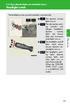 Headlight switch The headlights can be operated manually or automatically. U.S.A. Canada The daytime running lights turn on The side marker, parking (vehicles with halogen headlights), daytime running
Octavia (1U) 17-Dashboard up to 00 identification Octavia (1U) 17-Dashboard up to 00 07 - Coding Octavia (1U) 17-Dashboard up to 00 10 - Adaptation
 Octavia (1U) 17-Dashboard up to 00 identification Octavia (1U) 17-Dashboard up to 00 07 - Coding Octavia (1U) 17-Dashboard up to 00 10 - Adaptation Octavia (1U) 17-Dashboard from 01 identification Octavia
Reference Guide and Step-by-Step Installation Manual. Table of Contents
 Part #674 Revision Date: 6.7.07 Reference Guide and Step-by-Step Installation Manual Some adjustable features listed on the following pages are NOT applicable for all applications. The year, make, and
ŠKODA Fabia - Pricelist
 Price Incl. 19% VAT ŠKODA Fabia - Pricelist Engine versions Fabia Air Pollution Regulation Combined Consumption CO2 emissions Price Incl. 19% VAT Engine 1.2 HTP / 70Bhp Active EU5 5.5 l/100 km 128 g/km
SECTION 1-5 OPERATION OF INSTRUMENTS AND CONTROLS 06.0.711. Lights, Wipers and Defogger
 OPERATION OF INSTRUMENTS AND CONTROLS Lights, Wipers and Defogger SECTION 1-5 Headlights and turn signals................................... 76 Emergency flashers..........................................
USER MANUAL OPERATION AND USE OF CAR WITH. Diego G3 / NEVO SEQUENTIAL GAS INJECTION SYSTEM
 USER MANUAL OPERATION AND USE OF CAR WITH Diego G3 / NEVO SEQUENTIAL GAS INJECTION SYSTEM Page 2 z 7 Table of contents 1. STARTING THE ENGINE... 3 2. CONTROL PANEL... 3 2.1 Indication of the current level
Electronic Diesel Control EDC 16
 Service. Self-Study Programme 304 Electronic Diesel Control EDC 16 Design and Function The new EDC 16 engine management system from Bosch has its debut in the V10-TDI- and R5-TDI-engines. Increasing demands
Porsche Service. Cayenne (from MY 2008 for the following countries:
 Porsche Service Cayenne (from MY 2008 for the following countries: Abu Dhabi, Bahrain, Dubai, Jordan, Qatar, Kuwait, Lebanon, Oman, Saudi Arabia, Syria) Porsche Cayenne Maintaining driving pleasure No
SECTION 2 3 OPERATION OF INSTRUMENTS AND CONTROLS. Lights, Wipers and Defogger
 OPERATION OF INSTRUMENTS AND CONTROLS Lights, Wipers and Defogger SECTION 2 3 Headlights and turn signals................................... 92 Emergency flashers..........................................
peace of mind now comes in a package.
 . Included. BMW Vehicle Programs bmw.ca wear & tear. Protected. Repair. Covered. peace of mind now comes in a package. bmw service inclusive, bmw service inclusive plus, and bmw extended warranty. contents.
SIMPLY CLEVER ŠkodaOctavia Scout 4x4 PRESS RELEASE - MARCH 2011
 PRESS RELEASE - MARCH 2011 PHOTOGRAPHIC PORTFOLIO Scout 001 Scout 002 Scout 003 Scout 004 Scout Premium 005 Scout Premium 006 Scout Premium 007 Scout Premium 008 Scout Premium 009 Scout Premium 010 Scout
MODIFICATION OF YOUR VEHICLE
 FOREWORD Your INFINITI represents a new way of thinking about car design. It integrates advanced engineering and superior craftsmanship with a simple, refined aesthetic sensitivity associated with traditional
Operating Instructions Display, graphic T3014418
 Operating Instructions Display, graphic T3014418 Introduction... 1 Display, general... 1 Location and content of display... 2 Display control stalk... 3 Display menus... 4 Display symbols... 7 Alarm,
Ex-Demonstrator 2016 Mitsubishi Triton MQ GLS Utility Double Cab 4dr Spts Auto 5sp 4x4 2.4DT [MY16]
![Ex-Demonstrator 2016 Mitsubishi Triton MQ GLS Utility Double Cab 4dr Spts Auto 5sp 4x4 2.4DT [MY16]](/thumbs/40/21188139.jpg "Ex-Demonstrator 2016 Mitsubishi Triton MQ GLS Utility Double Cab 4dr Spts Auto 5sp 4x4 2.4DT [MY16]") Contact: Blake Campaniello - E: [email protected] T: 08 8345 7400 F: 08 8445 7112 1032 Port Road, Albert Park, South Australia 5014 61338 Ex-Demonstrator 2016 Mitsubishi Triton MQ
Contact: Blake Campaniello - E: [email protected] T: 08 8345 7400 F: 08 8445 7112 1032 Port Road, Albert Park, South Australia 5014 61338 Ex-Demonstrator 2016 Mitsubishi Triton MQ
FORD B-MAX Owner's Manual
 FORD B-MAX Owner's Manual The information contained in this publication was correct at the time of going to print. In the interest of continuous development, we reserve the right to change specifications,
Service. Workshop Manual OCTAVIA. Electrical System. Service Department. Technical Information. S00.5117.50.20 Edition 08.96
 Service Workshop Manual OCTAVIA Electrical System Service Department. Technical Information S00.5117.50.20 Edition 08.96 The Workshop Manual is intended only for use within the ŠKODA Organisation; it is
ŠKODA Octavia and Octavia RS Price and Equipment Overview MY15/CW45
 ŠKODA Octavia and Octavia RS Price and Equipment Overview MY15/CW45 Octavia Pricing Summary MY15/CW45 Octavia Sedan Ambition Ambition Plus Elegance RS Engine Transmission Power Torque MLP # / Driveaway^
CLK Cabriolet Operator s Manual
 CLK Cabriolet Operator s Manual CLK 320 CLK 430 Our company and staff congratulate you on the purchase of your new Mercedes-Benz. Your selection of our product is a demonstration of your trust in our company
Viano 2012 Model Year Specification & Manufacturer s Recommended List Price. 29 August, 2012
 Viano 2012 Model Year Specification & Manufacturer s Recommended List Price 29 August, 2012 The Viano on-road IMAGE Model Technical data Transmission Fuel data Key Highlights Viano 3.0 CDI 2,987cc, 6-cylinder,
TOYOTA ELECTRONIC TRANSMISSION CHECKS & DIAGNOSIS
 Checks and Adjustments The transmission requires regular maintenance intervals if it is to continue to operate without failure. As we discussed in previous sections, transmission fluid loses certain properties
DRIVING TEST POSSIBLE QUESTIONS & ANSWERS.
 DRIVING TEST POSSIBLE QUESTIONS & ANSWERS. Question 1. What shape and colour is a warning sign? Diamond Shape - Yellow and Black Question 2. When should you not drive? While under the influence of alcohol,
For Employers Driving at Work Policy
 For Employers Driving at Work Policy Road Safety You may already have a driving for work policy within your health and safety policy or as a separate document. If you do, it may be useful to check that
AUTOBOSS V30 hand-held diagnostic tool developed for the European market - the true all-in-one scan tool. OEM COVERAGE FOR EUROPEAN/ASIAN/US VEHICLES
 AUTOBOSS V30 hand-held diagnostic tool developed for the European market - the true all-in-one scan tool. OEM COVERAGE FOR EUROPEAN/ASIAN/US VEHICLES Feature LARGE VGA COLOUR TOUCH SCREEN Software updates
Adaptive Cruise Control
 33 Adaptive Cruise Control Adaptive Cruise Control Adaptive Cruise Control is a driving support system intended to allow more comfortable driving on expressways, freeways and interstate highways. The vehicle
PEUGEOT e-hdi STOP/START TECHNOLOGY MEDIA KIT
 PEUGEOT e-hdi STOP/START TECHNOLOGY MEDIA KIT PEUGEOT e-hdi TECHNOLOGY INTRODUCTION In designing the new generation of Euro 5 HDi engines - a project in which Peugeot has invested more than 1billion the