
Urinary Retention-When the Bladder Won't Empty
|
|
|
- Donald Bell
- 9 years ago
- Views:
Transcription
1 URINARY RETENTION-WHEN THE BLADDER WON T EMPTY URINARY RETENTION-WHEN THE BLADDER WON T EMPTY Diane K Newman, RNC MSN CRNP FAAN Co Director, PENN Center for Continence and Pelvic Health Division of Urology University of Pennsylvania Philadelphia, Pennsylvania Supported through an educational grant from Coloplast Corporation URINARY RETENTION-WHEN THE BLADDER WON T EMPTY Continuing Education Approval 1.0 contact hours have been approved by the Society of Urologic Nurses and Associates (SUNA), which is accredited as an approver of continuing nursing education by the American Nurses Credentialing Center s Commission on Accreditation. Approval # Additional Approval: CERTIFIED REHABILITATION COUNSELORS CASE MANAGER CERTIFICATION Complete evaluation online at URINARY RETENTION-WHEN THE BLADDER WON T EMPTY Objectives: Define acute and chronic urinary retention Describe anatomy and physiology of the GU tract Detail the pathophysiology of micturition. Describe the identifying urinary characteristics caused by upper and lower motor neuron injury. Identify the pathophysiologic causes of neurogenic bladder and related voiding dysfunction that causes incomplete bladder emptying. Distinguish the components of assessment for bladder dysfunction. Describe current treatment for urinary retention. Detail different catheters available for IC and the complications that can arise from their use. Urinary Retention (UR) Definition: Inability or failure to empty the bladder completely. Either Acute or Chronic Criteria Post-void residual (PVR) volume > 75 to 100 cc Elderly patients > 150 to 200 cc Should be based on 2 separate readings Prevalence rises with age Men from enlargement of prostate gland Onset of neurologic conditions (e.g. diabetes). Urinary Retention (UR) Acute UR Sudden and complete inability to void Need to drain the bladder immediately or it can lead to acute renal failure or bladder rupture. Rapid bladder decompression not associated with an increased risk of complications. Often managed by an indwelling catheter on a short-term basis until retention resolves. 1

2 Urinary Retention (UR) Chronic UR Ongoing, gradual inability to void Takes months to develop Bladder becomes used to being stretched Patients: Adapt to the condition Void through abdominal straining May not be aware of it. Severe UR can expand the bladder to 2,000-3,000 ml FEMALE Anatomy & Physiology of the GU Tract Components of the urinary tract: 2 kidneys, 2 ureters, (upper); Bladder, internal & external sphincter, urethra (lower). Kidneys Ureters Bladder Urinary sphincter Prostate Urethra MALE Bladder- Detrusor Muscle Bladder- Detrusor Muscle The adult urinary bladder is a Referred to as the detrusor muscle Hollow muscular sac Located in the pelvic region. Due to anatomical relationship of bladder to other organs (bowel and uterus), enlargement (or prolapse) of these organs can compromise the bladder s ability to empty completely. Three layers comprise the structure of the bladder. Innermost layer is a mucosal layer. Second, muscular layer of the bladder is a highly elastic structure comprised of interlaced smooth muscle layers collectively known as the detrusor. Third and most external layer of the bladder is connective tissue. Bladder- Detrusor Muscle Urethra Trigone - Triangular floor of the bladder (referred to as bladder neck) through which the ureters enter and the urethra exits. Ureterovesical (UV) junction Site where ureters enter the bladder Muscular one-way opening Ureters enter the bladder in such a UV junction way that contraction of the bladder seals the ureter off during voiding Urethra Prevents urine from back flowing into the ureters and kidneys. Trigone or bladder neck Small muscular tube that leads from the floor or neck of the bladder to the outside of the body. Female urethra inches long Extends from the bladder to the external orifice in the vestibule Directed obliquely, downward and forward Male urethra - 8 inches long Presents a double curve in the ordinary relaxed state of the penis Divided into three portions: Prostatic Membranous Cavernous 2

3 Urinary Sphincters 2 Sphincters Internal External Involved in the voiding process Normally contracted or maintained in a closed position and need stimulation to open. Urinary Sphincters Internal sphincter Not a distinct structure, but an elastic mechanism formed by bladder muscle fibers that pass around the most proximal portion of the urethra as it exits the bladder. Under involuntary or autonomic control. Keeps the bladder neck closed during bladder filling thus maintaining continence. Urinary Sphincters Anatomy of the Pelvic Floor External sphincter Lies below the internal sphincter Well-defined ring of skeletal muscle surrounding the urethra as it passes through the pelvic floor. Provides voluntary control of voiding. Voluntarily relaxed to facilitate emptying, or Voluntarily contracted to prevent urinary leakage with increases in abdominal pressure. Consists of supportive tissues Extend from the pubic bone to the posterior structures of the pelvis and sacrum Three supportive structures: Endopelvic fascia (combination of collagen and elastin smooth muscle) Levator ani (provides primary, flexible support for pelvic viscera) Perineal membrane/anal sphincter Neurotransmitters Acetylcholine (Ach) stimulates bladder contraction Norepinephrine (2 receptors) Beta-adrenergic receptors found in the bladder body Inhibit detrusor contractions Promotes bladder filling and storage. Alpha-adrenergic receptors in the bladder neck Cause smooth muscle contraction Stimulate contraction of the external sphincter. 3

4 Mechanism of Micturition Neurogenic bladder disorders resulting from central nervous system (CNS) lesions Congenital anomalies Spina bifida Myelomeningocele Spinal dysraphism Dermoid cyst or fistula of the sacral cord (1) Hyper-reflexic (spastic) bladder or detrusor hyper-reflexia Spinal Cord Injury Referred to as upper motor neuron bladder Injury above the level of the sacral (S2 to S4) reflex voiding center. Voiding reflex is intact, but hyperactive as normal inhibiting influence of the cerebral centers is blocked at level of the spinal lesion. Inability to sense bladder filling and inhibit emptying. Complaint of UI. Detrusor sphincter dysynergia can occur resulting in incomplete bladder emptying. Children Striated External Sphincter Dyssynergia Most common form. Treatment Timed voiding Voiding diary Timer or watch Treat constipation if present Biofeedback therapy to coach the patient into relaxing the pelvic floor Only if these less invasive means of treatment fail, would one proceed to these remaining options, usually following a carefully performed videourodynamic assessment. Intermittent catheterization Cystoscopy and direct injection of botulinum toxin (Botox) into striated external sphincter (1) Hyper-reflexic (spastic) bladder or detrusor hyper-reflexia (cont) Cerebral cortex lesions result of CVA-stroke Brain tumor Head injury Multiple sclerosis Elderly - age changes in the brain result in impairment of function in a high percentage. Cortical damage impairs the ability to inhibit the sacral voiding reflex efficiently. Bladder sensation is retained, urgency is felt but inhibiting signal is weak or absent leading to urge incontinence (OAB). Term "unstable bladder" can be used to describe an uninhibited bladder of neurogenic or idiopathic origin. 4

5 (1) Hyper-reflexic (spastic) bladder or detrusor hyper-reflexia (cont) Evaluation Urodynamic studies Treatment Anticholinergic medication Intermittent catheterization. (2) Areflexic or lower motor neuron bladder Injury occurs at the sacral voiding center itself. Results in a flaccid bladder no awareness of bladder filling is present Unable to initiate a void Urinary retention often results. Frequently seen after acute spinal cord injury due to the phenomenon of spinal shock. (2) Areflexic or lower motor neuron bladder (cont) Treatment Intermittent catheterization Cholinergic agents (probanthine) - to stimulate bladder muscle contractions (3) Sensory and/or Motor Paralytic Bladder Caused by disease of the peripheral nervous system can affect local nerve supply to the bladder. Diabetic mellitus Pelvic surgery Bladder becomes overdistended as adequate cue to toilet is never experienced. Motor damage leads to inefficient bladder emptying and overflow UI (3) Sensory and/or Motor Paralytic Bladder Treatment Bladder training program which encourages regular toileting Intermittent catheterization Cholinergic medication (4) Urethral Obstruction Causes Detrusor-sphincter-dyssynergia BPH Prostatitis Prostate cancer treatment (e.g.seeds) Urethral stricture Severe constipation/fecal impaction 5

6 Urinary Retention Assessment Urinary symptoms: Dribbling after voiding Urinating in small quantities Difficulty initiating urination (hesitancy) Straining or bearing down to void? Feeling of incomplete bladder emptying (returns to bathroom 5 to 10 minutes after urinating to completely empty bladder) Frequency of urination Nocturia (number of times at night awakens to go to the bathroom) Intense desire to urinate Lower abdominal pain Diaphoresis, an elevated BP secondary to impaired renal function (seen in acute UR) Neurologic injury - may experience minimal or no pain. Urinary Retention Assessment Urinary Retention Pertinent Medical History Other possible symptoms -nocturnal enuresis, urge or stress incontinence, constant incontinence or incontinence at rest. Determine previous urologic problems such as UTI and outlet obstructive symptomatology. Recent injury or trauma that could have affected the spinal cord Compression due to trauma, tumor Anatomic defects including spinal stenosis or herniated disc. Neurologic diseases that may lead to urinary retention include: Diabetes mellitus Multiple sclerosis Spina bifida Syphilis Guillain-Barre syndrome Genital herpes. In many of these cases, onset of a neurogenic bladder may be gradual and subtle. Physical Examination Abdomen Physical Examination Neurologic Palpation reveals a mid-line mass extending upward from the suprapubic area. (e.g. enlarged bladder) Percussion (dull sound, representing fluid) of the suprapubic areas Dullness of the bladder to the level of the umbilicus indicates at least 500 ml of urine in the bladder Bladders containing 1,000mL or more extend well above the umbilicus. Gait disorders Numbness tingling and /or weakness, particularly in a stocking and glove distribution Diminished or increased deep tendon reflex's Babinski or Hoffman's Anal "wink" Bulbocavernosus reflexes 6

7 Treatments 1. Voiding Maneuvers Drug Therapy Voiding Maneuvers Techniques to stimulate complete bladder emptying. 1. A "trigger" can initiate a bladder contraction. Common method is called "suprapubic tapping Drumming the abdomen overlying the bladder rapidly 7 or 8 times, stop 3 seconds, and repeat. Application of rhythmic tapping to produce summation effect on the tension receptors in the bladder wall and activation of the reflex arc via the afferent discharges Other trigger mechanisms include: pulling pubic hairs stroking abdomen or inner thigh digital anal stimulation. Voiding Maneuvers (cont) Voiding Maneuvers (cont) Techniques to help stimulate complete bladder emptying. 2. Double voiding Involves urinating twice during each trip to the bathroom to reduce residual urine volumes. Instruct patient to Urinate Remain on the toilet or stand up Attempt to urinate again after a rest period of several minutes. Techniques to help stimulate complete bladder emptying. 3. Crede Maneuvers Means of direct manual compression to empty an atonic or flaccid bladder Press firmly with one hand (or both hands) directly into the abdomen over the bladder. Can facilitate urination if sphincter mechanism is not in spasm Treatment Definition: Referred to as in and out or straight catheterization Insertion of a catheter into the bladder to allow for drainage Removed after drainage Advantages: Minimizes episodes of overdistention of bladder Frequent, regular bladder emptying prevents infection Treatment Techniques: Sterile Intermittent Catheterization (SIC or IC) Entire catheterization is sterile New catheter each catheterization Clean Intermittent Self-catheterization (CIC or CISC) Performed by patient in the home Reuses catheters for 7 days 2007 New Policy (VA & Medicare) on single-use catheters 7

8 Common Problems Common Problems Bacteriuria - 50% Rarely leads to urinary tract infections. Usually asymptomatic Should not be treated with antibiotics. Urinary tract infections - 10 to 15% more prevalent in patients who have higher residual urine volumes at the time of catheterization. Chronic pyelonephritis is rare. Long-term antibiotic prophylaxis is undesirable associated with the emergence of resistant bacterial strains. Common Problems Urethral Damage - men - similar to the problems seen with indwelling catheterization Urethritis, inflammation of the urethral meatus due to frequent insertion of catheters. Urethral stricture - urethral inflammatory response to repeated catheterizations. Risk increases with the number of years of IC. Difficulty with insertion sign of the presence of a urethral stricture. Creation of a false passage Persisting urethral strictures. False passage occurs from trauma to the urethra at site of the external sphincter. Common Problems Swelling of the urethra and epididymitis due to urethral and bladder inflammation Scrotal abscess are seen in men Common Problems Bladder stones - occur in patients who perform CIC long term. Stones have been shown to grow around introduced pubic hairs. Compliance esp. in a young person. Types of Catheters Several different types of catheters. Clinician (nurse) who instructs the patient usually makes the catheter choice. Should have a checklist when teaching patient so all areas are covered. 8

9 Types of Catheter Preferred catheter used for IC are clear or of polyvinyl material (PVC polyvinyl chloride). Red rubber catheter More flexible Some patients find them more difficult to insert Contain latex - concern allergies Catheters fall into two main groups: Require lubrication to be applied before insertion Coating provides lubrication when water is applied. Types of Catheters Straight catheters PVC, silicone or rubber catheters that have 2 eyes at the tip that allow for urine drainage. Length is either 5 inches (for women) or 12 inches (for men). Catheter tip configurations Types of Catheters Prelubricated hydrophilic Straight Coude - slight curve at the tip that aids in insertion (esp. past prostate) Olive, coude tip catheter for women to help in identifying urinary meatus Catheter coated with a substance that absorbs water and binds it to the catheter surface. Extremely slippery layer of water stays on the catheter during insertion and withdrawal. For one-time use only. Indicated for patients who experience particular discomfort during catheterization or with have difficulty with other types of catheters. Source/Permission Astra Tech Source/Permission:-Coloplast Types of Catheters Self-contained (No-touch) systems Closed systems that provide sterile catheterization. System is 100% latex-free Uses a pre-lubricated catheter. Catheter passes through a special guide mechanism at the top of the pocket. Guide provides 2 main benefits: Keeps the catheter straight as it is advanced When squeezed, prevents the catheter from slipping during insertion. Urine drains into the bag. System may decrease chances of infection. Types of Catheters - Coated Coated catheters Outer layer coated with antibacterial agent (e.g. nitrofurazone) May produce local antibacterial activity. 9

10 Intermittent Self-Catheterization (ISC) Schedule Based on the urine volume - general rule should not exceed 400 to 500 mls. Record amount of urine drained from the bladder. Voiding should be attempted before catheterization if appropriate. Catheterization is performed 3 to 4 times per day based on patient s output. Intermittent Catheterization New Policy VA Follow manufacturers instructions for single-use catheters Medicare catheter for each catheterization One catheter and an individual packet of lubricant Drug Therapy Alpha Blockers Open bladder neck Decease size of prostate Anticholinergics Used in patients with urgency and frequency Intravesical agents Distribution of Cholinergic and Adrenergic Receptors M = Muscarinic N = Nicotinic α = α 1 - andα 2 -Adrenergic β = β 3 -Adrenergic Detrusor muscle (M, β) Pelvic floor (N) Trigone (α) Bladder neck (α) Urethra (α) Alpha Blockers Help the Bladder Relax smooth muscles in the bladder neck and prostate Tamsulosin: Flomax mg daily -HS Alfuzosin: Uroxatral - 10mg daily - HS Improvement in symptom scores run at around 50-60% Improvement can take anything from 2 wks to 4 mos to be noticeable to the patient Drugs for Urgency, Frequency and Urge Incontinence Blocks bladder contraction by relaxing the bladder muscles Oral Oxybutynin Ditropan 5 mg tablet (BID-TID) Ditropan XL 5, 10, 15 mg (QD) Tolterodine Detrol 1, 2 mg (BID) Detrol LA 2, 4 mg (QD) Trospium (Sanctura ) 60 mg QD; 20 mg (BID) Solifenacin (VESIcare ) 5, 10 mg (QD) Darifenacin (Enablex ) 7.5, 15 mg (QD) Transdermal Oxybutynin (OXYTROL ) 3.9 mg twice a week 10

11 Thank you for your attention Special thanks to Coloplast for support of this program and for use of the product pictures. 11

URINARY RETENTION-WHEN THE BLADDER WON T EMPTY
 URINARY RETENTION-WHEN THE BLADDER WON T EMPTY Diane K Newman, RNC MSN CRNP FAAN Co Director, PENN Center for Continence and Pelvic Health Division of Urology University of Pennsylvania Philadelphia, Pennsylvania
symptoms of Incontinence
 Types, causes and symptoms of Urinary Incontinence Aims and Objectives Aim: To have an understanding of the types and causes of urinary incontinence. Objectives: To be aware of the incidence and prevalence
Bowel and Bladder Dysfunction in MS. Tracy Walker, WOCN, MSCN, FNP C Nurse Practitioner MS Institute at Shepherd Center. Bladder Dysfunction
 Bowel and Bladder Dysfunction in MS Tracy Walker, WOCN, MSCN, FNP C Nurse Practitioner MS Institute at Shepherd Center Bladder Dysfunction Approximately 75% of people with MS experience bladder problems
Topic review: Clinical presentation and diagnosis of urinary incontinence in the elderly. Prapa Pattrapornpisut 7 June 2012
 1 Topic review: Clinical presentation and diagnosis of urinary incontinence in the elderly Prapa Pattrapornpisut 7 June 2012 2 Urinary incontinence Definition the complaint of any involuntary leakage of
URINARY INCONTINENCE
 URINARY INCONTINENCE What is urinary incontinence? Urinary incontinence is the uncontrollable loss of urine. The amount of urine leaked can vary from only a few drops when you cough or sneeze to entirely
Bladder Health Promotion
 Bladder Health Promotion Community Awareness Presentation endorsed by the Society of Urologic Nurses (SUNA) National Association for Continence( NAFC) Simon Foundation for Continence This presentation
Bladder Health Promotion
 Bladder Health Promotion Community Awareness Presentation Content contributions provided by the Society of Urologic Nurses (SUNA) National Association for Continence (NAFC) Simon Foundation for Continence
1 ST JAMAICAN PAEDIATRIC NEPHROLOGY CONFERENCE
 in association with 1 ST JAMAICAN PAEDIATRIC NEPHROLOGY CONFERENCE Jamaica Conference Centre Kingston, Jamaica October 4 th 2014 VOIDING DISORDERS IN CHILDREN Dr. Colin Abel Paediatric Urologist Bustamante
Urinary Continence. Second edition FAST FACTS. by Julian Shah and Gary Leach. Anatomy and physiology 7. Investigations and diagnosis 11
 FAST FACTS Urinary Continence Second edition Indispensable Guides to by Julian Shah and Gary Leach Clinical Practice Anatomy and physiology 7 Investigations and diagnosis 11 Detrusor instability 28 Primary
Spinal Cord and Bladder Management Male: Intermittent Catheter
 Spinal Cord and Bladder Management Male: Intermittent Catheter The 5 parts of the urinary system work together to get rid of waste and make urine. Urine is made in your kidneys and travels down 2 thin
Urinary Incontinence in Women. Susan Hingle, M.D. Department of Medicine
 Urinary Incontinence in Women Susan Hingle, M.D. Department of Medicine Background Estimated 13 million Americans with urinary incontinence Women are affected twice as frequently as men Only 25% will seek
Overactive Bladder (OAB)
 Overactive Bladder (OAB) Overactive bladder is a problem with bladder storage function that causes a sudden urge to urinate. The urge may be difficult to suppress, and overactive bladder can lead to the
Urodynamics in Neuro-Urology
 Urodynamics in Neuro-Urology R Hamid MD (Res), FRCS (Urol) Consultant Urologist London Spinal Injuries Unit, Stanmore & University College London Hospitals Micturition Micturition can be visualized as
URINARY CATHETER CARE
 URINARY CATHETER CARE INTRODUCTION Urinary catheter care is a very important skill, and it is a skill that many certified nursing assistants (CNAs) must know. Competence at providing urinary catheter care
URINARY INCONTINENCE IN WOMEN
 URINARY INCONTINENCE IN WOMEN Definition Urinary incontinence (UI) is defined as involuntary loss of urine that is a social or hygienic problem (International Continence Society, 1973) Magnitude of the
Gwen Griffith Clinical Nurse Specialist Bolton NHS foundation Trust
 Gwen Griffith Clinical Nurse Specialist Bolton NHS foundation Trust Overview Setting the Scene Beginning of the journey & specialist nurse role Why people with MS experience bladder problems MS and the
Spine University s Guide to Cauda Equina Syndrome
 Spine University s Guide to Cauda Equina Syndrome 2 Introduction Your spine is a very complicated part of your body. It s made up of the bones (vertebrae) that keep it aligned, nerves that channel down
Urinary Incontinence (Involuntary Loss of Urine) A Patient Guide
 Urinary Incontinence (Involuntary Loss of Urine) A Patient Guide Urinary Incontinence (Urine Loss) This booklet is intended to give you some facts on urinary incontinence - what it is, and is not, and
Understanding. Neurogenic Bladder
 Understanding Neurogenic Bladder 2 Understanding Neurogenic Bladder Understanding Neurogenic Bladder Table of Contents The Healthy Urinary System 5-8 Bladder Problems 9-12 Neurogenic Bladder Disorder 9-10
Management of Urinary Incontinence. Sheri J. Ross, BSc, DVM, PhD, Dipl. ACVIM (Internal Medicine)
 Management of Urinary Incontinence Sheri J. Ross, BSc, DVM, PhD, Dipl. ACVIM (Internal Medicine) Managing Urinary Incontinence Urinary incontinence is very prevalent among older animals. In this group
URINARY INCONTINENCE CASE PRESENTATION #1. Urinary Incontinence - History 2014/10/07. Structure of the Female Lower Urinary Tract
 Bladder pressure 2014/10/07 Structure of the Female Lower Urinary Tract Ureter URINARY INCONTINENCE Clinical Clerkship Lecture Series Outer peritoneal coat Detrusor smooth muscle Mucosa Trigone Proximal
Case Based Urology Learning Program
 Case Based Urology Learning Program Resident s Corner: UROLOGY Case Number 21 CBULP 2011 068 Case Based Urology Learning Program Editor: Associate Editors: Manager: Case Contributors: Steven C. Campbell,
Female Urinary Disorders and Pelvic Organ Prolapse
 Female Urinary Disorders and Pelvic Organ Prolapse Richard S. Bercik, M.D. Director, Division of Urogynecology & Reconstruction Pelvic Surgery Department of Obstetrics, Gynecology & Reproductive Sciences
CARE PROCESS STEP EXPECTATIONS RATIONALE
 URINARY INCONTINENCE CARE PROCESS STEP EXPECTATIONS RATIONALE ASSESSMENT/PROBLEM RECOGNITION 1. Did the staff and physician seek and document risk factors for urinary incontinence and any history of urinary
FEMALE INCONTINENCE REVIEW
 200 S. Wenona Suite 298 Steven L. Jensen, M.D. 5400 Mackinaw, Suite 4302 Bay City, MI 48706 Frank H. Kim, M.D. Saginaw, MI 48604 Telephone (989) 895-2634 Adult & Pediatric Urologists (989) 791-4020 Fax
Bladder and Bowel Control
 Bladder and Bowel Control Dr Sue Woodward Lecturer, Florence Nightingale School of Nursing and Midwifery 2 Why do we need to understand anatomy? Normal physiology Normal adult bladder capacity = 450-500mls
Foley Catheter Placement
 Foley Catheter Placement Indications for a Foley Catheter Retention of urine leading to urinary hesitancy, straining to urinate, decrease in size and force of the urinary stream, interruption of urinary
An illustrated guide to the management of incontinence.
 An illustrated guide to the management of incontinence. 1 The problem of incontinence The ACA describes incontinence as an involuntary loss of urine and/or bowel motion. The amount can vary from slight
Learning Resource Guide. Understanding Incontinence. 2000 Prism Innovations, Inc. All Rights Reserved
 Learning Resource Guide Understanding Incontinence 2000 Prism Innovations, Inc. All Rights Reserved ElderCare Online s Learning Resource Guide Understanding Incontinence Table of Contents Introduction
Bladder Management Options Following Spinal Cord Injury
 Bladder Management Options Following Spinal Cord Injury September 2015 This fact sheet tells you about some of the more common methods to manage your bladder if it is not working correctly following your
Normal bladder function requires a coordinated effort between the brain, spinal cord, and the bladder.
 .. Urinary Incontinence Urinary incontinence is not an inevitable part of aging, and it is not a disease. The loss of bladder control - called urinary incontinence - affects between 13 and 17 million adult
Overactive bladder and urgency incontinence
 Overactive bladder and urgency incontinence As a health care provider you can make a significant difference to the quality of life of patients like these by addressing urinary incontinence, introducing
Lower Urinary Tract Symptoms (LUTS) in Middle-Aged and Elderly Men
 Prostatic Diseases Lower Urinary Tract Symptoms (LUTS) in Middle-Aged and Elderly Men JMAJ 47(12): 543 548, 2004 Tomonori YAMANISHI Associate Professor, Department of Urology, Dokkyo University School
Overactive Bladder (OAB) Content of the lecture
 Overactive bladder (OAB) : Introduction and Medical Management R.J. Opsomer Cliniques St Luc, labo d urodynamique, UCL - Bruxelles Overactive Bladder (OAB) Content of the lecture The syndrome of Overactive
150640_Brochure_B 4/12/07 2:58 PM Page 2. Patient Information. Freedom From an Enlarged Prostate
 150640_Brochure_B 4/12/07 2:58 PM Page 2 Patient Information Freedom From an Enlarged Prostate 150640_Brochure_B 4/12/07 2:58 PM Page 3 GreenLight Laser Therapy 1 150640_Brochure_B 4/12/07 2:58 PM Page
Self Catheterization Guide
 Self Catheterization Guide An introduction to intermittent self-catheterization Medical professionals have recommended that you selfcatheterize in order to completely empty your bladder. This prevents
Urinary Incontinence. Anatomy and Terminology Overview. Moeen Abu-Sitta, MD, FACOG, FACS
 Urinary Incontinence Anatomy and Terminology Overview Moeen Abu-Sitta, MD, FACOG, FACS Purpose Locate and describe the anatomy of the Female Urinary System Define terminology related to Incontinence Describe
Urinary Incontinence Dr. Leffler
 Urinary Incontinence Dr. Leffler The involuntary loss of urine at socially unacceptable times occurs in both women and men, but more commonly in women. It has multiple, far-reaching effects on daily activities,
Non-surgical Treatments for Urinary Incontinence. A Review of the Research for Women
 Non-surgical Treatments for Urinary Incontinence A Review of the Research for Women Is This Information Right for Me? Yes, if: You are a woman who is older than 18. You are having trouble holding your
Achieving Independence
 Bard: Intermittent Self-Catheterization A Guide to Self-Catheterization Achieving Independence Introduction This brochure is provided by Bard, a leading provider of urology products since 1907. The best
Urinary Incontinence. Types
 Urinary Incontinence Leakage of urine is called urinary incontinence. It is a common problem in women. Some women occasionally leak small amounts of urine. At other times, leakage of urine is frequent
Incontinence. What is incontinence?
 Incontinence What is incontinence? Broadly speaking, the medical term incontinence refers to any involuntary release of bodily fluids, but many people associate it strongly with the inability to control
Infection Prevention & Control Team. Your urinary catheter & how to care for it 0151 430 2452 / 0151 430 1384. Patient Information Leaflet
 Contact details Infection prevention team - 0151 430 2452 This leaflet can be made available in alternative languages/formats on request. Infection Prevention & Control Team 0151 430 2452 / 0151 430 1384
INTERDISCIPLINARY CLINICAL MANUAL Practice Guideline
 INTERDISCIPLINARY CLINICAL MANUAL Practice Guideline TITLE: Insertion of a curved tip Urinary Catheter (Coude/Tiemann) NUMBER: CC 50-013 Effective Date: August 2015 Page 1 of 5 Applies To: All Preamble:
Adult Urodynamics: American Urological Association (AUA)/Society of Urodynamics, Female Pelvic Medicine & Urogenital Reconstruction (SUFU) Guideline
 Adult Urodynamics: American Urological Association (AUA)/Society of Urodynamics, Female Pelvic Medicine & Urogenital Reconstruction (SUFU) Guideline RECOMMENDATIONS 1 Conditional: Clinicians who are making
Women suffer in silence
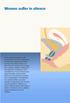 Women suffer in silence Stress urinary incontinence is the involuntary loss of urine resulting from increased intra-abdominal pressure. In people who suffer with this condition, forms of exertion such
A PRINTED copy of this guideline may not be the most recent version. The OFFICIAL version is located on IHNET at the Policies & Procedures Home Page
 A PRINTED copy of this guideline may not be the most recent version. The OFFICIAL version is located on IHNET at the Policies & Procedures Home Page IX0200: Prevention & Control of Catheter Associated
Urinary Incontinence FAQ Sheet
 Urinary Incontinence FAQ Sheet Are you reluctant to talk to your doctor about your bladder control problem? Don t be. There is help. Loss of bladder control is called urinary incontinence. It can happen
2. Does the patient have one of the following appropriate indications for placing indwelling urinary catheters?
 A. Decision to Insert a Urinary Catheter: 1. Before placing an indwelling catheter, please consider if these alternatives would be more appropriate: Bladder scanner: to assess and confirm urinary retention,
Understanding Neurogenic Bladder
 Support Networks There are support networks to answer your questions and guide you to the best solution for you. The American Urological Association www.auanet.org 1.866.RING.AUA (1.866.746.4282) Christopher
NUR 111 Anne Marie Holler RN MSN(c)
 NUR 111 Anne Marie Holler RN MSN(c) Assignments Required Readings: Potter & Perry: pp. 1042-1085 Skills book: 809-840 Knowledge Base Anatomy Control Mechanisms Factors that inhibit micturation (voiding)
WHAT IS INCONTINENCE?
 CNA Workbook WHAT IS INCONTINENCE? Incontinence is the inability to control the flow of urine or feces from your body. Approximately 26 million Americans are incontinent. Many people don t report it because
MANAGEMENT OF PROSTATE ENLARGEMENT/BPH
 MANAGEMENT OF PROSTATE ENLARGEMENT/BPH J E S S I C A E. P A O N E S S A, M. D. A S S I S T A N T P R O F E S S O R D E P A R T M E N T O F U R O L O G Y S U N Y U P S T A T E M E D I C A L U N I V E R
Urinary Incontinence. Causes of Incontinence. What s Happening?
 National Institute on Aging AgePage Urinary Incontinence Sarah loves to spend time with her friends talking about her grandchildren and going to exercise classes with neighbors. But she s started to have
Urinary Incontinence Definitions
 (AADL) Program Urge Stress Overflow Functional Mixed DHIC (Detrussor hyperreflexia with impaired contractility) Reflex Incontinence Leakage of urine (usually larger volumes) because of inability to delay
Urinary Incontinence
 Urinary Incontinence Q: What is urinary incontinence (UI)? A: UI is also known as loss of bladder control or urinary leakage. UI is when urine leaks out before you can get to a bathroom. If you have UI,
Instruction Guide to Sterile Self-Catheterization for Women Using the Cure Catheter Closed System
 Cure Medical donates 10% of net income to medical research in pursuit of a cure for spinal cord injuries and central nervous system disorders. For information on scientific advancements, visit www.curemedical.com.
A Physical Therapist s Perspective
 You Can Do Something About INCONTINENCE A Physical Therapist s Perspective American Physical Therapy Association 1 You Can Do Something About Urinary Incontinence Incontinence, involuntary loss of bladder
Overactive bladder is a common condition thought to. women, and is a serious condition that can lead to. significant lifestyle changes.
 Overactive bladder is a common condition thought to FADE UP TO WIDE SHOT OF FEMALE MODEL WITH TRANSPARENT SKIN. URINARY BLADDER VISIBLE IN PELVIC REGION affect over 16 percent of adults. It affects men
PREVENTION OF CATHETER ASSOCIATED URINARY TRACT INFECTIONS. (CAUTIs)
 PREVENTION OF CATHETER ASSOCIATED URINARY TRACT INFECTIONS (CAUTIs) CAUTIs A UTI where an indwelling urinary catheter was in place for >2 calendar days on the date of event. OR If an indwelling urinary
Catheter Care. What you need to know. Jacinta Stewart Continence Nurse
 Catheter Care What you need to know Jacinta Stewart Continence Nurse Indications for Long Term Catheter Use Long term urinary catheters should only be used with clients who cannot satisfactorily be managed
Registered Charity No. 5365
 THE MULTIPLE SCLEROSIS SOCIETY OF IRELAND Dartmouth House, Grand Parade, Dublin 6. Telephone: (01) 269 4599. Fax: (01) 269 3746 MS Helpline: 1850 233 233 E-mail: [email protected] www.ms-society.ie
Urinary Incontinence
 Urinary Incontinence (Involuntary Passage of Urine) Basics OVERVIEW Loss of voluntary control of urination, usually observed as involuntary urine leakage while resting SIGNALMENT/DESCRIPTION OF PET Species
Urinary Continence Management after a. Stroke. Liz Mackey, CNC Stroke Clinical Coordinator Western Health
 Urinary Continence Management after a Stroke Liz Mackey, CNC Stroke Clinical Coordinator Western Health Royal Women s Hospital Innervation of the Bladder Neuromuscular coordination for control of both
Enuresis BOWEL AND BLADDER CONTROL. Voiding disorders. Involuntary voiding at an inappropriate time or in a socially unacceptable setting
 Enuresis Why does my child have damp pants? Douglas E. Coplen Involuntary voiding at an inappropriate time or in a socially unacceptable setting Division of Pediatric Urology Washington University School
Overactive bladder syndrome (OAB)
 Overactive bladder syndrome (OAB) Exceptional healthcare, personally delivered What is OAB? An overactive bladder or OAB is where a person regularly gets a sudden and compelling need or desire to pass
Guidelines on Neurogenic Lower Urinary Tract Dysfunction
 Guidelines on Neurogenic Lower Urinary Tract Dysfunction (Text update March 2009) M. Stöhrer (chairman), B. Blok, D. Castro-Diaz, E. Chartier- Kastler, P. Denys, G. Kramer, J. Pannek, G. del Popolo, P.
Looking after your bladder
 Looking after your bladder A guide for women after spinal cord injury Spinal Cord Injury Rehabilitation Program This booklet has been written by the health care providers who provide care to people who
Management of Neurogenic Bladder Disorders
 Management of Neurogenic Bladder Disorders Andrea Staack, MD, PhD Pelvic Reconstructive Surgery, Urinary Incontinence & Female Urology Department of Urology Loma Linda University, CA What will you learn
Bard: Intermittent Catheters. A guide to. Bard: Pelvic Organ Prolapse. An REIMBURSEMENT. overview of OF INTERMITTENT. Prolapse CATHETERS
 Bard: Intermittent Catheters A guide to Bard: Pelvic Organ Prolapse An REIMBURSEMENT overview of Pelvic OF INTERMITTENT Organ Prolapse CATHETERS 1 Intermittent catheterization is a covered Medicare benefit
Lifestyle changes. Pelvic floor muscle training
 Incontinence, urinary - Treatment Treating urinary incontinence The treatment you receive for urinary incontinence will depend on the type of incontinence you have and the severity of your symptoms. If
Refer to Coaptite Injectable Implant Instructions for Use provided with product for complete instructions for use.
 Questions for my Doctor Refer to Coaptite Injectable Implant Instructions for Use provided with product for complete instructions for use. INDICATIONS: Coaptite Injectable Implant is indicated for soft
Bladder and Bowel Assessment Ann Yates Director of Continence Services. 18/07/2008 Cardiff and Vale NHS Trust
 Bladder and Bowel Assessment Ann Yates Director of Continence Services Types of continence problems Bladder Stress incontinence Urgency and urge Incontinence Mixed incontinence Obstructive incontinence
Urinary tract and perineum
 9 Urinary tract and perineum Key Points 9.1 9.1 THE URINARY BLADDER URINARY RETENTION Acute retention of urine is an indication for emergency drainage of the bladder The common causes of acute retention
THE MANAGEMENT OF URINARY INCONTINENCE WITHIN A STROKE UNIT POPULATION REENA DHAMI STROKE CNS EPSOM & ST.HELIER UNIVERSITY HOSPITALS
 THE MANAGEMENT OF URINARY INCONTINENCE WITHIN A STROKE UNIT POPULATION REENA DHAMI STROKE CNS EPSOM & ST.HELIER UNIVERSITY HOSPITALS Definition Urinary Incontinence is AN INABILITY TO HOLD URINE until
1 in 3 women experience Stress Urinary Incontinence.
 A PATIENT S GUIDE 1 in 3 women experience Stress Urinary Incontinence. It s time to talk about SUI Get the facts. This Patient s Guide is intended as a public resource on the issue of Stress Urinary Incontinence
Urinary Tract Infections
 1 Infections in the urinary tract are relatively common. These infections are often referred to as bladder infections. They are also known as UTI s or urinary tract infections. When an infection is confined
Kaiser Oakland Urology
 Kaiser Oakland Urology The Main Purpose of Bladder Catheterization Complete Bladder Emptying! Help maintain a healthy bladder Help maintain healthy kidneys Reduce the chances of significant urinary tract
Overview of Urinary Incontinence in the Long Term Care Setting
 Overview of Urinary Incontinence in the Long Term Care Setting Management Strategies for the Nursing Assistant Ann M. Spenard RN, C, MSN Courtney Lyder ND, GNP Learning Objectives Describe common types
Urinary Dysfunction & MS MANAGING SPECIFIC ISSUES
 Urinary Dysfunction & MS MANAGING SPECIFIC ISSUES Urinary Dysfunction & MS NANCY J. HOLLanD, RN, EDD, MScn Based on Urinary Dysfunction and Multiple Sclerosis: A Clinical Practice Guideline for Professionals
Urinary Incontinence. Patient Visit Note. History of Present Illness: To be completed by medical assistant
 Urinary Incontinence Patient Visit Note History of Present Illness: To be completed by medical assistant 1. Results of dip UA: Blood: Neg Tr + ++ +++ Leukocyte esterase: Neg Tr + ++ +++ Nitrite: Neg Pos
Treatments for Urinary Incontinence in Women
 Treatments for Urinary Incontinence in Women National Kidney and Urologic Diseases Information Clearinghouse National Institute of Diabetes and Digestive and Kidney Diseases NATIONAL INSTITUTES OF HEALTH
Dr Eva Fong. Urologist Auckland
 Dr Eva Fong Urologist Auckland Urinary incontinence: Treatment options GPCME 2013 Eva Fong Urologist Urinary incontinence Is not normal part of aging or childbearing We can make it better Urinary incontinence:
Male Urinary Catheterisation & Catheter Care
 Male Urinary Catheterisation & Catheter Care Mark Jones, Martin Steggall & Marsh Gelbart City University, London. Good practice Consent gain informed consent. Who can catheterise any Registered Nurse who
LOSS OF BLADDER CONTROL IS TREATABLE TAKE CONTROL AND RESTORE YOUR LIFESTYLE
 LOSS OF BLADDER CONTROL IS TREATABLE TAKE CONTROL AND RESTORE YOUR LIFESTYLE TALKING ABOUT STRESS INCONTINENCE (SUI) Millions of women suffer from stress incontinence (SUI). This condition results in accidental