
Urinary Continence Management after a. Stroke. Liz Mackey, CNC Stroke Clinical Coordinator Western Health
|
|
|
- Horace Parker
- 10 years ago
- Views:
Transcription
1 Urinary Continence Management after a Stroke Liz Mackey, CNC Stroke Clinical Coordinator Western Health

2 Royal Women s Hospital

3 Innervation of the Bladder Neuromuscular coordination for control of both storage and elimination...ans Motor & sensory input locally in the sacral region As the bladder fills, micturition contractions occur (stretch sensors)... Cyclical (contract / relax)... More frequent as bladder fills... Impulses to external sphincter inhibit micturition LOCALLY (spinal cord reflex) Bladder emptying inhibited by brain (frontal & motor areas)...until the brain allows micturition

4 Urinary incontinence Common condition following a stroke Incidence ranging from 38% to 60% (1)

5 Why do so many stroke patients have urinary continence issues? Area of brain AND Parts of the body affected by the stroke Altered level of consciousness / cognition Aphasia / dysphasia Weakness / hemiparesis Altered mood Brain PTO

6 Areas of the brain involved in voiding Pons inhibits and facilitates. Neural off / on switch. Cerebral cortex Several areas. Mainly inhibitory but can become excitatory. Frontal lobes? role in inhibition of detrusor contraction

7 Why is it important to assess continence after stroke? Incontinence is a strong predicator of outcome following stroke, its presence being highly predictive of a poor outcome (Meschia & Bruno, 1998)... The limited evidence suggests that the greatest impact on urinary incontinence may be in the acute phase of rehabilitation after stroke......increase discharge destination options

8 Why is it important to assess continence after stroke? Establishment of continence is good for morale and self-esteem.

9 Stroke & main incontinence sub-types Hypotonic bladder Flaccid bladder Retention Hypertonic bladder Hyperreflexic bladder Frequency (frequent desire to void) Urgency (intense desire to void immediately) and Urge incontinence

10 Case Study 1 Hypotonic bladder

11 Mrs H, 80 year old, Admitted to ED with an acute L) middle cerebral artery stroke Aphasic R) sided weakness Thrombolysis, improved function of R) side but remained expressively dysphasic Admitted to Neuro-Medical ward, late Tuesday evening

12 Wednesday mid-morning on ward, post thrombolysis: Patient RIB for 24 hours (post thrombolysis protocol) Nil orally, awaiting Speech Assessment IV therapy 83ml/hr Bowels opened Wednesday morning. Written up for routine aperients (but Nil Oral)

13 Urinary Assessment Patient dysphasic unable to obtain history Never discussed by patient with family Frequent use of pan for small voids ( ml) since admission, as well as incontinence pad in situ for urinary dribbling Patient appeared comfortable

14 Abdominal assessment Large palpable bladder (up to umbilicus) Bladder Scan >1000ml

15 Diagnosis Hypotonic bladder: Immediately after a stroke, hypotonic bladder function is common. Weak or absent bladder contractions resulting in failure to empty the bladder may lead to over-distension and overflow incontinence (Gross, 2003).

16 Urinary Plan After discussion with nurse caring for patient and medical team: 1. Check patient s bowels. If constipated given enema. 2. Offer pan to pass urine 3. Check Post-Void Residual (PVR) within minutes of voiding (using the bladder scanner) 4. If PVR > 150ml, perform in-out (intermittent) urinary catheterisation 5. Offer pan regularly 6. Repeat steps 2-5 until PVR < 150ml

17 Implementation 1 st void (PVR > 150ml) + in-out catheter = 1250ml 2 nd void (PVR > 150ml) + in-out catheter = 800ml 3 rd void (PVR > 150ml) + in-out catheter = 750ml Nursing staff followed plan for 24 hours.

18 Evaluation There was no residual urine post-void by Thursday morning (i.e. approx 36 hours post- Stroke)

19 Hypotonic bladder Retention Aetiology Bladder hypotonia - usually LMN lesions, but in stroke possibly frontal lobe areas injury.

20 Hypotonic bladder Retention Characteristics Frequent to nearly continuous dribbling Palpable bladder Urine flow rates decreased Large Post Void Residual (PVR)

21 Interventions Catheterisation: Intermittent Indwelling Relaxation exercises Double voiding Hypotonic bladder Retention
22 Retention Common, especially right after a stroke Approx 50% of stroke patients have urinary retention problems for the first 72 hours. Improves quickly Less than 25% have retention problems at three weeks post stroke
23 Treatment of Retention using Intermittent Catheterisation Intermittent in-out sterile urinary catheterisation NSF guidelines recommends Closed System Ability to volitionally void and empty the bladder usually returns... Continue to evaluate a patient's sensation of the need to void and to toilet patients on a regular basis (2)
24 Indwelling Catheterisation vs Intermittent Catheterisation Management of Short Term Indwelling Urethral Catheters to Prevent Urinary Tract Infections, Joanna Briggs Institute, Volume 4, Issue 1, 2000 (3) Study examined postoperative patients. Compared urinary bacteria in patients with an IDC versus in-out catheters. Reduced incidence of bacteriuria with intermittent catheters
25 Case Study 2 Hypertonic bladder
26 Monday Mr J, 67 year old, Admitted to Neuro-Medical ward with an acute L) stroke Expressive and Receptive Dysphasia R) sided weakness and neglect Nil orally, IV therapy. For NG feeding Written up for routine aperients (but Nil Oral)
27 Urinary Assessment No difficulties prior to admission according to wife Incontinent of urine small amounts, frequently Containment pad in situ
28 Abdominal assessment Bladder not palpable Bladder Scans 0-30ml
29 Diagnosis Hypertonic bladder: The more common symptoms after stroke are frequency, urgency and urge incontinence Hypertonic bladder activity is a major factor. Contraction of the bladder wall in response to bladder filling cannot be effectively controlled. bladder capacity is often reduced (Gross, 2003).
30 Urinary Plan After discussion with multidisciplinary team: 1. Perform Full Ward Test for urine to eliminate bacteriuria (looking for leukocytes and nitrates) 2. Check patient s bowels. If constipated given enema.
31 Urinary Plan 3. Multi-disciplinary team approach: Assessment of need to void / voiding patterns, including maintenance of Fluid Balance Charts / toileting charts Facilitation of communication Assessment of ability to transfer Assistance with transferring from bed to commode / toilet / tilt-commode Assessment of adequate hydration Administration of fluids Medication prescription & administration
32 Urinary Plan 4. Ensure patient close to toilet 5. Ensure call Bell in reach 6. Toilet patient regularly ideally on commode. Use pan / bottle if RIB 7. Timed toileting 8. Appropriate clothing 9. Appropriate containment pads 10.Prevention of skin irritation and breakdown.
33 Evaluation Sent to rehabilitation with plan in place to help improve continence Plan continued in rehabilitation. Working on increased bladder capacity and decreasing frequency and urgency Three-months post-stroke, wife reported social continence attained.
34 Hypertonic bladder Frequency, Urgency & Urge Incontinence Hyperreflexic bladder Uninhibited bladder Characteristics Frequent voiding Urgency, Small volume voiding, Ability to inhibit urine flow or stop stream impaired +/- residual urine
35 Hypertonic bladder Frequency, Urgency & Urge Incontinence Aetiology Inhibitory input from the pons lost / impaired UMN lesions Excess of reflex bladder activity
36 Hypertonic bladder Frequency, Urgency & Urge Incontinence Other Interventions As per Case Study 2 and Eliminate bladder irritants Prompted voiding Pelvic floor exercises Urge suppression Medications
37 Hypertonic bladder Frequency, Urgency & Urge Incontinence Medications Oxybutynin (anticholinergic) smooth muscle relaxant: reduces contraction of detrusor muscle decreases urgency symptoms improves bladder control Side effects (dry mouth, constipation)
38 Resources and Clinical Guidelines National Stroke Foundation Guidelines for Management of Acute Stroke and Rehabilitation after Stroke Getliffe, K,. & Dolman. M., 2003 Promoting continence: a clinical resource 2 nd ed. Bailliere Tindall Continence Foundation of Australia Australian Government s Bladder & Bowel website Continence Aids Payment Scheme (CAPS) Continence Tools for Residential Aged Care Links to continence resources
39 References 1. Borrie MJ, Campbell AJ, Caradoc-Davies TH, Spears GF. Urinary incontinence after stroke: a prospective study. Age Ageing. 1986;15: Gross, JC., Urinary Incontinence After Stroke: Evaluation and Behavioural Treatment". Topics in Geriatric Rehabilitation. Rehabilitation of the Elderly Patient with Stroke: Part 1. 19(1):60-83, January/March Evidence Based Practice Information Sheets for Health Professionals Management of Short Term Indwelling Urethral Catheters to Prevent Urinary Tract Infections, Joanna Briggs Institute, Volume 4, Issue 1, 2000 Abrams P, Lowry SK, Wein AJ, Bump R, et al. Assessment and treatment of urinary incontinence, The Lancet; Jun 17, 2000; 355, 9221; Health Module p.2153 Browne BJ (2005). Rehabilitation of the stroke patient. In HF Conn et al., eds., Conn's Current Therapy, pp Philadelphia: Saunders. Guyton, A., & Hall, J., 1996 Textbook of medical physiology 9 th ed. WBSauders, Philadelphia
40 References Ostaszkiewicz, J., O Connell, B. & Ski, C A guideline for the nursing assessment and management of urinary retention in elderly hospitalised patients. Australian and New Zealand Continence Journal 14(3):76-83 Ostaszkiewicz J, Johnston L, Roe B. Habit retraining for the management of urinary incontinence in adults. Cochrane Database of Systematic Reviews 2004, Issue 2. Art. No.: CD DOI: / CD pub2. Ostaszkiewicz J, Johnston L, Roe B. Timed voiding for the management of urinary incontinence in adults. Cochrane Database of Systematic Reviews 2004, Issue 1. Art. No.: CD DOI: / CD pub2 Thomas, L; Barrett, J; Cross, S; French, B; Leathley, M; Sutton, C; Watkins, C., Prevention and Treatment of Urinary Incontinence After Stroke in Adults Stroke, Volume 37(3), March 2006, pp [Cochrane Corner] Ed: Hankey, G.
THE MANAGEMENT OF URINARY INCONTINENCE WITHIN A STROKE UNIT POPULATION REENA DHAMI STROKE CNS EPSOM & ST.HELIER UNIVERSITY HOSPITALS
 THE MANAGEMENT OF URINARY INCONTINENCE WITHIN A STROKE UNIT POPULATION REENA DHAMI STROKE CNS EPSOM & ST.HELIER UNIVERSITY HOSPITALS Definition Urinary Incontinence is AN INABILITY TO HOLD URINE until
CARE PROCESS STEP EXPECTATIONS RATIONALE
 URINARY INCONTINENCE CARE PROCESS STEP EXPECTATIONS RATIONALE ASSESSMENT/PROBLEM RECOGNITION 1. Did the staff and physician seek and document risk factors for urinary incontinence and any history of urinary
symptoms of Incontinence
 Types, causes and symptoms of Urinary Incontinence Aims and Objectives Aim: To have an understanding of the types and causes of urinary incontinence. Objectives: To be aware of the incidence and prevalence
Gwen Griffith Clinical Nurse Specialist Bolton NHS foundation Trust
 Gwen Griffith Clinical Nurse Specialist Bolton NHS foundation Trust Overview Setting the Scene Beginning of the journey & specialist nurse role Why people with MS experience bladder problems MS and the
Topic review: Clinical presentation and diagnosis of urinary incontinence in the elderly. Prapa Pattrapornpisut 7 June 2012
 1 Topic review: Clinical presentation and diagnosis of urinary incontinence in the elderly Prapa Pattrapornpisut 7 June 2012 2 Urinary incontinence Definition the complaint of any involuntary leakage of
STROKE CARE PLAN: BLADDER & BOWEL CONTINENCE
 Urinary incontinence related to loss of ability to identify and respond to need to urinate; involuntary bladder contractions, increased nightly urine production, difficulty communication need to urinate
Urinary Incontinence Definitions
 (AADL) Program Urge Stress Overflow Functional Mixed DHIC (Detrussor hyperreflexia with impaired contractility) Reflex Incontinence Leakage of urine (usually larger volumes) because of inability to delay
Bowel and Bladder Dysfunction in MS. Tracy Walker, WOCN, MSCN, FNP C Nurse Practitioner MS Institute at Shepherd Center. Bladder Dysfunction
 Bowel and Bladder Dysfunction in MS Tracy Walker, WOCN, MSCN, FNP C Nurse Practitioner MS Institute at Shepherd Center Bladder Dysfunction Approximately 75% of people with MS experience bladder problems
Section H Bladder and Bowel
 Section Bladder and Bowel Intent To gather information on the use of bowel and bladder appliances, the use of and response to urinary toileting programs, urinary and bowel continence, bowel training programs,
Bladder and Bowel Control
 Bladder and Bowel Control Dr Sue Woodward Lecturer, Florence Nightingale School of Nursing and Midwifery 2 Why do we need to understand anatomy? Normal physiology Normal adult bladder capacity = 450-500mls
Bladder and Bowel Management. Introduction. Bladder function. By Sala Nanthakumar
 Bladder and Bowel Management By Sala Nanthakumar Introduction Dysfunction of the bladder and/or bowel is common after stroke and maybe caused by a combination of strokerelated impairments,(e.g. weakness,
Overactive Bladder (OAB)
 Overactive Bladder (OAB) Overactive bladder is a problem with bladder storage function that causes a sudden urge to urinate. The urge may be difficult to suppress, and overactive bladder can lead to the
1 ST JAMAICAN PAEDIATRIC NEPHROLOGY CONFERENCE
 in association with 1 ST JAMAICAN PAEDIATRIC NEPHROLOGY CONFERENCE Jamaica Conference Centre Kingston, Jamaica October 4 th 2014 VOIDING DISORDERS IN CHILDREN Dr. Colin Abel Paediatric Urologist Bustamante
NHS Professionals. CG8 Guidelines for Continence and Catheter Care. Introduction
 NHS Professionals CG8 Guidelines for Continence and Catheter Care Introduction Continence has been defined as control of bladder and bowel function and continence care is the name given to the total care
Overview of Urinary Incontinence in the Long Term Care Setting
 Overview of Urinary Incontinence in the Long Term Care Setting Management Strategies for the Nursing Assistant Ann M. Spenard RN, C, MSN Courtney Lyder ND, GNP Learning Objectives Describe common types
Urinary Continence. Second edition FAST FACTS. by Julian Shah and Gary Leach. Anatomy and physiology 7. Investigations and diagnosis 11
 FAST FACTS Urinary Continence Second edition Indispensable Guides to by Julian Shah and Gary Leach Clinical Practice Anatomy and physiology 7 Investigations and diagnosis 11 Detrusor instability 28 Primary
URINARY INCONTINENCE IN WOMEN
 URINARY INCONTINENCE IN WOMEN Definition Urinary incontinence (UI) is defined as involuntary loss of urine that is a social or hygienic problem (International Continence Society, 1973) Magnitude of the
Fecal incontinence (Encopresis) It is the fecal incontinence condition observed in children with chronic constipation over 1-2 years.
 WHAT IS DYSFUNCTIONAL URINATION (URINATION FUNCTION DISORDER)? It stands for the urination phase disorders, which appear due to wrongly acquired urination habits during the toilet training of some neurologically
Normal bladder function requires a coordinated effort between the brain, spinal cord, and the bladder.
 .. Urinary Incontinence Urinary incontinence is not an inevitable part of aging, and it is not a disease. The loss of bladder control - called urinary incontinence - affects between 13 and 17 million adult
URINARY INCONTINENCE Information for Patients and Families Author: Chantale Dumoulin, PhD PT
 URINARY INCONTINENCE Information for Patients and Families Author: Chantale Dumoulin, PhD PT What is urinary incontinence? Urinary incontinence (UI) is the loss of the ability to hold in urine. This can
Heather Woodbeck, RN, HBScN, MHSA Elaine Edwards, RN, HBScN
 Heather Woodbeck, RN, HBScN, MHSA Elaine Edwards, RN, HBScN Nursing Restorative Services (NRS) for Stroke Survivors in Long Term Care Workshop Thunder Bay, Ontario Friday, September 30, 2011 Acknowledgements
Urodynamics in Neuro-Urology
 Urodynamics in Neuro-Urology R Hamid MD (Res), FRCS (Urol) Consultant Urologist London Spinal Injuries Unit, Stanmore & University College London Hospitals Micturition Micturition can be visualized as
A PRINTED copy of this guideline may not be the most recent version. The OFFICIAL version is located on IHNET at the Policies & Procedures Home Page
 A PRINTED copy of this guideline may not be the most recent version. The OFFICIAL version is located on IHNET at the Policies & Procedures Home Page IX0200: Prevention & Control of Catheter Associated
Recovery After Stroke: Bladder & Bowel Function
 Recovery After Stroke: Bladder & Bowel Function Problems with bladder and bowel function are common but distressing for stroke survivors. Going to the bathroom after suffering a stroke may be complicated
Overactive bladder syndrome (OAB)
 Overactive bladder syndrome (OAB) Exceptional healthcare, personally delivered What is OAB? An overactive bladder or OAB is where a person regularly gets a sudden and compelling need or desire to pass
Urinary Incontinence (Involuntary Loss of Urine) A Patient Guide
 Urinary Incontinence (Involuntary Loss of Urine) A Patient Guide Urinary Incontinence (Urine Loss) This booklet is intended to give you some facts on urinary incontinence - what it is, and is not, and
Urinary Incontinence FAQ Sheet
 Urinary Incontinence FAQ Sheet Are you reluctant to talk to your doctor about your bladder control problem? Don t be. There is help. Loss of bladder control is called urinary incontinence. It can happen
URINARY INCONTINENCE CASE PRESENTATION #1. Urinary Incontinence - History 2014/10/07. Structure of the Female Lower Urinary Tract
 Bladder pressure 2014/10/07 Structure of the Female Lower Urinary Tract Ureter URINARY INCONTINENCE Clinical Clerkship Lecture Series Outer peritoneal coat Detrusor smooth muscle Mucosa Trigone Proximal
WHAT IS INCONTINENCE?
 CNA Workbook WHAT IS INCONTINENCE? Incontinence is the inability to control the flow of urine or feces from your body. Approximately 26 million Americans are incontinent. Many people don t report it because
Overactive bladder and urgency incontinence
 Overactive bladder and urgency incontinence As a health care provider you can make a significant difference to the quality of life of patients like these by addressing urinary incontinence, introducing
Learning Resource Guide. Understanding Incontinence. 2000 Prism Innovations, Inc. All Rights Reserved
 Learning Resource Guide Understanding Incontinence 2000 Prism Innovations, Inc. All Rights Reserved ElderCare Online s Learning Resource Guide Understanding Incontinence Table of Contents Introduction
Incontinence. What is incontinence?
 Incontinence What is incontinence? Broadly speaking, the medical term incontinence refers to any involuntary release of bodily fluids, but many people associate it strongly with the inability to control
To decrease and/or prevent the incidence of catheter associated infections and other complications associated with IUC.
 Patient Care Manual Standardized Procedure Number: PC-SP.115 Latest Revision Date: 01/27/2015 Effective Date: 10/10/2011 Standardized Procedure: Urethral Catheter (IUC), Adult, Discontinuance of FUNCTION
Normal bladder function. Aging of the bladder and urethra
 SECTION 10 Bladder and bowel control (continence) Section overview This section looks at: Normal bladder function Stroke and loss of bladder control (incontinence) Normal bowel function Stroke and bowel
The overactive bladder and bladder retraining
 Oxford University Hospitals NHS Trust The overactive bladder and bladder retraining Information for patients Normal bladder function Your bladder normally stores urine produced by your kidneys. The kidneys
NICE Pathways bring together all NICE guidance, quality standards and other NICE information on a specific topic.
 Initial assessment and investigation of urinary incontinence bring together all NICE guidance, quality standards and other NICE information on a specific topic. are interactive and designed to be used
Female Urinary Disorders and Pelvic Organ Prolapse
 Female Urinary Disorders and Pelvic Organ Prolapse Richard S. Bercik, M.D. Director, Division of Urogynecology & Reconstruction Pelvic Surgery Department of Obstetrics, Gynecology & Reproductive Sciences
An illustrated guide to the management of incontinence.
 An illustrated guide to the management of incontinence. 1 The problem of incontinence The ACA describes incontinence as an involuntary loss of urine and/or bowel motion. The amount can vary from slight
Saint Mary s Hospital. Gynaecology Service Warrell Unit. Overactive Bladder. Information for Patients
 Saint Mary s Hospital Gynaecology Service Warrell Unit Overactive Bladder Information for Patients What is Overactive Bladder (OAB)? OAB is a condition that causes you to need to pass urine more often
Managing Overactive Bladder
 Patient Educational Material Managing Overactive Bladder The bladder s job is pretty simple: hold urine until full, then empty when we get to a restroom. When you have an overactive bladder, the bladder
Bladder Health Promotion
 Bladder Health Promotion Community Awareness Presentation Content contributions provided by the Society of Urologic Nurses (SUNA) National Association for Continence (NAFC) Simon Foundation for Continence
MATERNITY SERVICES GUIDELINE POSTPARTUM BLADDER CARE. Sandra Reading, Women s CAG Deputy Director
 MATERNITY SERVICES GUIDELINE POSTPARTUM BLADDER CARE Sandra Reading, APPROVING COMMITTEE(S) Women s CAG Date approved: Deputy Director EFFECTIVE FROM 9 th September 2013 DISTRIBUTION All staff in the maternity
Spinal Cord and Bladder Management Male: Intermittent Catheter
 Spinal Cord and Bladder Management Male: Intermittent Catheter The 5 parts of the urinary system work together to get rid of waste and make urine. Urine is made in your kidneys and travels down 2 thin
SECTION H: BLADDER AND BOWEL. H0100: Appliances. Item Rationale Health-related Quality of Life. Planning for Care
 SECTION H: BLADDER AND BOWEL Intent: The intent of the items in this section is to gather information on the use of bowel and bladder appliances, the use of and response to urinary toileting programs,
Information for patients. Sex and Incontinence. Royal Hallamshire Hospital
 Information for patients Sex and Incontinence Royal Hallamshire Hospital Why is sex important? We may choose to be sexual, regardless of our age, physical status or stage of life. Those with health problems
PROTOCOL INCONTINENCE, URINARY/FECAL Effective Date: August 4, 2010
 Number: PROT0106 Submitted by: WOC Issuing Department: PATIENT CARE SERVICES Approved By: (Signature on File) Reviewed by: Date: WOC Nursing Service 7/27/10 Med Surg CPT 8/10 Date: 08/2010 Supersedes:
Adult Urodynamics: American Urological Association (AUA)/Society of Urodynamics, Female Pelvic Medicine & Urogenital Reconstruction (SUFU) Guideline
 Adult Urodynamics: American Urological Association (AUA)/Society of Urodynamics, Female Pelvic Medicine & Urogenital Reconstruction (SUFU) Guideline RECOMMENDATIONS 1 Conditional: Clinicians who are making
Looking after your bladder
 Looking after your bladder A guide for women after spinal cord injury Spinal Cord Injury Rehabilitation Program This booklet has been written by the health care providers who provide care to people who
Role of the Wound Ostomy Continence Nurse or Continence Care Nurse in Continence Care
 Role of the Wound Ostomy Continence Nurse or Continence Care Nurse in Continence Care Background Incontinence (i.e., loss of bladder and/or bowel control) is a significant health care problem, which affects
Bladder Health Promotion
 Bladder Health Promotion Community Awareness Presentation endorsed by the Society of Urologic Nurses (SUNA) National Association for Continence( NAFC) Simon Foundation for Continence This presentation
URINARY INCONTINENCE
 URINARY INCONTINENCE What is urinary incontinence? Urinary incontinence is the uncontrollable loss of urine. The amount of urine leaked can vary from only a few drops when you cough or sneeze to entirely
Urinary Incontinence in Women. Susan Hingle, M.D. Department of Medicine
 Urinary Incontinence in Women Susan Hingle, M.D. Department of Medicine Background Estimated 13 million Americans with urinary incontinence Women are affected twice as frequently as men Only 25% will seek
Quality Measure Focus: Incontinence
 Quality Measure Focus: Incontinence Keith Chartier, MPH Clinical Project Manager Elaine Nelson, RN, RAC-CT Clinical Project Manager (HSAG) August 25, 2015 Objectives 2 1 How Would It Make You Feel? Embarrassed
Registered Charity No. 5365
 THE MULTIPLE SCLEROSIS SOCIETY OF IRELAND Dartmouth House, Grand Parade, Dublin 6. Telephone: (01) 269 4599. Fax: (01) 269 3746 MS Helpline: 1850 233 233 E-mail: [email protected] www.ms-society.ie
Enuresis BOWEL AND BLADDER CONTROL. Voiding disorders. Involuntary voiding at an inappropriate time or in a socially unacceptable setting
 Enuresis Why does my child have damp pants? Douglas E. Coplen Involuntary voiding at an inappropriate time or in a socially unacceptable setting Division of Pediatric Urology Washington University School
Correlation between urinary incontinence and localization of brain lesion and severity of neurological lesion caused by a stroke
 SHS Web of Conferences 2, 00020 (2012) DOI: 10.1051/shsconf/20120200020 C Owned by the authors, published by EDP Sciences, 2012 Correlation between urinary incontinence and localization of brain lesion
Surgery for Stress Incontinence
 Directorate of Women s Services Surgery for Stress Incontinence Tension Free Vaginal Tape Information for Patients Direct dial number Ward 40 0191 282 5640 Stress Incontinence Stress incontinence is a
Overactive bladder is a common condition thought to. women, and is a serious condition that can lead to. significant lifestyle changes.
 Overactive bladder is a common condition thought to FADE UP TO WIDE SHOT OF FEMALE MODEL WITH TRANSPARENT SKIN. URINARY BLADDER VISIBLE IN PELVIC REGION affect over 16 percent of adults. It affects men
NUR 111 Anne Marie Holler RN MSN(c)
 NUR 111 Anne Marie Holler RN MSN(c) Assignments Required Readings: Potter & Perry: pp. 1042-1085 Skills book: 809-840 Knowledge Base Anatomy Control Mechanisms Factors that inhibit micturation (voiding)
Intermittent Self Catheterisation for Women
 ISCW Intermittent Self Catheterisation for Women National Service, Locally Based www.fittleworth.com Opening hours: 8am - 8pm Monday to Friday 9am - 1pm on Saturday Freephone National 0800 378 846 Scotland
Management of Neurogenic Bladder Disorders
 Management of Neurogenic Bladder Disorders Andrea Staack, MD, PhD Pelvic Reconstructive Surgery, Urinary Incontinence & Female Urology Department of Urology Loma Linda University, CA What will you learn
Case Based Urology Learning Program
 Case Based Urology Learning Program Resident s Corner: UROLOGY Case Number 21 CBULP 2011 068 Case Based Urology Learning Program Editor: Associate Editors: Manager: Case Contributors: Steven C. Campbell,
Multiple Sclerosis (MS)
 Multiple Sclerosis (MS) Purpose/Goal: Care partners will have an understanding of Multiple Sclerosis and will demonstrate safety and promote independence while providing care to the client with MS. Introduction
PATIENT URINARY CATHETER PASSPORT
 n PATIENT URINARY CATHETER PASSPORT A guide on how to look after your Catheter NHS Hertfordshire Patient Experience Team Charter House Parkway Welwyn Garden City Hertfordshire AL8 6JL Telephone: 01707
Case Study Nursing Care for a Patient Scenario (Mrs. Jones) Customer s Name. Academic Institution
 Running head: NURSING CARE FOR A PATIENT SCENARIO Case Study Nursing Care for a Patient Scenario (Mrs. Jones) Customer s Name Academic Institution NURSING CARE FOR A PATIENT SCENARIO 2 Case Study Nursing
Male Urinary Catheterisation & Catheter Care
 Male Urinary Catheterisation & Catheter Care Mark Jones, Martin Steggall & Marsh Gelbart City University, London. Good practice Consent gain informed consent. Who can catheterise any Registered Nurse who
Recovery After Stroke: Bladder & Bowel Function. Treatments
 Recovery After Stroke: Bladder & Bowel Function Problems with bladder and bowel function are common but distressing for stroke survivors. Going to the bathroom after suffering a stroke may be complicated
Lower Urinary Tract Symptoms (LUTS) in Middle-Aged and Elderly Men
 Prostatic Diseases Lower Urinary Tract Symptoms (LUTS) in Middle-Aged and Elderly Men JMAJ 47(12): 543 548, 2004 Tomonori YAMANISHI Associate Professor, Department of Urology, Dokkyo University School
Bladder Management Options Following Spinal Cord Injury
 Bladder Management Options Following Spinal Cord Injury September 2015 This fact sheet tells you about some of the more common methods to manage your bladder if it is not working correctly following your
Quality Measures for Long-stay Residents Percent of residents whose need for help with daily activities has increased.
 Quality Measures for Long-stay Residents Percent of residents whose need for help with daily activities has increased. This graph shows the percent of residents whose need for help doing basic daily tasks
Nocturnal Enuresis Clinical Management Tool (CMT)
 Nocturnal Enuresis Clinical Management Tool (CMT) Nocturnal Enuresis Clinical Management Tool Why this management tool? 1. The aim of this tool is to use a simple questionnaire and non-invasive screening,
Female Urinary Incontinence
 Female Urinary Incontinence Molly Heublein, MD Assistant Professor Clinical Medicine UCSF Women s Health Primary Care Disclosures I have nothing to disclose. 1 Objectives Review the problem Feel confident
Managing Urinary Incontinence
 Patient & Family Guide 2016 Managing Urinary Incontinence www.nshealth.ca Managing Urinary Incontinence What is the urinary system? Urine (pee) is made in the kidneys. It flows through tubes called ureters.
PROCEDURE FOR THE ASSESSMENT OF ADULTS AND CHILDREN WITH BLADDER OR BOWEL DYSFUNCTION
 PROCEDURE FOR THE ASSESSMENT OF ADULTS AND CHILDREN WITH BLADDER OR BOWEL DYSFUNCTION First Issued Issue Version One Purpose of Issue/Description of Change Planned Review Date Procedure for the effective
FEMALE INCONTINENCE REVIEW
 200 S. Wenona Suite 298 Steven L. Jensen, M.D. 5400 Mackinaw, Suite 4302 Bay City, MI 48706 Frank H. Kim, M.D. Saginaw, MI 48604 Telephone (989) 895-2634 Adult & Pediatric Urologists (989) 791-4020 Fax
GENUINE STRESS AND URGE INCONTINENCE PROTOCOL
 GENUINE STRESS AND URGE INCONTINENCE PROTOCOL Using the NeuroTrac ETSTM in combination of electrostimulation and EMG Biofeedback in the treatment of female urinary incontinence. Anna Pawlaczyk Specialist
What s new? INVESTIGATIVE PROTOCOL FOR URINARY INCONTINENCE & CATHETERS. The Revised Guidance Includes: Interpretive Guidelines
 INVESTIGATIVE PROTOCOL FOR URINARY INCONTINENCE & CATHETERS The Revised Guidance Includes: Interpretive Guidelines Investigative Protocols Compliance & Severity Guidance What s new? The new guidance for
VUMC Guidelines for Management of Indwelling Urinary Catheters. UC Access/ Maintenance
 VUMC Guidelines for Management of Indwelling Urinary Catheters UC Insertion Preparation & Procedure Indications for insertion and continued use of indwelling urinary catheters include: Urinary retention
Women suffer in silence
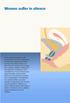 Women suffer in silence Stress urinary incontinence is the involuntary loss of urine resulting from increased intra-abdominal pressure. In people who suffer with this condition, forms of exertion such
Urinary Incontinence. Types
 Urinary Incontinence Leakage of urine is called urinary incontinence. It is a common problem in women. Some women occasionally leak small amounts of urine. At other times, leakage of urine is frequent
Having a tension-free vaginal tape (TVT) operation for stress urinary incontinence
 Having a tension-free vaginal tape (TVT) operation for stress urinary incontinence This leaflet explains more about tension-free vaginal tape (TVT) including the benefits, risks and any alternatives, and
Pediatric Incontinence
 Alberta Aids to Daily Living P R O G R A M Pediatric Incontinence PROGRAM MANDATE: The Alberta Aids to Daily Living (AADL) program helps Albertans with a long-term disability, chronic illness or terminal
Dr Eva Fong. Urologist Auckland
 Dr Eva Fong Urologist Auckland Urinary incontinence: Treatment options GPCME 2013 Eva Fong Urologist Urinary incontinence Is not normal part of aging or childbearing We can make it better Urinary incontinence:
Nocturnal Enuresis Clinical Management Tool (CMT)
 Nocturnal Enuresis Clinical Management Tool (CMT) This tool and additional educational resources can be found at www.stopbedwetting.org Zinc Code: DN/360/2010/UKe(1)a Date of Preparation of website: August
Treatments for Overactive Bladder
 Treatments for Overactive Bladder Patient Information Author ID: SA Leaflet Number: Gyn 051 Name of Leaflet: Treatments for overactive bladder Date Produced: October 2014 Review Date: October 2016 Treatment
Self Catheterization Guide
 Self Catheterization Guide An introduction to intermittent self-catheterization Medical professionals have recommended that you selfcatheterize in order to completely empty your bladder. This prevents
Incontinence. in con ti nent. adjective. 1. unable to restrain natural discharges or evacuations of urine or faeces.
 PBO 930022142 NPO 049-191 Incontinence Incontinence can be upsetting and humiliating for the person with dementia as well as stressful for the carer. However, there are many ways in which the situation
Quality of care for urinary incontinence in a rehabilitation setting for patients with stroke. Simultaneous monitoring of process and outcome
 International Journal for Quality in Health Care 2001; Volume 13, Number 1: pp. 57 61 Quality of care for urinary incontinence in a rehabilitation setting for patients with stroke. Simultaneous monitoring
NHS Continuing Healthcare
 NHS Continuing Healthcare Questionnaire In association with Questionnaire 1. Full name of patient 2. Home address (prior to transfer into care home if applicable) 3. Patient s Date of Birth 4. Patient
Consumer summary Minimally invasive techniques for the relief of stress urinary incontinence
 ASERNIP S Australian Safety and Efficacy Register of New Interventional Procedures Surgical Consumer summary Minimally invasive techniques for the relief of stress urinary incontinence (Adapted from the