
FEMALE INCONTINENCE REVIEW
|
|
|
- Melina Hardy
- 9 years ago
- Views:
Transcription
1 200 S. Wenona Suite 298 Steven L. Jensen, M.D Mackinaw, Suite 4302 Bay City, MI Frank H. Kim, M.D. Saginaw, MI Telephone (989) Adult & Pediatric Urologists (989) Fax (989) Board Certified (989) FEMALE INCONTINENCE REVIEW HOW COMMON IS INCONTINENCE? Incontinence affects approximately 10 million Americans, without regard of sex and age. That means one out of every 25 American suffer from some type of incontinence. WHY SEEK HELP? Besides the social stigma of embarrassing odor and wetness, skin may be damaged by urine. With the technology of the 90s, most incontinence can be treated or at least managed to allow full participation in a satisfactory life-style. DEFINITIONS Incontinence can be simply defined as the unwanted loss of urine. There are actually many types of incontinence, and for successful treatment the type of incontinence must be defined properly. The three major types of incontinence are urge incontinence, stress incontinence and overflow incontinence. URGENCY INCONTINENCE Urgency incontinence is the unwanted loss of urine that is usually associated with an abrupt and very strong urge to urinate. Urgency incontinence is often seen in people with nerve damage, particularly of the spinal cord in diseases like multiple sclerosis. The other main cause for urgency incontinence is the presence of some irritating force within the urinary tract that causes the patient to lose his urine involuntarily. This could be any type of infection of the bladder, prostate, or urethra. This would include such diagnoses as Prostatitis and various forms of cystitis or bladder inflammation. This could also be seen in bladder wall-damaged patients such as those who had received radiation therapy. The treatment of urgency incontinence is directed at the causative factors. If the urgency incontinence is caused by nerve damage for any reason, drugs are used to suppress the urge to urinate. If the cause of the urgency incontinence is any one of the irritating forces, then trying to relieve the bladder with medication or, of course, trying to treat the cause of the urination if it is treatable. In some circumstances such as radiationdamaged bladder the radiation cannot be undone, but the bladder can often be relaxed by using medications that decrease the amount of bladder sensitivity. STRESS INCONTINENCE Stress incontinence is the unwanted loss of urine that occurs during periods of activity such as coughing, sneezing, laughing, or running. This is often seen in women who have had multiple children, and this type of incontinence can be treated surgically, or with some forms of biofeedback teaching. In men, stress incontinence is rare because the prostate provides a major blockage of urine in most men, which gives sphincter is often left somewhat shortened in the attempt to remove all of the cancer. These men may have stress incontinence and may need to wear pads or diapers on a continuing basis. Some drugs such as Ephedrine and Sudafed can often be used to help increase the tone of the remaining sphincter. Doing exercises need to be done on a frequent and continuing basis to keep to keep the muscle tone at its maximum. Women often use this exercise as well after pregnancy. In men after radical prostate surgery with continuing incontinence, surgeons can place an artificial sphincter around the urinary channel downstream from the normal sphincter in an attempt to aid in controlling the urine. The surgery has fairly high success rate, but should not be considered until the patient has been incontinent for at least a year to ensure that spontaneous return of function will not occur. Sometime in the next twelve months we are

2 hopeful to have available collagen injections that can be placed outside the sphincter to help strengthen its presence, and this might be an easier solution in some patients for the treatment of stress incontinence. OVERFLOW INCONTINENCE Overflow incontinence is the unwanted loss of urine that is associated with an over-distended or unemptying bladder. Most people present with a frequent or constant dribbling of urine, and may have some components of urgency incontinence and stress incontinence as well. Overflow incontinence is usually due to either a blockage of the outflow of the urinary tract such as an enlarged prostate from either benign prostate enlargement or prostate cancer. The overflow incontinence can also be due to an under-active or poorly contracting bladder, which does not sense the filling of urine. Nerve damage, particularly those which give the patient little sensitivity of filling of urine such as multiple sclerosis and in some diabetics, the treatment is difficult and may require continuous catheterization or patient self-catheterization programs. If the overflow incontinence is caused by a blockage such as a large prostate or prostate cancer, these diseases can be treated by surgery or medications, and in many over a period of time with a catheter or with intermittent catheterization bladder tone will return. EVALUATION Many times the various types of incontinence present together making the diagnosis somewhat more difficult. The basic evaluation of the patient with incontinence should include a complete history and physical examination with a urinalysis. A good history should include the exact characteristics of the periods of incontinence and the voiding patterns of the patient. A list of precipitating factors and list of all the important urinary tract symptoms should be included. Because the bladder has the same nerve roots as the bowel and sexual functioning, these should also be included in the history. An exact number of the use of pads, both amount and type, should be included, and any previous treatments for incontinence should be included as well. See the list below about the things that we need to know. We may ask you to keep a chart of your voiding pattern to help us make a firm diagnosis or to help us with treatment to see how successful we are in treating your condition: * When do you go to the bathroom and how much? (Use an old jar to measure.) * When do you experience wetness? During or after lifting? While coughing, sneezing, or straining? Day, night, or both? Before or after going to the bathroom? * How much urine do you lose? Estimate amounts in teaspoons, tablespoons, or parts of a cup. * Do you have trouble stopping or starting the flow of urine? * What is your daily fluid intake? (Amount and description of what you drink.) * Be prepared to name the medications you take and any surgery you have had on your urinary tract or around it. When you have this information ready, it is easier for the doctor to proceed with an evaluation. * If you have had previous treatment for incontinence, bring those records or X-rays with you. Physical examination should include a complete abdominal and genital exam, a pelvic examination and a rectal exam is necessary both to look for masses and test the nerve function of the muscles of the perirectal area. Additional testing that is often helpful is a measurement of the amount of urine left in the bladder after voiding, and in some patients a rate of urinary flow. A urinalysis must be done looking for any signs of infection. In some patients a detailed voiding record that measures time and amounts of urine over a one to two day period can be quite helpful. In some patients more specialized tests are indicated, including x-ray evaluation of the kidneys, ureters, bladder and urethra. A telescopic examination of the urethra, the sphincter area, bladder and in men the prostate is often necessary to make access the physical and anatomic characteristics of these organs. In many patients various forms of cystometry is necessary. There are various forms of cystometry, including the cystometrogram, which is a measure of pressure within the bladder. This can often be aided by EMG studies or electromyography, which measures the muscles around the anus and bladder neck, and also video studies of voiding for identification of complex problems, particularly lack of coordination of the various muscles necessary to achieve adequate urination.

3 WHAT WILL BE DONE? As discussed above incontinence has many different causes. The diagnosis will point to the treatment or management that is best for you. Some of the possible treatments are muscle strengthening, electronic stimulation, medicine, surgery, injections of collagen into the sphincter to increase tone, periodic catheterization, external collectors, and absorbent products. Each treatment is personalized to you needs and diagnosis. Often, multiple treatment options for each situation will exist and it will be up to the patient, with their Urologist's help to select the best first option to try. FEMALE INCONTINENCE Steven L. Jensen, MD I. Definition * Urinary incontinence is the involuntary loss of urine through the urethra severe enough to be of social or hygienic consequences. II. Incidence * 10 million American females * 37% of women over 50 years of age * 50% of women in nursing homes * Annual cost of 10 billion dollars III. Classification of Incontinence * Urge Incontinence * Overflow Incontinence * Stress Incontinence - 27% - Type I (minimal hypermobility) - Type II (marked hypermobility) - Type III (Intrinsic sphincter dysfunction) * Mixed Incontinence (Urge and Stress Incontinence) - 57% A. Urge Incontinence * Instability - Infection - CVA - Multiple Sclerosis - Spinal Cord Injury * Poor Compliance / Small Capacity - Pelvic nerve injury - Radiation - Bladder muscle fibrosis B. Overflow Incontinence * Outlet obstruction * Diabetes * Tabes dorsalis (sensory neuropathy)

4 IV. Evaluation V. Treatment C. Stress Incontinence * Types I - III * 90% - 95% of SUI related to anatomic etiology - Pelvic floor relaxation and hypermobility * May be associated with: - Cystocele - Enterocele - Rectocele * History - What causes leaking? Coughing / Laughing Running / exercise Hears water running Unable to make it to the bathroom - How much do they leak? Number of pads / day Change in lifestyle - Past medical history Pregnancies Surgeries Injuries * Physical examination - Pelvic exam (cystocele) - Neurologic exam * Studies - PVR - Urinalysis - Q Tip test - Marshall test - CMG / EMG - Leak Point Pressures (LPP) - Uroflowmetry - Cystoscopy - Video urodynamics A. Urge Incontinence - Voiding log - Kegels - Fluid restriction - Medication Ditropan (anticholinergics) Imipramine Estrogen - Surgery (cystoplasty) - Rare

5 B. Overflow Incontinence - CIC C. Stress Incontinence - Kegels - Fluid restriction - Biofeedback - Medication Estrogens Alpha agonist (Dexatrim, Sudafed) - Surgery Abdominal suspensions * MMK * Burch Transvaginal suspensions * Raz * Stamey * Gittes Combination (Slings) * Rectus Fascial Sling * Raz Vaginal Wall Sling Collagen Injection Artificial Urinary Sphincter Intraurethral Devices

Urinary Incontinence FAQ Sheet
 Urinary Incontinence FAQ Sheet Are you reluctant to talk to your doctor about your bladder control problem? Don t be. There is help. Loss of bladder control is called urinary incontinence. It can happen
Urinary Incontinence in Women. Susan Hingle, M.D. Department of Medicine
 Urinary Incontinence in Women Susan Hingle, M.D. Department of Medicine Background Estimated 13 million Americans with urinary incontinence Women are affected twice as frequently as men Only 25% will seek
URINARY INCONTINENCE IN WOMEN
 URINARY INCONTINENCE IN WOMEN Definition Urinary incontinence (UI) is defined as involuntary loss of urine that is a social or hygienic problem (International Continence Society, 1973) Magnitude of the
Urinary Incontinence (Involuntary Loss of Urine) A Patient Guide
 Urinary Incontinence (Involuntary Loss of Urine) A Patient Guide Urinary Incontinence (Urine Loss) This booklet is intended to give you some facts on urinary incontinence - what it is, and is not, and
Incontinence. What is incontinence?
 Incontinence What is incontinence? Broadly speaking, the medical term incontinence refers to any involuntary release of bodily fluids, but many people associate it strongly with the inability to control
URINARY INCONTINENCE CASE PRESENTATION #1. Urinary Incontinence - History 2014/10/07. Structure of the Female Lower Urinary Tract
 Bladder pressure 2014/10/07 Structure of the Female Lower Urinary Tract Ureter URINARY INCONTINENCE Clinical Clerkship Lecture Series Outer peritoneal coat Detrusor smooth muscle Mucosa Trigone Proximal
Urinary Incontinence. Causes of Incontinence. What s Happening?
 National Institute on Aging AgePage Urinary Incontinence Sarah loves to spend time with her friends talking about her grandchildren and going to exercise classes with neighbors. But she s started to have
Learning Resource Guide. Understanding Incontinence. 2000 Prism Innovations, Inc. All Rights Reserved
 Learning Resource Guide Understanding Incontinence 2000 Prism Innovations, Inc. All Rights Reserved ElderCare Online s Learning Resource Guide Understanding Incontinence Table of Contents Introduction
Bladder Health Promotion
 Bladder Health Promotion Community Awareness Presentation Content contributions provided by the Society of Urologic Nurses (SUNA) National Association for Continence (NAFC) Simon Foundation for Continence
Overactive Bladder (OAB)
 Overactive Bladder (OAB) Overactive bladder is a problem with bladder storage function that causes a sudden urge to urinate. The urge may be difficult to suppress, and overactive bladder can lead to the
URINARY INCONTINENCE
 URINARY INCONTINENCE What is urinary incontinence? Urinary incontinence is the uncontrollable loss of urine. The amount of urine leaked can vary from only a few drops when you cough or sneeze to entirely
Bladder Health Promotion
 Bladder Health Promotion Community Awareness Presentation endorsed by the Society of Urologic Nurses (SUNA) National Association for Continence( NAFC) Simon Foundation for Continence This presentation
Female Urinary Disorders and Pelvic Organ Prolapse
 Female Urinary Disorders and Pelvic Organ Prolapse Richard S. Bercik, M.D. Director, Division of Urogynecology & Reconstruction Pelvic Surgery Department of Obstetrics, Gynecology & Reproductive Sciences
Normal bladder function requires a coordinated effort between the brain, spinal cord, and the bladder.
 .. Urinary Incontinence Urinary incontinence is not an inevitable part of aging, and it is not a disease. The loss of bladder control - called urinary incontinence - affects between 13 and 17 million adult
Registered Charity No. 5365
 THE MULTIPLE SCLEROSIS SOCIETY OF IRELAND Dartmouth House, Grand Parade, Dublin 6. Telephone: (01) 269 4599. Fax: (01) 269 3746 MS Helpline: 1850 233 233 E-mail: [email protected] www.ms-society.ie
Urinary Incontinence. Types
 Urinary Incontinence Leakage of urine is called urinary incontinence. It is a common problem in women. Some women occasionally leak small amounts of urine. At other times, leakage of urine is frequent
1 in 3 women experience Stress Urinary Incontinence.
 A PATIENT S GUIDE 1 in 3 women experience Stress Urinary Incontinence. It s time to talk about SUI Get the facts. This Patient s Guide is intended as a public resource on the issue of Stress Urinary Incontinence
Urinary Incontinence. Anatomy and Terminology Overview. Moeen Abu-Sitta, MD, FACOG, FACS
 Urinary Incontinence Anatomy and Terminology Overview Moeen Abu-Sitta, MD, FACOG, FACS Purpose Locate and describe the anatomy of the Female Urinary System Define terminology related to Incontinence Describe
symptoms of Incontinence
 Types, causes and symptoms of Urinary Incontinence Aims and Objectives Aim: To have an understanding of the types and causes of urinary incontinence. Objectives: To be aware of the incidence and prevalence
Managing Urinary Incontinence
 Patient & Family Guide 2016 Managing Urinary Incontinence www.nshealth.ca Managing Urinary Incontinence What is the urinary system? Urine (pee) is made in the kidneys. It flows through tubes called ureters.
LOSS OF BLADDER CONTROL IS TREATABLE TAKE CONTROL AND RESTORE YOUR LIFESTYLE
 LOSS OF BLADDER CONTROL IS TREATABLE TAKE CONTROL AND RESTORE YOUR LIFESTYLE TALKING ABOUT STRESS INCONTINENCE (SUI) Millions of women suffer from stress incontinence (SUI). This condition results in accidental
Managing Changes in Your Bladder Function After Cancer Treatment
 Managing Changes in Your Bladder Function After Cancer Treatment Information for cancer survivors UHN Read this resource to learn: What a urinary problem is What causes it What you can do to improve your
Adult Urodynamics: American Urological Association (AUA)/Society of Urodynamics, Female Pelvic Medicine & Urogenital Reconstruction (SUFU) Guideline
 Adult Urodynamics: American Urological Association (AUA)/Society of Urodynamics, Female Pelvic Medicine & Urogenital Reconstruction (SUFU) Guideline RECOMMENDATIONS 1 Conditional: Clinicians who are making
Urinary Continence. Second edition FAST FACTS. by Julian Shah and Gary Leach. Anatomy and physiology 7. Investigations and diagnosis 11
 FAST FACTS Urinary Continence Second edition Indispensable Guides to by Julian Shah and Gary Leach Clinical Practice Anatomy and physiology 7 Investigations and diagnosis 11 Detrusor instability 28 Primary
Information for patients. Sex and Incontinence. Royal Hallamshire Hospital
 Information for patients Sex and Incontinence Royal Hallamshire Hospital Why is sex important? We may choose to be sexual, regardless of our age, physical status or stage of life. Those with health problems
Urinary Incontinence Dr. Leffler
 Urinary Incontinence Dr. Leffler The involuntary loss of urine at socially unacceptable times occurs in both women and men, but more commonly in women. It has multiple, far-reaching effects on daily activities,
Urinary Incontinence
 Urinary Incontinence Q: What is urinary incontinence (UI)? A: UI is also known as loss of bladder control or urinary leakage. UI is when urine leaks out before you can get to a bathroom. If you have UI,
Urinary Incontinence
 Urinary Incontinence Q: What is urinary Urinary (YOOR-in-air-ee) incontinence (in-kahn-tih-nens) is when urine leaks out before you can get to a bathroom. If you have urinary incontinence, you re not alone.
Overactive bladder and urgency incontinence
 Overactive bladder and urgency incontinence As a health care provider you can make a significant difference to the quality of life of patients like these by addressing urinary incontinence, introducing
Stress Urinary Incontinence: Treatment Manisha Patel, MD April 10, 2006
 Stress Urinary Incontinence: Treatment Manisha Patel, MD April 10, 2006 What treatment options are available for a woman with stress urinary incontinence (SUI)? Behavioral therapy, medication, pessary,
Topic review: Clinical presentation and diagnosis of urinary incontinence in the elderly. Prapa Pattrapornpisut 7 June 2012
 1 Topic review: Clinical presentation and diagnosis of urinary incontinence in the elderly Prapa Pattrapornpisut 7 June 2012 2 Urinary incontinence Definition the complaint of any involuntary leakage of
Regain Control of Your Active Life Treatment Options for Incontinence and Pelvic Organ Prolapse
 Regain Control of Your Active Life Treatment Options for Incontinence and Pelvic Organ Prolapse Nearly one quarter of all women in the United States have some sort of pelvic floor disorder such as urinary
Male urinary incontinence (leakage of urine) you are not alone
 Male urinary incontinence (leakage of urine) you are not alone Delivering the best in care UHB is a no smoking Trust To see all of our current patient information leaflets please visit www.uhb.nhs.uk/patient-information-leaflets.htm
Urinary Incontinence Control using External Urethral Compression Devices (Clamps)
 A Patient s Guide Urinary Incontinence Control using External Urethral Compression Devices (Clamps) by Ralph Alterowitz, MEA Carol Partington, DVM Copyright 2005 TABLE OF CONTENTS Introduction... 1 Definition...
Bladder Control Does Matter
 Bladder Control Does Matter Y0028_2726_0 File&Use 04092012 If you suffer from urinary incontinence, you re not alone Don t be afraid to raise your hand if you ve been struggling with the embarrassment
Women s Continence and Pelvic Health Center
 Women s Continence and Pelvic Health Center Committed to Caring 580-590 Court Street Keene, New Hampshire 03431 (603) 354-5454 Ext. 6643 URINARY INCONTINENCE QUESTIONNAIRE The purpose of this questionnaire
Understanding and Preventing Bladder Infections in Women
 Understanding and Preventing Bladder Infections in Women Understanding and Preventing Bladder Infections in Women Recurrent bladder or urinary tract infections (UTI s) are a very common diagnosis. In fact,
Overview of Urinary Incontinence in the Long Term Care Setting
 Overview of Urinary Incontinence in the Long Term Care Setting Management Strategies for the Nursing Assistant Ann M. Spenard RN, C, MSN Courtney Lyder ND, GNP Learning Objectives Describe common types
Spinal Cord and Bladder Management Male: Intermittent Catheter
 Spinal Cord and Bladder Management Male: Intermittent Catheter The 5 parts of the urinary system work together to get rid of waste and make urine. Urine is made in your kidneys and travels down 2 thin
Bard: Continence Therapy. Stress Urinary Incontinence. Regaining Control. Restoring Your Lifestyle.
 Bard: Continence Therapy Stress Urinary Incontinence Regaining Control. Restoring Your Lifestyle. Stress Urinary Incontinence Becoming knowledgeable about urinary incontinence Uterus Normal Pelvic Anatomy
Treatments for Urinary Incontinence in Women
 Treatments for Urinary Incontinence in Women National Kidney and Urologic Diseases Information Clearinghouse National Institute of Diabetes and Digestive and Kidney Diseases NATIONAL INSTITUTES OF HEALTH
Case Based Urology Learning Program
 Case Based Urology Learning Program Resident s Corner: UROLOGY Case Number 21 CBULP 2011 068 Case Based Urology Learning Program Editor: Associate Editors: Manager: Case Contributors: Steven C. Campbell,
Urinary Incontinence Definitions
 (AADL) Program Urge Stress Overflow Functional Mixed DHIC (Detrussor hyperreflexia with impaired contractility) Reflex Incontinence Leakage of urine (usually larger volumes) because of inability to delay
An illustrated guide to the management of incontinence.
 An illustrated guide to the management of incontinence. 1 The problem of incontinence The ACA describes incontinence as an involuntary loss of urine and/or bowel motion. The amount can vary from slight
VAGINAL TAPE PROCEDURES FOR THE TREATMENT OF STRESS INCONTINENCE
 VAGINAL TAPE PROCEDURES FOR THE TREATMENT OF STRESS INCONTINENCE AN INFORMATION LEAFLET Written by: Department of Urology May 2011 Stockport: 0161 419 5698 Website: w w w. s t o c k p o r t. n h s. u k
Lifestyle and Behavioral Changes Improving Urinary Urgency, Frequency and Urge Incontinence
 Lifestyle and Behavioral Changes Improving Urinary Urgency, Frequency and Urge Incontinence Manage your Fluid Intake: There is no scientific evidence that states we need eight 8 oz. glasses (64 oz.) of
Urinary incontinence. The urinary system
 Urinary incontinence is defined as the involuntary loss of urine from the bladder. Although it is a common condition, most women who suffer from it do not seek help. It is thought that urinary incontinence
Urinary Incontinence. Patient Information Sheet
 Urinary Incontinence Patient Information Sheet What is urinary incontinence (UI)? UI happens when you are not able to control when you urinate and you wet yourself. How common is urinary incontinence?
1 ST JAMAICAN PAEDIATRIC NEPHROLOGY CONFERENCE
 in association with 1 ST JAMAICAN PAEDIATRIC NEPHROLOGY CONFERENCE Jamaica Conference Centre Kingston, Jamaica October 4 th 2014 VOIDING DISORDERS IN CHILDREN Dr. Colin Abel Paediatric Urologist Bustamante
GLOSSARY of research terms
 GLOSSARY of research terms JLA Urinary Incontinence Working Partnership Workshop to set research priorities in Urinary Incontinence November 2008 Terms in bold are commonly used clinical/research terms.
Refer to Coaptite Injectable Implant Instructions for Use provided with product for complete instructions for use.
 Questions for my Doctor Refer to Coaptite Injectable Implant Instructions for Use provided with product for complete instructions for use. INDICATIONS: Coaptite Injectable Implant is indicated for soft
The Well Woman Centre. Adult Urinary Incontinence
 The Well Woman Centre Adult Urinary Incontinence 1 Adult Urinary Incontinence... 3 Stress Incontinence Symptoms... 3 Urge Incontinence Symptoms... 4 Mixed Incontinence Symptoms... 5 Where to Start?...
Management of Neurogenic Bladder Disorders
 Management of Neurogenic Bladder Disorders Andrea Staack, MD, PhD Pelvic Reconstructive Surgery, Urinary Incontinence & Female Urology Department of Urology Loma Linda University, CA What will you learn
Consumer summary Minimally invasive techniques for the relief of stress urinary incontinence
 ASERNIP S Australian Safety and Efficacy Register of New Interventional Procedures Surgical Consumer summary Minimally invasive techniques for the relief of stress urinary incontinence (Adapted from the
A Physical Therapist s Perspective
 You Can Do Something About INCONTINENCE A Physical Therapist s Perspective American Physical Therapy Association 1 You Can Do Something About Urinary Incontinence Incontinence, involuntary loss of bladder
Get the Facts, Be Informed, Make YOUR Best Decision. Pelvic Organ Prolapse
 Pelvic Organ Prolapse ETHICON Women s Health & Urology, a division of ETHICON, INC., a Johnson & Johnson company, is dedicated to providing innovative solutions for common women s health problems and to
Do I Need to Have Surgery for Urinary Incontinence? What Kinds of Surgery Can Treat Stress Incontinence?
 Do I Need to Have Surgery for Urinary Incontinence? Excerpts from The Incontinence Solution: Answers for Women of All Ages, by William H. Parker, MD, Amy E. Rosenman, MD and Rachel Parker (Simon and Schuster,
Palm Beach Obstetrics & Gynecology, PA
 Palm Beach Obstetrics & Gynecology, PA 4671 S. Congress Avenue, Lake Worth, FL 33461 561.434.0111 4631 N. Congress Avenue, Suite 102, West Palm Beach, FL 33407 Urinary Tract Infection About one of every
Bowel Control Problems
 Bowel Control Problems WOMENCARE A Healthy Woman is a Powerful Woman (407) 898-1500 Bowel control problems affect at least 1 million people in the United States. Loss of normal control of the bowels is
Lower Urinary Tract Symptoms (LUTS) in Middle-Aged and Elderly Men
 Prostatic Diseases Lower Urinary Tract Symptoms (LUTS) in Middle-Aged and Elderly Men JMAJ 47(12): 543 548, 2004 Tomonori YAMANISHI Associate Professor, Department of Urology, Dokkyo University School
Recovery After Stroke: Bladder & Bowel Function. Treatments
 Recovery After Stroke: Bladder & Bowel Function Problems with bladder and bowel function are common but distressing for stroke survivors. Going to the bathroom after suffering a stroke may be complicated
Bowel and Bladder Dysfunction in MS. Tracy Walker, WOCN, MSCN, FNP C Nurse Practitioner MS Institute at Shepherd Center. Bladder Dysfunction
 Bowel and Bladder Dysfunction in MS Tracy Walker, WOCN, MSCN, FNP C Nurse Practitioner MS Institute at Shepherd Center Bladder Dysfunction Approximately 75% of people with MS experience bladder problems
Riesa Gusewelle, MNSc, RN, APRN, GNP-BC. OBJECTIVES Identify early warning signs of urinary tract
 Detection, Early Management & Prevention, of Urinary Tract Infections in Older Adults Riesa Gusewelle, MNSc, RN, APRN, GNP-BC OBJECTIVES Identify early warning signs of urinary tract infections (UTIs)
Overactive bladder syndrome (OAB)
 Overactive bladder syndrome (OAB) Exceptional healthcare, personally delivered What is OAB? An overactive bladder or OAB is where a person regularly gets a sudden and compelling need or desire to pass
2 of 6 10/17/2014 9:51 AM
 1 of 6 10/17/2014 9:51 AM 010101 Free 14-Day Trial Tutorial Help Search by keyword or medical code User Name: Password: Directory Print Email Advanced Search Medical Disability Advisor > Cystocele Or Rectocele
Having a tension-free vaginal tape (TVT) operation for stress urinary incontinence
 Having a tension-free vaginal tape (TVT) operation for stress urinary incontinence This leaflet explains more about tension-free vaginal tape (TVT) including the benefits, risks and any alternatives, and
EVALUATION OF URINARY INCONTINENCE IN WOMEN
 Urological Neurology Brazilian Journal of Urology Official Journal of the Brazilian Society of Urology Vol. 27 (2): 165-170, March - April, 2001 EVALUATION OF URINARY INCONTINENCE IN WOMEN STEVEN P. PETROU,
9/24/2015. Incontinence and Prolapse 2015 Primary Care Update CME Symposium. Objectives. Mark Memo, DO, FACS NEO Urology September 25-27
 Incontinence and Prolapse 2015 Primary Care Update CME Symposium Mark Memo, DO, FACS NEO Urology September 25-27 Objectives Incontinence Pelvic Organ Prolapse Vaginal Mesh Litigation 1 Urinary Incontinence
Dr Eva Fong. Urologist Auckland
 Dr Eva Fong Urologist Auckland Urinary incontinence: Treatment options GPCME 2013 Eva Fong Urologist Urinary incontinence Is not normal part of aging or childbearing We can make it better Urinary incontinence:
Fecal incontinence (Encopresis) It is the fecal incontinence condition observed in children with chronic constipation over 1-2 years.
 WHAT IS DYSFUNCTIONAL URINATION (URINATION FUNCTION DISORDER)? It stands for the urination phase disorders, which appear due to wrongly acquired urination habits during the toilet training of some neurologically
Urine Leaks After Prostate Cancer Treatment
 Managing Symptoms After Prostate Cancer Urine Leaks After Prostate Cancer Treatment Urine leaks after surgery or radiation for prostate cancer are common. The medical term for this is incontinence (say:
Recovery After Stroke: Bladder & Bowel Function
 Recovery After Stroke: Bladder & Bowel Function Problems with bladder and bowel function are common but distressing for stroke survivors. Going to the bathroom after suffering a stroke may be complicated
Ask the Expert - Answers
 Ask the Expert - Answers Q. I had a hysterectomy four years ago. Since then, I have been experiencing progressively increasing urgency. I drink one XL cup of coffee per day but when I have to go, I have
Saint Mary s Hospital. Gynaecology Service Warrell Unit. Overactive Bladder. Information for Patients
 Saint Mary s Hospital Gynaecology Service Warrell Unit Overactive Bladder Information for Patients What is Overactive Bladder (OAB)? OAB is a condition that causes you to need to pass urine more often
Non-surgical Treatments for Urinary Incontinence. A Review of the Research for Women
 Non-surgical Treatments for Urinary Incontinence A Review of the Research for Women Is This Information Right for Me? Yes, if: You are a woman who is older than 18. You are having trouble holding your
Women suffer in silence
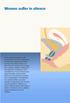 Women suffer in silence Stress urinary incontinence is the involuntary loss of urine resulting from increased intra-abdominal pressure. In people who suffer with this condition, forms of exertion such
Surgical Treatment for Female Stress Urinary. Continence. Consumer Education
 Surgical Treatment for Female Stress Urinary Incontinence By: Amy Rosenman, MD Geffen School of Medicine at UCLA Santa Monica, California Promoting Quality Continence Care through Consumer Education Always
Urodynamic Studies. Urinary flow rate Cystometry (CMG) Urethral pressure profile (UPP)
 Paediatric Urodynamics 小 兒 尿 動 力 學 Frances Sit NS Dept. of Surgery, PWH Urodynamic Studies Urodynamic investigations study the pressure, volume & flow relationships in the lower urinary tract 3 investigations
Normal bladder function. Aging of the bladder and urethra
 SECTION 10 Bladder and bowel control (continence) Section overview This section looks at: Normal bladder function Stroke and loss of bladder control (incontinence) Normal bowel function Stroke and bowel
Female Urinary Incontinence
 Female Urinary Incontinence Molly Heublein, MD Assistant Professor Clinical Medicine UCSF Women s Health Primary Care Disclosures I have nothing to disclose. 1 Objectives Review the problem Feel confident
What you should know about Stress Urinary Incontinence
 Gynecare TVT Stop coping. Start living. What you should know about Stress Urinary Incontinence Have you ever leaked urine when you laughed, coughed or sneezed? You are not alone. Many women suffer from
Stress Urinary Incontinence
 Saint Mary s Hospital Gynaecology Service Warrell Unit Stress Urinary Incontinence Information for patients What is Stress Incontinence? Stress incontinence is a leakage of urine occurring on physical
Spine University s Guide to Cauda Equina Syndrome
 Spine University s Guide to Cauda Equina Syndrome 2 Introduction Your spine is a very complicated part of your body. It s made up of the bones (vertebrae) that keep it aligned, nerves that channel down