
An illustrated guide to the management of incontinence.
|
|
|
- Scott Beasley
- 10 years ago
- Views:
Transcription
1 An illustrated guide to the management of incontinence. 1

2

3 The problem of incontinence The ACA describes incontinence as an involuntary loss of urine and/or bowel motion. The amount can vary from slight to copious. Incontinence is not a disease, but is a symptom of an underlying disorder. (Association for Continence Advice 1993). The ICS defines urinary incontinence as the complaint of any involuntary loss of urine. (International Continence Society 2002). Urinary incontinence has a higher prevalence than faecal incontinence. It is estimated that between 3 and 6 million people in the UK suffer from incontinence of varying degrees of severity, which often causes severe physical difficulties and psychological distress. Incontinence is still a condition that people may be too embarrassed to talk about and may conceal as far as possible. People suffering from urinary incontinence should be encouraged to seek medical advice. There are many treatment and management options which can greatly alleviate both the psychological and the physical burden experienced by the sufferer. This brochure aims to discuss the problem of incontinence openly, remove the social taboos and embarrassment surrounding it and provide information on its management by describing practical methods of dealing with the problem. 3

4 How does urinary incontinence occur? At a variable age during infancy, the skill is acquired to voluntarily control bladder emptying. This involves a complicated mechanism controlling the coordination of the urinary bladder, the sphincter at the neck of the bladder and the nervous system. As the bladder fills with urine, an urge to void is experienced which becomes increasingly stronger as the bladder fills to capacity. The volume of urine stored in the healthy adult bladder varies as situations demand, but the maximum capacity is usually about 1/2 litre. Information on the volume of urine in the bladder is transmitted through a special nerve centre in the sacral region in the spinal cord to the relevant centres in the brain. When the urine in the bladder reaches a certain volume, a conscious decision to void is triggered. The command is transmitted from the brain to the bladder via the spinal cord. The bladder contracts, the sphincter relaxes and urine is voided. Involuntary leakage of urine can occur if: the bladder muscles are not functioning normally and the bladder contracts involuntarily, the sphincter tone decreases, the nerve pathway between the bladder, the spinal cord and the brain is partially or totally disrupted. It is important to remember that urinary incontinence is caused by an underlying condition; for example, infection of the urinary tract, prostatic enlargement, prolapse of the bladder, rectum or uterus into the vagina, stroke, metabolic disease, injuries to the spinal cord, severe physical disabilities etc. Post-operative complications can also cause incontinence. 4

5 Illustration of Normal Bladder Emptying Brain Kidney Ureter Control centre in the lower spinal cord Bladder Bladder neck and urethra When normal bladder function occurs, information regarding the volume of urine in the bladder is transmitted via the control centre in the lower spinal cord to the brain, from where bladder emptying is voluntarily determined. nerve impulses which provide information to the brain nerve impulses giving commands back to the bladder Urinary incontinence is not an illness in itself, but rather a symptom of an underlying condition, which needs to be identified and treated by a doctor or other health care professional. Urinary incontinence is classified according to type and degree of severity, which may be described as slight, moderate or severe. Although urinary incontinence affects all age groups, the prevalence increases with age. 5

6 Some common types of urinary incontinence Stress Urinary Incontinence Stress incontinence occurs when the bladder sphincter is weak and ceases to function efficiently due to weakness of the muscles in the pelvic floor. In women, stress incontinence is often first reported after childbirth. Hormonal changes during the menopause can aggravate the situation, as may obesity. In stress incontinence, the function of the urethra and bladder sphincter is impaired because of the inadequate support received from the muscles in the pelvic floor. Stress urinary incontinence is the complaint of involuntary leakage on effort or exertion, or on sneezing or coughing. (ICS 2002) If there is a rise in intra-abdominal pressure, the pressure on the bladder also rises, and can overcome the closure pressure of the sphincter, resulting in involuntary urine loss. Stress incontinence may be classified as slight, moderate or severe. In patients with severe stress incontinence, leakage can occur with minimal movement. This type of incontinence occurs mainly in women. Urge Urinary Incontinence Urge urinary incontinence is the complaint of involuntary leakage accompanied by or immediately preceded by urgency (ICS 2002). Urge incontinence is caused by overactivity of the bladder muscles, which may result in the sudden, spontaneous, partial or complete emptying of the bladder when an acute urge to void develops. In less severe cases, the symptoms are those of a persistent urge to pass urine frequently, with the patient retaining voluntary control. As the symptoms increase in severity, the urge to void can no longer be controlled voluntarily and incontinence results. Urge incontinence may be associated with urinary tract infection, enlargement of the prostate gland, metabolic diseases such as diabetes, or degenerative diseases of the central nervous system. In the elderly, urge urinary incontinence is the type of incontinence most commonly seen. 6

7 Neurogenic Detrusor Overactivity Neurogenic detrusor overactivity occurs in patients with relevant neurological conditions and is characterised by the onset of spontaneous, uninitiated, detrusor (bladder muscle) contractions, with or without the sensation of urgency, leading to urinary incontinence. With all neurogenic bladder dysfunction, urodynamic investigation is essential to determine the functioning of the detrusor and sphincter. Neurogenic detrusor overactivity can be caused by spina bifida, spinal cord injury, tumours, multiple sclerosis, Parkinson s disease, stroke or dementia. Incontinence associated with Bladder Outlet Obstruction An obstruction to the outflow tract, such as a stricture or stenosis in the urethra, or an enlarged prostate gland in the male patient, can result in urinary incontinence previously described as overflow incontinence. As a result of this partial blockage of the urethra, difficulty is experienced passing urine and the bladder may not empty completely. Over time, chronic retention of urine results and a large volume of urine accumulates in the bladder. Chronic retention of urine is defined as a nonpainful bladder, which remains palpable after the patient has passed urine (ICS 2002). As a result there may be incontinence, which may be intermittent or may be described as a constant dribble. Acute retention of urine is defined as a painful, palpable bladder, when the patient is unable to pass any urine (ICS 2002). This is a medical emergency. 7

8 Methods of treatment and management Before prescribing any treatment, the doctor or other health care professional must first identify the causes of the urinary incontinence. The patient can help in the diagnosis, by giving accurate answers to questions, such as: Under what circumstances does urine leakage occur? How often does urine leakage occur and how much urine is lost? Is there a sudden urge to pass urine? Can the patient sometimes hold on and pass urine voluntarily? The assessing professional should have access to the patient s case notes, and be aware of any relevant previous history, such as repeated urinary tract infection. The assessor should inform the patient of all appropriate treatment options, including medication, sugery and conservative methods of treatment. Surgery is considered mainly in cases where anatomical changes have occurred. Conservative methods are preferred in cases where surgery appears unlikely to be successful or the risk is too great, or where the underlying condition cannot be corrected by surgery. In such cases, conservative treatment is available to alleviate the effects of incontinence. Conservative methods of treatment include: Toileting Programmes An individual toileting programme aims to pre-empt bladder emptying, so preventing incontinence by getting the patient to go to the lavatory in time. By examining the pattern of voiding and incontinence, a programme is planned for the individual, documenting set times or set intervals for visits to the lavatory. Pelvic Floor Training Pelvic Floor Exercises aim to strengthen the muscles supporting the bladder and urethra and are often effective in the treatment of stress and urge incontinence. Electrical Stimulation can also be used to stimulate and strengthen the pelvic floor muscles. Both these treatments are available from a specialist Physiotherapist or Continence Service. 8

9 Bladder Reflex Triggering Bladder reflex triggering is used mainly in paraplegic patients, and comprises of various techniques to elicit a reflex detrusor contraction. Techniques used include suprapubic tapping and thigh scratching. The aim is to completely empty the bladder so that the patient can remain continent during the intervals between treatments. Catheterisation Indwelling catheters involve a high risk of infection and should only be used after careful consideration, and having discussed the benefits and risks with the patient and carers. Initial insertion should be by a health care professional competent in the procedure. Intermittent catheterisation is a procedure which does not carry the same long-term complications as indwelling catheterisation. This procedure is performed either by the patient, a family member or carer and is taught under supervision, using a clean technique. The hands and the genital region must be thoroughly washed before each intermittent catheterisation. Single use catheters may reduce the risk of infection. Urinary Sheath Systems Urinary sheath systems can be used to manage incontinence in men. Special urinary sheaths are applied to the penis and attached to a drainable bag, which is attached to the upper or lower leg, to collect the urine. If correctly selected and fitted, urinary sheath systems are a reliable method of managing incontinence. Urinary sheath systems facilitate discreet management of incontinence in mobile male patients and enable them to pursue their normal social activities without embarrassment. Wheelchair users and bedridden male patients can also successfully use this management system. Medication Medication may be prescribed to help some causes of bladder dysfunction, such as the treatment of an overactive bladder or enlargement of the prostate gland. In the near future, medication is expected to be available for stress urinary incontinence. 9

10 Methods of treatment and management (cont d) Practical Tips for the Management of Urinary Incontinence Avoid constipation by ensuring adequate fluid intake and fibre in the diet. Straining at stool, which occurs in chronic constipation, can weaken the pelvic floor. The exact effect of obesity in stress incontinence is unclear, but it is widely accepted that overweight sufferers would benefit from weight reduction. A fluid intake of 1 1 /2 to 2 litres in 24 hours is generally advised. Fluids known to be irritant to the bladder such as tea, coffee, fizzy pop and alcohol, should be avoided. Drinking two small glasses of cranberry juice a day may reduce the incidence of urinary tract infection. Please note: Patients taking the drug warfarin have been advised to limit or avoid drinking cranberry juice, due to a possible interaction between warfarin and cranberry juice. Any concerns should be discussed with their GP. Restricting drinks is counter-productive, unless the patient has an excessive fluid intake. With age, the period from sensing the first desire to void until bladder capacity is reached becomes shorter. It is therefore reassuring for an older person to be familiar with toilet locations. Clothing which is easy to manage can make a difference, promoting continence and confidence. Personal hygiene is very important. After washing, small amounts of a prescribed preparation may be applied to the skin. However, oil-based creams should not be used with continence products as the cream will occlude the pores in the coverstock, so trapping urine next to the skin. 10

11 Absorbent Incontinence Products Modern, disposable incontinence briefs or pads enable the patient to lead an almost normal life despite incontinence problems. Absorbent incontinence products can be worn discreetly inside the underwear, absorbing the urine quickly and reliably, whilst at the same time protecting sensitive skin and preventing unpleasant odours. They give the patient a feeling of security and restore selfconfidence. Incontinence products are also essential in the care of bedridden patients, where they improve the basic hygienic conditions and help to prevent the occurrence of complications such as skin lesions. It is for this reason that incontinence products are often provided free of charge by health care providers. The colour coding of the Moli range from HARTMANN The colour coding used for the Moli range from HARTMANN enables you to identify at a glance which product is suitable for which degree of incontinence. The four colours represent the four degrees of severity of incontinence: Yellow for slight incontinence Green for moderate incontinence Blue for severe incontinence Violet for very severe incontinence In addition to the colours used on the packaging and on the products themselves, the drop symbols are a further aid to rapid identification of the absortion capacity of a product. 11

12 The range from HARTMANN MoliForm Normal MoliForm Plus MoliNea Plus-D 20 x 40cm 20 x 60cm 15 x 60cm MoliMed Mini Midi Maxi MoliNea Plus Underpad 40 x 60cm 57 x 60cm 57 x 90cm Couche Strampelpeter MoliMed For Men Active MoliMed For Men Protect 12

13 MoliForm Extra MoliForm Maxi MoliForm Super MoliCare Extra Small Small Medium Large Extra Large MoliCare Super Small Medium Large MoliCare Mobile Small Medium Large MoliCare Super Plus Small Medium Large MoliCare Med Size 2 Size 3 MoliNea Plus Underpad 57 x 60cm 57 x 90cm MoliForm for Men 13

14 How to find the right incontinence product Urinary incontinence does not follow any set pattern. Depending on the underlying cause, it can manifest itself in varying degrees of severity, ranging from occasional slight leakage of urine to very severe urine loss MoliCare All-in-one Incontinence Briefs 2 MoliCare Mobile Incontinence Pants 3 MoliForm Incontinence Pads 4 MoliMed Incontinence Pads 5 MoliMed for Men Active 6 MoliNea Plus-D Absorbent Pads 3 14

15 4 The absorption capacity of the selected product must be adequate for the degree of severity of the incontinence. Experience has shown that the degree of severity can be graded according to the approximate amount of urine passed

16 HARTMANN GB, Heywood Distribution Park, Pilsworth Road, Heywood, Lancs. OL10 2TT. Tel: Fax For more information please request our brochure Hartmann Continence Care or visit our website For copies of literature or more information please visit our website Tel: Fax: LIT (UK) 0166 May 2004

Registered Charity No. 5365
 THE MULTIPLE SCLEROSIS SOCIETY OF IRELAND Dartmouth House, Grand Parade, Dublin 6. Telephone: (01) 269 4599. Fax: (01) 269 3746 MS Helpline: 1850 233 233 E-mail: [email protected] www.ms-society.ie
symptoms of Incontinence
 Types, causes and symptoms of Urinary Incontinence Aims and Objectives Aim: To have an understanding of the types and causes of urinary incontinence. Objectives: To be aware of the incidence and prevalence
Overactive Bladder (OAB)
 Overactive Bladder (OAB) Overactive bladder is a problem with bladder storage function that causes a sudden urge to urinate. The urge may be difficult to suppress, and overactive bladder can lead to the
Information for patients. Sex and Incontinence. Royal Hallamshire Hospital
 Information for patients Sex and Incontinence Royal Hallamshire Hospital Why is sex important? We may choose to be sexual, regardless of our age, physical status or stage of life. Those with health problems
Urinary Incontinence FAQ Sheet
 Urinary Incontinence FAQ Sheet Are you reluctant to talk to your doctor about your bladder control problem? Don t be. There is help. Loss of bladder control is called urinary incontinence. It can happen
Incontinence. What is incontinence?
 Incontinence What is incontinence? Broadly speaking, the medical term incontinence refers to any involuntary release of bodily fluids, but many people associate it strongly with the inability to control
Patient Information:
 Patient Information: Care of an indwelling Urinary Catheter What is a Urinary Catheter? A catheter is a hollow, flexible tube designed to drain urine from the bladder. Following insertion into the bladder,
Normal bladder function requires a coordinated effort between the brain, spinal cord, and the bladder.
 .. Urinary Incontinence Urinary incontinence is not an inevitable part of aging, and it is not a disease. The loss of bladder control - called urinary incontinence - affects between 13 and 17 million adult
Urinary Incontinence (Involuntary Loss of Urine) A Patient Guide
 Urinary Incontinence (Involuntary Loss of Urine) A Patient Guide Urinary Incontinence (Urine Loss) This booklet is intended to give you some facts on urinary incontinence - what it is, and is not, and
Indwelling urinary catheter. Information for patients and carers. RDaSH. Doncaster Community Integrated Services
 Indwelling urinary catheter Information for patients and carers RDaSH Doncaster Community Integrated Services What is a catheter? A catheter is a hollow flexible tube designed to drain urine from the bladder.
NHS Professionals. CG8 Guidelines for Continence and Catheter Care. Introduction
 NHS Professionals CG8 Guidelines for Continence and Catheter Care Introduction Continence has been defined as control of bladder and bowel function and continence care is the name given to the total care
Urinary Incontinence. Causes of Incontinence. What s Happening?
 National Institute on Aging AgePage Urinary Incontinence Sarah loves to spend time with her friends talking about her grandchildren and going to exercise classes with neighbors. But she s started to have
Bladder Health Promotion
 Bladder Health Promotion Community Awareness Presentation Content contributions provided by the Society of Urologic Nurses (SUNA) National Association for Continence (NAFC) Simon Foundation for Continence
Male urinary incontinence (leakage of urine) you are not alone
 Male urinary incontinence (leakage of urine) you are not alone Delivering the best in care UHB is a no smoking Trust To see all of our current patient information leaflets please visit www.uhb.nhs.uk/patient-information-leaflets.htm
Learning Resource Guide. Understanding Incontinence. 2000 Prism Innovations, Inc. All Rights Reserved
 Learning Resource Guide Understanding Incontinence 2000 Prism Innovations, Inc. All Rights Reserved ElderCare Online s Learning Resource Guide Understanding Incontinence Table of Contents Introduction
Topic review: Clinical presentation and diagnosis of urinary incontinence in the elderly. Prapa Pattrapornpisut 7 June 2012
 1 Topic review: Clinical presentation and diagnosis of urinary incontinence in the elderly Prapa Pattrapornpisut 7 June 2012 2 Urinary incontinence Definition the complaint of any involuntary leakage of
BLADDER CONTROL DURING PREGNANCY AND AFTER THE BIRTH OF YOUR BABY
 BLADDER CONTROL DURING PREGNANCY AND AFTER THE BIRTH OF YOUR BABY Information Leaflet Your Health. Our Priority. Page 2 of 8 Contents Stress incontinence... 3 Pelvic floor exercises... 3 Urgency and frequency...
Spinal Cord and Bladder Management Male: Intermittent Catheter
 Spinal Cord and Bladder Management Male: Intermittent Catheter The 5 parts of the urinary system work together to get rid of waste and make urine. Urine is made in your kidneys and travels down 2 thin
The Well Woman Centre. Adult Urinary Incontinence
 The Well Woman Centre Adult Urinary Incontinence 1 Adult Urinary Incontinence... 3 Stress Incontinence Symptoms... 3 Urge Incontinence Symptoms... 4 Mixed Incontinence Symptoms... 5 Where to Start?...
Bowel and Bladder Dysfunction in MS. Tracy Walker, WOCN, MSCN, FNP C Nurse Practitioner MS Institute at Shepherd Center. Bladder Dysfunction
 Bowel and Bladder Dysfunction in MS Tracy Walker, WOCN, MSCN, FNP C Nurse Practitioner MS Institute at Shepherd Center Bladder Dysfunction Approximately 75% of people with MS experience bladder problems
Overactive bladder and urgency incontinence
 Overactive bladder and urgency incontinence As a health care provider you can make a significant difference to the quality of life of patients like these by addressing urinary incontinence, introducing
FEMALE INCONTINENCE REVIEW
 200 S. Wenona Suite 298 Steven L. Jensen, M.D. 5400 Mackinaw, Suite 4302 Bay City, MI 48706 Frank H. Kim, M.D. Saginaw, MI 48604 Telephone (989) 895-2634 Adult & Pediatric Urologists (989) 791-4020 Fax
Bladder Health Promotion
 Bladder Health Promotion Community Awareness Presentation endorsed by the Society of Urologic Nurses (SUNA) National Association for Continence( NAFC) Simon Foundation for Continence This presentation
LOSS OF BLADDER CONTROL IS TREATABLE TAKE CONTROL AND RESTORE YOUR LIFESTYLE
 LOSS OF BLADDER CONTROL IS TREATABLE TAKE CONTROL AND RESTORE YOUR LIFESTYLE TALKING ABOUT STRESS INCONTINENCE (SUI) Millions of women suffer from stress incontinence (SUI). This condition results in accidental
URINARY INCONTINENCE
 URINARY INCONTINENCE What is urinary incontinence? Urinary incontinence is the uncontrollable loss of urine. The amount of urine leaked can vary from only a few drops when you cough or sneeze to entirely
Managing Urinary Incontinence
 Patient & Family Guide 2016 Managing Urinary Incontinence www.nshealth.ca Managing Urinary Incontinence What is the urinary system? Urine (pee) is made in the kidneys. It flows through tubes called ureters.
HARTMANN Inco System. Incontinence Hygiene
 HARTMANN Inco System Incontinence Hygiene MoliCare Premium Air Active The breathable non-woven side panels, covering the hip area makes the all-in-one incontinence briefs MoliCare Premium Air Active pleasant
Urinary Incontinence Definitions
 (AADL) Program Urge Stress Overflow Functional Mixed DHIC (Detrussor hyperreflexia with impaired contractility) Reflex Incontinence Leakage of urine (usually larger volumes) because of inability to delay
Recovery After Stroke: Bladder & Bowel Function
 Recovery After Stroke: Bladder & Bowel Function Problems with bladder and bowel function are common but distressing for stroke survivors. Going to the bathroom after suffering a stroke may be complicated
Female Urinary Disorders and Pelvic Organ Prolapse
 Female Urinary Disorders and Pelvic Organ Prolapse Richard S. Bercik, M.D. Director, Division of Urogynecology & Reconstruction Pelvic Surgery Department of Obstetrics, Gynecology & Reproductive Sciences
PROCEDURE FOR THE ASSESSMENT OF ADULTS AND CHILDREN WITH BLADDER OR BOWEL DYSFUNCTION
 PROCEDURE FOR THE ASSESSMENT OF ADULTS AND CHILDREN WITH BLADDER OR BOWEL DYSFUNCTION First Issued Issue Version One Purpose of Issue/Description of Change Planned Review Date Procedure for the effective
1 in 3 women experience Stress Urinary Incontinence.
 A PATIENT S GUIDE 1 in 3 women experience Stress Urinary Incontinence. It s time to talk about SUI Get the facts. This Patient s Guide is intended as a public resource on the issue of Stress Urinary Incontinence
A Physical Therapist s Perspective
 You Can Do Something About INCONTINENCE A Physical Therapist s Perspective American Physical Therapy Association 1 You Can Do Something About Urinary Incontinence Incontinence, involuntary loss of bladder
A Stress Urinary Incontinence fact sheet for
 A Stress Urinary Incontinence fact sheet for women and teenagers What is Stress Urinary Incontinence? Get to know your gusset - the science bit Stress urinary incontinence (SUI) is defined as a sudden
Urinary Continence. Second edition FAST FACTS. by Julian Shah and Gary Leach. Anatomy and physiology 7. Investigations and diagnosis 11
 FAST FACTS Urinary Continence Second edition Indispensable Guides to by Julian Shah and Gary Leach Clinical Practice Anatomy and physiology 7 Investigations and diagnosis 11 Detrusor instability 28 Primary
THE MANAGEMENT OF URINARY INCONTINENCE WITHIN A STROKE UNIT POPULATION REENA DHAMI STROKE CNS EPSOM & ST.HELIER UNIVERSITY HOSPITALS
 THE MANAGEMENT OF URINARY INCONTINENCE WITHIN A STROKE UNIT POPULATION REENA DHAMI STROKE CNS EPSOM & ST.HELIER UNIVERSITY HOSPITALS Definition Urinary Incontinence is AN INABILITY TO HOLD URINE until
Overactive bladder syndrome (OAB)
 Overactive bladder syndrome (OAB) Exceptional healthcare, personally delivered What is OAB? An overactive bladder or OAB is where a person regularly gets a sudden and compelling need or desire to pass
URINARY INCONTINENCE IN WOMEN
 URINARY INCONTINENCE IN WOMEN Definition Urinary incontinence (UI) is defined as involuntary loss of urine that is a social or hygienic problem (International Continence Society, 1973) Magnitude of the
Gwen Griffith Clinical Nurse Specialist Bolton NHS foundation Trust
 Gwen Griffith Clinical Nurse Specialist Bolton NHS foundation Trust Overview Setting the Scene Beginning of the journey & specialist nurse role Why people with MS experience bladder problems MS and the
Women suffer in silence
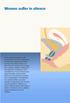 Women suffer in silence Stress urinary incontinence is the involuntary loss of urine resulting from increased intra-abdominal pressure. In people who suffer with this condition, forms of exertion such
Saint Mary s Hospital. Gynaecology Service Warrell Unit. Overactive Bladder. Information for Patients
 Saint Mary s Hospital Gynaecology Service Warrell Unit Overactive Bladder Information for Patients What is Overactive Bladder (OAB)? OAB is a condition that causes you to need to pass urine more often
Urinary Incontinence. Types
 Urinary Incontinence Leakage of urine is called urinary incontinence. It is a common problem in women. Some women occasionally leak small amounts of urine. At other times, leakage of urine is frequent
Infection Prevention & Control Team. Your urinary catheter & how to care for it 0151 430 2452 / 0151 430 1384. Patient Information Leaflet
 Contact details Infection prevention team - 0151 430 2452 This leaflet can be made available in alternative languages/formats on request. Infection Prevention & Control Team 0151 430 2452 / 0151 430 1384
URINARY CATHETER CARE
 URINARY CATHETER CARE INTRODUCTION Urinary catheter care is a very important skill, and it is a skill that many certified nursing assistants (CNAs) must know. Competence at providing urinary catheter care
Patient Information Incontinence & Prolapse Self Help
 Patient Information Incontinence & Prolapse Self Help Urogynaecology Introduction This leaflet is produced as a self help guide for women of East and North Herts that are experiencing issues with continence.
Incontinence. in con ti nent. adjective. 1. unable to restrain natural discharges or evacuations of urine or faeces.
 PBO 930022142 NPO 049-191 Incontinence Incontinence can be upsetting and humiliating for the person with dementia as well as stressful for the carer. However, there are many ways in which the situation
Normal bladder function. Aging of the bladder and urethra
 SECTION 10 Bladder and bowel control (continence) Section overview This section looks at: Normal bladder function Stroke and loss of bladder control (incontinence) Normal bowel function Stroke and bowel
Urinary Incontinence
 Urinary Incontinence Q: What is urinary incontinence (UI)? A: UI is also known as loss of bladder control or urinary leakage. UI is when urine leaks out before you can get to a bathroom. If you have UI,
es of Urinary Incontinence:
 Reversible Cause Urinary incontinence is a loss of control over the passing of urine. Urine loss can occur in very small amounts (enough only to dampen underwear) to very large amounts (requiring a change
online version Understanding Indwelling Urinary Catheters and Drainage Systems Useful information When to call for help
 When to call for help This will depend on the individual situation, but usually help should be sought if any of the following occurs: 1. The catheter does not start to drain, despite trying the problem
Urinary Tract Infections
 1 Infections in the urinary tract are relatively common. These infections are often referred to as bladder infections. They are also known as UTI s or urinary tract infections. When an infection is confined
Urinary Incontinence. Anatomy and Terminology Overview. Moeen Abu-Sitta, MD, FACOG, FACS
 Urinary Incontinence Anatomy and Terminology Overview Moeen Abu-Sitta, MD, FACOG, FACS Purpose Locate and describe the anatomy of the Female Urinary System Define terminology related to Incontinence Describe
Urinary Incontinence
 Urinary Incontinence Q: What is urinary Urinary (YOOR-in-air-ee) incontinence (in-kahn-tih-nens) is when urine leaks out before you can get to a bathroom. If you have urinary incontinence, you re not alone.
The overactive bladder and bladder retraining
 Oxford University Hospitals NHS Trust The overactive bladder and bladder retraining Information for patients Normal bladder function Your bladder normally stores urine produced by your kidneys. The kidneys
URINARY INCONTINENCE CASE PRESENTATION #1. Urinary Incontinence - History 2014/10/07. Structure of the Female Lower Urinary Tract
 Bladder pressure 2014/10/07 Structure of the Female Lower Urinary Tract Ureter URINARY INCONTINENCE Clinical Clerkship Lecture Series Outer peritoneal coat Detrusor smooth muscle Mucosa Trigone Proximal
1 ST JAMAICAN PAEDIATRIC NEPHROLOGY CONFERENCE
 in association with 1 ST JAMAICAN PAEDIATRIC NEPHROLOGY CONFERENCE Jamaica Conference Centre Kingston, Jamaica October 4 th 2014 VOIDING DISORDERS IN CHILDREN Dr. Colin Abel Paediatric Urologist Bustamante
Faecal Incontinence Patient advice and information leaflet on the management of faecal incontinence
 Oxford University Hospitals NHS Trust Oxford Pelvic Floor Service Faecal Incontinence Patient advice and information leaflet on the management of faecal incontinence What is faecal incontinence? Faecal
Urinary incontinence. The urinary system
 Urinary incontinence is defined as the involuntary loss of urine from the bladder. Although it is a common condition, most women who suffer from it do not seek help. It is thought that urinary incontinence
Urinary Incontinence Dr. Leffler
 Urinary Incontinence Dr. Leffler The involuntary loss of urine at socially unacceptable times occurs in both women and men, but more commonly in women. It has multiple, far-reaching effects on daily activities,
STROKE CARE PLAN: BLADDER & BOWEL CONTINENCE
 Urinary incontinence related to loss of ability to identify and respond to need to urinate; involuntary bladder contractions, increased nightly urine production, difficulty communication need to urinate
Stress Urinary Incontinence
 Saint Mary s Hospital Gynaecology Service Warrell Unit Stress Urinary Incontinence Information for patients What is Stress Incontinence? Stress incontinence is a leakage of urine occurring on physical
Bowel Control Problems
 Bowel Control Problems WOMENCARE A Healthy Woman is a Powerful Woman (407) 898-1500 Bowel control problems affect at least 1 million people in the United States. Loss of normal control of the bowels is
Bladder and Bowel Management. Introduction. Bladder function. By Sala Nanthakumar
 Bladder and Bowel Management By Sala Nanthakumar Introduction Dysfunction of the bladder and/or bowel is common after stroke and maybe caused by a combination of strokerelated impairments,(e.g. weakness,
Self Catheterization Guide
 Self Catheterization Guide An introduction to intermittent self-catheterization Medical professionals have recommended that you selfcatheterize in order to completely empty your bladder. This prevents
Lifestyle changes. Pelvic floor muscle training
 Incontinence, urinary - Treatment Treating urinary incontinence The treatment you receive for urinary incontinence will depend on the type of incontinence you have and the severity of your symptoms. If
Urinary Incontinence in Women. Susan Hingle, M.D. Department of Medicine
 Urinary Incontinence in Women Susan Hingle, M.D. Department of Medicine Background Estimated 13 million Americans with urinary incontinence Women are affected twice as frequently as men Only 25% will seek
Urodynamics in Neuro-Urology
 Urodynamics in Neuro-Urology R Hamid MD (Res), FRCS (Urol) Consultant Urologist London Spinal Injuries Unit, Stanmore & University College London Hospitals Micturition Micturition can be visualized as
Fecal incontinence (Encopresis) It is the fecal incontinence condition observed in children with chronic constipation over 1-2 years.
 WHAT IS DYSFUNCTIONAL URINATION (URINATION FUNCTION DISORDER)? It stands for the urination phase disorders, which appear due to wrongly acquired urination habits during the toilet training of some neurologically
Having a urinary catheter information for men
 Having a urinary catheter information for men This leaflet explains what a catheter is, why you need it and how you should look after it. If you have any further questions, please contact your district
Women s Continence and Pelvic Health Center
 Women s Continence and Pelvic Health Center Committed to Caring 580-590 Court Street Keene, New Hampshire 03431 (603) 354-5454 Ext. 6643 URINARY INCONTINENCE QUESTIONNAIRE The purpose of this questionnaire
Overview of Urinary Incontinence in the Long Term Care Setting
 Overview of Urinary Incontinence in the Long Term Care Setting Management Strategies for the Nursing Assistant Ann M. Spenard RN, C, MSN Courtney Lyder ND, GNP Learning Objectives Describe common types
Bladder and Bowel Control
 Bladder and Bowel Control Dr Sue Woodward Lecturer, Florence Nightingale School of Nursing and Midwifery 2 Why do we need to understand anatomy? Normal physiology Normal adult bladder capacity = 450-500mls
Bladder Control Does Matter
 Bladder Control Does Matter Y0028_2726_0 File&Use 04092012 If you suffer from urinary incontinence, you re not alone Don t be afraid to raise your hand if you ve been struggling with the embarrassment
Having a tension-free vaginal tape (TVT) operation for stress urinary incontinence
 Having a tension-free vaginal tape (TVT) operation for stress urinary incontinence This leaflet explains more about tension-free vaginal tape (TVT) including the benefits, risks and any alternatives, and
Surgery for Stress Incontinence
 Directorate of Women s Services Surgery for Stress Incontinence Tension Free Vaginal Tape Information for Patients Direct dial number Ward 40 0191 282 5640 Stress Incontinence Stress incontinence is a
Having a supra pubic urinary catheter
 Having a supra pubic urinary catheter Delivering the best in care UHB is a no smoking Trust To see all of our current patient information leaflets please visit www.uhb.nhs.uk/patient-information-leaflets.htm
Bladder and Bowel Assessment Ann Yates Director of Continence Services. 18/07/2008 Cardiff and Vale NHS Trust
 Bladder and Bowel Assessment Ann Yates Director of Continence Services Types of continence problems Bladder Stress incontinence Urgency and urge Incontinence Mixed incontinence Obstructive incontinence
Managing Changes in Your Bladder Function After Cancer Treatment
 Managing Changes in Your Bladder Function After Cancer Treatment Information for cancer survivors UHN Read this resource to learn: What a urinary problem is What causes it What you can do to improve your
Pelvic Floor Exercises for Women
 Pelvic Floor Exercises for Women Exceptional healthcare, personally delivered What are pelvic floor muscles? They are layers of muscles stretching like a hammock from the pubic joint at the front of the
Quality Measures for Long-stay Residents Percent of residents whose need for help with daily activities has increased.
 Quality Measures for Long-stay Residents Percent of residents whose need for help with daily activities has increased. This graph shows the percent of residents whose need for help doing basic daily tasks
Caring for your perineum and pelvic floor after a 3rd or 4th degree tear
 Caring for your perineum and pelvic floor after a 3rd or 4th degree tear Most women, up to nine in ten (90%), tear to some extent during childbirth. Most tears occur in the perineum, the area between the
Regain Control of Your Active Life Treatment Options for Incontinence and Pelvic Organ Prolapse
 Regain Control of Your Active Life Treatment Options for Incontinence and Pelvic Organ Prolapse Nearly one quarter of all women in the United States have some sort of pelvic floor disorder such as urinary
Daily Habits and Urinary Incontinence
 Effects of Daily Habits on the Bladder Many aspects of our daily life influence bladder and bowel function. Sometimes our daily habits may not be in the best interest of the bladder. A number of surprisingly
Lifestyle and Behavioral Changes Improving Urinary Urgency, Frequency and Urge Incontinence
 Lifestyle and Behavioral Changes Improving Urinary Urgency, Frequency and Urge Incontinence Manage your Fluid Intake: There is no scientific evidence that states we need eight 8 oz. glasses (64 oz.) of
Intermittent Self Catheterisation for Women
 ISCW Intermittent Self Catheterisation for Women National Service, Locally Based www.fittleworth.com Opening hours: 8am - 8pm Monday to Friday 9am - 1pm on Saturday Freephone National 0800 378 846 Scotland
BOWEL & BLADDER CARE
 BOWEL & BLADDER CARE Bladder Function Bladder problems are a common and distressing symptom in Multiple Sclerosis. Below are some suggestions that may help you with your bladder function: Drink plenty
Bard: Continence Therapy. Stress Urinary Incontinence. Regaining Control. Restoring Your Lifestyle.
 Bard: Continence Therapy Stress Urinary Incontinence Regaining Control. Restoring Your Lifestyle. Stress Urinary Incontinence Becoming knowledgeable about urinary incontinence Uterus Normal Pelvic Anatomy
Sexuality after your Spinal Cord Injury
 Sexuality after your Spinal Cord Injury Introduction Spinal Cord Injury (SCI) affects to varying degrees the mechanics and sensations of sex and sexuality. Some people think that spinal injury means an
CARE PROCESS STEP EXPECTATIONS RATIONALE
 URINARY INCONTINENCE CARE PROCESS STEP EXPECTATIONS RATIONALE ASSESSMENT/PROBLEM RECOGNITION 1. Did the staff and physician seek and document risk factors for urinary incontinence and any history of urinary
Looking after your bladder
 Looking after your bladder A guide for women after spinal cord injury Spinal Cord Injury Rehabilitation Program This booklet has been written by the health care providers who provide care to people who
THE KIDNEY. Bulb of penis Abdominal aorta Scrotum Adrenal gland Inferior vena cava Urethra Corona glandis. Kidney. Glans penis Testicular vein
 29 THE KIDNEY 9. Recurrent urinary tract infections Recurrent urinary tract infections The urinary tract consists of the urethra, the bladder, the ureters, the kidneys and in men the prostate gland. An
Bladder reconstruction (neo-bladder)
 Bladder reconstruction (neo-bladder) We have written this leaflet to help you understand about your operation. It is designed to help you answer any questions you may have. The leaflet contains the following