
DEPARTMENT OF THE AIR FORCE HEADQUARTERS AIR FORCE CIVIL ENGINEER SUPPORT AGENCY
|
|
|
- Damian Short
- 9 years ago
- Views:
Transcription
1 DEPARTMENT OF THE AIR FORCE HEADQUARTERS AIR FORCE CIVIL ENGINEER SUPPORT AGENCY 18 SEP 2013 FROM: SUBJECT: AFCEC/DD 139 Barnes Drive Suite 1 Tyndall AFB FL Engineering Technical Letter (ETL) 13-6: Energy-Efficient Motors and Adjustable-Speed Drives 1. Purpose. This ETL provides users with application, selection, installation, energy analysis, and repair guidance for energy-efficient motors and adjustable-speed drives (ASD) and supersedes Air Force pamphlet (AFPAM) , Energy-Efficient Motors and Adjustable-Speed Drives, dated 1 August The recommendations in this ETL assure a reliable motor system when upgrading to energy-efficient motors or ASDs. Detailed guidance is provided regarding energy efficiency analysis so potential savings from a particular design can be estimated. ASD design options are described in detail to ensure that ASD installations do not degrade electrical systems. This ETL supplements Unified Facilities Criteria (UFC) , Interior Electrical Systems. For general criteria and requirements, refer to UFC , Interior Electrical Systems; Air Force manual (AFMAN) interservice publication (IP) _IP, Facilities Engineering - Electrical Interior Facilities; and AFMAN _IP, Facilities Engineering - Electrical Exterior Facilities. Note: Use of the name or mark of a specific manufacturer, commercial product, commodity, or service in this ETL does not imply endorsement by the Air Force. 2. Application. Compliance with this ETL is recommended for energy-efficient motors and ASDs in interior and exterior electrical systems that are the responsibility of the base civil engineer at all facilities and bases. The guidance regarding ASDs also applies to standard-efficiency motors Authority: Air Force policy directive (AFPD) 32-10, Installations and Facilities UFC , Interior Electrical Systems 2.2. Effective Date: Immediately 2.3. Intended Users: AFCEC/CF Major command (MAJCOM) engineers MAJCOM functional managers Base civil engineers (BCE) Base maintenance organizations APPROVED FOR PUBLIC RELEASE: DISTRIBUTION UNLIMITED

2 2.4. Coordination: MAJCOM electrical engineers AFCEC/CN AFCEC/CFT 3. Acronyms and Glossary. See Attachment 1, Acronyms and Glossary. 4. References. See Attachment 2, References. 5. Scope This ETL provides guidance and recommendations regarding energy-efficient motors and ASDs. The guidance addresses energy efficiency analysis and equipment design options This ETL relies on existing industry information and analysis tools. MotorMaster+, a software program for motor analysis, is discussed in detail because of its wide industry acceptance and ease of use. ASD Calculator for ASD analysis is also discussed Electrical protection associated with energy-efficient motors and ASDs is described in detail because of the unique protection needs associated with this equipment. 6. Energy Efficiency Criteria and Energy Efficiency Analysis Federal Requirements for Energy Efficiency The Energy Independence and Security Act of 2007 (EISA07) requires the Air Force to reduce facility energy intensity (energy consumption per gross square foot), using fiscal year 2003 as the base year, as follows: Fiscal Year Percentage Reduction Code of Federal Regulations, Title 10, Part 434 (10 CFR 434), Energy 2

3 Code for New Federal Commercial and Multi-Family High Rise Residential Buildings. This regulation establishes performance standards for the design of new federal commercial and multifamily high-rise buildings. Some of the guidelines are relevant to retrofits. 10 CFR specifies minimum acceptable full-load motor efficiencies for single-speed polyphase motors that are expected to operate more than 1000 hours per year CFR 436, Federal Energy Management and Planning Programs. This regulation establishes procedures for determining the life-cycle cost-effectiveness of energy conservation measures and for prioritizing energy conservation measures in retrofits of existing federal buildings Guidance for Energy Efficiency Analysis Electric motor systems that operate continuously or for many hours a year consume electricity that costs many times the price of the motor. This makes lessefficient motors excellent targets for replacement. If the driven load operates at less than full load for a majority of the time, installing ASDs will reduce energy consumption and save operating costs Fan motors in air handlers can account for 20 percent or more of energy usage in a commercial-type building. Energy costs of air distribution systems can be significantly decreased by converting constant-volume systems to variable air volume (VAV) systems or by increasing the efficiency of existing VAV systems Good candidates for VAV conversion are constant-volume systems with dual ducts or terminal reheat that use backward-inclined or airfoil fans. On existing VAV systems, convert airflow control from inlet vanes or outlet dampers to ASD control. Figure 1 shows the relative power consumption using outlet dampers, inlet vanes, or ASD control. 3

4 120 Percent Power Consumption Outlet Damper Inlet Vanes ASD Percent Air Flow Figure 1. Variable Air Volume Systems Versus Power Output In many cases, energy savings can be realized simply by replacing older motors with newer energy-efficient motors. However, further savings can often be obtained by evaluating system needs and making an additional minor design change. For example, an exhaust system might be oversized. By using a smaller fan (and motor), a savings of 30 percent to 50 percent might be possible. By installing an ASD, a savings of 50 percent to over 80 percent might be possible. Energy efficiency improvement should be considered at the system level, not just the component (motor) level Paragraph 7 provides specific guidance regarding energy savings analyses for motor upgrades and installations. Paragraph 8 provides guidance for energy savings analyses for the application of ASDs. 7. Energy-Efficient Motors Energy-Efficient Motor Design Introduction When converting electrical energy into mechanical energy, motors have several losses: electrical losses, iron (core) losses, mechanical (friction and windage) losses, and stray losses, dependent on design and manufacturing. Energy-efficient motors reduce energy losses through improved design, better materials, and improved manufacturing techniques. With proper installation, energy-efficient motors can run cooler and consequently have higher effective service factors, longer bearing and insulation life, and less vibration. Energy-efficient motors tend to last 4

5 longer and may require less maintenance. By running cooler, bearing grease lasts longer, lengthening the required time before re-greasing. Lower operating temperatures also equate to longer-lasting insulation; insulation life usually doubles for each 18 F (10 C) reduction in operating temperature. Figure 2. Energy-Efficient Motor Energy-efficient motors are manufactured using the same frame as a standard T-frame motor but have the following differences: Higher quality and thinner steel laminations in the stator More copper in the windings Optimized air gap between the rotor and stator Reduced fan losses Closer matching tolerances Greater length An energy-efficient motor produces the same shaft output power (horsepower) but uses less input power (kilowatts [kw]) than a standardefficiency motor. Energy-efficient motors must have nominal full-load efficiencies that meet or exceed National Electrical Manufacturers Association (NEMA) performance standards There are several opportunities for selecting an energy-efficient motor for a particular installation, including when purchasing a motor for a new application, considering rewinding of a failed motor, or evaluating the retrofit of an operable but inefficient motor to save energy. Energy-efficient motors should be considered for the following applications: For all new installations When major modifications are made to existing facilities or processes For all new purchases of equipment packages that contain electric motors, such as air conditioners, compressors, and filtration systems When purchasing spares or replacing failed motors In place of rewinding standard efficiency motors 5

6 To replace grossly oversized and under-loaded motors When an energy analysis indicates sufficient savings for an application NEMA Motor Standards NEMA MG 1, Motors and Generators, establishes standards for the construction and performance of motors. This document is the principal reference for motor design, construction, and performance NEMA has assigned Design classifications that establish operating specifications for different motor types. The Design letter indicates the motor s torque characteristics and is an important motor selection consideration. Most induction motors are Design B, with Design A being the second-most common type. Table 1 lists the key characteristics of NEMA Designs B, C, and D motors. The Design A motor is a variation of the Design B motor and has a higher starting current and starting torque. 6

7 Table 1. NEMA Polyphase Motor Designs NEMA Design Starting Current Starting Torque Breakdown Torque Percent Slip B Medium Medium High 5% maximum Design B Applications: Normal starting torque for fans, blowers, rotary pumps, unloaded compressors, some conveyors, metal-cutting machine tools, miscellaneous machinery. Slight speed change when changing load. C Medium High Medium 5% maximum Design C Applications: High-inertia starts, such as large centrifugal blowers, fly wheels, and crusher drums. Loaded starts, such as piston pumps, compressors, and conveyors. Slight speed change when changing load. D Medium Extra High Low 5% or more Design D Applications: Very high inertia and loaded starts. Considerable variation in load speed NEMA released specifications for a Design E motor in the October 1994 update to NEMA MG 1. The letter E was assigned because it is the next design to be standardized following the Design D motor, not because E stands for efficiency. Nonetheless, the Design E specification has minimum efficiency values as one of its design requirements, specified in MG 1, Table The Design E efficiency requirements are more stringent than for other motors designated as energy efficient. The Design E motor was specified to satisfy international standards developed by the International Electrotechnical Commission (IEC). IEC has a standard that is slightly less restrictive on torque and starting current than the Design B motor. This IEC standard allows designs to be optimized for higher efficiency. Design E motors can be used instead of Design A and B motors, with the following considerations: For most moderate- to high-usage applications appropriate for a Design A or B motor, the Design E motor is usually a better choice for energy efficiency. However, there are slight performance differences between the designs. Design E locked rotor torque requirements are different from Design B. They are required to be somewhat higher than 7

8 Design B levels for many motors under 20 horsepower and some motors over 200 horsepower, but are allowed to be lower for most motors from 20 horsepower to 200 horsepower. This means that a Design E replacement motor for an existing Design B motor should be carefully evaluated to ensure it has sufficient torque to start when connected to its load Except for very small motors (under 3 horsepower), Design E motors are allowed to have considerably higher locked rotor (starting) current than Design B motors. (Note that Design A motors still have no upper limit for their locked rotor current.) In the first 10 milliseconds of starting, any motor s current can exceed the nominal locked rotor current. This momentary current spike is called inrush current and is likely to be highest of all in Design E motors. High inrush current can cause false trips by instantaneous trip units. As part of a Design E motor installation, the electrical protection should be reviewed to confirm that the motor will be able to start and accelerate to its full-load speed without tripping the associated electrical protection. In some cases, it might be necessary to replace the motor starter as part of the motor replacement Although the NEMA standard allows the same slip (up to 5 percent) for Designs A, B, and E motors, the range of actual slip of Design E motors is likely to be lower than for Designs A and B. This lower slip should be factored into savings calculations in retrofit situations for variable torque (such as pump and fan) applications Motor Efficiency Overview A standard motor is designed to ensure its temperature rise requirements are satisfied in a cost-effective manner, with motor efficiency being a secondary consideration. To be considered energy efficient, a motor must meet performance criteria published by NEMA. An energy-efficient motor has a nominal full-load efficiency rating that meets or exceeds the efficiency specified in NEMA MG 1, Table Manufacturers also sell motors with efficiencies significantly higher than the NEMA standard and use many terms to describe their most efficient motors, including adjectives such as high, super, premium, and extra, but there is no NEMA standard for any terminology other than energy efficient. These additional terms can create confusion when comparing motors; for this reason, always consult the nominal efficiency rating and the minimum efficiency rating. The nominal efficiency rating is the average efficiency of many motors of duplicate design. Even within a group of duplicate design motors there is some variation in actual efficiencies due to variations in motor materials and manufacturing. For this reason, minimum efficiency ratings are also important and can be used as the basis for the manufacturer s guarantee. The minimum efficiency rating is sometimes referred to as the guaranteed minimum efficiency. 8

9 Motor efficiency is the ratio of the mechanical power output to the electrical power input: Efficiency Output Input Input Losses Input Output Output Losses Design changes and improved materials have reduced motor losses, making energy-efficient motors more efficient than standard motors. Motor efficiency varies with several factors. Table 2 summarizes the factors that have the most effect on motor efficiency. Table 2. Factors That Affect Motor Efficiency Factor Effect Range of Effect Comments Rated horsepower Efficiency increases with horsepower From less than 80% for 1 hp to over 97% for 500 hp See Figure 3 for efficiency as a function of horsepower; actual values vary with manufacturer and motor type. Rated speed A 4-pole motor is more efficient than a 2-pole or 6-pole motor Several percent, depending on motor size Motor load Efficiency is often near the maximum value at 75% load Can vary by 5% to over 15% from 25% load to 125% load Variation range decreases for larger motors. See Figure 4. High efficiency versus standard efficiency Standard-efficiency motors are less efficient than highefficiency motors A few percent Motor control by ASD Motor efficiency and full-load capability can be reduced by ASD non-sinusoidal output About 1% Varies with manufacturer. 9

10 100 Rated Full Load Efficiency (%) Motor Rated Horsepower Figure 3. Typical Full-Load Motor Efficiency Motor Efficiency (%) hp 20 hp 7.5 hp 2 hp Motor Load (% of Rated Full Load) Figure 4. Typical Efficiency as a Function of Load Motor efficiency is identified on the motor nameplate by nominal efficiency, which represents the average efficiency of a large population of motors of the same design, and is measured in accordance with NEMA MG 1, and Institute of Electrical and Electronics Engineers Standard (IEEE Std) , IEEE Standard Test Procedure for Polyphase Induction Motors and Generators, Test Method B. Table 3 provides the NEMA minimum required nominal efficiency for energy-efficient motors as a function of horsepower rating. General-purpose motors designated as energy efficient should not be available with a nominal efficiency less than listed in Table 3. 10

11 Table 3. NEMA Full-Load Nominal Efficiency Minimum Values Motor Size Open Motors Enclosed Motors (Horsepower) 1,200 rpm 1,800 rpm 3,600 rpm 1,200 rpm 1,800 rpm 3,600 rpm

12 Motor manufacturers can produce motors with nominal efficiency values better than required by NEMA, and motor purchases should preferentially take advantage of the higher available efficiencies. Tables 4 and 5 provide the minimum recommended nominal full-load motor efficiencies for open and enclosed designs, respectively. The values listed are for general-purpose, single-speed, polyphase induction motors. Some applications require definite purpose, special purpose, special frame, or special mounted polyphase induction motors; a motor meeting the recommended efficiency level is typically also available for these applications. Per the Federal Energy Management Program (FEMP), Minimum Efficiency Standard for Electric Motors: Section 313 of the Energy Independence and Security Act (EISA) of 2007 raised Federal minimum efficiency standards for general-purpose, single-speed, polyphase induction motors of 1 to 500 horsepower (hp). This new standard took effect in December The new minimum efficiency levels match FEMP's performance requirement for these motors. As a result of this increase in mandatory minimum standards and combined with the lack of significant availability of motors exceeding these standards, FEMP is suspending the purchasing specification for electric motors. Federal buyers may select for purchase any motor that meets design requirements. Tables 4 and 5 provide the best available minimum design requirements for Air Force use. 12

13 Table 4. Nominal Full-Load Percent Efficiency Recommendation Open Drip Proof (ODP) Motors Motor Size 1,200 rpm 1,800 rpm 3,600 rpm (Horsepower) Recommended Best Available Recommended Best Available Recommended Best Available

14 Table 5. Nominal Full-Load Percent Efficiency Recommendation Totally Enclosed Fan-Cooled (TEFC) Motors Motor Size 1,200 rpm 1,800 rpm 3,600 rpm (Horsepower) Recommended Best Available Recommended Best Available Recommended Best Available

15 Tables 4 and 5 can be used to determine if it is cost-effective to pay a premium for a higher-efficiency motor. Determine the difference in energy usage cost for the various available motor efficiencies; this difference represents the potential cost-effectiveness of selecting a higher-efficiency model, provided that the two motors have the same full-load operating speed. EXAMPLE: Assume a 50 horsepower, 1,800 rpm TEFC motor is available with a minimum required 93.0 percent efficiency. Assume that the motor will operate full time (8,760 hours per year) and fully loaded to its nameplate rating. Determine if it is costeffective to purchase a motor at the Table 5 recommended efficiency level of 94.5 percent. Assume the following: Price of 93.0 percent efficiency motor: $1,700 Price of 94.5 percent efficiency motor: $2,200 Average electricity cost: $0.06/kWh Note: The average electricity cost is not the advertised rate. The fully burdened average electricity cost is calculated by dividing the total bill by the total kwh on the bill, thereby including the electricity rate, demand charges, meter charges, taxes, and all other costs. For this example, the annual electricity usage and cost is given by: Annual Energy Use 93% efficient Annual Energy Cost kw 50 hp hr hp 351, , 342 kwh $ / kwh $ 21080, kwh kw 50 hp hr hp Annual Energy Use 94. 5% efficient 345, 765 kwh Annual Energy Cost 345, 765 kwh $ / kwh $ 20, 746 The value of the annual energy savings provided by the higher-efficiency motor is given by: Annual Savings $ 21,080 $20,746 $ 334/year The 94.5 percent efficiency motor costs $500 more than the 93.0 percent efficiency motor. The payback time for the purchase of the higher-efficiency motor is given by: $500 Payback 1. 5 $334/year years Table 6 provides a summary of the above calculations and provides an equivalent example for a smaller, 5 horsepower motor. The motor costeffectiveness analysis is sensitive to the number of operating hours per year and the motor load factor. As motor usage declines, the total energy used 15

16 similarly declines, which reduces the potential cost savings differential. Paragraphs 7.2 through discuss motor energy efficiency analyses in more detail. Table 6. Motor Cost-Effectiveness Examples 50 hp, 1,800 rpm Performance Base Model Recommended Level Full-load efficiency 93.0% 94.5% Purchase price $1,700 $2,200 Annual energy use 351,342 kwh 345,765 kwh Annual energy cost $21,080 $20,746 Annual energy cost savings $334/year Payback time 1.5 years 5 hp, 1,800 rpm Performance Base Model Recommended Level Full-load efficiency 87.5% 89.5% Purchase price $310 $380 Annual energy use 37,343 kwh 36,508 kwh Annual energy cost $2,241 $2,190 Annual energy cost savings $51/year Payback time 1.4 years 7.2. Motor Energy Efficiency Analysis The examples provided in Table 6 assume that the evaluated motors are fully loaded and operate continuously. Motors rarely operate at their full-load point and often do not operate 100 percent of the time. Field tests of motors at various industrial plants indicate that, on average, they operate at 60 percent of their rated load. Motors driving supply or return air fans in heating, ventilation, and air conditioning (HVAC) systems often operate at 70 percent to 75 percent of rated load. Also, many motors are more efficient at 50 percent load than they are at full load. 16

17 The following information is required to complete an accurate assessment of energy savings for a particular energy-efficient motor: Load on the motor Operating efficiency of the motor at that load point Full-load speed of the motor to be replaced Full-load speed of the replacement motor Number of operating hours per year Electricity cost With the information in paragraph 7.2.2, the payback time can be calculated for motor alternatives. The following example illustrates the analysis process. EXAMPLE: Compare the energy savings with a new energy-efficient motor to the cost of a standard-efficiency motor. The following information is provided for this example: A 20 horsepower motor is needed Load factor (LF) is 75 percent The motor is operated approximately 6,000 hours per year The standard-efficiency motor costs $850 and has an efficiency of 89 percent The energy-efficient motor costs $1,050 and has an efficiency of 93 percent Local average electricity cost is $0.06/kWh The annual energy use is calculated below for each motor type: kw 20 hp hr LF hp Energy Use % 75, kwh/year kw 20 hp hr LF hp Energy Use % 72, kwh/year Table 7 summarizes the results of the two motor types presented in the above example. Notice that the energy savings is several times the cost of the motor over the expected service life the higher initial motor cost has paid for itself in just over one year. 17

18 Parameter Table 7. Energy Efficiency Analysis Example Standard-Efficiency Motor Energy-Efficient Motor List price for 20 hp motor $850 $1,050 Efficiency 89% 93% Use 6,000 hours/year 6,000 hours/year Load factor 75% 75% Annual energy use 75,438 kwh 72,194 kwh Annual energy savings 3,244 kwh Value of savings at $0.06/kWh $195/year Cost difference between motors $200 Payback time 1.03 year If energy savings are the sole reason for motor replacement, the new motor should have a nameplate full-load speed equal to or slightly less than the motor being replaced, if possible. If such an energy-efficient motor is not available, select the motor with the lowest full-load speed (but same synchronous speed) that also provides the recommended minimum efficiency or better. Energyefficient motors tend to operate at a speed slightly higher than standard-efficiency motors; this higher speed increases power consumption and can reduce predicted energy savings if the cost savings are evaluated on the basis of efficiency alone. For example, VAV loads experience a power increase with the cube of the speed. Suppose the new energy-efficient motor has a speed of 1,770 rpm and the old standard-efficiency motor has a speed of 1,750 rpm. As shown below, the increase in power solely due to the speed increase is about 3.5 percent, which can substantially reduce the projected energy savings even though the new motor is energy efficient. Referring to the example shown in Table 7, a 3.5 percent increase in energy use with the higher-efficiency motor would reduce the projected savings from $195 per year to $43 per year and the payback time would be extended to over four years. rpm rpm new old 3 1, 770 1, , or a 3. 5% increase As a general rule, motors that are undersized and overloaded have a reduced life expectancy with a greater probability of unanticipated downtime. Motors that are oversized and thus lightly loaded have an extended expected operating life, but can suffer both efficiency and power factor reduction penalties. Consider downsizing motors that are less than 40 percent to 50 percent loaded. However, downsizing should not be performed without an evaluation if the motor load factor exceeds 50 percent; there might be other design reasons for an oversized motor. 18

19 An inventory should be developed of all motors in each facility, beginning with the largest and those with the longest run times. This inventory enables informed choices about replacement, either before or after motor failure. Refer to Attachment 3 for information needed for an inventory Field testing motors prior to failure can allow replacement motors to be properly sized to match the actual driven load. Motors that are significant energy users should head the inventory list. Motors that operate for extended periods of time and larger motors should also be on the list. Conversely, smaller motors that run intermittently should be placed toward the end of the list. Depending upon the size of the facility, it may be appropriate to list only motors that exceed minimum size and operating duration criteria. Each facility should establish appropriate thresholds. Selection criteria include: 3-phase, NEMA Design B motors 10 to 600 horsepower At least 2,000 hours per year of operation Constant load (not intermittent, cyclic, or fluctuating) Older and/or rewound standard-efficiency motors Easy access Readable nameplate The objective is to sort through all the motors and rank-order the list using size and annual operating time as the principal criteria. Once a short list of motors has been made, individual data collection can take place A motor energy analysis requires that information from the motor nameplate be obtained. A motor nameplate usually contains both descriptive and performance-based data, such as full-load efficiency, power factor, amperage, and operating speed. This information can be used to determine both the load imposed upon the motor by its driven equipment and the motor efficiency at its load point. Depending upon the motor age and manufacturer practices, not all of the desired information appears on every motor nameplate. It is not unusual for power factor and efficiency to be missing. When data is not available on the nameplate, contact the manufacturer for the missing information. The motor purchase date and its rewind history should also be recorded. The coupling type should be identified and the motor load (device being driven) described. Annual operating hours should be estimated by considering motor use on various shifts during work days, weekends, and holidays Motor Design Criteria Refer to UFC for minimum design requirements. The guidance provided in this ETL supplements UFC Motors must be selected according to expected service conditions. Usual service conditions, as defined in NEMA MG 1, include: Exposure to an ambient temperature between 32 F (0 C) and

20 F (40 C) Installation in areas or enclosures that do not seriously interfere with the ventilation of the machine Operation within a tolerance of ± 10 percent of rated voltage Altitude not above 3,300 feet (1,006 meters). Table 8 provides the standard motor derating for operation above 3,300 feet (1,006 meters) Operation within a tolerance of ± 5 percent of rated frequency Operation with a voltage unbalance of 1 percent or less. Paragraphs 9.3 through discuss the effect of voltage and phase unbalance on motor operation. Table 8. Motor Altitude Derating Factors Altitude Range Altitude Range Derating by Service Factor (feet) (meters) ,300 9,000 1,006 2,743 93% 100% 100% 100% 9,000 9,900 2,743 3,018 91% 98% 100% 100% 9,900 13,200 3,018 4,023 86% 92% 98% 100% 13,200 16,500 4,023 5,029 79% 85% 91% 94% Over 16,500 Over 5,029 Consult manufacturer Operation under unusual service conditions can result in greater-thanexpected efficiency losses and the consumption of additional energy. Both standard and energy-efficient motors can have their efficiency and useful life reduced by abnormal service conditions Motors can lower the average power factor of the electrical system, which can result in penalty charges from the local utility. Refer to UFC if power factor correction is to be considered The service factor is the percentage of extra demand that can be placed on a motor for short periods without damaging it. Service factors range from 1.00 (no overload capability) to 1.25 (25 percent overload capability), with higher service factors available. Select motors with a minimum 1.15 service factor and design for operation at 85 percent of the rated motor load unless the motor has special design requirements. Note that a service factor greater than 1.0 is not intended to allow continuous overloading of a motor; it is intended to provide short-term capability for higher-than-expected loading Voltage at the motor terminals should be as close to the nameplate value as possible. Although motors are rated to operate within 10 percent of nameplate 20

21 voltage, motor efficiency decreases as applied voltage decreases. When operating at less than 95 percent of nameplate voltage, motors lose 2 percent to 3 percent of rated efficiency. Also, operation at lower-than-rated voltage causes a higher temperature rise, which reduces insulation life Some motors have special voltage considerations or are designed for dual voltage ratings. Evaluate these motors carefully to ensure that design requirements are satisfied Dual Voltage Ratings. Some motors are supplied with dual voltage ratings. For example, a voltage rating of 230/460 indicates that the motor can be used in either 230 volt or 460 volt applications. If connected to a 460 volt source, the motor can operate within a balanced voltage of 460 volts ± 10 percent. If connected to a 230 volt source, the motor can operate within a balanced voltage of 230 volts ± 10 percent Wide-Range Voltage Ratings. If the motor nameplate shows a hyphen between two numbers, such as , the motor can operate properly for any voltage within this range, including a +10 percent allowance on the high end and a -10 percent allowance on the low end. For example, the utilization voltage range for a motor rated at volts is 188 to 253 volts if the 3-phase voltage supply is balanced Volt Motors on 208 Volt Systems. Do not use 230 volt motors on 208 volt systems because the utilization voltage will commonly be below the -10 percent tolerance on the voltage rating for which the motor is designed. (A 230 volt motor is intended for use on a nominal 240 volt system.) 7.4. Reduced Voltage Starting Full voltage starting is the least expensive and most efficient method for starting small motors. However, reduced voltage starting may be needed for large motors and for some small motor applications, primarily because the voltage drop caused by full voltage starting can interfere with other electrical equipment. An induction motor appears similar to a short circuit when it is started, drawing up to six times rated full-load current, or more, for several seconds. Reduced voltage starting reduces the large current drawn during motor starting When a motor is first started, it is at rest. The current drawn during starting is high because the motor has no counter-electromagnetic force (EMF) when first started. As the motor comes up to speed, counter-emf is developed in proportion to the speed, thereby causing the current to decrease (see Figure 5). Notice that the motor starting current tends to remain very high as a function of full-load current until the motor is almost at full speed. Paragraphs 9.1 through discuss other effects that can cause even higher transient current during motor starting. 21
22 Motor Speed (%) Figure 5. Example Motor Starting Current as a Function of Motor Speed Internal motor heating is a function of the current. High motor starting current tends to cause a high heating rate during starting. Some motors have limits established on the number of consecutive starts that can be performed within a given time period because of the potential to cause insulation damage by overheating Reduced voltage starting reduces the motor starting current, which can improve electrical system operation. The reduced voltage drop helps avoid equipment operation problems and flicker can be reduced to acceptable levels. The following types of reduced voltage starting are commonly used: Primary resistor starting Autotransformer starting Part-winding starting Wye-delta starting Solid-state starting ASD starting Refer to Attachment 4 for additional information regarding reduced voltage starting methods. Attachment 4 describes each method and explains the advantages and disadvantages of each method. ASDs are discussed in detail in paragraph 8. Because of the differences in electrical systems design and motor applications, no single approach to reduced voltage starting is always preferred. Each application should be evaluated to determine the optimal design method. Manufacturers can provide all of the reduced voltage starters described in Attachment Retrofit Design Criteria Full Load Current (%) Some studies have concluded that most motors are significantly 22
23 oversized. When a motor has a higher horsepower rating than is required by the load it is driving, the motor operates at part load. Motor efficiency drops rapidly when operation falls below 50 percent of full-load capacity (see Figure 4 ). Also, power factor declines below 75 percent of full load, which means that lightly loaded motors can contribute to increased utility power factor charges. Oversized, under-loaded motors should be replaced with smaller, energy-efficient motors in most instances. A motor replacement analysis should be conducted for motors operating below 40 percent of their full-load rating. Whenever a different size motor is installed in place of an existing motor, the electrical protection design must be evaluated to ensure that National Fire Protection Association (NFPA) 70, National Electrical Code (NEC), electrical protection requirements continue to be satisfied; refer to paragraph 9 for guidance In retrofit designs, obtain an energy-efficient motor with a speed closely matched to the speed of the existing motor. Induction motors have an operating speed that is slightly lower than their theoretical, or synchronous, speed. For example, an 1,800 rpm motor might operate under full load at about 1,750 rpm. Energy-efficient motors tend to operate at a slightly higher full-load speed than standard motors (usually by about 5 to 10 rpm for 1,800 rpm motors). Centrifugal loads, like most pumps, fans, and compressors, will be affected by this higher speed; slightly more fluid or air will be delivered and energy consumption will increase by the cube of the speed increase (see paragraph for an example) Ensure that the selected replacement motor is appropriate for the application. For example, a NEMA Design B motor should not be selected to replace a NEMA Design C motor in a high-torque application. In high-torque applications, NEMA Design A or Design B motors might trip the overload protection before the motor accelerates the load to its operating speed. Verify the NEMA design letter on the old motor as part of the replacement evaluation. Be careful not to mistake the motor insulation class code or kilovolt-amperes (kva) code letter for the NEMA design letter For most applications, NEMA Design E motors can be used instead of NEMA Designs A or B motors. But the locked rotor torque and the locked rotor current should be evaluated to ensure that each Design E motor is able to start its load and do so without tripping its associated electrical protection. Refer to paragraphs through for additional information regarding the Design E motor Rewinding and Repair Motor Failures. Any motor will eventually fail. The following problems can lead to motor failure: Insufficient lubrication: Can cause bearings to fail Too much lubrication: Excess grease can be forced into the motor past bearing seals and onto the motor windings where it can damage the 23
24 insulation Improper lubrication: Mixing incompatible greases can cause premature grease breakdown Contaminated grease: Foreign particles can damage bearings Overvoltages: Voltage spikes from lightning or switching transients can damage insulation ASD voltage spikes: ASDs can generate high-frequency voltage spikes that eventually damage the insulation, especially if cable lengths are long Harmonics and voltage unbalance: Can contribute to motor overheating High operating temperatures: Will contribute to insulation damage and can be caused by high ambient temperatures, motor overload, dirt in cooling passages, and operation at high altitudes Moisture: Can cause motor damage; high humidity can cause problems if the motor is deenergized for long periods without space heaters Repair Versus Replacement Analysis: When an existing motor fails, the following options are recommended: If the motor is already energy efficient, have it repaired. When an energy-efficient motor requires repair, rewinding or repairing it at a quality repair shop will degrade its efficiency, but only slightly If it is an ODP motor, replace it with an energy-efficient motor. It is usually not cost-effective to rewind ODP motors. Note: ODP refers to a motor enclosure design that allows outside air to blow directly through the motor but has a cover that prevents drops of liquid from entering If it is a TEFC motor and is not energy efficient, replace it when it is smaller than the horsepower breakpoint; otherwise, send it out for repair. If the repair will cost more than 60 percent of a new, energy-efficient motor then replace the motor with a new, energy-efficient motor. Note: TEFC refers to a motor enclosure design that prevents outside air from flowing into the frame. Cooling of TEFC motors is provided by fins and a fan. TEFC motors are suitable for outdoor use and in dusty or contaminated environments Figure 6 illustrates the repair or replacement evaluation process. In Figure 6, the question, Motor L ess T han *** hp?, refers to the minimum 24
25 motor size below which it is more economical to replace it rather than repair it. Refer to paragraph for additional information regarding how to determine this motor size. Is the Motor Energy Efficient? Yes No TEFC TEFC or ODP Enclosure? ODP Motor Less Than *** hp? Yes No Replace With New Energy Efficient Motor Consider Motor for Repair Yes Will Repair Cost Over 60% of New Energy Efficient Motor? No Replace With New Energy Efficient Motor Proceed With Repair Figure 6. Repair Versus Replacement Flow Chart Using the following parameters example, Figure 7 shows how to determine the horsepower breakpoint as a function of local electricity cost (the term breakpoint refers to the motor size below which it is more economical to replace the motor than repair it). EXAMPLE: A corporate engineer decides to find the horsepower breakpoint for two facilities, one in North Carolina with an average electric rate of $0.04 per kwh and 25
26 one in New Hampshire with an average electric rate of $0.12 per kwh. These facilities operate two shifts, five days a week (6,240 hours). The company requires a two-year payback period. A contract with a motor supplier that provides a 40-percent discount from list price is in place, and the engineer determines the average motor load to be 75 percent. Using the online tool at Advanced Energy s website ( the engineer produced the curves in Graph 1 showing that in North Carolina, 1,800 rpm motors 25 hp and lower for ODP enclosures and 10 hp and lower TEFC motors should be replaced with NEMA Premium motors upon failure. In New Hampshire, replace 1800 rpm motors 250 hp and lower for ODP enclosures and 60 hp and lower TEFC motors with NEMA Premium motors upon failure. Motor Rating (Hp) ODP ($0.04/kWh) ODP ($0.12/kWh) TEFC ($0.04/kWh) TEFC ($0.12/kWh) Solid Lines New Hampshire Dashed Lines North Carolina Annual Operating Hours Annual Operating Hours Figure 7. TEFC and ODP Motor Replacement Decision Chart Figure 7 is adapted from the Advanced Energy Horsepower Bulletin. Refer to the bulletin for details regarding assumptions for the various breakpoints As part of a repair-versus-replacement evaluation, verify that the new motor has the same frame design as the old motor. If a new frame size is provided, additional effort will be necessary to complete the installation. 26
27 For specific evaluations, MotorMaster+ can be used to determine whether repair or replacement is the best alternative. Refer to paragraphs through for additional information regarding a MotorMaster+ analysis Motor Repair Guidelines The Electric Motor Model Repair Specifications manual is recommended as a reference for motor repair and rewinding. It is based in part on Electric Apparatus Service Association (EASA) AR , Recommended Practice for the Repair of Rotary Electrical Apparatus. Background information regarding motor repair is provided in Industrial Motor Repair in the United States and Quality Electric Motor Repair: A Guidebook for Electric Utilities Improper motor repair will also lead to early motor failure. The following problems have occurred with motor repair: Errors in the winding pattern, substitution of smaller- gauge wire, or changes in number of turns, which tend to increase motor losses, thereby causing a higher operating temperature Excessive vibration can occur during operation if an out-ofbalance rotor or bent shaft are not corrected before reassembly Poor impregnation of varnish can cause poor heat transfer or winding motion under magnetic forces Poorly restrained end turns can cause acoustic vibration when powered from an ASD The following guidelines are recommended to ensure a quality motor repair: Ensure the original design is duplicated by the repair with regard to number of turns; winding design and coil configuration; wire crosssectional area; and rolling bearing size, type, and specification, including seals and shielding, if applicable Replace bearings as part of the rewind. Almost half of motor failures involve bearing failures Record core loss before and after stripping Repair or replace defective laminations. 27
28 Measure and record winding resistance, no-load amperes, voltage, and no-load watts The following repair practices are not recommended: Heating of stators above 650 F (343 C) Sandblasting of iron core Knurling, painting, or peening bearing fits Stripping with an open flame Grinding laminations or filing slots Increasing the air gap Increasing the stator winding resistance Changing the winding design Modifying the motor mechanical design without approval The repair shop should be capable of performing a high-quality repair or rewind service. To assess repair shop capability, it is recommended to check for: Implementation of EASA Q, International Standards Organization (ISO) 9000, or other quality assurance program Procedures in place conforming to EASA guidance Test equipment available and calibrated at specific periodic intervals, e.g., annually Variety and adequate quantity of wire sizes and shapes in stock Neat and organized facility with knowledgeable personnel Maintenance records for all repairs MotorMaster+ Evaluations Introduction to MotorMaster MotorMaster+ is a software program designed to support a motor 28
29 management program. MotorMaster+ has received wide industry acceptance and is the preferred tool for managing and evaluating motors at each facility MotorMaster+ is available for download at: master.html MotorMaster+ provides the following features: It contains a database of over 10,000 NEMA Design B 3- phase motors. The motors range from 1 to 600 horsepower, with standard speeds from 900 to 3,600 rpm. Different motor enclosure types are supported, including ODP, TEFC, totally enclosed non-ventilated (TENV), and explosion proof (EXPL) Technical data is contained to facilitate motor evaluations, including part-load efficiency, power factor, full-load speed, torque, and voltage Purchase information is provided for the database motors, including list price, warranty, catalog number, and manufacturer s address Analysis features calculate energy savings, dollar savings, simple payback, cash flows, and after-tax rate of return on investment associated with selecting an energy-efficient motor for an application It is designed to store and manage information regarding the motor inventory at each facility, including nameplate information and field measurement data Figure 8 shows the MotorMaster+ startup screen providing various options. The keys of most interest in Figure 8 are provided in Figure 9. 29
30 Figure 8. MotorMaster+ Startup Screen Key Description Create a list of available new motors that meet the required purchase specifications. Determine both energy and dollar savings due to selecting and operating an energy-efficient motor model. Compute annual cash flows and the after-tax rate of return on a motor system investment. Create the facility or base motor inventory database and generate searches and reports based on motor and load descriptors. Initiate motor repair or replacement analyses for populations of motors at a facility or base. Figure 9. MotorMaster+ Functions The MotorMaster User Guide provides a detailed description of the various capabilities and application of MotorMaster+. 30
31 MotorMaster+ Database MotorMaster+ contains a database of over 10,000 motors. The database can be searched for motors of a particular type, speed, horsepower rating, voltage, enclosure, and application. All motors with the selected search attributes will be listed. The motors can be displayed sorted by efficiency as shown in Figure 10, or can be sorted by manufacturer, fullload rpm, power factor, list price, or locked rotor torque. Figure 10. Typical Motor Listing The database can be used to evaluate different motor options. For example, different motors can be compared to determine if a motor with higher efficiency provides adequate savings to justify a possibly higher list price. Figure 11 shows an example comparison between two motors with efficiencies of 93.6 percent and 95 percent, respectively. Notice that a utility rate schedule is selected to develop the operating cost of each motor. The hours of use per year are entered by the user and the motor list price is obtained from the MotorMaster+ database. Figure 12 shows that the higher initial cost of the higher-efficiency motor is paid back within 6.53 years. MotorMaster+ automatically performs this calculation. 31
32 Figure 11. Comparison of New Motor Options 32
33 Figure 12. New Motor Comparison Cost Savings Summary MotorMaster+ Repair Versus Replacement Evaluations Paragraphs 7.6 through provide guidance regarding motor repairs. MotorMaster+ supports a rewind-or-replace decision by comparing the cost of a rewind to the cost of a replacement motor. Figure 13 shows the MotorMaster+ entry screen. The motor to be rewound can be manually entered or retrieved from the inventory list. The MotorMaster+ database is used to select the desired replacement motor. The new motor will have a higher efficiency and will save energy compared to the rewound motor. Based on the expected replacement motor price and the cost of electricity, MotorMaster+ then calculates the payback time for the replacement motor to break even with the rewound motor. Figure 14 shows a sample MotorMaster+ calculation. 33
34 Figure 13. Rewind versus Replace Evaluation 34
35 Figure 14. Example Payback of Replace versus Rewind Evaluation MotorMaster+ has many other features that are important to a motor management program. Some of the key features have been described here to introduce MotorMaster+ and to show by example how MotorMaster+ can simplify motor analyses. Refer to the MotorMaster User Guide for additional information. 8. Adjustable Speed Drives Introduction Adjustable speed drives (ASDs) are electronic controllers that vary the speed of motors. ASDs save substantial energy when applied to variable-torque loads and will result in reduced electricity consumption in most facilities. Other potential benefits include improved process control, reduced mechanical stress by soft start capability, and improved electrical system power factor The guidance provided in this ETL will not result in the least- expensive design. Although ASDs can provide significant energy savings and operational improvements, numerous problems have also occurred with ASD installations. Common problems have been addressed in this ETL by ensuring that ASDs are properly designed to be reliable under a variety of operating conditions. Potential ASD interactions with the rest of the electrical system have been considered. In summary, the energy savings that can be realized with ASD 35
36 installations should not be obtained at the expense of a less-reliable electrical system. For this reason, ASD design guidance in this ETL addresses issues well beyond energy efficiency ASDs take a 50 hertz (Hz) or 60 Hz ac input and generate a variable frequency output to control the speed of the motor as necessary to meet the load demand. Figure 15 shows a simplified layout of an ASD. The rectifier converts the incoming ac power to a dc output. The dc link further reduces any ripple in the rectifier output. The inverter circuit converts its dc input into a variable-frequency ac voltage to control the speed of an induction motor. Figure 16 shows a typical ASD. Variable Frequency Output 60 Hz Input Rectifier DC Link Inverter Motor User Control Signals Controls Demand Control Signal From Equipment Figure 15. ASD Internal Configuration Figure 16. Typical ASD The best applications for ASDs are large motors that can operate for many hours each year at reduced speeds. Variable-flow applications with throttling or bypass devices to modulate flow are good candidates for ASDs. Potential 36
37 applications include centrifugal fans, pumps (centrifugal, propeller, turbine), agitators, and axial compressors. If HVAC fans have inlet vanes or outlet dampers to throttle full air output in VAV systems, these dampers or vanes can usually be removed or disabled and retrofitted with ASDs. Circulation pumps for chilled water often have throttling or bypass valves that can be retrofitted with ASDs Energy savings are possible with variable-torque loads, such as fans and pumps, because torque varies as the square of the speed, and horsepower varies as the cube of the speed. For example, if fan speed is reduced by 20 percent, motor horsepower (and energy consumption) is reduced by 50 percent. If fan speed can be reduced by 50 percent, the power requirement is only 12.5 percent of the full-speed value, or an energy savings of almost 90 percent. Figure 17 shows a common operating history for a centrifugal fan in a VAV system. As can be seen in this example, the system operates at 70 percent volume or below almost 90 percent of the time. In a case such as this, an ASD can provide significant energy savings. 14 Percent Total Operating Time Percent Volume Figure 17. Sample Operating History for a Centrifugal Fan in a VAV System ASDs can be retrofitted into existing motor systems and can operate both standard and high-efficiency motors ranging in size from less than 1 horsepower to several thousand horsepower. Unlike mechanical and hydraulic motor controllers, ASDs can be located remotely (within limits) and do not require mechanical coupling between the motor and the load. This simplifies installation and alignment of motor systems The installation of an ASD involves some changes in the process control method. Figure 18 shows a simplified example of a water flow system in which a flow element measures water flow and a flow controller uses the flow signal to adjust the flow control valve position and control the flow rate. With the 37
38 installation of an ASD, the control valve is removed (or fully opened) and the flow signal is sent to the ASD, which then controls the motor speed to maintain the desired flow rate. Flow Flow Control Valve Flow Controller Flow Element Flow Controller Flow Element AC Input Motor Constant Speed Pump AC Input ASD Motor Variable Speed Pump Figure 18. Flow Control with an ASD ASD installations can also solve ongoing maintenance problems. For example, one hospital used a unique inlet vane design for HVAC flow control. Because of their unique design, repair or replacement of the inlet vanes tended to be relatively expensive. By installing ASDs, the inlet vanes were locked in the fully open position and the associated maintenance expense was avoided. ASDs can also be used for motor soft starts to reduce stress on the connected load or to reduce the motor starting current Design Criteria. Refer to UFC for minimum design requirements. The guidance provided in this ETL supplements UFC ASD Designs Although there are other types, two commonly used ASD designs are the variable source inverter (VSI) and current source inverter (CSI) VSI designs use pulse width modulation (PWM) to generate the output waveform. PWM is the dominant ASD design technology in the 1 horsepower to 500 horsepower range because of its reliability, affordability, and availability. PWM output emulates sinusoidal power waves by varying the width of the pulses in each half cycle. Advantages of PWMs are low harmonic motor heating, excellent input displacement power factor, high efficiency of 92 percent to 96 percent, and the ability to control multiple motor systems with a 38
39 single drive CSI designs are also reliable because of their inherent current-limiting characteristics and simple circuitry. CSIs have regenerative power capabilities, meaning that CSI drives can reverse the power flow back from the motor through the drive. Unfortunately, CSIs reflect large amounts of power harmonics back to the source, have poor input power factors, and can produce jerky motor operations (cogging) at very low speeds. CSIs are typically used for large (over 300 horsepower) induction and synchronous motors Motor Design Considerations for ASDs At the rated full load of the driven equipment, the output voltage and frequency of the ASD should be the same as the motor s rating. Note that this design recommendation also places limits on the motor design; the motor should not have a significantly higher full-load horsepower or speed rating than the driven load. Mismatches can easily cause operational problems, including efficiency losses and increased ASD input current. In extreme cases, a mismatch can cause the ASD to trip on overcurrent during motor starting or cause the ASD input current to be substantially higher than the design without the ASD The ASD short-term current rating should be adequate to produce the required motor starting torque, including loads with high starting torque. Inappropriate designs, such as using an 1,800 rpm motor at reduced speed to drive an 870 rpm load, can cause the ASD to exceed its shortterm current rating Motors can overheat at the lower operating speed set by an ASD and, in some cases, they can overheat even at full-load/full- speed operation because of the ASD s non-sinusoidal output. On fan-cooled motors, decreasing the motor s shaft speed by 50 percent proportionately decreases the fan s cooling effects. If the motor is fully loaded and speed decreases, the motor must supply full torque with reduced cooling. In extreme cases, this can cause the motor insulation to fail or reduce the motor life. For many applications the load will be substantially less than full load and the motor will be able to operate at reduced speed without overheating The motor should have a minimum 1.15 service factor or be rated well above the actual load it will be carrying. Verify with the manufacturer that the motor is capable of acceptable operation with an ASD. Standard motors can often operate down to 50 percent of rated speed, high-efficiency motors can often operate down to 20 percent of rated speed, and inverter duty motors can operate below 20 percent of rated speed without problems in a variable-load application. Motors designed specifically for ASD operation 39
40 usually incorporate special cooling provisions and may use higher class insulation Power Quality Harmonic Distortion. Ensure that the final installation complies with IEEE Std , IEEE Recommended Practices and Requirements for Harmonic Control in Electrical Power Systems, regarding harmonic distortion limits. (Refer to UFC , Appendix C, Sections C-3 and C-4, for harmonic distortion and effects on transformers.) The amount of harmonic current distortion generated by the ASD depends on the ASD design and ASD filter design. Some ASD manufacturers provide software to assist with a harmonic distortion evaluation. Power quality field measurements should be taken after the installation is complete to confirm that the system total harmonic distortion is not degraded beyond acceptable levels. If the ASD can be provided power from a standby generator upon loss of normal commercial power, the harmonic distortion evaluation must include the system effects when the standby generator is the power source. Refer to paragraphs through for additional guidance regarding harmonic distortion Voltage sags can cause nuisance tripping. The ASD should be protected against undesired tripping on momentary voltage sags or shortduration voltage losses. Refer to paragraphs through for additional information Nearby capacitor switching can cause transient overvoltages, resulting in nuisance tripping. In this case, ensure the ASD either has input filtering to reduce the overvoltage or has automatic reset circuitry Medium- voltage motor applications should be carefully evaluated to verify that the selected design will not degrade power quality below acceptable levels. ASD designs for medium-voltage applications often generate a larger proportion of harmonic distortion Bypass Operation Important applications should include bypass operation capability to allow motor operation independent of the ASD. Some applications require bypass so the motor can always be operated, such as for heating and cooling of a communications or computer room. More commonly, bypass ability is provided to enable continued motor operation in the event of ASD failure. Fire and safety requirements might necessitate a bypass to ensure the evacuation of smoke from a building after a fire Bypass capability can be accomplished by a manual transfer switch or by magnetic contactors. Figures 19 and 20 show the two types of 40
41 configurations. More complex transfer schemes are usually not cost-effective. Manual transfer is used in applications in which short-term loss of the motor is acceptable, followed by manual action to restore power to the motor. The use of magnetic contactors allows remote operation of the bypass and can include auxiliary contacts to operate the bypass on loss of the ASD. AC Input MCP Bypass Manual Transfer Switch OL Motor ASD Disconnect ASD Normal Figure 19. Manual Transfer Bypass AC Input MCP Bypass OL Motor ASD Disconnect ASD Normal Figure 20. Bypass by Magnetic Contactors The manual transfer switch is the least-expensive option and acceptable for many applications. Regardless of the selected design approach, all NEC requirements for motor protection must be satisfied upon transfer to bypass. This includes motor short circuit and overload protection. The bypass should be rated for motor starting current rather than motor fullload current; this is necessary so the motor can be safely started when on bypass When bypass capability is provided, a disconnect switch for the ASD should also be provided as shown in Figures 19 and 20. This allows electrical isolation for ASD repair, replacement, or testing ASD manufacturers are capable of providing bypass capability with an ASD. The procurement specification should list the desired bypass features. 41
42 Bypass operation should consider the effect of full-speed motor operation on the load. In some system designs, it will be acceptable for the motor and driven load to operate at full speed. In other system designs, it might be necessary to restore the previous method of flow control or otherwise limit the flow. For example, an HVAC system might have been controlled by inlet vanes. Upon installation of an ASD, the inlet vanes should have been repositioned to full open. But, on bypass operation, the inlet vanes might need to be repositioned or directly controlled, depending on the situation Acoustical Noise. In some installations, an ASD will increase the motor s acoustical noise level. The noise occurs when the ASD s non-sinusoidal current and voltage waveforms produce vibrations in the motor s laminations. The nonsinusoidal current and voltage waveforms are a consequence of the ASD transistor switching (carrier) frequency. Newer ASDs tend to operate at higher carrier frequencies, which reduces the non-sinusoidal output. Some ASDs include special provisions designed specifically to reduce acoustical noise. For locations with low ambient noise level, the acoustical noise generated in a motor by its ASD can be noticeable. The location for an ASD should be evaluated to determine if the procurement specification should address noise as a design consideration. For existing installations with acoustical noise problems, a load reactor might be required to reduce the noise Other Design Considerations. Additional design considerations are provided in paragraphs 8.6. though Power Quality Introduction The term power quality has different meanings, depending on the user, the application, and the type of electrical system disturbance. All definitions of power quality somehow relate to the relative frequency and magnitude of deviations in the incoming power supplied to electrical equipment from the normal, steady-state, 60 Hz sinusoidal waveform of voltage and current. These aberrations can affect the operation of electrical equipment. The term poor power quality means that there is sufficient deviation from the normal voltage and current waveform to cause equipment misoperation or premature failure. Conversely, good power quality means that there is a low level or incidence of these deviations. Obviously, such general definitions of good and poor power quality depend on the equipment used in the system some equipment might be very resistant to power aberrations while other equipment might fail quickly under equivalent conditions Potential power quality concerns associated with ASDs include: 42
43 Harmonic distortion on the line side and the load side of the ASD Nuisance tripping of ASDs because of voltage sags and momentary interruptions Motor overheating because of ASD-generated harmonic currents Motor winding or bearing failure caused by overvoltages due to ASD-generated voltage high rise times Notching and transient oscillations associated with power electronics switching Nuisance tripping of ASDs caused by capacitor switching transients Refer to UFC , Appendix C, for a detailed overview of power quality issues and design solutions. UFC provides extensive design criteria related to power quality, including designing the electrical system for nonlinear loads and neutral circuit sizing for nonlinear loads. Power quality issues should be addressed at the design phase to ensure they do not become problems after ASD installation Voltage Sags A voltage sag is a decrease in the supplied voltage outside of the normal system tolerance, usually with a duration of about one cycle to less than a few seconds. Figure 21 shows an example waveform of a voltage sag. Voltage Time Figure 21. Voltage Sag Voltage sags can be caused by the following conditions: Faults on adjacent feeders causing a reduction in nearby voltages Faults in the commercial power system Starting of large loads 43
44 Overloaded or undersized wiring Utility switching Equipment failure ASDs should be protected against voltage sags by two levels of protection: An ASD should have a minimum of 3-cycle ride-through capability; this ensures that the ASD should not deenergize during most momentary transients. Verify with the manufacturer the specific speed and torque performance during and after a voltage sag Ride-through capability will not keep an ASD operating through longer-duration voltage sags or temporary interruptions. For these conditions, the ASD should have a second level of protection: automatic reset circuitry that will automatically restart the ASD upon restoration of adequate-quality power Overvoltages Caused by Long Motor Leads Standard motors have been designed to receive sinusoidal power. The fast switching of insulated gate bipolar transistors (IGBT) inside a PWM ASD causes a voltage surge to develop on the ASD and motor terminals. The surge has a steep wave front, which causes the motor cable to appear as a transmission line. Each voltage pulse reflects back and forth between the ASD and motor terminals. These reflected pulses add to the inverter output voltage and can cause the motor terminal voltage to be as high as twice the rated voltage. The magnitude of this overvoltage depends on the IGBT rise time and the cable length between the ASD and the motor. Also, the high switching frequency can cause uneven voltage distribution within the motor windings, often causing an overvoltage on the first winding. The net effect of this voltage is stress on the motor insulation and can lead to early motor failure. Depending on the motor design, the high voltage rise time can also induce bearing currents, leading to premature bearing failure. As an example, one facility reported that over half of its 10 horsepower motors powered by PWM drives failed within 30 days after they were installed. It was assumed that the motors were defective and all of the motors were replaced with new motors of another make. However, within one week these new motors also began to fail. Investigators found that the cables connecting the drives and motors were about 100 feet (30.5 meters) long and the voltages at the motor terminals were about 1,500 volts peak Overvoltage effects can be minimized by the following approaches: Specify motors that are designed for ASD applications. These are often referred to as inverter duty motors and are designed to withstand 44
45 overvoltages generated by an IGBT ASD Minimize the cable length between the ASD and the motor. Verify with the ASD manufacturer the maximum recommended distance for acceptable long-term operation Both of the above are recommended whenever a new motor is procured as part of the ASD installation. If ASD duty (commonly referred to as inverter duty) motors are not used or if cable lengths are longer than 20 feet (6 meters) between the ASD and the motor (for standard design motors), additional design measures might be required. One of the following approaches can reduce the overvoltage at the motor terminals: Install a motor terminal filter. This type of filter connects in shunt at the motor terminals and matches the motor and cable surge impedances. The design depends on the cable length Install an ASD output filter. This type of filter connects in series to the ASD output and reduces the rate of voltage rise to an acceptable level. The design depends on the cable length. An ASD output filter would be used instead of a motor terminal filter if the motor terminals are inaccessible, such as with a submersible pump Install a load reactor. Paragraphs through describe the application of load reactors. If a load reactor is not required for other reasons, a motor terminal filter or ASD output filter is a simpler alternative Overvoltages Caused by Nearby Capacitor Switching Each time a power system capacitor is energized, a transient voltage oscillation occurs between the capacitor and the power system inductance. The transient overvoltage can be twice the normal system voltage at the capacitor location. Furthermore, these transient overvoltages can be magnified within the facility if low-voltage capacitor banks have been installed for power factor correction Smaller ASDs typically have a VSI rectifier and use a PWM inverter to supply the motor. The dc link between the rectifier and the inverter often has a fairly narrow range of allowed operation; it is not uncommon for an ASD to trip whenever the dc overvoltage exceeds 120 percent or less of the rated value. Capacitor switching transients can cause a current surge into the dc link capacitor, causing an overvoltage and subsequent ASD trip. Nuisance tripping of this type can occur several times a day as the utility switches nearby substation capacitors. 45
46 Filter reactors may be necessary to correct nuisance ASD tripping of this type. A series inductance on the input of the ASD reduces the current surge into the ASD, thereby reducing the dc link overvoltage. Refer to paragraphs through for additional information regarding filter reactors ASD Filter Reactors for Harmonic Distortion Mitigation ASDs generate harmonic distortion and are sensitive to harmonic distortion. IEEE Std provides the industry-accepted method of evaluating harmonic voltages and currents. IEEE Std provides system level guidance, not equipment-specific guidance. This means is that harmonic distortion limits are established for the facility and the installation of any equipment should not degrade the system beyond acceptable levels. Meeting IEEE Std limits can be easy for a facility with primarily linear loads, but it can be very difficult and costly for a facility with predominantly nonlinear loads. As an example, some facilities have installed many ASDs for HVAC system motors in an attempt to reduce energy usage. Unfortunately, each ASD generates current harmonic distortion and, as a consequence, nuisance tripping of other equipment has occurred. Refer to UFC , Appendix C, for a detailed discussion of harmonic distortion and its effects To limit the impact of harmonic distortion, filtering is recommended on the line side of the ASD. Reactors can be a cost-effective solution for controlling harmonic distortion. Reactors provide a filtering function by blocking offending harmonic currents, thereby lessening the harmonic effects elsewhere in the facility Figure 22 shows a line reactor a reactor applied on the line side of a device. Line reactors are used on the line side of an ASD to minimize harmonic distortion and reduce the magnitude of voltage spikes in the electrical system. A line reactor serves the dual purpose of improving the power quality supplied to the ASD while also minimizing the effect of the ASD on the rest of the electrical system; ASDs contribute to the electrical system s total harmonic distortion. 46
47 Line Reactor Line ASD Motor Figure 22. Line Reactor Figure 23 shows an example of a load reactor. Reactors are often used on the load side of an ASD for the following reasons: To provide protection under motor short circuit conditions by acting as a current-limiting device. The reactor slows the rate of rise of the short circuit current and limits the short circuit current to a more manageable level. By slowing the rate of current rise, the reactor allows more time for the ASD s protective circuit to react to the fault To absorb motor-generated surges that might otherwise cause the ASD to trip To reduce harmonic distortion to the motor, which can improve motor efficiency and life To reduce the voltage rise time of the ASD output. Load Reactor ASD Motor Figure 23. Load Reactor Reactors are rated in terms of percent impedance. Higher impedance reactors provide greater filtering but also increase the voltage drop. For example, a 3 percent impedance reactor will introduce a 3 percent voltage drop across it under rated conditions. Evaluate the effect of the additional voltage drop as part of any filter application Isolation Transformers. Isolation transformers can be used on the input of an ASD to reduce the harmonic distortion effect of the electrical system upstream of the ASD. If the only purpose of the isolation transformer is to 47
48 reduce the level of harmonic distortion, a line reactor will be a more cost-effective approach Energy Efficiency Analysis ASDs can provide a substantial energy savings when applied to lightly loaded motors. Fully loaded motors will show little or no energy savings ASDs often show a rapid payback when installed on VAV fan motors to control fan speed. By controlling the fan motor s speed and torque, the system can efficiently adjust fan speed as necessary to satisfy building load conditions. Rather than running at full speed 90 to 95 percent of the time, a fan motor controlled by an ASD can operate at speeds of 80 percent or less, which can reduce energy consumption by 50 percent or more. The potential energy savings are calculated by the affinity laws for fans as follows (Figure 24 illustrates the variations as a function of speed): Quantity of air flow (cfm) varies directly with the fan speed (rpm): cfm2 cfm 1 rpm rpm Pressure (p) varies with the square of the fan speed: p p 2 1 rpm rpm Brake horsepower (hp) varies with the cube of fan speed: hp hp 2 1 rpm rpm % Flow Rate 50% Pressure 64% 25% Power 51% 13% 50% 80% 50% 80% Speed Speed cfm 2 rpm 2 p 2 2 rpm 2 cfm 1 rpm 1 p1 rpm 1 hp hp % Speed rpm rpm 80% Figure 24. Illustration of Affinity Laws 48
49 ASDs can also be used to reduce the energy consumption of centrifugal chillers. ASDs are often installed on only one chiller per system because the fixedspeed chillers can be staged for base load, with the ASD-controlled chiller varying capacity according to swings in the load. Savings can be significant, provided the following conditions are met: Loads are light for many hours per year The climate does not have a constant high wet bulb temperature The condenser water temperature can be reset higher under low partload conditions If an ASD installation is considered on the basis of energy efficiency, perform an economic evaluation in accordance with the process shown in Figure
50 Adjustable Speed Drive Economic Evaluation Obtain Motor Nameplate Data and Motor Service Factor Rating Step 1 Paragraph Monitor Motor Performance to Determine Actual Load Profile and Existing Energy Usage Step 2 Paragraph Calculate ASD Energy Usage at Lower Operating Speeds Step 3 Paragraph Determine if ASD Requires Special Design Features Step 4 Paragraph Determine Energy Costs and Calculate Estimated Savings Step 5 Paragraph Estimate ASD Installation Cost and Calculate Payback Period Step 6 Paragraph Figure 25. ASD Economic Evaluation Obtain Motor Nameplate Data Step 1 of Figure The motor nameplate data is needed to verify that the motor is capable of acceptable operation with an ASD. Older motors might overheat at lower operating speeds and also might require special protection against ASD overvoltages Confirm with the motor manufacturer the limits associated with operating an existing motor by an ASD. Determine if motor replacement is needed as part of the ASD design. 50
51 Refer to paragraphs through for additional information regarding motor design criteria for an ASD application Determine Actual Motor Load Step 2 of Figure The key to an economic evaluation is to determine whether or not the motor will be fully loaded under expected operating conditions. If the motor is always loaded at or near 100 percent of rated load then little if any savings will be realized by the installation of an ASD. However, it is common to discover that the actual load current is significantly less than rated. For example, Figure 26 shows an example in which a 60 horsepower (44.8 kw) motor used in an HVAC application normally operates at a load of less than 24 kw. In this case, an ASD can provide substantial savings Phase Power (kw) Jun 15-Jun 16-Jun 17-Jun 18-Jun 19-Jun 20-Jun 21-Jun Date Figure 26. Example Motor Load Profile With Motor Operating at Half of Rated Load Estimate the operating time for each evaluated motor. As an example, Figure 26 shows that the evaluated motor operated continuously during the monitored period Calculate the full-load input power (kw) of the motor by multiplying its nameplate horsepower by and dividing by the motor s full-load efficiency: Motor Full Load Input Power kw kw Rated hp hp Full Load Efficiency 51
52 Estimate the load profile for each evaluated motor. Figure 26 shows an example in which the motor operated near 50 percent of rated load, with little variation in load. In many cases, the one-week load profile shown in Figure 26 will be repeated each week. In other cases, the load cycle might have seasonal variations. Some applications will exhibit greater load variation even on a daily cycle; for example, a simple load profile for a motor might be estimated as follows: 50 percent of operating time 60 percent of rated load 25 percent of operating time 70 percent of rated load 25 percent of operating time 80 percent of rated load The energy use can be estimated for a given horsepower motor by the following expression: Energy Use Rated Horsepower kwh # of hours annual use load factor Rated Efficiency kw hp EXAMPLE: A 50 horsepower motor with rated efficiency of 94 percent, operating continuously throughout the year (8,760 hours) at a load factor of 75 percent, has the following expected energy use: kw 50 hp hp Energy Use kwh 8, , kwh per year The above information is needed to characterize the existing energy usage and to predict energy usage with an ASD Calculate Predicted ASD Energy Usage Step 3 of Figure The goal is to obtain energy savings by operating the motor at a lower speed while still satisfying the load requirements. The ideal application is one defined by the affinity laws of Figure 24 in which power varies with the cube of the motor speed: hp hp 2 1 rpm rpm The expected energy usage with an ASD varies with the following parameters: Load profile or energy use Percent time that ASD can operate motor at reduced speed Predicted motor speed with ASD operation 52
53 ASD efficiency Applying the affinity laws, use the following equation to predict the energy use with an ASD: ASD Energy Use kwh Full Load kw ASD Rated Efficiency 3 Percent Rated Speed Number of Hours EXAMPLE: Assume the rated full-load is 40 kw, the ASD rated efficiency is 95 percent, the load requirements can be satisfied at a constant reduced speed of 70 percent of rated speed, and the motor will run continuously throughout the year (8,760 hours). The expected energy use with an ASD is given by: kw ASD Energy Use kwh , 760 hours 126, kwh Determine if ASD Requires Special Design Features Step 4 of Figure ASDs are often provided with a minimum of features; the user is expected to specify the options and design features necessary for the given application. ASD manufacturers often ensure competitive pricing by including design options only as specified by the user An ASD economic evaluation should be based on the expected ASD installation price, including necessary design options. For example, in some cases it will be necessary to install a new motor, include a complete ASD bypass design, and install special power quality design features. Each of these additions might be necessary to ensure a reliable design but they will also increase the ASD installation cost, thereby extending the payback time Ensure that the economic evaluation is based on a satisfactory ASD design and reflects the expected procurement and installation cost of a betterquality installation Determine Energy Costs and Calculate Estimated Savings Step 5 of Figure 25. The average energy cost per kwh, including demand charges, should be used to determine the expected annual energy savings. The energy costs should be based on actual local utility charges. EXAMPLE: If the existing motor installation uses 100,000 kwh annually, operation with an ASD is expected to use only 36,000 kwh annually, and the average energy cost is $0.06/kWh, the estimated annual energy savings is given by: 53
54 ASD Annual Energy Savings 100,000 kwh 36,000 kwh $0.06 / kwh $3, Estimate ASD Installation Cost and Calculate Payback Period Step 6 of Figure Paragraphs through describe the process to determine the ASD design requirements and the associated cost of special design features. This information is needed to determine the expected total installation cost of the ASD and associated equipment. EXAMPLE: The previous example (paragraph 8.4.9) calculated a predicted annual savings of $3,834 per year. Assume the expected ASD installation cost is $10,000. The payback time is calculated as follows: ASD Installation Cost $10,000 Payback Time ( years) 2. 6 Annual Energy Savings $3,834 years EXAMPLE: Table 9 provides a sample economic evaluation for an ASD installation for a continuously operating HVAC system motor. This evaluation was for an application in which higher initial ASD costs were expected to address harmonic distortion concerns as part of the design. Even so, a payback period of about two years is estimated. 54
55 Table 9. Example ASD Energy Savings Worksheet Input Data for Existing Application Motor ID # HVAC Fan - 1 Comments Motor Horsepower 60 Larger motors provide greater payback. Motor Efficiency (From Nameplate) 91.7% Evaluate efficiency at less than full load. Motor Load Factor 50.0% Existing energy usage is lower if the motor is operating at less than full load. This value is obtained from metering or monitoring. Number Hours Operation per Year 8,760 Hours of operation per year is particularly important to energy analysis. Existing Motor Energy Use (kwh/yr) 213,794 = [( )/0.917] Calculation for Adjustable Speed Operation ASD Efficiency 95.0% Operating Schedule with ASD Frequency Percent Speed Percent Time Energy (kwh) 32,812 = [213,794 (0.9) 3 0.2]/ % 20.0% 32,812 40,328 = [213,794 (0.8) ]/ % 35.0% 40,328 27,017 = [213,794 (0.7) ]/ % 35.0% 27,017 4,861 = [213,794 (0.6) 3 0.1]/ % 10.0% 4,861 Estimated Energy Use with ASD Total: 105,018 Economic Analysis and Payback Calculation Annual Energy Savings (kwh): 108,776 = (213, ,018) Cost per Kilowatt Hour: $0.06 Based on local commercial power rates. Annual Cost Savings: $6,527 = (108,776 $0.06) Estimated Installation Cost per Motor Horsepower: $225 Estimate based on ASD operating requirements and features. Estimated Installation Cost: $13,500 = (60 hp $225) Payback Period (Years) 2.07 = (13,500/6,527) 55
56 As can be seen in Table 9, an ASD economic evaluation is most sensitive to the following assumptions: Total Motor Operating Time per Year. Unless it is fully loaded, a continuously energized motor will show a faster payback than an intermittently energized motor Estimated Actual Motor Load/Speed. For a standard centrifugal fan motor, energy usage is proportional to the cube of the speed. For example, if the motor speed can be reduced to 80 percent of rated speed, the energy usage can be reduced to almost 50 percent of its nominal value Cost per Kilowatt Hour. The local average energy cost should be used ASD Equipment and Installation Cost. For critical locations, the added cost of ensuring acceptable power quality can double the total initial cost. Even so, an acceptable payback is frequently obtained Payback periods greater than five years should not be approved solely on the basis of economic savings; operating system improvements should also be identified for these cases Table 9 uses a constant ASD efficiency of 95 percent for this simple example. The ASD manufacturer can provide the actual ASD efficiency as a function of speed. A single average efficiency is often acceptable down to 50 percent speed. Below this speed, ASD efficiency declines rapidly and actual efficiency values should be used as provided by the manufacturer The motor load factor or load profile is an important value to establish as part of the analysis. Motors are rarely fully loaded and assuming full-load operation will inappropriately inflate the expected savings. Power or current measurements should be recorded for at least a week to ensure the load is properly characterized. If seasonal variations are expected, this should also be factored into the analysis ASD energy savings calculations can be performed manually on a spreadsheet as shown in Table 9. Table 9 illustrates an energy savings analysis; the example was kept simple by applying the affinity laws. Refer to paragraph 8.5 for information regarding the ASD Calculator energy efficiency analysis ASD Calculator Evaluations Introduction. ASD Calculator is a Microsoft Excel-based spreadsheet 56
57 program developed by the Bonneville Power Administration for evaluating ASDs used on fans and pumps. It consists of several modules. ASD Calculator is available from the Bonneville Power Administration, Energy Efficiency, 905 N.E. 11th Avenue, Portland, Oregon, 97232, and can be downloaded from ASD Calculator Energy Efficiency Analysis ASD Calculator is used as a screening tool to determine if an ASD application will provide an adequate level of energy savings. ASD Calculator uses the following inputs: Type of Load. If the torque and horsepower requirements of the load decrease with decreasing speed, the application is likely to be a good candidate for an ASD retrofit Load Duty Cycle. If the load is often well below 100 percent of rated load, the savings can be substantial Motor Size. ASDs cost more with increasing horsepower requirements, but the potential energy savings increase even more. Larger motors are likely to be better candidates for energy savings Total Operating Hours. The maximum operating time per year is 8,760 hours. Applications that run more than 6,000 hours per year are usually good candidates and applications that run less than 2,500 hours per year are often poor candidates ASD Equipment Specifications Introduction Consider three aspects of an ASD application as part of a specification: Environment for the new ASD equipment Motor to be controlled ASD to be used A basic need in the specification of the ASD is to define the ASD application as concisely as possible. Limit information to that which is relevant to the application of the ASD within the overall system. The best specification is one that does not over-specify or over-simplify. Avoid specifying items that are desirable but not necessary, items that cannot be directly assessed or measured, and items that are internal ASD manufacturing design decisions. Specify to ensure the fitness of purpose of those aspects of the ASD that can be directly evaluated. 57
58 ASD Calculator can be used to generate ASD-related equipment specifications Attachment 5 provides an example equipment specification; the purpose of this attachment is to illustrate the type of information needed for a specification Motor Information Either an existing motor might be retrofitted with an ASD or a new motor might be installed with the ASD. In either case, the motor nameplate information must be provided to the ASD vendor. Information of interest includes: Motor type and NEMA classification Enclosure type Horsepower rating Current, frequency, and voltage rating Rated speed and maximum allowable speed Rated efficiency Service factor Bearing type For an existing motor, it is important to establish that it is sized to provide the necessary load torque while operating at reduced speed. The motor s power capability can be restricted at low speed because the motor s shaft-mounted cooling fan is less effective at low speed. Compare the motor output capability with the load requirement over the full speed range. A constant-speed, motor-driven fan might be required to cool the motor in such applications as constant torque loads. Also, with an existing motor, ensure that the bearing system will operate properly over the entire speed range. Antifriction bearings are usually acceptable at all speeds; however, sleeve bearings have a minimum continuous operating speed to ensure lubrication ASDs usually generate a steep-fronted output waveform that has a higher voltage rate of change than a standard 60 Hz waveform. This high rate of voltage change can exceed the voltage rating of existing induction motor windings. The ASD vendor should be informed of the type and age of the motor to ensure it will properly perform in an ASD environment. The ASD vendor might recommend cable termination devices designed to attenuate transient voltages and might require cable lengths of less than 50 feet (15 meters) between the ASD and the motor Antifriction bearings can be affected by the PWM voltage waveforms applied to the motor stator. Capacitive coupling from the stator winding to the rotor can create elevated static voltages. Unless a safety 58
59 path is provided for the static charge, the voltage level can build up to a level that will cause electrical discharge through the lubricant of the antifriction bearing. Each electrical discharge can produce a small pit on the bearing and repeated discharges will shorten the bearing life. A safety discharge path can be provided by a ground brush on the motor, electrically conductive grease, or other methods provided by the ASD or motor vendor Motor nameplate information is important in the selection of the correct ASD and associated equipment. Motor speed is particularly important because ASDs are rated according to the number of poles. Applications above 6 poles might require ASD derating to accommodate higher reactive currents For new motors, the motor vendor should be informed that the application is associated with an ASD. New motors should be purchased as inverter duty motors Motor Interface The cable length between the ASD and the motor is an important specification item. Depending on the cable length, the ASD vendor might recommend additional voltage protection for the motor The ASD might provide some level of protection for the motor. The ASD vendor needs to understand the protection requirements so thermal protection is properly designed Power Supply The ASD has to interface with the existing electric supply. The following electrical system features and characteristics should be known: Short circuit current available from the electric supply Harmonic content of the supply voltage before the ASD is applied Degree of voltage unbalance in the supply to the ASD. Voltage unbalance can cause additional heating in both motors and ASDs Magnitude and time duration of sags and swells in the supply voltage Variations in electrical supply frequency Presence of automatic power factor correction capacitors, which can cause ASD tripping due to switching transients. 59
60 Surge transient frequency If a standby or emergency source of power is available, the above information should also be provided for this power source. For example, commercial power experiences very minor frequency variations but an onsite engine generator might have significant frequency variations Enclosure and Enclosure Options The selected enclosure type depends on the environment around the ASD. Inspect the area where the ASD is intended to be installed and evaluate for the following types of environmental concerns: Large quantities of airborne material (conductive, abrasive, or explosive dust). This material can collect on unprotected ASD equipment, causing overheating or electrical faults Humid and chemically laden atmospheres that can penetrate the surface of electrical components, thereby shortening the life of electrical equipment Presence of rodents, insects, ants, birds, or snakes. The warmth of an ASD cabinet will attract these pests and the enclosure should be designed to keep them out Ambient temperatures above 104 F (40 C). Keeping the ASD equipment clean and cool will provide the best conditions for reliable operation Complying with equipment clearances and guarding requirements Enclosure selection also includes the following items: Instruments and controls Safety interlocks and lighting Paint type and color Heat rejection capability System Environment ASDs are typically designed to operate in a maximum ambient temperature range of 104 F (40 C) to 122 F (50 C). However, equipment life will be extended by keeping the ambient temperature around the electronics well below this upper limit. Particular attention is required if the equipment is exposed to direct sunlight. Minimum temperature can be 60
61 controlled by thermostatically operated space heaters Specify the humidity at which the ASD will operate. The standard for low- voltage ASDs is 95 percent humidity, noncondensing. More-severe environments will require special design features ASDs are designed to reject heat to the surrounding air. Standard designs can operate up to an elevation of 3,000 feet (914 meters) above sea level. Unless supplemental cooling (air conditioning) is provided for altitudes above 3,000 feet (914 meters), the ASD and associated equipment might require derating ASDs can produce noise from internal power circuits and associated electronic control circuits. Acceptable noise levels depend on the application environment Specify vibration levels for the expected site, which should have been previously specified for other installed electrical equipment. Standard low-voltage ASDs are often able to withstand 0.2 g (acceleration of gravity) peak at 10 Hz to 60 Hz Efficiency The desired ASD efficiency should be specified. Efficiencies of 90 percent to 95 percent are achievable at rated output The efficiency of the ASD and motor should be provided by the vendor as a function of speed. This will allow the designer to more closely estimate the expected energy savings for a given application Reliability ASD reliability should be addressed at two levels: the inherent reliability and maintainability of the ASD and associated equipment, and the reliability of the ASD when exposed to abnormal conditions ASD reliability is specified as either the mean time between failure (MTBF) or as a percentage of the ASD population that can fail over a period of time (typically per year). Industry data for MTBFs range from 40,000 to 80,000 hours for good-quality ASDs. MTBF data will usually be provided by the manufacturer The ASD should also be evaluated with respect to the mean time to repair (MTTR) based on knowledge regarding available spare parts. The MTTR will be affected by the ASD s mechanical construction and the ease of replacing internal components. Diagnostic tools should help identify the 61
62 cause of failure Some reliability features must be specified for the ASD. Bypass capability, redundancy, momentary ride-through, and transient susceptibility can require additional design features System Protection Most ASDs offer a full range of protection features that can be applied to most applications. Review the manufacturer s standard ASD protection features and adopt the desired features in the specification The most important part of system protection is to evaluate ASD performance under system fault or abnormal conditions. Faults include mechanical overload, electrical short circuit or ground fault in the motor circuit, or an electrical fault upstream of the ASD Control Signals Determine the available signals for controlling the ASD and ensure the specification properly describes the signal requirements. The ASD must be compatible with the existing electric controls ASD output signals are used to provide information regarding the operating condition of the ASD and its load. The required output signals will vary with the facility design The ASD should have adjustment capability to ensure optimal performance with its motor. The following adjustments should be provided, if needed: current limit, voltage boost, overspeed trip, volts per hertz, speed regulation, carrier frequency, and skip frequency. The commissioning process will adjust these parameters to obtain the desired performance Bypass Capability. A bypass circuit is recommended to allow the motor to be connected directly to the electric supply, completely bypassing the ASD. This ensures that ASD failure can be accommodated without complete system loss. Paragraphs through describe bypass options Summary of ASD Design Considerations ASDs are recommended for facility energy efficiency improvements. However, the ASD design should be carefully evaluated and specified to ensure that ASDs do not cause other electrical system or operational problems. The following summarizes the important design considerations: The ASD, motor, and driven load must be compatible. The motor 62
63 should be capable of reliable operation with an ASD. Refer to paragraphs through The ASD should not degrade the electrical system beyond acceptable limits by the generation of harmonic distortion. The ASD should also be capable of withstanding common electrical system transients such as voltage sags. Refer to paragraphs through Important applications should include the ability to bypass the ASD. Refer to paragraphs through The ASD should be carefully specified to ensure that it is compatible with the motor, the driven load, and the input control signal. Equipment suppliers should certify full compliance with the specification or identify exceptions. Refer to paragraphs 8.6 through for additional guidance regarding ASD specifications The expected savings and payback to be realized by an ASD installation should be evaluated as discussed in paragraphs 8.4 through Applications with a payback of less than five years are preferred and paybacks of less than t w o years are common. The expected savings should not be overly optimistic. After installation, the ASD should be monitored to confirm that the predicted energy savings have been achieved. Refer to paragraphs through for an overview of applications that are best suited for energy savings by an ASD installation. 9. Electrical Protection Motor Starting Currents and Short Circuit Protection There are two terms (often misused) pertaining to starting current: momentary inrush current and locked rotor current. The familiar locked rotor current begins after contact closure and tapers off over several seconds while the motor accelerates. Locked rotor current is limited by NEMA standards to roughly six times full-load current for both standard and energy-efficient Design B motors. Design E motor standards are consistent with European standards and allow a higher locked rotor current in most horsepower ranges, roughly 10 times full-load current Another aspect of starting current is the momentary inrush current that persists for less than a hundredth of a second, which can substantially exceed locked rotor current. Inrush current can spike as high as 13 times full-load current in standard motors and as high as 20 times full-load current in Design E and energy-efficient Design B motors. Inrush current is too brief to trip thermal protection devices, but energy-efficient motors powered through magnetic circuit protectors or other instantaneous trip devices can sometimes experience 63
64 nuisance starting trips NEC, Article , states that the instantaneous setting for an instantaneous-only breaker cannot exceed 13 times the motor s full-load current, and 17 times for Design B energy-efficient motors. (This NEC article continues to change with each revision and should be reviewed whenever high starting currents are expected.) Unfortunately, this limit may not always be adequate to prevent nuisance breaker trips during some motor starting transients. When the circuit is closed to provide power to a motor, the initial current consists of two components: a sinusoidal steady-state current and a transient component current that rapidly decays away. After a few milliseconds, only the sinusoidal term remains with a magnitude corresponding to the motor locked rotor current. As the motor accelerates, the current eventually falls to the normal full-load value (see Figure 27). Initial Transient Current Locked Rotor Current Full Load Current Figure 27. Motor Starting Current Either thermal-magnetic, magnetic-only, or solid-state breakers can be used for motor applications. Magnetic-only breakers provide short circuit and high-level ground fault protection. This type of breaker must be used with a combination motor starter; the starter provides overload protection for each conductor. The instantaneous trip on the breaker must be adjustable so that it can be set just above the starting current of the motor, within the limits established by NEC Article and NEC Table This allows short circuit protection to be provided for any current slightly above the instantaneous peak starting current of the motor. Figure 28 shows this basic arrangement. 64
65 480V MCC Combination Starter Motor Circuit Protector Starter Contactor Thermal Overload Trip Unit Conductors Motor Figure 28. Combination Motor Starter Protection A breaker or other protective device must allow a motor to start, accelerate, and attain its full-load current without tripping. Figure 29 shows an example set of protective device time-current curves in relation to an example motor starting curve. After a time interval ranging from several cycles to several seconds, depending on the motor design and the applied voltage, the current falls to the full-load current of the motor. The overload relay and motor circuit protector (MCP) time-current curves must be above and to the right of the motor starting curve. Whatever protective devices are selected must satisfy both design needs: they must allow the motor to start and run under design conditions but must also protect the motor from sustained overload or short circuit conditions. 65
66 1000 CURRENT IN AMPERES MCP 100 Overload Motor 10 1 TIME IN SECONDS K 10K afcesa1.tcc Ref. Voltage: 480 Current Scale X 10^0 Figure 29. Motor Starting Current in Relation to Protective Device Time-Current Curves Computer-generated time-current curves will show the motor locked current, usually set about six times the motor full-load current. However, when voltage is initially applied to a motor, the initial transient current may peak higher than the motor locked rotor current, which is seldom shown on computergenerated time-current curves. As the motor accelerates, the current stabilizes at the locked rotor current of the motor as shown in Figure 30. This initial transient current can cause nuisance tripping during starting and it is often not repeatable because the peak depends on the voltage phase angle at the instant of starting. Energy-efficient motors can have even higher initial transient currents than standard-efficiency motors. This is why the NEC allows the instantaneous setting for an instantaneous-only breaker to be set as high as 17 times the full-load current for Design B energy-efficient motors. 66
67 Motor Full-Load Current Time (seconds) Motor Locked Rotor Current 1.5 Acceleration Time.2.1 Initial Transient Current Current (Multiples of Circuit Breaker Rating) Figure 30. Motor Starting Current Showing the Initial Transient Current Whenever a standard-efficiency motor is replaced with an energy-efficient motor, evaluate the instantaneous overcurrent protection and adjust the instantaneous trip setting as necessary, within NEC limits, to minimize nuisance trips during starting. If the instantaneous trip setting is adjusted, evaluate the response to the available short circuit current Overload Protection Introduction. 67
68 A motor can experience an overload condition while running. Although an overload might not draw enough current to actuate short circuit protection (circuit breaker or fuses), an overload can produce sufficient heat to overheat and burn up the motor. The heat generated during an overload condition eventually causes insulation failure Circuit breakers and fuses are used to protect against overcurrent conditions such as varying levels of short circuit current, but these protective devices are not always suitable for overload protection. In this case, overload relays are used. Overload relays are sized so that they will not open the circuit during motor-starting conditions but do open under overload conditions. As part of motor protection design, overload relays will usually have a sufficient time delay to allow temporary overloads (such as motor starting) without opening the circuit. Figure 31 shows the approximate timecurrent characteristics of standard thermal overload relays Time (seconds) Class 10 Class 20 Class Multiples of Trip Current Rating Figure 31. Time-Current Characteristics of Standard Thermal Overload Relays Overload Relay Selection and Sizing The overload relay size should be evaluated as part of any motor replacement. A newer energy-efficient motor might have different starting and running characteristics than the motor that was replaced. For example, many motors are oversized and underloaded, and a motor might be downsized to a lower horsepower rating as part of an energy efficiency improvement effort. However, the existing motor overload relays can violate NEC protection requirements if a smaller motor is installed. The overload relay design must be 68
69 evaluated as part of a motor change NEC Article requires continuous-duty motors rated above 1 horsepower, having a marked service factor of not less than 1.15 or a temperature rise not over 104 F (40 C), to have overload protection rated for no more than 125 percent of the motor nameplate full-load rating. All other continuous duty motors above 1 horsepower shall have overload protection rated for no more than 115 percent of the motor nameplate full-load rating Automatically started motors, permanently installed motors, or motors not in sight of the controller location that are rated 1 horsepower or less have essentially the same requirements as for motors above 1 horsepower. A nonautomatically started motor rated at 1 horsepower or less is allowed to be protected by the branch circuit short-circuit and ground-fault protective device, provided that it is within sight of the controller and is not permanently installed Verify that an overload relay is properly sized for the associated motor and then check the overload relay tripping time for the motor s rated locked rotor current. The overload relay tripping time as a function of current should allow sufficient time for the motor to start, accelerate, and reach full speed. The selected overload relay should not actuate throughout the motor s operating current range, from starting current to long-term operation at fullload current. If the overload relay size is not adequate to start the motor or carry the load, the next-higher size overload relay is permitted by the NEC, provided that it does not exceed the following percentages of motor full-load rating: 140 percent for motors with a marked service factor of not less than percent for motors marked with a temperature rise not over 104 F (40 C) 130 percent for all other motors If the overload relay is located in a lower ambient temperature than the motor, its time-current rating should be corrected for the lower ambient temperature. The manufacturer can provide the appropriate correction factors. EXAMPLE: Evaluate the overload protection for the following motor: 50 horsepower, 460 volts 65 amperes full-load current Locked rotor current = 6 times full-load current Motor rated for service factor of 1.15 and 104 F (40 C) temperature rise Ambient temperatures: 104 F (40 C) at motor and 86 F (30 C) at starter Starter size = NEMA 3 69
70 Overload relay: Class 20, amperes continuous rating Maximum allowable trip unit rating is 125 percent of motor full-load rating, or 125 percent of 65 amperes. Actual trip current is 125 percent of minimum overload relay setting, or 125 percent 61.3 = amperes. The actual trip rating is 76.63/65 = 118 percent, which is acceptable. The starter is in a lower ambient temperature than the motor. Assume the manufacturer provides an ambient temperature correction factor of 1.1. The approximate trip current is = 84.3 amperes. Determine the expected trip time at locked rotor current by determining the multiple of trip current rating, or (6 65)/84.3 = Referring to Figure 31, the Class 20 overload relay will actuate in about 20 seconds at this current. Verify that the motor will start and accelerate well within this time. A 50 percent safety factor is desirable, or the motor should start within 13 seconds Unbalanced Voltages A voltage unbalance occurs when the voltages of a 3-phase supply are not equal. The principal source of a steady-state voltage unbalance is unbalanced single-phase loads on a 3-phase system. Unbalanced voltages can also be caused by blown fuses on one phase of a circuit or single phasing conditions. Even under ideal conditions, a perfectly balanced 3-phase voltage is unlikely because of the following: Single-phase loads are not evenly distributed among the three phases Single-phase loads are continually connected and disconnected for the electrical system The 3-phase supply voltage might not be completely balanced Voltage unbalance is an important consideration for 3-phase motor loads. American National Standards Institute (ANSI) C , Electric Power Systems and Equipment Voltage Ratings (60 Hertz), specifies a no-load service entrance voltage unbalance of less than 3 percent to avoid motor overheating or failure. Unbalanced voltages cause 3-phase motors to operate at temperatures higher than their rated limits. The rate of temperature rise increases with increasing voltage unbalance. EXAMPLE: The temperature rise attributed to voltage unbalance can be estimated as follows: Temperature Rise C 2 Percent Unbalance 2 70
71 If the percent voltage unbalance is 4 percent, the expected temperature rise associated with this unbalance is: Temperature Rise 2 C 2 4% 32C A common rule of thumb is that every 18 F (10 C) reduces expected motor life by 50 percent. A temperature rise of 36 F (20 C) caused by voltage unbalance can reduce expected motor life by 75 percent High-efficiency motors are particularly susceptible to unbalanced voltages; these motors have a lower negative sequence reactance, which causes higher negative sequence currents during unbalanced voltage conditions A motor operating in an unbalanced circuit cannot deliver its rated horsepower and the rated load capability of 3-phase motors is reduced when voltage unbalance is present. Figure 32 shows the internal temperature rise of motors as a function of percent voltage unbalance. Figure 33 shows a derating factor for 3-phase induction motors as a function of voltage unbalance. As can be seen, unbalanced voltages can have a significant effect on motor operation and life Percent Temperature Rise Percent Unbalance Figure 32. Voltage Unbalance Effect on Temperature Rise of 3-Phase Motors 71
72 1.0 Derating Factor Percent Voltage Unbalance Figure 33. Derating Factor for 3-Phase Induction Motors ASDs are also sensitive to voltage unbalance. As the amount of voltage unbalance increases, the ASD phase current unbalance can be significantly higher. For example, even if the ANSI C recommended limit of 3 percent voltage unbalance is met, the ASD current unbalance might be higher than 50 percent, which can actuate some overload protection. ASDs also generate more harmonic currents with increasing voltage unbalance, including third harmonic current. The magnitude of current unbalance also depends on the ASD loading, the dc link capacitor size, and the line impedance. Evaluate the voltage and current unbalance as part of any ASD installation to ensure ASD performance will be acceptable. If an ASD periodically trips off-line, evaluate the degree of current unbalance to determine if it is potentially actuating overload protection. If the voltage unbalance cannot be corrected by redistributing singlephase loads, it might be necessary to install filter reactors to improve the current unbalance (refer to paragraphs through ) A commonly used method of evaluating voltage unbalance is as follows: Maximum Phase Deviation from Average Voltage Percent Unbalance 100% Average Voltage EXAMPLE: Assume that phase voltages are 460, 464, and 450. The average phase voltage is 458. The maximum deviation from the average voltage is 8 volts and the percent unbalance is given by: 8 Percent Unbalance 100% 1. 75%
73 Notice that the above method of calculating percent unbalance is based on easily taken electrical measurements. If the percent unbalance exceeds 2 percent, evaluate the electrical system in more detail to determine if corrective action is necessary ASD Protection ASD installations must comply with NEC requirements for overcurrent protection. If a bypass is provided with the ASD, the bypass must be provided with all NEC-required protection. Refer to paragraphs through for additional information Other ASD design features for protection against voltage transients, harmonics, and other power quality problems are described in paragraph Commissioning Motor Commissioning Motors and motor control circuits should be inspected and tested in accordance with InterNational Electrical Testing Association (NETA) ATS-2013, Acceptance Testing Specifications for Electrical Power Distribution Equipment and Systems If the motor was installed as part of an energy efficiency improvement effort, monitor the motor running current to confirm that the expected energy savings have been achieved ASD Commissioning An ASD installation should be completely inspected and tested to ensure that standard electrical safety requirements have been met An ASD requires a careful checkout to ensure it operates as expected. The manufacturer s installation and startup manual should provide specific guidance for verifying the proper operation of the ASD. The interfaces to the external control signals must be verified to operate properly and ASD output functions must be checked After the ASD is programmed and fully prepared for operation, the motor should be connected and started from the ASD. Motor operation with the normal control signal should be confirmed. The motor speed should be checked from minimum speed to full speed. The motor should be started with full-load applied to confirm that the ASD is capable of accelerating and running the motor The power or current input to the ASD should be monitored as part of 73
74 commissioning to confirm that the expected energy savings have been achieved Power Quality Monitoring Because an ASD can affect the power quality of the electrical system, power quality monitoring should be performed with and without the ASD operating to determine its impact on the electrical system Refer to IEEE Std 1159, IEEE Recommended Practice for Monitoring Electric Power Quality, for guidance regarding power quality measurements. 11. Point Of Contact. Questions or comments about this ETL are encouraged and should be directed to the Electrical Engineer Subject Matter Expert, AFCEC/COSM, DSN , commercial (850) , ANTHONY A. HIGDON, Colonel, USAF Deputy Director 6 Atchs 1. Acronyms and Glossary 2. References 3. Motor Inventory Data 4. Reduced Voltage Motor Starting Methods 5. ASD Equipment Specifications 6. Distribution List 74
75 ACRONYMS AND GLOSSARY C degree Celsius F degree Fahrenheit ac alternating current AFCEC Air Force Civil Engineer Center AFCEC/CF Air Force Civil Engineer Center, Facility Engineering Center of Excellence AFCEC/CFT Air Force Civil Engineer Center, Facility Engineering Center of Excellence, Technical Services AFCEC/CN Air Force Civil Engineer Center, Energy Directorate AFI Air Force instruction AFMAN Air Force manual ANSI American National Standards Institute ASD adjustable speed drive CFM cubic feet per minute CFR Code of Federal Regulations CSI current source inverter dba A-weighted decibel dc direct current DOE Department of Energy EASA Electrical Apparatus Service Association EISA07 Energy Independence and Security Act of 2007 EMF electromagnetic force E.O. Executive Order EPRI Electric Power Research Institute hp horsepower HVAC heating, ventilation, and air conditioning Hz hertz I amperes IEC International Electrotechnical Commission IEEE Institute of Electrical and Electronics Engineers IGBT insulated gate bipolar transistor kva kilovolt-amperes kwh kilowatt hour kwh/yr kilowatt hours per year kw kilowatts LF load factor ma milli-amperes MAJCOM major command MCC motor control center MTBF mean time between failure MTTR mean time to repair MVA megavolt-amperes NEC National Electrical Code NEMA National Electrical Manufacturers Association NETA InterNational Electrical Testing Association Atch 1 (1 of 7)
76 NFPA National Fire Protection Association ODP open drip proof p pressure P.L. Public Law PWM pulse width modulation rpm revolutions per minute SCR silicon controlled rectifier Std Standard TEFC totally enclosed fan cooled UFC Unified Facilities Criteria VAV variable air volume VSI variable source inverter V volt Note: The terms listed below are provided for clarifying the design criteria provided in this ETL. Refer to IEEE Std , The Authoritative Dictionary of IEEE Standards Terms, for additional electrical-related definitions. Acceleration Torque The amount of torque needed to accelerate the load from one speed to a higher speed within a given time. Adjustable-Speed Drive (ASD) An electronic equipment that controls the speed of a motor by adjusting the frequency of the motor s power supply. Some ASDs also control current and phase angle to control other elements of motor performance. Affinity Curve A parabolic curve drawn through a particular flow and head point and the origin. See Affinity Laws. Affinity Laws A set of relationships in fluid dynamics that predicts how changes in size, power, pressure, flow, speed, and efficiency relate to each other in a dynamicdisplacement pump. Ambient Temperature The temperature of the surrounding air. Branch Circuit The portion of a distribution system between the final overcurrent protection device and the load connected to it. Breakaway Torque The amount of torque required to break the load away from rest and start the load in motion. Breakdown Torque The maximum torque a motor will produce; also referred to as maximum torque and pull-out torque. Bypass The ability to start a motor directly across the incoming electric supply rather than via the ASD. Bypass capability provides the ability to start and operate a motor in the event of ASD failure. Atch 1 (2 of 7)
77 Constant Power A driven load for which shaft power is maintained at a controlled or preset level for a range of operating speeds. Constant Torque A driven load for which load torque is maintained as a controlled or preset level for a range of operating speeds. Contactor A control device that uses a small control current to energize or deenergize the load connected to it. Continuous Duty Operation at a substantially constant load for an indefinite period of time. Cube Law A result of the affinity laws in which power is related to the cube of flow rate under certain conditions. Current Source Inverter The ASD provides a stepped current waveform to the motor. Driven Load The machine or equipment that the motor is driving. Dual Redundancy With regard to ASDs, it applies to a system with two fully rated ASDs that can each be used to control a single motor. The system can be connected such that either ASD can fail or be taken out of service without losing control of the load. Efficiency The ratio of output power to input power, with a value somewhere between 0 and 1. Enclosure, Open Drip Proof (ODP) A motor enclosure design that allows outside air to blow directly through the motor, but has a cover that prevents drops of liquid from entering. ODP motors are suitable for protected environments. Enclosure, Totally Enclosed Fan Cooled (TEFC) A motor enclosure design that prevents outside air from flowing into the frame. Cooling of TEFC motors is provided by fins and a fan. TEFC motors are suitable for outdoor use and in dusty or contaminated environments. Enclosure, Totally Enclosed Nonventilated (TENV) A motor enclosure design that is not equipped for cooling by means external to the enclosing parts. Enclosure, Explosion Proof (EXPL) A type of TEFC motor enclosure designed to prevent sparks or explosions within the motor from igniting flammable materials outside. Energy-Efficient Motor A motor with a nominal full-load efficiency rating that meets or exceeds the efficiency specified in NEMA MG 1, Table Manufacturers also sell motors with efficiencies significantly higher than the NEMA standard and designate these as high- or premium-efficiency motors. Atch 1 (3 of 7)
78 Equipment Curve A graphical description of the pressure developed across a pump over a range of flow rates. Equipment curves commonly show shaft power or efficiency. Flow Control The act of or ability to continuously adjust the flow rate of a fluid stream in response to some external parameter(s) or in accordance with preprogrammed instructions. Frame Size NEMA-defined standard motor frame dimensions. Select a motor with the same frame size as the existing motor unless the motor mount will also be modified. Friction and Windage The power loss within any rotating electrical machine caused by bearing friction, air friction against rotating surfaces, and the movement of aircirculating fans. Full-Load Current The current required by the motor to produce full-load torque at the motor s rated speed. Full-Load Speed The speed at which rated horsepower is developed. Full-Load Torque The torque required to produce rated horsepower at full-load speed. Harmonic Content The difference between the actual voltage/current waveform and a pure sine wave. Horsepower A unit of measure for the power of motors. One horsepower equals 746 watts. Induction Motor The most common type of industrial motor. Inrush Current The high current drawn by a motor during startup. Insulation Non-conducting materials separating the current-carrying parts of a motor from each other and the core. Intermittent Duty Operation for alternate intervals of ( 1) load and no load; or ( 2) load and rest; or (3) load, no load, and rest. Jogging Frequent starting and stopping of a motor for short periods of time. Load Duty Cycle A tabular or graphical description of the variability of flow or load over time. Load Factor A measure of the ratio between a motor s operating output and its design output. For example, a 10 horsepower motor driving a 5 horsepower load has a Atch 1 (4 of 7)
79 50 percent load factor. Load Torque The torque required by a driven load to achieve or maintain a given speed. Locked Rotor Current The current drawn by a motor with the rotor stopped (locked) and full voltage applied. Locked Rotor Torque The torque produced by a motor when the rotor is stationary and full power is applied to the motor. Lockout The process of removing the source of electrical power and installing a locking device to prevent the power from being turned on. Losses Energy that is not transmitted through a machine in a useful form. Low Voltage A voltage rating 600 volts or less. Magnetic Motor Starter A contactor that includes motor overload protection. Manual Contactor A control device that uses pushbuttons or a similar device to energize or deenergize the connected load. Medium Voltage A voltage rating above 600 volts. Motor A machine that converts electrical energy into mechanical energy. Overload A condition that exceeds the rated load for a specified period. Typically, fans and pumps are provided with an overload capability of 115 percent for one minute. Motor circuits are provided with overload protection in which the allowed duration of the overload varies with the amount of overload. Overload Relay A protective device that responds to an overload condition by opening the circuit connection to the load. Overspeed The operating speed range above rated speed. A motor can typically be operated up to 20 percent above rated speed. Part-Winding Starting A method of starting a motor by first applying power to part of t h e motor coil windings for starting and then applying power to the remaining coil windings for normal running. Payback The time period at which the added cost of a more efficient motor or other equipment equals the operating cost savings obtained by its use. Peak Torque Occasional peak torque required by the load, such as a large weight Atch 1 (5 of 7)
80 being dropped on a conveyor. Percent Slip The percentage reduction in speed below synchronous speed. Periodic Duty Intermittent operation in which the load conditions are regularly concurrent. Poles The number of magnetic poles set up inside the motor by the placement and connection of the windings. Primary Resistor Starting A reduced voltage starting method that uses a resistor connected in each motor line to produce a voltage drop. Rectifier A circuit that converts ac to dc. Rated Temperature Rise The permissible temperature rise above ambient temperature for a motor operating under load. Ride Through An ASD term defining its ability to operate through a temporary power failure or momentary power disturbance. Rotor The rotating element in a motor. Running Torque The torque required to maintain the drive process or machine after it accelerates to the desired operating speed. Sag A decrease in voltage outside the normal tolerance that lasts for 2 seconds or less. Sags are caused by starting of large motors or system faults. Service Factor A factor that defines the amount that a motor can be loaded beyond its horsepower rating without suffering insulation damage. A service factor of 1.15 is common. Shaft Power The mechanical power transmitted from the motor shaft to the driven load. Short-Time Duty Operation at a substantially constant load for a short and definitely specified time. Single-Phasing Operation of a motor designed to operate on three phases but is only operating on two phases because one phase is lost. Single-Voltage Motor A motor that operates at only one voltage level. Slip The percentage difference between synchronous and operating speeds. Atch 1 (6 of 7)
81 Snubber Circuit A circuit that suppresses noise and high-voltage spikes. Speed Control The ability to maintain speed despite changing torque conditions. Split-Phase Motor A single- phase ac motor that includes a running winding (main winding) and a starting winding (auxiliary winding). Starting Torque The torque produced by a motor at rest when power is applied. Stator The stationary element in a motor. Swell An increase in voltage outside the normal tolerance that lasts for 2 seconds or less. Swells are usually caused by the sudden decrease or loss of large loads. Synchronous Speed The maximum speed for an ac motor, given by: Synchronous Speed ( rpm) Frequency 120 Number of Poles Torque The rotating force produced by a motor. Variable Torque A driven load for which load torque changes nonlinearly with shaft speed. Varying Duty Operation at loads, and for intervals of time, both of which can be subject to wide variation. Voltage Unbalance The unbalance that occurs when the voltages at different motor terminals are not equal. Also referred to as phase unbalance. Atch 1 (7 of 7)
82 REFERENCES Air Force: AFMAN _IP, Facilities Engineering, Electrical Interior Facilities, AFMAN _IP, Facilities Engineering, Electrical Exterior Facilities, AFPD 32-10, Installations and Facilities, Joint: UFC , Interior Electrical Systems, Federal: EISA07, 10 CFR 434, Energy Code For New Federal Commercial And Multi-Family High Rise Residential Buildings, vol3/pdf/cfr-2012-title10-vol3-part434.pdf 10 CFR 436, Federal Energy Management and Planning Programs, part436.pdf American National Standards Institute (ANSI) ANSI C , Electric Power Systems and Equipment Voltage Ratings (60 Hertz), Institute of Electrical and Electronics Engineers (IEEE): IEEE Std , The Authoritative Dictionary of IEEE Standards Terms, IEEE Std , IEEE Standard Test Procedure for Polyphase Induction Motors and Generators, IEEE , IEEE Recommended Practices and Requirements for Harmonic Control in Electric Power Systems, IEEE , IEEE Recommended Practice for Monitoring Electric Power Quality, EASA: ANSI/EASA AR , Recommended Practice for the Repair of Rotary Electrical Apparatus, National Electrical Manufacturers Association (NEMA): NEMA MG , Motors and Generators, Atch 2 (1 of 2)
83 InterNational Electrical Testing Association (NETA): ANSI/NETA ATS-2013, Standard for Acceptance Testing Specifications for Electrical Power Equipment and Systems, National Fire Protection Association (NFPA): NFPA , National Electrical Code (NEC), Ftest=1 Miscellaneous: FEMP Minimum Efficiency Standards for Electric Motors, Electric Motor Model Repair Specifications, Washington State Energy Office, Industrial Motor Repair in the United States, Washington State Energy Office, Advanced Energy Horsepower Bulletin, 0Bulletin.pdf MotorMaster+ User Guide, _user_manual.pdf Quality Electric Motor Repair: A Guidebook for Electric Utilities, Washington State Energy Office Lrgjgt/webviewable/ pdf Atch 2 (2 of 2)
84 MOTOR INVENTORY DATA A3.1. Manual Inventories. A An accurate motor inventory is needed for prioritizing motor replacements to achieve energy savings. An inventory also helps facilitate motor repair and replacement activities. A Table A3.1 provides an example of data in a motor inventory. The information shown in this table is needed to determine an adequate replacement and to calculate the expected energy savings. Table A3.1 is only an example; any format can be used. Atch 3 (1 of 4)
85 Facility Information Table A3.1. Example Manual Motor Inventory Data Facility: AFCEC Motor ID Number: HVAC-1 Machine Description: HVAC Fan Installation Date: 02/02 Department: COSM Maintenance History: Operating Hours: shifts/day: 3 days/week: 7 Load Type: Centrifugal Location: 3B/12 Nameplate Information Manufacturer: Baldor Type: Induction Frame Designation: 286T Mount: Standard Model: SUPER-E Serial Number: 2342A Rated Voltage: 460 Number of Phases/Hertz: 3/60 Full-Load Amperes: 34.0 Full-Load rpm: 1,780 kva Code: G NEMA Enclosure Type: TEFC NEMA Design: B Insulation Class: F Nameplate Efficiency: 94.1 Temperature Rise: 311 F (155 C) Time Rating: N/A Service Factor: 1.15 Thermal Protection: MCC Power Factor (Full Load): 84.0 Motor Running and Starting Information Line to Line Voltage: 472 Locked Rotor Amperes: 214 Phase Currents: 33.9/34.0/34.0 Measured rpm: 1,776 Number of Leads: 6 (wound for 230/460) Notes: Rated for inverter duty Type of Starting: Full voltage A3.2. MotorMaster+ Inventories. A MotorMaster+ provides a software-controlled method of maintaining a motor inventory and is recommended. Facility, motor nameplate, operating profile, load Atch 3 (2 of 4)
86 status, and field measurement data can be entered. A Figure A3.1 shows an example MotorMaster+ screen with motor nameplate data entered. Figure A3.2 shows the MotorMaster+ screen for field measurements; notice that the motor voltage unbalance, motor load factor, and cost of energy usage are automatically calculated. Figure A3.1. MotorMaster+ Inventories Atch 3 (3 of 4)
87 Figure A3.2. MotorMaster+ Inventory of Field Measurements Atch 3 (4 of 4)
88 REDUCED VOLTAGE MOTOR STARTING METHODS A4.1. Primary Resistor Starting. A Primary resistor starting is a reduced voltage starting method that uses a resistor connected in each motor phase to produce a voltage drop during starting. This reduces the motor starting current as it passes through the resistor. The associated control circuit closes contacts that bypass the resistors after the motor has accelerated to the specified speed. By this approach, the motor is started at reduced voltage but operates at full line voltage. A Primary resistor starters provide smooth starting because the voltage increases across the motor terminals as the motor accelerates. Standard primary resistor starting circuits have a single resistor in each phase with the voltage reduced to approximately 70 percent of line voltage upon motor starting. Multiple steps can be obtained in which additional resistance is progressively removed from the circuit as the motor accelerates. A The control circuit for primary resistor starting is relatively simple as shown in Figure A4.1. When the motor starter is energized, the M contacts are closed, thereby applying voltage to the motor through resistors R1, R2, and R3. Another M contact closes and actuates a timer. After the timer delay, it closes contacts C1, C2, and C3 to bypass the resistors. The resistor size and wattage is usually selected based on the motor horsepower. L1 L2 L3 M M M C1 R1 C2 R2 C3 R3 Motor Figure A4.1. Primary Resistor Method Simplified Starting Circuit A4.2. Autotransformer Starting. A Autotransformer starting uses a tapped 3-phase autotransformer to provide Atch 4 (1 of 8)
89 reduced voltage starting. Autotransformer starting is preferred over primary resistor starting when the motor starting current must be held to a minimum limit but the maximum starting torque per line ampere is needed. During autotransformer starting, the various transformer windings are added to and taken away from the motor circuit to provide reduced voltage while starting. A With an autotransformer, the motor terminal voltage does not depend on the load current. Although the current to the motor will change because of the motor s changing characteristics during starting, the voltage to the motor remains relatively constant. In autotransformer starting, the transformer motor current and the line current are not equal as they are in primary resistor starting. Instead, the autotransformer turns ratio is used to provide more current on the load side than on the line side. Autotransformer starting is usually able to provide more starting torque than primary resistor starting, which can be important for motors with a substantial load. A Figure A4.2 shows an example of a simplified autotransformer starting circuit. When the motor starting circuit is initially energized, contacts C2 and C3 are closed to energize the motor through the transformer circuit. Different taps are usually provided in the autotransformer to allow user control of the motor starting current. After a specified time delay, contact C1 closes and contacts C2 and C3 open, thereby placing full line voltage across the motor. L1 C1 Taps C3 C2 L2 C1 Taps Motor C3 C2 L3 C1 Taps C3 C2 Figure A4.2. Autotransformer Method Simplified Starting Circuit A Two types of autotransformer control schemes are used: open circuit transition and closed circuit transition. Open circuit transition momentarily disconnects the motor from the circuit as the autotransformer incrementally adjusts voltage. Closed circuit transition maintains voltage to the motor as it adjusts the output voltage. Closed circuit transition produces the least disturbance to the Atch 4 (2 of 8)
90 electrical system, but is also more expensive. A4.3. Part-Winding Starting. A Part winding starting is a method of starting a motor by first applying power to part of a motor s coil windings for starting and then applying power to the remaining coil windings for running. Part-winding starting is not actually a reduced voltage starting method, but it is classified as reduced voltage starting because of the reduced current and torque during starting. In most applications, a wye-connected motor is used, but a delta-connected motor can also be started using part-winding starting. A Part-winding starting requires the use of a part-winding motor. A partwinding motor has two sets of identical windings that are designed to be used in parallel. The windings then produce reduced starting current and reduced starting torque when energized in sequence. Most dual-voltage 230/460 volt motors are suitable for part-winding starting. A Part-winding control circuits are commonly designed such that one winding of the motor is connected directly to line voltage upon starting. This winding draws about 65 percent of rated locked rotor current and develops approximately 45 percent of normal motor torque. After about one second, the second winding is connected in parallel with the first winding so that the motor is electrically complete across the line and develops its normal torque. Figure A4.3 shows a simplified control circuit. Upon motor starting, M1 energizes starter M1 for the first winding. A contact from M1 energizes the time delay timer, which then energizes M2 after the specified time delay. The motor now has both sets of windings connected to the line for full current and torque. Notice that each magnetic motor starter need be only half-size because it controls only half the winding. Atch 4 (3 of 8)
91 L1 Stop Start M1 OLs L2 M1 TD M2 TD Time Delay Timer Figure A4.3. Part-Winding Starting Method Simplified Control Circuit A Part-winding starting is less expensive than most other methods because it requires no voltage-reducing components such as transformers or resistors, and it uses only two half-size contactors. However, part-winding starting has poor starting torque. Always consult the manufacturer s specifications before applying partwinding starting to a motor. A4.4. Wye-Delta Starting. A Wye-delta starting accomplishes reduced voltage starting by first connecting the motor leads into a wye configuration for starting. A motor started in a wye configuration receives approximately 58 percent of the normal line voltage and develops approximately 33 percent of normal torque. A Wye-delta motors are specially wound, with six leads extending from the motor to enable the windings to be connected in either a wye or a delta configuration. When a wye-delta starter is energized, two contactors close, with one contactor connecting the windings in a wye configuration and the second contactor connecting the motor to line voltage. After a time delay, the wye contactor opens (momentarily deenergizing the motor) and a third contactor closes to reconnect the motor in a delta configuration. This is an open transition system because the motor leads are disconnected and reconnected as the motor is switched from a wye to a delta connection. A Wye-delta starting does not require additional voltage-reducing components such as resistors or transformers. Also, it produces a higher starting torque per line ampere than part-winding starting, with less noise and vibration. A The open transition transfer from wye to delta operation is the principal Atch 4 (4 of 8)
92 disadvantage of this method. Closed transition designs are available at higher cost. Closed transition design is often accomplished with an additional contactor and resistor bank to maintain the motor windings energized for the period of transfer from wye to delta. A4.5. Solid-State Starting. A Solid-state starting uses a silicon-controlled rectifier (SCR) that controls motor voltage, current, and torque during acceleration. This type of starting can provide a smooth, stepless acceleration of the driven load, which is useful for many industrial applications. A SCRs are small in size, rugged, and have no contacts. The disadvantage of solid-state starting is the relatively high cost compared to other options. A4.6. Comparison of Reduced Voltage Starting Methods. A Several reduced voltage starting methods are available. However, there is no single method that is appropriate for all applications. The amount of reduced current, the amount of reduced torque, and the cost of each method must be considered when selecting the starting method. Also, the selection cannot focus only on the method that reduces the most starting current. If the starting current is reduced too low, the motor will not start and the overloads will eventually trip. A The amount of starting current reduction can be compared for each reduced voltage starting method. The starting current reduction is adjustable with autotransformer or solid-state starting. Some primary resistor starting methods have some adjustment capability, while other available types have no adjustment capability. Part-winding and wye-delta methods are not adjustable. Figure A4.4 shows the starting current that can be achieved with each type. Atch 4 (5 of 8)
93 Full Voltage Starting Primary Resistor Starting Autotransformer Starting Adjustable Part-Winding Starting Wye-Delta Starting Solid-State Starting Adjustable Percentage of Full Voltage Starting Current Figure A4.4. Starting Current With Different Reduced Voltage Starting Methods A The reduction in applied torque can also be approximated for each method. As with the starting current, the torque reduction is adjustable with the autotransformer and the solid-state methods. Autotransformer starting is adjustable to the degree allowed by the transformer types and solid-state starting is adjustable throughout its range. With each method, the applied torque must be greater than the load torque or the overloads will trip. For this reason, the torque requirements must be considered when selecting the reduced voltage starting method. Figure A4.5 provides a summary of the current, torque, and cost of each method. Atch 4 (6 of 8)
94 Full Voltage Starting Primary Resistor Starting Autotransformer Starting Current Torque Cost Current Torque Cost Current Torque Cost Adjustable Adjustable Part-Winding Starting Wye-Delta Starting Solid-State Starting Current Torque Cost Current Torque Cost Current Torque Cost Adjustable Adjustable Figure A4.5. Comparison of Current and Torque Reduction with Different Starting Methods A The first consideration is the reduction in starting current or starting torque compared to the load requirements when selecting a reduced voltage starting method. Second, cost should be considered, particularly because of the wide variation in cost between methods. A The primary resistor starting method is used when it is necessary to restrict inrush current to a predetermined value or increments. Primary resistors can be designed for almost any current inrush limit and provide smooth motor acceleration. A The autotransformer starting method provides the highest possible starting torque per ampere of line current and is the most effective means of motor starting for applications where the inrush current must be reduced with a minimum sacrifice of starting torque. Multiple taps are provided to allow for field adjustment. Cost must be considered because this method is more expensive. A Part-winding starting is simple in construction and has a low cost. It provides a simple method for starting low-torque loads. The cost is lower because no external resistors or transformers are required. A Wye-delta starting is suitable for applications involving long accelerating times or frequent starts. A Solid-state starting provides smooth, stepless acceleration, and it controls motor voltage, current, and torque during the acceleration. This method provides the most control over a wide range, but it is also the most expensive method. A Table A4.1 summarizes the advantages and disadvantages of each reduced voltage starting method. Atch 4 (7 of 8)
95 Table A4.1. Comparison of Reduced Voltage Starting Methods. Starting Method Motor Volts Line Current Starting Torque Cost Advantages Disadvantages Applications Full Voltage 100% 100% 100% Lowest Inexpensive and readily available; simple to maintain; maximum starting torque Primary Resistor Auto- Transformer 65% 65% 42% High Smooth acceleration and high power factor during start; can have multiple resistors for increments 80% 65% 50% 64% 42% 25% 64% 42% 25% High Provides highest torque per ampere of line current; suitable for longer starting periods, motor current is greater than line current during starting Part Winding 100% 65% 48% Low Least-expensive reduced voltage method; most dual voltage motors can be started part winding on lower voltage; small size Wye-Delta 100% 33% 33% Medium Suitable for highinertia, longacceleration loads; high torque efficiency; good for low inrush requirements Solid-State Adj. Adj. Adj. Highest Best soft start capability with extensive adjustment capability High inrush current and high starting torque Low torque efficiency; starting times exceeding 5 seconds require expensive resistors Most expensive option for lower horsepower ratings; low power factor; large physical size Not suitable for high-inertia, longstarting loads; requires special motor design above 230 volts; care must be taken to avoid overheating Requires special motor; low starting torque; open transition design can cause intermediate inrushes High cost, requires specialized maintenance and installation; transients can damage unit; requires ventilation Many Belt and gear drives, conveyors Blowers, pumps, compressors, conveyors Reciprocating compressors, pumps, blowers, fans Centrifugal compressors Machine tools, hoists, conveyors Atch 4 (8 of 8)
96 ASD EQUIPMENT SPECIFICATIONS A5.1. Table A5.1 is a sample specification for an ASD. The specification is a sample only and will not be appropriate for all applications; each application requires tailored specifications. Table A5.1. Example ASD Specification Specification Number Description 1 APPLICATION 1.1 The ASD shall control the variable-torque centrifugal fan over a speed range from 800 to 1750 rpm with a tolerance of 5 percent. The ASD shall sustain an overload of 150 percent for one minute. The ASD shall provide a starting torque of 30 percent of full-load torque. 2 MOTOR INFORMATION 2.1 The ASD shall be used to control a new motor. The motor has the following characteristics: Enclosure: TEFC Rated power: 90 hp Rated current: 115 amps Rated speed: 1775 rpm Rated frequency: 60 Hz Rated voltage: 460 volts Rated efficiency: 95 percent Maximum allowable speed: 2130 rpm NEMA type: B Insulation class: F Service factor: 1.15 Bearings: Antifriction 3 MOTOR INTERFACE 3.1 The ASD shall properly interface with the motor and shall not affect the motor s rigid coupling. 3.2 The driven motor will be a premium-efficiency machine. 3.3 The motor possesses imbedded thermal protection. 3.4 The nominal cable length between ASD and motor is to be 30 feet. 4 TORSIONAL ANALYSIS No torsional analysis is required. 5 POWER SUPPLY Atch 5 (1 of 4)
97 Specification Number Atch 5 (2 of 4) Description 5.1 The ASD shall operate from an electrical supply with the following specifications: Phase Configuration: Three phase Voltage: 480 volts Voltage Tolerance: + 10 percent Voltage Tolerance: - 10 percent for 0.5 second Frequency: 60 Hz ± 2 Hz Available short-circuit MVA at the point of common coupling: 150 MVA Transient Voltage: 86 percent of peak supply voltage for a duration of 1.5 milliseconds. 5.2 The ASD shall operate at a displacement power factor of 0.95 or better under all speed and load conditions. The ASD shall not generate notches or transient voltage disturbances at the electric supply. 5.3 The ASD shall incorporate input transient suppression components as determined by NEMA standards. The ASD shall incorporate a dc bus reactor and/or ac line reactors to limit harmonic current injection. IEEE Std shall be used to determine the necessity for harmonic current filters. 6 ENCLOSURE TYPE 6.1 The enclosure will be mounted indoors and shall be of type NEMA 4 suitable for a 104 F (40 C) maximum and a 23 F (-5 C) minimum ambient temperature. 6.2 Enclosure dimensions shall be adequate to allow a heat rejection of 10 kw. 6.3 The enclosure shall be painted ANSI 61 with wet type paint. For interior surfaces ANSI 61 paint shall be used. 7 ENCLOSURE OPTIONS 7.1 These instruments shall be mounted on the front of the enclosure: voltmeter, ammeter, frequency. 7.2 These control components shall be mounted on the front of the enclosure: start pushbutton, stop pushbutton, reset pushbutton, bypass switch. 8 ASD SYSTEM ENVIRONMENT 8.1 The ASD shall be contained within a suitable enclosure. 8.2 The ASD shall provide rated output in an ambient temperature ranging from 23 F (-5 C) to 104 F (40 C). 8.3 The ASD shall be fully operational with a humidity level of 95 percent, noncondensing. 8.4 The ASD shall be operated at an altitude of 3,000 feet (914 meters) above sea level. 8.5 The acoustic noise generated by the equipment, measured 3 feet from the enclosure, shall not exceed 65 dba above ambient at any operating speed. 8.6 The ASD shall be fan-induced flow cooled. The required path of air across the equipment shall be clearly documented together with the quantity of air required to provide full output rating.
98 Specification Number Description 9 REQUIRED EFFICIENCY 9.1 The efficiency of the ASD shall be greater than 95 percent at rated output. 9.2 The highest combined efficiency of both ASD and motor shall be achieved at 75 percent of motor rated speed RELIABILITY The ASD shall have a proven reliability of 50,000 hours mean time between failure (MTBF) demonstrated through field installations in applications similar to the one covered in this specification The mean time to repair (MTTR) shall be 1.5 hours and shall be achieved by replacement of an ASD component The equipment shall be designed for a 15 year life. 11 SYSTEM PROTECTION 11.1 Protection shall be provided for the following electric power supply side conditions: overvoltage, undervoltage Protection shall be provided for the following load motor side conditions: line-to-line short, line-to-ground short, timed overcurrent. 12 INPUT SIGNALS 12.1 Remote speed control shall be achieved using an isolated 4 20 ma analog signal Hardwired control signals shall be included in the ASD. Each circuit shall be isolated in a two-wire format designed to transmit a 5V dc signal. A separate circuit shall be provided for the following: start/stop. 13 OUTPUT SIGNALS 13.1 Isolated analog output signals at a level of 4-20 ma shall be provided for the following ASD parameters: output power, current, voltage, speed, frequency Isolated hardwired circuits having a two-wire format designed to operate at 5V dc shall transmit the following states: tripped, stopped, bypass. 14 CONTROL ADJUSTMENTS The ASD control shall permit the following adjustments: 14.1 Current limit adjustable from 50 to 150 percent of rated output current. At this level the ASD shall trip after 1 minute Voltage boost adjustable from 5 to 100 at motor full-load slip frequency Voltage-to-frequency ratio adjustable from 5 to 10 volts/hz Overspeed trip adjustable from 90 to 150 percent of rated motor speed The ASD shall incorporate an energy-saving mode of operation. 15 SYSTEM ADJUSTMENTS 15.1 The ASD modulation frequency shall be 1200 Hz to ensure optimum motor performance can be obtained. Atch 5 (3 of 4)
99 Specification Number Description 15.2 The ASD shall provide adjustable slip compensation and shall achieve 1 percent speed regulation at rated load Up to one skip frequency or frequency-avoidance band shall be selectable. 16 SPEED ADJUSTMENTS The ASD control shall permit the following adjustments: 16.1 Minimum speed adjustable from 0 percent to 70 percent of rated motor speed Maximum speed adjustable from 30 to 120 percent of rated motor speed Acceleration time adjustable from 5 to 60 seconds Deceleration time adjustable from 5 to 60 seconds. 17 FAULTS AND ALARMS 17.1 Provision shall be made for the generation of a unique alarm signal for each of the following conditions: logic power failure, speed error, communications failure Provision shall be made for the generation of a unique trip state for each of the following conditions: logic power failure The ASD shall progressively slow the speed of the load machine as a mechanical overload is applied. The ASD shall return to the selected speed after the overload has been removed The ASD shall be capable of 3 automatic restarts The ASD shall be capable of catching a spinning motor and driving the speed to the set point. 18 DIAGNOSTICS 18.1 The ASD shall include an operator s liquid crystal display (LCD) that will automatically display an ASD fault and identify the replaceable module required Fault information shall be transmitted on the serial communications connection specified in the section entitled OUTPUT SIGNALS Alarm and trip signals shall be connected to hardwired outputs as specified in the section entitled OUTPUT SIGNALS. 19 REACTORS AND TRANSFORMERS 19.1 The ASD shall be provided with ac input line reactors of 3 percent impedance. Reactors shall be specifically designed for inverter duty application. 20 BYPASS CIRCUIT 20.1 The ASD shall be provided with a manual padlockable 60 Hz bypass The bypass circuit shall have the following features: thermal protection of motor, mechanical interlock, isolate ASD (yet permit testing). Atch 5 (4 of 4)
100 DISTRIBUTION LIST Information Handling Services (1) Construction Criteria Base (1) 15 Inverness Way East National Institute of Bldg Sciences Englewood, CO Washington, DC 2000 Atch 6 (1 of 1)
We will discuss common industrial applications with guides for the proper use of electric motors on these.
 INTRODUCTION: Baldor Electric Company has prepared this Specifiers Guide to help you cover all the bases when you are specifying electric motors. It will cover in a generic way most of the subjects which
Chapter 4.5: Electric Motors, Variable Speed Drives
 Short type questions Chapter 4.5: Electric Motors, Variable Speed Drives 1. The resistance of a motor stator winding at 30 C is 0.264 ohms per phase. What will be the resistance of the stator winding per
The Energy Independence and Security Act of 2007. The law s requirements for 1 to 500 horsepower AC motors Effective December 19, 2010
 The Energy Independence and Security Act of 2007 The law s requirements for 1 to 500 horsepower AC motors Effective December 19, 2010 January 23, 2009 To Our Customers, Baldor Electric Company 5711 R.S.
Motor Specifications. Nameplate
 Motor Specifications Nameplate The nameplate of a motor provides important information necessary for selection and application. The following drawing illustrates the nameplate of a sample 30 horsepower
What Do All Those Things on an AC Motor Nameplate Mean?
 What Do All Those Things on an AC Motor Nameplate Mean? Introduction: Ever order a motor on power, speed, and enclosure? PO says maybe "5 hp, 1,800 rpm, TEFC." New-motor nameplate says "HP 5, RPM 1748,
Specifying a Variable Frequency Drive s
 Specifying a Variable Frequency Drive s Put on by Bruce Reeves and Jeremy Gonzales Dykman Electrical Covering the Western US For all of your VFD and Soft Start and Motor Needs How To Specify a Variable
Rotary Phase Converters
 FACTS from Ronk Electrical Industries, Inc. Bulletin 11981 Rotary Phase Converters ROTOVERTER Pat. No. 3,670,238 ROTO-CON Pat. No. 4,158,225 What are the ROTO-CON and ROTOVERTER power converters? The ROTO-CON
WYE-DELTA AND SOLID STATE STARTER APPLICATION GUIDE
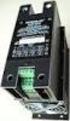 WHITE PAPER WYE-DELTA AND SOLID STATE STARTER APPLICATION GUIDE EXPLANATION AND ASSISTANCE FOR APPLYING SOLID STATE SOFT STARTERS IN TRADITIONAL REDUCED VOLTAGE APPLICATIONS Introduction..............................................................2
Motor Protection Voltage Unbalance and Single-Phasing
 Motor Protection Voltage Unbalance and Single-Phasing Cooper Bussmann contributes the following information, which is an excerpt from their 190-page handbook SPD Selecting Protective Devices Based on the
VARIABLE FREQUENCY DRIVES THEORY, APPLICATION, AND TROUBLESHOOTING
 VARIABLE FREQUENCY DRIVES THEORY, APPLICATION, AND TROUBLESHOOTING BY HOWARD W. PENROSE UNIVERSITY OF ILLINOIS AT CHICAGO ENERGY RESOURCES CENTER 851 SOUTH MORGAN STREET ROOM 1213, SEO, MC156 CHICAGO,
Introduction. Upon completion of Basics of AC Motors you should be able to:
 Table of Contents Introduction...2 AC Motors...4 Force and Motion...6 AC Motor Construction... 12 Magnetism... 17 Electromagnetism... 19 Developing a Rotating Magnetic Field...24 Rotor Rotation...29 Motor
GE Industrial Systems. AC Motor Selection and Application Guide
 apple GE Industrial Systems AC Motor Selection and Application Guide TABLE OF CONTENTS Voltage... 2 Frequency... 3 Phase... 4 Motor Output Rating... 4 Polyphase Motors... 4 Single-phase Motors... 4 Service
AC Electric Motors best practice
 If you want to learn more about best practice machinery maintenance, or world class mechanical equipment maintenance and installation practices, follow the link to our Online Store and see the Training
(3) Explosion proof. Designed to prevent ignition of any explosive gases or dust and dirt which may surround the motor.
 ELECTRIC MOTORS Enclosures for Motors Types of motor enclosures generally used in farm applications: (1) Open type; drip proof or splash-proof. A general purpose motor for use in dry locations which are
How the efficiency of induction motor is measured?
 How the efficiency of induction motor is measured? S. Corino E. Romero L.F. Mantilla Department of Electrical Engineering and Energy E.T.S.I.I. y T. Universidad de Cantabria Avda de Los Castros, 395 Santander
Understanding Energy Efficient Motors
 Understanding Energy Efficient Motors Reliable Solutions Today Introduction For anyone who specifies, buys, operates, or repairs electric motors today, the issue of motor efficiency is of growing concern
AC Motor Speed. n s = synchronous speed (in RPM), f = frequency (in Hz), and p = the number of poles
 AC Induction Motors Simplest and most rugged electric motor Consists of wound stator and rotor assembly AC in the primary member (stator) induces current in the secondary member (rotor) Combined electromagnetic
Centrifugal Fans and Pumps are sized to meet the maximum
 Fans and Pumps are sized to meet the maximum flow rate required by the system. System conditions frequently require reducing the flow rate. Throttling and bypass devices dampers and valves are installed
Fundamentals of Inverter Fed Motors
 Fundamentals of Inverter Fed Motors Technical Manual 10/02 MN780 Contents Page The Growing Use Of Inverters.................................................................. 1 How Inverters Affect Motors....................................................................
SECTION 4 ELECTRIC MOTORS UNIT 17: TYPES OF ELECTRIC MOTORS
 SECTION 4 ELECTRIC MOTORS UNIT 17: TYPES OF ELECTRIC MOTORS UNIT OBJECTIVES After studying this unit, the reader should be able to Describe the different types of open single-phase motors used to drive
INSTALLATION AND MAINTENANCE INSTRUCTIONS FOR THREE PHASE INDUCTION MOTORS
 INSTALLATION AND MAINTENANCE INSTRUCTIONS FOR THREE PHASE INDUCTION MOTORS Frames 143T - 449TZ 5100 North IH 35 Round Rock, Texas 78681 Phone: 800-451-8798 512-255-4141 Fax: 512-244-5512 RECEIVING 1. Check
GE Industrial Systems. AC Motor Selection and Application Guide
 apple GE Industrial Systems AC Motor Selection and Application Guide TABLE OF CONTENTS Voltage... 2 Frequency... 3 Phase... 4 Motor Output Rating... 4 Polyphase Motors... 6 Single-phase Motors... 9 Service
Data Bulletin. Mounting Variable Frequency Drives in Electrical Enclosures Thermal Concerns OVERVIEW WHY VARIABLE FREQUENCY DRIVES THERMAL MANAGEMENT?
 Data Bulletin April 2001 Raleigh, NC, USA Mounting Variable Frequency Drives in Electrical Enclosures Thermal Concerns OVERVIEW Variable frequency drives are available from manufacturers as enclosed engineered
DIRECT CURRENT GENERATORS
 DIRECT CURRENT GENERATORS Revision 12:50 14 Nov 05 INTRODUCTION A generator is a machine that converts mechanical energy into electrical energy by using the principle of magnetic induction. This principle
DETERMINING ELECTRIC MOTOR LOAD AND EFFICIENCY
 F A C T S H E E T a Program of the U.S. Department of Energy DETERMINING ELECTRIC MOTOR LOAD AND EFFICIENCY Most likely your operation s motors account for a large part of your monthly electric bill. Far
COOLING TECHNOLOGY INSTITUTE
 PAPER NO: CATEGORY: TP09-18 FANS COOLING TECHNOLOGY INSTITUTE RECENT DEVELOPMENTS IN MOTOR TECHNOLOGY ALLOW DIRECT DRIVE OF LOW SPEED COOLING TOWER FANS ROBBIE MCELVEEN BILL MARTIN RYAN SMITH BALDOR ELECTRIC
NEBB STANDARDS SECTION-8 AIR SYSTEM TAB PROCEDURES
 NEBB STANDARDS SECTION-8 AIR SYSTEM TAB PROCEDURES 8.1 INTRODUCTION Testing, adjusting, and balancing of HVAC systems can best be accomplished by following a series of systematic procedures. The NEBB TAB
OJ L 191, 23.7.2009, p. 26. OJ L 2, 7.1.2014, p. 1.
 Table of Contents 1. Purpose of the guidelines and disclaimer... 2 1.1. The Regulations... 2 2. Scope... 2 3. Historic developments... 4 4. Scope and Requirements... 5 4.1. Scope... 5 4.2. Requirements...
TERMINAL MARKINGS AND CONNECTIONS PART WINDING START
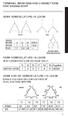 TERMINAL MARKINGS AND CONNECTIONS PART WINDING START NEMA NOMENCLATURE 6 LEADS 7 7 3 9 8 Delta 3 9 8 Wye OPER. 9 MODE L L L3 OPEN 7 START 3 7,8,9 T T T3 T7 T8 T9 RUN,7,8 3,9 3 8 MOTOR LEADS 3 7 Double
Permanent Magnet Technology within Direct Drive Cooling Tower Motors Creates System Energy Savings
 Permanent Magnet Technology within Direct Drive Cooling Tower Motors Creates System Energy Savings Roman Wajda, Robbie McElveen, Bill Martin, and Steve Evon, Baldor Electric Company ABSTRACT At a time
32VFD Variable Frequency Drives for Centrifugal Chillers
 32VFD 32VFD Variable Frequency Drives for Centrifugal Chillers ENERGY-SAVING CONTROL FOR CENTRIFUGAL CHILLERS Reduce energy consumption in your existing centrifugal chiller Your chiller was specified to
Baldor Electric Position on DOE Small Motor Rule
 Baldor Electric Position on DOE Small Motor Rule WP0035 WP0034 Page 1 of 6 US Integral DOE Small HP Motor Rule Rule Baldor Electric Position on DOE Small Motor Rule 10/28/14 On March 9, 2010 the US Department
SYNCHRONOUS MACHINE TESTING WITH MOTOR CIRCUIT ANALYSIS INSTRUMENTATION
 SYNCHRONOUS MACHINE TESTING WITH MOTOR CIRCUIT ANALYSIS INSTRUMENTATION Introduction Howard W. Penrose, Ph.D., CMRP Vice President, Engineering and Reliability Services Dreisilker Electric Motors, Inc.
3) What is the difference between "Insulating", "Isolating", and "Shielded Winding" transformers?
 Tyco Electronics Corporation Crompton Instruments 1610 Cobb International Parkway, Unit #4 Kennesaw, GA 30152 Tel. 770-425-8903 Fax. 770-423-7194 1) What is a transformer and how does it work? A transformer
A Guide To AC Motor Repair And Replacement
 A Guide To AC Motor Repair And Replacement Reliable Solutions Today Table Of Contents Introduction... 1 Plan Ahead... 2 Why Motors Fail... 2 Making The Decision To Repair Or Replace... 3 Obtaining Quality
26 3213.13 Diesel Engine Driven Generators Page 1 of 6
 Last Update: December 8, 2014 A. Description of System Consultant s Handbook Page 1 of 6 1. Provide a diesel engine driven electric generating unit, factory assembled, tested and certified to operate at
Single-Phase AC Synchronous Generator
 ST Series Single-Phase AC Synchronous Generator Instructions for Operation and Maintenance English to English translation by R.G. Keen, May 2004. ST Series of Single-Phase AC Synchronous Generators Description
1 Temperature Derating Guide
 VLT HVAC Drive FC 02 Application Note Temperature Derating Guide Temperature Derating Guide.. Abstract This paper provides detailed data regarding the operation of the VLT HVAC Drive FC02 at varying ambient
Pump Specifications 250 Series Submersible Sump / Effluent Pump 2 Solids handling
 Pump Specifications 250 Series Submersible Sump / Effluent Pump 2 Solids handling 250_P1 R10/7/2015 Copyright 2015 Liberty Pumps Inc. All rights reserved. Specifications subject to change without notice.
HVAC Applications. VFD considerations for HVAC systems...
 HVAC Applications VFD considerations for HVAC systems... 1 COMMON TERMINOLOGY VFD (VARIABLE FREQUENCY DRIVES) AFC (ADJUSTABLE FREQ. CONTOLLER) ASD (ADJUSTABLE SPEED DRIVES) VSD (VARIABLE SPEED DRIVES)
Section 10. Application Manual for NEMA Motors. Special Applications
 Special Applications 1 Power Factor Correction 1 Methods of Starting 3AC Induction Motors 5 3 Duty Cycles and Inertia 3 4 Horsepower Determination 30 5 Formulas and General Data 34 Power Factor Correction
Data Sheet. AC Industrial Electric Motors
 Data Pack B Issued ovember 2005 1502325812 Data Sheet AC Industrial Electric Motors Standards organisations The RS-ABB range of ac induction motors is produced to common European standards, these being
GENERATOR SELECTION. a. Three phase - 120/208V, 3 phase, 4W wye; 277/408, 3 phase, 4W wye; * 120/240V 3 phase, 4W Delta
 GENERATOR SELECTION Generators must be sized to handle their load based on the continuous KW, kilowatt load, and KVA, kilovoltamp load, and the worst case starting load KW + KVA. They must be derated for
Wound Rotor Induction Motors 4-12 poles, up to 8000 kw, 11500 HP
 Wound Rotor Induction Motors 4-12 poles, up to 8000 kw, 11500 HP ABB The Preferred Partner Egypt Cement Corporation, a major cement manufacturer, has chosen ABB wound rotor motors for all key applications
Digital Energy ITI. Instrument Transformer Basic Technical Information and Application
 g Digital Energy ITI Instrument Transformer Basic Technical Information and Application Table of Contents DEFINITIONS AND FUNCTIONS CONSTRUCTION FEATURES MAGNETIC CIRCUITS RATING AND RATIO CURRENT TRANSFORMER
32:(5#5$7,1* 4833#USP283#+] 4;33#USP293#+] 3ULPH 113 kva, 90 kw 124 kva, 99 kw 6WDQGE\ 114 kva, 91 kw 125 kva, 100 kw
![32:(5#5$7,1* 4833#USP283#+] 4;33#USP293#+] 3ULPH 113 kva, 90 kw 124 kva, 99 kw 6WDQGE\ 114 kva, 91 kw 125 kva, 100 kw](/thumbs/30/14614129.jpg "32:(5#5$7,1* 4833#USP283#+] 4;33#USP293#+] 3ULPH 113 kva, 90 kw 124 kva, 99 kw 6WDQGE\ 114 kva, 91 kw 125 kva, 100 kw") ,1'8675,$/#*(16(7 6HULHV#'9#448 32:(5#5$7,1* 4833#USP283#+] 4;33#USP293#+] 3ULPH 113 kva, 90 kw 124 kva, 99 kw 6WDQGE\ 114 kva, 91 kw 125 kva, 100 kw Generator set consisting of engine and alternator mounted
,1'8675,$/#*(16(7 6HULHV#'9#448 32:(5#5$7,1* 4833#USP283#+] 4;33#USP293#+] 3ULPH 113 kva, 90 kw 124 kva, 99 kw 6WDQGE\ 114 kva, 91 kw 125 kva, 100 kw Generator set consisting of engine and alternator mounted
DHANALAKSHMI COLLEGE OF ENGINEERING DEPARTMENT OF ELECTRICAL AND ELECTRONICS ENGINEERING EE2302 - ELECTRICAL MACHINES II UNIT-I SYNCHRONOUS GENERATOR
 1 DHANALAKSHMI COLLEGE OF ENGINEERING DEPARTMENT OF ELECTRICAL AND ELECTRONICS ENGINEERING Constructional details Types of rotors EE2302 - ELECTRICAL MACHINES II UNIT-I SYNCHRONOUS GENERATOR PART A 1.
Inverter technology. bulletin
 Inverter technology application bulletin What is the inverter component? The inverter is an electronic power component that continuously varies the electricity supply frequency of an electric motor. The
THREE-PHASE INDUCTION MOTOR March 2007
 THREE-PHASE INDUCTION MOTOR March 2007 A. PREPARATION 1. Introduction 2. The Rotating Field 3. Rotor Currents 4. Induction Motor Equivalent Circuit 5. Torque and Power Characteristics 6. Operation Beyond
Unidrive M Energy Savings
 Unidrive M Energy Savings Why is this important? Some Data: Money, Lots of Money >13.5m electric motors 1Hp or greater installed in US industrial process operations. Industry spends >$33b annually on electricity
MOTOR PROTECTION AGAINST SINGLE-PHASING
 THE SINGLE-PHASE DILEMMA: FACT OR FICTION PROTECTION AGAINST SINGLE-PHASING Bulletin PSP The Single-Phasing Issue: Fact or Fiction Overview Before discussing SINGLE-PHASING, let s take a look at some of
AC Induction Motor Slip What It Is And How To Minimize It
 AC Induction Motor Slip What It Is And How To Minimize It Mauri Peltola, ABB Oy, Helsinki, Finland The alternating current (AC) induction motor is often referred to as the workhorse of the industry because
How to Choose the Right Air Compressor
 How to Choose the Right Air Compressor Air compressors have been around for well over 100 years and have as many uses as there are tools that use air. One reason for their popularity is because air as
I hope you find them useful and I would appreciate any comments or thoughts you might have for future improvements, corrections or topics.
 COWERN PAPERS Baldor Electric Company 5711 R.S. Boreham Jr. Street Fort Smith, AR 72901 Phone (479) 646-4711 Fax (479) 648-5792 www.baldor.com Enclosed you will find a set of papers that I have written
TECHNICAL INFORMATION Bulletin
 Peerless Pump Company 2005 Dr. M.L. King Jr. Street, P.O. Box 7026, Indianapolis, IN 46207-7026, USA Telephone: (317) 925-9661 Fax: (317) 924-7338 www.peerlesspump.com www.epumpdoctor.com TECHNICAL INFORMATION
Equipment: Power Supply, DAI, Wound rotor induction motor (8231), Electrodynamometer (8960), timing belt.
 Lab 13: Wound rotor induction motor. Objective: to examine the construction of a 3-phase wound rotor induction motor; to understand exciting current, synchronous speed and slip in this motor; to determine
Pump Specifications 405 Series Commercial Drain Pump (High-Temp) 2 Solids handling
 Pump Specifications 405 Series Commercial Drain Pump (High-Temp) 2 Solids handling 405_P1 R1/27/2012 Copyright 2012 Liberty Pumps Inc. All rights reserved. Specifications subject to change without notice.
NEMA Application Guide for AC Adjustable Speed Drive Systems
 Copyright 2001 IEEE. Reprinted from IEEE/PCIC 2001 Conference Record. This material is posted here with permission of the IEEE. Such permission of the IEEE does not in any way imply IEEE endorsement of
Synchronous motor. Type. Non-excited motors
 Synchronous motor A synchronous electric motor is an AC motor in which the rotation rate of the shaft is synchronized with the frequency of the AC supply current; the rotation period is exactly equal to
General Information. ME-business can be accessed through: www. marathonelectric.com.
 MARATHON ELECTRIC Since 1913, Marathon Electric s name has been recognized for engineering excellence, custom-designed products and an extensive product line of industrial quality motors. Available in
More Up Time / Less Costs through Motor Management. Presented By: George Flolo
 More Up Time / Less Costs through Motor Management Presented By: George Flolo What is EASA? Electrical Apparatus Service Association Trade association serving the electrical and mechanical apparatus sales,
Technical Guide No. 100. High Performance Drives -- speed and torque regulation
 Technical Guide No. 100 High Performance Drives -- speed and torque regulation Process Regulator Speed Regulator Torque Regulator Process Technical Guide: The illustrations, charts and examples given in
GE Energy. Motors Product Line
 GE Energy Motors Product Line Expect More We ve manufactured motors for over 125 years. In 1879, GE founder, Thomas Edison constructed the first electric motor ever made for a 110 to 120 Volt line at Menlo
Line Reactors and AC Drives
 Line Reactors and AC Drives Rockwell Automation Mequon Wisconsin Quite often, line and load reactors are installed on AC drives without a solid understanding of why or what the positive and negative consequences
AC Replacement for DC Mill-Duty Motors
 AC Replacement for DC Mill-Duty Motors This article is available online at www.aist.org for 30 days following publication. For many years, DC mill auxiliary motors for steel mill applications such as screwdowns,
A S Y N C H R O N O U S M O T O R S
 ASYNCHRONOUS M O T O R S S E R I E S INDAR ASYNCHRONOUS MOTORS S E R I E S WHO WE ARE Indar Electric s trajectory is endorsed by the construction of thousands of motors for the different industrial sectors.
Electric Motor Brake Horsepower Calculations
 Electric Motor Brake Horsepower Calculations By Norm Christopherson These motor calculations are contained here as they apply to the changing conditions of the blower motor when pulley adjustments are
8 Speed control of Induction Machines
 8 Speed control of Induction Machines We have seen the speed torque characteristic of the machine. In the stable region of operation in the motoring mode, the curve is rather steep and goes from zero torque
Current Transformers
 Tyco Electronics Corporation Crompton Instruments 1610 Cobb International Parkway, Unit #4 Kennesaw, GA 30152 Tel. 770-425-8903 Fax. 770-423-7194 Current Transformers Current transformers (CT's) provide
AC-Synchronous Generator
 Design Description AC Generators come in two basic types synchronous and non-synchronous. Synchronous generators lock in with the fundamental line frequency and rotate at a synchronous speed related to
MTE SERIES RLW. World REACTORS USER MANUAL PART NO. INSTR 030 REL. 090930. 2009 MTE Corporation
 MTE SERIES RLW World REACTORS USER MANUAL PART NO. INSTR 030 REL. 090930 2009 MTE Corporation IMPORTANT USER INFORMATION NOTICE MTE Series RLW reactors are components designed to improve the reliability
FAIRBANKS NIJHUIS FIRE PUMPS. www.fairbanksnijhuis.com
 FAIRBANKS NIJHUIS FIRE PUMPS www.fairbanksnijhuis.com FAIRBANKS NIJHUIS Long established as a leading fire pump manufacturer, Fairbanks Nijhuis offers a broad range of horizontal and vertical split case,
Buck - Boost Transformers
 Buck - Boost Transformers Contents Buck - Boost Transformers - Terms & Definitions... 48 Buck - Boost Transformers - Sizing... 50 Quick Reference Chart - 08, 0, 40 Volts Single & Three Phase... 5 Single
Fundamentals of Power
 Fundamentals of Power Fundamentals of Power 2008 American Power Conversion Corporation. All rights reserved. All trademarks provided are the property of their respective owners. Learning Objectives At
Energy Saving systems for Induction motors.
 Energy Saving systems for Induction motors. Are they a sham? Do they work? There seems to be a resurgence in interest in the Nola energy saving algorithm for induction motors, with a number of manufacturers
Application Information
 Moog Components Group manufactures a comprehensive line of brush-type and brushless motors, as well as brushless controllers. The purpose of this document is to provide a guide for the selection and application
Variable Frequency Drives - a Comparison of VSI versus LCI Systems
 Variable Frequency Drives - a Comparison of VSI versus LCI Systems Introduction TMEIC is a leader in the innovative design and manufacture of large ac variable f requency drive systems. TMEIC has been
Equipment: Power Supply, DAI, Synchronous motor (8241), Electrodynamometer (8960), Tachometer, Timing belt.
 Lab 9: Synchronous motor. Objective: to examine the design of a 3-phase synchronous motor; to learn how to connect it; to obtain its starting characteristic; to determine the full-load characteristic of
The Right Drive to Maximize Efficiency and Production for Large Overland Conveyors
 The Right Drive to Maximize Efficiency and Production for Large Overland Conveyors By: Nicole Hampton, P.Eng. ABSTRACT: This paper examines various drive systems available for large overland conveyors,
Drives Low Voltage. Adjustable Frequency. Adjustable Frequency Drives Low Voltage 32.0-1. Contents
 June 2006 Sheet 17.0-1 Adjustable Frequency Drives Low Voltage Contents Application Guide Basic Motor and Adjustable Frequency Drive Theory..................0-2 AC Motors...................................................0-2
ENGINEERING BULLETIN No. EB 039 Product: Cooling Towers, Closed Circuit Coolers & Evaporative Condensers Date: June 2003
 For Distribution ENGINEERING BULLETIN No. EB 039 Product: Cooling Towers, Closed Circuit Coolers & Evaporative Condensers Date: June 2003 Purpose: Variable Frequency Drives The purpose of this Engineering
Chapter 3.5: Fans and Blowers
 Part I: Objective type questions and answers Chapter 3.5: Fans and Blowers 1. The parameter used by ASME to define fans, blowers and compressors is a) Fan ration b) Specific ratio c) Blade ratio d) Twist
Energy Savings through Electric-assist Turbocharger for Marine Diesel Engines
 36 Energy Savings through Electric-assist Turbocharger for Marine Diesel Engines KEIICHI SHIRAISHI *1 YOSHIHISA ONO *2 YUKIO YAMASHITA *3 MUSASHI SAKAMOTO *3 The extremely slow steaming of ships has become
Single Phase Soft Starter
 Single Phase Soft Starter Installation & Operating Manual 6/02 Table of Contents Section 1 General Information................................................... 1 1 General Description................................................
ELECTROPUTERE ROTATING ELECTRICAL MACHINES DIVISION
 ELECTROPUTERE ROTATING ELECTRICAL MACHINES DIVISION SC ELECTROPUTERE SA SC ELECTROPUTERE SA 1. Vision, Mission, Values SC ELECTROPUTERE SA 2. LOCATION Craiova: Located in the South West of the country,
PREMIUM EFFICIENCY MOTOR SELECTION AND APPLICATION GUIDE
 ADVANCED MANUFACTURING OFFICE PREMIUM EFFICIENCY MOTOR SELECTION AND APPLICATION GUIDE A HANDBOOK FOR INDUSTRY DISCLAIMER This publication was prepared by the Washington State University Energy Program
Printing and Publishing Energy Savings Guide
 Printing and Publishing Energy Savings Guide Oregon printing and publishing plants face challenges of rising operating costs, environmental and other regulations, outdated equipment and customer demand
Installation Manual Version 7.3 IMPORTANT:
 Installation Manual Version 7.3 IMPORTANT: READ ENTIRE MANUAL CAREFULLY, THIS PHASE CONVERTER MUST BE INSTALLED BY A INDUSTRIAL LICENSED ELECTRICIAN 230 VOLTS MODEL ONLY READ FIRST!!!!!! DANGER: HIGH VOLTAGE
The Ultimate Truck Stock Motor
 The Ultimate Truck Stock Motor What is a Rescue Motor? Universal Replacement Motor for Condenser Fan and Direct Drive Blower Applications Multi-Horsepower PSC Motors Flexible Mounting Options Permanent
PM734F - Technical Data Sheet Winding 28
 - Technical Data Sheet Winding 28 SPECIFICATIONS & OPTIONS STANDARDS STAMFORD AC generators are designed to meet the performance requirements of IEC EN 60034-1. Other international standards, including
PowerFlex Dynamic Braking Resistor Calculator
 Application Technique PowerFlex Dynamic Braking Resistor Calculator Catalog Numbers 20A, 20B, 20F, 20G, 22A, 22B Important User Information Solid-state equipment has operational characteristics differing
SINGLE PHASE MOTORS. INSTALLATION AND MAINTENANCE MANUAL March 21, 2006
 SINGLE PHASE MOTORS INSTALLATION AND MAINTENANCE MANUAL March 21, 2006 Irvine, California (800) 474-0520 Indianapolis, Indiana (800) 866-7973 Hamilton, Ontario (800) 809-0330 e-mail: [email protected]
..OR How To Protect your 3-Phase Equipment Investment with 3-Phase Monitors from Time Mark...
 ..OR How To Protect your 3-Phase Equipment Investment with 3-Phase Monitors from Time Mark... TIME MARK CORPORATION 11440 EAST PINE STREET TULSA, OK 74116 USA tel 918 438-1220 fax 918 437-7584 www.time-mark.com
Predictive Maintenance
 PART ONE of a predictive maintenance series Predictive Maintenance Overview Predictive maintenance programs come in all shapes and sizes, depending on a facility s size, equipment, regulations, and productivity
SAFETY PRECAUTIONS AND INSTRUCTIONS FOR USE OF TECHNICAL INFORMATION
 SAFETY PRECAUTIONS AND INSTRUCTIONS FOR USE OF TECHNICAL INFORMATION Please read and understand the product instruction manual before installing, servicing or operating Yaskawa products. Technical content
MEMBRANE VACUUM MINI PUMPS
 MEMBRANE VACUUM MINI PUMPS The mini pumps described in this page are membrane-type. They can be used both as vacuum pumps and compressors. In the latter version they can supply compressed air 100% oil-free
Baldor Electric ProSPEC MASTERFORMAT SPECIFICATION May 3, 2005. A. This specification covers integral horsepower squirrel cage AC induction motors.
 SECTION 16221 - TEFC AC INDUCTION MOTORS PART 1 - GENERAL 1.1 SUMMARY A. This specification covers integral horsepower squirrel cage AC induction motors. B. This specification is intended to specify superior
Voltage Unbalance and Motors
 Voltage Unbalance and Motors Background Voltage unbalance occurs when the RMS line voltages on a poly-phase system are unequal. Voltages are seldom perfectly balanced between phases, but when this unbalance
APPLICATION GUIDELINE FOR ELECTRIC MOTOR DRIVE EQUIPMENT FOR NATURAL GAS COMPRESSORS
 APPLICATION GUIDELINE FOR ELECTRIC MOTOR DRIVE EQUIPMENT FOR NATURAL GAS COMPRESSORS RELEASE VERSION 4.0 May 2009 Gas Machinery Research Council Southwest Research Institute APPLICATION GUIDELINE FOR ELECTRIC