
Statistical analysis of modern sequencing data quality control, modelling and interpretation
|
|
|
- Kerrie Burke
- 9 years ago
- Views:
Transcription


1 Statistical analysis of modern sequencing data quality control, modelling and interpretation Jörg Rahnenführer Technische Universität Dortmund, Fakultät Statistik Seminar Freiburg Center for Data Analysis and Modeling Freiburg,
2 Research Overview Statistical methods in bioinformatics and medicine High-dimensional gene expression data survival analysis models for cancer (prognostic signatures) toxicology (time series and concentration series) distribution shapes, networks, Proteomics (phylogenetics based on mass spectrometry) Linguistics (analysis of newspaper articles) Efficient algorithms for statistical learning Model selection Bias/Variance Model fit vs. Model complexity 1 gene genes Jörg Rahnenführer, Statistical analysis of modern sequencing data, FDM-Seminar Freiburg
3 Interdisciplinary character Computer Science Bridge between Biology and Statistics Biology Statistics Questions Experiments Interpretation Model, Design Estimates, Tests Significance Computer Science Efficient algorithms Visualization User-friendly tools Jörg Rahnenführer, Statistical analysis of modern sequencing data, FDM-Seminar Freiburg
4 Next-generation sequencing (NGS) Sequencing is an analytical key technology for reading bases in DNA or RNA 1977 first sequencing technique by Sanger since 2008 NGS methods Compared to Sanger sequencing NGS is much faster and cheaper, but still relatively expensive Applications Analysis of genome (parts or whole) Analysis of RNA transcripts for gene expression (RNASeq) Profiling of mrnas, micrornas, chromatin structures and DNA methylation patterns Analysis of transcription factors (ChIP-Seq, Protein-DNA- Interaction) Jörg Rahnenführer, Statistical analysis of modern sequencing data, FDM-Seminar Freiburg
5 RNAseq technology Whole transcriptome shotgun sequencing Determination of nucleotide series in RNA with next generation sequencing Translation of RNA in cdna to apply method of DNA sequencing RNAseq provides more information than microarray technology Discrimination between alleles of a gene Posttranscriptional modifications Identification of fusion genes Pros and cons Lower background noise Higher resolution & reproducibility for technical and biological replicates Relatively expensive No established analysis pipeline Jörg Rahnenführer, Statistical analysis of modern sequencing data, FDM-Seminar Freiburg

6 Impact number of publications Absolute number of publications in Pubmed per year ( ) Search term cancer Jörg Rahnenführer, Statistical analysis of modern sequencing data, FDM-Seminar Freiburg

7 Impact number of publications Absolute number of publications in Pubmed per year ( ) Search term microarray Still large numbers Jörg Rahnenführer, Statistical analysis of modern sequencing data, FDM-Seminar Freiburg
8 Impact number of publications Absolute number of publications in Pubmed per year ( ) Search term deep sequencing Jörg Rahnenführer, Statistical analysis of modern sequencing data, FDM-Seminar Freiburg
9 Impact number of publications Absolute number of publications in Pubmed per year ( ) Search term RNAseq Little overlap with deep sequencing Jörg Rahnenführer, Statistical analysis of modern sequencing data, FDM-Seminar Freiburg
10 RNAseq technology Measuring abundance of mrna with the help of sequencing techniques General procedure Start with mrna of sample Random fragmentation of mrnas Backward transcription into cdna PCR and sequencing of cdna to obtain reads Assignment of reads to genes (position on genome sequence) Result: Count table of reads assigned to genes Jörg Rahnenführer, Statistical analysis of modern sequencing data, FDM-Seminar Freiburg
11 RNAseq technology PCR amplification and sequencing Ansorge WJ (2009): Next-generation DNA sequencing techniques. New Biotechnology, 25(4): Jörg Rahnenführer, Statistical analysis of modern sequencing data, FDM-Seminar Freiburg
12 RNAseq technology PCR amplification and sequencing Jörg Rahnenführer, Statistical analysis of modern sequencing data, FDM-Seminar Freiburg
13 RNAseq technology PCR amplification and sequencing Jörg Rahnenführer, Statistical analysis of modern sequencing data, FDM-Seminar Freiburg
14 Analysis of RNAseq data 1. Biological question 2. Experimental design 3. Biological experiment 4. Sequence analysis 5. Normalization 6. Statistical analysis 7. Biological verification und interpretation Jörg Rahnenführer, Statistical analysis of modern sequencing data, FDM-Seminar Freiburg
15 RNAseq technology Jungle of methods for analysis of RNAseq data bioinformatics_tools Jörg Rahnenführer, Statistical analysis of modern sequencing data, FDM-Seminar Freiburg

16 RNAseq analysis guidelines Jörg Rahnenführer, Statistical analysis of modern sequencing data, FDM-Seminar Freiburg

17 RNAseq Analysis pipeline From raw data to the gene list Schematic procedure from Nature Protocols Count-based differential expression analysis of RNA sequencing data using R and Bioconductor Simon Anders, Davis J McCarthy, Yunshun Chen, Michal Okoniewski, Gordon K Smyth, Wolfgang Huber, Mark D Robinson Jörg Rahnenführer, Statistical analysis of modern sequencing data, FDM-Seminar Freiburg
18 RNAseq modelling RNAseq data are count data Discrete, skewed, large span Normal distribution not adequate Rank and permutation methods mostly also not adequate (often small number of samples, many genes) Modelling with suitable distributions Poisson distribution Negative binomial distribution Typical pipeline Normalization of data Estimation of model parameters (expected value and variance) Often: Determination of differentially expressed genes Jörg Rahnenführer, Statistical analysis of modern sequencing data, FDM-Seminar Freiburg
19 RNAseq modelling Poisson distribution Distribution for rare events Limit distribution for binomial distribution with large number of tries and small probability ( n p) x P( X x) exp( ), E( X ), Var( X ) x! Negative binomial distribution Number of failures until r-th success in Bernoulli process with success probability p x r 1 r x (1 p) (1 p) P( X x) p (1 p), E( X ) r, Var( X ) r 2 x p p Alternative parameterization: E( X ), Var( X ) 2 Advantage: Additional parameter for estimation of individual variance Jörg Rahnenführer, Statistical analysis of modern sequencing data, FDM-Seminar Freiburg
20 Data example Dataset from Mainz Institut für Molekulare Medizin, Universitätsmedizin der Johannes Gutenberg-Universität Mainz Comparison of two groups of mice 3 healthy mice 3 genetically manipulated mice (overexpression of Bcl3 in T cells) with inflammation of the colon and problems with the development of different subgroups of T cells Analysis of genetic material from two types of T cells: CD4 cells and CD8 cells Very small sample size, thus stable analysis required Jörg Rahnenführer, Statistical analysis of modern sequencing data, FDM-Seminar Freiburg
21 Data example Analysis of RNAseq data: 3 early R packages DESeq Simon Anders, Wolfgang Huber Differential expression analysis for sequence count data Genome Biology 11, R106 (2010) edger Robinson MD, McCarthy DJ, Smyth GK: edger: a Bioconductor package for differential expression analysis of digital gene expression data Bioinformatics 26(1): (2010) PoissonSeq Li J, Witten DM, Johnstone IM, Tibshirani R Normalization, testing, and false discovery rate estimation for RNAsequencing data Biostatistics 13(3): (2012) Jörg Rahnenführer, Statistical analysis of modern sequencing data, FDM-Seminar Freiburg
22 Volcano-Plots: PoissonSeq X axis: effect (log 2 fold change) Y axis: p-value (log 10 p) Red points Effect: FC > 3/2 or FC < 2/3 P-value: p < Jörg Rahnenführer, Statistical analysis of modern sequencing data, FDM-Seminar Freiburg
23 Volcano-Plots: DESeq X axis: effect (log 2 fold change) Y axis: p-value (log 10 p) Red points Effect: FC > 3/2 or FC < 2/3 P-value: p < Jörg Rahnenführer, Statistical analysis of modern sequencing data, FDM-Seminar Freiburg
24 MA-Plot: DESeq X axis: intensity (mean of exp. & ctrl.) Y axis: effect (log 2 fold change) Red points Effect: FC > 3/2 or FC < 2/3 P-value: p < Jörg Rahnenführer, Statistical analysis of modern sequencing data, FDM-Seminar Freiburg
25 Normalization Total-count normalization Sum of all counts is set to the same value (see next slide, not sufficient) RPKM (Mortazavi et al., 2008) Reads Per Kilobase per Million mapped reads Normalization w.r.t length of gene and total number of counts Necessary but not sufficient (Wagner, Theory Biosci, 2012) Must be careful when modelling with counts Quantile normalization All quantiles set to the same value (across experiments) Median-Reference-Normalization Scaling factor d j per sample j Per gene i artificial reference sample Jörg Rahnenführer, Statistical analysis of modern sequencing data, FDM-Seminar Freiburg
26 RNAseq Normalization Total-count normalization (TCN, same sum) often not suitable Example demonstrates false positive results Original data Gene Group 1 Group Sum Data after TCN Gene Group 1 Group Sum Jörg Rahnenführer, Statistical analysis of modern sequencing data, FDM-Seminar Freiburg
27 RNAseq Normalization Total-count normalization (TCN, same sum) often not suitable Example demonstrates false positive results Original data Gene Group 1 Group Sum Data after TCN Gene Group 1 Group Sum Jörg Rahnenführer, Statistical analysis of modern sequencing data, FDM-Seminar Freiburg
28 RNAseq Normalization Scaling factor d j per sample j : Data: Median of transformed data always 1, this means no change Original data Gene Group 1 Group Sum Transformed data Gene Group 1 Group /0 Inf Median d 1 = 1 d 2 = 1 Jörg Rahnenführer, Statistical analysis of modern sequencing data, FDM-Seminar Freiburg
29 RNAseq: DESeq Estimation of model parameters for DESeq Y ij is number of counts for gene i in sample j (in group k) Y NB(, ), d q, d v ij ij ij ij j ik ij ij j ik q ik corresponds to the expected normalized count value for gene i in group k d j is a scaling factor for sample j Variance decomposition in technical and biological part smooth function Jörg Rahnenführer, Statistical analysis of modern sequencing data, FDM-Seminar Freiburg
30 RNAseq: DESeq Assumptions: Y NB(, ), d q, d v ij ij ij ij j ik ij ij j ik Estimator for expected value: Estimator for q ik : Here n k is the number of samples in group k. Jörg Rahnenführer, Statistical analysis of modern sequencing data, FDM-Seminar Freiburg
31 RNAseq: DESeq Assumptions: Estimator for variance: Y NB(, ), d q, d v ij ij ij ij j ik ij ij j ik w ik - s ik is an unbiased estimator for v ik But w ik has high variability for small n k Thus estimate directly functional dependence between expected value and variance Jörg Rahnenführer, Statistical analysis of modern sequencing data, FDM-Seminar Freiburg
32 RNAseq: DESeq Assumptions: Y NB(, ), d q, d v ij ij ij ij j ik ij ij j ik First approach was: Use red regression line (local linear fit) as estimates Now: Use maximum of red regression line and empirical value Jörg Rahnenführer, Statistical analysis of modern sequencing data, FDM-Seminar Freiburg
33 Significance values for discrete distributions Reminder: Determination of significance for binomial distribution (two-sided) Rejection region: 0-5, Jörg Rahnenführer, Statistical analysis of modern sequencing data, FDM-Seminar Freiburg
34 RNAseq: DESeq Assumptions: Differential gene expression Y NB(, ), d q, d v ij ij ij ij j ik ij ij j ik Test for difference between 2 groups Test for gene i of null hypothesis Define H : q q, i 1.. m 0 i1 i2 Assumption: Z ik is approximately NB distributed Group Number of counts for gene i Jörg Rahnenführer, Statistical analysis of modern sequencing data, FDM-Seminar Freiburg
35 RNAseq: DESeq Assumptions: Y NB(, ), d q, d v ij ij ij ij j ik ij ij j ik Number of counts for gene i Group Define Then p-value for a pair (a,b) of observed count values is Alternative: Sum over all pairs with more extreme fold change Jörg Rahnenführer, Statistical analysis of modern sequencing data, FDM-Seminar Freiburg
36 RNAseq: DESeq Assumptions: Y NB(, ), d q, d v ij ij ij ij j ik ij ij j ik Necessary to estimate parameters of the negative binomial distribution for both groups (under H 0 ) Pooled mean of normalizes values: (n total number of samples) Estimates for mean and variance in group k : Jörg Rahnenführer, Statistical analysis of modern sequencing data, FDM-Seminar Freiburg
37 Results comparison PoissonSeq identifies more differential genes than DESeq Extremely different distributions Jörg Rahnenführer, Statistical analysis of modern sequencing data, FDM-Seminar Freiburg
38 Results comparison edger identifies more differential genes than DESeq Similar distributions Jörg Rahnenführer, Statistical analysis of modern sequencing data, FDM-Seminar Freiburg
39 Results comparison HOW TO DECIDE WHICH METHOD IS BETTER? Comparison of results on data: Probably not DESeq hat less power, but edger is more sensitive regarding outliers Agreement between methods could increase confidence, but Scientific method: Statistical errors: P values, the 'gold standard' of statistical validity, are not as reliable as many scientists assume. Regina Nuzzo, Nature 505, , 2014 Simulation studies Simulate data distributions as close as possible to real world situation Validation Analyze different cohorts, validate hypothesis on new data, meta analysis Jörg Rahnenführer, Statistical analysis of modern sequencing data, FDM-Seminar Freiburg
40 Results comparison HOW TO DECIDE WHICH METHOD IS BETTER? Simulation study: ROC curves comparing the performance to detect differential (half of the genes follow Poisson distributions and the other half follow overdispersed Poisson distributions) Kvam V.M. et al.: A comparison of statistical methods for detecting differentially expressed genes from RNA-seq data, Am. J. Bot. 99: , 2012 Jörg Rahnenführer, Statistical analysis of modern sequencing data, FDM-Seminar Freiburg
41 Expression value of gene DDR1 Validation Analysis of the same research question using different patient cohorts Problem Cohorts show batch effects Solutions Gene wise standardization of expression values Iterative validation procedures Meta analysis! Patient cohorts Jörg Rahnenführer, Statistical analysis of modern sequencing data, FDM-Seminar Freiburg
42 Validation meta analysis IGKC is associated with better response (pcr) for breast cancer patients treated with anthracycline-based neoadjuvant chemotherapy Jörg Rahnenführer, Statistical analysis of modern sequencing data, FDM-Seminar Freiburg
43 Multiple testing Multiple testing: Many hypotheses tested simultaneously Higher risk of false positive decisions Solutions For genes and p-value cutoff 0.01 even under the null hypothesis (no effect at all) approx = 200 genes will be called differential Control of FWER (family-wise error rate) FWER: Probability to have at least one false positive result Control of FDR (false discovery rate) FDR: Expected proportion of false positive results among the rejected null hypotheses FDR = E(Q) with No control V R für R 0 Q 0 für R 0 Sometimes useful in enrichment analyses Jörg Rahnenführer, Statistical analysis of modern sequencing data, FDM-Seminar Freiburg
44 Gene group tests General idea Summarize genes to gene groups, that are in a joint predefined functional context Typical gene groups Gene Ontology groups Gene groups defined by transcription factors Genes that belong to the same pathway Regulatory pathways Metabolic pathways Signaling pathways Gene groups obtained from previous experiments Differential genes between samples / conditions Genes relevant in specific diseases Jörg Rahnenführer, Statistical analysis of modern sequencing data, FDM-Seminar Freiburg
45 Comparison microarray RNAseq Guo Y, Sheng Q, Li J, Ye F, Samuels DC, et al. (2013) Large Scale Comparison of Gene Expression Levels by Microarrays and RNAseq Using TCGA Data, PLoS ONE 8(8): e Technologies (microarray and RNAseq) are very different, and RNAseq is rapidly replacing microarrays Here: Large comparison study using TCGA (The Cancer Genome Atlas) High correlation between Affymetrix and RNAseq (Korr~0.8, but worse for small counts) Low correlation between Agilent and RNAseq (Korr~0.2) In general good comparability for comparison tumor vs. normal Positive conclusion Huge amounts of available microarray data can still be used Jörg Rahnenführer, Statistical analysis of modern sequencing data, FDM-Seminar Freiburg
46 Comparison microarray RNAseq Guo et al, 2013 Comparison of distributions of gene expression based on 258 tumor samples RNAseq: Values greater 100 are set to 100 Jörg Rahnenführer, Statistical analysis of modern sequencing data, FDM-Seminar Freiburg
47 Why male-female classifier? Popular approach Comprehensive transcriptomic analysis of clinically annotated human tissue Validation important Use of multiple datasets for the same question Public accessibility of many raw data set together with information on clinico-pathological parameters Gain of statistical power Results and conclusions depend on the reliability of the available information! Reasons for sample mix-up are manifold Jörg Rahnenführer, Statistical analysis of modern sequencing data, FDM-Seminar Freiburg
48 Identification of sample misannotations We propose gene expression based methods for identifying sample misannotations in public omics datasets Two statistical methods a likelihood-based classifier that is able to differentiate between samples from male and female patients expression correlation analysis that identifies multiple measurements of the same tissue Jörg Rahnenführer, Statistical analysis of modern sequencing data, FDM-Seminar Freiburg
49 Data sets 45 publicly available sample collections accessible gene expression data measured on Affymetrix HG-U133A or HG-U133 plus 2.0 arrays sex information Cancer datasets 10 NSCLC (non-small cell lung cancer) datasets 7 colon cancer datasets 5 other cancer datasets 7 non-cancer related datasets 8 breast cancer datasets 4 ovarian cancer datasets 4 prostate cancer datasets In total 4913 samples (3034 females, 1879 males) Jörg Rahnenführer, Statistical analysis of modern sequencing data, FDM-Seminar Freiburg

50 Male-female classifier Selection of features (probe sets) Jörg Rahnenführer, Statistical analysis of modern sequencing data, FDM-Seminar Freiburg
51 Male-female classifier Selection of suitable features for a sex classifier Only five of probe sets with MCA > 90%! The top four probe sets were included in our classifier Two map to the XIST gene (221728_x_at and _s_at), located on the X chromosome and highly expressed in females Two map to RPS4Y1 (201909_at) and DDX3Y (205000_at), respectively, both located on the Y chromosome and highly expressed in males Jörg Rahnenführer, Statistical analysis of modern sequencing data, FDM-Seminar Freiburg
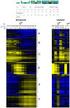
52 Male-female classifier Jörg Rahnenführer, Statistical analysis of modern sequencing data, FDM-Seminar Freiburg
53 Normalization Raw expression values of probe set _at (RPS4Y1) Jörg Rahnenführer, Statistical analysis of modern sequencing data, FDM-Seminar Freiburg
54 Normalization After normalization (group medians shifted to 0 and 1) Jörg Rahnenführer, Statistical analysis of modern sequencing data, FDM-Seminar Freiburg

55 Normalization Jörg Rahnenführer, Statistical analysis of modern sequencing data, FDM-Seminar Freiburg

56 Classification Jörg Rahnenführer, Statistical analysis of modern sequencing data, FDM-Seminar Freiburg

57 Classification Only if one sex evidence score yields clear evidence and the other does not, we classify to the respective sex Jörg Rahnenführer, Statistical analysis of modern sequencing data, FDM-Seminar Freiburg
58 Male-female classifier Results Results for four data sets Green: Predicted and true sex label agree Red: Predicted and true sex label disagree Jörg Rahnenführer, Statistical analysis of modern sequencing data, FDM-Seminar Freiburg
59 Male-female classifier Results Jörg Rahnenführer, Statistical analysis of modern sequencing data, FDM-Seminar Freiburg
60 Male-female classifier Results The male-female classifier was applied to all 45 cohorts, including 4913 patients (3034 females, 1879 males). In total, 54 patients (1.1%) were clearly misclassified 149 (3.0%) were labelled unconfident For 15 out of the 45 cohorts (33.3%), all samples were correctly classified In 18 of the 45 cohorts (40%), at least one clearly misclassified sample was detected Jörg Rahnenführer, Statistical analysis of modern sequencing data, FDM-Seminar Freiburg
61 Duplicated measurements Heuristic procedure Separately for each cohort, select the 1000 probe sets with highest variance Calculate Pearson correlation coefficient between all pairs of samples in each cohort Cutpoint to discriminate between pairs of measurements from different samples and duplicated measurements: The largest distance between all ordered correlations. Jörg Rahnenführer, Statistical analysis of modern sequencing data, FDM-Seminar Freiburg
62 Duplicated measurements Jörg Rahnenführer, Statistical analysis of modern sequencing data, FDM-Seminar Freiburg
63 Duplicated measurements Duplications in 15 of the 45 cohorts (33.3%). In total 32 duplicates were detected. 9 of the 54 sex misclassified assignments (16.7%) could be explained by duplicated measurements Validation analysis for GSE37745 DNA and RNA samples of misclassified sample (GSM ) and five additional control samples were prepared from the original biobanked tissue Correlation between old and new sample of GSM was only 0.46, otherwise >0.9 Clear evidence for duplicated measurements Jörg Rahnenführer, Statistical analysis of modern sequencing data, FDM-Seminar Freiburg
64 Acknowledgements Biostatistics Jan Hengstler Eugen Rempel Marianna Grinberg Katrin Madjar Jörg Rahnenführer, Statistical analysis of modern sequencing data, FDM-Seminar Freiburg
Gene Expression Analysis
 Gene Expression Analysis Jie Peng Department of Statistics University of California, Davis May 2012 RNA expression technologies High-throughput technologies to measure the expression levels of thousands
From Reads to Differentially Expressed Genes. The statistics of differential gene expression analysis using RNA-seq data
 From Reads to Differentially Expressed Genes The statistics of differential gene expression analysis using RNA-seq data experimental design data collection modeling statistical testing biological heterogeneity
Comparative genomic hybridization Because arrays are more than just a tool for expression analysis
 Microarray Data Analysis Workshop MedVetNet Workshop, DTU 2008 Comparative genomic hybridization Because arrays are more than just a tool for expression analysis Carsten Friis ( with several slides from
Analysis of gene expression data. Ulf Leser and Philippe Thomas
 Analysis of gene expression data Ulf Leser and Philippe Thomas This Lecture Protein synthesis Microarray Idea Technologies Applications Problems Quality control Normalization Analysis next week! Ulf Leser:
Analysis of Illumina Gene Expression Microarray Data
 Analysis of Illumina Gene Expression Microarray Data Asta Laiho, Msc. Tech. Bioinformatics research engineer The Finnish DNA Microarray Centre Turku Centre for Biotechnology, Finland The Finnish DNA Microarray
Next Generation Sequencing: Adjusting to Big Data. Daniel Nicorici, Dr.Tech. Statistikot Suomen Lääketeollisuudessa 29.10.2013
 Next Generation Sequencing: Adjusting to Big Data Daniel Nicorici, Dr.Tech. Statistikot Suomen Lääketeollisuudessa 29.10.2013 Outline Human Genome Project Next-Generation Sequencing Personalized Medicine
Statistical Analysis. NBAF-B Metabolomics Masterclass. Mark Viant
 Statistical Analysis NBAF-B Metabolomics Masterclass Mark Viant 1. Introduction 2. Univariate analysis Overview of lecture 3. Unsupervised multivariate analysis Principal components analysis (PCA) Interpreting
Gene expression analysis. Ulf Leser and Karin Zimmermann
 Gene expression analysis Ulf Leser and Karin Zimmermann Ulf Leser: Bioinformatics, Wintersemester 2010/2011 1 Last lecture What are microarrays? - Biomolecular devices measuring the transcriptome of a
Tutorial for proteome data analysis using the Perseus software platform
 Tutorial for proteome data analysis using the Perseus software platform Laboratory of Mass Spectrometry, LNBio, CNPEM Tutorial version 1.0, January 2014. Note: This tutorial was written based on the information
Frequently Asked Questions Next Generation Sequencing
 Frequently Asked Questions Next Generation Sequencing Import These Frequently Asked Questions for Next Generation Sequencing are some of the more common questions our customers ask. Questions are divided
Statistical issues in the analysis of microarray data
 Statistical issues in the analysis of microarray data Daniel Gerhard Institute of Biostatistics Leibniz University of Hannover ESNATS Summerschool, Zermatt D. Gerhard (LUH) Analysis of microarray data
RNA-seq. Quantification and Differential Expression. Genomics: Lecture #12
 (2) Quantification and Differential Expression Institut für Medizinische Genetik und Humangenetik Charité Universitätsmedizin Berlin Genomics: Lecture #12 Today (2) Gene Expression per Sources of bias,
Introduction to transcriptome analysis using High Throughput Sequencing technologies (HTS)
 Introduction to transcriptome analysis using High Throughput Sequencing technologies (HTS) A typical RNA Seq experiment Library construction Protocol variations Fragmentation methods RNA: nebulization,
Software and Methods for the Analysis of Affymetrix GeneChip Data. Rafael A Irizarry Department of Biostatistics Johns Hopkins University
 Software and Methods for the Analysis of Affymetrix GeneChip Data Rafael A Irizarry Department of Biostatistics Johns Hopkins University Outline Overview Bioconductor Project Examples 1: Gene Annotation
Microarray Data Analysis. A step by step analysis using BRB-Array Tools
 Microarray Data Analysis A step by step analysis using BRB-Array Tools 1 EXAMINATION OF DIFFERENTIAL GENE EXPRESSION (1) Objective: to find genes whose expression is changed before and after chemotherapy.
New Technologies for Sensitive, Low-Input RNA-Seq. Clontech Laboratories, Inc.
 New Technologies for Sensitive, Low-Input RNA-Seq Clontech Laboratories, Inc. Outline Introduction Single-Cell-Capable mrna-seq Using SMART Technology SMARTer Ultra Low RNA Kit for the Fluidigm C 1 System
Microarray Technology
 Microarrays And Functional Genomics CPSC265 Matt Hudson Microarray Technology Relatively young technology Usually used like a Northern blot can determine the amount of mrna for a particular gene Except
Identification of rheumatoid arthritis and osteoarthritis patients by transcriptome-based rule set generation
 Identification of rheumatoid arthritis and osterthritis patients by transcriptome-based rule set generation Bering Limited Report generated on September 19, 2014 Contents 1 Dataset summary 2 1.1 Project
BBSRC TECHNOLOGY STRATEGY: TECHNOLOGIES NEEDED BY RESEARCH KNOWLEDGE PROVIDERS
 BBSRC TECHNOLOGY STRATEGY: TECHNOLOGIES NEEDED BY RESEARCH KNOWLEDGE PROVIDERS 1. The Technology Strategy sets out six areas where technological developments are required to push the frontiers of knowledge
RT 2 Profiler PCR Array: Web-Based Data Analysis Tutorial
 RT 2 Profiler PCR Array: Web-Based Data Analysis Tutorial Samuel J. Rulli, Jr., Ph.D. qpcr-applications Scientist [email protected] Pathway Focused Research from Sample Prep to Data Analysis! -2-
Expression Quantification (I)
 Expression Quantification (I) Mario Fasold, LIFE, IZBI Sequencing Technology One Illumina HiSeq 2000 run produces 2 times (paired-end) ca. 1,2 Billion reads ca. 120 GB FASTQ file RNA-seq protocol Task
Comparison of Non-linear Dimensionality Reduction Techniques for Classification with Gene Expression Microarray Data
 CMPE 59H Comparison of Non-linear Dimensionality Reduction Techniques for Classification with Gene Expression Microarray Data Term Project Report Fatma Güney, Kübra Kalkan 1/15/2013 Keywords: Non-linear
TECHNOLOGIES, PRODUCTS & SERVICES for MOLECULAR DIAGNOSTICS, MDx ABA 298
 DIAGNOSTICS BUSINESS ANALYSIS SERIES: TECHNOLOGIES, PRODUCTS & SERVICES for MOLECULAR DIAGNOSTICS, MDx ABA 298 By ADAMS BUSINESS ASSOCIATES MAY 2014. May 2014 ABA 298 1 Technologies, Products & Services
Quantitative proteomics background
 Proteomics data analysis seminar Quantitative proteomics and transcriptomics of anaerobic and aerobic yeast cultures reveals post transcriptional regulation of key cellular processes de Groot, M., Daran
Computational Genomics. Next generation sequencing (NGS)
 Computational Genomics Next generation sequencing (NGS) Sequencing technology defies Moore s law Nature Methods 2011 Log 10 (price) Sequencing the Human Genome 2001: Human Genome Project 2.7G$, 11 years
Package empiricalfdr.deseq2
 Type Package Package empiricalfdr.deseq2 May 27, 2015 Title Simulation-Based False Discovery Rate in RNA-Seq Version 1.0.3 Date 2015-05-26 Author Mikhail V. Matz Maintainer Mikhail V. Matz
Basic processing of next-generation sequencing (NGS) data
 Basic processing of next-generation sequencing (NGS) data Getting from raw sequence data to expression analysis! 1 Reminder: we are measuring expression of protein coding genes by transcript abundance
II. DISTRIBUTIONS distribution normal distribution. standard scores
 Appendix D Basic Measurement And Statistics The following information was developed by Steven Rothke, PhD, Department of Psychology, Rehabilitation Institute of Chicago (RIC) and expanded by Mary F. Schmidt,
X X X a) perfect linear correlation b) no correlation c) positive correlation (r = 1) (r = 0) (0 < r < 1)
 CORRELATION AND REGRESSION / 47 CHAPTER EIGHT CORRELATION AND REGRESSION Correlation and regression are statistical methods that are commonly used in the medical literature to compare two or more variables.
Core Facility Genomics
 Core Facility Genomics versatile genome or transcriptome analyses based on quantifiable highthroughput data ascertainment 1 Topics Collaboration with Harald Binder and Clemens Kreutz Project: Microarray
Descriptive Statistics
 Descriptive Statistics Primer Descriptive statistics Central tendency Variation Relative position Relationships Calculating descriptive statistics Descriptive Statistics Purpose to describe or summarize
14.3 Studying the Human Genome
 14.3 Studying the Human Genome Lesson Objectives Summarize the methods of DNA analysis. State the goals of the Human Genome Project and explain what we have learned so far. Lesson Summary Manipulating
A Primer of Genome Science THIRD
 A Primer of Genome Science THIRD EDITION GREG GIBSON-SPENCER V. MUSE North Carolina State University Sinauer Associates, Inc. Publishers Sunderland, Massachusetts USA Contents Preface xi 1 Genome Projects:
Statistical Analysis Strategies for Shotgun Proteomics Data
 Statistical Analysis Strategies for Shotgun Proteomics Data Ming Li, Ph.D. Cancer Biostatistics Center Vanderbilt University Medical Center Ayers Institute Biomarker Pipeline normal shotgun proteome analysis
Introduction To Epigenetic Regulation: How Can The Epigenomics Core Services Help Your Research? Maria (Ken) Figueroa, M.D. Core Scientific Director
 Introduction To Epigenetic Regulation: How Can The Epigenomics Core Services Help Your Research? Maria (Ken) Figueroa, M.D. Core Scientific Director Gene expression depends upon multiple factors Gene Transcription
LAB : THE CHI-SQUARE TEST. Probability, Random Chance, and Genetics
 Period Date LAB : THE CHI-SQUARE TEST Probability, Random Chance, and Genetics Why do we study random chance and probability at the beginning of a unit on genetics? Genetics is the study of inheritance,
Next Generation Sequencing: Technology, Mapping, and Analysis
 Next Generation Sequencing: Technology, Mapping, and Analysis Gary Benson Computer Science, Biology, Bioinformatics Boston University [email protected] http://tandem.bu.edu/ The Human Genome Project took
Predictive Gene Signature Selection for Adjuvant Chemotherapy in Non-Small Cell Lung Cancer Patients
 Predictive Gene Signature Selection for Adjuvant Chemotherapy in Non-Small Cell Lung Cancer Patients by Li Liu A practicum report submitted to the Department of Public Health Sciences in conformity with
Understanding West Nile Virus Infection
 Understanding West Nile Virus Infection The QIAGEN Bioinformatics Solution: Biomedical Genomics Workbench (BXWB) + Ingenuity Pathway Analysis (IPA) Functional Genomics & Predictive Medicine, May 21-22,
Service courses for graduate students in degree programs other than the MS or PhD programs in Biostatistics.
 Course Catalog In order to be assured that all prerequisites are met, students must acquire a permission number from the education coordinator prior to enrolling in any Biostatistics course. Courses are
STATISTICA Formula Guide: Logistic Regression. Table of Contents
 : Table of Contents... 1 Overview of Model... 1 Dispersion... 2 Parameterization... 3 Sigma-Restricted Model... 3 Overparameterized Model... 4 Reference Coding... 4 Model Summary (Summary Tab)... 5 Summary
University of Glasgow - Programme Structure Summary C1G5-5100 MSc Bioinformatics, Polyomics and Systems Biology
 University of Glasgow - Programme Structure Summary C1G5-5100 MSc Bioinformatics, Polyomics and Systems Biology Programme Structure - the MSc outcome will require 180 credits total (full-time only) - 60
Cancer Biostatistics Workshop Science of Doing Science - Biostatistics
 Cancer Biostatistics Workshop Science of Doing Science - Biostatistics Yu Shyr, PhD Jan. 18, 2008 Cancer Biostatistics Center Vanderbilt-Ingram Cancer Center [email protected] Aims Cancer Biostatistics
Measuring gene expression (Microarrays) Ulf Leser
 Measuring gene expression (Microarrays) Ulf Leser This Lecture Gene expression Microarrays Idea Technologies Problems Quality control Normalization Analysis next week! 2 http://learn.genetics.utah.edu/content/molecules/transcribe/
Personalized Predictive Medicine and Genomic Clinical Trials
 Personalized Predictive Medicine and Genomic Clinical Trials Richard Simon, D.Sc. Chief, Biometric Research Branch National Cancer Institute http://brb.nci.nih.gov brb.nci.nih.gov Powerpoint presentations
BASIC STATISTICAL METHODS FOR GENOMIC DATA ANALYSIS
 BASIC STATISTICAL METHODS FOR GENOMIC DATA ANALYSIS SEEMA JAGGI Indian Agricultural Statistics Research Institute Library Avenue, New Delhi-110 012 [email protected] Genomics A genome is an organism s
Gene Enrichment Analysis
 a Analysis of DNA Chips and Gene Networks Spring Semester, 2009 Lecture 14a: January 21, 2010 Lecturer: Ron Shamir Scribe: Roye Rozov Gene Enrichment Analysis 14.1 Introduction This lecture introduces
ProteinPilot Report for ProteinPilot Software
 ProteinPilot Report for ProteinPilot Software Detailed Analysis of Protein Identification / Quantitation Results Automatically Sean L Seymour, Christie Hunter SCIEX, USA Pow erful mass spectrometers like
micrornas Non protein coding, endogenous RNAs of 21-22nt length Evolutionarily conserved
 microrna 2 micrornas Non protein coding, endogenous RNAs of 21-22nt length Evolutionarily conserved Regulate gene expression by binding complementary regions at 3 regions of target mrnas Act as negative
SELDI-TOF Mass Spectrometry Protein Data By Huong Thi Dieu La
 SELDI-TOF Mass Spectrometry Protein Data By Huong Thi Dieu La References Alejandro Cruz-Marcelo, Rudy Guerra, Marina Vannucci, Yiting Li, Ching C. Lau, and Tsz-Kwong Man. Comparison of algorithms for pre-processing
Dr Alexander Henzing
 Horizon 2020 Health, Demographic Change & Wellbeing EU funding, research and collaboration opportunities for 2016/17 Innovate UK funding opportunities in omics, bridging health and life sciences Dr Alexander
Biomarker Discovery and Data Visualization Tool for Ovarian Cancer Screening
 , pp.169-178 http://dx.doi.org/10.14257/ijbsbt.2014.6.2.17 Biomarker Discovery and Data Visualization Tool for Ovarian Cancer Screening Ki-Seok Cheong 2,3, Hye-Jeong Song 1,3, Chan-Young Park 1,3, Jong-Dae
Challenges associated with analysis and storage of NGS data
 Challenges associated with analysis and storage of NGS data Gabriella Rustici Research and training coordinator Functional Genomics Group [email protected] Next-generation sequencing Next-generation sequencing
Quality Assessment of Exon and Gene Arrays
 Quality Assessment of Exon and Gene Arrays I. Introduction In this white paper we describe some quality assessment procedures that are computed from CEL files from Whole Transcript (WT) based arrays such
Data Integration. Lectures 16 & 17. ECS289A, WQ03, Filkov
 Data Integration Lectures 16 & 17 Lectures Outline Goals for Data Integration Homogeneous data integration time series data (Filkov et al. 2002) Heterogeneous data integration microarray + sequence microarray
Example: Credit card default, we may be more interested in predicting the probabilty of a default than classifying individuals as default or not.
 Statistical Learning: Chapter 4 Classification 4.1 Introduction Supervised learning with a categorical (Qualitative) response Notation: - Feature vector X, - qualitative response Y, taking values in C
Using MATLAB: Bioinformatics Toolbox for Life Sciences
 Using MATLAB: Bioinformatics Toolbox for Life Sciences MR. SARAWUT WONGPHAYAK BIOINFORMATICS PROGRAM, SCHOOL OF BIORESOURCES AND TECHNOLOGY, AND SCHOOL OF INFORMATION TECHNOLOGY, KING MONGKUT S UNIVERSITY
Data, Measurements, Features
 Data, Measurements, Features Middle East Technical University Dep. of Computer Engineering 2009 compiled by V. Atalay What do you think of when someone says Data? We might abstract the idea that data are
Comparing Functional Data Analysis Approach and Nonparametric Mixed-Effects Modeling Approach for Longitudinal Data Analysis
 Comparing Functional Data Analysis Approach and Nonparametric Mixed-Effects Modeling Approach for Longitudinal Data Analysis Hulin Wu, PhD, Professor (with Dr. Shuang Wu) Department of Biostatistics &
Statistics in Medicine Research Lecture Series CSMC Fall 2014
 Catherine Bresee, MS Senior Biostatistician Biostatistics & Bioinformatics Research Institute Statistics in Medicine Research Lecture Series CSMC Fall 2014 Overview Review concept of statistical power
G E N OM I C S S E RV I C ES
 GENOMICS SERVICES THE NEW YORK GENOME CENTER NYGC is an independent non-profit implementing advanced genomic research to improve diagnosis and treatment of serious diseases. capabilities. N E X T- G E
RNAseq / ChipSeq / Methylseq and personalized genomics
 RNAseq / ChipSeq / Methylseq and personalized genomics 7711 Lecture Subhajyo) De, PhD Division of Biomedical Informa)cs and Personalized Biomedicine, Department of Medicine University of Colorado School
Course on Functional Analysis. ::: Gene Set Enrichment Analysis - GSEA -
 Course on Functional Analysis ::: Madrid, June 31st, 2007. Gonzalo Gómez, PhD. [email protected] Bioinformatics Unit CNIO ::: Contents. 1. Introduction. 2. GSEA Software 3. Data Formats 4. Using GSEA 5. GSEA
Biomedical Big Data and Precision Medicine
 Biomedical Big Data and Precision Medicine Jie Yang Department of Mathematics, Statistics, and Computer Science University of Illinois at Chicago October 8, 2015 1 Explosion of Biomedical Data 2 Types
Learning Example. Machine learning and our focus. Another Example. An example: data (loan application) The data and the goal
 Learning Example Chapter 18: Learning from Examples 22c:145 An emergency room in a hospital measures 17 variables (e.g., blood pressure, age, etc) of newly admitted patients. A decision is needed: whether
Cluster software and Java TreeView
 Cluster software and Java TreeView To download the software: http://bonsai.hgc.jp/~mdehoon/software/cluster/software.htm http://bonsai.hgc.jp/~mdehoon/software/cluster/manual/treeview.html Cluster 3.0
False Discovery Rates
 False Discovery Rates John D. Storey Princeton University, Princeton, USA January 2010 Multiple Hypothesis Testing In hypothesis testing, statistical significance is typically based on calculations involving
Using Illumina BaseSpace Apps to Analyze RNA Sequencing Data
 Using Illumina BaseSpace Apps to Analyze RNA Sequencing Data The Illumina TopHat Alignment and Cufflinks Assembly and Differential Expression apps make RNA data analysis accessible to any user, regardless
QUANTITATIVE METHODS BIOLOGY FINAL HONOUR SCHOOL NON-PARAMETRIC TESTS
 QUANTITATIVE METHODS BIOLOGY FINAL HONOUR SCHOOL NON-PARAMETRIC TESTS This booklet contains lecture notes for the nonparametric work in the QM course. This booklet may be online at http://users.ox.ac.uk/~grafen/qmnotes/index.html.
Just the Facts: A Basic Introduction to the Science Underlying NCBI Resources
 1 of 8 11/7/2004 11:00 AM National Center for Biotechnology Information About NCBI NCBI at a Glance A Science Primer Human Genome Resources Model Organisms Guide Outreach and Education Databases and Tools
Two Correlated Proportions (McNemar Test)
 Chapter 50 Two Correlated Proportions (Mcemar Test) Introduction This procedure computes confidence intervals and hypothesis tests for the comparison of the marginal frequencies of two factors (each with
AGILENT S BIOINFORMATICS ANALYSIS SOFTWARE
 ACCELERATING PROGRESS IS IN OUR GENES AGILENT S BIOINFORMATICS ANALYSIS SOFTWARE GENESPRING GENE EXPRESSION (GX) MASS PROFILER PROFESSIONAL (MPP) PATHWAY ARCHITECT (PA) See Deeper. Reach Further. BIOINFORMATICS
School of Nursing. Presented by Yvette Conley, PhD
 Presented by Yvette Conley, PhD What we will cover during this webcast: Briefly discuss the approaches introduced in the paper: Genome Sequencing Genome Wide Association Studies Epigenomics Gene Expression
CHROMOSOMES Dr. Fern Tsien, Dept. of Genetics, LSUHSC, NO, LA
 CHROMOSOMES Dr. Fern Tsien, Dept. of Genetics, LSUHSC, NO, LA Cytogenetics is the study of chromosomes and their structure, inheritance, and abnormalities. Chromosome abnormalities occur in approximately:
AP: LAB 8: THE CHI-SQUARE TEST. Probability, Random Chance, and Genetics
 Ms. Foglia Date AP: LAB 8: THE CHI-SQUARE TEST Probability, Random Chance, and Genetics Why do we study random chance and probability at the beginning of a unit on genetics? Genetics is the study of inheritance,
Molecular Genetics: Challenges for Statistical Practice. J.K. Lindsey
 Molecular Genetics: Challenges for Statistical Practice J.K. Lindsey 1. What is a Microarray? 2. Design Questions 3. Modelling Questions 4. Longitudinal Data 5. Conclusions 1. What is a microarray? A microarray
Analysis and Integration of Big Data from Next-Generation Genomics, Epigenomics, and Transcriptomics
 Analysis and Integration of Big Data from Next-Generation Genomics, Epigenomics, and Transcriptomics Christopher Benner, PhD Director, Integrative Genomics and Bioinformatics Core (IGC) idash Webinar,
Principles of Hypothesis Testing for Public Health
 Principles of Hypothesis Testing for Public Health Laura Lee Johnson, Ph.D. Statistician National Center for Complementary and Alternative Medicine [email protected] Fall 2011 Answers to Questions
Consistent Assay Performance Across Universal Arrays and Scanners
 Technical Note: Illumina Systems and Software Consistent Assay Performance Across Universal Arrays and Scanners There are multiple Universal Array and scanner options for running Illumina DASL and GoldenGate
Azure Machine Learning, SQL Data Mining and R
 Azure Machine Learning, SQL Data Mining and R Day-by-day Agenda Prerequisites No formal prerequisites. Basic knowledge of SQL Server Data Tools, Excel and any analytical experience helps. Best of all:
Overview of Next Generation Sequencing platform technologies
 Overview of Next Generation Sequencing platform technologies Dr. Bernd Timmermann Next Generation Sequencing Core Facility Max Planck Institute for Molecular Genetics Berlin, Germany Outline 1. Technologies
TOWARD BIG DATA ANALYSIS WORKSHOP
 TOWARD BIG DATA ANALYSIS WORKSHOP 邁 向 巨 量 資 料 分 析 研 討 會 摘 要 集 2015.06.05-06 巨 量 資 料 之 矩 陣 視 覺 化 陳 君 厚 中 央 研 究 院 統 計 科 學 研 究 所 摘 要 視 覺 化 (Visualization) 與 探 索 式 資 料 分 析 (Exploratory Data Analysis, EDA)
Point Biserial Correlation Tests
 Chapter 807 Point Biserial Correlation Tests Introduction The point biserial correlation coefficient (ρ in this chapter) is the product-moment correlation calculated between a continuous random variable
Practical Data Science with Azure Machine Learning, SQL Data Mining, and R
 Practical Data Science with Azure Machine Learning, SQL Data Mining, and R Overview This 4-day class is the first of the two data science courses taught by Rafal Lukawiecki. Some of the topics will be
Shouguo Gao Ph. D Department of Physics and Comprehensive Diabetes Center
 Computational Challenges in Storage, Analysis and Interpretation of Next-Generation Sequencing Data Shouguo Gao Ph. D Department of Physics and Comprehensive Diabetes Center Next Generation Sequencing
Minería de Datos ANALISIS DE UN SET DE DATOS.! Visualization Techniques! Combined Graph! Charts and Pies! Search for specific functions
 Minería de Datos ANALISIS DE UN SET DE DATOS! Visualization Techniques! Combined Graph! Charts and Pies! Search for specific functions Data Mining on the DAG ü When working with large datasets, annotation
OriGene Technologies, Inc. MicroRNA analysis: Detection, Perturbation, and Target Validation
 OriGene Technologies, Inc. MicroRNA analysis: Detection, Perturbation, and Target Validation -Optimal strategies to a successful mirna research project Optimal strategies to a successful mirna research
Endpoint Selection in Phase II Oncology trials
 Endpoint Selection in Phase II Oncology trials Anastasia Ivanova Department of Biostatistics UNC at Chapel Hill [email protected] Primary endpoints in Phase II trials Recently looked at journal articles
DESCRIPTIVE STATISTICS. The purpose of statistics is to condense raw data to make it easier to answer specific questions; test hypotheses.
 DESCRIPTIVE STATISTICS The purpose of statistics is to condense raw data to make it easier to answer specific questions; test hypotheses. DESCRIPTIVE VS. INFERENTIAL STATISTICS Descriptive To organize,
Human Genome Organization: An Update. Genome Organization: An Update
 Human Genome Organization: An Update Genome Organization: An Update Highlights of Human Genome Project Timetable Proposed in 1990 as 3 billion dollar joint venture between DOE and NIH with 15 year completion
Complexity and Scalability in Semantic Graph Analysis Semantic Days 2013
 Complexity and Scalability in Semantic Graph Analysis Semantic Days 2013 James Maltby, Ph.D 1 Outline of Presentation Semantic Graph Analytics Database Architectures In-memory Semantic Database Formulation
Introduction to Quantitative Methods
 Introduction to Quantitative Methods October 15, 2009 Contents 1 Definition of Key Terms 2 2 Descriptive Statistics 3 2.1 Frequency Tables......................... 4 2.2 Measures of Central Tendencies.................
How To Cluster
 Data Clustering Dec 2nd, 2013 Kyrylo Bessonov Talk outline Introduction to clustering Types of clustering Supervised Unsupervised Similarity measures Main clustering algorithms k-means Hierarchical Main
Medical Informatics II
 Medical Informatics II Zlatko Trajanoski Institute for Genomics and Bioinformatics Graz University of Technology http://genome.tugraz.at [email protected] Medical Informatics II Introduction
Unit 31 A Hypothesis Test about Correlation and Slope in a Simple Linear Regression
 Unit 31 A Hypothesis Test about Correlation and Slope in a Simple Linear Regression Objectives: To perform a hypothesis test concerning the slope of a least squares line To recognize that testing for a
Protein Prospector and Ways of Calculating Expectation Values
 Protein Prospector and Ways of Calculating Expectation Values 1/16 Aenoch J. Lynn; Robert J. Chalkley; Peter R. Baker; Mark R. Segal; and Alma L. Burlingame University of California, San Francisco, San
Factors for success in big data science
 Factors for success in big data science Damjan Vukcevic Data Science Murdoch Childrens Research Institute 16 October 2014 Big Data Reading Group (Department of Mathematics & Statistics, University of Melbourne)