
Pollution Incident Response Management Plan
|
|
|
- Baldric Simpson
- 9 years ago
- Views:
Transcription
1 TES-AMM Australia Pty Limited 07-May-05 Pollution Incident Response Management Plan TES-AMM Australia Pty Limited, Marple Avenue, Villawood, NSW 63

2 AECOM Pollution Incident Response Management Plan Pollution Incident Response Management Plan TES-AMM Australia Pty Limited, Marple Avenue, Villawood, NSW 63 Client: TES-AMM Australia Pty Limited ABN: Prepared by AECOM Australia Pty Ltd Level, 40 George Street, Sydney NSW 000, PO Box Q40, QVB Post Office NSW 30, Australia T F ABN May-05 Job No.: AECOM in Australia and New Zealand is certified to the latest version of ISO900, ISO400, AS/NZS480 and OHSAS800. Printed on environmentally responsible paper. AECOM Australia Pty Ltd (AECOM). All rights reserved. AECOM has prepared this document for the sole use of the Client and for a specific purpose, each as expressly stated in the document. No other party should rely on this document without the prior written consent of AECOM. AECOM undertakes no duty, nor accepts any responsibility, to any third party who may rely upon or use this document. This document has been prepared based on the Client s description of its requirements and AECOM s experience, having regard to assumptions that AECOM can reasonably be expected to make in accordance with sound professional principles. AECOM may also have relied upon information provided by the Client and other third parties to prepare this document, some of which may not have been verified. Subject to the above conditions, this document may be transmitted, reproduced or disseminated only in its entirety. 07-May-05 Prepared for TES-AMM Australia Pty Limited ABN:

3 AECOM Pollution Incident Response Management Plan Quality Information Document Pollution Incident Response Management Plan Ref Date Prepared by Reviewed by 07-May-05 Orla Ferguson Steve Sylvester Revision History Revision Revision Date Details Name/Position Authorised Signature A 03-Dec-0 for Client Review Steve Sylvester Associate Director - Environment 0 7-May-05 Final Orla Ferguson Associate Director 07-May-05 Prepared for TES-AMM Australia Pty Limited ABN:

4 AECOM Pollution Incident Response Management Plan Table of Contents.0 Introduction. Background. Objectives.3 Scope of Work.0 Description of Site Operations. Site Location. Description of Site Operations.3 Quality and Environmental Standards PIRMP 5 3. What is a Pollution Incident? 5 3. Immediate notification Requirement of the PIRMP Pollution Incident Notification Protocol 5. Who do you notify? 5. What information must be provided? 5.3 Coordination with authorities Notifying a Pollution Incident to Neighbours 4 6. Wider Notification 4 6. Community communication mechanisms Information to be provided Hazards Potential Pollutants Testing the Plan References 9 07-May-05 Prepared for TES-AMM Australia Pty Limited ABN:

5 AECOM Pollution Incident Response Management Plan.0 Introduction. Background TES-AMM Pty Ltd (TES-AMM) operates a Materials Recycling Facility located at Marple Avenue, Villawood, NSW ( the Site ). The facility recycles computers and electrical components (including cathode ray tubes (CRTs) and liquid crystal display (LCD) units). Site operations include the manual segregation, dismantling of computer and electrical equipment, and subsequent packaging and wrapping on pallets for transport off-site to a downstream processor. TES-AMM is currently obtaining an environmental pollution license (EPL) for the Site, under the Protection of the Environment Operations Act 997 (POEO Act), from the NSW EPA. In accordance with the Protection of the Environment Legislation Amendment Act 0 (POLEA Act), holders of EPL must comply with new legislation that requires the licence holder to prepare and implement a pollution incident response management plan (PIRMP). The specific requirements for the PIRMP are set out in Part 5.7A of the POLEA Act and outlined in the NSW EPA Environmental Guidelines: Preparation of pollution incident response management plans (NSW EPA, March 0). The new legislation requires the following: - All holders of environment protection licences must prepare a pollution incident response management plan (section 53A, POEO Act); - The plan must include the information detailed in the POEO Act (section 53C) and be in the form required by the POEO(G) Regulation (clause 98B); - Licensees must keep the plan at the premises to which the environment protection licence relates; - Licensees must test the plan in accordance with the POEO(G) Regulation (clause 98E); and - If a pollution incident occurs in the course of an activity so that material harm to the environment is caused or threatened, licensees must immediately implement the plan (section 53F, POEO Act). This report includes the PIRMP for the TES-AMM facility and provides a review of the current pollution incident reporting processes as part of the Management Systems documented and implemented on the Site.. Objectives The objectives of the study are to develop a PIRMP on behalf of TES-AMM to: - Ensure comprehensive and timely communication about a pollution incident to staff at the premises, the Environment Protection Authority (EPA), other relevant authorities (Bankstown City Council, NSW Ministry of Health, WorkCover NSW and Fire and Rescue NSW); - Minimise and control the risk of a pollution incident at the TES-AMM facility by identifying the risks and development of planned actions to minimise and manage these risks; and - Ensure that the plan is properly implemented by trained staff at the facility, identifying personnel responsible for implementing it, and ensuring that the plan is regularly tested for accuracy, currency and suitability..3 Scope of Work The scope of works comprises the following tasks: - Site inspection to identify potential pollution incidents that may occur on Site and result in an unacceptable risk of harm to human health or the environment; - Review of other relevant emergency plans; and - Development of a Pollution Incident Response Management Plan. 07-May-05 Prepared for TES-AMM Australia Pty Limited ABN:

6 AECOM Pollution Incident Response Management Plan.0 Description of Site Operations. Site Location The Site is located at Marple Avenue, Villawood, NSW. The area is located in an industrial zoned area within Bankstown City Council. The Site is surrounded by a number of light industrial facilities including Vision Stream Pty Ltd, Ambrose & Sons and the Bankstown railway line. The closest residential area is located approximately 400 metres (m) to the south on Biloela St. The Site Location is shown in Figure in Appendix A.. Description of Site Operations The Site is used for the recycling of computer/electronic equipment (e-waste). The Site Layout is shown in Figure in Appendix A. The entrance to the Site is from Monier Square, to the north. Vehicles entering the Site park in areas between the office, the Warehouse and Monier Square. The Site is surrounded by a high chain wire fence on its boundary. Site buildings comprise of an office building and a large metal clad L shaped warehouse building, with a concrete floor. The warehouse building has a metal clad Saw Tooth roof with ventilation window structures within the vertical section of the Saw-Tooth, which add considerable light to the working area of the warehouse. The warehouse is split into six main work areas, which are identified in Figure in Appendix A: - Inbound Area where incoming pallets comprising computer/electronic equipment for recycling, are stored. The equipment is located on pallets and transferred from transport vehicles to the inbound area in the warehouse using forklift trucks. - Dangerous Goods Area where components containing LCDs and CRT are stored on plastic wrapped pallets in a caged area. - Segregation Area equipment dismantling area. This operation is completed manually and involves the removal of external casing from equipment using hand tools. A range of components batteries are extracted from equipment and handled as part of the recycling operation. Figure shows the location of the computer and electrical equipment dismantling area. - Outbound Area segregated components are packaged and wrapped in plastic on the pallets. The pallets are transferred to shipping containers using the forklift truck. - Mobile Phone Muster Area mobile phones are dismantled for component recycling. The works in this area are conducted manually. - Computer refurbishment area - The refurbishment of computers is also carried out at the facility. A separate (caged and secure) area is located in the western part of the warehouse. This area contains a number of benches and desks where computer equipment is assessed and upgraded as required. There is also a warehouse office located on the mezzanine level in the northern part of the warehouse. Typical components of e-waste are: - CRTs The CRTs contain a considerable amount of lead in the CRT glass in the form of lead oxide (PbO) and the CRTs are held under vacuum. It is noted that the dismantling operations at the Site do not include breach of the CRT component and only include the dismantling of the external electrical fittings around the CRT. Hence, under normal operations, there is no risk of personnel contacting hazardous materials that are held within the internal shell of the CRT. Given that the CRTs are held under vacuum, in the event of fracture, an implosion could occur, followed quickly by an explosion, resulting in projectiles (broken glass) being discharged from the damaged component. This may lead to glass fragments being projected towards operators and potential impact to eyes. It was noted that personnel working in the segregation area wear safety eyewear, hence, there is a low risk of impact to personnel from CRT damage at the Site. Where CRTs are damaged and material is projected into the area surrounding the damaged CRT, it will be necessary to clean the area to minimise the potential for impact to operations staff. It is understood that a spill clean-up procedure and spill kit has been assembled for response to CRT damage incidents. - LCDs The LCDs are also dismantled from the electronic equipment at the Site, with the lamps from the LCD recycled at a downstream processor for metal recovery. The bulbs used for backlighting of the LCD 07-May-05 Prepared for TES-AMM Australia Pty Limited ABN:

7 AECOM Pollution Incident Response Management Plan 3 contain mercury in the vapour form, with the mercury adhering to the phosphorous powder contained within the lamps. The bulbs may break during segregation, which would result in the release of mercury contaminated phosphor powder. In this case it will be necessary to clean the area to minimise the potential for impact to operations staff from broken glass and contaminants. It is understood that a spill clean-up procedure and spill kit has been assembled for response to LCD bulb damage incidents. - Batteries - the vast majority of batteries encountered were sealed lithium/metal ion type batteries, with virtually no lead/acid type batteries passing through the facility. The sealed lithium type batteries are currently packaged and transported off site for disposal via an authorised battery disposal company. All batteries are packaged such that terminals are kept apart and there is no chance of contact and potential battery discharge resulting in potential battery damage and failure of battery casing. This may lead to release of internal battery materials and the potential for personnel contact with the battery chemicals. - Toners the toners are removed from the equipment in the segregation area and packaged for off-site transport and recycling at the TES-AMM facility in Melbourne. Toner cartridges are not processed in any way at the TES-AMM Villawood site..3 Quality and Environmental Standards The TES-AMM organisation operates under a number of international standards, including ISO and Australian Standards. The following standards are implemented at the TES-AMM site at Villawood: - ISO (Series) Environmental management Systems. - OHSAS 8, (Series),Occupational Health and Safety Management Systems. - ISO (Series), Quality Management Systems. The assessment conducted in this review included a review of the current system to identify the appropriate procedures applicable to emergency response, pollution control and incident reporting. A review of the relevant procedures is presented in the following Table. Table Review of Emergency Procedures Applicability Comments Environmental Health & Safety (EHS) incident Statutory Reporting and Investigation Process TES-AMM-WI- Emergency Response Plan (ERP) TES-AMM-WI-IMS-7 Defines the statutory requirements for EHS incident reporting and procedure for internal reporting and conducting incident investigation Provides a planned and coordinated response to emergency situations related to environmental health and safety. Applies to internal incident report and reporting to WorkCover. Also applies to any incident and reporting to appropriate government agencies. The procedure does not state that reporting to the appropriate government agencies is done in a timely manner, as required by the legislation. Includes responsibilities, procedures, training for emergency drills. The plan does not include the government agencies that should be contacted in event of emergency/incident. The ERP only states to contact the emergency services but does not define the appropriate government agencies and hospital facilities. An inventory of safety/incident response equipment should be included in this procedure. Needs to be updated annually. 07-May-05 Prepared for TES-AMM Australia Pty Limited ABN:

8 AECOM Pollution Incident Response Management Plan 4 Applicability Comments Crisis Management Plan TES-AMM-WI-IMS-0 Environmental Aspect and Impact Analysis TES-AMM-PM-IMS-0 Emergency Preparedness and Response TES-AMM-PM-IMS-06 Aspect/Impact Analysis for Operations TES-AMM-FM-IMS-0/0 Hazard Identification and Risk Assessment TES-AMM-IMS-07 Environmental Occupational Health & Safety (OHS) Accident/Incident and Non-Conformance TES-AMM-PM-IMS-08 Assists in the response, management and recovery of a crisis situation directly impacting the people or operations of TES-AMM. Describes the methods used to identify the environmental aspects and impacts, how to assess the significance of the aspects and impacts and how they are managed. Describes the process of identifying the potential for and response to Environmental and OHS incidents and emergency situations and the actions to prevent and mitigate the likely illness that may be associated. Identifies the works activities, aspects and impacts specific to the TES-AMM operations at the Site in Villawood Documents the identification of hazards relating to occupational health and safety, evaluate the risks associated with these hazards and to ensure that appropriate actions are taken to manage the risks involved. Defines the responsibility and authority for the handling of investigation of Environmental and OH&S accidents, incidents and non-conformances as well as the mitigation action, the implementation and verification for corrective/preventive action. The plan includes the responsibility of the Site personnel for crisis management. And the notification process that should be completed. The plan does not include any community bodies that should be contacted in the event of a crisis. Also training is not included as part of the plan. Copies of assessments should be included. Procedures should be documents specifically for emergencies such as battery contents release and clean-up; breakage of LCD mercury lamps and clean-up and CRT breakage and clean up. An inventory of safety/incident response equipment should be included in this procedure. Needs to be updated annually. Includes all the work activities for the operations conducted at the Site. Only relates to Occupational and Safety Hazards. Hazard Identification should also be included for the Environment. Outlines procedures for handling of investigations of environmental, OH&S incidents and nonconformances. 07-May-05 Prepared for TES-AMM Australia Pty Limited ABN:

9 AECOM Pollution Incident Response Management Plan PIRMP This pollution incident response management plan (PIRMP) has been prepared for TES-AMM facility in Villawood. The PIRMP sets out the procedure to be followed in the event of a pollution incident at the site. 3. What is a Pollution Incident? In accordance with the POEO Act (section 53F), if a pollution incident occurs in the course of an activity so that material harm to the environment is caused or threatened, the person carrying on the activity must immediately implement the PIRMP. Pollution Incident is defined in the dictionary of the POEO Act as: A pollution incident means an incident or set of circumstances during or as a consequence of which there is, or is likely to be, a leak, spill or other escape or deposit of a substance, as a result of which pollution has occurred, is occurring or is likely to occur. It includes an incident or set of circumstances in which a substance has been placed or disposed of on premises, but it does not include an incident or set of circumstances involving only the emission of any noise. Material Harm is defined in section 47 of the POEO Act. Material harm includes on-site harm, as well as harm to the environment beyond the premises where the pollution incident occurred. 47 Meaning of material harm to the environment () For the purposes of this Part: (a) harm to the environment is material if: (i) it involves actual or potential harm to the health or safety of human beings or to ecosystems that is not trivial, or (ii) it results in actual or potential loss or property damage of an amount, or amounts in aggregate, exceeding $0,000 (or such other amount as is prescribed by the regulations), and (b) loss includes the reasonable costs and expenses that would be incurred in taking all reasonable and practicable measures to prevent, mitigate or make good harm to the environment. () For the purposes of this Part, it does not matter that harm to the environment is caused only in the premises where the pollution incident occurs. 3. Immediate notification EPL licensees and anyone carrying on an activity or occupying a premises who becomes aware of a pollution incident are required to report the pollution incident immediately (under section 48 of the POEO Act). (Formerly the requirement was as soon as practicable ). Immediate means licensees need to report pollution incidents promptly and without delay. There is a $ million maximum penalty for failure to notify of a pollution incident in accordance with the requirements of the POEO Act. The duty to notify does not apply to a pollution incident involving only the emission of an odour, and does not include an incident or set of circumstances involving only the emission of noise. 07-May-05 Prepared for TES-AMM Australia Pty Limited ABN:

10 AECOM Pollution Incident Response Management Plan Requirement of the PIRMP The legislative requirements of the PIRMP and where these requirements have been met in this document are shown in Table. The parts of the PIRMP that must be made publicly available are noted in Table. Table Legislative Requirements of the PIRMP Legislation Requirement Where this requirement is met POEO Act: Part 5.7A Duty to prepare and implement pollution incident response management plans 53A Duty of licence holder to prepare pollution incident response management plan 53C Information to be included in plan The holder of an environment protection licence must prepare a pollution incident response management plan that complies with this Part in relation to the activity to which the licence relates. A pollution incident response management plan must be in the form required by the regulations and must include the following: a) the procedures to be followed by the holder of the relevant environment protection licence, or the occupier of the relevant premises, in notifying a pollution incident to: i) the owners or occupiers of premises in the vicinity of the premises to which the environment protection licence or the direction under section 53B relates, and ii) the local authority for the area in which the premises to which the environment protection licence or the direction under section 53B relates are located and any area affected, or potentially affected, by the pollution, and This PIRMP in conjunction with the following TES-AMM documents: - Emergency Response Plan (ERP) TES-AMM- WI-IMS-7 - Crisis Management Plan TES-AMM- WI-IMS-0 - Environmental Health & Safety (EHS) incident Statutory Reporting and Investigation Process TES- AMM-WI- - Emergency Preparedness and Response TES- AMM-PM-IMS-06 - Work instructions and procedures. Refer to Section 5 of this PIRMP. Refer to Section 5 of this PIRMP. Must be Publicly Available? P P 07-May-05 Prepared for TES-AMM Australia Pty Limited ABN:

11 AECOM Pollution Incident Response Management Plan 7 Legislation Requirement iii) any persons or authorities required to be notified by Part 5.7 Where this requirement is met Refer to Section 5 of this PIRMP. Must be Publicly Available? P b) a detailed description of the action to be taken, immediately after a pollution incident, by the holder of the relevant environment protection licence, or the occupier of the relevant premises, to reduce or control any pollution Response procedures are specified in: - Emergency Response Plan (ERP) TES-AMM- WI-IMS-7 - Crisis Management Plan TES-AMM- WI-IMS-0 c) the procedures to be followed for coordinating, with the authorities or persons that have been notified, any action taken in combating the pollution caused by the incident and, in particular, the persons through whom all communications are to be made Refer to Section 5 of this PIRMP. 53D Keeping of plan A person who is required to prepare a pollution incident response management plan under this Part must ensure that it is kept at the premises to which the relevant environment protection licence relates, or where the relevant activity takes place, and is made available in accordance with the regulations. A copy of the PIRMP will be kept on-site at Villawood. 53E Testing of plan A person who is required to prepare a pollution incident response management plan under this Part must ensure that it is tested in accordance with the regulations. Testing of the PIRMP will be undertaken in accordance with the regulations as set out in Section 9 of this PIRMP. 53F Implementation of plan If a pollution incident occurs in the course of an activity so that material harm to the environment (within the meaning of section 47) is caused or threatened, the person carrying on the activity must immediately implement any pollution incident response management plan in relation to the activity required by this Part. Noted. 07-May-05 Prepared for TES-AMM Australia Pty Limited ABN:

12 AECOM Pollution Incident Response Management Plan 8 Legislation Requirement Protection of the Environment Operations (General) Regulation 009: Part 3A Pollution incident response management plans Where this requirement is met 98B Form of plan ) A plan is to be in written form This PIRMP. 98C Additional matters to be included in plan ) A plan may form part of another document that is required to be prepared under or in accordance with any other law so long as the information required to be included in the plan is readily identifiable as such in that other document. ) General The matters required under section 53C (d) of the Act to be included in a plan are as follows: a) a description of the hazards to human health or the environment associated with the activity to which the licence relates (the relevant activity), b) the likelihood of any such hazards occurring, including details of any conditions or events that could, or would, increase that likelihood c) details of the pre-emptive action to be taken to minimise or prevent any risk of harm to human health or the environment arising out of the relevant activity d) an inventory of potential pollutants on the premises or used in carrying out the relevant activity e) the maximum quantity of any pollutant that is likely to be As noted, this PIRMP in conjunction with the following TES-AMM documents: - Emergency Response Plan (ERP) TES-AMM- WI-IMS-7 - Crisis Management Plan TES-AMM- WI-IMS-0 - Environmental Health & Safety (EHS) incident Statutory Reporting and Investigation Process TES- AMM-WI- - Emergency Preparedness and Response TES- AMM-PM-IMS-06 - Work instructions and procedures. Refer to Section 7 of this PIRMP. Refer to Section 7 of this PIRMP. Refer to Section 7 of this PIRMP Refer to Section 8 of this PIRMP Refer to Section 8 of this PIRMP Must be Publicly Available? 07-May-05 Prepared for TES-AMM Australia Pty Limited ABN:

13 AECOM Pollution Incident Response Management Plan 9 Legislation Requirement Where this requirement is met Must be Publicly Available? stored or held at particular locations (including underground tanks) at or on the premises to which the licence relates f) a description of the safety equipment or other devices that are used to minimise the risks to human health or the environment and to contain or control a pollution incident Refer to: - Emergency Response Plan (ERP) TES-AMM- WI-IMS-7 - Emergency Preparedness and Response TES- AMM-PM-IMS-06 g) the names, positions and 4- hour contact details of those key individuals who: i) are responsible for activating the plan, and ii) are authorised to notify relevant authorities under section 48 of the Act, and iii) are responsible for managing the response to a pollution incident h) the contact details of each relevant authority referred to in section 48 of the Act i) details of the mechanisms for providing early warnings and regular updates to the owners and occupiers of premises in the vicinity of the premises to which the licence relates or where the scheduled activity is carried on Refer to Section 5 of this PIRMP Refer to Section 5 of this PIRMP Refer to Section 5 of this PIRMP. P P j) the arrangements for minimising the risk of harm to any persons who are on the premises or who are present where the scheduled activity is being carried on Refer to the following procedures: - Emergency Response Plan (ERP) TES-AMM- WI-IMS-7 - Emergency Preparedness and Response TES- AMM-PM-IMS-06 k) a detailed map (or set of maps) showing the location of the premises to which the licence relates, the surrounding area that is likely to be affected by a pollution incident, the location of potential pollutants on the premises and the location of any Refer to Figure and Figure of this PIRMP. 07-May-05 Prepared for TES-AMM Australia Pty Limited ABN:

14 AECOM Pollution Incident Response Management Plan 0 Legislation Requirement stormwater drains on the premises l) a detailed description of how any identified risk of harm to human health will be reduced, including (as a minimum) by means of early warnings, updates and the action to be taken during or immediately after a pollution incident to reduce that risk m) the nature and objectives of any staff training program in relation to the plan n) the dates on which the plan has been tested and the name of the person who carried out the test o) the dates on which the plan is updated p) the manner in which the plan is to be tested and maintained. Where this requirement is met Refer to - Emergency Response Plan (ERP) TES-AMM- WI-IMS-7 - Emergency Preparedness and Response TES- AMM-PM-IMS-06 Training for the PIRMP will be conducted in conjunction with in Emergency Response Training, Refer to Section 9 of this PIRMP Refer to Section 9 of this PIRMP. Refer to Section 9 of this PIRMP. ) Trackable waste transporters Not applicable. 98D Availability of plan ) A plan is to be made readily available: a) to an authorised officer on request, and b) at the premises to which the relevant licence relates, or where the relevant activity takes place, to any person who is responsible for implementing the plan. ) A plan is also to be made publicly available in the following manner within 4 days after it is prepared: a) in a prominent position on a publicly accessible website of the person who is required to prepare the plan, b) if the person does not have such a website by providing a copy of the plan, without charge, to any person who makes a written request for a copy. 3) Subclause () applies only in relation to that part of a plan that includes the information required under: a) section 53C (a) of the Act, and b) clause 98C ()(h) and (i) or ()(b) and (c) (as the case The PIRMP will be made readily available to an authorised EPA officer on request. The PIRMP will be kept onsite at Villawood. The PIRMP is publicly available on TES-AMM s website. ww.tes-amm.com.au The publicly available PIRMP includes those sections referred to in the Act and Regulation (refer to the right hand column of this Table. Must be Publicly Available? 07-May-05 Prepared for TES-AMM Australia Pty Limited ABN:

15 AECOM Pollution Incident Response Management Plan Legislation Requirement requires). 4) Any personal information within the meaning of the Privacy and Personal Information Protection Act 998 is not required to be included in a plan that is made available to any person other than a person referred to in subclause (). 98E Testing of plan ) The testing of a plan is to be carried out in such a manner as to ensure that the information included in the plan is accurate and up to date and the plan is capable of being implemented in a workable and effective manner. ) Any such test is to be carried out: a) routinely at least once every months, and b) within month of any pollution incident occurring in the course of an activity to which the licence relates so as to assess, in the light of that incident, whether the information included in the plan is accurate and up to date and the plan is still capable of being implemented in a workable and effective manner. Where this requirement is met Noted. Refer to Section 9 of this PIRMP Refer to Section 9 of this PIRMP Must be Publicly Available? 07-May-05 Prepared for TES-AMM Australia Pty Limited ABN:

16 AECOM Pollution Incident Response Management Plan 5.0 Pollution Incident Notification Protocol This Section of the PIRMP sets out the procedure to be followed by TES-AMM in notifying a pollution incident to authorities. 5. Who do you notify? Firstly, call 000 if the incident presents an immediate threat to human health or property. Fire and Rescue NSW, the NSW Police and the NSW Ambulance Service are the first responders, as they are responsible for controlling and containing incidents. Upon receiving notification, the Main Incident Controller must determine the level of the incident. If the event is a pollution incident (refer to section 3.), the Main Incident Controller must then immediately (that is, promptly and without delay), provide notification of the pollution incident to all the authorities identified in Table 3 in the order as listed. Table 3 - Notification to Relevant Authorities Contact Phone Number. The EPA Environment Line The Ministry of Health via the Westmead Hospital Ph: The WorkCover Authority Bankstown City Council Fire and Rescue NSW 000 Whenever an incident notification is made. All five authorities MUST be contacted For example: - If the initiall call is to Fire and Rescue on 000, due to an immediate threat to life and property, the other four authorities must still be contacted; or Notification is not necessary if the operators of the facility know that all relevant authorities are already aware of the incident (section 5 POEO Act). If, at the time of making the notification, it is understood that some of these authorities do not need to attend the incident, such advice may be provided. However, all information must still be provided including all the information held at the site regarding the incident to each authority. It is the responsibility of each authority to decide whether they need to attend the incident. Where authorities decide not to attend, the incident notification enables each authority to respond to enquiries about the incident and provides them with initial information in the event that the incident escalates or their involvement in managing the incident is required at some later stage. 5. What information must be provided? Sufficient detail of the incident must be reported to the EPA to enable appropriate follow-up action. The relevant information required includes: a) the time, date, nature, duration and location of the incident; b) the location of the place where pollution is occurring or is likely to occur; c) the nature, the estimated quantity or volume and the concentration of any pollutants involved, if known; d) the circumstances in which the incident occurred (including the cause of the incident, if known); and e) the action taken or proposed to be taken to deal with the incident and any resulting pollution or threatened pollution, if known. Any information that is not known when the incident is notified must be provided immediately once it becomes known. 07-May-05 Prepared for TES-AMM Australia Pty Limited ABN:

17 AECOM Pollution Incident Response Management Plan Coordination with authorities In the event of an immediate threat to life and property, the incident will be coordinated by Main Incident Controller. TES-AMM will act under instruction from emergency services and take any action as directed to combat pollution caused by the incident. Following initial notification, the TES-AMM person through whom all communications are to be made to coordinate with authorities is the QHESST Executive and QHESST Officer. Contact details are provided in Table 4 Table 4 NPC Person to Communicate with Authorities Roles Name Contact Phone Number Main Incident Controller (st person) Neil Cummings QHESST Executive Main Incident Controller (nd person) Shireen Groenestein QHESST Officer May-05 Prepared for TES-AMM Australia Pty Limited ABN:

18 AECOM Pollution Incident Response Management Plan Notifying a Pollution Incident to Neighbours This section of the PIRMP sets out the procedures to be followed by TES-AMM in notifying a pollution incident to the owners or occupiers of premises in the vicinity of TES-AMM in the locality of Villawood. 6. Wider Notification The EPA can formally direct TES-AMM to notify others. If so directed, TES-AMM would contact commercial, industrial and residential neighbours to inform them of the circumstances of the incident and what action is being taken in response to it. It will be an offence not to comply with such a direction. The EPA may advise TES-AMM of the extent of notification required. If not, TES-AMM would determine the extent of who to contact based on the nature of the pollution incident and the conditions at the time (for example, the type of pollutant, prevailing winds, magnitude of incident, and possible impacts). 6. Community communication mechanisms In the event that the pollution incident is being coordinated by emergency services, communications would be under the control of emergency services. Emergency services are able to send out SMS messages to defined catchment areas to alert and advise the community if required. TES-AMM (through the person nominated in Table 4) would work with emergency services to provide communications assistance and support, including direct doorknocks if they were required. If communication is not coordinated by emergency services, notification to the owners or occupiers of premises in the vicinity of the Villawood would be coordinated by the person nominated in Crisis Management Plan TES-AMM-WI-IMS-0, being the Crisis Commander. The communication response to be used in the event of a pollution incident would depend on the circumstances of the event, and any direction that may be provided by the EPA. A media liaison officer is available to be contacted 4/7 in the event that a media release is required. Media updates could be provided on an ongoing basis depending on the incident. 6.3 Information to be provided In the event of a pollution incident, communication to the community would include specific information to minimise the risk of harm. For example, this may include instructions to close windows and doors and remain inside for incidents involving emission of air pollutants. The information to be provided would be dependent on the nature and circumstances of the event. 07-May-05 Prepared for TES-AMM Australia Pty Limited ABN:

19 AECOM Pollution Incident Response Management Plan Hazards Table 5 identifies: - the main hazards to human health or the environment associated with the licenced activity at the Site; - the likelihood of any such hazards occurring, including conditions or events that could, or would, increase the likelihood of hazards occurring at the site; and - some of the pre-emptive actions that are undertaken to minimise or prevent any risk of harm to human health or the environment. Table 5 Main Hazards and Pre-Emptive Actions Main Hazards Likelihood of the hazard occurring Conditions or events that could increase the likelihood of the hazard occurring Spillage of Chemicals - Moderate - Breakage of bulbs from LCDs and CRT glass held under vacuum, during manual dismantling. - Batteries stored incorrectly. - MIs-use of forklift resulting in materials falling from forklift. - Break-in and damage. Note: the magnitude of incident consequences would not result in an incident impact beyond the immediate area of the release. The likelihood of offsite impact from chemical spill incidents at the TES-AMM Villawood site is negligible. Fire: - From cardboard. - From sparking batteries. - From leaking fuel. - Low - Inappropriate cardboard storage on site. - Poor refuelling practices. - Damage to vehicle fuel tanks. Pre-emptive Actions - Training of personnel dismantling computer/electronic equipment. - Batteries are packaged such that terminals are kept apart and there is no chance of contact and potential battery discharge resulting in potential battery damage and failure of battery casing, which may result in release of internal battery materials. - Personnel protective equipment (PPE) such as eyewear is available in this area for protection of personnel. - Spill kit is available in segregation area. - Regular testing and maintenance of site equipment. - Storage separation within warehouse. - Good housekeeping. Keeping site clean of dust build-up. - Controlled refuelling process. - Regular maintenance of site equipment and forklift. - Fire extinguishers and hose reels - Fire hydrants installed throughout the site (for Fire Brigade use only). 07-May-05 Prepared for TES-AMM Australia Pty Limited ABN:

20 AECOM Pollution Incident Response Management Plan 6 Main Hazards Oil or hydraulic fluid spill or leak: - From forklift trucks involved in loading/ unloading. - Poor waste management. Likelihood of the hazard occurring Conditions or events that could increase the likelihood of the hazard occurring - Low - Poor maintenance of mobile equipment. - Accident during maintenance. Note: the magnitude of incident consequences would not result in an incident impact beyond the immediate area of the release. The likelihood of offsite impact from oil or hydraulic fluid spill incidents at the TES-AMM Villawood site is negligible. - Low - Build-up of waste onsite. - Wastes incorrectly identified. Pre-emptive Actions - Regular testing and maintenance of site equipment. - Pre-start checks on machinery. - Controlled refuelling process. - No fuel stored on site except minimal amounts for compressor. - Clearing of rubbish and waste during loading and unloading activities. - A waste company with waste disposal licences is engaged to remove general waste. - Material from minor spills of Ammonium Nitrate is placed in oversized containers for return to the transport company. 07-May-05 Prepared for TES-AMM Australia Pty Limited ABN:

21 AECOM Pollution Incident Response Management Plan Potential Pollutants Table provides: - an inventory of potential pollutants at the Villawood facility. - the maximum quantity of any pollutant that is likely to be stored or held. Table 6 Inventory of Potential Pollutants Potential Pollutant Lead oxide in CRT glass Mercury in the LCD bulbs Lead acid in single battery for forklift (ICE forklift) Battery acids in sealed lithium type batteries Hydraulic fluid stored in forklift Maximum Quantity CRT glass is held under vacuum. to 30 mg per contained in bulb 3 L Minimal quantity of Lithium ions < 500 ml 07-May-05 Prepared for TES-AMM Australia Pty Limited ABN:
22 AECOM Pollution Incident Response Management Plan Testing the Plan The PIRMP will be tested in accordance with the internal audit schedule: a) routinely at least once every months; and b) within one month of any pollution incident occurring. The objective of testing is to assess whether the information included in the PIRMP is accurate and up to date and the PIRMP is capable of being implemented in a workable and effective manner. The routine testing will be a desktop assessment. During the desktop assessment the PIRMP will be reviewed and all components of the plan will be checked for effectiveness: - contact details will be checked to ensure they are up-to-date; - procedures in the PIRMP will be checked to ensure they are workable; - learnings from practical site exercises will be transferred to the PIRMP where applicable; and - the effectiveness of training will be assessed. The PIRMP would be tested during the QA annual audit cycle. The date on which the plan is tested, and the name of the person who carries out the test, will be recorded in TES-AMM s Records Management System. If the PIRMP is updated, the date on which the plan is updated will also be recorded in TES-AMM Records Management System. 07-May-05 Prepared for TES-AMM Australia Pty Limited ABN:
23 AECOM Pollution Incident Response Management Plan References Australian Information Industry Association (AIIA) E-SIG /Product Stewardship Australia (PSA) Interim Industry Standard: collection, transport and recycling of end of life (EOL) televisions and computers; ISO (Series) Environmental management Systems, International Standards Organisation, Central Secretariat, Geneva, Switzerland. ISO (Series), Quality Management Systems, International Standards Organisation, Central Secretariat, Geneva, Switzerland. OHSAS 8, (Series),Occupational health and Safety Management Systems, Rosyth, Fife, Scotland. Work Health and Safety Act 0 (WHS Act) Work Health and Safety Regulation 0 07-May-05 Prepared for TES-AMM Australia Pty Limited ABN:
24 AECOM Pollution Incident Response Management Plan Appendix A Site Location Plan 07-May-05 Prepared for TES-AMM Australia Pty Limited ABN:
25 Road Wo od v il le Ro ad ad r Ro Mille a Road SITE LOCATION Alcoomie Miller Roa d e Avenu Villawood \Groups\!ENV\GIS\60 Projects\ TES-AMM Facility\FIGURES\ F Site Location 05 0 TO Abbott Park Christin e enu r Av Rive Marple svale Reserve Gurney Street Thurina Park HUM EH IGH WAY Lansdowne HU M E HI G Lansdowne Reserve Jo hn st on HW AY Bass Hill Ro ad Lansdowne Park KEY Project area boundary m Park Josephine Reserve Carysfield P SITE LOCATION xx TES-AMM Facility FIGURE
26 AECOM Pollution Incident Response Management Plan Appendix B TES-AMM Documentation 07-May-05 Prepared for TES-AMM Australia Pty Limited ABN:
27 TES-AMM Australia Pty Ltd SIGNIFICANT IMPACT ASPECT TES-AMM-FM-IMS-0/0 Revision Date: April 0 Rev: 0 Location: Marple Avenue, Villawood NSW 63 No Work Activity Aspect Conditions Degree of Impact Frequency Rating Significance Criteria Impact Existing Control Measures N A E L R C T Dismantling of LCD monitor Handling & storage of batteries 3 Dismantling of CRT/TV monitor 4 Destruction of e- wastes by mechanical shredding equipment 5 Segregation ink and Toner Cartridges 6 Receiving of materials from delivered truck using electric forklift Material spillage Generation of waste (mercury) Improper storage / connector touches Lead acid spill Material spillage Generation of waste (lead / tubes) Generation of noise Generation of dust Used of electricity Generation of waste (shredded waste) Toner dust emission Ink spill Exhaust air emission (truck) Generation of noise Diesel leakage (truck) Material spillage Disposal of waste (mercury) Fire Land contamination Material spillage Disposal of waste (lead / tubes) Noise pollution Air pollution Electricity consumption Disposal of waste Air pollution (surrounding area) Land contamination Air pollution Noise pollution Soil contamination Spill response equipment Recycling by licensed vendor Do not store near flammable area, fire fighting equipment Spill response equipment Spill response equipment Recycling by licensed vendor Noise monitoring program Air monitoring program Optimize usage Recycling of shredded waste 3 Items are contained 3 Routine servicing 3 Routine servicing 7 Dismantling of e- wastes using pneumatic tools, compressed air / segregation of e- waste Generation of noise Use of electricity Generation of waste (ie paper, plastic, metal) Noise pollution Electricity consumption Disposal of solid waste Optimize usage Reuse of waste Impact Rating level: Low: to 3, Medium: 4-6, High: 9 R: Impact level rating (6 or higher), L: Local and international legislation, C: Customer s requirement, T: TES-AMM Corporate requirement TES-AMM Australia Pty Ltd
28 TES-AMM Australia Pty Ltd SIGNIFICANT IMPACT ASPECT TES-AMM-FM-IMS-0/0 Revision Date: April 0 Rev: 0 8 Compacting of material using bailer 9 Destruction of hard disk using hand press drill / log splitter 0 Bailer operation / maintenance Electric forklift battery charging area Generation of noise Usage of hydraulic oil Leakage of hydraulic oil Use of electricity Generation of noise Used of electricity Generation of waste Generation of noise Hydraulic leak Used of electricity Used of electricity Release of flammable gases Air condition Freon gas release Usage of electricity 3 Use of Refrigerator Usage of electricity Chloro-Flouro-Carbon (CFC) gas release Noise pollution Disposal of waste Soil contamination Electricity consumption Noise pollution Electricity consumption Disposal of waste Noise pollution Land contamination Electricity wastage Electricity consumption Fire Ozone layer depletion Electricity wastage Electricity wastage Ozone layer depletion Noise monitoring program 4 Optimize usage 4 Noise monitoring program 4 Optimize usage 4 Recycling of waste 4 Noise monitoring program Spill contained in machine 4 containment Optimize usage 3 Optimize usage 3 Well ventilated area/ control of hot work in area / fire fighting equipment 6 Switch off when not in use 6 3 Optimize usage (Minimize frequency / duration of open door / set temperature control to medium) Name: Prepared By: Shireen Groenestein Name: Alvin Piadasa Approved By: Signature: Signature: Designation: QHESST Officer Designation: Managing Director Date: 0 August 0 Date: 0 August 0 Impact Rating level: Low: to 3, Medium: 4-6, High: 9 R: Impact level rating (6 or higher), L: Local and international legislation, C: Customer s requirement, T: TES-AMM Corporate requirement TES-AMM Australia Pty Ltd
29 TES-AMM (Australia) Pty Ltd ASPECT / IMPACT ANALYSIS TES-AMM-FM-IMS-0/0 Revision Date: April 0 Rev: Address: Marple Avenue, Villawood NSW 63 ASPECT / IMPACT ANALYSIS Section: Operation (Dismantling, Destruction & Warehousing) Conducted by: (Names, designations) Approved by: (Name, designation) Neil Cummings (QHESST Executive) Shireen Groenestein (QHESST Officer) Last Review Date: 0 August 0 Next Review Date: 9 August 0 No Work Activity Aspect Receiving of materials from delivered truck using electric forklift Dismantling of e-wastes using pneumatic tools, compressed air / segregation of e-waste 3 Compacting of material using bailer 4 Re-packaging of products into cartons, nylon bags, metal drums 5 Maintenance / servicing of operation equipment 6 Testing / Repair of laptop / desktop / monitor / data wiping Exhaust air emission (truck) Generation of noise Diesel leakage (truck) Generation of noise Use of electricity Generation of waste (ie paper, plastic, metal) Generation of noise Usage of hydraulic oil Leakage of hydraulic oil Use of electricity Use of paper Generation of waste (bags) Use of metal Use of plastic string wrap Use of wooden pallet Oil leakage Consumption of oil Use of rags Conditions N A E Impact Air pollution Noise pollution Soil contamination Noise pollution Electricity consumption Disposal of solid waste Noise pollution Disposal of waste Soil contamination Electricity consumption Paper wastage Disposal of solid waste Disposal of solid waste Disposal of plastic waste Depletion of natural resources Soil contamination Oil consumption Disposal of oil rags Degree of Impact Use of electricity Electricity consumption 7 Dismantling of LCD monitor Material spillage Generation of waste (mercury) Material spillage Disposal of waste (mercury) 3 Frequency Rating Existing Control Measures Routine servicing Routine servicing Optimize usage Reuse of waste Noise monitoring program Optimize usage Reuse, optimize usage Spill response equipment Recycling by licensed vendor N: Normal operating conditions, A: Abnormal operating conditions, E: Reasonably foreseeable or accidental and potential emergency situations Degree of Impact: Minor, Moderate, 3 Major Frequency of Impact: Rarely occur (once in 3 months or less), Occasionally (Max 3 times per month), 3 Daily / continuous Impact Rating level: Low: to 3, Medium: 4-6, High: 9 TES-AMM Australia Pty Ltd
30 TES-AMM (Australia) Pty Ltd ASPECT / IMPACT ANALYSIS TES-AMM-FM-IMS-0/0 Revision Date: April 0 Rev: Address: Marple Avenue, Villawood NSW 63 ASPECT / IMPACT ANALYSIS Section: Operation (Dismantling, Destruction & Warehousing) Conducted by: (Names, designations) Approved by: (Name, designation) Neil Cummings (QHESST Executive) Shireen Groenestein (QHESST Officer) Last Review Date: 0 August 0 Next Review Date: 9 August 0 No Work Activity Aspect 8 Handling & storage of batteries 9 Dismantling of CRT/TV monitor 0 Segregation ink and Toner Cartridges Destruction of e-wastes by mechanical shredding equipment Computing work at workstation for registration of in/out goods 3 Destruction of hard disk using hand press drill / log splitter 4 Bailer operation / maintenance 5 Electric forklift battery charging area Conditions N A E Impact Degree of Impact Frequency Rating Existing Control Measures Improper storage / connector touches Fire 3 3 Do not store near flammable area, fire Lead acid spill Land contamination 3 3 fighting equipment Spill response equipment Material spillage Material spillage 4 Spill response equipment Generation of waste (lead / tubes) Disposal of waste (lead / tubes) 3 6 Recycling by licensed vendor Toner dust emission Air pollution (surrounding 3 3 area) Ink spill Land contamination 3 3 Items are contained Generation of noise Noise pollution 4 Noise monitoring program Generation of dust Air pollution Air monitoring program Used of electricity Electricity consumption 4 Optimize usage Generation of waste (shredded waste) Disposal of waste 3 6 Recycling of shredded waste Use of electricity Electricity consumption Generation of noise Used of electricity Generation of waste Generation of noise Hydraulic leak Used of electricity Used of electricity Release of flammable gases Noise pollution Electricity consumption Disposal of waste Noise pollution Land contamination Electricity wastage Electricity consumption Fire Noise monitoring program Optimize usage Recycling of waste Noise monitoring program Spill contained in machine containment Optimize usage Optimize usage Well ventilated area/ control of hot work in area / fire fighting equipment N: Normal operating conditions, A: Abnormal operating conditions, E: Reasonably foreseeable or accidental and potential emergency situations Degree of Impact: Minor, Moderate, 3 Major Frequency of Impact: Rarely occur (once in 3 months or less), Occasionally (Max 3 times per month), 3 Daily / continuous Impact Rating level: Low: to 3, Medium: 4-6, High: 9 TES-AMM Australia Pty Ltd
31 TES-AMM (Australia) Pty Ltd ASPECT / IMPACT ANALYSIS TES-AMM-FM-IMS-0/0 Revision Date: September 0 Rev: Address: Marple Avenue, Villawood NSW 63 ASPECT / IMPACT ANALYSIS Section: Office Conducted by: (Names, designations) Approved by: (Name, designation) Neil Cummings (QHESST Executive) Shireen Groenestein (QHESST Officer) Last Review Date: 0 August 0 Next Review Date: 9 August 03 No Work Activity Aspect Use of photocopier / printer Usage of electricity / generation of heat Usage of paper Disposal of cartridge Disposal of toner Ozone gas emission Use of computer / notebook microwave / toaster/ hot drinking water dispenser 3 Lightings Usage of electricity Disposal of electrical tube 4 Air condition Freon gas release Usage of electricity 5 Office / Pantry / toilet Generation of domestic waste Usage of water 6 Use of Refrigerator Usage of electricity Chloro-Flouro-Carbon (CFC) gas release 7 Usage of shredding machine / laminating machine Conditions N A E Impact Electricity wastage Paper Wastage Disposal of solid waste Disposal of solid waste Ozone layer depletion Degree of Impact Frequency 3 3 Rating 3 3 Existing Control Measures Electricity saving mode when not in use Use recycled paper / doubled sided print Usage of electricity / Generation of heat Electricity wastage 4 Switch off when not in use Usage of electricity / Generation of heat Usage of plastic Disposal of paper waste Electricity wastage Disposal of solid waste Ozone layer depletion Electricity wastage Disposal of domestic waste Water wastage Electricity wastage Ozone layer depletion Electricity wastage Plastic wastage Disposal of solid waste 8 Cleaner Use of cleaning products Disposal of liquid waste (detergent) Switch off when not in use 6 Switch off when not in use Authorized waste disposal Switch off when not in use Optimize usage (Minimize frequency / duration of open door / set temperature control to medium) 3 Recycle paper 3 3 Optimize use N: Normal operating conditions, A: Abnormal operating conditions, E: Reasonably foreseeable or accidental and potential emergency situations Degree of Impact: Minor, Moderate, 3 Major Frequency of Impact: Rarely occur (once in 3 months or less), Occasionally (Max 3 times per month), 3 Daily / continuous Impact Rating level: Low: to 3, Medium: 4-6, High: 9 TES-AMM Australia Pty Ltd
32 Emergency Evacuation Procedure. ALARM FIRE WARDEN AND OTHER PEOPLE IN THE AREA. EVACUATE IF NECESSARY OR WHEN INSTRUCTED BY WARDEN 3. LEAVE THE BUILDING USING THE NEAREST FIRE EIT 4. ALL EMPLOYEES SHOULD ASSEMBLE AT ASSEMBLY AREA 5. THE FIRE WARDEN WILL CARRYOUT A ROLL CALL 6. EMPLOYEES SHOULD ONLY RE-ENTER THE BUILDING WHEN THE FIRE WARDEN GIVES ALL CLEAR. Site Address: Marple Avenue, Villawood NSW 63 Location: Entire Site Police/Fire/Ambulance: 000 Fire Wardens: Warehouse Bernard O Neill Neil Cummings Ninart Jahn (RMS) Office Shireen Groenestein Khristopher Molina Senior First Aiders: Bernard O Neill Shireen Groenestein AA EIT EYE WASH STATION ASSEMBLY AREA AA PATH OF EIT Dangerous Goods Area DG FIRE HOSE REEL FIRST AID STATION CO ETINGUISHER ABE ETINGUISHER
33 Emergency Evacuation Procedure. ALARM FIRE WARDEN AND OTHER PEOPLE IN THE AREA. EVACUATE IF NECESSARY OR WHEN INSTRUCTED BY WARDEN 3. LEAVE THE BUILDING USING THE NEAREST FIRE EIT 4. ALL EMPLOYEES SHOULD ASSEMBLE AT ASSEMBLY AREA 5. THE FIRE WARDEN WILL CARRYOUT A ROLL CALL 6. EMPLOYEES SHOULD ONLY RE-ENTER THE BUILDING WHEN THE FIRE WARDEN GIVES ALL CLEAR. Site Address: Marple Avenue, Villawood NSW 63 Location: Warehouse Area Police/Fire/Ambulance: 000 Fire Wardens: Warehouse Bernard O Neill Neil Cummings Ninart Jahn (RMS) Office Shireen Groenestein Khristopher Molina DG Senior First Aiders: Bernard O Neill Shireen Groenestein AA EIT EYE WASH STATION ASSEMBLY AREA AA PATH OF EIT Dangerous Goods Area DG FIRE HOSE REEL FIRST AID STATION CO ETINGUISHER ABE ETINGUISHER
34 Emergency Evacuation Procedure. ALARM FIRE WARDEN AND OTHER PEOPLE IN THE AREA. EVACUATE IF NECESSARY OR WHEN INSTRUCTED BY WARDEN 3. LEAVE THE BUILDING USING THE NEAREST FIRE EIT 4. ALL EMPLOYEES SHOULD ASSEMBLE AT ASSEMBLY AREA 5. THE FIRE WARDEN WILL CARRYOUT A ROLL CALL 6. EMPLOYEES SHOULD ONLY RE-ENTER THE BUILDING WHEN THE FIRE WARDEN GIVES ALL CLEAR. Site Address: Marple Avenue, Villawood NSW 63 Location: Office Area Police/Fire/Ambulance: 000 Fire Wardens: Warehouse Bernard O Neill Neil Cummings Ninart Jahn (RMS) Office Shireen Groenestein Khristopher Molina Senior First Aiders: Bernard O Neill Shireen Groenestein YOU ARE HERE EIT ASSEMBLY AREA AA AA EYE WASH STATION Eye Wash Station PATH OF OF EIT FIRE HOSE REEL Dangerous Goods Area Dangerous Goods Area FIRST AID STATION DG DG ETINGUISHER CO ETINGUISHER ABE ETINGUISHER
35 Document Number TES-AMM-PM-IMS-0 Revision Date 5 Sept 0 Issue Date November 007 Revision Number ENVIRONMENTAL ASPECT AND IMPACTS ANALYSIS CONTENTS. PURPOSE. SCOPE 3. RESPONSIBILITIES 4. PROCEDURE 5. RECORDS 6. CHANGE HISTORY Prepared By: Approved By: Name: Shireen Groenestein Name: Khristopher Molina Signature: Signature: Designation: Administration/HR & EHS Executive Designation: General Manager Date: 5 September 0 Date: 5 September 0 IMS Procedure Page of 7
36 Document Number TES-AMM-PM-IMS-0 Revision Date 5 Sept 0 Issue Date November 007 Revision Number ENVIRONMENTAL ASPECT AND IMPACTS ANALYSIS. PURPOSE This procedure describes the method used to identify the environmental aspects and impacts, how to assess the significance of the aspects and impacts and how the significant aspects and impacts are managed.. SCOPE This procedure applies to existing business operations, modification to existing operations or new operations, if any. 3. RESPONSIBILITIES 3. The Management Representative is responsible for identifying the environmental aspects and impacts and determining the significance of the identified aspects and impacts. The Management Representative may call upon staff to assist in the execution of the process. 4. PROCEDURE 4. Resources 4.. The Management Representative shall identify the resources required for the determination of environmental aspects and impacts. Criteria for the identification of resources may include, but not limited to, the following: the technical know-how of the staff the complexity of the process the availability of staff 4.. The Management Representative may, at discretion, appoint other members (internal or external, e.g., consultant) for this process. 4. Activities, Products and Services Assessment 4.. The respective assigned staff (e.g process owner etc.) of the individual process (including administration and supporting activities) shall identify and select their respective operating activities, products and services. The selected activities, products and services shall be sufficiently understood for a meaningful analysis. A simplified process flowchart, if applicable or available should be attached to facilitate the understanding and analysis of the process. 4.. The process under assessment shall be identified. Depending on the complexity, scale and the extent of the process, it may be broken down into smaller sub-processes so as to ease the assessment IMS Procedure Page of 7
37 Document Number TES-AMM-PM-IMS-0 Revision Date 5 Sept 0 Issue Date November 007 Revision Number ENVIRONMENTAL ASPECT AND IMPACTS ANALYSIS process and to have a detailed vision of the environmental aspects. The flow of the materials through the process or sub-process shall then be analyzed: Input Process Output Raw materials Procedures Methods Information (Including Specification) People Skills Knowledge Training Plant/ Equipment Example : The Process Products Services Information Paperwork Waste Input Process Output Electricity Water Air Grease Compressor Oil/ Coolant Filters Compressors Oily water discharge Water (Condensation) Spent compressor oil discharge/ storage Empty compressor oil drums 4..3 The inputs could include: energy raw materials water other resources (e.g., cooling media such as CFC s) 4..4 The outputs could include: products and by-products solid waste liquid effluents emissions to atmosphere associated noise, odour, dust and vibration visual impacts 4..5 When reviewing processes for their aspects and impacts, account must be taken for: normal operating conditions IMS Procedure Page 3 of 7
38 Document Number TES-AMM-PM-IMS-0 Revision Date 5 Sept 0 Issue Date November 007 Revision Number ENVIRONMENTAL ASPECT AND IMPACTS ANALYSIS abnormal operating conditions (eg shutdown, start up or maintenance, including minor incidents) reasonably foreseeable or accidental and potential emergency situations (e.g., accidental spillage, fire, factory power, pipe bursts, explosion etc) 4.3 Environmental Aspects 4.3. For each input and output elements of the selected activities, as many environmental aspects as possible shall be identified. In identifying the environmental aspects, the following shall be considered: air emissions water discharges solid non-hazardous and hazardous waste contamination of land use of resources : land, water, fuels, energy, raw materials aesthetic effects : noise, odour, dust, vibration, visual effects on specific parts of the ecosystem. 4.4 Environmental Impacts 4.4. For each of the environmental impact identified, its significance level shall be determined by using the criteria for Significant Environmental Aspects & Impacts. Guideline for Quantifying Pollution Impacts may be used as a general guideline to quantify the pollution impacts and determine their respective significance levels. For each activity, process, product or service, the highest level of significance as the overall significance level in the Environmental Aspect / Impact Analysis form shall be recorded. 4.5 Assessing Significance 4.5. When the aspects and impacts have been identified, they shall be analyzed to determine if they are significant. Factors for considering significance may include, but not limited to, the following: 4.5. Degree of Impact: Significance score Degree of Impact Major (Likely to result in severe or 3 widespread damage) moderate minor Frequency of Impact: Significance score Criteria IMS Procedure Page 4 of 7
39 Document Number TES-AMM-PM-IMS-0 Revision Date 5 Sept 0 Issue Date November 007 Revision Number ENVIRONMENTAL ASPECT AND IMPACTS ANALYSIS 3 Daily /Continuous Occasionally (Max 3 times per month) Rarely curs (once in 3 month or less) Environmental Risk = Degree of Frequency Degree of Impact Frequency Degree of Impact Rare () Likely () Frequent (3) Major (3) (3) (6) (9) Moderate () () (4) (6) Minor () () () (3) Impact Rating Level Low (-3) Medium (4, 6) High (9) Acceptability of Impact Rating Acceptable Moderately acceptable Not acceptable Recommended actions No additional control measures may be needed. However, frequent review is needed to ensure that the impact rating level assigned is accurate and does not increase over time. A careful evaluation of the impact rating should be carried out and control measures should be implemented to ensure that the impact rating level is reduced to as low as is practicable within defined time period. High impact rating level must be reduced to at least medium level before work commences. Control measures should not overly dependent on administrative controls Once the significance scores have been computed, each aspect is ranked in order of significance and a threshold value assigned, so that the aspects that require addressing can be identified. The results shall be recorded in the Environmental Aspects & Impacts Analysis form refer to the following example: ASPECT / IMPACT ANALYSIS IMS Procedure Page 5 of 7
40 Document Number TES-AMM-PM-IMS-0 Revision Date 5 Sept 0 Issue Date November 007 Revision Number ENVIRONMENTAL ASPECT AND IMPACTS ANALYSIS Section: Office Conducted by: Khristopher Molina (Operations Manager) (Names, designations) Approved by: (Name, designation) Alvin Piadasa (MD) Last Review Date: Nov 07 Next Review Date: OCt 008 No Work Activity Aspect Conditions N A E Impact Degree of Impact Frequency Rating Existing Control Measures Use of photocopier and printer Usage of paper Disposal of cartridge Disposal of toner Ozone gas emission Paper Wastage Disposal of solid waste Disposal of solid waste Ozone layer depletion 4 Use recycled paper 4.6 Determination of Significant Environment Aspect and Impacts 4.6. Management Representative shall identify the significant environment aspect and impact through one or more of following: Impact level rating (6 or higher) R Local and international legislation L Customer s requirement C TES-AMM Corporate requirement T 4.7 Managing Significant Environmental Aspects and Impacts 4.7. When an environmental aspect or impact has been identified as significant, it shall be managed. Managing significant aspects and impacts could be via. one or more of the following: 4.7. IMS objective(s) & target(s) Where the significant aspect / impact is set as one of the IMS objectives/ targets and programme(s) established to achieve the desired goal Documented work instruction / procedures Where the operations shall be governed and followed strictly to the documented mode of controlling via documented procedures or work instructions Monitoring / Measurement Where the operating characteristics are constantly monitored through measurement taken during the operations. IMS Procedure Page 6 of 7
41 Document Number TES-AMM-PM-IMS-0 Revision Date 5 Sept 0 Issue Date November 007 Revision Number ENVIRONMENTAL ASPECT AND IMPACTS ANALYSIS The list of significant aspects / impacts and their mode of management shall be recorded in the Register of Significant Aspects / Impacts. 4.8 Updating of Significant Aspects / Impacts / Continuous Improvement 5. RECORDS 4.8. The Management Review meeting shall review and update the list at least once a year and whenever changes occur that affect the identified significant aspects / impacts or inclusion of new significant aspects / impacts The change may result from: change in process addition of new process change in materials used technological changes change in legislation / regulation change in the environment policy comments / feedback from interested parties The management review meeting shall be the forum for significant aspects / impacts discussion whether it is for changes, updating or review. Environmental Aspect / Impact Analysis Register of Significant Aspects / Impact 6. CHANGE HISTORY Revision No Description of Amendments Date of issue 0 Initial issue November 007 No change November 009 No change 5 September 0 IMS Procedure Page 7 of 7
42 Document Number TES-AMM-PM-IMS-06 Revision Date 0 August 0 Issue Date November 007 Revision Number EMERGENCY PREPAREDNESS & RESPONSE CONTENTS. PURPOSE. SCOPE 3. RESPONSIBILITIES 4. PROCEDURE 5. RECORDS 6. CHANGE HISTORY PREPARED BY: APPROVED BY: Name: Shireen Groenestein Name: Alvin Piadasa Signature: Signature: Designation: QHESST Officer Designation: Managing Director Date: 0 August 0 Date: 0 August 0 IMS Procedure Page of 4
43 Document Number TES-AMM-PM-IMS-06 Revision Date 0 August 0 Issue Date November 007 Revision Number EMERGENCY PREPAREDNESS & RESPONSE. PURPOSE This procedure describes the process of identifying the potential for and response to, Environmental and OH&S incidents and emergency situations and the actions to prevent and mitigate the likely illness and injury that may be associated with them.. SCOPE This procedure applies to the following situations: Environmental and OH&S incidents and accidents Environmental and OH&S emergencies 3. RESPONSIBILITIES 3. Operation Manager shall be responsible for the actions needed to mitigate the environmental impacts and the likely illness and injury after the incidents, accident or emergency. 4. PROCEDURE 4. Incidents and Accidents 4.. Incidents and accidents are isolated undesirable events that may have an impact on the environment and have caused illness and injury. These may be: abnormality in the measurements of the IMS performance spillage of chemicals; inclusive of oil and diesel near misses fire any other happenings that affects the environment 4.. The Management Representative (MR) / Deputy MR and various Department Heads shall establish instructions to prevent environmental impacts, illness and injury that result from an emergency situation. For the case of chemical spillage, actions shall be referred to instruction on Chemical Handling. The Management Representative (MR) / Deputy MR and various Department Heads shall ensure that relevant employees are trained on chemical spillage control, with spill kits, to provide and maintain suitable absorbing material, equipment, personal protective equipment according to the instruction on Chemical Handling When an incident or accident occurs, it shall be reported to EHS Officer and recorded as accordance to TES-AMM-PM-IMS-08 Accident/Incidents procedure. IMS Procedure Page of 4
44 Document Number TES-AMM-PM-IMS-06 Revision Date 0 August 0 Issue Date November 007 Revision Number EMERGENCY PREPAREDNESS & RESPONSE 4. Emergency Preparedness on Fire, Chemical Spill / release of hazardous substance & Other situations 4.. Fire fighting system shall be installed according to relevant regulations and potential accident and emergency situation identified by the EHS Site Representative. All fire fighting equipment (e.g., fire extinguisher, etc.) shall be inspected at appropriate interval by approved contractor / EHS Site Representative. The identified senior first aider and relevant department area owners shall ensure that sufficient first-aid medical items are in the first aid kit and the sufficient spill kits are available respectively. 4.. The possible emergency situations identified at site are fire, chemical spill, multiple injuries/medical and bomb threat. Respective emergency response procedures are explained in the Emergency Response Plan procedure (TES-AMM-WI-IMS-7) All staff shall take precaution to avoid fires and chemical spillage. Flammable material such as paper, cloth, chemical etc, shall be stored in places away from naked flame or electrical circuits and other hazardous area. Whenever possible, all electrical, electronic equipment and lighting shall be turn off when not in use. All staff shall report to the immediate Surpervisor should they notice any electrical malfunctions. All staff shall familiarise themselves with the fire escape routes and exits. Fire extinguishers shall be placed at appropriate locations Following any emergency situation related to fire or chemical released, the Management Representative / QHESST Officer shall review its emergency preparedness and response procedures and revise it when necessary. Emergency plan shall be revised if required Do not attempt to clean up any spill quantity that is larger than 0 liters. Obtain help from external expertise by calling the Local WorkSafe or WorkCover. Evacuate site if necessary. 4.3 Emergency Response Training 4.3. Emergency Response Team shall undergo trainings organised by in house qualified trainer or registered training organisations The QHESST Officer &/or EHS Site Representative shall formulate training program/drill on emergency preparedness. Interval of emergency drill shall be planned accordance to the statutory IMS Procedure Page 3 of 4
45 Document Number TES-AMM-PM-IMS-06 Revision Date 0 August 0 Issue Date November 007 Revision Number EMERGENCY PREPAREDNESS & RESPONSE requirements. Where practicable, involve statutory agencies or neighbor companies for the emergency drill if possible. 4.4 Public / Media Relations 4.4. The Managing Director of TES-AMM Australia Pty Ltd is responsible for public relations and interface with the news media. Any inquiries by the news media, public or neighbors should be directed to the Managing Director. The Marketing Director shall take up the role of Media Relations in the absence of Managing Director. If possible, the Conference room will be used for meeting with the news media Media Relation shall also be responsible to contact our neighbor companies should the emergency has the possibility to impact the neighbors. 5. RECORDS Emergency Evacuation Map Incident/Accident Report. 6. CHANGE HISTORY Revision No Description of Amendments Date of issue 0 Initial issue Nov 007 Added Sections 4.3 and August 0 Sections 4., 4. and 4.4 updated Section 4.3 added 0 August 0 IMS Procedure Page 4 of 4
46 Document Number TES-AMM-PM-IMS-07 Revision Date 3 July 0 Issue Date November 007 Revision Number 3 HAZARD IDENTIFICATION & RISK ASSESSMENT CONTENTS. PURPOSE. SCOPE 3. RESPONSIBILITIES 4. PROCEDURE 5. RECORD 6. CHANGE HISTORY 7. ATTACHMENT Prepared By: Approved By: Name: Shireen Groenestein Name: Alvin Piadasa Signature: Signature: Designation: Administration/HR & EHS Executive Designation: Managing Director Date: 3 July 0 Date: 3 July 0 IMS Procedure Page of 9
47 Document Number TES-AMM-PM-IMS-07 Revision Date 3 July 0 Issue Date November 007 Revision Number 3 HAZARD IDENTIFICATION & RISK ASSESSMENT. PURPOSE To establish standard procedure to identify hazards relating to occupational health and safety, evaluate the risks associated with these hazards and to ensure that appropriate actions are taken to manage the risks involved.. SCOPE The procedure applies to all TES AMM s activities and services (include both routine and non-routine) and all facilities at the work place, whether provided by the organization or others. Non-routine operations include repair and maintenance of equipments. 3. RESPONSIBILITIES 3. Department / functional heads 3.. Designate, assign, appoint a competent person leading a team if personnel (including contractors) associated with the process or activity to conduct risk assessments; 3.. Ensure that the risk control measures are implemented without undue delay after the completion of risk assessment; 3..3 Inform all persons working at the workplace of the risks, and the means to minimise or, where possible, eliminate the risks; 3..4 Record the findings of risk assessement accordance to the given format; 3..5 Endorse and approve the risk assessments conducted; 3..6 Review and update the risk assessment at least once every three years or earlier should there be a significant change in the work, or if there is reason to suspect that the assessment is no longer valid; 3..7 Ensure that all employees are aware of the risk assessment for the work activity they carry out; 3..8 Develop and implement safe work procedures for work which poses safety or health risks to workers; and 3. Operations Manager 3.. Provide technical advices to team in conducting appropriate risk assessment. 3.. Keep the risk assessment record for inspection for at least three years from the date of the assessment; 3.3 Risk Assessment Team Leader 3.3. Have adequate knowledge of the risk assessment method; IMS Procedure Page of 9
48 Document Number TES-AMM-PM-IMS-07 Revision Date 3 July 0 Issue Date November 007 Revision Number 3 HAZARD IDENTIFICATION & RISK ASSESSMENT 3.3. Recommend appropriate risk control measures to reduce or eliminate the risks identified; Assist management in monitoring the effectiveness if risk control measures after their implementation. 3.4 Employees 3.4. Adhere to the safe work procedures established to reduced any safety and health risks at the workplace; and 3.4. Inform their supervisors of any shortcomings in the safe work procedures or risk control measures. 3.5 Contractors 4. PROCEDURE 3.5. Whenever necessary, contractors should work with the risk assessment team to identify hazards, evaluate and control the risks that machinery, equipment or hazardous substances may cause. 4. Identify need for risk assessment 4.. Risk assessment shall be initiated under the following conditions, but not limited to: Results of review; Occurrence of accidents/incidents; Corrective actions and preventive actions; Concerns of employees and customers; Periodic inspections; New/changes in products, services and activities; New/changes in materials used. 4.. Initiate new hazard identification process. 4. Prepare for Risk Assessment 4.. Prepare necessary documents for the assessment which may include work instructions, process flow, schematic diagram, Safety Data Sheets, applicable statutory requirements, site plan, inspections report, preventive maintenance reports, machine manual, etc 4.. Assign personnel within the department to conduct risk assessment. Ensure that he/she is trained in the risk assessment Evaluate the hazards identified based on Likelihood of Occurrence and Severity of Consequences. IMS Procedure Page 3 of 9
49 Document Number TES-AMM-PM-IMS-07 Revision Date 3 July 0 Issue Date November 007 Revision Number 3 HAZARD IDENTIFICATION & RISK ASSESSMENT 4..4 The likelihood of occurrence is based on the occurrence of the actual/potential hazard (not the frequency of the activity), taking into consideration the control measures in place; and 4..5 The severity of the consequences also takes into consideration the control measures in place. 4.3 Conduct Risk Assessment 4.3. Conduct risk assessment together with staff responsible, contractors / suppliers and RA Team if required for the activities concerned Use the prompt list in Attachment I as a guide to identify actual / potential hazards Complete the Risk Assessment Form. Hazard identification shall consider all activities (both routine and non-routine) Identify and record all potential hazards regardless of their likelihood of occurrence. 4.4 Evaluate Risk and Determine Significance 4.4. Evaluate all identified hazards using below Evaluation Criteria. Likelihood of Occurrence Likelihood of occurrence of an accident or incident or ill health is also classified into 3 categories as Rare, Likely and Frequent. Likelihood Rare Unlikely Possible Very Likely Frequent Description Not likely to occur Possible or known to occur Common or repeating occurrence To minimize the subjectivity of estimating likelihood, in addition to looking at existing controls, the following sources of information should be considered:- Past incident and accident records Industry practice and experience Severity of Hazard IMS Procedure Page 4 of 9
50 Document Number TES-AMM-PM-IMS-07 Revision Date 3 July 0 Issue Date November 007 Revision Number 3 HAZARD IDENTIFICATION & RISK ASSESSMENT Severity is the degree or extent of injury or harm caused by the hazards, or as a result of an accident. As the severity of the hazard refers to the intrinsic or inherent nature of the adverse effect that may result from the hazard, it does not depend on the controls in place. Therefore, in assigning the severity level, the existing controls should not be taken into account. Severity Minor Moderate Major Description No injury, injury or ill-health requiring first aid treatment only (includes minor cuts and bruises, irritation, ill-health with temporary discomfort) Injury requiring medical treatment or ill-health leading to disability (includes lacerations, burns sprains, minor fractures, dermatitis, deafness, work-related upper limb disorders) Fatal, serious injury or life-threatening occupational disease (includes amputations, major fractures, multiple injuries, occupational cancer, acute poisoning and fatal diseases) 4.4. Determine the associated risk level based on the following formula: Risk Level = Likelihood of occurrence Severity of consequences Likelihood Severity Remote Occasional Frequent Major MEDIUM RISK HIGH RISK HIGH RISK Moderate LOW RISK MEDIUM RISK HIGH RISK Minor LOW RISK LOW RISK MEDIUM RISK 4.5 Implement Control Measures 4.5. Record the risk level in the Risk Assessment Form and submit to RA Team leader for evaluation. Where the risk level is High, effective and practicable risk controls must be implemented to bring down the High risk level to at least Medium Risk. Develop recommended actions for different risk levels according to the before risk control table:- IMS Procedure Page 5 of 9
51 Document Number TES-AMM-PM-IMS-07 Revision Date 3 July 0 Issue Date November 007 Revision Number 3 HAZARD IDENTIFICATION & RISK ASSESSMENT Risk Level Low Risk Medium Risk High Risk Acceptability Of risk Acceptable Moderately acceptable Not acceptable Recommended actions No additional control measures needed Regular review to ensure that the risk level assigned is accurate and does not increase over time A careful evaluation of the hazards should be carried out to ensure that the risk level is reduced to as low as practicable within a defined time period. Interim risk control measures, such as administrative controls, may be implemented. Management attention is required High Risk Level must be reduced to at least Medium Risk before work commences. There should not be any interim risk control measures and risk control measures should not be overly dependent on personal protective equipment or appliances. If need be, the hazard should be eliminated before work commences. Immediate Management intervention is required before work commences The control of hazards and reduction of risks shall follow the hierarchy of control measures, where possible and practicable: Eliminate the hazards altogether at source e.g. remove the use of chemical; Reduce the risks through substitution e.g. substituting cleaning chemical with water; Apply engineering control to limit/isolate the hazards at source e.g. containment Apply administrative controls e.g. procedures; and Provide personal protective equipment e.g. gloves when all other control measures are not practical Once all risk controls are selected, action officers and follow up timeline shall be identified and tracked till completion The results of the risk assessment shall be reviewed and approved by the functional leaders. IMS Procedure Page 6 of 9
52 Document Number TES-AMM-PM-IMS-07 Revision Date 3 July 0 Issue Date November 007 Revision Number 3 HAZARD IDENTIFICATION & RISK ASSESSMENT 4.6 Record Keeping 4.6. All risk assessments shall be kept in a register and retained for at least three years. 4.7 Regular Review 4.7. Regular review of the risk assessment plan is critical. The review shall be made every year or whenever:- new information on safety and health risk surfaces, there are changes to the area of work; after any serious incident. 5. RECORD Inventory of Work Activities Form Risk Assessment Form 6. CHANGE HISTORY Revision No Description of Amendments Date of issue 0 Initial issue November 007 No Change November 009 No Change 5 September 0 3 Changed Sections 4.4. IMS Procedure Page 7 of 9
53 Document Number TES-AMM-PM-IMS-07 Revision Date 3 July 0 Issue Date November 007 Revision Number 3 HAZARD IDENTIFICATION & RISK ASSESSMENT OCCUPATIONAL HEALTH & SAFETY HAZARD & RISK DEFINITIONS Attachment I HAZARD AREAS OF HAZARD Chemical Hazard Contact with corrosive chemical Contact with toxic chemicals Contact with reactive chemicals Contact with flammable chemicals Exposure to corrosive gases/fumes Exposure to toxic gases/fumes Exposure to reactive gases/fumes Exposure to flammable gases/fumes Radiance/Radiation Hazard Exposure to lasers Exposure to x-rays Exposure to ultra-violet lights e.g. welding Exposure to excessive/insufficient lights e.g. glare and poor lightings Exposure to radiations e.g. α-ray, β-ray and γ-ray Electrical Hazard Contact with live wirings Contact with static electricity and stored charges e.g. batteries Thermal Hazard Contact with heat e.g. hot surface Exposure to heat e.g. steam Contact with cold e.g. frostbite Exposure to cold e.g. cold room Fire/Explosion Hazard Flammable substances Reactive substances Explosive substances Electrical short-circuits Overpressure Biological Hazard Exposure to transmittable/infectious disease Exposure to pathogens, bacteria and/or virus Ergonomics Hazard Over-exertion from prolonged standing Over-exertion from repetitive motion Over-exertion from awkward posture Over-exertion from poor lifting Over-exertion from pushing/pulling Over-exertion from forceful hand exertion Falling Hazard Fall to same level Fall to lower level Sharps Hazard Strike against sharp objects e.g. needles Strike against sharp/jagged edges e.g. cutter Noise Hazards Exposure to excessive noise Physical Hazards Struck by moving object Struck by flying object Struck by falling object Strike against stationary object Strike against moving object Strike against protruding object Caught between moving objects e.g. rollers Caught between stationary objects e.g. trapped in gaps IMS Procedure Page 8 of 9
54 Document Number TES-AMM-PM-IMS-07 Revision Date 3 July 0 Issue Date November 007 Revision Number 3 HAZARD IDENTIFICATION & RISK ASSESSMENT Attachment I (Con t) OCCUPATIONAL HEALTH & SAFETY HAZARD & RISK DEFINITIONS RISK AREAS OF RISK Death Instant Eventual e.g. disease/injury leading to eventual death such major burns Permanent Disability Neck and/or upper/lower back (e.g. amputation) Upper limb (involving shoulder, upper arm, forearm, elbow, forearm, wrist and/or hand) Lower limb (involving hip, thigh, knee, lower leg, ankle Temporary Disability (e.g. burns and broken limbs) Musculoskeletal Disorder (muscle strain arising from ergonomics hazards) and/or feet) Neck and/or upper/lower back Upper limb (involving shoulder, upper arm, forearm, elbow, forearm, wrist and/or hand) Lower limb (involving hip, thigh, knee, lower leg, ankle and/or feet) Neck and/or upper/lower Back Upper limb (involving shoulder, upper arm, forearm, elbow, forearm, wrist and/or hand) Lower limb (involving hip, thigh, knee, lower leg, ankle and/or feet) Noise Induced Noise induced hearing loss Hearing Loss Loss of Vision Permanent Temporary Occupational Health (Others) Renal disorders e.g. kidney failures Cardiovascular disorders e.g. hypertension and heart failures Respiratory disorders e.g. asthma, respiratory tract infection and lung disease Skin disorders e.g. dermatitis, allergies, irritations and inflammations Haematological disorders e.g. leukemia Neurological disorders e.g. giddiness, seizures and headaches Reproductive disorders e.g. spontaneous abortion Liver & gastrointestinal disorders e.g. liver diseases Genetic disorders e.g. somatic effects IMS Procedure Page 9 of 9
55 Document Number TES-AMM-PM-IMS-08 Revision Date 0 August 0 Issue Date November 007 Revision Number ENVIRONMENTAL, OHS ACCIDENT / INCIDENT & NON- CONFORMANCE CONTENTS. PURPOSE. SCOPE 3. RESPONSIBILITIES 4. PROCEDURE 5. RECORDS 6. CHANGE HISTORY Prepared By: Approved By: Name: Shireen Groenestein Name: Alvin Piadasa Signature: Signature: Designation: QHESST Officer Designation: Managing Director Date: 0 August 0 Date: 0 August 0 IMS Procedure Page of 4
56 Document Number TES-AMM-PM-IMS-08 Revision Date 0 August 0 Issue Date November 007 Revision Number ENVIRONMENTAL, OHS ACCIDENT / INCIDENT & NON- CONFORMANCE. PURPOSE To define the responsibility and authority for the handling of investigation of Environmental and OH&S accidents, incidents and non-conformances as well as the mitigation action, the implementation and verification for corrective/preventive action.. SCOPE Applicable to control of Environmental and OH&S related non-conformance inclusive of accident, incident, near-miss, emergency situation, complaint received that requires corrective or preventive action, or Environmental and OH&S non-conformity that is not meeting the regulation / standard. 3. RESPONSIBILITIES 3. The Management Representative shall be responsible for identifying the corrective or preventive action to prevent occurrence of the non-conformity and subsequent verification of their effectiveness. He shall also be responsible to disseminate to relevant employees or on the action(s) taken and to update relevant document such as work instruction, procedure etc. if required. 4. PROCEDURE 4. The Environmental and OHS incident/accident or non-conformance could happen, but not limited to below: a) Accident or emergency situation such as fire, site or machinery accident. b) Oil / chemical/sludge leaking or spillage. c) Air emission, waste water discharged and noise emission exceeding the statutory / standard limits d) Near miss e) Other activities that are not complying with TES-AMM in-house rules & regulations, Environmental and OH&S statutory and regulatory requirements. 4. Upon happening of incident/accident or non conformance, the respective employee shall inform respective immediate supervisor and EHS person immediately. Appropriate action shall be taken to mitigate any consequences arising from the accident / incident / non-conformance. IMS Procedure Page of 4
57 Document Number TES-AMM-PM-IMS-08 Revision Date 0 August 0 Issue Date November 007 Revision Number ENVIRONMENTAL, OHS ACCIDENT / INCIDENT & NON- CONFORMANCE 4.3 The EHS person shall then liaise with respective operation personnel to conduct incident investigation to identity the root cause and take necessary corrective and preventive actions. Such investigation process shall be initiated and completed within 7 working days after the date of incident. Any corrective or preventive action taken to eliminate the cause of the actual and potential non-conformances shall be appropriate to the magnitude of problems and commensurate with the OH&S risk associated with them. 4.5 For environmental, health & safety related incident management, refers to TES- AMM-WI-IMS-, EHS Incident Statutory Reporting & Investigation Process. Other non-conformances shall be managed as per TES-AMM-PM-SYS-03, Corrective & Preventive Action procedure. 4.6 Where the happened incident / accident involving workers/contractors, the involved worker/contractor or victim shall be invited to participate in incident investigation process. 4.7 The action (s) taken shall be disseminated to all concerned personnel. 4.8 The EHS person/mr/deputy MR shall verify the status and effectiveness of the action(s) taken (via continuous monitoring of the activity/process, audit, checking of documents/records/reports, etc) and record the results into relevant forms (ie. Incident / Accident Report or Corrective & Preventive Action Request (CPAR). 4.9 The completed Report shall be circulated to all personnel and subsequently filed by the EHS Department or MR / Deputy MR. 4.0 Relevant document such as work instruction, procedure etc. shall be updated as per TES-AMM-PM-SYS-0 Control of Documents, if required. 4. EHS person shall share the key learning of the accident/incident (if any) during the monthly EHS committee meeting. 4. In addition, the status of the accident/incident or non-conformance corrective actions will also be communicated during EHS committee meeting and management meeting. 5. RECORD Incident/Accident Report Register of Injuries IMS Procedure Page 3 of 4
58 Document Number TES-AMM-PM-IMS-08 Revision Date 0 August 0 Issue Date November 007 Revision Number ENVIRONMENTAL, OHS ACCIDENT / INCIDENT & NON- CONFORMANCE 6. CHANGE HISTORY Revision No Description of Amendments Date of issue 0 Initial issue November Procedures was updated 3 December00 Register of Injuries Record was included Changed - ENVIRONMENTAL, OHS ACCIDENT / INCIDENT & NON-CONFORMANCE Section, 3., 4. to 4.9 updated Sections added 0 August 0 IMS Procedure Page 4 of 4
59 Document Number TES-AMM-WI-IMS- Revision Date Issue Date 0 August 0 Revision Number 0 EHS INCIDENT STATUTORY REPORTING & INVESTIGATION PROCESS CONTENTS. PURPOSE. SCOPE 3. RESPONSIBILITIES 4. DEFINITIONS 5. PROCEDURES 6. FORM & CHECKLIST 7. REVIEW PERIOD & RECORD KEEPING 8. REFERENCES 9. CHANGE HISTORY Prepared By: Approved By: Name: Shireen Groenestein Name: Alvin Piadasa Signature: Signature: Designation: QHESST Officer Designation: Managing Director Date: 0 August 0 Date: 0 August 0
60 Document Number TES-AMM-WI-IMS- Revision Date Issue Date 0 August 0 Revision Number 0 EHS INCIDENT STATUTORY REPORTING & INVESTIGATION PROCESS. PURPOSE. SCOPE. To define the statutory requirements for EHS incident reporting and procedure for internal reporting & conducting incident investigation.. The procedure applies to all EHS incidents occurred within the company including incident involving worker from the contractors. 3. RESPONSIBILITIES 3. The Department Manager or supervisor responsible for the area shall conduct an investigation and prepare the accident report. EHS Officer and other appropriate personnel shall be invited to the investigation. 3. EHS Officer shall be a key member to the investigation team for all reportable incidents or dangerous occurrences. 3.3 EHS Officer or EHS Site representative shall be responsible for the reporting of accident or dangerous occurrence to the Operations Executive, Authorised work body (WorkCover or WorkSafe) and the Insurance company. The appropriate mandatory accident reporting in the prescribed method/form shall be used. 4. DEFINITIONS 4. Incident - An unplanned, undesired event, which has the potential to lead to an accident. All accidents are incidents, including near-misses. 4. Accident - Event giving rise to death, ill health, injury, property damage or other loss. 4.3 Occupational disease a disease that arises from the workplace. 4.4 Dangerous Occurrence an event that occurs in the workplace as specified in Second Schedule of Workplace Safety & Health Act. 5. PROCEDURES 5. Statutory Reporting Requirement
61 Document Number TES-AMM-WI-IMS- Revision Date Issue Date 0 August 0 Revision Number 0 EHS INCIDENT STATUTORY REPORTING & INVESTIGATION PROCESS 5.. The Work Health and Safety Act 0 (WHS Act) and Work Health and Safety Regulation 0 requires the employer to notify and report to the Authorised Work Authority (see Appendix I) for:- Any notifiable incident: o The death of a person, or o A serious injury or illness of a person, or immediate treatment as an in-patient in a hospital, or immediate treatment for: (i) the amputation of any part of his or her body, or (ii) a serious head injury, or (iii) a serious eye injury, or (iv) a serious burn, or (v) the separation of his or her skin from an underlying tissue (such as degloving or scalping), or (vi) a spinal injury, or (vii) the loss of a bodily function, or (viii) serious lacerations, or medical treatment within 48 hours of exposure to a substance, and includes any other injury or illness prescribed by the regulations but does not include an illness or injury of a prescribed kind. o A dangerous incident an incident in relation to a workplace that exposes a worker or any other person to a serious risk to a person s health or safety emanating from an immediate or imminent exposure to: (a) an uncontrolled escape, spillage or leakage of a substance, or (b) an uncontrolled implosion, explosion or fire, or (c) an uncontrolled escape of gas or steam, or (d) an uncontrolled escape of a pressurised substance, or (e) electric shock, or (f) the fall or release from a height of any plant, substance or thing, or
62 Document Number TES-AMM-WI-IMS- Revision Date Issue Date 0 August 0 Revision Number 0 EHS INCIDENT STATUTORY REPORTING & INVESTIGATION PROCESS 5. Internal Reporting Procedure (g) the collapse, overturning, failure or malfunction of, or damage to, any plant that is required to be authorised for use in accordance with the regulations, or (h) the collapse or partial collapse of a structure, or (i) the collapse or failure of an excavation or of any shoring supporting an excavation, or (j) the inrush of water, mud or gas in workings, in an underground excavation or tunnel, or (k) the interruption of the main system of ventilation in an underground excavation or tunnel, or (l) any other event prescribed by the regulations, but does not include an incident of a prescribed kind. o Below information may be required in the notification: - Date, time and place of incident - Name and identification number of victims, (if any) - Name of occupier or employer - Brief description of incident - Your name and contact details 5.. Employees should report immediately to the superior if they notice or are involved in an accident or notice an incident regardless of the seriousness. 5.. Managers / Supervisors should: Inform the Senior First Aider for immediate medical requirements if necessary. Inform EHS Site representative & QHESST Officer at the earliest opportunities. Retain any physical evidence and give them to his EHS Site representative. Identify all key and eye-witnesses. Inform the following (at the earliest opportunity): Managing Director - for fatal or serious accident or incident involving substantial property damage. Carry out an investigation EHS Site Representative EHS Site representative to take immediate remedial action if the
63 Document Number TES-AMM-WI-IMS- Revision Date Issue Date 0 August 0 Revision Number 0 EHS INCIDENT STATUTORY REPORTING & INVESTIGATION PROCESS cause of the incident/accident still poses danger and any actions taken does not increase the risk to the person/s affected. Inform QHESST Officer where required at the earliest opportunities Retain any physical evidence and give them to his EHS Site representative. Inform the following (at the earliest opportunity): Managing Director - for fatal or serious accident or incident involving substantial property damage. Carry out an investigation, including suggesting corrective actions for approval by Management. 5.3 Investigation Procedure 5.3. Legislation requires preservation of the incident site until an Inspector attends (or the inspector or regulator directs otherwise) The formal investigation should be carried out within working days after the date of incident Upon receiving the notification of an accident or incident, the Manager/supervisor shall arrange for an official investigation with any relevant personnel EHS Site Representative will gather at the scene and systematically investigate the accident or incident. This should cover: What happened Who was injured Where did it happens How did it happen When did it happen What was involved (events leading to accident or accidentally What could have caused its Other investigation activities include:- Collect evidence (materials/parts involved, etc.). Check records, instruction sheet, work permit. Conduct experimental test, if required. Interview witnesses in private and individually. Discuss the findings. Suggest remedial actions. Complete the accident/incident report form for submission.
64 Document Number TES-AMM-WI-IMS- Revision Date Issue Date 0 August 0 Revision Number 0 EHS INCIDENT STATUTORY REPORTING & INVESTIGATION PROCESS All possible underlying causes (ie. Human, Work or System factors) that lead to the incident shall be determined using the root cause analysis methodology (ie. Ishikawa / Fishbone diagram, Pareto analysis, 5 WHYS, Failure Mode and Effect Analysis (FMEA). Any used methodology shall be documented under the Incident / Accident Report EHS Site Representative is responsible to follow up and implement the recommendations made as approved by Management and the QHESST Officer. 5.4 Writing Incident Report 5.4. The incident report provides a written record of the relevant facts and findings relating to an incident. Its primary purpose is not to apportion blame but: To gather information on which to decide remedial action and prevent a recurrence, and To serve as document to be used for statutory reporting requirements and insurance/litigation purposes where appropriate Greatest care and accuracy must be exercised in completing the report. To achieve some degree of uniformity in presentation, the following guidelines should be followed: Complete all sections. Do not leave any spaces blank. Use remarks such as ''Not Applicable'' or ''Information not available'' as appropriate. Do not use abbreviations that may not be readily understood. The report should be typewritten where practical. Where the desired remedial action requires the subsequent involvement of a third party or section, such action must have been discussed and agreed with the third party or section before its inclusion in the report. State the facts. Avoid the use of emotive language. While the report is the company's statement of the incident and must reflect it considered findings and conclusions, other points of view may have been expressed during the course of an investigation. If
65 Document Number TES-AMM-WI-IMS- Revision Date Issue Date 0 August 0 Revision Number 0 EHS INCIDENT STATUTORY REPORTING & INVESTIGATION PROCESS 6. FORMS & CHECKLISTS Incident/Accident Report such details are not included in the report itself, the material points should be recorded separately as notes of the investigation. 7. REVIEW PERIOD & RECORD KEEPING 7. The procedure shall be reviewed once every 3 years or as and when there s change in requirements. 7. All incident reports and related documents shall be kept with QHESST Officer for retain for 5 years. Incident report pertaining to occupational disease shall be retained for 0 years. 8. REFERENCES Work Health and Safety Act 0 Work Health and Safety Regulations 0 9. CHANGE HISTORY Revision No Description of Amendment Date of issue 0 Initial issue 0 August 0
66 Document Number TES-AMM-WI-IMS- Revision Date Issue Date 0 August 0 Revision Number 0 EHS INCIDENT STATUTORY REPORTING & INVESTIGATION PROCESS Appendix I Authorised Work Authority Name Type Contact Notes Police/Fire/Ambulance Emergency Services 000 For any incident where emergency authorities are required NSW State Emergency Services Emergency Services Only for Floods or Storms NSW WorkCover State inspector or regulator Any notifiable incident (Section 5.) NSW Environment Protection Authority State EPA Only environmental emergencies NSW Ministry of Health State public health health/infectious/phus.asp Only health emergencies SafeWork Australia National Body Reference Only
67 Document Number TES-AMM-WI-IMS-7 Revision Date 0 August 0 Issue Date 5 September 0 Revision Number EMERGENCY RESPONSE PLAN CONTENTS. PURPOSE. SCOPE 3. RESPONSIBILITIES 4. GENERAL 5. PROCEDURE 6. FORMS & CHECKLISTS 7. REVIEW PERIOD 8. CHANGE HISTORY 9. ATTACHMENTS PREPARED BY: APPROVED BY: Name: Shireen Groenestein Name: Alvin Piadasa Signature: Signature: Designation: QHESST Officer Designation: Managing Director Date: 0 August 0 Date: 0 August 0
68 Document Number TES-AMM-WI-IMS-7 Revision Date 0 August 0 Issue Date 5 September 0 Revision Number EMERGENCY RESPONSE PLAN. PURPOSE. SCOPE The purpose of this plan is to provide a planned and coordinated response to emergency situations related to environmental, health & safety. This plan covers the emergency situations related to environmental, health & safety that happened within TES-AMM (Australia) Pty Ltd. This plan does not cover other crisis such as Natural disaster, crisis related to Industrial, Human Resource and Business. 3. RESPONSIBILITIES 3. Main Incident Controller / Operation Manager Overall responsible for the control of emergency. Direct the Fire fighter / Spill Response Team in controlling / mitigating the emergency. Responsible for assigning roles and responsibilities for emergency action. 3. Public Relation Responsible for public relations and interface with / response to any inquires from the news media, public or neighbors. 3.3 Incident Verifier / Warehouse Supervisor On hearing the fire alarm, proceed immediately to check the fire indicator panel for the location of emergency. Contact appointed 4-hrs fire alarm monitoring vendor as appropriately. Provide Main Controller the location of emergency and the exact situation at scene. Ensure all fire prevention and fire fighting systems are in good order. 3.4 Operation manager / Security Manager Take up the role of Incident Verifier during office hours to check the fire alarm status in his/her absence and contact appointed 4-hrs fire alarm monitoring vendor as appropriately. 3.5 Warehouse Supervisor / Security Guards Assist in controlling and ensuring the smooth flow of traffic movement in the factory premises upon evacuation instruction is given. Stop anyone from entering or leaving the factory except authorized personnel. Take up the role of Incident Verifier to check the fire indicator panel for the location of emergency status after office hours. 3.6 Fire Wardens Be properly trained on the techniques of fighting localized fires. Control / mitigate the fire/emergency with the guidance/instruction given by the Main Controller prior to arrival of emergency services.
69 Document Number TES-AMM-WI-IMS-7 Revision Date 0 August 0 Issue Date 5 September 0 Revision Number EMERGENCY RESPONSE PLAN 3.7 Fire Warden & Fire Warden Assistant Ensure all personnel vacate the building in a safe and orderly manner. Fire Warden Assistant to conduct headcount once at assembly area and provide headcount status to Fire Warden. Fire Warden Assistant to report to Main Incident Controller the number of missing persons. Keep personnel a safe distance from the factory building. Fire warden to check daily sick list for headcount purposes. 3.8 Senior First Aider Be properly trained on the techniques of first aid. Provide first aid and treatment for any injured personnel. Report to Main Controller the number of casualties. 3.9 Spill Response Team Be properly trained on the techniques of cleaning chemical spillage. Control / mitigate the chemical spillage with the guidance /instruction given by the Main Incident Controller prior to arrival of emergency services. 3.0 EHS Take up the role of Incident Verifier during office hours to check the fire alarm status in his/her absence and contact appointed 4-hrs fire alarm monitoring vendor as appropriately. Assist Main Incident Controller in the overall control of emergency. Responsible for liaison with external authority such as emergency services, Police, National Environment Agency, Ministry of Manpower, etc. Responsible for ensuring ERT and fire aiders are properly trained. Responsible for putting emergency plan into force and ensure all employees abide by plan. 4. GENERAL 4. Emergency Response Team Organization Refer to Attachment I for details. 4. Emergency Contact Number Refer to Attachment II for details. 4.3 Emergency Alarm System The signal for total evacuation is Single Phase fire alarm system activation (continuous ringing bell) where the ringing sound will last for 3 minutes. The Fire Protection System is maintained by the Operations Executive and is tested monthly by an approved vendor.
70 Document Number TES-AMM-WI-IMS-7 Revision Date 0 August 0 Issue Date 5 September 0 Revision Number EMERGENCY RESPONSE PLAN 5. PROCEDURES 5. Upon Activation of Fire Alarm 5.. Warehouse Supervisor On hearing the fire alarm, the Incident Verifier shall proceed immediately to check the fire indicator panel for the location of emergency to determine the genuine of the alarm and inform the Emergency Response Team as appropriately. 5.. Operation Manager / EHS Officer In the absence of Warehouse Supervisor during office hours, Operation Manager / EHS Officer shall take up the role of Incident to check the fire alarm status and contact appointed 4-hrs fire alarm monitoring vendor as appropriately Operation Manager After office hours, Operation Manager on duty shall check the fire alarm status and contact appointed 4-hrs fire alarm monitoring vendor as appropriately Reporting an emergency The company has engaged an appointed external vendor to provide a 4-hr monitoring service on our fire alarm system. Upon activation of a fire alarm, the appointed vendor will receive a alarm activation status from their monitoring system. The incident verifier/ Operation Manager / EHS Officer shall call up the appointed 4-hrs fire alarm monitoring vendor to inform the status of alarm. The appointed vendor will call up the company key persons (Supervisor, Operation Manager, EHS Officer) to verify the status of alarm is there s no response initiated from the company upon the activation of alarm. The appointed vendor has a copy of front gate key entry key / roller door and alarm codes. The appointed vendor shall contact emergency services if:- a) there is a true emergency at TES-AMM facility as confirmed by company key person, or b) the vendor has failed to contact or receive any response from TES-AMM key persons. 5. Evacuation 5.. Upon hearing a continuous fire alarm, All staffs including contractors and visitors must stop works and leave the building through the nearest safe exit. 5.. Evacuees should remember the following during evacuation:- Do not attempt to take any personnel belongings.
71 Document Number TES-AMM-WI-IMS-7 Revision Date 0 August 0 Issue Date 5 September 0 Revision Number EMERGENCY RESPONSE PLAN Never enter into an area filled with smoke. Touch doors before opening them. If the door is warm, do not open the door as there may be fire behind the door which will spread if the door is opened Fire Warden & Fire Warden Assistant shall check rooms/areas (including toilets) to vacate all employees/visitors/contractors to the assembly area. 5.3 At Assembly Area 5.3. Upon arrival at the Assembly Area, all evacuees shall gather / group according to their departments Fire Wardens shall conduct a headcount. Fire Warden shall consolidate the headcounts from other departments, i.e. office etc Operation Manager shall provide adequate instructions to ERT members so as to control/mitigate the emergency situation prior to the arrival of the emergency services Senior Fire Wardens and EHS shall control / mitigate the emergency with the guidance / instruction given by the Main Incident Controller prior to arrival of emergency services Senior First Aider shall provide first aid / treatment / sustain the life of any injured personnel before the arrival of ambulance EHS shall assist the Operations Executive in the overall control of emergency. EHS shall liaise with external authority such as emergency services, Police, National Environment Agency, WorkCover/WorkSafe Australia, Fair Work Australia, nominated Workers Compensation Insurance Company etc. if required Warehouse Supervisor shall stop anyone from entering or leaving the factory except authorized personnel All evacuees shall remain at Assembly Area until All Clear instruction is given by Operation Manager. 5.4 Public / Media Relations 5.4. The Managing Director of TES-AMM Australia Pty Ltd is responsible for public relations and interface with the news media. Any inquiries by the news media, public or neighbors should be directed to the Managing Director. The Marketing Director shall take up the role of Media Relations in the absence of Managing Director. If possible, the Conference room will be used for meeting with the news media.
72 Document Number TES-AMM-WI-IMS-7 Revision Date 0 August 0 Issue Date 5 September 0 Revision Number EMERGENCY RESPONSE PLAN 5.4. Media Relation shall also be responsible to contact our neighbor companies should the emergency has the possibility to impact the neighbors. 5.5 On Discovery of a Fire (including bush fires) 5.5. Stay calm. Raise alarm by alerting the closest Fire Warden Only attempt to put out the fire if you are the trained Fire Warden. Obtain the nearest fire extinguisher or other appropriate fire fighting equipment to extinguish or control the fire Do not fight a fire that appears to be out of control. Do not place yourself in jeopardy. Quickly make sure no one is left in the area and close all door. Wait for local fire emergency services to arrive. 5.6 Medical / Injury 5.6. Do not attempt to move the injured person unless the person s life is threatened by remaining in the area If the person can move, immediately have him/her transferred to a safe area and immediately notify the senior first aider. In the event of medical attention is required, contact the ambulance at Tel: For person who exposed to spilled chemical:- Do not attempt to help the person unless you re protected from the chemical spill. Remove the contaminated clothing immediately Flush the affected body area with plenty of water for no less than 5 minutes. Notify Senior First Aider immediately. In the event of medical attention is required, contact ambulance For person who exposed to release chemical gas/fume:- 5.7 Power Failure Do not attempt to help the person unless you re protected from the chemical gas/fume. Remove the person from contaminated free area if possible. Notify Senior First Aider immediately. In the event of medical attention is required, contact ambulance at Tel: Stay calm. Stay where you are unless life threatened by remaining in the area. The more persons move about in the dark greatly increases the number of potential injuries.
73 Document Number TES-AMM-WI-IMS-7 Revision Date 0 August 0 Issue Date 5 September 0 Revision Number EMERGENCY RESPONSE PLAN 5.7. Without risking injury, turn off electrical power of equipment / machines Follow your supervisor / Fire Warden s instructions Evacuate the building when it is safe to do so. 5.8 Bomb Threat 5.8. Any person receiving a bomb threat call should: Keep the caller on the line as long as possible. Ask the caller to repeat the message. Record every word if possible. Pay particular attention to peculiar background noises such as motor running, background music, and any other clue as to where the call is being made. Notify the Operation Manager immediately The Operation Manager will:- Notify the Police Department. Begin an area search or announce an evacuation (by breaking the call point). The decision to evacuate the building should be made in consultation with the Police. 5.9 Suspicious Package 5.9. Mail packages will be categorized as suspicious when: Strange odor from within package. Package comes with excessive securing material Package is lopsided or unevenly weighted Package has excessive postage Package is lack of address of sender Package has many restrictive markings like Confidential Powdering substance on exterior. Unexplained noises from within packages Notify police If a suspected letter or parcel bomb is received, do not attempt to open it. Most bombs are designed to detonate when the outer wrapping is cut open or torn. Call the Police If you are unsure of the letter or parcel and have reasons to suspect that it is a bomb, treat it like a bomb and alert the Police. Place the suspected letter or parcel bomb in a corner of the room away from windows. Evacuate the room, and building if necessary. Leave all doors and windows open. Do not use cell phone or electronic products near the suspected letter or parcel bomb.
74 Document Number TES-AMM-WI-IMS-7 Revision Date 0 August 0 Issue Date 5 September 0 Revision Number EMERGENCY RESPONSE PLAN If an explosion occurs and evacuation is affected, give instructions to re-direct the evacuees to safer / alternative routes to escape. 5.0 On a Discovery of spill 5.0. Alert the Operation Executive / EHS immediately Identify the spill material from drum/container/tank labeling or Material Safety Data Sheet (MSDS) and determine the quantity of spill Wear the appropriate types of personal protective equipment (PPE) for handling the spill Limit the spill area by blocking, diverting, or confining the spill. Use absorbents (i.e. socks) to stop the spread of liquid and protect drains. Do not allow the spill to flow to open drain Stop the source by:- Turn leak container upright, closing a valve, or plugging a leak from a damaged drum or container. Transfer liquids from the damaged container to a new one Do not attempt to clean up any spill quantity that is larger than 0 liters. Obtain help from external expertise by calling Emergency Service department. Evacuate site if necessary For spill of lesser than 0 Liters, clean up the spill by placing absorbent pillows/ pads, saw dust throughout the spill area. Alternative, neutralization chemicals in solid form could be used for acid/alkaline spill. Only use saw dust for oil /diesel spill If a volatile and flammable material is spilled, control source of ignition and ventilate the area. Evacuate site if necessary Scoped up the absorbent or solid chemicals and placed into chemical resistant bag, which is the then placed into a chemical resistant container/drum with cover Place a descriptive label on the container/drum. Disposed the used absorbents as hazardous waste Decontaminate the area and affected equipment. Ventilate the area and clean using appropriate cleaning reagent/detergent/degreaser after decontamination.
75 Document Number TES-AMM-WI-IMS-7 Revision Date 0 August 0 Issue Date 5 September 0 Revision Number EMERGENCY RESPONSE PLAN 5. On Discovery a Confirmed Chemical Gas/Fume Release 5.. Alert the Operations Supervisor/EHS site representative immediately. 5.. Identify the material from drum/container/tank labeling or Material Safety Data Sheet (MSDS) Equipped with appropriate Respiratory Protective equipment (ie. Self-Contained Breathing Apparatus) and other personal protective equipment (PPE) Ensure all doors are closed to prevent spreading of chemical gas/fume Locate the source of emission and execute proper treatment method Obtain help from external expertise by calling the local fire authority on 000 and Work Cover NSW on On Discovery a person who fall from height 5.. Alert the Senior First Aider immediately. Assess the ground condition to ensure safety before approach the casualty. 5.. Identify the seriousness of injured person and should the situation require medical attention. Contact the ambulance at Tel: Do not attempt to move the injured person unnecessarily and apply First Aid on casualty and stabilize the condition before the arrival of ambulance In any situation that casualty / casualties are fall in suspension, immediately contact the ambulance 000 for fall rescue operation. 5.3 Cathode Ray Tube (CRT)/LCD Backlight Breakage 5.3. Alert the Operation Executive / EHS immediately Operation Executive/EHS to mark and close off area Use items from the CRT/LCD breakage kit. P Dust Mask Protective Gloves Protective Goggles 5 x heavy duty garbage bags 5 x cable ties x sealed bin Dustpan and broom
76 Document Number TES-AMM-WI-IMS-7 Revision Date 0 August 0 Issue Date 5 September 0 Revision Number EMERGENCY RESPONSE PLAN Wear designated PPE P Dust Mask Protective Gloves Protective Goggles Use dustpan and broom to sweep up breakage Contain breakage in heavy duty garbage bags and tie with cable ties Place tied heavy duty garbage bag in a sealed bin The next consignment sent to CRT Australia will consign all CRT/LCD breakage bags to CRT Australia At no point shall CRT/LCD breakage/s be placed into General Waste. 5.4 Emergency Drills 5.4. Emergency Drill shall be conducted annually for the following: Fire Evacuation CRT Breakage LCD Breakage Discovery of a spill Bomb Threat/Suspicious package 5.4. All staff who is affected by the Emergency Drill shall be notified 4hrs in advanced of the drill taking place All materials (spill kits, checklists etc) and training will be provided by the Company prior to the Emergency Drill being undertaken. 6. FORMS & CHECKLISTS TES-AMM-FM-WI-IMS-7/0 - Fire Drill Report TES-AMM-FM-WI-IMS-7/0 - Bomb Threat/Suspicious package checklist
77 Document Number TES-AMM-WI-IMS-7 Revision Date 0 August 0 Issue Date 5 September 0 Revision Number EMERGENCY RESPONSE PLAN 7. REVIEW PERIOD 7. This procedure shall be reviewed once every 3 years. 8. CHANGE HISTORY Revision No Description of Amendments Date of issue 0 Initial issue 5 September 0 Section 5.5 changed (include bushfires). 0 August 0 Added Sections 5., 5., 5.4. Added Fire Drill Report & Bomb Threat/Suspicious package checklist in Section 6. Attachment II updated to reflect current staff list contact details.
78 Document Number TES-AMM-WI-IMS-7 Revision Date 0 August 0 Issue Date 5 September 0 Revision Number EMERGENCY RESPONSE PLAN 9. Attachment I EMERGENCY RESPONSE TEAM ORGANIZATION Main Incident Operation Manager / Supervisor Public Relation EHS Officer Incident Verifier / Supervisor Fire Wardens Spill Response Team First Aid Team
79 Document Number TES-AMM-WI-IMS-7 Revision Date 0 August 0 Issue Date 5 September 0 Revision Number EMERGENCY RESPONSE PLAN 9. Attachment II EMERGENCY CONTACT NUMBERS Roles Names Designation Mobile Main Incident Controller ( st Neil Cummings QHESST Executive person) Main Incident Controller ( nd Shireen Groenestein QHESST Officer person) Public Relation ( st person) Alvin Piadasa Managing Director Public Relation ( nd person) Gary Steele Marketing Director Incident Verifier Neil Cummings QHESST Executive Security Simon Abeshouse Technology & Systems Administrator Fire Warden ( st person) Bernard O Neil Operations Executive Fire Warden ( nd person) Neil Cummings QHESST Executive Fire Warden (3 rd person) Ninart Jahn RMS Team Leader Fire Warden (4 th person) Shireen Groenestein QHESST Officer Spill Response Team ( st Bernard O Neil Operation Manager person) Spill Response Team ( nd Neil Cummings QHESST Executive person) First Aid Team ( st person) Bernard O Neill Operations Executive First Aid Team ( nd person) Shireen Groenestein QHESST Officer
80 Document Number TES-AMM-WI-IMS-0 Revision Date 5 Sept 0 Issue Date January 0 Revision Number Crisis Management Plan Site: Marple Avenue, Villawood NSW 63 CONTENTS. PURPOSE. SCOPE 3. RESPONSIBILITIES 4. PROCEDURE 5. FORMS & CHECKLISTS 6. REVIEW PERIOD 7. CHANGE HISTORY Prepared By: Approved By: Name: Shireen Groenestein Name: Alvin Piadasa Signature: Signature: Designation: QHESST Officer Designation: Managing Director Date: 5 September 0 Date: 5 September 0 TES-AMM CONFIDENTIAL PROPRIETARY
81 Document Number TES-AMM-WI-IMS-0 Revision Date 5 Sept 0 Issue Date January 0 Revision Number. PURPOSE Crisis Management Plan Site: Marple Avenue, Villawood NSW 63. This document has been provided to members of the TES AMM Australia Operations at Marple Avenue, Villawood NSW 63 Crisis Management Team to assist in the response, management and recovery of a crisis situation directly impacting the people or operations of TES AMM Australia Pty Ltd.. All information contained herein is considered to be extremely confidential and is only to be used for its intended purpose..3 Copying this document in whole or in part is strictly prohibited for any purpose without the expressed permission of the designated Crisis Manager of TES AMM Australia Pty Ltd Operations.. SCOPE. The procedure shall apply to all areas within the warehouse and office, which directly impact people or operations. 3. RESPONSIBILITIES 3. The Management Representative shall ensure the procedure is implemented. TES-AMM CONFIDENTIAL PROPRIETARY
82 Document Number TES-AMM-WI-IMS-0 Revision Date 5 Sept 0 Issue Date January 0 Revision Number 4. PROCEDURE Crisis Management Plan Site: Marple Avenue, Villawood NSW 63. Introduction Crisis Management has more significance today than ever before. TES AMM, as a leading company in Environmental Solution, has been faced with managing a multitude of crisis situations. Organisations have come to realise that every day brings the possibility of a significant natural or man made disaster / crisis that could affect the safety of TES AMM employees, the image of TES AMM or could have an adverse impact on critical business operations. TES AMM must continue to prepare for these situations, since the way it reacts and communicates during a crisis can enhance, preserve or destroy its reputation and viability as a business. The Crisis Management Team (CMT) must institute their emergency response rapidly to control the problem, tell the story accurately, immediately, repeatedly and consistently, and be able to make informed decisions quickly. This plan is not a complete, step by step, how to do it manual since each crisis is unique, with varying levels of threat and impact. However, the Crisis Management Plan (CMP) will provide vital information to ensure a timely and effective response. The Crisis Management Team should use this information to increase confidence in its ability to manage a crisis in an appropriate manner as and when necessary. Whatever the crisis, members of the Crisis Management Team must be honest, candid and flexible; they must combine a sense of urgency with sensitivity and a large measure of common sense. They must demonstrate that TES AMM is a caring, competent and responsible company. Doing so will go a long way toward comforting our various constituencies, preventing rumours and protecting the brand image of TES AMM. TES-AMM CONFIDENTIAL PROPRIETARY
83 Document Number TES-AMM-WI-IMS-0 Revision Date 5 Sept 0 Issue Date January 0 Revision Number. Crisis Management Plan Acknowledgment Crisis Management Plan Site: Marple Avenue, Villawood NSW 63 I have read and understood TES AMM s Crisis Management Plan for Australia dated / / and understand my role in any disaster and crisis containment that may be required. Signature Print Name Date TES-AMM CONFIDENTIAL PROPRIETARY
84 Document Number TES-AMM-WI-IMS-0 Revision Date 5 Sept 0 Issue Date January 0 Revision Number Crisis Management Plan Site: Marple Avenue, Villawood NSW Crisis Management Team and Contact List Role Name Mobile Crisis Commander Alvin Piadasa Crisis Manager/Physical Facilities Stuart Hebron PR/Communication Legal/Government Relation Gary Steele Environment and OHS Affair Shireen Groenestein Resource Allocation/Financial Monitor Lilly Pan Status Control/Information Monitor Shireen Groenestein Operations Executive Bernard O Neill Program Manager Khristopher Molina QEHSST Officer Neil Cummings Technology & Systems Administrator Simon Abeshouse TES-AMM CONFIDENTIAL PROPRIETARY
85 Document Number TES-AMM-WI-IMS-0 Revision Date 5 Sept 0 Issue Date January 0 Revision Number Crisis Management Plan Site: Marple Avenue, Villawood NSW 63 Emergency Contact Number Description Company Name Contact Name Phone Number Mobile Number Wayne Body Corporate Orlani Property Group Gardner Chester Hill Fire Station Chester Hill Fire Station Security Surveillance Company NSS Julie Brown (Nathan) Fire Surveillance Company Tyco ADT Fire Monitoring Sharon Dixon Fire Services Company Extinguisher Services Ross Insurance Austbrokers Souzan Zaky or (from Police/Fire/Ambulance/RescuePolice/Fire/Ambulance mobile) WorkCover NSW WorkCover NSW EPA Environment Line EPA Environment Line Ministry of Health Ministry of Health health/infectious/phus.asp TES-AMM CONFIDENTIAL PROPRIETARY
86 Document Number TES-AMM-WI-IMS-0 Revision Date 5 Sept 0 Issue Date January 0 Revision Number Crisis Management Plan Site: Marple Avenue, Villawood NSW 63 Nearby Public Hospitals Public Hospital Main Number Address Fairfield Health Service Liverpool Hospital (0) Prairievale Rd Prairiewood NSW 76 (0) Elizabeth Street, Liverpool NSW Medical Centre Excel Medical Centre (0) Waldron Road, Chester Hill NSW 6 TES-AMM CONFIDENTIAL PROPRIETARY
87 Document Number TES-AMM-WI-IMS-0 Revision Date 5 Sept 0 Issue Date January 0 Revision Number Crisis Management Plan Site: Marple Avenue, Villawood NSW Crisis Command Centers The Crisis Command Center is designated as the physical location from which the Crisis Management Team (CMT) would co ordinate all activities during a crisis emergency. Primary Crisis Command Center Unless inaccessible, the primary Crisis Command Center location is TES AMM Australia Pty Ltd Office Floor Marple Avenue, Villawood NSW 63 Tel: (0) Fax: (0) Alternatives Crisis Command Center First alternate Crisis Command Center location is Alvin Piadasa 5 Shepherds Drive, Cherrybrook NSW 6 Tel: Second alternate Crisis Command Center location is Khristopher Molina 6 Linthorn Avenue, Croydon Park NSW 33 Tel: TES-AMM CONFIDENTIAL PROPRIETARY
88 Document Number TES-AMM-WI-IMS-0 Revision Date 5 Sept 0 Issue Date January 0 Revision Number Crisis Management Plan Site: Marple Avenue, Villawood NSW 63 The primary Crisis Command Center is equipped and serviced with the following; Telecommunications Services and Equipment Telephone Facsimile Internet access Radio Pair of CB Radios Equipment and Supplies (in lockup storage) Floor plans Telephone directory flashlights / battery operated Portable Radio / extra batteries Digital camera / extra batteries Supply of drinking water Supply of blank Event Tracking Log forms copies of the Crisis Management Plan TES-AMM CONFIDENTIAL PROPRIETARY
89 Document Number TES-AMM-WI-IMS-0 Revision Date 5 Sept 0 Issue Date January 0 Revision Number Crisis Management Plan Site: Marple Avenue, Villawood NSW 63 The alternate Crisis Command Centers should be equipped and serviced with the following; Telecommunications Services and Equipment Telephone set with speaker/facsimile/mobile phone Internet access Radio Television Equipment and Supplies (in lockup storage) Floor plan Telephone directory Portable Radio / extra batteries Office supplies Supply of blank Event Tracking Log forms copies of the Crisis Management Plan TES-AMM CONFIDENTIAL PROPRIETARY
90 Document Number TES-AMM-WI-IMS-0 Revision Date 5 Sept 0 Issue Date January 0 Revision Number Crisis Management Plan Site: Marple Avenue, Villawood NSW Significant Risk and Critical Function Significant Risk for Australia Operations Event Category Likelihood (W/I yrs) Operation Customers Reputation Financial/Legal Total Existing Control Natural Disaster EHS Industrial HR Business Earthquake L 7 Flood L 7 Tornado L 4 Lightning L 6 Lightning Protection System Air Pollution L 3 6 Water Pollution L 3 7 Soil Contaminator L 7 Chemical Spill M 6 Spill Control System Chemical Exposure L 8 Chemical Safety System Communicable Disease L Pandemic Response Plan Injury or Death L 8 OHSAS systems Major Fire L Fire Protection Systems Computer Virus Attack L 7 IT safety Procedure Power Failure M 7 Annual Inspection by QP Computer Network Breakdown L 7 Server backup system Telephone System Breakdown L 5 Direct Lines for Critical Functions Transport Accident L 7 ERP Discrimination L 6 Downsizing L 7 Employee Theft L 6 Security Systems Morale L 7 Sabotage L 7 Competitor Critical Event M 6 Management Review Customer Complaints M 7 Customer Injury / Death L 7 Customer Service failure L 7 lose of major contract L 8 Government Investigation L 8 Government Regulation L 6 TES-AMM CONFIDENTIAL PROPRIETARY
91 Document Number TES-AMM-WI-IMS-0 Revision Date 5 Sept 0 Issue Date January 0 Revision Number Critical Functions for TES AMM AU Operations Crisis Management Plan Site: Marple Avenue, Villawood NSW 63 Max Time to Significant Impact (Hours) Operation Customers Reputation Financial /Legal Customer Services Finance Services Admin/HR Services Computer / Network Sale Services Logistic Service Facilities Services Manufacturing Total TES-AMM CONFIDENTIAL PROPRIETARY
92 Document Number TES-AMM-WI-IMS-0 Revision Date 5 Sept 0 Issue Date January 0 Revision Number 6. Crisis Response Activation Crisis Management Plan Site: Marple Avenue, Villawood NSW Crisis Respond Procedure The Crisis Management Program may be activated as a result of any event that impacts or threatens to impact the safety of employees, the image of TES AMM or the availability of business processes critical to the provision of products and services. The Crisis Management Program is activated, not based on the event itself, but rather the impact the event has or may have on the organisation. As an example; if an employee has been seriously injured while on company premises, the decision to activate Crisis Management is simply based on the fact there has been a serious injury, not based on the cause of that injury. The Crisis Management Team (CMT) will take operational ownership of the company s crisis response plans when;. A crisis has occurred, or. When a possible or probable crisis situation will exist if a threatening event materializes. 3. When a Crisis Management Drill is scheduled. Activation of the Crisis Management process occurs as a result of receiving an event notification as per the Local Escalation and Notification Process or when the CMT has been asked to respond in a Pre Event mode to a threatening situation. Crisis Management is routinely activated regardless of the degree or level of impact or threat. This standard initial response will conclude with a determination if the Crisis Management Program is to be activated or not based on the impact or threat as presented to the Crisis Manager. TES-AMM CONFIDENTIAL PROPRIETARY
93 Document Number TES-AMM-WI-IMS-0 Revision Date 5 Sept 0 Issue Date January 0 Revision Number Crisis Management Plan Site: Marple Avenue, Villawood NSW 63 There are two primary impacts or threats that will always activate the Crisis Management Program. They are;. Serious injury or loss of life, or. Inaccessibility of the facility. If either of these situations exist, the Crisis Manager has no option but to meet (physically in the Crisis Command Center or via conference call) to perform an initial assessment of the situation and determine an immediate course of action. This assessment must not only consider the actual impact an event may or has had, but the consequential impact as well. TES-AMM CONFIDENTIAL PROPRIETARY
94 Document Number TES-AMM-WI-IMS-0 Revision Date 5 Sept 0 Issue Date January 0 Revision Number 6. Supporting Dependent Site Crisis Management Plan Site: Marple Avenue, Villawood NSW 63 The Crisis Management Policy dictates that every location within TES AMM to be safeguarded through the Crisis Management Program. Nonetheless, every location must be protected. To ensure all employees within smaller locations are provided this level of protection, Supporting Dependent Sites was defined as: All facilities will have a resident Crisis Manager and Crisis Management Team. For Australia this means that all TES AMM facilities in Australia will be under the charge of the Marple Avenue, Villawood NSW 63 Crisis Management Organisation. Marple Avenue, Villawood NSW 63 will have one person identified as the location s Crisis Management Site Representative to function as the interface on all events that impact or threaten to impact that location. TES-AMM CONFIDENTIAL PROPRIETARY
95 Document Number TES-AMM-WI-IMS-0 Revision Date 5 Sept 0 Issue Date January 0 Revision Number 6.3 Establishing an Alert Level Crisis Management Plan Site: Marple Avenue, Villawood NSW 63 Many crises require little more than the event name itself to establish an immediate and common interpretation of the impact or threat. However; it will be difficult to understand the gravity of a situation (simply through the event name) for most crises that will be responded to within the Crisis Management Program. Therefore, there is a need to have a common and easy to understand Crisis Classification Code, (globally applied) to ensure there exists a consistent and equally applied definition of a crisis situation. The Alert Classification Structure has a single purpose and that is to establish an immediate and universally applied understanding of an event that has occurred and is now classified as a crisis or a confirmed threat to TES AMM. TES-AMM CONFIDENTIAL PROPRIETARY
96 Document Number TES-AMM-WI-IMS-0 Revision Date 5 Sept 0 Issue Date January 0 Revision Number Crisis Management Plan Site: Marple Avenue, Villawood NSW 63 Alert Level Definition Measurement Criteria Alert Level Definition Measurement Criteria Notification Level An event has occurred or, A threat is imminent. Drill (scheduled) Minor impact at this time. It is a manageable situation. There exists a low probability of escalation. Site Crisis Manager Level An event has occurred or, A previous Alert Level has been escalated or, A serious threat is imminent. Serious injury or loss of life has occurred. The CMT has an active role. It is a manageable situation. There exists a possibility of further escalation. There is a possibility of impact on the Company s image. There exists a threat to company operations. Site Crisis Management Team Level 3 An event has occurred or, A previous Alert Level has been escalated or, A serious threat currently exists. Serious injury or loss of life has occurred. The situation is difficult to manage. There exists a serious threat to the Company s image. There is a short term disruption to operations. Site Crisis Management Team Corp. Senior Leadership Team Crisis Managers at other sites Level 4 An event has occurred or, A previous Alert Level has been escalated or, A serious threat currently exists. There are serious injuries or loss of life has occurred. The situation is very difficult to manage. There is a definite impact or threat to the Company s image. There will be a prolonged disruption to company operations. Site Crisis Manager Site Crisis Management Team Corp. Senior Leadership Team Crisis Management Team at other sites TES-AMM CONFIDENTIAL PROPRIETARY
97 Document Number TES-AMM-WI-IMS-0 Revision Date 5 Sept 0 Issue Date January 0 Revision Number Crisis Management Plan Site: Marple Avenue, Villawood NSW 63 The common and globally applied Alert Classification Level will provide all emergency response groups with a global interpretation of an event. Although any event that is being addressed by the site Crisis Management Organisation will be initiated with a Level Alert, the impact or threat of an event could be initiated with a higher alert level. It is vitally important that the event itself does not determine an Event Level, but rather it is the impact or threat of impact that establishes the Event Level. A uniform interpretation and definition of a crisis situation is provided as below: A consistent means of escalating an Alert Level, A common recognition of an event or threat, A common interpretation of a crisis, A clear, non interpretative status of a situation, An automatic notification to (location) Headquarters. TES-AMM CONFIDENTIAL PROPRIETARY
98 Document Number TES-AMM-WI-IMS-0 Revision Date 5 Sept 0 Issue Date January 0 Revision Number 6.4 Local Escalation and Notification process Crisis Management Plan Site: Marple Avenue, Villawood NSW 63 Crisis Management is based on the disciplines of response, control and decision making ; all of which are based on the receipt of timely information and the recognition that there are situations where decision making must be escalated to higher level management. Crisis Management is also based on a team approach, eliminating individual decisionmaking. Stress, chaos and confusion will often exist in a crisis situation; that in turn can place an extreme level of pressure on an individual; therefore their ability to make rationale, effective and timely decisions, no matter the triviality or impact. As such, it is mandatory to ensure an automatic, emotionless process exists to notify all parties of a situation; ensuring senior levels of management are kept informed in the event that timely and well informed decisions are to be made. The Notification and Escalation process removes the opportunity for individual decision making while ensuring all stakeholders are informed in an orderly and timely fashion. There can be no deviations from the process; there can be no short cuts performed; the only actions that can be taken are those that are provided for. Any person that detects an event or threatening situation that endangers people, property or operations of TES AMM should contact Security. Security will, upon notification of an event, determine the need to contact the Crisis Manager or, in his / her absence, the designated backup or alternatively any listed member of the CMT. TES-AMM CONFIDENTIAL PROPRIETARY
99 Document Number TES-AMM-WI-IMS-0 Revision Date 5 Sept 0 Issue Date January 0 Revision Number Crisis Management Plan Site: Marple Avenue, Villawood NSW 63 The Crisis Manager will determine the Alert Classification Level and issue the appropriate Alert Level. The Crisis Manager will contact the CMT providing an update on the event or threat, actions taken to date and when and how the CMT will be meeting to deal with the situation. Depending on the event, Business Contingency and Recovery Plan will be activated. The Crisis Manager will notify all CMT members of the situation and, as required, the CMT will meet in person or via conference call to review the Event Status Report. TES-AMM CONFIDENTIAL PROPRIETARY
100 Document Number TES-AMM-WI-IMS-0 Revision Date 5 Sept 0 Issue Date January 0 Revision Number 6.5 Global Notification and Escalation Process Crisis Management Plan Site: Marple Avenue, Villawood NSW 63 Many events or threats have global ramifications within TEA AMM Group, including, terrorism and major threats to the company s image. As such, it is necessary to ensure, on a global basis, that all Crisis Management Team are initially informed and subsequently keep abreast of all relevant information regarding the threat or event. It is mandatory that the impacted Crisis Management Organisation notify Corp. Senior Leadership team and the Crisis Management Team at other TES AMM sites in three situations.. When a crisis situation is initiated or escalated to Alert Level 3 or higher.. As a result of any act of terrorism directly against a facility or its employees. 3. When an event threatens or impacts ONLY a (Australia) facility and has gained any level coverage in the news media. Note: Crisis Manager on Singapore Operation shall notify Corp. Crisis Manager of any event that impacts their facilities or employees, regardless of the Alert Level. The Corp. Crisis Manager will keep the Crisis Managers of all site Crisis Management team informed as to the event and its impact if there is a potential threat to other locations, regions or countries. TES-AMM CONFIDENTIAL PROPRIETARY
101 Document Number TES-AMM-WI-IMS-0 Revision Date 5 Sept 0 Issue Date January 0 Revision Number 6.6 Action Consideration Lists Crisis Management Plan Site: Marple Avenue, Villawood NSW 63 The Action Consideration Lists (ACL) provides a check list of issues and actions that the Crisis Management Team should consider at the onset of any event that threatens or impacts operations at Marple Avenue, Villawood NSW 63. The ACL will focus on issues and actions that may be required in the first 4 48 hours of an emergency situation. It does not represent procedures for the actions to be taken; it serves as a reminder to ensure no critical issue is forgotten in the confusion and chaos that may result in a severe crisis. The most important objective of an Action Consideration List is to ensure that the Crisis Management Organisation is responding to or treating the event; then subsequently dealing with cause and correction. Primary Action Consideration Lists are: Severe injury / Loss of Life Threat to or Impact on Building Security Stakeholder Notification / Communications Required Rumours and Speculation Reach News Media Bomb Threat Received / Suspicious Package Found Pandemic or Biohazard Exposure TES-AMM CONFIDENTIAL PROPRIETARY
102 Document Number TES-AMM-WI-IMS-0 Revision Date 5 Sept 0 Issue Date January 0 Revision Number Crisis Management Plan Site: Marple Avenue, Villawood NSW 63 Actions Consideration List PRIMARY RESPONSIBILITY Legal/Government Relation PR/ Communication Physical Facilities Security Environment and OHS Affair HR Business Continuity Planning Finances Injury / Loss of Life Ambulance services required and called Police notification Area secured for police investigation Treatment provided to victims Families notified Counseling required for victims Counseling required for families of victims Co workers informed of event and status of victims Counseling required for co workers All employees informed of event and status of victims Personal belongings of victims collected for family Insurance coverage review conducted / activated Insurance companies notified for immediate response City health services notified News media announcement on event, status and actions being taken on behalf of injured Position statement for general distribution (other company locations, all management) Legal counsel notification (if victim is a visitor to the facility) Management informed of event, status and actions being taken Direct management informed to make contingency arrangements TES-AMM CONFIDENTIAL PROPRIETARY
103 Document Number TES-AMM-WI-IMS-0 Revision Date 5 Sept 0 Issue Date January 0 Revision Number Crisis Management Plan Site: Marple Avenue, Villawood NSW 63 Actions Consideration List PRIMARY RESPONSIBILITY Legal/Gov ernment Relation PR/ Communi cation Physical Facilities Security Environm ent and OHS Affair HR Business Continuity Planning Finances Facility Security Building access restrictions implemented Floor / area security enforced Additional security services obtained Police complement obtained Search procedures implemented Visitor access restricted Employees notified of security procedures News media announcement issued Building search conducted Management notified Security personnel trained in interim emergency procedures Facility evacuation Notification to Stakeholders Executive Management notification Regulatory notifications Employee communications Customer notification Supplier notification Facility services firm notification Other company locations notified News Media Management Point of contact identified Press release prepared and issued Media conference conducted TES-AMM CONFIDENTIAL PROPRIETARY
104 Document Number TES-AMM-WI-IMS-0 Revision Date 5 Sept 0 Issue Date January 0 Revision Number Crisis Management Plan Site: Marple Avenue, Villawood NSW 63 Media update schedule issued Internal stakeholders informed of point of contact Authorities issued all press releases Regulatory bodies issued all press releases Actions Consideration List PRIMARY RESPONSIBILITY Legal/Gove rnment Relation PR/ Communic ation Physical Facilities Security Environme nt and OHS Affair HR Business Continuity Planning Finances Bomb Threat / Bombing Call spec. sheet prepared Police notified Building access restricted Enhanced security precautions implemented Area secured Employees evacuated from area Building evacuation Physical search of building Management notified Press release prepared / issued Employees notified Pandemic or Biohazard Exposure Facility / area evacuated Air supply system shut down City / State Health authorities notified Media statement prepared and issued Insurance providers notified Building sanitization supplier put on alert Exposure / cotangents assessment conducted TES-AMM CONFIDENTIAL PROPRIETARY
105 Document Number TES-AMM-WI-IMS-0 Revision Date 5 Sept 0 Issue Date January 0 Revision Number Crisis Management Plan Site: Marple Avenue, Villawood NSW 63 Implement restricted access to facility Affected families notified Employee counseling established On site protection requirements established Survey of impacted adjacent facilities TES-AMM CONFIDENTIAL PROPRIETARY
106 Document Number TES-AMM-WI-IMS-0 Revision Date 5 Sept 0 Issue Date January 0 Revision Number 6.7 Event Status Report and Action Log Crisis Management Plan Site: Marple Avenue, Villawood NSW 63 An In Crisis Event Status Report (ESR) will represent the only fully authorised account of a crisis situation. It is a concise and factual account of the situation. It serves as a road map of what has occurred and what may occur depending on unfolding events of the situation. Its purpose is to ensure all stakeholders are informed and kept aware on a timely basis. It will be the only in crisis report produced and maintained by the Crisis Management Team. It will provide a detail accounting of the organisation s response to an event. Every updated version of ESR will be distributed to all members of the CMT and others designated as recipients by the CMT. A copy of the ESR will only be distributed to those so designated on the event driven ESR distribution list. Only the Crisis Manager is authorised to prepare and make changes to an active Event Status Report. The Event Status Report must be prepared as soon as possible after the crisis or threat has been identified. The frequency of distribution for an updated version of the ESR will be dependent on the event itself and the level of threat and response required. The Event Status Report comprises four interrelated sections:. Overview of the Event Provides a description of the event, a synopsis of what has occurred to date, relevant and important facts regarding the event (as they have occurred and in the sequence that they occurred), known and confirmed direct or consequential impact and possible or probable outcome or unfolding events that may yet occur. TES-AMM CONFIDENTIAL PROPRIETARY
107 Document Number TES-AMM-WI-IMS-0 Revision Date 5 Sept 0 Issue Date January 0 Revision Number. Actions Taken to Date Crisis Management Plan Site: Marple Avenue, Villawood NSW 63 Provides a time line of actions taken by local Emergency Management authorities and / or the CMT in response to the event and its impact. 3. Actions Contemplated Based on Unfolding Events Provides a list of actions that will be taken or are being considered by the CMT depending on probable or possible changes (trigger points) to the situation. All trigger points must be fully described, leaving no doubt as to what will occur based on specific events occurring. Where applicable and possible, alternative actions should be provided. 4. Actions Requiring CMT Approval Provides a list of specific actions that require the pre approval of the CMT. Process Considerations: When the Event Status Report is completed present it to the CMT as quickly as possible. Where possible, a member of the CMT (not the CMT Leader and Crisis Manager) will take the Event Status Report and review it with the CMT. The Crisis Manager will normally be required to continue CMT deliberations. The Crisis Manager will clarify and provide any further details required by the CMT during their discussion and deliberations of the recommendations. If a member of the CMT, for any reason, cannot attend or take part in the CMT discussion, the Event Status Report is to be sent ( , fax or delivery) to the his/her alternate. TES-AMM CONFIDENTIAL PROPRIETARY
108 Document Number TES-AMM-WI-IMS-0 Revision Date 5 Sept 0 Issue Date January 0 Revision Number Crisis Management Plan Site: Marple Avenue, Villawood NSW 63 TES AMM In Crisis Event Status Report Date Event Name CMT Members in attendance: Event Level Overview of Event: Actions Taken to Date: Actions Contemplated: TES-AMM CONFIDENTIAL PROPRIETARY
109 Document Number TES-AMM-WI-IMS-0 Revision Date 5 Sept 0 Issue Date January 0 Revision Number Recommendations to CMT: Crisis Management Plan Site: Marple Avenue, Villawood NSW 63 An Event Tracking Log provides a timeline of events and actions taken during the course of a crisis. The purpose of the Event Tracking Log is threefold;. To provide a point of quick reference documentation to aid in response management and control on the part of the CRT.. To provide an audit of events and actions taken during the course of the crisis. 3. To provide a chronological record of events and actions in order that the CMT can learn from the organisation s successes and areas where response improvement is required. Note:. All events, regardless of importance, should be recorded on the Event Tracking Log. Minor events at the time may appear to be less significant than others but will subsequently have key importance to the assessment stage of the crisis.. The Crisis Manager will assign one member of the CMT as the event scribe or may solicit the assistance of a non team member to maintain the Event Tracking Log. 3. The person assigned as the scribe will provide a brief description of each event or action taken. The date and time must be recorded appropriately. The Event Tracking Log represents events and actions only. This log will ensure the sequence of events and actions are properly recorded and known to all members of the CMT (if requested). All events and actions taken may be of critical importance to the overall management and control of the situation. TES-AMM CONFIDENTIAL PROPRIETARY
110 Document Number TES-AMM-WI-IMS-0 Revision Date 5 Sept 0 Issue Date January 0 Revision Number Event Name / Description: Crisis Management Plan Site: Marple Avenue, Villawood NSW 63 TES AMM Crisis Event Tracking Log Maintained by: Event / Action Summary of Event or Action Taken Date Time TES-AMM CONFIDENTIAL PROPRIETARY
111 Document Number TES-AMM-WI-IMS-0 Revision Date 5 Sept 0 Issue Date January 0 Revision Number Crisis Management Plan Site: Marple Avenue, Villawood NSW Crisis Recovery Procedure The operation shall have processes in place to promptly return critical business functions to normal after crisis event. The process should include portions:. Continuing the operation in contingency mode. Re establishing normal operations. TES-AMM CONFIDENTIAL PROPRIETARY
112 Document Number TES-AMM-WI-IMS-0 Revision Date 5 Sept 0 Issue Date January 0 Revision Number Crisis Management Plan Site: Marple Avenue, Villawood NSW Customer Services Business Continuity Team Position Name Office Phone Mobile Phone Home Phone Coordinator Alvin Piadasa Alternate Gary Steele Step TEMPORARY OPERATING PROCEDURES Actions Timeline for Completion Evaluate the extent of the impact. Within hours Advise Crisis Team Within hours 3 Crisis Team to convene. Within 8 hours 4 Crisis Team to meet to determine next Within actions. hours Major Action: Support Plan Assess the immediate downtime Within potential. Anything less than 48hr is hours deemed as non business critical. If downtime is expected to be greater than 4 hrs, inform customer regarding the impact and resolution 3 If downtime is expected to be greater than 48 hrs, review of all customers repairs/requests needs to be assessed. 4 Assessment required re Transfer of Operations to Secondary alternate locations. 5 Crisis Team meets every 4 hours to monitor progress. 6 Customer Service to resume collection operating from alternate sites. 7 Inform customer for the resuming of collection operation Within 8 hours Within 8 hours Within hours Responsible Person or Position Site Co ordinator Site Co ordinator Site Co ordinator Site Co ordinator Site Co ordinator Marketing Team Marketing Team Site Co ordinator Required Resources (Equipment and People) Crisis Team Site Co ordinator Site Co ordinator Crisis Team Next 4 hours Crisis Team Crisis Team Next 4 hours Site Co ordinator Crisis Team Next 4 hours Marketing Team Site Co ordinator TES-AMM CONFIDENTIAL PROPRIETARY
113 Document Number TES-AMM-WI-IMS-0 Revision Date 5 Sept 0 Issue Date January 0 Revision Number Crisis Management Plan Site: Marple Avenue, Villawood NSW 63 PROCEDURES FOR FULL RECOVERY Step Actions Assess the amount of information lost, and importance of information Timeline for Completion Within hours Responsible Person or Position Site Co ordinator Required Resources (Equipment and People) Crisis Team Recover all backup materials information from staff. Within 8 hours Site Co ordinator Crisis Team 3 Inform Customer the full recovery of operations Within hours Marketing Team Site Co ordinator TES-AMM CONFIDENTIAL PROPRIETARY
114 Document Number TES-AMM-WI-IMS-0 Revision Date 5 Sept 0 Issue Date January 0 Revision Number Crisis Management Plan Site: Marple Avenue, Villawood NSW 63 Business Continuity Team 7. Finance Services Position Name Office Phone Mobile Phone Home Phone Accounts Lilly Pan Nil Executive Alternate Jonathan You Nil Step TEMPORARY OPERATING PROCEDURES Actions Timeline for Completion Evaluate the extent of the impact. Within hours Advise Crisis Team Within hours 3 Crisis Team to convene. Within 8 hours 4 Crisis Team to meet to determine next Within actions. hours Major Action: Support Plan Assess the immediate downtime Within potential. Anything less than 7hrs is hours deemed as non business critical. If downtime is expected to be greater than 7 hrs, review of all repairs/requests needs to be assessed. 3 Assessment required re Transfer of Operations to Secondary alternate locations. 4 Crisis Team meet every 4 hours to monitor progress. 5 Customer Service to resume basic operating from alternate sites. Within 8 hours Within hours Responsible Person or Position Site Co ordinator Site Co ordinator Site Co ordinator Site Co ordinator Site Co ordinator Accounts Department Site Co ordinator Required Resources (Equipment and People) Crisis Team Site Co ordinator Crisis Team Next 4 hours Crisis Team Crisis Team Next 4 hours Site Co ordinator Crisis Team TES-AMM CONFIDENTIAL PROPRIETARY
115 Document Number TES-AMM-WI-IMS-0 Revision Date 5 Sept 0 Issue Date January 0 Revision Number Crisis Management Plan Site: Marple Avenue, Villawood NSW 63 PROCEDURES FOR FULL RECOVERY Step Actions Assess the amount of information lost, and importance of information Timeline for Completion Within hours Responsible Person or Position Site Co ordinator Required Resources (Equipment and People) Crisis Team Recover all backup materials information from staff. Within 8 hours Site Co ordinator Crisis Team TES-AMM CONFIDENTIAL PROPRIETARY
116 Document Number TES-AMM-WI-IMS-0 Revision Date 5 Sept 0 Issue Date January 0 Revision Number Crisis Management Plan Site: Marple Avenue, Villawood NSW Admin/HR Services Business Continuity Team Position Name Office Phone Mobile Phone Home Phone QHESST Officer Shireen Groenestein Nil Alternate Alvin Piadasa Nil Other Operations Affected Position Name Office Phone Mobile Phone Home Phone Accounts Executive Lilly Pan Nil Key Suppliers or Outsourcers Name of Service Government Labour support Government OH&S Government OH&S Government OH&S Government OH&S Product or Service Notify local authorities and source legal advice Notify local authorities and source legal advice Notify local authorities and source legal advice Notify local authorities and source legal advice Notify local authorities and source legal advice Location Fair Work Australia Name of Key Contact Office Tel NSW WorkCover NSW Environment Protection Authority NSW Ministry of Health Local Fire Authority Chester Hill health/infectious/phus.asp Alt. Tel. or Cell Tel. TES-AMM CONFIDENTIAL PROPRIETARY
117 Document Number TES-AMM-WI-IMS-0 Revision Date 5 Sept 0 Issue Date January 0 Revision Number Crisis Management Plan Site: Marple Avenue, Villawood NSW 63 TEMPORARY OPERATING PROCEDURES Step Actions Timeline for Completion Responsible Person or Position Evaluate the extent of the impact. Within Site Coordinator hours Understand business plan/strategy. With hour Site Coordinator Required Resources (Equipment and People) 3 Advise Crisis Team Within hours 4 Crisis Team to convene. Within 8 hours 5 Activate workforce and other resource Within 8 hours Site Coordinator Site Coordinator Site Coordinator PROCEDURES FOR FULL RECOVERY Step Actions Inform employees to resume work at Villawood/Australian Site Timeline for Completion Within 4 hours Responsible Person or Position Site Coordinator Required Resources (Equipment and People) TES-AMM CONFIDENTIAL PROPRIETARY
118 Document Number TES-AMM-WI-IMS-0 Revision Date 5 Sept 0 Issue Date January 0 Revision Number Crisis Management Plan Site: Marple Avenue, Villawood NSW Computer / Network Business Continuity Team Position Name Office Phone Mobile Phone Home Phone Site Coordinator Stuart Hebron Nil Alternate Simon Abeshouse Nil MAJOR ACTIONS Action # Timeline Major Action Person or Position Responsible hr Shutdown of Equipment and damage assessment hr Contact key personnel to standby, get information Site Coordinator Site Coordinator 3 hrs Active the secondary site Site Coordinator 4 4 hrs Prepare equipment to be moved secured space. 5 4 hrs Equipment to be moved to secured space Site Coordinator 6 Recover the service on main site Procedure No. Major Action: Shut down of equipment and Assessment of damage Step Timeline Specific Actions to be Taken Person Responsible hr Activate key IT support personnel to return to facility Site Coordinator Shutting down the affected equipment (if IT Support Contractor applicable) 3 Assess the damage of equipment IT Support Contractor 4 Estimate the time needed to repair or replace IT Support Contractor TES-AMM CONFIDENTIAL PROPRIETARY
119 Document Number TES-AMM-WI-IMS-0 Revision Date 5 Sept 0 Issue Date January 0 Revision Number Crisis Management Plan Site: Marple Avenue, Villawood NSW 63 Procedure No. Major Action: Contact key personnel to standby; get information Step Timeline Specific Actions to be Taken Person Responsible hr Contact Crisis Management team for alternate site Site Coordinator availability Contact IT Support Contractor personnel (where Site Coordinator applicable) at recovery sites to standby 3 Alert relevant vendors to prepare inventories Site Coordinator required 4 Determine IT support personnel needed to be present at recovery site Site Coordinator Procedure No. 3 Major Action: Activate the secondary site Step Timeline Specific Actions to be Taken Person Responsible hrs Confirm with contract on the status of the Site Coordinator equipment on Secondary site Activate the secondary sites Site Coordinator 3 Communication about the activation of secondary site Site Coordinator Procedure No. 4 Major Action: Prepare equipment to be moved secured space Step Timeline Specific Actions to be Taken Person Responsible 4 hrs Determine list of inventory needed to be moved Site Coordinator Determine the secured space for IT equipment. Facilities 3 Allocate the facilities and security resource for the secured space 3 Destroy the equipment damaged or not to be moved. Facilities/Security Site Coordinator TES-AMM CONFIDENTIAL PROPRIETARY
120 Document Number TES-AMM-WI-IMS-0 Revision Date 5 Sept 0 Issue Date January 0 Revision Number Crisis Management Plan Site: Marple Avenue, Villawood NSW 63 Procedure No. 5 Major Action: Move workable equipment to secured space Step Timeline Specific Actions to be Taken Person Responsible 4 hrs Confirm the facilities and security of secured Site Coordinator space Arrange transportation Facilities 3 Move the equipment. Facilities/Security Procedure No. 6 Major Action: Recover the service on main site Step Timeline Specific Actions to be Taken Person Responsible hrs Confirm the condition of main site Site Confirm the inventory need for recovery Site 3 Ensure all supporting personal are available Site 4 Ensure all equipment are in place Site 5 Back up the information at Secondary site and Site restore to main site 6 Deactivate the secondary site Site 7 Activate the main site Site 8 Communication of the activation of main site Site TES-AMM CONFIDENTIAL PROPRIETARY
121 Document Number TES-AMM-WI-IMS-0 Revision Date 5 Sept 0 Issue Date January 0 Revision Number Crisis Management Plan Site: Marple Avenue, Villawood NSW Facilities Services Business Continuity Team Position Name Office Phone Mobile Phone Home Phone Site Coordinator Bernard O Neill Nil Alternate Shireen Groenestein Nil Nil Key Supplies Facilities Critical Equipment State Critical System Supplier Contact Name Contact Number All Building systems NSW Body Corporate Orlani Property Group Wayne Gardner (Fire, Air Con, Water etc), NSW Electrical System Bonn Electrics Pty Ltd Jason Bonnici NSW Security System Security Call Centre TES-AMM CONFIDENTIAL PROPRIETARY
122 Document Number TES-AMM-WI-IMS-0 Revision Date 5 Sept 0 Issue Date January 0 Revision Number Crisis Management Plan Site: Marple Avenue, Villawood NSW 63 TEMPORARY OPERATING PROCEDURES Step Actions Shutdown all equipment and system when shutdown and check generator running accordingly. Notify employees, Crisis Manager to activate the site Crisis Management team. 3 Provide first aid and emergency medical services 4 Contact local power bureau for root cause and when can recover. 5 Report to operation Crisis Manager if it cannot be recovered within 4 hours and prepare fuel oil for generator. 6 To confirm with local power bureau again and then Report to Crisis Team about the status. 7 Inform internal/external users and Activate business continuity plan Timeline for Completion Hour Facilities Responsible Person or Position Required Resources (Equipment and People) Hour Facilities Crisis Manager Hour EHS Officer First Aider Hour Facilities LEW Hour 4 Site Coordinator Crisis Team Hour 6 Hour Site Coordinator Crisis Team Step PROCEDURES FOR FULL RECOVERY Actions Timeline for Completion Responsible Person or Position Check all equipment and system Hour Site Coordinator LEW Confirm Local power supply recovery Hour Site Coordinator LEW Required Resources (Equipment and People) 3 Recover all equipment and system Hour ½ Site Coordinator LEW, Engineering 4 Feedback to Crisis Manger when system back to normal 6 Inform all internal/external user about all system recovery. Hour Hour 4 Site Coordinator Crisis Manager TES-AMM CONFIDENTIAL PROPRIETARY
123 Document Number TES-AMM-WI-IMS-0 Revision Date 5 Sept 0 Issue Date January 0 Revision Number Crisis Management Plan Site: Marple Avenue, Villawood NSW FORMS & CHECKLISTS APPENDI DAMAGE ASSESSMENT FORM Note: Modify as necessary for the particular operation When completed, give this form to the Business Continuity Team for a decision on how to proceed.. Manufacturing Equipment. Test Equipment 3. Work in Progress. Supplies/ Materials 3. Logistics 4. Information Technology 5. Telecommunications 6. Structural Damage 7. Utilities 8. Employee Status 9. Other Issues 0. Estimated time to have access to facility. Estimated time to re establish normal operations in facility Recommendation: Activate the business continuity plan. Do not activate continuity plan. Make repairs and return to work. TES-AMM CONFIDENTIAL PROPRIETARY
124 Document Number TES-AMM-WI-IMS-0 Revision Date 5 Sept 0 Issue Date January 0 Revision Number Crisis Management Plan Site: Marple Avenue, Villawood NSW 63 APPENDI CONTINUITY TEAM MEETING AGENDA Agenda Item Notes. Review impacts of the incident. Any new impacts?. Assess progress. On schedule? Will recovery time objective be met? 3. Identify key problems or issues to address. 4. If necessary, revise priorities. 5. Assign any additional actions needed. 6. Additional communications needed. TES-AMM CONFIDENTIAL PROPRIETARY
125 Document Number TES-AMM-WI-IMS-0 Revision Date 5 Sept 0 Issue Date January 0 Revision Number Crisis Management Plan Site: Marple Avenue, Villawood NSW 63 APPENDI 3 POST INCIDENT REVIEW Date & Time: Summary of incident: Root cause of incident: Were notifications timely and effective? Were team members prepared for the incident? Were the necessary resources, equipment, and personnel available? Were communications effective? Consider communications within individual departments, and with management, the crisis team, employees, suppliers, customers, government agencies, and other key audiences. What went well? TES-AMM CONFIDENTIAL PROPRIETARY
126 Document Number TES-AMM-WI-IMS-0 Revision Date 5 Sept 0 Issue Date January 0 Revision Number Crisis Management Plan Site: Marple Avenue, Villawood NSW 63 What should be improved? Action Items: TES-AMM CONFIDENTIAL PROPRIETARY
127 Document Number TES-AMM-WI-IMS-0 Revision Date 5 Sept 0 Issue Date January 0 Revision Number Crisis Management Plan Site: Marple Avenue, Villawood NSW REVIEW & ASSESSMENT PERIOD 9. The procedure shall be reviewed once every 3 years or as and when there s change in requirement. 9. A drill shall be completed annually to test the effectiveness of the Crisis Management Plan. 0. CHANGE HISTORY Revision No Description of Amendments Date of issue 0 Initial issue 5 September 0 Section 4. added 6 April 0 TES-AMM CONFIDENTIAL PROPRIETARY
Pollution Incident Response Management Plan
 Pollution Incident Response Management Plan POLLUTION INCIDENT RESPONSE MANAGEMENT PLAN 1. Introduction This Pollution Incident Response Management Plan (PIRMP) has been prepared to describe the processes
Ingredion ANZ Pty Ltd
 Ingredion ANZ Pty Ltd 170 Epping Road, Lane Cove, NSW 2066 EPL: 518 Page 1 of 8 1. Purpose and Background POLLUTION INCIDENT RESPONSE The purpose of this Pollution Incident Response Management Plan (PIRMP)
Pollution Incident Response Management Plan (PIRMP)
 Pollution Incident Response Management Plan (PIRMP) For NSW Ports For Construction of Berth 103 Stage 2 Extension WATERWAY CONSTRUCTIONS PTY LTD ABN 74 061 311 395 Po Box 290, Annandale NSW 2038 TELEPHONE:
Company Header POLLUTION INCIDENT RESPONSE MANAGEMENT PLAN. For [site name] [EPL number]
![Company Header POLLUTION INCIDENT RESPONSE MANAGEMENT PLAN. For [site name] [EPL number]](/thumbs/28/12582614.jpg "Company Header POLLUTION INCIDENT RESPONSE MANAGEMENT PLAN. For [site name] [EPL number]") Company Header POLLUTION INCIDENT RESPONSE MANAGEMENT PLAN For [site name] [EPL number] Pollution Incident Response Management Plan for [insert site name] Contents [need to check correct page numbers]
Company Header POLLUTION INCIDENT RESPONSE MANAGEMENT PLAN For [site name] [EPL number] Pollution Incident Response Management Plan for [insert site name] Contents [need to check correct page numbers]
Pollution Incident Response Plan
 Pollution Incident Response Plan Introduction Schmidt Quarries is committed to ensuring all aspects of our quarrying activities comply with the environmental legislative requirements in NSW. This Pollution
POLLUTION INCIDENT RESPONSE MANAGEMENT PLAN
 POLLUTION INCIDENT RESPONSE MANAGEMENT PLAN Southern Oil Refining Pty Ltd 42 Lewington St. Bomen. NSW. 2650 Table of Contents 1 INTRODUCTION 1.1 Facility details 1.2 Overview of Operations 1.3 Plan Objectives
Protection of the Environment Operations Act 1997
 New South Wales Protection of the Environment Operations (General) Amendment (Pollution Incident Response Management Plans) Regulation 2012 under the Protection of the Environment Operations Act 1997 Her
POLLUTION INCIDENT RESPONSE MANAGEMENT PLAN
 FUCHS LUBRICANTS (AUSTRALASIA) PTY LTD 2 HOLLAND STREET WICKHAM NSW POLLUTION INCIDENT RESPONSE MANAGEMENT PLAN ENVIRONMENTAL PROTECTION LICENCE No.10181 Pubic Version DOC REF:ENV228 ISSUE:1 DATE:21.11.13
Pollution Incident Response Management Plan (PIRMP) Newcastle Grain Terminal
 Pollution Incident Response Management Plan (PIRMP) Newcastle Grain Terminal en-3-00844/v2/3 Jul 14 UNCONTROLLED WHEN PRINTED Page 1 Table of Contents 1.0 Purpose and Background... 3 2.0 Scope... 3 3.0
POLLUTION INCIDENT RESPONSE MANAGEMENT PLAN
 POLLUTION INCIDENT RESPONSE MANAGEMENT PLAN Pentarch PTY LTD Answerth Drive Oaklands, NSW Table of Contents 1. Description and Intended Use... 4 1.1. Overview... 4 1.2. Objectives... 4 1.3. Criteria...
Narellan Field Service Centre. Pollution Incident Response Management Plan. Prepared by Endeavour Energy Safety and Environmental Services.
 Narellan Field Service Centre Pollution Incident Response Management Plan Prepared by Endeavour Energy Safety and Environmental Services Version 3 Version Date 1 30 August 2012 2 30 September 2013 3 9
Jemalong Irrigation Limited. Pollution Incident Response Management Plan
 Jemalong Irrigation Limited Pollution Incident Response Management Plan Pollution incidents must be reported immediately A pollution incident can be any of the following: An accident which involves any
WASTE Application Form - Dublin Waste to Energy SECTION J ACCIDENT PREVENTION & EMERGENCY RESPONSE
 SECTION J ACCIDENT PREVENTION & EMERGENCY RESPONSE Describe the existing or proposed measures, including emergency procedures, to minimise the impact on the environment of an accidental emission or spillage.
ENVIRONMENTAL ASPECTS REGISTER (ISO 14001)
 ENVIRONMENTAL ASPECTS REGISTER (ISO 14001) 1. Scope The scope of this Environmental Aspects Register covers the following operational areas: Aberdeen Region (A); Cumbernauld Region (C); Warrington Region
EPA PRIMP Pollution Incident Response Management Plan
 EPA PRIMP Pollution Incident Response Management Plan QA Department: QA Documents\EPA\Pollution Incident Response Management Plan Page 1 AMENDMENT REGISTER Version Number Page Numbers Subject Date QA Department:
Management of Environmental Risks and Emergencies. Compliance Audit Program
 Management of Environmental Risks and Emergencies Compliance Audit Program 2012 State of NSW and Environment Protection Authority The State of NSW and the Environment Protection Authority (EPA) are pleased
Environmental Incident Response Procedure. Newcastle Gas Storage Facility Document Number: NGSF-PSV-NAS-EN-PLN-0024
 Environmental Incident Response Procedure Newcastle Gas Storage Facility Document Number: NGSF-PSV-NAS-EN-PLN-0024 Environmental Incident Response Procedure Document Number: NGSF-PSV-NAS-EN-PLN-0024 Version:
APPENDIX 4. Risk Tables
 APPENDIX 4 Tables Preliminary Qualitative Criteria The qualitative risk assessment criteria have been developed to identify key risks to the environment, society, heritage and business reputation. The
EMERGENCY PREPAREDNESS & RESPONSE PROCEDURE
 1 of 12 DOCUMENT REVISION HISTORY Revision No. Date DESCRIPTION OF CHANGES Pages Affected By 00 01/07/2003 Draft Issued For Comment All HSEQ Dept. 01 01/09/2003 Total Change First Approved Issue All HSEQ
Storage and treatment of cathode ray tubes (CRTs) and display equipment containing CRTs
 Storage and treatment of cathode ray tubes (CRTs) and display equipment containing CRTs Quick guide 874_11 Issued 27/10/2011 What s this document about? Who does this apply to? This document covers the
FLAMMABLE LIQUIDS COMPLIANCE NOTE
 Issued by: Heather Rice Page: 1 of 7 COMPLIANCE NOTE INTRODUCTION This document provides additional guidance to support the Arrangement on Flammable Liquids (Ref No. CYC/HS/A27) CONTENTS Section Topic
EXPLOSIVE ATMOSPHERES - CLASSIFICATION OF HAZARDOUS AREAS (ZONING) AND SELECTION OF EQUIPMENT
 EXPLOSIVE ATMOSPHERES - CLASSIFICATION OF HAZARDOUS AREAS (ZONING) AND SELECTION OF EQUIPMENT OVERVIEW ASSESSING THE RISK RELATIONSHIP BETWEEN FIRES AND EXPLOSIONS CLASSIFYING HAZARDOUS AREAS INTO ZONES
Samsung WEEE Management Policy (US and Canada)
 Samsung WEEE Management Policy (US and Canada) 1. Purpose These requirements aim to minimize environmental impacts caused by all Electronic Waste generated by Samsung's US and Canadian operations and programs,
An inventory of hazardous materials used in your workplace will prove useful.
 Introduction Fire Protection is an organized approach designed to prevent fires. In the event of a fire, a fire protection program will help prevent or minimize personal injuries, losses, and harm to the
Environmental Site Inspection Checklist
 Note : This form is designed for general use and may not be exhaustive. Modifications and additions may be necessary to suit individual projects and to address specific environmental issues and associated
ANNEX 2 Emergency / Pollution Incident Response Plan
 ANNEX 2 Emergency / Pollution Incident Response Plan Volume 5 of 5 Appendix 21.1 Annex 2 EPIRP Page 1 of 9 1 WIND FARM CONSTRUCTION ENVIRONMENTAL EMERGENCY / POLLUTION RESPONSE PLAN... 3 1.1 Policy...
ACTIVITY NAME. Training Requirements for Spill Prevention Control and Countermeasures (SPCC) 40 CFR Part 112 Naval Air Station Corpus Christi Texas
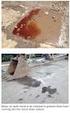 ACTIVITY NAME Training Requirements for Spill Prevention Control and Countermeasures (SPCC) 40 CFR Part 112 Naval Air Station Corpus Christi Texas CY 2014 BOTTOM LINE UP FRONT To prevent oil discharges
Extraction Oil and Gas, LLC. Diamond Valley Central Oil Terminal Waste Management Plan
 Extraction Oil and Gas, LLC. Diamond Valley Central Oil Terminal Waste Management Plan Scope: This Extraction Oil and Gas Waste Management Plan has been prepared to provide operations personnel at the
Chemical Storage and Spill Response Guidelines
 Chemical Storage and Spill Response Guidelines 9TP-SD-066/3.0 Supporting Document Applicable to Transport Projects Delivery Office Quality Management System Status: Approved Version: 3.0 Branch: Business
UCL FIRE RISK ASSESSMENT POLICY& ARRANGEMENTS
 Fire Safety Technical Guide UCL FIRE RISK ASSESSMENT POLICY& ARRANGEMENTS 1.0. BACKGROUND 1.1. The Regulatory Reform (Fire Safety) Order (known Fire Safety Order) applies to England and Wales (Northern
Waste Management Policy
 University of Sussex Waste Management Policy May 2007 1 University of Sussex Waste Management Policy Contents 1. Introduction 2. Policy Statement 3. Policy Objectives 4. Application 5. Organisation and
WORKING IN CONFINED SPACES GUIDELINES
 WORKING IN CONFINED SPACES GUIDELINES Contents 1 Introduction... 2 2 Scope... 2 3 Definitions... 2 4 Responsibilities... 3 4.1 Permit Authoriser... 3 4.2 Permit Receiver... 3 4.3 Responsible UOW Officer...
Proposed (Concrete Cutting And Drilling) Environmental Management Plan
 SAMPLE ENVIRONMENTAL MANAGEMENT PLAN This EMP is designed for (Concrete Cutting and drilling), however you may insert your business activities with only minor changes needed. This EMP should become part
R8000 NEW AIR COMBAT CAPABILITY (NACC) FACILITIES PROJECT, RAAF BASE WILLIAMTOWN
 LEND LEASE BUILDING PTY LIMITED ABN 97 000 098 162 R8000 NEW AIR COMBAT CAPABILITY (NACC) FACILITIES PROJECT, RAAF BASE WILLIAMTOWN HAZARDOUS SUBSTANCES DANGEROUS GOODS MANAGEMENT PLAN 3/12/2015 Revision
APPENDIX O. Spill Prevention and Emergency Response Plan. G3 Terminal Vancouver Port Metro Vancouver Project Permit Application APPENDIX O
 APPENDIX O Spill Prevention and Emergency Response Plan APPENDIX O G3 Terminal Vancouver Port Metro Vancouver Project Permit Application G3 TERMINAL VANCOUVER: PORT METRO VANCOUVER SPILL PREVENTION AND
INCIDENT RESPONSE MANAGEMENT PLAN DECEMBER 2015
 INCIDENT RESPONSE MANAGEMENT PLAN DECEMBER 2015 DOCUMENT CONTROL Document Controller: Resilience Coordinator Date of last update: December 2015 Date of next update: December 2016 HPRM reference: HW2007-900/27/9.009
History of the SPCC Rule
 2010 SPCC Training SPCC Rule History of the SPCC Rule The SPCC plan is a document required under the clean water act (CWA) It became effective in 1972 and has changed little in 32 years. The rule was formally
Construction Management Statement. Residential development at Bywell House, St Mary s Hill, Ascot
 Construction Management Statement Residential development at Bywell House, St Mary s Hill, Ascot Parking of Vehicles of Site Personnel, Operatives and Visitors Site staff, visitors to the development and
Pollution Incident Response Plan (PIRP)
 1.0 Purpose... 2 2.0 Scope... 2 3.0 Responsibilities... 2 4.0 Definitions... 3 5.0 Procedure... 4 6.0 Records... 15 7.0 References... 16 8.0 Revision History... 16 9.0 Review and Approval... 16 10.0 Compliance
Controlling fire and explosion risks in the workplace
 Controlling fire and explosion risks in the workplace A brief guide to the Dangerous Substances and Explosive Atmospheres Regulations Introduction to DSEAR This leaflet provides a brief introduction to
HAZARDOUS MATERIALS MANAGEMENT ISSUE 2
 CONTENTS PAGE 1 AIM 2 2 APPLICATION 2 3 DEFINITIONS 2 4 REASON FOR INCLUSION 2 5 REQUIREMENTS 3 6 PLANT AND EQUIPMENT REQUIREMENTS 3 7 SYSTEM AND PROCEDURAL REQUIREMENTS 5 8 PEOPLE REQUIREMENTS 7 APPENDIX
Environmental Management Systems in Hotels. 15 Steps to the Successful Implementation of an Environmental Management System in a Hotel
 Environmental Management Systems in Hotels 15 Steps to the Successful Implementation of an Environmental Management System in a Hotel 2 15 STEPS 1. Assemble the team 2. Initial Review 3. Environmental
SPILL PREVENTION AND RESPONSE PLAN TEMPLATE FOR BUSINESSES IN DAYTON S SOURCE WATER PROTECTION AREA
 SPILL PREVENTION AND RESPONSE PLAN TEMPLATE FOR BUSINESSES IN DAYTON S SOURCE WATER PROTECTION AREA Regulated Substance Management: All Regulated Substances, including chemical wastes, are to be managed
Social Guidelines: Leasing Machinery and Equipment
 PROCESS DESCRIPTION Environmental product standards Companies in this sector may be leasing a wide range of machinery and equipment. Some of the more commonly leased items include: industrial equipment
Dangerous Goods Safety Guidance Note. Dangerous goods emergency plans for small businesses
 Dangerous Goods Safety Guidance Note Dangerous goods emergency plans for small businesses January 2014 Level 1, 303 Sevenoaks Street (cnr Grose Ave), Cannington WA 6107 Postal address: Mineral House, 100
Pollution Incident Response Management Plan
 Pollution Incident Response Management Plan DOCUMENT CONTROL DOCUMENT DETAILS Title Pollution Incident Response Management Plan Reference Document Status ENV 002 12 Pollution Incident Response Management
SHENZHEN ENVIRONMENTAL PRINTED CIRCUIT BOARD COMPANY. Environmental Procedure
 SHENZHEN ENVIRONMENTAL PRINTED CIRCUIT BOARD COMPANY Environmental Procedure Environmental Emergency Preparedness and Response (EP-05) Revision No. : 1 Prepared by : Jiang Ho (EMR) Approved by : Ma Hung
ALLEGANY WIND POWER PROJECT CONSTRUCTION SPILL PREVENTION PLAN
 ALLEGANY WIND POWER PROJECT CONSTRUCTION SPILL PREVENTION PLAN Best Management Practices (BMPs) will be implemented during construction of the Allegany Wind Power Project to prevent and contain spills.
UDOT SPILL PREVENTION and RESPONSE PLAN for CONSTRUCTION SITES
 UDOT SPILL PREVENTION and RESPONSE PLAN for CONSTRUCTION SITES February 2014 The plan contained in the following pages was developed in part from UDOT Construction Division s Safety and Health Manual,
SPILL RESPONSE PROCEDURE
 SPILL RESPONSE PROCEDURE Queen's University Spill Response Procedure May 2000 1 SOP-HAZMAT-01 1.0 Preamble This document outlines emergency spill response procedures as part of the overall Queen's University
The Control of Major Accident Hazards Regulations (Northern Ireland) 2015
 STATUTORY RULES OF NORTHERN IRELAND 2015 No. 325 HEALTH AND SAFETY The Control of Major Accident Hazards Regulations (Northern Ireland) 2015 Made - - - - 26th August 2015 Coming into operation - 28th September
Rutgers Environmental Health and Safety
 Rutgers Environmental Health and Safety PCB Self-Audit (TSCA Program) Facility Name: Rutgers University, Facility Address: Facility EPA Identification Number: Date of Self-Audit Inspection: Campus/Farm/Field
Syston Dry Cleaners and Laundry Schedule 1 CHARNWOOD BOROUGH COUNCIL POLLUTION PREVENTION AND CONTROL ACT 1999
 CHARNWOOD BOROUGH COUNCIL POLLUTION PREVENTION AND CONTROL ACT 1999 ENVIRONMENTAL PERMITTING (ENGLAND AND WALES) REGULATIONS 2010 (As Amended) PERMIT REF. NO. 123 Charnwood Borough Council hereby permits,
June 2010 HEALTH, SAFETY, AND ENVIRONMENT MANAGEMENT SYSTEM (HSEMS)
 June 2010 HEALTH, SAFETY, AND ENVIRONMENT MANAGEMENT SYSTEM (HSEMS) TABLE OF CONTENTS PAGE PART I INTRODUCTION Corporate Health, Safety and Environment Policy.. 1 Purpose... 2 HSEMS Framework... 3 PART
Pesticide Spills. Chapter 26. In This Chapter. Keywords. Accidents. Pesticides Act and Environmental Protection Act
 Chapter 26 Pesticide Spills In This Chapter Keywords Accidents After learning the information in this chapter, you will be able to: 1. Define a spill. 2. Describe when a spill must be reported to the Spills
WORKPLACE HEALTH AND SAFETY AUDITING GUIDELINES
 WHS UNIT WORKPLACE HEALTH AND SAFETY AUDITING GUIDELINES Contents 1 Purpose... 1 2 Scope... 1 3 Definitions... 1 4 Responsibilities... 1 4.1 WHS Unit... 1 4.2 Auditor(s)... 1 4.3 Managers of Faculties
HP SUPPLIER ENVIRONMENTAL PERFORMANCE REVIEW QUESTIONNAIRE
 Document Number: HP 5951-1746-1 (CIQC STD 0014) Page 1 of 6 I. INTRODUCTION As supply chain management becomes more complex in today's procurement processes, supplier environmental management has become
SAFETY MANAGEMENT SYSTEM FOR MAJOR HAZARD FACILITIES - BOOKLET 3: Part 7.17
 EMERGENCY PLANNING EXTRACTION FROM: SAFETY MANAGEMENT SYSTEM FOR MAJOR HAZARD FACILITIES - BOOKLET 3: Part 7.17 An extraction from: Safety Management System for Major Hazard page 1 of 14 7.17 Emergency
Fire Risk Assessment Safety Checklist
 Fire Risk Assessment Safety Checklist This checklist has been prepared to help you comply with The Regulatory Reform Fire Safety Order 2005 What is the Regulatory Reform (Fire Safety) Order 2005? The Regulatory
STORE HAZARDOUS SUBSTANCES SAFELY. incompatibles gas cylinders
 STORE HAZARDOUS SUBSTANCES SAFELY Suitable containers incompatibles gas cylinders Oxy-Acetylene welding flammable substances 35 36 STORE HAZARDOUS SUBSTANCES SAFELY STORE HAZARDOUS SUBSTANCES SAFELY Storing
Civil Engineering Sector Labour-Management Health and Safety Committee
 PROCEDURE FOR THE STORAGE AND HANDLING OF FUEL ON CONSTRUCTION SITES Civil Engineering Sector Labour-Management Health and Safety Committee July 2008 PROCEDURE FOR THE STORAGE AND HANDLING OF FUEL ON CONSTRUCTION
PPG21. Pollution Prevention Guidelines. pollution incident response planning: PPG 21. 1. Introduction
 PPG21 February 2004 Environmental Alliance working together Pollution Prevention Guidelines pollution incident response planning: PPG 21 These guidance notes have been drawn up to assist those developing
Jonathan Wilson. Sector Manager (Health & Safety)
 Jonathan Wilson Sector Manager (Health & Safety) OHSAS 18001:2007 Making Life Easier For Health & Safety Managers Workshop Agenda 1. Introduction 2. Why Manage Health & Safety 3. OHSAS 18001 and OHSMS
Asbestos Storage Facility Plan Examples
 Asbestos Storage Facility Plan Examples The purpose of this document This document contains examples of what an operational plan, plans and specification, contingency plan and closure plan should look
APPENDIX G Materials Storage and Handling Guidelines
 APPENDIX G Materials Storage and Handling Guidelines 1.0 INTRODUCTION Operations at Austin-Bergstrom International Airport (ABIA) comprise several different industrial activities including aircraft, ground
Environmental Management Plan
 Environmental Management Plan This environmental management plan outlines Red Bus Services objectives and strategies for protecting the environment. This plan sets out how Red Bus Services intends to comply
Emergency planning at a major hazard facility
 Guidance Note Emergency planning Advice for operators of major hazard facilities on developing an emergency plan. April 2011 1. Introduction 1 1.1 Features of a successful emergency plan 1 1.2 Key concepts
SPILL PREVENTION, CONTROL AND COUNTERMEASURE PLAN
 SPILL PREVENTION, CONTROL AND COUNTERMEASURE PLAN XXXX FARM (CITY OR COUNTY), MICHIGAN CONTACT (NAME), OWNER CERTIFICATION: I hereby certify that I have examined the facility, and being familiar with the
Environment Information Sheet 8 Spill Response
 Environment Information Sheet 8 Spill Response Prevention is better than spill response What s the issue with spills? Spills of fuel, oil and / or chemicals pose a significant risk to groundwater at the
WHS CONTRACTOR MANAGEMENT PROCEDURE
 1. Overview The Port Augusta City Council as part of its commitment under its WHS Contractor Management policy, recognises its obligation to: Ensure, so far as is reasonably practicable, the health and
MAGB HEALTH, SAFETY AND ENVIRONMENT GROUP POLLUTION INCIDENT RESPONSE PLAN
 MAGB HEALTH, SAFETY AND ENVIRONMENT GROUP POLLUTION INCIDENT RESPONSE PLAN SCOPE: This guidance sets out best practice for producing a Pollution Incident Response Plan to deal with an environmental incident
1. GENERAL STATEMENT OF COMPANY HEALTH, SAFETY AND ENVIRONMENTAL POLICY
 1. GENERAL STATEMENT OF COMPANY HEALTH, SAFETY AND ENVIRONMENTAL POLICY Dumfries Timber Co. Ltd. is committed to comply with our legal duties in order to provide a safe and healthy working environment
7. Chemical Waste Disposal Procedures
 7. Chemical Waste Disposal Procedures Substances that Can and Cannot be Disposed of via Sink Drains or in Regular Solid Refuse Containers 1. It is prohibited to pour down a sink or floor drain, or place
UNIVERSITY OF WISCONSIN MADISON
 UNIVERSITY OF WISCONSIN MADISON Contractor Spill Contingency Plan (while working on campus) Departments of: Environment, Health & Safety Physical Plant Table of Contents Spill Contingency Plan Most Common
Fire Safety Risk Assessment Checklist for Residential Care Premises
 Checklist for Residential Care Premises Name of Premises: Address of Premises: Name of Responsible Person: What area / location does the assessment cover? Does the assessment cover the whole site YES or
Safety Manual Title: Spill Prevention & Response Review Date: 6/1/2014
 Operation s Purpose The purpose of this plan is to document spill prevention and response requirements. Each Elkhorn Construction, Inc. jobsite will develop a spill prevention and response plan based on
Waste Handling & Disposal
 Objectives Cover Contain Educate Reduce/Minimize Product Substitution Description Improper storage and handling of solid wastes can allow toxic compounds, oils and greases, heavy metals, nutrients, suspended
SAMPLE FRACTION MITIGATION CONTINGENCY PLAN FOR DIRECTIONAL DRILLING
 SAMPLE FRACTION MITIGATION CONTINGENCY PLAN FOR DIRECTIONAL DRILLING 1 TABLE OF CONTENTS 1.0 Introduction and Purpose 3 2.0 Description of Work 3 3.0 Site Supervisor/Foremen Responsibilities 4 4.0 Equipment
Appendix A1. Register of legal and other requirements
 Appendix A1 Register of legal and other requirements 1 Table 1 Legal register Act Activity / General Environmental Planning and Assessment Act 1979 All Comply with the terms Minister for Planning and Infrastructure
c. As mandated by law, facilities must obtain and maintain valid zoning permits as well as permits for intended use.
 Walmart Standards for Suppliers Section 7. Health and Safety 7. Health and Safety Suppliers must provide workers with a safe and healthy work environment. Suppliers must take proactive measures to prevent
Environmental Compliance Report Liquid Chemical Storage, Handling and Spill Management
 Environmental Compliance Report Liquid Chemical Storage, Handling and Spill Management Part B Review of Best Practice and Regulation The Liquid Chemical Storage, Handling and Spill Management Environmental
How To Monitor Safety Management System Performance
 Guidance Note Performance standards and indicators Advice for operators of major hazard facilities on developing meaningful and useful performance standards and indicators for the Safety Management System
GENERAL SPECIFICATION
 R64 - PAVEMENT MARKING August 1996 GENERAL SPECIFICATION G10 CONSTRUCTION ENVIRONMENTAL MANAGEMENT PLAN Date JUNE 2012 Department 1 DOT Spec R64 of Infrastructure, Energy and Resources Index DEPARTMENT
Environmental guidelines for preparation of an Environment Management Plan
 Environmental guidelines for preparation of an Environment Management Plan Environment Protection Authority MAY 2013 Australian Capital Territory, Canberra 2013 This work is copyright. Apart from any use
Contractor Environment, Health and Safety Management Plan
 EHSMS10 Contractor and Supplier EHS Management Contractor Environment, Health and Safety Management Plan Purpose Guidelines Record Keeping This template provides an example to Santos Contractors of the
Sprayed vermiculite ceiling coating management plan, Condell Park High School, Condell Park, NSW
 Sprayed vermiculite ceiling coating management plan, Condell Park High School, Condell Park, NSW August 2006 NSW Department of Commerce Parsons Brinckerhoff Australia Pty Limited ACN 078 004 798 and Parsons
Emergency Response & Incident Management. Port Botany Expansion 29 April 2008
 Emergency Response & Incident Management Port Botany Expansion 29 April 2008 Introduction The purpose of this Emergency Response and Incident Management Plan (ERIMP) is to ensure that well developed and
Newport News Shipbuilding Contractor Environmental, Health and Safety Resource Manual Waste Management
 Newport News Shipbuilding Contractor Environmental, Health and Safety Resource Manual Waste Management Newport News Shipbuilding Page 1 WASTE MANAGEMENT 1. Purpose and Scope a. The purpose of this section
The Use and Application of the Benchmarking Assessment Tool for the Recovery and Recycling of Used Lead Acid Batteries in India
 The Use and Application of the Benchmarking Assessment Tool for the Recovery and Recycling of Used Lead Acid Batteries in India Brian Wilson International Lead Management Center (ILMC) In conjunction with:
Inspect and Test FPAS Units of Competencies descriptions
 Inspect and Test FPAS Units of Competencies descriptions FPAS incorporates the following units of competency across ten (10) categories of inspect and test activities. CPPCMN2002A Participate in workplace
Incident Reporting Requirements
 Incident Reporting Requirements Directive PNG014 February 2016 Revision 1.0 Governing Legislation: Acts: The Oil and Gas Conservation Act The Pipelines Act, 1998 Regulations: The Oil and Gas Conservation
Hazard/Incident Recording, Reporting and Investigation
 Hazard/Incident Recording, Reporting and Investigation Power and Water Corporation Procedure 1 Purpose... 1 2 Scope... 1 3 References... 2 4 Roles and Responsibilities... 2 5 Definitions... 6 6 Records...
JOINT CBA AND SIA GUIDANCE FOR THE STORAGE OF FLAMMABLE LIQUIDS IN SEALED PACKAGES IN SPECIFIED EXTERNAL STORAGE AREAS
 JOINT CBA AND SIA GUIDANCE FOR THE STORAGE OF FLAMMABLE LIQUIDS IN SEALED PACKAGES IN SPECIFIED EXTERNAL STORAGE AREAS 1 JOINT CBA AND SIA GUIDANCE FOR THE STORAGE OF FLAMMABLE LIQUIDS IN SEALED PACKAGES
SAFETY SIGNAGE PROCEDURE
 Page 1 of 10 SAFETY SIGNAGE PROCEDURE 1.0 PURPOSE 1.1 To enable a reference to signage to meet legislative requirements and ensure in cases of emergency appropriate signage is visible. 2.0 SCOPE 2.1 This
Compliance Audit Handbook
 Compliance Audit Handbook This Compliance Audit Handbook has been produced by the Compliance and Assurance Section of the Department of Environment and Conservation NSW (DEC). For technical information