
BIOLÓGIA ANGOL NYELVEN
|
|
|
- Julie Jones
- 9 years ago
- Views:
Transcription
1 É RETTSÉGI VIZSGA október 29. BIOLÓGIA ANGOL NYELVEN KÖZÉPSZINTŰ ÍRÁSBELI VIZSGA október :00 Az írásbeli vizsga időtartama: 120 perc Pótlapok száma Tisztázati Piszkozati OKTATÁSI ÉS KULTURÁLIS MINISZTÉRIUM Biológia angol nyelven középszint írásbeli vizsga 0911

2 Important information Read this information sheet before you start working. You have 120 minutes to complete the intermediate level examination. The following assignments are multiple choice or open-ended questions. When answering multiple choice questions one or more CAPITAL LETTERS should be written into the empty boxes. These are the codes for the right answer(s). Make sure that your letters are unambiguous, because uncertain answers will not be accepted. In case of correction you are asked TO CROSS OUT the wrong letter clearly and TO WRITE THE CODE FOR THE RIGHT ONE BESIDE. A D Correct A D C Acceptable B D Wrong When answering open-ended questions technical terms, short answers of 1-or-2 words, a sentence or several sentences should be created. Take care of GRAMMATICAL CORRECTNESS. Grammatically ambiguous or unintelligible answers (e.g. uncertain subject in a sentence) will not be accepted even if the right answer is included. Every correct answer is awarded by 1 point, only the different point values are shown. Use black or blue ink. Don t write into the grey-coloured boxes. We wish you a good work. írásbeli vizsga / október 29.

3 I. Grouping of living organisms 10 points Put the numbers of the listed organisms in the appropriate circles. Eukaryotes Heterotrophs Fungi Parasites 1. The pork tapeworm lives in mammal s intestines and absorbs nutrients from there. 2. The red-footed falcon mostly feeds on insects. 3. The pathogenic agent of leprosy is a very small bacterium. 4. The green leaf-carpet of the aquatic fern named floating watermoss sometimes covers the surface of stagnant waters. 5. The number of oil-digesting bacteria quickly increases in the polluted water after oil tanker disasters. 6. In the presence of moisture the different species of Penicillum (mould) break down fats into ketones, which is responsible for the rancid taste of fats. 7. The hyphae of Peronospore destroy many crops every year. 8. Our highly protected plant rarity, the Hungarian saffron (crocus) was represented on the 2-forints coin. In mild winters, this plant is already green and bursts into bloom in January. 9. The bacterium species Bacillus macerans produces the mixture of alcohol and acetone on a carbohydrate medium. 10. The Sunda tiger is on the verge of extinction, because its habitat decreases. pork tapeworm = horgasfejű galandféreg floating watermoss = rucaöröm Hungarian saffron = magyar kikerics red-footed falcon = kékvércse Penicillum = ecsetpenész total írásbeli vizsga / október 29.

4 II. The vertical layering of a rain forest 11 points The figure shows five canopy layers of a rain forest. Graphs on the right-hand side represent the changes of three typical environmental factors: the continuous line refers to light intensity (100% represents the light that reaches the crown of the giant trees), the broken line shows relative humidity and the dotted line shows the degree of transpiration of leaves per unit of time (100% equals to the transpiration of top leaves of the giant trees) lombkorona canopy layers szintek light fényerősség intensity m levelek párologtatása leaf transpiration 24 m 18 m 12 m relatív relative páratartalom humidity 6 m Fill the empty cells of the table on the basis of the graph. (3 points) % height (m) degree of leaf transpiration (%) (1.) (2).. 12 (3) On the basis of the graph, what relationship can you recognise between leaf transpiration and the relative humidity of air? Explain the relationship. (2 points).. 5. Most of the decomposers and parasites live in the first canopy layer or below it. Which environmental factor can explain this fact and how? (2 points) írásbeli vizsga / október 29.

5 6. The epiphytic (tree-dwelling) but not parasitic species of bromeliads and orchids are common in the fourth canopy layer. Structure of their leaves often resembles that of the desert plants. Which environmental factors can explain this similarity? What are the possible structural adaptations of a leaf to these environmental factors? (3 points) 7. One of the outcomes of deforestation in tropical rain forests is the seriously damaged water-balance of the affected area. On the grounds of the graph, explain why the area dries out in the lack of vegetation total III. A harmless heraldic animal 8 points The Rosalia longicorn* is perhaps the most beautiful representative of the Longicorn family in Hungary. In contrast to its Hungarian name ( Alpine ) it also occurs in our medium mountains. The adult Rosalia longicorn is a large, 16 to 38 mm long insect. The antennae can be up to twice as long as the rest of the body in males. The adults are active from June to August, mainly in beech forests. It is not easy to notice its colours in its natural habitat, e.g. on the grey bark of the European beech. Imagos** survive only for several weeks, during this time the fertilised females lay their eggs into the cracks in the bark of a dead beech. The hatching larvae chew themselves into the wood, digging tunnels in it while feeding on wood. The larva stage lasts for about 3 years. Although they have many natural enemies (woodpeckers for instance) human activity has been the major reason for the decreasing population. Most of the dead wood is usually removed from our forests, thus reducing the habitat of longicorns. This is why the females of this species have to lay their eggs into the lumbered and temporarily stored timber in the forest. The larvae hatched there usually finish their short lives in a sawmill or a stove. The Rosalia longicorn is a rare and endangered species in many European countries, a protected species in Hungary and the heraldic (symbolic) animal of the Duna-Ipoly National Park. *Rosalia longicorn= havasi cincér **imago=adult insect Locsmándi Csaba írásbeli vizsga / október 29.

6 1. Which characteristic represented on the photo helps us to identify this animal as an Insect?.. The text above describes this less than 4 cm long insect as large. Besides other reasons, insects cannot grow a meter long due to their respiratory mechanism. 2. Which type of respiration is typical of insects? Put the letter of the correct answer in the empty box. A. Respiration through the integumentum B. Respiration with lungs that originate from the integumentum C. Respiration by means of tracheae D. Respiration with lungs that originate from the pharynx E. Respiration by means of gills 3. Which statement is true for this type of respiration? A. The respiration is carried out through the body surface. B. The respiratory system carries respiratory gases almost to the cells. C. There is no ventilation movement. D. The respiratory surface area is not larger than the animal s body surface. E. The respiratory organ has rich blood supply. 4. Considering its nutrition, what role does the larva of Rosalia longicorn play in the ecosystem of a beech forest? A. Parasite B. Producer C. Primary consumer D. Secondary consumer E. Saprophyte According to the excerpt, it is not easy to notice the animal s colours in its natural habitat. 5. Name this phenomenon In which months is protection of the Rosalia longicorn s habitat important? A. From December to February B. From June to August C. From June until the first frosty days D. From March to June E. All year round 7. Explain your answer by a citation from the text... írásbeli vizsga / október 29.

7 8. How can Rosalia longicorn be protected the most efficiently? A. To protect the imagos. B. To eliminate their natural enemies. C. To maintain natural forests: dead wood must not be removed from the forest. D. New forests must be planted in the place of forests that have been cut. E. The cut wood must be left in the forest for several months total IV. The Pasteur effect 10 points The French bacteriologist, Louis Pasteur investigated such yeast species that were able to reproduce both in the presence and in the lack of oxygen. When glucose was given as nutrient to them the breakdown of glucose happened at quite different rate in oxygen than without it in a N 2 atmosphere. The results are represented in the following simplified graph. A glükózbontás sebessége Rate of glucose breakdown in N 2 atmosphere in O 2 -rich atmosphere in N 2 atmosphere time What conclusions can you draw from the result of this experiment? Put a letter T in the empty cell after a true statement and a letter F after a false one. 1. The fungi increased the breakdown of glucose in the lack of oxygen compared to the breakdown in oxygen-rich environment. 2. In the lack of oxygen the fungi probably require more energy, ATP. 3. In the lack of oxygen no ATP could be produced in the mitochondria of the fungi. 4. The fungi greatly reduced their life-functions in the presence of oxygen. 5. In the lack of oxygen fungi probably produced energy by fermentation. 6. In oxygen-rich atmosphere fungi show autotrophic way of life, while in the lack of oxygen they behave as heterotrophs. 7. When no oxygen was available fungi used nitrogen as energy source. írásbeli vizsga / október 29.

8 8. Let us suppose that the total amount of the utilized glucose was used for energy production by the fungi. In a oxygen-free atmosphere which molecules could the carbon atoms of glucose get into?. 9. In O 2 -rich atmosphere which molecules could the hydrogen atoms of glucose get into?. 10. By using a microscope we can easily identify them as unicellular fungi, not as bacteria. Name one characteristic that helps you distinguish between these two groups of living organisms total V. Medicine through a straw 11 points If the stomach cannot produce enough gastric juice pepsin, the only digestive enzyme of stomach, can be replaced with a medicine. 1. What nutrients does pepsin digest? Write the letter for the correct answer in the empty box. A. Carbohydrates B. Fats C. Proteins D. Starch E. Lipids 2. The breaking of which bonds does pepsin catalyse? A. The bonds between sugar molecules B. The bonds between nucleotides C. Hydrogen bonds D. Peptide bonds E. The bonds of glycerol 3. Which group of molecules does pepsin belong to? A. Carbohydrates B. Fats C. Proteins D. Starch E. Lipids írásbeli vizsga / október 29.

9 4. The other component of this medicine is hydrochloric acid. Why is hydrochloric acid given with pepsin? A. Because hydrochloric acid protects the mucous membrane of the stomach. B. Because pepsin s activity is the best in an acidic environment. C. Because the ph of hydrochloric acid is identical to the ph of the entire digestive canal. D. Because hydrochloric acid digests carbohydrates. E. Because the ph optimum of every enzyme is acidic. 5. Besides the effect mentioned in the previous question, hydrochloric acid destroys most proteins (coagulation). Outline in a sentence what happens to proteins during this process. 6. The combination of pepsin and hydrochloric acid is suggested to be taken through a straw in order to protect teeth. Outline in a sentence why the contact between the medicine and teeth is harmful to teeth. The partially digested food gets into the duodenum from the stomach. 7. Write the name and the code (letter) of the two glands shown on this figure producing digestive juices that are released into the section below the stomach. stomach.. 8. Write the letter of the gland in the box that produces a juice able to digest all kinds of nutrients. 9. The described process is regulated by the autonomic (vegetative) nervous system. What is the general name of the effect that stimulates this process?. 10. Gland C produces a slightly alkaline juice. Its activity is controlled by a hormone, which is released from the wall of the duodenum when food and gastric juice are present. Does this hormone stimulate or inhibit the work of gland C? Explain your answer total írásbeli vizsga / október 29.

10 VI. Protective blood groups 12 points The first and best-known blood group system was the AB0 system. Landsteiner, the Viennese scientist discovered it in 1900 and he gave the names still widely used: A, B, AB and 0. How could these blood groups develop if they are invisible and neutral? Is it a mere accident that Native Americans landed only with blood group 0? Now we do know that blood groups are not as neutral as they seem to be. There must be a reason for this. In the late 1980s scientist discovered that people with blood group 0 are more susceptible to cholera infections. People with blood group AB are the most resistant, followed by blood group A and then by blood group B. All of these blood groups show much greater resistance than blood group 0. Resistance of blood group AB is so strong that they are practically immune to cholera. We cannot state that these people could drink safely from a sewer in Calcutta, but they were free from diarrhoea even if the pathogenic Vibrio bacterium infected them and dwelt in their stomach. Matt Ridley Based on the above-mentioned fact a question arises: Why don t all people have blood group AB if it is so favourable? 1. On the basis of your former studies in genetics, write the genotype of a person with blood group AB by using the usual (learnt) symbols Let s suppose that two people with blood group AB get married. Determine the possible blood groups of their children and the probabilities of these. (2 points) The possible blood groups of their children-to-be: The probabilities of blood groups of their children-to-be: 3. On the basis of these facts, explain why populations consisting of people with blood group AB only cannot develop. írásbeli vizsga / október 29.

11 4. Determine the possible blood groups of the children if the mother has blood group A and is heterozygous for this trait and the father has blood group B and he is also heterozygous. (No mutation happens) (3 points) Genotypes of parents Genotype of mother:.. Genotype of father: Possible blood group genotypes of their children: 5. Put the possible blood groups of the children in order of their resistance to cholera...>.> >.. Fill the gaps in the following text with the appropriate terms. If no other factor influenced the frequency of blood groups, people with blood group 6.. would have higher chance to die of cholera in an infected area than people with other different blood groups. Thus they would leave 7.. offspring and the frequency of 8. blood group allele would decrease from generation to generation within the population. This process is known as 9. natural selection against a blood group allele total írásbeli vizsga / október 29.

12 VII. Skulls human 8 points The figure represents the skulls of a human being and an ape, a gorilla. Study the figure and compare the two skulls. 1. Name the bone whose part is the bony ridge marked A. A C B. 2. Explain the difference between the shapes of part A on the two skulls. A C 3. Name the bone whose part is the structure marked B. gorilla B 4. Explain the characteristic shape of B in humans. 5. Name the bone in which the root of tooth C is embedded. 6. What explains the difference in tooth C between the two skulls? 7. Under the structure A a large opening is found on the skull, the foramen magnum. What is the biological role of this opening?. 8. What is the main difference in the position of foramen magnum between the two skulls? total írásbeli vizsga / október 29.

13 VIII. The menstrual cycle LH A 10 points The attached figure shows the main events of the female sexual cycle. Study the figure and answer the following questions. B C D Abbreviations: LH = Luteinizing hormone FSH = Follicle-stimulating hormone 1. Name the hormones indicated with letter C and D. (2 points) E F C:.. G D:. Days Write the appropriate letters after the statements. Use only one letter in your answer. 2. Production of the ovarian hormones. 3. Hormone production of the pituitary gland. 4. Changes of the endometrium (=mucous membrane in uterus). 5. This structure produces hormone D. 6. Ovulation. 7. During this period sexual life is not suggested due to hygienic reasons. 8. Name the event of this cycle which is usually followed by a 0.5 ºC rise in body temperature (in a healthy woman) Decide how old the woman whose body functions are represented on the studied figure can be and in what physiological state she is. A. an 8-year-old girl B. a 25-year-old non-pregnant woman C. a 25-year-old pregnant woman D. a 65-year-old woman E. it may represent the body-functions of any woman total írásbeli vizsga / október 29.

14 írásbeli vizsga / október 29.

15 írásbeli vizsga / október 29.

16 Total score Achieved score I. Grouping of living organisms 10 II. The vertical layering of rain forests 11 III. A harmless heraldic animal 8 IV. The Pasteur effect 10 V. Medicine through a straw 11 VI. Protective blood groups 12 VII. Skulls 8 VIII. The menstrual cycle 10 Total 80 Score for the written exam (achieved score 1.25) = 100 correcting teacher Date: Assignments (score for the written exam) /Feladatsor (az írásbeli vizsgarész pontszáma) achieved score/ elért pontszám score written into program/ programba beírt pontszám correcting teacher/javító tanár Registrar of the Board of Examiners /jegyző Date/ Dátum: Date/Dátum: írásbeli vizsga / október 29.

1. The diagram below represents a biological process
 1. The diagram below represents a biological process 5. The chart below indicates the elements contained in four different molecules and the number of atoms of each element in those molecules. Which set
Additional Science. Biology BL2FP. (Jun15BL2FP01) General Certificate of Secondary Education Foundation Tier June 2015.
 Centre Number Surname Candidate Number For Examiner s Use Other Names Candidate Signature Examiner s Initials Question Mark Additional Science Unit Biology B2 Biology Unit Biology B2 General Certificate
Topic 3: Nutrition, Photosynthesis, and Respiration
 1. Base your answer to the following question on the chemical reaction represented below and on your knowledge of biology. If this reaction takes place in an organism that requires sunlight to produce
Unit 5 Photosynthesis and Cellular Respiration
 Unit 5 Photosynthesis and Cellular Respiration Advanced Concepts What is the abbreviated name of this molecule? What is its purpose? What are the three parts of this molecule? Label each part with the
BIOLÓGIA ANGOL NYELVEN BIOLOGY
 Biológia angol nyelven középszint 0612 ÉRETTSÉGI VIZSGA 2007. május 17. BIOLÓGIA ANGOL NYELVEN BIOLOGY KÖZÉPSZINTŰ ÍRÁSBELI ÉRETTSÉGI VIZSGA INTERMEDIATE LEVEL WRITTEN EXAM JAVÍTÁSI-ÉRTÉKELÉSI ÚTMUTATÓ
Get It Right. Answers. Chapter 1: The Science of Life. A biologist studies all living things.
 Discover Biology 'N' Level Science Chapter 1 Chapter 1: The Science of Life A biologist studies all living things. In order to carry out the scientific method, we need to ask questions. Discover Biology
Which of the following can be determined based on this model? The atmosphere is the only reservoir on Earth that can store carbon in any form. A.
 Earth s Cycles 1. Models are often used to explain scientific knowledge or experimental results. A model of the carbon cycle is shown below. Which of the following can be determined based on this model?
Chapter 2. The Chemistry of Life Worksheets
 Chapter 2 The Chemistry of Life Worksheets (Opening image courtesy of David Iberri, http://en.wikipedia.org/wiki/file:camkii.png, and under the Creative Commons license CC-BY-SA 3.0.) Lesson 2.1: Matter
Endocrine System: Practice Questions #1
 Endocrine System: Practice Questions #1 1. Removing part of gland D would most likely result in A. a decrease in the secretions of other glands B. a decrease in the blood calcium level C. an increase in
B2 Revision. Subject Module Date Biology B2 13 TH May (am)
 B2 Revision Subject Module Date Biology B2 13 TH May (am) Useful websites www.aqa.org.uk This website contains the specifications that we follow and also has a large number of past papers and mark schemes
The chemical reactions inside cells are controlled by enzymes. Cells may be specialised to carry out a particular function.
 12.1 What are animals and plants built from? All living things are made up of cells. The structures of different types of cells are related to their functions. to relate the structure of different types
MCAS Biology. Review Packet
 MCAS Biology Review Packet 1 Name Class Date 1. Define organic. THE CHEMISTRY OF LIFE 2. All living things are made up of 6 essential elements: SPONCH. Name the six elements of life. S N P C O H 3. Elements
10.1 The function of Digestion pg. 402
 10.1 The function of Digestion pg. 402 Macromolecules and Living Systems The body is made up of more than 60 % water. The water is found in the cells cytoplasm, the interstitial fluid and the blood (5
Question Bank Five Kingdom Classification
 Question Bank Five Kingdom Classification 1. Who proposed Five Kingdom Classification? Give the bases of classification. Ans. Whittaker in 1969 proposed five kingdom classification based on :- (i) Cell
Digestive System Notes
 Digestive System Notes Structure Function Relation Mouth cavity Mechanical digestion by teeth; chemical digestion of starch by saliva. Salivary glands Three pairs of glands which secrete saliva containing
Enzymes: Practice Questions #1
 Enzymes: Practice Questions #1 1. Compound X increases the rate of the reaction below. Compound X is most likely A. an enzyme B. a lipid molecule C. an indicator D. an ADP molecule 2. The equation below
PHOTOSYNTHESIS AND CELLULAR RESPIRATION
 reflect Wind turbines shown in the photo on the right are large structures with blades that move in response to air movement. When the wind blows, the blades rotate. This motion generates energy that is
Keystone Review Practice Test Module A Cells and Cell Processes. 1. Which characteristic is shared by all prokaryotes and eukaryotes?
 Keystone Review Practice Test Module A Cells and Cell Processes 1. Which characteristic is shared by all prokaryotes and eukaryotes? a. Ability to store hereditary information b. Use of organelles to control
2. Which type of macromolecule contains high-energy bonds and is used for long-term energy storage?
 Energy Transport Study Island 1. During the process of photosynthesis, plants use energy from the Sun to convert carbon dioxide and water into glucose and oxygen. These products are, in turn, used by the
Cellular Energy. 1. Photosynthesis is carried out by which of the following?
 Cellular Energy 1. Photosynthesis is carried out by which of the following? A. plants, but not animals B. animals, but not plants C. bacteria, but neither animals nor plants D. all living organisms 2.
The content assessed by the examination papers and the type of questions are unchanged.
 www.xtremepapers.com Location Entry Codes From the June 2007 session, as part of CIE s continual commitment to maintaining best practice in assessment, CIE has begun to use different variants of some question
BIOLÓGIA ANGOL NYELVEN
 Biológia angol nyelven középszint 1121 ÉRETTSÉGI VIZSGA 2014. május 14. BIOLÓGIA ANGOL NYELVEN KÖZÉPSZINTŰ ÍRÁSBELI ÉRETTSÉGI VIZSGA JAVÍTÁSI-ÉRTÉKELÉSI ÚTMUTATÓ EMBERI ERŐFORRÁSOK MINISZTÉRIUMA Instructions
2. What kind of energy is stored in food? A. chemical energy B. heat energy C. kinetic energy D. light energy
 Assessment Bank Matter and Energy in Living Things SC.8.L.18.4 1. What is energy? A. anything that takes up space B. anything that has mass C. the ability to conduct current D. the ability to do work 2.
Reproductive System & Development: Practice Questions #1
 Reproductive System & Development: Practice Questions #1 1. Which two glands in the diagram produce gametes? A. glands A and B B. glands B and E C. glands C and F D. glands E and F 2. Base your answer
How To Understand The Human Body
 Introduction to Biology and Chemistry Outline I. Introduction to biology A. Definition of biology - Biology is the study of life. B. Characteristics of Life 1. Form and size are characteristic. e.g. A
The Excretory and Digestive Systems
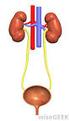 The Excretory and Digestive Systems 38.2 The Process of Digestion Organs of the Digestive System The digestive system includes the: Mouth Pharynx Esophagus Stomach Small and large intestine. Other structures
Tuesday 14 May 2013 Morning
 THIS IS A NEW SPECIFICATION H Tuesday 14 May 2013 Morning GCSE TWENTY FIRST CENTURY SCIENCE BIOLOGY A A161/02 Modules B1 B2 B3 (Higher Tier) *A137150613* Candidates answer on the Question Paper. A calculator
Topic 4: Digestion and Nutrition
 Topic 4: Digestion and Nutrition THE CONTENTS OF FOOD Food contains nutrients: Nutrients include: 1. 2. 3. 4. 5. Nutrients must be small enough to enter our cells. If they are too large they must be digested
Photo Cell Resp Practice. A. ATP B. oxygen C. DNA D. water. The following equation represents the process of photosynthesis in green plants.
 Name: ate: 1. Which molecule supplies the energy for cellular functions?. TP. oxygen. N. water 2. Photosynthesis The following equation represents the process of photosynthesis in green plants. What happens
tissues are made of cells that work together, organs are )
 Study Guide Cells Unit Test Matching. Write the letter of the correct response on the line. You may use the responses more than once. A. proteins B. simple carbohydrates C. complex carbohydrates D. lipids
FOR TEACHERS ONLY. The University of the State of New York REGENTS HIGH SCHOOL EXAMINATION LIVING ENVIRONMENT
 LE FOR TEACHERS ONLY The University of the State of New York REGENTS HIGH SCHOOL EXAMINATION LIVING ENVIRONMENT Thursday, January 29, 2004 9:15 a.m. to 12:15 p.m., only SCORING KEY AND RATING GUIDE Directions
B2 1 Cells, Tissues and Organs
 B2 Cells, Tissues and Organs 5 minutes 5 marks Page of 7 Q. The diagram shows a bacterium. On the drawing, name the structures labelled A, B, C and D. (Total 4 marks) Q2. (a) The diagrams show cells containing
Cells, tissues and organs
 Chapter 8: Cells, tissues and organs Cells: building blocks of life Living things are made of cells. Many of the chemical reactions that keep organisms alive (metabolic functions) take place in cells.
Enzymes. A. a lipid B. a protein C. a carbohydrate D. a mineral
 Enzymes 1. All cells in multicellular organisms contain thousands of different kinds of enzymes that are specialized to catalyze different chemical reactions. Given this information, which of the following
Name Date Period. Keystone Review Enzymes
 Name Date Period Keystone Review Enzymes 1. In order for cells to function properly, the enzymes that they contain must also function properly. What can be inferred using the above information? A. Cells
BIOLOGY HIGHER LEVEL
 2008. M44 Write your Examination Number here Coimisiún na Scrúduithe Stáit State Examinations Commission LEAVING CERTIFICATE EXAMINATION, 2008 BIOLOGY HIGHER LEVEL THURSDAY, 12 JUNE MORNING, 9.30 TO 12.30
Enzymes. Chapter 3. 3.1 Enzymes and catalysts. Vital mistake. What is an enzyme?
 Chapter 3 Enzymes Vital mistake We may not be able to see them, but enzymes are absolutely crucial to the lives of ourselves and all other living organisms. The Quarter Horse (Figure 3.1) is a breed of
Name: Hour: Elements & Macromolecules in Organisms
 Name: Hour: Elements & Macromolecules in Organisms Most common elements in living things are carbon, hydrogen, nitrogen, and oxygen. These four elements constitute about 95% of your body weight. All compounds
pathway that involves taking in heat from the environment at each step. C.
 Study Island Cell Energy Keystone Review 1. Cells obtain energy by either capturing light energy through photosynthesis or by breaking down carbohydrates through cellular respiration. In both photosynthesis
Carbon-organic Compounds
 Elements in Cells The living substance of cells is made up of cytoplasm and the structures within it. About 96% of cytoplasm and its included structures are composed of the elements carbon, hydrogen, oxygen,
Cells are tiny building blocks that make up all living things. Cells are so small that you need a microscope to see them.
 FC01 CELLS s are tiny building blocks that make up all living things. s are so small that you need a microscope to see them. ANIMAL CELL PLANT CELL This is the control centre of the cell. It contains chromosomes
Unit B Understanding Animal Body Systems. Lesson 1 Understanding Animal Digestion
 Unit B Understanding Animal Body Systems Lesson 1 Understanding Animal Digestion 1 Terms Absorption Amino acids Anus Avian Bile Cecum Chyme Crop Cud Digestion Digestive system Enzymes Eructated Feces Gizzard
Chemical Basis of Life Module A Anchor 2
 Chemical Basis of Life Module A Anchor 2 Key Concepts: - Water is a polar molecule. Therefore, it is able to form multiple hydrogen bonds, which account for many of its special properties. - Water s polarity
Pre-requisites: Successful completion of 4th grade science and the 4th grade science assessment.
 Throughout each unit, assessments are incorporated into lessons. These assessments are activities that occur within the context of each lesson providing the guidelines for assessing students' progress.
XII. Biology, Grade 10
 XII. Biology, Grade 10 Grade 10 Biology Pilot Test The spring 2004 Grade 10 MCAS Biology Test was based on learning standards in the Biology content strand of the Massachusetts Science and Technology/Engineering
Investigating cells. Cells are the basic units of living things (this means that all living things are made up of one or more cells).
 SG Biology Summary notes Investigating cells Sub-topic a: Investigating living cells Cells are the basic units of living things (this means that all living things are made up of one or more cells). Cells
Elements & Macromolecules in Organisms
 Name: Date: Per: Table # Elements & Macromolecules in rganisms Most common elements in living things are carbon, hydrogen, nitrogen, and oxygen. These four elements constitute about 95% of your body weight.
Medical Physiology Z.H.Al-Zubaydi
 Lec.13 Medical Physiology Z.H.Al-Zubaydi Functions of the Digestive System The major functions of the digestive tract include the following six processes, summarized in Figure 1: 1. Ingestion Food must
Matter and Energy in Ecosystems
 Matter and Energy in Ecosystems The interactions that take place among biotic and abiotic factors lead to transfers of energy and matter. Every species has a particular role, or niche, in an ecosystem.
Chapter 48. Nutrients in Food. Carbohydrates, Proteins, and Lipids. Carbohydrates, Proteins, and Lipids, continued
 Carbohydrates, Proteins, and Lipids The three nutrients needed by the body in the greatest amounts are carbohydrates, proteins, and lipids. Nutrients in Food All of these nutrients are called organic compounds,
10.2 The Human Digestive System pg. 411
 10.2 The Human Digestive System pg. 411 The human digestive system is made up of a group of organs working together. The digestive tract is made up of the mouth, esophagus, stomach, small intestine, and
Digestive System Why is digestion important? How is food digested? Physical Digestion and Movement
 Digestive System The digestive system is made up of the digestive tract a series of hollow organs joined in a long, twisting tube from the mouth to the anus and other organs that help the body break down
Digestive System Functions
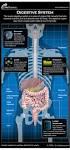 Digestive System Functions A. Gastrointestinal Processes 1. Ingestion: placing food in mouth (voluntary) 2. Propulsion: moving food through GI tract a. Peristalsis: alternating waves of contraction and
REVIEW UNIT 10: ECOLOGY SAMPLE QUESTIONS
 Period Date REVIEW UNIT 10: ECOLOGY SAMPLE QUESTIONS A. Sample Multiple Choice Questions Complete the multiple choice questions to review this unit. 1. All of the following are density-dependent factors
5.1 Ecosystems, Energy, and Nutrients
 CHAPTER 5 ECOSYSTEMS 5.1 Ecosystems, Energy, and Nutrients Did anyone ever ask you the question: Where do you get your energy? Energy enters our world from the Sun but how does the Sun s energy become
Biology [SBI 4U] FINAL EXAMINATION
![Biology [SBI 4U] FINAL EXAMINATION](/thumbs/27/12196629.jpg "Biology [SBI 4U] FINAL EXAMINATION") Biology [SBI 4U] FINAL EXAMINATION Date: November 28, 2012 (Wednesday) Time: 8:30 a.m. 10:30 a.m. Length: 2 hours Lecturer: Ms. Kimberley Gagnon Canadian International Matriculation Programme Student Name:
Biology [SBI 4U] FINAL EXAMINATION Date: November 28, 2012 (Wednesday) Time: 8:30 a.m. 10:30 a.m. Length: 2 hours Lecturer: Ms. Kimberley Gagnon Canadian International Matriculation Programme Student Name:
8.2 - A Local Ecosystem:
 8.2 - A Local Ecosystem: 1. The distribution, diversity and numbers of plants and animals found in ecosystems are determined by biotic and abiotic factors: Distinguish between the abiotic and biotic factors
Chapter 3 Molecules of Cells
 Bio 100 Molecules of cells 1 Chapter 3 Molecules of Cells Compounds containing carbon are called organic compounds Molecules such as methane that are only composed of carbon and hydrogen are called hydrocarbons
reflect look out! organisms: living things
 reflect Imagine that a student in your school fell down and is having difficulty breathing. Sirens wail as an ambulance pulls into the school parking lot. The emergency workers rush over to help the student.
Topic 3.0 Healthy human function depends on a variety of interacting and reacting systems
 Topic 3.0 Healthy human function depends on a variety of interacting and reacting systems Organ Systems Organ systems must have the ability to to changes within and outside of your body to maintain life
Cellular Respiration: Practice Questions #1
 Cellular Respiration: Practice Questions #1 1. Which statement best describes one of the events taking place in the chemical reaction? A. Energy is being stored as a result of aerobic respiration. B. Fermentation
BIOLÓGIA ANGOL NYELVEN BIOLOGY
 Biológia angol nyelven középszint 0521 ÉRETTSÉGI VIZSGA 2006. május 18. BIOLÓGIA ANGOL NYELVEN BIOLOGY KÖZÉPSZINTŰ ÍRÁSBELI ÉRETTSÉGI VIZSGA INTERMEDIATE LEVEL WRITTEN EXAM JAVÍTÁSI-ÉRTÉKELÉSI ÚTMUTATÓ
Essentials of Human Anatomy & Physiology 11 th Edition, 2015 Marieb
 A Correlation of Essentials of Human Anatomy Marieb To the Next Generation Science Standards Life A Correlation of, HS-LS1 From Molecules to Organisms: Structures and Processes HS-LS1-1. Construct an explanation
Plants, like all other living organisms have basic needs: a source of nutrition (food),
 LEARNING FROM LEAVES: A LOOK AT LEAF SIZE Grades 3 6 I. Introduction Plants, like all other living organisms have basic needs: a source of nutrition (food), water, space in which to live, air, and optimal
7. A selectively permeable membrane only allows certain molecules to pass through.
 CHAPTER 2 GETTING IN & OUT OF CELLS PASSIVE TRANSPORT Cell membranes help organisms maintain homeostasis by controlling what substances may enter or leave cells. Some substances can cross the cell membrane
Students will describe the carbon cycle and the journey a carbon atom might take on its way through this cycle after participating in a simulation.
 Pre-Visit Activity #3 The Carbon Cycle Overview Objectives Subjects Earth has a fixed number of carbon atoms which circulate among air, plants, animals, soil, and minerals by way of the carbon cycle. This
Engage: Brainstorming Body Systems. Record the structures and function of each body system in the table below.
 Engage: Brainstorming Body s Record the structures and function of each body system in the table below. Body Nervous Circulatory Excretory Immune Digestive Respiratory Skeletal Muscular Endocrine Integumentary
Determination of Specific Nutrients in Various Foods. Abstract. Humans need to consume food compounds such as carbohydrates, proteins, fats,
 Determination of Specific Nutrients in Various Foods Abstract Humans need to consume food compounds such as carbohydrates, proteins, fats, and vitamins to meet their energy requirements. In this lab, reagents
Process 3.5. A Pour it down the sink. B Pour it back into its original container. C Dispose of it as directed by his teacher.
 Process 3.5 Biology EOI sample test questions Objective numbers correspond to the State Priority Academic Student Skills (PASS) standards and objectives. This number is also referenced with the local objective
Digestive system Review
 Digestive system Review 1. Distinguish between chemical digestion and mechanical digestion. The physical breakdown of food begins in the mouth with two types of processes. The mouth is a complex structure
The Digestive System. You are what you eat!
 The Digestive System You are what you eat! Try to label the diagram (PENCIL!!) What is Digestion? Digestion: the breakdown of large macromolecules (proteins, fats, carbohydrates) into smaller molecules
Introduction to Beneficial Bacteria
 Name Introduction to Beneficial Bacteria Materials 11X17 paper Colored Pencils Markers Magazine Scissors Glue Procedure 1. Using your What is a Microbe? booklet and other handouts, answer the following
Digestive System Lecture 5 Winter 2014
 Digestive System Lecture 5 Winter 2014 This lecture tells the story of the Flow of Matter from Food to Cells. The pictures are only there to help you visualize structures don t worry about names of structures
H.W. 1 Bio 101 Prof. Fournier
 H.W. 1 Bio 101 Prof. Fournier 1. What is a similarity between all bacteria and plants? A) They both have a nucleus B) They are both composed of cells C) They both have chloroplasts D) They both lack a
Living Environment Review Booklet
 Living Environment Review Booklet Instructions to the Students: This booklet contains Regents questions taken from past examinations. They cover the material that you have been working on in your Regents
Cell and Membrane Practice. A. chromosome B. gene C. mitochondrion D. vacuole
 Name: ate: 1. Which structure is outside the nucleus of a cell and contains N?. chromosome. gene. mitochondrion. vacuole 2. potato core was placed in a beaker of water as shown in the figure below. Which
Introduction to Animals
 Introduction to Animals Unity and Diversity of Life Q: What characteristics and traits define animals? 25.1 What is an animal? WHAT I KNOW SAMPLE ANSWER: Animals are different from other living things
nucleus cytoplasm membrane wall A cell is the smallest unit that makes up living and nonliving things.
 1 In nature there are living things and nonliving things. Living things depend on three basic life processes: nutrition, sensitivity and reproduction. Living things are made up of cells. 1. Match the two
Respiration occurs in the mitochondria in cells.
 B3 Question Which process occurs in the mitochondria in cells? Why do the liver and muscle cells have large number of mitochondria? What is the function of the ribosomes? Answer Respiration occurs in the
BIO 137: CHAPTER 1 OBJECTIVES
 BIO 137: CHAPTER 1 OBJECTIVES 1. Define the terms anatomy and physiology, and explain their relationship using an example of a human structure with its corresponding function. A. ANATOMY = the study of
Organic Compounds. Essential Questions: What is Organic? What are the 4 major Organic Compounds? How are they made? What are they used for?
 Organic Compounds Essential Questions: What is Organic? What are the 4 major Organic Compounds? How are they made? What are they used for? Aristotle: Francesco Redi: What do we already know? Spontaneous
NAME: DATE: Home Economics: The parts of the digestive system and their functions. Home Economics
 Home Economics The parts of the digestive system and their functions It is not necessary to carry out all the activities contained in this unit. Please see Teachers Notes for explanations, additional activities,
Anatomy and Physiology of Leaves
 I. Leaf Structure and Anatomy Anatomy and Physiology of Leaves A. Structural Features of the Leaf Question: How do plants respire? Plants must take in CO 2 from the atmosphere in order to photosynthesize.
The animals at higher levels are more competitive, so fewer animals survive. B.
 Energy Flow in Ecosystems 1. The diagram below shows an energy pyramid. Which of the following best explains why the number of organisms at each level decreases while moving up the energy pyramid? The
Unit I: Introduction To Scientific Processes
 Unit I: Introduction To Scientific Processes This unit is an introduction to the scientific process. This unit consists of a laboratory exercise where students go through the QPOE2 process step by step
www.irishseedsavers.ie Natural surface water on earth includes lakes, ponds, streams, rivers, estuaries, seas and oceans.
 www.irishseedsavers.ie POND LIFE FACT SHEET Natural surface water on earth includes lakes, ponds, streams, rivers, estuaries, seas and oceans. A pond is a small body of fresh water shallow enough for sunlight
THE WATER CYCLE. Ecology
 THE WATER CYCLE Water is the most abundant substance in living things. The human body, for example, is composed of about 70% water, and jellyfish are 95% water. Water participates in many important biochemical
Cells & Cell Organelles
 Cells & Cell Organelles The Building Blocks of Life H Biology Types of cells bacteria cells Prokaryote - no organelles Eukaryotes - organelles animal cells plant cells Cell size comparison Animal cell
Practice Questions 1: Evolution
 Practice Questions 1: Evolution 1. Which concept is best illustrated in the flowchart below? A. natural selection B. genetic manipulation C. dynamic equilibrium D. material cycles 2. The diagram below
Rainforest Concern Module 2 Why do we need rainforests?
 Rainforest Concern Module 2 Why do we need rainforests? Rainforest Concern Module 2: Why do we need Rainforest? Before we go any further, there are some words you may not understand, and these words and
7 Answers to end-of-chapter questions
 7 Answers to end-of-chapter questions Multiple choice questions 1 B 2 B 3 A 4 B 5 A 6 D 7 C 8 C 9 B 10 B Structured questions 11 a i Maintenance of a constant internal environment within set limits i Concentration
1. Biodiversity & Distribution of Life
 National 5 Biology Unit 3 Life on Earth Summary notes 1. Biodiversity & Distribution of Life Perhaps the best place to start in this topic is with Biomes. Biomes are regions of our planet which have a
10. T and B cells are types of a. endocrine cells. c. lymphocytes. b. platelets. d. complement cells.
 Virus and Immune System Review Directions: Write your answers on a separate piece of paper. 1. Why does a cut in the skin threaten the body s nonspecific defenses against disease? a. If a cut bleeds, disease-fighting
Multiple Choice Questions
 Chapter 5 THE FUNDAMENTAL UNIT OF LIFE Multiple Choice Questions 1. Which of the following can be made into crystal? (a) A Bacterium (b) An Amoeba (c) A Virus (d) A Sperm 2. A cell will swell up if (a)
Life Science Study Guide. Environment Everything that surrounds and influences (has an effect on) an organism.
 Life Science Study Guide Environment Everything that surrounds and influences (has an effect on) an organism. Organism Any living thing, including plants and animals. Environmental Factor An environmental
Respiration Worksheet. Respiration is the controlled release of energy from food. Types of Respiration. Aerobic Respiration
 Respiration Worksheet Respiration is the controlled release of energy from food The food involved in respiration is usually Internal respiration is controlled by which allow energy to be released in The
Digestion. What we ll cover. Main stages of digestion. Digestion: A Closer Look. A Tour of the Human Digestive System. Mechanical digestion
 Digestion What we ll cover What are the digestive system structures and their functions? Where does carbohydrate, protein and fat digestion and absorption occur? What are the 3 accessory organs of digestion?
Complete tests for CO 2 and H 2 Link observations of acid reactions to species
 Acids and Bases 1. Name common acids and bases found at home and at school 2. Use formulae for common acids and bases 3. Give examples of the uses of acids and bases 4. State that all solutions are acidic,
Carbohydrates, proteins and lipids
 Carbohydrates, proteins and lipids Chapter 3 MACROMOLECULES Macromolecules: polymers with molecular weights >1,000 Functional groups THE FOUR MACROMOLECULES IN LIFE Molecules in living organisms: proteins,