
LESSON PLAN: Macro- and Meso-fauna Extraction
|
|
|
- Lee Strickland
- 9 years ago
- Views:
Transcription

1 LESSON PLAN: Macro- and Meso-fauna Extraction Introduction: S o i l 4 Y o u t h soilweb.landfood.ubc.ca/youth/ 1 There is a lot of life below our feet a single teaspoon of soil can hold over one billion microbes! In this lesson, students use hands-on methods to learn about species richness and diversity in a habitat not commonly explored the belowground ecosystem. Prescribed learning outcomes (PLO) are content standards for the provincial education system; they are the prescribed curriculum. The "Macro- and Meso-Fauna Extraction" lesson plan will help students to achieve the following BC PLOs 1 : Science 10 Life Science: Sustainability of Ecosystems (B1, B3) Biology 11 Taxonomy (B1); Ecology (D1); Animal Biology (G1, G3) Geography 12 Biomes (E1-E4); Resources and Environmental Sustainability (F2) Sustainable Resources 11 Agriculture (A2); Forestry (C2, C3) Sustainable Resources 12 Agriculture (B4, D4); Forestry (B1-B4, E2, E4) Processes of Science (A1-A3); Taxonomy (B1); Ecology (D1); Animal Biology (G1, G4) Biology 11 Processes of Science (A2); Taxonomy (B1); Ecology (D1); Animal Biology (G1, G3) Learning Objectives: Become familiar with the various ecosystem roles played by soil fauna. Define, extract, and quantify soil macro- and meso-fauna. Calculate richness and species diversity to compare the soil biology of different soil types, and then speculate as to why the different soil environments could cause these observations. Materials: Berlese funnel (see notes for construction of these funnels on page 4) Petri dishes Dissecting forceps Dissecting microscope Activity Description: A Berlese funnel is used in soil biology to extract insects from a soil sample. It uses a light source (a light bulb) to repel insects in the sample to the bottom of the funnel, until they fall through a screen and into a jar of preserving alcohol. In this activity, students will work in groups to extract both macro- and meso-fauna, using Berlese funnels, from three different soil types: potting soil, soil from a lawn, and soil from a forested 1 Please consult the appropriate Integrated Resource Package (IRP) to identify the PLOs. A catalogue of the BC Curriculum Documents (including IRPs) can be found here:
2 S o i l 4 Y o u t h soilweb.landfood.ubc.ca/youth/ 2 site. Logistically, it typically works best to assign a group (of 2-4 people) to each soil type. There may be multiple groups for each soil type, depending on class size. Macro-fauna extraction: 1. Collect samples by extracting a 20 cm x 20 cm block of soil, to a depth of 3 cm. In the lawn and forest soils, remove as much of the plant matter and forest floor as possible to make sure you are sampling the top of the mineral soil. 2. Place sample in a labelled plastic container. 3. Hand-sort the samples, removing any visible macro-fauna (>1 cm in body size) with dissecting forceps. 4. Place the macro-fauna in petri dishes and identify using the ID Info provided on page 3. May choose to use a dissecting microscope here. 5. Count and record the number of individuals of each group present in each sample. Meso-fauna extraction: 1. Using a trowel, remove a 5 cm x 5 cm square of soil to a depth of 3 cm. In the lawn and forest soil, be sure to include the plant matter and or forest floor as well as 3 cm of the mineral soil. 2. Set-up Berlese funnels, placing an empty jar below the funnel to start. 3. Place the litter sample on top of the screen. Gently shake and tap funnel so that any loose soil falls through. Place any fallen soil back into the funnel. 4. Replace the empty jar with jar of alcohol. Turn on light over top of funnel and let sit for 7 days in a place where it will not be disturbed. 5. Etch a 1 cm x 1 cm grid onto the bottom of 4 petri dishes. Transfer an equal portion of the extraction liquid (the alcohol solution) to each petri dish (be sure to rinse the jar to ensure everything is transferred). 6. Using a dissecting microscope, observe the contents of each dish, using the grid on the dish to systematically work through the entire space. 7. Record any observations and add to the tally of individuals from the macro-fauna extraction. Once all the organisms have been identified and counted, have students enter their data into a table set up in the following way: Sample: Forest Organism Group Abundance Proportion (p i ) -p i *ln(p i ) Mites 50 Springtails 30 Isopods 10 Millipedes 9 Ants 1 Totals In this table, students will calculate the following: Richness of organism groups: - equal to the sum of all organism groups
3 S o i l 4 Y o u t h soilweb.landfood.ubc.ca/youth/ 3 Organism group diversity (H ), using the Shannon Index: Let p i = the proportion of all observed organism groups H = - [p i *ln(p i )] **Note: Higher index value = more diverse community Following calculations, the table should look like this: Sample: Forest Organism Group Abundance Proportion (p i ) -p i *ln(p i ) Mites Springtails Isopods Millipedes Ants Totals 5 (richness) (H ) At this point, have the entire class share their final results with each other and then compare the results for each of the soil types analyzed. Either as an in-class discussion or as a written lab report, have students discuss the following: What important roles do invertebrate macro- and meso-fauna play in the soil ecosystem? Why would we be interested in the a) richness and b) diversity of organism groups in the soil? Which of the three soil types had the most richness/abundance/diversity? Which soil had the least? Based on your own critical thinking, what are some possible reasons for these observations? Background on Soil Macro- and Meso-fauna: Soil macrofauna are typically classified as the invertebrates in the soil with a body length >1 cm. Their main functions involve burrowing and mixing the soil. Some of them also play a large role in the breakdown of organic matter at the surface (a.k.a. surface litter). Examples: earthworms, millipedes, centipedes, ants, Coleoptera (adults and larvae), Isopoda, spiders, slugs, snails, termites, Dermaptera, Lepidoptera larvae, and Diptera larvae. Soil mesofauna are of a body length between 1 cm and 1 pm; anything smaller is microfauna! They are largely responsible for fragmenting debris and contributing to good soil structure. Examples: mites, springtails, tardigrades, Enchytraeidae, and Pauropods. Macro- and meso-faunal mostly live in the litter or in the upper few centimeters of the soil because this is where most of the food is. Food comes to these organisms as organic matter and/or other organisms. Some of the many functions affected by soil organisms include: decomposition, nutrient availability/cycling, carbon sequestration, degradation of pollutants, plant protection (through predation of pests), and soil aeration. Biodiversity of soil organisms is essential for maintaining these ecosystem functions. Low biodiversity can leave an ecosystem susceptible to extreme events in the environment; high biodiversity in a community can make an ecosystem more resilient in the face of disturbance. There are more living individual organisms in a tablespoon of soil than there are people on the earth!
4 Photo: Silversyrpher S o i l 4 Y o u t h soilweb.landfood.ubc.ca/youth/ 4 ID Info: If students have access to laptops or computers, it can be very effective for them to look up images for organism ID on their own. Compiling photos and brief descriptions of these organisms can actually be assigned to students, in groups, as part of the preparation for this activity. Here is a list of commonly found invertebrate fauna in B.C. s forest soils, which can be given to students as a minimum list of organisms that require photos and brief descriptions: Diploda (millipedes) Chilopoda (centipedes) Isopoda (woodlice) Psocoptera (bark lice) Pauropoda Symphyla Diplura Collembolan (springtails) Tardigrada (water bears) Rotifera Protura Insect larvae Araneida (spiders) Pseudoscorpionida Acari (mites) Nematoda (roundworms) Enchytraeids (pot worms) Annelida: Lumbricidae (earthworms) Coleoptera (beetles) Hemiptera (true bugs) Homoptera (aphids, psyllids) Diptera (flies) Isoptera (termites) Hymenoptera (bees, wasps, ants) Gastropoda (slugs, snails) Thysanura (bristletails) -Insecta -3 pair legs, mm long -no wings -usually elongate and flattened -long antennae -has a long central tail that is longer than two shorter tails Example above: Thysanura Some very basic sketches for a more limited list of the major types of soil fauna in B.C. can also be found here (see Fig. 2.3): How to make your own Berlese Funnel:
5 Photo: Brian Gratwicke Figure 9. A home-made Berlese funnel. S o i l 4 Y o u t h soilweb.landfood.ubc.ca/youth/ 5 Materials: a one-liter plastic milk container an empty glass jar or clear plastic container a mesh hardware cloth or aluminum window screen masking tape or duct tape rubbing alcohol (ethyl alcohol) 25 Watt light bulb (suggest a gooseneck lamp) Instructions: Cut the bottom out of the milk jug and turn it upside down over the Mason jar to make a funnel. Bend down the corners of the hardware cloth/window screen so it fits snugly inside the wide end of the funnel. Layering with two levels of the mesh/screen, one at the wide end and one at the spout, is most ideal. Collect several handfuls of humus or leaf litter and put them on top of the wire mesh. Pour ml of alcohol into the jar. Place the funnel on top of the jar and tape the funnel to the jar to secure it. Set the light directly over the funnel.
There s no place like home!
 2Discovery Card Teacher Time: 2.5 hours (split into two sessions) Information (suitable for 7-12 year olds) This is an opportunity for children to make their own bug boxes and test the habitat preference
Epigeic terrestrial invertebrates as indicators of environmental changes on a European scale
 ALARM Field Site Network (FSN) Project of Partner UBern within FSN Epigeic terrestrial invertebrates as indicators of environmental changes on a European scale Ground-dwelling terrestrial arthropods represent
Most of the final work preparing the collection will be done at home once you learn preparation techniques in science lab. WHAT IS AN INSECT?
 INSECT COLLECTING INSTRUCTIONS SEVENTH GRADE SCIENCE INSECT PROJECT The first unit that you will study in science in the fall is entomology. This is a study of insects and includes preparing an insect
Total Course Hours. Semester Degree code. ID Course Name Professor Course Content Summary. 90 1 st 11070
 LEA0170 Invertebrate Zoology I Italo Delalibera Junior Characterization and importance of the Porifera, Cnidaria, Platyhelminthes, Nemata, Mollusca, Annelida, Echinodermata phyla and smaller invertebrate
Classification. Living Things. bacteria and blue green algae: (single celled organisms without a nucleus)
 Teacher Discovery Card Classification Information There are millions different kinds plants and animals in the world Each different kind plant and animal is called a species We can group species together
Lesson 1. Objectives: ocus: Subjects:
 Lesson 1 The Web of Life Objectives: 1. Understand the concept of an ecosystem. 2. Understand the interdependence of members of an ecosystem. Subjects: 1. Ecology 2. Language 3. Art MATERIALS: Copies of
THE SCIENCE OF COMPOSTING
 1y THE SCIENCE OF COMPOSTING If moist food scraps are placed in a container and left to sit for a week or two, the end product is likely to be a smelly slop that attracts flies. Given the proper conditions,
FUTURE CHALLENGES OF PROVIDING HIGH-QUALITY WATER - Vol. II - Environmental Impact of Food Production and Consumption - Palaniappa Krishnan
 ENVIRONMENTAL IMPACT OF FOOD PRODUCTION AND CONSUMPTION Palaniappa Krishnan Bioresources Engineering Department, University of Delaware, USA Keywords: Soil organisms, soil fertility, water quality, solar
What is a food chain?
 3 What is a food chain? Learning Intention Understand that plants and animals in a habitat are dependent on each other. National Curriculum Skills Science Interdependence of living organisms in those 2
Factors that Affect the Make-up of Soil Invertebrate Community
 ESSAI Volume 8 Article 22 4-1-2011 Factors that Affect the Make-up of Soil Invertebrate Community Tim Kamin College of DuPage Follow this and additional works at: http://dc.cod.edu/essai Recommended Citation
Rain Forests. America's. Web of Life. Rain Forest Ecology. Prince William Network's OVERVIEW OBJECTIVES SUBJECTS
 Rain Forest Ecology National Science Education Standards Standard C: Life Sciences Populations and ecosystems. Standard C: Life Sciences Diversity and adaptation of organisms. Standard F: Science in Personal
How does your heart pump blood in one direction?
 Have a Heart How does your heart pump blood in one direction? Description How does your heart move blood in one direction, around in a loop? In this activity, you will make a model of one of the heart
Insects in the Classroom Lesson Plan No. 101
 University of Kentucky Entomology Insects in the Classroom Lesson Plan No. 101 Flour Beetles Prepared by Caroline Stetter Neel Extension Specialist Activity Description Hands-on Discovery Lab Age Group:
Objectives: Teach children the basic parts and different types of insects. Make fun bug snacks and play games to learn about bugs.
 Objectives: Teach children the basic parts and different types of insects. Make fun bug snacks and play games to learn about bugs. Materials: Insect pictures Word Search (attached) Corrugated cardboard
A Fishy Tale. Observing the Circulatory System of a Goldfish with a Compound Light Microscope
 A Fishy Tale Observing the Circulatory System of a Goldfish with a Compound Light Microscope A Fishy Tale About this Lesson In this lesson, students will explore a computer animation of the human body
Plant Growth - Light and Shade
 Science Unit: Lesson 5: Plants Plant Growth - Light and Shade School year: 2004/2005 Developed for: Developed by: Grade level: Duration of lesson: Notes: Queen Alexandra Elementary School, Vancouver School
The Cricket Lab. Introduction
 The Cricket Lab Introduction Humans have always been fascinated by crickets, mostly because crickets sing. Movie producers add their songs to sound tracks. The Chinese have used them for medicinal purposes,
Lizards in Insect Control
 The Ohio State University Knowledge Bank kb.osu.edu Ohio Journal of Science (Ohio Academy of Science) Ohio Journal of Science: Volume 38, Issue 5 (September, 1938) 1938-09 Lizards in Insect Control Knowlton,
www.irishseedsavers.ie Natural surface water on earth includes lakes, ponds, streams, rivers, estuaries, seas and oceans.
 www.irishseedsavers.ie POND LIFE FACT SHEET Natural surface water on earth includes lakes, ponds, streams, rivers, estuaries, seas and oceans. A pond is a small body of fresh water shallow enough for sunlight
Who Eats What in the Woods?
 Who Eats What in the Woods? Developed with teachers at Tolworth Junior School in Kingston upon Thames in 2000. The webaddress for this activity is; Last updated 26th February 2008 This activity has now
Plant Identification: Using Dichotomous Keys
 Plant Identification: Using Dichotomous Keys Grade Level: 5-12 Subject Area: Biology, Botany, Taxonomy Time: Preparation: 20 minutes Activity: 45-60 minutes Clean-up: 10 minutes Student Performance Standards
Discover Entomology. Discover Entomology. A Science, a Career, a Lifetime. A Science, a Career, a Lifetime
 Discover Entomology A Science, a Career, a Lifetime Discover Entomology A Science, a Career, a Lifetime What is Entomology? Entomology is the study of insects. Entomologists study bees, ants, beetles,
Composting: Biology Curriculum
 Cornell Waste Management Institute cwmi.css.cornell.edu Composting: Biology Curriculum Understanding what composting is and how it works. Table of Contents Goal, Objectives, Keywords, Scientific Concepts...
Earth Systems. atmosphere, geosphere, biosphere, hydrosphere. Made by Liesl at homeschoolden.com
 Earth Systems atmosphere, geosphere, biosphere, hydrosphere You may make as many copies as you need for your homeschool or classroom. Feel free to link to the original post. Feel free to use the image
PRODUCED BY FOR ON BEHALF OF
 The Title role which of soil can biodiversity be fairly in long providing and take ecosystem up quite services a bit of space a and then DECEMBER even 2011 more space etc PRODUCED BY Matthew Colloff, CSIRO
Rainforest Rescuers Overview
 Rainforest Rescuers Overview Rainforest Rescuers takes students into a thriving coastal rainforest to learn about its ecosystem and the delicate balance and interdependence of its flora and fauna. Through
Cell Cycle in Onion Root Tip Cells (IB)
 Cell Cycle in Onion Root Tip Cells (IB) A quick overview of cell division The genetic information of plants, animals and other eukaryotic organisms resides in several (or many) individual DNA molecules,
Unit 4 Lesson 1: A Pest by Any Other Name
 Focus Areas: Pest Control: Biological; Environmental Science, Language Arts Focus Skills: critical thinking, conducting research, observing, graphing, interpreting data Objectives To explore human attitudes
Food Web Crasher. An introduction to food chains and food webs
 Food Web Crasher An introduction to food chains and food webs Activity Students create a physical food web and watch what happens when an aquatic nuisance species is introduced into the ecosystem. Grade
PEST IDENTIFICATION. PMA 4570/6228 Lab 1 July 3 2014
 PEST IDENTIFICATION PMA 4570/6228 Lab 1 July 3 2014 Steps towards a successful IPM program 1. Correct identification 2. Monitoring 3. Economic thresholds 4. Choice of optimum pest control option Pests
ESL (English as a Second Laguage) Bugs Alive! Pre-visit. On-site. Post-visit
 These materials have been designed to be easily downloaded as PDF files and give adult learners the opportunity to be involved in pre-visit, on-site and post-visit activities about this exhibition. Pre-visit
SALEM COMMUNITY COLLEGE Course Syllabus. Course Title: Environmental Science I. Course Code: BIO103. Lecture Hours: 2 Laboratory Hours: 4 Credits: 4
 SALEM COMMUNITY COLLEGE Course Syllabus Course Title: Environmental Science I Course Code: BIO103 Lecture Hours: 2 Laboratory Hours: 4 Credits: 4 Course Description: Environmental Science I is the first
Biodiversity Concepts
 Biodiversity Concepts WHAT IS BIODIVERSITY? Biodiversity is the variety of life on Earth. For any kind of animal or plant each individual is not exactly the same as any other; nor are species or ecosystems.
EXERCISE 7: EFFECT OF SOIL FAUNA ON SOIL STRUCTURE (SO AFFECTING POROSITY AND WATER INFILTRATION)
 52 Soil macrofauna field manual technical level EXERCISE 7: EFFECT OF SOIL FAUNA ON SOIL STRUCTURE (SO AFFECTING POROSITY AND WATER INFILTRATION) Background Under forest, the great production and cycling
Amazing World Under Our Feet
 Crop Science Investigation Workshop Series Lesson Plans Amazing World Under Our Feet Subject: Crop Production Intro to Soil Grade Level(s): 4 th 8 th grades Lesson Title: What is soil and why is soil important?
Connecting Ecosystems & Climate
 Abiotic and Biotic Components The connections and interactions between the abiotic and biotic components of ecosystems and climate are introduced and explored in this lesson. A hands-on sorting activity,
Pond Ecosystem Field Study MOLS
 This multi-week lab involves field studies comparing ecosystem-level ecology between 2 freshwater ponds in Marshfield Outdoor Learning Sanctuary. We will be investigating a correlation between weather
Systemic. Granules. Insect Control. Protects against damaging insects for up to 8 weeks CAUTION. Root Weevils. Birch Leaf Miner.
 Systemic Granules Insect Control Protects against damaging insects for up to 8 weeks Root Weevils Birch Leaf Miner Beetles Internal insect protection won t wash off with rain or water For use outdoors
Rainforest Concern Module 2 Why do we need rainforests?
 Rainforest Concern Module 2 Why do we need rainforests? Rainforest Concern Module 2: Why do we need Rainforest? Before we go any further, there are some words you may not understand, and these words and
The Great Termite Kingdom Written by Eric R Russell & Bruce J Russell. Forest Ecology: Rotting Log The Log of Captain Jonathan Adler.
 MICROSCOPIC MONSTERS: Episode X, The Great Termite Kingdom 1 Accompanies Episode 10 of the 13-part video series The Great Termite Kingdom Written by Eric R Russell & Bruce J Russell In this episode...
Fighting Fire with Fire: Can Fire Positively Impact an Ecosystem?
 Fighting Fire with Fire: Can Fire Positively Impact an Ecosystem? Science Topic: Fire Ecology Grades: 6 th 8 th Essential Questions: What role does fire play in maintaining healthy ecosystems? How does
Your Living Soil. Healthy soil includes:
 Soil Fertility Management Adding livestock manure, either from animals on the farm or purchased nearby, is a common practice on fields in the Midwest. Eventually, that organic material breaks down and
Alaska Forest Pest Control Supplemental Information. Category Twelve
 Alaska Forest Pest Control Supplemental Information Category Twelve In general, applicators who apply pesticides to property other than their own, or act as a pesticide consultant must obtain certification
Lab #10 Invertebrates 2 and Vertebrates 1 (Exercises 39, 40)
 Name Bio 182-General Biology Lab #10 Invertebrates 2 and Vertebrates 1 (Exercises 39, 40) Answer the questions in the space provided. You need to turn this sheet at the end of the lab. In general know
Leaf-Litter Arthropod Community Structure and Abundance in a Recently Burned Montane Longleaf Pine Ridge
 Leaf-Litter Arthropod Community Structure and Abundance in a Recently Burned Montane Longleaf Pine Ridge Amy M. Waananen 1 and Grant L. Gentry 2, Ph.D. 1 St. Olaf College, Northfield, MN 55057; email:
Ecology and Simpson s Diversity Index
 ACTIVITY BRIEF Ecology and Simpson s Diversity Index The science at work Ecologists, such as those working for the Environmental Agency, are interested in species diversity. This is because diversity is
Plant Parts. Background Information
 Purpose The purpose of this lesson is for students to learn the six basic plant parts and their functions. Time Teacher Preparation: 30 minutes Student Activity: 60 minutes Materials For the teacher demonstration:
Lab 7: Social Insects!
 Lab 7: Social Insects! Name: Rationale: In lecture we learned that social insects are some of the most abundant and successful animals on the planet. Honey bees are essential pollinators for many of our
The role of forest biodiversity in the sustainable use of ecosystem goods and services in agriculture, agro-forestry, and forestry
 The role of forest biodiversity in the sustainable use of ecosystem goods and services in agriculture, agro-forestry, and forestry Ian Thompson (et al.) Canadian Forest Service Great lakes Forest Research
Food Chains (and webs) Flow of energy through an ecosystem Grade 5 Austin Carter, Dale Rucker, Allison Hursey
 Food Chains (and webs) Flow of energy through an ecosystem Grade 5 Austin Carter, Dale Rucker, Allison Hursey References: Columbus Public Schools Curriculum Guide- Grade 5 GK-12 Biological Science Lesson
Ecosystems and Food Webs
 Ecosystems and Food Webs How do AIS affect our lakes? Background Information All things on the planet both living and nonliving interact. An Ecosystem is defined as the set of elements, living and nonliving,
GCSE BITESIZE Examinations
 GCSE BITESIZE Examinations General Certificate of Secondary Education AQA SCIENCE A BLY1B Unit Biology B1b (Evolution and Environment) AQA BIOLOGY Unit Biology B1b (Evolution and Environment) FOUNDATION
Ecology 1 Star. 1. Missing from the diagram of this ecosystem are the
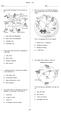 Name: ate: 1. Missing from the diagram of this ecosystem are the 5. ase your answer(s) to the following question(s) on the diagram below and on your knowledge of biology.. biotic factors and decomposers.
Life Science Study Guide. Environment Everything that surrounds and influences (has an effect on) an organism.
 Life Science Study Guide Environment Everything that surrounds and influences (has an effect on) an organism. Organism Any living thing, including plants and animals. Environmental Factor An environmental
3.1 Measuring Biodiversity
 3.1 Measuring Biodiversity Every year, a news headline reads, New species discovered in. For example, in 2006, scientists discovered 36 new species of fish, corals, and shrimp in the warm ocean waters
Biogas. Biology Teams of 2 or 3. Grade 10-12 LEARNING OUTCOMES DESCRIPTION MATERIALS READINESS ACTIVITIES. Science
 Science Grade 10-12 Lab Teams of 2 or 3 DESCRIPTION Biogas is a fuel which is produced from the breakdown of organic matter. Students will have an opportunity to create their own biogas generators. At
A copy of Worksheet 1 at the appropriate level for each pupil. Ask pupils to answer the question 'What is sewerage?'
 Waste Water Treatment 1. Fascinating Facts Aim: To introduce pupils to key facts about waste water Materials: A copy of Worksheet 1 at the appropriate level for each pupil String Method: Ask pupils to
Teaching Time: One 25-minute period. Lesson Summary Students use iron filings to observe the 2 and 3- D field lines around a magnet.
 Lesson Summary Students use iron filings to observe the 2 and 3- D field lines around a magnet. Prior Knowledge & Skills Completed the lesson: The Earth as a Magnet: Exploring Interactions in Geospace
Drilling into Science: A Hands-on Cooperative Learning Oil Exploration Activity designed for Middle School and High School Students
 Drilling into Science: A Hands-on Cooperative Learning Oil Exploration Activity designed for Middle School and High School Students Lauren C. Neitzke 1, Teresa Rousseau 2, and Diane Gavin 2 1. Rutgers
Exhibit Inquiry. Rainforest. Aug 11
 Exhibit Inquiry Exhibit Inquiry Have students look for the following exhibits related to living things during their visit to the Ontario Science Centre: Where to go: (Level 6) What it's about: Tropical
Importance of Wildlife
 Importance of Wildlife The wildlife comprises all living organism (plants, animals, microorganisms) in their natural habitats which are neither cultivated or domesticated nor tamed. But in its strictest
Beech Maple Forest Classroom Unit
 Beech Maple Forest Classroom Unit Theme: Forest Overview What makes up a Michigan forest? Unit Connection: Introductory lesson to Beech Maple Forest Unit (lesson #1) Subject: Science Recommended Grade
Name That Adaptation. Background: Link to the Plan Read Section 5 (Whooping Crane Ecology and Biology) in the Management Plan
 Summary Students will explore structural, physiological, and behavioral adaptations of whooping cranes. Objectives: Students will be able to: Define an adaptation Describe several whooping crane adaptations
LAB 24 Transpiration
 Name: AP Biology Lab 24 LAB 24 Transpiration Objectives: To understand how water moves from roots to leaves in terms of the physical/chemical properties of water and the forces provided by differences
POND INTERACTIONS Teacher Guide February 2011
 Grades: 4, 5, & 6 POND INTERACTIONS Teacher Guide February 2011 Time: 3 hours A pond is an ever-changing environment. The pond ecosystem is made of countless interactions that link living things to one
STUDY GUIDE ECOLOGY. CHAPTER 21: Populations 1. An overview of ecology. Ecology is the study of interactions between organisms and their environment.
 STUDY GUIDE ECOLOGY CHAPTER 21: Populations 1. An overview of ecology. Ecology is the study of interactions between organisms and their environment. 2. A Hierarchy of interactions: cells tissues organs
Importance of forestry reserves to the regulation of water quality and microalgae structure of temporary ponds in Burkina Faso (West Africa)
 Importance of forestry reserves to the regulation of water quality and microalgae structure of temporary ponds in Burkina Faso (West Africa) Bilassé ZONGO, Frédéric ZONGO and Joseph I. BOUSSIM Laboratory
FOOD CHAINS, FOOD WEBS AND ECOLOGICAL PYRAMIDS
 FOOD CHAINS, FOOD WEBS AND ECOLOGICAL PYRAMIDS SECTION 1 In an ecosystem, plants capture the sun's energy and use it to convert inorganic compounds into energy-rich organic compounds. This process of using
Identifying Aquatic Insects From Your Pond
 Identifying Aquatic Insects From Your Pond Penobscot County Soil & Water Conservation District Natural Resources Conservation Service 28 Gilman Plaza, Suite #2 Bangor, ME 04401 Tel: (207) 990-3676 Fax:
ROCKS, FOSSILS AND SOILS SECTION 8: FOSSILS From Hands on Science by Linda Poore, 2003
 ROCKS, FOSSILS AND SOILS SECTION 8: FOSSILS From Hands on Science by Linda Poore, 2003 STANDARDS: Westminster College Students will write or draw descriptions of a sequence of steps, events and observations,
Climate Change: A Local Focus on a Global Issue Newfoundland and Labrador Curriculum Links 2010-2011
 Climate Change: A Local Focus on a Global Issue Newfoundland and Labrador Curriculum Links 2010-2011 HEALTH Kindergarten: Grade 1: Grade 2: Know that litter can spoil the environment. Grade 3: Grade 4:
Insect Record. Date. Observations
 Insect Record Date Observations Investigation 1: Mealworms No. 1 Notebook Master Stages in the Life Cycle of the Darkling Beetle 1. Cut apart the pictures. 2. Glue the pictures in a column in your science
Promoting EcoSystem Services in Grapes
 Management concept for Central European vineyard ecosystems: Promoting EcoSystem Services in Grapes Presented by Ilona Leyer, Geisenheim University SB Viticulture can provide high levels of biodiversity
Section 3: Trophic Structures
 Marine Conservation Science and Policy Service learning Program Trophic Structure refers to the way in which organisms utilize food resources and hence where energy transfer occurs within an ecosystem.
Principles of Ecology
 2 Principles of Ecology section 1 Organisms and Their Relationships Before You Read On the lines below, list the organisms that you have encountered today. You share the same environment with these organisms.
Social Insects. Social Insects. Subsocial 4/11/10. More widespread 13 orders of insects no reproductive division of labor
 Social Insects Sociality evolved multiple times in insects Much of Earth s fauna consists of social insects They play major roles in entire ecosystems Proliferation of ants and termites associated with
INSECT MANAGEMENT (Roberts & McPherson)
 INSECT MANAGEMENT (Roberts & McPherson) A number of insect pests are capable of severely damaging soybeans. However, it is important to realize that soybeans can withstand considerable insect damage at
Process 3.5. A Pour it down the sink. B Pour it back into its original container. C Dispose of it as directed by his teacher.
 Process 3.5 Biology EOI sample test questions Objective numbers correspond to the State Priority Academic Student Skills (PASS) standards and objectives. This number is also referenced with the local objective
Practice Questions 1: Evolution
 Practice Questions 1: Evolution 1. Which concept is best illustrated in the flowchart below? A. natural selection B. genetic manipulation C. dynamic equilibrium D. material cycles 2. The diagram below
This lesson is part of a larger, comprehensive school garden guide called Minnesota School Gardens: A Guide to Gardening and Plant Science developed
 This lesson is part of a larger, comprehensive school garden guide called Minnesota School Gardens: A Guide to Gardening and Plant Science developed by Minnesota Agriculture in the Classroom in 2013. The
Aquatic Organisms and Their Habitats
 Aquatic Organisms and Their Habitats Objectives: Students will understand the following: 1. The presence of specific organisms in a freshwater habitat determines the quality of that habitat. 2. An organism
Tropical Forest Ecosystems
 Unit 2 TROPICAL FOREST ECOSYSTEMS Focus questions What is a tropical rainforest? What roles do arthropods play in the rainforest ecosystem? What are green and brown food webs and how are they connected?
Attracting Beneficial Insects with Native Flowering Plants
 Extension Bulletin E-2973 New January 2007 Attracting Beneficial Insects with Native Flowering Plants Anna Fiedler, Julianna Tuell, Rufus Isaacs, and Doug Landis Department of Entomology, Michigan State
The content assessed by the examination papers and the type of questions are unchanged.
 www.xtremepapers.com Location Entry Codes From the June 2007 session, as part of CIE s continual commitment to maintaining best practice in assessment, CIE has begun to use different variants of some question
Leavener Lineup. Getting started. How do we use chemical reactions in the kitchen? Hands-on experiment. Year levels 4 5. Curriculum Links.
 rise and Shine: what Makes Bread Rise? Lesson 2 Leavener Lineup Year levels 4 5 Curriculum Links Science Science knowledge helps people to understand the effect of their actions (Yr 4, ACSHE062). Solids,
Invertebrate Comparative Anatomy Lab
 Invertebrate Comparative Anatomy Lab Background: Scientists group animals by their similarities. We will be looking at different phyla of animals today. These animals will have things in common and they
PreSchool Science Activities
 PreSchool Science Activities (http://www.dpeasley.com/peasleburg_academy/pa_preschool_science.htm) Generally speaking, our preschool science is what we see happening. I use the Mudpies to Magnets & More
Bountiful Beetles Lesson Plan
 Bountiful Beetles Lesson Plan Lesson Title: Bountiful Beetles Objectives: Students will identify the life cycle, anatomy and other characteristics of beetles. Students will conduct a simple research using
SOKOINE UNIVERSITY OF AGRICULTURE
 SOKOINE UNIVERSITY OF AGRICULTURE FACULTY OF FORESTRY AND NATURE CONSERVATION CURRICULUM FOR MSc. (MNRSA) DEGREE PROGRAMME May 2009 MASTER OF SCIENCE IN MANAGEMENT OF NATURAL RESOURCES AND SUSTAINABLE
Programmes for schools at The Dorman Museum
 Programmes for schools at The Dorman Museum Making a Mark programmes Where we live and grow up is an important part of our identity. Making a Mark programmes encourage students to understand more about,
1. Which list contains only nonliving things in an environment?
 Grade 3 Standard 2 Unit Test Environment Multiple Choice 1. Which list contains only nonliving things in an environment? A. snails, water, mushrooms B. soil, trees, worms C. sunlight, water, soil D. rocks,
Solutions and Suspensions
 Science Unit: Lesson 11: Matter Solutions and Suspensions School year: 2005/2006 Developed for: Developed by: Grade level: Duration of Lesson McBride Elementary School, Vancouver School District Catriona
INTEGRATED PEST MANAGEMENT
 INTEGRATED PEST MANAGEMENT Definitions Biological Controls -- Use of a pest s natural enemies to control pest population. Conservation and augmentation are the biological control strategies most commonly
Exploring Seed Germination by Brad Williamson
 Exploring Seed Germination by Brad Williamson Background: Seeds are very remarkable. Laying dormant inside the seed is an embryo plant. Packed with the embryo is enough stored chemical energy to power
Biodiversity. http://esa.sdsc.edu/biodiv2.htm http://www.ea.gov.au/biodiversity/publications/series/paper1/ http://www.wri.
 Biodiversity In our first session we will be exploring biological diversity. This is an important concept to begin with. As conservation horticulturists we strive to conserve as much diversity as possible
Grade 10 - Sustainability of Ecosystems - Pre-Assessment. Grade 7 - Interactions Within Ecosystems. Grade 10 - Sustainability of Ecosystems
 Purpose: This document is for grade 10 teachers to use as a pre-assessment for the Sustainability of Ecosystems unit. It assesses students understanding of the of the end of unit knowledge outcomes from
Prairie Food Chains & Webs Producers, Consumers & Decomposers
 Kansas Prairies s, s & Decomposers Science, Life Science, Reading, Math Materials Vocabulary worksheet Food Chain worksheet Overview To explore the organisms found on a prairie and identify the various