
30 August PROC. BIOL. SOC. WASH. 98(3), 1985, pp
|
|
|
- Agatha Merritt
- 9 years ago
- Views:
Transcription
1 30 August 1985 PROC. BIOL. SOC. WASH. 98(3), 1985, pp FRESHWATER SHRIMPS FROM VENEZUELA III: MACROBRACHIUM QUELCHI (DE MAN) AND EURYRHYNCHUS PEMONI, N. SP.; (CRUSTACEA: DECAPODA: PALAEMONIDAE) FROM LA GRAN SABANA Guido Pereira Abstract. Macrobrachium quelchi (De Man), not collected since the original description, is redescribed and the color pattern is given. Euryrhynchus pemoni, new species, the fourth species in the genus, is described. The material comes from La Gran Sabana, a large highland plateau in the southeast Venezuela (6 15'N, 60 rw), in the headwaters of rivers that discharge into the Orinoco River basin. Freshwater palaemonid shrimps represent a large group of crustaceans that inhabit brackish and freshwater habitats throughout the tropics. American species living in brackish water and rivers discharging directly into the sea are, at present, well known (Holthuis 1952; Chace and Hobbs 1969). However, in South America, especially in the Amazon region, there are many tributary streams with almost no connection with the estuarine zone of the main river. Shrimp species from these rivers are not well known, and recent surveys have yielded several new species (Tiefenbacher 1978; Rodriguez 1982; Kensley and Walker 1982; Pereira, in press). Several species of freshwater shrimps from southern Venezuelan rivers are not dependent on saline water for their development (Rodriguez 1981; Pereira 1982). La Gran Sabana, located in this zone, represents an altiplane (1200 m above sea level) consisting of a vast system of creeks and streams (of both black and clear waters) which drain into the Caroni River. This black-water river is one of the main tributaries of the Orinoco River basin. This paper describes two interesting palaemonid shrimps from La Gran Sabana. Macrobrachium quelchi was known only from the original description in 1900 from the the Upper Mazaruni River (Esequibo River basin) Guyana. The other shrimp represents a new species of Euryrhynchus, a fairly homogeneous group of shrimps with an Amazonian distribution (Tieffenbacher 1978). Abbreviations tl and cl are used for total length and carapace length respectively, measured from tip of rostrum to tip of telson, and posterior orbital margin to posterior edge of cephalothorax. MBUCV, Museum of Biology, Central University of Venezuela. USNM, National Museum of Natural History, Smithsonian Institution. Macrobrachium quelchi (De Man) Figs. 1, 2, 3, 4 Palaemon (Macrobrachium) quelchi De Man, 1900:57, pi. 6, figs Material examined. MBUCV (XI-2111) 3 3, 2 9; stream tributary of River Kama. La Gran Sabana, Bolivar State, Venezuela (6 15'N; 60 1'W), 29 Mar 1983,

2 616 PROCEEDINGS OF THE BIOLOGICAL SOCIETY OF WASHINGTON Fig. 1. Macrobrachium quelchi: A, Cephalothorax, lateral view; B, Cephalothorax, detail; C, Scaphocerite; D, Telson; E, Telson, detail; F, First pereiopod; G, Third pereiopod; H, Fifth pereiopod. coll. Guido Pereira and Alfredo PaolUlo; MBUCV (XI-2108) 6 6, 3 2; MBUCV (XI-2112) 3 6; same locality. 27 Mar 1983, coll. Guido Pereira and Alfredo Paolillo. Description. Rostrum straight, apex reaching distal margin of scaphocerite. Upper border bearing 6-8 regularly distributed teeth, first (proximal) always behind posterior limit of orbit. Lower margin with 2-3 teeth (commonly 2). Carapace smooth. Scaphocerite 3 times longer than wide. Abdomen smooth, posteroventral angle of fifth pleuron not acute. Sixth abdominal segment 1.25 times length of fifth, and 0.6 times length of telson. Telson, with 2 pairs of dorsal spines, situated at % and % of its length from base. Posterior margin with acute apex and bearing two pairs of lateral spines, inner pair overreaching median apex, and plumose setae between the inner spines. First pereiopods slender, overreaching scaphocerite by x k of distal carpus. Palm cylindrical, about 1.1 times length of dactyl. Carpus 3.2 times length of palm and 1.2 times length of merus. Second pair of pereiopods subequal in shape and length, major leg with distal part of merus reaching anterior border of scaphocerite. Fingers short and strong, gaping when closed; both fingers with conspicuous teeth. Dactyl with a strong tooth at distal third and row of 3-4 small teeth on proximal third. Fixed finger with strong tooth at midlength and row of 3-4 small teeth behind. Fingers without tubercles. Palm cylindrical, 3.5 times longer than high, about 1.8 times length of dactyl,

3 VOLUME 98, NUMBER Fig. 2. Macrobrachium quelchi: A, Second pereiopod (5x); B, Second pereiopod, detail (10*). with numerous longitudinal rows of short spines, those on lower surfaces longer. Carpus 0.75 times length of palm and 1.2 times length of merus, spinulation pattern as in palm. Ischium with only few ventral spines. Third pair of pereiopods with dactyl reaching distal border of scaphocerite. Propodus about 3.2 times length of dactyl and 1.75 times length of carpus, with longitudinal row of spines on inner margin. Fifth pair of pereiopods with dactyl reaching border of scaphocerite. Propodus about 4.4 times length of dactyl and 1.7 times length of carpus, with longitudinal row of spines on inner margin. Size. The largest male measures 52.7 mm tl and 15 mm cl. Females smaller than male. Fecundity. One ovigerous female, 50 mm tl and 13 mm cl with 15 oval eggs (2.5 mm largest diameter). Color. Adult males with a background pale green color, with non-uniform dark green spots scattered around the body in no definite pattern. Pereiopods 3-5 pale green, with 6-7 dark green horizontal stripes, 1 on ischium, 2-3 on merus Fig. 3. Macrobrachium quelchi: lateral view (1.5*).

4 618 PROCEEDINGS OF THE BIOLOGICAL SOCIETY OF WASHINGTON Fig. 4. Macrobrachium quelchi: dorsal view (1.5 x). and 3 on carpus. Second pair of legs, generally dark green (almost black), with 2 narrow stripes proximally and distally on merus. Some specimens with a clear green area on dorsal surface of propodus. Remarks. Two syntypes of M. quelchi, on loan from the British Museum, were studied. There are no major differences between these specimens from Guyana and those found in Venezuela. The palm of the second leg is more inflated in the syntypes, but these animals are larger, more robust and probably older than those from Venezuela.

5 VOLUME 98, NUMBER Fig. 5. Ewyrhynchus pemoni, male paratype: A, Anterior part, dorsal view; B, Antennule; C, Antenna; D, Telson and Uropods; E, Appendix masculina; F, First pleopod; G, Second pereiopod; H, First pereiopod; I, Third pereiopod; J, Fifth pereiopod. Subfamily Euryrhynchinae Holthuis, 1951 Euryrhynchus pemoni, new species ; - "J v-" Fig. 5, ; r> ' Material examined. Holotype6*tl 15.5 mm;cl5.3 mm. USNM , Creek in La Gran Sabana road, between Sn. Rafael Town and Kama Fall, Venezuela (6 15'N, 60 1'W), 27 Mar 1983, coll. Guido Pereira and Alfredo Paolillo. Paratypes: 3 9 USNM ; 1 6, 2 2 USNM ; 1 6 USNM , same data as holotype. 2 3, 4 2 MBUCV (XI-1980). Creek near Chirimata indigenous town. La Gran Sabana, Venezuela (6 15'N, 60 1'W), 27 Mar 1983, coll. Guido Pereira and Alfredo Paolillo. Description. Rostrum depressed, triangular, ending acutely, failing to reach anterior border of eyes. Antennal spines conspicuous, placed slightly above lower orbital angle, tip reaching beyond posterior margin of cornea. Pterygostomian angle forward produced and sharp, failing to reach beyond tip of rostrum. Abdomen smooth, pleura of first 5 somites rounded. Sixth somite 1.6 times as long as fifth, 0.75 times length of telson. Telson broad, with 2 pairs of dorsal spines; anterior pair lying distally on first x k and posterior pair on beginning of distal x k. Posterior pair longer than anterior pair, placed farther from lateral margin of telson. Posterior margin wide, rounded, with 2 pairs of lateral spines, inner larger than outer; plumose setae around margin. Eyes with distinctly pigmented cornea. Antennule peduncle, trisegmented, anterolateral angle of first segment produced into sharp pointed process reaching distal part of second segment. Latter

6 620 PROCEEDINGS OF THE BIOLOGICAL SOCIETY OF WASHINGTON shorter than third segment, with anterolateral angles produced. Third segment shortest, with 3 antennular flagella, 2 long and slender, with numerous segments; third flagellum broader, short, with 4 similar segments; distal segment with numerous setae on apex. Scaphocerite slightly longer than antennular peduncle, about x h longer than wide. Outer margin straight, with anterolateral spine slightly overreaching lamella. Mouth parts typical of genus (cf. Holthuis 1966). First pereiopod, slender, reaching with % of carpus beyond scaphocerite, smooth, with only scattered hairs. Fingers 0.9 length of palm, without teeth on cutting edges. Carpus 2.5 times length of palm, about same length as merus. Second legs equal or subequal, reaching with x h of carpus beyond scaphocerite, smooth, with only scattered hairs. Fingers Vi length of palm; cutting edges smooth except for small tooth basally on both; dactylar tooth less prominent and situated distal to that on fixed finger. Carpus 0.75 length of palm. Merus 1.2 times length of carpus, with prominent mesial spine situated anteromesially on lower surface. Third leg reaching with distal propodus to border of scaphocerite; dactyl bifid, bearing 2 distinct spines on anterior third of outer margin. Propodus 3.1 times length of dactyl, bearing longitudinal row of 9-11 spines on posterior margin. Carpus twice length of dactyl and 0.5 length of propodus. Merus same length as propodus. Fifth pereiopod reaching with dactyl to border of scaphocerite. Dactyl bifid, propodus 3.2 times length of dactyl, with longitudinal row of 9 spines on posterior margin. Carpus, 0.5 times length of propodus; merus same length as propodus. Female: Similar to male but second legs not so strong. Size. Largest male 15.5 mm tl and 5.3 mm cl; largest female 18.5 mm tl and 6.9 mm cl. Fecundity. One ovigerous female, 16.6 mm tl and 5.5 mm cl had 11 eggs (oval in shape) with longest diameter 1.7 mm. Another female 15.2 mm tl and 5.3 mm cl has the pleura of the second abdominal segment especially enlarged, forming a brood pouch (sensu Holthuis 1966) containing only one egg with a well developed larva. This egg measured 1.9 mm largest diameter. Etymology. The name "pemoni" is derived from the word "Pemon," a general name for the indigenous people of this region. Remarks. The present species is closely related to E. burchelli Caiman, and E. wrzeniowskii Miers. Euryrhynchus pemoni can be differentiated by the second legs which have no spines on the carpus and only one on the merus, while there are three spines in E. burchelli, one on the carpus and two on the merus, and no spines in E. wrzeniowskii (sensu Tiefenbacher 1978). Recently, Kensley and Walker (1982) compared gonopod morphology of the species of Euryrhynchus. The gonopod of E. pemoni resembles that of E. burchelli in that the lateral row of longitudinal spines does not reach the apex, but the present species has 3 rows of longitudinal spines compared to 2 in E. burchelli. Acknowledgments I wish thank Lie. Alfredo Paolillo, for his generous assistance during the field work; Dr. Brian Kensley, Dr. Marjorie Reaka, Dr. Thomas E. Bowman and Loren Coen, for critical review of the manuscript; and Dr. Marjorie Reaka and Dr. Raymond Manning for providing me with working space. This paper was partially financed by a CONICIT grant, Sl-1259.

7 VOLUME 98, NUMBER Literature Cited Chace, F. A., Jr., and H. H. Hobbs, Jr The freshwater and terrestrial decapod crustaceans of the West Indies with special reference to Dominica. U.S. National Museum Bulletin 292: Holthuis, L A general revision of the Palaemonidae (Crustacea, Decapoda, Natantia) of the Americas. II The subfamily Palaemoninae. Allan Hancock Foundation Occasional Papers 12: A collection of freshwater prawns (Crustacea, Decapoda, Palaeomonidae) from Amazonia, Brazil collected by Dr. G. Marlier. Bulletin de PInstitute des Sciences Naturelles de Belgique 42:1-11. Hulbert, B., G. Rodriguez, and N. Dos Santos Aquatic biota of tropical South America. Part 1. Arthropoda. San Diego University Press, 323 pp. Kensley, B., and I. Walker Palaemonid shrimps from the Amazon basin, Brazil (Crustacea, Decapoda, Natantia). Smithsonian Contributions to Zoology 362:iii+ 28 pp. Pereira, G Los camarones del genero Macrobmchium (Decapoda, Palaemonidae) de Venezuela. Taxonomia y distribucion. Trabajo de Ascenso. Universidad Central de Venezuela, Facultad de Ciencias, 227 pp.. (In press). Camarones de agua dulce de Venezuela II: Nuevas adiciones en las familias Atydae y Palaemonidae (Crustacea, Decapoda). Acta Biologica Venezuelica. Rodriguez, G Freshwater shrimps (Crustacea, Decapoda, Natantia) of the Orinoco River basin and the Venezuelan Guayana. Journal of Crustacean Biology 2: Tiefenbacher, L Zur Systematik und Verbreitung der Euryrhynchinae (Decapoda, Natantia, Palaemonidae). Crustaceana 35: Universidad Central de Venezuela, Institute de Zoologia Tropical, Aptdo , Caracas 1041-A, Venezuela. Present address: Department of Zoology, University of Maryland, College Park, Maryland 20742, U.S.A.

A new cnidarian-associated palaemonid shrimp from Port Essington, Cobourg Peninsula, Australia
 000232 J9Pv Indo-Malayan Zoology 6 (1989): 229-243 Month of publication: June 1990 A new cnidarian-associated palaemonid shrimp from Port Essington, Cobourg Peninsula, Australia A.J. Bruce Division of
A. J. BRUCE Division of Natural Sciences, Northern Territory PO Box 4646, Darwin, Australia 0801
 JOURNAL OF NATURAL HISTORY, 1993, 28, 829-840 CRUSTACEA LIBRARY SMiVlfSONlAi i^titution RETURN TO W-119 Pontoniine shrimps from the Zoological Museum, Copenhagen 000258 A. J. BRUCE Division of Natural
click for previous page LOBSTERS
 click for previous page LOBSTERS by M. Tavares, Universidade Santa Úrsula, Brazil 294 Lobsters TECHNICAL TERMS AND MEASUREMENTS antennal peduncle lateral rostral spines rostrum eye antennular flagella
A new record of the rare alpheid shrimp Coronalpheus natator from Isla Coiba, Panama, with remarks on Coronalpheus and Automate (Crustacea: Decapoda)
 A new record of the rare alpheid shrimp Coronalpheus natator from Isla Coiba, Panama, with remarks on Coronalpheus and Automate (Crustacea: Decapoda) Denis Poddoubtchenko 1, Arthur Anker 1 & Ingo S. Wehrtmann
TWO NEW FRESHWATER SPECIES OF THE GENUS JESOGAMMARUS (CRUSTACEA: AMPHIPODA: ANISOGAMMARIDAE) FROM CHINA
 THE RAFFLES BULLETIN OF ZOOLOGY 2004 THE RAFFLES BULLETIN OF ZOOLOGY 2004 52(2): 455-466 National University of Singapore TWO NEW FRESHWATER SPECIES OF THE GENUS JESOGAMMARUS (CRUSTACEA: AMPHIPODA: ANISOGAMMARIDAE)
A new araneid genus from the Galapagos Islands (Araneae: Araneidae)
 A new araneid genus from the Galapagos Islands (Araneae: Araneidae) Herbert W. Levi ABSTRACT Contrib. Nat. Hist. 12: 893 898. A new araneid, Galaporella thaleri sp. nov., similar to species of the genus
Axioid shrimps from Guam (Crustacea, Decapoda, Thalassinidea)
 Micronesica 35-36:359-384. 2003 Axioid shrimps from Guam (Crustacea, Decapoda, Thalassinidea) BRIAN KENSLEY Department of Invertebrate Zoology, National Museum of Natural History, Smithsonian Institution,
ON A NEW SPECIES OF DENISONIA (REPTILIA, SERPENTES) FROM NEW GUINEA
 ON A NEW SPECIES OF DENISONIA (REPTILIA, SERPENTES) FROM NEW GUINEA by L. D. BRONGERSMA and M. S. KNAAP-VAN MEEUWEN Until now the Elapid genus Denisonia had not been recorded from New Guinea, and this
AUSTRALIAN MUSEUM SCIENTIFIC PUBLICATIONS
 AUSTRALIAN MUSEUM SCIENTIFIC PUBLICATIONS Bayly, I. A. E., 1971. A new species of Kelleria (Copepoda: Cyclopoida) from brackish water in Victoria. Records of the Australian Museum 28(6): 111 116. [27 September
TAXONOMIC (DICHOTOMOUS) KEYS
 TAXONOMIC (DICHOTOMOUS) KEYS One method of classifying and identifying objects includes using a taxonomic key, sometimes called a dichotomous key. A taxonomic key looks at the similarities and differences
INTRODUCTION FAMILY ASELLIDAE
 J.J. Lewis and T.E. Bowman The subterranean asellids of Maryland: Description of Caecidotea nordeni, new species, and new records of C. holsingeri and C. franzi (Crustacea: Malacostraca: Isopoda). Journal
FIELD RECOGNITION OF THE LARVAE OF NATIVE COCCINELLIDAE, COMMON TO THE POTATO FIELDS OF AROOSTOOK COUNTY
 FIELD RECOGNITION OF THE LARVAE OF NATIVE COCCINELLIDAE, COMMON TO THE POTATO FIELDS OF AROOSTOOK COUNTY R. H. Storch Department of Entomolgy, University of Maine TECHNICAL BULLETIN 43 MAINE AGRICULTURAL
floridanum Banks, the only species of the genus previously
 1944] Three Species o[ Coleosoma ]rom Florida 51 THREE SPECIES OF COLEOSOMA FROM FLORIDA (ARANE/E; THERIDIID.E) x BY ELIZABETH B. BRYANT Among material recently sent the Museum of Comparative Zoology by
Article. Mizunami Fossil Museum, Yamanouchi, Akeyo, Mizunami, Gifu 509-6132, Japan. E-mail: [email protected]
 Zootaxa 2337: 63 68 (2010) www.mapress.com/zootaxa/ Copyright 2010 Magnolia Press Article ISSN 1175-5326 (print edition) ZOOTAXA ISSN 1175-5334 (online edition) Mud shrimp associated with burrows from
Natural History Museum and Institute, Chiba, 955-2 Aoba-cho, Chuo-ku, Chiba 260-8682, Japan. E-mail: [email protected] 2
 SCI. MAR., 70 (1): 109-119 SCIENTIA MARINA 2006 A new species of Mirocaris (Crustacea: Decapoda: Caridea: Alvinocarididae) associated with hydrothermal vents on the Central Indian Ridge, Indian Ocean*
A new caridean shrimp (Crustacea: Decapoda: Dendrobranchiata) from the Upper Jurassic Solnhofen Lithographic Limestones of Schernfeld (South Germany)
 Zitteliana A 54 (2014) 83 A new caridean shrimp (Crustacea: Decapoda: Dendrobranchiata) from the Upper Jurassic Solnhofen Lithographic Limestones of Schernfeld (South Germany) Zitteliana A 54, 83 90 München,
ISOPERLA UMPQUA A NEW SPECIES OF WESTERN NEARCTIC STONEFLY (PLECOPTERA: ISOPERLINAE)
 Szczytko, S.W. and K.W. Stewart. 2013. Isoperla umpqua, a new species of western Nearctic stonefly (Plecoptera: Isoperlinae). http://zoobank.org/ urn:lsid:zoobank.org:pub:2dca0e5d-15be-4f6b-af64-3ac7aa19b1f4
Eugonatonotus chacei sp. nov., second species of the genus (Crustacea, Decapoda, Eugonatonotidae) 1
 Bull. Mus. nail. Hist, nat., Paris, 4 e ser., 13, 1991, section A, n os 1-2 : 143-152. Eugonatonotus chacei sp. nov., second species of the genus (Crustacea, Decapoda, Eugonatonotidae) 1 by Tin-Yam CHAN
New Mites in the Family Caeculidae
 BULLETIN OF THE U N IV E R SIT Y OF UTAH Vol. 35 March 15, 1945 No. 17 New Mites in the Family Caeculidae B Y STANLEY M ULAIK BIOLOGICAL SERIES, Vol. VIII, No. 6 PUBLISHED BY THE UNIVERSITY OF UTAH SALT
IDENTIFICATION OF ADULT CORIXIDS 25
 IDENTIFICATION OF ADULT CORIXIDS 25 THE IDENTIFICATION OF BRITISH ADULT SPECIMENS OF SIGARA LATERALIS (LEACH), SIGARA CONCINNA (FIEBER), CALLICORIXA PRAEUSTA (FIEBER) AND CALLICORIXA WOLLASTONI (DOUGLAS
A NEW GENUS OF THE SPIDER SUBFAMILY GNAPHOSINA E FROM THE VIRGIN ISLANDS (ARANEAE, GNAPHOSIDAE ) Norman I. Platnick and Mohammad U.
 Platnick, N. I., and M. U. Shadab. 1977. A new genus of the spider subfamily Gnaphosinae from th e Virgin Islands (Araneae, Gnaphosidae). J. Arachnol. 3 :191-194. A NEW GENUS OF THE SPIDER SUBFAMILY GNAPHOSINA
A new species of Fissiphalliidae from Brazilian Amazon Rain Forest (Arachnida: Opiliones)
 Zootaxa : 1 6 (2004) www.mapress.com/zootaxa/ Copyright 2004 Magnolia Press ISSN 1175-5326 (print edition) ISSN 1175-5334 (online edition) A new species of Fissiphalliidae from Brazilian Amazon Rain Forest
Descriptions of two new species of Gyrocarisa (Trichoptera: Petrothrincidae)
 Zootaxa : 15 20 (2005) www.mapress.com/zootaxa/ Copyright 2005 Magnolia Press ISSN 1175-5326 (print edition) ZOOTAXA ISSN 1175-5334 (online edition) Descriptions of two new species of Gyrocarisa (Trichoptera:
A new species of Ohilimia Strand, 1911 from New Guinea (Araneae: Salticidae)
 Genus Vol. 21(4): 625-629 Wrocław, 27 XII 2010 A new species of Ohilimia Strand, 1911 from New Guinea (Araneae: Salticidae) Joanna Gardzińska 1 & Barbara Patoleta 2 Katedra Zoologii, Uniwersytet Przyrodniczo-Humanistyczny
FOUR NEW SPECIES OF SUBTERRANEAN AMPHIPOD CRUSTACEANS (ARTESIIDAE,
 Holsinger, J.R. 1992. Four new species of subterranean amphipod crustaceans (Artesiidae, Hadziidae, Sebidae) from Texas, with comments on their phylogenetic and biogeographic relationships. Texas Mem.
The genus Paguristes (Crustacea: Decapoda: Diogenidae) from Cuba (Western Atlantic). A new record and a new species*
 SCI. MAR., 66 (2): 135-143 SCIENTIA MARINA 2002 The genus Paguristes (Crustacea: Decapoda: Diogenidae) from Cuba (Western Atlantic). A new record and a new species* MARÍA EUGENIA MANJÓN-CABEZA 1, JOSÉ
A new species of Myrmarachne from Kenya (Araneae: Salticidae)
 Genus Vol. 13 (3): 409-415 Wroc³aw, 30 IX 2002 A new species of Myrmarachne from Kenya (Araneae: Salticidae) WANDA WESO OWSKA 1 and KATHRYN SALM 2 1 Zoological Institute, Wroc³aw University, Sienkiewicza
The shrimp genus Leptalpheus
 The shrimp genus Leptalpheus Williams, 1965 in the southwestern Caribbean Sea, with description of one new species from Panama (Crustacea, Decapoda, Alpheidae) Arthur ANKER Instituto Smithsonian de Investigaciones
eaged salmon and trout in Chile 1
 Revta bras. Zoot 1 R (~linl 1 \.?I':Q _?71':?nn~ Ani/oera montti sp. n. (Isopoda, Cymothoidae) a parasite of eaged salmon and trout in Chile 1 Vernon E. Thatcher 2 Carlos Lobos Blumenfeldt 3 ABSTRACT.
Nephrupsis rosea Bate, 1888 Fig. 78 NEPH Nephps 10
 click for previous page 44 Geographical Distribution : Eastern Pacific from Baja California, Mexico (27ºN) to Valparaiso, Chile (ca. 32ºS) (Fig. 77). As Manning (1970:868) pointed out, the records from
ON TWO NEW SPECIES OF THE GENUS ACANTHOCHONDRIA OAKLEY (CRUSTACEA COPEPODA) FOUND IN JAPAN
 ON TWO NEW SPECIES OF THE GENUS ACANTHOCHONDRIA OAKLEY (CRUSTACEA COPEPODA) FOUND IN JAPAN by SUEO M. SHIINO Faculty of Fisheries, Prefectural University of Mie, Tsu, Japan Acanthochondria Oakley is a
CONTRIBUTION TO THE KNOWLEDGE OF DERMESTIDAE (COLEOPTERA) FROM CHILE CONTRIBUCIÓN AL CONOCIMIENTO DE LOS DERMESTIDAE (COLEOPTERA) DE CHILE
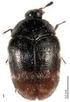 Rev. Chilena Ent. 2012, 37: 17-21 CONTRIBUTION TO THE KNOWLEDGE OF DERMESTIDAE (COLEOPTERA) FROM CHILE CONTRIBUCIÓN AL CONOCIMIENTO DE LOS DERMESTIDAE (COLEOPTERA) DE CHILE Jiří Háva 1 and Jaime Solervicens
Reptiles and Amphibians of Curaçao
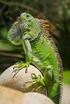 33 Reptiles and Amphibians of Curaçao BY Dr. Nelly de Rooij (With 2 Figures). The Zoological Museum of Amsterdam received some collections of reptiles from Curaçao made by Dr. J. BOEKE in 1905, by Dr.
CLASSIFICATION OF CARIOUS LESIONS AND TOOTH PREPARATION.
 CLASSIFICATION OF CARIOUS LESIONS AND TOOTH PREPARATION. ١ G.V. BLACK who is known as the father of operative dentistry,he classified carious lesions into groups according to their locations in permanent
Melita shiodmnari n. sp.
 A New Species of the Genus Melita ( Titlefrom a High Tide Pool at Shirahama, Kii Peninsula, Japan Author(s) Yamato, Shigeyuki Citation PUBLICATIONS OF THE SETO MARINE BIO LABORATORY (1995), 36(5-6): 379-388
On two alpheids from Araçá (São Paulo, Brazil) with a description of a new species of Leptalpheus (Decapoda: Caridea: Alpheidae)
 Ann. Naturhist. Mus. Wien 101 B 475-488 Wien, Dezember 1999 On two alpheids from Araçá (São Paulo, Brazil) with a description of a new species of Leptalpheus (Decapoda: Caridea: Alpheidae) P.C. Dworschak*
Lab #10 Invertebrates 2 and Vertebrates 1 (Exercises 39, 40)
 Name Bio 182-General Biology Lab #10 Invertebrates 2 and Vertebrates 1 (Exercises 39, 40) Answer the questions in the space provided. You need to turn this sheet at the end of the lab. In general know
Aspects of Reproduction and the Condition of Gravid Mud Crab (Crustacea: Brachyura: Potamon) in Ebonyi State, Nigeria
 International Journal of Research Studies in Biosciences (IJRSB) Volume 3, Issue 1, January 2015, PP 104-109 ISSN 2349-0357 (Print) & ISSN 2349-0365 (Online) www.arcjournals.org Aspects of Reproduction
A new genus of Philorheithridae (Trichoptera) from Madagascar
 Zootaxa 1825: 18 28 (2008) www.mapress.com/zootaxa/ Copyright 2008 Magnolia Press ISSN 1175-5326 (print edition) ZOOTAXA ISSN 1175-5334 (online edition) A new genus of Philorheithridae (Trichoptera) from
NOTES ON RHOPALOPSOLE KLAPÁLEK (PLECOPTERA: LEUCTRIDAE), WITH DESCRIPTIONS OF THREE NEW SPECIES FROM VIETNAM
 Stark, B.P., I. Sivec, and T. Shimizu. 2012. Notes on Rhopalopsole Klapálek (Plecoptera: Leuctridae), with descriptions of three new species NOTES ON RHOPALOPSOLE KLAPÁLEK (PLECOPTERA: LEUCTRIDAE), WITH
Distinguishing characters of Niphargus gebhardti Schellenberg, 1934 and Niphargus molnari Mehely, 1927 (Crustacea: Amphipoda): a clarification
 Opusc. Zool. Budapest, 2013, 44(1): 3 8 Distinguishing characters of Niphargus gebhardti Schellenberg, 1934 and Niphargus molnari Mehely, 1927 (Crustacea: Amphipoda): a clarification D. ANGYAL 1 and G.
The Genus Austroleptis from South Chile and Patagonia (Diptera, Rhagionidae)
 Title The Genus Austroleptis from (Diptera, Rhagionidae) South C Author(s) NAGATOMI, Akira; NAGATOMI, Hisako Citation 南 海 研 紀 要, 8(2): 139-156 Issue Date 1988-02-29 URL http://hdl.handle.net/10232/15696
Description of a new genus and new species of freshwater crab (Brachyura: Gecarcinucidae) from the Western Ghats, Kerala, India
 Pati and Sudha Devi Zoological Studies (2015) 54:35 DOI 10.1186/s40555-015-0112-0 RESEARCH Open Access Description of a new genus and new species of freshwater crab (Brachyura: Gecarcinucidae) from the
ANNALES HISTORICO-NATURALES MUSEI NATIONALIS HUNGARICI Volume89. Budapest, 1997 pp. 151-156.
 ANNALES HISTORICO-NATURALES MUSEI NATIONALIS HUNGARICI Volume89. Budapest, 1997 pp. 151-156. Three new species and a new subspecies of Meoneura from the Alps (Diptera, Carnidae) L. PAPP Department of Zoology,
PICTURES TO HELP WITH IDENTIFICATION OF FUCUS SPECIES FROM THE BRITISH ISLES
 PICTURES TO HELP WITH IDENTIFICATION OF FUCUS SPECIES FROM THE BRITISH ISLES Compiled by HOLLY BROWN and MARTIN WILKINSON, School of Life Sciences, Heriot-Watt University, Edinburgh, Scotland Although
A new genus and species of Tricorythidae (Ephemeroptera : Pannota) from Madagascar
 Annls Limnol. 31 (3) 1995 : 179-183 A new genus and species of Tricorythidae (Ephemeroptera : Pannota) from Madagascar W.P. McCafferty 1 T.-Q. Wang 1 Keywords : Tricorythidae, Madagascar, Provonshaka,
SYSTEMATIC OBSERVATIONS ON THE SCORPION GENUS SYNTROPIS,
 Boletín Sociedad Entomológica Aragonesa, n1 40 (2007) : 119 136. SYSTEMATIC OBSERVATIONS ON THE SCORPION GENUS SYNTROPIS, WITH DESCRIPTIONS OF TWO NEW SPECIES (SCORPIONES: VAEJOVIDAE) Michael E. Soleglad
New species and subspecies of Octavius from South Africa, with a key and additional distribution records (Coleoptera: Staphylinidae: Euaesthetinae)
 ACTA ENTOMOLOGICA MUSEI NATIONALIS PRAGAE Published 30.iv.2014 Volume 54(1), pp. 195 231 ISSN 0374-1036 http://zoobank.org/urn:lsid:zoobank.org:pub:d94600bd-1221-47b6-9c70-ba8c82b74cec New species and
A revision of the Aphthona gracilis species group (Coleoptera: Chrysomelidae) A.S. Konstantinov
 Труды Русского энтомологического общества. С.-Петербург, 2006. Т. 77: 178 188. Proceedings of the Russian Entomological Society. St. Petersburg, 2006. Vol. 77: 178 188. A revision of the Aphthona gracilis
What role does the nucleolus have in cell functioning? Glial cells
 Nervous System Lab The nervous system of vertebrates can be divided into the central nervous system, which consists of the brain and spinal cord, and the peripheral nervous system, which contains nerves,
Article. Marine Zoologie, Forschungsinstitut Senckenberg, 60325 Frankfurt am Main, Germany. E-mail: [email protected] 2
 Zootaxa 2128: 61 68 (2009) www.mapress.com/zootaxa/ Copyright 2009 Magnolia Press Article ISSN 1175-5326 (print edition) ZOOTAXA ISSN 1175-5334 (online edition) Redescription and mitochondrial identification
CHAPTER 10 RESTS AND PREPARATIONS. 4. Serve as a reference point for evaluating the fit of the framework to the teeth.
 CHAPTER 10 RESTS AND DEFINITIONS A REST is any rigid part of an RPD framework which contacts a properly prepared surface of a tooth. A REST PREPARATION or REST SEAT is any portion of a tooth or restoration
Description of a new Omophron Latreille, 1802 species from Madagascar (Coleoptera: Carabidae: Omophronini)
 Baltic J. Coleopterol. 10(1) 2010 ISSN 1407-8619 Description of a new Omophron Latreille, 1802 species from Madagascar (Coleoptera: Carabidae: Omophronini) Uldis Valainis Valainis U. 2010. Description
Scanning electron micrographs of medically important dust mite, Suidasia pontifica (Acari: Astigmata: Saproglyphidae) in Malaysia
 Tropical Biomedicine 28(2): 275 282 (2011) Scanning electron micrographs of medically important dust mite, Suidasia pontifica (Acari: Astigmata: Saproglyphidae) in Malaysia Ahamad, M. 1*, Louis, S.R. 2,
Using and Constructing a Dichotomous Key
 Name Class Date Chapter 18 Classification Using and Constructing a Dichotomous Key You may want to refer students to Chapter 18 in the textbook for a discussion of the classification system used in biology.
Review of the Late Pleistocene Soricidae (Mammalia) fauna of the Vaskapu Cave (North Hungary)
 Hantkeniana 8, 163 169, Budapest, 2013 Review of the Late Pleistocene Soricidae (Mammalia) fauna of the Vaskapu Cave (North Hungary) Lukács MÉSZÁROS 1 (with 2 figures, 2 tables and 1 plate) The summary
Life Cycle of a Butterfly
 Name: Date: Life Cycle of a Butterfly Life cycle refers to the stages of development, growth and reproduction that a living thing goes through. The butterfly's life cycle is made up of four stages: egg,
Crabs. Focus Question
 Topics Crabs, Adaptations Crabs Grades PreK-2 Site Indoors Duration 30 minutes (minimum) Materials Crab Cards Clay or foil Pipe cleaners Egg carton sections, small boxes, jars, lids, food cups, yogurt
FOLIA ENTOMOLOGICA HUNGARICA ROVARTANI KÖZLEMÉNYEK Volume 70 2009 pp. 219 224
 FOLIA ENTOMOLOGICA HUNGARICA ROVARTANI KÖZLEMÉNYEK Volume 70 2009 pp. 219 224 Contributions to the knowledge of the scuttle fly fauna of Hungary (Diptera: Phoridae) G. D. LENGYEL Department of Zoology,
Fishy Adaptations. Adapted from: Fashion a Fish in Project Wild Aquatic Education Activity Guide. The Council for Environmental Education, 1992
 Fishy Adaptations Adapted from: Fashion a Fish in Project Wild Aquatic Education Activity Guide. The Council for Environmental Education, 1992 Physical Structure Grade Level: Basic Duration: 45 minutes
Lab 5 Overview of the Skeleton: Classification and Structure of Bones and Cartilages Exercise 9 The Axial Skeleton Exercise 10
 Lab 5 Overview of the Skeleton: Classification and Structure of Bones and Cartilages Exercise 9 The Axial Skeleton Exercise 10 Overview of the Skeleton Locate the important cartilages in the human skeleton
Introduction to Charting. Tooth Surfaces: M = mesial D = distal O = Occlusal B = buccal F = facial I = incisal L = lingual
 Tooth Surfaces: M = mesial D = distal O = Occlusal B = buccal F = facial I = incisal L = lingual When combining tooth surfaces, as in defining cavity preparations or restorations, there are some spelling
TWO NEW SPECIES OF RHYACOPHILA PICTET (TRICHOPTERA, RHYACOPHILIDAE) FROM INDIA INTRODUCTION MATERIAL AND METHODS
 Acta Zoologica Academiae Scientiarum Hungaricae 58 (3), pp. 211 215, 2012 TWO NEW SPECIES OF RHYACOPHILA PICTET (TRICHOPTERA, RHYACOPHILIDAE) FROM INDIA KAUR, L. and SAINI, M. S. Department of Zoology
Marine Plankton Identification Key
 Marine Plankton Identification Key Phytoplankton: The phytoplankton are mainly unicellular plants known as algae. They are found dispersed throughout the photic zone of the oceans and account for the major
First record of the family Pseudochiridiidae
 Barba ISSN 0065-1737 Díaz & Alegre Barroso: Pseudochiridiidae (Pseudoscorpiones) Acta Zoológica en Cuba Mexicana (n.s.), 29(3): 696-700 (2013) Nota Científica (Short Communication) First record of the
Transverse Sections of the Spinal Cord
 Transverse Sections of the Spinal Cord The spinal cord is perhaps the most simply arranged part of the CNS. Its basic structure, indicated in a schematic drawing of the eighth cervical segment (Figure
Diagnostic characters: Lance- or tongue-shaped flatfishes with eyes on left side of body; body highly
 click for previous page 1934 Bony Fishes CYNOGLOSSIDAE Tonguefishes and tongue soles T.A. Munroe, National Marine Fisheries Service, National Museum of Natural History, Washington D.C., USA Diagnostic
Lectures of Human Anatomy
 Lectures of Human Anatomy Vertebral Column-I By DR. ABDEL-MONEM AWAD HEGAZY M.B. with honor 1983, Dipl."Gynecology and Obstetrics "1989, Master "Anatomy and Embryology" 1994, M.D. "Anatomy and Embryology"
A new species of Halystus from Socotra Island (Coleoptera: Curculionidae: Scolytinae: Polygraphini)
 ACTA ENTOMOLOGICA MUSEI NATIONALIS PRAGAE Published 17.xii.2012 Volume 52 (supplementum 2), pp. 511 516 ISSN 0374-1036 A new species of Halystus from Socotra Island (Coleoptera: Curculionidae: Scolytinae:
Two new species of Lachesilla of Pedicularia group (Psocodea: Psocoptera ), from Valle del Cauca, Colombia
 Revista Colombiana de Entomología 39 (2): 237-242 (Julio - Diciembre 2013) 237 Two new species of Lachesilla of Pedicularia group (Psocodea: Psocoptera ), from Valle del Cauca, Colombia Dos especies nuevas
FORENSIC ANTHROPOLOGY NOTES
 FORENSIC ANTHROPOLOGY NOTES Forensic Anthropology = the examinations of human skeletal remains for law enforcement agencies to determine the identity of unidentified bones. Questions asked: 1. Are the
REFERENCES THOMAS E. DIMOCK. 464 Fairfax Avenue, Ventura, California 93003
 274 JOURNAL OF THE LEPIDOPTERISTS' SOCIETY REFERENCES CLARKE, J. F. GATES. 1958. Catalogue of the Type Specimens of Microlepidoptera in the British Museum (Natural History) described by Edward Meyrick
porcelain fused to metal crown
 Lectur.5 Dr.Adel F.Ibraheem porcelain fused to metal crown the most widely used fixed restoration,it is full metal crown having facial surface (or all surfaces) covered by ceramic material. It consist
FIRST SOUTH AMERICAN RECORDS OF HOLOCNEMUS PLUCHEI (SCOPOLI, 1763) AND SPERMOPHORA SENOCULATA (DUGÈS, 1836) (ARANEAE: PHOLCIDAE)
 Gayana 72(2): 261-265, 2008. Comunicación breve ISSN 0717-652X FIRST SOUTH AMERICAN RECORDS OF HOLOCNEMUS PLUCHEI (SCOPOLI, 1763) AND SPERMOPHORA SENOCULATA (DUGÈS, 1836) (ARANEAE: PHOLCIDAE) PRIMEROS
Insect identification sheet
 information leaflet Insect identification sheet To enable you to identify the insect you have in your home, we have provided some identification sheets. These depict the most common pest species that you
THREE NEW SPECIES OF MYRABOLIA REITTER (COLEOPTERA: CUCUJOIDEA: MYRABOLIIDAE)
 A N N A L E S Z O O L O G I C I (Warszawa), 2011, 61(2): 367-374 THREE NEW SPECIES OF MYRABOLIA REITTER (COLEOPTERA: CUCUJOIDEA: MYRABOLIIDAE) KAROL SZAWARYN 1 and WIOLETTA TOMASZEWSKA 2 Museum and Institute
In Class IV arch: Fulcrum line passes through two abutments adjacent to single edentulous space.
 It is that part of removable partial denture which assists the direct retainers in preventing displacement of distal extension denture bases by resisting lever action from the opposite side of the fulcrum
CHEM 107. Hair handout. Basic Structure of Hair. 3-22-05 and 3-24-05
 CHEM 107 Hair handout. 3-22-05 and 3-24-05 Basic Structure of Hair A hair can be defined as a slender, thread-like outgrowth from a follicle in the skin of mammals. Composed mainly of keratin, it has three
Surgical Art. Formulaic Drawing Method. DRAWING WORKSHOP Learning to sketch for patient notes
 DRAWING WORKSHOP Learning to sketch for patient notes Surgical Art Formulaic Drawing Method Formulaic figure drawing systems involve using abstract rhythms and interlocking shapes to construct the human
Activity: Is There Evidence of Trauma in the Skeleton?
 Activity: Is There Evidence of Trauma in the Skeleton? Injuries to bone can occur in life (antemortem), at or near the time of death (perimortem), or after death (postmortem) when all that remains of the
POCKET IDENTIFICATION GUIDE
 The Pennsylvania Native Bee Survey Citizen Scientist Pollinator Monitoring Guide POCKET IDENTIFICATION GUIDE Leo Donovall/Pennsylvania Department of Agriculture Bees vs. Wasps vs. Flies Bees Usually Very
FURTHER MORPHOLOGICAL CONSIDERATIONS ON THE
 ARTÍCULO: FURTHER MORPHOLOGICAL CONSIDERATIONS ON THE GENUS BIRULATUS VACHON (SCORPIONES, BUTHIDAE), WITH THE DESCRIPTION OF A NEW SPECIES FROM ISRAEL Wilson R. Lourenço ARTÍCULO: Further morphological
Reexamination of Pagurus minutus Hess, 1865, and Pagurus filholi (de Man, 1887) (Crustacea: Anomura: Paguridae)
 Reexamination of Pagurus minutus Hess, 1865, and Pagurus filholi (de Man, 1887) (Crustacea: Anomura: Paguridae) L. Sandberg & P.A. McLaughlin Sandberg, L. & P.A. McLaughlin. Reexamination of Pagurus minutus
4.2 Buena Vista Creek Watershed
 Buena Vista Creek Watershed 4.2 Buena Vista Creek Watershed Watershed Overview The Buena Vista Creek Watershed is the fourth-largest system within the Carlsbad Hydrologic Unit. The watershed extends approximately
Can You Tell a 'Gator From a Croc? by Guy Belleranti
 Can You Tell a 'Gator From a Croc? Look closely at the reptiles pictured below. Can you tell which one is the crocodile and which is the alligator? Many people confuse crocodiles and alligators, and it's
Hermit Crabs (Decapoda: Anomura: Paguridea) from the Seychelles
 Hermit Crabs (Decapoda: Anomura: Paguridea) from the Seychelles P.A. McLaughlin & P.J. Hogarth McLaughlin, P.A. & P.J. Hogarth. Hermit Crabs (Decapoda: Anomura: Paguridea) from the Seychelles. Zool. Verh.
Universal Crown and Bridge Preparation
 Universal Crown and Bridge Preparation The All-Ceramic Crown Preparation Technique for Predictable Success According to Dr. Ronald E. Goldstein Expect the Best. Buy Direct. The Universal * Crown and Bridge
Algebra Geometry Glossary. 90 angle
 lgebra Geometry Glossary 1) acute angle an angle less than 90 acute angle 90 angle 2) acute triangle a triangle where all angles are less than 90 3) adjacent angles angles that share a common leg Example:
Description of a new Pygopleurus species (Col.: Glaphyridae), with a list of recorded species of the genera Pygopleurus and Eulasia from Iran
 Journal of Entomological Society of Iran 2007, 26(2), 1-6 1 Description of a new Pygopleurus species (Col.: Glaphyridae), with a list of recorded species of the genera Pygopleurus and Eulasia from Iran
A Key to the Empoasca Solana Complex with Descriptions of New Species
 The Ohio State University Knowledge Bank kb.osu.edu Ohio Journal of Science (Ohio Academy of Science) Ohio Journal of Science: Volume 60, Issue 5 (September, 1960) 1960-09 A Key to the Empoasca Solana
Bitewing Radiography B.E. DIXON. B.D.S., M.Sc., D.P.D.S.
 Bitewing Radiography B.E. DIXON B.D.S., M.Sc., D.P.D.S. Main Indications Detection of Dental Caries Monitoring progression of caries Assessment of existing restorations Assessment of Periodontal status
The correlation coefficient
 The correlation coefficient Clinical Biostatistics The correlation coefficient Martin Bland Correlation coefficients are used to measure the of the relationship or association between two quantitative