
The shrimp genus Leptalpheus
|
|
|
- Wendy Hart
- 9 years ago
- Views:
Transcription
1 The shrimp genus Leptalpheus Williams, 1965 in the southwestern Caribbean Sea, with description of one new species from Panama (Crustacea, Decapoda, Alpheidae) Arthur ANKER Instituto Smithsonian de Investigaciones Tropicales, apartado , Balboa, Ancón, Panamá (Panama) Current address: Florida Museum of Natural History, University of Florida, 250A Dickinson Hall, Gainesville, FL (USA) Anker A The shrimp genus Leptalpheus Williams, 1965 in the southwestern Caribbean Sea, with description of one new species from Panama (Crustacea, Decapoda, Alpheidae). Zoosystema 30 (4) : KEY WORDS Crustacea, Decapoda, Alpheidae, Leptalpheus, Callianassidae, Lepidophthalmus, Caribbean, western Atlantic infaunal shrimp, burrow, commensalism, new species. ABSTRACT Two species of the alpheid shrimp genus Leptalpheus Williams, 1965 are reported from the southwestern Caribbean Sea. Leptalpheus pierrenoeli n. sp. is described on the basis of a single male specimen collected from a burrow of unknown, presumably callianassid host on Isla Grande, Panama. This species differs from all other species of Leptalpheus by the dentition on the fingers of the major cheliped and the elongate stylocerite. Leptalpheus cf. forceps is recorded for the first time from Cahuita, Costa Rica, representing a considerable range extension of L. forceps Williams, 1965, previously known from North Carolina to the Gulf of Mexico, into the southern Caribbean Sea. The Cahuita specimens bear a peculiar segmented filament on the uropodal endopod (caudal filament), a feature not observed in the type specimens. Furthermore, they were found in association with the callianassid ghostshrimp, Lepidophthalmus richardi Felder & Manning, This finding represents a new host record for L. forceps and a significant range extension of L. richardi, previously known only from the type locality in Belize. Publications Scientifiques du Muséum national d Histoire naturelle, Paris

2 Anker A. MOTS CLÉS Crustacea, Decapoda, Alpheidae, Leptalpheus, Callianassidae, Lepidophthalmus, Caraïbe, Atlantique occidental, crevette, faune des terriers, commensalisme, espèce nouvelle. RÉSUMÉ Le genre de crevettes Leptalpheus Williams, 1965 dans le sud-ouest de la mer des Caraïbes, et description d une nouvelle espèce du Panama (Crustacea, Decapoda, Alpheidae). Deux espèces de crevettes alphéidées du genre Leptalpheus Williams, 1965 sont signalées du sud-ouest de la mer des Caraïbes. Leptalpheus pierrenoeli n. sp. est décrite d après un unique spécimen mâle trouvé dans un terrier d un hôte inconnu, probablement une crevette-taupe (Callianassidae), à Isla Grande au Panama. Cette espèce se distingue des autres espèces du genre Leptalpheus par la dentition sur les doigts de la grande pince et un stylocérite allongé. Leptalpheus cf. forceps est signalé pour la première fois de Cahuita au Costa Rica, ce qui représente une extension considérable de l aire de distribution de L. forceps Williams, 1965, précédemment connue de la Caroline du Nord jusqu au Golfe du Mexique, au sud de la mer des Caraïbes. Les deux spécimens mâles de L. cf. forceps de Cahuita possèdent un filament segmenté sur l endopodite de l uropode (filament caudal), celui-ci faisant défaut chez les spécimens types. En outre, ils ont été trouvés en association avec un callianassidé, Lepidophthalmus richardi Felder & Manning, 1997, ce qui représente une nouvelle association pour L. forceps, mais aussi un élargissement considérable de l aire de distribution de L. richardi, qui auparavant n était connue que de la localité type au Belize. INTRODUCTION The genus Leptalpheus Williams, 1965 was established for the peculiar alpheid shrimp Leptalpheus forceps Williams, 1965 originally described from North Carolina in the southeastern USA. Since then several species were described in this genus, two of them in the western Atlantic: L. axianassae Dworschak & Coelho, 1999 (subjective junior synonym L. petronii Ramos-Porto & Souza, 1994; see Anker et al. 2006b) from Brazil, and L. felderi Anker, Vera Caripe & Lira, 2006 from Venezuela and Colombia (Dworschak & Coelho 1999; Anker et al. 2006b). Anker et al. (2006b) provided a table with all known records of Leptalpheus species, showing presence of at least three undescribed taxa in the western Atlantic, defined three species groups within Leptalpheus, based mainly on the features of the major cheliped. All species of Leptalpheus appear to be associated with burrows of thalassinidean mudshrimps belonging to the families Callianassidae Dana, 1852, Upogebiidae Borradaile, 1903 and Laomediidae Borradaile, 1903 (see Anker et al. 2006b). Between October and November 2005, the author investigated various types of burrows and mounds at two localities in the southwestern Caribbean Sea: Isla Grande, Panama, and Cahuita, Costa Rica. At Isla Grande, a single specimen of Leptalpheus was collected in the shallow subtidal, from a burrow of an unknown (presumably callianassid) host. This specimen was immediately recognized to represent an undescribed species of Leptalpheus, but all subsequent attempts to collect more Leptalpheus specimens at this locality ended unsuccessfully. Fortunately, the Isla Grande specimen was a complete adult male with several unique features separating its species from all other species of Leptalpheus thus fully justifying the below description of the new species based on a single specimen. At Cahuita, three specimens of Leptalpheus were collected, two of them together with their callianassid hosts. They were identified as Leptalpheus cf. forceps, a species that was not previously reported from the southwestern Caribbean. Because of some differences observed between the Cahuita specimens and the type of L. forceps from 782

3 A new Leptalpheus (Crustacea, Decapoda, Alpheidae) from Panama North Carolina, detailed drawings of one of the Cahuita specimens are provided. The species groups of Leptalpheus proposed by Anker et al. (2006b) are briefly discussed. MATERIAL AND METHODS All specimens were collected from burrows with the aid of Alvey bait suction ( yabby ) pump. Most were photographed alive after capture and preserved in 75% ethanol; one specimen was preserved in Ambion RNA-later for genetic studies. The holotype of the new species is deposited in the collections of the Muséum national d Histoire naturelle, Paris (MNHN). The material of L. forceps is deposited in the MNHN and the Universidad de Costa Rica, Museo de Zoología, San José (UCRMZ). The hosts were identifi ed using Manning & Felder (1991) and Sakai (1999). Carapace length (CL) and total length (TL) were measured in mm from the anterior margin of the carapace (or tip of the rostral projection) to the posterior margin of the carapace and telson, respectively. OTHER ABBREVIATIONS fcn field collection number; Mxp maxilliped; P pereiopod. SYSTEMATICS Family ALPHEIDAE Rafinesque, 1815 Genus Leptalpheus Williams, 1965 Leptalpheus pierrenoeli n. sp. (Figs 1; 2; 3A, B) Leptalpheus sp. 4 aff. forceps Anker et al. 2006b: 686. TYPE MATERIAL. Holotype: Panama, Caribbean coast, Isla Grande, southern shore, village, near Cabañas Super Jackson, from burrow, bait suction pump, depth m, coll. A. Anker and C. Hurt, 6.X.2005, fcn , 1, CL 4.5, TL 14.6 (MNHN-Na 17067). ETYMOLOGY. This new species is named after Dr Pierre Y. Noël (MNHN), who directed the author s Ph.D. thesis on the taxonomy and phylogeny of the Alpheidae (Anker 2001), and also in recognition of his numerous contributions to the biology and taxonomy of caridean shrimps. TYPE LOCALITY. Isla Grande, Caribbean coast of Panama. DISTRIBUTION. Tropical western Atlantic: presently known only from the type locality: Isla Grande, Caribbean coast of Panama. DESCRIPTION Body moderately slender (Fig. 3A, B), carapace and abdomen slightly compressed laterally, glabrous. Carapace with hardly visible anterolateral suture proximal to base of antenna (Fig. 1B). Frontal margin with broad, subtriangular, bluntly ending rostral projection, without orbital teeth or crests (Fig. 1B). Pterygostomial angle bluntly protruding anteriorly; branchiostegial region with pronounced lip anteriorly (Fig. 1B); cardiac notch deep. Eyes not visible in dorsal view, anterior portion visible in lateral view (Fig. 1A, B); anteromesial process bluntly subtriangular, feebly protruding (Fig. 1B); cornea small, lateral, pigmented (Fig. 1B). Ocellar beak not conspicuous. Antennular peduncle relatively stout (Fig. 1A), second segment about 1.5 times as long as broad, longer than dorsally visible portion of first segment; stylocerite slightly exceeding distal margin of first segment, acute distally (Fig. 1A); ventromesial carina of first segment with very strong, anteriorly acute tooth; lateral flagellum biramous, with shorter ramus distinct, inserted at fourth segment (Fig. 1B). Antenna with basicerite bearing strong ventrolateral tooth (Fig. 1B); scaphocerite broadly ovate, anterior margin of blade slightly convex, not protruding beyond distolateral tooth (Fig. 1A); carpocerite long, stout, reaching far beyond scaphocerite (Fig. 1A, B). Mouthparts not dissected, appearing typical for genus in external view. Third maxilleped moderately slender, elongate; lateral plate acutely produced (Fig. 1C); ultimate segment with rows of long, distally thickened setae, tip unarmed; arthrobranch well developed (Fig. 1C). Chelipeds strongly asymmetrical in shape, unequal in size (Fig. 2), carried folded (Fig. 3A). Major cheliped moderately enlarged; ischium without subtriangular 783

4 Anker A. A K D I F B E C-E, G H G J C A, B, F, H-K FIG. 1. Leptalpheus pierrenoeli n. sp., holotype from Isla Grande, Caribbean coast of Panama (MNHN-Na 17067): A, frontal region, dorsal view; B, same, lateral view; C, third maxilliped, lateral view; D, second pereiopod, lateral view; E, third pereiopod, lateral view; F, same, detail of propodus and dactylus; G, fifth pereiopod, lateral view; H, same, detail of propodus and dactylus, mesial view; I, second pleopod, mesial view; J, uropod, dorsal view; K, telson, dorsal view. Scale bars: 1 mm. 784

5 A new Leptalpheus (Crustacea, Decapoda, Alpheidae) from Panama A B C D A-C, E D, F, G F E G FIG. 2. Leptalpheus pierrenoeli n. sp., holotype from Isla Grande, Caribbean coast of Panama (MNHN-Na 17067): A, major (right) cheliped, mesial view; B, same, lateral view; C, same, chela, ventrolateral view; D, same, chela fingers, ventromesial view; E, minor (left) cheliped, lateral view; F, same, chela and carpus, ventromesial view; G, same, slightly more ventral and fingers opened. Scale bars: 1 mm. tooth on ventromesial margin (Fig. 2A); merus moderately slender, elongate, ventrally depressed, with rugose ventromesial margin (Fig. 2A, B), blunt distally; carpus short, cup-shaped, with large blunt distomesial tooth (Fig. 2A); chela subcylindrical, palm ventromesially excavated (Fig. 2A), about three times as long as high (Fig. 2C), smooth except for a somewhat rugose ventral margin (Fig. 2A); adhesive discs absent (Fig. 2B); fingers about half as long as palm, moderately curved (Fig. 2B), finger tips crossing when chela closed (Fig. 2C); pollex with two smaller proximal teeth and one larger distal tooth separated by large hiatus (Fig. 2C, D); dactylus with two smaller proximal teeth, one larger median tooth opposed to hiatus of pollex, and two smaller distal teeth (Fig. 2C, D). Minor cheliped (Fig. 2E) with unarmed ischium; merus slender, ventrally slightly depressed; carpus very short, cup-shaped, with subacute distolateral tooth (Fig. 2E, G); chela smooth, flattened on mesial side (Fig. 2E, F), fingers slightly longer than palm, tips crossing when chela closed; cutting edge of pollex with small irregularly subtriangular teeth on proximal half, most distal tooth largest, situated slightly beyond mid-length of pollex; dentition of dactylus nearly identical to that of pollex (Fig. 2G). 785

6 Anker A. Second pereiopod small, slender; ischium slightly shorter than merus; carpus five-segmented, segment ratio approximately: 2.5/1/1/1/2 (Fig. 1D); chela simple, slender, much longer than first carpal segment; fingers longer than palm (Fig. 1D). Third pereiopod with unarmed ischium; merus flattened mesially, more than twice as long as ischium, about five times as long as wide (Fig. 1E), ventral margin convex; carpus less than half length of merus, with distoventral spine; propodus longer than carpus, with two ventral spines and one distoventral spine proximal to dactylus; dactylus simple, slender, about 3/5 length of propodus, curved (Fig. 1E). Fourth pereiopod similar to third. Fifth pereiopod much more slender than third and fourth pereiopods (Fig. 1F), not flattened mesially; ischium, merus and carpus unarmed; merus not convex ventrally; propodus as long as merus, without spines, disto laterally with three rows of setae; dactylus similar to that of third and fourth pereiopods (Fig. 1F). First to fifth abdominal somites with minute pits; posteroventral angles rounded; sixth somite with articulated plate posteroventrally. Male second pleopod (Fig. 1I) with appendix interna and appendix masculina, latter slightly longer than former and with three slender spine-like setae on apex (Fig. 1I). Uropod with lateral lobe of protopod (sympodite) bearing two small acute teeth distally (Fig. 1J); endopod longer than exopod, without specifi c features; exopod with truncate posterior margin, with distolateral tooth adjacent to distolateral spine (Fig. 1J); lateral half of diaeresis shallowly concave, mesial half deeply incised forming large triangular tooth proximal to mesial margin (Fig. 1J). Telson moderately large, more than twice as long as wide proximally (Fig. 1K); dorsal surface covered with minute pits and bearing two pairs of spines inserted at some distance from lateral margin, at about 2/5 and 2/3 length of telson, respectively (Fig. 1K); posterior margin feebly rounded, with two pairs of spines at posterolateral angles: long mesial and very short lateral spines (Fig. 1K); anal tubercles not distinct. Gill/exopod formula typical for genus: 5 pleurobranchs (above P1-5); 1 arthrobranch (above Mxp3); 0 podobranch; 2 lobe-shaped epipods (Mxp1-2); 5 mastigobranchs or strap-like epipods (Mxp3, P1-4); 5 sets of setobranchs (P1-5); 3 exopods (Mxp1-3). Size The holotype is 4.5 mm CL and 14.6 mm TL. Colour pattern Semitransparent with patches of red chromatophores over most of the body and particularly dense (and therefore more intense red) on dorsal and dorsolateral areas of the carapace, tail fan, antennular peduncles, orbital area and along posterior margin of abdominal somites thus forming diffuse transverse bands on the abdomen; walking legs, second pereiopod and antennular/antennal flagella semitransparent, colourless; major cheliped hyaline-white (chromatophore pattern visible in Figure 3A, B). ECOLOGY The single specimen was collected from a burrow of unknown host in about knee-deep water. The substrate was fi ne sand with some shell debris and patches of seagrass (more extensive seagrass beds nearby). Although the host was not collected several specimens of the callianassid ghostshrimps, Neocallichirus grandimana (Gibbes, 1850) (Fig. 3C) and N. rathbunae (Schmitt, 1935) (Callianassidae), collected at the same site (including some on the same day and a few meters away from the collection site of L. pierrenoeli n. sp.) suggest that one of them may be the host of this species. Neocallichirus species were previously reported as hosts of Leptalpheus (see Anker et al. 2006b: table 1). REMARKS Leptalpheus pierrenoeli n. sp. appears to be morphologically closest to the heterogeneous L. forceps species group, which also includes L. forceps and L. felderi from the western Atlantic, and L. mexicanus Ríos & Carvacho, 1983 from the eastern Pacific, as well as at least three undescribed taxa in the western Atlantic and eastern Pacific (see Anker et al. 2006b: table 1). However, the new species is not closely related to any of the aforementioned described species, being separated from all of them by the unique dentition on the cutting edges of the fingers of the major chela; the absence of a mesial tooth on the 786

7 A new Leptalpheus (Crustacea, Decapoda, Alpheidae) from Panama A B C FIG. 3. A, B, Leptalpheus pierrenoeli n. sp.; A, holotype from Isla Grande, Caribbean coast of Panama (MNHN-Na 17067), habitus in lateral view; B, same in dorsal view (photos taken immediately after collection, note sand grains sticking to a small wound on the right side of the rst pleuron); C, Neocallichirus cf. grandimana (Gibbes, 1850) (Callianassidae), habitus in dorsolateral view, specimen collected within a few meters from the collection site of L. pierrenoeli n. sp. 787

8 Anker A. ischium of the major cheliped; and the distinctly longer stylocerite (overreaching the distal margin of the first antennular peduncle vs. not reaching this margin in the other three species). The new species differs more specifically from L. forceps (cf. Williams 1965, see also Figs 4; 5) by the much shorter antennular peduncles; the stouter major chela, with comparatively longer fingers; the anterior margin of the carapace with a blunt rostral projection (vs. rounded in L. forceps); and in life, also by the more intense red colour (compare Figs 3A, B and 6A, B). It can be distinguished from L. felderi (cf. Anker et al. 2006b) by the absence of orbital crests (present in L. felderi); the unarmed ischium of the third pereiopod (vs. with spine in L. felderi); the absence of a brush of long flexible setae on the dactylus of the major chela (present in L. felderi); the different arrangement of teeth on the cutting edges of the fingers of the major and minor cheliped; the five-segmented carpus of the second pereiopod (vs. four-segmented in L. felderi); and the colour pattern (cf. Fig. 3A, B [black-andwhite photographs] and Anker et al. 2006b: fig. 6A, B). Finally, L. pierrenoeli n. sp. differs in several respects from L. mexicanus (cf. Ríos & Carvacho 1983), including the much less produced rostral projection; the major cheliped with shorter, less twisted, less gaping and differently armed fingers; the much shorter antennular peduncles; and the colour pattern (A. Anker pers. obs.). Leptalpheus cf. forceps Williams, 1965 (Figs 4; 5; 6A, B) Leptalpheus forceps Williams, 1965: 194; 1984: 101. Dawson 1967: 224. Saloman 1971: 67. Chace 1972: 77. Abele & Kim 1986: 194, 228. Felder & Rodrigues 1993: 366. Holthuis 1993: 203. Anker et al. 2006b: 686. (?) Leptalpheus forceps Christoffersen 1980: 135; 1998: 361. Hermoso-Salazar 2001: MATERIAL EXAMINED. Costa Rica. Caribbean coast, Cahuita, Punta Uva, small mangrove river, coarse sand, from burrow of Lepidophthalmus richardi (host fcn , will be deposited in MNHN), bait suction pump, depth cm, coll. A. Anker, I. Wehrtmann and L. Harris, 26.XI.2005, fcn , 1, CL 8.2, TL 22.2 (MNHN-Na 17066). Same collection data, from burrow of Lepidophthalmus richardi (host fcn , UCRMZ ), fcn , 1, CL 6.1, TL 15.3 (UCRMZ ); 1 specimen (CL and TL not measured, sex not determined) preserved in Ambion RNA-later for molecular studies (fcn ). DESCRIPTION For complete description see Williams (1965, 1984). Detailed drawings of Cahuita specimens are provided in Figures 4 and 5. Size The two Costa Rican male specimens were 6.1 mm CL, 15.3 mm TL, and 8.2 mm, 22.2 mm TL. Williams (1965) type specimens were 7.8 mm CL (female holotype) and 5.2 mm CL (male paratype). Colour pattern Semitransparent with yellowish and reddish chromatophores, more intense on tail fan, antennular peduncles, eyestalk and along posterior margins of the carapace and abdominal somites, forming transverse bands; some pale blue and greenish chromatophores present on the antennal scaphocerite and antennular peduncle; merus and carpus of major cheliped with reddish and some bluish chromatophores, major chela hyaline-whitish. The above-described pattern is much less conspicuous on a dark background: the shrimp appears as uniform whitish, with pale reddish bands on the abdomen and tail fan (see black-and-white photographs in Figure 6A, B). The specimens from Fort Pierce, Florida (previously deposited in the MNHN) had pale greenish transverse bands on the abdomen; the antennules and the antennae were pale lettuce-greenish; the tail fan had locally pinkish, bluish and greenish tinge (Anker et al. 2006b). Williams (1984) described the colour of L. forceps as translucent, colorless in life; eggs light green in formalin. ECOLOGY The present specimens were collected from burrows along the sea-side of a small river estuary, about 5 m wide, fringed with mangrove. Two specimens were collected together with their hosts, the callianassid ghostshrimp Lepidophthalmus richardi Felder & 788

9 A new Leptalpheus (Crustacea, Decapoda, Alpheidae) from Panama A F E J D G A, B, D-H, J, K B H I K L C C, I, L FIG. 4. Leptalpheus cf. forceps Williams, 1965, larger from Cahuita, Caribbean coast of Costa Rica (MNHN-Na 17066): A, frontal region, dorsal view; B, same, lateral view; C, tooth on ventromesial carina of first segment of antennular peduncle, lateral view; D, third maxilliped, lateral view; E, second pereiopod, lateral view; F, third pereiopod, lateral view; G, fifth pereiopod, lateral view; H, second pleopod, mesial view; I, same, detail of appendix masculina and appendix interna; J, uropod, dorsal view; K, telson, dorsal view; L, same, detail of posterior margin. Scale bars: 1 mm. 789

10 Anker A. A B D E A, B F G I D-J H L K K, L C J FIG. 5. Leptalpheus cf. forceps Williams, 1965, larger (A-K) from Cahuita, Caribbean coast of Costa Rica (MNHN-Na 17066), smaller (L) from the same locality (UCRMZ ): A, major (left) cheliped, mesial view; B, same, lateral view; C, same, detail of ischium, mesial view; D, same, detail of carpus, mesial view; E, same, lateral view; F, same, chela fingers, lateral view; G, same, mesial view; H, same, fingers opened; I, minor (right) cheliped, lateral view (mastigobranch accidentally detached); J, same, chela and carpus, ventrolateral view; K, same, chela fingers opened; L, major (left) cheliped of smaller male, chela fingers, mesial view. Scale bars: 1 mm. Manning, 1997 (Fig. 6C). Elsewhere, L. forceps was found in burrows of the present host s congeners, L. siriboia Felder & Rodrigues, 1993 (Christoffersen 1980, as Callianassa jamaicensis) and L. louisianensis (Schmitt, 1935) (Felder & Rodrigues 1993), as well as the upogebiid mudshrimp, Upogebia affi nis 790


11 A new Leptalpheus (Crustacea, Decapoda, Alpheidae) from Panama A B C FIG. 6. A, B, Leptalpheus cf. forceps Williams, 1965, larger from Cahuita, Caribbean coast of Costa Rica (MNHN-Na 17066); A, habitus in lateral view; B, same in dorsal view; C, Lepidophthalmus richardi Felder & Manning, 1997 (Callianassidae), host (UCRMZ ) of smaller from Cahuita (UCRMZ ), habitus in dorsal view. 791

12 Anker A. (Say, 1818) (Williams 1965). Williams (1965, 1984) provided a brief summary of the biology of L. forceps. HOST Lepidopthalmus richardi (Fig. 6C) was previously known only from the type locality in Belize (Felder & Manning 1997). The record from Cahuita represents a second finding of this species and a considerable extension of its distribution range from Belize southward to Costa Rica. REMARKS The two male specimens from Costa Rica (Figs 4; 5) agree reasonably well with the illustrated female holotype from North Carolina (cf. Williams 1965), except for the more robust antennular peduncles (compare Fig. 4A and Williams 1965: fig. 1B); the slightly shorter scaphocerite, reaching to about 2/3 length of the second segment of the antennular peduncle (Fig. 4A) vs. reaching almost to the end of this segment in the type (Williams 1965: fig. 1B); and the more elongate lateral plate on the coxa of the third maxilliped (compare Fig. 4D and Williams 1965: fig. 2F). Williams (1965) noted that the fingers of the major chela are slightly less gaping in females than in males and that there is a slight variation in the number of teeth on the fingers of the major cheliped, however, without providing the exact range of this variation. The dentition of the type includes six teeth (Williams 1965: fig. 1G), whereas the two examined Costa Rican specimens have six and seven teeth, respectively (not counting the small most proximal tooth visible only when chela is widely opened) (Fig. 5F-H, L). The most distal tooth on the pollex may be more protruding than the others (Fig. 5L). However, the most important difference between the specimens from Costa Rica and North Carolina lies in the development of a segmented appendix on each uropodal endopod. These appendices (caudal filaments) are present in both males from Cahuita (Fig. 4J), and absent in the female holotype and apparently also in all paratypes of L. forceps (Williams 1965: fig. 2L). Similar caudal filaments were observed in one male specimen of L. felderi from Isla Margarita, Venezuela (Anker et al. 2006b: fig. 5C); however, in other males and in females of this species, the distal margin of the uropodal endopod was rounded. The function of these structures, if there is any, as well as their occurrence in some individuals and absence in others remain unexplained. Thus L. felderi appears to be a highly variable species, but more specimens and DNA sequencing are needed to determine the full extension and the genetic base of this variation, and to decide whether L. cf. felderi from Costa Rica is conspecific with L. felderi from North Carolina and Florida. DISCUSSION Leptalpheus s.l. was divided into three informal species groups: the amphi-american (eastern Pacificwestern Atlantic) L. forceps and L. axianassae groups, and the Indo-West and Central Pacific L. pacificus group (Anker et al. 2006b). The above-described L. pierrenoeli n. sp. appears to be closest to the morphologically heterogeneous L. forceps group, which includes L. forceps, L. mexicanus, L. felderi, as well as several undescribed taxa (see Anker et al. 2006b). This group is defined by the presence of a mesial tooth on the ischium of the major cheliped and the stylocerite not reaching the distal margin of the first segment of the antennular peduncle (Anker et al. 2006b). However, in L. pierrenoeli n. sp., the mesial side of the major cheliped ischium lacks a protruding tooth (Fig. 2A), and the stylocerite slightly overreaches the distal margin of the first segment of the antennular peduncle (Fig. 1A). This suggests that L. pierrenoeli n. sp. may represent a distinct lineage within Leptalpheus s.l., and therefore, should be placed in its own species group allied to the L. forceps group. The increasing diversity within Leptalpheus s.l. may result into splitting of this genus into two or more genera (D. Felder pers. comm.). This is also true for the L. forceps species group, which may be subdivided into several smaller, better defined units (species complexes, subgroups). However, more formal subdivisions of either Leptalpheus s.l. or the L. forceps species group are presently impossible because of more than a dozen undescribed taxa (Anker et al. 2006b, A. Anker pers. obs.) and the 792

13 A new Leptalpheus (Crustacea, Decapoda, Alpheidae) from Panama absence of a solid phylogenetic hypothesis based on morphological or molecular characters. Preliminary insights into the morphological diversity of Leptalpheus s.l. indicate that some features present in undescribed taxa (e.g., setal brush on the dactylus of the major cheliped, orbital crests, caudal filaments, adhesive disks on the major chela, mesial tooth on the ischium of the major cheliped, etc.) could represent important synapomorphies, while others could reveal as homoplasies. Only a combined morphological and molecular treatment of all species of Leptalpheus s.l. and the allied leptalpheoid genera (i.e. the ALF clade in Anker et al. [2006a] and the recently described Richalpheus Anker & Jeng, 2006 [Anker & Jeng 2006]) will possibly allow to make more conclusive phylogenetic and taxonomic statements. Acknowledgements I thank Dr Ingo Wehrtmann (Universidad de Costa Rica, San José) and Leslie Harris (Natural History Museum of Los Angeles County, Los Angeles) who made field work in Costa Rica more than enjoyable. The present study was supported by Nancy Knowlton (Scripps Institution of Oceanography, La Jolla; Smithsonian Tropical Research Institute, STRI, Panama City) and accomplished at the Naos laboratory of the STRI in Panama City. Darryl Felder (University of Louisiana, Lafayette) made useful comments on the identity of callianassid hosts. Finally, I thank the Autoridad Nacional del Ambiente of the Republic of Panama (ANAM) for collection permits. REFERENCES ABELE L. G. & KIM W An illustrated guide to the marine decapod crustaceans of Florida. Technical Series Department of Environmental Regulations 8, parts 1 and 2: ANKER A Taxonomie et évolution des Alpheidae (Crustacea, Decapoda). Thèse de Doctorat, Muséum national d Histoire naturelle, Paris, France, 2 vols, p. ANKER A. & JENG M. S Richalpheus palmeri, n. gen., n. sp., an infaunal alpheid shrimp from the Philippines, with redescription of Amphibetaeus jousseaumei Coutière, 1896 (Decapoda: Caridea). Journal of Crustacean Biology 26: ANKER A., AHYONG S. T., PALMER A. R. & NOËL P. Y. 2006a. Morphological phylogeny of alpheid shrimps: parallel preadaptation and the origin of a key morphological innovation, the snapping claw. Evolution 60: ANKER A., VERA CARIPE J. A. & LIRA C. 2006b. Description of a new species of commensal alpheid shrimp (Crustacea, Decapoda) from the southern Caribbean Sea. Zoosystema 28 (3): CHACE F. A. JR The shrimps of the Smithsonian- Bredin Caribbean expeditions with a summary of the West Indian shallow water species (Crustacea Decapoda: Natantia). Smithsonian Contributions to Zoology 98: i-x CHRISTOFFERSEN M. L Taxonomia e distribuição geográfica dos Alpheoidea (Crustacea, Decapoda, Natantia) do Brasil, Uruguay e norte da Argentina, incluindo considerações sobre a divisão do sul do continente em províncias biogeográficas marinhas. Ph.D. Thesis, Universidade do São Paulo, São Paulo, Brazil, 467 p. CHRISTOFFERSEN M. L Malacostraca. Eucarida. Caridea, Crangonoidea and Alpheoidea (except Glyphocrangonidae and Crangonidae), in YOUNG P. S. (ed.), Catalogue of Crustacea of Brazil. Museu Nacional, Rio de Janeiro: DAWSON C. E Notice of the occurrence of alpheid shrimp Leptalpheus forceps Williams in the northern Gulf of Mexico. Crustaceana 12: 224. DWORSCHAK P. C. & COELHO V. R On two alpheids from Araça (Sao Paulo, Brazil) with a description of a new species of Leptalpheus (Decapoda: Caridea: Alpheidae). Annalen des Naturhistorischen Museums in Wien 101B: FELDER D. L. & MANNING R. B Ghost shrimps of the genus Lepidophthalmus from the Caribbean region, with description of L. richardi, new species, from Belize (Decapoda: Thalassinidea: Callianassidae). Journal of Crustacean Biology 17: FELDER D. L. & RODRIGUES S. A Reexamination of the ghost shrimp Lepidophthalmus louisianensis (Schmitt, 1935) from the northern Gulf of Mexico and comparison to L. siriboia, new species from Brazil (Decapoda: Thalassinidea: Callianassidae). Journal of Crustacean Biology 13: HERMOSO-SALAZAR A. M Ampliación de ámbito de Leptalpheus forceps (Caridea: Alpheidae) al Golfo de México. Range extension of Leptalpheus forceps (Caridea: Alpheidae) to the Gulf of Mexico. Revista de Biología Tropical 49: HOLTHUIS L. B The Recent Genera of the Caridean and Stenopodidean Shrimps (Crustacea, Decapoda). With an Appendix on the Order Amphionidacea. National Natuurhistorisch Museum, Leiden, 328 p. MANNING R. B. & FELDER D. L Revision of 793

14 Anker A. the American Callianassidae (Crustacea: Decapoda: Thalassinidae). Proceedings of the Biological Society of Washington 104: RÍOS R. & CARVACHO A Leptalpheus mexicanus, new species (Crustacea, Decapoda, Alpheidae). Caridean shrimps of the Gulf of California III. Journal of Crustacean Biology 3: SAKAI K Synopsis of the family Callianassidae, with keys to subfamilies, genera and species, and the description of new taxa (Crustacea: Decapoda: Thalassinidea). Zoologische Verhandelingen 326: SALOMAN C. H The shrimp Leptalpheus forceps in Old Tampa Bay, Florida. Quarterly Journal of Florida Academy of Sciences 34: WILLIAMS A. B A new genus and species of snapping shrimp (Decapoda, Alpheidae) from the southeastern United States. Crustaceana 9: WILLIAMS A. B Shrimps, Lobsters and Crabs of the Atlantic Coast of the Eastern United States, Maine to Florida. Smithsonian Institution Press, Washington, DC, 550 p. Submitted on 31 May 2007; accepted on 24 September

A new record of the rare alpheid shrimp Coronalpheus natator from Isla Coiba, Panama, with remarks on Coronalpheus and Automate (Crustacea: Decapoda)
 A new record of the rare alpheid shrimp Coronalpheus natator from Isla Coiba, Panama, with remarks on Coronalpheus and Automate (Crustacea: Decapoda) Denis Poddoubtchenko 1, Arthur Anker 1 & Ingo S. Wehrtmann
30 August 1985. PROC. BIOL. SOC. WASH. 98(3), 1985, pp. 615-621
 30 August 1985 PROC. BIOL. SOC. WASH. 98(3), 1985, pp. 615-621 FRESHWATER SHRIMPS FROM VENEZUELA III: MACROBRACHIUM QUELCHI (DE MAN) AND EURYRHYNCHUS PEMONI, N. SP.; (CRUSTACEA: DECAPODA: PALAEMONIDAE)
On two alpheids from Araçá (São Paulo, Brazil) with a description of a new species of Leptalpheus (Decapoda: Caridea: Alpheidae)
 Ann. Naturhist. Mus. Wien 101 B 475-488 Wien, Dezember 1999 On two alpheids from Araçá (São Paulo, Brazil) with a description of a new species of Leptalpheus (Decapoda: Caridea: Alpheidae) P.C. Dworschak*
A new cnidarian-associated palaemonid shrimp from Port Essington, Cobourg Peninsula, Australia
 000232 J9Pv Indo-Malayan Zoology 6 (1989): 229-243 Month of publication: June 1990 A new cnidarian-associated palaemonid shrimp from Port Essington, Cobourg Peninsula, Australia A.J. Bruce Division of
A. J. BRUCE Division of Natural Sciences, Northern Territory PO Box 4646, Darwin, Australia 0801
 JOURNAL OF NATURAL HISTORY, 1993, 28, 829-840 CRUSTACEA LIBRARY SMiVlfSONlAi i^titution RETURN TO W-119 Pontoniine shrimps from the Zoological Museum, Copenhagen 000258 A. J. BRUCE Division of Natural
click for previous page LOBSTERS
 click for previous page LOBSTERS by M. Tavares, Universidade Santa Úrsula, Brazil 294 Lobsters TECHNICAL TERMS AND MEASUREMENTS antennal peduncle lateral rostral spines rostrum eye antennular flagella
Axioid shrimps from Guam (Crustacea, Decapoda, Thalassinidea)
 Micronesica 35-36:359-384. 2003 Axioid shrimps from Guam (Crustacea, Decapoda, Thalassinidea) BRIAN KENSLEY Department of Invertebrate Zoology, National Museum of Natural History, Smithsonian Institution,
Article. Mizunami Fossil Museum, Yamanouchi, Akeyo, Mizunami, Gifu 509-6132, Japan. E-mail: [email protected]
 Zootaxa 2337: 63 68 (2010) www.mapress.com/zootaxa/ Copyright 2010 Magnolia Press Article ISSN 1175-5326 (print edition) ZOOTAXA ISSN 1175-5334 (online edition) Mud shrimp associated with burrows from
Natural History Museum and Institute, Chiba, 955-2 Aoba-cho, Chuo-ku, Chiba 260-8682, Japan. E-mail: [email protected] 2
 SCI. MAR., 70 (1): 109-119 SCIENTIA MARINA 2006 A new species of Mirocaris (Crustacea: Decapoda: Caridea: Alvinocarididae) associated with hydrothermal vents on the Central Indian Ridge, Indian Ocean*
Eugonatonotus chacei sp. nov., second species of the genus (Crustacea, Decapoda, Eugonatonotidae) 1
 Bull. Mus. nail. Hist, nat., Paris, 4 e ser., 13, 1991, section A, n os 1-2 : 143-152. Eugonatonotus chacei sp. nov., second species of the genus (Crustacea, Decapoda, Eugonatonotidae) 1 by Tin-Yam CHAN
ON A NEW SPECIES OF DENISONIA (REPTILIA, SERPENTES) FROM NEW GUINEA
 ON A NEW SPECIES OF DENISONIA (REPTILIA, SERPENTES) FROM NEW GUINEA by L. D. BRONGERSMA and M. S. KNAAP-VAN MEEUWEN Until now the Elapid genus Denisonia had not been recorded from New Guinea, and this
TAXONOMIC (DICHOTOMOUS) KEYS
 TAXONOMIC (DICHOTOMOUS) KEYS One method of classifying and identifying objects includes using a taxonomic key, sometimes called a dichotomous key. A taxonomic key looks at the similarities and differences
INTRODUCTION FAMILY ASELLIDAE
 J.J. Lewis and T.E. Bowman The subterranean asellids of Maryland: Description of Caecidotea nordeni, new species, and new records of C. holsingeri and C. franzi (Crustacea: Malacostraca: Isopoda). Journal
A new caridean shrimp (Crustacea: Decapoda: Dendrobranchiata) from the Upper Jurassic Solnhofen Lithographic Limestones of Schernfeld (South Germany)
 Zitteliana A 54 (2014) 83 A new caridean shrimp (Crustacea: Decapoda: Dendrobranchiata) from the Upper Jurassic Solnhofen Lithographic Limestones of Schernfeld (South Germany) Zitteliana A 54, 83 90 München,
A new species of Heteropoda (Araneae, Sparassidae, Heteropodinae) from Laos, the largest huntsman spider?
 A new species of Heteropoda (Araneae, Sparassidae, Heteropodinae) from Laos, the largest huntsman spider? Peter JAEGER Johannes Gutenberg-University Institute for Zoology, 55099 Mainz (Germany) [email protected]
TWO NEW FRESHWATER SPECIES OF THE GENUS JESOGAMMARUS (CRUSTACEA: AMPHIPODA: ANISOGAMMARIDAE) FROM CHINA
 THE RAFFLES BULLETIN OF ZOOLOGY 2004 THE RAFFLES BULLETIN OF ZOOLOGY 2004 52(2): 455-466 National University of Singapore TWO NEW FRESHWATER SPECIES OF THE GENUS JESOGAMMARUS (CRUSTACEA: AMPHIPODA: ANISOGAMMARIDAE)
AUSTRALIAN MUSEUM SCIENTIFIC PUBLICATIONS
 AUSTRALIAN MUSEUM SCIENTIFIC PUBLICATIONS Bayly, I. A. E., 1971. A new species of Kelleria (Copepoda: Cyclopoida) from brackish water in Victoria. Records of the Australian Museum 28(6): 111 116. [27 September
FIELD RECOGNITION OF THE LARVAE OF NATIVE COCCINELLIDAE, COMMON TO THE POTATO FIELDS OF AROOSTOOK COUNTY
 FIELD RECOGNITION OF THE LARVAE OF NATIVE COCCINELLIDAE, COMMON TO THE POTATO FIELDS OF AROOSTOOK COUNTY R. H. Storch Department of Entomolgy, University of Maine TECHNICAL BULLETIN 43 MAINE AGRICULTURAL
ON TWO NEW SPECIES OF THE GENUS ACANTHOCHONDRIA OAKLEY (CRUSTACEA COPEPODA) FOUND IN JAPAN
 ON TWO NEW SPECIES OF THE GENUS ACANTHOCHONDRIA OAKLEY (CRUSTACEA COPEPODA) FOUND IN JAPAN by SUEO M. SHIINO Faculty of Fisheries, Prefectural University of Mie, Tsu, Japan Acanthochondria Oakley is a
A NEW GENUS OF THE SPIDER SUBFAMILY GNAPHOSINA E FROM THE VIRGIN ISLANDS (ARANEAE, GNAPHOSIDAE ) Norman I. Platnick and Mohammad U.
 Platnick, N. I., and M. U. Shadab. 1977. A new genus of the spider subfamily Gnaphosinae from th e Virgin Islands (Araneae, Gnaphosidae). J. Arachnol. 3 :191-194. A NEW GENUS OF THE SPIDER SUBFAMILY GNAPHOSINA
A new genus and species of Tricorythidae (Ephemeroptera : Pannota) from Madagascar
 Annls Limnol. 31 (3) 1995 : 179-183 A new genus and species of Tricorythidae (Ephemeroptera : Pannota) from Madagascar W.P. McCafferty 1 T.-Q. Wang 1 Keywords : Tricorythidae, Madagascar, Provonshaka,
New Mites in the Family Caeculidae
 BULLETIN OF THE U N IV E R SIT Y OF UTAH Vol. 35 March 15, 1945 No. 17 New Mites in the Family Caeculidae B Y STANLEY M ULAIK BIOLOGICAL SERIES, Vol. VIII, No. 6 PUBLISHED BY THE UNIVERSITY OF UTAH SALT
Description of a new Pygopleurus species (Col.: Glaphyridae), with a list of recorded species of the genera Pygopleurus and Eulasia from Iran
 Journal of Entomological Society of Iran 2007, 26(2), 1-6 1 Description of a new Pygopleurus species (Col.: Glaphyridae), with a list of recorded species of the genera Pygopleurus and Eulasia from Iran
Nephrupsis rosea Bate, 1888 Fig. 78 NEPH Nephps 10
 click for previous page 44 Geographical Distribution : Eastern Pacific from Baja California, Mexico (27ºN) to Valparaiso, Chile (ca. 32ºS) (Fig. 77). As Manning (1970:868) pointed out, the records from
Processed weight to live-weight conversion factors for Atlantic halibut (Hippoglossus hippoglossus) of the Scotian Shelf and Southern Grand Banks
 Fisheries and Oceans Canada Pêches et Océans Canada Canadian Stock Assessment Secretariat Research Document 99/157 Not to be cited without permission of the authors 1 Secrétariat canadien pour l évaluation
CARBONATE VS SILICICLASTIC DEPOSITIONAL SYSTEMS: A FIELD TRIP GUIDE TO MODERN SEDIMENTARY ENVIRONMENTS AND THE GEOLOGY OF BOCAS DEL TORO, PANAMA
 CARBONATE VS SILICICLASTIC DEPOSITIONAL SYSTEMS: A FIELD TRIP GUIDE TO MODERN SEDIMENTARY ENVIRONMENTS AND THE GEOLOGY OF BOCAS DEL TORO, PANAMA Luis Ignacio Quiroz, Jaime Escobar, Cindy Gonzales, Edward
A new species of Myrmarachne from Kenya (Araneae: Salticidae)
 Genus Vol. 13 (3): 409-415 Wroc³aw, 30 IX 2002 A new species of Myrmarachne from Kenya (Araneae: Salticidae) WANDA WESO OWSKA 1 and KATHRYN SALM 2 1 Zoological Institute, Wroc³aw University, Sienkiewicza
DEVELOPMENT AND GROWTH OF THE MANDIBLE
 2012-2013 ORAL BIOLOGY DEVELOPMENT AND GROWTH OF THE MANDIBLE Ass. Prof. Dr. Heba M. Elsabaa Development and Growth of the Mandible DEVELOPMENT OF THE MANDIBLE The Mandible Is the largest and strongest
CONTRIBUTION TO THE KNOWLEDGE OF DERMESTIDAE (COLEOPTERA) FROM CHILE CONTRIBUCIÓN AL CONOCIMIENTO DE LOS DERMESTIDAE (COLEOPTERA) DE CHILE
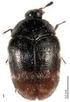 Rev. Chilena Ent. 2012, 37: 17-21 CONTRIBUTION TO THE KNOWLEDGE OF DERMESTIDAE (COLEOPTERA) FROM CHILE CONTRIBUCIÓN AL CONOCIMIENTO DE LOS DERMESTIDAE (COLEOPTERA) DE CHILE Jiří Háva 1 and Jaime Solervicens
Description of a new genus and new species of freshwater crab (Brachyura: Gecarcinucidae) from the Western Ghats, Kerala, India
 Pati and Sudha Devi Zoological Studies (2015) 54:35 DOI 10.1186/s40555-015-0112-0 RESEARCH Open Access Description of a new genus and new species of freshwater crab (Brachyura: Gecarcinucidae) from the
Lab #10 Invertebrates 2 and Vertebrates 1 (Exercises 39, 40)
 Name Bio 182-General Biology Lab #10 Invertebrates 2 and Vertebrates 1 (Exercises 39, 40) Answer the questions in the space provided. You need to turn this sheet at the end of the lab. In general know
Descriptions of two new species of Gyrocarisa (Trichoptera: Petrothrincidae)
 Zootaxa : 15 20 (2005) www.mapress.com/zootaxa/ Copyright 2005 Magnolia Press ISSN 1175-5326 (print edition) ZOOTAXA ISSN 1175-5334 (online edition) Descriptions of two new species of Gyrocarisa (Trichoptera:
Insect identification sheet
 information leaflet Insect identification sheet To enable you to identify the insect you have in your home, we have provided some identification sheets. These depict the most common pest species that you
SPECIES DESCRIPTION Picture
 SPECIES DESCRIPTION Picture German Cockroach Cockroach egg case & nymphs 12-15mm (Adult Stage)Mid to dark brown body. Lighter area with 2 dark bars behind head. Wings. Very long antennae. Young are smaller
Galaxy Classification and Evolution
 name Galaxy Classification and Evolution Galaxy Morphologies In order to study galaxies and their evolution in the universe, it is necessary to categorize them by some method. A classification scheme generally
A new species of Fissiphalliidae from Brazilian Amazon Rain Forest (Arachnida: Opiliones)
 Zootaxa : 1 6 (2004) www.mapress.com/zootaxa/ Copyright 2004 Magnolia Press ISSN 1175-5326 (print edition) ISSN 1175-5334 (online edition) A new species of Fissiphalliidae from Brazilian Amazon Rain Forest
A new species of Ohilimia Strand, 1911 from New Guinea (Araneae: Salticidae)
 Genus Vol. 21(4): 625-629 Wrocław, 27 XII 2010 A new species of Ohilimia Strand, 1911 from New Guinea (Araneae: Salticidae) Joanna Gardzińska 1 & Barbara Patoleta 2 Katedra Zoologii, Uniwersytet Przyrodniczo-Humanistyczny
TWO NEW SPECIES OF RHYACOPHILA PICTET (TRICHOPTERA, RHYACOPHILIDAE) FROM INDIA INTRODUCTION MATERIAL AND METHODS
 Acta Zoologica Academiae Scientiarum Hungaricae 58 (3), pp. 211 215, 2012 TWO NEW SPECIES OF RHYACOPHILA PICTET (TRICHOPTERA, RHYACOPHILIDAE) FROM INDIA KAUR, L. and SAINI, M. S. Department of Zoology
A new araneid genus from the Galapagos Islands (Araneae: Araneidae)
 A new araneid genus from the Galapagos Islands (Araneae: Araneidae) Herbert W. Levi ABSTRACT Contrib. Nat. Hist. 12: 893 898. A new araneid, Galaporella thaleri sp. nov., similar to species of the genus
IDENTIFICATION OF ADULT CORIXIDS 25
 IDENTIFICATION OF ADULT CORIXIDS 25 THE IDENTIFICATION OF BRITISH ADULT SPECIMENS OF SIGARA LATERALIS (LEACH), SIGARA CONCINNA (FIEBER), CALLICORIXA PRAEUSTA (FIEBER) AND CALLICORIXA WOLLASTONI (DOUGLAS
THREE NEW AGAMID LIZARDS FROM WESTERN AUSTRALIA
 Rec. West. Aust. Mus. 1981,8 (4) THREE NEW AGAMID LIZARDS FROM WESTERN AUSTRALIA G.M. STORR* ABSTRACT Three recently discovered species are described as new: Tympanocryptis aurita from east Kimberley,
SYSTEMATIC OBSERVATIONS ON THE SCORPION GENUS SYNTROPIS,
 Boletín Sociedad Entomológica Aragonesa, n1 40 (2007) : 119 136. SYSTEMATIC OBSERVATIONS ON THE SCORPION GENUS SYNTROPIS, WITH DESCRIPTIONS OF TWO NEW SPECIES (SCORPIONES: VAEJOVIDAE) Michael E. Soleglad
THE BENJAMIN INSTITUTE PRESENTS. Excerpt from Listen To Your Pain. Assessment & Treatment of. Low Back Pain. Ben E. Benjamin, Ph.D.
 THE BENJAMIN INSTITUTE PRESENTS Excerpt from Listen To Your Pain Assessment & Treatment of Low Back Pain A B E N J A M I N I N S T I T U T E E B O O K Ben E. Benjamin, Ph.D. 2 THERAPIST/CLIENT MANUAL The
Article. Marine Zoologie, Forschungsinstitut Senckenberg, 60325 Frankfurt am Main, Germany. E-mail: [email protected] 2
 Zootaxa 2128: 61 68 (2009) www.mapress.com/zootaxa/ Copyright 2009 Magnolia Press Article ISSN 1175-5326 (print edition) ZOOTAXA ISSN 1175-5334 (online edition) Redescription and mitochondrial identification
eaged salmon and trout in Chile 1
 Revta bras. Zoot 1 R (~linl 1 \.?I':Q _?71':?nn~ Ani/oera montti sp. n. (Isopoda, Cymothoidae) a parasite of eaged salmon and trout in Chile 1 Vernon E. Thatcher 2 Carlos Lobos Blumenfeldt 3 ABSTRACT.
ISOPERLA UMPQUA A NEW SPECIES OF WESTERN NEARCTIC STONEFLY (PLECOPTERA: ISOPERLINAE)
 Szczytko, S.W. and K.W. Stewart. 2013. Isoperla umpqua, a new species of western Nearctic stonefly (Plecoptera: Isoperlinae). http://zoobank.org/ urn:lsid:zoobank.org:pub:2dca0e5d-15be-4f6b-af64-3ac7aa19b1f4
FURTHER MORPHOLOGICAL CONSIDERATIONS ON THE
 ARTÍCULO: FURTHER MORPHOLOGICAL CONSIDERATIONS ON THE GENUS BIRULATUS VACHON (SCORPIONES, BUTHIDAE), WITH THE DESCRIPTION OF A NEW SPECIES FROM ISRAEL Wilson R. Lourenço ARTÍCULO: Further morphological
floridanum Banks, the only species of the genus previously
 1944] Three Species o[ Coleosoma ]rom Florida 51 THREE SPECIES OF COLEOSOMA FROM FLORIDA (ARANE/E; THERIDIID.E) x BY ELIZABETH B. BRYANT Among material recently sent the Museum of Comparative Zoology by
Storm tide is the water level rise during a storm due to the combination of storm surge and the astronomical tide.
 INTRODUCTION TO STORM SURGE Introduction to Storm Surge BOLIVAR PENINSULA IN TEXAS AFTER HURRICANE IKE (2008) What is Storm Surge? Inland Extent Storm surge can penetrate well inland from the coastline.
Smithsonian Marine Science Network
 Smithsonian Office of the Under Secretary for Science Smithsonian Marine Science Network Michael A. Lang January 2010 1 2 Smithsonian Marine Science Network The Smithsonian Marine Science Network is a
FOUR NEW SPECIES OF SUBTERRANEAN AMPHIPOD CRUSTACEANS (ARTESIIDAE,
 Holsinger, J.R. 1992. Four new species of subterranean amphipod crustaceans (Artesiidae, Hadziidae, Sebidae) from Texas, with comments on their phylogenetic and biogeographic relationships. Texas Mem.
CHAPTER 10 RESTS AND PREPARATIONS. 4. Serve as a reference point for evaluating the fit of the framework to the teeth.
 CHAPTER 10 RESTS AND DEFINITIONS A REST is any rigid part of an RPD framework which contacts a properly prepared surface of a tooth. A REST PREPARATION or REST SEAT is any portion of a tooth or restoration
Storm tide is the water level rise during a storm due to the combination of storm surge and the astronomical tide.
 INTRODUCTION TO STORM SURGE Introduction to Storm Surge National Hurricane Center Storm Surge Unit BOLIVAR PENINSULA IN TEXAS AFTER HURRICANE IKE (2008) What is Storm Surge? Inland Extent Storm surge can
Selection & Use of Surgical Needles
 Selection & Use of Surgical Needles EThALLOy * INTELLIGENT GEOMETRy ADVANCED NEEDLE COATING The Selection & Use of Surgical Needles EThICON Products needles are manufactured in a wide range of types, shapes,
Full Crown Module: Learner Level 1
 Full Crown Module Restoration / Tooth # Full Gold Crown (FGC) / 30 Extensions: Porcelain Fused to Metal (PFM) / 12 All Ceramic / 8 Learner Level 1 Mastery of Tooth Preparation Estimated Set Up Time: 30
Implants in your Laboratory: Abutment Design
 1/2 point CDT documented scientific credit. See Page 41. Implants in your Laboratory: Abutment Design By Leon Hermanides, CDT A patient s anatomical limitations have the greatest predictive value for successful
Reptiles and Amphibians of Curaçao
 33 Reptiles and Amphibians of Curaçao BY Dr. Nelly de Rooij (With 2 Figures). The Zoological Museum of Amsterdam received some collections of reptiles from Curaçao made by Dr. J. BOEKE in 1905, by Dr.
Fast and Predictable Tooth Extraction Technique
 Fast and Predictable Tooth Extraction Technique When I first saw the ads for Physics Forceps, I did not believe the claims could be true. At first glance, I didn t see how this strange looking instrument
Week 1. Week 2. Week 3
 Week 1 1. What US city has the largest population? 2. Where is Aachen? 3. What is the capitol of Florida? 4. What is the longest mountain range in Spain? 5. What countries border Equador? Week 2 1. What
Table S1. List of Institutional Abbreviations. AMNH, American Museum of Natural History, New York, New York; ANSP, Academy of National Science of
 Table S1. List of Institutional Abbreviations. AMNH, American Museum of Natural History, New York, New York; ANSP, Academy of National Science of Philadelphia, Philadelphia, Pennsylvania; BHI, Black Hills
Stanislav Jákl. Geologická 1218, CZ- Praha 5-Hlubočepy, Czech Republic e-mail: [email protected]
 Studies and Reports Taxonomical Series 10 (2): 453-464, 2014 Contribution to knowledge of Cosmiomorpha (Microcosmiomorpha) Mikšič, 1977 (Coleoptera: Scarabaeidae: Cetoniinae: Goliathini) with descriptions
The genus Paguristes (Crustacea: Decapoda: Diogenidae) from Cuba (Western Atlantic). A new record and a new species*
 SCI. MAR., 66 (2): 135-143 SCIENTIA MARINA 2002 The genus Paguristes (Crustacea: Decapoda: Diogenidae) from Cuba (Western Atlantic). A new record and a new species* MARÍA EUGENIA MANJÓN-CABEZA 1, JOSÉ
Melita shiodmnari n. sp.
 A New Species of the Genus Melita ( Titlefrom a High Tide Pool at Shirahama, Kii Peninsula, Japan Author(s) Yamato, Shigeyuki Citation PUBLICATIONS OF THE SETO MARINE BIO LABORATORY (1995), 36(5-6): 379-388
SHEEP EYE DISSECTION PROCEDURES
 SHEEP EYE DISSECTION PROCEDURES The anatomy of the human eye can be better shown and understood by the actual dissection of an eye. One eye of choice for dissection, that closely resembles the human eye,
NOTES ON RHOPALOPSOLE KLAPÁLEK (PLECOPTERA: LEUCTRIDAE), WITH DESCRIPTIONS OF THREE NEW SPECIES FROM VIETNAM
 Stark, B.P., I. Sivec, and T. Shimizu. 2012. Notes on Rhopalopsole Klapálek (Plecoptera: Leuctridae), with descriptions of three new species NOTES ON RHOPALOPSOLE KLAPÁLEK (PLECOPTERA: LEUCTRIDAE), WITH
Longfin Mako Shark. Isurus paucus NE ATL LMA. Lateral View ( ) Ventral View ( ) APPEARANCE Longfin Mako Shark, Petit Taupe (Fr), Marrajo Carite (Es).
 Lateral View ( ) Ventral View ( ) COMMON NAMES APPEARANCE, Petit Taupe (Fr), Marrajo Carite (Es). Moderately long, conical snout with relatively large eyes. Pectoral fins at least as long as head with
How to Age Golden Eagles
 ADVANCES IN BIRD IDENTIFICATION How to Age Golden Eagles Techniques for Birds Observed in Flight Hawk identification has advanced considerably in recent years. With the arrival of new field guides, new
The Genus Austroleptis from South Chile and Patagonia (Diptera, Rhagionidae)
 Title The Genus Austroleptis from (Diptera, Rhagionidae) South C Author(s) NAGATOMI, Akira; NAGATOMI, Hisako Citation 南 海 研 紀 要, 8(2): 139-156 Issue Date 1988-02-29 URL http://hdl.handle.net/10232/15696
Review of the Late Pleistocene Soricidae (Mammalia) fauna of the Vaskapu Cave (North Hungary)
 Hantkeniana 8, 163 169, Budapest, 2013 Review of the Late Pleistocene Soricidae (Mammalia) fauna of the Vaskapu Cave (North Hungary) Lukács MÉSZÁROS 1 (with 2 figures, 2 tables and 1 plate) The summary
A Note on Rim Width, Tire Sensitivity, and Rim Depth in High Performance Bicycle Wheels.
 A Note on Rim Width, Tire Sensitivity, and Rim Depth in High Performance Bicycle Wheels. History: In the late 1980 s aerodynamic bicycle wheels were beginning to evolve past the revolutionary disc wheels
ZOOTAXA ISSN 1175-5334 (online edition)
 Zootaxa 1866: 290 302 (2008) www.mapress.com/zootaxa/ Copyright 2008 Magnolia Press ISSN 1175-5326 (print edition) ZOOTAXA ISSN 1175-5334 (online edition) A new genus and species of Brychiopontiidae Humes,
A new deep-sea species of Stephonyx (Lysianassoidea: Uristidae) from off the central coast of Brazil
 Nauplius 15(1): 7-14, 2007 7 A new deep-sea species of Stephonyx (Lysianassoidea: Uristidae) from off the central coast of Brazil André R. Senna and Cristiana Serejo (ARS; CS) Museu Nacional/UFRJ, Departamento
Hair & Fiber. (Unit 5)
 37 Hair & Fiber (Unit 5) Morphology of Hair Hair is encountered as physical evidence in a wide variety of crimes. A review of the forensic aspects of hair examination must start with the observation that
How To Determine The Effects Of Hurricane Ivon On Seagrass Meadows In Alabama
 Post Hurricane Ivan Damage Assessment of Seagrass Resources of Coastal Alabama Table of Contents: K.L. Heck, Jr. and D. Byron Dauphin Island Sea Lab 101 Bienville Boulevard Dauphin Island, AL 36528 (251/861-2141;
New Species of Leaf Beetles (Coleoptera, Chrysomelidae) from China: VI
 ISSN 0013-8738, Entomological Review, 2006, Vol. 86, No. 6, pp. 662 669. Pleiades Publishing, Inc., 2006. Original Russian Text I.K. Lopatin, 2006, published in Entomologicheskoe Obozrenie, 2006, Vol.
TIDES. 1. Tides are the regular rise and fall of sea level that occurs either once a day (every 24.8 hours) or twice a day (every 12.4 hours).
 TIDES What causes tides? How are tides predicted? 1. Tides are the regular rise and fall of sea level that occurs either once a day (every 24.8 hours) or twice a day (every 12.4 hours). Tides are waves
A Key to the Empoasca Solana Complex with Descriptions of New Species
 The Ohio State University Knowledge Bank kb.osu.edu Ohio Journal of Science (Ohio Academy of Science) Ohio Journal of Science: Volume 60, Issue 5 (September, 1960) 1960-09 A Key to the Empoasca Solana
Plate Tectonics. Introduction. Boundaries between crustal plates
 Plate Tectonics KEY WORDS: continental drift, seafloor spreading, plate tectonics, mid ocean ridge (MOR) system, spreading center, rise, divergent plate boundary, subduction zone, convergent plate boundary,
New species and subspecies of Octavius from South Africa, with a key and additional distribution records (Coleoptera: Staphylinidae: Euaesthetinae)
 ACTA ENTOMOLOGICA MUSEI NATIONALIS PRAGAE Published 30.iv.2014 Volume 54(1), pp. 195 231 ISSN 0374-1036 http://zoobank.org/urn:lsid:zoobank.org:pub:d94600bd-1221-47b6-9c70-ba8c82b74cec New species and
IV. DEMOGRAPHIC PROFILE OF THE OLDER POPULATION
 World Population Ageing 195-25 IV. DEMOGRAPHIC PROFILE OF THE OLDER POPULATION A. AGE COMPOSITION Older populations themselves are ageing A notable aspect of the global ageing process is the progressive
How To Write A Network Analysis
 FishGraph: A Network-Driven Data Analysis Patrícia Cavoto*, Victor Cardoso*, Régine Vignes Lebbe, André Santanchè* *UNICAMP University ofcampinas, São Paulo, Brasil ISYEB - UMR 7205 CNRS, MNHN, UPMC, EPHE
First record of the family Pseudochiridiidae
 Barba ISSN 0065-1737 Díaz & Alegre Barroso: Pseudochiridiidae (Pseudoscorpiones) Acta Zoológica en Cuba Mexicana (n.s.), 29(3): 696-700 (2013) Nota Científica (Short Communication) First record of the
Lab 5 Overview of the Skeleton: Classification and Structure of Bones and Cartilages Exercise 9 The Axial Skeleton Exercise 10
 Lab 5 Overview of the Skeleton: Classification and Structure of Bones and Cartilages Exercise 9 The Axial Skeleton Exercise 10 Overview of the Skeleton Locate the important cartilages in the human skeleton
FORENSIC ANTHROPOLOGY NOTES
 FORENSIC ANTHROPOLOGY NOTES Forensic Anthropology = the examinations of human skeletal remains for law enforcement agencies to determine the identity of unidentified bones. Questions asked: 1. Are the
Recent ostracods from the Azores archipelago
 Joannea Geol. Paläont. 11: 132-136 (2011) Recent ostracods from the Azores archipelago Ricardo P. MEIRELES, Antonio FRIAS MARTINS & Sérgio ÁVILA The Azores is an archipelago in the Atlantic Ocean between
A new species of Halystus from Socotra Island (Coleoptera: Curculionidae: Scolytinae: Polygraphini)
 ACTA ENTOMOLOGICA MUSEI NATIONALIS PRAGAE Published 17.xii.2012 Volume 52 (supplementum 2), pp. 511 516 ISSN 0374-1036 A new species of Halystus from Socotra Island (Coleoptera: Curculionidae: Scolytinae:
KnifeLight. Carpal Tunnel Ligament Release. Operative Technique
 KnifeLight Carpal Tunnel Ligament Release Operative Technique Contents Page 1. Features & Benefits 3 Intended Use and Indications 3 Contraindications 3 Features & Benefits 3 2. Operative Technique 4 Antegrade
specimen, a practically complete cranium, was found by the author's
 Article 56.9,33N XLI.- PRELIMINARY DIAGNOSIS OF AN APPARENTLY NEW FAMILY OF INSECTIVORES. BY H. E. ANTHONY. PLATE XXIII. In July, 1916, while searching for remains of fossil mammals in Porto Rico, in accordance
Writing a Dichotomous Key to Wildflowers
 Writing a Dichotomous Key to Wildflowers Objectives: 1. Understand how to use and make dichotomous keys. 2. Understand common terminology of plant morphology. 3. Learn to recognize some fall wildflowers.
Aspects of Reproduction and the Condition of Gravid Mud Crab (Crustacea: Brachyura: Potamon) in Ebonyi State, Nigeria
 International Journal of Research Studies in Biosciences (IJRSB) Volume 3, Issue 1, January 2015, PP 104-109 ISSN 2349-0357 (Print) & ISSN 2349-0365 (Online) www.arcjournals.org Aspects of Reproduction
Reexamination of Pagurus minutus Hess, 1865, and Pagurus filholi (de Man, 1887) (Crustacea: Anomura: Paguridae)
 Reexamination of Pagurus minutus Hess, 1865, and Pagurus filholi (de Man, 1887) (Crustacea: Anomura: Paguridae) L. Sandberg & P.A. McLaughlin Sandberg, L. & P.A. McLaughlin. Reexamination of Pagurus minutus
Distinguishing characters of Niphargus gebhardti Schellenberg, 1934 and Niphargus molnari Mehely, 1927 (Crustacea: Amphipoda): a clarification
 Opusc. Zool. Budapest, 2013, 44(1): 3 8 Distinguishing characters of Niphargus gebhardti Schellenberg, 1934 and Niphargus molnari Mehely, 1927 (Crustacea: Amphipoda): a clarification D. ANGYAL 1 and G.
Chapter 7 Earthquake Hazards Practice Exam and Study Guide
 Chapter 7 Earthquake Hazards Practice Exam and Study Guide 1. Select from the following list, all of the factors that affect the intensity of ground shaking. a. The magnitude of the earthquake b. Rather
A new genus of Philorheithridae (Trichoptera) from Madagascar
 Zootaxa 1825: 18 28 (2008) www.mapress.com/zootaxa/ Copyright 2008 Magnolia Press ISSN 1175-5326 (print edition) ZOOTAXA ISSN 1175-5334 (online edition) A new genus of Philorheithridae (Trichoptera) from