
Terminal Server User Guide
|
|
|
- Clinton Nichols
- 9 years ago
- Views:
Transcription
1 MARCH 2004 Term Server R2 Term Server R2 Rack Term Server R2 Rack Term Server R2 102 Term Server R2 104 Term Server R2 Terminal Server User Guide CUSTOMER Order toll-free in the U.S 24 hours, 7 A.M. Monday to midnight Friday: BBOX SUPPORT FREE technical support, 24 hours a day, 7 days a week: Call or fax INFORMATION Mail order: Black Box Corporation, 1000 Park Drive, Lawrence, PA Web site: * [email protected]

2 Normas Oficiales Mexicanas (NOM) Electrical Safety Statement INSTRUCCIONES DE SEGURIDAD 1. Todas las instrucciones de seguridad y operación deberán ser leídas antes de que el aparato eléctrico sea operado. 2. Las instrucciones de seguridad y operación deberán ser guardadas para referencia futura. 3. Todas las advertencias en el aparato eléctrico y en sus instrucciones de operación deben ser respetadas. 4. Todas las instrucciones de operación y uso deben ser seguidas. 5. El aparato eléctrico no deberá ser usado cerca del agua-por ejemplo, cerca de la tina de baño, lavabo, sótano mojado o cerca de una alberca, etc. 6. El aparato eléctrico debe ser usado únicamente con carritos o pedestales que sean recomendados por el fabricante. 7. El aparato eléctrico debe ser montado a la pared o al techo sólo como sea recomendado por el fabricante. 8. Servicio-El usuario no debe intentar dar servicio al equipo eléctrico más allá a lo descrito en las instrucciones de operación. Todo otro servicio deberá ser referido a personal de servicio calificado. 9. El aparato eléctrico debe ser situado de tal manera que su posición no interfiera su uso. La colocación del aparato eléctrico sobre una cama, sofá, alfombra o superficie similar puede bloquea la ventilación, no se debe colocar en libreros o gabinetes que impidan el flujo de aire por los orificios de ventilación. 10. El equipo eléctrico deber ser situado fuera del alcance de fuentes de calor como radiadores, registros de calor, estufas u otros aparatos (incluyendo amplificadores) que producen calor. 11. El aparato eléctrico deberá ser connectado a una fuente de poder sólo del tipo descrito en el instructivo de operación, o como se indique en el aparato. 12. Precaución debe ser tomada de tal manera que la tierra fisica y la polarización del equipo no sea eliminada. 13. Los cables de la fuente de poder deben ser guiados de tal manera que no sean pisados ni pellizcados por objetos colocados sobre o contra ellos, poniendo particular atención a los contactos y receptáculos donde salen del aparato. 14. El equipo eléctrico debe ser limpiado únicamente de acuerdo a las recomendaciones del fabricante. Page 2

3 15. En caso de existir, una antena externa deberá ser localizada lejos de las lineas de energia. 16. El cable de corriente deberá ser desconectado del cuando el equipo no sea usado por un largo periodo de tiempo. 17. Cuidado debe ser tomado de tal manera que objectos liquidos no sean derramados sobre la cubierta u orificios de ventilación. 18. Servicio por personal calificado deberá ser provisto cuando: a. El cable de poder o el contacto ha sido dañado; u b. Objectos han caído o líquido ha sido derramado dentro del aparato; o c. El aparato ha sido expuesto a la lluvia; o d. El aparato parece no operar normalmente o muestra un cambio en su desempeño; o e. El aparato ha sido tirado o su cubierta ha sido dañada. Page 3

4 FEDERAL COMMUNICATIONS COMMISSION AND CANADIAN DEPARTMENT OF COMMUNICATIONS RADIO FREQUENCY INTERFERENCE STATEMENTS This equipment generates, uses, and can radiate radio frequency energy and if not installed and used properly, that is, in strict accordance with the manufacturer's instructions, may cause interference to radio communication. It has been tested and found to comply with the limits for a Class A computing device in accordance with the specifications in Subpart J of Part 15 of FCC rules, which are designed to provide reasonable protection against such interference when the equipment is operated in a commercial environment. Operation of this equipment in a residential area is likely to cause interference, in which case the user at his own expense will be required to take whatever measures may be necessary to correct the interference. Changes or modifications not expressly approved by the party responsible for compliance could void the user's authority to operate the equipment. This digital apparatus does not exceed the Class A limits for radio noise emission from digital apparatus set out in the Radio Interference Regulation of the Canadian Department of Communications. Le présent appareil numérique n'émet pas de bruits radioélectriques dépassant les limites applicables aux appareils numériques de la classe A prescrites dans le Règlement sur le brouillage radioélectrique publié par le ministère des Communications du Canada. Caution: the Console Server is approved for commercial use only. Page 4

5 Terminal Server User Guide About this manual Purpose of this manual This manual tells you how to install, configure and use the Black Box Terminal Server communications servers. Who this manual is for This manual is aimed at users who want to connect serial devices directly to LANs and WANs. This manual requires a working knowledge of using personal computers and associated operating systems, as well as experience in installing host cards and peripherals. Purpose of this manual Page 5

6 Fast Contents ABOUT THIS MANUAL... 5 FAST CONTENTS... 6 CONTENTS... 7 CHAPTER 1 INTRODUCTION CHAPTER 2 INSTALLATION CHAPTER 3 TERMINALS ON MUTLI-USER SYSTEMS CHAPTER 4 SETTING UP DIAL-IN MODEM PORTS CHAPTER 5 MODEM AUTHENTICATION AND LOGGING CHAPTER 6 DIALOUT MODEM PORTS SETUP CHAPTER 7 VMODEM (VIRTUAL MODEM) CHAPTER 8 PRINTING CHAPTER 9 OTHER DEVICES SETUP CHAPTER 10 THE MENU INTERFACE APPENDIX A COMMAND LINE INTERFACE APPENDIX B 48V DC RACK TERMINAL SERVER APPENDIX C TROUBLESHOOTING APPENDIX D CABLING INDEX Page 6

7 Contents ABOUT THIS MANUAL... 5 Purpose of this manual...5 Who this manual is for...5 FAST CONTENTS... 6 CONTENTS... 7 Page 7

8 CHAPTER 1 INTRODUCTION 23 About the Terminal Server...24 Terminal Server Features...26 Hardware...26 Software...27 Security...28 Hardware Overview...29 Hardware description for Terminal Server...29 Hardware description for Rack Terminal Server...30 Hardware description for 102/104 Terminal Server...31 Page 8

9 CHAPTER 2 INSTALLATION 32 Connecting to your Network BASE-T (twisted pair) BASE2 (Thin Ethernet)...33 AUI port /100BASE-T...33 Switching on Terminal Server...34 Communicating via ARP...35 Communicating via a Terminal or PC...36 The Menu System...37 Connections Menu...39 Administration Menu...40 Server Configuration Menu...42 Port Setup Menu and Beyond...44 Tips...46 Copy Command...46 Connecting via BOOTP (for Unix systems only)...46 Saving and downloading configurations...48 Domain Name Server (DNS)...49 Reassigning your Terminal Server to a New Network...49 Updating Terminal Server Firmware...49 Page 9

10 CHAPTER 3 TERMINALS ON MUTLI-USER SYSTEMS 50 Introduction...51 Terminal Port Configuration...52 Host Table Setup...54 Making a Connection...55 Tips...57 Connecting via fixed ttys...57 Multisessions on terminals/pcs...57 Gateway Tables...57 Page 10

11 CHAPTER 4 SETTING UP DIAL-IN MODEM PORTS 58 Introduction...59 Dial-in Port...60 The host...62 The modem...63 Client login...64 Tips...65 Domain Name Server (DNS)...65 WINS Server...65 MOTD...65 Gateway notes...65 Page 11

12 CHAPTER 5 MODEM AUTHENTICATION AND LOGGING 66 Introduction...67 User authentication/logging...68 The host...71 Basic authentication...71 User services authentication...71 Logging...73 Tips...74 Page 12

13 CHAPTER 6 DIALOUT MODEM PORTS SETUP 75 Introduction...76 Configuration...77 The host...78 For dial-out connections on Unix...78 For dial-out connections on Windows systems...78 Routing...79 Remote Access Systems...80 Dial-out PAP Authentication...82 Remote site devices...83 Tips...84 Page 13

14 CHAPTER 7 VMODEM (VIRTUAL MODEM) 85 About Vmodem (Virtual modem)...86 Configuring ports to use Vmodem...87 Configuring ports to use Vmodem in Normal Mode...87 Making a Call using Vmodem in Normal Mode Disconnecting a Call in Vmodem Normal Mode Configuring Vmodem to use Dial on DTR mode...90 Making a Call using Vmodem in Dial on DTR Mode Disconnecting a Call in Vmodem Dial on DTR Mode Setting/Modifying up Vmodem responses...92 Vmodem AT Commands...93 Page 14

15 CHAPTER 8 PRINTING 94 Introduction...95 Using ioland...96 Configuration...97 The Host...98 Using LPD...99 Configuration...99 Accessing the Printer LPD printing from DOS/Windows LPD Printing from BSD Unix and Linux LPD Printing from SYS V Unix LPD printing from AIX LPD printing from HP/UX Using RCP Configuration The Host Using RCP with Unix System V line printer spoolers RCP printing on a spooler system based on BSD Unix Setting up RCP printing on AIX Page 15

16 CHAPTER 9 OTHER DEVICES SETUP 110 Introduction Reverse Telnet Port Configuration The Host Black Box IOLAND Utility Mandatory arguments Optional arguments Example daemon configuration file Tips Page 16

17 CHAPTER 10 THE MENU INTERFACE 121 Introduction to menu commands Toggle fields Fast keys Connections menu Port setup menu Hardware User Flow control IP address Options Keys Access Administration menu Extra statistics screens Access menu Remote access sites Remote site devices Authentication/Logging Change password options Gateway menu Host Address menu Kill command Lines menu Access Flow control Hardware Network connections Options Terminal Port menu Quit command Reboot command Server configuration menu Statistics screens Trap function Page 17

18 APPENDIX A COMMAND LINE INTERFACE 156 Introduction Using the CLI System administration Basic configuration Command descriptions arp clear connect copy dial disconnect exit facreset gateway help host kill lock logout prov reboot resume rlogin save set set admin set menu set modem set term set port set port [number] set port [number] [access, flow, hardware, options, tcp, user] set server set slip [IP address] set ppp [IP address] set password [admin] or [login] show Page 18
![..164 resume...164 rlogin...164 save...164 set...165 set admin...165 set menu...165 set modem...165 set term...165 set port...166 set port [number].](/docs-images/42/17726447/images/page_18.jpg ".. 166 set port [number] [access, flow, hardware, options, tcp, user]... 166 set server... 166 set slip [IP address]... 166 set ppp [IP address].")
19 show ports show lines show statistics su telnet test Page 19

20 APPENDIX B 48V DC RACK TERMINAL SERVER 169 Introduction Installing the Rack Terminal Server 48V DC Installation Electrical Supply Details Safety Earth Fusing Electrical Safety Guidelines Connecting up your Rack Terminal Server Disconnecting your Rack Terminal Server Page 20
21 APPENDIX C TROUBLESHOOTING 174 Introduction Terminals/PC Problems Printer Problems Modem problems Unit still does not communicate Resetting Your unit Using the Statistics screens ETH/TTY/GATEWAY IP/ICMP/UDP TCP Users Framed Link Status Netstat Gateway SLIP Clear counters Restore counters Port Status Line status LPD Status PPP Status Using SNMP Diagnostics Entering the Diagnostic Menu Self-test Monitor Download Ethernet Interface Reset Reset all settings Reset password Reset IP address Reset product name Reset Ethernet address Quit Page 21
22 APPENDIX D CABLING 193 Introduction Serial port connectors on the Terminal Server unit Serial port connector guide RS232 DB25 female DTE RS232 RJ45 DTE socket RS422 RJ45 DTE socket Standard modem cables Terminal Server DB25 DTE to Modem DB25 DCE Cable diagram Connector pinout table Rack Terminal Server and 102/104 Terminal Server RS232 RJ45 DTE to Modem DB25 DCE Cable diagram Connector pinout table Standard Terminal/PC cables Terminal Server DB25 DTE to Terminal DB25 DTE Cable diagram Connector pinout table Terminal Server DB25 DTE to PC DB9 DTE Cable diagram Connector pinout table Rack Terminal Server and 102/104 Terminal Server RJ45 DTE to Terminal DB25 DTE Cable diagram Connector pinout table Rack Terminal Server and 102/104 Terminal Server RJ45 DTE to PC DB9 DTE Cable diagram Connector pinout table Printer cables with hardware flow control Terminal Server DB25 DTE to Printer DB25 DTE Cable diagram Connector pinout table Rack Terminal Server and 102/104 Terminal Server RJ45 male to printer DB25 DTE Cable diagram Connector pinout table INDEX Page 22
23 Terminal Server User Guide Chapter 1 Introduction You need to read this chapter if you want to... You need to read this chapter if you want an overview of the Terminal Server product. This chapter provides introductory information about the Black Box Terminal Server, its associated components, software and configuration utilities. This chapter includes the following sections; About the Terminal Server on page 24 Terminal Server Features on page 26 Hardware Overview on page 29 Hardware description for Terminal Server on page 29 Hardware description for Rack Terminal Server on page 30 Hardware description for 102/104 Terminal Server on page 31 Chapter 1 Introduction Page 23
24 About the Terminal Server The Terminal Server is a unique Ethernet TCP/IP communications / terminal server allowing serial devices to be connected directly to LANs and WANs. The 2, 4, 8 or 16 serial ports enable Terminal Server to connect to a wide range of devices including: Modems for remote access and Internet access ISDN adapters for branch remote access and Internet access Terminals for multi-user Unix systems PCs using terminal emulation or SLIP/PPP All types of serial printers Data acquisition equipment (manufacturing, laboratory, etc.) Retail point-of-sale equipment (bar coding, registers, etc.) The performance and flexibility of Terminal Server allows you to use a wide range of high speed devices in complex application environments. These operating systems include: Windows 95/98 Windows NT Citrix Winframe SCO Unix & Gemini IBM AIX Sunsoft Solaris Hewlett Packard HP-UX Data General DG/UX All other variants of Unix (BSD, Linux, IRIX, etc.) About the Terminal Server Page 24 Chapter 1 Introduction
25 This configuration diagram shows many of the features available on the Terminal Server communications server: NET About the Terminal Server Page 25 Chapter 1 Introduction
26 Terminal Server Features Hardware Terminal Server is a TCP/IP communications server with 2, 4, 8 or 16, RS-232 or RS-422 ports for making serial network connections. It attaches to your TCP/IP network and allows serial devices such as modems, terminals and printers to access the network. The Terminal Server hardware features include: 2, 4, 8 or 16 serial lines, fully configurable with port speeds up to kbps. RJ45 connectors on Terminal Server and 102/104 Terminal Server or DB25 connectors on Terminal Server. Full modem control using DTR, DSR, CTS, RTS and DCD. FLASH memory for downloading firmware releases. 102/104 Terminal Server has 10BASE-T or 10/100BASE-T interfaces. Terminal Server and Rack Terminal Server have either autosensing 10BASE-T / 10BASE2 / AUI or 10/100BASE-T interfaces. Auto sensing power supply; V AC (48-60V DC option available on Terminal Server ). LEDs for diagnostic testing. Self-test on power-up. Rack mount or tabletop design. Terminal Server Features Page 26 Chapter 1 Introduction
27 Software The Terminal Server software features include: Support for TCP/IP and UDP protocols including telnet and rlogin. Remote access support including PPP, SLIP and CSLIP. Printer support via lpd, rcp, and utilities. Modem support via PPP and utilities. Utilities provide fixed tty support for Unix systems. A window oriented menu interface with pop-up menus and on screen help (command line also available). ARP or BOOTP for network based setup. Dynamic statistics displays and line status reporting for fast problem diagnosis. Multi screens on terminals. Full support of SNMP MIBs, allowing remote configuration via SNMP as well as statistics gathering. Interoperability with IP routing through gateway tables. Domain Name Server support. WINS support for Windows environments. Port configuration copy and save functions. Terminal Server Features Page 27 Chapter 1 Introduction
28 Security The Terminal Server security features include: Supervisory and port password. Port locking. Authentication with PAP support. Per user access level assignment. Service logging. Logging facility for audit and billing. Modem auto reset. Terminal Server Features Page 28 Chapter 1 Introduction
29 Hardware Overview The following table and diagrams describe the units: Model Type No. Ports Connector Interface 102/104 Terminal Table Top 2,4 RJ45 RS-232 Server Terminal Server Table Top 8,16 DB25 RS232 Rack Terminal Server Rack Mount 4, 8, 16 RJ45 RS-232 Model Hardware description for Terminal Server 100 BASE T Link/Activity 10 BASE T Link/Activity Serial ports Power input socket Power indicator 10/100 BASE T socket Main power switch Hardware Overview Page 29 Chapter 1 Introduction
30 Hardware description for Rack Terminal Server Main power switch POWER 10 BASE T 100 BASE T ACTIVITY Port activity indicator I O Serial ports Power input socket 10/100 BASE T socket Hardware description for Rack Terminal Server Page 30 Chapter 1 Introduction
31 Hardware description for 102/104 Terminal Server Network indicator Port activity indicators Power indicator Serial ports Power input socket 10/100 BASE-T socket Hardware description for 102/104 Terminal Server Page 31 Chapter 1 Introduction
32 Terminal Server User Guide Chapter 2 Installation You need to read this chapter if you want to... You need to read this chapter if you want information about installing your Terminal Server product. This chapter provides information about installing the Black Box Terminal Server including connecting to your network, configuring communications as well as information on the menu system and general tips. This chapter includes the following sections; Connecting to your Network on page 33 Switching on Terminal Server on page 34 Communicating via ARP on page 35 Communicating via a Terminal or PC on page 36 The Menu System on page 37 Tips on page 46. Chapter 2 Installation Page 32
33 Connecting to your Network First connect Terminal Server to a network then begin configuring the unit for your application. Additional information on configuring modems and printers follows. Terminal Server and Rack Terminal Server connect to your ethernet network via one of the following (depending on your hardware model): Auto-sensing 10BASE-T (twisted pair) Auto-sensing 10BASE2 (thin) Auto-sensing AUI 10/100BASET 10/100BASE-T 10BASE-T (twisted pair) 102/104 Terminal Server connect using either: 10BASE-T (twisted pair) Attach the RJ connector from a hub directly to Terminal Server twisted pair port. 10BASE2 (Thin Ethernet) AUI port Attach a BNC T connector directly to your Terminal Server. If your unit is the termination point for the cable you need to add a terminator. Always ensure that each segment of the thin Ethernet cable is at least 0.5m in length. The maximum length for a thin Ethernet cable is 185 metres. The AUI connector allows an external transceiver to be connected. This allows a number of different interfaces to connect including 10BASE5 (or thick) and fibre optic transceivers. 10/100BASE-T Attach the RJ45 connector from a hub directly to the Terminal Server port. Attach the RJ connector from a hub directly to the Terminal Server 10/100BASE-T port. Connecting to your Network Page 33 Chapter 2 Installation
34 Switching on Terminal Server The Terminal Server power supply accepts input voltages in the range 110 to 240V AC, allowing it to be used world-wide. The 102/104 Terminal Server has an external power supply unit. After you connect your LAN interface, you can power up the unit. The green power indicator at the side (or front for rack and 102/104 units) should be lit. If the unit fails to power up with the green power indicator lit, disconnect the unit and contact your dealer for help. The Terminal Server firmware may be compressed, and this takes a short time to decompress before running. During this phase the network LEDs will light alternately to indicate that decompression is in progress. The green Ethernet indicators show the active connections. It remains lit and blinks when LAN traffic is active. Note: To change your Ethernet media, you will need to reboot the unit to activate the connector. If your unit has 10BASE-T, 10BASE2 and AUI connectors, then the green ethernet indicators show the active connection. The indicators remain lit and blink when LAN traffic is active. If you have an Rack Terminal Server unit with 10/100BASE-T, then the Ethernet indicators will light green to indicate either 10Mbit or 100Mbit link, and the Activity light flickers to indicate LAN traffic. If you have a Terminal Server or 102/104 Terminal Server with 10/100BASE-T, then the Ethernet will light green to indicate a 100Mbit link, and orange to indicate a 10Mbit link. The LED will flicker to show LAN traffic. You are now ready to begin communicating with your Terminal Server. You can connect to the unit in different ways: via a terminal or PC on port 1, or using ARP or BOOTP. Using ARP is the preferred method for both Windows and Unix, however a terminal or PC attached to port 1 is often used. BOOTP setup is for Unix users only. Choose the appropriate method for your application. Third party BOOTP packages are available for Windows Switching on Terminal Server Page 34 Chapter 2 Installation
35 Communicating via ARP Your Terminal Server supports the Address Resolution Protocol (ARP). It allows you to temporarily connect to your Terminal Server to assign a permanent IP address. If you prefer to use a terminal or PC attached to Terminal Server see Communicating via a Terminal or PC on page 36. To do this proceed as follows; 1. From a local Unix host, type the following: arp -s a.b.c.d aa:bb:cc:dd:ee:ff (where a.b.c.d is the IP address you want for Terminal Server, and aa:bb:cc:dd:ee:ff is the Ethernet address of your Terminal Server, found on the bottom of the unit itself). 2. On a Windows NT/98 system, the arp command is slightly different (using dashes instead of colons): arp -s a.b.c.d aa-bb-cc-dd-ee-ff 3. Whether you use Unix or Windows to run arp, you are now ready to telnet to Terminal Server. Here is the sequence to use: arp -s :80:d4:00:33:4e telnet password> local> 4. At the password prompt, press the Enter key since this is not set yet. The IP address still needs to be configured on the unit (ARP has only allowed you to connect to the unit so far). Note If there are any errors, recheck both the IP and Ethernet addresses you keyed in (this is the most common error here). See Appendix B Troubleshooting for more information on problems. You can now skip the next section and go straight to The Menu System on page 37 Communicating via ARP Page 35 Chapter 2 Installation
36 Communicating via a Terminal or PC You can connect to Terminal Server using a terminal or PC (with a terminal emulation package such as Hyperterm). 1. Connect a terminal or your PC to port 1. The Terminal Server serial ports are DTE type RS-232 ports. When connecting a terminal/ PC directly (without modems), the RS-232 signals need to be crossed over ( null modem cable). See Appendix D Cabling for pinout information. 2. For a terminal/pc to communicate with a server, set it to the following: 9.6 kbps, eight data bits, one stop bit, software flow control, no parity. After powering up your Terminal Server, you are prompted to enter a Local login:>. 3. You can just hit any character and at this point (the character is required). The next prompt displayed is local>, which is the Command Line Interface (CLI) prompt. Note If there are any problems, check the cable you are using (this is the most common error). Port 1 is configured to provide error messages should any problems occur. See Appendix B Troubleshooting for more information on problems. You can now move to The Menu System. See The Menu System on page 37. Communicating via a Terminal or PC Page 36 Chapter 2 Installation
37 The Menu System You should now be at the Command Line Interface (CLI) of the Terminal Server as designated by the local> prompt. If you would like to continue in CLI mode refer to Appendix A Command Line Interface, but we recommend the menu system. 1. Set the terminal emulation type and begin using the menus. The following are the terminal options: ansi, dumb, vt100, wyse50, wyse60, tvi925, ibm3151, vt320, falco50, hp The default setting is dumb. To set the menu interface to your emulation simply type set term with your option. Example: local> set term ansi Note For Falco50 type local> set term falco 3. To switch from the command line interface to the menu interface, at the local> prompt enter: set menu The Menu System Page 37 Chapter 2 Installation
38 The Connections Menu should now be displayed. This menu displays the current state of the four possible connections. There are no active connections. The firmware version of Terminal Server is located on the lower left hand portion. The wording REMOTE-ADMIN in the upper right signifies you are remotely telneted into Terminal Server (and will read Terminal: 1 if you are using a terminal/pc into port 1.) The keys used to move about in the menus depend on the terminal emulation you are using. The arrow keys should all work. The TAB key is very important for moving between fields. Backspace and DEL should work, but depend on the emulation. ESC (the escape key) will move you back one menu. Note If there is a problem with your emulation, you can try a different emulation mode. See Appendix B Troubleshootingfor more information. An accelerator key can be used to jump to an option within a menu and is the first letter of the option. The Menu System Page 38 Chapter 2 Installation
39 Connections Menu Select connection '1 on the Connections Menu and press the Enter key. The Commands pop-up menu is displayed. There are a number of options available from this menu. Before communication across the network can be established the Terminal Server must be assigned a network IP address. This is accessed through the Administration Menu. Select the Admin mode field and press the Enter key. Note If you are telneted into Terminal Server, the telnet, rlogin and port options do not appear on the Commands pop-up menu. The Menu System Page 39 Chapter 2 Installation
40 Administration Menu The top level Administration Menu appears as follows: 1. Select the Password field and press the Enter key. Use the factory default password here: this is iolan (no caps). Note: This password level will time-out in four minutes if there is no activity. This is for security reasons and will take you back to Administration Menu (view level). The Administration Menu is redisplayed, it now has some extra fields (access, change, kill, reboot, trap). The Menu System Page 40 Chapter 2 Installation
41 2. Select the server entry and press the Enter key. This takes you into the Server Configuration Menu. The Menu System Page 41 Chapter 2 Installation
42 Server Configuration Menu There are a number of fields in the Server Configuration menu which are explained in Chapter 10 The menu interface. At this point proceed as follows; 1. Give the Terminal Server an IP address and a name. 2. The important fields that you need to fill in are as follows: Name: In the example above the communications server name has been set to IOLAN. It is a good idea for the Terminal Server name entered here to match the name entered in the host machine s domain name server. Note For more information about domain name servers, consult your operating system manuals. IP Address: This address must be set to a value that is consistent with the network the Terminal Server is on. 3. Having filled in the fields press the Enter key. This brings the Commands pop-up menu as shown in the next picture. Note The Ethernet address is factory set. This address is uniquely assigned to the Terminal Server and MUST NOT be changed. The Menu System Page 42 Chapter 2 Installation
43 4. Select the Save & Exit field and press the Enter key. Other options are Quit & Exit, which does not save the changes before exiting this menu, Values, which will display the optional values for this field if available, and Cancel, which will take you back to this screen for more editing. 5. You have now set up the unit with a new IP address. This should be confirmed with the message: IP CHANGED PLEASE REBOOT 6. Reboot the communications server to activate the new IP address using the reboot command. The IP address and/or subnet mask are the only parameters that when changed necessitate rebooting. The Menu System Page 43 Chapter 2 Installation
44 Port Setup Menu and Beyond Your communications server is now ready to configure for terminals on multi-user systems or modems, printers and other devices. The next sections deal with each of these. If you ve got a good feel for the menu system, you should proceed to the section appropriate for your application. If you d like a full review of the menu system refer to section 9, The Menu Interface later in this guide. For more information about the Command Line mode, consult Appendix A Command Line Interface. All of the procedures are based around the Port Setup Menu. This is accessed through the Administration Menu (password level). Remember, that if you are not in the password level, you can only view the information, not change it. Here is the Port Setup Menu: This menu allows the user to set up all the parameters associated with a port. The administrator can alter the set-up of any port on the communications server while a user can only alter the set-up for their own port. The Menu System Page 44 Chapter 2 Installation
45 This menu is divided into the following sections: Menu option Hardware User Flow Control IP Addresses Options Keys Access Description Defines port type and is used for setting up the hardware configuration of the modem, terminal, printer or PC session. This section is always used. Defines various user parameters such as name and terminal type. Most fields are used in this section. Defines the various flow control options used by the Terminal Server. This section is always used. Deals with remote access via PPP/SLIP sessions. Deals mainly with the telnet options. This section is the least used. Defines the various accelerator keys that the Terminal Server responds to and can be used for convenience. Controls the type of the connection made from this port. This is the most important section in defining a port. If you re ready to install terminals, printers and modems, proceed to the appropriate section. For a good review, go to Chapter 10 The menu interface. The Menu System Page 45 Chapter 2 Installation
46 Tips Copy Command The Terminal Server has a copy command that allows you to copy the setup of one port to another. You will need to get to the CLI (from the Connection menu) and use the following syntax. Note: To get back to the menu system once in the CLI, type set menu at the command line. local> su password> ADMIN:local> copy ADMIN:local> set menu The commands above would copy the configuration of port number 1 to ports 2, 3, 4 and 5 (and return you to the menu system). Connecting via BOOTP (for Unix systems only) Your Terminal Server supports BOOTP which allows the communications server to dynamically configure itself on startup. Upon startup your Terminal Server sends four BOOTP broadcast requests if it has no IP address. This broadcast request packet contains the Ethernet address of your unit. The request is received by all hosts on the network and is checked against a file to find a match. This data base file will normally be /etc/bootptab and will be of the following format: # bootptab description iolan:ht=ethernet:ha=0080d400024e:\ :hd=/tftp:\ :bf=iolan.dl:\ :ip= : Where: ht is the type of network ha is the Ethernet address on back of your unit Tips Page 46 Chapter 2 Installation
47 hd is the home directory for specifying Terminal Server firmware (optional) bf is the name of Terminal Server firmware (optional) ip is the IP address you want to use Note This BOOTP implementation is a subset and not a full implementation of the RFC. Note The most common error is bad information in the /etc/bootptab file (recheck it). See Appendix B Troubleshooting for more information. You can now move back to The Menu System in this chapter. Tips Page 47 Chapter 2 Installation
48 Saving and downloading configurations It is possible to save the configuration of your Terminal Server. This is convenient for loading multiple communications servers with the same setup. It is also advisable as a backup method. If the boot file name has the extension.cfg (eg iolan.cfg), it will be loaded as a configuration file rather than a boot file. This allows the administrator to configure one Terminal Server, save its configuration and automatically configure subsequent units via bootp. Should the configuration of your Terminal Server ever be corrupted because of user error or damage, it is an advantage to have the configuration stored somewhere for easy reinstallation. This can be achieved by uploading the configuration of the unit to a host on the network. To do this, enter the Communications Server Menu from the Administration Menu. Select the Init file entry of this menu. Set this to the full pathname of the file in which you wish to store the configuration. Set Boot host to the host machine you wish the file to reside within and save these entries. Boot host: rockvegas (or ip address) Init file: /tftp/term_serv.cfg Log onto the host machine in the normal manner and create the file you have specified in the Terminal Server menu, this could be as shown in the next picture: touch term_serv.cfg Note This file must exist with the correct read/write permissions before you can write to it.this can be accomplished by pressing the Enter key and selecting the CLI option in the pop up menu. At the iolan> prompt, use the CLI as the administrator by typing: su and enter the password and type: save config This uploads the communications server port configurations to the host in a format that can be downloaded at a later date. Note This does not save any of the settings configured in the Server Configuration Menu, including the IP address, language, name, subnet mask, etc. Tips Page 48 Chapter 2 Installation
49 Terminal Server will now automatically download this configuration on reboot. Remember that whenever you change a setting on the unit, it will be overwritten the next time the unit is rebooted unless the new configuration is saved. Domain Name Server (DNS) Terminal Server can be configured to take advantage of your network s Domain Name Server (DNS). This is done from the server in the Administration Menu by keying in the IP address of your DNS in the Name server field. Fill in the Domain name field as well. Reassigning your Terminal Server to a New Network If you need to attach your Terminal Server to a different network with a new IP address, it is possible to reset it to factory default condition using the following procedure: 1. Power on the unit. 2. Wait 30 seconds. Note If firmware is compressed, then network LED will alternately light for approximately an additional 30 seconds. 3. Hold down the RESET button for 15 seconds. 4. Release the button. After this is done, the unit will start sending BOOTP request packets. This procedure is useful for factory defaulting units which cannot be reached via TCP/IP. This includes reassigning a programmed unit to a network to which the previously assigned IP address does not belong. Updating Terminal Server Firmware Firmware can be downloaded across the network using tftp protocol if the host machine and file name are set in the boot host and boot file entries of the server menu. These entries are checked at start up and if they have been configured, the relevant file will be downloaded. Note: tftp must be enabled on the relevant host as it is disabled by default Tips Page 49 Chapter 2 Installation
50 Terminal Server User Guide Chapter 3 Terminals on mutli-user systems You need to read this chapter if you want to... You need to read this chapter if you want information on setting up a terminal for use with your Terminal Server product. This chapter provides information on how to setup a terminal, and other tips such as the concept of fixed ttys, multiscreens, the copy command, TERM features, etc. This chapter includes the following sections; Introduction on page 51 Terminal Port Configuration on page 52 Host Table Setup on page 54 Making a Connection on page 55 Tips on page 57 Chapter 3 Terminals on mutli-user systems Page 50
51 Introduction Terminal Server is used extensively for connecting terminals, printers and modems on multiuser Unix systems, especially in retail applications. These Unix systems include SCO Unix, IBM AIX, HP-UX, Data General s DG/UX, etc. This chapter deals with terminals and/or PCs using emulation packages (such as Hyperterm). In many applications, the users need to be direct connected to a specific Unix host so that they see the login prompt automatically. This is helpful in securing your system, or in environments where the users need to be in one application only. This chapter will show how to setup a terminal, and other tips such as the concept of fixed ttys, multi screens, the copy command, TERM features, etc. Consult Appendix D Cabling, for information on wiring your terminal. Remember to use the TAB key to bounce between fields, and if you get the Commands exit menu by mistake, use Cancel to return to editing this menu. Introduction Page 51 Chapter 3 Terminals on mutli-user systems
52 Terminal Port Configuration This is the setup for making a terminal connect to a designated Unix host login prompt automatically. The following fields are important: Menu option Access Mode Connection Host Description Set this field to Local. This tells the terminal server port to listen for data on the RS-232 side. With this field set to telnet, the port will operate in telnet mode (or raw for rlogin). Most systems will use telnet. Set this field to Initiated and the port will establish a TCP/IP connection to a specified host only after receiving a <CR> on the RS-232 port. If you set this field to none, then the user of this port will see the menu system when the terminal is powered on. Use this field to define which host computer you want the port to automatically connect to when using Initiated connections. Use the host s IP address or if you setup the Host Address Menu, you can use a name. Terminal Port Configuration Page 52 Chapter 3 Terminals on mutli-user systems
53 Menu option Remote Port Description This corresponds to Telnet service on the remote host and must be set to the standard 23 (or 513 for rlogin). Monitor DSR You can set this field to Yes if you wire the terminal s DTR signal pin 20 (DB25) to the Terminal Server's DSR signal pin 3 on the RJ45 connector ( see Appendix D Cabling for DB25 pin assignments). When you turn the terminal off, it will reset the Terminal Server port, which tells the Unix host to kill the user s processes. Terminal Port Configuration Page 53 Chapter 3 Terminals on mutli-user systems
54 Host Table Setup In order for your Terminal Server to connect easily to machines on the network it must know the IP addresses of the other computers. The Terminal Server can have its own internal table of IP addresses set up in the host table. This is a local naming system only. Your Terminal Server can also use the name server utility of your Unix system (consult your Unix system manual and Tips on page 57). The Host Address Menu is accessed from the Administration Menu by selecting the host entry. The host table can contain up to 10 addresses. Each entry consists of a host name and its corresponding IP address. You can fill in an entry (both the name and the IP Address) for your host machines and then save the values by pressing the Enter key. Host Table Setup Page 54 Chapter 3 Terminals on mutli-user systems
55 Making a Connection If you are using initiated connections, you will not see the Terminal Server menus. Instead, you see the login prompt of the host you assigned in the host field of the Port Setup Menu. However, if your connection field is set to None, the Connections Menu appears. You are now ready to make connections. From the Connections Menu press the Enter key on a *** FREE *** session to display the Commands menu. Select the Telnet field and press the Enter key. This produces a pop-up menu allowing the choice of the host machines that are configured in the host table. To select a host, move the cursor down to the required name then press the Enter key. At this point the unit attempts to make a connection across the network to the indicated host using the telnet protocol. If it succeeds, the host machine s login prompt is displayed. There may be an error in the configuration if the connection cannot be established. Note At this point, check the host table again for correct entries, then check the network connection and host machine you re connecting to. While in session to the host machine, you can return to the communications server by using a hot key. This is user-defined, but defaults to ^]. Press this key and the Connections Menu is displayed. To resume your connection select the host session you were on (notice that the Making a Connection Page 55 Chapter 3 Terminals on mutli-user systems
56 name of the host is now displayed where *** FREE *** was). Press the Enter key to bring up the Connection pop-up menu, then select the Resume Connection option. Note If the ^] did not work, you might have a conflict with that character sequence and should check the Keys section of this port. When logging out of your session the connection is automatically closed. Making a Connection Page 56 Chapter 3 Terminals on mutli-user systems
57 Tips Connecting via fixed ttys Your Terminal Server has the ability to create a fixed tty under Unix. This is helpful for older or secure Unix applications that require a fixed location for each terminal. Consult Chapter 9 Other devices setup. Multisessions on terminals/pcs Your Terminal Server is capable of supporting multiple sessions. This allows the user to connect to all four *** FREE *** sessions with different hosts and move between them using the ^] hot key. You can also key through the screens by setting the session key (that is, If set to ^A you would bounce through the screens with a ^A1, ^A2, ^A3, ^A4.). If you are using a terminal that supports video pages such as the Wyse 60, the screens will be refreshed if you set the video pages field on the Port Menu to the number of pages supported by your terminal (for Wyse 60 = 3). The TERM field The TERM field in the Port Setup Menu can be used to pass the terminal type information to the host. The terminal type field is local to the Terminal Server but will be passed to the host. The TERM field can override the information being sent to the host about the type of terminal. This allows you to customise information being passed to the host. For example, a user could encode the physical location into this field (that is, tty16) and then extract that at the host end to determine which port the user has logged in on (that is, port 16). Gateway Tables When the host and Terminal Server are connected via a gateway router, a connection is not possible until the gateway table has been updated with the IP address of the local gateway machine. See Gateway Menu on page 149 in Chapter 10 The menu interface. Tips Page 57 Chapter 3 Terminals on mutli-user systems
58 Terminal Server User Guide Chapter 4 Setting up dial-in modem ports You need to read this chapter if you want to... You need to read this chapter if you want information on creating dial-in connections with your Terminal Server product. This chapter provides information on the configuration necessary to create dial-in connections. It includes the most simple connection such as a dial-in Unix connection, The setting up PPP ports which is how Windows systems dial-in (as well as Unix). This chapter includes the following sections; Introduction on page 59 Dial-in Port on page 60 The host on page 62 The modem on page 63 Client login on page 64 Tips on page 65. Chapter 4 Setting up dial-in modem ports Page 58
59 Introduction This chapter will review the configuration necessary to create dial-in connections. It will start with the most simple connection such as a dial-in Unix connection. The chapter then moves into setting up PPP ports which is how Windows systems dial-in (as well as Unix). This is very important if you are an Internet Service Provider (ISP) or a corporate site providing remote access or Internet/Intranet access. Your Terminal Server can make a very good dial-in solution for ISPs and corporate users alike by using its remote access facilities. This chapter goes hand-in-hand with Chapter 5 Modem authentication and logging. Note In many of the modem examples, we are using PPP. You can use SLIP and CSLIP in those applications requiring these legacy modes. Introduction Page 59 Chapter 4 Setting up dial-in modem ports
60 Dial-in Port The following is the port configuration for a dial-in connection, including PPP. The following fields are important: Option Monitor DCD TERM Flow Ctrl Description With this flag set to Yes, your Terminal Server will monitor Data Carrier Detect (DCD) - pin 8 - from the modem. As soon as your modem answers a call and establishes a carrier signal, the modem raises DCD. The terminal server will then establish a telnet/rlogin connection to a specified host. When the modem hangs up, DCD goes low and the terminal server port resets. This will also drop the connection to the host. This field is the TERM environment variable.whatever you type in here will be passed to the host as the TERM variable when a telnet connection is established and the user logs in. The modem and terminal server port should be configured to use Hardware (RTS/CTS) flow control. This will be especially important if you are using SLIP. Dial-in Port Page 60 Chapter 4 Setting up dial-in modem ports
61 Option Dst: Mask Secure Access Connection Host Remote port Local port Description This field contains the IP address the dial-in user will borrow for the PPP session. If you are using a straight forward dial-in connection for Unix, this is not required. If using PPP, SLIP or CSLIP, this is the subnet mask that controls the range of IP addresses accessible from the port and must correspond with your network. (If used for terminals, this is not needed.) This field is set to Yes to force the call-in user to use the Dst IP address. (su is not available in this mode.) If the Secure flag is set, the dial-in user will not be able to obtain administrative privileges. This also applies to local terminals. Set this field to Dynamic. This sets the port of the terminal server to listen for data on both the RS-232 side and the network side. If only used for dial-in, set to Local and it will only listen on the RS- 232 side. With the connection set to Dedicated, the port will automatically connect to a specified host when not doing PPP (DCD goes high on the modem). When not doing PPP, this field defines which host computer you want the port to automatically connect to. Use the host s IP address. You can also define the host in the terminal server s Host Table and just use the name. This corresponds to the Login (for example, rlogin) service on the remote host and must be 513 (or 23 for Telnet). The inetd process running on the terminal server for this port is listening for TCP/IP connections on TCP port Dial-in Port Page 61 Chapter 4 Setting up dial-in modem ports
62 The host Make sure you have setup a valid user account for authentication on the designated authentication host. See Chapter 5 Modem authentication and logging. The host Page 62 Chapter 4 Setting up dial-in modem ports
63 The modem You will need to configure the modem using a configuration string. To do this, go to the Remote Site Devices screen (via the Access section of the Administrative Menu). Select the UNUSED ENTRY that corresponds to the port with the modem attached (that is, third one down is port 3, etc.). You can set the type (for example, name) and the Modem Config to the required configuration string (for example, ate0s0=1&w). All other fields are default. You will now need to kill this port (from the Administration Menu or CLI) to activate the changes and configure the modem. The configuration string will be sent to the modem after each call, keeping the modem in sync with Terminal Server. The modem Page 63 Chapter 4 Setting up dial-in modem ports
64 Client login When the caller connects, you may want to send out a welcome message of some sort. After the user gets this message, you want him/her to enter a login and password then connect to the Host for a shell account. Or, if it is a PPP user, they will simply start sending PPP packets at the login prompt (for example, Windows 95/98) and use PAP for authentication. Optionally, the dial-in user can place a P, S or C (all caps) in front of the user name at the Login prompt (this starts the corresponding protocol after successful authentication). Welcome to the Internet site login: Cflint password: Host authentication succeeded. My IP Address is : Your IP Address is : The Subnet Mask is : With this example, the Terminal Server is now in CSLIP mode, so put your PC into CSLIP mode as well. Your dialer script will have to parse out the My/Your addresses from the above message. Your IP Address will be the address of the PC that is calling in, and My IP Address can be the PC s default gateway. The above procedure works for SLIP and PPP as well. However, PPP will not display the My IP... message because the IP addresses are negotiated automatically in the IPCP layer. With the Connection field on the Port Setup Menu set to Dedicated, if you do not specify a P, S or C in front of the user name, you will be authenticated and then connected to the host. This will leave you at a shell prompt on the Authentication host. A caller will never see Terminal Server. If Connection is set to None, you will be left at the CLI prompt (for example, IOLAN> ). Client login Page 64 Chapter 4 Setting up dial-in modem ports
65 Tips Domain Name Server (DNS) WINS Server Your Terminal Server can be configured to take advantage of your network s Domain Name Server (DNS). This is important for ISPs. From the Administration Menu select server and key in the IP address of your DNS in the Name server field. You could fill in the Domain name field as well. If you have a local NT server running WINS and you want dial-in clients to take advantage of that, put the IP address of the NT server in the WINS server field of the Server Configuration screen. Note The Windows 95/98 client obtains the WINS address by setting 'Use DHCP for WINS resolution'. MOTD A Message of the Day (MOTD) can be displayed before login. This is setup from the Server Configuration menu using MOTD and Boot host fields. Gateway notes If you have a router on your local network, make sure you enter this into the Terminal Server Gateway Menu. Tips Page 65 Chapter 4 Setting up dial-in modem ports
66 Terminal Server User Guide Chapter 5 Modem authentication and logging You need to read this chapter if you want to... You need to read this chapter if you want information on modem authentication and logging for your Terminal Server unit. This chapter contains information providing authentication support to validate users connecting to the serial port, and updating a host log file on connection states. This chapter includes the following sections; Introduction on page 67 User authentication/logging on page 68 The host on page 71 Logging on page 73 Tips on page 74 Chapter 5 Modem authentication and logging Page 66
67 Introduction Your Terminal Server provides authentication support to validate users connecting to the serial port, and can update a host log file on connection states. Authentication and logging is achieved by using a designated authentication host to validate users and keep connection information. This unique facility takes the burden away from the unit and more importantly allows the administrator to configure one host, rather than configuring multiple terminal servers. Option Authentication Logging Description When the Terminal Server port has authentication set to host or both, the user is required to enter a user name followed by a password when dialed in. The user ID and password are forwarded to the authentication host for validation. By setting the authentication hosts network port to 23 or 513, this allows the user ID to be checked against the standard Unix login system (see Tips on page 74). This feature also allows proprietary user validation code to be written on any TCP/IP platform by choosing another network port number. During the Terminal Server start up, a telnet session is established to the authentication host, with the pre-defined Log Username and Logger password. Serial events like users logging in and out are recorded in the defined Log File. Note RADIUS is often associated, but not required, for dial-in services. RADIUS offers three major functions: authentication, logging and user services. Terminal Server can be configured to offer all of these features but without using RADIUS. This section explains how. The Host Authentication And Logging menu may be accessed via the administrator from the access option in the Administration Menu. Introduction Page 67 Chapter 5 Modem authentication and logging
68 User authentication/logging To improve access security, the Terminal Server has a mechanism for authenticating users before allowing them access. This is accomplished by prompting the user for a Login ID and a password. The Terminal Server will then attempt to login to a specified host using that ID and password. If successful, the user is authenticated and allowed access. Otherwise, the call is dropped. Your Terminal Server will also log events such as logins, logouts, connections and disconnections, and power ups. This feature is enabled when you set the Authentication field to host in the Port Setup Menu. The following is the host authentication setup (via the Access section of the Administration Menu): The following fields are important: User authentication/logging Page 68 Chapter 5 Modem authentication and logging
69 Option Auth Host Authentication Port Login Prompt Password Prompt Success Indication String Failure Indication String Maximum Login Attempts Login Timeout Disconnect Probe Log Username Log File Log Power Up/Down Log User Login/Logout Description The IP Address/Name of the host that the Terminal Server attempts to login to for authenticating users. The TCP service to be used for authenticating users. Normally this is set to 23 for Telnet. The string used by the Terminal Server to know when to send the login ID. Set this field to ogin:. Leave out the first letter as some systems use a L and others use a l as the first letter. The string used by the Terminal Server to know when to send the users password. Use ssword as depicted above. The string used by the Terminal Server to determine if the login ID and Password were valid and the login process was successful. Normally you will see the string Last after successfully logging in. The string your Terminal Server will look for to determine that the Login ID or Password were invalid. You will normally see the word invalid or incorrect as part of the failure message from the host. The number of login attempts your Terminal Server will allow the user to make before dropping the call. This defines the amount of time in seconds the Terminal Server will wait for the user to provide a login ID and password before dropping the line. This option determines whether authentication probe logins will be terminated on completion of authentication. The User ID your Terminal Server will use to log in to the authentication host and log messages. This user needs to be at a shell prompt to cat messages to the log file. The password for the log user is set up under the Terminal Server Administration Menu -Change option. Then choose the Logger option and enter the log user s password as defined on the host. You will have to enter this password twice. (See Tips on page 74.) The filename the log user will send itsmessages to. Normally this will go to the log user s home directory. The Terminal Server will log when it is powered up and rebooted. The Terminal Server will log when a user logs in and out of a port on Terminal Server. User authentication/logging Page 69 Chapter 5 Modem authentication and logging
70 Option Log Port Connect/ Disconnect Log User Service Start/ Stop Description The Terminal Server will log when someone connects to and disconnects from a port on Terminal Server. The Terminal Server will log a PPP, SLIP or CSLIP service when started on the port. User authentication/logging Page 70 Chapter 5 Modem authentication and logging
71 The host Basic authentication Your Terminal Server will need to login to the authentication host with the log user name defined on the Host Authentication And Logging screen. Therefore, you need to create an account to be used by Terminal Server (avoid csh shell). Make sure the user can log in successfully. Also, make sure the user is not prompted for any input and ends up at a shell prompt. User services authentication This is used to provide services based upon the dial-in user s name. For example, user Mark always telnets to a specific IP address or user Alan needs to dial-in and establish a PPP connection using a static IP address. This is accomplished by using a PERL script which parses a RADIUS database. The PERL script ( RADparse) is on the CD or our website. RADIUS is the TCP/IP protocol used for authenticating remote dial-in users. Although Terminal Server does not use RADIUS, a Perl based utility capable of using standard RADIUS databases is available. Otherwise, you can execute our PERL script during the user s login. Under Unix, this script is started from the etc/profile. You then need to create a user database file. This is a sample file. # Example of a PPP user with static address alan Password Framed-Protocol = PPP Framed-Address = # Example of a user with access to Terminal Server CLI/Menu techman Password User-Service-Type = Shell-Use # Example of a telnet user mark Password User-Service-Type = Login-User Login-Host = Login-Service = Telnet The host Page 71 Chapter 5 Modem authentication and logging
72 # Everybody else gets PPP with a dynamic address DEFAULT Password Framed-Protocol = PPP Note When using advanced authentication, make sure the Success Indication String in the Host Authentication And Logging menu is set to userdefined. The host Page 72 Chapter 5 Modem authentication and logging
73 Logging A log file can be updated on the authentication host to record when a Terminal Server is powered up, rebooted, and users and ports are connected and disconnected. This information is of particular importance to administrators who need to record users logging in and out. In addition, when the logger is enabled the Terminal Server completes a time stamp every 5 minutes to record that the Terminal Server is still active. This allows an administrator to gain an accurate record of events. See User authentication/logging on page 68 (via the Access section of the Administration Menu). When the Terminal Server is powered up a Telnet connection is established to the authentication host with the Logger user name. The Terminal Server records users logging in and out of the log file access.log. The logger only connects at Terminal Server start-up time and the connection stays open until the unit is reset. The Terminal Server checks the log TCP connection every 60 seconds. The logger may be restarted via the kill command by adding two to the number of ports on your server (for example, use four for an Terminal Server2, six for an Terminal Server4, ten for an Terminal Server8, eighteen for an Terminal Server16). If the host authentication succeeds, but logger fails to log events, then the port connection is dropped. Logging Page 73 Chapter 5 Modem authentication and logging
74 Tips Windows notes Authentication of Windows NT requires a telnet daemon. Check the Windows section of our website for the latest Windows telnetd software. You will need to set up your users on Windows NT through this software. Logging on Windows NT also requires a utility called log_it.exe. If the Windows NT login user id is logger, enter it into the Terminal Server as Nlogger so that the Terminal Server will know to use the log_it.exe utility. Unix notes Also, on the Host Authentication And Logging menu, change the Terminal Server Success Indication String to read, Microsoft instead of Last.) For LINUX users, edit the file /etc/motd and put the word Last in it. This will agree with the standard setup of the Host Authentication And Logging menu s Success Indication String. Tips Page 74 Chapter 5 Modem authentication and logging
75 Terminal Server User Guide Chapter 6 Dialout modem ports setup You need to read this chapter if you want to... You need to read this chapter if you want information on setting up modem ports for your Terminal Server product. This chapter provides on setting up modem ports for your Terminal Server product. Dial-out ports can be just a simple Unix outbound cu call or your Terminal Server can act as a dial-out router to facilitate Internet PPP requests. This chapter includes the following sections; Introduction on page 76 Configuration on page 77 The host on page 78 Routing on page 79 Remote Access Systems on page 80 Remote site devices on page 83 Tips on page 84. Chapter 6 Dialout modem ports setup Page 75
76 Introduction Dial-out ports can be just a simple Unix outbound cu call or your Terminal Server can act as a dial-out router to facilitate Internet PPP requests. As a dial-out router your Terminal Server automatically establishes a PPP/SLIP/CSLIP link to that site. Then drops the call after a preset period of inactivity. This dial-on-demand feature is automatic. Your Terminal Server will place the call when local TCP/IP traffic needs to be routed to a configured remote site. If not using dial-out routing, you will need a COMPORT redirector such as ioland. The CD has the ioland utility if you are using Unix. Please load the appropriate binary onto your system. If you can not find the correct binary, please compile the ioland.c source code for your system (see your Unix manual). Introduction Page 76 Chapter 6 Dialout modem ports setup
77 Configuration The Port Setup Menu should be set up as follows for both simple dial-in connections and PPP/SLIP connections. The following fields are important: Field Access Monitor DCD Flow Ctrl Mode Description Set the Access field to Dynamic (dial-in or out) or Remote (dialout only). With this flag set to Yes, the terminal server will monitor the modem signal Data Carrier Detect (DCD) - pin 8. When the modem hangs up, pin DCD from the modem goes low and the terminal server port will reset. The modem and terminal server port should be configured to use Hardware (RTS/CTS) flow control. This will be especially important if you are transferring binary files. Set this field to raw. Configuration Page 77 Chapter 6 Dialout modem ports setup
78 The host For dial-out connections on Unix If you have not already loaded ioland onto your system, do so now (see CD). For more information on ioland see Chapter 9 Other devices setup. In it s simplest form, at the superuser prompt you would run the following command in Unix: ioland h <server-name> <device-name> This will start the ioland process and allow you to specify a device-name in /dev that is linked to a pseudo tty. This pseudo tty works just like a regular tty with the following exception: you cannot set physical attributes such as baud rate, parity and flow control as these are handled by the terminal server. If you plan to use communication software on the Unix host such as cu or uucp you should refer to your Unix manual for additional help. For dial-out connections on Windows systems Check our website for the latest information on dial-out connections (under the Windows support ). The host Page 78 Chapter 6 Dialout modem ports setup
79 Routing For dial-out routing, you must have the proper routing entry on all hosts in your local network that will communicate with the remote site. In the case of a Unix system, you must make an entry similar to the following (please check your Unix manual for the proper syntax of the route command): For a single host at the remote site: route add <remote-ip-addr> <IOLAN-ip-addr> 2 For multiple hosts at the remote site: route add net <remote-net-addr> <IOLAN-ip-addr> 2 The Terminal Server will dial into another piece of hardware, log into that hardware and start a PPP session. Then the local Terminal Server will act as a router and forward all IP traffic destined outside its local network. In other words, the Terminal Server will 'auto-dial' the Internet and act as the router. In this example, the local network is: , the ISP s network is: , the ISP s equipment that you are dialing into is another Terminal Server ( ) and the local Terminal Server is: The Terminal Server gateway entries look like this: Routing Page 79 Chapter 6 Dialout modem ports setup
80 Remote Access Systems This screen is used to define a remote system (up to 16 entries per unit), a phone number, login script, etc. There are a lot of similarities between this screen and the UUCP systems file under Unix. The following fields are important: Remote Access Systems Page 80 Chapter 6 Dialout modem ports setup
81 Field Sitename User name Password Device type Service type: Inactivity Phone number The following characters are ignored (, ), -,. Login-script Description The IP name or IP address of the remote site Terminal Server will be calling. The user name required by the remote system for logging in. You may use the \u in your login script in lieu of the full name. The above user name s password as required by the remote system. You may use the \p in your login script in lieu of the full password. The name of the modem device as defined in the Remote Access Systems Screen. You may have several ports setup with the same device type, and the dialer will use the first available. If a device for dialling out is not available, the Terminal Server will return an ICMP host unreachable message (ICMP type 3 code 1). This specifies which protocol will be used when the link is established to the remote site. Choices are PPP, SLIP and CSLIP. The period (in minutes) of inactivity on the SLIP/ PPP link before the port drops the call automatically. Setting this field to 0 turns the timeout feature off. The phone number of the remote system. Note that the \ may be used as a delay. For example, a phone system that requires a 9 followed by a four-second delay before getting an outside line would require an entry like 9\ when included as part of the number. The chat script that will be used to login to the remote system. It takes the form of the usual Send/Expect chat script you may already be familiar with. If no script is defined, this step is skipped (for example, hardwired connections). There are a few special characters used by the Terminal Server as described below: "" expect nothing (for example, the Terminal Server starts the chat script) \r send a carriage return \n send new-line \u user name (sends the username from the User name field). \p password (sends the password from the password field). \1-\9 delay for number of seconds. \s space (Substitute this instead of a <space> value). \t phone# (sends the telephone number field). \d send the modem s dial command \\ escapes to \. \b send a break. Remote Access Systems Page 81 Chapter 6 Dialout modem ports setup
82 Dial-out PAP Authentication If a dial-out script is not used but a username and password are defined, your Terminal Server will send a PAP packet after establishing a PPP link and use the username and password defined for the remote site. Remote Access Systems Page 82 Chapter 6 Dialout modem ports setup
83 Remote site devices This screen is used to define/setup the modem device. There are a lot of similarities between this screen and the UUCP devices file under Unix. It is possible to assign several ports the same device name, and the dialer daemon will automatically use the first available port. It is also possible to have these ports do double-duty and serve as regular dial-in ports for dumb terminal access, SLIP or PPP in addition to the dial-out capability. The following fields are important: Field Type Dst Address Config Restart timer Description The name of the modem assigned to a specific port. It is referenced from the Remote Access Systems Screen in the Device type field. The address of the remote system your Terminal Server is calling into. The modem s configuration string. There are a few examples at the end of this document. Note: Leave this field blank for directly connected devices. Amount of time in seconds before the Terminal Server retransmits PPP options. Remote site devices Page 83 Chapter 6 Dialout modem ports setup
84 Field Max Retries Dial Timeout Dial Retries Description Number of option retries before dropping the line. Number of seconds to wait for the modem to establish link and respond. Number of times to attempt a connection to the remote site before giving up. Tips Hunt groups You can setup several modems and use the same name for each group under Remote Site Devices. The Terminal Server will use the first available modem defined in Remote Site Devices, which if busy will default to the next available. Tips Page 84 Chapter 6 Dialout modem ports setup
85 Terminal Server User Guide Chapter 7 Vmodem (Virtual modem) You need to read this chapter if you want to... You need to read this chapter if you want an overview of the Terminal Server products Virtual modem feature. This chapter provides information about the Vmodem feature of the Terminal Server, which provides modem like communication between two Terminal Server units on a network. This feature behaves like two modems connected across a telephone line. This chapter includes the following sections; About Vmodem (Virtual modem) on page 86 Configuring ports to use Vmodem on page 87 Setting/Modifying up Vmodem responses on page 92 Vmodem AT Commands on page 93. Chapter 7 Vmodem (Virtual modem) Page 85
86 About Vmodem (Virtual modem) Vmodem is a feature of the Terminal Server, which provides modem like communication between two Terminal Server units on a network. This feature behaves like two modems connected across a telephone line. Typically, you use the Vmodem feature when you have multiple devices communicating with a central site. Vmodem allows you to achieve this using a single Terminal Server unit at each end of the network without having to use multiple modems. You use Vmodem because you want to avoid having to use multiple modems with the associated costs of calls and connections. You use this feature by logging into the Terminal Server via a terminal or telnet. You then enable and configure the Vmodem feature on the ports you want to use. You then connect your remote devices to the Vmodem ports on the Terminal Server units. About Vmodem (Virtual modem) Page 86 Chapter 7 Vmodem (Virtual modem)
87 Configuring ports to use Vmodem The Vmodem feature has two modes, Normal and Dial on DTR. In normal mode, the Vmodem ports behave like a modem using basic AT commands to connect and disconnect. In Dial on DTR mode, the unit will automatically connect to a pre-configured destination. Configuring ports to use Vmodem in Normal Mode Carry out the following on all the participating Terminal Server units; 1. Login to your Terminal Server unit using either serial link or telnet as required. 2. Within the CONNECTIONS MENU now displayed, select a FREE connection and press the Enter key. 3. Select Commands > Admin mode and press the Enter key. 4. Select ADMINISTRATION MENU > Password and press the Enter key. 5. When prompted, enter the password and press the Enter key. The ADMINISTRATION MENU is now updated to show additional features available in administration mode only. 6. In the updated ADMINISTRATION MENU; Select Port and press the Enter key. At the Port prompt now displayed, type in the port to be configured for Vmodem and then press the Enter key. 7. In the PORT SETUP MENU; Highlight the Access field and press the Enter key. 8. Select Access >Values and press Enter key. 9. Select Access > VModem and press the Enter key. You are now returned to the PORT SETUP MENU. 10.If the AT command +++ATH is required to hang up a connection; a. In the PORT SETUP MENU now displayed; b. Set the Mode field in the Access area to Telnet. c. Otherwise, set the Mode field to RAW. 11.Within the Hardware area, set the Monitor DSR field to No. Leave all other fields at their default settings. 12.In the PORT SETUP MENU screen; Press the Enter key. When prompted, select Save and exit. The ADMINISTRATION MENU is now displayed. Configuring ports to use Vmodem Page 87 Chapter 7 Vmodem (Virtual modem)
88 13.Press the Escape key to go back to the CONNECTIONS MENU. 14.In the CONNECTIONS MENU; a. Select a FREE connection and press the Enter key. b. Select Commands > CLI. 15.Connect the devices required to the Vmodem port on the Terminal Server using the appropriate cable. 16.Repeat this procedure for all ports you want to configure to use Vmodem. Configuring ports to use Vmodem Page 88 Chapter 7 Vmodem (Virtual modem)
89 Making a Call using Vmodem in Normal Mode Using Vmodem, telephone numbers are replaced by the IP address and TCP port of the Vmodem port you are calling. 1. To place a call using the device attached to a Vmodem port, the ATD sequence would be: ATD<IP address><port> Where: IP address is the IP address of the Terminal Server unit that you are calling. where each number is represented by three digits (padded using zeros where necessary) with no separating dots. Port is the local TCP port of the Vmodem port on the Terminal Server unit you are calling, (By default the TCP port is plus the number of the serial port using Vmodem. For example, Port 12 would become 10012). For example, to connect to a host Terminal Server with an IP address of and serial port 4 configured as Vmodem normal mode, the ATD sequence would be; ATD (This is not echoed by the port) The Vmodem now returns a numerical or text string to indicate either a successful or failed connection. 2. You can configure how this indication is displayed see the appropriate section within this note. Disconnecting a Call in Vmodem Normal Mode To disconnect a call, the sequence +++ATH is sent to the Vmodem port. Configuring ports to use Vmodem Page 89 Chapter 7 Vmodem (Virtual modem)
90 Configuring Vmodem to use Dial on DTR mode You use Dial on DTR mode because you want your device to dial a preconfigured number automatically when DTR is raised by the device. To configure your port, proceed as follows; 1. Login to your Terminal Server unit using either serial link or telnet. 2. Within the CONNECTIONS MENU now displayed, select a FREE connection and press the Enter key. 3. Select Commands > Admin mode and press the Enter key. 4. Select ADMINISTRATION MENU > Password and press the Enter key. 5. When prompted, enter the password and press the Enter key. The ADMINISTRATION MENU is now updated to show additional features available in administration mode only. 6. In the updated ADMINISTRATION MENU; 7. Select Port and press the Enter key. 8. At the Port prompt now displayed, type in the port to be configured for Vmodem and then press the Enter key. 9. In the PORT SETUP MENU; a. Highlight the Access field and press the Enter key. b. Select Access >Values and press Enter key. c. Select Access > VModem and press the Enter key. You are now returned to the PORT SETUP MENU. 10.If the AT command +++ATH is required to hang up a connection; 11.In the PORT SETUP MENU now displayed; 12.Set the Mode field in the Access area to Telnet. Otherwise, set the Mode field to RAW. 13.Within the Hardware area, set the Monitor DSR field to Yes to enable Dial On Dtr mode. 14.At the Host field enter the HOST Terminal Server IP address of the Terminal Server to be auto-dialled. 15.In the Remote port field enter the TCP port of the serial port on the Terminal Server to be auto-dialled. (Note: this value is the Local port setting on the Terminal Server to be auto-dialled which by default will be plus the serial port number of the Vmodem port to dial.) 16.Leave all other fields at their default settings. 17.In the PORT SETUP MENU screen; a. Press the Enter key. b. When prompted, select Save and exit. Configuring ports to use Vmodem Page 90 Chapter 7 Vmodem (Virtual modem)
91 The ADMINISTRATION MENU is now displayed. c. Press the Escape key to go back to the CONNECTIONS MENU. 18.In the CONNECTIONS MENU; a. Select a FREE connection and press the Enter key. b. Select Commands > CLI. 19.Connect the devices required to the Vmodem port on the Terminal Server using the appropriate cable. 20.Repeat this procedure for all ports you want to configure to use Vmodem. Making a Call using Vmodem in Dial on DTR Mode Using Vmodem in Dial on DTR mode will cause the host IP address and remote TCP port number to be called automatically on detection of the DTR signal being high. 1. Raising DTR (connected to DSR on the Terminal Server Vmodem port) will make a connection to the pre-configured remote Terminal Server unit. Disconnecting a Call in Vmodem Dial on DTR Mode 1. Dropping DTR (connected to DSR on the Terminal Server Vmodem port) will cause disconnection, typing +++ATH will produce the same result. Configuring ports to use Vmodem Page 91 Chapter 7 Vmodem (Virtual modem)
92 Setting/Modifying up Vmodem responses The default responses for failure/success of a connection, may be customized. To configure the Vmodem responses, proceed as follows; 1. Login to your Terminal Server unit using either serial link or telnet as required. 2. Within the CONNECTIONS MENU now displayed press the Enter key and select;. Commands > Admin mode and press the Enter key. ADMINISTRATION MENU > Password and press the Enter key. 3. When prompted, enter the password and press the Enter key. The ADMNINISTRATION MENU is now updated to show additional features available in administration mode only. 4. In the updated ADMINISTRATION MENU, select: Access and press the Enter key. Access > Vmodem and press the Enter key. 5. In the VMODEM SETUP screen now displayed, set the following fields if required; Success Indication String: Sent to the device when a connection succeeds. If no string is entered, then the string CONNECT will be displayed with the connecting speed, for instance CONNECT Failure Indication String:Sent to the device when a connection fails. If no string is entered, then the string NO CARRIER will be displayed. Suppress Result Codes (Yes/No):If set to no, connection success/failure indication strings are sent to the connected device, otherwise these indications are suppressed. Result Code Style (Verbose/Numeric): If set to Verbose, then string result codes are sent to the connected device. If set to Numeric, then the following characters are sent to the connected device: 1 Successfully Connected 2 Failed to Connect 4 Error Setting/Modifying up Vmodem responses Page 92 Chapter 7 Vmodem (Virtual modem)
93 Vmodem AT Commands Ports configured for Vmodem operation interpret the following AT command codes. Code +++ATH ATQ0 ATQ1 ATV0 ATV1 Description Disconnect and hang-up a connection. Enable connection responses for the duration of the session. Suppress connection responses for the duration of the session. Selects numeric results codes for the duration of the session. Selects verbose results codes for the duration of the session. All other AT sequences are accepted, but ignored by the Vmodem port. Vmodem AT Commands Page 93 Chapter 7 Vmodem (Virtual modem)
94 Terminal Server User Guide Chapter 8 Printing You need to read this chapter if you want to... You need to read this chapter if you want information on printing from your Terminal Server product. This chapter provides information about the three methods of printing from your Terminal Server: ioland, LPD, or RCP. ioland is the recommended method, however this will depend on your application and operating system. This chapter includes the following sections; Introduction on page 95 Using ioland on page 96 Using LPD on page 99 Using RCP on page 105. Chapter 8 Printing Page 94
95 Introduction There are three methods of printing from your Terminal Server: ioland, LPD, or RCP. ioland is the recommended method, however this will depend on your application and operating system. Method ioland LPD RCP Description ioland provides a pseudo TTY interface to Unix print spoolers (not available for Windows ). This software and the binaries associated with it are available from the CD provided with the unit or from the website. LPD is the line printer daemon protocol supported by mmost operating systems including Windows and Unix (for example, SCO, AIX, DG/UX, HP-UX, Linux, Solaris, etc.) for an LPD spooler for Windows 95/98 see our website. RCP is remote copy printing and available on Unix systems. It requires a special interface script also found on the CD. Introduction Page 95 Chapter 8 Printing
96 Using ioland We suggest you use the ioland utility on the CD provided. The ioland utility can be used for Unix printing only. Ioland is a Unix tty port redirector. For non-unix applications use LPD, see Using LPD on page 99. Using ioland Page 96 Chapter 8 Printing
97 Configuration The following fields are important: Field Flow ctrl Access Mode Local port Description Set your Terminal Server port flow control to Hardware. Then set your printer to use DTR Pacing or Hardware or Ready/Busy flow control. Use the RS-232 printer cable pinout shown in Appendix D Cabling. Set this field to Remote. This sets the port of the terminal server to listen for connections coming from the network. There will be an INETD process running on the terminal server that does the listening.you can check on the status of this process by looking at the Netstat screen of the terminal server s Statistics menu (or show net from the CLI prompt). Set this field to Telnet. This puts the port of the terminal server in Telnet mode, which will ensure that EOF is properly negotiated before closing down the TCP/IP connection, otherwise the tail end of a print job could be lost. The INETD process running on the terminal server for this port is listening for TCP/IP connections on TCP port Using ioland Page 97 Chapter 8 Printing
98 The Host If you are already familiar with ioland, all you have to do for the above configuration is: ioland -T <server name> <device name> This will start ioland process and create a device in /dev. If you are not familiar with the ioland program, Chapter 9 Other devices setup. Hint Hunt groups are supported on the Terminal Server for printing. To use this, use the same number in the Port Setup local port field (for example, 1006). Using ioland Page 98 Chapter 8 Printing
99 Using LPD Configuration Your Terminal Server can be setup for receiving print jobs via LPD and this is a very simple method. It works for both Windows and Unix systems. The following fields are important: Using LPD Page 99 Chapter 8 Printing
100 Field Flow control Name Access Mode Local port Description Set your Terminal Server port flow control to Hardware. Then set your printer to use DTR Pacing or Hardware or Ready/ Busy flow control. Use the RS-232 printer cable pinout shown in the Cabling Guide (Appendix C), as this will save a print job if the printer is turned off or the cable becomes detached. The LPD client, as a reference to the printer, will use what you assign here. This is the printer queue name on the Terminal Server. Set this field to Remote. This sets the port of the terminal server to listen for connections coming from the network. There will be an INETD process running on the terminal server that does the listening. You can check on the status of this process by looking at the NETSTAT screen of the terminal server s STATS menu (or show net). The port of the terminal server will operate in a raw TCP/IP mode. The INETD process running on the terminal server for this port is listening for TCP/IP connections on TCP port 515 (this is the LPD service number). Using LPD Page 100 Chapter 8 Printing
101 Accessing the Printer The client is the machine that contains the file to be printed and may be running one of a range of operating systems and applications. The client must support LPD, Unix systems normally include a version of LPD and there are a number of TCP/IP applications for DOS/ Windows that also support LPD. When printing via LPD the client refers to the printer by IP address (or the name associated with this address from the host table) and printer name or queue name. This may take one of the following forms: The name of the terminal server and no queue name or port number. This will cause the print job to be printed on the first available LPD port on the terminal server of this name. The Name field in the Port Setup Menu does not need to be set. The name of the terminal server followed by a port number. For example if the queue name is server_name9 (or server_name09) then serial port 9 will receive the print job. Please note that in this example, the Name field in the Port Setup Menu need not be set. The printer name as set in the Name field of the Port Setup Menu. More than one serial port may have the same name allowing the server to create a hunt group of printers. The first available port to match that queue name will receive the print job. A special feature of LPD with terminal servers is the ability to do carriage-return and line feed mapping at the server. This is accomplished by having a + appended to the client queue name and is valid for all of the above methods of access. Alternatively, you may enable the CR to CR LF mappingoption for the port. Note There is a maximum limit of 30 LPD connections per server, which may be distributed to all of the available LPD ports as required. If the maximum is exceeded then the request is rejected and the connection is closed. Using LPD Page 101 Chapter 8 Printing
102 LPD printing from DOS/Windows At present it is possible to print from Windows or DOS although this will normally be accomplished via a separate application program like PC/TCP or Netmanage Chameleon. The new versions of Windows type operating systems either have or intended to have TCP/IP built into the operating system. Windows NT has a built-in LPD utility, and there are shareware packages on the Internet for Windows 95/98 (check our website). The documentation for each application or operating system should allow users to configure and use it with the Terminal Server. The obvious advantage of using LPD to print is that the server can be used to connect a printer that will be shared between both DOS/Windows and Unix machines. Under Windows the printer will be available from within other applications via the File option of the Windows menu bar. The actual printer will be referenced by the Name of the terminal server serial port or, by the terminal server and port number in the same way that Unix uses the Name. The server IP address should be included in the Host table before trying to setup the actual printer port. Using LPD Page 102 Chapter 8 Printing
103 LPD Printing from BSD Unix and Linux This section should give you some idea of how to set-up printing via LPD on a Unix host. However, this will not be universally true as different versions of Unix have different configuration requirements. You may also wish to consult your Operating System documentation before attempting to add LPD. The Unix host should have a printer database, for BSD and Linux type systems this will be the file /etc/printcap and there should be an entry within this file for the server s LPD port that looks something like the following: #term_serv LPD Printer on serial port 16 Laser1 IOLAN LPD printer 16:\ :rp=lpd_printer:rm=term_serv:lp=:sf:\ :sd=/usr/spool/lpd/lpd_printer:\ :lf=/usr/spool/lpd/term_serv16/log: Printing could then be accomplished using the following command: lpr PLaser1 <file> A limitation of printing with LPD on the terminal server is that no formatting of text (apart from the + operation) can be carried out by the terminal server firmware. This is due to the lack of a spooler utility in the terminal server and the data being forwarded directly to the serial port. To overcome this the local host must perform all of the necessary changes and then send these to the terminal server. Defining a printer queue as in the previous examples can do this. If filtering or formatting is required then a local linking print queue needs to be created. This would be something like the following: # Lcl q to link to term_serv LPD Printer on port 16 link-laser1 IOLAN LPD Printer 16:\ :lp=/dev/null:sf:sd=/usr/spool/lpd/laser1:\ :lf=/usr/spool/lpd/lpd_printer/log:\ :of=/etc/iolan/link-laser1: The shell script output file link-laser1 has the contents: #!/bin/sh lpr PLaser1 Using LPD Page 103 Chapter 8 Printing
104 LPD Printing from SYS V Unix This would be sufficient to print a header page and perform form feeds. If a specialised filter program is required for something like a plotter then the script may look something like the following: #!/bin/sh /usr/local/filter $@ lpr PLaser1 Here is an example for setting up the System V spooling system (for example, Linux, Solaris, etc.) to print to the Terminal Server LPD daemon. This assumes that you will print to a port configured like the example above on an Terminal Server called term_serv. lpsystem -t bsd term_serv lpadmin -p Laser1 -s term_serv If the terminal server is not defined in the /etc/hosts file you may not get an error message from either the lpsystem or lpadmin commands, but the printer will not print. If the lpsystem command is not performed, the lpadmin command will return an error indicating that the system named in the -s parameter does not exist even though the system is listed in the /etc/hosts file. LPD printing from AIX Note Although it is possible to create a printer spool on the Terminal Server, UNIX lpd queues only print one job at a time. The host will wait for one job to complete before spooling the second so all jobs will go to the same queue and print from the same port. Use SMIT to configure remote printer. LPD printing from HP/UX Use SAM to configure remote printer. Hint Hunt groups are supported on the Terminal Server for printing. To use this, use the same queue name in the Terminal Server Port Setup name field. Using LPD Page 104 Chapter 8 Printing
105 Using RCP Configuration RCP is used as an alternative option (where LPD and ioland are not available). It is a Unix only command set. A script is provided on the CD for RCP. The following fields are important: Field Flow ctrl Access Description Set your Terminal Server port flow control to Both. This will invoke both Hardware (RTS/CTS) and XON/XOFF flow control on the Terminal Server. Then set your printer to use XON/XOFF. Use the RS-232 cable pinout described in Appendix D Cabling, as this will stop a print job if the printer is turned off or the cable becomes detached. Set this field to Remote. This sets the port of the terminal server to listen for connections coming from the network. There will be an INETD process running on the terminal server that does the listening. You can check on the status of this process by looking at the NETSTAT screen of the terminal server s Statistics Menu (or show net from CLI). Using RCP Page 105 Chapter 8 Printing
106 Field Mode Local port Description The port of the terminal server will operate in a raw TCP/IP mode. The INETD process running on the terminal server for this port is listening for TCP/IP connections on TCP port 514 (this is the RCP service number). The Host On systems where LPD or a binary for ioland is not available, or is found to be unreliable due to limitations in the OS, RCP provides a useful, if limited, alternative method for printing. The port/group of ports must be configured to listen to the RCP port, which is port 514. Users can then copy files to the server using the following command syntax: rcp <file> <server>:tty [port #] It is worth noting that the RCP will fail if the port (or all the ports in the hunt group) is in use when the RCP command is attempted. If you wish to use RCP as part of a System V print spooler script, it is essential that the script checks the return status of the RCP command. Using RCP Page 106 Chapter 8 Printing
107 Using RCP with Unix System V line printer spoolers. 1. Log in as root and create a print queue for the printer with /dev/null as the device port. For example, create an HP LaserJet printer queue via the command: /usr/lib/lpadmin -hpjet -v/dev/null -mhplaserjet Do not accept or enable the printer at this stage. 2. Go into the directory containing the interface scripts for all printers. This is normally found in: /usr/spool/lp/admins/lp/interfaces (Rel 3 Unix). /etc/lp/interfaces (Rel 4 Unix). /usr/spool/lp/interfaces (XENIX). 3. Find the interface shell script for this printer and copy it to a file with the suffix.orig. using the example: cp hpjet hpjet.orig 4. Copy the Server RCP shell script from the TSSD support disk to the interface script, e.g:cp /etc/xxxx/src/xxxx.rcp hpjet 5. Having created the hpjet file set the permissions to allow execution of the script, e.g: chmod a+x hpjet 6. Edit the interface script and insert the desired server name and port number. For example, if the name is iceland and the printer is attached to port 8 (numbering from 1 to 16). Then the line: rcp $TMP <server name>:tty<port number> becomes: rcp $TMP iceland:tty8 Some Unix systems may require the full pathname of the RCP command. For example: /usr/ucb/rcp $TMP iceland:tty8 7. Activate the printer for use, e.g: /usr/lib/accept hpjet enable hpjet 8. Set up the Terminal Server port for RCP printing by changing the Local Port field in the Access section of the Port Setup Menu to 514. Using RCP Page 107 Chapter 8 Printing
108 RCP printing on a spooler system based on BSD Unix Currently, the RCP printing utility will not work if the of filter is used in conjunction with any other filter. 1. Log in as root and create a print queue for the printer with /dev/null as the device port. For example, create a printer queue by placing this record in /etc/printcap: rcp Printer to IOLAN port 8 IOLAN8 IOLAN rcp Printer:\ :lp=/dev/null:\ :sf:\ :sd=/usr/spool/lpd/iolan8:\ :lf=/usr/spool/lpd/iolan8/log:\ :if=/etc/xxxx/hpif: 2. Go into the directory containing the desired text filter program intended for the if field. If there is no filter required for this queue then create a dummy filter program which calls the cat command with no arguments. 3. Link the generic filter program to a file with the suffix.orig. This generic filter program may be in use by other printer queues and so is left untouched. Using the example: ln -s <filter-name> /etc/xxxxx/hpif.orig 4. Copy the RCP shell script to the rcp directory /etc/xxxxx. That is: cp xxxx.rcp /etc/xxxxx/hpif 5. Edit the interface script and insert the desired Terminal Server name and port number. For example, if the Terminal Server name is iceland and the printer is attached to port 8 (numbering from 1 to 16). Then the line: rcp $TMP <IOLAN name>:tty<port number> becomes: rcp $TMP iceland:tty8 Some Unix systems may require the full pathname of the RCP command. For example, SunOS Unix and may require the line to become: /usr/ucb/rcp $TMP iceland:tty8 6. Activate the printer for use. That is: lpc start IOLAN8 lpc enable IOLAN8 7. Set up the Terminal Server port for RCP printing. See the relevant section in the guide or call Technical Support for an example fax. Using RCP Page 108 Chapter 8 Printing
109 Setting up RCP printing on AIX See the our website for latest information. Tips Hunt groups: There is no hunt group method using RCP. Using RCP Page 109 Chapter 8 Printing
110 Terminal Server User Guide Chapter 9 Other devices setup You need to read this chapter if you want to... You need to read this chapter if you want information on setting up printers and data acquisition type equipment. This chapter provides information on setting up printers and data acquisition type equipment, including retail point-of-sale equipment. This chapter includes the following sections; Introduction on page 111 Reverse Telnet Port Configuration on page 112 Black Box IOLAND Utility on page 114 Tips on page 120. Chapter 9 Other devices setup Page 110
111 Introduction The Terminal Server is a very versatile product and can handle a lot of creative applications. This section deals with setting up printers and data acquisition type equipment, including retail point-of-sale equipment. Many types of RS-232 equipment can be attached including: Retail point-of-sale (POS) equipment Maintenance ports on network equipment (for monitoring) Making terminals with fixed ttys Manufacturing equipment Your Terminal Server accomplishes this by using a reverse telnet connection. On Unix you utilise the ioland software supplied on the CD. For Windows, consult the support section of the web sites for the latest support software for dial-out applications. Introduction Page 111 Chapter 9 Other devices setup
112 Reverse Telnet Port Configuration This setup is used when you need to access a serial port from the network. For example you might want to collect data from a serial device such as a barcode scanner, POS terminal, etc. Or you can tie a login to a specific Unix tty device (using ioland). For Unix you use the utility ioland. For Windows system consult the website. The following fields are important: Fields Keys Access Mode Local Port Description Set all your Keys to ^@. Set this field to Remote. This sets the port of the terminal server to listen for connections coming from the network. There will be an INETD process running on the terminal server that does the listening. You can check on the status of this process by looking at the Netstat screen of the terminal server s Stats menu. Set this field to Raw. The INETD process running on the terminal server for this port is listening for TCP/IP connections on TCP port (for port 6). Reverse Telnet Port Configuration Page 112 Chapter 9 Other devices setup
113 The Host If you are already familiar with ioland, all you have to do for the above configuration on Unix is: ioland -p <server name> <device name> This will start the ioland process in permanent mode and create a device in /dev. If you are not familiar with the ioland program, read the following section. If you are using Windows check the web page for the latest information on dial-out connectivity. Reverse Telnet Port Configuration Page 113 Chapter 9 Other devices setup
114 Black Box IOLAND Utility The Terminal Server peripheral daemon provides a client process with a full-duplex and transparent interface to a server port of its choice, via a pseudo-tty device. This presents a tty-like interface to the application in much the same way as a serial port. The daemon is primarily intended as an interface between the client process and a printer, modem or some data acquisition device. In the case of printers, it is recommended that the LPD protocol is first assessed as a suitable printing solution before the Terminal Server daemon. By default, the daemon will fork into two processes during the start of a data transfer. The parent process will transfer data from the client to the server while the child process will transfer data from the server to the client. The parent also handles all the control aspects of the client-server link. The child process is normally terminated when the client process closes the slave pseudo-tty unless the -p option is used. In this case, the child is created at startup time and remains. If the daemon is started without any arguments it will try and open the configuration file /etc/ ioland.cf which contains instructions on which daemons to start, for which peripherals, plus any optional arguments. Alternatively, a single daemon can be started from the shell with various arguments specified. Black Box IOLAND Utility Page 114 Chapter 9 Other devices setup
115 Mandatory arguments There are three mandatory arguments the daemon requires to mediate between the client and server port: Argument Server Port Link Description The host name of Terminal Server that has the attached printer or terminal. The TCP port on which the Terminal Server port is listening for connection requests. A mnemonic filename in /dev which shall be linked to the slave pseudo-tty selected by the daemon. This should be used as the interface device for client processes since the pseudo-tty may change during the daemon lifetime. Black Box IOLAND Utility Page 115 Chapter 9 Other devices setup
116 Optional arguments The other optional arguments modify the behaviour of the daemon in the way it controls connections, and processes data to and from the peripheral. They are defined as follows: Argument Description -T Enable Telnet protocol processing. This is useful to ensure that the last data block of a print job has reached the Terminal Server before closing the TCP connection. If the end of print jobs are still being lost despite using this option then it is advised to set the stty option noflsh on the slave pseudo-tty if it is supported. This may require the -m or -a options. Alternatively, most line printer spoolers employ a delay before closing the printer port to ensure no pending output is accidentally flushed. It may be possible to increase this delay if the above solutions are not enough. Make sure the port is set to telnet mode in the Port Setup Menu. -p The daemon maintains a continuous TCP connection to the Terminal Server port. This is useful for applications that require exclusive and uninterrupted access to a device. Note that no other daemon will be able to access such a port if any daemon is running to that port with this option. -h Hangs up the pseudo-tty if the TCP connection is lost. This mimics the situation in which a real serial port loses a signal such as DCD. In the same manner as the serial port, a SIGHUP signal will be sent to all processes that have the slave pseudo-tty as their controlling tty. See the -w option. -n Converts all carriage-returns read from the client process to carriage-return and line-feed. This is useful if using ioland for printing and the print job is off the right margin (for example, stair stepping ). -m Push the STREAMS tty modules onto the slave pseudo-tty. This is useful for applications that expect to modify tty parameters as if a hardware device was attached.the modules pushed are the line discipline (normally called ldterm) and the hardware emulation (if supported). This option requires that the pseudo-tty architecture is based on the STREAMS I/O mechanism.the recommended Unix variants for using this option are those based on System V Release 3. Variants based on System V Release 4 should first try the -a option. -a Use the autopush facility to push STREAMS modules onto the slave pseudo-tty. This facility is supported on Unix System V Release 4 variants. -u Discard all data received from the peripheral. This is useful in cases where the peripheral is sending unwanted data to the host, which is not being read by the client and therefore may cause blockage problems on the pseudo-tty. -w Used with the -h and -p options. By default, on a hang-up, the daemon will open a new pseudo-tty before it has reconnected to the Terminal Server port. This option does the opposite and tries to re-establish the TCP connection first. Black Box IOLAND Utility Page 116 Chapter 9 Other devices setup
117 Argument Description -o Used with the -p option. This option prevents the slave pseudo-tty from closing so as to prevent any flushing of data that may occur. With this option set, the daemon will not close the TCP connection so its use is not advised for modems, as line hang-ups may not be initiated. It is useful for slow printers that may lose data on pseudo-tty close. -f<file> Specify a different configuration file. If the pathname is relative, the current working directory will be used. -F This option causes ioland to use the same pseudotty each and every time ( fixed tty). The syntax for using this option is: ioland -F <other options> <iolan> <master device> <slave device> e.g: ioland -F bronto ptyp3 ttyp3 -k<n> This option checks if the TCP connection is still alive every n seconds. If the test fails, the child daemon process dies and signals the parent daemon that the connection is lost. -K This invokes 'silent keepalives'. Normal keepalives set by the -k flag send ASCII text messages which can go through iolan and ioland and become visible to users and applications. The -K flag prevents this. -s<desired This option causes ioland to 'meter' characters sent to the unit. character transfer rate> -x<n> Set the daemon debug/diagnostic level to n. On startup, a log file called /etc/ ioland.lg is created (if not already there). All daemons on the host will write their debug and diagnostic messages to this file with a timestamp, daemon process id and arguments attached to the actual diagnostic. The debug and diagnostics levels are: 0 Lets the world know we re alive but nothing else. 1 Reports startup options. 2 Reports connection and disconnection events. 4 Reports numbers of characters being sent/received. 8 Displays data written to the client process. 16 Displays data written to the Terminal Server. 32 Reports telnet negotiations. 64 Displays data read from Terminal Server. 128 Displays data read from the client process. Adding the desired level numbers together can combine these levels. Care should be taken when a high debug level is set because the log file could grow too large. Black Box IOLAND Utility Page 117 Chapter 9 Other devices setup
118 Argument -s<string> -c<n> Description Used to transmit breaks to modems. If the daemon reads in the specified string from the client it will send a Telnet Do Break command to Terminal Server. The maximum length of the string is 15 characters though, for the sake of efficiency, a minimal length should be used so long as the string is not accidentally duplicated by the real data. This option requires you to also use the -T option. Network connection timeout option. The daemon will try for n seconds to establish a TCP connection after which time it will abort and discard any pending data. The default is to try forever. Black Box IOLAND Utility Page 118 Chapter 9 Other devices setup
119 Example daemon configuration file An example of a daemon configuration file is: -x3 -T IOLAN IOLAN1.11 -x35 -T -a -h -s xxx -c60 IOLAN IOLAN1.13 -x39 -p -T -h -a -k60 IOLAN IOLAN2.9 Each line represents a daemon to be started with the arguments on that line. The first is a simple printer configuration, the second is a complex modem configuration while the third is a configuration more suited to a daemon with a terminal attached and a getty running as the client process. Normally, the debug level is set to a minimal level such as three. Black Box IOLAND Utility Page 119 Chapter 9 Other devices setup
120 Tips Unix Notes On Unix variants based on System V Release 3, clients that are interactive shell processes may not be able to handle the interrupt, quit and break keys properly. This is a deficiency in the pseudo-tty drivers and not the daemon. On some System V Release 4 variants, if the daemon writes to a non-existent client, the pseudo-tty may irretrievably hang up. In general, make sure there is always a client process running if there is the possibility of data being received for it. On some systems such as SunOS, XENIX and AIX a break received from the peripheral is not passed to the client properly. If the client wishes to make the break act like aninterrupt key (for example, when the stty options - ignbrk and brkintr are set) then this can be achieved by setting the Break field on the Terminal Server Port Setup Menu to Brkintr. On SunOS, if a getty is the client process running to a terminal then the login prompt may be corrupted on the screen but this goes when the user name is typed in. The UUCP command uucico may not work with ioland on Solaris 2.1 (Intel). Some systems may not properly propagate the SIGHUP signal associated with the -h option. Tips Page 120 Chapter 9 Other devices setup
121 Terminal Server User Guide Chapter 10 The menu interface You need to read this chapter if you want to... You need to read this chapter if you want an overview of the Terminal Server menu interface. This chapter describes the menu system and the fields within them. All of the menus are covered and referenced in this section. This chapter includes the following sections; Introduction to menu commands on page 122 Connections menu on page 124 Port setup menu on page 126 Administration menu on page 135 Access menu on page 137 Change password options on page 144 Gateway menu on page 145 Host Address menu on page 146 Kill command on page 146 Lines menu on page 147 Port menu on page 150 Quit command on page 150 Reboot command on page 150 Server configuration menu on page 151 Statistics screens on page 154 Trap function on page 155. Chapter 10 The menu interface Page 121
122 Introduction to menu commands This chapter describes the menu system and the fields within them.you move around the menus with the arrow keys or by using the first letter of the associated command. When you are in an editable menu, the arrow key is used to move around the various fields. Pressing the Enter key will usually bring up the following exit menu. Command Descriptions Menu option Save and Exit Quit and Exit Values Cancel Description All changes to the menu screen are saved and the user is returned to the next higher level screen. The user is returned to the higher level screen and any changes are ignored (that is, nothing is saved). Certain data fields take only a fixed range of values (for example, bps rates, number of stop bits, etc.). When this command is selected, it displays those values. Cancels the Command Options window and returns to current menu for additional editing. Toggle fields Pressing Esc cancels the Command Options window (works the same as Cancel). Other than mastering the difference between the arrow key and the Enter key, there are several other special fields and keys. Some data fields have a set of acceptable values. An example of this is the bps rate setting. To alter the value displayed in these fields press the space bar. The Values option on the commands pop-up menu can also be used. Introduction to menu commands Page 122 Chapter 10 The menu interface
123 Fast keys A fast key allows the user to jump from one menu to another avoiding the normal path. Most of the commonly used options available from the Connections Menu can be accessed via fast keys. These are listed in the following: Menu option Fast key sequence Description Telnet CRTL T Make a Telnet connection Rlogin CRTL R Make an Rlogin connection Port CRTL P Enter the Port Setup Menu Admin CRTL A Enter the Administration menus Logout CRTL D Log out of the Server Stats CRTL X WCRTL T Enters the statistics screens Introduction to menu commands Page 123 Chapter 10 The menu interface
124 Connections menu This is the top level menu, normally the first thing a user sees when they power up their terminal. The main focus of this screen is the list of connection states, showing which host each of the four sessions is connected to (or if it is FREE). Figure 31: Connections Menu - Commands pop-up menu. Pressing Enter at any of the four FREE fields presents the Commands pop-up menu. If it was not free, the Telnet and Rlogin fields would have been replaced by Close connection and Resume connection signifying there is a session present. The *** FREE *** message would be replaced by the name or IP address of the connected host. The following describes the options that can appear in the above menu: Connections menu Page 124 Chapter 10 The menu interface
125 Option Telnet Rlogin Resume Connection Close Connection Port Admin mode CLI Lock Logout Description This option allows you to make a connection to a specified host on the network using telnet. When this command is selected, another pop-up menu appears, giving you the host table list. In addition, there is a specify host/ip address option you can use for other IP addresses and host names. This performs the same function as the Telnet open command, but uses the Rlogin protocol. While Telnet is the most commonly used protocol, Rlogin can also be used (especially over WAN connections because Rlogin packets are smaller). This option only appears if there is a current connection open. It allows you to carry on working on a host. This option also appears only if the current connection is open and will close the session on a host machine. It is recommended to logout before closing the connection. This allows users to change the characteristics of their serial port. See Port setup menu on page 126. This takes the user into the Administration Menu(s) (also covered in this chapter). Selecting this function changes the port back into command line or CLI mode. To get back to the menus use set menu from the CLI prompt. This function allows the user to lock the port they are on for security purposes. When this function is selected the user is prompted for a password then asked to verify it again. Once locked a port can only be unlocked by the successful entry of the password. Note: If a user accidentally locks their port the Administrator can use the kill command on the Administration Menu to free the port. This function logs the user completely out of the Terminal Server. From the Connections Menu pressing CTRL D also logs the user out of the system. Connections menu Page 125 Chapter 10 The menu interface
126 Port setup menu This menu allows the user to set up all of the parameters associated with a port. The administrator can alter the set-up of any port on the Terminal Server while a user can only alter the set-up for their own port. This menu is divided into several separate sections, each of which can be accessed independently by the administrator. To simplify the sequence, these are described separately. Port setup menu Page 126 Chapter 10 The menu interface
127 Hardware The hardware section defines port type and is used for setting up the hardware configuration of the modem, terminal, printer or PC session. This section is always used. The parameters are as follows: Option Speed Parity Bit Stop Break Monitor DSR Monitor DCD Description This field sets the baud rate of the port and can be set to the following values: 50, 75, 110, 150, 300, 600, 1200, 1800, 2400, 4800, 9600, 19200, 38400, 57600, The default setting is This field sets the parity of the port to even, odd or none. The default parity is None. This sets the number of data bits that are used by the port from 5-8. The default is 8. This defines how many stop bits the port uses to either 1, 1.5, 2. The default is 1. This field determines how the Terminal Server reacts to the break key being pressed on the terminal. There are four possible settings: Disabled The Terminal Server ignores the break key completely and it is not passed through to the host. This is the default setting. Local The Terminal Server deals with the break locally. If the user is in a session the break key has the same effect as a hot key (that is, it returns the user to the Connections Menu.) Remote When a break key is pressed the Terminal Server translates this into a telnet break signal which it sends to the host machine. Brkintr This mode operates in the same manner as the remote setting except that instead of generating a break signal the Terminal Server generates an interrupt signal and sends it to the host. This field specifies whether the RS-232 signal DSR (data set ready) should be monitored. This is used with modems. Default is No. This field specifies whether the RS-232 signal DCD (data carrier detect) should be monitored.this is used with modems. Default is No. Port setup menu Page 127 Chapter 10 The menu interface
128 User The User section defines various user parameters such as name and terminal type. Most fields are used in this section. A full description is given below: Option Name Terminal type TERM Video pages CLI/Menu Reset Term Description This field defines the user name of this port on the Terminal Server. Any string of up to 14 characters can be entered. This name is displayed on the top left hand corner of the menu screens. It is also listed in the statistics screens so that the administrator can see who is using each port. If this field is left blank then a user is prompted for their user name before being given access to the communications server menus. This field is also passed to the host when using telnet or rlogin. Default is blank. This field defines the type of terminal that is attached to this port. The possible values are undef (undefined), ansi, dumb, vt100, vt320, wyse50, wyse60, tvi925, ibm3151, vt320, falco, hp700. Press the space bar to toggle through these values. If none of these are applicable then the CLI mode can be used. When an rlogin connection is made, the unit passes this terminal type to the host machine. Default is blank. This field can contain up to 8 characters. If this field is filled in, the Terminal Server sends this string as the terminal type, instead of the field above. This allows the user to pass through the Terminal Server an unsupported terminal type or addition identity information for security. Default is blank. This field defines how many video pages the terminal in question has. If this value is set greater than zero the Terminal Server uses the video pages on the terminal to allow it to refresh screens between session switching. Not all terminals support video pages (mainly Wyse 60 s). Default is 0. This field defines whether the Terminal Server is using the CLI or the menu interface. If the terminal is configured for menu interface but the terminal type is undefined or dumb, then the unit remains in the CLI. Default will be Menu. This field defines whether the terminal type should be reset when a user logs out. This is a very useful feature when the port is connected to a modem. When a user logs out of Terminal Server it resets the terminal type to dumb, so the next person starts off in CLI mode and is able to set the terminal type correctly. Default is No. Port setup menu Page 128 Chapter 10 The menu interface
129 Flow control This section defines the various flow control options used by the Terminal Server. This section is always used. The parameters are: Option Flow Ctrl Input Flow Output Flow Description This field defines which method of flow control to be used by this port, either XON/XOFF, HARDWARE, BOTH, none or WANG. To use HARDWARE flow control the correct cable must be used (see Appendix D Cabling. WANG is a special option designed for WANG terminal flow control applications. The default is to use XON/XOFF. This field allows you to define if the input flow control is to be used. Default is Enabled. This field allows you to define if the output flow control is to be used. Default is Enabled. Port setup menu Page 129 Chapter 10 The menu interface
130 IP address This section of the menu deals with remote access and modem sessions only. The parameters are as follows: Option Src Dst Mask Description This is the source IP address of the port for PPP/SLIP connections. If blank, the Terminal Server IP address is used. This is the destination IP address of the PPP/SLIP connections. If blank, the remote host must supply the IP address. If filled in, you designate an assigned IP address to loan the remote host.if the secure field on the Port Menu is No, this can be overridden by the incoming host. This is the subnet mask which controls the range of IP addresses accessible from the port (when using remote access). Port setup menu Page 130 Chapter 10 The menu interface
131 Options This section of the menu deals mainly with the telnet options and is the least used. Most of these options default to No. Option Keepalive Rlogin/Telnet Debug options Map CR to CR LF Hex data Secure No Yes LAN WAN MOTD Description This option specifies whether the Terminal Server should send keepalive messages to the host machines it is connected to. Default is No. This field specifies which of the two options should be listed first in the Commands menu. Default is telnet. This field defines whether the telnet options processing should be displayed and is used for troubleshooting. Default is No. This field defines whether the Terminal Server will add a line feed to every carriage return on data going out to the serial port. Default is No. When this field is set to Yes, the Terminal Server displays all of the data it receives on this port in hex format as well as in ASCII. This is used for troubleshooting. Default is No. Specifies the level of security to be applied to the port in question. There are four selectable values. Default is No. Access to the administration mode is enabled from this port. Port will accept IP addresses. Access to administration mode is disabled for this port. Port will reject IP addresses. Access to administration mode is disabled and dial-in access via PPP/SLIP is disabled. Local network access commands telnet, rlogin and connect are enabled. Access to administration is disabled and local network access commands, telnet, rlogin and connect are disabled. Dial-in access via PPP/SLIP is enabled. This yes/no option specifies whether a message of the day is to be displayed to the user before logging on to the port. The actual text of the message is a file on the boot host (see Server configuration menu on page 151). Port setup menu Page 131 Chapter 10 The menu interface
132 Keys This section defines the various accelerator keys that the Terminal Server responds to. This section is optionally used. The parameters are as follows: Option Hot Intr Quit Del Kill Sess Echo Description This is the key used to escape from a host connection back to the Terminal Server Connection Menu. For instance, if you are in a login shell on a host machine, pressing the hot-key takes you back to the Terminal Server. The default is ^]. This is a user-definable interrupt key. When selected the Terminal Server generates a telnet interrupt process signal to the remote host. The default is ^C. This field defines the character that generates a telnet BREAK across the network. Default is ^@. This field defines the character that generates a telnet erase character signal across the network. In addition, this key can be used to reprogram the interpretation of the <left-arrow> key when operating in the menu mode. If the users terminal generates the same key sequence for <Left-Arrow> and <Backspace>, then setting this key to Ctrl-H (^H), causes the <Left-arrow> and <Backspace> keys to be treated as delete the last character typed in. Default is ^@. This field defines the character that generates a telnet erase line signal across the network. Default is ^U. This key allows users to switch directly from one session to another without going back through the server menus. This key should be followed immediately by the session number the user wishes to go to. For example, if this key is set to Ctrl-F and you want to switch to session 2, press Ctrl-F2. The default value is ^@. If this key is given a value then any active telnet session on that port can toggle between local and remote character echoing done by the Terminal Server or by the remote host. Default is ^@. Note Each of the keys can be set as a single character, or as a control character. To set the key as a control character the symbol ^ should be used followed by the relevant key. Alphabetic characters should be specified in upper case. To disable a particular key the user should enter ^@ in the field. Port setup menu Page 132 Chapter 10 The menu interface
133 Access This section controls the type of the connection made from this port. This is the most important section in defining a port. The parameters are as follows: Option Access Local Remote Dynamic UDP SLIP PPP Listen None CSLIP Vmodem Description This field defines the type of service that is operating on this port. Default is Local. This is the normal setting for terminals/pcs. This setting indterminal Server should be listening on the ethernet for connections from a remote host. The TCP port for the communications server to listen on, must be entered in the Local Port field. This setting should be used for printers, dial-out modems and reverse telnet connections. This setting should be used for dial-in/dial-out modems. This setting is a combination of the local and remote settings. The communications server listens both on the serial port for incoming characters and on the network for incoming connections. When it gets either, it behaves as the appropriate type of connection until that session is terminated, whereupon it goes back to listening again. This setting indicates the Terminal Server should be listening on the ethernet for connections from a remote host. The UDP port for the communications server to listen on, must be entered in the Local Port field. When using UDP access, the Host field and the Remote Port field can be left blank and can be determine from the first datagram recieved on the Local Port. This will set the port into SLIP mode. This setting puts the port into a dedicated PPP line. This setting is similar to Remote, however, DTR/RTS will only be raised once a network connection is establish. Sets port to disabled. This setting puts the port into dedicated CSLIP status. This setting causes the Terminal Server port to behave as if it were a modem to the attached device. See the Chapter 7 Vmodem (Virtual modem) for details. Port setup menu Page 133 Chapter 10 The menu interface
134 Option Authentication Mode Connection None Preferred Dedicated Initiated Host Remote Port Local Port Description This field defines how a user logs in. Default is none. None This sets authentication off. Local This forces the incoming user to enter the Terminal Server login authentication password (same password for all ports). Host This is full authentication requiring a user ID and password that will be checked against a designated authentication host. Both This provides two levels of security with Local authentication first, then Host. This field defines whether the connection is raw or telnet. A raw connection is a straight TCP connection. Setting the mode to telnet causes it to do the telnet negotiations with a network connection. This should be set to raw for RCP and LPD printing & modem connections, and be set to telnet for reverse telnet connections. This field defines whether the user has access to multiple connections or only a single connection, and the level of control the user has over these connections. Terminal Server does not try to initiate any connections. The user has full control and, access to all 4 sessions. This is the default. Terminal Server makes an immediate connection to the indicated host machine and port number. The Host, Remote and Mode fields must be filled in. Although the user is connected to a designated host, the user can hot key ^] back from this connection to the unit. This allows a user to configure the system so that they always log into one machine, but still have the option of connecting to others. Terminal Server makes an immediate connection to the indicated host and port number. The user is limited to only a single connection to the indicated host, and can not hot key back to the Terminal Server menus. The Host, Remote and Mode fields must be set properly. This setting is similar to the Dedicated connection, but requires the user to enter the return key before initiating a connection. It is widely used for terminal/pc connections. This field defines the remote host to be connected to. Either a host name or an IP address may be used. If a name is entered it must be in the host table. Default is blank. This field defines the remote TCP or UDP port number for the Terminal Server to connect to. Use port number 23 for telnet and 513 for rlogin. Default is 0. This field defines the local TCP or UDP port number for the Terminal Server to listen on. The port default to plus the number of the port. Port setup menu Page 134 Chapter 10 The menu interface
135 Administration menu The Administration Menu allows the user access to the main configuration functions. All of the options can be accessed by a normal user (unless the secure field is set to Yes). None of the configuration details may be altered unless the user has entered the administrator s password. The parameters are as follows: Option gateway host line password port quit server stats Description Selecting this field allows the user to view the Gateway Menu used for routing. Selecting this field allows the user to view the Host Address Menu used for local naming. Selecting this field takes the user to the Lines pop-up menu used for viewing port configurations. Selecting this field allows the user to enter the administrator s level where changes can be made. Default password is iolan. Selecting this field allows the user to view the Port Setup Menu as previously described. The user is prompted for the port number to be configured. Selecting this field takes the user back into the Connections Menu. Selecting this field allows the user to view the Terminal Server Configuration Menu. Selecting this field allows the user to view the Terminal Server Statistics screens. Administration menu Page 135 Chapter 10 The menu interface
136 Extra statistics screens Once the user has entered administration mode the display changes slightly to indicate this. This allows the user access to some extra features as follows: Option access change kill reboot trap Description Selecting this option takes the user into the remote access section of Terminal Server bringing up a menu for designating remote sites, devices and authentication/logging parameters. Selecting this field takes the user into the Password pop-up menu. The user has the option of altering the admin, login or logger passwords. Selecting this field allows the administrator to reset any serial port. The administrator is prompted to enter the port number and press the Enter key. Selecting this field allows the user to reboot the Terminal Server. Selecting this field will take the user into the SNMP trap function menu. Administration menu Page 136 Chapter 10 The menu interface
137 Access menu The Access section deals with remote access sites, devices and the authentication and logging parameters. The initial pop-up window is as follows: Access menu Page 137 Chapter 10 The menu interface
138 Remote access sites This first brings up a pop up menu with 16 possible UNUSED ENTRYs. These will represent the available dial-out sites for Terminal Server. Selecting any of these will bring up the following menu: The parameters are as follows: Parameter Sitename User name Password Device type Service type Inactivity Description This is the IP name or IP address of the remote site the Terminal Server will be calling. This is the user name required by the remote system for logging in. You may use the \u in your login script in lieu of the full name. This is the above user name s password as required by the remote system. You may use the \p in your login script in lieu of the full password. This is the name of the modem device as defined in the Remote Site Devices screen. You may have several ports setup with the same device type, and the dialer daemon will use the first available. If a device for dialling out is not available, Terminal Server will return an ICMP host unreachable message (ICMP type 3 code 1). This specifies which protocol will be used when the link is established to the remote site. Choices are SLIP, CSLIP or PPP. This is the period of inactivity on the SLIP/PPP link before the port will drop the call automatically. Setting this field to 0 turns the timeout feature off. Access menu Page 138 Chapter 10 The menu interface
139 Parameter Phone number Login-script Description This is the phone number of the remote system. The \ may be used as a delay. For example, a phone system that requires a 9 followed by a four-second delay before getting an outside line would require an entry like 9\ This is the chat script that will be used to login to the remote system. It takes the form of the usual Send/Expect chat script you may already be familiar with. If no script is defined, this step is skipped (for example, hardwired connections). Access menu Page 139 Chapter 10 The menu interface
140 Remote site devices This first brings up a pop-up menu with 16 possible UNUSED ENTRYs each corresponding to a port. The parameters are as follows: Parameter Type Scr Addr Dst Addr Config Dial Comm Hang Up Description This is the name of the modem assigned to a specific port. It is referenced from the Remote Access Systems Screen in the Device type field. This is the source IP address of the port for remote access/modem configuration. If blank, the Terminal Server IP address is used. This is the destination IP address of the port for remote access/ modem configuration. If blank, the remote host must supply the IP address. If filled in, you designate an assigned IP address to loan the remote host. If the secure field on the Port Menu is No, this can be overridden by the incoming host. This is the modem s setup string. There are a few examples at the end of this document. Note: Leave this field blank for directly connected devices. This is the modem s dial command. This is the modem s hang up command. Access menu Page 140 Chapter 10 The menu interface
141 Parameter Restart timer Max Retries Dial timeout Dial retries Inactivity Description Amount of time in seconds before the Terminal Server retransmits PPP options. Number of option retries before dropping the line. Number of seconds to wait for the modem to establish link and respond. Number of times to attempt a connection to the remote site before giving up. Number of minutes of inactivity before a PPP/ SLIP connection is broken. Access menu Page 141 Chapter 10 The menu interface
142 Authentication/Logging This section outlines the authentication and logging parameters of the Terminal Server. The parameters are as follows: Parameter Description Auth Host The IP name or address of the authentication host to validate incoming users. Authentication Port The TCP port number of the authentication host, usually 23 (telnet) or 513 (Rlogin). A proprietary network number may be chosen to provide a personal user validation scheme. Default is 23 (telnet). Login Prompt The user authentication prompt expected from the host by the Terminal Server. Default is ogin: Password Prompt The password prompt expected from the host by the Terminal Server during the authentication connection.default is ssword: Success Indication String The string returned by the authentication host on successfully logging in. Default is Last Failure Indication String The string returned by the authentication host on a failed login attempt. Default is ogin incorrect. Access menu Page 142 Chapter 10 The menu interface
143 Parameter Maximum Login Attempts Login Timeout Disconnect Probe Log Username Log Power Up/Down Log User Login/Logout Log Port Connect/ Disconnect Log User Service Start/ Stop Description The maximum number of login attempts a user is allowed before the line is reset. For modem users the control line DTR is toggled, the port is disabled for 3 seconds. Default is 3. This time defines the maximum time in seconds for the user to enter authentication information, once login time-out is exceeded the line is reset.default is 0. An option to keep the per port authentication connection up during the clients session. Default is Yes. This allows a user connect time to be measured by a simple do nothing telnet session. The logger s user name for gaining access to the log file on the host. Log File The pathname of the activity log file. Logs port connection status to the log file (for example, for Dial-in users). Default is No. Logs a message to inform the host when the Terminal Server is powered up and when rebooted from software. This logs an I am alive message every five minutes. Default is No. Record users logging into authentication host on the log file. Also records failed login attempts. Default is No. Logs starts and stops of PPP or SLIP. Default is No. Access menu Page 143 Chapter 10 The menu interface
144 Change password options This option allows the administrator to change the admin, login or logger passwords. It is recommended to change the password from the default iolan. The following selections can be called from the Administration Menu, password option: Password option Admin Password Login Password Logger Password Description The user is required to enter the new administrator s password twice. The user is required to enter the Terminal Server login password twice. This field allows the user to change the log user password. Change password options Page 144 Chapter 10 The menu interface
145 Gateway menu The Gateway Menu allows the Terminal Server to make use of a gateway (I P router) on the network. This allows flexible internet working. The parameters are as follows: Parameter Destination Gateway Netmask host default <dot notation value> Description This field specifies either the destination network or host address. This field defines the gateway (IP router) host address. The gateway host must be attached to the same network as the Terminal Server. This field allows the administrator to define a mask that the Terminal Server will use to mask out packets from other networks using the same Ethernet.The valid Netmask fields are: class a Only class a addresses are allowed across the gateway. class b Only class b addresses are allowed across the gateway. class c Only class c addresses are allowed across the gateway. The Destination field is a host IP address and only packets for that host are allowed across the gateway. Any IP address allowed across the gateway Only addresses fitting the numerical mask are allowed across the gateway. Gateway menu Page 145 Chapter 10 The menu interface
146 Host Address menu Your Terminal Server uses the information entered on the Host Address Menu to form an internal host table. The user can then use the host name in any of the Terminal Server functions or menus. The parameters are as follows: Parameter Host name IP Address Description This field specifies local name you want to give a particular host on the network. This field defines the IP address of the host designated above. Kill command The kill command resets the port but keeps the previously defined configuration. This is used when you change certain parameters or for when ports get stuck. Host Address menu Page 146 Chapter 10 The menu interface
147 Lines menu This option allows the administrator to configure all of the parameters for any of the ports. The parameters accessible are exactly the same as those in the Port Setup Menu, but from these menus you can configure a set of parameters for all of the ports. Selecting this option brings up the Lines pop-up menu as shown below. Each of the options displayed in the pop-up menu brings up another menu. These are detailed in the following sections. Lines menu Page 147 Chapter 10 The menu interface
148 Access The Access section shows and allows changes to the name, access, authentication and mode fields. These fields are described in Port setup menu on page 126. Flow control The Flow Control section shows and allows changes to the flow control fields as described in Port setup menu on page 126. Hardware The Hardware section shows and allows changes to the hardware control fields as described in Port setup menu on page 126. Lines menu Page 148 Chapter 10 The menu interface
149 Network connections The Network Connections section shows and allows changes to some of the Access fields as described in Port setup menu on page 126. Options The Options section shows and allows changes to the Options fields as described in Port setup menu on page 126. Lines menu Page 149 Chapter 10 The menu interface
150 Terminal The Terminal section shows and allows changes to some of the User fields as described in Port setup menu on page 126. Port menu This section is covered under Port setup menu on page 126 of this chapter. Quit command This command simply quits out of the password level up to the view-only administration level (the ESC key works as well.) Reboot command This option initiates a reboot of the unit and should only be used for changing the IP address or netmask options. It also can be used for troubleshooting. The user will be given a last option to quit before rebooting. Port menu Page 150 Chapter 10 The menu interface
151 Server configuration menu This menu allows the user to define all of the main Terminal Server system parameters. Identification fields The menu as displayed can be divided into four logical sections: identification fields, general admin, downloading and domain naming. Field Name IP address Subnet mask Ethernet address Ethernet interface Description This field determines the name of the Terminal Server and is displayed in the bottom right hand corner ofthe menus. This field holds the IP address of the Terminal Server. If the IP address of the unit is altered then the unit must be rebooted to permanently save changes. This field allows the administrator to define a mask that the unit uses to mask out packets from other networks using the same ethernet. This field defines the globally unique ethernet address of the Terminal Server. This address can not be altered and matches the address provided on the physical back of the unit. In the unlikely event of this field being corrupted please contact your supplier. This field defines which Ethernet media will be used. The LAN connectors are autosensing but you can change this to a specific interface. Server configuration menu Page 151 Chapter 10 The menu interface
152 Field Language Identification Debug mode Description This field determines the language that the Terminal Server is using such as English, French, German, etc. This field allows the administrator to enter an identification string into the unit and is displayed at the bottom of the menus. This field is for Technical Support use only. General administration Field Lock Password limit CR to initiate SNAP encoding Description This field determines whether the Lock feature is available to all users. If this field is set to disabled then nobody can use the Lock feature. This field defines the number of attempts a user is allowed to enter the correct password for a port. If the user exceeds this limit the Terminal Server disables the port for 5 minutes. The Administrator can restart the port, bypassing the timeout, by issuing a kill on that port. This is the carriage return to initiate field which designates that when terminals are setup for initiated connections, the user must hit Enter to establish a connection. Otherwise, any input will startup the connection (even noise on the cable). This is an alternate Ethernet encoding (SubNet Access Protocol). Downloading Field Boot host Boot file Boot diagnostics Description This field should only be filled in if the Administrator wishes to download a new firmware version. It contains the host name or IP address of the host machine that has the Terminal Server download image on it. This field contains the full path and file name of the Terminal Server download image (including path name). Boot host required. This port (if enabled) allows the TFTP download state to be displayed on port 1 and is used for troubleshooting. Boot host required. Server configuration menu Page 152 Chapter 10 The menu interface
153 Field Init file MOTD file Description This field contains the file name of the Terminal Server configuration image. If this field is present, the unit reads its configuration from this file whenever it is rebooted. Boot host required. This field should be filled in with the pathname of a file on the boot host containing the message of the day text to be displayed on any selected ports. A filename or relative pathname entry assumes the top level directory is /tftpboot. Boot host required. Domain naming Field Domain name Name server WINS server NS Port Description This field should contain the domain name for the name server. This field should contain the host name or the IP address of the host machine being used as a Domain Name Server. This defines the Windows name server on the network and allows dial-in users full access to the network. This field contains the TCP port number of the Name Server service on the host machine. The default value is 53. Server configuration menu Page 153 Chapter 10 The menu interface
154 Statistics screens The statistics screens are used for troubleshooting only. This main screen shows the submenus that can be addressed. For more information on the statistics menu, see Appendix B Troubleshooting). Statistics screens Page 154 Chapter 10 The menu interface
155 Trap function This is the SNMP trap setup which allows SNMP trap messages to be sent to up to four hosts. Trap messages are sent at system startup and detection of security violations. Field Trap Host Community Name Description This field is the IP address of the trap host. This is the community (password) of trap host. Trap function Page 155 Chapter 10 The menu interface
156 Terminal Server User Guide Appendix A Command Line Interface You need to read this chapter if you want to... You need to read this appendix if you want an overview the Terminal Server command Line Interface. This appendix describes the Terminal Server Command Line Interface including information on using the CLI as well as listing the command syntax. This chapter includes the following sections; Introduction on page 157 Using the CLI on page 158 System administration on page 159 Basic configuration on page 160 Command descriptions on page 161 Page 156
157 Introduction This chapter outlines the use of the command line interface as opposed to the menu system. The Terminal Server supports the use of menus for a number of terminal types. It also supports a command line interface (CLI) for use on other terminal types and Telnet/Rlogin sessions. If possible the menu interface should be used as it is far simpler to use. However, the CLI does offer the same level of functionality. Introduction Page 157
158 Using the CLI The Terminal Server command line consists of a prompt as shown below. local> The Terminal Server accepts commands in both lower and upper case, and shortened versions of commands can be used as long as they only have an unambiguous meaning. For example 'tel' could be used in place of 'telnet'. Your Terminal Server offers an extensive help facility. To enter the help function type, local> help The Terminal Server responds as follows, Help is available for the following commands: CONNECT CLEAR COPY DISCONNECT EXIT GATEWAY HELP HOST KILL LOCK LOGOUT RESUME REBOOT RLOGIN SAVE SET SHOW SU TELNET TEST ARP PROV DIAL FACRESET Topic? The user may now type in any of the indicated topics and press the Enter key. This gives more information on the indicated subject in the form of syntax and synopsis. In some cases, a further choice for more information (stating 'additional help is available for' and another list). Using the CLI Page 158
159 System administration To gain access to all of the configuration functions of the Terminal Server a user must log in as the administrator. To do this type: local> su Password> The user must enter the administration password. The default password is iolan (lower case), but it is suggested that this be changed to prevent unauthorised access. If you are logged in as the administrator then the prompt is as follows: ADMIN:local> Once logged in the administrator can alter the parameters on another port, reboot the Terminal Server or change any of the system parameters. System administration Page 159
160 Basic configuration To setup your communications via the command use the following instructions: 1. Enter administrative mode, password level: local> su Password> 2. Enter set server. This will lead you to: ADMIN:local> set server Type? at prompt to see list of valid options; <Esc> to abort changes. Name : ronald Debug mode : 0 IP address : Subnet mask : and so on 3. Enter reboot. ADMIN:local> reboot Basic configuration Page 160
161 Command descriptions arp There are a large number of commands available for the Terminal Server, these are detailed below: Syntax: Description: clear arp [flush] This command by itself will show the IOLANs arp table (IP address, Ethernet address, flags). In the admin mode, using arp flush will clear all the entries in the arp table. This is used to clear arp entries when you want to change the Ethernet address of a device. Syntax: Description: connect clear This command clears the screen. Syntax: Description: Example: connect [host] [port] This makes a telnet or rlogin connection to the indicated host or IP address. If the user omits the host/ip address then the Terminal Server asks for it as shown below. The command will use telnet or rlogin depending on what is set in the Options section of the Port Menu. local> connect Host/IP Address> microart TCP Port> 23 Note If the user presses the return at the port prompt, the unit defaults to port 23 which is the standard telnet port (or 513, the standard rlogin port). This option is not available when using remote administration or if the port secure mode is WAN. Command descriptions Page 161
162 copy Syntax: Description: dial copy <source port> <destination> [destination] This command copies one port setup to another allowing easy setup if the ports are the same configuration. Administrative level is required to change. Note that multiple destination ports can be specified separated by spaces. Syntax: Description: disconnect dial This command shows the status of the dial-out interface and would be used for monitoring dial-out connections. Syntax: Description: exit disconnect <session-number> This command allows a user to disconnect (close) one or all of their existing TCP connections. Syntax: Description: facreset exit This function causes the user to exit the Terminal Server, closing down any sessions and resetting the port. Some configuration parameters only come into effect after the user has exited and re-entered Terminal Server (e.g. the name field). Syntax: Description: gateway facreset This function will reset all parameters back to factory defaults. This option requires confirmation. Syntax: Description: gateway <[add dest gate net][delete dest]> This function allows the administrator to alter the gateway routing table. New gateways can be defined by using the add function, and gateways removed using the delete function. When adding, admin level required to change. Command descriptions Page 162
163 help Syntax: Description: host help This function provides syntax descriptions and partial descriptions of the available commands. Syntax: Description: kill host <[add name address][delete name]> This function allows the administrator to add and remove names from the host table. The name can be anything up to 18 characters long, and the address field is the IP address of that host. There can be a maximum of 10 entries in the host table. Admin level required to change. Syntax: Description: lock kill <port number> This function allows the user to reset their own port, or the administrator to kill any other ports. When kill is issued any existing sessions are terminated and the port set back to its starting state. Admin level required. Syntax: Description: logout lock This function allows the user to lock his terminal using a specific password. The Terminal Server prompts the user for a password and a confirmation. This function can not be used unless the Lock enable flag is set (via set port command). Syntax: Description: prov logout This function causes the user to exit Terminal Server. The unit closes down any sessions and resets the port. Same as exit. Syntax: Description: prov This function displays the network status of each IP provider and is used for troubleshooting. Command descriptions Page 163
164 reboot Syntax: Description: resume reboot This function reboots the terminal server. Admin level is required. Syntax: Description: rlogin resume <session number> This allows user to resume an established connection if there are multiple sessions going. Syntax: Description: save rlogin [host] [port] This function allows the user to make an rlogin connection to the specified host machine. If the port number is not specified then it defaults to 513. Syntax: Description: Example: save config This function allows the user to save the Terminal Server configuration to a specified host machine and file. The configuration is saved to the specified Boot Host and put into the file name described in the Init File parameter (see set server on page 166). The Terminal Server uses the TFTP protocol to save and load the file. Because of a restriction in most TFTP implementations the file must exist before it can be written. Admin level is required. To create the file under Unix type: touch filename chmod 666 filename Command descriptions Page 164
165 set Syntax: Description: set admin set <parameter> [value], etc. The set command allows the administrator to configure any of the Terminal Server parameters. It also allows the user to alter their own set-ups and change terminal type. Admin level is required on most functions. Syntax: Description: set menu set admin This function allows the user to become the administrator or admin level. The command su can also be used. Syntax: Description: set modem set menu This function sets the user s port into menu mode, assuming that the term type has been set. Syntax: Description: set term set modem This function transmits a series of modem initialisation commands to the attached modems. A sequence of port numbers from 1 upward can be given or all to indicate all serial ports. The modem commands are taken from the Modem Config field of the Remote site devices menu. Syntax: Description: set term This function allows a user to alter their terminal type. If the term field is left blank the Terminal Server displays a list of all the currently supported terminals (ansi, dumb, vt100, wyse50, wyse60, tvi925, ibm3151, vt320, falco, hp700). Command descriptions Page 165
166 set port Syntax: Description: set port [number] set port This function allows a user to set the parameters for their port, or the administrator to set the parameters for any port. The user will be prompted for each parameter in this section (e.g: speed, parity, etc.). This allows the administrator to set all of the port parameters for the indicated port.the user will be prompted for each parameter in this section. set port [number] [access, flow, hardware, options, tcp, user] set server This allows the administrator to set all of the port parameters for the indicated port in the indicated section. E.g. set port 1 access would prompt through the access section of the port screen 1. If no number is given, it gives your current port parameters. This function allows the administrator to alter the Terminal Server set-up including initial IP address and name. set slip [IP address] This function causes the port to go into SLIP mode provided secure is not set to LAN. You can specify an IP address to used by the remote host. set ppp [IP address] This function causes the port to go into PPP mode provided secure is not set to LAN. You can specify an IP address to used by the remote host. set password [admin] or [login] This function allows you to change the admin or login passwords of the Terminal Server. Note The remote access functions of your Terminal Server unit are not configurable from CLI (for example, the Access section of the Administrative Menu). Command descriptions Page 166
167 show Syntax: Description: show ports show <parameter> This function allows the user to see most of the Terminal Server configuration parameters, but not change them. The set command is used to configure the ports. The show command works with gateway, hosts, netstat, server, sessions, slip, extra, users, version. The show ports command requires the port number. Example: show port 1 would show all the port settings for port 1. show lines Example: show statistics The show lines command requires which fields you wish to view on all ports (access, flow, hardware, options, tcp, user). show lines access would show the access settings of the port menu. Example: su The show statistics command is used to display any of the Terminal Server statistics for troubleshooting only (tcp, ip, udp, icmp, tty, eth, gateway). show statistics tcp would show the TCP parameters screen. You can add a delay option which updates the screen every n seconds such as: show stats tcp 3 (use ESC to quit). Syntax: Description: telnet su This function allows the user to become the administrator. When this command is entered the Terminal Server prompts the user for the admin password which is iolan by default (please change for better security). Syntax: Description: telnet [host] [port] This function allows the user to make a telnet connection to the specified host and port number. If the user does not specify the port your Terminal Server defaults to port 23 which is the defined Unix telnet port. If the host name is not defined then the unit prompts the user for the host and port. Command descriptions Page 167
168 test Syntax: Description: test [port port_number] [count <n none>] This function causes your Terminal Server to run a simple output test on the port. The Terminal Server outputs a continuous stream of data in a preset pattern. To stop the test press any key. Command descriptions Page 168
169 Terminal Server User Guide Appendix B 48V DC Rack Terminal Server You need to read this chapter if you want to... You need to read this appendix if you want information on the Rack Terminal Server for 48V DC supply. This appendix describes the 48V DC version of Rack Terminal Server which has been designed specifically to operate on a telecoms compatible 48V DC supply. Please read these instructions carefully before commencing installation. This chapter includes the following sections; Introduction on page 170 Installing the Rack Terminal Server 48V DC on page 171 Electrical Safety Guidelines on page 173 Connecting up your Rack Terminal Server on page 173 Disconnecting your Rack Terminal Server on page 173. Page 169
170 Introduction This version of the Rack Terminal Server has been designed specifically to operate on a telecoms compatible 48V DC supply. Please read these instructions carefully before commencing installation. The 48-60VDC supply range marked on the equipment is the nominal voltage associated with the battery circuit of a centralised DC supply system. Higher voltages are only to be associated with float voltages for the charging function. Introduction Page 170
171 Installing the Rack Terminal Server 48V DC Installation The Rack Terminal Server 48V DC is designed for professional installation in a restricted access area. The installation should comply with current local or national standards applicable to the territory where the Rack Terminal Server is installed. Warning The Rack Terminal Server 48V DC shall be installed in a closed rack system with a power distribution unit. A listed branch circuit over-current protective devices rated at 3 amps DC shall be provided either in the power distribution unit or between the power distribution unit and the Rack Terminal Server. Electrical Supply Details The Rack Terminal Server is supplied with an Input Power cable ( ). This should be connected to your 48V DC supply system which should have adequate over-current protection within the closed rack system and comply with current local or national standards applicable to the territory. Warning This equipment must be earthed for safety and to ensure ESD protection for correct operation and protection of the internal circuitry. Connect the input power cable to your over-current protected power distribution unit as follows: Red Positive Black Negative White Ground/earth Installing the Rack Terminal Server 48V DC Page 171
172 Safety Earth Warning This apparatus must be earthed. Fusing A safety earth point is provided on the rear on the unit. A suitable earth cable of at least 20awg should be attached using the M3 pozi head screw and shakeproof washer to the safety earth point on the rear of the unit. CAUTION: for continued protection against risk of fire, replace only with same type of and rating of fuse. The Rack Terminal Server 48V is fitted with a 1 Amp time delay DC rated fuse (6.3 x 32 mm). In the event of a fuse failure, it must be replaced with an equivalent type. Recommended fitment is Bussmann MDA1. Installing the Rack Terminal Server 48V DC Page 172
173 Electrical Safety Guidelines Warning Electrical current from power, telephone and communications cables may be hazardous. Connect and disconnect cables in the order detailed below when installing, moving or opening the covers of this product or attached devices. During periods of lightening activity, do not connect or disconnect any cables or perform installation, maintenance or configuration. Connecting up your Rack Terminal Server Making connections to your Rack Terminal Server should be performed in the following sequence: 1. Switch off the power source. 2. Connect attached devices 3. Connect the supply end of the DC supply cable observing the correct polarity. 4. Connect the supply cable to the Rack Terminal Server and tighten the securing collar. 5. Switch on the supply. 6. Switch on the Rack Terminal Server. Disconnecting your Rack Terminal Server 1. Switch off the Rack Terminal Server 2. Switch off the power source. 3. Loosen the securing collar and disconnect the supply cable to the Rack Terminal Server. 4. Disconnect the supply end of the DC supply cable (if moving the unit). 5. Disconnect attached devices. Your Rack Terminal Server is now ready to be moved. Electrical Safety Guidelines Page 173
174 Terminal Server User Guide Appendix C Troubleshooting You need to read this chapter if you want to... You need to read this appendix if you want to troubleshoot problems with your Terminal Server product. This chapter provides information on troubleshooting your Terminal Server. If you require further assistance, please contact technical support. See Appendix B Contacting Perle. This appendix includes the following sections; Introduction on page 175 Terminals/PC Problems on page 176 Printer Problems on page 178 Modem problems on page 180 Unit still does not communicate on page 181 Resetting Your unit on page 182 Using the Statistics screens on page 183 Using SNMP on page 188. Diagnostics on page 189 Page 174
175 Introduction If you encounter problems when installing or using your unit, try the suggestions given in this chapter. Hopefully, the problems can be solved quickly, otherwise contact your distributor or technical support. See the following sections for further details: Terminals/PC Problems on page 176 Printer Problems on page 178 Modem problems on page 180 Unit still does not communicate on page 181 Resetting Your unit on page 182 Using the Statistics screens on page 183 Using SNMP on page 188. Introduction Page 175
176 Terminals/PC Problems If your terminal or PC connection is not working properly, symptoms are usually no output at all, 'garbage' on the screen, loss of characters or ports locking. Here is the common solution checklist to these problems: Problem Cable error Port settings incorrect No flow control Port flow controlled Wrong flow control Faulty terminal Wrong port on terminal Faulty Server port Cable too long Action required Replace the cable with a known good one or test the cable ends. Check the wiring against Appendix C, Cabling Guide. This is the number one problem. It is helpful to have a null modem cable and a RS-232 mini-tester. Check the set-ups of your unit and the terminal ensuring that they are the same at both ends. Check parity, bps rate, flow control, data bits and stop bits. Set flow control to be the same at both ends and ensure that the cable installed is capable of supporting it. It is possible that an XOFF character has been received by mistakenly typing or other condition. Power the terminal off and on and type. If the XON and XOFF characters are configurable on the terminal check that they are set to (0x11) and (0x13). If the application you are using is transferring binary data then software flow control cannot be used as some of the binary data may be interpreted as flow control characters. Try a known working terminal on the port. Many terminals have more than one port (i.e. AUX). Check that the cable has been connected to the correct port. Try a known working terminal on the suspect port. If possible, attach a serial line monitor. If the area you are working in is prone to electrical storms, it is possible that a high voltage surge has been induced in the cable and damaged the driver/receiver chips within the unit. The RS-232 specification states a maximum length of cable proportional to the bps rate. A good rule of thumb is that a bps connection should not be used on cable lengths in excess of 15m (50 ft). Also a 9600 bps signal operates reliably up to a distance of approximately 30m (100 ft). Cables of greater lengths may seem to work correctly but the connection will be less reliable. Terminals/PC Problems Page 176
177 Problem Electrical noise Software application error Action required If your equipment (especially cables) is near any high voltage equipment it may be picking up electrical noise which is corrupting the data signals. Check the stats screen of the unit (check Line Stats for malformed characters). Ensure all cables are correctly screened and attempt to keep them away from high voltage equipment. If there are problems whenever a certain application is used then the fault may lie with the software. Check the manuals to ensure the application is configured correctly. Note that many fax packages will not work properly with remote ports. Terminals/PC Problems Page 177
178 Printer Problems You can check some of the same problem notes in the terminal section because most are applicable to printers. The main problem is with cabling. Problem Testing the port Action required If you experience printer problems, it s a good idea to temporarily connect a terminal in place of the printer so you can ensure some of the basic functions are working correctly. Simply telnet into the communications server port: telnet elroy (port 6 on unit elroy) If the Telnet session will not connect, check the network and if you are using any of the RS-232 flow control signals, ensure they are connected correctly. If the telnet session still refuses to operate, reconfigure the port for normal terminal operation and trouble-shoot again from this level. Another method is the use the test command from the CLI. This sends a continuous test pattern out to the printer. Example for port 6 (press to halt): local> test port 6 count 0 Flow control problems Configuration wrong If there is no printout, check the cable or the printer. If characters disappear from the printout it may be due to a flow control problem, therefore check that the flow control is set to be the same at both ends of the cable and re-try. Alternatively, the host software may be incorrectly configured. If you are using ioland, set the debug level to a high value so that the log file will contain as much information as possible. The first method to test this is to check the Statistics - Users Status screen. This screen should show next to the port number, the printer name (if the administrator has added it) and then the diagnostic 'Waiting for incoming connection'. If the diagnostic is something else, such as 'Connections Menu' then the port is not correctly set up and needs rechecking. Be sure to kill the port after changing its configuration. Printer Problems Page 178
179 Problem Spooler problems ioland daemon problems Action required Test the printer without relying on your spooler by sending data direct to the port you created and named when you ran the ioland daemon. Do this by typing: cat data_file > /dev/laser1 If this command returns, then the Unix system believes it has sent the data and there is a good chance it has been printed successfully. This would indicate that your print spooler has not been configured properly. Check to see if the daemon is running. On Unix this would be: ps -ef grep ioland This should show an ioland daemon in the table for each printer. If it isn t listed by this command, invoke it now. If it is not listed, it is probably incorrectly configured. Kill it using the Unix kill command, then run the ioland command again. Printer Problems Page 179
180 Modem problems Check some of the same problem notes in the terminal section because most are applicable to modems. The main problem here is also cable problems and port setup. Problem Testing the port Modem problems Action required The first thing to ascertain is that you can talk to the modem. Check this by telneting to the port and attempting to obtain a response from the modem. The command sequence is: telnet elroy (port 6 on unit elroy) If the modem is Hayes compatible, type the AT command and press the return key. The modem should respond with OK if the echo settings are correct at the modem. If you are unable to telnet to the port ensure that the port is set up correctly and has been killed to save the changes in configuration. Pay particular attention to flow control, monitor DSR, monitor DCD, and access field. Once you have a response from the modem, dial-out to a known site and check that the correct responses are returned. Remember that modems can change their bps rate dynamically having made a connection but the unit is unable to do this. Make sure you ve configured the AT string in the Remote Site Devices - Modem Configuration field. Then kill the port. Modem problems Page 180
181 Unit still does not communicate A situation may occur which causes the unit to completely not function. Here are possible problems : Problem Port locked Power cycling Network errors Network cable problems Configuration problems Power problems Hardware problems Action required Try killing the port as it may be locked due to some situation that is no longer obvious. Also, killing the port ensures that any changes in the configuration will be acted upon. Power cycle the device connected (if this is possible) as it may be that it has locked, or the set-up within the device is in error. Also try power cycling the unit itself. Try 'pinging' the unit to establish connection. Check the network cable again. Does it work on another node correctly. Is the BNC (or AUI) connector fitted correctly? Check the IP address again on the Server Menu. Is the green LED power light on? Check the power itself with the plug, wall socket, fuses, etc. Is the green LED power light dim? Call your supplier or technical support. If all three network LEDs are flashing continuously on/off at approx 4Hz. this may point to a memory fail test. Call your supplier or technical support. Unit still does not communicate Page 181
182 Resetting Your unit At times, a support problem may require you to reset or diagnose your unit. It is best to discuss this matter with your supplier or technical support. Using "facreset" command You can perform a factory reset using either of the following methods 1. Power on the unit and type the following from a CLI session: Local> su Password> iolan ADMIN:Local> facreset Do you really want to do this (y/n) [n]? y Performing factory reset... Using Diagnostic menu reset 1. Connect a serial terminal (configured for 9600,n,8,1) to port 1 of the server. 2. Power on the server and press "<cntrl> B" on the terminal five times in succession while the unit LEDs are flashing (the firmware decompression phase). The diagnostic menu is now displayed on the terminal. Note If you have an older unit with a reset button, to display the Diagnostic Menu proceed as follows; a. Press and hold down the reset button. b. Power on your Terminal Server server unit. The Diagnostic menu now appears. c. Release the reset button. 3. Within the diagnostic menu, select the following options: 5. Reset 1. Reset all settings to factory defaults q. Quit and boot server firmware After this is done, the unit should start sending BOOTP request packets. This procedure is useful for factory defaulting units which cannot be reached by TCP/IP. This includes reassigning a programmed unit to a network to which the previously assigned IP address does not belong. Resetting Your unit Page 182
183 Using the Statistics screens Your unit maintains a large number of statistics and these are available on several statistics screens. The various screens and the meanings of the statistics are described in this section. These screens are used along with technical support in troubleshooting. Only the most significant entries will be reviewed in this section. Initial entry to all statistics screens is achieved from the ETH/TTY/Routing - Gateway - Statistics screen, which is reached by selecting stats from the Administration Menu (the CLI mode can also be used with the show command). Once this screen has been displayed the Gateway - Statistics pop-up menu is obtained by pressing the Enter key. All of the statistics screens are now accessible through this Statistics pop-up menu. Pressing in any of the statistics screens displays the same pop-up menu. A summary of each is provided and then the most important screens are briefly described: ETH/TTY/GATEWAY This is a general overview of Ethernet activity, serial activity and gateway stats. It shows characters passed and uptime. Using the Statistics screens Page 183
184 IP/ICMP/UDP TCP This is a comprehensive screen of networking protocol stats for IP, ICMP and UDP. You can identify bad IP packets coming in from your network. Users This is a comprehensive screen of TCP protocol stats. You can identify bad TCP packets coming in from your network. This is a good menu for showing port and control signal status. You can identify status on each ports control signals. Using the Statistics screens Page 184
185 Framed Link Status This is a good menu for Internet Service Providers especially. It shows who is logged on, current port status, which hosts are connected, and how long the port has been in its current state and its idle time. Using the Statistics screens Page 185
186 Netstat This is a good menu for determining TCP connection status and the port access status. Gateway This is an often used screen for determining routing problems. SLIP Clear counters This is a comprehensive SLIP stat and streams buffer screen. This function sets all of the displayed counters to zero. Using the Statistics screens Page 186
187 Restore counters Port Status The counter totals are redisplayed. This is a good screen for viewing individual port activity. Line status This is a good screen for spotting baud rate and parity errors which if malformed is rapidly incrementing. Using the Statistics screens Page 187
188 LPD Status PPP Status This screen allows you to check the status of your LPD connections and print queues. This shows the PPP negotiation progress status and established PPP connections. Using SNMP SNMP stands for Simple Network Management Protocol. A full description of SNMP is beyond the scope of this manual. However, if you re familiar with SNMP, you can use this as a troubleshooting tool. As the name suggests SNMP is a protocol designed to allow control of a whole network. The provides an SNMP agent, this means that it responds to SNMP requests. It does not have the facility to generate SNMP requests to monitor another system. A host machine running the client SNMP package can request any of the defined variables. It can also set a limited number of the communications server variables thus allowing configuration of the unit to be done remotely. The SNMP trap function is set up using the Trap function screen. This is accessed from the Administration Menu. Using SNMP Page 188
189 Diagnostics Entering the Diagnostic Menu 1. Connect a serial terminal (configured for 9600,n,8,1) to port 1 of the server. 2. Power on the server and press "<cntrl> B" on the terminal five times in succession while the unit LEDs are flashing (the firmware decompression phase). Self-test Note If you have an older unit with a reset button, to display the Diagnostic Menu proceed as follows; a. Press and hold down the reset button. b. Power on your Terminal Server server unit. The Diagnostic menu now appears. c. Release the reset button. This causes the following menu to be displayed on the terminal: 1. Self-test. 2. Diagnostics. 3. Monitor. 4. Download. 5. Reset. q Quit and boot server firmware. Monitor This is an option intended for use at the factory and by repair centres, all of the functionality provided by this test is available by selecting the Diagnostics option. It is recommended that you do not select the Self-test option. This option allows a number of settings to be made and allows read and write operations directly into specified memory locations. Again it is not intended for use outside of the factory or repair centres. Diagnostics Page 189
190 Download It is possible that when trying to download a new version of firmware over the network that when the FLASH is being programmed it can become corrupt. In the unlikely event of FLASH corruption it is possible to download new firmware via the FLASH bootstrap code. Ethernet Interface You will be prompted to accept or change the following parameters: Server Ethernet address. Server IP address. Host IP address (from which the download file will come). Full path and file name of the down-loadable firmware file. When the settings have been correctly entered the type of Ethernet interface required can be set, this needs to be selected manually and will not be configured automatically. Also note that this feature is a backup and normally firmware should be downloaded using the options included in the firmware itself, allowing updates etc. to be downloaded from anywhere on the network. Ensure the server and host are on the same physical network. The bootstrap code does not support routing. Diagnostics Page 190
191 Reset This allows the user to reset a number or all of the settings stored in FLASH which constitute the server's configuration. The following settings may be reset: Reset all settings 1. Reset all settings to factory defaults. 2. Reset password. 3. Reset IP address. 4. Reset product name. 5. Reset Ethernet address. q Quit. Reset password This clears the entire permanent database in FLASH. When the server runs the firmware it will report a permanent database error and set all of the configurations to their default settings. Reset IP address This is useful if the password is lost or forgotten, it will set the password back to iolan. This will reset the IP address of the communications server. Reset product name This option changes the name displayed in the bottom left corner of the menu screen, it is not intended for use outside the factory. Reset Ethernet address Quit Do not attempt to enter the Ethernet address unless the unit's configuration has become completely corrupt. The Ethernet address is recorded on the base of the unit and should never be changed. This will exit the bootstrap menu and cause the firmware stored in FLASH to be booted. Diagnostics Page 191
192 Diagnostics Page 192
193 Terminal Server User Guide Appendix D Cabling You need to read this chapter if you want to... You need to read this appendix if you want cabling information for your Terminal Server product. This appendix provides cabling and connector information about the Black Box Terminal Server including serial ports and cables for various applications. This chapter includes the following sections; Introduction on page 194 Serial port connectors on the Terminal Server unit on page 195 Standard modem cables on page 199 Standard Terminal/PC cables on page 201 Printer cables with hardware flow control on page 205 Page 193
194 Introduction The following guide describes pinouts and cables for the Terminal Server (DB25), Rack Terminal Server(RJ45) and 102/104 Terminal Server (RJ45) units. Both versions equipped with RJ45 connectors are also available as RS-422 units. Any cable you use should be shielded to comply with FCC requirements. Be careful not to run data cables near fluorescent lights, electric motors or other sources of electrical noise. Maximum cable lengths for RS-232 are specified at 60m (200 feet) but are proportional to baud rates - the higher the baud, the smaller the cable should be. A good rule of thumb is that a bps connection should not be used on cable lengths in excess of 15m (50 feet). Also, a 9600 bps signal operates reliably up to a distance of approximately 30m (100 feet). Cables of greater lengths may seem to work correctly but the connection will be less reliable. For reliable RS-422 operation, signal ground must be connected at both ends of the cable. Maximum cable length is 1.2 km but at kbs it is reduced to 1 km. Introduction Page 194
195 Serial port connectors on the Terminal Server unit Serial port connector guide Product Serial port connector type For details see... Terminal Server DB25 female RS232 DB25 female DTE on page 195. Rack Terminal Server RS232 Rack Terminal Server RS422 RJ45 female RS232 RJ45 DTE socket on page 197. RJ45 female RS422 RJ45 DTE socket on page /104 Terminal Server RS /104 Terminal Server RS422 RJ45 female RS232 RJ45 DTE socket on page 197. RJ45 female RS422 RJ45 DTE socket on page 198. RS232 DB25 female DTE Pin 1 (looking into connector) Pin Signal Direction Description 1 GND Protective ground 2 TXD Out Transmit Data 3 RXD In Receive Data 4 RTS Out Request To Send 5 CTS In Clear To Send 6 DSR In Data Set Ready Serial port connectors on the Terminal Server unit Page 195
196 Pin Signal Direction Description 7 S/GND Signal ground 8 DCD In Data Carrier Detect 20 DTR Out Data Terminal Ready Serial port connectors on the Terminal Server unit Page 196
197 RS232 RJ45 DTE socket Pin 1 (looking into socket) Pin Signal Direction Description 1 DCD In Data Carrier Detect 2 RTS Out Request To Send 3 DSR In Data Set Ready 4 TXD Out Transmit Data 5 RXD In Receive Data 6 S/GND Signal ground 7 CTS In Clear To Send 8 DTR Out Data Terminal Ready Serial port connectors on the Terminal Server unit Page 197
198 RS422 RJ45 DTE socket Pin 1 (looking into socket) Pin Signal Direction Description 1 No connection 2 S/GND Signal ground 3 RXA In Receive Data A 4 TXA Out Transmit Data A 5 TXB Out Transmit Data B 6 RXB In Receive Data B 7 No connection 8 S/GND Signal ground Serial port connectors on the Terminal Server unit Page 198
199 Standard modem cables Terminal Server DB25 DTE to Modem DB25 DCE Typical uses Cable diagram This type of cable is used to connect to DCE devices such as Modems. Male Pin 1 (looking into connector) Male Pin 1 (looking into connector) Connector pinout table DB25 (Terminal Server) DB25 (MODEM) Pin Signal Direction Description Pin Signal Description 1 Chassis Chassis ground 1 Chassis Chassis ground 2 TXD Out Transmit Data 2 TXD Transmit Data 3 RXD In Receive Data 3 RXD Receive Data 4 RTS Out Request To Send 4 RTS Request To Send 5 CTS In Clear To Send 5 CTS Clear To Send 6 DSR In Data Set Ready 6 DSR Data Set Ready 7 GND Ground 7 GND Ground 8 DCD In Data Carrier Detect 8 DCD Data Carrier Detect 20 DTR Out Data Terminal Ready 20 DTR Data Terminal Ready Standard modem cables Page 199
200 Rack Terminal Server and 102/104 Terminal Server RS232 RJ45 DTE to Modem DB25 DCE Typical uses Cable diagram This type of cable is used to connect to DCE devices such as Modems. Male Pin 1 (looking into connector) Male Pin 1 (looking into connector) Connector pinout table RJ45 (Terminal Server) DB25(MODEM) Pin Signal Direction Description Pin Signal Description 1 DCD In Data Carrier Detect 8 DCD Data Carrier Detect 2 RTS Out Request To Send 4 RTS Request To Send 3 DSR In Data Set Ready 6 DSR Data Set Ready 4 TXD Out Transmit Data 2 TXD Transmit Data 5 RXD In Receive Data 3 RXD Receive Data 6 S/GND Signal ground 7 S/GND Signal ground 7 CTS In Clear To Send 5 CTS Clear To Send 8 DTR Out Data Terminal Ready 20 DTR Data Terminal Ready Standard modem cables Page 200
201 Standard Terminal/PC cables Terminal Server DB25 DTE to Terminal DB25 DTE Typical uses Cable diagram This type of cable is used to connect to DTE devices such as Terminals/PCs. Male Pin 1 (looking into connector) Female Pin 1 (looking into connector) Connector pinout table DB25 (Terminal Server) DB25 (Terminal) Pin Signal Direction Description Pin Signal Description 2 TXD Out Transmit Data 3 RXD Receive Data 3 RXD In Receive Data 2 TXD Transmit Data 7 GND Ground 7 GND Ground Standard Terminal/PC cables Page 201
202 Terminal Server DB25 DTE to PC DB9 DTE Typical uses Cable diagram This type of cable is used to connect to DTE devices such as Terminals/PCs. Male Pin 1 (looking into connector) Female Pin 1 (looking into connector) Connector pinout table DB25 (Terminal Server) DB9 (Terminal) Pin Signal Direction Description Pin Signal Description 2 TXD Out Transmit Data 2 RXD Receive Data 3 RXD In Receive Data 3 TXD Transmit Data 7 GND Ground 5 GND Ground Standard Terminal/PC cables Page 202
203 Rack Terminal Server and 102/104 Terminal Server RJ45 DTE to Terminal DB25 DTE Typical uses Cable diagram This type of cable is used to connect to DTE devices such as Terminals/PCs. Female Male Pin 1 (looking into connector) Pin 1 (looking into connector) Connector pinout table RJ45 (Terminal Server) DB25 (Terminal) Pin Signal Direction Description Pin Signal Description 4 TXD Out Transmit Data 2 RXD Receive Data 5 RXD In Receive Data 3 TXD Transmit Data 6 GND Ground 7 GND Ground Standard Terminal/PC cables Page 203
204 Rack Terminal Server and 102/104 Terminal Server RJ45 DTE to PC DB9 DTE Typical uses Cable diagram This type of cable is used to connect to DTE devices such as PCs. Male Pin 1 (looking into connector) Female Pin 1 (looking into connector) Connector pinout table RJ45 (Terminal Server) DB9 (PC) Pin Signal Direction Description Pin Signal Description 4 TXD Out Transmit Data 2 RXD Receive Data 5 RXD In Receive Data 3 TXD Transmit Data 6 GND Ground 5 GND Ground Standard Terminal/PC cables Page 204
205 Printer cables with hardware flow control Terminal Server DB25 DTE to Printer DB25 DTE Typical uses Cable diagram This type of cable is used to connect to DTE devices such as PCs. Male Pin 1 (looking into connector) Female Pin 1 (looking into connector) Connector pinout table DB25 (Terminal Server) DB25 (Printer) Pin Signal Direction Description Pin Signal Description 2 TXD Out Transmit Data 3 RXD Receive Data 3 RXD In Receive Data 2 TXD Transmit Data 5 CTS In Clear To Send 20 DTR Data Terminal Ready 7 GND Ground 7 GND Ground Printer cables with hardware flow control Page 205
206 Rack Terminal Server and 102/104 Terminal Server RJ45 male to printer DB25 DTE Typical uses Cable diagram This type of cable is used to connect to DTE devices such as PCs. Female Male Pin 1 (looking into connector) Pin 1 (looking into connector) Connector pinout table RJ45 (Terminal Server) DB25 (Printer) Pin Signal Direction Description Pin Signal Description 4 TXD Out Transmit Data 2 RXD Receive Data 5 RXD In Receive Data 3 TXD Transmit Data 6 GND Ground 7 GND Ground 7 CTS In Clear To Send 20 DTR Data Terminal Ready Printer cables with hardware flow control Page 206
207 #A B C D E F G H I J K L M N O P Q R S T U V W X Y Z Index Numerics A C 48V DC, Terminal Server variant 169 about this manual 5 access menu 137 Address Resolution Protocol 35 administration menu 135 ARP communicating with 35 arp 161 command 161 authentication of host 71 of logging 73 cables 193 modems 199 pc 201 printer 205 terminal 201 cabling 193 clear command 161 CLI 156 using 158 client login 64 command line interface 156 using 158 commands 156 arp 161 clear 161 connect 161 copy 162 descriptions of 161 dial 162 D disconnect 162 exit 162 facreset 162 gateway 162 help 163 host 163 kill 163 lock 163 logout 163 prov 163 reboot 164 resume 164 rlogin 164 save 164 set 165 show 167 su 167 telnet 167 test 168 communicating via pc 36 via terminal 36 connect command 161 connecting to network 33 connections making on multi-user systems 55 connections menu 124 connector pinouts 193 copy 162 copy command 162 dial command 162 dial-in modem ports, setting up 58 dial-in port 60 dialout modem ports configuration 77 host 78 Page 207
208 #A B C D E F G H I J K L M N O P Q R S T U V W X Y Z E F G H I K remote access systems 80 remote site devices 83 routing 79 setup 75 disconnect 162 disconnect command 162 exit command 162 facreset 162 facreset command 162 factory defaults restoring 162 gateway command 162 menu 145 help command 163 host 62 address menu 146 authentication 71 command 163 table setting up 54 installation 32 installing the unit 32 ioland 114 printing with 96 kill command 163 L M lines menu 147 lock commands 163 logging authentication 73 logout command 163 LPD printing 99 menu system 37 menus 37, 121 access 137 administration 135 connections 124 gateway 145 host address 146 introduction to 122 lines 147 password options 144 port 150 port setup 126 quit command 150 reboot command 150 server configuration 151 statistics screens 154 trap function 155 modem 63 authentication and logging host 71 logging 73 user authentication 68 cables 199 dialout ports configuration of 77 host 78 remote access systems 80 remote site devices 83 routing 79 setup 75 virtual 85, 87, 93 modem, authentication and logging 66 multi-user systems connecting 55 connecting to 51 Page 208
209 #A B C D E F G H I J K L M N O P Q R S T U V W X Y Z N P Q R host table 54 setting up 50 network, connecting to 33 password options, changing 144 pc cables 201 communicating with 36 port configuration for terminals 52 port menu 150 port setup menu 126 printer cables 205 printing 94 using ioland 96 using LPD 99 using RCP 105 prov command 163 quit command 150 RCP printing 105 reboot command 150, 164 reset button, on legacy units 182 procedure for 182 procedure for legacy units 182 resume command 164 reverse telnet 112 rlogin command 164 routing dialout 79 T V show command 167 statistics screens 154 su command 167 switching on 34 telnet command 167 terminal communicating with 36 terminal cables 201 terminal port configuration 52 Terminal Server 48V DC variant 169 terminals on multi-user systems 50 test command 168 trap function 155 troubleshooting 174 virtual modem 85 AT commands 93 configuring ports for 87 vmodem 85 AT commands 93 configuring ports for 87 resposnses 92 S save command 164 serial ports, connectors 195 server configuration menu 151 set commands 165 Page 209
210 #A B C D E F G H I J K L M N O P Q R S T U V W X Y Z Page 210
211 #A B C D E F G H I J K L M N O P Q R S T U V W X Y Z Page 211
212 Copyright Black Box Corporation. All rights reserved Park Drive Lawrence, PA Fax
Copyright 2004. Black Box Corporation. All rights reserved.
 Copyright 2004. Black Box Corporation. All rights reserved. 1000 Park Drive Lawrence, PA 15055-1018 724-746-5500 Fax 724-746-0746 JULY 2004 LR9603A Pure Networking Broadband Router Quick Install Guide
IOLAN+, IOLAN+ Rack & IOLAN+ 102/104
 IOLAN+, IOLAN+ Rack & IOLAN+ 102/104 User guide Part number: 5500054-19 Date: 29 April 2004 Navigating around this manual Using this on-line manual. See page 5. Fast Contents. See page 7. Contents. See
Fiber Optic Converter I Fiber Optic Converter II
 JANUARY 1997 LT222A Fiber Optic Converter I Fiber Optic Converter II POWER DATA RX TX CONFIG DATA RX TX CUSTOMER SUPPORT INFORMATION Order toll-free in the U.S. 24 hours, 7 A.M. Monday to midnight Friday:
USB Director RS422/RS485 Hub 2-Port USB Director RS422 Hub 4-Port NT 4.0 Software Support Upgrade
 APRIL 1999 IC160A IC161A TD150 USB Director RS422/RS485 Hub 2-Port USB Director RS422 Hub 4-Port NT 4.0 Software Support Upgrade USB Director USB RS-422 Hub SYSTEM STATUS USB Director USB RS-422/485 Hub
Remote Port USB 2.0 4-Port User Guide
 September 2006 IC248A Remote Port USB 2.0 4-Port User Guide CUSTOMER SUPPORT INFORMATION Order toll-free in the U.S. 24 hours, 7 A.M. Monday to midnight Friday: 877-877-BBOX FREE technical support, 24
Monitor Access Unit JUNE 1999 TS760A TS761A TS765A TS766A CUSTOMER SUPPORT INFORMATION
 JUNE 1999 TS760A TS761A TS765A TS766A Monitor Access Unit MON 2 1 2 3 4 5 6 7 8 MON 1 CUSTOMER SUPPORT INFORMATION Order toll-free in the U.S. 24 hours, 7 A.M. Monday to midnight Friday: 877-877-BBOX FREE
Voice Magic Plus MARCH 2001 CP179A CUSTOMER SUPPORT INFORMATION
 MARCH 2001 CP179A Voice Magic Plus CUSTOMER SUPPORT INFORMATION Order toll-free in the U.S.: Call 877-877-BBOX (outside U.S. call 724-746-5500) FREE technical support 24 hours a day, 7 days a week: Call
Multi-Rate Ethernet Extender
 DECEMBER 2006 LB200A Multi-Rate Ethernet Extender CUSTOMER Order toll-free in the U.S. 24 hours, 7 A.M. Monday to midnight Friday: 877-877-BBOX SUPPORT FREE technical support, 24 hours a day, 7 days a
BLACK BOX Works with the Black Box ServReach KVM Gate (KVIP1000A), ServReach KVM Cube (KVIP1001A), or as a standalone device.
 PRP1000A Power Reboot Pod User s Manual Switch on or off, or power cycle 1 to 99 servers. BLACK BOX Works with the Black Box ServReach KVM Gate (KVIP1000A), ServReach KVM Cube (KVIP1001A), or as a standalone
User Manual. 30-Device ipad, Chromebook, Tablet, and Laptop Cart. Mobile, secure, and powered storage for up to 30 computing devices.
 LCC30H-A LCC30H-AT2 LCC30HC LCC30H-A-HASP LCC30H-AT LCC30H-ACT2 LCC30HCT LCC30H-AC-HASP LCC30H-AC LCC30H LCC30HT2 LCC30H-AT-HASP LCC30H-ACT LCC30HT LCC30HCT2 30-Device ipad, Chromebook, Tablet, and Laptop
Quick Start Guide. Rackmount Remote Power Manager. Use this guide to quickly set up your power manager. Customer Support Information
 PS580A-R2 PS581A-R2 PS582A-R2 PS583A-R2 PS568A-R2 PS569A-R2 Rackmount Remote Power Manager Quick Start Guide Use this guide to quickly set up your power manager. Customer Support Information Order toll-free
Remote Console Port + Remote Power Manager. Quick Start Guide
 JULY 2006 SW549A SW549AE Remote Console Port + Remote Power Manager Quick Start Guide Remote Console Port + Remote Power Manager PWR CLEAR SET ON STATUS RDY DCD ACTIVITY 1 2 3 4 5 6 CUSTOMER SUPPORT INFORMATION
Use this HDMI and HDCP-compliant USB converter for streaming media files stored on BLACK your PC to BOX an HD screen with HDMI input.
 AC346A USB to HD Pro Use this HDMI and HDCP-compliant USB converter for streaming media files stored on BLACK your PC to BOX an HD screen with HDMI input. Customer Support Information Order toll-free in
BLACK BOX. Switch between two or four different HDMI sources to a single display. 2 x 1 or 4 x 1 HDMI Switch 4K VSW-HDMI2X1-4K VSW-HDMI4X1-4K
 VSW-HDMI2X1-4K VSW-HDMI4X1-4K 2 x 1 or 4 x 1 HDMI Switch 4K Switch between two or four different HDMI sources to a single display. BLACK BOX Supports up to 4 K (UHD) resolutions (3840 x 2160). Automatically
High specification KVM switches that interface precisely with the Black Box ServView Rack Tray series.
 NETWORK SERVICES KVT8CATUV KVT1IP8CATUV KVT16CATUV KVT1IP16CATUV KVT4IP16CATUV KVM Modules for ServView Rack Tray High specification KVM switches that interface precisely with the Black Box ServView Rack
VDSL Line Driver DECEMBER 2006 ME0010A-VDSL-R2
 DECEMBER 2006 ME0010A-VDSL-R2 VDSL Line Driver CUSTOMER Order toll-free in the U.S. 24 hours, 7 A.M. Monday to midnight Friday: 877-877-BBOX SUPPORT FREE technical support, 24 hours a day, 7 days a week:
JANUARY 2001 TS825A TS826. Microscanner Pro
 JANUARY 2001 TS825A TS826 Microscanner Pro CUSTOMER SUPPORT INFORMATION Order toll-free in the U.S.: Call 877-877-BBOX (outside U.S. call 724-746-5500) FREE technical support 24 hours a day, 7 days a week:
2-Port DVI Switch with Audio, Serial Control & Long Cable Equalization
 2-Port DVI Switch with Audio, Serial Control & Long Cable Equalization AC1032A-2A Rev A CUSTOMER SUPPORT INFORMATION Order toll-free in the U.S. 24 hours, 7 A.M. Monday to midnight Friday: 877-877-BBOX
Copyright 2008. Black Box Corporation. All rights reserved.
 Copyright 2008. Black Box Corporation. All rights reserved. 1000 Park Drive Lawrence, PA 15055-1018 724-746-5500 Fax 724-746-0746 FEBRUARY 2008 40416-R2 40417-R2 Flexie Telco Switch CUSTOMER SUPPORT INFORMATION
Black Box Tech Support: FREE! Live. 24/7.
 Black Box Tech Support: FREE! Live. 24/7. Tech support the way it should be. Great tech support is just 30 seconds away at 724-746-5500 or blackbox.com. About Black Box Black Box Network Services is your
Black Box Tech Support: FREE! Live. 24/7.
 Black Box Tech Support: FREE! Live. 24/7. Tech support the way it should be. Great tech support is just 20 seconds away at 724-746-5500 or blackbox.com. About Black Box Black Box Network Services is your
10BASE-T Extender. 10BASE-T Extender FEBRUARY 1999 LZ6000A-R4. Jabber Link Test Activity. Power. Collision. Power 10BASE-T.
 FEBRUARY 1999 LZ6000A-R4 10BASE-T Extender Jabber Link Test Activity Power Collision 10BASE-T Extender Single UTP 10BASE-T Power CUSTOMER SUPPORT INFORMATION Order toll-free in the U.S. 24 hours, 7 A.M.
Gigabit Compact Media Converter
 LGC5134A-R4 LGC5135A-R4 LGC5137A-R2 LGC5138A-R2 NOVEMBER 2009 LGC5139A-R2 LGC5140A-R2 LGC5141A-R2 LGC5142A-R2 Gigabit Compact Media Converter CUSTOMER SUPPORT INFORMATION Order toll-free in the U.S.: 877-877-BBOX
8-Port Serial Host Adapter PCI
 APRIL 2004 IC142C IC190C-R2 8-Port Serial Host Adapter PCI CUSTOMER SUPPORT INFORMATION Order toll-free in the U.S.: Call 877-877-BBOX (outside U.S. call 724-746-5500) FREE technical support 24 hours a
This Web smart switch provides 24 10-/100-/1000-Mbps ports. BLACK BOX
 24-Port Web Smart Gigabit Ethernet Switch This Web smart switch provides 24 10-/100-/1000-Mbps ports. BLACK BOX Supports Gigabit speed on all ports. Customer Support Information Order toll-free in the
Turns a VGA monitor into a video monitor with remote switching capability. BLACK BOX
 November 2009 AC328A-R3 Video to VGA Portable Turns a VGA monitor into a video monitor with remote switching capability. BLACK BOX Customer Support Information Order toll-free in the U.S.: Call 877-877-BBOX
Network Power Switch Jr.
 SEPTEMBER 2001 SWI080A Network Power Switch Jr. CUSTOMER SUPPORT INFORMATION Order toll-free in the U.S.: Call 877-877-BBOX (outside U.S. call 724-746-5500) FREE technical support 24 hours a day, 7 days
User Manual. ipad, Chromebook, Tablet, and Laptop Lockers. Mobile, secure, and powered storage for up to 40 computing devices.
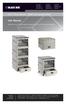 UD10KP UD20KP UD30KP UD10KP-C UD20KP-C UD30KP-LD UD10KP-LD UD20KP-LD UD40KP ipad, Chromebook, Tablet, and Laptop s User Manual Mobile, secure, and powered storage for up to 40 computing devices. Customer
Secure Site Manager 8 Secure Site Manager 16 User s Guide
 JANUARY 2007 SW551A SW552A Secure Site Manager 8 Secure Site Manager 16 User s Guide CUSTOMER SUPPORT INFORMATION Order toll-free in the U.S.: Call 877-877-BBOX (outside U.S. call 724-746-5500) FREE technical
VDSL Line Driver DECEMBER 2004 ME0010A-VDSL ME0011A-VDSL
 DECEMBER 2004 ME0010A-VDSL ME0011A-VDSL VDSL Line Driver CUSTOMER Order toll-free in the U.S. 24 hours, 7 A.M. Monday to midnight Friday: 877-877-BBOX SUPPORT FREE technical support, 24 hours a day, 7
Transform your wired projector into a high-end wireless projector.
 Chapter June 2009 AC1131A Wireless Video Presentation System II User s Manual Transform your wired projector into a high-end wireless projector. Includes plug-and-show, 4-to-1 split screen, and PDA wireless
Send VGA output to one local monitor and to as many as nine remote monitors BLACK up to 250 BOX feet (76.2 m) away.
 AC056A-R4 AC057A-K-R4 AC056AE-R3 AC159A-R2 AC056A-K-R4 AC058A-R3 AC057AE-R2 AC159A-R3 AC057A-R4 AC056AE-R2 AC057AE-R3 AC160A-R2 AC160A-R3 VGA Video Splitters Send VGA output to one local monitor and to
Pure Networking Broadband Router Users Guide
 JULY 2004 LR9603A Pure Networking Broadband Router Users Guide CUSTOMER SUPPORT INFORMATION Order toll-free in the U.S.: Call 877-877-BBOX (outside U.S. call 724-746-5500) FREE technical support 24 hours
Extend Ethernet with full-duplex transmission up to 5.696 Mbps more than BLACK four miles over BOX a pair of copper wires.
 December 2009 LR0201A-KIT G.SHDSL Two-Wire Ethernet Network Extender Extend Ethernet with full-duplex transmission up to 5.696 Mbps more than BLACK four miles over BOX a pair of copper wires. Complies
Digi-Mux HS FEBRUARY 1996 MX700A CUSTOMER SUPPORT INFORMATION
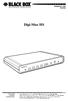 FEBRUARY 1996 MX700A Digi-Mux HS Digi-Mux HS CH1 CH2 POWER TD RD TD RD CH3 TD RD CH4 TD RD MAIN TD RD DCD SYNC LOSS LOCAL LOOP TEST CUSTOMER SUPPORT INFORMATION Order toll-free in the U.S.: Call 877-877-BBOX
Veri-NAC the fastest to deploy, easiest to use
 LVN5220A LVN5230A LVN5250A-R2 LVN5400A-R2 LVN5600A-R2 LVN5800A-R2 Veri-NAC Quick Start Guide Veri-NAC the fastest to deploy, easiest to use BLACK BOX network access control (NAC) appliance for intrusion
Internet Access Router
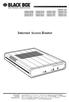 JANUARY 1997 LR0002A-BSDN LR0002A-BV35 LR0002A-TSDN LR0002A-TV35 LR0002A-BUDN LR0002A-BV36 LR0002A-TUDN LR0002A-TV36 LR0002A-BCSU LR0002A-BX21 LR0002A-TCSU LR0002A-TX21 LR0002A-BV24 LR0002A-B530 LR0002A-TV24
Connect, control, and manage up to 16 serial RS-232/485 devices BLACK BOX via a single USB port on your PC.
 IC162A USB to Multi RS-232/485 Interface Converter Connect, control, and manage up to 16 serial RS-232/485 devices BLACK BOX via a single USB port on your PC. Customer Support Information Order toll-free
Extend Ethernet with full-duplex transmission up to 10.8 Mbps over two pairs BLACK of copper. BOX
 LR0202A-KIT G.SHDSL Four-Wire Ethernet Network Extender Kit Extend Ethernet with full-duplex transmission up to 10.8 Mbps over two pairs BLACK of copper. BOX Complies with ITU-T Rec. G.991.2 G.shdsl.bis
Expand existing, leased line, polled networks without adding computer ports BLACK or communications links.
 codes codes codes March TLB704A 2009 codes codes codes RS-232 Buffered Modem Sharing Device, 4-Port Expand existing, leased line, polled networks without adding computer ports BLACK or BOX communications
2-Port RS-232 PCI Bus Serial Host Adapter
 AUGUST 2001 IC140C-R2 IC143C IC191C 2-Port RS-232 PCI Bus Serial Host Adapter CUSTOMER SUPPORT INFORMATION Order toll-free in the U.S. 24 hours, 7 A.M. Monday to midnight Friday: 877-877-BBOX FREE technical
Copyright 2007. Black Box Corporation. All rights reserved.
 Copyright 2007. Black Box Corporation. All rights reserved. 1000 Park Drive Lawrence, PA 15055-1018 724-746-5500 Fax 724-746-0746 MARCH 2007 KV7012A KV7013A 2- and 4-Port ServSwitch DT Pro KVM Switch CUSTOMER
PC 422/485 Serial Interface
 JUNE 2000 IC030C-R2 IC170C PC 422/485 Serial Interface CUSTOMER SUPPORT INFORMATION Order toll-free in the U.S. 24 hours, 7 A.M. Monday to midnight Friday: 877-877-BBOX FREE technical support, 24 hours
DSLAM Chassis: 1-x-4-Slot or 2-x-12-Slot DSL Access Multiplexor Uplink Module
 JANUARY 2001 LRA1200A-4 LRA1200A-12 LRA1203C DSLAM Chassis: 1-x-4-Slot or 2-x-12-Slot DSL Access Multiplexor Uplink Module CUSTOMER SUPPORT INFORMATION Order toll-free in the U.S.: Call 877-877-BBOX (outside
USB Single-Port Hub (RS-422/485)
 USB Single-Port Hub (RS-422/485) SEPTEMBER 2001 IC266A CUSTOMER SUPPORT INFORMATION Order toll-free in the U.S.: Call 877-877-BBOX (outside U.S. call 724-746-5500) FREE technical support 24 hours a day,
RS-232/485 Converter
 Code: IC620A MARCH 1998 IC620A-F IC623A-M IC620A-M IC624A-F IC623A-F IC624A-M RS-232/485 Converter SuperSwitch 8 10/100 CUSTOMER SUPPORT INFORMATION Order toll-free in the U.S. 24 hours, 7 A.M. Monday
DeeSel.1 Industrial Ethernet Extender Multi-Drop Unit, G-SHDSL 2-Wire, 5.7 Mbps
 LB532A-M DeeSel.1 Industrial Ethernet Extender Multi-Drop Unit, G-SHDSL 2-Wire, 5.7 Mbps Get multi-drop Ethernet extension over twisted pair with distances of 4.3 miles per hop. Black Box Ethernet Extenders
Provides first-class HD video transmission
 HD over IP Encoder/Decoder VX-HDV-IP VX-HDV-IP-SDI VX-HDV-IP-HDMI VX-HDV-IP-RM VX-HDV-IP-PSU Provides first-class HD video transmission VX-HDV-IP, rev. 1 FCC and IC RFI Statement FEDERAL COMMUNICATIONS
Express Ethernet Switches
 August, 2002 LB9021A LB9022A Express Ethernet Switches CUSTOMER SUPPORT INFORMATION Order toll-free in the U.S. 24 hours, 7 A.M. Monday to midnight Friday: 877-877-BBOX FREE technical support, 24 hours
FOM Line Driver ST FOM Line Driver SM
 FERURY 1998 ME540-ST ME540-SM FOM Line Driver ST FOM Line Driver SM CUSTOMER SUPPORT INFORMTION Order toll-free in the U.S.: Call 877-877-OX (outside U.S. call 724-746-5500) FREE technical support 24 hours
CAT5 Multi Video System (Video/Audio/RS232)
 DECEMBER 2006 AC1060A AC1061A AC1062A AC1065A AC1066A CAT5 Multi Video System (Video/Audio/RS232) Copyright 2006. Black Box Corporation. All rights reserved. 1000 Park Drive Lawrence, PA 15055 1018 724
LR120A, LR121A, LR122A, LR125A WAN Access Routers. Getting Started Guide
 LR120A, LR121A, LR122A, LR125A WAN Access Routers Getting Started Guide Compliance Information Radio and TV Interference The WAN Access Router generates and uses radio frequency energy, and if not installed
Extend 10/100Base-TX Ethernet up to 10,000 feet (3 km)
 LB410A LB411A LBNC412A High Speed Ethernet Extender Extend 10/100Base-TX Ethernet up to 10,000 feet (3 km) Over a single twisted-pair, Cat 5e/6/7, or even coaxial cable Black Box Ethernet Extenders TABLE
Copyright 2005. Black Box Corporation. All rights reserved.
 Copyright 2005. Black Box Corporation. All rights reserved. 1000 Park Drive Lawrence, PA 15055-1018 724-746-5500 Fax 724-746-0746 FEBRUARY 2005 LGC1713A-SX LGC1713A-LX 1000BASE-T to MM SX Media Converter
Short-Haul Modem-FSK RS-485 Modules
 AUGUST 1997 ME840A-M ME840A-S MD3317 MD3318 Short-Haul Modem-FSK RS-485 Modules R R CD SHM-FSK RxD TxD LPBK PWR CUSTOMER SUPPORT INFORMATION Order toll-free in the U.S. 24 hours, 7 A.M. Monday to midnight
T1/E1 Fiberoptic Line Driver (T1/E1 FOLD)
 MT610A-ST MT610A-SM MT610AE-ST MT610AE-SM JUNE 1998 MT611A-ST MT611A-SM MT611AE-ST MT611AE-SM MT613AE-FC MT613A-ST-D48 T1/E1 Fiberoptic Line Driver (T1/E1 FOLD) TEST NORM LOC REM T1 Fiber Optic Line Driver
RS-232/422/485 2-Port PCI Card, Opto-Isolated
 RS-232/422/485 2-Port PCI Card, Opto-Isolated MAY 2002 IC973C CUSTOMER SUPPORT INFORMATION Order toll-free in the U.S.: Call 877-877-BBOX (outside U.S. call 724-746-5500) FREE technical support 24 hours
1101 and 1102 Secure Device Servers
 LES1101A-R2 LES1102A 1101 and 1102 Secure Device Servers Securely monitor, access, and control the computers, networking devices, telecommunications equipment, and power supplies in your data room or communications
Video to VGA Converter/Switch
 June 2004 AC135A-R2 Video to VGA Converter/Switch With Audio, RS-232 Control, and PC VGA input CUSTOMER SUPPORT INFORMATION Order toll-free in the U.S. 24 hours, 7 A.M. Monday to midnight Friday: 877-877-BBOX
Welcome to the ServSwitch Family!
 THE SERVSWITCH FAMILY Welcome to the ServSwitch Family! Thank you for purchasing a BLACK BOX ServSwitch brand KVM remote access product. We appreciate your business, and we think you ll appreciate the
A high performance KVM extender that can transmit up to two high resolution DisplayPort video streams plus high speed USB and digital/ analog audio.
 NETWORK SERVICES ACU5800A Wizard DP Extender A high performance KVM extender that can transmit up to two high resolution DisplayPort video streams plus high speed USB and digital/ analog audio. Allows
Perle 833 Remote Access Server Guide
 Perle 833 Remote Access Server Guide 5500114-11 Copyrights Copyright 1995-2002, Perle Systems Limited and its suppliers. Apple, Macintosh, and AppleTalk are trademarks of Apple Computer Inc. IBM, AT, CA/400,
Gigabit 1000BASE-SX/LX PCI 64-/32-Bit Fiber NICs
 March 2010 LH1660C-SC LH1660C-LC Gigabit 1000BASE-SX/LX PCI 64-/32-Bit Fiber NICs Fully complies with all IEEE 802.3z and 1000BASE-SX/LX standards to BLACK provide BOX a reliable Gigabit Ethernet connection.
Network Management Software
 Network Management Software User s Manual Version 3.2 www.blackbox.com TRADEMARKS All applied-for and registered trademarks are the property of their respective owners. FEDERAL COMMUNICATIONS COMMISSION
LAN / WAN Connection Of Instruments with Serial Interface By Using a Terminal Server
 Products: EFA with EFA Scan, DVRM and DVMD with Realtime Monitor or Stream Explorer DVMD-B1 LAN / WAN Connection Of Instruments with Serial Interface By Using a Terminal Server Remote control of test and
 56 Black Box Network Services Black Box Network Services 1 Network Management Software User Manual Version 1.6 040-L3003-001A 11/03 www.blackbox.com 2 Black Box Network Services TRADEMARKS All applied-for
Broadband Router ESG-103. User s Guide
 Broadband Router ESG-103 User s Guide FCC Warning This equipment has been tested and found to comply with the limits for Class A & Class B digital device, pursuant to Part 15 of the FCC rules. These limits
Application Note 2. Using the TCPDIAL & TCPPERM Commands to Connect Two TransPort router Serial Interfaces Over TCP/IP.
 Application Note 2 Using the TCPDIAL & TCPPERM Commands to Connect Two TransPort router Serial Interfaces Over TCP/IP. Reverse Telnet or Serial Terminal Server MultiTX feature UK Support March 2014 1 Contents
Network Management Card. Installation and Quick Start Manual
 Network Management Card Installation and Quick Start Manual Radio frequency interference Changes or modifications to this unit not expressly approved by the party responsible for compliance could void
Network Management Card
 Network Management Card AP9617 AP9618 AP9619 Installation and Quick-Start Manual How to Avoid Equipment Damage Disconnect UPS power You do not need to turn off a Symmetra or a Silcon model UPS to install
IP SERIAL DEVICE SERVER
 IP SERIAL DEVICE SERVER ( 1 / 2 / 4 serial port ) Installation guide And User manual Version 1.0 1Introduction... 5 1.1Direct IP mode...5 1.2Virtual COM mode...5 1.3Paired mode...6 1.4Heart beat... 6
Broadband Router ALL1294B
 Broadband Router ALL1294B Broadband Internet Access 4-Port Switching Hub User's Guide Table of Contents CHAPTER 1 INTRODUCTION... 1 Broadband Router Features... 1 Package Contents... 3 Physical Details...
IPG/7700 Hardware Manual SYSTECH. Document number 80-001099-7 Revision A
 IPG/7700 Hardware Manual SYSTECH C O R P O R A T I O N Document number 80-001099-7 Revision A Created 2010, and Protected Under the U.S. Copyright Act of 1976. Copyright 2010, SYSTECH Corporation All Rights
SCS3205/4805 Quick Start Guide
 Secure Console Server Quick Start Guide 2003 Copyright Lantronix is a trademark of Lantronix. All rights reserved. 900-287 Rev. B 8/03 QUICK START CONTENTS System Overview.......................................................2
USER MANUAL GUIMGR Graphical User Interface Manager for FRM301/FRM401 Media Racks
 USER MANUAL GUIMGR Graphical User Interface Manager for FRM301/FRM401 Media Racks CTC Union Technologies Co., Ltd. Far Eastern Vienna Technology Center (Neihu Technology Park) 8F, No. 60 Zhouzi St. Neihu,