
Management of Urinary Incontinence in Older Patients
|
|
|
- Ella Woods
- 9 years ago
- Views:
Transcription
1 Management of Urinary Incontinence in Older Patients Dr. BC Tong Honorary Treasurer The Hong Kong Continence Society Council member Hong Kong Association of Gerontology Geriatrician

2 Urinary incontinence The complaint of any involuntary leakage of urine (which is objectively demonstrable and is a social or hygiene problem)

3

4 Stewart WF, Van Rooyen JB, et al. Prevalence and burden of overactive bladder in the United States World J Urol (2003)20:

5 Mortality 10 year mortality (1052 persons age 60-89) Male Female No Urgency 57% 38% Urgency 86% 54% RR Urgency dry 1.87 ( ) NS Urgency wet 3.13 ( ) 1.63 ( ) Nuotio M, Tammela TL, Luukkaala T, Jylhä M. Urgency and urge incontinence in an older population: ten-year changes and their association with mortality. Aging Clin Exp Res Oct;14(5):412-9.

6 Type of Weekly Incontinence * Association of Urinary Incontinence and Falls Among 6049 Women Age-Adjusted Multivariate-Adjusted Odds Ratio (OR) 95% CI P OR 95% CI P Urge < < Stress Association of Urinary Incontinence and Non-spine, Nontraumatic Fractures Age-Adjusted Multivariate-adjusted Type of Weekly Incontinence * Relative Hazard 95% CI P RH 95% CI P (RH) Urge Stress Brown JS, Vittinghoff E, et al. For the Study of Osteoporotic Fractures Research Group Urinary Incontinence: Does it Increase Risk for Falls and Fractures? J Am Geriatr Soc (2000) 48:721-5

7 THOM DH, HAAN MN, VAN DEN EEDEN SK Medically recognized urinary incontinence and risks of hospitalization, nursing home admission and mortality Age and Ageing 1997; 26:

8 Total cost to health care systems across all five countries was estimated at EUR 4.2 billion in 2000, and by 2020, the expected total cost was estimated to be EUR 5.2 billion, an increase of EUR 1 billion (26%). Reeves P, Irwin D, et al. The Current and Future Burden and Cost of Overactive Bladder in Five European Countries Eur Urol (2006) 50:

9 Economic cost of OAB in US Average annual per capita (USD) $1925 $1944 $1969 Total national cost (billions USD) $65.9 $76.2 $82.6 Ganz ML, Smalarz AM, et al. Economic Costs of Overactive Bladder in the United States Urology (2010) 75:

10 Incontinence Prevalence


11 2000

12 Elders visiting general practitioners the Hong Kong Continence Society and the Hong Kong College of Family Physicians in 1995

13 Study on institutionalized elderly 1990 Acute care hospital 10.9% Convalescent hospital 37.6% C&A Homes 23.2% 63.8% has concomitant fecal incontinence Medical diagnosis in incontinent subject: Cerebrovascular disease, dementia, Diabetes mellitus, cataract, osteoarthritis etc JHKGS 1992;3(1):35-38

14 Lower Urinary Tract function in controlling urination

15 bladder muscle bladder muscle bladder urine urine bladder Urethra closed Urethra open Sphincter Muscles Squeezed Shut Sphincter Muscles Relaxed

16

17 Acetylcholine

18 Noradrenalin

19

20 Age related changes in lower Decrease bladder capacity urinary tract Decrease bladder contractility Decrease ability to postpone voiding Slight rise in post voiding residual < 50 ml URINARY INCONTINENCE IS NOT A PART OF AGING

21 CAUSE OF URINARY INCONTINENCE Transient Established
22 Cause of transient incontinence DIAPPERS Resnick NM 1984 Delirium Infection, urinary Atrophic urethritis/ vaginitis Pharmaceutical Psychological Excessive urine output Large fluid intake Diuretic agents: caffeinated beverages, alcohol Metabolic caused: sugar, calcium Restricted mobility Stool impaction
23 Iatrogenic Incontinence Effects Delirium, sedation Cough Polyuria Bladder stimulation Bladder relaxation Sphincter contraction Sphincter relaxation Constipation Edema Drug classes Anticholinergics, antipsychotics, TCA, Antiparkinsonic drugs, Sedative/hypnotics, nacrotic analgesics, alcohol ACEI Diuretics, alcohol Caffeinated beverages Anticholinergics, calcium channel blocker Alpha-adrenergic agonist Alpha-adrenergic blockers Anticholinergics, narcotic analgesics, calcium channel blockers etc Calcium channel blocker, vasodilators
24
25 Established cause of incontinence Detrusor overactivity Detrusor underactivity Reduced outlet resistance Increased outlet resistance
26 Type Urge Incontinence Stress Incontinence Overflow Incontinence Functional Incontinence Cause Detrusor overactivity Uninhibited bladder contraction causing leakage of moderate to large amounts of urine Reduced outlet resistance Increase in intraabdominal pressure, eg. coughing, sneezing, laughing or other physical activity, causing leakage of small to moderate amount of urine Increased outlet resistance Detrusor underactivity Distension of bladder causing overflow leakage of small amount of urine Unrelated to lower urine tract cause Inability or unwillingness of a normal continent elderly to go to the toilet Etiology Cystitis Bladder stone/ neoplasm CNS disorder Spinal cord disease Idiopathic Obesity Estrogen deficiency Childbirth Weakness and laxity of pelvic floor muscles Post-prostatectomy Mixed incontinence Prostatic enlargement Urethral stricture Spinal cord disease Faecal impaction Diabetic neuropathy Sacral nerve damage Medication Musulosketetal disorders Impaired mental status Unfamiliar environment Depression Hostility Sedating medication Use of physical restraints.
27 CLINICAL TYPE OF URINARY INCONTINENCE Urge incontinence- the complaint of involuntary leagae accompanied by or immediately preceded by urgency (sudden compelling desire to pass urine which is difficult to defer (ICS 2002) Stress incontinence- the complaint of involuntary leakage on effort or exertion, or on sneezing or coughing (ICS 2002) Mixed incontinence- the complaint of involuntary leakage associated with urgency and also with exertion, effort, sneezing or coughing (ICS 2002) Overflow incontinence- involuntary loss of urine when the intravesical pressure exceeds the maximum urethral pressure due to an elevation of intravesical pressure associated with bladder distension but in the absence of detrusor activity (ICS 1976) Functional incontinence- unrelated to lower urine tract cause cognitive defect mobility problem
28
29 Requirements in achieving continence Lower urinary tract function Mental function Mobility and dexterity Environment Motivation- both patients and cares
30

31 Urological Mental Neurological Iatrogenic Co-morbidities Environmental Functional Psychosocial
32 Urodynamic investigation Frequency volume chart Pad test Post void residual Flow rate study Cystometry - filling cystometry voiding cystometry Urethral pressure profile Videocystourethrography
33 Management of urinary incontinence depends on causes

34 Recommendations of the International Scientific Committee: VII. Urinary Incontinence in Frail Older Men and Women. In: Abrams P, Cardozo L, Khoury S, Wein A, eds. Incontinence. 4th International Consultation on Incontinence, Paris July 5-8, :
35 Life style modification Adequacy of fluid: 6-8 glass per day Avoid caffeinated beverage and alcohol Skin care/ cleansing Toilet habit: Allow time to empty bladder Ensure complete emptying Avoid going to toilet just in case Avoid constipation Weight reduction
36 Voiding regime and bladder training J. A. Fantl, J. F. Wyman, S. W. Harkins and E. C. Hadley. Bladder Training in the Management of Lower Urinary Tract Dysfunction in Women : A Review. JAGS :

37 Prompt voiding (PV) principles Registered Nurses Association of Ontario (2005). Promoting Continence Using Prompted Voiding. (Revised). Toronto, Canada: Registered Nurses Association of Ontario.
38 Pelvic floor exercise + biofeedback + use of vaginal cone + use of electrical stimulation To reinforce the awareness of pelvic muscle group To retrain pelvic floor muscles
39
40
41
42 Drugs Use in Urinary Incontinence
43 Drug treatment of UI Type Pathogenesis Drugs Side Effect/ Problems Urge UI Detrusor overactivity Anti-cholinergic agent Oxybutynin (Ditropan), Propantheline, Tolterodine (Detrositol), Tropsium (Spasmolyt), Solifenacin (Vesicare), Darifenacin (Enablex) Botulinum toxin- intradetrusor injections Stress UI Outlet laxity Alpha-adrenergic agonist Phenylpropanolamine, Ephedrine, Pseudoephedrin Overflow UI Outlet obstruction Detrusor underactivity Duloxetine Alpha-adrenergic blocker Prazocin (Minipress), Terazocin (Hytrin), Doxazocin (Cardura), Alfuzosin (Xatral RS/XL), Tamsulosin (Harnal) 5-Alpha reductase inhibitor Finasteride (Proscar), Dutasteride (Avodart) Cholinergic agonist Distigmine (Ubetid), Bethanechol (Urecholine) GI- dry mouth, constipation Urological- urine retention Neurological- Delirium, fatigue Ocular- blurred vision Cardiac- arrthymia High rate of urinary retention Hypertension Increase incident of stroke Nausea Postural hypotension Intraoperative floppy iris syndrome Slow onset of action Only act on big prostate GI- diarrhoea, abdominal pain Urological- Increase intravesicular pressure
44 Surgery Surgery for stress incontinence Urethral bulking agent Tension free vaginal tap Colposuspension Open Laproscopic Sling operation Artificial sphincter
45 Surgery Relieve of outflow obstruction Surgery for overactive bladder Bladder reconstruction Sacral nerve neuromodulation
46 Catheterization Intermittent catheterization Indwelling catheter Suprapubic catheter
47
48 Indwelling urinary catheter Urinary infection Local ulceration at urethra and bladder Stricture Encrustration Urine leak Discomfort/ pain Hinder walking?bladder cancer
49 Intermittent catheterization Doesn t requires aseptic technique Studies mainly on children, adult with spinal cord problems When used in the hip surgery post-operative period, satisfactory voiding resumes (on average 4 days) earlier when compared with indwelling catheter Skelly 1992; CMAJ 146:
50 Aids and environment modification Toilet nearby Urinal Commode chair Pads Special undergarment Mattress cover Draw sheet Condom catheter
51 Social Continence

52 Urological Mental Neurological Iatrogenic Co-morbidities Environmental Functional Psychosocial
53 Diapering Development of skin irritation and breakdown when diapers are not changed at appropriate intervals Cost Associating with infancy Encourage incontinence by giving the signal to both patient and caregiver that wetting is medically acceptable Difficult for an elderly patient who wish to void in removing a diaper Starer P, Libow LS Obscuring Urinary Incontinence. Diapering of the elderly JAGS :842-6
Advances in Medical Treatment for Urinary Incontinence. Dr. BC Tong Geriatrician, PMH Hon Treasurer, HKCS
 Advances in Medical Treatment for Urinary Incontinence Dr. BC Tong Geriatrician, PMH Hon Treasurer, HKCS Urinary incontinence The complaint of any involuntary leakage of urine (which is objectively demonstrable
symptoms of Incontinence
 Types, causes and symptoms of Urinary Incontinence Aims and Objectives Aim: To have an understanding of the types and causes of urinary incontinence. Objectives: To be aware of the incidence and prevalence
Overactive bladder and urgency incontinence
 Overactive bladder and urgency incontinence As a health care provider you can make a significant difference to the quality of life of patients like these by addressing urinary incontinence, introducing
Urinary Incontinence FAQ Sheet
 Urinary Incontinence FAQ Sheet Are you reluctant to talk to your doctor about your bladder control problem? Don t be. There is help. Loss of bladder control is called urinary incontinence. It can happen
Bladder Health Promotion
 Bladder Health Promotion Community Awareness Presentation Content contributions provided by the Society of Urologic Nurses (SUNA) National Association for Continence (NAFC) Simon Foundation for Continence
Topic review: Clinical presentation and diagnosis of urinary incontinence in the elderly. Prapa Pattrapornpisut 7 June 2012
 1 Topic review: Clinical presentation and diagnosis of urinary incontinence in the elderly Prapa Pattrapornpisut 7 June 2012 2 Urinary incontinence Definition the complaint of any involuntary leakage of
Urinary Incontinence in Women. Susan Hingle, M.D. Department of Medicine
 Urinary Incontinence in Women Susan Hingle, M.D. Department of Medicine Background Estimated 13 million Americans with urinary incontinence Women are affected twice as frequently as men Only 25% will seek
Bladder Health Promotion
 Bladder Health Promotion Community Awareness Presentation endorsed by the Society of Urologic Nurses (SUNA) National Association for Continence( NAFC) Simon Foundation for Continence This presentation
Female Urinary Disorders and Pelvic Organ Prolapse
 Female Urinary Disorders and Pelvic Organ Prolapse Richard S. Bercik, M.D. Director, Division of Urogynecology & Reconstruction Pelvic Surgery Department of Obstetrics, Gynecology & Reproductive Sciences
FEMALE INCONTINENCE REVIEW
 200 S. Wenona Suite 298 Steven L. Jensen, M.D. 5400 Mackinaw, Suite 4302 Bay City, MI 48706 Frank H. Kim, M.D. Saginaw, MI 48604 Telephone (989) 895-2634 Adult & Pediatric Urologists (989) 791-4020 Fax
URINARY INCONTINENCE IN WOMEN
 URINARY INCONTINENCE IN WOMEN Definition Urinary incontinence (UI) is defined as involuntary loss of urine that is a social or hygienic problem (International Continence Society, 1973) Magnitude of the
Bowel and Bladder Dysfunction in MS. Tracy Walker, WOCN, MSCN, FNP C Nurse Practitioner MS Institute at Shepherd Center. Bladder Dysfunction
 Bowel and Bladder Dysfunction in MS Tracy Walker, WOCN, MSCN, FNP C Nurse Practitioner MS Institute at Shepherd Center Bladder Dysfunction Approximately 75% of people with MS experience bladder problems
Urinary Incontinence Definitions
 (AADL) Program Urge Stress Overflow Functional Mixed DHIC (Detrussor hyperreflexia with impaired contractility) Reflex Incontinence Leakage of urine (usually larger volumes) because of inability to delay
Incontinence. What is incontinence?
 Incontinence What is incontinence? Broadly speaking, the medical term incontinence refers to any involuntary release of bodily fluids, but many people associate it strongly with the inability to control
Overactive Bladder (OAB)
 Overactive Bladder (OAB) Overactive bladder is a problem with bladder storage function that causes a sudden urge to urinate. The urge may be difficult to suppress, and overactive bladder can lead to the
URINARY INCONTINENCE CASE PRESENTATION #1. Urinary Incontinence - History 2014/10/07. Structure of the Female Lower Urinary Tract
 Bladder pressure 2014/10/07 Structure of the Female Lower Urinary Tract Ureter URINARY INCONTINENCE Clinical Clerkship Lecture Series Outer peritoneal coat Detrusor smooth muscle Mucosa Trigone Proximal
Overview of Urinary Incontinence in the Long Term Care Setting
 Overview of Urinary Incontinence in the Long Term Care Setting Management Strategies for the Nursing Assistant Ann M. Spenard RN, C, MSN Courtney Lyder ND, GNP Learning Objectives Describe common types
Urinary Incontinence (Involuntary Loss of Urine) A Patient Guide
 Urinary Incontinence (Involuntary Loss of Urine) A Patient Guide Urinary Incontinence (Urine Loss) This booklet is intended to give you some facts on urinary incontinence - what it is, and is not, and
URINARY INCONTINENCE
 URINARY INCONTINENCE What is urinary incontinence? Urinary incontinence is the uncontrollable loss of urine. The amount of urine leaked can vary from only a few drops when you cough or sneeze to entirely
Bladder and Bowel Assessment Ann Yates Director of Continence Services. 18/07/2008 Cardiff and Vale NHS Trust
 Bladder and Bowel Assessment Ann Yates Director of Continence Services Types of continence problems Bladder Stress incontinence Urgency and urge Incontinence Mixed incontinence Obstructive incontinence
Non-surgical Treatments for Urinary Incontinence. A Review of the Research for Women
 Non-surgical Treatments for Urinary Incontinence A Review of the Research for Women Is This Information Right for Me? Yes, if: You are a woman who is older than 18. You are having trouble holding your
An illustrated guide to the management of incontinence.
 An illustrated guide to the management of incontinence. 1 The problem of incontinence The ACA describes incontinence as an involuntary loss of urine and/or bowel motion. The amount can vary from slight
Overactive Bladder (OAB) Content of the lecture
 Overactive bladder (OAB) : Introduction and Medical Management R.J. Opsomer Cliniques St Luc, labo d urodynamique, UCL - Bruxelles Overactive Bladder (OAB) Content of the lecture The syndrome of Overactive
Management of Neurogenic Bladder Disorders
 Management of Neurogenic Bladder Disorders Andrea Staack, MD, PhD Pelvic Reconstructive Surgery, Urinary Incontinence & Female Urology Department of Urology Loma Linda University, CA What will you learn
Overactive bladder syndrome (OAB)
 Overactive bladder syndrome (OAB) Exceptional healthcare, personally delivered What is OAB? An overactive bladder or OAB is where a person regularly gets a sudden and compelling need or desire to pass
Urinary Incontinence. Causes of Incontinence. What s Happening?
 National Institute on Aging AgePage Urinary Incontinence Sarah loves to spend time with her friends talking about her grandchildren and going to exercise classes with neighbors. But she s started to have
Dr Eva Fong. Urologist Auckland
 Dr Eva Fong Urologist Auckland Urinary incontinence: Treatment options GPCME 2013 Eva Fong Urologist Urinary incontinence Is not normal part of aging or childbearing We can make it better Urinary incontinence:
Normal bladder function requires a coordinated effort between the brain, spinal cord, and the bladder.
 .. Urinary Incontinence Urinary incontinence is not an inevitable part of aging, and it is not a disease. The loss of bladder control - called urinary incontinence - affects between 13 and 17 million adult
CARE PROCESS STEP EXPECTATIONS RATIONALE
 URINARY INCONTINENCE CARE PROCESS STEP EXPECTATIONS RATIONALE ASSESSMENT/PROBLEM RECOGNITION 1. Did the staff and physician seek and document risk factors for urinary incontinence and any history of urinary
Urinary Continence. Second edition FAST FACTS. by Julian Shah and Gary Leach. Anatomy and physiology 7. Investigations and diagnosis 11
 FAST FACTS Urinary Continence Second edition Indispensable Guides to by Julian Shah and Gary Leach Clinical Practice Anatomy and physiology 7 Investigations and diagnosis 11 Detrusor instability 28 Primary
Lower Urinary Tract Symptoms (LUTS) in Middle-Aged and Elderly Men
 Prostatic Diseases Lower Urinary Tract Symptoms (LUTS) in Middle-Aged and Elderly Men JMAJ 47(12): 543 548, 2004 Tomonori YAMANISHI Associate Professor, Department of Urology, Dokkyo University School
Female Urinary Incontinence
 Female Urinary Incontinence Molly Heublein, MD Assistant Professor Clinical Medicine UCSF Women s Health Primary Care Disclosures I have nothing to disclose. 1 Objectives Review the problem Feel confident
Lifestyle changes. Pelvic floor muscle training
 Incontinence, urinary - Treatment Treating urinary incontinence The treatment you receive for urinary incontinence will depend on the type of incontinence you have and the severity of your symptoms. If
1 ST JAMAICAN PAEDIATRIC NEPHROLOGY CONFERENCE
 in association with 1 ST JAMAICAN PAEDIATRIC NEPHROLOGY CONFERENCE Jamaica Conference Centre Kingston, Jamaica October 4 th 2014 VOIDING DISORDERS IN CHILDREN Dr. Colin Abel Paediatric Urologist Bustamante
Female Urinary Incontinence
 Female Urinary Incontinence Molly Heublein, MD Assistant Professor Clinical Medicine UCSF Women s Health Primary Care Disclosures I have nothing to disclose. Objectives Which is most true? Review the problem
Learning Resource Guide. Understanding Incontinence. 2000 Prism Innovations, Inc. All Rights Reserved
 Learning Resource Guide Understanding Incontinence 2000 Prism Innovations, Inc. All Rights Reserved ElderCare Online s Learning Resource Guide Understanding Incontinence Table of Contents Introduction
Primary Care management of Overactive Bladder (OAB)
 DERBYSHIRE JOINT AREA PRESCRIBING COMMITTEE (JAPC) Primary Care management of Overactive Bladder (OAB) Prescribing Tips All medicines for OAB have similar dose-related efficacy. More than one agent (up
Fecal incontinence (Encopresis) It is the fecal incontinence condition observed in children with chronic constipation over 1-2 years.
 WHAT IS DYSFUNCTIONAL URINATION (URINATION FUNCTION DISORDER)? It stands for the urination phase disorders, which appear due to wrongly acquired urination habits during the toilet training of some neurologically
Urinary Incontinence. Types
 Urinary Incontinence Leakage of urine is called urinary incontinence. It is a common problem in women. Some women occasionally leak small amounts of urine. At other times, leakage of urine is frequent
Registered Charity No. 5365
 THE MULTIPLE SCLEROSIS SOCIETY OF IRELAND Dartmouth House, Grand Parade, Dublin 6. Telephone: (01) 269 4599. Fax: (01) 269 3746 MS Helpline: 1850 233 233 E-mail: [email protected] www.ms-society.ie
Bladder and Bowel Control
 Bladder and Bowel Control Dr Sue Woodward Lecturer, Florence Nightingale School of Nursing and Midwifery 2 Why do we need to understand anatomy? Normal physiology Normal adult bladder capacity = 450-500mls
Urinary Incontinence
 Urinary Incontinence Q: What is urinary incontinence (UI)? A: UI is also known as loss of bladder control or urinary leakage. UI is when urine leaks out before you can get to a bathroom. If you have UI,
Women suffer in silence
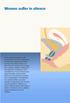 Women suffer in silence Stress urinary incontinence is the involuntary loss of urine resulting from increased intra-abdominal pressure. In people who suffer with this condition, forms of exertion such
PROCEDURE FOR THE ASSESSMENT OF ADULTS AND CHILDREN WITH BLADDER OR BOWEL DYSFUNCTION
 PROCEDURE FOR THE ASSESSMENT OF ADULTS AND CHILDREN WITH BLADDER OR BOWEL DYSFUNCTION First Issued Issue Version One Purpose of Issue/Description of Change Planned Review Date Procedure for the effective
It usually presents with a sudden urge to urinate that is very difficult to delay and may be associated with leakage. Other features include:
 visited on Page 1 of 5 View this article online at http://patient.info/doctor/overactive-bladder Overactive Bladder This PatientPlus article is written for healthcare professionals so the language may
Managing Urinary Incontinence
 Patient & Family Guide 2016 Managing Urinary Incontinence www.nshealth.ca Managing Urinary Incontinence What is the urinary system? Urine (pee) is made in the kidneys. It flows through tubes called ureters.
Mixed urinary incontinence - sling or not sling
 Mixed urinary incontinence - sling or not sling 吳 銘 斌 Ming-Ping Wu, M.D.,Ph.D. Director, Div. Urogynecology & Pelvic Floor Reconstruction, Chi Mei Foundation Hospital, Tainan, Taiwan Assistant Professor,
Question ID: 6 Question type: Intervention Question: Does treatment of overactive bladder symptoms prevent falls in the elderly?
 PRIORITY BRIEFING The purpose of this briefing paper is to aid Stakeholders in prioritising topics to be taken further by PenCLAHRC as the basis for a specific evaluation or implementation projects. QUESTION
Urinary Incontinence: an overview!! Neil Harris Consultant Urological Surgeon, Leeds
 Urinary Incontinence: an overview!! Neil Harris Consultant Urological Surgeon, Leeds Content 1. Epidemiology of pelvic floor dysfunction Urinary incontinence Bowel dysfunction Sexual dysfunction 2. Treatment
Section H Bladder and Bowel
 Section Bladder and Bowel Intent To gather information on the use of bowel and bladder appliances, the use of and response to urinary toileting programs, urinary and bowel continence, bowel training programs,
Treatments for Urinary Incontinence in Women
 Treatments for Urinary Incontinence in Women National Kidney and Urologic Diseases Information Clearinghouse National Institute of Diabetes and Digestive and Kidney Diseases NATIONAL INSTITUTES OF HEALTH
Treatments for Overactive Bladder
 Treatments for Overactive Bladder Patient Information Author ID: SA Leaflet Number: Gyn 051 Name of Leaflet: Treatments for overactive bladder Date Produced: October 2014 Review Date: October 2016 Treatment
NHS Professionals. CG8 Guidelines for Continence and Catheter Care. Introduction
 NHS Professionals CG8 Guidelines for Continence and Catheter Care Introduction Continence has been defined as control of bladder and bowel function and continence care is the name given to the total care
Urinary Incontinence. Patient Visit Note. History of Present Illness: To be completed by medical assistant
 Urinary Incontinence Patient Visit Note History of Present Illness: To be completed by medical assistant 1. Results of dip UA: Blood: Neg Tr + ++ +++ Leukocyte esterase: Neg Tr + ++ +++ Nitrite: Neg Pos
Information for patients. Sex and Incontinence. Royal Hallamshire Hospital
 Information for patients Sex and Incontinence Royal Hallamshire Hospital Why is sex important? We may choose to be sexual, regardless of our age, physical status or stage of life. Those with health problems
Gwen Griffith Clinical Nurse Specialist Bolton NHS foundation Trust
 Gwen Griffith Clinical Nurse Specialist Bolton NHS foundation Trust Overview Setting the Scene Beginning of the journey & specialist nurse role Why people with MS experience bladder problems MS and the
Case Based Urology Learning Program
 Case Based Urology Learning Program Resident s Corner: UROLOGY Case Number 21 CBULP 2011 068 Case Based Urology Learning Program Editor: Associate Editors: Manager: Case Contributors: Steven C. Campbell,
A Physical Therapist s Perspective
 You Can Do Something About INCONTINENCE A Physical Therapist s Perspective American Physical Therapy Association 1 You Can Do Something About Urinary Incontinence Incontinence, involuntary loss of bladder
Urinary Incontinence and Indwelling Catheters:
 Educational grant provided by Urinary Incontinence and Indwelling Catheters: CMS Guidance for Long-Term Care Read this article and answer the questions on page 56 for 1 CE contact hour. DIANE K. NEWMAN,
Adult Urodynamics: American Urological Association (AUA)/Society of Urodynamics, Female Pelvic Medicine & Urogenital Reconstruction (SUFU) Guideline
 Adult Urodynamics: American Urological Association (AUA)/Society of Urodynamics, Female Pelvic Medicine & Urogenital Reconstruction (SUFU) Guideline RECOMMENDATIONS 1 Conditional: Clinicians who are making
Male urinary incontinence (leakage of urine) you are not alone
 Male urinary incontinence (leakage of urine) you are not alone Delivering the best in care UHB is a no smoking Trust To see all of our current patient information leaflets please visit www.uhb.nhs.uk/patient-information-leaflets.htm
Urinary Incontinence
 Urinary Incontinence (Involuntary Passage of Urine) Basics OVERVIEW Loss of voluntary control of urination, usually observed as involuntary urine leakage while resting SIGNALMENT/DESCRIPTION OF PET Species
Urinary Incontinence in the Elderly : Pathogenesis and Management
 CLINICAL MEDICINE Urinary Incontinence in the Elderly : Pathogenesis and Management Gayathri Bhagwath* Abstract With increasing life spans, the average age of our elderly population is increasing. Therefore,
Urinary incontinence (UI) is the
 Janet Kushner Kow, MD, MEd, FRCPC, Marcia Carr, RN, BN, MS, GNC(C), NCA, Sandra Whytock, RN, MSN, GNC(C), NCA Diagnosis and management of urinary incontinence in residential care Addressing both reversible
URINARY INCONTINENCE Information for Patients and Families Author: Chantale Dumoulin, PhD PT
 URINARY INCONTINENCE Information for Patients and Families Author: Chantale Dumoulin, PhD PT What is urinary incontinence? Urinary incontinence (UI) is the loss of the ability to hold in urine. This can
Regain Control of Your Active Life Treatment Options for Incontinence and Pelvic Organ Prolapse
 Regain Control of Your Active Life Treatment Options for Incontinence and Pelvic Organ Prolapse Nearly one quarter of all women in the United States have some sort of pelvic floor disorder such as urinary
Urinary Incontinence In Primary Care. Deanna Abbott-McNeil Dr. John Puxty Susanne Murphy
 Urinary Incontinence In Primary Care Deanna Abbott-McNeil Dr. John Puxty Susanne Murphy November is National Incontinence Awareness Month! Learning Objectives By the end of the session participants will
THE MANAGEMENT OF URINARY INCONTINENCE WITHIN A STROKE UNIT POPULATION REENA DHAMI STROKE CNS EPSOM & ST.HELIER UNIVERSITY HOSPITALS
 THE MANAGEMENT OF URINARY INCONTINENCE WITHIN A STROKE UNIT POPULATION REENA DHAMI STROKE CNS EPSOM & ST.HELIER UNIVERSITY HOSPITALS Definition Urinary Incontinence is AN INABILITY TO HOLD URINE until
Urinary Incontinence Dr. Leffler
 Urinary Incontinence Dr. Leffler The involuntary loss of urine at socially unacceptable times occurs in both women and men, but more commonly in women. It has multiple, far-reaching effects on daily activities,
PROTOCOL INCONTINENCE, URINARY/FECAL Effective Date: August 4, 2010
 Number: PROT0106 Submitted by: WOC Issuing Department: PATIENT CARE SERVICES Approved By: (Signature on File) Reviewed by: Date: WOC Nursing Service 7/27/10 Med Surg CPT 8/10 Date: 08/2010 Supersedes:
The Well Woman Centre. Adult Urinary Incontinence
 The Well Woman Centre Adult Urinary Incontinence 1 Adult Urinary Incontinence... 3 Stress Incontinence Symptoms... 3 Urge Incontinence Symptoms... 4 Mixed Incontinence Symptoms... 5 Where to Start?...
1 in 3 women experience Stress Urinary Incontinence.
 A PATIENT S GUIDE 1 in 3 women experience Stress Urinary Incontinence. It s time to talk about SUI Get the facts. This Patient s Guide is intended as a public resource on the issue of Stress Urinary Incontinence
Primary Care Management Guidelines Female Urinary Incontinence. Overview of Lecture
 Primary Care Management Guidelines Female Urinary Incontinence Professor Don Wilson Department of Women s and Children s Health Dunedin School of Medicine University of Otago GP Teaching for Roy Morris,
Saint Mary s Hospital. Gynaecology Service Warrell Unit. Overactive Bladder. Information for Patients
 Saint Mary s Hospital Gynaecology Service Warrell Unit Overactive Bladder Information for Patients What is Overactive Bladder (OAB)? OAB is a condition that causes you to need to pass urine more often
Chapter 30: Urinary Incontinence in the Elderly
 Chapter 30: Urinary Incontinence in the Elderly George A. Kuchel* and Catherine E. DuBeau *UConn Center on Aging, University of Connecticut Health Center, Farmington, Connecticut; and Division of Geriatric
COMMITTEE FOR PROPRIETARY MEDICINAL PRODUCTS (CPMP)
 The European Agency for the Evaluation of Medicinal Products Evaluation of Medicines for Human Use London, 18 December 2002 COMMITTEE FOR PROPRIETARY MEDICINAL PRODUCTS (CPMP) NOTE FOR GUIDANCE ON THE
Classification of Mixed Incontinence
 european urology supplements 5 (2006) 837 841 available at www.sciencedirect.com journal homepage: www.europeanurology.com Classification of Mixed Incontinence Christopher Chapple * Sheffield Hallam University,
Normal bladder function. Aging of the bladder and urethra
 SECTION 10 Bladder and bowel control (continence) Section overview This section looks at: Normal bladder function Stroke and loss of bladder control (incontinence) Normal bowel function Stroke and bowel
Guidelines on Urinary Incontinence
 Guidelines on Urinary Incontinence J. Thüroff (chairman), P. Abrams, K.E. Andersson, W. Artibani, E. Chartier-Kastler, C. Hampel, Ph. van Kerrebroeck European Association of Urology 2007 TABLE OF CONTENTS
A PRINTED copy of this guideline may not be the most recent version. The OFFICIAL version is located on IHNET at the Policies & Procedures Home Page
 A PRINTED copy of this guideline may not be the most recent version. The OFFICIAL version is located on IHNET at the Policies & Procedures Home Page IX0200: Prevention & Control of Catheter Associated
Urinary Incontinence. Anatomy and Terminology Overview. Moeen Abu-Sitta, MD, FACOG, FACS
 Urinary Incontinence Anatomy and Terminology Overview Moeen Abu-Sitta, MD, FACOG, FACS Purpose Locate and describe the anatomy of the Female Urinary System Define terminology related to Incontinence Describe
SECTION H: BLADDER AND BOWEL. H0100: Appliances. Item Rationale Health-related Quality of Life. Planning for Care
 SECTION H: BLADDER AND BOWEL Intent: The intent of the items in this section is to gather information on the use of bowel and bladder appliances, the use of and response to urinary toileting programs,