
Chapter 30: Urinary Incontinence in the Elderly
|
|
|
- Alexandrina Morgan
- 10 years ago
- Views:
Transcription
1 Chapter 30: Urinary Incontinence in the Elderly George A. Kuchel* and Catherine E. DuBeau *UConn Center on Aging, University of Connecticut Health Center, Farmington, Connecticut; and Division of Geriatric Medicine, University of Chicago, Chicago, Illinois EPIDEMIOLOGY The prevalence of urinary incontinence (UI) increases with age. Moderate to severe UI affects 7% of women 20 to 39 yr of age, 17% 40 to 59 yr of age, 23% 60 to 79 yr of age, and 32% 80 yr of age. 1 The prevalence in men is approximately one third that of women, until it equalizes in the ninth decade. Nursing home residents have especially high rates of UI, ranging from 60 to 78% in women and 45 to 72% in men. The primary impact of UI is on quality of life, including self-concept, self-esteem, and the burden of coping. Economic costs of UI continue to rise, adding an estimated $6 billion annually to the cost of caring for older Americans. 2 ETIOLOGY Whereas UI in younger and middle-aged persons is nearly entirely caused by alteration in the lower urinary tract (LUT) and its innervation, in older persons, UI represents a geriatric syndrome with broadly based, patient level risk factors that include age-related changes in physiology, comorbidity, medications, and especially functional impairments. 3,4 Moreover, in older persons, UI can cause significant morbidity (such as falls and fractures) and functional impairment. Additionally, many older and especially frailer persons require caregivers, and UI can lead to caregiver stress and institutionalization of the frail elder. Risk factors for UI in older persons include impaired mobility, falls, medications, depression, transient ischemic attacks and stroke, dementia, congestive heart failure, fecal incontinence and constipation, and obesity. 4 TYPES OF INCONTINENCE Urge UI is the symptom of leakage associated with a compelling, often sudden, urgency to void. Urge UI is usually associated with uninhibited bladder contractions, called detrusor overactivity (DO). However, up to 40% of continent healthy older adults have DO on urodynamic testing, 5 suggesting that urge UI requires not just DO but impaired central nervous system and other compensatory mechanisms as well. DO may be idiopathic, age-related, secondary to lesions in cerebral and spinal inhibitory pathways, caused by bladder outlet obstruction, or (less commonly) result from local bladder irritation (e.g., infection, stones, tumor). Recent evidence suggests that increased afferent signaling from the detrusor may also contribute to urgency, DO, and urge UI. Frail older persons may have DO but without sufficient detrusor contractility to fully empty the bladder, leading to an elevated postvoiding residual volume (PVR). This condition is called detrusor hyperactivity with impaired contractility (DHIC). 5 Stress UI is the symptom of leakage associated with increased intra-abdominal pressure. It occurs with impaired urethral sphincter support or damage impairing urethral closure, as may occur from surgical scarring, radical prostatectomy, and some spinal cord injuries. Although parity is an important risk factor for stress UI in younger and middleaged women, its contribution to stress UI in older women is minimal to none. Mixed UI is the symptom of leakage with features of both urge and stress UI and is most common in younger-old women. Either urge or stress UI symptoms may predominate. UI with impaired bladder emptying is leakage associated with an elevated PVR, which can be caused by bladder outlet obstruction, poor bladder Correspondence: George A. Kuchel, MD, FRCP, Professor of Medicine, Travelers Chair in Geriatrics & Gerontology, Director, UConn Center on Aging, Chief, Divison of Geriatric Medicine, University of Connecticut Health Center, 263 Farmington Avenue, MC-5215, Farmington, CT Phone: ; Fax: ; [email protected] Copyright 2009 by the American Society of Nephrology American Society of Nephrology Geriatric Nephrology Curriculum 1

2 contractility (detrusor underactivity), or both. 6 The most common cause of obstruction in men is prostate disease, and in women, it is either a large cystocele that kinks the urethra or urethral scarring. Detrusor underactivity may be age related, caused by detrusor smooth muscle damage, peripheral neuropathy (diabetes mellitus, vitamin B 12 deficiency, alcoholism), or damage to the sacral cord and spinal bladder efferents by disc herniation, spinal stenosis, tumor, or degenerative neurologic disease. Neurologic diseases affecting the sacral spinal cord can cause detrusor underactivity and/or neurally mediated obstruction, depending on the exact level and extent of damage. In general, over the age of 65, urge UI increases, stress UI decreases, the prevalence of mixed UI remains stable, and overflow is rare. Urge UI is the most common form in older men, whereas stress UI is important after prostatectomy, especially radical surgery. Regardless of the type of UI symptom, leakage in older persons may be caused or worsened by comorbid conditions, medications, and functional impairment (Table). In the past, UI related to such factors has often been referred to as transient or functional UI. However, for many older persons, UI is a chronic and often progressive condition, and both transient and functional contributing factors frequently co-exist with other comorbidity and lower urinary tract (LUT) abnormalities. Persons with UI usually have several other LUT symptoms (LUTS), including frequency (patient complaint of too frequent voiding); nocturia (need to wake twice or more times at night to void); slow stream (perception of reduced urine flow); intermittent stream (urine flow which stops and starts during voiding); hesitancy (difficulty in initiating urine flow); straining (to either initiate, maintain or improve urine flow); and sense of incomplete bladder emptying. These LUTS lack specificity, especially frequency (which can reflect increased fluid intake and/or increased diuresis from many causes) and nocturia (which can be caused by a disproportionate nocturnal polyuria or a primary sleep disorder). EVALUATION Evaluation of UI in older persons should be multifactoral, addressing comorbidity, function, and medications as potential etiologic or contributing factors. The important first step is active screening for UI, because 50% of affected persons do not volunteer their symptoms to their providers. History should include UI onset, frequency, volume, timing, and associated factors or events. Patients and/or caregivers should be asked about UI-associated bother and quality-of-life impact. Simple questions can help determine the type of UI symptoms: e.g., Do you lose urine during coughing, sneezing, or lifting? (for stress UI) and Do you experience a such strong and sudden urge to urinate that you leak before reaching the toilet? (for urge UI). In women, these questions are most helpful to diagnose urge UI and slightly less so stress UI; if a woman denies stress leakage, it is highly unlikely that she has physiologic stress UI. 7 Physical examination should include cognitive and functional assessments and focus on potential comorbid conditions associated with UI. Rectal exam is used to assess for masses, tone, and prostate nodules or firmness in men (not size). The neurologic evaluation should include evaluation of sacral cord integrity with perineal sensation, anal wink (anal sphincter contraction when the perirectal skin is lightly scratched), and bulbocavernosus reflex (anal sphincter contraction when either the clitoris or glans is lightly touched). Vaginal mucosa should be evaluated for severe atrophy, and the pelvic exam should include evaluation for pelvic organ prolapse (cystocele, rectocele, uterine prolapse) with straining. 4 Urinalysis is recommended for all patients, primarily to Table 1. Examples of comorbidity causing or worsening UI in older persons Aspect of Continence Affected Ability to get to toilet Fluid balance Urethral closure Bladder contractile strength Uninhibited bladder contractions Comorbidity Functional impairment, e.g., from arthritis, Parkinson s, poor vision Extrapyramidal effects of antipsychotic medications Medications causing sedation or confusion, e.g., benzodiazepines Poor access to toilets Severe cognitive impairment: advanced dementia, severe depression Excessive intake of caffeinated beverages, alcohol Increased nocturnal diuresis from congestive failure, sleep apnea, venous stasis, or drugs causing peripheral edema (e.g., amlopidine, thiazolinediones, gabapentin) Diuretic medications Marked obesity Cough because of pulmonary disease, ACE inhibitors Increased urethral tone from alpha adrenergic agonists, decreased tone from alpha blockers Medications impairing bladder contractility: calcium channel blockers, anticholinergics, opiates Diabetes (advanced), vitamin B 12 deficiency, lower spinal cord injury CNS diseases, stroke, suprasacral spinal cord diseases Diabetes Local bladder irritation: stones, carcinoma 2 American Society of Nephrology American Society of Nephrology

3 look for hematuria (and glycosuria in diabetics). Pyuria and/or bacteriuria likely represents asymptomatic bacteriuria not cystitis in women without dysuria, fever, or other signs of urinary tract infection, especially if UI is not acute. Although frail elderly may have a higher prevalence of elevated PVR, especially in association with DHIC, it is not clear that evaluation of the PVR always would alter management. Therefore, a prudent approach would be to limit PVR testing to patients with either diabetes, previous urinary retention or elevated PVR, recurrent urinary tract infections (UTIs), severe constipation, complex neurologic disease (e.g., Parkinson s), marked pelvic organ prolapse or prior anti-incontinence surgery (women), medications known to decrease detrusor contractility (e.g., anticholinergics), persistent or worsening urge UI despite antimuscarinic treatment, or prior urodynamic evaluation showing with poor contractility or outlet obstruction. Ultrasound or catheterization must be used because abdominal palpation is neither sensitive nor specific. A clinical stress test may be helpful in patients with stress UI symptoms. The patient should have a full bladder and a relaxed perineum and buttocks, and the examiner should be positioned to observe or catch any leakage when the patient gives a single vigorous cough. 7 The test is most sensitive when the patient is upright and insensitive if the patient cannot cooperate, is inhibited, or the bladder volume is low. Bladder diaries can be helpful to determine whether urine volume and timing contribute to frequency and nocturia symptoms and can assist evaluation of UI frequency, timing, and circumstances. The diary entails recording the time and volume of all continent voids and UI episodes, typically over 3 d. Routine urodynamic testing is not necessary and may be misleading because of the high prevalence of DO in healthy, continent older persons. Such testing should be reserved for patients considering invasive treatment; when either the etiology of UI is unclear and a precise diagnosis would change management; or when empiric treatment has failed. Cystoscopy is necessary only for hematuria or otherwise unexplained pelvic pain. TREATMENT Correction of reversible precipitants and contributing factors is critical. Specific treatment should be targeted to the patient s most bothersome symptom(s). Treatment should be stepped, starting with noninvasive behavioral methods and then adding medications (if urge UI still is problematic), and finally consideration of minimally invasive or more extensive surgery, if appropriate and acceptable. Specialist referral is recommended for patients with hematuria, pelvic pain, complicated neurologic disease (e.g., spinal cord injury), and previous pelvic surgery. Lifestyle modifications that may be helpful include avoiding extremes of fluid intake, caffeinated beverages, and alcohol; minimizing evening intake for nocturia; and smoking cessation for patients with stress UI. Weight loss has been shown to decrease UI in morbidly obese women. The two main behavioral therapies are bladder training and pelvic muscle exercises, both of which are effective for urge, mixed, and stress UI and are often used in combination. Bladder training uses two principles: frequent voluntary voiding to keep bladder volume low and urgency suppression using central nervous system and pelvic mechanisms. Prompted voiding can be used instead of bladder training for persons with cognitive impairment and urge UI. Pelvic muscle exercises (PMEs) strengthen the muscular components of urethral support and are effective for urge, mixed, and stress UI. Pharmacologic treatment is largely limited to antimuscarinic agents for urge UI, overactive bladder, and mixed UI. Oral estrogen, alone or in combination with progestins, increases stress and urge UI and should not be used. There is no consensus whether topical estrogen applied in the vagina improves UI, but it is helpful for uncomfortable vaginal atrophy and can decrease recurrent UTIs. There are currently five antimuscarinic agents for treatment of urge UI and overactive bladder: oxybutynin (immediate and extended release, and topical patch), tolterodine (immediate and extended release), solifenacin, darifenacin, and trospium. These five antimuscarinics have similar efficacy, resulting in continence rates of approximately 30% and reduce UI by an average of half an episode or more per day over placebo. 8 Two additional agents are expected to become available in 2009: an extended release version of trospium, and fesoterodine, which is a prodrug that is metabolized to tolterodine. The most common adverse drug effect (ADE) from antimuscarinics is dry mouth, which is not only bothersome but can cause dental caries, problems chewing, poorly fitting dentures, dysphagia, and sleeping difficulty. The highest rates of dry mouth occur with oxybutynin. Other ADEs include decreased visual accommodation (causing blurred vision and possibly increased falls) and constipation (more likely with oxybutynin, solifenacin, and darifenacin than tolterodine). The major antimuscarinic ADE of concern in older and especially frail adults is cognitive impairment, yet the incidence, prevalence, domains of impairment, magnitude, and impact of this ADE from specific antimuscarinic UI drugs is largely unknown. There is insufficient evidence at this time that one agent is safer for all older patients or specifically those with dementia or central nervous system diseases, despite theoretical arguments about the ability of specific agents to cross the blood brain barrier. Most importantly, it is unclear that cognitive risks outweigh potential treatment benefits. Other agents used for UI (e.g., flavoxate, propantheline, dicyclomine, imipramine, hyoscyamine) have scant or poor efficacy data. Vasopressin (DDAVP) should not be used to treat nocturia in older persons because of the high risk of hyponatremia. Pessaries may benefit women whose stress or urge UI is exacerbated by bladder or uterine prolapse. There are now several minimally invasive therapies available for those with urge UI refractory to antimuscarinics, including botulinum toxin injection into the bladder wall and sacral neuromodulation. Surgery provides the highest cure rates for women with stress American Society of Nephrology American Society of Nephrology 3

4 UI. Many patients will require or choose to continue to use pads and protective garments. Catheters should be reserved for short-term decompression of acute retention, management of outlet obstruction when medical or surgical treatment is not possible, protection of wounds that need to be kept clean of urine, and for terminally ill or severely impaired persons for whom frequent clothing or garment changes would be very uncomfortable. TAKE HOME POINTS UI is highly prevalent in older persons and results in significantly decreased quality of life, morbidity, and high costs In older persons, UI is not simply a LUT disorder but represents a geriatric syndrome with broadly based, patient level risk factors that include age-related changes in physiology, comorbidity, medications, and functional impairments Older persons should be actively screened for UI, and an initial officebased evaluation based on history, exam, and urinalysis is sufficient to initiate treatment UI treatment should be stepwise, progressing from behavioral and medication therapy to more invasive approaches, as needed and appropriate Behavioral therapy (bladder training and pelvic muscle exercises) is effective in reducing urge and stress UI Antimuscarinic medications for urge UI have similar efficacy, and drug choice should be guided by anticipated adverse effects and other factors (e.g., cost) DISCLOSURES None. REFERENCES *Key References 1. Nygaard I, Barber MD, Burgio KL, Kenton K, Meikle S, Schaffer J, Spino C, Whitehead WE, Wu J, Brody DJ: Prevalence of symptomatic pelvic floor disorders in US women. JAMA 300: , Langa KM, Fultz NH, Saint S, Kabeto MU, Herzog AR: Informal caregiving time and costs for urinary incontinence in older individuals in the United States. J Am Geriatr Soc 50: , Inouye SK, Studenski S, Tinetti ME, Kuchel GA: Geriatric syndromes: clinical, research, and policy implications of a core geriatric concept. J Am Geriatr Soc 55: , DuBeau CE: Beyond the bladder: management of urinary incontinence in older women. Clin Obstet Gynecol 50: ,2007* 5. Resnick NM, Yalla SV, Laurino E: The pathophysiology of urinary incontinence among institutionalized elderly persons. N Engl J Med 320: 1 7, Taylor JA, Kuchel GA: Detrusor underactivity: clinical features and pathogenesis of an underdiagnosed geriatric condition. J Am Geriatr Soc 54: , 2006* 7. Holroyd-Leduc JM, Tannenbaum C, Thorpe KE, Straus SE: What type of urinary incontinence does this woman have? JAMA 299: , 2008* 8. Shamliyan TA, Kane RL, Wyman J, Wilt TJ: Systematic review: randomized, controlled trials of nonsurgical treatments for urinary incontinence in women. Ann Intern Med 148: , 2008* 4 American Society of Nephrology American Society of Nephrology

5 REVIEW QUESTIONS: URINARY INCONTINENCE IN THE ELDERLY 1. In older patients, uninhibited bladder contractions: a. Although present may not be the cause of incontinence b. Are rarely seen in asymptomatic patients c. Are primarily caused by CNS pathology d. Are inevitable with dementia 2. A 74-yr-old woman complains of leakage associated with an abrupt urge to void that occurs at least twice daily but not at night. She also notes leakage with coughing. She in general good health, has hypertension treated with a thiazide diuretic, and uses topical estrogen for vaginal dryness. The next step in management should be: a. Initiate a course of pelvic muscle exercises b. Stop the diuretic c. Start a bladder relaxant d. Refer to surgery if she is intent on cure 3. An 85-yr-old woman complains of urge incontinence episodes twice a day and nocturia three times at night. Her bladder diary reveals a daytime urine volume of 800 ml and a nocturnal output of 700 ml. This patient s nocturia: a. Is caused by DHIC (detrusor hyperactivity with impaired contractility) b. Should be treated with tolterodine at bedtime c. May be related to pedal edema d. Should be addressed with a bedside commode American Society of Nephrology American Society of Nephrology 5

Topic review: Clinical presentation and diagnosis of urinary incontinence in the elderly. Prapa Pattrapornpisut 7 June 2012
 1 Topic review: Clinical presentation and diagnosis of urinary incontinence in the elderly Prapa Pattrapornpisut 7 June 2012 2 Urinary incontinence Definition the complaint of any involuntary leakage of
Urinary Incontinence in Women. Susan Hingle, M.D. Department of Medicine
 Urinary Incontinence in Women Susan Hingle, M.D. Department of Medicine Background Estimated 13 million Americans with urinary incontinence Women are affected twice as frequently as men Only 25% will seek
Female Urinary Disorders and Pelvic Organ Prolapse
 Female Urinary Disorders and Pelvic Organ Prolapse Richard S. Bercik, M.D. Director, Division of Urogynecology & Reconstruction Pelvic Surgery Department of Obstetrics, Gynecology & Reproductive Sciences
URINARY INCONTINENCE IN WOMEN
 URINARY INCONTINENCE IN WOMEN Definition Urinary incontinence (UI) is defined as involuntary loss of urine that is a social or hygienic problem (International Continence Society, 1973) Magnitude of the
symptoms of Incontinence
 Types, causes and symptoms of Urinary Incontinence Aims and Objectives Aim: To have an understanding of the types and causes of urinary incontinence. Objectives: To be aware of the incidence and prevalence
Overactive bladder and urgency incontinence
 Overactive bladder and urgency incontinence As a health care provider you can make a significant difference to the quality of life of patients like these by addressing urinary incontinence, introducing
Overactive Bladder (OAB)
 Overactive Bladder (OAB) Overactive bladder is a problem with bladder storage function that causes a sudden urge to urinate. The urge may be difficult to suppress, and overactive bladder can lead to the
URINARY INCONTINENCE CASE PRESENTATION #1. Urinary Incontinence - History 2014/10/07. Structure of the Female Lower Urinary Tract
 Bladder pressure 2014/10/07 Structure of the Female Lower Urinary Tract Ureter URINARY INCONTINENCE Clinical Clerkship Lecture Series Outer peritoneal coat Detrusor smooth muscle Mucosa Trigone Proximal
Urinary Incontinence FAQ Sheet
 Urinary Incontinence FAQ Sheet Are you reluctant to talk to your doctor about your bladder control problem? Don t be. There is help. Loss of bladder control is called urinary incontinence. It can happen
Urinary Incontinence Definitions
 (AADL) Program Urge Stress Overflow Functional Mixed DHIC (Detrussor hyperreflexia with impaired contractility) Reflex Incontinence Leakage of urine (usually larger volumes) because of inability to delay
1 ST JAMAICAN PAEDIATRIC NEPHROLOGY CONFERENCE
 in association with 1 ST JAMAICAN PAEDIATRIC NEPHROLOGY CONFERENCE Jamaica Conference Centre Kingston, Jamaica October 4 th 2014 VOIDING DISORDERS IN CHILDREN Dr. Colin Abel Paediatric Urologist Bustamante
FEMALE INCONTINENCE REVIEW
 200 S. Wenona Suite 298 Steven L. Jensen, M.D. 5400 Mackinaw, Suite 4302 Bay City, MI 48706 Frank H. Kim, M.D. Saginaw, MI 48604 Telephone (989) 895-2634 Adult & Pediatric Urologists (989) 791-4020 Fax
Urinary Incontinence (Involuntary Loss of Urine) A Patient Guide
 Urinary Incontinence (Involuntary Loss of Urine) A Patient Guide Urinary Incontinence (Urine Loss) This booklet is intended to give you some facts on urinary incontinence - what it is, and is not, and
Bladder Health Promotion
 Bladder Health Promotion Community Awareness Presentation Content contributions provided by the Society of Urologic Nurses (SUNA) National Association for Continence (NAFC) Simon Foundation for Continence
Normal bladder function requires a coordinated effort between the brain, spinal cord, and the bladder.
 .. Urinary Incontinence Urinary incontinence is not an inevitable part of aging, and it is not a disease. The loss of bladder control - called urinary incontinence - affects between 13 and 17 million adult
Learning Resource Guide. Understanding Incontinence. 2000 Prism Innovations, Inc. All Rights Reserved
 Learning Resource Guide Understanding Incontinence 2000 Prism Innovations, Inc. All Rights Reserved ElderCare Online s Learning Resource Guide Understanding Incontinence Table of Contents Introduction
Urinary Incontinence. Types
 Urinary Incontinence Leakage of urine is called urinary incontinence. It is a common problem in women. Some women occasionally leak small amounts of urine. At other times, leakage of urine is frequent
Incontinence. What is incontinence?
 Incontinence What is incontinence? Broadly speaking, the medical term incontinence refers to any involuntary release of bodily fluids, but many people associate it strongly with the inability to control
Bladder and Bowel Assessment Ann Yates Director of Continence Services. 18/07/2008 Cardiff and Vale NHS Trust
 Bladder and Bowel Assessment Ann Yates Director of Continence Services Types of continence problems Bladder Stress incontinence Urgency and urge Incontinence Mixed incontinence Obstructive incontinence
CARE PROCESS STEP EXPECTATIONS RATIONALE
 URINARY INCONTINENCE CARE PROCESS STEP EXPECTATIONS RATIONALE ASSESSMENT/PROBLEM RECOGNITION 1. Did the staff and physician seek and document risk factors for urinary incontinence and any history of urinary
Management of Neurogenic Bladder Disorders
 Management of Neurogenic Bladder Disorders Andrea Staack, MD, PhD Pelvic Reconstructive Surgery, Urinary Incontinence & Female Urology Department of Urology Loma Linda University, CA What will you learn
Overview of Urinary Incontinence in the Long Term Care Setting
 Overview of Urinary Incontinence in the Long Term Care Setting Management Strategies for the Nursing Assistant Ann M. Spenard RN, C, MSN Courtney Lyder ND, GNP Learning Objectives Describe common types
Female Urinary Incontinence
 Female Urinary Incontinence Molly Heublein, MD Assistant Professor Clinical Medicine UCSF Women s Health Primary Care Disclosures I have nothing to disclose. 1 Objectives Review the problem Feel confident
Bladder Health Promotion
 Bladder Health Promotion Community Awareness Presentation endorsed by the Society of Urologic Nurses (SUNA) National Association for Continence( NAFC) Simon Foundation for Continence This presentation
Primary Care management of Overactive Bladder (OAB)
 DERBYSHIRE JOINT AREA PRESCRIBING COMMITTEE (JAPC) Primary Care management of Overactive Bladder (OAB) Prescribing Tips All medicines for OAB have similar dose-related efficacy. More than one agent (up
Dr Eva Fong. Urologist Auckland
 Dr Eva Fong Urologist Auckland Urinary incontinence: Treatment options GPCME 2013 Eva Fong Urologist Urinary incontinence Is not normal part of aging or childbearing We can make it better Urinary incontinence:
Urinary Incontinence. Causes of Incontinence. What s Happening?
 National Institute on Aging AgePage Urinary Incontinence Sarah loves to spend time with her friends talking about her grandchildren and going to exercise classes with neighbors. But she s started to have
Bowel and Bladder Dysfunction in MS. Tracy Walker, WOCN, MSCN, FNP C Nurse Practitioner MS Institute at Shepherd Center. Bladder Dysfunction
 Bowel and Bladder Dysfunction in MS Tracy Walker, WOCN, MSCN, FNP C Nurse Practitioner MS Institute at Shepherd Center Bladder Dysfunction Approximately 75% of people with MS experience bladder problems
Riesa Gusewelle, MNSc, RN, APRN, GNP-BC. OBJECTIVES Identify early warning signs of urinary tract
 Detection, Early Management & Prevention, of Urinary Tract Infections in Older Adults Riesa Gusewelle, MNSc, RN, APRN, GNP-BC OBJECTIVES Identify early warning signs of urinary tract infections (UTIs)
Urinary Incontinence. Patient Visit Note. History of Present Illness: To be completed by medical assistant
 Urinary Incontinence Patient Visit Note History of Present Illness: To be completed by medical assistant 1. Results of dip UA: Blood: Neg Tr + ++ +++ Leukocyte esterase: Neg Tr + ++ +++ Nitrite: Neg Pos
Female Urinary Incontinence
 Female Urinary Incontinence Molly Heublein, MD Assistant Professor Clinical Medicine UCSF Women s Health Primary Care Disclosures I have nothing to disclose. Objectives Which is most true? Review the problem
URINARY INCONTINENCE
 URINARY INCONTINENCE What is urinary incontinence? Urinary incontinence is the uncontrollable loss of urine. The amount of urine leaked can vary from only a few drops when you cough or sneeze to entirely
Overactive bladder syndrome (OAB)
 Overactive bladder syndrome (OAB) Exceptional healthcare, personally delivered What is OAB? An overactive bladder or OAB is where a person regularly gets a sudden and compelling need or desire to pass
Registered Charity No. 5365
 THE MULTIPLE SCLEROSIS SOCIETY OF IRELAND Dartmouth House, Grand Parade, Dublin 6. Telephone: (01) 269 4599. Fax: (01) 269 3746 MS Helpline: 1850 233 233 E-mail: [email protected] www.ms-society.ie
Gwen Griffith Clinical Nurse Specialist Bolton NHS foundation Trust
 Gwen Griffith Clinical Nurse Specialist Bolton NHS foundation Trust Overview Setting the Scene Beginning of the journey & specialist nurse role Why people with MS experience bladder problems MS and the
Lower Urinary Tract Symptoms (LUTS) in Middle-Aged and Elderly Men
 Prostatic Diseases Lower Urinary Tract Symptoms (LUTS) in Middle-Aged and Elderly Men JMAJ 47(12): 543 548, 2004 Tomonori YAMANISHI Associate Professor, Department of Urology, Dokkyo University School
Overactive Bladder (OAB) Content of the lecture
 Overactive bladder (OAB) : Introduction and Medical Management R.J. Opsomer Cliniques St Luc, labo d urodynamique, UCL - Bruxelles Overactive Bladder (OAB) Content of the lecture The syndrome of Overactive
NICE Pathways bring together all NICE guidance, quality standards and other NICE information on a specific topic.
 Initial assessment and investigation of urinary incontinence bring together all NICE guidance, quality standards and other NICE information on a specific topic. are interactive and designed to be used
Case Based Urology Learning Program
 Case Based Urology Learning Program Resident s Corner: UROLOGY Case Number 21 CBULP 2011 068 Case Based Urology Learning Program Editor: Associate Editors: Manager: Case Contributors: Steven C. Campbell,
Non-surgical Treatments for Urinary Incontinence. A Review of the Research for Women
 Non-surgical Treatments for Urinary Incontinence A Review of the Research for Women Is This Information Right for Me? Yes, if: You are a woman who is older than 18. You are having trouble holding your
Urinary Incontinence. Anatomy and Terminology Overview. Moeen Abu-Sitta, MD, FACOG, FACS
 Urinary Incontinence Anatomy and Terminology Overview Moeen Abu-Sitta, MD, FACOG, FACS Purpose Locate and describe the anatomy of the Female Urinary System Define terminology related to Incontinence Describe
Lifestyle and Behavioral Changes Improving Urinary Urgency, Frequency and Urge Incontinence
 Lifestyle and Behavioral Changes Improving Urinary Urgency, Frequency and Urge Incontinence Manage your Fluid Intake: There is no scientific evidence that states we need eight 8 oz. glasses (64 oz.) of
A review of antimuscarinic prescribing for urinary incontinence in primary care
 A review of antimuscarinic prescribing for urinary incontinence in primary care Seema Gadhia On behalf of NHS Buckinghamshire Medicines Management Team In Collaboration with Introduction Urinary incontinence
Role of the Wound Ostomy Continence Nurse or Continence Care Nurse in Continence Care
 Role of the Wound Ostomy Continence Nurse or Continence Care Nurse in Continence Care Background Incontinence (i.e., loss of bladder and/or bowel control) is a significant health care problem, which affects
Primary Care Management Guidelines Female Urinary Incontinence. Overview of Lecture
 Primary Care Management Guidelines Female Urinary Incontinence Professor Don Wilson Department of Women s and Children s Health Dunedin School of Medicine University of Otago GP Teaching for Roy Morris,
COMMITTEE FOR PROPRIETARY MEDICINAL PRODUCTS (CPMP)
 The European Agency for the Evaluation of Medicinal Products Evaluation of Medicines for Human Use London, 18 December 2002 COMMITTEE FOR PROPRIETARY MEDICINAL PRODUCTS (CPMP) NOTE FOR GUIDANCE ON THE
Urinary Incontinence
 Urinary Incontinence Q: What is urinary incontinence (UI)? A: UI is also known as loss of bladder control or urinary leakage. UI is when urine leaks out before you can get to a bathroom. If you have UI,
It usually presents with a sudden urge to urinate that is very difficult to delay and may be associated with leakage. Other features include:
 visited on Page 1 of 5 View this article online at http://patient.info/doctor/overactive-bladder Overactive Bladder This PatientPlus article is written for healthcare professionals so the language may
Urinary Incontinence: an overview!! Neil Harris Consultant Urological Surgeon, Leeds
 Urinary Incontinence: an overview!! Neil Harris Consultant Urological Surgeon, Leeds Content 1. Epidemiology of pelvic floor dysfunction Urinary incontinence Bowel dysfunction Sexual dysfunction 2. Treatment
Lifestyle changes. Pelvic floor muscle training
 Incontinence, urinary - Treatment Treating urinary incontinence The treatment you receive for urinary incontinence will depend on the type of incontinence you have and the severity of your symptoms. If
Saint Mary s Hospital. Gynaecology Service Warrell Unit. Overactive Bladder. Information for Patients
 Saint Mary s Hospital Gynaecology Service Warrell Unit Overactive Bladder Information for Patients What is Overactive Bladder (OAB)? OAB is a condition that causes you to need to pass urine more often
Urinary Continence. Second edition FAST FACTS. by Julian Shah and Gary Leach. Anatomy and physiology 7. Investigations and diagnosis 11
 FAST FACTS Urinary Continence Second edition Indispensable Guides to by Julian Shah and Gary Leach Clinical Practice Anatomy and physiology 7 Investigations and diagnosis 11 Detrusor instability 28 Primary
The Well Woman Centre. Adult Urinary Incontinence
 The Well Woman Centre Adult Urinary Incontinence 1 Adult Urinary Incontinence... 3 Stress Incontinence Symptoms... 3 Urge Incontinence Symptoms... 4 Mixed Incontinence Symptoms... 5 Where to Start?...
es of Urinary Incontinence:
 Reversible Cause Urinary incontinence is a loss of control over the passing of urine. Urine loss can occur in very small amounts (enough only to dampen underwear) to very large amounts (requiring a change
Adult Urodynamics: American Urological Association (AUA)/Society of Urodynamics, Female Pelvic Medicine & Urogenital Reconstruction (SUFU) Guideline
 Adult Urodynamics: American Urological Association (AUA)/Society of Urodynamics, Female Pelvic Medicine & Urogenital Reconstruction (SUFU) Guideline RECOMMENDATIONS 1 Conditional: Clinicians who are making
Women suffer in silence
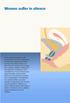 Women suffer in silence Stress urinary incontinence is the involuntary loss of urine resulting from increased intra-abdominal pressure. In people who suffer with this condition, forms of exertion such
Bladder Control Does Matter
 Bladder Control Does Matter Y0028_2726_0 File&Use 04092012 If you suffer from urinary incontinence, you re not alone Don t be afraid to raise your hand if you ve been struggling with the embarrassment
PROCEDURE FOR THE ASSESSMENT OF ADULTS AND CHILDREN WITH BLADDER OR BOWEL DYSFUNCTION
 PROCEDURE FOR THE ASSESSMENT OF ADULTS AND CHILDREN WITH BLADDER OR BOWEL DYSFUNCTION First Issued Issue Version One Purpose of Issue/Description of Change Planned Review Date Procedure for the effective
OAB (Overactive Bladder)
 OAB (Overactive Bladder) PharmCon is accredited by the Accreditation Council for Pharmacy Education as a provider of continuing pharmacy education. This webcast has been supported by an educational grant
Urinary Incontinence Dr. Leffler
 Urinary Incontinence Dr. Leffler The involuntary loss of urine at socially unacceptable times occurs in both women and men, but more commonly in women. It has multiple, far-reaching effects on daily activities,
Bladder and Bowel Control
 Bladder and Bowel Control Dr Sue Woodward Lecturer, Florence Nightingale School of Nursing and Midwifery 2 Why do we need to understand anatomy? Normal physiology Normal adult bladder capacity = 450-500mls
Fecal incontinence (Encopresis) It is the fecal incontinence condition observed in children with chronic constipation over 1-2 years.
 WHAT IS DYSFUNCTIONAL URINATION (URINATION FUNCTION DISORDER)? It stands for the urination phase disorders, which appear due to wrongly acquired urination habits during the toilet training of some neurologically
OVERACTIVE BLADDER DIAGNOSIS AND TREATMENT OF OVERACTIVE BLADDER IN ADULTS:
 2014 OVERACTIVE BLADDER DIAGNOSIS AND TREATMENT OF OVERACTIVE BLADDER IN ADULTS: AUA/SUFU Guideline (2012); Amended (2014) For Primary Care Providers OVERACTIVE BLADDER Diagnosis and Treatment of Overactive
1 in 3 women experience Stress Urinary Incontinence.
 A PATIENT S GUIDE 1 in 3 women experience Stress Urinary Incontinence. It s time to talk about SUI Get the facts. This Patient s Guide is intended as a public resource on the issue of Stress Urinary Incontinence
Urinary Incontinence
 Urinary Incontinence Q: What is urinary Urinary (YOOR-in-air-ee) incontinence (in-kahn-tih-nens) is when urine leaks out before you can get to a bathroom. If you have urinary incontinence, you re not alone.
A PRINTED copy of this guideline may not be the most recent version. The OFFICIAL version is located on IHNET at the Policies & Procedures Home Page
 A PRINTED copy of this guideline may not be the most recent version. The OFFICIAL version is located on IHNET at the Policies & Procedures Home Page IX0200: Prevention & Control of Catheter Associated
Classification of Mixed Incontinence
 european urology supplements 5 (2006) 837 841 available at www.sciencedirect.com journal homepage: www.europeanurology.com Classification of Mixed Incontinence Christopher Chapple * Sheffield Hallam University,
Treatments for Overactive Bladder
 Treatments for Overactive Bladder Patient Information Author ID: SA Leaflet Number: Gyn 051 Name of Leaflet: Treatments for overactive bladder Date Produced: October 2014 Review Date: October 2016 Treatment
A Physical Therapist s Perspective
 You Can Do Something About INCONTINENCE A Physical Therapist s Perspective American Physical Therapy Association 1 You Can Do Something About Urinary Incontinence Incontinence, involuntary loss of bladder
Question ID: 6 Question type: Intervention Question: Does treatment of overactive bladder symptoms prevent falls in the elderly?
 PRIORITY BRIEFING The purpose of this briefing paper is to aid Stakeholders in prioritising topics to be taken further by PenCLAHRC as the basis for a specific evaluation or implementation projects. QUESTION
Prevalence of urinary incontinence by decade of life. Melville JLet al. Urinary incontinence in US women. Arch Intern Med 2005;165:537 42.
 Urinary Incontinence in the Elderly Lily A. Arya, MD, MS Associate Professor and Chief Penn Urogynecology What is UI Unwanted leakage of urine UI that is a social or hygienic problem needs treatment 1-2
Urinary Incontinence. Patient Information Sheet
 Urinary Incontinence Patient Information Sheet What is urinary incontinence (UI)? UI happens when you are not able to control when you urinate and you wet yourself. How common is urinary incontinence?
Managing Urinary Incontinence
 Patient & Family Guide 2016 Managing Urinary Incontinence www.nshealth.ca Managing Urinary Incontinence What is the urinary system? Urine (pee) is made in the kidneys. It flows through tubes called ureters.
Primary Care Management of Male Lower Urinary Tract Symptoms. Matthew B.K. Shaw Consultant Urological Surgeon
 Primary Care Management of Male Lower Urinary Tract Symptoms Matthew B.K. Shaw Consultant Urological Surgeon NICE LUTS Guidelines Lower Urinary Tract Symptoms (LUTS) in men. NICE Clinical Guideline 97
Urinary Incontinence in the Elderly : Pathogenesis and Management
 CLINICAL MEDICINE Urinary Incontinence in the Elderly : Pathogenesis and Management Gayathri Bhagwath* Abstract With increasing life spans, the average age of our elderly population is increasing. Therefore,
6/3/2011. High Prevalence and Incidence. Low back pain is 5 th most common reason for all physician office visits in the U.S.
 High Prevalence and Incidence Prevalence 85% of Americans will experience low back pain at some time in their life. Incidence 5% annual Timothy C. Shen, M.D. Physical Medicine and Rehabilitation Sub-specialty
Urodynamics in Neuro-Urology
 Urodynamics in Neuro-Urology R Hamid MD (Res), FRCS (Urol) Consultant Urologist London Spinal Injuries Unit, Stanmore & University College London Hospitals Micturition Micturition can be visualized as
PROCEEDINGS INCIDENCE AND PREVALENCE OF STRESS URINARY INCONTINENCE * Ananias C. Diokno, MD ABSTRACT
 INCIDENCE AND PREVALENCE OF STRESS URINARY INCONTINENCE * Ananias C. Diokno, MD ABSTRACT Urinary incontinence is a worldwide problem that affects millions of women, although the magnitude of the problem
Michelle H. Cameron, M.D., P.T., M.C.R. Portland VA MS Center of Excellence- West, and Oregon Health & Science University
 Michelle H. Cameron, M.D., P.T., M.C.R. Portland VA MS Center of Excellence- West, and Oregon Health & Science University Ileana Howard, M.D. VA Puget Sound, Seattle, WA and University of Washington PVA
EVALUATION OF URINARY INCONTINENCE IN WOMEN
 Urological Neurology Brazilian Journal of Urology Official Journal of the Brazilian Society of Urology Vol. 27 (2): 165-170, March - April, 2001 EVALUATION OF URINARY INCONTINENCE IN WOMEN STEVEN P. PETROU,
Male urinary incontinence (leakage of urine) you are not alone
 Male urinary incontinence (leakage of urine) you are not alone Delivering the best in care UHB is a no smoking Trust To see all of our current patient information leaflets please visit www.uhb.nhs.uk/patient-information-leaflets.htm
Understanding and Preventing Bladder Infections in Women
 Understanding and Preventing Bladder Infections in Women Understanding and Preventing Bladder Infections in Women Recurrent bladder or urinary tract infections (UTI s) are a very common diagnosis. In fact,
Urinary incontinence and Prolapse. Dr Zeelha Abdool Consultant OBGYN Steve Biko Academic Hospital
 Urinary incontinence and Prolapse Dr Zeelha Abdool Consultant OBGYN Steve Biko Academic Hospital Definitions: IUGA/ICS standardized terminology Urinary incontinence (symptom): complaint of involuntary
The overactive bladder and bladder retraining
 Oxford University Hospitals NHS Trust The overactive bladder and bladder retraining Information for patients Normal bladder function Your bladder normally stores urine produced by your kidneys. The kidneys